
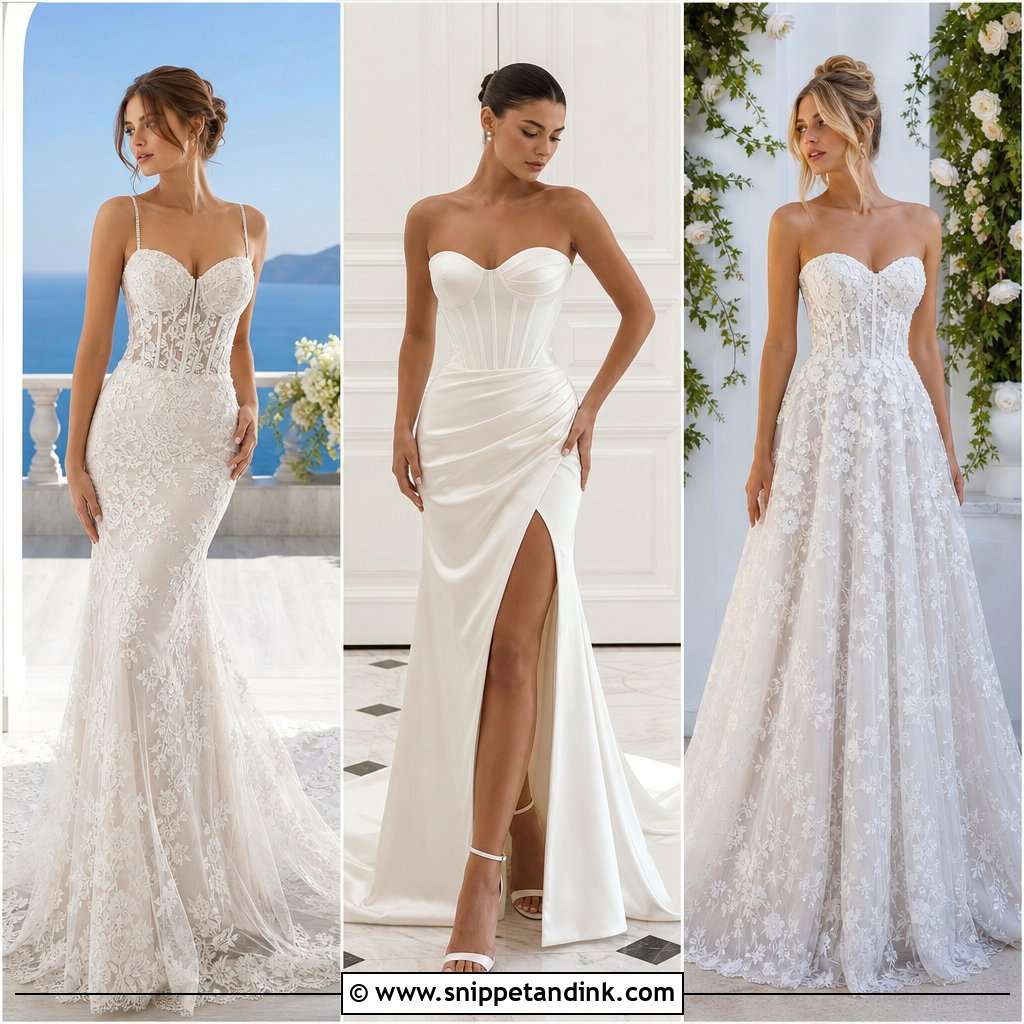
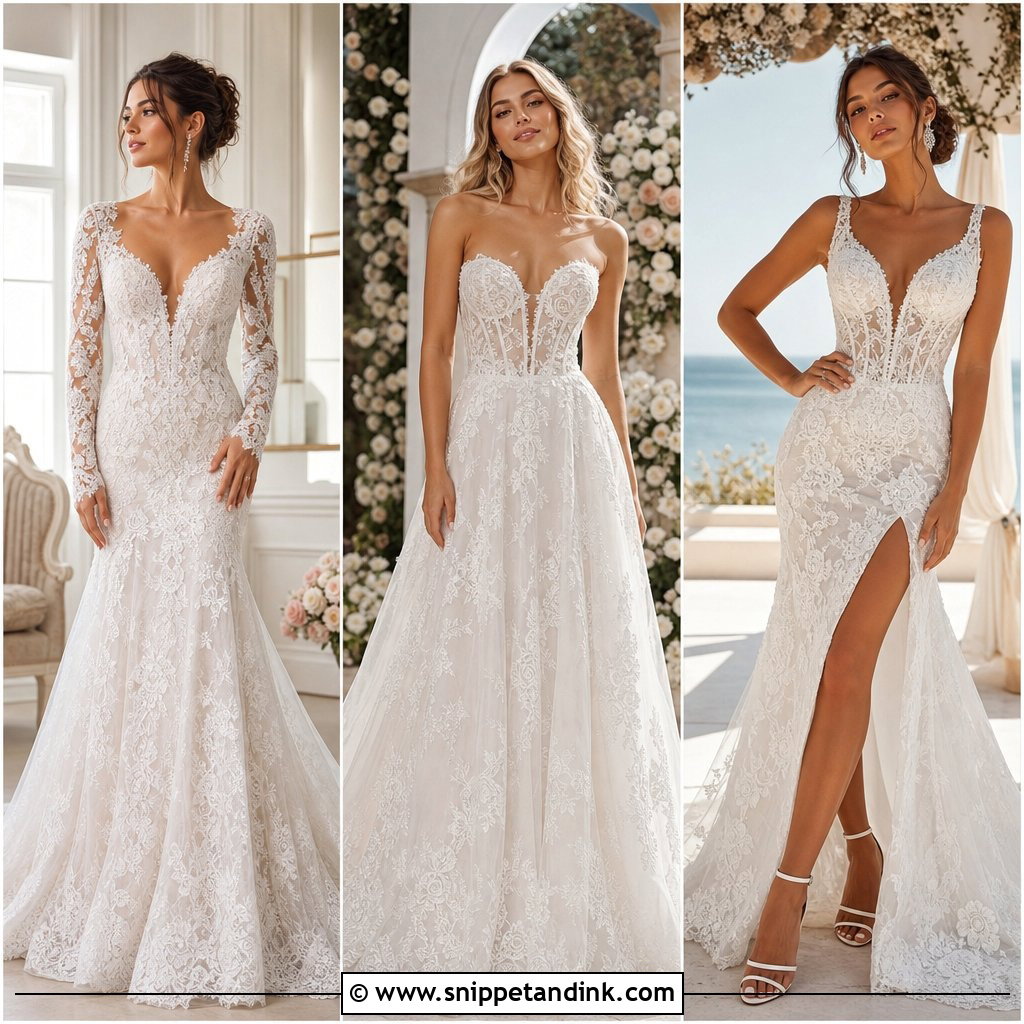
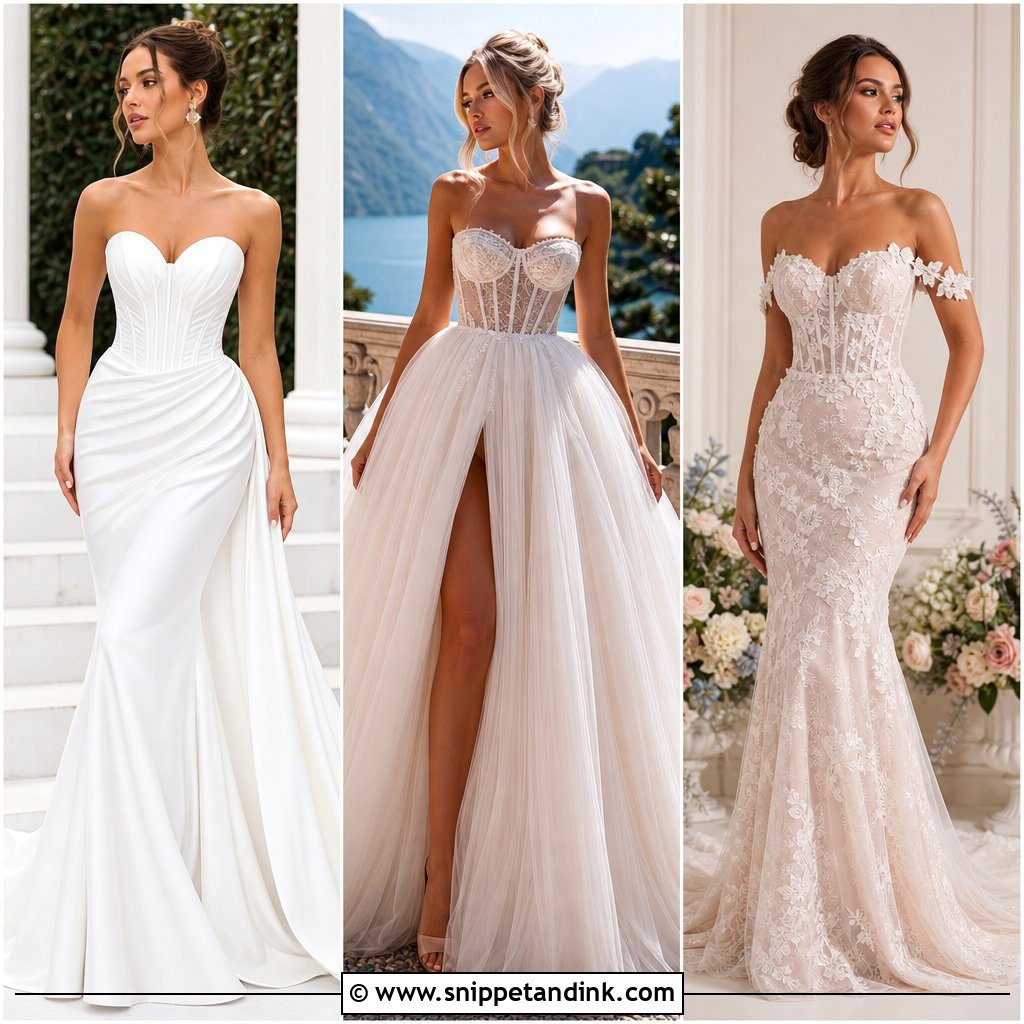
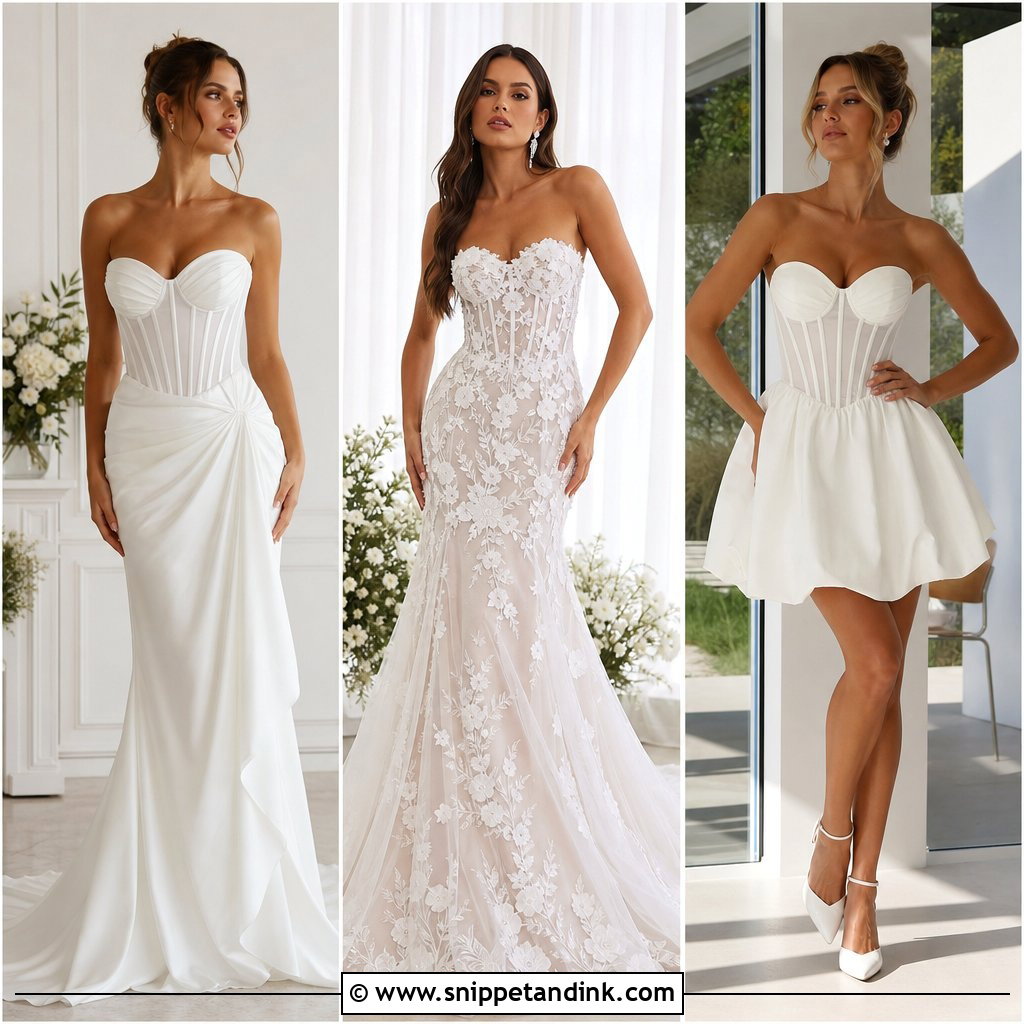
A corset bodice builds the shape into the dress, so the gown holds you instead of you holding it up. That’s why I keep pulling these for brides who tried on soft styles and felt they disappeared in them. Fabric changes the mood a lot: satin reads formal, lace softens the boning, crepe looks sharp, and a full ball skirt turns the whole thing into theatre. What I care about more than the label is how the bodice is built, where the waist seam lands on your body, and whether you can walk, sit and lift your arms without the top edge moving. Below are 25 corset gown directions, each with what I’d look for when you actually try it on.
What the Boning Is Doing Under the Fabric
Every gown below relies on boning, and the type makes a real difference to how the dress feels at hour eight. When I assess a corset gown, I turn the bodice inside out before I look at anything else.
Steel or plastic
Spiral steel bones flex sideways and forward, so they follow you when you sit and spring back when you stand. Flat plastic boning is lighter and cheaper, but it softens with body heat and can bend for good at the waist after a long day of sitting. Plenty of bridal gowns use plastic, and it’s fine in a light, close-fitting bodice. Under a heavy ball skirt I’d want steel, or at least a mix.
The fitting-room tests I ask every bride to do
- Sit on a low chair for two minutes. The top edge shouldn’t push up under your arms, and no bone should dig into your hip.
- Raise both arms as if hugging someone taller. A strapless bodice that slides down needs taking in at the ribcage, not the bust.
- Take a deep breath and talk. If you can’t finish a sentence comfortably, the waist is too tight, however good it looks.
- Wear your actual shoes and underwear. Heel height changes your posture, and most corset gowns have cups sewn in, so you may not need a bra at all.
On a lace-up back, a gap of an inch or two between the edges leaves room to tighten or loosen on the day. A back already laced fully closed has nowhere left to go.
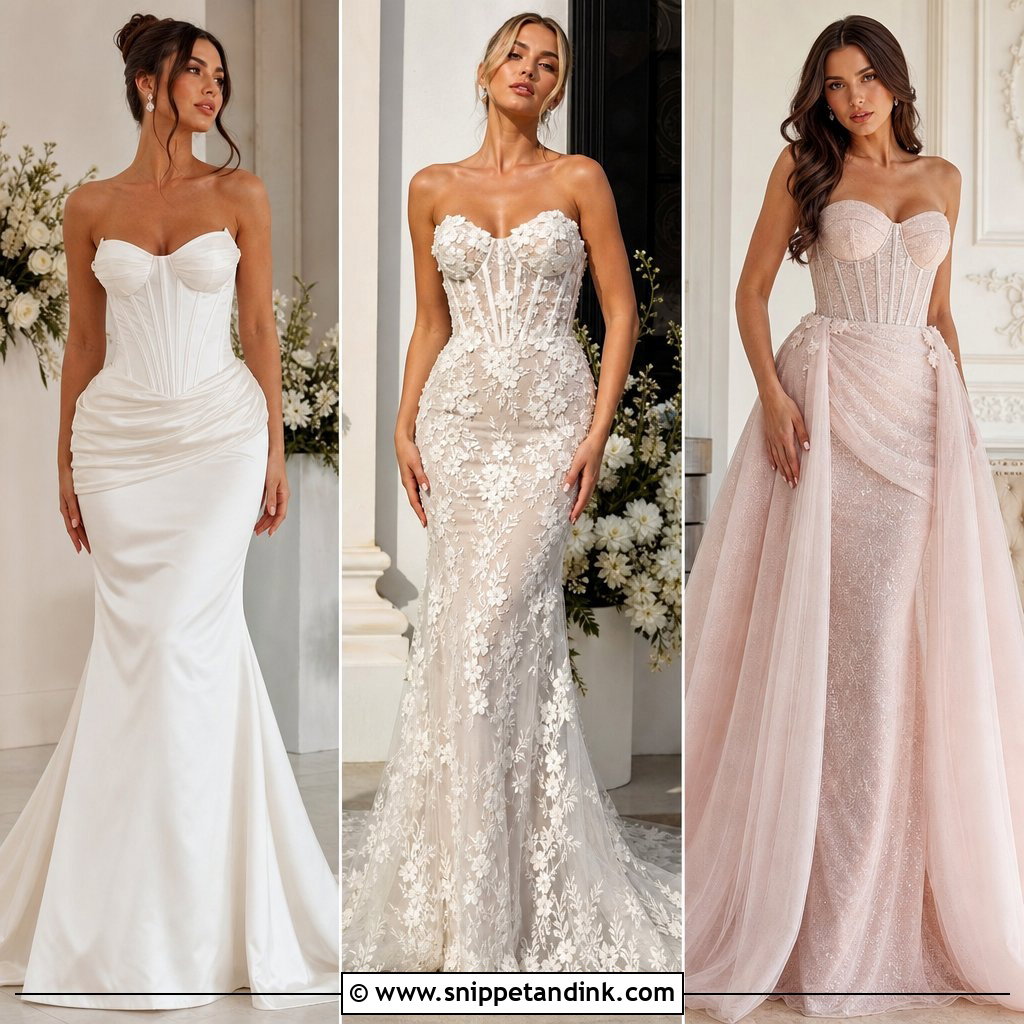
1. Satin Corset Wedding Gown
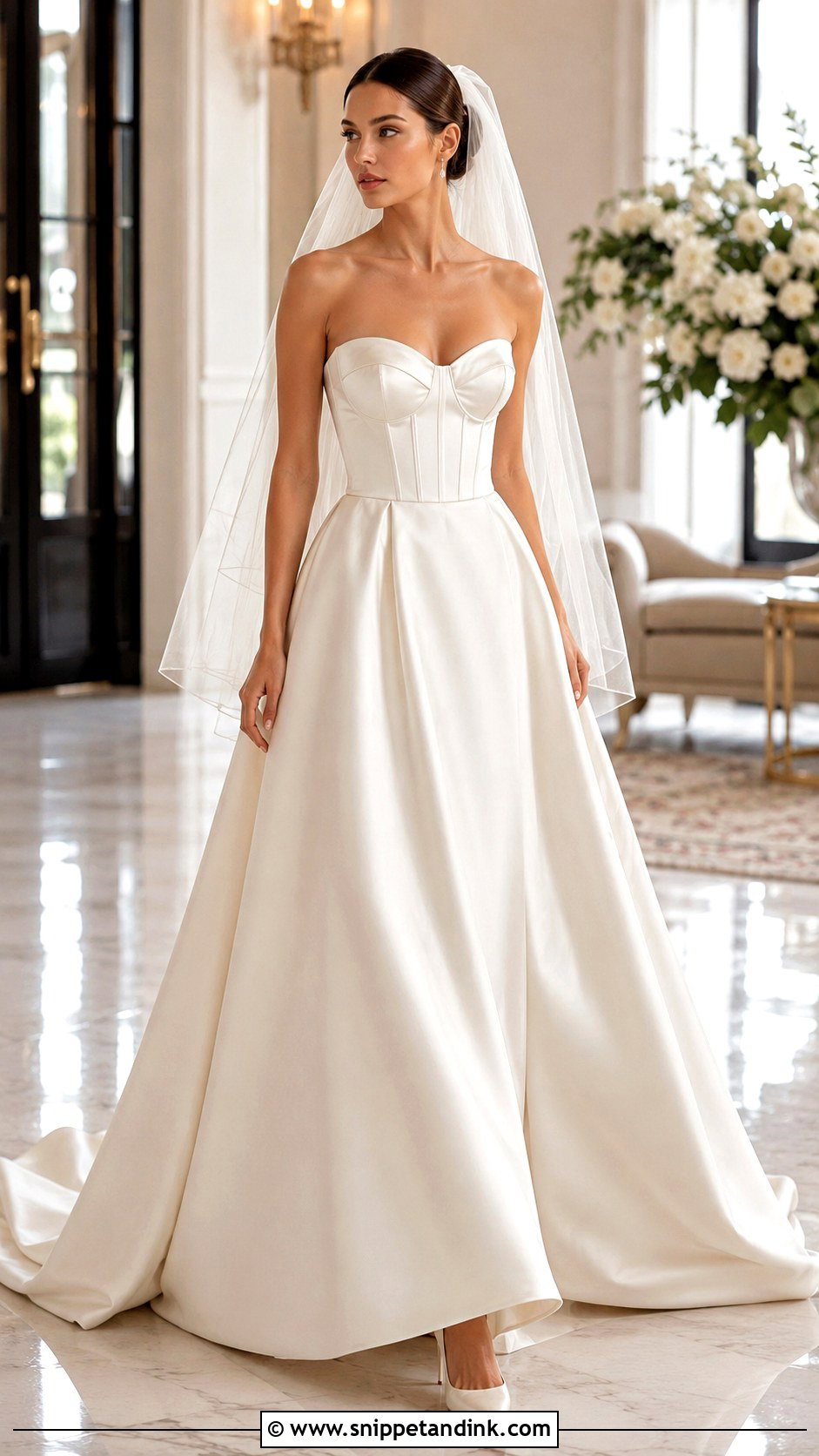
Satin shows a corset’s construction more honestly than any other fabric, which is both its appeal and its risk. A heavy duchess satin lies flat over the boning; a thin, shiny one shows every channel and ripples at the seams. I like a strapless or scoop-neck corset here with a full A-line skirt, then keep the rest to pearl earrings, a sleek low bun and pointed ivory heels. A chapel-length veil softens the structure for the ceremony. Hotels and estate houses suit it best, because the light is controlled and satin doesn’t have to fight glare.
2. Lace Corset Wedding Gown
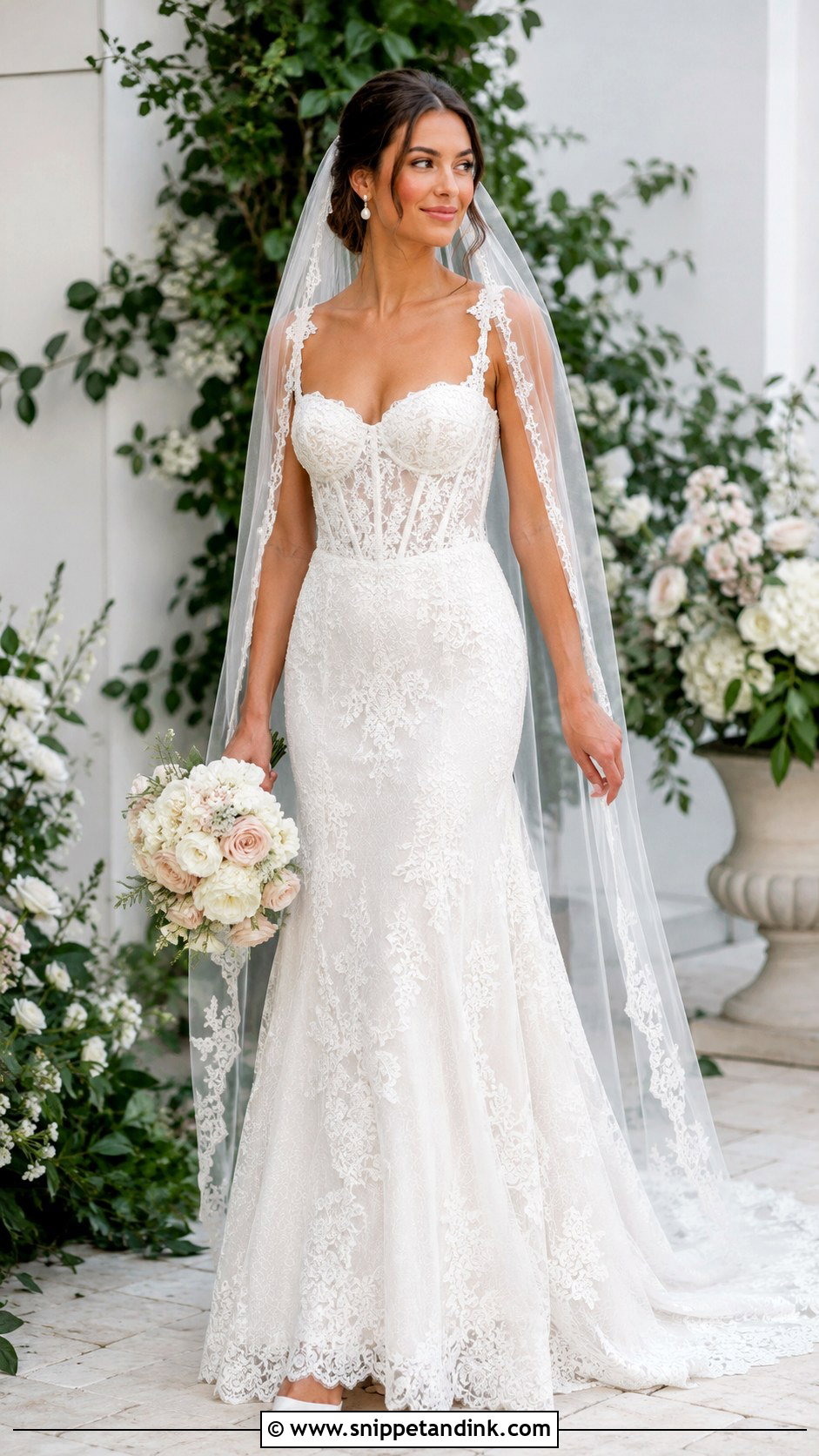
Lace over a corset needs a proper lining underneath, otherwise the boning channels show through as dark lines in flash photos. I always turn the bodice over to check. A sweetheart neckline with fine straps and a softly flared skirt keeps it light. Scalloped floral lace leans vintage, while lace laid over a nude lining shows the corset seams on purpose and reads far more modern. Small drop earrings, a fingertip veil and loose waves finish it, and garden ceremonies are where the texture really holds up.
3. Basque Waist Corset Wedding Gown
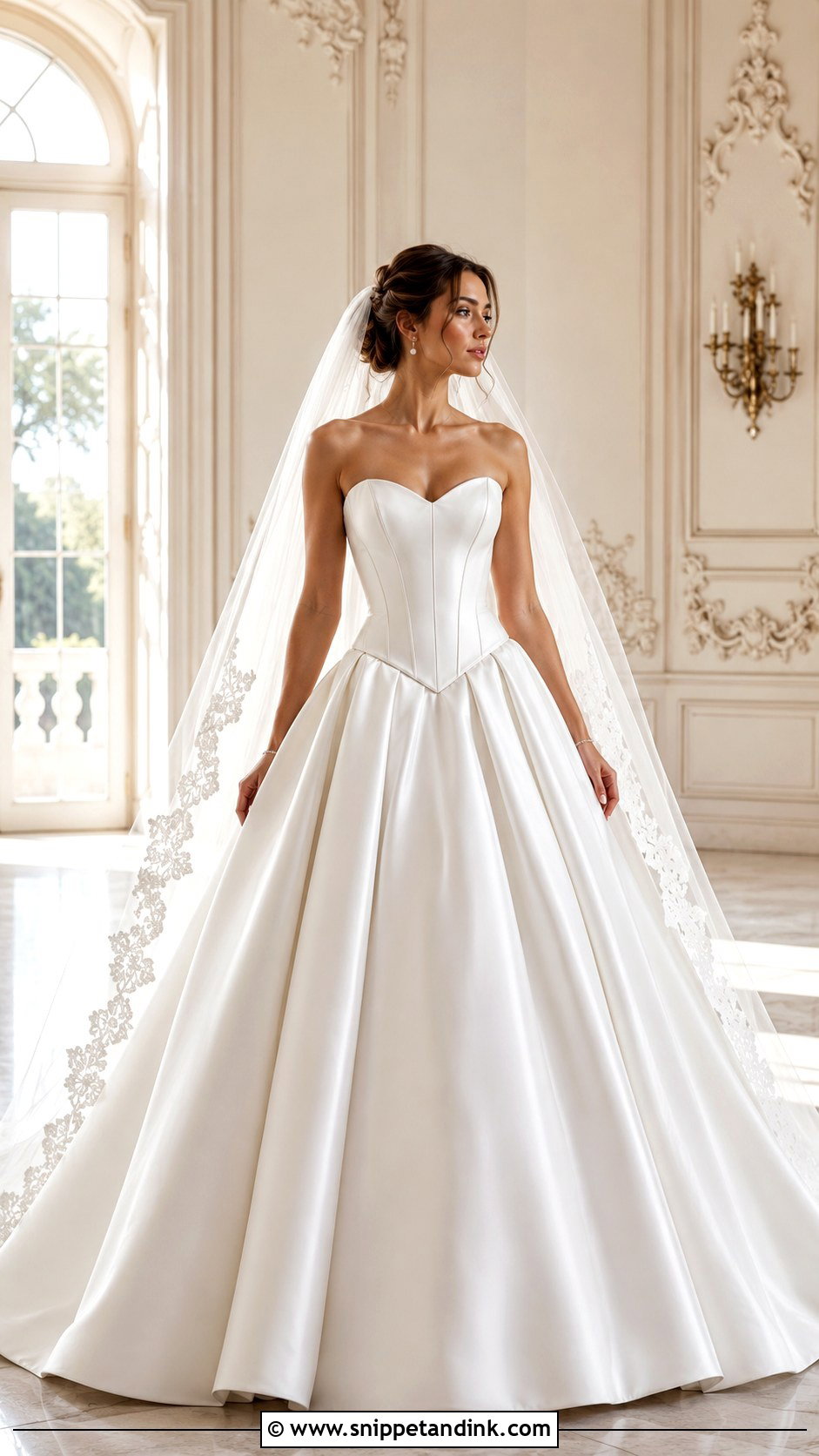
The V-point of a basque waist corset wedding gown dips below your natural waist, and that dip is what lengthens the torso. It sits best over a full ball gown or A-line skirt, where the narrow point against the wide skirt does all the work. My one fitting check is to sit down. On a short torso the point can dig into the lap, and a small adjustment at the bottom of the bodice fixes it. Keep the veil long, the updo soft and the jewelry minimal. It’s one of the more forgiving shapes I fit, because it defines the middle without any embellishment at all.
4. Strapless Corset Wedding Gown
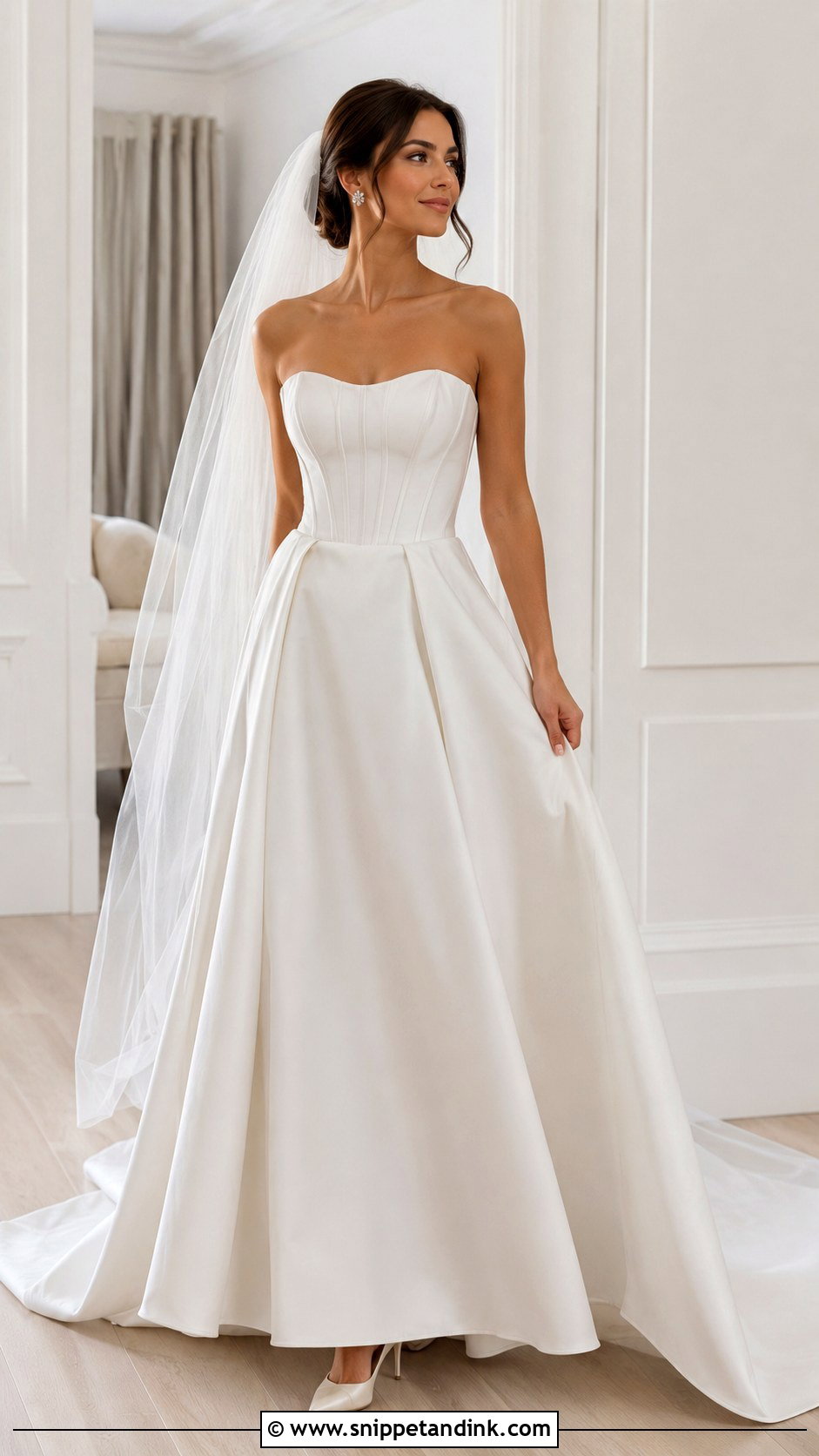
A strapless corset stays up because it grips your ribcage and waist, not your bust. I explain that at nearly every fitting, since brides tend to hitch the top edge up when the snugness should sit lower down. Fitted properly, it feels far more secure than an unboned strapless dress. Satin and mikado give the cleanest neckline; organza and lace look lighter. Go full A-line and long veil for a classic version, or a fitted crepe skirt for something sharper. Statement earrings rather than a necklace keep the neckline open.
5. Off Shoulder Corset Wedding Gown
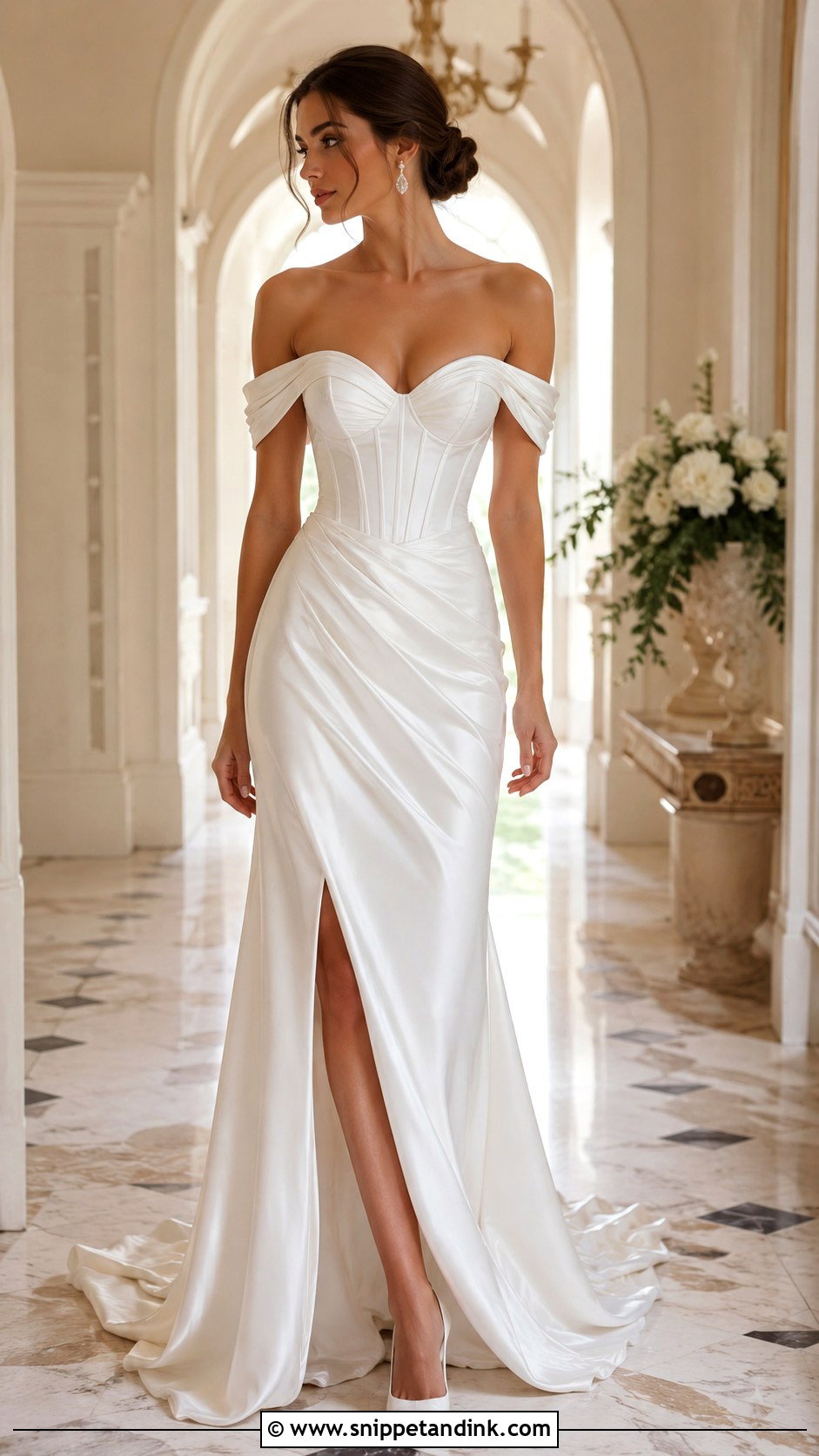
Off-shoulder sleeves change how you move, and I want brides to know that before they fall for the neckline. With a band across your upper arms, lifting them fully to hug or toss a bouquet pulls on the bodice. A corset base helps because it anchors the dress at the waist rather than the shoulders. Satin looks refined, lace softer, tulle the airiest. If you dance hard, ask for detachable sleeves you can drop after the portraits. Pearl studs, a soft veil and ivory heels are all it needs.
6. Long Sleeve Corset Wedding Gown
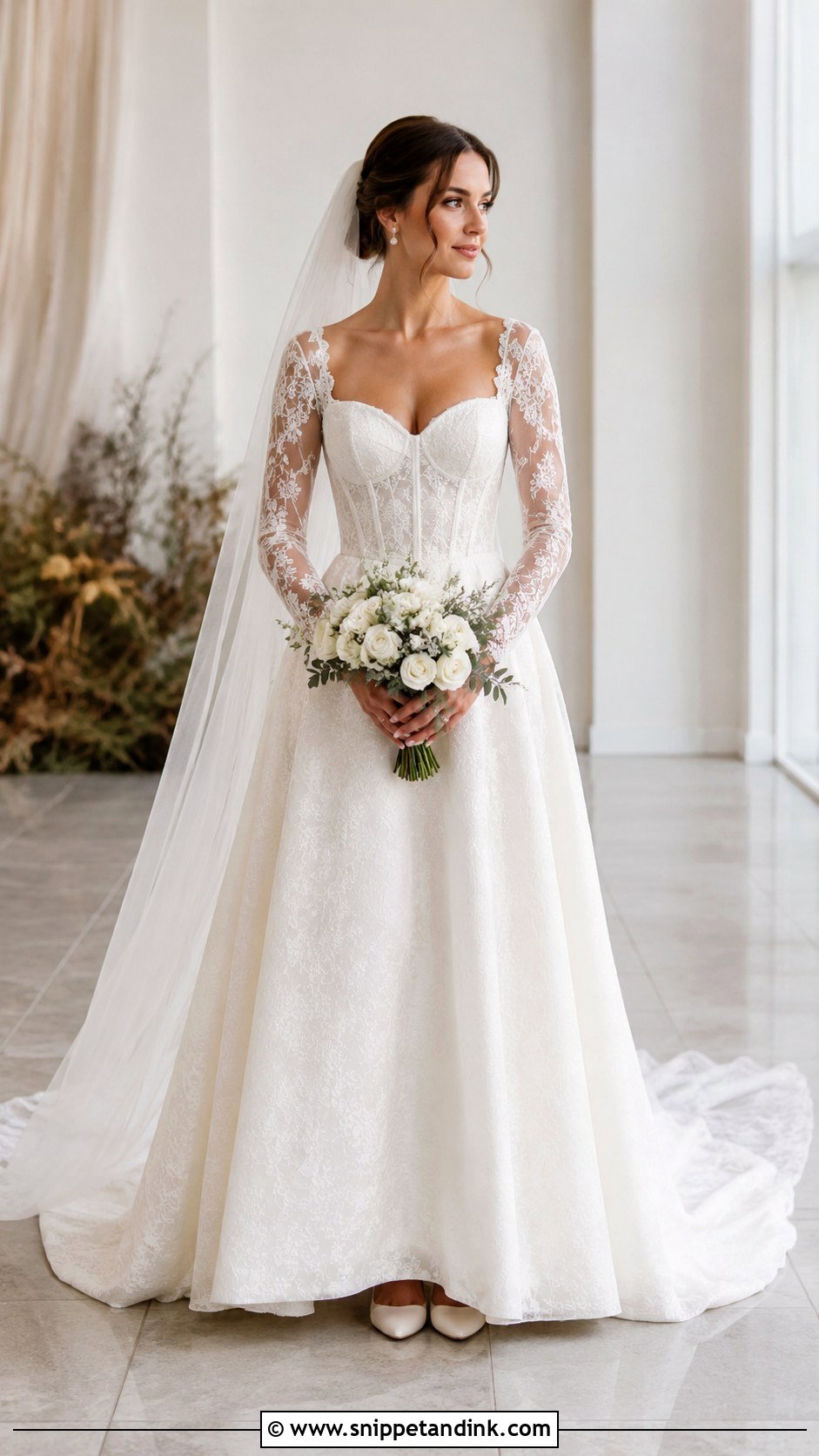
Sleeves add coverage, but the corset is still doing the shaping, so each sleeve has to be set in without pulling at the armhole. I ask brides to reach forward as if signing the register. If the sleeve drags the bodice with it, the armhole needs work. Sheer lace keeps it light; satin or crepe sleeves look tailored. Autumn and winter are the obvious seasons, though breathable lace makes it workable in summer. Keep the skirt A-line or sheath, the hair in a low bun, and choose a veil that doesn’t hide the sleeve detail.
7. Tulle Corset Wedding Gown
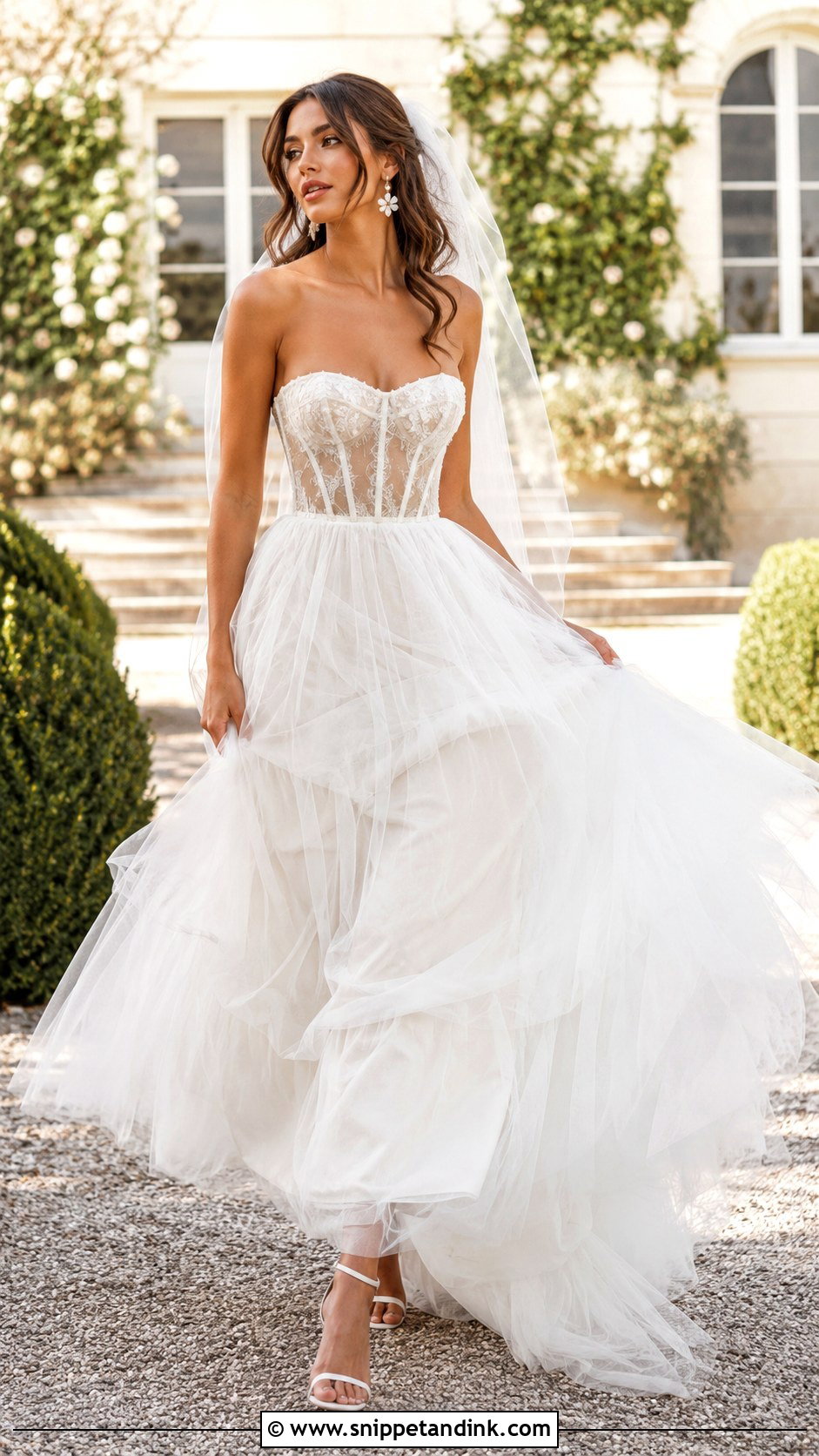
Tulle is mostly air, which is why it pairs so well with a firm bodice: the weight sits low and the corset barely has to carry it. Look for gentle volume built from layers rather than a stiff crinoline, which can feel like walking inside a lampshade. A strapless or thin-strap top keeps it clean. One honest warning: tulle snags on beaded shoes, rough bark and the Velcro on camera bags, so check the hem after outdoor photos. Floral earrings, soft curls and satin heels suit it, and daylight shows off the way it moves.
8. Mermaid Corset Wedding Gown
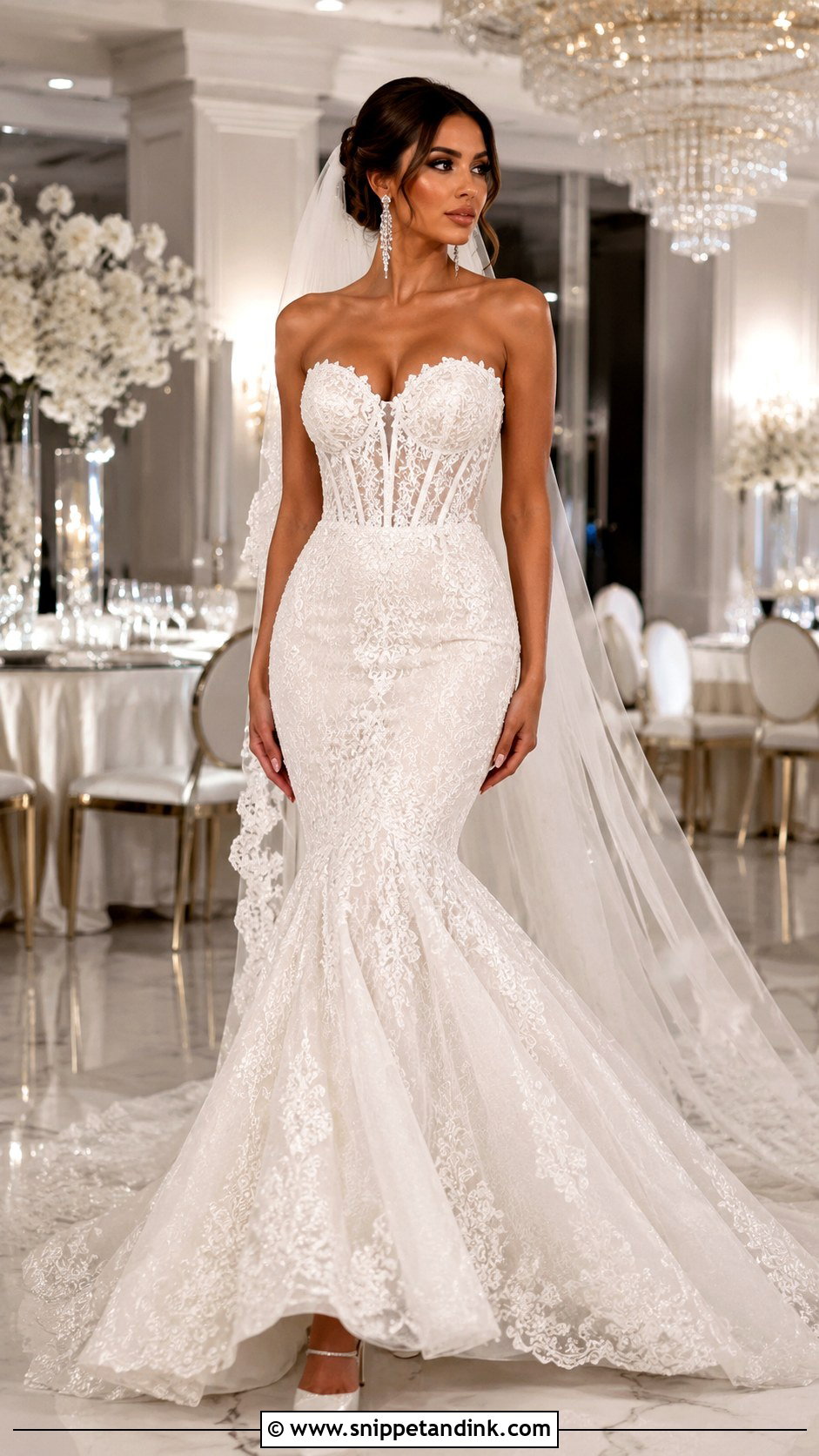
This is the shape where I’m strictest about comfort. The skirt hugs you to the knee and the corset holds you from the top, so there’s very little give anywhere. Walk the length of the boutique, climb a step and sit on a low chair before you commit. Flexible boning and a little ease through the hips make all the difference. Lace, crepe, satin and beaded fabric all work. A sweetheart neckline with a lace-up back reads very bridal, and sleek hair with long earrings keeps it sharp for a ballroom entrance.
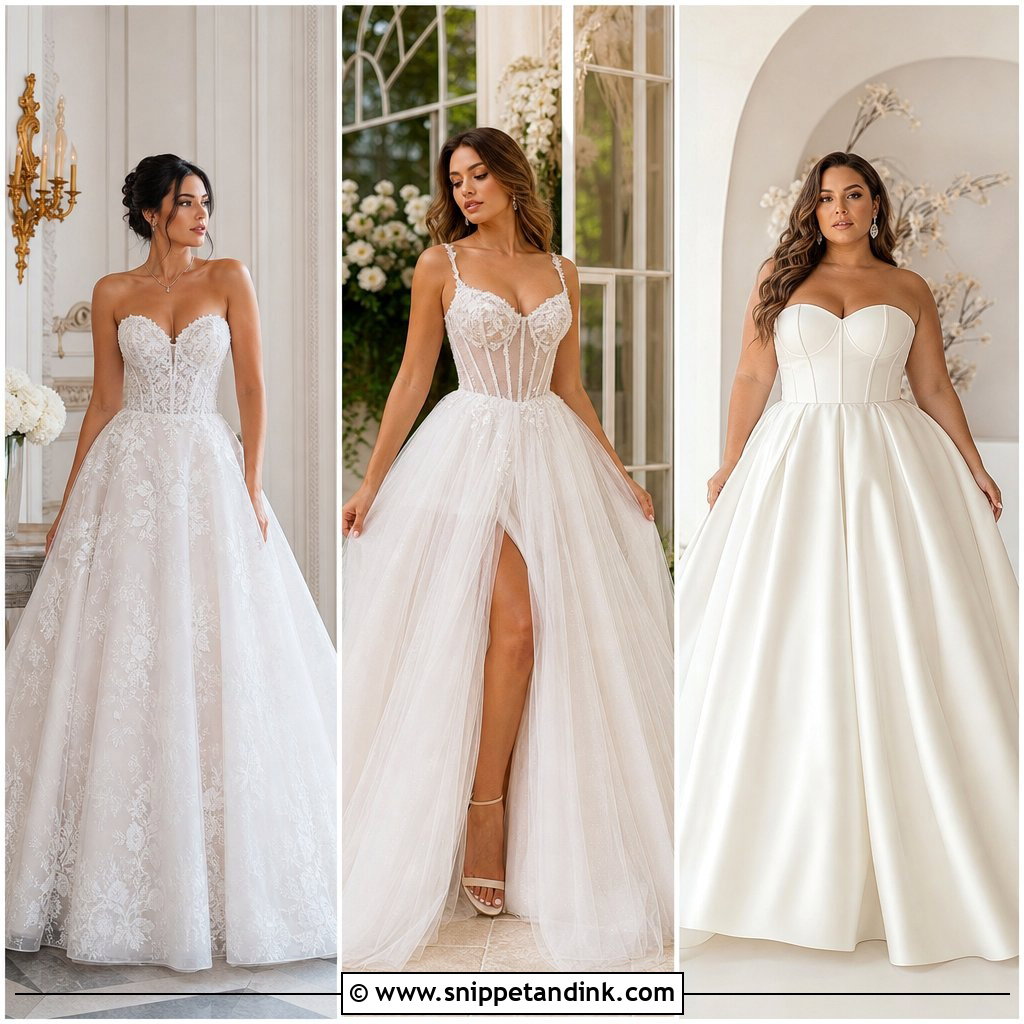
9. A Line Corset Wedding Gown
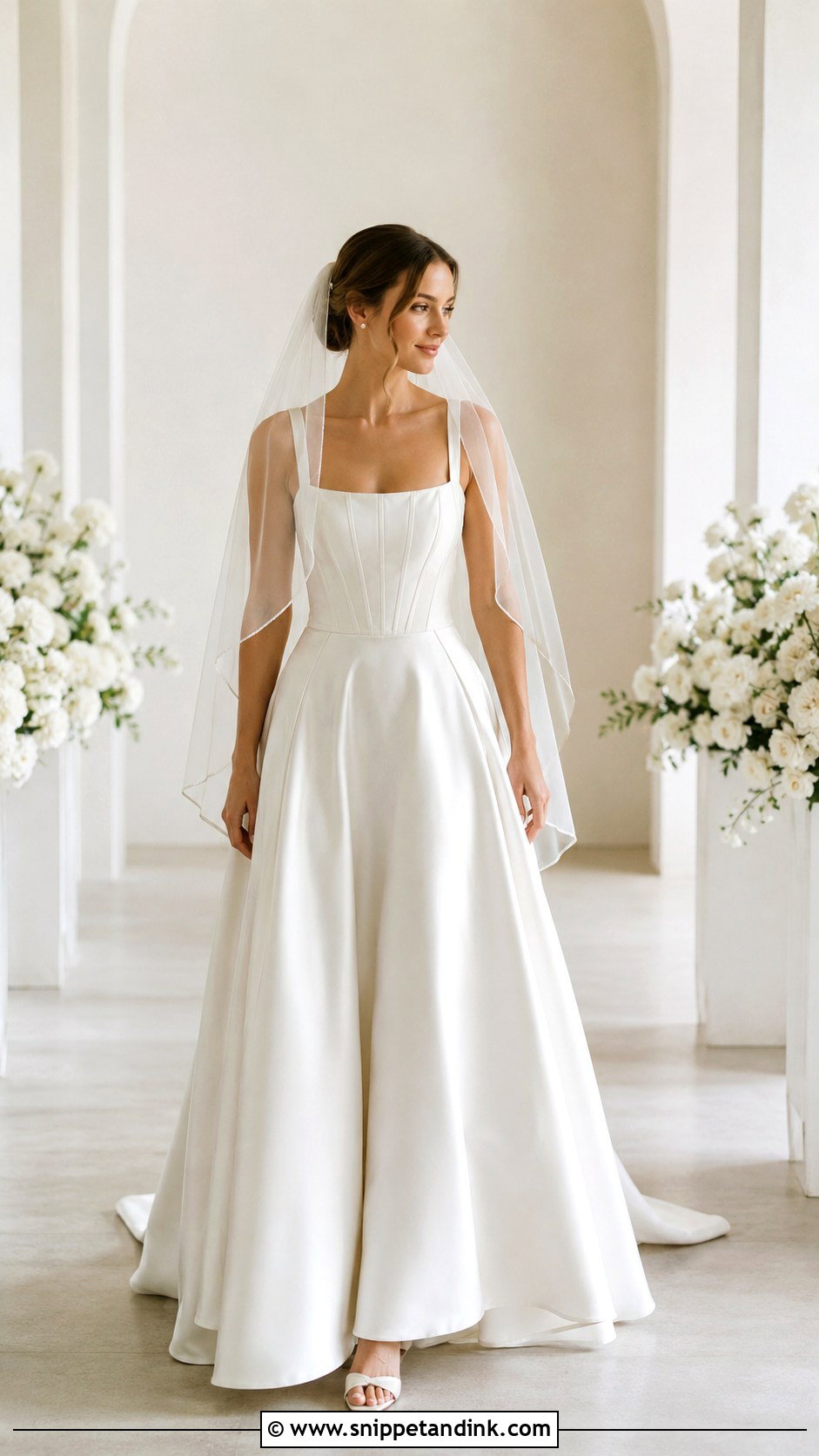
When someone doesn’t know where to start, I usually hand her an A-line corset gown first. The skirt opens from the hips, so it skims rather than clings and balances most figures without extra volume. Satin feels classic, lace softer, organza lighter, and a square or sweetheart neckline freshens it. I’d pair a fingertip veil with block heels, since A-lines get chosen for long outdoor days. It’s the shape I most often see brides still comfortable in at the last dance.
10. Ball Gown Corset Wedding Gown
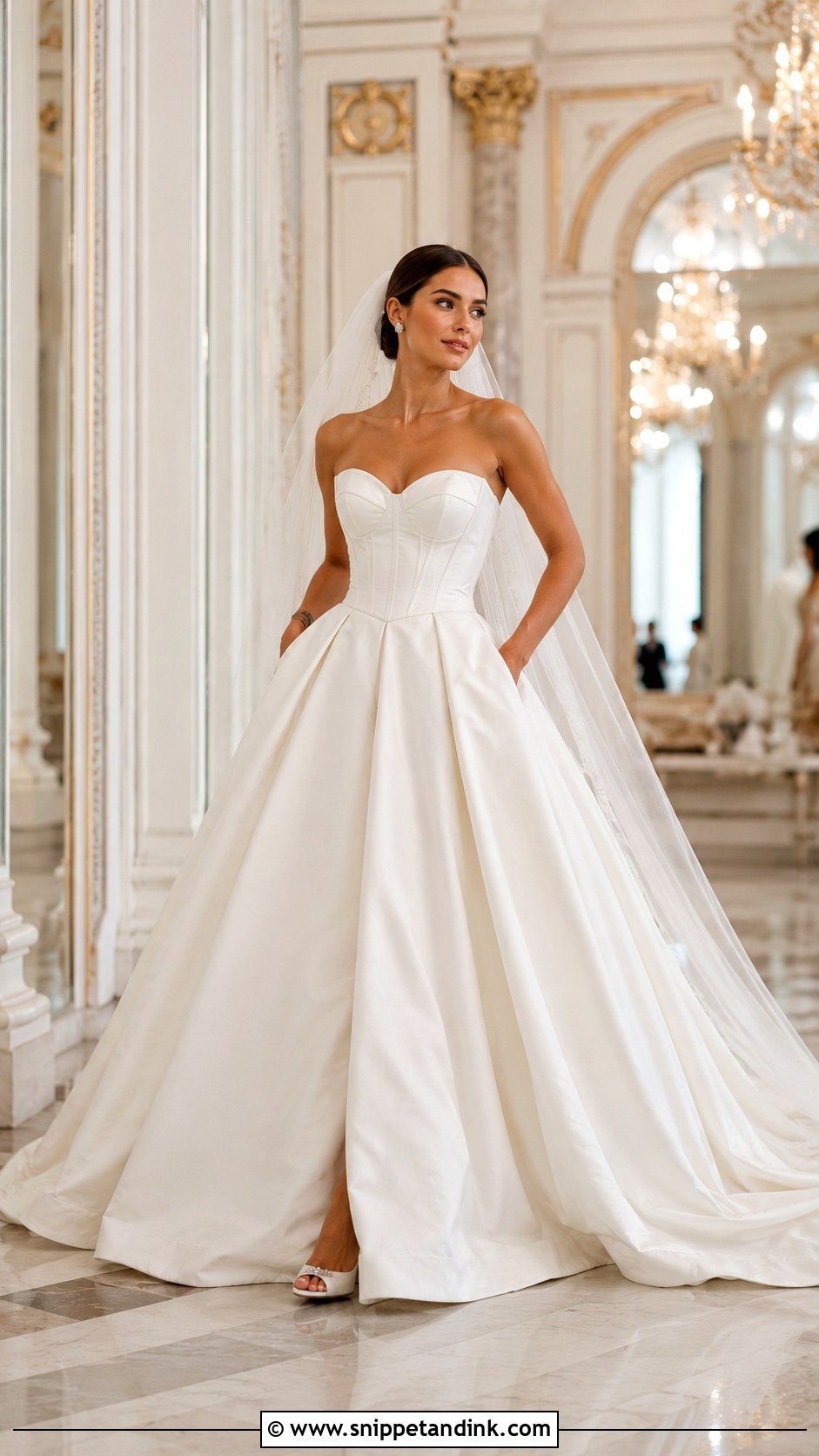
Full ball skirts are heavy, and in a corset gown that weight hangs from the waist seam, so the bodice must be cut snug enough to carry it. If the waist is loose, the skirt drags the whole dress down by evening. Clean satin, subtle lace or structured mikado keeps it current; resist piling on embellishment and let the silhouette speak. Add a cathedral veil, sparkling studs and heels you’ve already broken in. Big venues give the skirt room to read. Before you commit, check that the aisle and doorways can actually take it.
11. Sheer Corset Wedding Gown
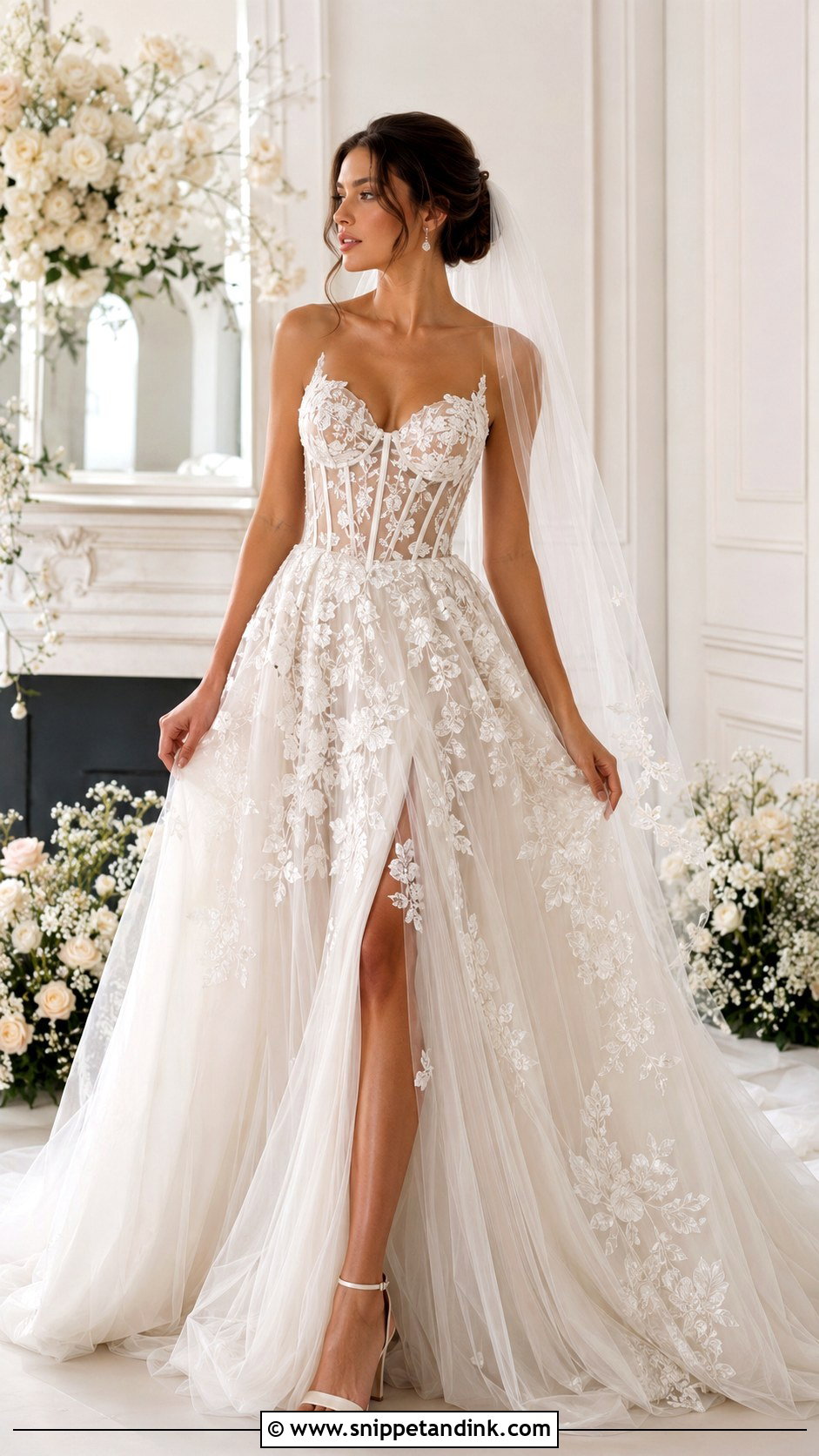
Sheer corsets live or die on their finishing. The visible boning is the point, so I check that every channel is neatly stitched, because nothing is hidden. Coverage comes from soft illusion panels, lace appliqué or layered tulle placed exactly where you want it. Have someone take a flash photo in the fitting room; illusion mesh can look more transparent on camera than in the mirror. A flowing A-line or fitted crepe skirt suits it, with simple earrings, a sheer veil and soft waves.
12. Floral Applique Corset Wedding Gown
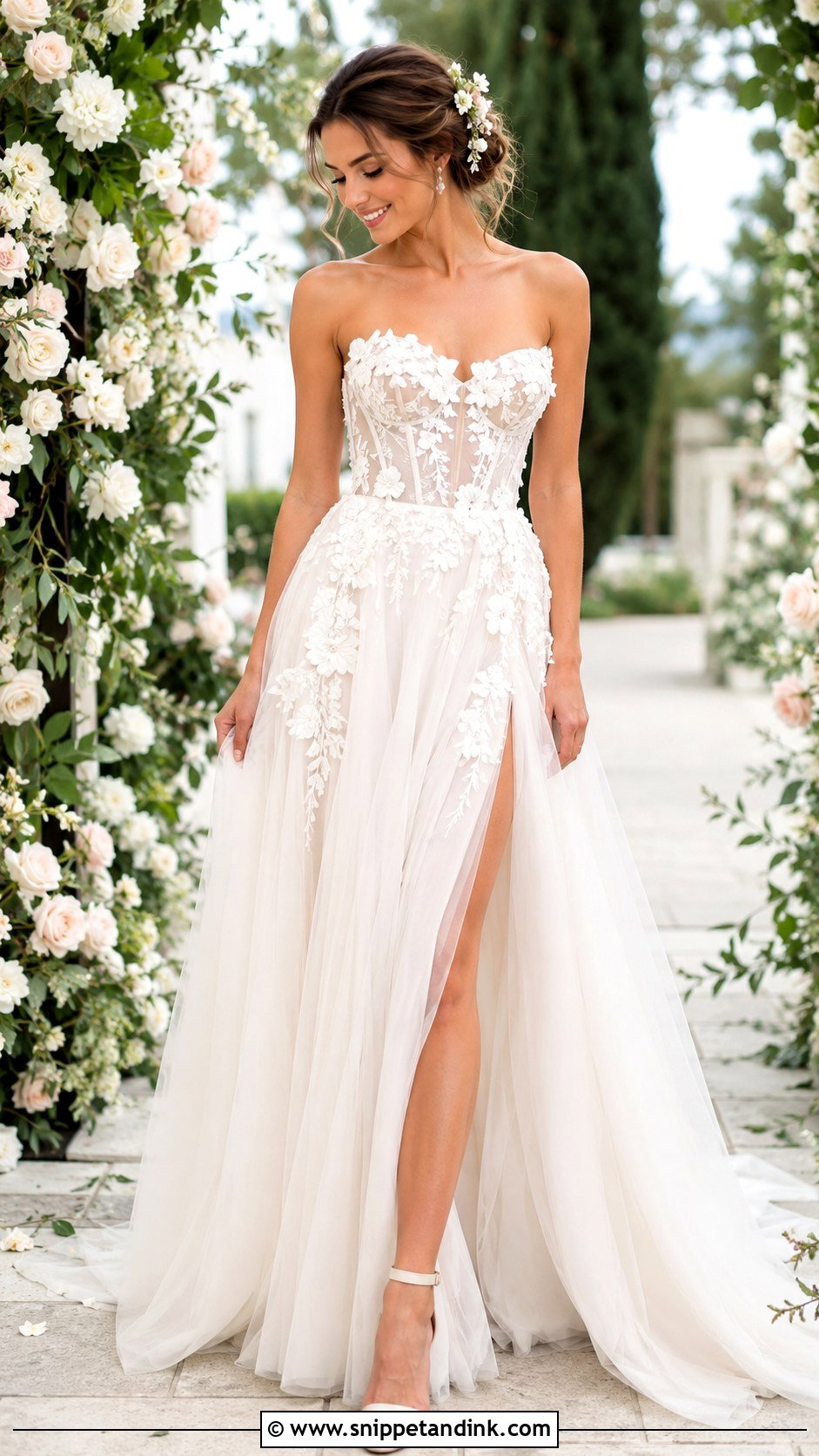
Appliqués that trail from the bodice down into the skirt look natural; ones that stop dead at the waist seam make the gown look like two separate pieces. That’s the first thing I check on the hanger. 3D flowers are bolder but catch on veils and bouquet ribbons, so I’d keep them off the upper back if you’re wearing a long veil. Flat lace appliqués are subtler and easier to live with. A tulle or organza skirt keeps the gown light, and floral hair pins tie it to spring and garden venues.
13. Beaded Corset Wedding Gown
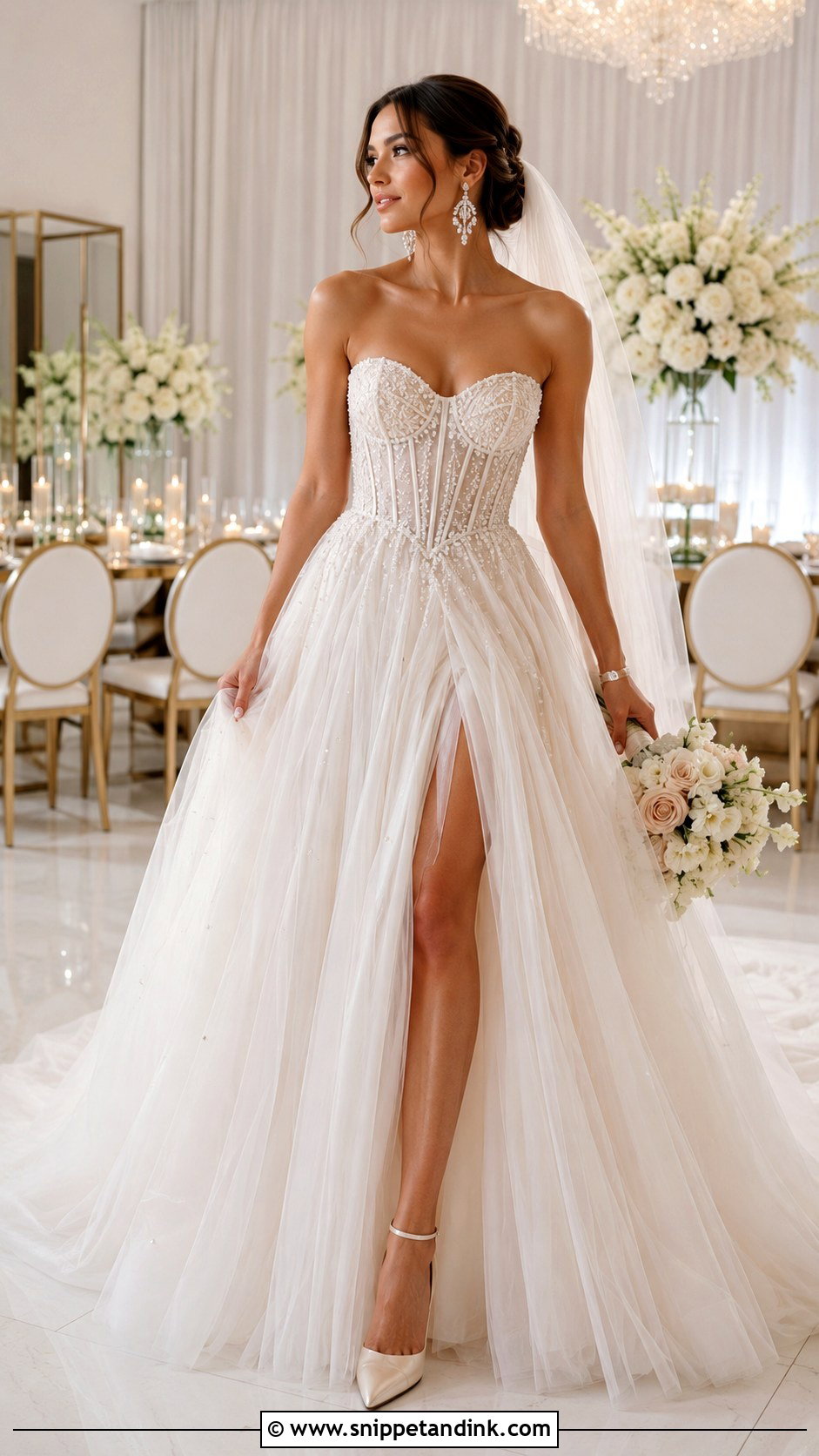
Beading adds weight and stiffness, so on a corset I prefer it concentrated on the bodice and waist rather than scattered everywhere. Heavy beadwork near the inner arm scratches by the end of the night, so run your arm along your side during the fitting. A beaded bodice over soft tulle feels romantic; a beaded fitted skirt is pure glamour. The dress already has shine, so keep to small crystal earrings, a plain veil and satin heels. Evening receptions are where beading earns its place, because candlelight makes it glow.
14. Minimalist Corset Wedding Gown
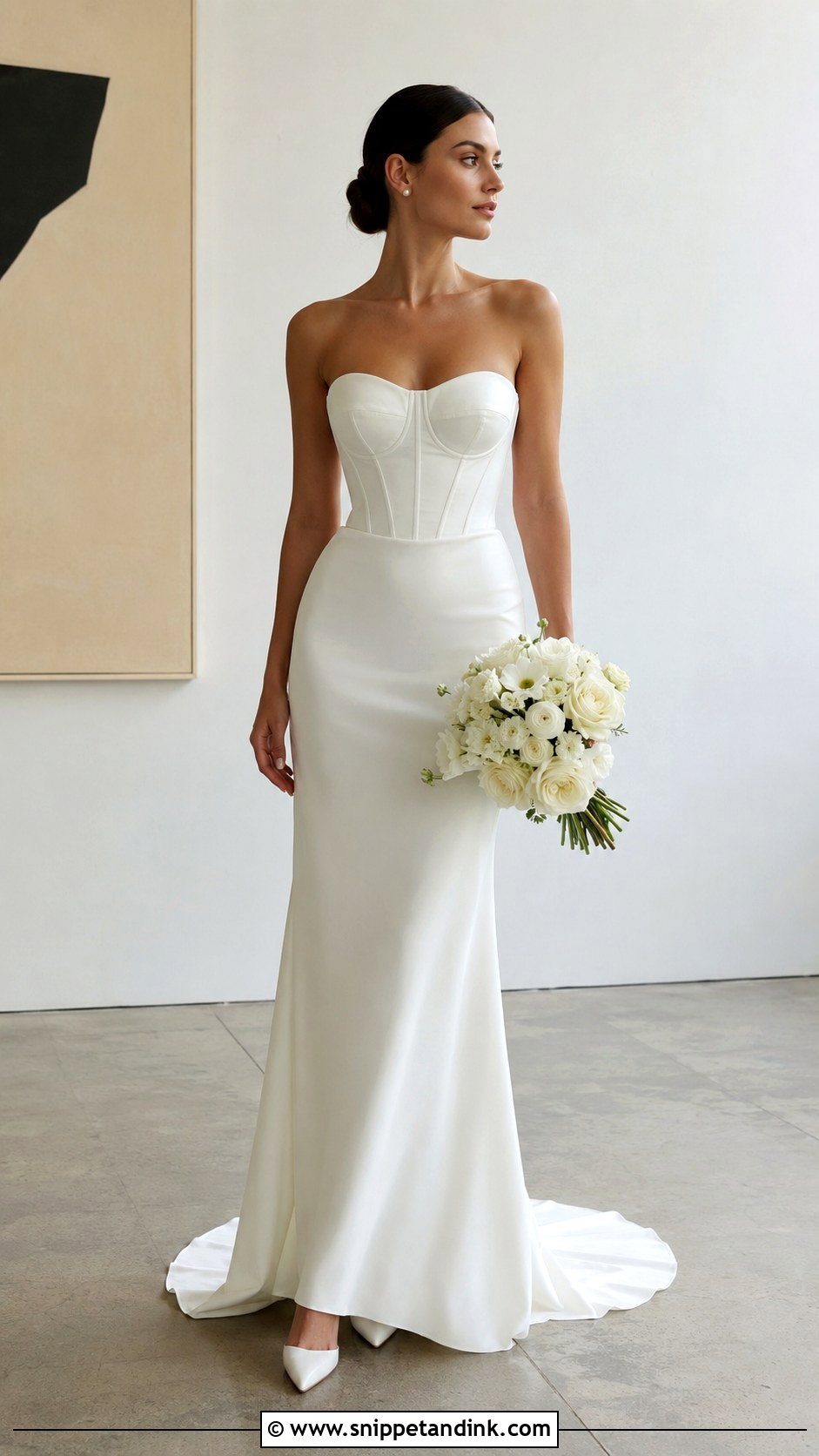
With no lace or beading to hide behind, a minimalist corset gown depends entirely on fit and fabric. Any wrinkle at the waist seam or bubble at the zip shows, so this is the one where I’d budget most carefully for alterations. Satin, crepe or mikado gives the cleanest surface. Straight, square or soft scoop necklines all suit it, and the skirt can be column, A-line or a subtle train depending on the venue. Sleek hair, pearl studs and a structured bouquet keep it modern rather than trendy.
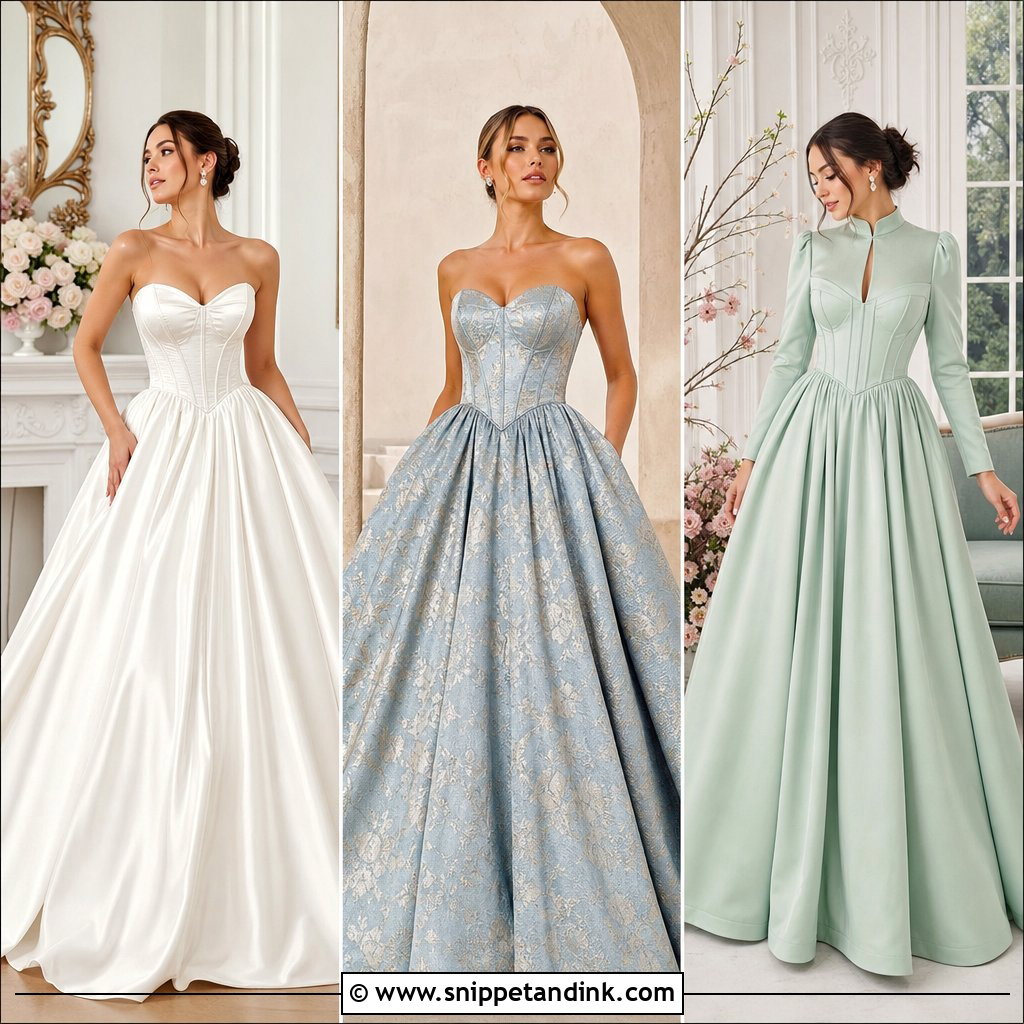

15. Square Neck Corset Wedding Gown
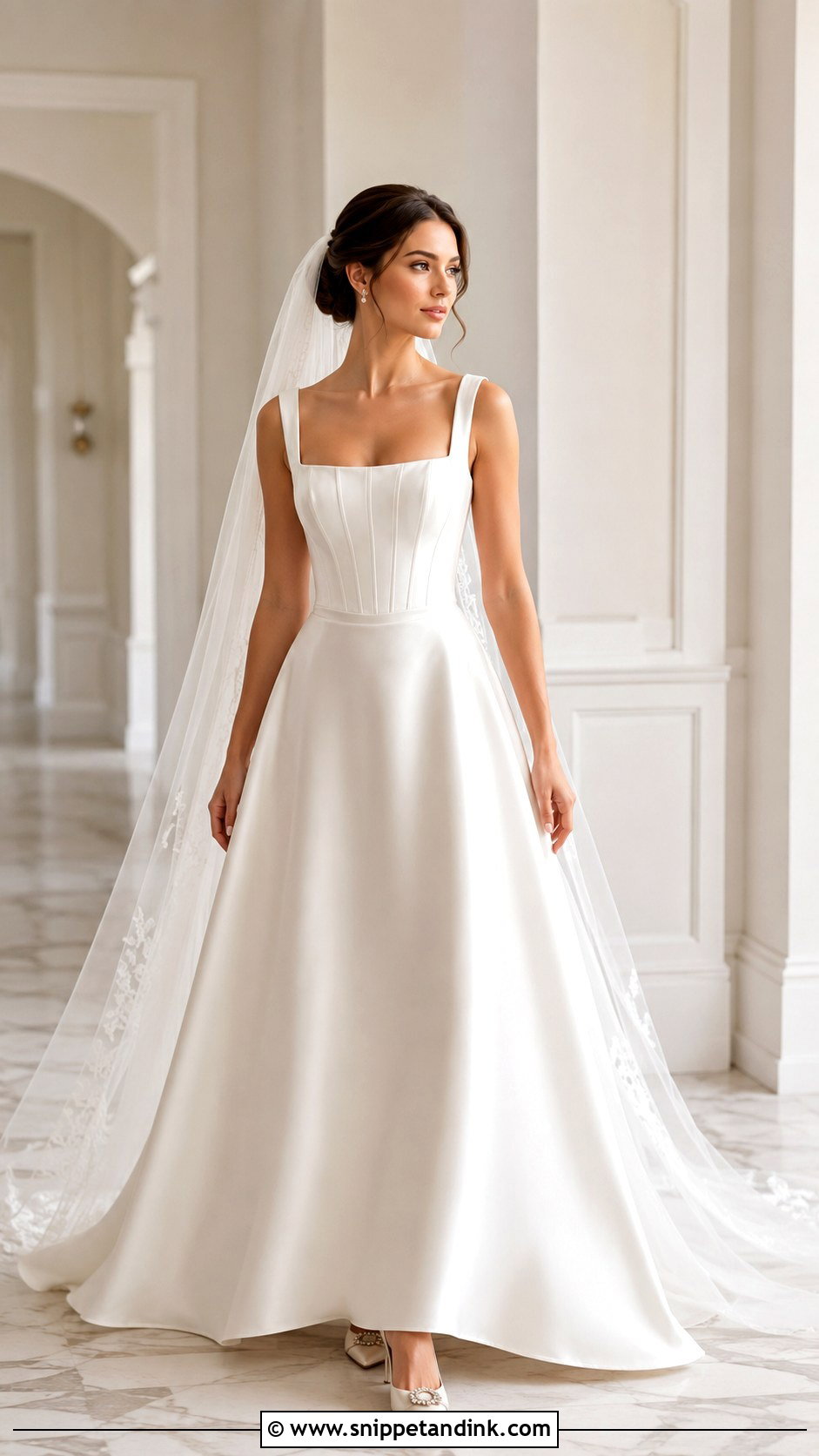
Straight lines across the chest make a square neckline easier to wear than a plunge and more interesting than a straight strapless edge. The corners have to sit flat. If they gape when you breathe in, the bodice needs taking in at the side seams. Wide straps, fine straps and long sleeves all pair well, and an A-line skirt balances the angles. I’d go satin for classic or crepe for modern, then add a low bun, small earrings and a long veil.
16. Sweetheart Corset Wedding Gown
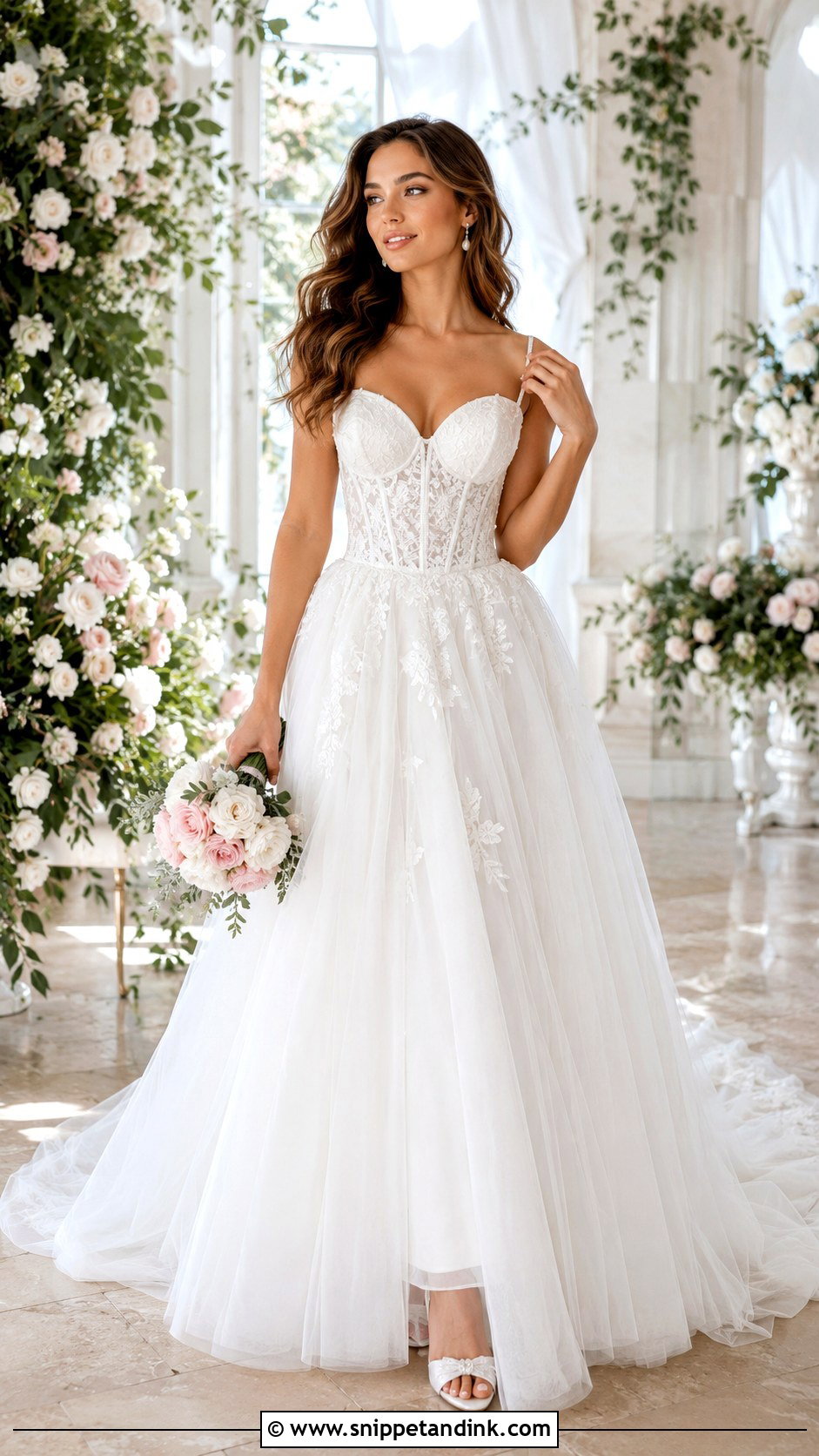
The sweetheart curve softens all that structure, which is probably why it’s the neckline I’m asked for most on corset gowns. The dip should sit centred and the cups should match your bust. If a gap opens at the top edge when you lean forward, that’s a sizing problem, not something to fix with tape. Satin feels classic, lace more feminine, a full tulle skirt more dramatic, and detachable straps give you options. A veil with a clean edge keeps the neckline visible.
17. Drop Waist Corset Wedding Gown
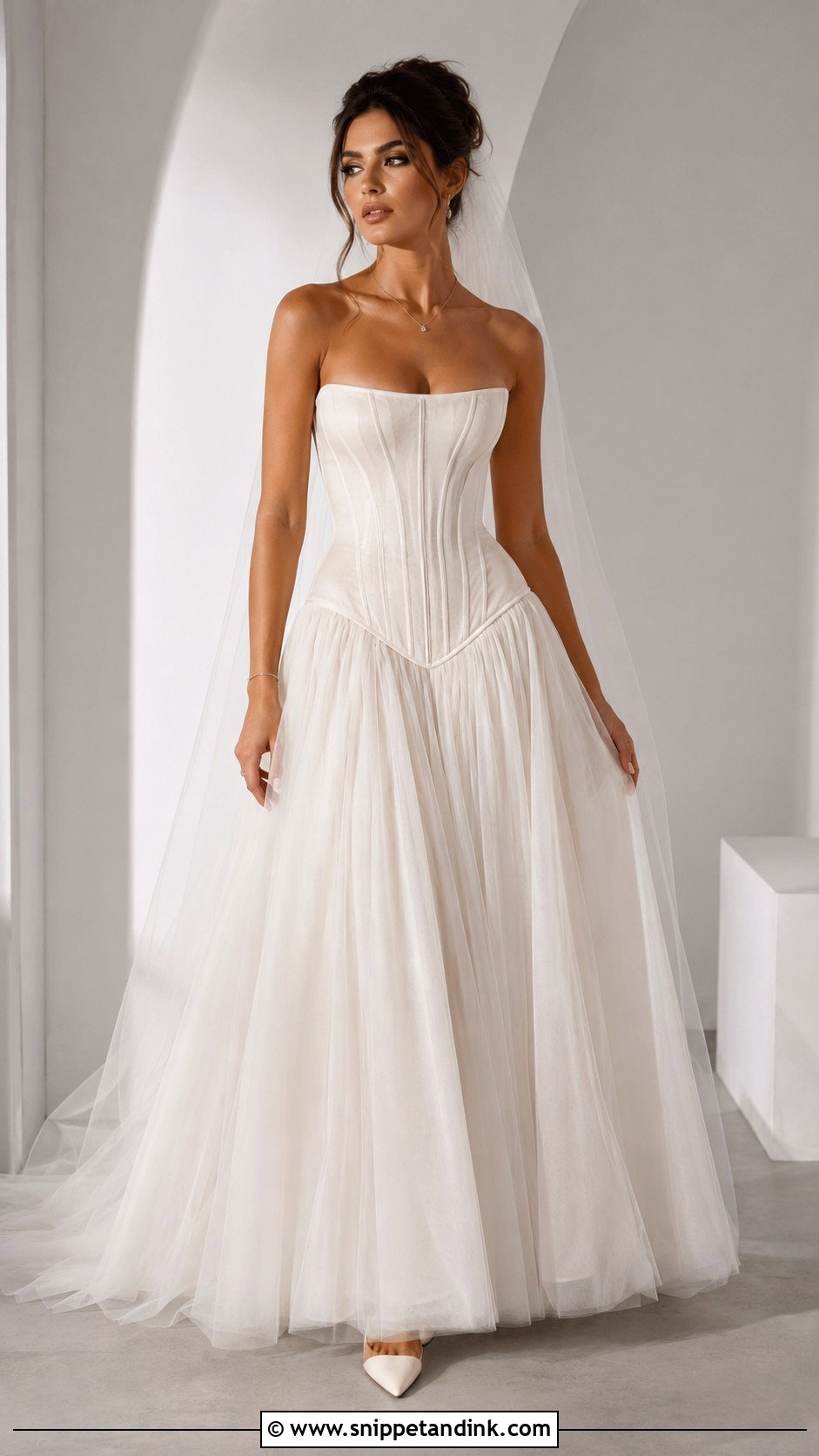
Because the bodice runs past your natural waist, a drop waist corset has to bend with you at the hip. Bones that are too long will poke into your thighs when you sit, so I check the bottom of every bone in a seated position. It suits a full skirt, a flared one or gathered tulle, and in photos it gives a long, statuesque line. Smooth seams matter more here than anywhere. A sleek veil, polished makeup and simple jewelry let the long bodice lead.
18. Corset Wedding Gown With Detachable Sleeves
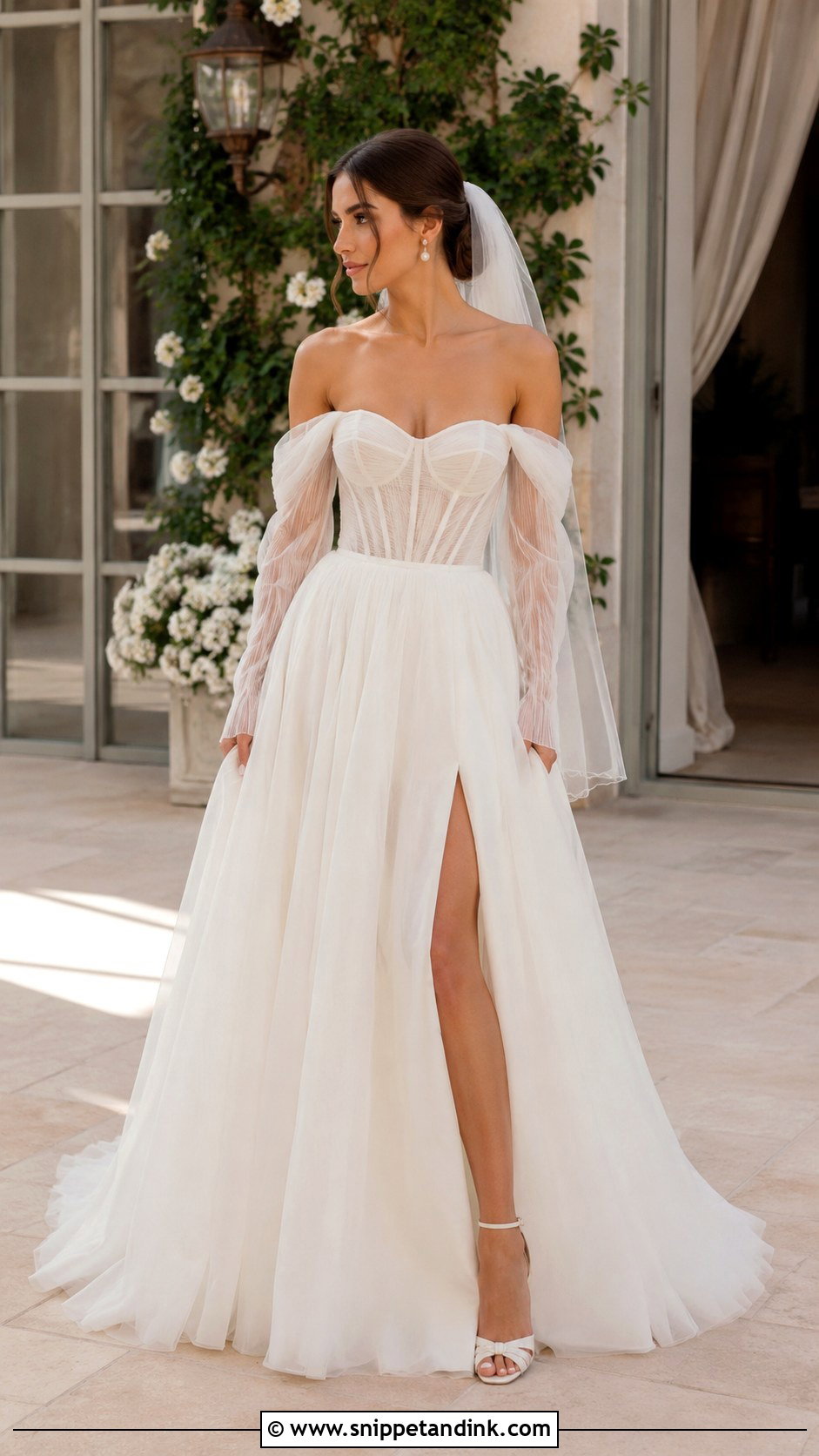
You get two looks without a second dress: coverage and drama for the ceremony, bare arms for dancing. Ask how the sleeves attach. Snaps and hidden hooks are quick, but anything tied or stitched takes longer than you’d expect in a cramped bathroom with a bridesmaid holding your skirt. Off-shoulder, puff, fitted lace and sheer tulle sleeves all work over a corset, which keeps the bodice shaped either way. Bold sleeves want a plain skirt; delicate sleeves suit lace or beading. Soft earrings and comfortable heels carry you through both looks.
19. Corset Wedding Gown With Overskirt
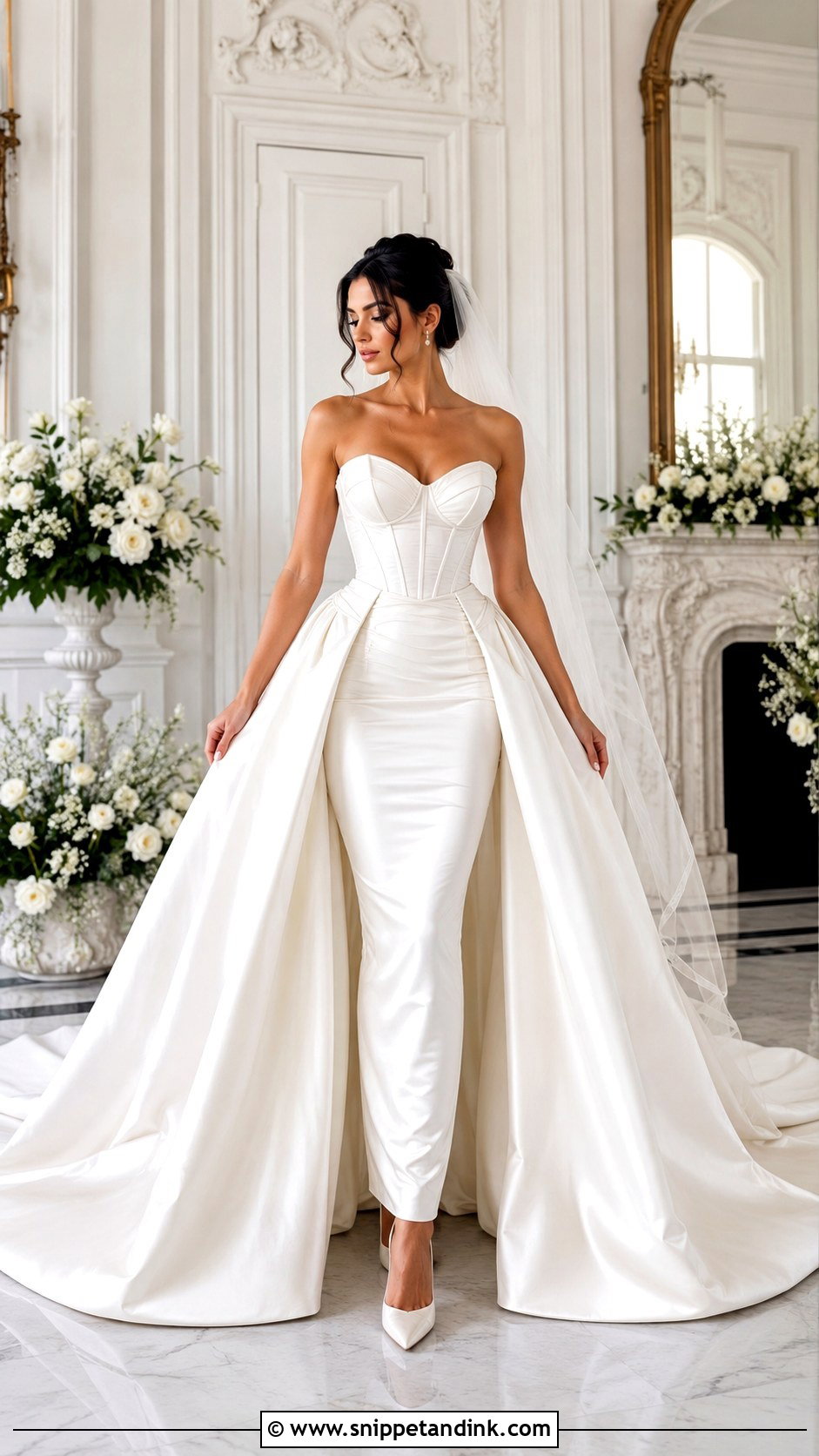
For a big ceremony entrance and a sleeker reception, a corset wedding gown with an overskirt does the job of two dresses. The overskirt usually fastens at the waist with hooks or a hidden button band, and I’d practise taking it off with your bridesmaid before the day. Underneath can be a fitted sheath, mermaid or slim A-line. Satin, tulle and organza layers stay light enough to carry. A statement veil for the ceremony and simple earrings all day keep the styling consistent across both looks.

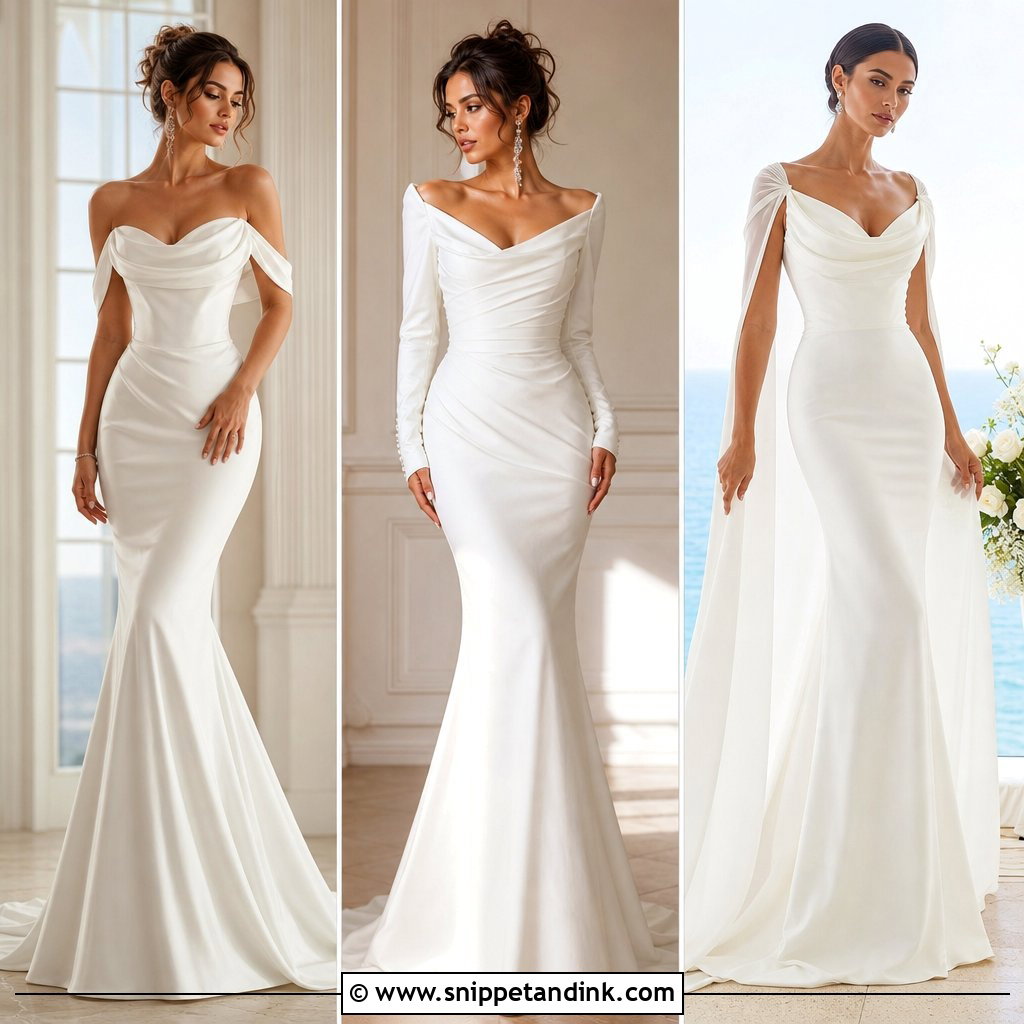


20. Corset Wedding Gown With Slit
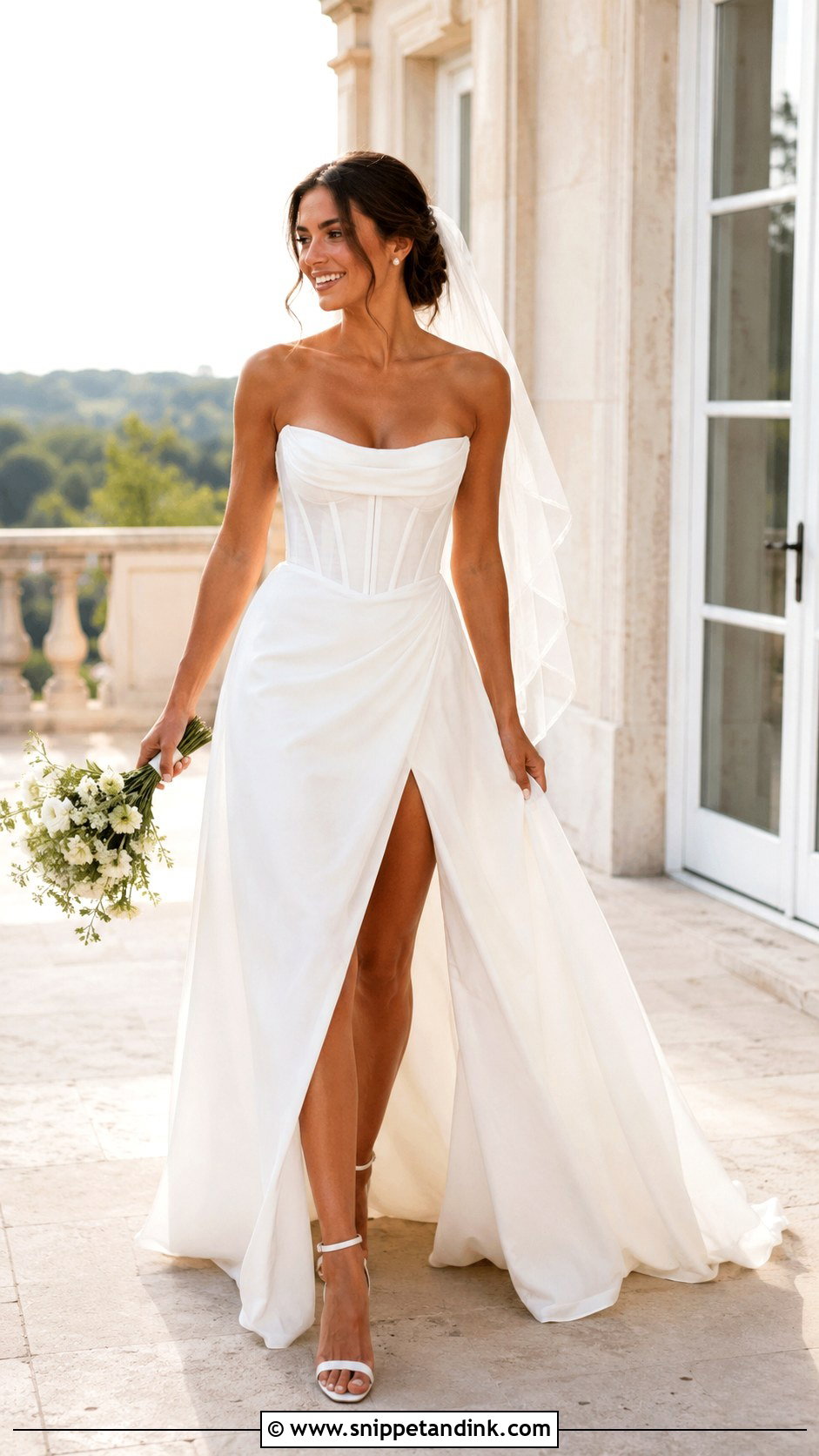
A slit gives you leg room to walk and dance, which is why it pairs so well with a fitted corset top. I check two things: that it stops at a height you’d be happy sitting with, and that it’s reinforced at the top so it doesn’t tear on the dance floor. A satin A-line with a side slit looks polished; fitted crepe looks sleek. Your shoes will show with every step, so wear heels you genuinely love. Minimal jewelry, and it’s well suited to warm-weather and destination weddings.
21. Corset Wedding Gown With Bow
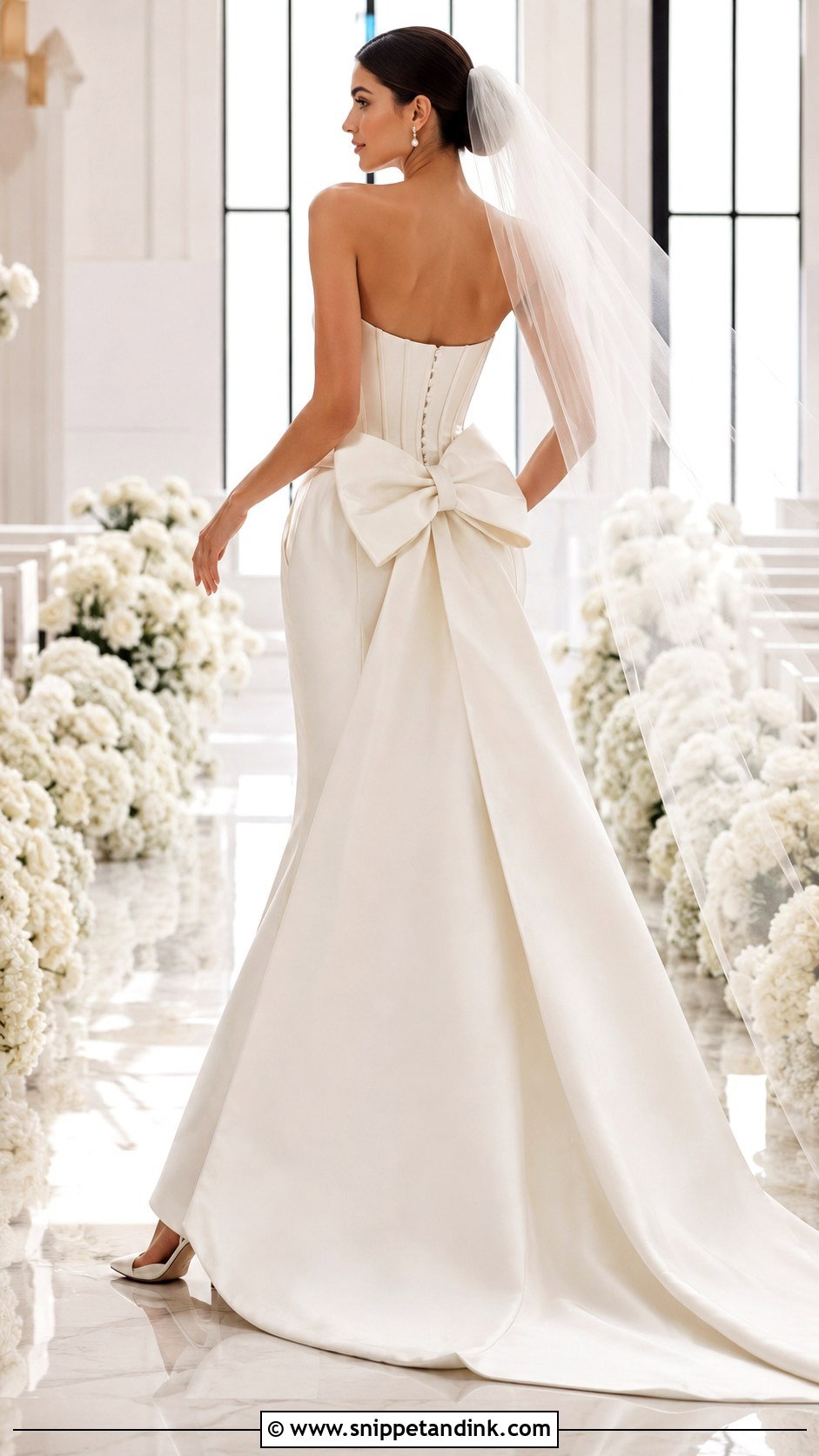
Placement decides everything with a bow. At the back waist it draws the eye to the corset shape as you walk up the aisle; on the shoulder it reads more fashion; on a detachable train it disappears after the ceremony. Satin or mikado holds a crisp, sculptural bow, while organza and tulle bows droop softly. One practical note: a large back bow presses into you against a chair back all evening, so sit in it at the fitting. Keep accessories simple so the bow stays the one detail.
22. Corset Wedding Gown With Train
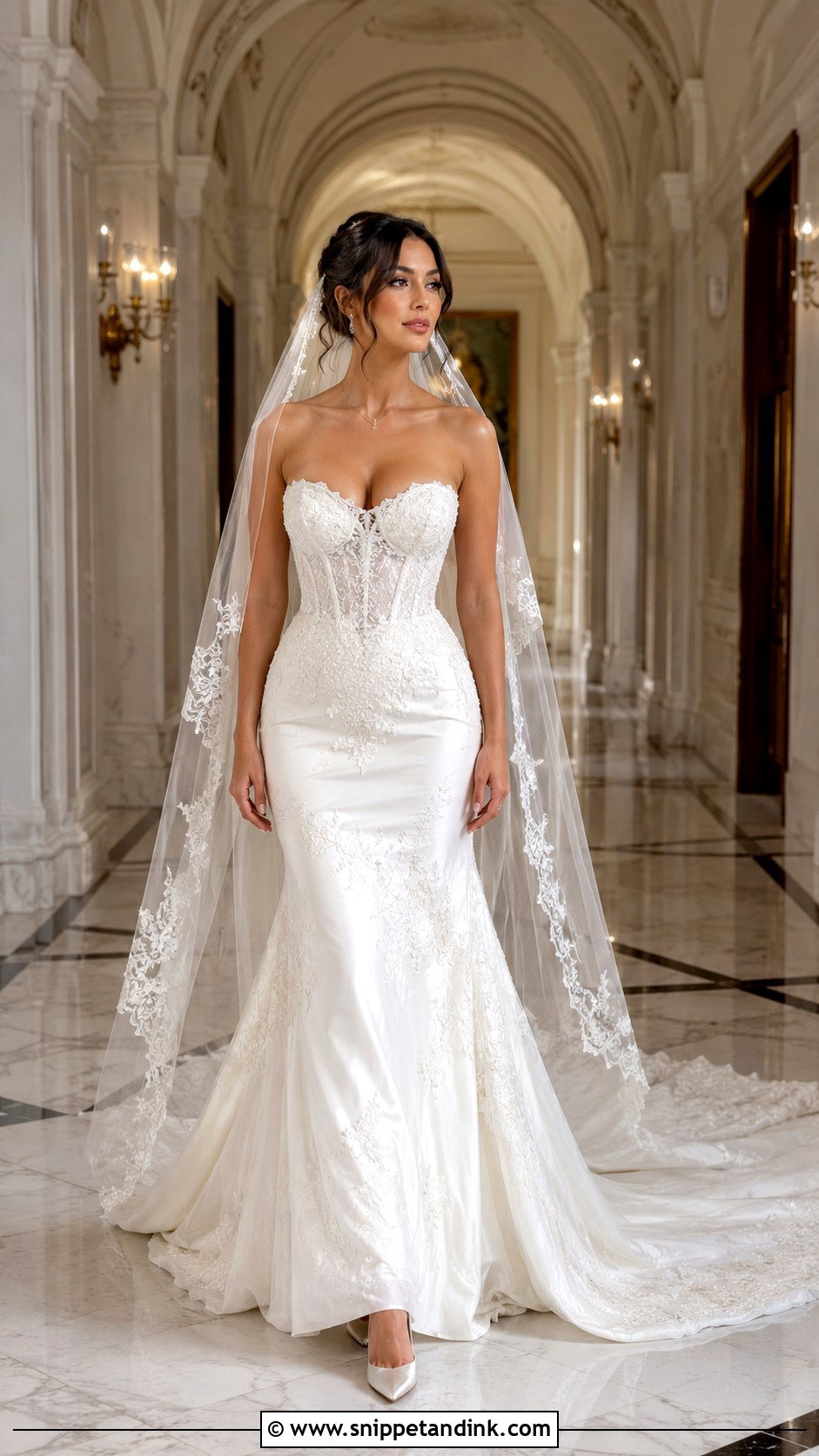
Every train needs a bustle plan, and I’d sort that before you fall for the length. The corset shapes the bodice while the train adds movement behind you, and it works with ball gown, A-line, mermaid and sheath shapes. Long trains suit formal ceremonies; a short sweep is easier on grass, sand and small venues. Ask your seamstress to show your maid of honour how the bustle points hook up, because she’ll be doing it fast. Choose a veil that sits at or above the train length rather than fighting it.
23. Boho Corset Wedding Gown
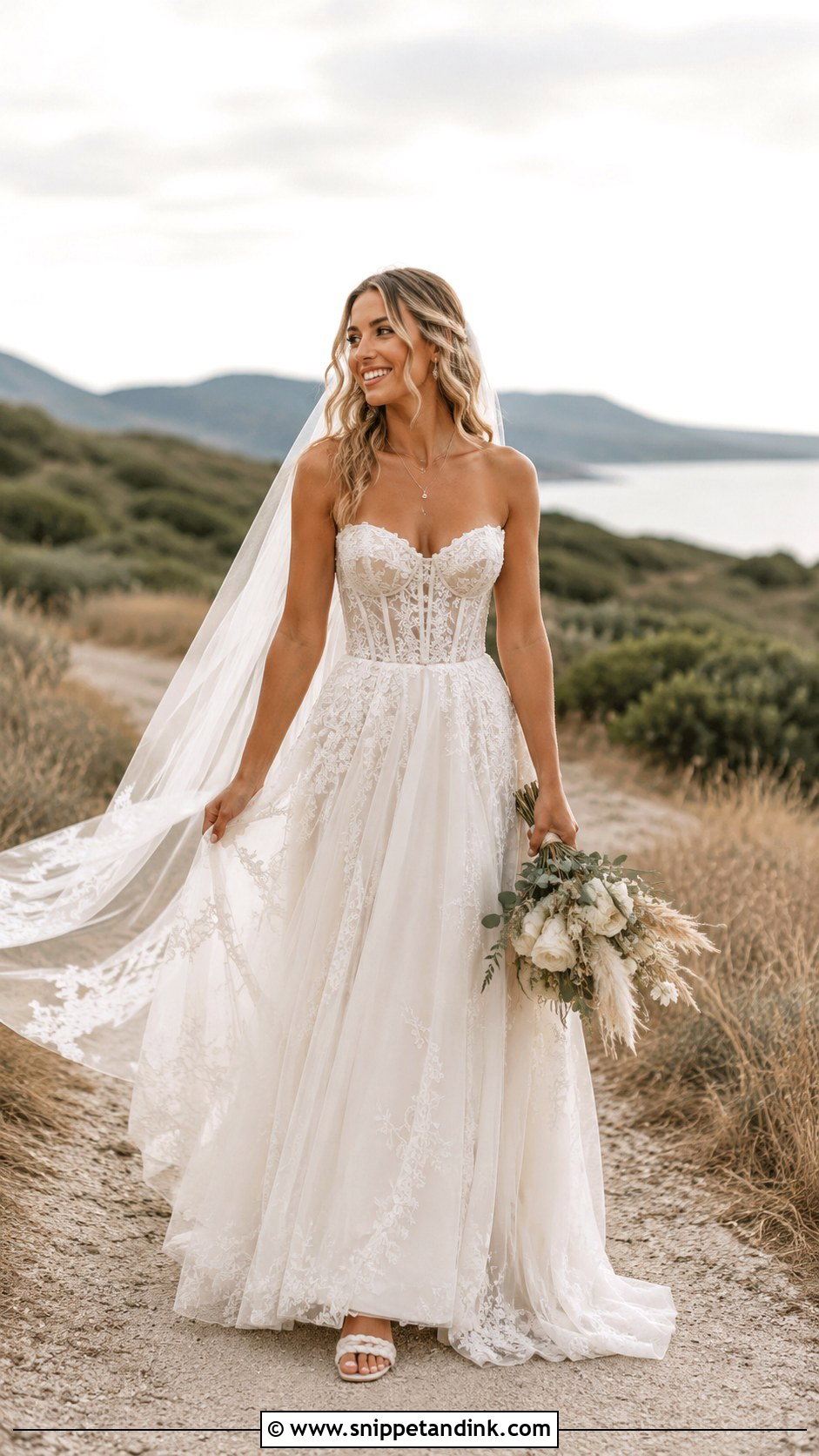
Boho corsets usually use softer boning or lighter construction, so the bodice shapes you without feeling stiff. Lace, soft tulle, floral embroidery and light sleeves are the usual details, paired with a flowing A-line skirt for desert, beach or garden settings. Sand and uneven lawns are why I steer boho brides toward sandals or block heels instead of stilettos. Loose waves, natural makeup and delicate jewelry complete it. The best boho corset gowns feel free and still supportive, and that comes from the construction more than the trim.
24. Vintage Corset Wedding Gown
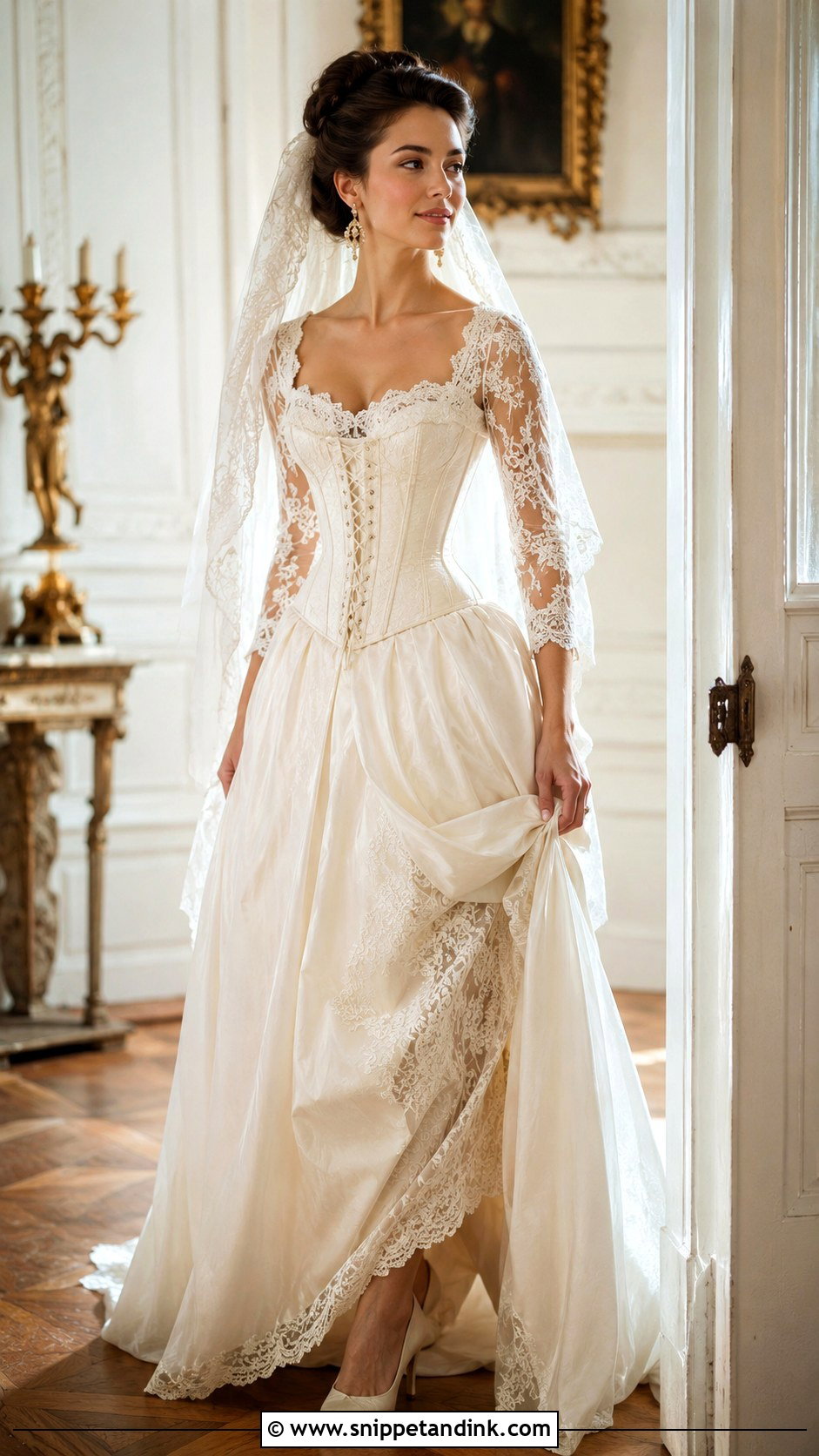
Vintage-style corsets borrow real historical details: lace-up backs, basque waists, covered buttons, lace sleeves and antique-style embroidery. If you’re wearing a genuinely old gown, have a specialist check the seams and lacing eyelets before any alteration, as aged fabric tears at stress points. Ivory, champagne and blush flatter these details more than stark white. A lace veil, heirloom-style earrings and a classic updo are plenty; the dress carries enough detail already. Historic buildings feel like its natural backdrop.



25. Modern Corset Wedding Gown
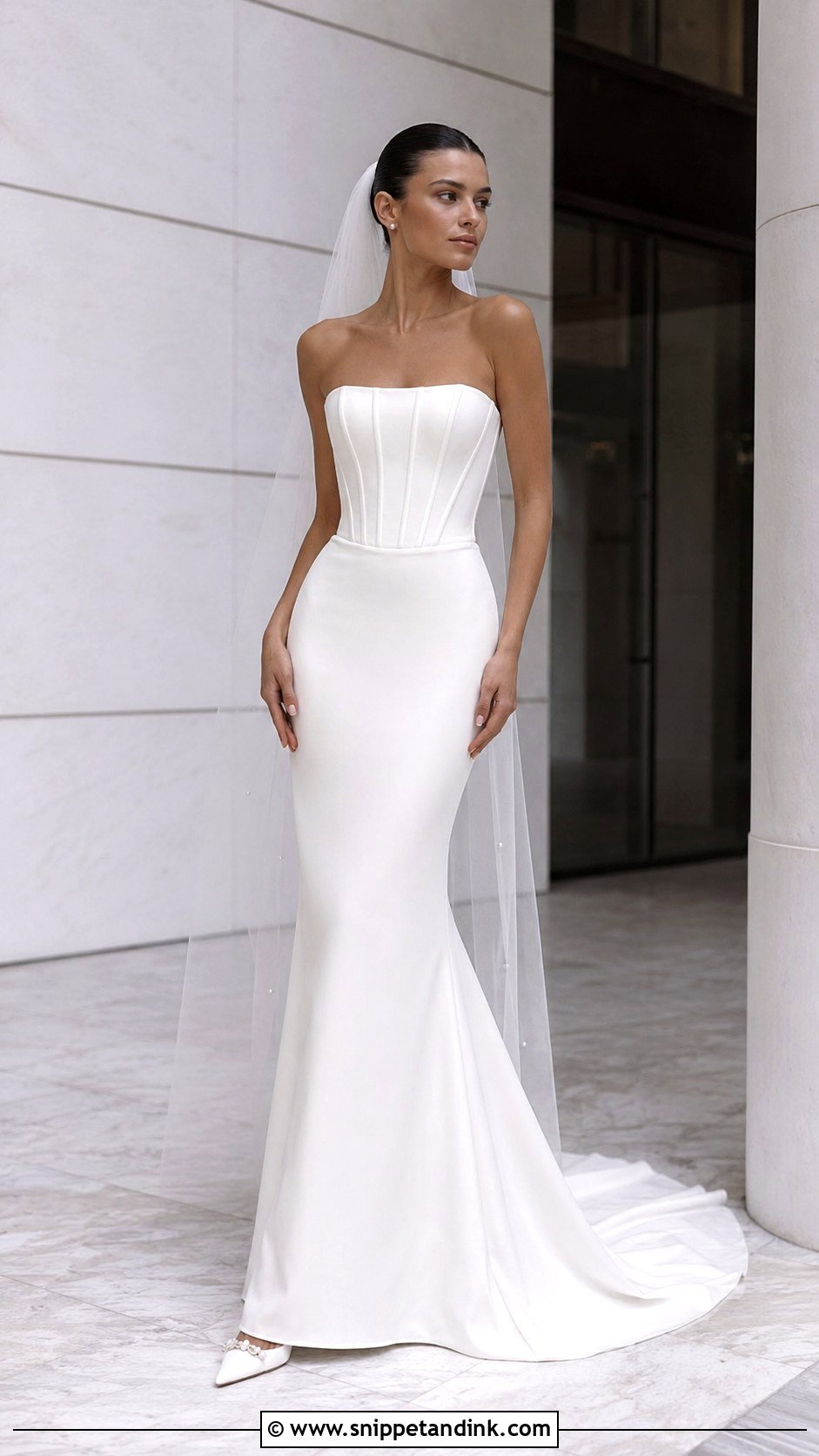
Modern corset gowns put the construction on show: visible boning, a straight neckline, a sleek skirt or a sculpted basque waist. Crisp fabrics such as crepe, satin and mikado keep the lines sharp, while softer fabrics blur them. Slicked-back hair, pearl studs, pointed heels and a plain veil keep the styling as clean as the dress. A detachable skirt or sleeves can add a twist. It’s the one I’d suggest for a city or gallery wedding if decoration simply isn’t your thing.
Alterations on a Corset Gown Take Longer Than You Expect
A corset bodice is built from many panels, so a seamstress can’t simply take in one seam; she adjusts several so the boning channels stay straight. I plan for two or three fittings, starting roughly two to three months before the wedding, with the last one a week or two out. Small weight changes in those final weeks are normal, and a lace-up back absorbs them far better than a zip.
Bring whoever will lace or bustle you to that final fitting. Lacing a corset evenly from the bottom up takes practice, and uneven tension makes the back pucker in every rear-view photo.
Eating, Dancing and Lasting the Night in a Boned Bodice
A well-fitted corset shouldn’t stop you eating, but a big plate pushes against a structured waist more than it would in a soft dress. I tell brides to graze through the evening instead. If the back laces, loosen it a notch after the formal photos; nobody will see the difference.
- Sit tall rather than slumping. Slouching is what bends plastic bones and creases satin across the stomach.
- Keep fashion tape, a needle with ivory thread and a few safety pins in your bag for a popped hook.
- If a bone starts working through its channel, a folded plaster over the tip holds it until morning.
- After the wedding, let the gown air on a padded hanger before cleaning, then store it with tissue in the cups so they keep their shape.
A Corset Should Let You Breathe Through the Vows
Corsets stay popular because they give support and shape at once, and almost any fabric or detail sits happily on that base. What matters more is how the gown behaves off the fitting pedestal, when you’re walking, sitting, hugging and dancing. Check the boning, lining and alteration plan before you sign anything. Take the ideas above to your appointments as a starting point, and trust the dress you forget you’re wearing after ten minutes.
You'll Like These Ideas:







Leave a Reply