
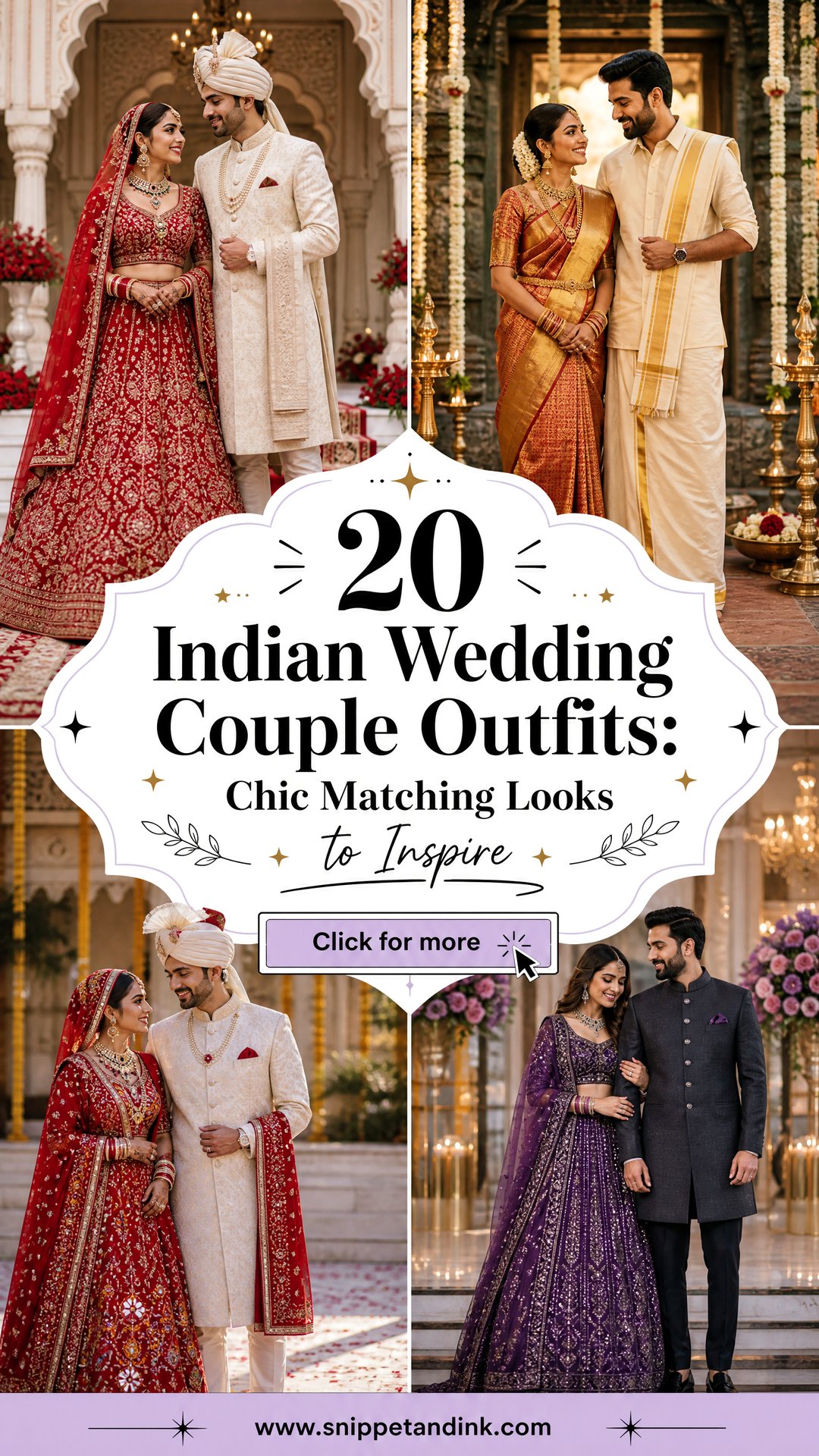
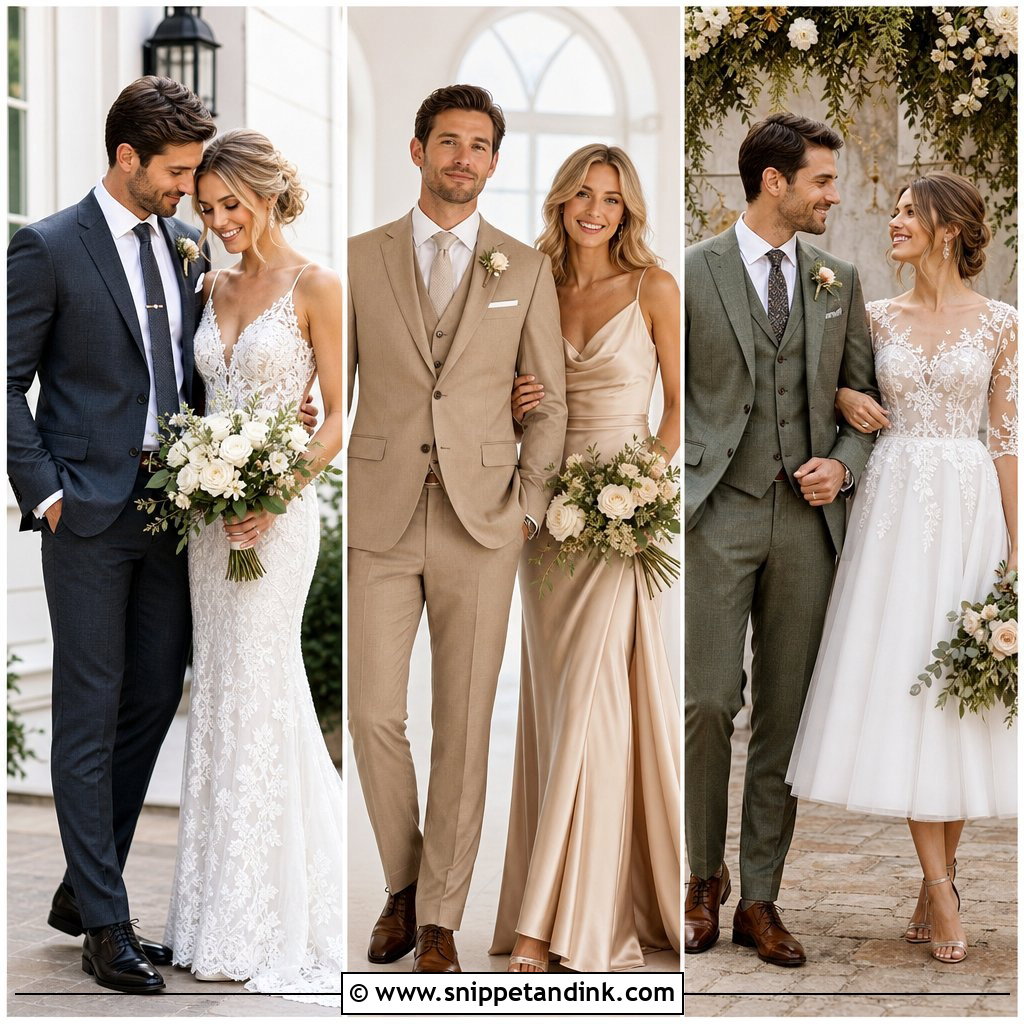
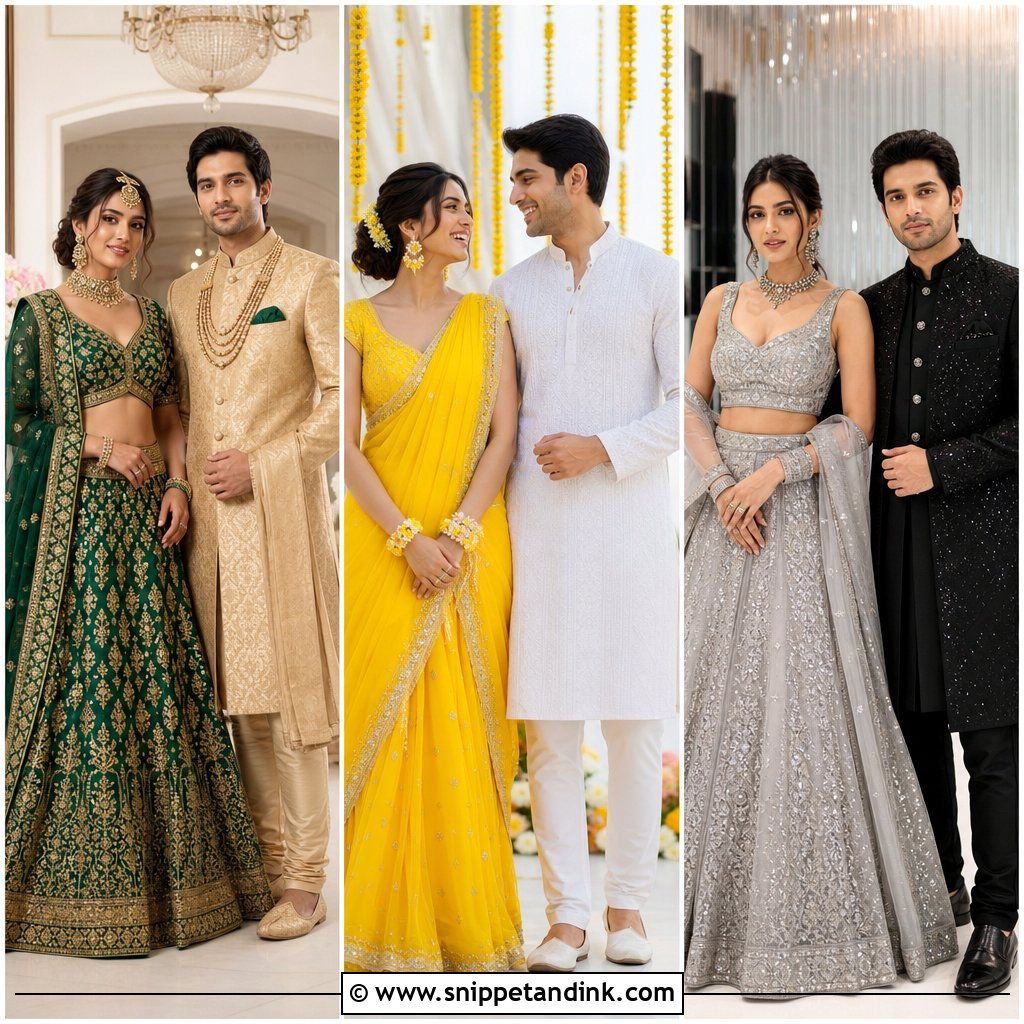
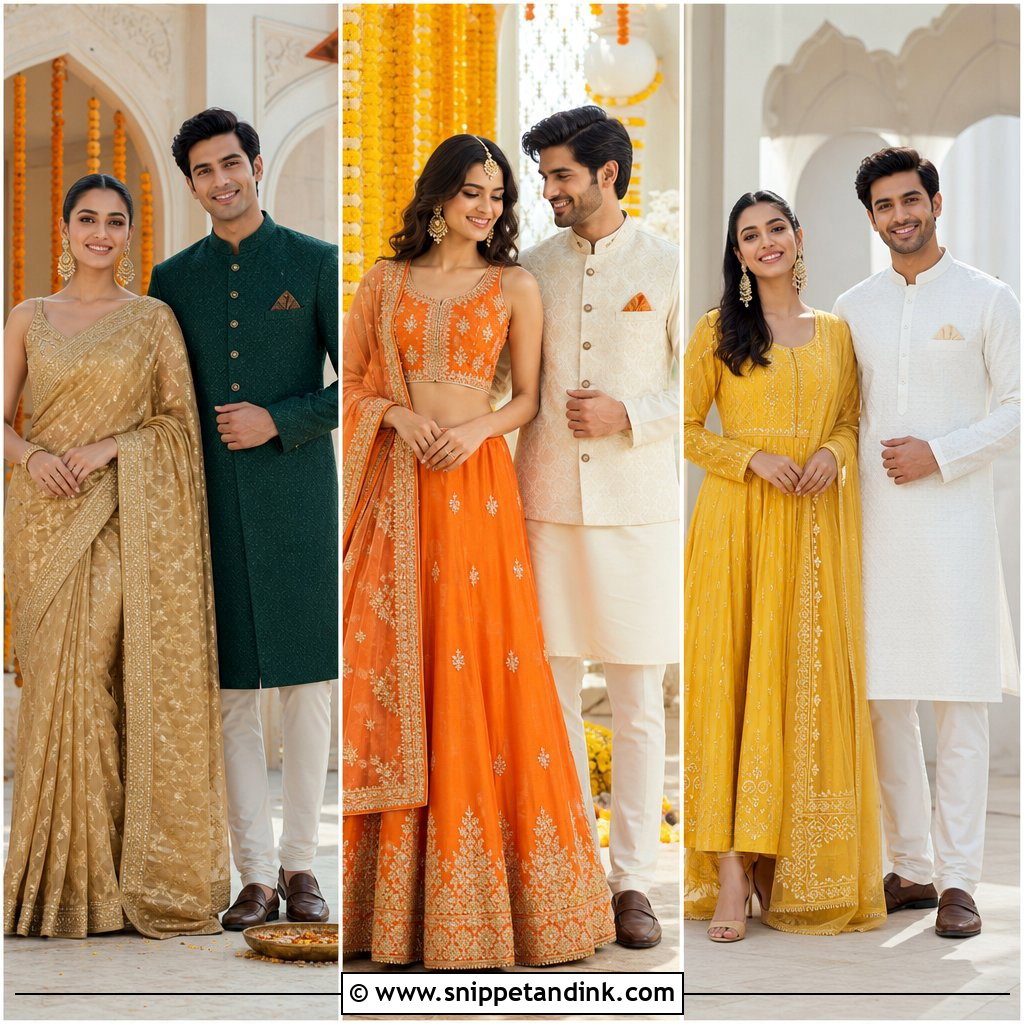
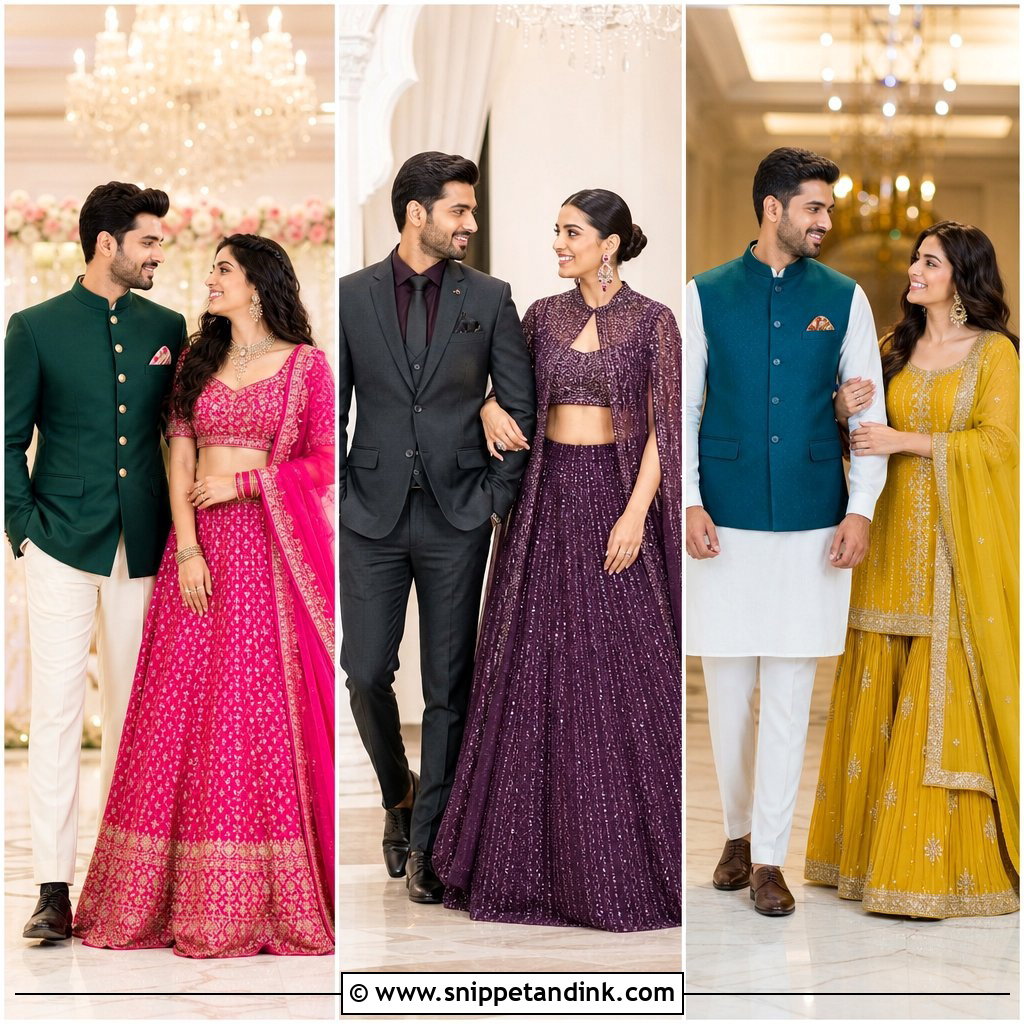
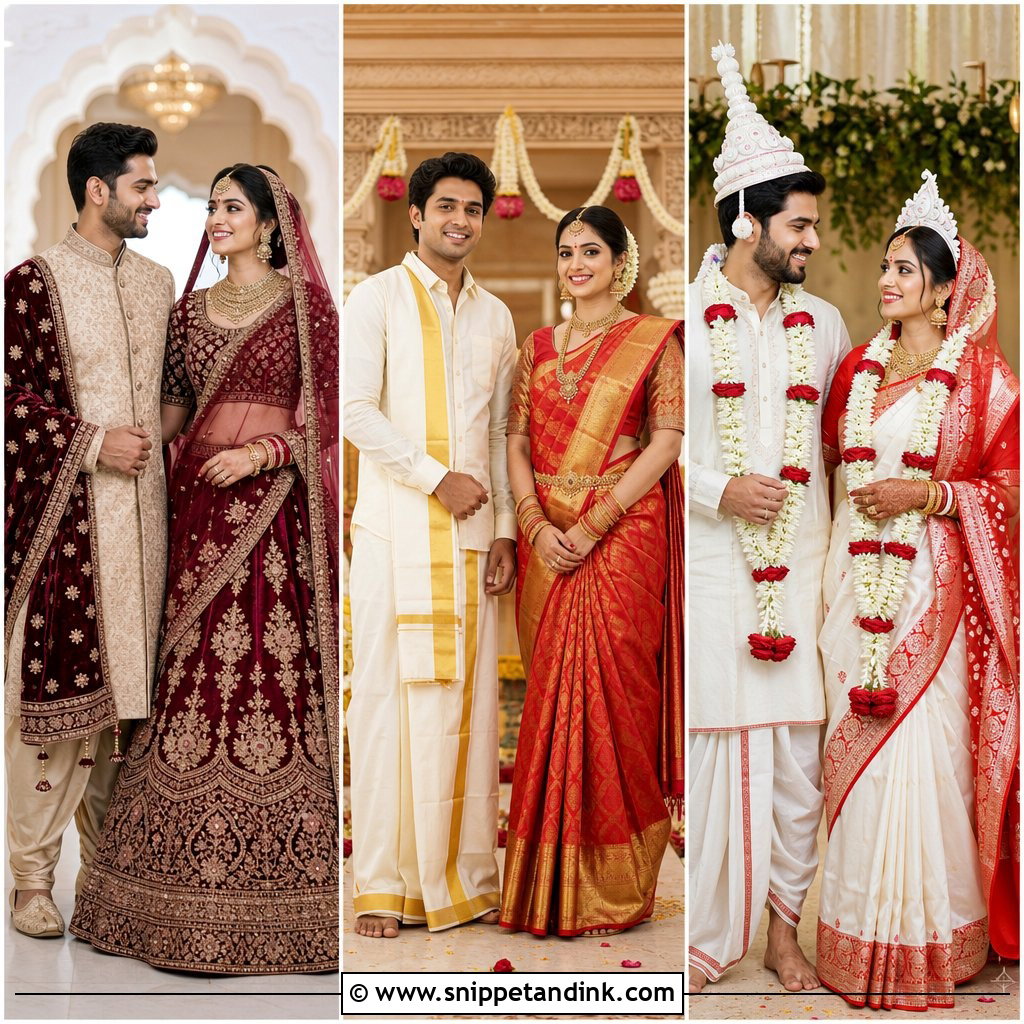
Most of my work is dressing grooms, and half of that job is making his outfit sit well next to hers without copying it. Couples who match head to toe in one shade tend to look like a costume pair in photos. The pairings that work repeat one thing, an embroidery motif, an accent colour, a fabric texture or a metal finish, and let everything else differ. Before choosing heavy fabrics or extra layers, think about the ceremony, venue, weather and how much moving you’ll both do. Daytime suits lighter colours; jewel tones and reflective work come into their own at night. Here are twenty couple pairings, from traditional red bridal wear to modern receptions, with the coordination detail I’d focus on in each.
Swatches Beat Screenshots When Matching His and Hers
Couples often try to coordinate using phone photos of each other’s outfits, and that’s where most of the mismatches I see begin. Screens shift colour, and shop lighting shifts it again. The process I use keeps both outfits matched in real fabric.
- Order the bride’s outfit first. Hers usually has the longer production time and sets the palette.
- Ask her designer for a small fabric swatch and, if possible, a thread sample of the embroidery. Most bridal workshops will give one.
- Take that swatch to the groom’s tailor or store and match his accent colour against it in daylight, not under shop spotlights.
- Decide on the one shared element, such as a border, a metal tone or an accent colour, and write it down so nobody adds a second one later.
- Book a joint trial near the date and stand side by side in the venue-type lighting, or at least at both daylight and warm evening light.
1. Red Lehenga And Ivory Sherwani Couple Outfit
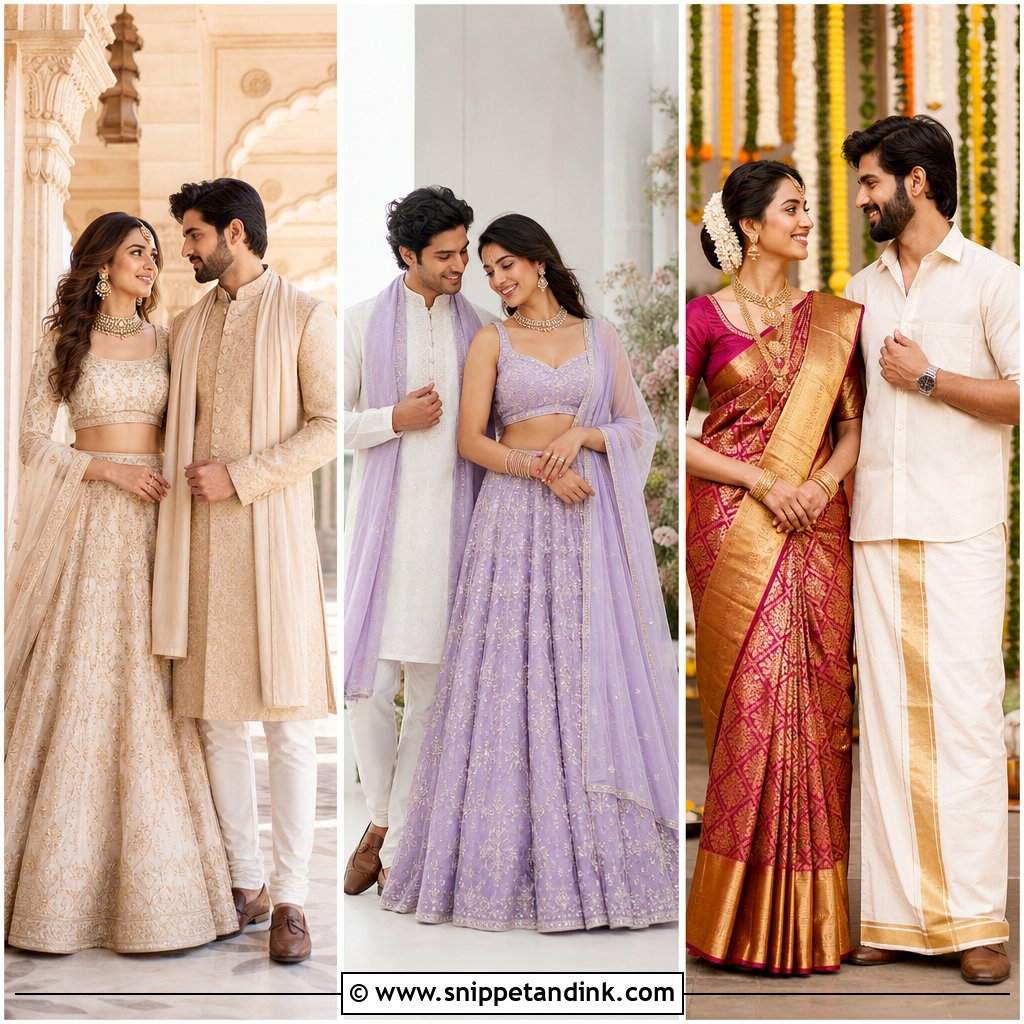
Red and ivory is the classic for good reason: the ivory sherwani makes the bride’s crimson look even richer beside it. With her lehenga in gold zardozi or thread embroidery and a red dupatta over the head, I dress the groom in an ivory silk sherwani with light gold detailing, then bring the red in through his stole or safa. His embroidery should always be a step lighter than hers. One thing I check on ivory silk is the shoulder seam; it shows every pucker, so the jacket needs to be fitted with the stole on, since the stole’s weight drags one side down.
2. Blush Pink Lehenga And Beige Sherwani Couple Outfit
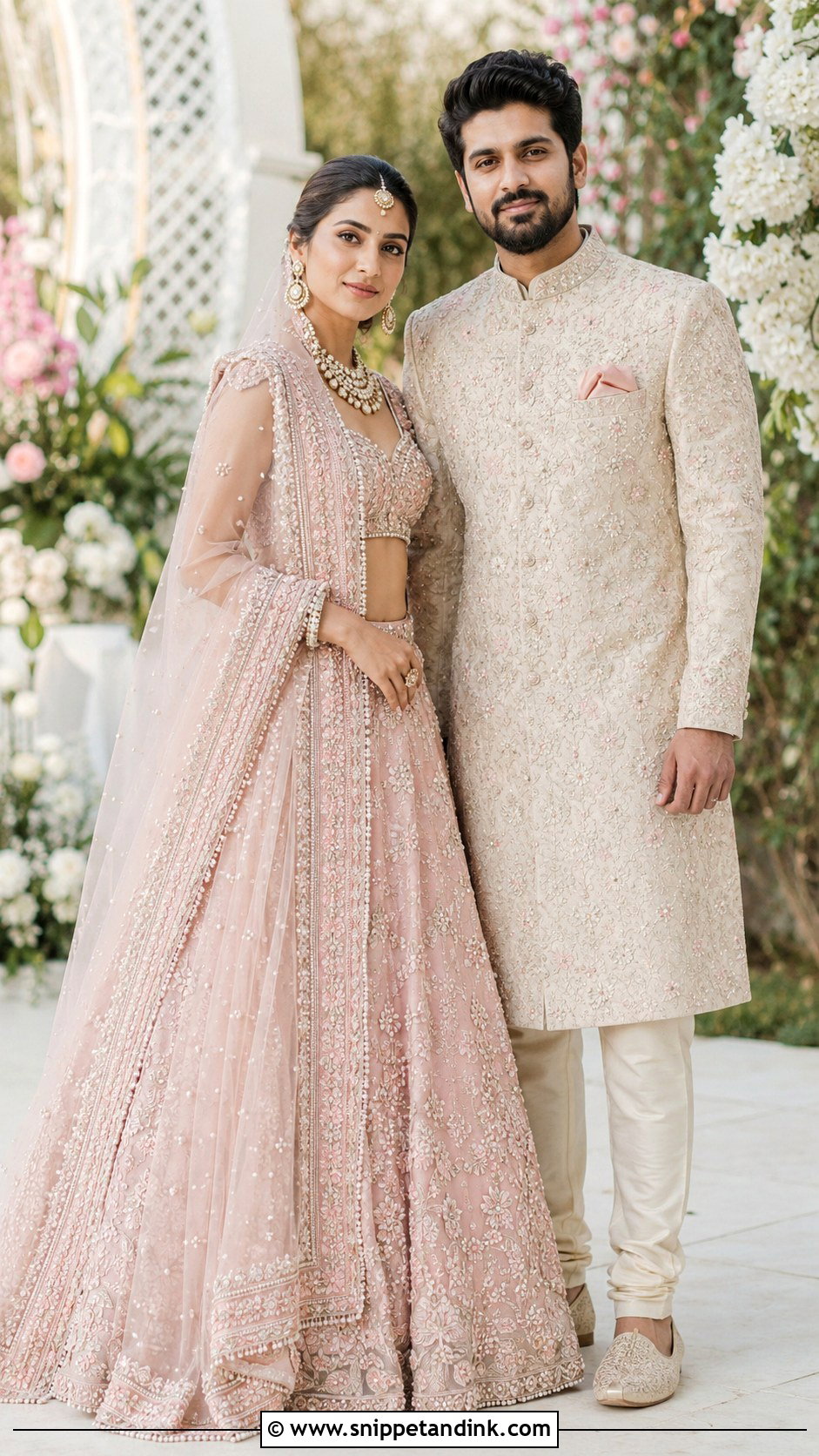
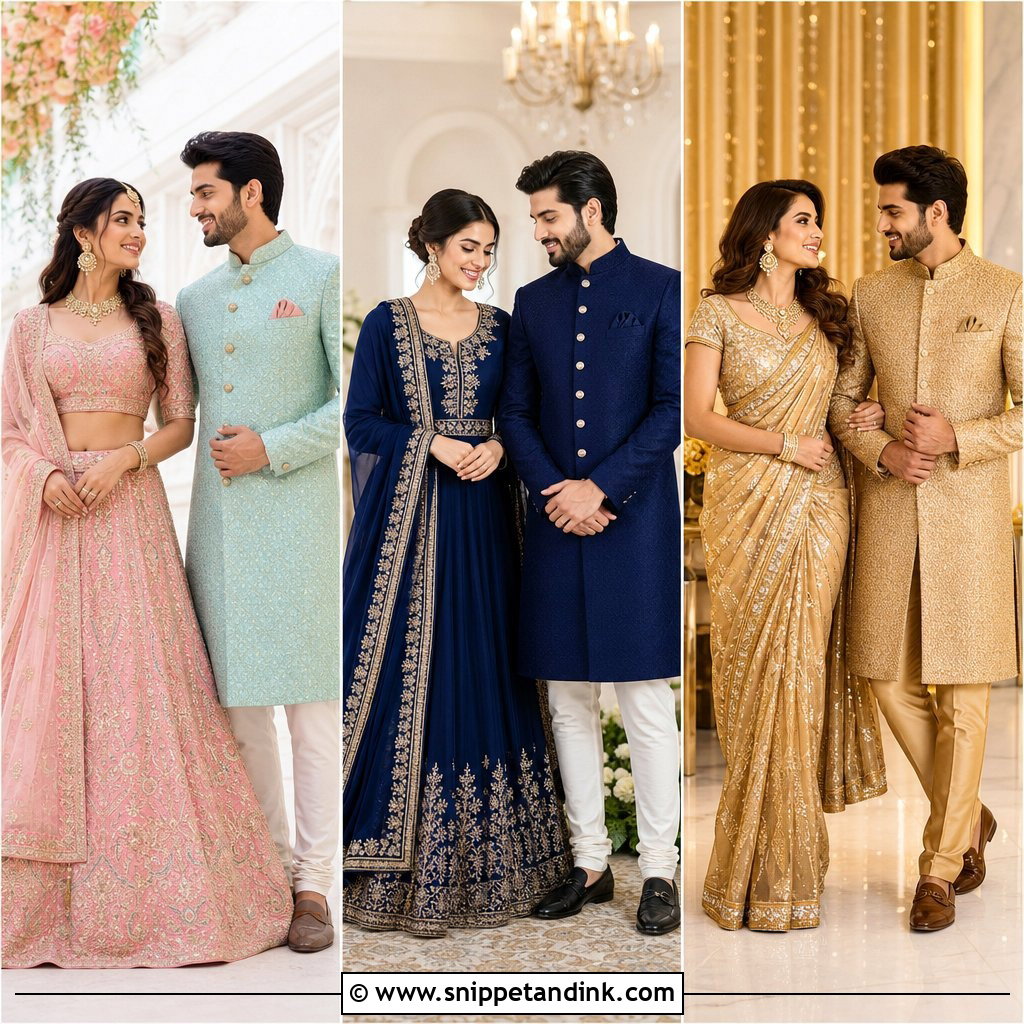
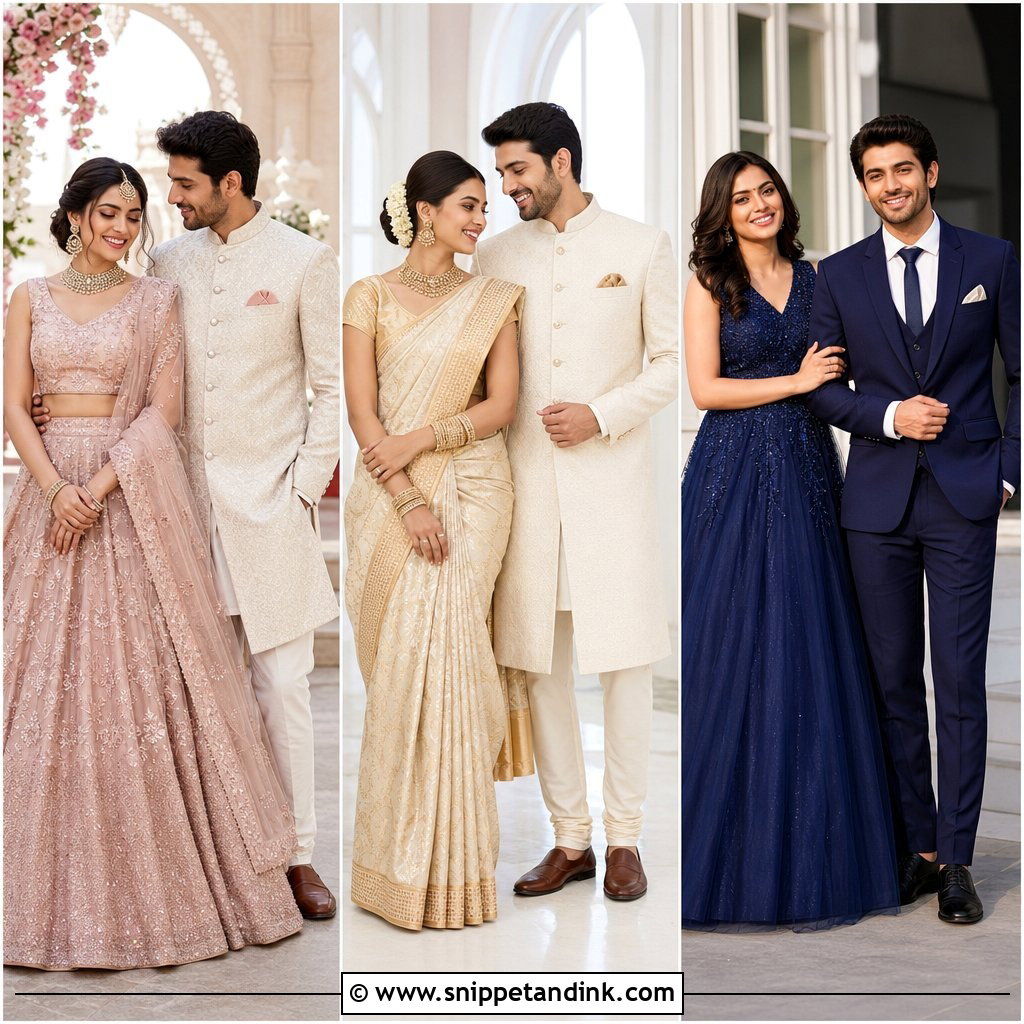
For a daytime wedding, blush and warm beige look soft without washing either person out. The bride’s blush lehenga can carry pearl work or floral embroidery; the groom’s beige or champagne sherwani picks up a little pink in its threadwork. Then stop. A blush pocket square or stole is enough, and a pink turban plus pink embroidery plus pink shoes is too much. Beige needs care with skin tone: on fairer grooms, a beige too close to his skin can make him look washed out, so I hold the swatch against the face in daylight before ordering. Matte fabrics suit daylight; add a few sequins if the ceremony runs into evening.
3. Emerald Lehenga And Black Bandhgala Couple Outfit
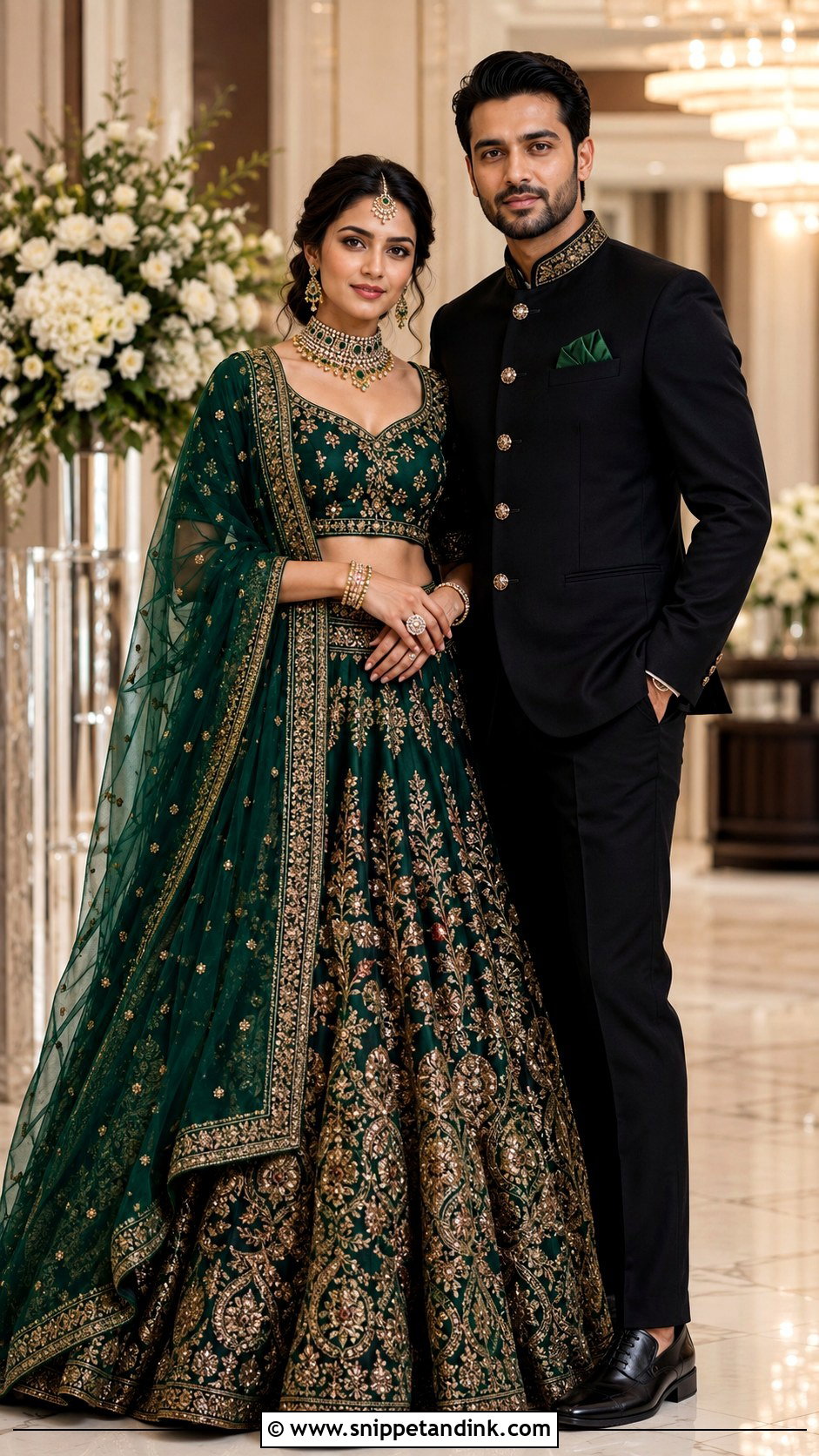
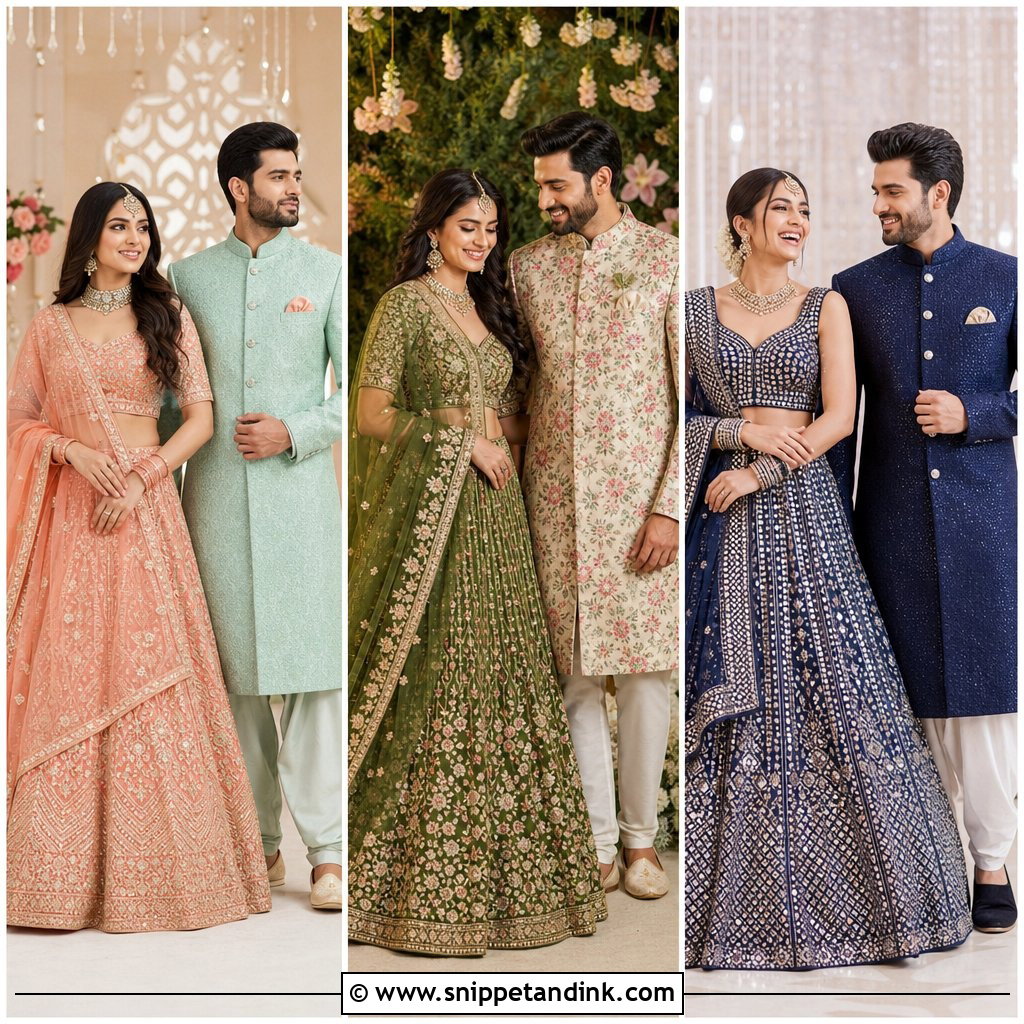
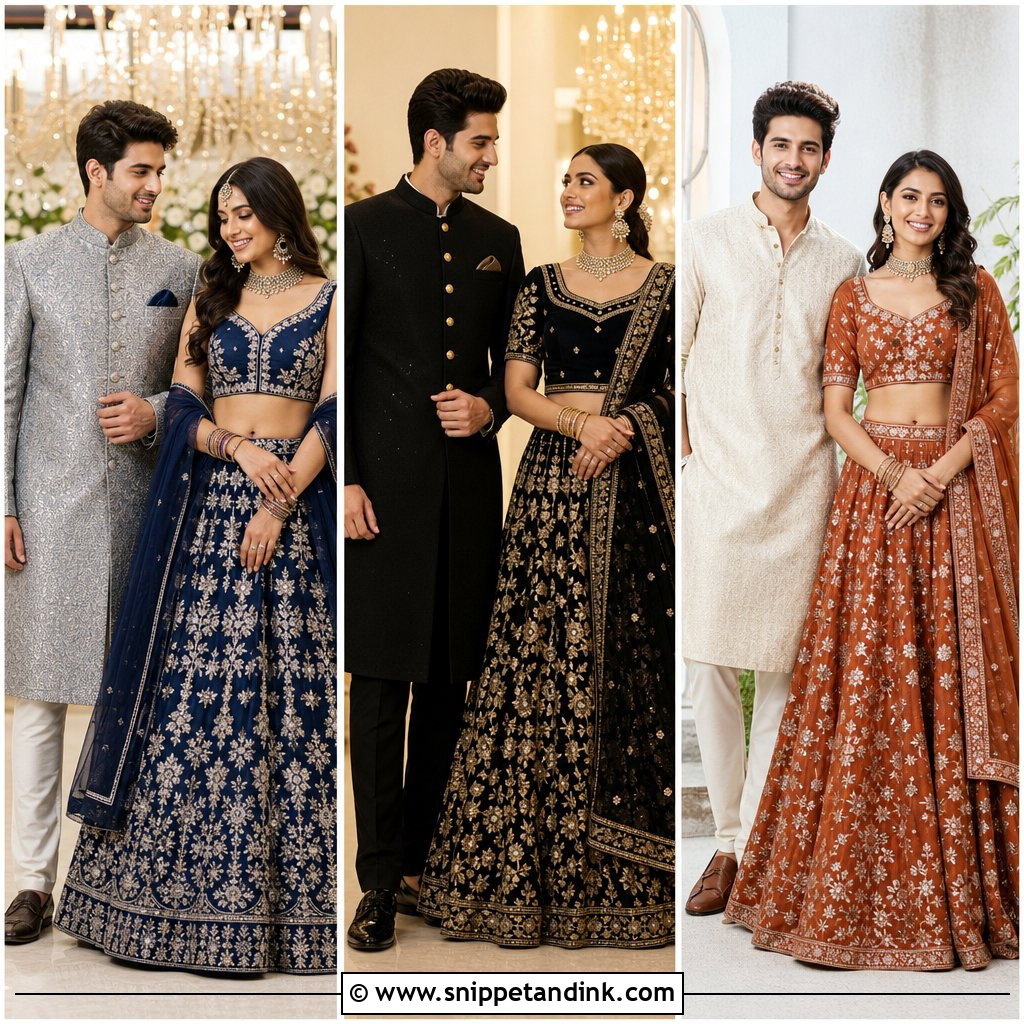
Emerald and black is a reception pairing for couples who want something sharper than gold and red. Her emerald lehenga in velvet or raw silk with antique gold work deepens under ballroom lighting. For him, a tailored black bandhgala with emerald buttons or a green pocket square ties it together. A bandhgala has a closed high collar, so the collar fit matters more than anything: two fingers of room, no more, or it rides up when he turns his head. Pointed dress shoes make it modern, black mojaris keep it traditional. Leave it at three colours: emerald, black and gold.
4. Yellow Lehenga And Ivory Kurta Haldi Couple Outfit
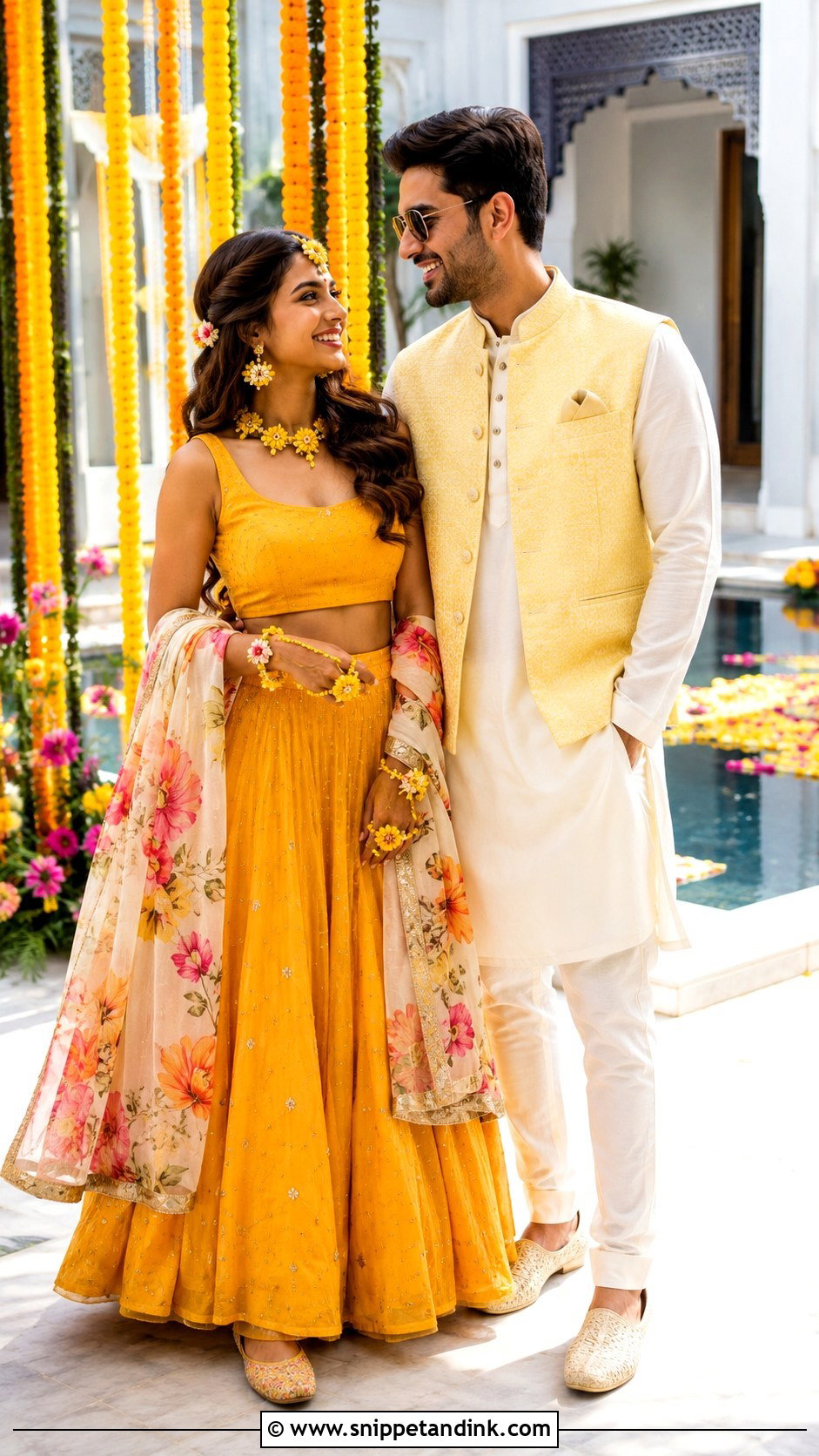
At a haldi ceremony, both of you will get turmeric on your clothes, so I keep both outfits washable. Her lightweight marigold or lemon lehenga with gota or mirror accents, and his ivory kurta with relaxed pyjama and a yellow Nehru jacket or stole, connect through the yellow. I tell grooms the ivory kurta is close to a write-off: cotton can be rinsed in cold water that day, but turmeric on ivory silk rarely comes out completely. Flat juttis for her and neutral mojaris for him keep things steady on a wet floor, and flower jewellery adds the fun.
5. Green Sharara And Floral Kurta Mehndi Couple Outfit
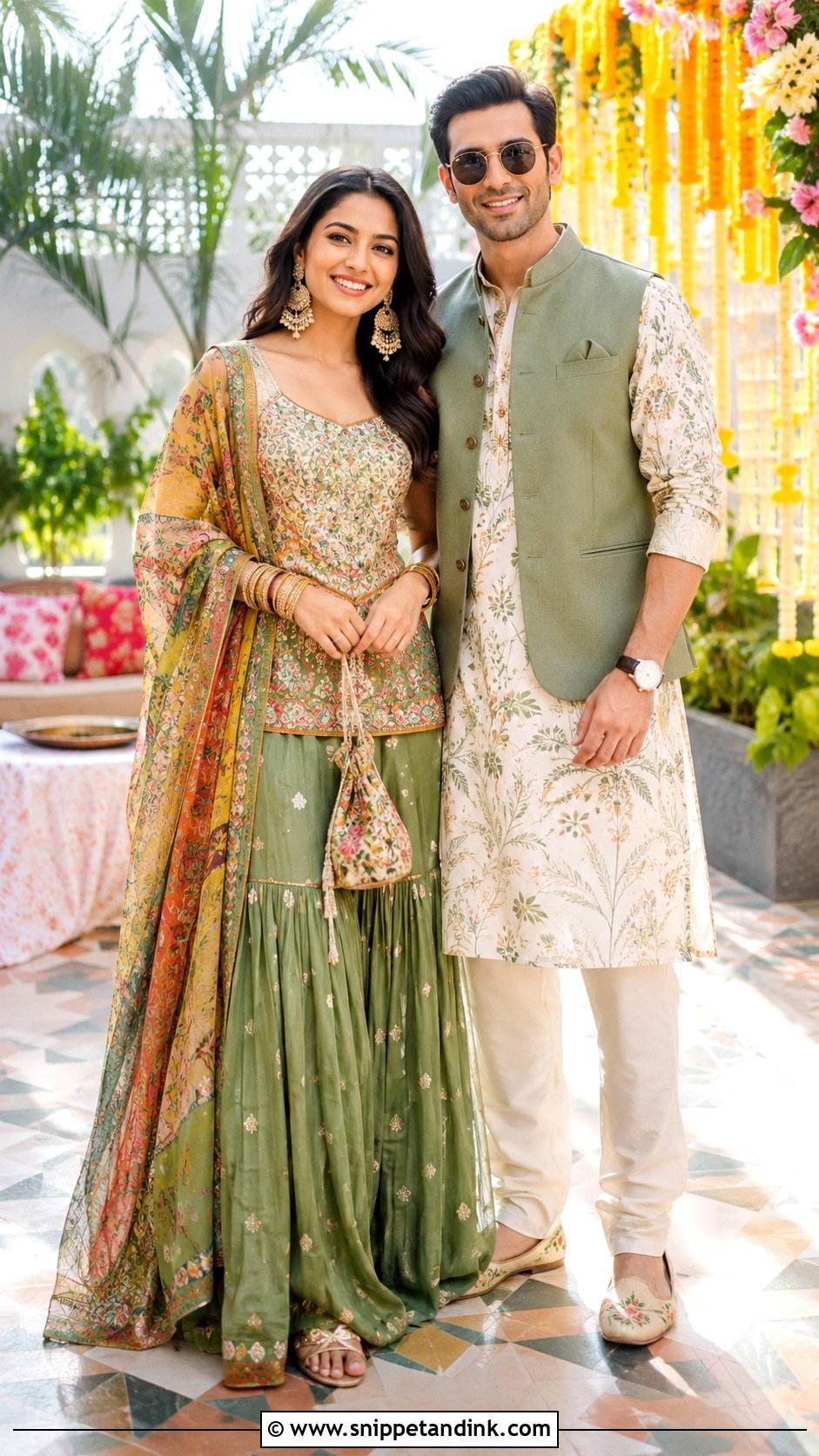
Green pairs naturally with mehndi decor. She wears an emerald, lime or parrot-green sharara with a short embroidered kurti and colourful threadwork; he wears an ivory kurta with a small botanical print, cream pants and a green Nehru jacket. The print is the link, so the greens don’t need to match exactly. Grooms often get mehndi too, so roll his sleeves or keep them short and loose. A hands-free potli for her and comfortable juttis for both make sense, since wet henna stops anyone fixing their clothes for an hour.
6. Mirror Work Lehenga And Navy Sherwani Sangeet Outfit
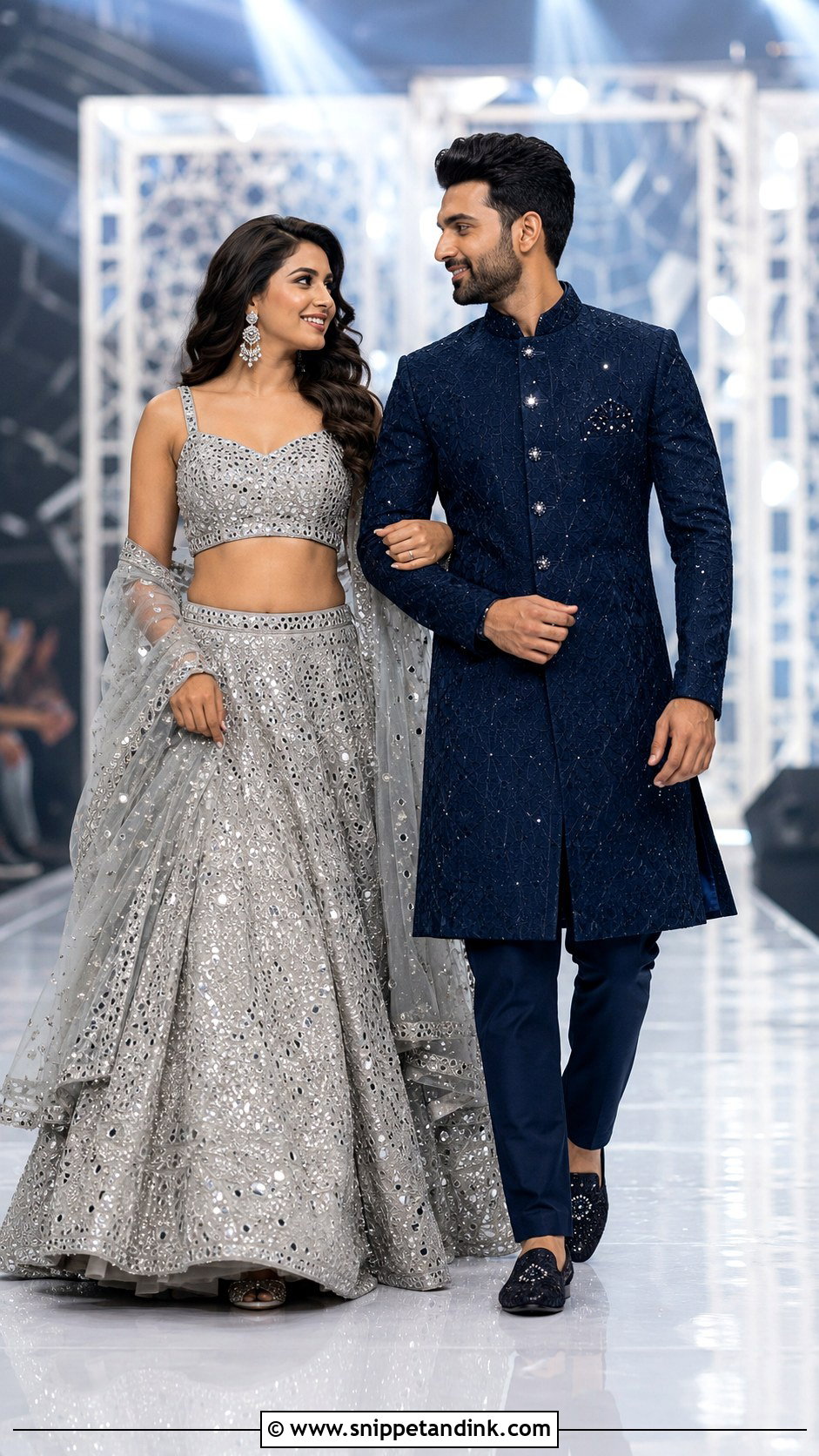
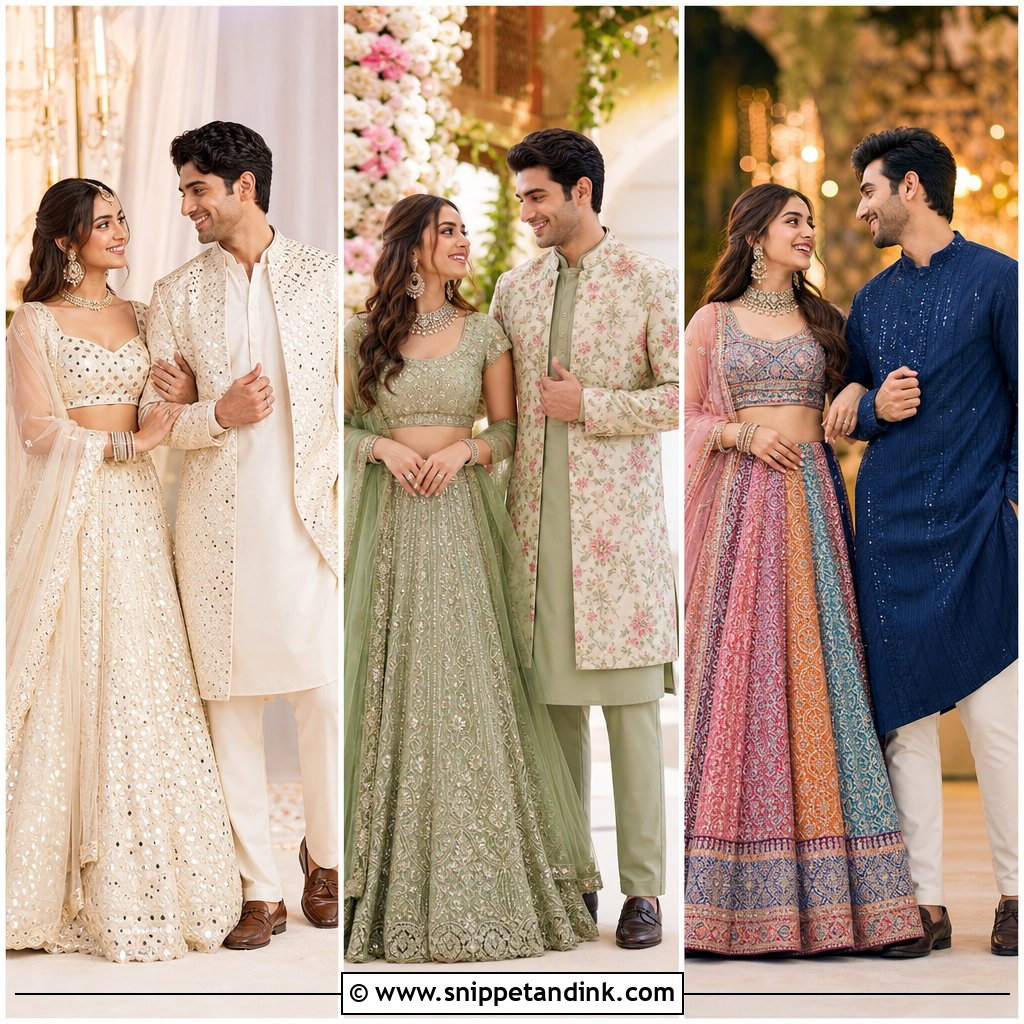
At a sangeet, the bride’s silver mirror-work lehenga will be catching every stage light, so I keep the groom’s navy sherwani mostly matte with a few mirror details at the collar, cuffs or placket. Too much mirror on both makes the pair glare on camera. Her skirt hem should clear her shoes when she spins; his sherwani needs extra ease across the back for choreography, which I add with a slightly deeper back pleat or a softer lining. Navy trousers and dark loafers keep him streamlined, and silver jewellery suits her without competing with the mirrors.
7. Gold Lehenga And Midnight Blue Bandhgala Couple Outfit
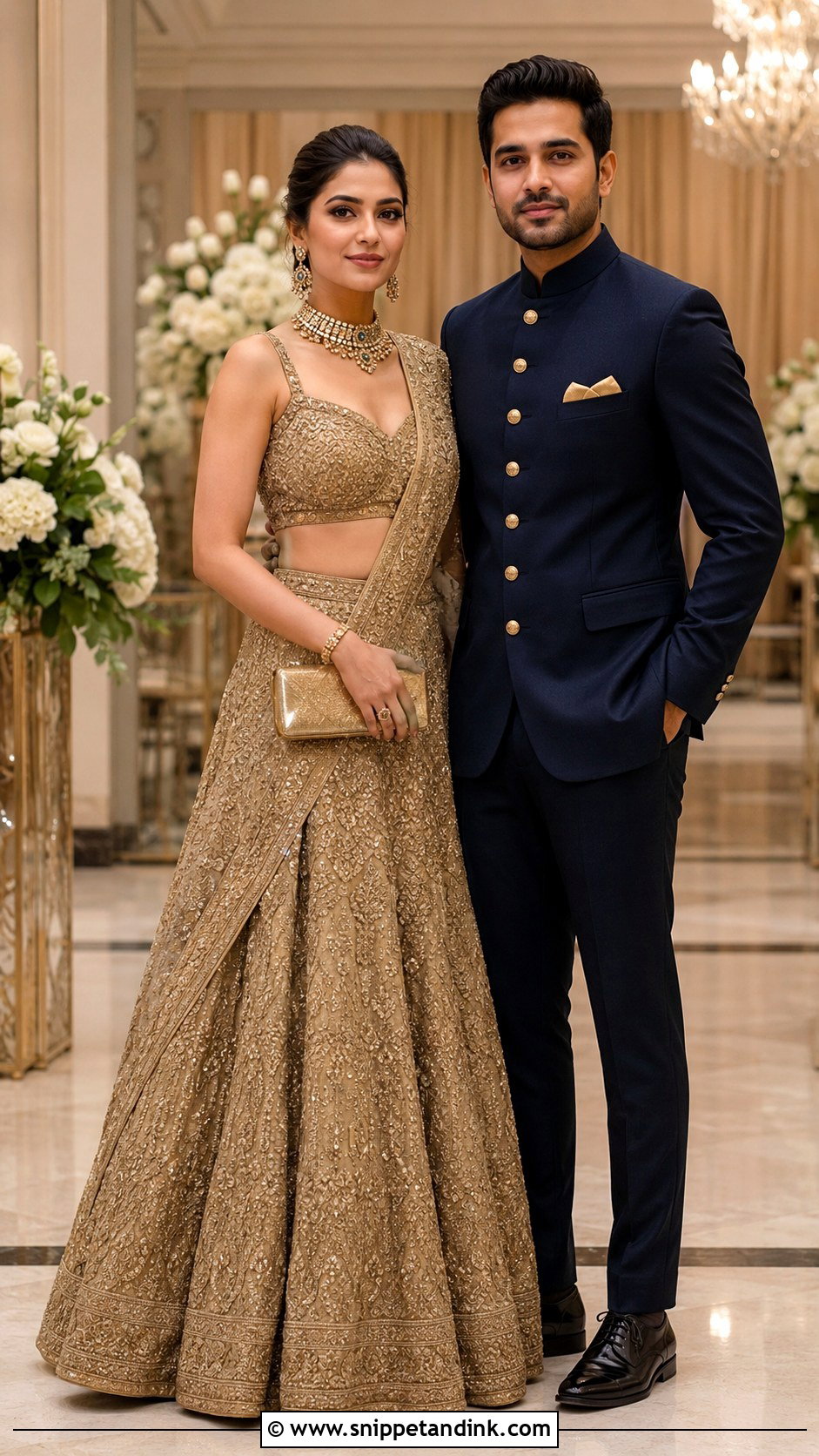
For a formal reception, antique gold and midnight blue look grand without any red. Her gold lehenga should stay in one consistent gold; mixing yellow gold, rose gold and silver threads looks busy. His midnight blue bandhgala with gold buttons and light embroidery at the neckline provides the dark frame. A gold pocket square ties him back to her. Midnight blue can read as black indoors, so I check it under warm lighting at the trial; if it looks black, choose a shade lighter. Polished black shoes finish his look, and she can pick diamond, kundan or emerald jewellery depending on how much contrast she wants.
8. Kanjeevaram Saree And Cream Veshti Couple Outfit
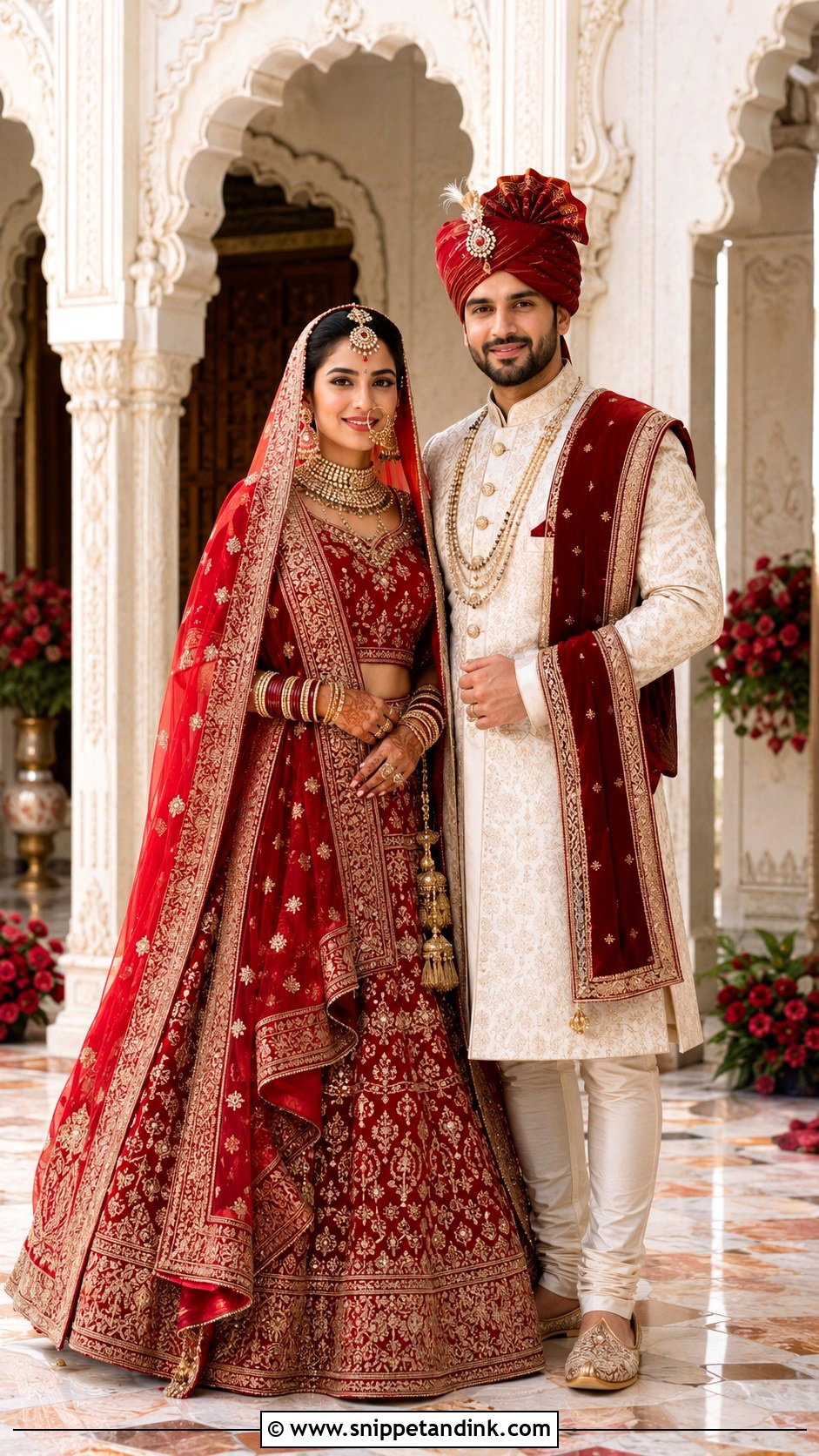
This pairing comes from South Indian ceremonies, and the link between the two outfits is the zari border. She wears a jewel-toned Kanjeevaram with a contrasting blouse and broad gold border, often with a waist belt to hold the drape through long rituals. He wears a cream veshti, a silk shirt or kurta and an angavastram that repeats her border colour. The veshti needs to be tied firmly at the waist; a groom sitting cross-legged through rituals will find out quickly if it isn’t. Traditional sandals keep him simple, and matching silk textures connect them without matching colours.
9. Banarasi Saree And Maroon Achkan Couple Outfit
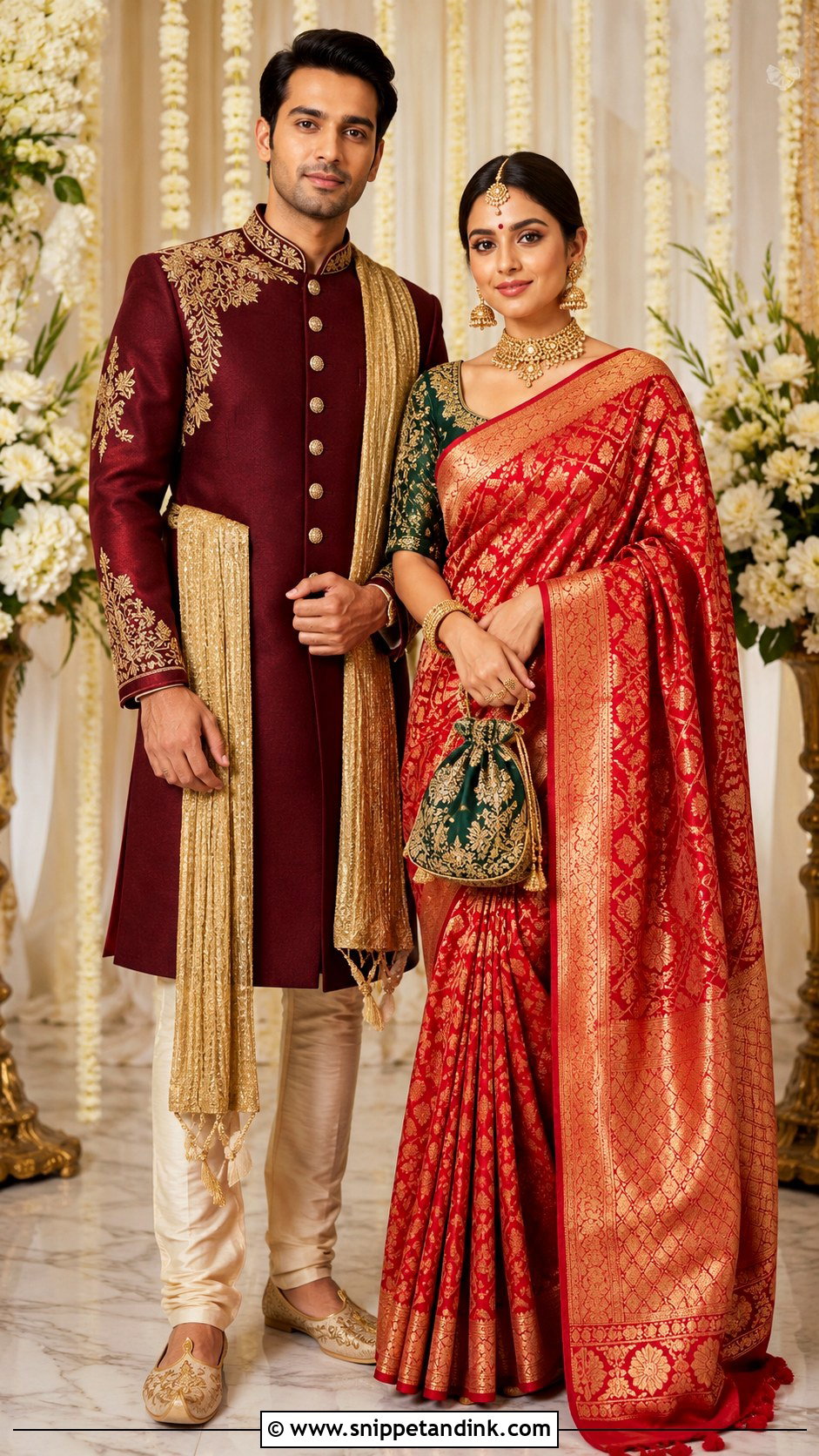
A maroon achkan suits a bride in a Banarasi saree because both carry rich, heavy textiles. She chooses a red, magenta or deep pink saree with woven gold motifs and a well-fitted contrasting blouse. He wears the maroon achkan, a long fitted coat buttoned to the collar, over ivory trousers with a gold stole and embroidered mojaris. When her saree is highly worked, I keep his achkan embroidery to the collar and cuffs. The achkan’s length should end around the knee; much longer and it fights the saree’s vertical drape in side-by-side photos.
10. Paithani Saree And Cream Kurta Couple Outfit
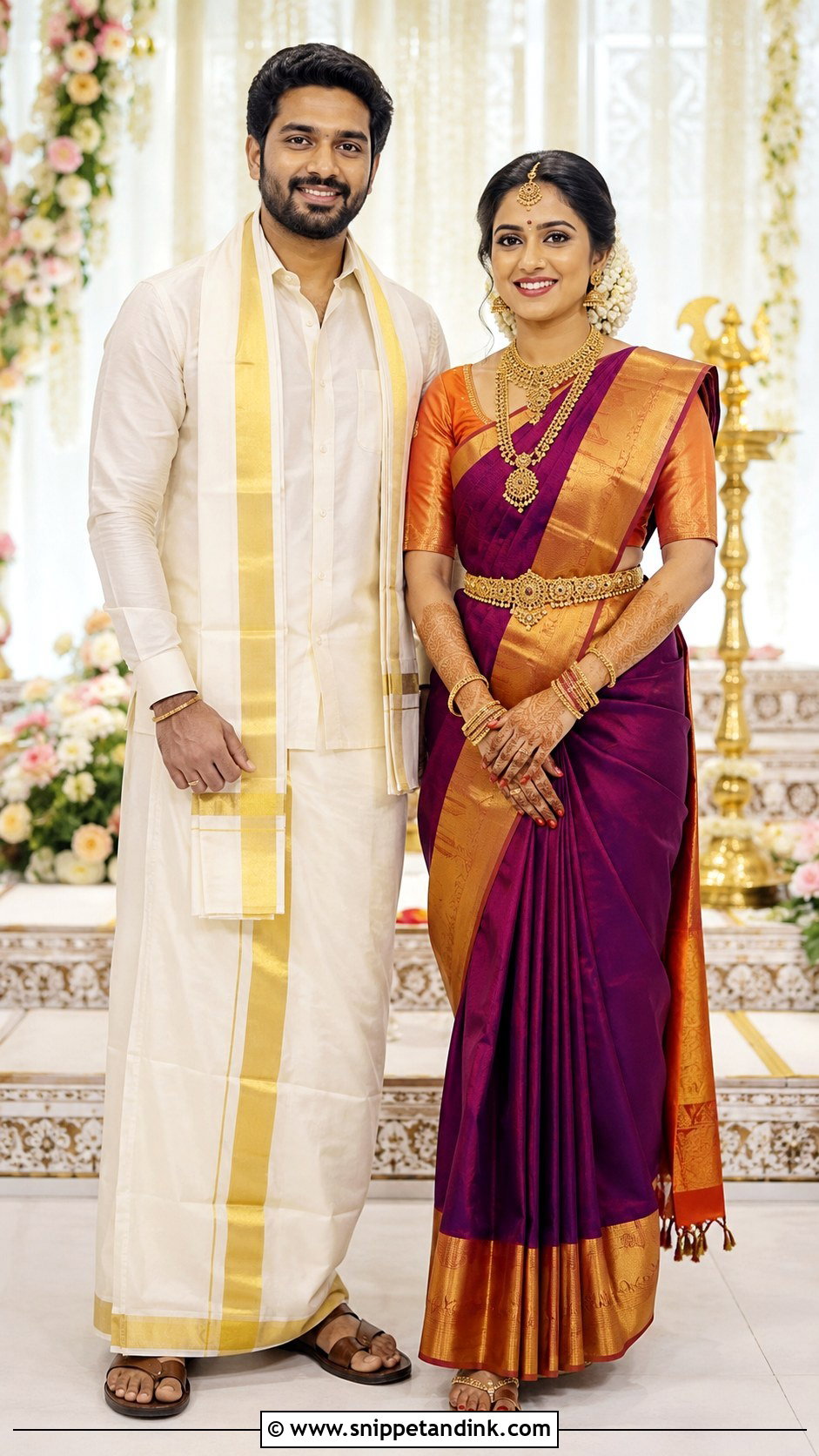
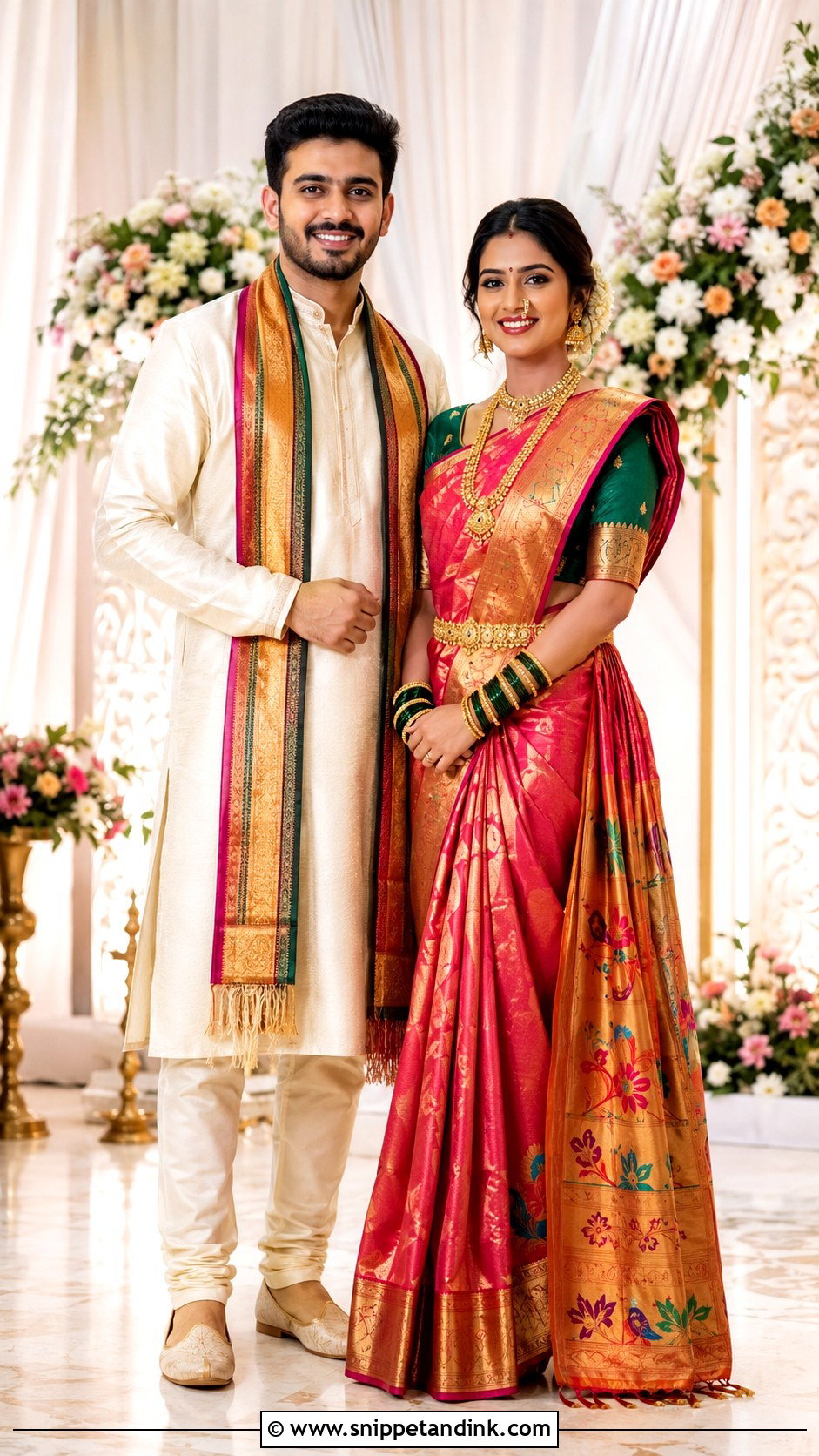
A Paithani saree is all colour, with a strong woven border and pallu, so I keep the groom’s outfit calm. She chooses purple, green, blue or fuchsia with gold-toned jewellery and a waist belt. He wears a cream silk kurta with a matching pyjama or dhoti-style bottom, and lets his stole, turban or jacket repeat one colour from her border, not two. Neutral mojaris finish it. Maharashtrian ceremonies can be long and warm, so I ask for breathable cotton linings in both outfits rather than synthetic ones that trap heat.
11. Red Panetar And Ivory Sherwani Couple Outfit
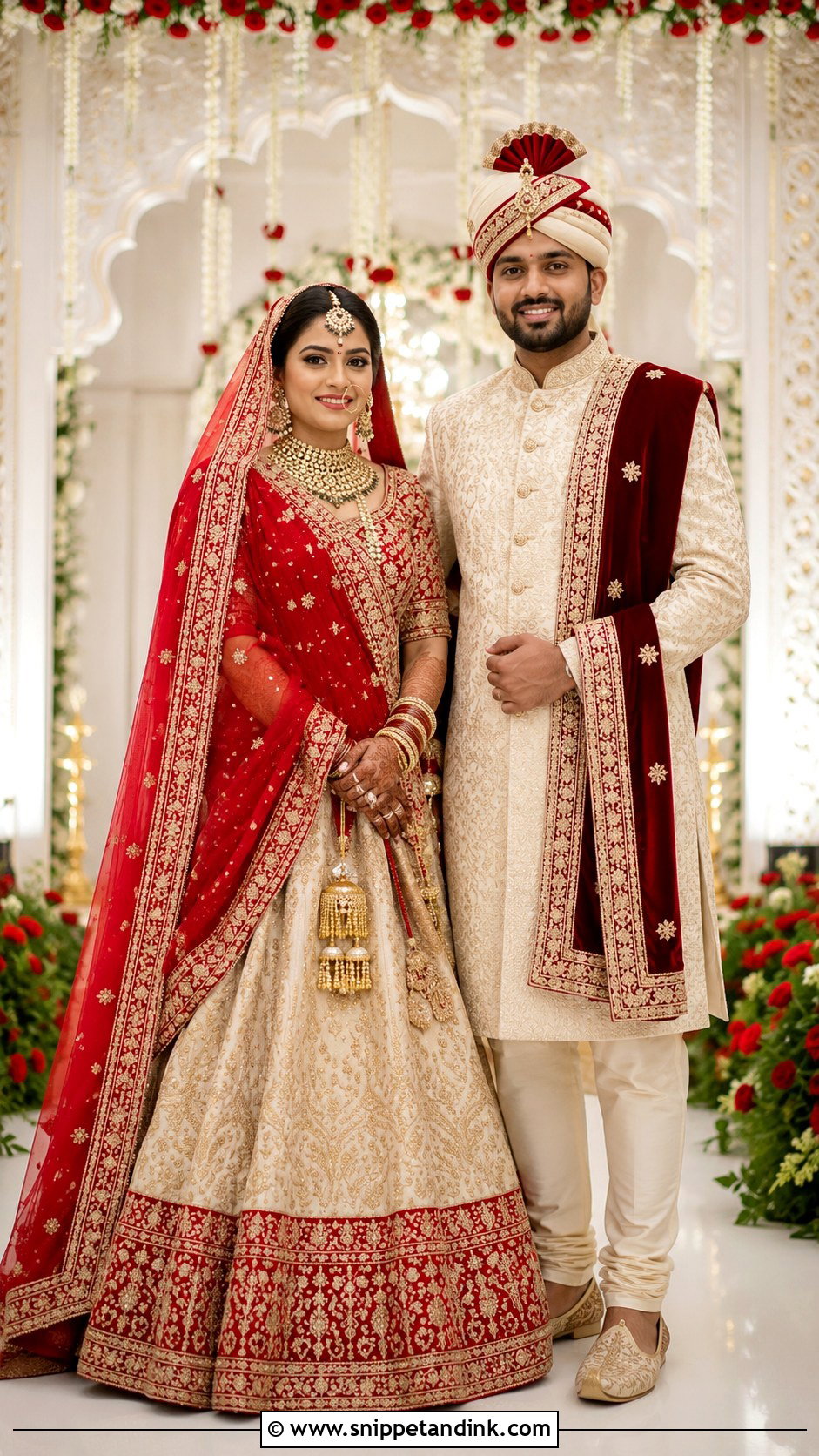
The Panetar look, a white or cream base with a vivid red border and gold detail, pairs naturally with an ivory sherwani. Her red veil and traditional jewellery carry the colour; his deep red stole and coordinated safa bring it near his face without turning the whole sherwani red. To tie them more closely, I ask the tailor to echo her border pattern in a narrow strip on his stole or collar. Both outfits get heavy once garlands and jewellery go on, so I leave a little ease at the shoulders and waist for the long ceremony.
12. Red Lehenga And Cream Sherwani Punjabi Couple Outfit
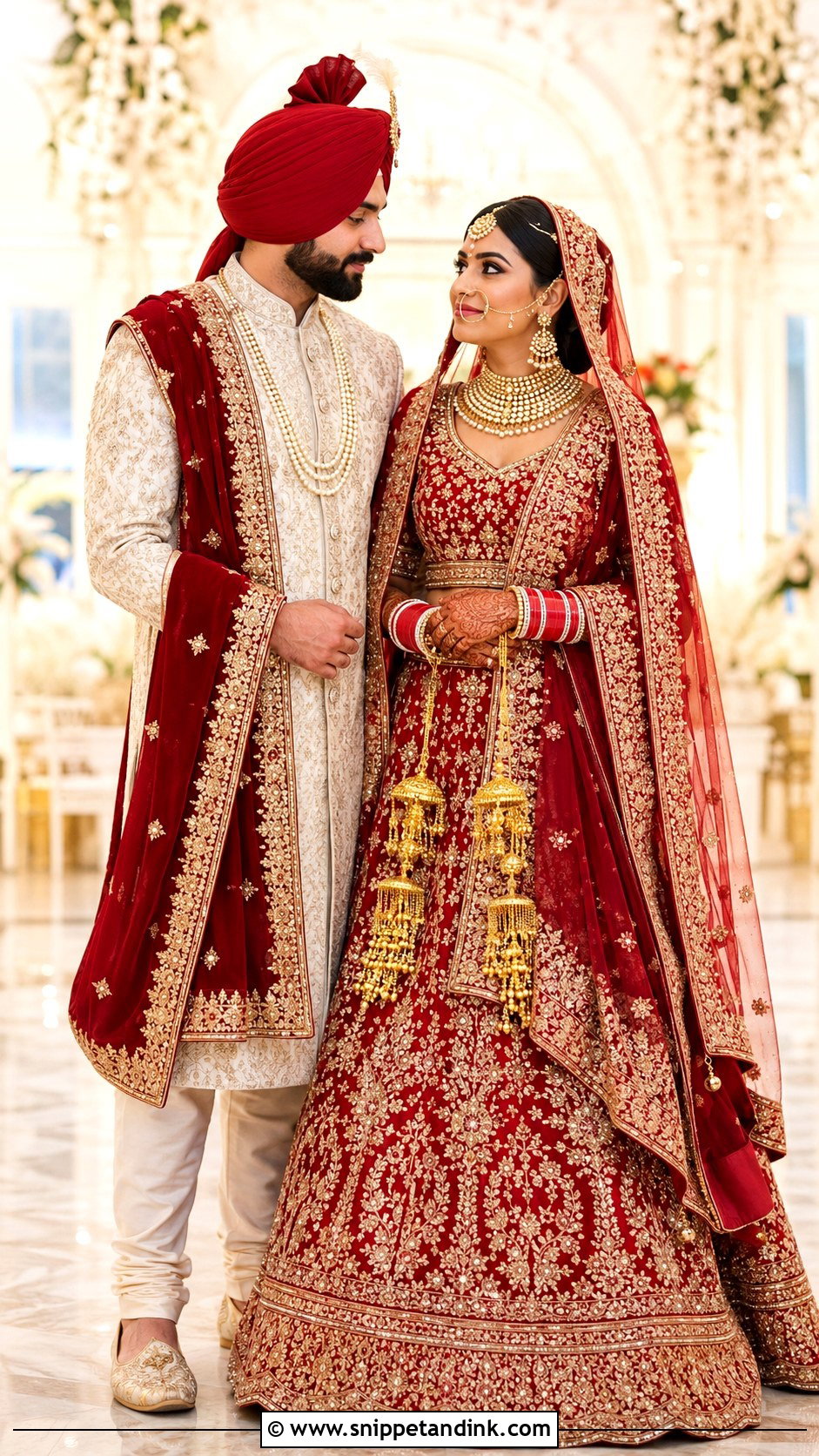
In a Punjabi wedding the bride’s scarlet lehenga, chooda and kalire set the colour, and the groom’s cream sherwani with gold embroidery gives contrast. A red or deep maroon turban and coordinating stole connect him to her. What I match is the embroidery tone, gold to gold, not the base colour. Her two dupattas need planning for coverage and movement. For him, the turban is usually tied by a family member or a professional on the morning; have it tied once before the wedding to check the size and how the colour sits with the sherwani. Secure long accessories so they stay put during the entrance.
13. Red And White Saree With Ivory Dhoti Kurta
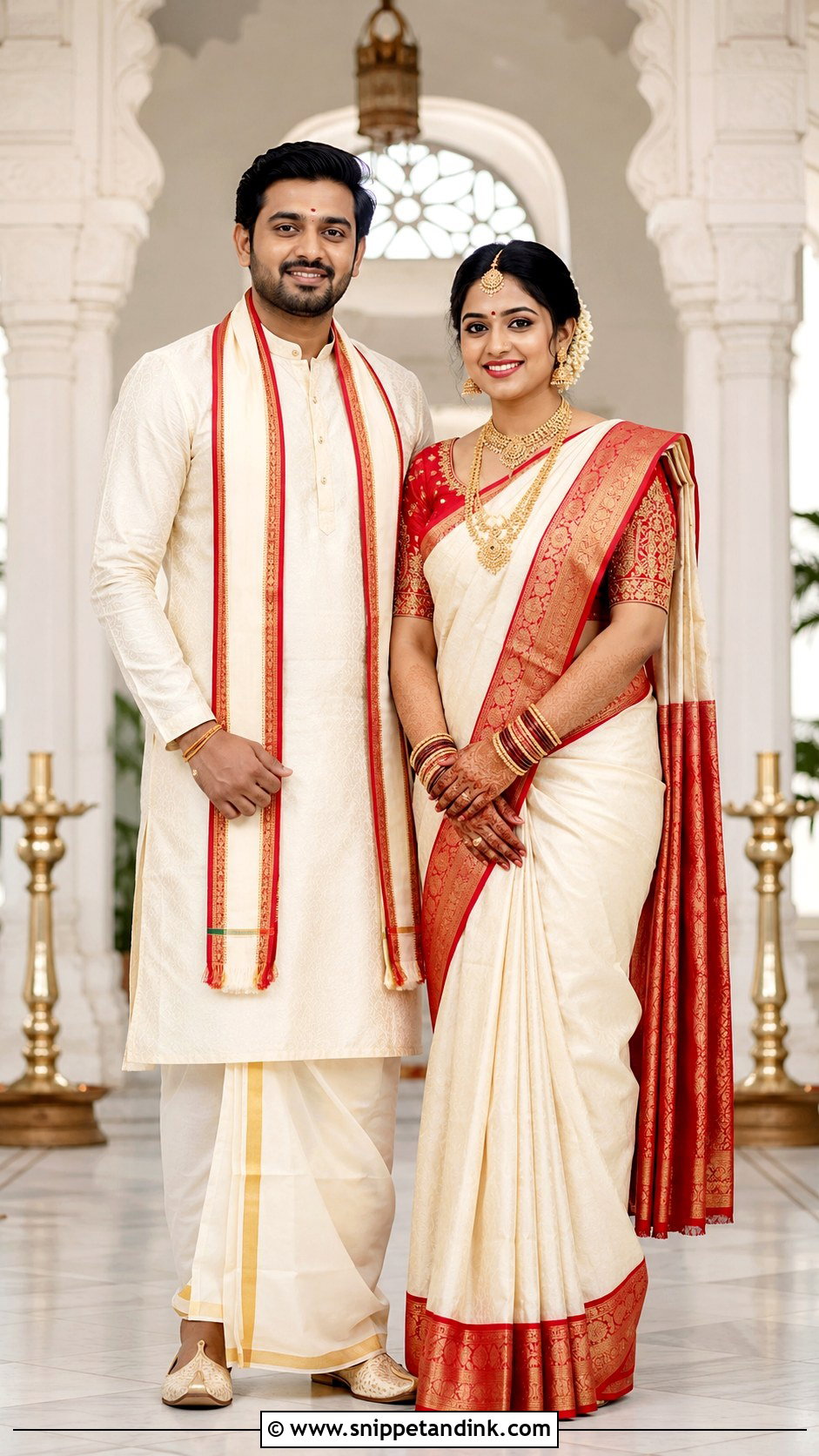
A white saree with a strong red border and a red blouse beside an ivory dhoti kurta keeps the pair crisp and traditional. Only the red borders connect them: hers on the saree, his on a stole over one shoulder. Coordinating that one detail keeps the pair from looking like a costume. A dhoti is tied, not stitched, and it needs someone who knows how to tie it; a loose dhoti is the most common groom wardrobe problem I’m asked to fix mid-ceremony. Her drape and his both depend on precise proportions, so do a full dressing rehearsal.
14. Pastel Blue Lehenga And Powder Blue Sherwani Outfit
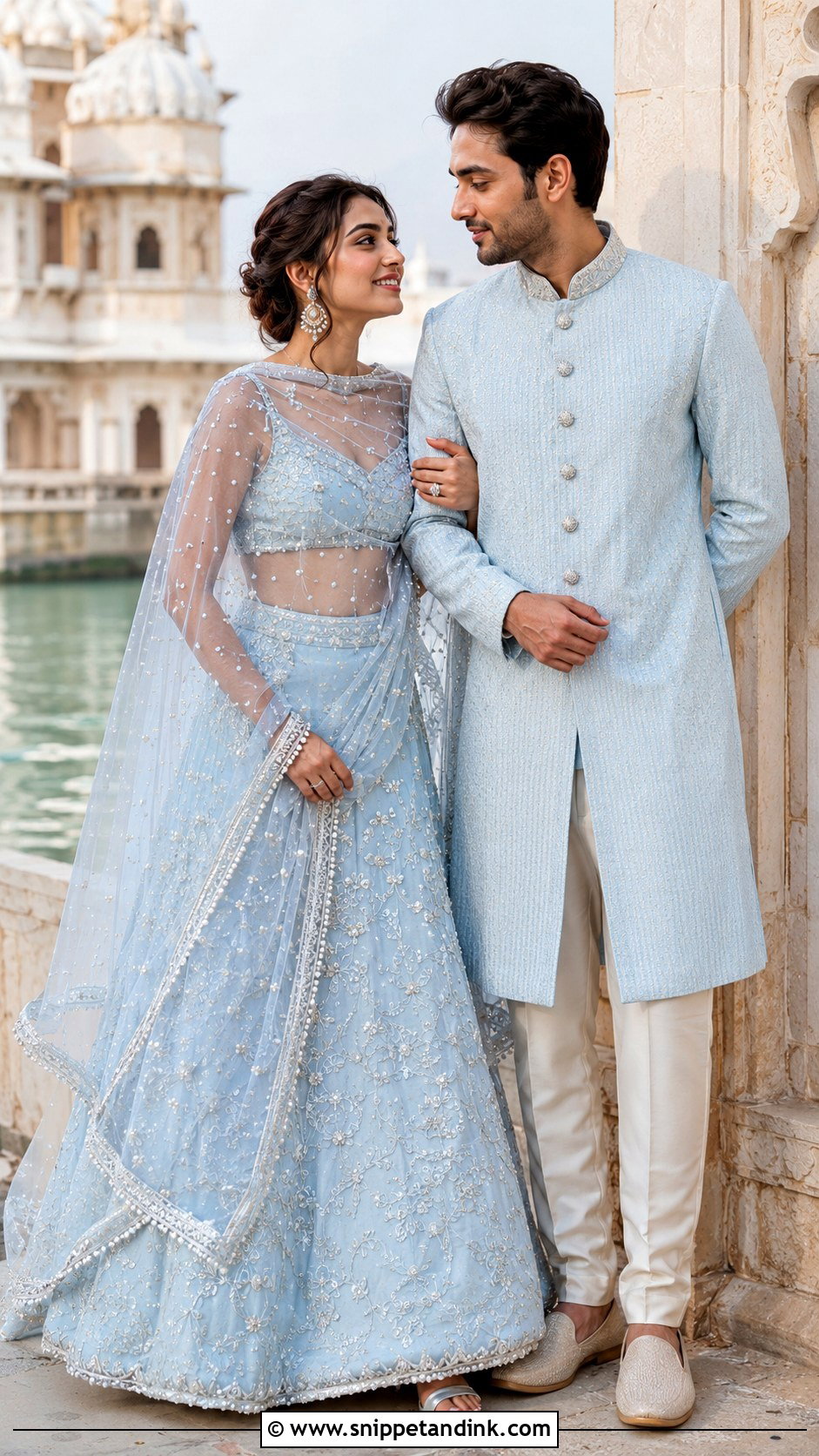
Powder blue suits a destination wedding near water or pale stone. Her lehenga in powder blue with pearls, silver threadwork or small florals stays light with a sheer dupatta. His sherwani should be a shade or two deeper, with ivory trousers and minimal silver embroidery; two related blues look more intentional than one identical one. Outdoor heat and travel are the real issues. I steer couples toward fabrics that recover from creasing, and I tell grooms to hang the sherwani in a steamy bathroom on arrival rather than ironing silk embroidery.
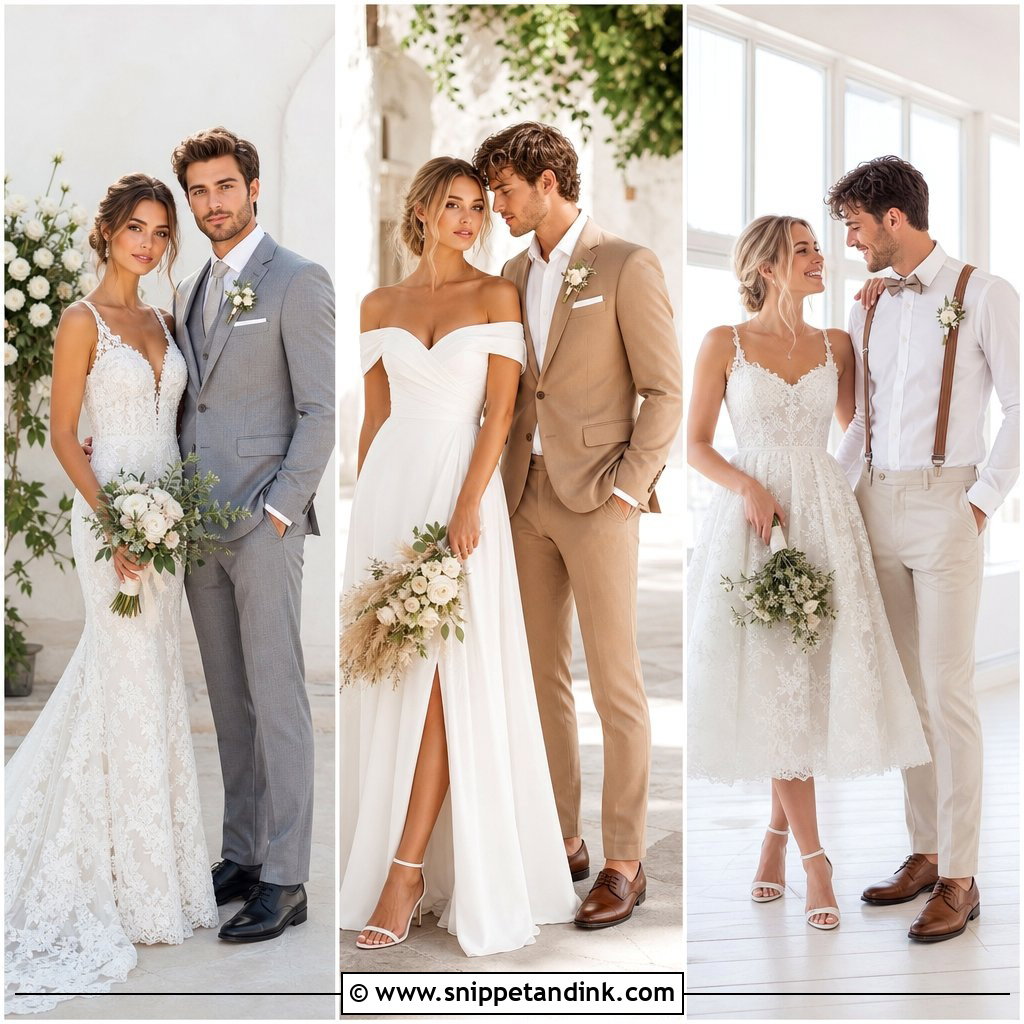
15. Sage Green Lehenga And Ivory Sherwani Couple Outfit
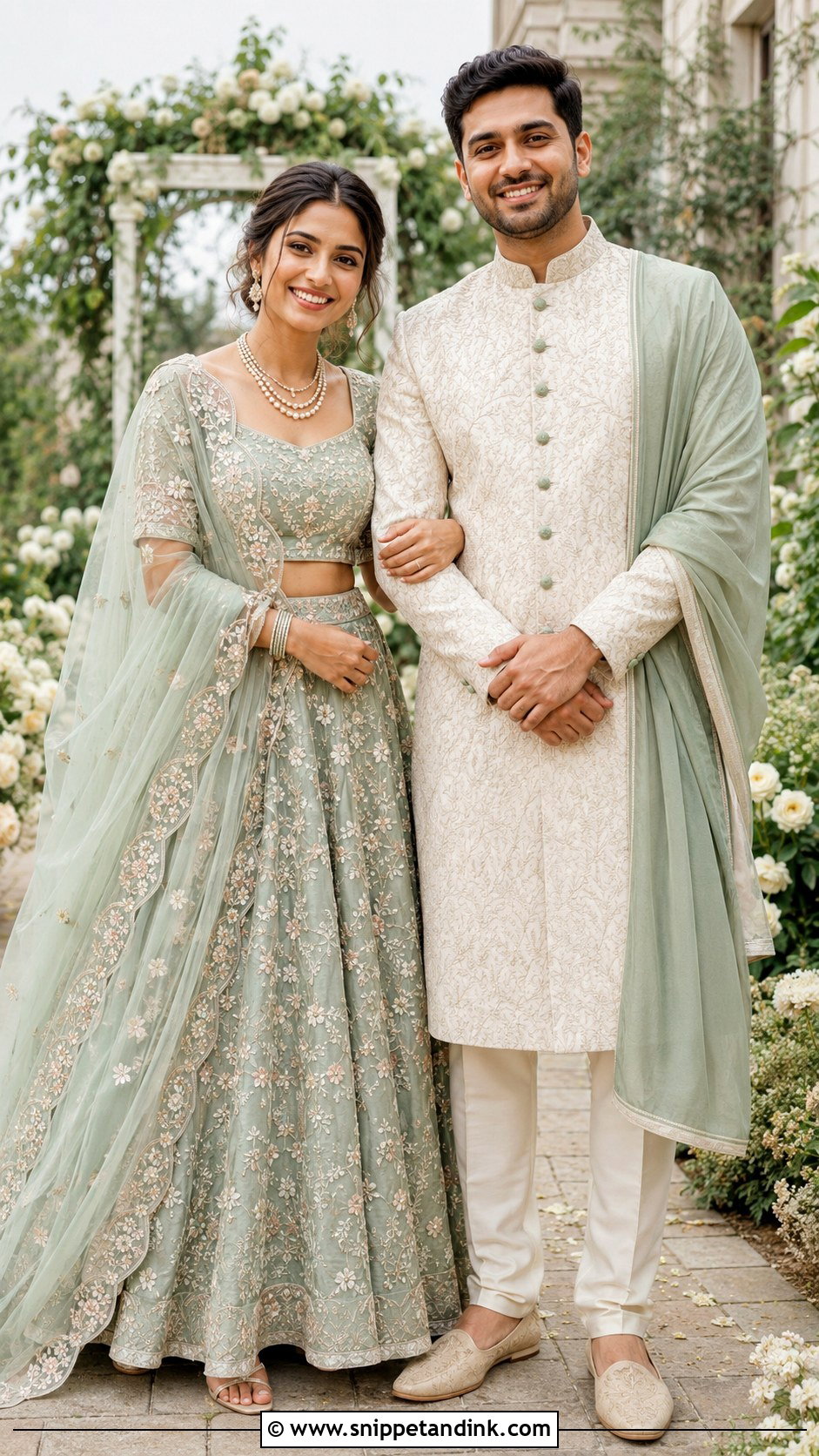
Sage and ivory suit a garden wedding. Her sage lehenga with pink, ivory or muted gold florals, a square-neck blouse and a pinned dupatta stays soft. He wears an ivory sherwani with sage embroidery, buttons or a green stole, plus cream trousers and beige mojaris. Use green in details on his side rather than in large blocks, so her embroidered lehenga keeps the visual weight. Sage changes a lot with light; under shade from trees it can look grey, so compare both outfits outdoors before the final alterations.
16. Pink Lehenga And Rust Achkan Couple Outfit
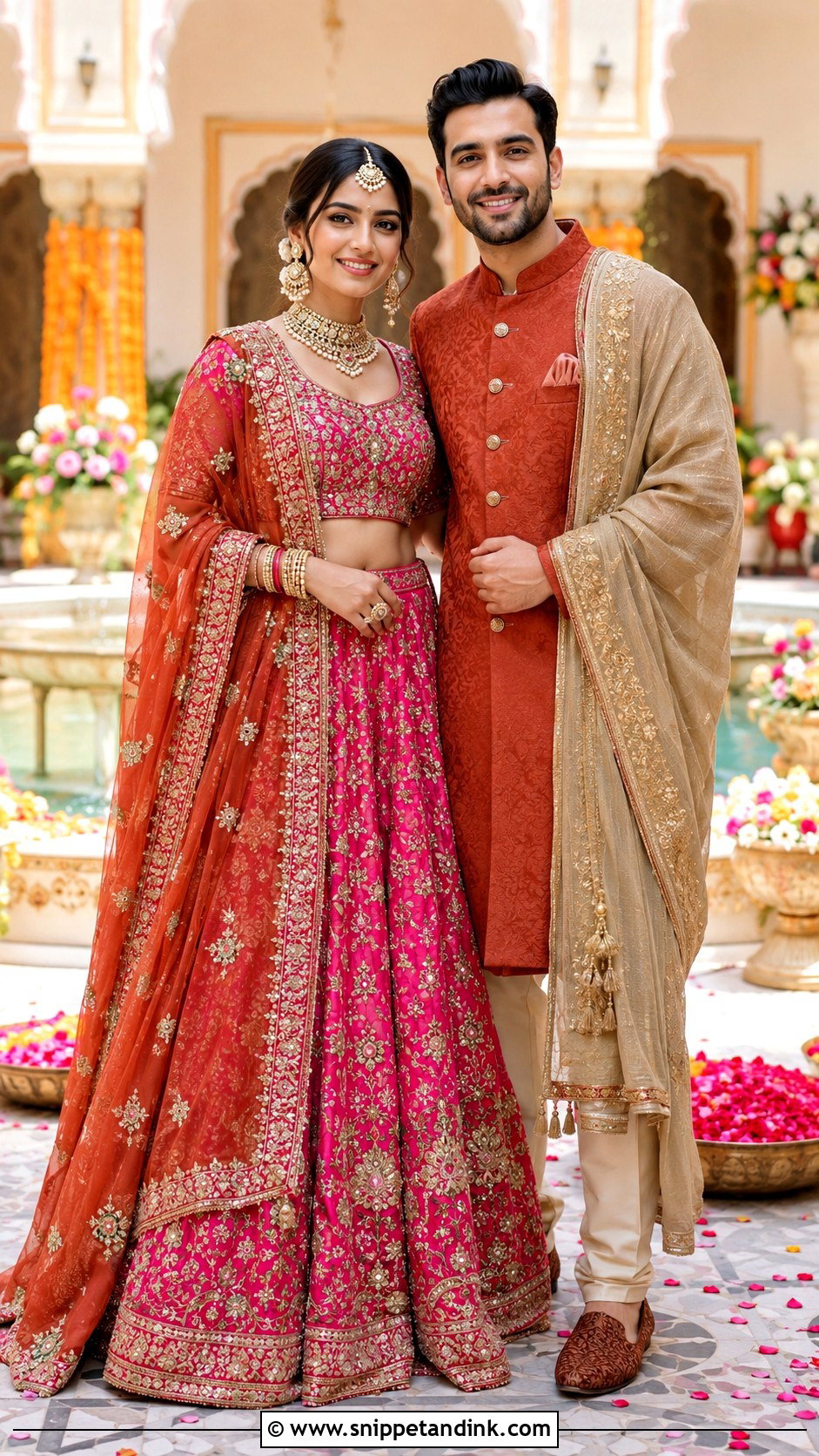
Pink and rust are two strong colours that can work well together when one person wears each and they cross over once. Her bright pink lehenga with coral or gold embroidery and a rust dupatta links straight to his rust achkan, worn with cream trousers, a pink pocket square and a muted gold stole. Brown mojaris suit the earthy colour. Keep prints and embellishment controlled on both, or the two colours start competing. This palette is warm and lively for daytime ceremonies and pre-wedding events.
17. Ivory Lehenga And Ivory Sherwani Couple Outfit
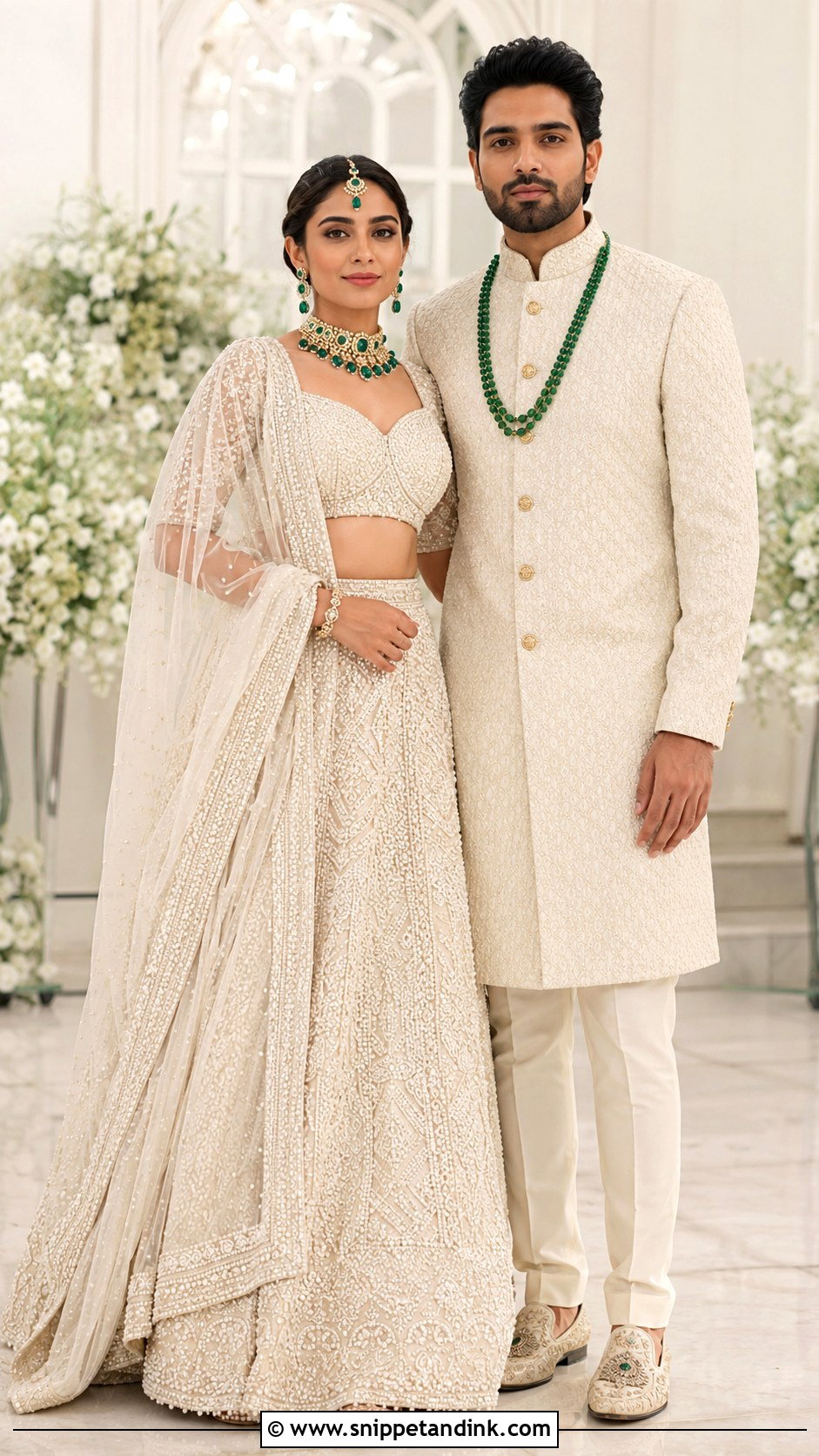
Ivory on ivory only works when the textures are different. Her ivory lehenga in pearl embroidery or tonal threadwork, with a structured blouse and sheer dupatta, sets the tone. His sherwani should be in a contrasting weave, jacquard or raw silk, with champagne buttons. Add a single accent colour through accessories: emerald jewellery for her and an emerald pocket square or mala for him. Ivory shades differ widely between fabrics, so I compare both outfits under the same light before final alterations. Otherwise one of you looks yellow in every photo.
18. Purple Lehenga And Charcoal Bandhgala Couple Outfit
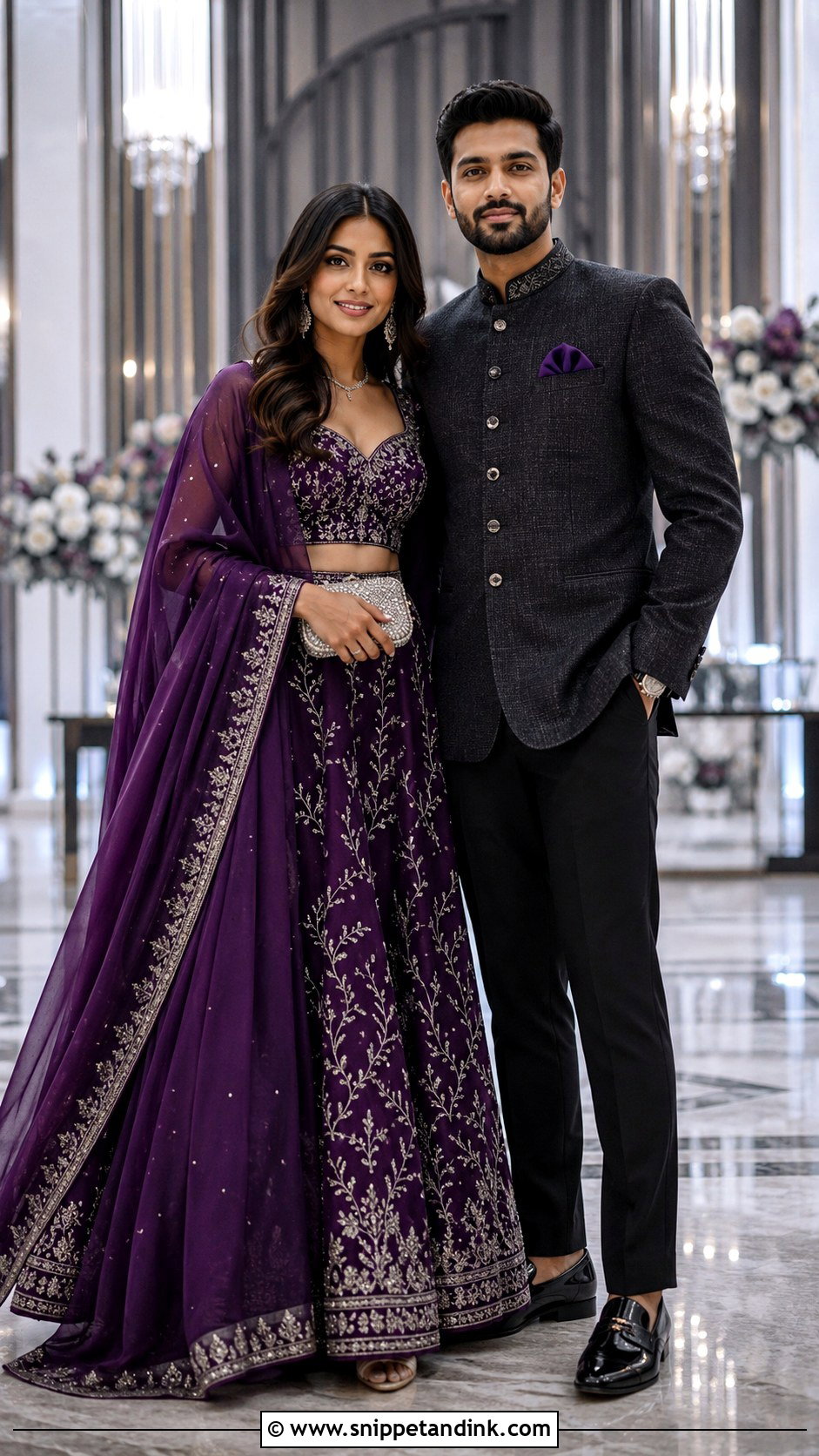
Plum or amethyst with silver embroidery on her side, and a charcoal bandhgala with black trousers on his, make a quietly formal engagement or reception look. A little purple on his pocket, collar or buttons is enough to connect them. Very dark purple loses detail under dim venue lighting, so check the shade where you’ll actually be. Silver accents help define both outfits in photos. Polished black loafers for him and comfortable heels for her finish the pairing.
19. Teal Saree And Peach Kurta Couple Outfit
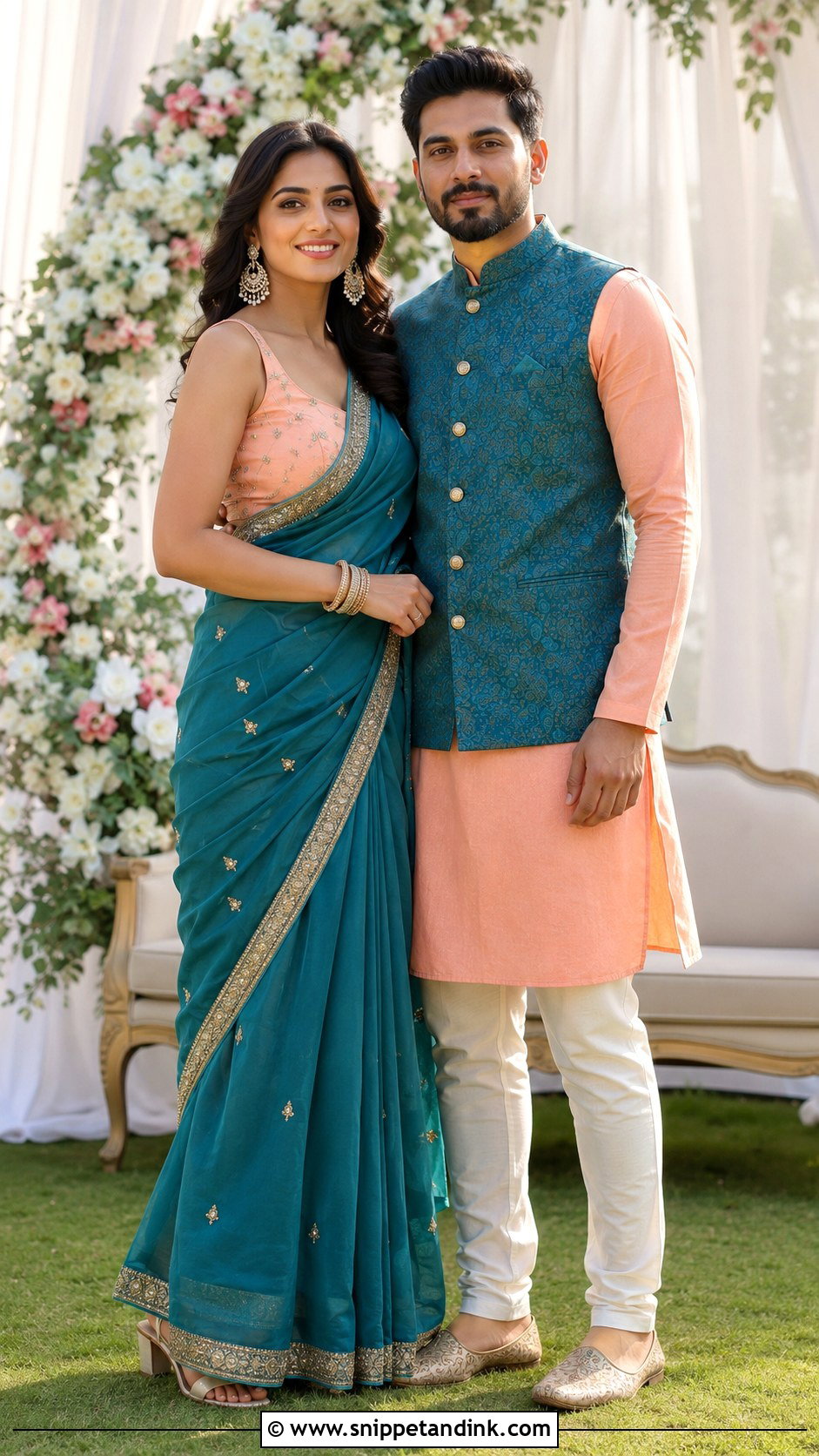
Teal and peach give a friendly contrast for an engagement or welcome event. She wears a teal silk or pre-draped saree with a peach blouse; he wears a peach kurta with ivory pants and a teal Nehru jacket. If a full teal jacket feels too strong on him, a teal stole or pocket square does the job. My rule for any pairing like this is that one outfit carries the detail and the other stays plain: a richly woven saree beside a simple kurta, or a plain saree beside an embroidered jacket.
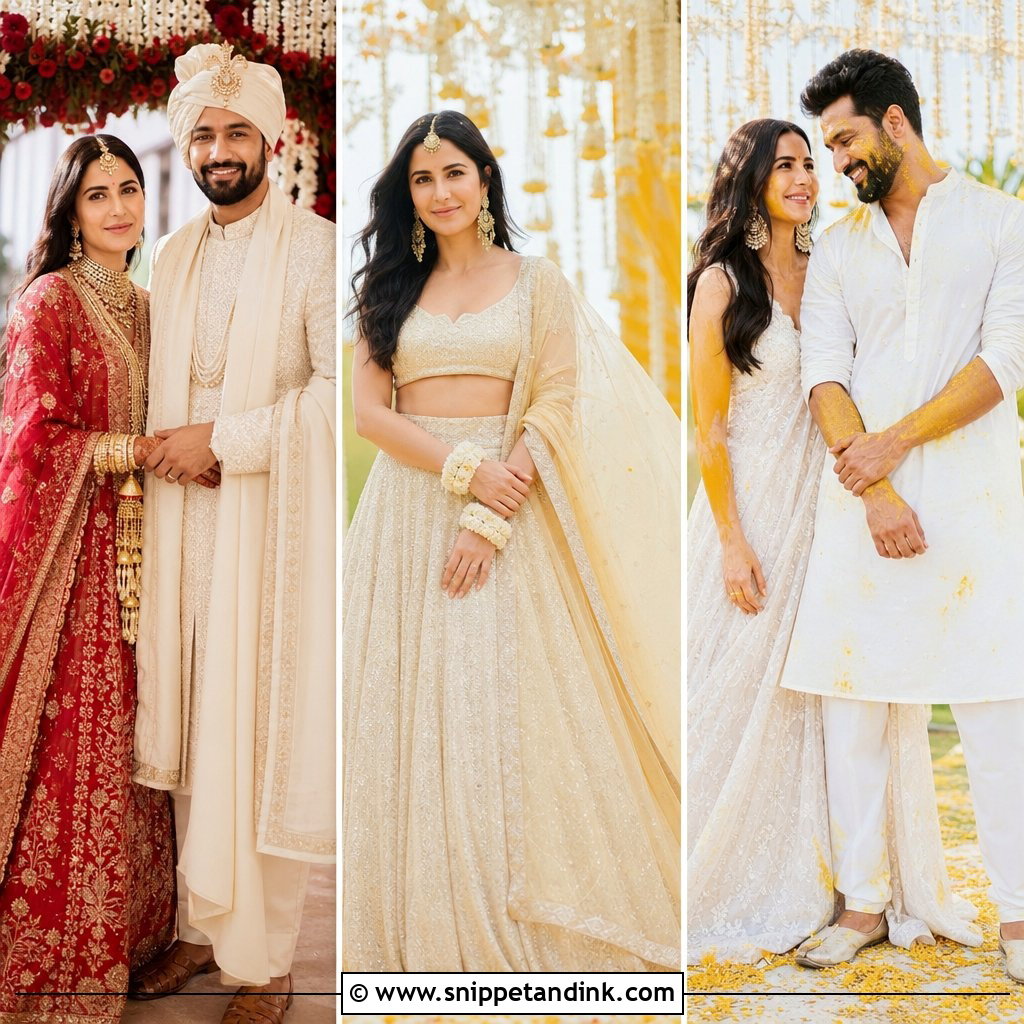
20. Champagne Saree And Black Tuxedo Couple Outfit
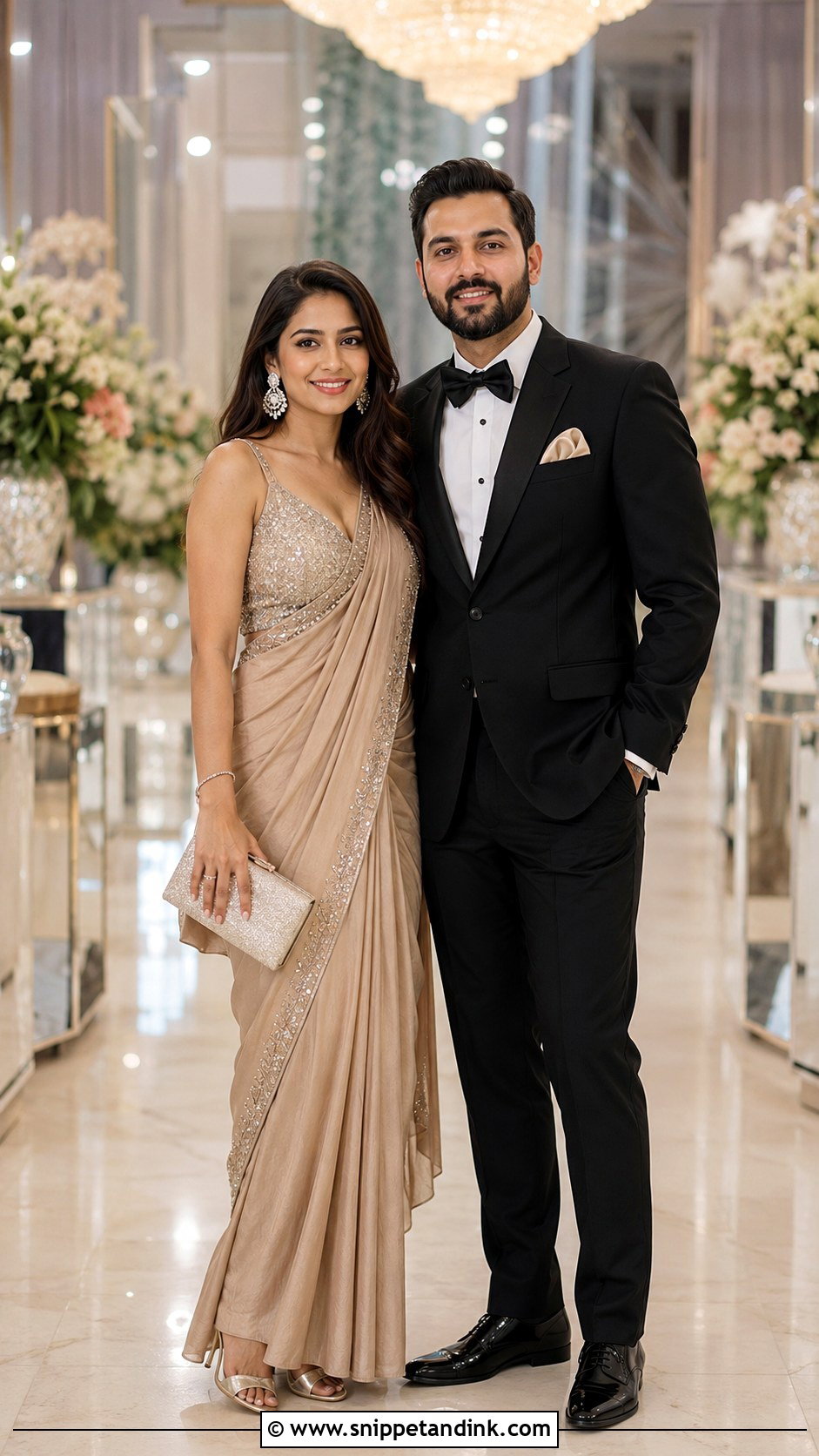
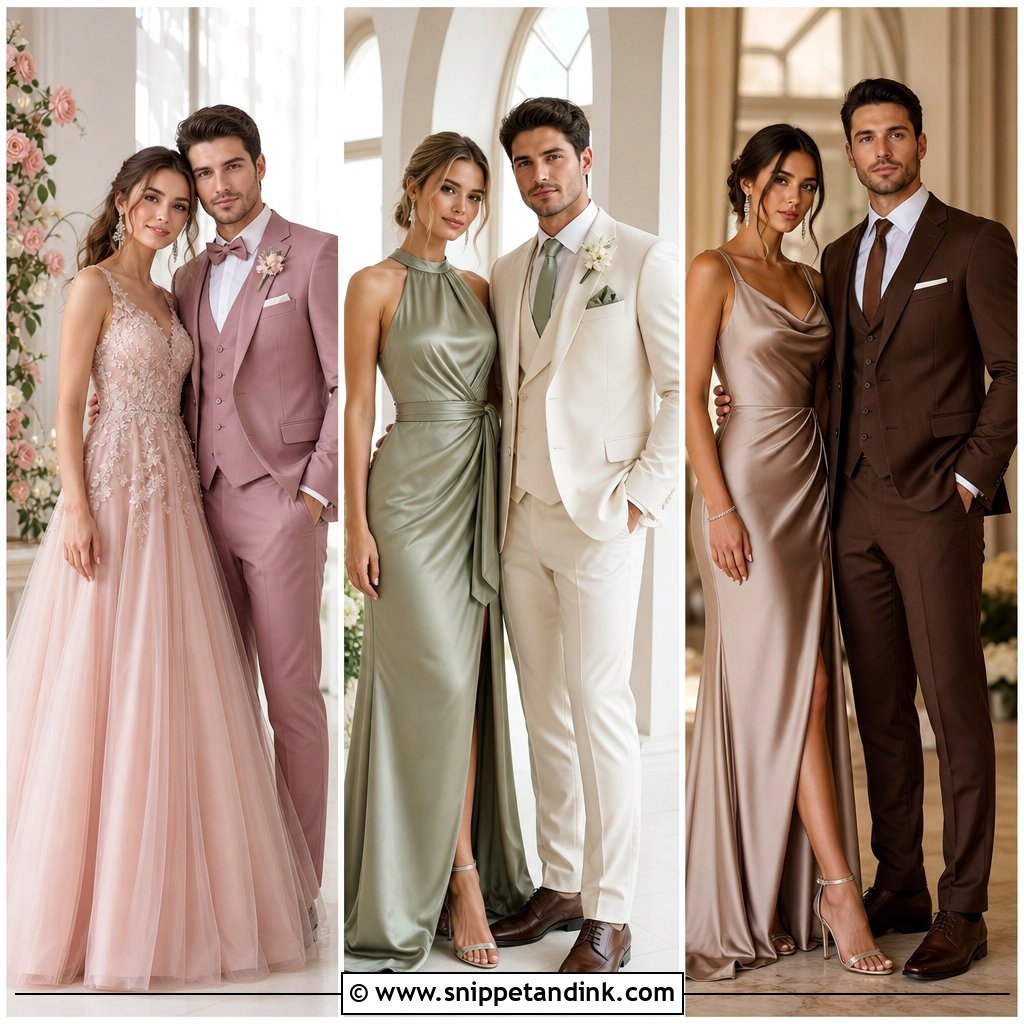
A champagne pre-draped saree beside a black tuxedo is a reception look for couples who like fusion. It works when both outfits have the same level of formality, which is what makes the contrast between Indian draping and Western tailoring look intentional. Her sequins or beadwork set the mood. His tux needs a clean shoulder and a short trouser break so it doesn’t pool above the shoes in photos. A champagne pocket square or gold cufflinks link him to her. Get both altered early and test the saree hem in the heels she’ll wear.
Getting the Groom’s Fit Right Next to a Lehenga
Grooms are often fitted later and in more of a hurry than brides, and it shows in photos. A few fitting points make the biggest difference when he’s standing next to a full lehenga or saree.
Sherwani and achkan length
A long coat that ends at or just below the knee looks balanced beside a floor-length skirt. Ending mid-calf can make a shorter groom look swamped, especially beside a bride in heels.
Churidar and trousers
Churidar should gather in neat folds at the ankle, not bunch at the knee. Straight trousers need a short break so they don’t puddle over mojaris.
Footwear and headwear
- New mojaris are stiff and rub the heel. Wear them around the house for a week before the wedding.
- A safa or turban should be tried on with the sherwani at the final fitting. Its colour sits right beside his face and the bride’s, so it affects every close-up.
- Keep a spare button, a few safety pins and a lint roller in his jacket pocket or with the best man. Ivory and cream pick up marks quickly.
What Makes Two Wedding Outfits Look Like a Pair
A couple doesn’t need identical colours or equally heavy embroidery to look connected. One repeated shade, border, motif, fabric or metal is usually enough. Plan around the event schedule before choosing long veils, tight blouses, heavy jackets or fragile shoes. Look at both finished outfits together under lighting close to the venue’s, finish alterations early, and practise walking, sitting and dancing in every layer. The pairing that works is the one where you both look like yourselves standing side by side.
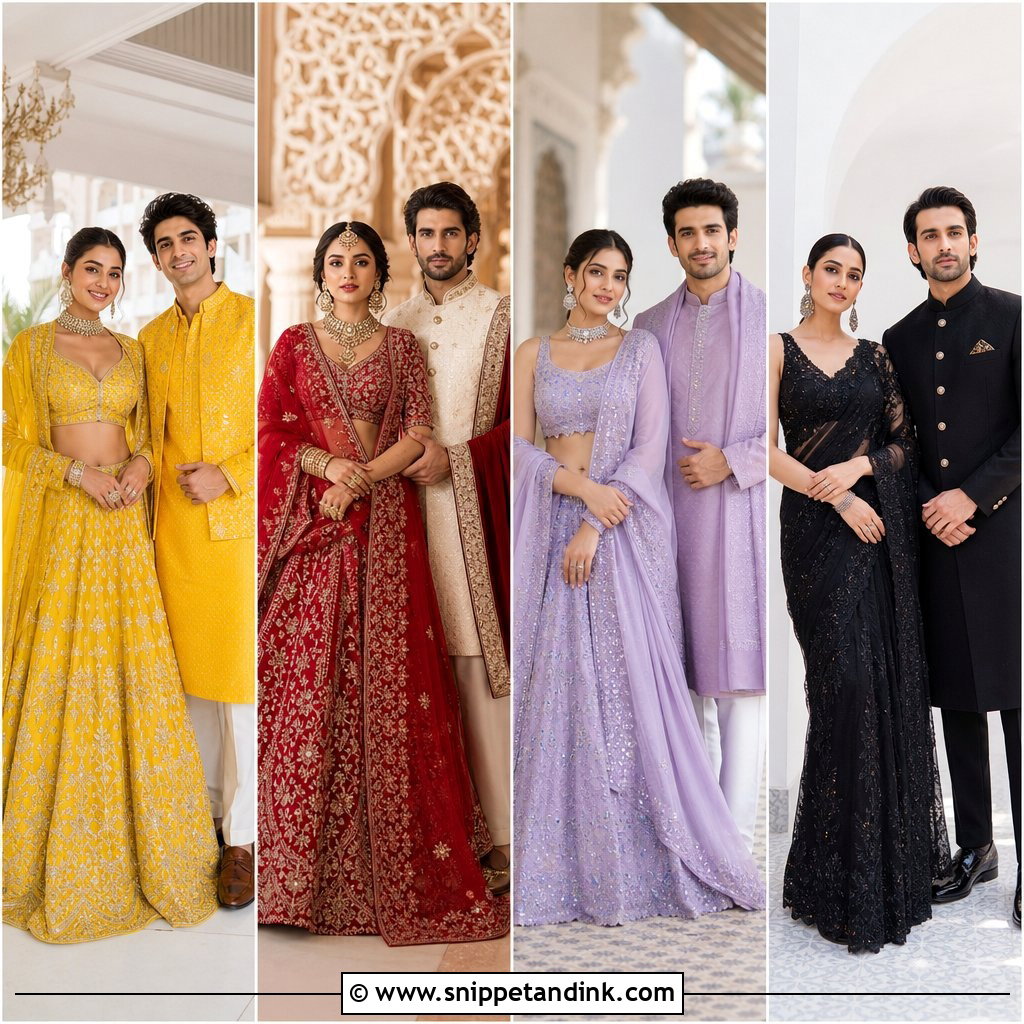
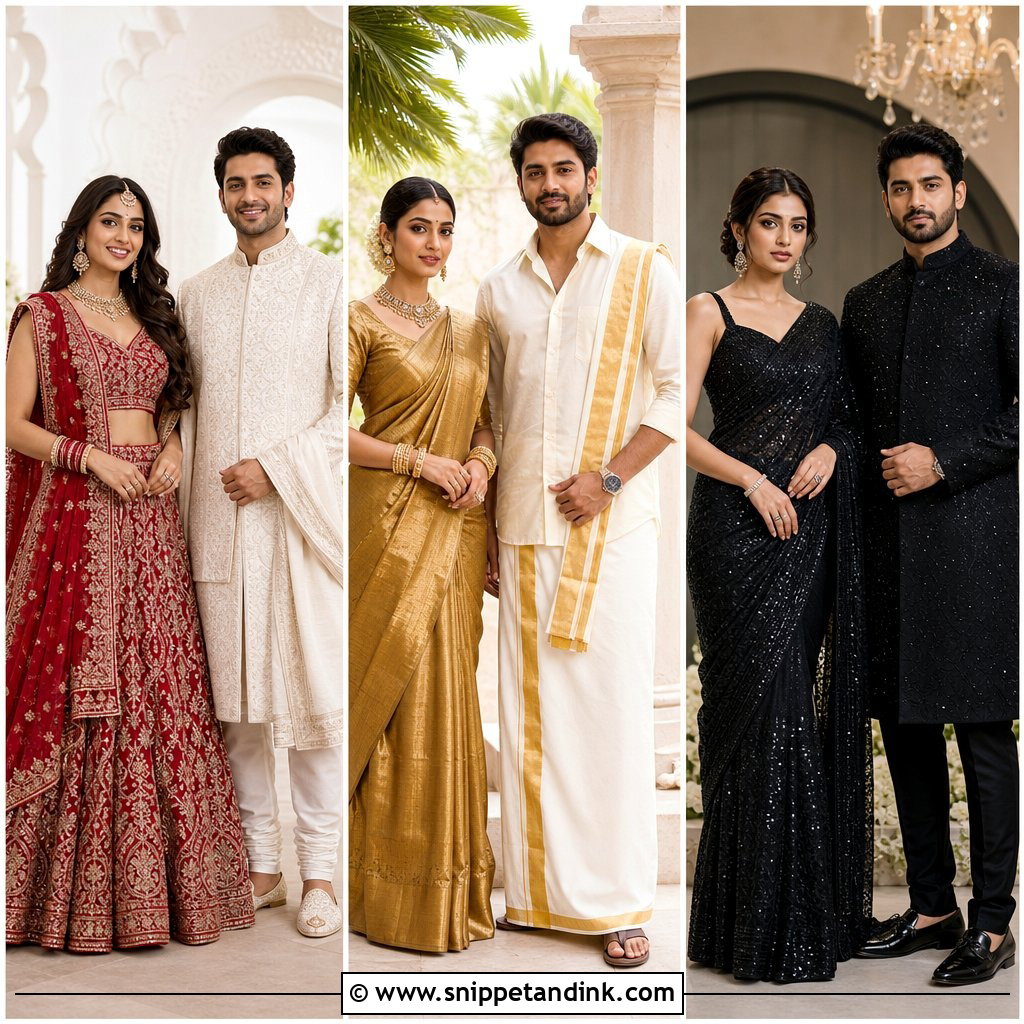
You'll Like These Ideas:


Leave a Reply