
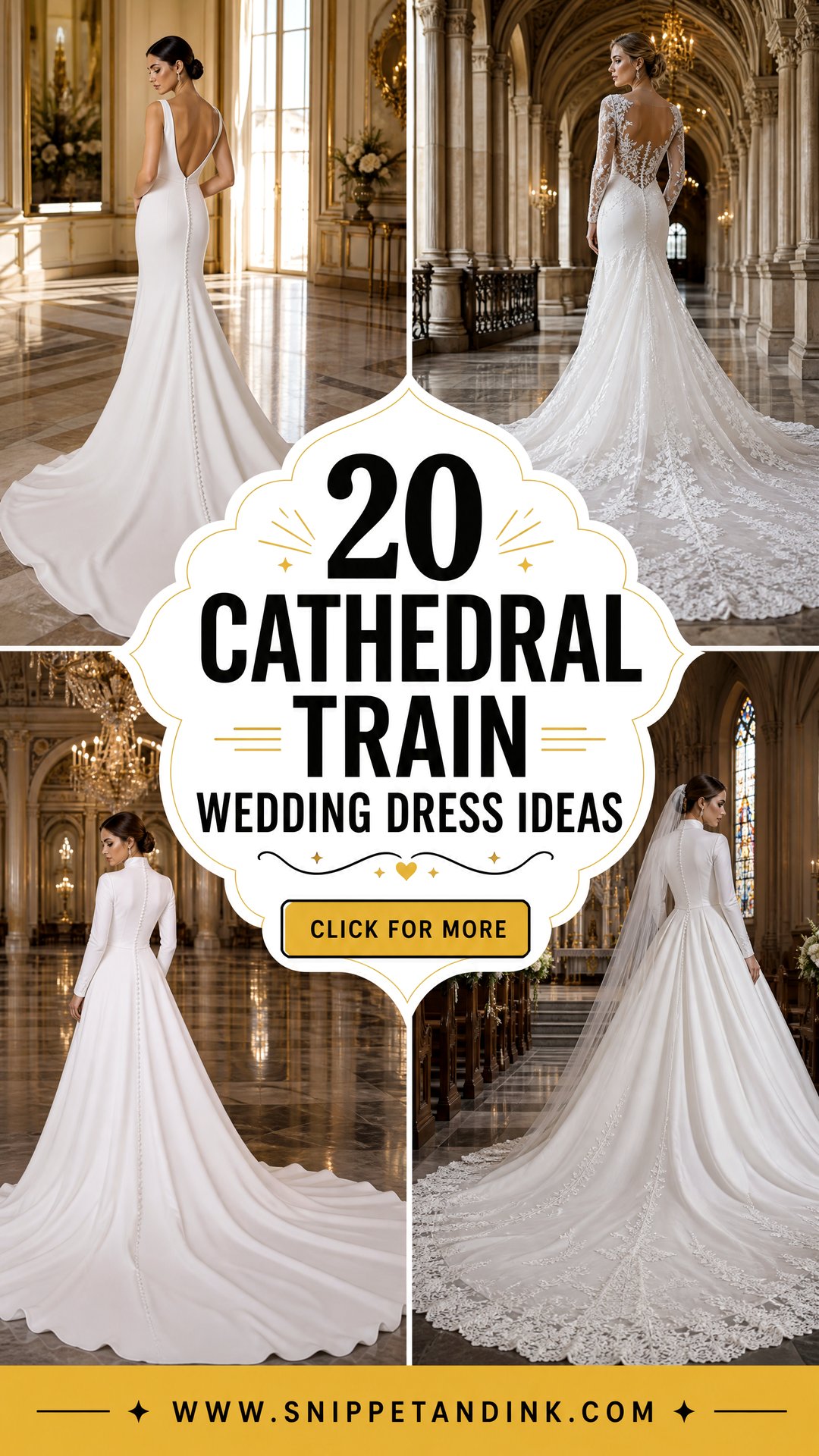
A cathedral train is the longest train most brides will seriously consider, and it changes the ceremony more than any other detail on the dress. Below are twenty ways to wear one, from romantic lace and structured satin to modern crepe, floral appliqué, detachable layers and figure-enhancing silhouettes. The first questions I ask aren’t about the gown at all. They’re about the venue: how long the aisle is, what the floor is made of and whether there are steps, because those decide how much train is practical. Fabric weight and bustle come next, then veil, shoes, hair and bouquet. Each idea includes the fitting detail I’d watch on that particular style.
Does Your Ceremony Space Have Room for This Much Train?
A cathedral train usually reaches somewhere around six to eight feet behind you, measured from the waist, though every designer cuts it a little differently. Before a bride commits to one, I want to know three things about the ceremony space.
- How long the walk is. In a short aisle the train is still coming through the door when you reach the front, and guests in the end seats end up stepping around it.
- What the floor is. Stone, carpet and polished wood are kind to a train. Grass stains it, gravel snags lace, and sand works its way into tulle and stays there through the reception.
- Whether there are steps or tight turns. A train on a staircase needs someone to lift it and lay it down again, and a sharp turn at the front can wrap it around your ankles.
On the day, rehearse the turn toward your partner. Step around in a small arc instead of pivoting on the spot, so the train swings out into a curve rather than twisting under your feet. And give one person, a bridesmaid or the planner, a single job before the vows: laying the train flat so it looks right in the photographs.
1. Lace Ball Gown Cathedral Train Wedding Dress
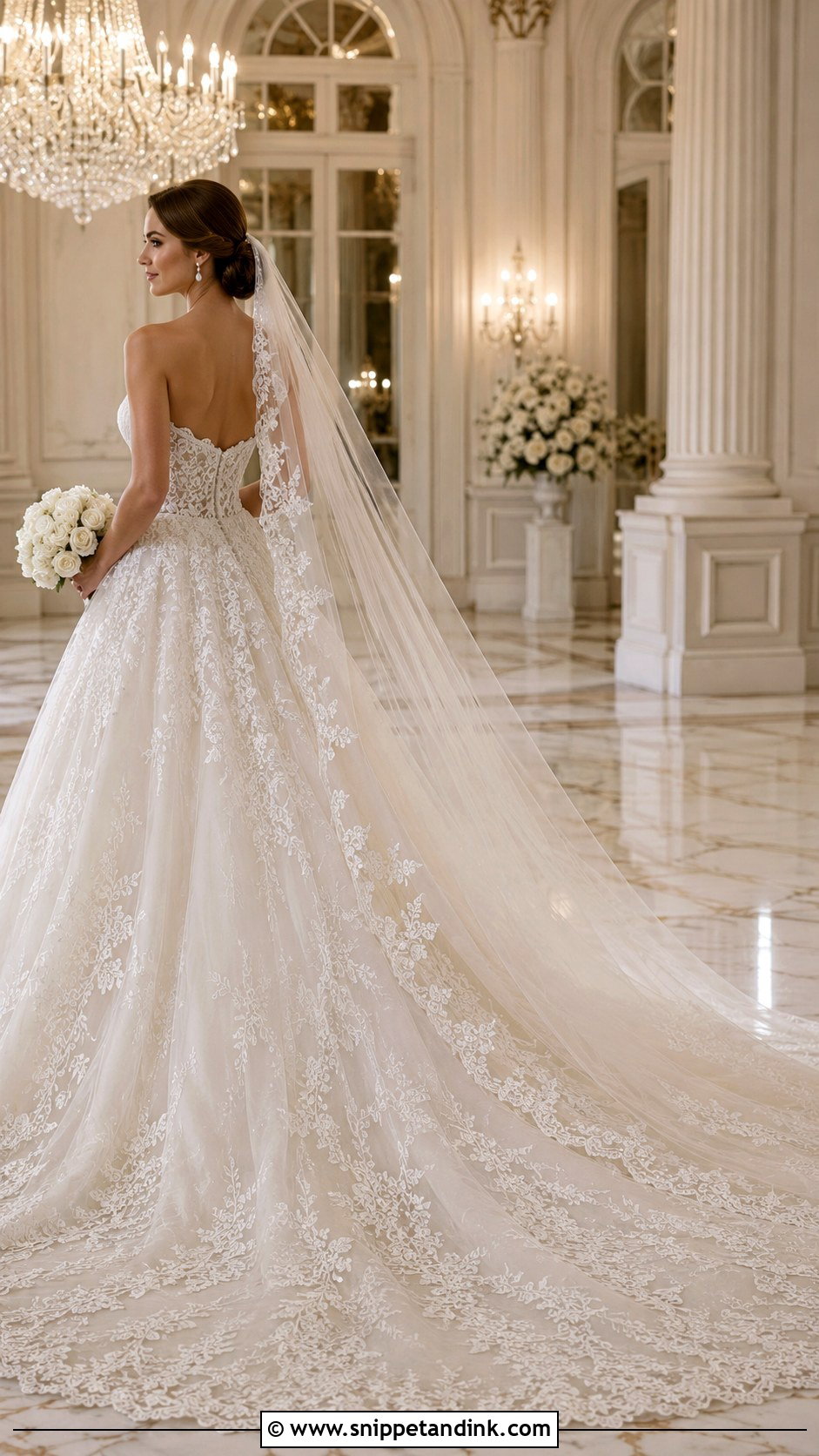
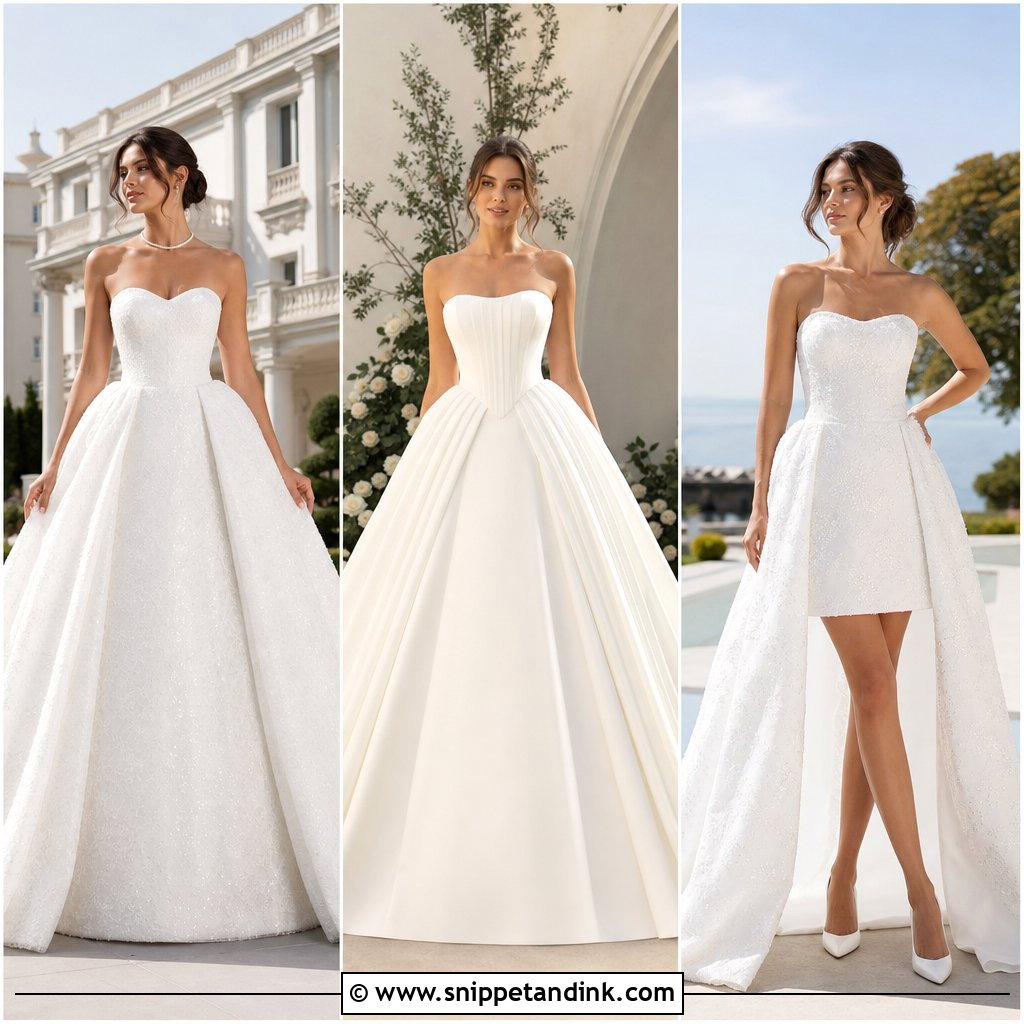
Lace over a ball gown is the classic version, and it can carry a lot of train without looking heavy. I look for a boned bodice, a defined waist and appliqués that carry on across the skirt, so the train doesn’t look like a separate piece stitched on at the back. A sweetheart or soft V-neckline keeps the front simple. Add a sheer cathedral veil with a narrow lace edge, pearl drops, ivory satin pumps, a low chignon and a rounded bouquet of white roses and greenery. With this much skirt, ask for a ballroom bustle. It lifts the whole train so the hem sits level all the way round and nobody treads on your lace during the first dance.
2. Satin A-Line Cathedral Train Wedding Dress
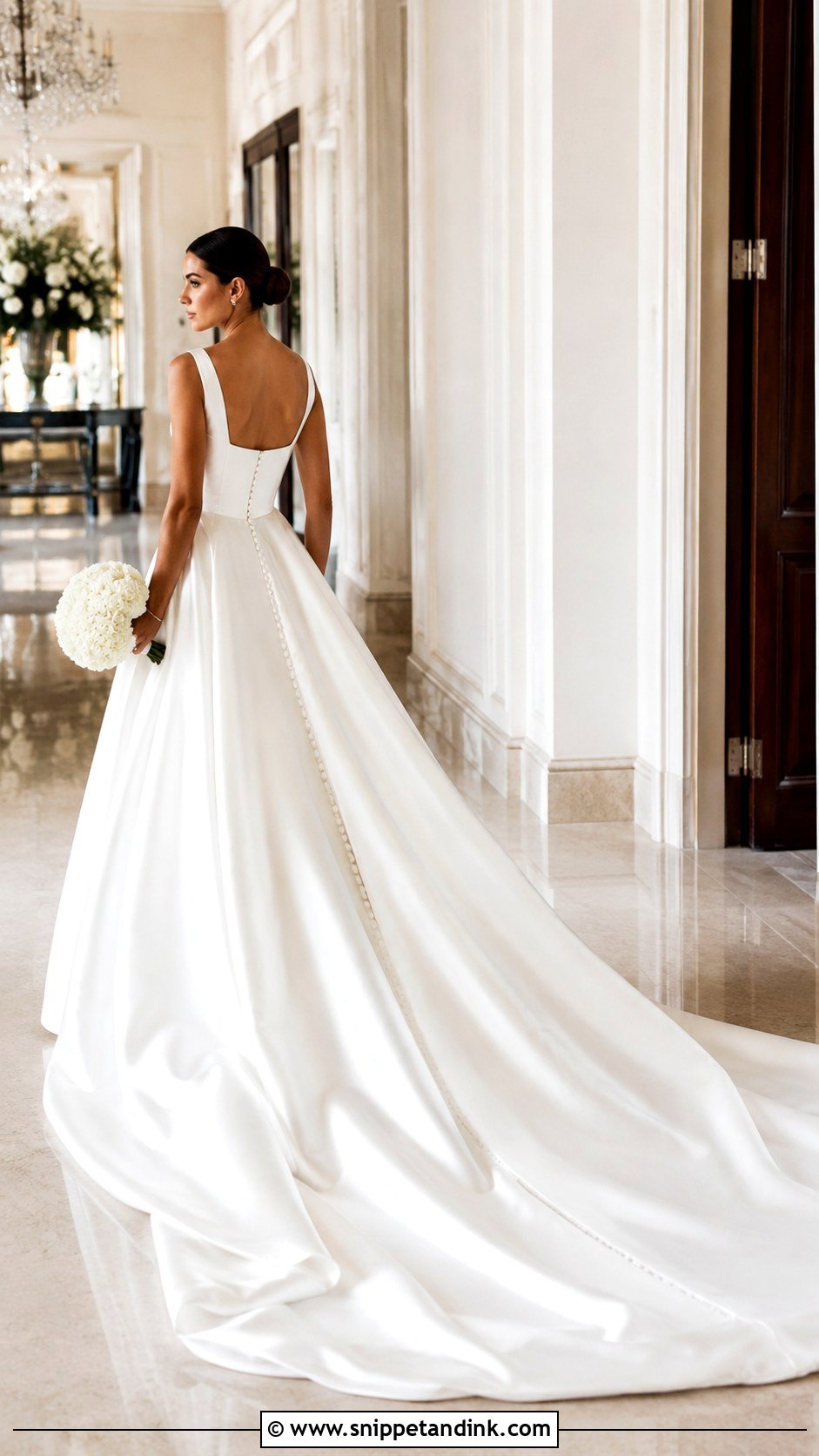
Satin on an A-line reads polished and slightly formal, and it shows off a train’s length better than most fabrics because light runs down it in one long line. The bodice fits close, then the skirt widens gently with far less volume than a ball gown. A square neckline, wide straps and covered buttons running down the back and into the train keep it clean. Keep the veil plain tulle, the heels pointed, the studs small and the bouquet structured, with a sleek bun or a waved ponytail. Satin creases the moment it’s sat on. Give the train room in the car and have a steamer ready at the venue before the photos.
3. Mermaid Lace Cathedral Train Wedding Dress
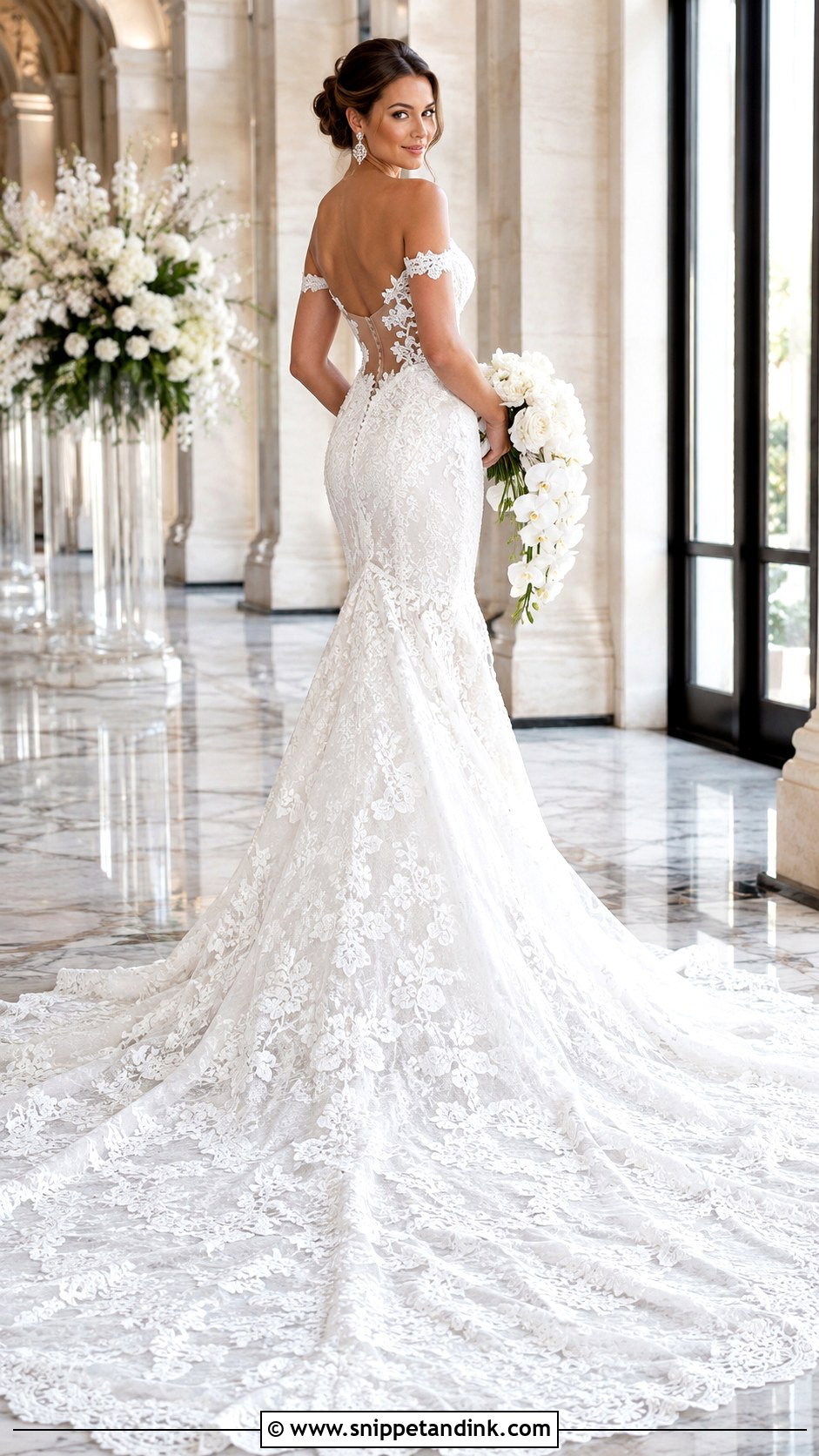
A mermaid holds tight to the knee and then releases into a wide spread, so the train looks even bigger than it is. Look for a firm lining and lace motifs that follow the body rather than stacking up at the hip. A sculpted sweetheart neckline with off-the-shoulder straps balances the fitted skirt, and a low illusion back gives guests something to see from behind. If the train carries heavy lace, a fingertip veil or none at all is wiser than a long one. Crystal earrings, a fine bracelet, pointed pumps, a loose low bun and a cascading bouquet finish it. Walking in a mermaid with this much train is a learned skill, honestly. Practice your stride, sitting and stairs at every fitting, because the knee flare limits how far each step can reach.
4. Minimalist Crepe Cathedral Train Wedding Dress
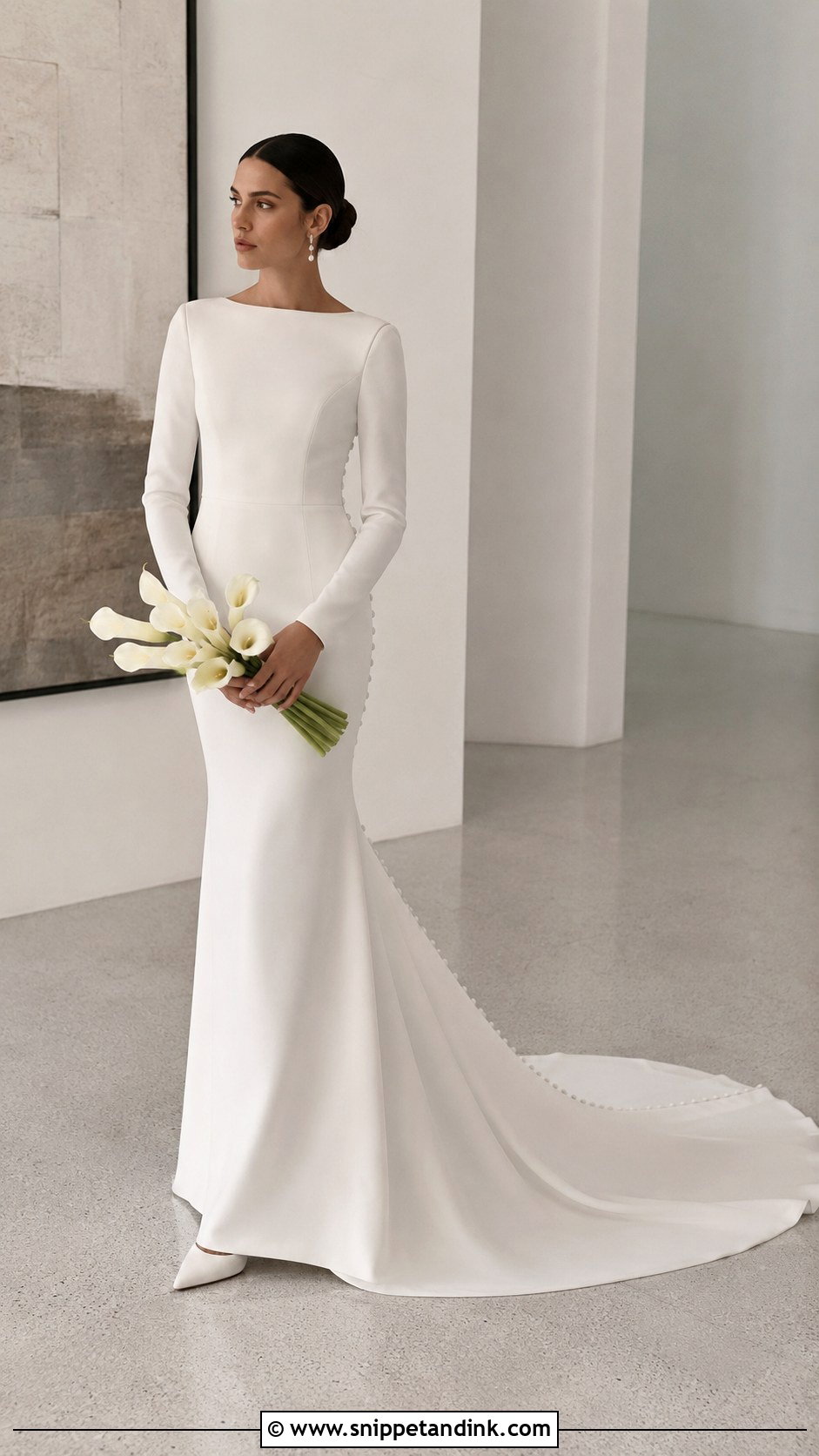
Crepe without lace or sparkle relies entirely on cut, and a long fluid train is where it earns its drama. A fitted column or soft fit-and-flare with a bateau neckline suits it, built with internal structure, clean seams and fabric-covered buttons down the back. I’d add architectural gold or pearl earrings, pointed closed heels, a sleek low bun and a single-flower bouquet or calla lilies. Decide early whether the veil goes beyond the train or stops short of it. A short veil leaves that long, clean back on show, which is often the whole point of this dress. Every seam reads on matte crepe, so alterations and underwear matter more here than on anything embellished.
5. Off-the-Shoulder Cathedral Train Wedding Dress
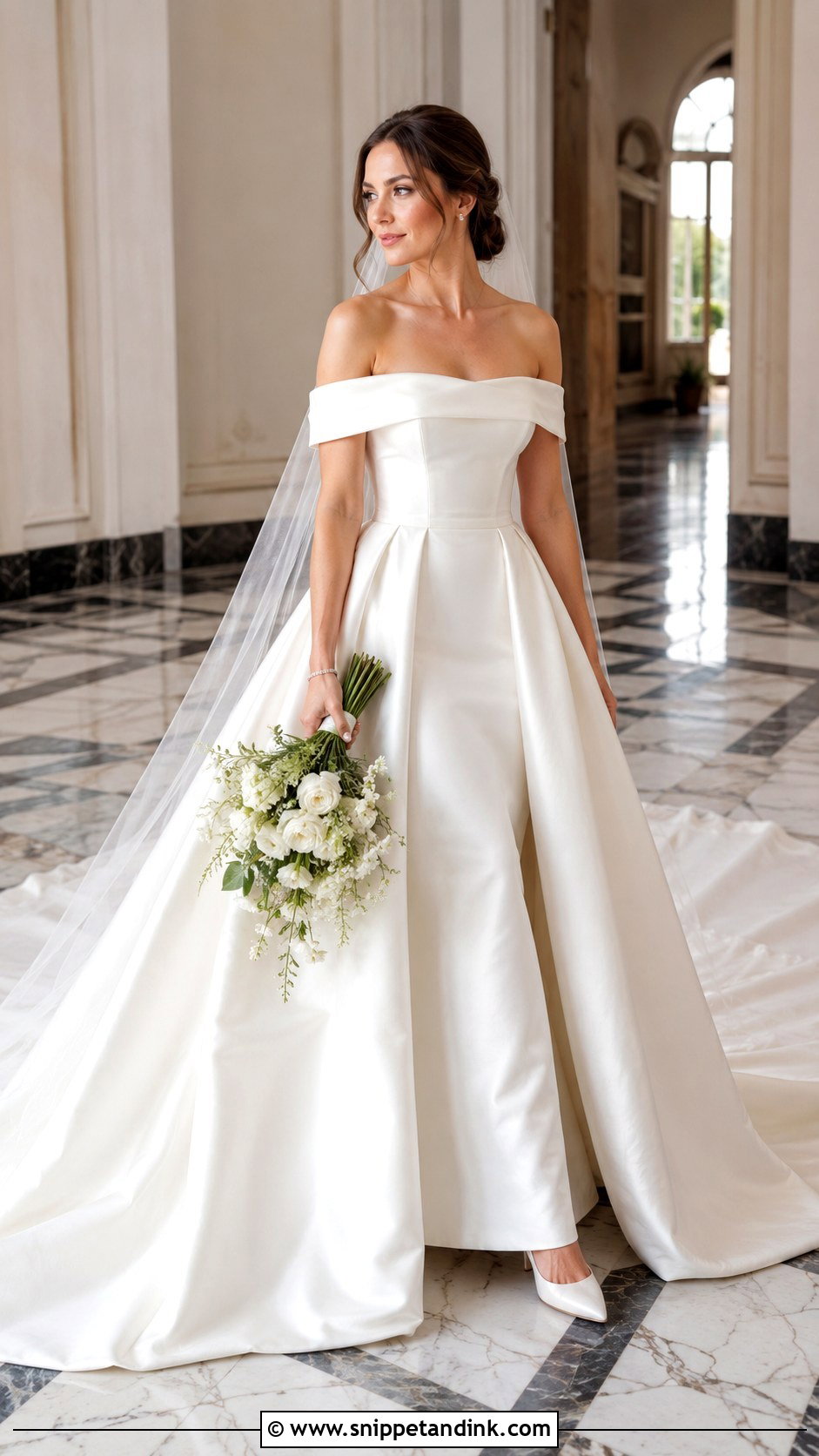
Off-the-shoulder bands frame the collarbones and soften all the length happening behind you. A structured satin or Mikado bodice keeps the folded bands from slipping, and a full A-line skirt with subtle pleats helps the train fan out evenly instead of narrowing to a tail. A clean-edge veil, pearl studs, a slim tennis bracelet, low pointed heels and a polished updo keep the shoulders clear, with a loose bouquet of ivory flowers for softness. At alterations, lift your arms as if you’re hugging someone. These bands restrict movement more than brides expect, and hidden elastic or an inner stay can make them sit firmly without changing the look.
6. Long Sleeve Lace Cathedral Train Wedding Dress
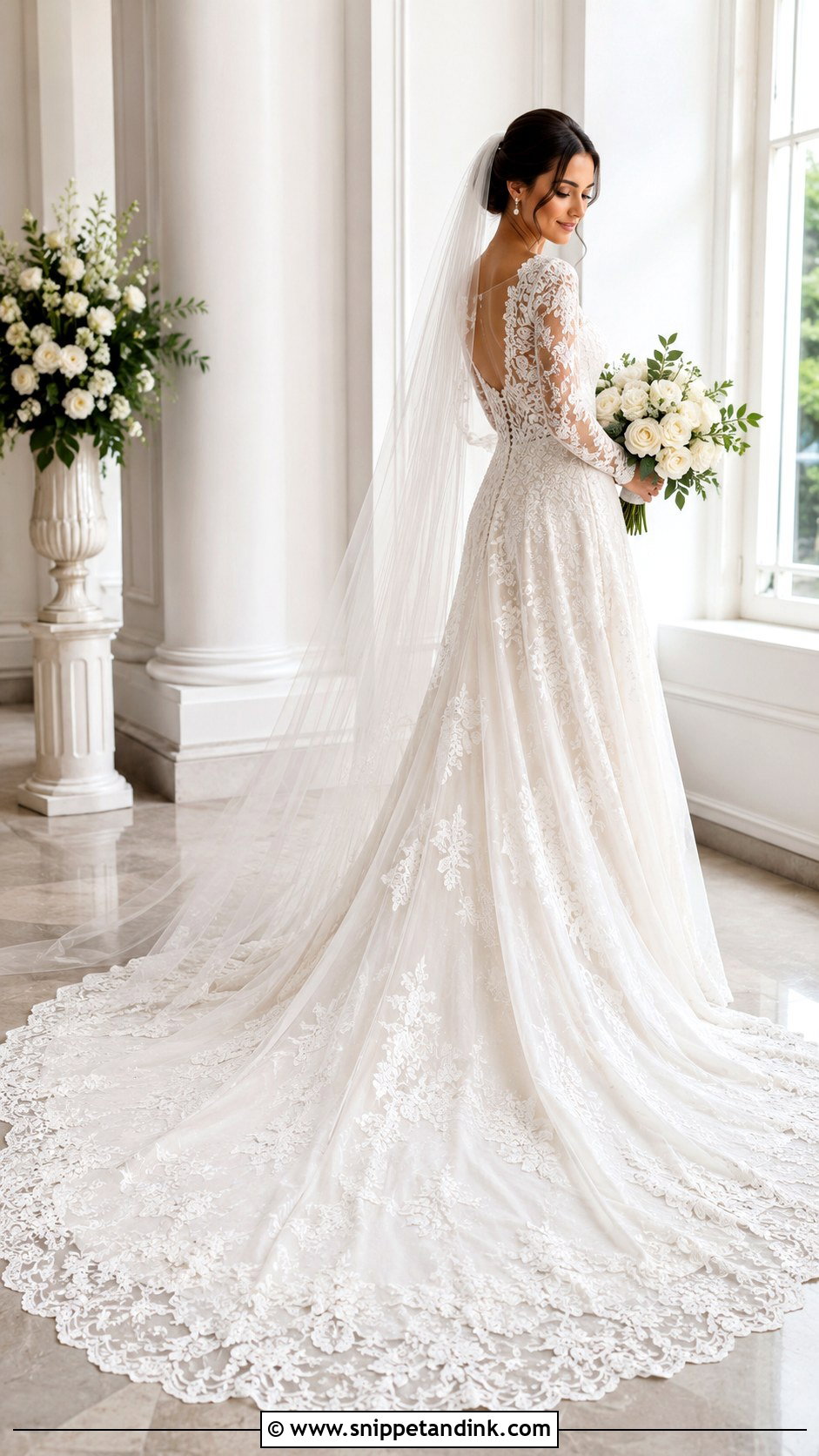
Sleeves make a long train feel more formal and suit a cold month or a bride who wants coverage. I’d choose sheer lace sleeves with some stretch, clean cuffs and appliqués that flow into the bodice, over a fitted waist and a soft A-line so the whole gown doesn’t turn heavy. Finish with closed ivory heels, pearl earrings, a light tulle veil with no wide border, a neat chignon and white garden roses. The armhole is where long-sleeve gowns go wrong. Cut too low, it lifts the entire bodice every time you raise your arms. For later, ask for a loop-and-button bustle, which lifts the train without crushing the lace pattern.
7. Strapless Corset Cathedral Train Wedding Dress
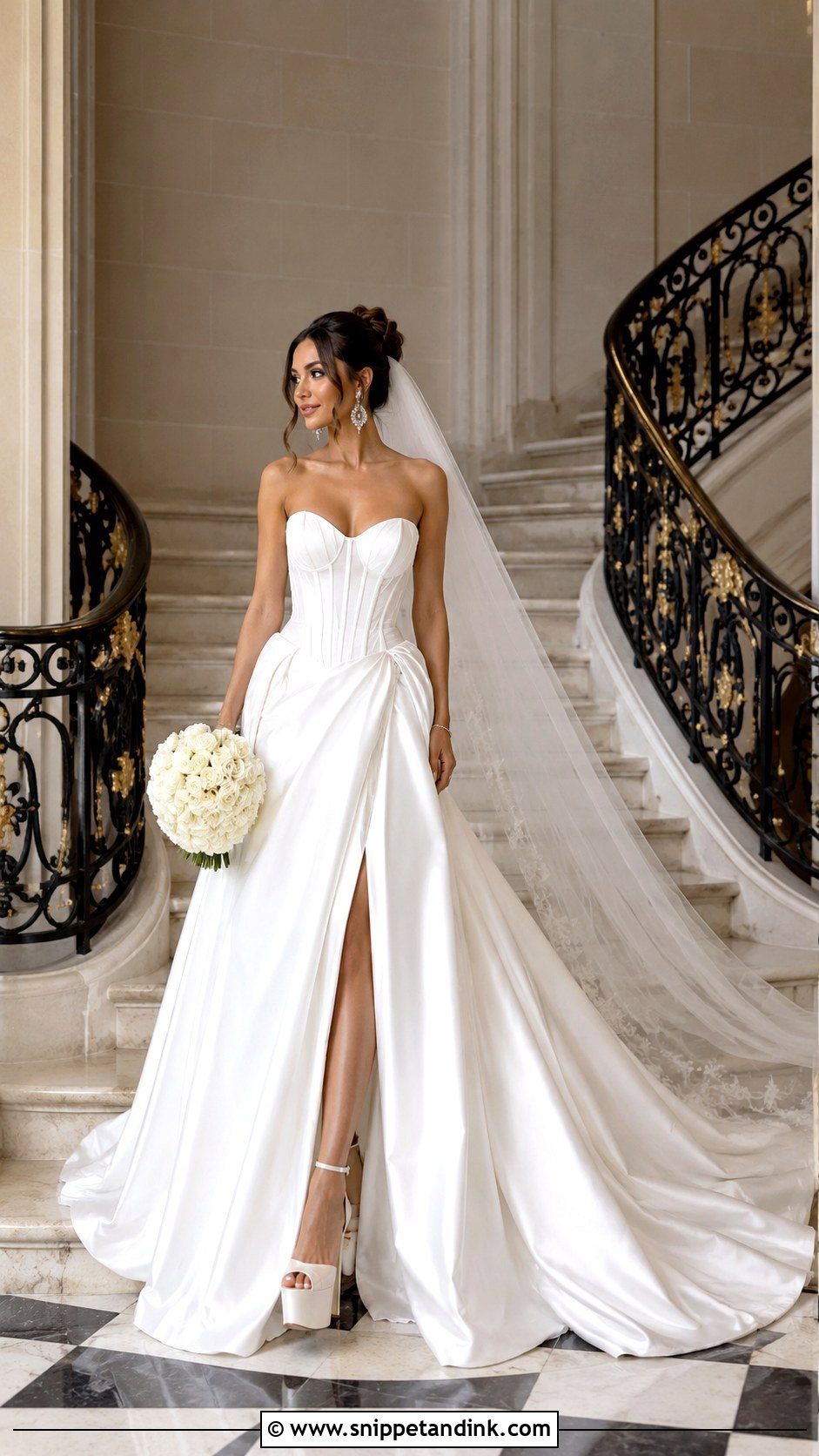
A strapless corset puts the structure on display and sets it against a long, soft spread of skirt. Look for a bodice with curved boning, firm interior support and a neckline you won’t need to keep hitching up. A basque or natural waist then flows into a full satin skirt and broad train. Style it with a sheer cathedral veil, crystal drops, a fine bracelet, ivory platforms under the hem, soft waves or a textured updo, and white roses. Remember that a strapless bodice also carries the backward pull of a long train. The corset has to be fitted to your ribcage, not just cinched at the waist, or the front edge slowly creeps down over the evening.
8. Square Neck Cathedral Train Wedding Dress
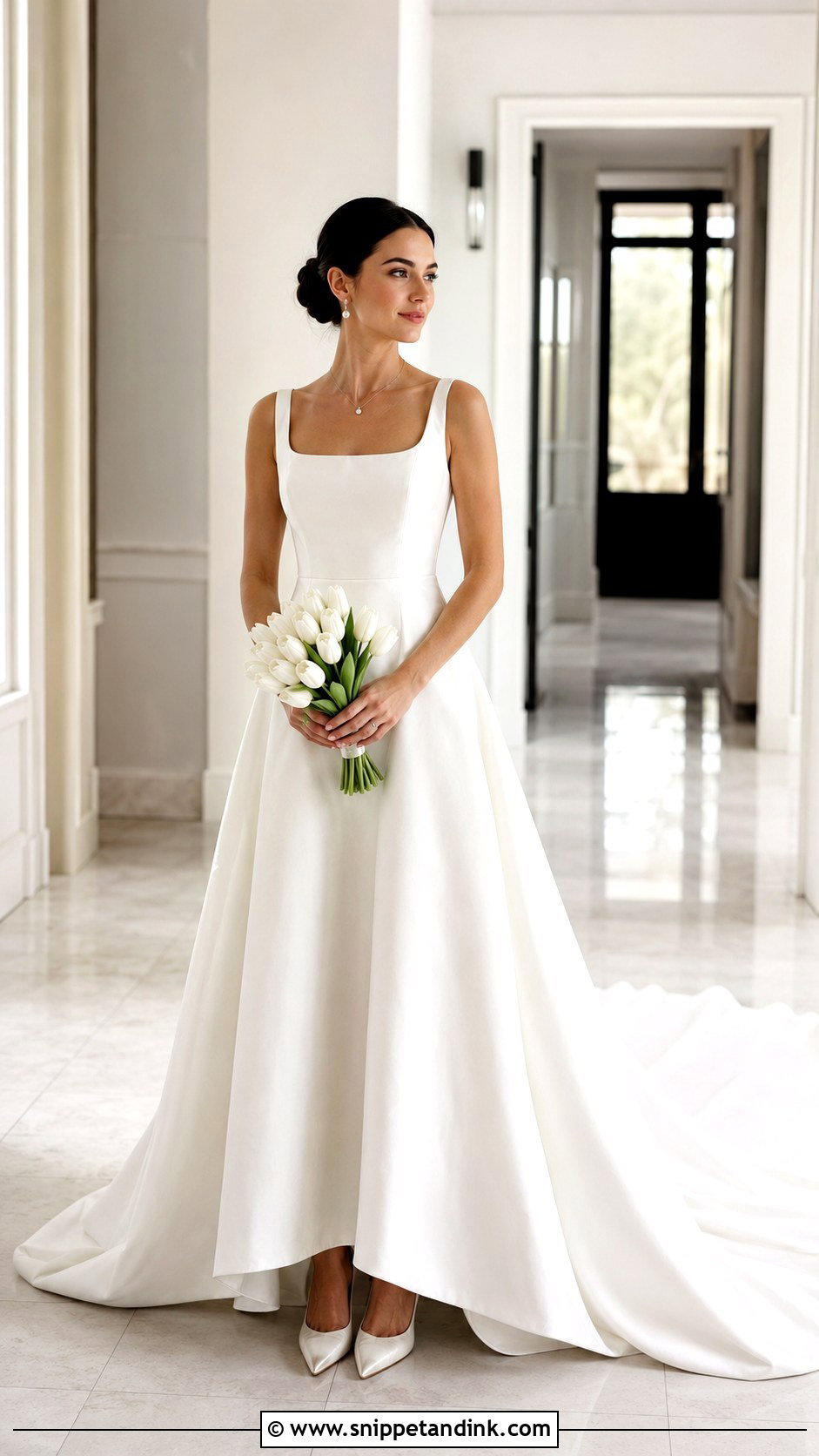
A square neckline is the quiet, architectural option. Wide straps and a structured bodice give support across the shoulders, and it pairs just as well with a satin A-line as with fitted crepe or lightly embellished lace. A delicate pendant can sit inside the open square; anything chunky crowds it. Small pearl earrings, a center-parted low bun with the veil set beneath it, pointed pumps and white tulips finish the outfit. In fittings, the corners give the game away. If they gape when you breathe or lift your arms, the bodice needs taking in at the side seams, and the straps should stay flat when you turn to walk back up the aisle.
9. Basque Waist Cathedral Train Wedding Dress
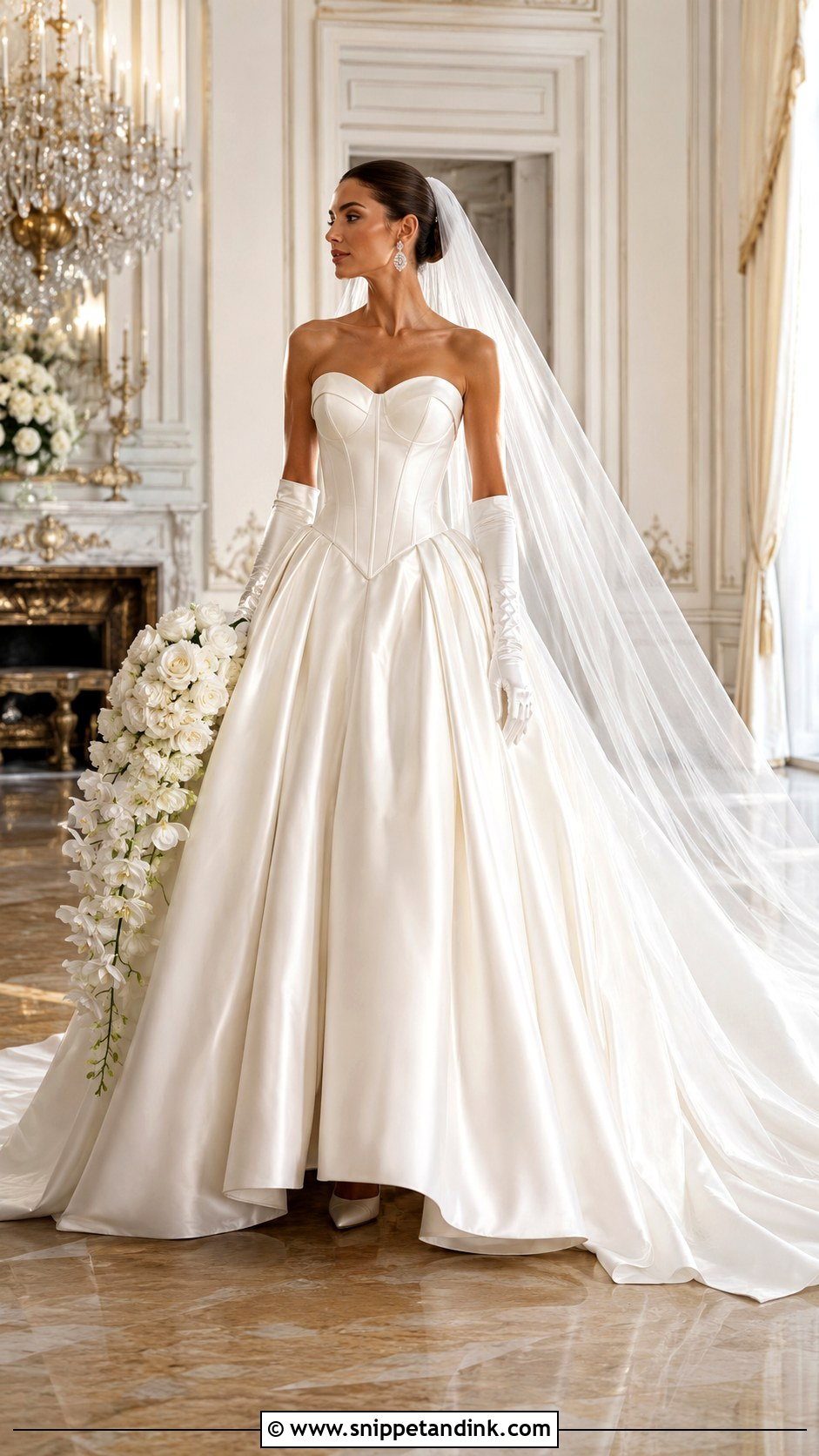
The pointed seam of a basque waist lengthens the torso and lets the skirt fall from a lower line, which makes a voluminous train look intentional rather than overwhelming. Satin or Mikado ball gowns with a sculpted corset carry it best, with a straight or gently curved neckline so the waist stays the feature. Elbow-length gloves, small gemstone earrings, plain ivory heels, a cathedral veil with a narrow finished edge and a polished bun or half-up style suit it, and trailing stems in the bouquet echo the length. That seam must lie flat. If it wrinkles or digs, the torso length needs altering, not just the waist.
10. Detachable Cathedral Train Wedding Dress
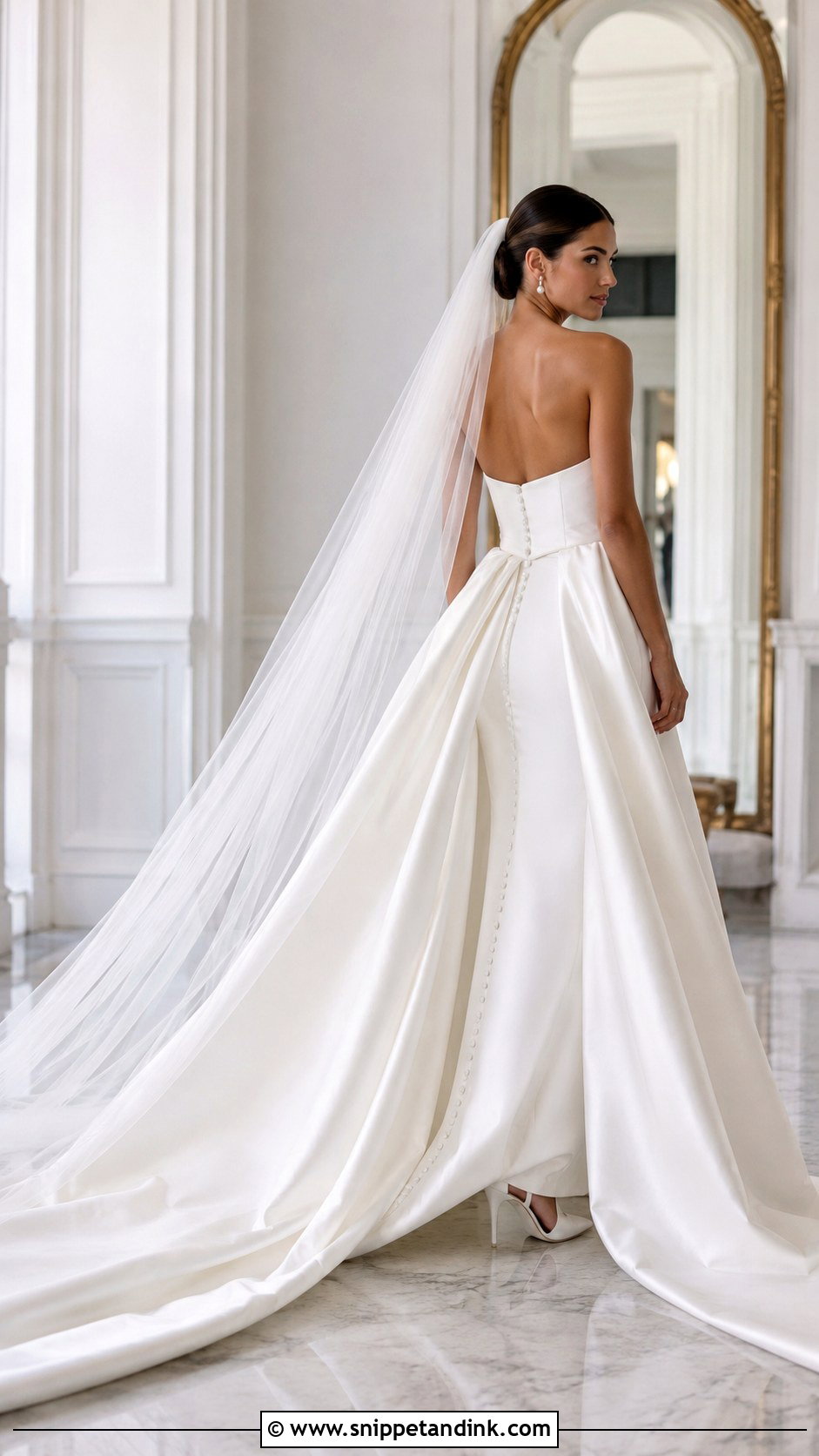
A detachable train gives you two looks without changing outfits. The base is a fitted crepe, lace or satin gown, and the train or overskirt goes on for the ceremony. The join at the waist has to look deliberate from every side, or it reads as an afterthought. For the ceremony, a long veil, pearl earrings and elegant heels; for the reception, train off, a shorter veil or a bow, and some sparkle at the ears. A wrist loop on the base gown helps when dancing. Have the salon demonstrate the fastenings several times, and get your helper to practice as well. Hidden hooks under a waistband are fiddly, and a rushed removal is exactly how buttons tear off.
11. Floral Appliqué Cathedral Train Wedding Dress
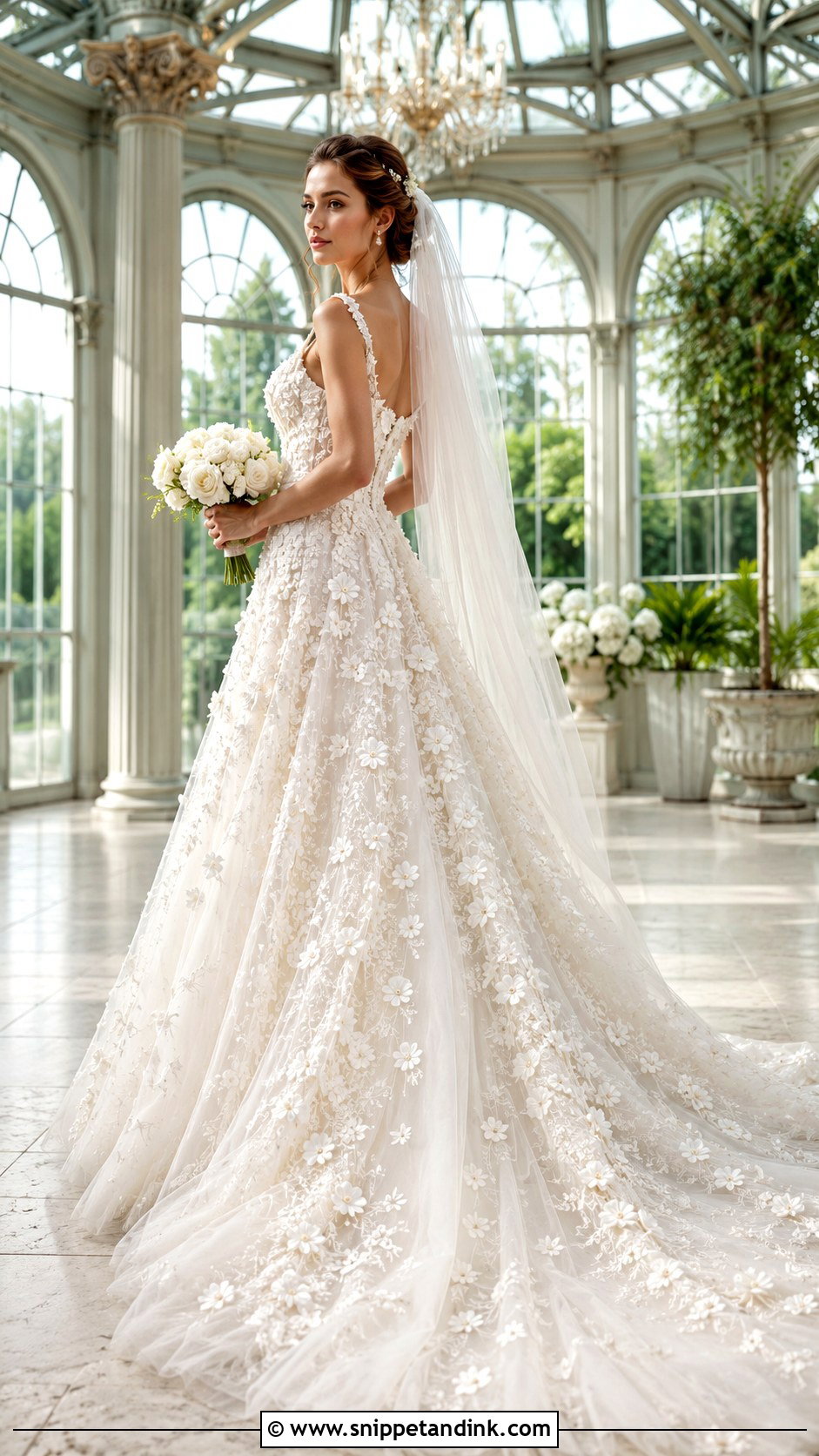
Fabric flowers give a train texture that moves as you walk, with less weight than heavy beading. I like the blooms gathered around the bodice and spreading more thinly over the skirt and train, on an A-line or ball gown with room to show them. Keep the rest tonal: a plain veil, floral hair pins, pearl earrings, understated ivory pumps, a low textured bun and a simple bouquet that doesn’t compete. Raised petals catch on veil tulle, especially at the back where the two overlap, so I lay the veil over the train once at the fitting to see what happens. Hang the dress with space around it, too. Crushed petals can be steamed back into shape, but slowly.
12. Beaded Cathedral Train Wedding Dress
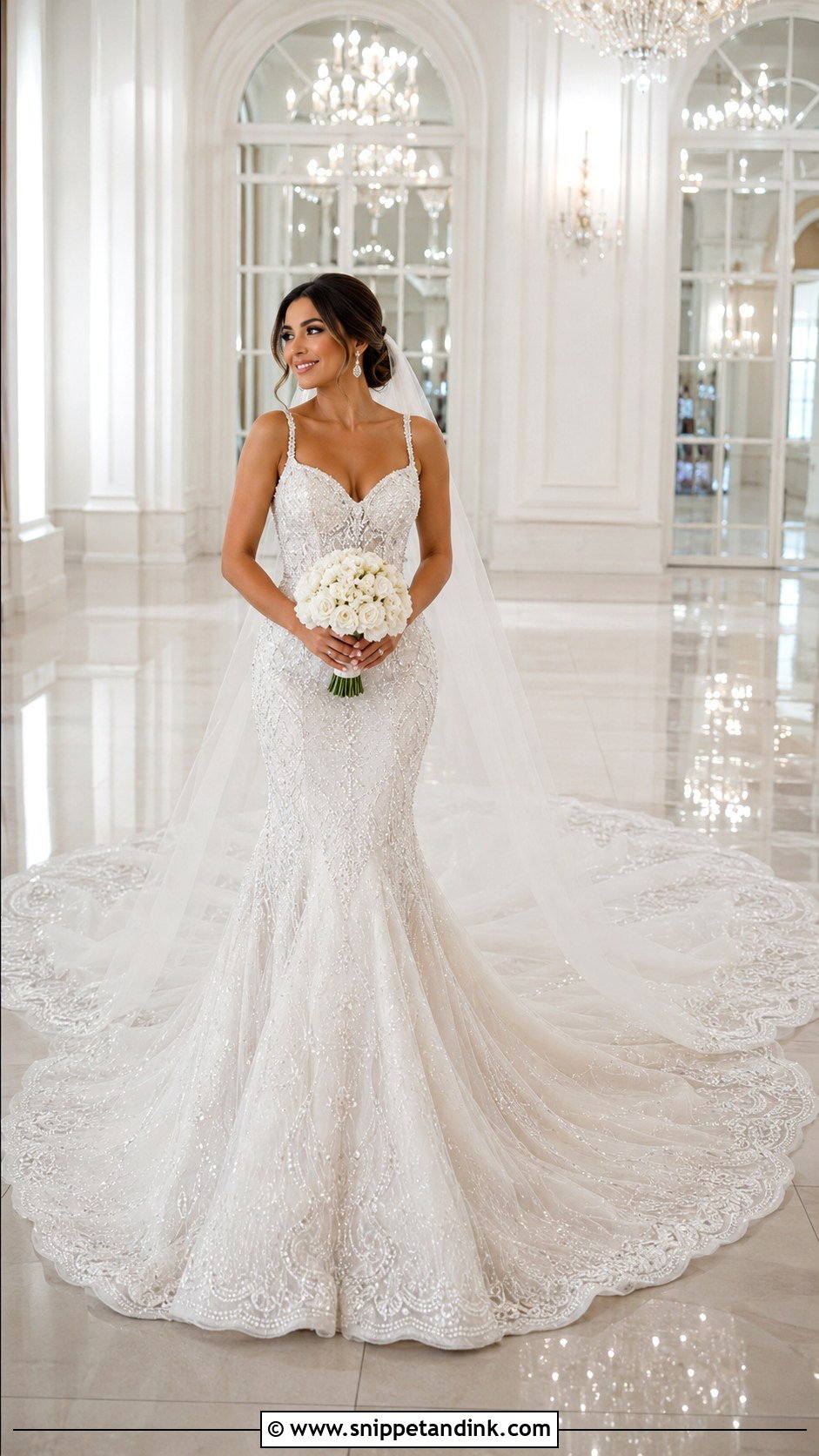
Beadwork on a long train catches light every time you move, which is why it belongs in a ballroom. Choose a supportive fit-and-flare or A-line where the beading thins toward the hem; it keeps the gown balanced and spares you some weight. Add a simple veil, crystal or metallic earrings, closed satin heels, a smooth low bun, defined makeup and a compact bouquet with clean edges that won’t snag. I make two checks at the fitting. First, run your fingers along the inner arm and underarm for rough beads. Second, ask whether the bustle points are reinforced, because a beaded train is heavy and an ordinary button will pull straight through the fabric.
13. Pearl Cathedral Train Wedding Dress
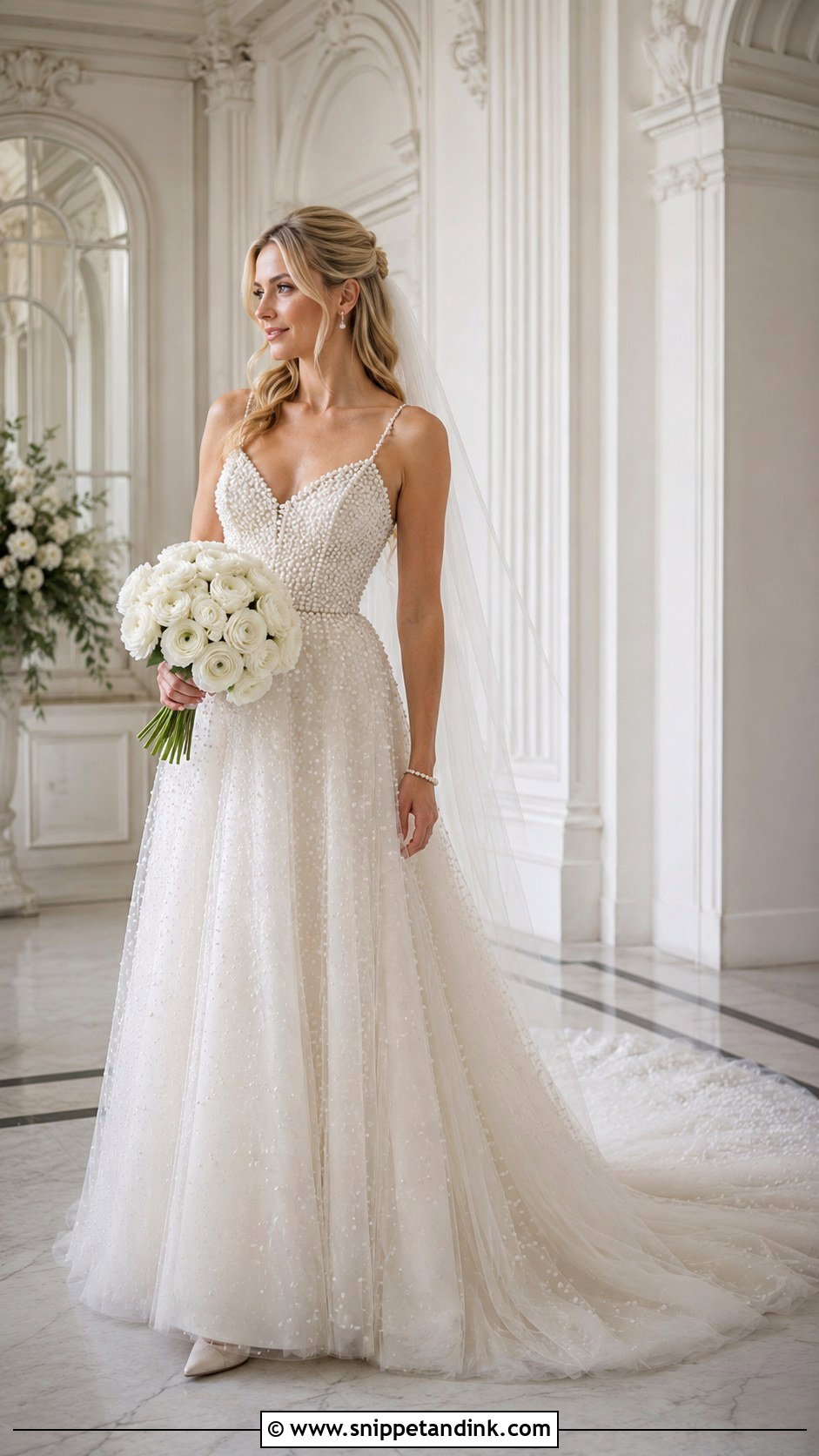
Pearls give a softer glow than crystal and suit a tulle A-line where they cluster on the bodice and fade out across the skirt. A straight neckline, narrow straps or sheer sleeves keep the whole thing light. Resist putting matching pearls on every accessory; studs and a slim bracelet are plenty, with smooth ivory pumps and a plain veil so the texture photographs clearly. Soft waves, a half-up style or a low bun with a few pearl pins all work, with white ranunculus or roses. Loose pearls are almost inevitable on a train that drags along a floor, so I always pack a small kit with spare beads, clear thread and a fine needle.
14. Mikado Ball Gown Cathedral Train Wedding Dress
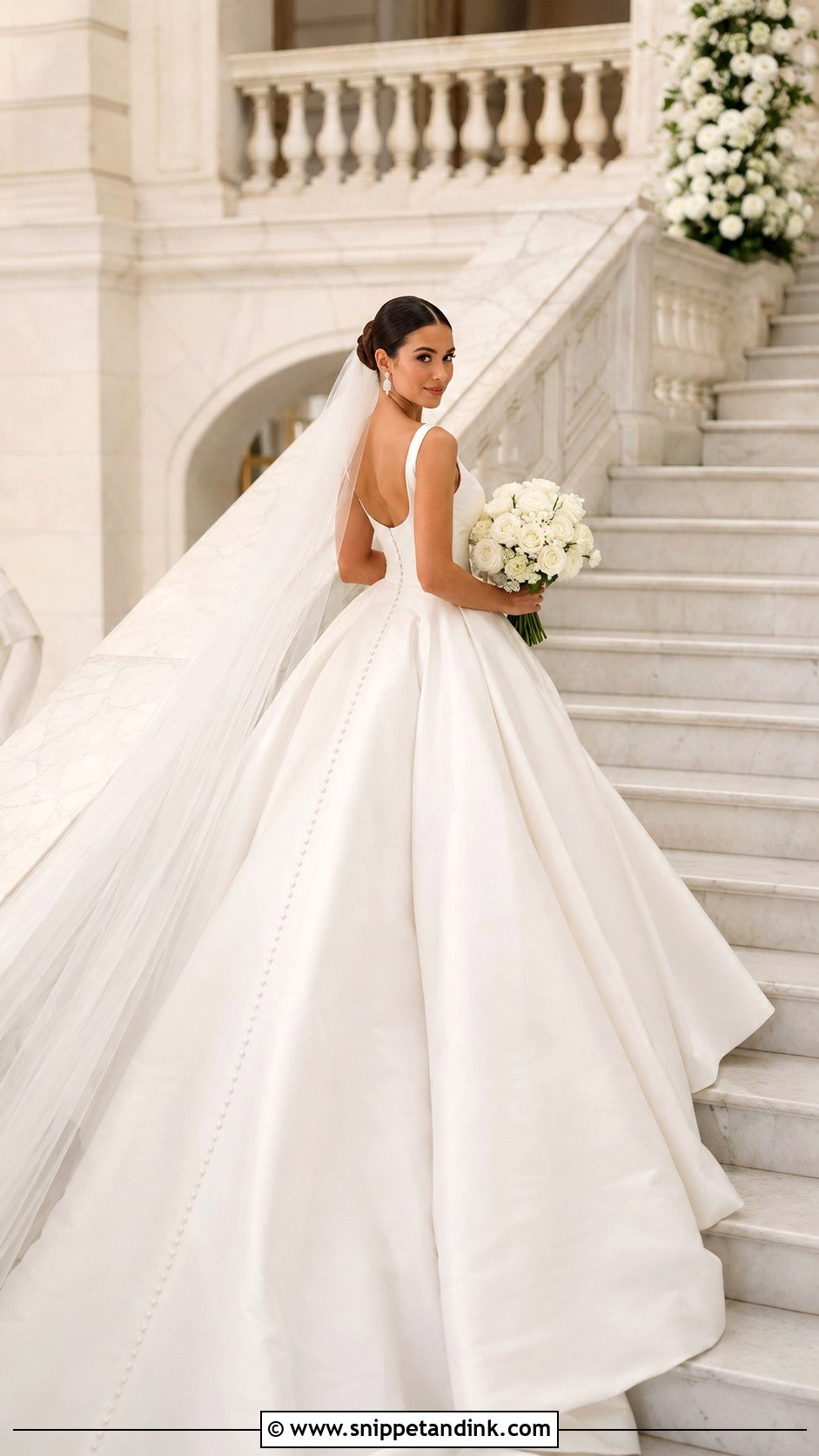
Mikado has body, so a ball gown in it holds the train’s shape without any help. A fitted bodice with a straight, scoop or off-the-shoulder neckline over a skirt of broad, controlled pleats is the classic build, with covered buttons down the back. Add a sheer veil, statement earrings, block or platform heels under the skirt, a polished bun and a structured bouquet. Plan the car before you plan the earrings. A Mikado skirt doesn’t compress, so it needs real room in the back seat and the dressing area. Ask for a multi-point bustle that shares the weight across several anchors instead of hanging from one central button.
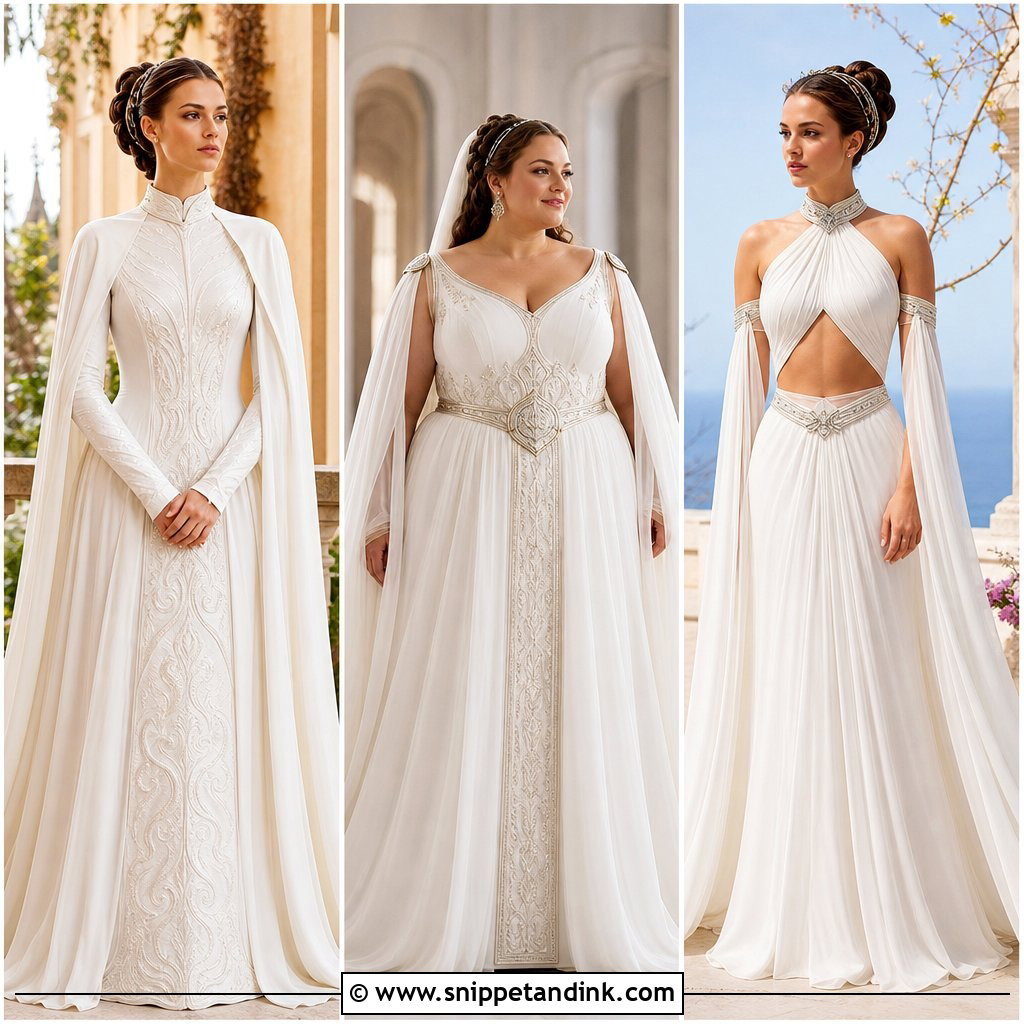

15. Illusion Back Cathedral Train Wedding Dress
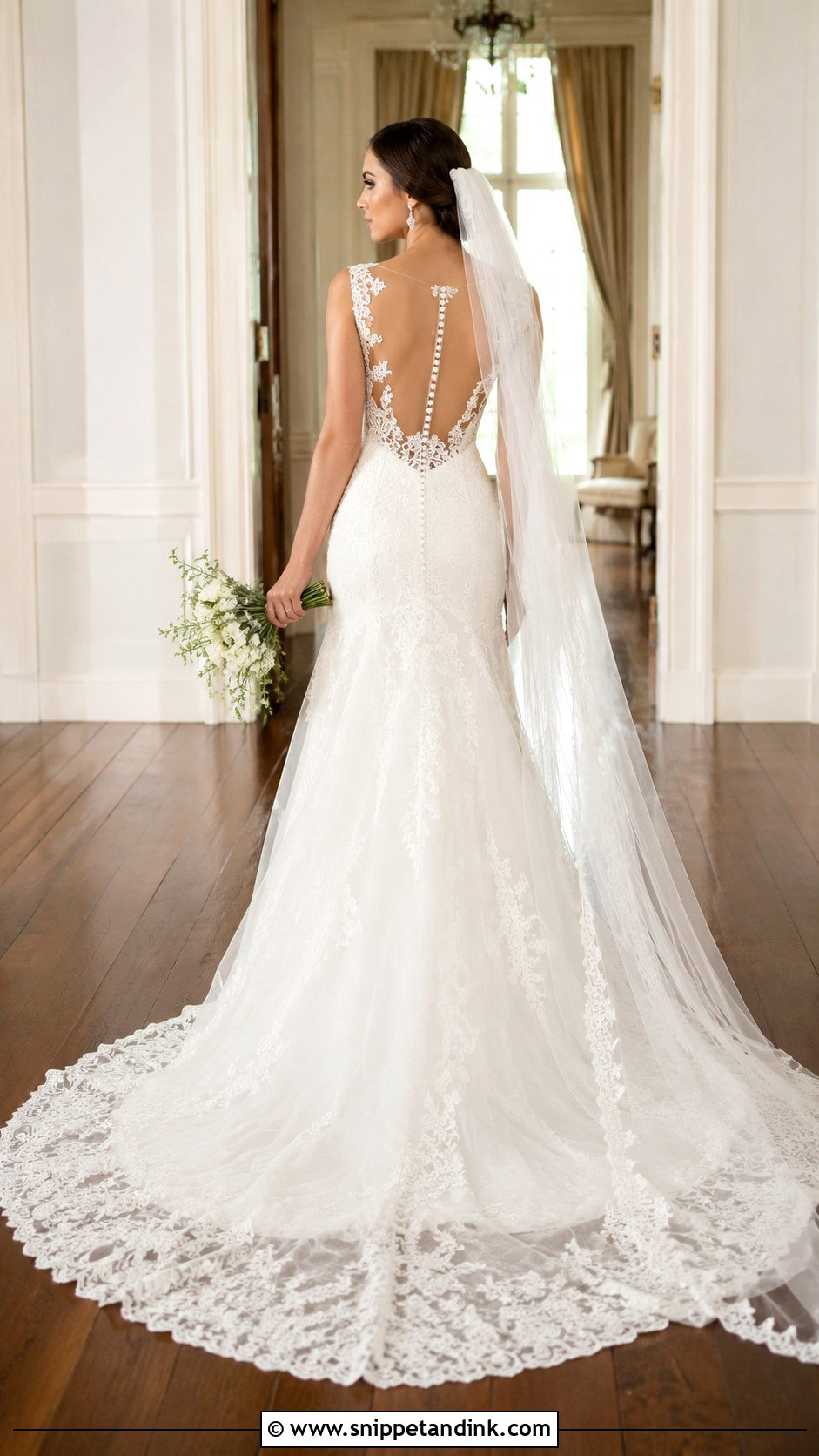
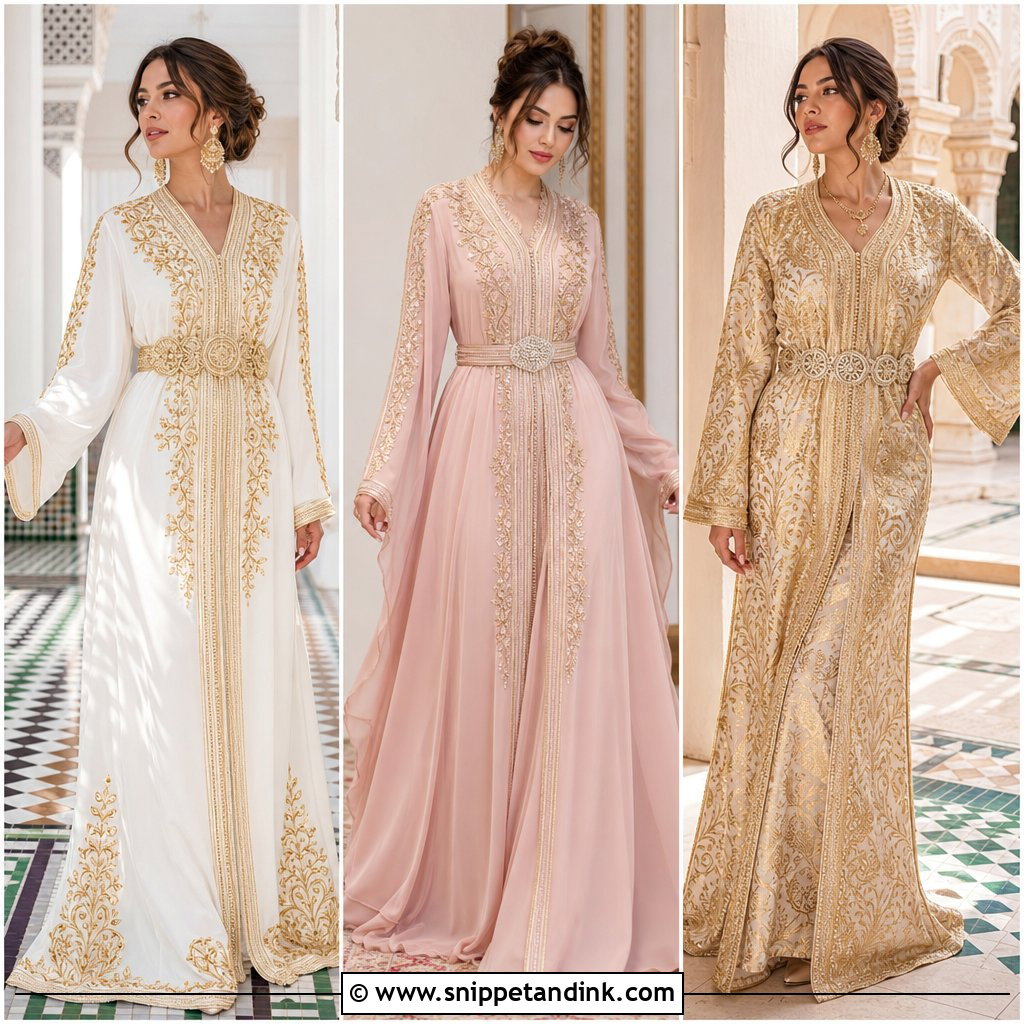
An illusion back looks delicate but still lets the seamstress keep real support in the bodice. Look for mesh that closely matches your skin tone, with lace appliqués or covered buttons running down the center and leading into the train, so the rear view reads as one line. Wear your hair up so the panel shows, with the veil anchored under the bun, small drops, ivory heels and a narrow bouquet. Ordinary bra straps show straight through mesh, so ask early about built-in cups or a low-back option. Then check the panel standing, sitting and turning. It should lie flat without buckling or opening small gaps at the seams.
16. High Neck Cathedral Train Wedding Dress
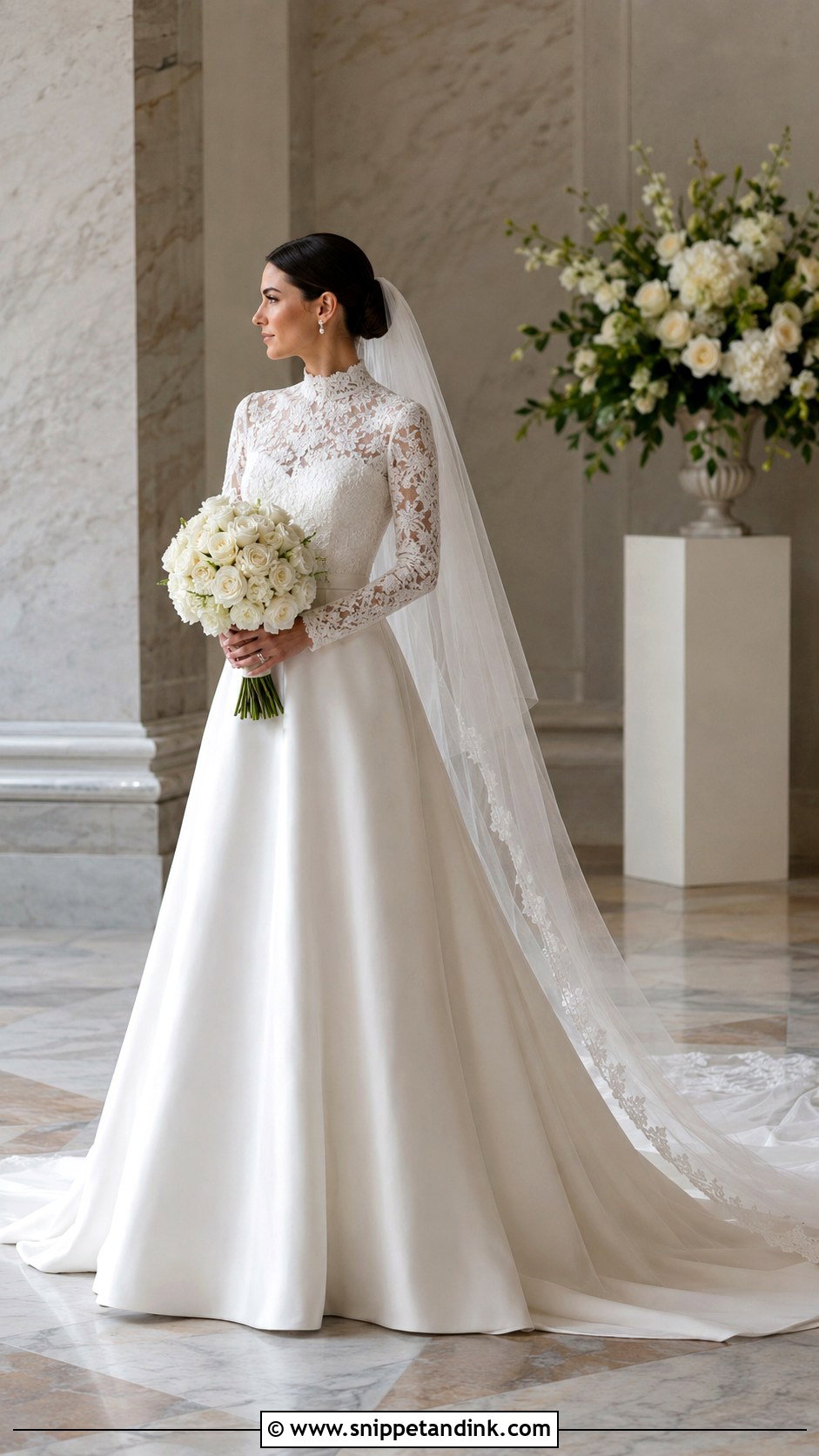
A high neck draws a long line from chin to hem, and with a cathedral train it’s the most formal look in this collection. Sheer lace, smooth crepe or matte satin all work. Long sleeves with an A-line skirt feel traditional, while a sleeveless high neck suits a slimmer cut. Leave off the necklace and wear small earrings, a sleek bun, a veil set low at the back, closed pumps and a structured bouquet. The collar deserves the most attention at fittings. It should sit close without pressing on your throat when you look down to read your vows, and the back fastening, whether a zip, covered buttons or hooks, should lie flat.
17. Drop Waist Cathedral Train Wedding Dress
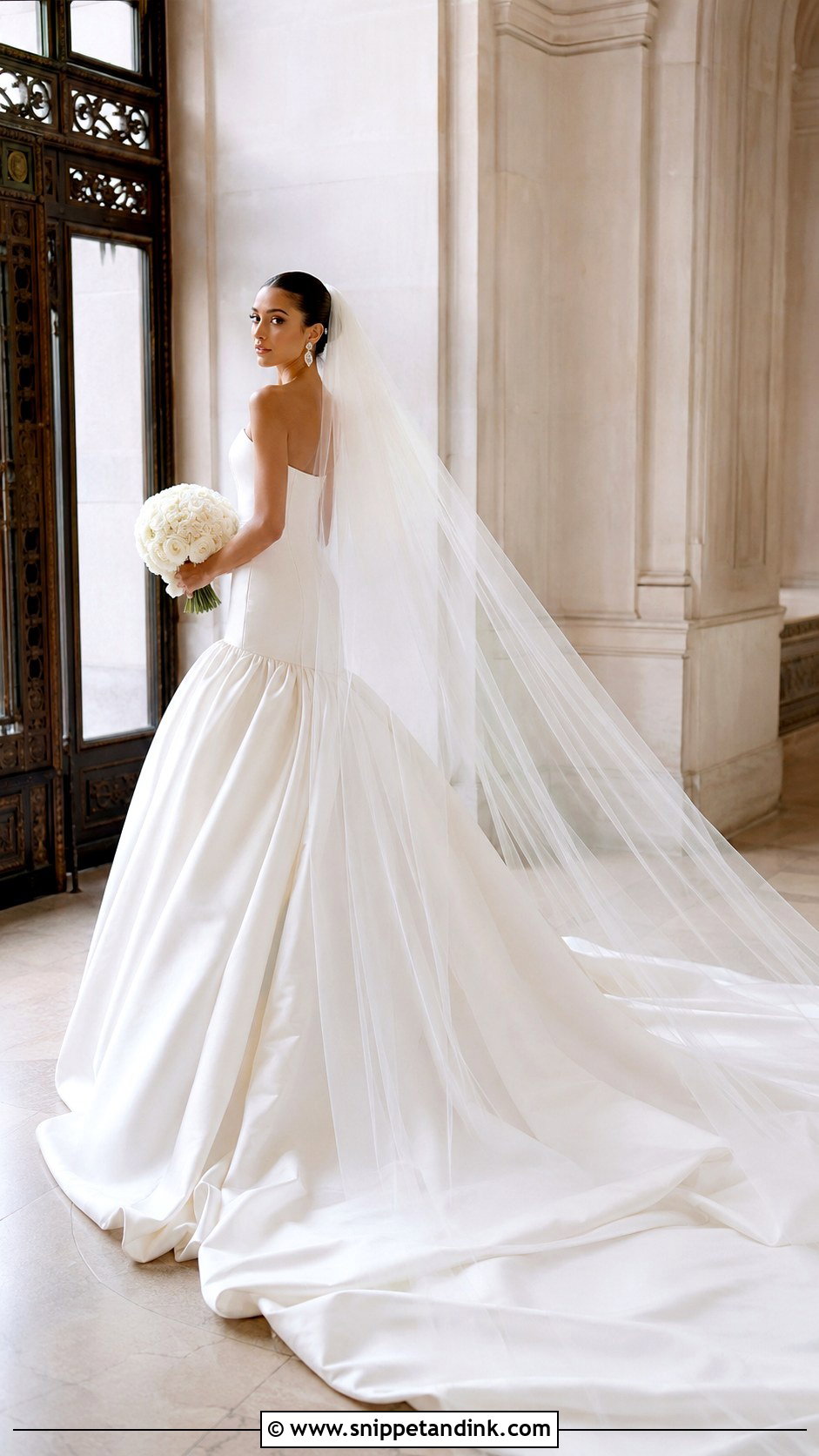
A drop waist carries the bodice below the natural waist before the skirt and train open out, giving a sculpted, modern line in satin or Mikado. A strapless or square-neck top with clean seams keeps the long torso as the feature. Style it with a plain cathedral veil, simple drop earrings, platform heels, a softly rounded bouquet and a sleek updo. Where the skirt starts matters more than anything else on this style. Set too low, it makes sitting awkward, and horizontal creasing across the hips at a fitting usually means the seam is fighting your shape instead of following it.
18. Champagne Cathedral Train Wedding Dress
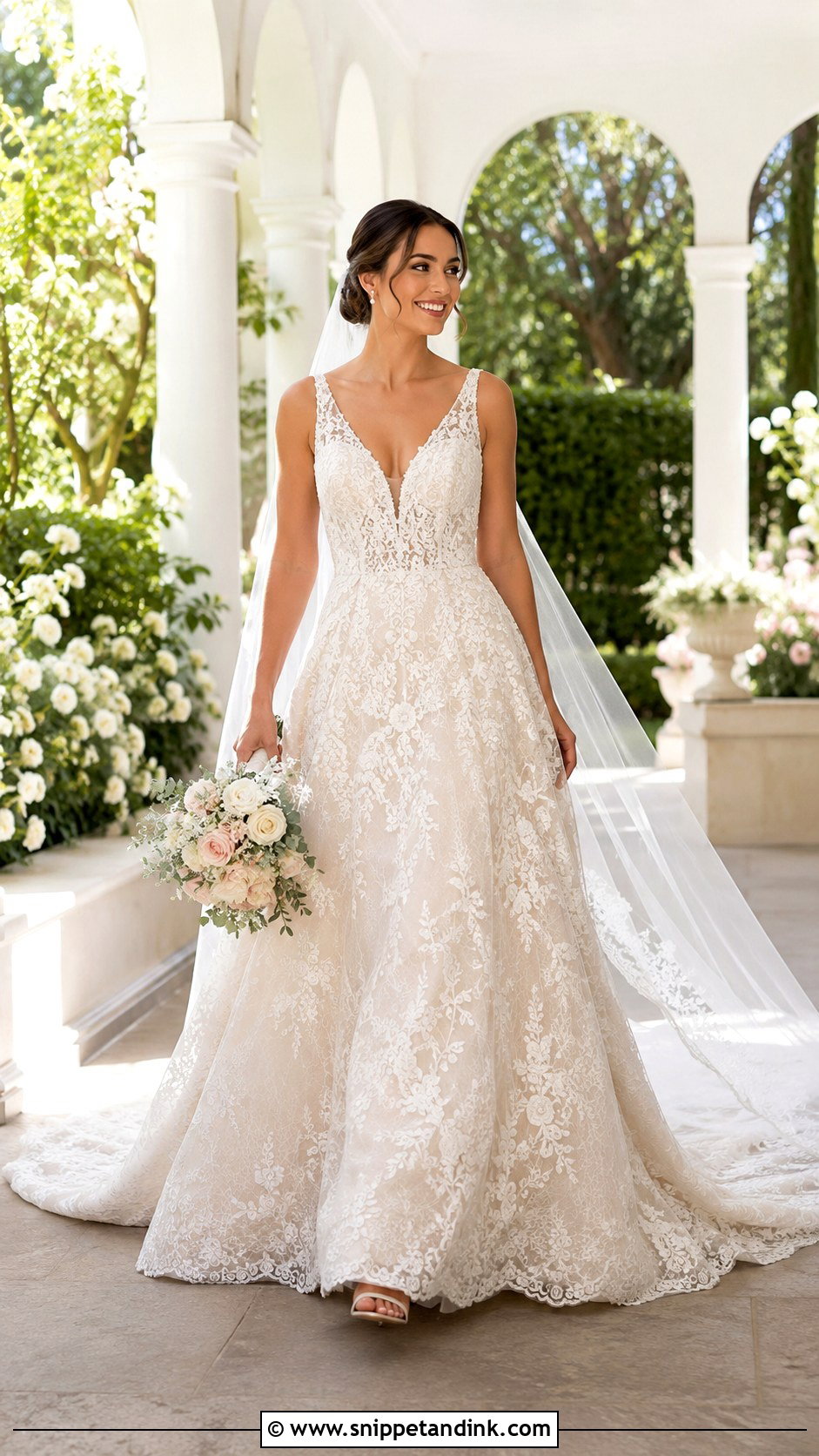
Champagne is a warm alternative to bright white, and it gives ivory lace or pearl tulle on top more depth. An A-line, ball gown or fit-and-flare all work, depending on how much volume you want. Keep the shoes neutral satin and the jewelry gold or pearl, match the veil’s undertone to the dress, and put ivory, cream and pale blush in the bouquet. Look at the gown by a window and again under indoor light before deciding. Champagne can read as warm beige in one light and nearly white in another, and cameras exaggerate both. Bring the veil and shoes to fittings so you see every shade side by side.
19. Plus Size Cathedral Train Wedding Dress
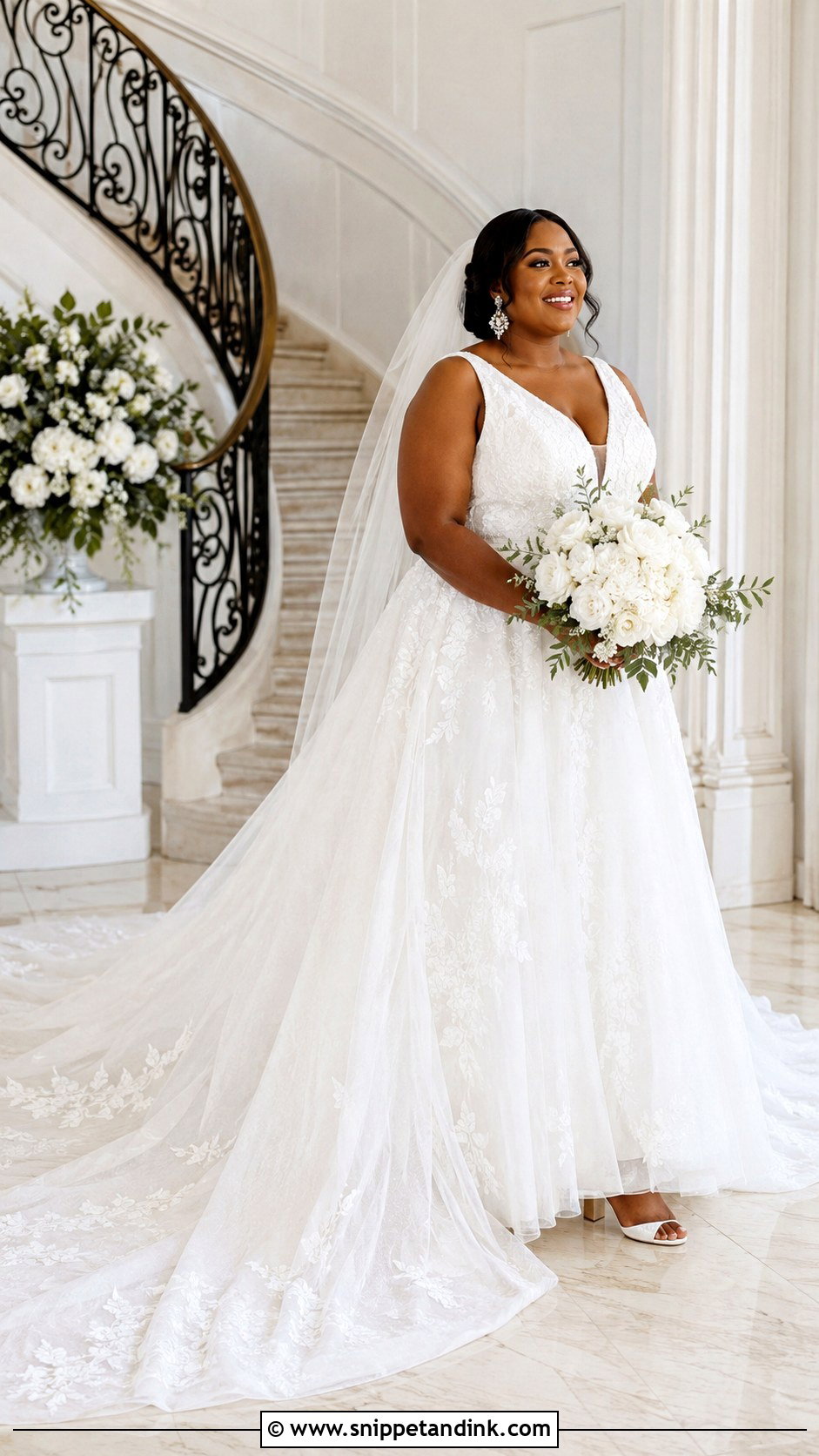
Support first, then silhouette. A good plus-size cathedral gown might be a structured V-neck A-line, a corseted ball gown or a fit-and-flare with a flexible lining, with wide straps, internal boning and a defined waist that keeps you comfortable without hiding curves. Pair a lightweight veil with supportive block heels and statement earrings, scale the bouquet to the skirt, and wear your hair however you feel most like yourself. When ordering, ask about split sizing, since bust, waist and hip rarely fall in one size. A long train also adds weight to the back of the skirt, so make sure the waist seam is anchored firmly enough that it isn’t dragged down as the day goes on.
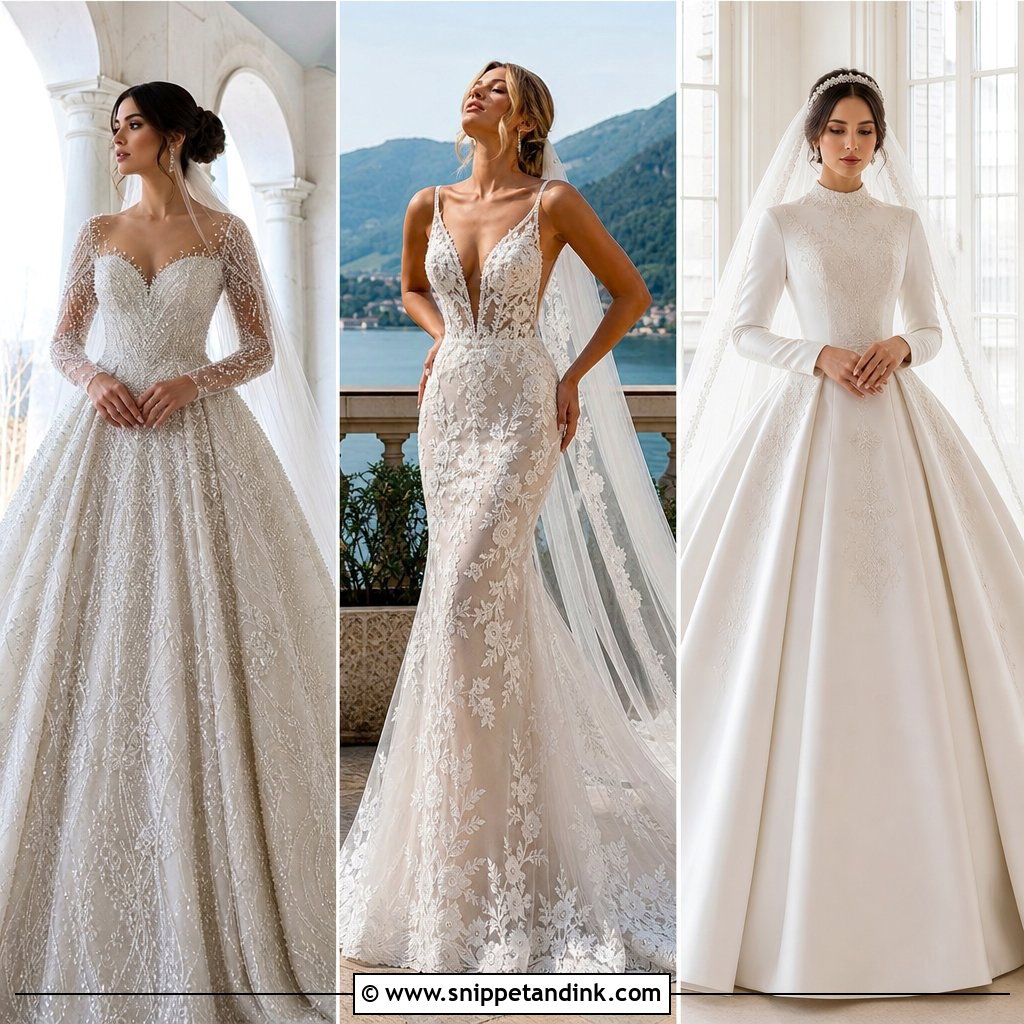
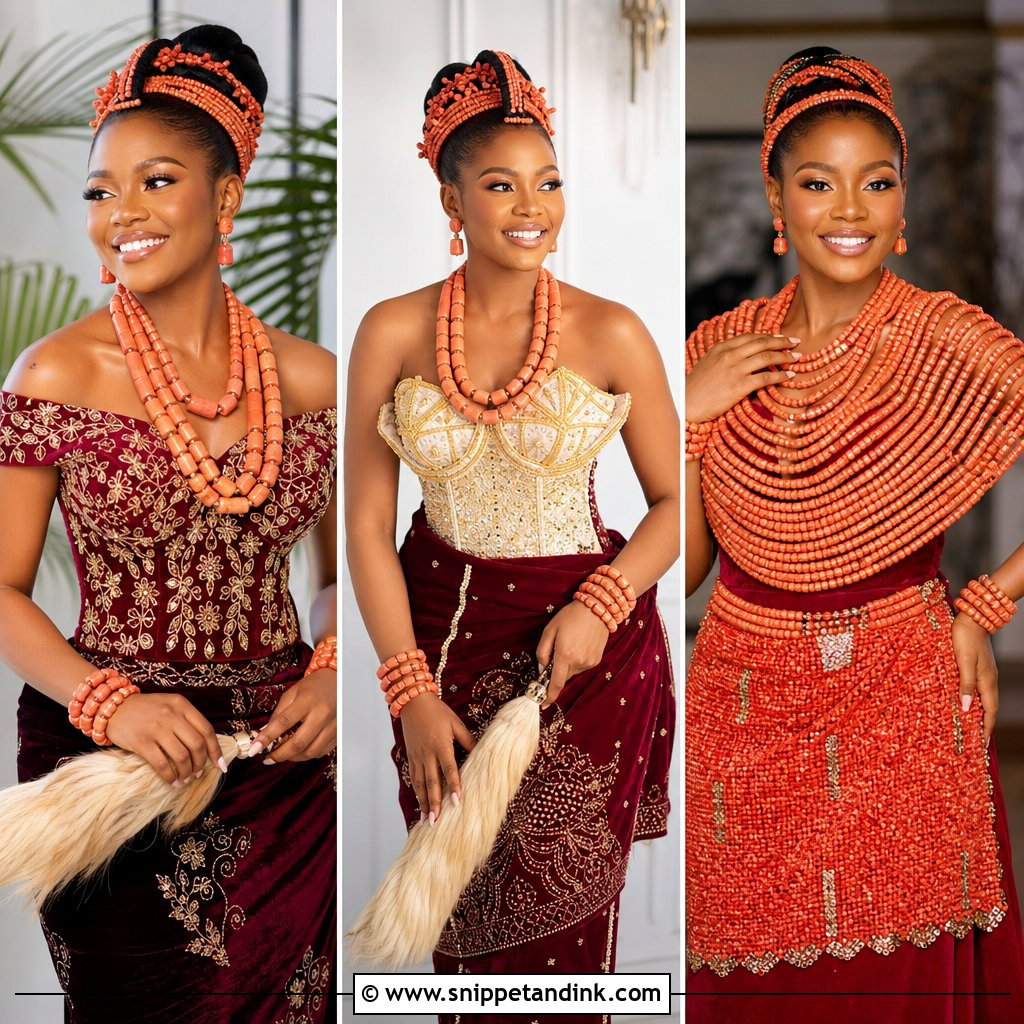
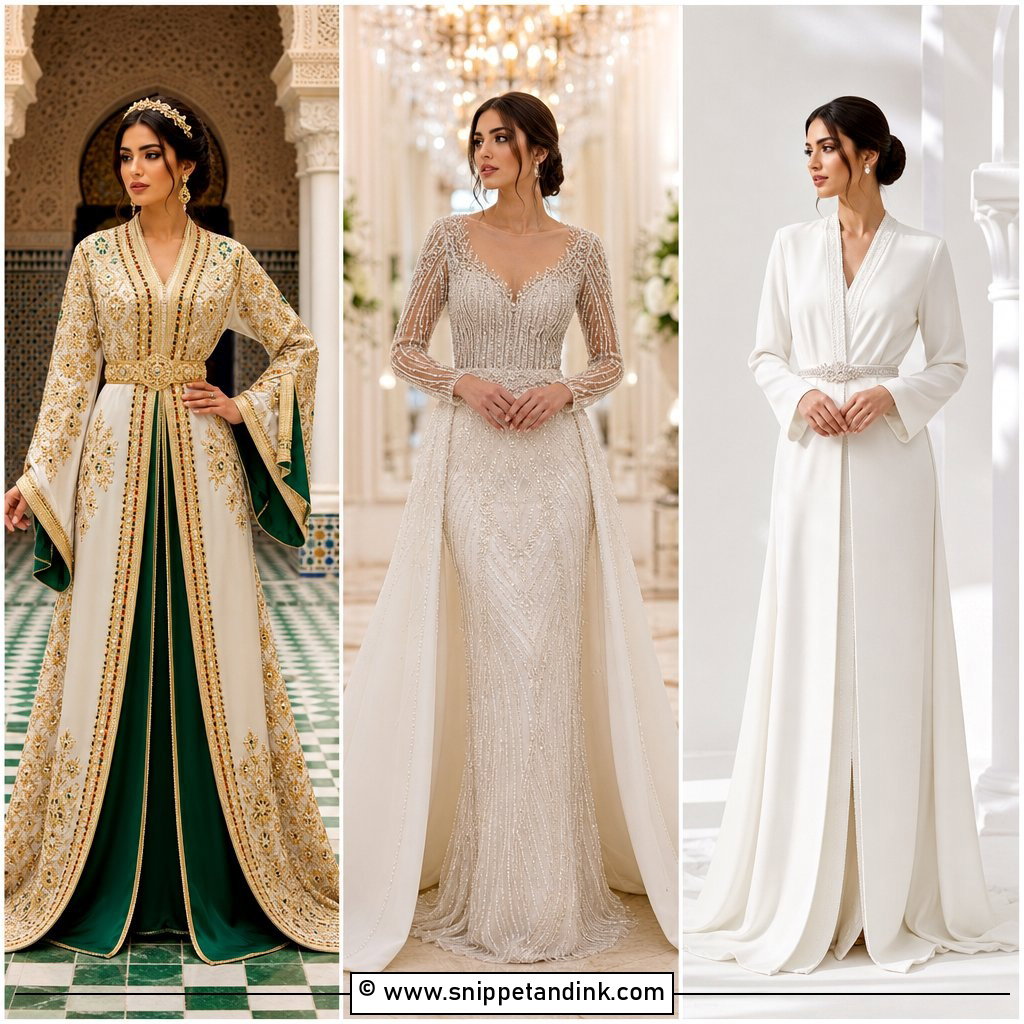
20. Modest Cathedral Train Wedding Dress
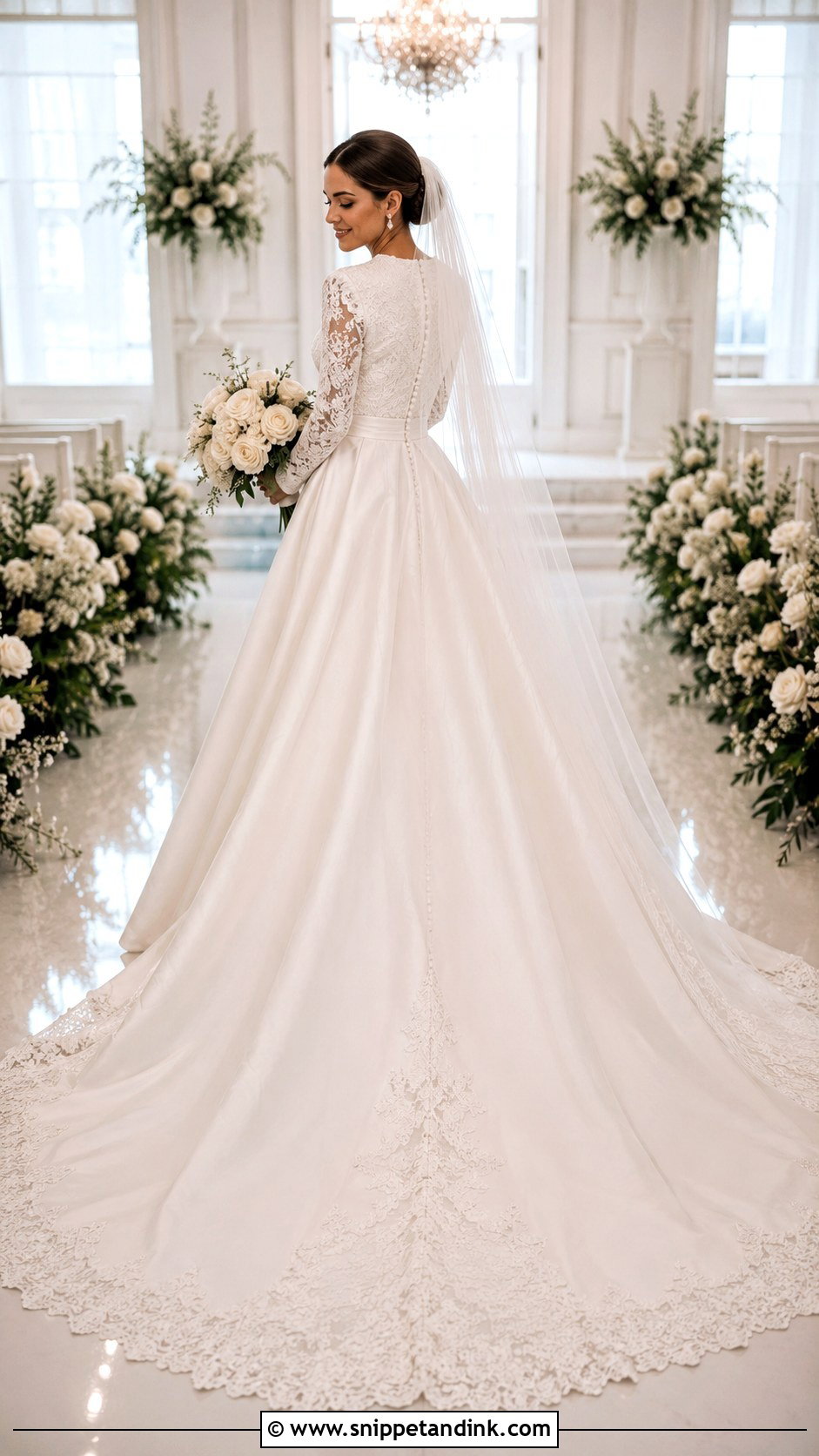
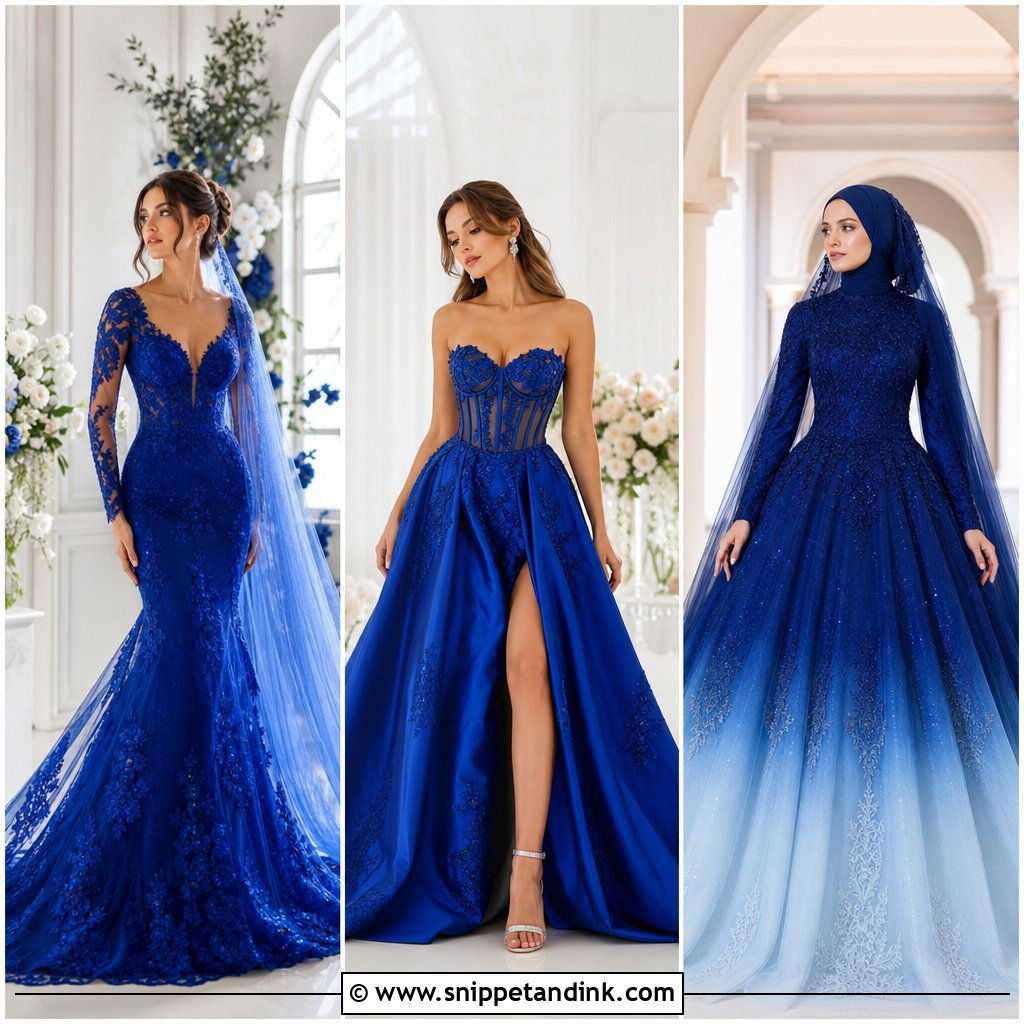
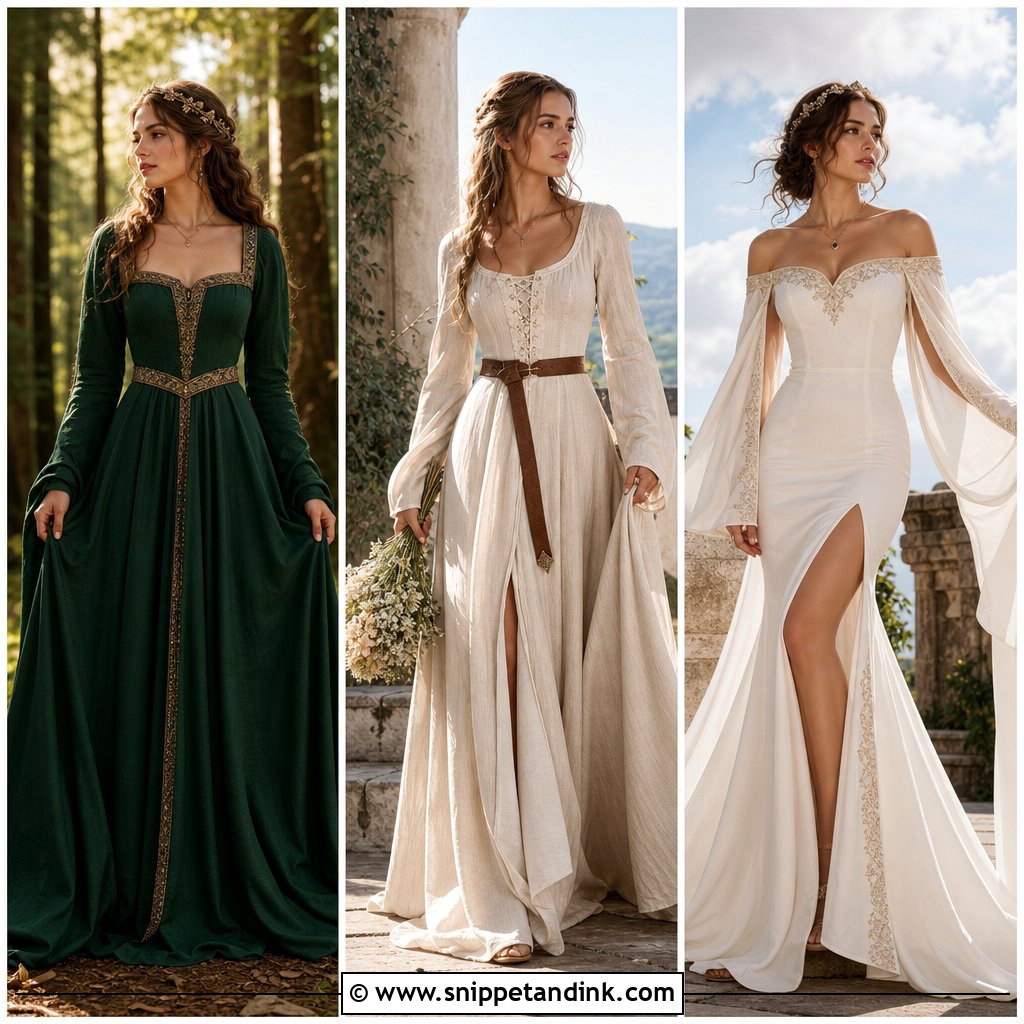
A modest gown with a cathedral train can look regal and still feel entirely your own. Look for a high or bateau neckline, lined long sleeves, a covered back and a defined waist into an A-line or ball gown skirt. Satin gives a clean formal effect; lined lace adds texture without any sheerness. Add a simple veil, pearl earrings, closed heels, a neat low bun that holds the veil securely and a softly structured bouquet. Talk about coverage before ordering, because lining, neckline height and sleeve opacity often need customizing. Then book alterations early. Added panels have to match the original fabric’s color and texture, and sourcing that match can take weeks.
Three Ways to Bustle a Cathedral Train
A cathedral train is wonderful for the walk and a liability on a dance floor. The bustle lifts it off the ground, and I choose the style for the fabric first and the look second.
Over bustle
Hooks or buttons gather the train up onto the back of the skirt. It’s quick and suits satin, Mikado and crepe, but a heavy train needs several points, because a single central button sags and can tear by the end of the night.
Under, or French, bustle
Ribbons inside the skirt tie the train up underneath, giving a soft, layered fall with the mechanics hidden. It works well on tulle and lace, though the numbered or color-coded ties need someone who has practiced them.
Ballroom bustle
The train is lifted so the skirt looks as if it simply ends at the floor all the way round. It gives the cleanest finish on a full ball gown and is the fiddliest to do.
Whichever you choose, the seamstress adds it near the final fitting, once the hem is set. Bring the person who will bustle you on the day, film the steps on your phone, and allow a good ten minutes for it between the ceremony and the first dance.
The Train Is for the Aisle, the Bustle Is for the Party
Lace, satin, crepe, pearls, sculpted waists and detachable layers each give a cathedral train a different character, so try more silhouettes than you planned, including ones that don’t match your saved photos. Walk, sit, turn and climb a step in every gown you shortlist. Let the veil, shoes, hair, jewelry and bouquet support the dress rather than compete with it. Above all, spend on precise alterations and a bustle that holds. A long train should make the entrance feel grand and then get out of the way so you can enjoy the rest of the day.
You'll Like These Ideas:








Leave a Reply