
Nothing changes how a bride walks into a room like a full skirt. It’s also the silhouette where I see the most regret from brides who chose on looks alone, because volume has a weight, a width and a way of behaving in a car, a doorway and a toilet cubicle. Designers keep reinventing the ball gown with architectural shapes, bold fabrics, removable pieces and new takes on corsetry, so the options below range from clean satin to floral tulle, structured bodices, soft A-lines and the newer drop waists. As you look, keep your venue, season, train length and what’s under the skirt in mind, and plan accessories that support the volume rather than fight it. Each idea comes with the details I’d want you to check before you buy.
What Sits Under a Ball Gown Skirt
The shape you see in a full skirt is built from the inside. When a bride tells me a gown feels heavy or keeps collapsing, the problem is almost always the understructure, not the outer fabric. It helps to know the three main options before you start trying on.
- Built-in layers: tulle or net sewn into the gown itself. Lightest and simplest to wear, but the shape is fixed and softer.
- A separate petticoat: layered net worn underneath. Adds volume you can adjust, and you can take it off for the reception if the gown allows.
- A hoop or crinoline: rings in a slip that hold the skirt out. Maximum width and very little fabric against your legs, but you have to learn to sit with it, and it swings up if you knock into furniture.
Ask the consultant which one the sample uses, then try the gown with the actual underskirt you’ll wear. The same dress can look a size wider or narrower depending on what’s under it, and alterations should be done with that exact piece in place.
1. Strapless Satin Full Skirt Wedding Dress
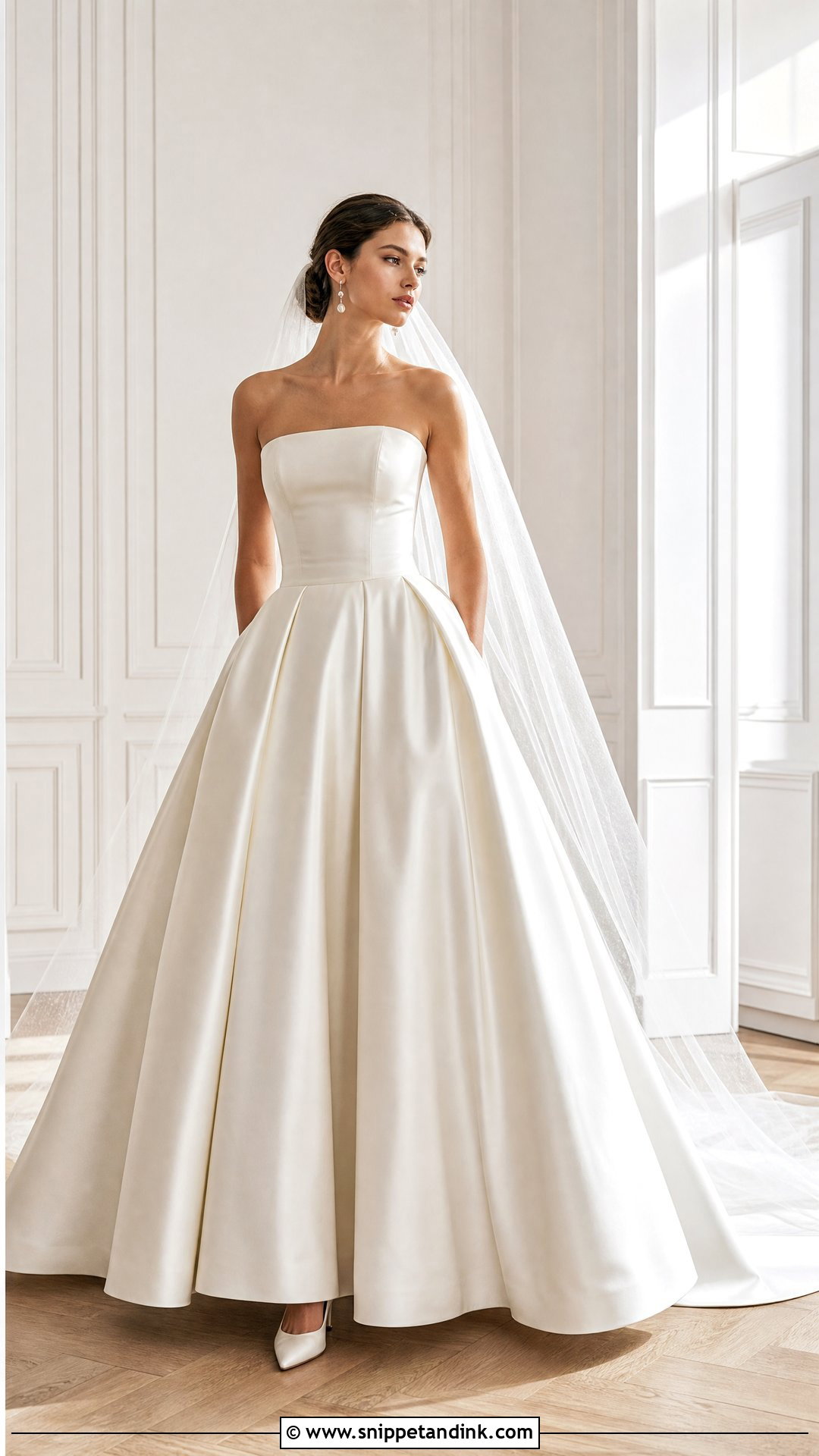
A strapless satin gown relies on construction, not decoration, so the bodice has to be right. Internal boning and a softly curved neckline hold you securely without you hitching it up all night. A pleated full skirt in silk satin or Mikado gives the volume and keeps that clean, architectural line. Pointed ivory pumps, pearl drops, a raw-edge cathedral veil and a smooth low bun leave the shoulders as the feature. Petite brides can ask for fewer underskirt layers; anyone wanting maximum width can add a petticoat. Satin shows every crease where the fit is loose, particularly across the hips when you sit. Look at it in daylight and under indoor lights before you sign off on the fit.
2. Long Sleeve Lace Full Skirt Wedding Dress
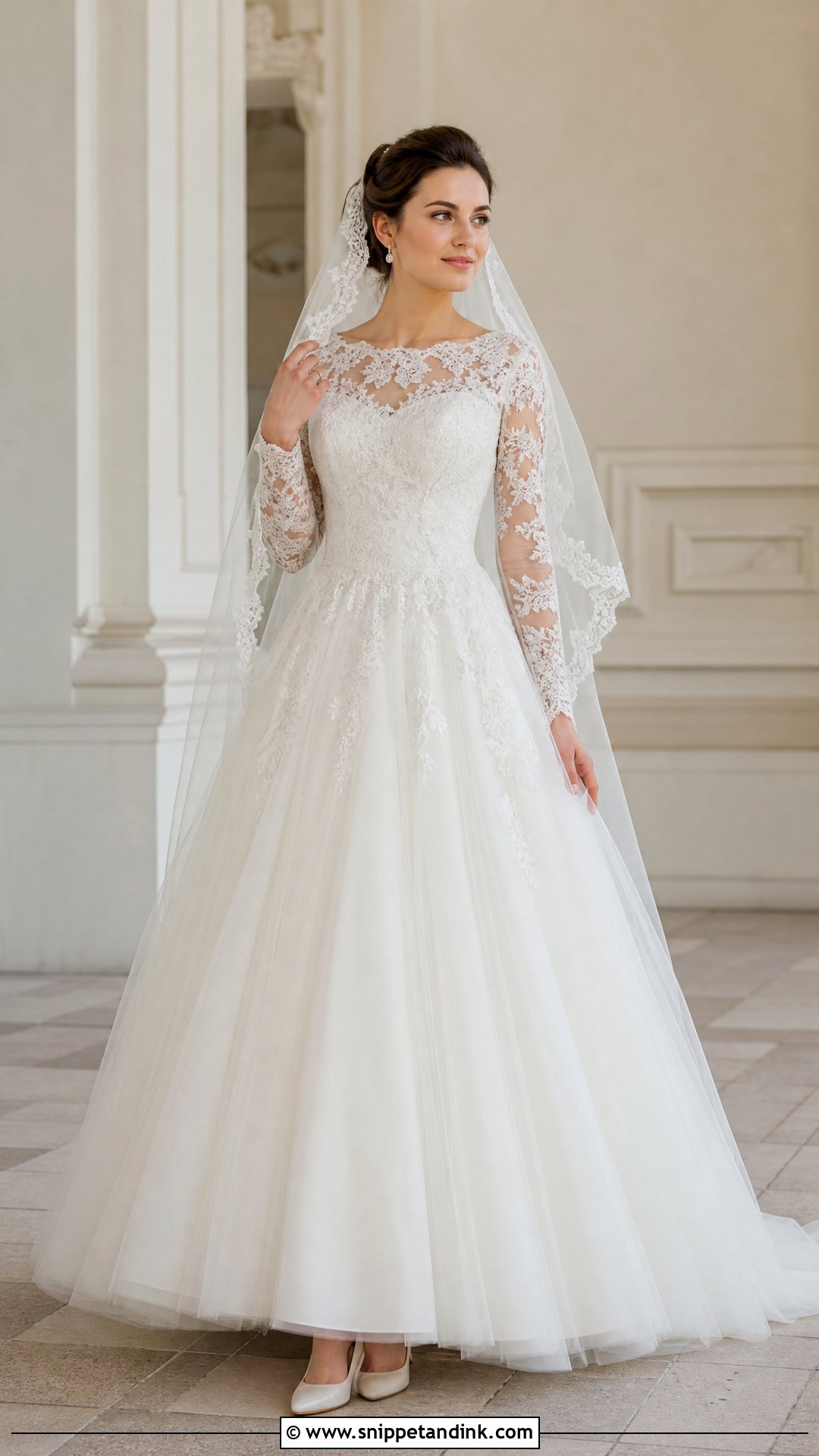
Lace over a full tulle skirt works when the two read as one dress. I look for appliqués that trail off the fitted bodice and drift gradually into the tulle, rather than stopping in a hard line at the waist. Long fitted sleeves and a defined natural waist complete the shape. Closed-toe ivory heels, small diamond or crystal studs and a lace-edged fingertip veil suit it, with a chignon or low bun. For a summer date, swap dense lace sleeves for lighter illusion ones. Cuffs are where fit gets fussy. Too loose and they look unfinished; too tight and you can’t lift a glass, so have each wrist fitted separately.
3. Off The Shoulder Full Skirt Wedding Dress
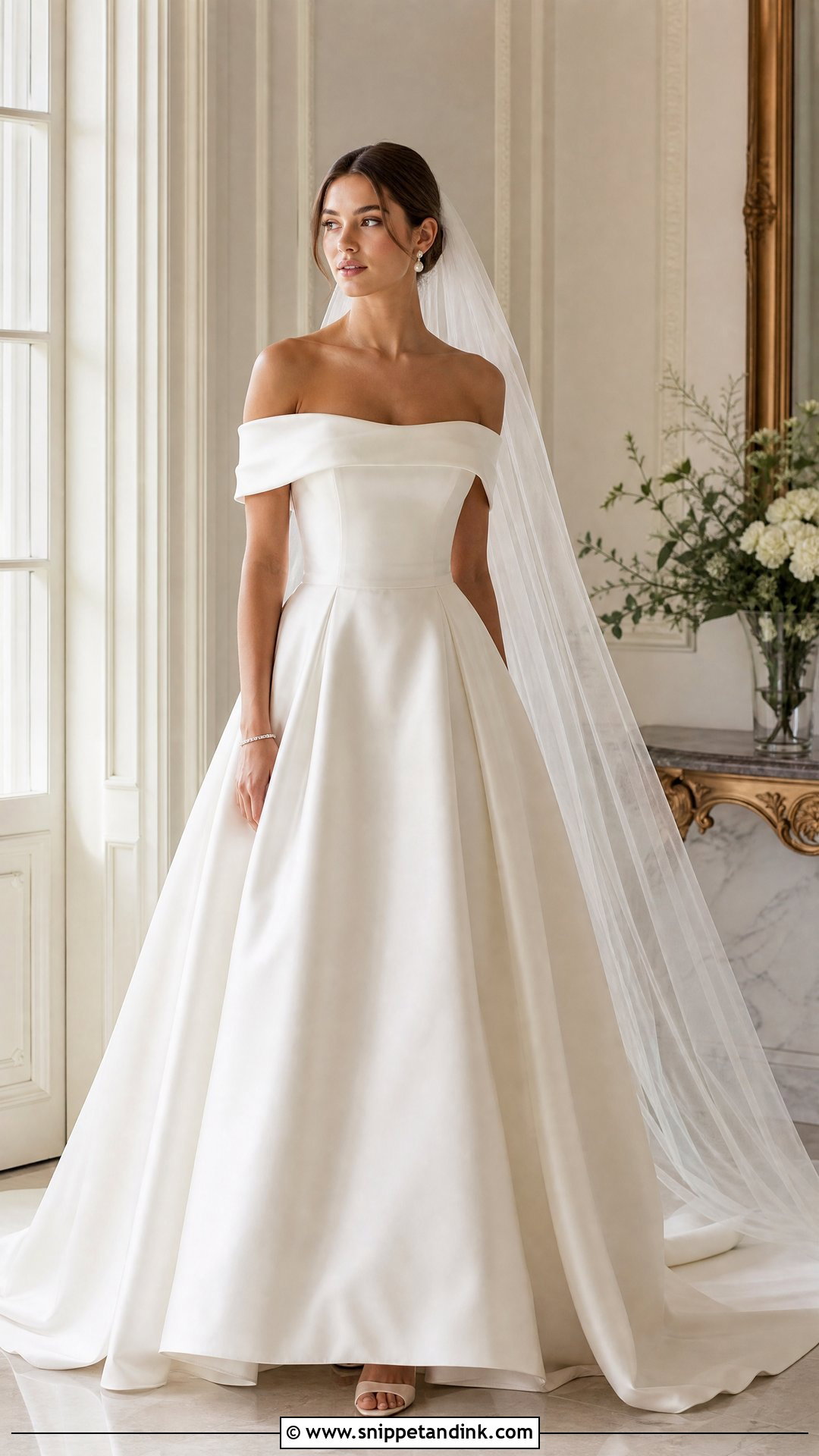
Off-the-shoulder bands draw the eye straight across the collarbone, which balances the width of a sweeping skirt better than almost any other neckline. A structured bodice with softly draped bands keeps you secure. Pair it with a full satin or Mikado skirt, covered buttons and a chapel train. Pearl earrings, a fine bracelet, ivory block heels and a long veil tucked under a smooth updo are enough; skip the big necklace. The honest downside is arm movement. These bands limit how high you can reach, so lift both arms, sit and turn at every fitting. Detachable bands are a smart compromise if you want a freer strapless look for the reception.
4. Square Neck Full Skirt Wedding Dress
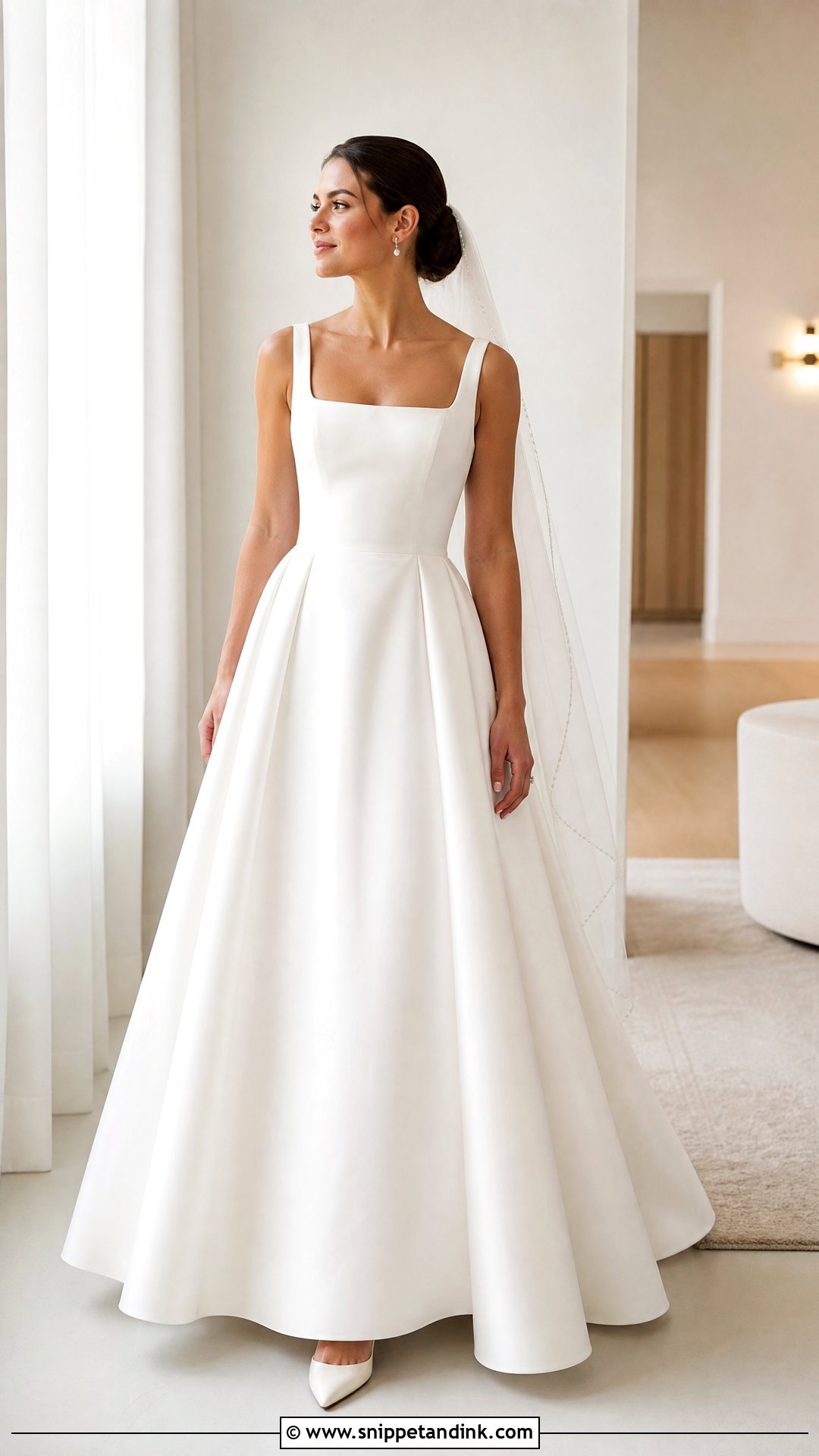
Square necks suit full skirts because the straight line answers the round volume below it, with a quiet vintage feel. I’d pair it with wide supportive straps, a fitted bodice ending at the natural waist and an A-line skirt grand enough to feel special but small enough to manage. Matte satin, faille and crisp organza all hold the precise shape. A pearl-edged veil, small drops, pointed shoes and a neat bun or half-up waves finish it. Brides with a fuller bust often love the support of the wide straps. The tricky part is the straight edge across the chest, which can gape or flatten the bust; good cup placement and bodice work at alterations solve it.
5. Sweetheart Full Skirt Wedding Dress
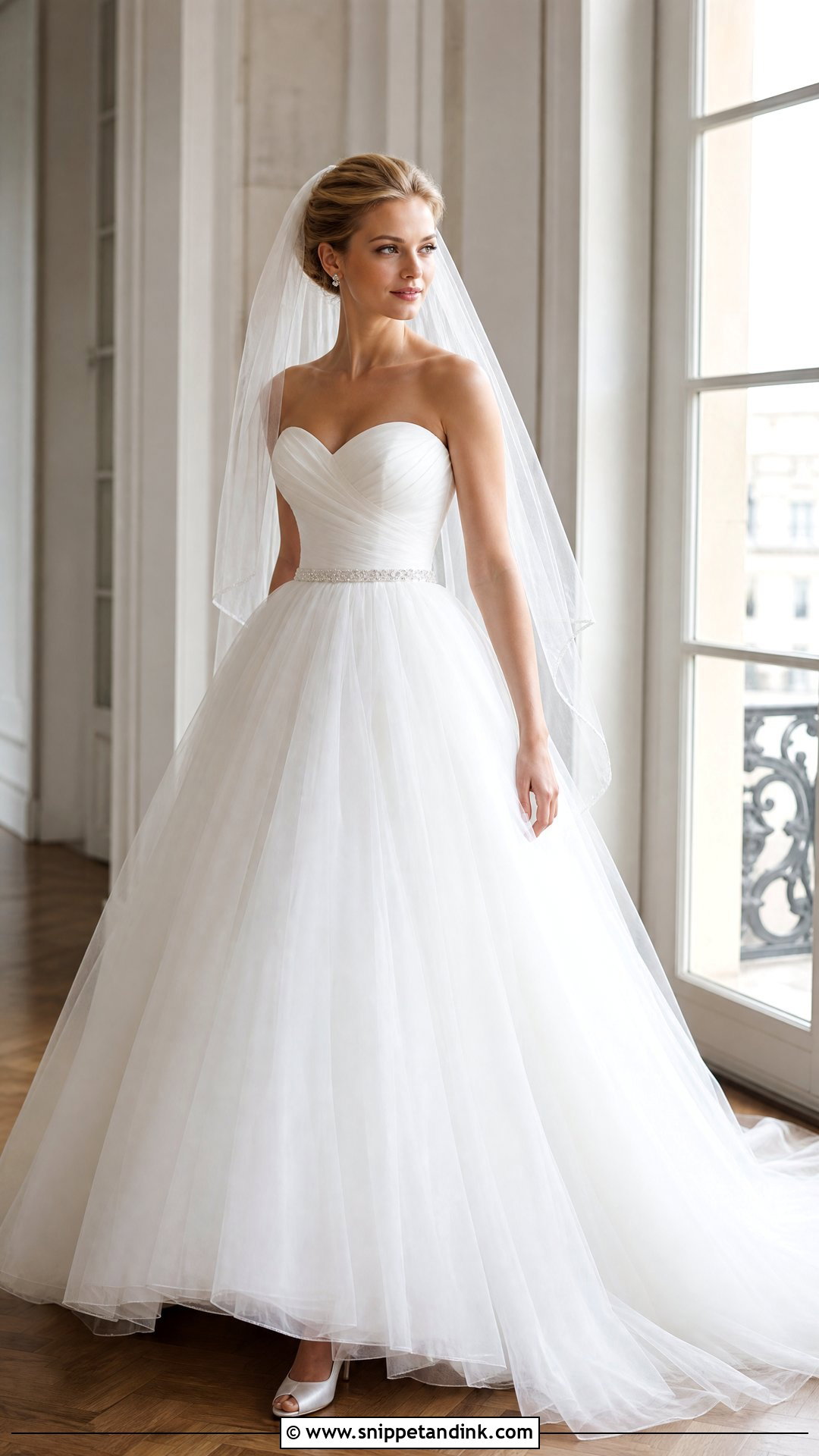
A sweetheart neckline and a full tulle skirt are a classic pairing for good reason. Ask for a corset-style bodice with well-placed seams and a gentle curve rather than a deep plunge. Airy tulle layers give generous volume and weigh much less than structured satin. Sparkling studs, ivory heels, a sheer fingertip veil and a low bun with face-framing pieces suit it. A narrow crystal belt can define the waist if it matches any beading already on the bodice. Bend forward in the fitting room. If the curve lifts off your skin, the bodice needs taking in. A seamstress can also add a small illusion panel at the center for more coverage without losing the sweetheart shape.
6. Basque Waist Full Skirt Wedding Dress
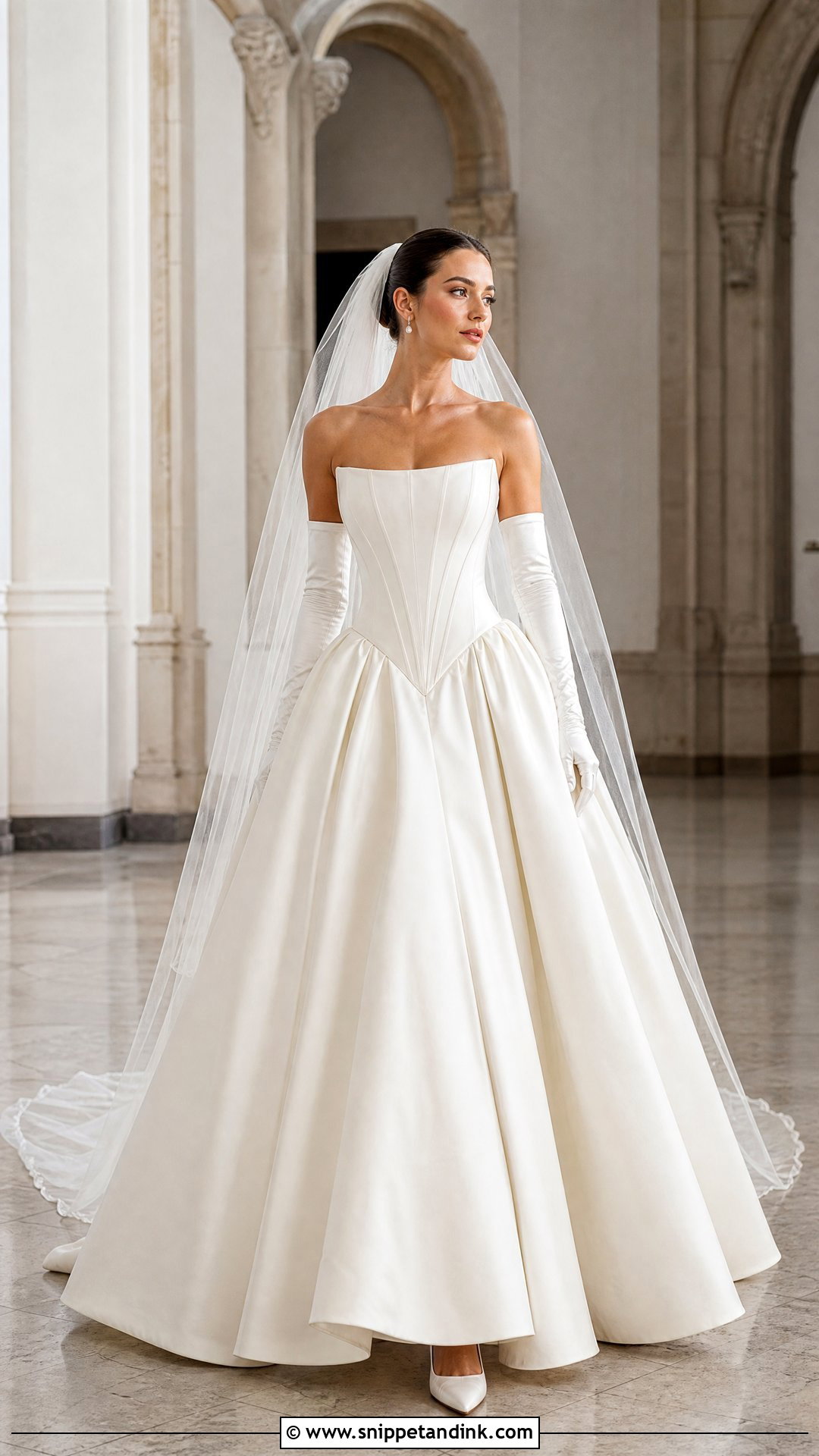
The basque waist dips below the natural waist into a point at the center front, giving a sculpted, regal transition into the skirt. Corsetry and basque lines are a big influence on full-skirt gowns at the moment, and Mikado or smooth satin shows the construction best. Opera gloves, pearl earrings, pointed pumps and a plain cathedral veil suit it, with sleek hair so nothing distracts from the bodice. This is a measurements dress. Because the point sits low, torso length has to be exact, and I ask brides to sit, walk and take a deep breath at every fitting. If the point presses into your stomach when seated, it isn’t ready.
7. Drop Waist Full Skirt Wedding Dress
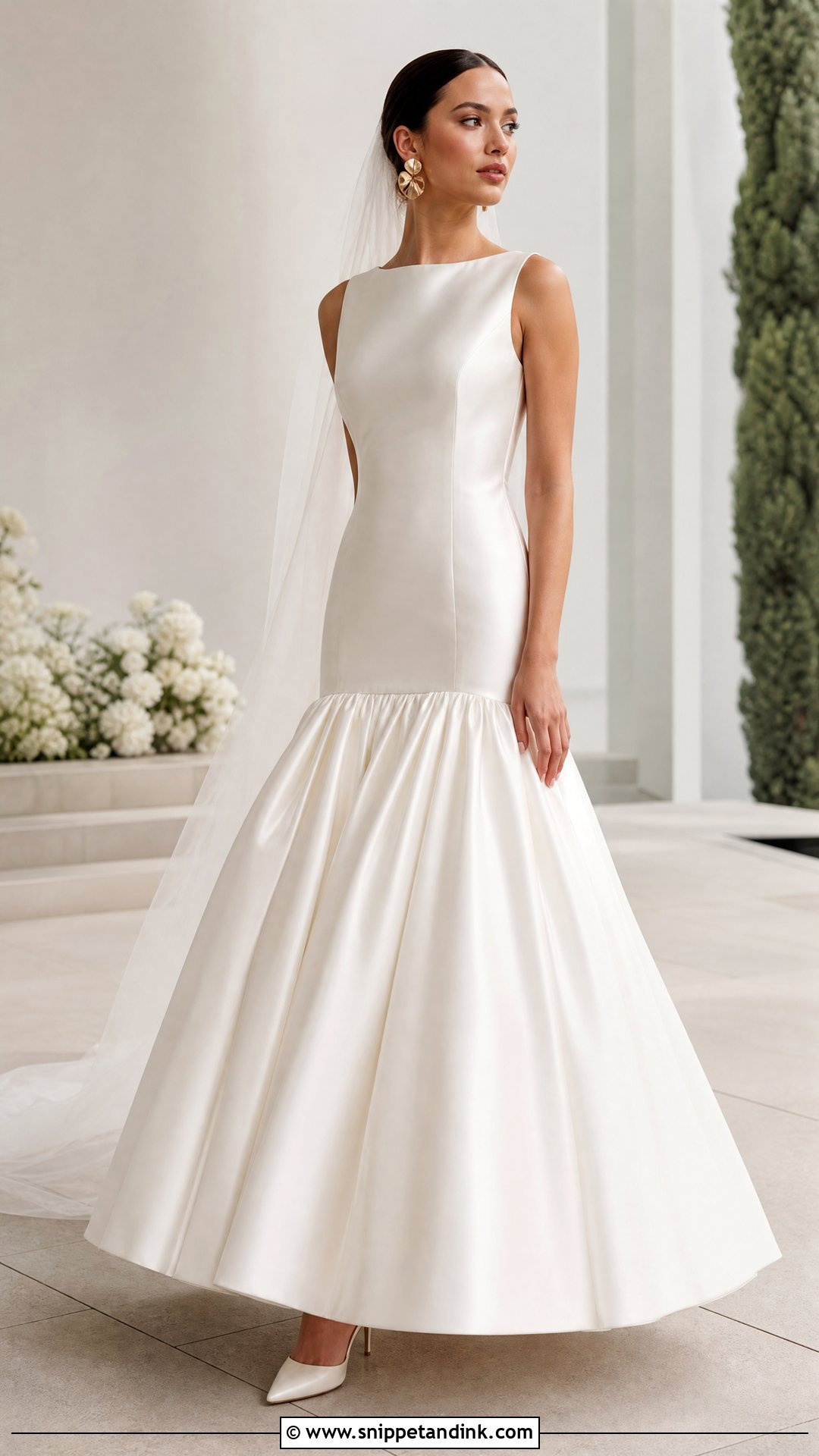
Drop waists are the more fashion-led option: fitted through the torso, then releasing into the skirt around the upper hip. Keep the top simple with a strapless neckline or slim straps. A skirt in structured taffeta or satin holds that release best. Sculptural earrings, sleek ivory pumps, a long plain veil and polished waves or a low ponytail finish it. I’ll be honest: this shape is less forgiving on shorter brides, because the long bodice can make the torso look compressed and the legs shorter. Raising the seam slightly usually fixes it. Ask the consultant to photograph you from the front, side and back, and judge from the photos.
8. Corset Tulle Full Skirt Wedding Dress
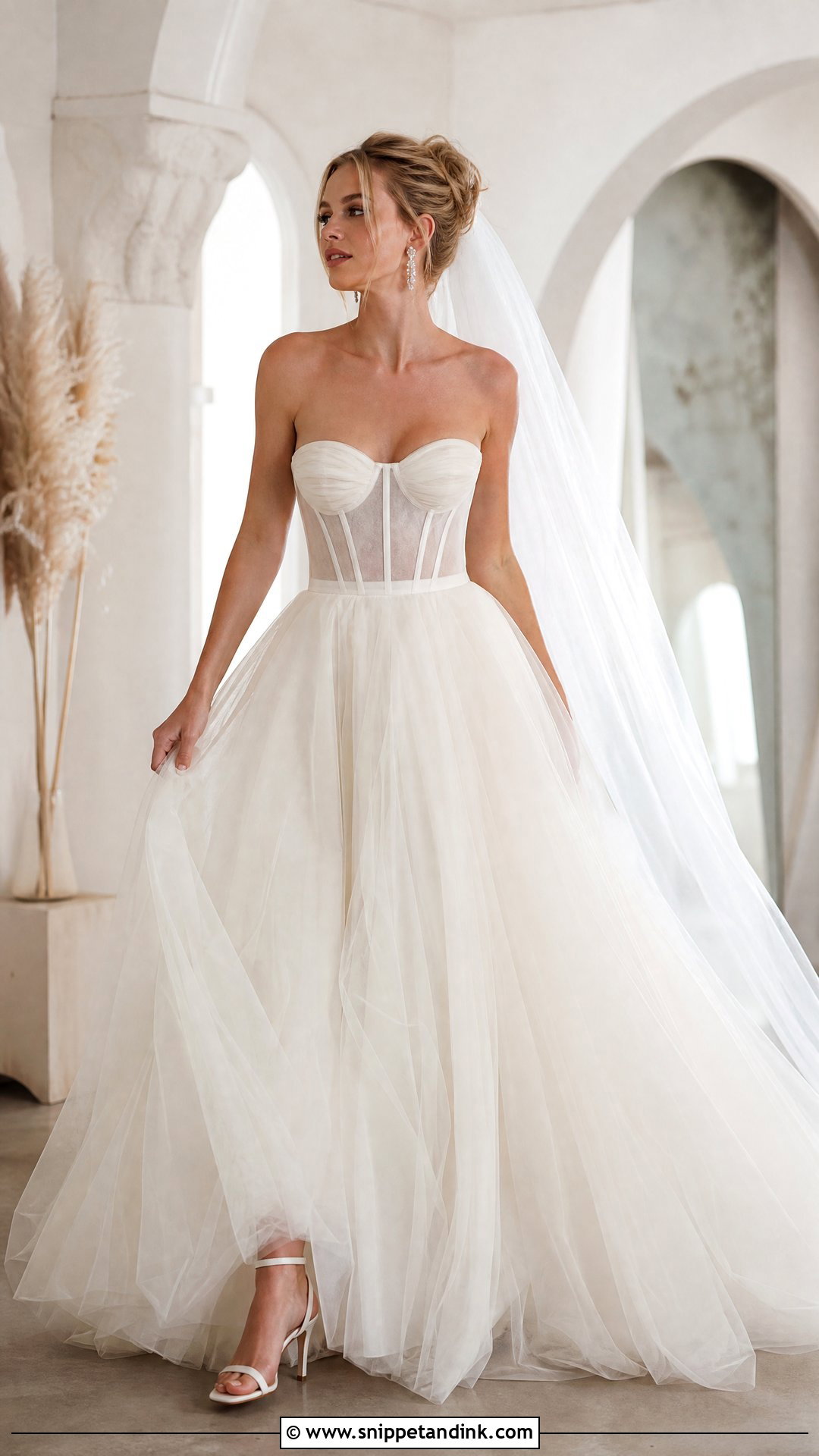
An exposed corset over soft tulle gives you structure on top and float below. Supportive boning and lined cups matter more than they look, and keep any sheer panels at a level you’re comfortable with in a ceremony. Graduated tulle layers build volume without stiffness. Crystal drops, satin ankle-strap heels, a cathedral veil and a softly textured updo suit it. If the bodice already has lace, pearls or visible seams, hold back on accessories. A well-made corset defines the waist without being laced tight. You should be able to breathe, sit, eat and dance; if you can’t, the bodice needs to be fitted properly, not tightened harder.
9. Floral Applique Full Skirt Wedding Dress
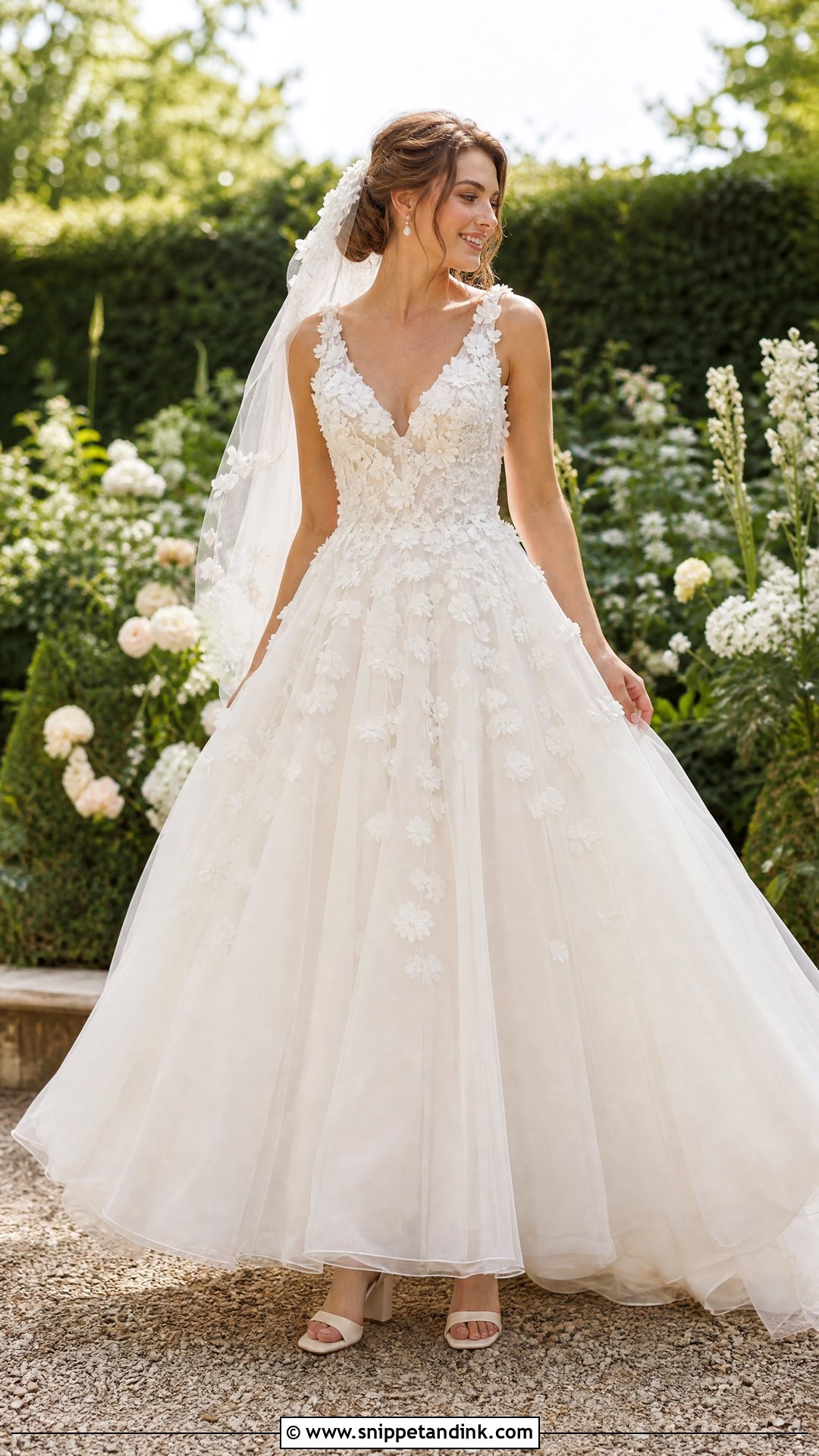
Raised floral appliqués suit a garden or outdoor wedding, and they look best clustered around the bodice and thinning toward the hem. A soft tulle base keeps the flowers light and lets the skirt move. Pearl earrings, ivory block heels and a sheer veil with just a few matching flowers are enough, with loose waves or a low textured bun and a simple bouquet. Check how each flower is attached. The waist, the seat and the hem get the most friction during a long day, and that’s where I most often find petals working loose by the evening.
10. Pearl Beaded Full Skirt Wedding Dress
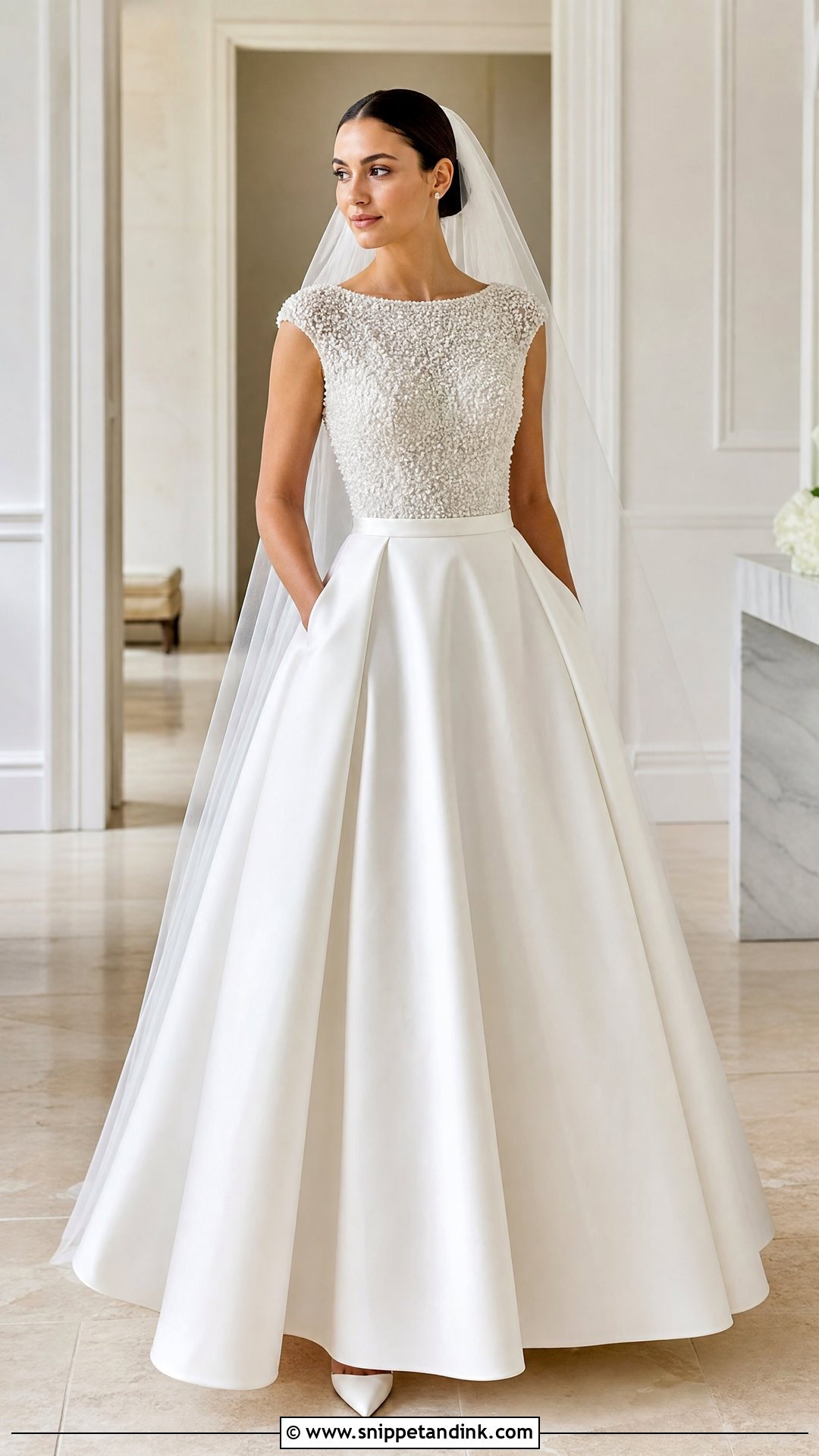
Pearls give a soft glow rather than the sharp sparkle of crystals. Two layouts work well: a pearl-covered bodice over a mostly plain skirt, or a scattering that lightens toward the hem. Pearl studs, ivory pumps and a plain chapel veil keep things from tipping into too much, and a sleek bun stops hair catching on the beads. Before buying, sit back in a chair and move your arms. Heavy beading can feel scratchy or weigh on the shoulders, and a smooth lining is what makes it wearable. Ask the salon for a few spare pearls so loose ones can be replaced before the wedding.
11. Pleated Organza Full Skirt Wedding Dress
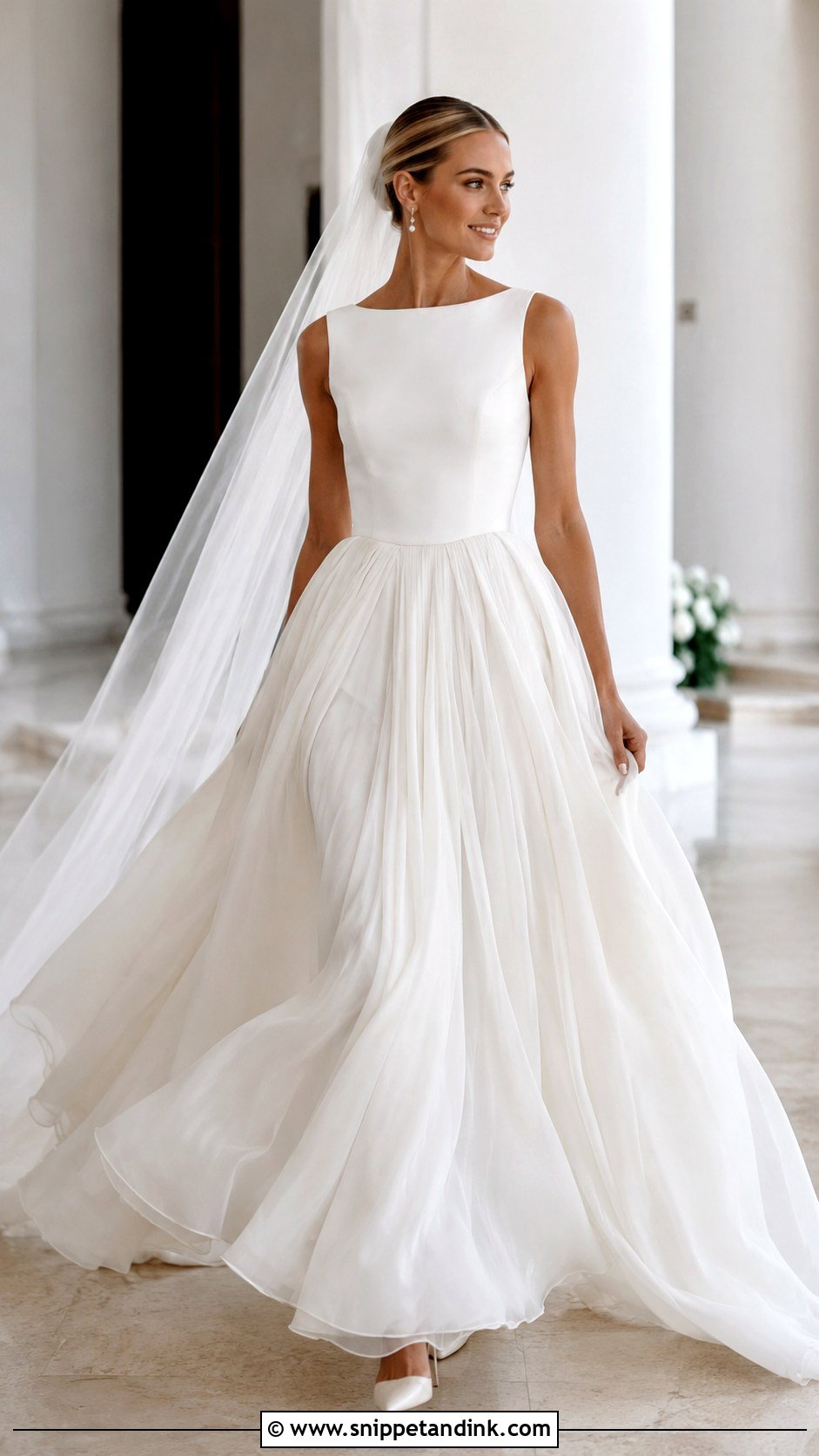
Organza is the fabric I suggest to brides who want a huge skirt that doesn’t look heavy. Crisp pleats give volume with a slightly translucent, airy finish. A fitted sleeveless or strapless bodice, careful waist pleats and a sweeping train complete it, with simple drops, pointed ivory shoes, a long plain veil and a half-up style. It has a weakness. Organza creases and snags more easily than most brides expect, so ask exactly how to steam, transport and store it. If you’re doing outdoor portraits, give one person the job of lifting the train over gravel and checking the hem before the ceremony.
12. Tiered Tulle Full Skirt Wedding Dress
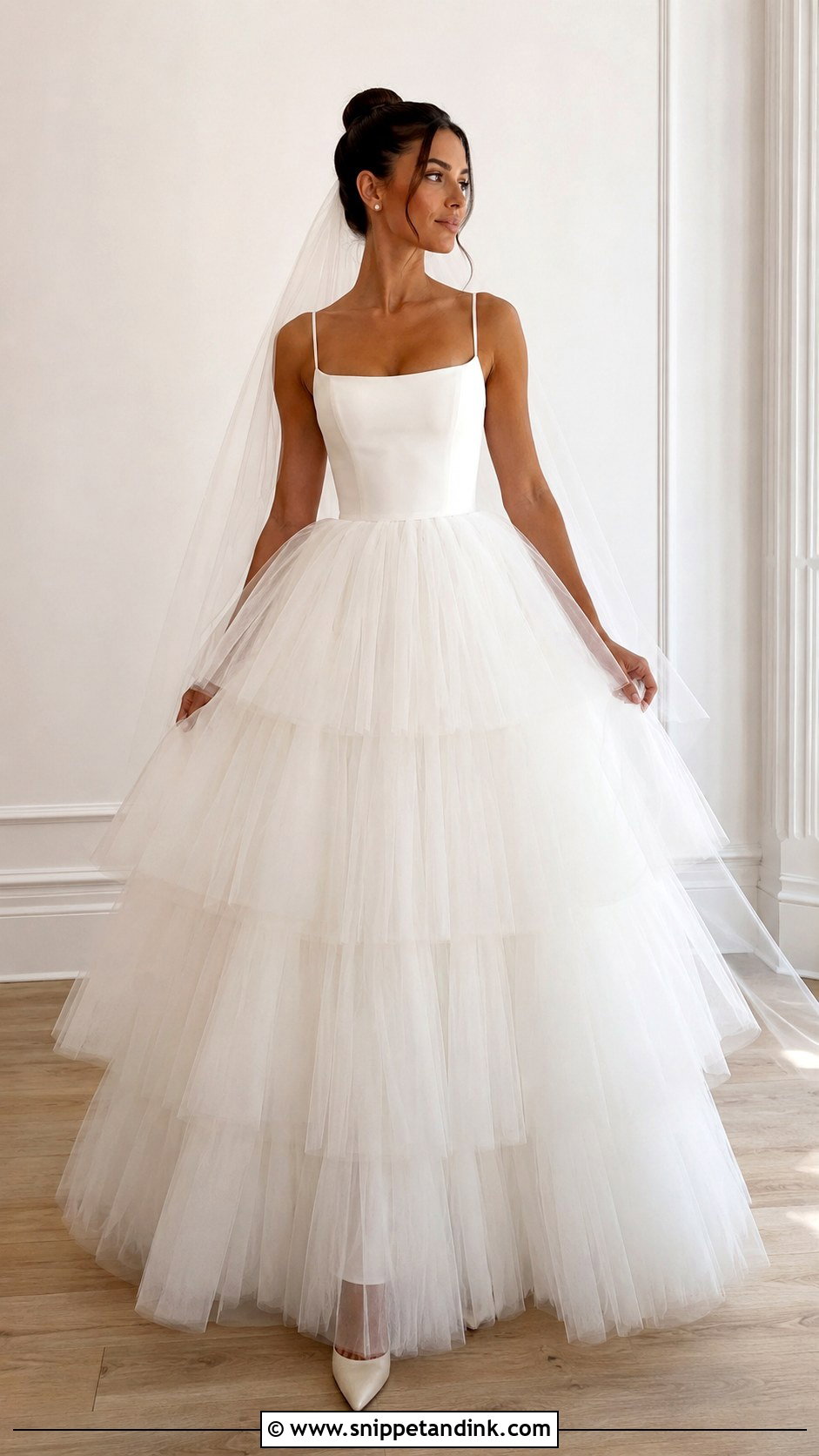
Tiers add texture and movement to a ball gown. Narrow, soft tiers feel romantic; larger cascades are more dramatic. Keep the bodice plain so the skirt doesn’t take over. Minimal crystal studs, satin pumps, a plain fingertip veil and a high bun, which adds height and tidies the proportions, are all it needs. Skip big accessories and an oversized bouquet; the skirt already has plenty going on. The detail I check at alterations is the lowest tier. It should clear the floor in your wedding shoes, or it folds under, gets stepped on and stops looking like a tier at all.
13. Bow Back Full Skirt Wedding Dress
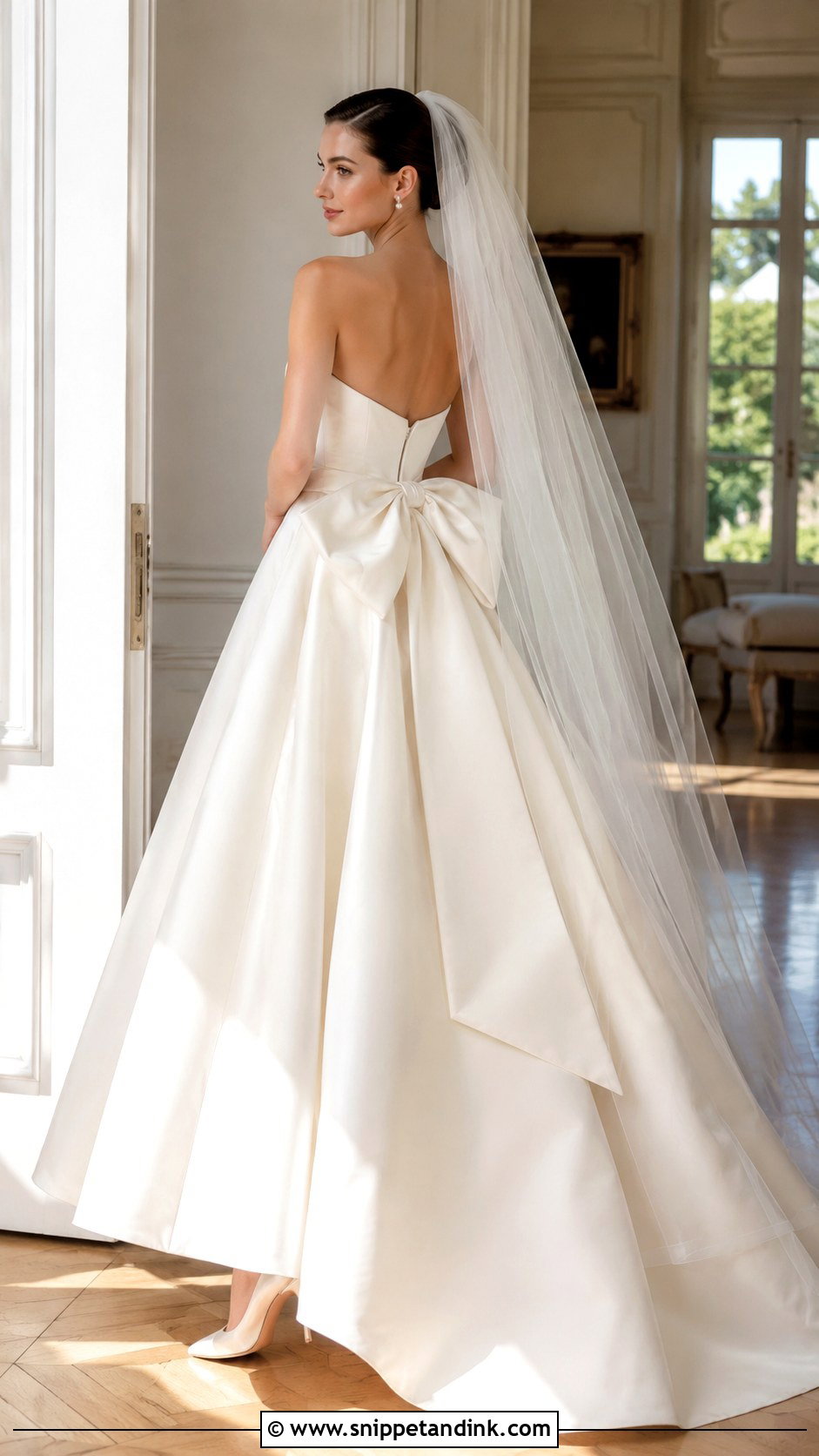
A big bow at the back makes the walk away from the altar as memorable as the walk toward it. For a refined version, I choose clean satin with a fitted bodice, a defined waist and a detachable bow sitting above the skirt or train, keeping the front simple with a straight or softly curved strapless neckline. Small pearl earrings, ivory pumps and a sheer veil you remove after the ceremony to reveal the bow suit it, with a neat updo. Watch the weight. A large bow can drag lightweight fabric down at the back, and it gets crushed every time you sit. Practice sitting with it on, and ask whether it detaches easily for dinner, dancing or bustling.
14. High Neck Full Skirt Wedding Dress
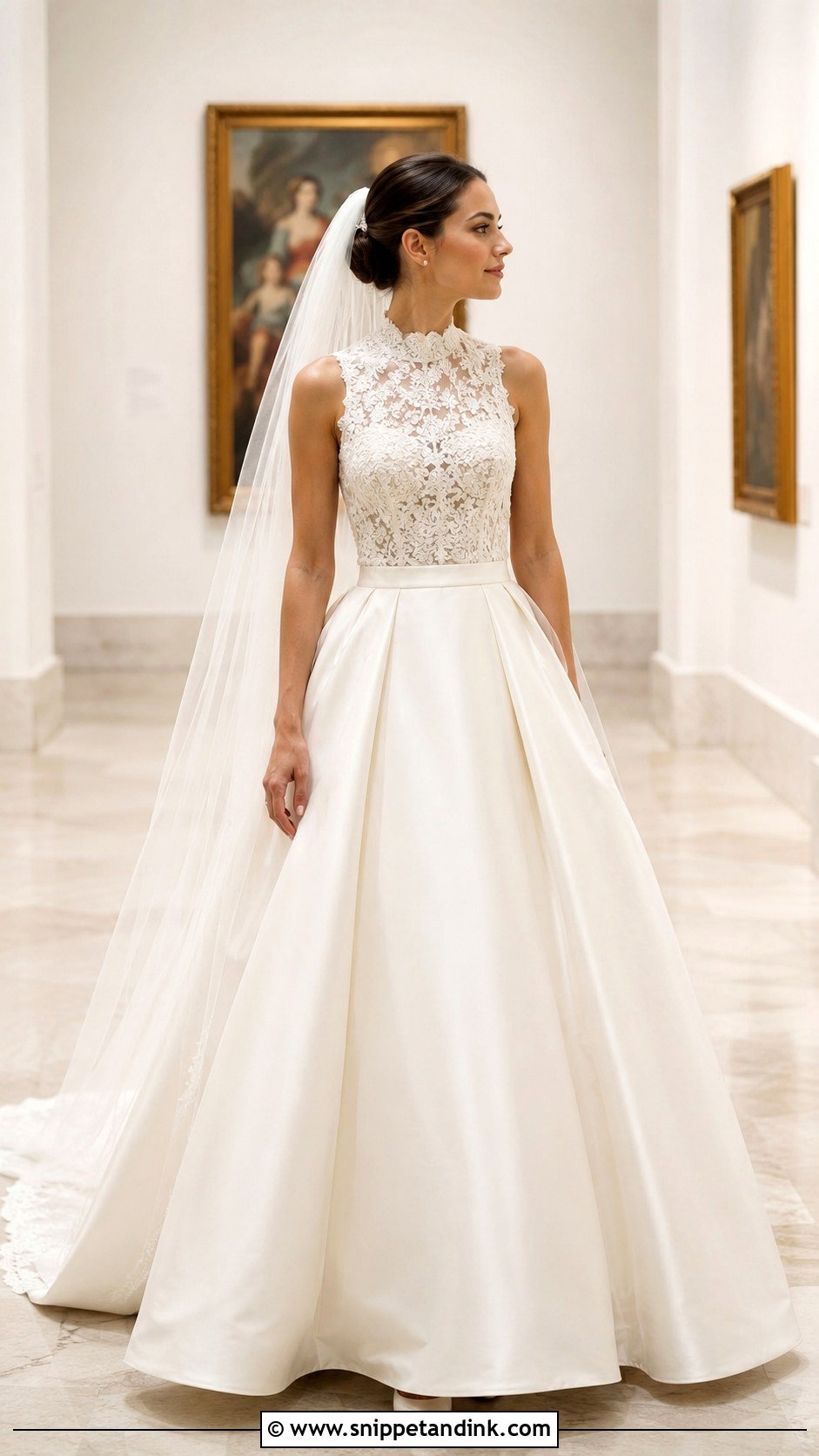
A high neck makes a voluminous skirt look graceful rather than girlish. For the bodice, lightweight lace, illusion mesh or smooth crepe all work over a structured satin or layered tulle skirt. Long sleeves feel formal; a sleeveless high neck is cleaner and cooler. Pearl studs, closed-toe ivory heels and a veil anchored beneath a low bun suit it, with no necklace. The fit around the neck and shoulders has to be exact, so turn your head and lift your arms and watch whether the bodice wrinkles or pulls. For warm weather, breathable lining and an open or illusion back make a real difference.
15. Cap Sleeve Full Skirt Wedding Dress
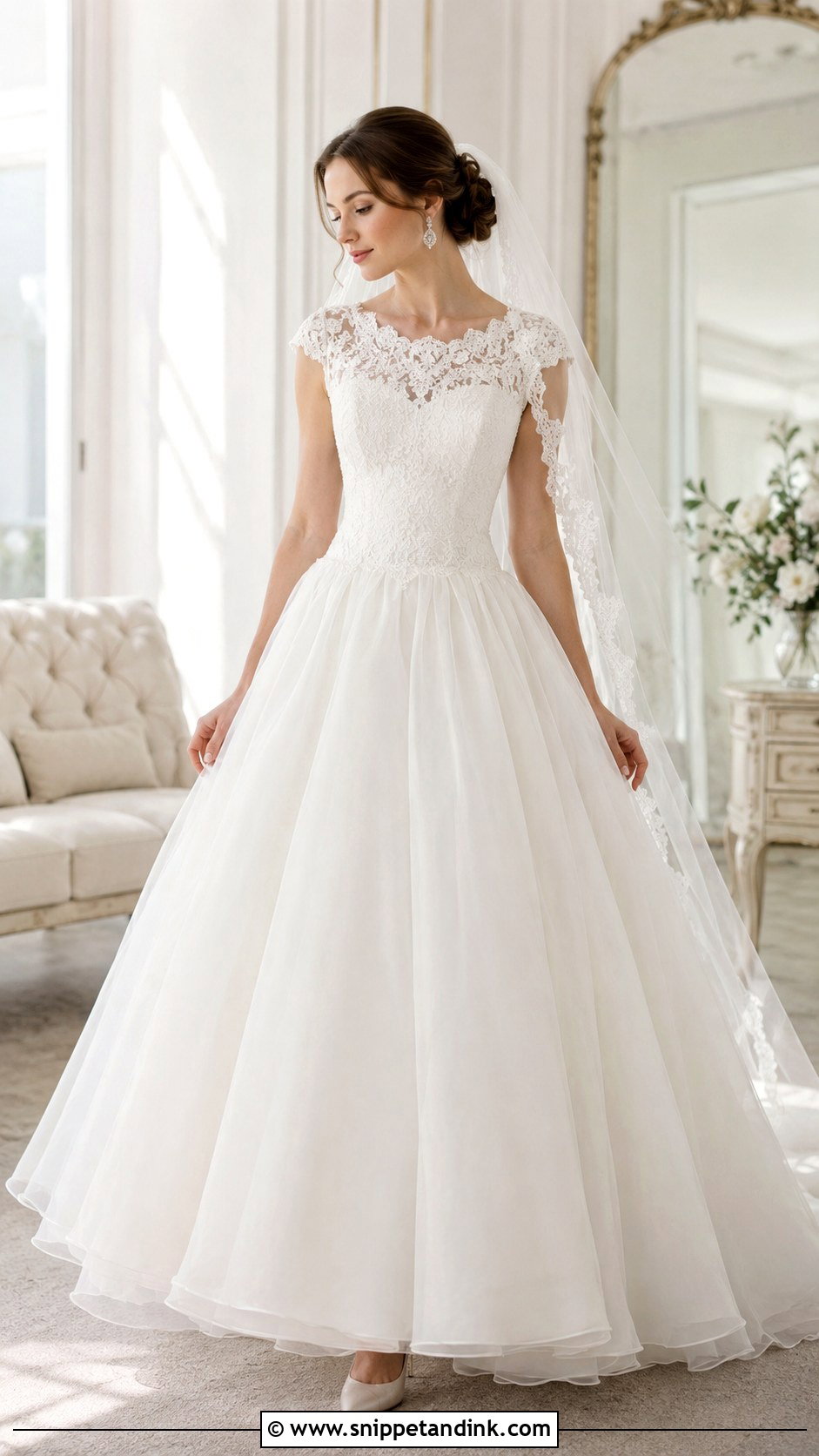
Cap sleeves give a little shoulder coverage without the heat of full sleeves, and they sit well on a fitted lace bodice over a gathered tulle or organza skirt. They should lie flat on the shoulder and let your arms move freely. Vintage-style earrings, low ivory heels, a lace-edged fingertip veil and a soft chignon or side-parted waves suit the neckline. Where the sleeve ends changes the look of your upper arm, so try several. In my fittings, a sleeve that extends slightly over the shoulder usually gives a smoother line than a very short cap. Delicate lace edges should be reinforced, and each sleeve fitted on its own since shoulders are rarely identical.
16. Illusion Sleeve Full Skirt Wedding Dress
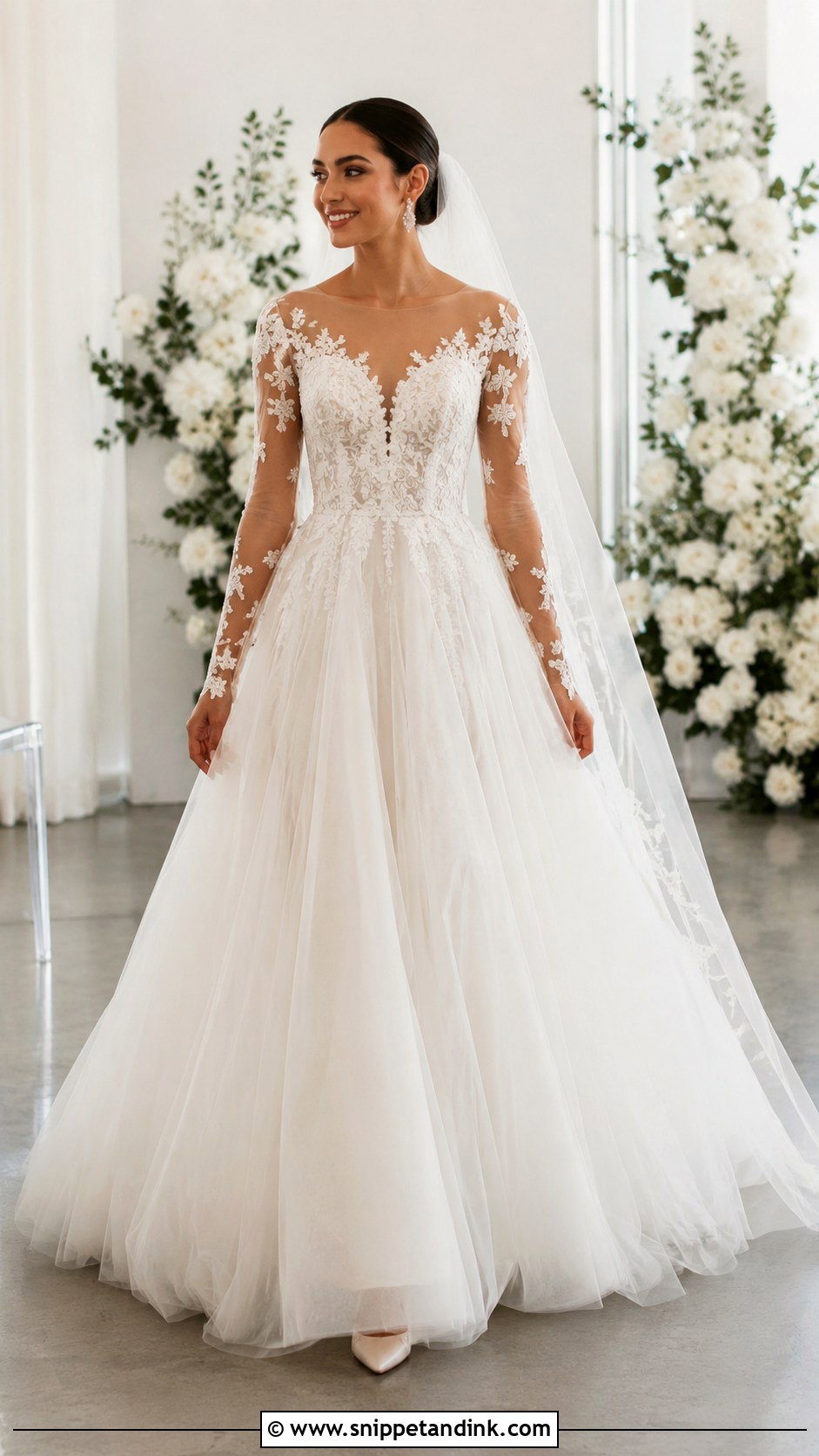
Illusion sleeves let lace appliqués look as though they’re floating on the skin, which pairs well with a full tulle skirt and a defined natural waist. Small crystal earrings, pointed ivory shoes, a plain veil that won’t hide the sleeve pattern and a low bun or polished ponytail keep the detail visible. The mesh color is everything. A shade that’s slightly off your skin tone shows up clearly in photos, so compare several against your arm in daylight. The sleeves should fit close without wrinkling at the elbow or underarm. Ask for soft finishing on the inside where lace edges might rub.
17. Blush Full Skirt Wedding Dress
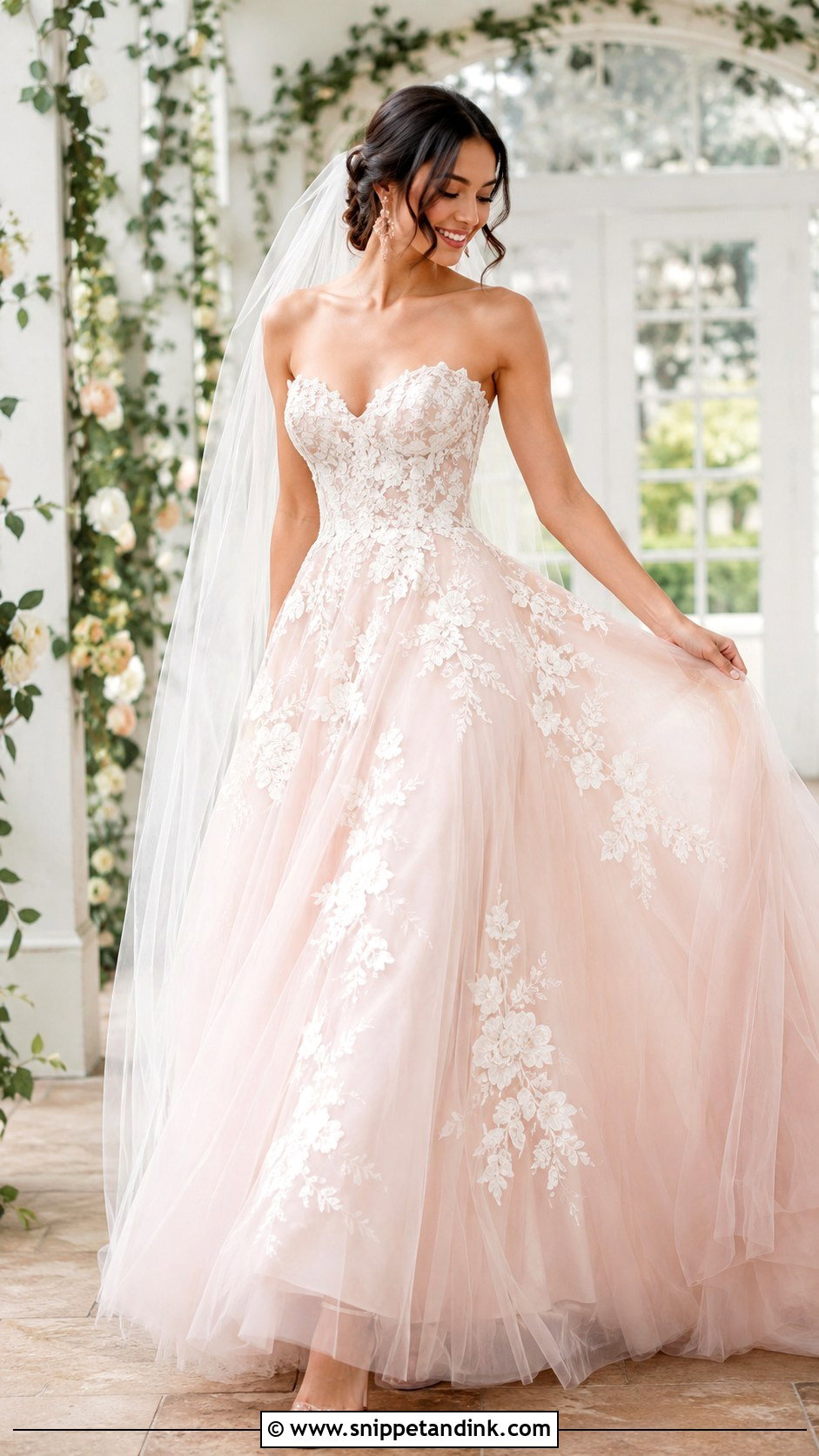
Blush is a gentle step away from ivory that still reads as bridal. My favorite build is layered blush tulle over a neutral lining with ivory lace appliqués on top, which gives depth instead of flat pink. A fitted sweetheart or V-neck bodice keeps the color in a recognizable ball gown shape. Champagne heels, rose-gold earrings, a sheer ivory veil and a loose updo suit it. Blush is the most changeable color in bridal; it can look pink, beige or peach depending on the light. See it in daylight and indoors, and hold it against your face, your flowers and your color palette before you choose.
18. Detachable Overskirt Wedding Dress
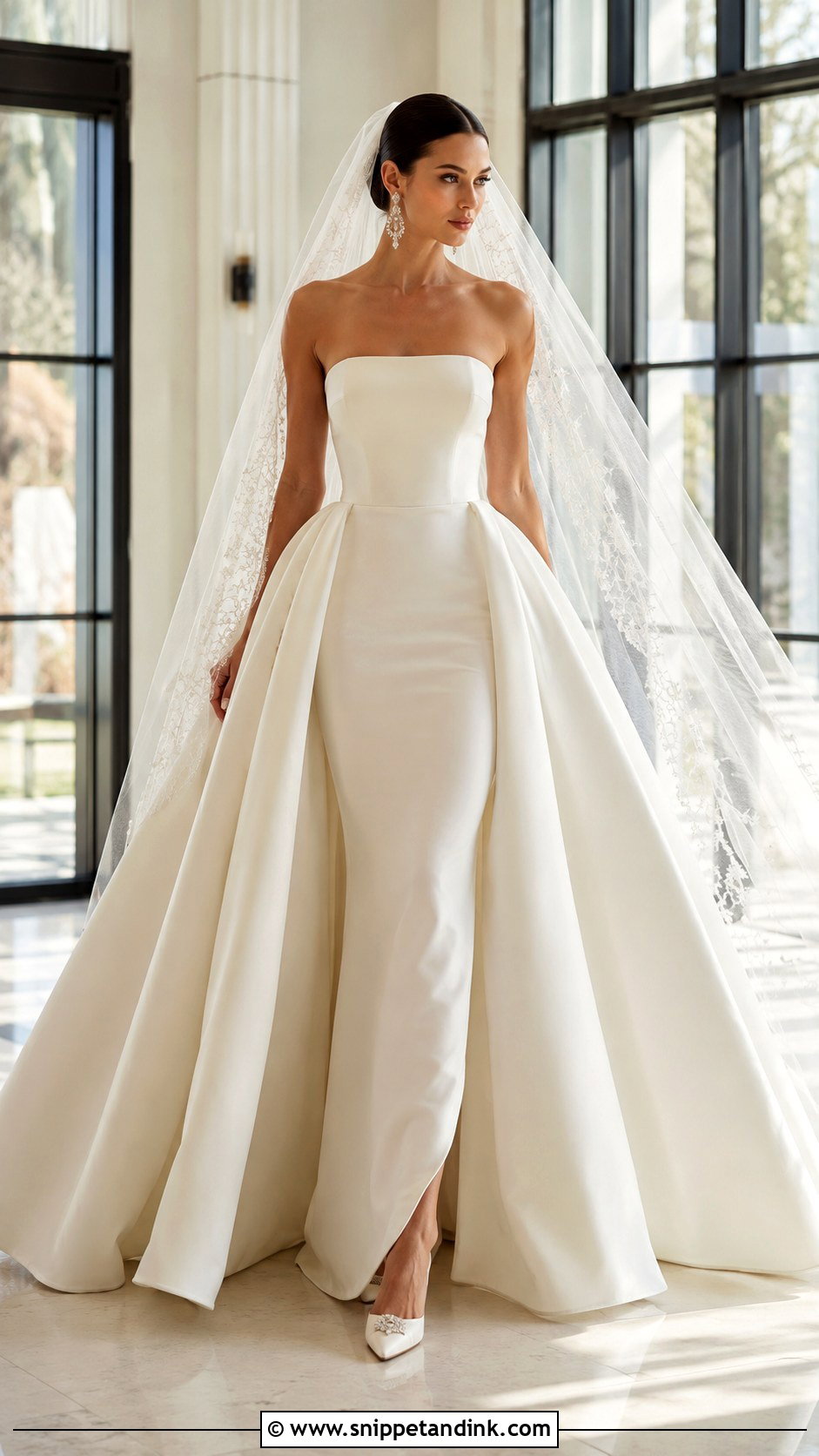
A detachable overskirt gives you two silhouettes without a full outfit change, and these removable pieces have become one of the most practical ideas in recent bridal design. You wear the full skirt over a fitted column, sheath or slim A-line for the ceremony, then take it off to move freely later. Matching fabrics and well-hidden fastenings are what make it look intentional rather than improvised. A cathedral veil, statement earrings and ivory heels suit the ceremony; once the overskirt and veil come off, add a small hair accessory or a sparkly bracelet. Practice taking it on and off before the day, and give one trusted person the job of fastening it.
19. Modest Full Skirt Wedding Dress
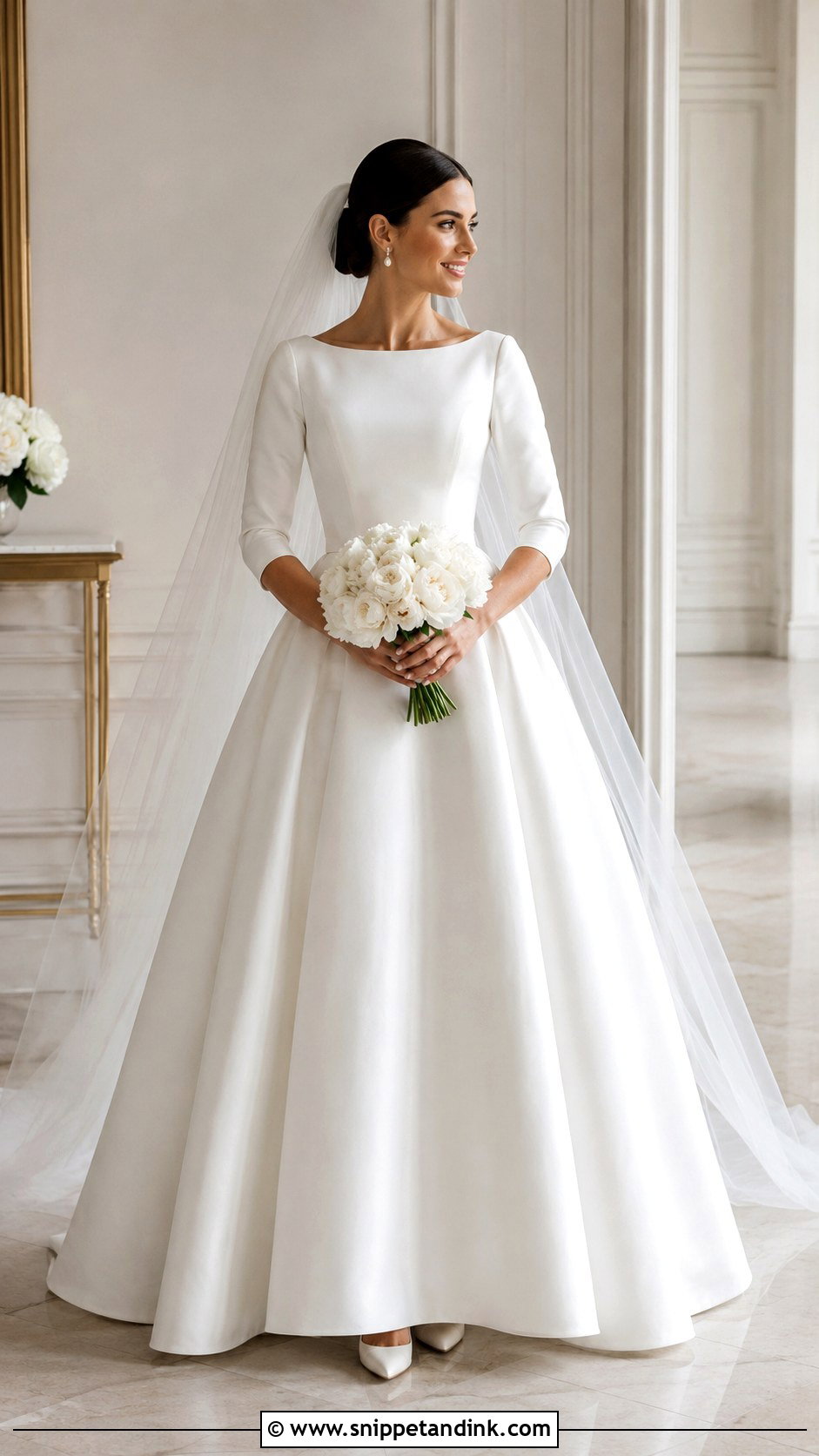
Coverage and a full skirt go together naturally. Consider a bateau or jewel neckline, fitted three-quarter sleeves, a defined waist and a full satin or tulle skirt, with covered buttons, lace cuffs or subtle embroidery for interest. Pearl drops, closed-toe heels and a long veil over a smooth low bun complete it. If sheer mesh isn’t for you, ask for opaque lining through the bodice and sleeves. The high neckline shouldn’t press on your throat, and the sleeves need room to move. Good tailoring is what stops a covered bodice and a big skirt looking bulky together.

20. Full Skirt Wedding Dress With Pockets
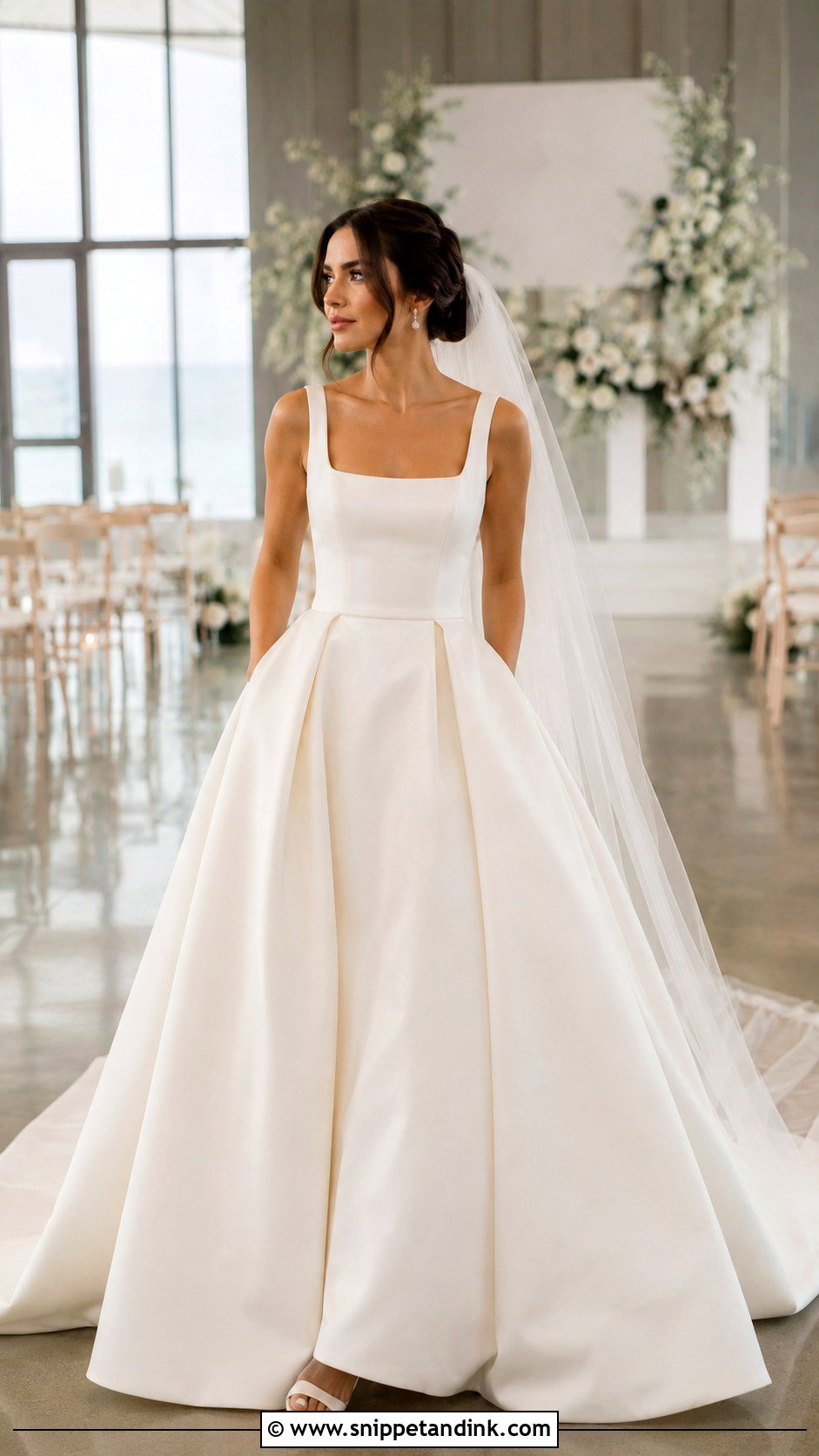
Yes, ball gowns can have pockets, and brides who’ve worn them tend to tell their friends. They work best in structured satin, Mikado or taffeta, which hide the pocket bags and carry their weight. Pair the skirt with a clean strapless or square-neck bodice, covered buttons and a medium train, plus pearl earrings, block-heel ivory shoes and a cathedral veil. Keep only light things in them: a lipstick, a tissue. A phone will drag the skirt and show a lump. Test the placement standing and sitting, since pockets set too far out widen the hips. Ask your photographer for one relaxed portrait with your hands tucked in.
Cars, Bustles and Bathroom Trips in a Full Skirt
Brides plan the aisle and forget the rest of the day. A wide skirt has to get into a car, through a doorway, onto a dance floor and into a bathroom stall. A little practice beforehand saves a lot of stress.
Getting in and out of the car
Sit down backwards onto the seat first, then swing your legs in and gather the skirt onto your lap. A larger car or one with a bench seat helps. Have someone check the hem isn’t caught in the door before it closes.
Choosing a bustle
An over bustle hooks the train up onto the back of the skirt and makes small swags. An under bustle, sometimes called a French bustle, tucks the train underneath with ties and gives a smoother look. Tulle usually suits the over style; heavier satin often bustles more neatly underneath. Have your seamstress show one person exactly how to do it, and color-code the ties if there are many.
The bathroom
Facing the toilet and sitting backwards lets you gather the whole skirt in front of you, often without help. If your gown has a hoop or many layers, a slip-style skirt holder that gathers the fabric into a bag is worth having. Practice in the gown at your last fitting, not on the day.
How Much Volume Can You Live With for a Whole Day?
Drama and comfort can live in the same skirt, as long as you decide how much volume you actually want before you fall for a fabric. The gowns above show how necklines, waistlines, fabrics, sleeves, color and embellishment change one classic shape. Compare light tulle with structured satin, Mikado, organza and taffeta in person, because they feel nothing alike on the body. Try every gown with your shoes and undergarments, and walk, sit, turn and lift your arms before approving alterations. Then let the accessories step back. A full skirt that’s fitted properly will feel grand in the first photograph and still feel wearable at the last dance.
You'll Like These Ideas:










Leave a Reply