
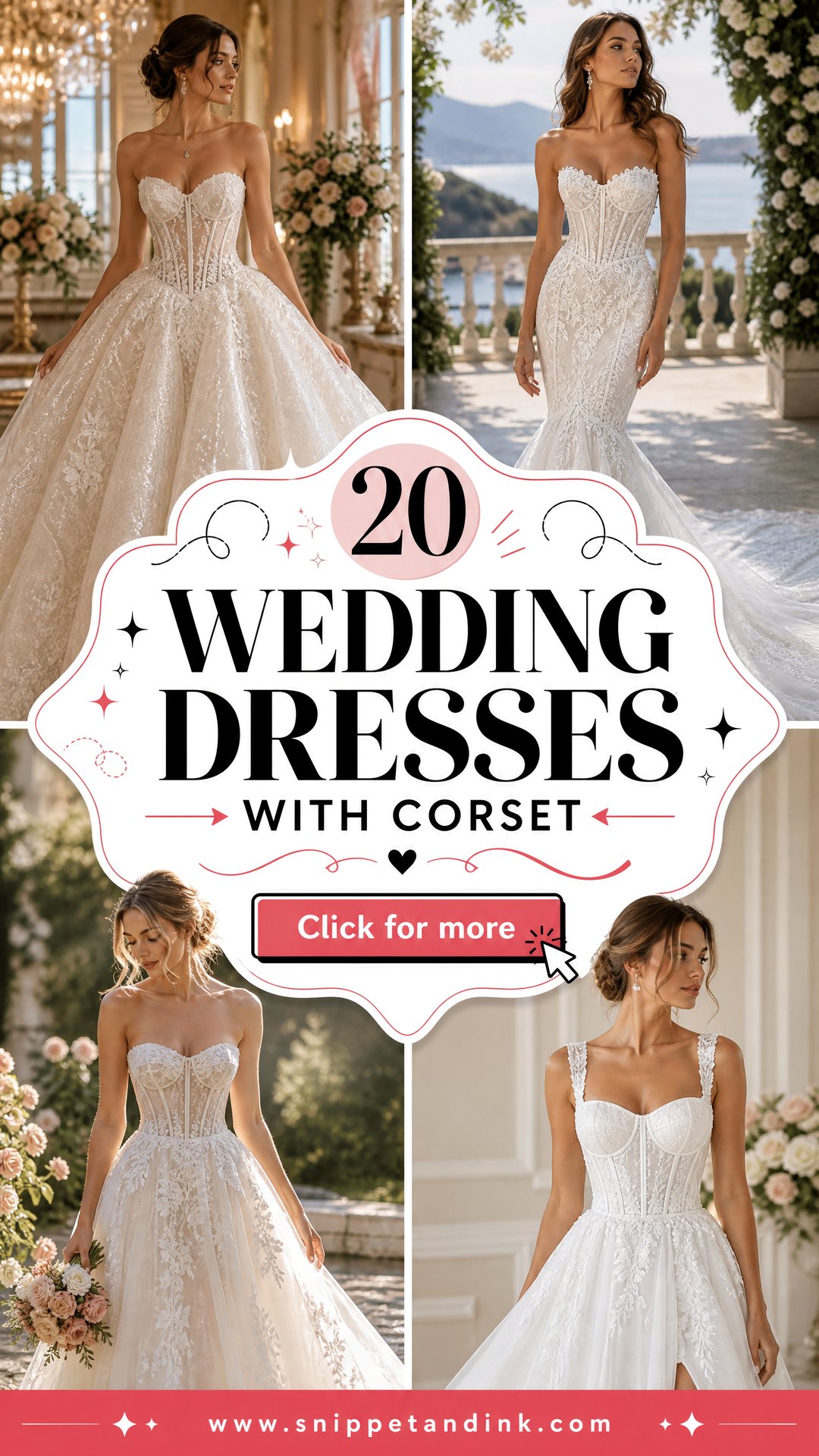
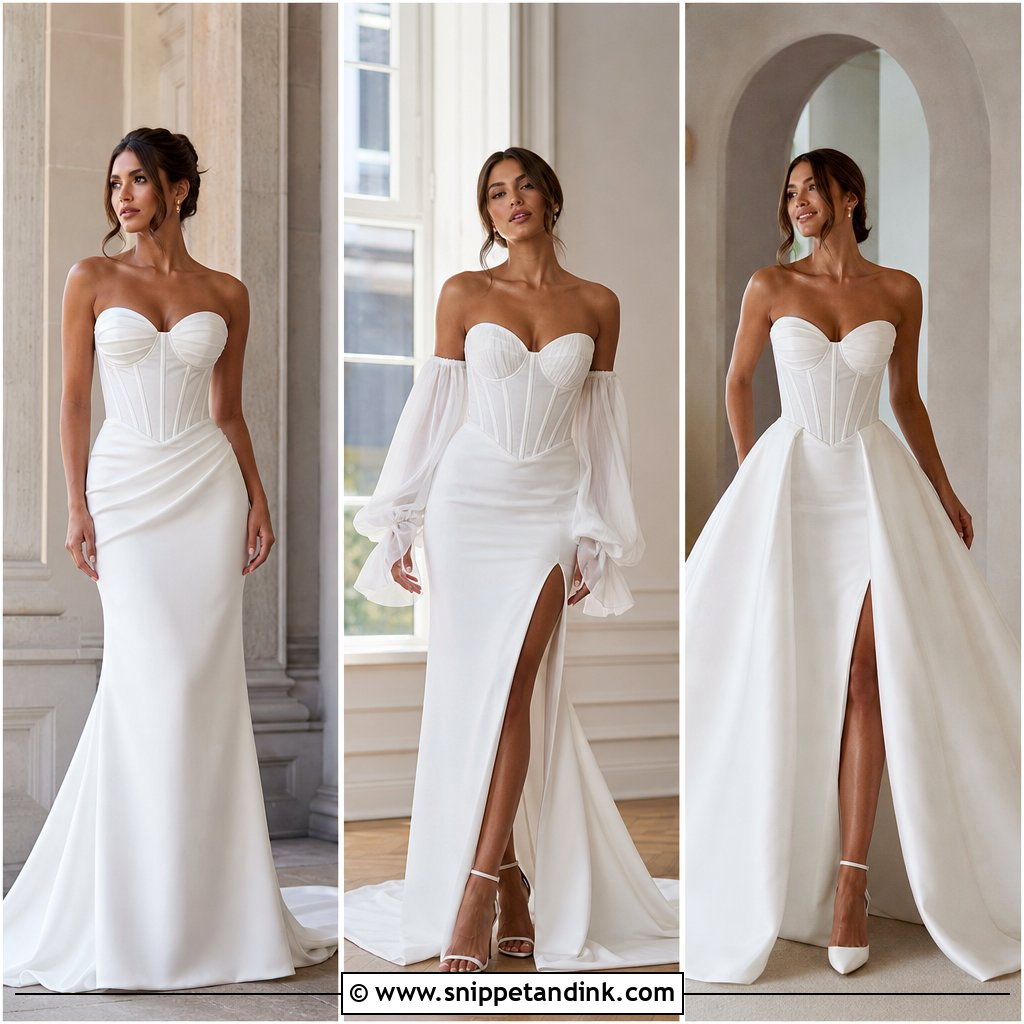
A corset bodice is a small piece of engineering: boning, shaped panels and a closure working together so the dress holds you, instead of you holding up the dress. It stopped being limited to the lace-up ball gown a long time ago. You’ll find it under sleek satin, airy tulle, appliqué and sculpted mikado, inside fitted mermaid shapes, and in convertible gowns with removable layers. Basque and dropped waists with long bodices and visible boning are especially popular right now. Whatever catches your eye below, I hold every corset to the same test: can you sit, dance and take a full breath in it?
What’s Actually Inside a Corset Bodice
Most bridal corsets are boned bodices rather than true waist-training corsets. They shape and support; they aren’t built to pull your waist in by inches. The difference you can feel at a fitting comes down to the boning and the back.
- Plastic boning is light and inexpensive. It’s fine in a soft tulle bodice, but with body heat and hours of sitting it can take on a permanent bend, which shows as a kink under satin.
- Spiral steel flexes sideways and follows curves, so it suits the side seams and the front of a shaped bodice. It’s what I hope to find in a gown meant for a long day.
- Flat steel bends only one way and is used beside the lacing or at center back to keep the closure straight.
To check, press gently along a channel. Plastic feels springy and wide; steel feels narrow and firm. Then look at the back. A lace-up closure should have a modesty panel behind the cord so no skin shows through the gap, and it gives you some adjustment if your weight shifts in the final weeks. A zip with hooks looks cleaner but fits exactly as tailored and no other way.
1. Strapless Satin Corset Wedding Dress
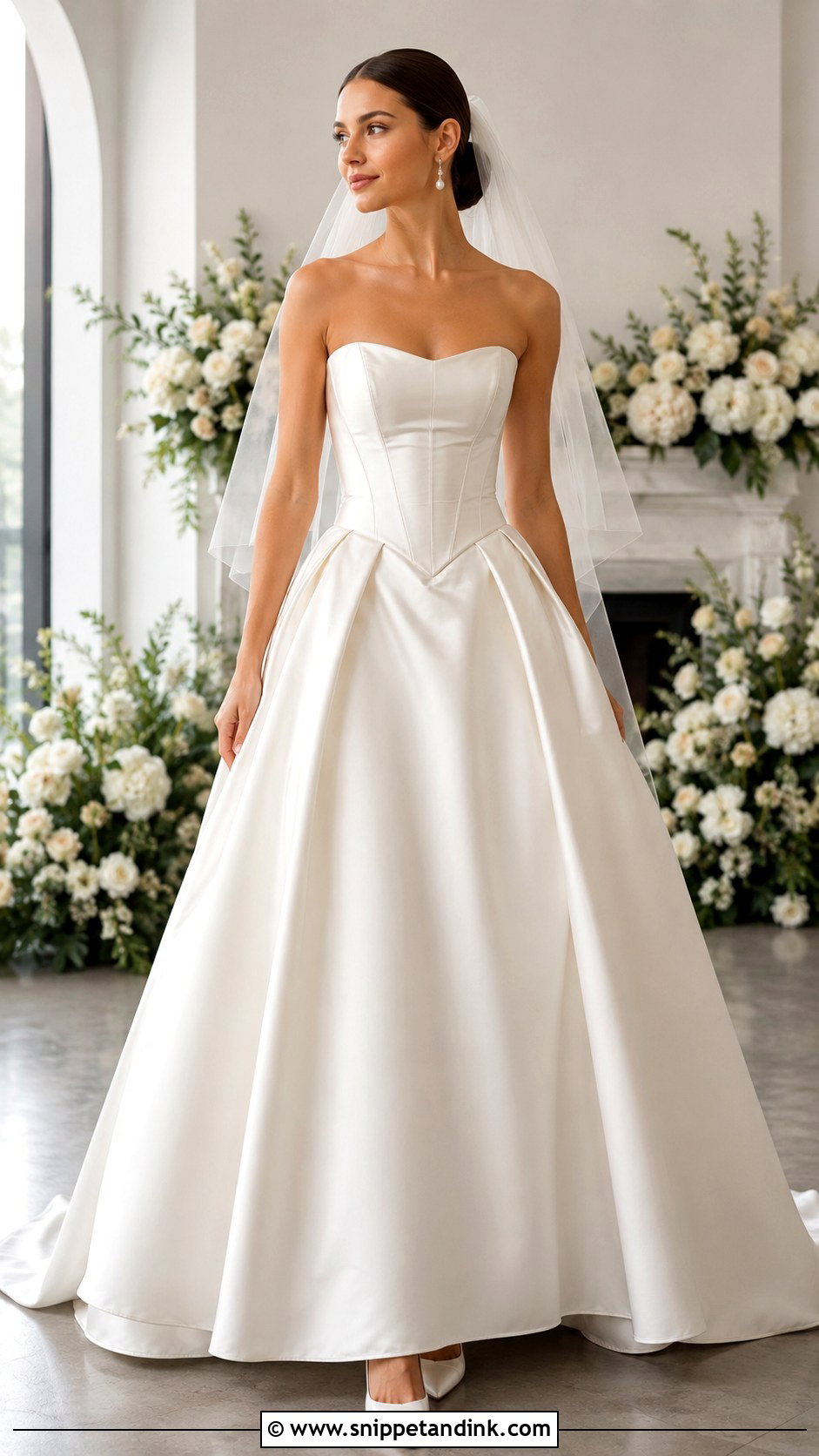
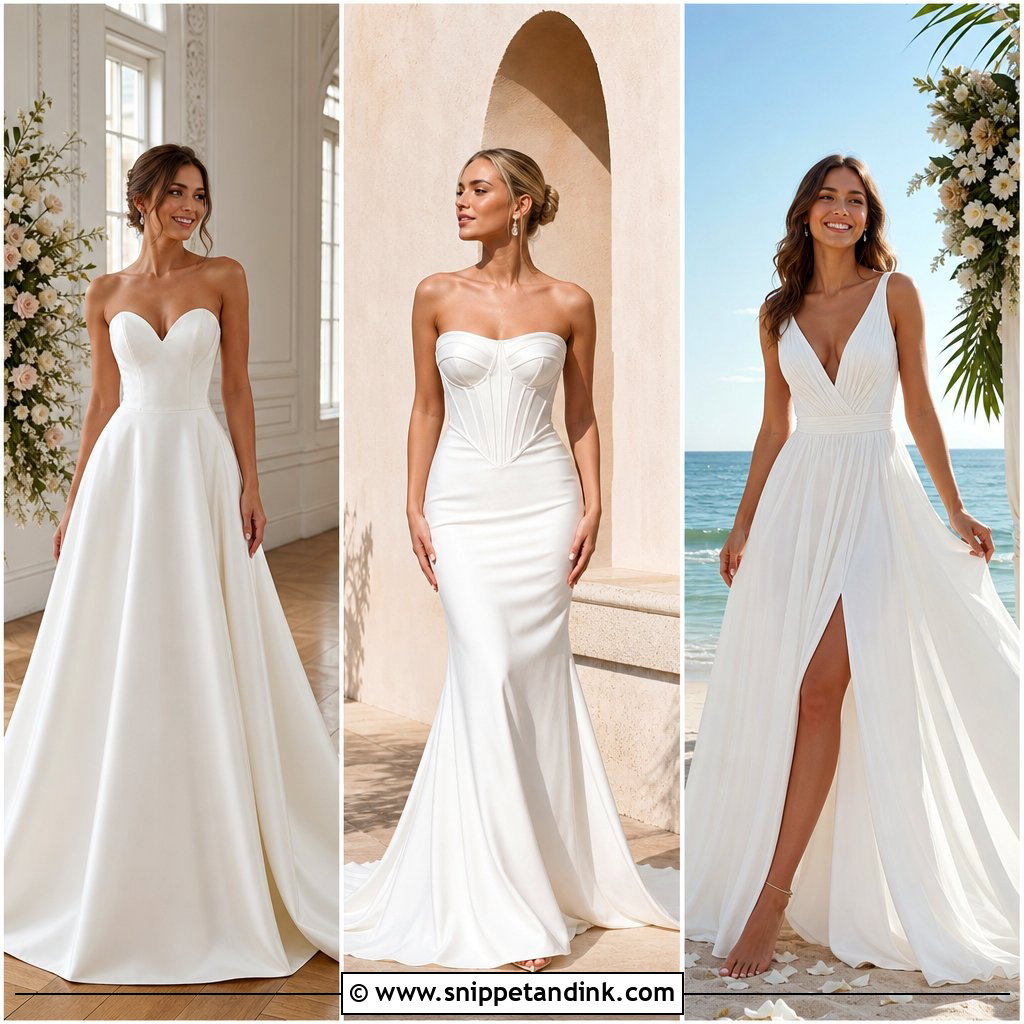
Satin reflects light along every seam, so a strapless satin corset shows the quality of its construction more plainly than anything else on this list. Look for boning sewn into its own channels and cups that lift the bust from underneath, so the top edge isn’t pinching to keep everything in place. A folded or draped neckline adds dimension without trim, and a full A-line or ball gown skirt balances the structured top. I check the neckline with the bride seated and with her arms raised. If it lifts away from the skin, it isn’t finished. Ivory pointed pumps, pearl drops and a fingertip veil are all you need.
2. Lace Corset Ball Gown Wedding Dress
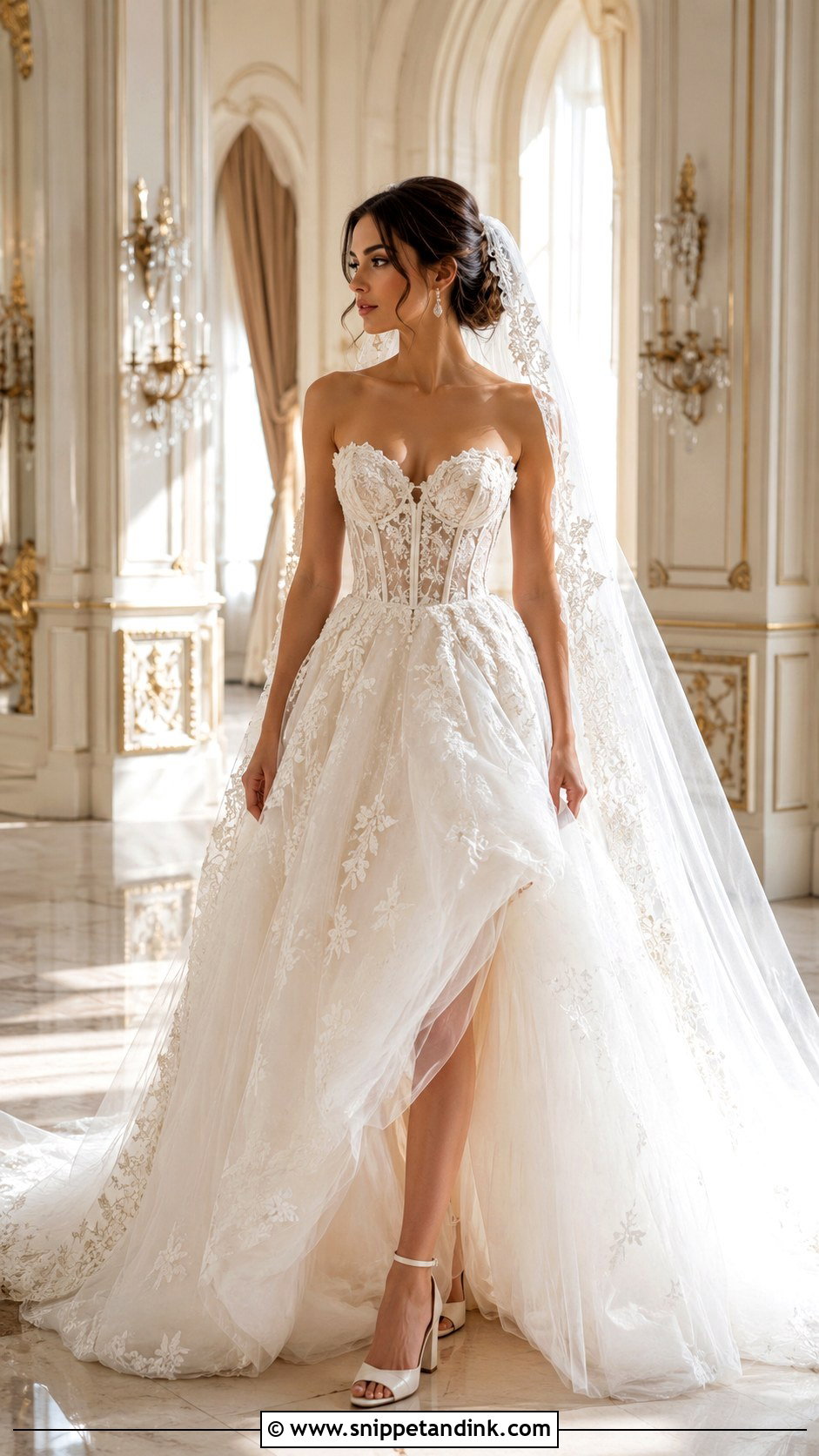
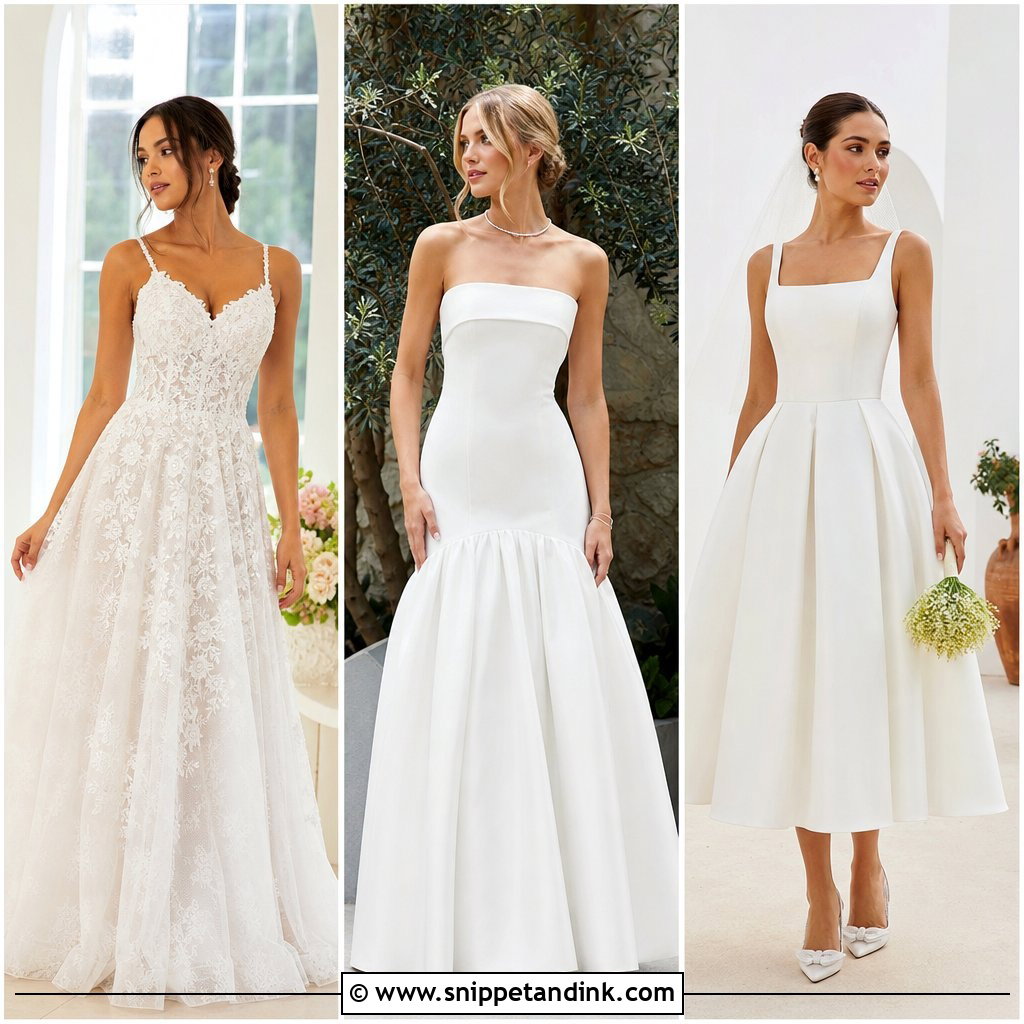
The weak point of a lace corset ball gown is the waist, where a fitted bodice meets several layers of tulle. Done badly, the seam bulges and the skirt looks stuck on. Done well, scattered appliqués carry the lace down into the skirt and the join disappears. Walk around the gown at your fitting and study that seam from the side and back. Boning channels should stay subtle under the lace, and a sweetheart neckline this detailed needs no necklace. A lace-edged cathedral veil and block-heel pumps hidden under the skirt finish it.
3. Basque Waist Corset Wedding Dress
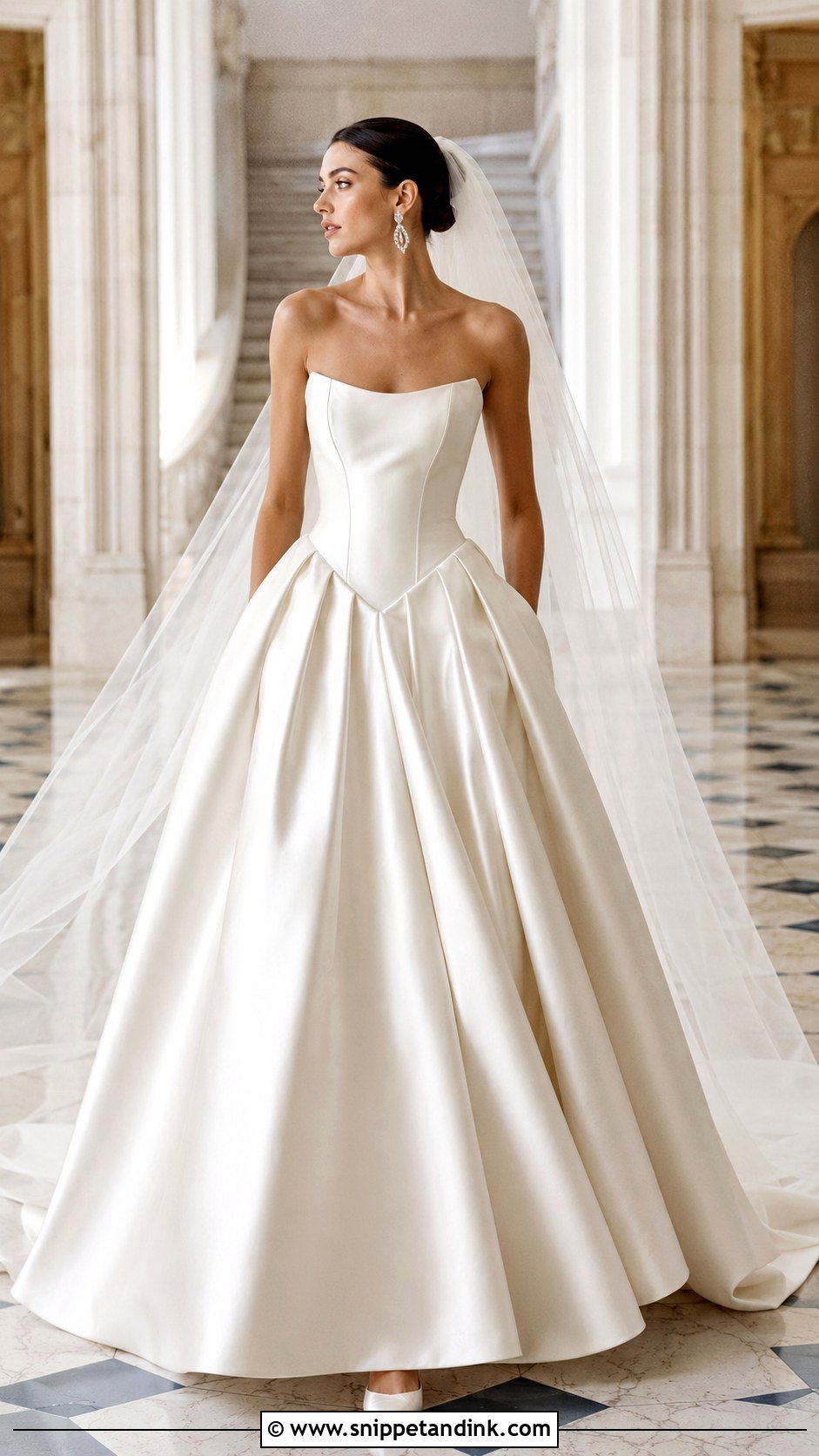
The V of a basque waist dips below the natural waist and visually lengthens the torso before the skirt opens. It’s a classic partner for a full, pleated skirt. For a regal version, I’d go with ivory duchess satin, a strapless neckline and generous pleats. The point must lie flat when you sit instead of folding up against your stomach. If your torso is short, ask for a shallower V; you keep the shape without the point reaching your hip bones. Pointed satin pumps, crystal earrings and a long clean-edged veil complete it.
4. Long Sleeve Lace Corset Wedding Dress
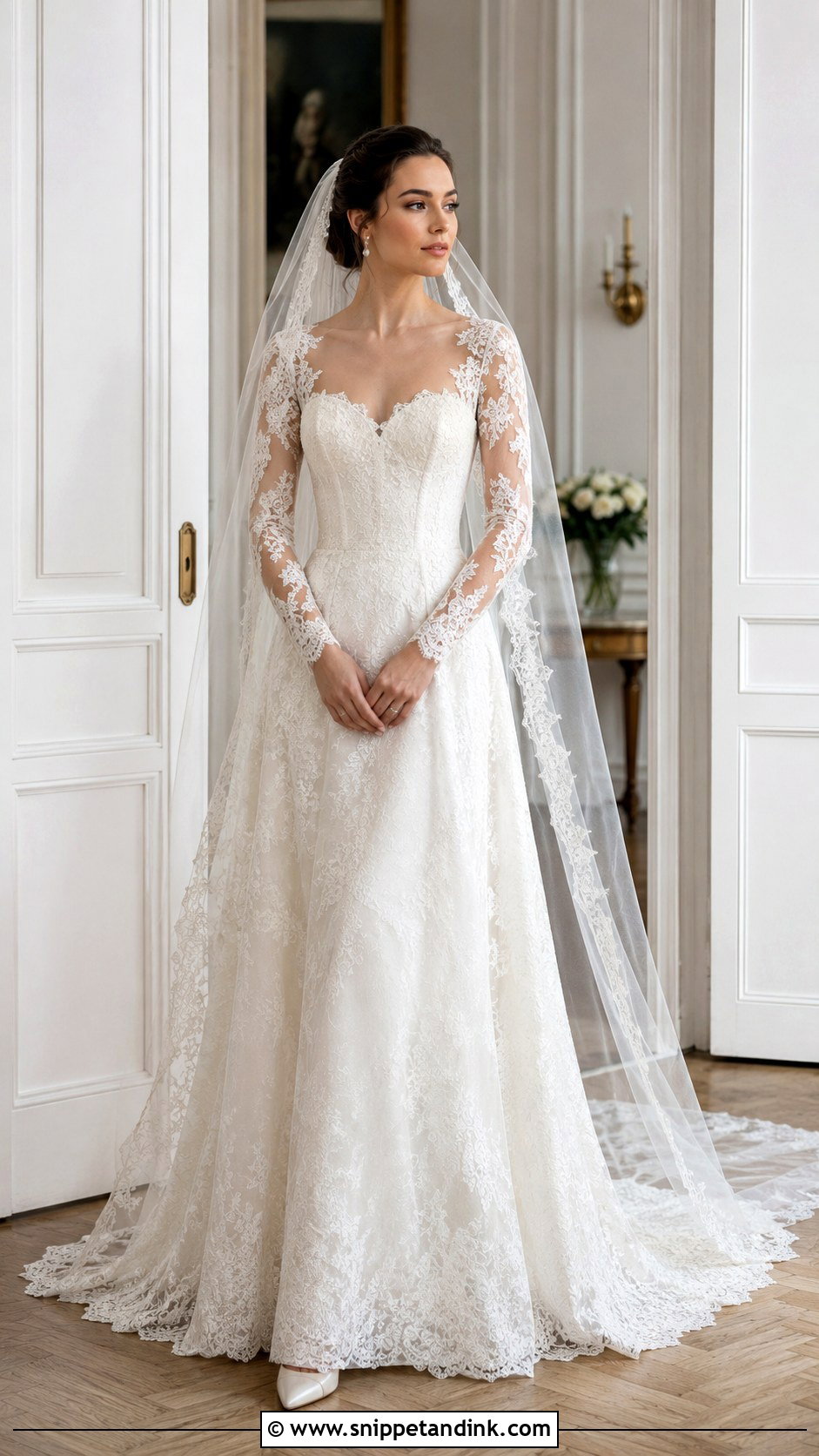
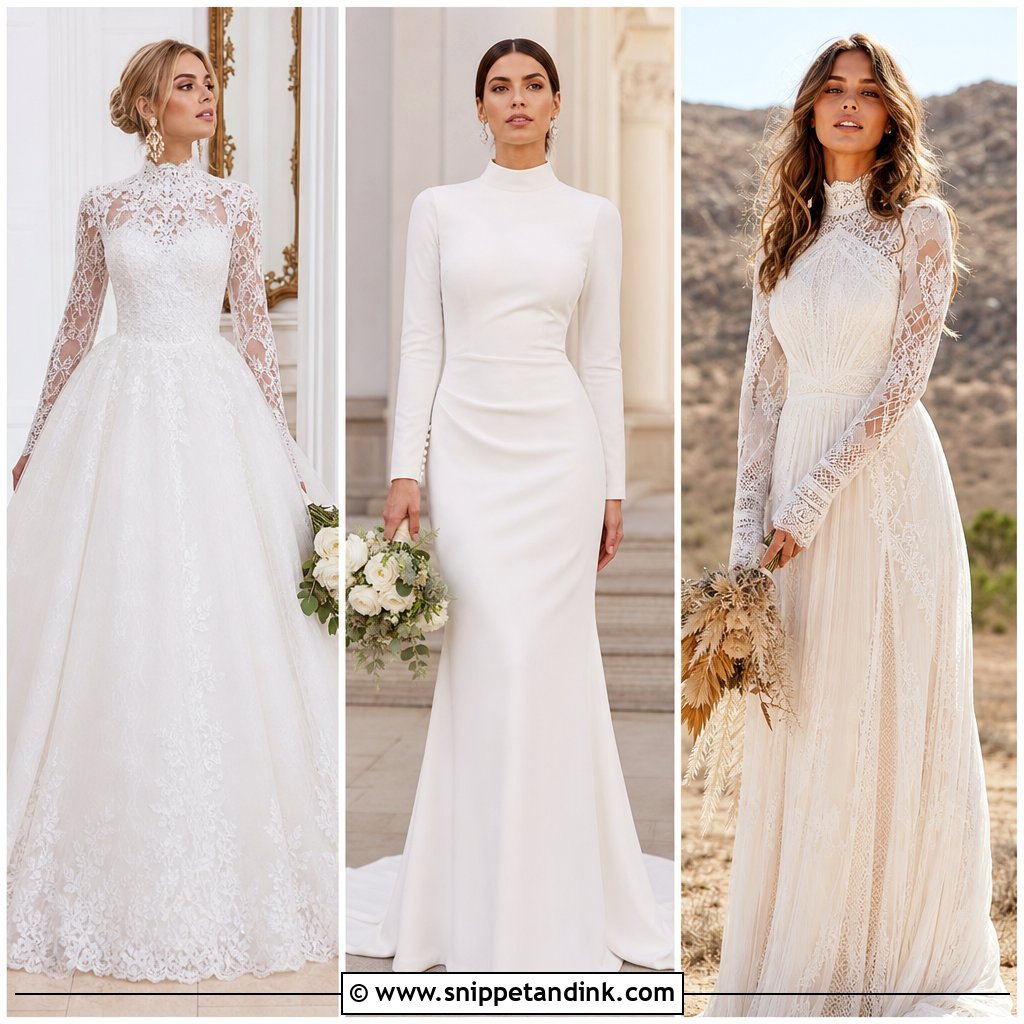
Long lace sleeves and a corset can work against each other, because the bodice wants to stay still while the sleeves move with your arms. The answer is in the shoulder. Flexible lace or a stretch lining across the upper back lets you reach and hug without the corset shifting. Sheer fitted sleeves with placed appliqués over a lined bodice suit a cool-weather or formal wedding, and a gentle A-line skirt keeps the lace as the main detail. Covered buttons at the cuffs and back add a vintage note. Bend your elbows and lift your arms at every fitting.
5. Off Shoulder Corset Wedding Dress
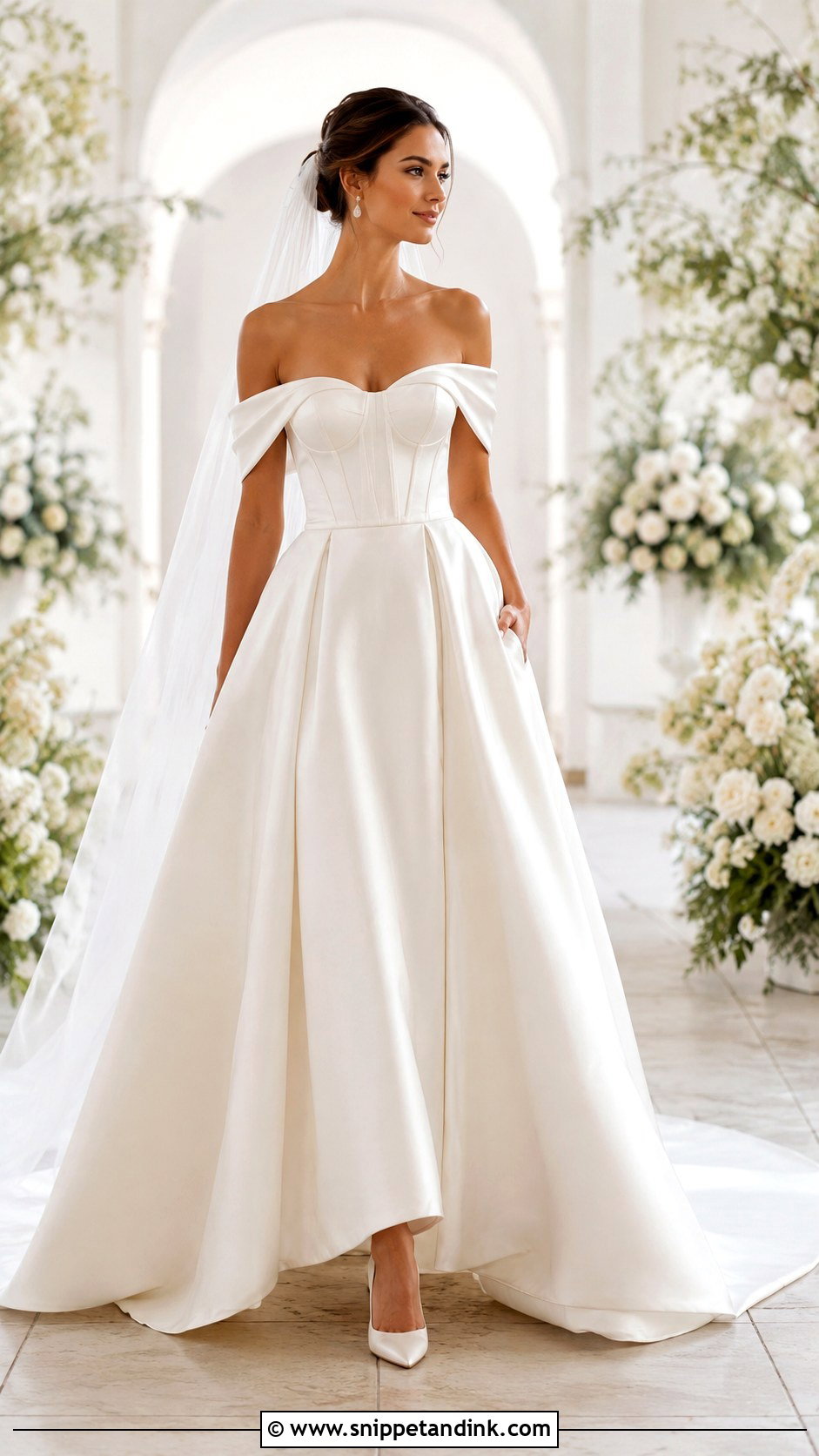
With an off-the-shoulder corset, the bodice holds itself up and the bands are mostly decoration. That’s freeing, because a seamstress can often make them detachable for dancing. Soft satin bands look modern; lace or tulle feels more romantic. Check how high you can lift your arms with the bands on, since a band set too low pins your upper arms to your sides. Swept-back hair, teardrop earrings and a plain chapel veil are enough, with no large necklace. A touch of body shimmer on the shoulders reads well in photos.
6. Mermaid Corset Wedding Dress
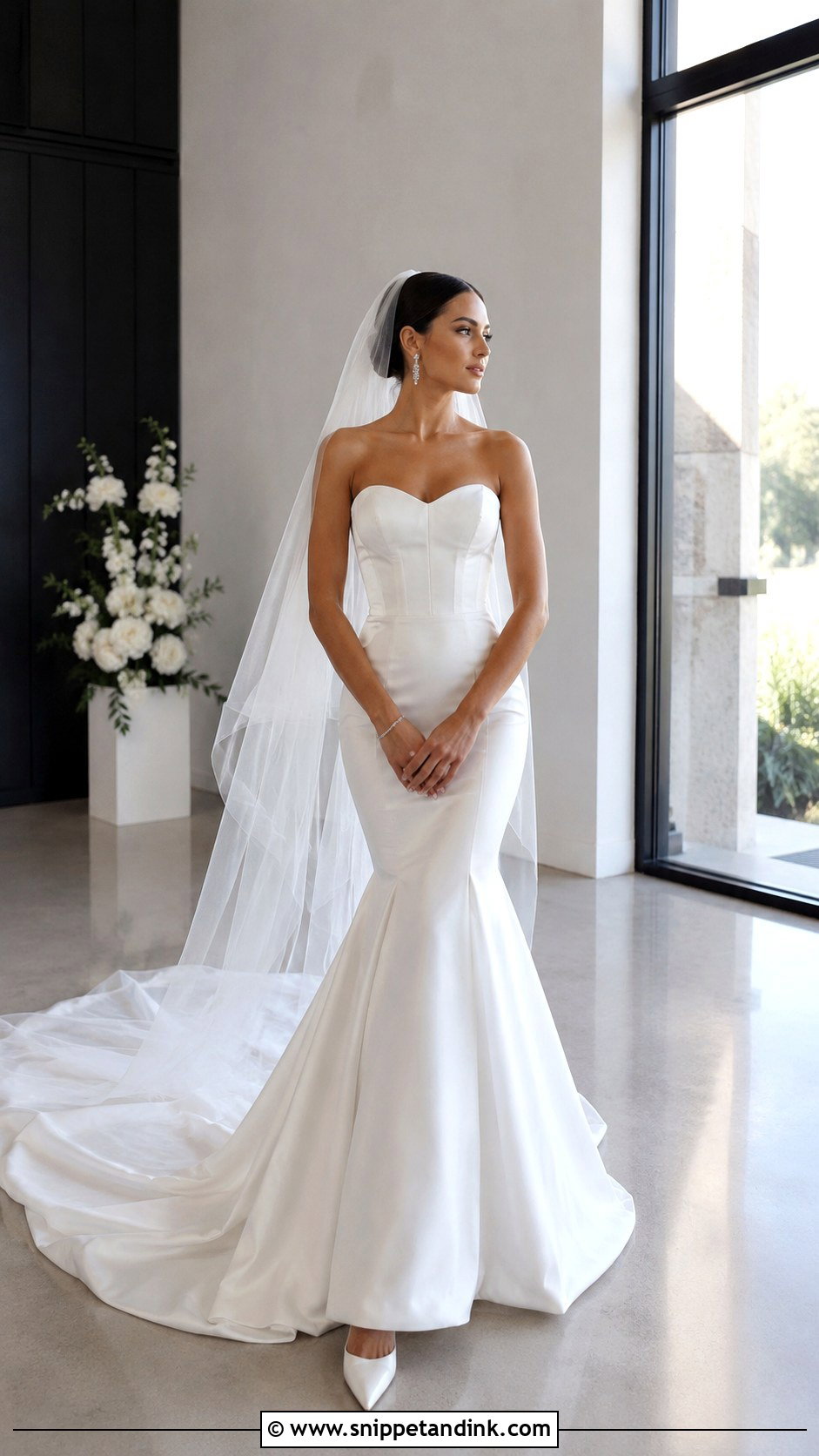
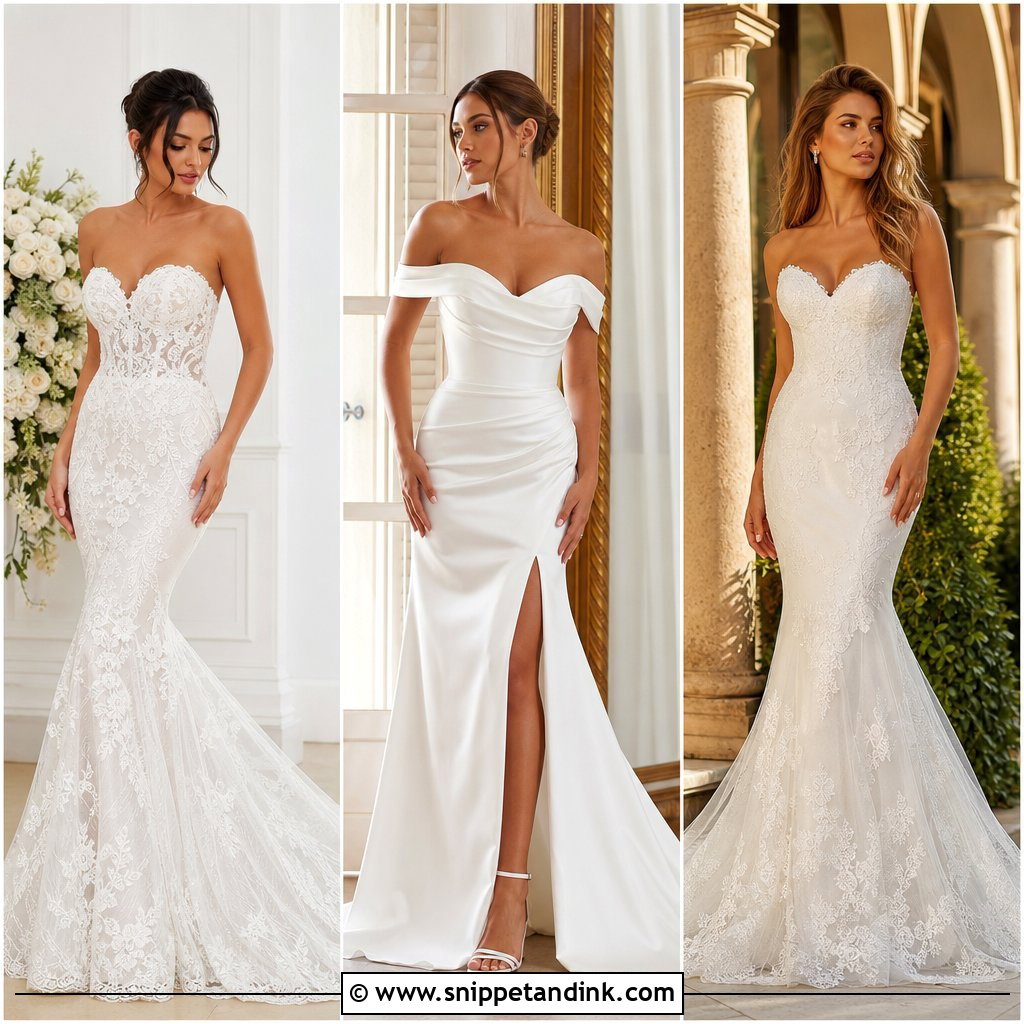
A corset and a mermaid skirt both grip, so this pairing is the least forgiving one here. Curved seams that run from the bodice straight into the skirt look far better than a corset that stops dead at the waist. Stretch crepe is smoother and gives more; lace adds texture. If your steps feel short, I’d raise the flare slightly or add a hidden slit before touching anything else. Take a few stairs at the fitting. Pointed pumps, linear earrings, a low bun and a long sheer veil that extends past the train finish the line.
7. A-Line Corset Wedding Dress
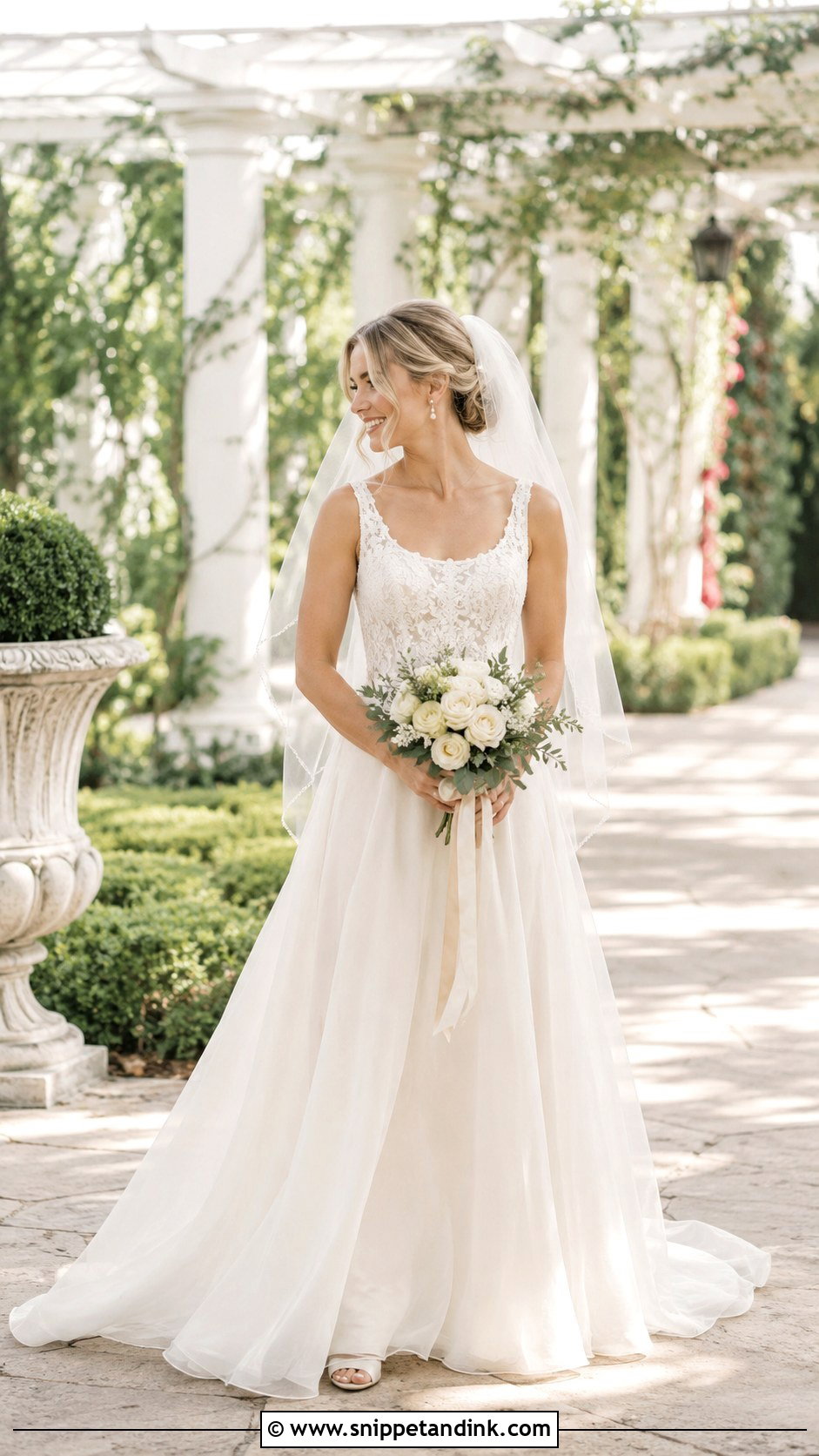
Unsure about corsets at all? Try this one first. The structure stays above the waist and the skirt restricts nothing. Satin, organza, lace and light tulle all suit it; for an outdoor wedding I like a softly scooped bodice with a few floral appliqués and a skirt starting at the natural waist. The real decision is the back. Lacing gives adjustable definition and an inch or two of room if your weight changes, while covered buttons over a zip look cleaner but can’t be adjusted on the day. Low block heels, small pearls and a fingertip veil keep it light.
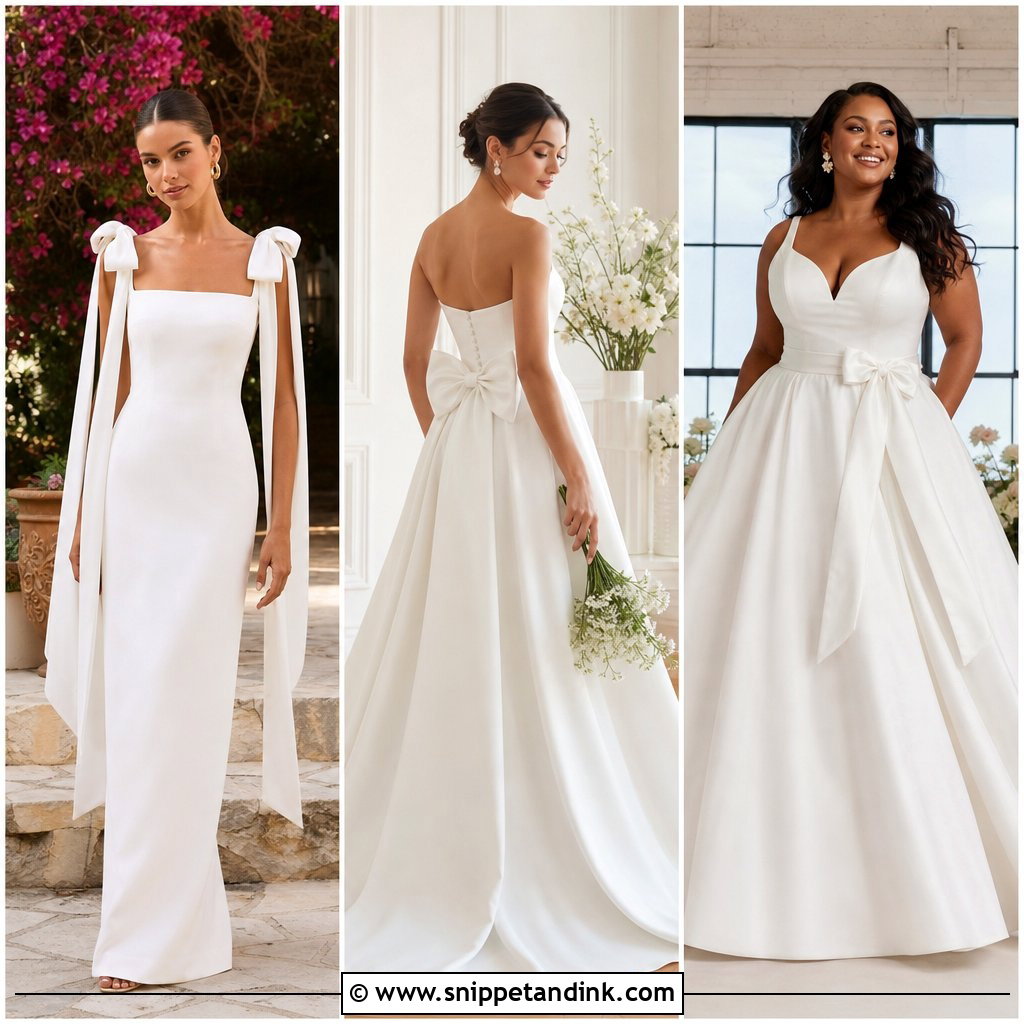
8. Square Neck Corset Wedding Dress
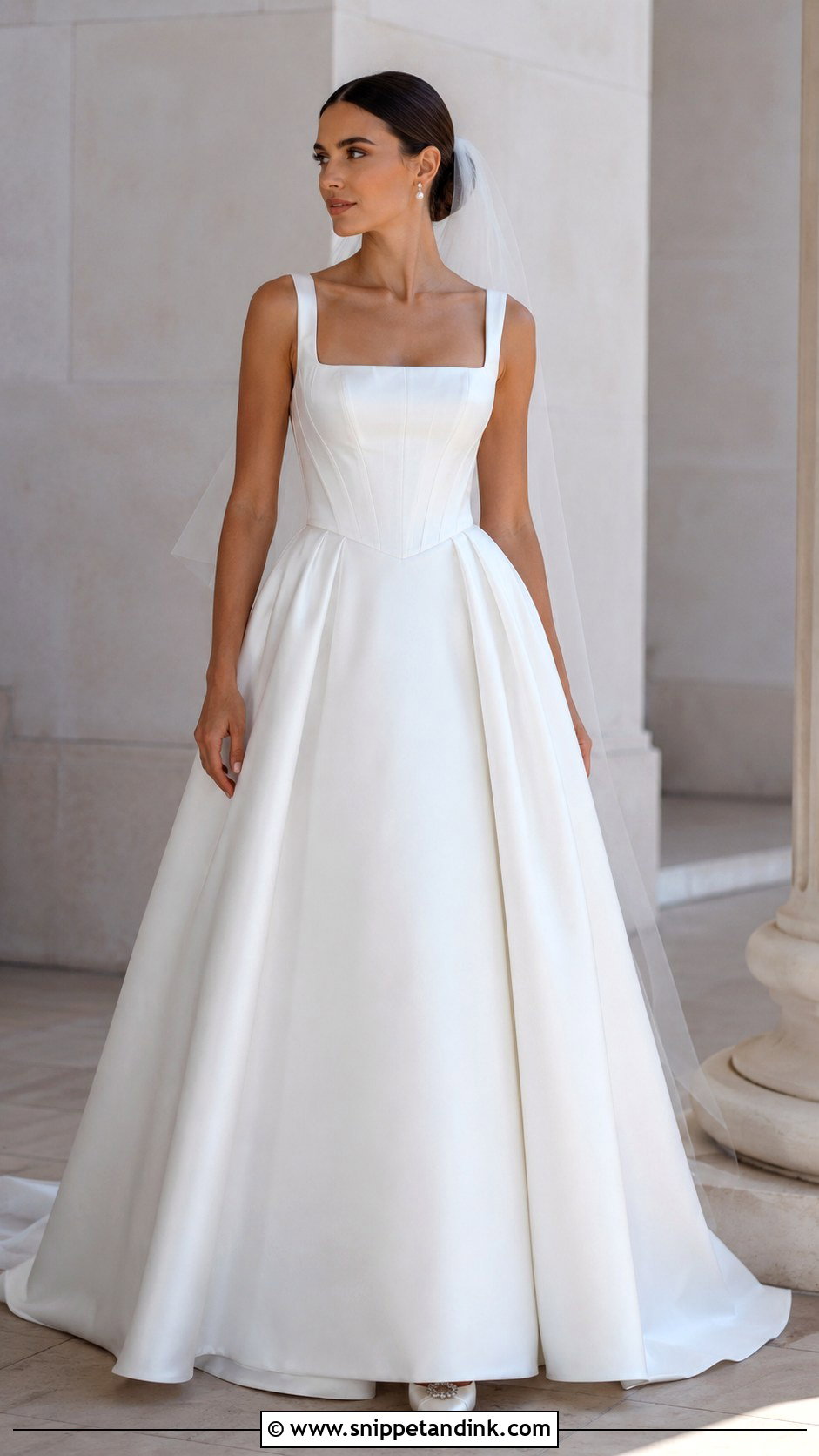
A square neckline exposes cup placement more than any other shape, since a straight edge shows the slightest gap or bulge. At the fitting, I look at the two corners first. They should lie flat, not tug toward the shoulders. Wide straps and structured satin suit the angle, with an A-line for something understated or a full skirt for a formal entrance. Pearl button earrings and a sleek bun are all the jewelry it wants. Ask for soft binding along the inside edge, because a stiff edge can rub the chest raw by evening.
9. Sweetheart Corset Wedding Dress
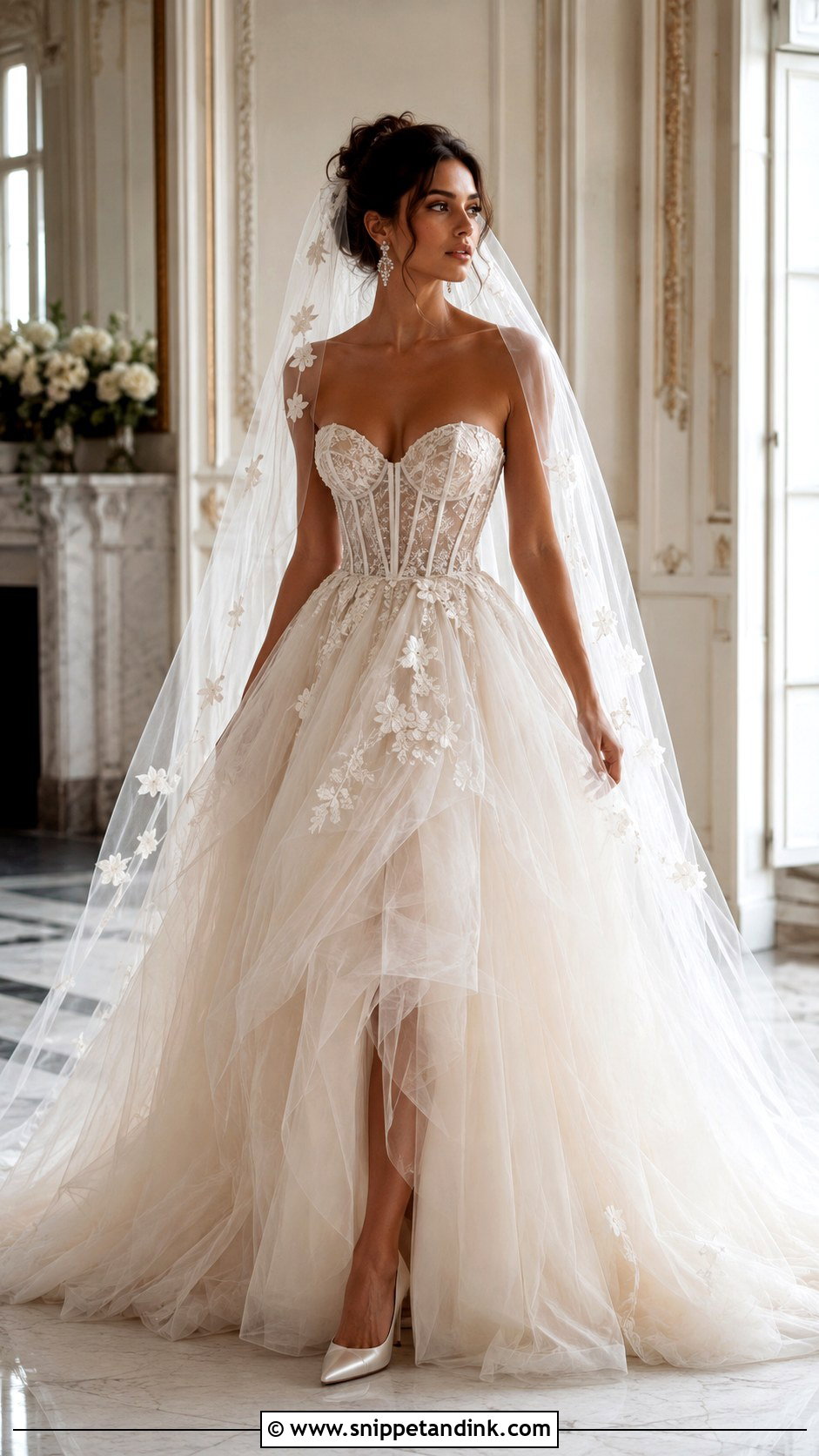
The curve of a sweetheart softens a visibly structured bodice. A moderate dip reads classic; a deeper center notch is bolder. What I check is where the support comes from. If the upper edge has to be tight to keep you in, the cups are wrong, and a good fitter will fix the cup size before touching the neckline height. Exposed boning plus a sweetheart is already plenty of detail, so keep jewelry to crystal drops and the veil to a few scattered appliqués. A layered tulle ball gown skirt balances the fitted top.
10. Drop Waist Corset Wedding Dress
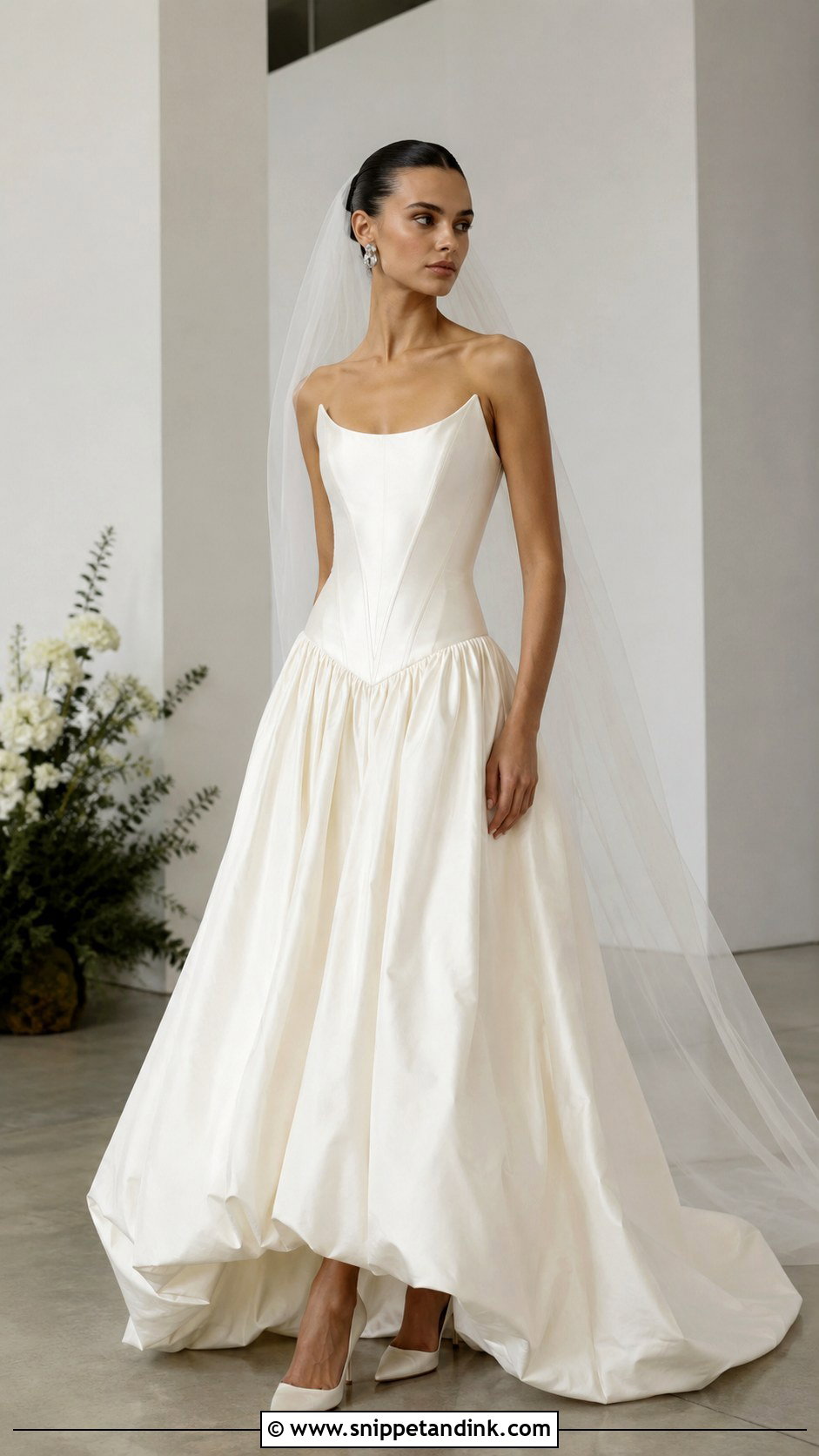
A drop waist corset wedding dress carries the fitted bodice below the natural waist and releases into the skirt lower down, which makes even a full skirt look less traditional. Pair a softly curved neckline with gathered taffeta or organza. Because the bodice reaches toward your hips, sitting is the real test. Check the lower edge for creasing at fittings, and make sure the waistline follows your body instead of cutting across the widest part of your hips. Sleek pointed pumps and a long plain veil suit it.
11. Minimalist Corset Wedding Dress
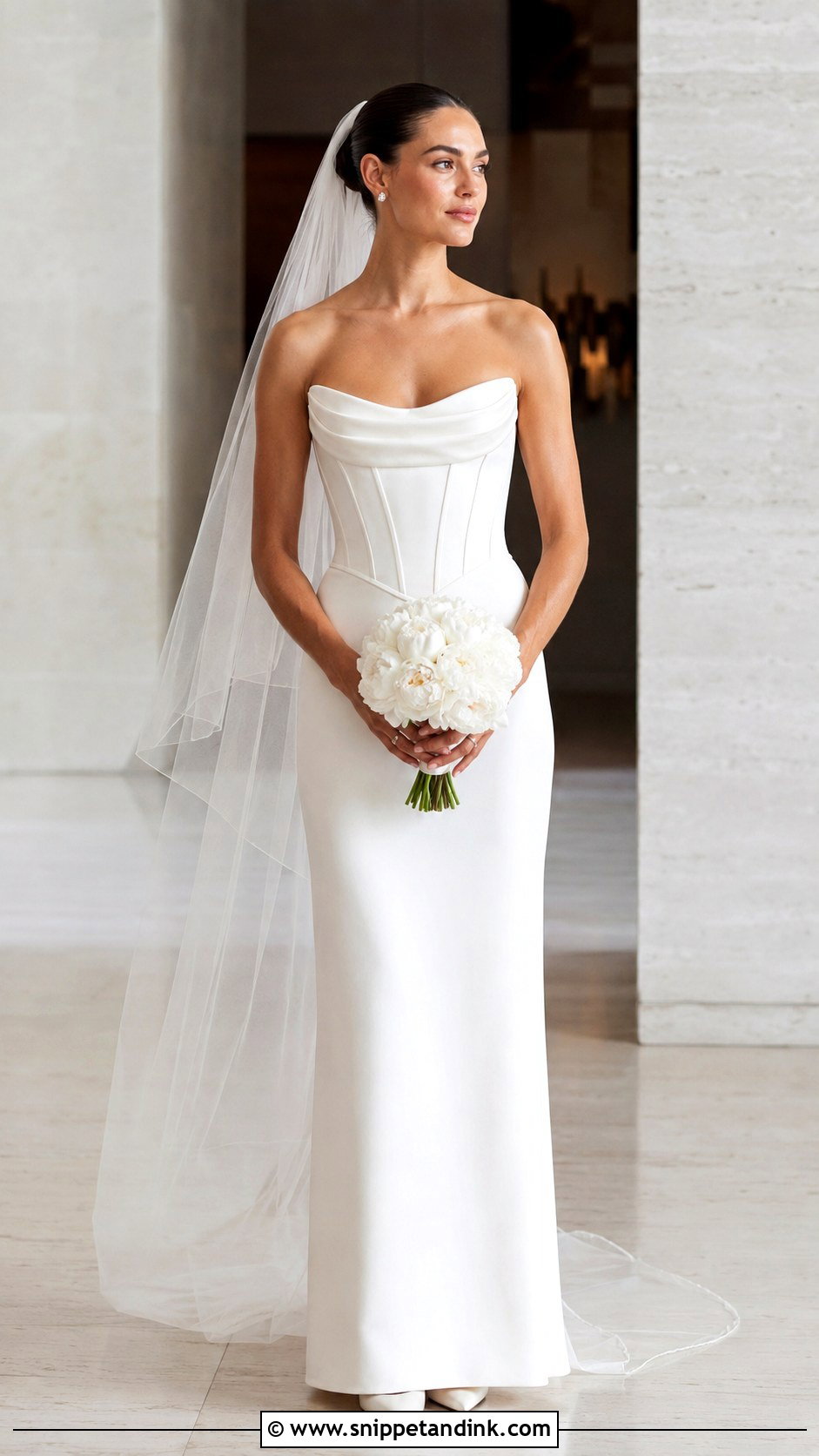
No lace and no beading means the boning and seams become the decoration, and every flaw shows. I step back a few paces to check that the boning channels are symmetrical, then look at the waist to make sure the skirt isn’t pulling. Matte crepe, satin and mikado all hold a clean line. A column skirt is sleeker; an A-line moves more. Ask about hidden pockets, since they sit in the skirt seams without breaking the line. Studs, closed-toe pumps and a low bun are enough.
12. Floral Appliqué Corset Wedding Dress
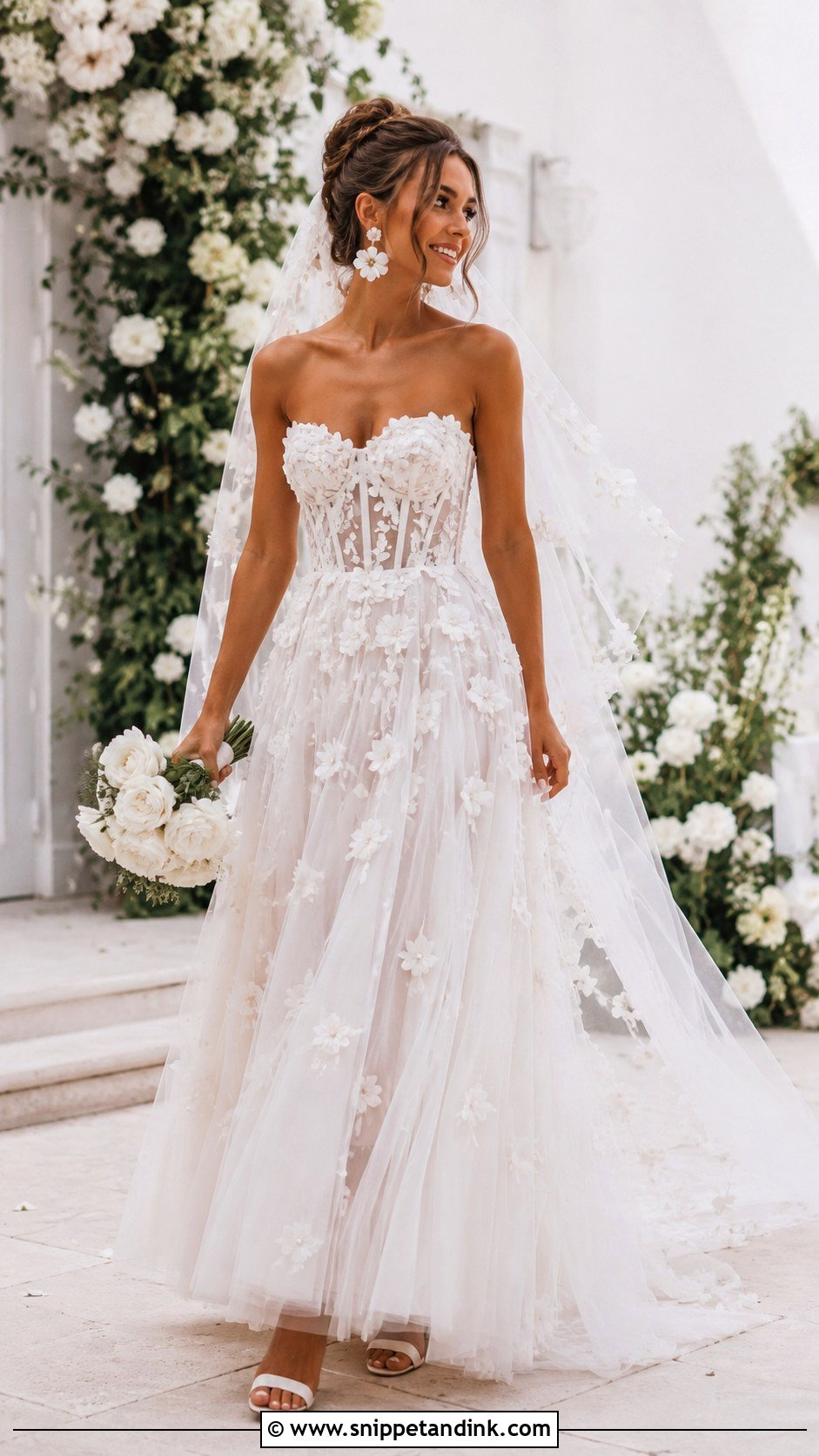
I like appliqués that start around the neckline and thin out down an A-line tulle skirt, so the bodice stays the focal point. What to avoid is stacking heavy appliqués, dense beading and ornate jewelry on one bride. Choose one. At the fitting, run your arms down your sides: stiff flowers at the side seams scratch the inner arm, and a seamstress can move them or add a soft lining behind. Floral earrings, block-heel sandals and a sheer veil with only a few matching motifs keep it soft.
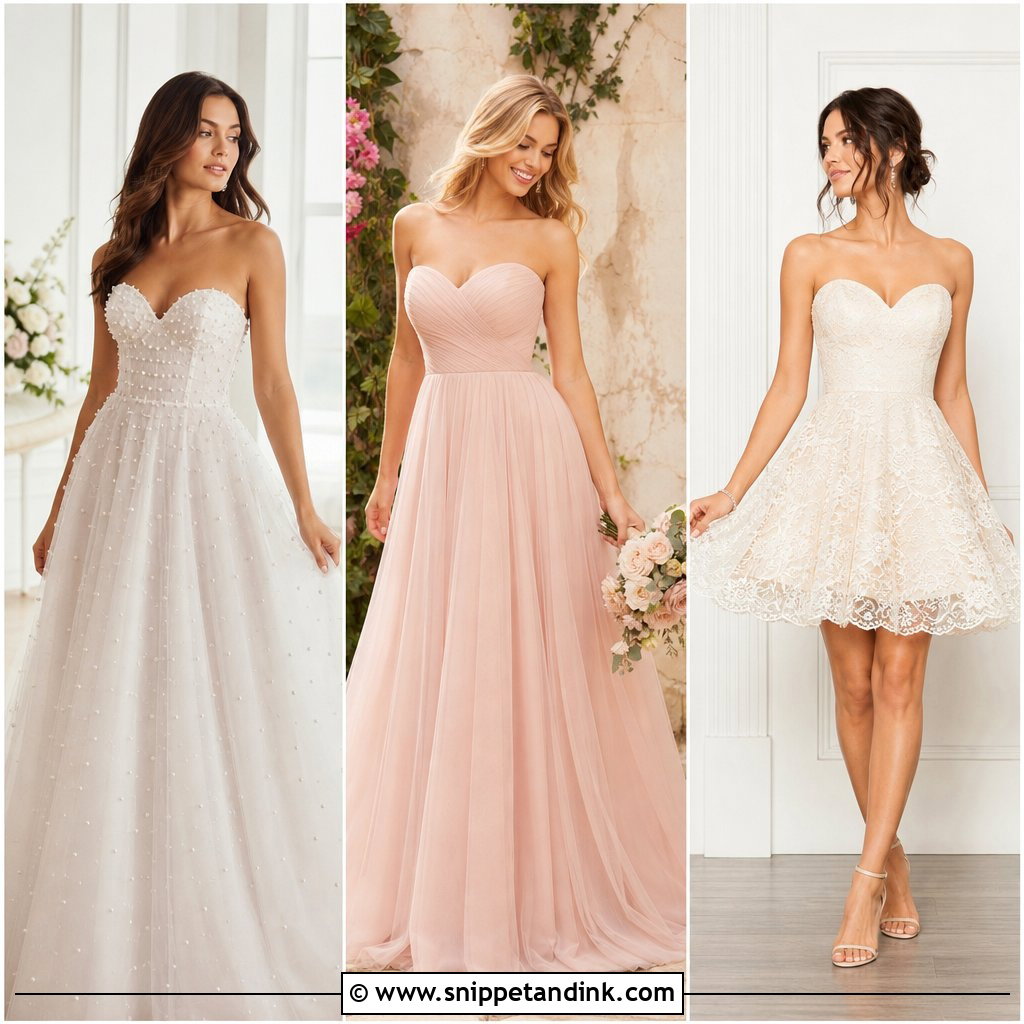
13. Pearl Corset Wedding Dress
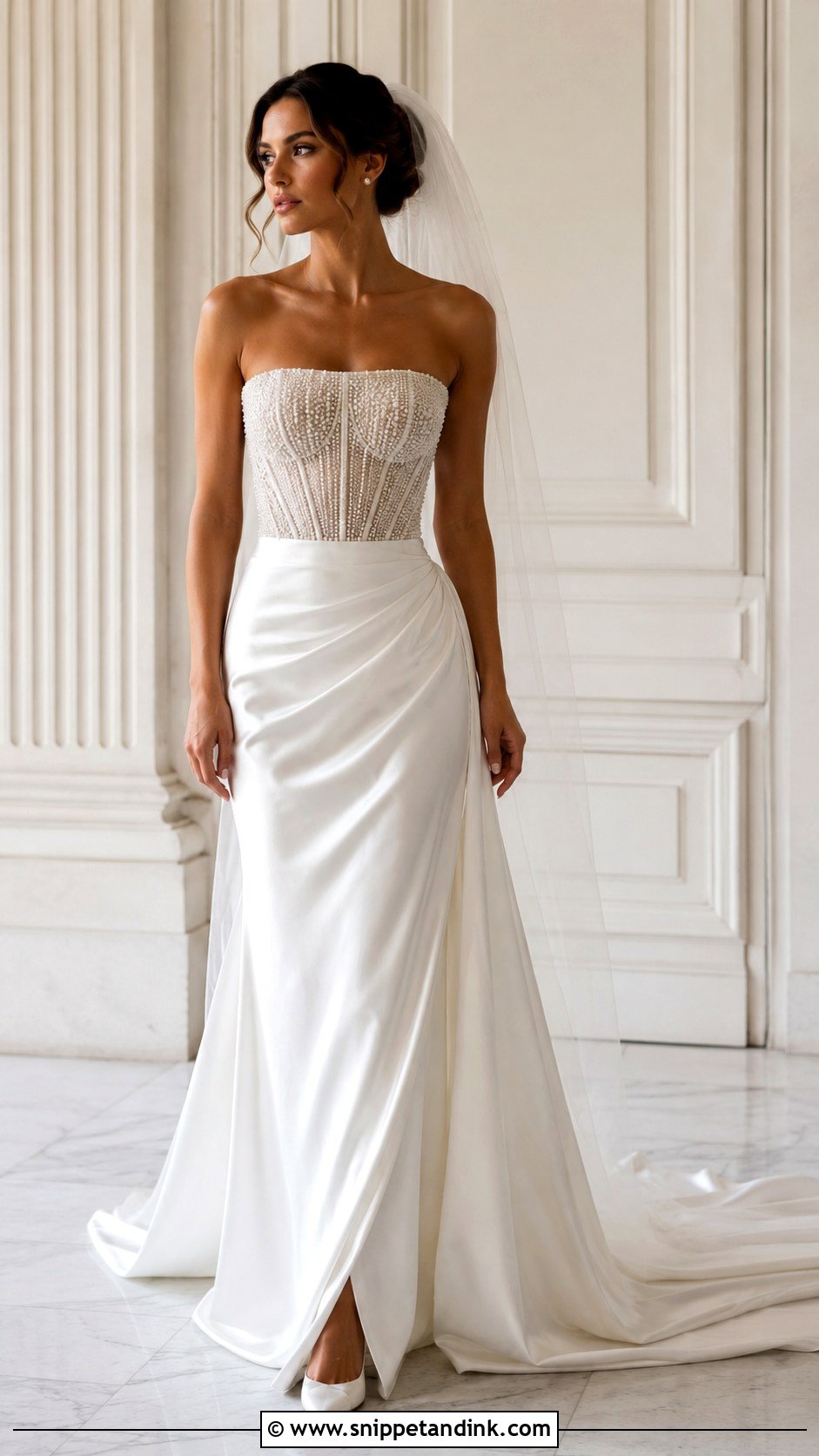
Pearls over visible boning create a pleasing tension, an old-fashioned embellishment on a modern frame. Keep the skirt plain satin or tulle so the bodice carries the detail, and choose a straight neckline. Skip the pearl necklace; bare skin around the neckline lets the handwork show. Ask how the pearls are attached. Individually stitched pearls survive a day of hugging, while loosely chained ones under the arms can shed. Pack matching thread and a needle. Pearl studs and an unembellished veil finish it.
14. Tulle Corset Wedding Dress
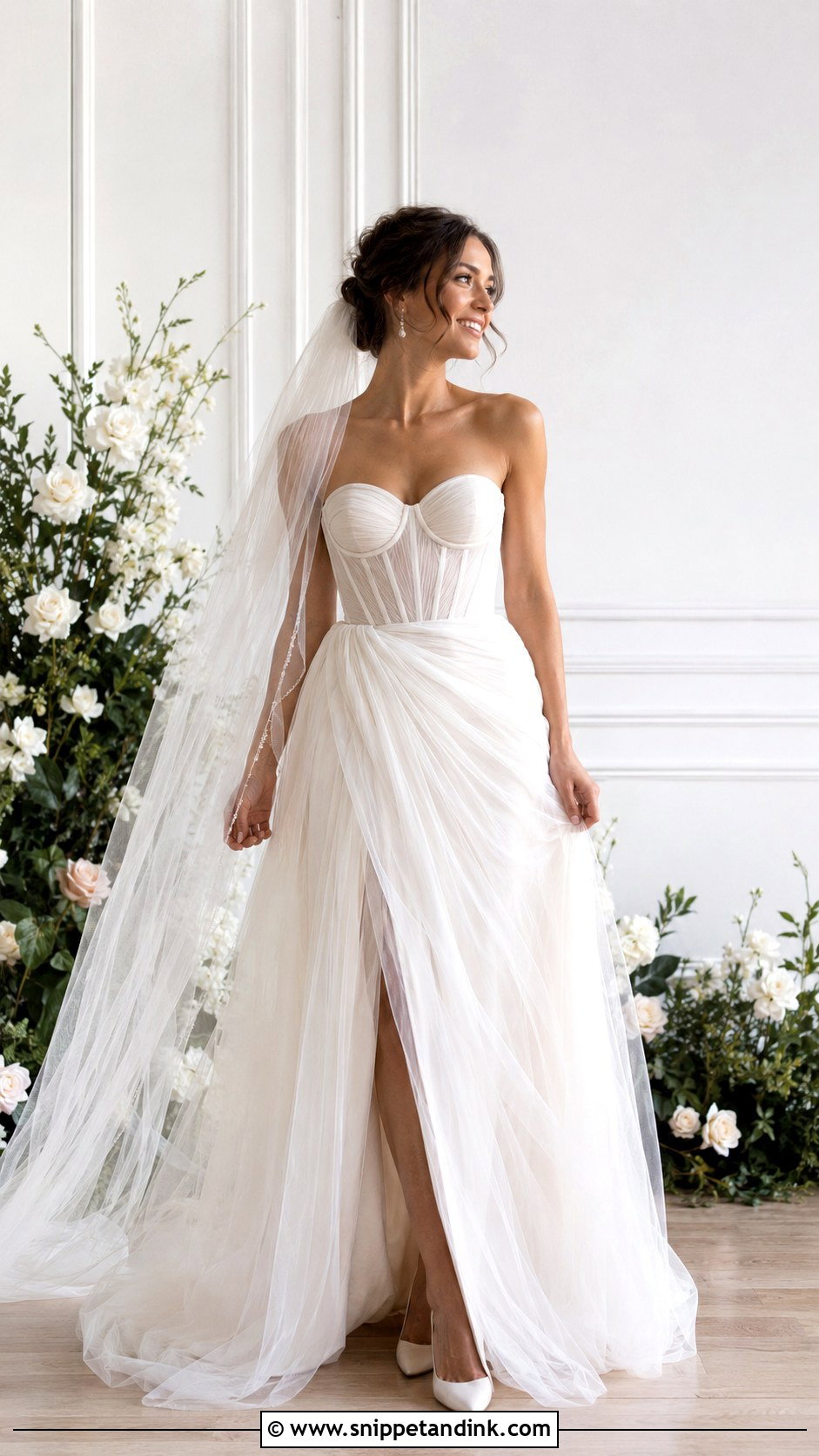
Tulle softens a corset more than any other fabric, and a sheer or lightly lined bodice can show the boning through it. Count the skirt layers when you try it on. Each one adds weight and warmth, and a summer ceremony in many layers of tulle gets hot. Taking a layer or two out is a straightforward alteration. Matte tulle is quieter, a glitter layer adds a little sparkle. A fitted hairstyle balances the volume, and a chapel veil moves with the skirt.
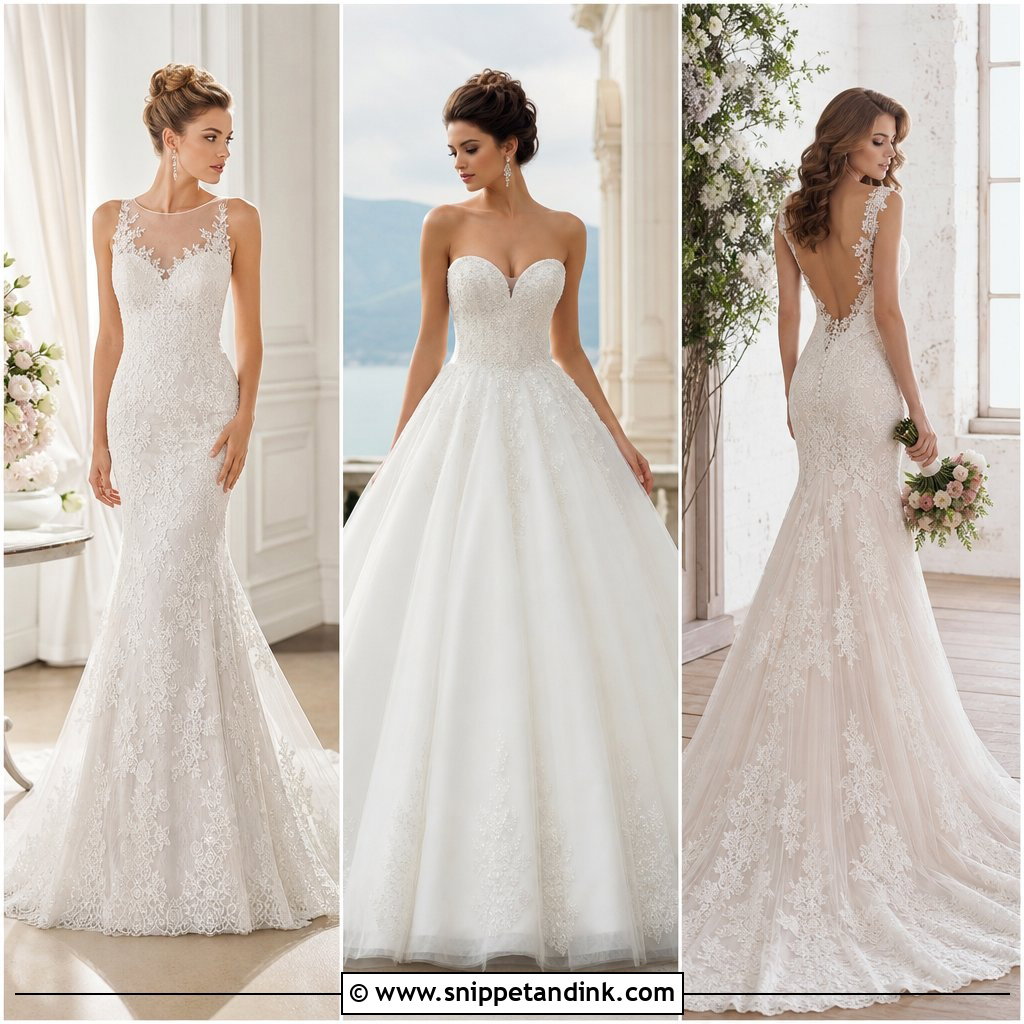

15. Mikado Corset Wedding Dress
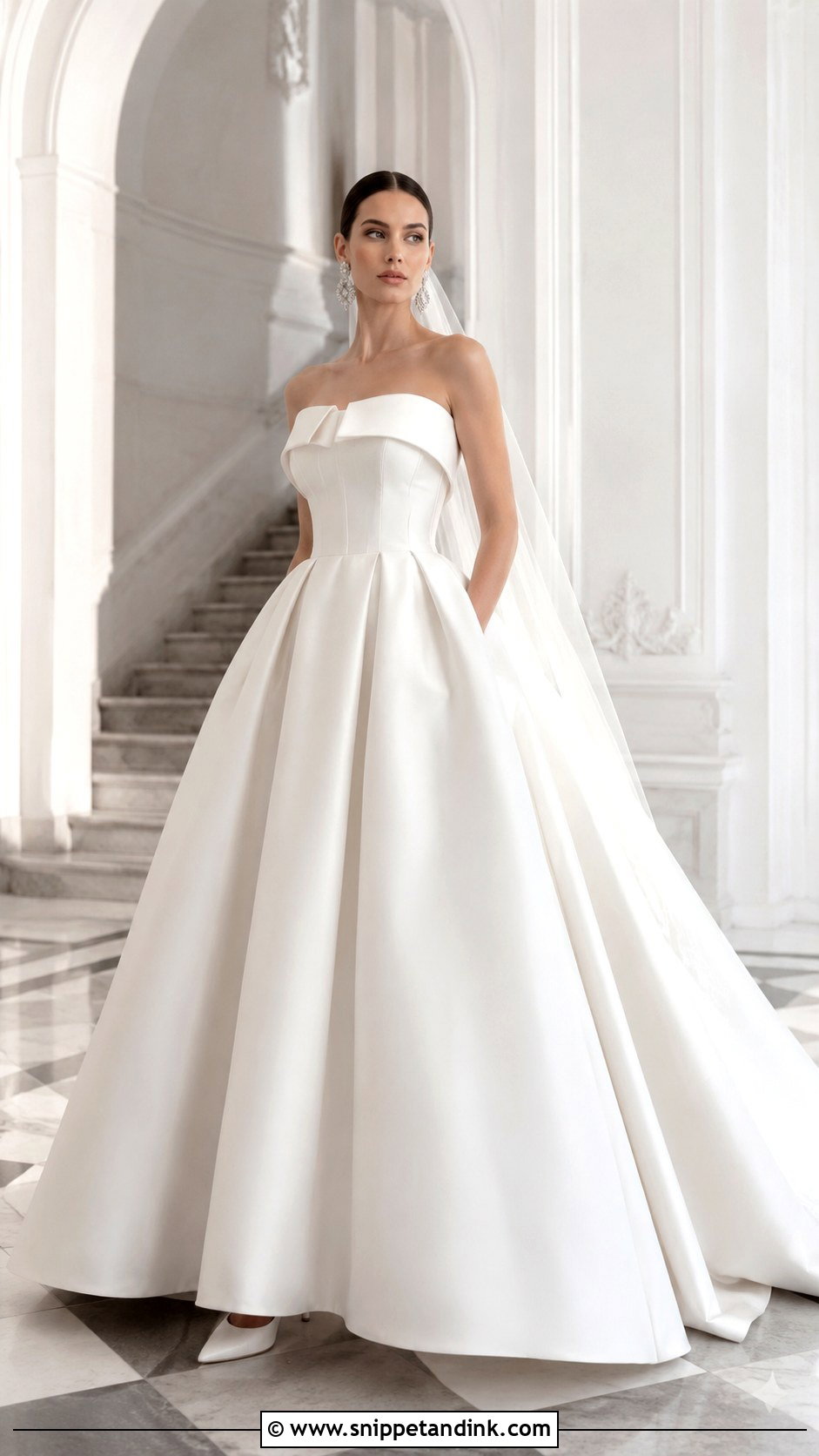
Mikado is a heavy, slightly stiff silk blend, so it builds sculpted bodices and pleated ball gown skirts that keep their shape all day. The downside is creasing. Firm fabric holds a fold, and a gown squashed in a car arrives marked and needing a proper steamer, so ask the salon how it will be transported and pressed. From the side, check that the pleats fall evenly and that the corset edge isn’t making a ridge below the waist seam. Keep embellishment minimal: statement earrings, a long veil and a polished updo.
16. Corset Wedding Dress With Detachable Sleeves
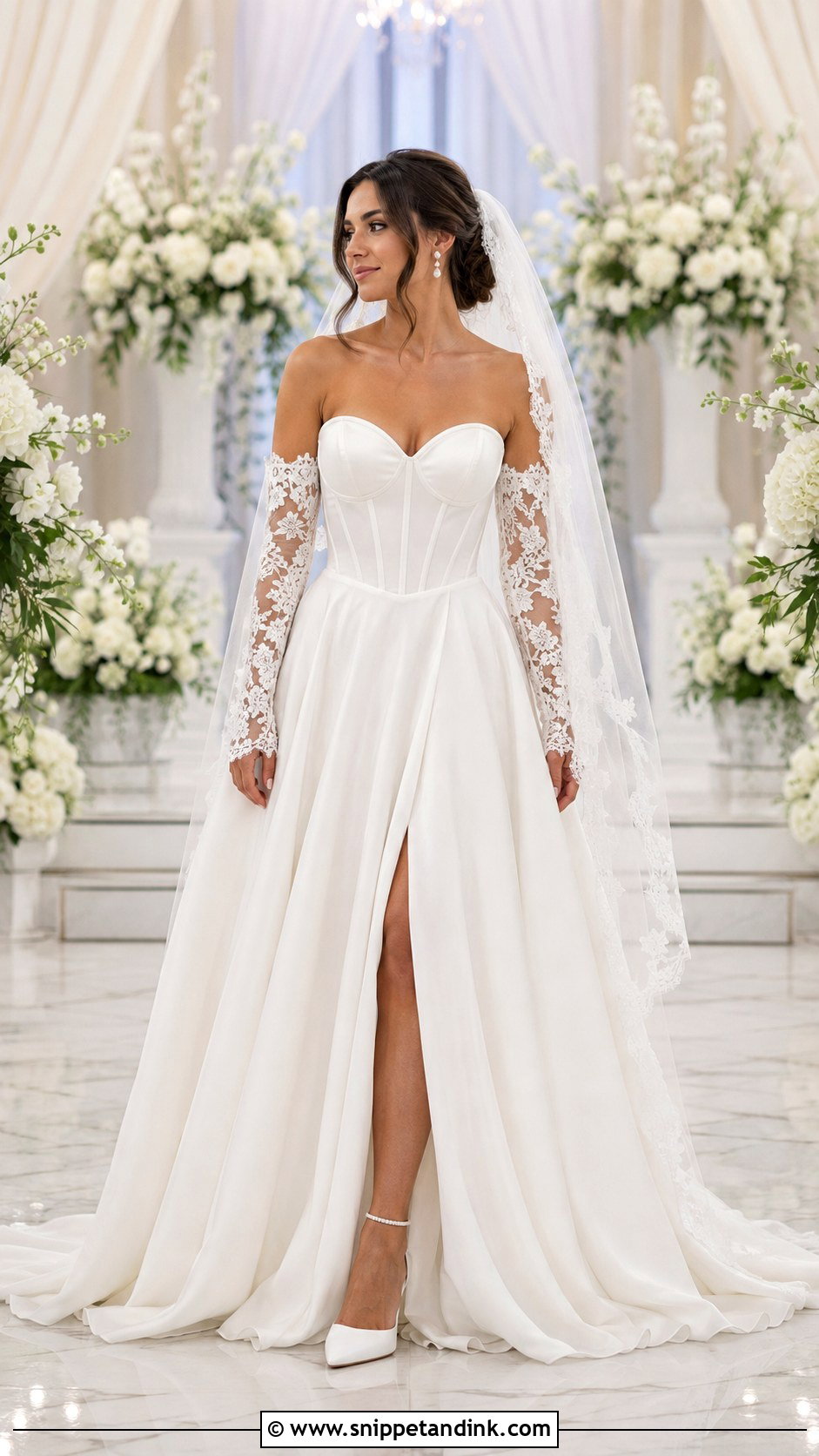
Lace sleeves for the ceremony, then a clean strapless or sweetheart neckline for the party. A satin A-line skirt suits both versions. The fastenings deserve close attention, because snaps, loops or hidden buttons should hold without scratching at the underarm. Practice removing the sleeves with the person who’ll help. Change your earrings or move to a shorter veil afterward so the second look reads as new, and put the sleeves straight into a labeled bag in case you want them for portraits later.
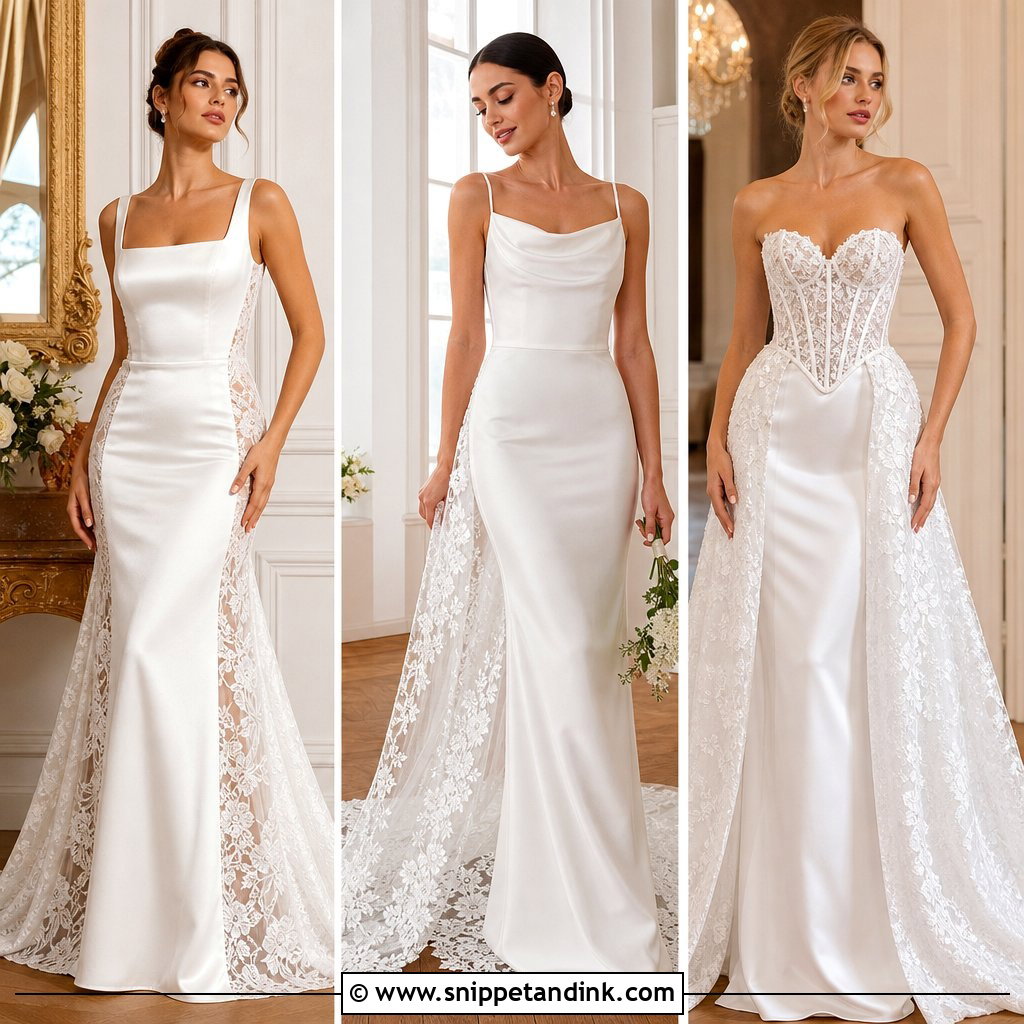
17. Corset Wedding Dress With Overskirt
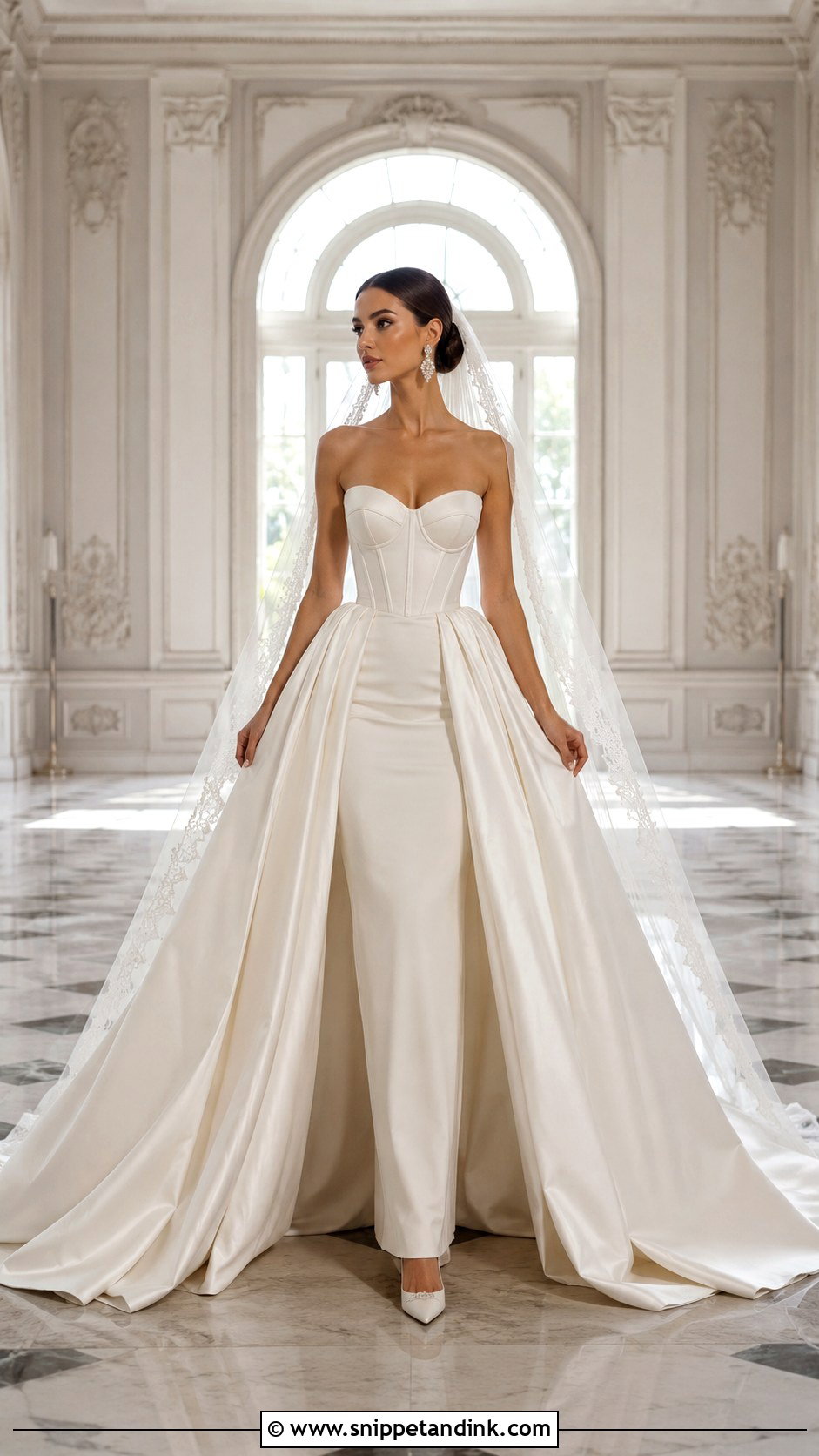
An overskirt gives a crepe or lace base gown ball-gown presence for the ceremony while leaving the corset in view. When it comes off, bustle the base and trade the cathedral veil for a jeweled comb. The detail that gives the whole thing away in photos is the waistband. It should lie flat along the corset’s waistline, with hooks hidden under a narrow belt or a fabric panel, because side-on shots show bulky fastenings first.
18. Plus Size Corset Wedding Dress
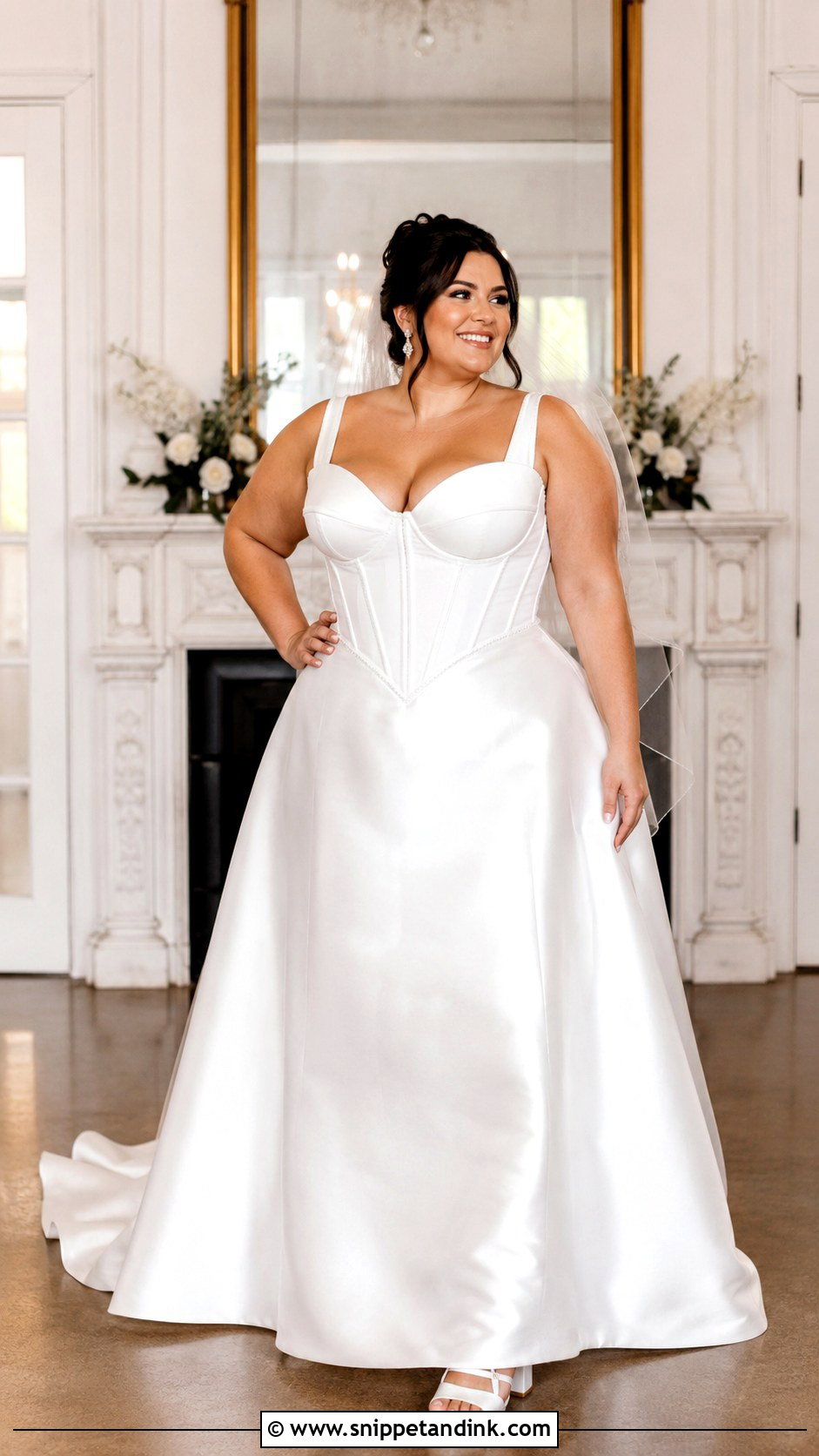
Tight is not the same as supportive. A plus size corset should be built to your shape, with proportionate cups, flexible boning, sturdy straps or sleeves and a back that adjusts precisely. A Basque or natural waist flowing into an A-line skirt gives a smooth line. Order to your largest measurement and tailor down from there. I’d never use hard lacing to rescue a wrong size, since it pushes flesh over the top edge and makes the boning dig in. Breathe deeply and sit at every fitting. Cushioned block heels and a light veil keep the rest comfortable.
19. Modest Corset Wedding Dress
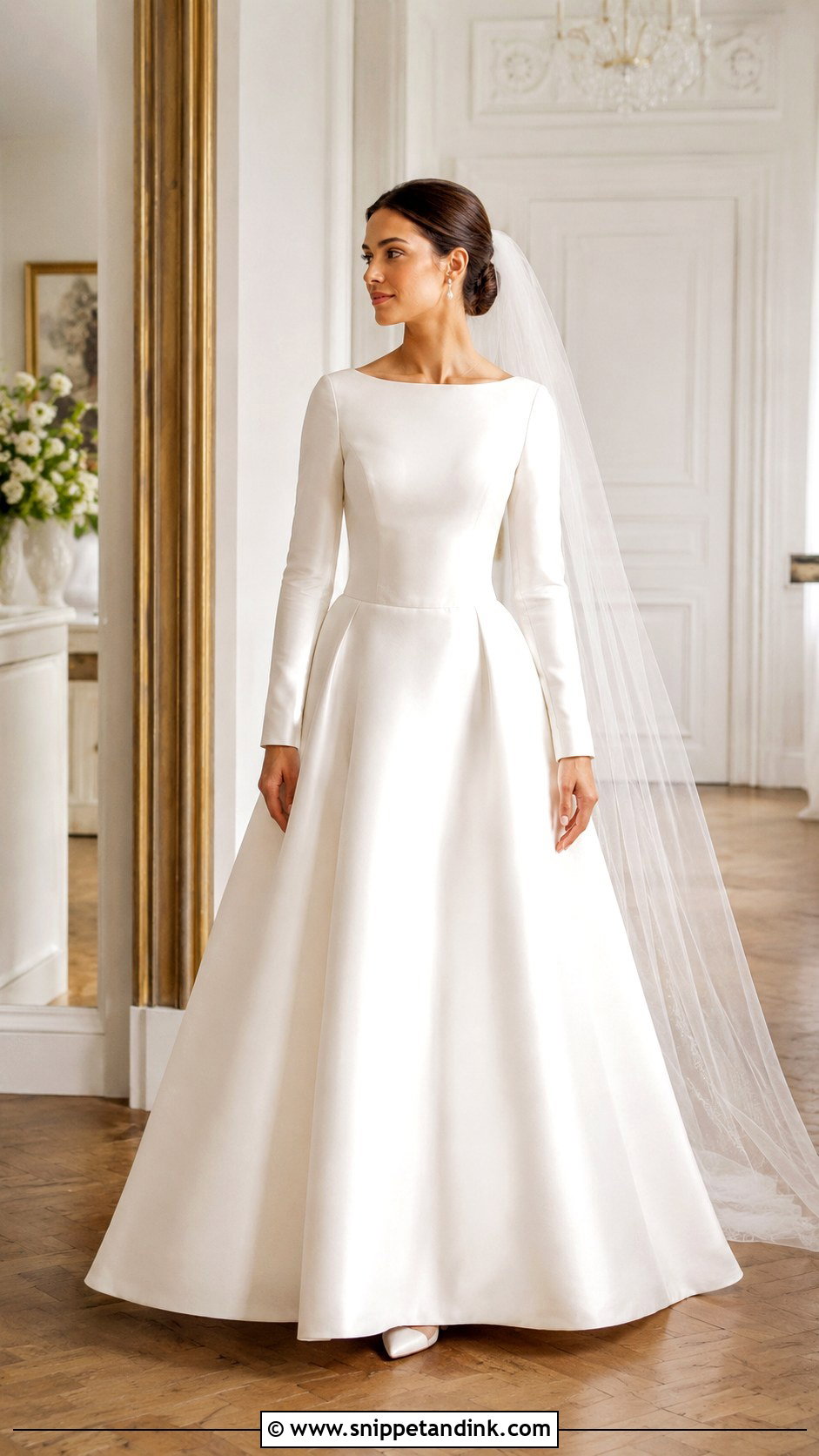
A corset can sit entirely out of sight. Boning hidden beneath an opaque bodice, a bateau or soft square neckline and long fitted sleeves give full coverage with the same support underneath. A full satin or crepe A-line skirt keeps the silhouette clean, and covered buttons down the back and cuffs add detail. If there’s sheer lace anywhere, ask for matching lining and check it outdoors, because fitting room lighting can hide how sheer it really is. A long veil set beneath a low bun and pearl earrings suit it.

20. Short Corset Wedding Dress
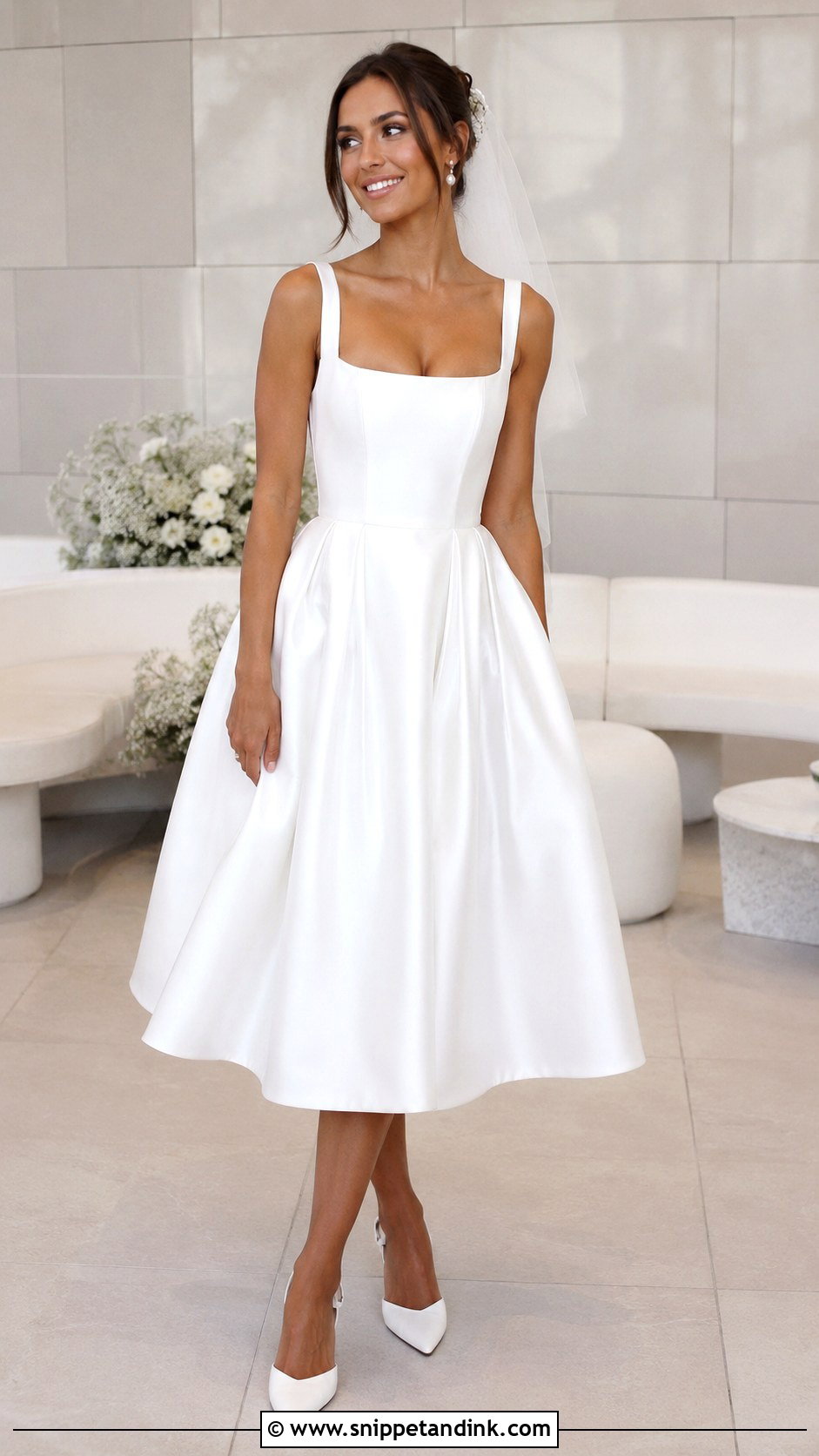
For a civil ceremony or a second look, go short: a structured mini or tea-length with a square neckline and flared skirt, in satin for polish or lace for vintage character. A corset bodice that’s even slightly long pushes the skirt up when you sit, so check the hem from front and back while moving. The shoes are on show, so choose slingbacks you can stand in for hours. A short veil or a small bow finishes it, and built-in shorts or a smooth lining make the mini more comfortable.
Getting Laced In on the Morning
Lacing a corset back well takes ten minutes or so and a calm pair of hands. Whoever does it should learn at your final fitting, and it helps to film the seamstress doing it on your phone.
- Start with the cord loosely threaded and the bodice centered on your body, with the modesty panel flat behind it.
- Tighten from the top down and from the bottom up, drawing the slack toward the waist, a little at a time.
- Pull the two loops at the waist to set the final fit, then sit down for a minute before tying off.
- Knot securely and tuck the ends inside the lacing so they don’t swing or catch on the bustle.
Dinner, the dance floor and the bathroom
A boned bodice compresses your stomach, so eat a proper breakfast early and expect smaller portions at dinner. Fizzy drinks are uncomfortable once you’re laced. If the lacing feels hard after the meal, your helper can ease it slightly at the waist loops. For the bathroom, bring one person, gather the skirt from the front, and sit facing the toilet tank; it keeps the skirt out of the way and spares the boning from bending.
Try the Corset Seated Before You Say Yes
A corset gown earns its place when the structure holds you up and you stop noticing it. Look past the front view to how the bodice, waist, skirt, shoes and veil work together. Test your range of movement, check the gown in daylight, and talk through cups, boning, closures and bustling with an experienced seamstress. Save the silhouettes you love from this collection, but stay open at appointments. The gown that suits your body and your venue often isn’t the one you walked in planning to buy.
You'll Like These Ideas:








Leave a Reply