
Chamomile is one of the few flowers I can design a cake around that also tastes good inside it. The little white petals and yellow centres give a cake a sunny, meadow feel without crowding the tiers, which is why couples planning garden, cottage and summer receptions keep asking for it. The flavour sits comfortably beside honey, lemon, vanilla, almond, lavender and light fruit fillings, so one idea can shape both the decoration and the menu. Below are twenty ways I’d build a chamomile cake, from smooth buttercream and pressed flowers to semi-naked tiers and fondant, with notes on what each one asks of the baker and the day.
Which Chamomile Is Safe to Put on Cake
This is the first question I settle with a couple, before colours or tiers. Chamomile is an edible flower, but only when it’s grown for eating. Florist chamomile and roadside flowers are often sprayed, so I buy from growers who sell edible flowers or use pesticide-free plants I can trace.
- Chamomile belongs to the same plant family as ragweed, so guests with that allergy may react. I tell couples to mention it on the dessert card, and I keep the flowers on the outside so they’re easy to lift off.
- Fresh flowers sit on the surface or on small picks. I don’t push bare stems into the sponge.
- Tiny blooms wilt within hours once they’re out of water, especially in warm air. I place them close to the event or switch to sugar flowers when the cake has to be displayed for a long time.
- Sugar chamomile and hand-painted flowers last all day and can be made weeks ahead, which takes pressure off the final week.
Tasting the Flower, Not Just Seeing It
Chamomile flavour is gentle and can disappear behind sugar. I infuse dried chamomile into warm milk or cream for the sponge, and into butter or a simple syrup for the buttercream and soaking. A longer steep gives more flavour, but too long turns it bitter, so I taste as I go. At your tasting, ask for one slice with chamomile alone and one paired with honey or lemon. Most couples are surprised how different the pairings are.
1. Chamomile Honey Wedding Cake
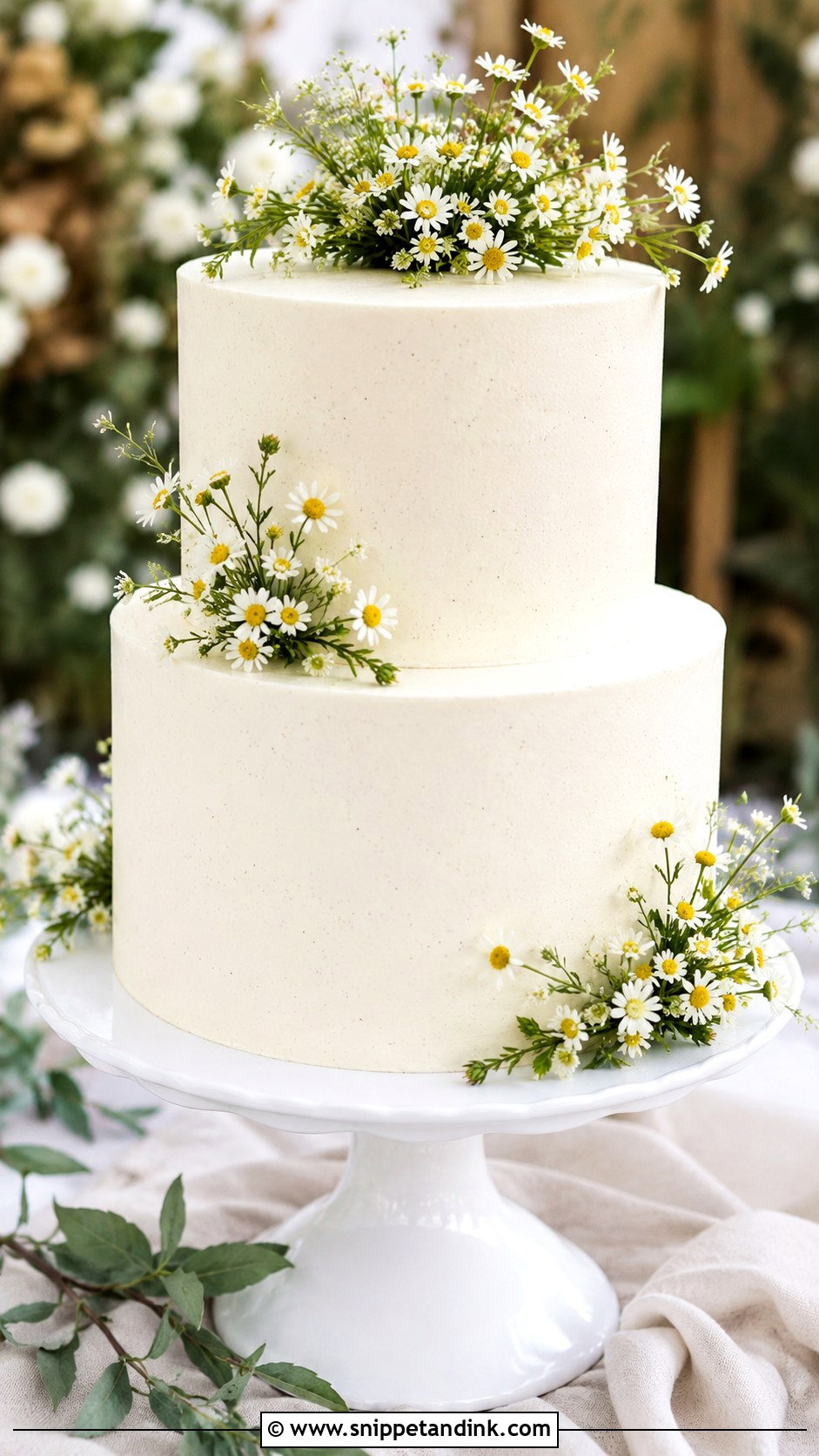
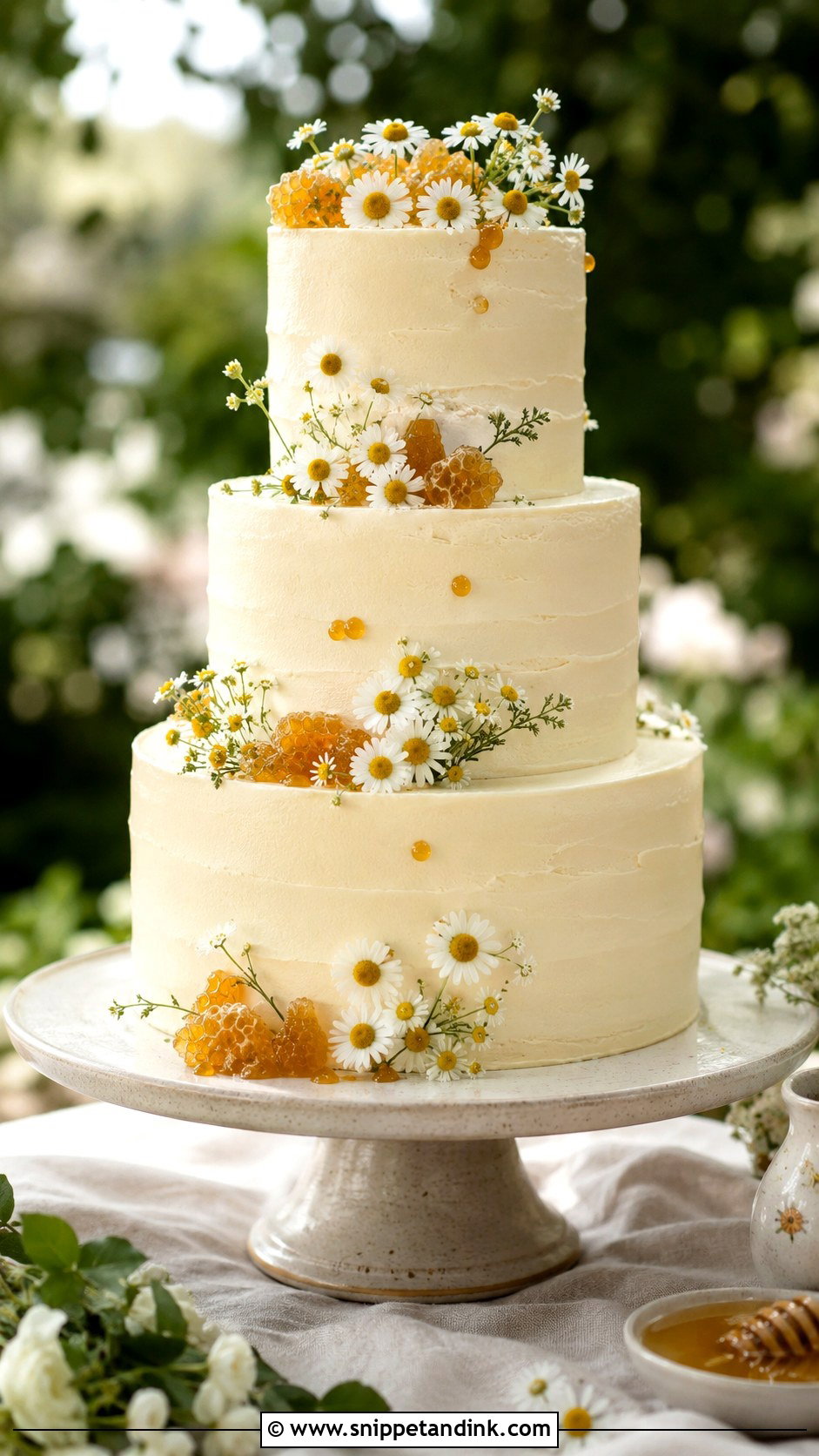
Honey and chamomile are the pairing I suggest first, because they taste like a cup of tea with honey and almost everyone likes that. I use chamomile-infused or vanilla sponge with honey buttercream under a smooth ivory finish, then tuck edible chamomile around the base, between tiers or across the top. Honey buttercream softens faster than plain vanilla in warm weather, so for an outdoor ceremony I keep the cake chilled until shortly before display. Keep the flowers sparse; the warm cream colour of the frosting does a lot of the work.
2. Pressed Chamomile Wedding Cake
Pressed chamomile lies flat against the cake, so it needs a smooth, firm surface: chilled buttercream or fondant, never a soft crumb coat. I press each flower gently into the surface with a palette knife, either climbing the tiers, scattered loosely or set in tidy rows. Pressed blooms are fragile and brown at the edges if they touch moisture for too long, so I apply them the day of or the evening before delivery. Two or three plain tiers show them best, with a vanilla, almond or lemon sponge to keep the flavour light.
3. Chamomile Buttercream Wedding Cake
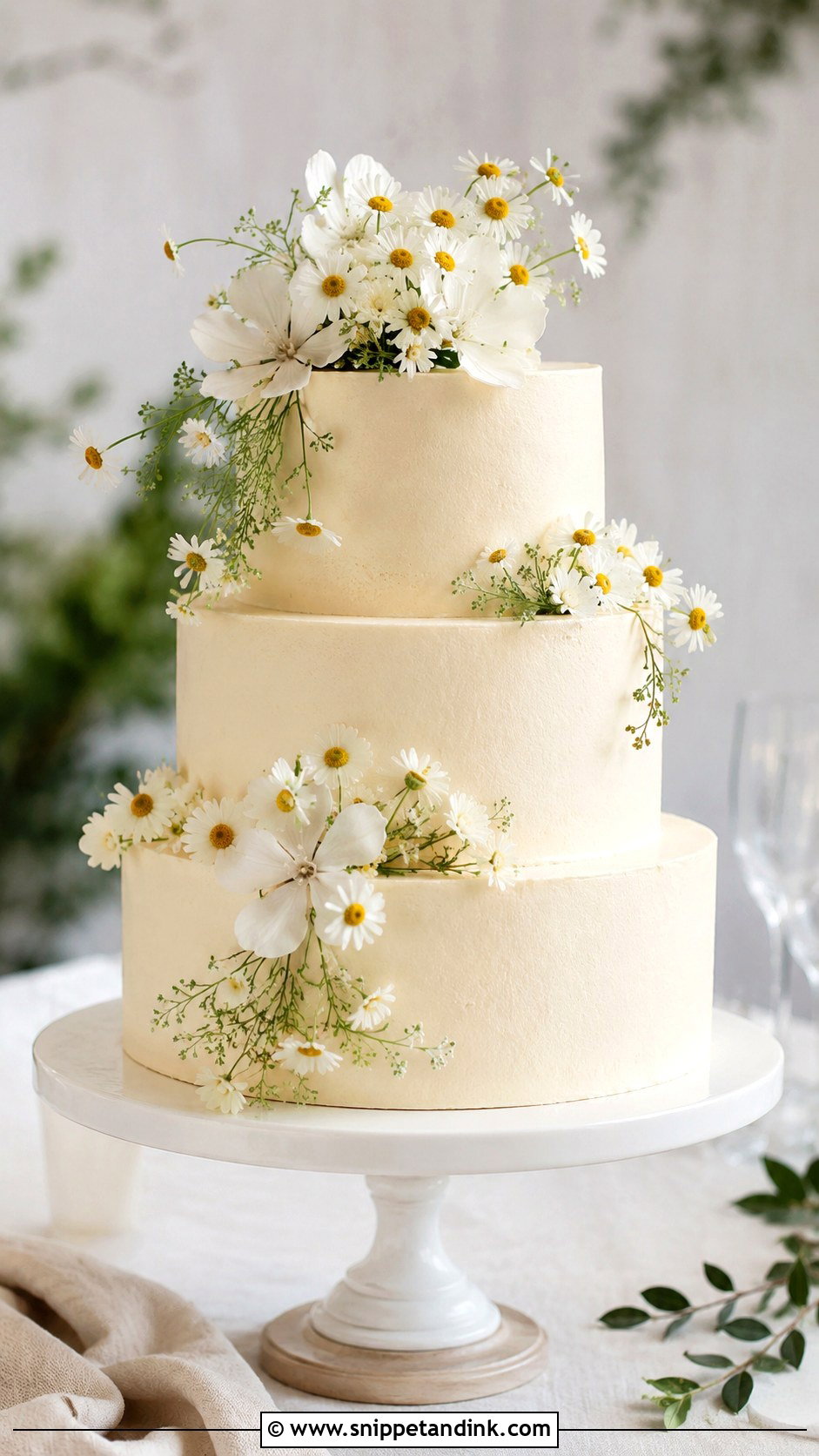
A buttercream cake in ivory, pale cream or barely-there yellow with small chamomile flowers across the tiers is the most adaptable version on this list. Smooth sides read formal; a light palette-knife texture reads garden. I steer colour carefully here: too much yellow in the frosting and the flower centres disappear against it. Lemon curd, honey cream, vanilla bean or almond filling all suit it. If you want some movement, a few sprigs of greenery help, as long as the chamomile stays the main flower.
4. Semi Naked Chamomile Wedding Cake
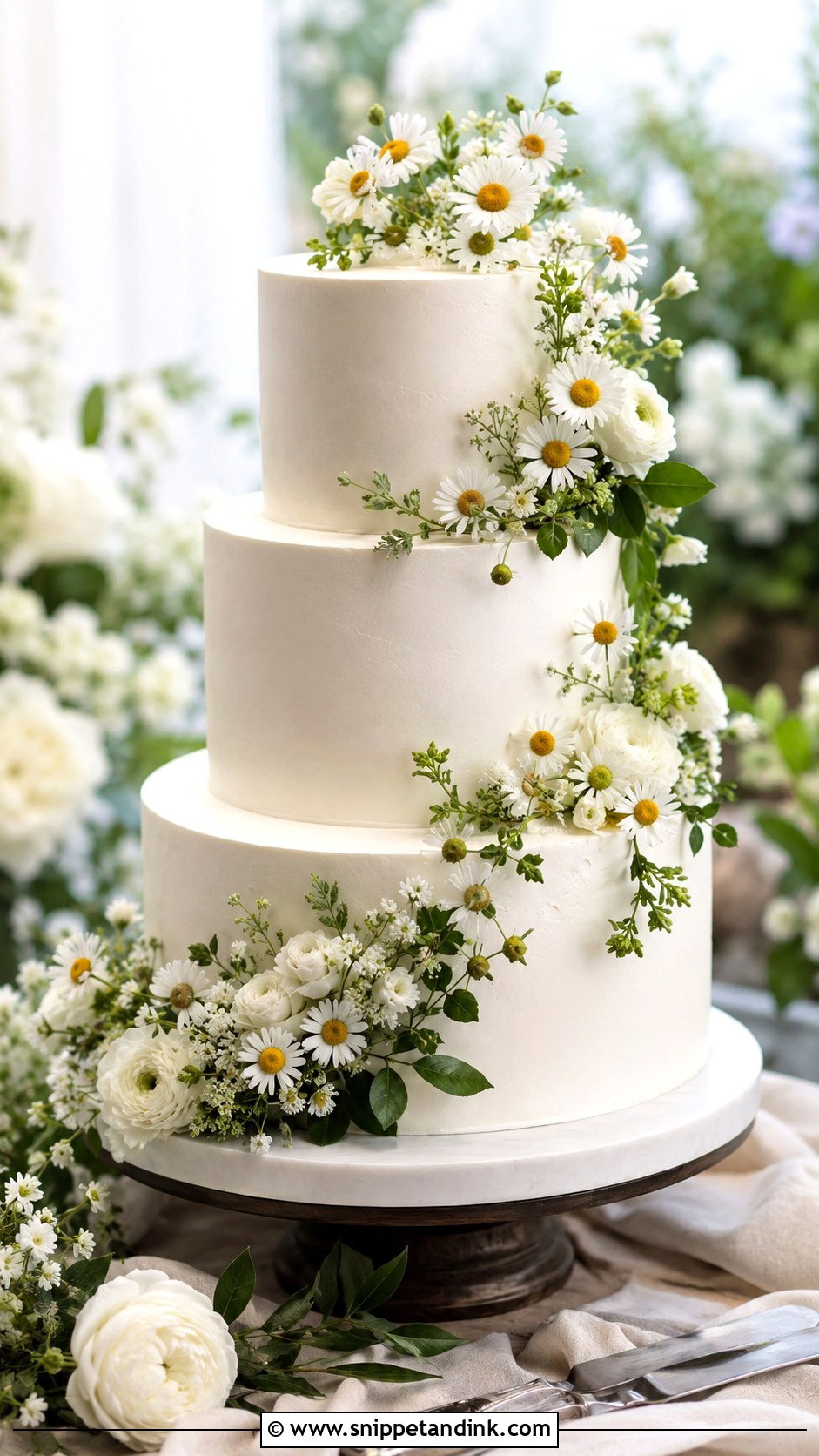
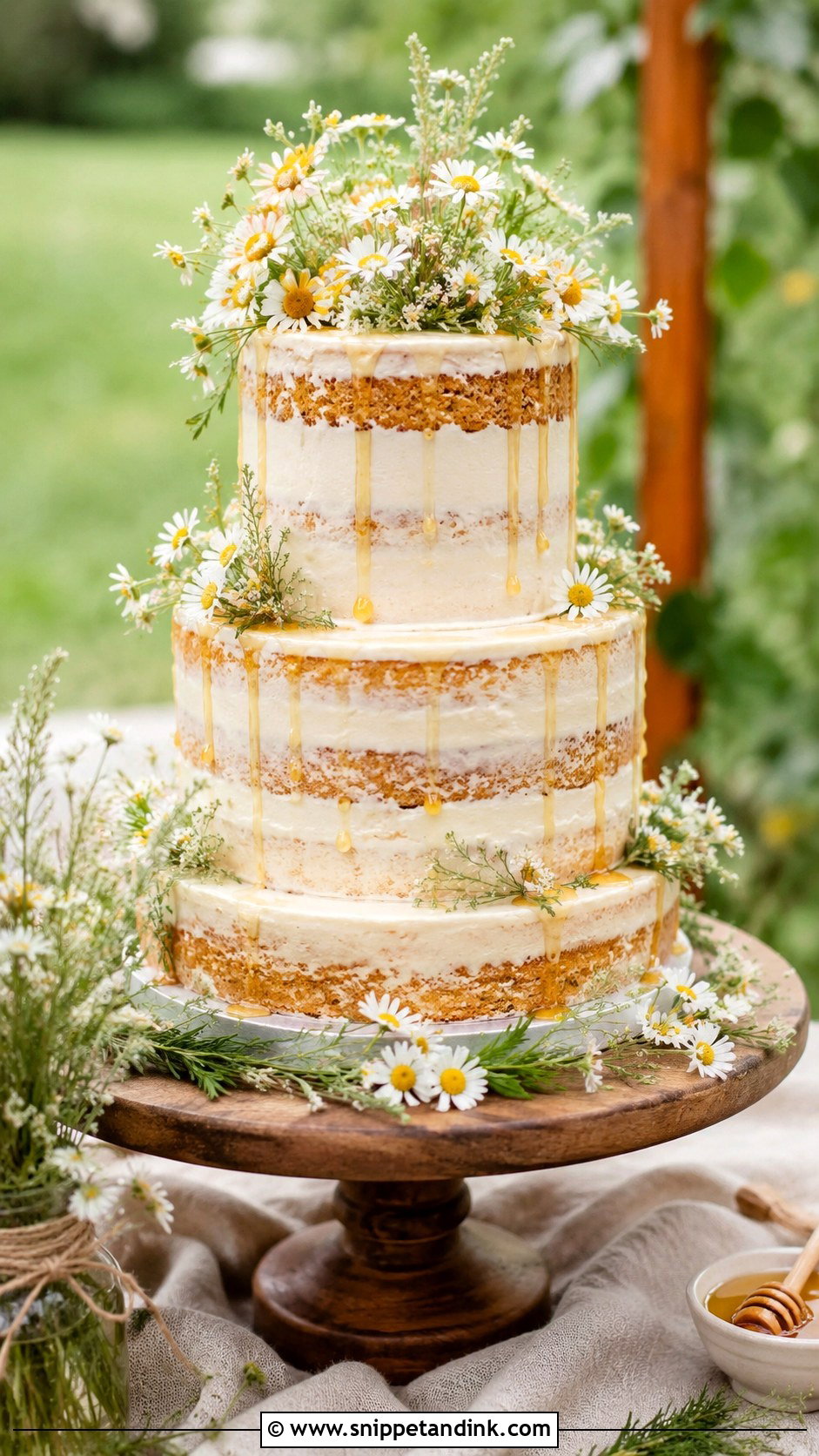
Semi-naked cakes have a thin scraped coat that lets the sponge show through, and that thin coat is also why they dry out faster than fully frosted tiers. I assemble and frost them as close to the wedding as I can and keep them wrapped and chilled until they leave my kitchen. Chamomile goes along each tier edge or in clusters at the base; a honey drizzle and a wooden stand give it a countryside mood. Chamomile sponge, vanilla, lemon filling or berry preserves all suit it. It’s a natural fit for barns and meadows, and less so for a long, hot display.
5. Chamomile Lemon Wedding Cake
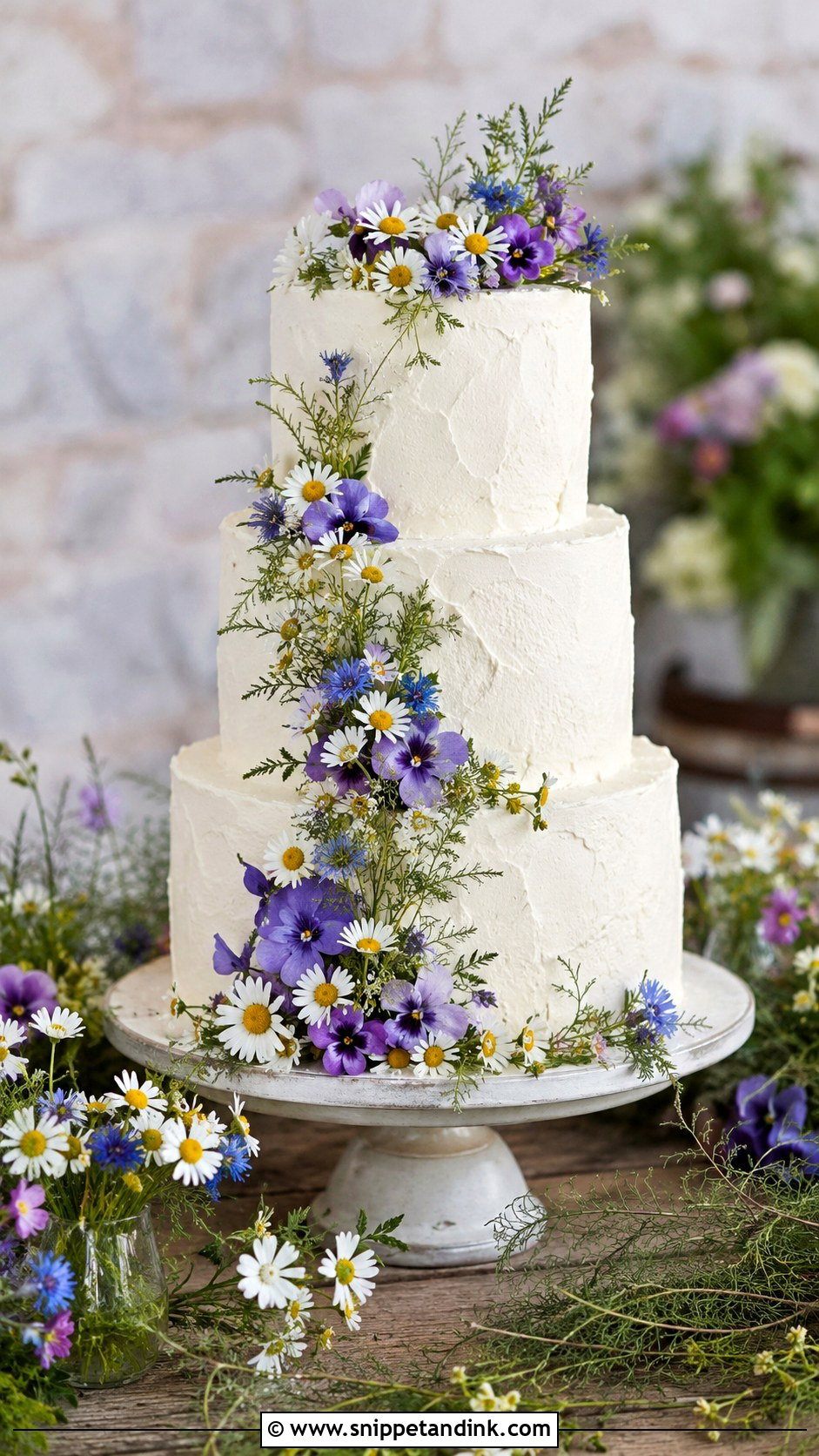
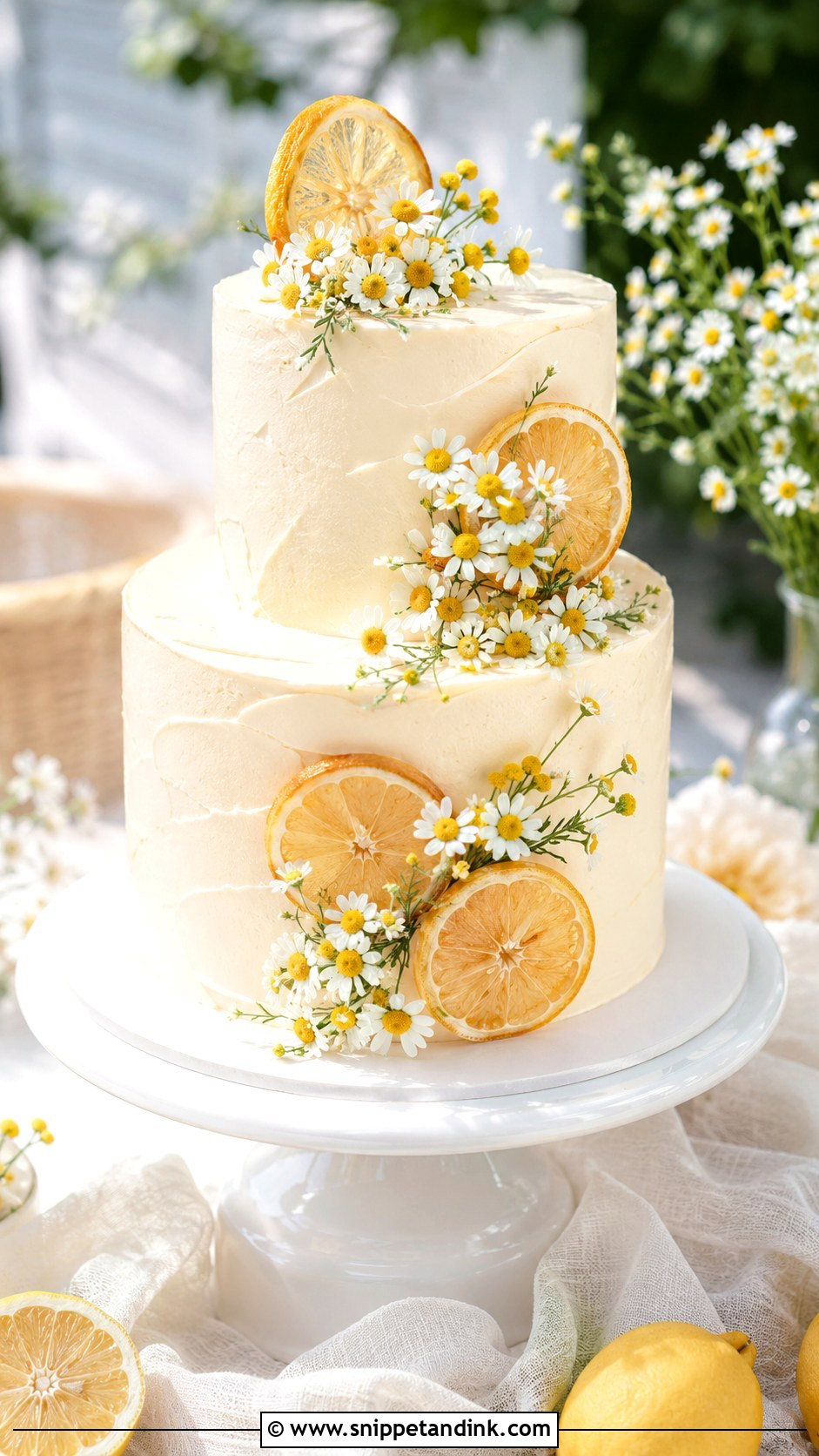
Lemon brightens chamomile’s mild, slightly apple-like flavour, so this pairing tastes fresher than chamomile alone. I fill with lemon curd or lemon buttercream and finish in pale yellow, ivory or white fondant with chamomile around the tiers. Candied lemon slices add colour, but more than a few and they steal the attention. Curd fillings need a firm buttercream dam inside each layer so they don’t push out under the weight of upper tiers. It’s my usual suggestion for a daytime garden party.
6. Chamomile Vanilla Wedding Cake
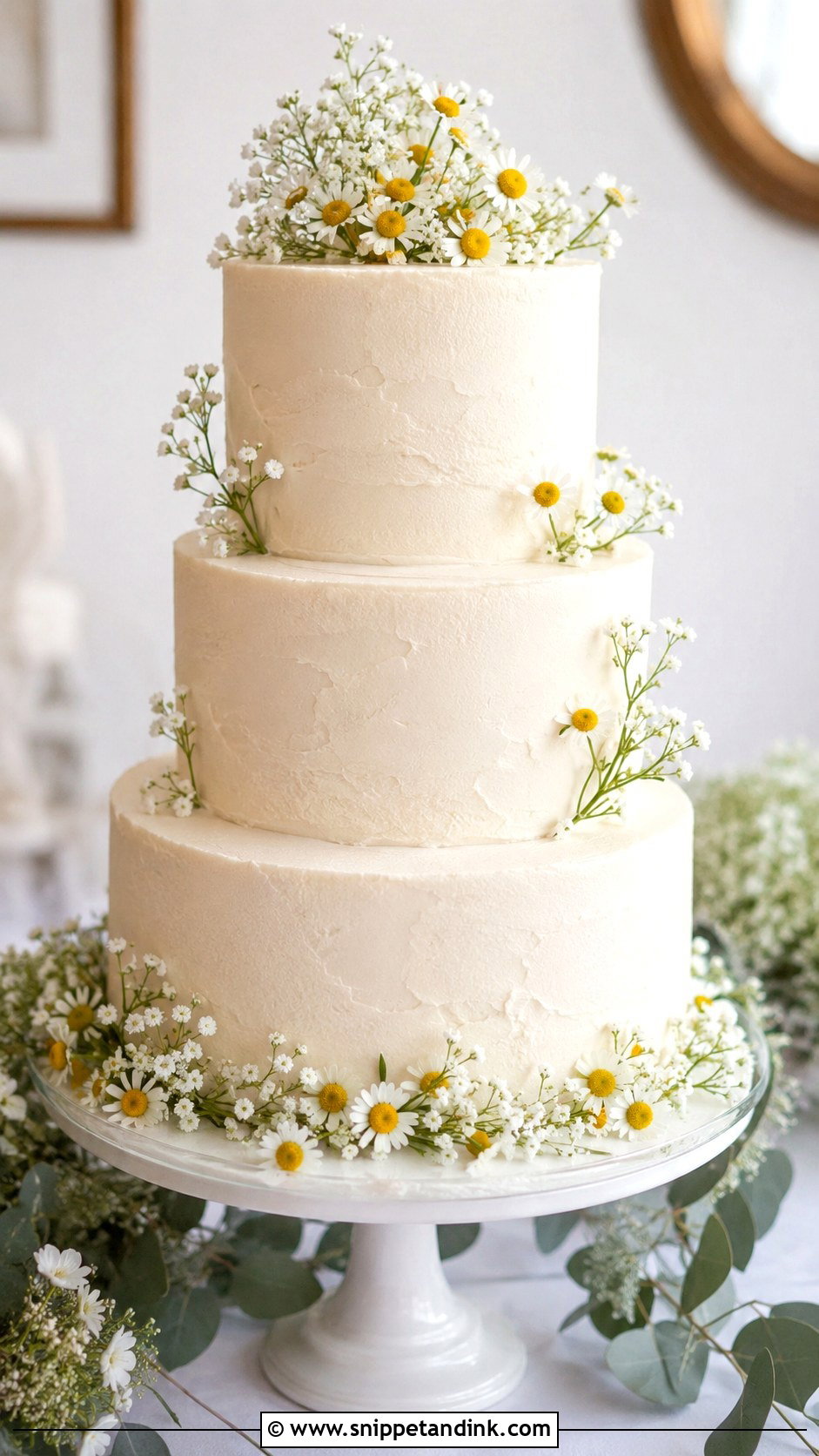
Vanilla with a chamomile note is the safest choice if your guest list ranges from toddlers to grandparents. Vanilla keeps it familiar; the chamomile adds a soft tea flavour that people notice without being able to name. I keep the design clean: smooth ivory buttercream, small blooms, a modest topper, and vanilla bean specks if you like that natural look. This cake travels to a courthouse party as easily as to a full reception.
7. Chamomile Almond Wedding Cake
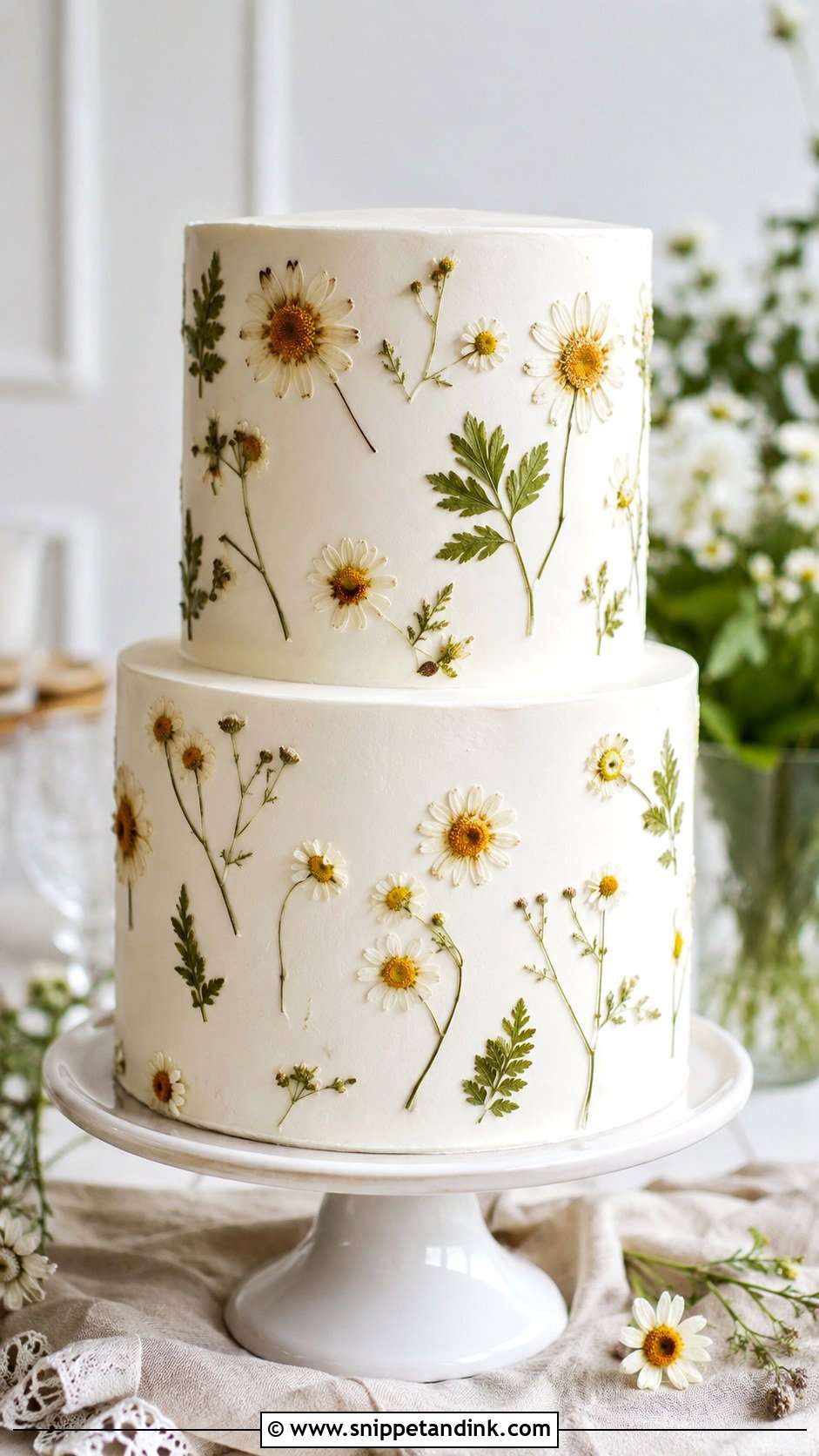
Almond sponge gives chamomile a slightly richer, nuttier partner than vanilla, and the two are both mild, so neither takes over. I finish in ivory or pale cream buttercream, cluster the chamomile in small groups and sometimes add a few white sugar blossoms for polish. Honey almond buttercream or a thin layer of apricot filling adds depth. Before anything else, I confirm nut allergies with the couple, because an almond cake changes how the venue has to label and serve dessert.
8. Chamomile Lavender Wedding Cake
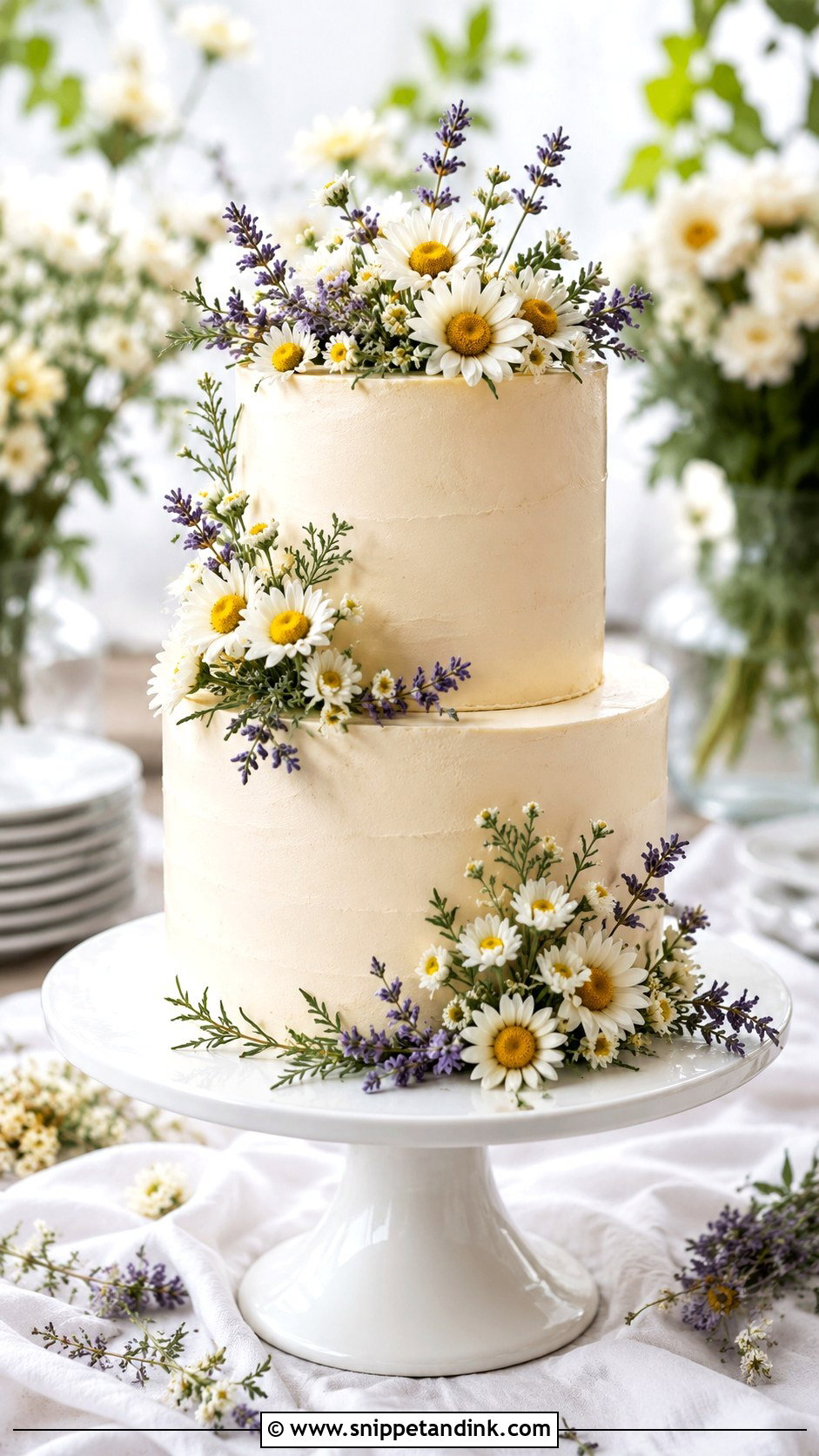
Chamomile and lavender are both floral, so balance matters more here than anywhere else in this list. Too much lavender and the cake tastes like soap; I use it in a syrup or a light infusion and let chamomile lead. On the outside, pale ivory buttercream carries small chamomile flowers with lavender sprigs in a few tidy clusters. Chamomile sponge, honey buttercream, vanilla filling or lemon curd all fit. I keep the palette to cream, white, soft yellow and pale purple so it stays quiet.
9. Chamomile Wildflower Wedding Cake
A wildflower cake works when the arrangement looks gathered, not placed. I let chamomile lead and add small edible accents like pansies, violets or cornflowers, or sugar sprays that mimic baby’s breath. Placement should feel loose and slightly uneven, which is harder to do well than a neat row. Buttercream, fondant or a semi-naked finish all suit it depending on how polished you want the result. Vanilla, honey, lemon or almond keep the flavour light. It belongs at outdoor ceremonies and tented receptions.
10. Chamomile Garden Wedding Cake
For a garden cake, I think about the venue’s own planting first. Smooth buttercream tiers carry chamomile, small white blossoms and a little greenery, either climbing from bottom to top or framing one side asymmetrically. A white or ivory base lets the yellow centres show; anything darker swallows them. Vanilla chamomile, lemon honey or almond cream keep it light. Asymmetric arrangements need a heavier cluster at the bottom to look balanced from across the room.
11. Chamomile Rustic Wedding Cake
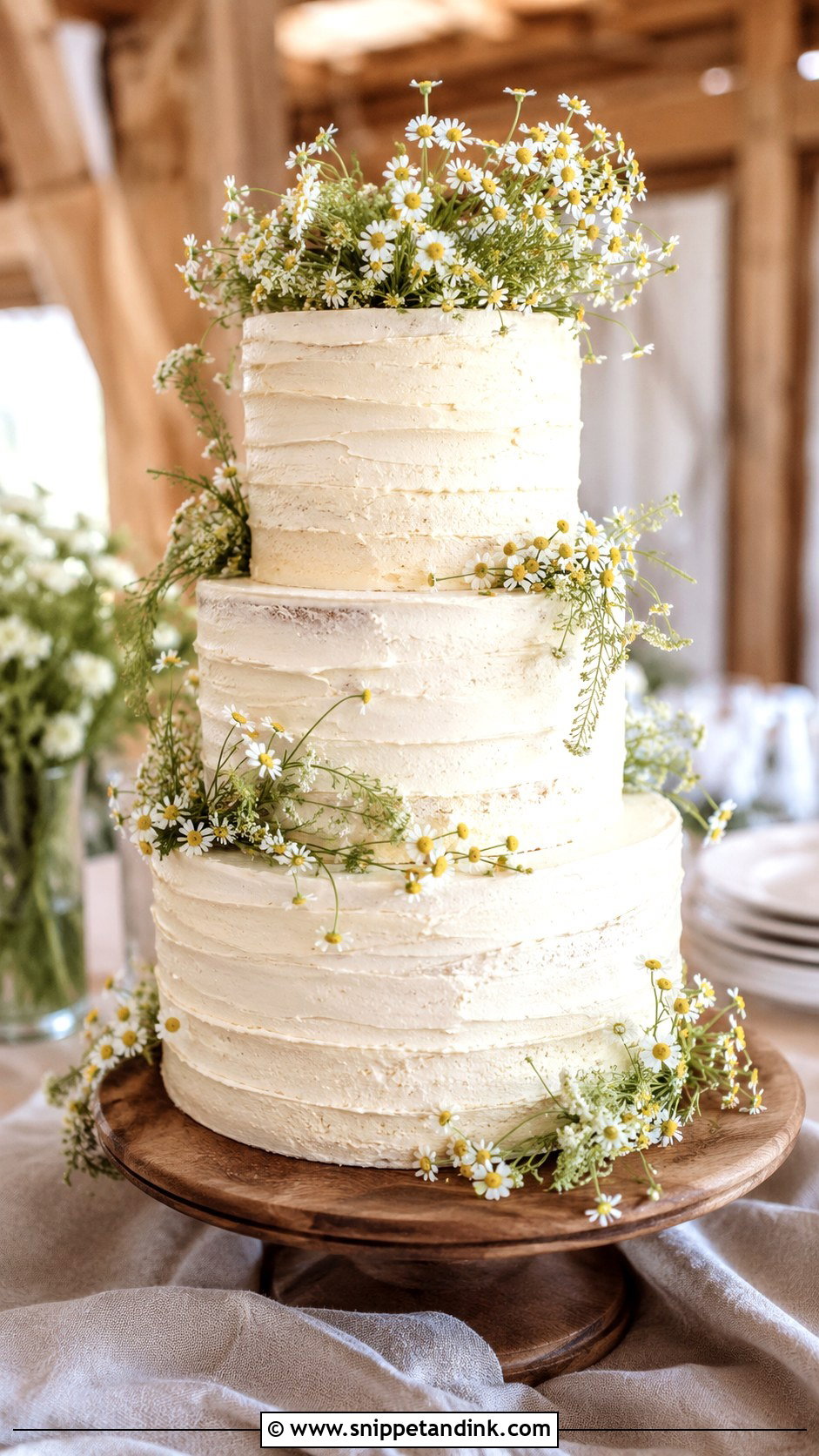
Rustic doesn’t mean rough. I start with a semi-naked or lightly textured buttercream finish, then group chamomile loosely around each tier and leave the setting to a wooden stand, a linen runner and simple greenery. Honey buttercream, vanilla sponge, spice cake or lemon filling all suit it. Where couples go wrong is asking for texture so heavy the cake looks unfinished. I’d keep the edges clean and the texture in the middle of each tier so it still reads as a wedding centrepiece at a barn or farm venue.
12. Chamomile Boho Wedding Cake
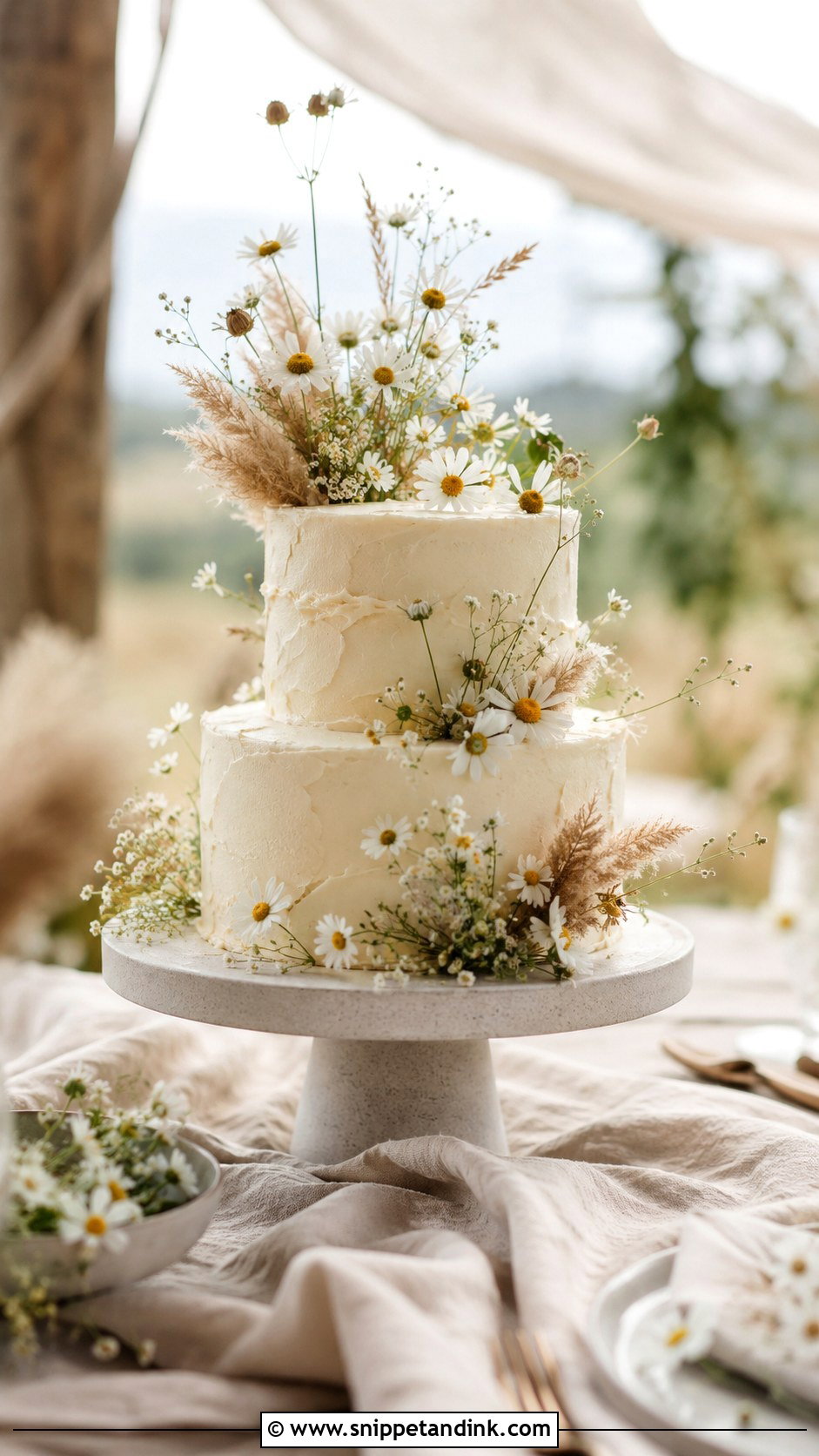
A boho chamomile cake mixes ivory buttercream, beige accents, dried grasses and fresh edible chamomile. The dried grasses are decoration only, so I wrap their stems or set them on picks rather than pushing them into the sponge. Two or three tiers depending on guest count, with a textured finish or subtle piping. Honey, almond, vanilla and lemon all match. It suits outdoor and desert-style venues, where dried elements also hold up better in heat than fresh ones.
13. Chamomile Tiered Wedding Cake
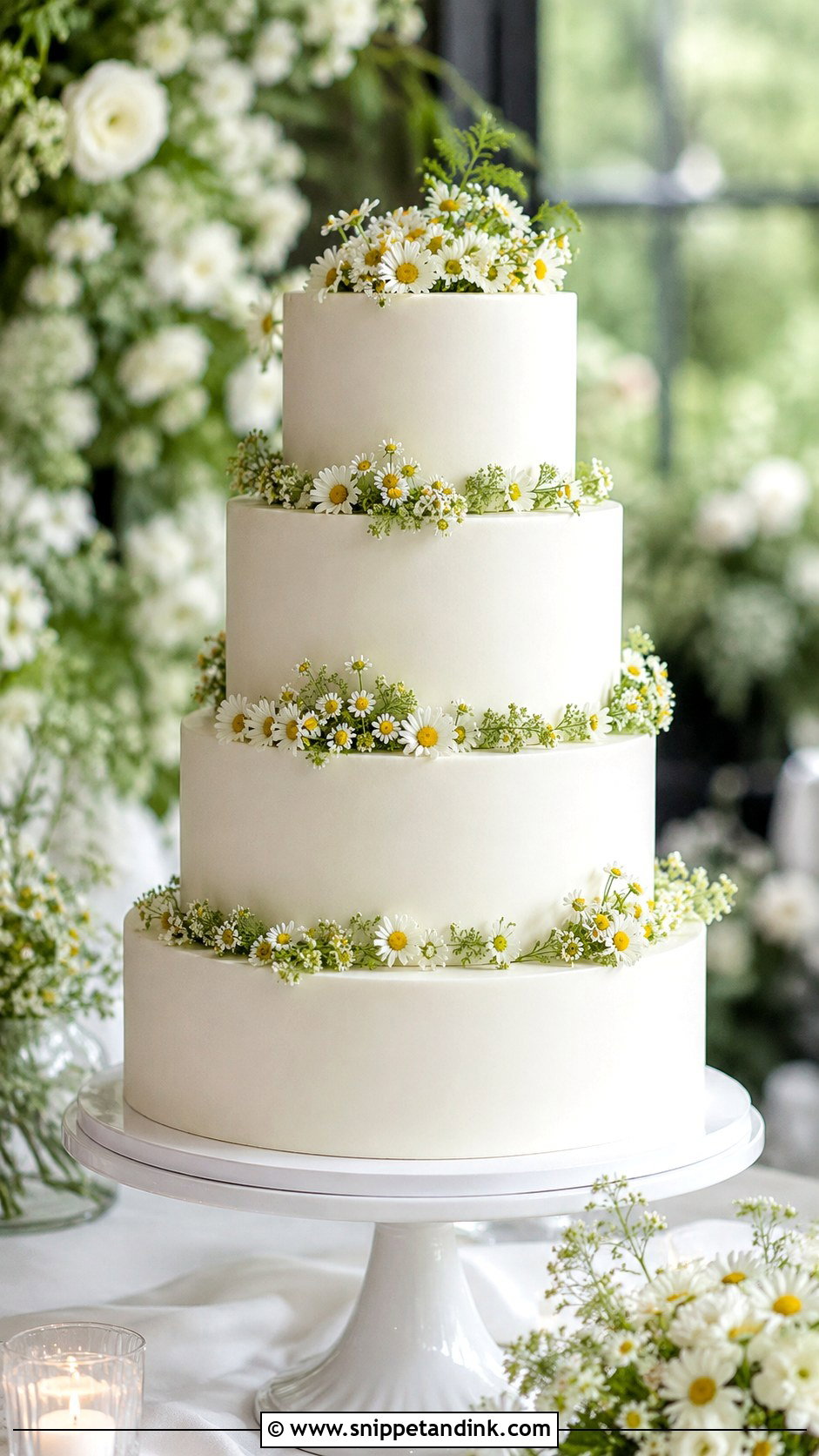
A chamomile tiered wedding cake of three or four tiers gives the flowers enough room for a proper cascade or ring between each level. Every tier above the base needs internal dowels and a cake board, which is standard, but chamomile’s small flowers let me hide those joins neatly. Ivory fondant looks polished; buttercream looks softer. Chamomile honey, vanilla bean, lemon and almond are all good flavours. The taller the cake, the more I’d keep the decoration light so it doesn’t look heavy from a distance.
14. Small Chamomile Wedding Cake
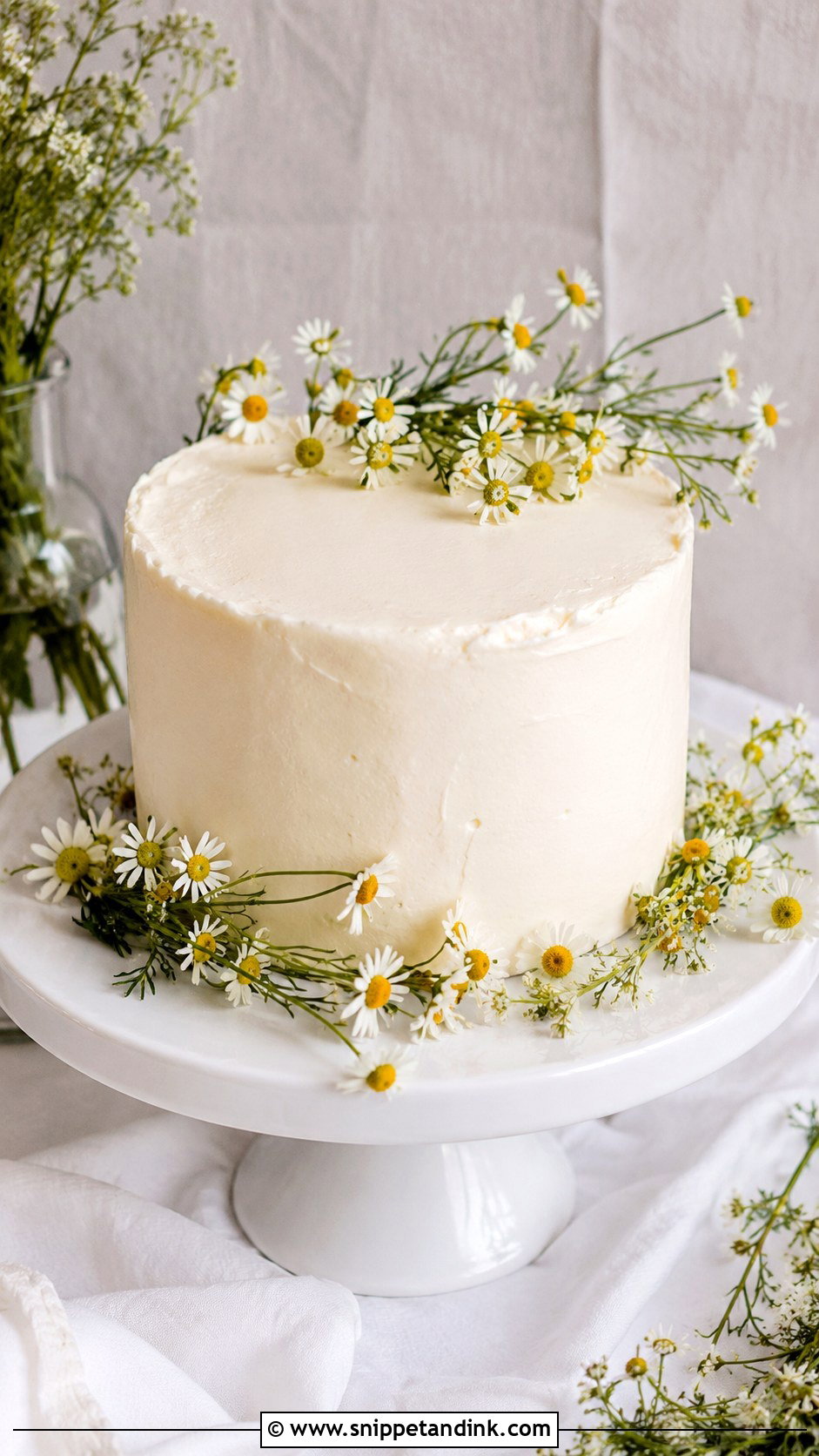
A single or two-tier chamomile cake suits micro weddings, elopements, courthouse receptions and dessert tables with several other sweets. Smooth pale cream buttercream with a ring of chamomile around the top or base looks finished; a small cluster on one side looks modern. Chamomile vanilla, honey lemon or almond cream all work. Many couples use a small cake like this for cutting while guests eat sheet cake from the kitchen, which keeps cost down without losing the moment.

15. Chamomile Sheet Wedding Cake
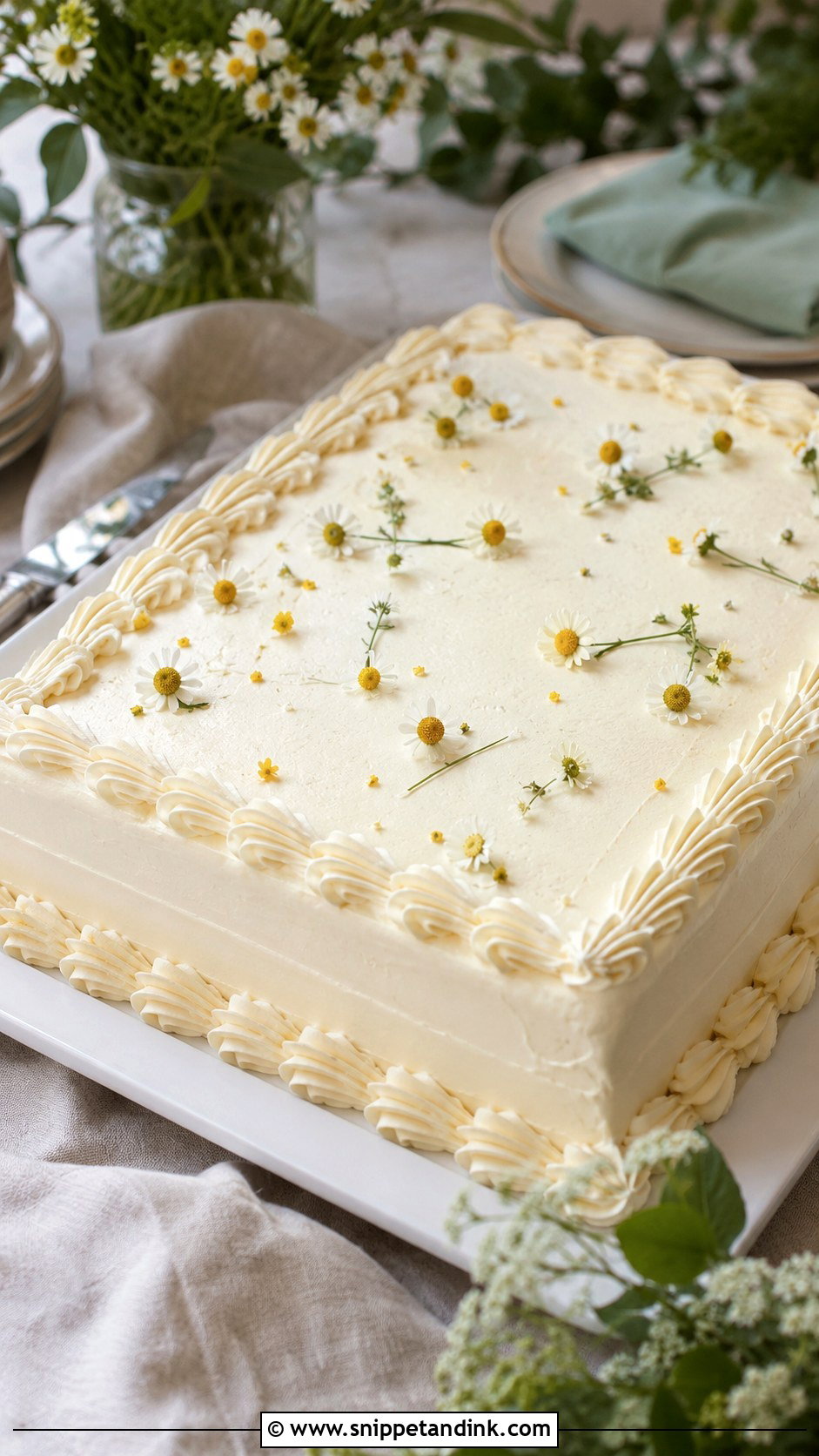
A chamomile sheet wedding cake feeds a large casual guest list and cuts into neat squares. Smooth buttercream, piped borders and chamomile across the top make it look like it belongs at a wedding. I like floral corners or a central cluster because they leave plenty of clean squares to cut. Honey buttercream, lemon cake, vanilla sponge or almond layers all suit it. Ask your caterer whether they’ll cut it; sheet cakes are served faster than tiers, which helps at a brunch or backyard reception.
16. Chamomile Cupcake Wedding Cake
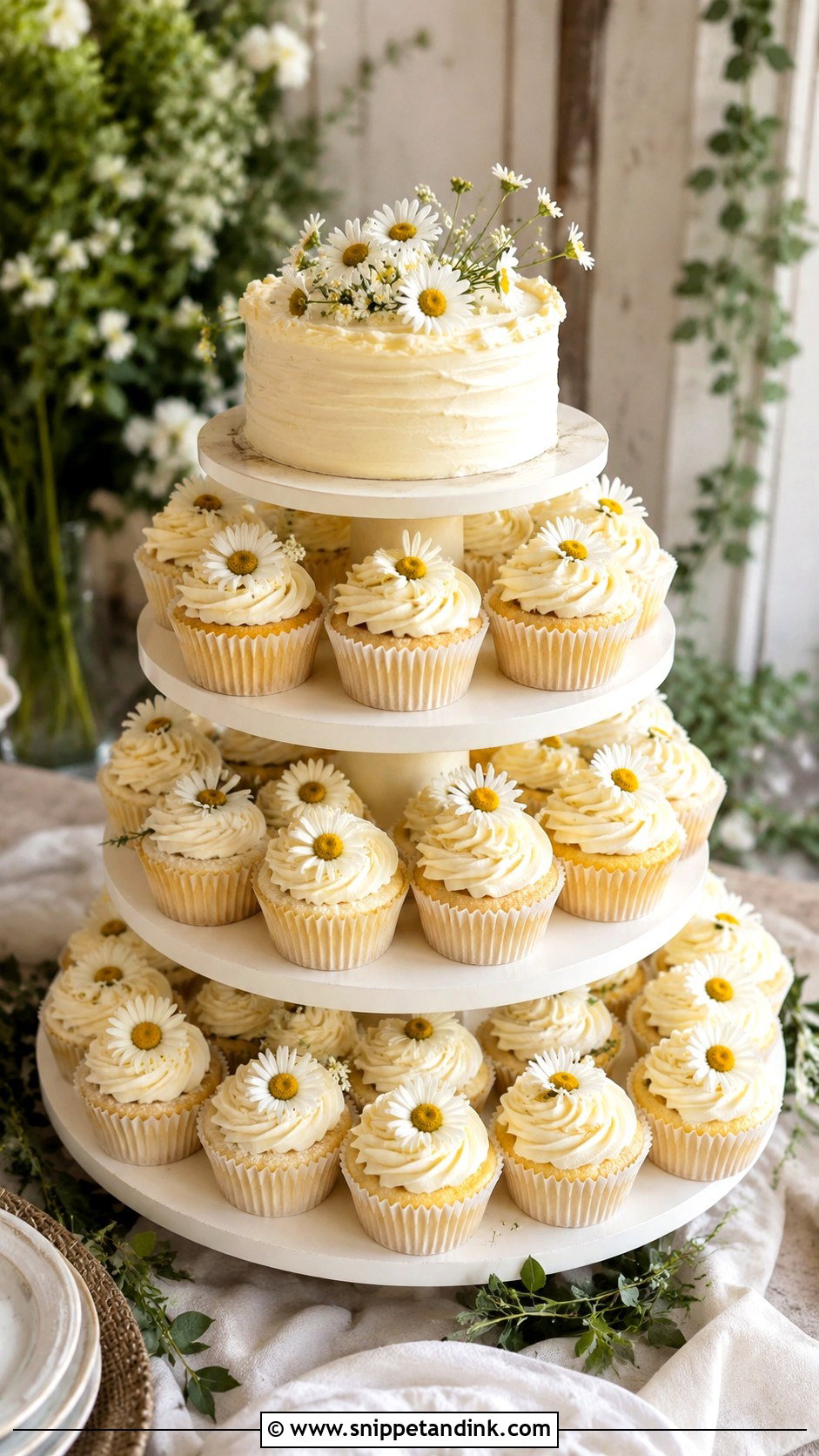
Cupcakes give every guest a portion without anyone cutting. I arrange chamomile-flavored cupcakes on a tiered stand, pipe each with honey buttercream or vanilla frosting and set one small bloom on top. A small cutting cake on the top tier keeps the traditional moment. Cupcakes dry out faster than a tiered cake because so much sponge is exposed to air, so I bake them as close to the day as I can. Ivory frosting and pale yellow details keep the display calm.
17. Chamomile Drip Wedding Cake
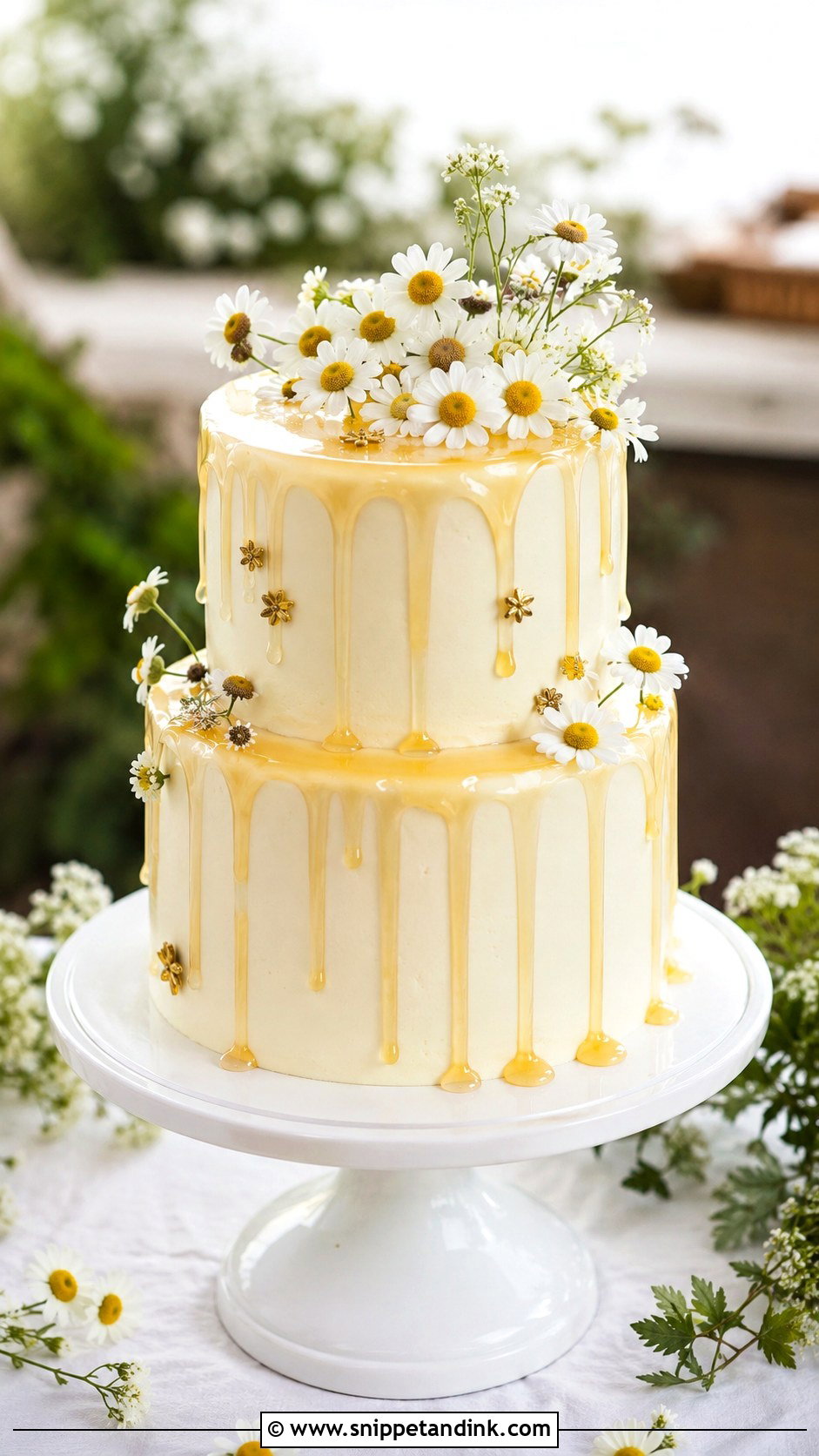
A drip is the most modern way to dress chamomile. I use a pale honey, white chocolate or light yellow drip over smooth ivory buttercream, then place flowers along the top edge, at the base or near the drips. The drip has to go onto a well-chilled cake, or it runs too far and pools at the bottom. Honey chamomile, lemon vanilla or almond cream all match. White chocolate drips are sensitive to heat, so I avoid them for long outdoor displays in summer.
18. Chamomile Fondant Wedding Cake
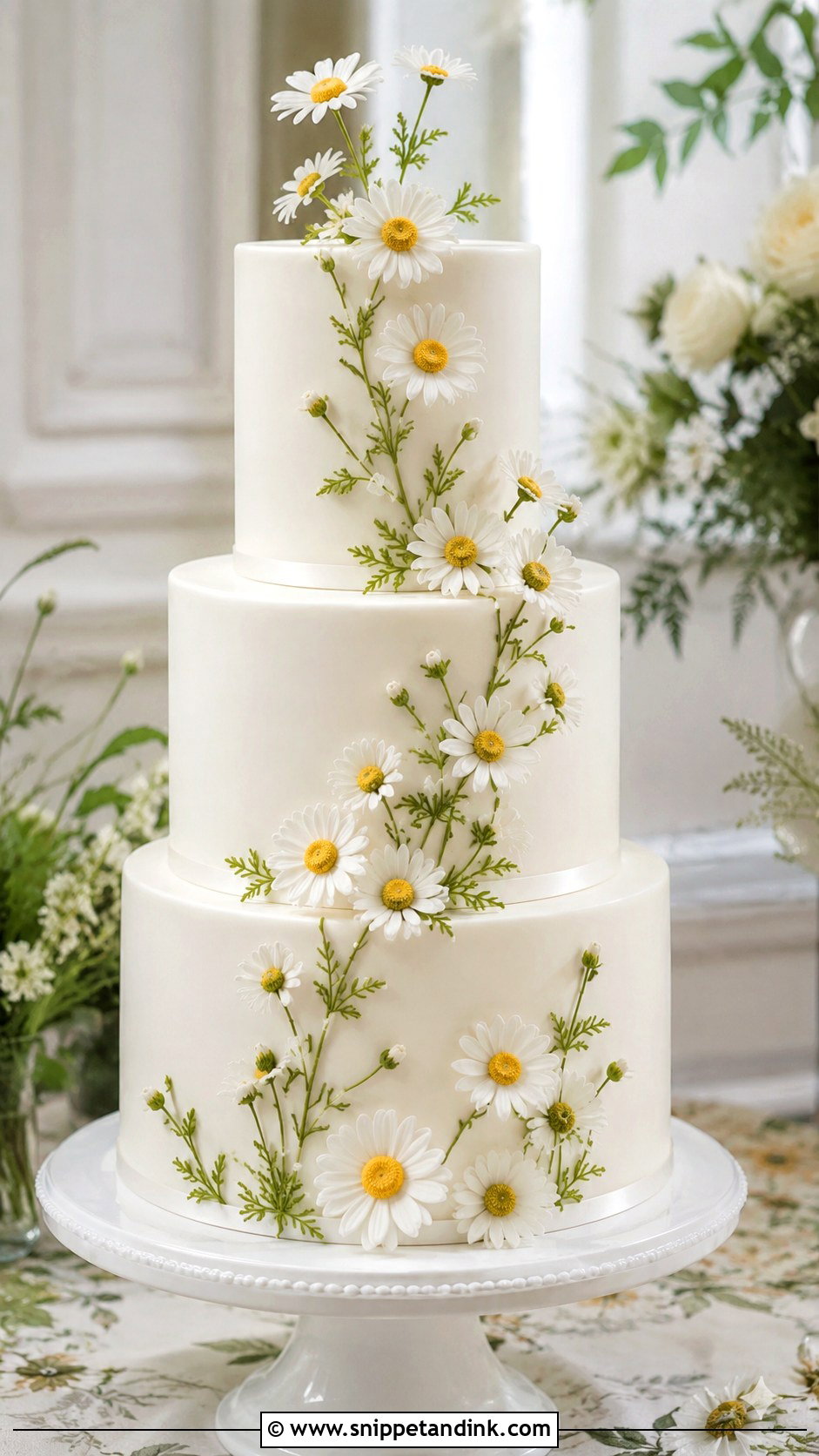
Fondant gives the smoothest surface I can offer, and it makes tiny chamomile flowers look crisp. I use real edible chamomile, sugar chamomile or painted details depending on the look. Fondant is a good choice for warm venues because it protects the buttercream beneath, but it can sweat when moved from a cold fridge into a warm room, so I let it come to room temperature gradually before setup. A white or ivory base with pale yellow accents suits formal garden weddings and traditional venues. Vanilla bean, honey almond or lemon chamomile work well.
19. Chamomile Watercolor Wedding Cake
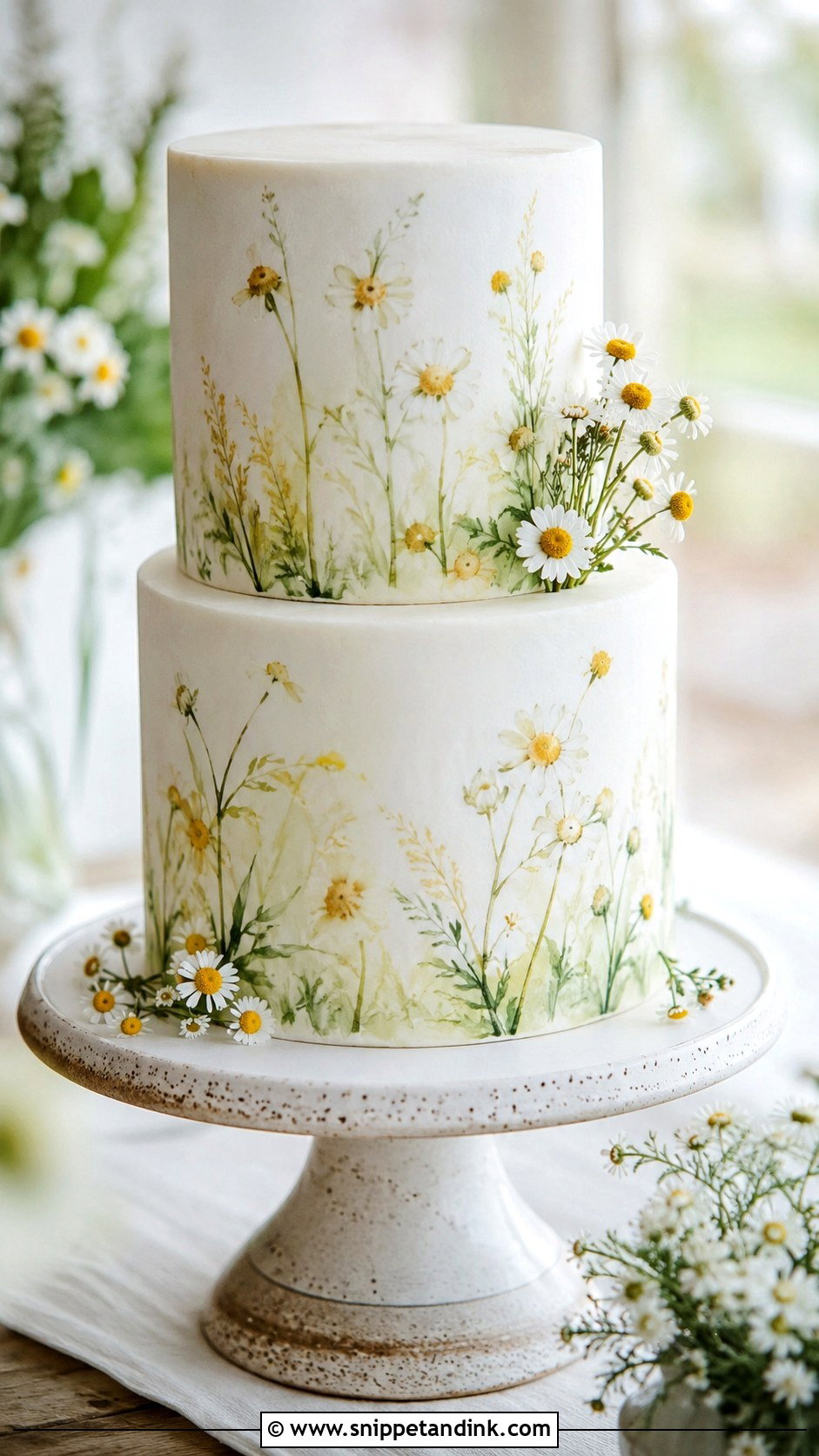
Watercolour cakes are painted, which means the colours have to stay pale or the flowers look muddy. I paint with food colouring thinned in a clear alcohol on fondant or a chilled, firm buttercream, layering pale yellow, soft green and ivory, then hand-paint tiny chamomile across the tiers. A few real blooms add texture. Lemon cake, chamomile sponge, honey buttercream or vanilla almond filling all suit it. It’s a good choice if you want floral detail but don’t want flowers sticking out from the cake.

20. Chamomile Naked Wedding Cake
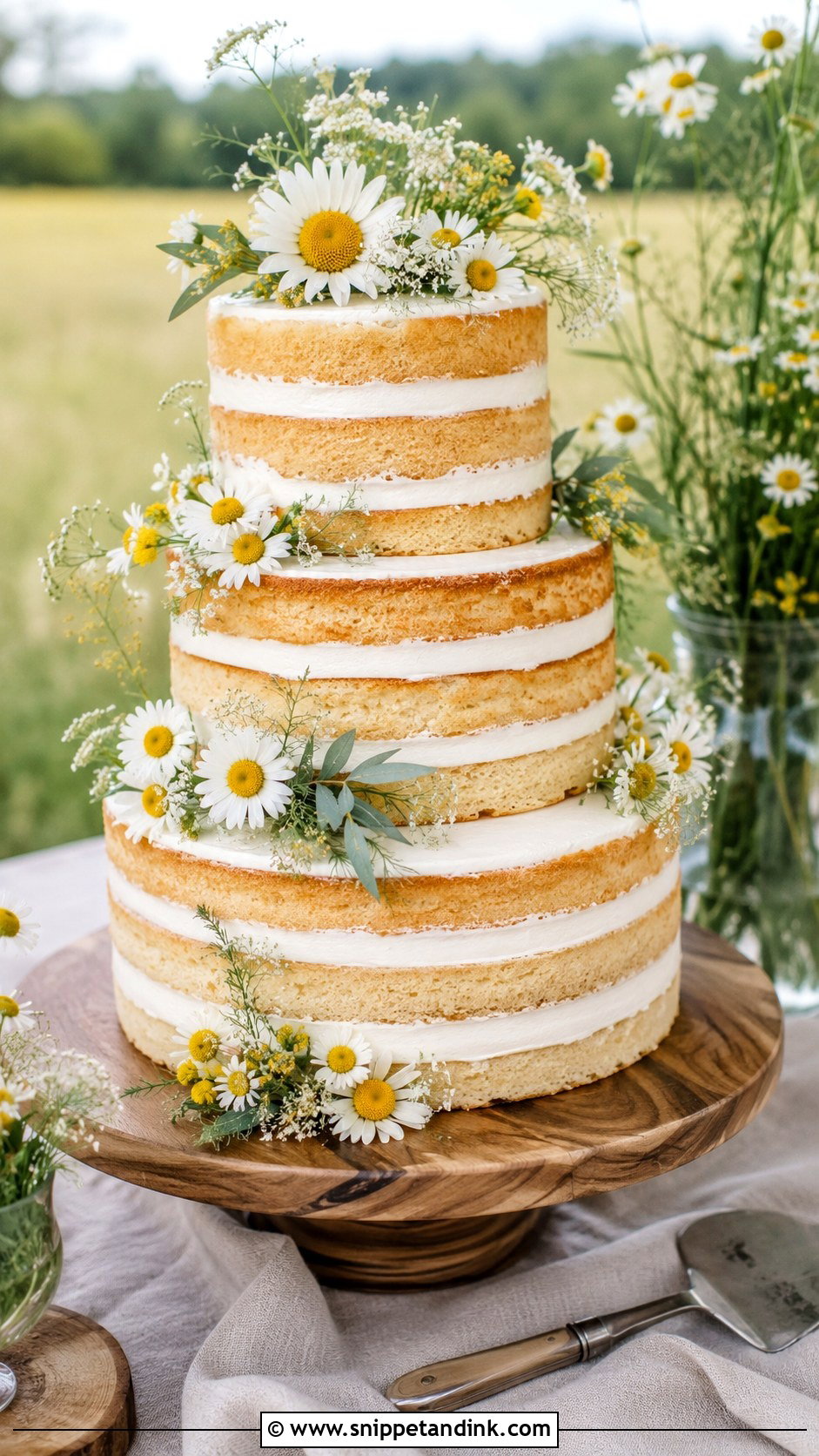
A naked cake leaves the layers almost fully visible, with only a little frosting between them and on the outside. Pale vanilla, almond, honey or lemon sponge matches chamomile’s soft look. I add fresh edible chamomile on top and between tiers with a few small greenery accents. Exposed sponge dries quickly, so I’d only suggest it if the cake will be displayed for a short time before cutting, and ideally out of direct sun. For a picnic-style or outdoor reception, plan the cake cutting early.
Heat, Display Time and the Drive to the Venue
Soft floral cakes are usually ordered for outdoor summer weddings, which are the hardest conditions for buttercream. Here is how I plan for them.
- Order early. Many designers book out months ahead for summer weekends, and sugar flowers need extra lead time.
- Ask where the cake will stand. A shaded, indoor or tented spot away from direct sun changes what frosting I’d recommend.
- Keep display time short. I’d rather set a semi-naked or naked cake out shortly before the cutting than have it sit for hours.
- Plan the transport. Tiered cakes travel chilled on a flat, non-slip surface, and tall cakes are often stacked at the venue.
- Agree on who adds fresh flowers on site, and whether the venue florist or the baker is responsible.
Small Petals, Gentle Flavour and a Cake That Matches the Day
Chamomile can look rustic, refined, modern, boho or classic depending on the shape, the frosting and where the flowers sit. What makes it worth choosing is that it isn’t only decoration; it ties into honey, lemon, vanilla, almond and lavender on the plate. Whatever size you order, keep the design light and let the tiny white petals and yellow centres set the mood. Then talk to your baker about flower sourcing and display time early, because those two details decide how fresh it looks when you cut it.
You'll Like These Ideas:









Leave a Reply