
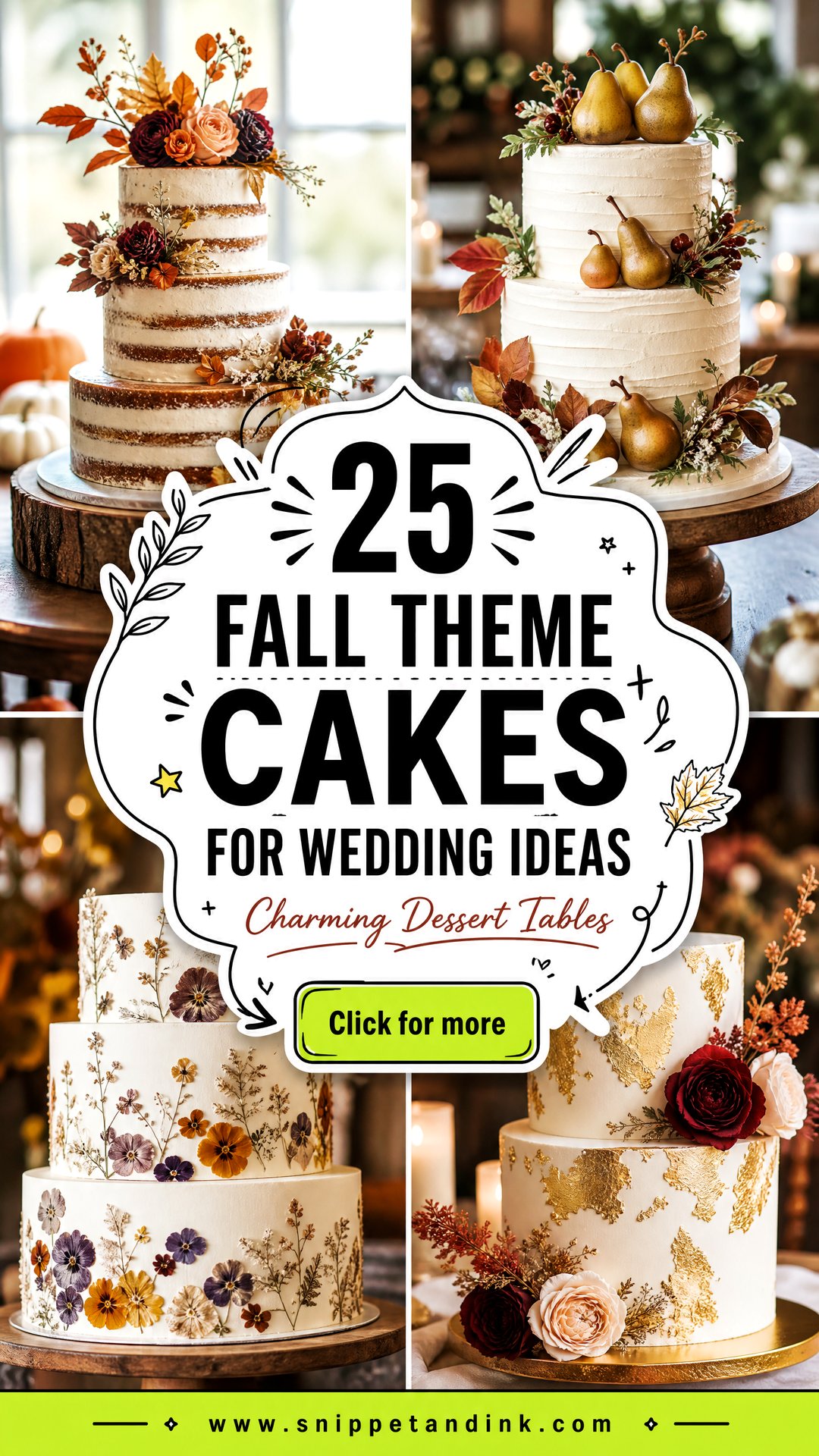
Autumn is my favorite season to bake for, mostly because the flavors finally get interesting. Couples stop asking for plain vanilla and start asking for pumpkin spice, apple cider, salted caramel, chai and brown butter, and the decoration moves toward figs, pears, burgundy flowers, copper and pressed leaves. The challenge is keeping a seasonal cake from looking like a party centerpiece. Below are the fall cakes I’m asked for most, with notes on how each one is built, how it behaves on the table and what I’d change before you bring the photo to your own baker.
Ordering an Autumn Cake: The Calendar Most Couples Underestimate
Fall is one of the busiest stretches of the wedding year, and good bakers fill their Saturdays early. Many couples book several months ahead, and earlier still for a September or October Saturday. Timelines vary a lot by region and by baker, so ask as soon as your date and venue are fixed.
- Book the tasting once you know your venue and rough guest count. Without those two numbers, I can’t advise on size or structure.
- At the tasting, try at least one spice flavor and one simpler flavor. Two-flavor cakes are common and keep picky guests happy.
- Settle the design about a month out, including any fresh fruit or flowers and who supplies them: the florist or the baker.
- Confirm the final guest count, delivery time and the person at the venue who will receive the cake in the last week or two.
Seasonal fruit is the wild card. Figs and pears vary from week to week, so I agree on a backup fruit with the couple in advance rather than scrambling on the day.
1. Fall Wedding Cake With Burgundy Flowers
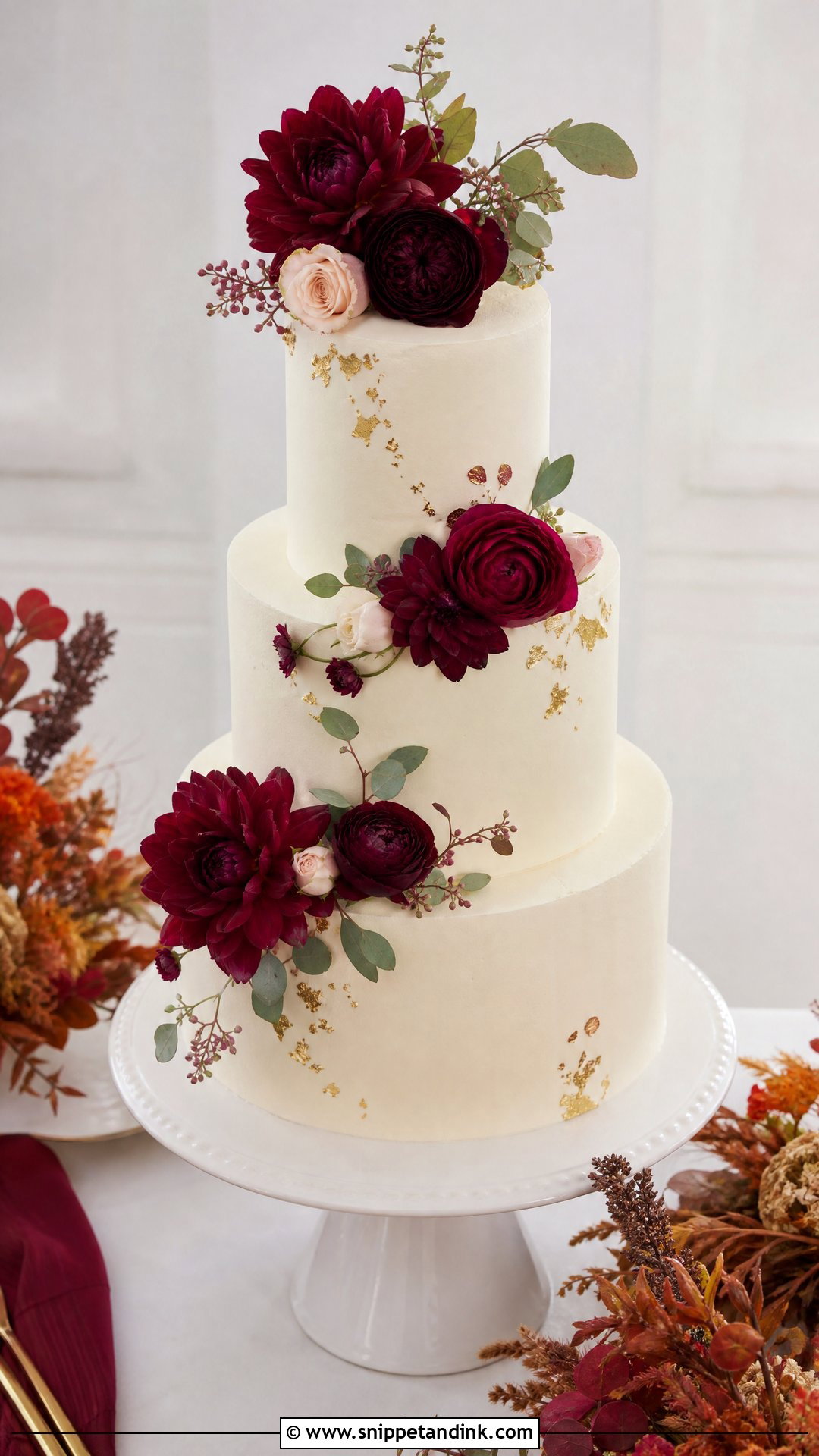
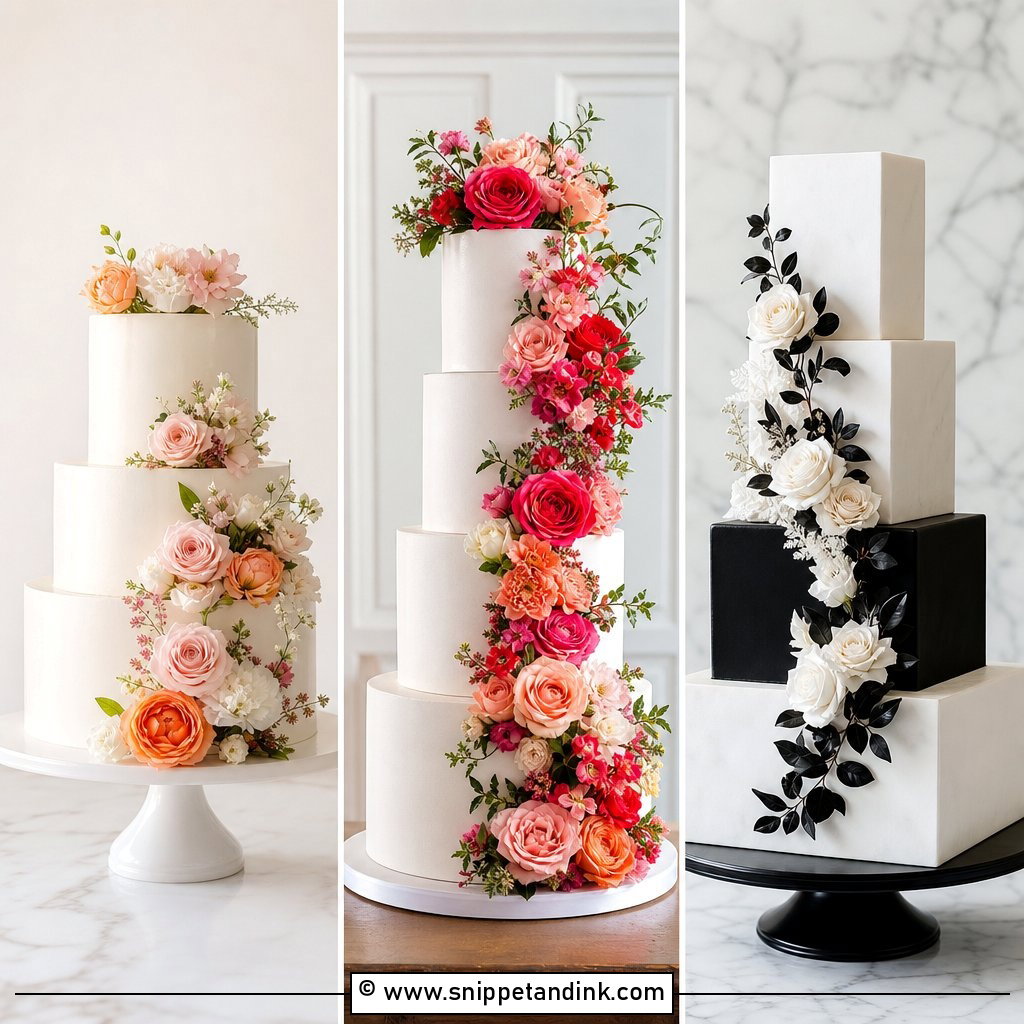
Burgundy flowers against ivory icing give a reception table depth with almost no effort. I’d group the blooms on one side or let them fall diagonally down the tiers; scattered evenly around every tier, they make the cake look busy. Dahlias, garden roses and ranunculus all work, and so do mums, which hold up surprisingly well out of water. Every fresh stem I place gets wrapped in floral tape and set into a straw or pick so it never touches the cake directly. Smooth buttercream or fondant reads formal, and a softly textured finish relaxes it.
2. Rustic Fall Wedding Cake
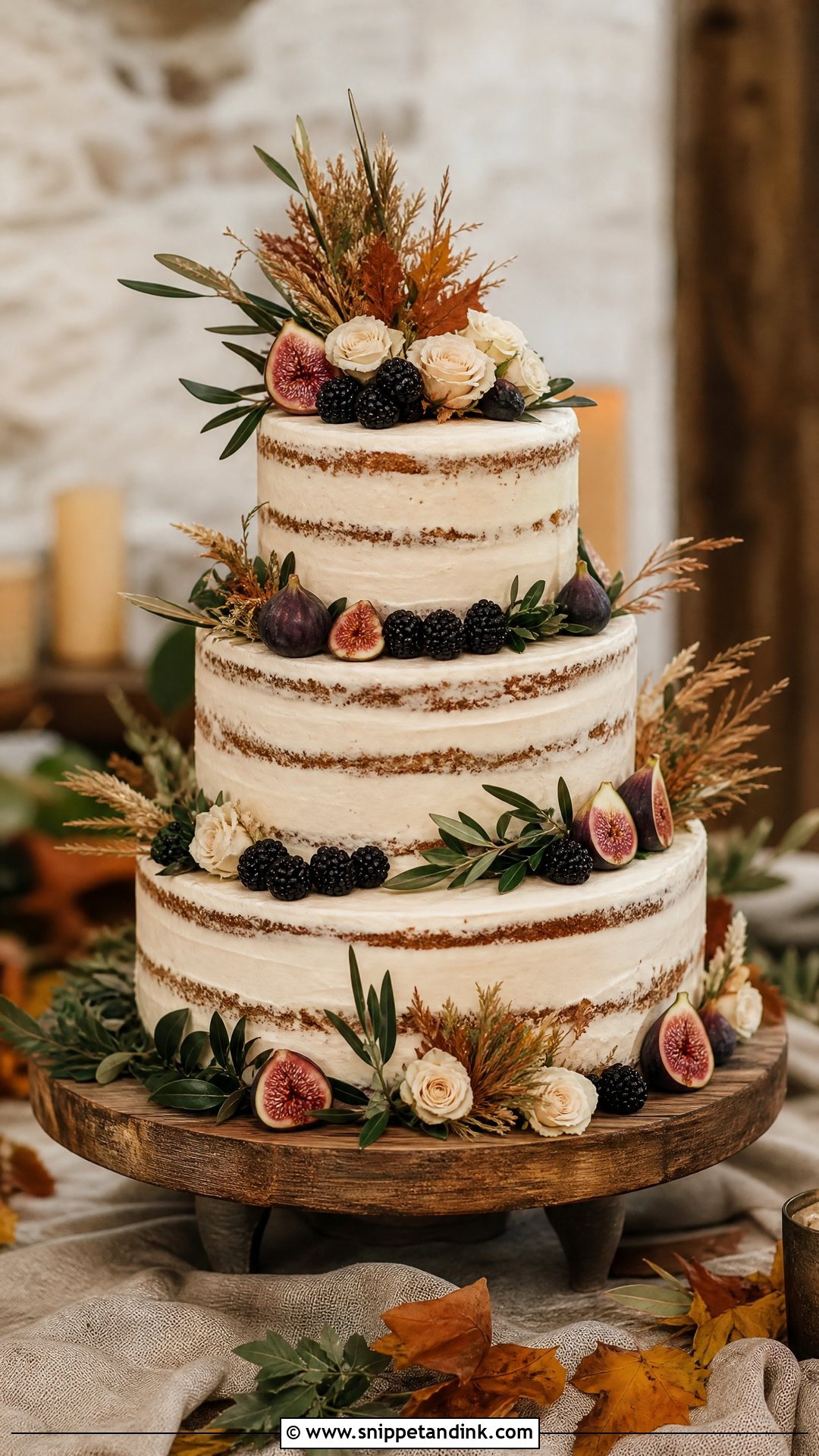
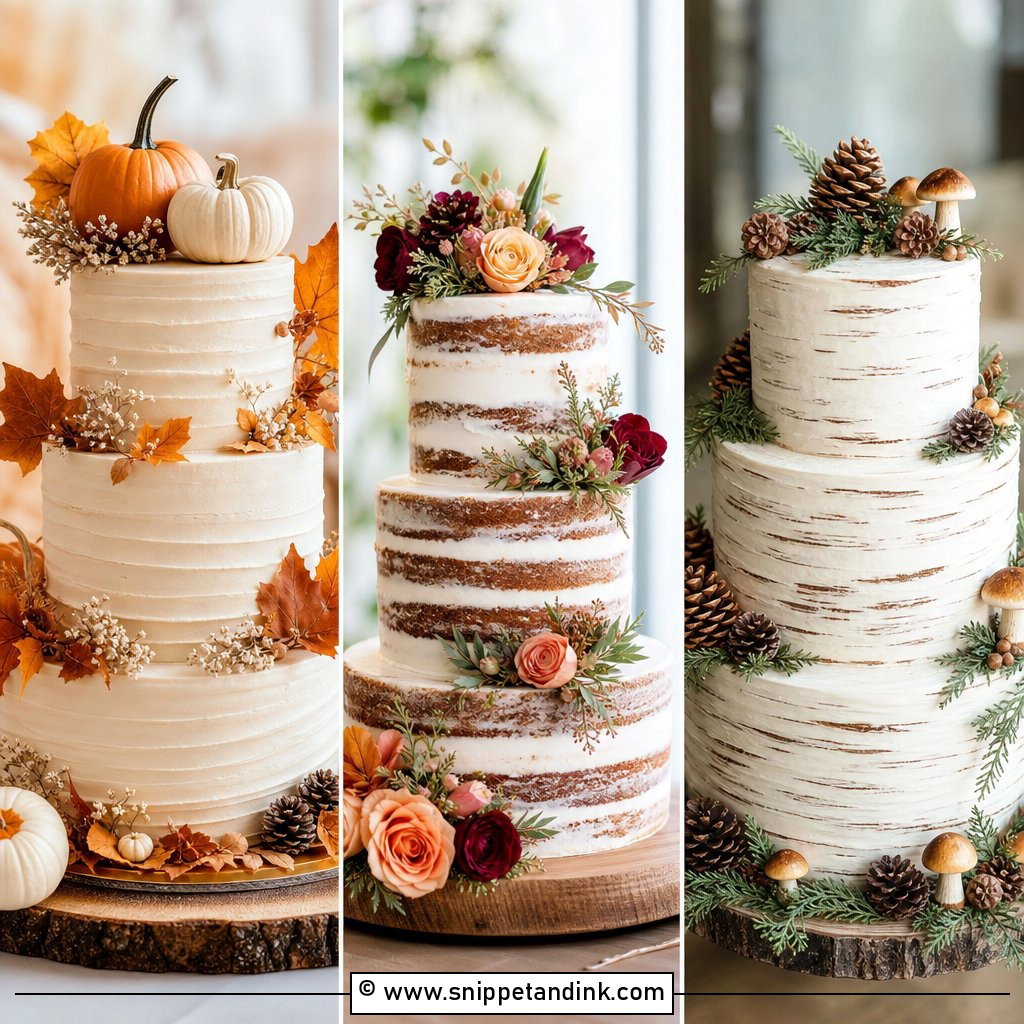
Rustic doesn’t mean unfinished. A semi-naked or textured buttercream still needs level layers, a crumb coat and straight sides, otherwise the cake leans by the time it’s photographed. I like it on a wooden stand with a few small pears, figs, or dried grasses at the base. Spice, vanilla bean, apple cinnamon and maple pecan all suit the look. For a barn or outdoor venue, I’d pick a firmer buttercream; very soft whipped frostings start to slump in a warm room.
3. Pumpkin Spice Wedding Cake
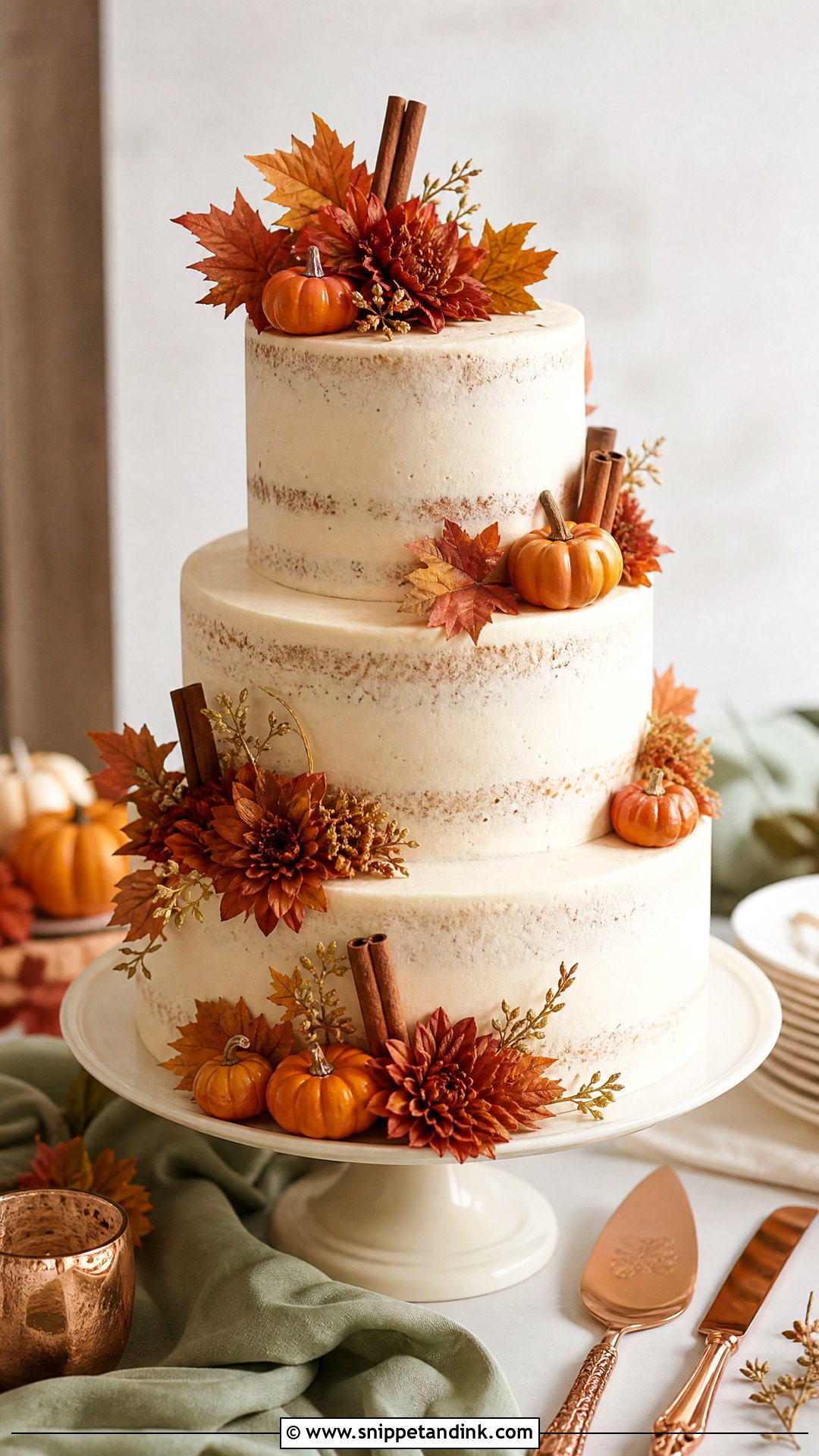
Pumpkin spice is the flavor guests recognize instantly, which makes it a safe crowd choice. It’s a moist, dense sponge, so it stacks well and carries fillings like cinnamon buttercream, maple, brown sugar or cream cheese. Keep the outside restrained: ivory frosting, a few sugar pumpkins and copper accents. Lots of orange on the outside is where it starts to feel like a Halloween bake sale. A three-tier version suits larger weddings; a single tall cake works for small ones.
4. Apple Cider Wedding Cake
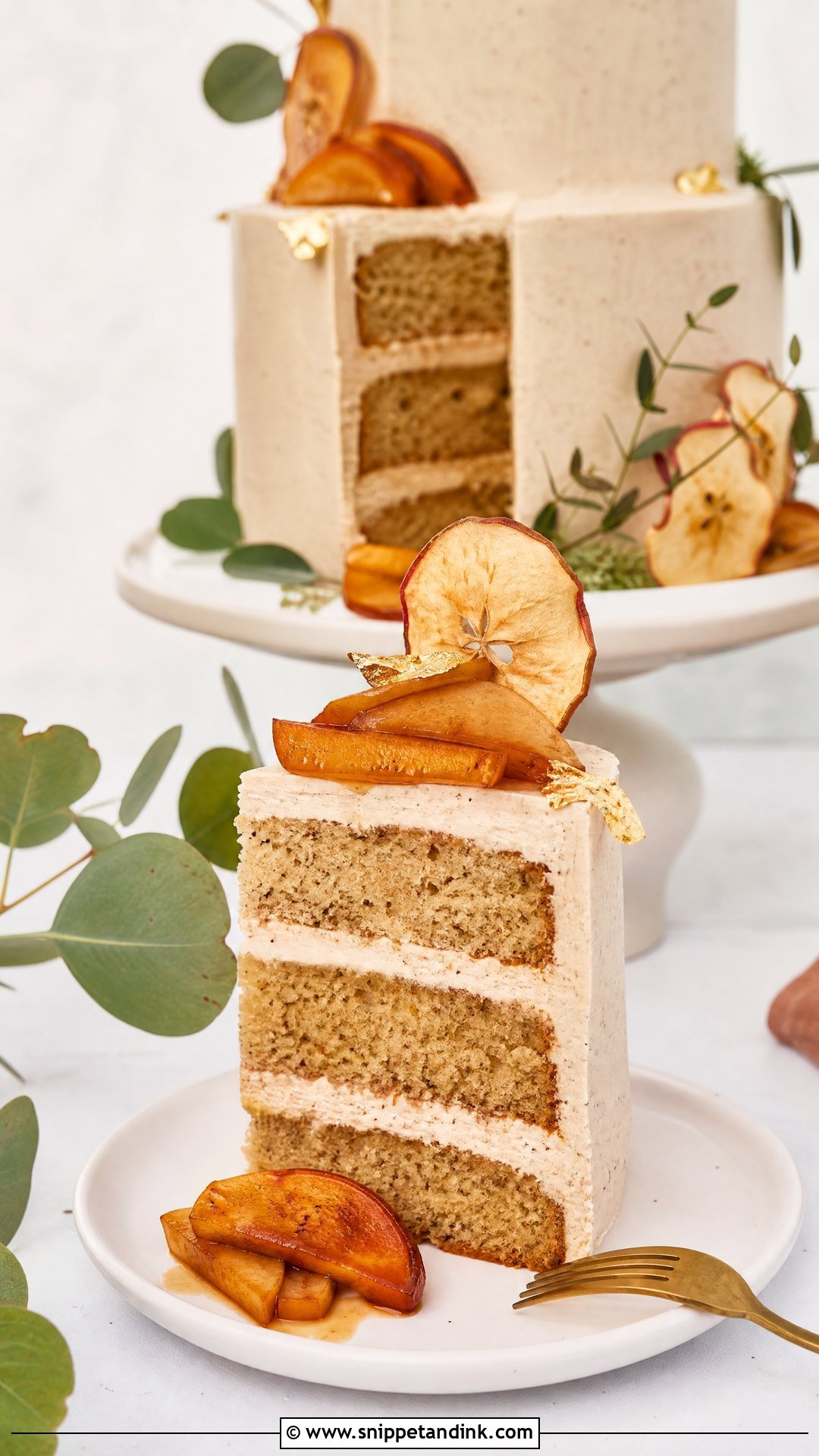
Apple cider wedding cake is lighter than pumpkin but still warm. I reduce cider down to a syrup for the batter, then layer apple butter or cinnamon buttercream between tiers. The decoration needs care: fresh apple slices brown within the hour, so I either caramelize them, dry them into rounds or use tiny whole crab apples. Salted caramel or vanilla bean filling keeps it broadly liked, and the look sits nicely with blush, sage and cream flowers.
5. Salted Caramel Wedding Cake
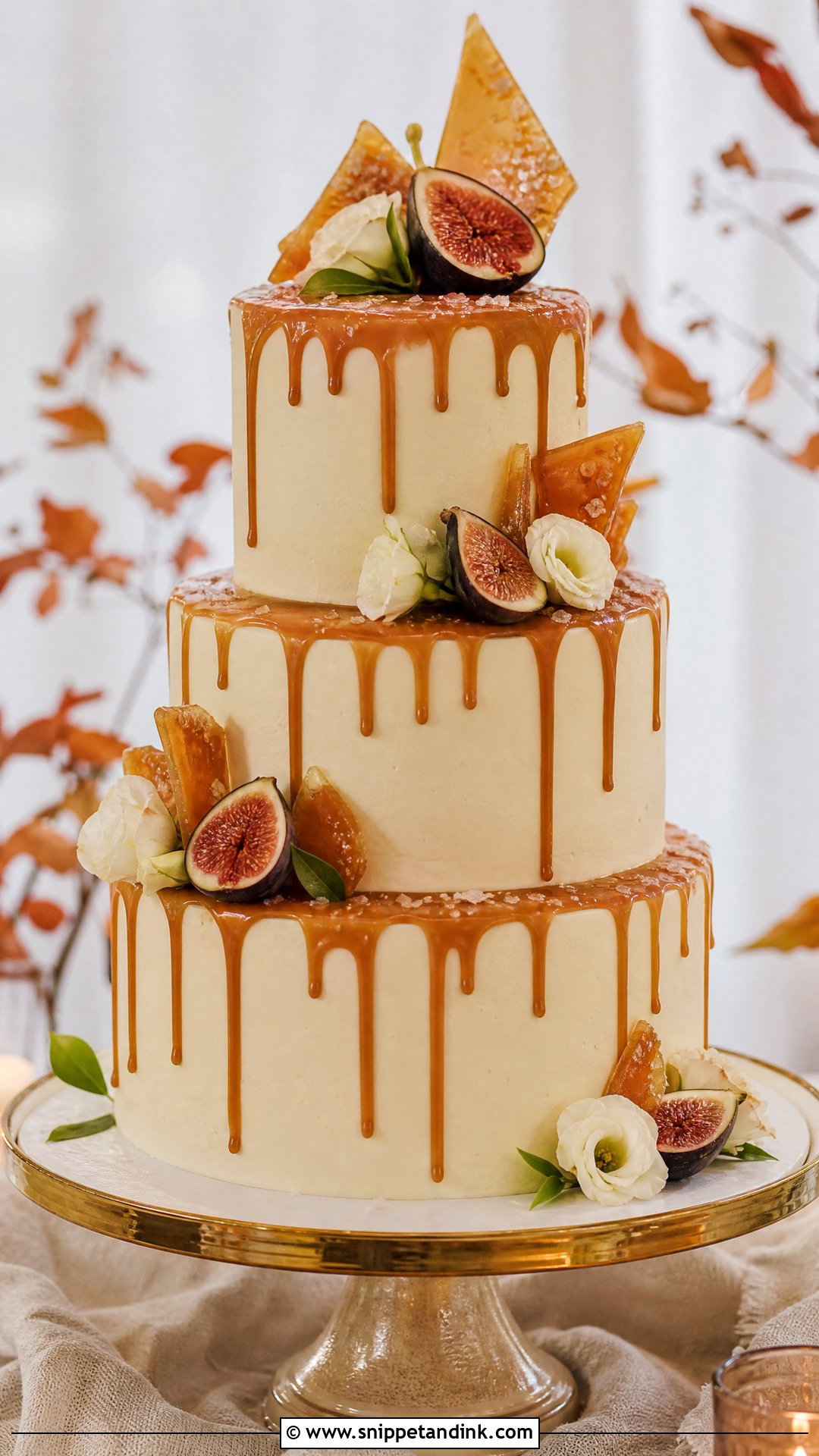
Salted caramel pairs with almost everything: vanilla, chocolate, apple spice, brown butter, pumpkin. The amber drip is the part I watch. Caramel softens as the room warms, so on a cake that will stand out for a long reception I set the drip slightly thicker and keep it short, otherwise it creeps down the tier and pools at the base. Figs, pears, gold flakes or snapped caramel shards add height. Under the photographer’s flash, that glossy drip reads rich and golden.
6. Naked Fall Wedding Cake
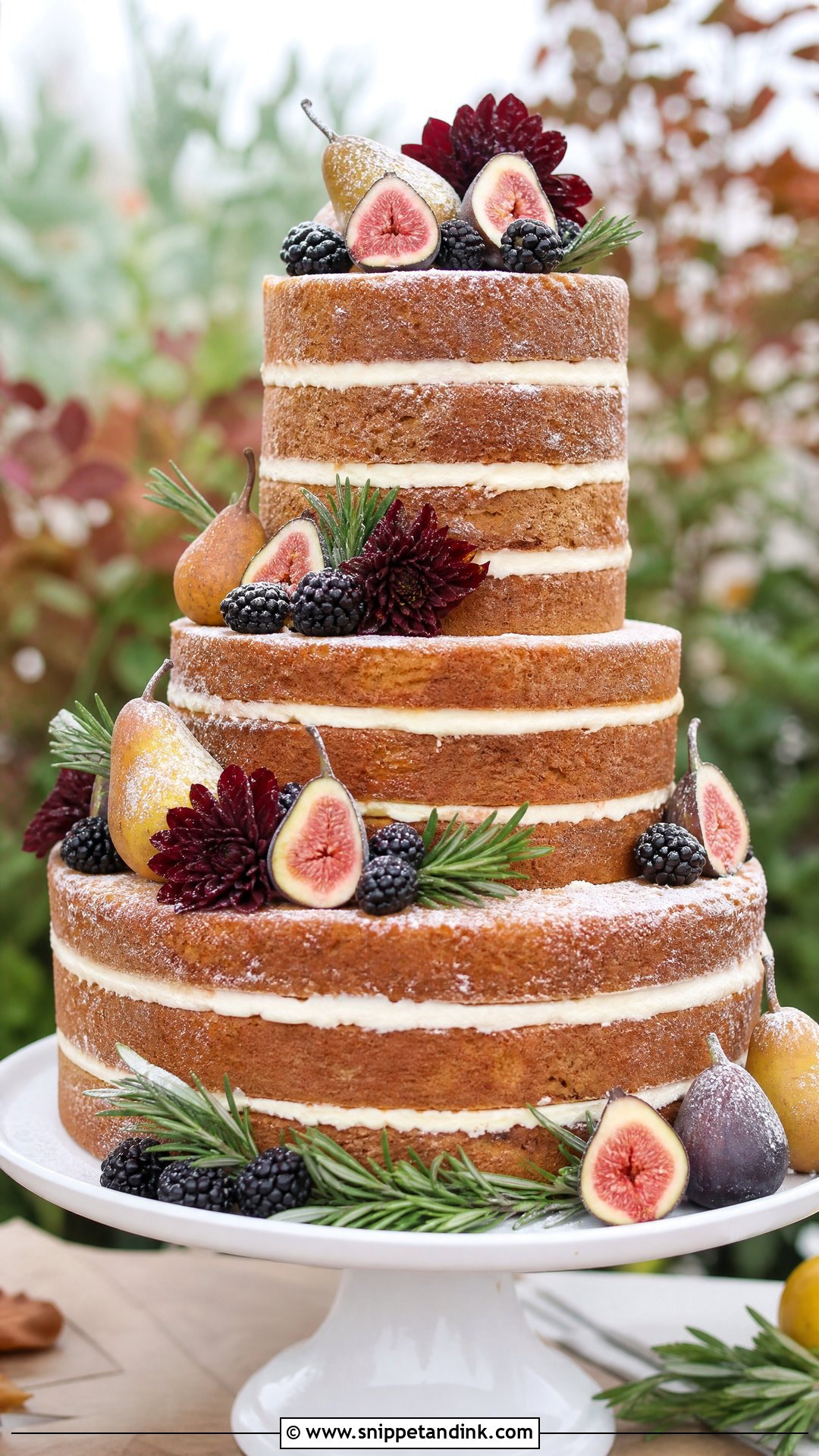
A naked cake shows every layer, so there’s nowhere to hide uneven baking. Each tier needs even fillings, straight stacking and a very thin scrape of frosting. One thing couples don’t always hear: exposed sponge dries out faster than a fully iced cake, so I assemble naked cakes as close to the event as I can. Vanilla bean, spice, carrot and apple cinnamon all suit it, decorated with figs, blackberries, rosemary and burgundy blooms. A light dusting of powdered sugar softens it, though in humid weather that sugar dissolves into blotches.
7. Fall Wedding Cake With Figs
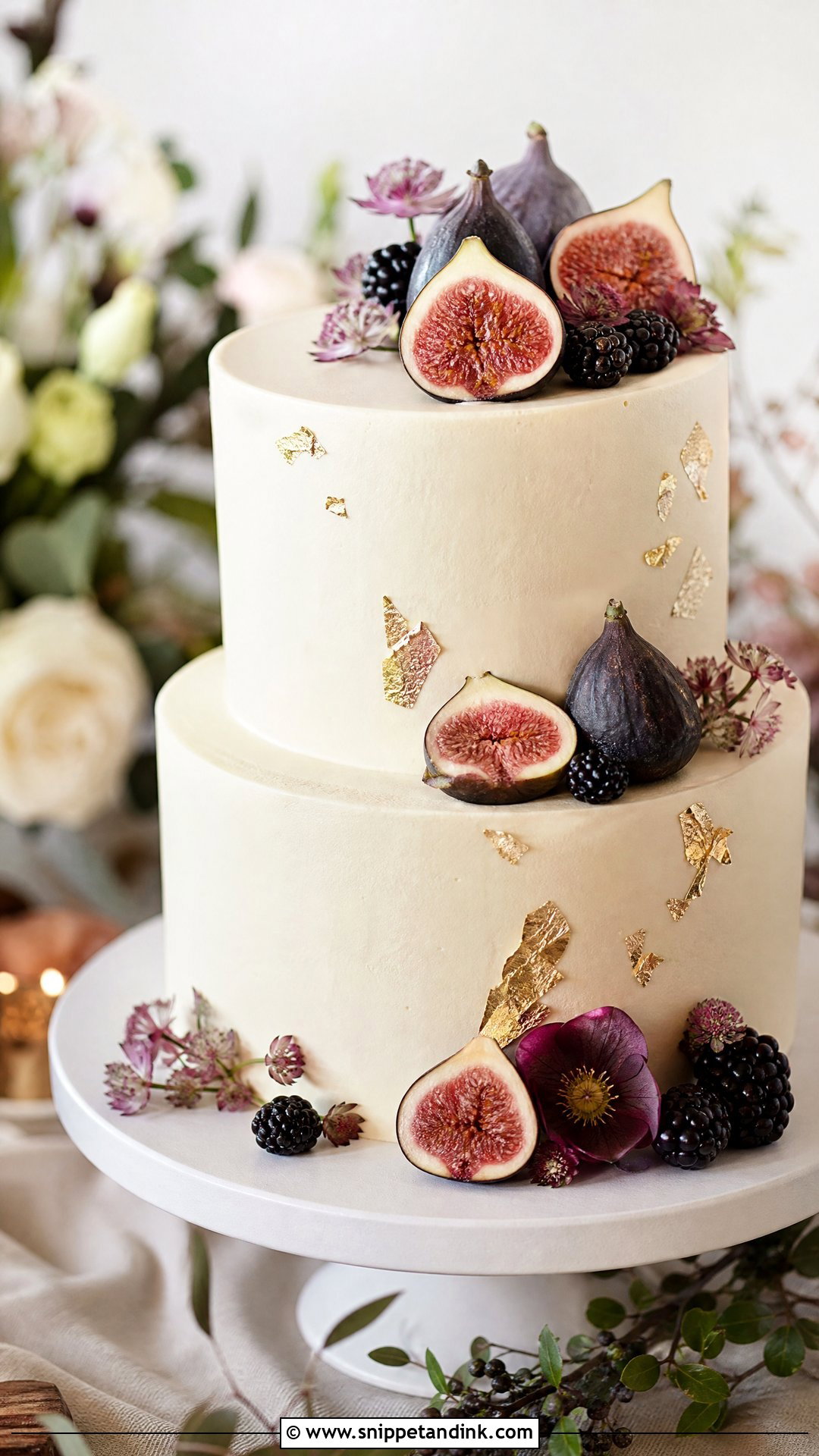
Figs are one of my favorite autumn decorations because they need almost nothing else. Halved figs show deep purple, pink and green, and a few placed with intent become the focal point. Cut figs weep juice, though, so I halve them on the day and blot them before they touch the icing. They suit ivory buttercream, chocolate ganache or a semi-naked finish, and flavors like honey, almond, spice and brown butter. It’s a good route for couples who want fall without pumpkins or leaves.
8. Terracotta Wedding Cake
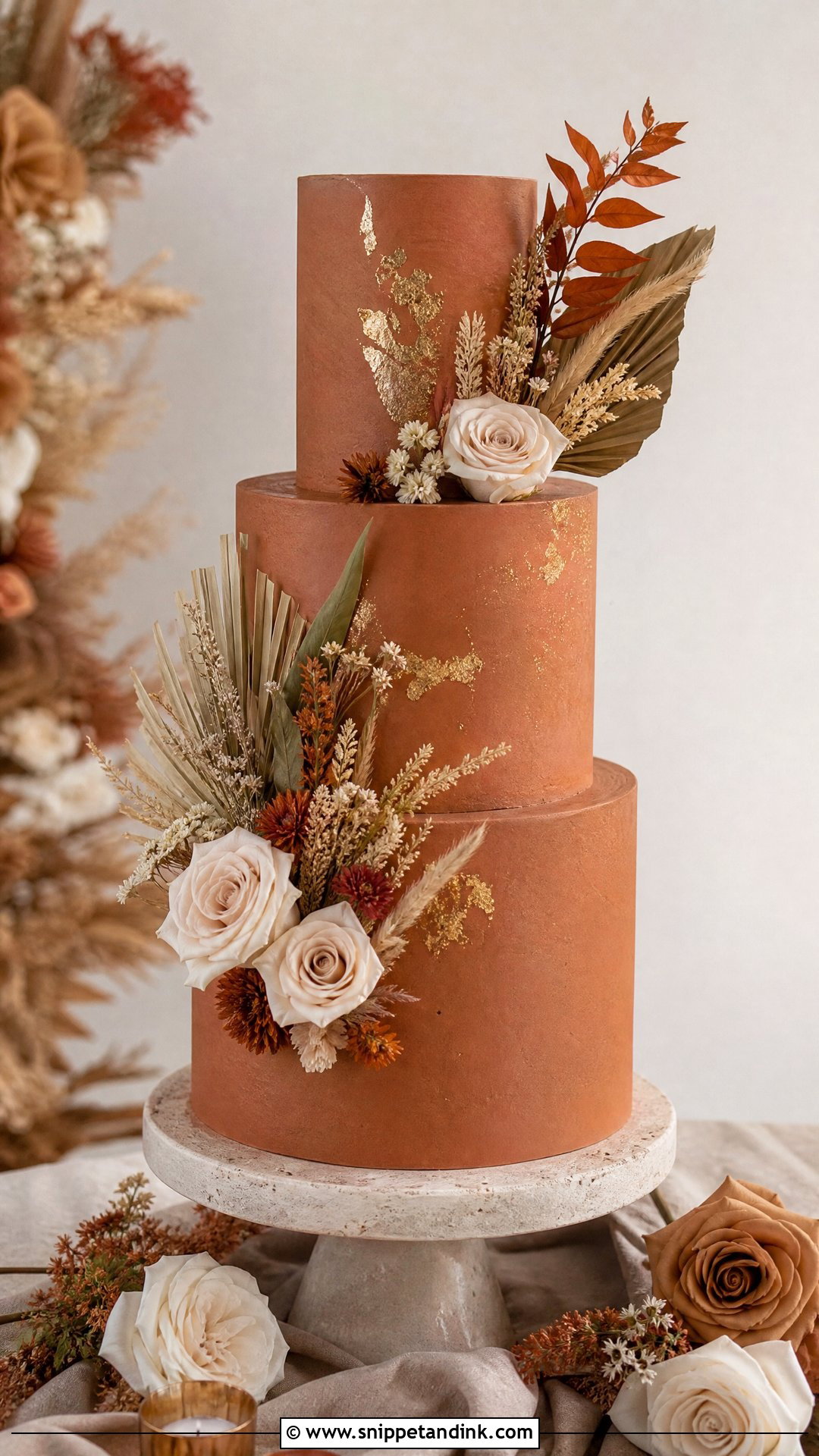
Terracotta is a tricky color to mix in buttercream. Too much orange and it looks like a pumpkin; too much brown and it turns muddy. I build it from a warm base and test a swatch under daylight first. It can cover the whole cake, be painted on in a watercolor wash or sit on a single tier among ivory ones. Dried palms, cream roses and muted greenery suit it, and it pairs naturally with chai, vanilla almond, pumpkin or caramel cake.
9. Sage Green Fall Wedding Cake
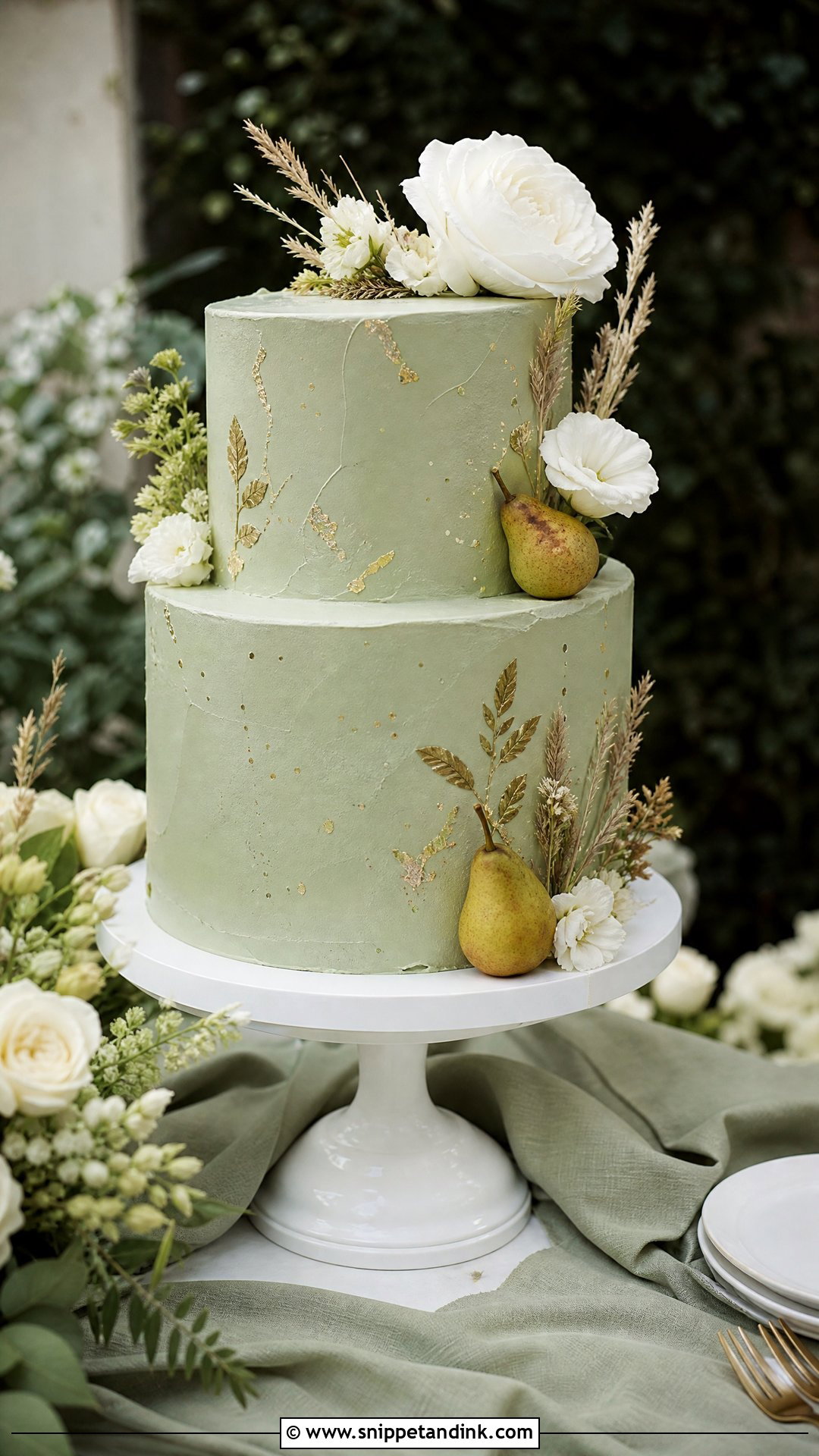
Sage green fall wedding cake is the quieter route for couples who don’t want deep orange or burgundy. Sage pairs with ivory, taupe, dusty rose, copper and muted gold. In buttercream, a little goes a long way; green food color deepens as the frosting sits, so I tint it a shade lighter than the target. Pressed leaves, white flowers or small pears finish it, and vanilla, pistachio, pear, almond or chai sit well with the color.
10. Chocolate Fall Wedding Cake
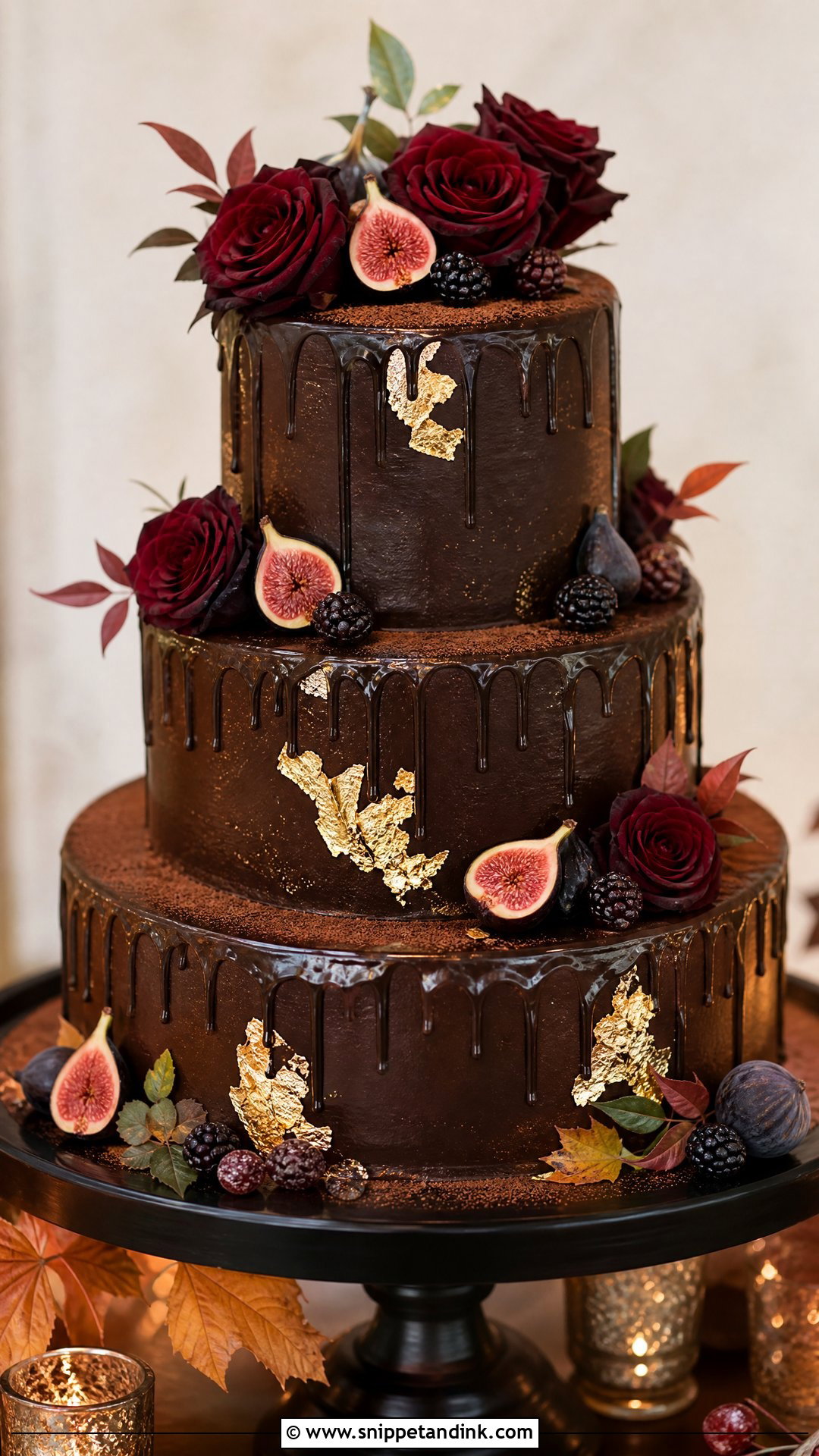
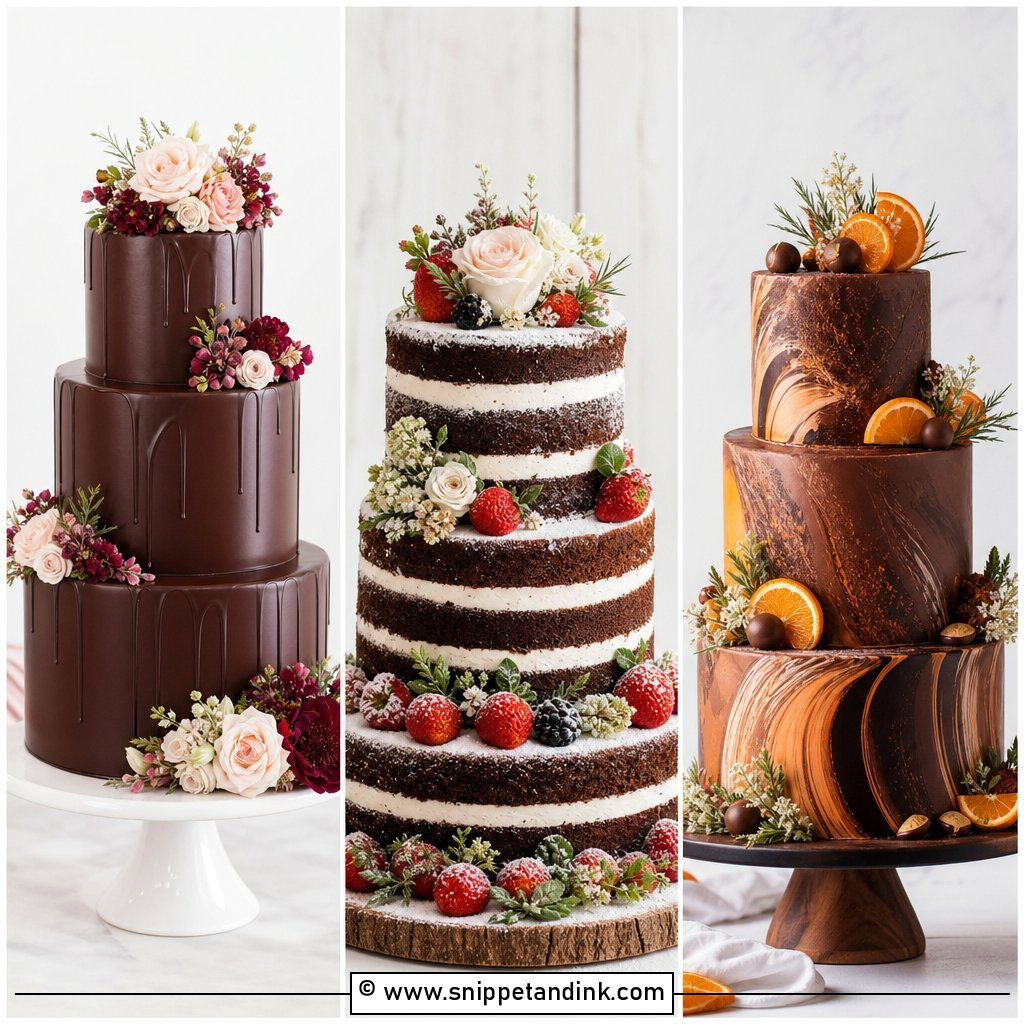
Chocolate suits cooler months: dark sponge with ganache, espresso filling, hazelnut cream or salted caramel. A glossy ganache finish is also my favorite thing to cover a cake in for a warm day, because it sets firmer than buttercream. Gold leaf, burgundy flowers, figs, blackberries or dried orange slices bring in fall color. Keep the decoration to one or two elements so it reads as a wedding cake rather than a dessert-shop chocolate cake.
11. Maple Pecan Wedding Cake
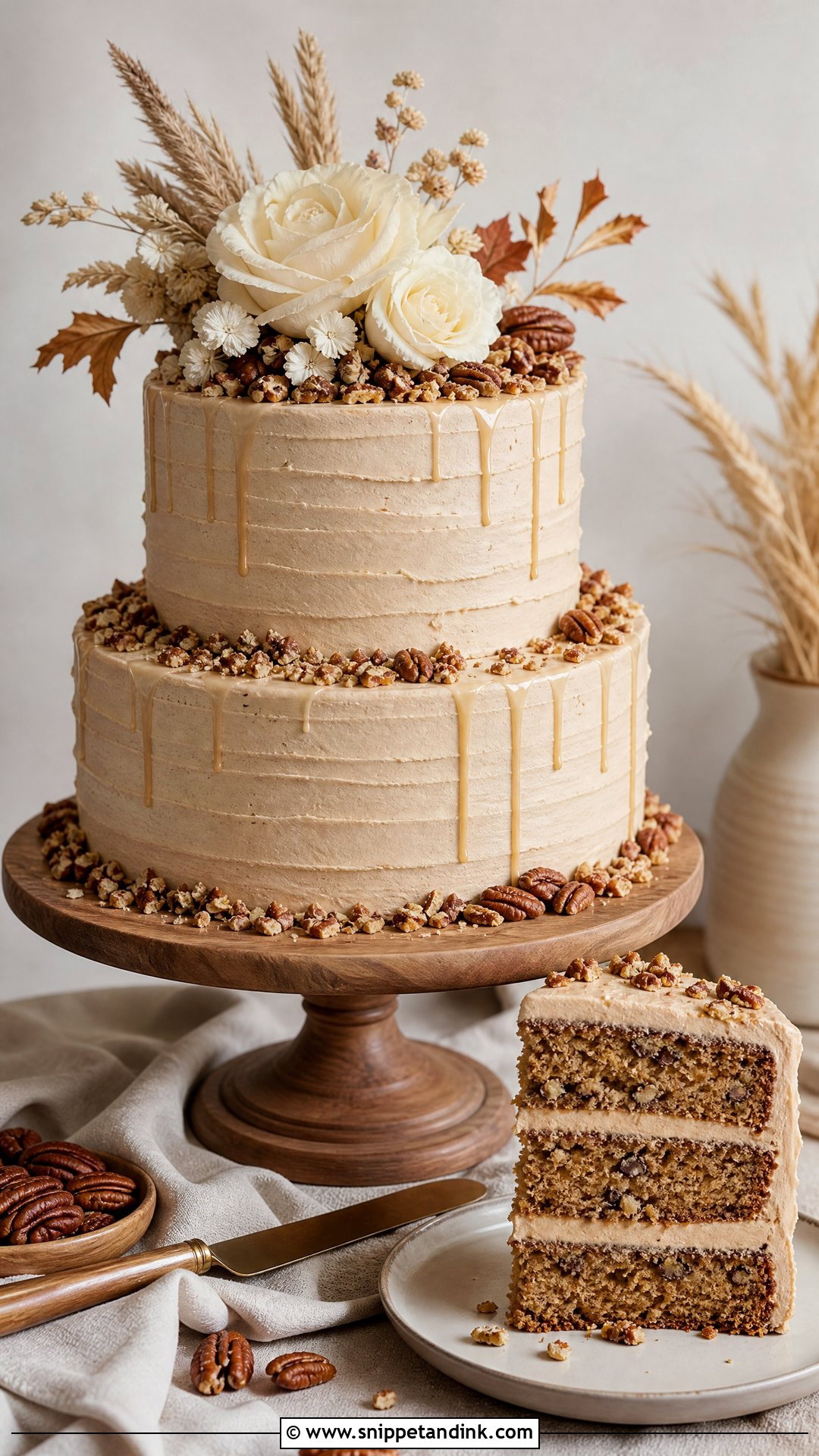
Maple pecan is warm and nutty without being heavy, especially paired with brown butter buttercream or vanilla cream cheese. I’d go for ivory frosting, chopped pecans pressed around the base, a short maple drip and a few small flowers. Always flag the nuts: a cake with pecans needs a label on the table, and I’d keep pecans off the outer tiers if you know a guest has a nut allergy. It fits beside pies and coffee on a dessert table.
12. Chai Spice Wedding Cake
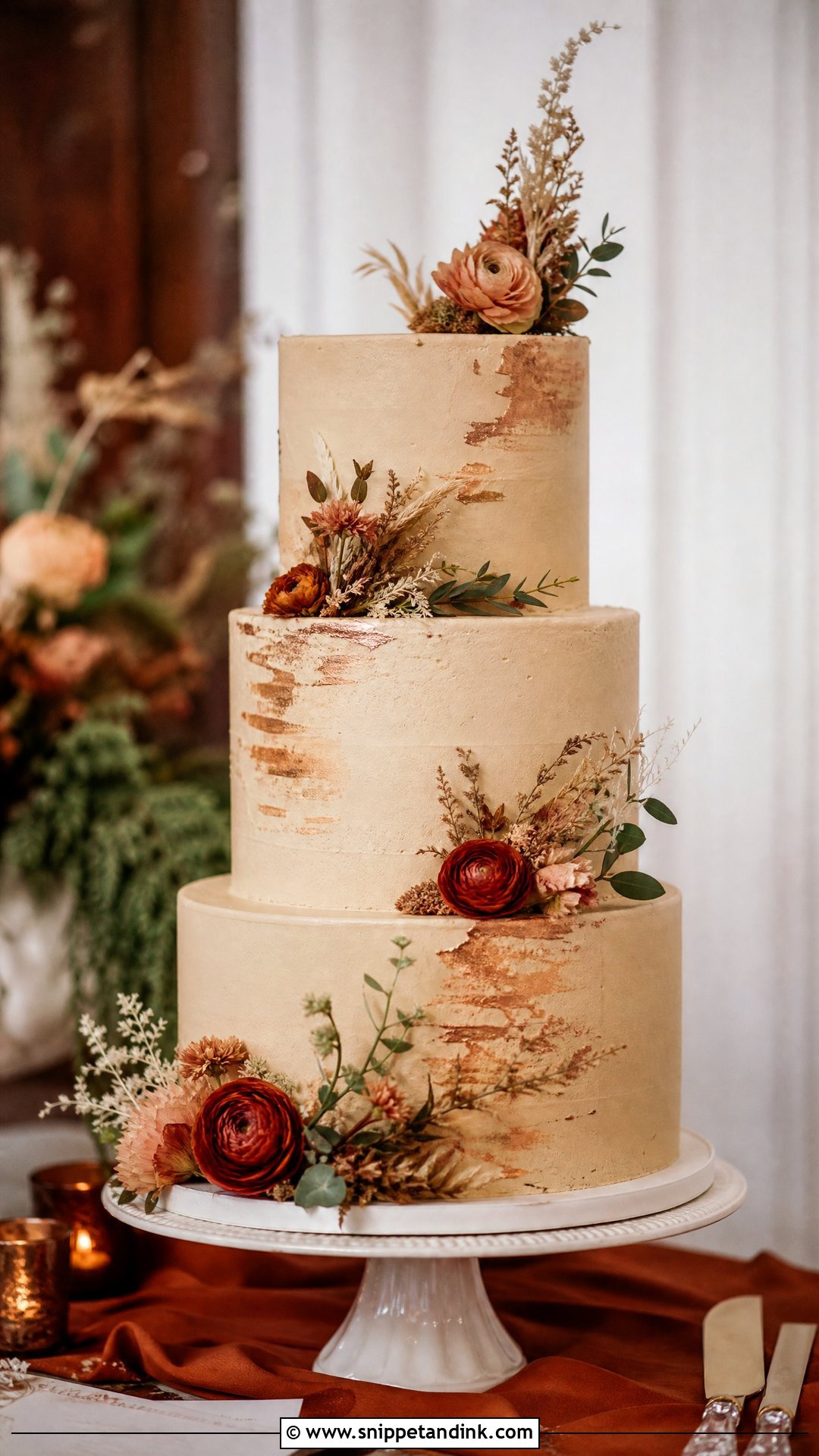
Chai spice brings cinnamon, cardamom, ginger, clove and black tea, which gives it warmth without too much sweetness. I steep the tea in the milk or butter so the flavor runs through the crumb, not just the frosting. Honey buttercream or cream cheese filling suits it. Outside, keep it simple: smooth ivory icing, copper details and rust-colored blooms. Two or three tiers let the flavor do the talking.
13. Fall Wedding Cake With Pears
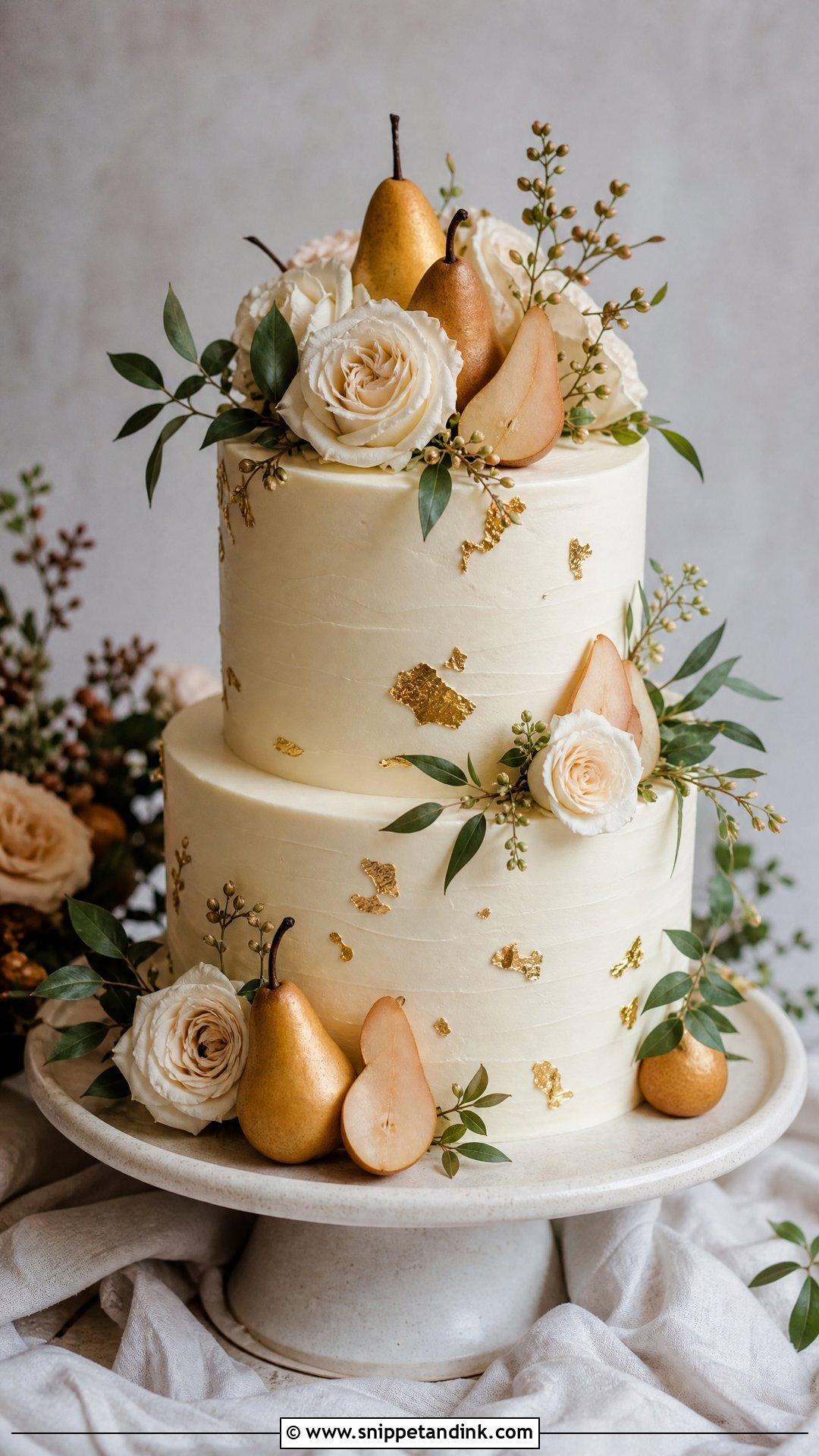
Pears give a soft gold, green and blush color that suits romantic, garden-style cakes. Whole small pears or sugar pears stand up well; sliced fresh pears brown quickly, so I poach them first or brush them with a little lemon. Honey, vanilla, almond, ginger and brown butter flavors match. A little gold leaf or fine greenery is enough beside them; heavy decoration hides the shape of the fruit.
14. Fall Wedding Cake With Pressed Flowers
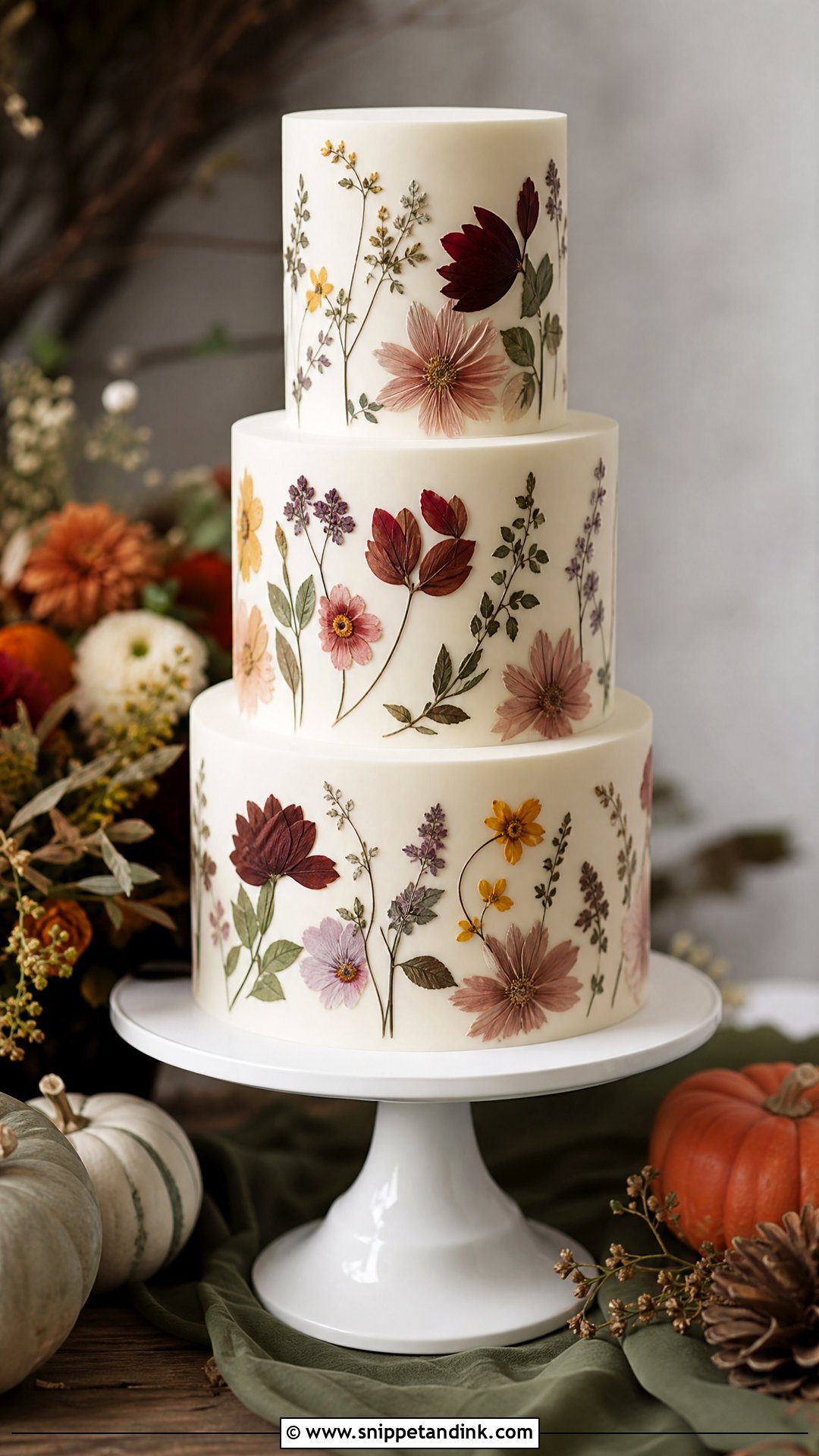
Pressed flowers sit flat against smooth buttercream or fondant, so every petal shows. They have to be edible varieties grown without sprays, pressed and dried properly, which is something I source carefully rather than picking from a garden. For autumn, rust, cream, burgundy, mustard and mauve tones work. Keep the tiers clean and simple so the flowers stay the focus. Vanilla, lemon, almond, honey and spice cake all suit them. Pressed petals can curl in humidity, so they’re best added on the day.


15. Burnt Orange Wedding Cake
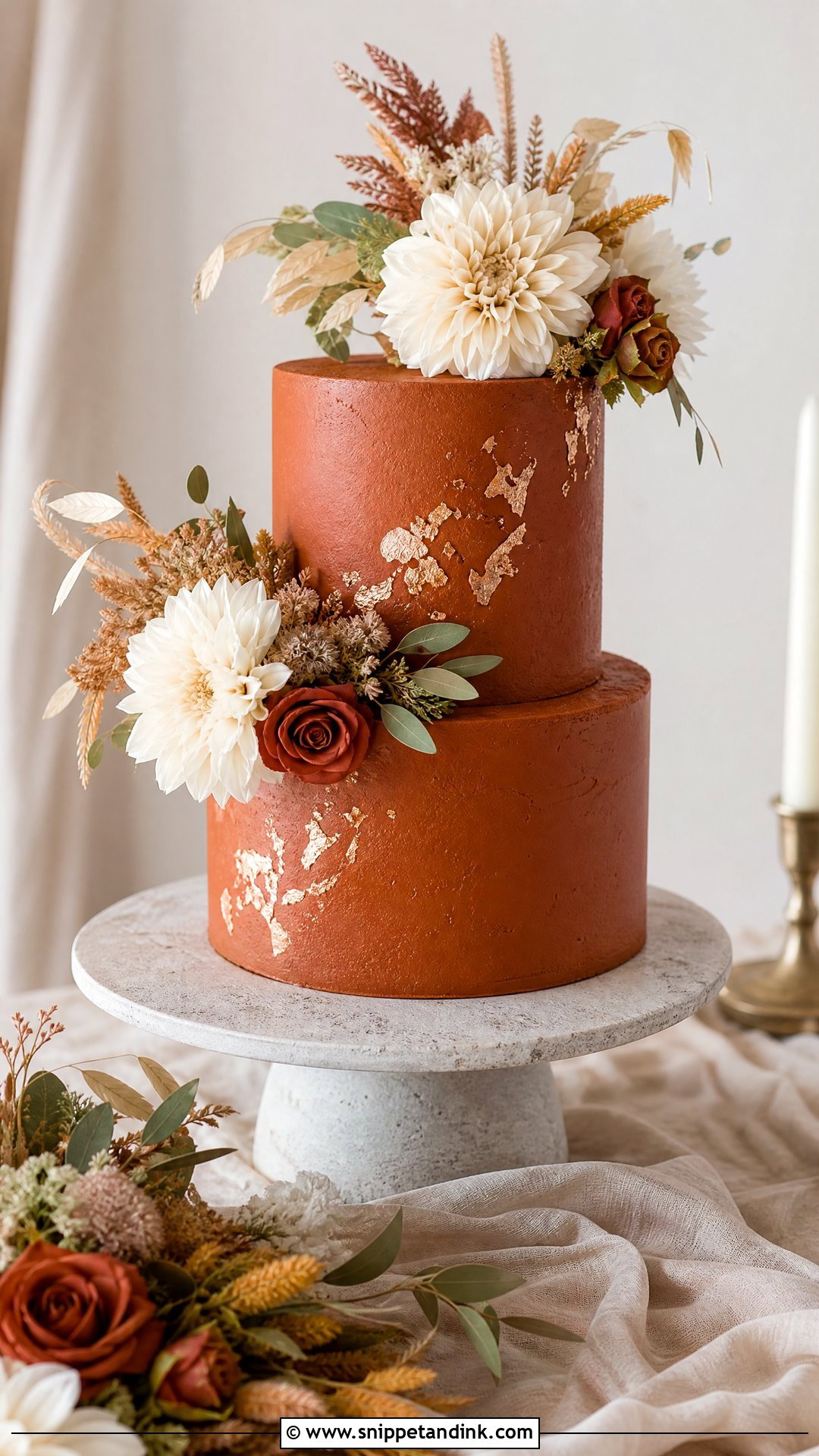
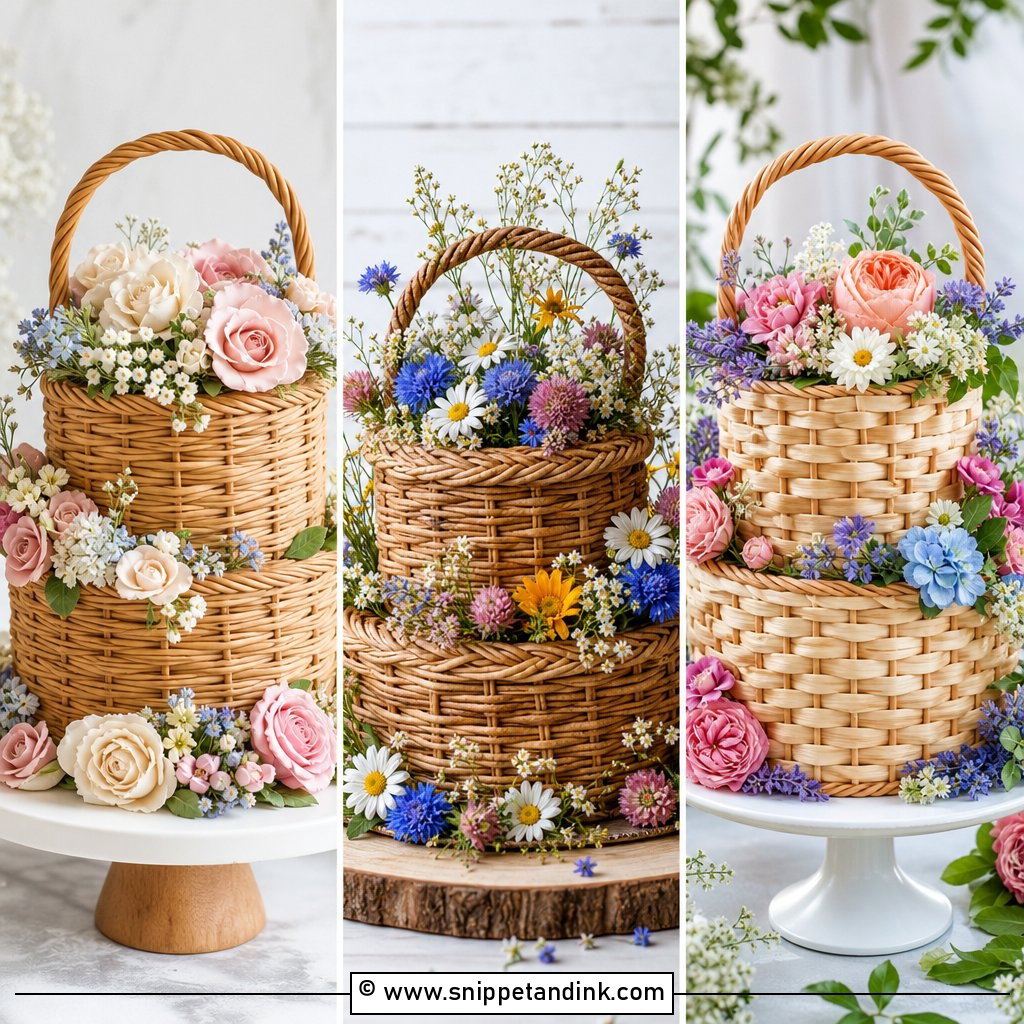
Burnt orange wedding cake brings instant fall warmth, best when balanced with cream, gold, sage or deep red. Full coverage is bold; a watercolor wash or a single orange tier is easier to live with. Saturated orange buttercream needs a lot of color, and too much can leave a bitter taste, so I build it gradually or use fondant for strong coverage. Pumpkin spice, carrot, apple cinnamon and vanilla caramel flavors fit naturally. Pick it if you want the cake to be the loudest thing on the table.
16. Moody Fall Wedding Cake
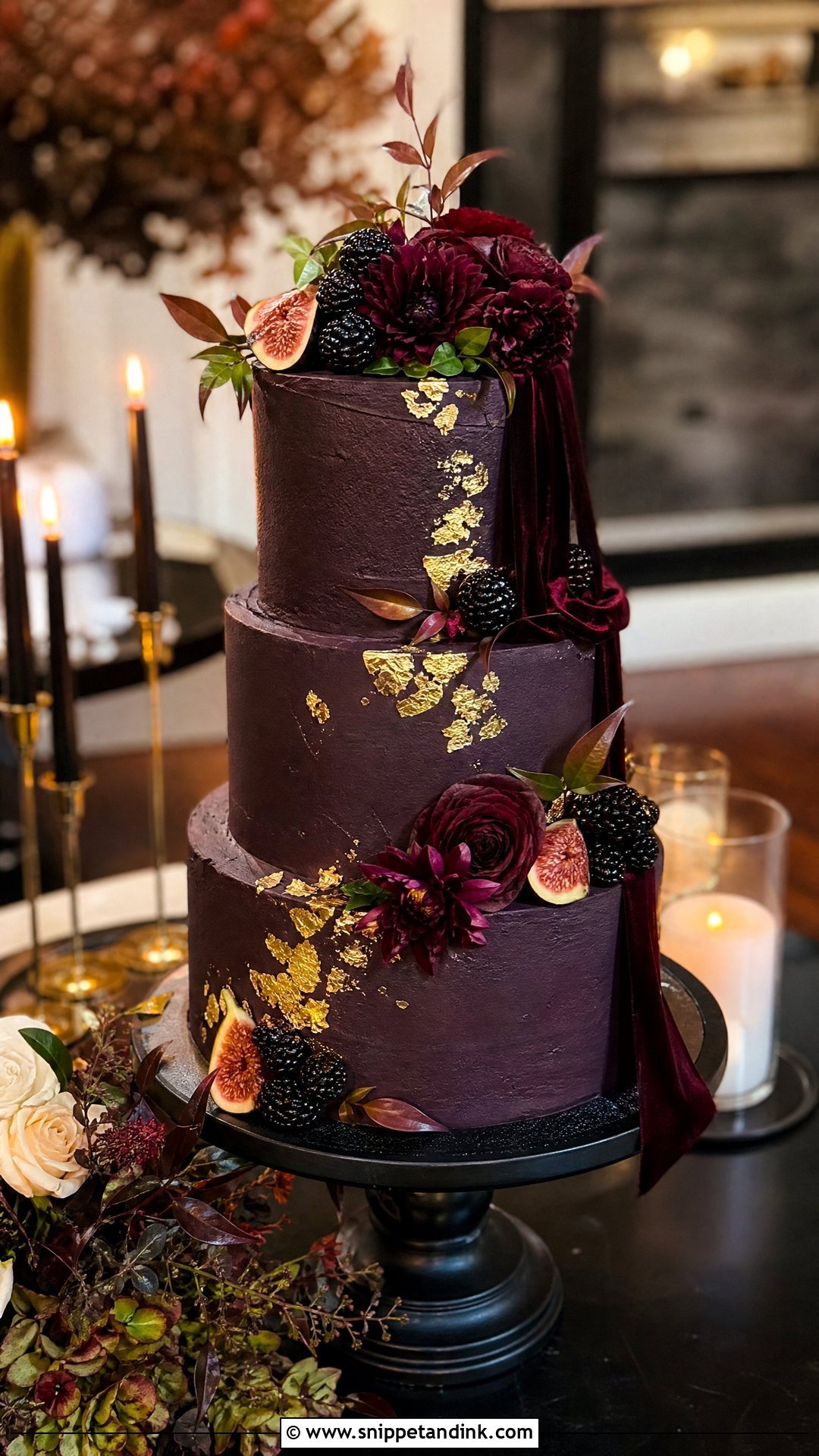
Moody cakes in dark chocolate, black cocoa, plum, burgundy, navy or espresso suit evening receptions and candlelit rooms. Dark buttercream needs a lot of color, which can stain lips and teeth, so I use black cocoa where I can and keep strongly dyed icing as a thin outer layer. Gold leaf, fresh flowers, figs or a velvet ribbon soften the dark base. Chocolate ganache, espresso, hazelnut, blackberry and salted caramel match the mood.
17. Fall Wedding Cake With Gold Leaf
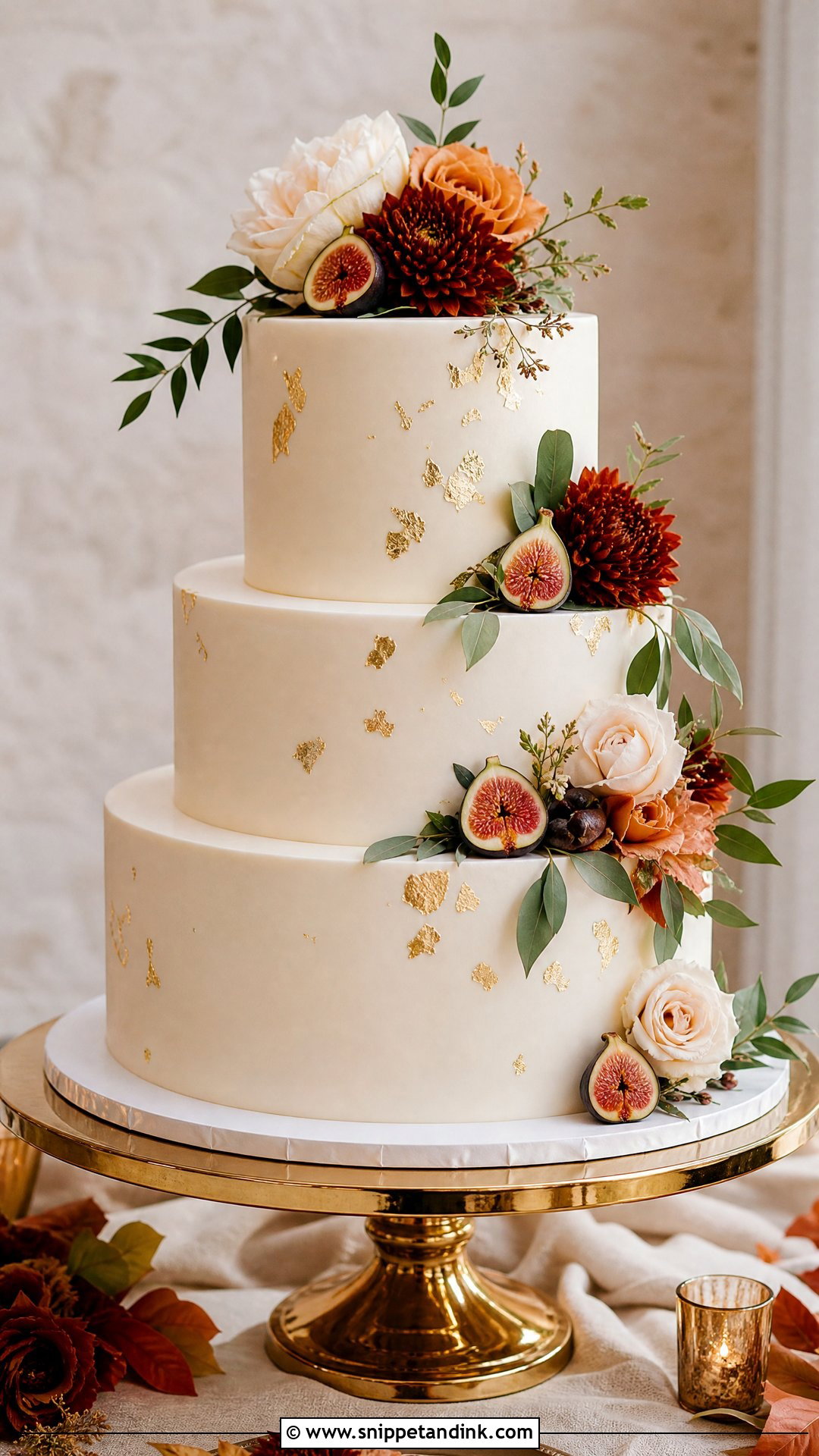
Gold leaf works with nearly any autumn palette. Restraint matters: a few scattered flakes, a partial wrap on one tier or a brushed edge looks richer than covering the whole cake. Make sure your baker uses edible gold leaf, not decorative craft leaf, which can look identical. It lays cleanest on smooth buttercream, fondant or ganache. Figs, roses, dried flowers or pears give it seasonal softness without obvious autumn symbols.
18. Fall Wedding Cake With Autumn Leaves
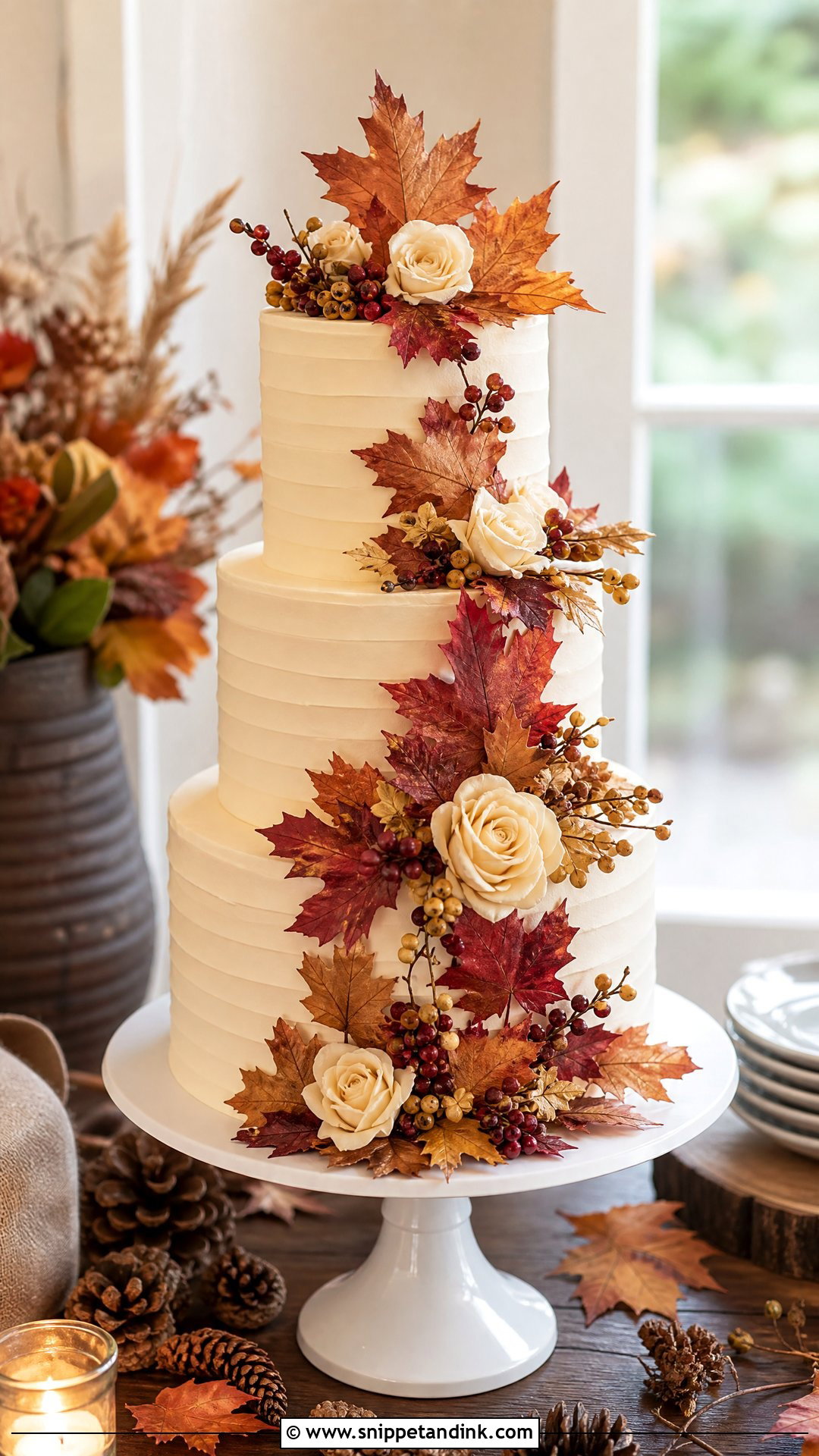
Autumn leaves are classic, but they need a careful hand. I make them from sugar paste, wafer paper or painted fondant so they’re safe and match the palette exactly; real leaves from the garden don’t belong on a cake. Arrange them as a cascade, a wreath or a loose scatter rather than covering every tier. Ivory buttercream gives them a clean background. Wafer paper leaves soften in humidity, so on a damp October day I’d choose sugar paste.
19. Modern Fall Wedding Cake
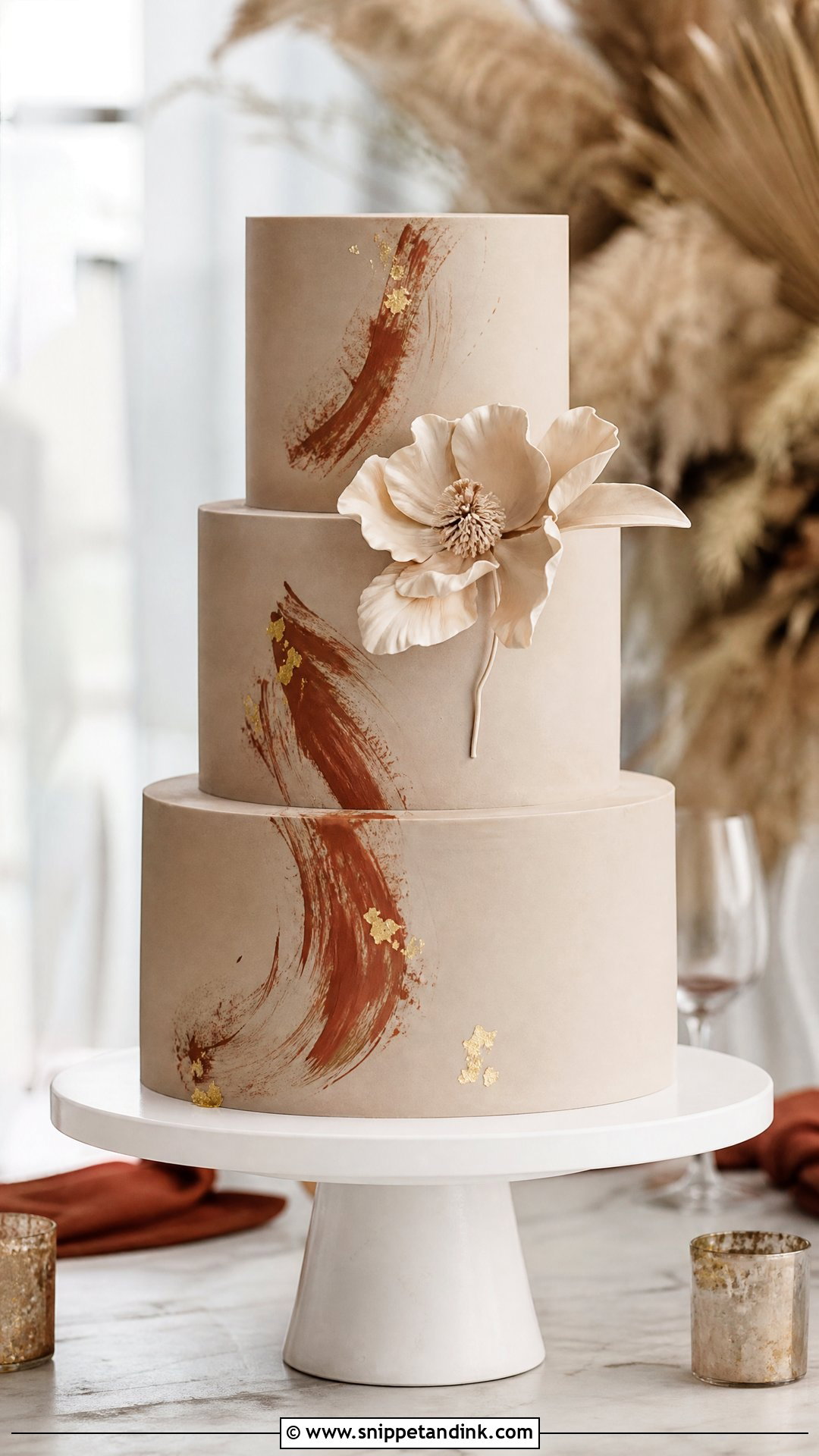
A modern cake relies on clean lines and one or two details: sharp edges, matte buttercream, abstract texture or a single color block. Sharp edges are the hard part. They need a well-chilled cake and a steady scraper, and they soften if the cake sits in a warm room for hours. Taupe, rust, olive, caramel or cocoa bring in the season, and a single sugar flower is often enough. Chai, maple, apple or chocolate caramel keep the flavor seasonal.


20. Vintage Fall Wedding Cake
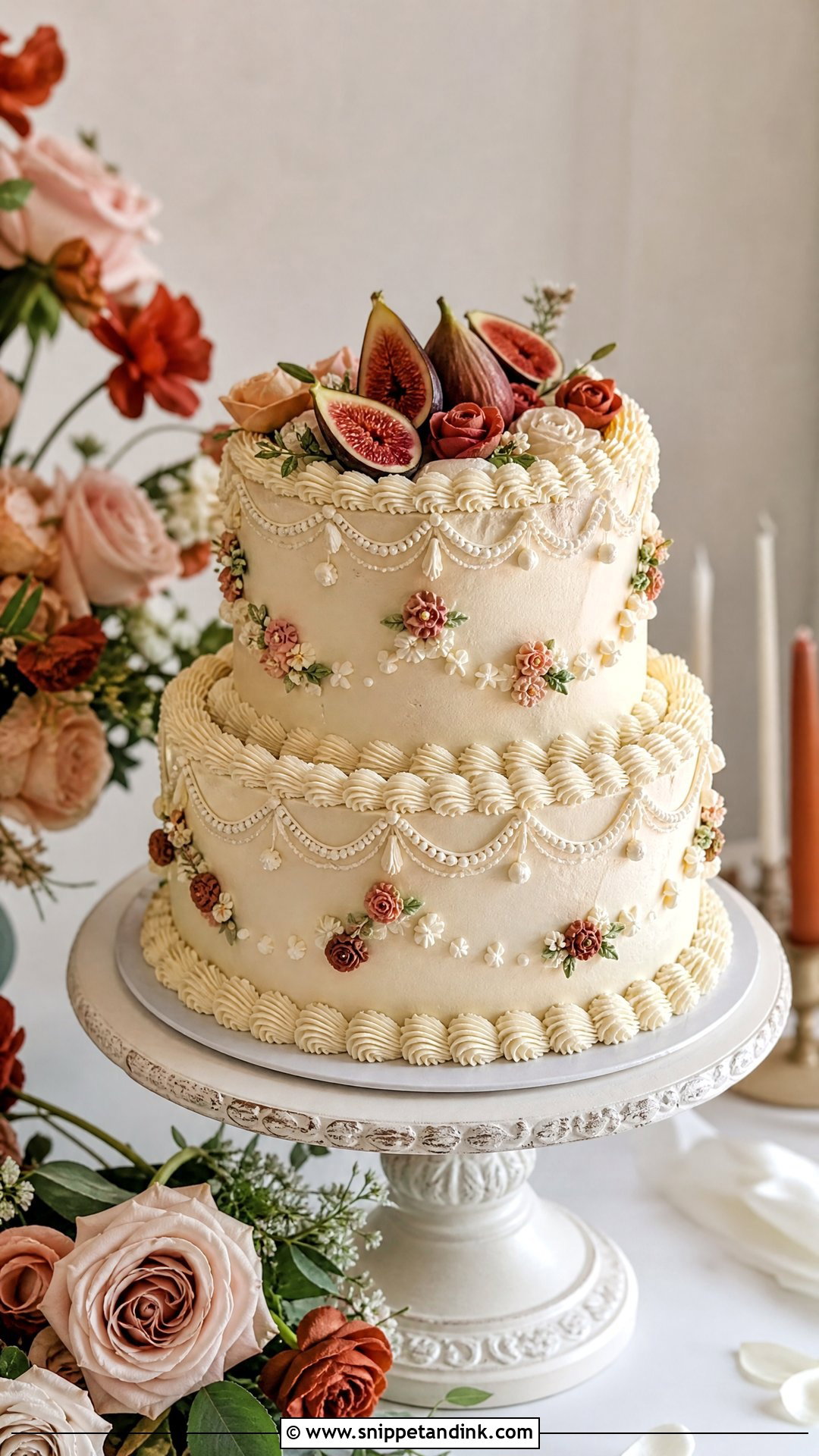
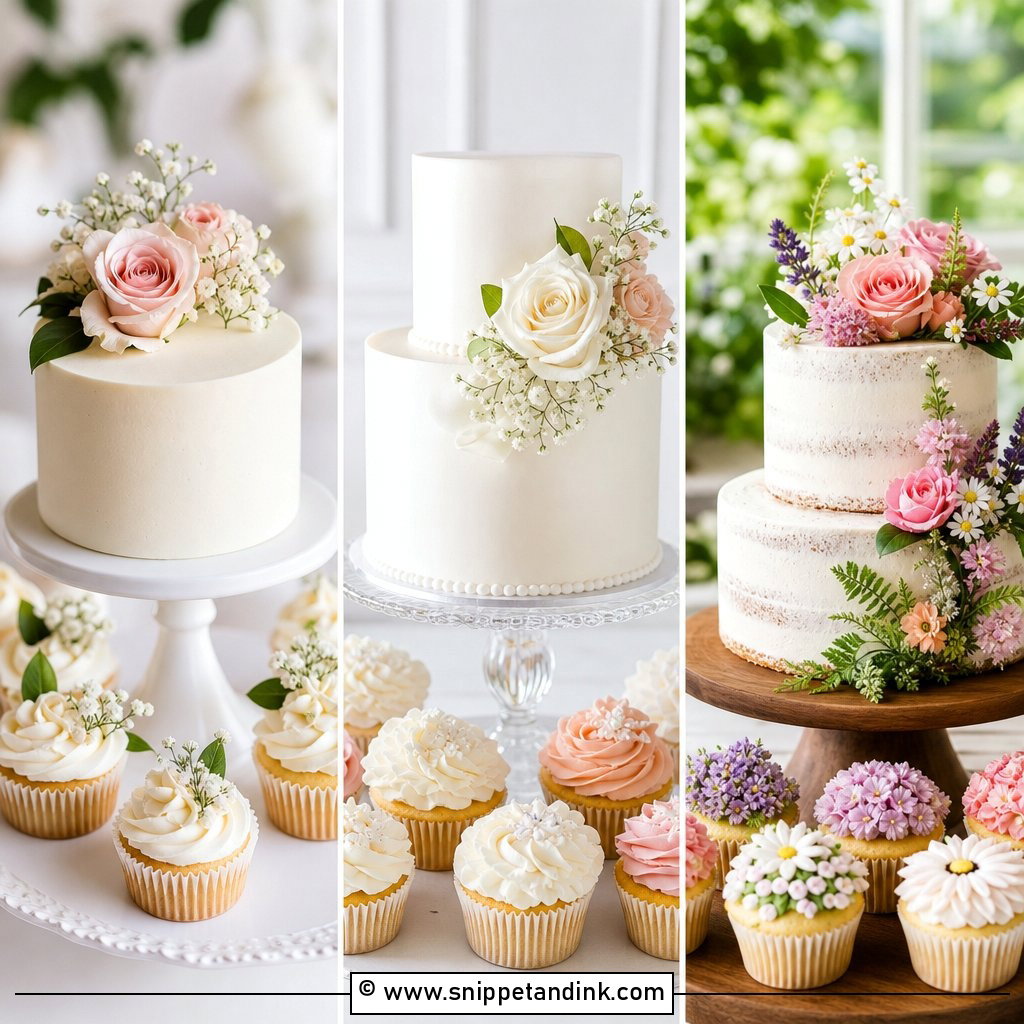
Vintage piping, from Lambeth borders and shell work to swags and ruffles, is slow, careful work, and it needs a stiff buttercream that holds its shape. For fall, I pipe in ivory, champagne, blush, dusty rose, caramel or muted terracotta rather than bright white. Small piped flowers, cherries, figs or gold accents add a seasonal touch. Vanilla almond, spice, apple butter and caramel cream suit the mood. Budget for the extra hours; heavy piping costs more because of the time involved.
21. Fall Wedding Cake With Dried Flowers
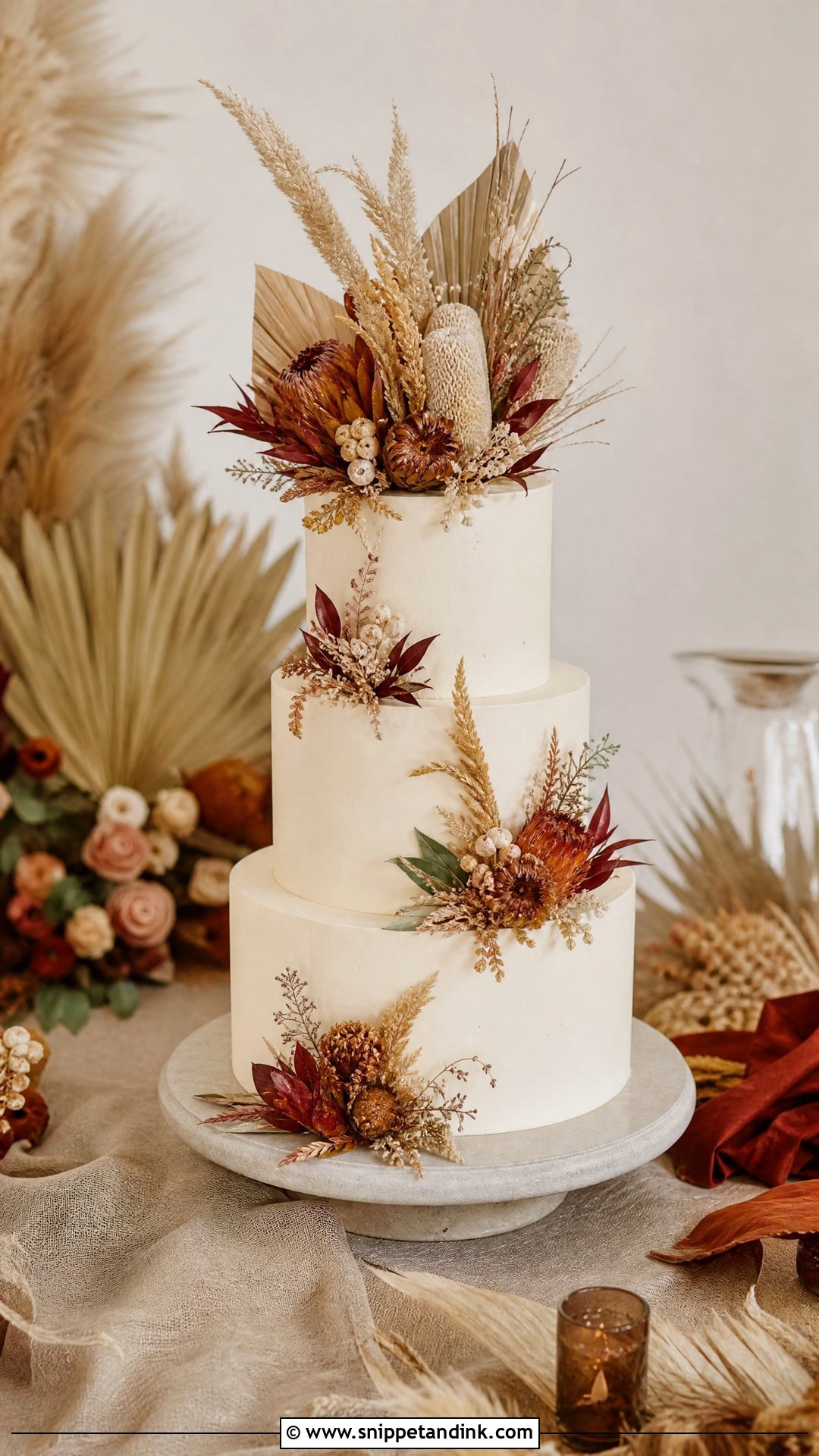
Dried flowers, grasses and seed pods add height without needing fresh arrangements. Many are treated with preservatives or dyes, so they must never sit directly in the icing; I use a barrier of wax paper, floral tape or a small food-safe holder. Cream, rust, tan, burgundy and muted pink suit autumn. They work on smooth buttercream, semi-naked finishes or a neutral fondant. Honey, almond, chai, vanilla bean or pumpkin flavors go well with the texture.
22. Carrot Cake Wedding Cake
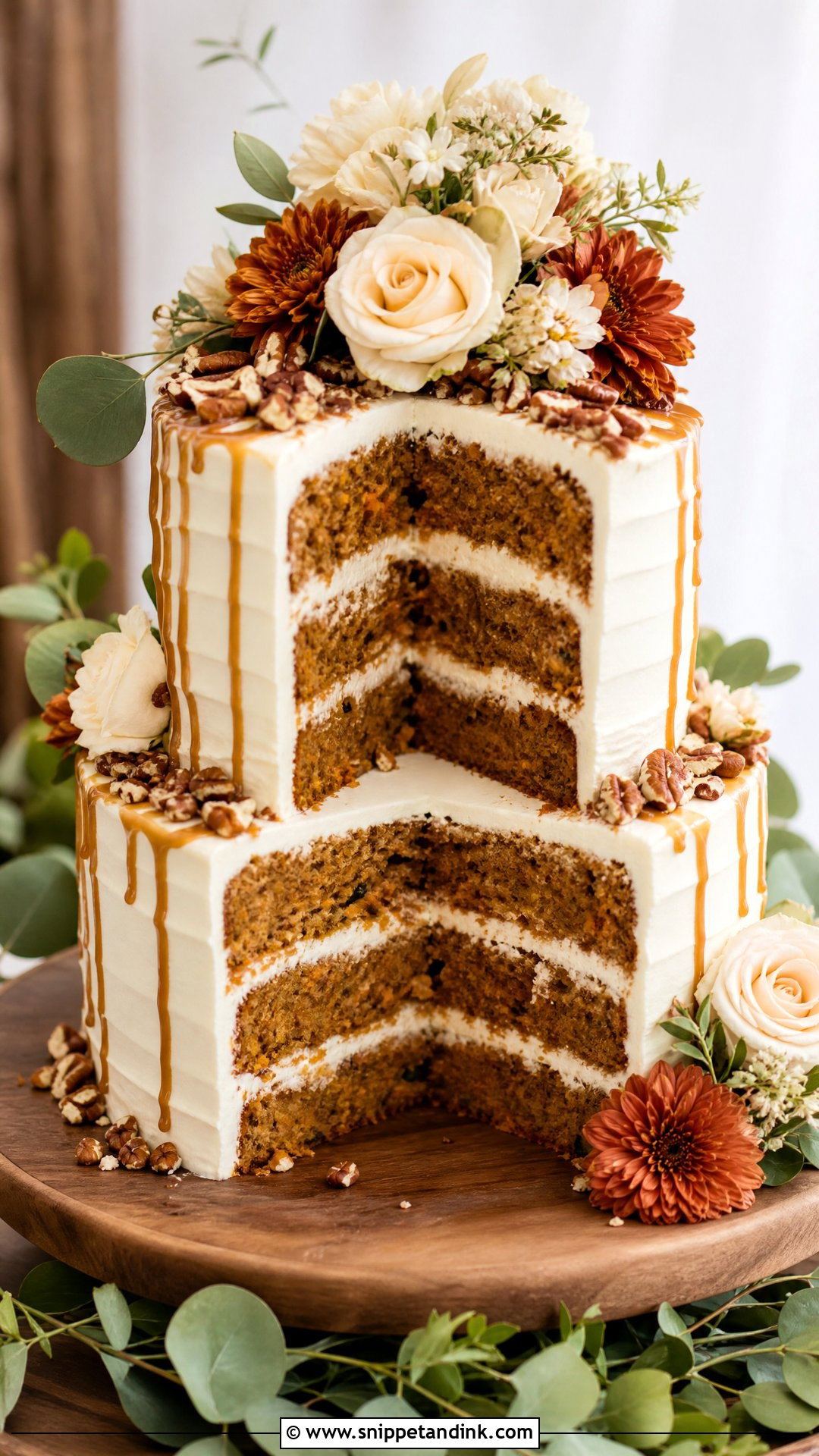
Carrot cake is one of the most requested fall flavors, with its warm spice, tender crumb and cream cheese frosting. To make it look like a wedding cake, keep the decoration polished: smooth cream cheese buttercream, light piping, chopped pecans, caramel touches or muted flowers. A semi-naked finish shows off the golden layers. One practical note: classic cream cheese frosting is softer and more perishable than plain buttercream, so I keep these cakes chilled until close to serving.
23. Fall Wedding Cake With Berries
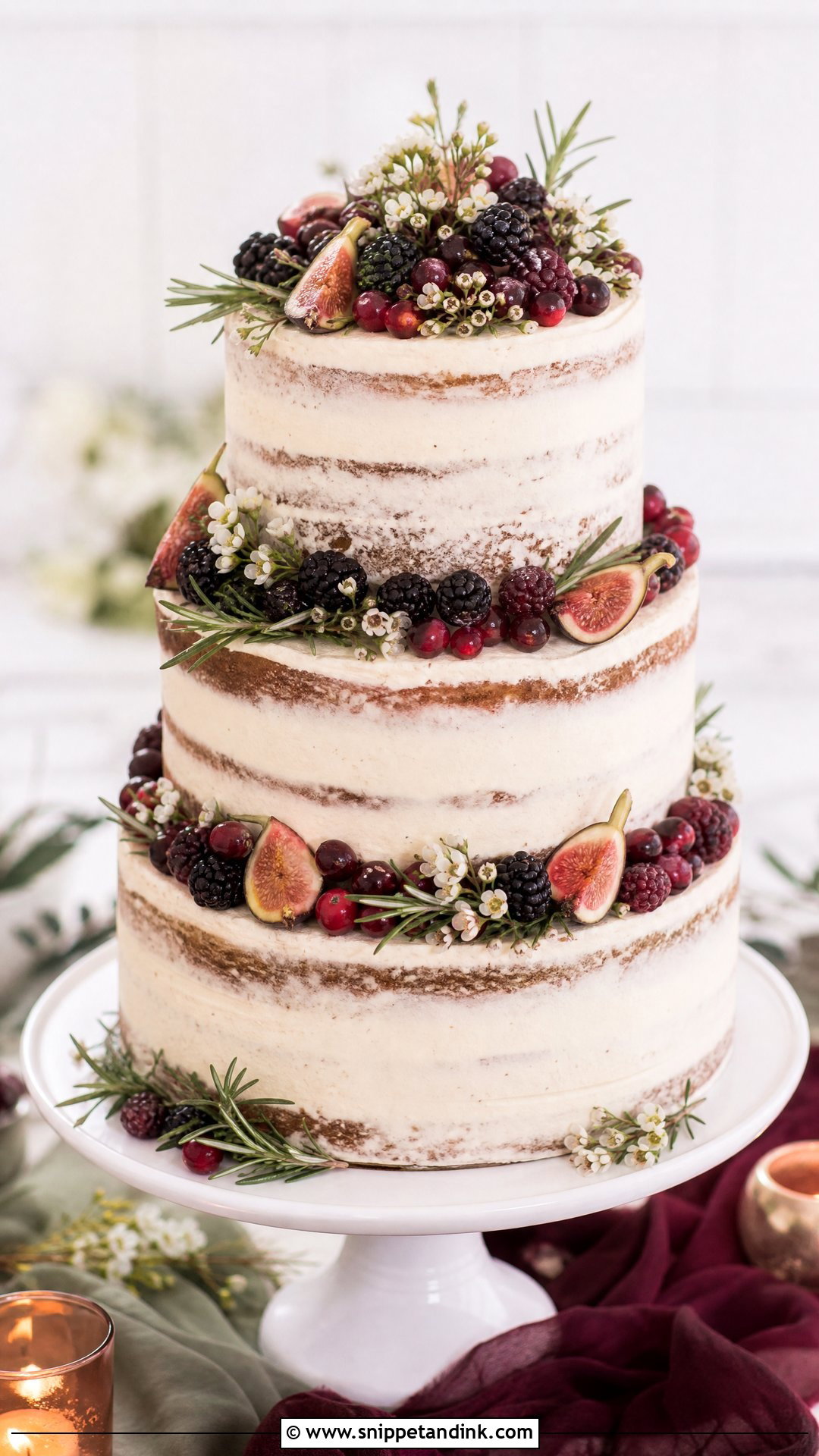
Autumn berries, such as blackberries, blueberries, cranberries and dark raspberries, give deeper color than bright summer fruit. They bleed juice onto pale icing, though, so I place them at the last moment and keep them clustered. Ivory buttercream, chocolate ganache or a semi-naked finish all work beneath them, with rosemary, figs or a touch of gold leaf. Vanilla bean, lemon blackberry, chocolate raspberry, almond and spice flavors all pair well.
24. Black And Gold Fall Wedding Cake
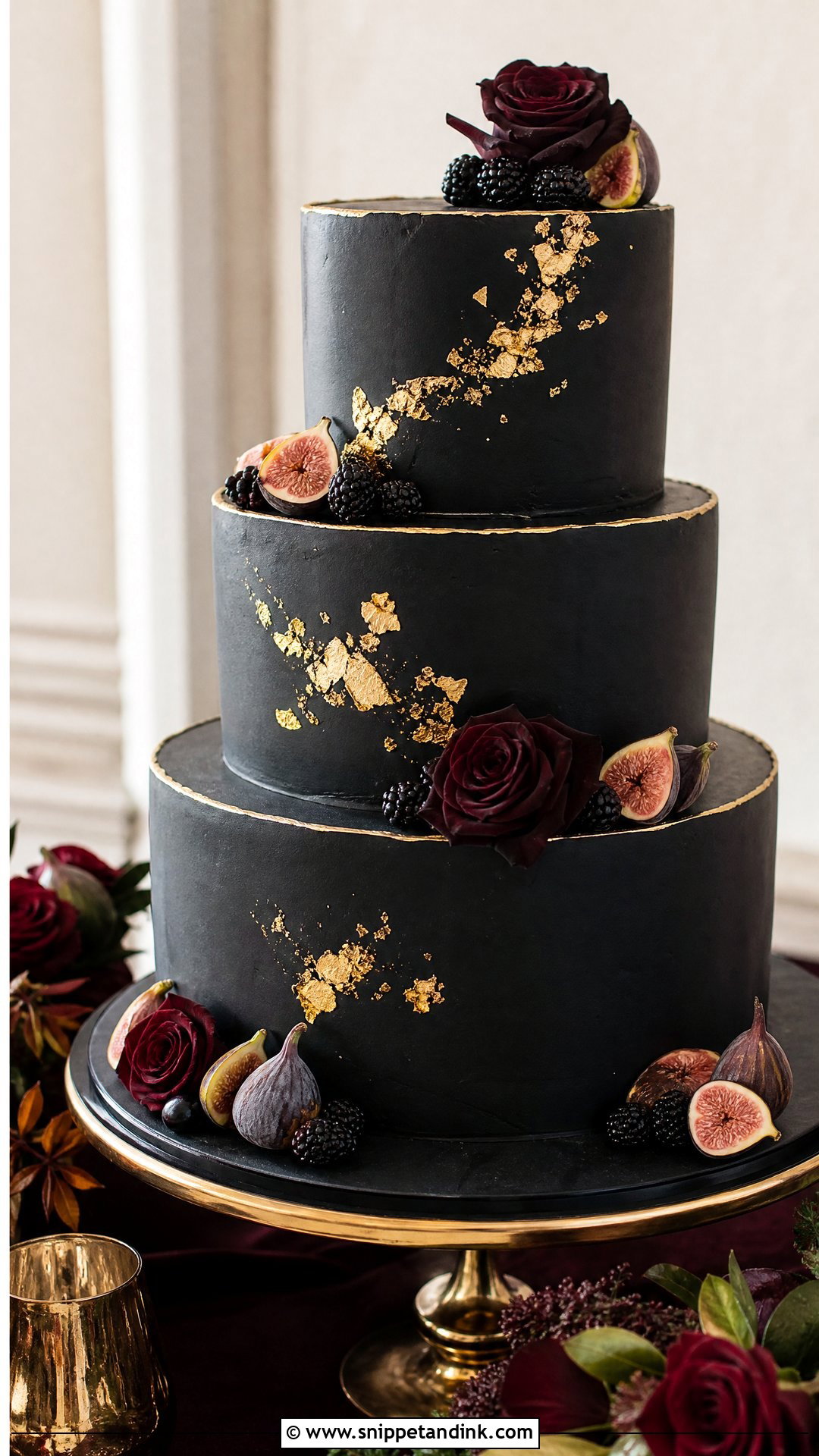
Black and gold is formal and dramatic, at home at evening weddings and modern venues. I use black cocoa buttercream or dark fondant, then add gold leaf, metallic brushstrokes or a thin gold edge. Burgundy flowers, figs or dark berries soften the contrast. Dark fondant shows every fingerprint and scuff, so this cake needs careful handling all the way to the table. Chocolate, espresso, salted caramel and hazelnut suit it.
25. Small Fall Wedding Cake
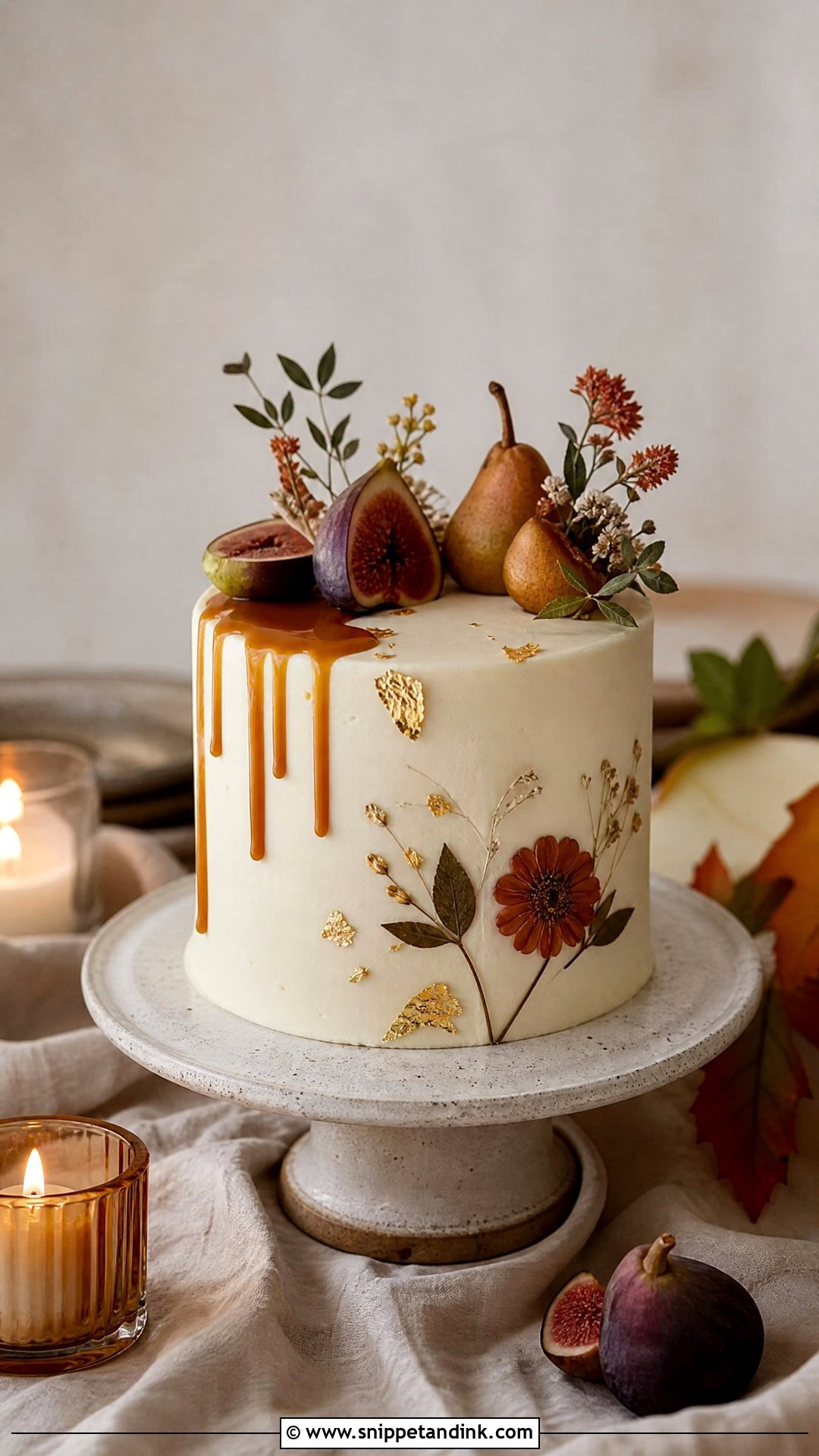
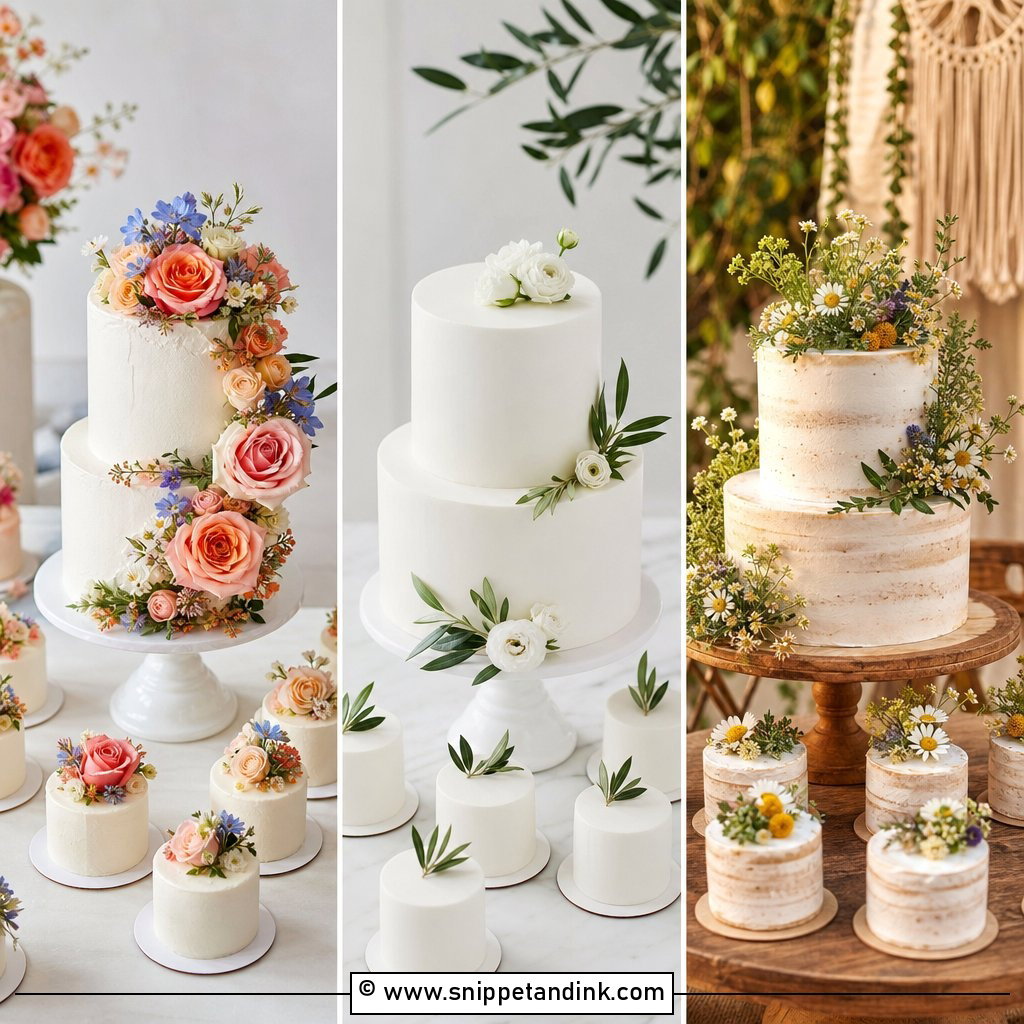
A small cake suits elopements, micro weddings and couples serving a wider dessert table. A one- or two-tier cake is also where I’d encourage a bolder flavor or design, because fewer people need to be pleased. Pumpkin spice, apple cider, chai, maple pecan and chocolate caramel all suit it, finished with a small floral cluster, mini pears, figs, a caramel drip, pressed flowers or gold leaf. Set it on a good stand with candles and simple greenery. If guest numbers are larger, a small display cake plus a sheet cake kept in the kitchen is a common and sensible approach.
How Caramel, Cream Cheese and Fondant Behave on a Warm Reception Table
Autumn venues can be surprisingly warm: a sunny barn, a packed ballroom, a table next to the fireplace. The fillings that make fall cakes taste good are often the least stable, so tell your baker where the cake will stand and for how long.
- Cream cheese frosting is soft and perishable. It should stay chilled until close to display, not sit out for the whole evening.
- Caramel drips slide as the room heats up. A shorter, thicker drip or a ganache drip holds better.
- Fondant sweats when it moves from a cold fridge into a warm room. Let it come up to temperature gradually and don’t wipe the beads of moisture.
- Keep the cake out of direct sun and away from heaters, candles and speakers.
Real Fruit and Flowers Need a Plan Before They Touch Icing
Not every pretty bloom is safe near food. Many flowers are sprayed, and some common ones are toxic, so your florist and baker should agree on varieties ahead of time. Fresh stems should be wrapped in floral tape or set in picks. Fruit should be washed, dried and added late, because figs weep, pears brown and berries bleed into pale buttercream. If you’re unsure, sugar flowers and sugar fruit avoid the issue entirely and can be kept as a keepsake.
Let the Venue and the Flavor Lead, Then the Decoration
The best fall cakes I make start from two questions: where will it stand, and what do you actually like to eat? A barn reception suits semi-naked frosting and figs; a modern evening room suits black buttercream and gold leaf. Chai, maple, apple cider, carrot and salted caramel give guests something to remember after the photos are done. Bring the styles you saved to your tasting, along with your guest count, color palette and venue details, and ask your baker how each one would hold up in that room.
You'll Like These Ideas:





Leave a Reply