
Casata (more often spelled cassata) is sponge cake layered with sweetened ricotta, then finished with citrus, chocolate and a smooth coat that can be anything from marzipan to buttercream. It’s rich, but the ricotta keeps it lighter than a butter-heavy filling. For a wedding it can stay classic Sicilian or move toward strawberries, vintage piping, plain white tiers or gold. I steer couples by venue and guest count first and decoration second, because ricotta has needs a buttercream cake doesn’t. The twenty versions below run from heritage to modern, each with what I’d watch for when making it.
Two Different Cakes Answer to This Name
Couples sometimes come to a tasting expecting one cake and get another, so it’s worth sorting out early. Sicilian cassata is sponge soaked in syrup or liqueur, filled with sweetened ricotta, chocolate and candied fruit, wrapped in green marzipan and covered in white icing with candied fruit on top. It’s dense, very sweet and festive.
The other version, an Italian-American bakery cake, is light sponge with strawberries, custard and whipped cream frosting, often soaked with rum. Several strawberry ideas below sit closer to that style. Neither is more correct. Show your baker a photo and a description of the cake you grew up eating, and say which one you mean.
1. Traditional Sicilian Casata Wedding Cake
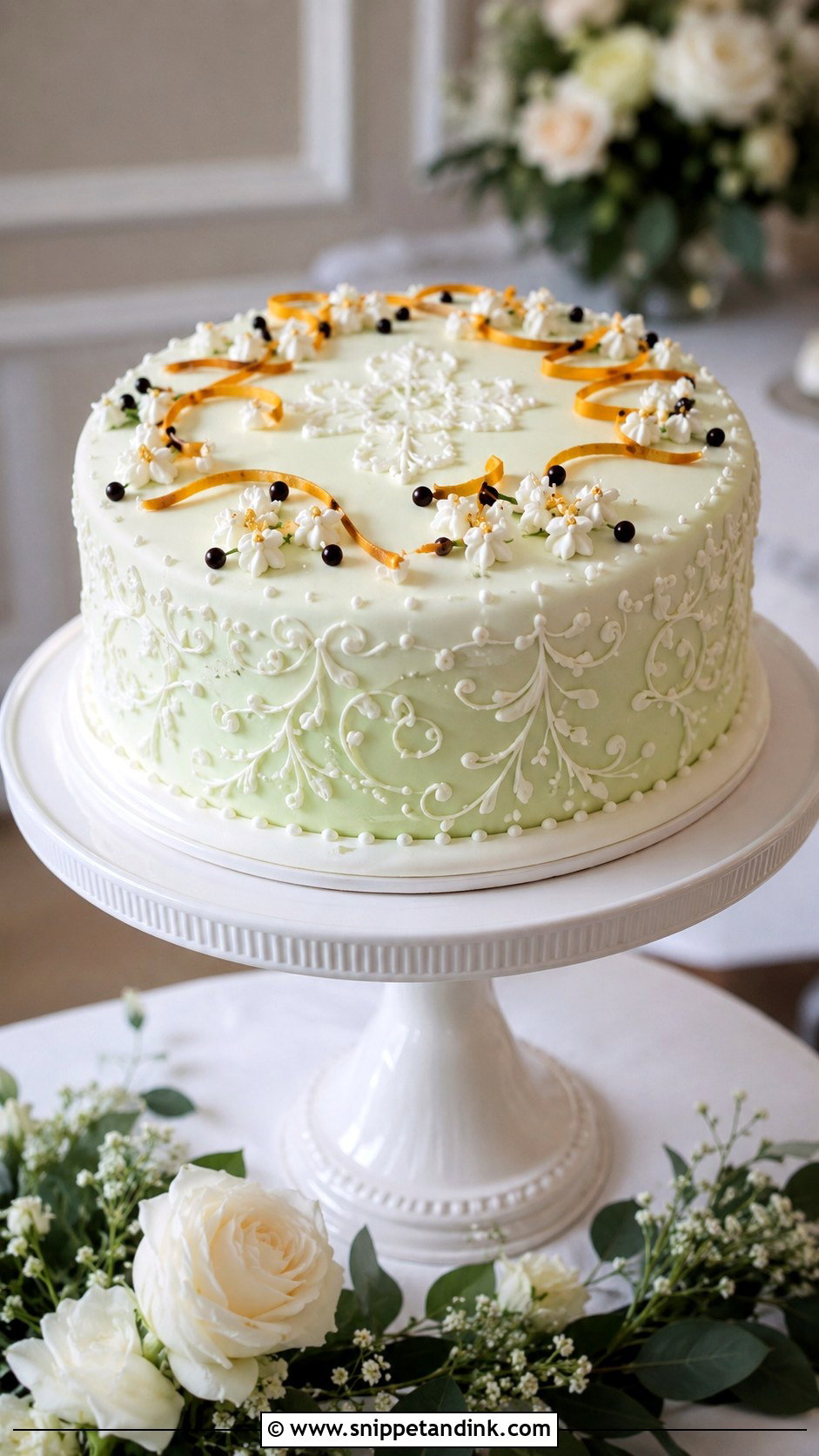
This is the one with heritage written on it: sponge brushed with syrup, sweet ricotta studded with chocolate, candied citrus, and a pale green marzipan band under white icing. On a wedding table I soften the traditional colors a little, so it reads as a bridal cake rather than an Easter one. Ivory icing, candied orange and a few small sugar flowers are enough. I’d keep it to one statement tier or the top of a larger display. A full traditional cassata is very sweet, and three tall tiers of it is more than most guests will finish.
2. Strawberry Casata Wedding Cake
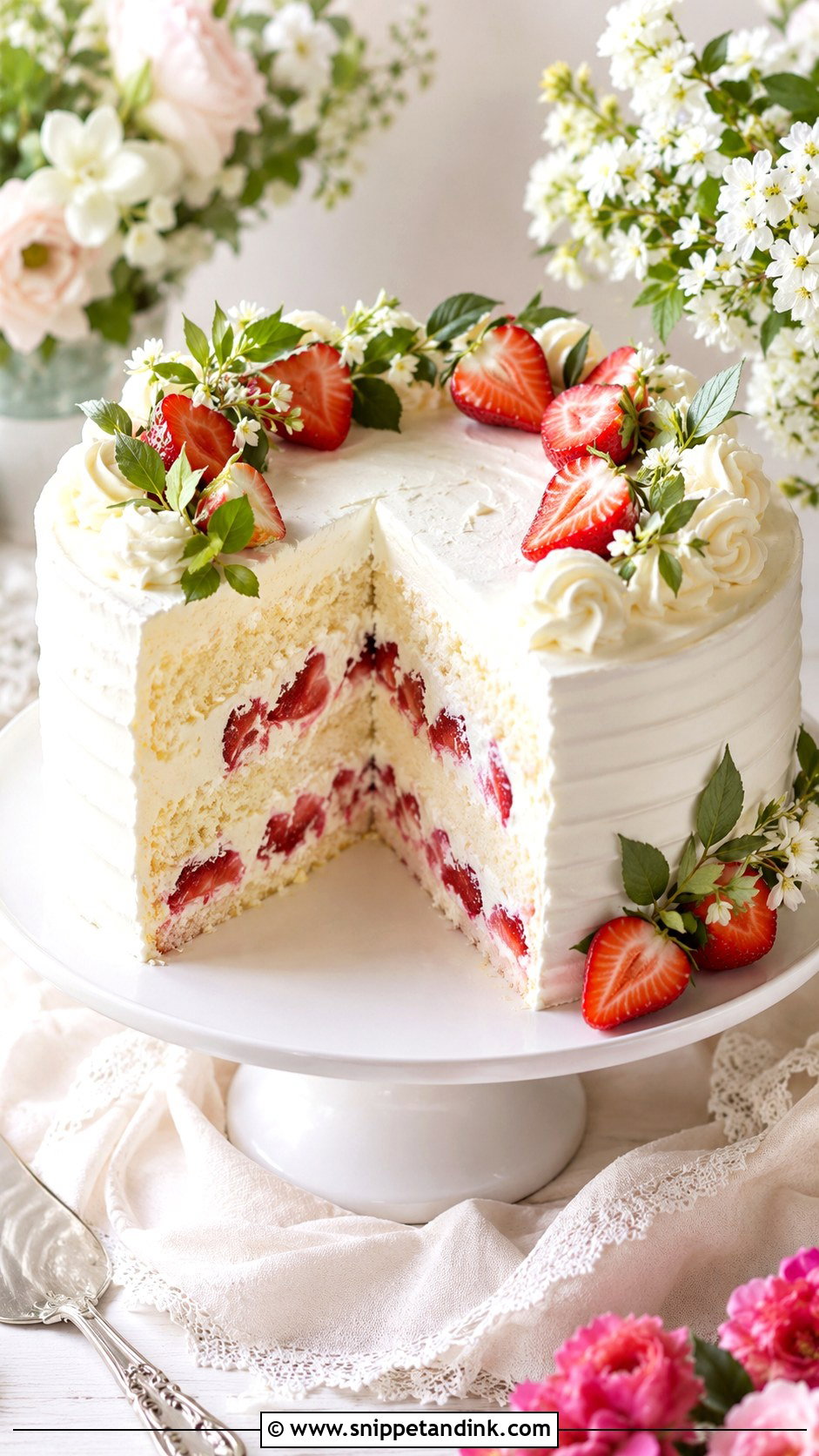
Strawberry versions are the ones people fall for at tastings. Vanilla sponge, whipped cream or pastry cream (or a lightly sweetened ricotta) and sliced berries between the layers give a bright cut face. Outside, a smooth white buttercream or stabilized whipped frosting keeps it clean. Here’s the catch: sliced strawberries release juice once they sit in cream, so I fill this cake the day before at the earliest, never two days out. Whole berries, a few tiny white flowers and leaves on a white stand finish it.
3. Two Tier Casata Wedding Cake
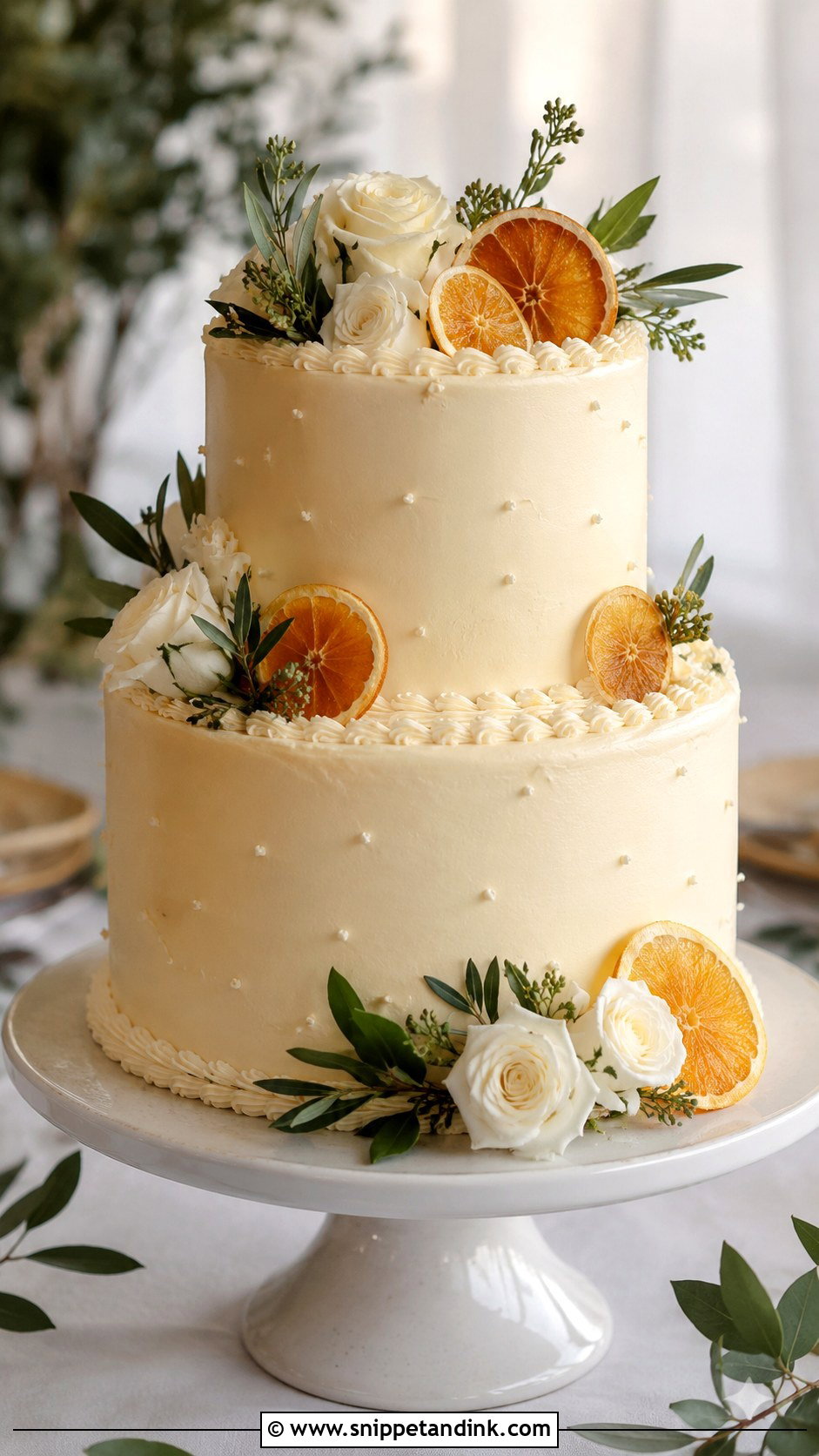
Two tiers gives you a real wedding cake silhouette without the size, which suits smaller weddings and brunch receptions. It also lets me split flavors. The lower tier can be classic vanilla sponge with ricotta and candied citrus, and the top strawberry or chocolate chip. Smooth ivory buttercream with simple piping around each base is all it needs. If the room is warm, a two-tier cassata is far easier to keep cold and stable than a tall one, which is a practical reason to choose it as much as a style reason.
4. Three Tier Casata Wedding Cake
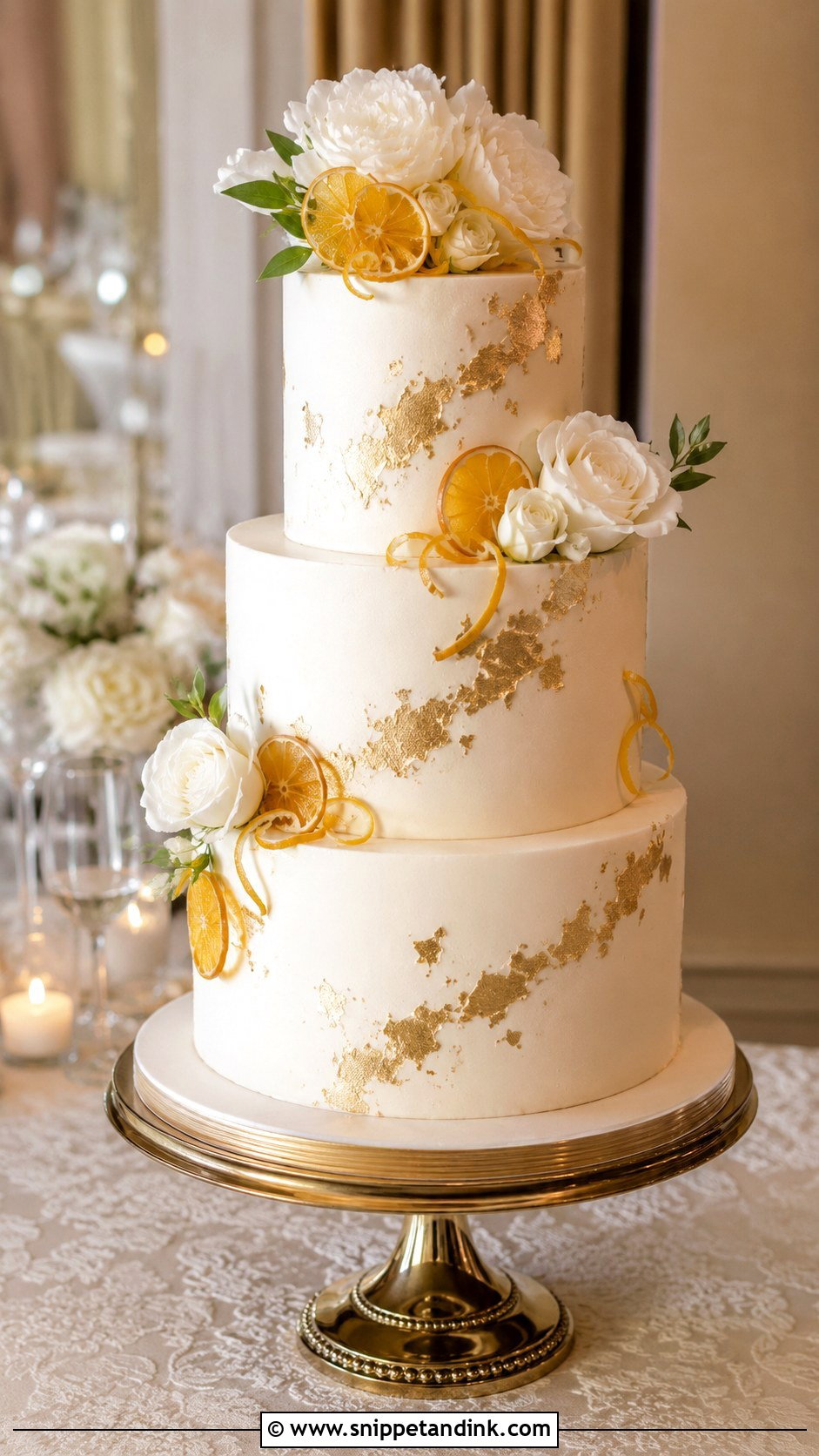
Three tiers turns the cake into a true reception centerpiece while keeping a flavor guests remember. Each tier can carry sponge, ricotta, mini chocolate chips and citrus, or you can change the filling tier by tier. Structurally, ricotta is softer than buttercream, so every tier sits on its own board with dowels underneath, and I pipe a firm buttercream dam around each layer to stop the filling bulging out. Outside, keep it bright with white frosting and soft green or gold touches. Flowers in small clusters rather than a full cover let the cassata details show.
5. Mini Casata Wedding Cakes
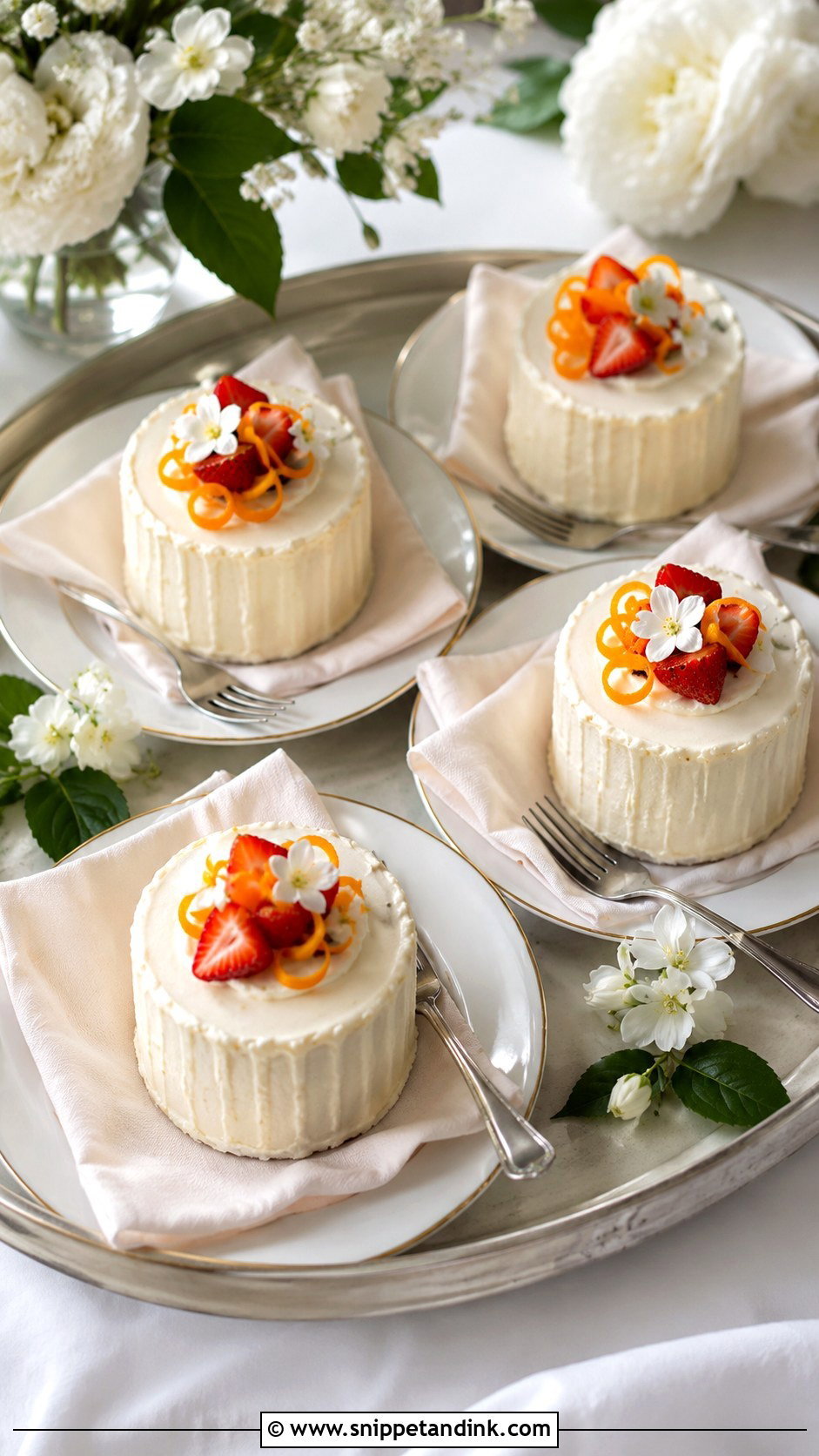
Individual cakes suit plated dinners, because dessert arrives at each seat already finished. Every guest gets a small personal cake of sponge, ricotta cream and fruit with a smooth coat on top. Decorate with one thing only: a curl of candied orange, a strawberry slice or a single sugar flower. They save slicing time too. The honest downside is labor. Each mini is filled, coated and finished by hand, so per guest they usually cost more than slices from a tiered cake, and they need refrigerated space until service.
6. Casata Sheet Wedding Cake
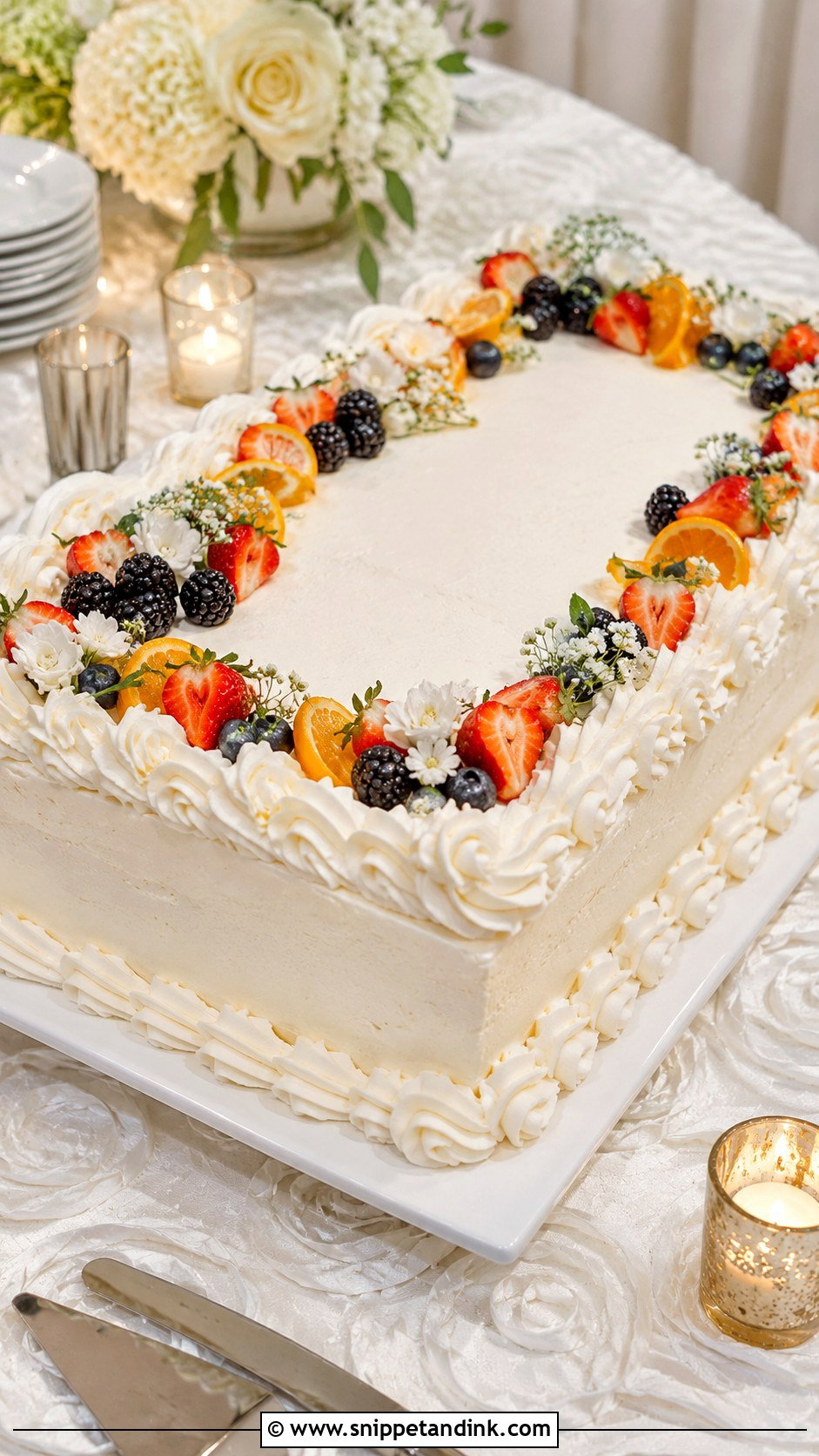
When the display cake is small and the guest list is long, a sheet cake in the kitchen does the real serving. It’s practical for large receptions, backyard weddings and buffet desserts. The layers can still hold sponge, ricotta or pastry cream, strawberries, chocolate chips or candied fruit, with smooth whipped frosting or buttercream on top. Neat piped borders, a few berries and citrus pieces make it presentable if it does go out on the table. Guests rarely know which slices came from which cake, and the flavor is identical.
7. Naked Casata Wedding Cake
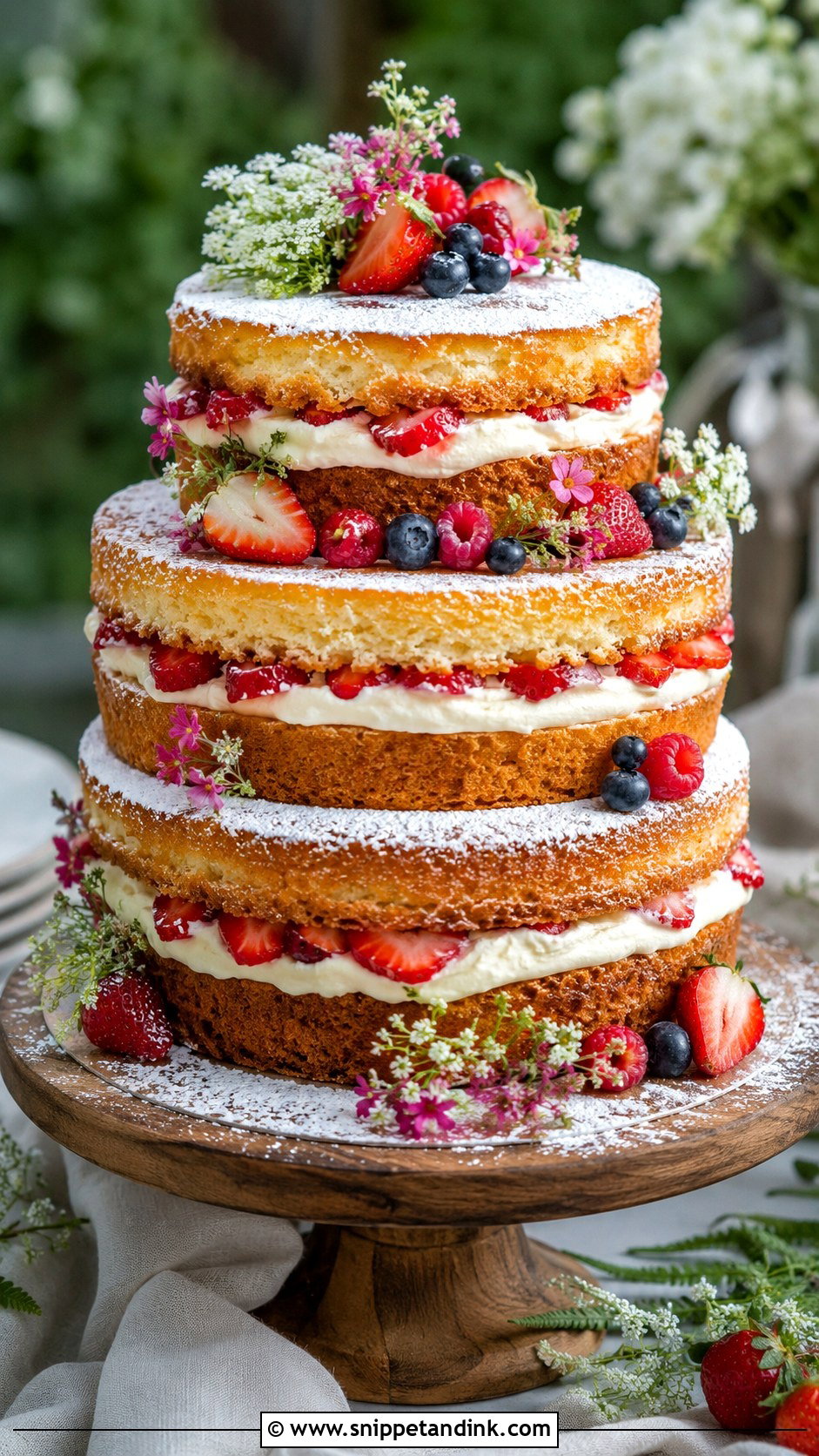
Exposed sponge suits rustic, garden and outdoor weddings, and it lets the cassata’s filling and fruit show. I’d use vanilla or almond sponge with ricotta and strawberries, then a light dusting of powdered sugar and some berries and flowers on each tier. Be cautious about using it outdoors for long, though. Without a frosting coat, sponge dries fast in open air, and the ricotta between the layers is exposed to warmth on every side. I’d want this one set out shortly before it’s cut, on a wood stand with a linen runner and greenery around it.
8. Semi Naked Casata Wedding Cake
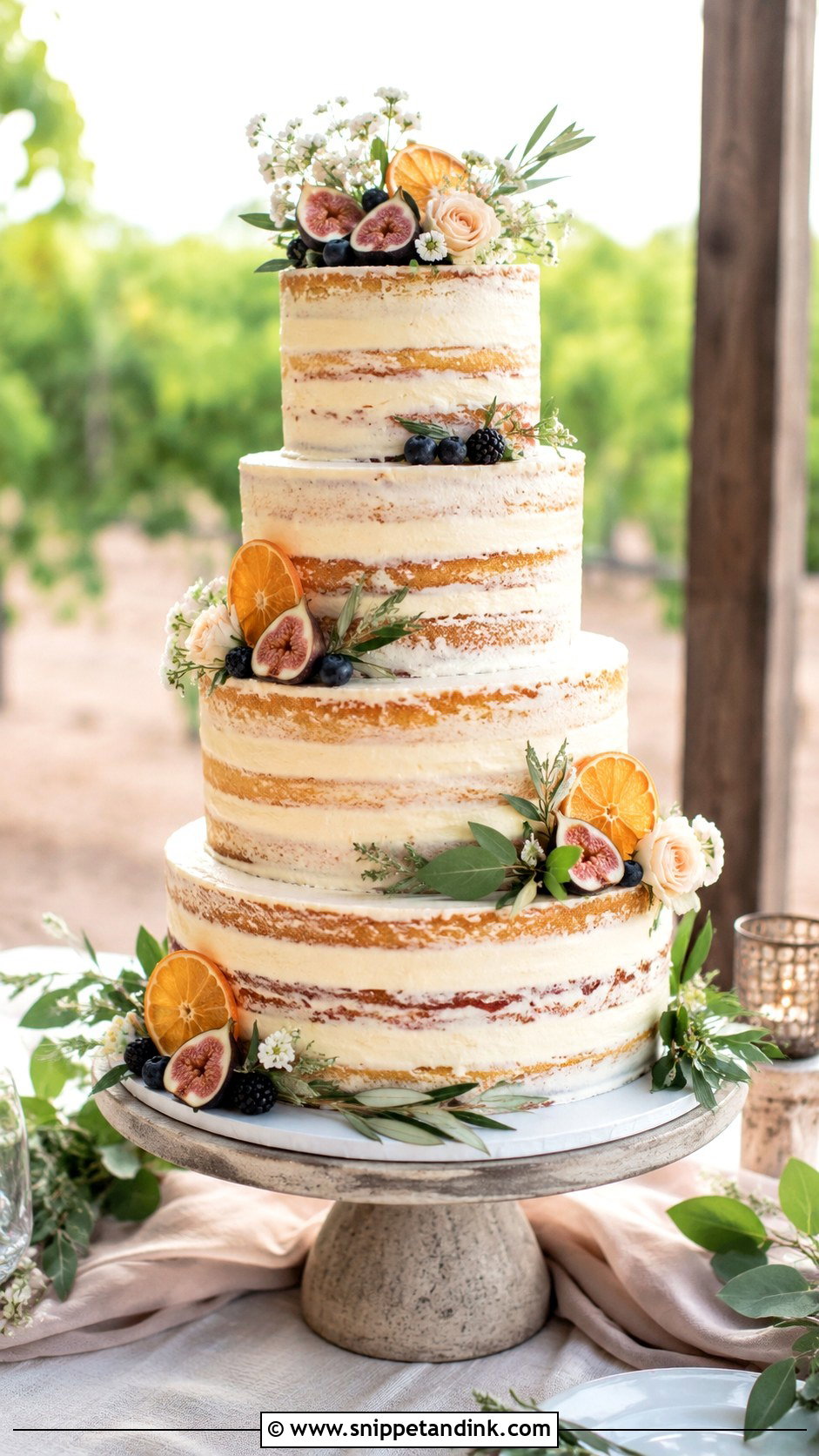
For couples who like exposed layers but want a little polish, a semi naked Casata wedding cake is the middle ground. A thin scraped coat of buttercream softens the sponge edges while the layers still peek through, and it protects the cake from drying better than a fully naked finish. Fill it with ricotta, citrus and strawberries for a colorful cut. Small floral clusters, fresh figs or candied orange slices sit well on the outside. Vineyards and barn receptions suit it best.
9. Vintage Casata Wedding Cake
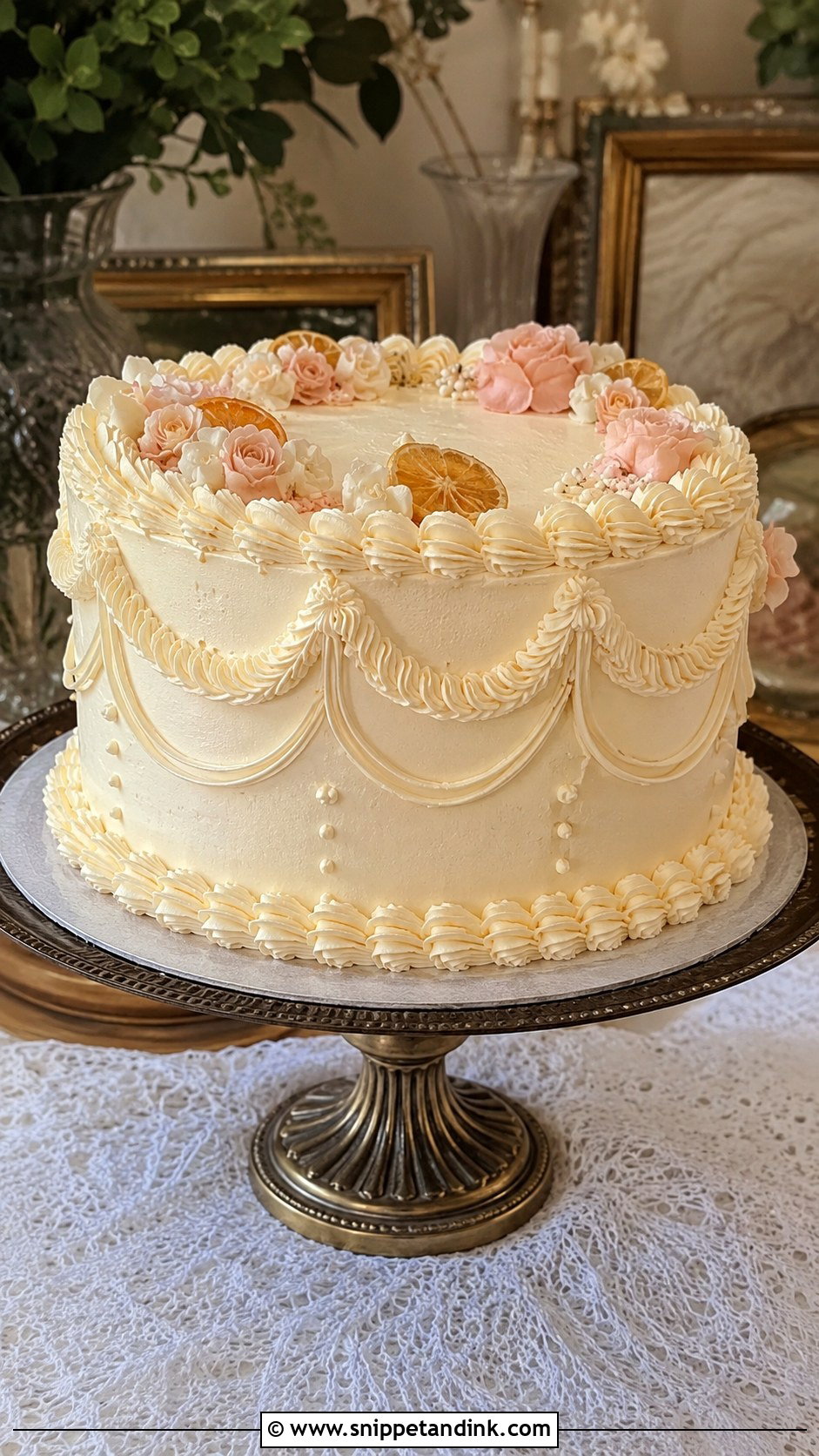
Old-fashioned piping is having a real moment, and cassata takes to it well. Think shell borders, soft swags, pearl dots and small piped flowers over smooth buttercream, with sponge, ricotta, chocolate chips and candied citrus kept inside. Ivory, cream, blush or pale green all suit it. Heavy piping needs a firm, crusting buttercream to hold its shape, and that sits on top of a soft filling, so I chill the tiers well between filling and decorating. A heart-shaped single tier is the playful option; round tiers feel more classic on an antique stand with lace linens.
10. Modern White Casata Wedding Cake
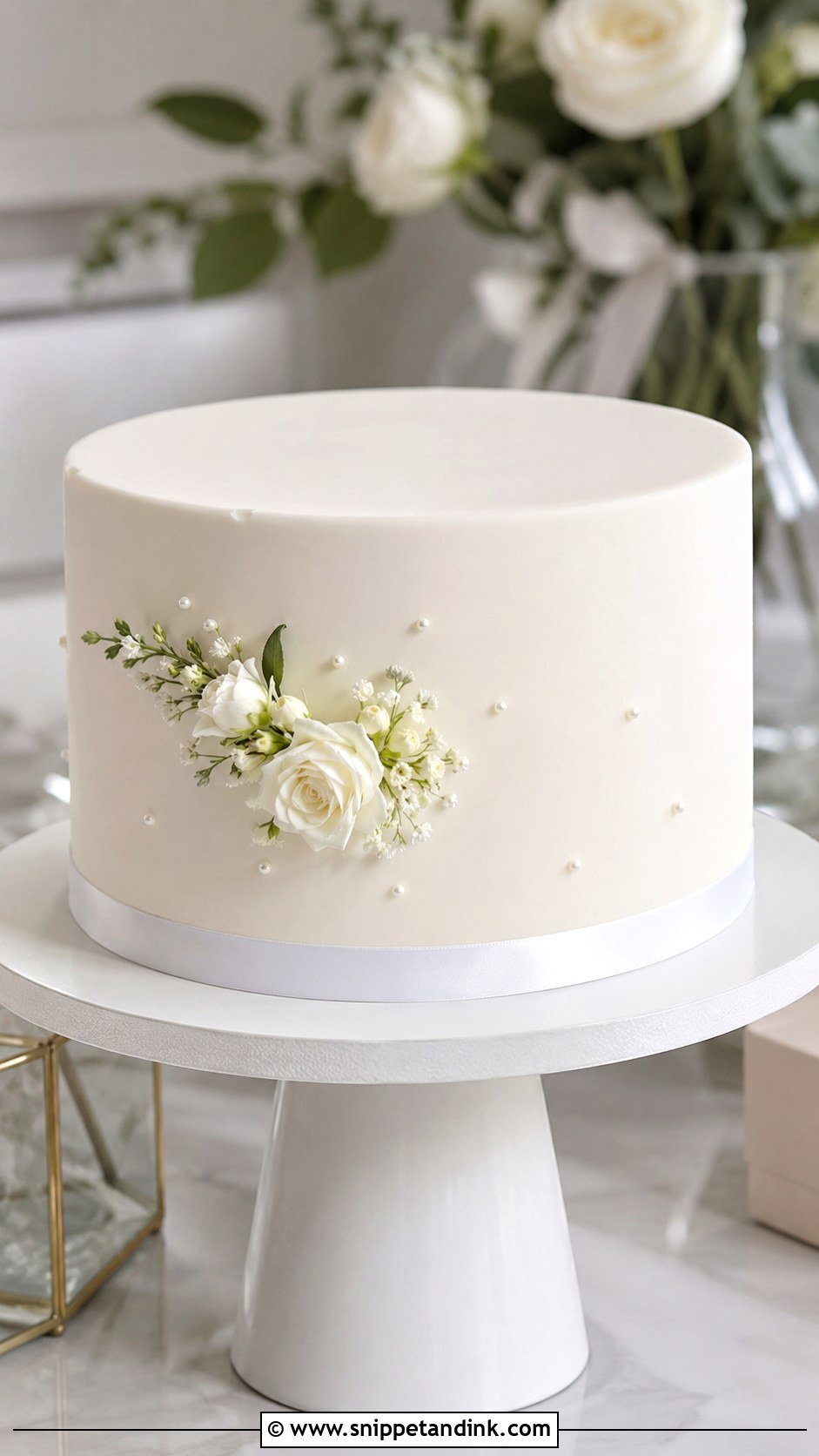
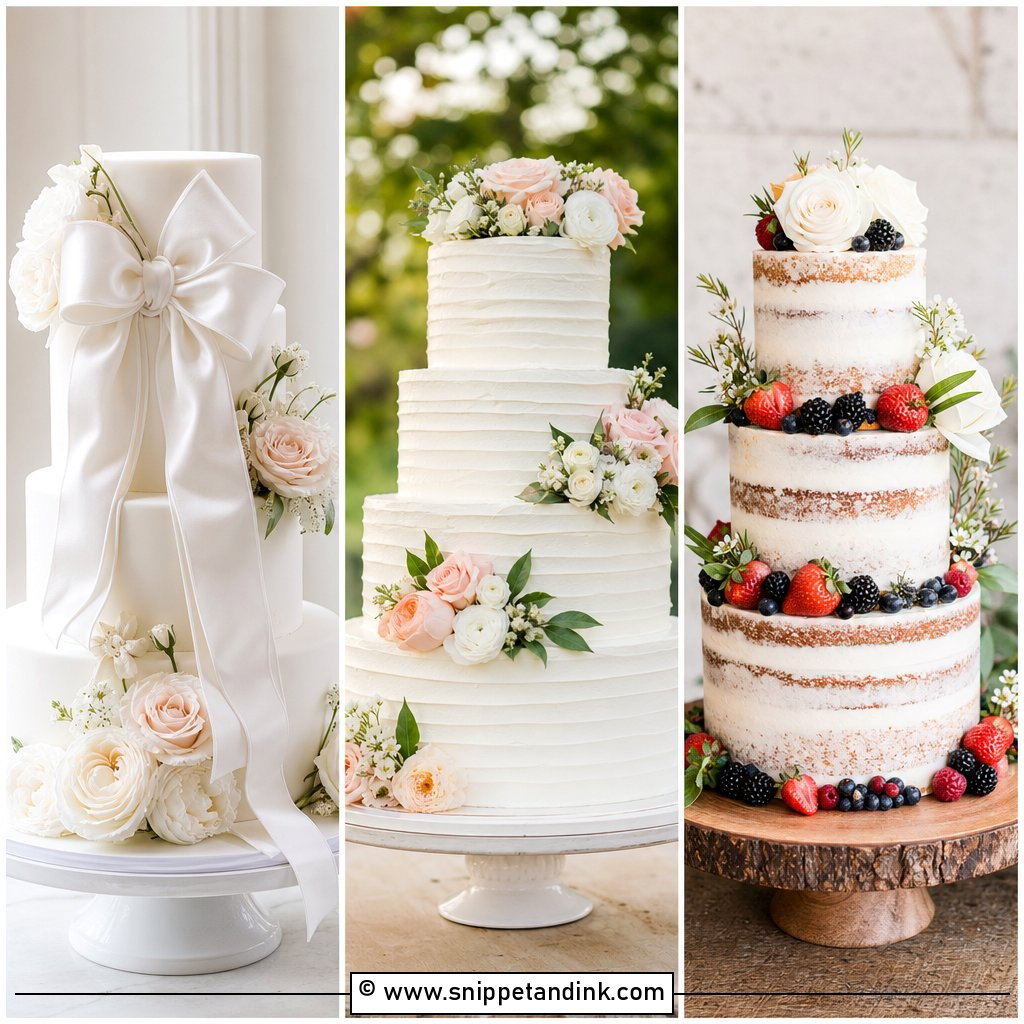
Plain white outside, cassata inside: I like this contrast a lot. Smooth white buttercream or fondant with sharp edges and almost no decoration, then ricotta, vanilla sponge, candied orange and tiny chocolate chips when it’s cut. One small floral cluster, a few edible pearls or a slim ribbon is the limit. Sharp edges are harder to keep on a cake with a soft ricotta center, since the filling can settle and push the sides out, so this one depends on good chilling and a sturdy dam. Gallery spaces and hotel receptions suit it.
11. Gold Accent Casata Wedding Cake
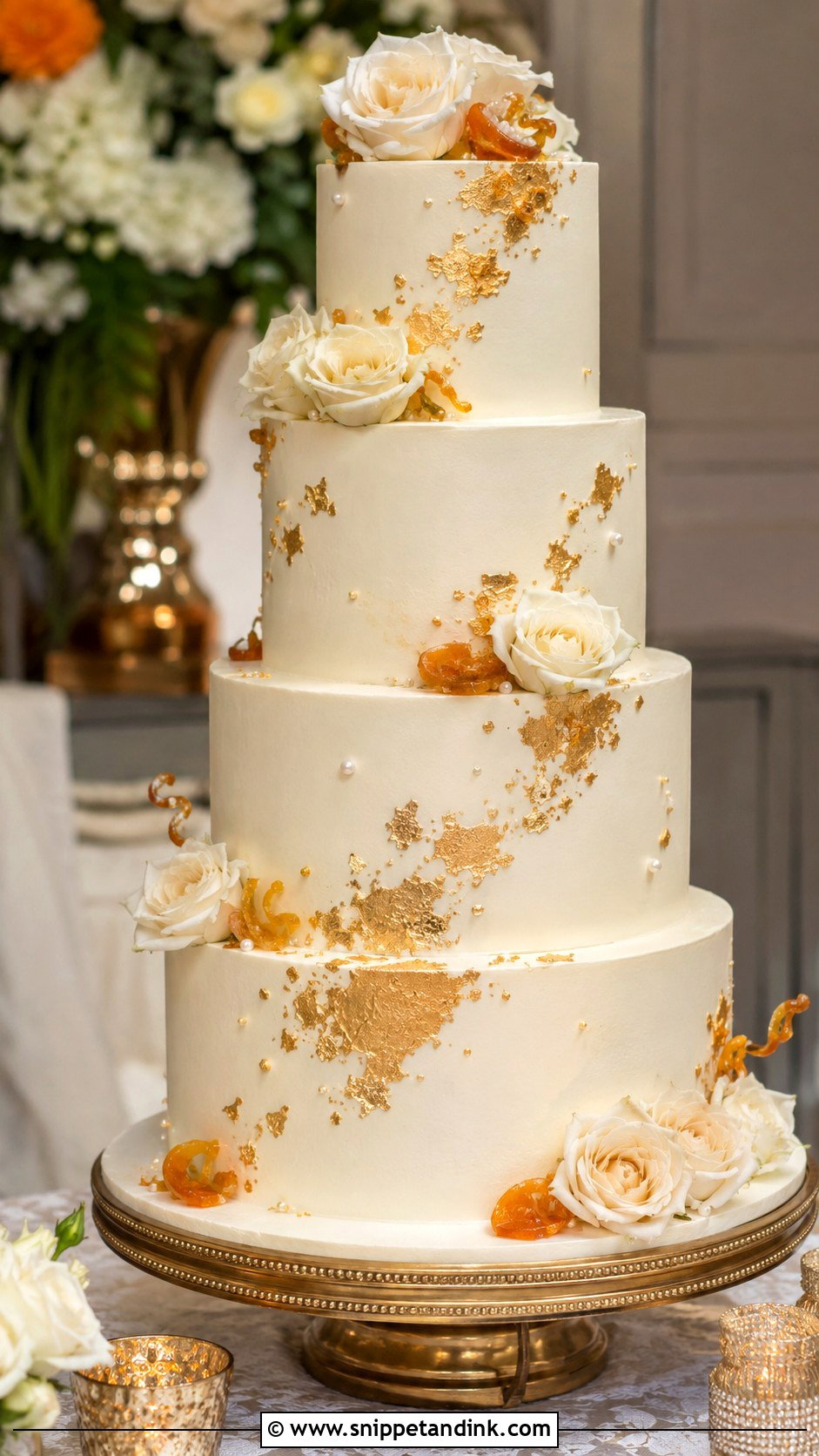
Gold works with cassata because the cake’s own colors (cream, pale green and candied orange) already look warm. I add edible gold leaf in small patches, a thin painted rim on each tier or a gold topper, and keep the rest quiet. Gold leaf sticks best to a firm, slightly tacky surface, so I apply it to chilled fondant or crusted buttercream, not soft whipped cream. Keep the flowers simple so the gold doesn’t compete. Ballroom weddings and evening receptions are where it fits.
12. Floral Casata Wedding Cake
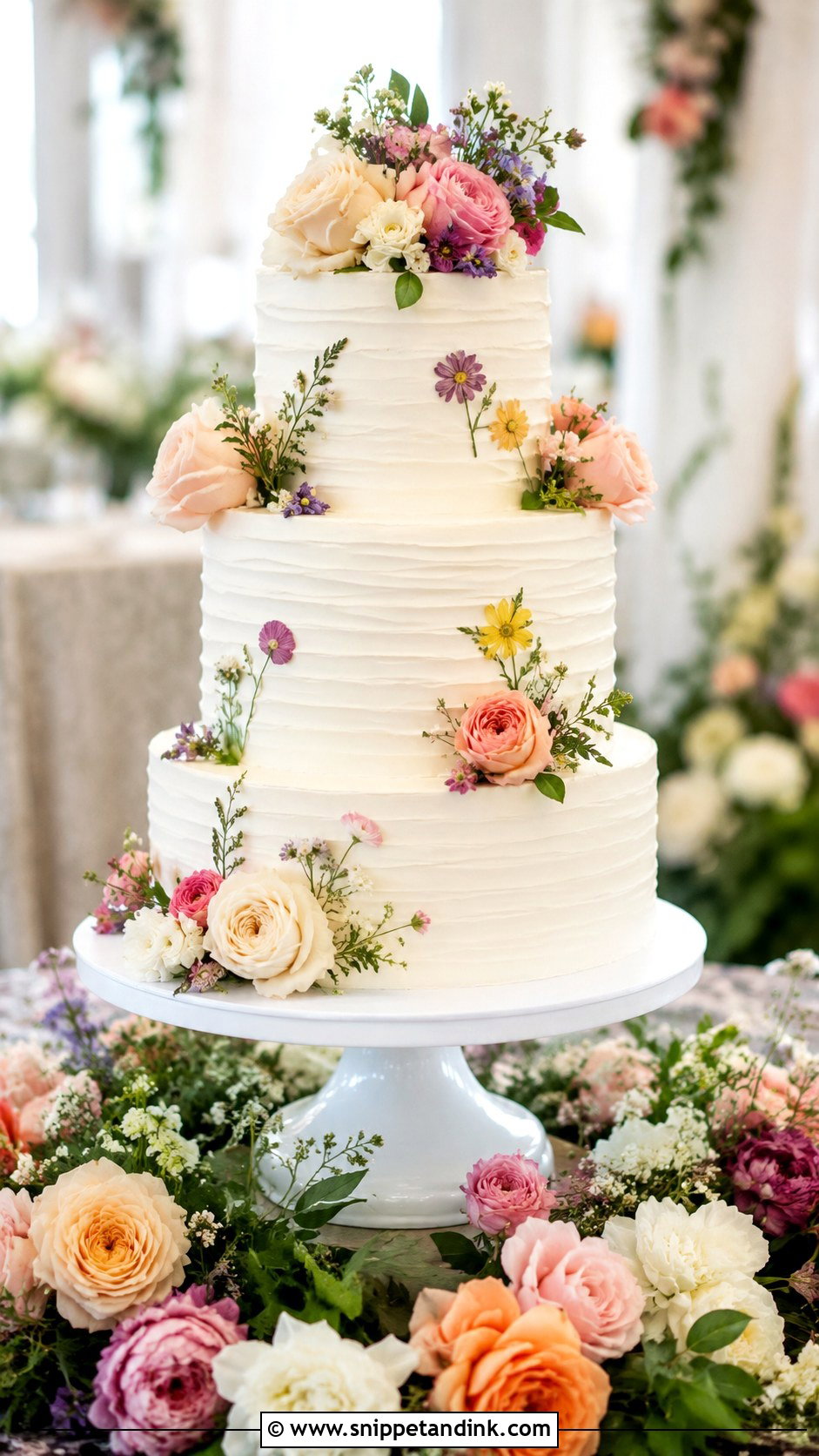
Flowers soften a cassata and tie it to the bouquet and centerpieces. Under a white or ivory coat I’d fill it with ricotta, sponge, citrus and berries, then dress the tiers with roses, ranunculus, small daisies or edible pressed flowers. Not every bloom is safe on food, so fresh stems need to be pesticide-free and wrapped or in picks, and pressed flowers should be ones sold as edible. Place the blooms around the tiers rather than over every inch. Garden weddings and spring palettes are its natural home.
13. Lemon Casata Wedding Cake
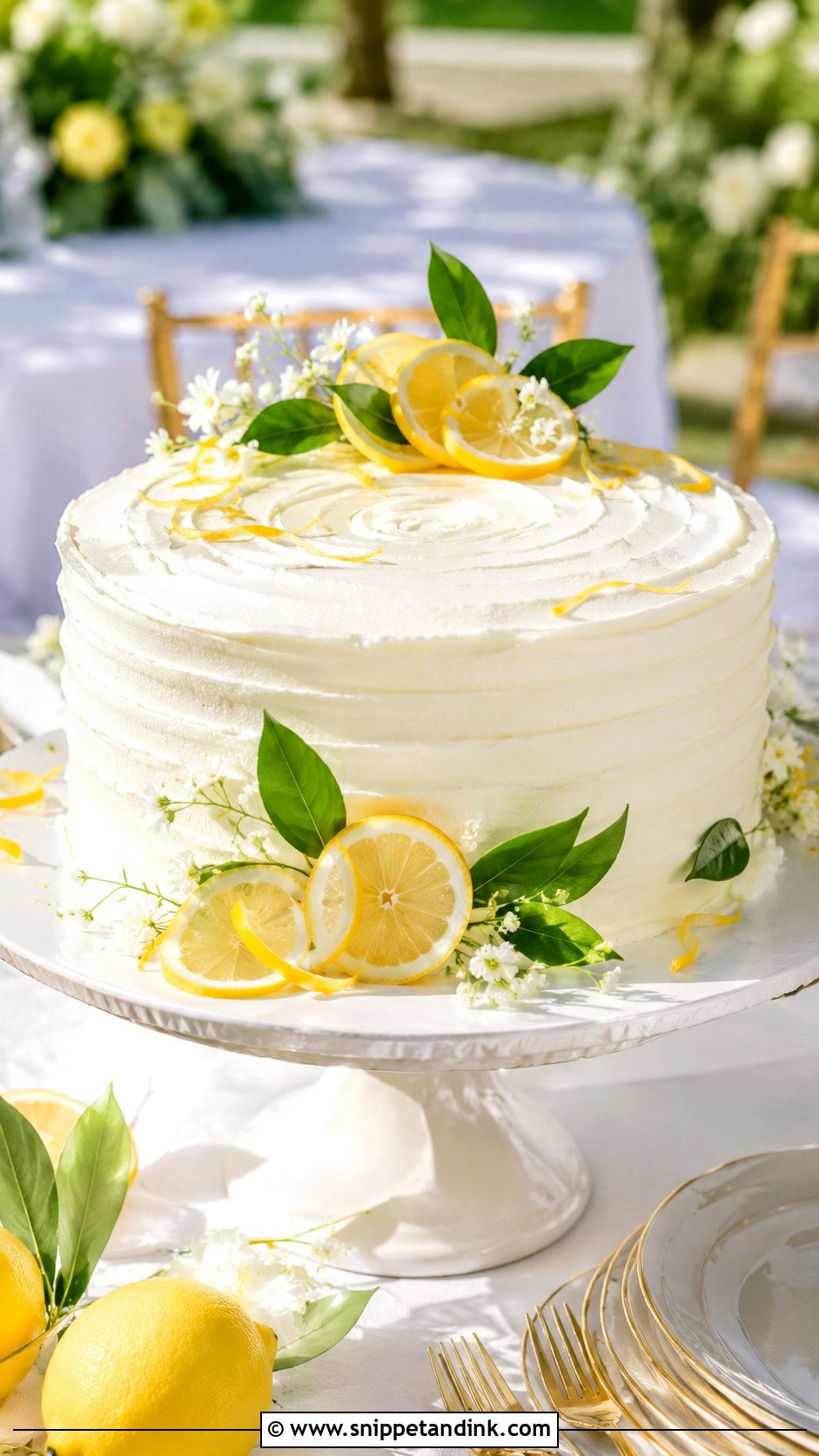
Lemon is my favorite partner for ricotta, because the acidity cuts through the richness. I brush vanilla sponge with lemon syrup, fill it with lemon ricotta and candied citrus, and keep the outside white with soft yellow accents. Lemon slices, white flowers and a few green leaves finish it. Fresh lemon slices on top weep juice onto the frosting after a few hours, so I blot them well or use candied slices instead. It suits outdoor receptions and coastal weddings, and it doesn’t feel heavy after a big dinner.
14. Orange Casata Wedding Cake
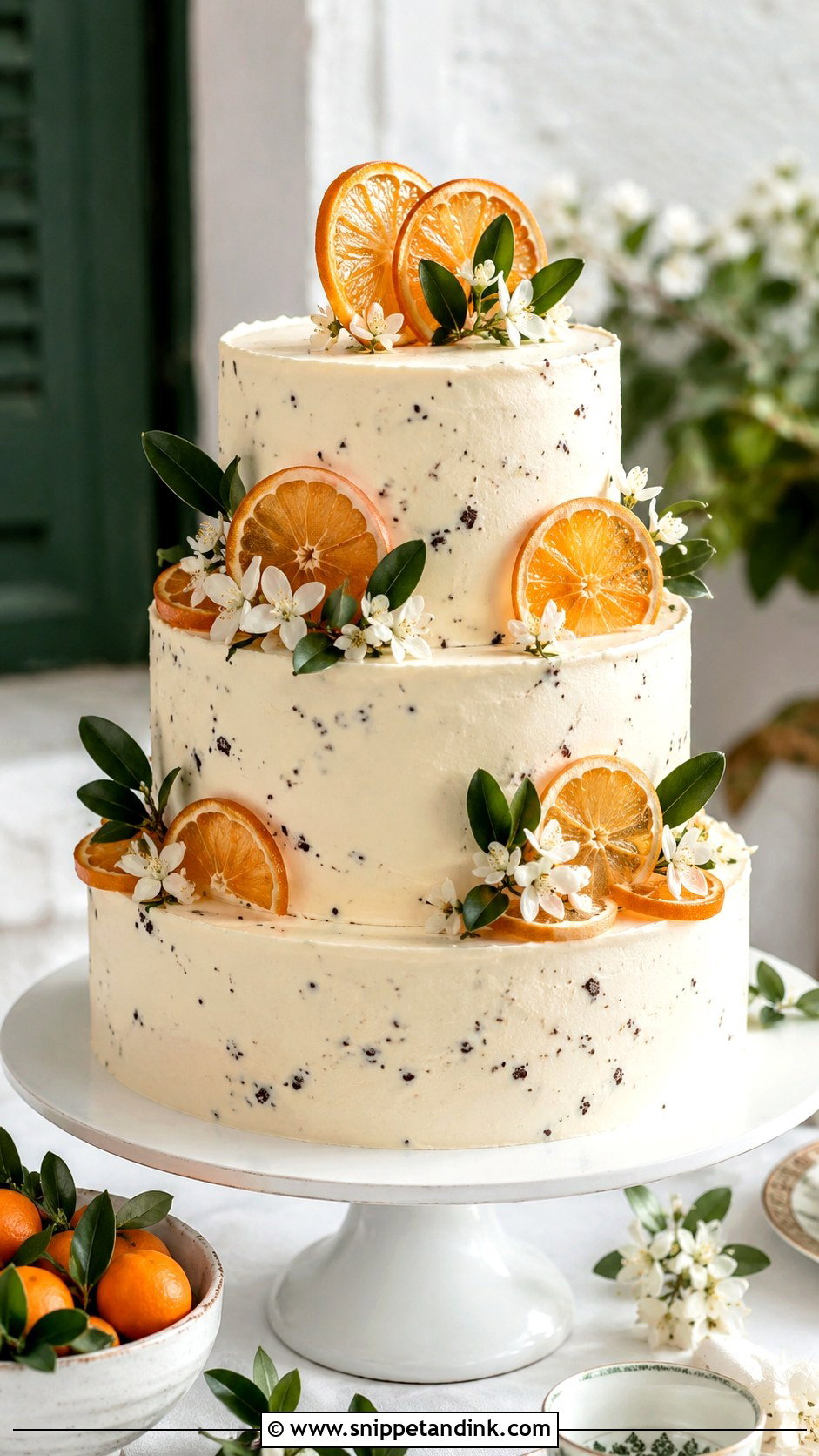
Orange is the flavor most tied to traditional cassata, through candied peel and orange-scented ricotta. For a wedding I use vanilla or almond sponge with ricotta, orange zest and small chocolate chips, then ivory buttercream outside with candied orange slices and soft green leaves. Real orange blossoms smell wonderful but bruise quickly, so I’d add them at the venue. Styled on wood it looks rustic; on a footed white stand it’s formal. Late summer, fall and Mediterranean-style weddings suit it.
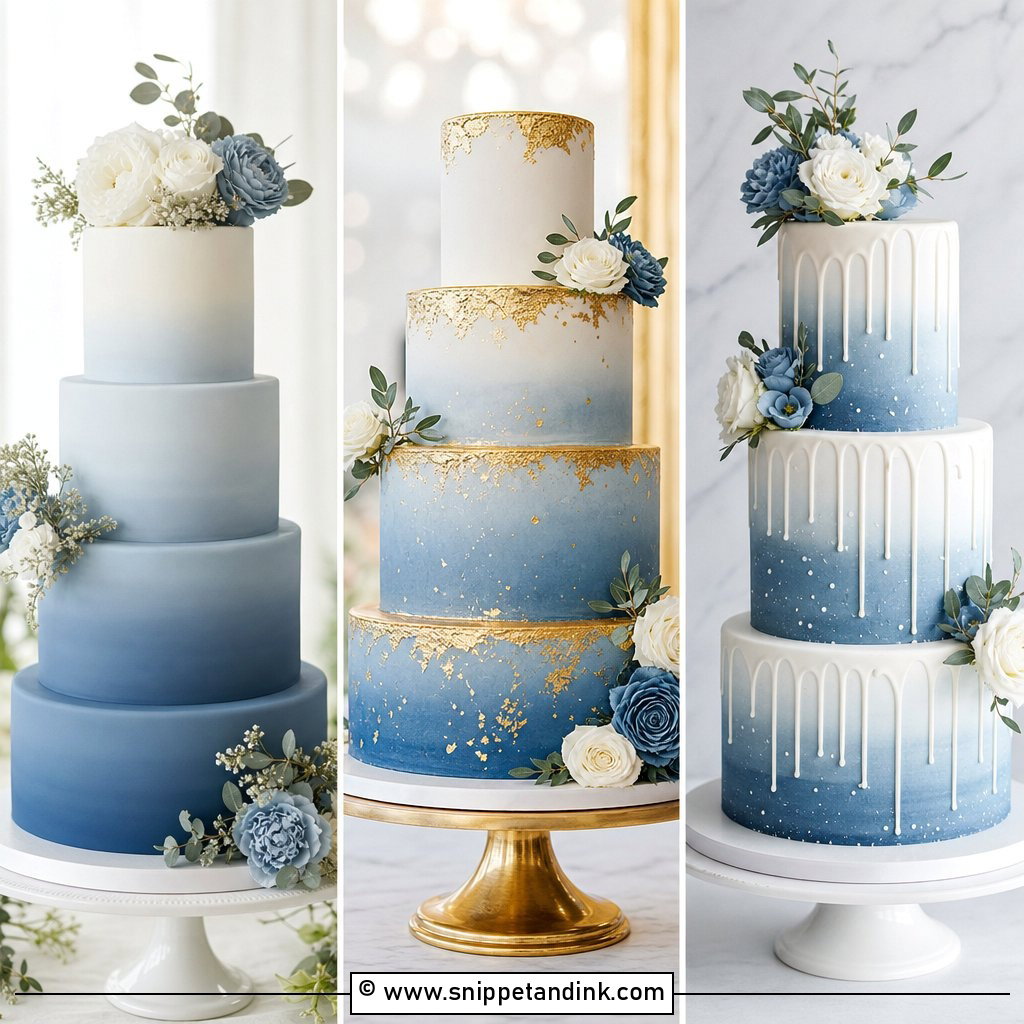


15. Chocolate Chip Casata Wedding Cake
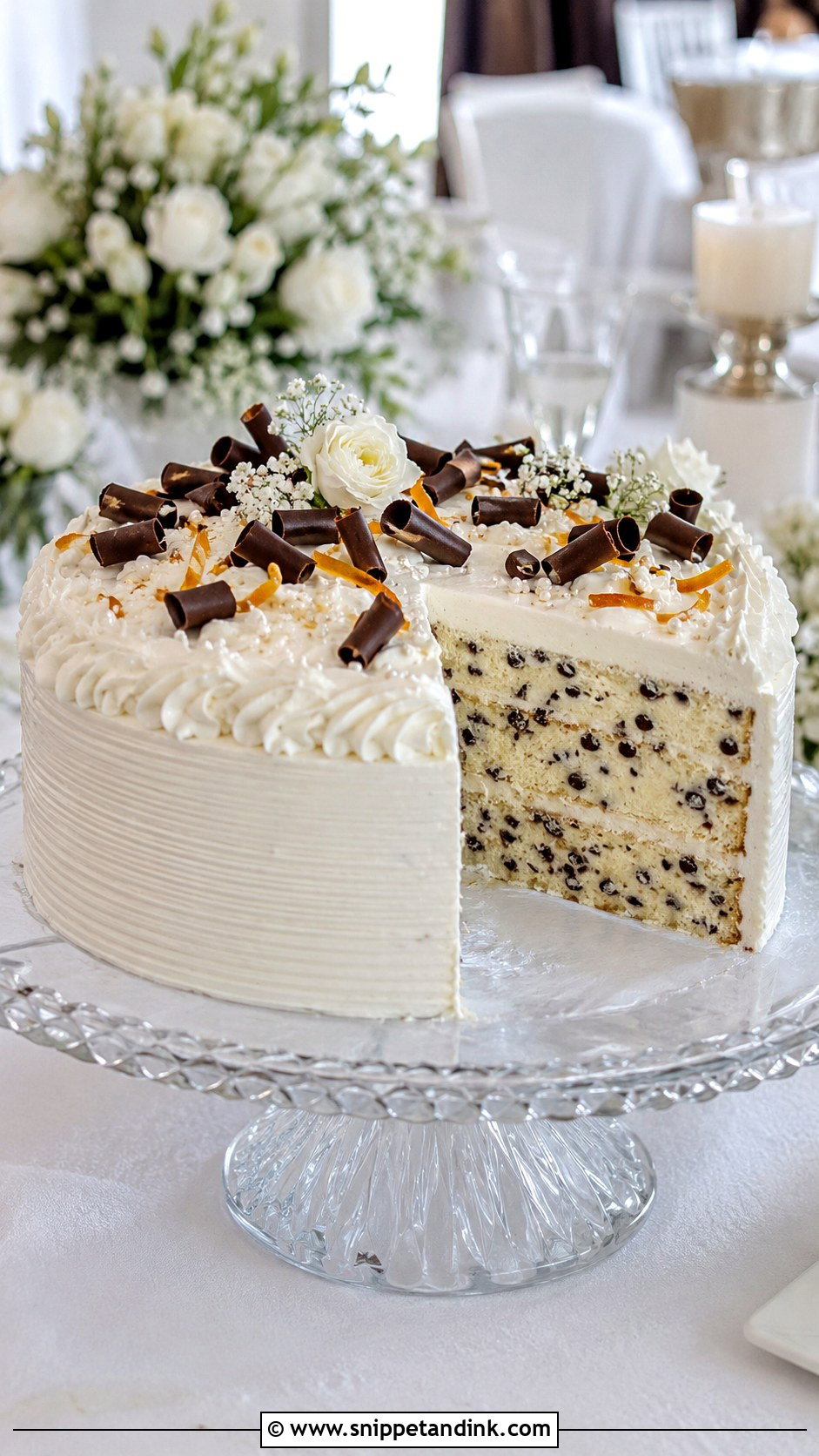
Chocolate chips are the crowd-pleaser, the version I’d pick for a guest list with lots of children or cautious eaters. They add texture and a little richness inside the ricotta. I use mini chips, because full-size ones sink to the bottom of soft filling and make the slices uneven. A light citrus note keeps it balanced. Outside, smooth white frosting with chocolate curls, some candied orange peel and a few fresh flowers gives it contrast on the dessert table.
16. Almond Casata Wedding Cake
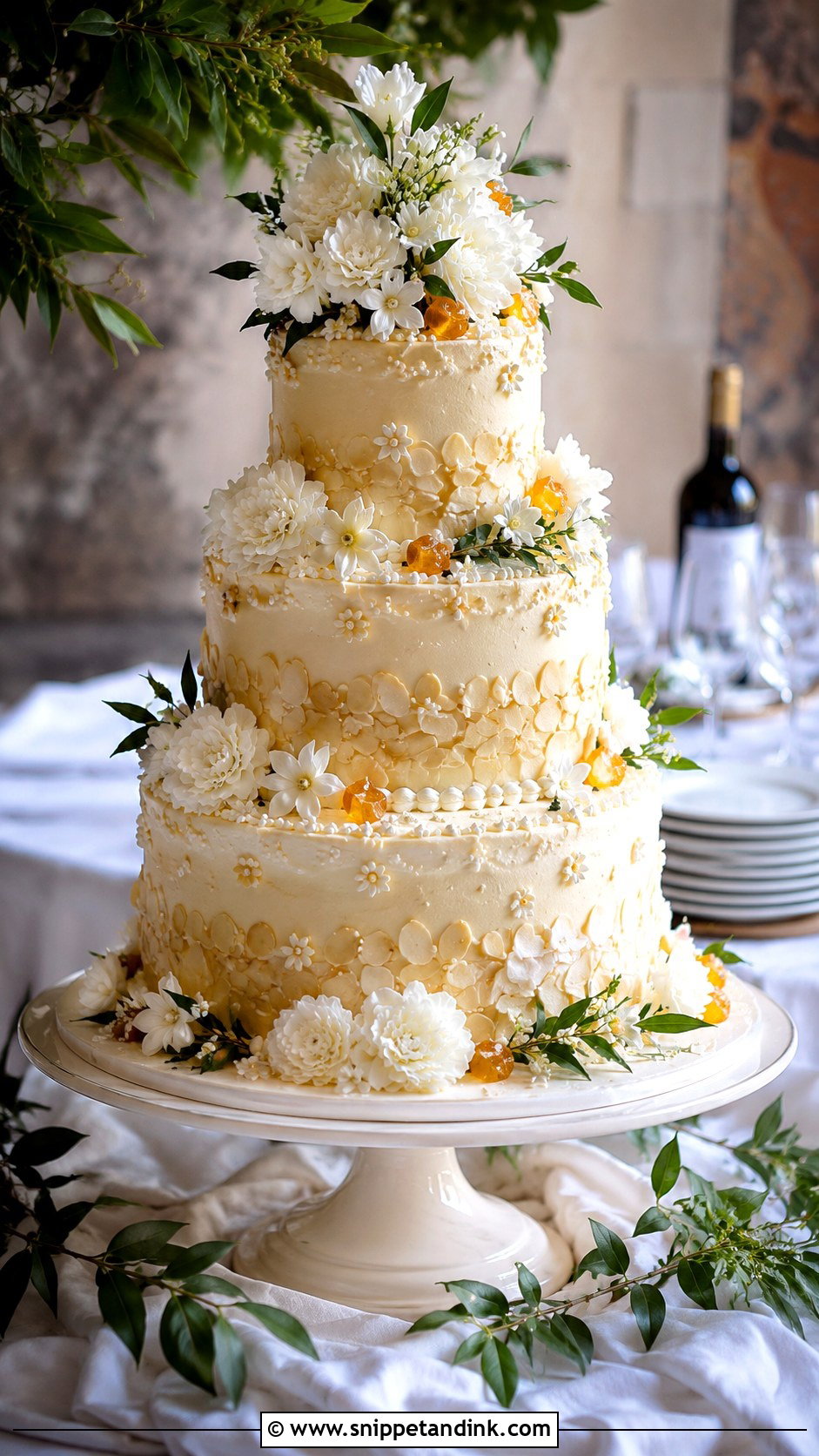
Almond sponge gives cassata a quieter, slightly nutty base that suits formal weddings. It pairs naturally with ricotta, citrus and chocolate. Keep the filling light with whipped ricotta, candied orange and a few finely chopped almonds for texture, and cover the outside in smooth buttercream or a thin marzipan layer for a traditional touch. Sliced almonds, white flowers and small pearl details finish it. Before choosing it, check your guest list for nut allergies, since almond flour and marzipan run through the whole cake, not just the decoration.
17. Pistachio Casata Wedding Cake
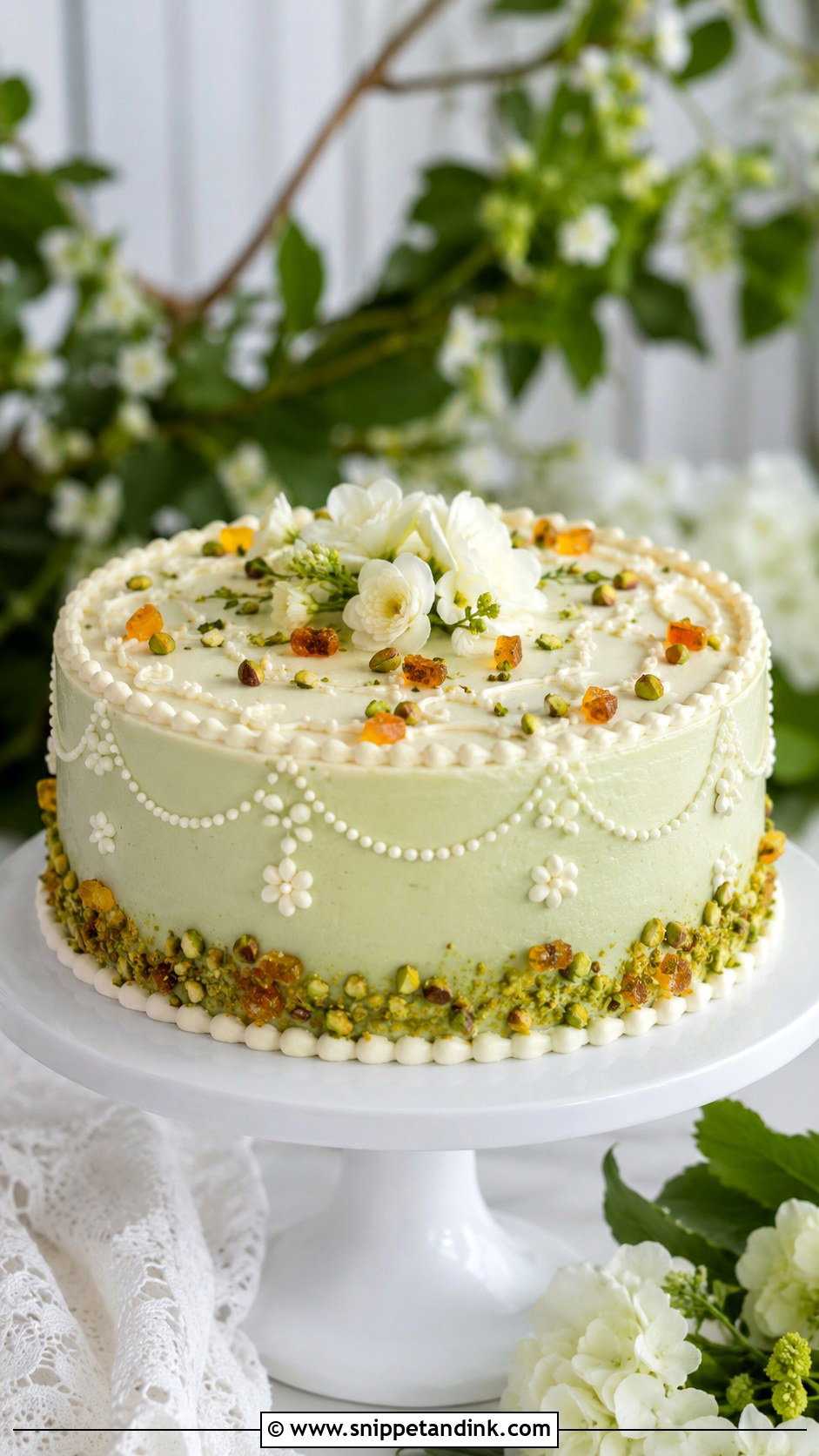
Pistachio is what traditional cassata’s green marzipan was once colored with, so this version has real history behind its color. I use pistachio or vanilla sponge with pistachio ricotta, candied citrus and a few chocolate chips, and keep the outside ivory with pale green accents. Crushed pistachios, white flowers and candied orange on top finish it. Real pistachio paste gives a muted, slightly khaki green rather than a bright mint, and I’d show you that shade at the tasting so it isn’t a surprise. Spring weddings and garden venues suit it.
18. Berry Casata Wedding Cake
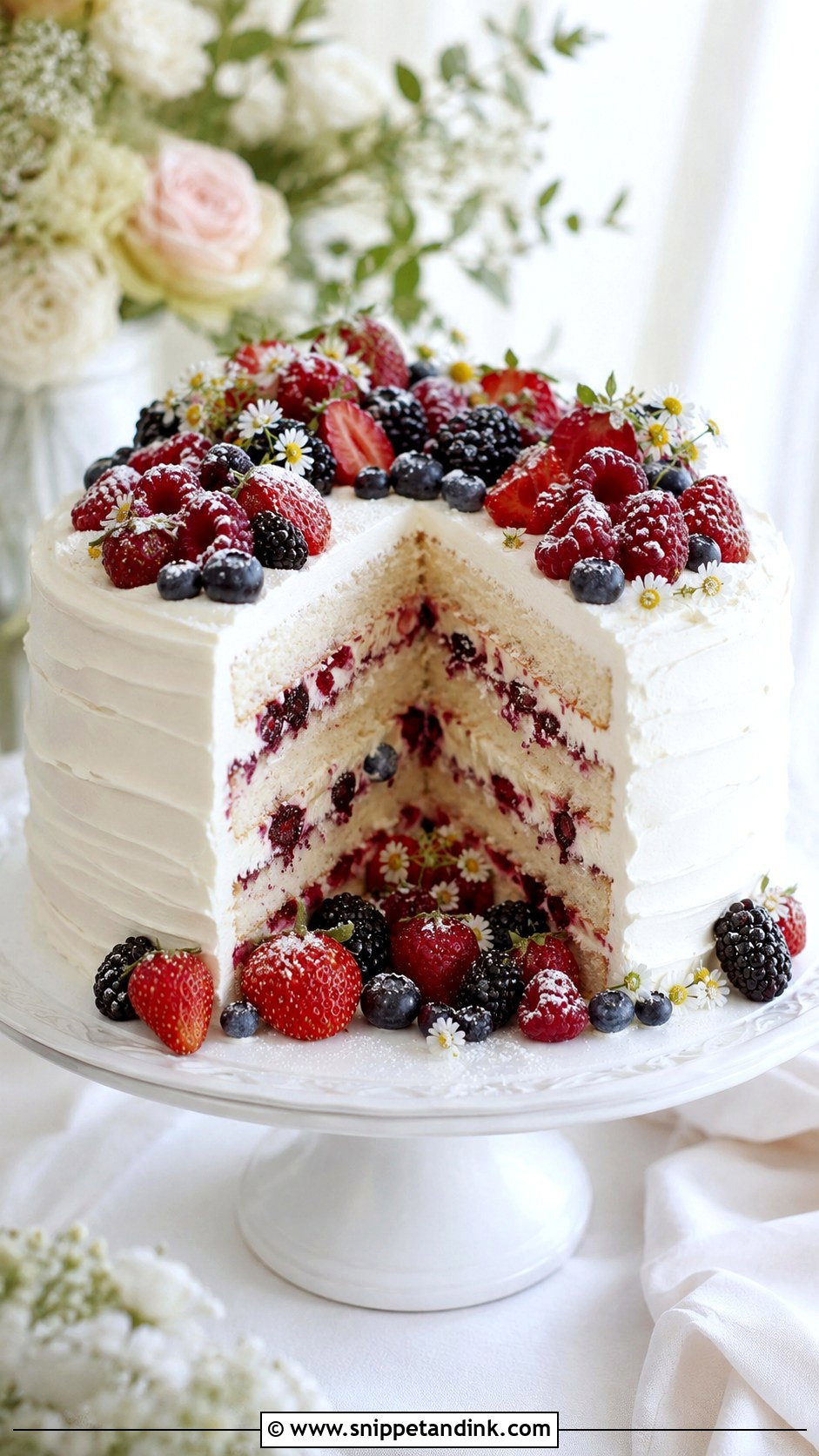
Mixing raspberries, blueberries and blackberries with the strawberries gives a deeper, more colorful cut, layered with ricotta and soft sponge layers. White whipped frosting or smooth buttercream keeps the outside clean, and a loose pile of berries with a dusting of powdered sugar finishes it. Blueberries and blackberries bleed purple into pale cream, so I keep those for the top and use strawberries and raspberries inside. Summer weddings and brunch receptions are where it shines.
19. Square Casata Wedding Cake
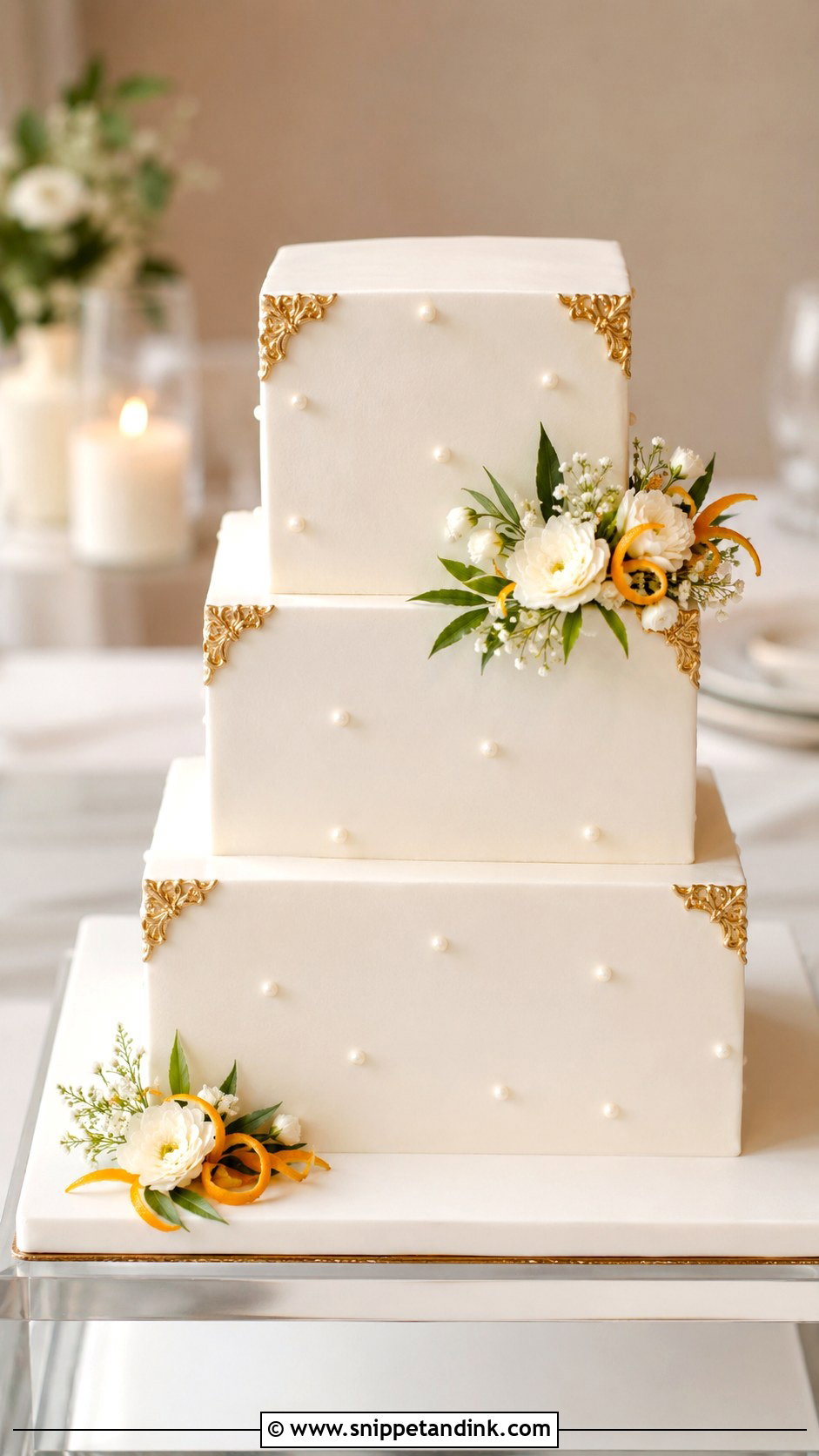
Square tiers give a traditional dessert a modern outline. Inside it’s still sponge, ricotta, citrus and chocolate chips; outside, smooth white fondant or buttercream with crisp borders, gold accents or small floral corners. Square cakes are harder to finish than round ones because every corner needs to be sharp, and fondant can tear there if it’s rolled thin. The upside is serving: a square tier cuts into neat, even portions. Modern venues and hotel ballrooms suit it.




20. Casata Dessert Table Wedding Cake
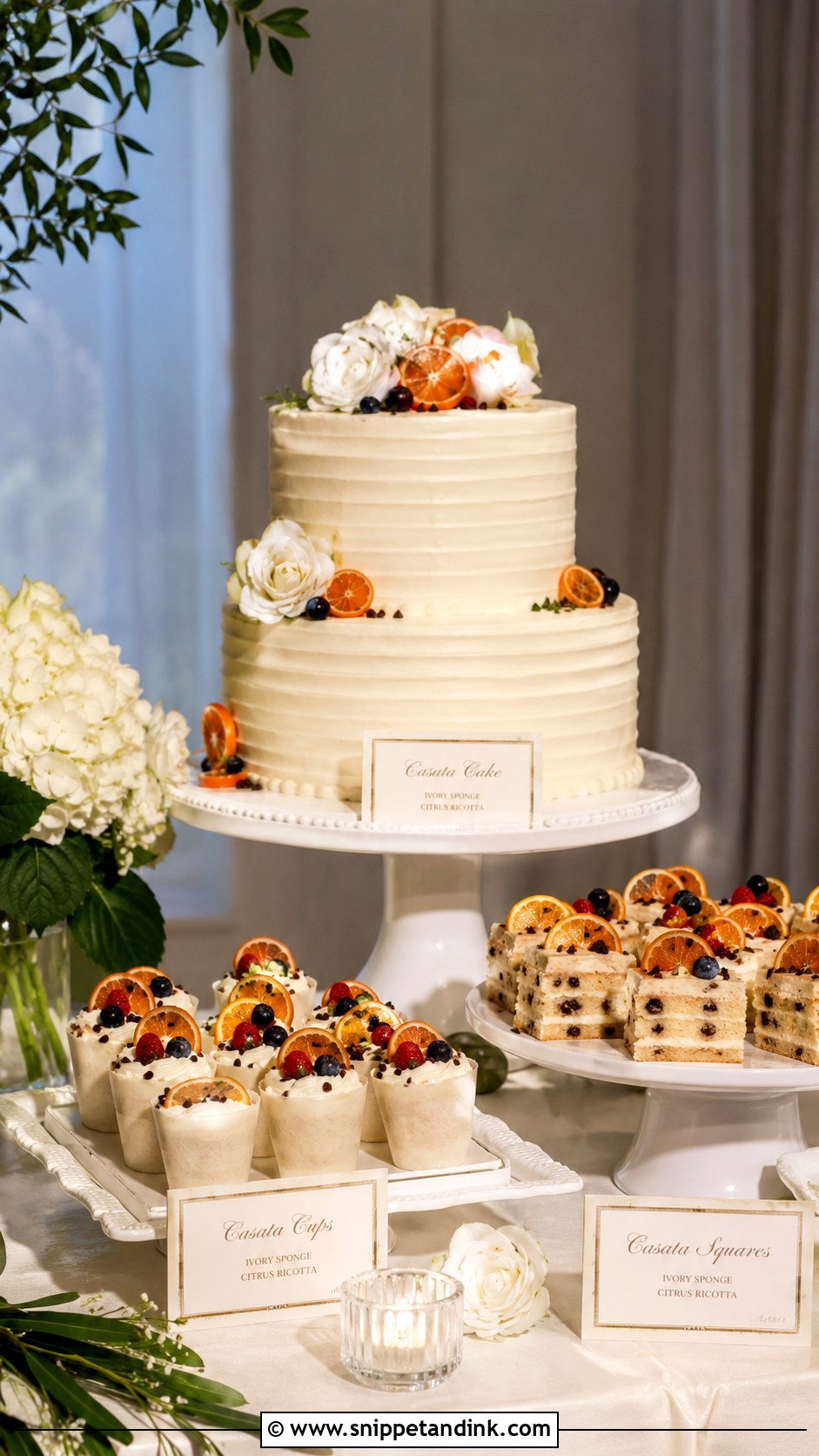
A Casata dessert table wedding cake works when guests would rather taste several things than eat one big slice. A small tiered cassata sits in the center with mini cassata cups, sliced squares, cannoli, fruit tarts and cream pastries around it. Matching stands and simple labels keep the table organized. Plan the cold chain before the look: almost everything on this table is cream- or ricotta-filled, so it goes out in rounds from the fridge rather than all at once.
Ricotta Won’t Wait Patiently on a Dessert Table
Ricotta, pastry cream and whipped cream are perishable fillings, which changes how a cassata is handled compared with a buttercream cake. The general food-safety rule is about two hours at room temperature, and less in real heat. That shapes the whole timeline.
- Ask whether the venue has fridge space big enough for the assembled tiers, or whether the baker will deliver close to cutting time.
- Schedule the cake cutting earlier in the evening rather than leaving the cake on display through the dancing.
- Skip a sunny outdoor display entirely. A shaded, cool spot near the kitchen is better than a scenic one.
- Tell the caterer to return leftovers to the fridge straight after cutting, not leave them on the table.
On my side, I drain the ricotta overnight so it doesn’t weep into the sponge, and I build a firm buttercream dam on every layer. Those two steps are why a well-made cassata slices cleanly instead of sliding.
Three Things Worth Tasting Twice
At a cassata tasting I’d ask you to pay attention to three details, because each can be adjusted and each divides guests.
The soak
Traditional sponges are brushed with liqueur, and the flavor comes through clearly. If many guests don’t drink, or there are children, an orange or vanilla syrup keeps the cake moist without alcohol.
The candied fruit
Some guests love it; many pick it out. Finely chopped candied orange gives the flavor without the chewy chunks, and whole pieces can stay on top for anyone who wants them.
Ricotta texture and sweetness
Good cassata filling is smooth, not grainy, and sweet enough to taste like dessert without being cloying. If it’s too sweet for you at the tasting, it will be too sweet after a three-course dinner, so say so.
Sicilian Heritage, Wedding Proportions
Cassata adapts to almost any reception, from traditional Sicilian layers to plain white tiers, fruit fillings, vintage piping and full dessert tables. Venue, season and formality decide most of it. A small wedding may only need a two-tier cake or minis, while a large one might pair a three-tier centerpiece with a kitchen sheet cake. Keep the flavors balanced with sponge, ricotta, citrus, berries or chocolate, and give the cake a cold place to wait until it’s cut.
You'll Like These Ideas:





Leave a Reply