
A thinly iced cake is the one I suggest most to couples who say they don’t actually like frosting. The buttercream is scraped back until the sponge shows through, so the cake tastes of cake, and it looks relaxed without looking unfinished. It suits barns, gardens, modern venues, beaches and small courthouse celebrations alike. Decoration can be flowers, fruit, greenery, pearls, gold leaf or nothing but the texture of the scrape. Below are twenty versions, with what I’d want you to know about flavor, freshness and display for each one.
Naked, Semi-Naked and Barely Iced Mean Different Things
Bakers use these words in slightly different ways, so I’d describe the look with a photo rather than a label. Broadly, there are three levels:
- Naked: filling between the layers and nothing on the outside. The sponge is fully exposed and dries out fastest.
- Semi-naked: a thin crumb coat scraped back so the layers show through in places. This is what most of the cakes below are.
- Barely iced: a full but thin coat with only hints of sponge at the edges. It keeps the cake fresh longest and looks a little more polished.
If you’re worried about dryness, or the cake will sit out for a long time, I’d lean toward barely iced. It photographs almost the same from a distance.
1. Semi Naked Wedding Cake With Fresh Flowers
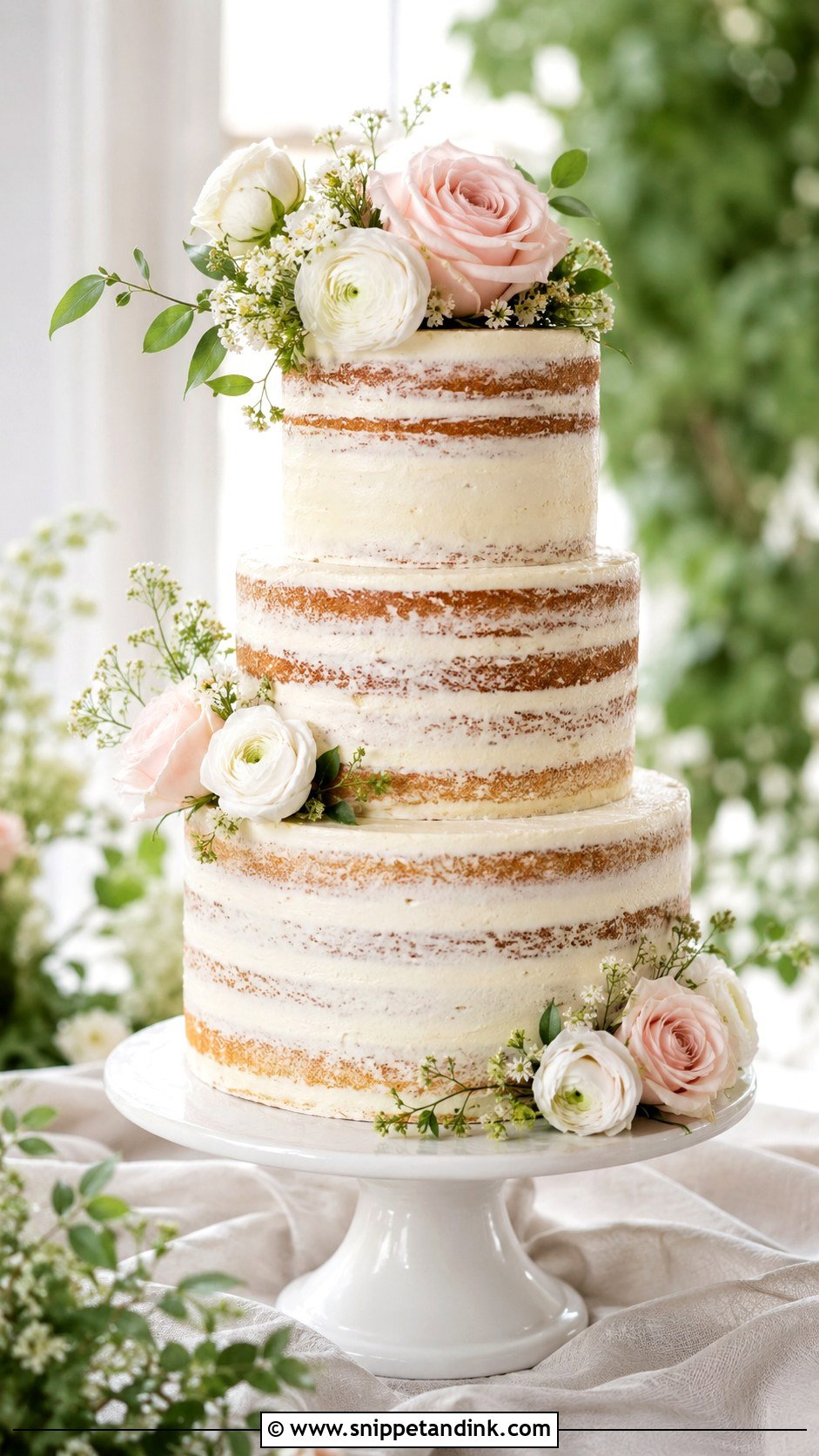
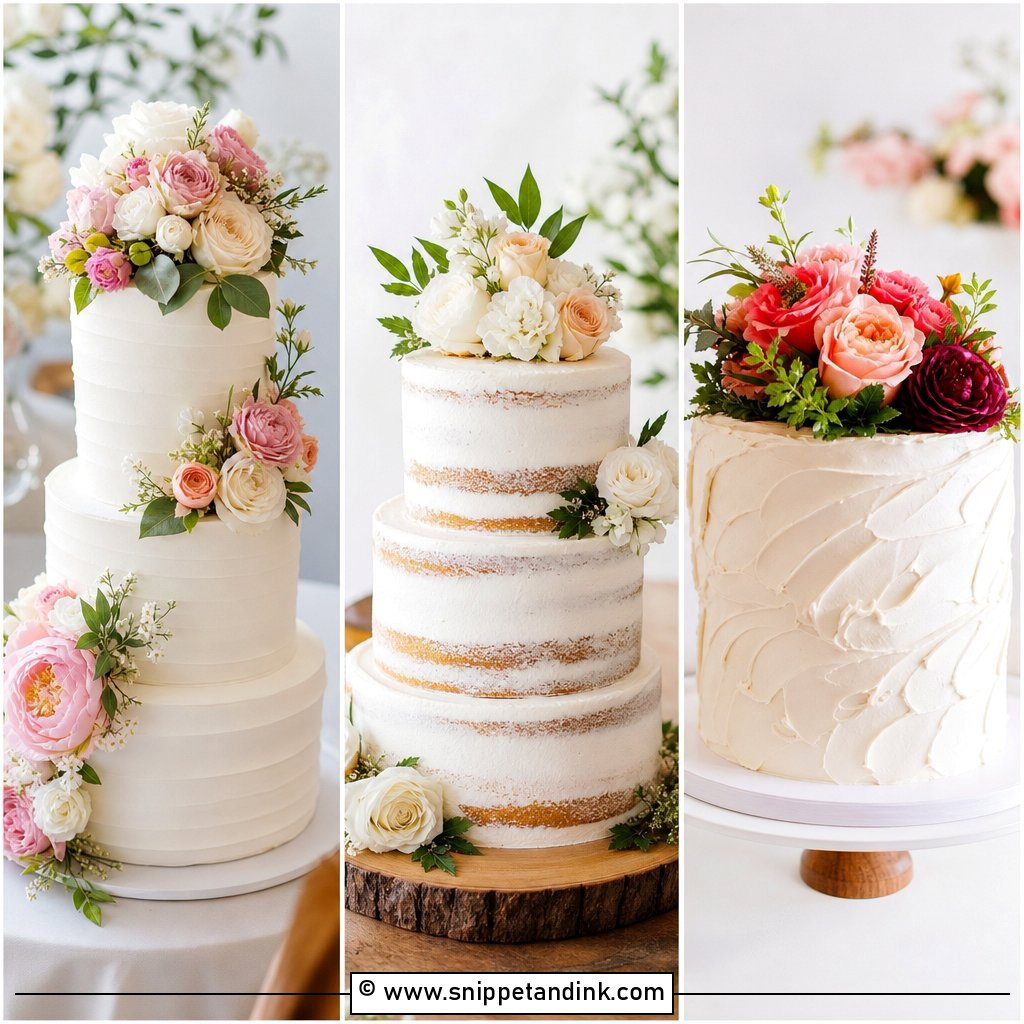
Semi naked with fresh flowers is the version most couples picture when they hear the phrase. I fill and stack the layers, coat the outside thinly, then scrape most of it away with a bench scraper so the sponge shows at the edges. The flowers can repeat the bouquet or the ceremony arch, which ties the cake table to the rest of the room. What I always ask a florist for is pesticide-free stems, wrapped in floral tape or set into picks, so nothing from the stem touches the cake. Some popular blooms, like hydrangea and lily of the valley, are toxic and should only be used if they can’t contact anything that gets eaten.
2. Lightly Iced Vanilla Wedding Cake
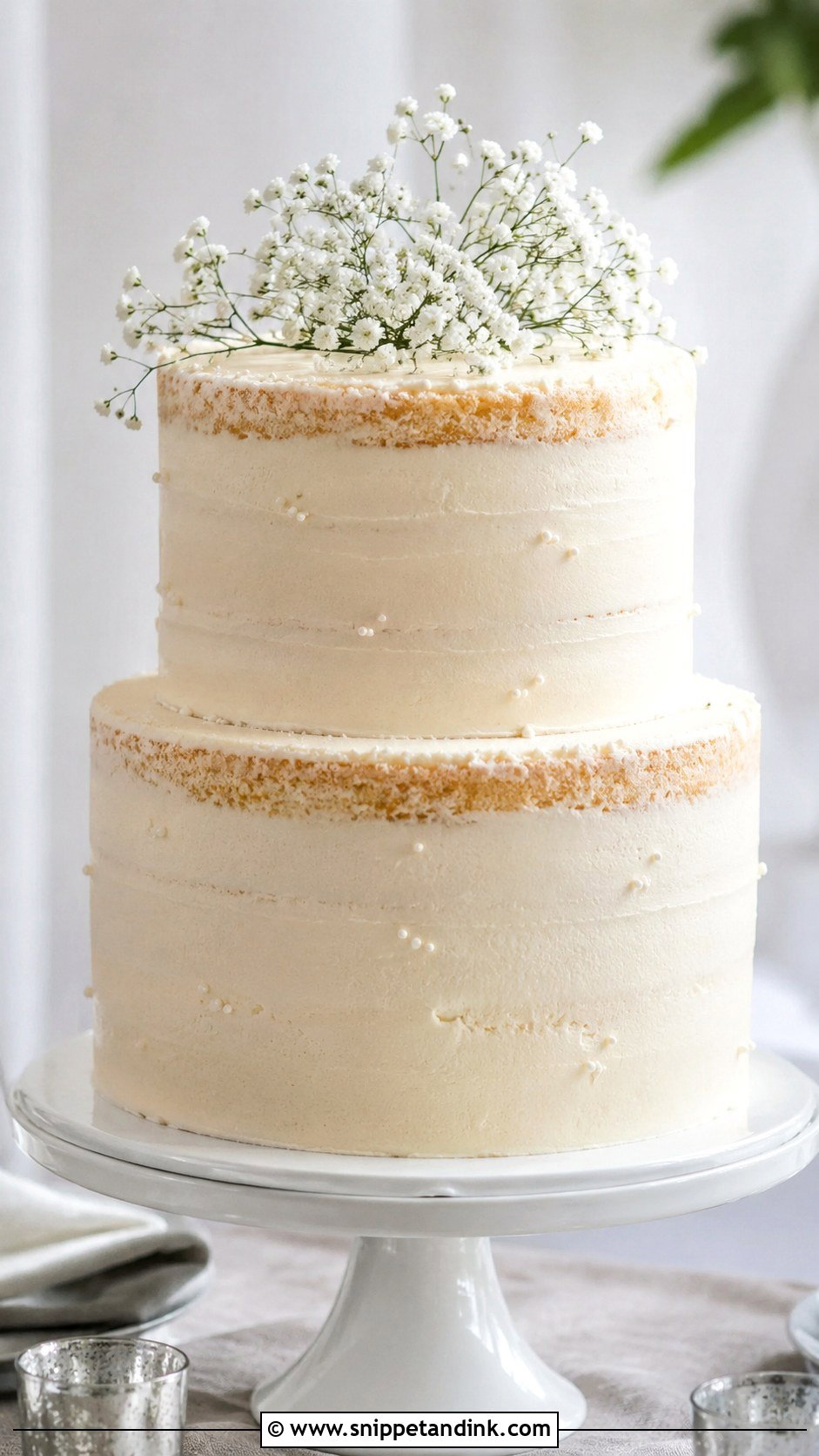
Vanilla is the safe flavor in the best sense: almost every guest eats it, and it pairs with lemon curd, raspberry jam, almond cream or more vanilla buttercream inside. Because the outside is thin, the filling does more of the flavor work than it would on a fully frosted cake, so I’d spend your tasting on fillings. A scraped coat keeps it from looking plain. A white pedestal with a few small flowers, pearls or a ring of greenery at the base is all it needs.
3. Rustic Lightly Iced Wedding Cake
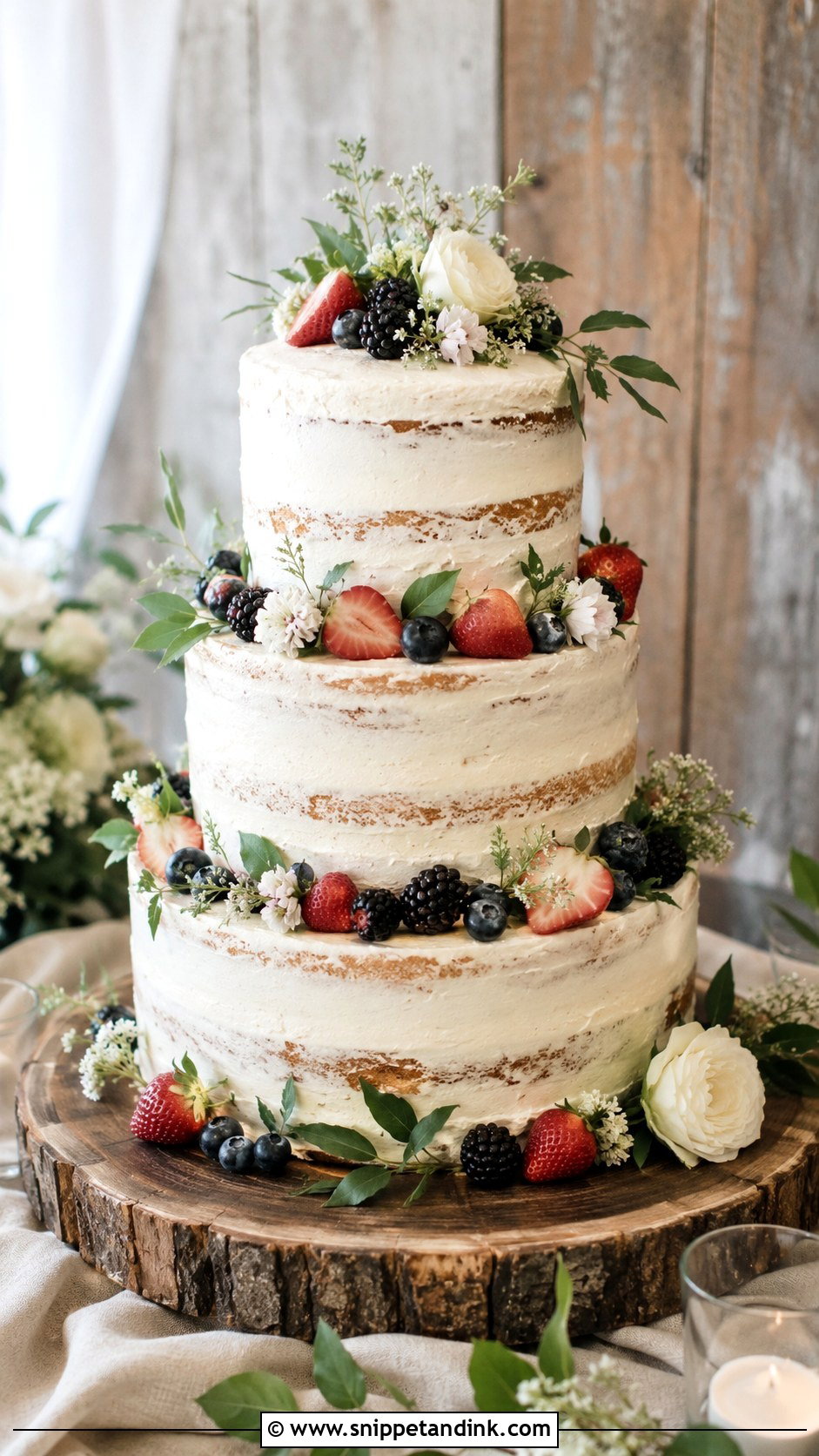
Rustic cakes look deliberately imperfect: a textured scrape, visible layers and simple decoration rather than sharp fondant edges. That texture is still controlled; I go around with an offset spatula in short strokes so it looks relaxed rather than rushed. Berries, herbs, greenery, small blooms or a wooden topper suit it. Flavors like vanilla bean, carrot, almond, lemon and spice cake fit the style. A wood slice, a linen runner and a few loose flowers finish the display. Barn, garden and countryside venues are its natural setting.
4. Two Tier Lightly Iced Wedding Cake
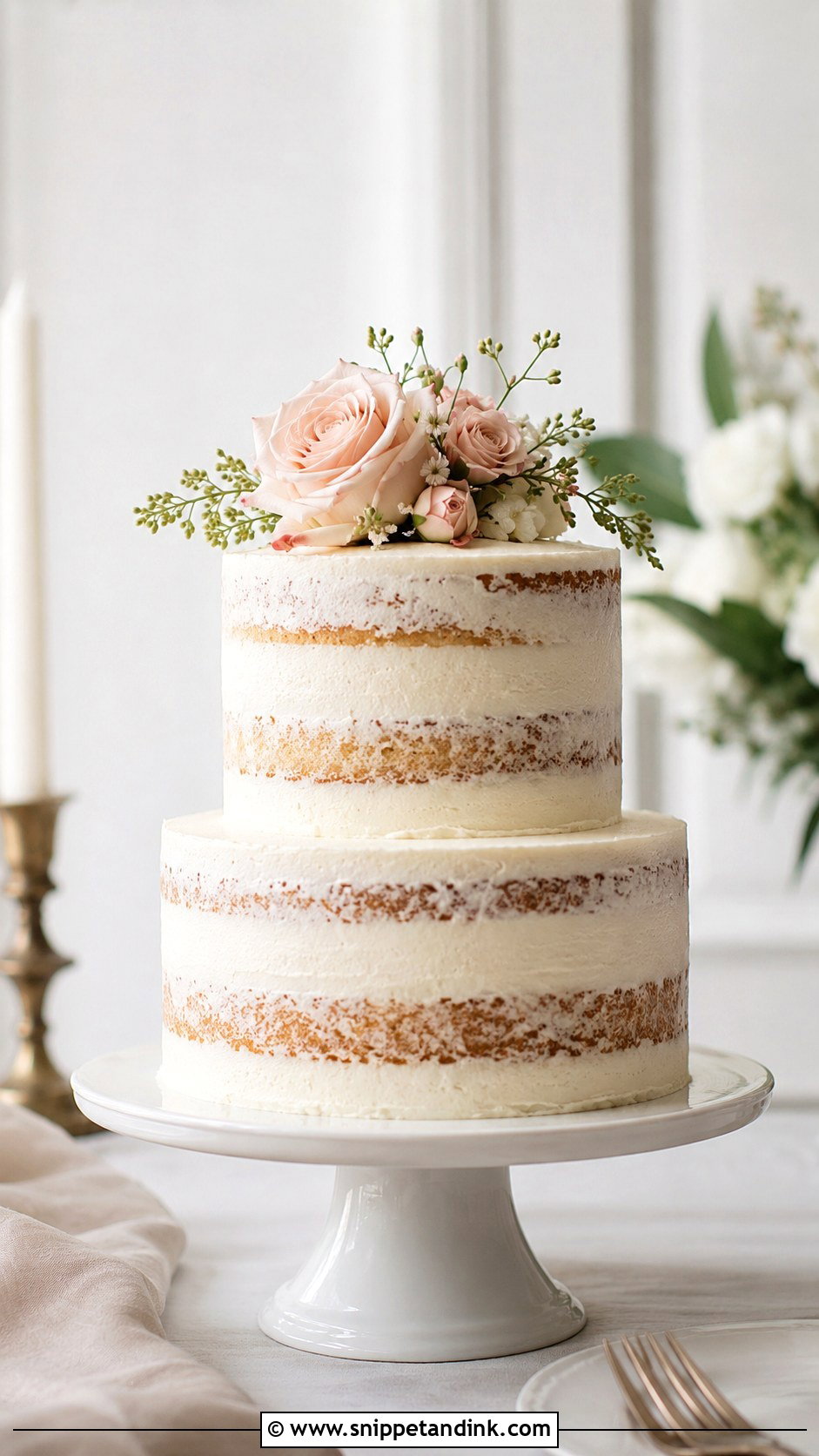
A two tier lightly iced wedding cake gives a micro wedding or a bridal lunch the classic stacked shape without feeding a crowd. Even with only two tiers, I put supports in the bottom one; a thin coat of buttercream doesn’t help hold the weight above it. Each tier can be a different flavor, which is a nice way to give guests a choice. Smooth semi-naked sides look modern, a rougher texture looks rustic. A small cluster of flowers, a few sugar pearls or fruit tucked between the tiers finishes it.
5. Three Tier Lightly Iced Wedding Cake
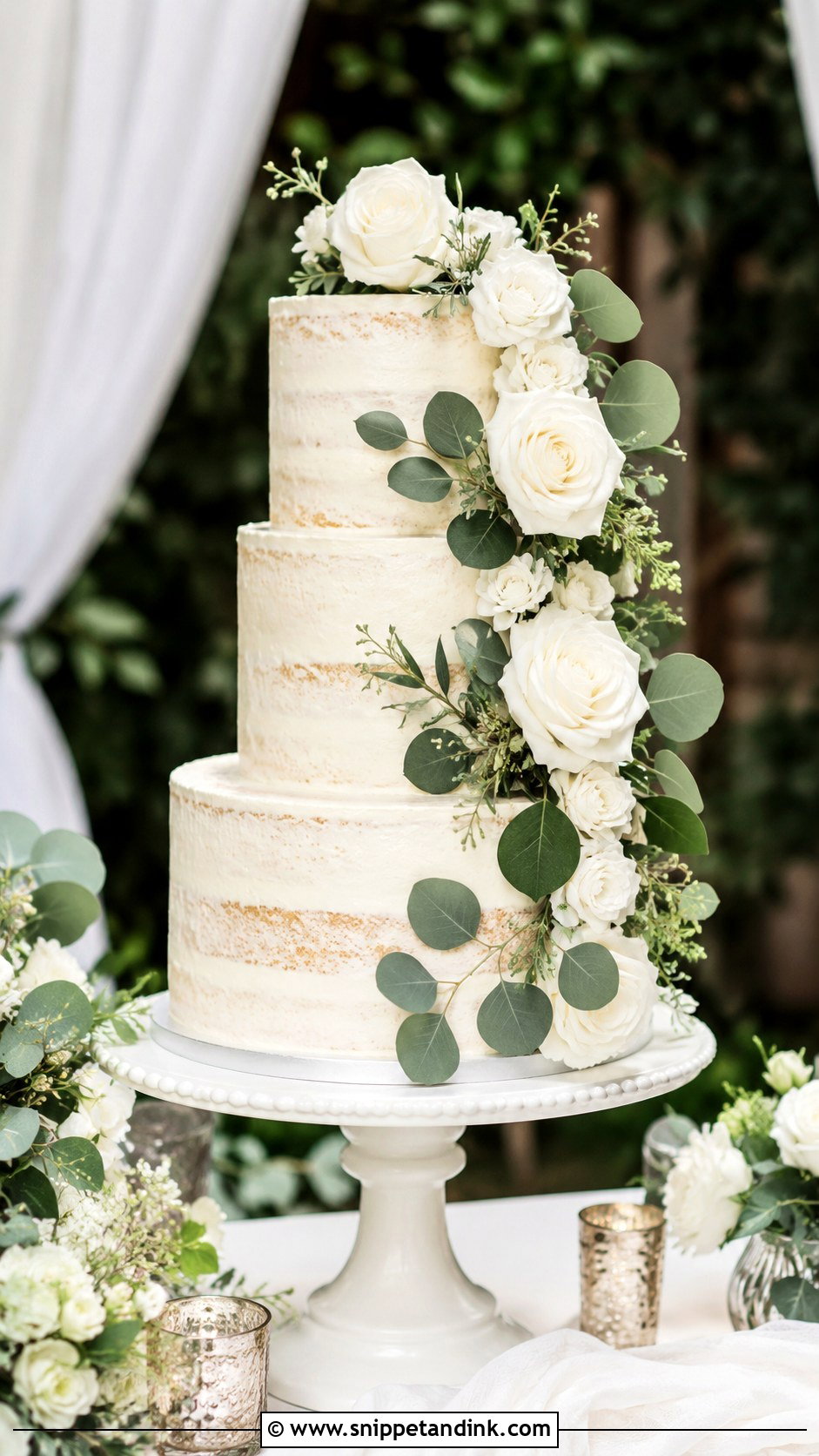
Three tiers give height for photos from across the room, and the thin finish keeps the cake from looking heavy or overly formal. With this much exposed sponge, I bake as close to the date as practical and keep the tiers wrapped until the last moment, since the outside dries faster than a fully frosted cake. Greenery alone looks minimal; a cascade of flowers looks more romantic. Good flavor pairs include vanilla with berry, lemon with cream, almond with apricot, or chocolate with vanilla buttercream.
6. Lightly Iced Wedding Cake With Berries
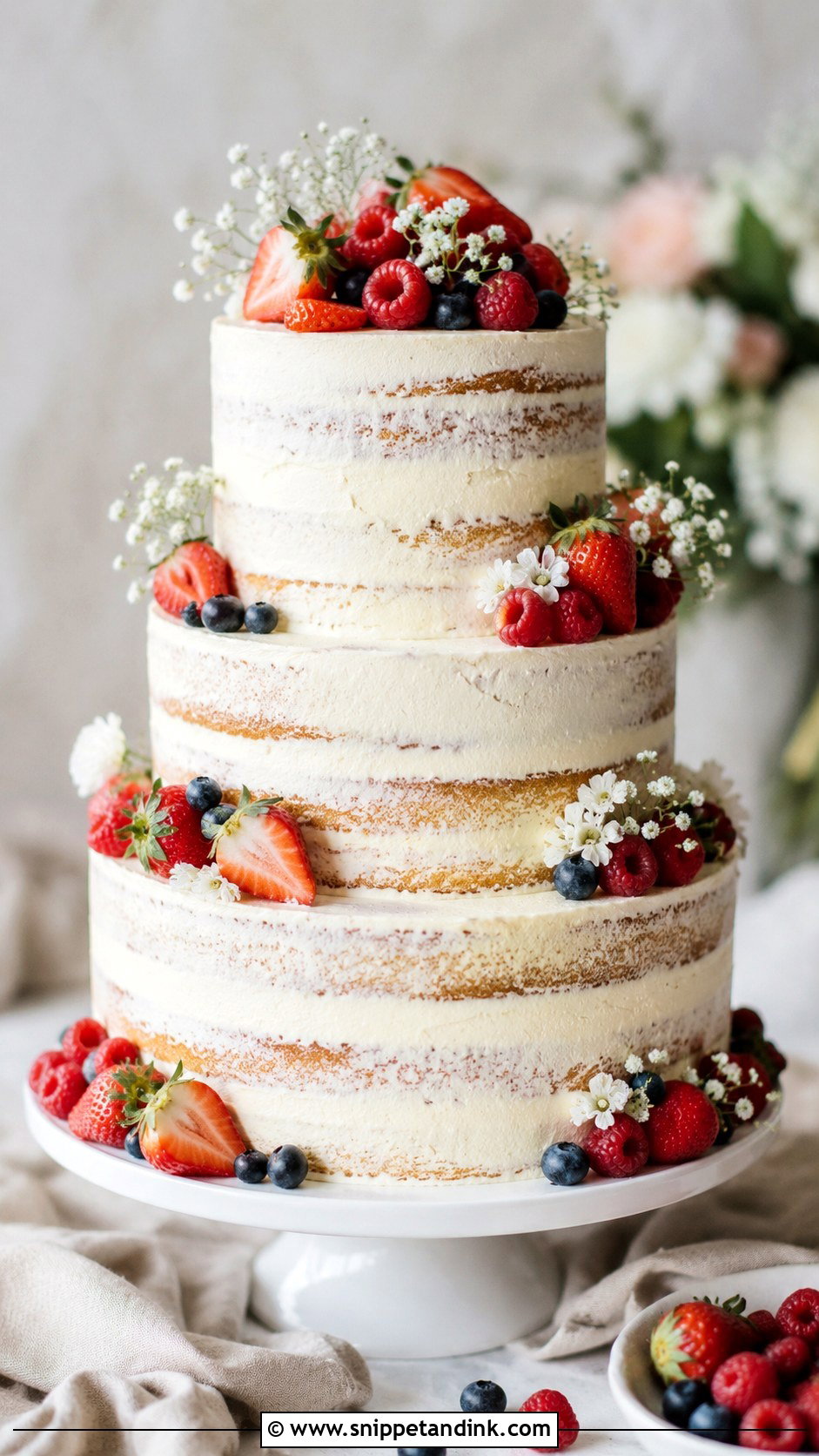
Berries add color without piping: strawberries, raspberries, blueberries and blackberries all suit spring and summer. Raspberries and blueberries can sit on the cake for hours, but cut strawberries weep juice into buttercream, so I use them whole or add them as late as possible. I place berries in clusters along the tiers, around the base or near the flowers rather than scattering them evenly. Vanilla, lemon, almond and chocolate sponges all pair well. Garden weddings and brunch receptions suit it best.
7. Lightly Iced Lemon Wedding Cake
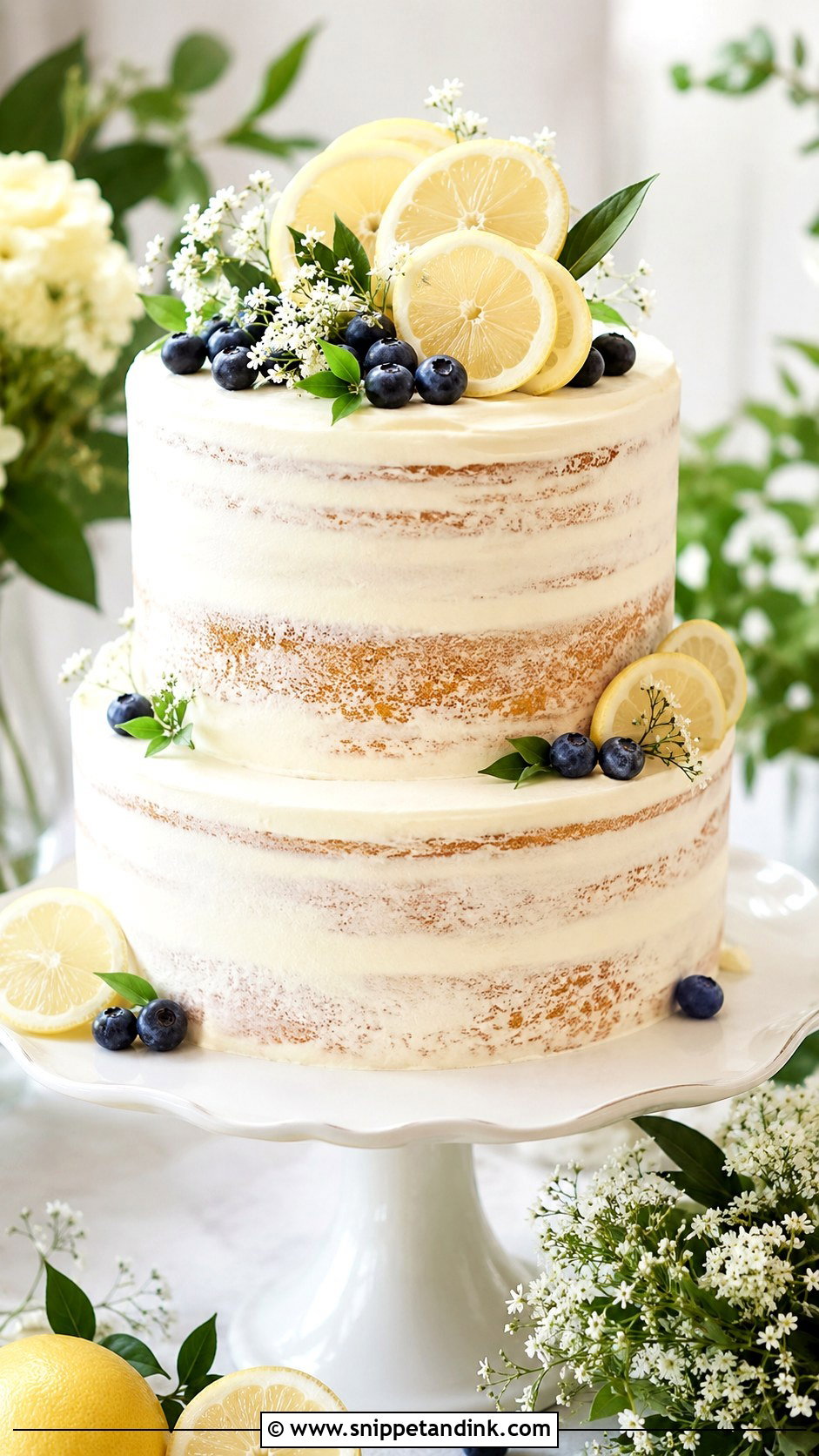
Lemon cake tastes bright and lighter than most, which is why I suggest it for daytime and summer weddings where a heavy cake feels like too much after lunch. It pairs with a thin vanilla buttercream and fillings like lemon curd, whipped cream or raspberry. A soft yellow crumb peeking through the scrape looks sunny. Lemon slices on the outside discolor and curl after a few hours, so if you want citrus on top, candied slices hold up better. Fresh flowers, blueberries or greenery are easier options.
8. Lightly Iced Chocolate Wedding Cake
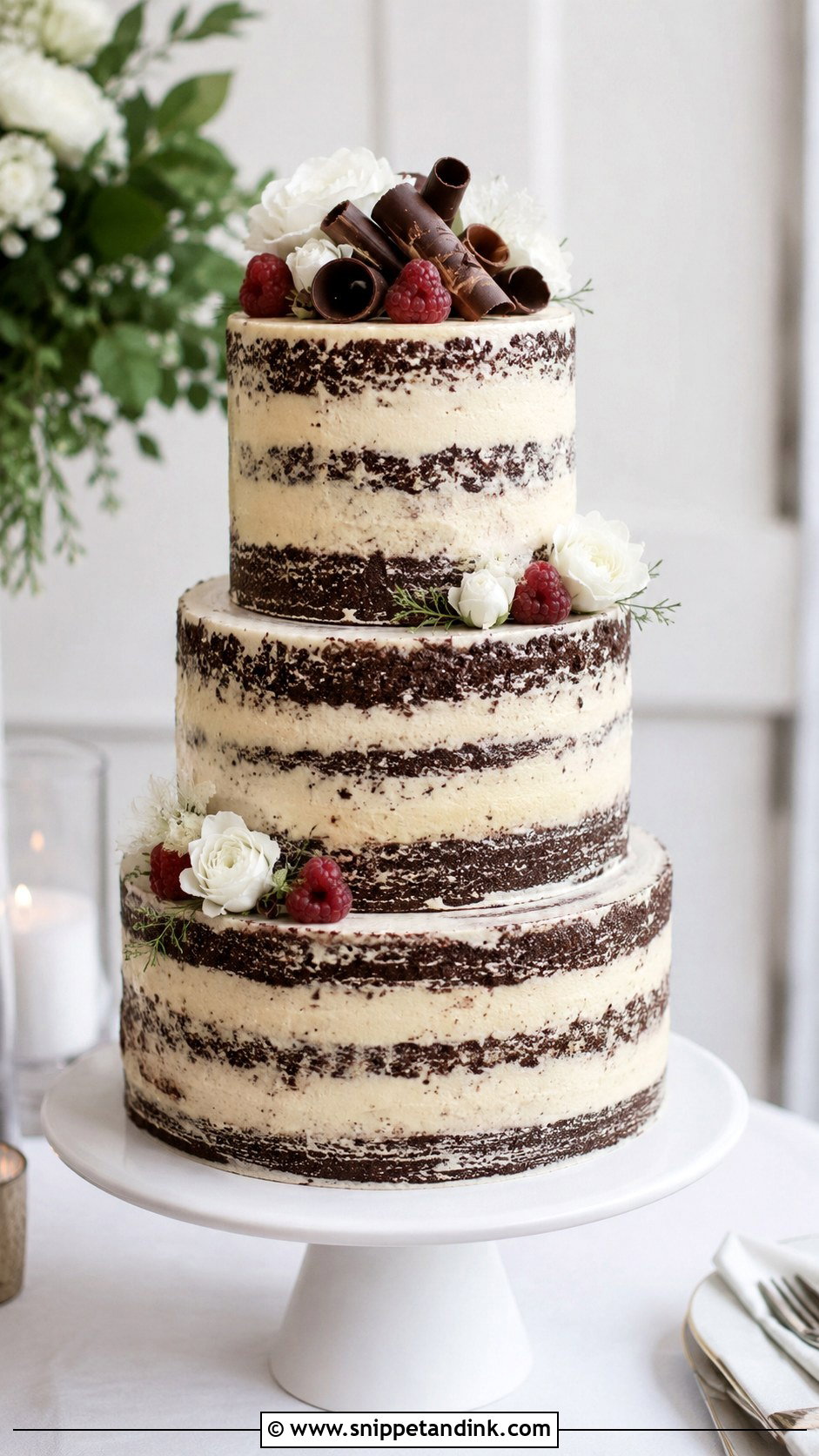
Dark sponge under pale buttercream gives the most contrast of any cake on this list, which makes a lightly iced chocolate wedding cake look modern with very little decoration. The scraping has to be careful, because dark crumbs smear into white frosting; I chill the cake well before the final scrape to keep the lines clean. Inside, vanilla buttercream, espresso cream, salted caramel, raspberry or dark ganache all work. Berries, white flowers, a little gold leaf or chocolate curls on the outside are plenty.
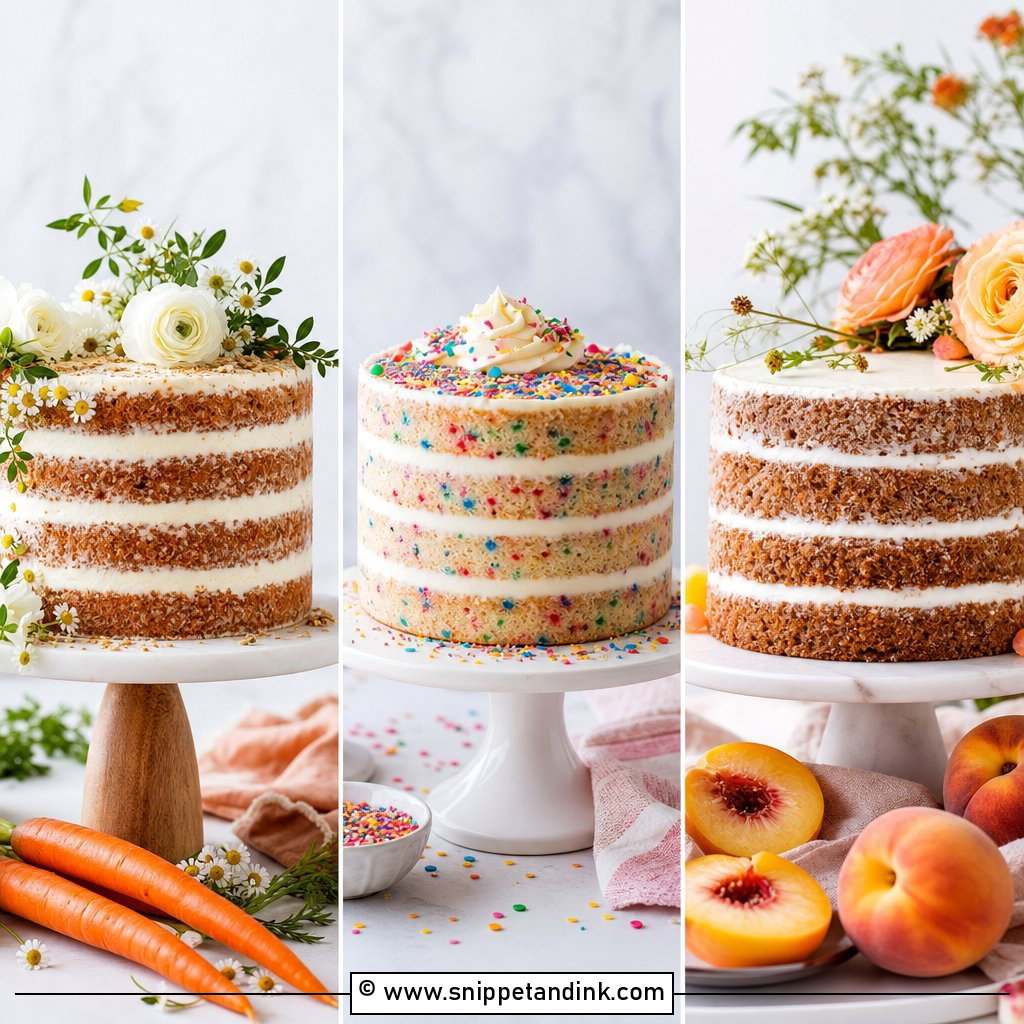
9. Lightly Iced Carrot Wedding Cake
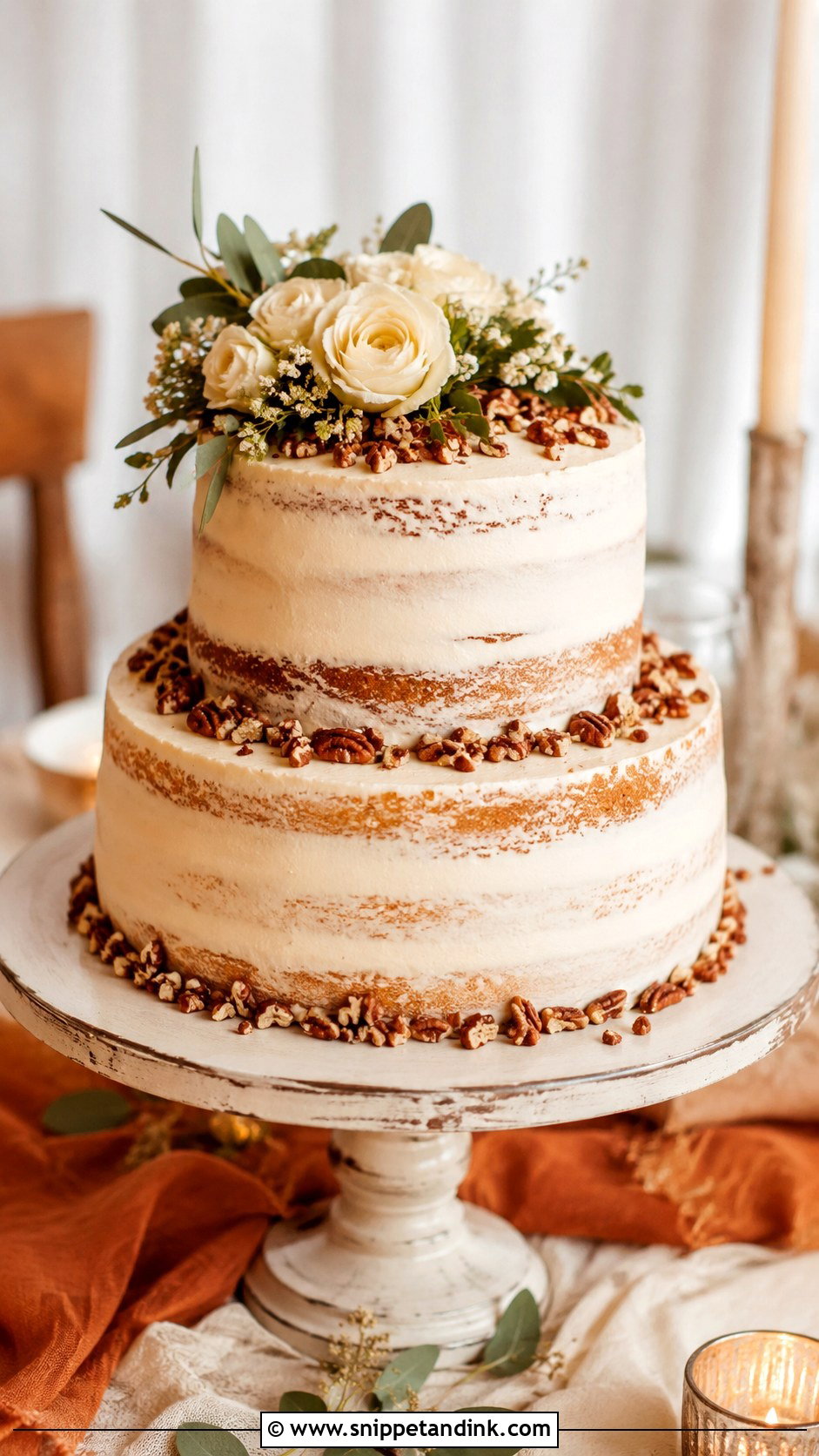
Carrot cake stays moist for longer than most sponges, so it’s one of the best flavors for a thin finish. The golden-brown layers under a thin coat of cream cheese frosting look warm and inviting. Cream cheese frosting is softer than buttercream, though, so I stabilize it and keep the cake chilled until shortly before it’s displayed. Chopped walnuts or pecans, a few small flowers or greenery finish it; just let your caterer know about the nuts for guests with allergies. Fall weddings and rustic venues suit it.
10. Lightly Iced Almond Wedding Cake
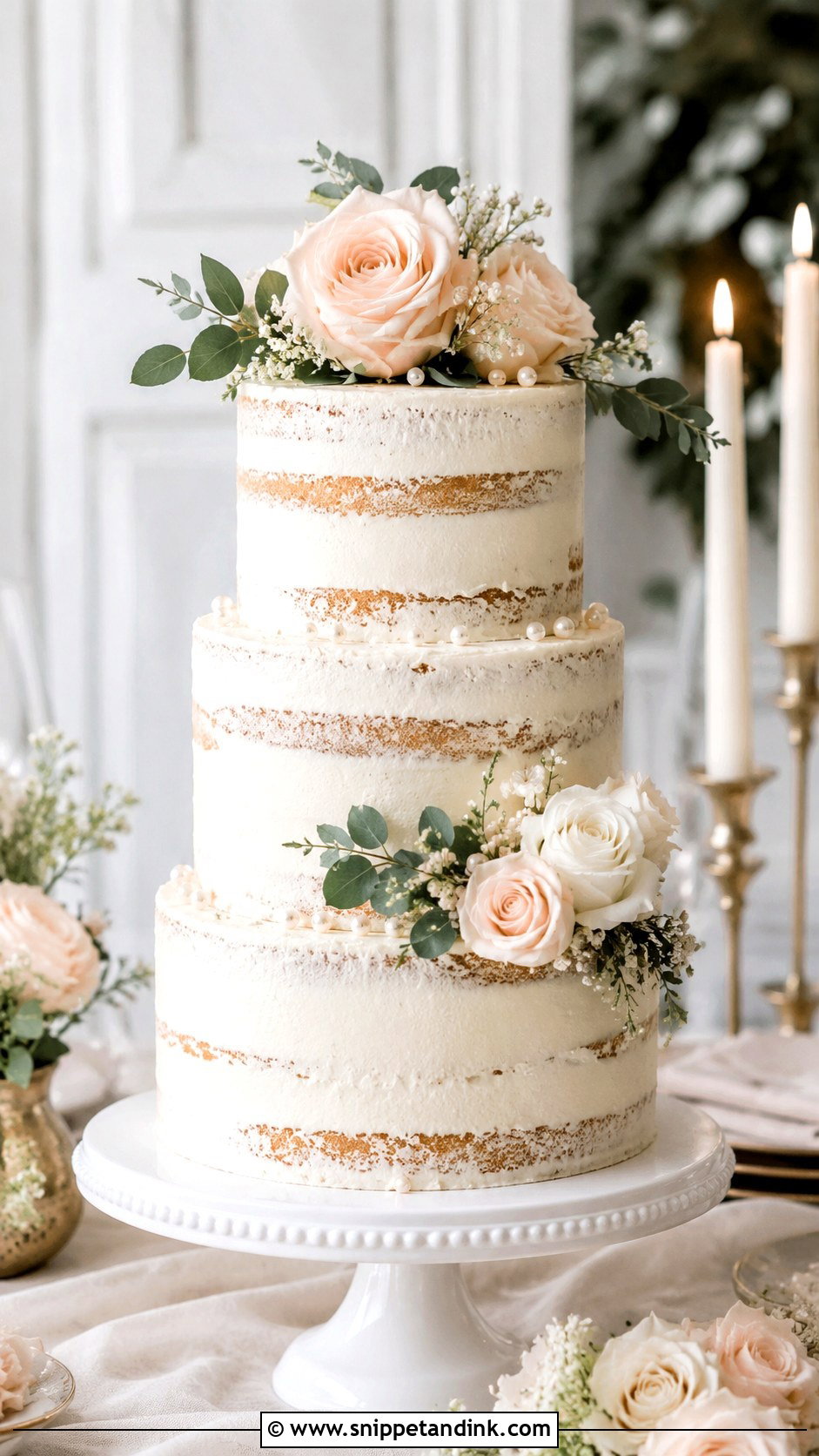
Almond has a gentle, slightly nostalgic flavor that a lot of guests associate with wedding cake. It pairs with vanilla buttercream, raspberry, apricot jam, cherry or a lightly whipped frosting, and the pale crumb looks clean under a semi-naked finish. White flowers, blush roses, tiny pearls or a little greenery suit it. I’d mention it on the menu or the cake sign, because almond is a nut allergy concern even when there are no visible nuts.
11. Lightly Iced Wedding Cake With Greenery
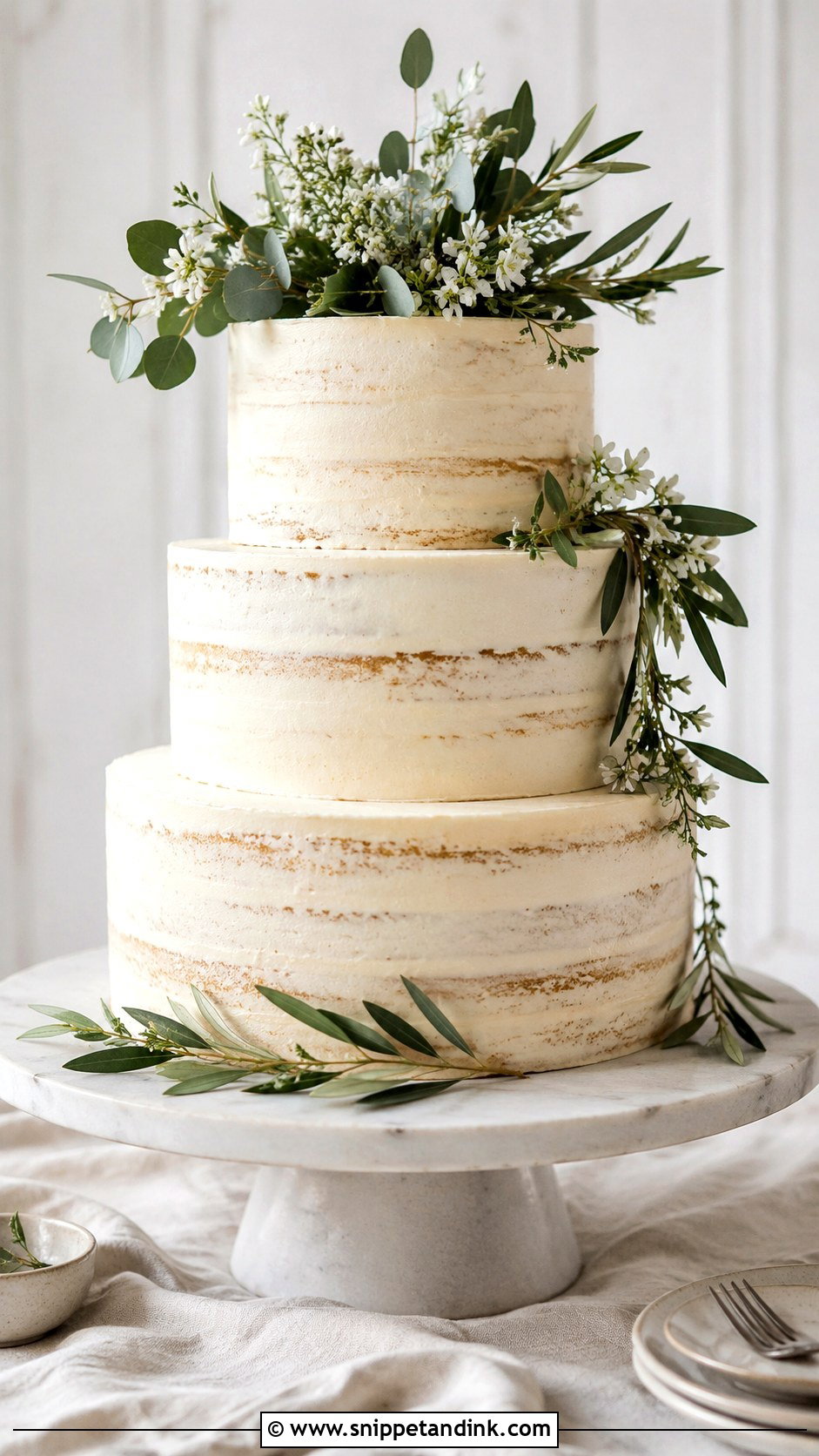
Greenery is where I see the most mistakes, because not every pretty leaf belongs near food. Eucalyptus is popular but shouldn’t touch the cake directly, so I wrap its stems and keep it on the surface or around the base. Olive leaves, rosemary, bay and ferns sold as food-safe are easier choices. Against ivory buttercream and exposed layers, greenery gives a clean, organic look. Place it around the tiers rather than covering every inch, and add a few small white blooms if you want more detail.
12. Lightly Iced Wedding Cake With Roses
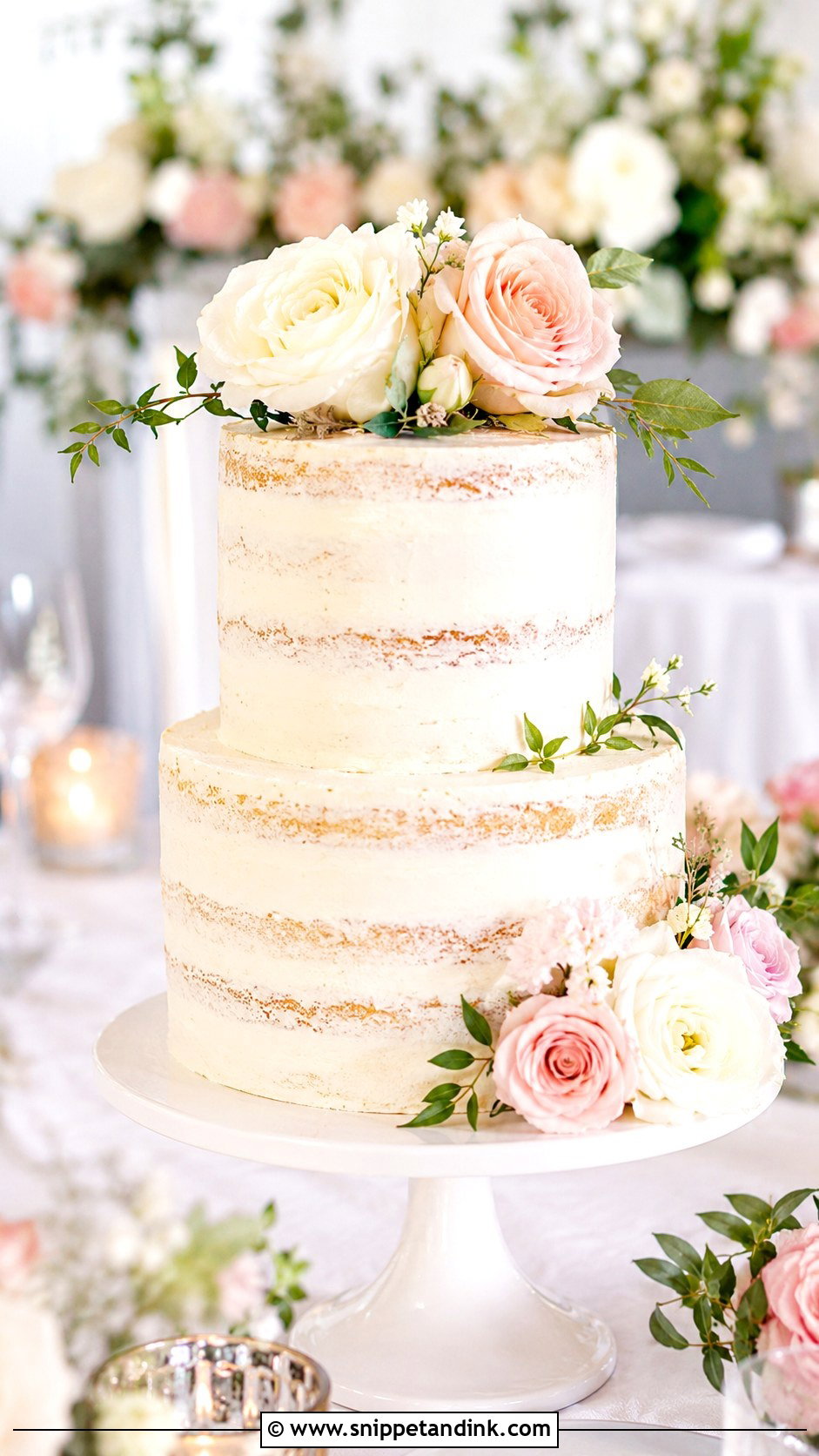
Roses suit a thin finish because their petals are sturdy and they’re generally considered food-safe when grown without pesticides. Blush roses look soft, white looks classic and dusty pink adds warmth. A small cluster, a gentle cascade or just the top tier all work. I prefer garden roses for cakes because they open fuller and look less stiff than standard florist roses. Vanilla, almond, lemon, strawberry and chocolate sponges all pair well. A plain stand and soft linen let the flowers lead.
13. Lightly Iced Wedding Cake With Gold Leaf
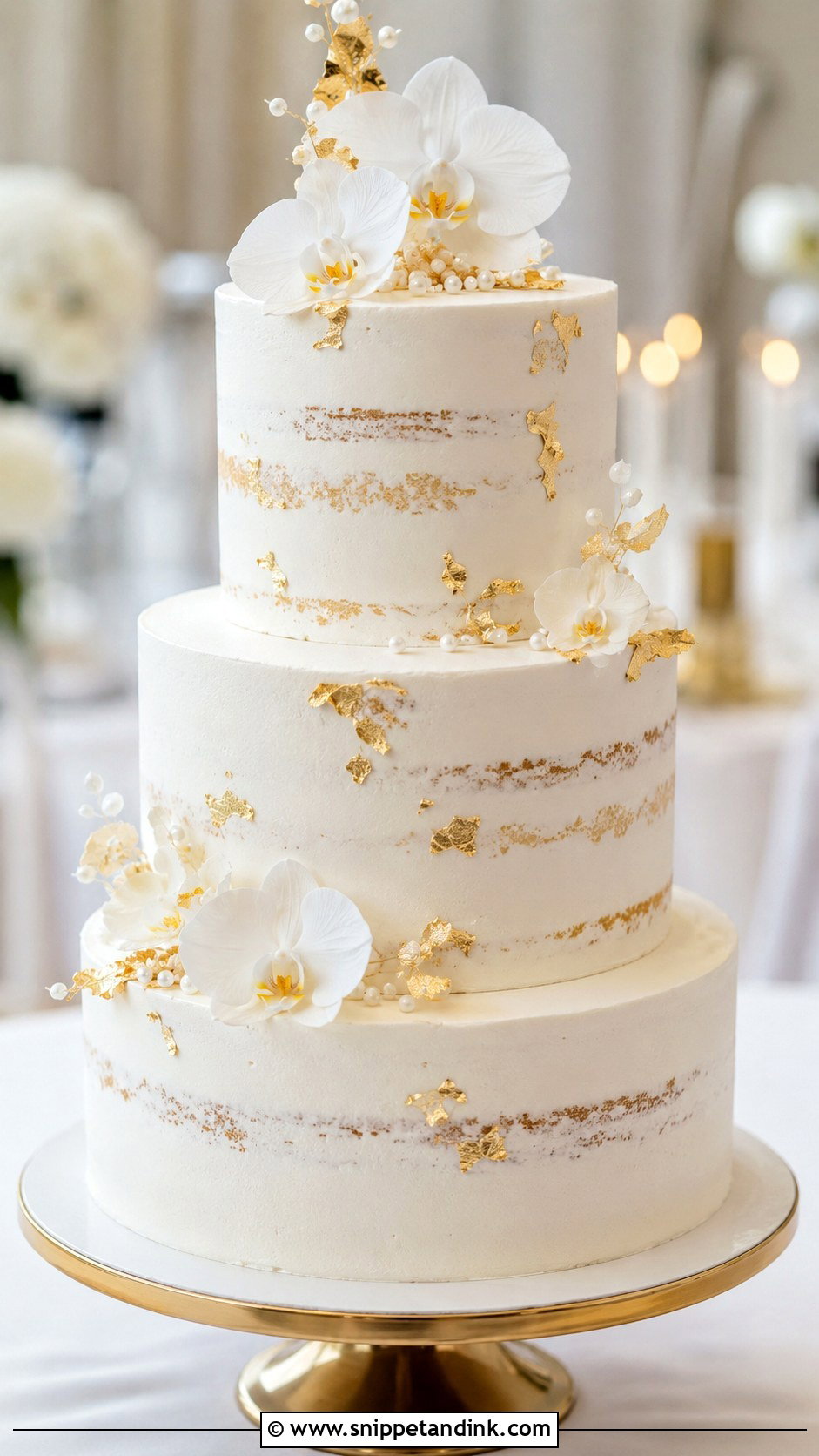
Gold leaf on a semi-naked cake should look like a few flecks of light, not a gilded surface. I lift small pieces with a dry brush and press them onto the edges, between tiers or near flower clusters. It sticks to buttercream easily but shouldn’t touch fresh fruit juice, which dulls it. Make sure the leaf is labeled edible; craft leaf looks identical but isn’t food-safe. Ivory buttercream over vanilla, almond or chocolate layers suits it. Evening receptions and modern venues show it best.
14. Lightly Iced Wedding Cake With Pearls
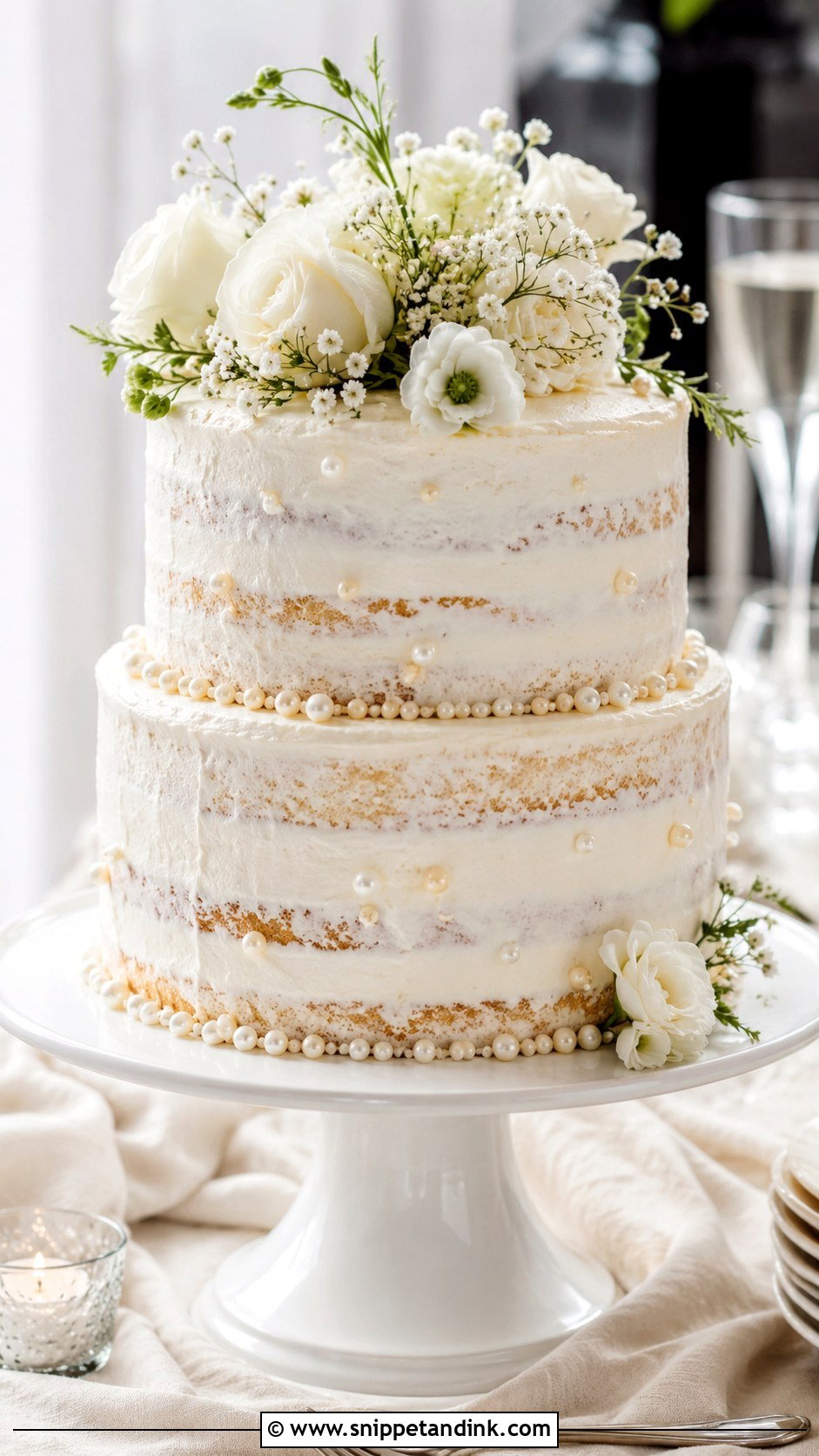
Edible pearls give a semi-naked cake a bridal note without much weight. Scattered lightly, set in a ring at the base of each tier or tucked in with small flowers, they suit classic, garden and vintage-style weddings. Hard sugar pearls can bleed color into moist buttercream after several hours, so I add them close to delivery. Vanilla, almond, coconut and lemon cakes all work. Keep the palette ivory, cream, blush or champagne.
15. Lightly Iced Wedding Cake With Fruit
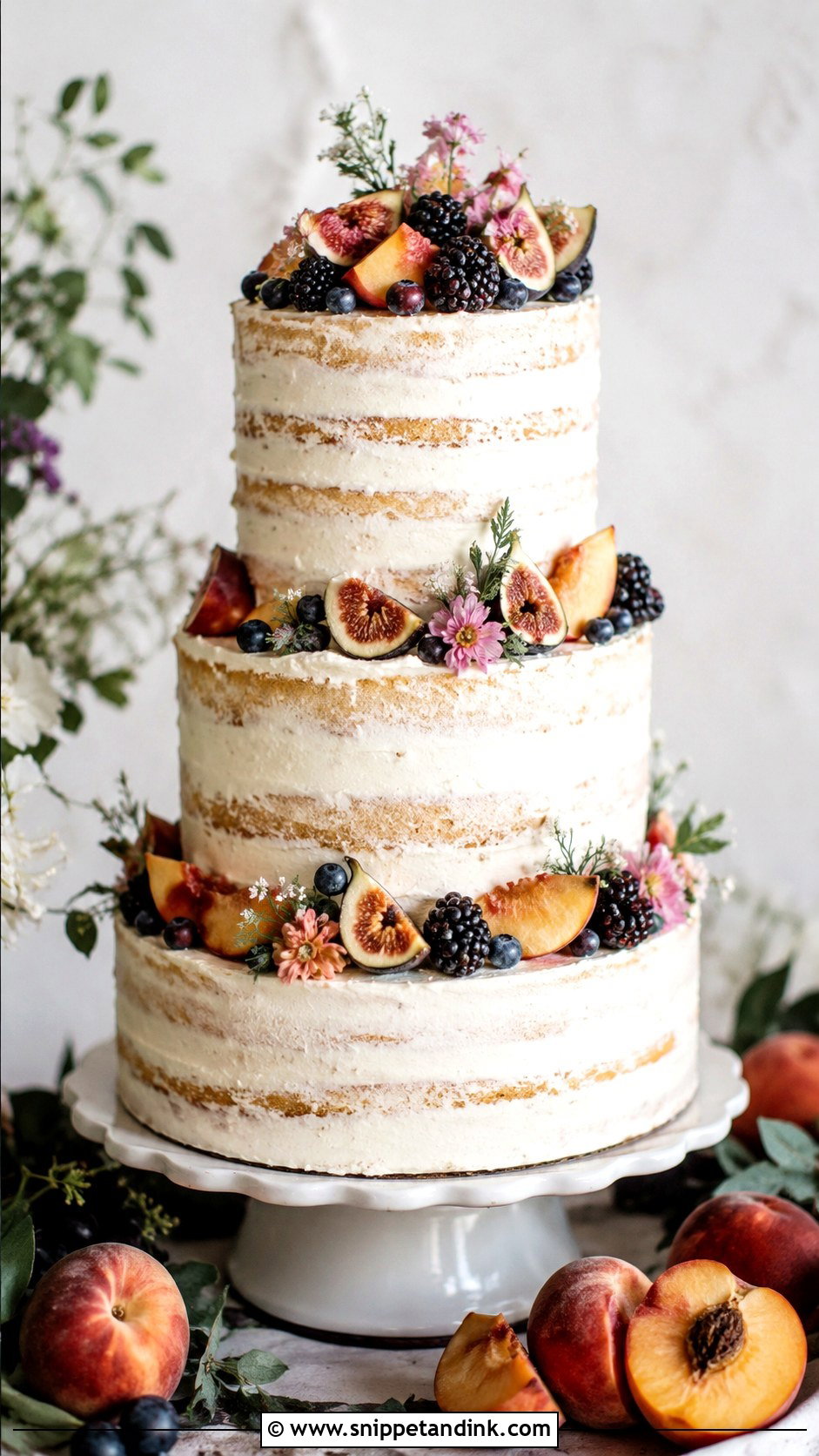
Fruit can make the cake look casual or elegant depending on the choice. Figs, cut in half, look rich and hold up well; berries, peaches, citrus, cherries and grapes all work too. I cluster fruit rather than spreading it, so it looks generous without looking messy. Peaches and other soft fruit brown once cut, so they go on at the venue. Choose what’s in season: it tastes better and looks better. Late summer outdoor receptions and brunch weddings suit it.
16. Lightly Iced Wedding Cake With Drip
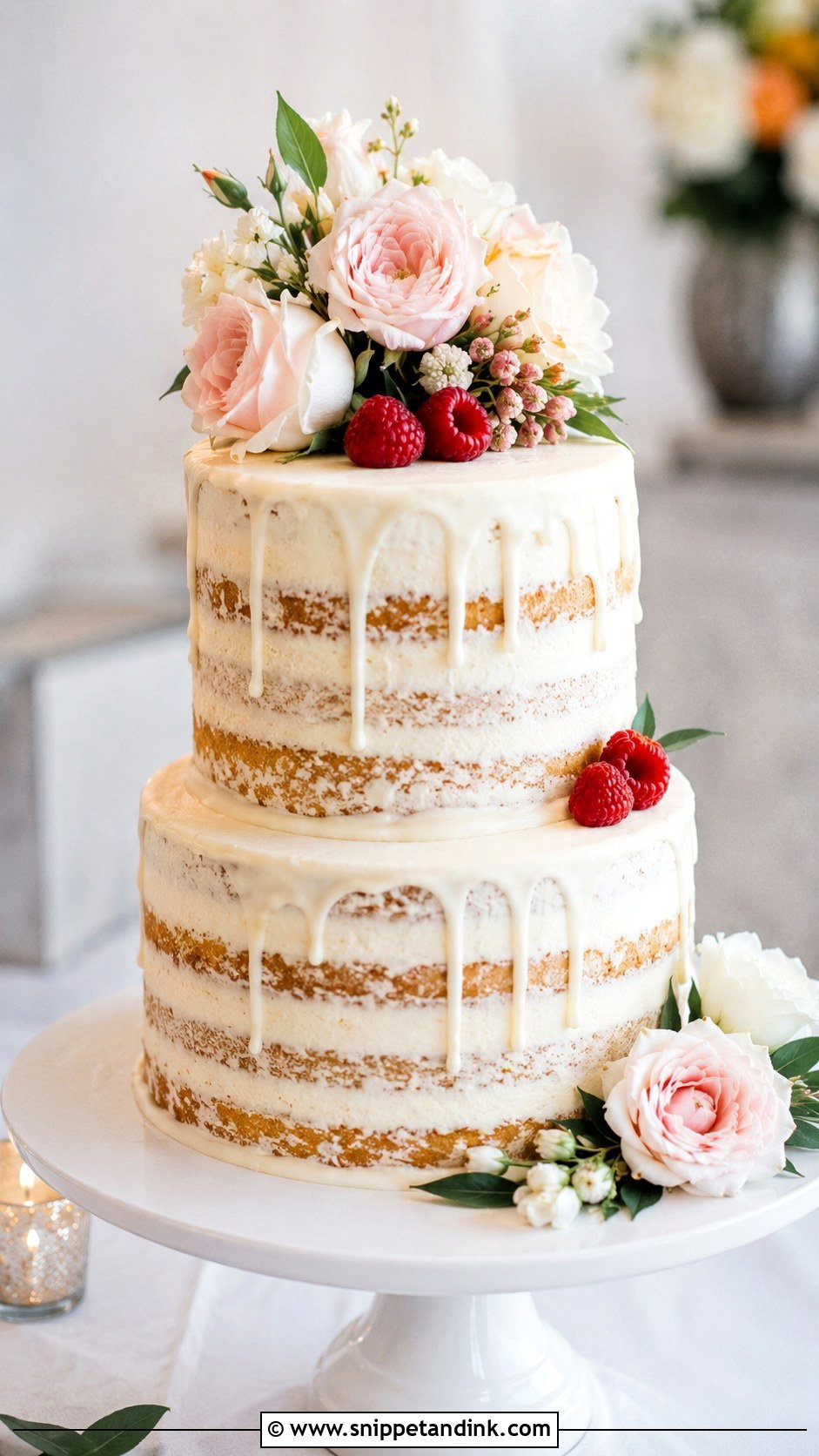
A drip turns a semi-naked cake into something more styled. White chocolate, caramel, berry glaze or dark chocolate can all drip; the trick is temperature. Too hot and the drip runs to the board, too cold and it stops short and looks lumpy, so I test one drip down the side of a chilled tier before doing the rest. Keep it thin and controlled. Fresh flowers, berries or macarons on top work well, and the contrast between scraped frosting and a glossy drip stands out in photos.
17. Lightly Iced Boho Wedding Cake
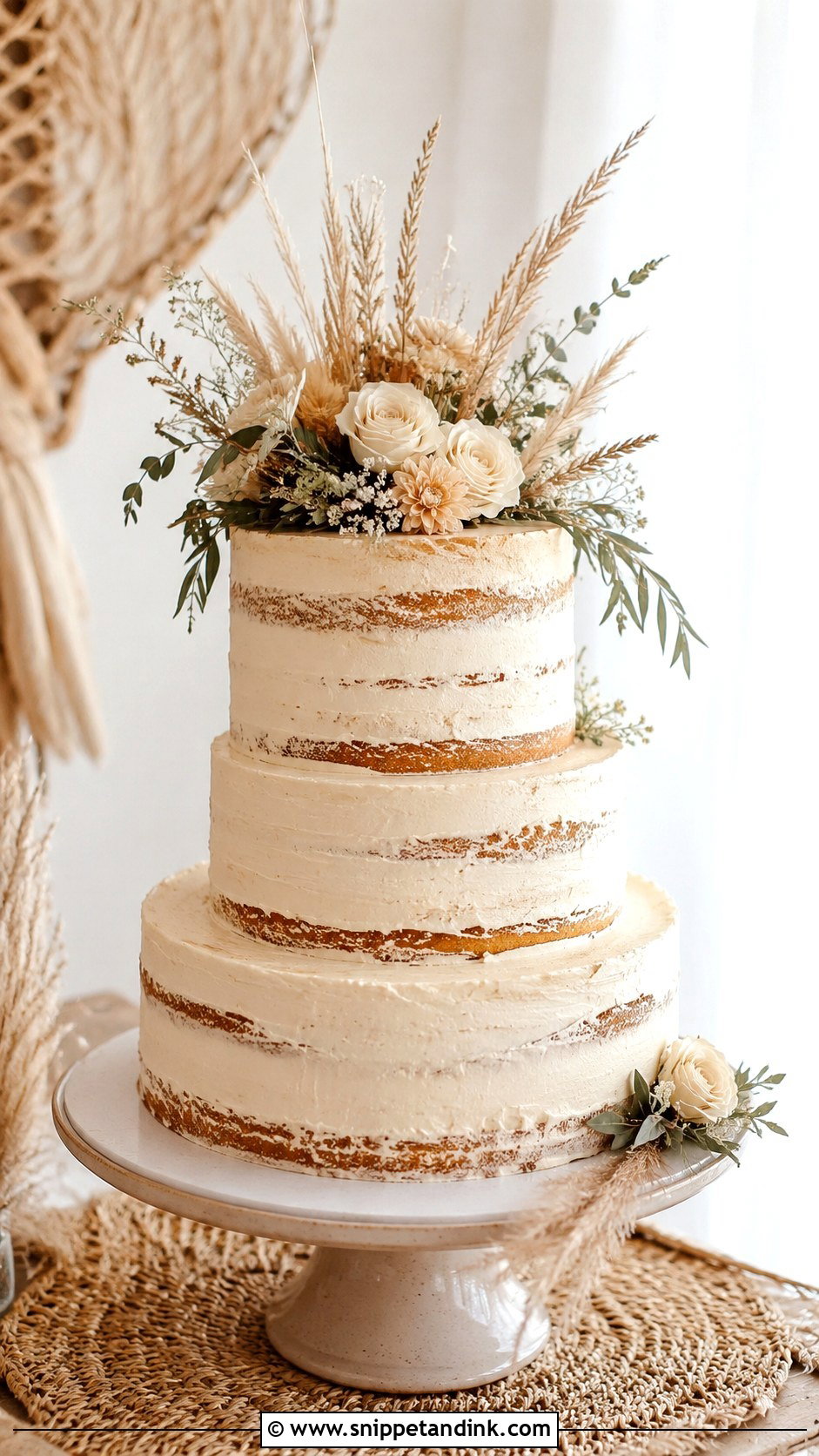
Boho cakes lean into texture and warm neutrals: a soft scrape, natural tones and decoration like dried grasses, flowers, greenery or a little fruit. Dried grasses and pampas are decoration only and shed, so I keep them on the board or in a wrapped bundle away from the cut surface. A ceramic stand or a linen-covered table suits the style. Vanilla bean, honey almond, carrot, lemon and spice flavors fit. Keep the decoration loose but limited, so the exposed layers still show.
18. Lightly Iced Beach Wedding Cake
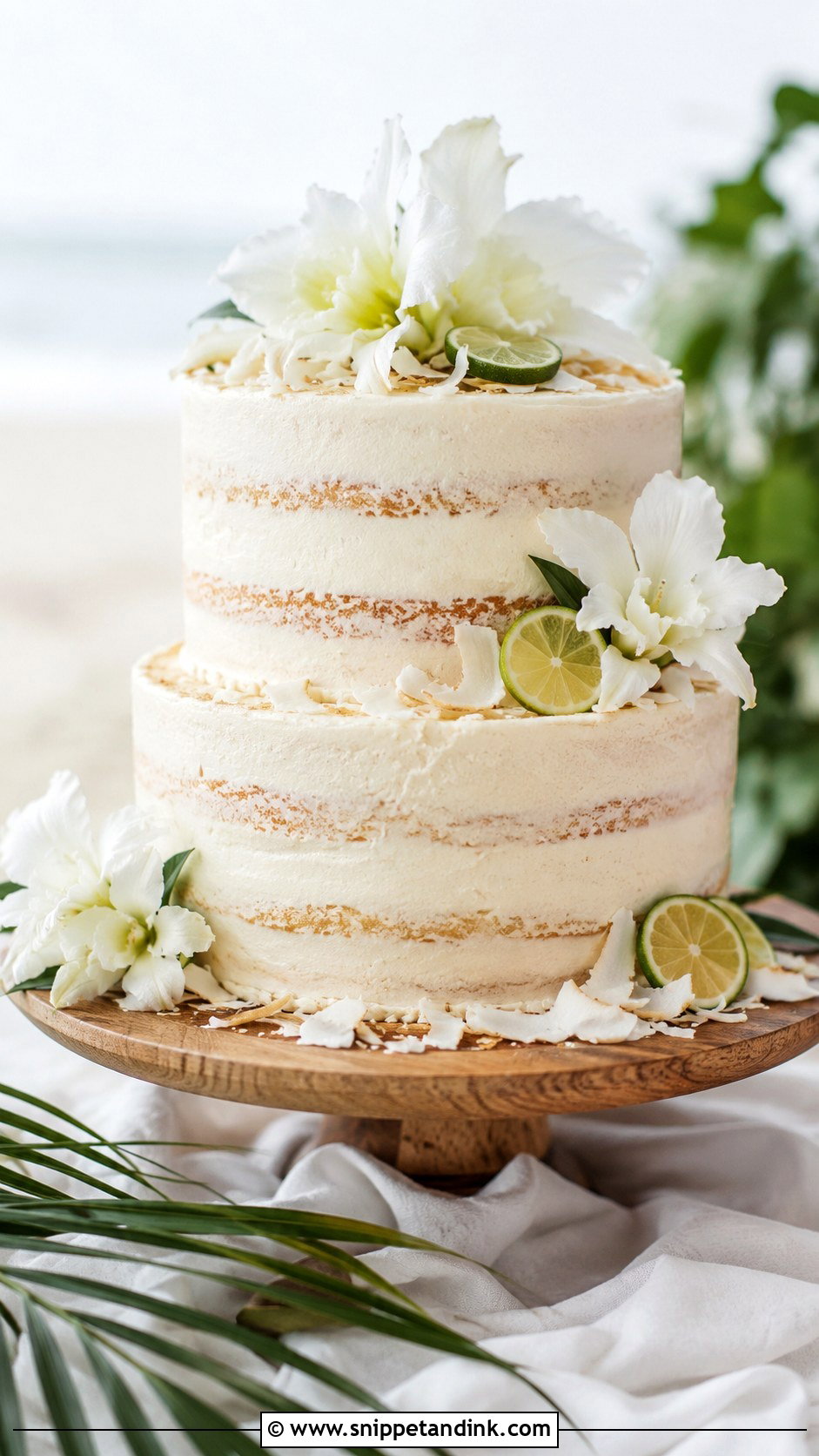
Beach receptions are hard on any cake: sun, wind, sand and humidity all work against buttercream. A soft ivory finish with pale layers suits the setting, but I’d keep the cake indoors or under shade until shortly before cutting. Refined decoration works better than theme props: white flowers, tropical greenery, fresh citrus, a little coconut or soft blue accents. Coconut, vanilla, lemon, passion fruit, and lime flavors fit. A white or natural wood stand and airy linen finish the table.
19. Lightly Iced Small Wedding Cake
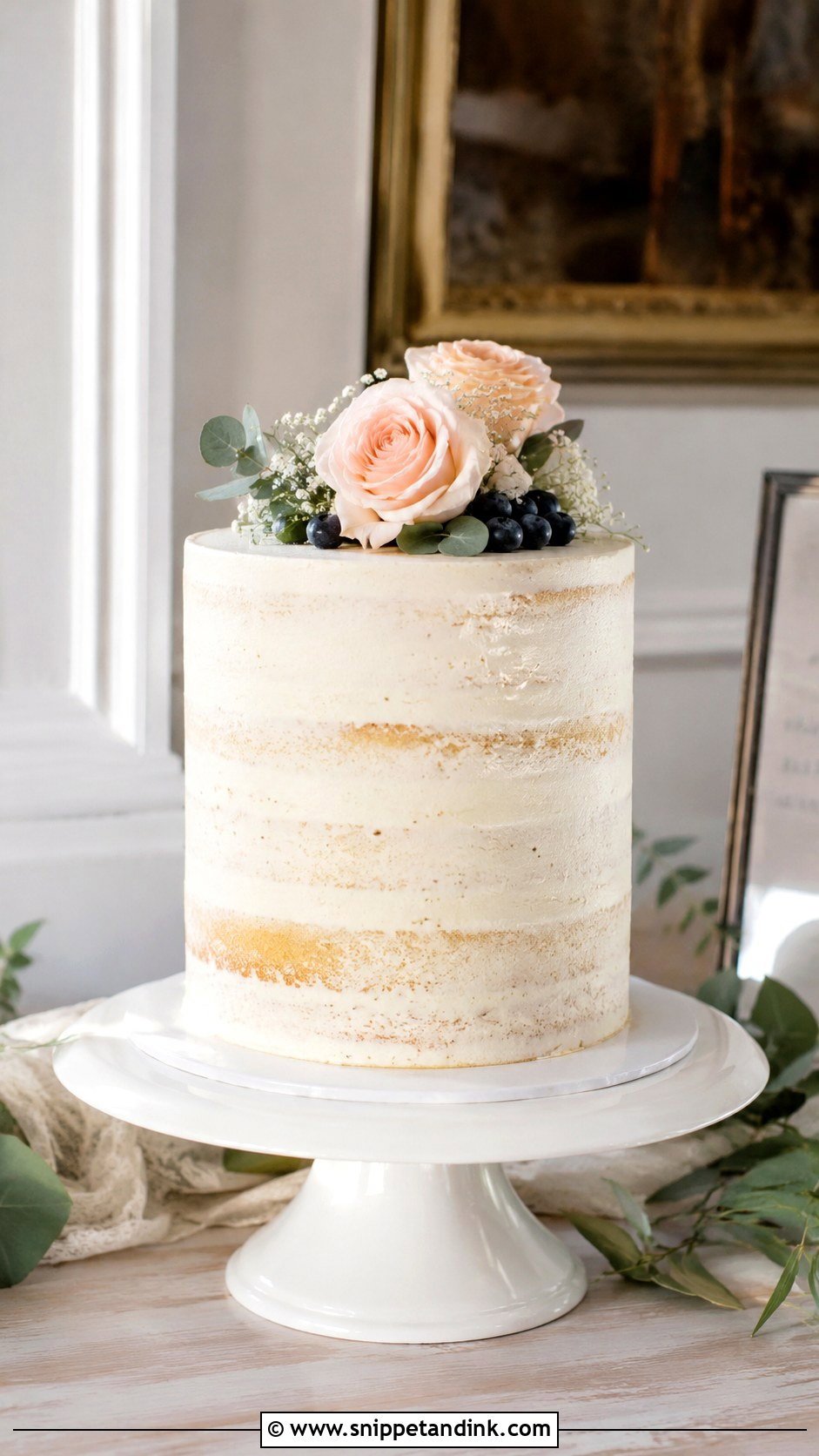
Small cakes suit elopements, courthouse ceremonies and couples serving other desserts alongside. A single tier or a petite two-tier still reads as a wedding cake with a thin coat, visible layers and one strong decoration, whether flowers, berries, greenery or pearls. Too much decoration crowds a small surface. With fewer guests to please, this is the time to pick the flavor you two actually love most.
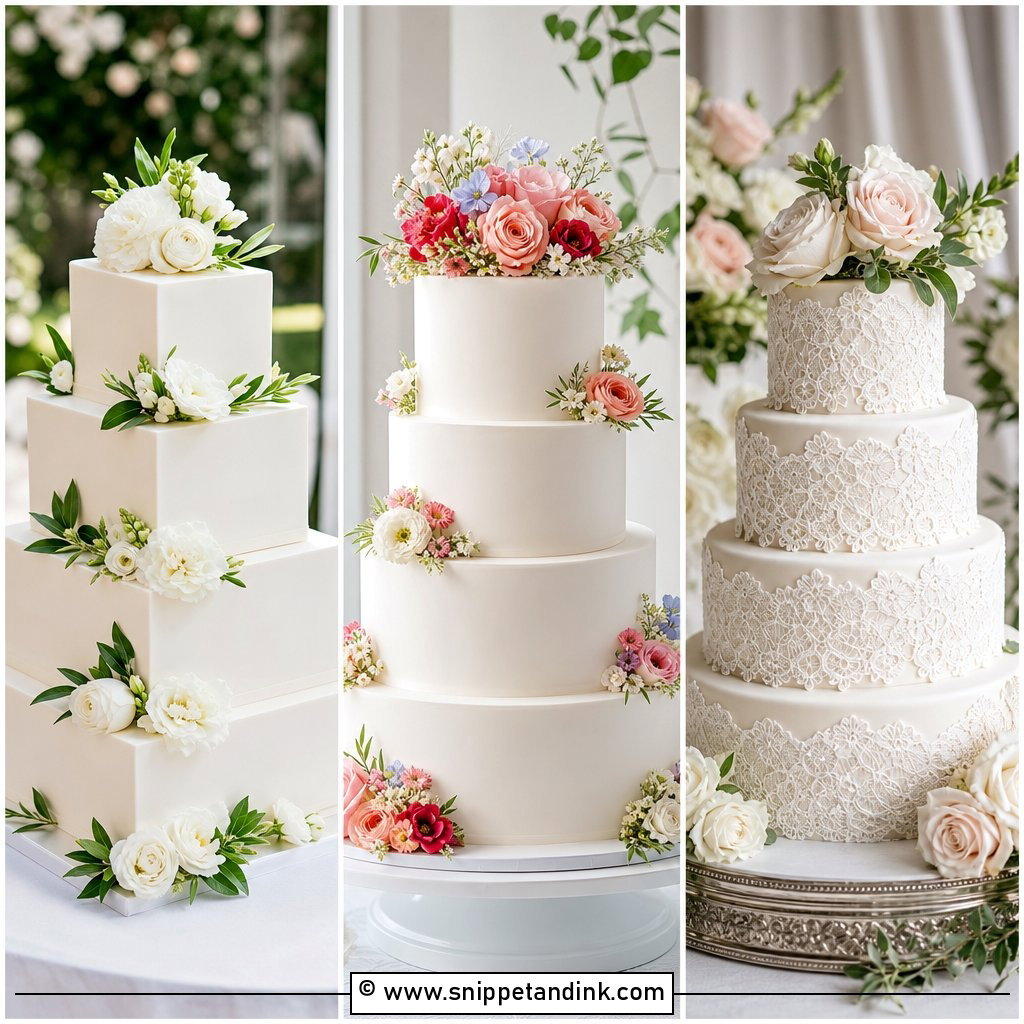

20. Lightly Iced Square Wedding Cake
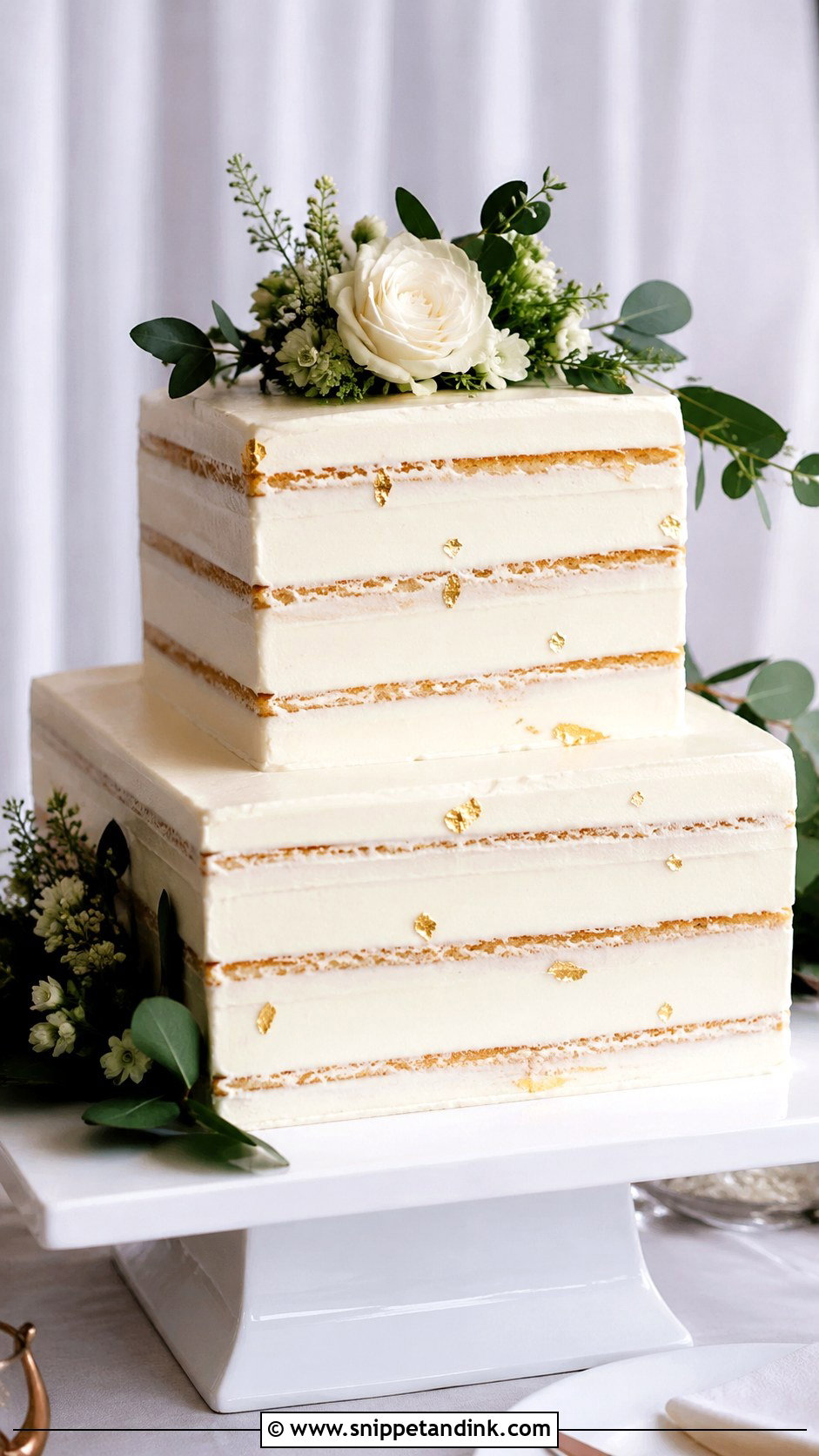
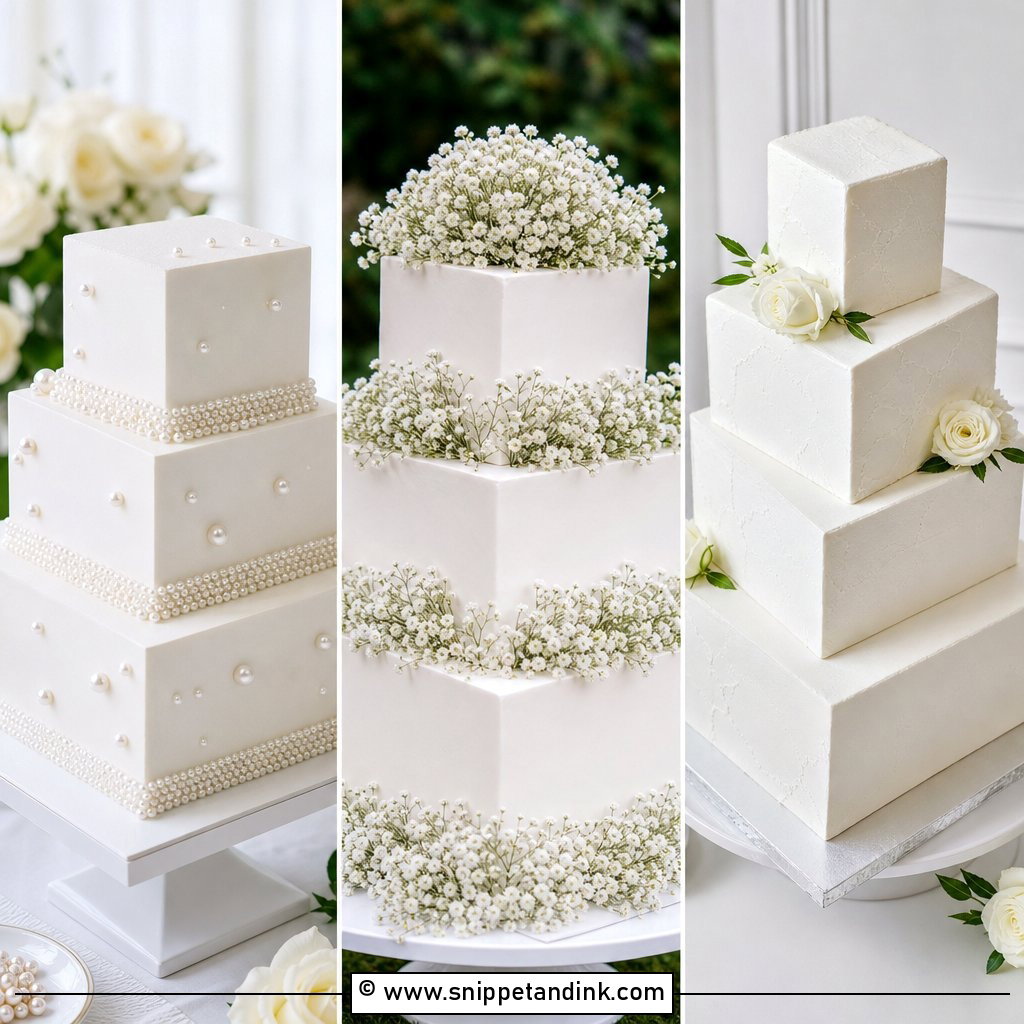
Square tiers add structure, and a thin buttercream finish softens them. A lightly iced square wedding cake is harder to scrape cleanly than a round one, because the corners need a sharp scraper and steady hands, so ask to see photos of square cakes your baker has already made. Flowers on one corner, greenery along an edge or a few flecks of gold leaf keep the shape as the focus. Vanilla, almond, chocolate and lemon all work.
Exposed Sponge Dries Out Faster Than You’d Think
The thin finish that makes these cakes look relaxed also leaves the sponge open to the air. I brush each layer with a light simple syrup as I stack, which keeps the crumb moist without making it soggy, and I keep the tiers wrapped and chilled until delivery.
On the day, the display window matters more than with a fully frosted cake. A cake that sits on a table for five hours before cutting will be drier at the edges than one set out an hour before. Talk to your planner about when the cake goes out, and if you want it on show during cocktails, consider a barely iced finish instead.
What Can Safely Go on a Semi-Naked Cake
With so much sponge on view, decoration sits close to the parts people eat. A few rules I follow every time:
- Flowers and greenery should be grown without pesticides, and their stems wrapped or set in picks.
- Hydrangea, lily of the valley, sweet pea and foxglove are toxic; I keep them off cakes entirely.
- Add soft or cut fruit at the venue, not the day before.
- Gold leaf and lustre must be labeled edible.
- Tell your baker and caterer about any allergies, since nuts and nut-based flavors are common in this style.
Start With the Flavor, Then Decide on the Frosting
Lightly iced cakes sit between fully frosted cakes and bare naked ones: enough buttercream to keep the sponge moist and the tiers neat, not so much that it’s all you taste. Flowers, berries, gold leaf, pearls, greenery or a square shape can push the style toward rustic or formal. Start with a flavor you love, then match the decoration to your venue and season, and ask your baker how they’ll keep the exposed sponge fresh until it’s cut.
You'll Like These Ideas:










Leave a Reply