
A full skirt brings its own drama, so a ball gown rarely needs lace or beading to feel like an occasion. What it does need is a well-built bodice and a skirt with the right fabric underneath it. In my fittings, the plainer the gown, the more the cut shows, and that is good news if the waist sits where your body actually bends. Satin falls in broad, glossy folds, mikado holds a crisp shape, crepe looks softer and quieter, and light tulle adds air without bulk. From there, the neckline, sleeves and train make it yours. The 20 gowns below are paired with the veil, shoes, jewelry, hair and flowers I’d choose for each, along with the fitting check that matters most for that particular cut.
Scaling All That Skirt to a Petite, Tall or Curvy Frame
A ball gown suits far more brides than people assume, but the volume needs adjusting to the body wearing it. When I pull gowns for an appointment, these are the adjustments I’m thinking about.
- Petite brides do best with a skirt that starts at the natural waist or slightly above it, and with volume built from layered tulle or a soft petticoat rather than a wide hoop. Too much width can swallow a small frame.
- Tall brides can carry a drop or basque waist and a chapel train without the dress looking overwhelming. Check the bodice length on a sample, since many are cut for an average torso and sit too high.
- Curvy brides often find a basque point or a V neckline more flattering than a straight horizontal waist. Structured fabrics like mikado hold their shape over the hips instead of clinging.
- Heel height has to be settled before the hem is cut. Change shoes after the final fitting and the skirt either drags or shows your ankles.
The petticoat matters as much as the dress. Many ball gowns rely on a separate underskirt for their shape, so ask whether one is included and wear it to every fitting.
1. Strapless Satin Ball Gown Wedding Dress
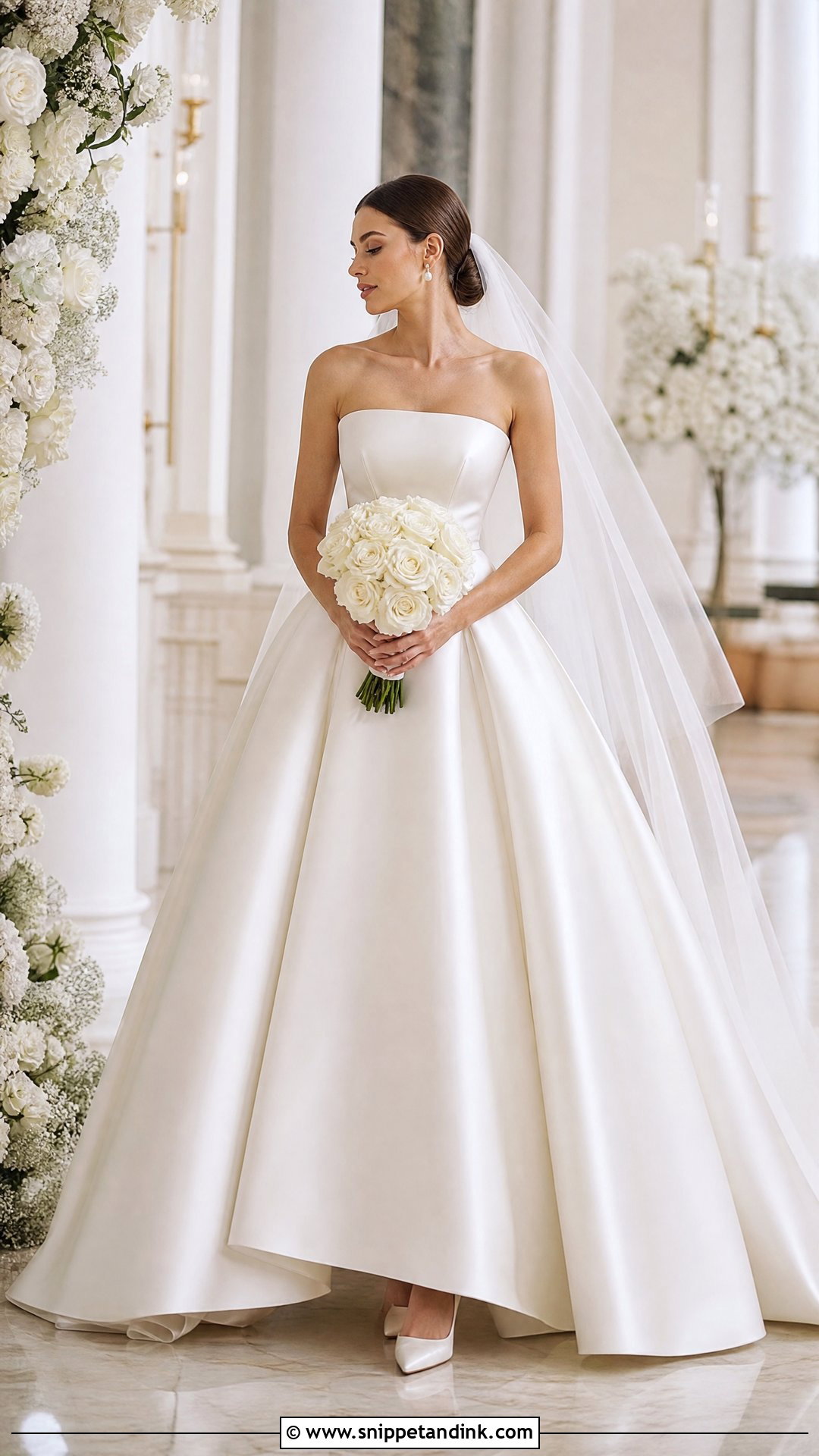
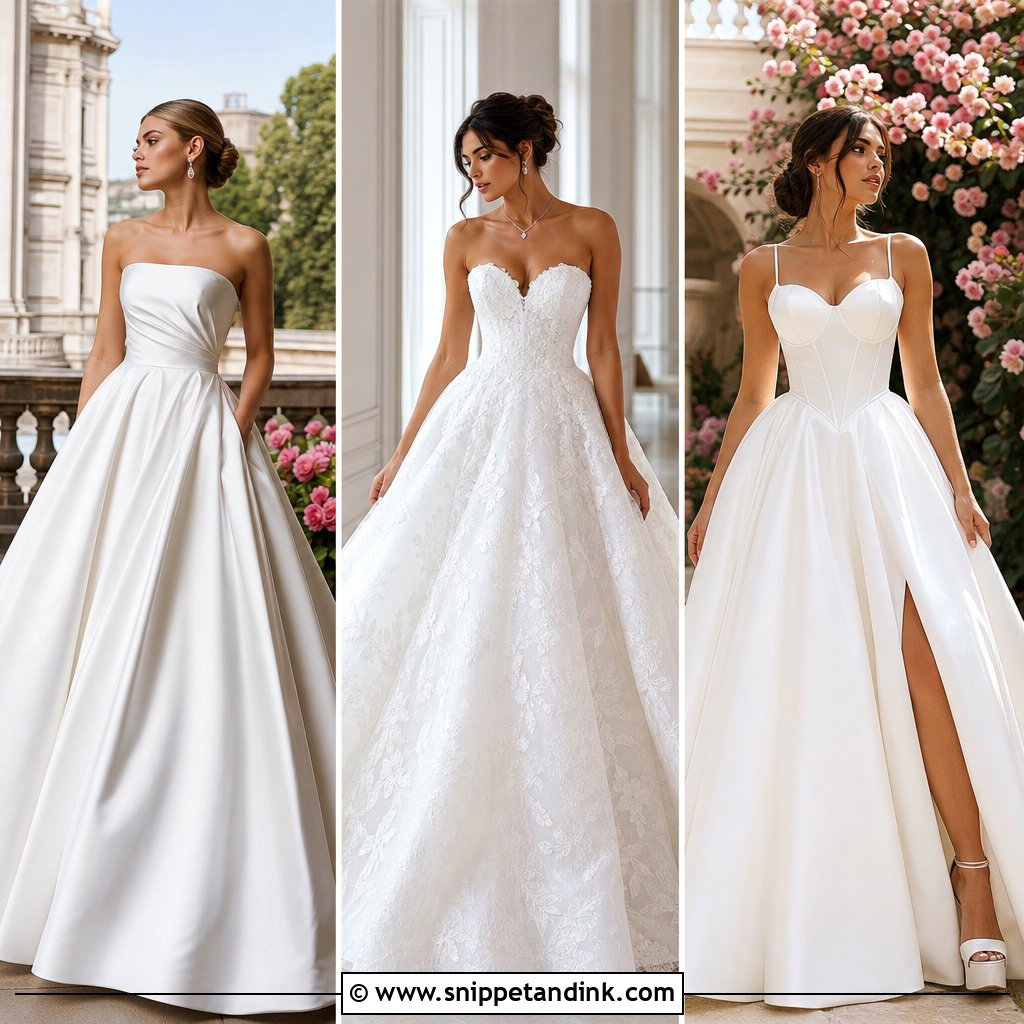
Strapless satin is where most ball gown searches start, and for good reason: the fabric does all the talking. Look for a straight or softly curved neckline, inner boning and a natural waist, with the skirt falling in wide folds rather than tiers. Pointed ivory pumps, a fingertip veil, small pearl earrings and a slim bracelet are enough, and a sleek bun or low chignon keeps the shoulders clear. A compact bouquet of white roses suits it. The thing I check first on a strapless bodice is the top edge when you sit. If it pushes forward or gaps, the boning or waist stay needs work, because you’ll otherwise spend the evening tugging it up.
2. Square Neck Mikado Ball Gown Wedding Dress
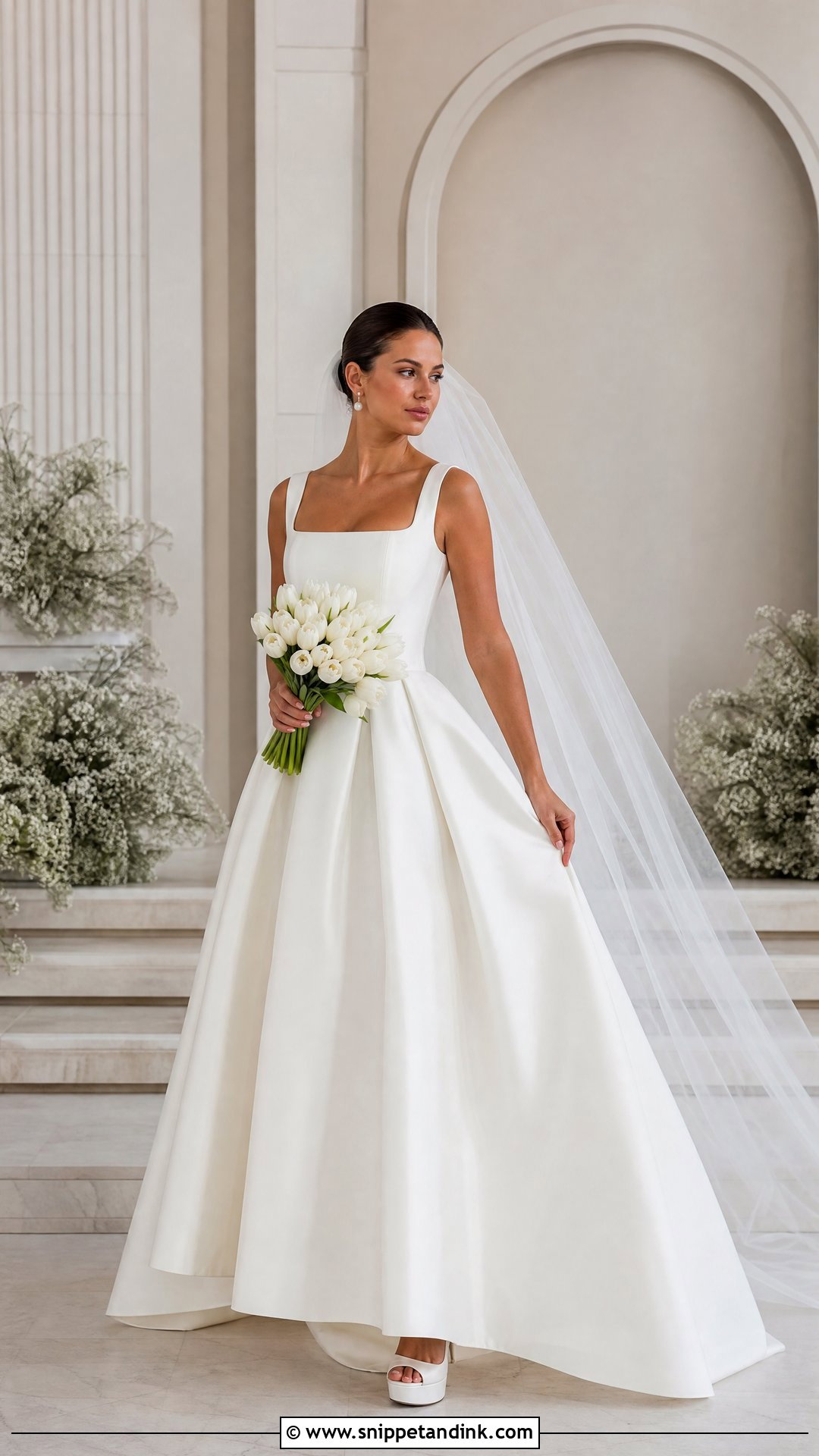
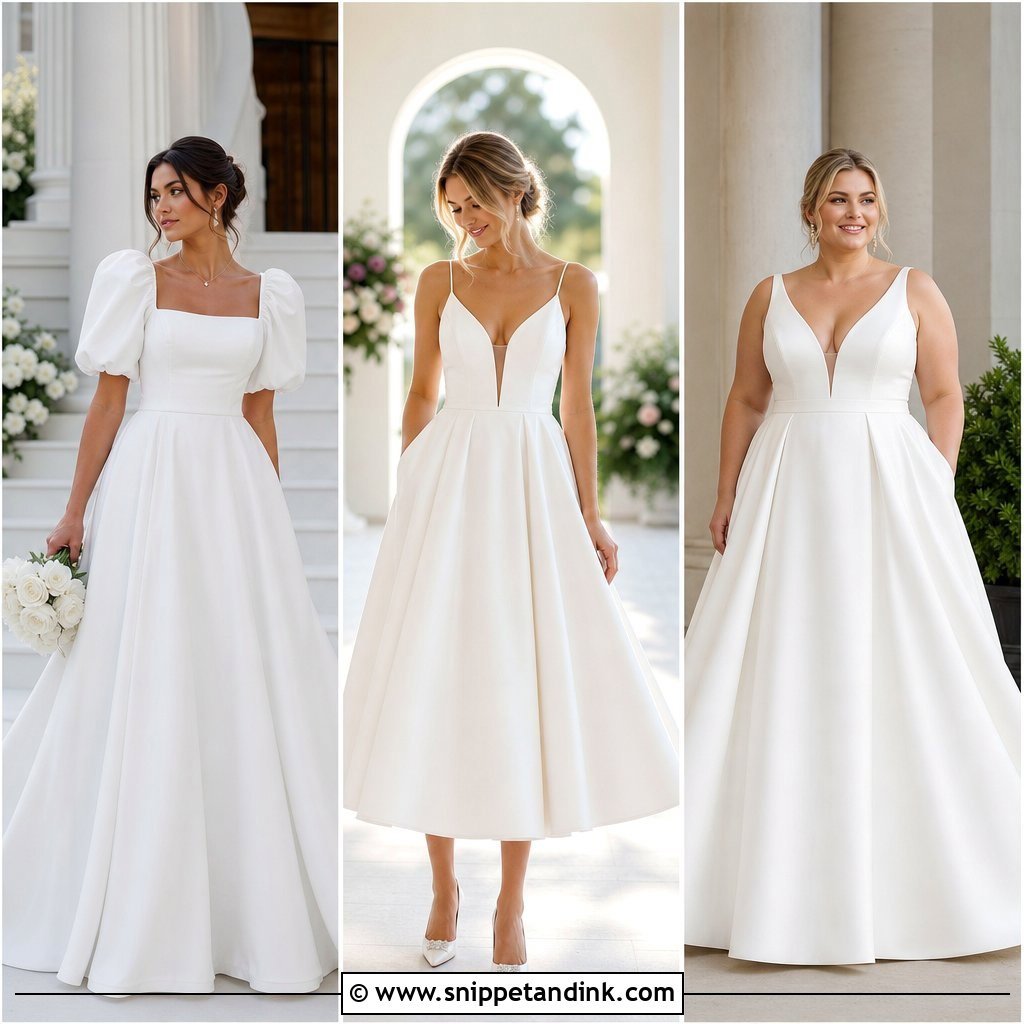
Mikado is the fabric I reach for with a square neckline. It’s stiff enough to hold the corners crisp and to keep the skirt full without piling on petticoats. Wide straps keep the bodice balanced, and minimal seaming lets the shape read clearly. Pearl drop earrings, ivory block heels and a simple cathedral veil suit it, and a low, softly waved ponytail shows off the neckline. Tulips or calla lilies match its clean lines. Need more coverage? Ask for the square cut a little higher; it changes the feel far less than you’d expect.
3. Off The Shoulder Ball Gown Wedding Dress
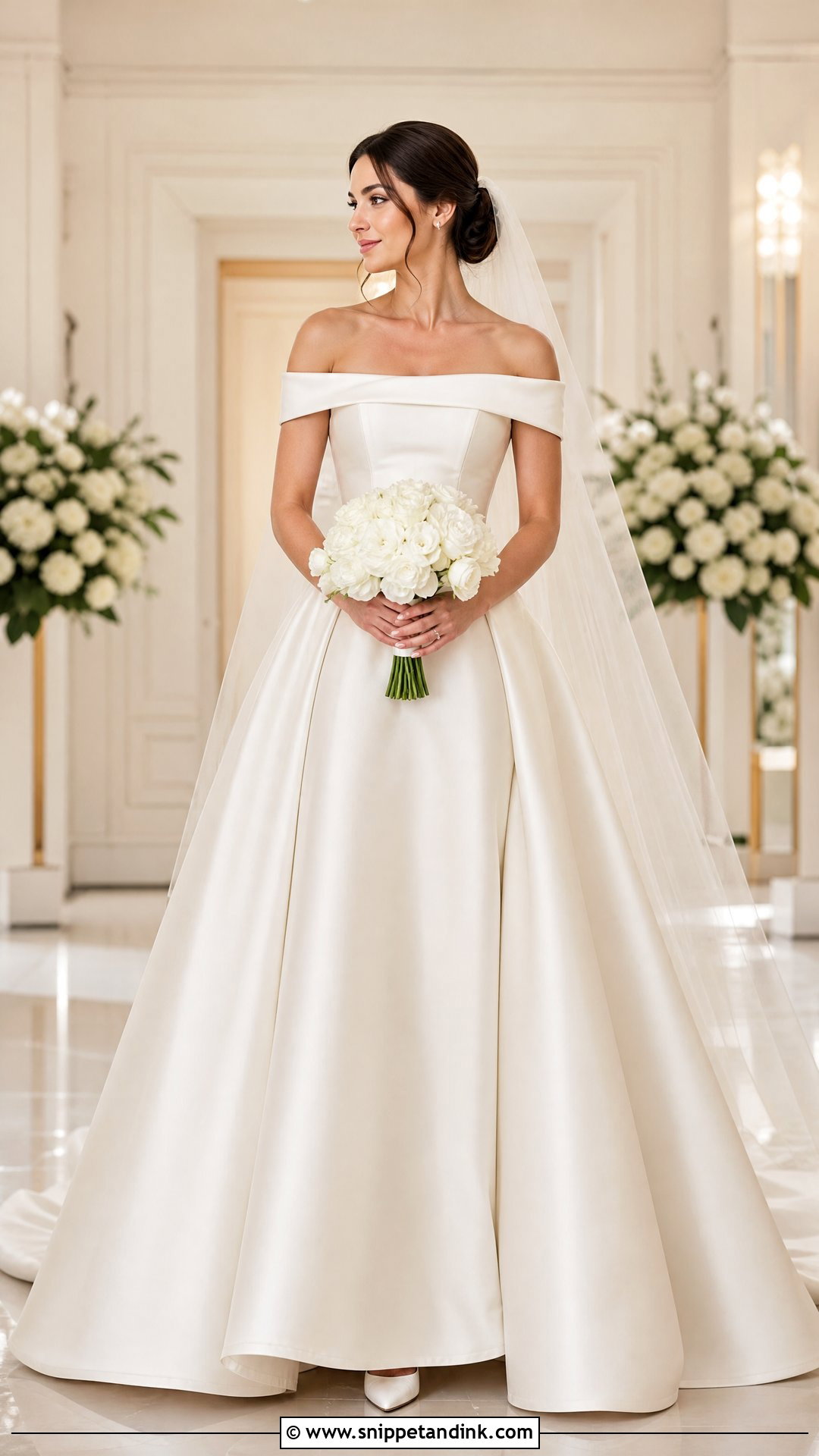
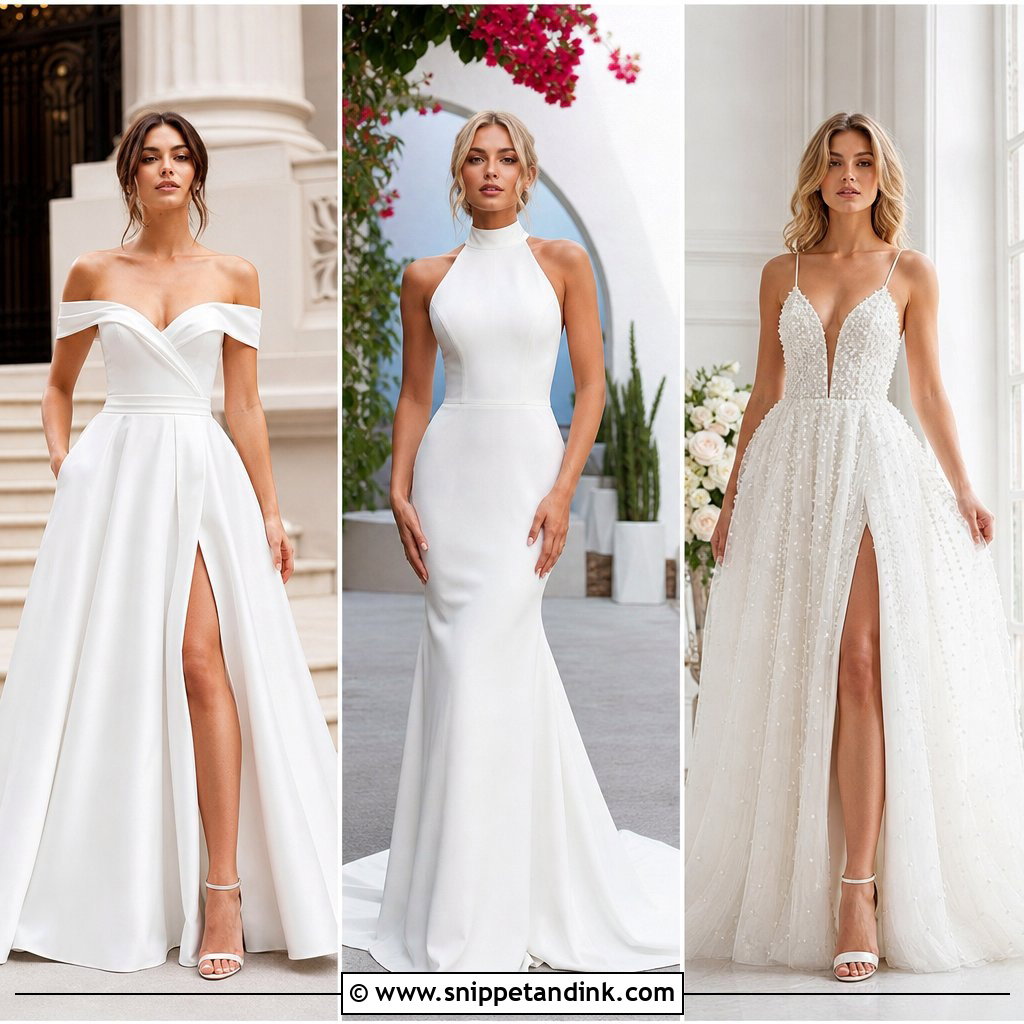
Off-the-shoulder ball gowns look soft but are surprisingly technical. A folded satin band across the arms carries the bodice, so hidden structure inside matters more than anything on the outside. Pair it with delicate studs, a low bun and an airy veil attached beneath the hair, plus closed-toe satin heels and a small bouquet so the skirt doesn’t feel crowded. I’d skip the necklace unless the neckline is very plain; a bracelet or a sentimental ring is enough. At alterations, lift your arms and sit down. Off-shoulder sleeves restrict movement more than brides realize, and the time to find out is before the hem is cut.
4. Sweetheart Corset Ball Gown Wedding Dress
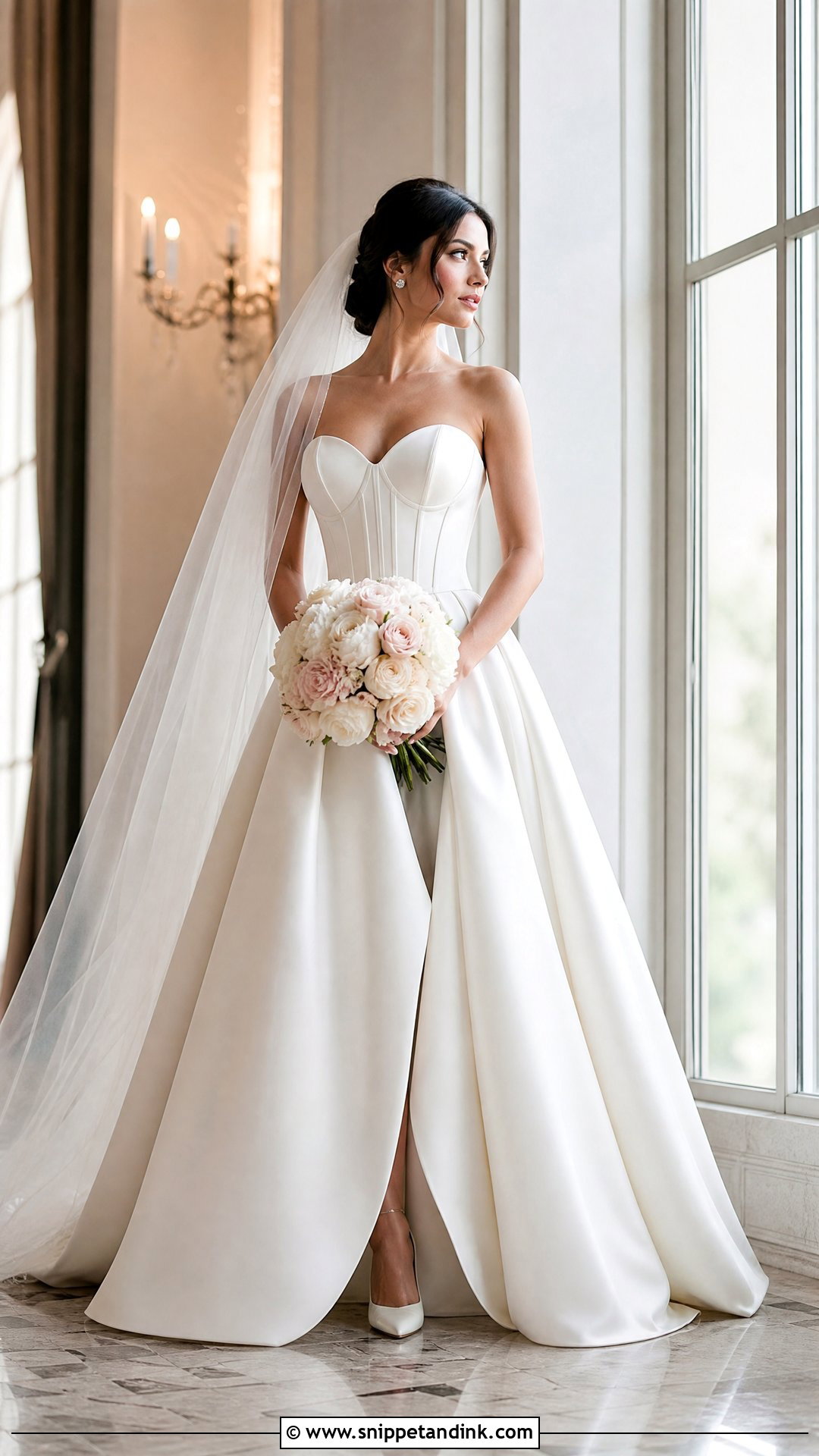
A sweetheart corset bodice gives a plain ball gown its waist, and covered boning reads cleaner than crystals on top of it. A matte satin or mikado skirt has the volume to balance the fitted top. Style it with a sheer chapel veil, small studs and pointed pumps. Waves over one shoulder follow the curved neckline; an updo makes it more formal. Here is my rule for corsets: if you can’t take a full breath sitting down, it’s too tight. Test walking, sitting and breathing before you approve the final alterations, because a corset that feels firm at noon feels much tighter after dinner.
5. Long Sleeve Crepe Ball Gown Wedding Dress
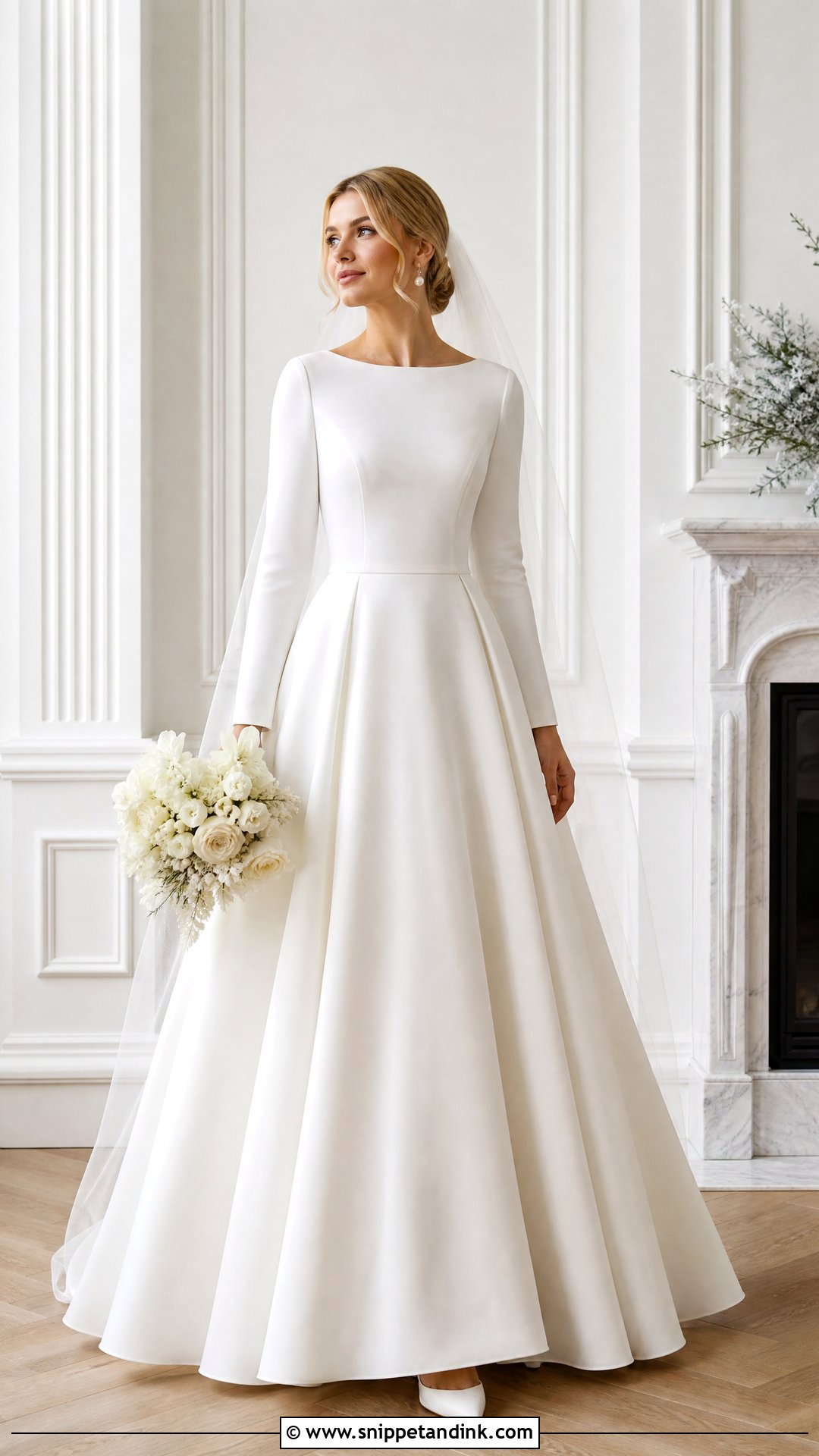
Crepe sleeves on a ball gown look streamlined and quiet, especially for a fall or winter wedding. Crepe is softer than glossy satin yet still builds a proper silhouette. Go for a fitted bodice, a clean round neckline, a natural waist and smooth sleeves to the wrist. Pearl earrings, closed-toe heels and a veil without lace edging keep it uncluttered, and a polished bun stops all that coverage from feeling heavy. A tailored white coat helps if you’re moving between outdoor locations, and a loose seasonal bouquet suits the softer fabric. Fitted long sleeves are the hardest part to alter, so I always ask brides to reach forward as if hugging someone and check the elbows and shoulders don’t bind.
6. Bateau Neck Ball Gown Wedding Dress
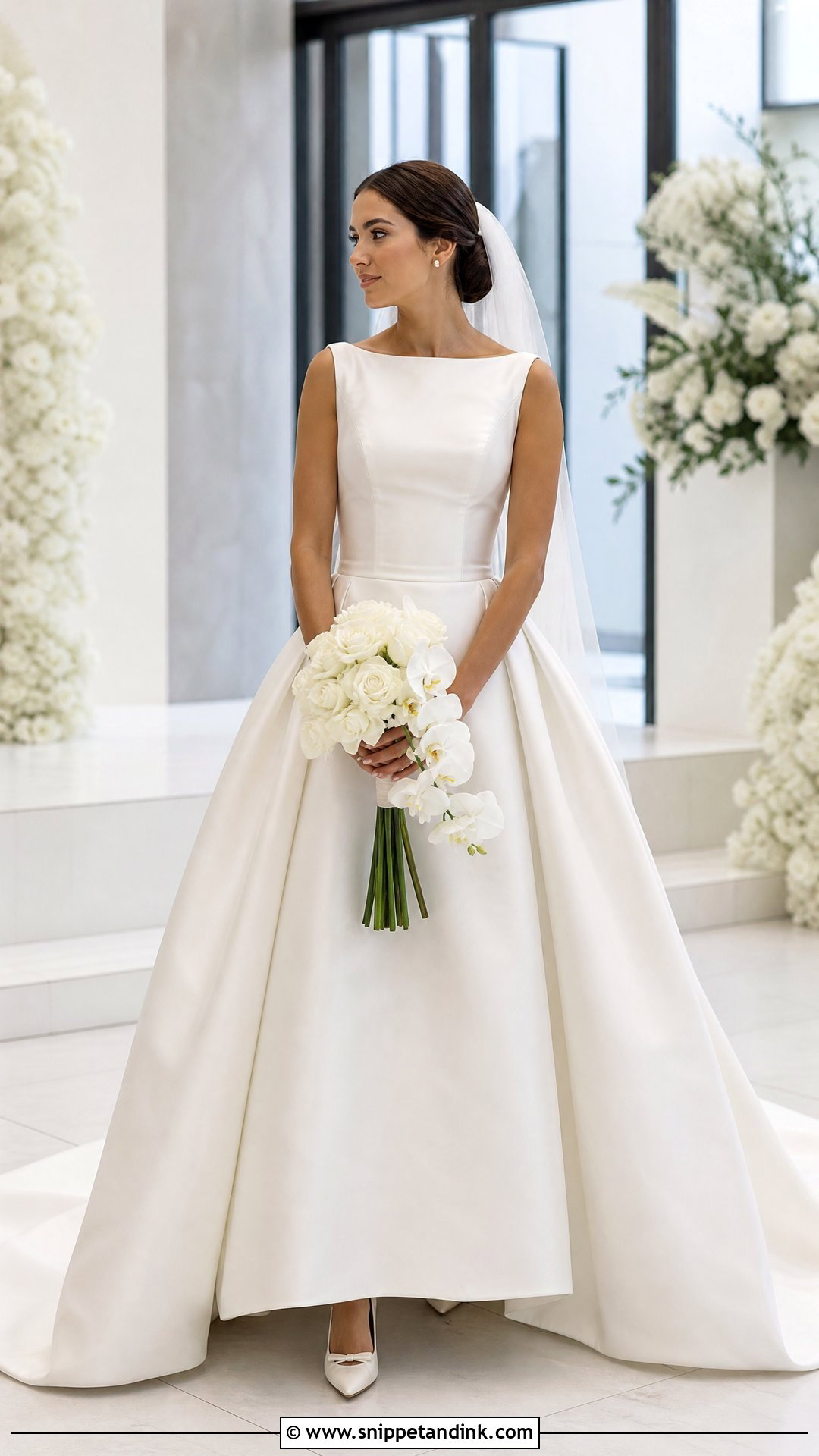
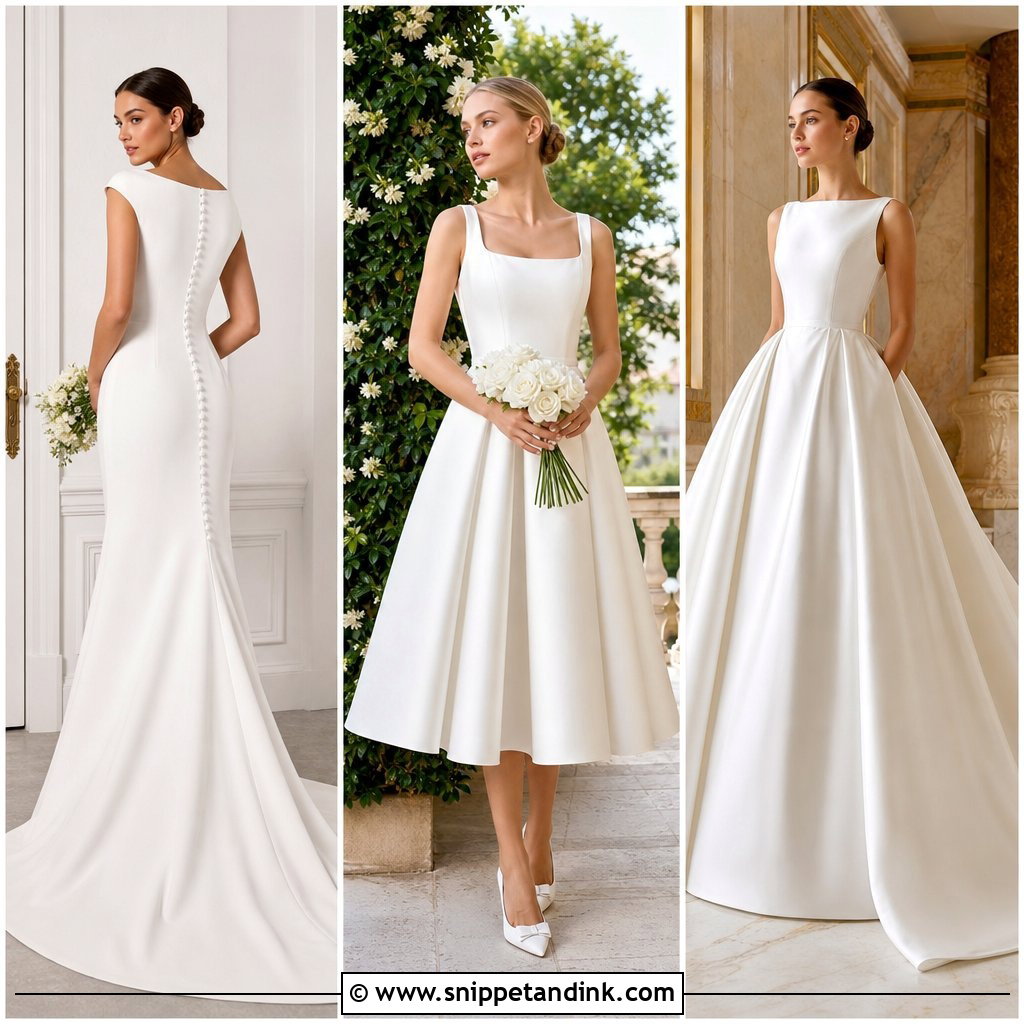
The bateau neck runs straight across the collarbone, and it only looks crisp in a fabric with body, such as satin or mikado. Pair a sleeveless bodice with clean seams and a full skirt from the natural waist. Pearl studs, a low chignon and a plain veil pinned beneath the bun are all it needs. Ivory kitten heels or low block heels stay comfortable without lowering the formality. I’d leave the necklace off so the neckline stays one unbroken line, and carry a small bouquet with long stems. Watch the shoulder area at fittings: a bateau tends to gap at the armhole if the shoulder seam sits too far out.
7. V Neck Ball Gown Wedding Dress
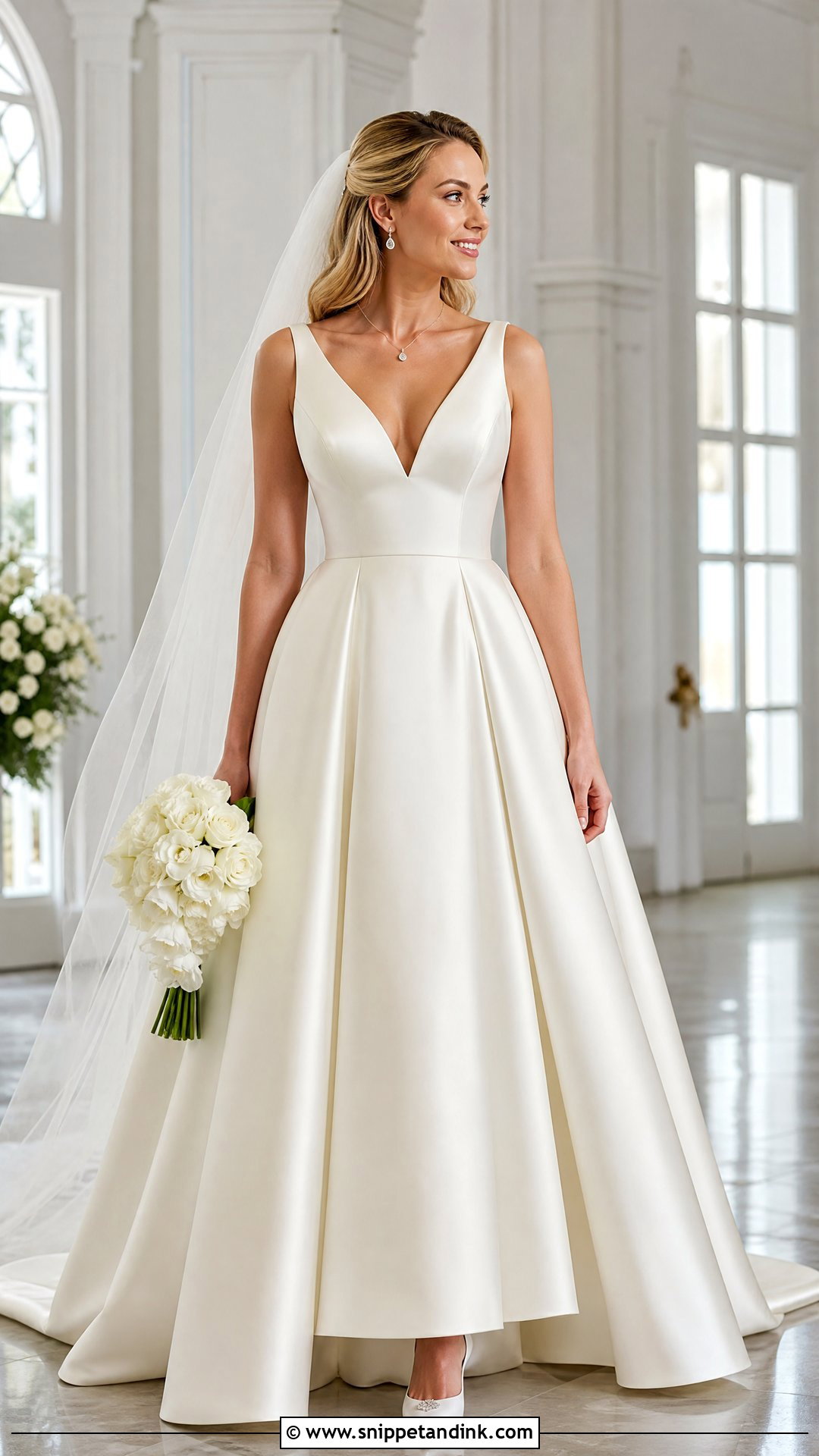
A V-neck draws the eye up and down, which lengthens the torso above all that skirt. Keep the cut moderate, with wide straps and a supportive bodice. Plain satin, mikado or soft tulle provide volume without looking busy. A tiny pendant, matching earrings and a sheer veil with an unembellished edge are plenty, along with pointed ivory heels. Wear the hair in a soft updo or waves tucked behind the shoulders. A cascading bouquet echoes the V nicely, but with a very full skirt I’d go compact instead. The straps decide whether the V stays put, so have them tailored to your shoulders rather than left at the sample length.
8. Scoop Neck Ball Gown Wedding Dress
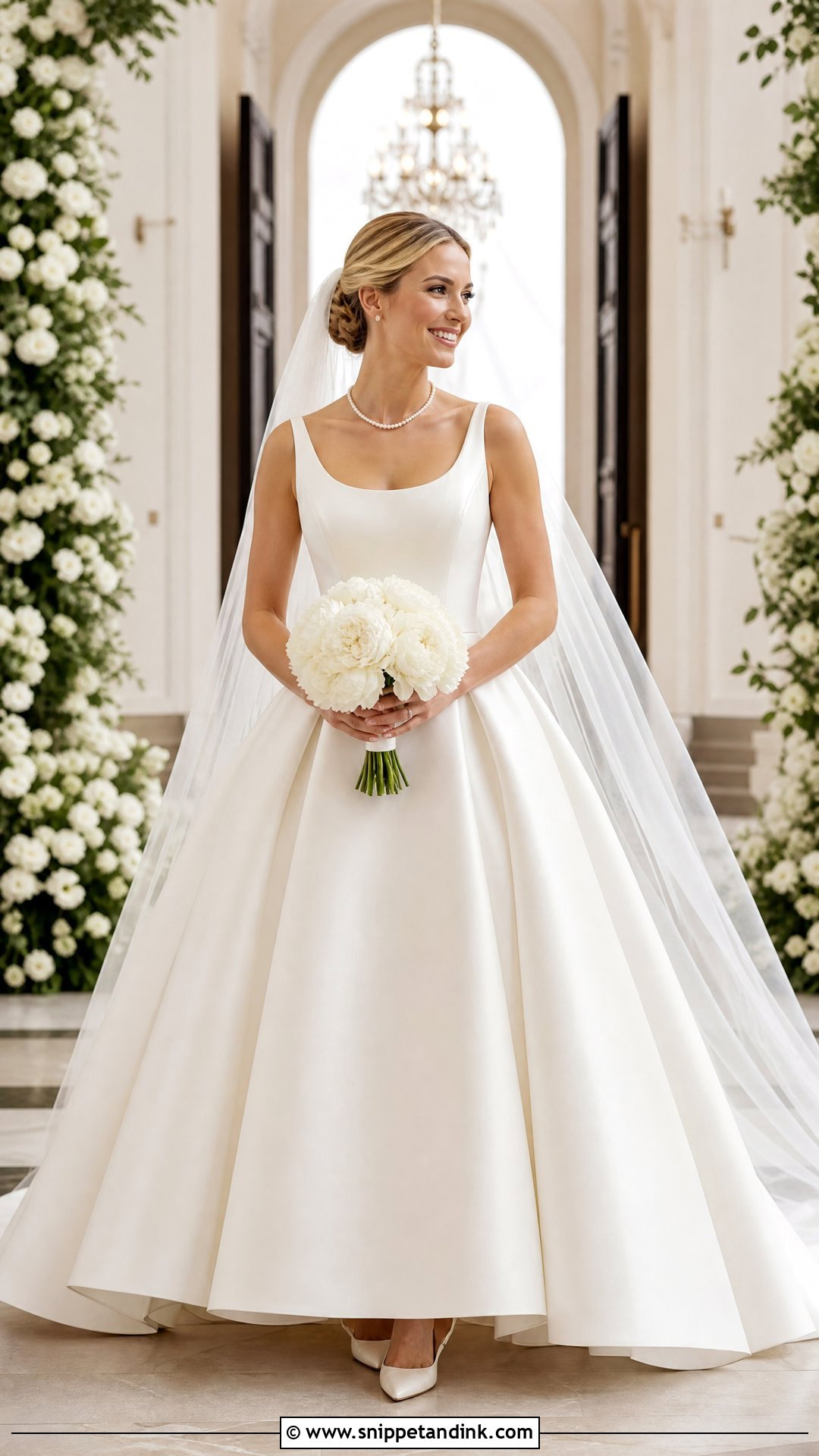
A scoop softens the structure of a ball gown and can be cut modestly or lower, depending on how much support you need. I’d pair a smooth bodice with wider straps, a defined waist and a satin or mikado skirt in broad folds. A short pearl necklace, matching studs and comfortable ivory heels suit it. A mid-length veil keeps things light, while a cathedral veil adds ceremony drama. Try a low bun with a center part, and peonies or hydrangeas for flowers. Scoops gape when they’re even slightly loose, so ask for careful fitting around the bust, shoulders and upper back.
9. Cap Sleeve Ball Gown Wedding Dress
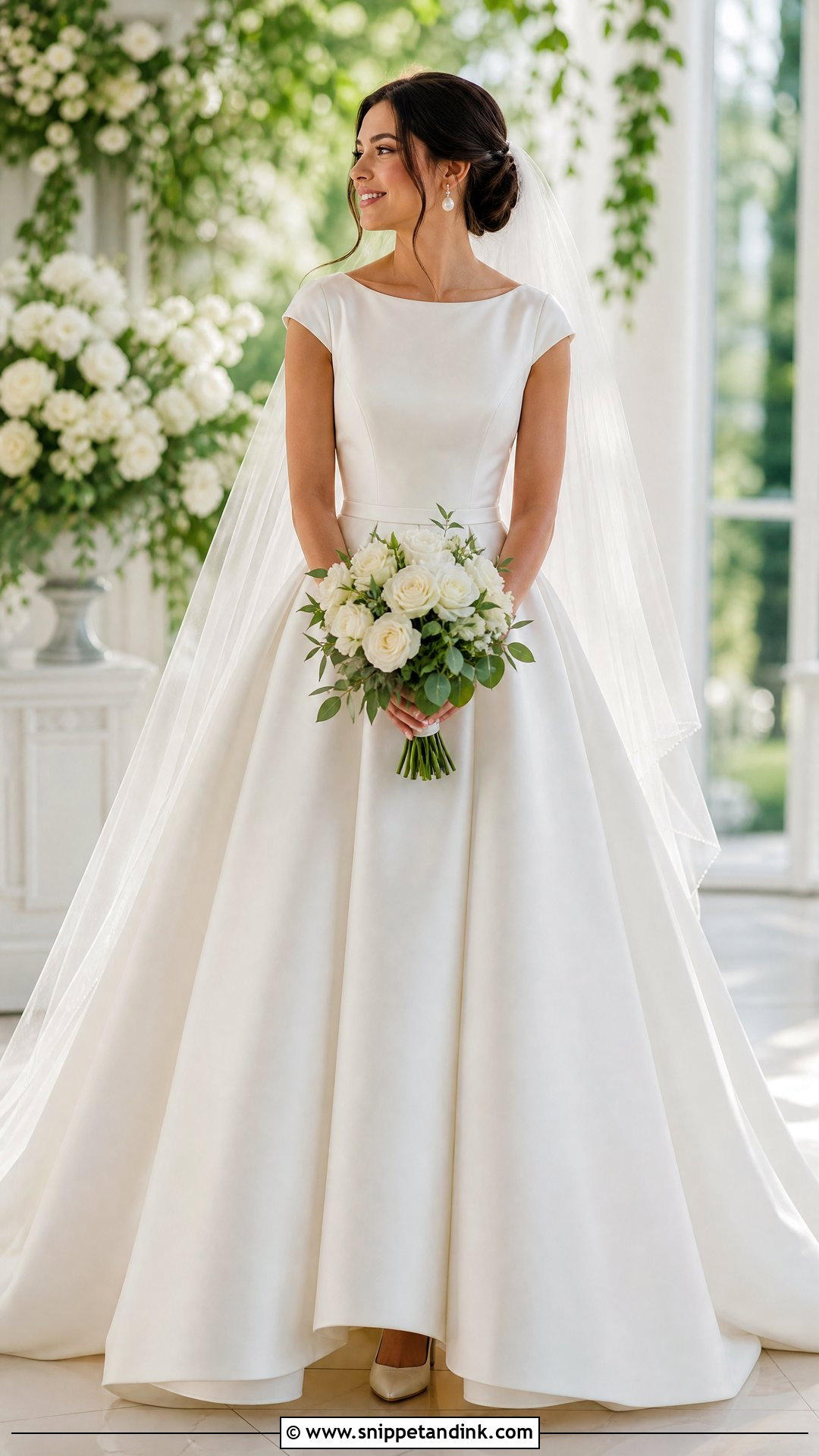
Cap sleeves give a little shoulder coverage without the formality of full sleeves. They suit a simple satin ball gown with a fitted bodice and a softly rounded neckline. Plain sleeves stay cleanest, though a very light lace edge adds texture if you want it. Pearl drop earrings, a fingertip veil and closed-toe block heels balance the outfit, and a loose bun keeps the sleeves in view. My one fitting test: reach forward and up. A cap sleeve with a tight armhole pulls the whole bodice when you lift your bouquet or hug a guest, and shaping the armhole is what fixes it.
10. Spaghetti Strap Ball Gown Wedding Dress
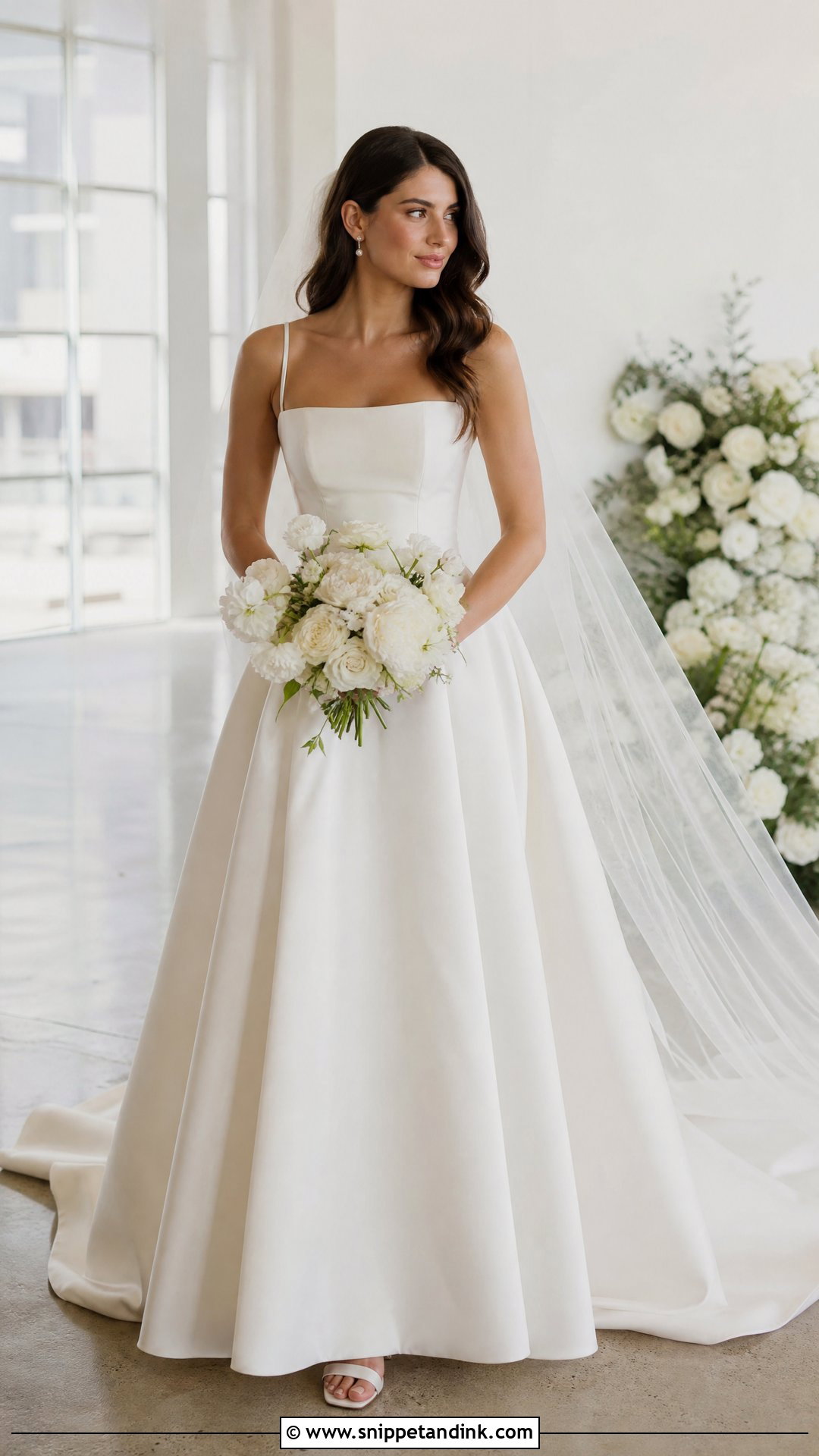
Slim spaghetti straps make a full ball gown feel lighter and more relaxed. They suit a straight or softly scooped neckline over a plain satin skirt. The straps are there to look delicate, so the bodice has to hold itself up with proper internal support. A long sheer veil, small drop earrings and sleek ivory sandals or pumps keep the top half light; oversized jewelry overwhelms it. Loose waves feel easy, and a high bun shows off the straps. Have the seamstress set the strap length on your body, since thin straps dig into the shoulders when the bodice relies on them.
11. Lace Bodice Ball Gown Wedding Dress
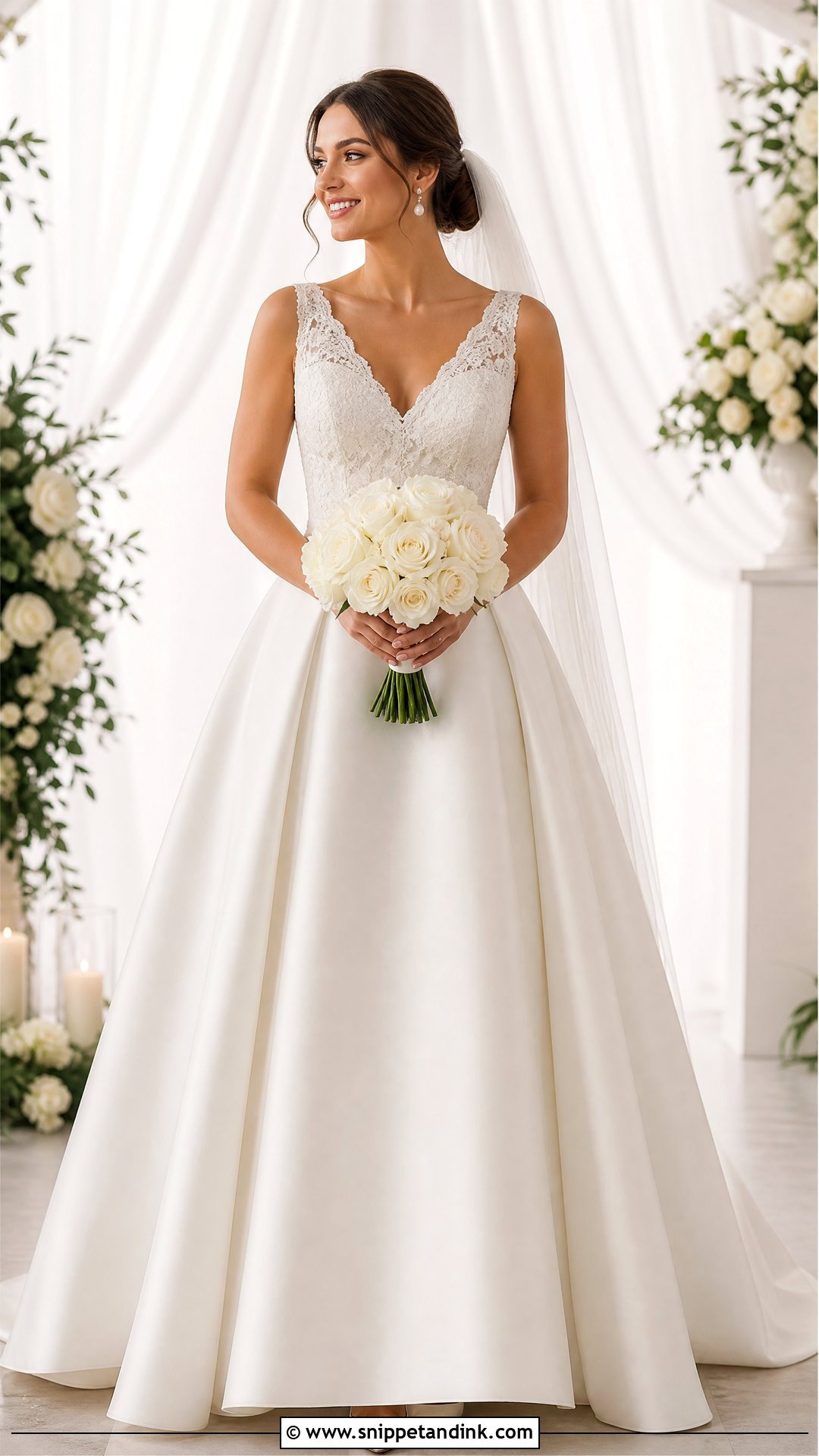
Lace on the bodice only, with a smooth satin or mikado skirt, gives texture without covering the whole dress. I prefer tonal lace with minimal beading. The neckline can be sweetheart, scoop or a modest V, depending on how much coverage you want. Keep the veil free of lace so it doesn’t compete with the bodice, and pair it with pearl earrings and plain ivory pumps. A low bun or side-swept waves and a small bouquet of roses finish it. Run your fingers around the neckline and armholes before final alterations. Some lace edges are scratchy, and you’ll feel it by the reception.
12. Satin Bow Ball Gown Wedding Dress
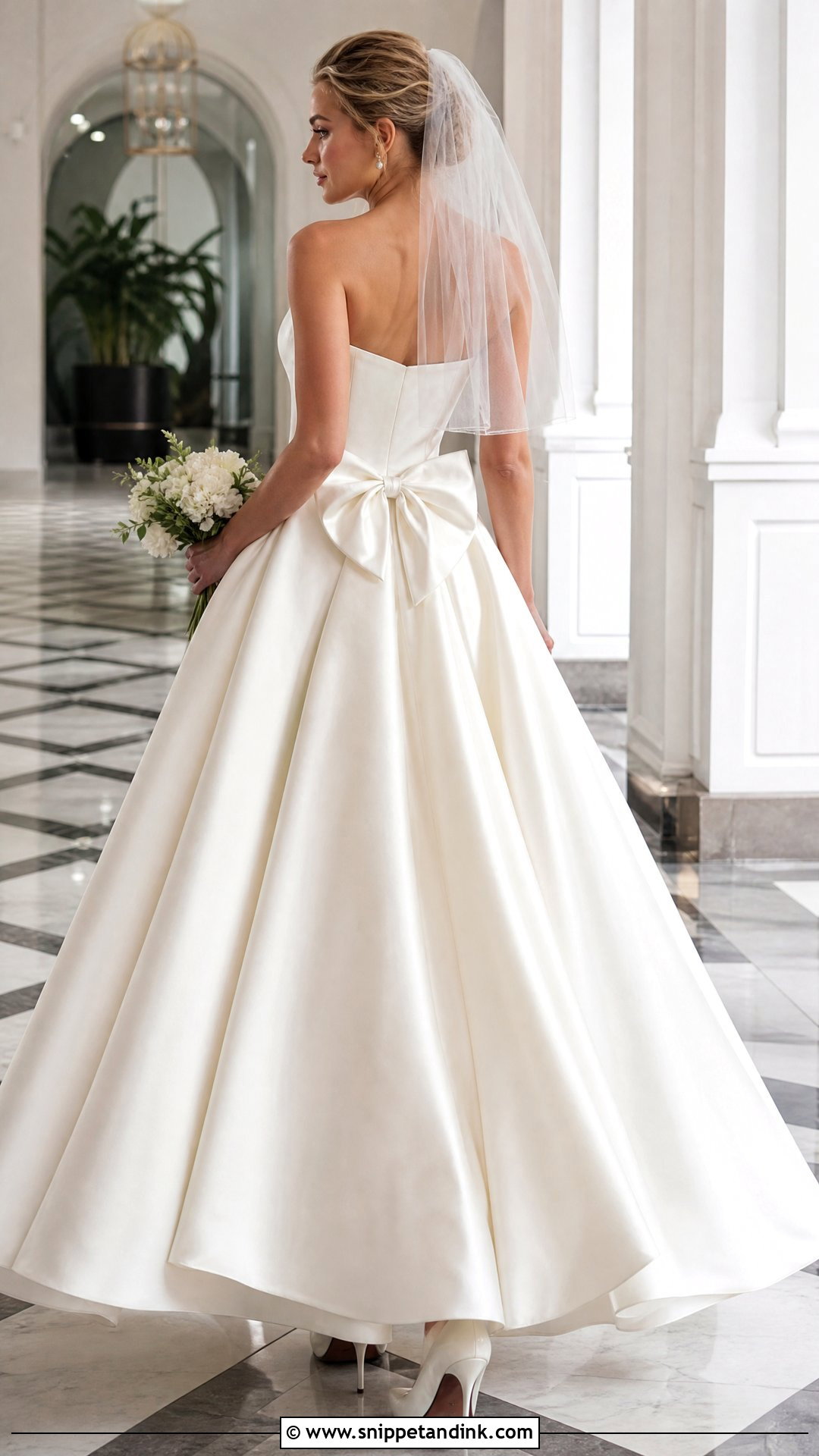
One satin bow, and nothing else, gives a plain ball gown a bit of personality. At the back waist it reads classic; on one side it feels more modern. Keep the bodice structured and the skirt unembellished. Pearl studs, pointed satin heels and a simple veil that ends above or below the bow, never right on it, keep the lines tidy. A sleek bun lets guests see the bow during the ceremony, and a compact bouquet avoids adding competing shapes. Long tails are the detail I check at the final fitting. They should lie flat over the skirt and stay clear of the bustle points.
13. Button Back Ball Gown Wedding Dress
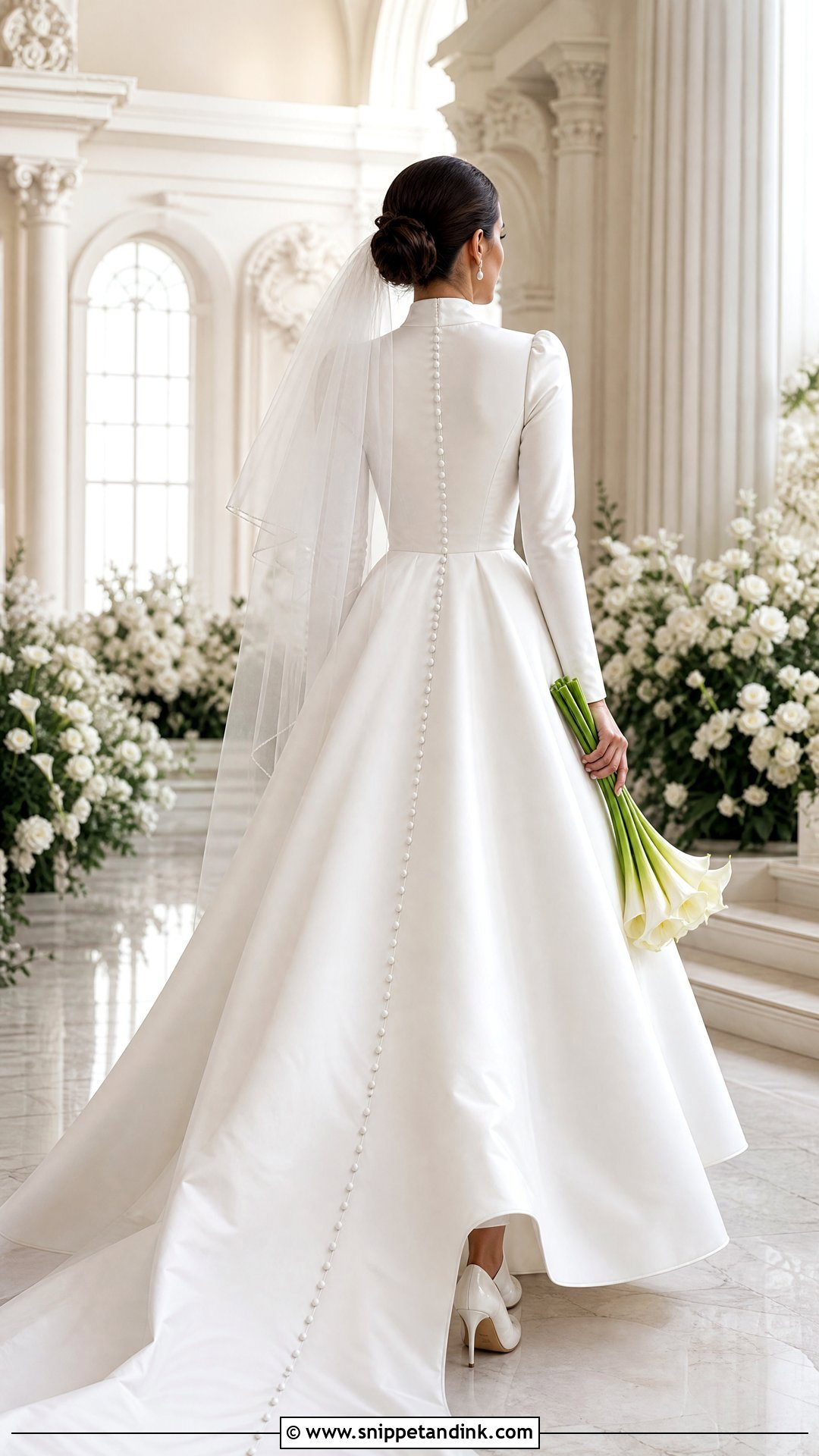
Fabric-covered buttons turn the back of a ball gown into the view guests remember from the ceremony. Choose smooth satin or mikado with a fitted bodice, natural waist and modest train, with buttons stopping at the waist or continuing down the skirt. Pearl earrings, a plain cathedral veil and classic ivory pumps suit it, and the hair should go up so the row stays visible. Roses or calla lilies keep it traditional. Ask early whether the buttons are functional. A hidden zip under decorative buttons saves a lot of time in the getting-ready room, and the back should lie smooth without pulling between buttons.
14. Drop Waist Ball Gown Wedding Dress
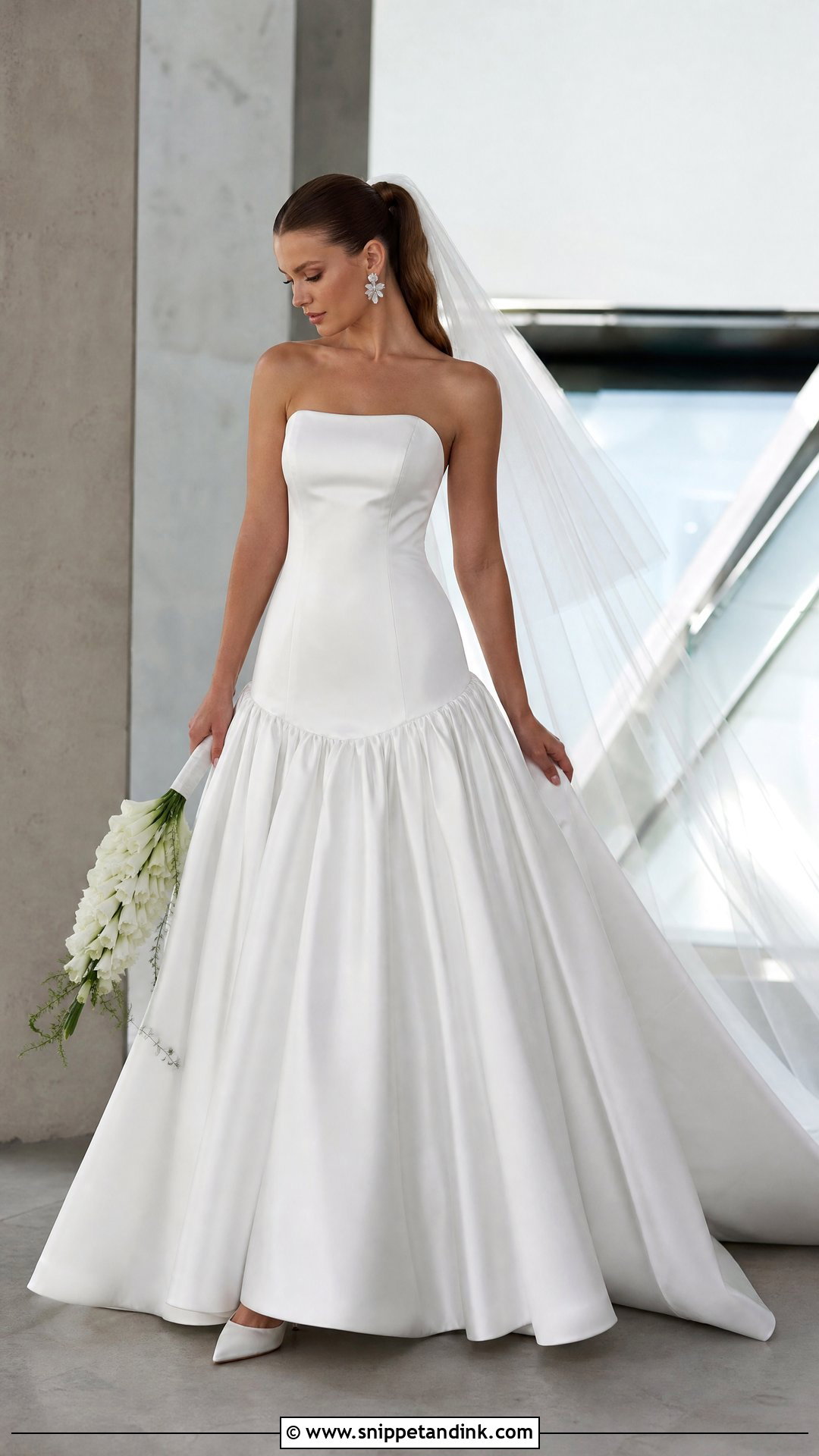
A drop waist carries the fitted bodice below your natural waist before the skirt opens out, which makes the upper body look longer and more sculpted. It’s a cut I recommend with some care: on a short torso it can make the legs look shorter, so try it on before falling for photos. Keep it plain, with clean seams and little embellishment. Small statement earrings, a long sheer veil and pointed pumps suit it, with a sleek bun or polished ponytail. Choose a narrow, long-stemmed bouquet so the waistline isn’t hidden. Sit and walk at fittings, because the longer fitted section has to bend at the hip without bunching.


15. Basque Waist Ball Gown Wedding Dress
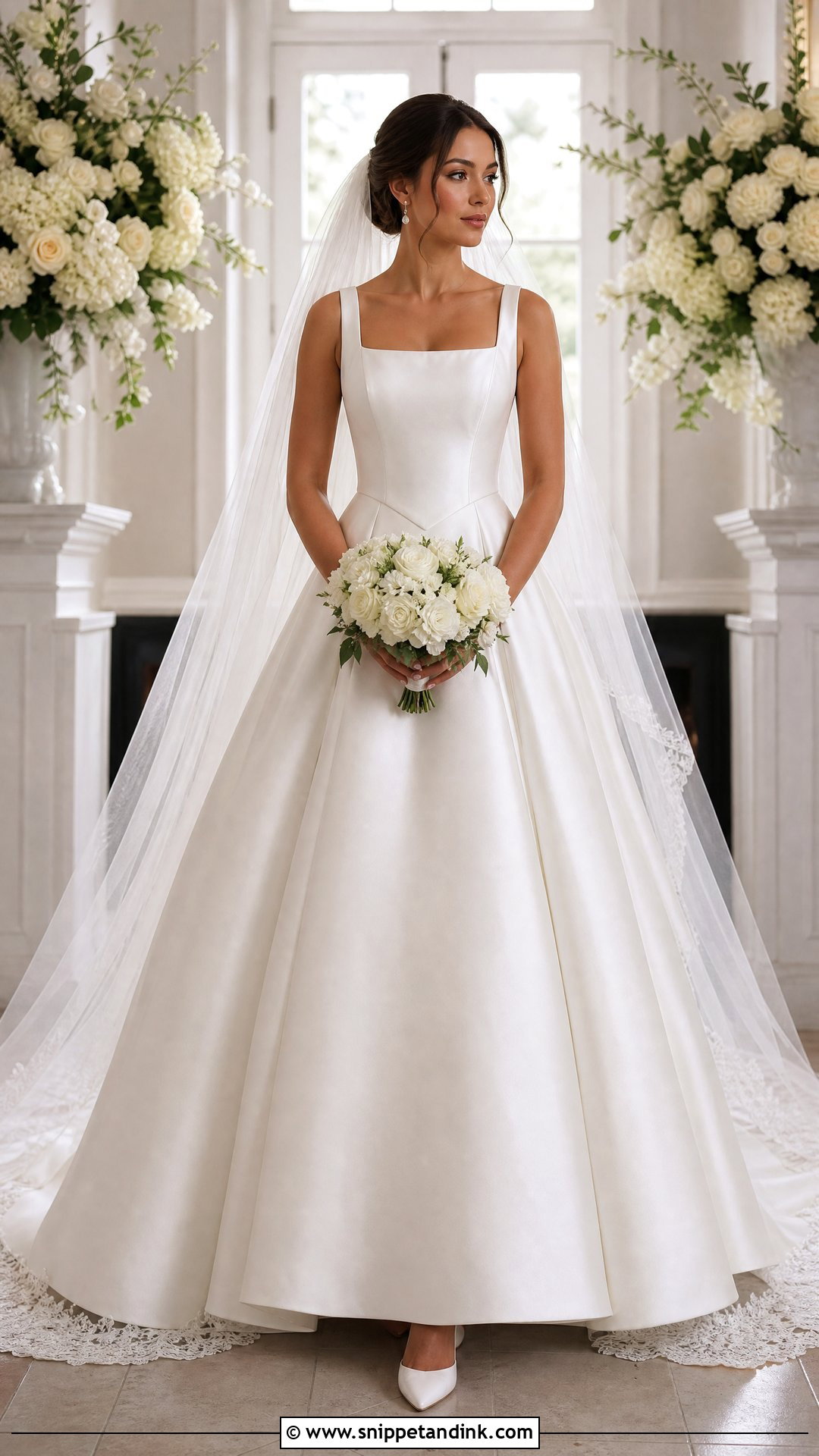
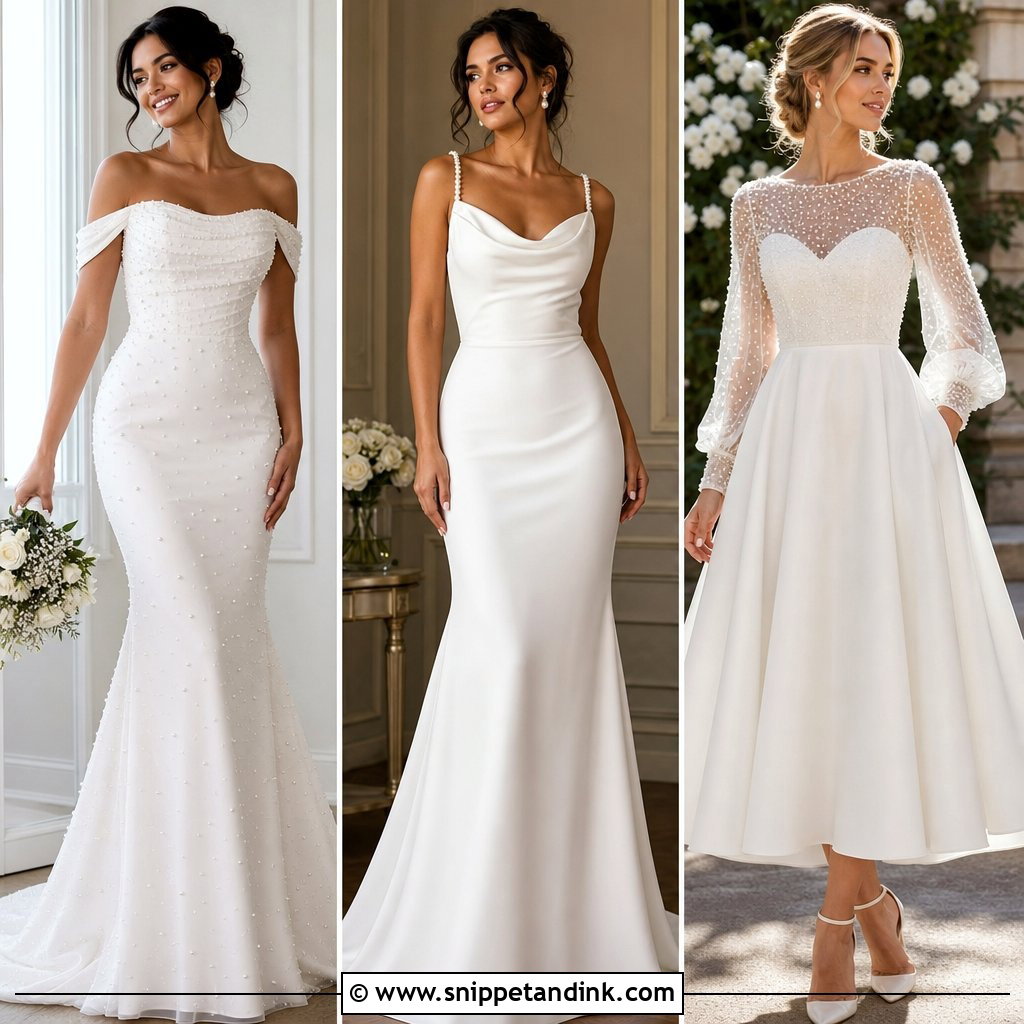
A basque waist dips into a soft V at the front of the bodice, and that point does a lot of flattering work above a full skirt. In plain mikado or satin it stays simple. Strapless, square-neck and off-the-shoulder bodices all suit it, depending on the support you need. Pearl drop earrings, satin pumps and an untrimmed chapel veil finish the outfit, with a neat updo. Hold your bouquet so it ends above the point, or it hides the best part of the dress in photos. The waist seam has to sit evenly against the body; if it twists or presses, the point drifts off-center.
16. High Neck Ball Gown Wedding Dress
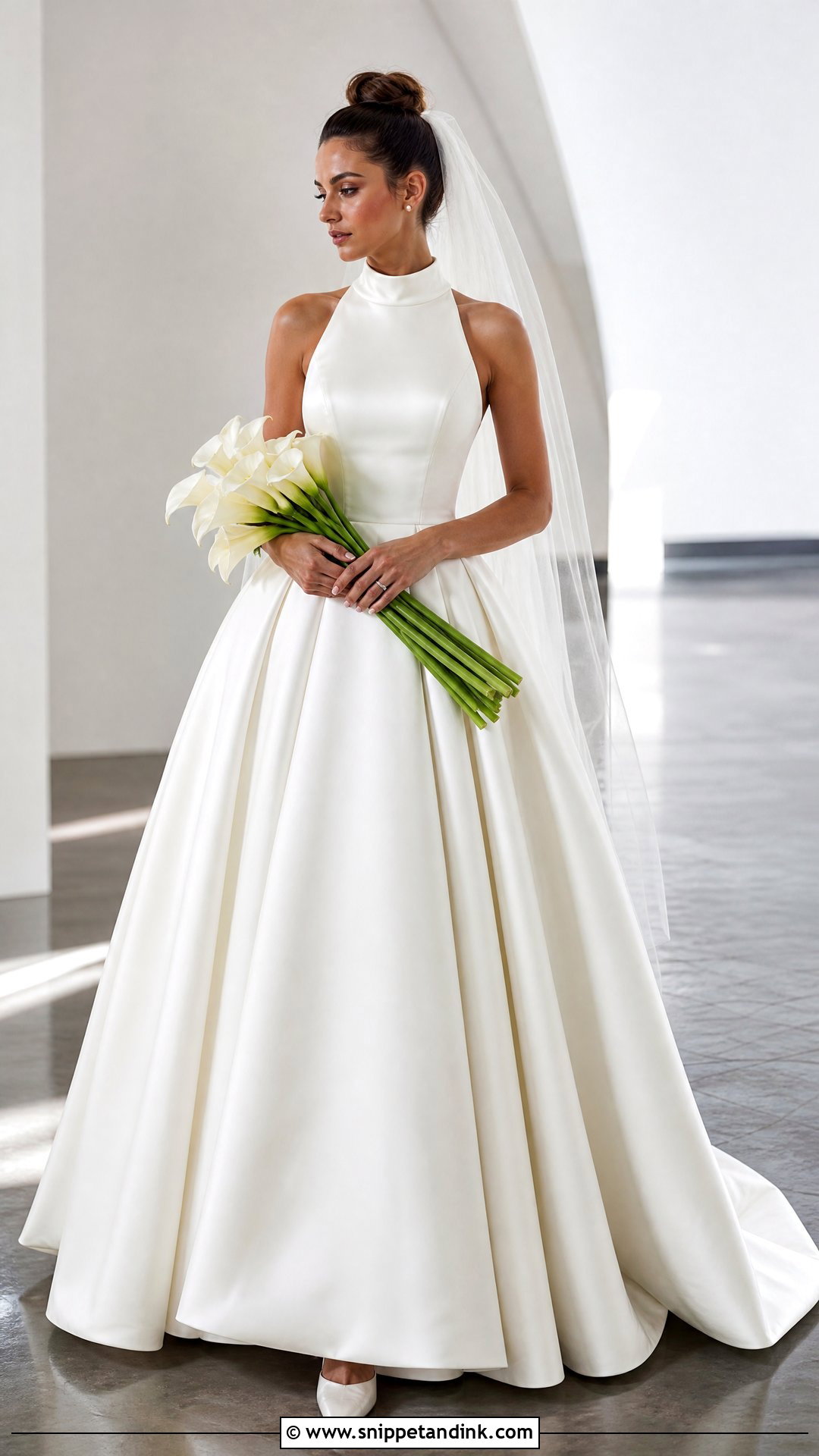
High necks on a ball gown look sharp and slightly unexpected. I’d pick a sleeveless satin bodice with a clean mock neck or softly raised neckline over a structured skirt. The neckline is the feature, so skip the necklace and wear small pearl or crystal earrings. A high bun, smooth chignon or polished ponytail keeps the collar visible, and the veil should attach beneath the hair. Pointed ivory heels and a slim bouquet of orchids or calla lilies keep it sleek. Turn your head side to side at fittings. A collar that rubs at the jaw becomes very noticeable in the receiving line.
17. Ball Gown Wedding Dress With Pockets
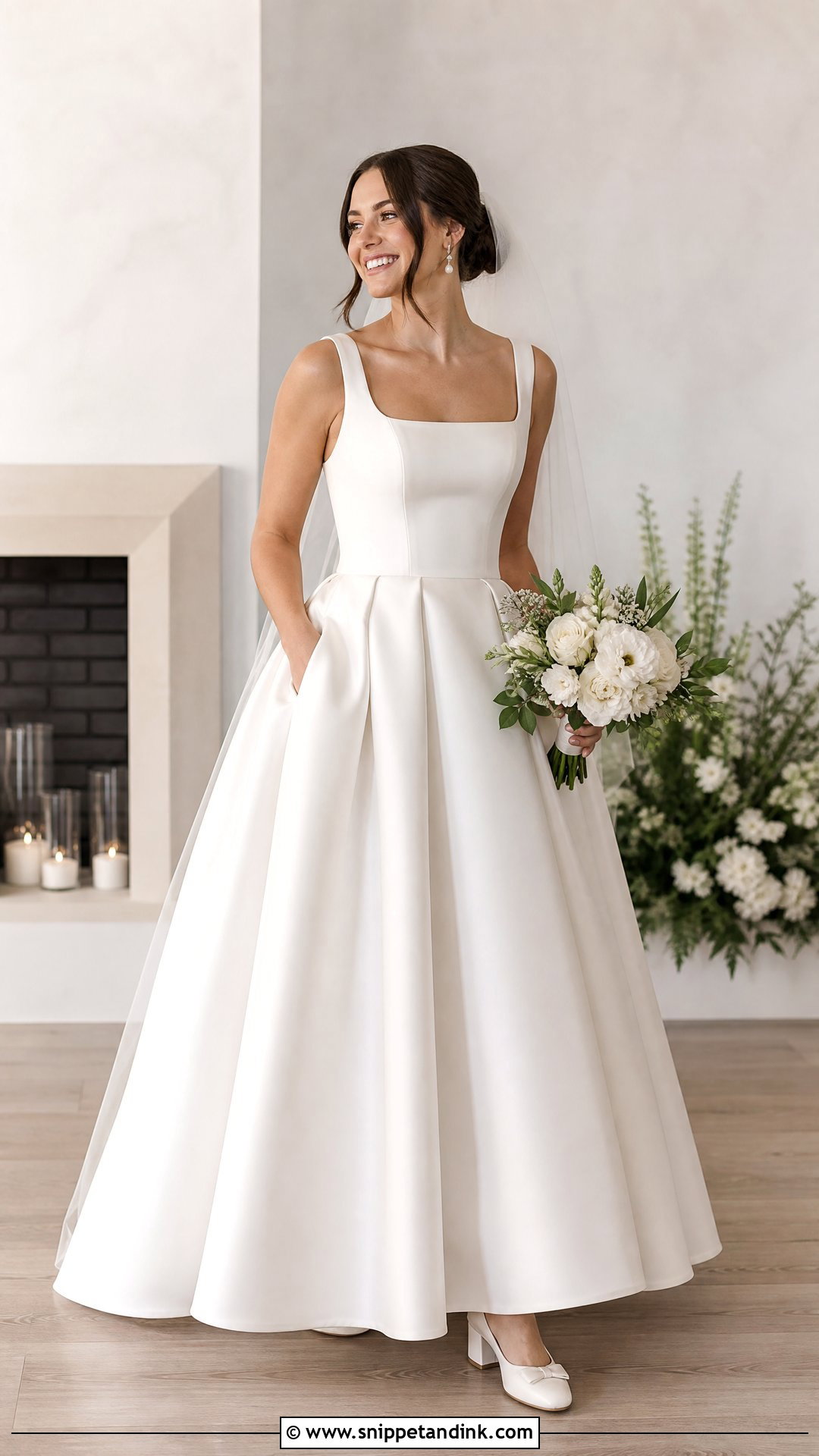
Pockets disappear into the side seams of a full skirt, which is exactly why a ball gown is the best dress to add them to. Satin or mikado has enough volume that nothing shows. Pair a clean square, strapless or scoop bodice with low block heels, delicate earrings and a lightweight veil, and wear a low bun or half-up hair. Keep the contents light, a handkerchief and a lipstick at most, because anything heavy drags the skirt down on one side. During alterations, check that the openings sit where your hands naturally fall and don’t pull at the waist.
18. Ball Gown Wedding Dress With Detachable Sleeves
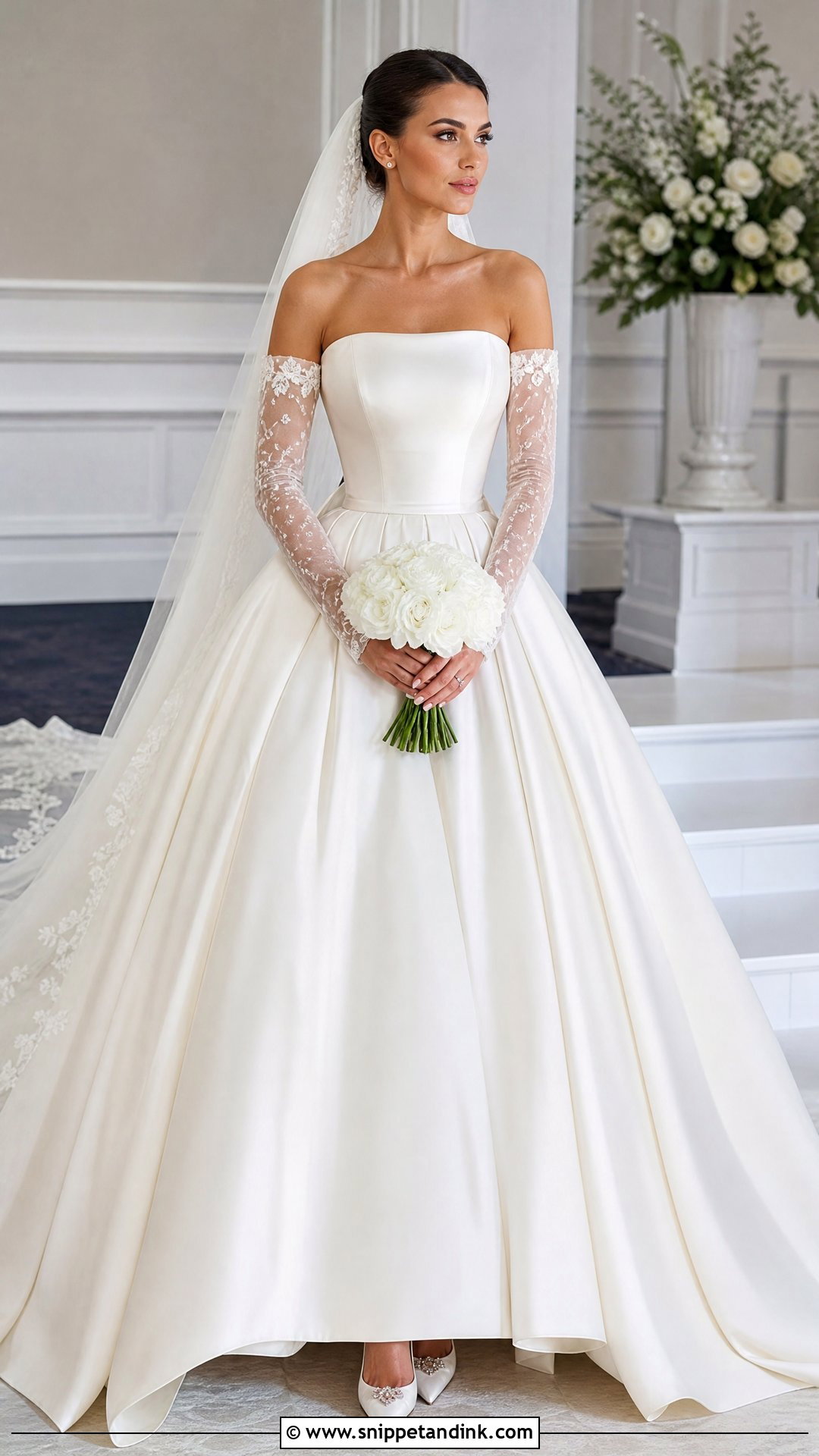
Detachable sleeves give you two looks from one gown: covered for the ceremony, bare for dancing. Start with a strapless or spaghetti-strap satin gown, then add fitted long sleeves or soft off-the-shoulder drapes. Make the sleeves in matching fabric or sheer tulle so they look like part of the dress. Pearl studs, pointed ivory heels and a chapel veil suit the ceremony version, and a sleek bun makes the swap easier. Carry a compact bouquet that won’t catch on the attachments. I always have the bride and the person helping her practice the removal once before the day, since hidden hooks are fiddly in a hurry.
19. Chapel Train Ball Gown Wedding Dress
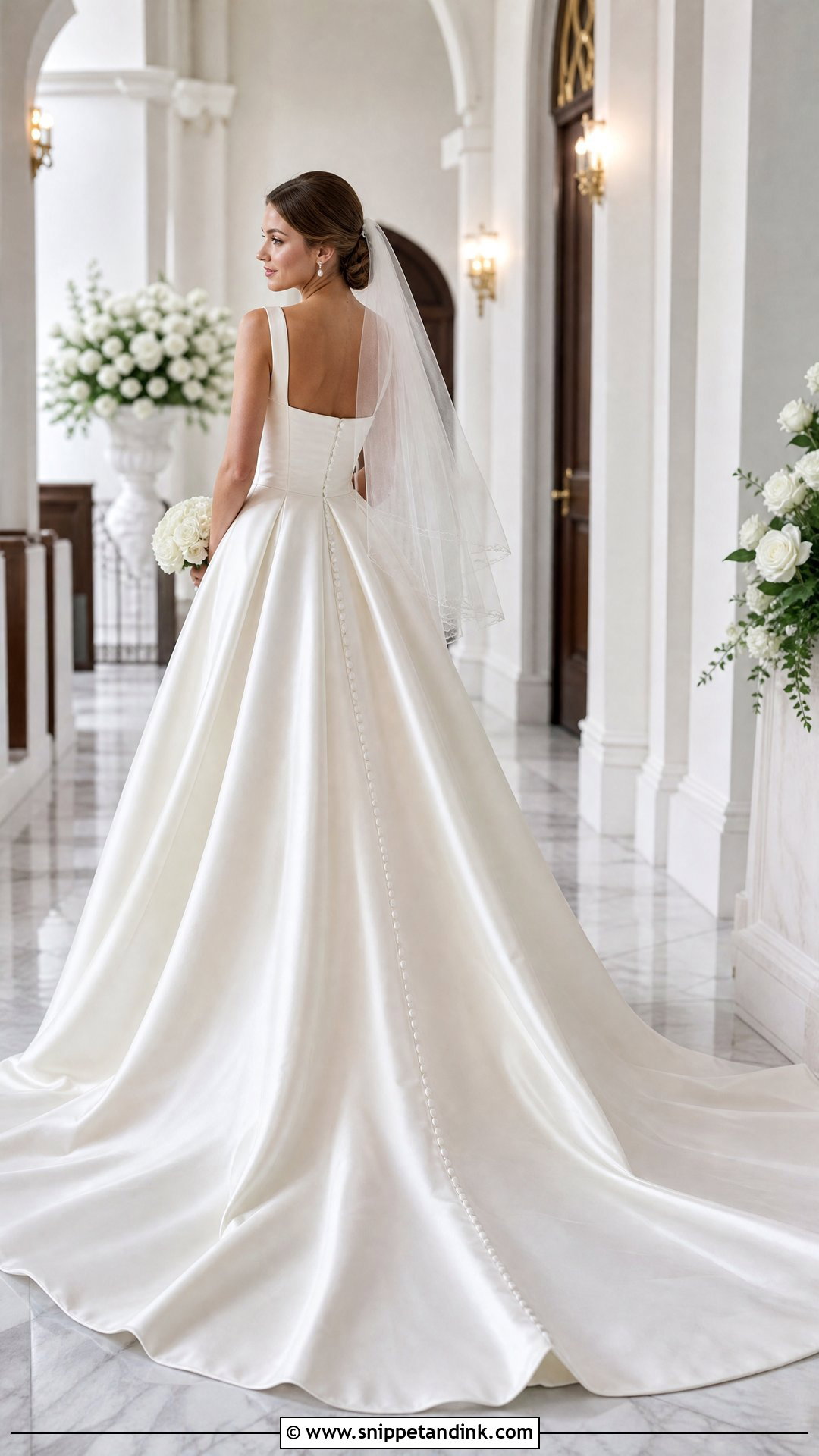
A chapel train adds length behind you without becoming hard to manage, which makes it the train I suggest most for a first ball gown. Smooth satin or mikado moves well as it follows you down the aisle. Keep the bodice strapless or square-necked, and choose a fingertip or cathedral veil depending on how much drama you want. Pearl earrings, closed-toe pumps, a low chignon and a small bouquet keep the proportions right. Ask your seamstress for a sturdy bustle for the reception, then practice walking, turning and bustling before the wedding. A bustle nobody has tried is the most common delay I see between ceremony and reception.
20. Ivory Minimalist Ball Gown Wedding Dress
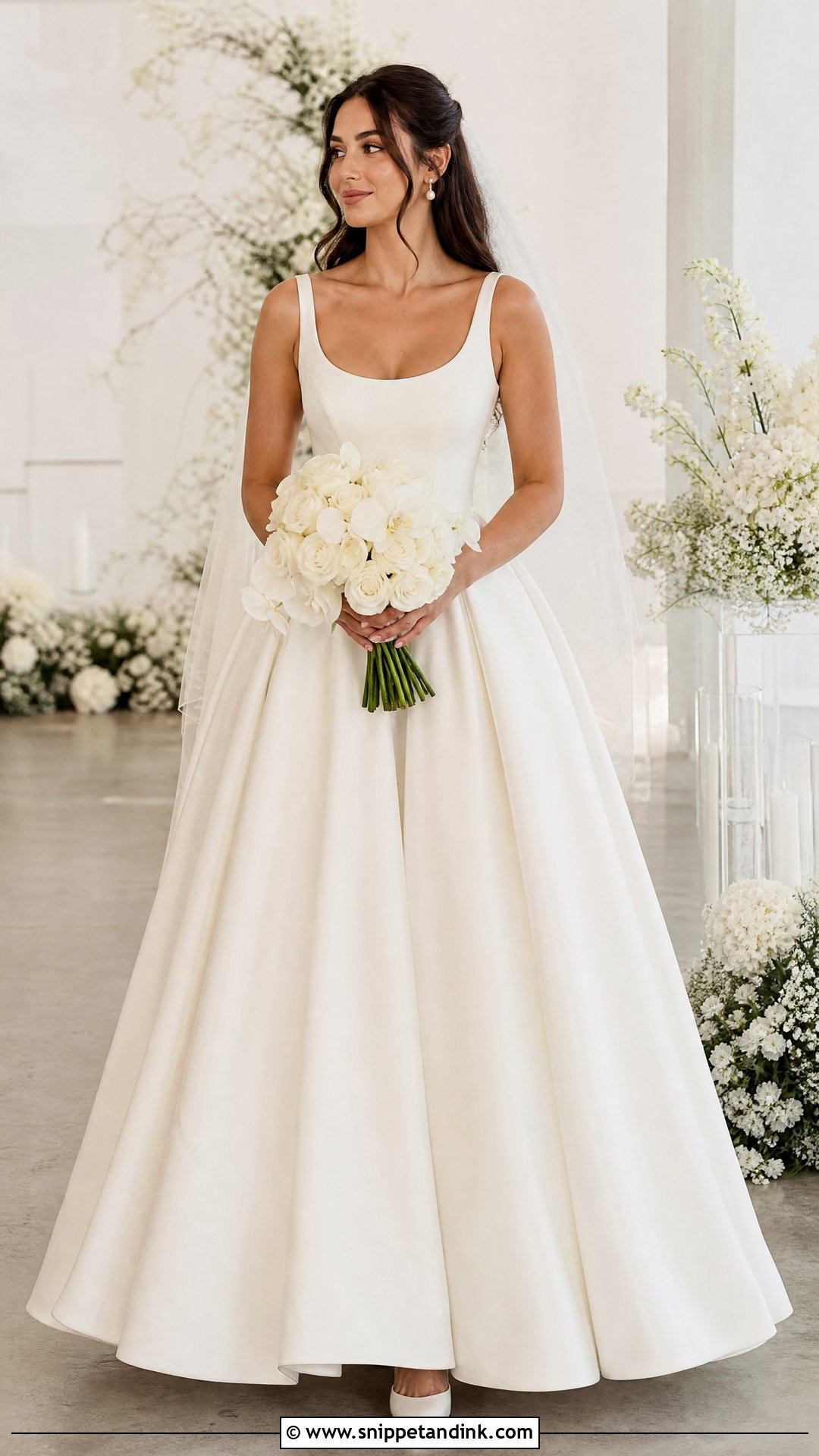
Ivory takes the edge off a big silhouette and looks warmer than bright white against most skin tones. Choose a single-fabric design with a fitted bodice, a defined waist and a full floor-length skirt, with a straight, square or gentle scoop neckline. Ivory pumps, pearl earrings and a sheer veil in the same undertone finish it. Mixing stark white accessories with a warm ivory gown makes the dress look dingy beside them, so only do it on purpose. Soft waves or a neat bun both suit it, and cream or pale green flowers add depth. Compare everything together in daylight, as shop lighting hides undertone differences that photos reveal.
Doors, Car Seats and the Bathroom Problem
Nobody shows you this side of a ball gown on a hanger. A full skirt takes up real space, and I go through the logistics with every bride before the day.
Getting there
Ask for a car with a wide back door and room for the skirt to spread. Sit down first, then gather the skirt in after you, and have someone smooth it on top of the seat rather than letting it crush underneath. Satin creases where it’s pressed for a long time, so a short ride is kinder than a long one.
Getting through the day
Measure the aisle and any doorways or stairs between rooms if you can, or ask the venue. A wide skirt plus a train needs clear space on both sides. For the bathroom, the easiest method is to face the toilet and gather the skirt up in front of you, with a bridesmaid holding the back layers. Practice it once at home in the petticoat. It sounds trivial until you’re in a small cubicle with a lot of tulle.
A Plain Ball Gown Lives or Dies at the Waist Seam
Lace, beading and sparkle are optional; the shape of the skirt and the fit of the bodice are not. Start with the neckline and waist that feel right on your body, then pick a veil, shoes and jewelry that support the gown instead of competing with it. Spend your alteration time on the bodice, the straps or sleeves and the hem, because that is where a simple ball gown either looks made for you or looks borrowed. Polished satin, crisp mikado or soft ivory all work when the tailoring is right.
You'll Like These Ideas:





Leave a Reply