
Most of the patterned cakes I make start with a couple who said they wanted something plain. A plain tier gives a room nothing to catch, and a pattern adds detail you only notice when you walk up close, which is exactly where guests stand when the cake is cut. Lace, pearls, pressed flowers, ruffles, quilting and painted buttercream all show up below, and each one is built differently, so each behaves differently in a warm marquee or a cold ballroom. A pattern can live on a single small cake or run across four tiers. I’ve added notes on how each one is actually made, because that decides what it costs, how it holds and who it suits.
Fondant, Buttercream or Royal Icing Underneath the Pattern
Every pattern below is made in one of three mediums, and the medium matters more than the motif. Fondant holds sharp embossing, quilting and geometric panels, and it protects the cake from air for longer, but many guests peel it off. Buttercream tastes better and takes texture, ruffles and piping well, yet it softens once the room passes the mid twenties Celsius. Royal icing gives the finest lace and piping, and it dries hard and brittle.
So before falling for a picture, I’d ask what it was made from. A summer barn wedding with no air conditioning is not the place for delicate buttercream piping on a tall cake. A cool hotel ballroom can carry almost anything.
- Outdoor or warm venue: fondant or a firm ganache base, with embossed, stencilled or painted patterns.
- Cool indoor venue: buttercream textures, ruffles and vintage piping are all safe.
- Long drive to the venue: avoid piped royal icing lace on the outer edge, where knocks happen.
1. Lace Wedding Cake
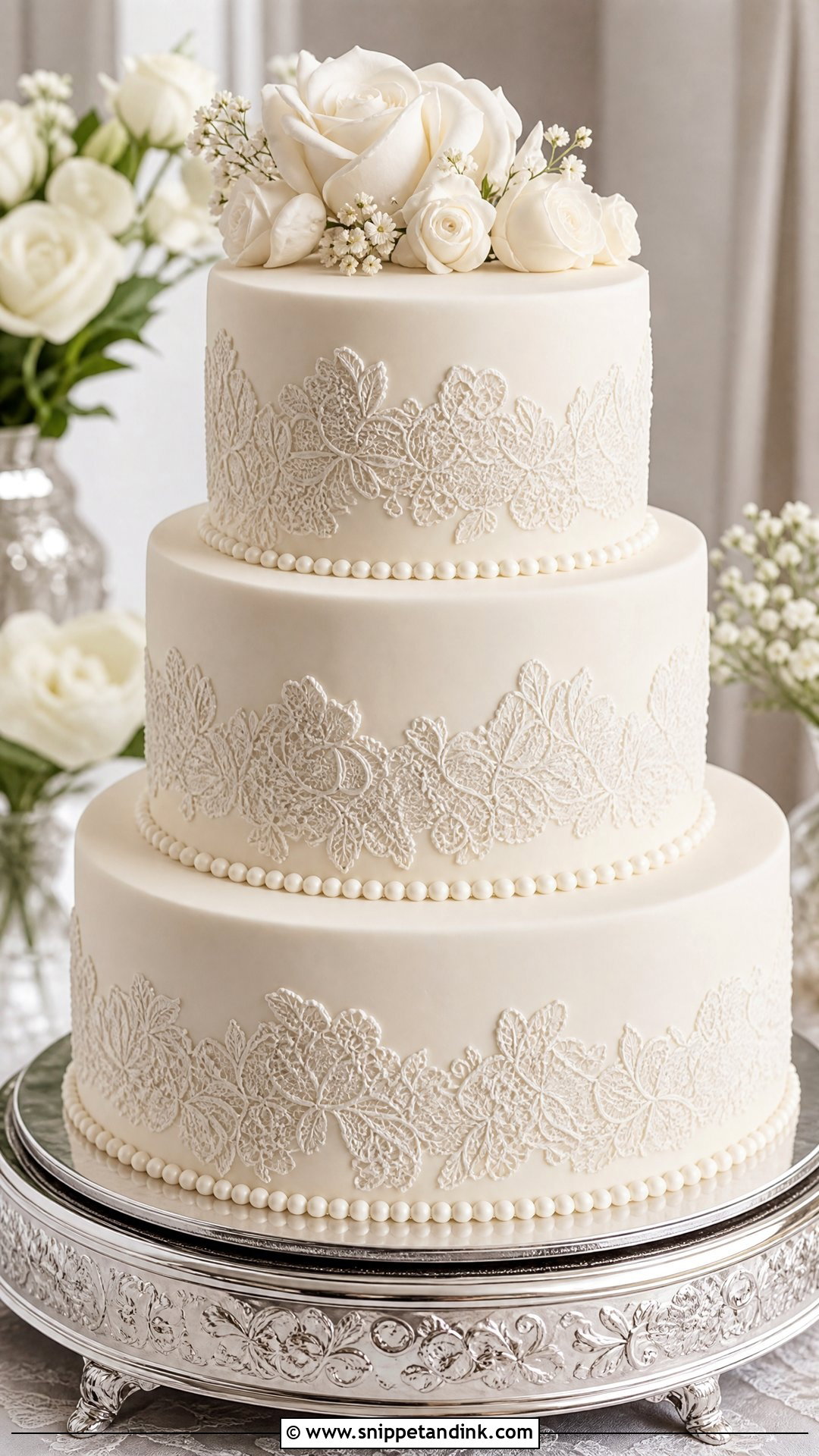
Lace is the pattern I’m asked to copy from a gown more than any other. It can be edible lace set in a silicone mat, piped royal icing, an embossed fondant panel or a stencil over smooth buttercream. Piped lace is the most delicate and the most fragile; royal icing dries brittle, so a tier that gets knocked in transit can lose a scallop. Keep the base ivory, blush or champagne so the detail reads, and if you want it to echo your dress, send me a close photo of the actual fabric rather than the full gown.
2. Pearl Wedding Cake
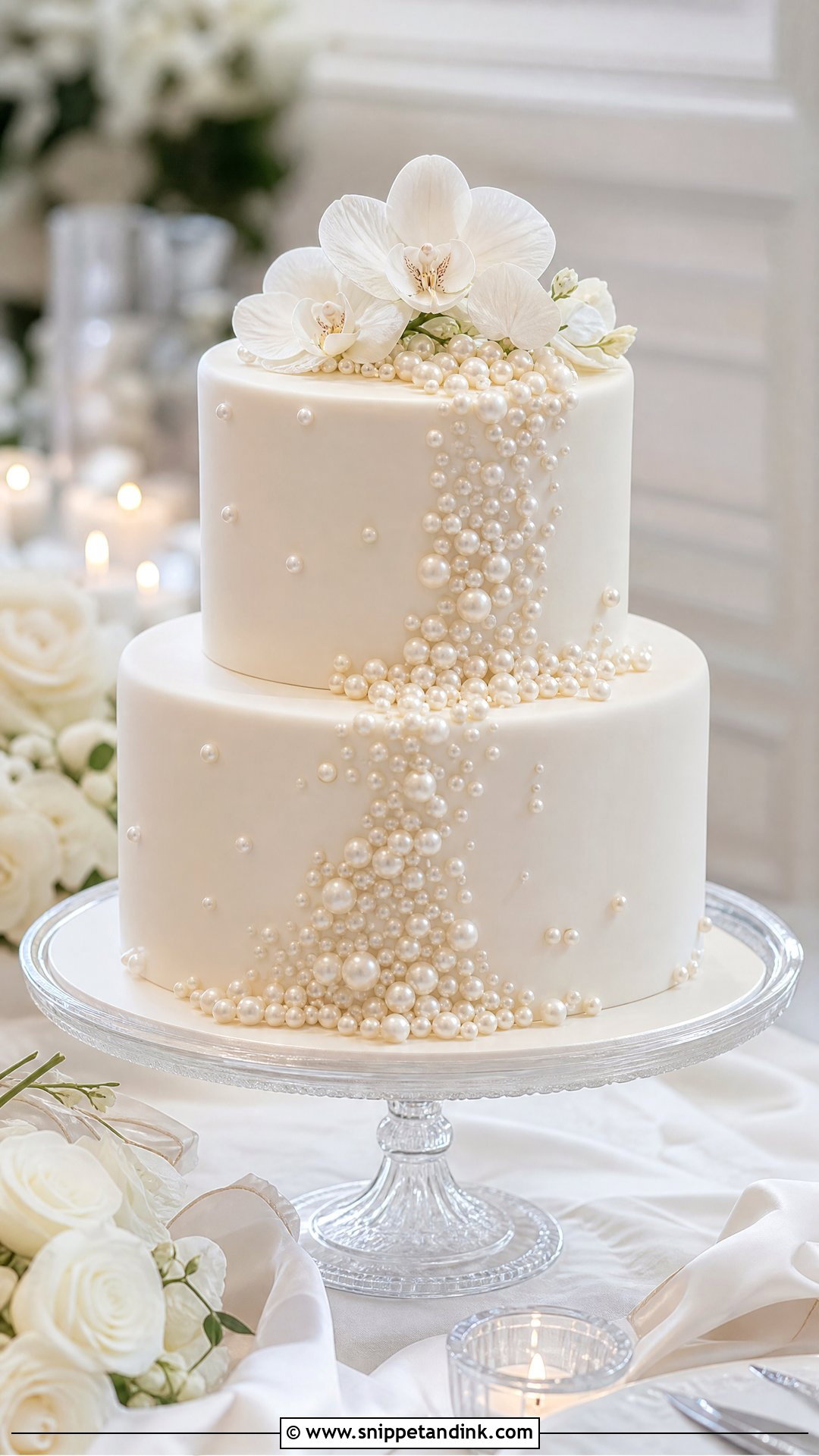
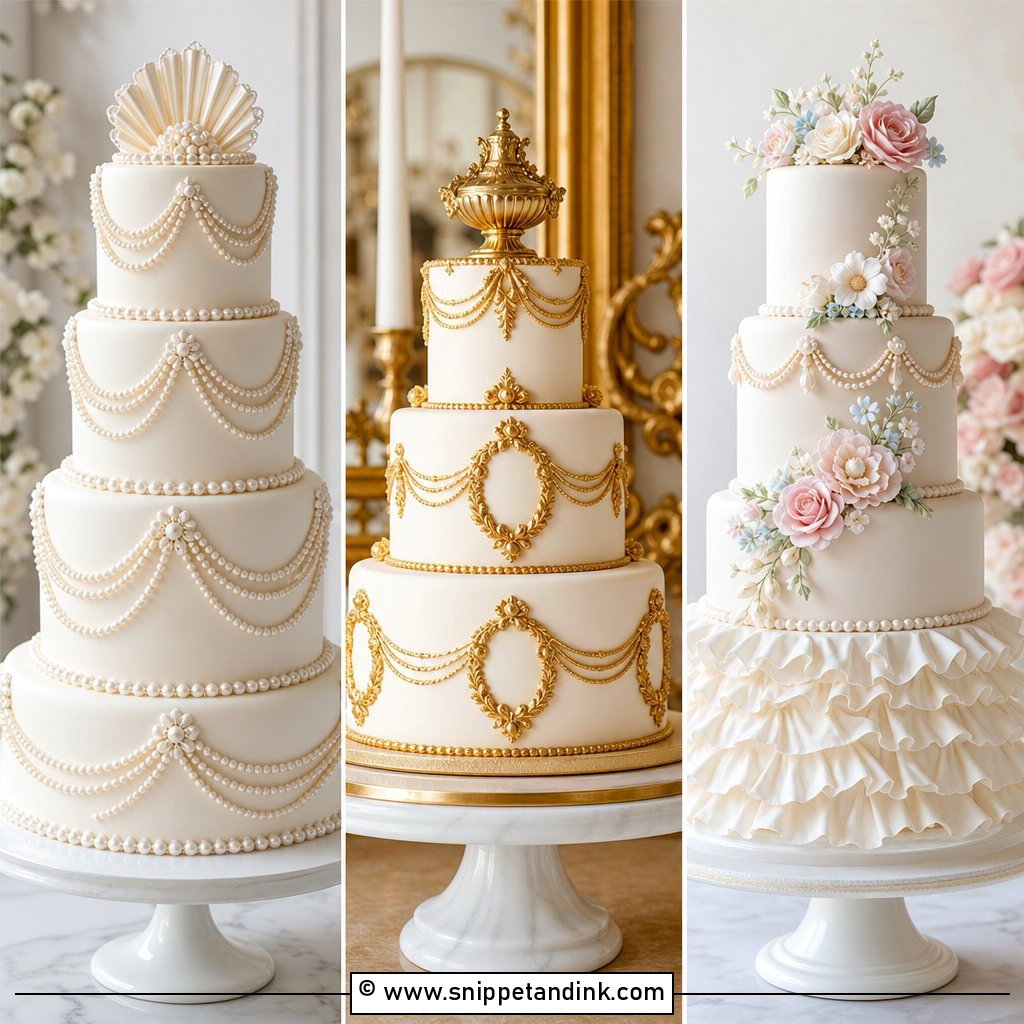
Pearls give a cake quiet weight without any extra colour. Tiny edible dragées can run in rows, scatter like beading or follow a cascading pattern down the tiers. One thing couples rarely know: the hard silver and gold dragées aren’t pleasant to bite, so I use soft sugar pearls on any tier that will be served. Clustering them on one side keeps a white cake modern, while pairing them with shell borders pulls it vintage. Keep the topper simple so the pearls stay the focus.
3. Quilted Wedding Cake
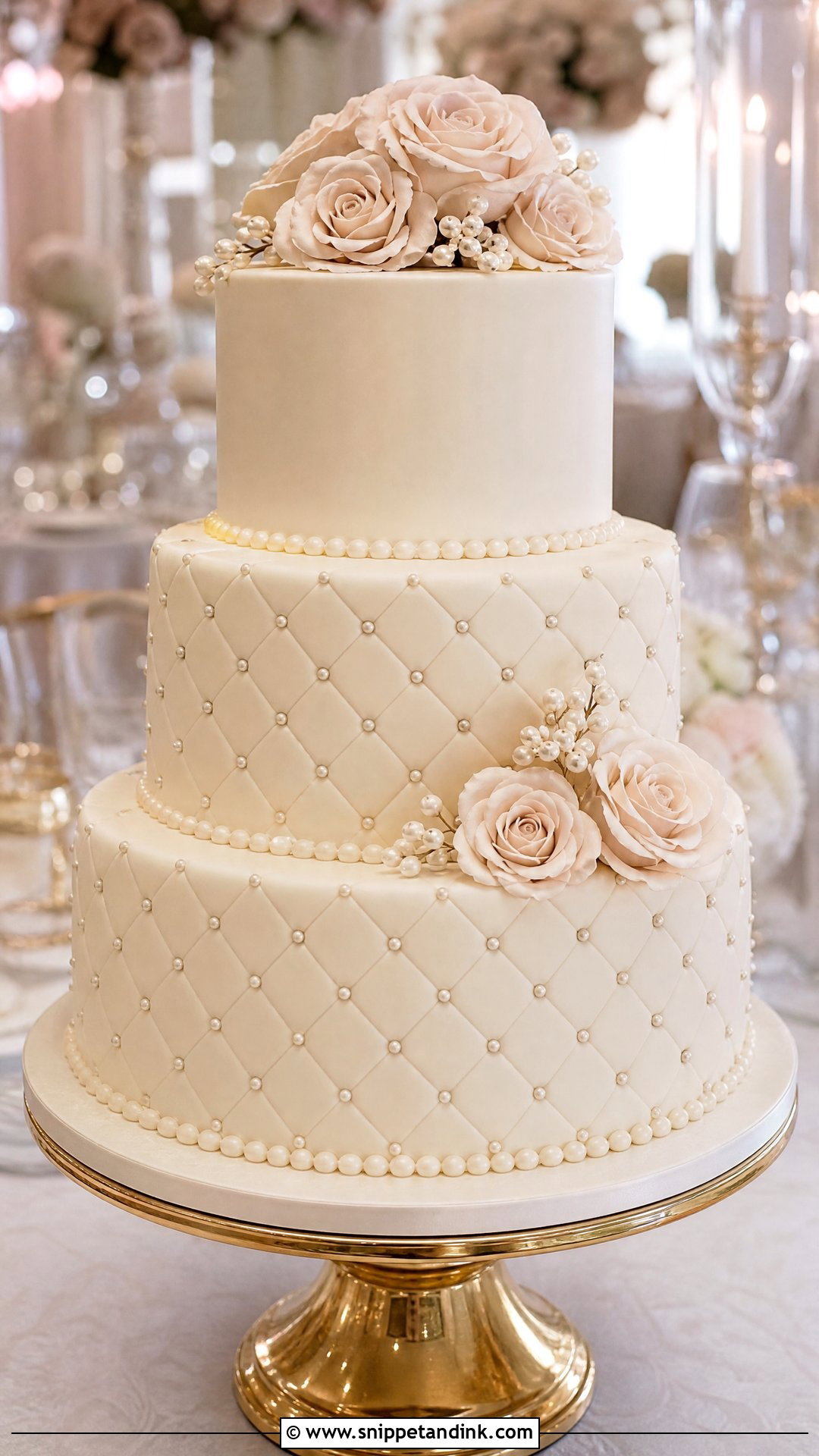
Quilting is pressed into fondant with a ruler or impression mat, then I set a pearl, sugar bead or metallic dot at every crossing of the diamond pattern. The lines have to be laid out before the fondant crusts, so this is a pattern that rewards a baker with a steady hand and a schedule. I like it best on a single base tier, with smooth tiers above it. Ivory, white, soft grey and blush keep it formal; stronger colours make the grid look like upholstery.
4. Floral Stencil Wedding Cake
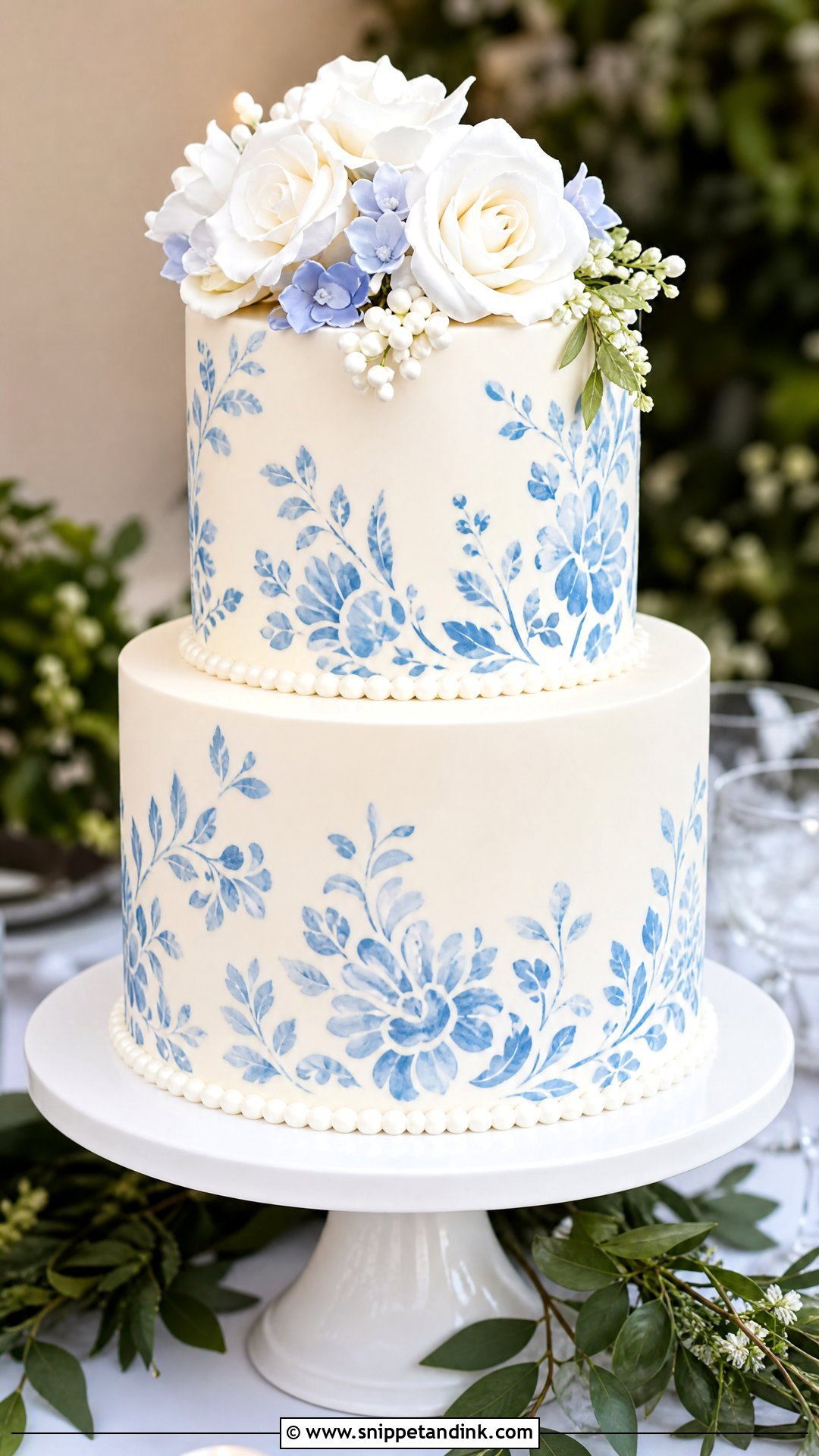
A stencil gives you a painted look with far more control. I hold the stencil against a chilled tier and spread royal icing or buttercream across it, or airbrush through it, then lift it straight off. The catch is that stencilling needs a firm, very smooth surface, so it suits fondant or a well-chilled ganache coat better than soft whipped icing. Soft blue flowers on white read fresh; gold stencilling reads formal. It’s my usual suggestion for couples whose venue won’t allow fresh flowers on food.
5. Pressed Flower Wedding Cake
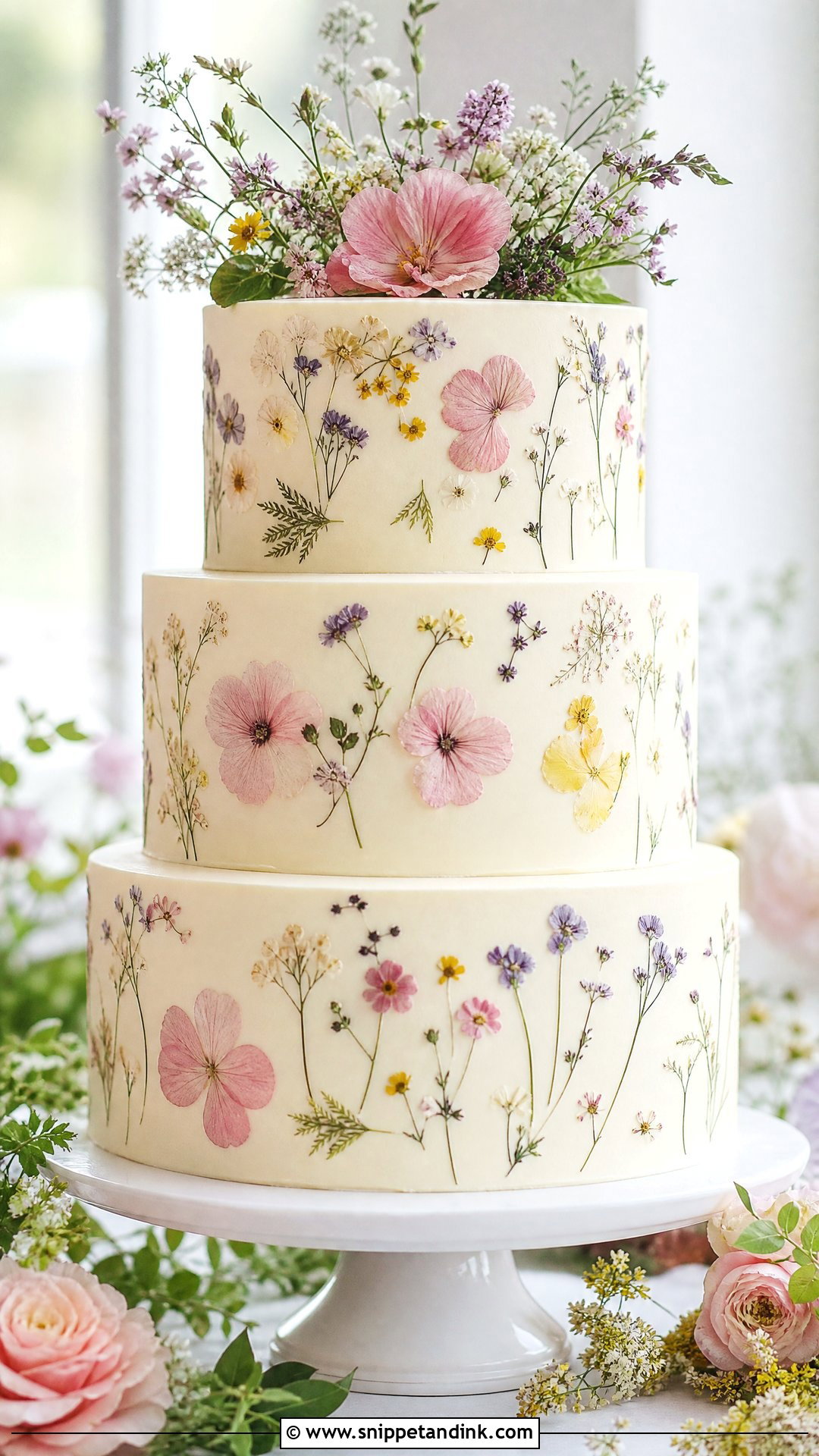
Pressed flowers sit flat against buttercream like a botanical print. Only edible varieties, or blooms grown without pesticides and confirmed food-safe, should ever touch the icing; pansies, violas and cornflowers press well and hold their colour. Thin petals soak up moisture, so I add them as late as I can, ideally on the day. Scatter them, run a vertical trail, or band each tier. Spring and garden receptions suit them best.
6. Ruffle Wedding Cake
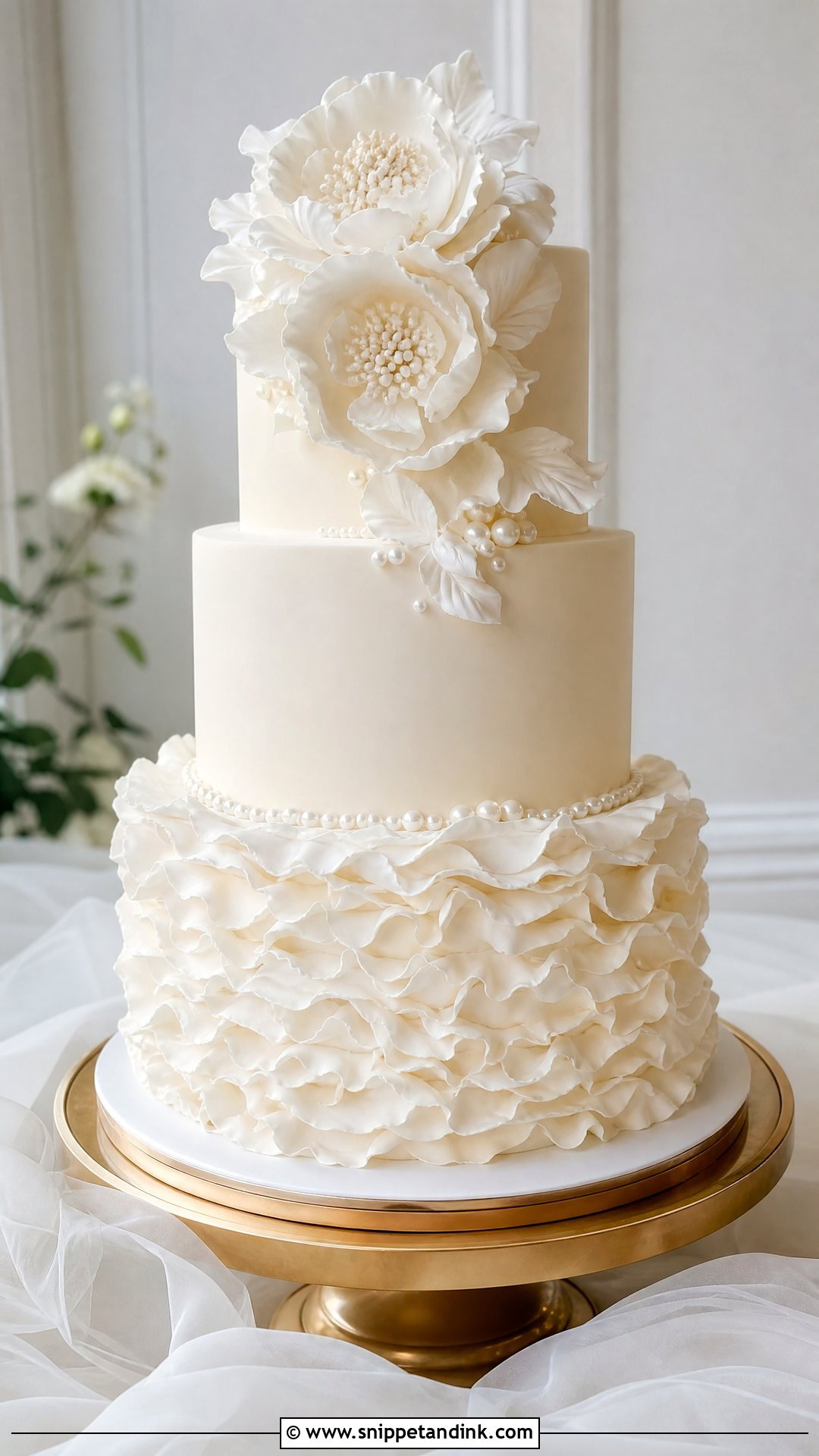
Ruffles behave like fabric because they’re cut and folded like fabric. Fine fondant ruffles look bridal; deep ones give drama, but they add real weight, and a fully ruffled four tier cake needs proper internal dowelling to carry it. Buttercream ruffles piped with a petal tip are softer and lighter, though they slump in heat sooner. Blush, dusty blue and champagne all work. Skip extra flowers here; the folds do the decorating.
7. Buttercream Texture Wedding Cake
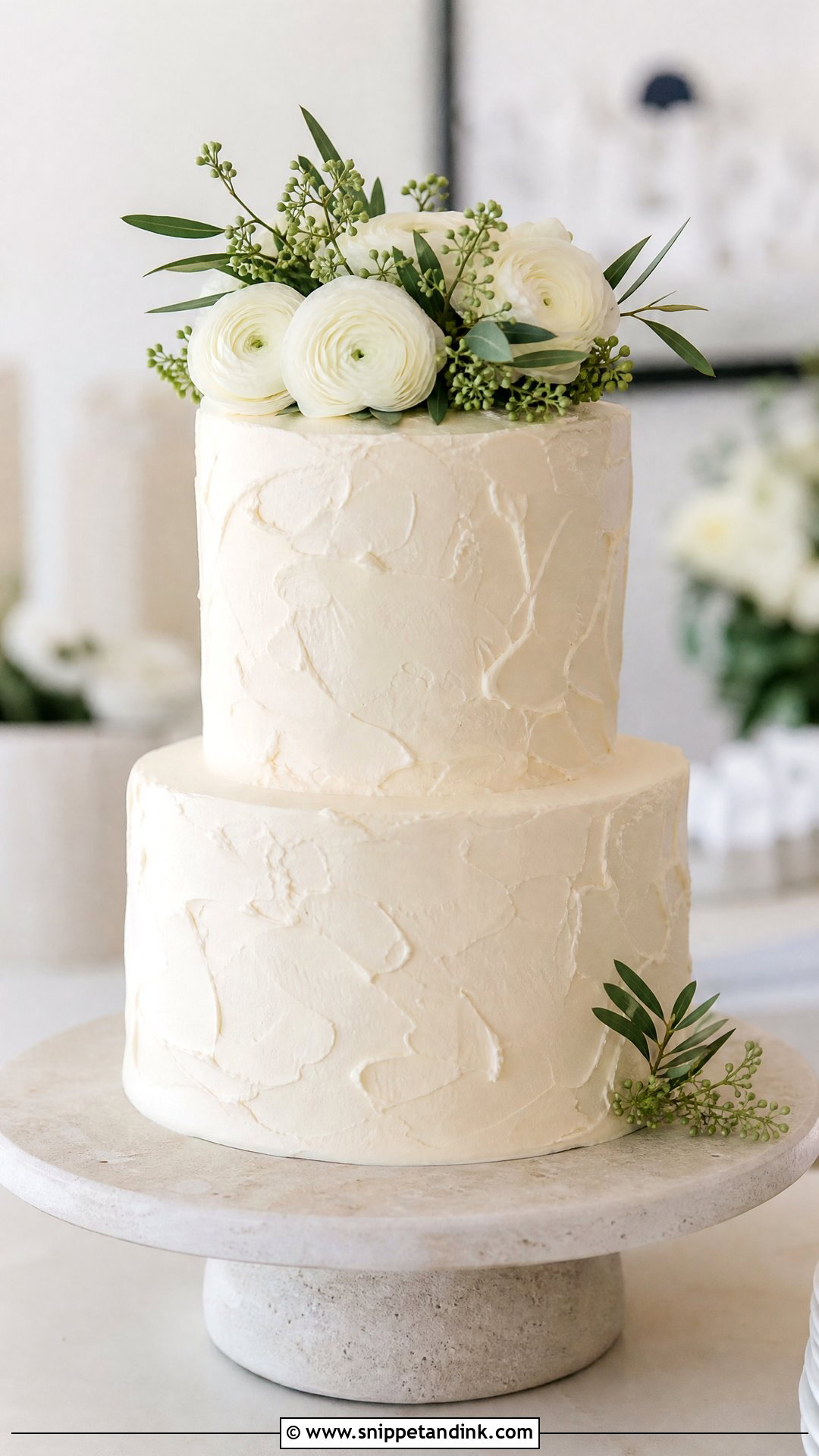
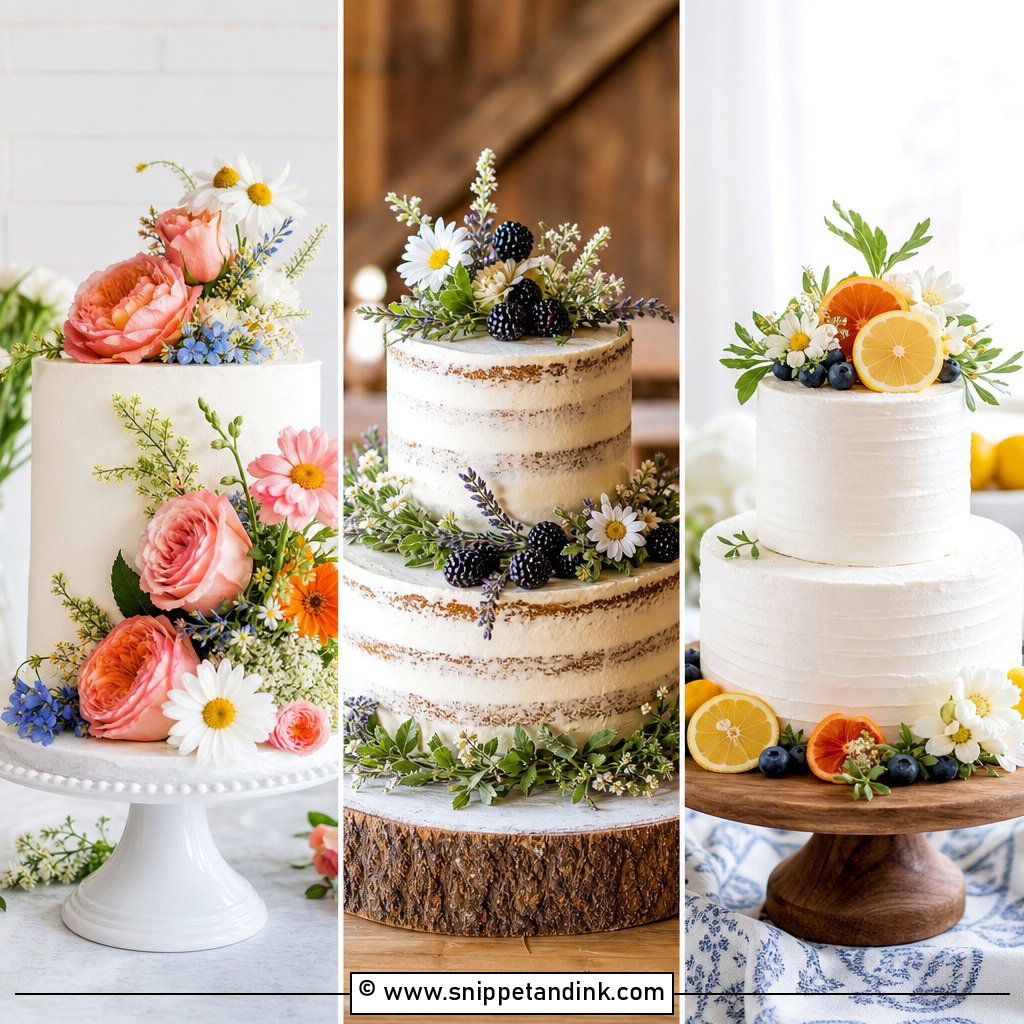
Textured buttercream is the cake I’d order for myself. Instead of a glass-smooth finish, the frosting carries palette knife sweeps, combed ridges or a plaster-like drag. It eats better than most fondant cakes, since there’s no sugar sheet to peel off. The difference between textured and messy is the edges: ask for a crisp top edge on every tier, even when the sides are loose. Fresh flowers or a little fruit finish it without fuss.
8. Geometric Wedding Cake
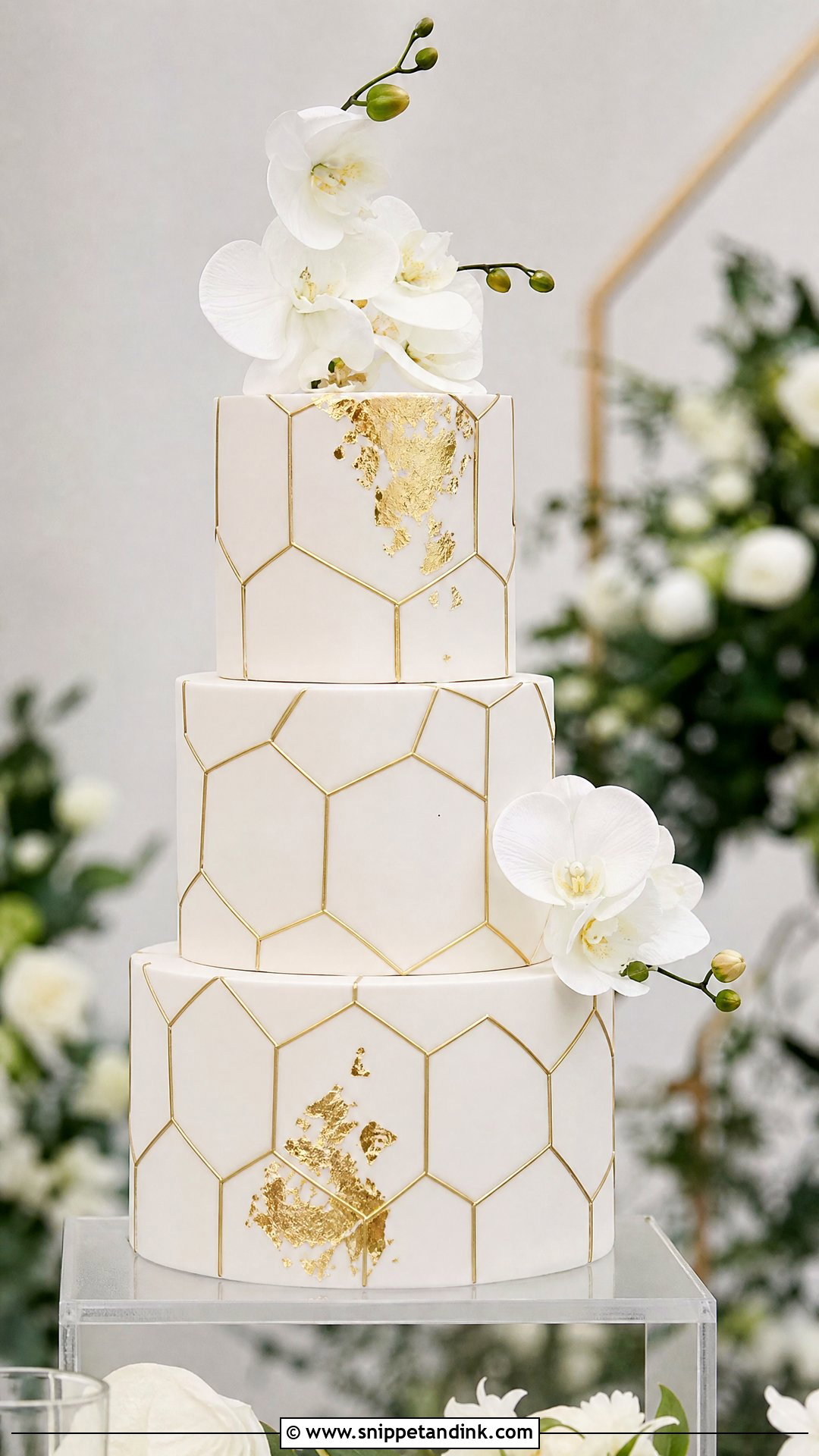
A geometric wedding cake depends on straight lines, and straight lines expose every wobble. Triangles, hexagons and angled panels are cut from fondant or modelling paste with templates, so ask your baker to show you sharp geometric work they’ve already done. White with gold lines is the glamorous version; matte ivory tone on tone is quieter. An acrylic stand and sparse modern florals suit it. Limiting the pattern to one or two tiers softens it if a full cake feels cold.
9. Marble Wedding Cake
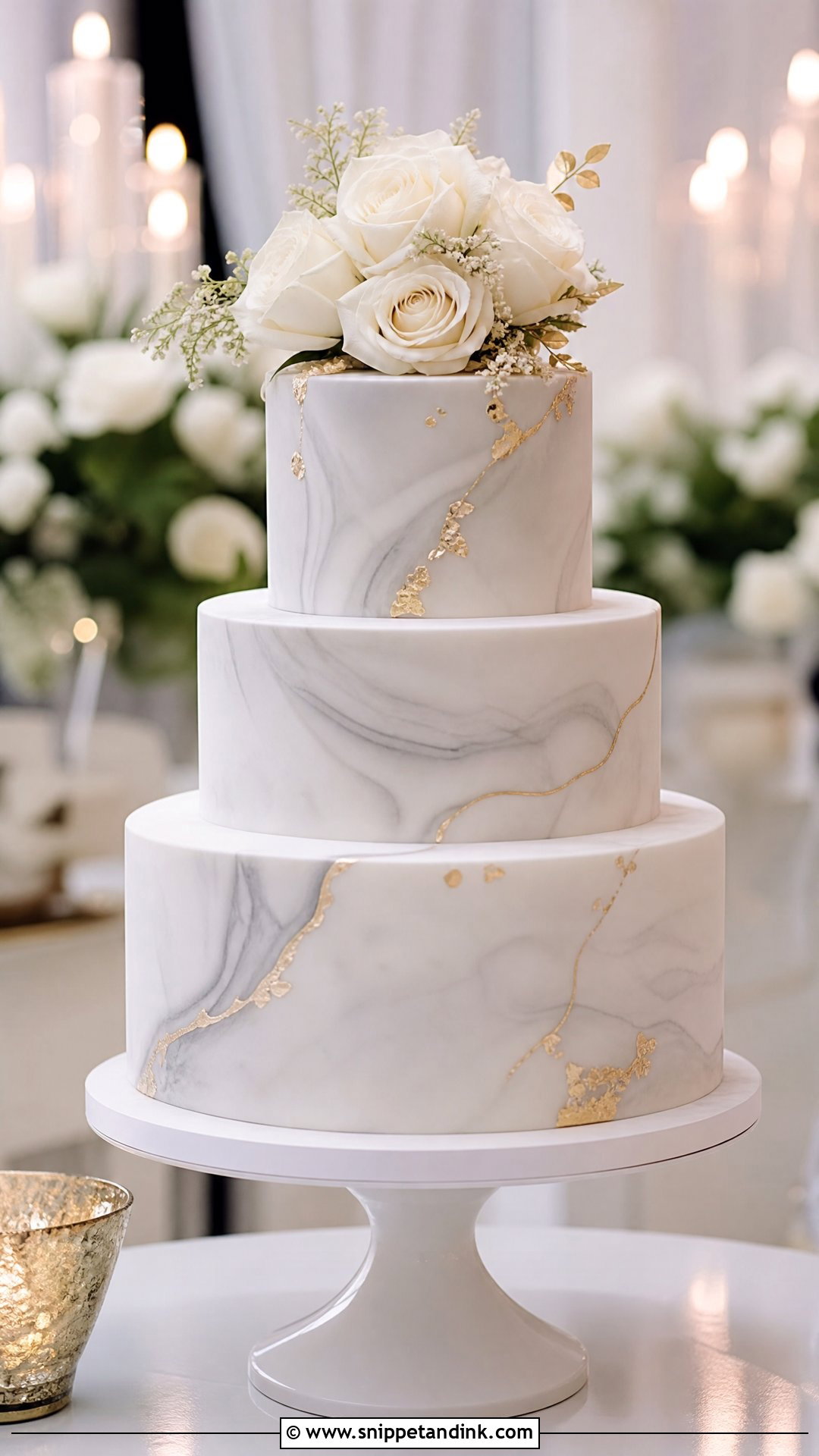
Marbling is done by twisting coloured fondant into white and rolling it out, or by veining buttercream with a fine brush. No two tiers come out the same, which is half the appeal and something I always warn couples about before they fall for a single photo. Pale grey, blush and gold veining sit well in modern rooms. I keep dark veins sparse; heavy contrast turns stone into bruising under warm reception light.
10. Damask Wedding Cake
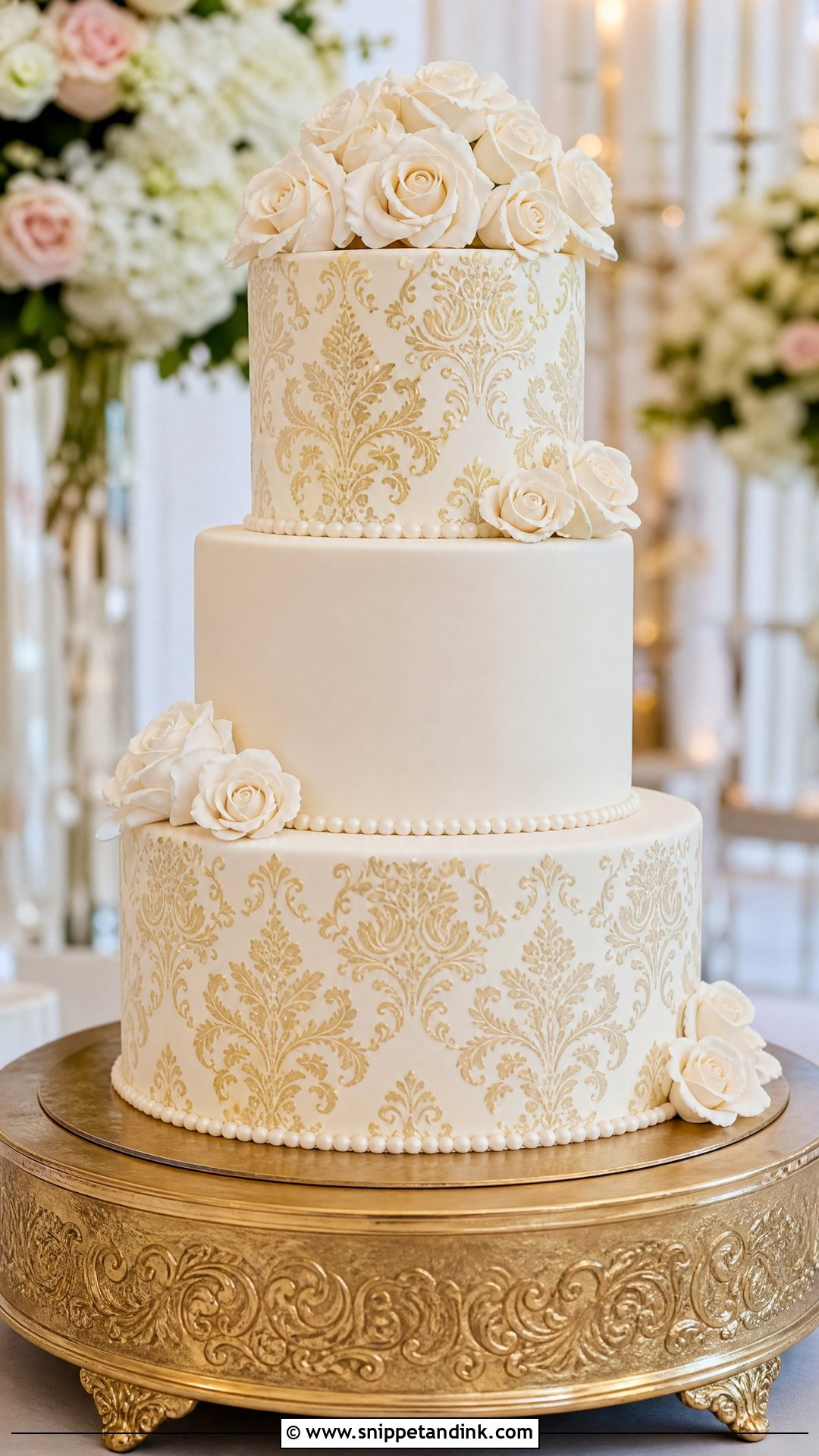
Damask is a repeating scroll and flower motif, almost always applied through a stencil, so the repeat has to line up where the stencil meets itself at the back of the tier. White on white is subtle enough for a church hall; gold or champagne leans ballroom. I’d put it on one or two tiers and leave the rest smooth, otherwise the eye has nowhere to rest. Sugar roses or a pearl border finish the edges.
11. Herringbone Wedding Cake
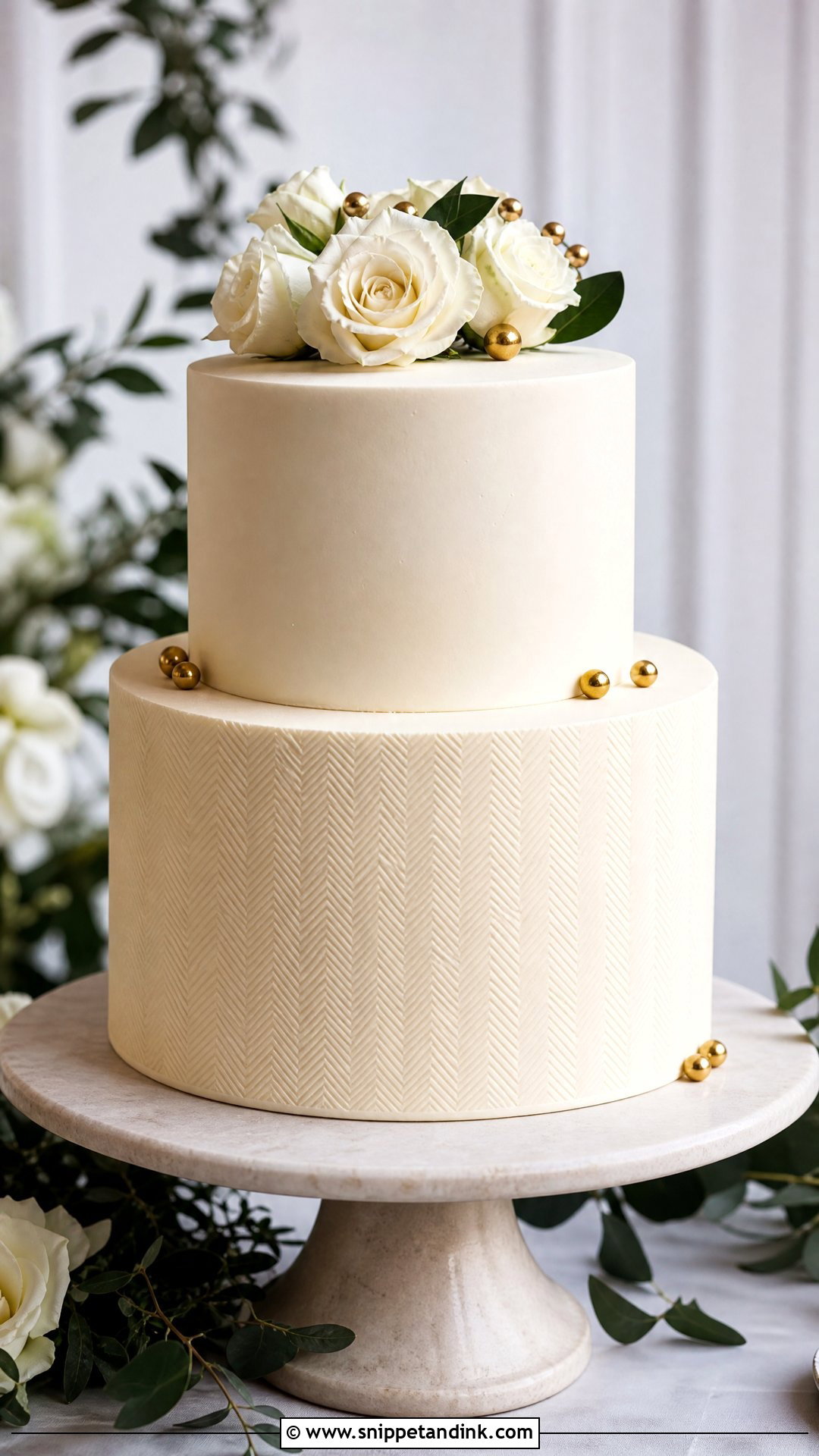
Herringbone reads like woven cloth. I build it from thin fondant strips laid at opposing angles, though it can be embossed or piped. Because every strip is placed by hand, it takes longer than it looks, and that labour shows up in the quote. It sits best on taupe, ivory or pale grey, with white flowers or a little gold to lift it. Paired with smooth tiers, it gives quiet detail rather than a busy surface.
12. Striped Wedding Cake
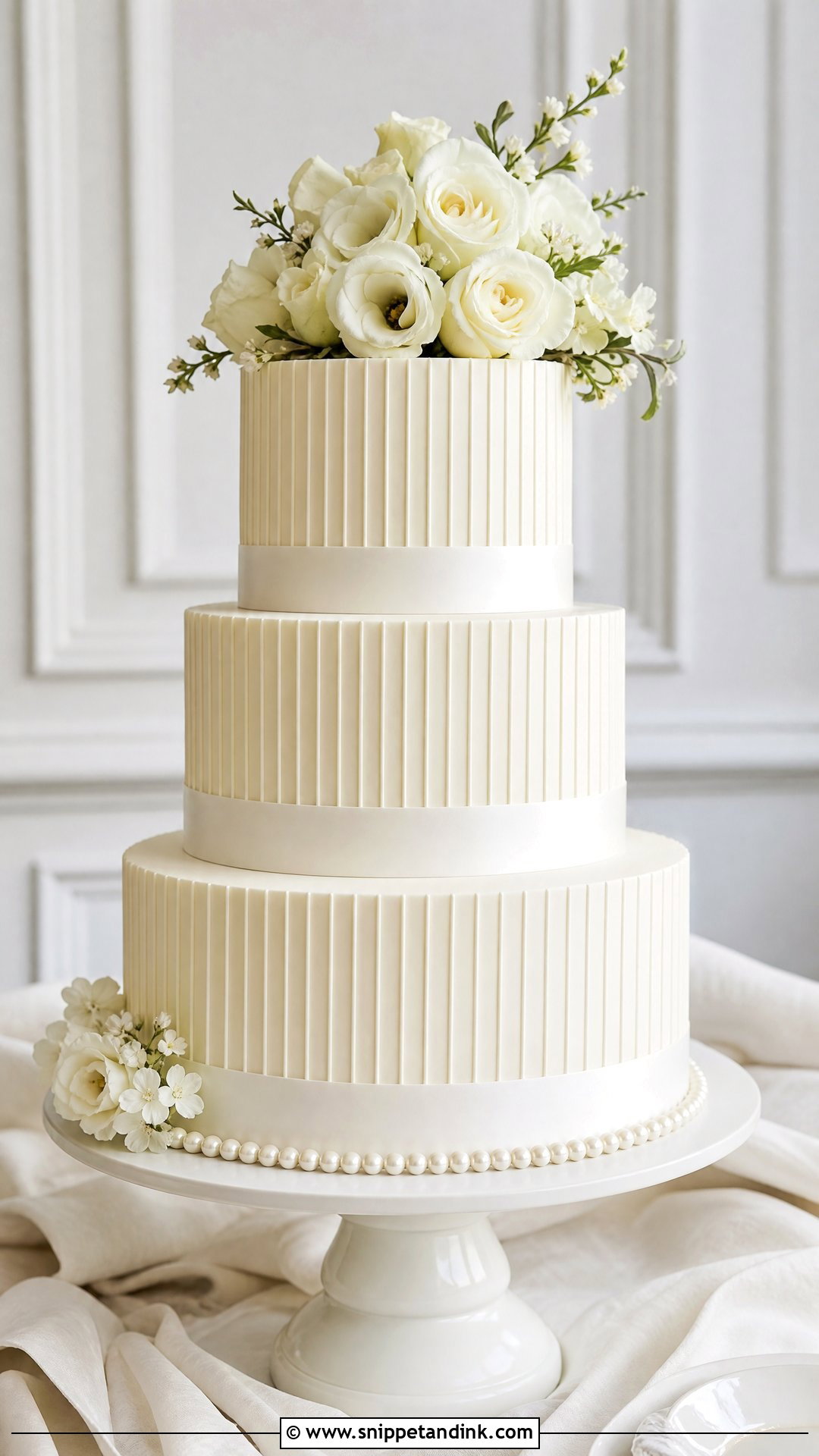
Stripes are the most forgiving pattern on this list and the most revealing of a lean cake. Vertical stripes lengthen a short tier; horizontal bands look crisp and classic. Tone on tone white is subtle, metallic lines are dressier and soft pastels suit a summer garden. The one thing I check before agreeing to stripes is that the tiers are dead level, because a stripe instantly shows a tier that leans. Two colours is plenty.
13. Chevron Wedding Cake
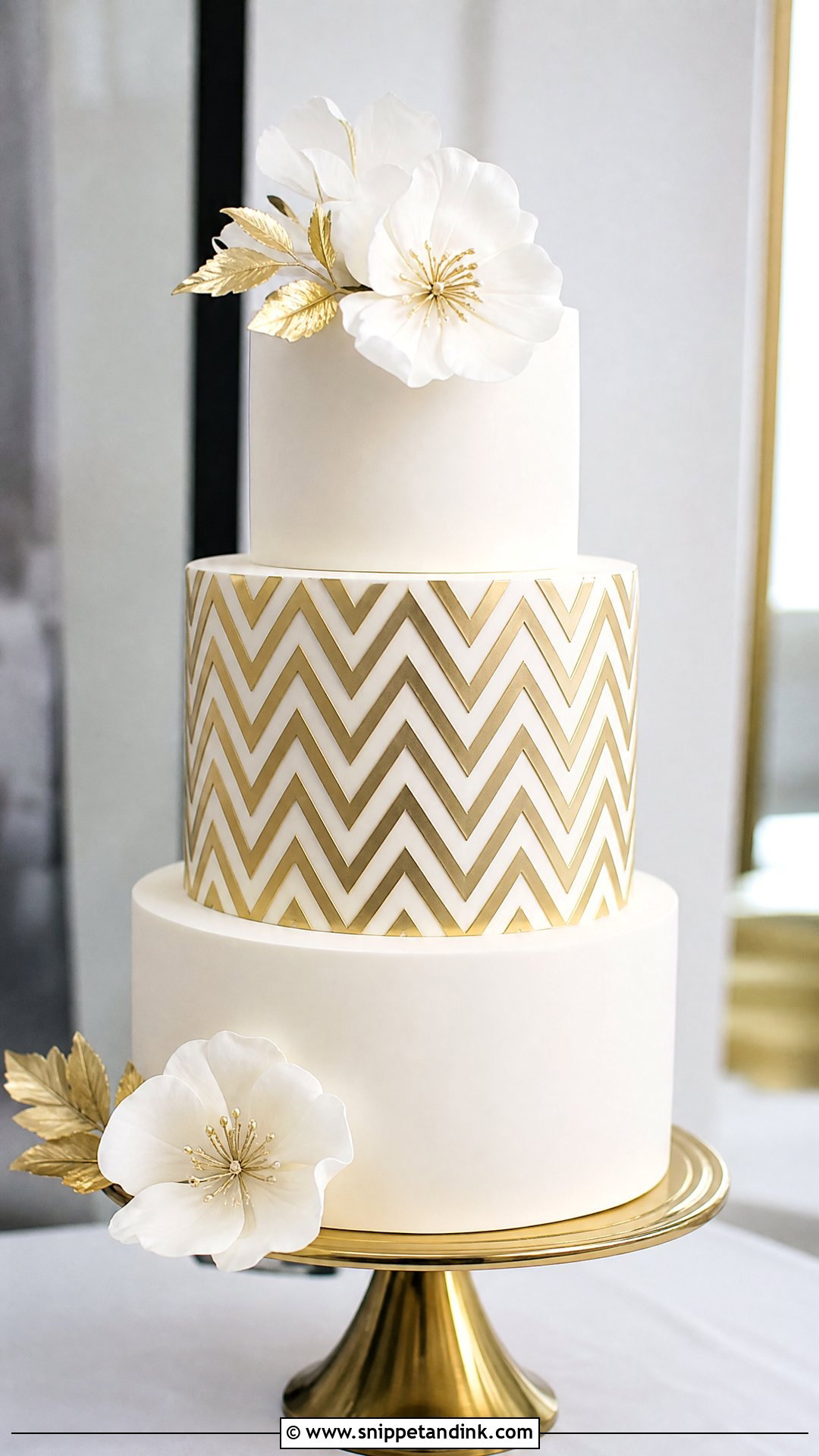
Chevron is bold, so I nearly always confine it to one feature tier, with smooth white or ivory tiers above and below it. Gold chevron feels glamorous, white on white turns it into texture. The zigzags must meet cleanly at the seam, which is why I place that seam at the back of the cake facing the wall. Rooftop venues and modern rooms carry it well. Keep flowers minimal.
14. Polka Dot Wedding Cake
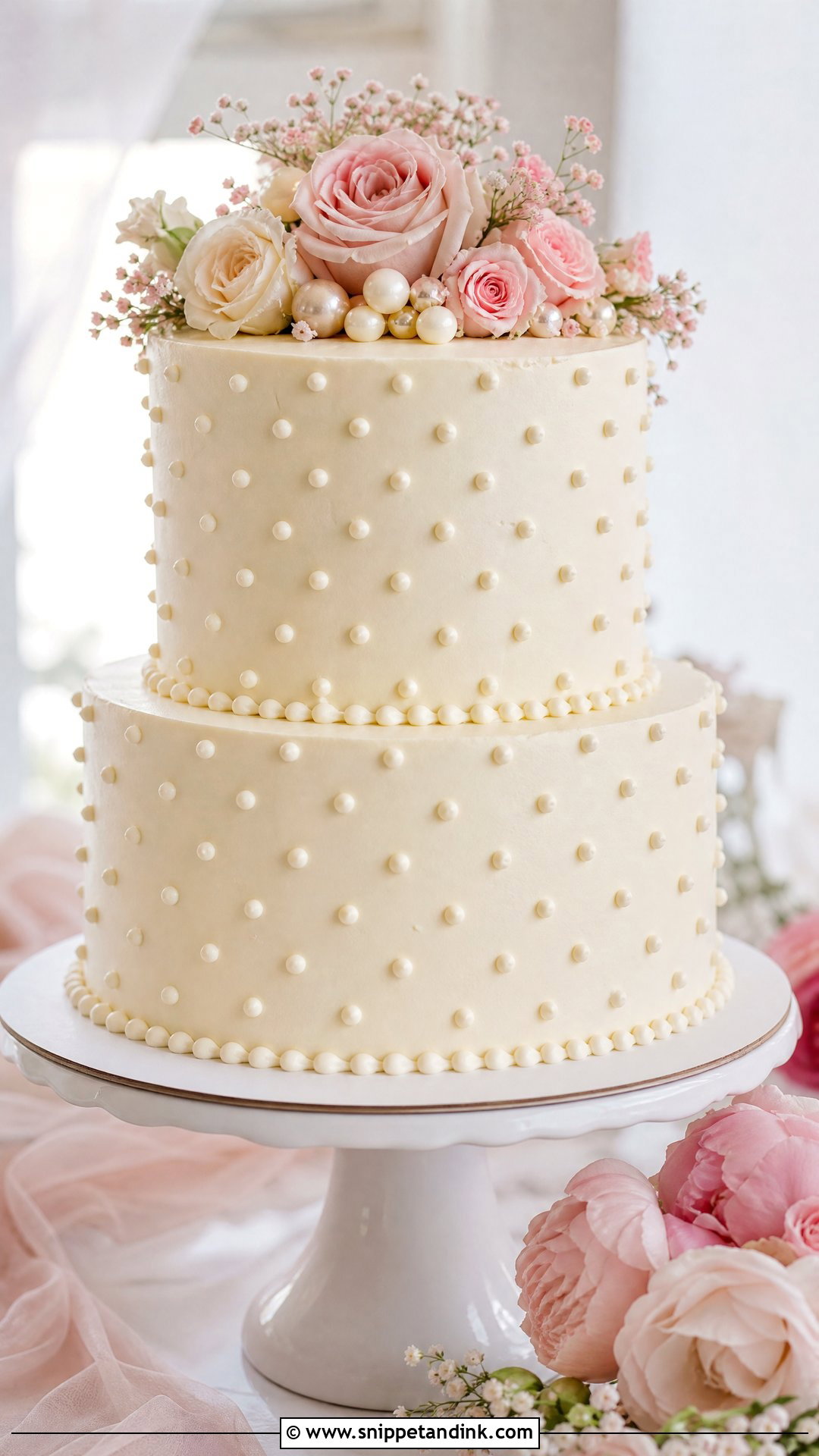
A polka dot wedding cake changes character with the dot size alone. Tiny pearl-sized dots on ivory look bridal; big raised dots go retro and cheerful. I cut dots from fondant with a round cutter or pipe them, and piped dots in buttercream will soften and spread a little in a hot room. White on white keeps it subtle, gold dots feel more festive. A ribbon or piped border is all it needs.
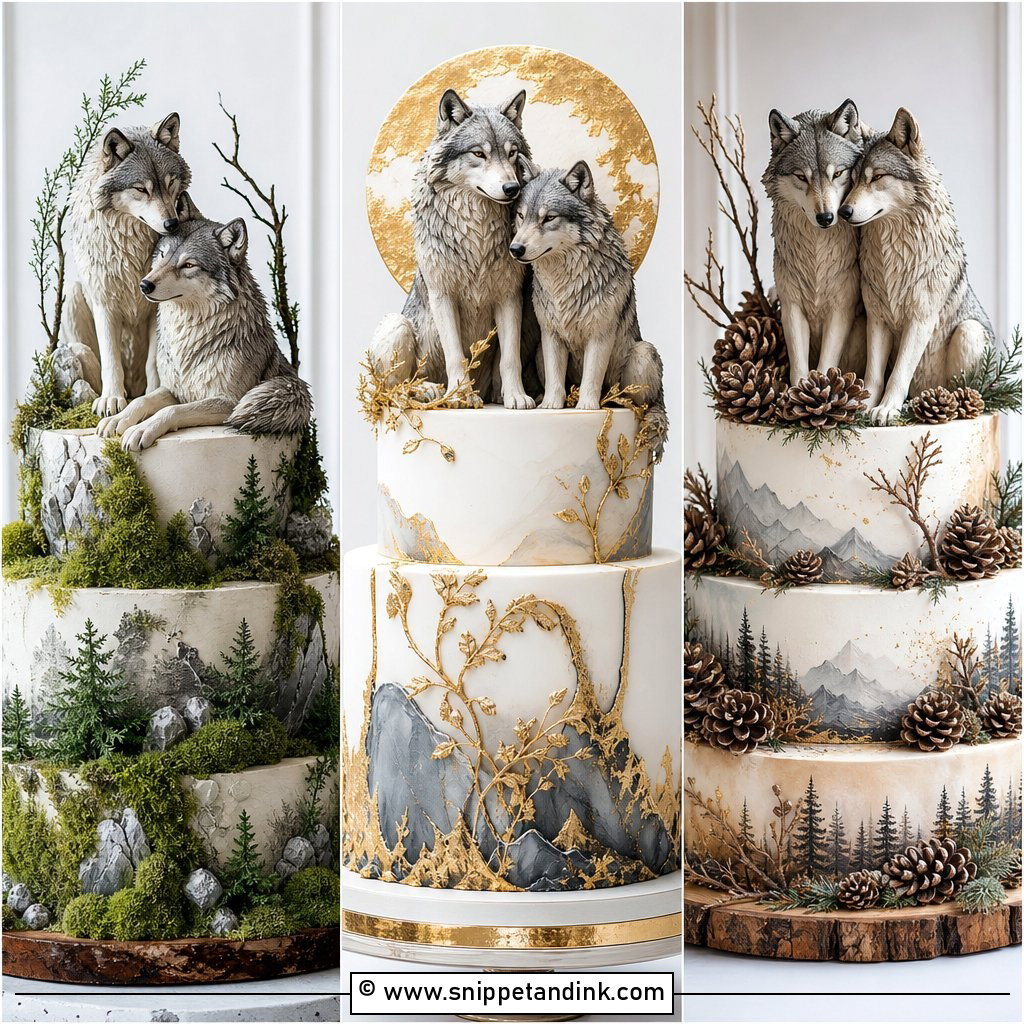
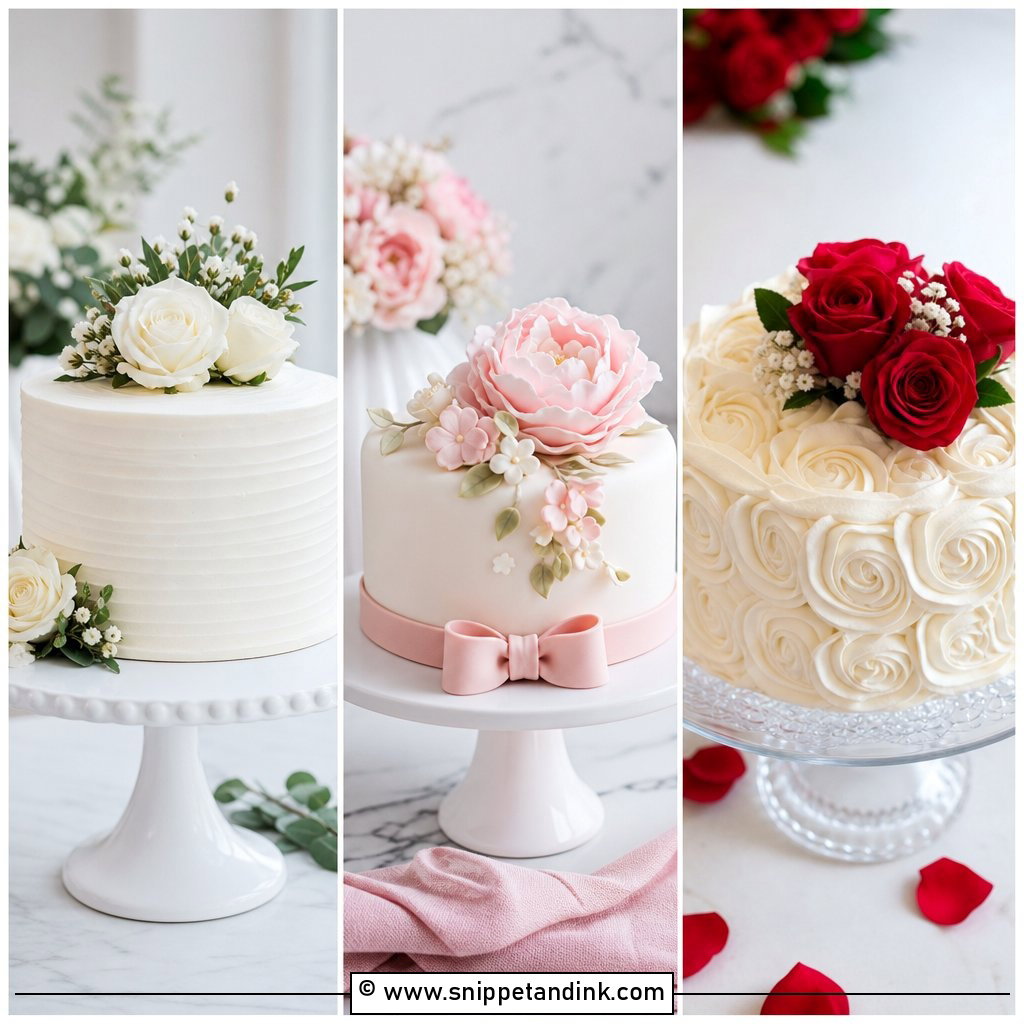
15. Vintage Piping Wedding Cake
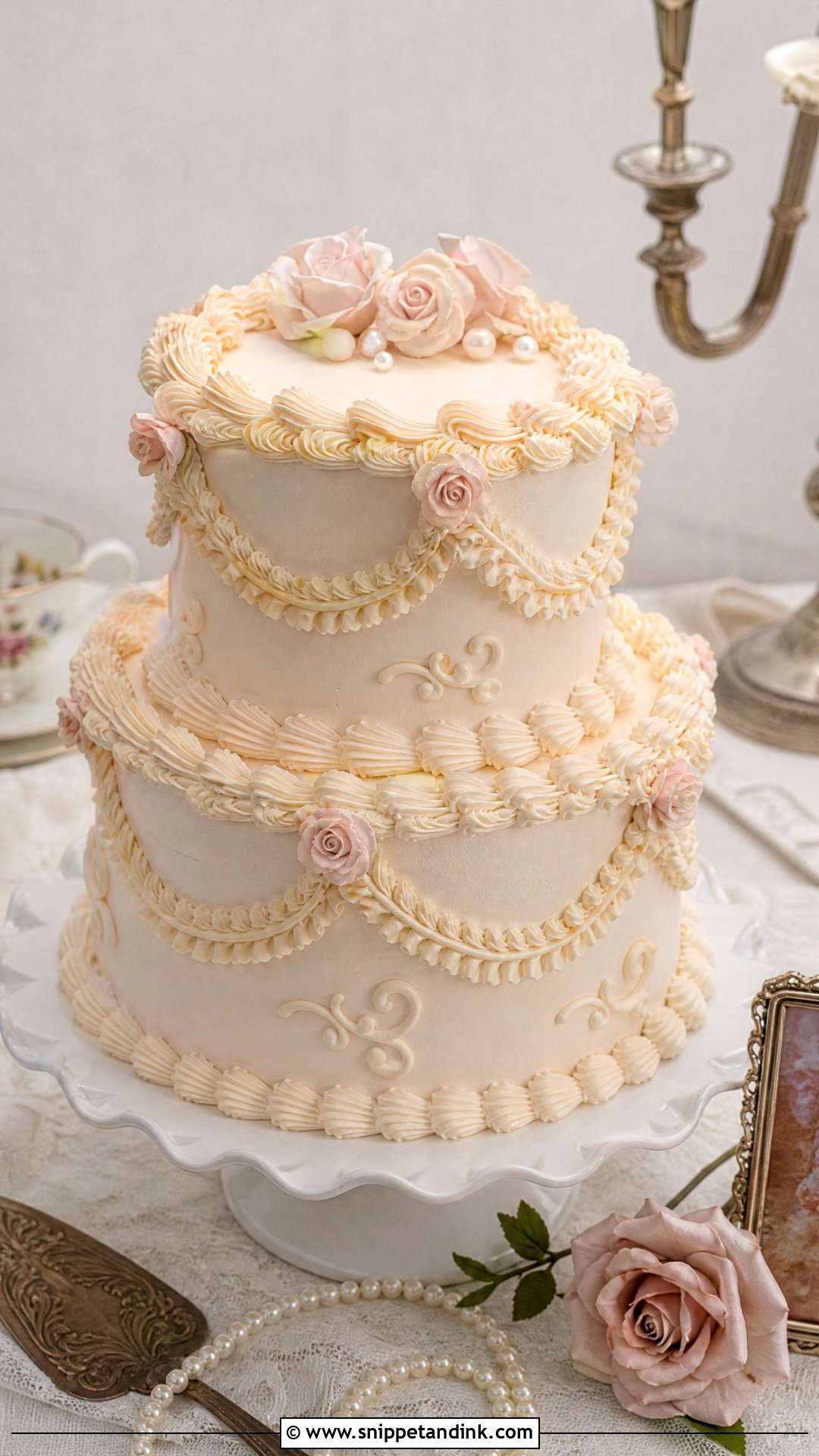
A vintage piping wedding cake is built entirely from the piping bag: shell borders, swags, scrolls, rosettes and overpiped lines layered tier by tier. It’s back in demand because it looks handmade, and it is. Lambeth style overpiping takes hours per tier, and it needs a stiff, stable buttercream or royal icing so the lines don’t sag. White, ivory, blush and pale blue suit it. Cherries or bows are optional; the piping is the decoration.
16. Painted Floral Wedding Cake
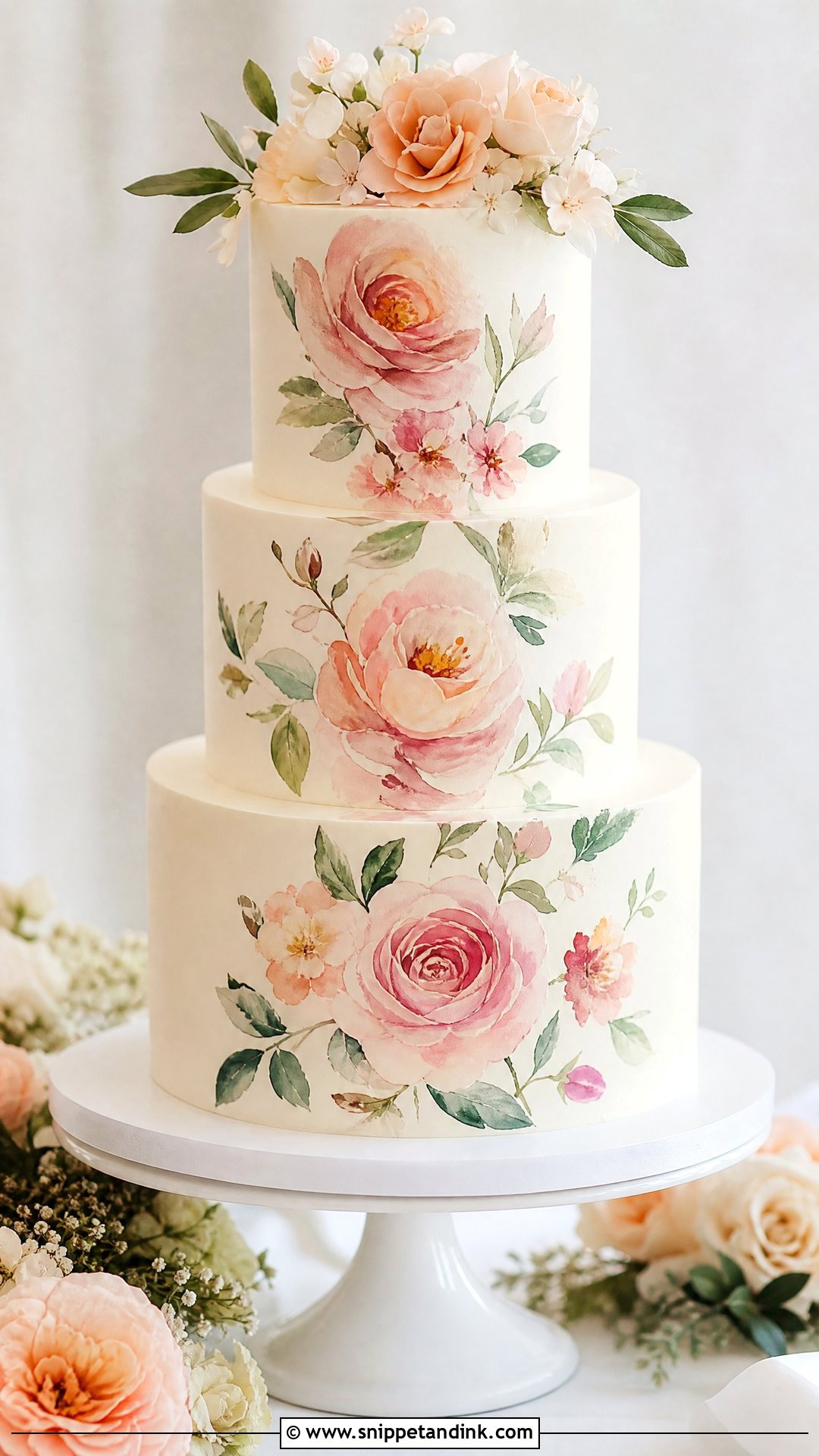
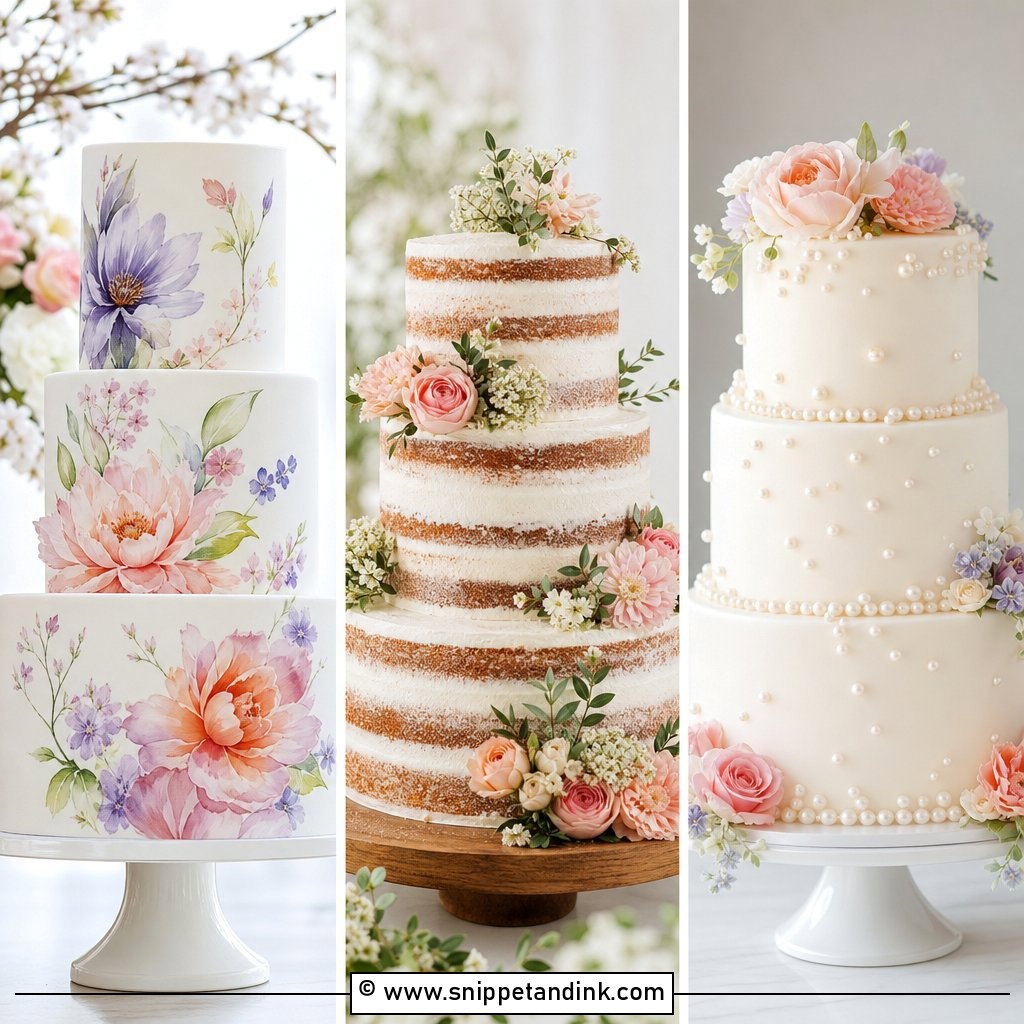
Painted florals turn a tier into a canvas. I paint with food colouring thinned in alcohol on fondant, or use tinted buttercream with a palette knife for raised petals. Watercolour washes look soft, fine line sketches look botanical. Matching the bouquet is easy if your florist shares the final flower list early. I usually paint the front and sides and leave the back plain, since it stands against a wall. Natural light flatters painted work far more than coloured uplighting.
17. Embossed Wedding Cake
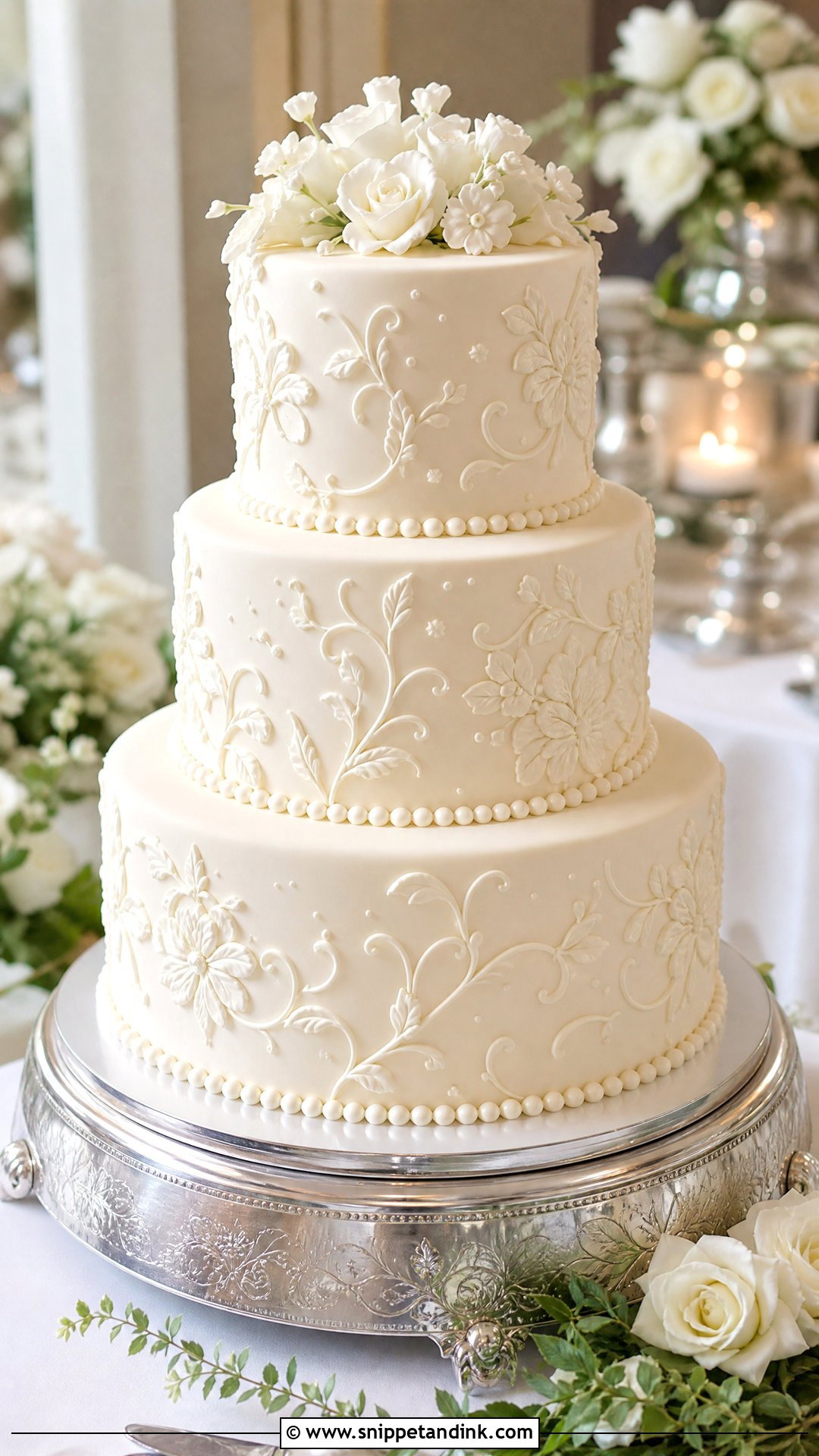
Embossing is pattern without colour. A textured mat or roller is pressed into fondant while it’s soft, giving lace, vines, weave or wallpaper motifs in relief. It works best on fondant; buttercream takes only a gentle impression and it fades if the icing warms up. This is the pattern I recommend to couples who want an all white cake that still rewards a close look. A few sugar flowers are enough.
18. Pleated Wedding Cake
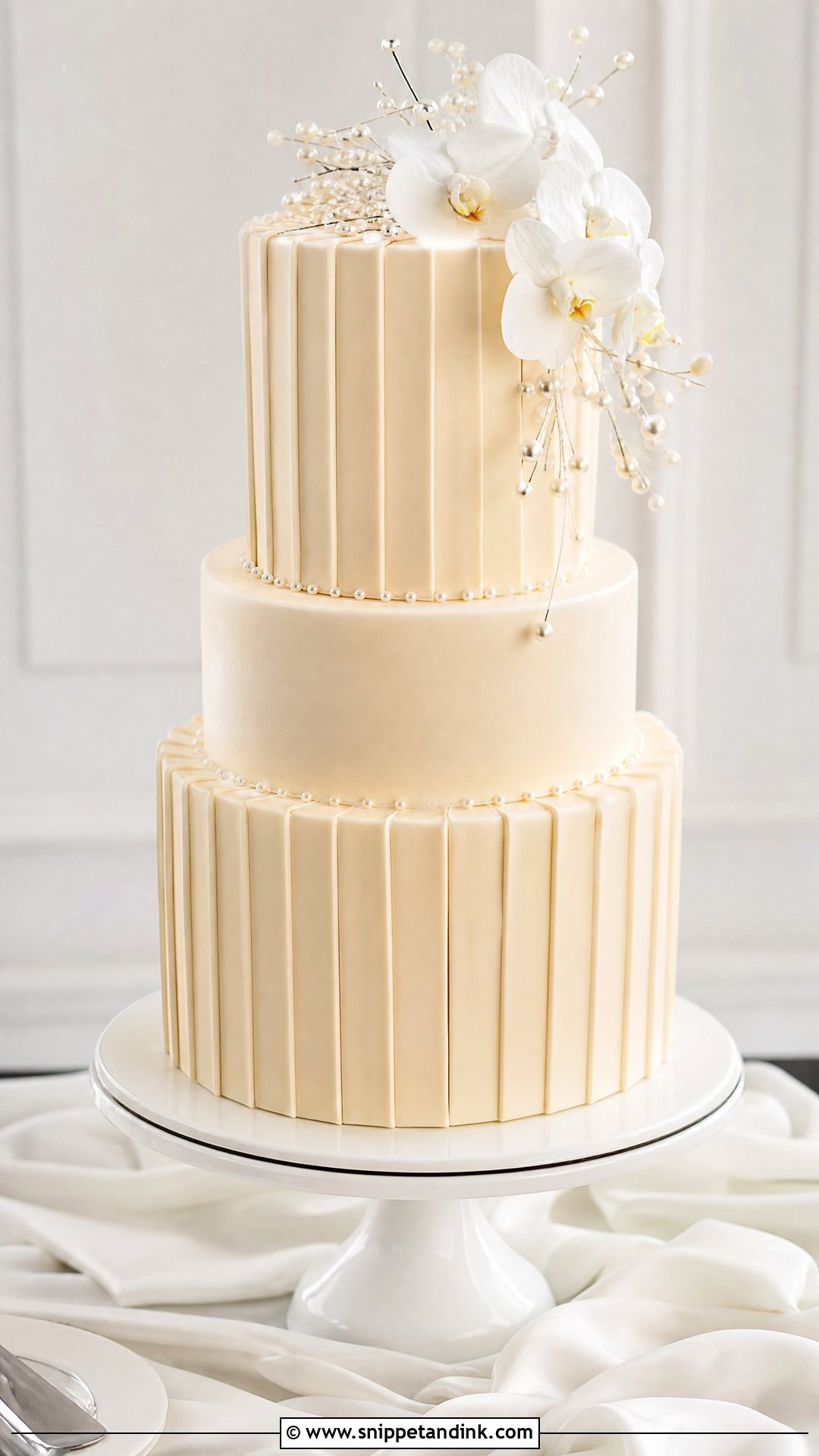
Pleats are folded fondant, much like a dressmaker’s knife pleats. They can run vertically, wrap the tier or sit as panels. The folds need to be cut thin, or they look heavy and add a lot of sugar to each slice. I’d pair one pleated tier with smooth tiers rather than pleat the whole cake. White and ivory keep it crisp, beige and champagne warm it. A single orchid or a few roses soften the structure.
19. Mosaic Wedding Cake
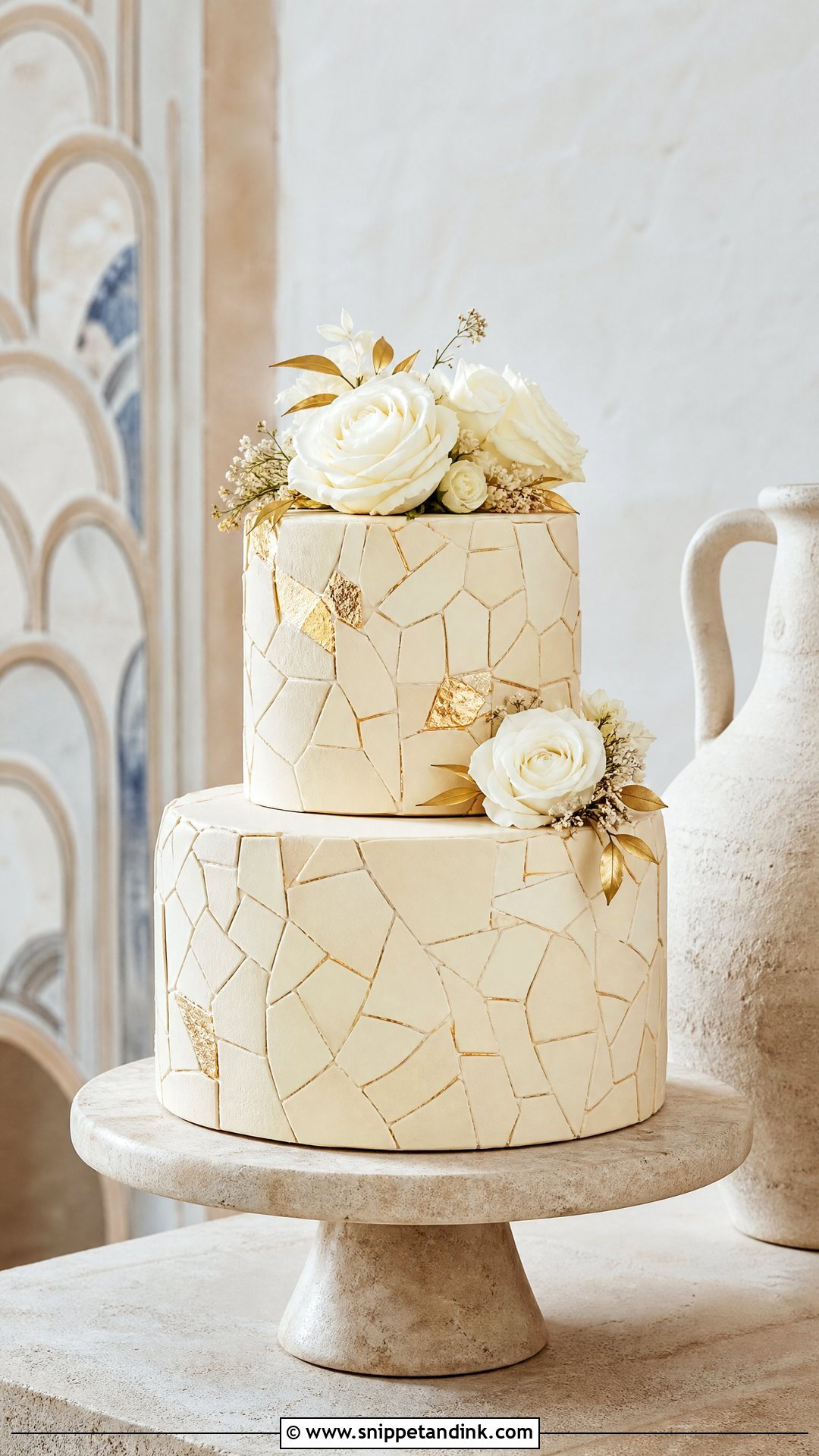
A mosaic cake is tiled by hand, from fondant pieces, painted squares, wafer paper or piped shapes. It’s the slowest pattern here to produce, so it needs to be booked well ahead. Ivory tiles with gold edges feel formal; pastel tiles look fresh for a coastal or garden reception. Keep the cake shape simple, so the tiling stays readable, and resist adding flowers. It belongs with handmade or Mediterranean decor.
20. Monogram Pattern Wedding Cake
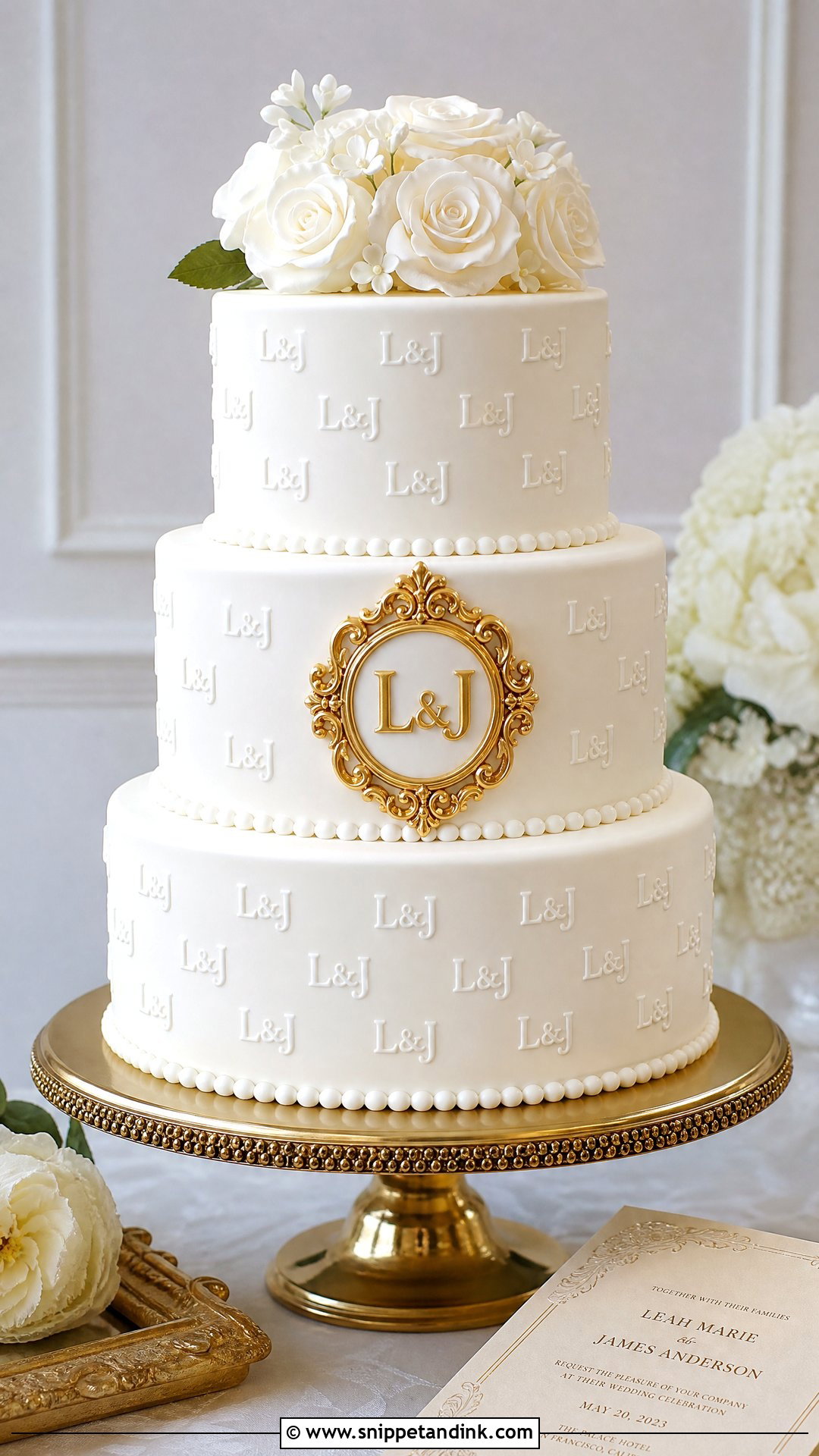
A monogram cake carries your initials, so it feels personal in a way stock patterns can’t. The letters can repeat as a subtle stencil, press into fondant, pipe in buttercream or sit as a central medallion framed by smaller detail. I always ask for the exact font file from your stationer, so the cake matches the invitations letter for letter. White on white is refined, gold lettering is formal. Keep it to one or two tiers so it doesn’t look branded.
What I Need From You to Match a Pattern to Your Wedding
A pattern goes wrong most often because the brief was a mood board of thirty cakes. Give me one reference and one source of the pattern itself: a swatch of dress lace, the invitation, a photo of the venue’s ceiling plaster. I can trace motifs from all of those.
Hand-intensive patterns need time. Mosaic, Lambeth piping, herringbone and fully hand-painted tiers can take a day or more of decorating on their own, so most cake designers book these several months out and charge accordingly. Prices vary widely by region and tier count, so ask for a quote on the decoration separately from the cake.
How Patterned Tiers Look After Three Hours on a Table
The cake is usually set up before guests arrive and cut hours later. In that time, sun through a window can melt buttercream ridges on one side only, and fresh pressed petals start to curl. Ask your planner to place the cake out of direct light and away from the dance floor speakers, which vibrate more than people expect.
Photographers also flatten texture with straight-on flash. Low raking light from the side is what makes embossing, quilting and ruffles read in pictures, so ask for the cake shots before the room lights go up. And when it’s cut, the pattern goes: if a monogram or painted panel matters to you, photograph it close before the knife comes out.
One Pattern, Repeated Once Somewhere Else
A patterned cake works when the pattern has a reason to be there. The strongest ones I’ve made borrowed a single detail, the lace of a sleeve or the monogram on the menu, and repeated it in sugar. Tone on tone patterns suit couples who want restraint. If you want one bold moment, give it to a single tier and keep the rest smooth. Then choose the medium that matches your venue’s temperature, and the cake will look as good at the cutting as it did when it was delivered.
You'll Like These Ideas:






Leave a Reply