
Couples ask me for colorful cakes far more often than they used to, and I love making them, because a colored cake is the one place on the dessert table where a palette can be bold without anyone worrying about it clashing with a dress. The catch is that color on a cake is less forgiving than color in a bouquet. Buttercream darkens as it sits, fondant fades in sunlight, and five shades chosen separately rarely sit well together on one tier. Below are the multicolor designs I’d actually put in front of a couple, with notes on how each one behaves and who it suits.
Start the Palette With the One Color You Can’t Change
When a couple tells me they want “lots of color”, my first question is which color is already fixed. It might be the bridesmaid fabric, the linen the venue supplies or the main flower. That color becomes the anchor, and everything else on the cake is chosen to sit beside it.
- Bring a physical swatch to the consultation. Screens shift color, and a fabric scrap tells me far more than a photo.
- Keep it to three to five shades. Past that, colors start cancelling each other out and the cake looks busy rather than joyful.
- Decide where the color lives: inside the sponge, on the surface, or in the decorations. Putting it in all three is usually too much.
- Mention the lighting. A cake under warm string lights reads yellower than the same cake in daylight, so I adjust tones for an evening room.
I also ask what the cake will stand next to. A bright cake in front of a busy floral wall disappears in photos, while the same cake against plain linen looks bold.
1. Rainbow Wedding Cake
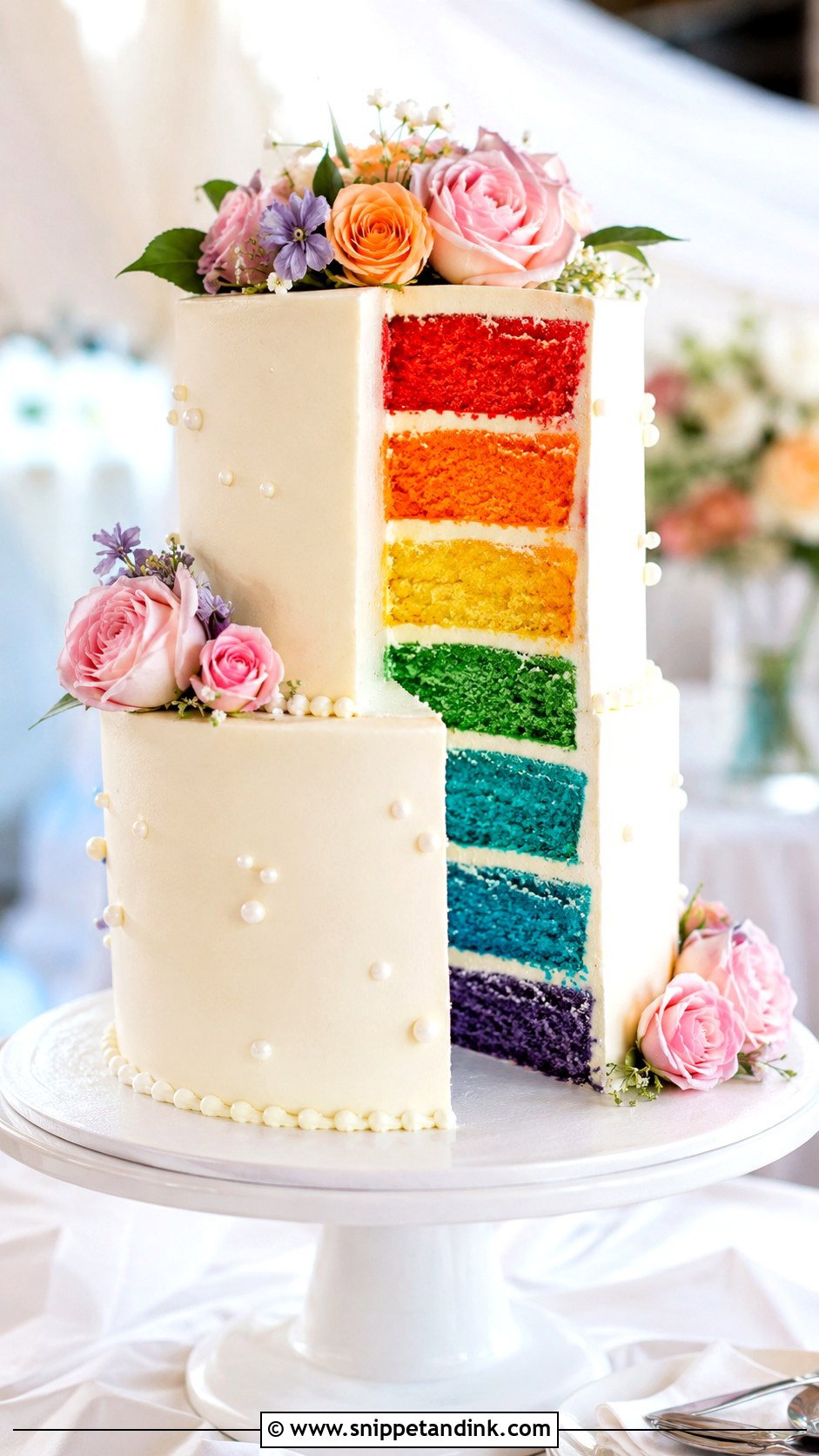
The rainbow cake I make most often for weddings hides its color. The outside is smooth white or ivory, and the stripes only show when the first slice comes out, which gives you a real reaction at the cutting instead of a cake that shouts from across the room. Six thin sponge layers in dusty rose, peach, butter yellow, sage, powder blue and lavender look far more grown up than primary colors. I tint the batter with gel rather than liquid color so the crumb stays tender, and I bake each shade separately so the colors don’t muddy where they meet. A few fresh flowers in matching shades on top hint at what’s inside.
2. Pastel Wedding Cake
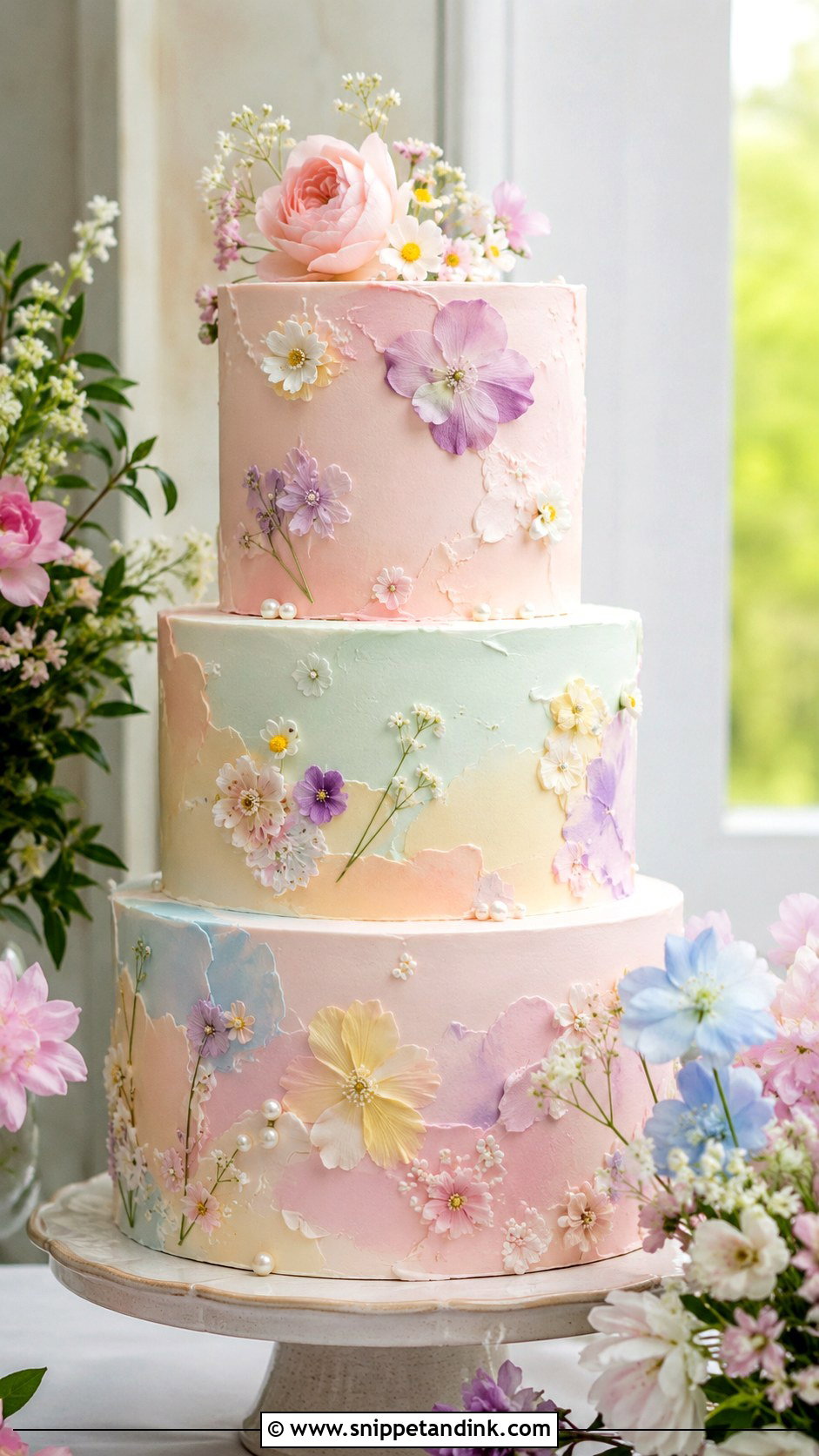
Pastels are the easiest multicolor cake to get right, and also the easiest to make look like a baby shower. Blush, pale peach, baby blue, lavender, mint and creamy yellow all sit at roughly the same lightness, which is why they get along. What keeps the result bridal is restraint in the finish: smooth frosting, a few pearls or pressed blossoms, and no more than three pastels per tier. I mix these shades lighter than the swatch a couple brings me, since buttercream deepens a little overnight. If your bridesmaids are in mixed pastel dresses, this is the cake that ties the photos together.
3. Ombre Wedding Cake
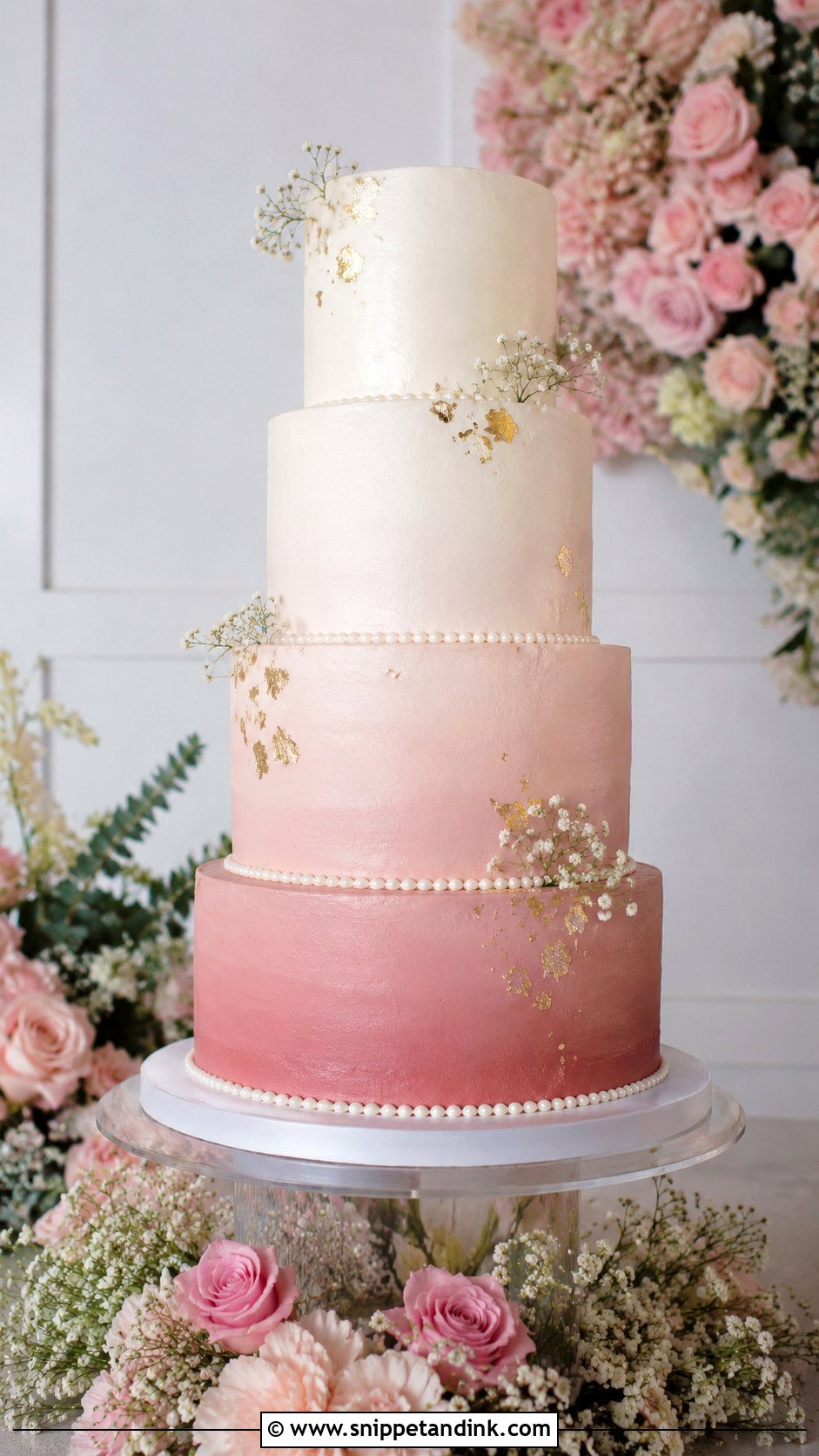
Ombre gives you movement without busyness, as long as the gradient stays within one color family: ivory to pink, peach to coral, sage to emerald. I blend it with a palette knife in buttercream, mixing each step from the previous bowl so the shift is gradual and nothing jumps. Height matters here. A four-tier cake gives the fade room to travel, while on two tiers it can read as two unrelated colors. Keep the decoration to a small cluster of flowers or a plain topper, or the gradient gets lost.
4. Watercolor Wedding Cake
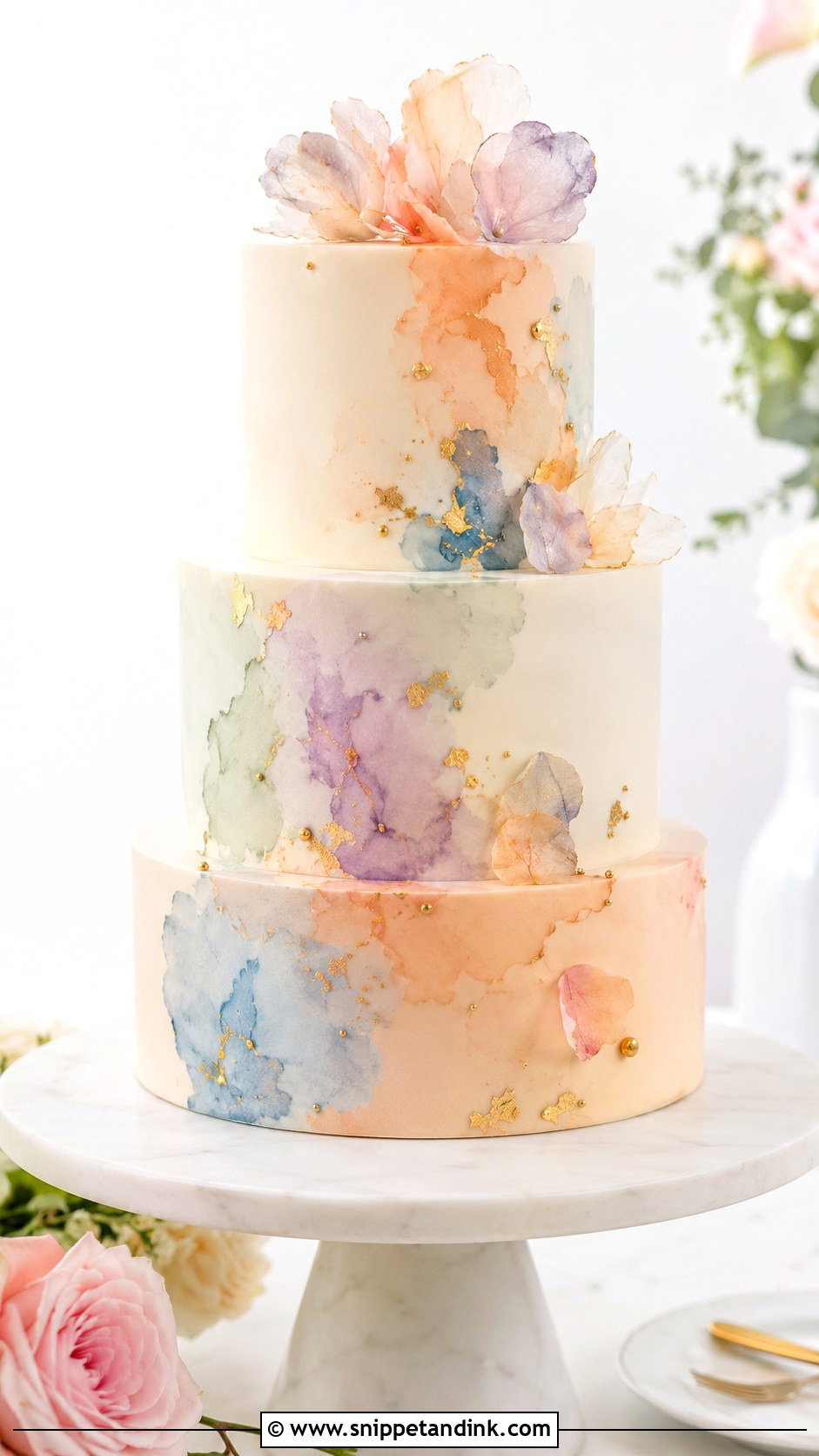
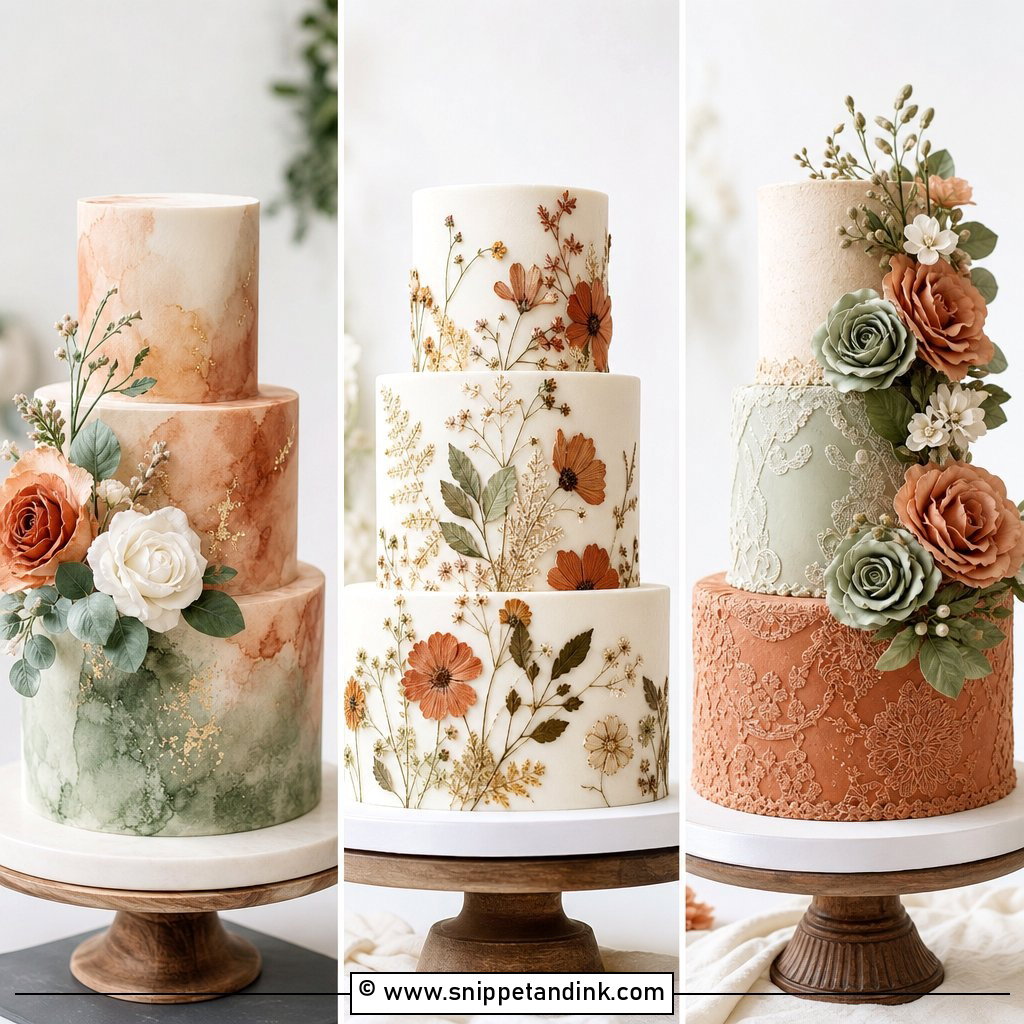
Watercolor cakes are painted by hand, usually with gel color thinned in a little clear alcohol and brushed over chilled buttercream or fondant so the washes bleed softly into each other. The surface underneath has to be very smooth, because every bump shows once the paint pools in it. Blush with gold, peach with lavender, and blue with green are the combinations I find hardest to get wrong. A few fresh stems or wafer paper petals add depth, though I keep wafer paper away from humid tents, where it goes limp within the hour. No two sides of a watercolor tier match exactly, and that is part of the charm.
5. Floral Wedding Cake
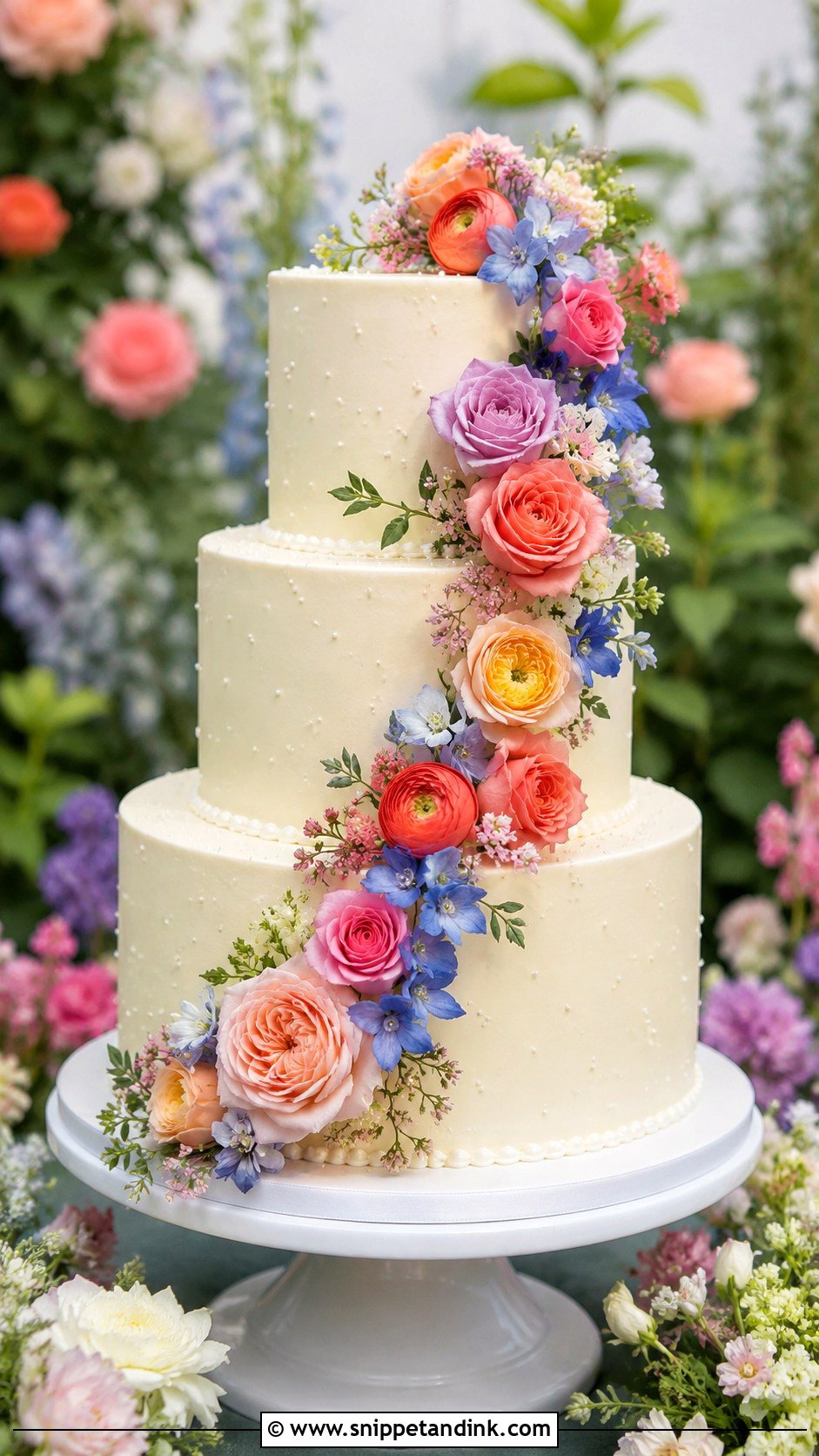
Flowers are the safest way to bring a full palette onto a cake while the tiers stay white, ivory or pale blush. Fresh blooms, sugar flowers and pressed edible petals can all be set as a cascade, a wreath or a corner cluster. For fresh stems I insist on blooms grown without pesticides, and I wrap or tape every stem so it never touches the cake directly; some popular flowers are toxic, and the florist and I agree the list before anything is cut. Echoing two or three varieties from the bouquet does more than matching every flower. Roses, ranunculus and small wildflowers are reliable; dahlias shed petals once they’ve been out of water for a few hours.
6. Painted Flower Wedding Cake
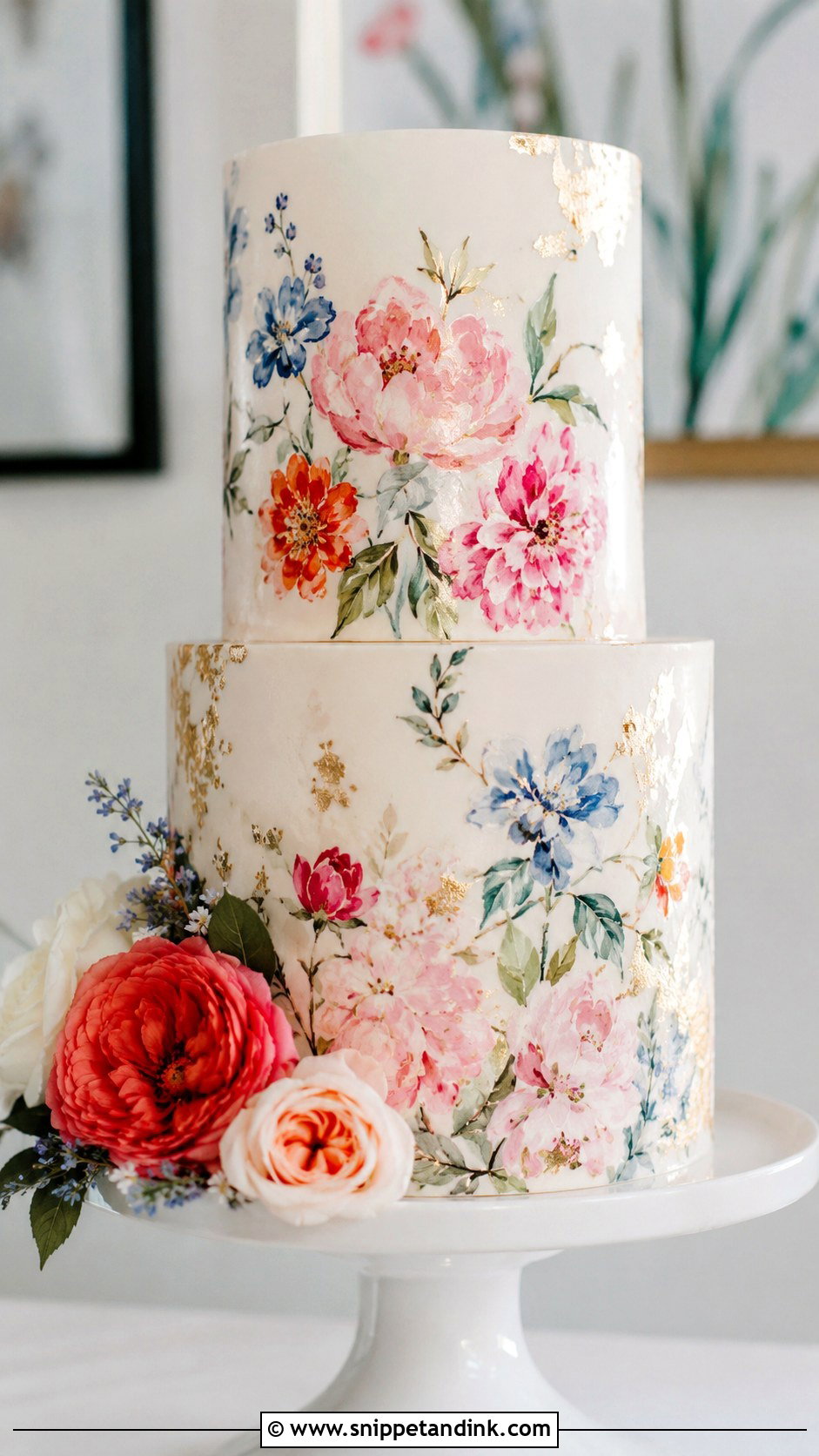
Painted flowers give you florals with a handmade feel and none of the wilting. I paint them on fondant because it behaves like a sealed canvas; on buttercream the brush drags and the color can sink. The palette can come straight from the invitation suite, which is a detail guests tend to notice once they’re close. If a couple wants a few real stems at the base for depth, I keep them small so the painting stays the focus. Allow time for this design, as a fully painted four-tier cake can take a full day of brushwork.
7. Color Block Wedding Cake
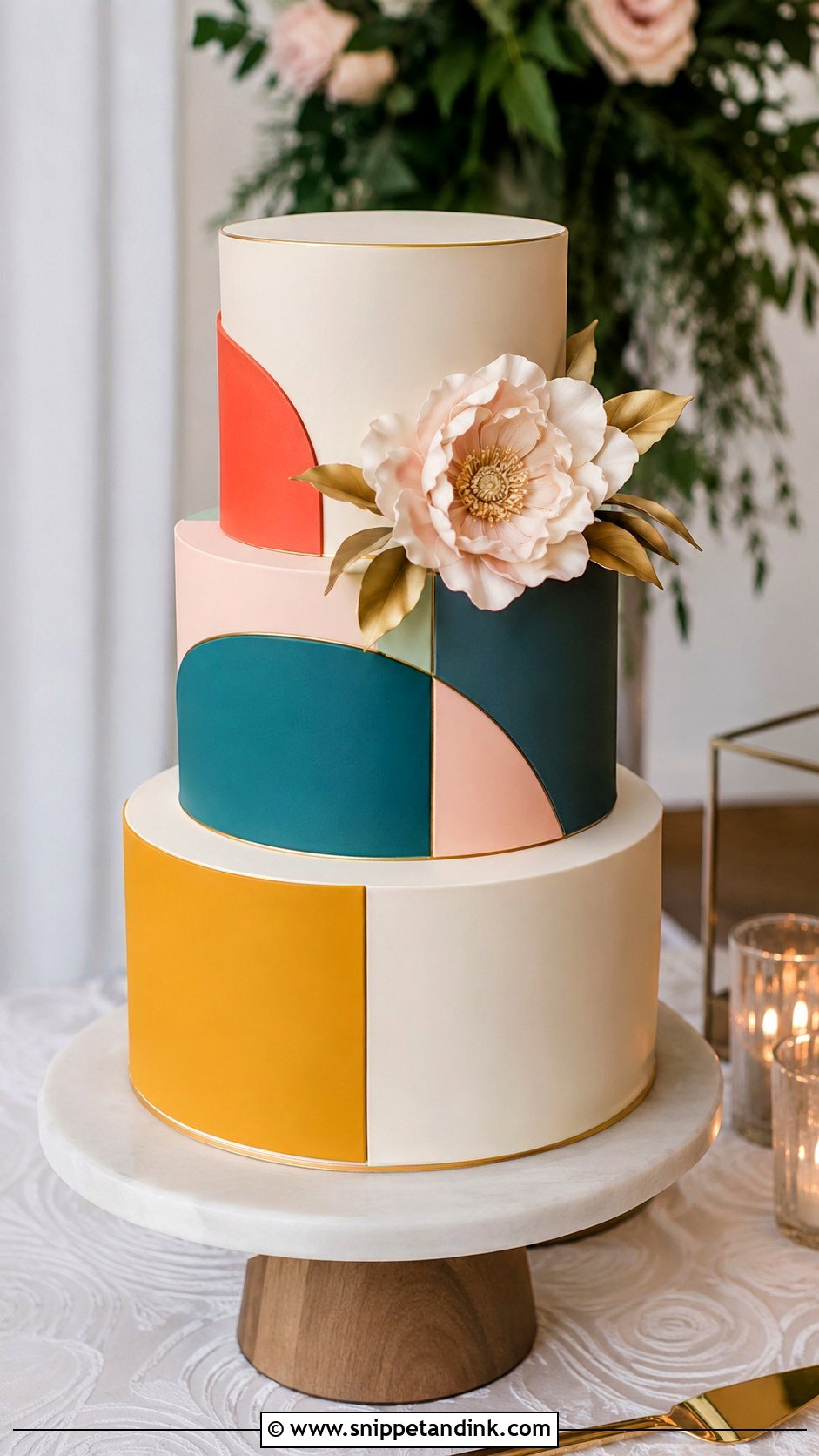
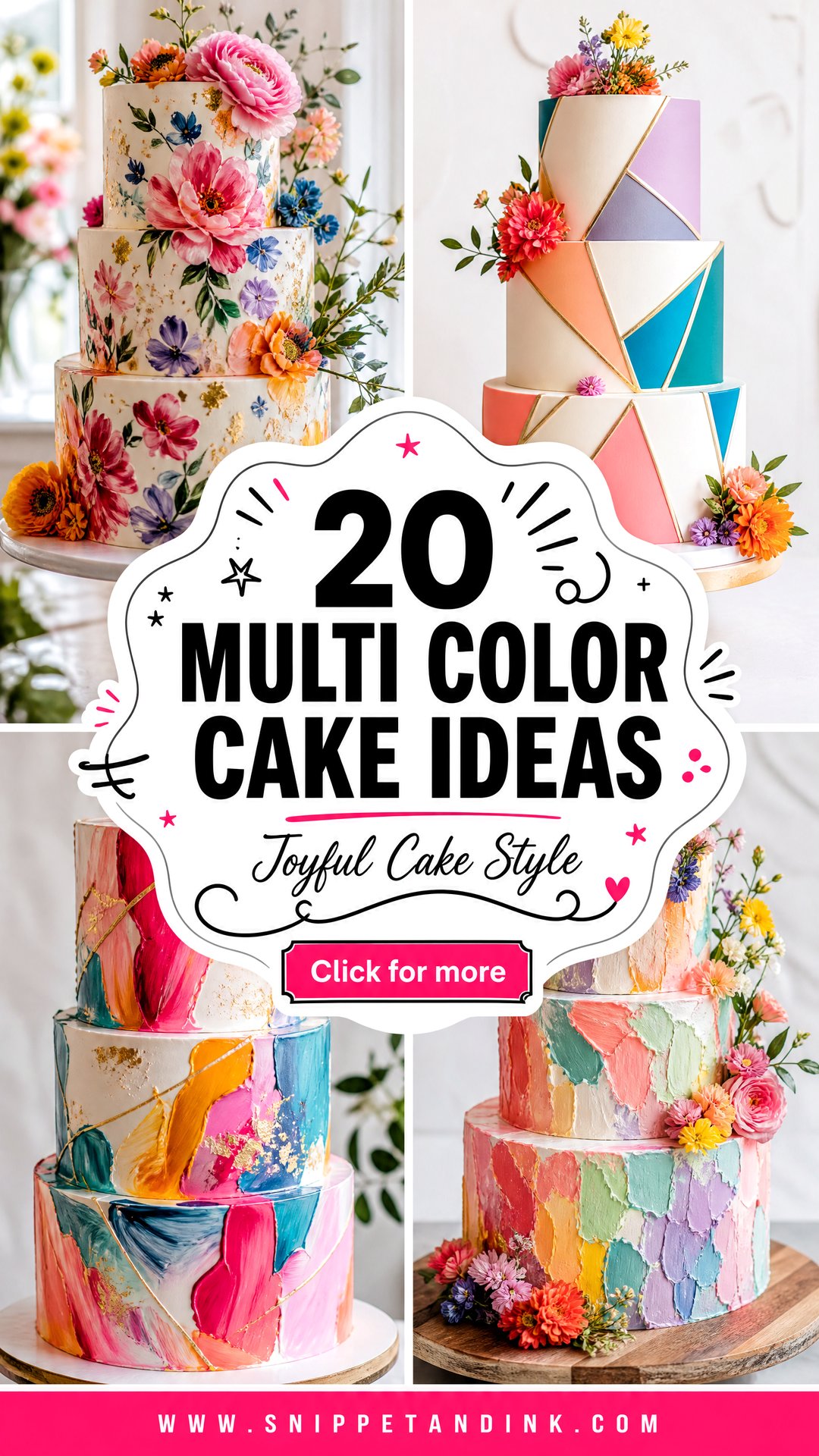
Color blocking lives or dies on edges. Each tier can be its own shade, or one tier can be split into sharp panels of pink, orange, blue and ivory, and both need crisp lines that I can only promise in fondant. Buttercream will give you softer seams, which some couples prefer. Pick a tight palette of three or four colors and let them be confident. One sculptural flower cluster or a gold topper is enough decoration; anything more and the blocks start fighting it.
8. Geometric Wedding Cake
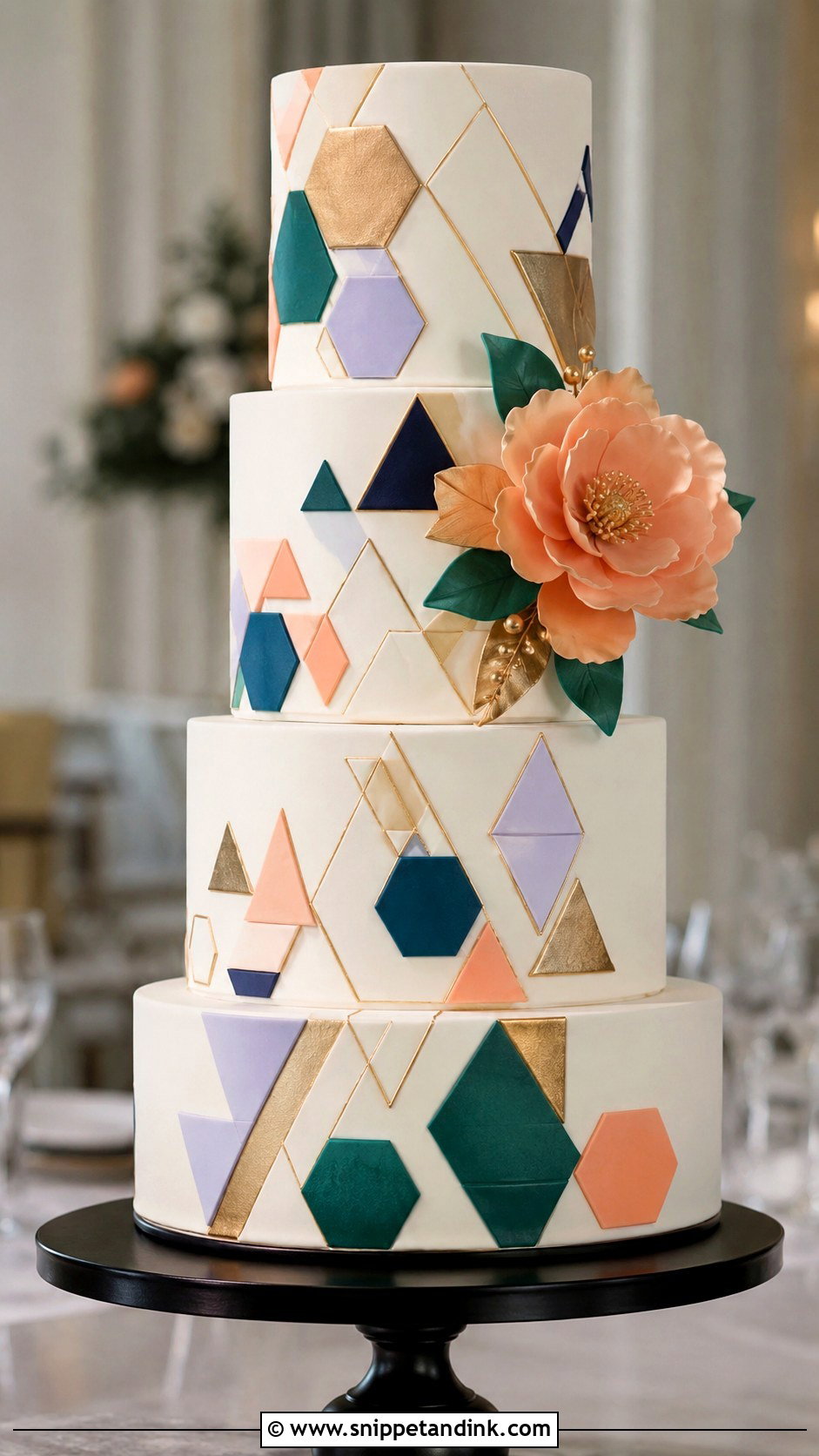
Geometric cakes take more planning than they look. Triangles, arches, hexagons and mosaic panels are cut from rolled fondant or modeling paste and fitted by hand, so I sketch the layout to scale first and decide where the pattern meets at the back of each tier. An ivory base lets the shapes read clearly. Thin gold lines between panels hide tiny gaps and add a finish that suits city venues and patterned linens. Couples who think traditional cakes look too sugary tend to settle on this one.
9. Abstract Wedding Cake
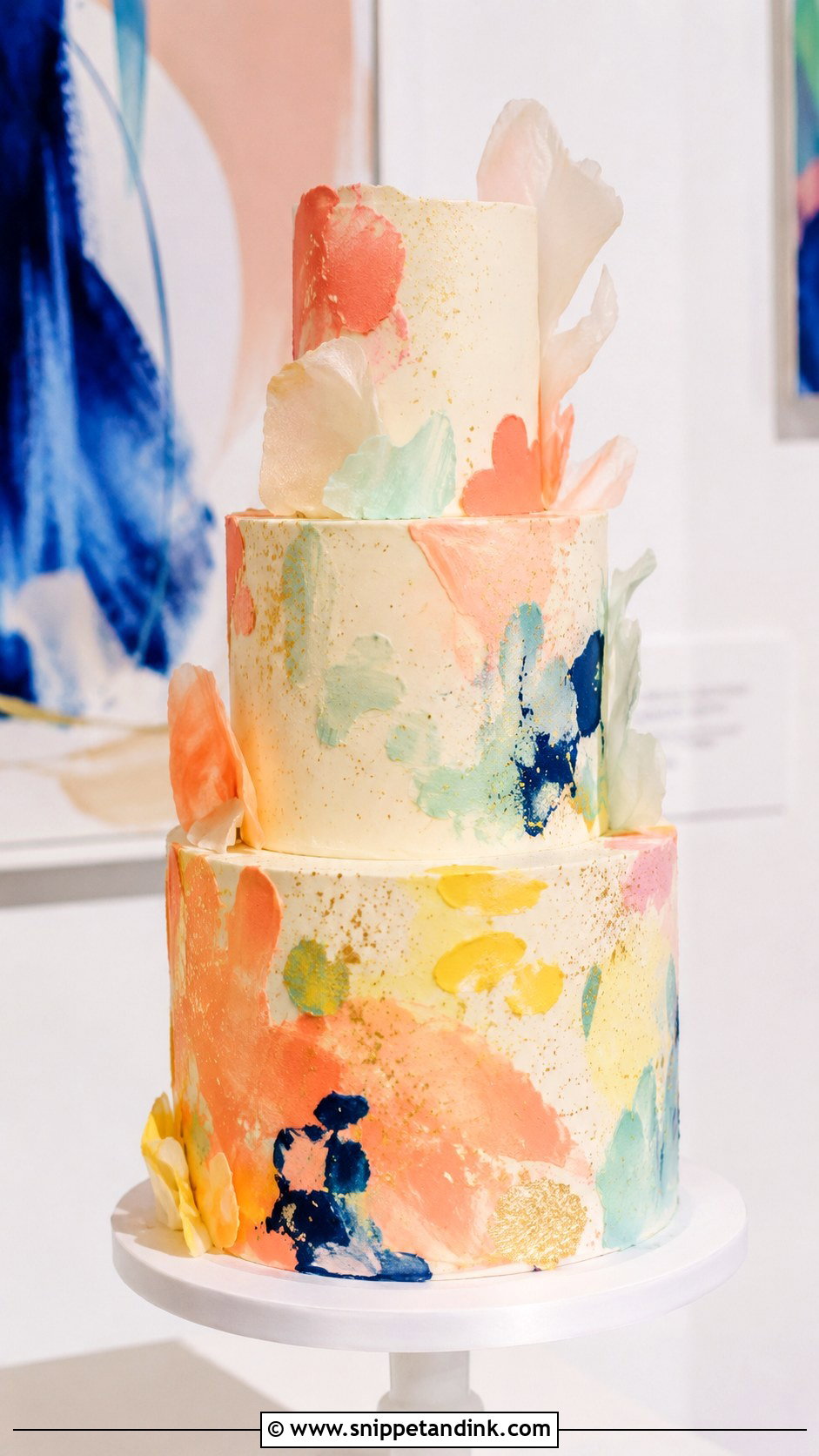
An abstract cake is the closest I get to painting a canvas. Swirls, scattered patches of color and thick buttercream strokes are arranged for balance rather than repetition, which means the design is worked out on the cake itself, not copied from a template. I ask couples for two or three reference points, often the invitation, the bridesmaid fabric and the main flower, and pull the palette from those. Clean, straight-sided tiers give the artwork room. If you’re someone who needs to know exactly what the cake will look like in advance, this design can be stressful, because the final strokes are decided on the day I make it.
10. Buttercream Palette Knife Wedding Cake
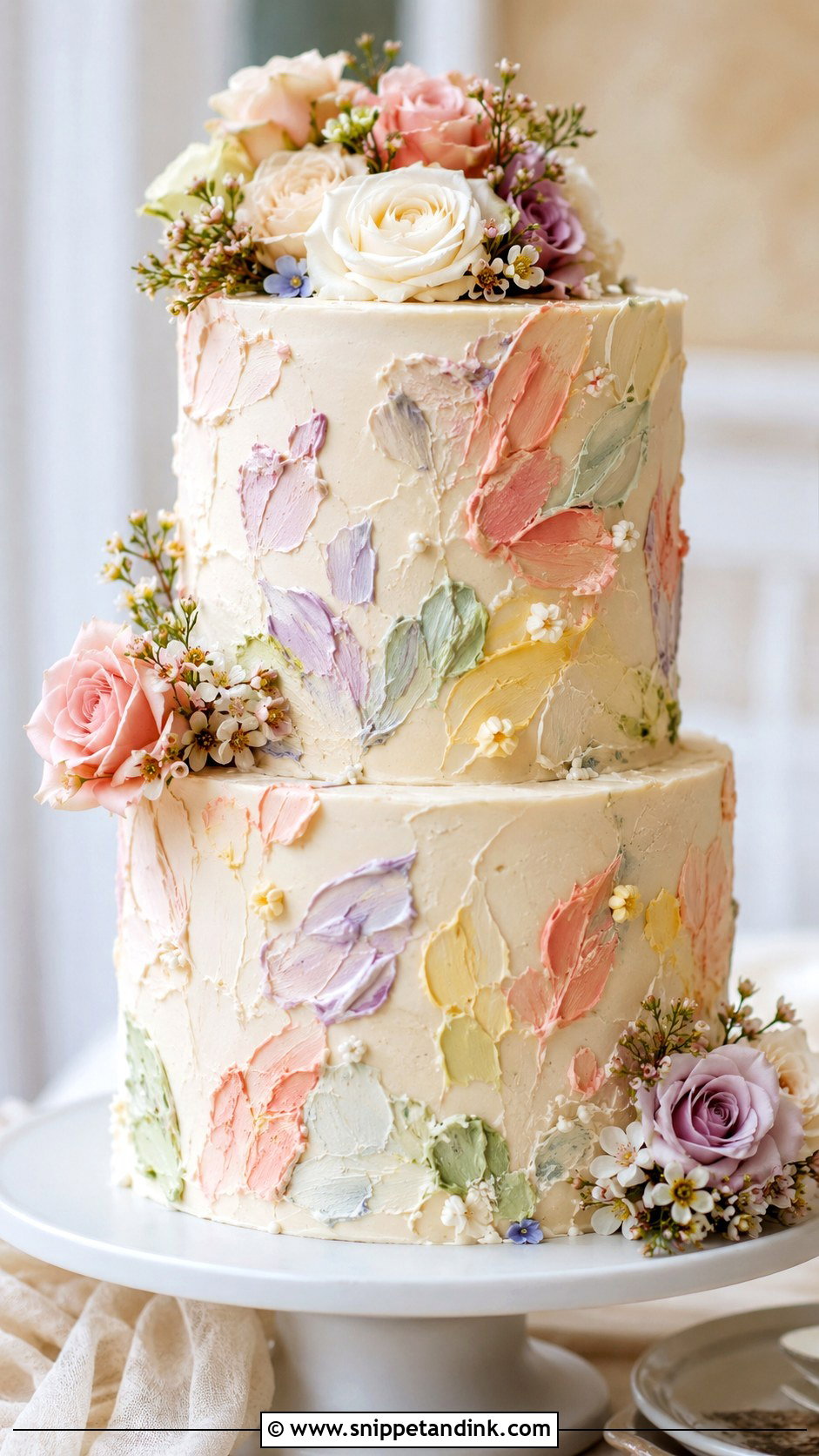
Palette knife cakes are built from thick buttercream pressed on like oil paint, shaped into petals, leaves or waves around the tiers. The texture throws shadows that make the color look deeper in photos, so the cake needs very little else. Blush, coral, yellow, lavender and green give a garden feel; jewel tones work for an evening reception. I use a firm, well-chilled base so the knife strokes hold their edges. In real heat this is the design I worry about most, because raised buttercream petals are the first thing to soften and slump.
11. Pressed Flower Wedding Cake
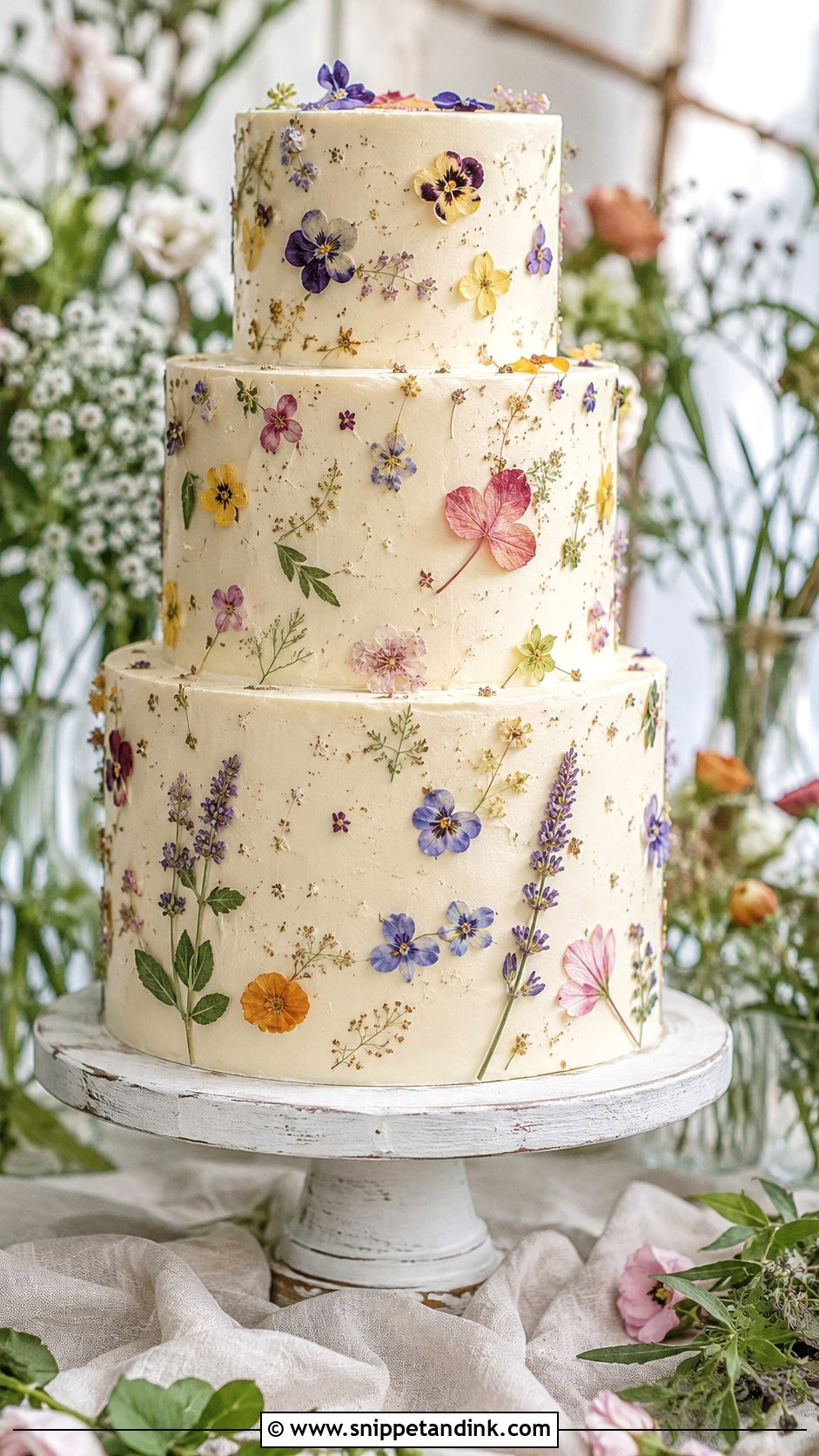
Pressed flowers give soft, flat color: lavender, chamomile, rose petals and blue cornflowers for a gentle look, or marigold, pansy and hibiscus for something brighter. Edible dried flowers and petals are pressed straight onto buttercream or fondant. On buttercream they slowly absorb moisture, so I apply them as close to delivery as I can, and delicate blue petals can start to discolor if the cake sits for many hours. A white or ivory base keeps everything fresh-looking. Brunch receptions and cottage garden themes suit this one best.
12. Sprinkle Wedding Cake
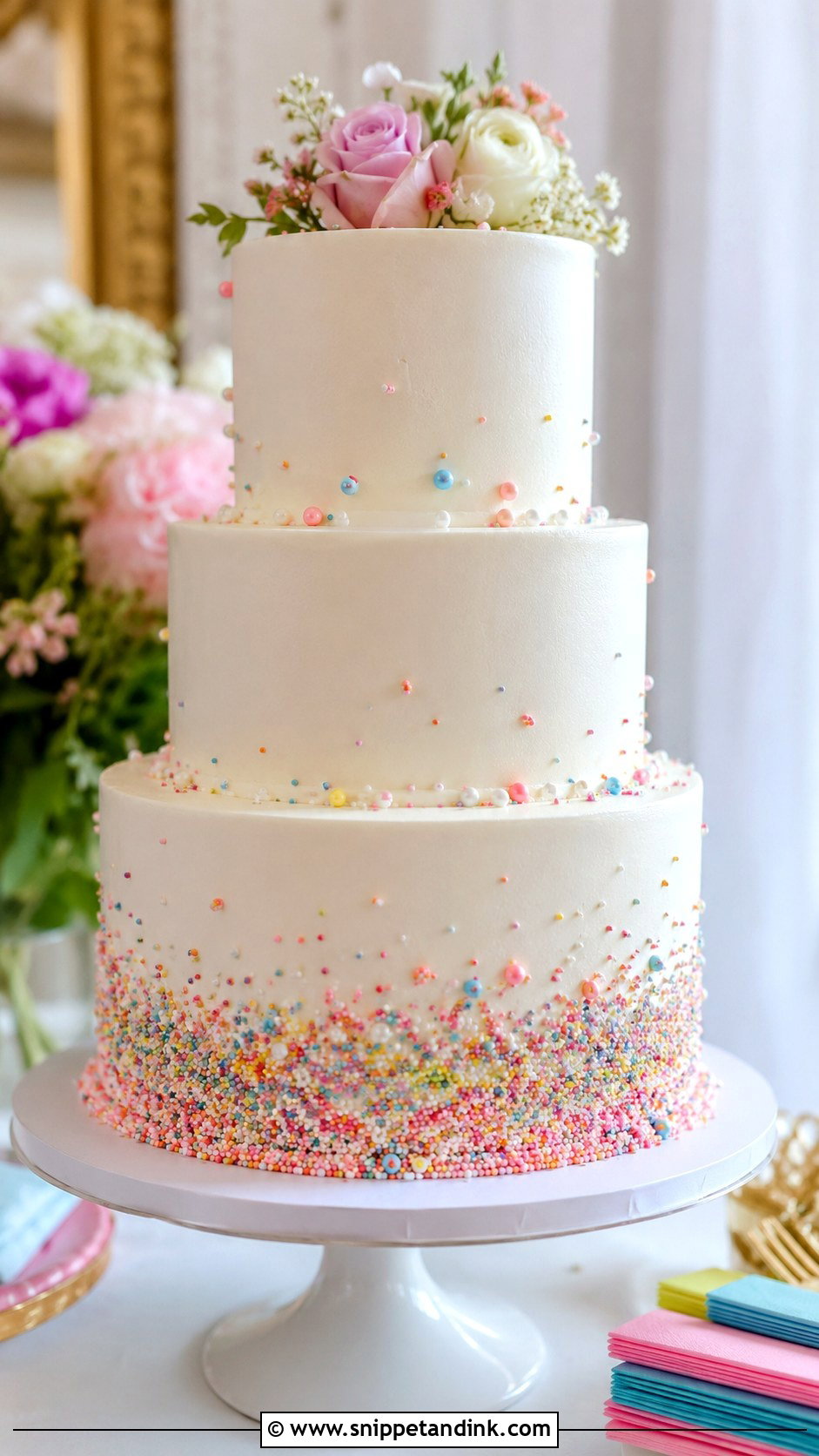
Sprinkles can look grown up, but only with strict color control. I build a custom mix in rose gold, pearl white, blush, lavender, mint and soft yellow, and leave out anything neon. Placement is the other half: a covered bottom tier, a fade that thins as it climbs, or a single band between tiers. Humidity is the enemy here, since cheap sprinkles bleed their dye into buttercream and leave colored halos, so I use good quality ones and add them late. It suits a couple who are planning a confetti exit and want the cake to match that mood.
13. Drip Wedding Cake
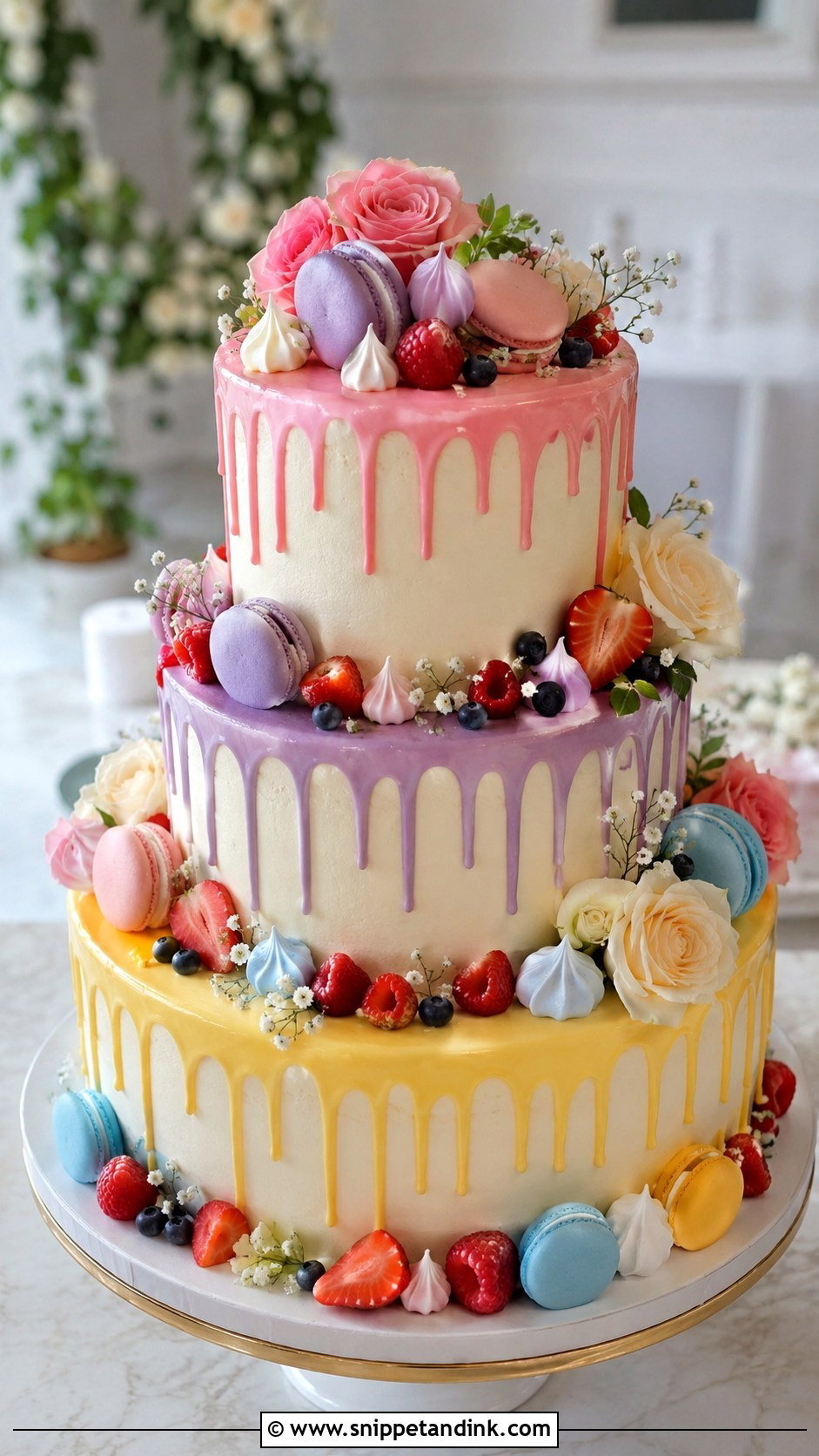
Drips bring movement, but they need control. I use white chocolate ganache tinted with oil-based color, poured over a cold cake so each drip sets partway down instead of running to the board. Each tier can carry a different shade, or one color can be used throughout: blush with gold, coral with peach, lavender with blue. Getting the ganache temperature wrong is the usual failure, giving drips that are either thick blobs or thin streaks. Macarons, berries or small meringues on the top tier finish it as a proper dessert-table piece.
14. Macaron Wedding Cake
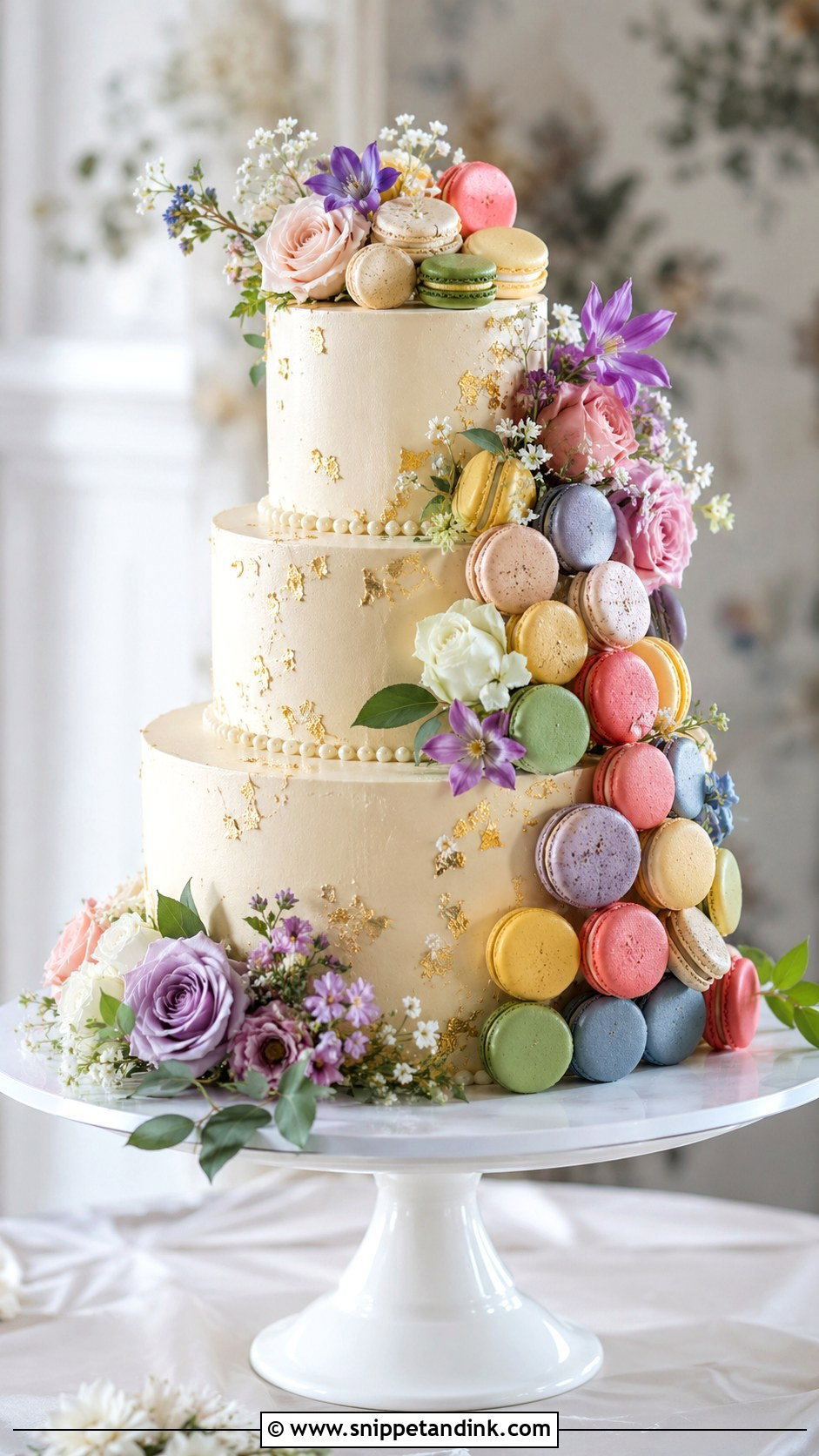
Macarons do a lot of the color work for you, since pistachio, raspberry, lemon, blueberry and lavender shells come in soft shades on their own. I arrange them in clusters, cascades or neat rows around smooth buttercream tiers. They have one weakness: moisture. Macarons pressed against buttercream for many hours soften and can lose their crisp shell, so I attach them on site or the morning of the wedding. Ordering extra in the same flavors gives you matching favors and a dessert table that looks planned as one.
15. Fruit Wedding Cake
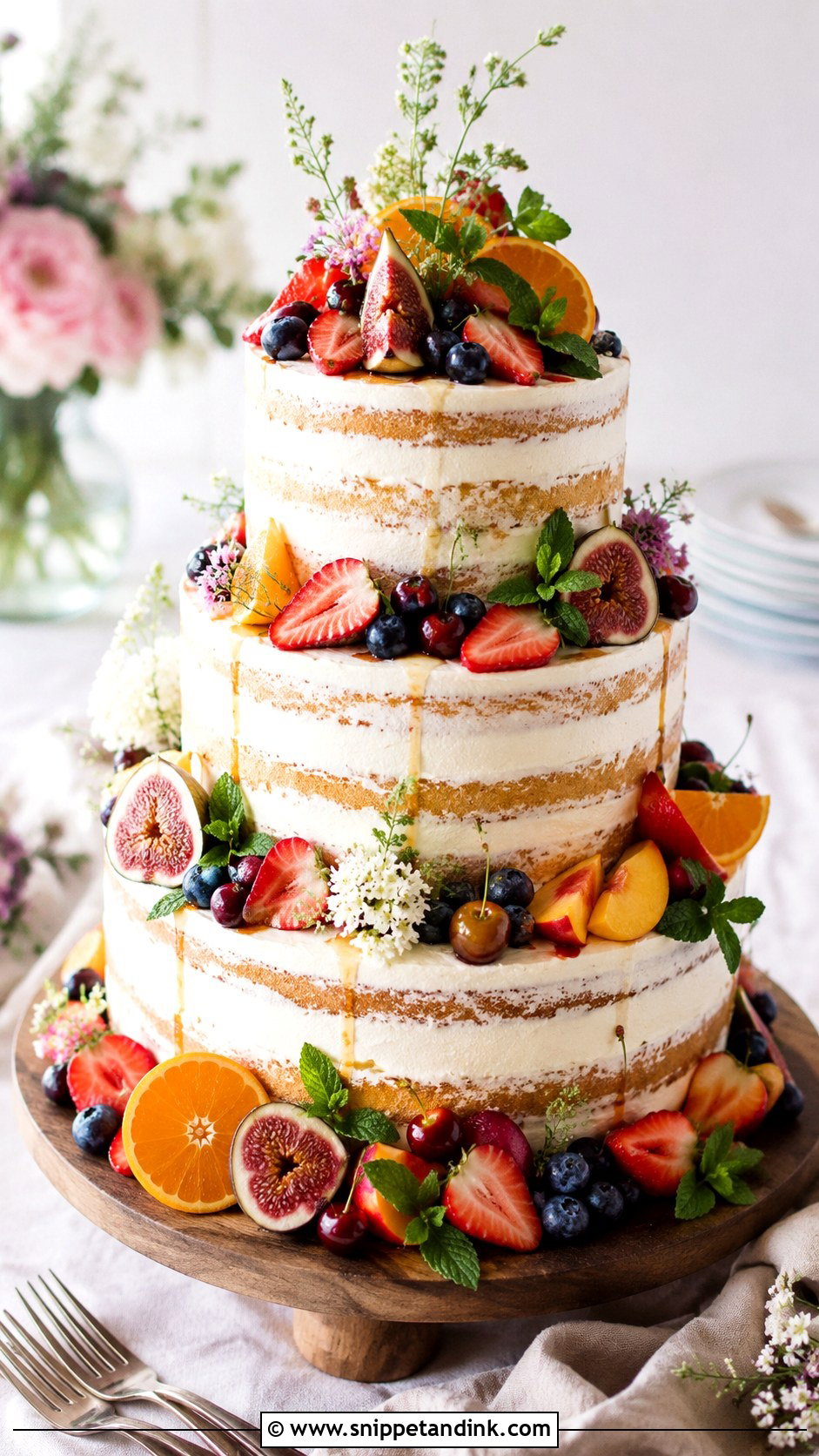
Fruit brings color that also tastes like something. Berries, citrus slices, figs, cherries and passion fruit sit well against white buttercream or a semi-naked finish. Cut fruit weeps juice, and strawberries in particular start to bleed into frosting after a few hours, so I place fruit on site, favor whole berries over sliced ones, and sometimes brush them with a thin glaze to slow the drying. Neat clusters with small flowers look formal; scattered fruit looks rustic. Lemon, almond and berry sponges are natural partners.
16. Tropical Wedding Cake
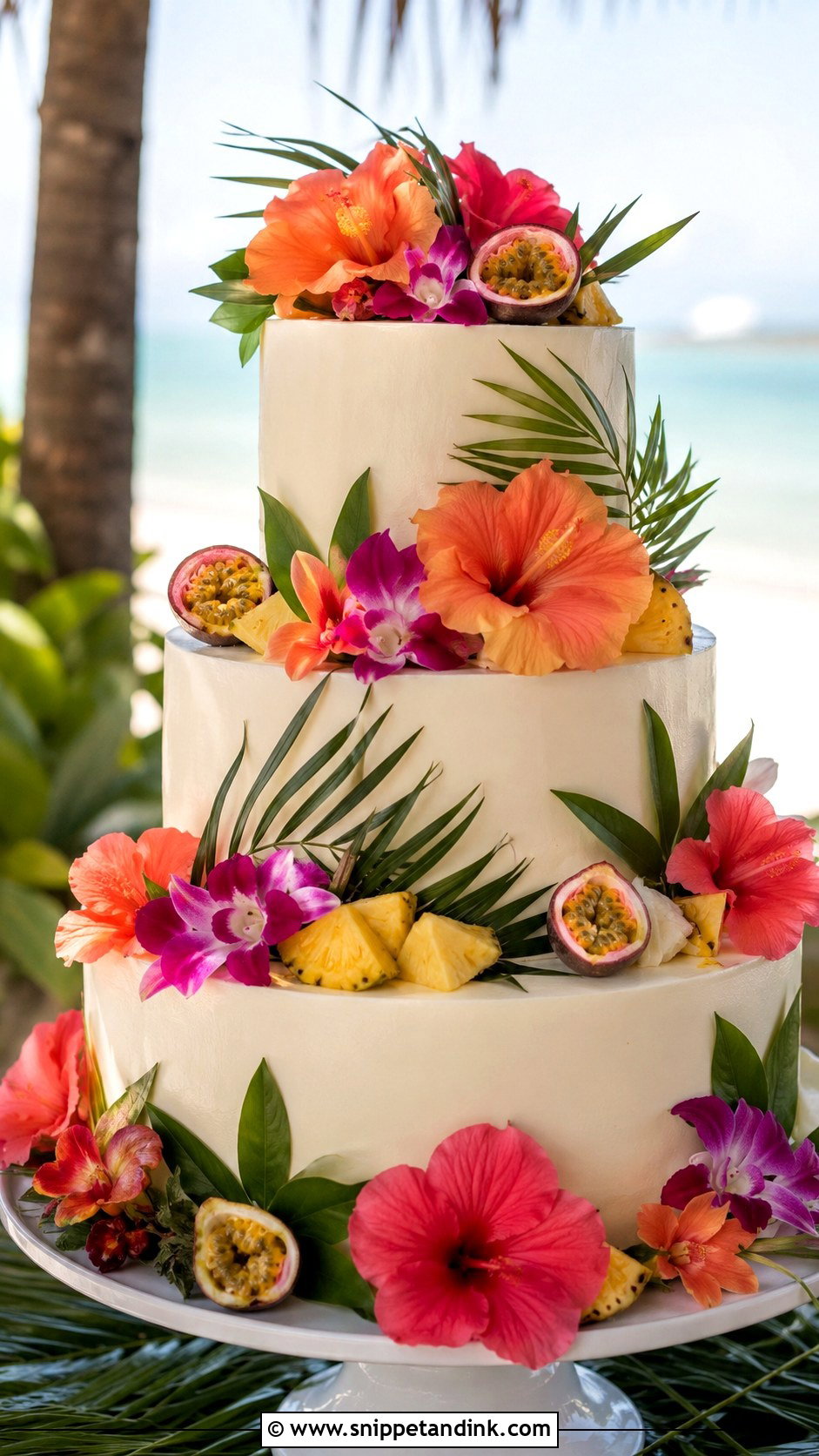
A tropical wedding cake borrows its palette from the place: coral, mango, turquoise, lime green and fuchsia, with orchids, hibiscus, palm leaves or pineapple as decoration. Because these cakes usually end up at beach and poolside receptions, I plan for heat first. That means a sturdier frosting, a shaded cake table and as little time out of refrigeration as possible. Grouping the tropical accents in tidy clusters, rather than covering every tier, keeps it from looking like a party prop. Coconut, lime, mango or guava fillings carry the theme inside.
17. Garden Wedding Cake
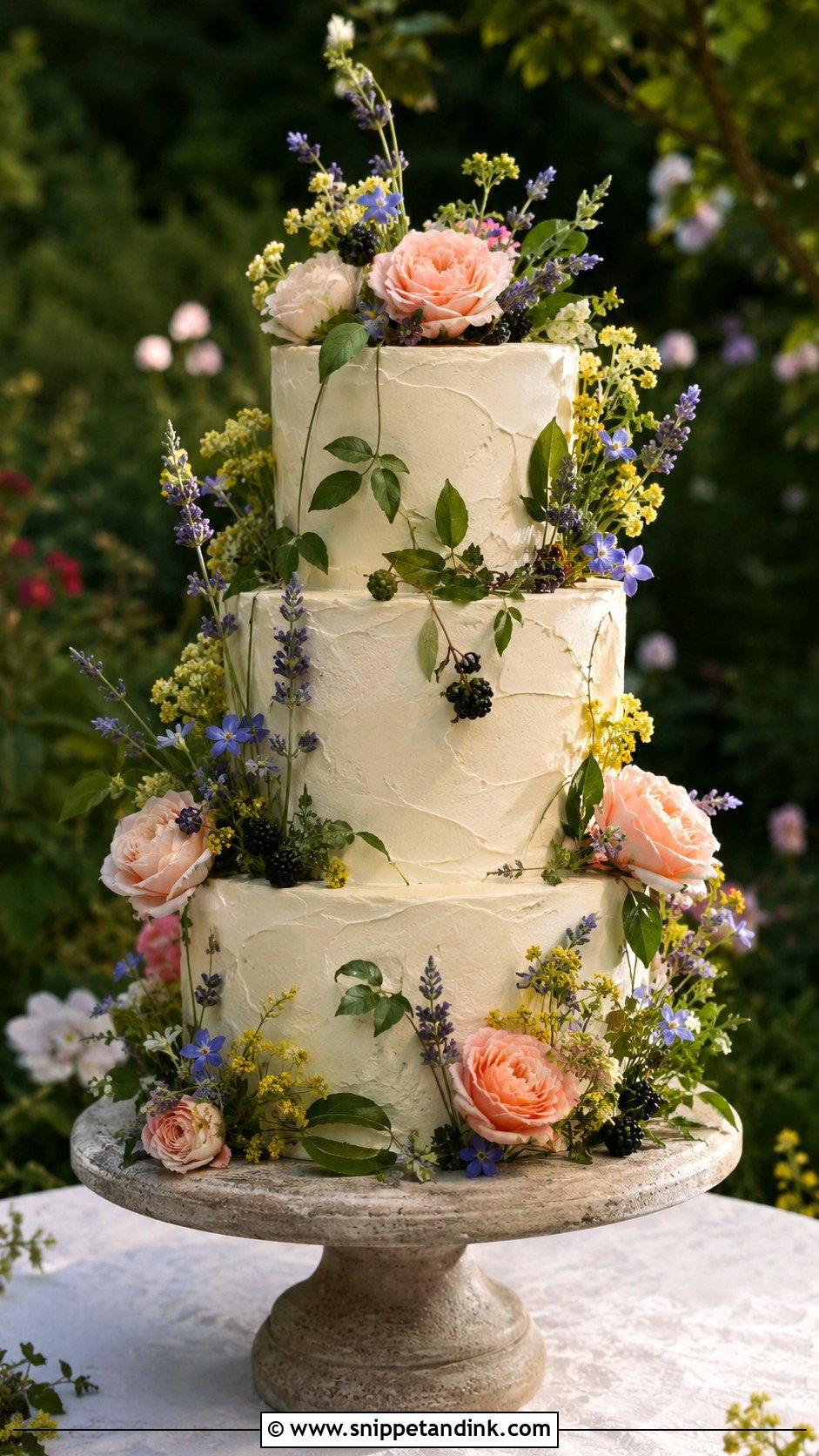
A garden cake should look grown rather than arranged. It starts with one soft base color, then flowers, greenery, berries and small botanical touches layered from pale blush and lavender up to deep raspberry. The mistake I see most is overcrowding, where every gap gets a bloom and the tiers disappear. I work in odd-numbered groups and leave some bare frosting showing, which is what makes the arrangement look like it is growing around the cake. Lightly textured buttercream keeps it from feeling formal, which suits greenhouses and backyard receptions.
18. Vintage Wedding Cake
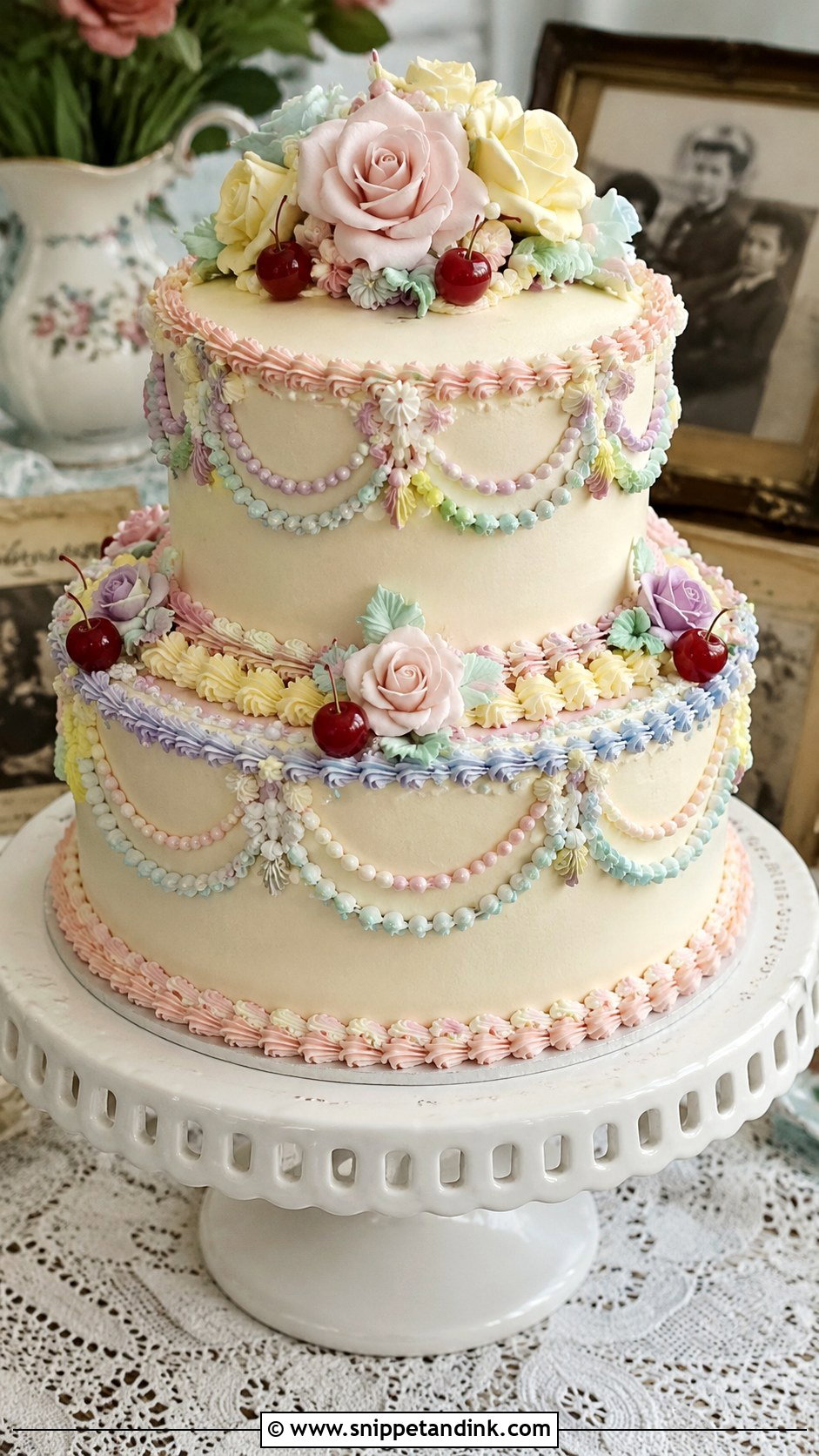
A vintage wedding cake in color usually means Lambeth-style piping: scallops, shells, rosettes and over-piped borders in pink, mint, butter yellow, blue or lavender. This is slow, layered work, built up in several passes, and it needs a stiff buttercream that holds its ridges. Color works best repeated in balanced sections, such as tinted tiers with ivory piping, and jewel tones under ivory piping look surprisingly dramatic. Cherries, bows or small sugar flowers are the classic finishing touches. Expect to pay for the piping hours rather than the ingredients.
19. Boho Wedding Cake
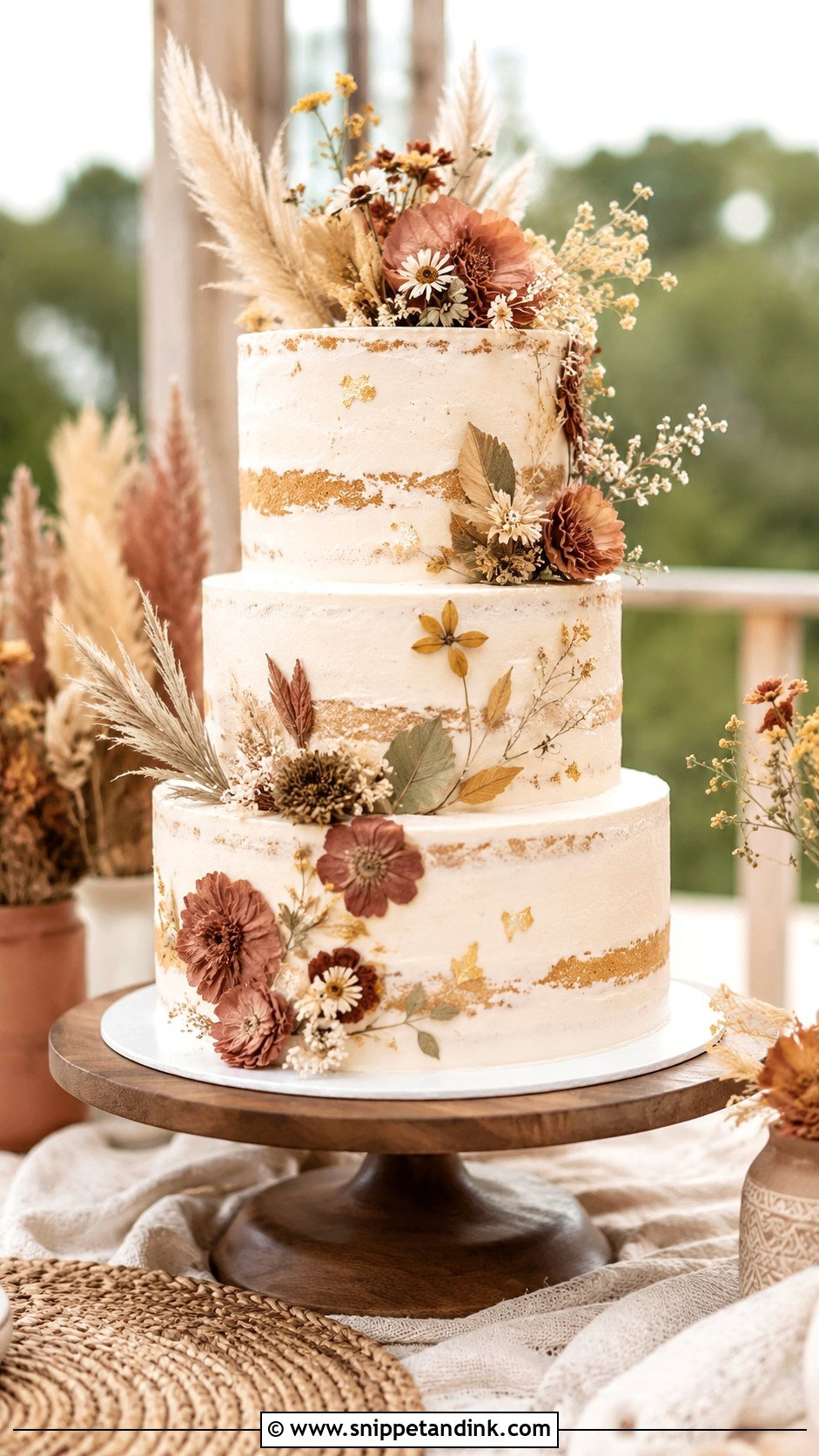
A boho wedding cake trades bright shades for earthy ones like terracotta, mustard, dusty rose, sage, rust and muted peach. A semi-naked or textured buttercream finish pairs naturally with dried flowers, pampas and pressed petals. One caution about dried decorations: pampas and many dried grasses are not food safe, so I keep them on picks or wrapped stems well away from anything that gets served. An asymmetric arrangement on a wooden stand suits barn and desert venues.
20. Jewel Tone Wedding Cake
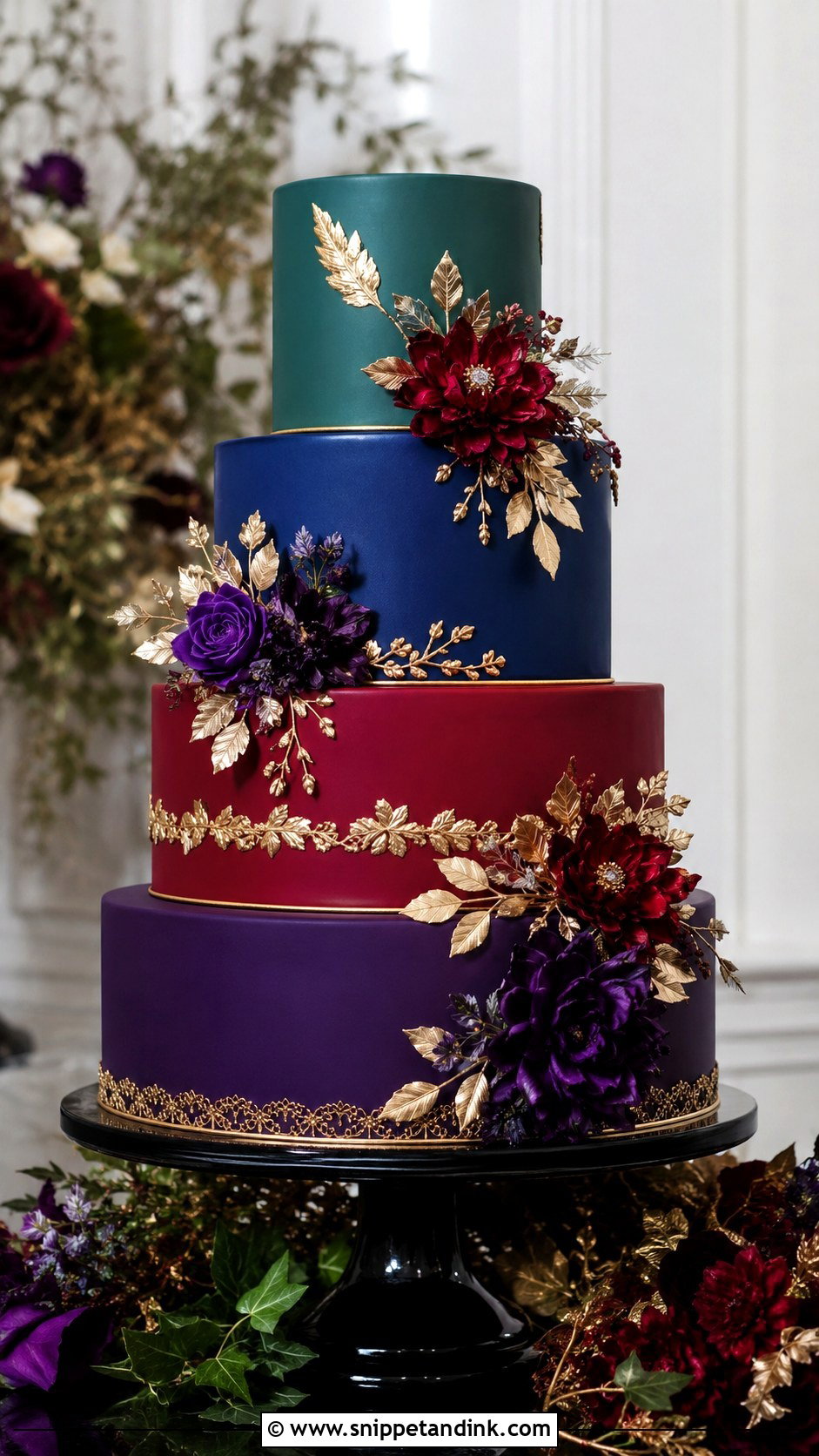
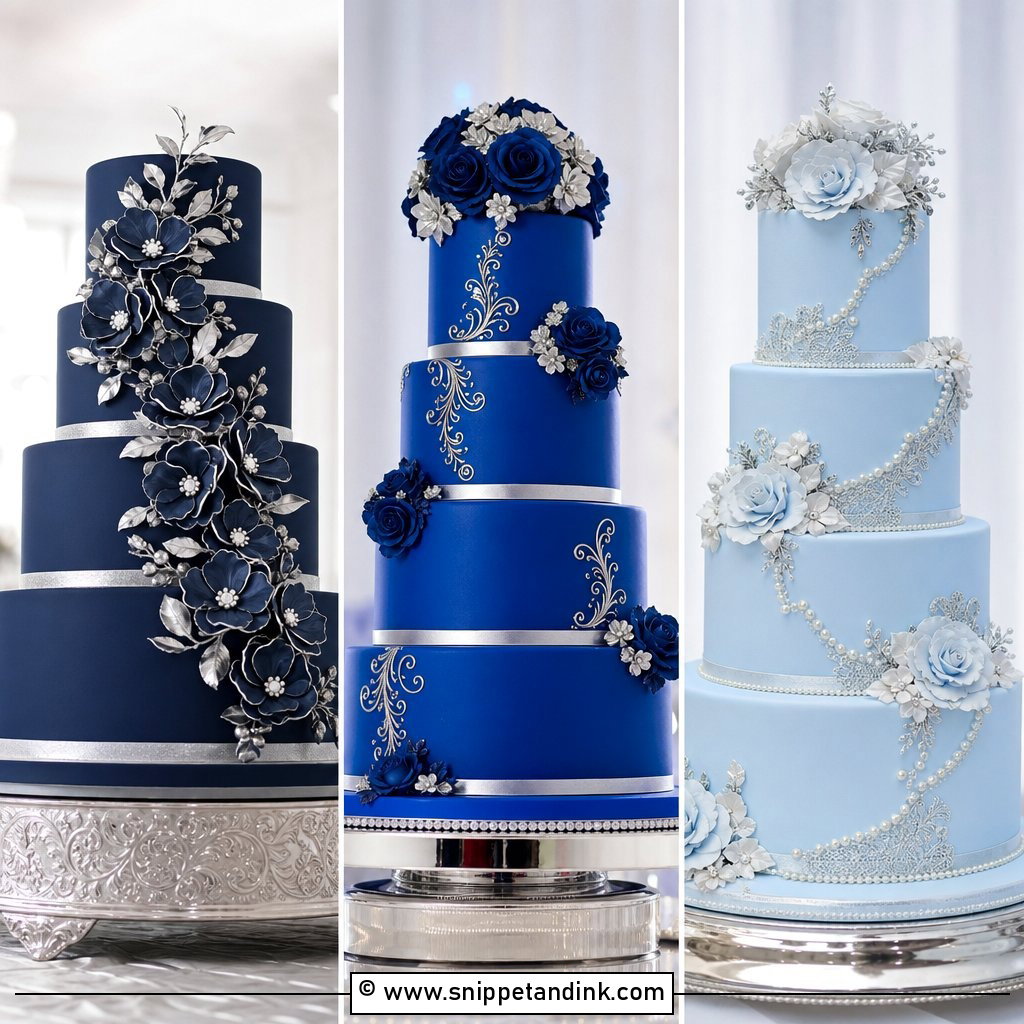
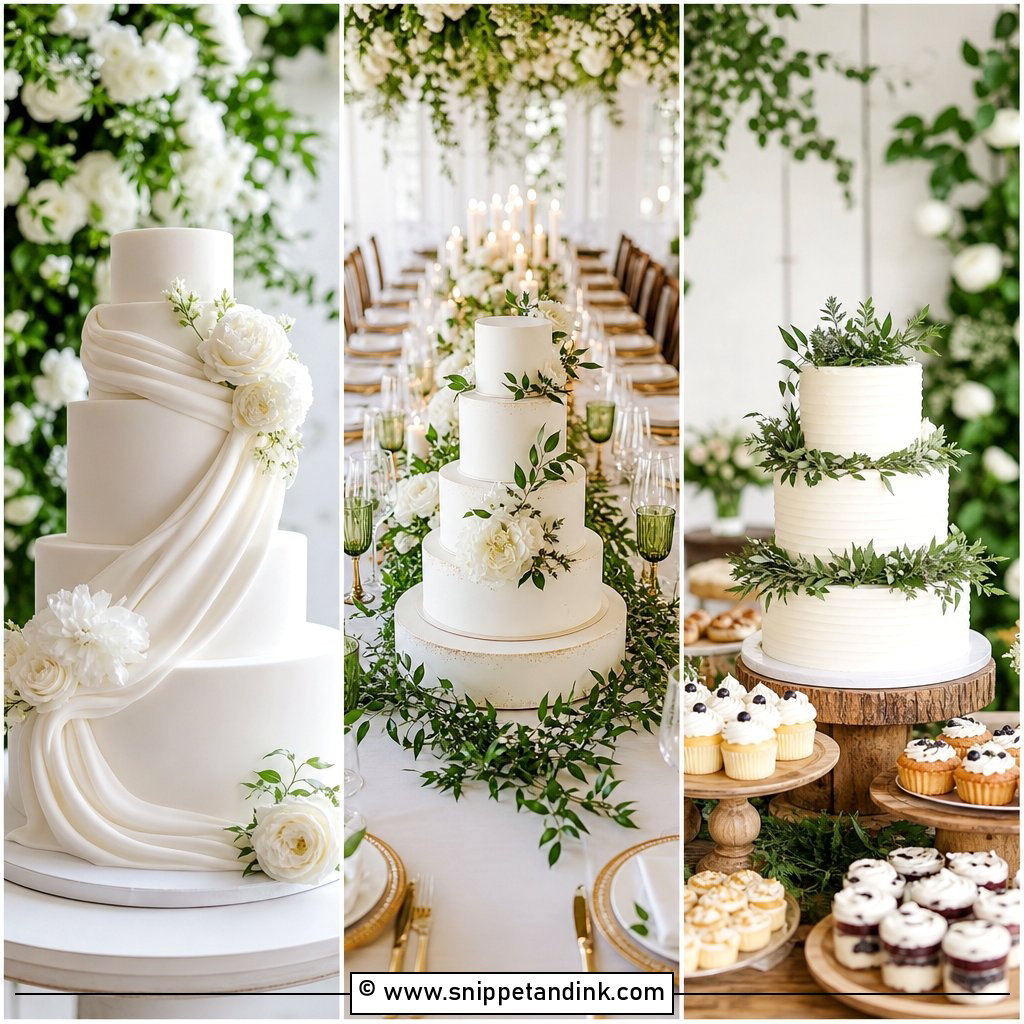
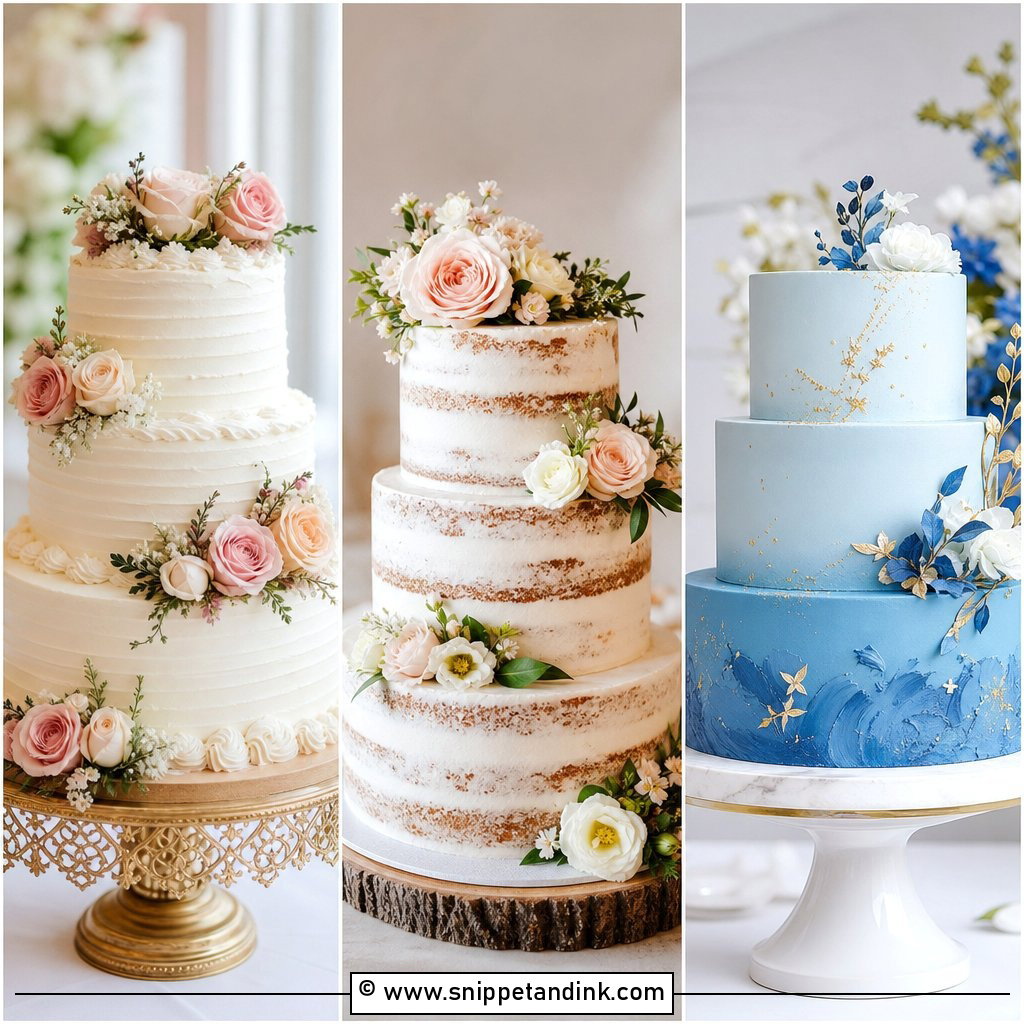
A jewel tone wedding cake asks for the hardest colors I mix. Getting a true emerald, sapphire or ruby in buttercream takes a lot of gel color, which can leave a bitter taste and stain teeth, so for deep shades I often switch to fondant or to tinted chocolate panels. Mixing a few ivory, champagne or blush elements keeps the cake from going heavy under dim lighting. Edible metallics and bold sugar flowers suit this palette well. For an evening or fall wedding, it is the multicolor cake that feels most formal.
How Colored Frosting Changes Between My Kitchen and Your Reception
Color on a cake is not finished when I stop mixing. Several things happen to it before your guests see it, and knowing them helps you plan.
It darkens overnight
Gel color in buttercream keeps developing for hours, so deep shades come out noticeably darker the next day. That is why I mix to a lighter swatch and finish most colored cakes the day before delivery.
It fades in light
Pinks and purples are the most fragile. A cake left in direct sun, or near a window for a long ceremony, can lose its color in patches. Ask your planner to set the cake table out of sunlight.
It reacts to heat and damp
Warm, humid rooms soften buttercream, make sprinkles and fruit bleed, and wilt wafer paper. A cake moved from a cold van into a hot tent can also sweat, which leaves little beads of water on fondant. I deliver as late as the schedule allows and ask for the cake table to be ready, level and away from heaters.
If your reception is outdoors in summer, tell your baker early. It may change which finish we recommend, and it is far easier to adjust the design at the sketch stage than the week of the wedding.
Letting the Cake Carry Your Color Story
Pick the color story before you pick the finish, and the cake will look like it belongs to your wedding rather than to a party down the hall. Pastels read romantic, ombre reads modern, painted tiers look artistic and jewel tones bring drama. Flowers, fruit, macarons, sprinkles and textured buttercream are simply different ways of carrying that same palette. Bring your swatches to the tasting, ask how your chosen finish copes with your venue, and the colorful cake will hold up from the first photo to the last slice.
You'll Like These Ideas:








Leave a Reply