
Magenta is one of the hardest colors I mix and one of the most rewarding to see on a cake table. It sits between pink and purple, so it can lean romantic beside ivory and blush or sharp beside black and emerald. It is at home in a garden and in a ballroom, and it carries well in photographs taken across a crowded room. The twenty cakes below range from a single colored tier to a fully saturated stack, and for each one I’ve noted what makes it work in sugar and what tends to go wrong. Use them alongside your flowers, linens and invitations so the cake belongs to the same wedding.
Strong Pink Icing Behaves Differently From Pale Icing
Couples are often surprised that a deep shade affects more than looks. Before you fall for a fully magenta cake, it helps to know what the color does in the kitchen and on the day.
It deepens and it fades
Gel color keeps developing for hours after mixing, so I mix lighter than the target and check the next morning. Pinks and purples are also among the shades most prone to fading in strong light. A cake set in a sunny window or under bright display lights can look noticeably paler by the evening, so ask where the cake table will be.
It can taste of color
A very saturated buttercream needs a heavy dose of coloring, and some guests notice a slight bitterness. Fruit-based colors such as beetroot or pitaya powder taste cleaner but give a dustier, less electric pink. My usual compromise is a softer magenta in the icing and the vivid shade in sugar flowers or fondant details.
It shows on teeth and linen
Dark icing can tint mouths and will mark a white tablecloth or dress if a slice is dropped. That isn’t a reason to avoid it, but it is a reason to keep the darkest color on the outside layer only and to choose a lighter filling.
1. Magenta Floral Wedding Cake
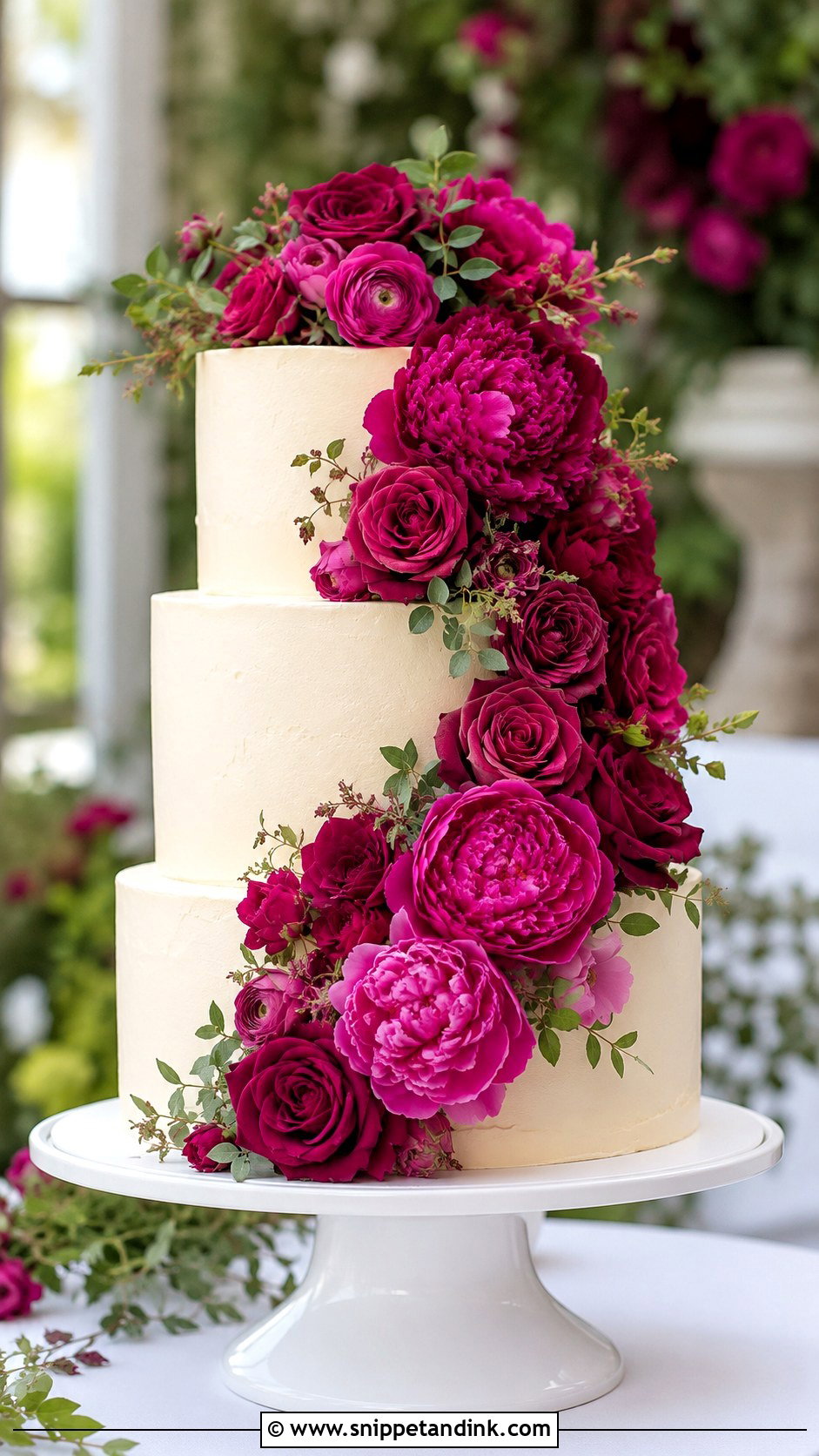
Flowers are the gentlest way into a strong color. An ivory or pale pink base with magenta blooms cascading down lets the shade arrive in small doses rather than all over the icing. Sugar roses, ranunculus and peonies can be tinted to match your bouquet exactly, while fresh ones depend on what the market has that week. I mix large heads with small filler blooms and a few leaves so the cascade has rhythm instead of reading as a pink stripe.
2. Magenta Ombre Wedding Cake
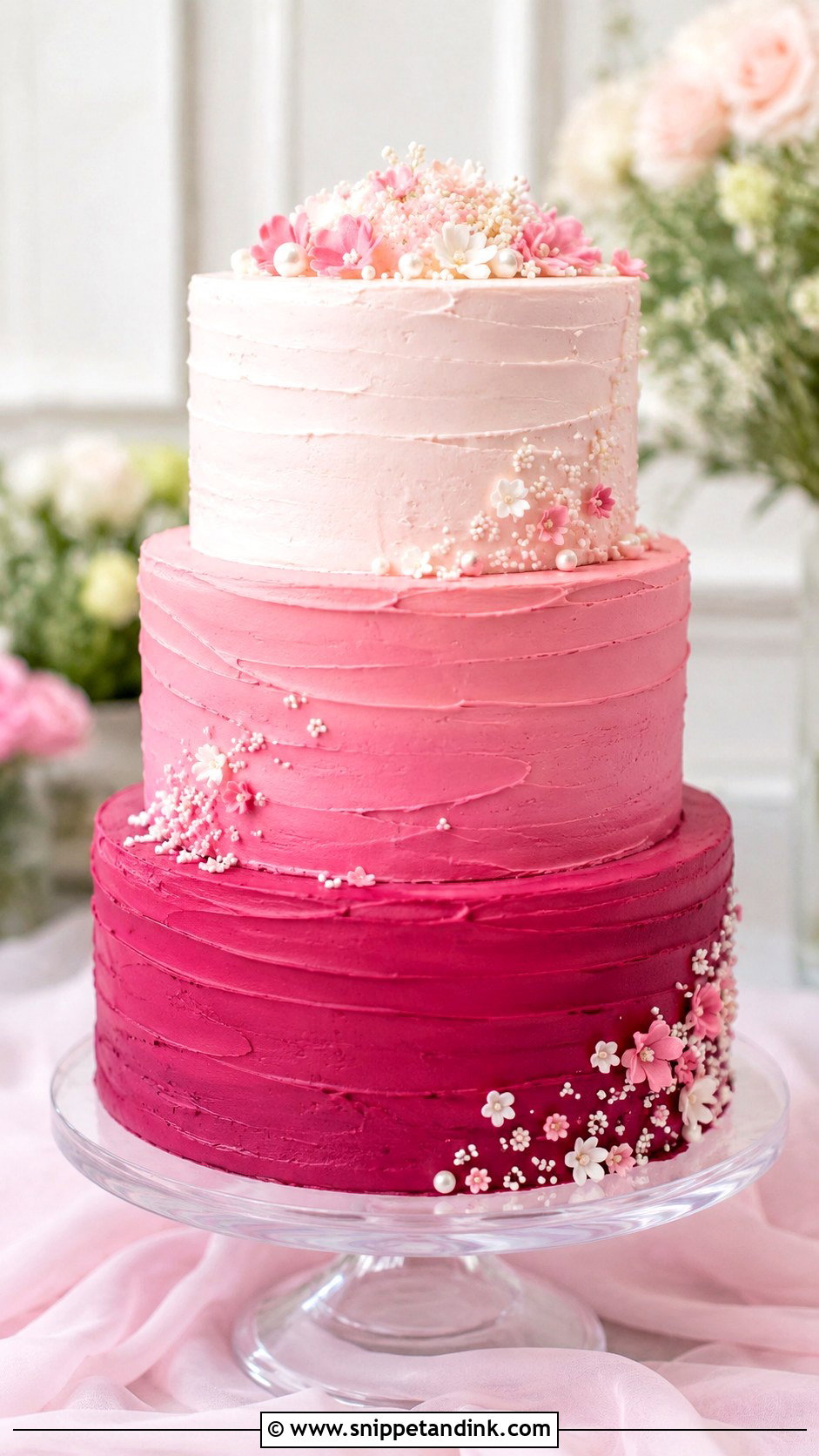
A magenta ombre wedding cake moves from pale blush at the top to deep magenta at the base, which keeps the heaviest color low where it grounds the stack. I mix each tier’s buttercream from the same base and add color in measured steps, because judging by eye alone produces one tier that jumps. Buttercream blends softly; fondant gives a flatter, more graphic gradient. Small sugar flowers or a clear stand are all it needs.
3. Magenta And Gold Wedding Cake
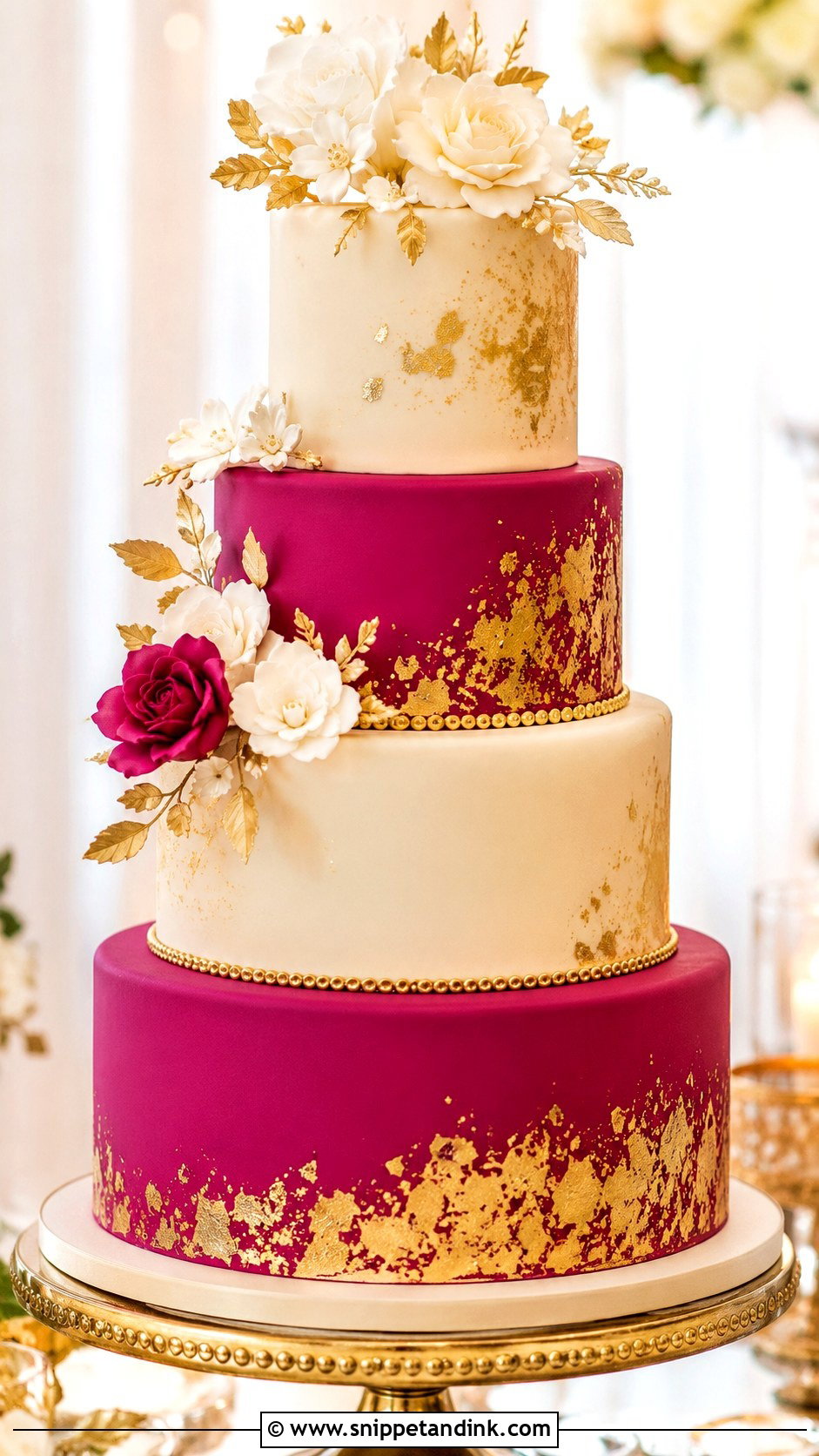
Gold leaf against magenta is festive and suits candlelit evening receptions. I keep the magenta to one or two tiers and let ivory tiers sit between, which stops the cake from looking like a single block of color. Leaf sticks cleanly to fondant or very cold buttercream, and it is fragile, so it goes on last. Use gold on edges and bands rather than everywhere; a little reads as rich, a lot reads as costume.
4. Magenta Buttercream Wedding Cake
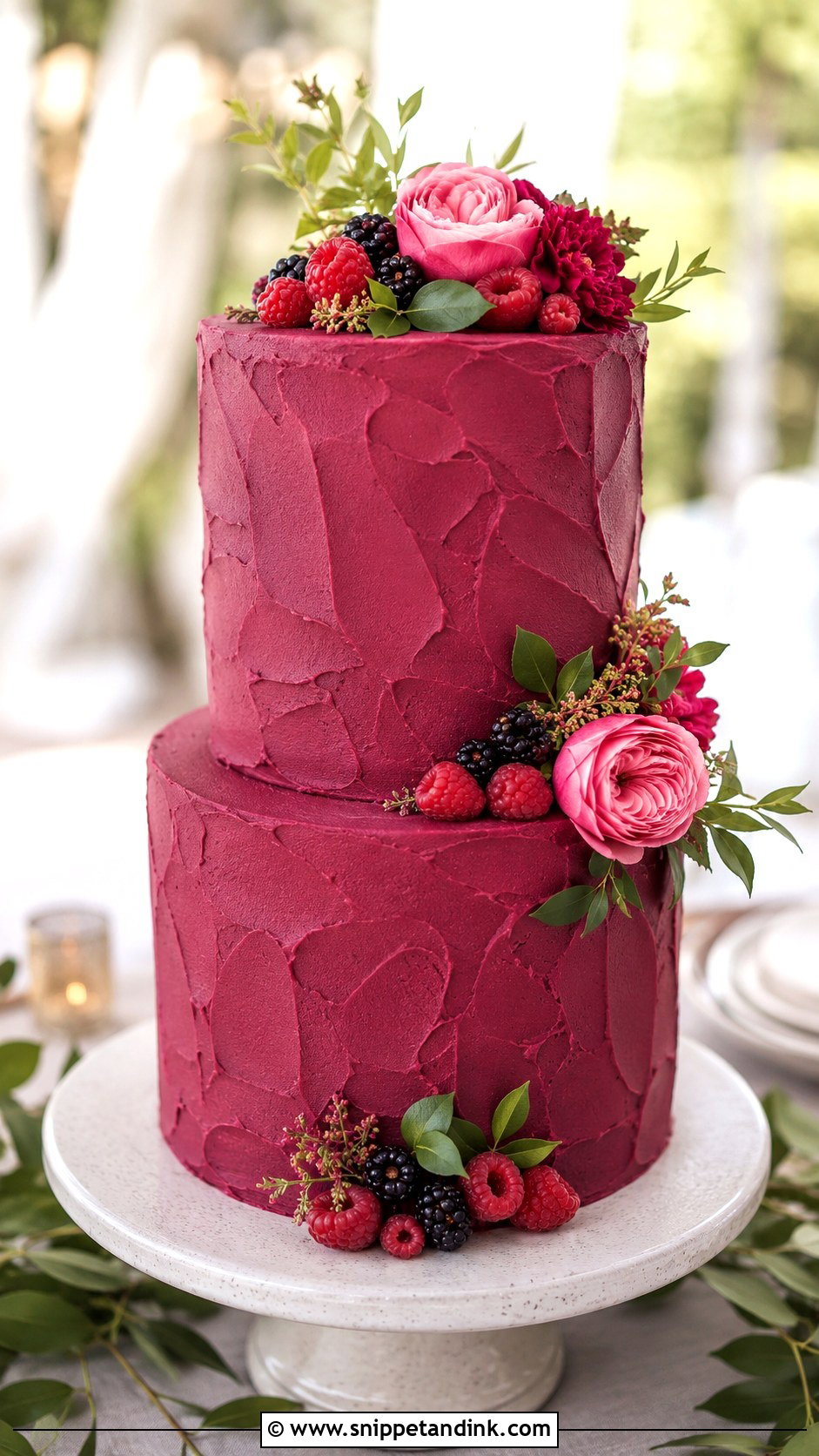
Buttercream softens a loud color, since its slight texture breaks up the light. Spatula strokes or a gently ridged finish hide the tiny streaks that deep shades sometimes leave. The trade-off is taste: getting buttercream to true magenta takes a lot of gel color, and too much can leave a faint bitter note, so I build the shade over a day and let it deepen on its own. Raspberry, lemon or vanilla bean all sit well under it, and fresh berries make an easy finish.
5. Magenta Fondant Wedding Cake
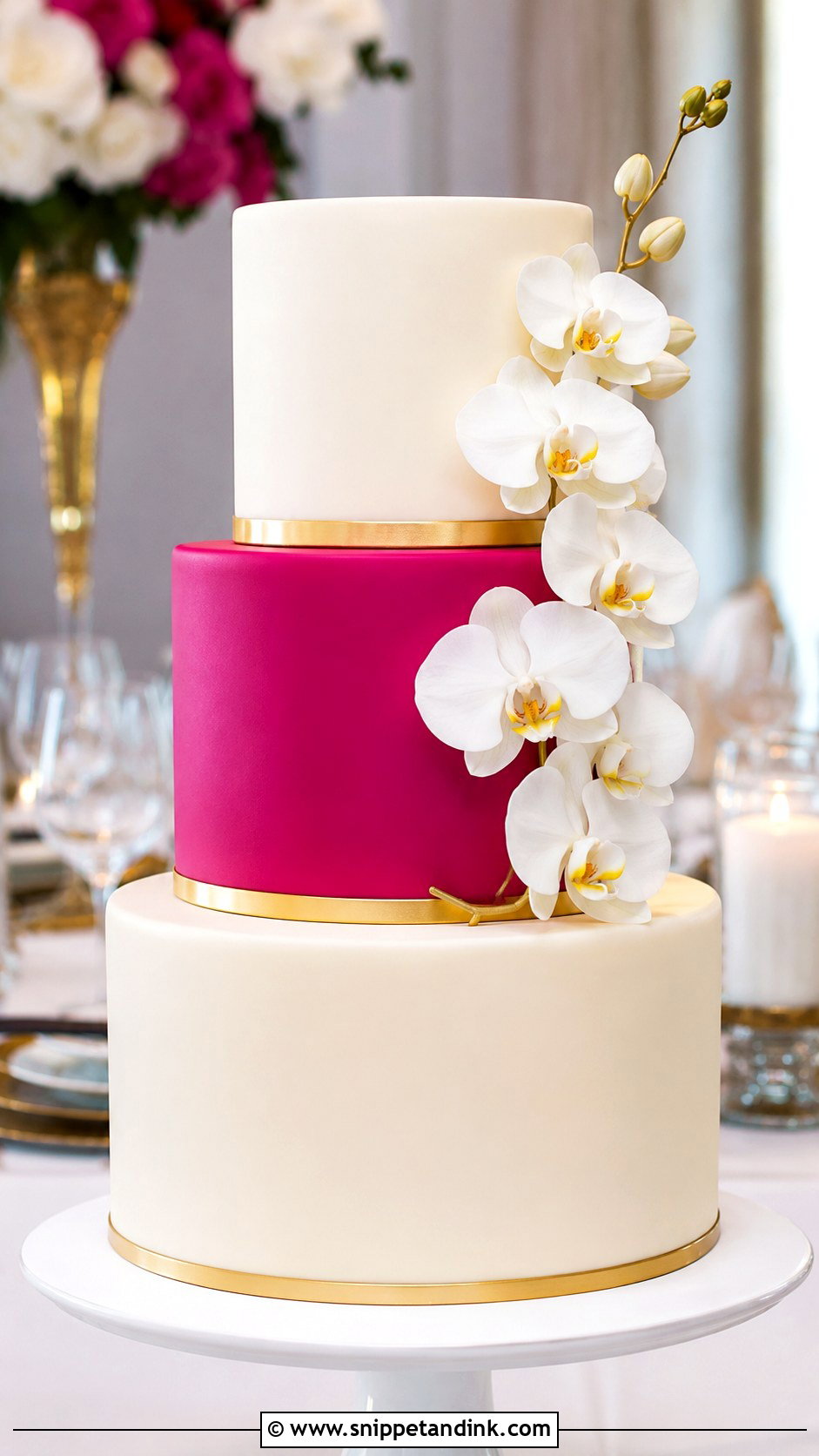
Fondant shows color as a clean, flat sheet, which is why this version looks so graphic. Tall tiers and sharp edges suit it, finished with a white monogram or a single sugar flower. If a whole cake in magenta feels like too much, sandwich one colored tier between ivory ones. Fondant also copes with warm rooms better than most soft icings, though very dark paste can feel slightly sticky and needs extra cornflour when I roll it.
6. Magenta Drip Wedding Cake
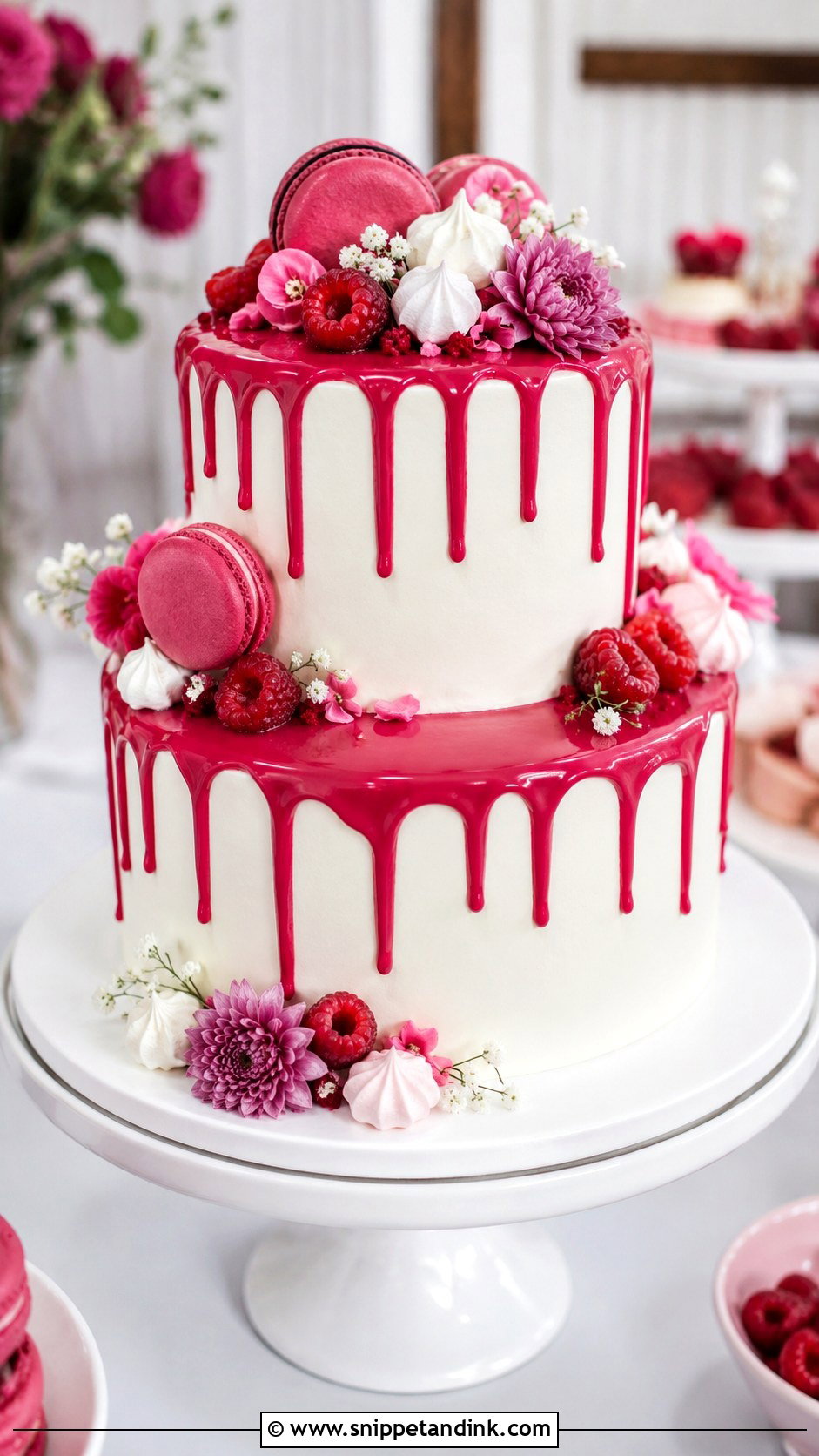
Over a white or blush base, glossy magenta ganache dripping down the sides gives you strong color with no risk of a heavy-looking cake. The drip is all about temperature: too warm and it runs to the board, too cool and it stops in thick blobs, so I test one drip on the back before doing the rest. Macarons, meringues and berries on top add texture. White chocolate, raspberry or strawberry fillings echo the color inside.
7. Magenta Watercolor Wedding Cake
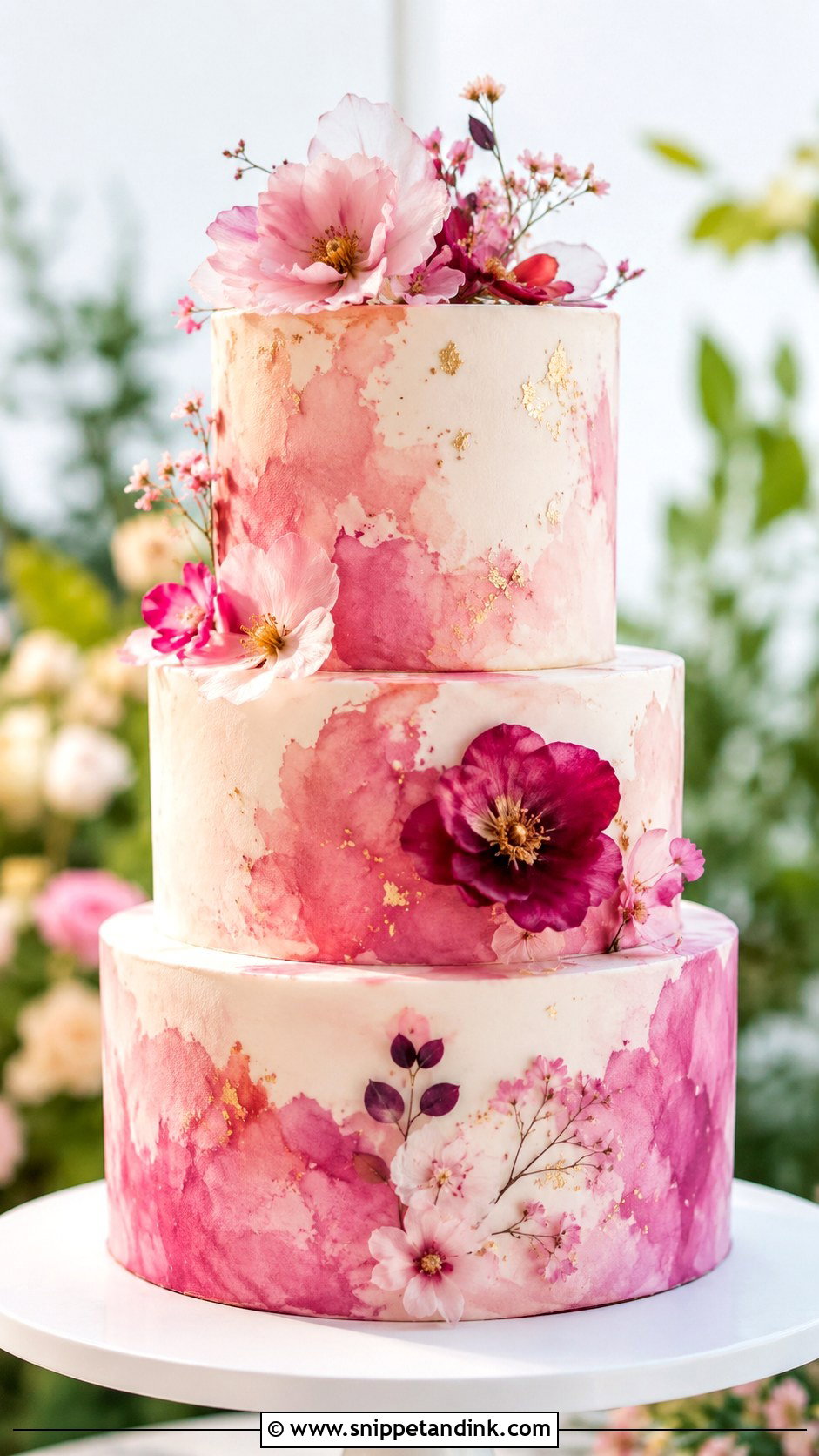
Watercolor washes of magenta, blush and a touch of violet are painted over smooth buttercream or fondant with diluted color and a soft brush. It is a skill of its own; washes that aren’t blended quickly dry into hard lines, so look at a baker’s previous painted cakes, not just their piping. Delicate sugar flowers, pressed floral details or a little gold finish it, and the softness suits bright, airy venues.
8. Magenta Rose Wedding Cake
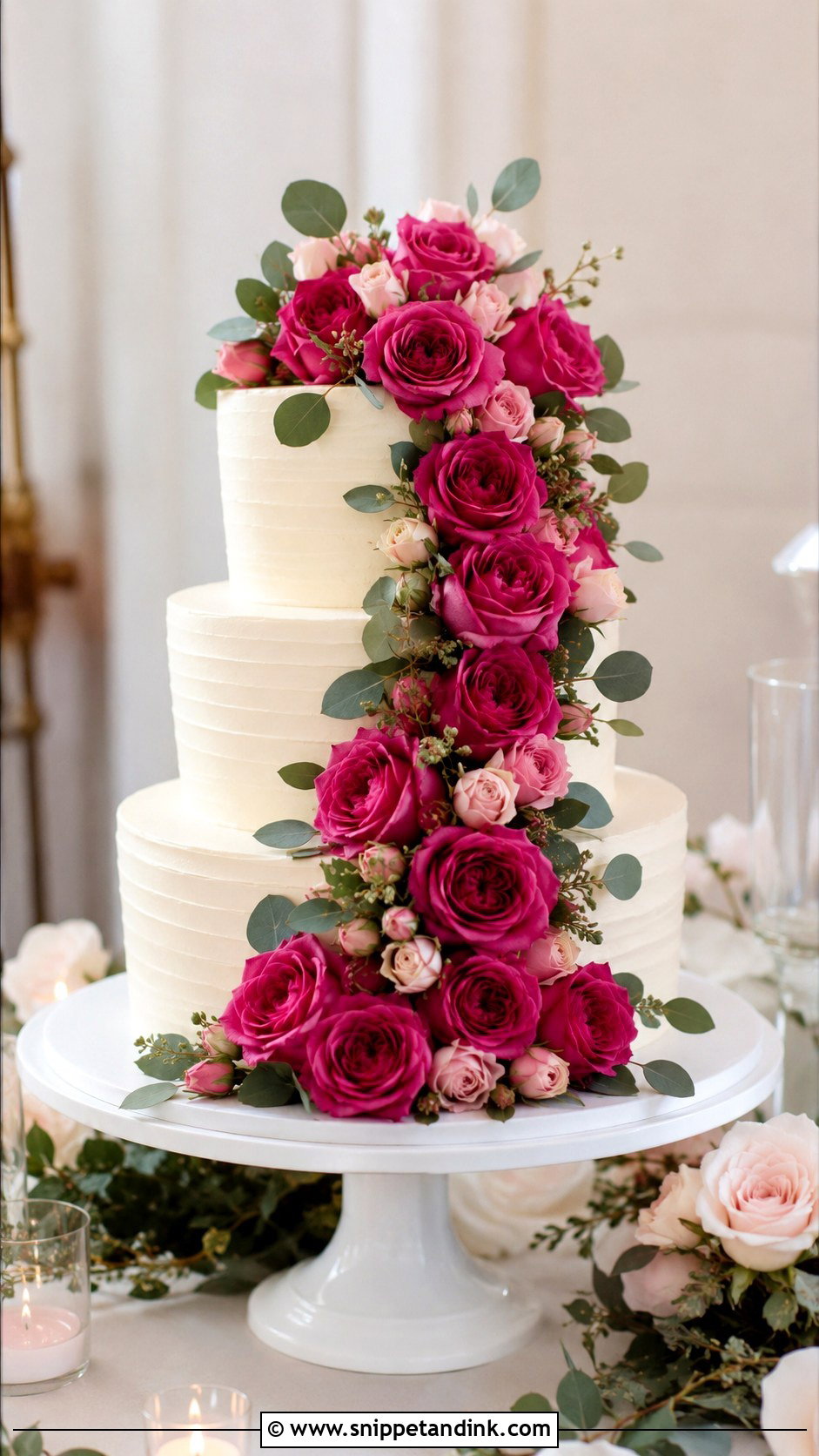
Roses make the color easy to tie to your bouquet. A full cascade from top tier to base is the dramatic option; one arrangement on top with a few blooms at the foot is calmer. Fresh roses need their stems sealed and wrapped before they go anywhere near icing, and dark petals can mark a white surface where they press against it. Sugar or piped buttercream roses avoid both problems and can be made weeks ahead.
9. Magenta Peony Wedding Cake
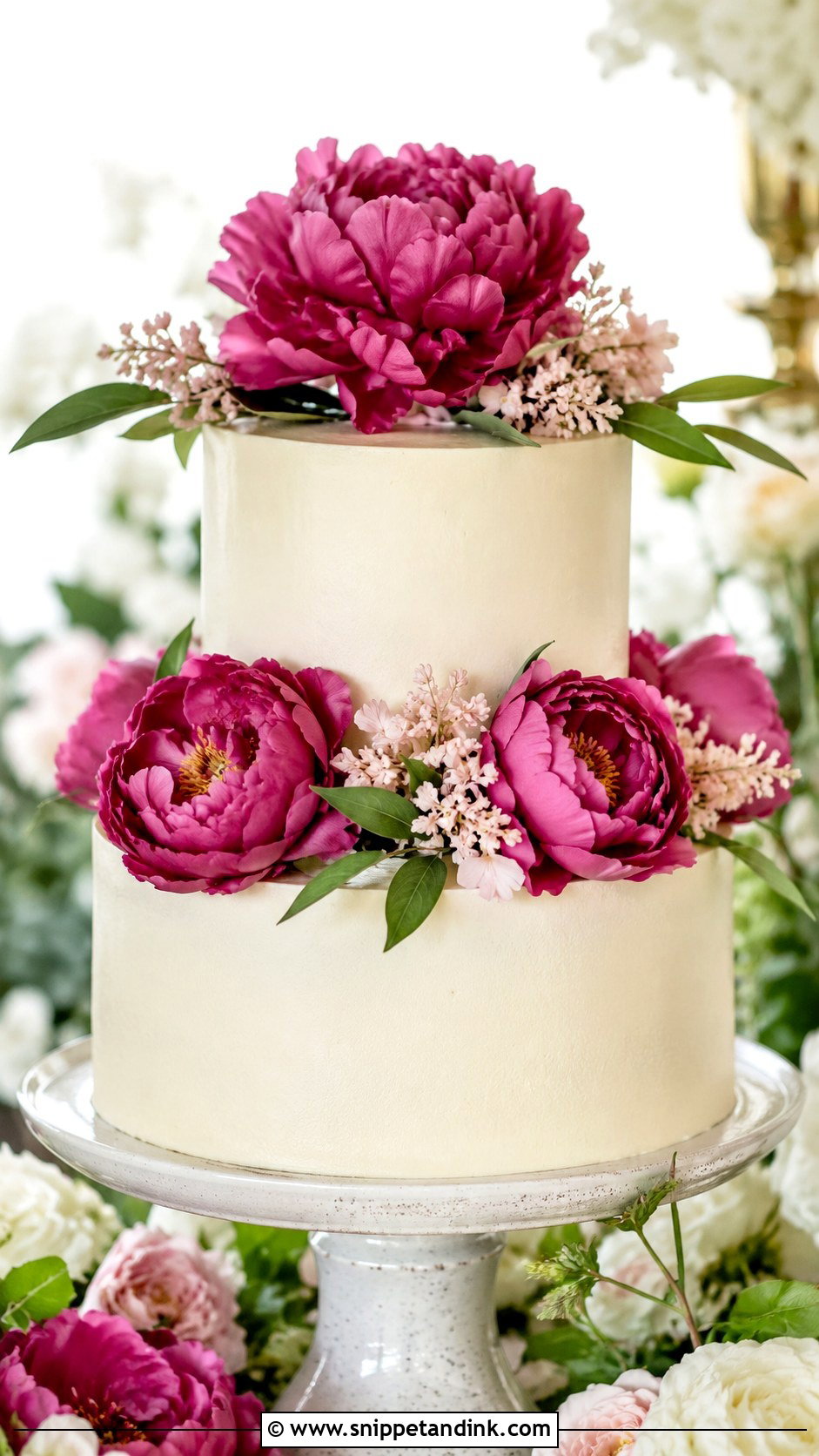
Peonies have so much volume that two or three heads can decorate a whole tier. Against white icing, magenta peonies need very little else: a few leaves, perhaps a thin gold edge. Fresh peonies are only reliable in late spring and early summer and open fast in a warm room, so for other months I’d make them in sugar. Each one takes many hours of petal work, which is reflected in the price, but they last as a keepsake.
10. Magenta Orchid Wedding Cake
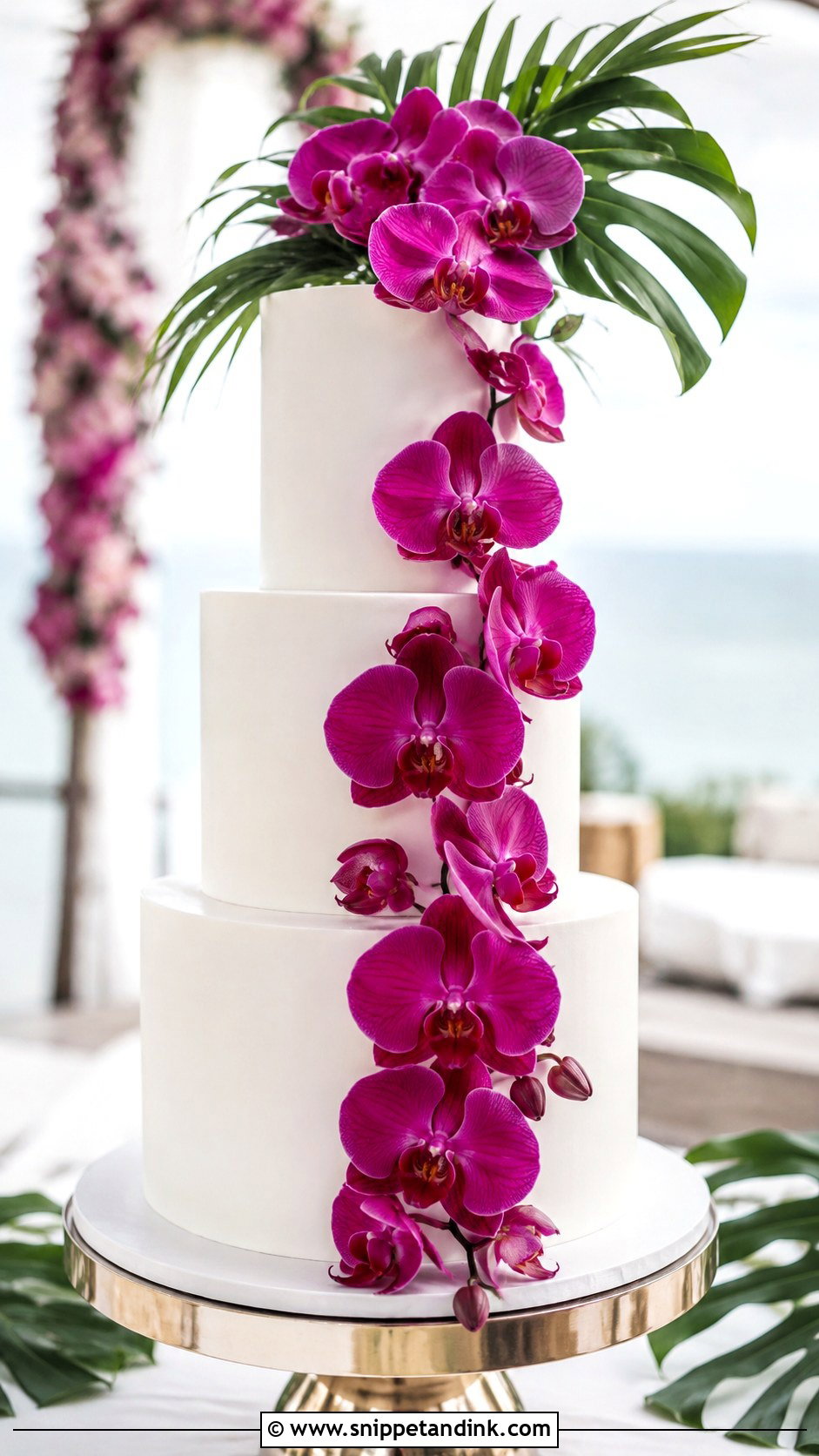
A magenta orchid wedding cake leans modern and tropical because orchid petals are flat and sculptural. They look sharpest on smooth fondant, set in a vertical line for height or tucked between tiers. Real orchids are sturdier than most cut flowers, which helps at warm destination weddings, but they still need a barrier between stem and cake. Ivory icing and a few green leaves are all the support they need.
11. Magenta Ruffle Wedding Cake
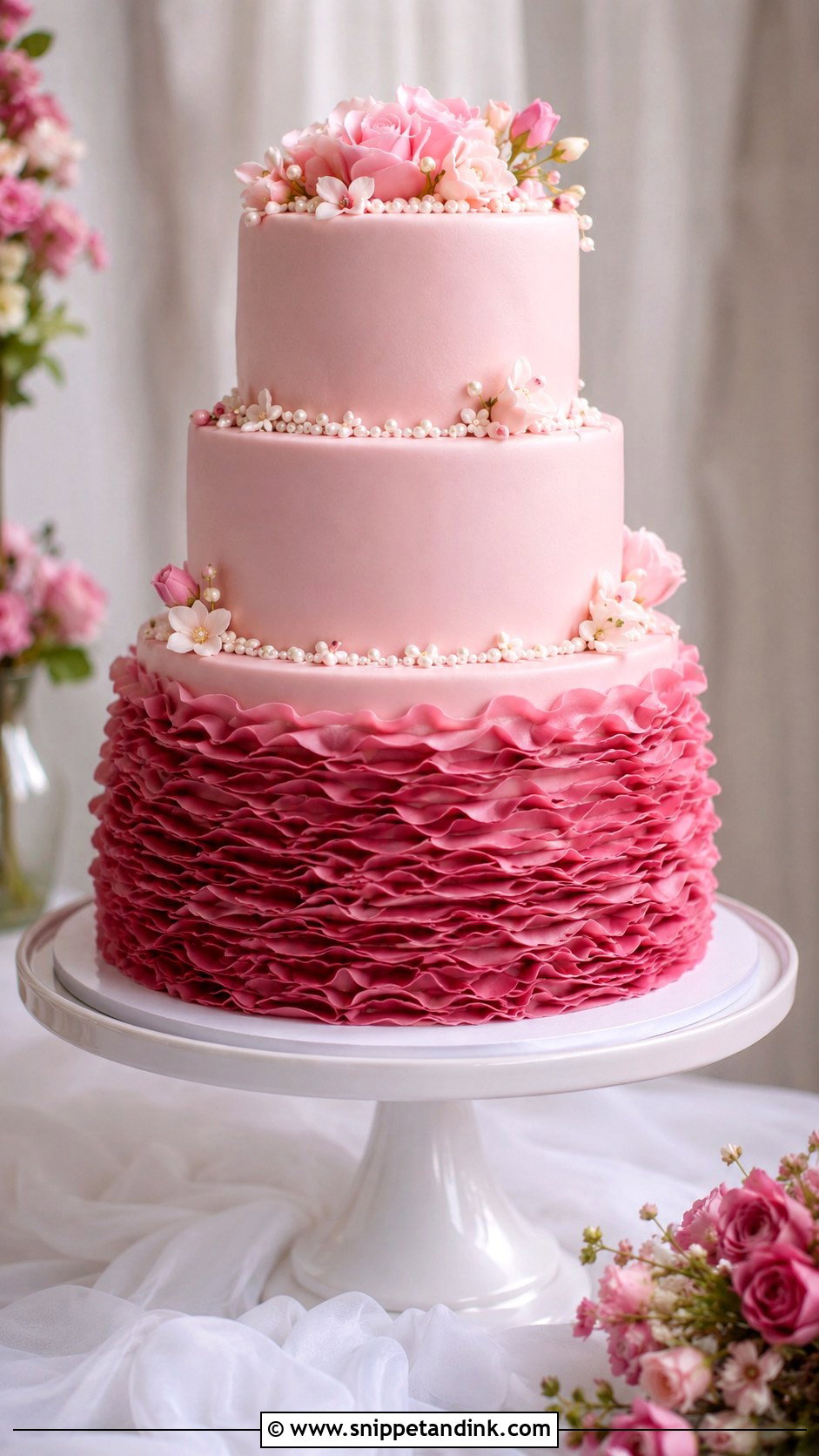
Ruffles add movement and help a bold shade feel soft. On a buttercream cake I pipe them with a petal tip in two or three shades of magenta and blush so each frill has shadow; in fondant they’re thin strips frilled with a ball tool and are far more structured. A full ruffle cake is heavy and slow to make, so one ruffled tier between smooth ones is a sensible middle ground. Keep the topper plain.
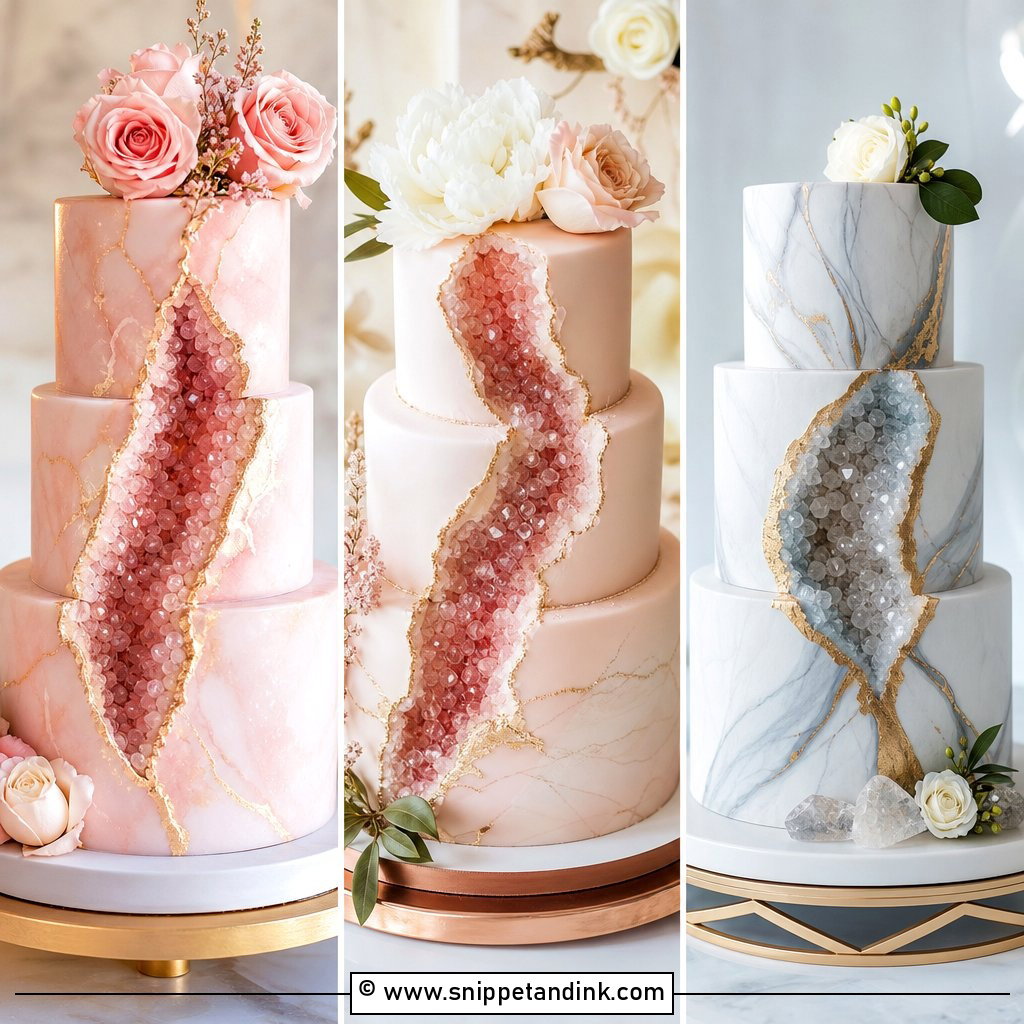
12. Magenta Geode Wedding Cake
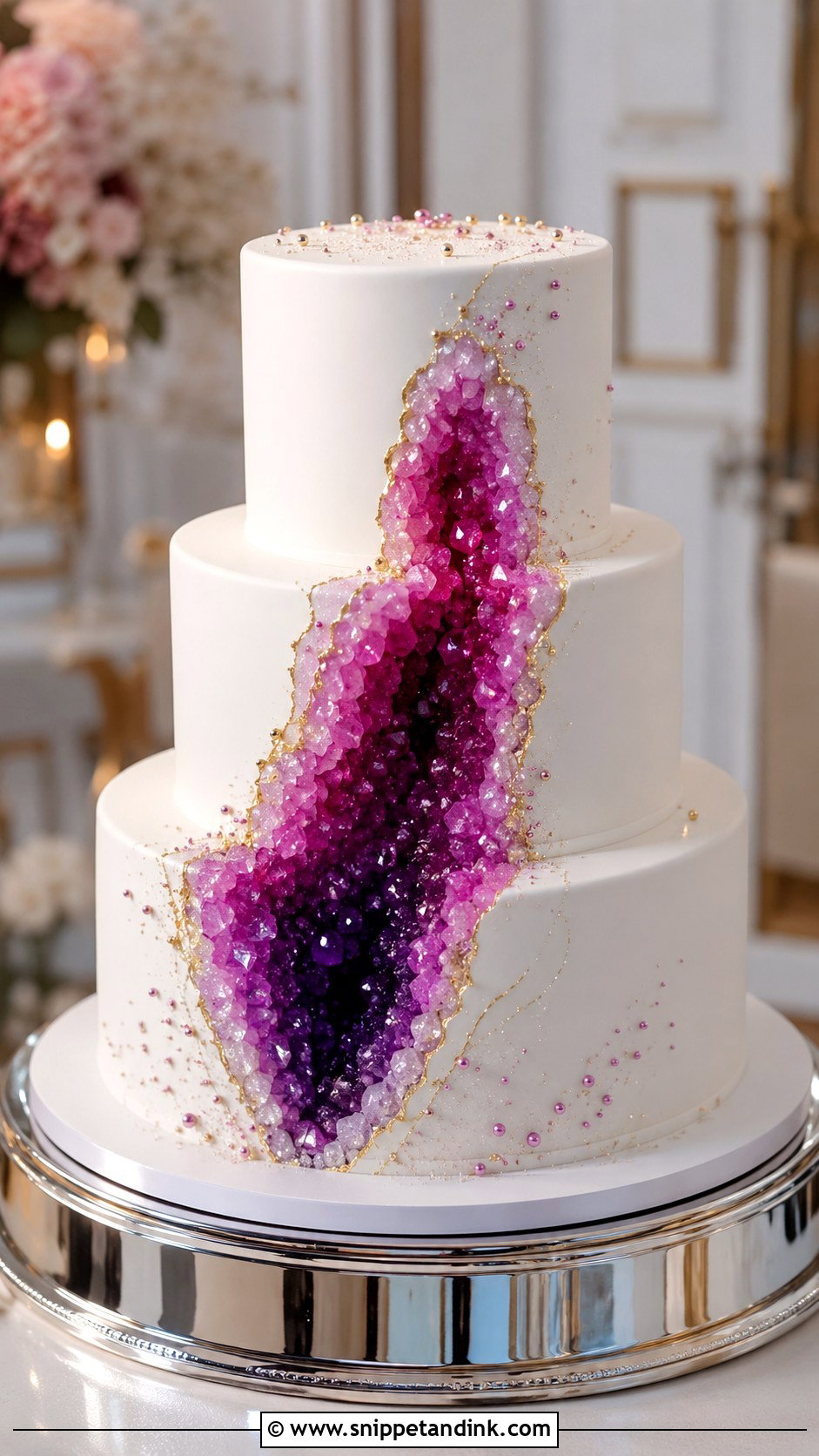
The geode cutaway is filled with rock candy crystals in magenta, pink and purple, then edged with gold leaf. I carve the cavity after the tier is chilled, which matters, because cutting into soft cake collapses the walls. Rock sugar is hard enough to chip a tooth, so the caterer should lift it out before slicing. Let the rest of the cake stay white so the crystals carry the design.
13. Magenta Marble Wedding Cake
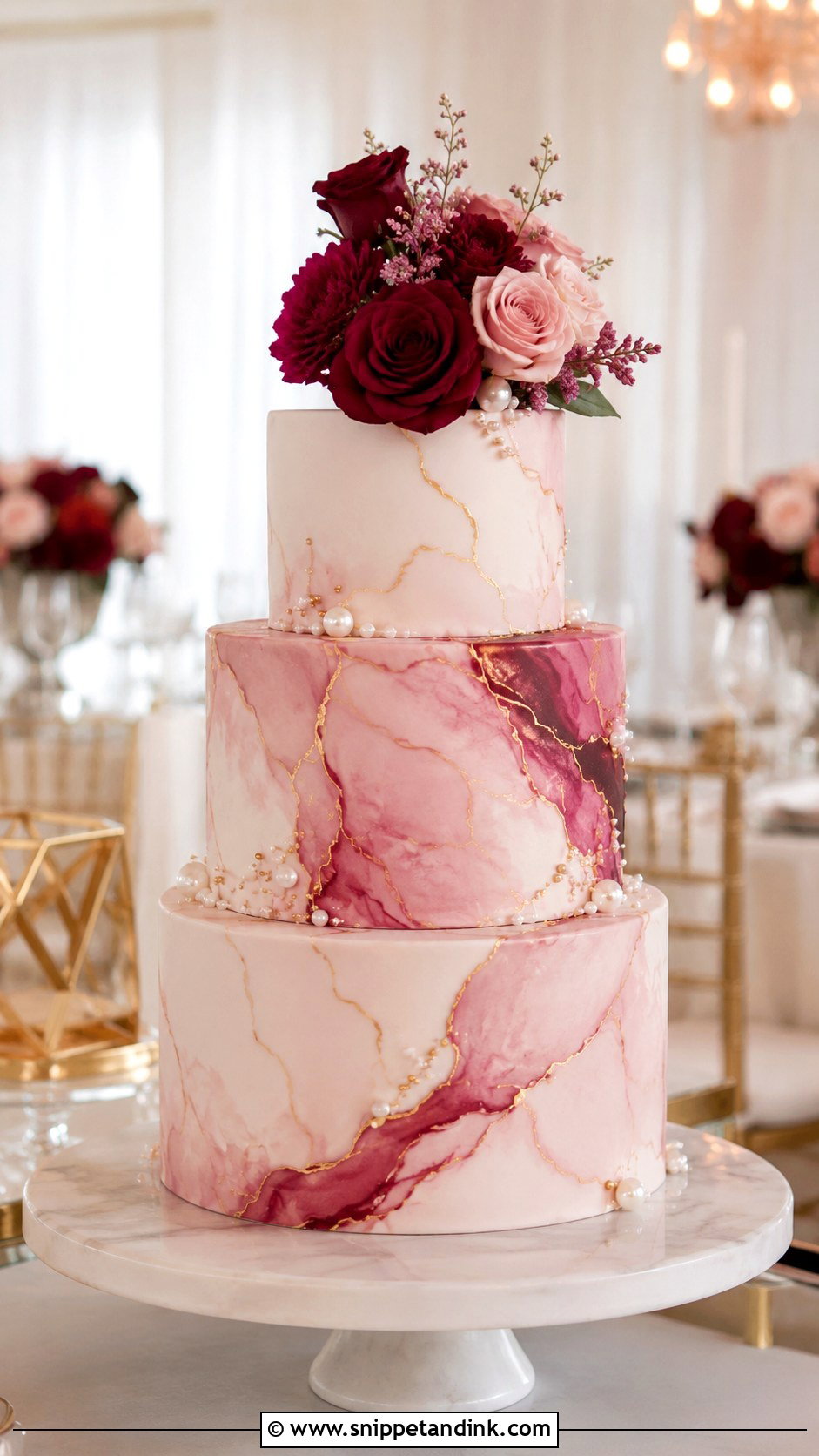
Marbling folds white, blush, magenta and berry together in fondant, or drags them through smooth buttercream, and no two cakes come out alike. Deep veining reads dramatic while pale streaks stay soft. Marbled fondant can be over-worked into a muddy pink, so I knead it only until the streaks appear and then stop. A thin gold line or one floral cluster is enough to refine it.
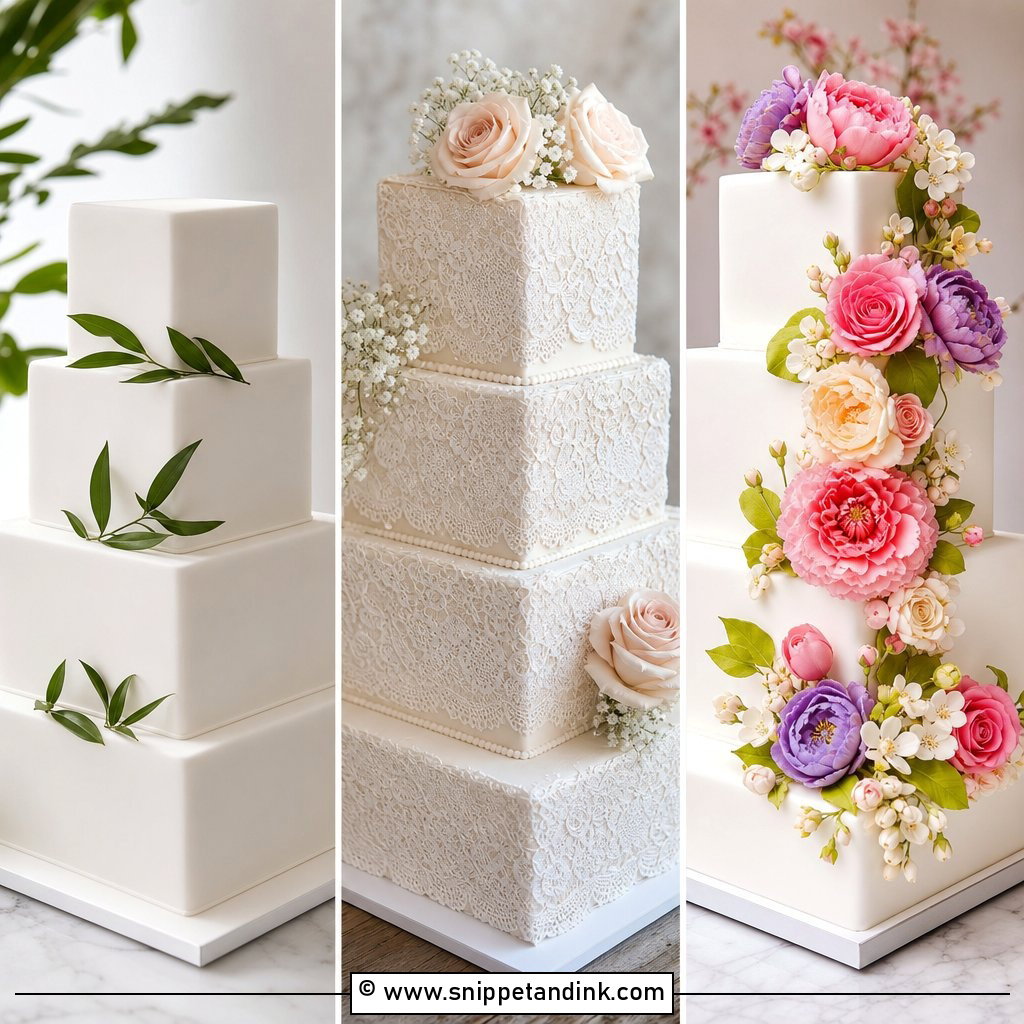
14. Magenta Square Wedding Cake
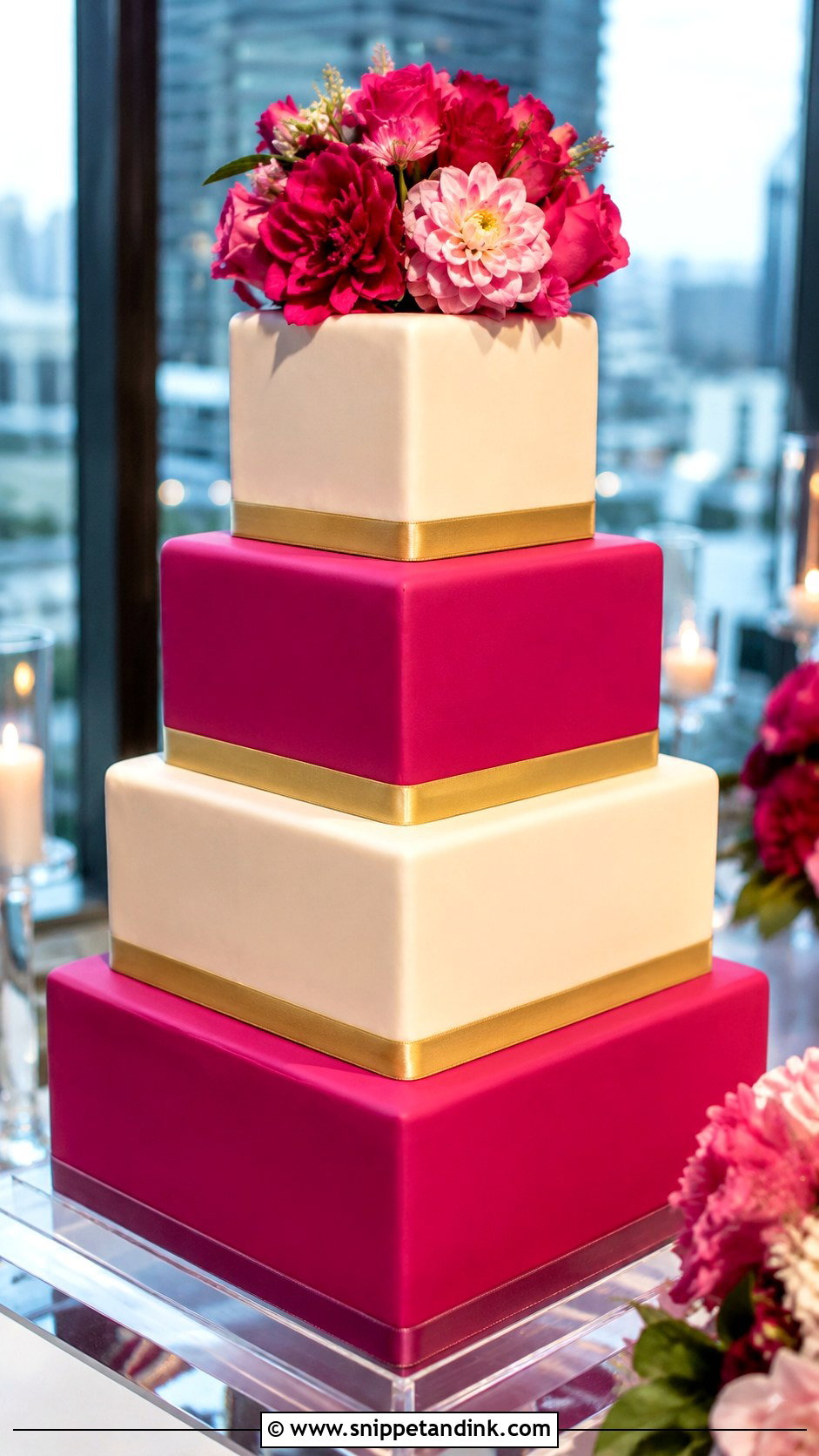
Square tiers give a structured silhouette. You can cover the whole cake in magenta, alternate ivory and magenta tiers, or band each tier in ribbon. Corners are where a square cake shows any weakness, and dark fondant shows cracks and elephant skin more than ivory does, so I’d only take this on with a baker whose square work you’ve seen. Flowers or edible pearls soften the geometry in gallery and city venues.

15. Magenta Heart Wedding Cake
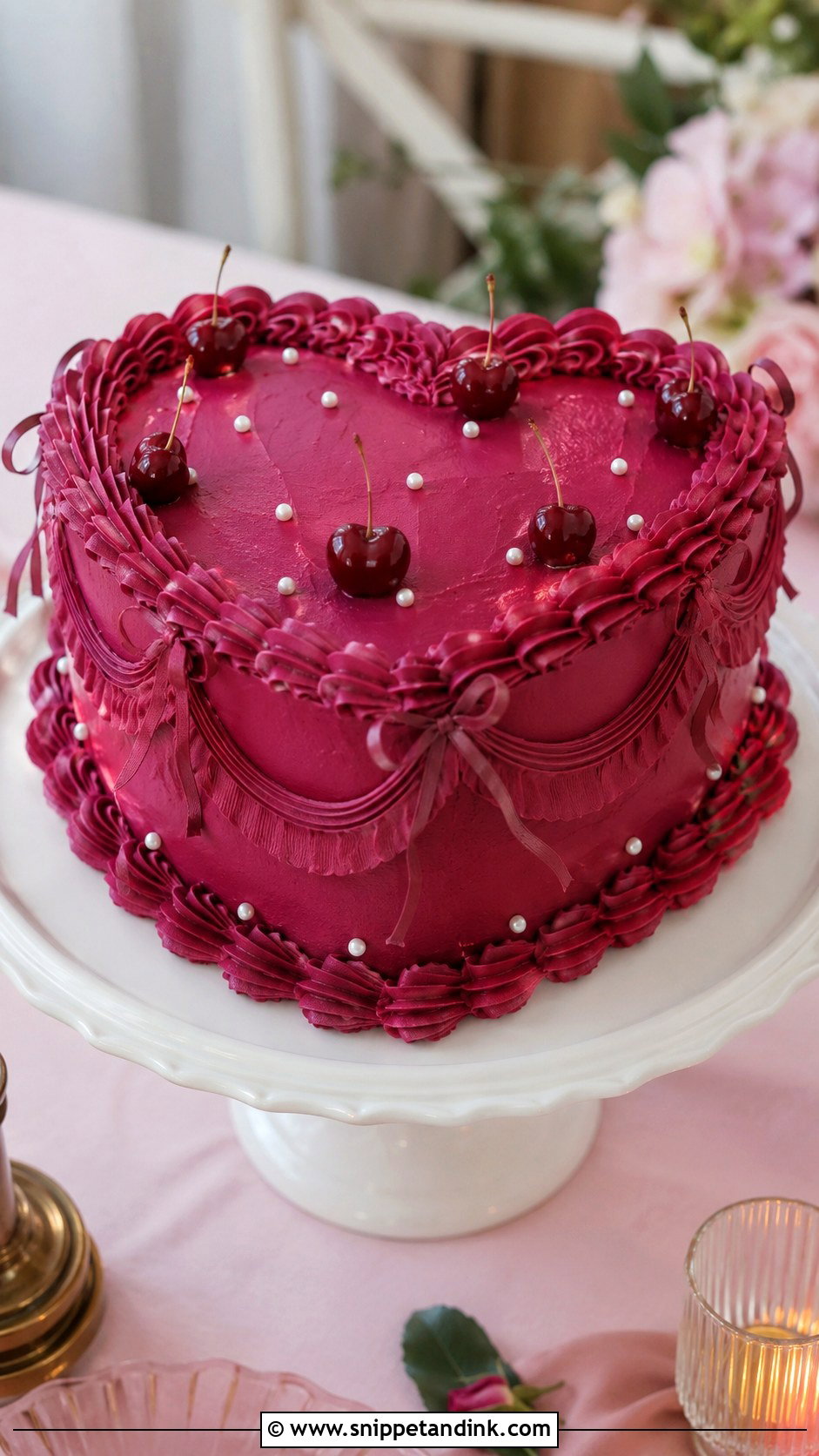
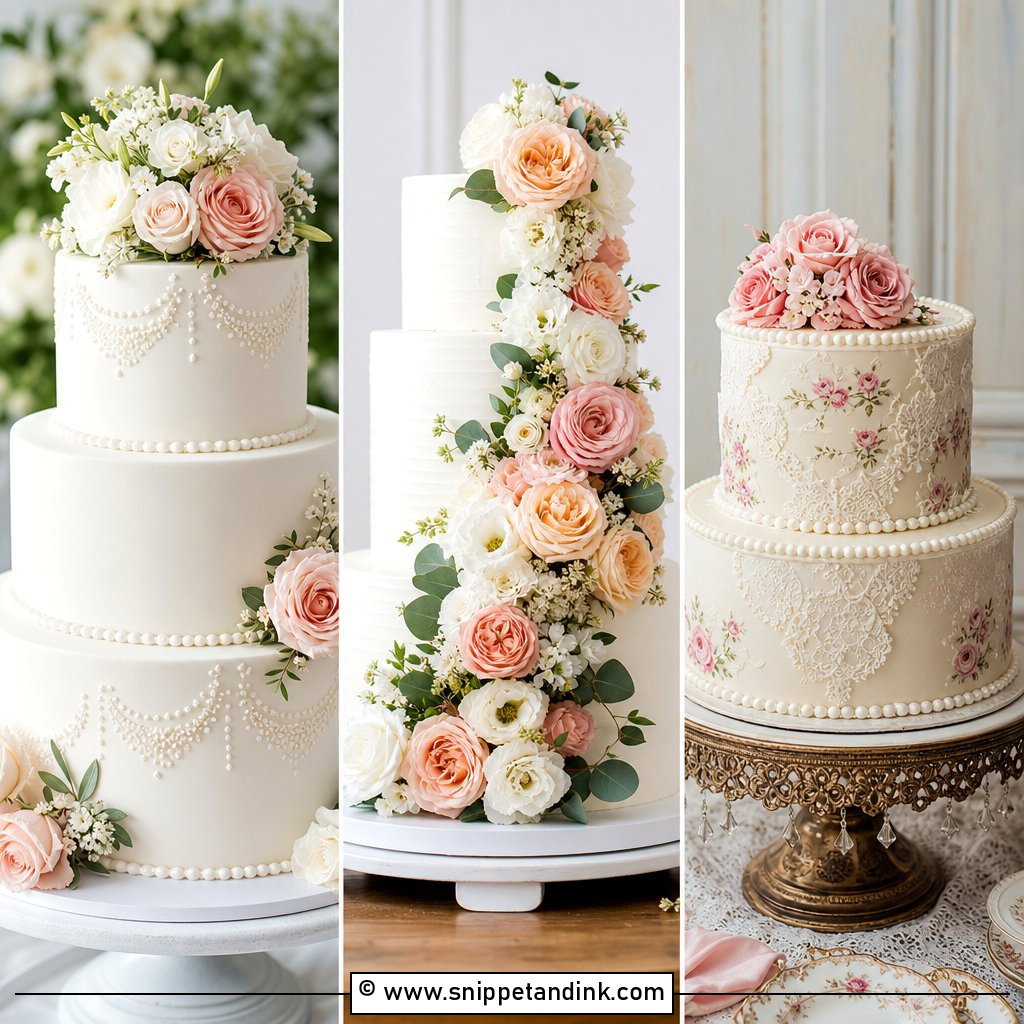
Heart cakes with vintage piping have a nostalgic charm and suit small weddings, courthouse receptions or a second cake on the dessert table. Scalloped borders, piped pearls and a short message look best when the piping is neat; wobbly lines are what tip it from romantic to childish. Deep magenta buttercream is bold, while white icing with magenta piping is lighter. Cherries or tiny bows finish it.
16. Magenta Vintage Wedding Cake
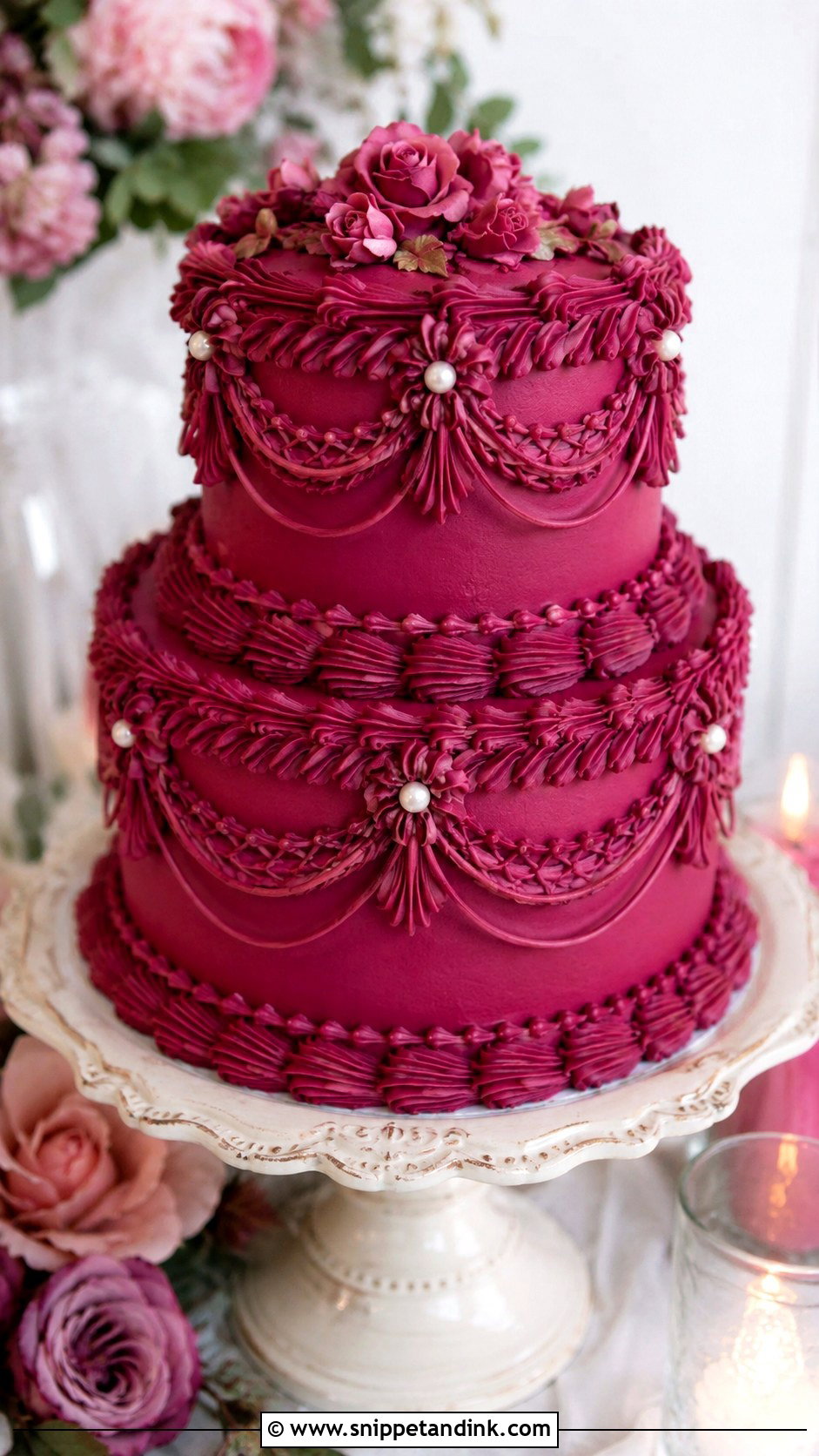
Old-school Lambeth borders, shells and swags carry bold color without needing height. You can cover the cake in magenta or choose ivory frosting with magenta piping for more contrast. I pipe this work in stiff American buttercream so the ridges stay sharp, and plan the layout with a marked template first, since uneven swags are the giveaway. A pedestal stand suits it.
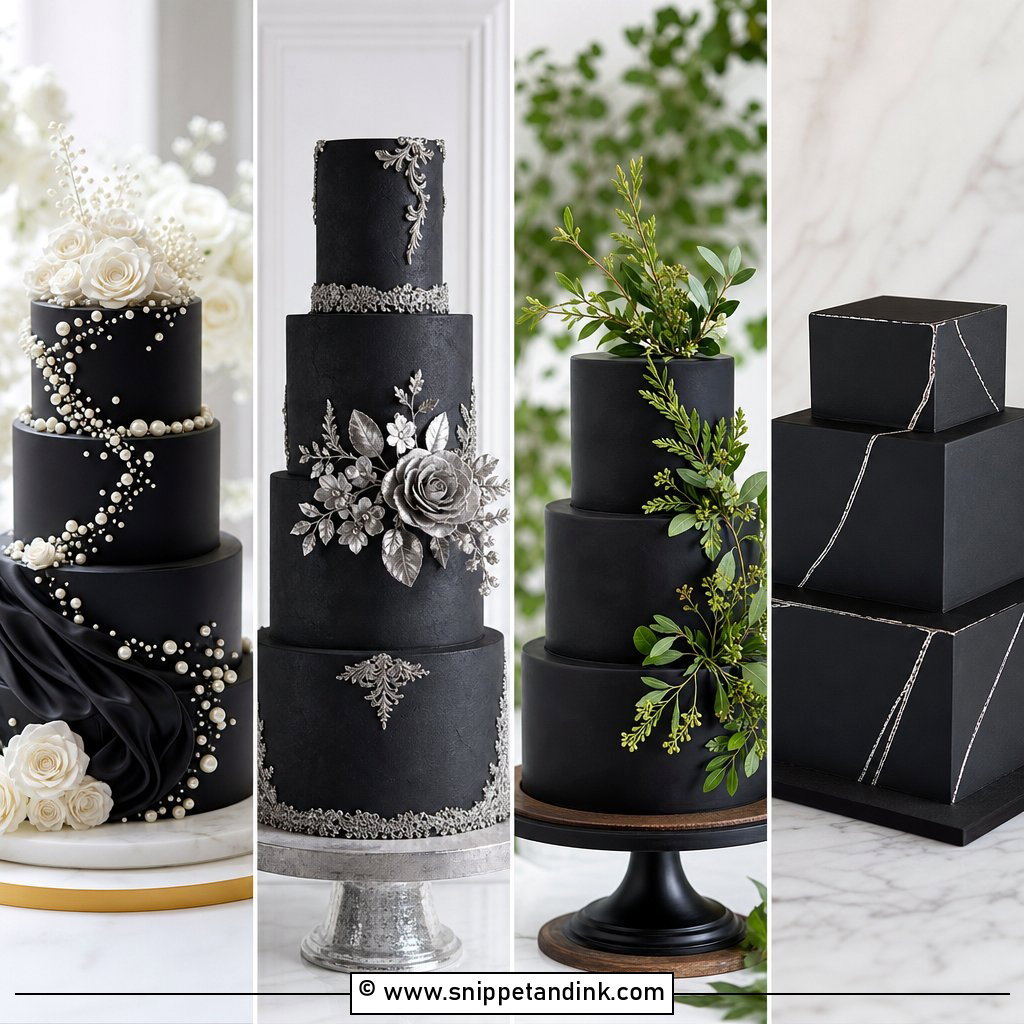
17. Magenta Black Wedding Cake
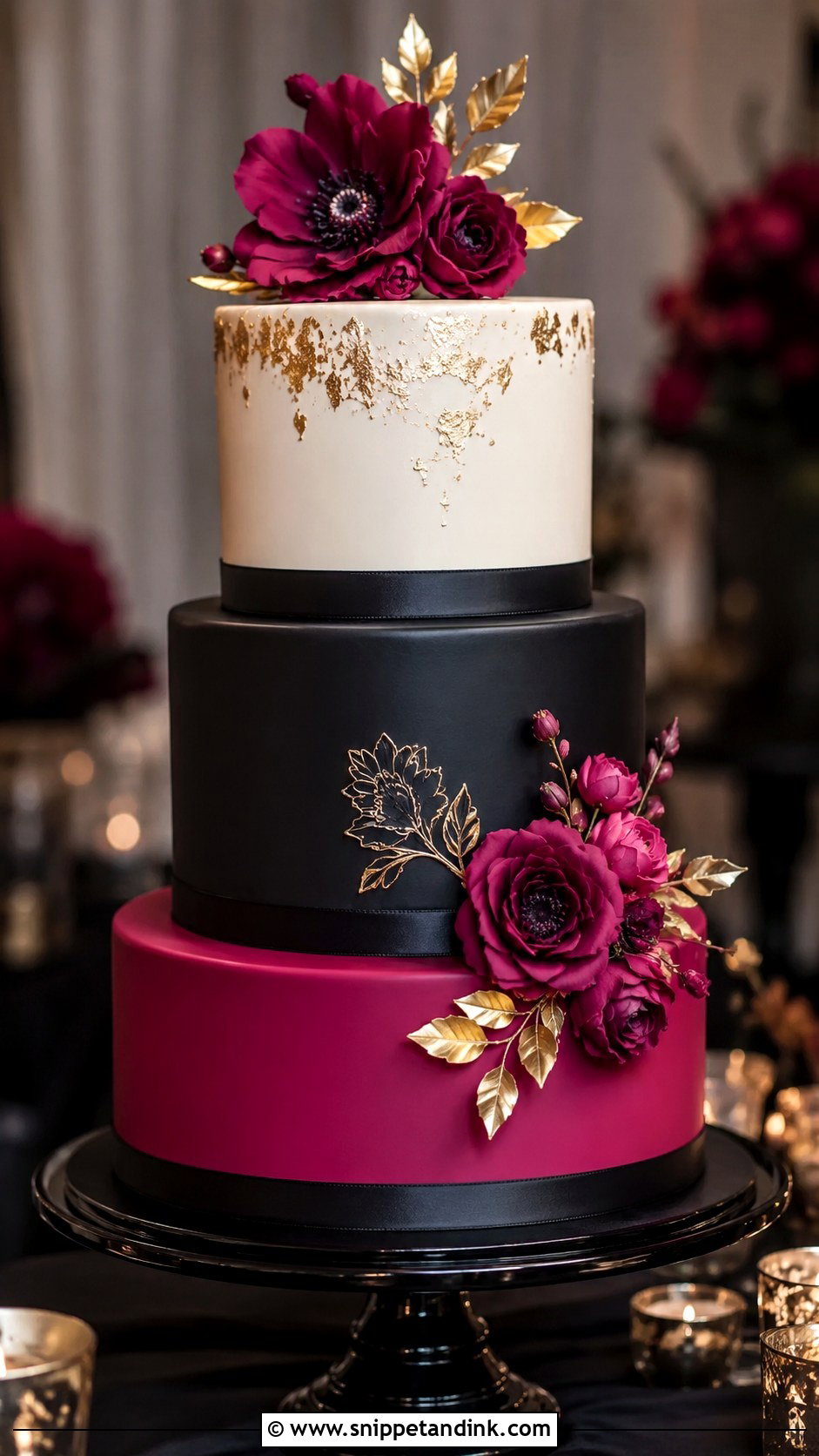
Black makes magenta look brighter, which is the whole appeal of this pairing for evening weddings in modern venues. Use black as an accent: a ribbon, a painted lace pattern, a single dark tier. Black icing needs a lot of color and can stain lips and teeth, so I prefer it on fondant details that guests can set aside. A little ivory and a touch of gold or silver keep it from becoming moody.
18. Magenta And White Wedding Cake
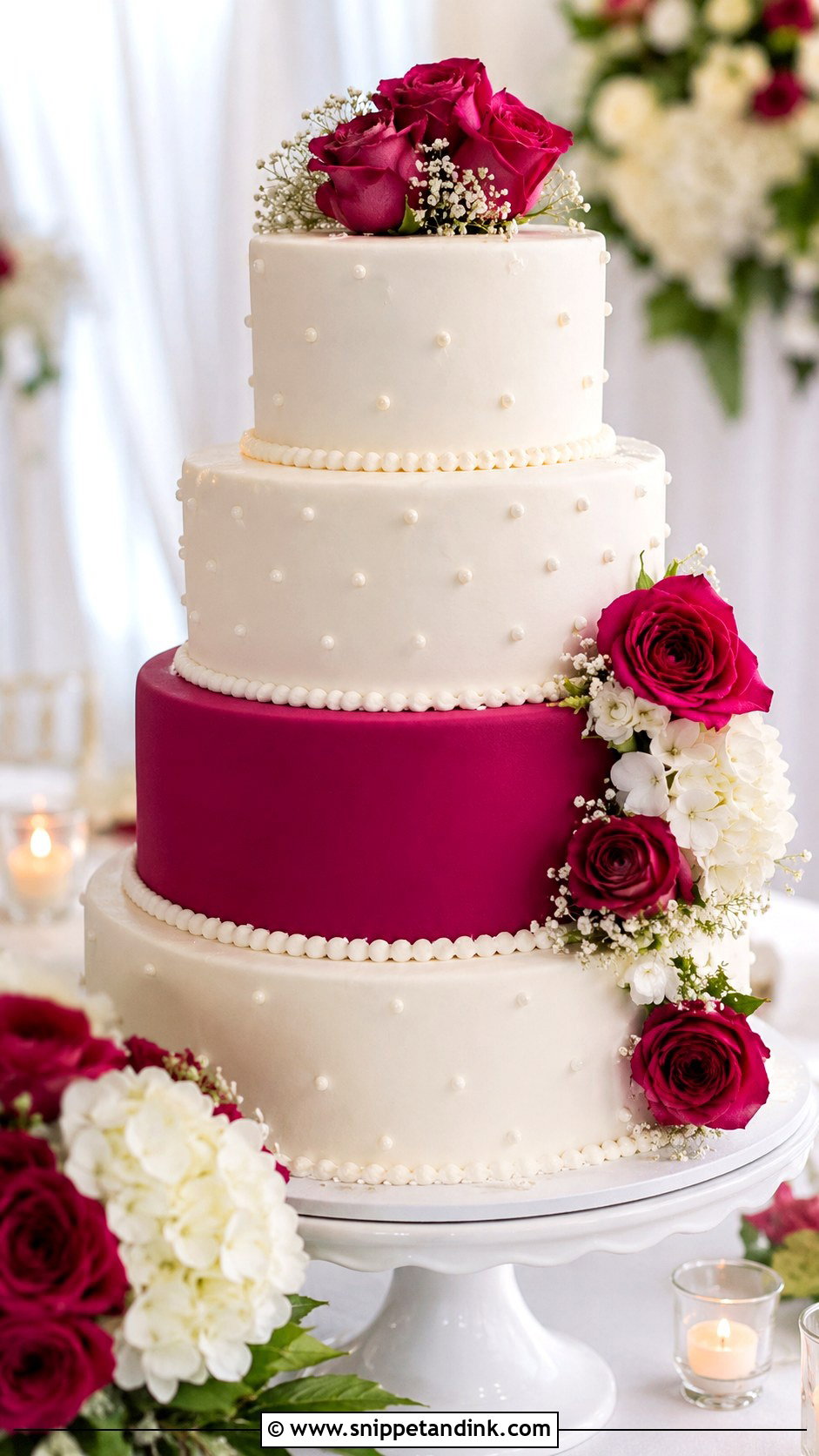
White and magenta is the easiest pairing to match to a venue. White frosting keeps the cake bridal, while a few strong magenta notes add energy. Repeat the color in two or three planned places instead of scattering it. One warning from the kitchen: strong pinks can bleed into white icing when a cake moves from a fridge into a humid room, so I keep magenta details on fondant or add them close to delivery.
19. Magenta Tiered Wedding Cake
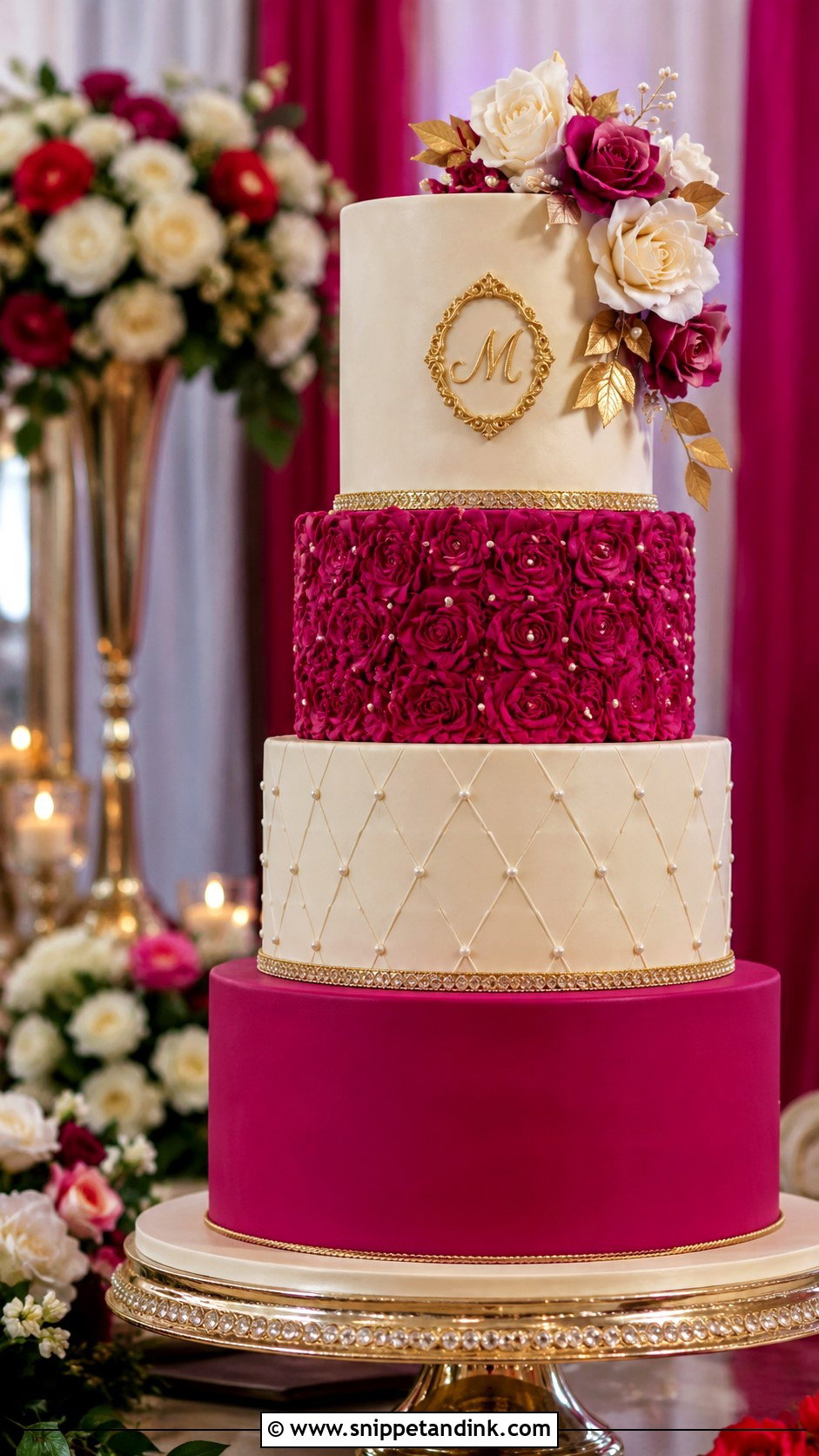
Several tiers give you room to mix textures: smooth fondant, buttercream ruffles, a floral tier, painted details. Place magenta on the base tier for weight, or on a middle tier for a color-block effect, or step through fuchsia to deep berry. The risk with a tall mixed cake is that it looks like five separate ideas, so I link every tier through one repeated element, usually a ribbon or a flower variety. Taller stacks need internal dowels and are best assembled on site.
20. Magenta Mini Wedding Cake
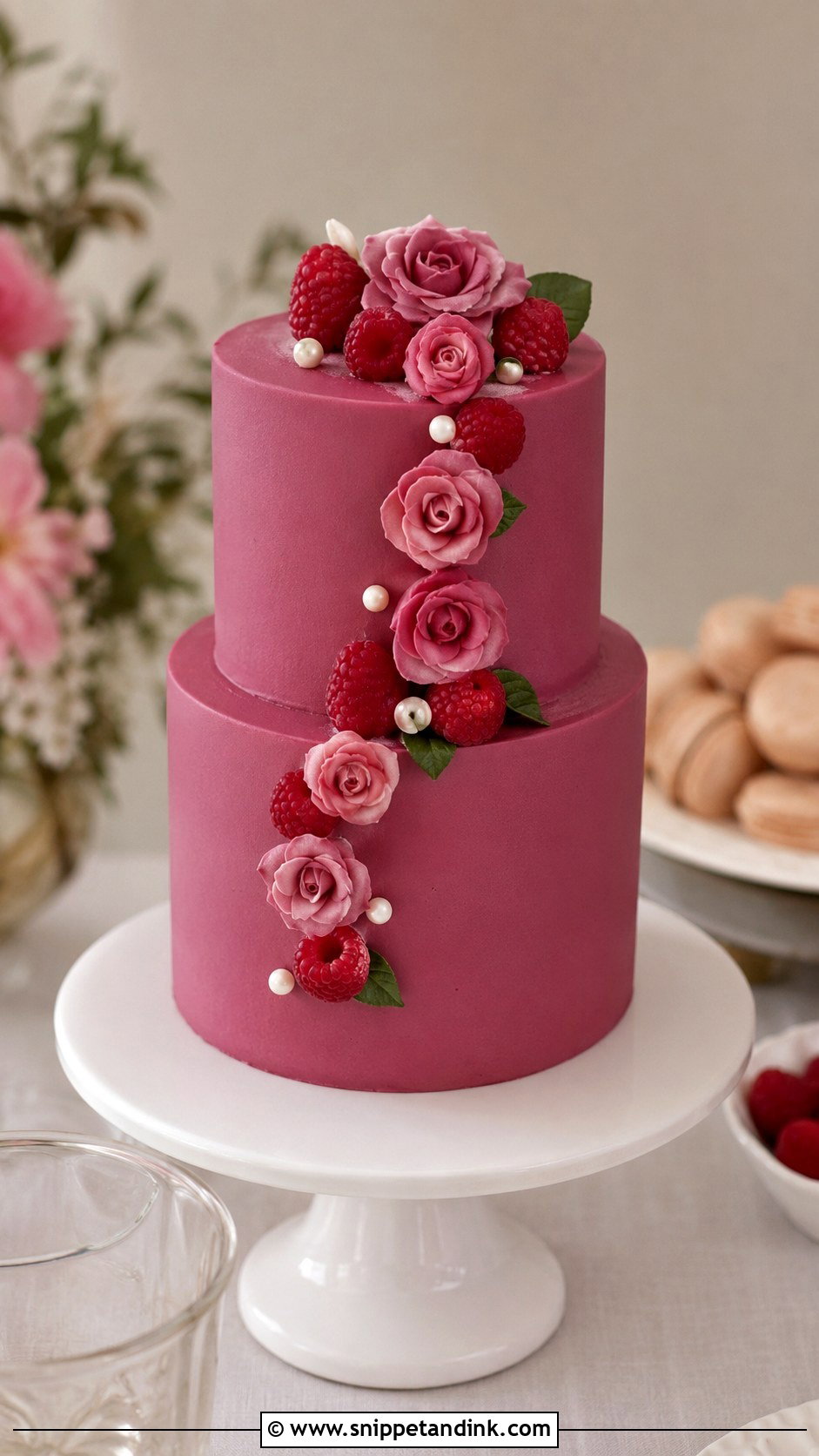
One or two tiers is plenty for an elopement or intimate wedding, with cupcakes or cookies around it. Color carries a small cake well, and a short cake needs less internal structure, which makes it easier to personalize. It looks right on a small pedestal stand with the extra desserts at its feet. Scale everything down; an oversized topper or big blooms will swamp a six-inch tier.
Getting Your Baker and Florist to the Same Magenta
Magenta is described differently by almost everyone: one person’s fuchsia is another’s berry. Words won’t get two vendors to the same shade, so I ask for a physical sample.
- Ask your florist for a petal or ribbon in the main bloom color once the flowers are confirmed.
- Bring it, or a fabric swatch from the bridesmaid dresses, to the tasting or design meeting.
- Ask the baker to mix a small test and look at both in daylight and under warm indoor light; magenta shifts toward purple in some lighting.
- Agree whether fresh flowers on the cake come from the florist or the baker, and when they’ll be delivered.
- Photograph the approved sample next to your swatch so there’s a reference on the day.
If your flowers are fresh and seasonal, accept that the final blooms may land a shade or two off the sample. Sugar flowers can be matched exactly, which is one quiet advantage of choosing them for a color-led cake.
Matching Magenta to the Rest of the Room
Magenta can be soft with flowers, graphic with fondant or playful with vintage piping, and it pairs with gold, black, white and greenery. Decide where you want the color to sit: in the icing, in the decoration, or in a single tier. Bring your florist’s swatch to the tasting, think about where the cake will stand and in what light, and the shade will look like part of the wedding rather than a surprise.
You'll Like These Ideas:











Leave a Reply