
A spring cake has a narrower window than any other season’s. Fruit is only just coming in, flowers are at their most delicate, and the weather can swing from a cold church to a warm garden in one afternoon. The cakes below cover the main spring routes: pressed and piped flowers, pastel and ombre buttercream, berries, naked layers, vintage piping, pearl work and a full floral cake table, with flavors like lemon, lavender honey, berry, almond and vanilla bean. Whichever catches your eye, weigh it against three practical things before falling for the photo: your venue, the size of your guest list and how long the cake will be on display.
Fillings That Taste Like Spring and Still Stand Up Straight
Spring flavors are mostly fruit and flowers, and both bring moisture into a cake. That moisture is what makes them taste fresh, and it’s also what makes a tier slide if it’s handled carelessly. This is how I pair them:
- Curds such as lemon, passion fruit or rhubarb are bright and sharp but soft. They need a ring of firm buttercream around each layer and a night in the fridge to set before stacking.
- Fruit compotes and jams should be cooked down until thick so they don’t soak the sponge. Fresh cut fruit inside a cake shortens how long it can safely sit out.
- Whipped cream and cream cheese fillings are light and tangy but need cold. They suit a cake that’s cut soon after it comes out, not one displayed for hours.
- Elderflower, lavender and rose work best as a syrup or infusion and kept faint. A little reads as perfume; too much tastes of soap.
At the tasting, try each filling with the frosting it will actually sit beside. Lemon curd against a sweet American buttercream is a different cake from the same curd against a lighter meringue buttercream.
1. Spring Wedding Cake With Pressed Flowers
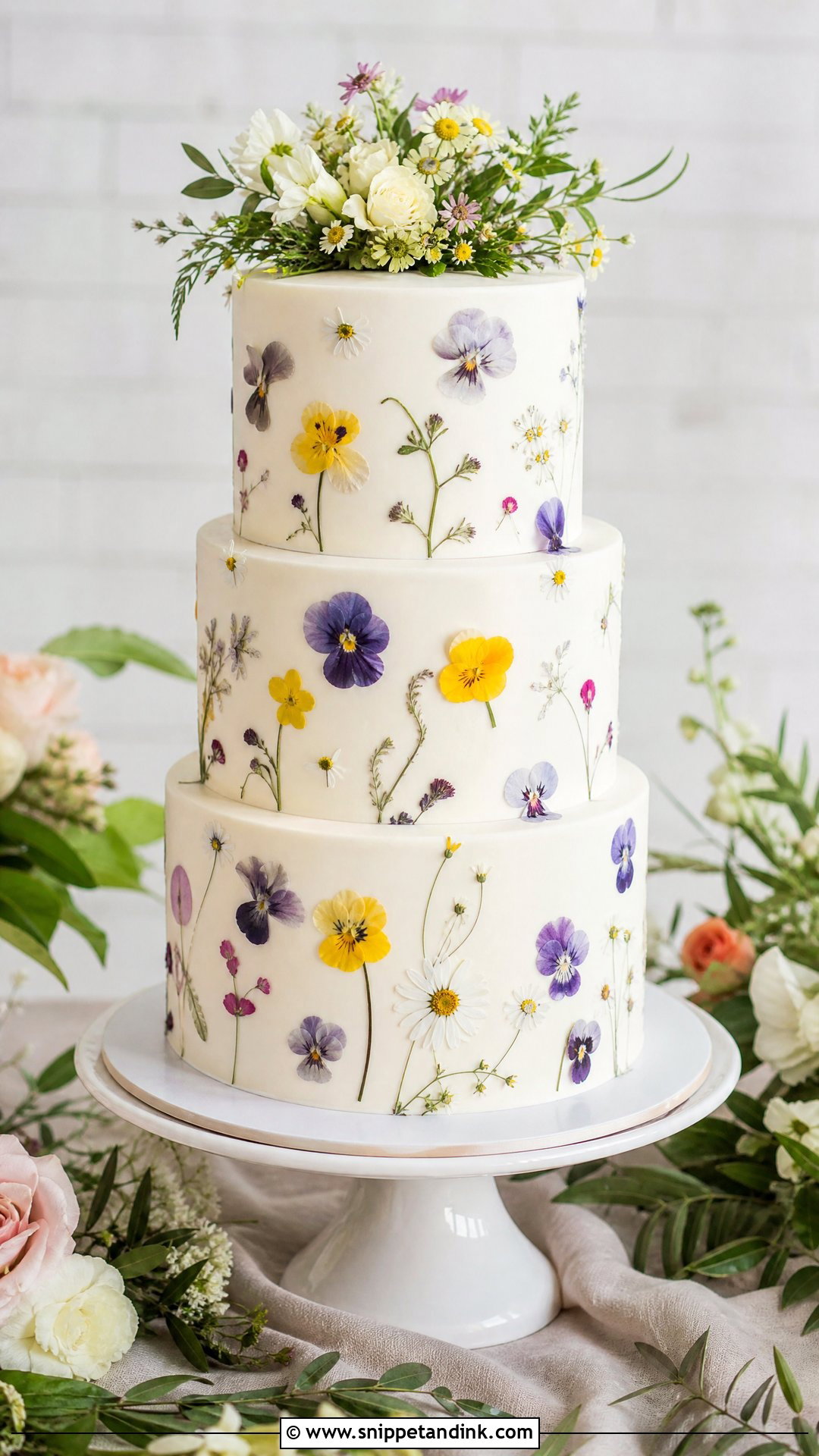
A cake decorated with pressed flowers keeps the garden look completely flat, so there’s nothing to knock off in the van, a real advantage for a two- or three-tier cake traveling any distance. The petals lie against smooth buttercream or fondant and can trail from the top tier to the bottom. Blush, lavender, pale yellow and baby blue all press well and show up best on a plain white base. Keep the flavor light with vanilla bean, lemon or almond. Use only edible blooms, and expect them to look their freshest in the first few hours on buttercream.
2. Spring Wedding Cake With Pastel Buttercream
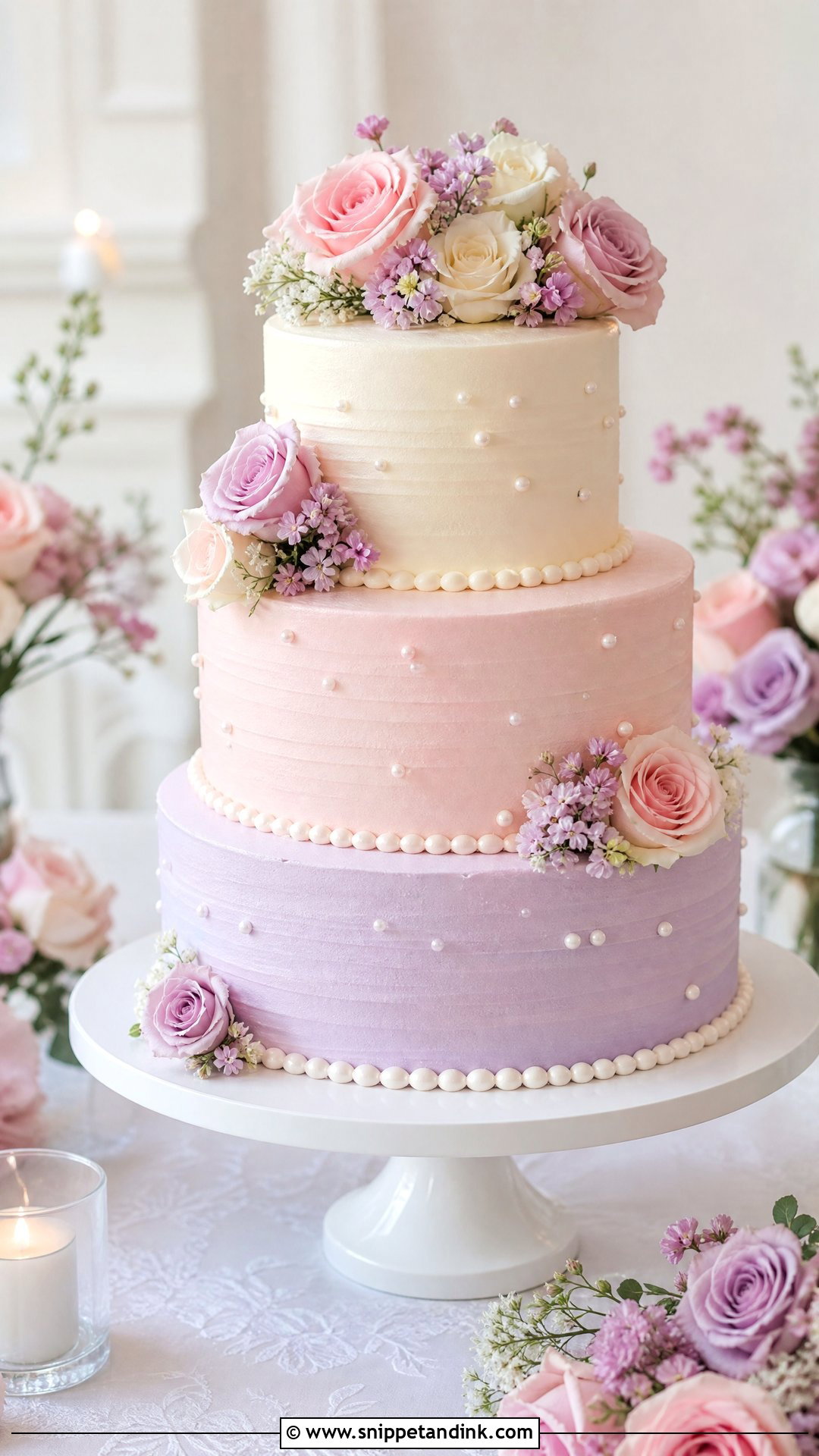
Color in the icing itself is the quickest way to say spring. Pale pink, sage green, butter yellow or lavender buttercream is enough on its own; add small piped borders and a few flowers for a classic finish, or ask for ombre shading across the tiers. Sage is the one I’d sample first, because a good sage can drift olive under warm indoor lights, so look at the swatch in the room’s own light if you can. Strawberry, lemon, vanilla or coconut sponge suits the palette, and a white stand keeps the colors clean in daylight photos.
3. Spring Wedding Cake With Fresh Peonies
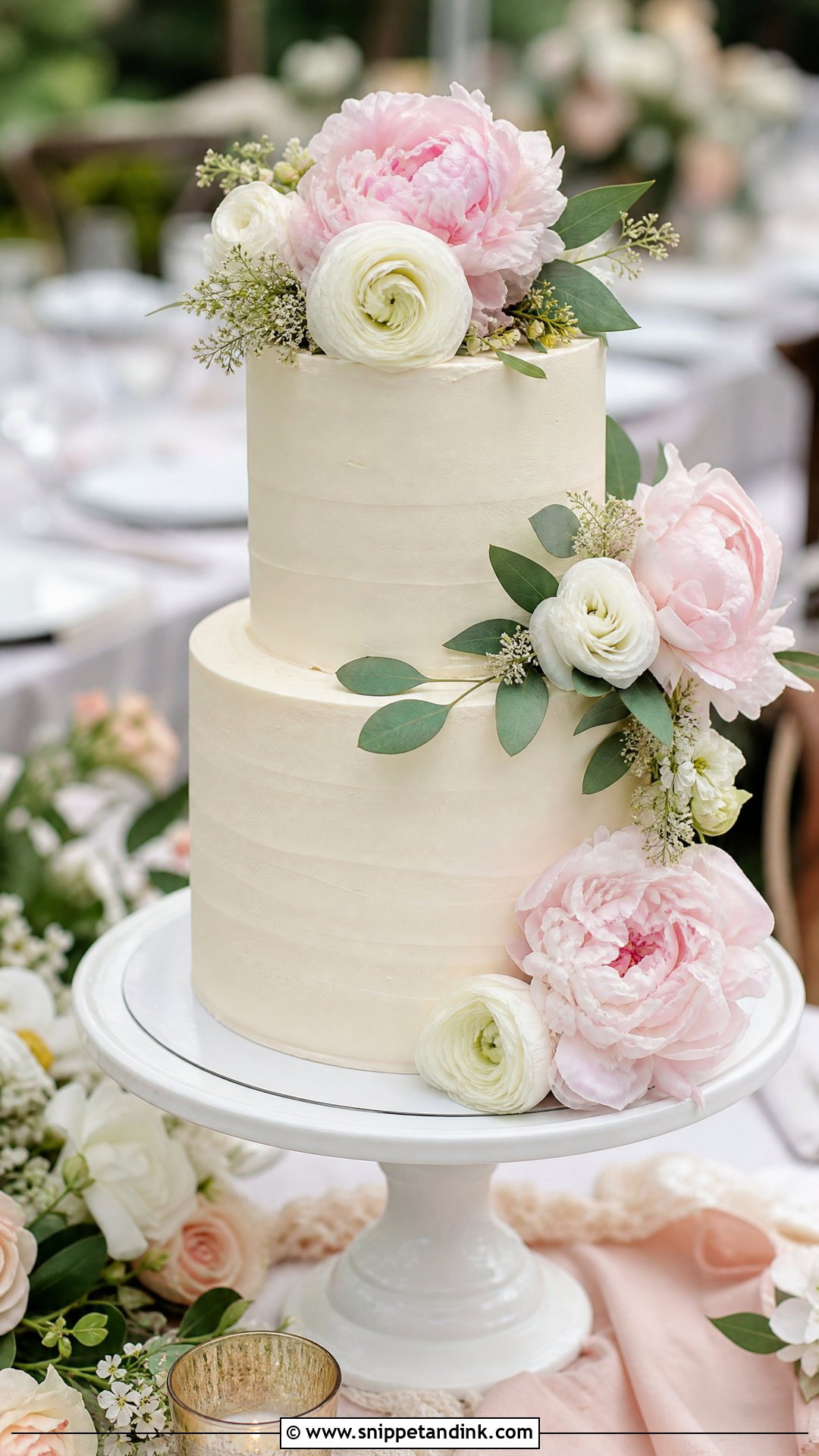
Peonies are the flower couples ask about most for spring cakes, and with reason: a few full, rounded heads give volume with no other decoration. On a plain white or ivory cake they look classic and expensive. Blush is the favorite, though coral, white and soft pink work too, in small clusters at the base, between tiers or down one side. They’re thirsty and quick to open, so fresh peonies go on the day and suit a cake that’s cut within a few hours. Since they’re florist flowers, your baker and florist need to agree in advance on how stems are wrapped and where blooms may touch.
4. Spring Wedding Cake With Lemon Flavor
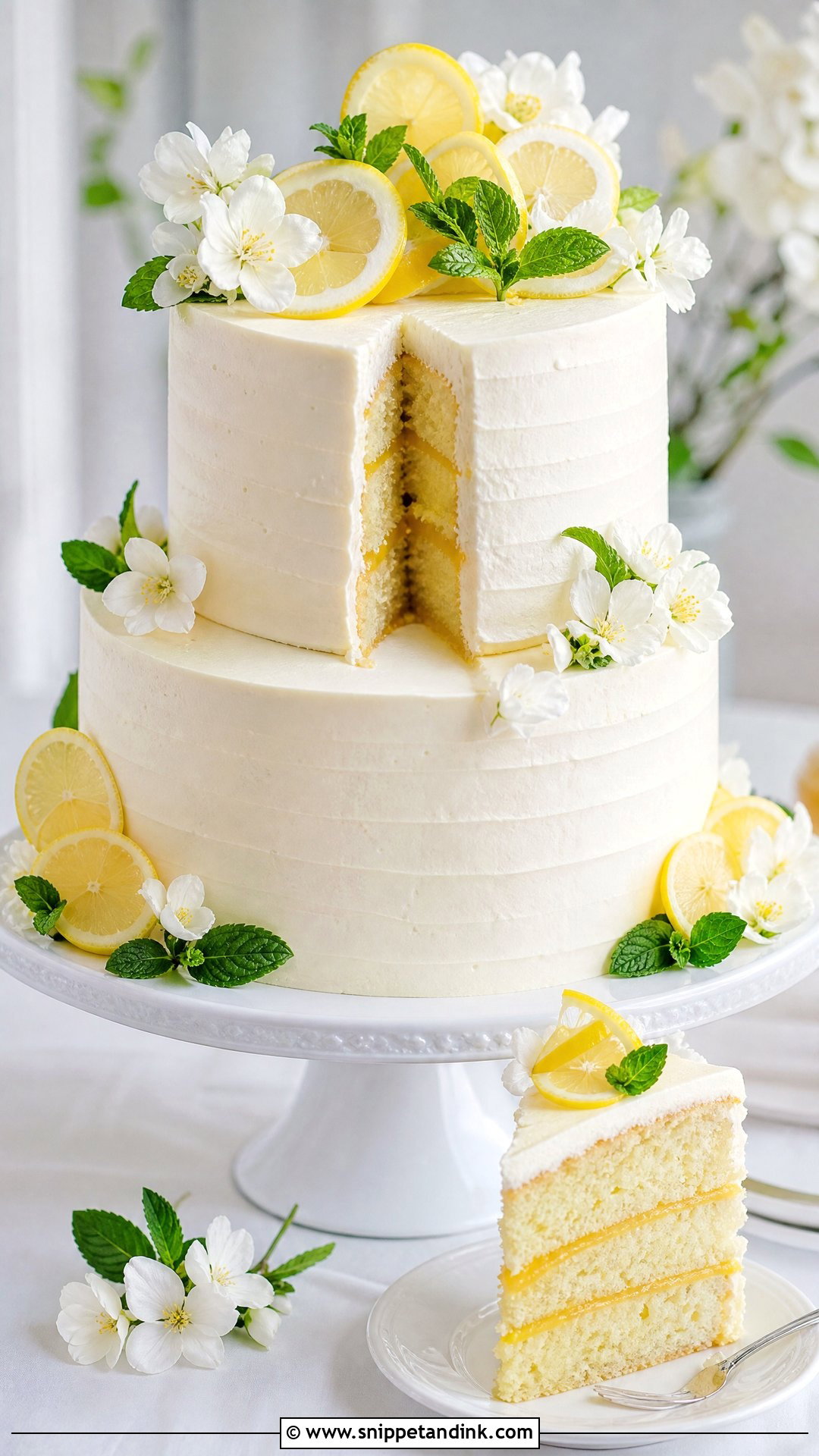
Lemon is the flavor I’d point most spring couples toward first. It cuts through a rich meal and still feels special. A lemon spring wedding cake pairs with lemon curd, raspberry filling, blueberry compote or elderflower buttercream. Curd needs a stiff ring of buttercream piped around each layer to stop it seeping out and bulging the sides, a step that’s easy to skip and obvious when it fails. Outside, white or textured buttercream with pale yellow accents keeps it fresh. Real lemon slices look lovely but weep juice onto icing within hours, so I use candied slices or sugar lemons instead.
5. Spring Wedding Cake With Lavender Honey
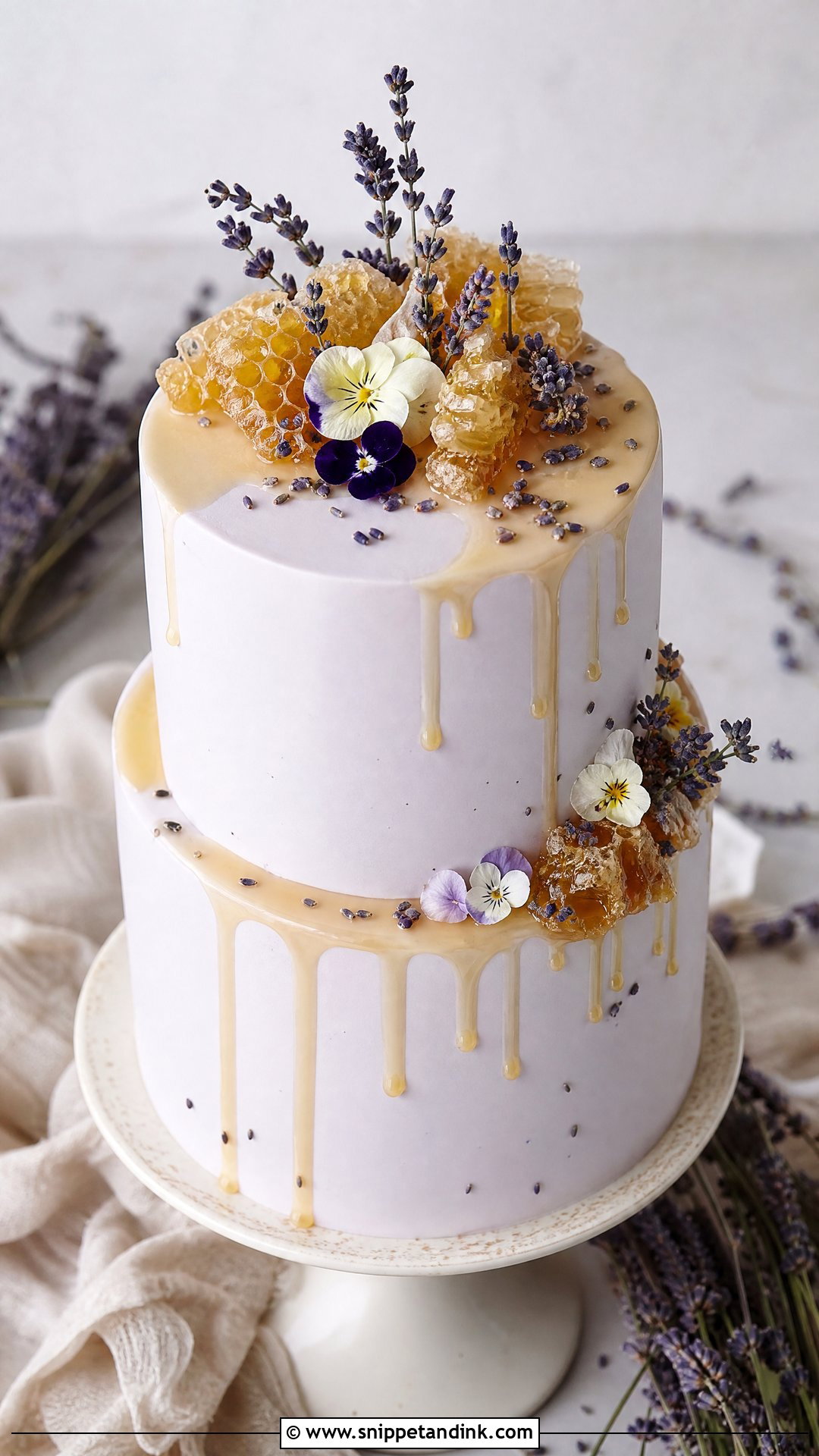
This flavor surprises people, in a good way, as long as the lavender is kept in check. Culinary lavender turns soapy fast, so I steep it in the cream or syrup rather than stirring dried buds into the batter, and let honey bring warmth underneath. Lavender honey cake sits well with a vanilla, almond or light butter sponge, dressed in ivory buttercream with a few lavender sprigs, edible petals or a honey-colored drip. Drips soften and run in a warm room, so I’d skip that detail for a sunny outdoor afternoon. Minimal flowers keep it refined rather than themed, and it suits barns and garden receptions.
6. Spring Wedding Cake With Buttercream Flowers
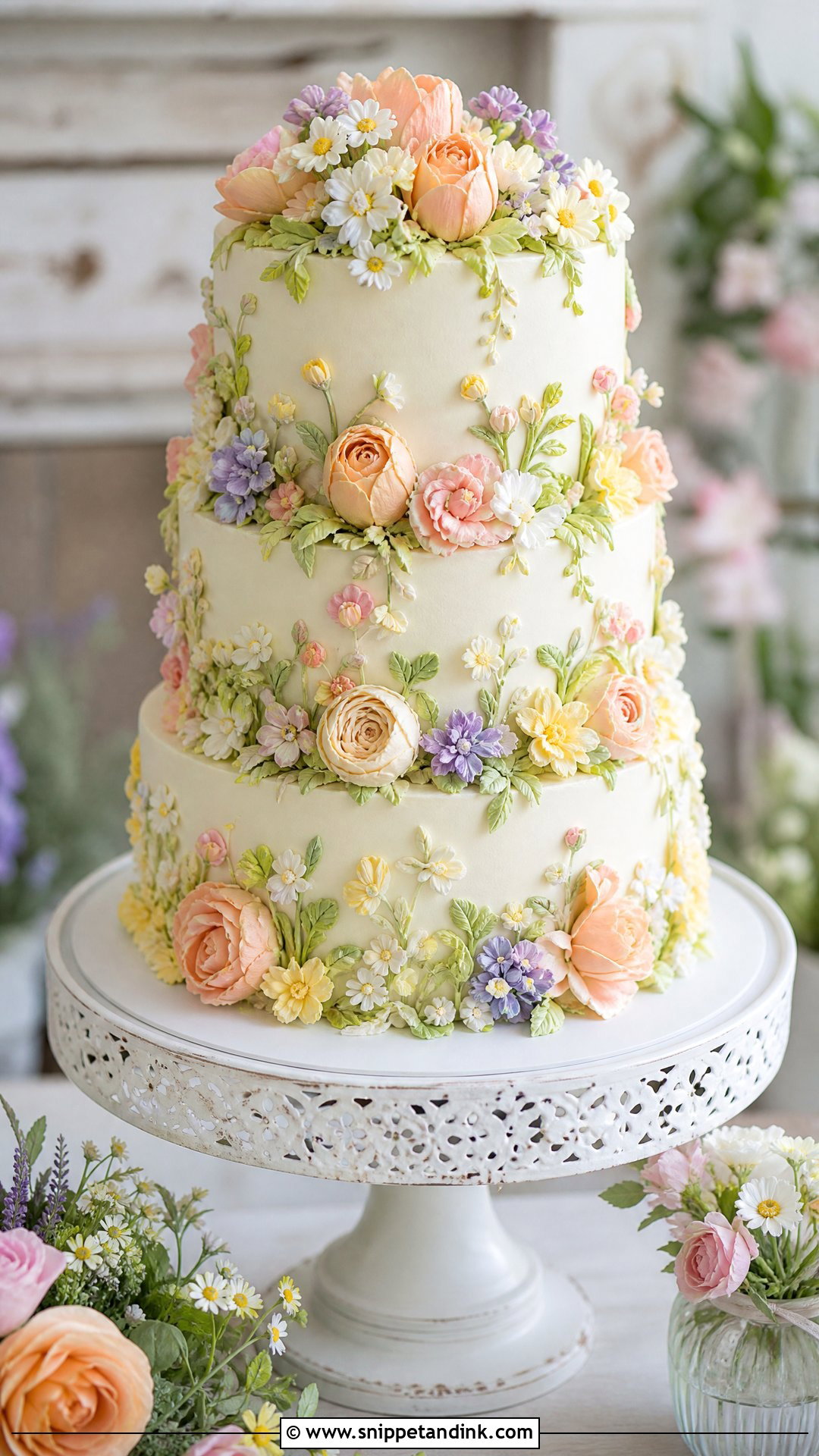
Piped roses, daisies, tulips and small blossoms make every decoration edible and give the cake a handmade softness. On a white or pastel base they can cover the whole cake for a full garden effect or sit in small clusters. Full coverage is slow piping work and priced to match; clusters give a similar feel for less. Smaller wedding cakes suit the style especially well because the flowers stay in proportion, and couples drawn to vintage detail tend to love it.
7. Spring Wedding Cake With Vintage Piping
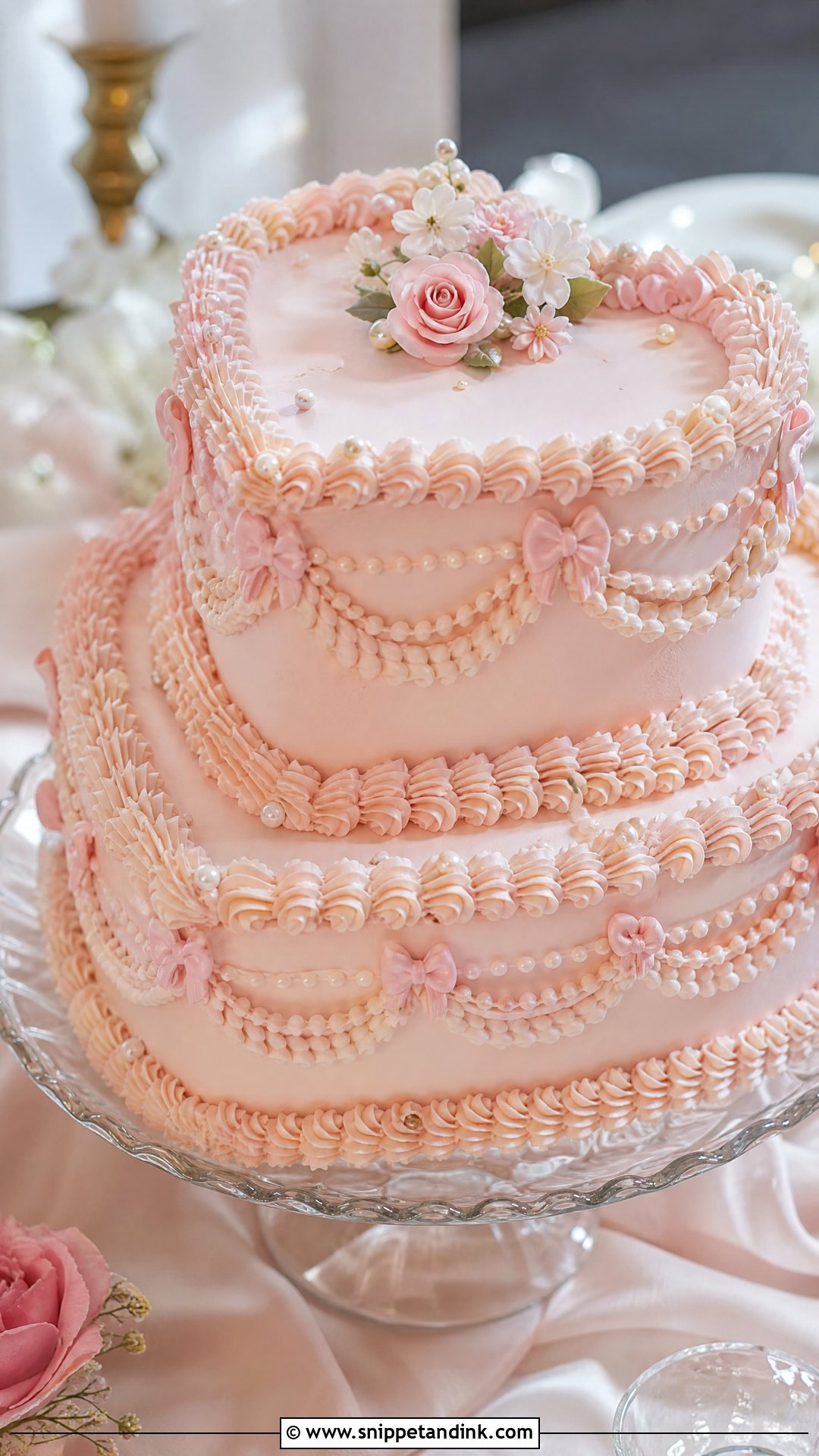
Spring is when this old-fashioned style makes the most sense. Vintage piping means scalloped borders, shell details, pearl dots, bows and layered trims, all piped by hand from a firmer buttercream than usual so the ridges stay crisp. Keep the colors soft: pale blue, blush, ivory or butter yellow. It works as a single-tier statement cake or on tall tiers. Cherries on top are a strong vintage signature, so add them only if they feel like you; small sugar flowers are the gentler route. Heat is the enemy here. Fine piping is the first detail to slump when a room warms up.
8. Spring Wedding Cake With Watercolor Flowers
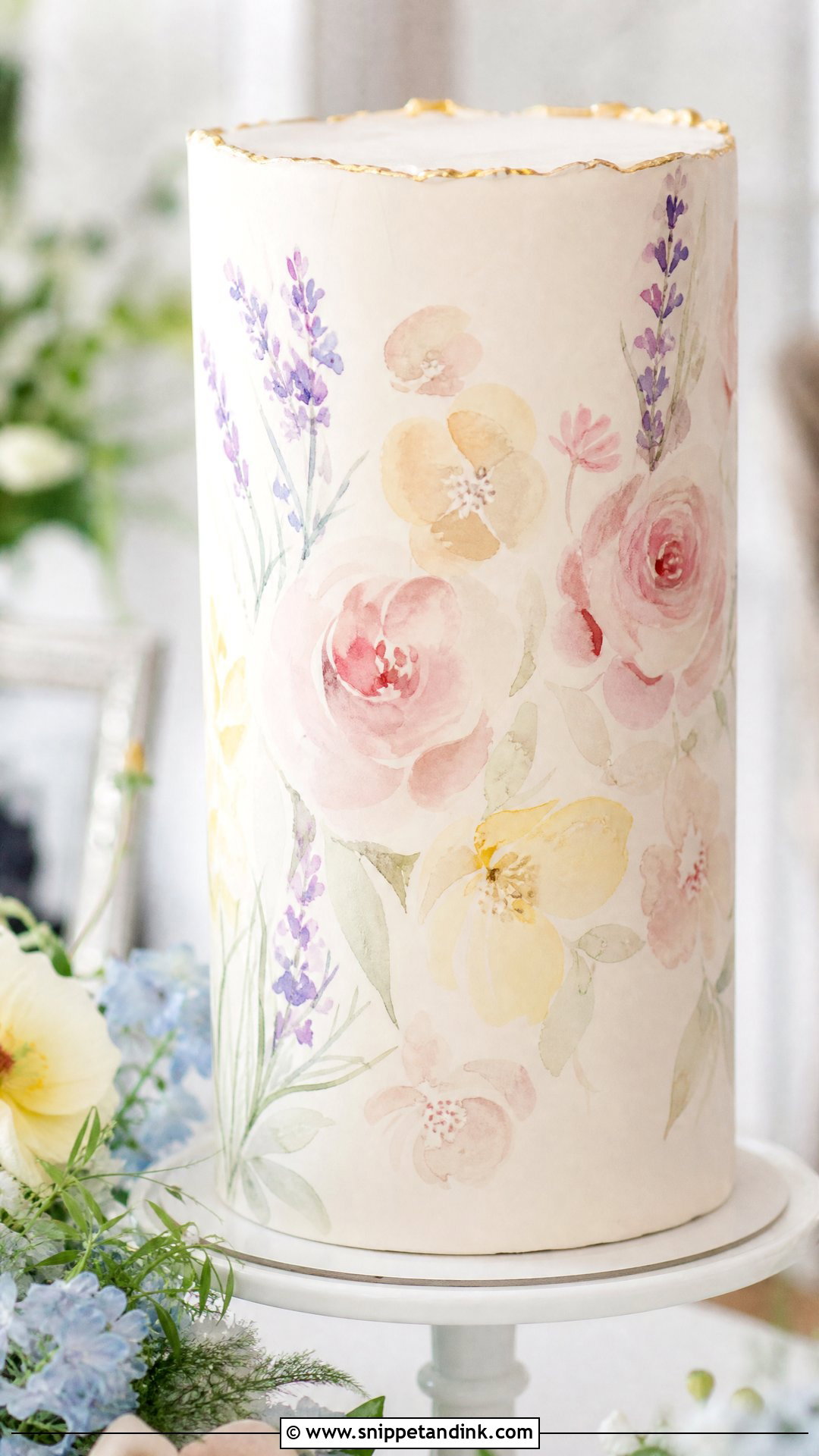
Painted color on icing gives a light, illustrated feel. A watercolor flower wedding cake features painted flowers or washes of pastel on smooth fondant or well-chilled buttercream: soft pink roses, lavender blooms, yellow wildflowers or blue hydrangea-style strokes. I thin food colors with a little clear alcohol, which evaporates and leaves only pigment behind, so the icing never gets wet enough to sag. Everything else stays simple, perhaps a clean white base, a thin gold edge or a few small flowers. Vanilla, almond, lemon or strawberry inside.
9. Spring Wedding Cake With Fresh Berries
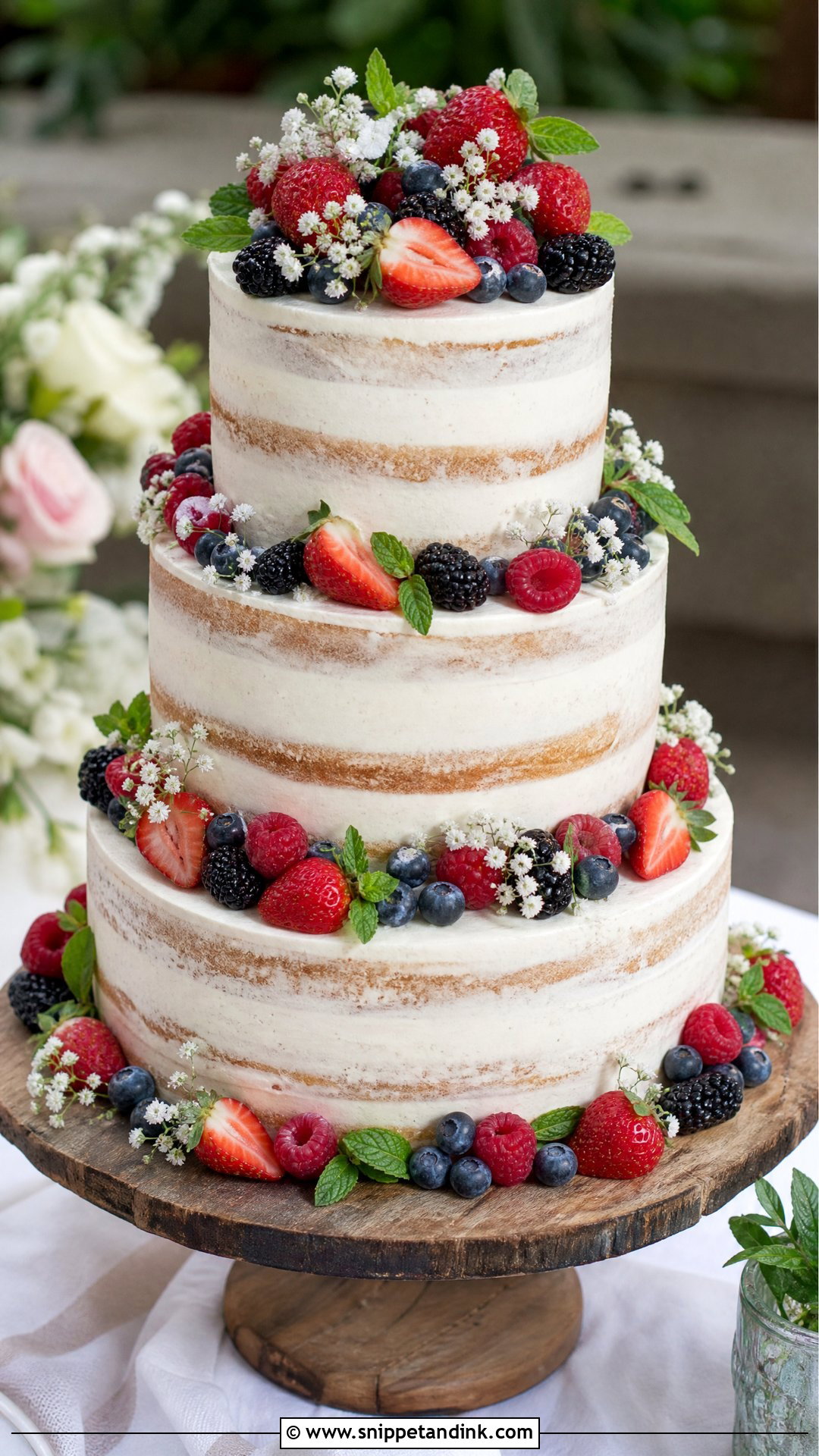
Berries bring color without much decoration: strawberries, raspberries, blueberries and blackberries on semi-naked buttercream, whipped frosting or smooth vanilla buttercream. Try vanilla with berry compote, lemon with raspberry, or almond with strawberry cream. The practical issue is juice. Cut strawberries bleed into icing within an hour or two, so I use whole, firm berries, dry them thoroughly and add them as late as possible. Between tiers, piled on top or mixed with small flowers and mint, they suit garden weddings and brunch receptions. Whipped cream frosting needs refrigeration, so it won’t last long on a warm table.
10. Spring Wedding Cake With Daisies
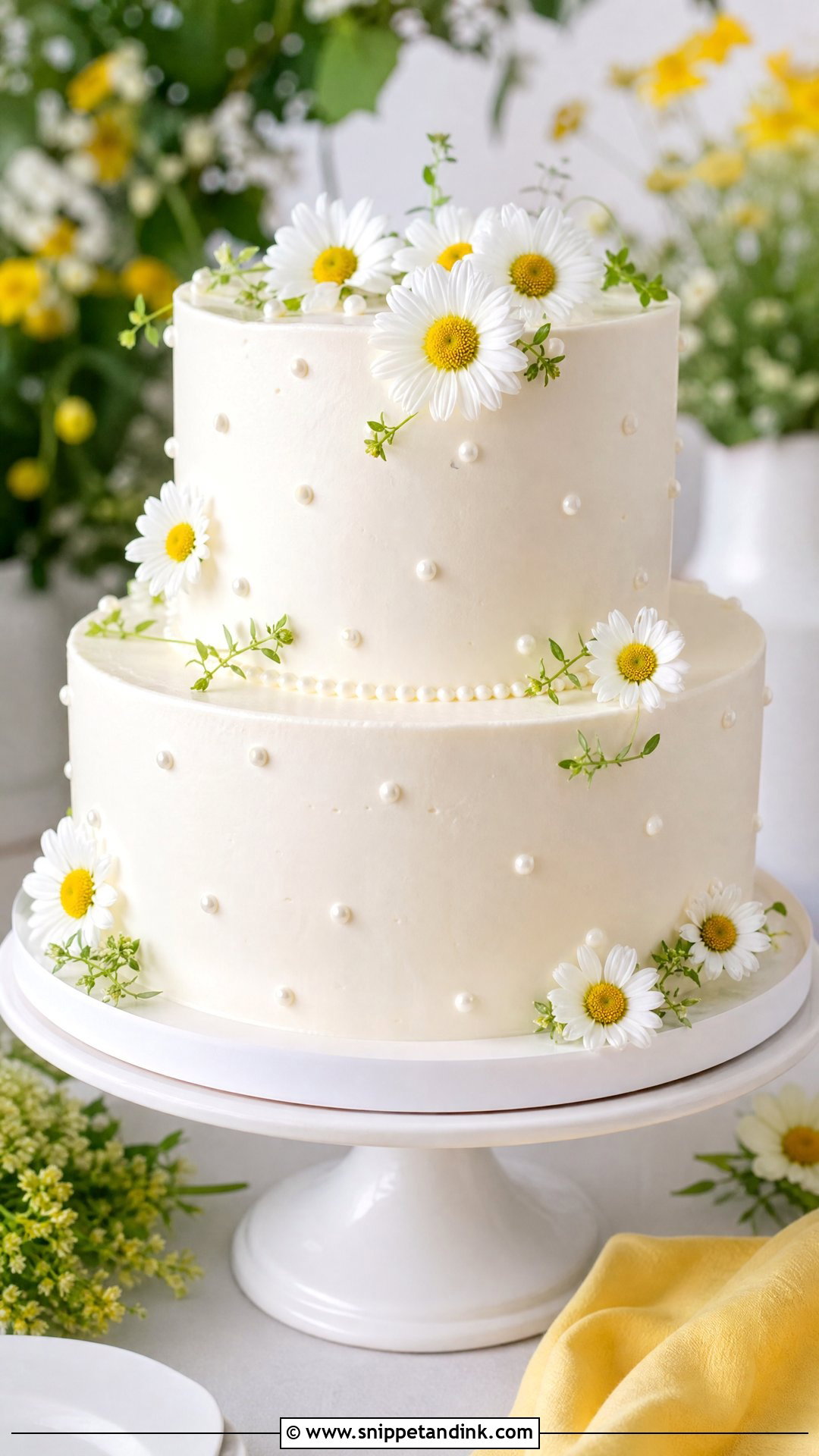
Daisies are relaxed and sunny. Small daisies scattered over smooth white buttercream, a daisy crown on top or a ring around the base all work, and the yellow centers add just enough color. For a modern finish, keep the edges sharp and greenery minimal. Piped or sugar daisies are quick to make; real ones must be an edible variety. Lemon, vanilla, coconut or honey sponge pairs well, and rustic venues and outdoor weddings suit it most.
11. Spring Wedding Cake With Sugar Flowers
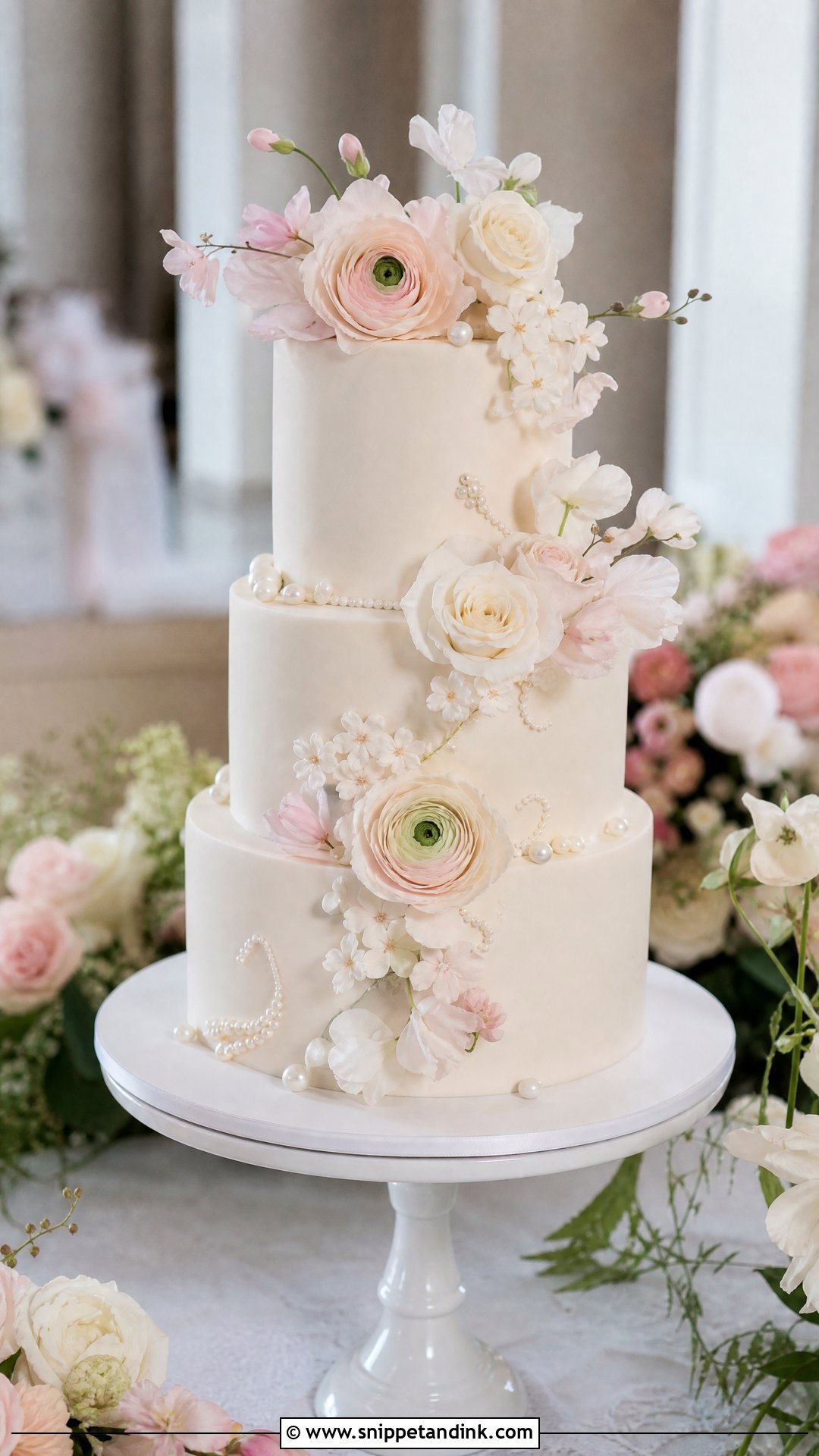
Sugar flowers won’t wilt, bruise or release moisture onto the frosting, which makes them the safest choice for a cake on display all day. Roses, ranunculus, cherry blossoms, sweet peas or tulips can all be made in soft spring colors, including flowers you’d never put on a cake fresh. They sit best on fondant, which supports their weight and stays firm, though buttercream works too. Their weakness is humidity. Sugar petals absorb moisture and can soften in a very damp room, so I keep them in dry boxes until setup. On a clean ivory base they suit formal weddings and ballrooms.
12. Spring Wedding Cake With Cherry Blossoms
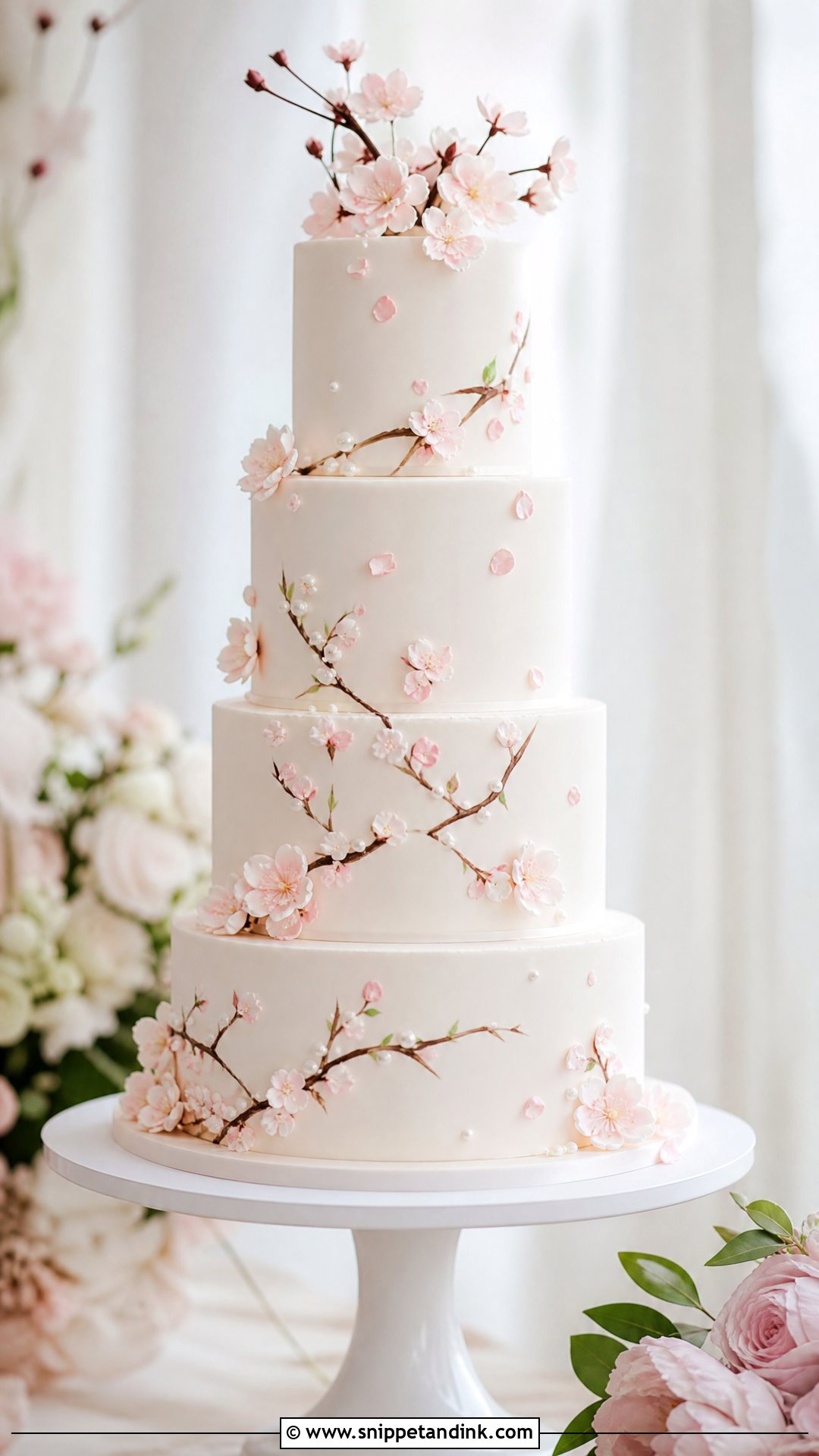
Few designs give as much spring feeling for so little visual weight. Cherry blossoms on painted or sugar branches suit a tall white cake, or for a softer design, tiny blossoms can be scattered around the tiers with a few thin branches. Keep the palette gentle: pale pink, ivory and soft brown. Vanilla, almond, rose or matcha are good pairings, and matcha’s slight bitterness balances a sweet buttercream well. It fits spring garden ceremonies and Japanese-inspired details.
13. Spring Wedding Cake With Greenery
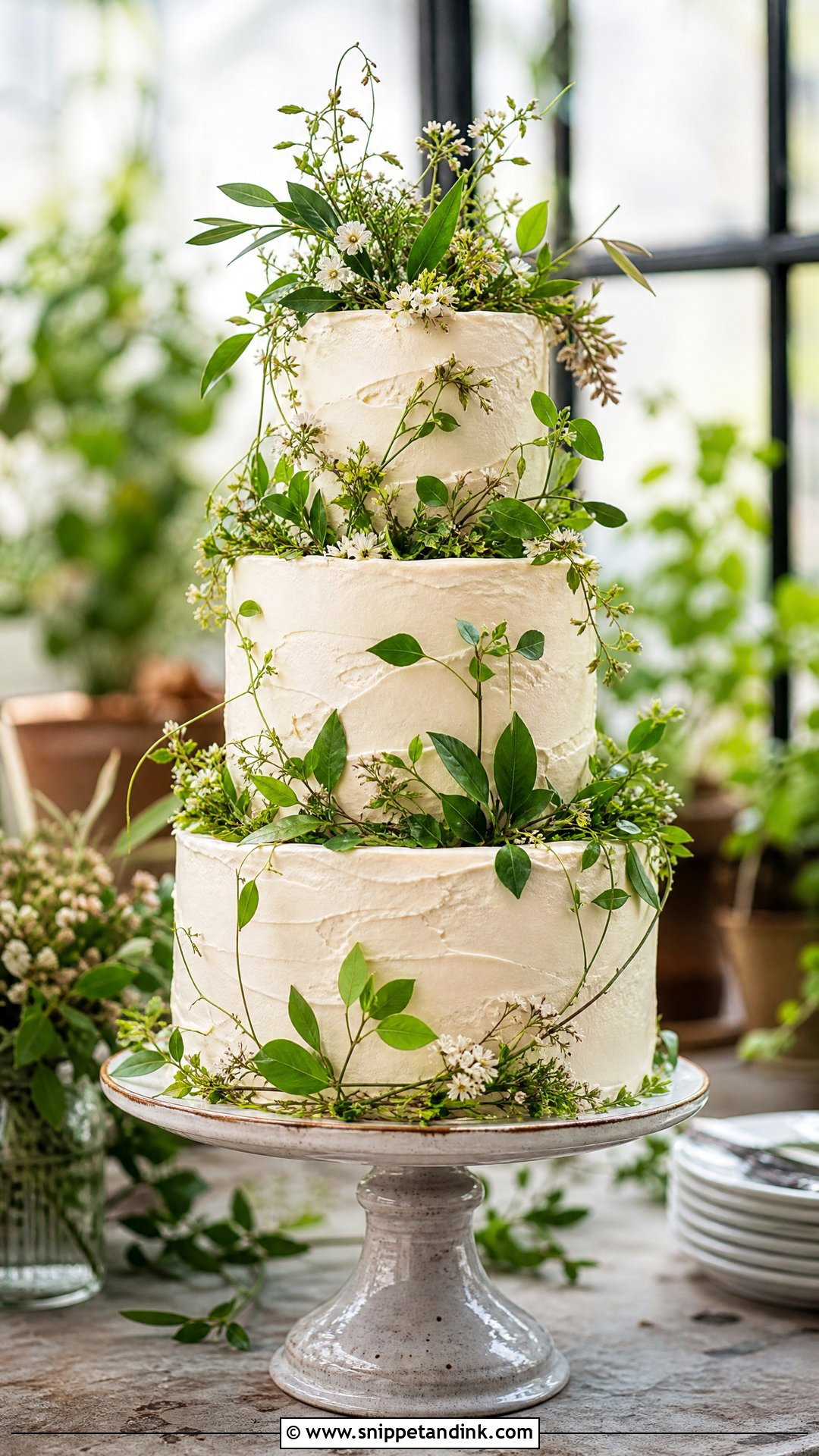
Greenery-only cakes are simpler than they look, but the leaves need choosing carefully. Several popular ones aren’t food-safe, eucalyptus included, so if you love that look I’d suggest sugar or wafer-paper leaves, or real herbs like rosemary, thyme, bay or mint that are safe beside food. Wrapped around tiers, clustered or trailing down one side, greenery suits smooth white, textured ivory or semi-naked cakes, with vanilla bean, lemon, almond or pistachio inside. Garden venues and greenhouse weddings are its natural home.
14. Spring Wedding Cake With Blush Roses
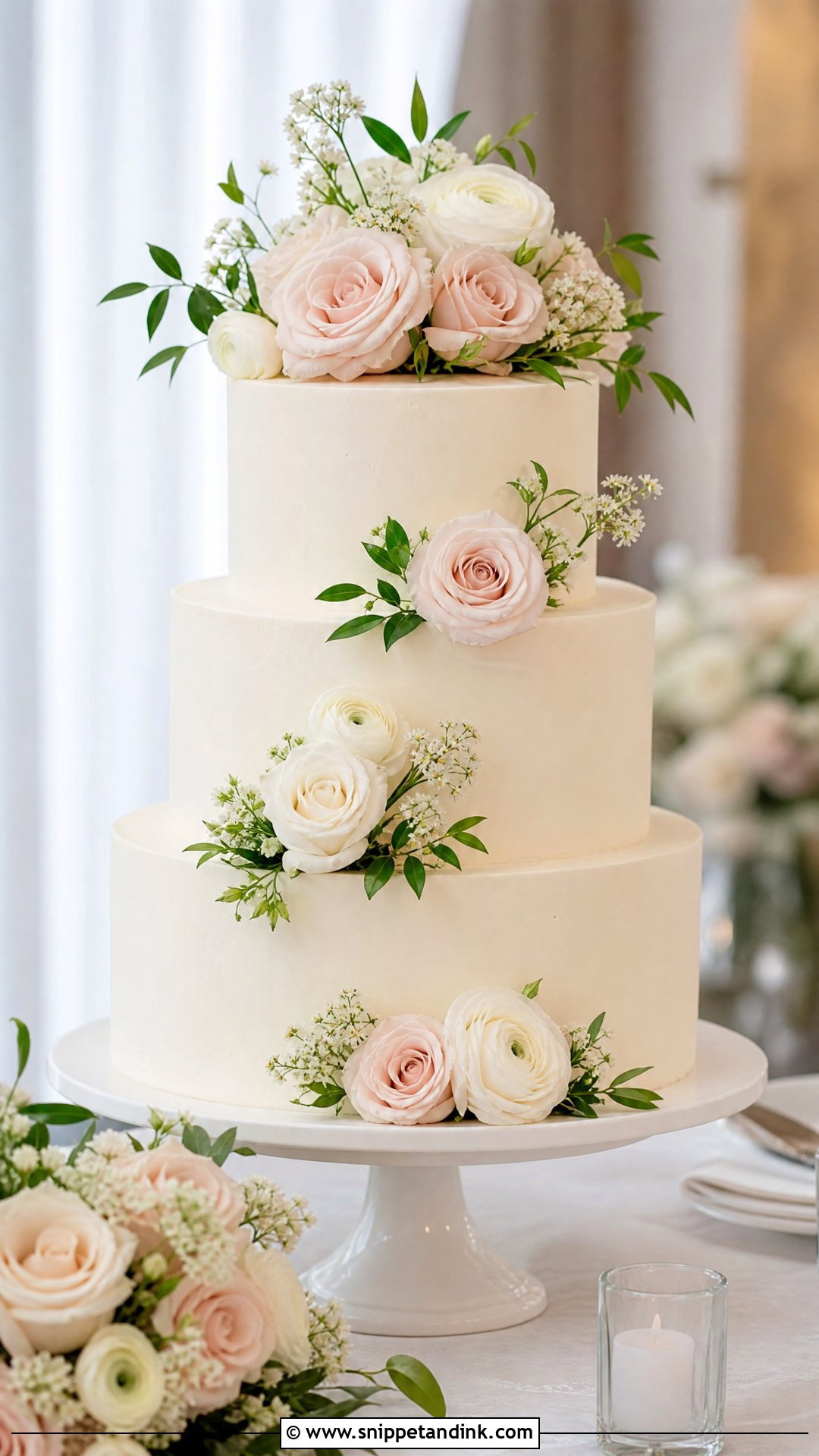
Blush roses go almost anywhere, from a garden wedding to a hotel ballroom, estate or backyard. Combine them with ranunculus, sweet peas or small white flowers for fullness, or use just a few per tier for a cleaner look. The surest way to tie the cake into the day is to order the cake roses from the same florist and the same delivery as your bouquet, so the shade genuinely matches. Vanilla, almond, strawberry or champagne-style sponge suits it. Like any fresh flower, the roses should be unsprayed and kept off the icing with proper barriers.
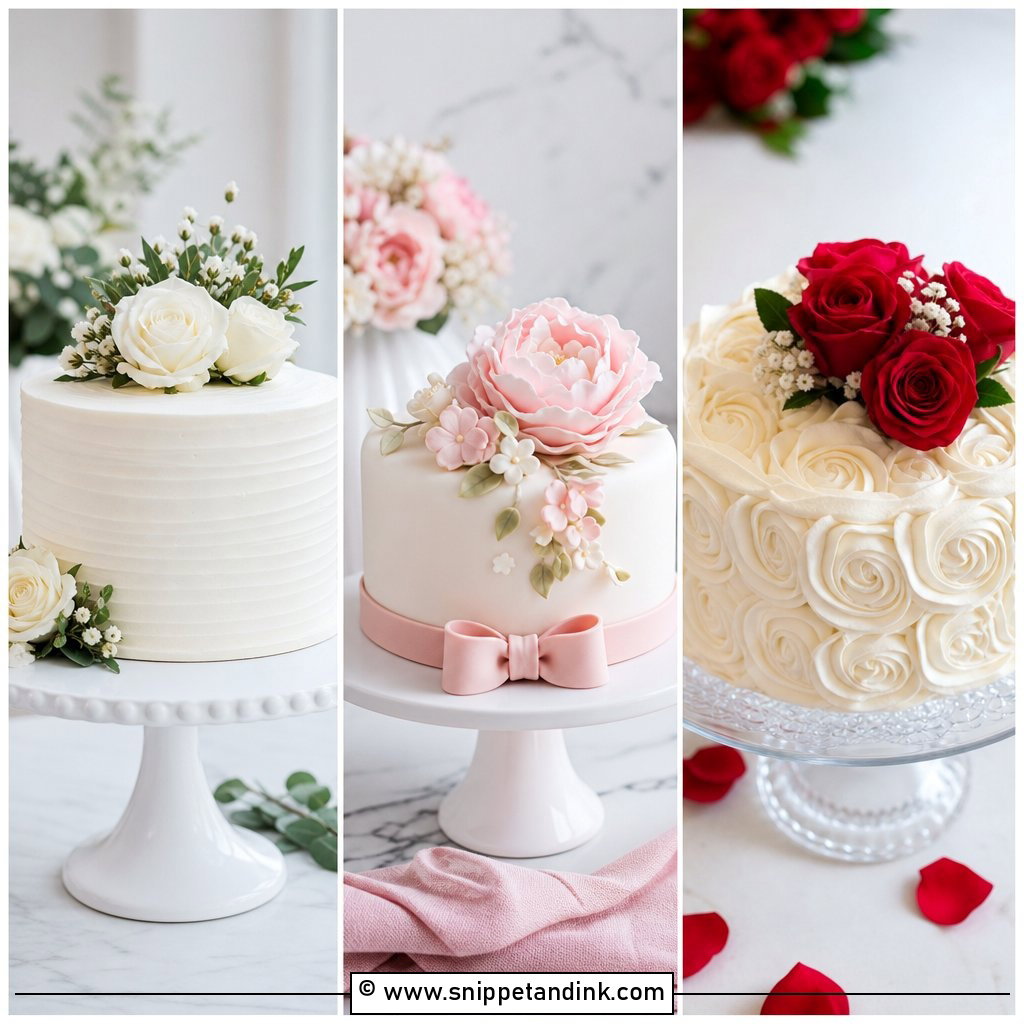
15. Spring Wedding Cake With Textured Buttercream
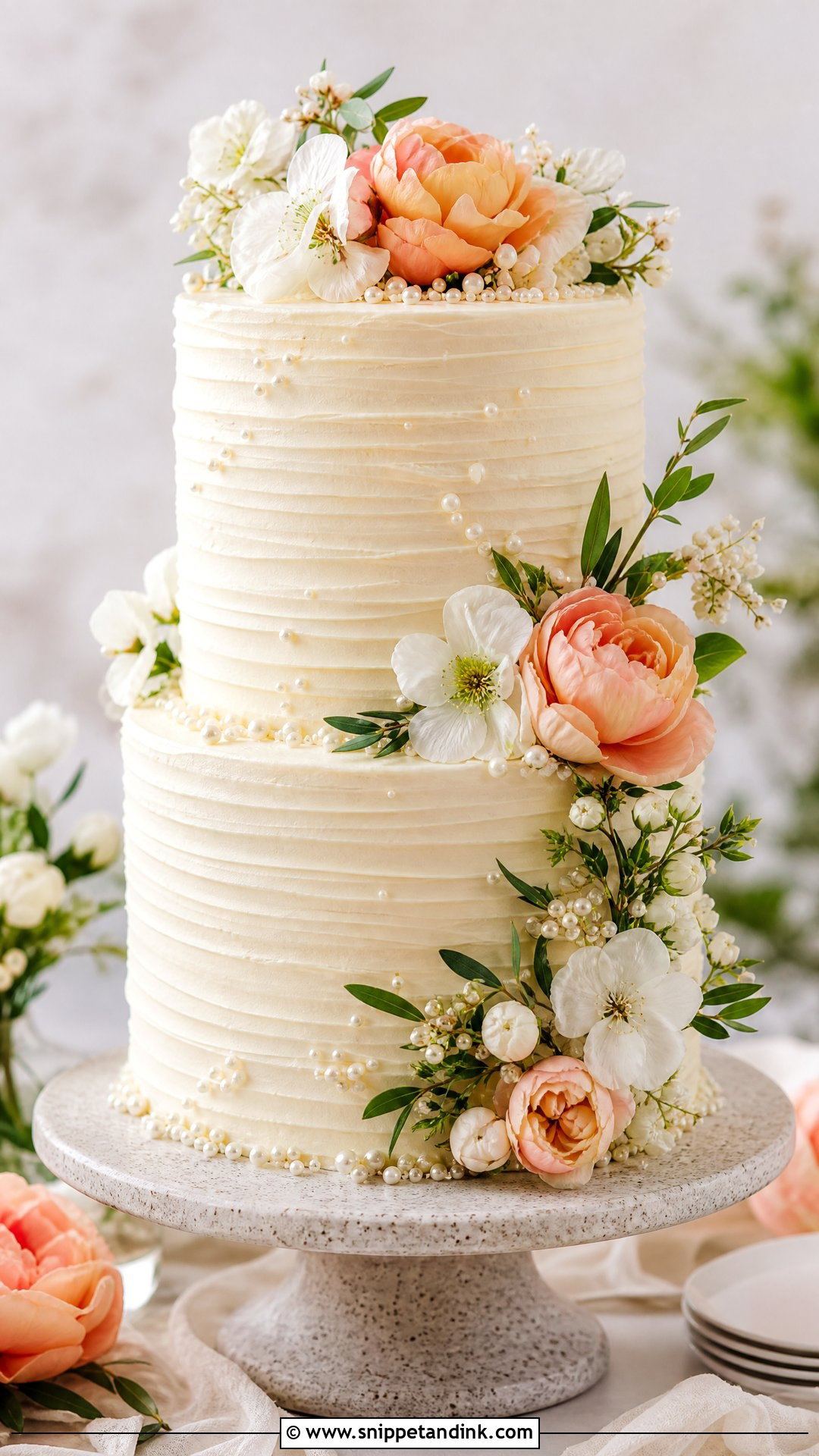
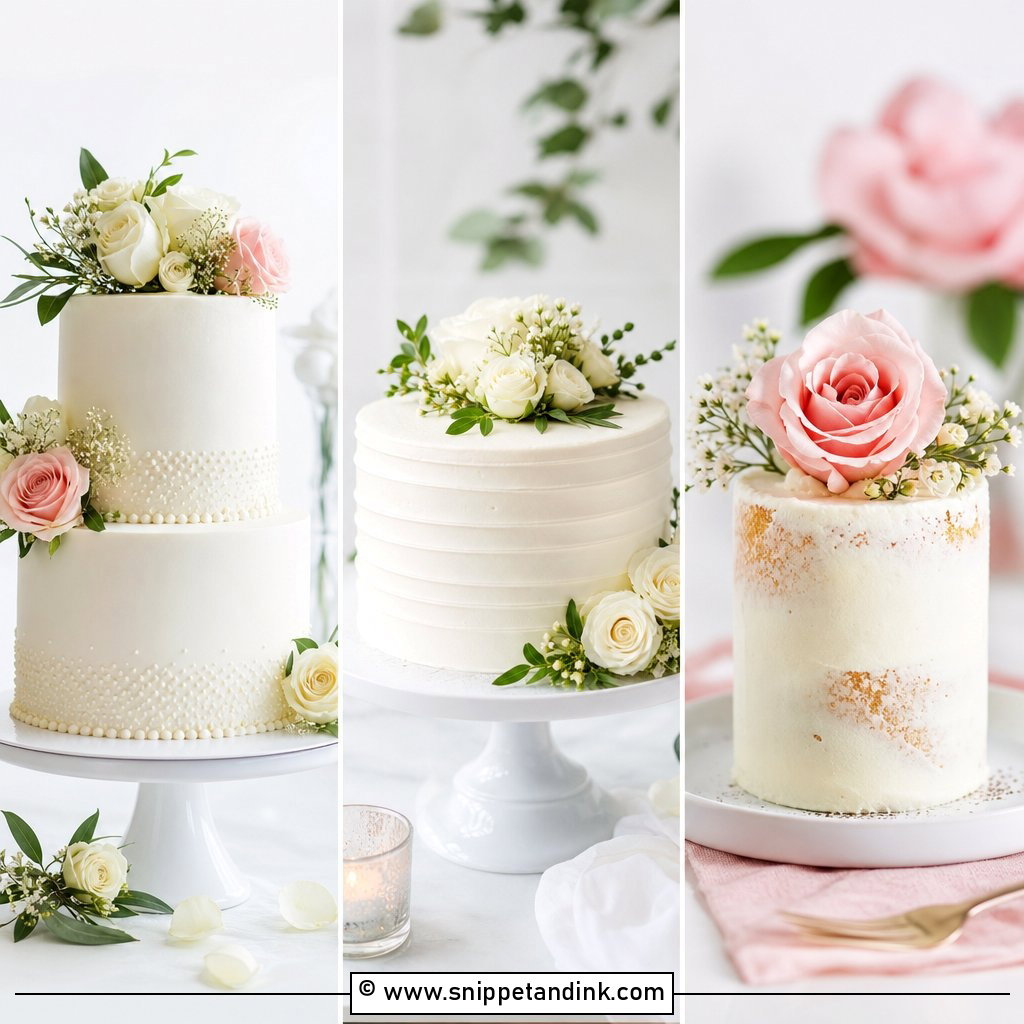
Texture hides small imperfections and survives handling better than a razor-smooth finish, which is a practical reason I like it for venues with stairs or tricky access. Gentle ridges, palette knife strokes, horizontal lines or rustic swirls give movement while still looking finished. It pairs with fresh flowers, greenery, berries or minimal pearl details, in ivory, cream, pale pink or soft sage. Because texture catches light, the cake looks interesting in photos without much decoration at all.
16. Spring Wedding Cake With Tulips
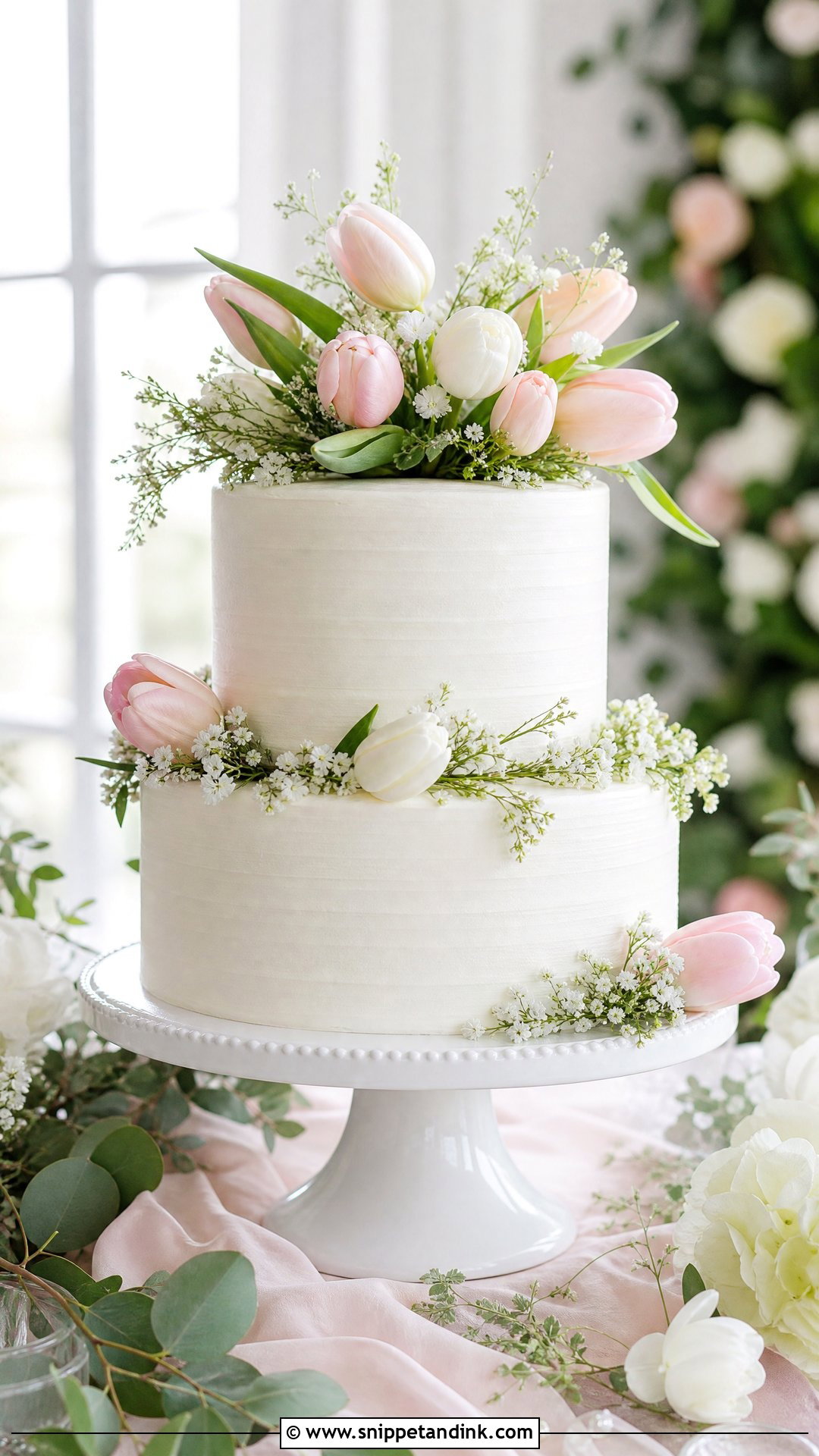
Tulips feel seasonal immediately. Their clean shape looks modern, and white, blush, peach, yellow or lavender can follow your colors. Arranged at the base or between tiers on smooth buttercream, with greenery or small filler flowers, they look graceful. They’re at their best in April and May, and if they’re already in your bouquet the cake ties in naturally. Fresh tulips should be wrapped and kept on barriers, and they keep growing after cutting, so stems may shift a little by evening. Vanilla, lemon, almond or strawberry inside.
17. Spring Wedding Cake With Naked Layers
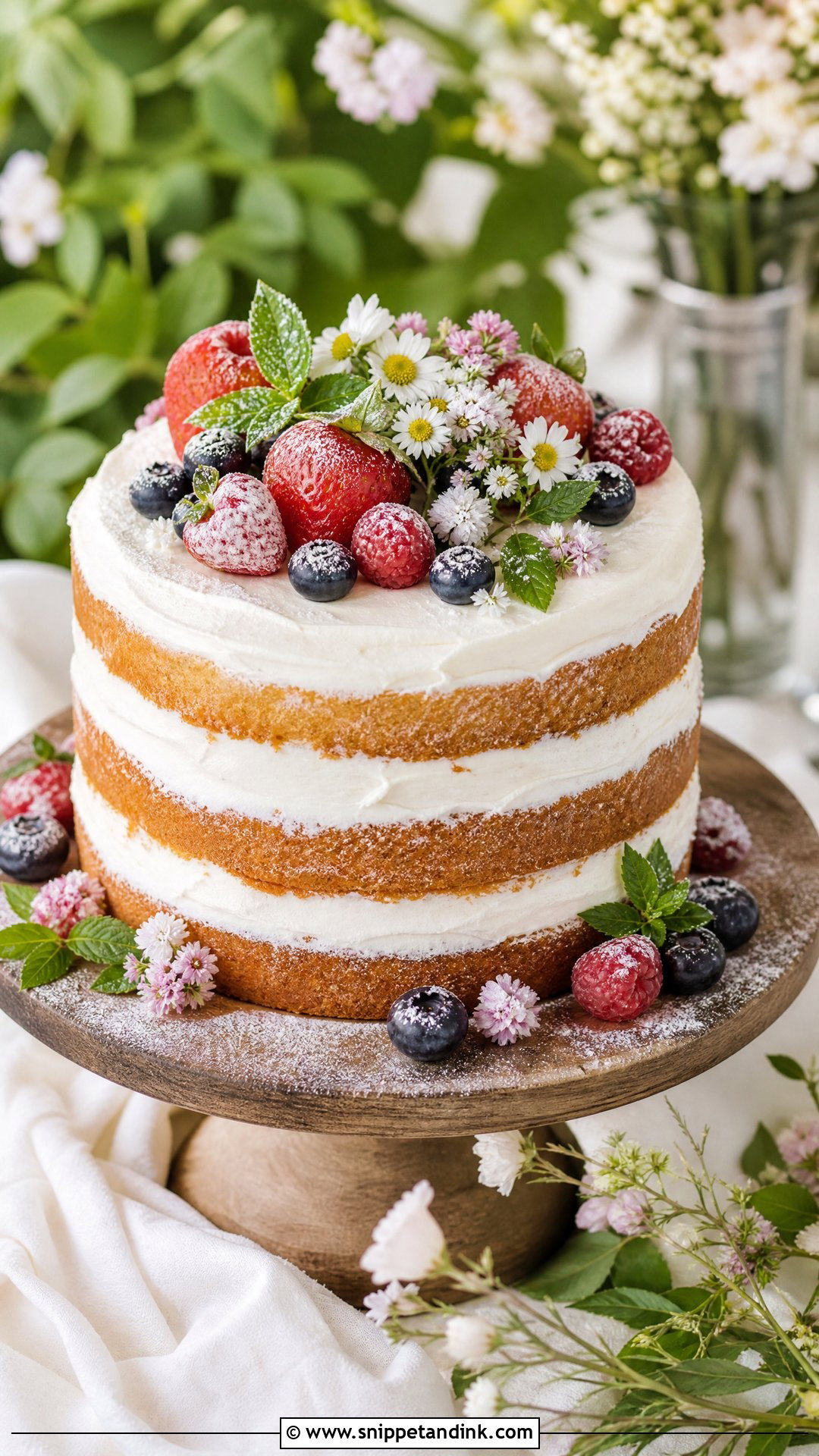
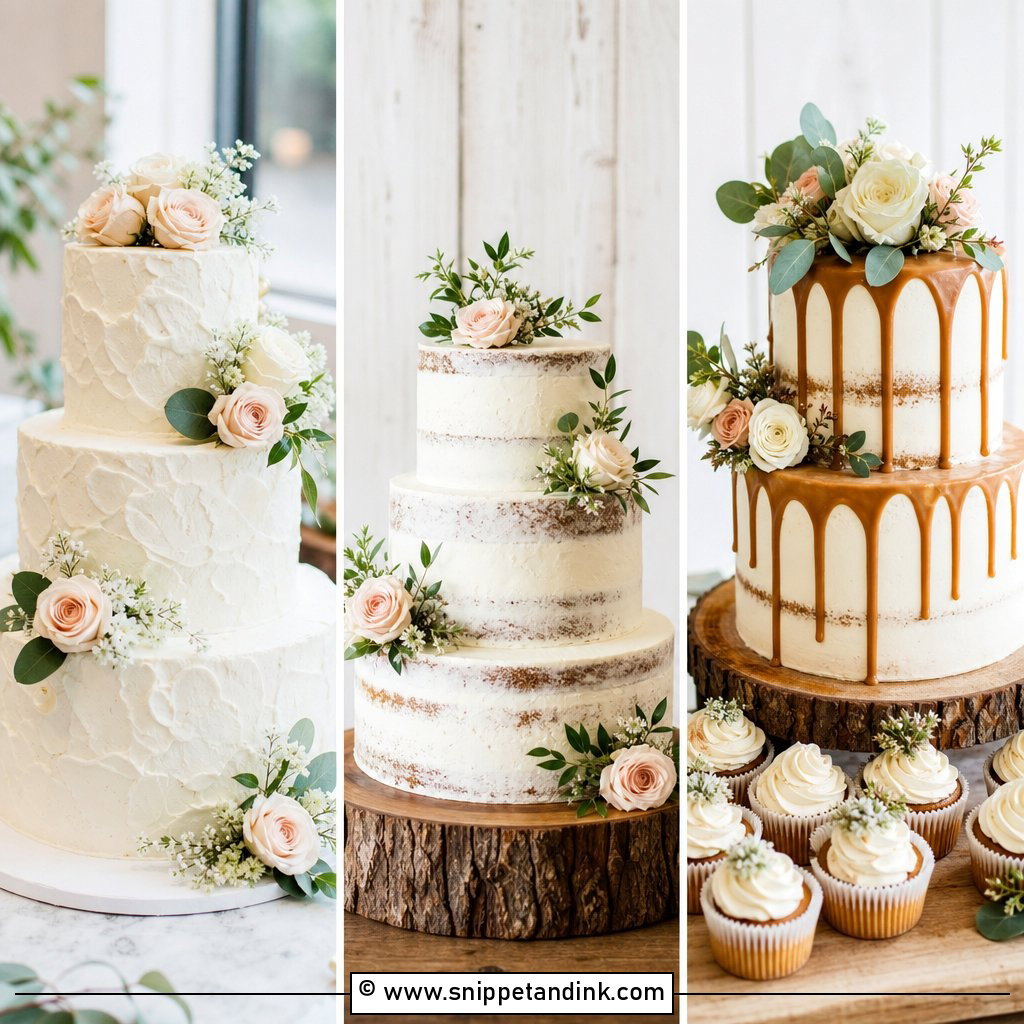
A naked cake shows its layers through a thin scrape of frosting, which looks homemade in the best sense. Fresh berries, flowers, herbs or a dusting of powdered sugar finish it, and vanilla, lemon, carrot, almond or strawberry all work. The lighter frosting also feels less heavy after a meal. The honest trade-off: exposed sponge dries out faster than a fully iced cake, so I brush the layers with a light syrup and ask for it to be set out as close to the reception as possible. Even layers matter more here than with any other style, because every wobble shows. A wooden stand, ceramic platter or plain white stand suits it.
18. Spring Wedding Cake With Pearl Details
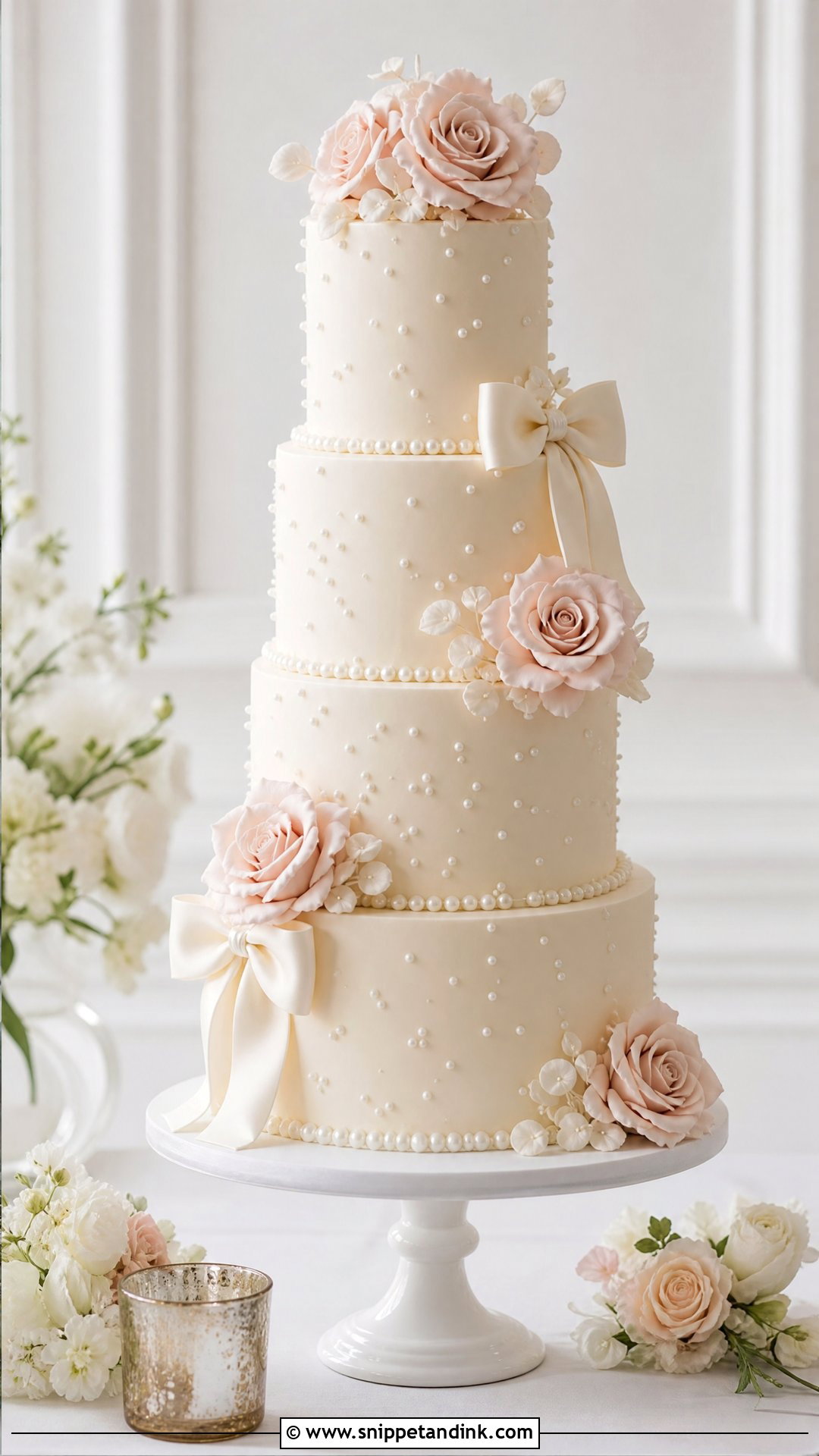
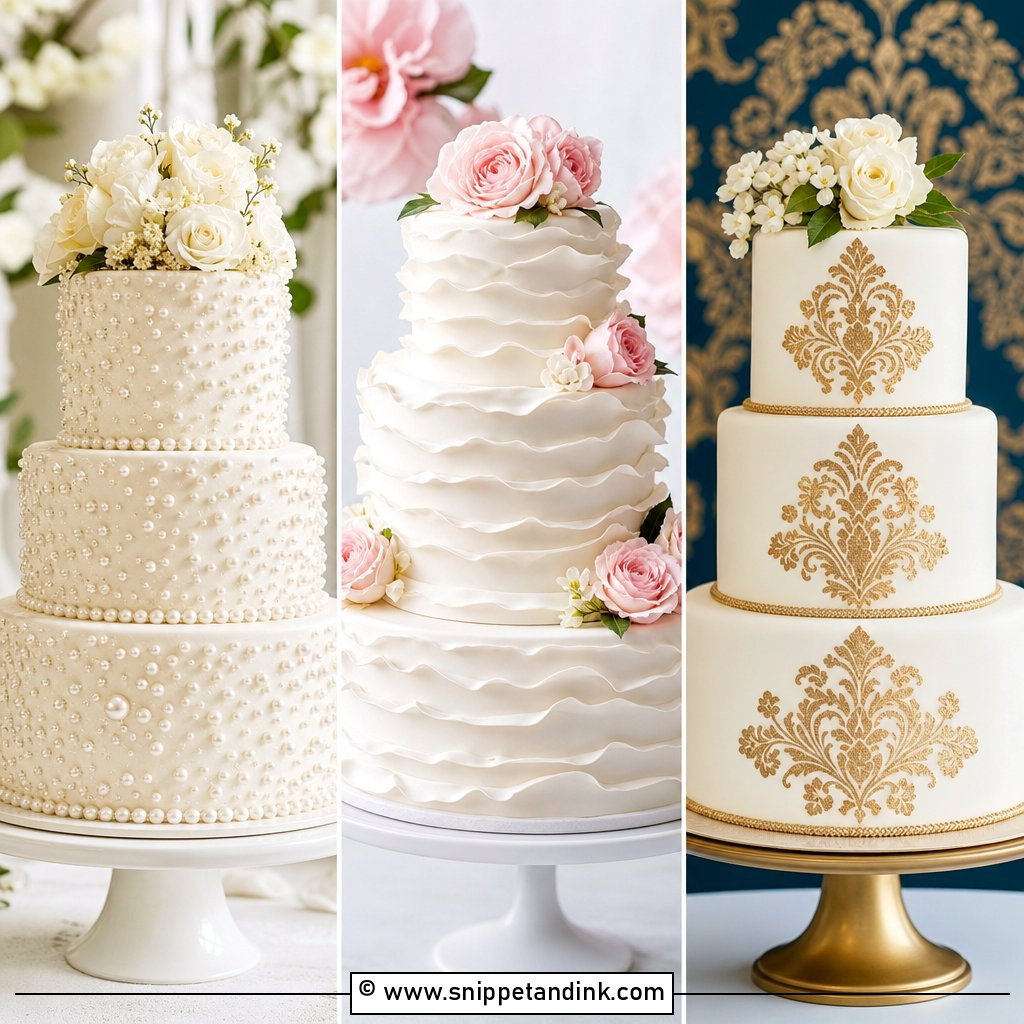
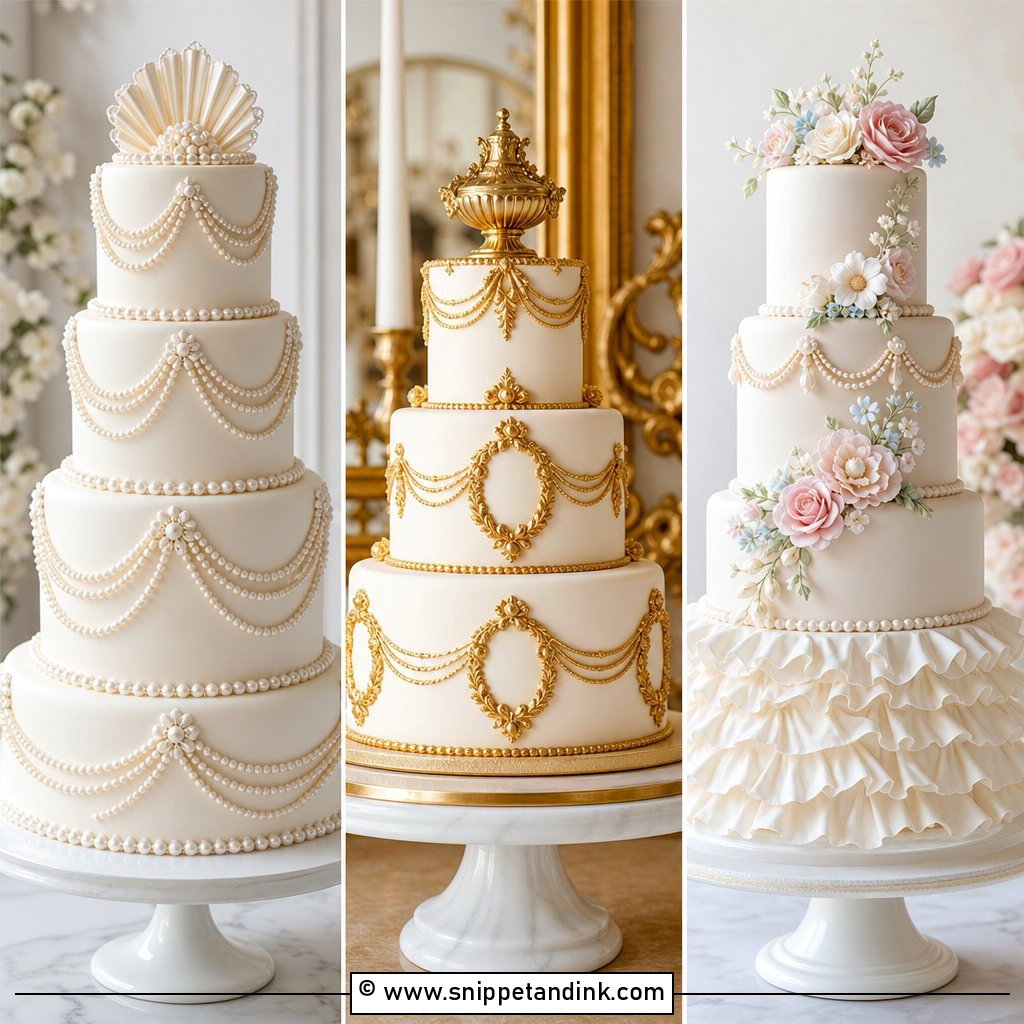
Pearls can be tiny piped buttercream dots, edible sugar pearls or delicate beads circling each tier. On smooth ivory frosting, pastel fondant or vintage piping they add texture without clutter, and a few fresh roses, sugar flowers or a satin-style bow finish the look. Piping hundreds of evenly sized dots by hand takes longer than people imagine, and uneven sizes show up close, so expect that in the quote. Vanilla bean, almond, coconut or lemon suits the refined finish, and the tiny highlight on each pearl catches light subtly in photos.
19. Spring Wedding Cake With Ombre Color
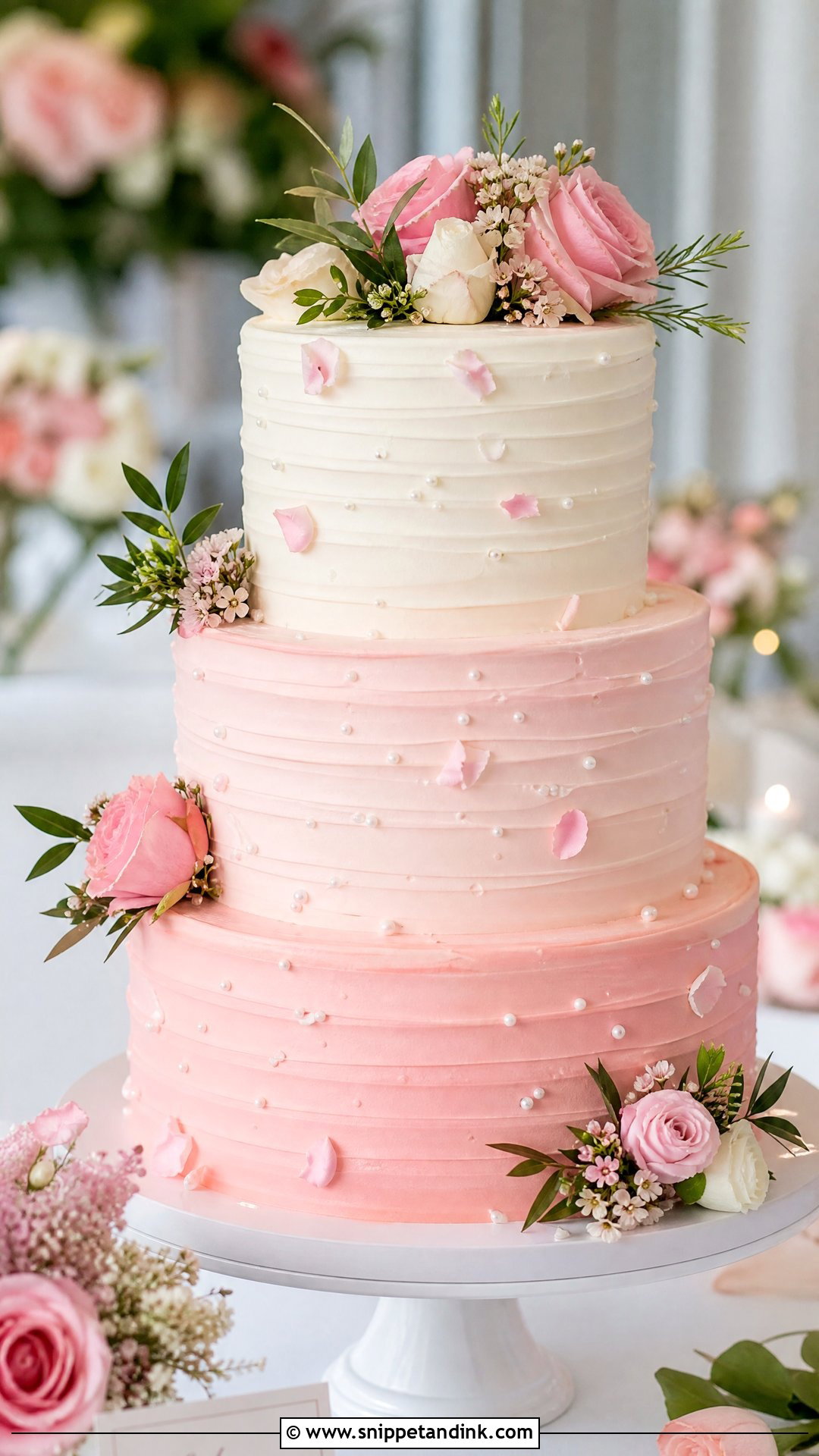
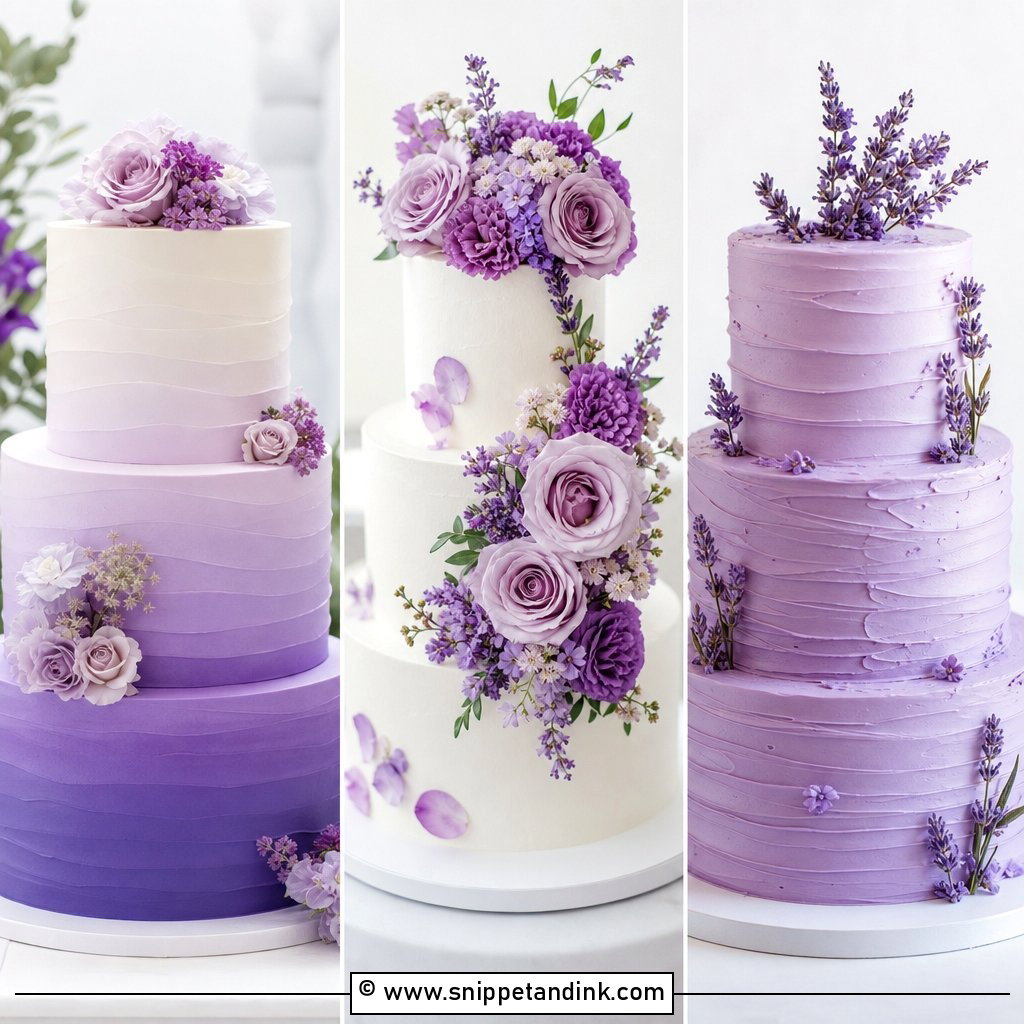
An ombre cake fades from one shade to the next: ivory to blush, white to lavender, pale yellow to cream. Buttercream gives the softest transition. I tint every shade from the same base batch so the steps stay related; mixed separately, the tiers can look like they came from different cakes. Keep decoration to a few fresh flowers, tiny pearls or sugar petals so the color stays the feature. Strawberry, lemon, blueberry or vanilla can echo the palette inside.

20. Spring Wedding Cake With Floral Cake Table
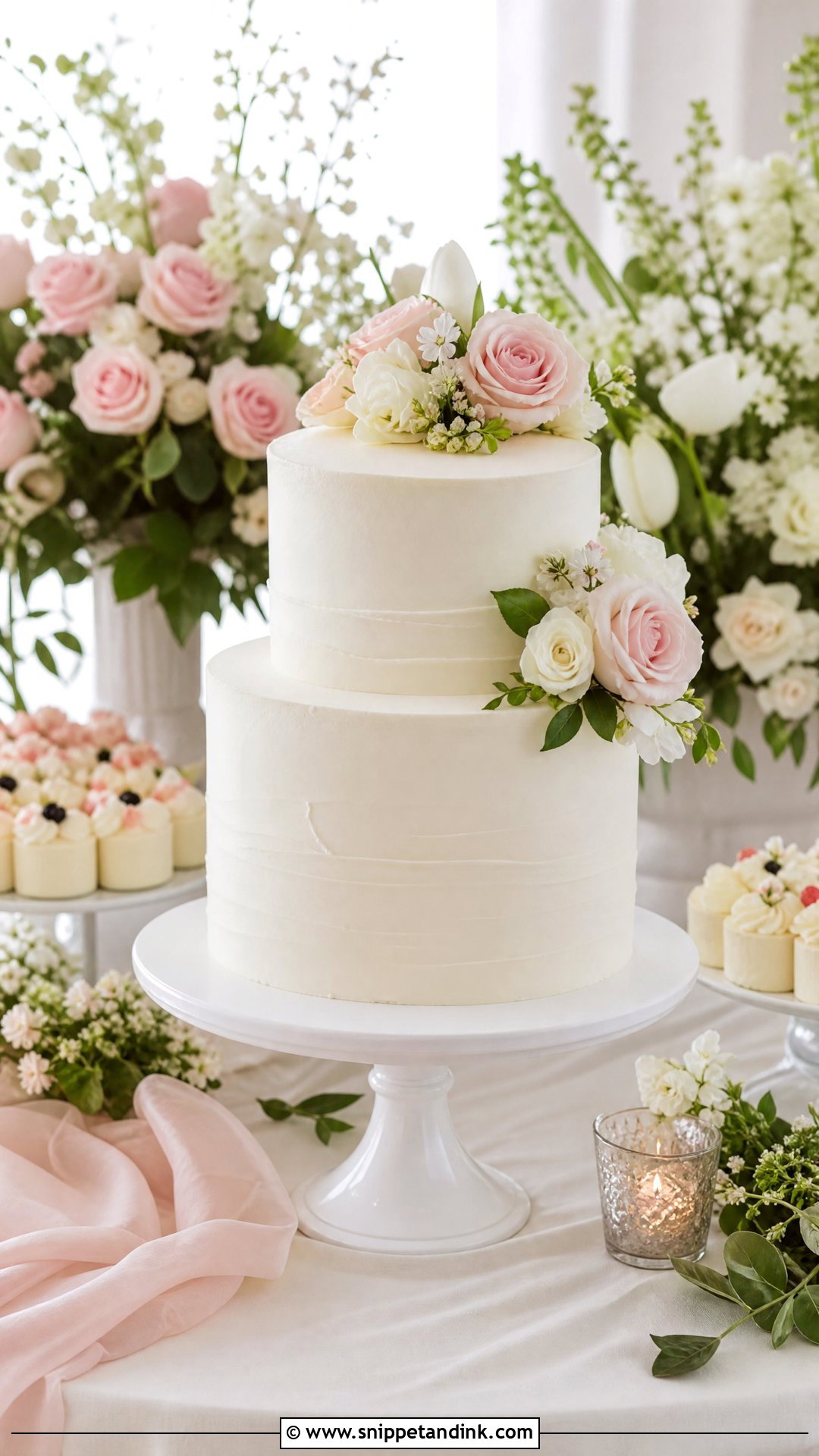
A floral cake table turns the cake into a full display, with flowers, greenery, candles, linens, stands and small desserts around it. The cake itself can stay simple, smooth white buttercream with fresh blooms, because the table carries the impact, which can be a smart way to spend less on the cake. Keep candles a good distance from buttercream; they warm the icing faster than people expect. Use seasonal flowers in soft colors and keep the props balanced, since too many items pull attention from the cake. Done well, it makes even a modest cake feel special and gives you a clear photo moment.
Tier Count, Portion Size and the Guest List
Couples often choose the number of tiers from a photo and only later find the cake doesn’t feed everyone, or feeds twice as many as needed. Bakers usually count in wedding portions: slim fingers about an inch wide and two inches across, smaller than the wedges people cut at home.
As a rough guide for round tiers about four inches tall, a six-inch tier gives around a dozen wedding portions, an eight-inch around two dozen, a ten-inch nearer forty and a twelve-inch about fifty-five. Every baker’s chart differs a little, so treat these as a starting point rather than a promise.
- Need height but not servings? A dummy tier iced to match adds a tier with less cake, though decorating it takes the same labor.
- Need servings but want a small display cake? A plain kitchen cake cut in the back makes up the numbers.
- Ask the venue whether they cut and plate the cake and whether there’s a cutting fee. Someone on the night has to know how to take a stacked, doweled cake apart.
Light Sponge, Soft Color and a Cake That Suits the Room
Spring cakes come down to fresh detail and soft color. Blush roses, pearls and smooth buttercream keep things classic, while pressed flowers, watercolor painting, texture or ombre lean more modern. Flavor deserves the same attention, and lemon, berry, lavender honey, almond, vanilla bean or a light fruit filling all suit the season. Above all, the cake should feel connected to your flowers, venue and the mood of the day. Book a tasting, bring your florist’s proposal, and ask your baker plainly how the design will hold up in your particular room.
You'll Like These Ideas:






Leave a Reply