
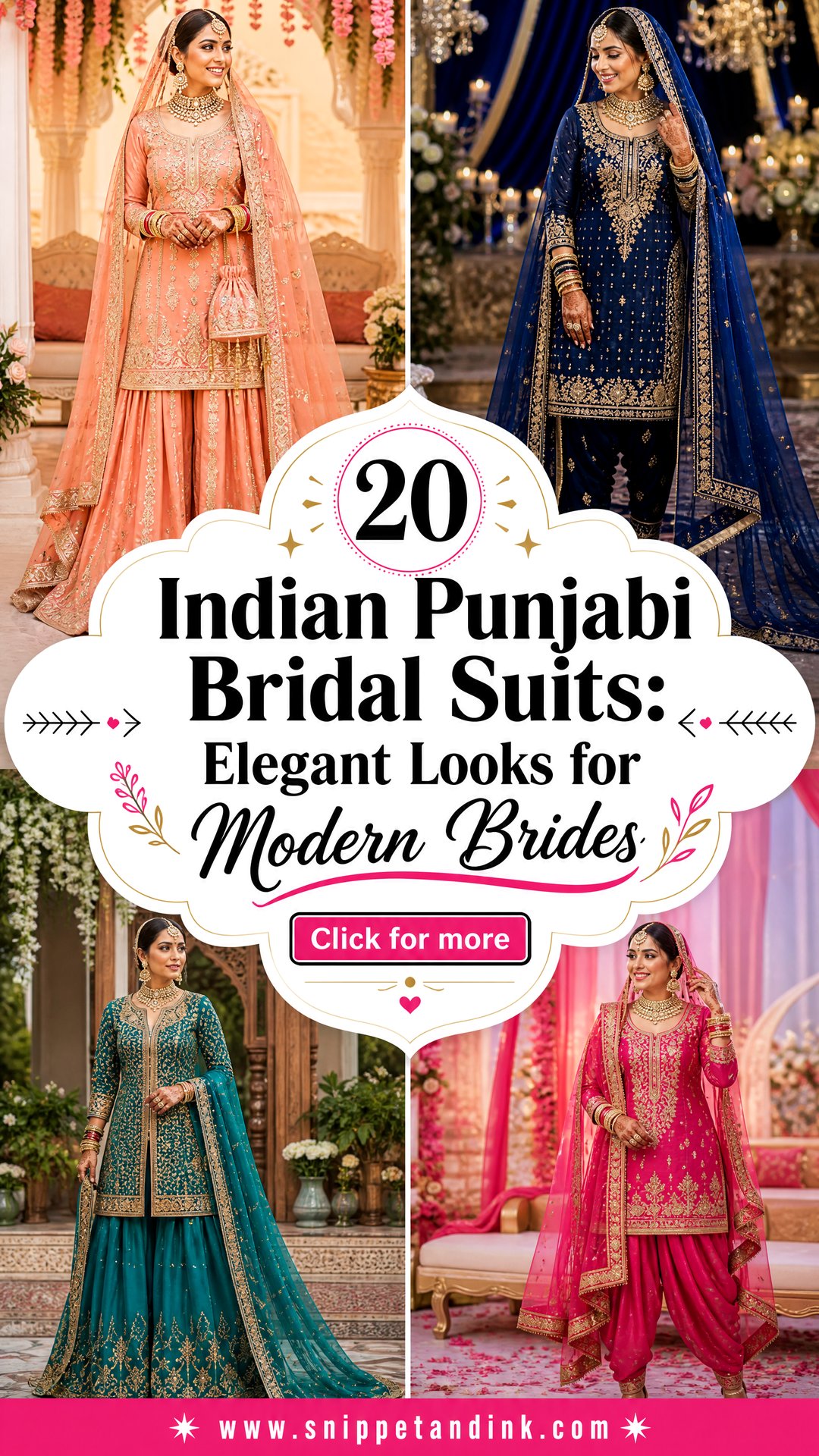
A Punjabi wedding asks a bride to dress for five very different rooms: the mehndi, the Jaago, the sangeet, the Anand Karaj and the reception. That’s where Indian Punjabi bridal suits earn their place. They let you dance in one and sit cross-legged through a ceremony in another without changing who you look like. Brides are still drawn to big flared bottoms, phulkari and deep Punjabi colors, with softer pastels for daytime. When I put a suit together, I’m watching three things beyond the embroidery: whether the bottom lets you move, whether the dupatta stays where it’s pinned, and whether the shoes will last the night.
Dressing the Mehndi, Jaago and Anand Karaj Differently
The functions ask for different things from a suit, and I plan the wardrobe around what each one physically involves before I think about color.
- Mehndi: short or elbow sleeves, washable fabric and nothing heavy at the wrists while the henna dries.
- Jaago and sangeet: a roomy Patiala, sharara or dhoti bottom, a pinned dupatta and juttis already broken in.
- Anand Karaj: long sleeves or three-quarter sleeves, a modest neckline, a head-covering dupatta and a bottom you can sit cross-legged in on the floor.
- Reception: the place for capes, tissue silk, velvet in winter and heavier jewelry, since you’ll mostly stand, greet and pose.
Brides often want the heaviest suit for the ceremony itself. I usually suggest the opposite: the ceremony is long, seated and close up, so fine embroidery and comfort pay off there, while the boldest work can wait for the evening.
1. Red Patiala Punjabi Bridal Suit
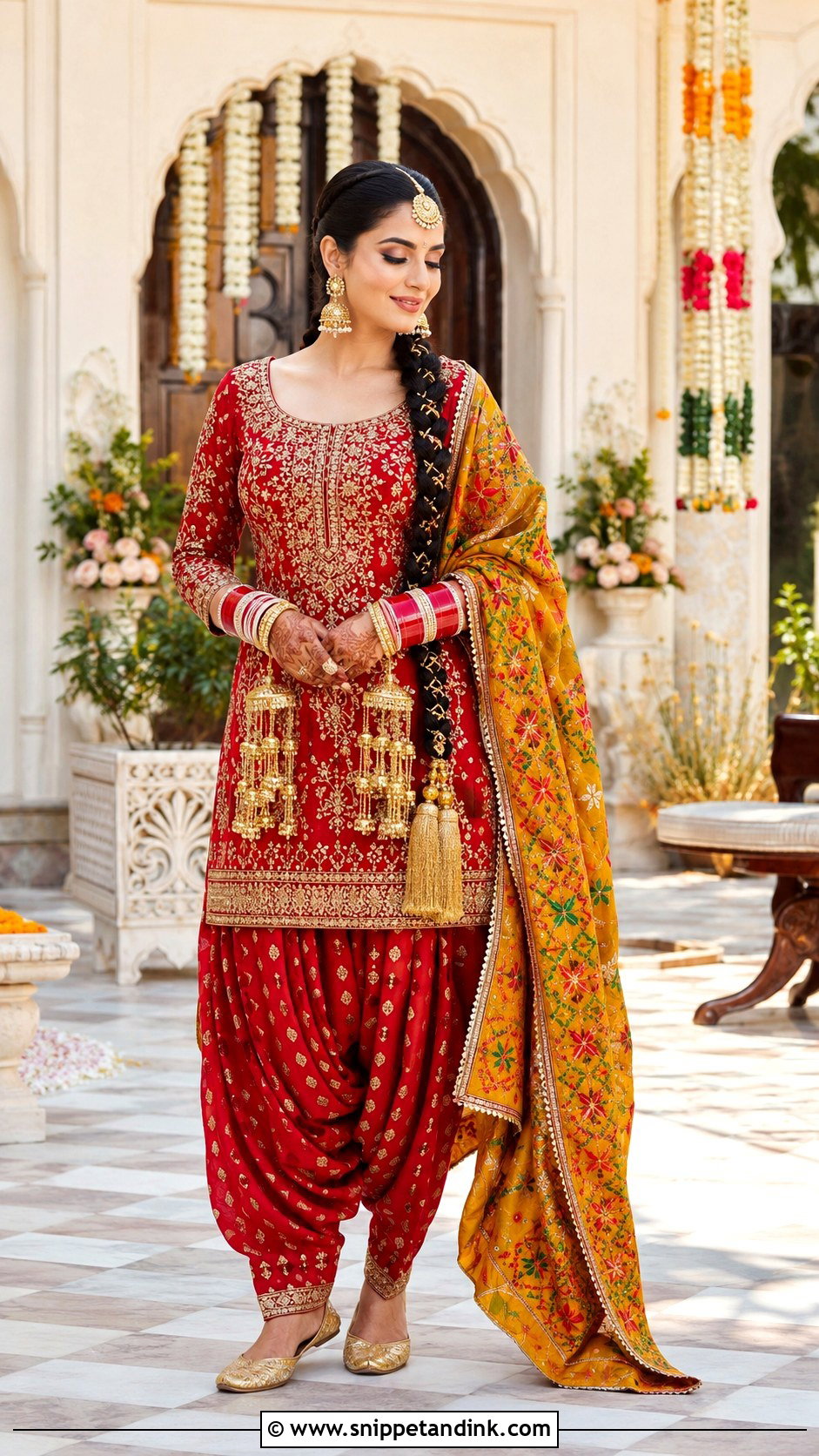
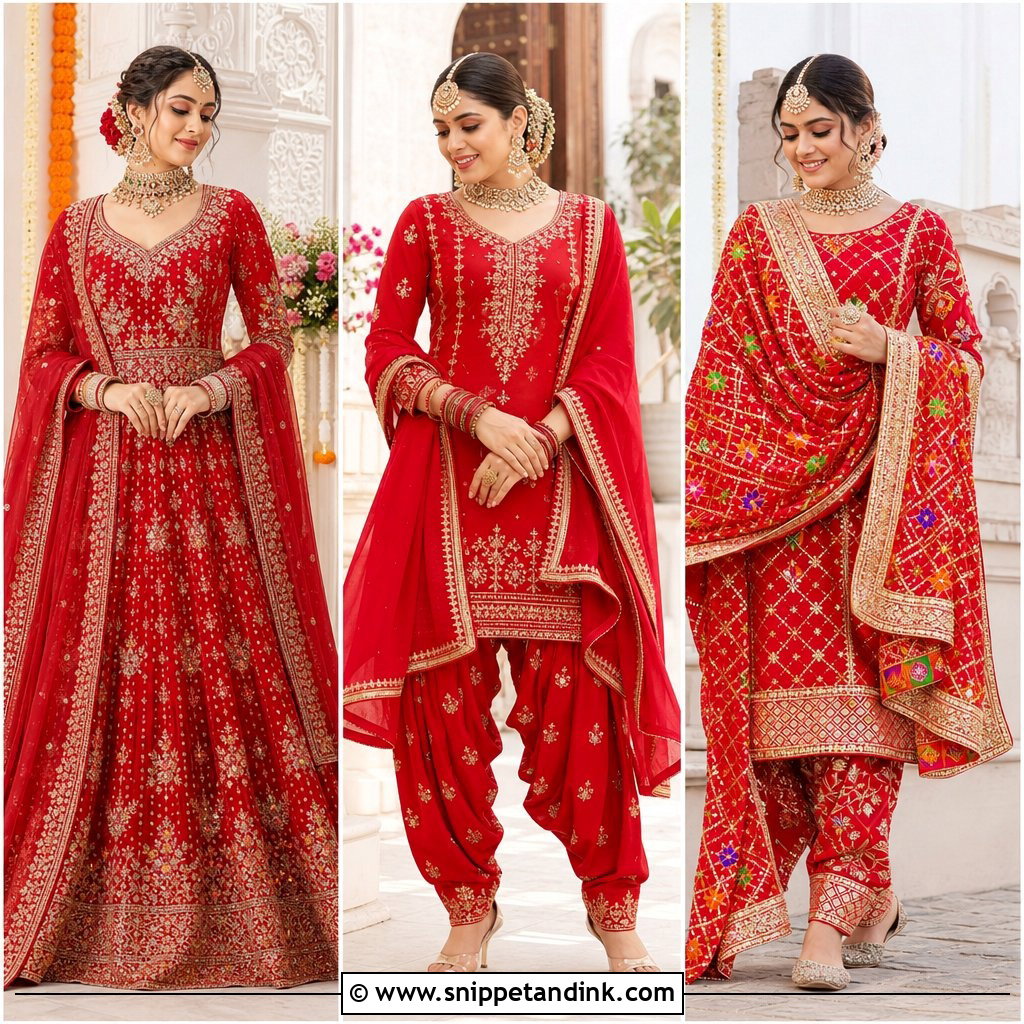
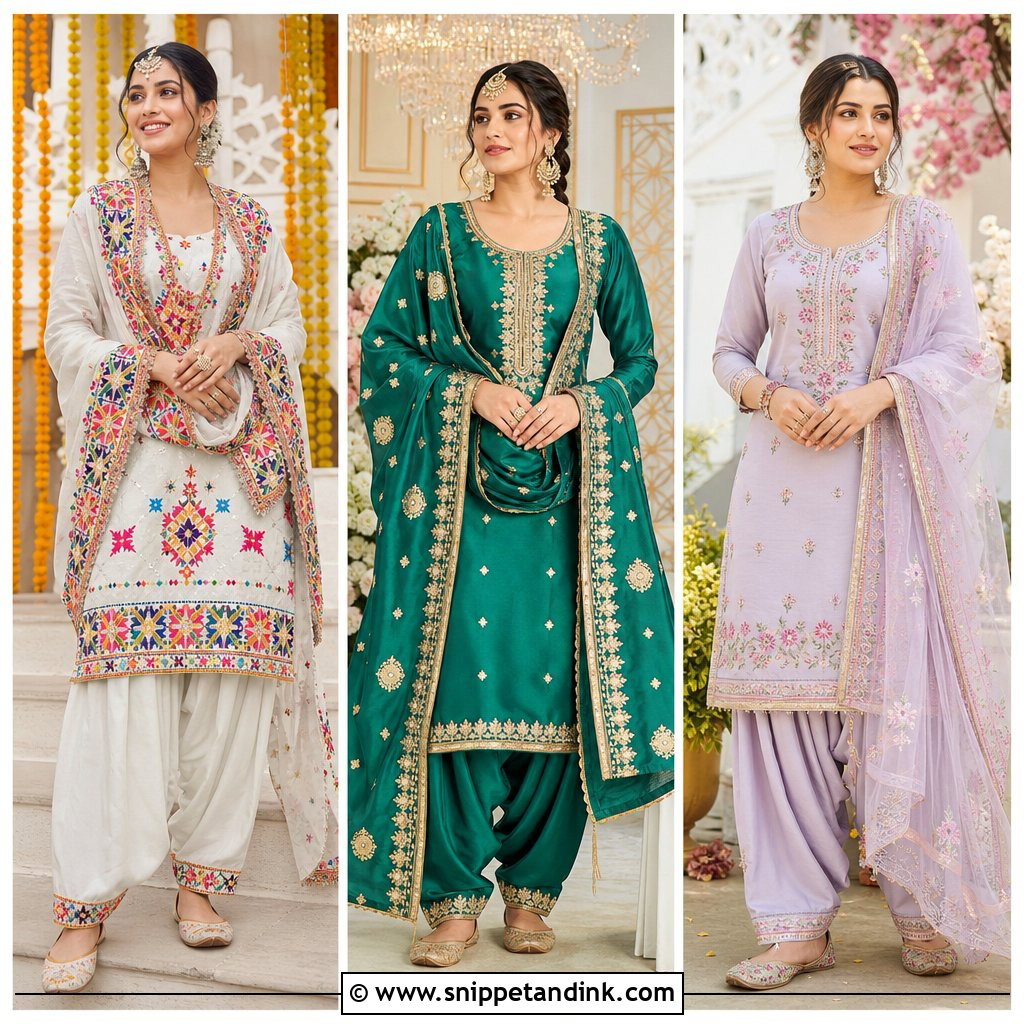
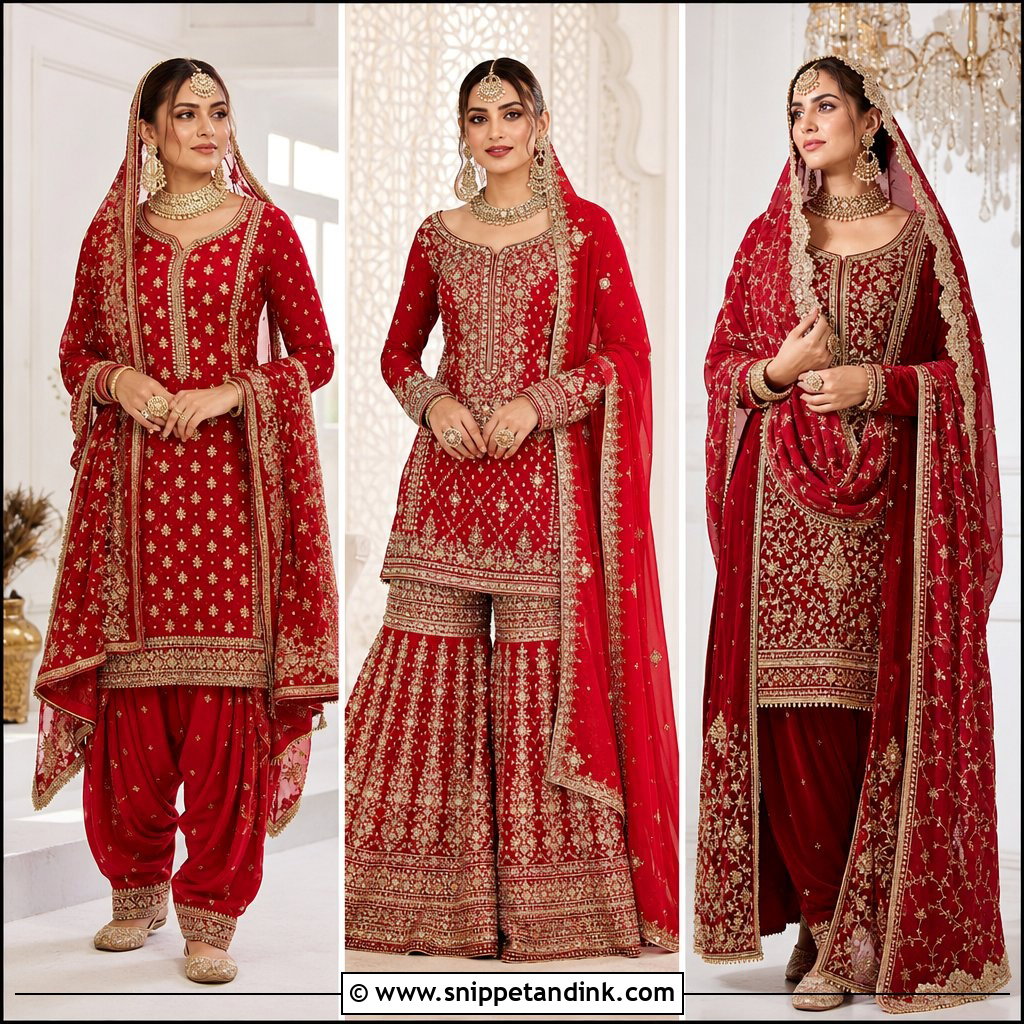
Red Patiala is the suit most families picture first, and it earns that. The volume of the salwar comes from its pleats, so I ask the tailor for a properly full Patiala rather than a slim imitation that hangs flat. A knee-length kameez with gold zari, dabka or floral work, shaped slightly at the waist, balances all that fabric below. Drape a red or mustard phulkari dupatta over one shoulder so the embroidery on the front stays on show. Gold juttis, chooda, kalire, jhumkas and a medium maang tikka complete it, and a long paranda woven into a braid is the detail guests will recognize from across the room.
2. Maroon Velvet Anarkali Punjabi Bridal Suit
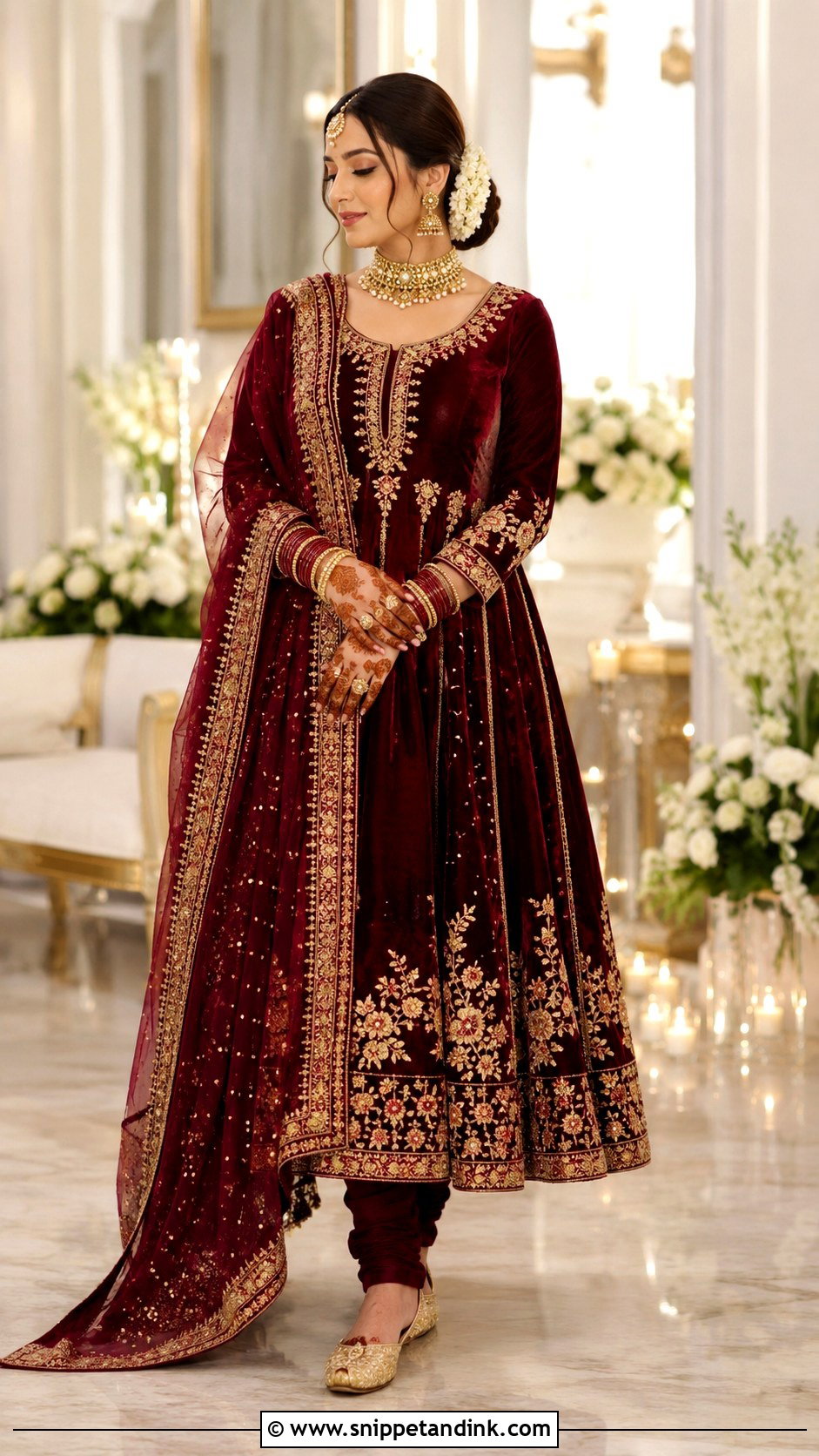
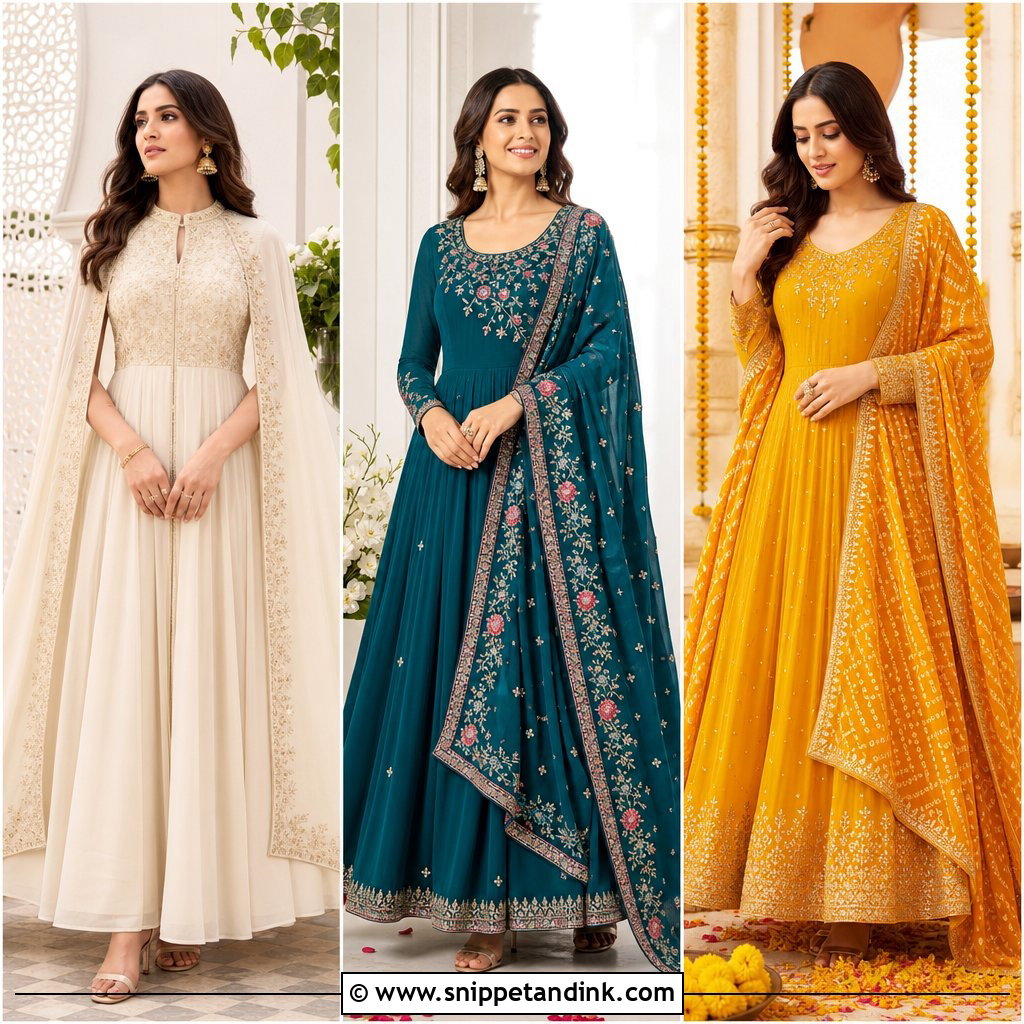
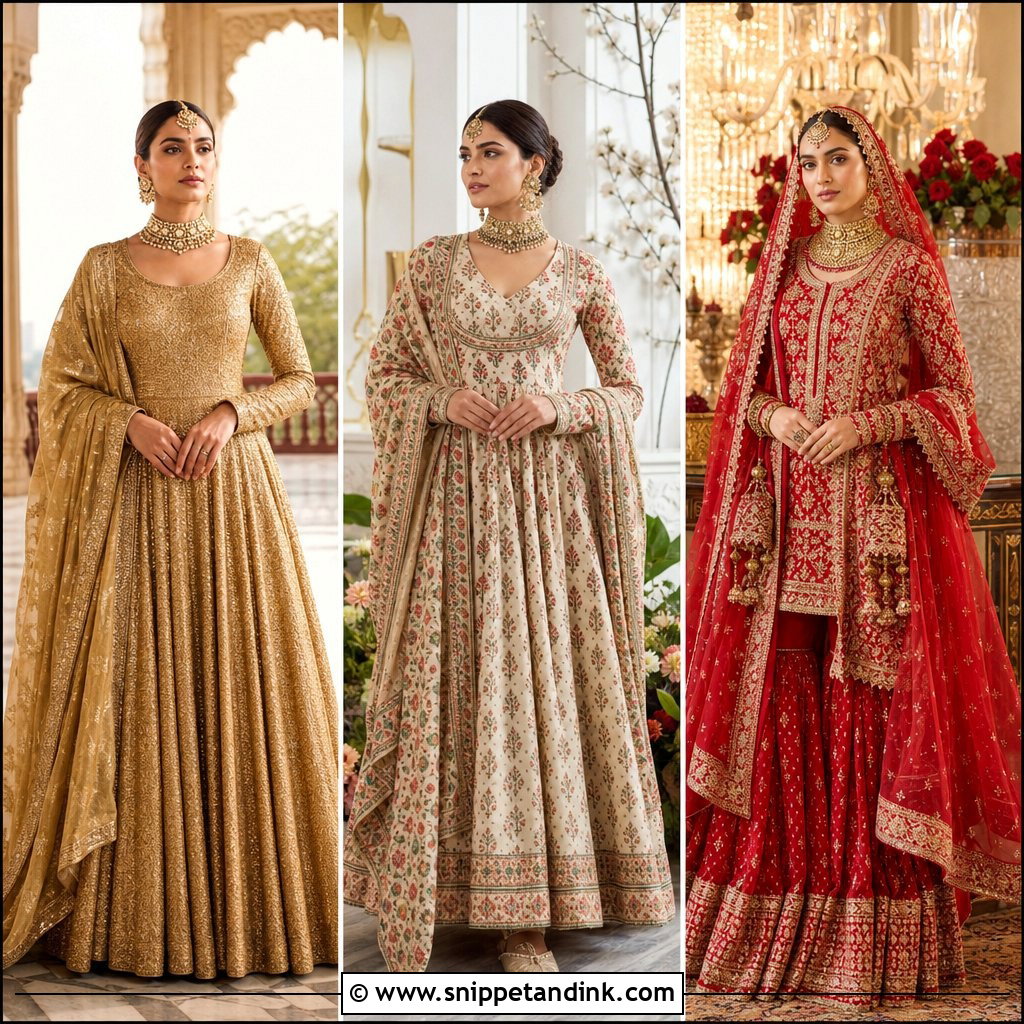
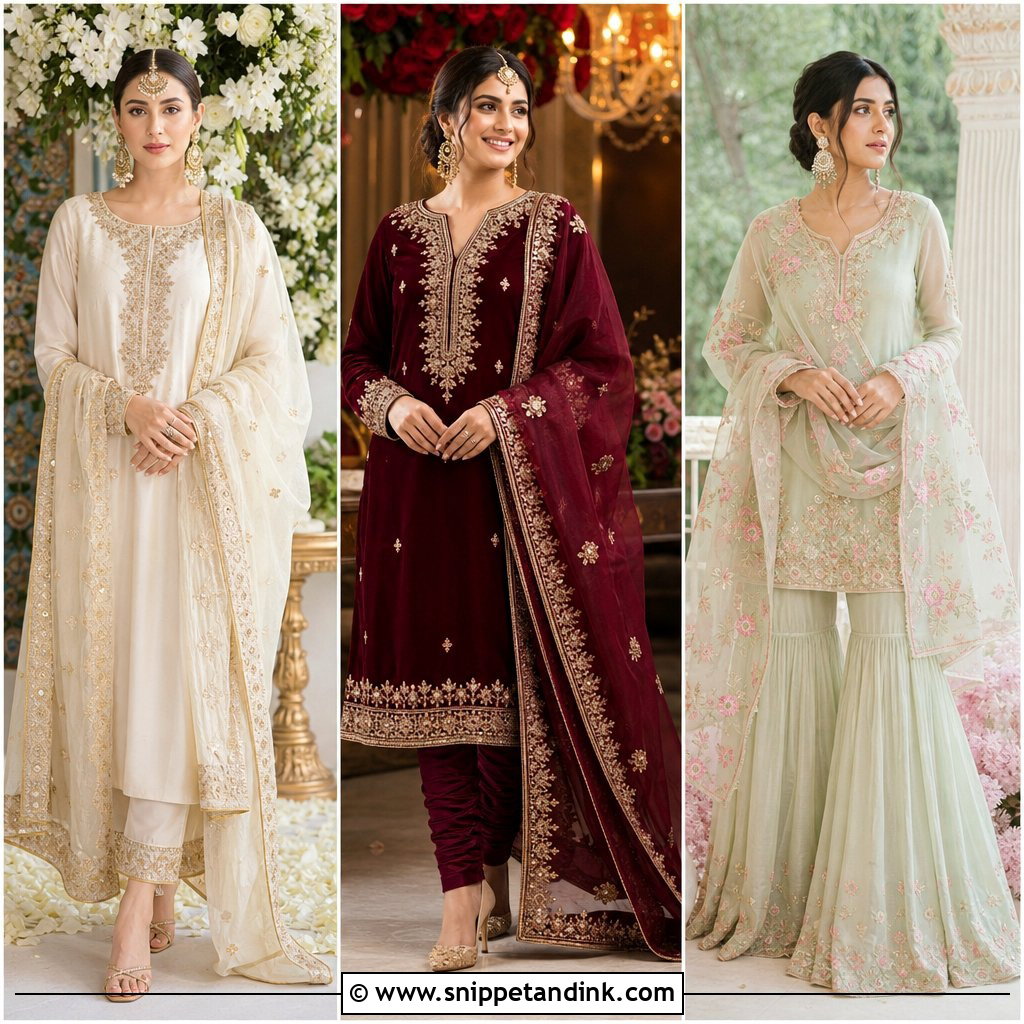
Velvet only makes sense when the weather is cool; in a warm hall it gets heavy within the first hour. For a winter function, a maroon velvet Anarkali gives you a regal look without a separate lehenga. I keep the embroidery to the neckline, cuffs and hem and pair it with silk churidar underneath. The dupatta should be net, never a second velvet layer, or the shoulders bulk up. Antique gold jhumkas, a kundan choker, stacked bangles and embroidered juttis. Velvet shows every fitting fault at the shoulder seam, so that’s where I spend the most time at fittings, along with a hem that clears the floor.
3. Pink Phulkari Punjabi Bridal Suit
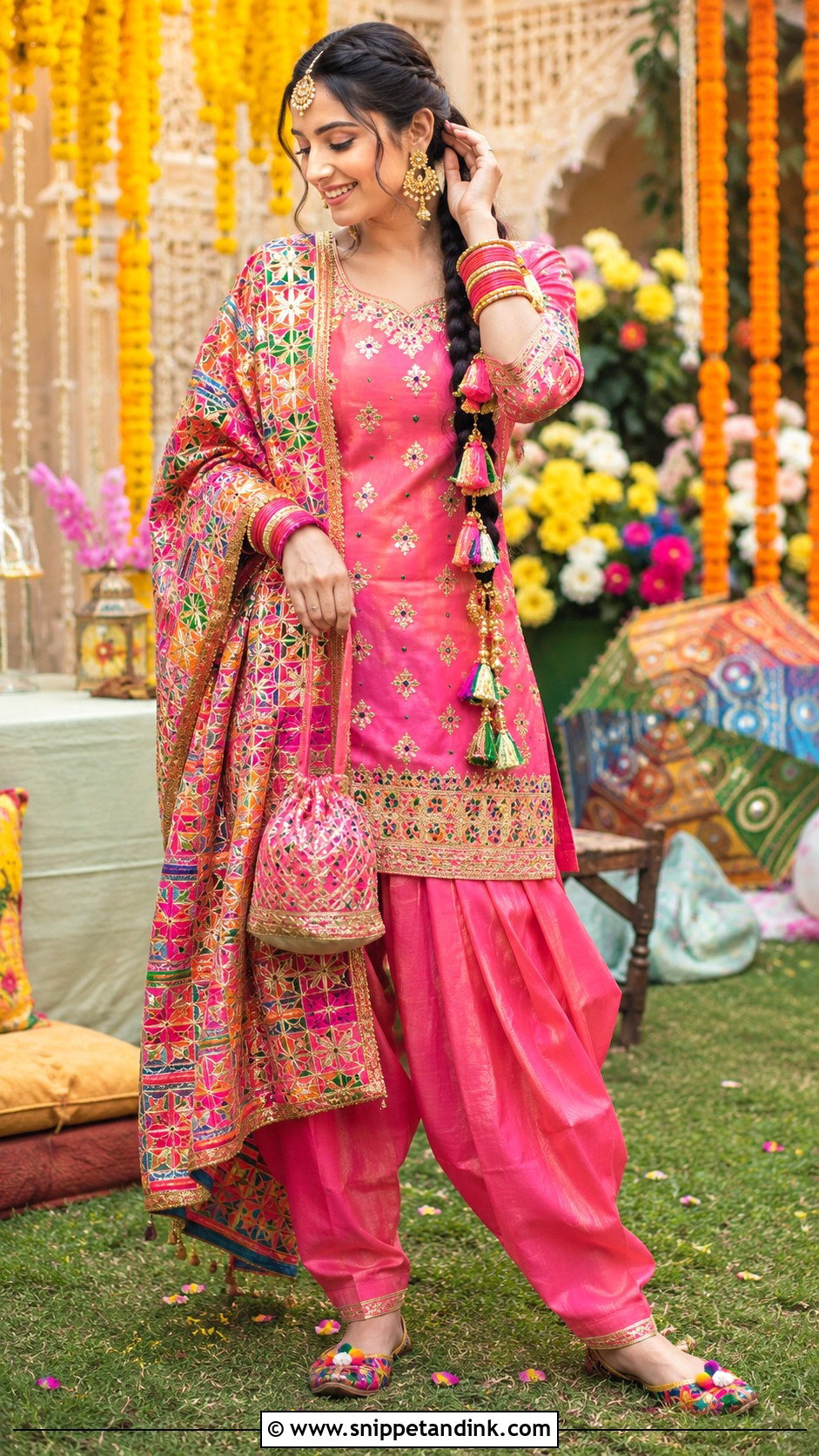
Phulkari is pre-wedding happiness in thread form, and pink is its natural ground. Build the outfit on a short silk kameez with floral threadwork across the front, sleeves and borders; orange or green stitching on pink gives the motifs definition. Carry the dupatta across both arms for photos, then pin it over one shoulder before the dancing starts, because an unpinned phulkari slides off the first time you raise your arms. Multicolor juttis, glass bangles and a potli that repeats one thread shade finish it. A paranda braid suits this suit far better than a formal updo, and makeup should stay fresh enough to let the needlework lead.
4. Emerald Green Sharara Punjabi Bridal Suit
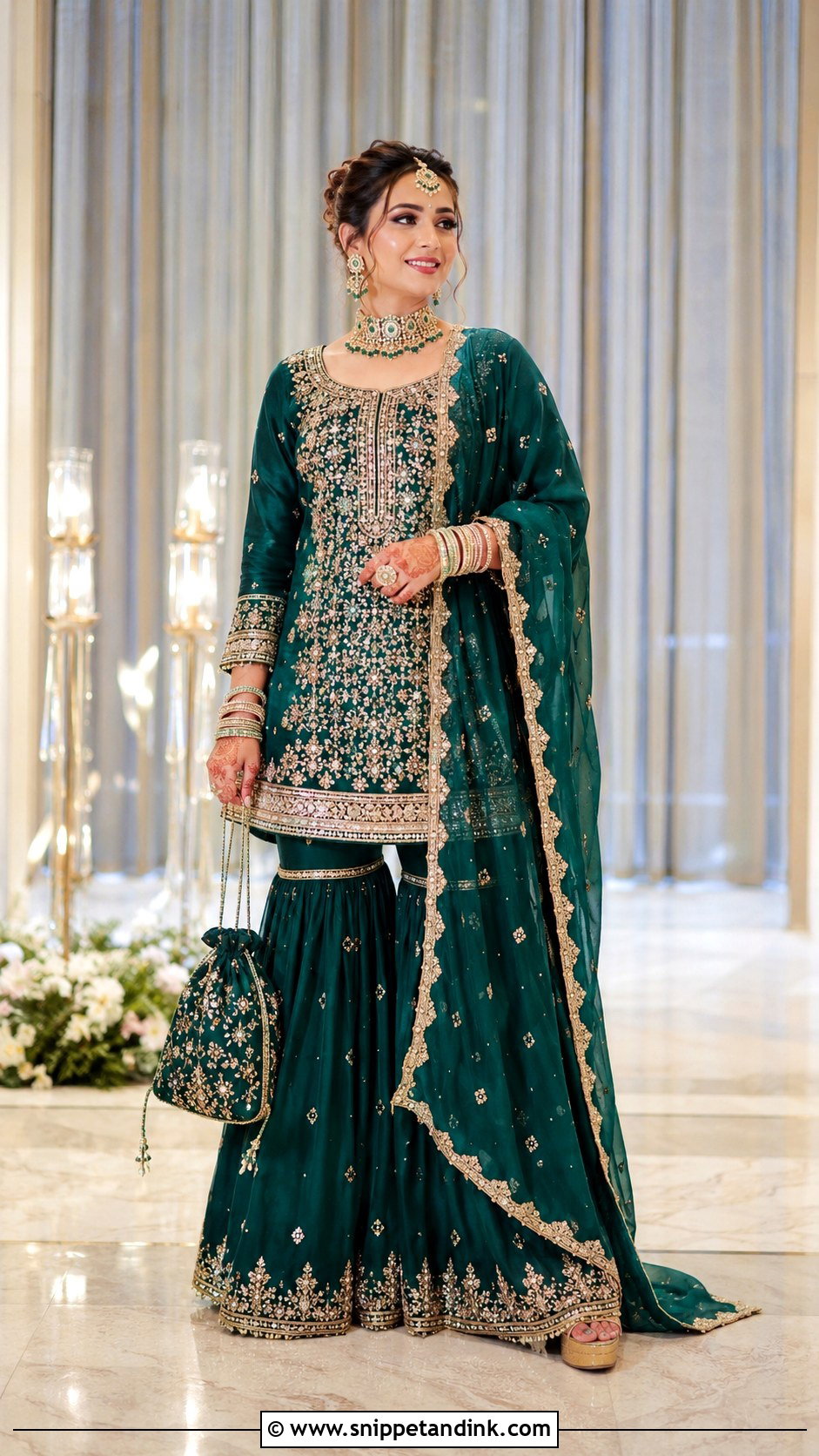
Emerald sharara is a sangeet outfit, built for impact under evening lights. The kurta should be short and fitted, with gold sequin, zari or gota work, and the sharara high-waisted so it flares evenly from the hip. I check the flare at a fitting by having the bride walk up a step: if she has to lift the fabric with both hands, it’s too long. A sheer green dupatta with a scalloped border softens the strong line. Kundan choker, metallic bangles and gold platform juttis give height that stays stable on a dance floor. With this much color below, keep hair controlled in a center-parted bun.
5. Ivory Gharara Punjabi Bridal Suit
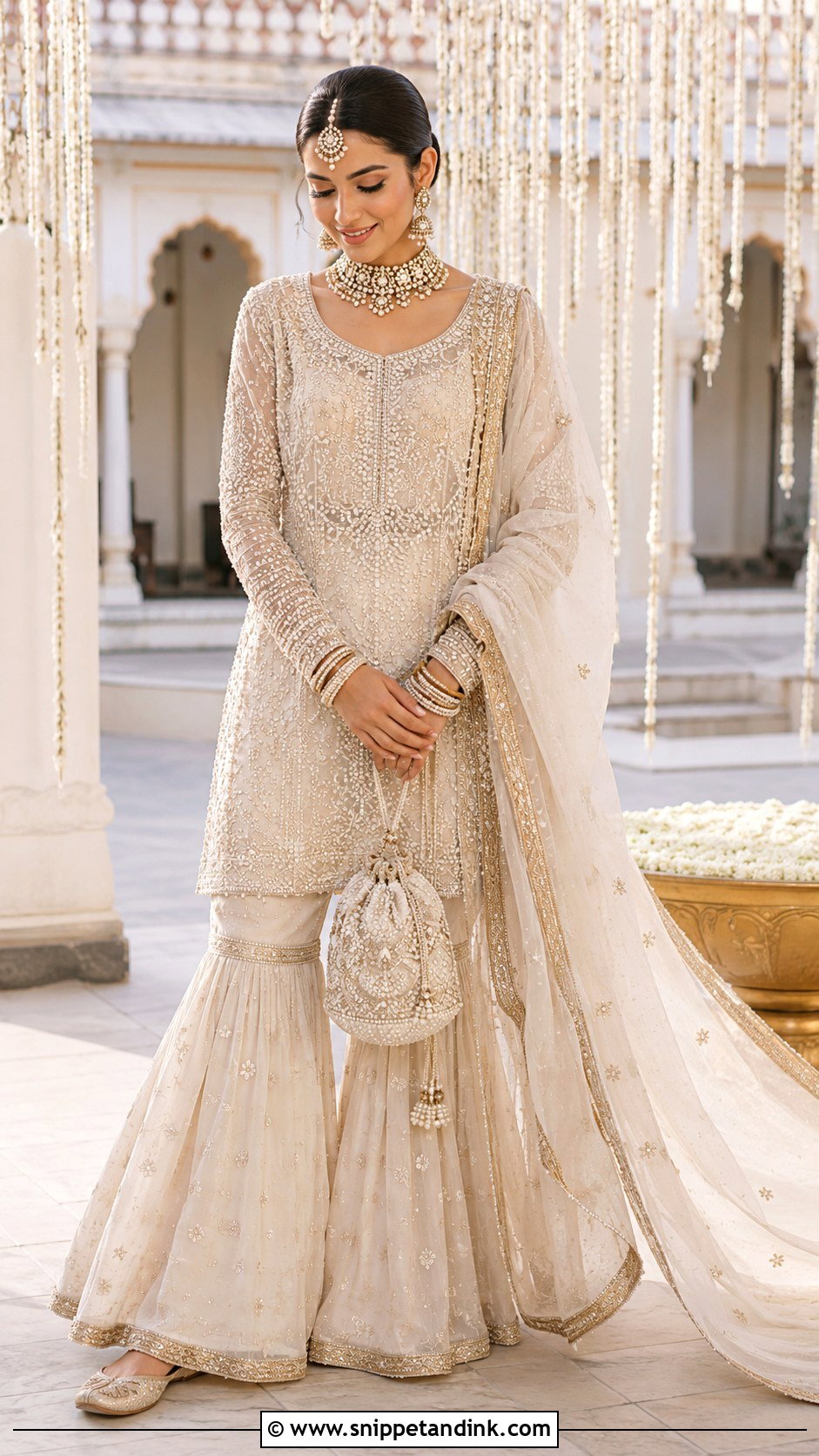
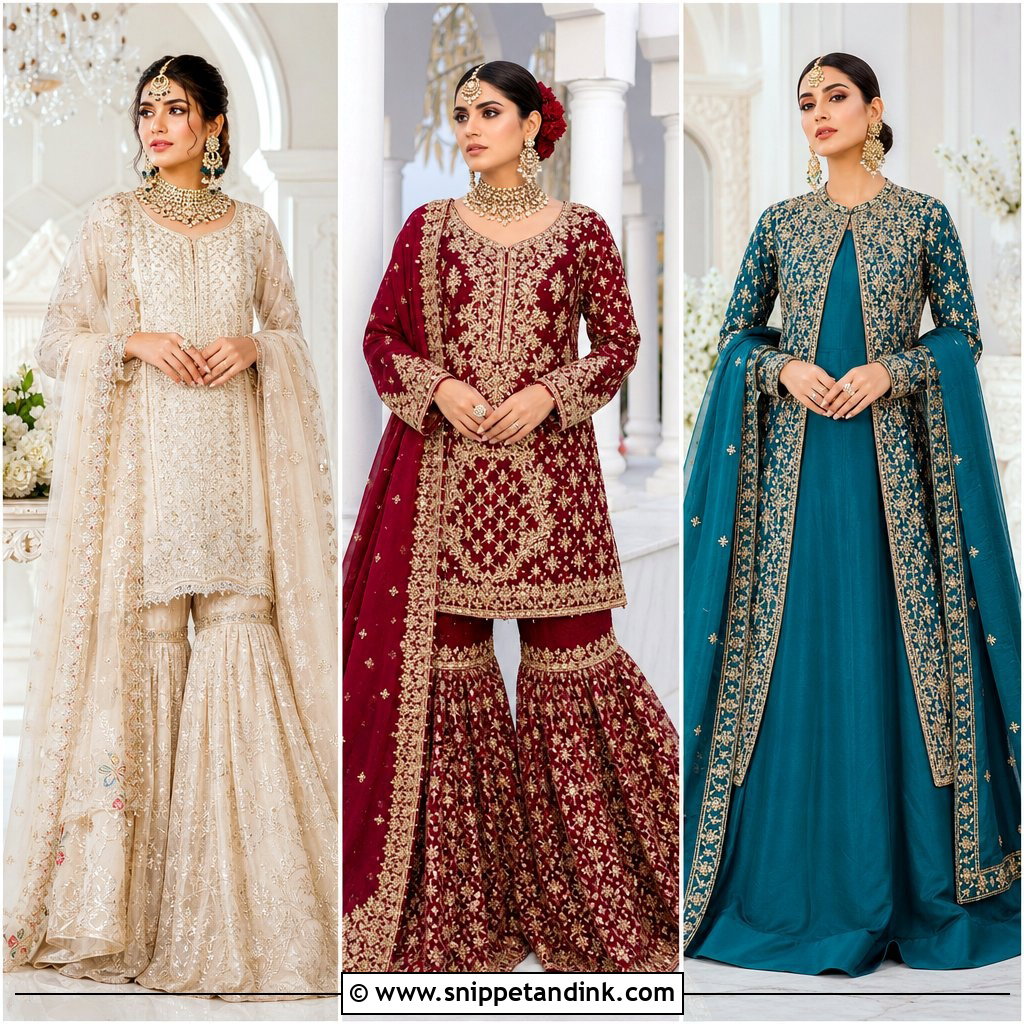
Ivory gharara is my pick for a daytime bridal function when the bride wants light colors without looking like a guest. The construction matters here: a gharara is fitted through the thigh and flares at the knee, and the embroidered band at that joint is what makes it read as a gharara instead of wide pants. A structured short kurta with pearl, sequin and resham work keeps the top crisp. Pin the organza dupatta firmly over the head or shoulder. Pearl kundan, gold juttis and ivory bangles keep the palette calm, and one touch of emerald or pink flowers stops it going flat. Ivory forgives nothing in tailoring, so loose seams show immediately.
6. Mustard Mehndi Punjabi Bridal Suit
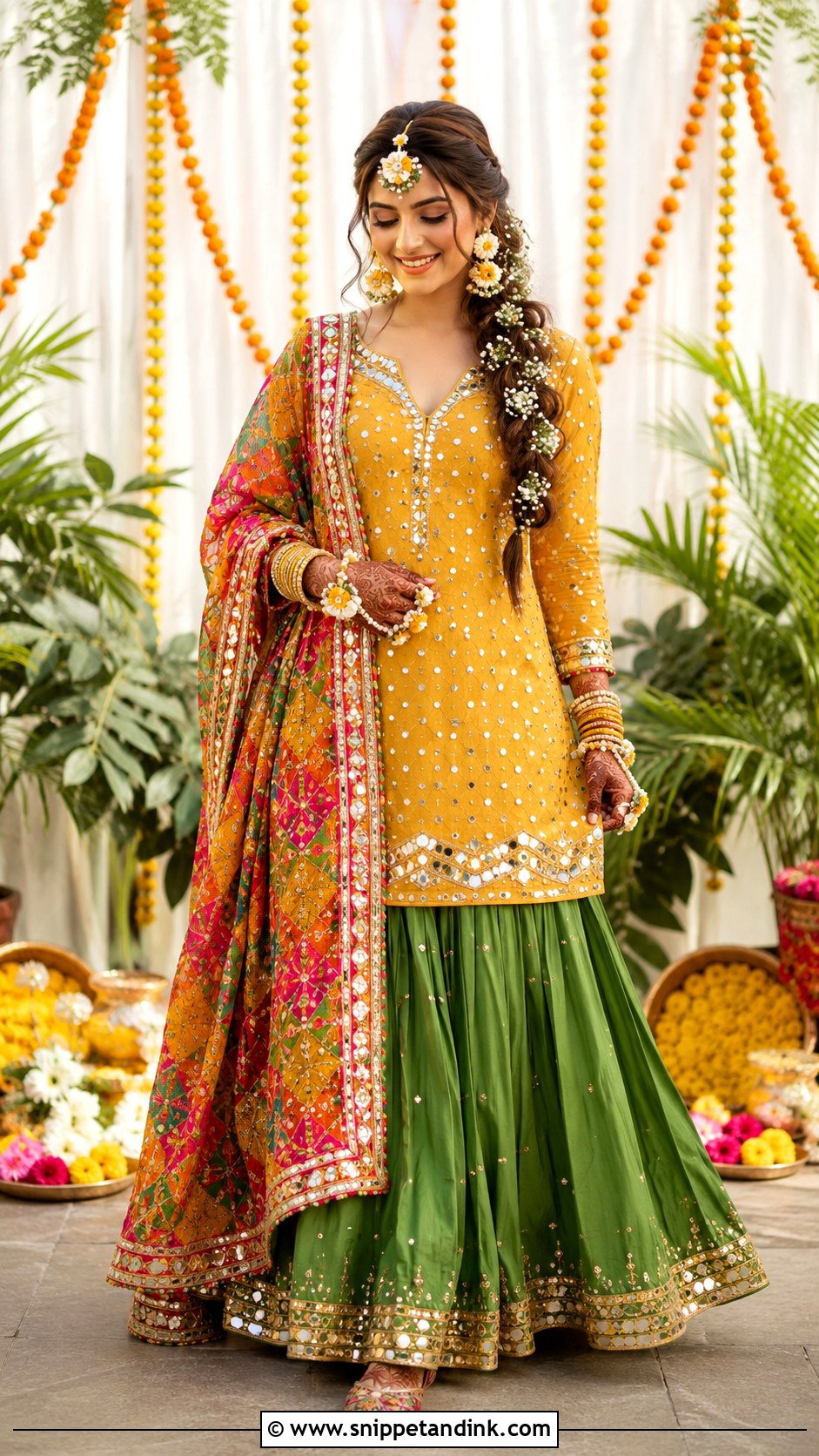
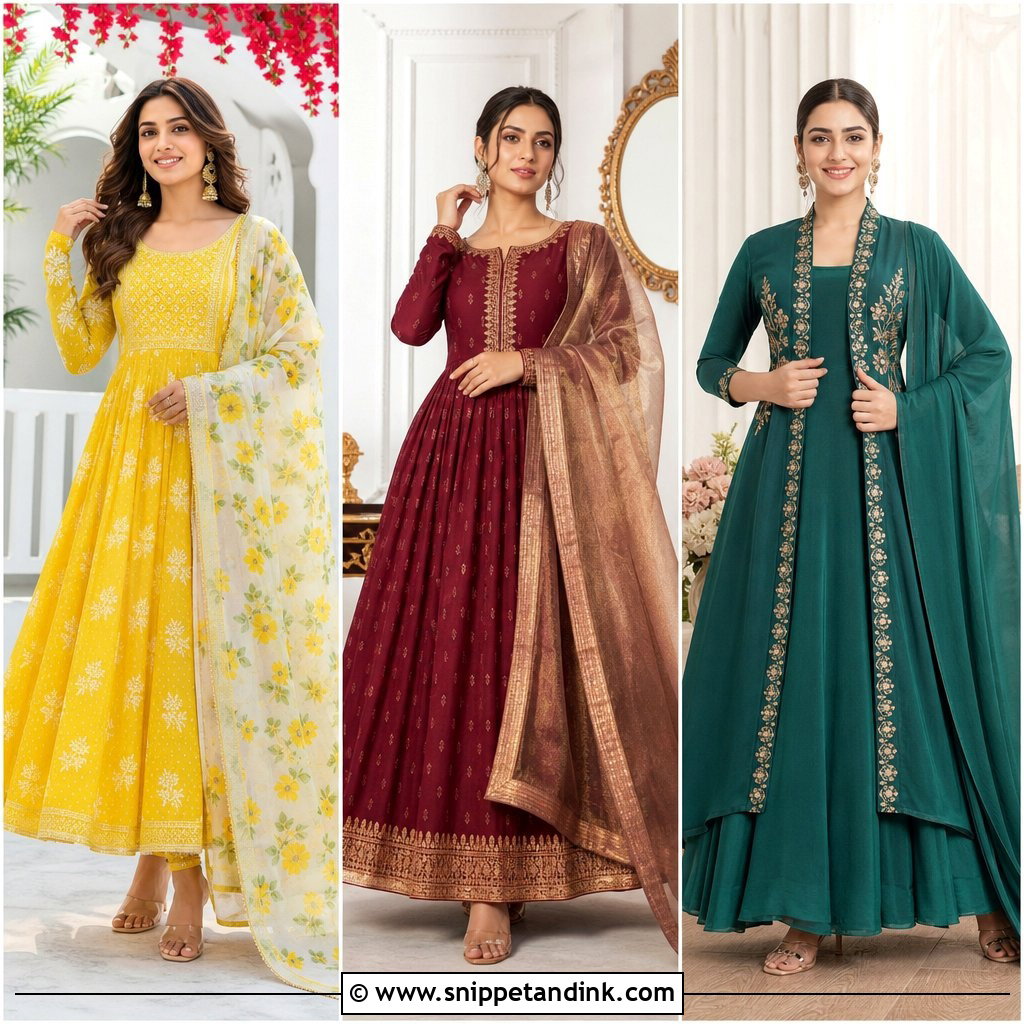
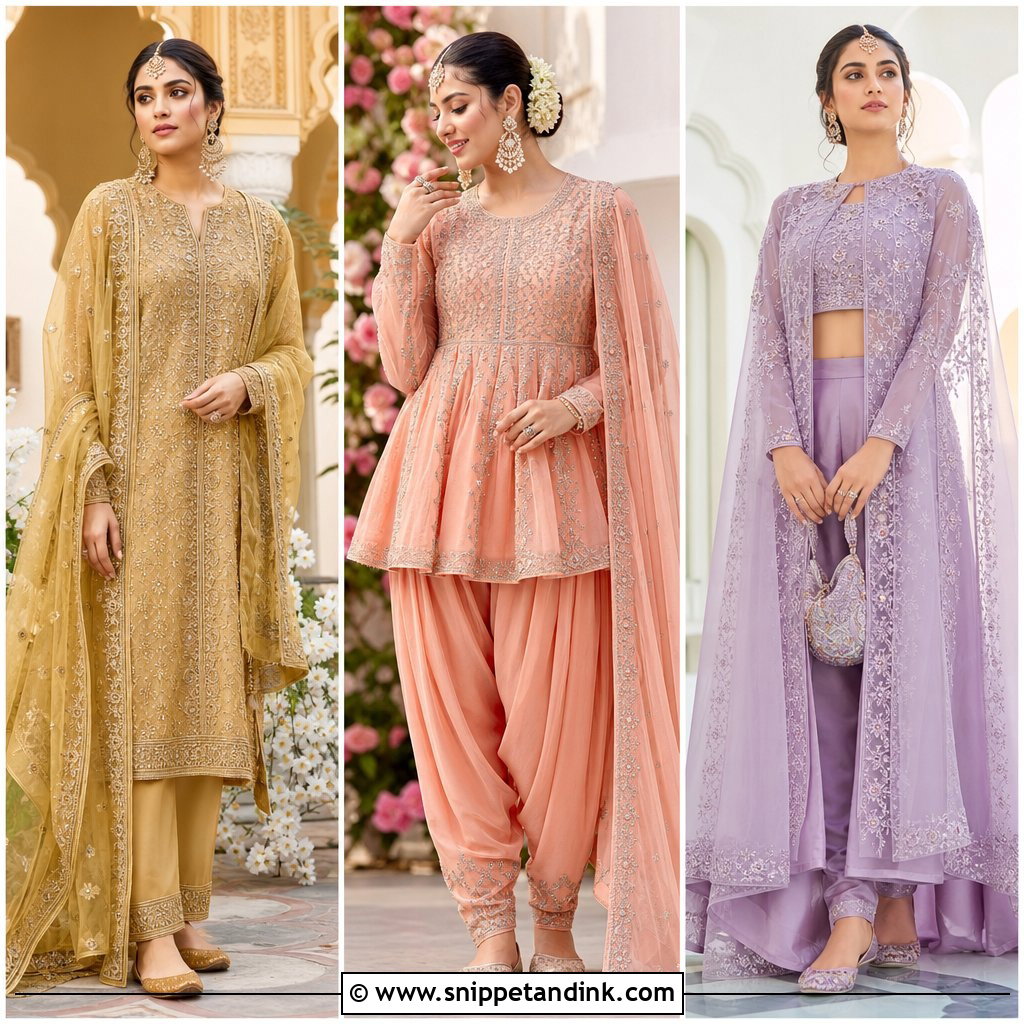
Mustard yellow is the color I reach for most often for a bride celebrating her mehndi, and the practical reason is the henna itself. Fresh mehndi takes hours to dry, so I plan short or elbow-length sleeves that won’t brush against her arms and smudge the design. A straight or slightly flared kurta with mirror and gota work, a sharara in yellow or contrasting green, and a light phulkari dupatta bring color up to the face. Floral jewelry, mirror-work juttis and a small drawstring potli suit the mood. Loose waves or braids with tiny flowers are easier to manage than anything pinned tight.
7. Magenta Jaago Punjabi Bridal Suit
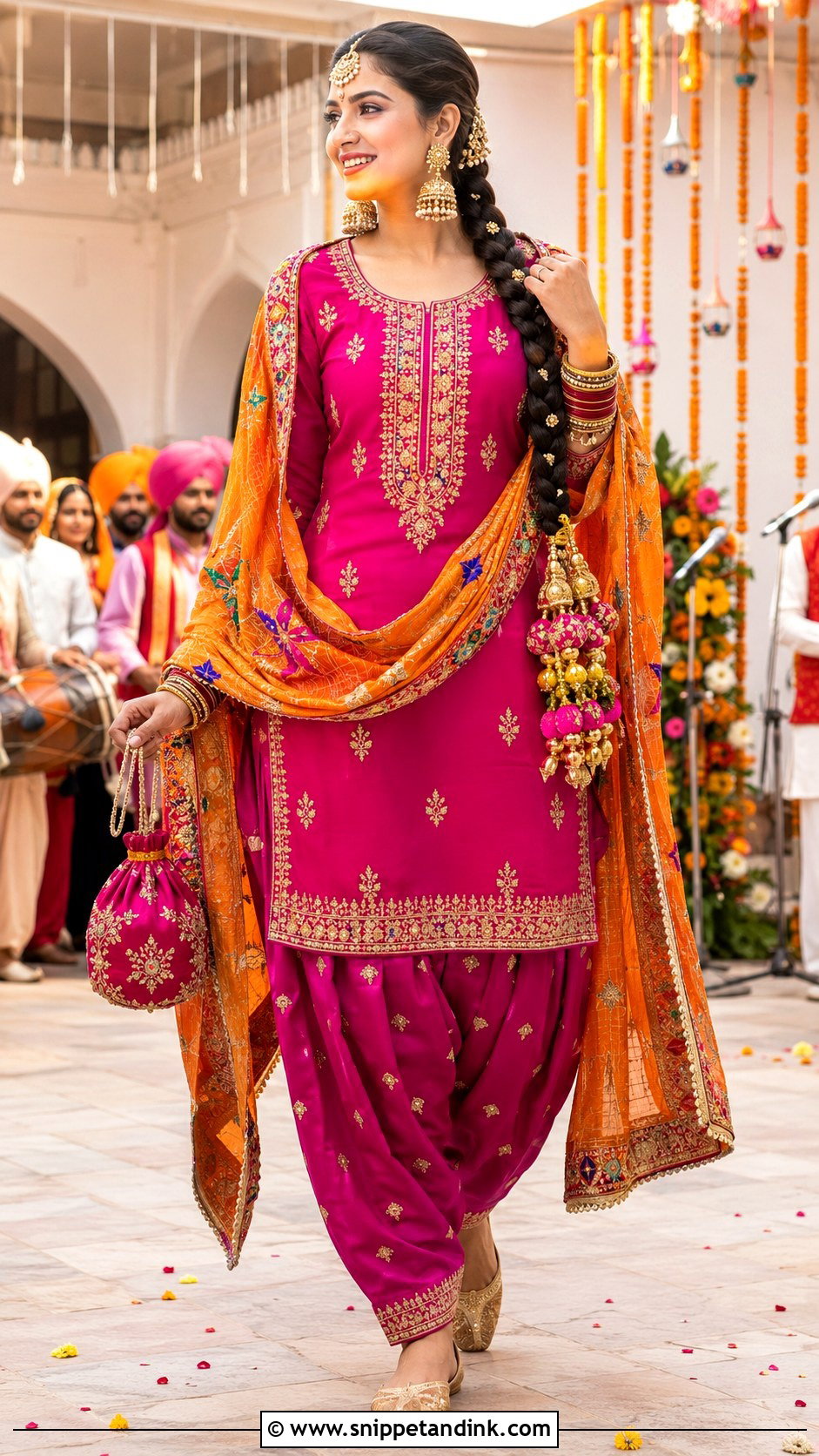
The Jaago is a long, loud night of dancing through the streets, and a saturated magenta salwar suit has to survive it. Pick a short kameez with dense gold work at the neckline, hem and sleeves, and a roomy salwar or Patiala bottom; a fitted churidar will fight you during giddha. An orange or royal blue phulkari dupatta gives the classic bold contrast, but it needs discreet pins at the shoulder and waist or it will end up in someone’s hand. Gold juttis, big jhumkas, layered bangles and a paranda. A defined waist and properly fitted shoulders keep all that volume from swallowing the bride, whatever her height.
8. Peach Palazzo Punjabi Bridal Suit
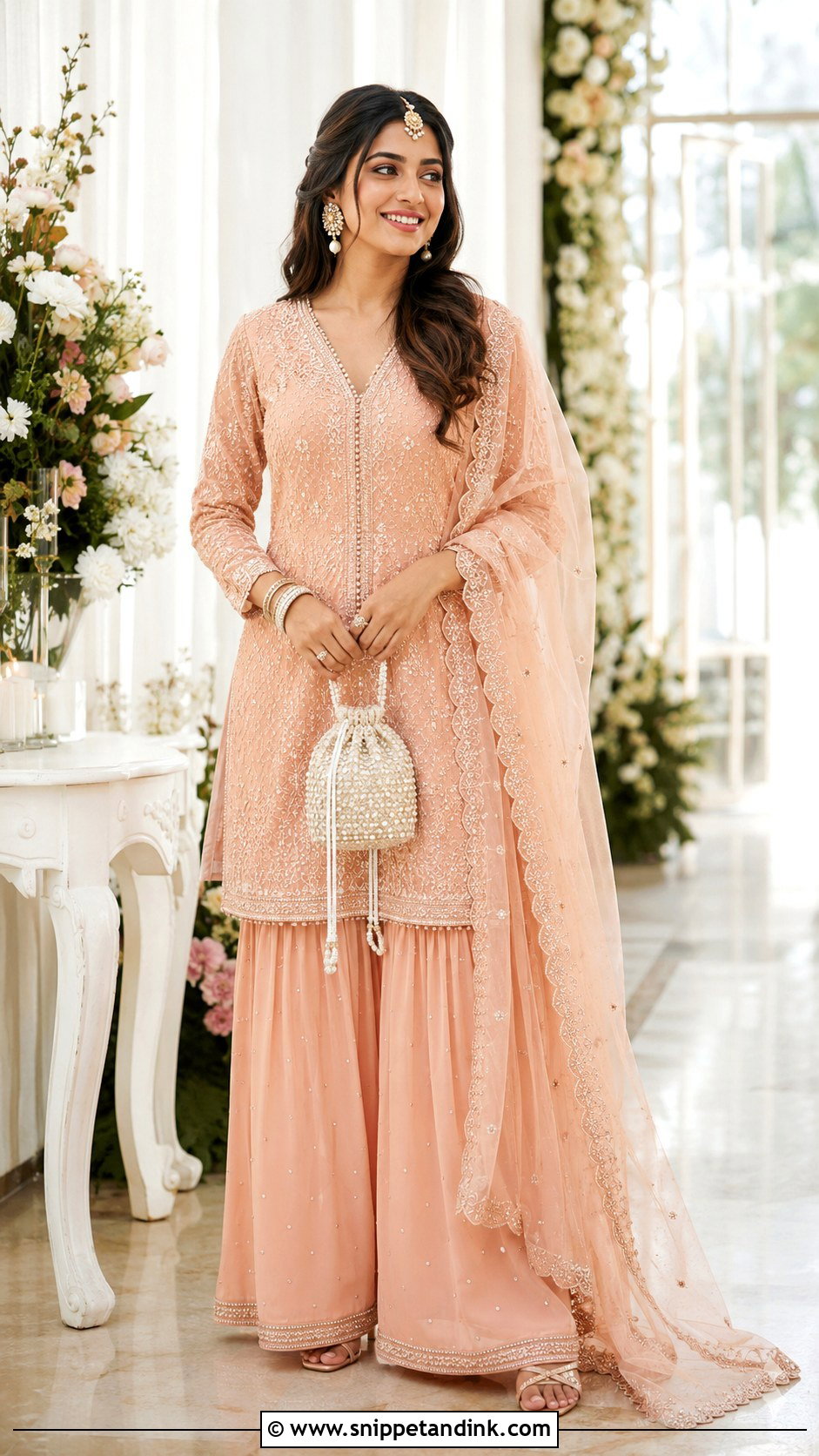
Palazzos are the quiet option, and I suggest them to brides who want an engagement or daytime sangeet look that feels light. Soft peach, a mid-length kurta fitted through the upper body with side slits, and pearl or silver embroidery. The palazzo waistband should be flat and smooth; a gathered one adds bulk exactly where you don’t want it. Drape a sheer peach dupatta diagonally across the body to give the outfit shape. Pearl earrings, a delicate tikka, embroidered block-heel sandals and a crystal potli. Pale colors can disappear in photos next to brightly dressed relatives, so keep the jewelry substantial enough to say bridal.
9. Royal Blue Churidar Punjabi Bridal Suit
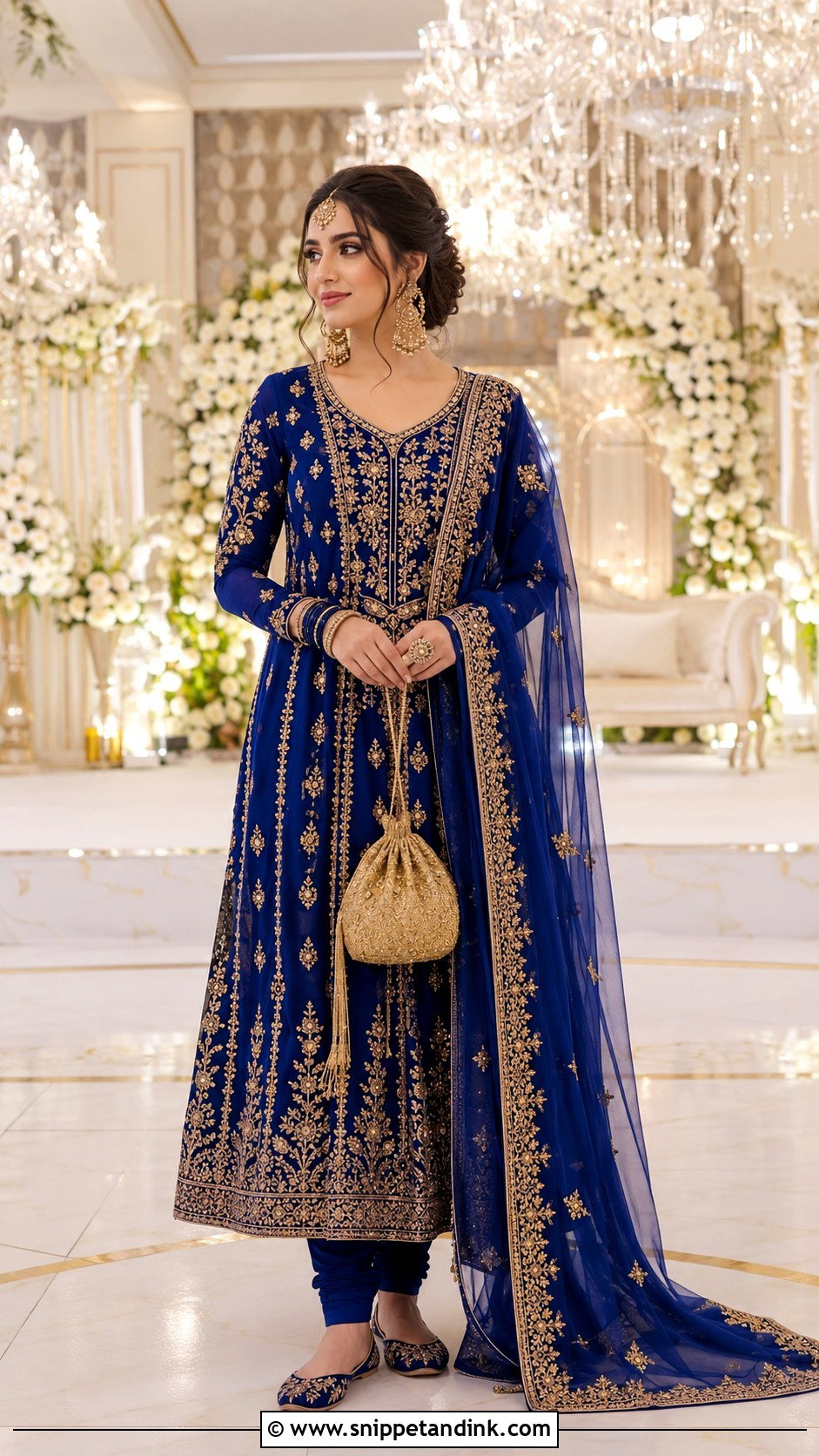
Royal blue becomes bridal through antique gold, and how that gold is placed. Vertical motifs down the neckline, sleeves and kameez panels draw the eye up and down and lengthen the figure, which is why I like this suit for petite brides. Pair a long paneled kameez with a defined waist and moderate flare with a fitted silk churidar. Drape the blue net dupatta over one shoulder so the front stays visible. Antique gold jhumkas, a statement ring, navy embroidered juttis and a small gold potli for contrast. A low bun and warm metallic eye makeup keep attention on her face.
10. Orange Mirror Work Punjabi Bridal Suit
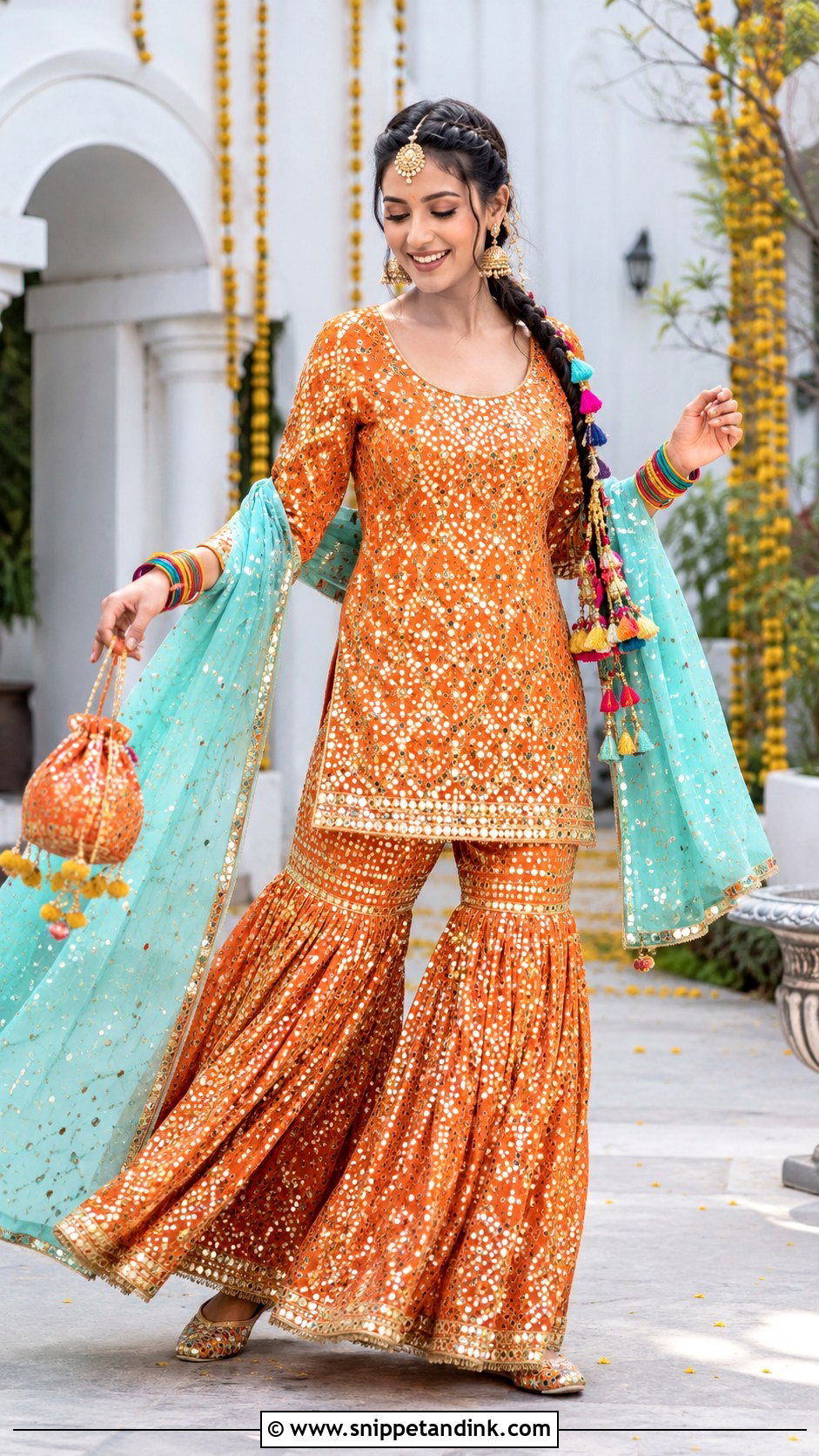
Mirror work looks wonderful and can feel terrible by the third hour if it’s in the wrong place. I ask the embroiderer to keep mirrors off the underarm and the side waist, where they rub with every arm movement. Beyond that, an orange short kurta with spaced mirrors and colorful threadwork, a full sharara that repeats the mirror border near the hem, and a pink or turquoise dupatta for contrast. Mirror-work juttis, colorful bangles, medium jhumkas and a long paranda braid. It suits a daytime dance function where all that reflected light has room to sparkle.
11. Lavender Organza Punjabi Bridal Suit
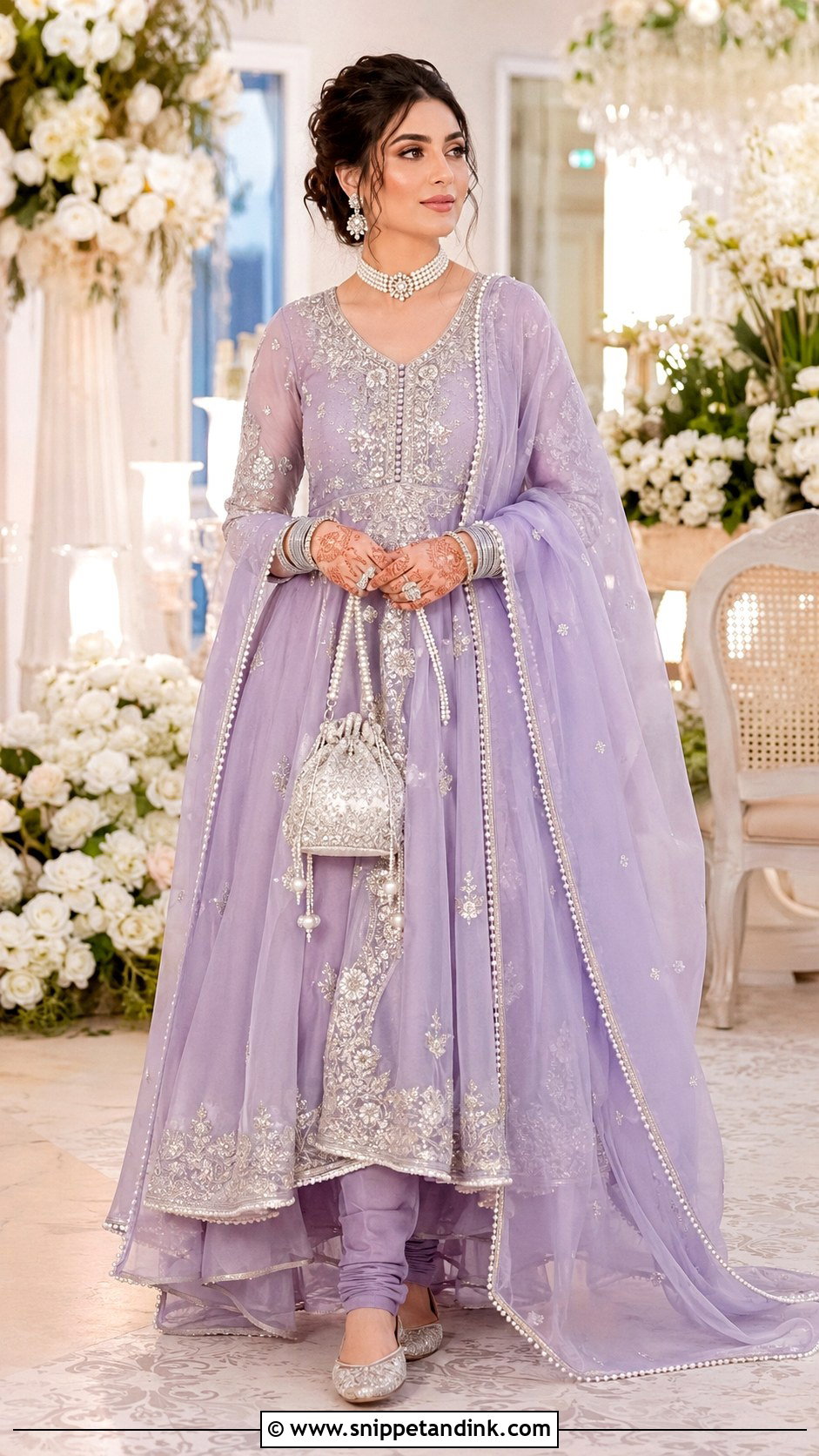
Organza is crisp, and that’s both its charm and its trap. For an engagement or daytime event, a lavender Anarkali-style kurta with a structured lining, silver embroidery and a translucent outer layer looks airy. Add one more organza layer than it needs, though, and the bodice starts standing away from the body. Keep churidar pants matching and streamlined. The dupatta can be organza with pearl edging, pinned loosely at one shoulder. Silver juttis, crystal bangles, a pearl choker and drop earrings; a silver potli rather than a new color. Soft waves or a low textured bun suit it best.
12. Burgundy Zardozi Punjabi Bridal Suit
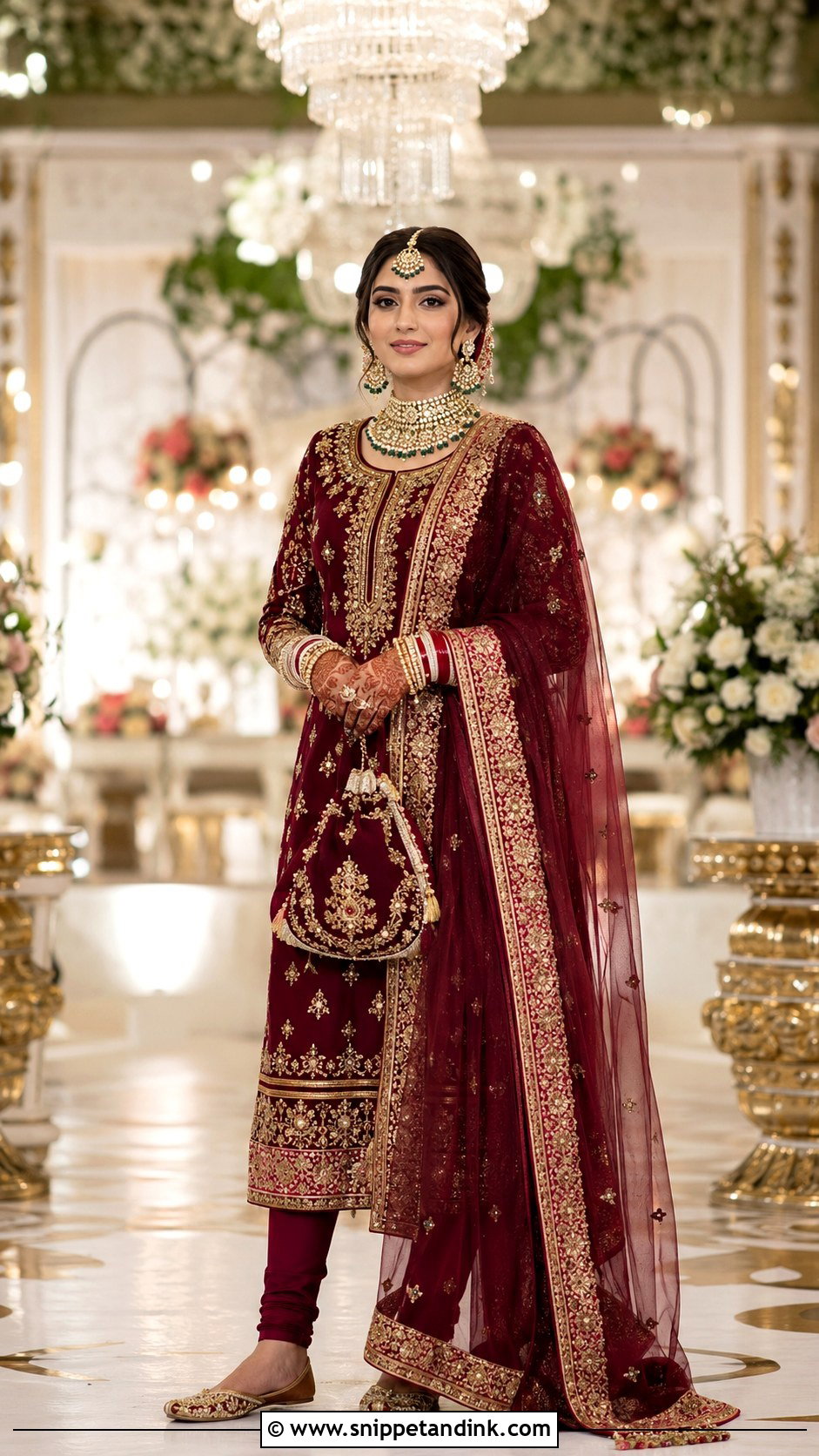
Burgundy is for the bride who wants a traditional bridal shade that sits a step deeper than red. A long straight-cut silk kameez with gold zardozi, a matching churidar or slim salwar, and a sheer burgundy dupatta with a broad border. Worn over the head, the dupatta makes it ceremonial; across the arms, it’s reception-ready. Kundan jewelry, bridal bangles, gold juttis, an embroidered potli and a smooth bun that holds heavier earrings. My advice on the zardozi is to place it strategically instead of covering the whole surface. Full coverage is stiff to sit in and much harder to wear again.
13. Teal Jacket Punjabi Bridal Suit
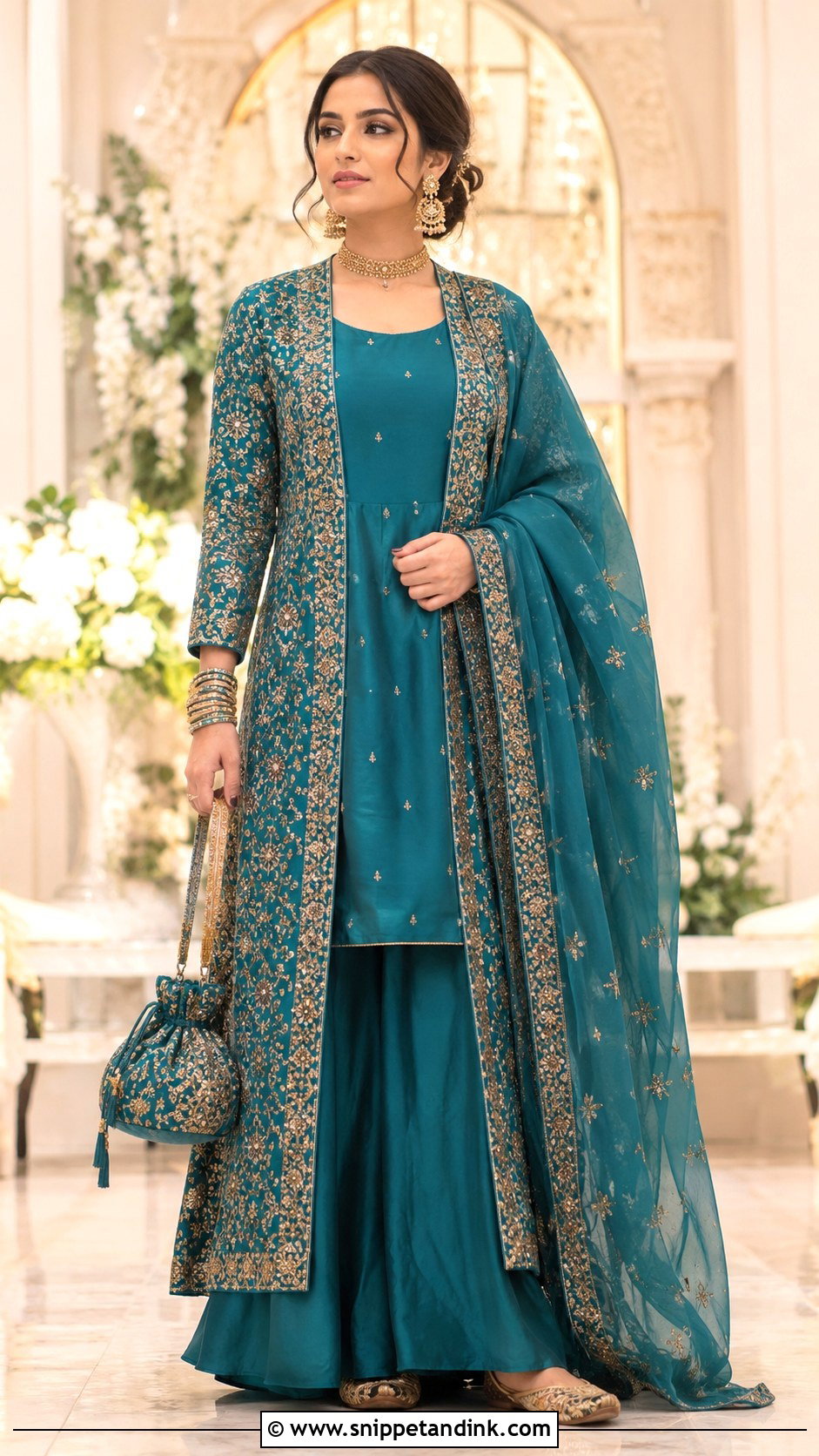
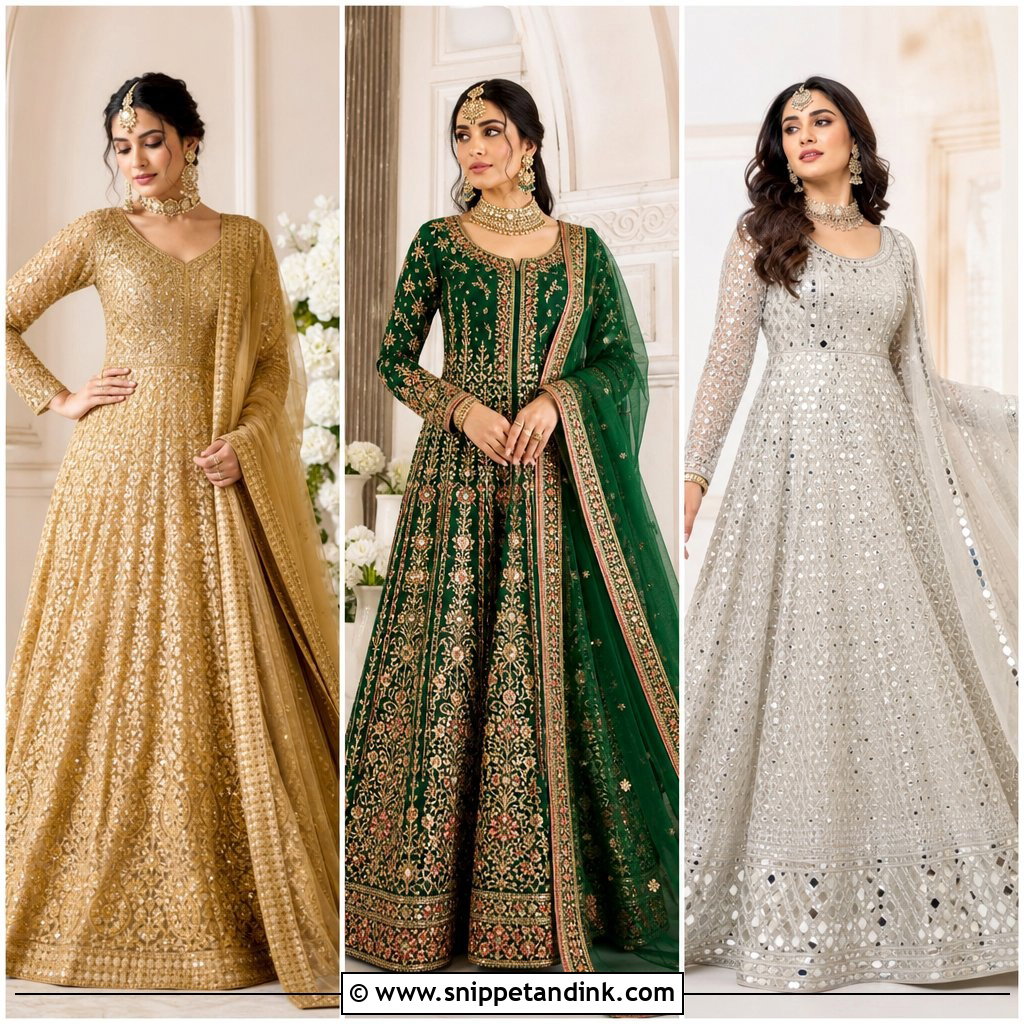
A long jacket gives Punjabi bridal wear structure without losing the embroidery. A simple silk kurta and matching palazzos sit underneath, and an open-front teal jacket reaching below the knee does the real work, with gold threadwork, paisleys and defined borders so it reads bridal rather than casual. Carry the dupatta over one arm, never across the jacket front. Gold jhumkas, a slim choker, stacked bangles, embroidered juttis and a structured potli or box clutch. A low ponytail or bun shows off the jacket shoulders. It’s also the most rewearable suit here; the jacket goes over plain kurtas for years afterwards.
14. Gold Tissue Silk Punjabi Bridal Suit
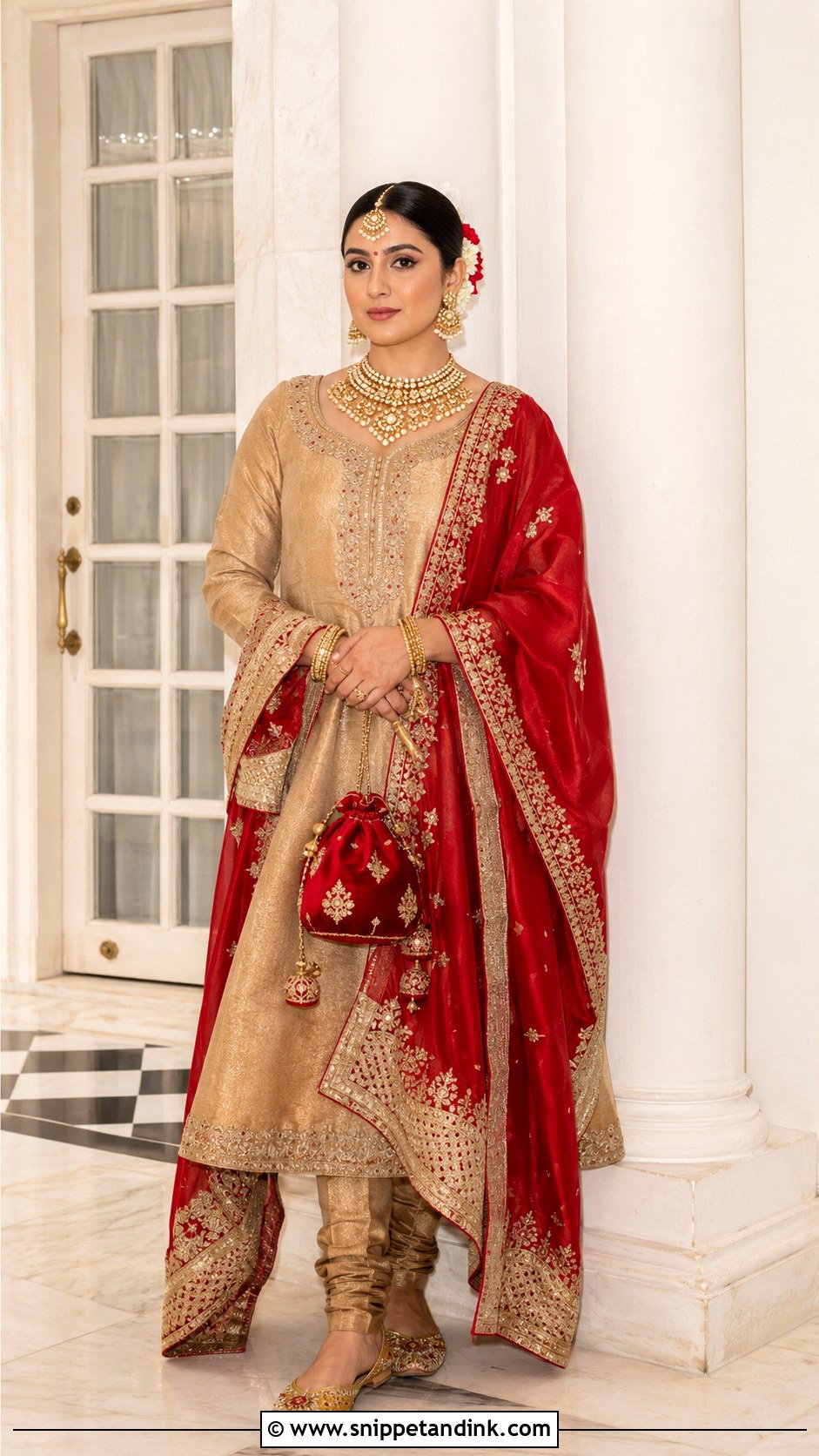
Gold tissue silk catches every light in a gurdwara or a hall, so the cut has to stay restrained. I prefer a long A-line kameez with a softly fitted waist and controlled flare; too much volume in a reflective fabric looks like a costume. Narrow pants or a churidar in a deeper antique gold, and a red, maroon or magenta dupatta with gold work for that classic contrast around the face. Kundan jewelry, gold bangles, juttis and a red potli. Tissue is crisp and can scratch, so a soft lining and generous armholes are not optional if she’ll wear it through a full ceremony.
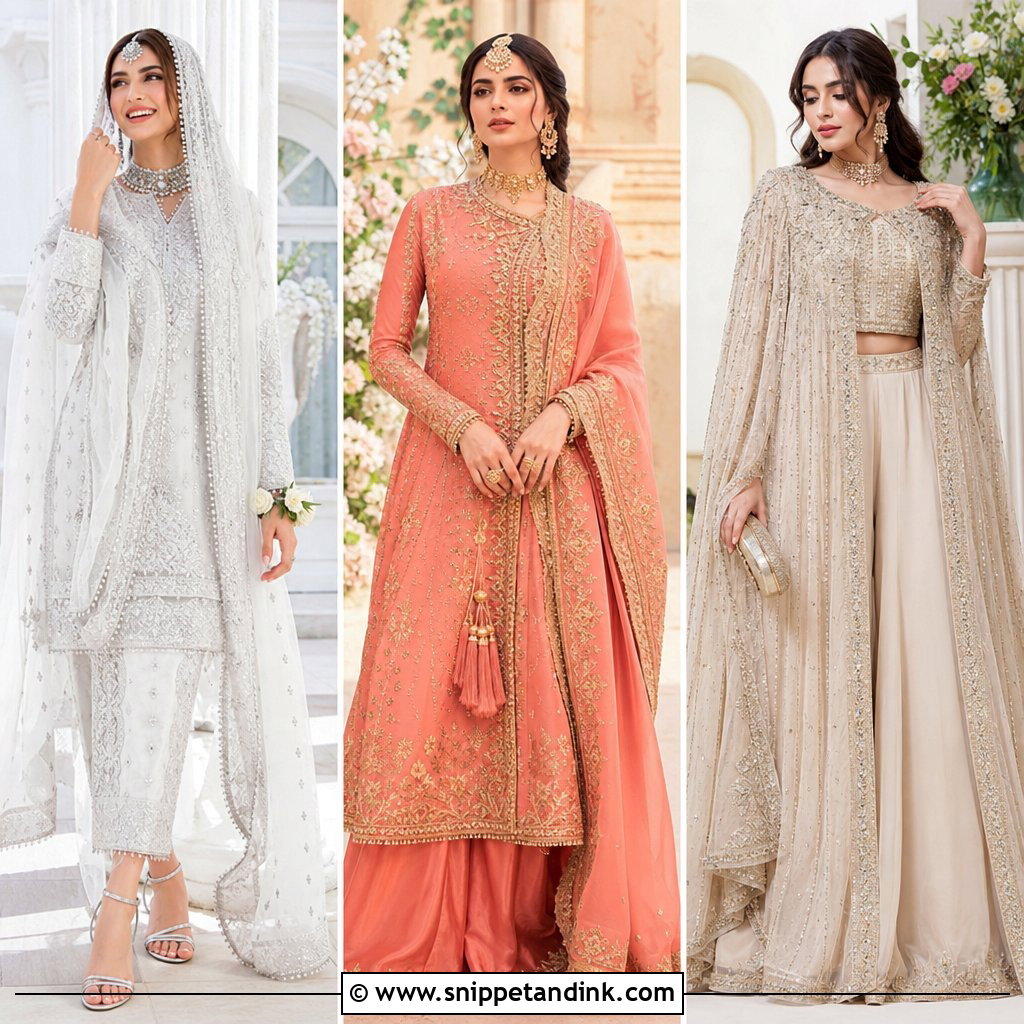

15. Pastel Blue Straight Cut Punjabi Bridal Suit
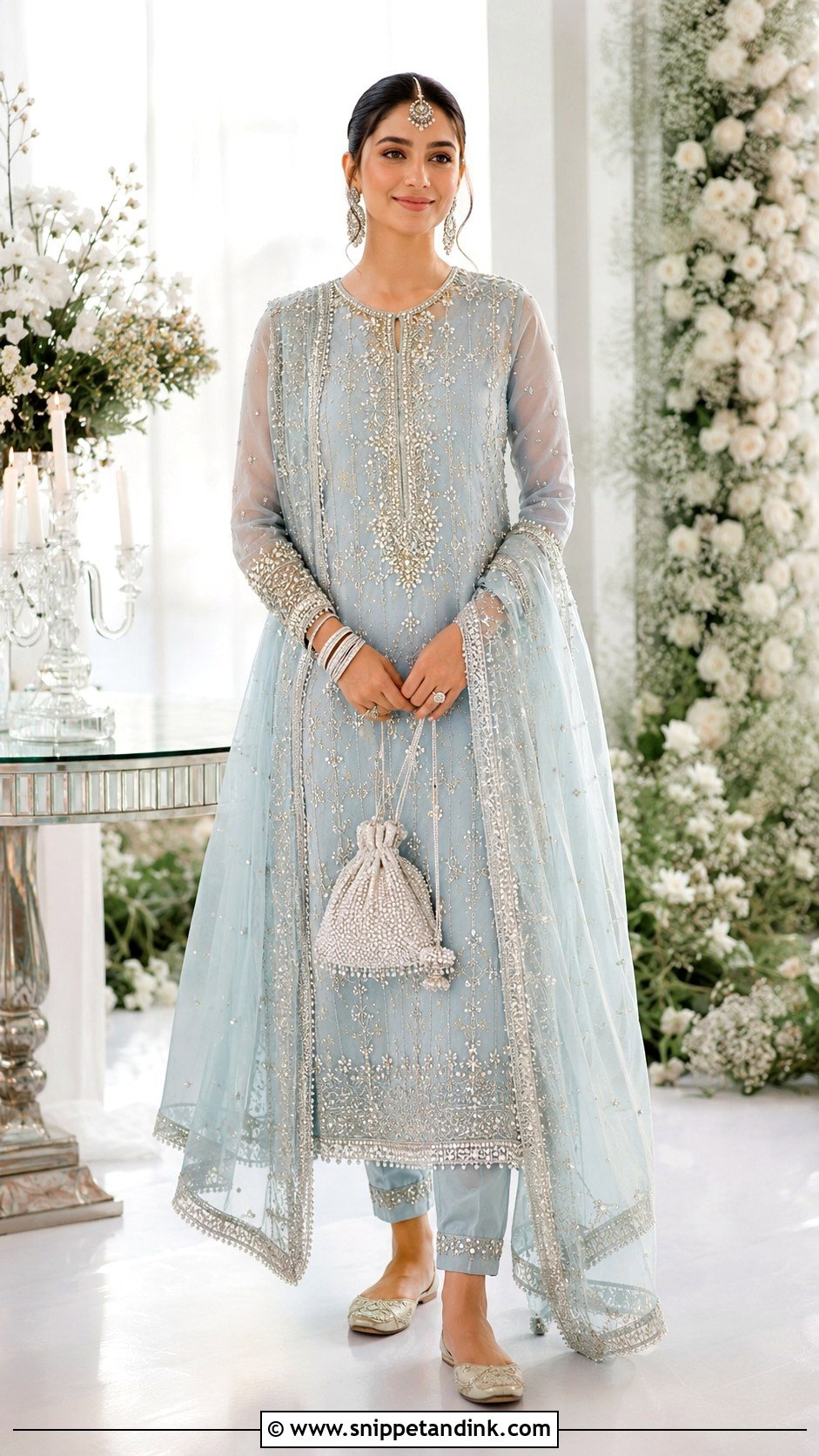
Pastel blue looks bridal only when the silhouette is clean. A long straight-cut kameez with silver zari, pearls and resham at the neckline and side panels, slim matching pants ending just above embellished juttis, and a sheer blue dupatta with a wide silver border. Diamond-style earrings, a delicate tikka, silver bangles and a pearl potli. Soft waves and cool-toned makeup suit the palette. I put side slits in every straight-cut kameez I fit; without them the bride can’t take a full step, and it pulls across the hips when she sits.
16. Rani Pink Salwar Punjabi Bridal Suit
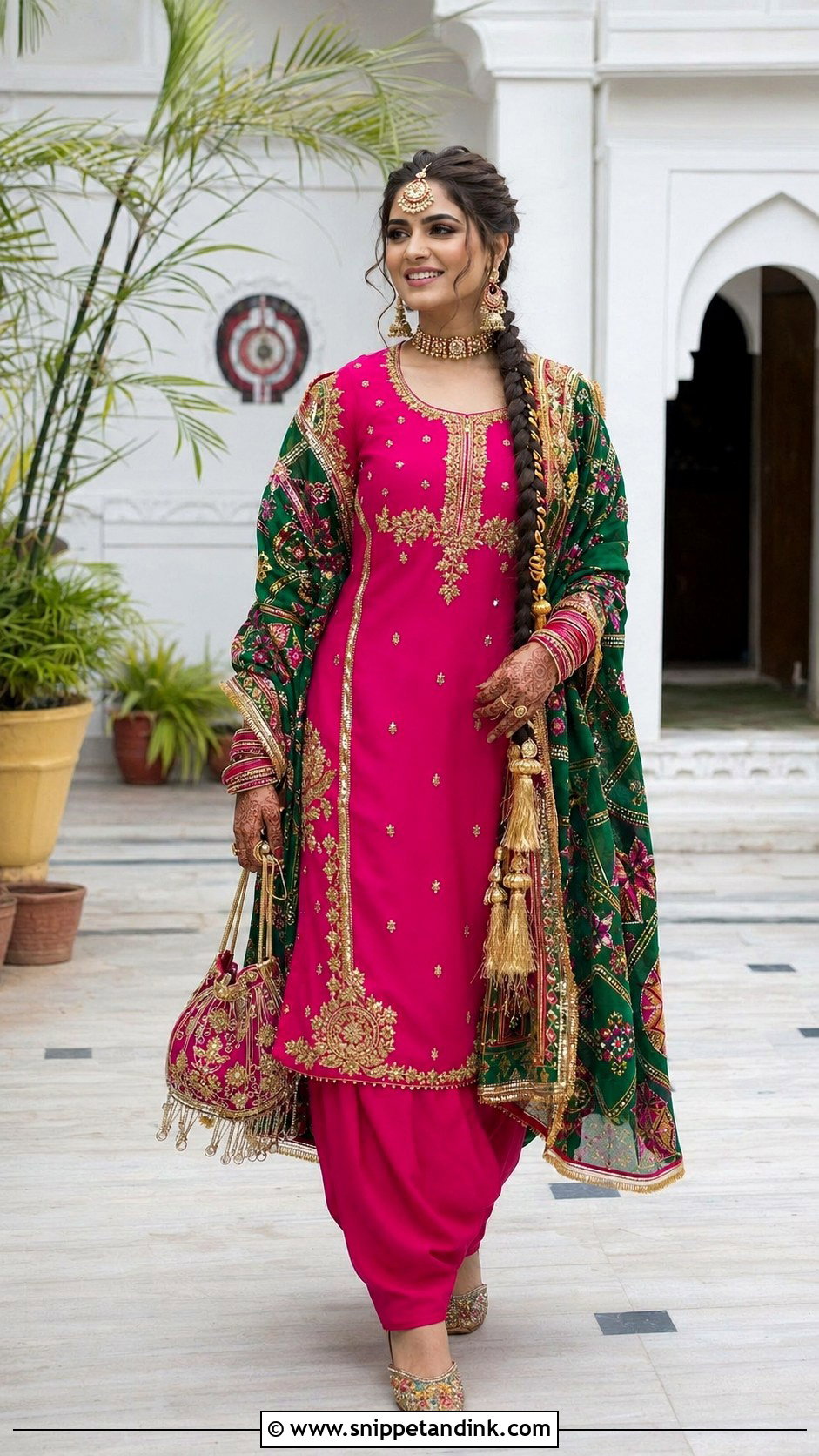
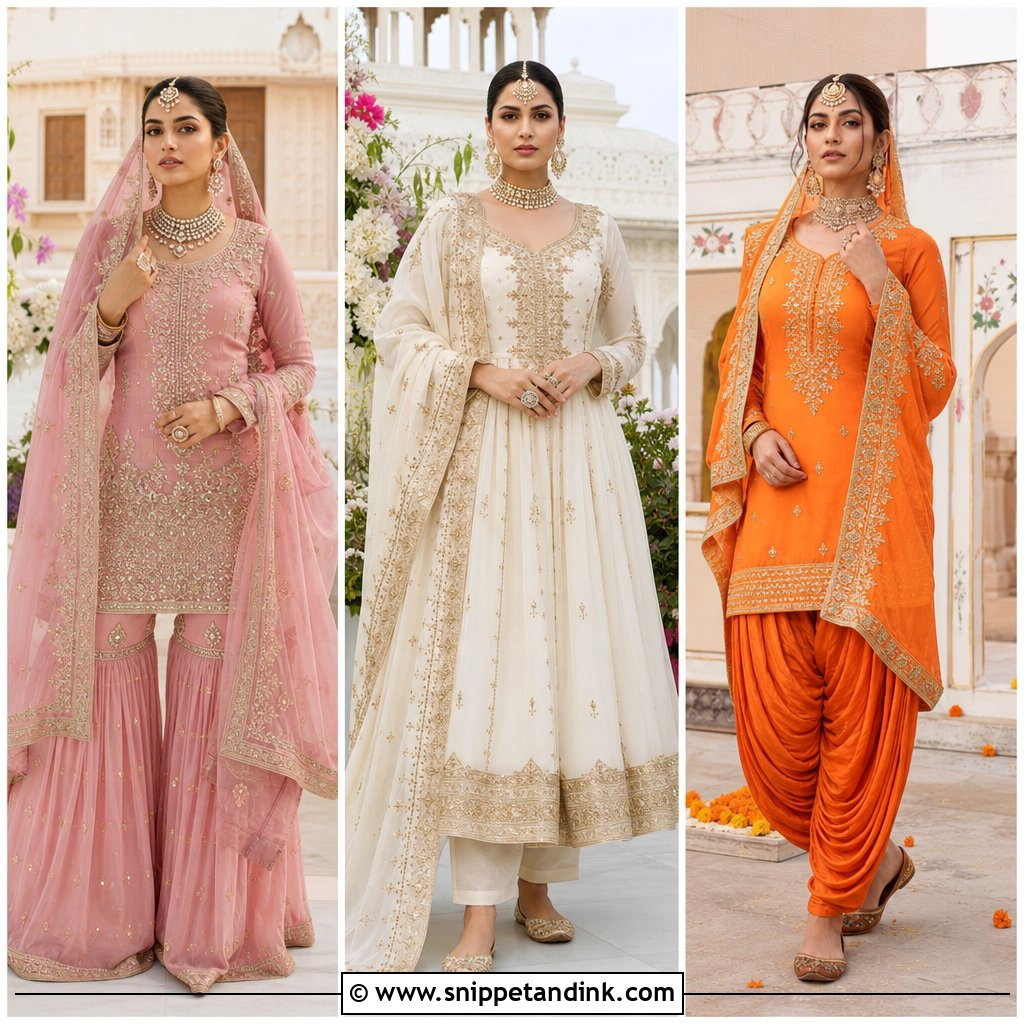
Rani pink and gold is about as Punjabi as color gets. A knee-length kameez with dabka, zari and floral work, a defined neckline and a gently shaped waist, over a classic salwar with soft pleats and embroidered ankle cuffs. A matching pink dupatta keeps it rich; a green or orange phulkari version pushes the contrast harder. Gold juttis, a kundan choker, jhumkas, stacked bangles and a paranda braid. I’d keep the heaviest work on the kameez and dupatta borders and leave stretches of plain fabric, because pink this vivid needs some room to be seen.
17. Cream And Gold Sikh Punjabi Bridal Suit
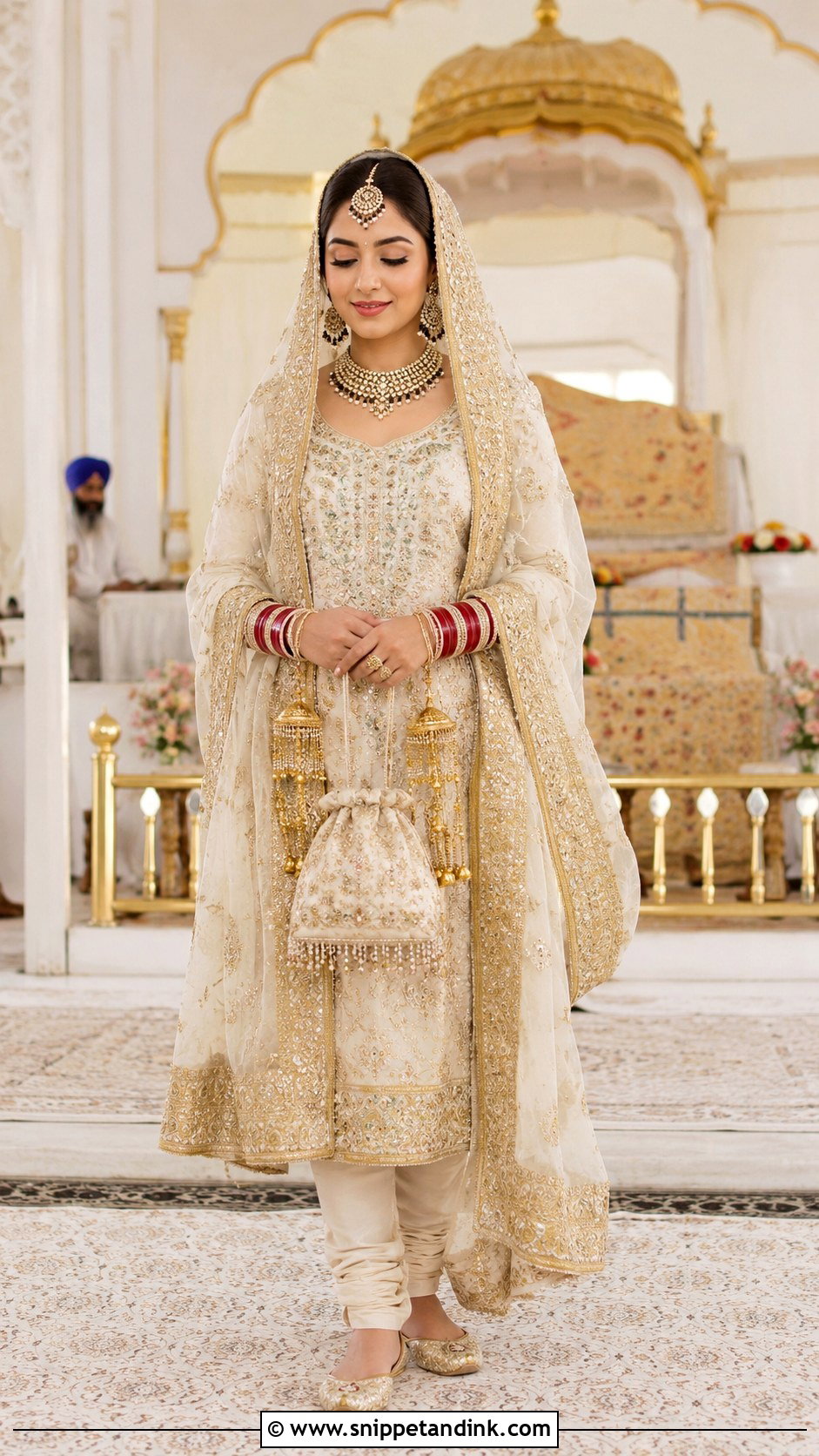
For the Anand Karaj, I start with coverage and comfort, then add beauty on top. The bride sits on the floor in the gurdwara and walks the four laavan, so the kameez should be long and modest, with full or three-quarter sleeves and a comfortable neckline, over a churidar or soft straight pants. The dupatta must be wide enough to cover the head securely, with a border that frames the face without dragging it down. Hidden pins or a discreet undercap keep it put through every bow. Cream and fine gold embroidery, gold juttis, a refined kundan set, chooda, kalire and a small potli finish it calmly.
18. Multicolor Gota Patti Punjabi Bridal Suit
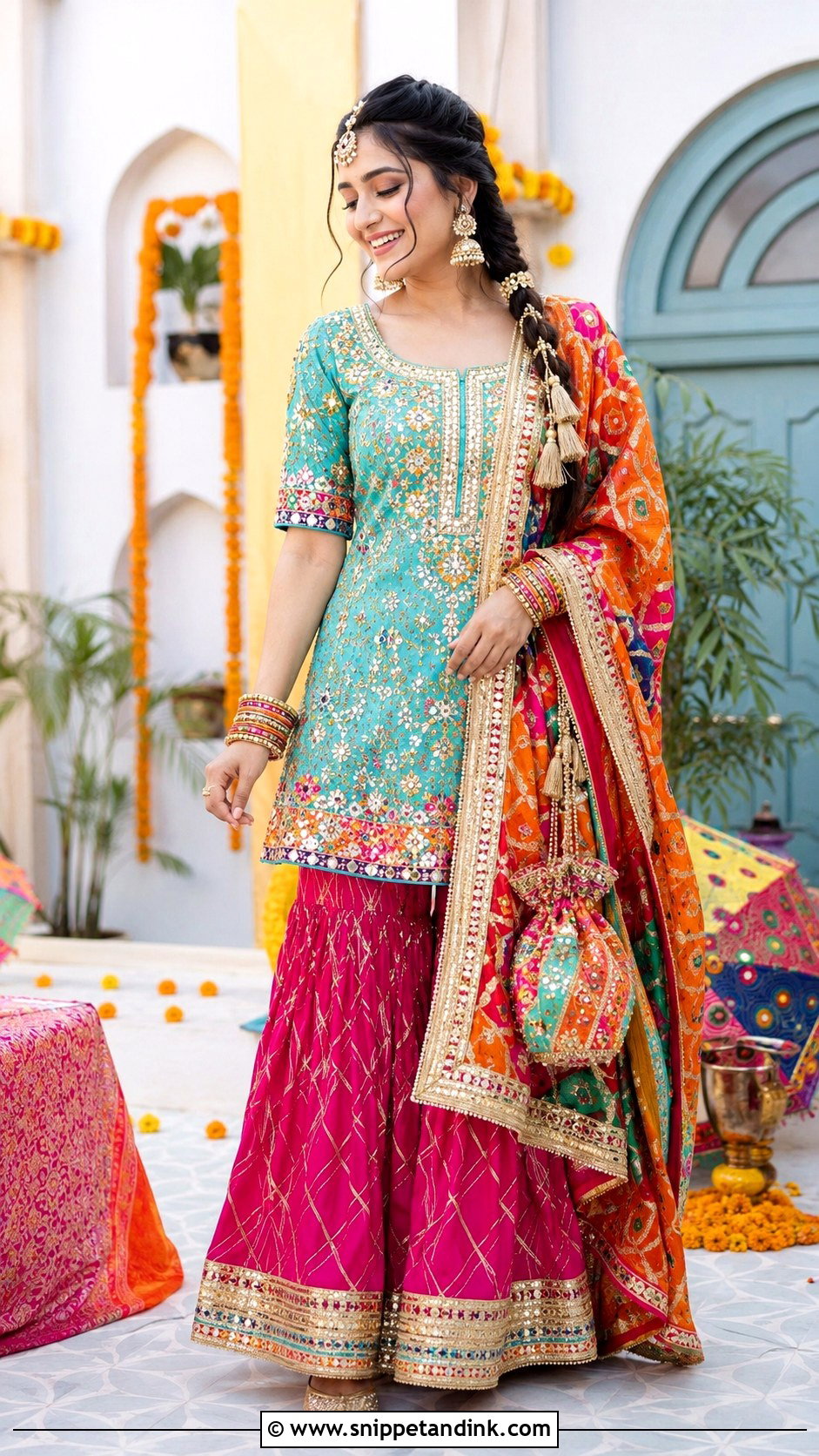
Multicolor gota patti is pure celebration, which is exactly why it needs a rule: three main colors, no more. A turquoise, pink or orange short kurta with geometric gota borders and scattered florals, over a contrasting sharara or Patiala salwar. The dupatta should repeat all of the outfit’s colors so the separate pieces look like they belong together. Gold juttis, glass bangles, statement earrings and a bright potli. A braid with tassels or a paranda swings while she dances. Gota is lightweight metallic ribbon, so this suit stays cooler and easier to move in than zardozi, which suits a long mehndi or Jaago.
19. Plum Cape Punjabi Bridal Suit
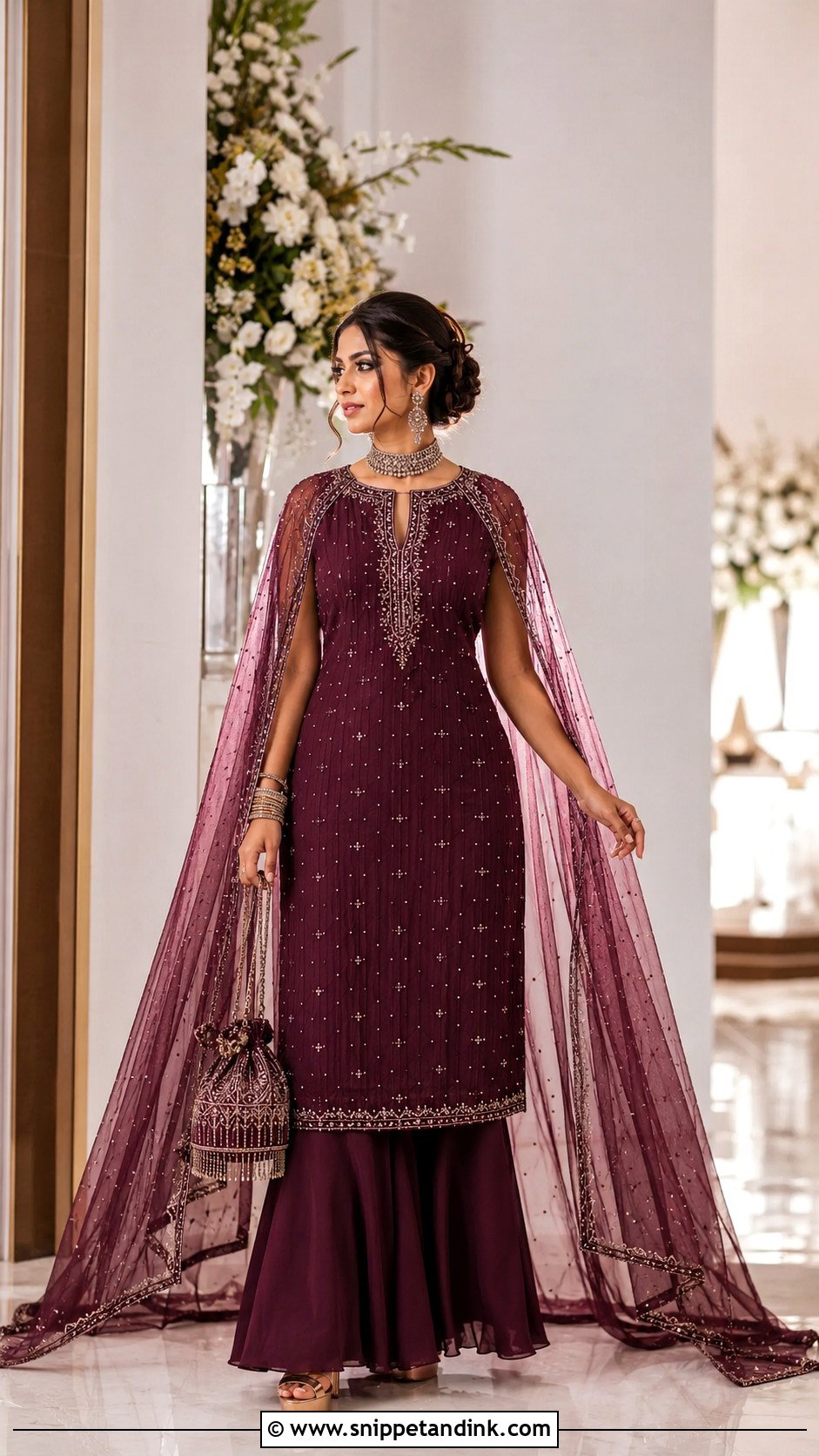
A cape replaces the dupatta, and for a reception that’s a relief: nothing to re-pin every twenty minutes. A fitted sleeveless or short-sleeve plum kurta with matching flared pants, under a sheer embroidered cape falling from the shoulders. Pearl, sequin or gold thread on the cape edges moves as she does. Sleek choker, drop earrings, metallic block heels and a structured potli. Soft waves or a neat low ponytail. The pants should skim the shoes without dragging. If a ceremony earlier in the day needs a head covering, I have the boutique make a light matching dupatta to carry separately.
20. Coral Dhoti Salwar Punjabi Bridal Suit
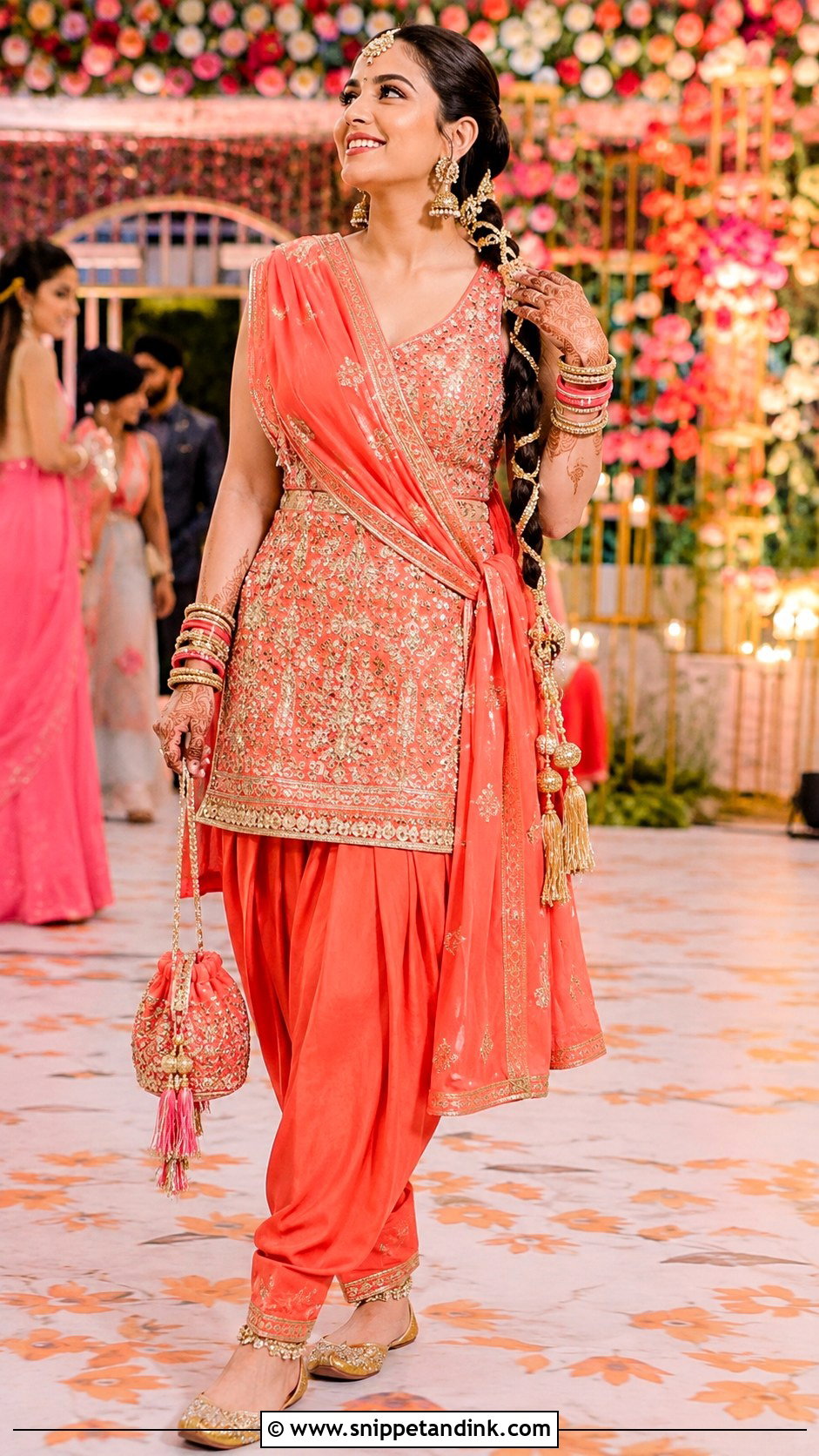
A coral dhoti salwar suit is my suggestion for a bride who plans to dance more than she plans to sit. The pleated dhoti bottom pairs with a fitted short kurta in gold gota, mirror work or colorful thread. Pin the light dupatta across one shoulder and tack it at the waist so both hands are free. Gold juttis, layered bangles, jhumkas and a tassel-trimmed potli. A braided ponytail stays secure during movement. The one tailoring note that matters is having the dhoti pleats stitched down rather than loosely draped, because draped pleats shift and drop within an hour of dancing.
Three Fittings and the Stitching Calendar Behind Them
Hand embroidery is slow work, and wedding season fills every workshop at once. For a fully custom suit with zardozi or phulkari, I’d begin two to three months before the first function; simpler gota or printed sets can move faster, but timing varies a lot between boutiques, so ask yours directly when you place the order.
What I look for at each fitting
At the first fitting, the base garment without embellishment, I check shoulders and armholes, because they can’t be fixed easily once embroidery covers the seams. At the second, I have the bride sit, raise her arms and walk a few steps in the actual shoes. The last fitting is for hems, dupatta weight and where the pins and hooks will sit. Bring your juttis and the bra you’ll wear to every fitting, not just the final one.
Storing Zari, Velvet and Phulkari After the Wedding
Metallic thread tarnishes in damp air and dulls in sealed plastic, so I wrap embroidered suits in soft muslin or cotton and keep them in a dry cupboard with a little airflow. Fold zari pieces with tissue between the layers and refold them along different lines every few months to stop permanent creases cracking the thread. Velvet is better hung on a padded hanger, as folding crushes the pile. Heavy work should go to a dry cleaner who handles bridal embroidery, never a home wash.
Which of These Suits Belongs at Which Function?
Every outfit here mixes Punjabi craft with a silhouette suited to one moment of the wedding. Red Patiala and phulkari carry tradition; shararas, ghararas, capes and palazzos bring something fresher. Color sets the mood too, from mustard and magenta that keep a dance floor lively to ivory, lavender and pastel blue for a calm morning. Before you finalize any look, wear the shoes for an hour, sit down in the complete outfit and check how the dupatta holds. Keep jewelry from covering the neckline embroidery you paid for. Then go with the suit you feel happiest moving in, since you’ll be moving in it for days.
You'll Like These Ideas:






Leave a Reply