
Some brides walk into a fitting room already knowing lace and a sweetheart neckline aren’t them. For those brides, the futuristic gowns here are a real option: sculptural tailoring, metallic surfaces, discreet lighting, geometric cutouts and layers that come off for the party. Designers have been showing architectural draping, exposed corsetry, detachable trains, pearl work and bubble hems for a while now, and those details have become far easier to wear. My rule when I style one is simple. Let one experimental feature lead, and keep the shoes, jewelry and hair quiet enough that it can. Each look below is built head to toe with that balance in mind.
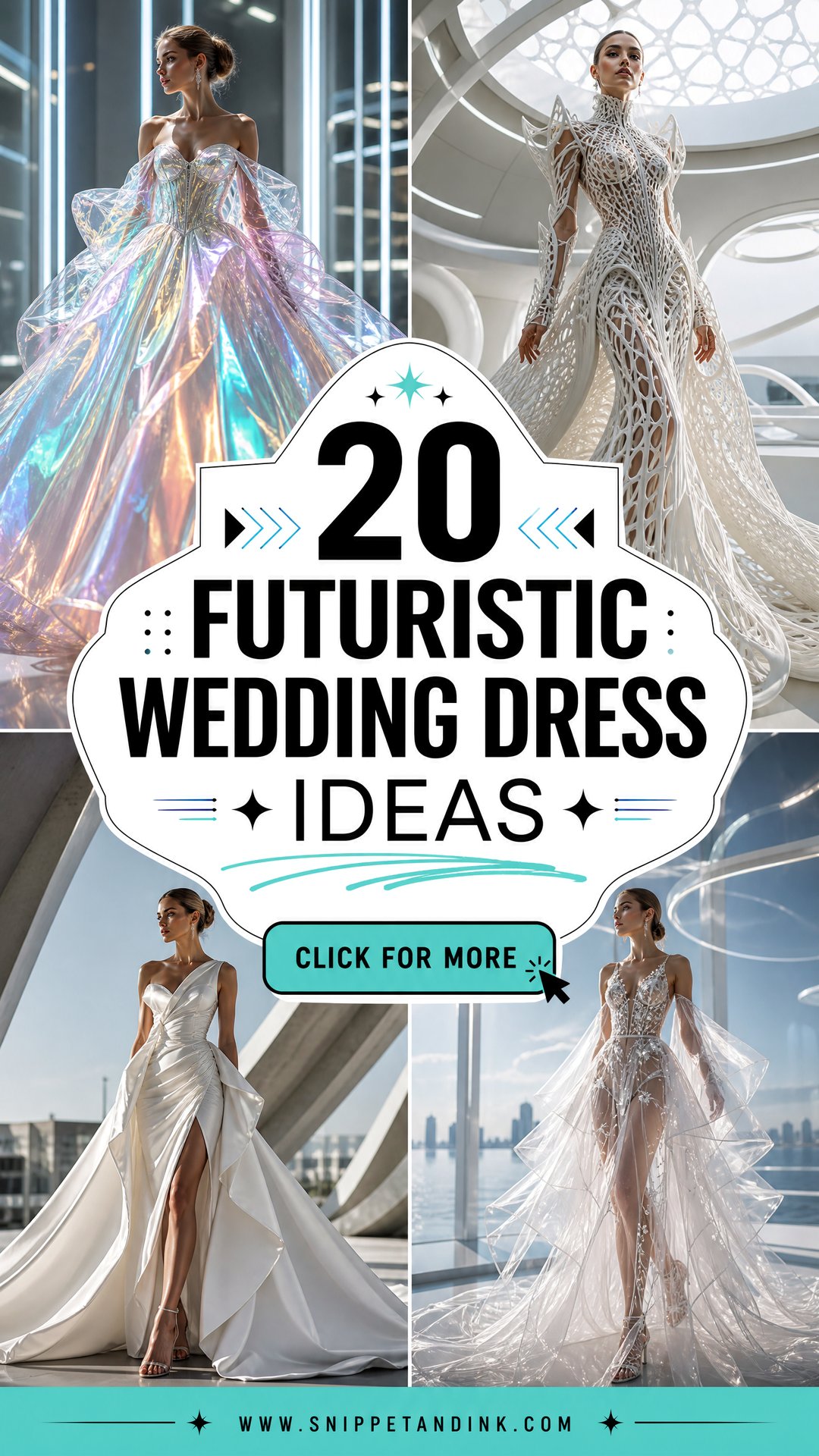
Experimental Gowns Need a Longer Runway Than Catalog Dresses
Most of these ideas aren’t sitting on a store rack in your size. Even a standard made-to-order bridal gown usually takes several months to arrive, and custom pieces with printed components, wiring or hand-placed pearls add more time on top of that. When a bride brings me a futuristic idea, the first thing I do is count backward from the wedding date.
- Nine to twelve months out: settle the direction and find a designer or atelier who has actually built this kind of piece before. Ask to see one in person, not just photographs.
- Seven to nine months out: order, or start the custom build. For anything with lighting or 3D printed parts, ask when the prototype or sample will be ready.
- Two to three months out: first fitting. This is when you sit, walk and raise your arms, and when structural problems are still fixable.
- Four to six weeks out: final fitting with your real shoes, undergarments, veil and any detachable layers, plus a dress rehearsal of every change you plan to make.
These are general guides, and timing varies widely by maker and season, so ask each one directly. If your date is closer than this, a simpler gown with one futuristic add-on, such as a cape, an overskirt or a statement collar, is a much safer bet than a fully custom piece.
1. Silver Metallic Wedding Dress
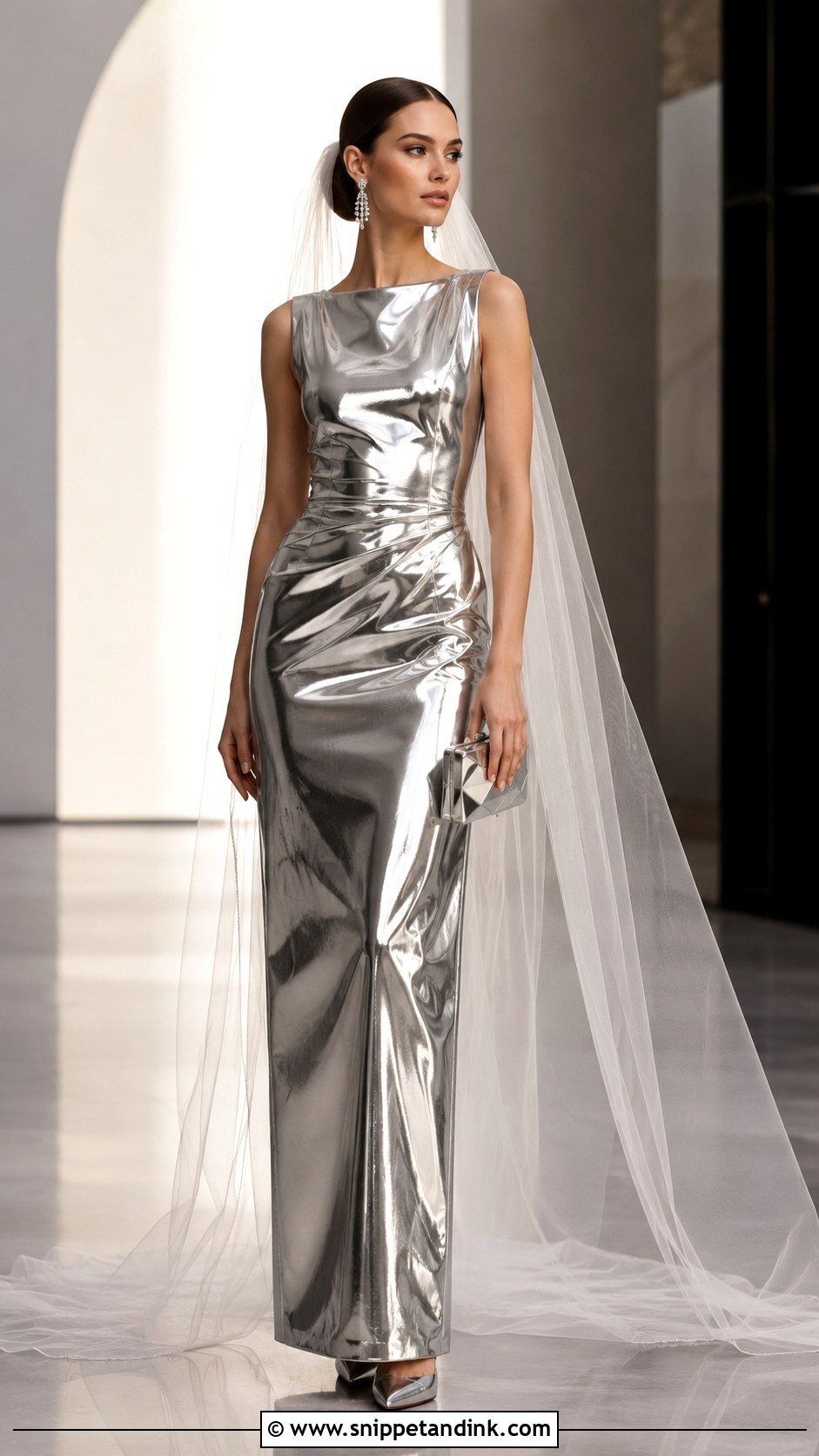
Silver reads futuristic on its own, so the shape can stay simple: a fitted column or a soft A-line in lamé, reflective satin or metallic jacquard, with clean seams. Add pointed silver pumps, crystal drops, a small mirrored clutch and a slick low bun. Here’s what I tell every bride considering lamé, though: it shows every pull line, and real metallic fabrics can be scratchy against bare skin, so ask whether the bodice is lined. If full silver feels like too much, a white gown woven with fine metallic thread gives the shimmer more quietly. A sheer fingertip veil softens it either way.
2. Sculptural Satin Wedding Dress
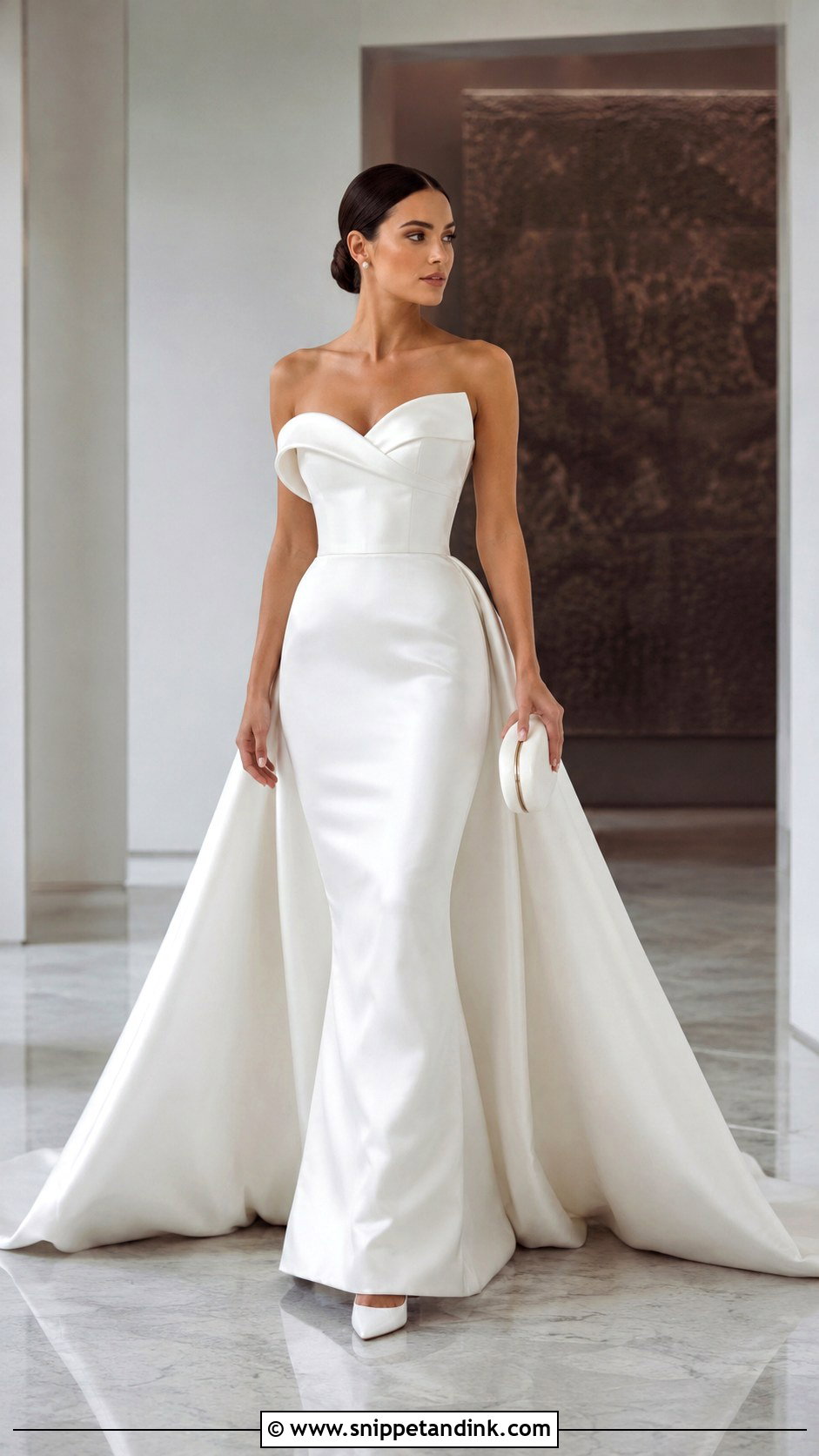
Think of satin folded into curves the way an architect folds concrete. A sculptural wedding dress might have a folded neckline, molded hips or a dramatic draped skirt. The satin has to be heavy enough to hold that shape, and I check that by holding a sample at arm’s length: if it collapses, the fold will droop by the reception. Keep the shoes minimal and pointed, with pearl studs, a polished cuff and a clean oval clutch. Sweep hair off the shoulders so the construction is visible. A detachable structured train adds drama without committing to it all night.
3. Holographic Organza Wedding Dress
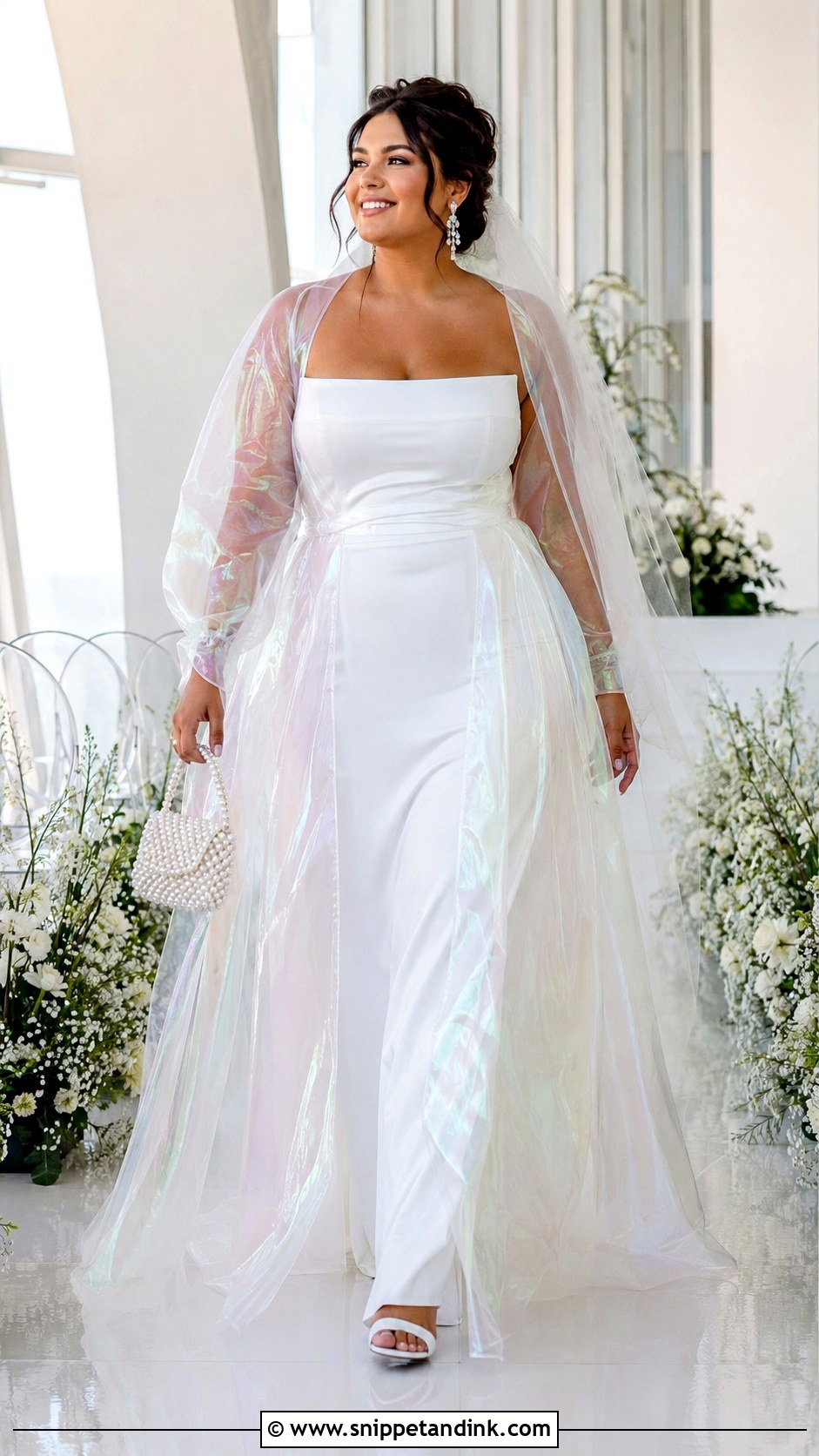
Holographic organza throws flashes of blue, pink and silver every time it moves. I’d use it as an outer layer over a solid white A-line or crepe underdress, never on its own, because the sheer fabric needs an opaque base to look bridal. White satin sandals, clear crystal earrings and a small pearl bag are enough. Keep the veil plain, or go iridescent at shoulder length if you want to commit to the theme. Swap glitter makeup for a subtle highlight. Daylight and white-walled venues let the fabric show its color; warm tungsten light can flatten it toward gold.
4. LED Light Wedding Dress
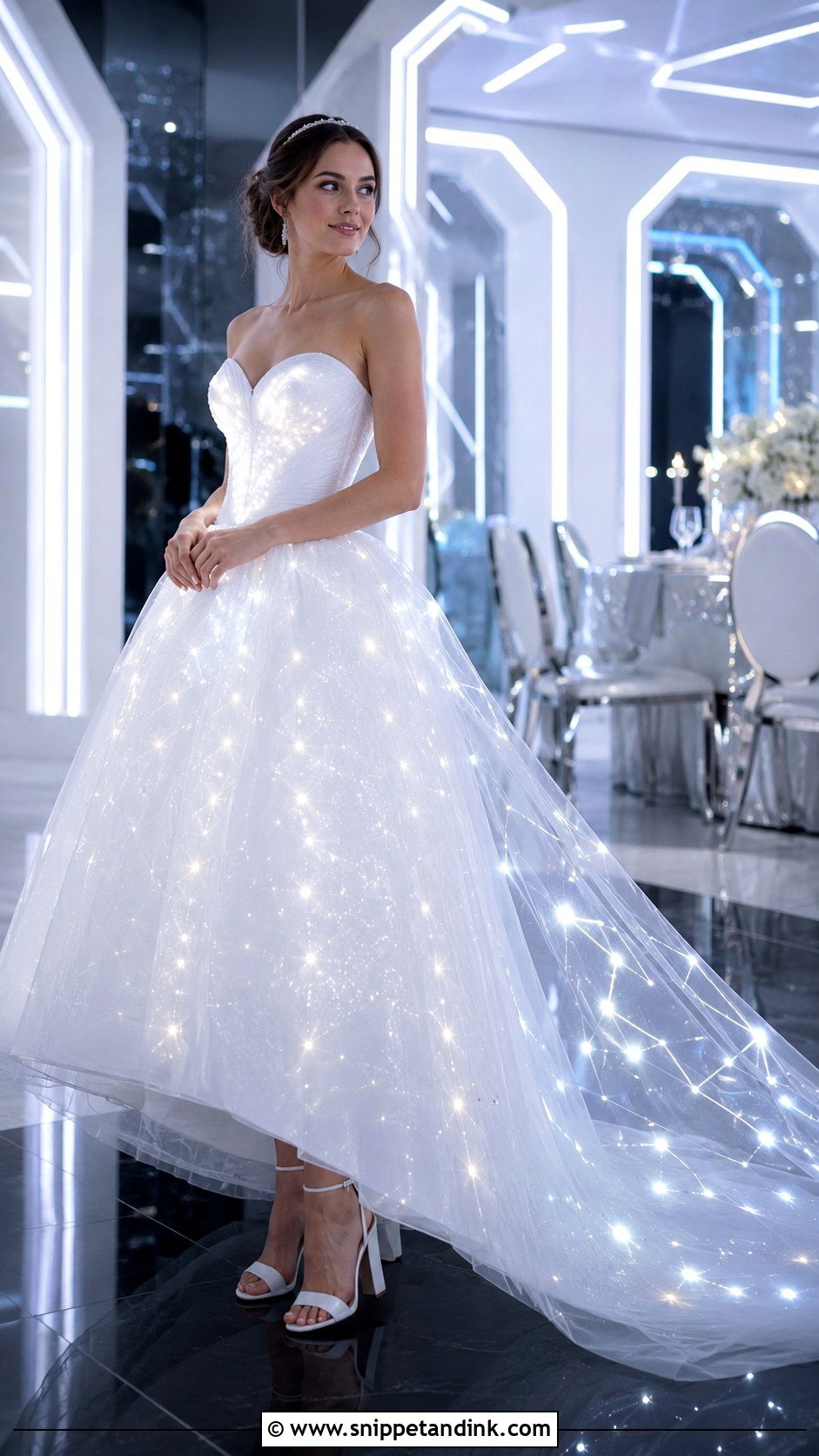
Done carefully, an LED gown feels magical rather than like a costume. The most wearable versions hide tiny cool-white lights under tulle, along a train or around embroidered constellation patterns, over a plain white ball gown. The practical side matters most: battery packs have weight, they get warm, and they need to sit somewhere you can reach to switch on. I insist on a maker who has done wearable lighting before and on a full trial wearing the battery for a couple of hours. A detachable lit overskirt for the entrance, removed for dancing, is the smartest version.
5. 3D Printed Wedding Dress
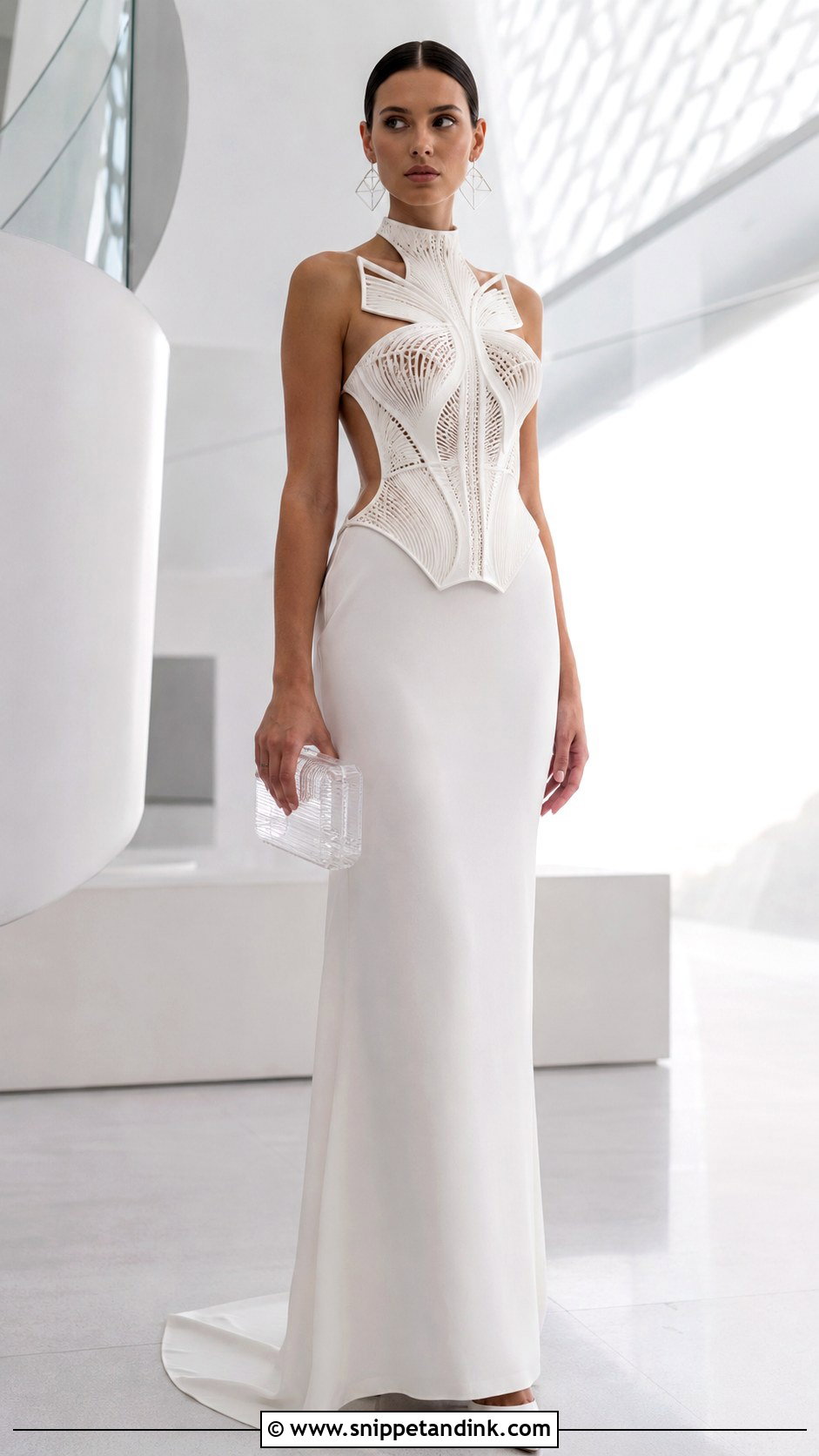
Fully printed gowns are rigid, and rigid fabric can’t sit down. That’s why the wearable approach uses printed pieces as a bodice, a shoulder frame, a peplum or appliqué over a flexible crepe column. Minimal white pumps, geometric earrings and an acrylic clutch suit the precise lines, as does a sleek center part. Rounded shapes feel organic; angular ones look more space-age. Printed parts can have sharp edges where they meet skin, so ask for a soft backing layer and sit, bend and hug in it at every fitting.
6. Architectural Cape Wedding Dress
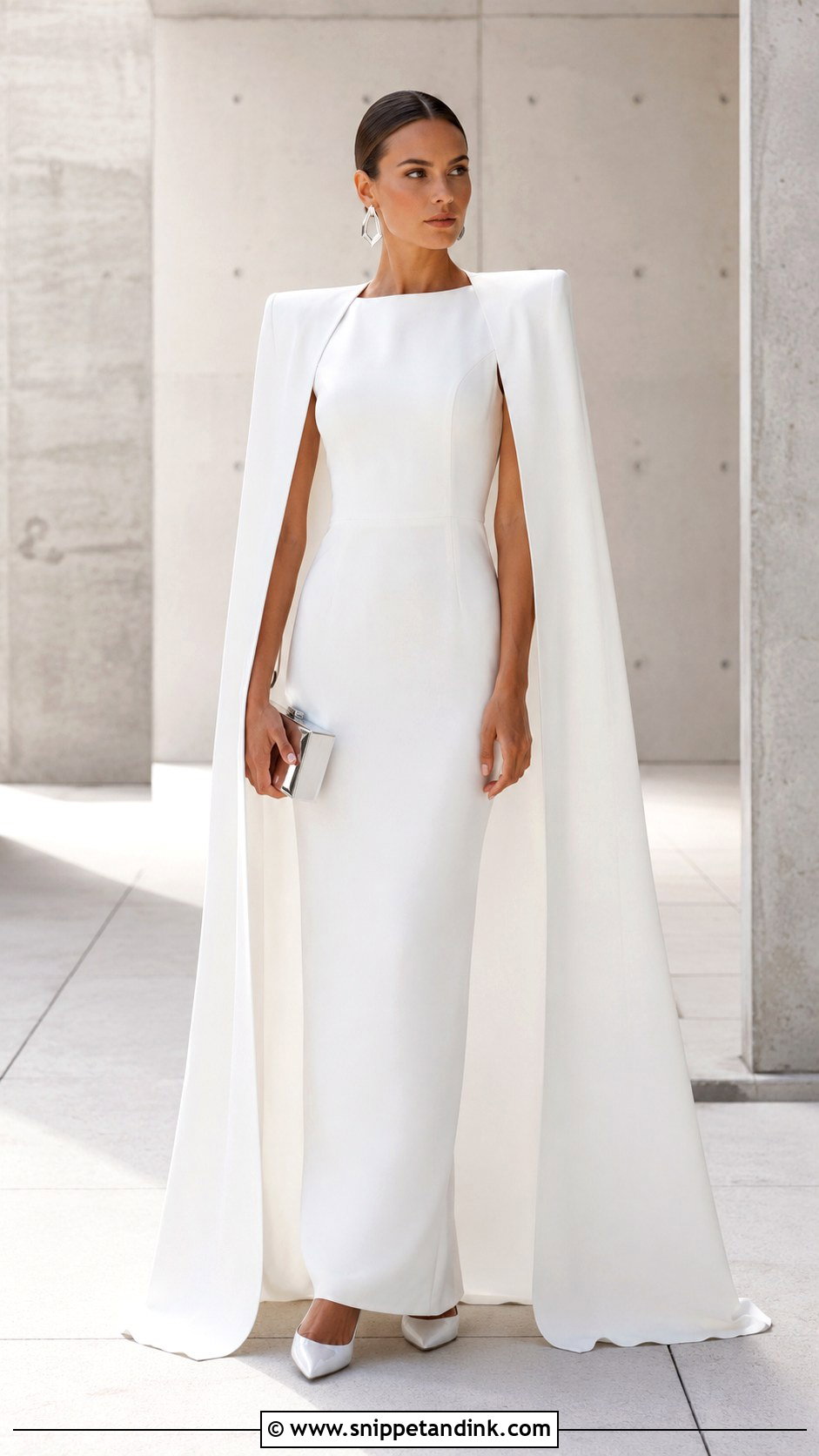
A structured cape can turn a very simple gown into the whole statement. Start with a sleeveless column dress or a streamlined jumpsuit, then add a cape with sharp shoulders, curved panels or a floor-length train. White crepe keeps it minimal; metallic edging adds shine. Pointed pumps or sleek ankle boots work under the long hem, along with sculptural silver earrings and a box clutch. Skip the veil, since two long layers compete. Heavy capes pull backward on the neck and shoulders over hours, so I’d make it detachable with hidden hooks and take it off after the portraits.
7. Geometric Cutout Wedding Dress
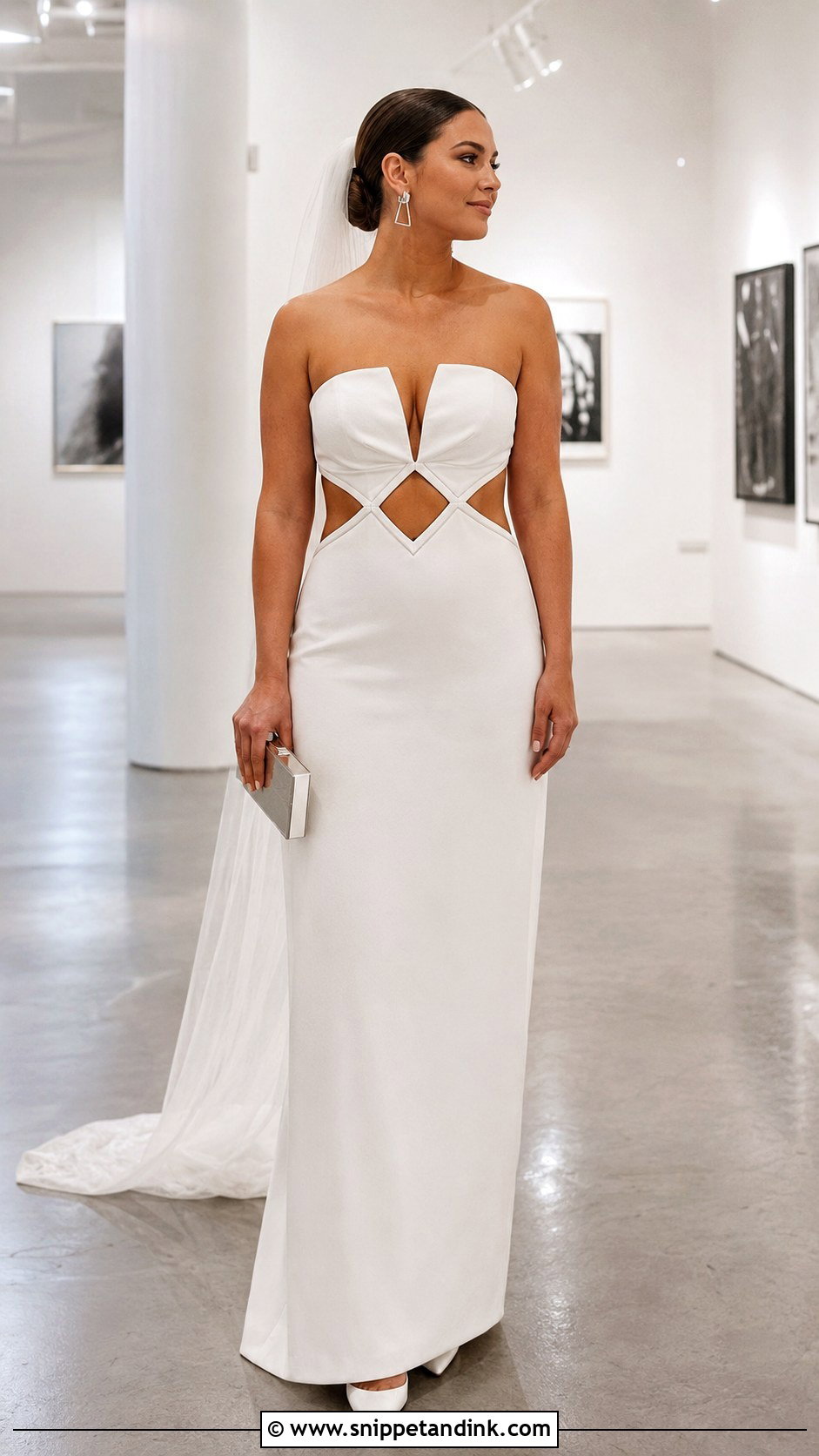
Cutouts give a gown graphic character, but placement is everything. Triangles, curves or diamond shapes can sit at the neckline, the upper waist, the back or the sleeves. A nude-toned lining keeps the shape while adding coverage. The fitting issue I watch for is skin pushing through the opening when you sit or breathe in, so a cutout should land on bone (collarbone, shoulder blade, spine) rather than soft waist. Pointed heels, angular silver earrings, a rectangular clutch and a lace-free veil keep the lines clean. Contrasting fabric panels give the same look without any exposed skin.
8. Liquid Satin Column Wedding Dress
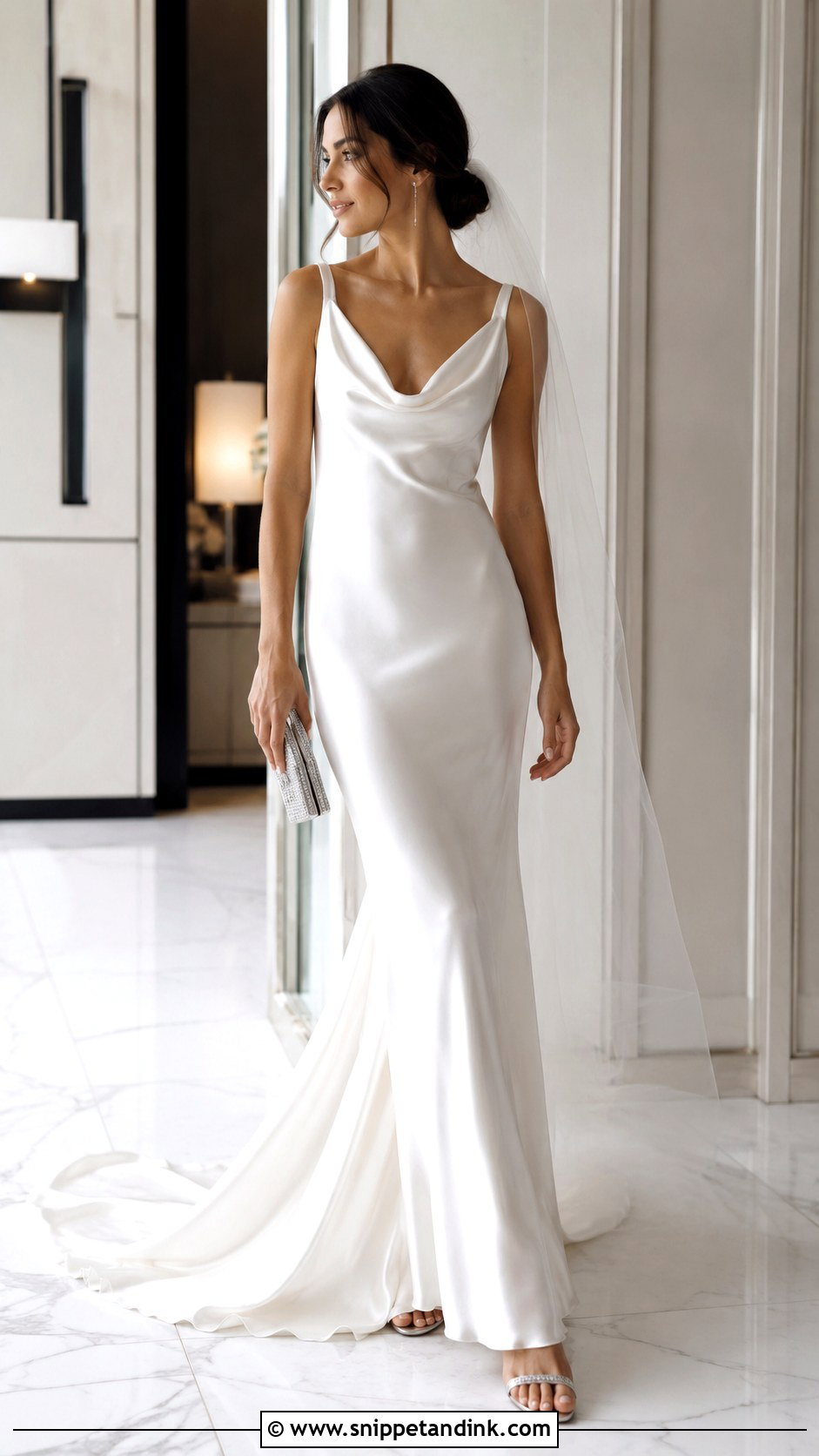
Satin that seems to pour like liquid metal is futuristic without a single embellishment. Look for a bias-cut column in pearl white, platinum or pale silver, with a soft drape at the neckline and a long train. It should skim, not grip. Slender metallic sandals, a smooth silver clutch and crystal threaders finish it. Bias-cut satin is honest about what’s underneath, so the fitting I care most about is the one with your exact undergarments on. Polished waves soften it; a wet-look bun makes it editorial.
9. Chrome Corset Wedding Dress
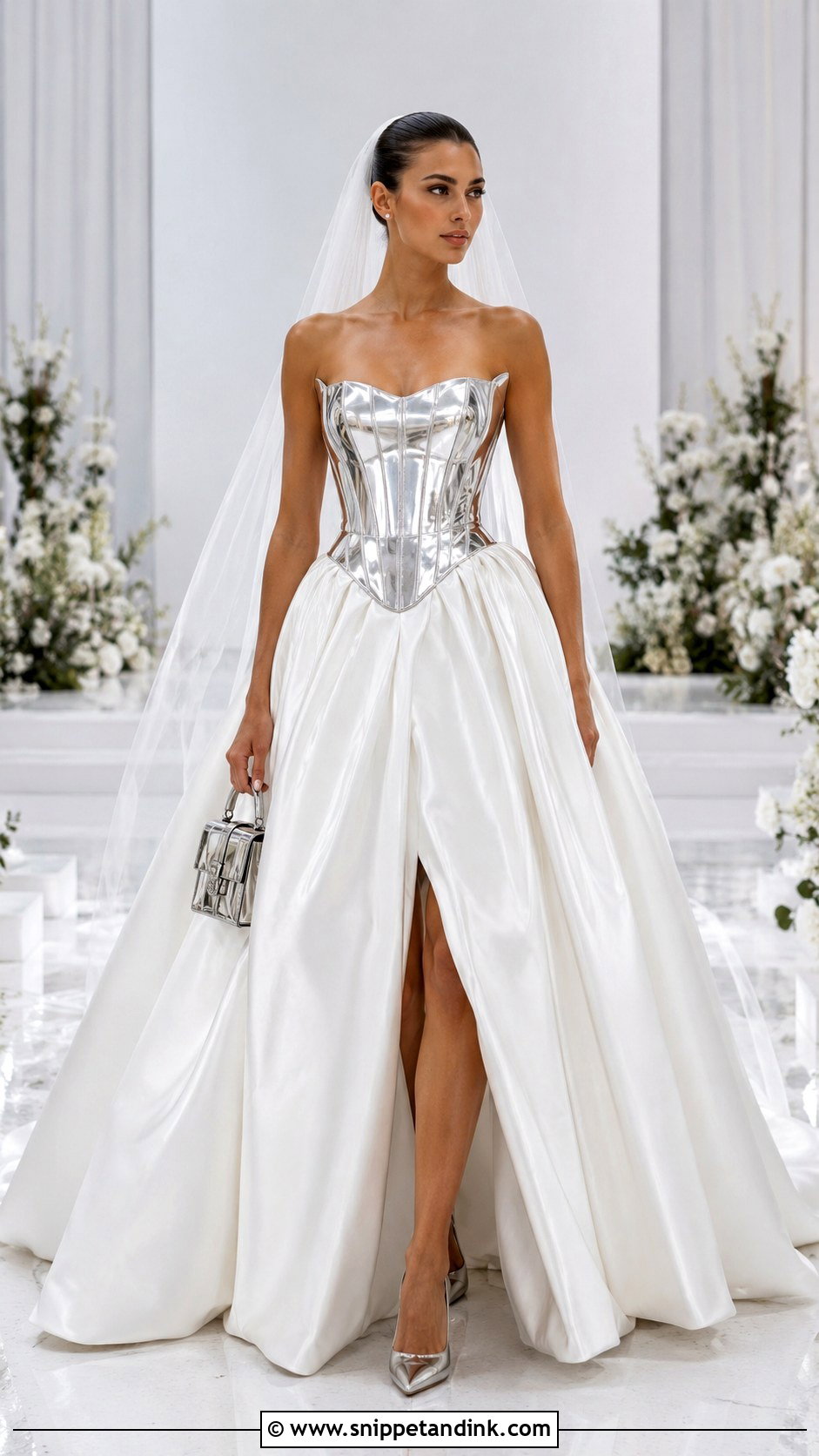
A chrome-effect corset is the focal point of the whole outfit. Pair a molded silver bodice or reflective embroidered corset with a white satin, crepe or tulle skirt, narrow for sleek, full for contrast. Silver pumps, simple studs and a small structured bag are enough, and a plain cathedral veil brings softness back. For something quieter, chrome piping, silver boning channels or mirrored appliqués give the idea without a fully reflective top. A good corset should let you take a full breath and eat a meal; if the fitter can’t slide two fingers in at the ribs, it’s too tight.
10. Asymmetrical Wedding Dress With Overskirt
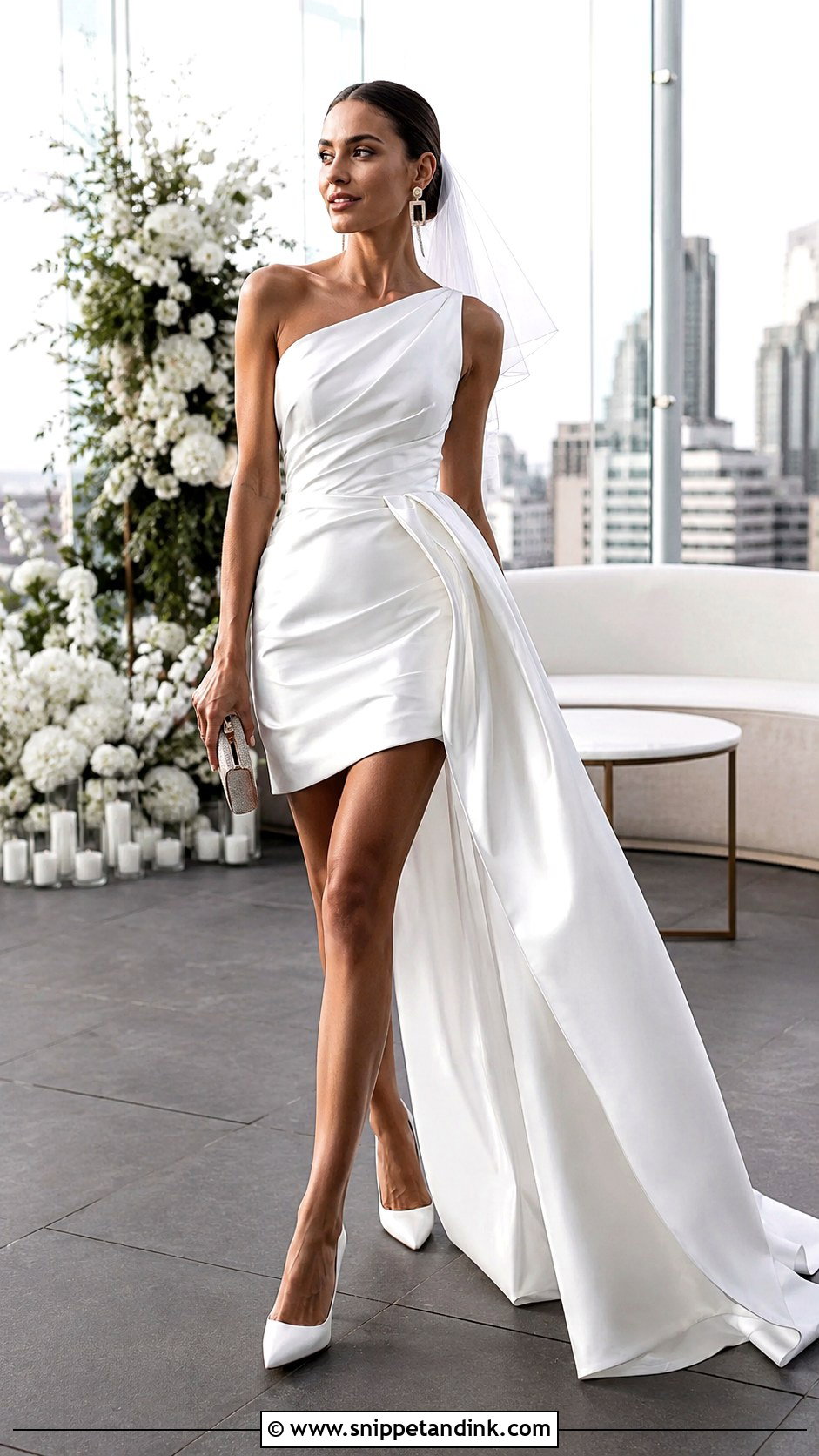
Every angle of an asymmetrical gown shows something different, which is exactly why it photographs with so much movement. Try a fitted mini or column with one sculptural sleeve, an angled neckline and a detachable overskirt falling from one hip. White satin keeps it refined; silver trim can outline the construction. Sleek pumps, mismatched geometric earrings and a compact clutch follow those lines. Keep the veil short. When the overskirt comes off, the dress underneath becomes your reception outfit, and you get two looks without changing shoes. Ask for the overskirt to attach with snaps or hooks, not a zip, so it comes off in seconds.
11. Futuristic Wedding Dress With Bubble Hem
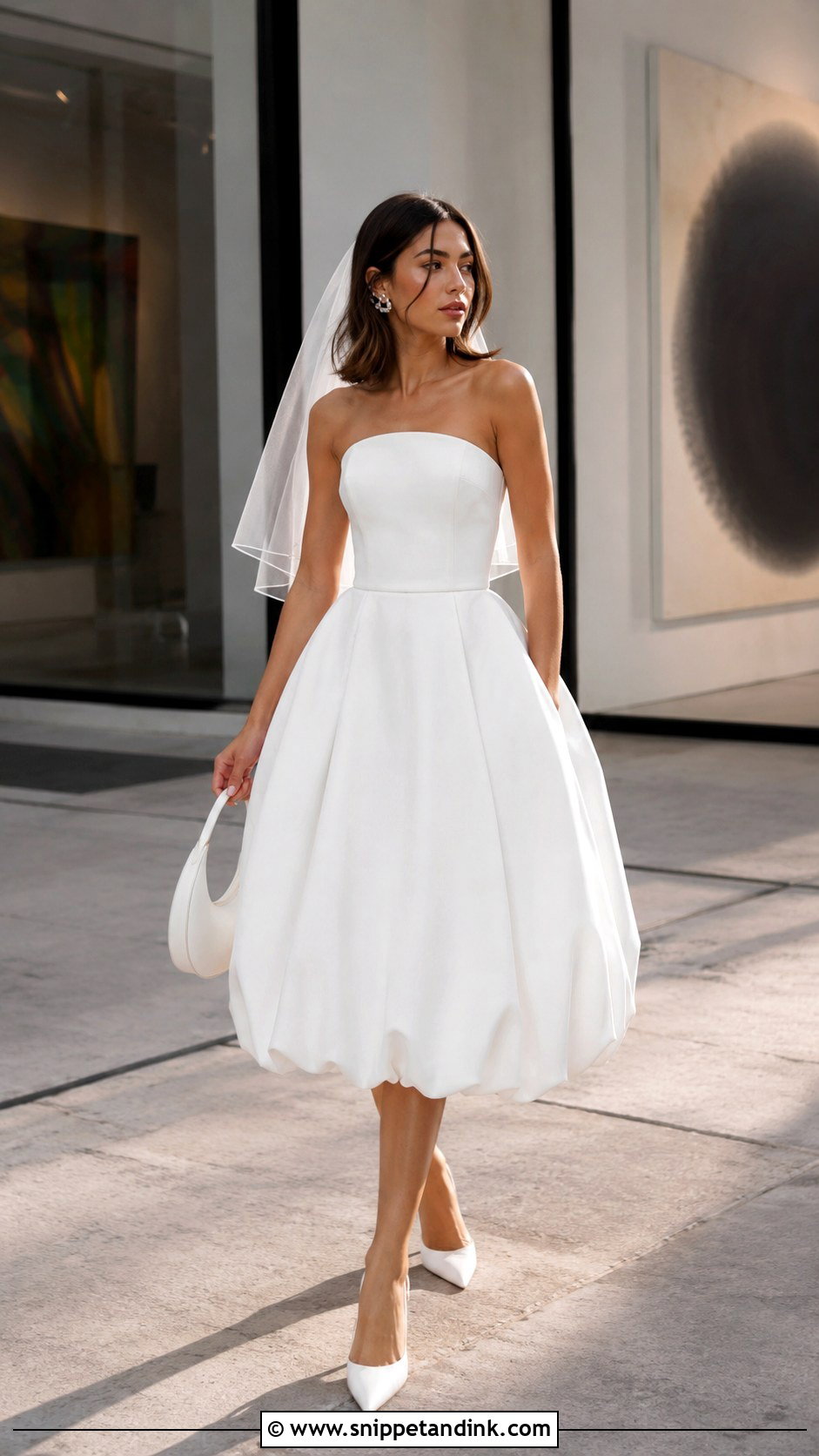
Rounded volume gives a bubble hem its playful, space-age feel. For a ceremony I’d choose a midi with a fitted bodice and a carefully structured bubble skirt, or a bubble peplum over a straight floor-length skirt for more length. Pointed slingbacks, pearl ear cuffs and a curved bag finish it, and a shoulder-length veil keeps the proportions right. Bubble shapes rely on stiff fabric or an inner layer to hold volume, so sit in it at the fitting: a poorly built one pops up awkwardly at the front. Galleries and rooftops suit this look.
12. Pearl Armor Wedding Dress
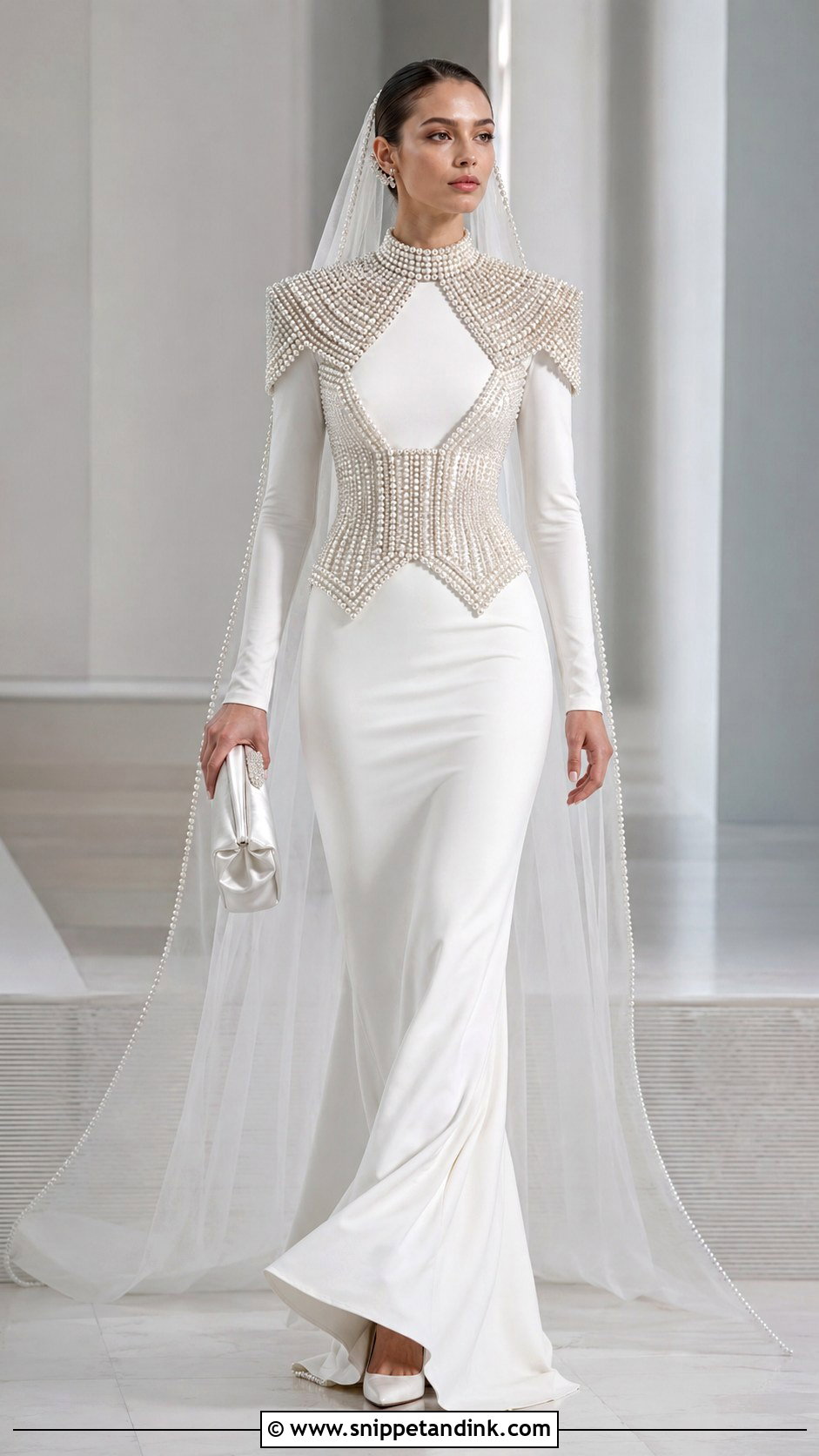
Pearls look modern when they’re laid in structured panels rather than scattered. On a fitted white crepe gown, a pearl shoulder piece, corset overlay, wide collar or geometric bodice panel reads like delicate armor. Real pearls are heavy in quantity, and that weight drags on the fabric over a long day, so I’d concentrate them in one or two areas and suggest lightweight imitation pearls for large sections. White closed-toe pumps, pearl ear climbers and a satin clutch complete it. A low ponytail keeps the shoulders visible.
13. Laser Cut Lace Wedding Dress
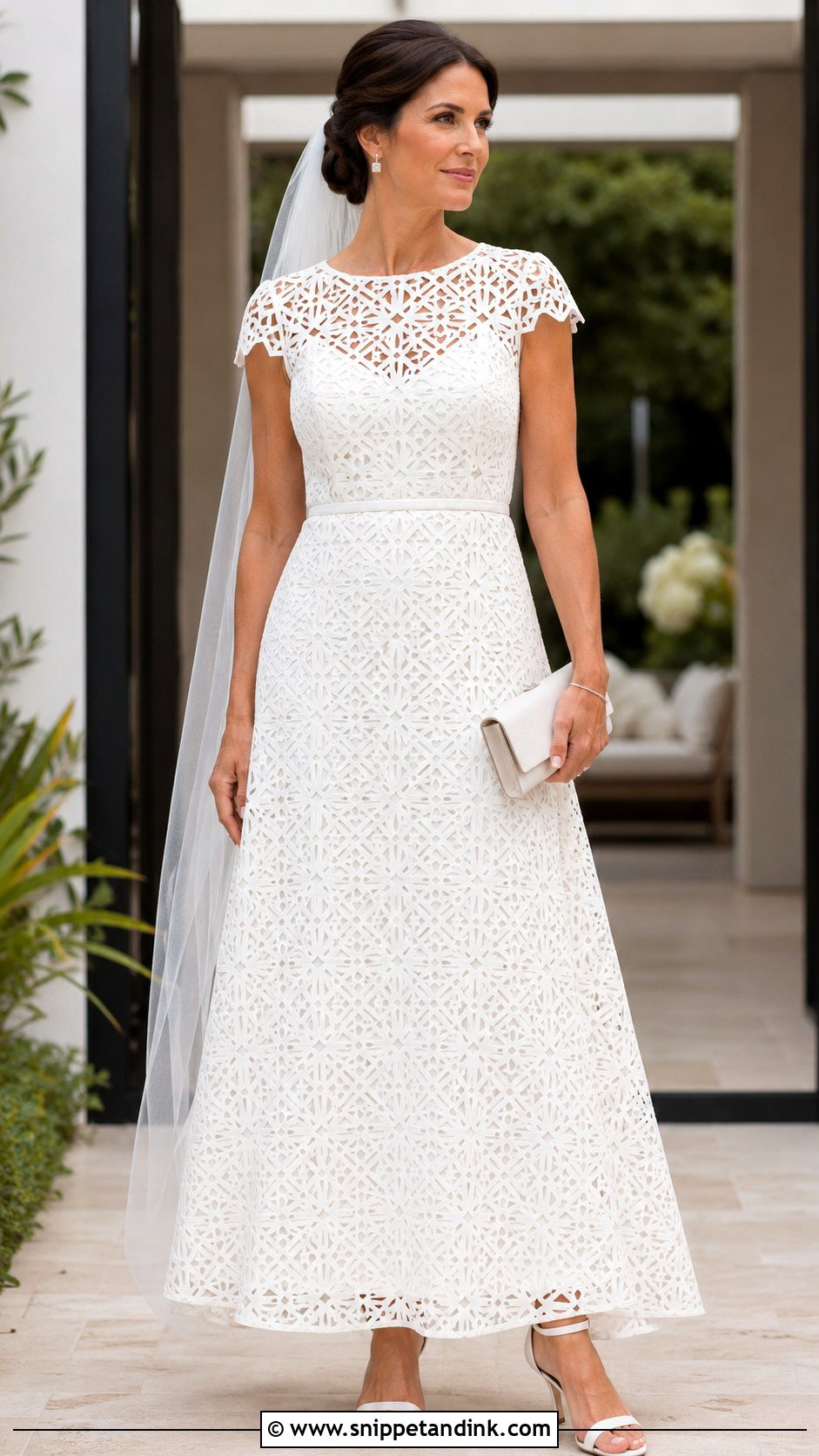
Laser-cut lace swaps floral embroidery for precise repeats that can look like circuitry, geometric tiles or abstract leaves. Choose a fitted sheath or A-line with laser-cut panels over opaque white fabric. Ankle-strap heels, small geometric earrings and a matte clutch suit it, and a plain tulle veil lets the pattern show. Large patterns look best limited to the sleeves, bodice or overskirt. One thing to check: laser cutting seals synthetic edges with heat, and well-finished edges look crisp in close-ups, while rough ones look fuzzy in macro detail shots.
14. Transparent Layered Wedding Dress
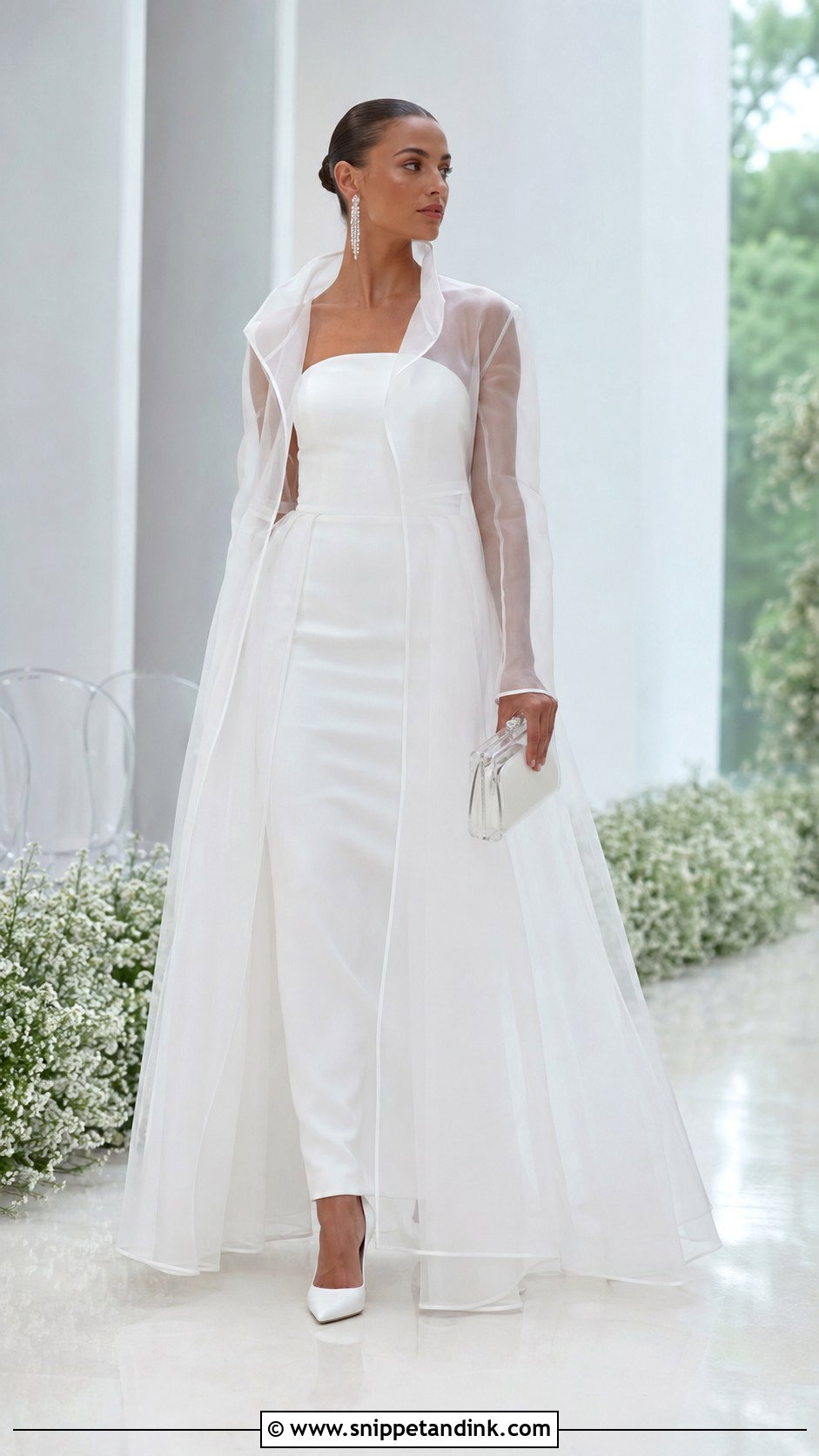
Sheer layers float over an opaque base, and that’s where the futuristic depth comes from. Start with a lined white mini, bodysuit or column gown, then add an ankle-length organza coat, a translucent overskirt or a sheer cape. White pumps, crystal earrings and a clear acrylic clutch with a fabric pouch inside (so your phone isn’t on display) finish it. Stop at one or two sheer pieces, or the outfit tips into theme-party. Organza creases sharply, so I’d steam it at the venue rather than packing it folded.


15. Minimalist High Neck Wedding Dress
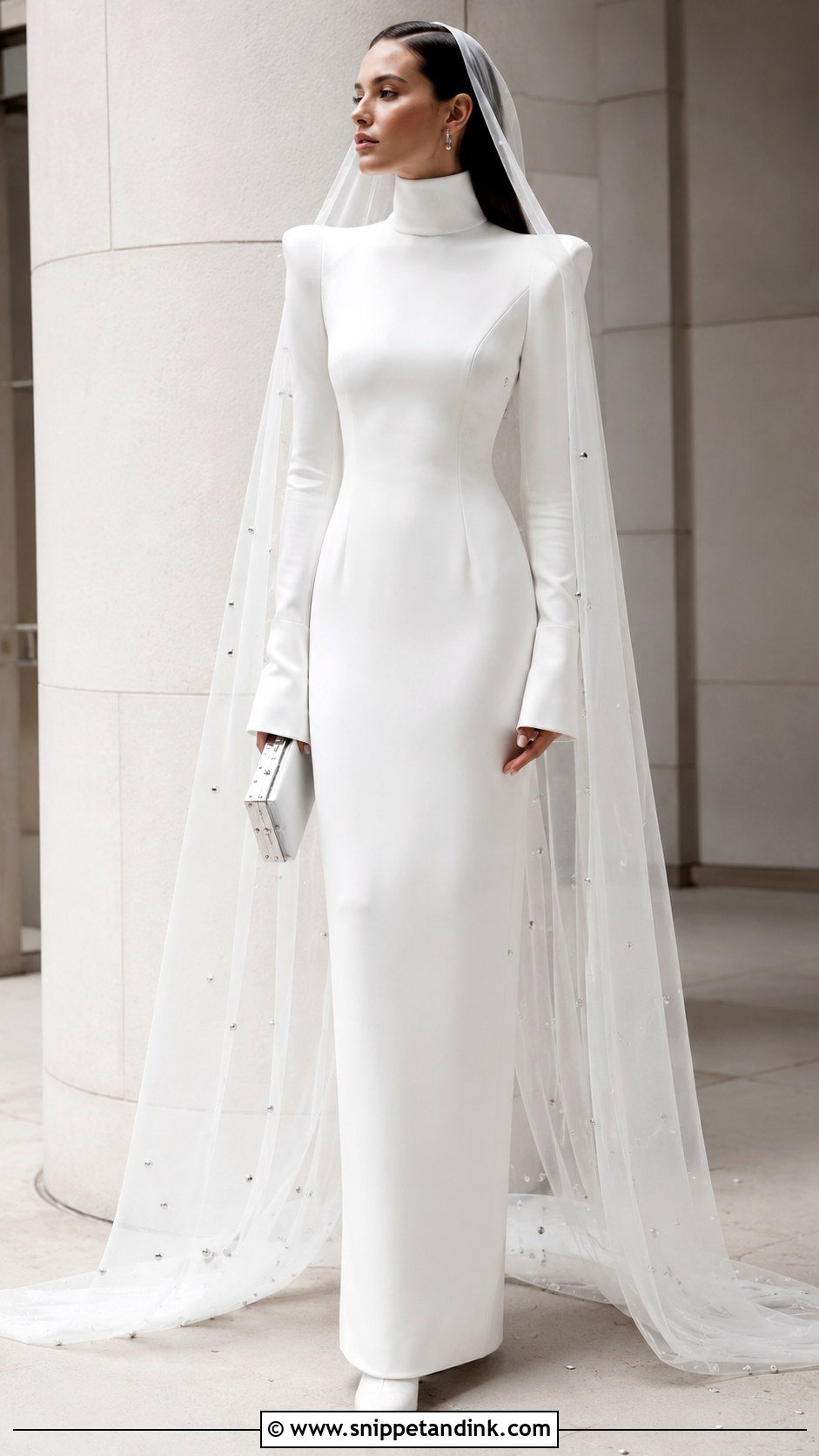
Could the simplest dress be the most futuristic? A high-neck column with long, exact lines makes a strong case. Choose matte crepe, smooth satin or a stretch fabric in pure white, then add structured shoulders, long cuffs or a narrow keyhole back. Pointed white boots or closed-toe pumps, silver studs and a slim clutch are all it needs. A dress this plain hides nothing about the tailoring, so budget for alterations; a wrinkle at the neck or a sleeve a centimeter long is obvious. A transparent hooded cape or a narrow tulle scarf can stand in for a veil.
16. Futuristic Bridal Jumpsuit With Train
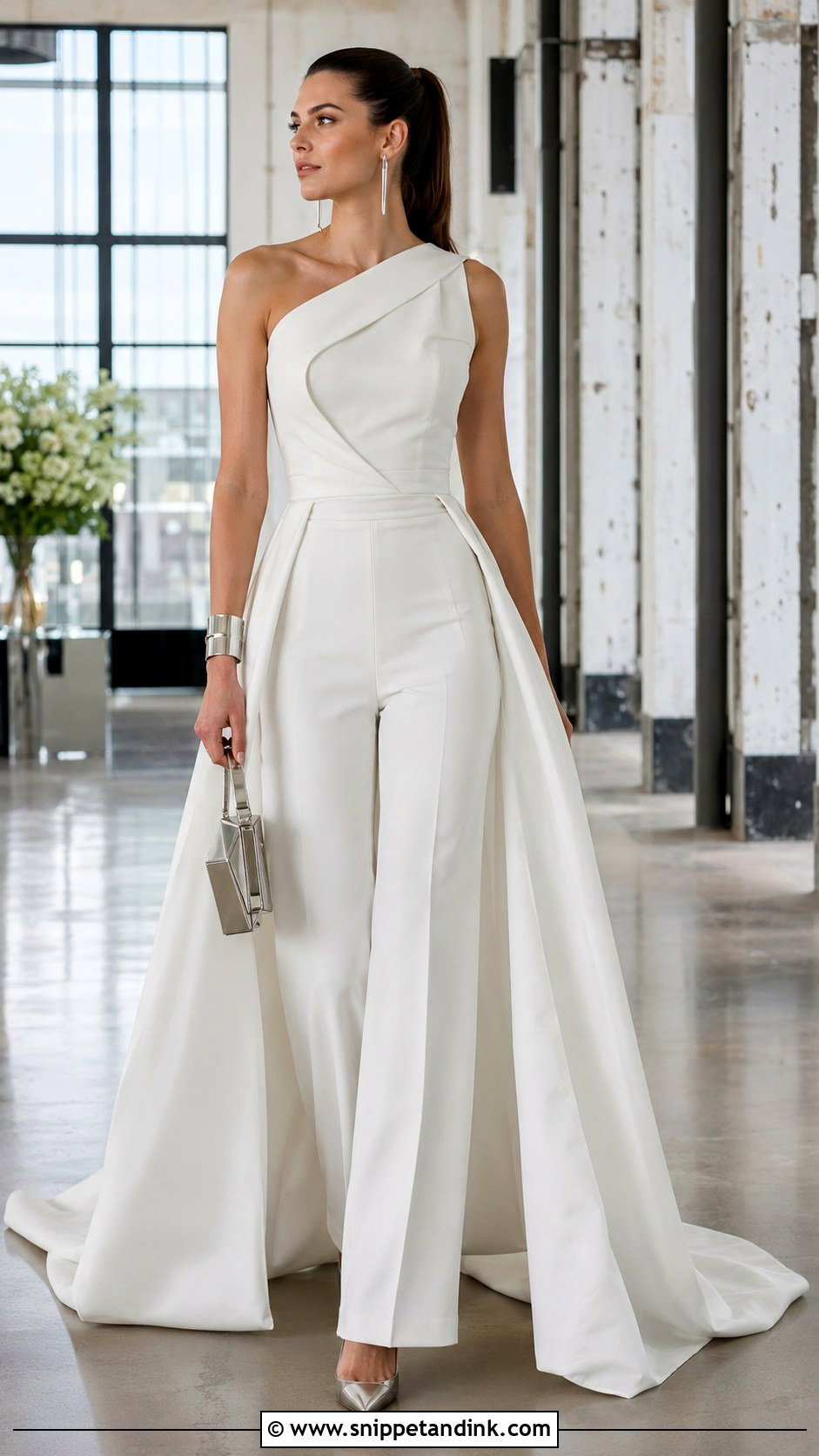
A tailored bridal jumpsuit gives you structure and the freedom to move. Pick a wide or straight leg with a sculpted corset top, an asymmetric neckline or sharp shoulders, then add a detachable satin train or sheer overskirt for the ceremony. Metallic pumps, a silver cuff and geometric drops complete it. Petite brides usually look best with a higher waist and narrower leg; taller brides can carry a sweeping wide leg. The question nobody asks until the day is the bathroom, so I’d make sure the back zip is reachable or plan who helps.
17. Color Changing Wedding Dress
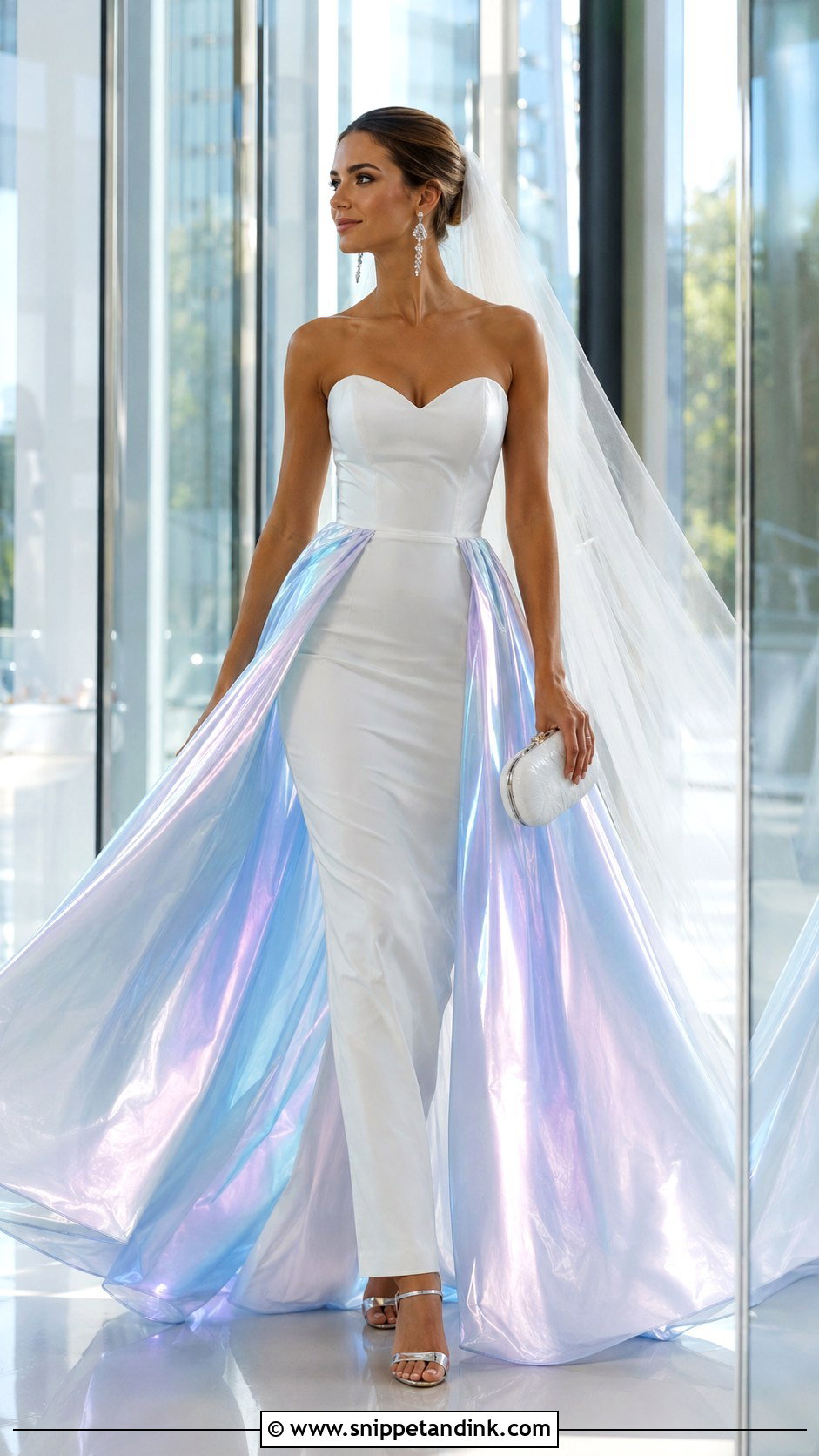
Color-changing dresses work through iridescent fabric, reversible layers or lighting-responsive details. The most reliable version is a white gown under an overskirt that flashes pale blue, lavender or silver as you move; detachable colored panels for the reception are another route. Keep the sandals silver, the earrings crystal and the clutch white so the shift stays the star. Test it in daylight, under the venue’s own lights and with a camera flash, because iridescent fabric can look completely different in each, and that surprise is better at a fitting than in your photos.
18. Celestial Wedding Dress
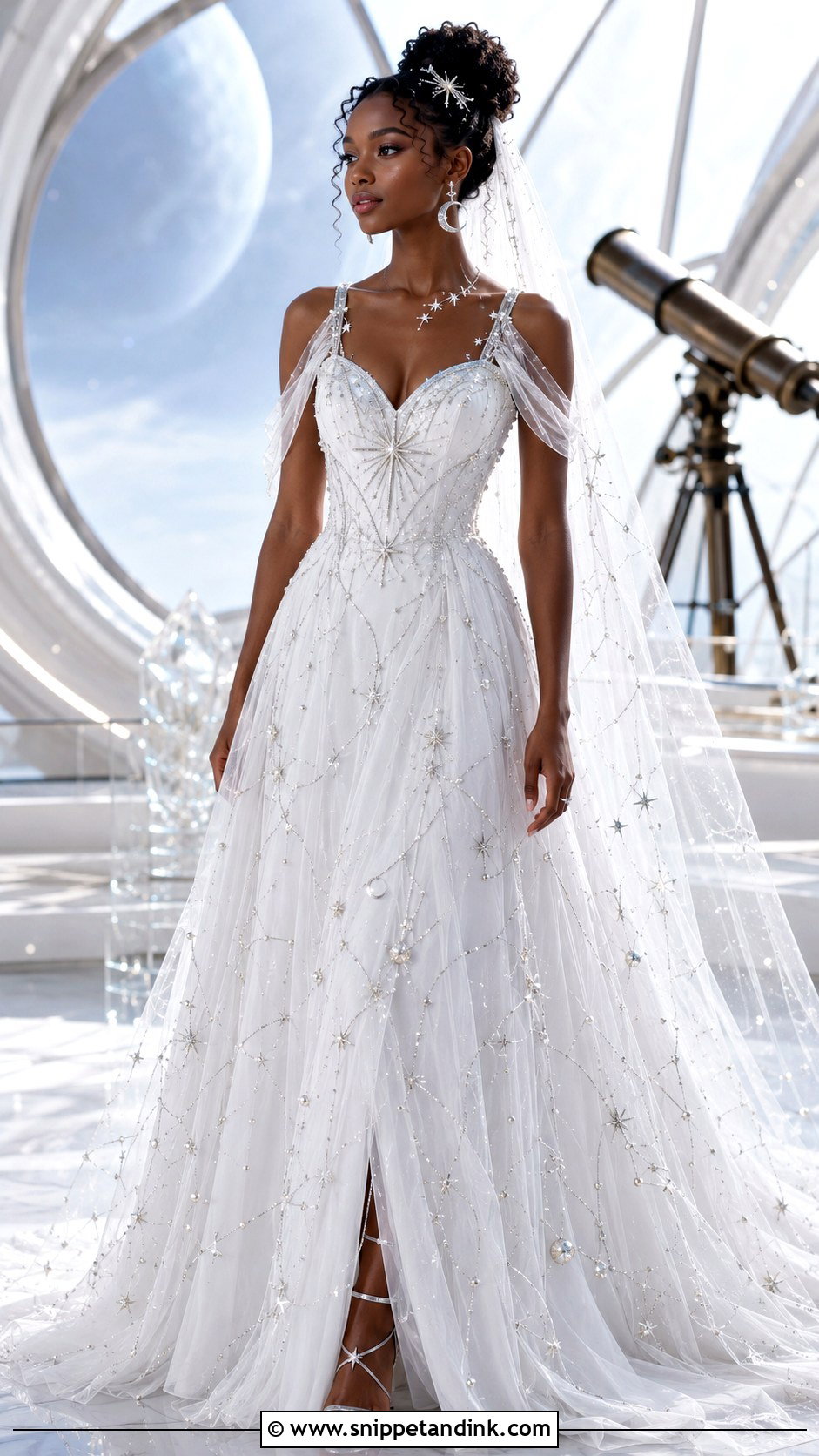
Stars and constellations are a natural fit for space-inspired bridal. Choose a midnight-blue, silver or white gown with crystal starbursts, fine metallic embroidery and scattered pearls, on a fitted bodice with a tulle skirt. Silver sandals, crescent earrings and a small star hair piece finish it, and a veil with faint constellation embroidery carries the pattern. The literal space props are where this goes wrong; I’d keep it to one celestial pattern. Midnight blue is a bold choice for a bride, so a white gown with silver stars is the safer route if family tradition matters.
19. Feathered Sculptural Wedding Dress
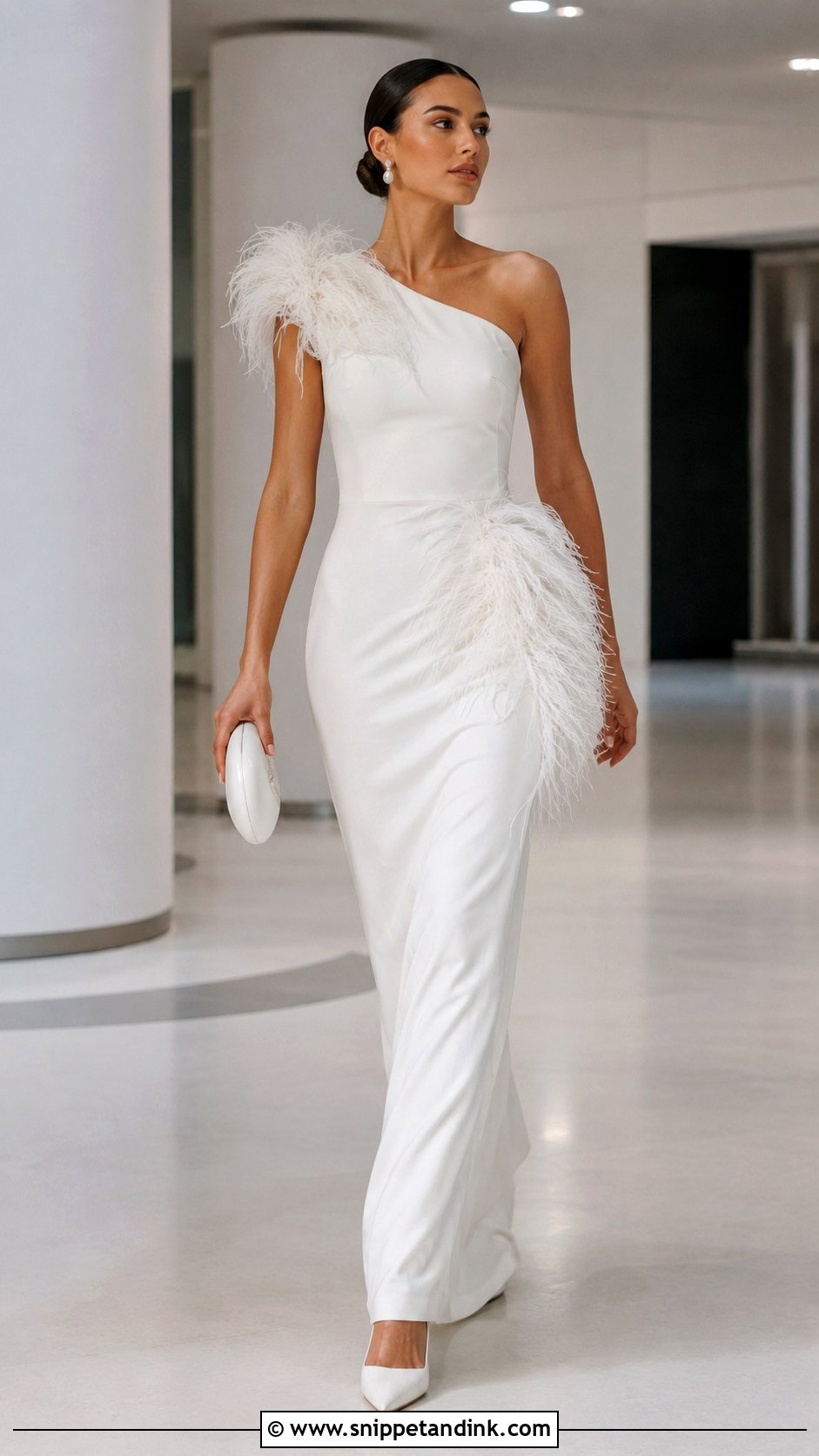
Feathers turn futuristic when they’re placed in tight, architectural shapes instead of covering everything. Use crisp feather panels at one shoulder, the neckline, the hips, the cuffs or the hem, on a plain fitted crepe or satin column. White pointed pumps, modern pearl earrings and a curved clutch keep it uncluttered. Feathers shed, dislike rain and flatten in a garment bag, so I’d transport the dress hanging, with tissue around the feathered areas. Finely cut fabric fringe gives similar movement with less fuss.

20. Convertible Mini Wedding Dress
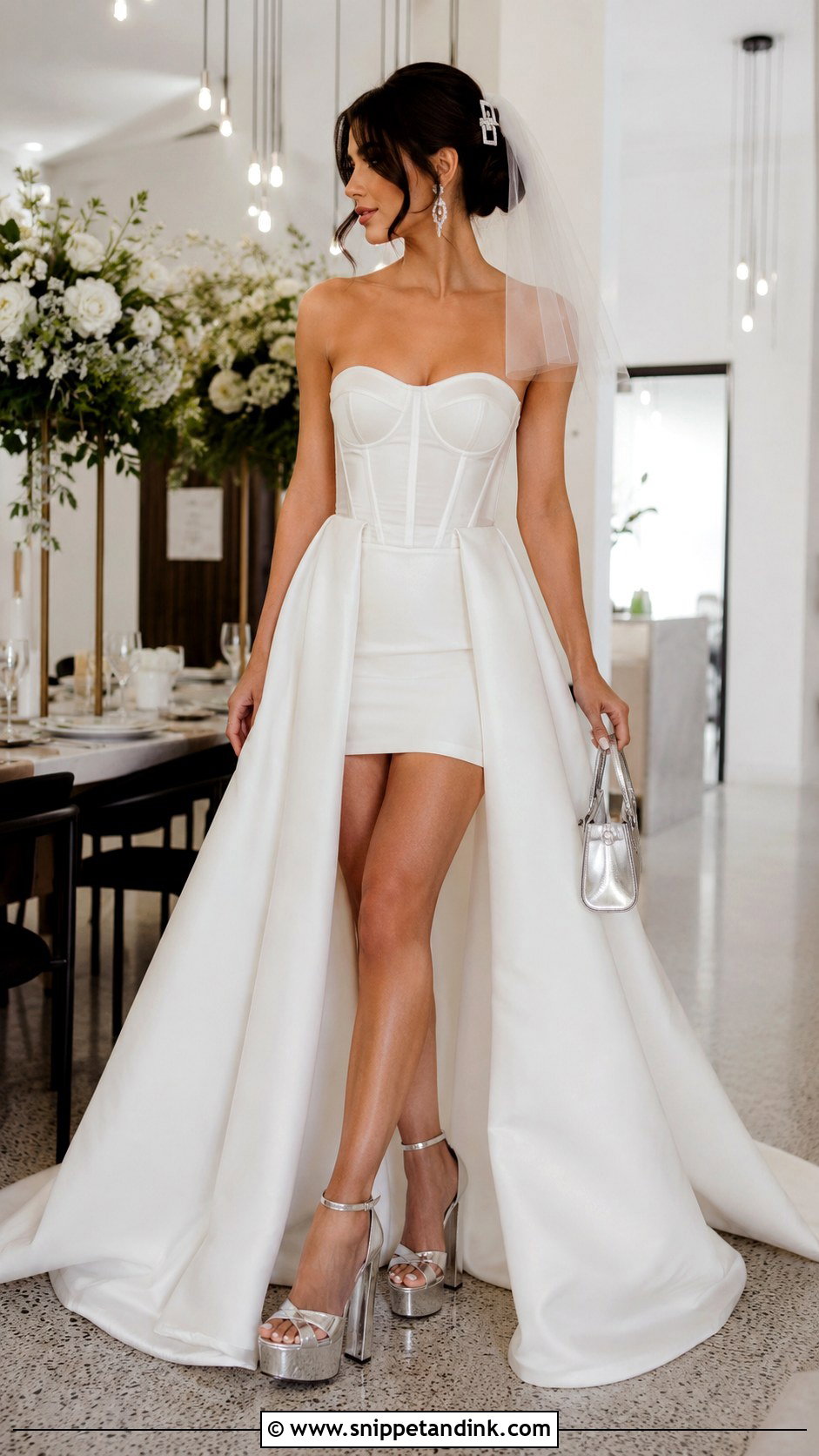
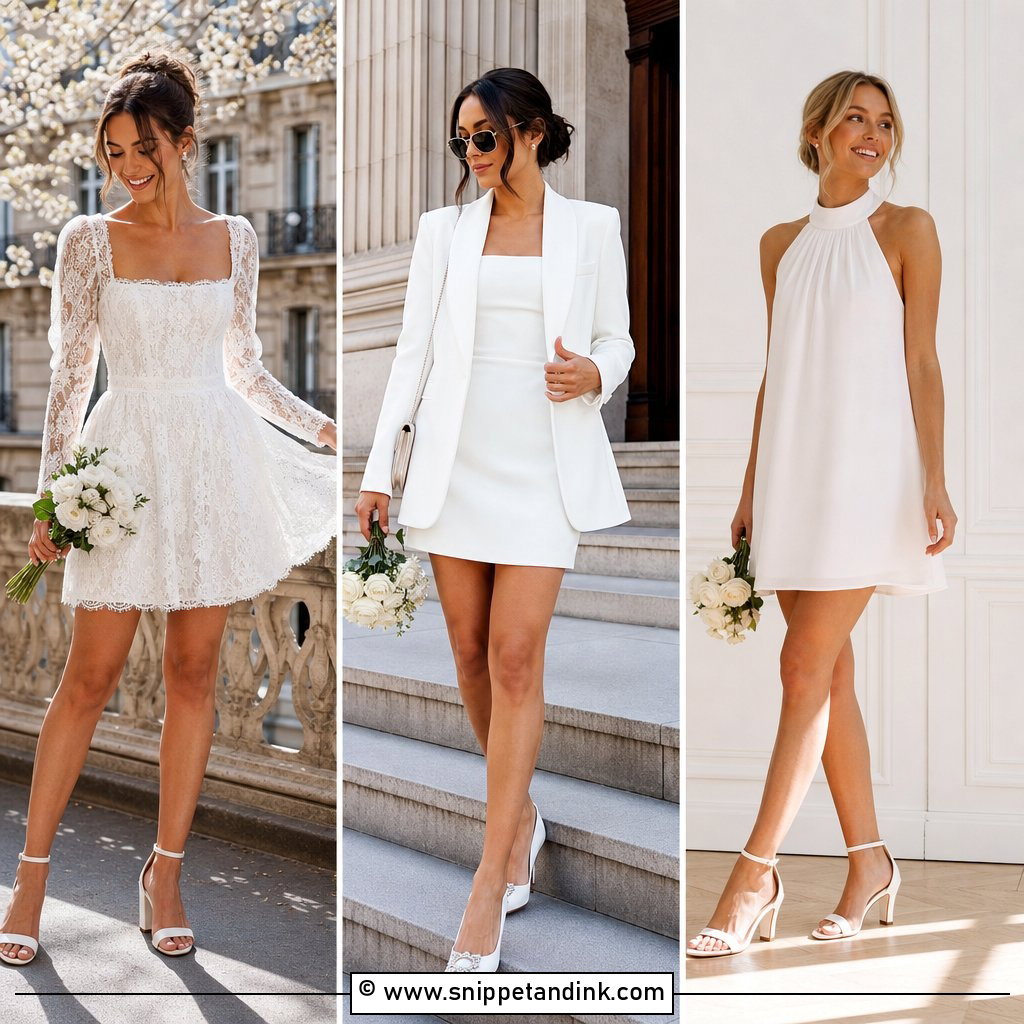
A convertible mini gives you a ceremony gown and a party dress in one. Start with a structured white mini (square neckline, corseted waist or sculpted skirt), then add a detachable floor-length overskirt, a long train or a sheer coat for the aisle. Once the outer layer comes off, silver platform heels, statement earrings and a small metallic bag take over. A short veil can lift away to reveal a headband or geometric clip. Practice the change with whoever will help you before the day; hooks that seemed easy at a fitting are harder in a crowded bathroom with five minutes to spare.
Reflective Fabric Behaves Differently on Camera
Metallic, holographic and liquid satin gowns look extraordinary in person, but cameras read them differently. Bright highlights on silver lamé can turn pure white with no detail, and iridescent fabric may look grey or one flat color under direct flash. I always tell brides to share fabric swatches or fitting photos with their photographer early, so they can plan for softer, angled light.
LED dresses need the opposite. The lights only show when the room is dimmed, so plan a short moment for them, such as the entrance or the first dance, and let the photographer know when it is.
Can You Sit, Hug and Dance in It?
Structured gowns fail at the boring moments. Ask your fitter to watch you do these at the final fitting:
- Sit on a hard chair for five minutes. Molded hips, printed bodices and stiff bubble skirts are often the first to dig in.
- Lift both arms above your head as if hugging someone taller. Corsets and cutouts shift here.
- Climb a few stairs and step into a car. Trains, capes and high-low layers catch.
- Take off and put back on every detachable piece, timed, with the person who’ll help on the day.
If something pinches after five minutes, it will hurt after five hours. That’s the moment to change it, not the morning of the wedding.
Start With One Bold Feature, Then Stop
A futuristic bridal look works when the idea is daring but the construction is sound. Metallic satin, an architectural cape, discreet lighting, laser-cut patterns, celestial embroidery or plain sharp tailoring can all get you there. You don’t need all of them. Pick the one you love and build the shoes, jewelry and hair around it. Then test it the way you’ll actually live in it: walking, sitting, posing, hugging. Corsetry, sculptural pieces, detachable layers and anything with a battery all need a skilled alterations team, and in my experience that’s where these gowns succeed or fail.
You'll Like These Ideas:




Leave a Reply