
Emerald and rose gold is a palette I enjoy designing for, partly because it’s harder than it looks. Emerald gives depth, rose gold adds a warm metallic glow, and the pairing suits ballrooms, gardens, autumn weddings and candlelit evenings. On a cake, though, both colors need managing: deep green icing takes a lot of coloring, and rose gold shifts tone with every light source. The decision that shapes everything is balance. A mostly ivory cake with small green and metallic details reads soft; deep green tiers with metallic accents read dramatic. Below are 20 designs, from florals and marble to geodes, drips and clean fondant, with my notes on each.
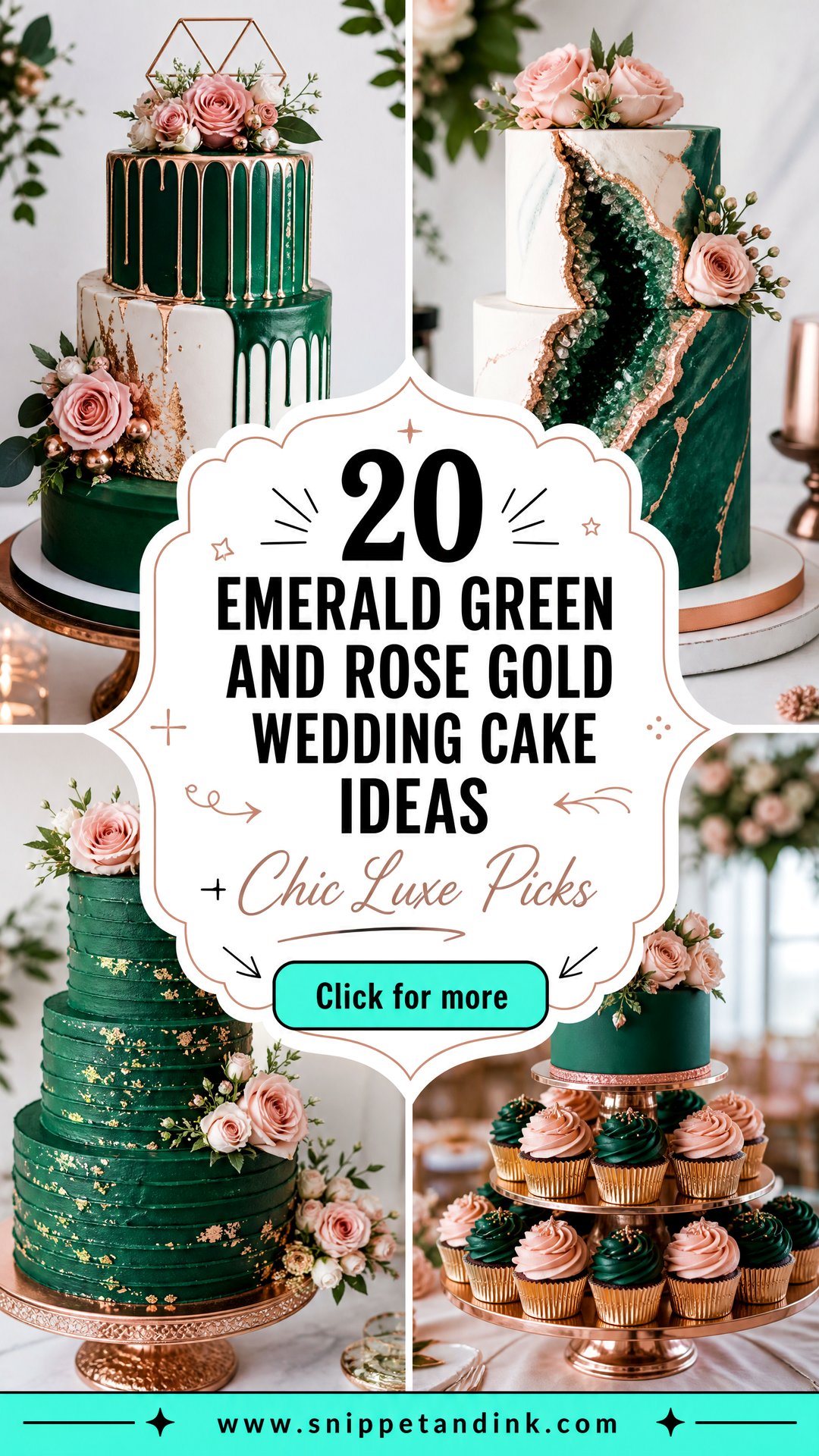
Deep Green Icing Takes More Than a Drop of Color
Emerald is one of the hardest wedding colors to make in sugar. Reaching a true jewel green in buttercream or fondant takes a lot of concentrated gel coloring, and that much dye can leave a faint bitter note and tint lips and teeth green during the toasts.
So most of my emerald designs only put deep color where it’s seen. The outer coat is green; the filling and crumb coat stay plain. Fondant can also be bought pre-colored in dark shades, which saves the cake from being overworked. Deep colors develop over several hours, so I mix them a day ahead and judge the shade the next morning, not straight out of the bowl.
If you want a mostly green cake, ask your baker two things at the tasting: how they reach the shade, and whether you can see a sample piece in daylight and under warm evening light. Green that looks rich at noon can drift toward black under dim, warm bulbs.
1. Emerald Green And Rose Gold Tiered Wedding Cake
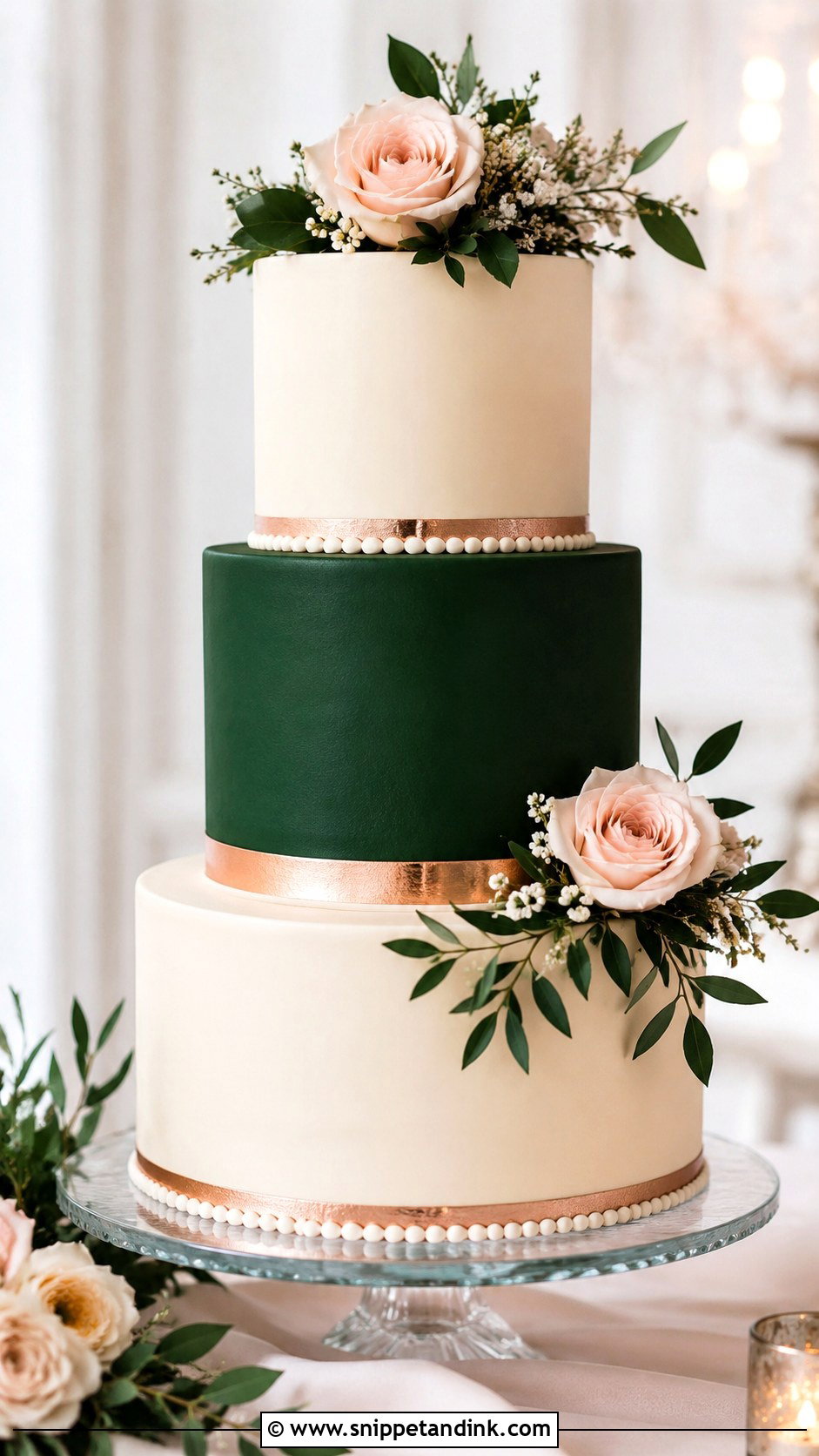
Tiers are the simplest way to make this palette feel grand. I’d put emerald on one or two statement tiers and keep the rest ivory or soft blush, because an all-green four-tier cake can look heavy in a dim room. Rose gold can come in as thin separators, painted edges, metallic leaf or a small drip. Blush roses, ivory orchids or deep greenery suit the florals. A green bottom tier grounds the cake visually; a green top tier makes it look top-heavy, so placement matters.
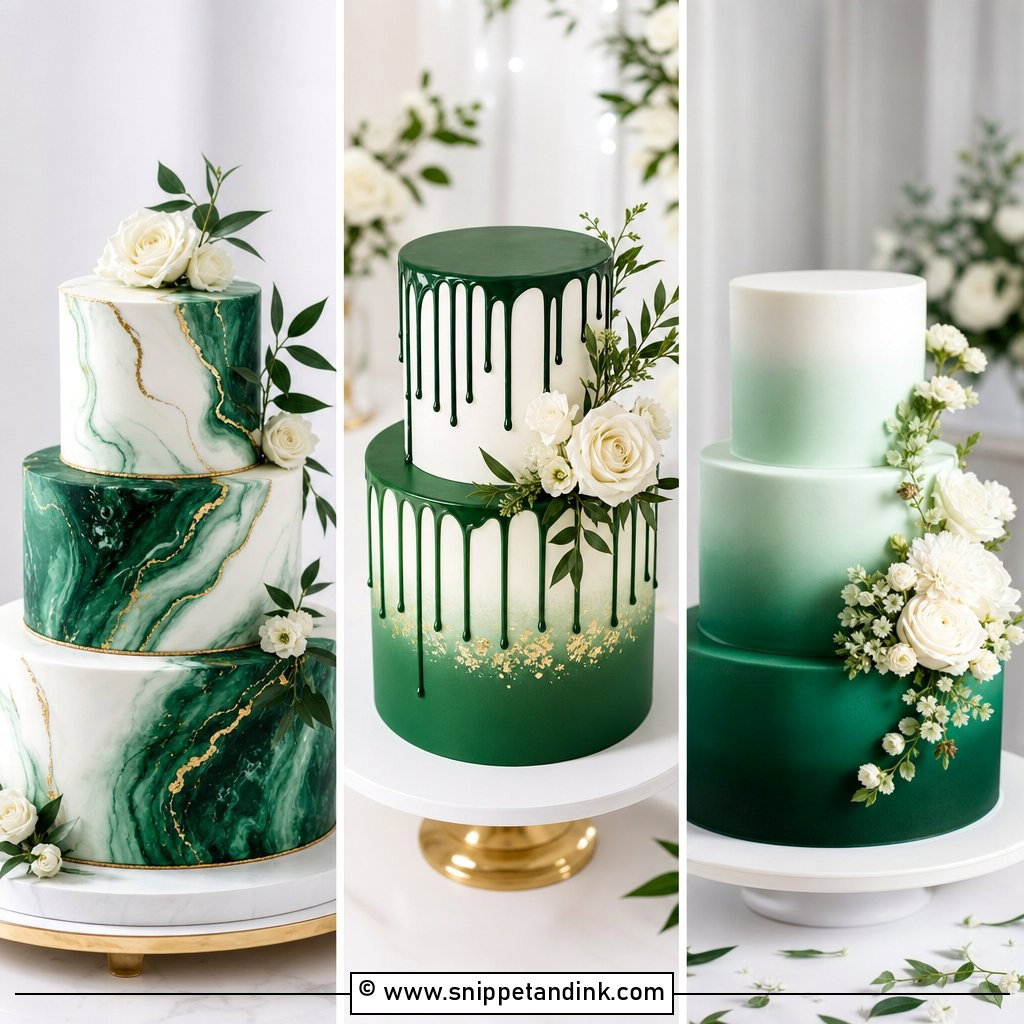
2. Emerald Green Marble Wedding Cake
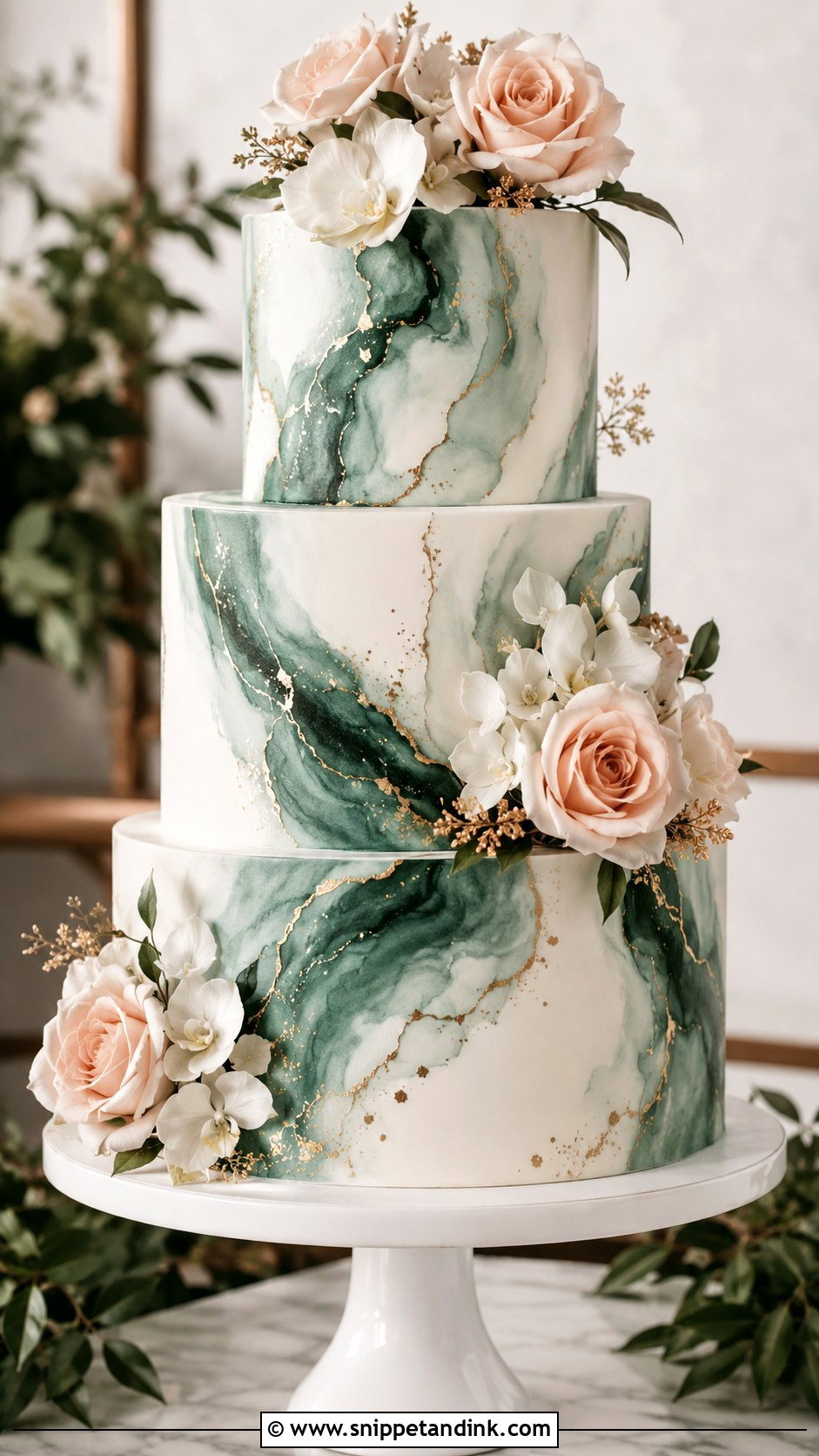
Marble is one of the few finishes where emerald looks better diluted. I knead streaks of green fondant into ivory and roll it out just enough that the color moves in soft veins rather than blending into mint. Light rose gold veining painted along a few of those lines adds warmth. It suits weddings with modern stationery and acrylic signage. Every marbled sheet comes out a little different, so you approve a direction, not an exact pattern. Keep decoration to a few sugar roses, wafer paper petals or greenery so the stone effect stays visible.
3. Emerald Green Drip Wedding Cake
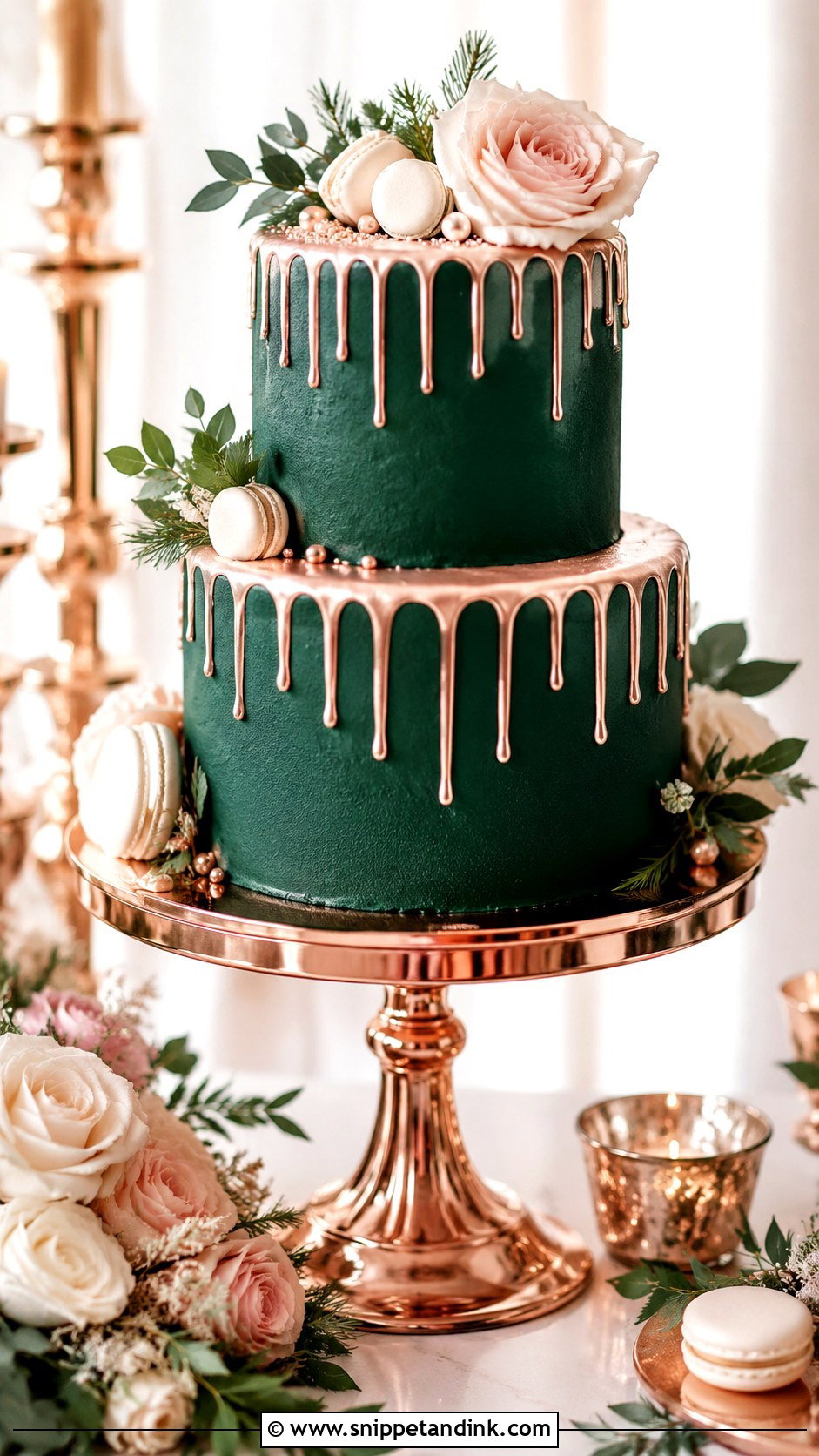
A rose gold drip over deep green frosting catches light well. I make the drip from white chocolate ganache, chill the cake, then paint the set drips with edible metallic so they shine without being too thick. Getting drip length even is about ganache temperature: too warm and it runs to the board, too cool and it stops in stubby blobs. Blush flowers, ivory roses, macarons or small gold pearls finish the top. It’s a modern choice for couples who don’t want anything too formal.
4. Emerald Green Floral Wedding Cake
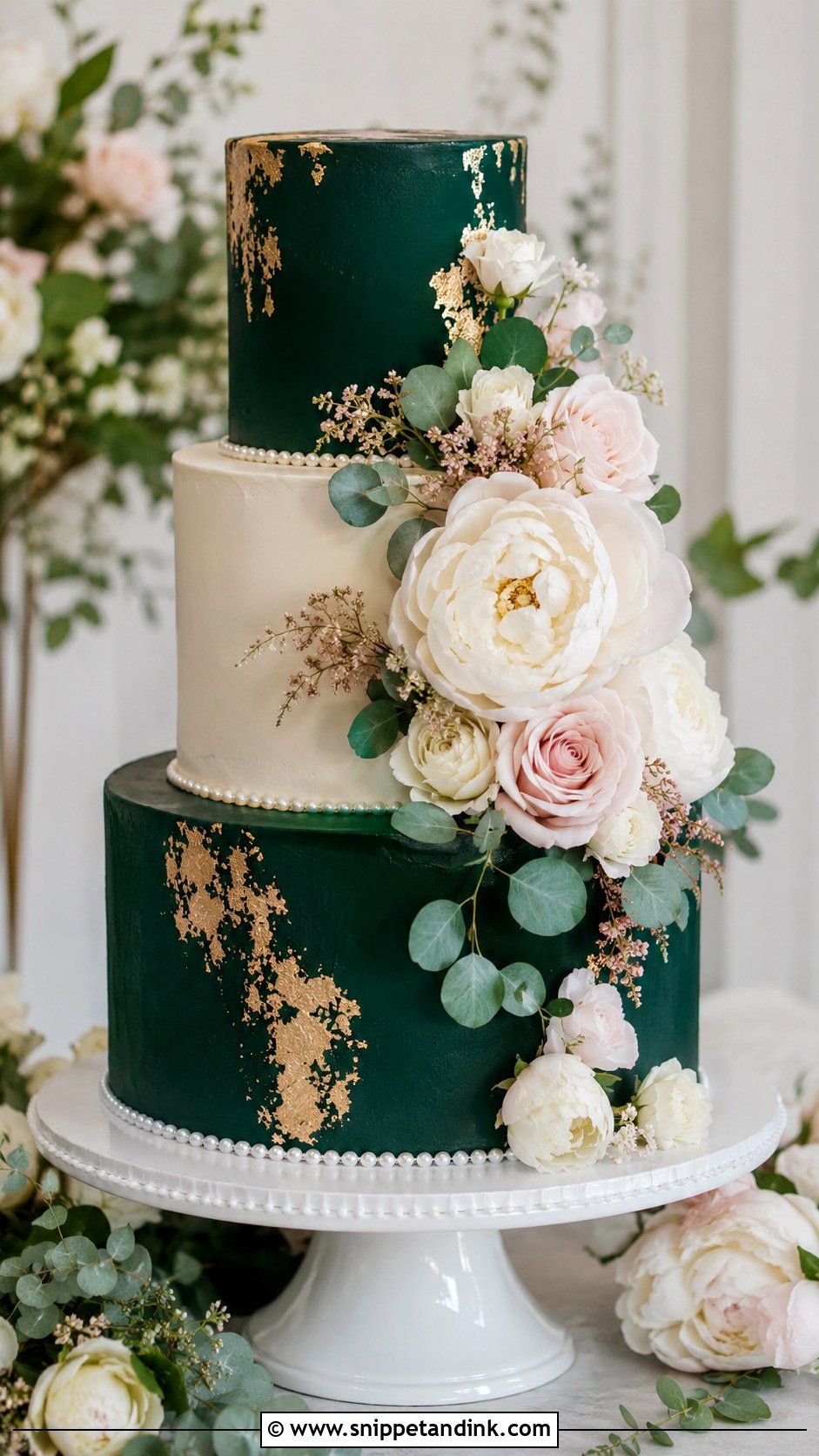
Flowers are what soften this palette. Emerald tiers with rose gold accents and a cascade of blush, ivory and pale pink blooms is the classic version; peonies, ranunculus, orchids and sugar flowers all work alongside roses. Eucalyptus, ruscus or fern add a looser feel. I keep the frosting smooth so the flowers stand out against the dark green, since pale blooms on deep green give the strongest contrast of anything in this list. For fresh flowers, I wrap stems and use picks so nothing raw touches the cake.
5. Emerald Green Geode Wedding Cake
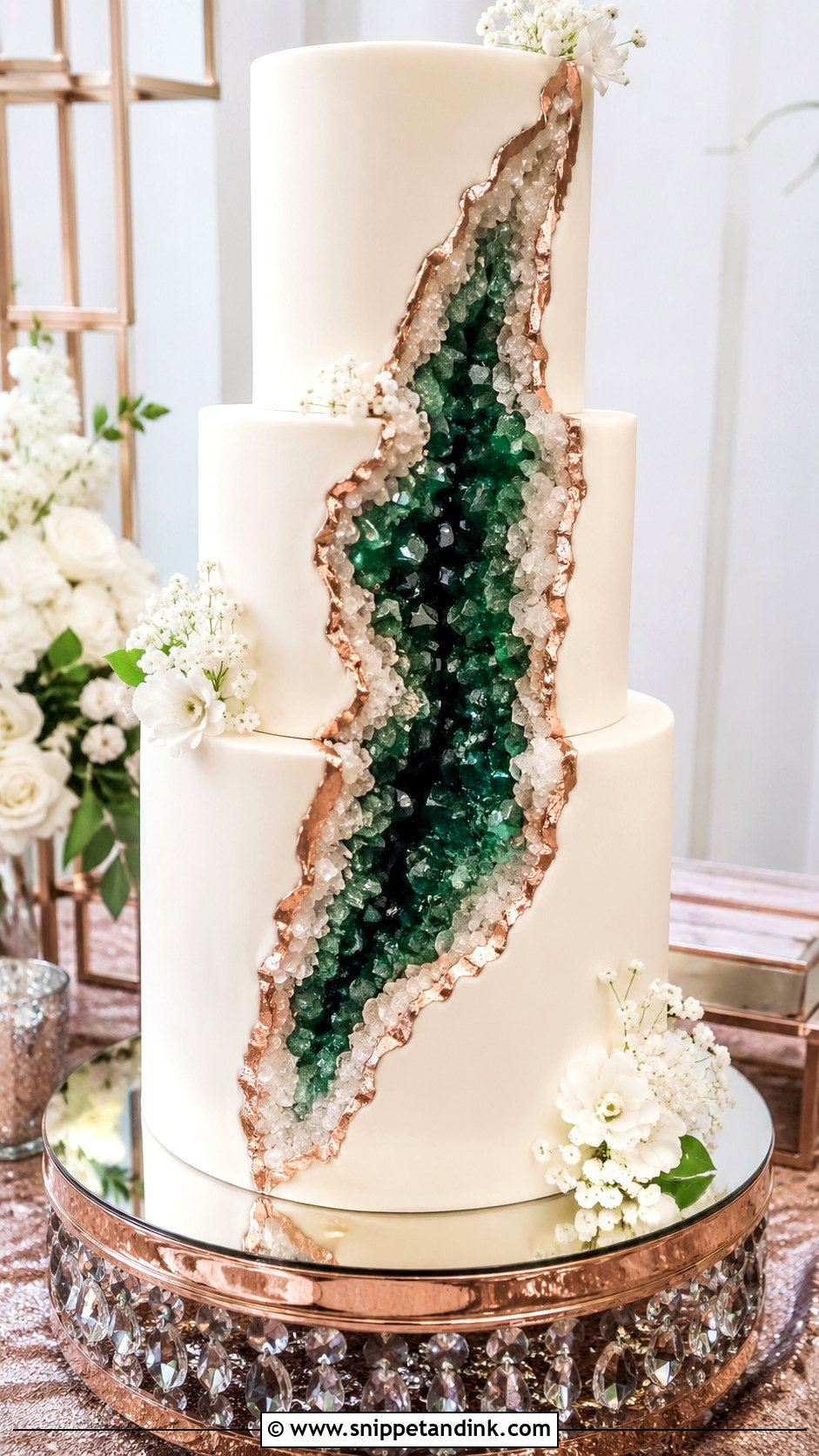
A geode wedding cake is all about the opening in the side. I carve a channel into the tier, line it with tinted rock candy or isomalt crystals in graded emerald shades, darkest in the center, and edge it with rose gold so it looks cut rather than cracked. Taller cakes give the geode room to run. Keep the surrounding tiers ivory, blush or deep green, and keep flowers minimal. One warning: sugar crystals draw moisture and can turn sticky and cloudy in humid rooms, so this is safest indoors with good air conditioning.
6. Emerald Green Velvet Wedding Cake
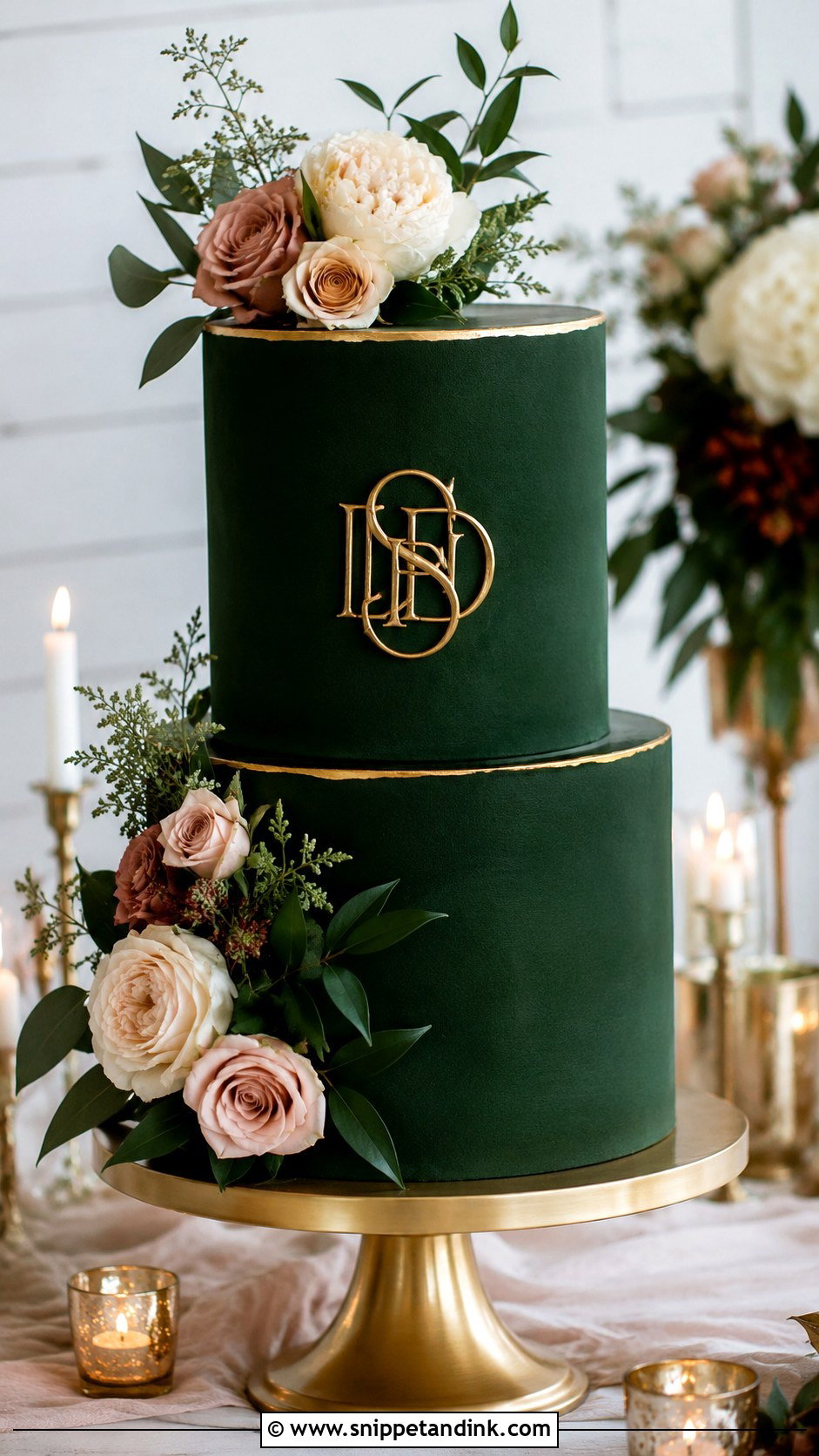
Velvet finishes are matte and soft-looking, which tones emerald down nicely. An emerald green velvet wedding cake is usually made by spraying a chilled buttercream cake with a cocoa butter and color mix, which sets on contact into a suede-like texture; a fine sugar coat or matte fondant can give a similar effect. Rose gold works as a clean trim, monogram or thin band. Winter weddings and moody ballrooms suit it, with blush roses or dark foliage. The velvet layer marks easily with fingertips, so handling needs care.
7. Emerald Green And Rose Gold Fondant Wedding Cake
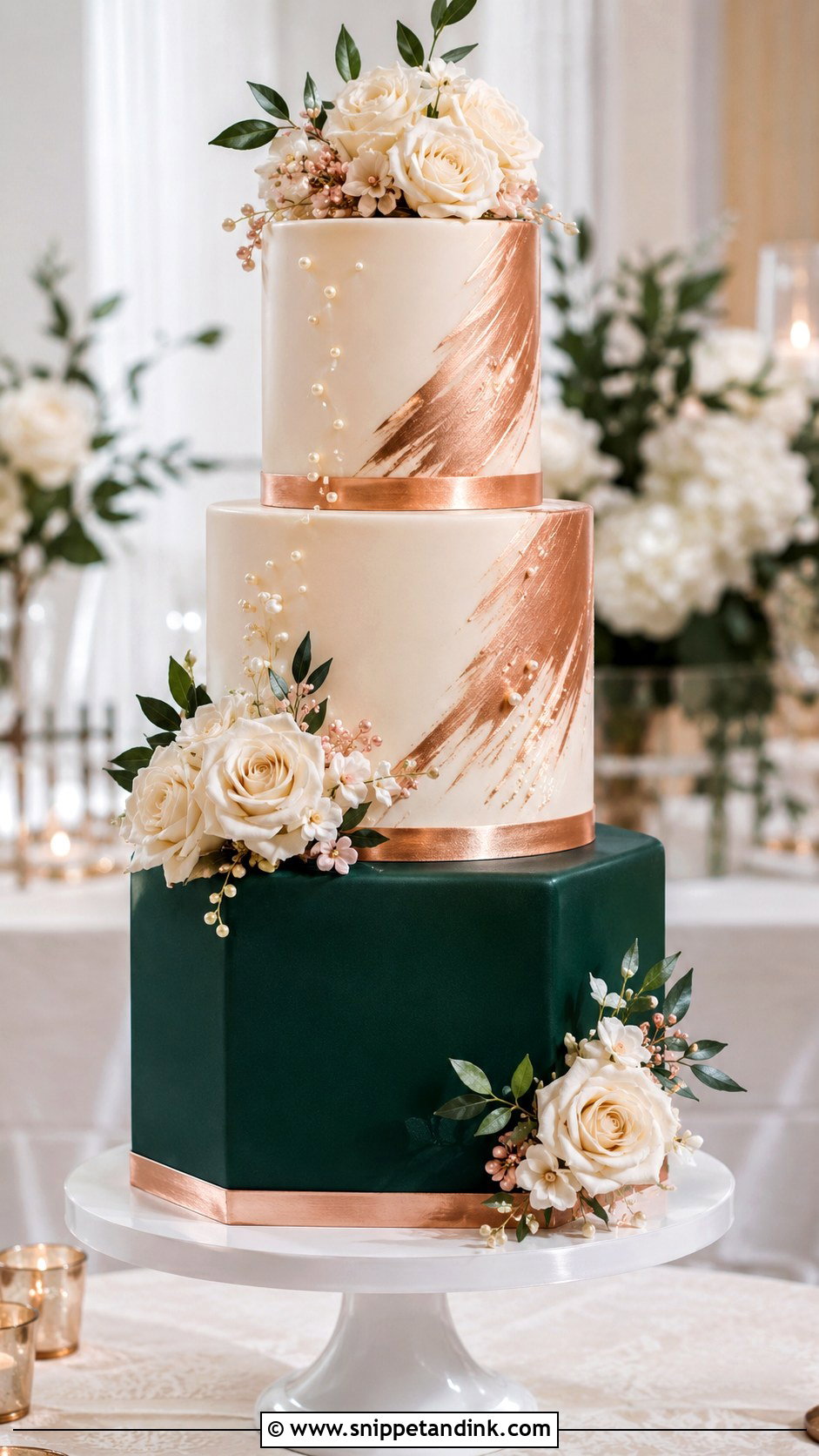
Fondant gives the sharpest edges and cleanest tiers. For this palette I’d do emerald on the lower tier and ivory above, with rose gold bands, brushstrokes or stencil work. It holds structured decorations like bows, sugar flowers, panels and monograms well. I usually buy pre-colored dark green fondant or color it a day ahead, because deep shades darken as they rest. Ask for a satin finish rather than high shine if you want the colors softer in photos.
8. Emerald Green Buttercream Wedding Cake
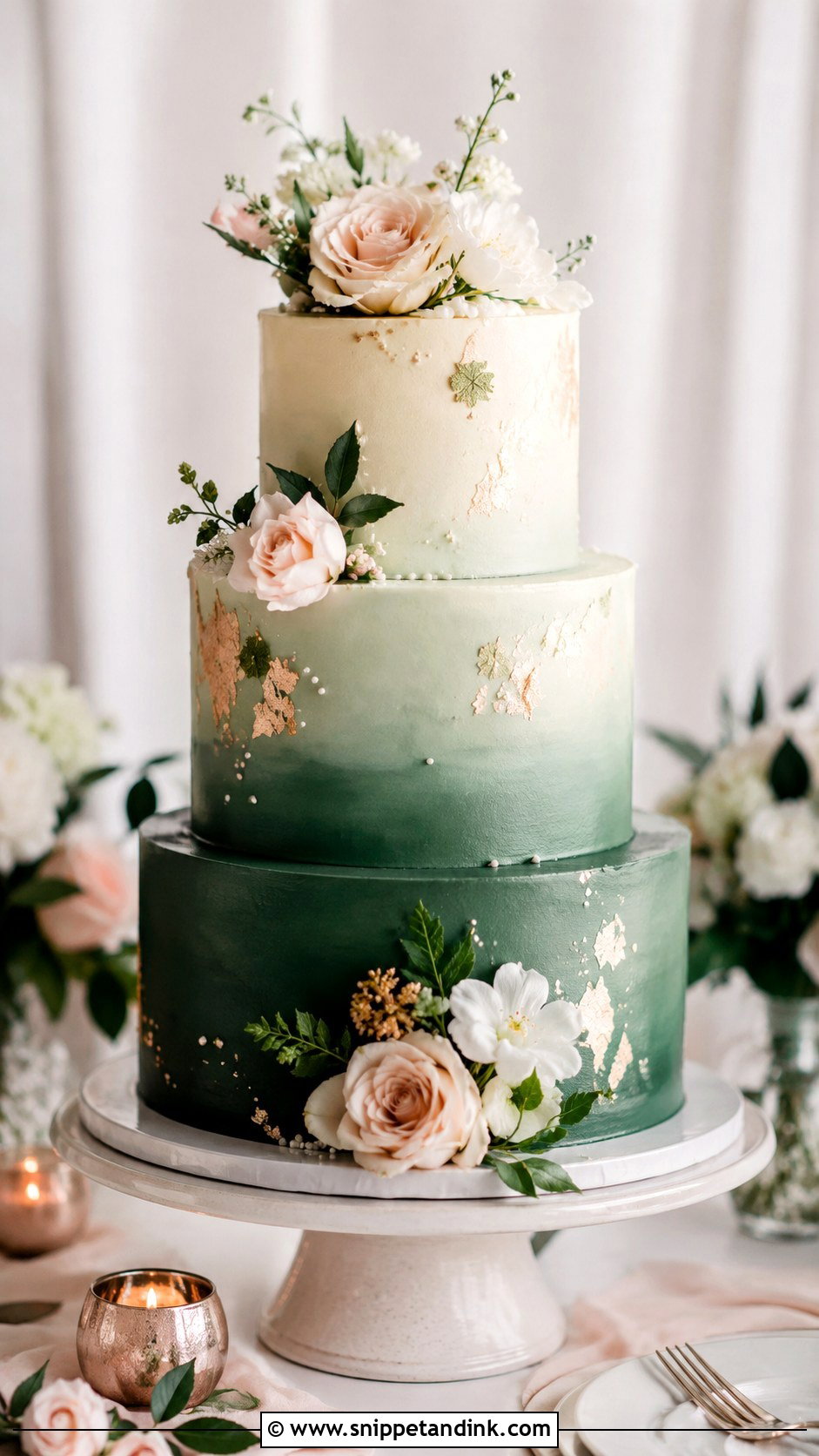
Buttercream makes the palette feel softer and less formal. Smooth tiers with clean edges still look elegant, with deep emerald on one tier or an ombre that fades into ivory. Rose gold leaf, small pearls or a simple topper add shine. Here’s the catch with green buttercream: reaching a true emerald takes a lot of gel color, which can add a slightly bitter taste and will tint lips and teeth. I limit deep green to the outer coat and keep the filling layers uncolored. Soft ridges and subtle piping adapt it for rustic or garden weddings.
9. Emerald Green Wedding Cake With Gold Leaf
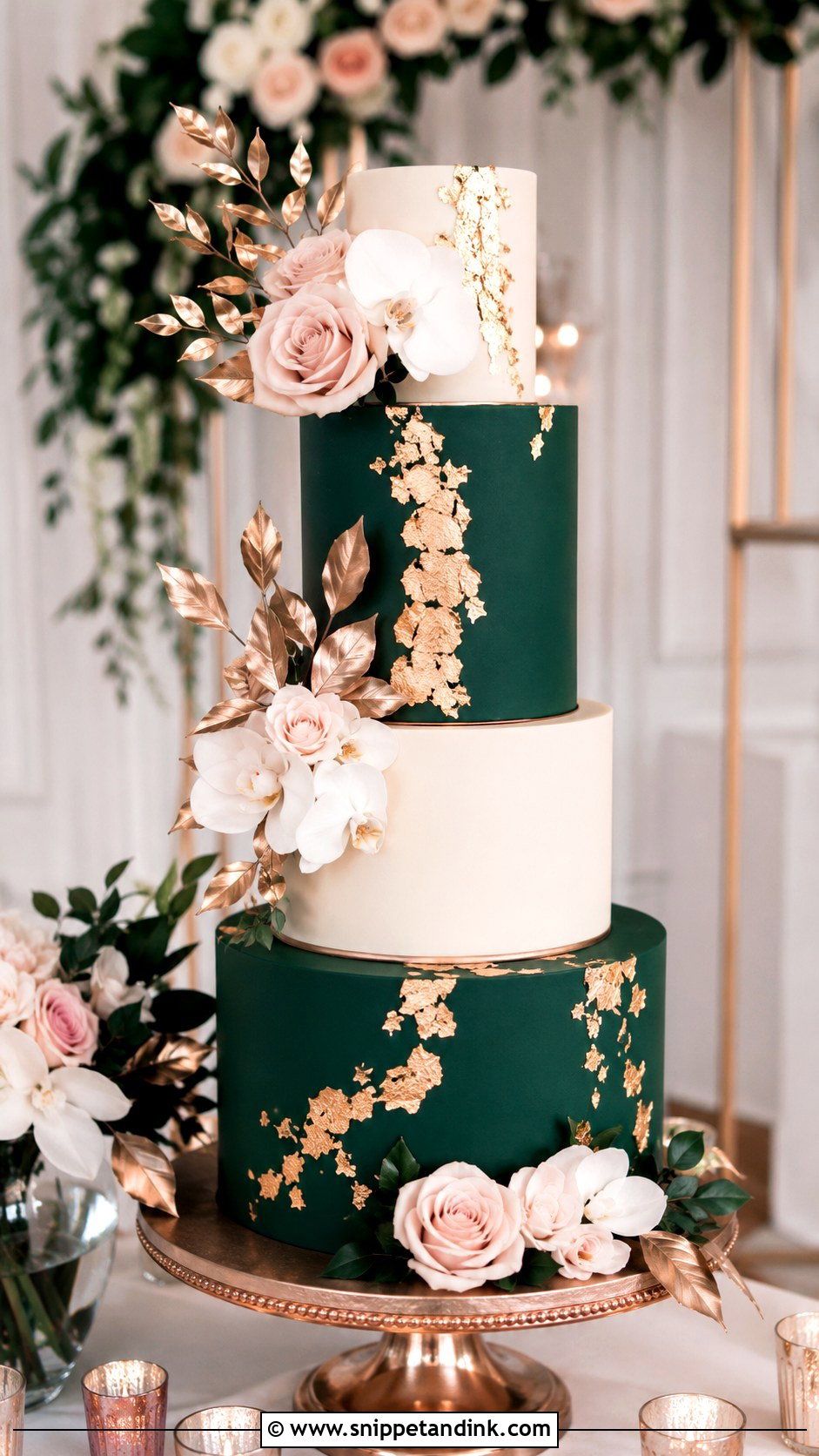
Classic gold leaf leans yellow and can clash with rose gold, so I use a warmer copper-toned leaf or tint over it to stay in the palette. Apply it in small broken patches on tier edges, around floral clusters or scattered over a smooth emerald base. Edible leaf is extremely thin and clings to anything, including dry fingers, so I lay it with tweezers or a soft brush. Too much makes the cake look crowded. Ivory tiers lighten the design and blush flowers tie the metallic to the room.
10. Emerald Green Wedding Cake With Roses
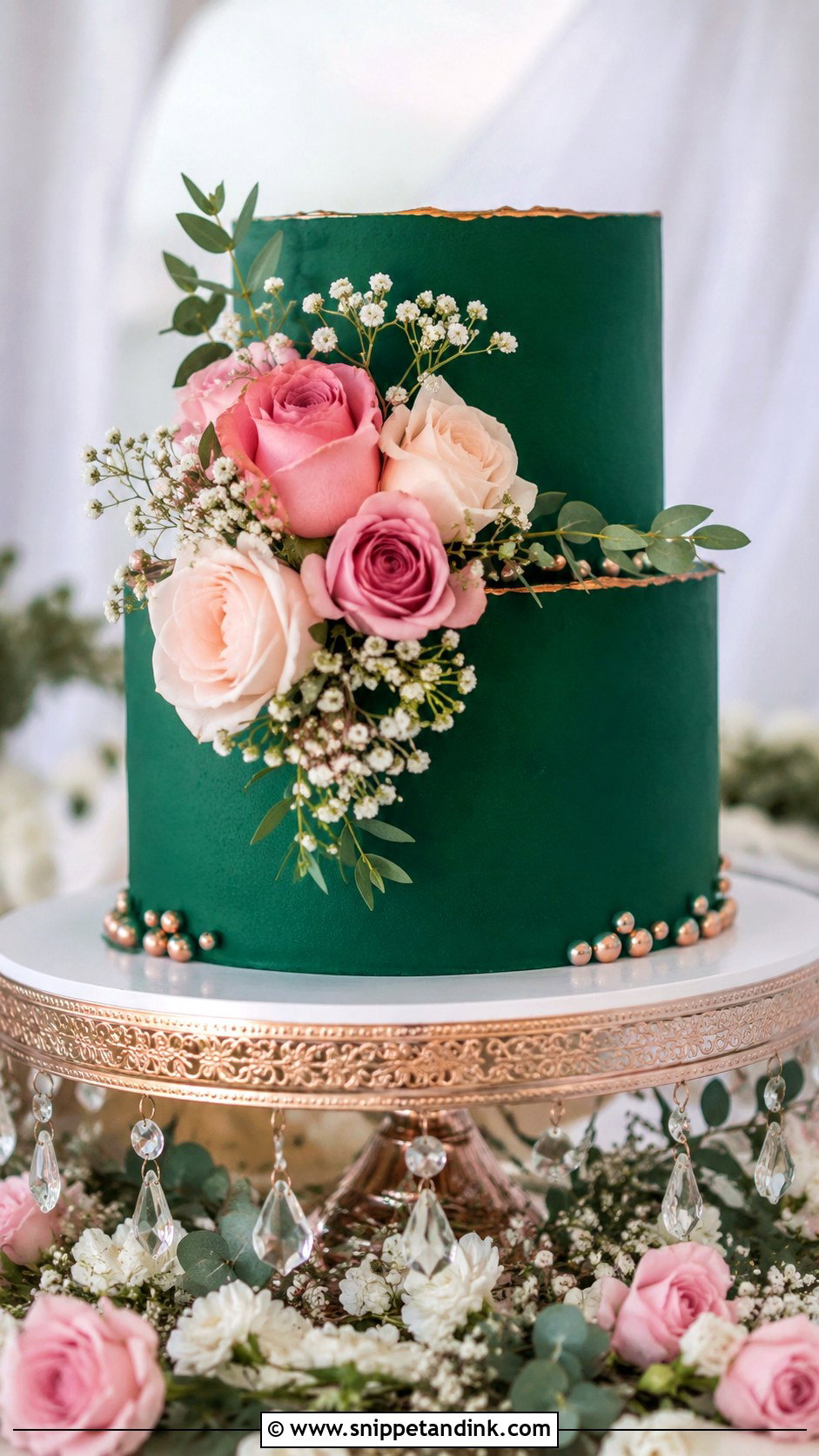
Roses bring the romance. A deep emerald cake with blush and dusty pink roses is dramatic but bridal, with rose gold in a metallic stand, thin bands or a painted edge around the blooms. For a traditional look, use ivory frosting and bring the green in through ribbons, leaves or painted accents. For a modern take, I arrange the roses asymmetrically down one side, heavier at the top and thinning out near the base. The green and metallic keep a classic flower from looking old-fashioned.
11. Emerald Green Square Wedding Cake
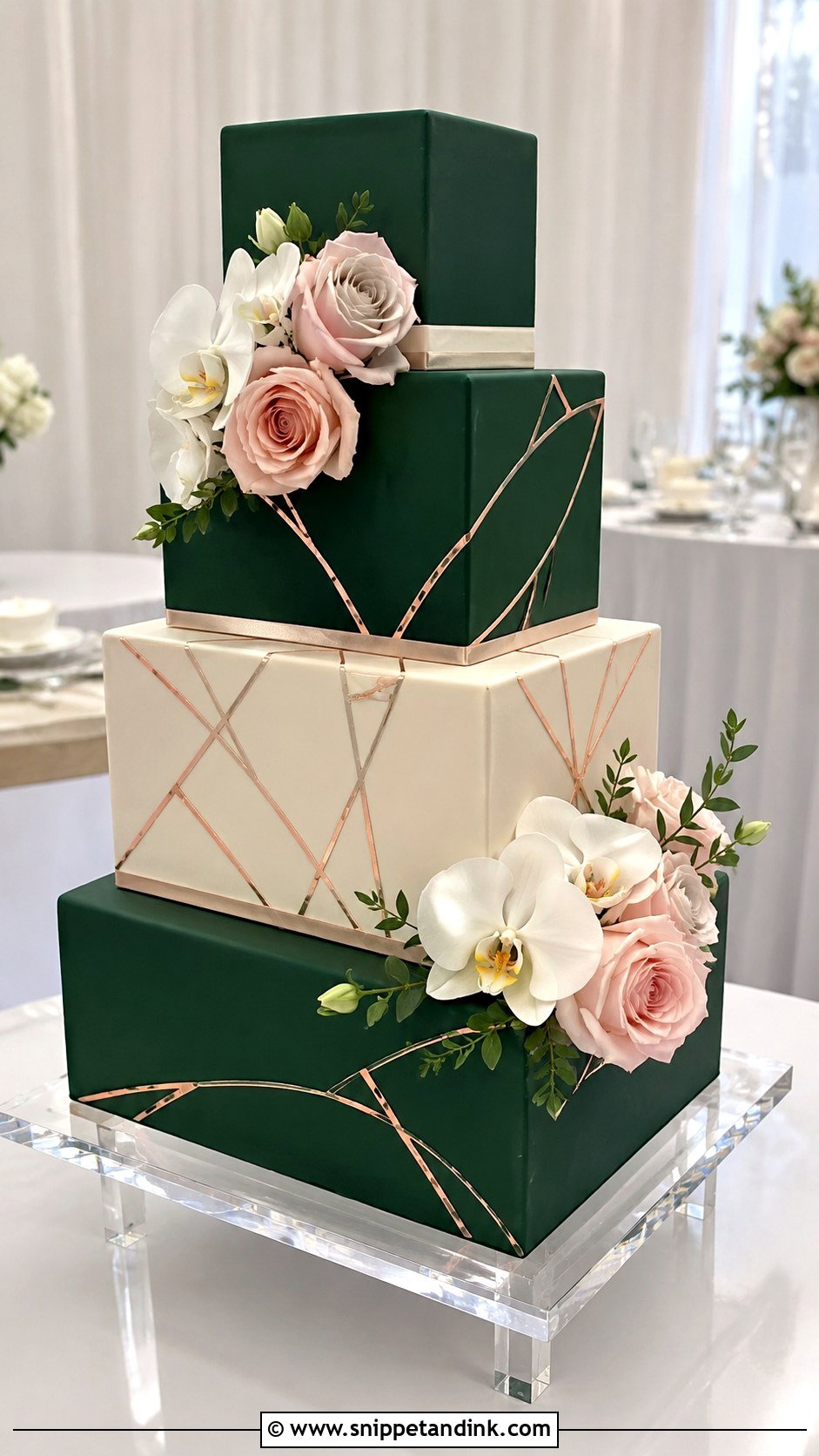
Square tiers make the cake look architectural, and emerald sharpens every edge. I use smooth fondant, crisp corners and simple metallic bands; stack evenly for a classic look or offset slightly for something more contemporary. A small cluster of blush roses or white orchids keeps it from feeling severe. Square cakes are harder to cover well, especially in dark fondant where every corner crack shows, so I’d check your baker’s square work before committing. Rooftops and modern venues suit it.
12. Emerald Green Naked Wedding Cake
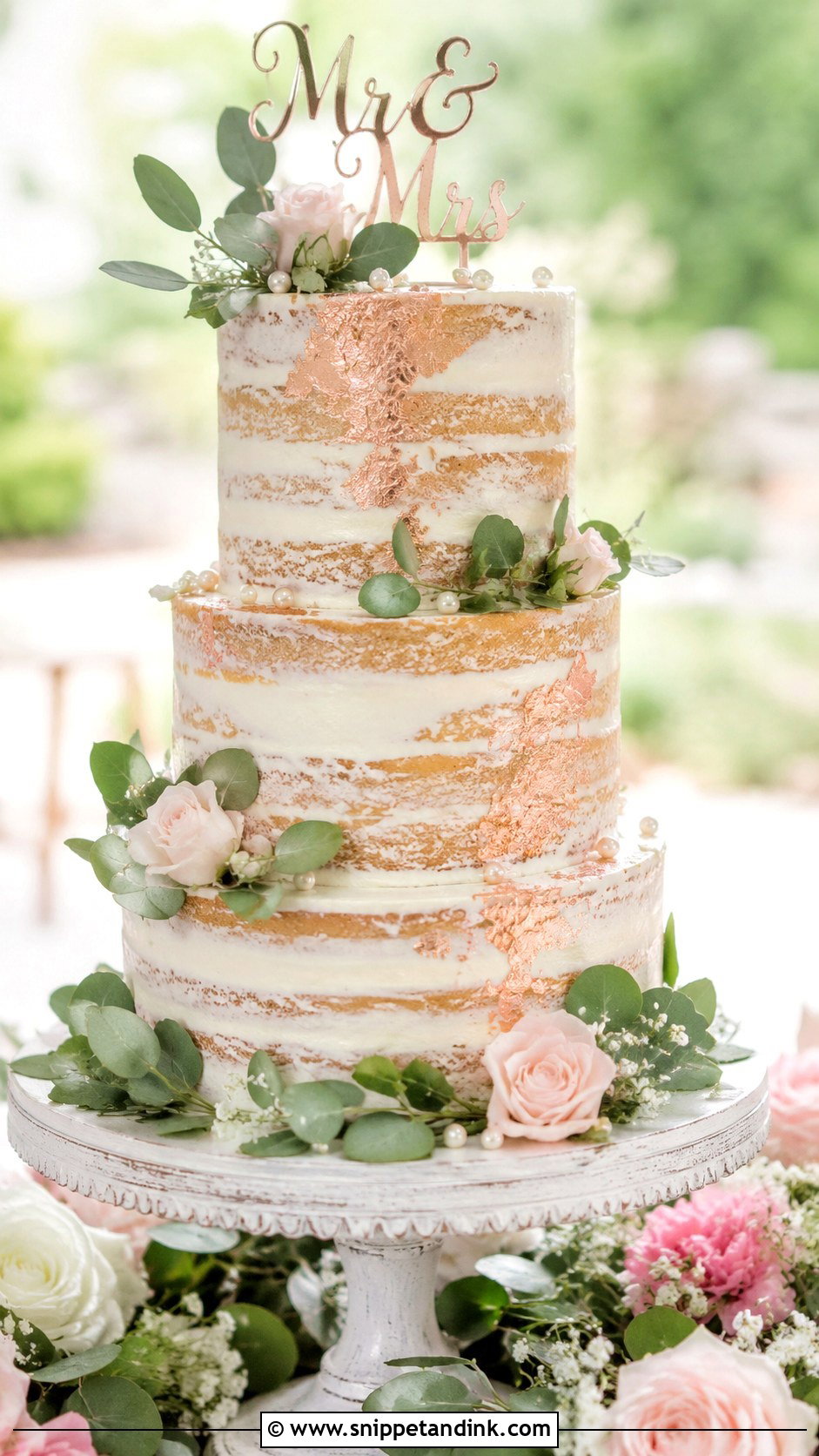
On a semi-naked cake, the palette has to come from styling rather than frosting. I’d keep a thin coat of ivory buttercream with the layers showing, then bring in emerald through greenery and ribbon, rose gold through leaf and a metallic topper, plus blush flowers. Outdoor, barn and garden venues suit it. Exposed sponge dries out faster than a fully frosted cake, so I assemble these as close to the event as possible and keep them covered until display. A rose gold stand or emerald ribbon around the base ties it together.
13. Emerald Green Ombré Wedding Cake
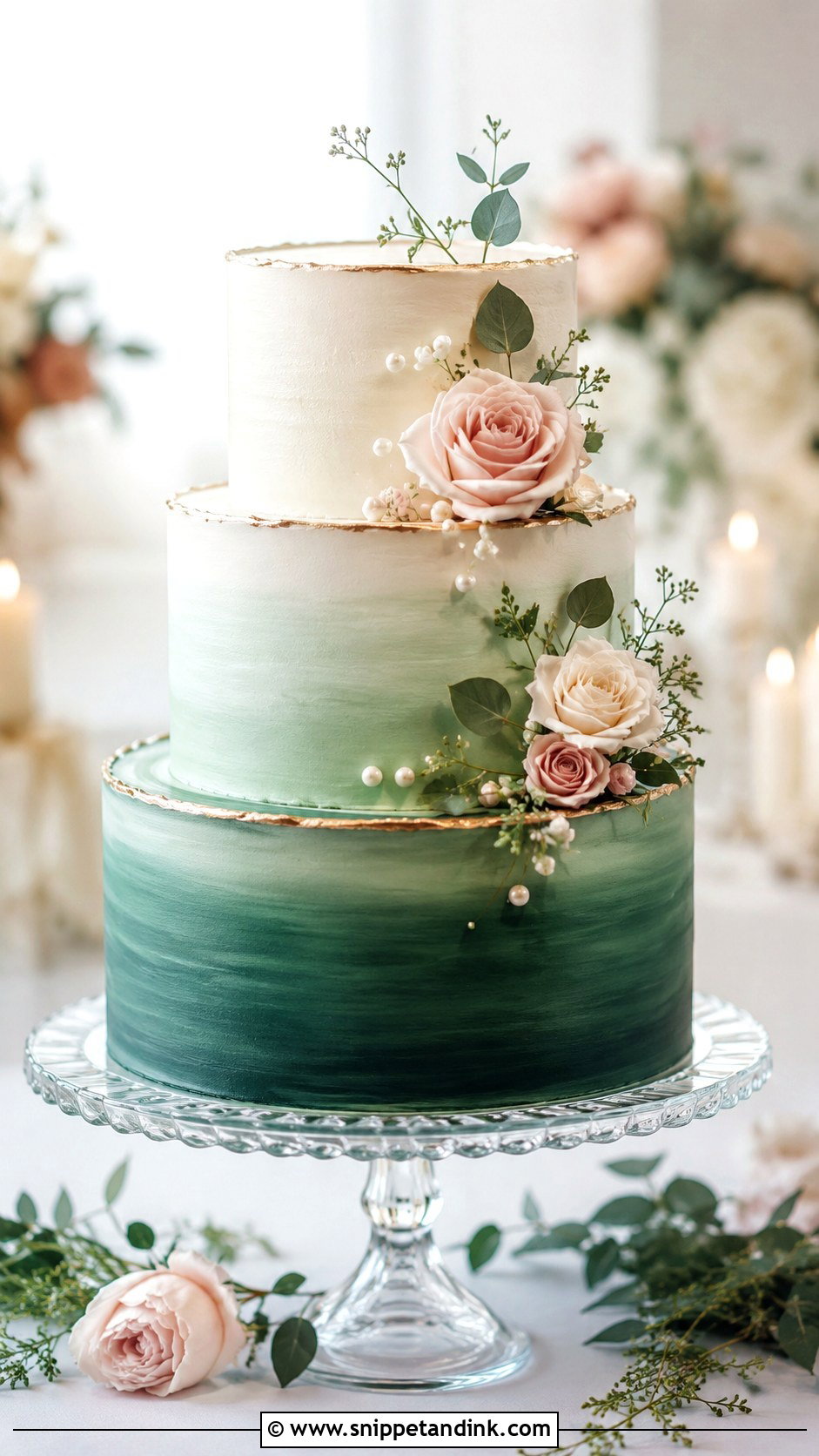
Ombre lets emerald fade into the palette gently. I mix one deep batch, then lighten portions with white for each tier, so the shades stay related; mixing each tier separately rarely lines up. The gradient can run from emerald at the bottom to pale green, ivory or blush at the top. A thin rose gold drip, painted edges or scattered leaf adds warmth. Small flowers placed at the transitions make the colors feel blended. Spring, summer and autumn weddings all suit it, depending on how deep you go.
14. Emerald Green Watercolor Wedding Cake
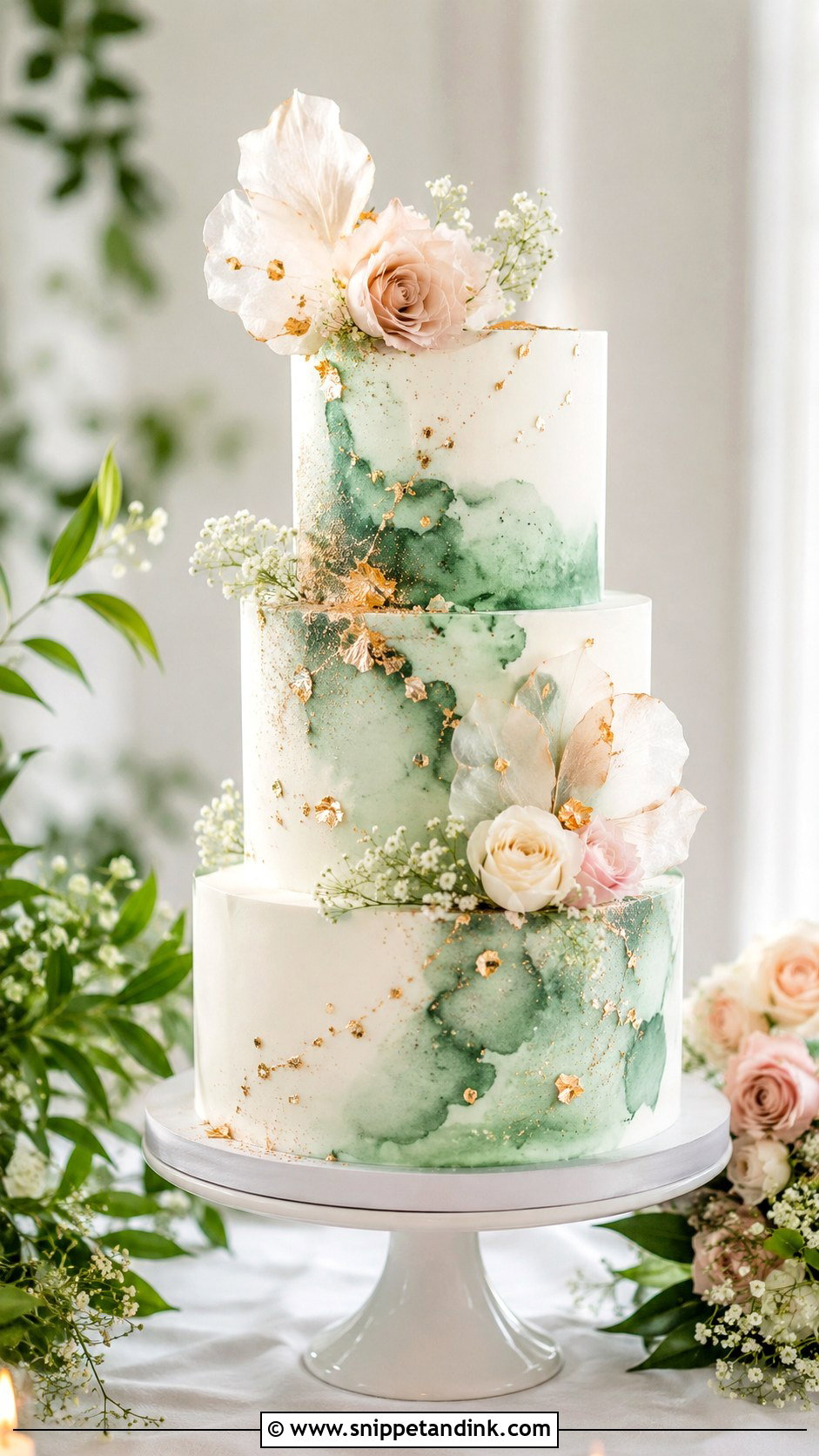
Watercolor gives you color without hard lines. I brush diluted emerald over ivory fondant in thin, layered washes, letting each dry before the next, then add a little rose gold splatter or a few fine metallic strokes. Asking for layers rather than one flat green patch is the difference between painted and smudged. Blush roses, ivory flowers or small sugar petals finish it. Artistic couples and garden weddings tend to love it, and the surface has movement while the cake stays clean.
15. Emerald Green Black And Rose Gold Wedding Cake
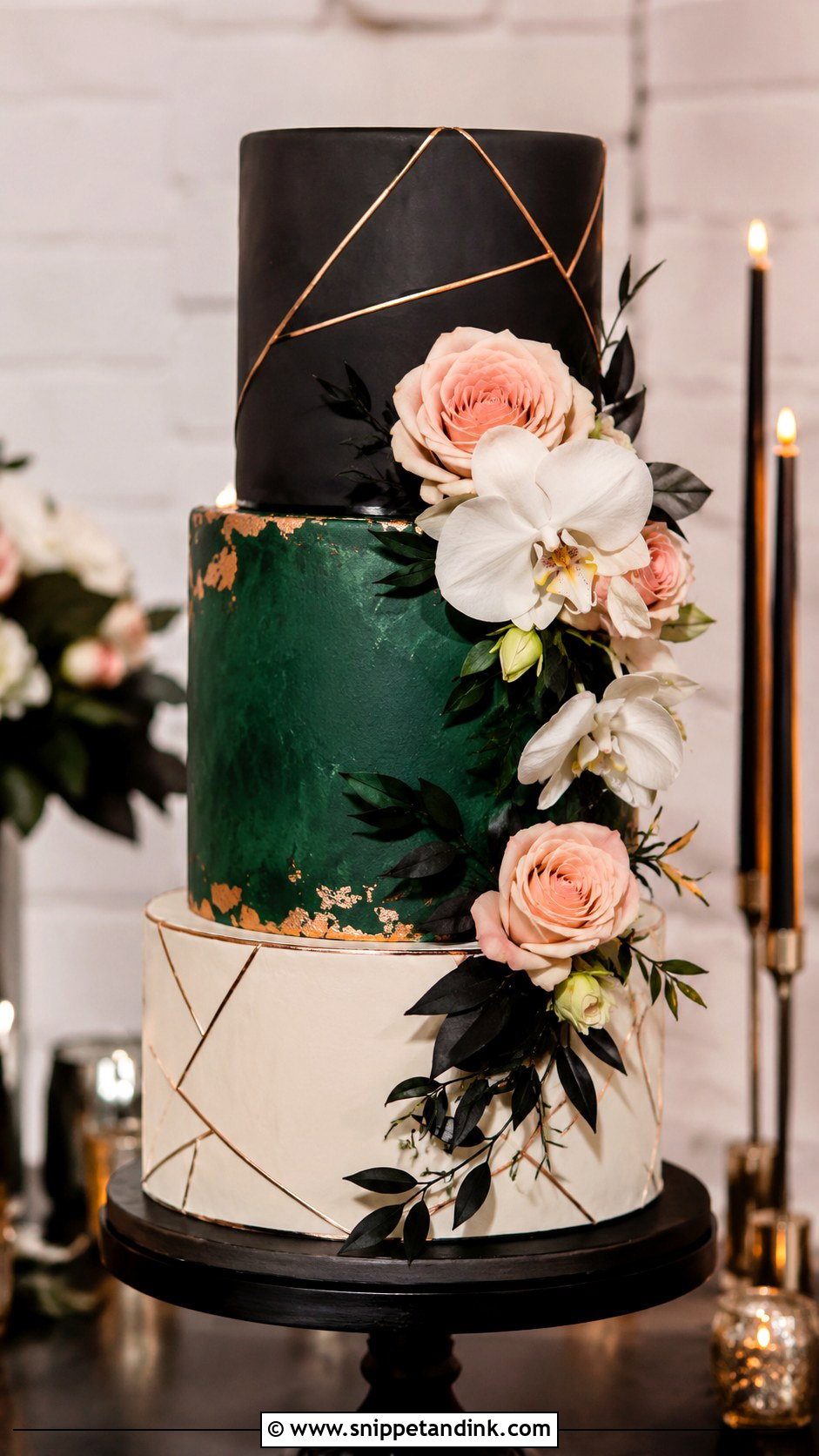
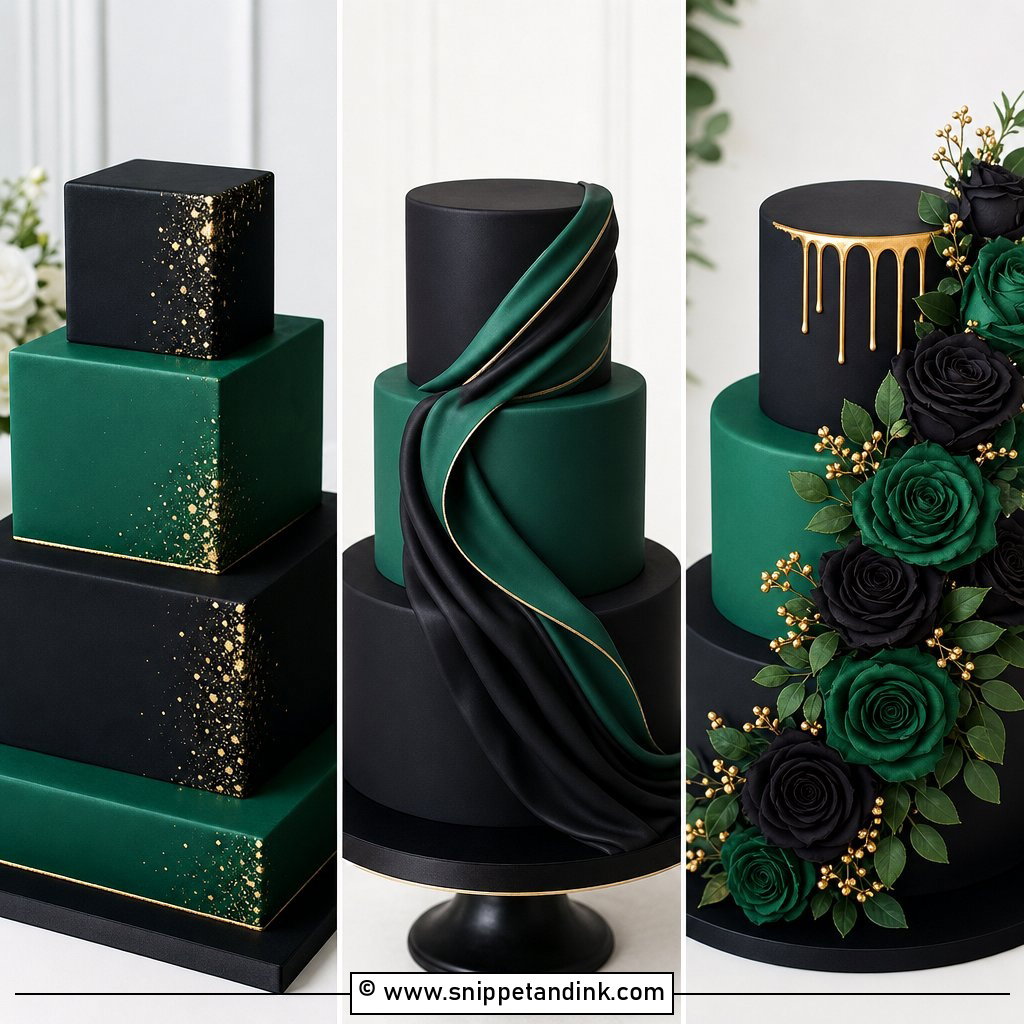
Black, emerald green and rose gold make the moodiest cake here. I’d put black on one tier, emerald on another, and ivory or blush on the rest so it still reads as a wedding cake. Rose gold works as leaf, fine lines or a geometric topper. Black icing has the same dye problem as dark green, only stronger, so I use a cocoa-based black to reduce the coloring. Evening weddings with dark linens and candlelight suit it, and a few blush flowers or white orchids brighten it.
16. Emerald Green White And Rose Gold Wedding Cake
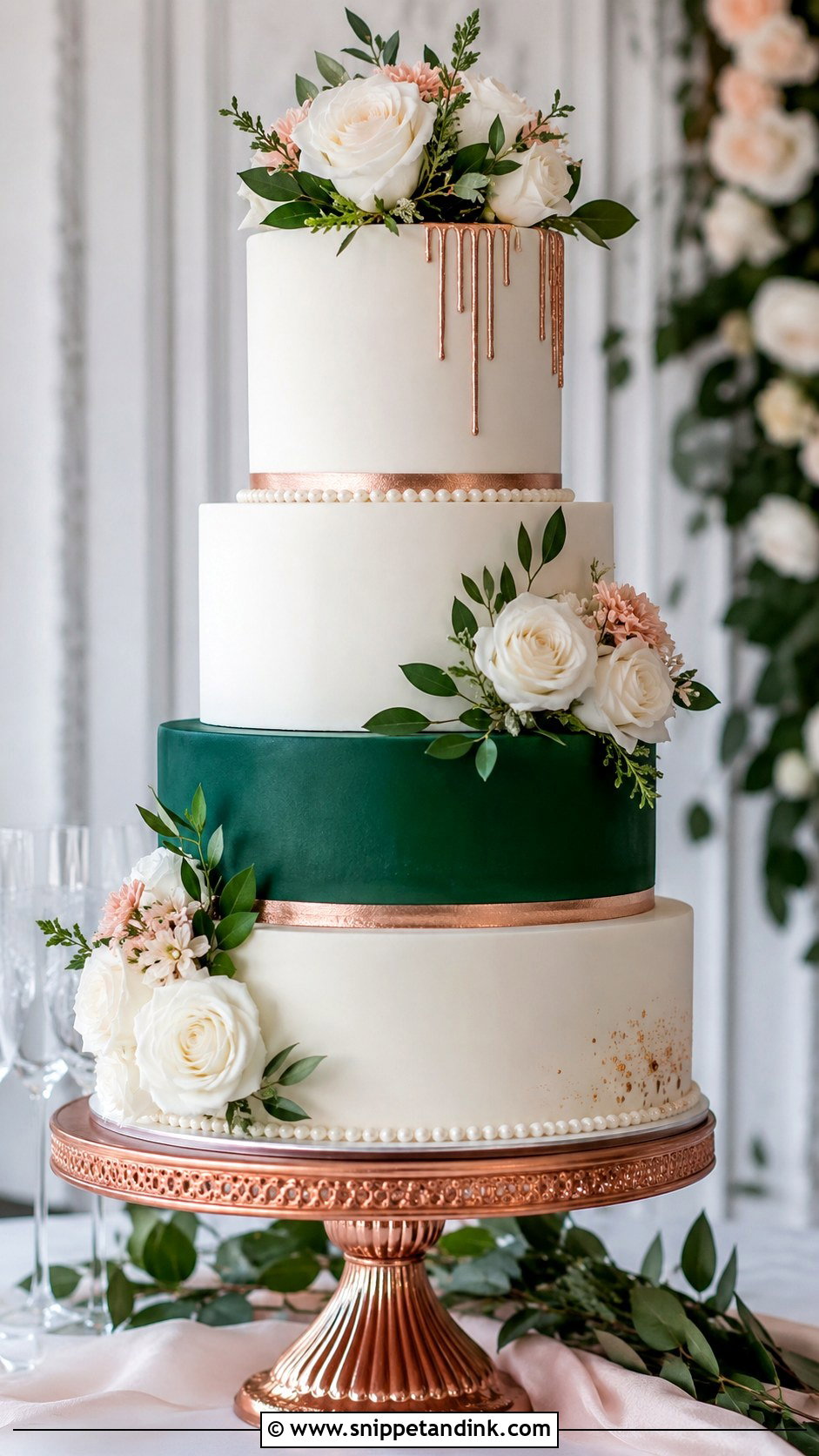
White is the easiest base for this palette. Mostly white tiers with emerald ribbons, green floral accents or one deep green statement tier keep the cake fresh, with rose gold as a drip, painted trim or stencil. If you love the colors but worry about a dark cake, start here. White roses, blush blooms and small greenery add balance, and a rose gold or glass stand finishes it. On white, even a small amount of emerald reads strongly, so I’d use less than you think.
17. Emerald Green Wedding Cake With Sugar Flowers
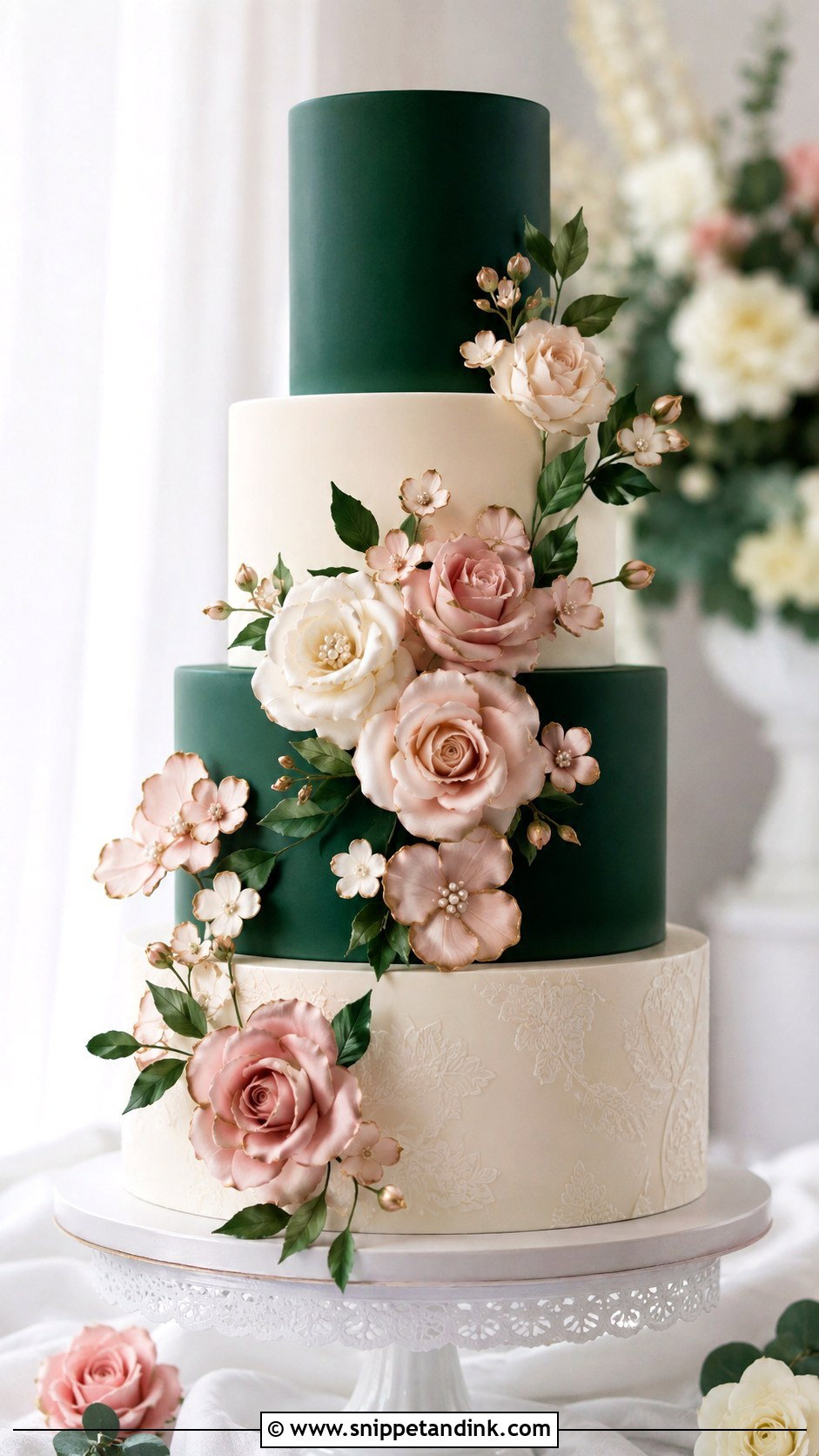
Sugar flowers let me match your palette exactly, down to blush petals with a rose gold dusted edge. They can cascade down the tiers, sit in clusters or frame one side of an emerald cake. They don’t wilt in warm weather the way fresh flowers do, though they are sensitive to humidity, so they should stay boxed until the cake is set up. Each flower is shaped petal by petal and takes real time, which shows in the price. Many couples keep the top sprays as a memento afterwards.
18. Emerald Green Art Deco Wedding Cake
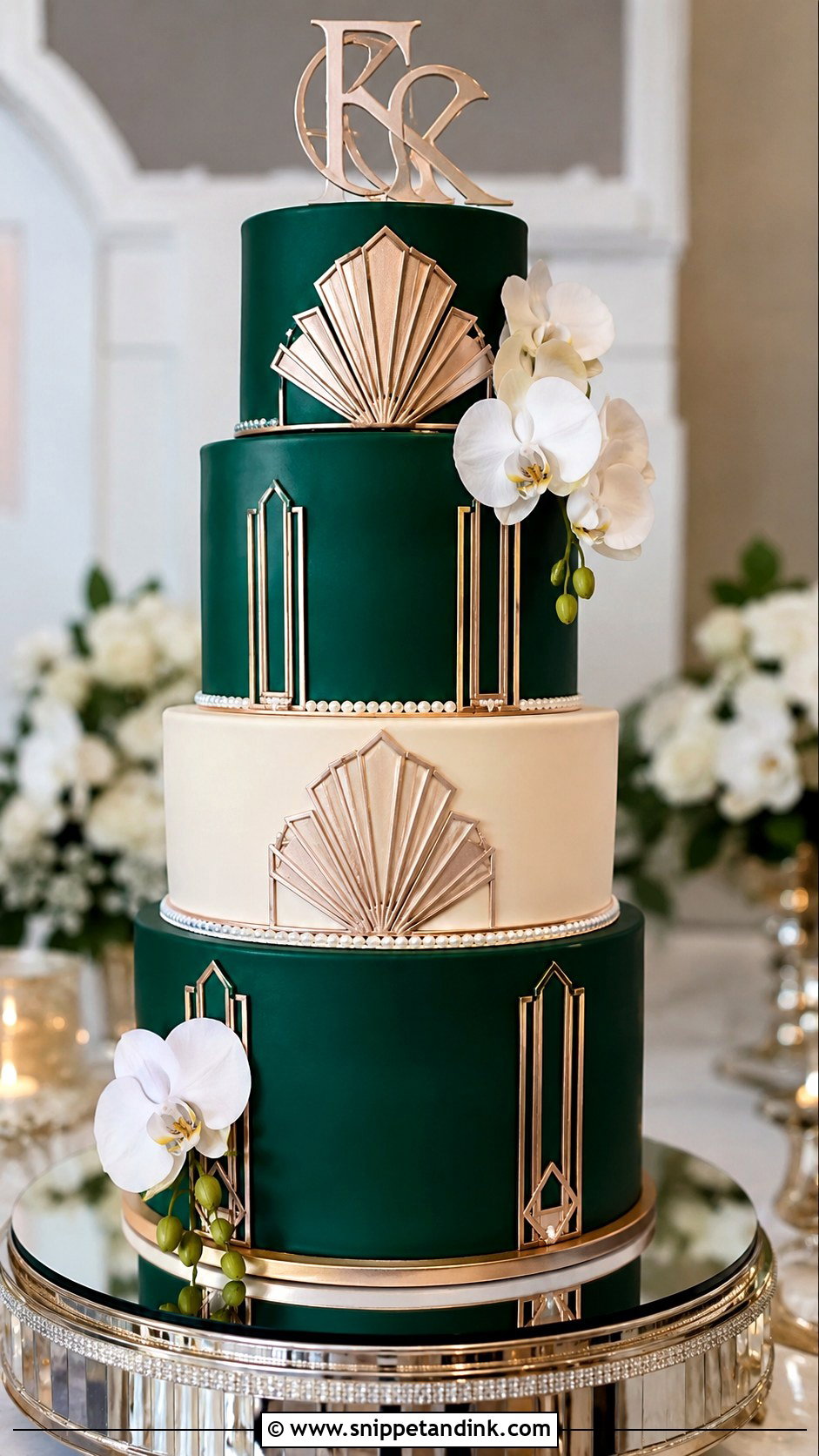
Art deco styling suits this palette because it runs on symmetry, strong lines and metallic detail. I use emerald fondant as the main color, then add rose gold fans, arches, borders or geometric panels, often cut with templates so the lines are exactly even. Ivory panels lighten the design and make the metallic easier to see. Ballrooms and historic venues suit it. Keep flowers minimal or leave them off. A tall tiered shape gives the pattern room to repeat.
19. Emerald Green Mini Wedding Cake
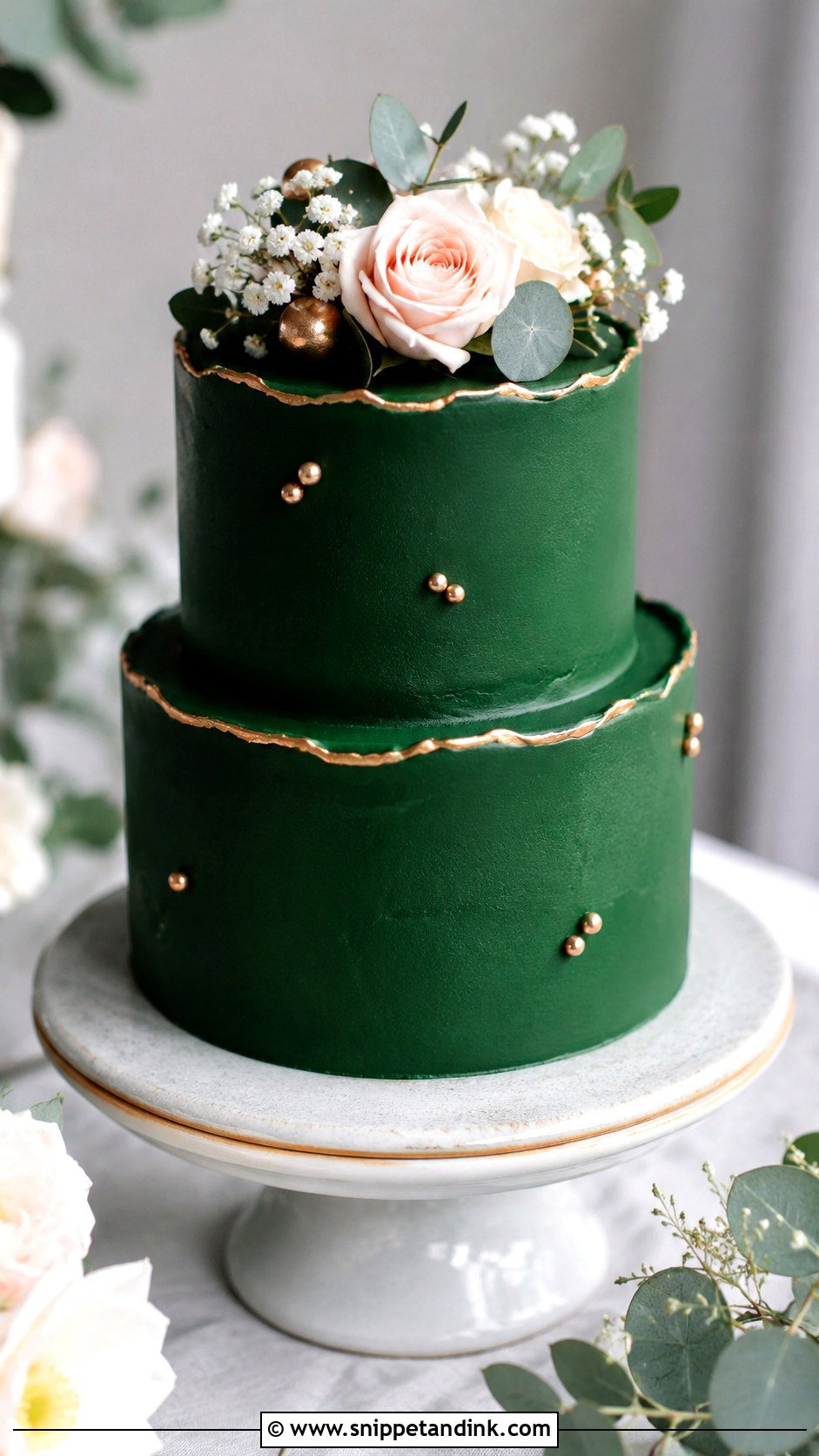
A mini wedding cake suits elopements, small receptions and sweetheart tables. One or two tiers in smooth emerald with a rose gold edge and a small cluster of blush flowers on top can look complete. I scale every detail down with the cake; full-size flowers on a small cake make it look like an afterthought. A pretty stand, candles or matching cupcakes fill out the table. It’s also the gentlest way to try dark green without a huge cake full of dye.
20. Emerald Green Cupcake Wedding Cake
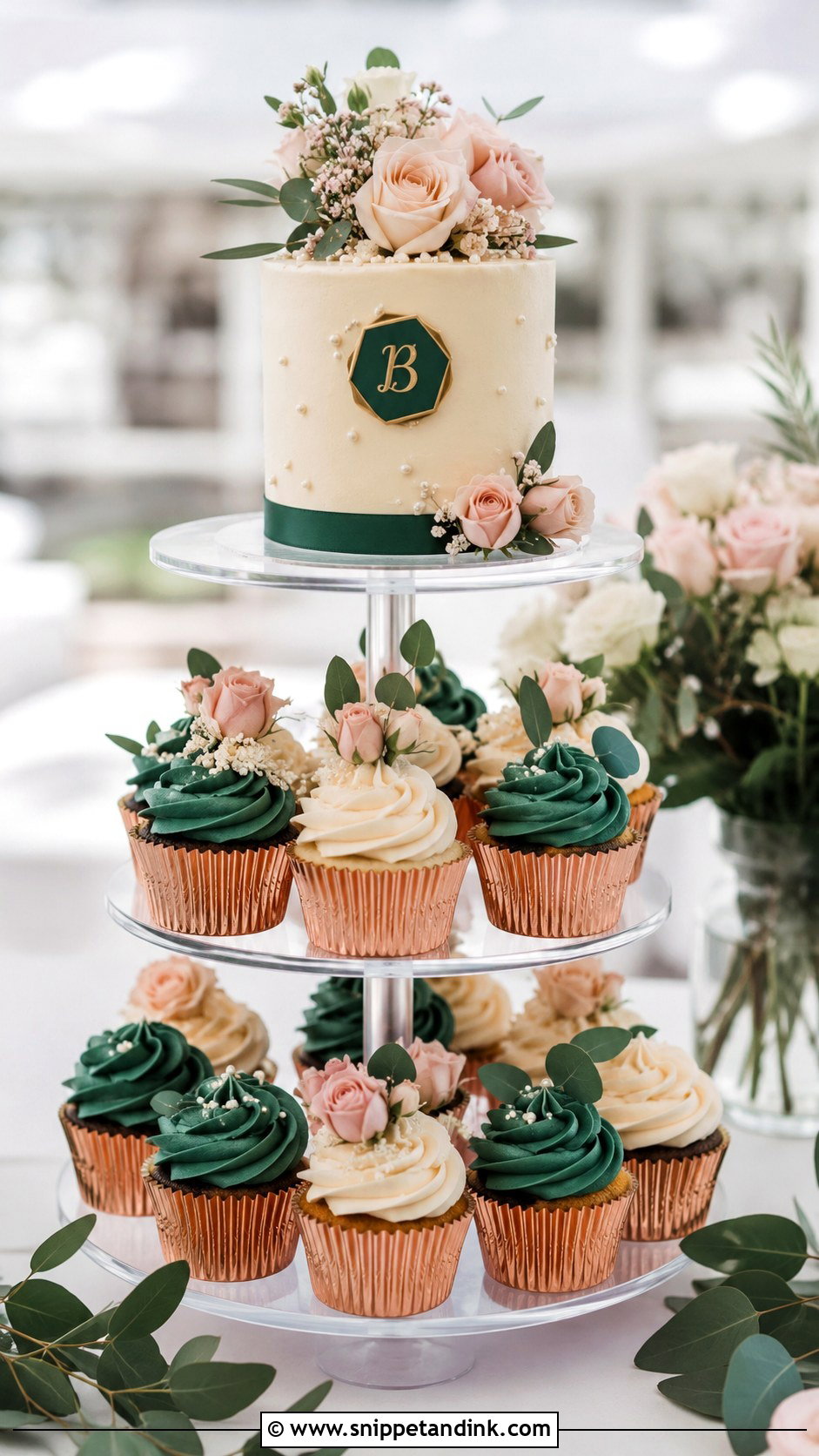
Cupcakes stretch the palette across a whole display. A small cutting cake sits on the top tier with matching cupcakes below in emerald buttercream swirls, ivory frosting, rose gold wrappers and small floral toppers. Guests can help themselves, which suits relaxed receptions. To keep it looking deliberate, I repeat exactly the same piping and topper on every cupcake and use a sturdy tiered stand. Dark frosting on many cupcakes means a lot of colored icing being eaten, so I often alternate emerald with ivory swirls.
Rose Gold Changes Under Every Kind of Light
Rose gold on a cake is usually edible metallic paint, luster dust or leaf, and no two brands are quite the same tone. Some lean pink, others lean copper.
On the cake
I test the metallic on a scrap of the actual icing color, because the same rose gold looks pinker on ivory and more coppery against emerald. I also check the label. Some metallic products are sold as non-toxic for decoration rather than edible, and those shouldn’t go on anything a guest will eat.
At the reception
Warm candlelight pushes rose gold toward copper and makes it glow; cool daylight makes it look softer and pinker. If you’re matching rose gold flatware, chargers or invitation foil, bring one piece to the tasting so we compare them side by side. And place the cake where light falls on it from the side, not directly overhead, so the metallic catches without flaring white in photos.
One more practical point: painted metallic can streak or dull if a chilled cake picks up condensation. I add the rose gold details last, after the cake has settled in its box, and let the venue know not to move it in and out of a fridge once it arrives.
Matching the Cake to Your Room, Season and Flowers
Emerald and rose gold can lean bold or soft depending on how much of each you use. For drama, think deep green tiers, geodes, black accents or art deco panels. For romance, ivory frosting, blush flowers, rose gold trim and small greenery. For a relaxed day, buttercream, semi-naked tiers or a cupcake display. Before you decide, bring your linens, a flower photo and your invitation to the tasting, and look at the samples in the kind of light the reception will have. That’s where this palette succeeds or doesn’t.
You'll Like These Ideas:



Leave a Reply