
Rose gold sits between copper and pink, which is why it behaves so well on a cake: warm enough for ivory and champagne, soft enough for blush, and striking against black. I can use it as one painted line, a full metallic tier, scattered leaf or the tint of a few sugar flowers, and each of those gives a very different cake. Below are 25 designs, from drips and marble to ruffles and Lambeth piping. For each one I’ve noted how it’s made, what frosting it needs and where it can go wrong.
What Rose Gold on a Cake Is Actually Made Of
Metallic finishes are the part of a cake couples ask about least and should ask about most. There are a few ways I get rose gold onto a cake, and they aren’t interchangeable.
Painted lustre
Edible lustre dust mixed with a little alcohol or lemon extract and painted on with a brush. The alcohol evaporates and leaves the metallic layer. It’s the most common method and works best on fondant or chilled, crusted buttercream.
Metal leaf
Edible metal leaf, applied in flakes or sheets, gives the brightest metallic shine. Rose gold leaf is usually gold with a warm tint, so ask to see a sample.
Labels to check
Some lustre dusts are labelled non-toxic or for decoration only. They’re not meant to be eaten and should only go on parts of a cake that are removed before serving, like a topper. I always use products labelled edible on anything a guest will eat, and you’re entitled to ask your baker which they use.
1. Rose Gold Drip Wedding Cake
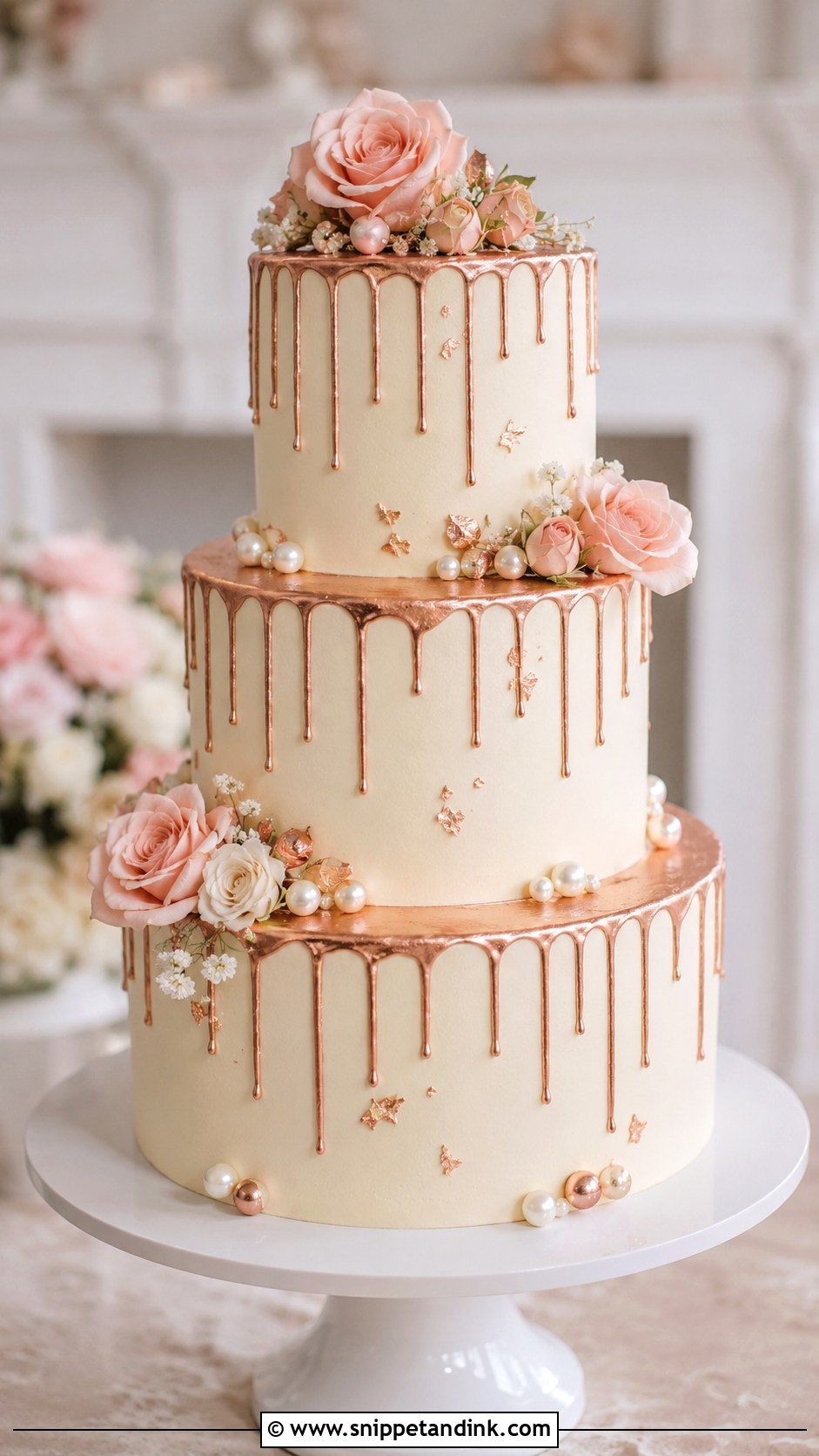
A rose gold drip wedding cake starts as a white chocolate ganache drip, chilled until set and then painted with edible metallic lustre. The cake must be cold when the drip goes on, or the drips run too long and pool at the board. For a wedding I keep them short and evenly spaced. Fresh roses, sugar peonies or macarons on top finish it. A soft vanilla, almond or strawberry sponge suits the look; very dense cakes make the drip look heavy by comparison.
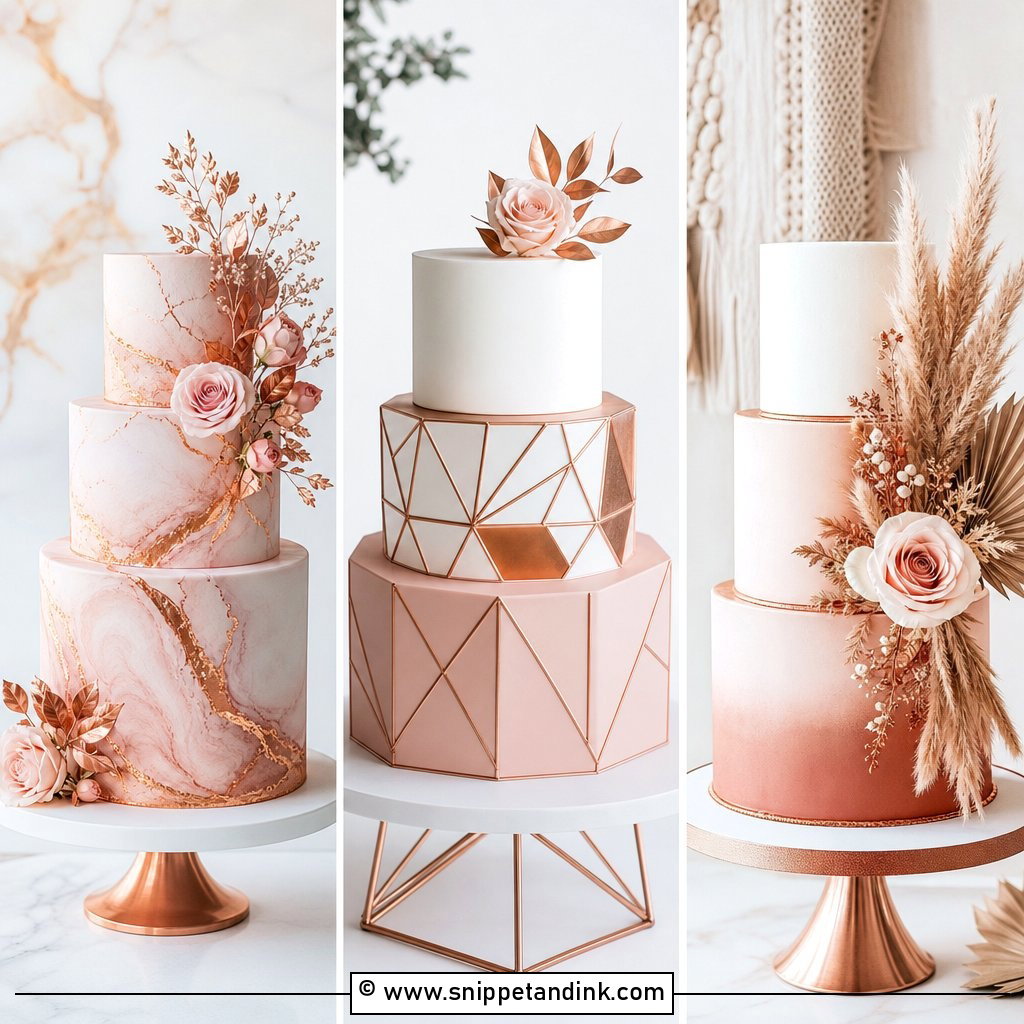
2. Rose Gold Marble Wedding Cake
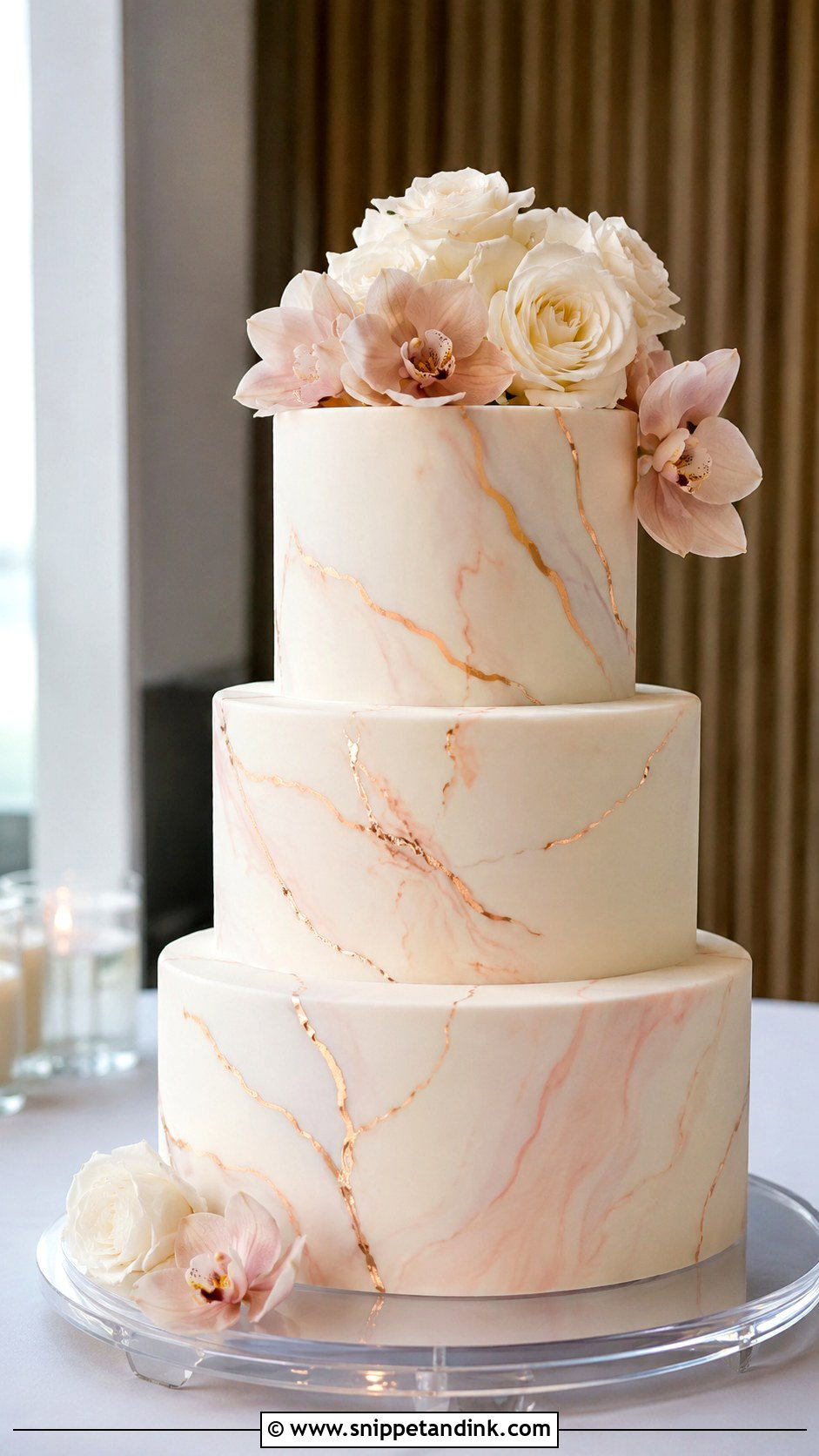
Marble effects on fondant are made by twisting coloured paste into white before rolling, so no two tiers come out identical. Grey veining reads classic; blush veining reads warmer. I paint thin rose gold lines along some of the veins, or add a slim metallic band between tiers. Keep the flowers minimal; white roses or a few orchids are enough. Marble works only on fondant, not buttercream, so if you prefer buttercream, choose a different design.
3. Rose Gold Sequin Wedding Cake
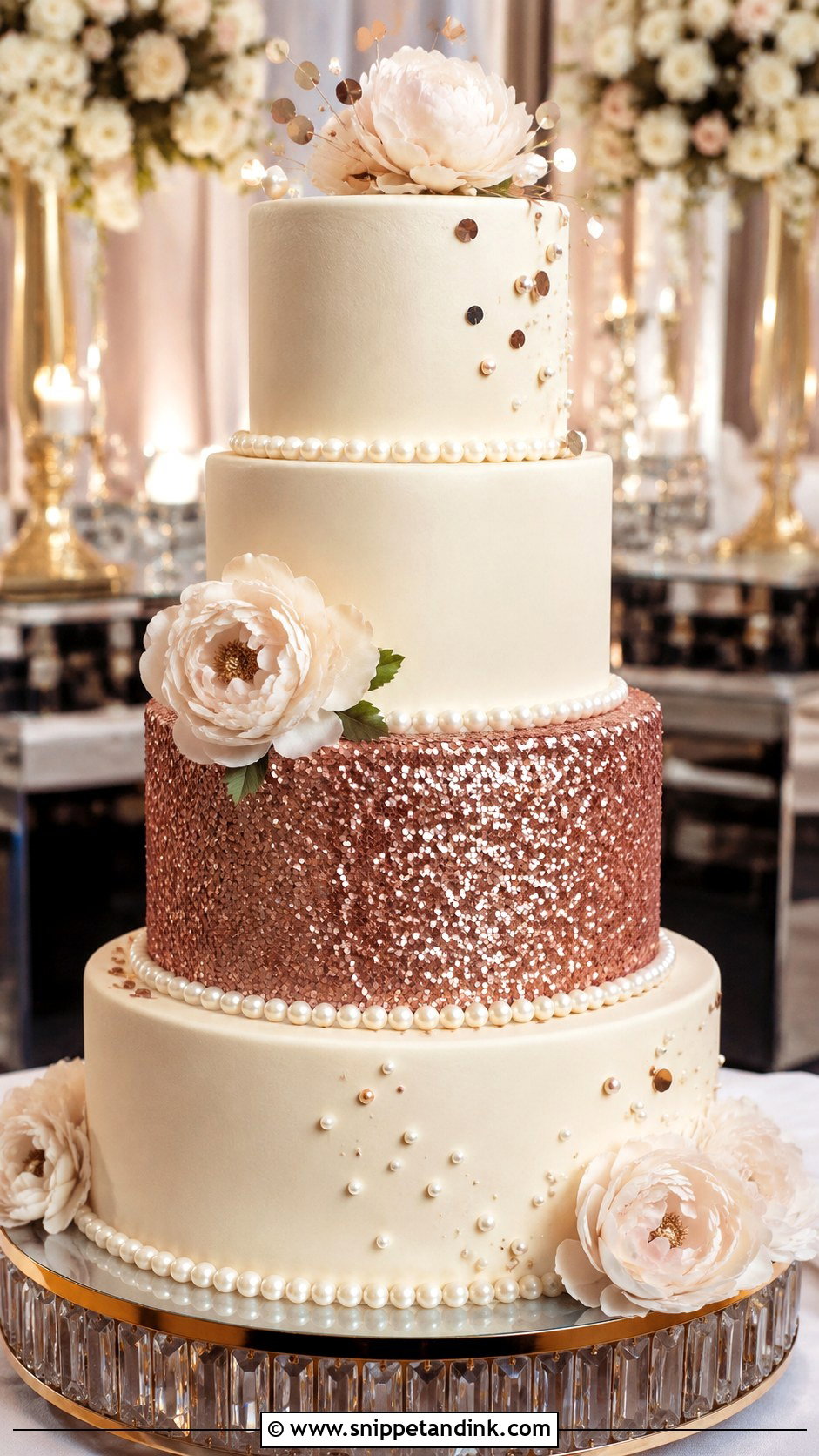
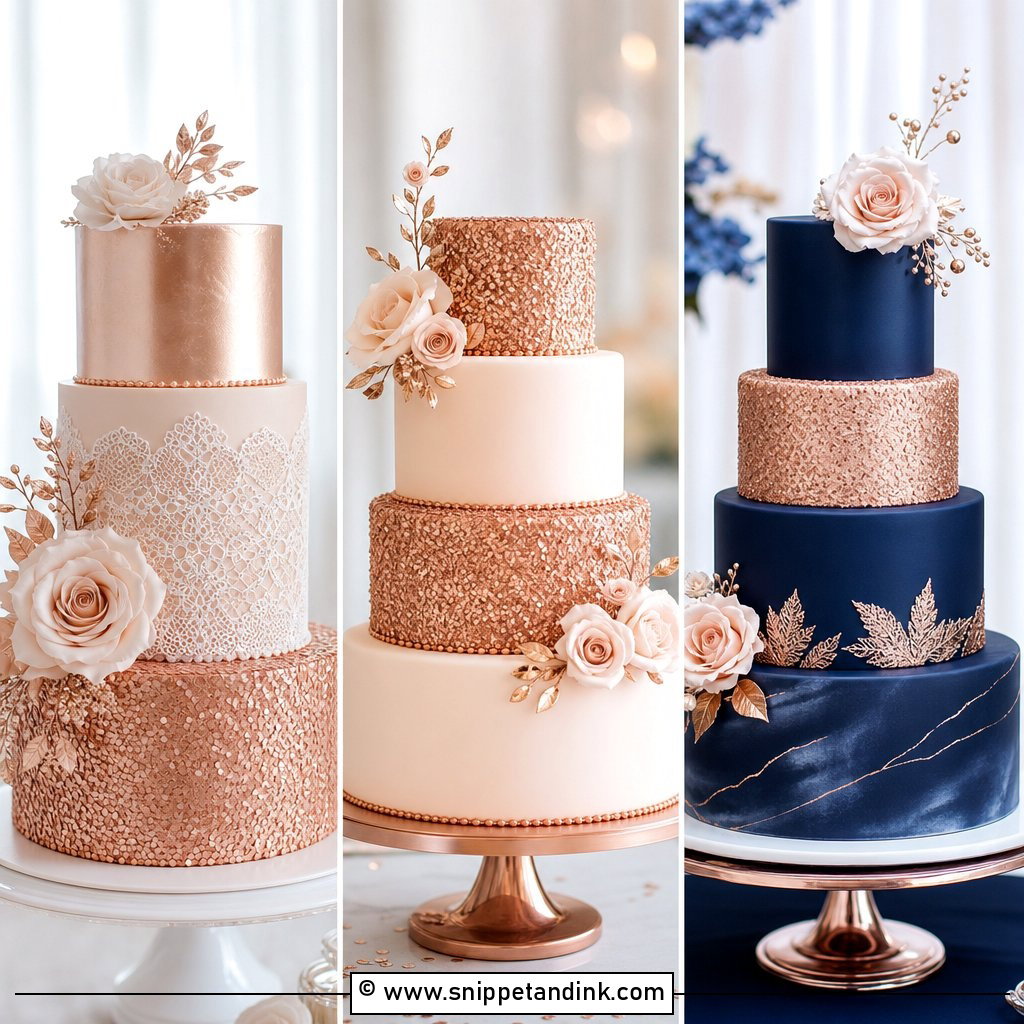
Edible sequins are tiny discs of gelatin or sugar, painted rose gold and pressed onto a tier by hand, which is slow work. One sequin tier between plain ivory or blush tiers gives the most impact without overwhelming the cake. It reads best under evening lighting, where the sequins catch candlelight. Keep the rest simple: smooth frosting and a few flowers. Vanilla, raspberry or chocolate layers all work underneath.
4. Rose Gold Floral Wedding Cake
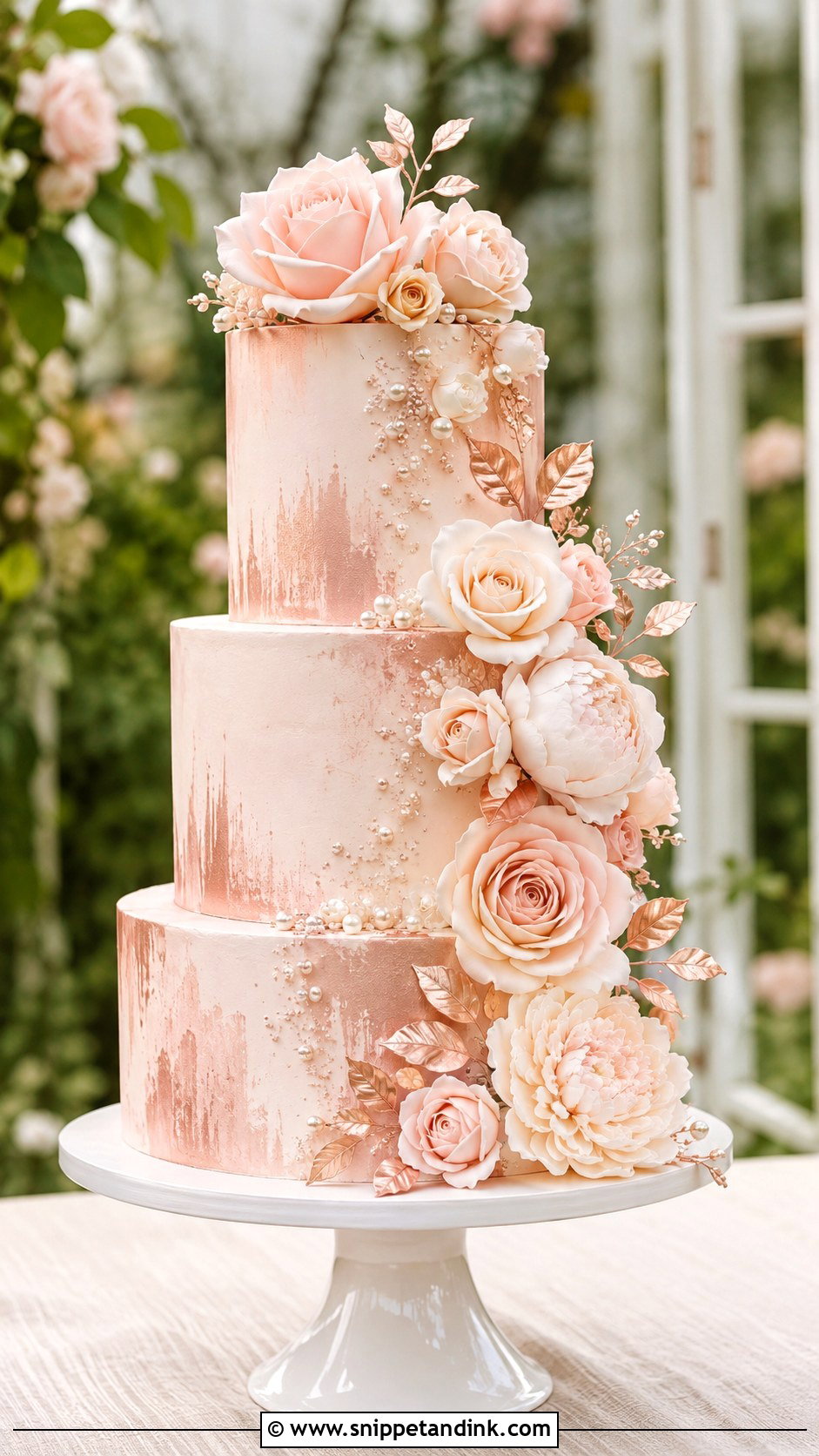
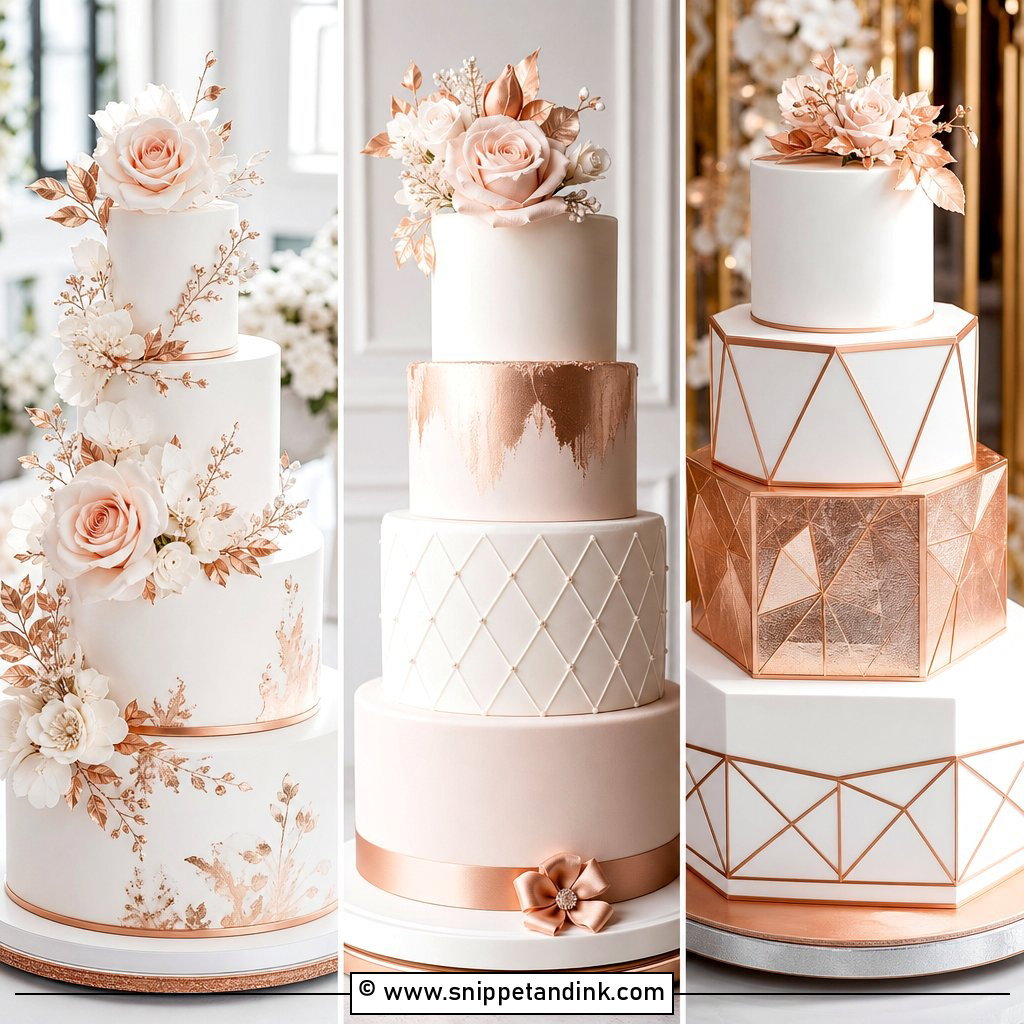
Flowers soften rose gold. I mix fresh blooms or sugar flowers in blush, ivory and dusty pink with rose gold painted leaves or a thin metallic stripe around each tier. Grouping the flowers in one natural cascade rather than spacing them evenly gives the cake movement. If you’re using fresh flowers, they must be pesticide-free and wrapped at the stems so they don’t touch the cake directly. Lemon, vanilla or almond sponge suits this light design.
5. Rose Gold Geometric Wedding Cake
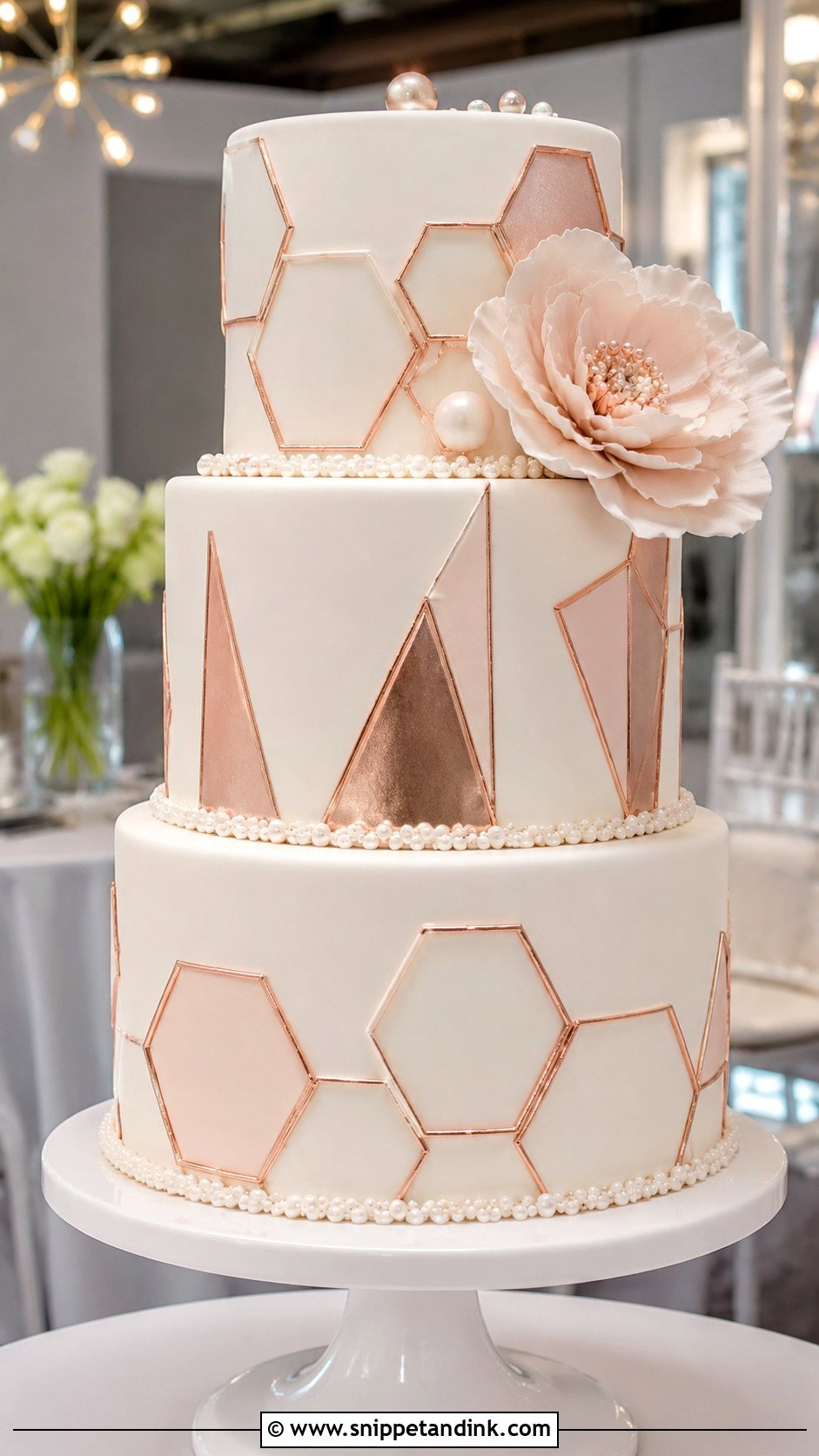
Geometric designs depend on sharp lines, so they need fondant or very smooth, chilled buttercream. I mark hexagons or triangles with a template and paint the rose gold lines by hand with a fine brush. White, ivory, taupe or soft grey bases let the lines show. It suits a modern venue or rooftop. One sculptural sugar flower is enough decoration. Almond, chocolate or salted caramel sponge fits the modern feel.
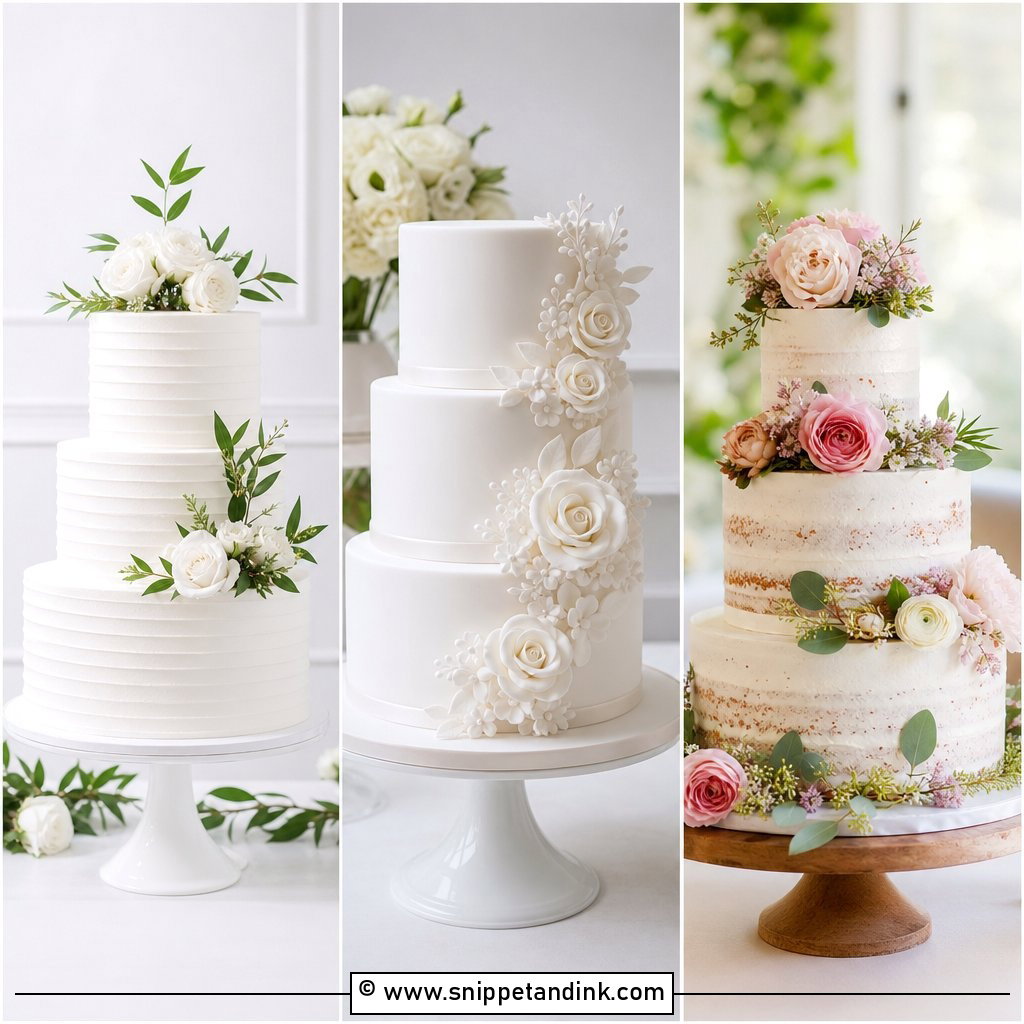
6. Rose Gold Buttercream Wedding Cake
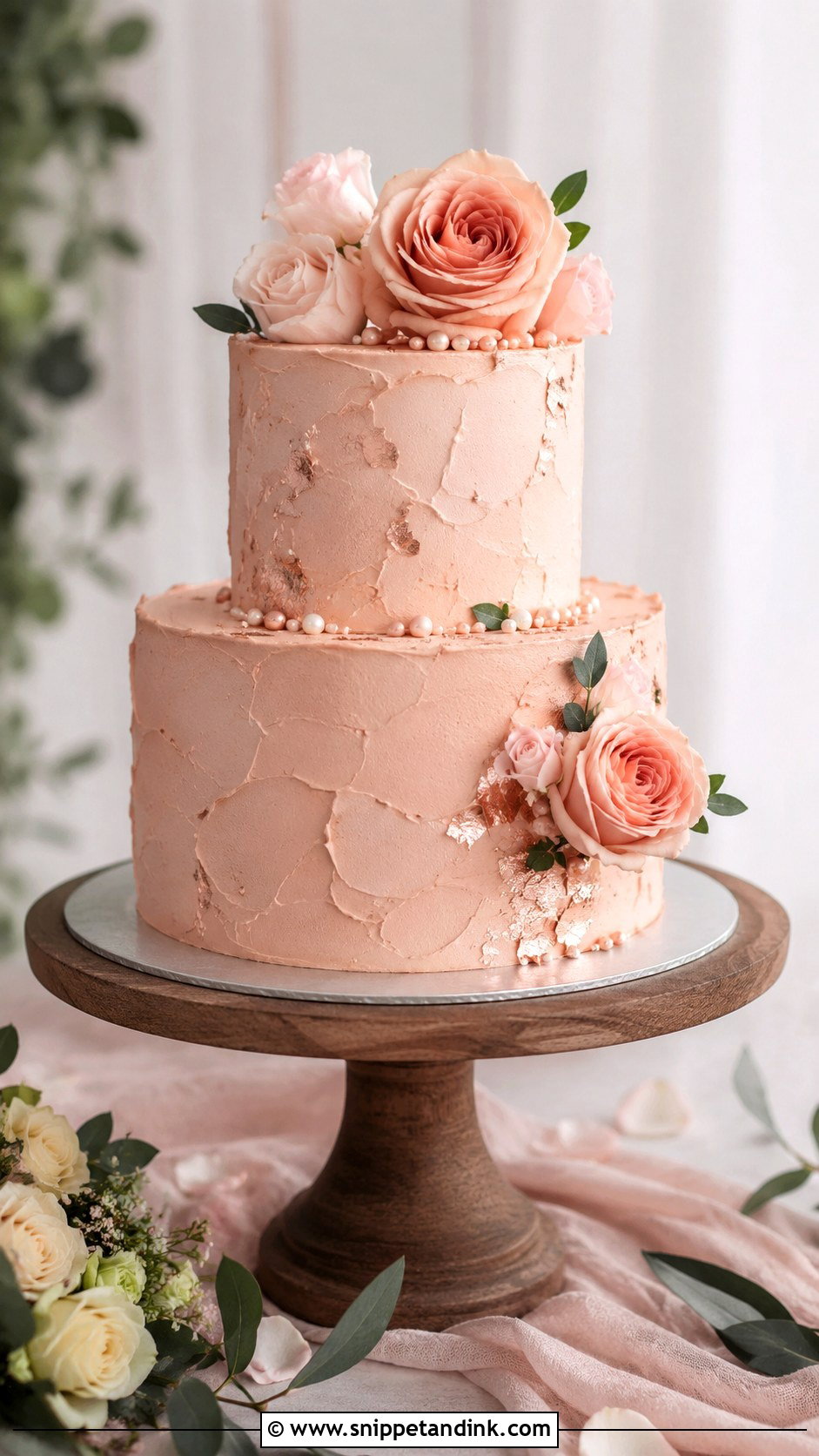
Buttercream gives a softer, handmade finish than fondant. I tint it blush, champagne or pale rose, chill it until firm and then add rose gold leaf or painted edging. Metallic paint can look patchy on buttercream if it’s applied before the surface crusts, so the cake must be cold. This style suits garden, barn and outdoor weddings, but buttercream softens in heat: in direct summer sun, it needs shade and a short display time. Vanilla, honey almond or lemon cake pairs well.
7. Rose Gold Fondant Wedding Cake
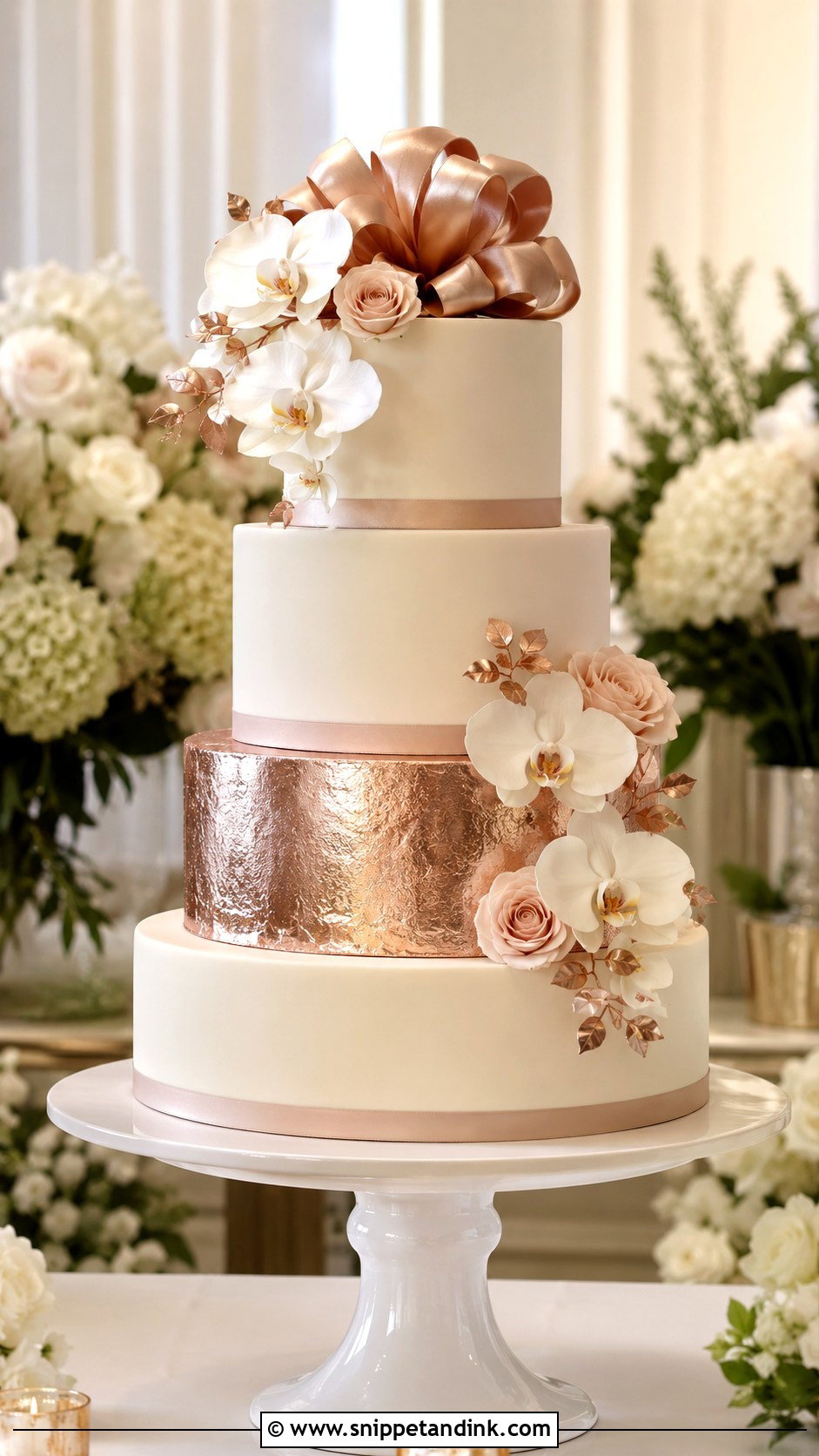
Fondant gives the crispest edges and the smoothest surface for metallic paint. I can emboss patterns, add lace and paint full tiers in rose gold. A whole rose gold tier is dramatic; small painted panels are quieter. Underneath, the cake can be any flavour: vanilla, red velvet, lemon or chocolate ganache filling. Some guests peel fondant off, which is fine; the flavour comes from the cake and filling.
8. Rose Gold Lace Wedding Cake
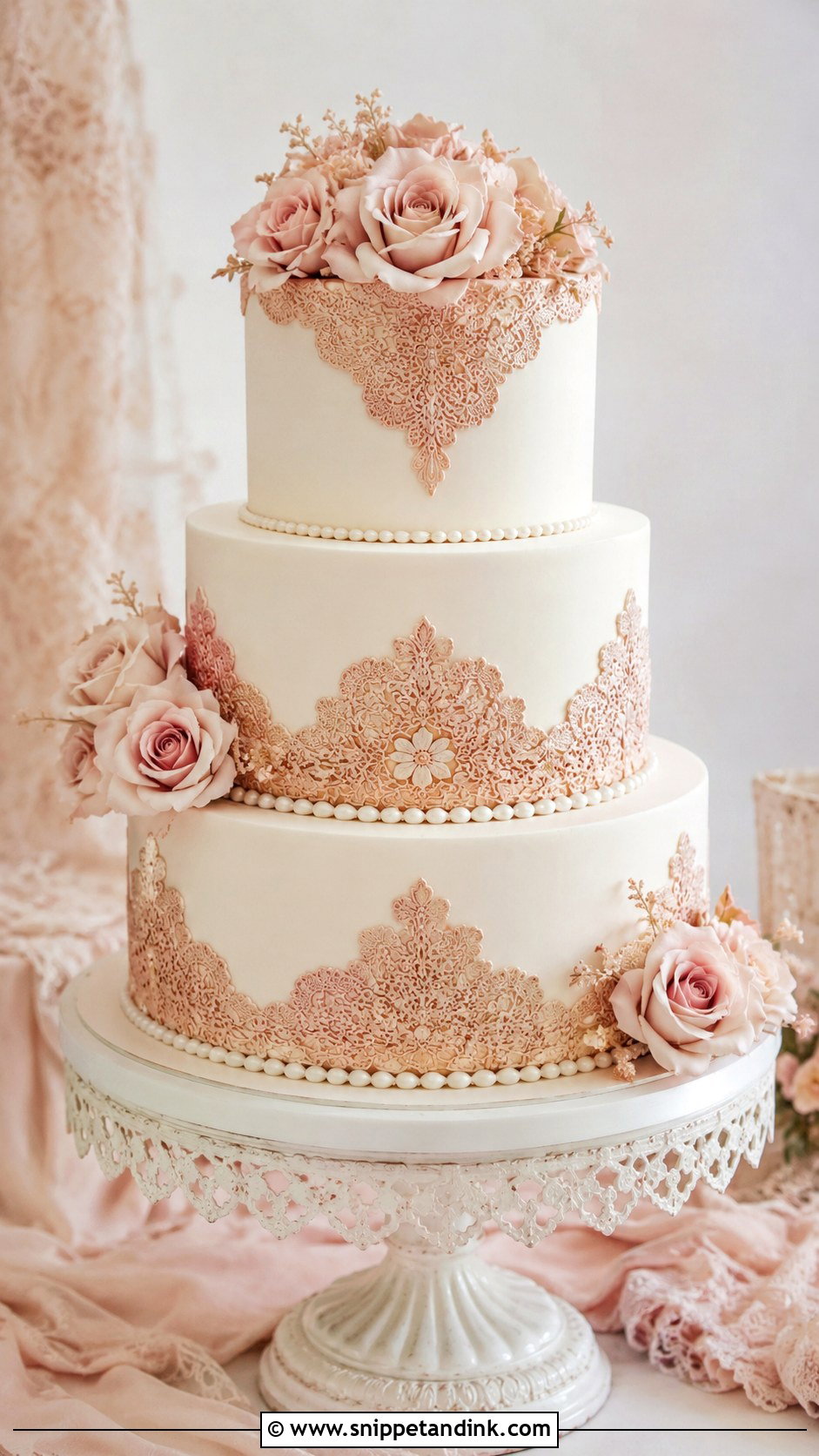
Lace on a cake can be piped, stencilled, embossed or made from edible lace sheets that are set in a silicone mat. Brushing rose gold lustre over the raised lace makes the pattern stand out on ivory or blush fondant. It matches lace gowns and historic venues. I keep the other tiers smooth so the lace has room. One lace tier is usually more elegant than lace on every tier. Vanilla, almond and raspberry suit it.
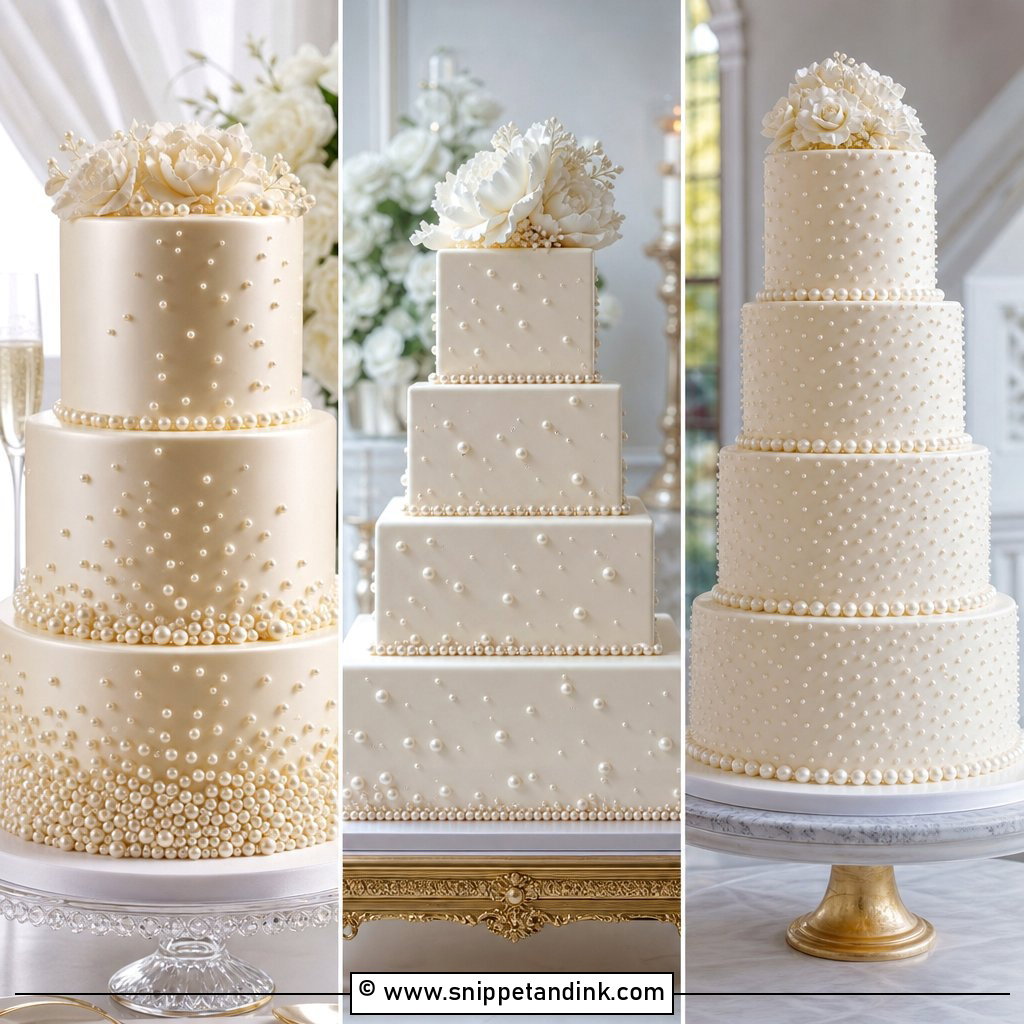
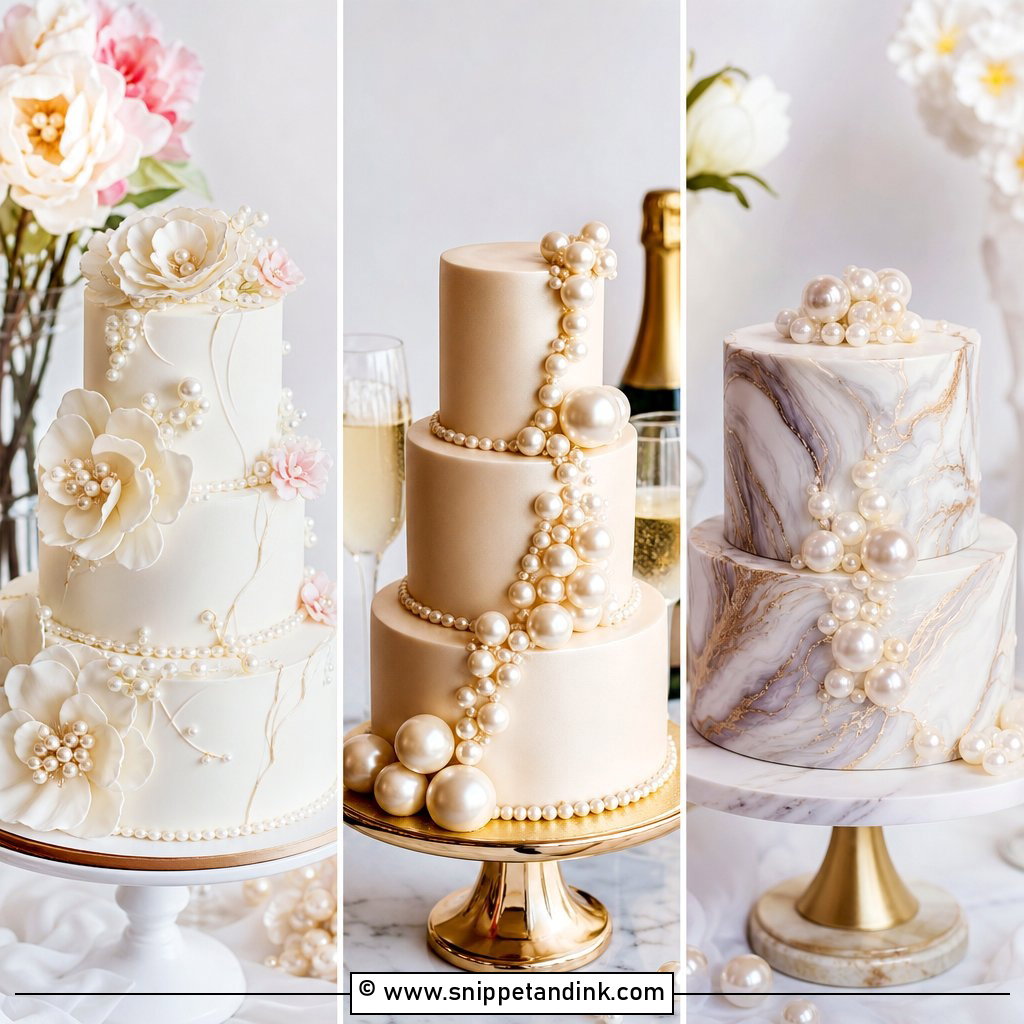
9. Rose Gold Pearl Wedding Cake
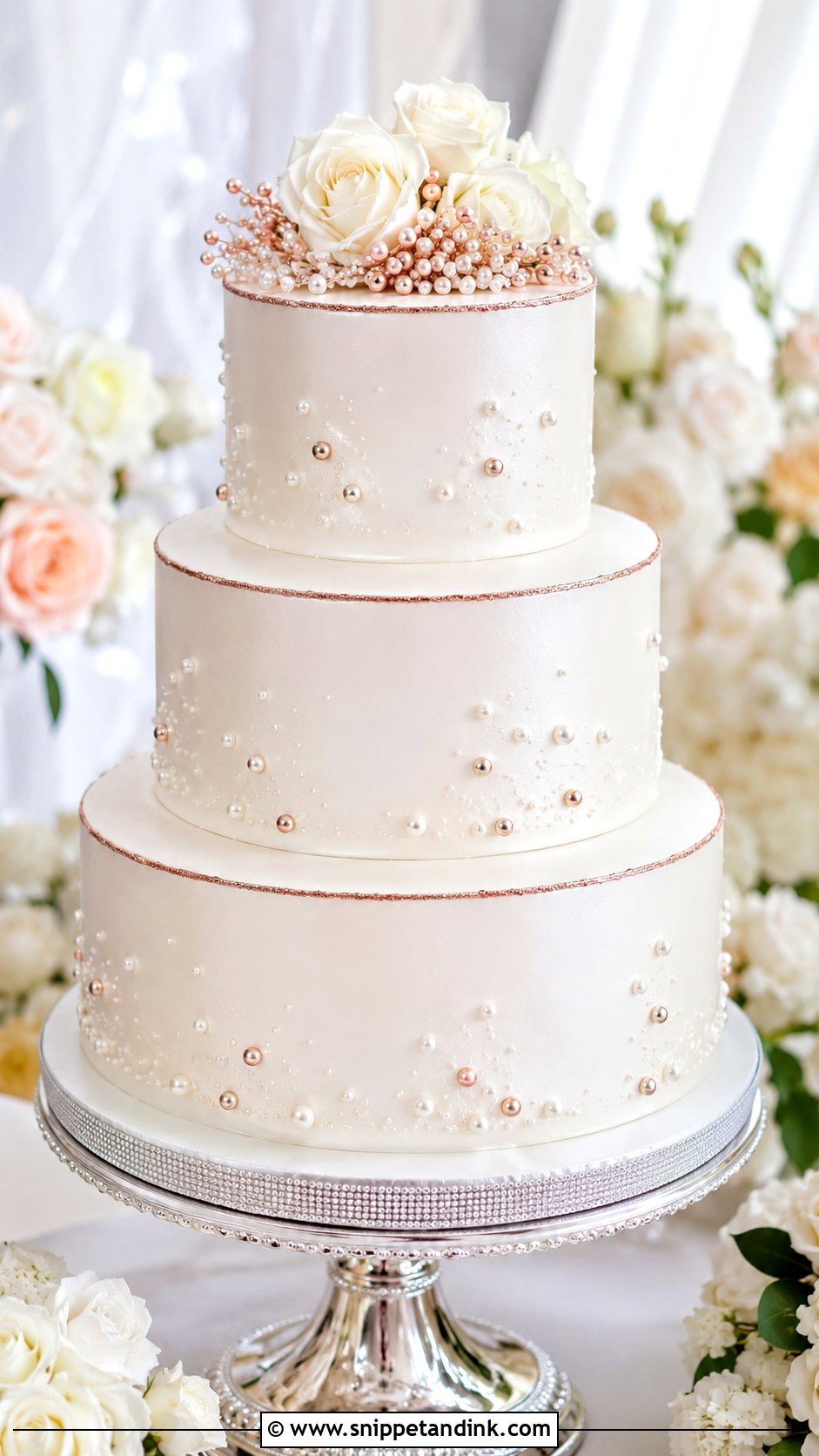
Pearls can be piped in royal icing, made from sugar or bought as edible pearl beads, then dusted with rose gold lustre. They work on white, ivory, or blush tiers. A row at the base of each tier is classic; scattered clusters look more modern. Sugar pearls can be hard to bite, so I keep them small. Vanilla bean, champagne or white chocolate raspberry fits the look.
10. Rose Gold Ombre Wedding Cake
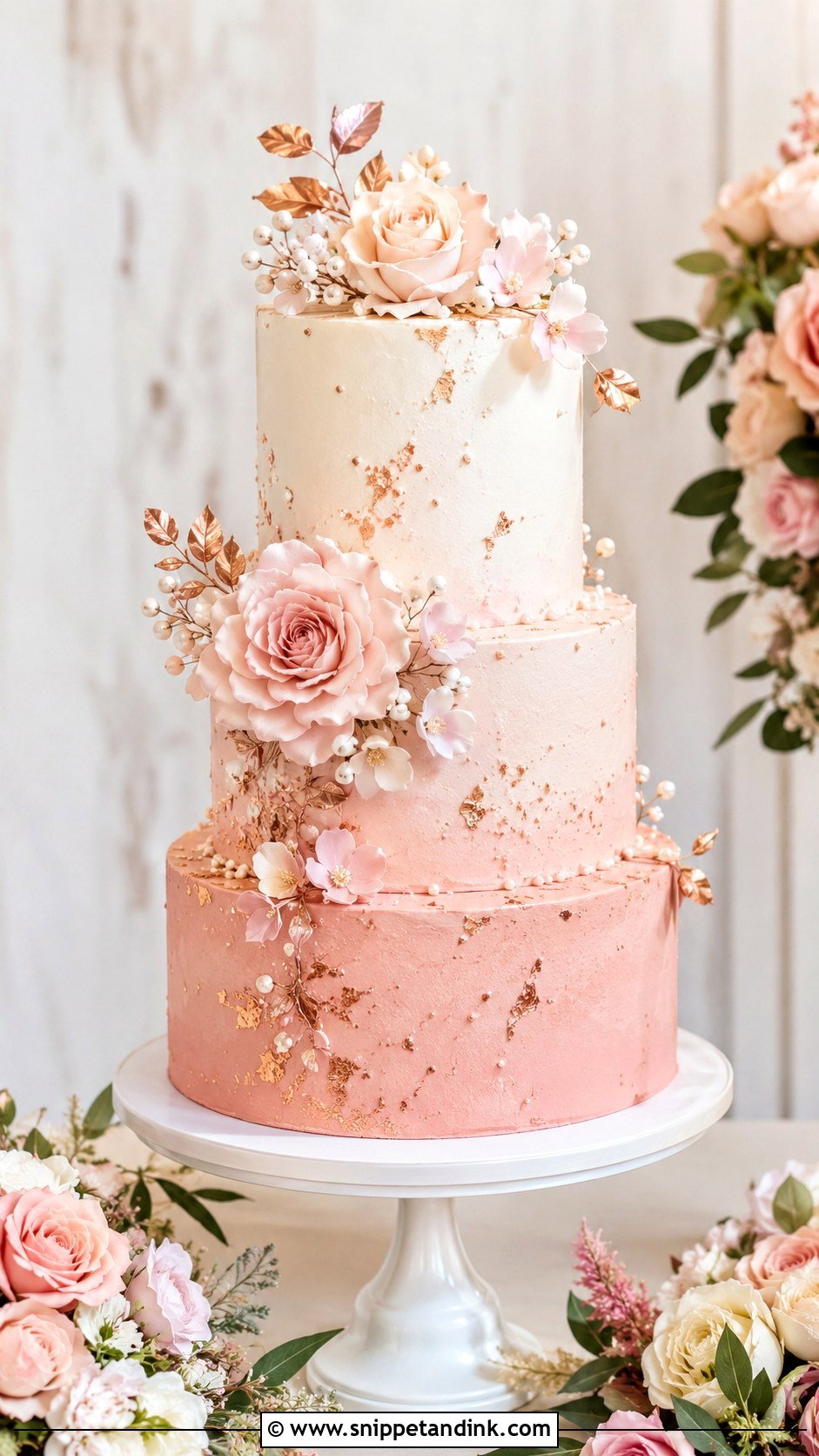
An ombre cake fades from ivory at the top to deeper blush or rose gold at the base, or the reverse. I usually airbrush the gradient on fondant; on buttercream, I tint separate batches and blend them with a scraper. Tall cakes show the transition best. Keep decorations minimal so the fade is visible. Strawberry, vanilla or almond sponge suits the colour story.
11. Rose Gold Ruffle Wedding Cake
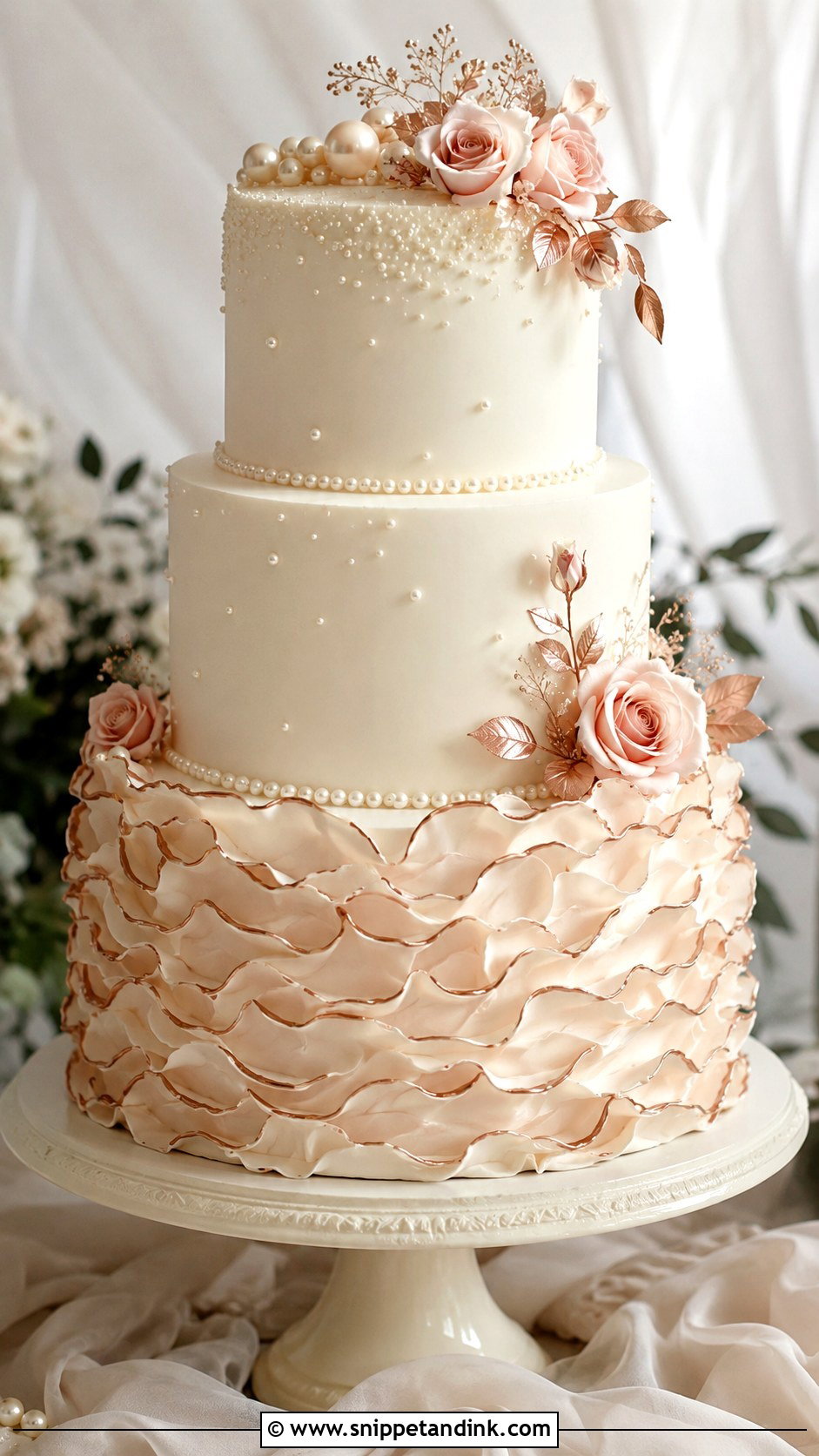
A rose gold ruffle wedding cake is built from thin strips of fondant, wafer paper or buttercream, layered from the bottom up. Each ruffle has to be supported as it dries, which makes it a slow design. I put ruffles on one tier and keep the others smooth. Painting the edges rose gold catches the light. Wafer paper ruffles are lighter but soften in humidity, so in a damp venue I’d use fondant. Light flavours like vanilla or lemon match the airy look.
12. Rose Gold Sugar Flower Wedding Cake
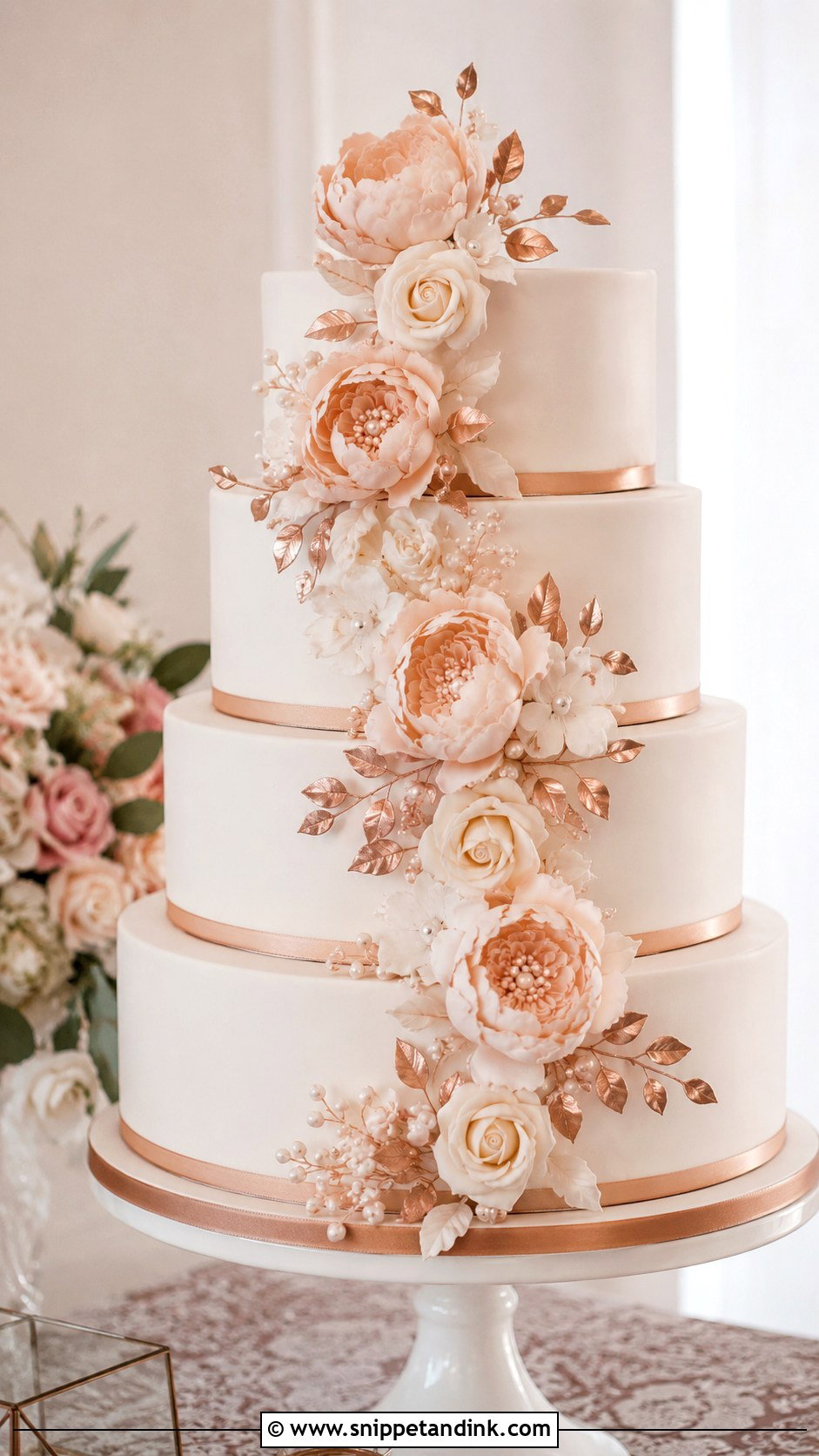
Sugar flowers last all day without wilting, and every petal can be tinted to match your colours. They’re shaped by hand from gum paste into roses, peonies, orchids, ranunculus or dahlias, and I paint rose gold onto the leaves or edges. They take time, so book early. Sugar flowers can be kept as a keepsake if stored dry and out of sunlight. Almond, vanilla bean or lemon cake balances the design.
13. Rose Gold Naked Wedding Cake
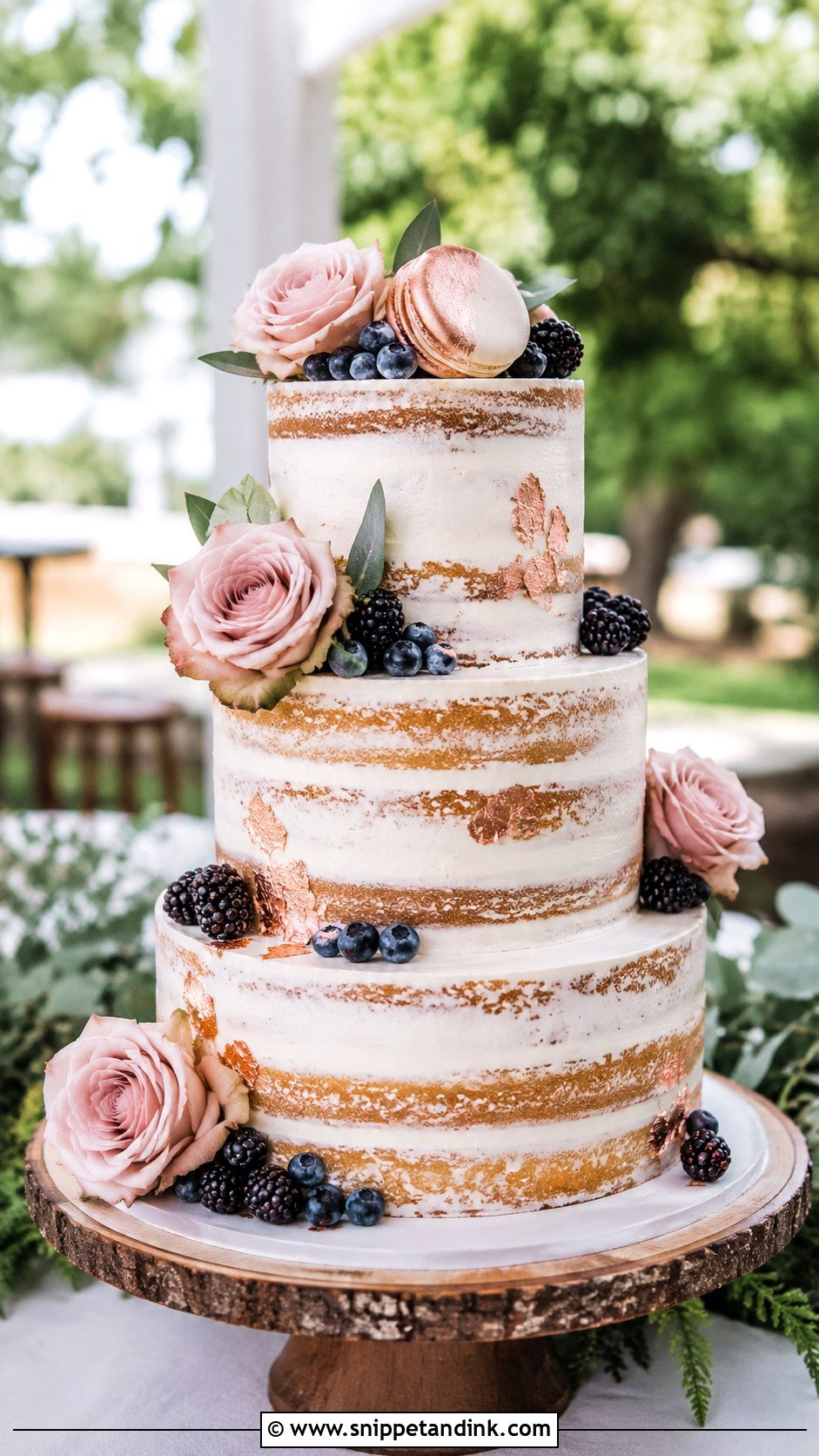
A naked cake has only a thin scrape of buttercream, so the layers show. Rose gold comes from the topper, painted fruit, gold leaf or macarons rather than the frosting. It suits rustic and garden weddings. The weakness is drying: with so little frosting, the sponge dries out faster once it’s exposed, so I assemble as late as possible and recommend serving within a few hours. Vanilla, almond and lemon sponge stay moist well.
14. Rose Gold Tall Wedding Cake
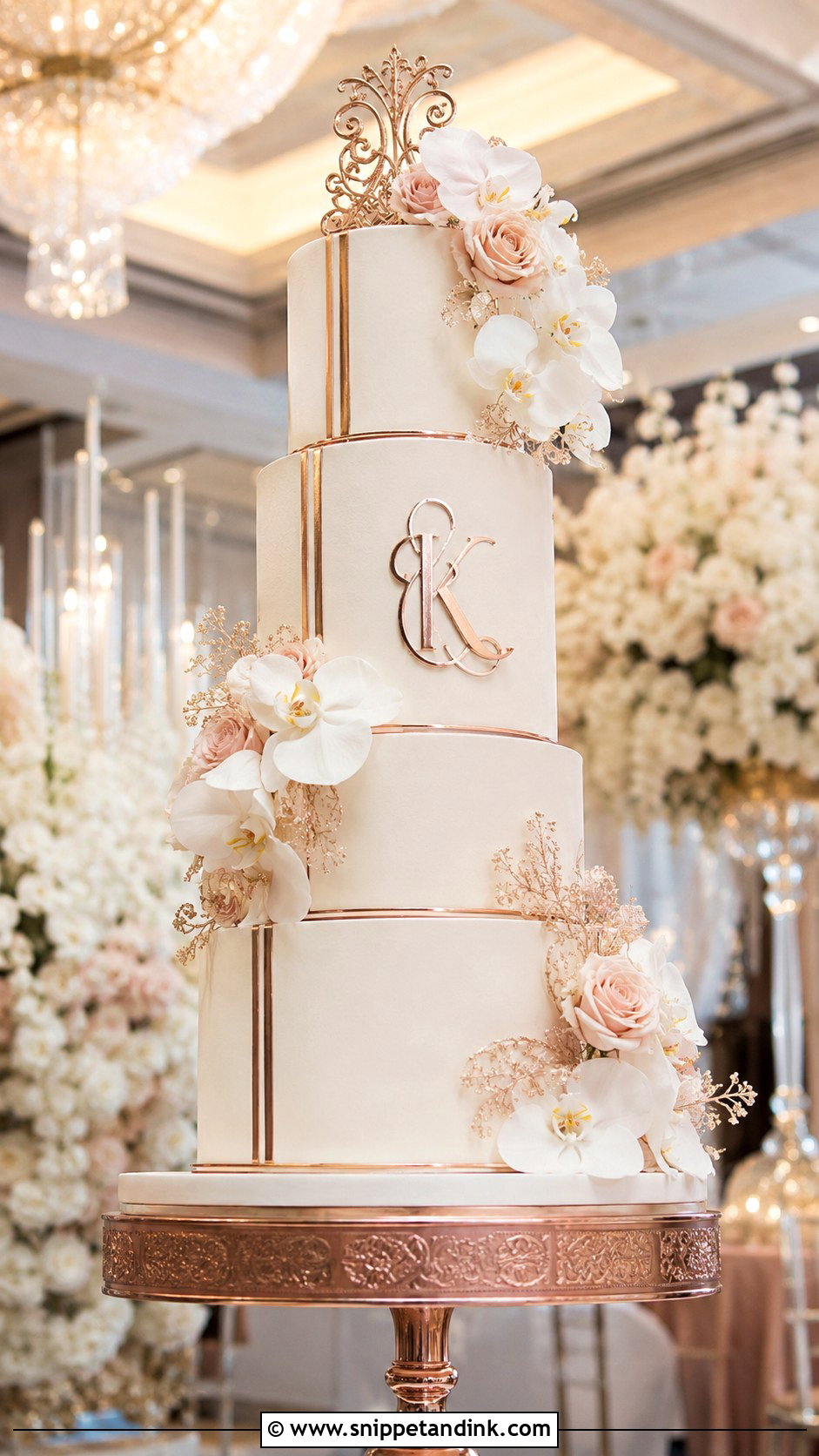
Tall tiers, usually around six inches high instead of four, give a cake height without adding extra tiers. Each tall tier needs internal support with dowels and a board halfway up. A metallic middle tier or a rose gold monogram stands out in a large room. Proportions matter: tiers that are too narrow for their height look unstable. Choose sturdy but tender sponge, like vanilla, almond or chocolate, with buttercream filling.
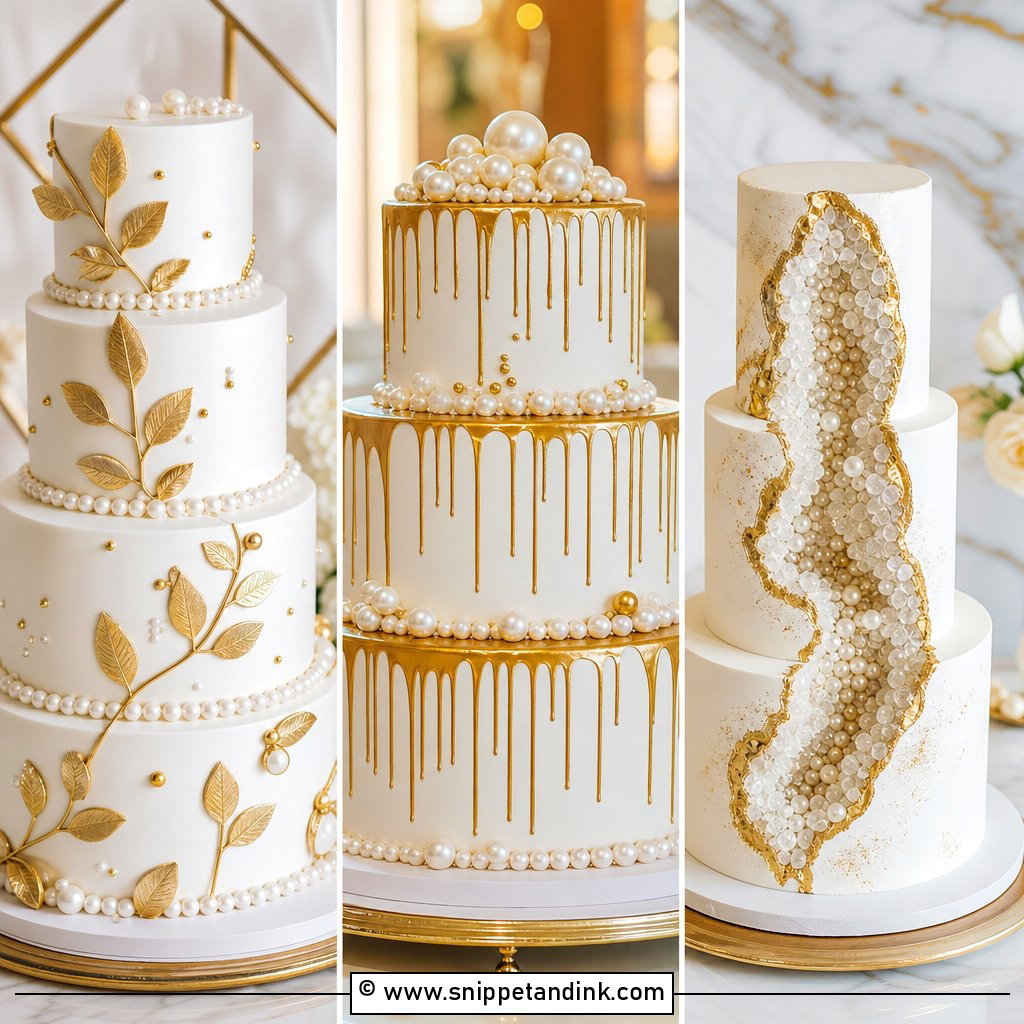

15. Rose Gold Single Tier Wedding Cake
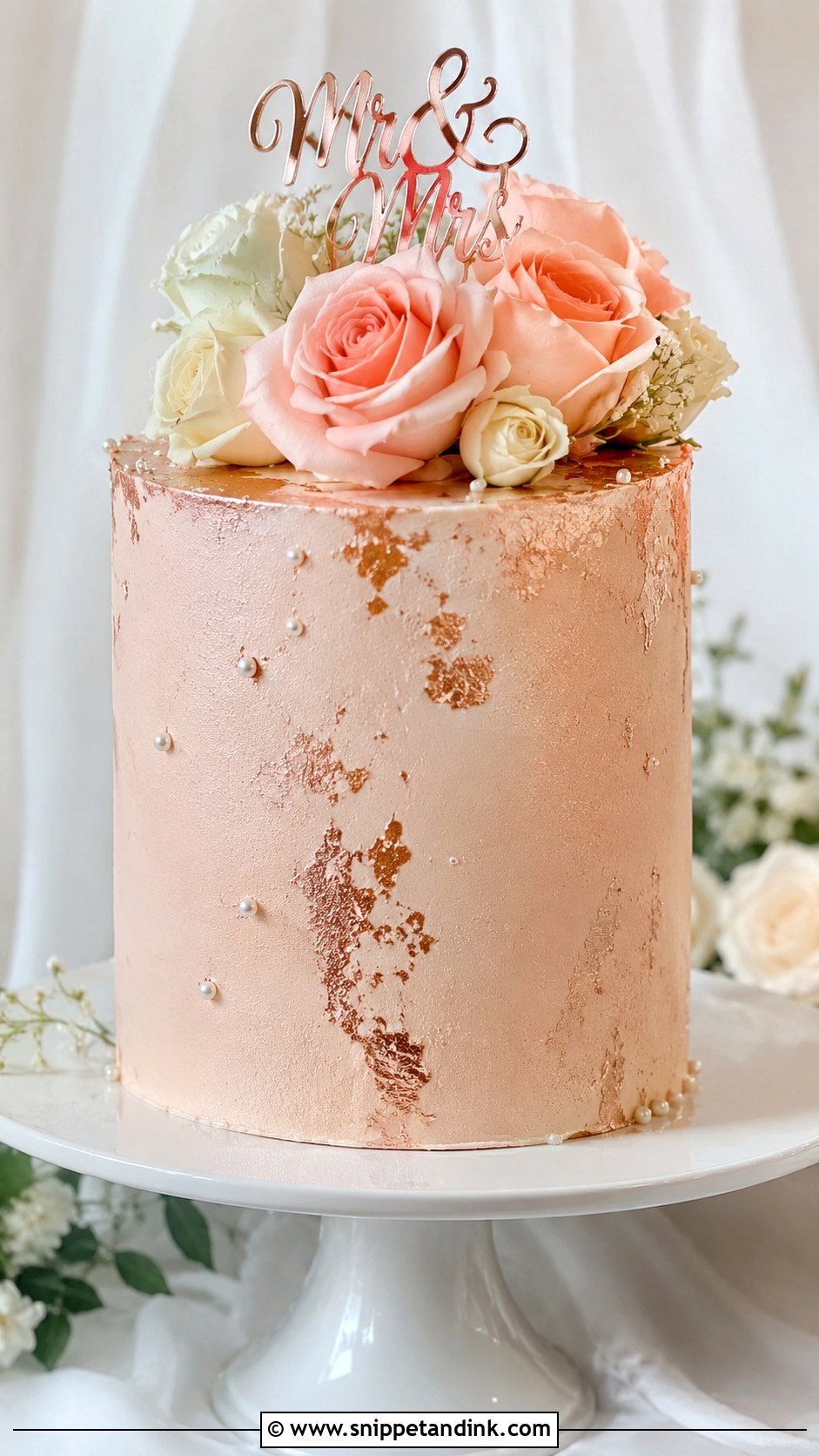
A rose gold single tier wedding cake suits a small wedding, an elopement or a dessert table where other sweets carry the servings. A taller single tier looks more intentional in photos. Blush buttercream, rose gold leaf and a few fresh flowers are enough. A raised stand gives it presence. With fewer guests, you can choose a bolder flavour, such as chocolate raspberry or lemon elderflower.
16. Rose Gold Three Tier Wedding Cake
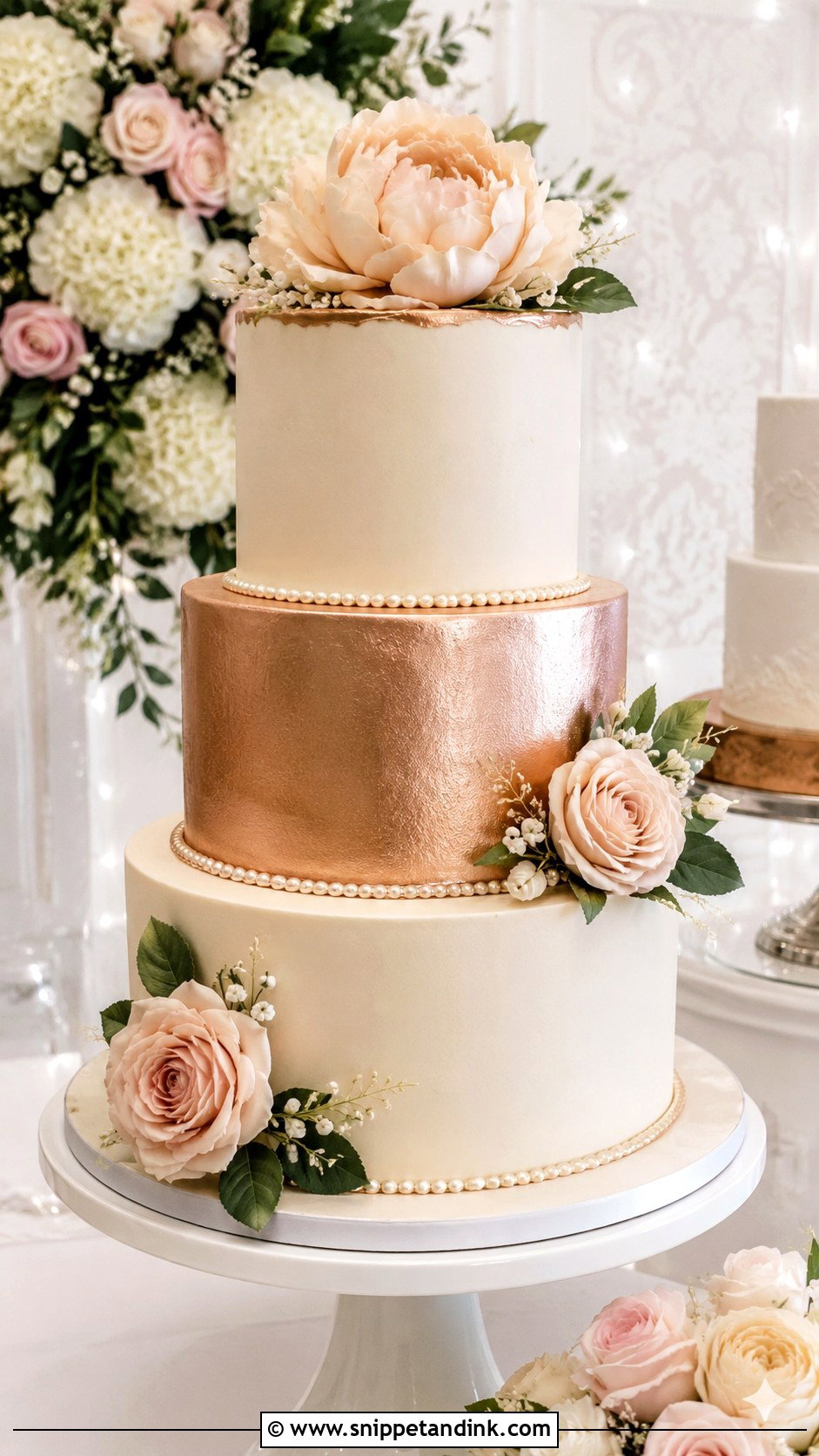
A three-tier cake is the most common size I make, and it suits mixed textures: a smooth base, a metallic middle tier and a floral top. Repeat one detail across all three, such as a thin rose gold stripe, so it reads as one cake. Blush roses, ivory peonies or pearl accents suit it. Servings depend on the tier sizes, so ask your baker for the count. Vanilla, strawberry, almond or chocolate are safe crowd choices.
17. Rose Gold Square Wedding Cake
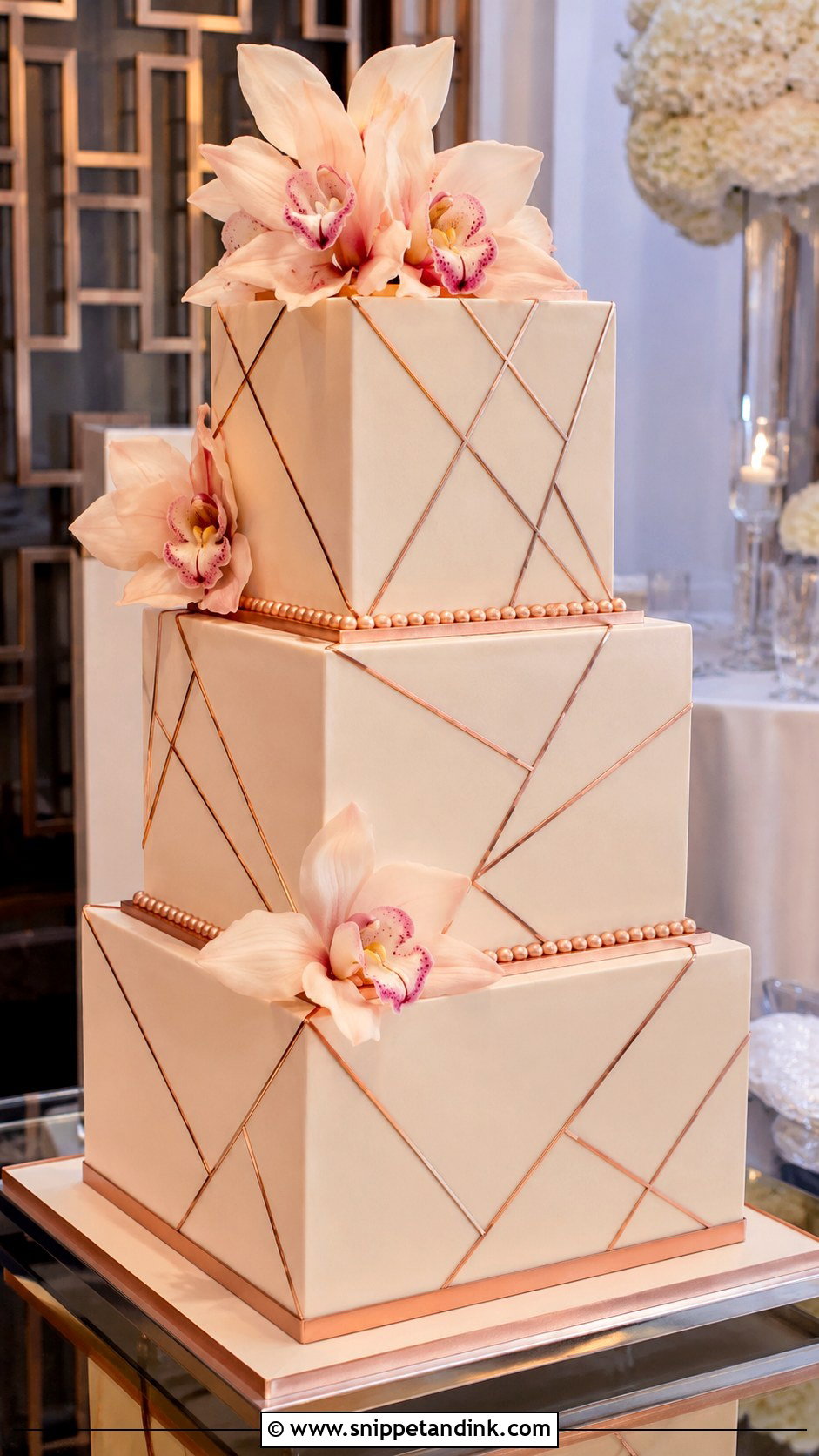
Square tiers are harder than round ones because the corners show every flaw. They need fondant or very well chilled buttercream with sharp edges. Metallic lines and marble panels look especially clean on a square shape. Square tiers also yield more servings than round ones of the same width. A white and blush palette keeps it soft. Chocolate, almond or salted caramel suit the modern look.
18. Rose Gold Black Wedding Cake
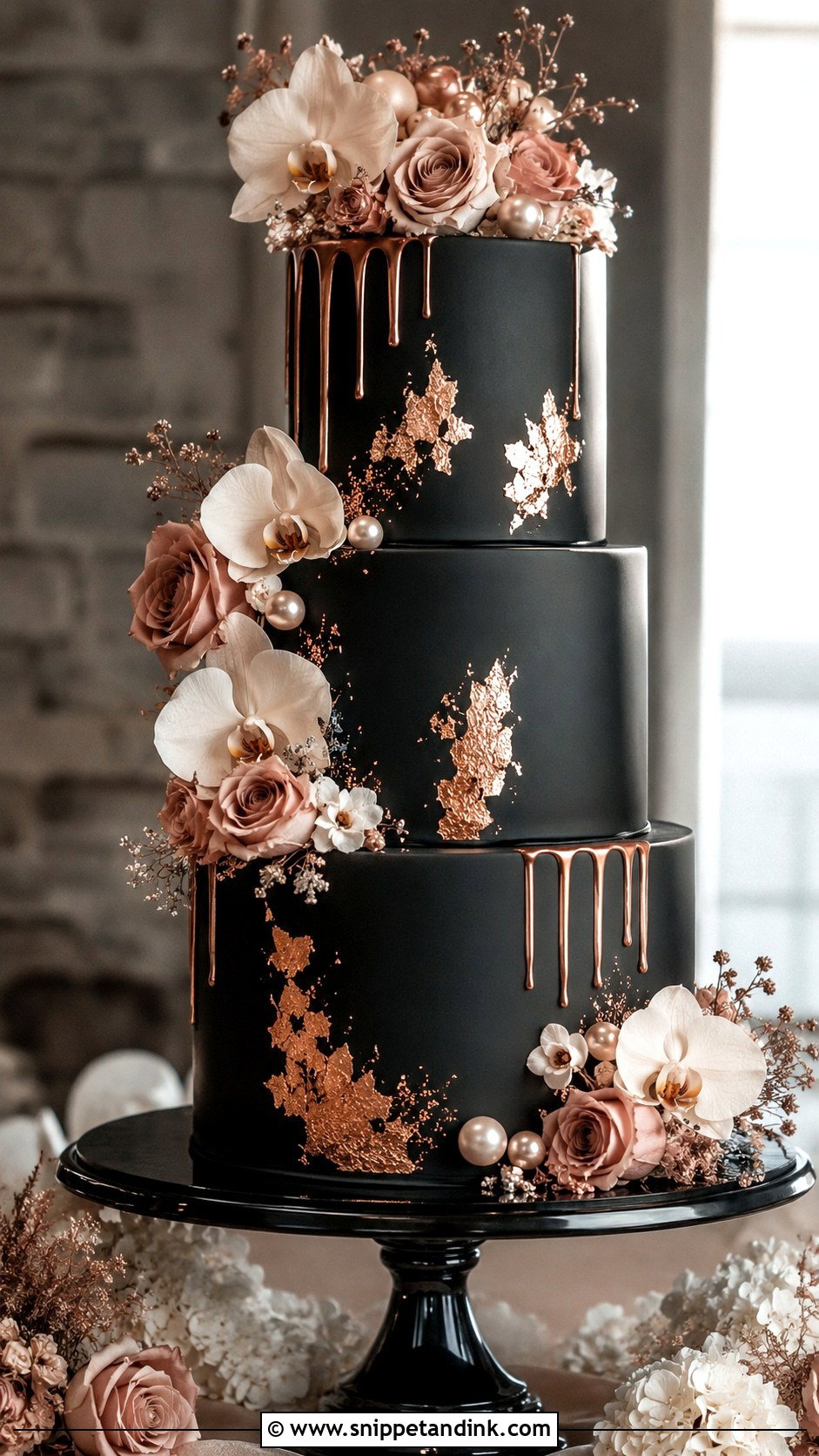
Black frosting takes a lot of colouring, and it can stain lips and teeth. I make black with a cocoa base to reduce the amount of dye needed, or I use black fondant, which guests can peel off. Rose gold leaf or painted lines stand out sharply against it. Blush flowers or ivory orchids soften the contrast. It suits an evening reception and a dark colour scheme. Chocolate, mocha or red velvet inside match the dramatic outside.
19. Rose Gold White Wedding Cake
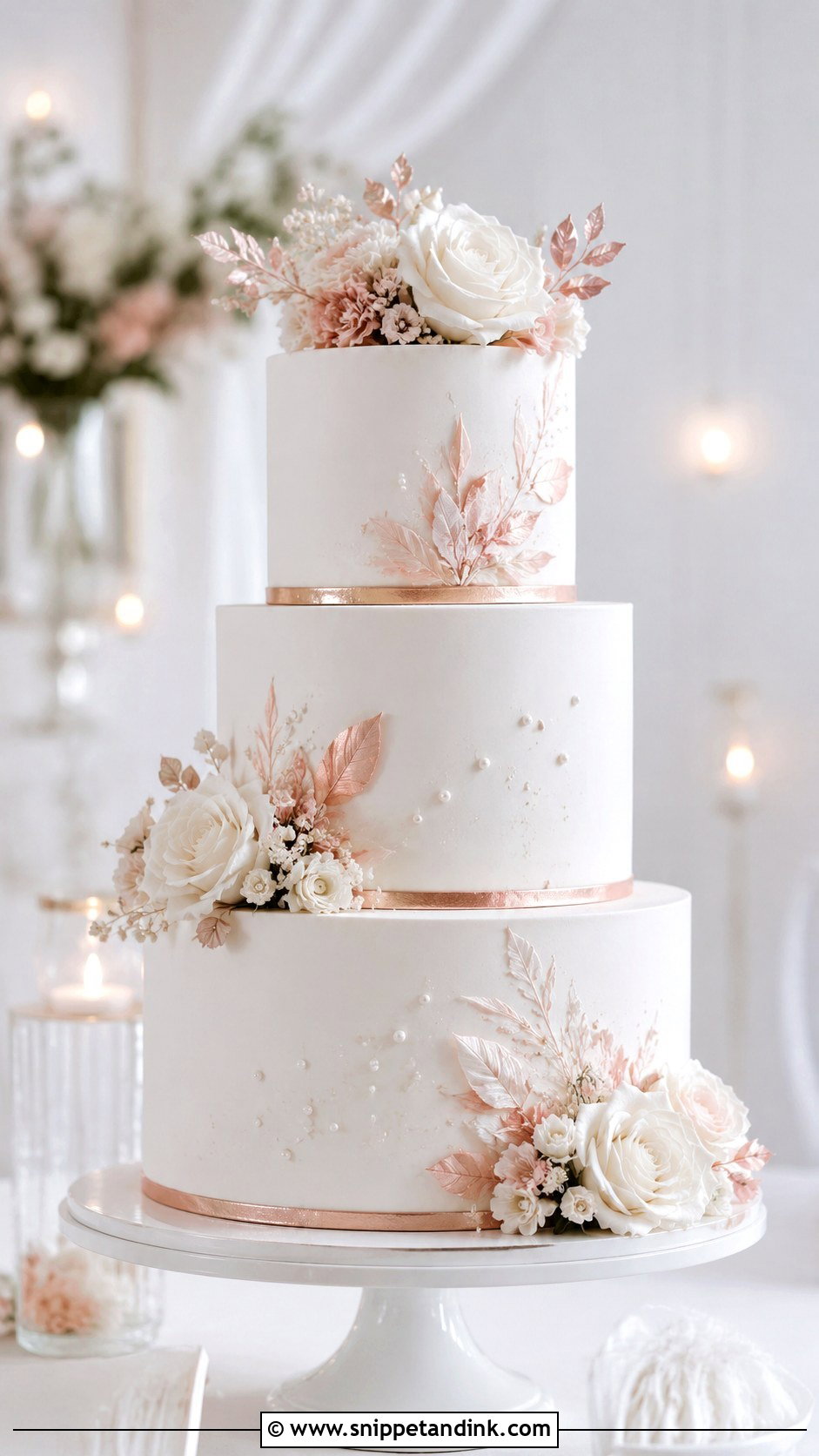
White frosting is the easiest background for rose gold; every metallic detail shows. Thin borders, brush strokes, gold leaf or a drip all work. It suits formal and relaxed settings. Pure white buttercream is hard to achieve because butter is yellow, so most buttercream cakes are actually ivory; fondant or a meringue buttercream gets closer to white. Vanilla, almond, lemon or coconut sponge fit the look.

20. Rose Gold Blush Wedding Cake
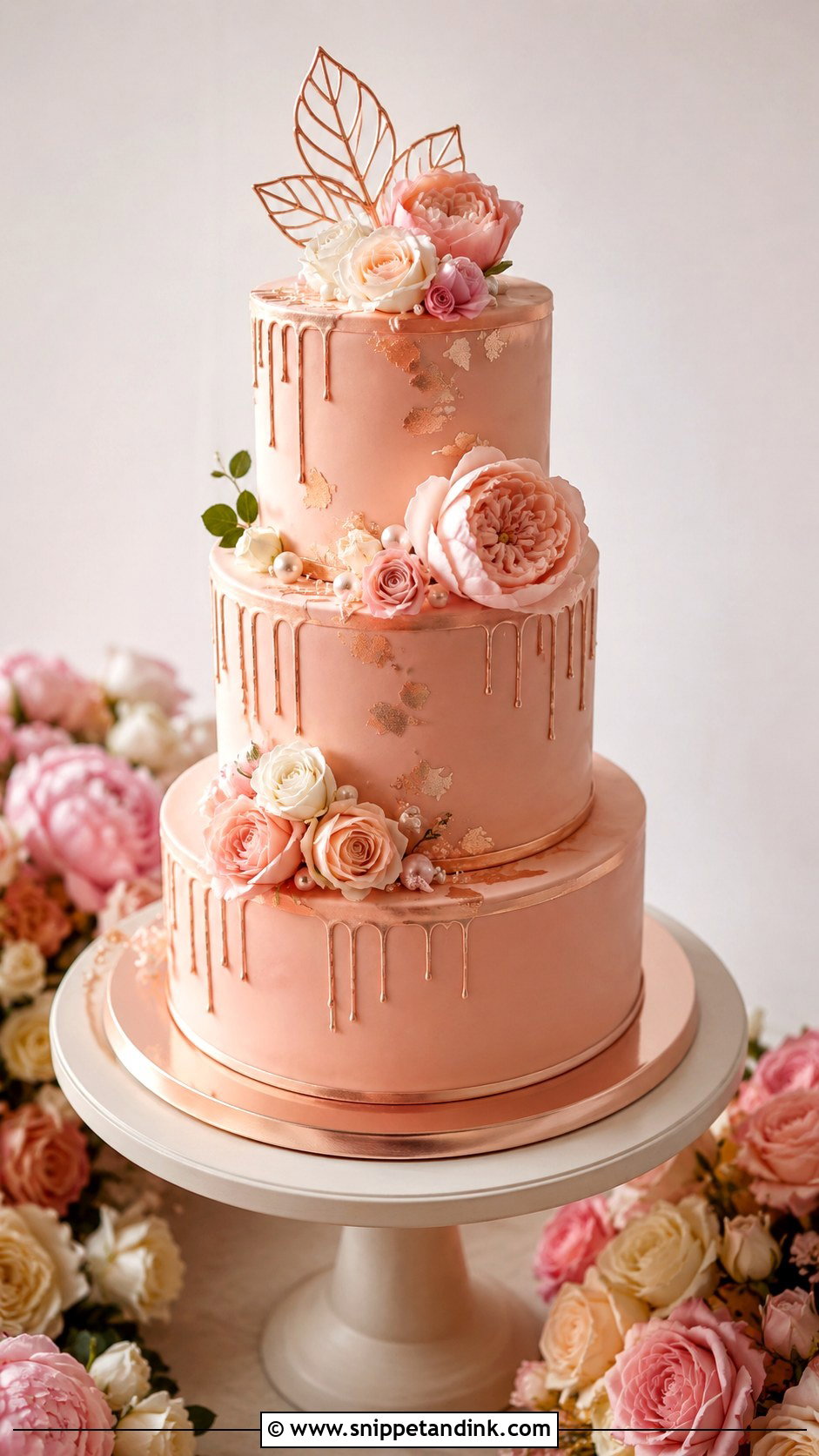
Blush and rose gold share pink tones, so they always look like they belong together. I tint the buttercream or fondant blush and paint rose gold edges or a metallic drip. Fresh roses and sugar peonies complete it. If your bouquet has dusty pink or mauve, bring a photo so I can match the blush to it, as pinks vary a lot. Strawberry, vanilla bean or raspberry cream suit it.
21. Rose Gold Champagne Wedding Cake
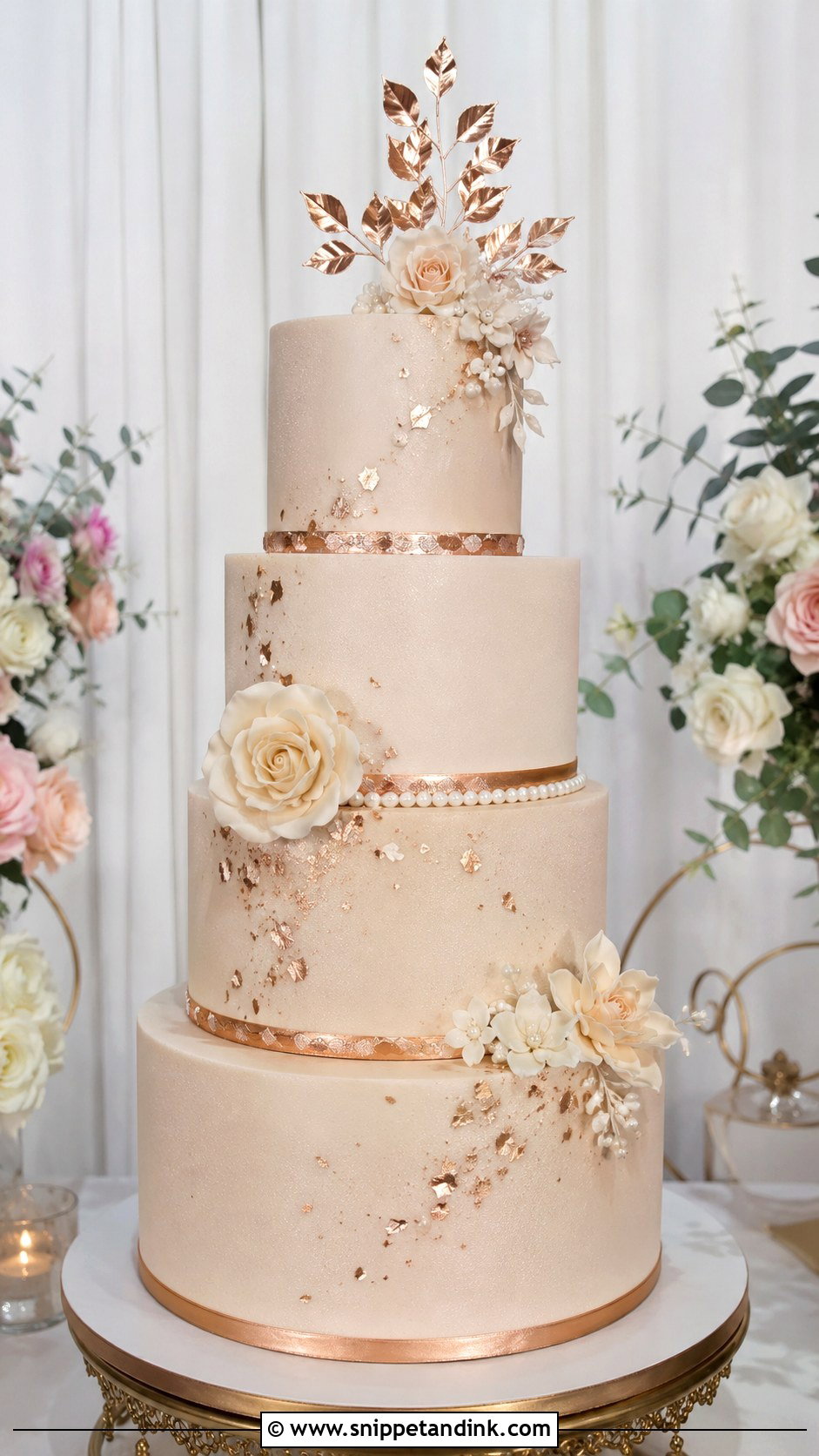
Champagne frosting sits between ivory and blush, so rose gold accents glow on it without contrast that’s too strong. I add shimmer dust, painted metallic tiers or small pearls. It suits a hotel ballroom or a candlelit reception, where metallic details catch warm light. Keep the finish smooth for a formal room. Vanilla champagne, almond or pear flavours match the palette.
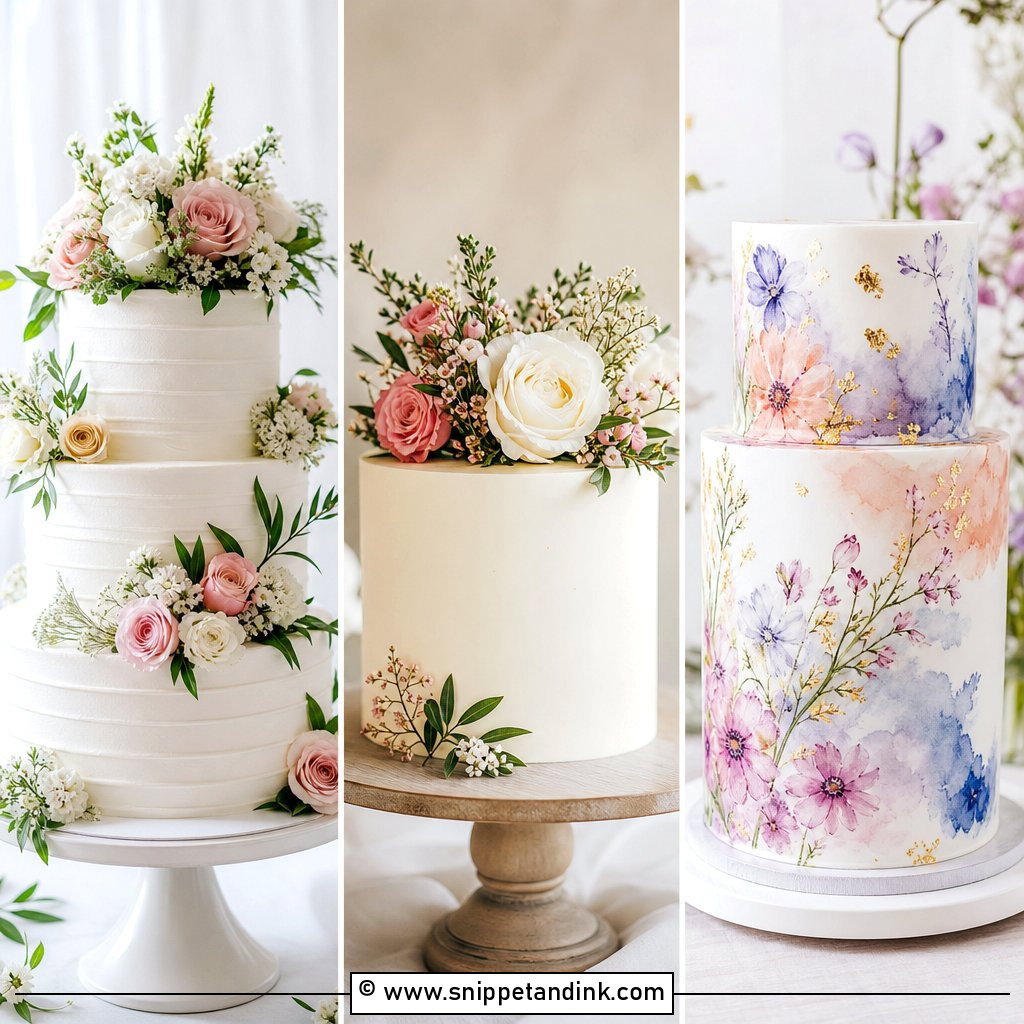
22. Rose Gold Watercolor Wedding Cake
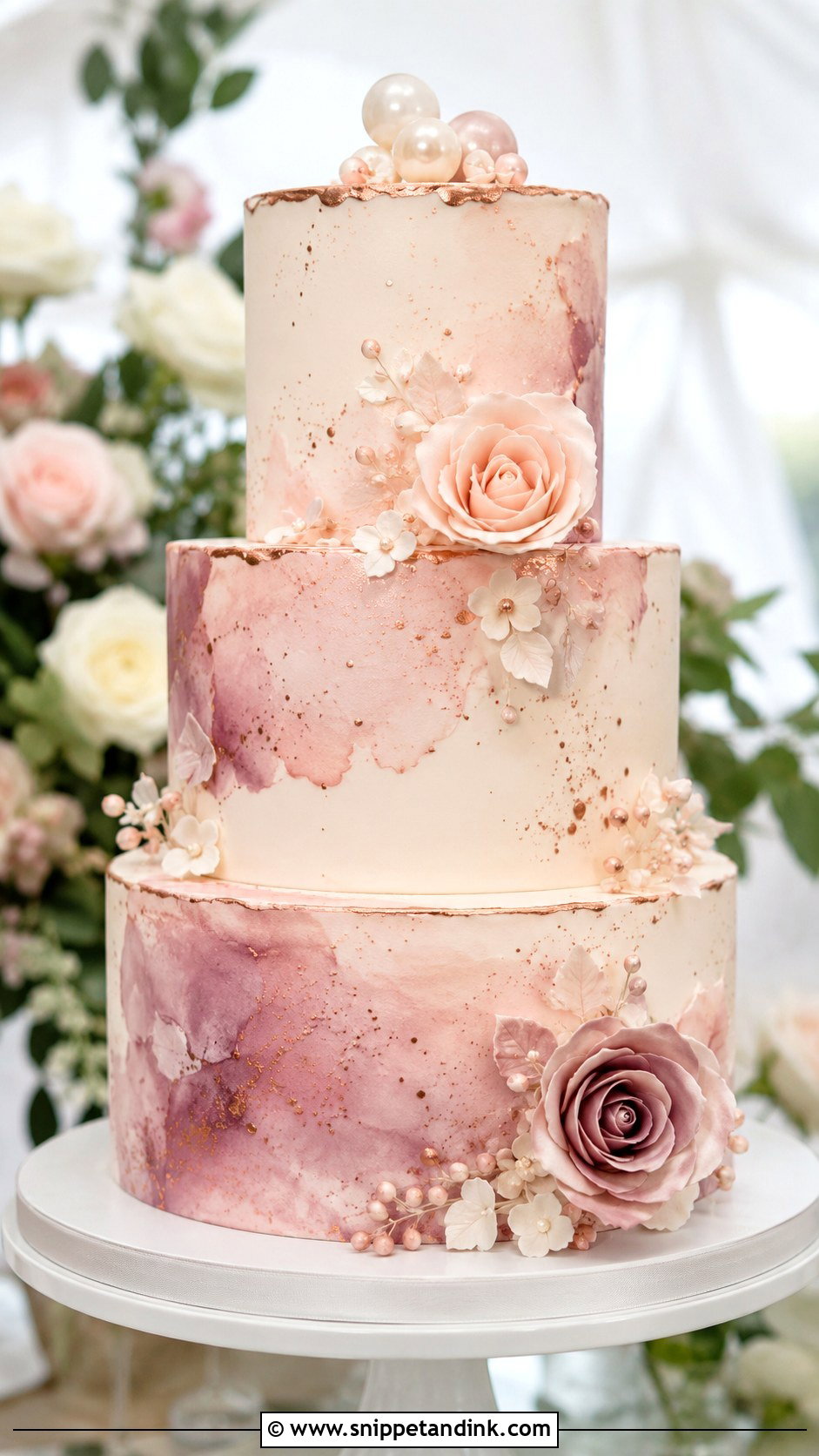
Watercolour on a cake is painted with thinned food colouring onto chilled fondant or very firm buttercream. I blend blush, peach, mauve and champagne, then add thin rose gold lines or splatter on top once it’s dry. Every cake comes out different, which is part of the appeal. Light decoration keeps the painting visible. Lemon, vanilla or strawberry suit its bright, spring feel.
23. Rose Gold Macaron Wedding Cake
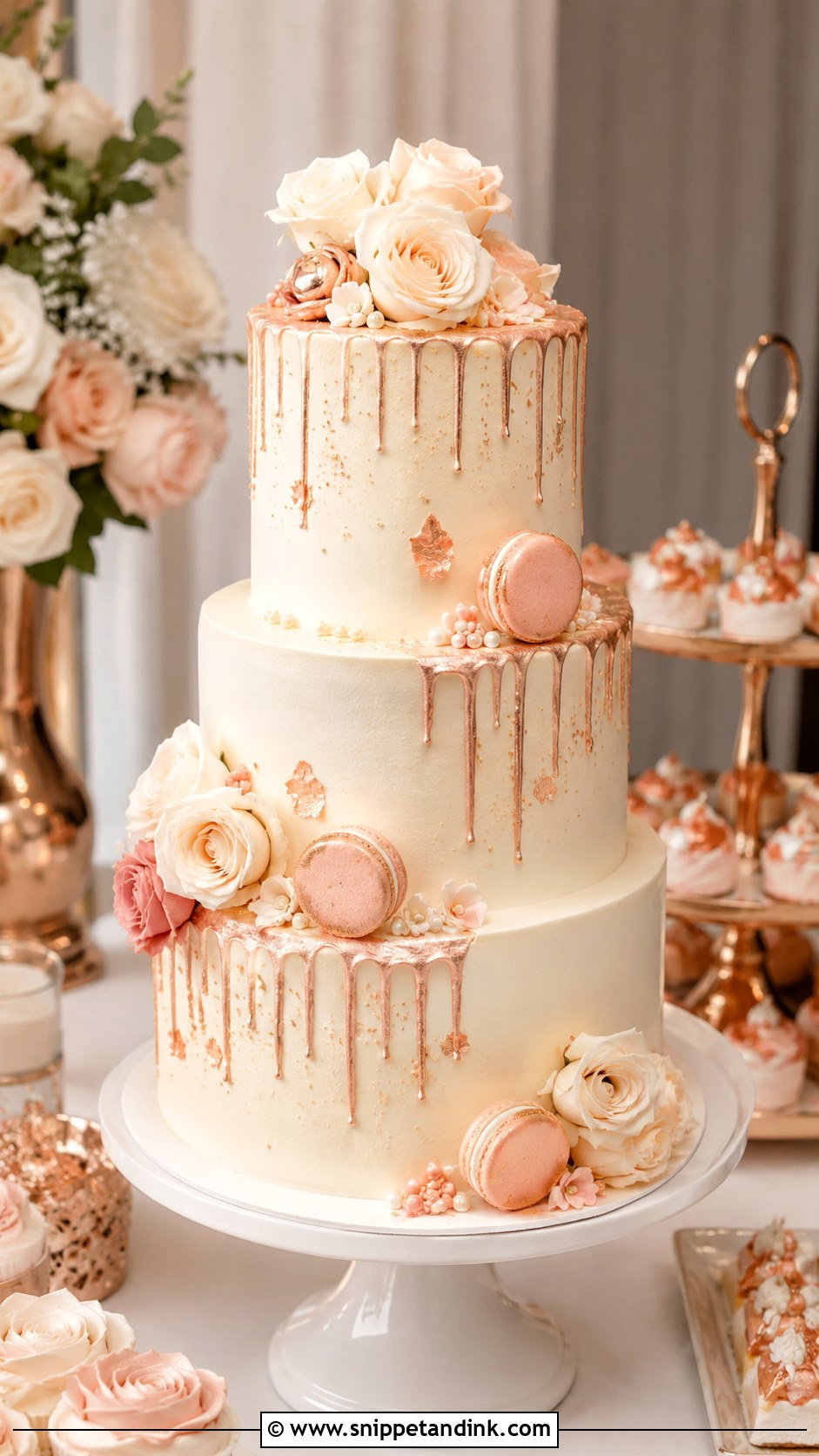
Macarons can be placed around tiers, stacked beside the cake or used as a topper. I paint some with rose gold lustre and leave others plain blush or ivory. Macarons absorb moisture from frosting, so I attach them as late as possible to keep them crisp. They also give guests an extra sweet to take. Vanilla, almond, raspberry, chocolate, or pistachio layers suit the macaron decoration.
24. Rose Gold Minimalist Wedding Cake
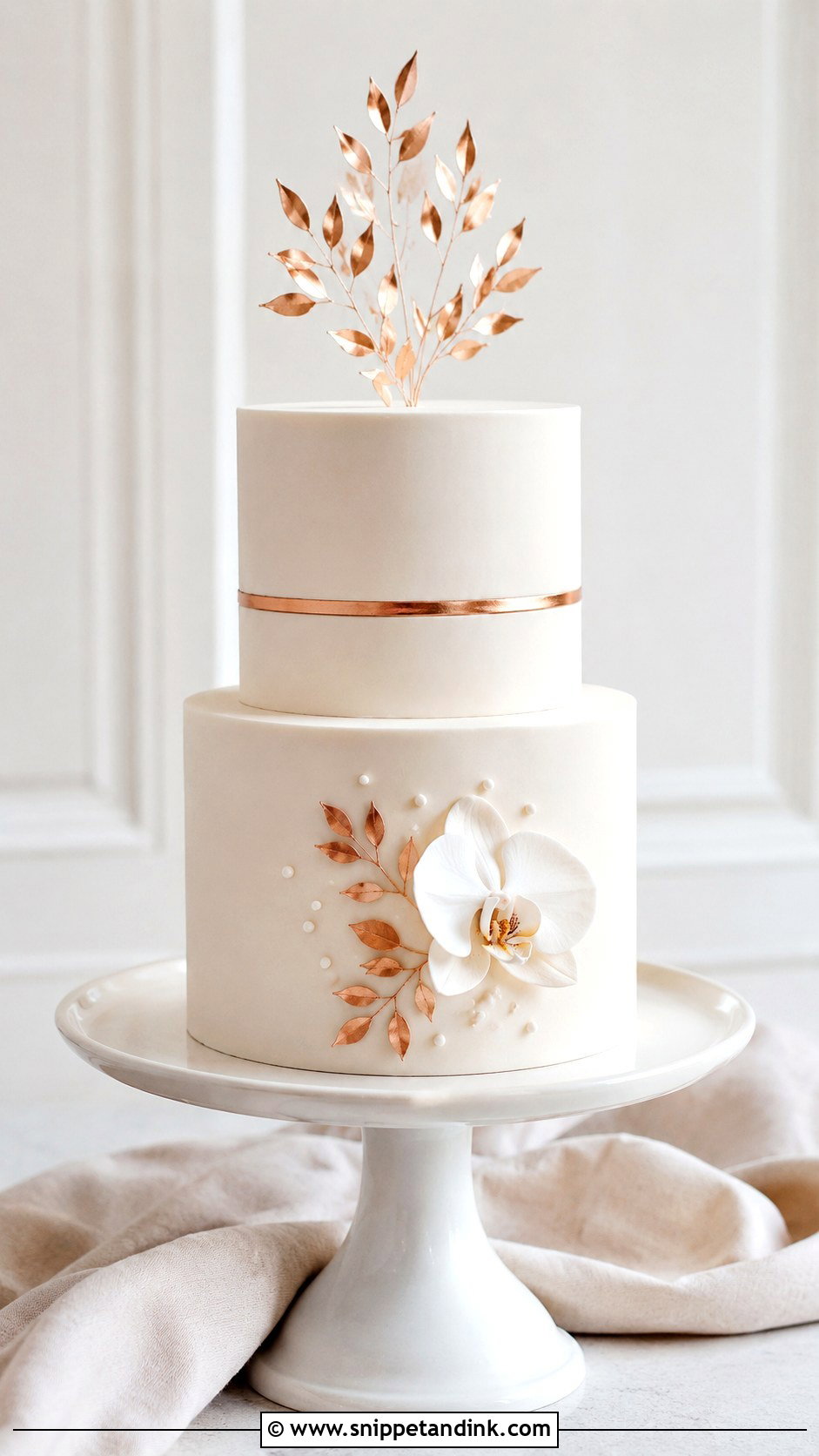
Minimal cakes depend on precision: clean frosting, careful spacing and one strong rose gold detail. That might be a thin stripe, a single painted tier edge or a small leaf. Any flaw shows, so the frosting must be perfectly smooth. It suits intimate weddings and modern venues. One orchid or a small pearl cluster is enough decoration. Vanilla, lemon or coconut fit it.
25. Rose Gold Vintage Wedding Cake
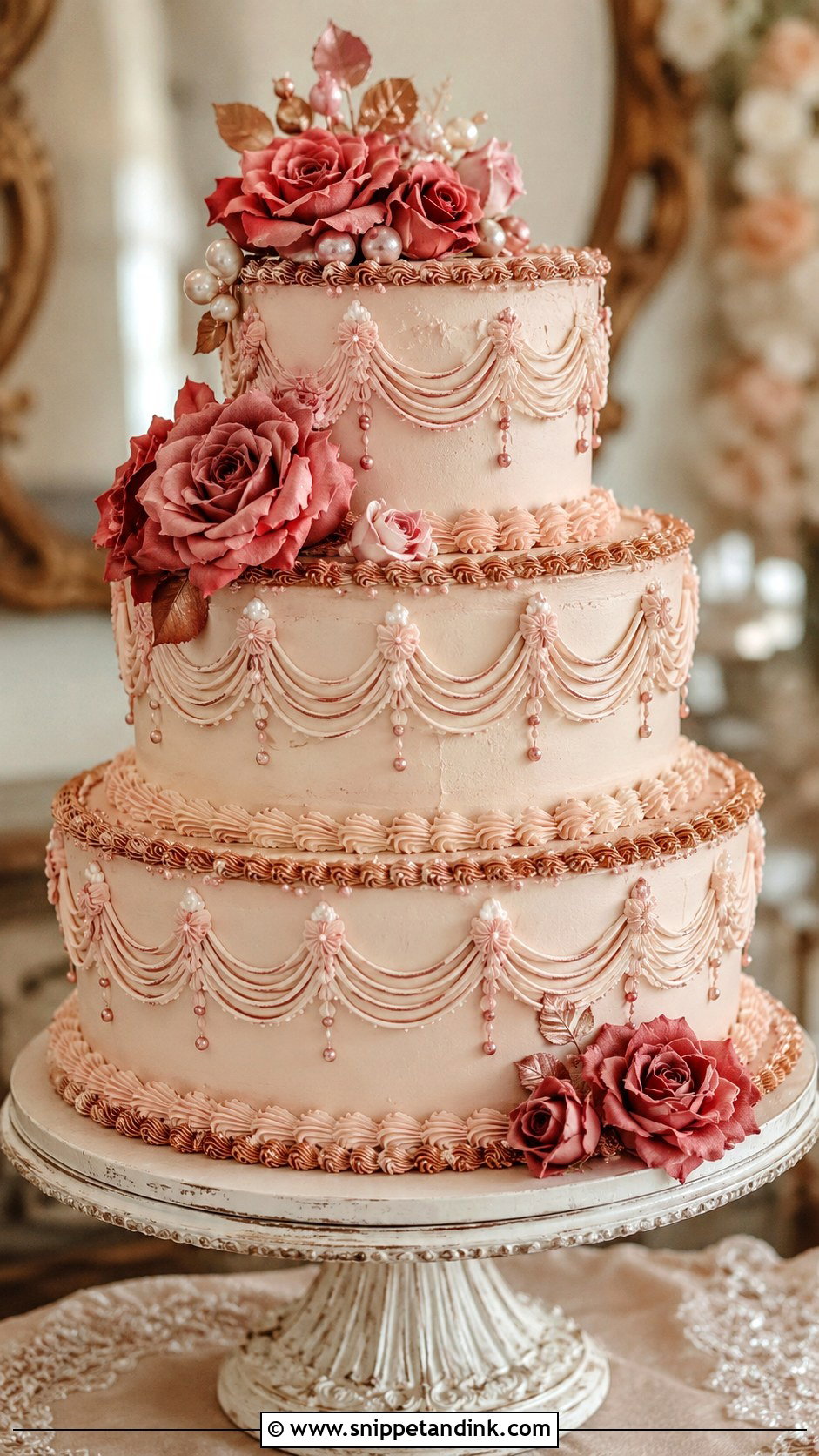
Lambeth piping is an old English technique of layered, overpiped borders and shells, and it takes a steady hand and a lot of time. I pipe in buttercream or royal icing, then brush rose gold onto the raised edges. It suits historic venues and a nostalgic look. Neatly stacked tiers keep it from looking busy. Sugar roses or a classic topper finish it. Vanilla, almond or red velvet suit its traditional feel.
Metallic Tiers Versus a Warm Room, a Van and a Knife
Metallic finishes look perfect in the studio. These are the things that can dull them on the day, and how I plan for them:
- Condensation: a chilled cake moved into a warm, humid room sweats, and water spots on painted lustre leave marks. I let the cake adjust gradually and set it up away from doors.
- Sunlight: direct sun softens buttercream within minutes and fades some colours. Place the cake table in shade, not by a window.
- Transport: tall or heavily painted tiers are often stacked at the venue, so any marks from handling can be touched up there.
- Cutting: metallic tiers look best whole. If you’d like photos with the cake, take them before it’s cut, and ask the caterer to remove toppers and wired decorations before slicing.
Most of these come down to timing. Agree on a delivery and setup time with your baker and venue, so the cake isn’t sitting on display for hours before the reception.
Send Your Baker a Swatch of Your Rose Gold
Rose gold isn’t one colour: some versions lean pink, some lean copper, and the edible lustres vary too. Bring your baker something physical, a ribbon, a napkin, a bridesmaid dress swatch or your invitation foil, so the cake matches the room rather than a screen. Then decide how much metallic you want, from a single stripe to a full tier. Save a few favourite designs, notice what they share, whether it’s buttercream, sugar flowers or marble, and let the cake be built from that.
You'll Like These Ideas:










Leave a Reply