
Emerald green and black wedding cakes look expensive almost by default, which is exactly why they can tip into heavy if nobody edits the design. Emerald brings the richness and black does the structural work, drawing the outline of every tier. I find this pairing settles best in ballrooms, candlelit fall and winter receptions, and modern rooms with dark wood or concrete. The designs below are the ones I’d actually pitch to a couple: clean shapes, one color leading, and a single finishing detail such as gold leaf, sugar flowers, marble or a glossy drip. Fondant or buttercream both have a place here, and I’ll point out where each one earns it.

Getting True Emerald and Real Black Out of Sugar
Both of these colors are hard to make in frosting, and that shapes every design below. Black needs a huge amount of color, and if a baker tries to reach it by adding more gel to white buttercream, the frosting turns bitter and stains mouths. I start black from a dark chocolate base or use a good pre-colored black fondant, and I make dark buttercream a day ahead because the color keeps deepening as it rests.
Emerald has the opposite problem. It drifts. Too much blue and it photographs teal; too much yellow and it looks like a lime cake. I mix it in small batches and match it in daylight, not under kitchen lights.
- Bring a real swatch. A fabric scrap from the bridesmaid dresses or linens is far more useful than a phone screen, which shifts color.
- Decide where black sits. Black on the base tier reads grounded; black at the top makes a cake look top-heavy.
- Think about the crumb. Chocolate and dark cocoa sponges hide behind black icing well; a pale vanilla crumb with black frosting shows grey edges on every slice.
- Ask about the inside of the mouth. If grey teeth in the late-night photos bothers you, keep black to fondant, bands and details guests peel off.
1. Emerald Green And Black Wedding Cake With Gold Leaf

Gold leaf is what stops these two dark colors from swallowing each other. The emerald reads as a jewel-tone look, the black keeps the outline formal, and a few patches of leaf catch light that neither color reflects on its own. I apply transfer leaf to fondant that has firmed overnight, because fresh fondant is tacky and the leaf tears into ragged flakes. Three or four tiers suit it. My usual split is emerald on one or two tiers and black on the others, with ivory flowers if you want the cake to read as bridal from across the room.
2. Black Wedding Cake With Emerald Green Flowers

Put green flowers against a black base and the flowers become the whole design. Sugar roses, wafer-paper orchids, painted leaves or wrapped fresh greenery in a cascade all hold up here. Keep the tiers plain; the contrast is already doing the work. Matte black fondant reads modern. Black buttercream looks more handmade, though I warn couples it stains lips and teeth for a minute, so I keep it to a thin coat over a dark chocolate crumb layer.
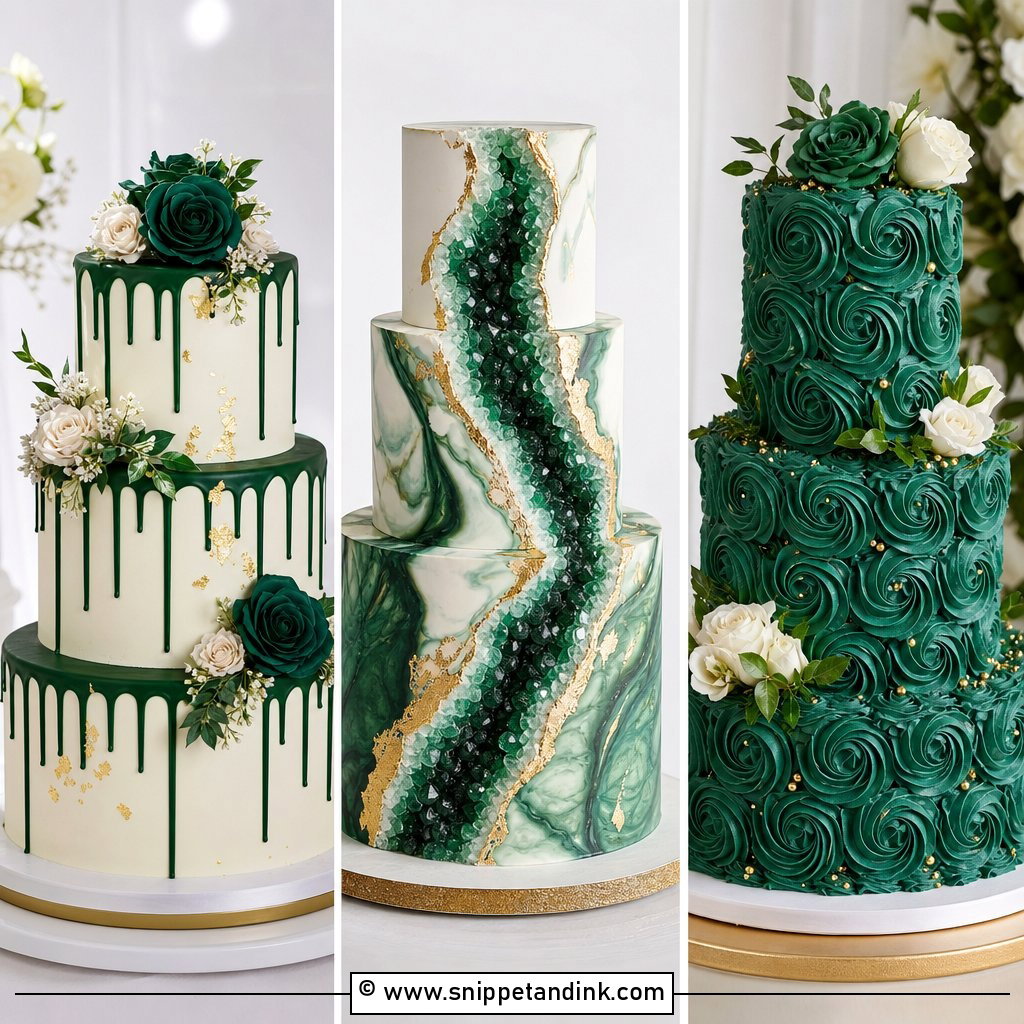
3. Emerald Green Wedding Cake With Black Drip

An emerald cake with black drip adds movement and a little edge. The cake underneath can be one tall tier, two tiers or a full stack. Getting the drip to stop at the right length is all about temperature: the ganache has to be just warm and the cake well chilled, otherwise it runs to the board. I test one drip on the back first, every time. For the top, I keep the toppers to one family, such as black macarons or emerald sugar shards, not both. Evening receptions and industrial rooms suit this one best.
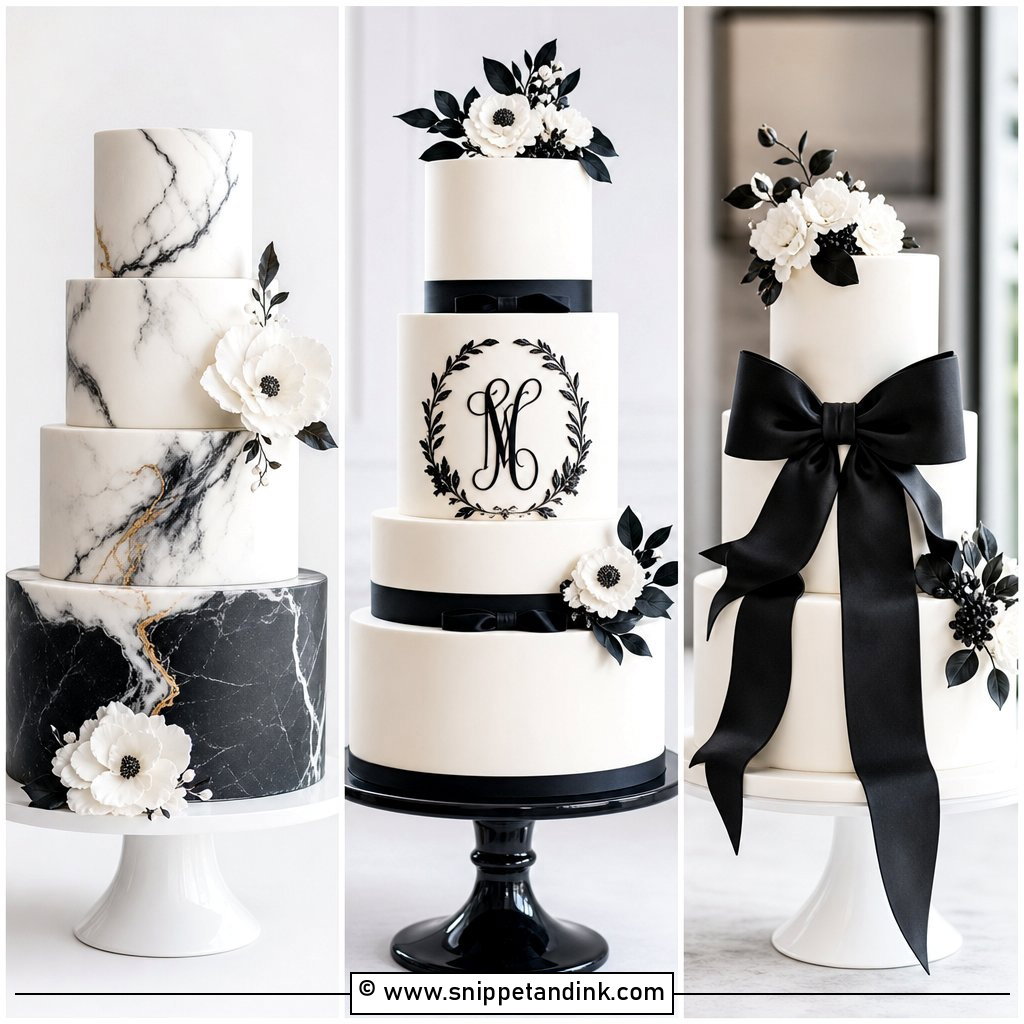
4. Emerald Green And Black Marble Wedding Cake

Marbling is one of those effects that looks random and isn’t. I knead emerald, black and white fondant together only partially, then roll it out and stop the moment the veins look right, because one fold too many and it turns into a muddy olive. A full marble cake can look busy, so I usually marble one tier and set it between plain emerald and plain black. A fine gold line painted along a few veins is enough. White flowers or a little greenery, nothing patterned.
5. Emerald Green And Black Geode Wedding Cake

A geode turns the cake into a cut gemstone. The crystal section is rock candy or isomalt, set into a carved opening and edged in black so it looks deep. Isomalt holds its shine better in a warm room than rock candy, which can go cloudy as it picks up moisture. I like the geode running vertically across two or three tiers rather than sitting as a small window. Leave the rest of the geode wedding cake smooth, and frame the opening with gold only if the crystals aren’t already doing enough.
6. Matte Black Wedding Cake With Emerald Green Accents

Matte black is the most editorial finish in this list and the least forgiving. Every dent, bulge and air bubble shows on a flat dark surface, so the ganache underneath has to be razor sharp before the fondant goes on. Emerald ribbon, a painted brushstroke, sugar leaves or one floral arrangement gives it color. One focal point, sharp edges, done. A black cake stand and a couple of candles nearby is all the styling it needs.
7. Emerald Green Velvet Wedding Cake With Black Details

Velvet is a spray, not a frosting. I chill the cake hard, then mist it with colored cocoa butter, which freezes on contact into a fine, plush crust. That’s why it has to go on a cold cake and stay away from warm hands afterward. Black lace piping, thin bands or a fondant bow defines the tiers. The finish is soft and nearly shadowless, which suits evening receptions where a glossy cake would bounce candlelight back. Ivory roses or a few emerald sugar pearls are enough decoration.
8. Black And Emerald Green Wedding Cake With White Roses

White roses pull this palette back toward the traditional. I stack it with black at the base, emerald in the middle and black or ivory on top, then run the roses in a cascade down one side. Dark green leaves tucked between the blooms stop the white from looking stuck on. The flowers sit lower than you’d expect so the cascade covers a tier join, which hides the seam neatly. Ballrooms, formal garden receptions and candlelit tables suit it.
9. Emerald Green And Black Tiered Wedding Cake

Height is what makes a tiered cake read as a centerpiece, especially with a large guest list. Alternate the colors, let emerald lead, or put black on the bottom tier to ground the stack. Fondant gives sharp, formal lines. Buttercream keeps it softer but needs a cooler room. Gold trim, sugar flowers or black lace on each tier adds detail. Most cake photos are taken from the front, so I plan the main decoration facing the room and keep the back side simple.
10. Emerald Green And Black Wedding Cake With Sugar Flowers

Sugar flowers solve a real problem with this palette: fresh emerald or black flowers barely exist, and the ones that do are often treated or not food safe. Sugar petals can be dusted to the exact shade of your bridesmaid dresses. A smooth black base with emerald blooms reads dramatic, and an emerald cake with black floral accents is less expected. Ask for three or four flower sizes so the arrangement has movement. Roses, peonies, orchids and anemones all translate well. They are slow to make, so I need them ordered early, and they keep as a memento afterward.
11. Emerald Green And Black Wedding Cake With Lace

Lace softens the palette without making it sweet. Black lace over emerald fondant feels rich and formal; emerald lace over black is the less expected way round. I pipe it in royal icing, emboss it into fondant, or use edible lace sheets for a fine pattern that would take hours to pipe. Lace on every tier gets heavy, so put it on one or two and leave the rest smooth. A row of pearls or a thin metallic border finishes the edges. Vintage-inspired and evening weddings suit it.
12. Emerald Green And Black Wedding Cake With Pearls

Pearls are the easiest way to keep a dark cake romantic. Tiny sugar pearls can trace tier borders, scatter loosely like dropped beads, or run in neat repeated patterns. Against matte black or deep emerald buttercream, ivory pearls glow; black pearls give a moodier finish. I set them with a dot of royal icing rather than pressing them in, because pressed pearls on buttercream sink and smear when the room warms. Satin linens and simple candles pair well with it.
13. Emerald Green And Black Wedding Cake With Metallic Trim

Thin gold, champagne or silver bands around each tier draw clean lines between the two colors. I paint the bands with edible metallic mixed in alcohol, which dries fast and doesn’t streak, or wrap a gold-dusted fondant strip for a raised edge. Emerald on one tier, black on another, metallic between them, and the cake can stay that simple. A small floral cluster near the top is optional. This is the detail I’d reach for if your tables already have gold flatware or black chairs.
14. Emerald Green And Black Square Wedding Cake

Square tiers make color blocking look sharp. The corners are the hard part; fondant has to be eased around each one without tearing or pleating, and corners are the first place a dark cake shows a crack. Stack the tiers evenly for a bold geometric look or offset them slightly. Straight lines make the palette feel deliberate. Gold leaf or thin black piping softens the edges a little. I’d point modern venues and city weddings toward this shape.
15. Emerald Green And Black Buttercream Wedding Cake

Buttercream makes this palette friendlier and less formal. Emerald can be smoothed flat or combed into soft horizontal lines. Black buttercream belongs on borders, piped flowers or a dramatic base tier. True black buttercream takes a lot of color, and it deepens over several hours, so I make it the day before and let it develop instead of adding more gel. Ivory flowers, gold flecks or lighter greenery balance it. Warm lighting and rustic rooms suit the texture, but a hot tent does not.
16. Emerald Green And Black Fondant Wedding Cake

Fondant holds deep color evenly and gives crisp edges, which is why I default to it for most dark cakes. Black fondant on the base tier with emerald above reads dramatic; reverse it and the cake feels lighter. The surface also takes embossing, painted patterns, metallic bands and sugar appliques well. If the colors are bold, keep the shape simple. One honest note: I always bake a crumb guests will actually want under fondant, because many people peel it off.
17. Emerald Green And Black Wedding Cake With Floral Cascade

A floral cascade brings movement and height. The flowers run from the top tier down one side, mixing emerald leaves, ivory blooms, black-centered anemones or dark sugar foliage. A tall stack gives a cascade room to fall naturally; on a two-tier cake it just looks crowded. Keep the base smooth so the flowers aren’t fighting texture. If the cascade uses fresh blooms, I place them on the day with food-safe barriers and plan who removes them before cutting.
18. Emerald Green And Black Wedding Cake With Gold Drip

A gold drip warms up the dark palette. The gold drip can fall over black, emerald, or both. I paint the gold over a set white-chocolate drip once it has firmed, because gold mixed into a warm drip turns patchy and dull. Keep the drips thin and vary their lengths a little. Gold leaf, green macarons, black berries or sugar flowers on top coordinate it. It sits nicely next to gold chargers and candle holders.
19. Emerald Green And Black Wedding Cake With Greenery

Greenery suits botanical and garden styling, but it needs care. Plenty of common decorating foliage isn’t food safe, so I wrap the stems, add a barrier against the cake, and keep the leaves themselves from touching the frosting where I can. Eucalyptus, ruscus, olive leaves or sugar fern leaves all fit. The cake underneath can be matte black with emerald touches or emerald with black details. A few ivory flowers soften it and help it blend with the reception florals.
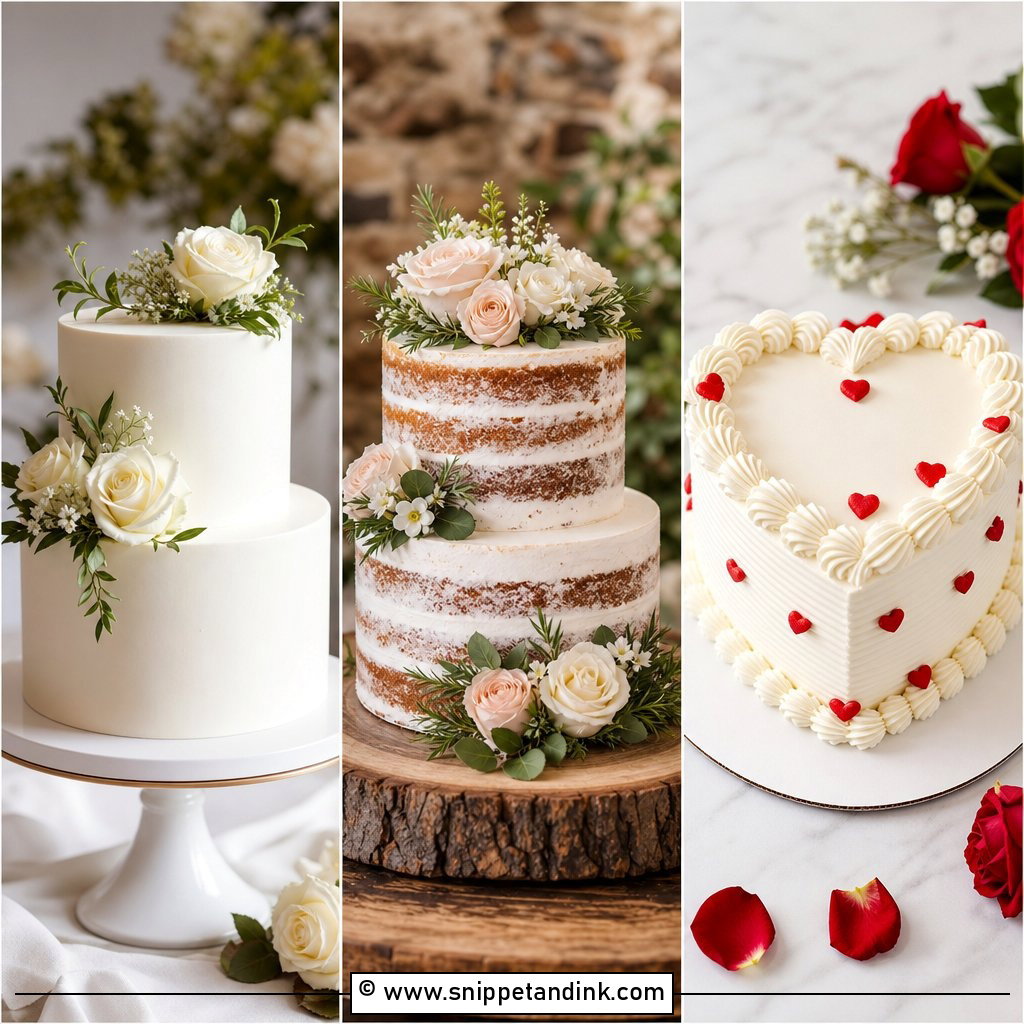
20. Emerald Green And Black Wedding Cake With Black Roses

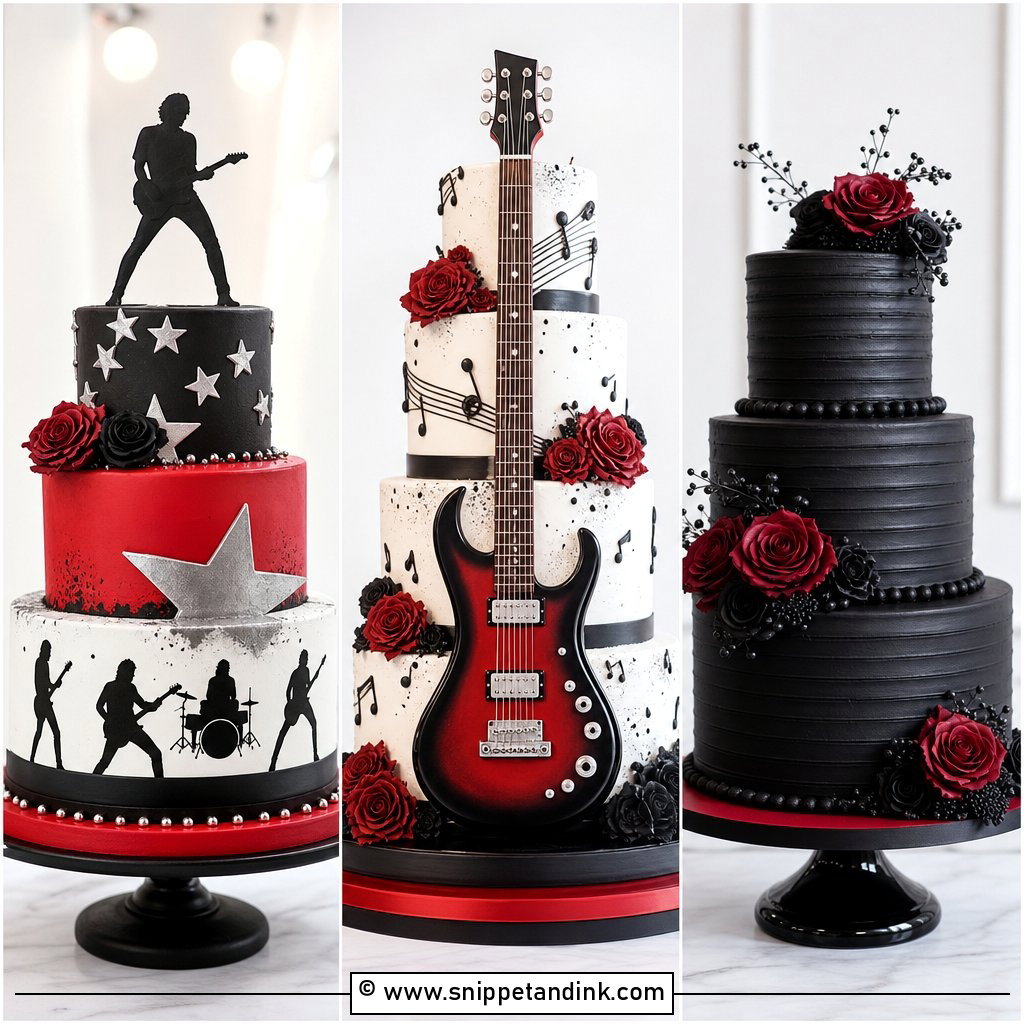
Black roses are dramatic and easy to overdo. They can be sugar, fondant or piped buttercream, and emerald tiers make them pop while black tiers turn the cake monochrome. My rule is one cluster or one short cascade, not roses everywhere. A whole cake covered in dark flowers reads as a Halloween cake in photos. White flowers, gold touches or green leaves give the eye somewhere to rest.
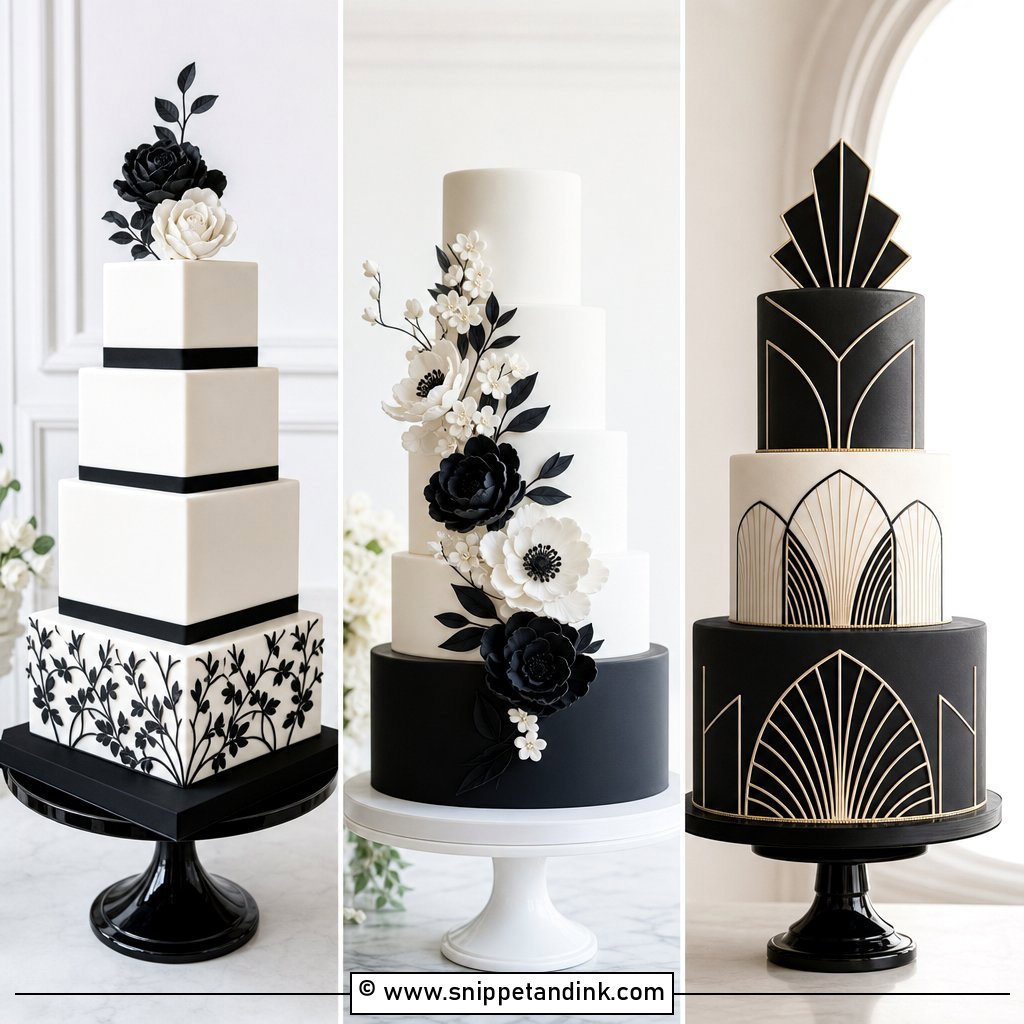
21. Emerald Green And Black Wedding Cake With Art Deco Pattern

Art Deco is all about repetition, so the pattern has to be precise: fans, chevrons, stepped lines and metallic edges, repeated evenly around the tier. I cut the panels with templates rather than freehand, since one panel off by a few millimetres shows straight away. Black works as the base, with emerald panels and gold detailing. A tall cake gives the pattern room. Ballrooms and city venues fit the 1920s mood.
22. Emerald Green And Black Wedding Cake With Ombre Tiers

Ombre is the softest way to blend this palette. The color can fade from black at the base to emerald at the top, or from dark emerald into black within each tier. Buttercream blends the gradient most smoothly, scraped while each shade is still soft. Keep the decorations light so the fade stays visible: white flowers, gold specks or a small topper. Expect the darker band to look slightly darker under warm reception lighting than it did in the bakery.
23. Emerald Green And Black Wedding Cake With Painted Details

Hand painting makes the cake feel personal without adding weight. Vines, loose brushstrokes, floral outlines or watercolor emerald washes over black or ivory are all options. Smooth fondant works like a canvas, so that’s where I paint, using edible color thinned with clear alcohol that evaporates as it dries. Repeat the emerald and black through the design so it ties together. A little gold paint gives polish.
24. Emerald Green And Black Wedding Cake With Satin Ribbon

Ribbon is the quietest finish here, and the most tailored. Black ribbon over emerald tiers looks crisp; emerald ribbon over black adds color without covering much. Real ribbon needs a food-safe backing so the frosting doesn’t bleed into it, or I use a fondant ribbon that blends straight into the surface. A small floral cluster, pearl pins or gold trim adds detail. It’s an easy cake to match to invitations, bridesmaid dresses and table linens.
25. Emerald Green And Black Wedding Cake With Minimal Topper

A minimal topper keeps the focus on the colors. When the palette is this bold, extra decoration usually adds clutter. A slim acrylic topper, a small gold monogram or a little sugar flower arrangement is enough. The cake can be smooth black with emerald details or emerald with black borders. I keep the topper light and anchored with a dowel; a heavy topper on a soft top tier tilts within hours.
Dark Tiers in a Warm Room: What Happens After Delivery
Dark cakes absorb heat. Under spotlights, near a window or in a summer tent, a black tier warms faster than a white one, and that is when drips slide, buttercream softens and gold leaf loses its edge. I ask for the cake table to be placed out of direct sun and away from heaters and the dance floor speakers, which give off more warmth than people expect.
Fondant cakes that come out of a cold fridge into a humid room will sweat, and on black fondant every bead of moisture shows as a dull spot. I let them come up to temperature slowly in their boxes, so the condensation forms on the box rather than the cake.
Questions I’d want you to ask your baker
- How do you make your black, and will it stain?
- Can I see an emerald sample next to my fabric before the final order?
- Are the flowers sugar or fresh, and who removes them before cutting?
- How long can the cake sit out at my venue in my season before it needs to be cut?
Sugar flowers, hand painting and Art Deco panels all take time, so give a detailed design like this at least a few months’ notice. Simpler ribbon or minimal cakes can usually be booked closer to the date, though popular bakers fill weekends early regardless.
Let One Color Lead and the Other Draw the Lines
Depth and contrast are what these cakes do best, and the finish you pick decides the mood. Gold leaf pushes the palette toward glamour, white flowers soften it, black fondant makes it bold, and buttercream warms it up. When couples ask me how to keep it from looking heavy, my answer is always the same: let one color lead and use the other as the accent. With that balance, this palette makes a strong reception centerpiece.
You'll Like These Ideas:


Leave a Reply