
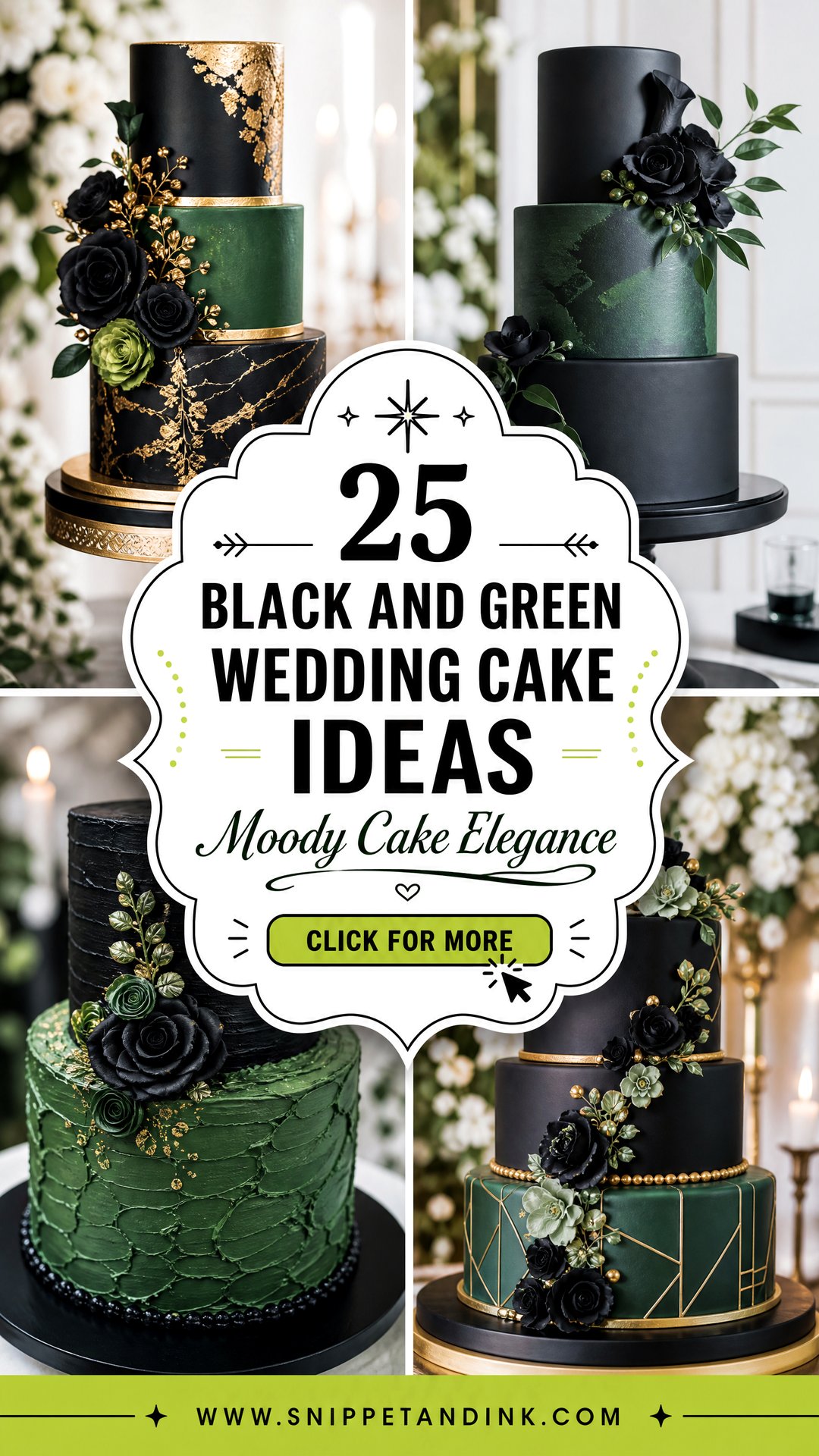
Couples ask me for black cakes far more often than they used to, and the ones that work nearly always have green doing the softening. A matte black tier needs something alive beside it: sage buttercream, a fall of eucalyptus, a band of emerald, or marble textures that break the dark into veins. Get the balance wrong and the cake reads as a hole on the dessert table, especially in a dim room. Below are 25 ways to pair the two colors, each with my notes on how it behaves once it is actually baked, stacked and set out at a reception.
How a Baker Actually Gets a Cake to Look Black
Black is the hardest color I make, and how your baker gets there affects taste, texture and how the cake looks by the end of the night. Worth asking about at the first consultation, before any sketch is drawn.
- Black fondant is usually bought pre-colored. It gives the deepest, most even black, but it can feel slightly softer and more prone to marks than white paste.
- Black buttercream starts from chocolate buttercream with gel color added and rested overnight. Without that chocolate base, the amount of dye needed makes it bitter.
- Stained smiles are real. Heavily colored black icing marks teeth and lips, so many couples keep it to the outside of the cake or to a thin fondant layer and use a pale filling inside.
- Fading happens to some green and dark colors under strong daylight or bright spotlights, so a cake set out early in a sunny room can shift tone by the cutting.
Bring a fabric swatch of your green, a bridesmaid dress sample or a ribbon, so your baker can match the shade under the light you will actually have. Emerald on a screen and emerald in a candlelit room are two different colors.
1. Black And Emerald Green Wedding Cake
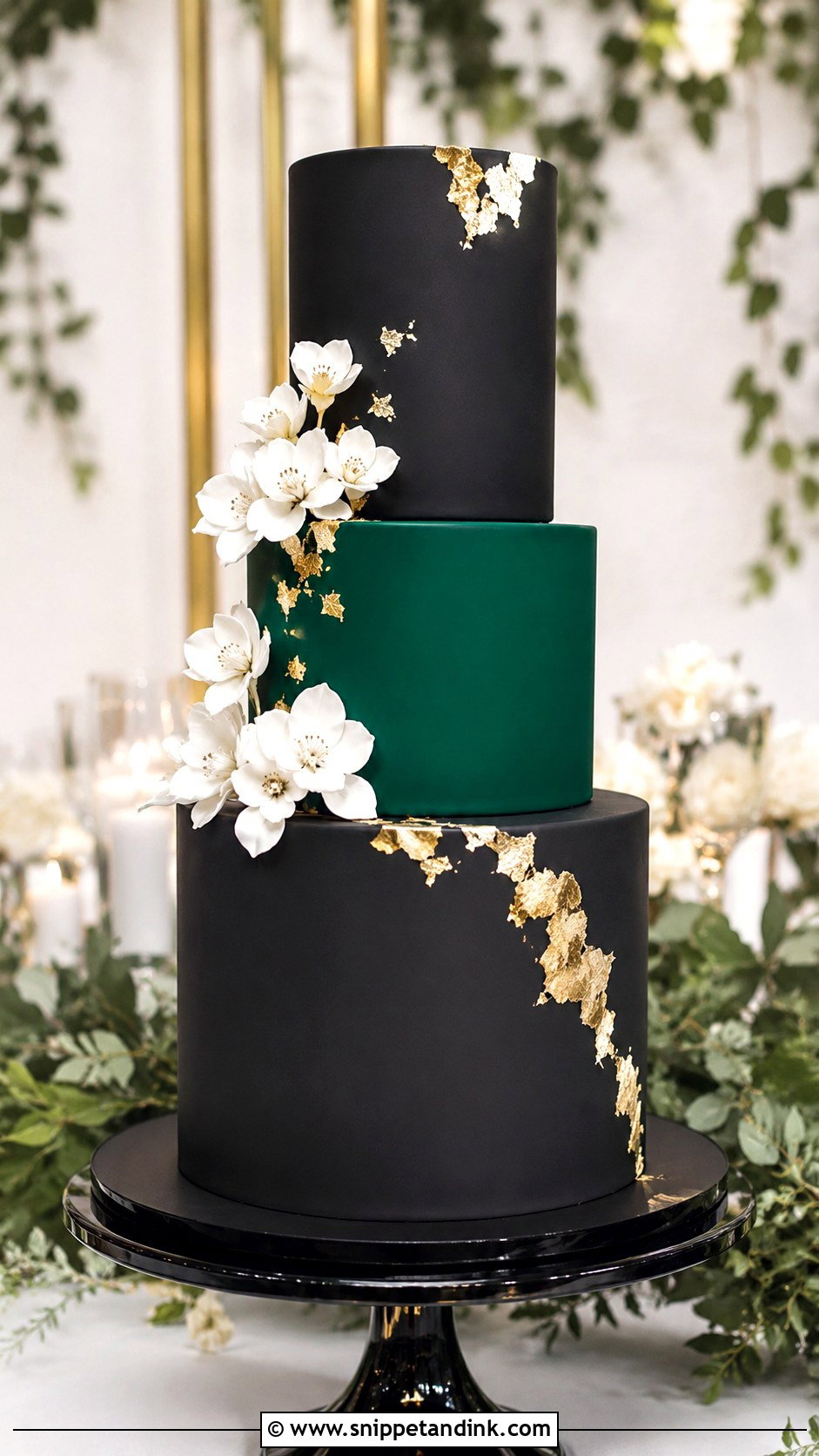
This is the most formal pairing on the list, and it belongs on tall tiers with sharp edges. Emerald gel color leans bluer than most people expect, so I mix a swatch and look at it under warm bulbs before I color a whole batch. One accent is enough: a strip of gold leaf or a few white sugar flowers. Dark chocolate and pistachio both sit well under these colors, and red velvet gives guests a nice jolt of contrast when the first slice comes out.
2. Black And Sage Green Wedding Cake
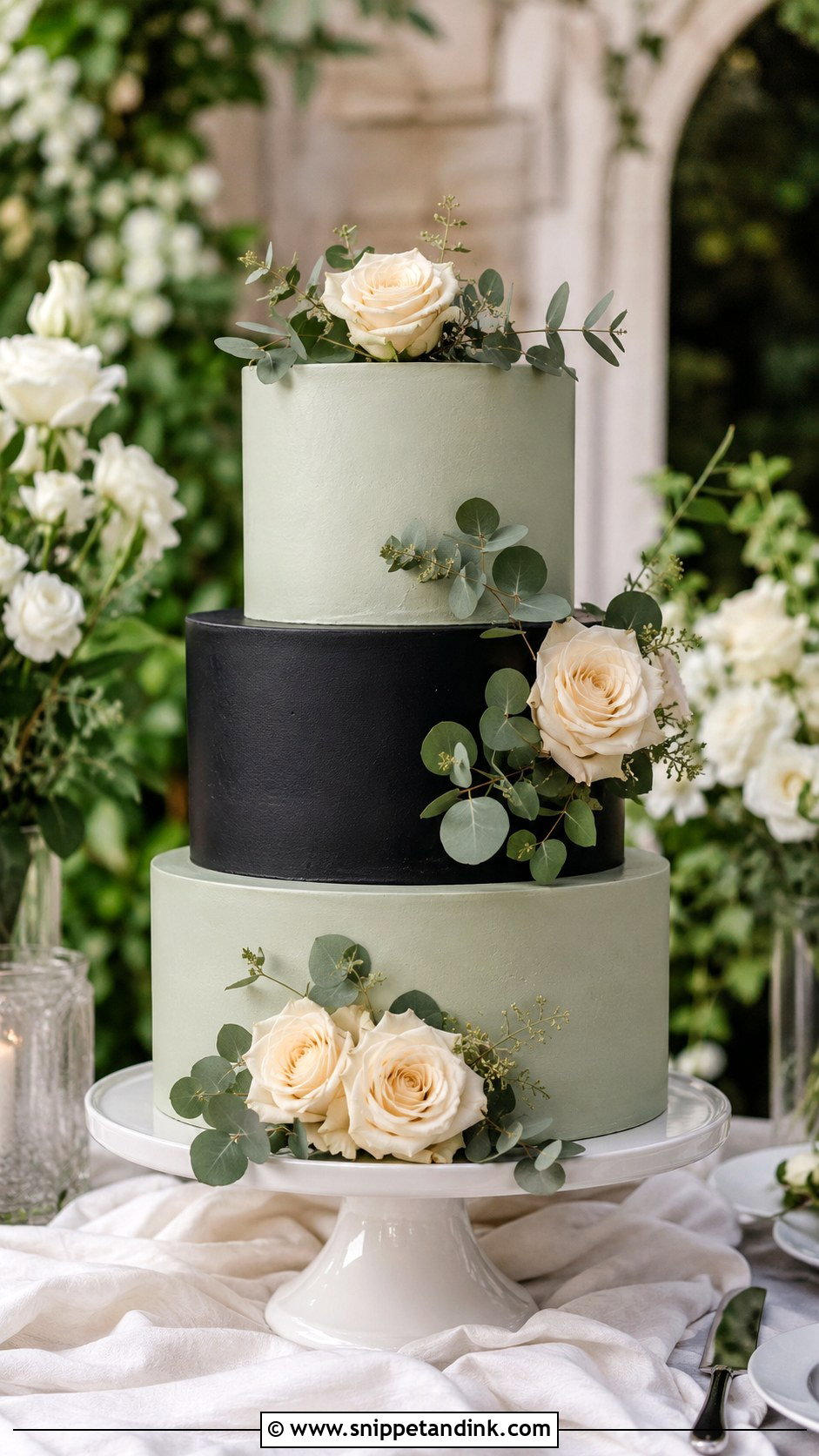
Sage is the gentler route. It is a greyed green, so it calms matte black down instead of fighting it, and it sits happily next to ivory and warm wood. A sage buttercream tier over a black fondant one is my usual split for barn and garden receptions. I tint sage with a touch of the black I am already using rather than a separate grey, which keeps the two colors related. Olive leaves or pressed botanicals finish it without adding fuss.
3. Black Wedding Cake With Green Flowers
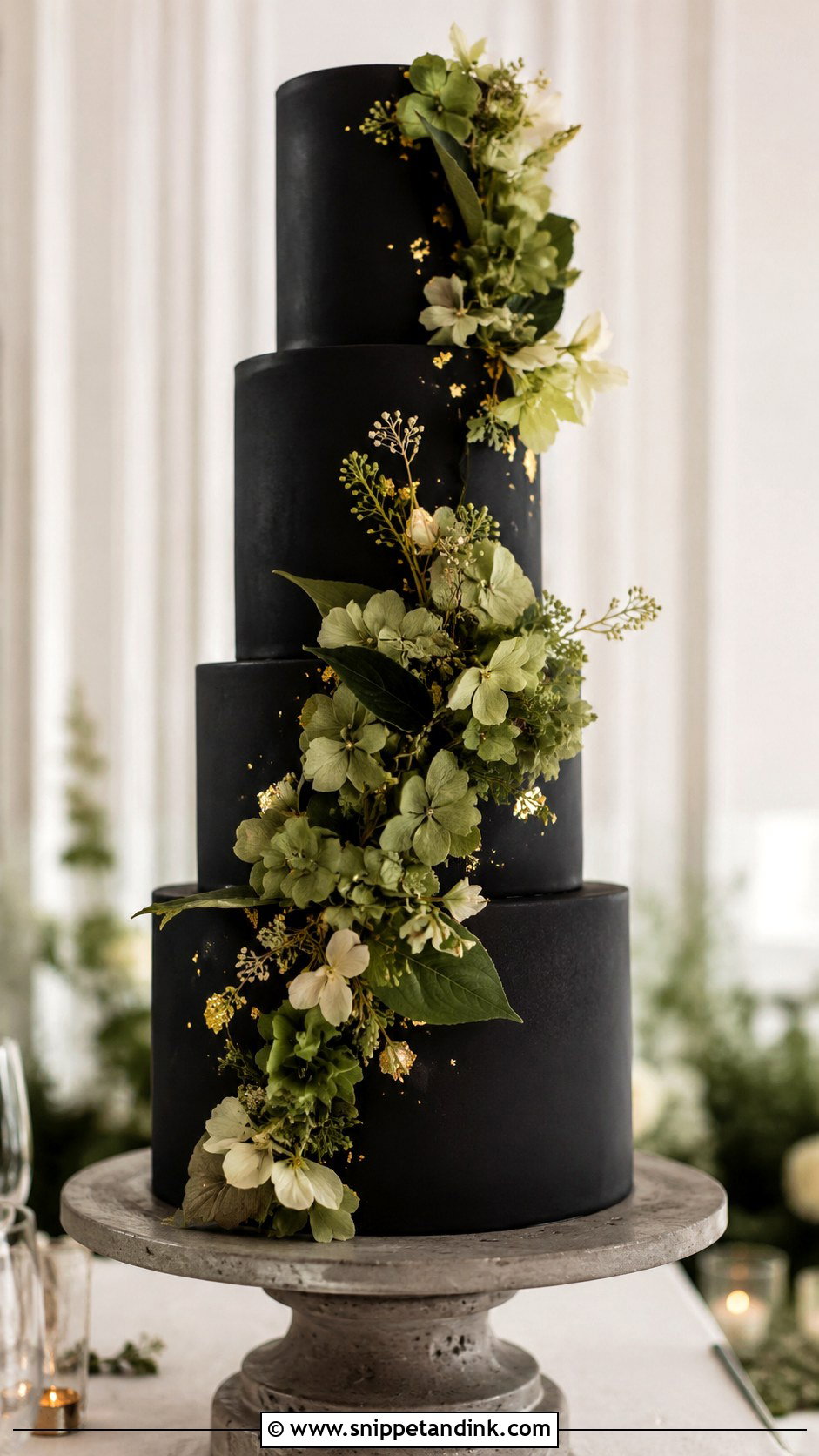
Green flowers on a black cake look modern because they skip the pink everyone expects. Green hydrangea, hellebore, cymbidium orchid and green-tinged ranunculus all show every petal against the dark surface. Several of those are not food-safe, though, so on my cakes fresh stems are wrapped and sealed, or the blooms are made in sugar instead. Place them in a cascade or tight clusters at the base; scattered singles get lost. A couple of ivory blooms stop the whole thing from going flat in photos.
4. Black Wedding Cake With Greenery
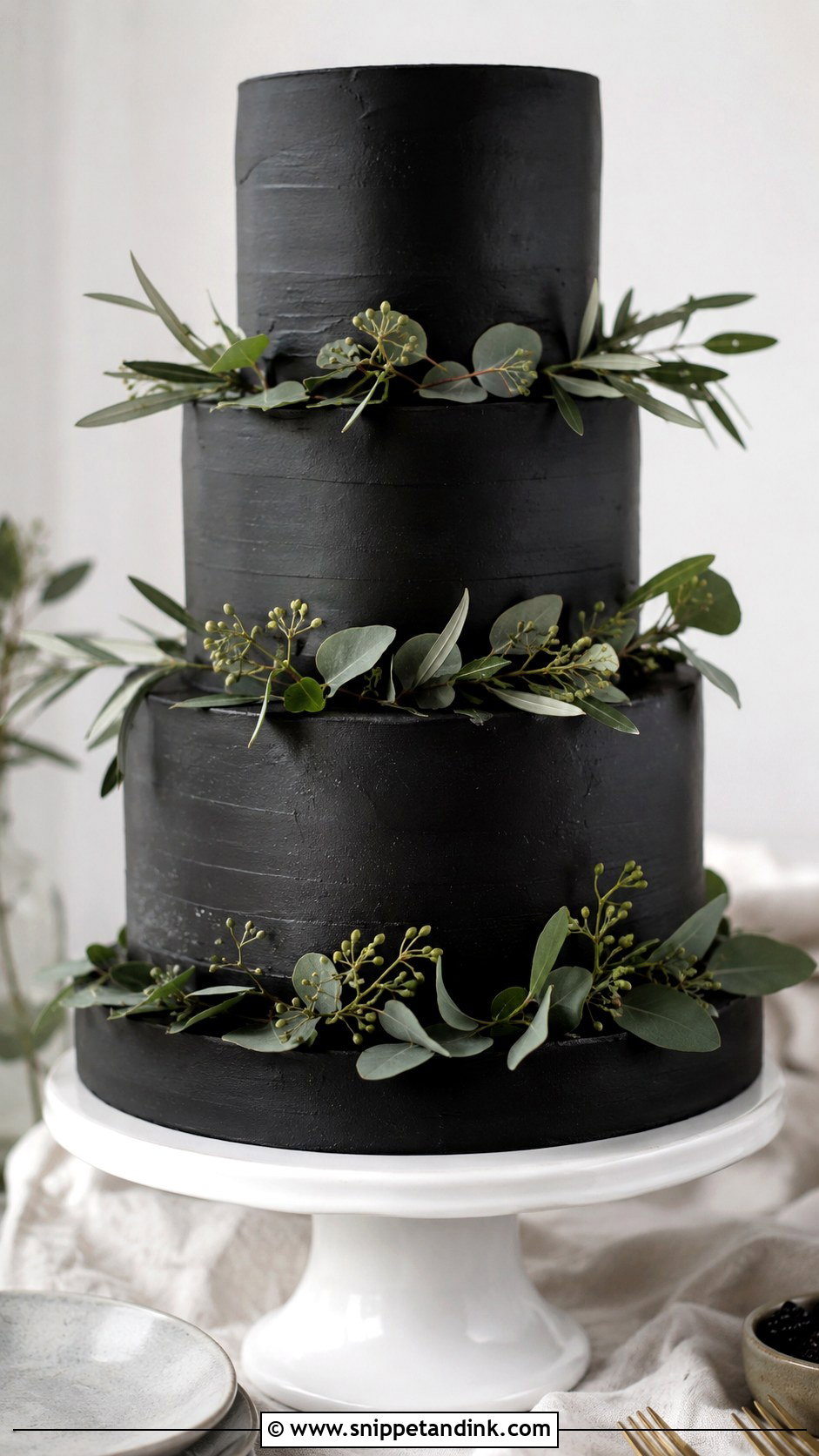
Greenery is the easiest way to keep a black cake from looking gothic. Eucalyptus, Italian ruscus and olive branches soften the surface while leaving most of the black showing, which is the point. I tuck sprigs into the gaps between tiers rather than draping them over the frosting, so nothing rests on what people will eat. A three-tier matte black cake on a plain white or stone stand looks finished with that alone. Let the leaves supply the movement and keep the icing completely smooth.
5. Black And Green Marble Wedding Cake
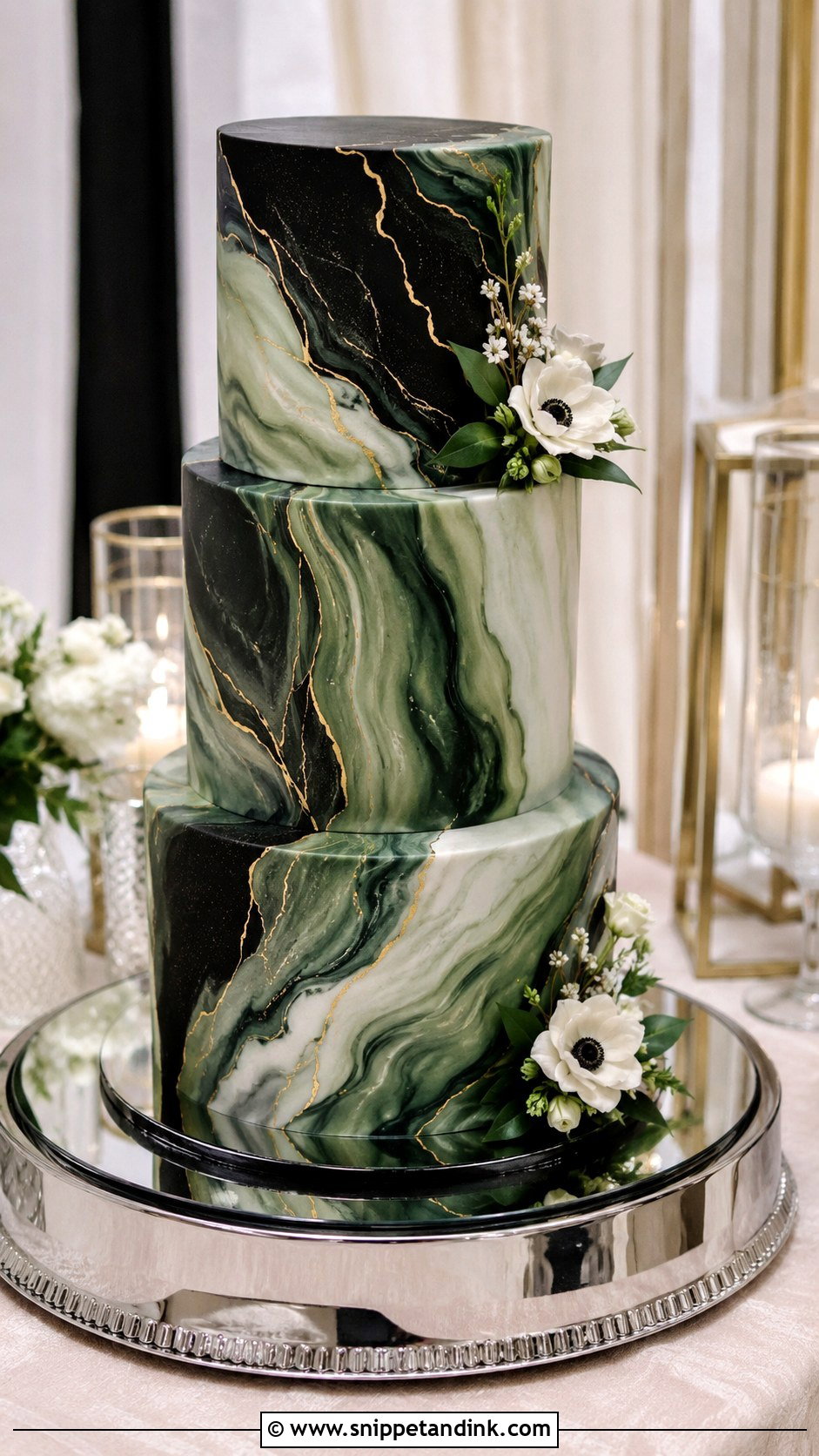
Marbling looks custom without needing much decoration on top. I roll black, forest green and ivory fondant together and stop folding early; overwork it and the veins blur into a muddy olive. Gold veining warms the stone effect, while silver or pearl keeps it cool. Because the pattern already carries the eye, the tier shapes should stay simple: square, tall round or offset. Gallery and hotel receptions suit it best.
6. Black And Green Gold Wedding Cake
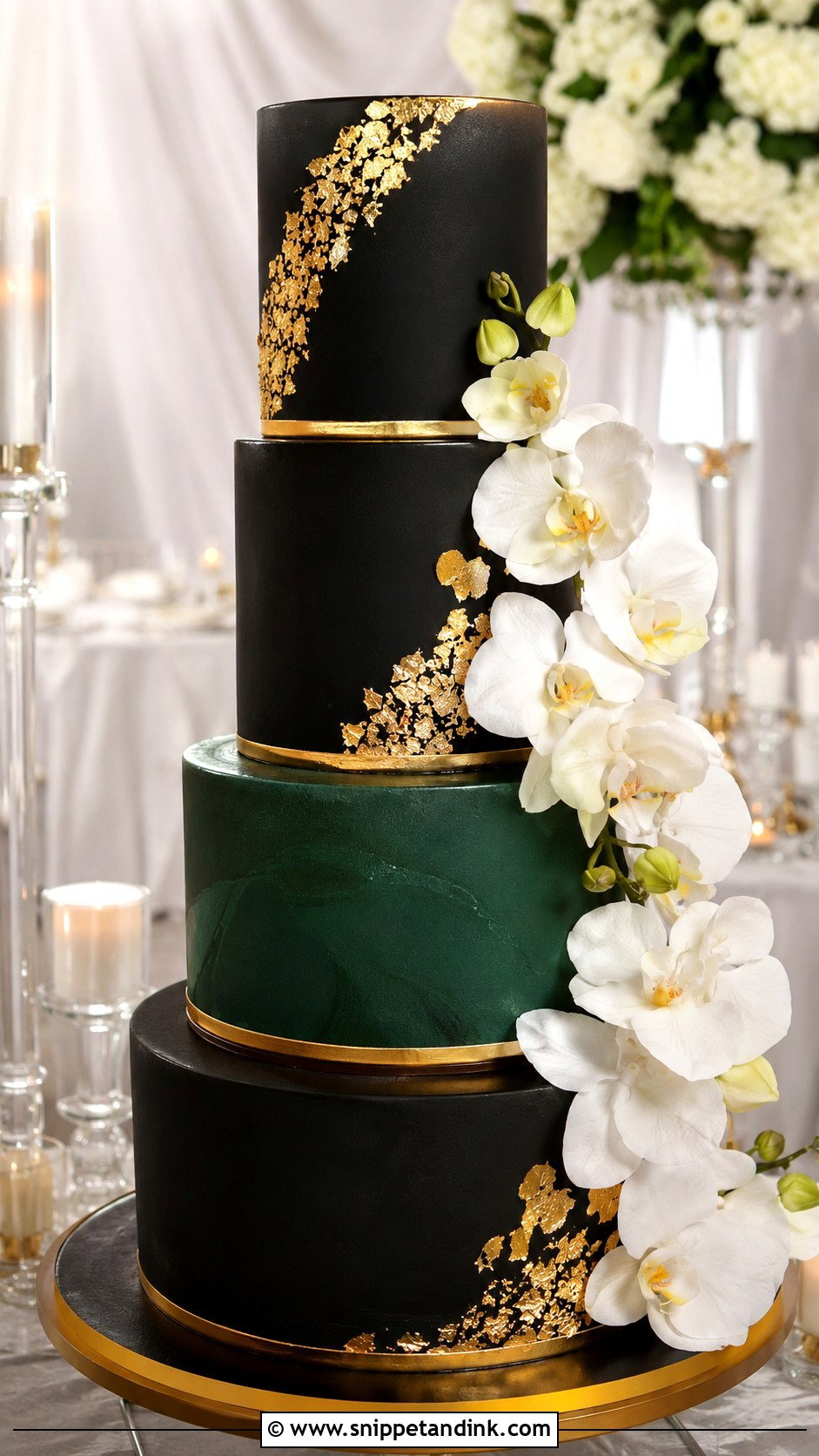
Gold is the bridge between these two colors. It warms the black and makes emerald look richer, but it turns cheap fast if it covers too much. I apply real edible gold leaf to the tier edges or a single thin band between tiers, and keep any gold drip on the green tier only. Be careful with luster dusts labeled non-toxic; that is not the same as edible, and I only use dusts sold as food grade. White flowers bring the wedding feel back.
7. Black And Green Drip Wedding Cake
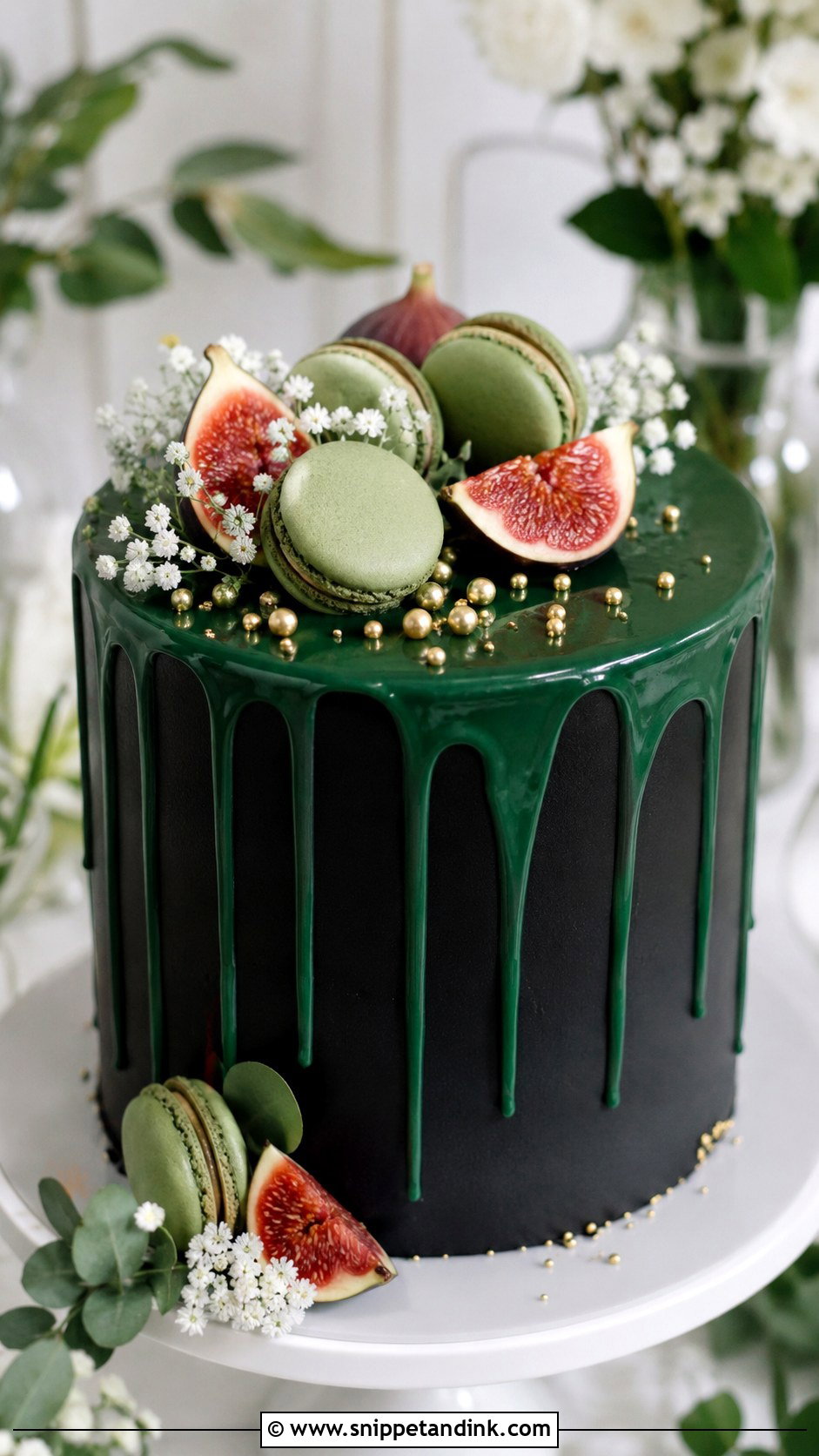
A drip makes this palette feel playful. Emerald over black, black over sage, or gold over both all work, but the drip needs a smooth, well-chilled buttercream surface or it runs to the board. I test the ganache temperature on the back of the cake first, because a few degrees too warm and every drip ends up the same length. Macarons, chocolate sails or fresh figs on top turn it into a styled dessert piece. Keep the drips neat; messy reads as rushed here.
8. Matte Black And Green Wedding Cake
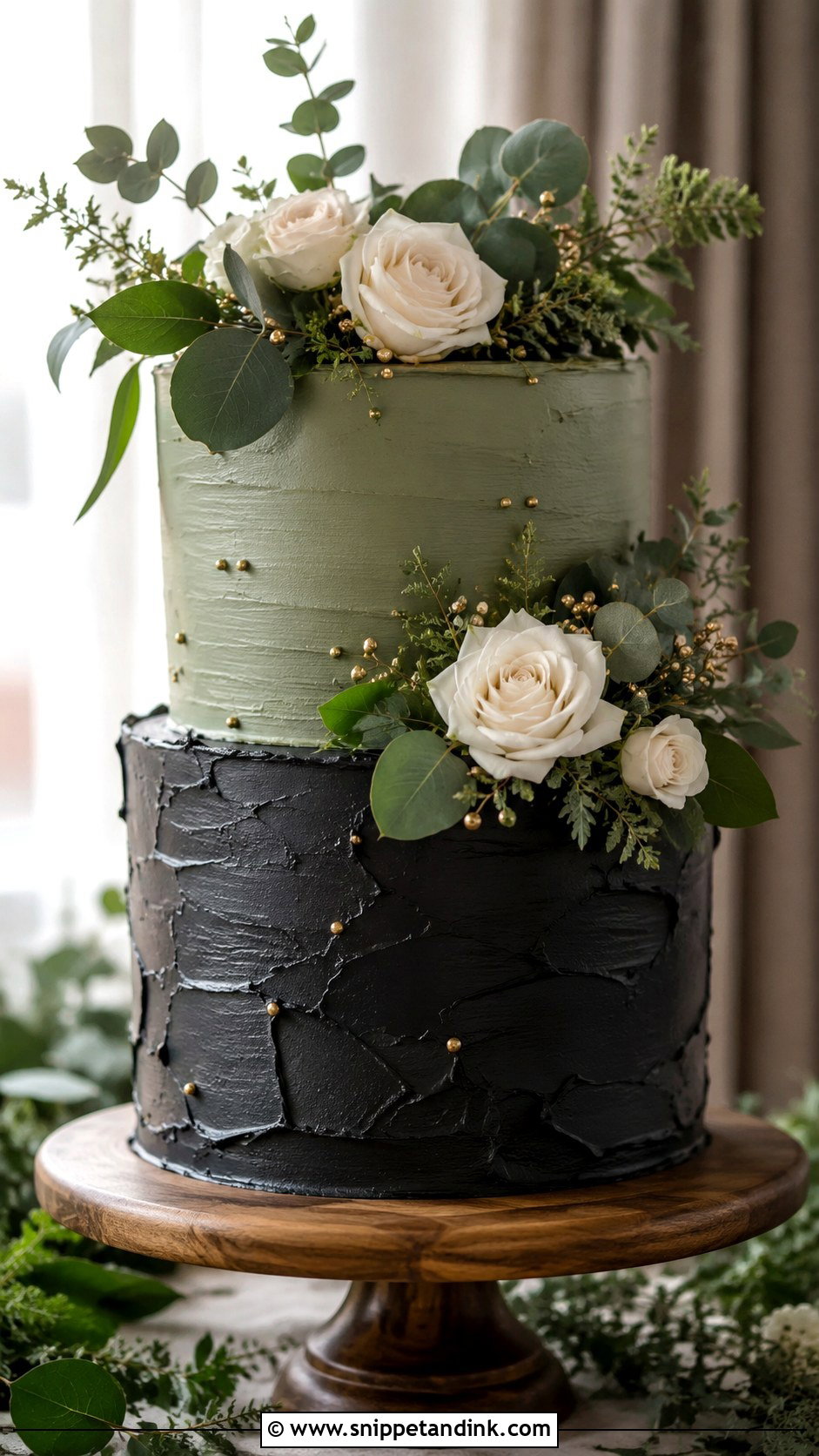
Matte black looks like velvet in person and in pictures, and green can come in as painted leaves, a velvet ribbon or one full sage tier. The honest catch: a matte dark surface shows every fingerprint, every speck of powdered sugar and every scuff from the box. I smooth black fondant with shortening instead of cornstarch for that reason, and I handle these tiers in gloves. Ask your baker how they transport and set up dark cakes; the answer tells you a lot.
9. Black And Green Buttercream Wedding Cake
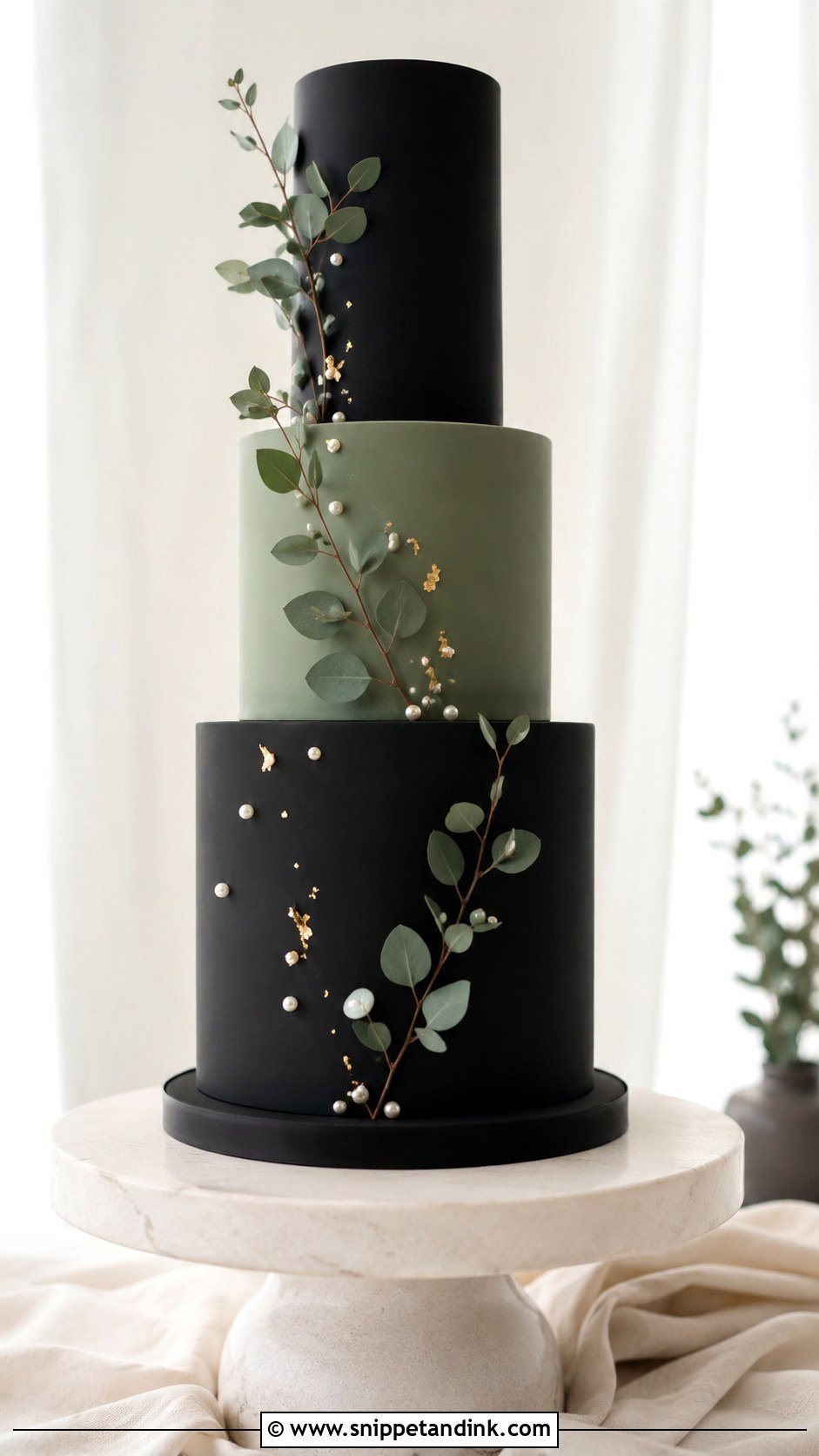
Buttercream gives a softer, more handmade finish than fondant, and it can be ridged, palette-knifed or left lightly rustic. True black buttercream is hard. Coloring white icing takes so much gel that it turns bitter and stains teeth, so I start from a dark chocolate buttercream and let it rest overnight, because the color deepens as it sits. Pair a black tier with sage or emerald, or brush green strokes over the black. Simple piping keeps the focus on the color.
10. Black And Green Fondant Wedding Cake
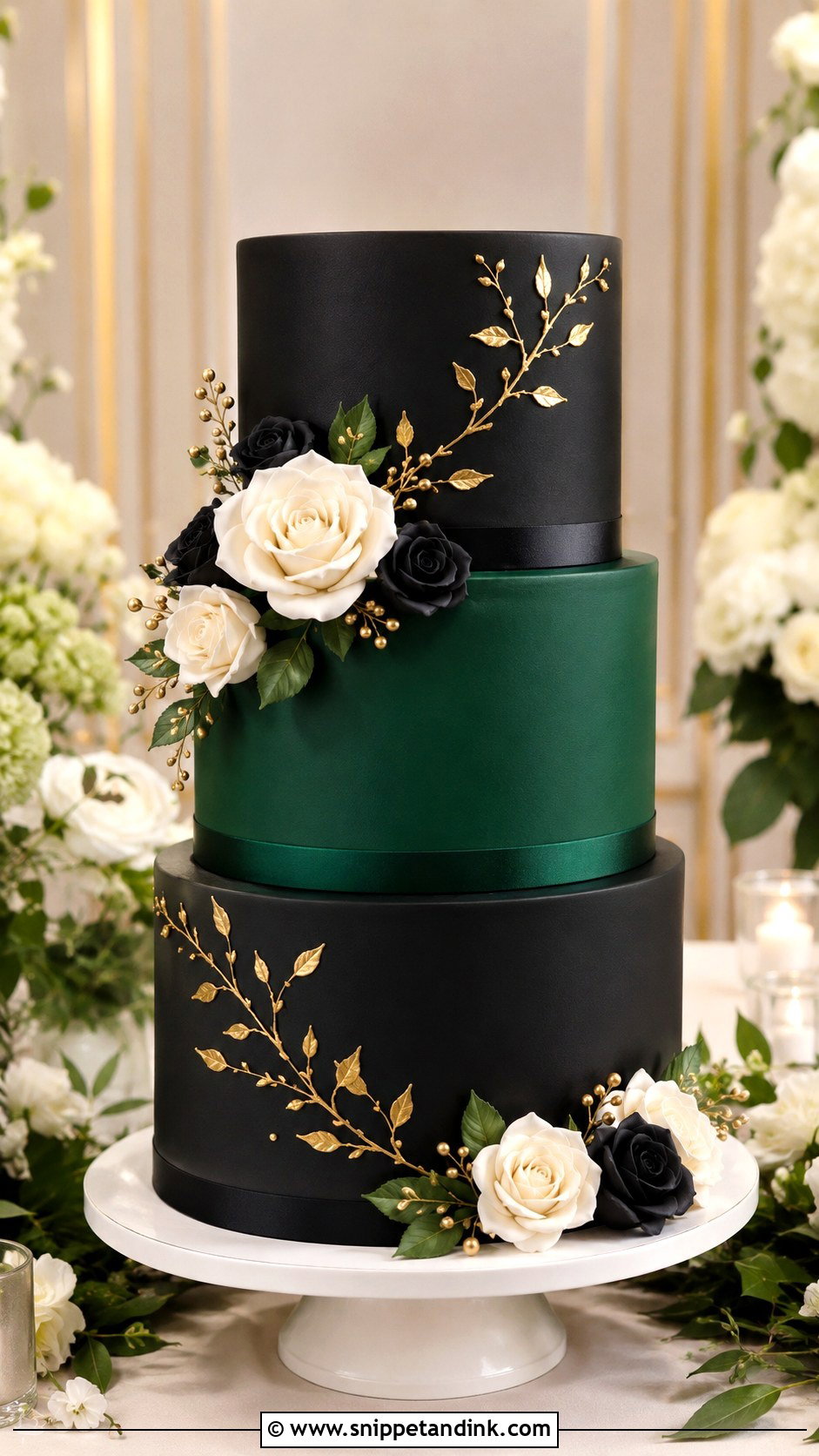
A black and green fondant wedding cake gives you the sharpest edges and the deepest color of anything here. Fondant can be bought already black, which saves a lot of kneading and avoids the dull grey you get from coloring white paste by hand. It also takes bows, panels, ruffles and painted vines well. Color-block emerald against black for drama, or keep one green tier and leave the rest dark if you want it quieter. Formal and evening receptions are where it shines.
11. Black And Green Floral Wedding Cake
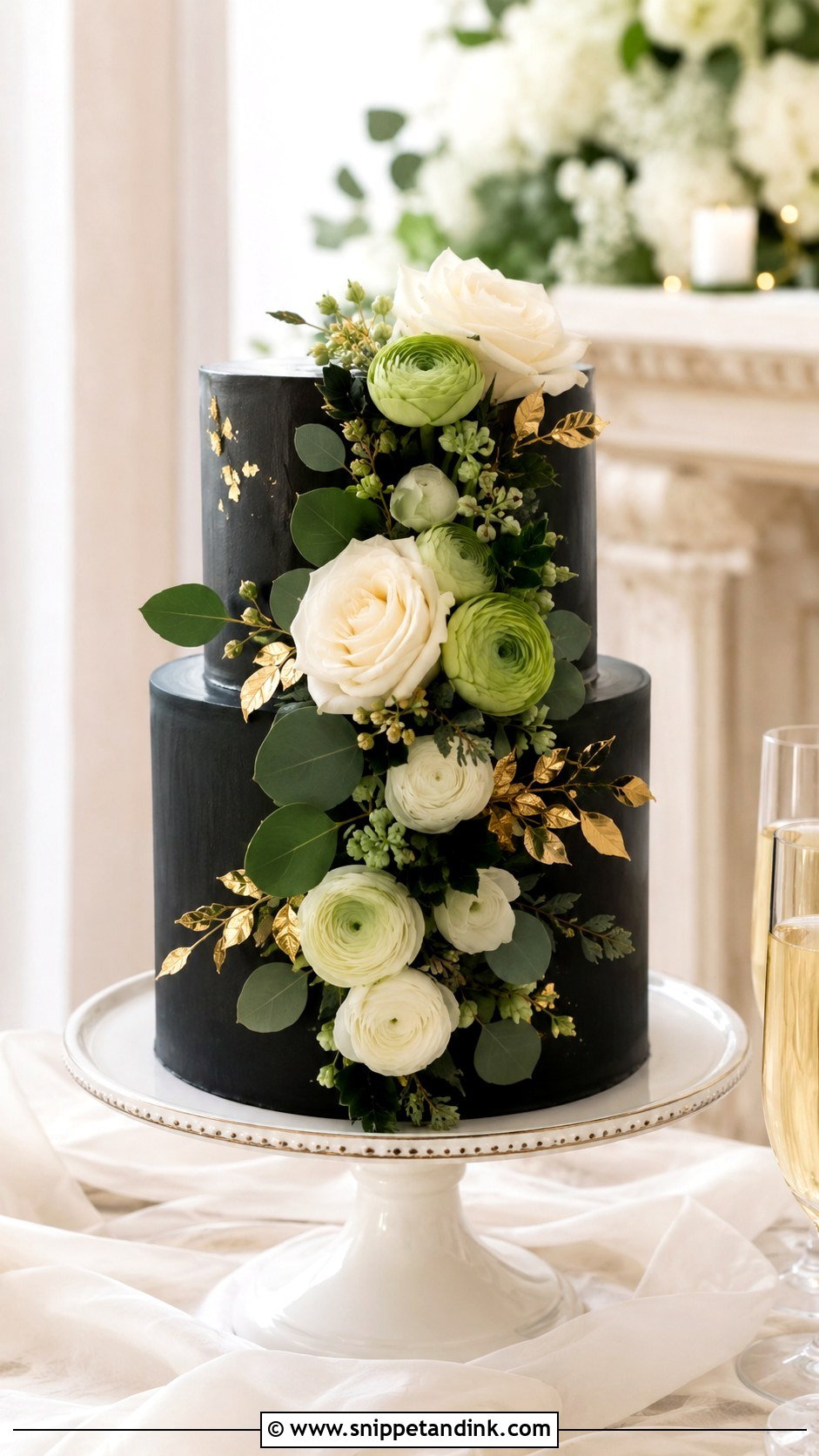
Flowers against black frosting stand out in a way they never do on white, so a floral cake in this palette can be much sparser than you think. Fresh, dried, silk and sugar all work, but check your venue rules before you plan fresh blooms. I ask the florist to deliver cake flowers separately, already wrapped, so I can place them myself. One cluster is calm; a full cascade is dramatic. Sage leaves pull it toward a garden look, emerald blooms toward evening.
12. Black And Green Geometric Wedding Cake
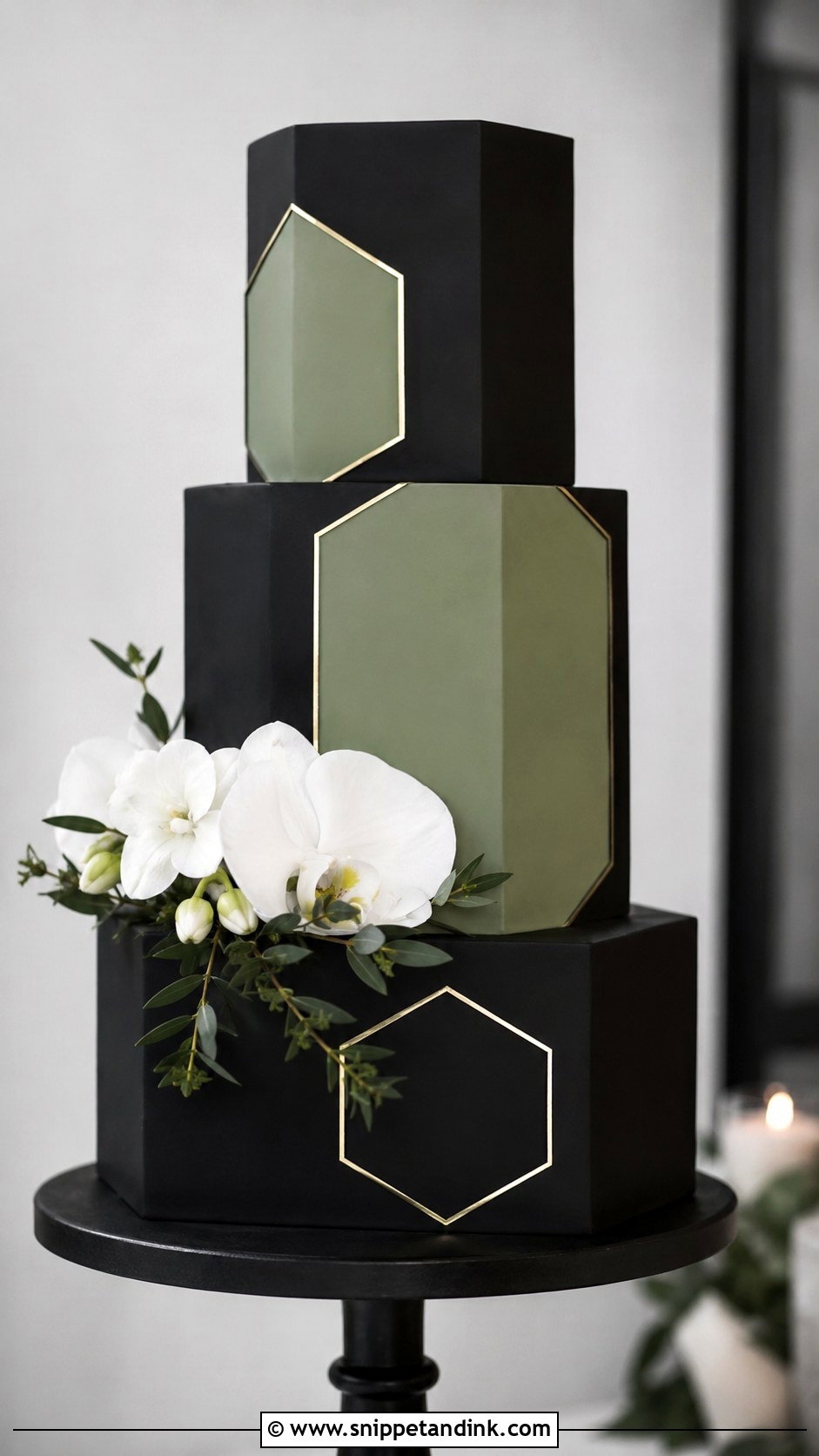
A black and green geometric wedding cake depends on clean structure: hexagon tiers, angled panels, painted lines or cut fondant shapes. Black carries the shapes and green keeps them from looking flat. Every line has to be exact, because on a dark base a wobble of a millimeter shows. Industrial venues and rooftops suit it. I keep flowers to a few white orchids or leaves at the base so the geometry stays the main event.
13. Black And Green Square Wedding Cake
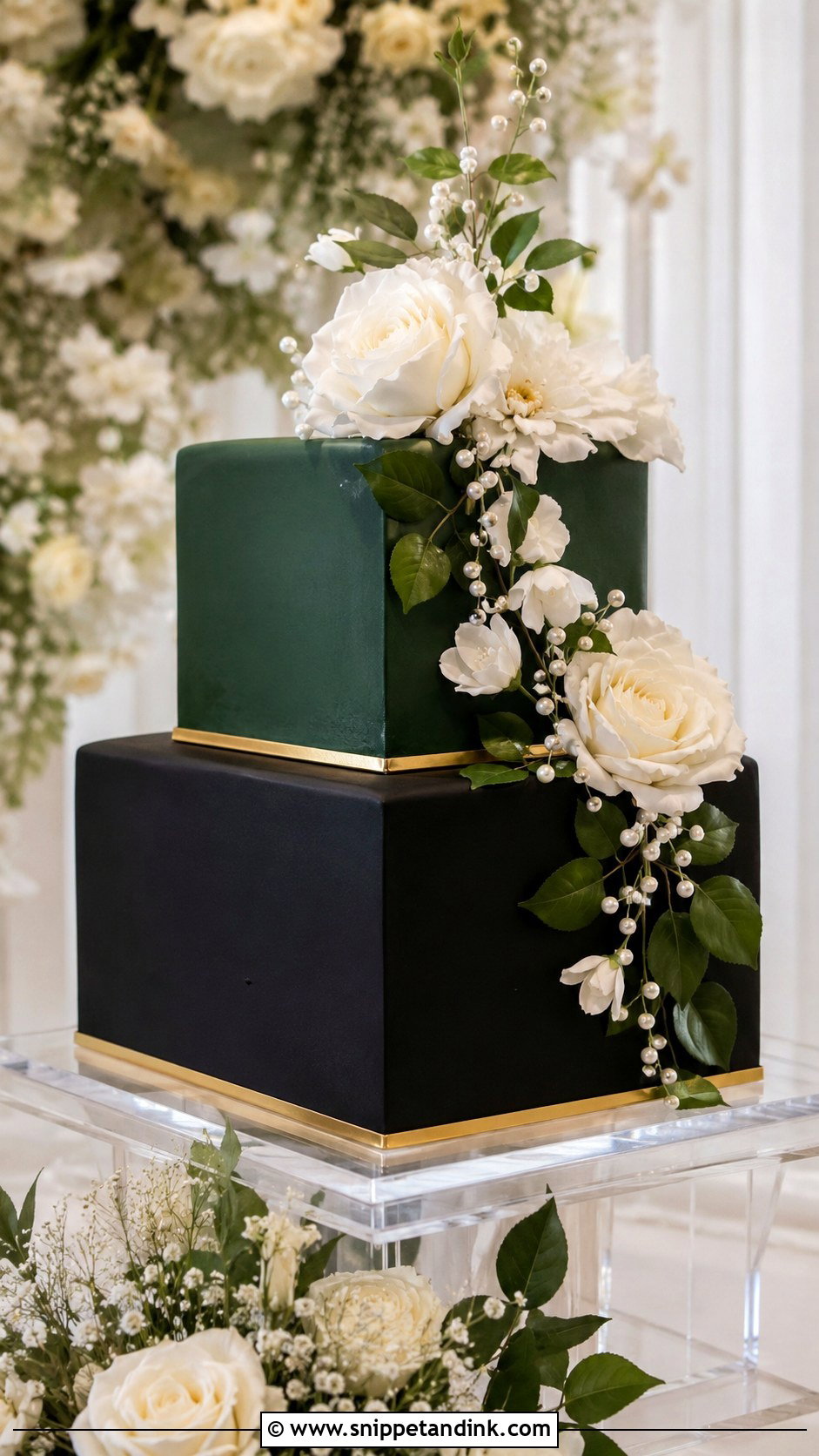
Square tiers already look architectural, and black and green make that crisper still. Stack them squarely for a formal profile, or turn each tier a few degrees for movement. Black on the bottom with sage above reads soft; emerald with black reads loud. Square corners are the hardest part of a cake to get sharp, and on black fondant any softness shows straight away, so this is a design to give an experienced baker. Gold trim or a sugar flower finishes it.
14. Black And Green Two Tier Wedding Cake
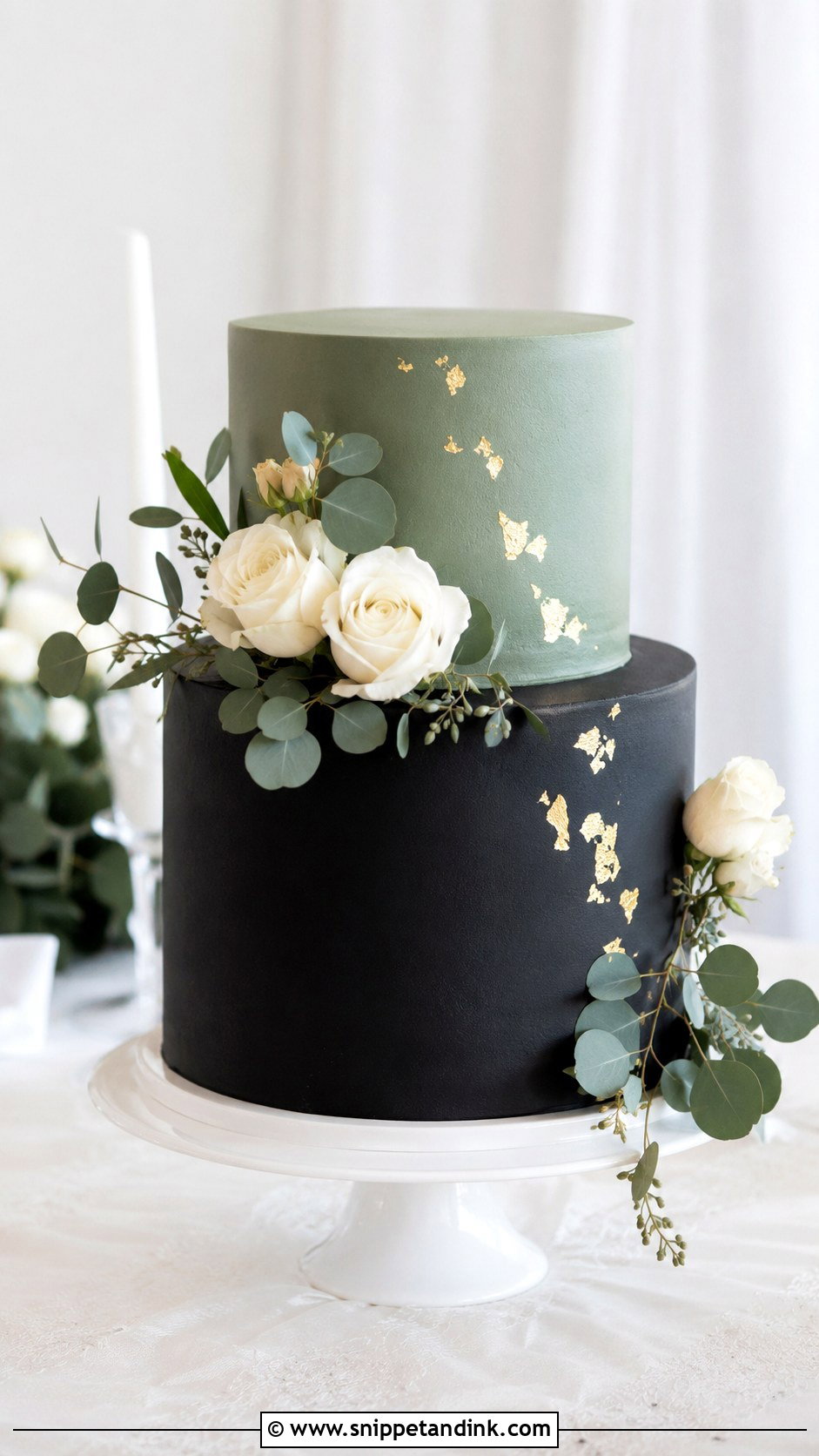
Two tiers suit elopements, small weddings and brunches, and strong color keeps a small cake from looking modest. Try black under sage, or a deep green cake with black ribbon. With less surface, every detail gets noticed, so pick one feature: a drip, a floral cluster, a marble tier or a gold edge. If you need more servings than two tiers give, a plain kitchen cake in the same flavor can be sliced out of sight. A good stand does more for this size than extra decoration.
15. Black And Green Three Tier Wedding Cake
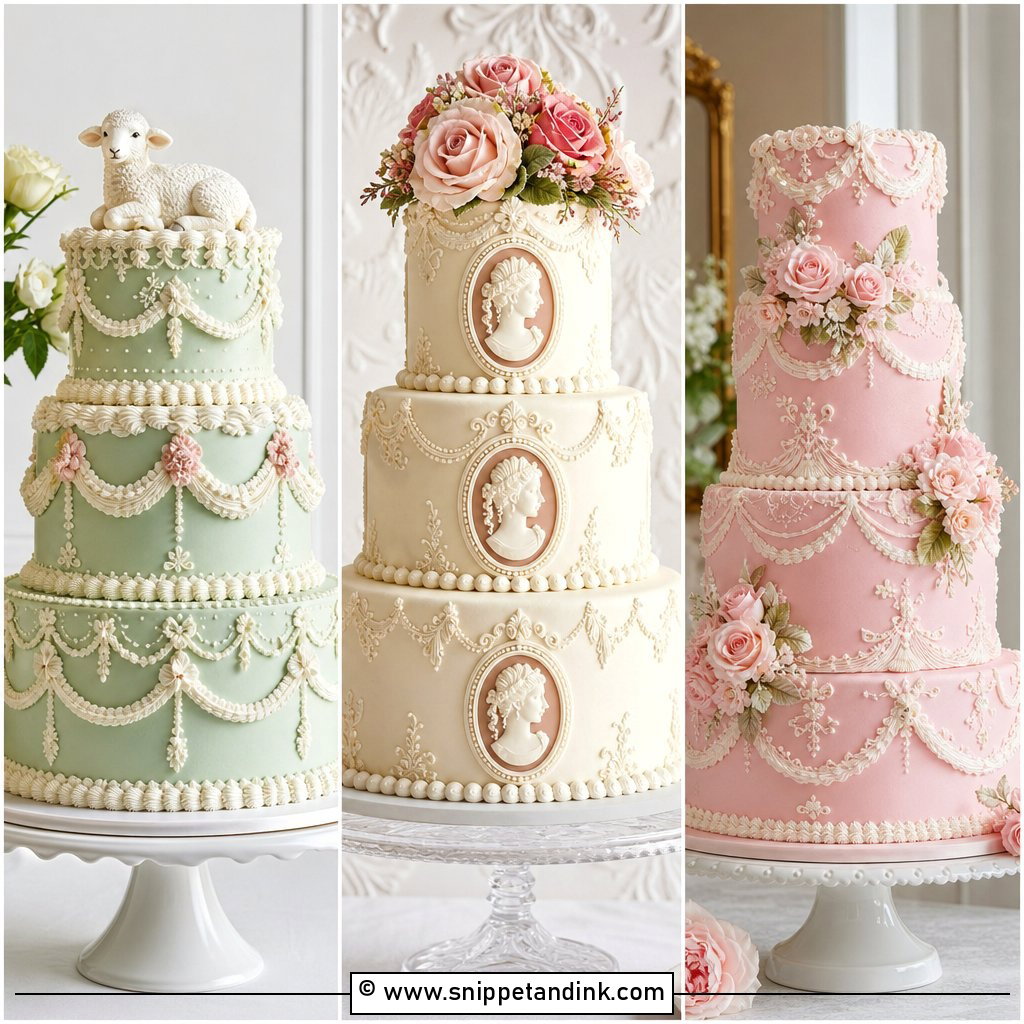
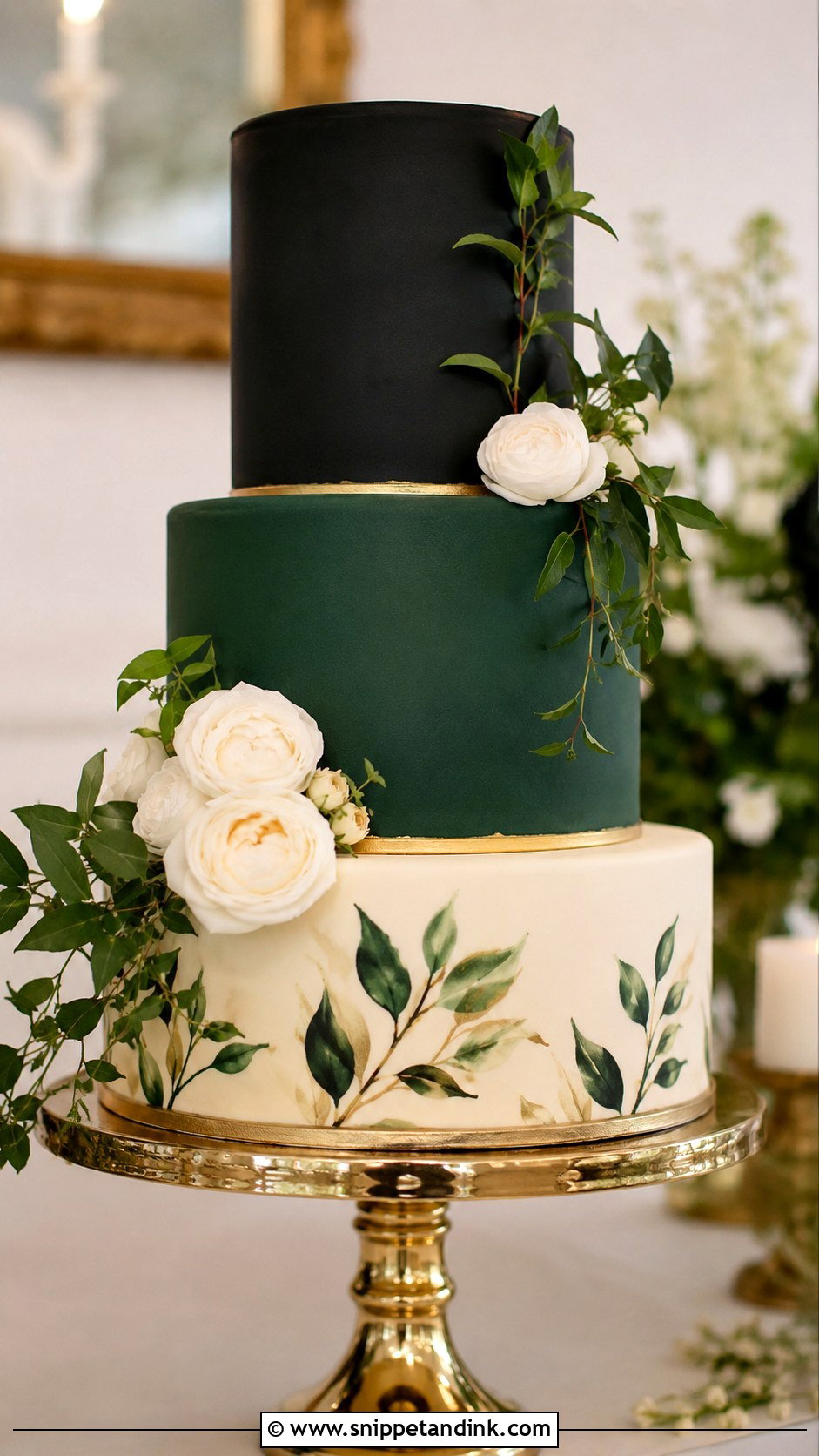
Three tiers give enough height to show both colors without looming over the table, and the size suits a wide range of guest counts. I like each tier to do a job: one matte black, one green, one ivory with painted leaves. Or keep all three black and let green flowers carry the color. Guests and photographers walk around a cake, so I decorate the sides and the back, not just the face you see in the sketch.
16. Black And Green Tall Wedding Cake
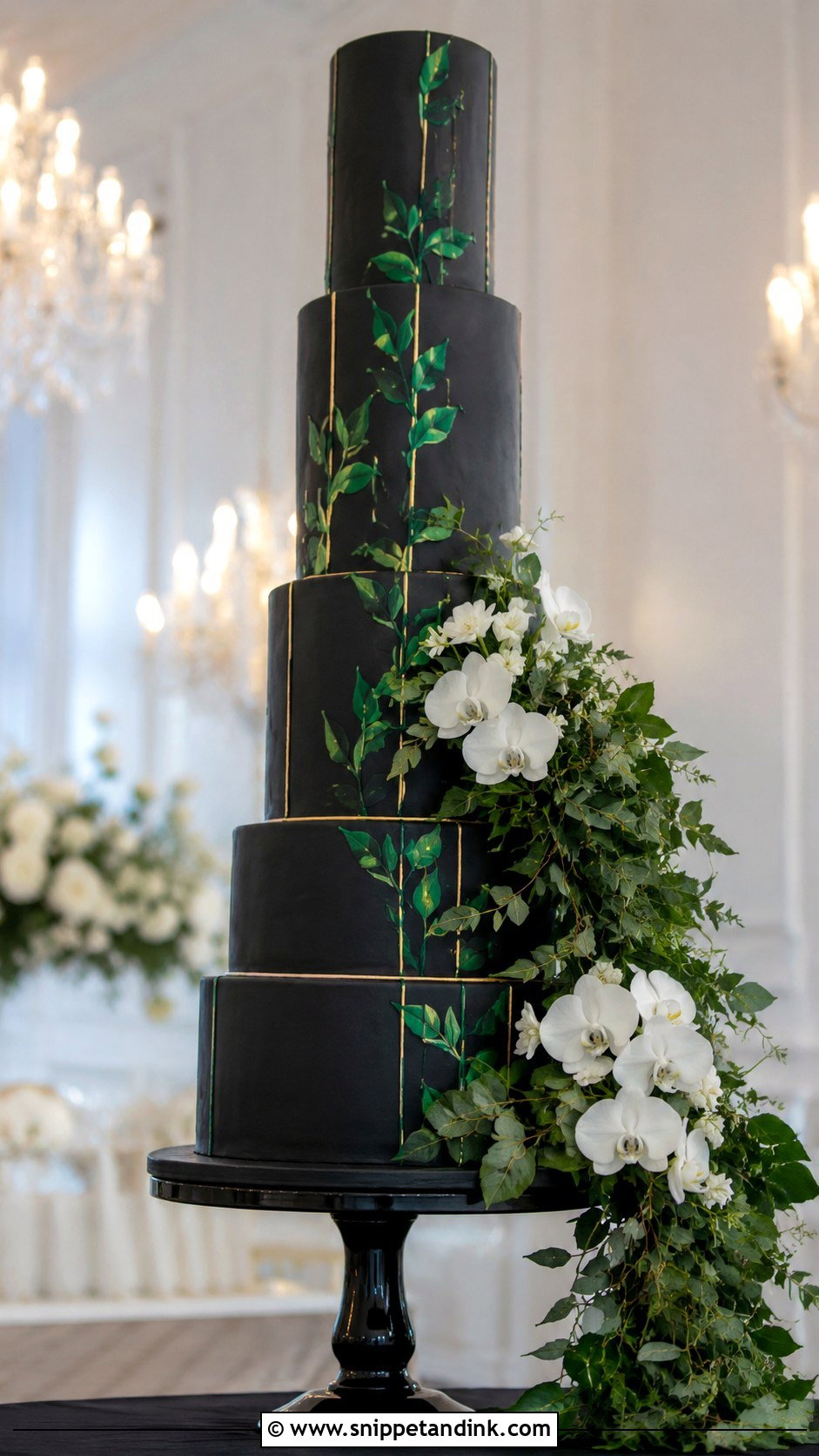
Extended-height tiers make a cake look taller without adding layers, and they suit smooth black fondant with a long greenery cascade. Vertical details stretch it further: slim painted vines, pressed leaves, fine gold lines. Tall tiers need extra internal support, with more dowels and a central rod for anything that travels assembled. Evening receptions and mirrored tables show it off best. Keep the trim restrained so the height is what people notice.
17. Black And Green Minimalist Wedding Cake
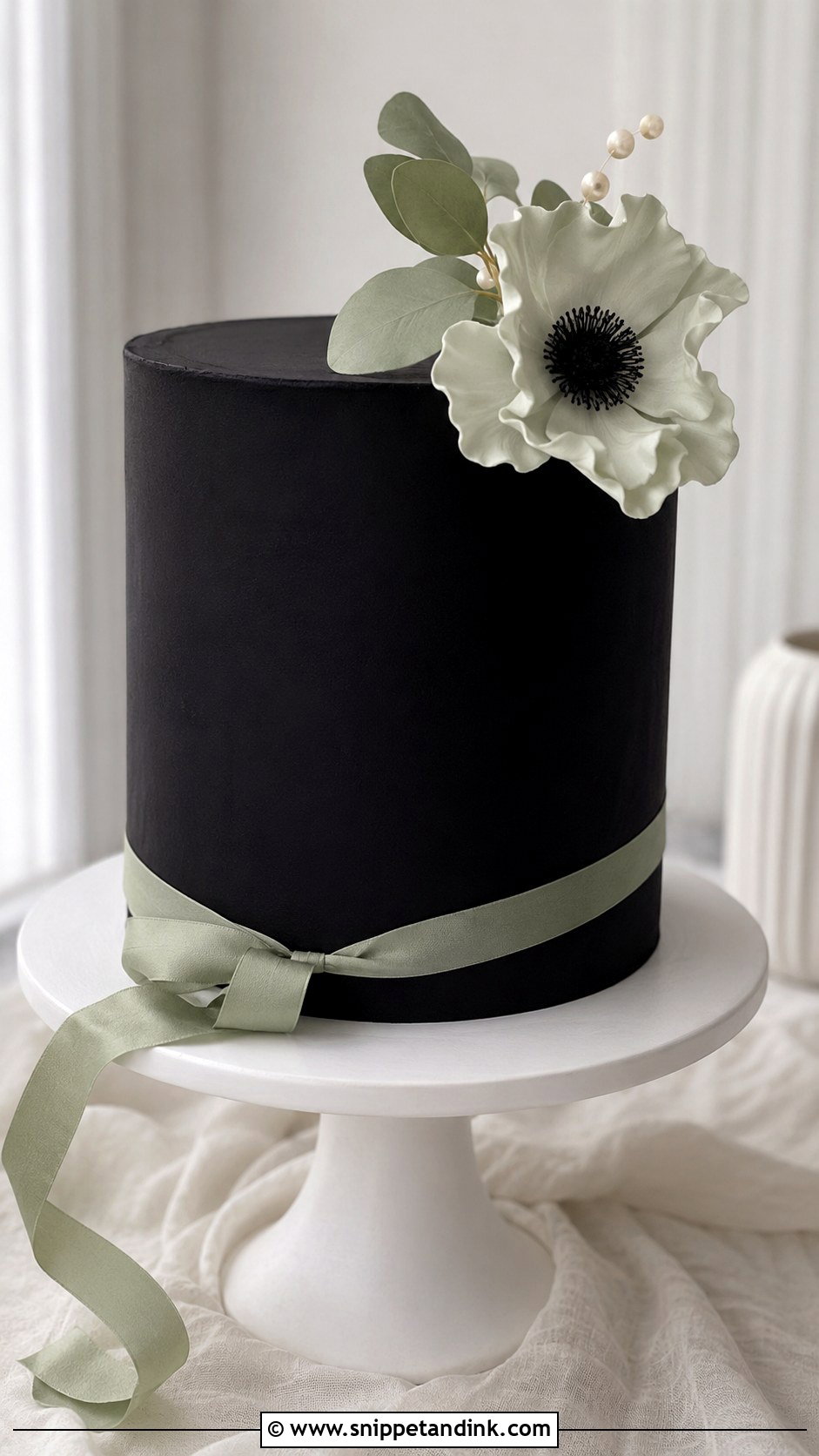
This palette can be quiet. A smooth black cake with a single green stem, a sage ribbon or one emerald sugar flower is often more striking than a crowded design. If you want it lighter, flip it: a white cake with black and green details. The hard part of minimalism is leaving blank space alone, and I have to talk couples out of adding just one more thing at almost every tasting. Courthouse weddings and small dinners suit it.
18. Black And Green Rustic Wedding Cake
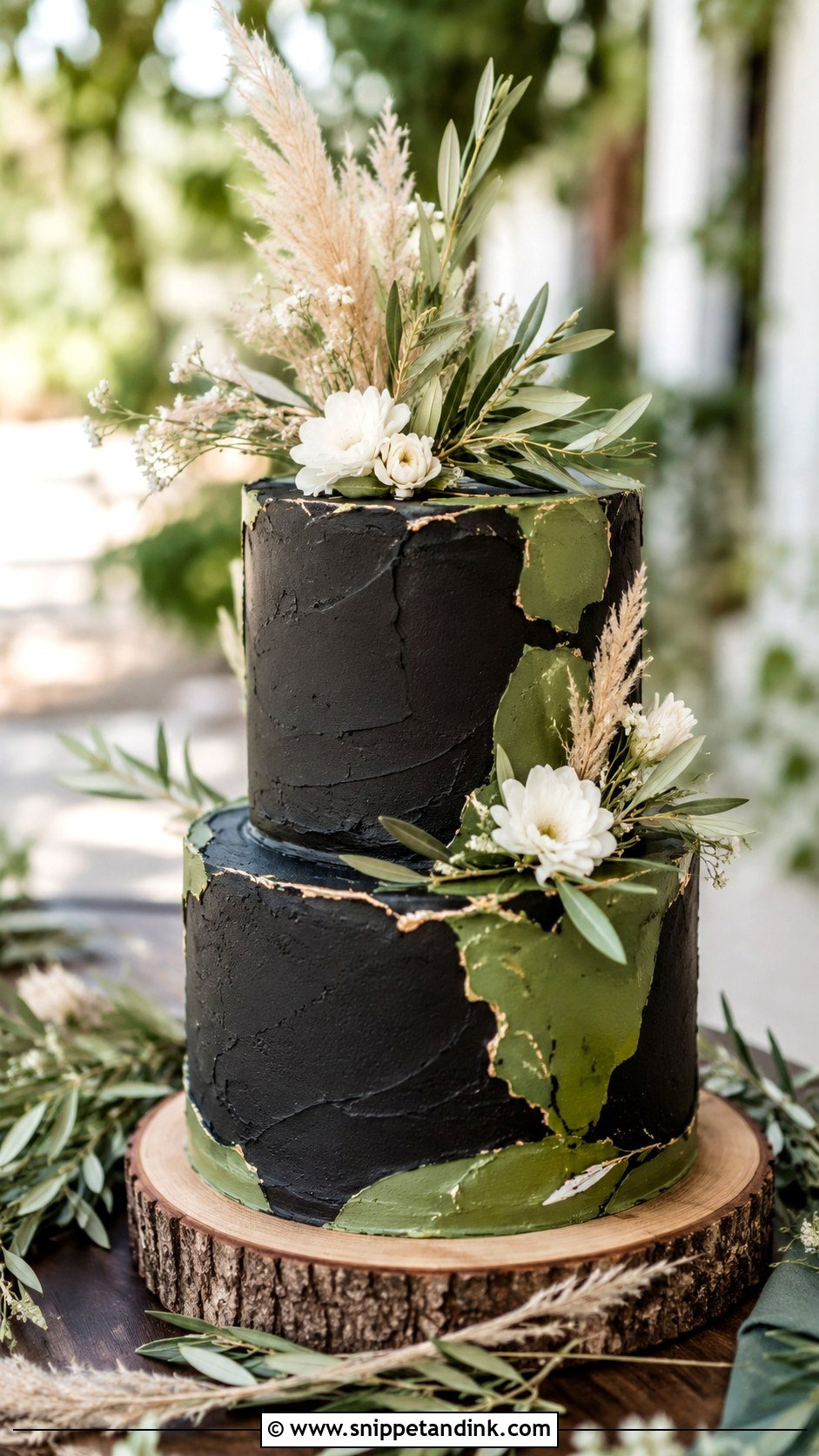
Rustic takes the edge off a bold palette. Black shows up as a dark bottom tier, a painted wash or a rough-scraped buttercream, and green comes from sage frosting, herbs or olive branches. Barns, lodges and gardens are the natural home for it. Rustic still needs control, though: I scrape the texture in one pass so it looks deliberate rather than unfinished. Dried grasses or ivory flowers soften it further.
19. Black And Green Gothic Wedding Cake
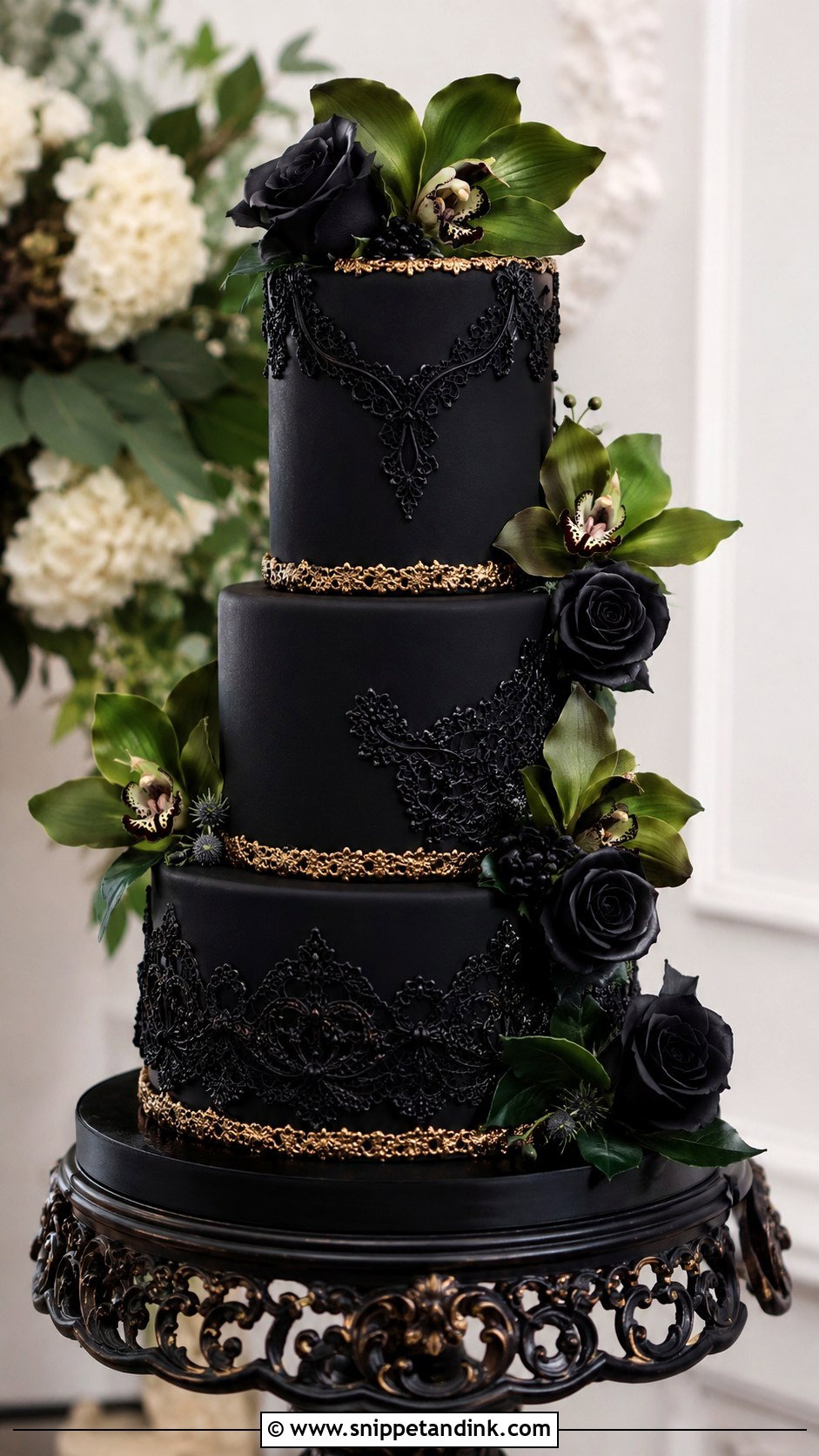
Gothic can tip into costume quickly. What keeps it bridal is restraint: deep black fondant, green orchids, lace-like piping and antique gold trim, but not all at full volume at once. I usually pick two of those and leave the rest out. Historic venues and candlelit rooms carry this style well. Ivory flowers or a few pearl details are the easiest way to pull it back toward romance.
20. Black And Green Forest Wedding Cake
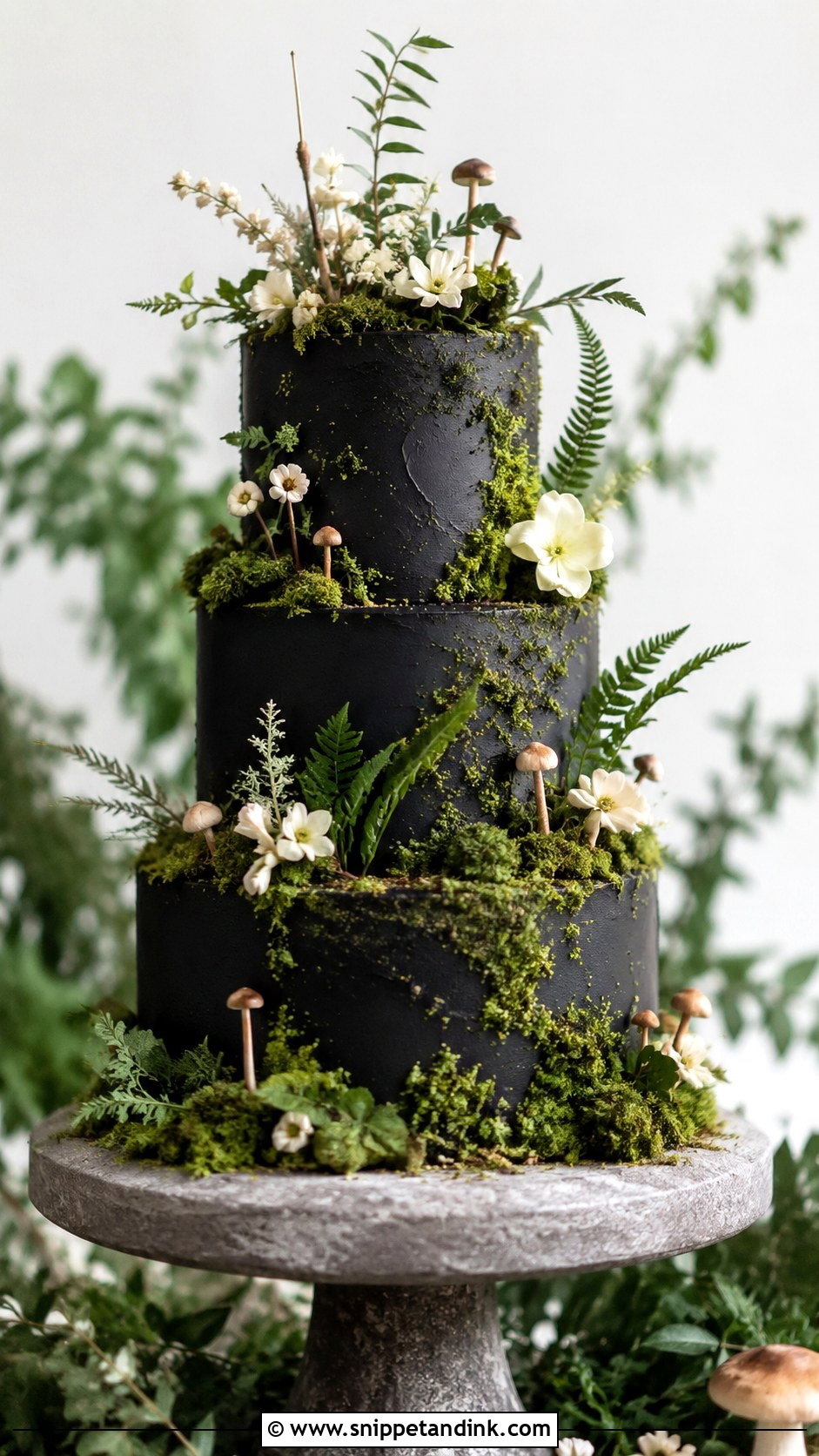
A black and green forest wedding cake borrows from the woods at night: mossy textures, fern details, bark patterns and dark tiers. Edible moss is usually green-tinted cake or cookie crumb, and sugar mushrooms add a bit of fun. I keep the tier shapes clean so the texture looks designed, not muddy. Chocolate cake with dark ganache and green buttercream accents tastes as good as it looks here. A wood slice or stone-style stand completes it.
21. Black And Green Eucalyptus Wedding Cake
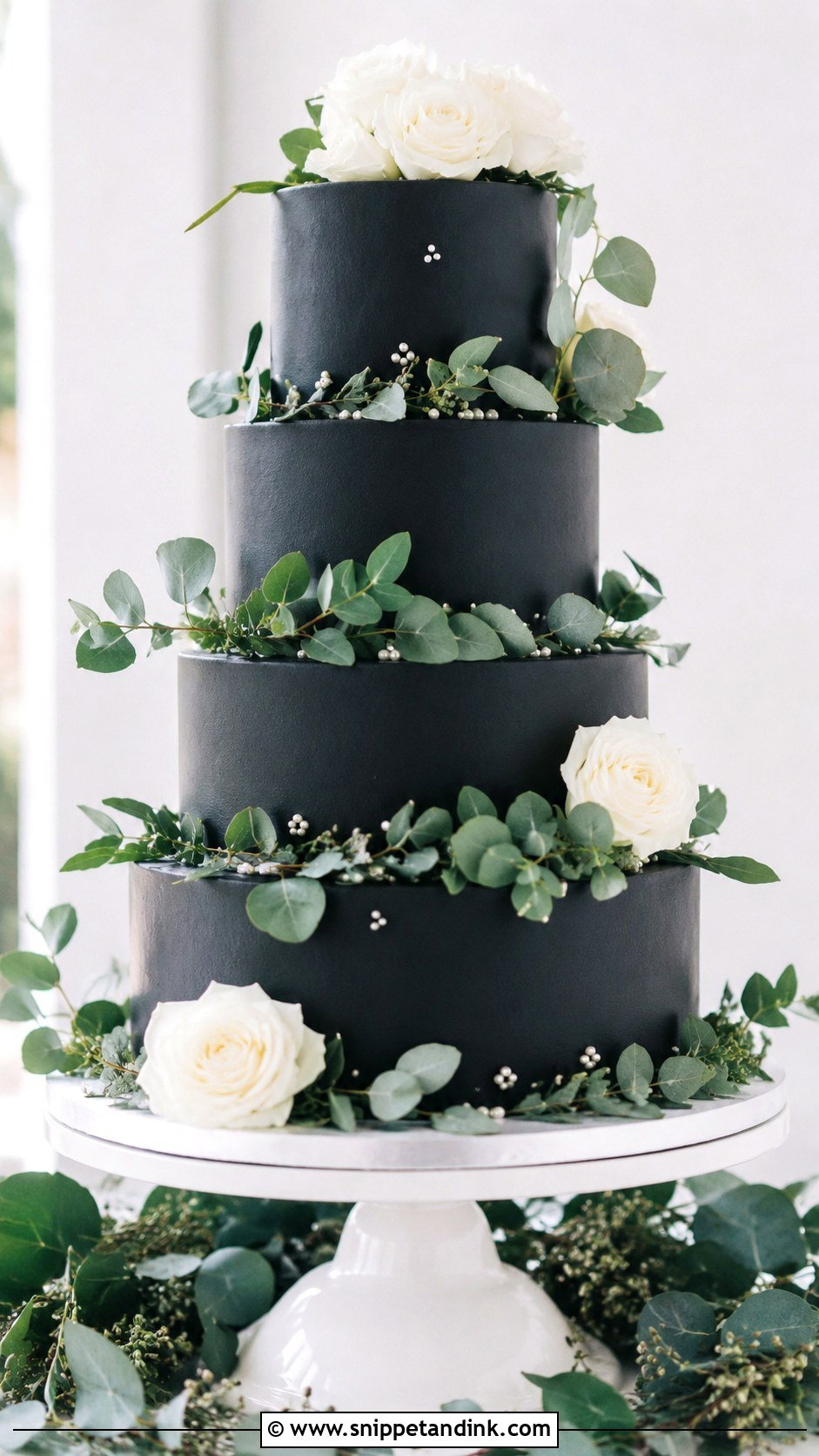
Eucalyptus has a grey-green cast that suits black, ivory and gold, and it works on buttercream, fondant, semi-naked cakes and tall tiered cakes. It is also one of the plants I never let touch icing, since it is not considered food-safe; the stems go into sealed picks and the leaves sit on a barrier. Tucked between matte black tiers it looks elegant with no flowers at all. White roses add romance if you want them, and the same greenery ties the cake to the bouquets and table runners.
22. Black And Green Leaf Wedding Cake
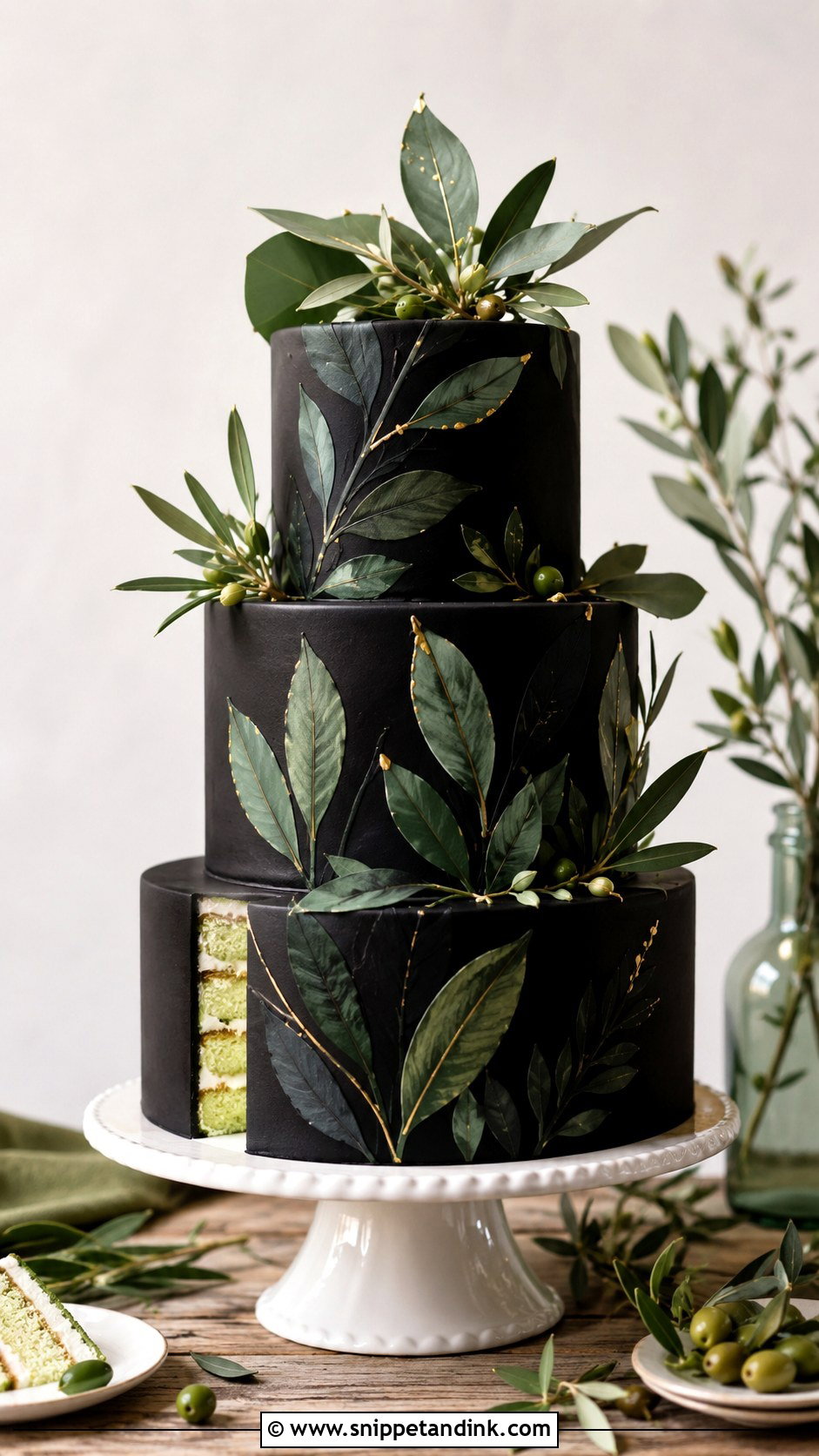
Leaves alone feel more modern than full florals. I make them by hand painting, by pressing into soft buttercream, from wafer paper or in sugar, and each method gives a different edge: wafer paper is fine and slightly translucent, sugar is crisp and heavier. Green on black frosting pops when the shapes are clean and layered. Use monstera leaves for a tropical reception, olive for a Mediterranean feel, fern for the woods. A small gold accent adds warmth.
23. Black And Green Orchid Wedding Cake
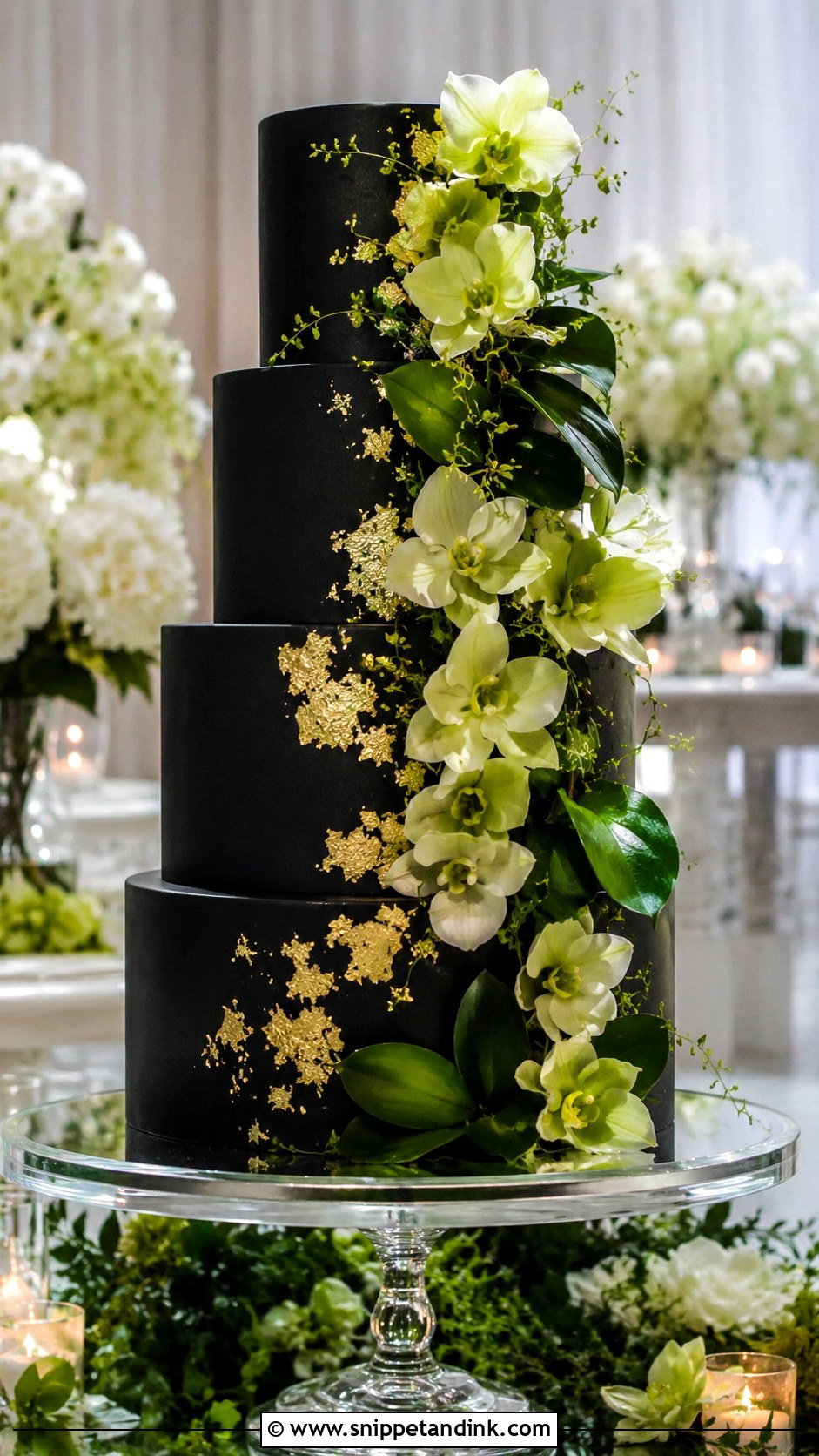
Orchids have a sculptural shape that matches sleek black tiers better than almost any other flower. Green cymbidiums look fresh and unexpected, and white orchids with green throats are the softer option. The cake hardly needs anything else: smooth black fondant, one cascade, a little gold leaf. Orchids also hold up well out of water for a few hours, which makes them a practical cake flower. A plain stand lets their shape do the work.
24. Black And Green Watercolor Wedding Cake
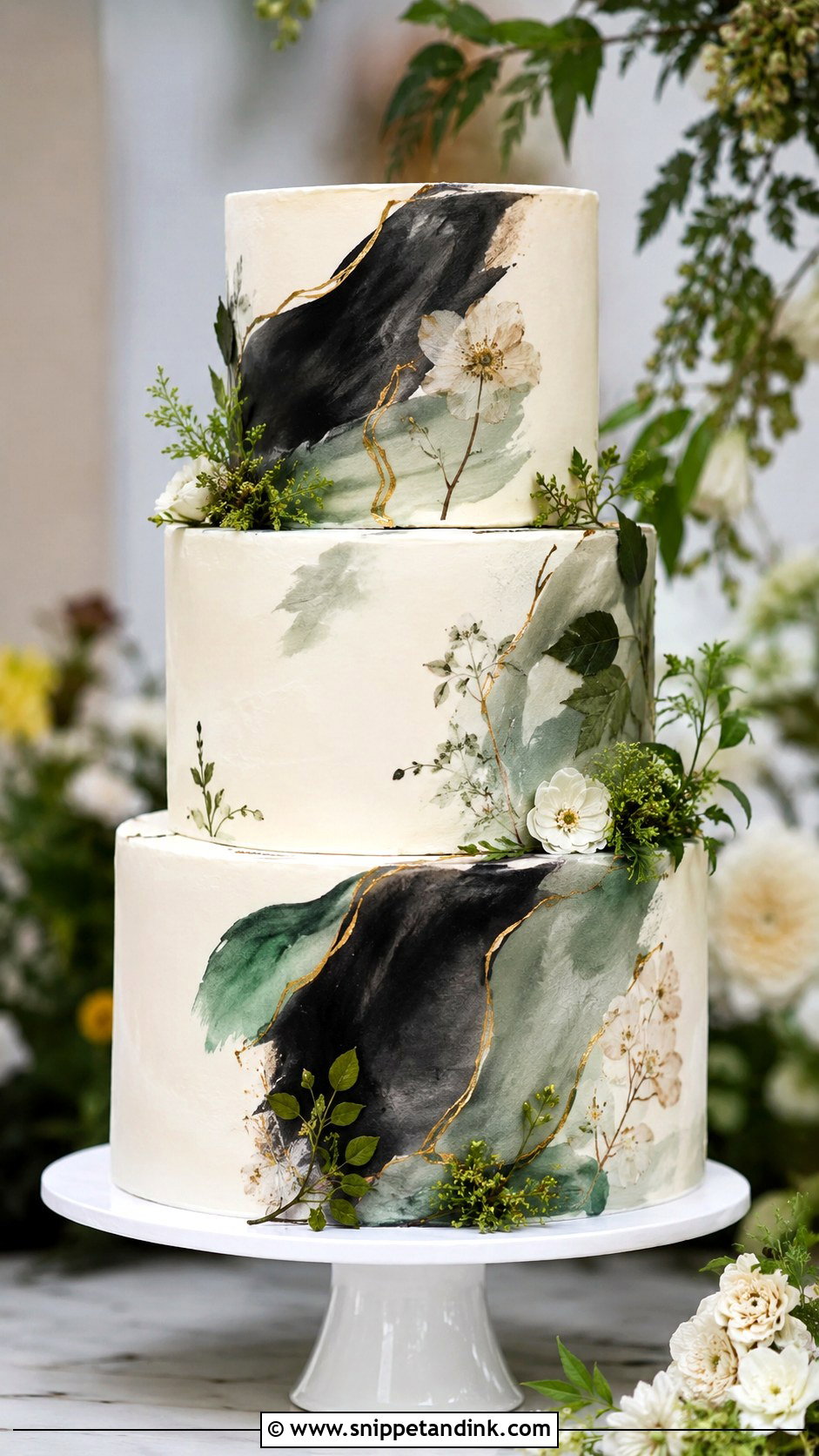
Watercolor is the gentlest way into this palette. I brush thinned color onto a pale base in light layers, building from sage and emerald and adding black last, sparingly, because it overwhelms everything else in one stroke. On white or pale buttercream the effect stays airy. Thin gold lines or a few pressed flowers finish it. Creative couples and garden venues are a natural match.

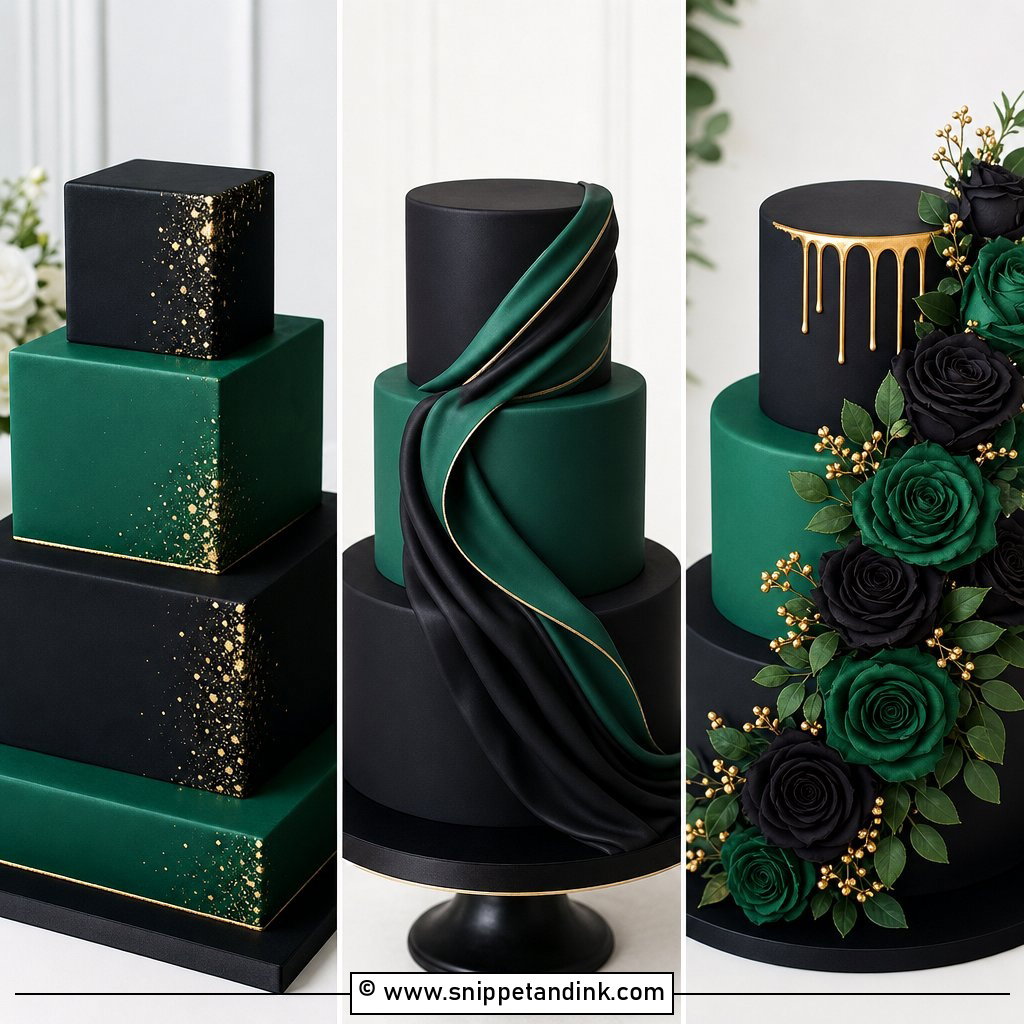
25. Black And Green Ombre Wedding Cake
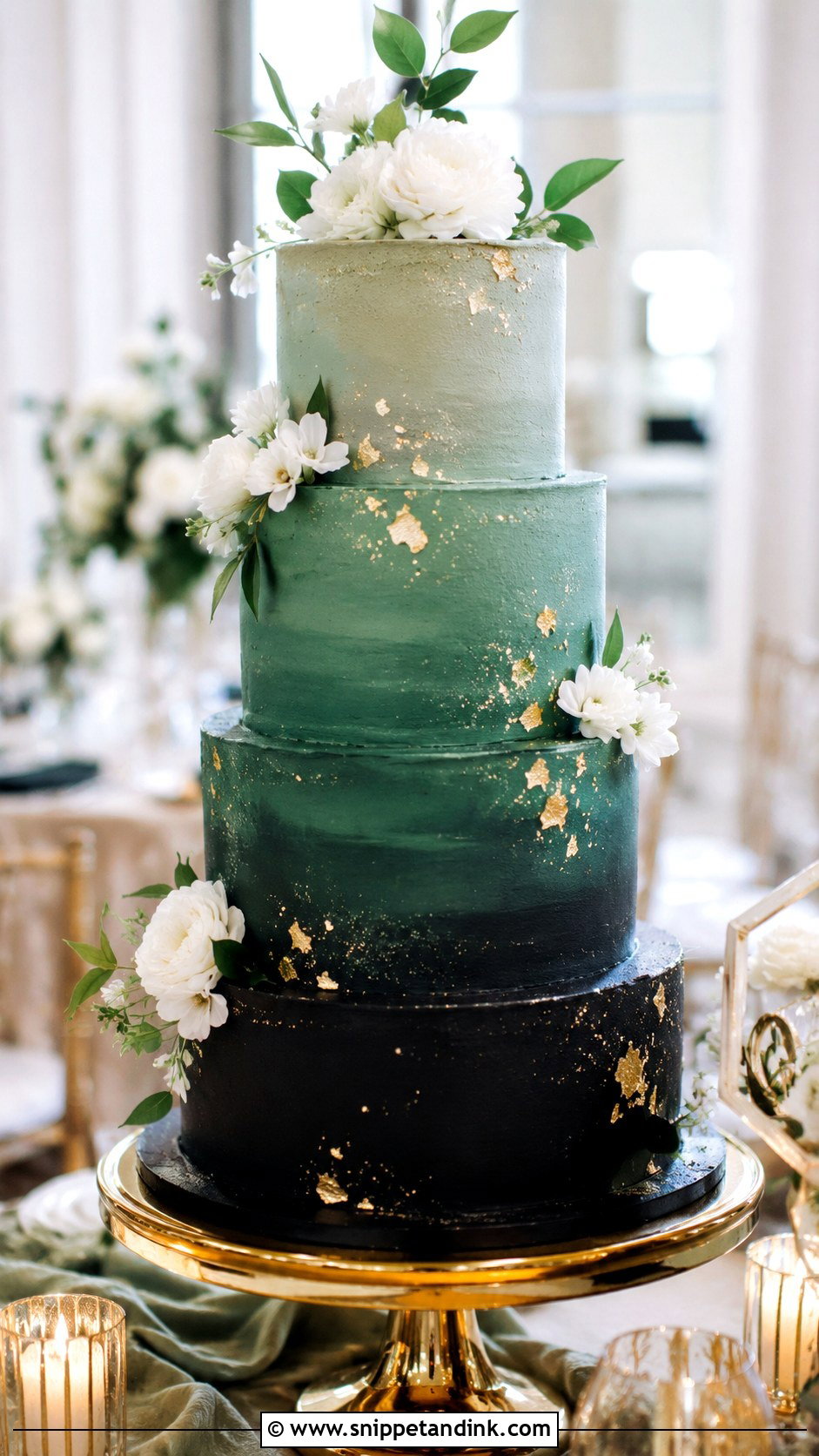
Ombre runs from black at the base up through emerald and sage to ivory at the top. On buttercream I blend the shades around each tier with a scraper; for a cleaner look, I color whole tiers in steps instead. The gradient only reads if it stays visible, so flowers should be few: a couple of white blooms or green leaves. I mix all the shades from the same green base, which keeps the steps even rather than jumping.
Where Real Leaves and Flowers Can Touch the Cake
Greenery is in almost every design above, and it is the detail I spend the most time on with florists. Many favorite wedding stems, eucalyptus, hydrangea and hellebore among them, are not food-safe, and florist flowers are often treated or sprayed. They can still decorate a cake. They just should not be pushed raw into the icing.
- Ask for cake flowers to be grown or bought without heavy spraying, and delivered separately from the centerpieces.
- Wrap cut stems in floral tape and set them into food-safe flower picks or straws before they go anywhere near a tier.
- Rest leaves on a thin barrier, such as a disc of wafer paper or a small sugar plaque, rather than straight on buttercream.
- Tell the catering team which decorations to lift off before slicing, so nothing ends up on a guest’s plate.
If a stem is borderline, I make it in sugar instead. Sugar leaves cost more in time, but they never wilt under warm lights, and you can keep the top tier’s decorations as a keepsake.
Dark Cakes, Warm Rooms and Low Light
A black cake behaves differently on the day. Fondant that leaves a cold fridge for a warm room collects condensation, and on black, those droplets dry as dull water spots. I let dark tiers come up to room temperature in their boxes before unpacking them, and I never wipe a sweating surface, because it smears the color.
Lighting is the other trap. In a dim, moody venue, a black cake against a dark wall disappears in photos. Ask your planner for a small spotlight or a light-colored backdrop behind the cake table, and put it away from windows and heaters so buttercream tiers stay firm until you cut them.
Settle on the Mood, Then Pick the Green
These cakes suit couples who want something personal and a long way from the usual white centerpiece. Sage and eucalyptus keep the palette soft, emerald with matte black makes it bold, and gothic florals with gold make it theatrical. Decide which of those moods you are after before your tasting. Once that is settled, the frosting, flowers and stand almost choose themselves, and the cake will hold together in the room as well as in the photos.
You'll Like These Ideas:





Leave a Reply