
Rose gold sits in an easy middle ground on a wedding cake: warmer than silver, softer than yellow gold and less sugary than plain pink. It pairs naturally with ivory, blush, champagne, marble, pearls and ruffles, which is why I’m asked for it for ballrooms and garden parties alike. The real decision isn’t whether to use it, but how much. A painted edge reads very differently from a full metallic tier, and both change under reception lighting. Here are 30 designs, from a whisper of leaf to rose gold as the main event, with the practical notes I’d give a couple at a consultation.
Why Rose Gold Can Turn Copper Under Reception Lights
Rose gold is a blend, not a single pigment, and every brand of luster dust, leaf and paint lands on a slightly different shade. Some lean pink, some lean almost orange. Under warm bulbs or candlelight the orange ones read as copper, and under cool daylight the pink ones can look like plain pink shimmer.
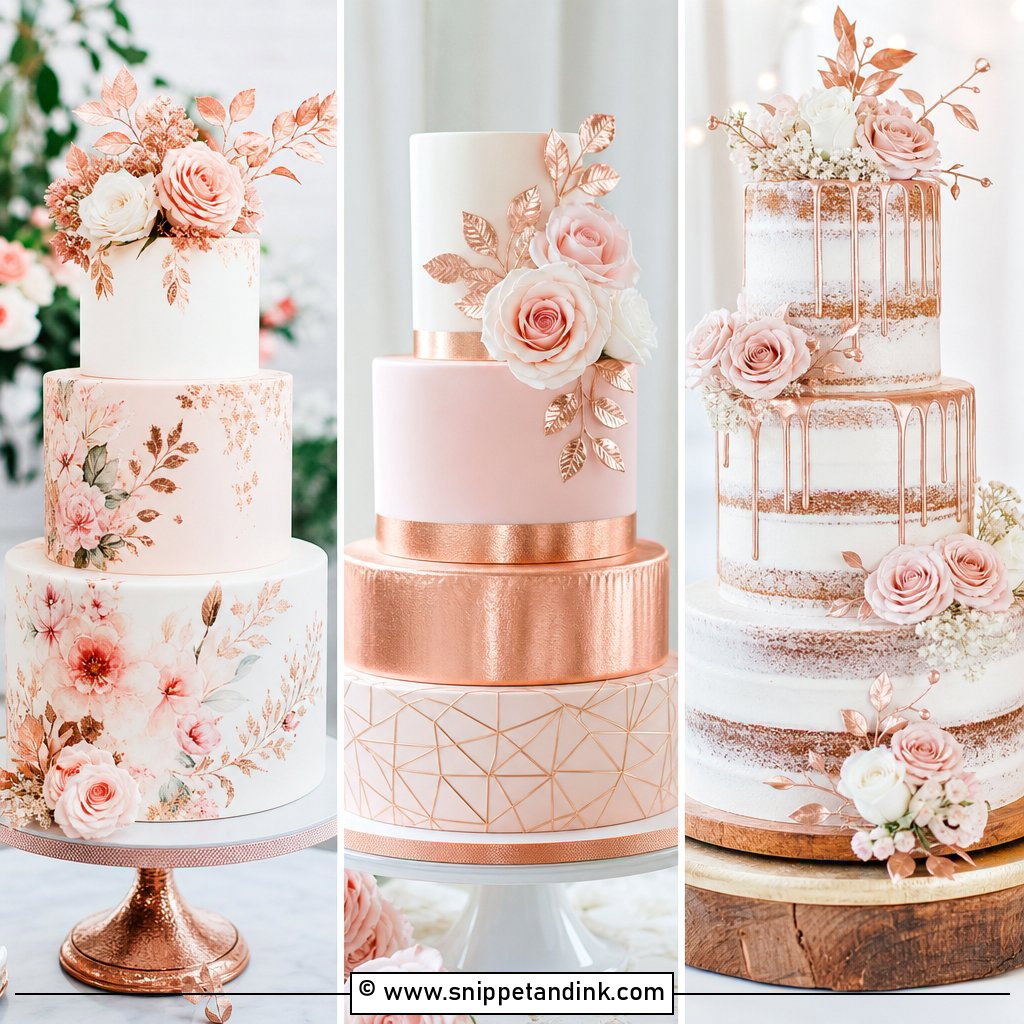
So I test. I paint a swatch on a scrap of fondant and look at it by a window and under a warm bulb before committing. If you’re matching other rose gold in the room, from cutlery to bridesmaid dresses to the cake stand itself, send photos of those pieces in natural light, or bring one along to the tasting.
Dust, paint and leaf each finish differently
Dry luster dust gives a soft sheen and is brushed on. Mixed with a few drops of clear alcohol, it becomes a paint that dries quickly with a stronger shine. Leaf is the brightest and most mirror-like finish, and the most delicate to handle. Most of the cakes below use two of the three, and knowing which is which helps you read a photo and ask for the right thing.
1. Rose Gold Drip Wedding Cake
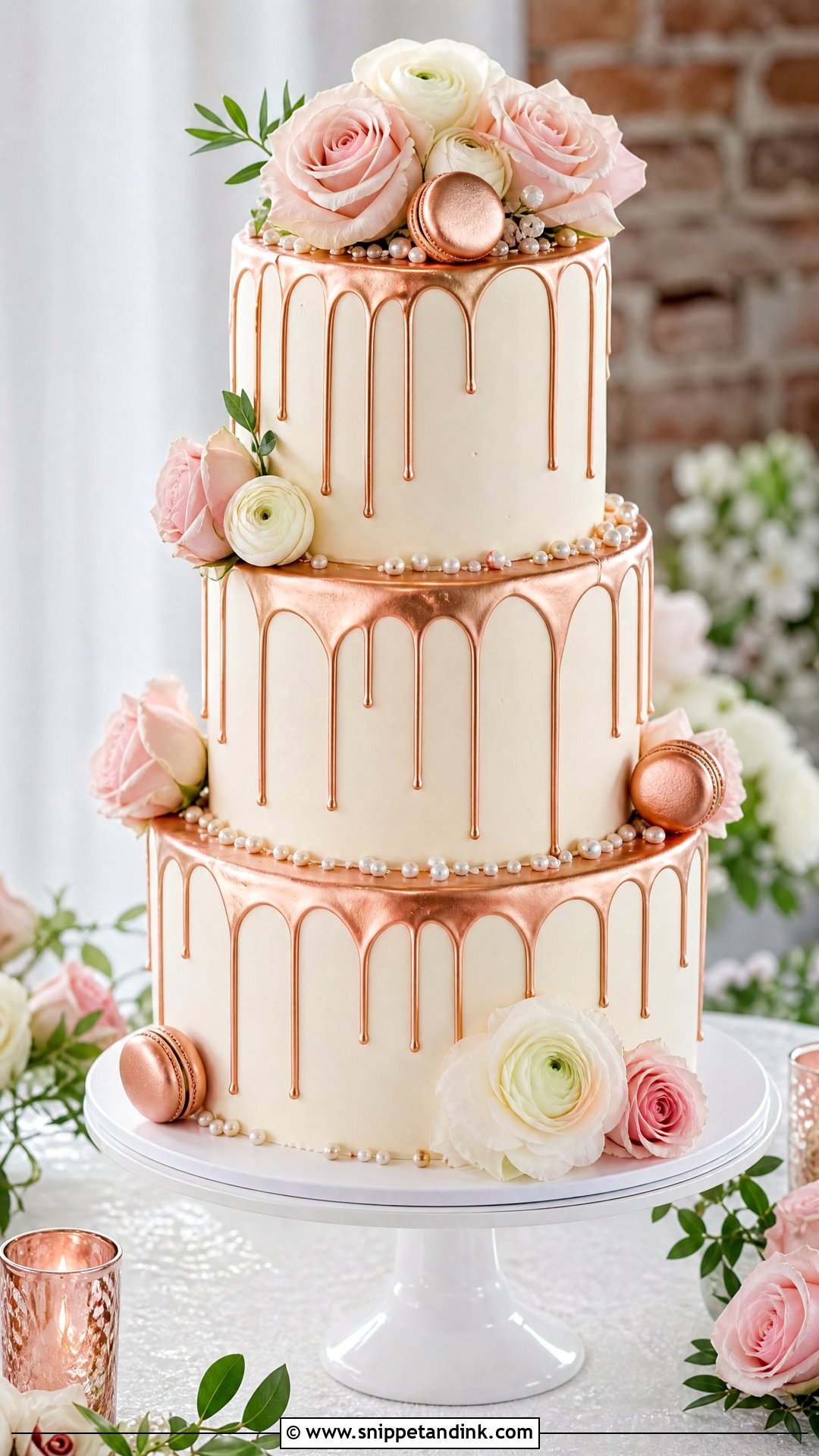
Drips look casual but take control. I pour the ganache drip onto a chilled cake so it sets mid-run instead of pooling at the base, then paint the rose gold over it once it’s firm; metallic stirred straight into the drip tends to look dull and grainy. A tall two or three tier cake gives the drip room to hang. Fresh blush roses, white ranunculus, small pearls or macarons finish it, over smooth ivory buttercream, blush frosting or white fondant. Vanilla bean, almond or strawberry suits the pale palette. Fewer, shorter drips look more expensive than heavy ones.
2. Rose Gold Marble Wedding Cake
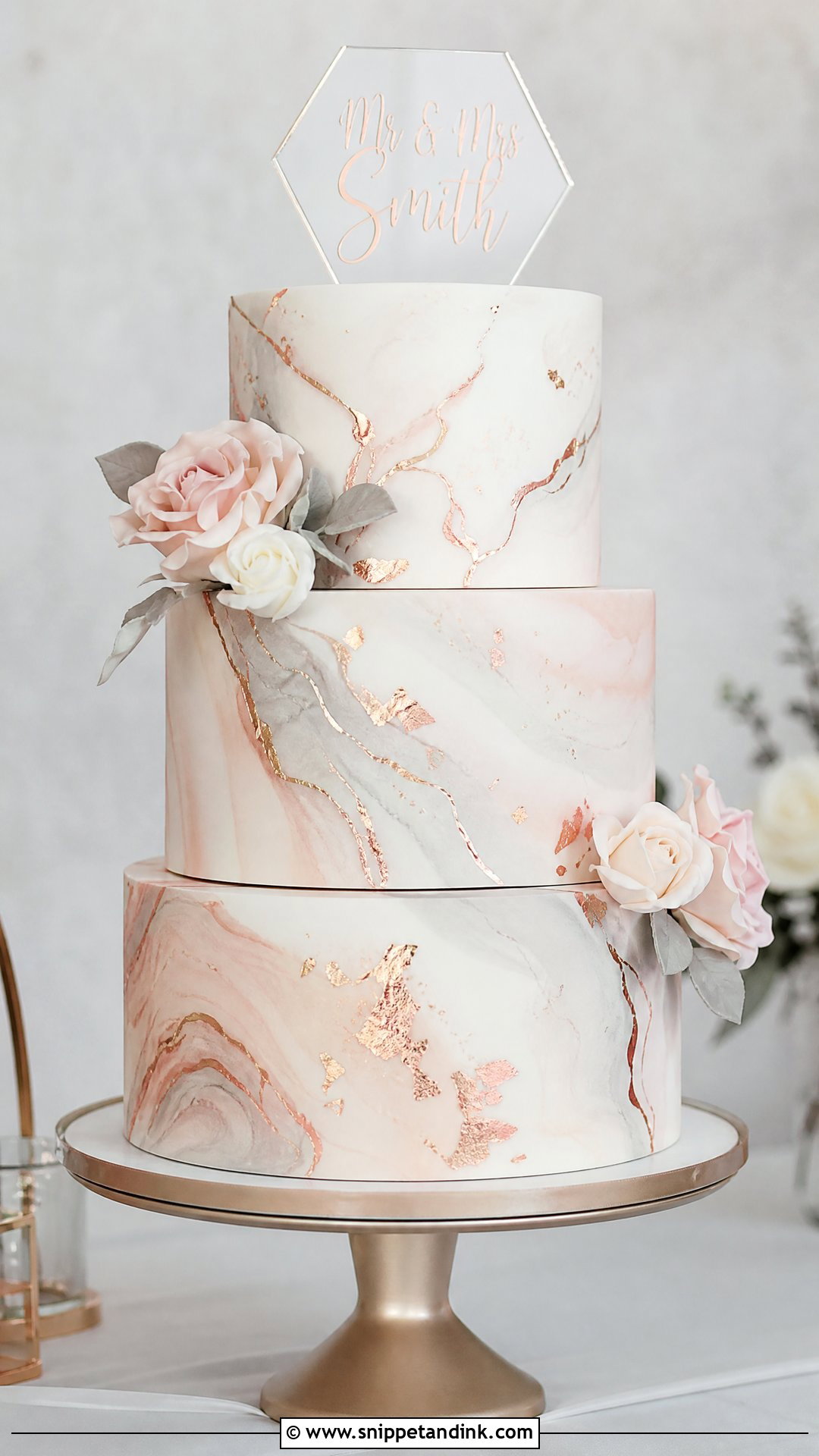
Marble with rose gold veining is the most contemporary look here and one of the quieter ones. I build the marble from white, ivory, blush and pale grey, then paint the veins with a fine brush, keeping them thin and broken the way real stone runs. Couples who don’t want many flowers tend to like it. Mixing a square tier with round ones pushes it further toward modern, and an acrylic topper, a few sugar flowers or a strip of metallic flakes down one side is all the decoration it needs. White chocolate raspberry or coconut keeps the inside light.
3. Blush And Rose Gold Wedding Cake
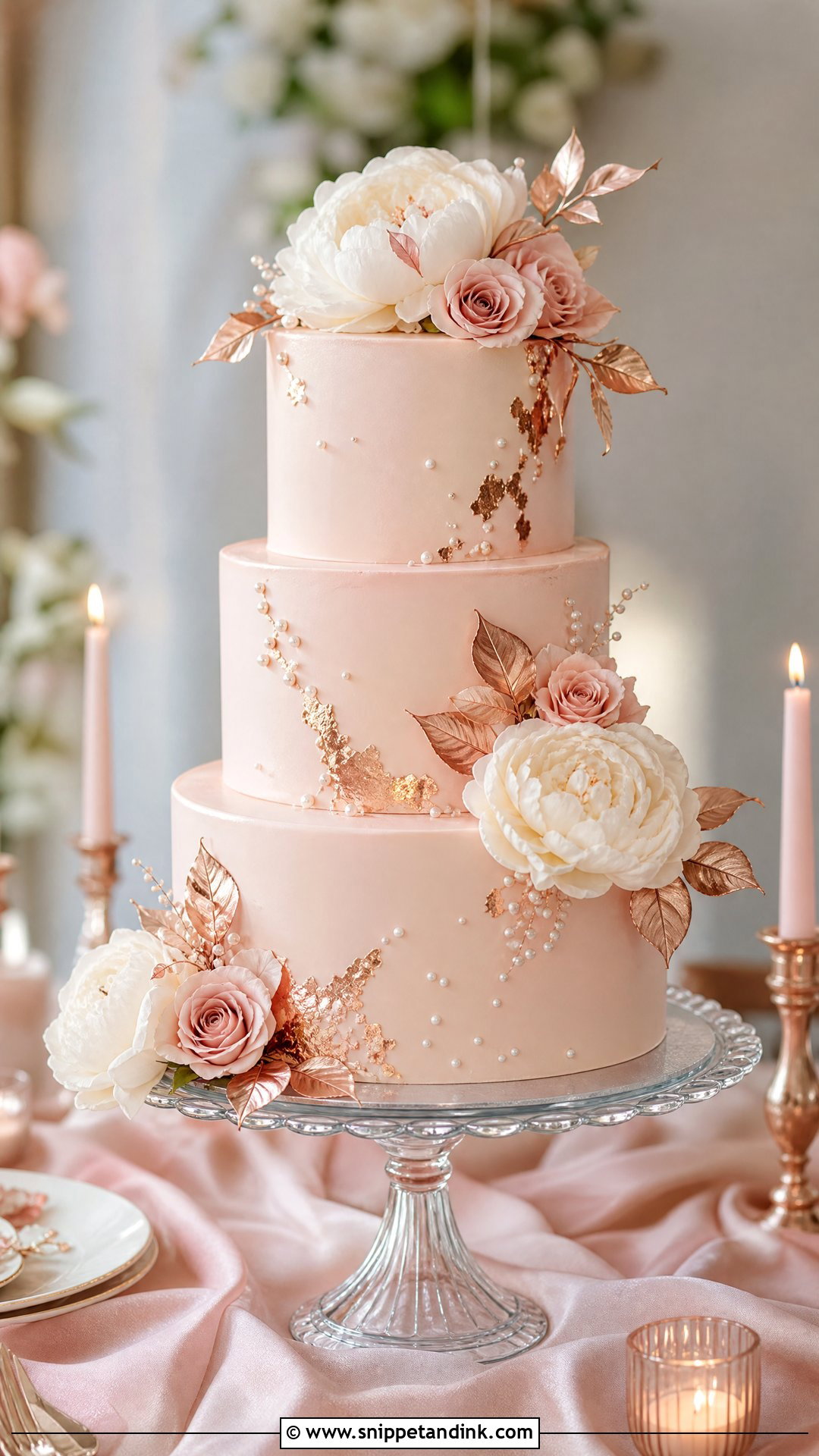
Blush is the shade rose gold sits most comfortably against, because the two share a pink undertone. On smooth buttercream, fondant panels or a lightly textured finish, I bring the rose gold in through sugar leaves, edible pearls, painted edges or a metallic topper. The risk is the two colors melting into one from across the room, so I keep the blush pale and the metallic a few shades deeper. Roses, peonies and lisianthus suit the palette at spring and summer garden weddings, with pink champagne or lemon raspberry sponge inside.
4. White And Rose Gold Wedding Cake
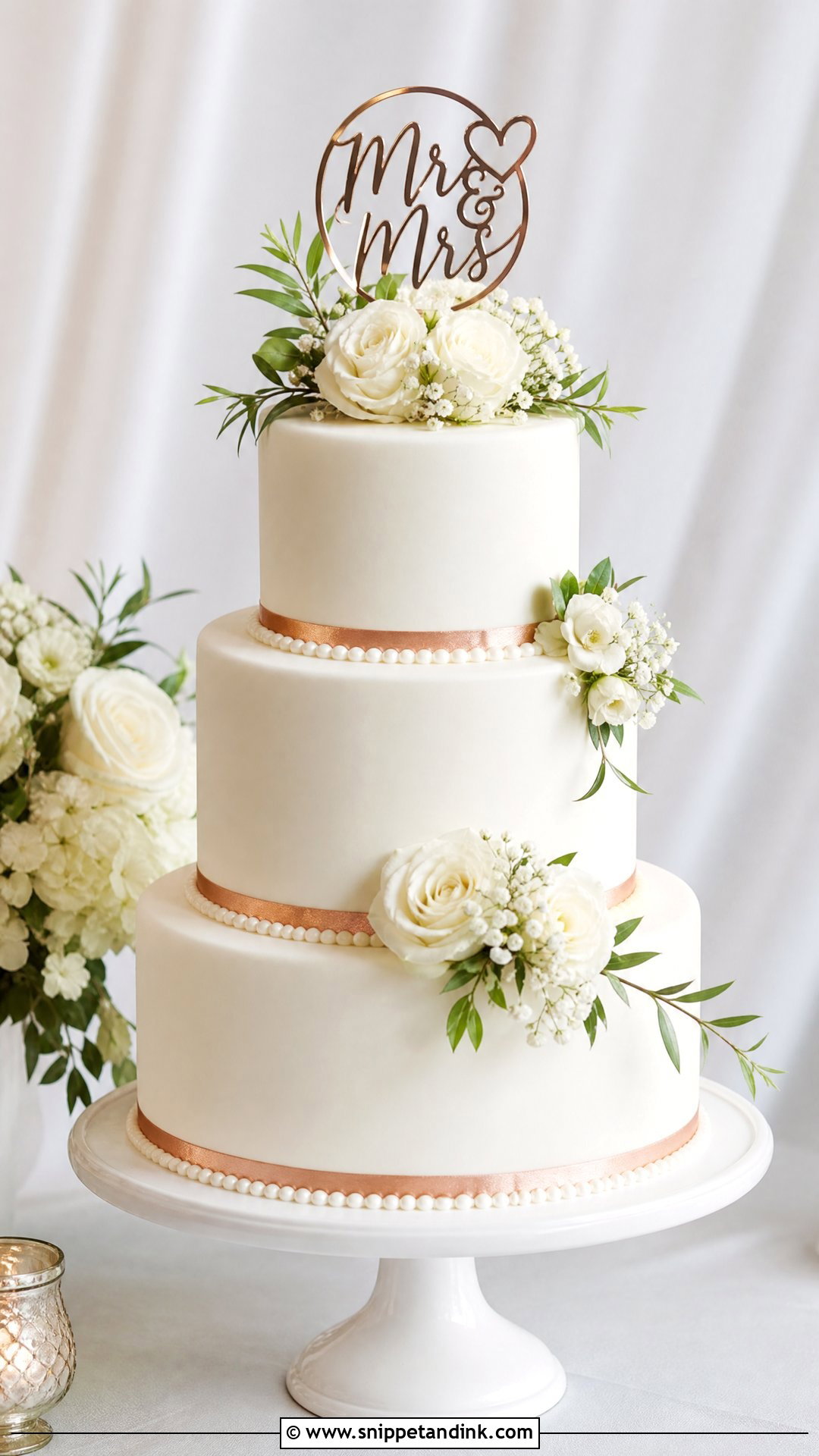
White gives rose gold the most contrast, so even small details read clearly from a distance. Over smooth white fondant or buttercream I’ll add rose gold ribbon, painted trim, metallic leaves or a restrained drip. One accent tier in the middle of a three tier cake looks balanced; put it on the bottom tier and the cake can look heavy. It sits easily beside greenery, candles and white arrangements, and coconut or white chocolate cake keeps the inside as pale as the outside.
5. Rose Gold Sequin Wedding Cake
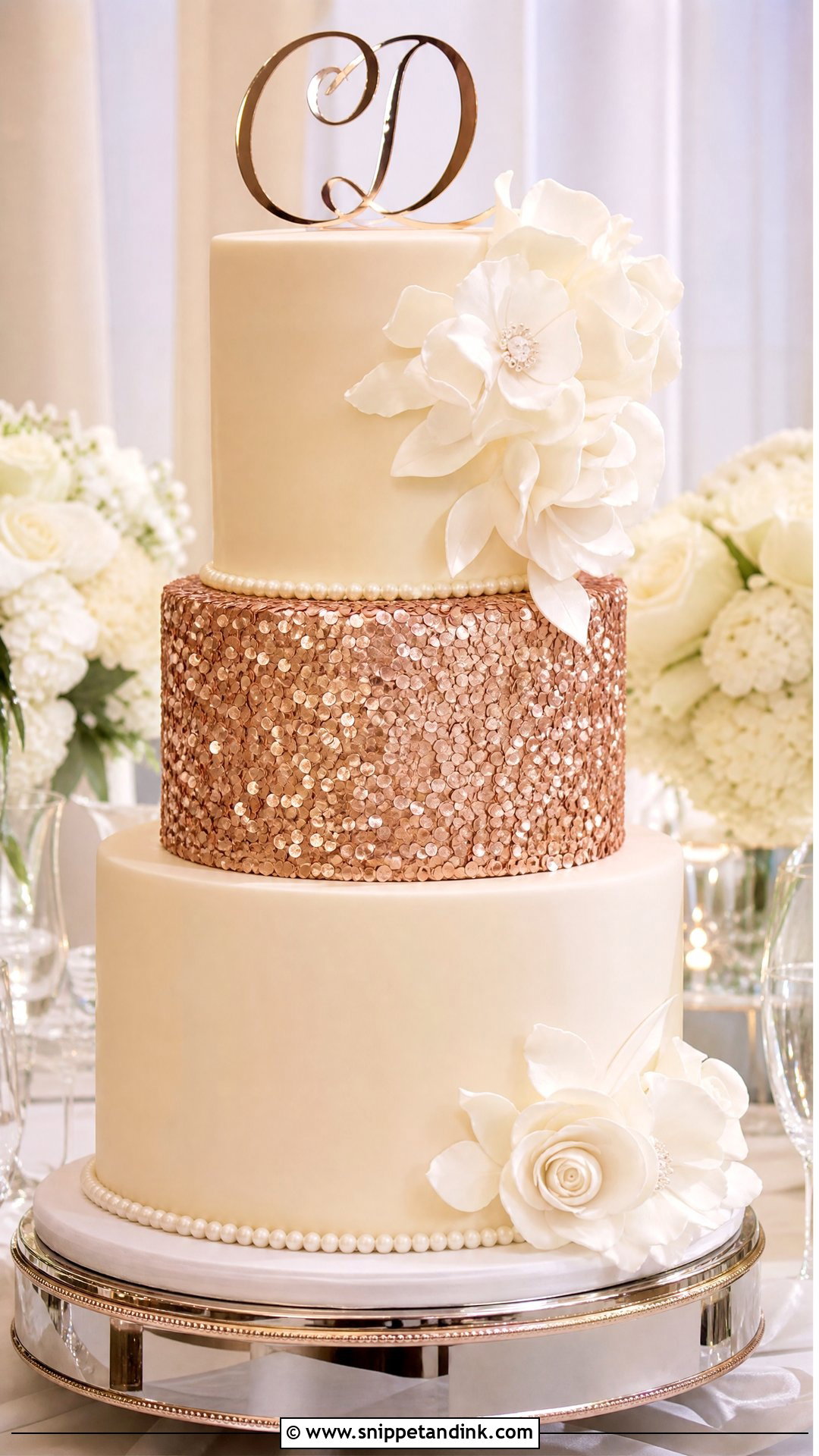
Sequin tiers are covered in small edible sequins, usually gelatin-based, pressed on one section at a time, which is why they take hours and are priced to match. One full tier or a panel on the front is plenty, and set against smooth white or ivory tiers the shine looks intentional. Gelatin sequins soften and lose their shape in humidity, so I keep a sequin cake indoors and away from steamy kitchens until it’s served. White sugar flowers, blush roses or a monogram topper keep it bridal at evening and ballroom receptions, with champagne cake or chocolate raspberry inside.
6. Rose Gold Geometric Wedding Cake
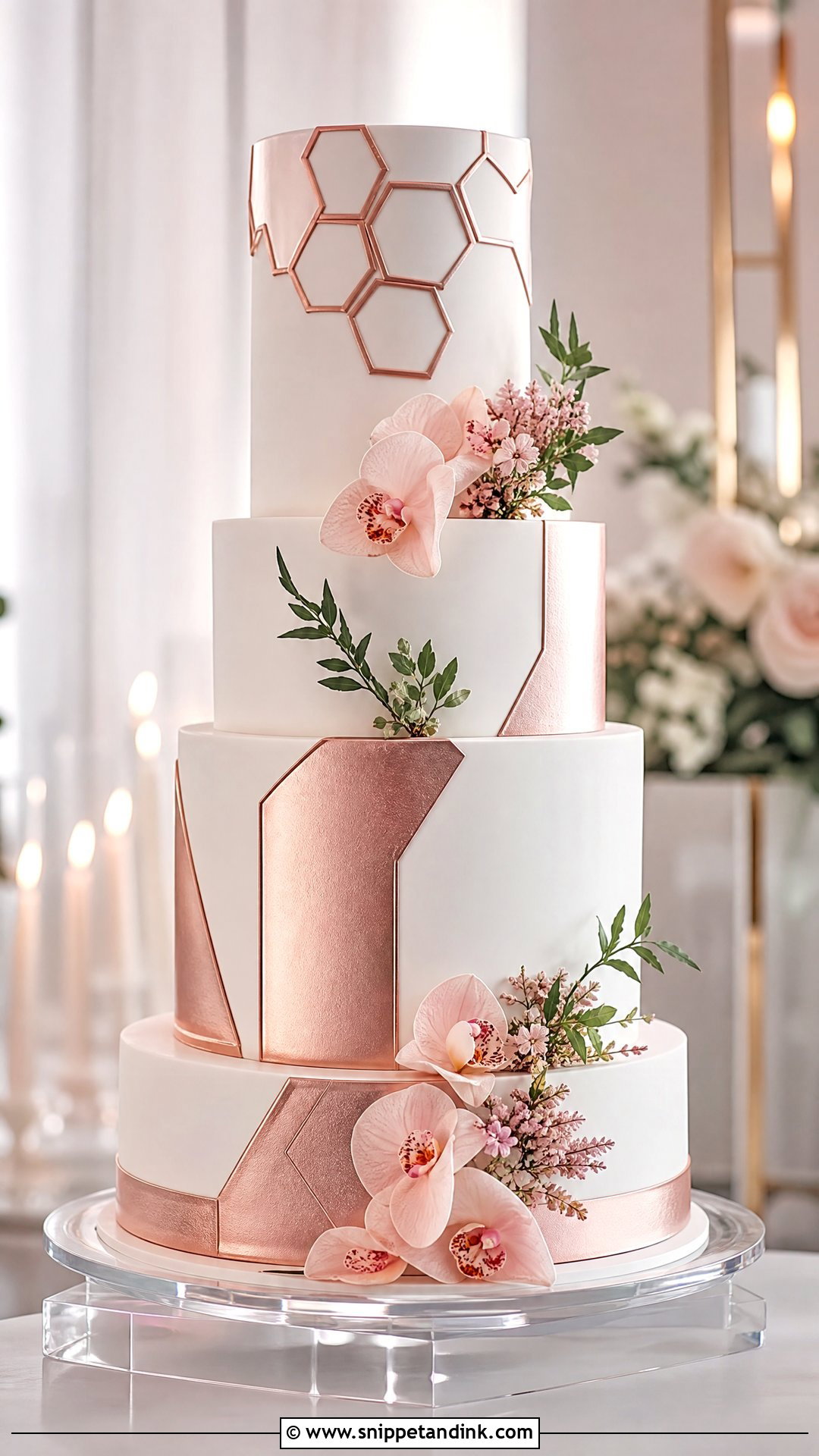
Geometric work depends on sharp edges, so I build these in fondant over a firm ganache coat; buttercream can’t give the crisp corner a hexagon or angled panel needs. White or blush tiers carry metallic hexagons, triangles or painted line patterns, and a tall tier structure helps the lines read. A few fresh flowers can soften it, or skip them for a fully graphic cake. Lofts, galleries and modern hotel ballrooms suit it, and chocolate hazelnut or vanilla latte are good grown-up flavors.
7. Rose Gold Floral Wedding Cake
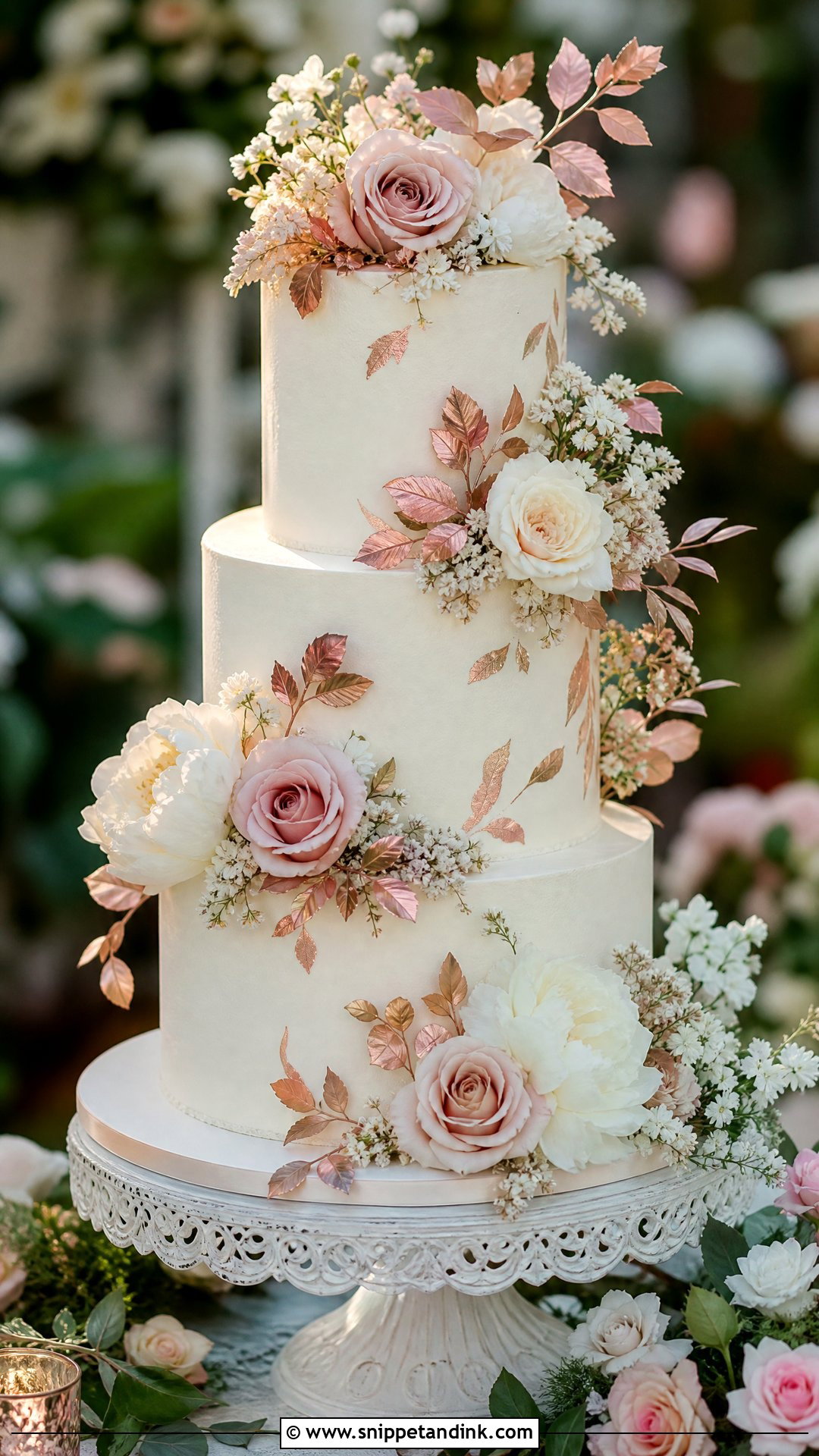
On a floral cake, rose gold becomes the supporting color: painted leaves, metallic stems, sugar foliage or a delicate topper around ivory buttercream or fondant dressed with blush, cream, dusty pink and soft peach flowers. Ask for the flowers placed in a natural flow rather than covering the whole cake. I paint metallic onto sugar leaves, never onto fresh ones, because painted fresh foliage shouldn’t be resting on something people will eat. Lemon elderflower or vanilla raspberry suit garden, ballroom and outdoor weddings.
8. Rose Gold Ombre Wedding Cake
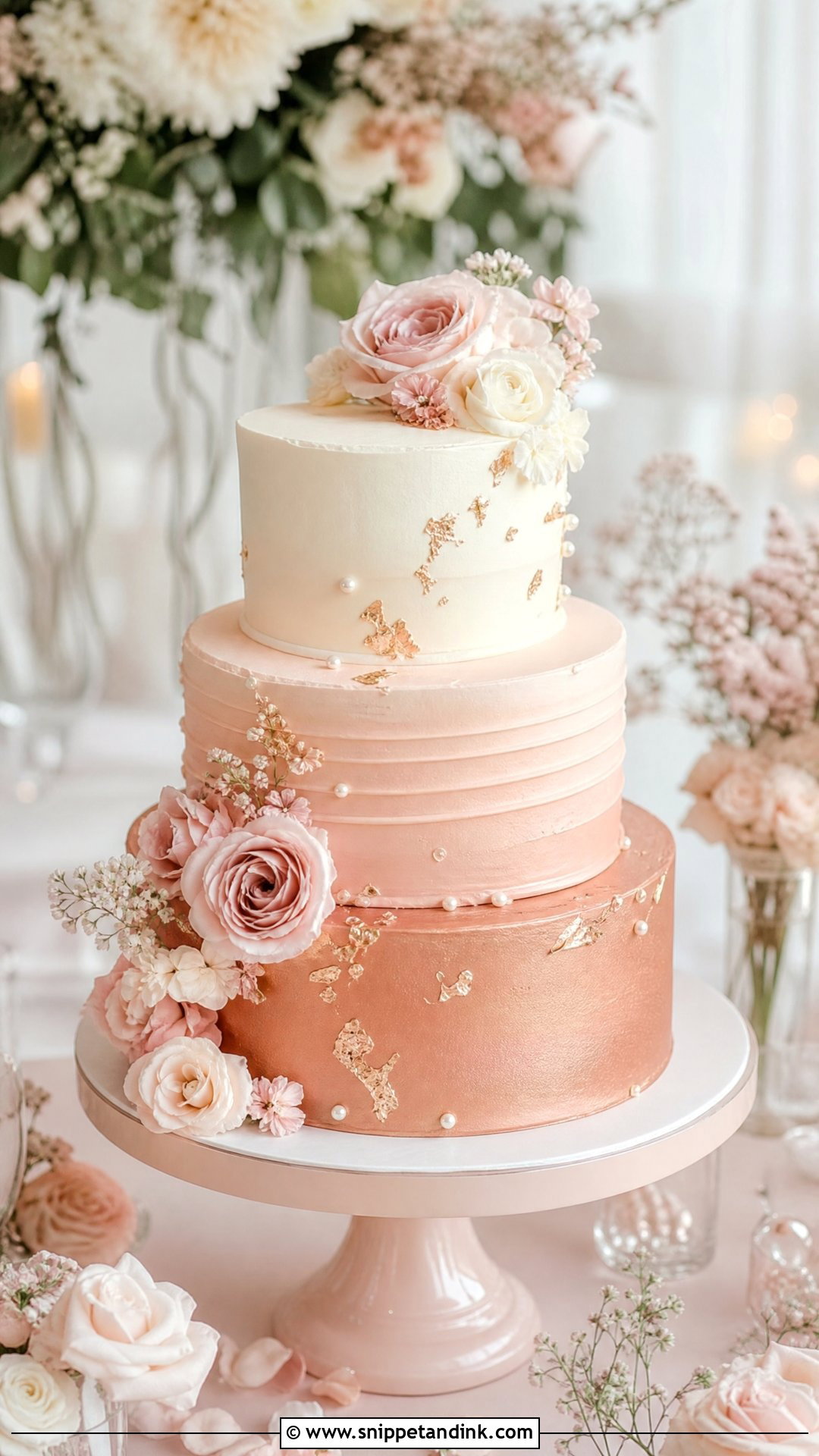
Ombre is easier in buttercream than fondant, because I can blend each tier’s color while the frosting is still soft. The fade usually runs from ivory at the top through blush to the deepest rose at the base, so the heaviest color sits lowest and the cake looks grounded. Buttercream can’t actually be tinted metallic, it tops out at a dusty pink, so the rose gold comes from leaf, painted rosettes or a few fresh flowers. Keep the steps between tiers gradual or they look like separate cakes. Strawberry or champagne sponge fits the palette.
9. Rose Gold Pearl Wedding Cake
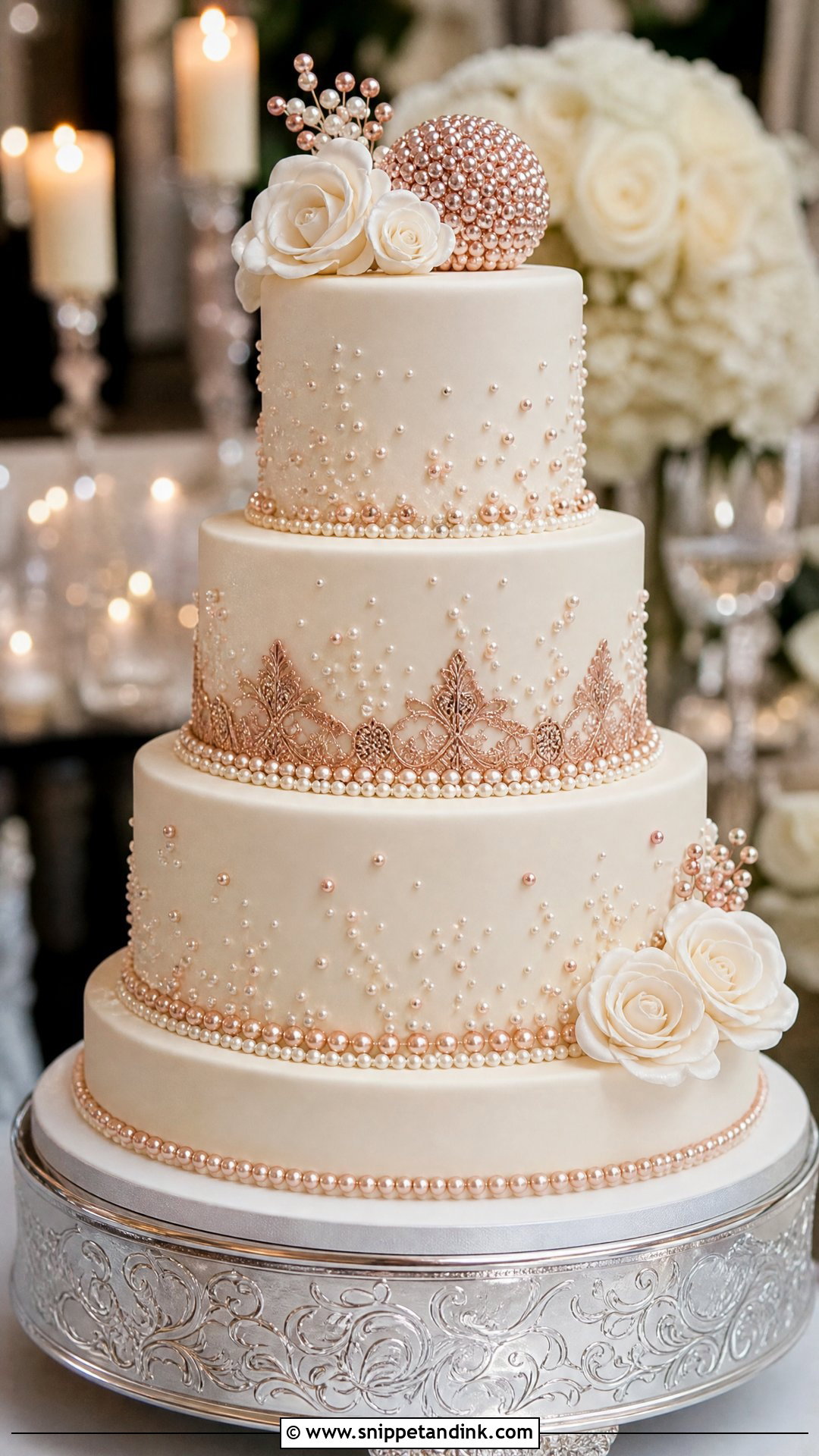
Pearls with rose gold read as classic. I start with white or ivory tiers and add edible pearls, rose gold beadwork, metallic lace or pearl borders. Scattered lightly, they look relaxed; set in neat rows, they look tailored, and that second version takes far longer because every pearl goes on by hand with tweezers. Soft white roses or a pearl topper finish it. Large sugar pearls are hard on teeth, so I keep the big ones away from the slice edges. Vanilla bean or coconut cream suits traditional and vintage-leaning receptions.
10. Rose Gold Lace Wedding Cake
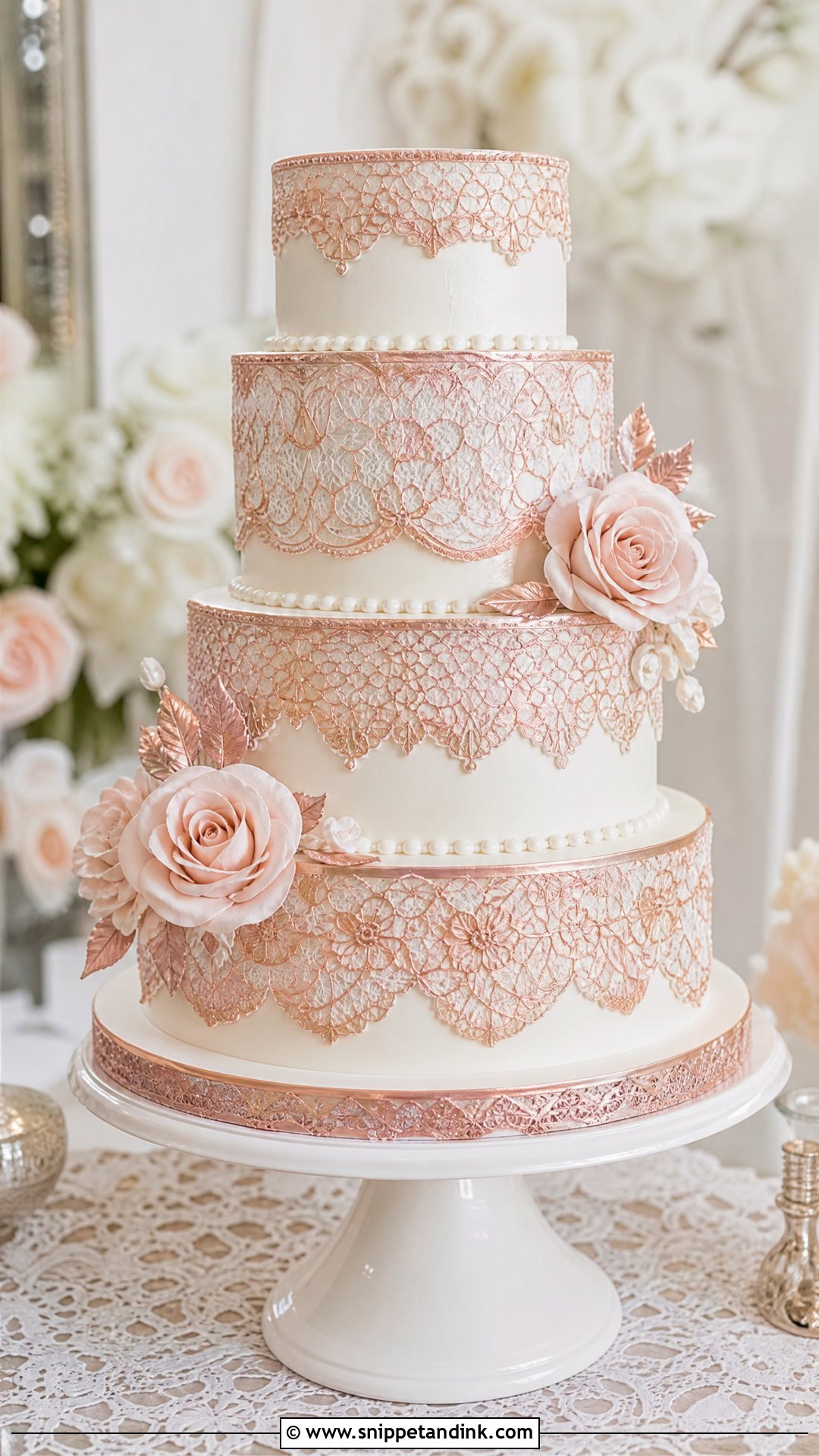
Lace can be piped, stenciled through a mesh with royal icing, or cut from edible lace sheets laid over white or blush fondant. Rose gold dust brushed lightly over the raised pattern makes the texture show. Stenciled lace gives the cleanest repeat, piped lace the most depth. Edible lace sheets go limp or stick in damp air, so I apply them close to delivery. A simple three tier round keeps the lace the focus, with vanilla almond or champagne cake inside, and it sits naturally beside a lace gown and candlelight.
11. Rose Gold Ruffle Wedding Cake
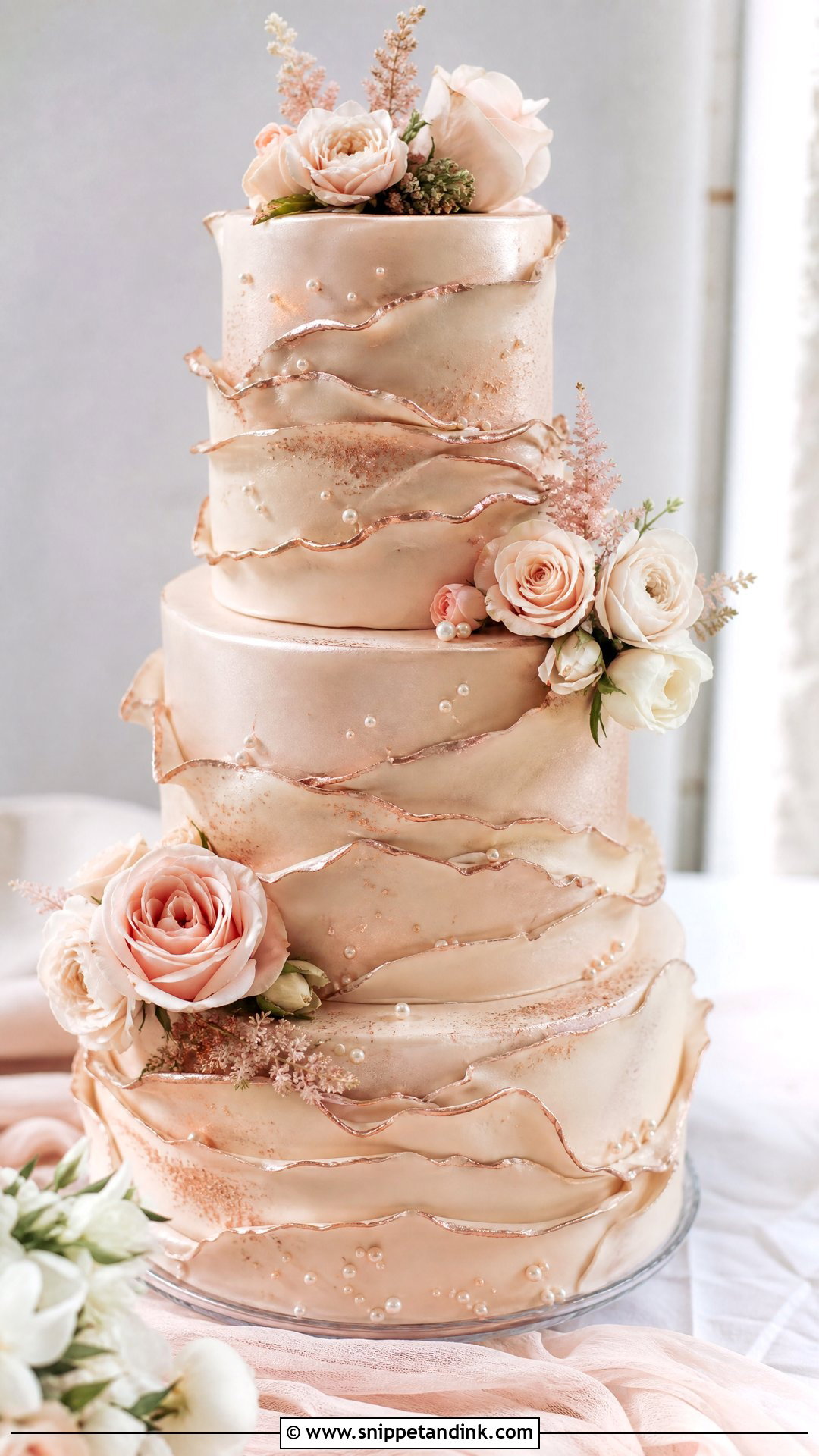
Ruffles bring movement, and I make them in fondant when a cake has to stand for hours, because buttercream ruffles slowly droop in a warm room. Ivory or blush ruffles with rose gold painted along their edges catch light on every fold. One ruffled tier among smooth ones keeps it modern; ruffles on every tier lean vintage. Flowing flowers and soft linens suit it, with vanilla, strawberry or lemon raspberry underneath.
12. Rose Gold Buttercream Wedding Cake
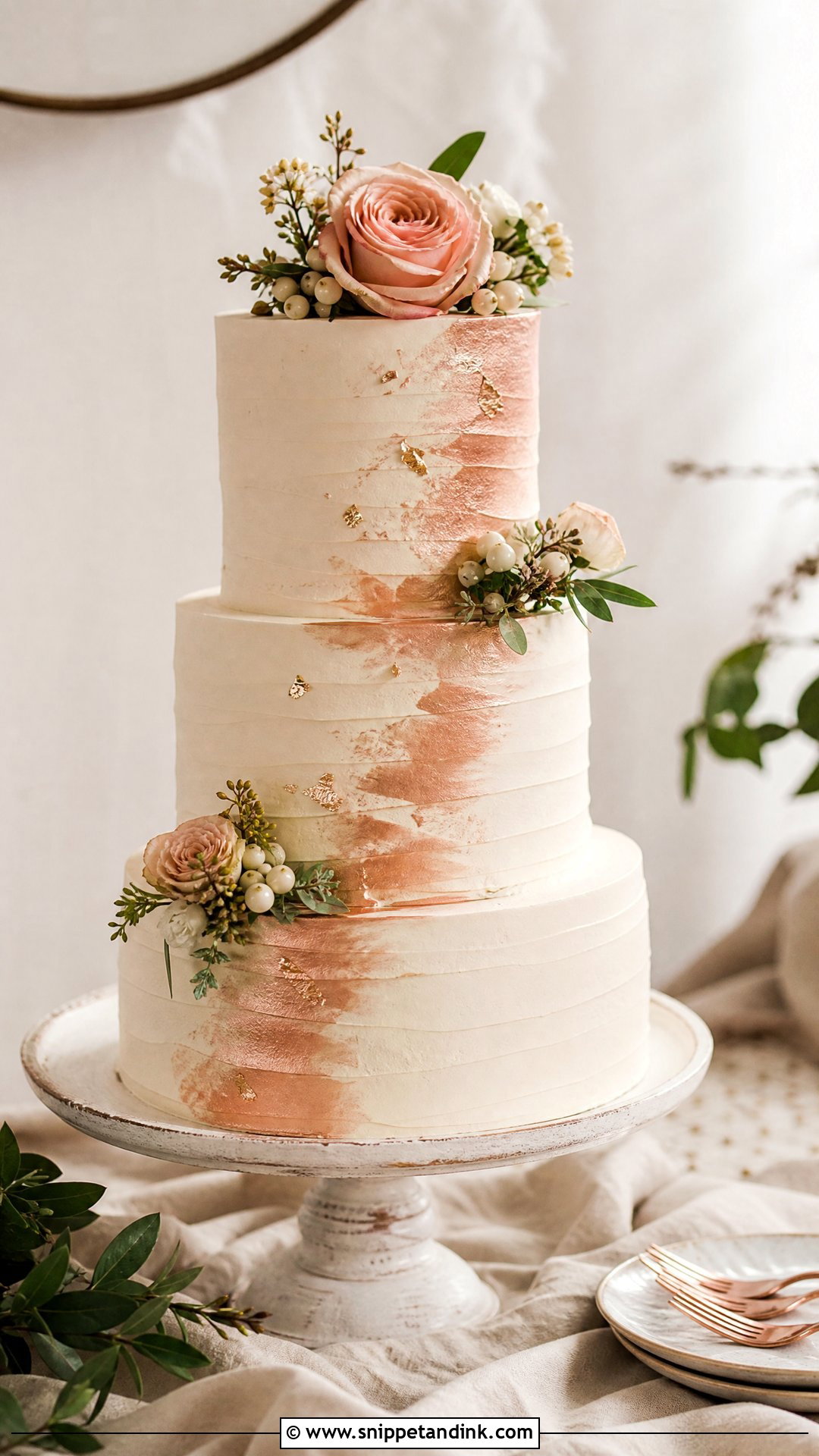
For a softer, less formal finish, a rose gold buttercream wedding cake is the friendliest option here. The frosting can be smooth, lightly textured or swept with horizontal palette-knife strokes, and rose gold leaf, painted strokes or a metallic drip add the shine. Leaf grips chilled buttercream well but slides on soft frosting, so I apply it with the cake straight from the fridge. Fresh flowers, berries or greenery suit rustic and garden receptions, and almost any flavor works under buttercream.
13. Rose Gold Fondant Wedding Cake
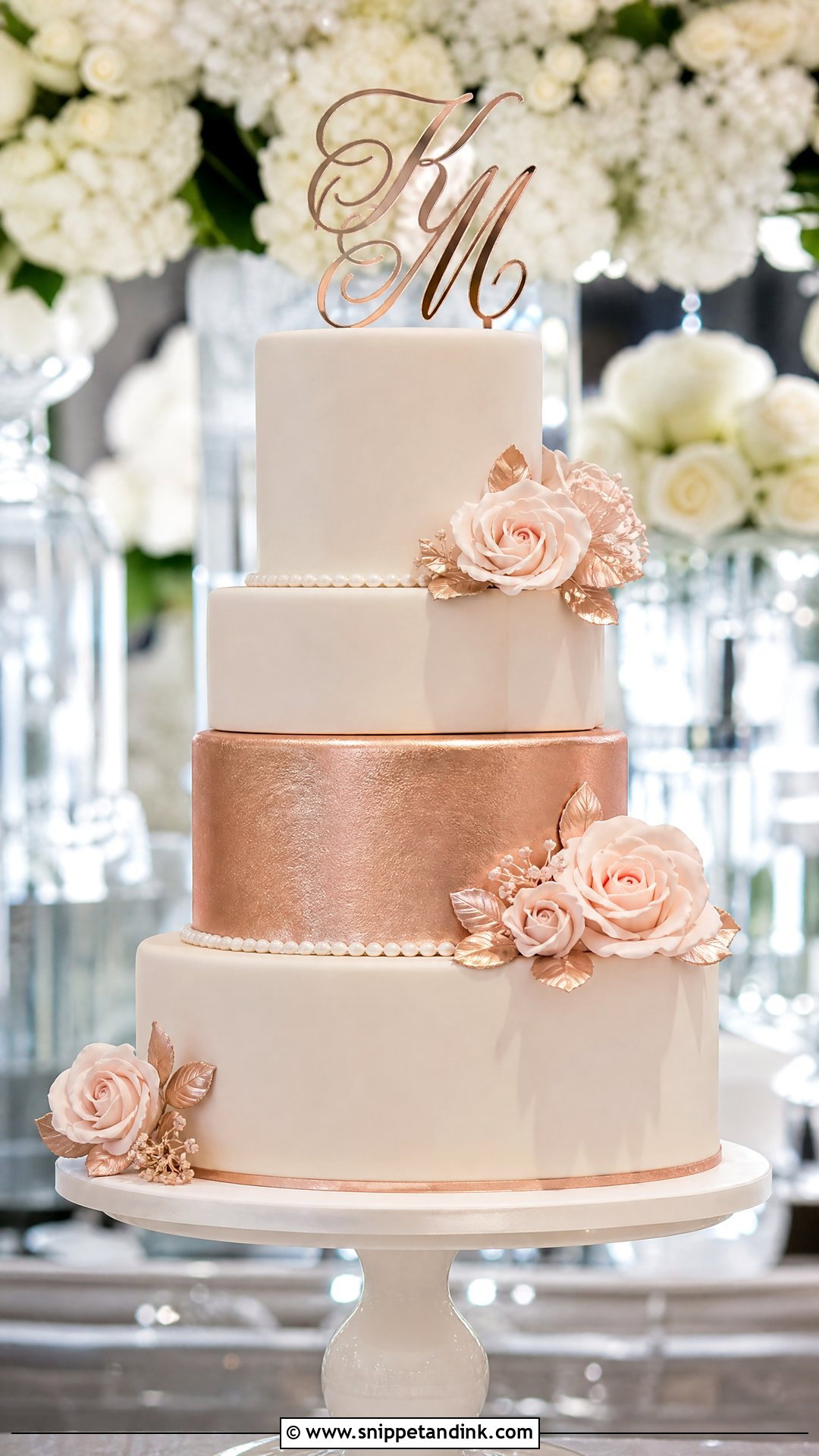
Fondant gives the smooth, firm surface metallic paint loves, which is why I recommend it for any design with a full rose gold tier. Painted metallic on buttercream tends to streak; on fondant it goes on evenly in two thin coats. One full rose gold tier between white ones, or ivory tiers with metallic accents, both work. Fondant also holds its shape in warmer rooms, which matters at formal receptions where the cake stands for hours. A monogram, sugar roses or pearls finish it, with almond or champagne cake inside. The trade-off is taste: plenty of guests peel fondant off.
14. Rose Gold Leaf Wedding Cake
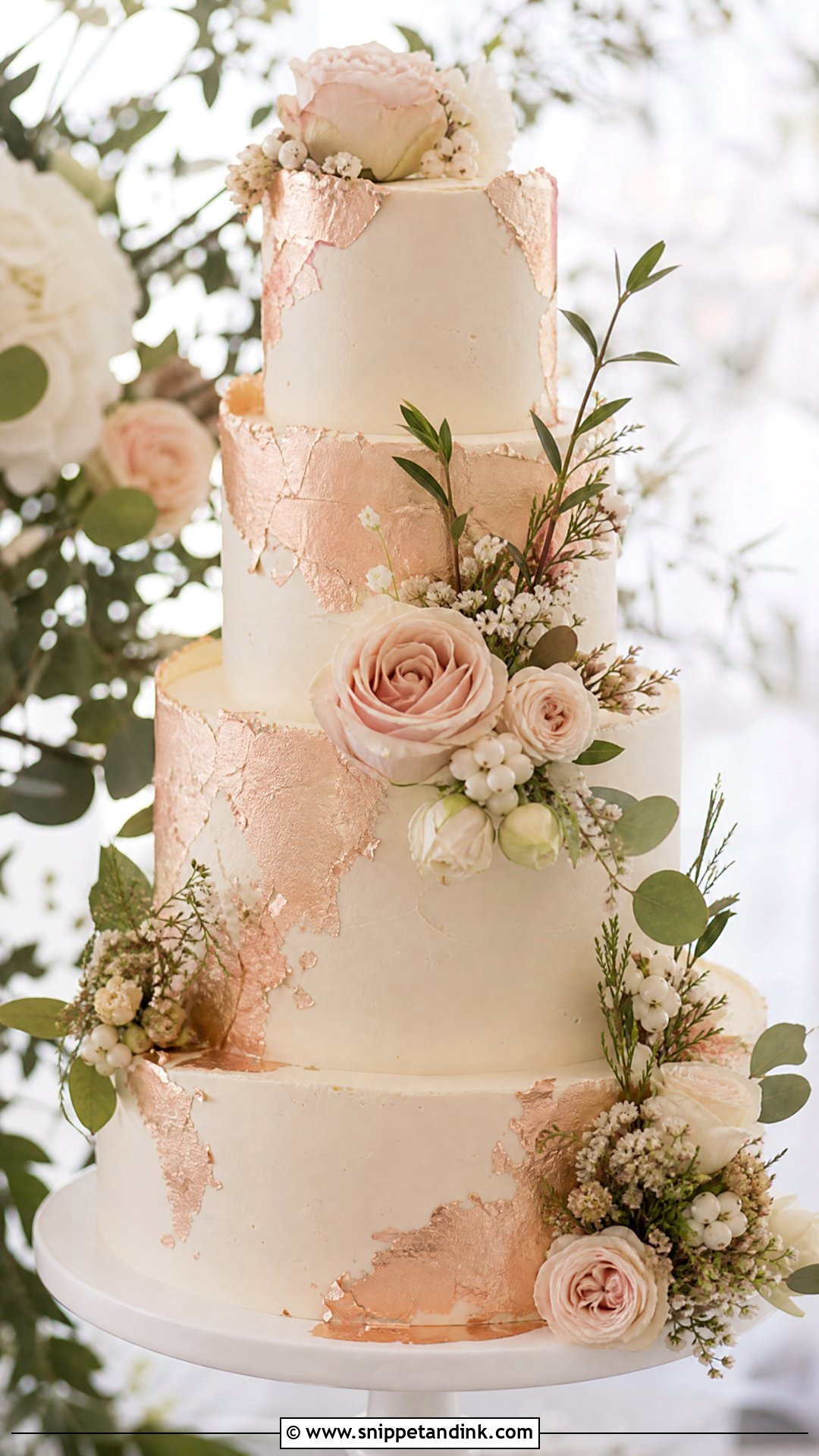
Leaf is the most handmade-looking way to add rose gold. I tear it into broken patches and press them along the edges, the lower tier or one side, rather than covering the cake. Loose leaf is so thin it clings to dry fingers, so I lift it with a soft brush or tweezers. It works over smooth white buttercream, blush fondant or watercolor frosting. Keep flowers sparing, since the leaf is already a strong detail. Pistachio or vanilla raspberry cake suits it.

15. Rose Gold Watercolor Wedding Cake
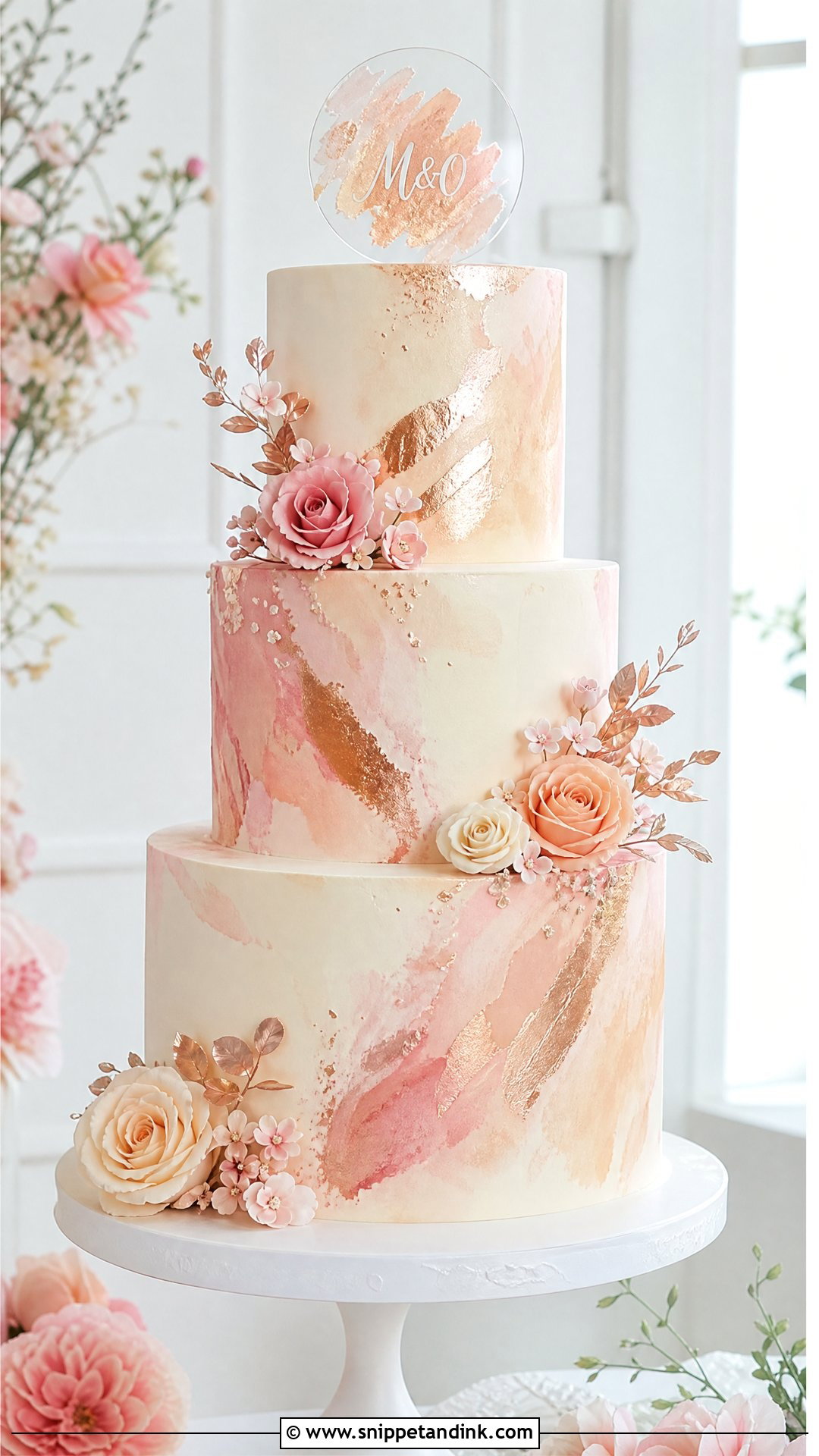
Watercolor frosting is built by spreading small amounts of blush, ivory, peach and champagne buttercream and smoothing them together with a scraper, so no two cakes come out identical. I add a few metallic rose gold strokes once the surface has chilled. It looks best airy; too many dark patches read muddy rather than painted. A small flower cluster, gold-dusted leaves or a clear acrylic topper finishes it. Lemon or white chocolate raspberry suits spring and outdoor receptions.
16. Rose Gold Naked Wedding Cake
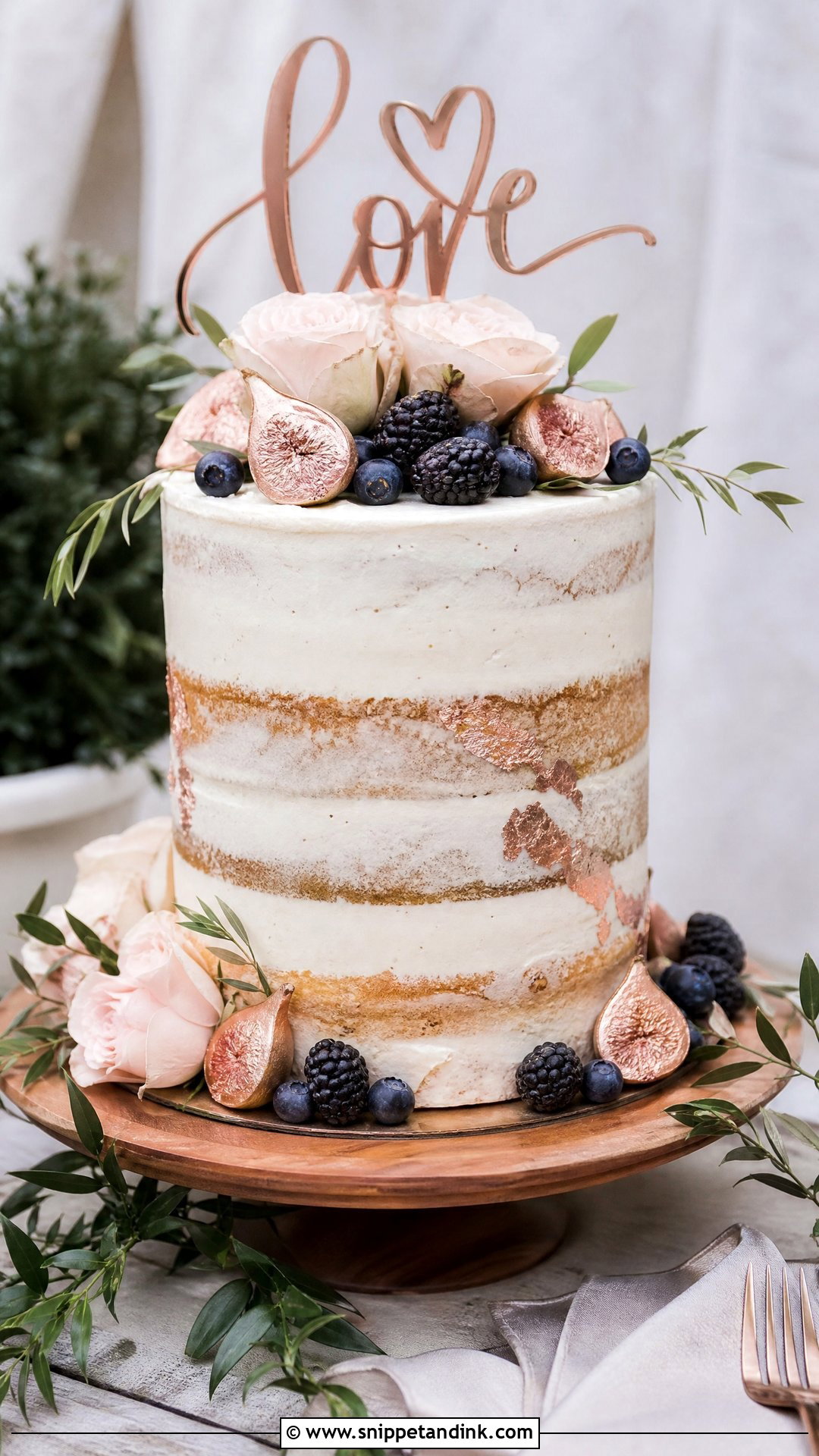
I’d recommend this one to outdoor summer couples with some caution. A rose gold naked wedding cake shows its layers through a thin coat, so the sponge is exposed and dries out faster than a fully frosted cake; it should be finished as close to the event as possible. Rose gold comes in through a metallic topper, painted figs or berries, edible leaf or a slim ribbon around each tier. Fresh roses, berries and greenery add texture at barn and garden receptions. Carrot cake and chocolate look rich with their layers on show.
17. Rose Gold Macaron Wedding Cake
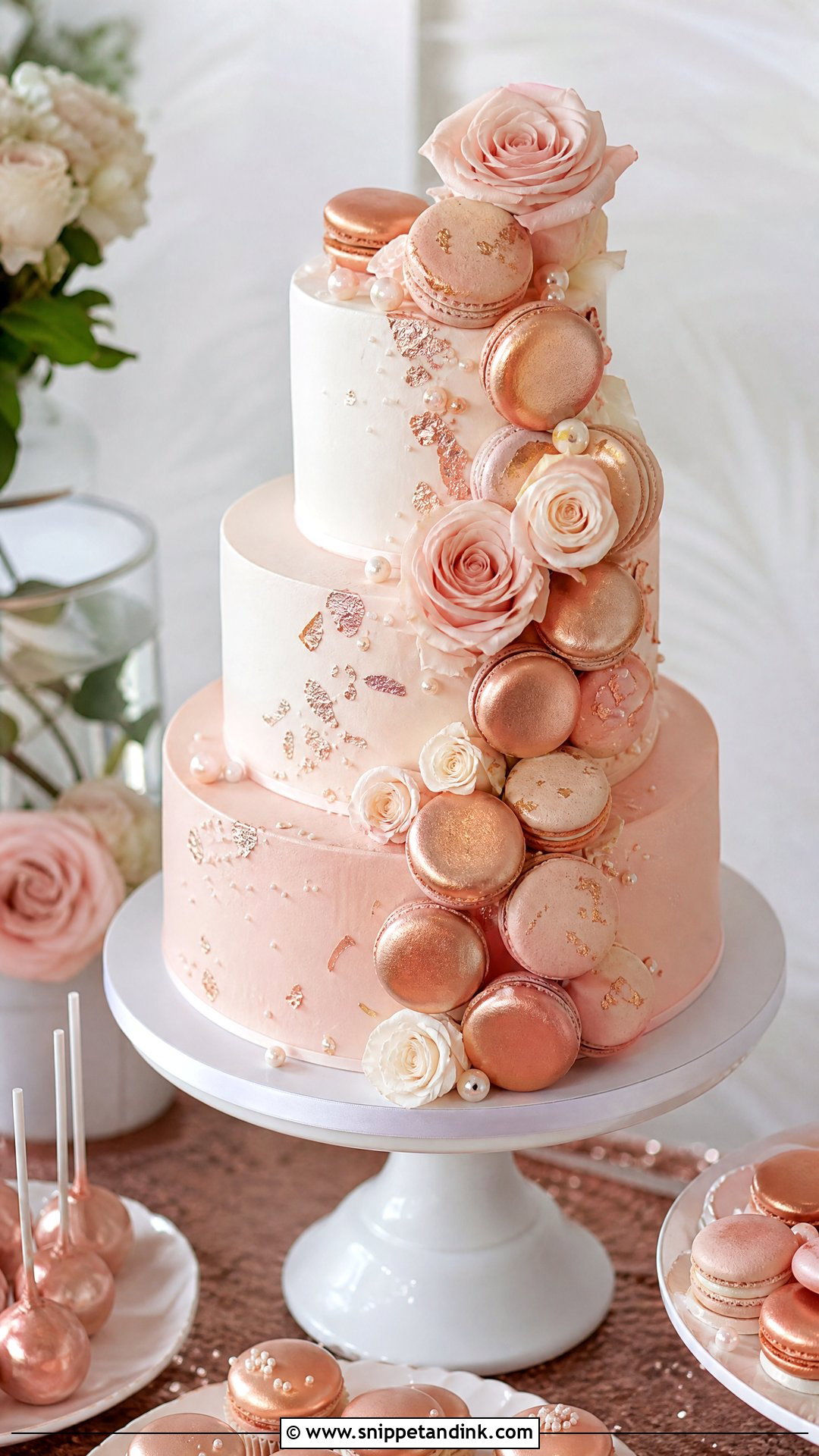
Macarons are soft and soak up moisture from frosting, so I attach them as late as possible, ideally on site, with a dab of ganache rather than buttercream. Around a white, blush or champagne cake they can ring the tiers or climb one side. Rose gold painted macarons, edible shimmer and soft florals tie it together, and matching treats on the dessert table extend the look. French-inspired and modern receptions suit it. Pistachio or raspberry cake echoes the macaron flavors.
18. Rose Gold Cupcake Wedding Cake
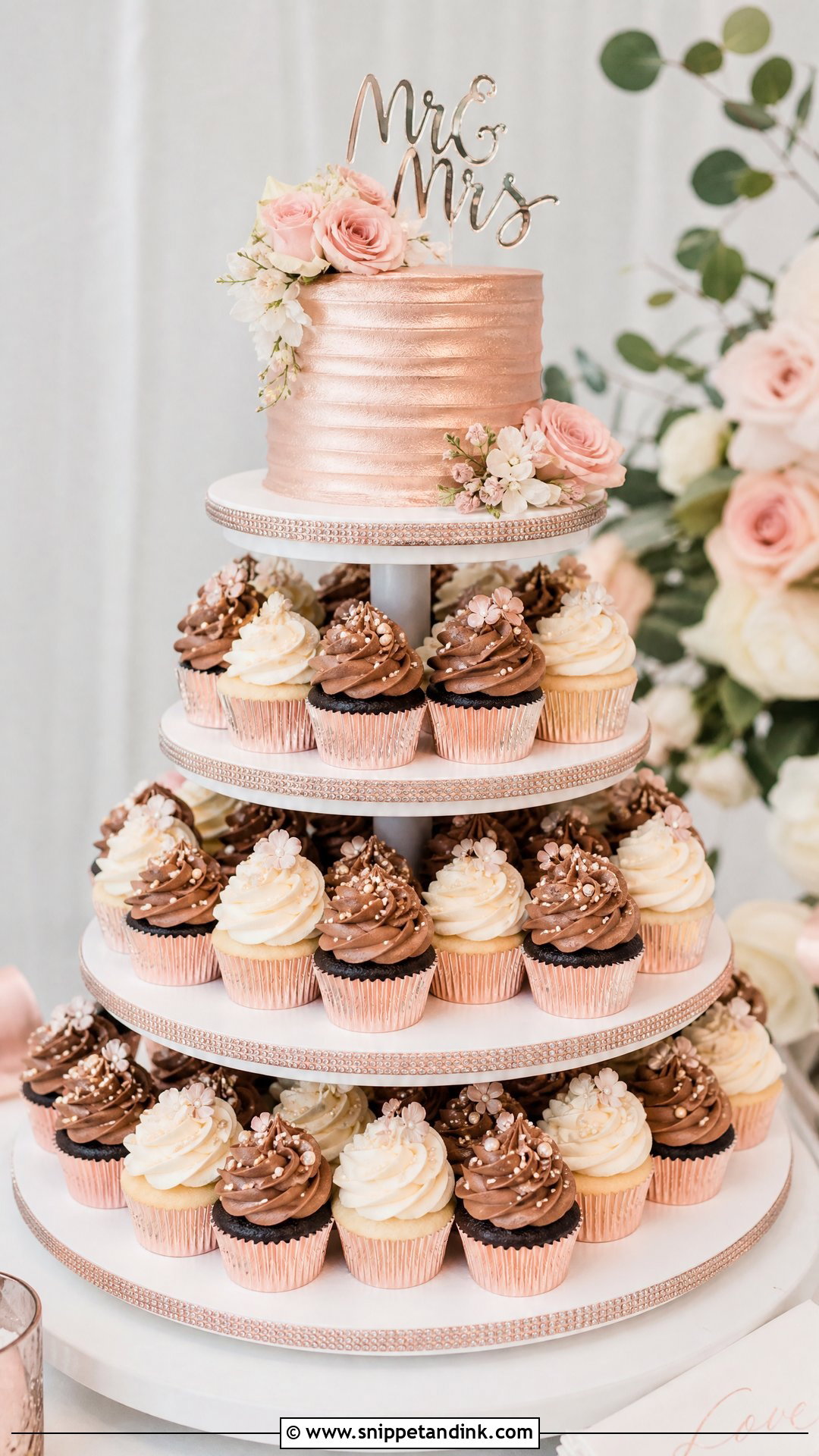
A cupcake tower is the easiest way to serve a crowd with no cutting at all. The display usually has a small cutting cake on top and matching cupcakes on a tiered stand below. Rose gold foil wrappers, shimmer buttercream, pearl sprinkles and tiny sugar flowers make the whole thing read as one cake. Swirled cupcake frosting softens fast in heat, so plan shade for an outdoor display. Several flavors are easy here, since each guest simply picks one, and a rose gold topper or drip on the cutting cake ties it together.
19. Rose Gold Tall Wedding Cake
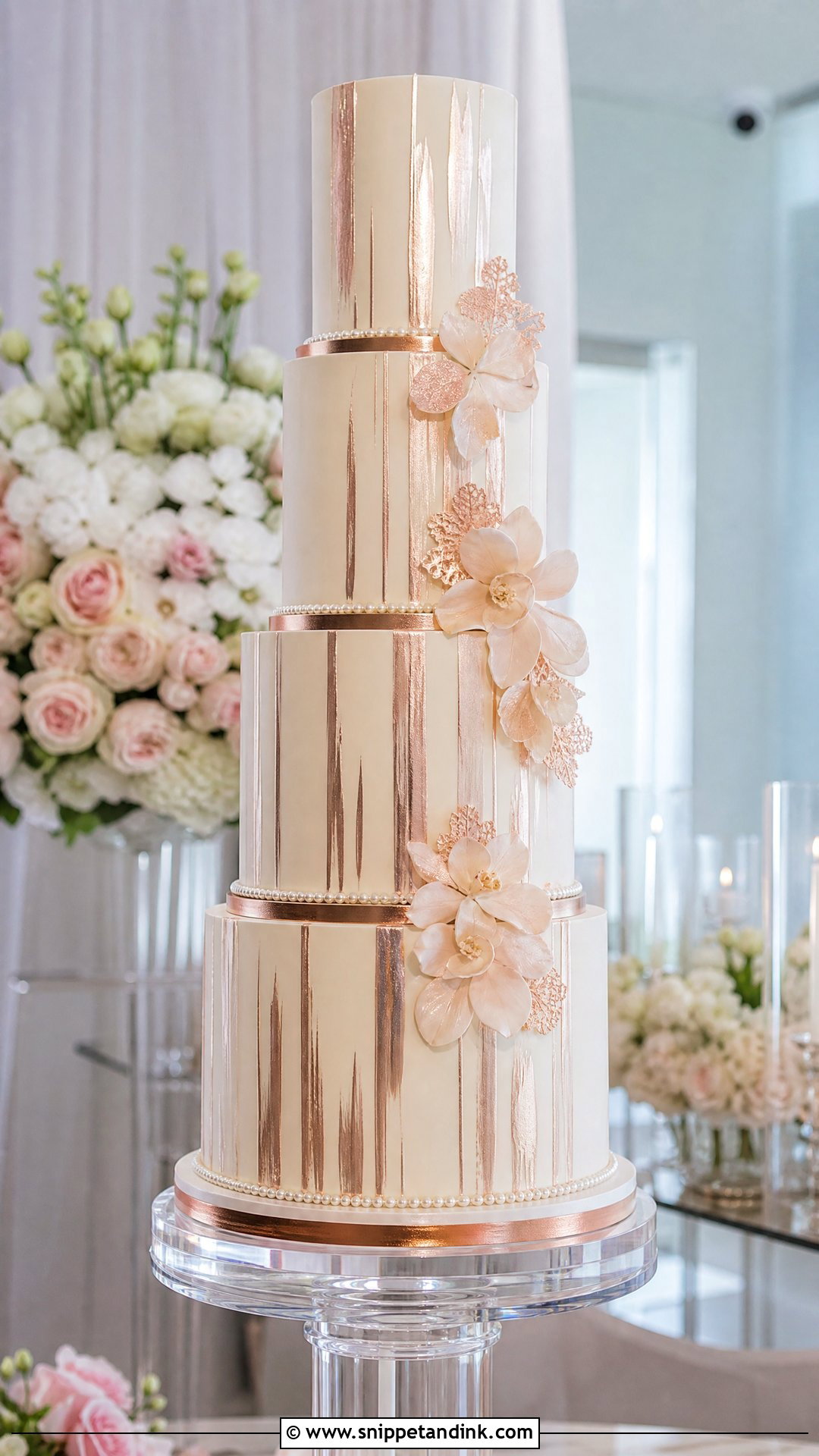
Extra-tall tiers, often double-height barrels, need a support board halfway up inside them or they bulge under their own weight, so check that your baker builds them that way. They give a sleek, editorial shape in smooth buttercream or fondant. Rose gold should run vertically too: painted lines, metallic trim, edible leaf or a slim drip. Flowers that climb upward keep the line long instead of spreading wide. Hotel, ballroom and modern venues suit it, with champagne or coconut cake inside.

20. Rose Gold Square Wedding Cake
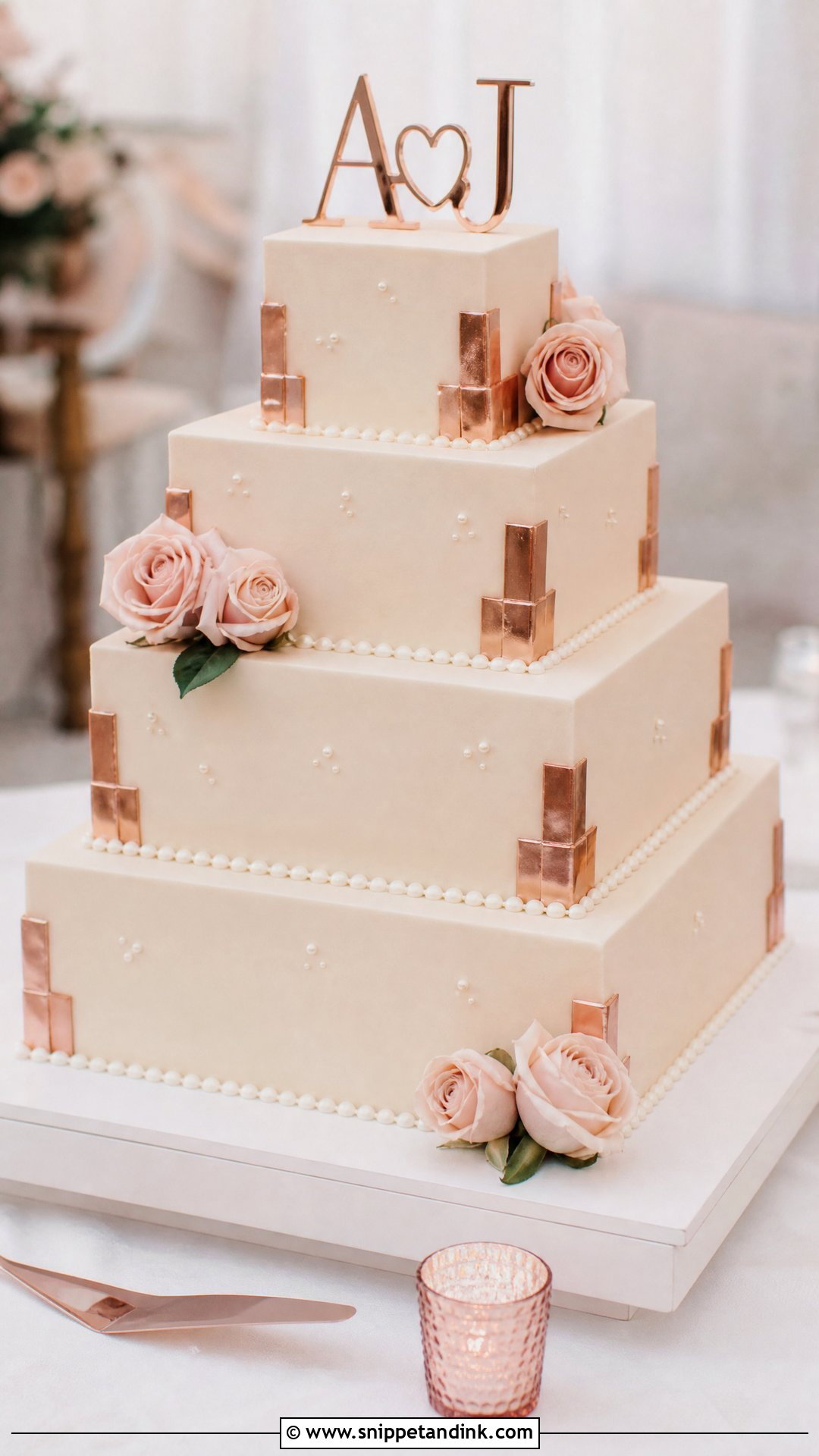
Square tiers are harder to cover than rounds. Corners crack or tear in fondant and blunt in buttercream, so they show a decorator’s skill quickly. Done well, they give clean lines for metallic edging, marble panels or geometric accents. Smooth frosting highlights the shape, with a few flowers at the corners or a simple topper for balance. Square tiers also cut into neat, even slices, which caterers appreciate. Espresso or chocolate cake suits the structure in contemporary and formal spaces.
21. Rose Gold Single Tier Wedding Cake
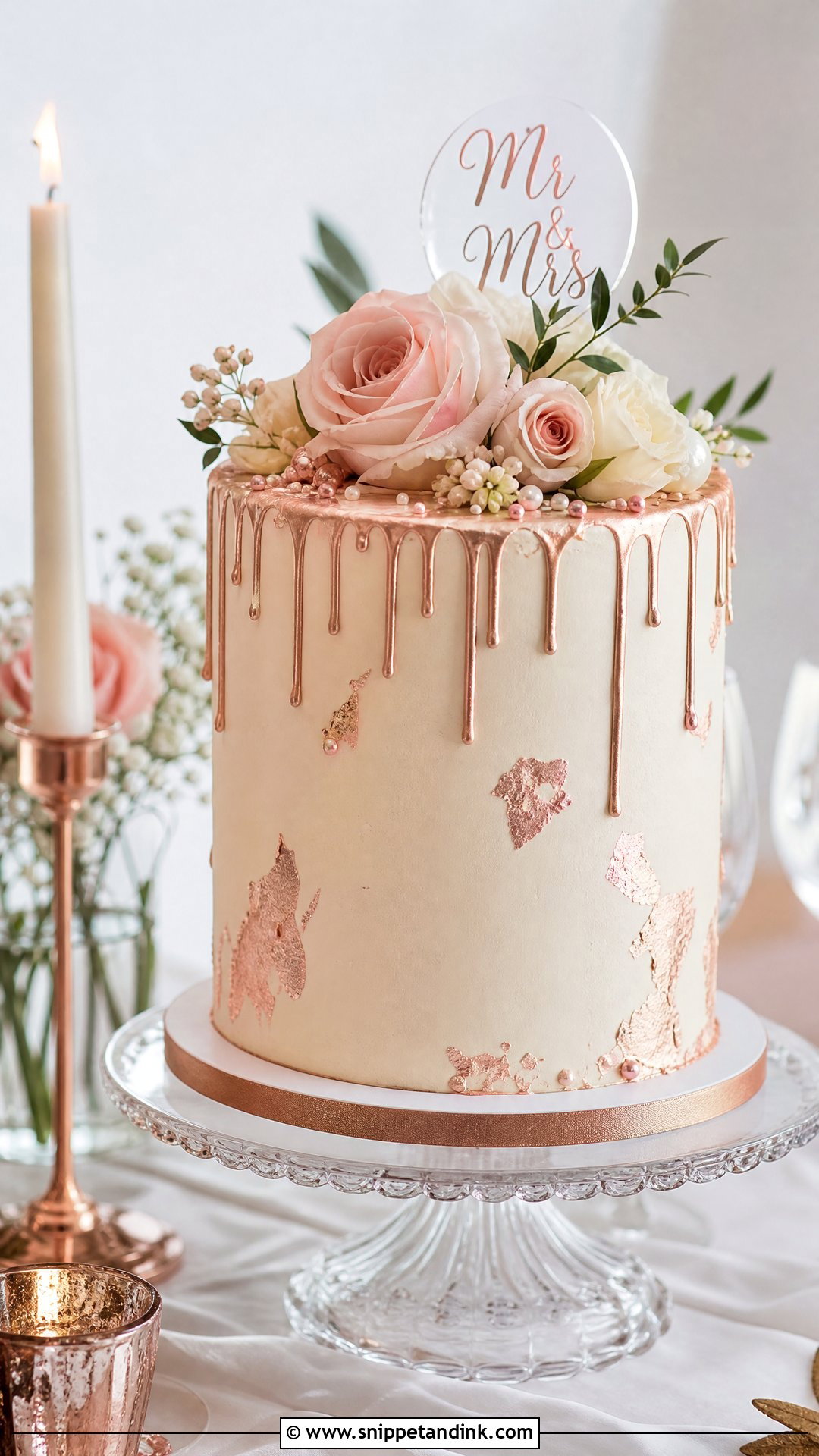
For elopements and micro weddings, one tier is often all you need. A rose gold single tier wedding cake still feels bridal with smooth buttercream, a metallic drip, leaf or a few fresh flowers. I’d go taller rather than wider for presence: a six or eight inch cake built extra tall and set on a good stand looks far more deliberate in photos. It’s also one of the gentler options on budget. Keep the decoration focused, and lemon raspberry or strawberry champagne make good fillings.
22. Rose Gold Three Tier Wedding Cake
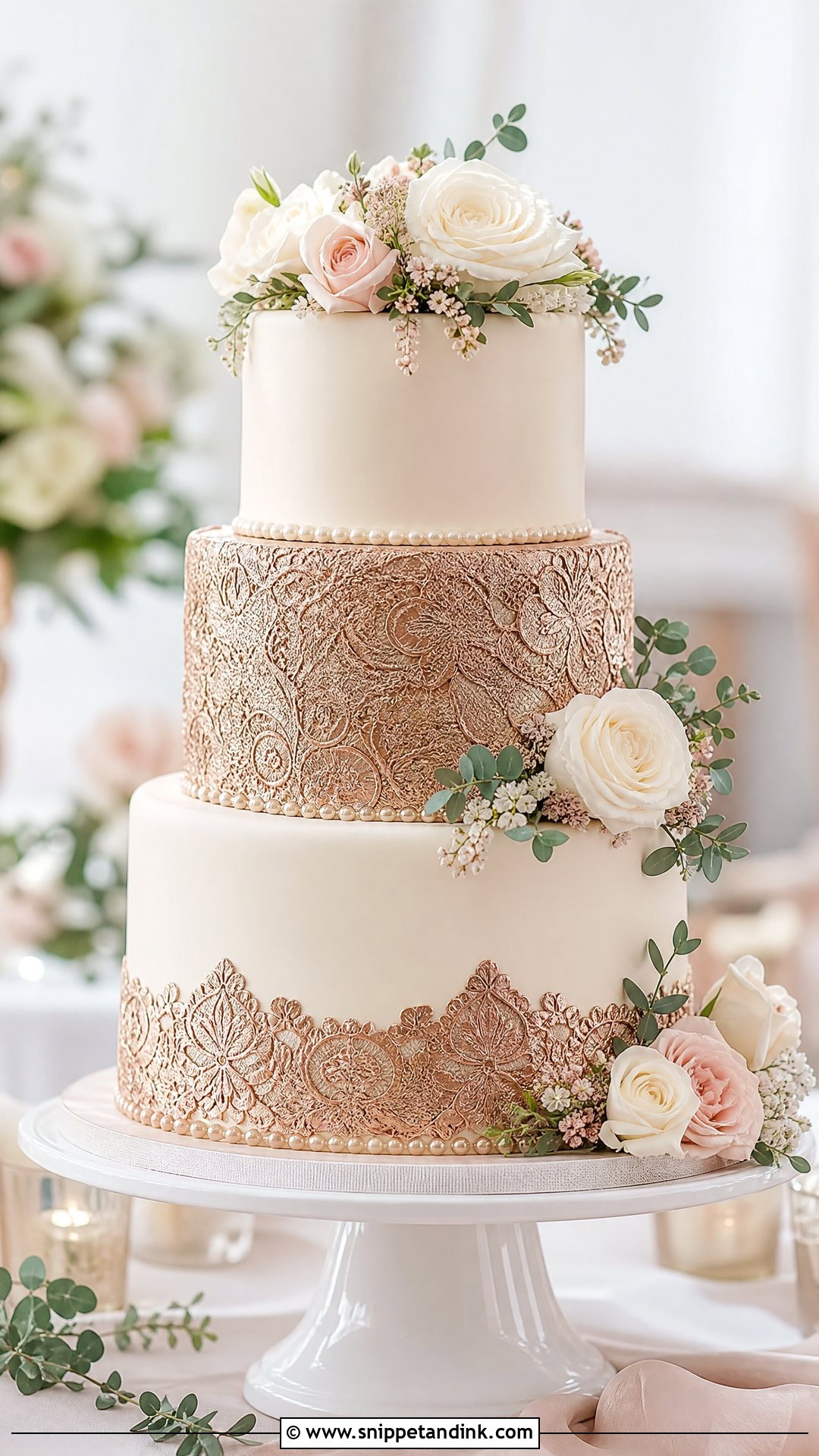
Three tiers is the size I build most for mid-sized receptions, and it gives each tier room to do something different, say smooth ivory buttercream, rose gold lace and blush flowers. Or make one tier fully metallic and keep the others plain. I usually put the busiest tier in the middle so the eye lands at the center of the cake. Round, square or mixed shapes all work, with a floral cascade, pearl trim or a personal topper. A different flavor per tier lets guests choose.
23. Rose Gold Floral Cascade Wedding Cake
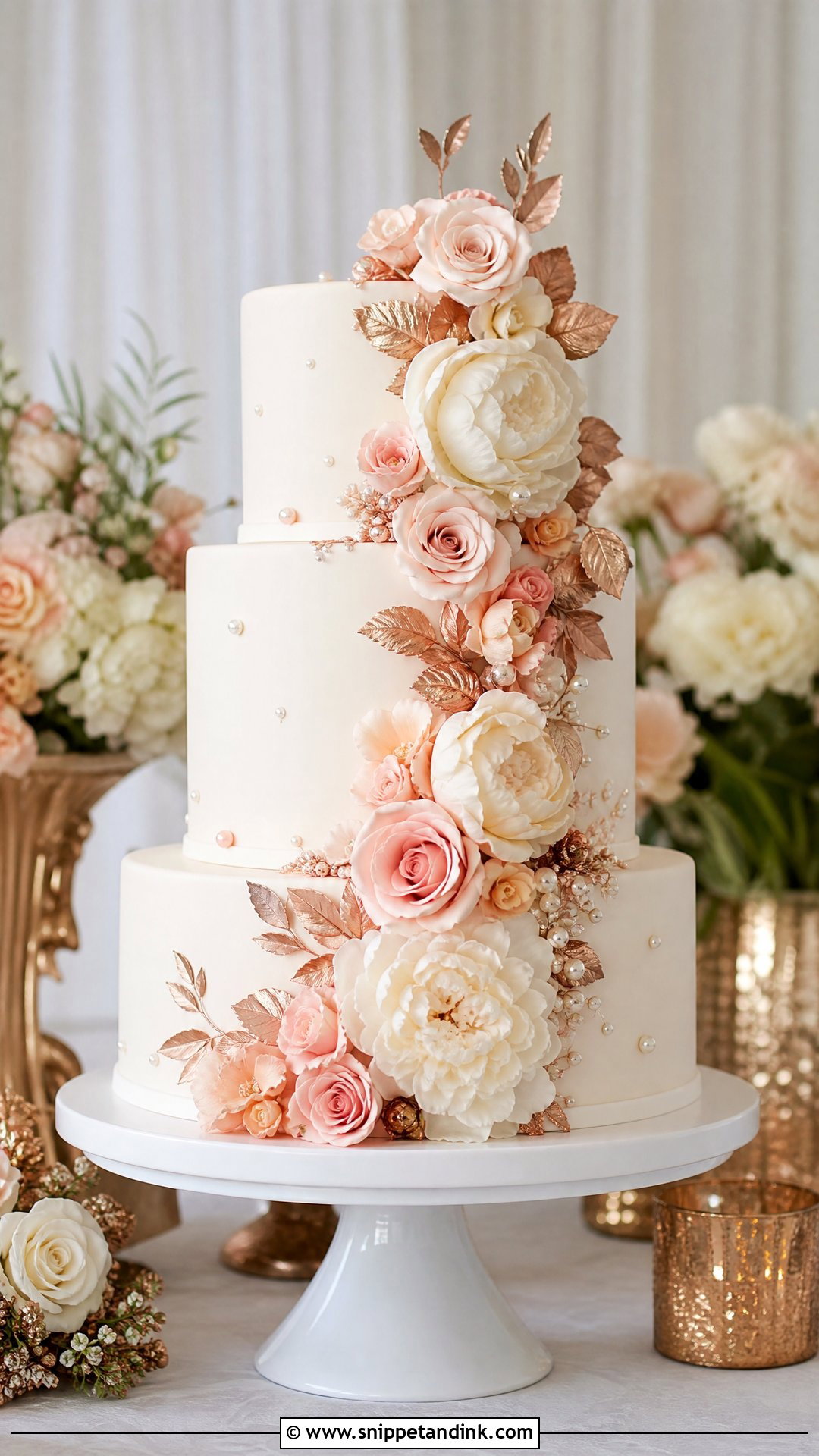
A cascade gives the cake movement, with flowers running from the top tier down one side: blush roses, ivory blooms, soft peach flowers and rose gold leaves. A white, ivory or pale blush base lets that line stand out. Every fresh stem has to be wrapped or set in a pick before it goes into the cake, and the florist and baker need to agree who places the flowers and when. Keep the cascade controlled so it doesn’t swallow the cake. Painted foliage, metallic berries or shimmer dust add the rose gold, with lemon or almond cake inside.
24. Rose Gold Minimalist Wedding Cake
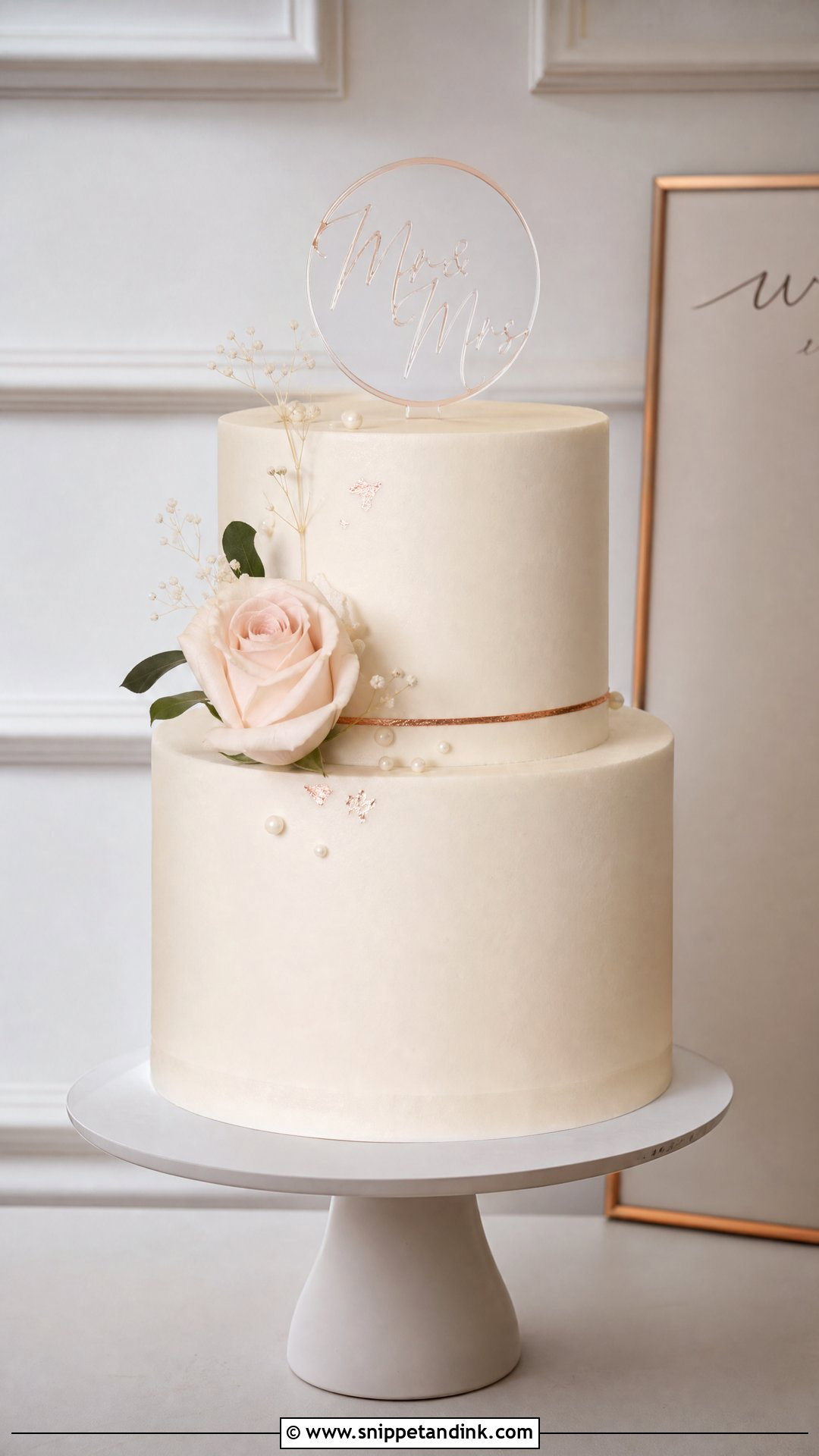
Minimal is harder than it looks, because there’s nothing to hide a dent or a bulge behind. I start with a perfectly smooth white or ivory cake and add one strong detail: a rose gold line, a slim metallic band, a few leaf accents or a modern topper. A single flower, pressed texture or a delicate monogram adds personality without clutter. City weddings and intimate receptions suit it, and vanilla or lemon keeps it classic.


25. Rose Gold Vintage Wedding Cake
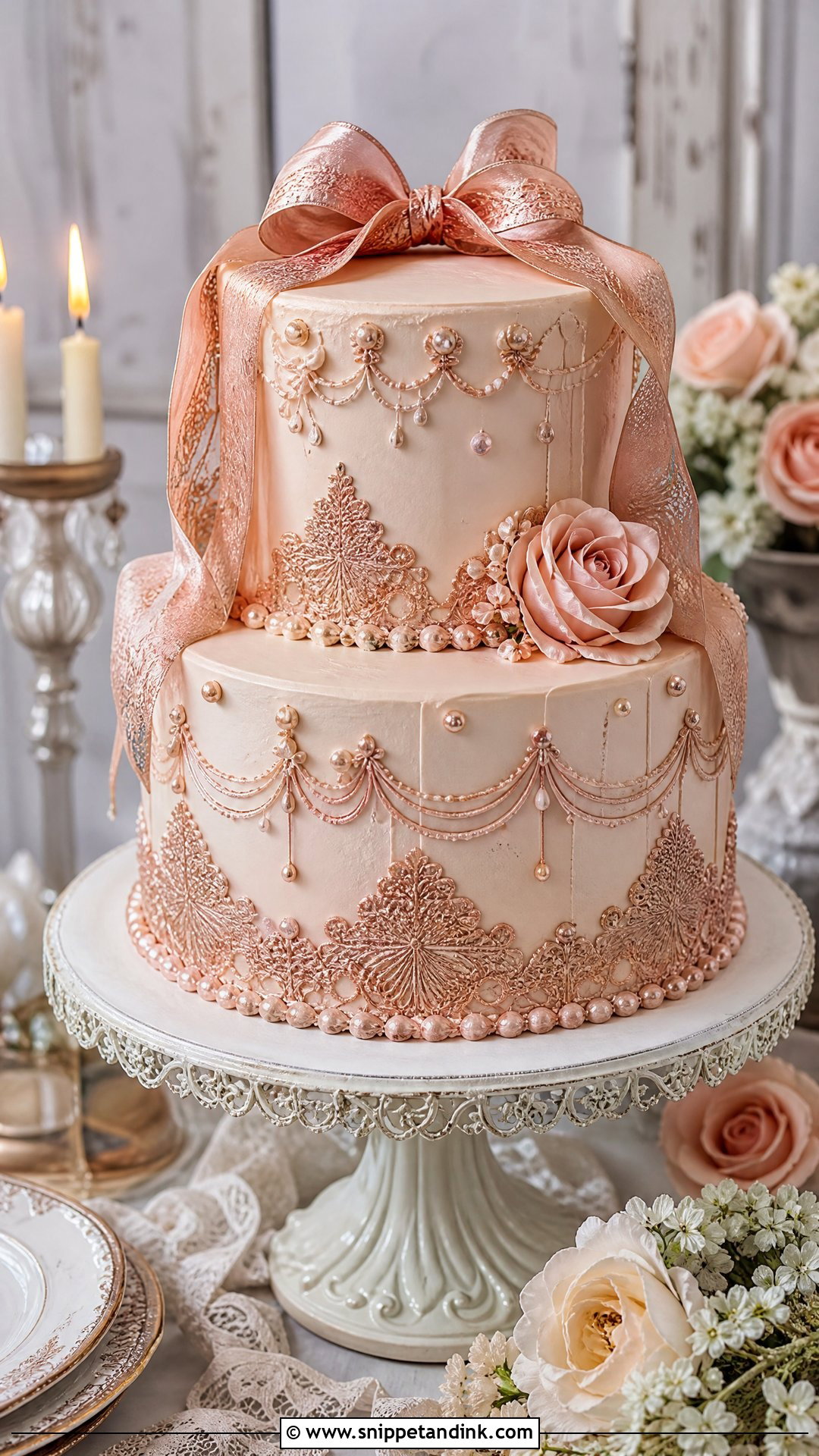
Rose gold is a modern color, so on a vintage cake I keep it soft and in the details: highlights on piped borders, lace panels and pearls over blush frosting. Too much metallic pulls the cake forward into contemporary territory. It can be round, heart-shaped or tiered with ornate piping, finished with sugar roses, bows or a small framed monogram. Vintage gowns, antique-inspired decor and candlelit tables suit it, and red velvet or lemon cream fit the nostalgic mood.
26. Rose Gold Boho Wedding Cake
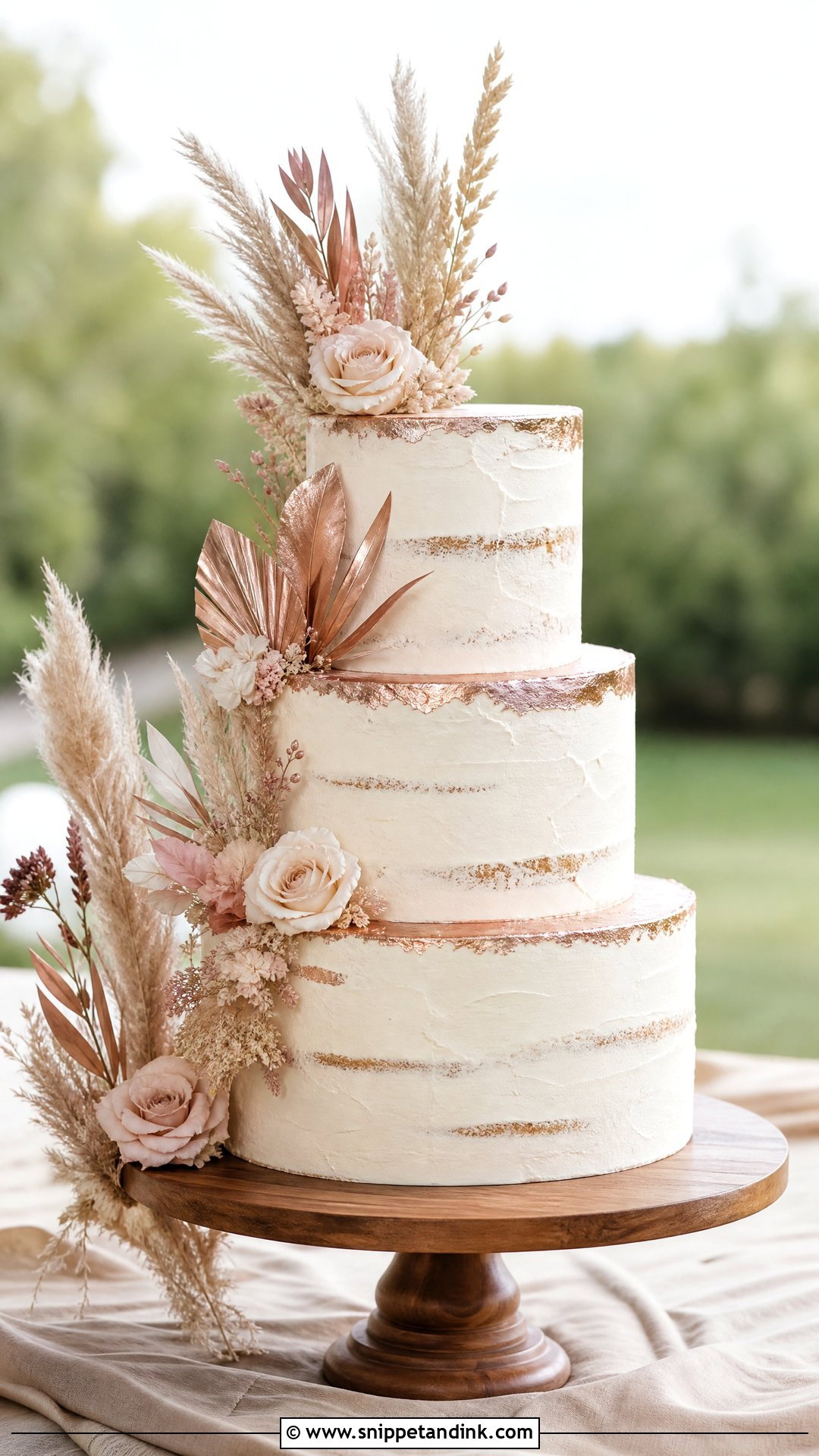
Boho and metallic sound like a mismatch, but a light touch works. A rose gold boho wedding cake pairs ivory buttercream with dried florals, pampas grass and soft blush flowers in warm neutrals, while the rose gold stays brushed and quiet: painted leaves, brushed edges or a subtle topper. Dried flowers and pampas aren’t food-safe as they come, so I wrap the stems and keep them clear of the slices. Semi-naked or textured frosting gives the handmade feel at desert, outdoor and rustic venues. Honey vanilla or carrot cake suit it.
27. Rose Gold Garden Wedding Cake
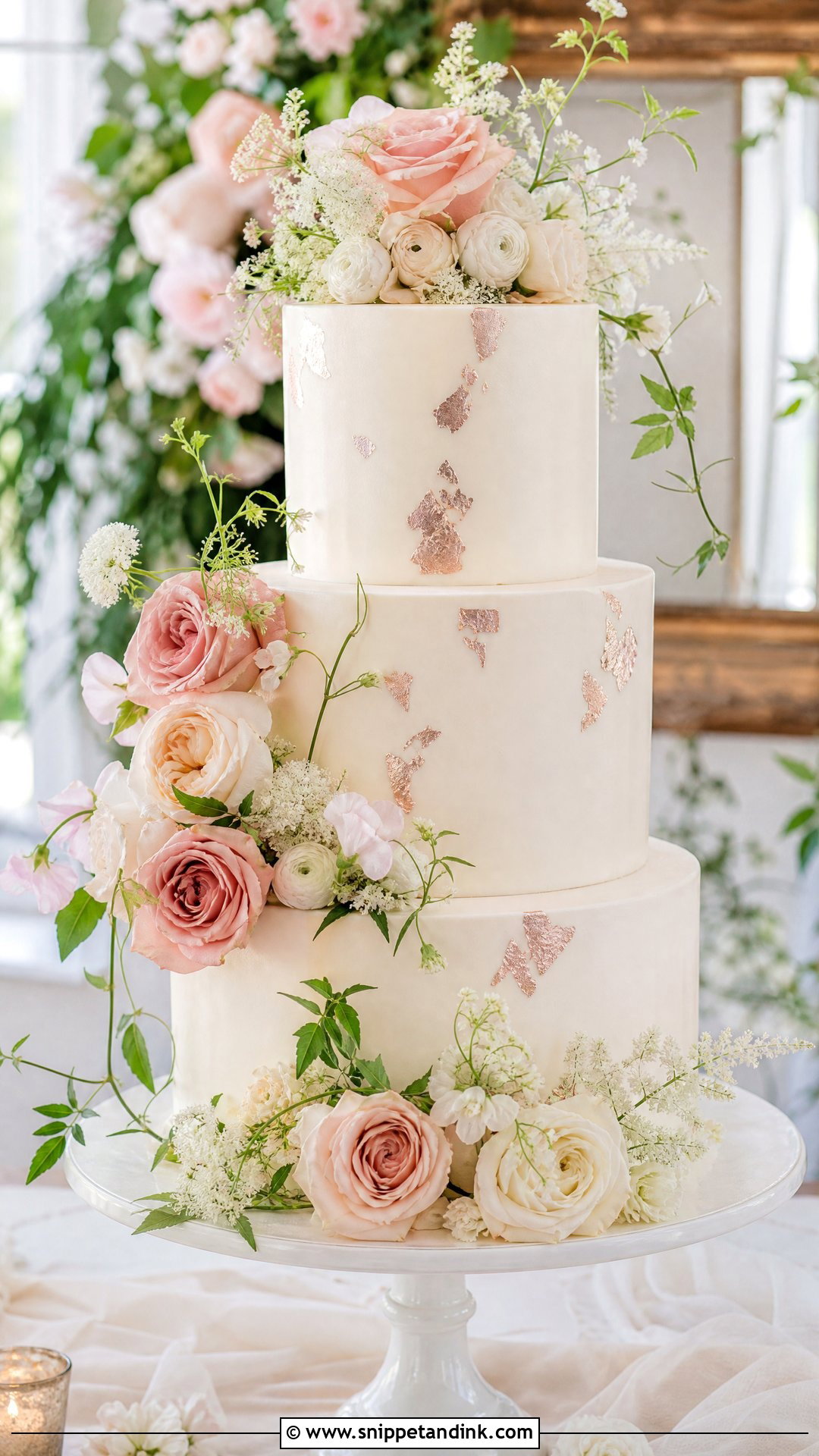
Garden cakes look best when the flowers seem gathered from the ceremony arrangements, and they can be, if your florist keeps a few stems back for the cake. Ivory or pale blush frosting carries the flowers and greenery, with rose gold leaf on foliage, thin borders or a simple topper. Roses, ranunculus, sweet peas and small blossoms work well, though sweet peas wilt quickly out of water, so delicate blooms go on last. Tented and outdoor spring receptions suit it, with lemon elderflower inside.
28. Rose Gold Champagne Wedding Cake
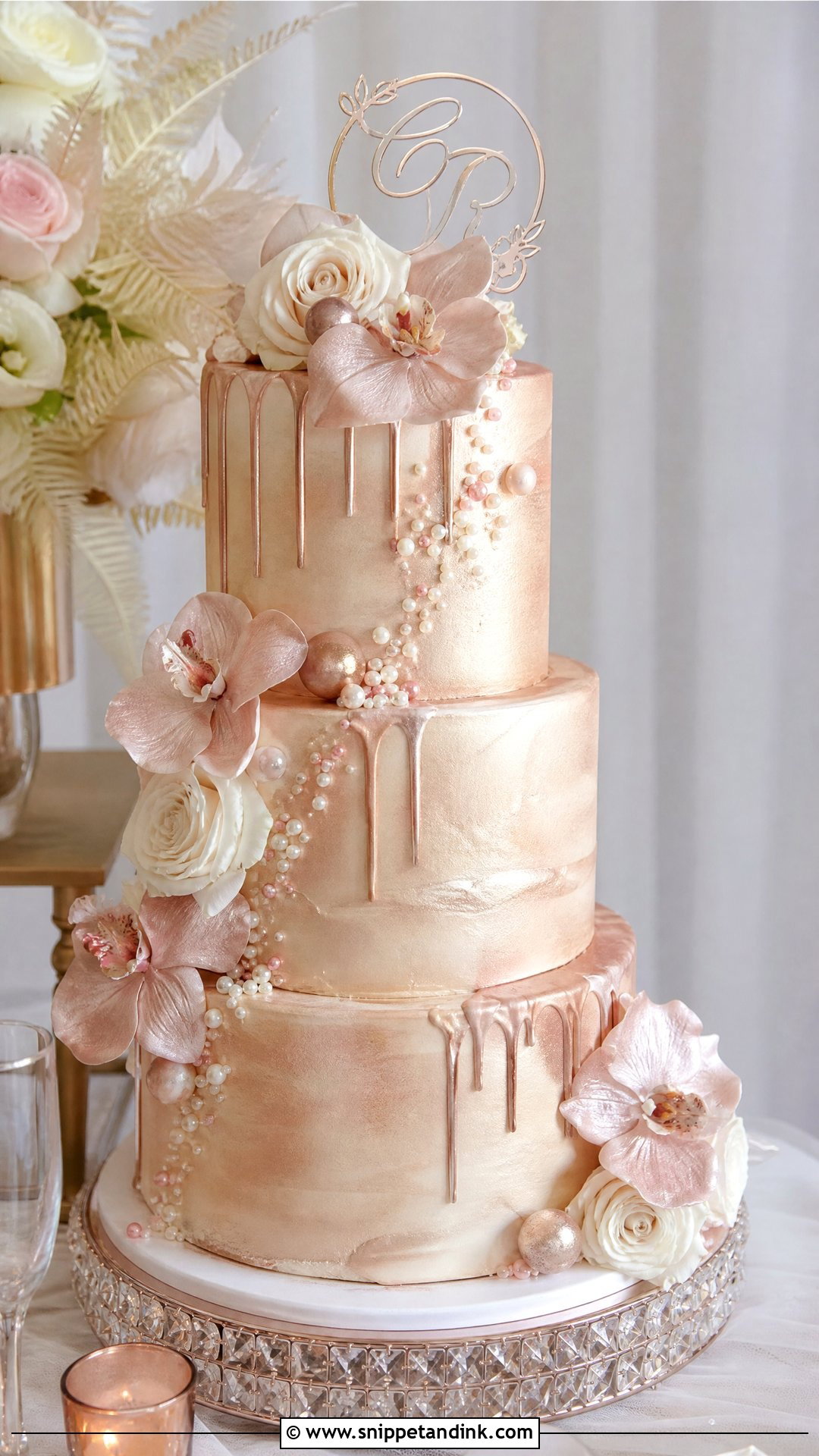
Champagne-colored buttercream is a pale beige-gold that sits right beside rose gold, so the two blend into one warm palette. Sugar pearls or edible beads can be scattered like bubbles rising up the tiers, with a smooth finish and a metallic drip or painted edges for warmth. White roses, blush orchids or an acrylic topper finish it at evening and formal receptions. Champagne cake has a subtle flavor and most of the alcohol bakes off, but flag it for anyone who avoids alcohol entirely.
29. Rose Gold Heart Wedding Cake
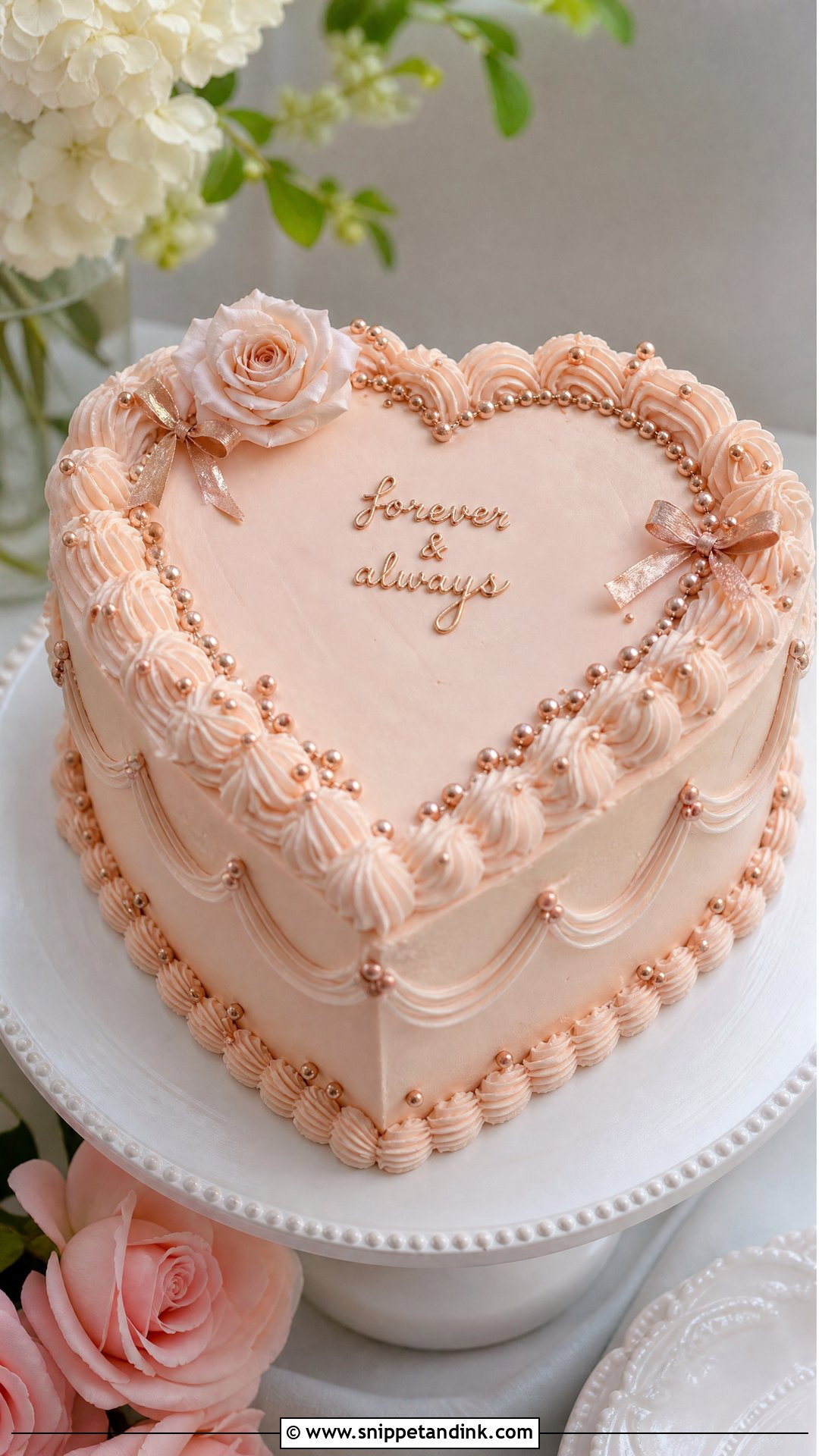
A heart with rose gold is my suggestion for a sweetheart table or small wedding. The shape is playful, so the metallic does the work of making it grown-up. Smooth blush or ivory buttercream, vintage piping, metallic pearl accents and a delicate message topper. Leaf looks best along the curved top edges of a heart, where it catches light as people walk past. It can be single-tier or stacked, with fresh roses or sugar bows softening the shape, and red velvet or chocolate raspberry inside.
30. Rose Gold Dessert Table Wedding Cake
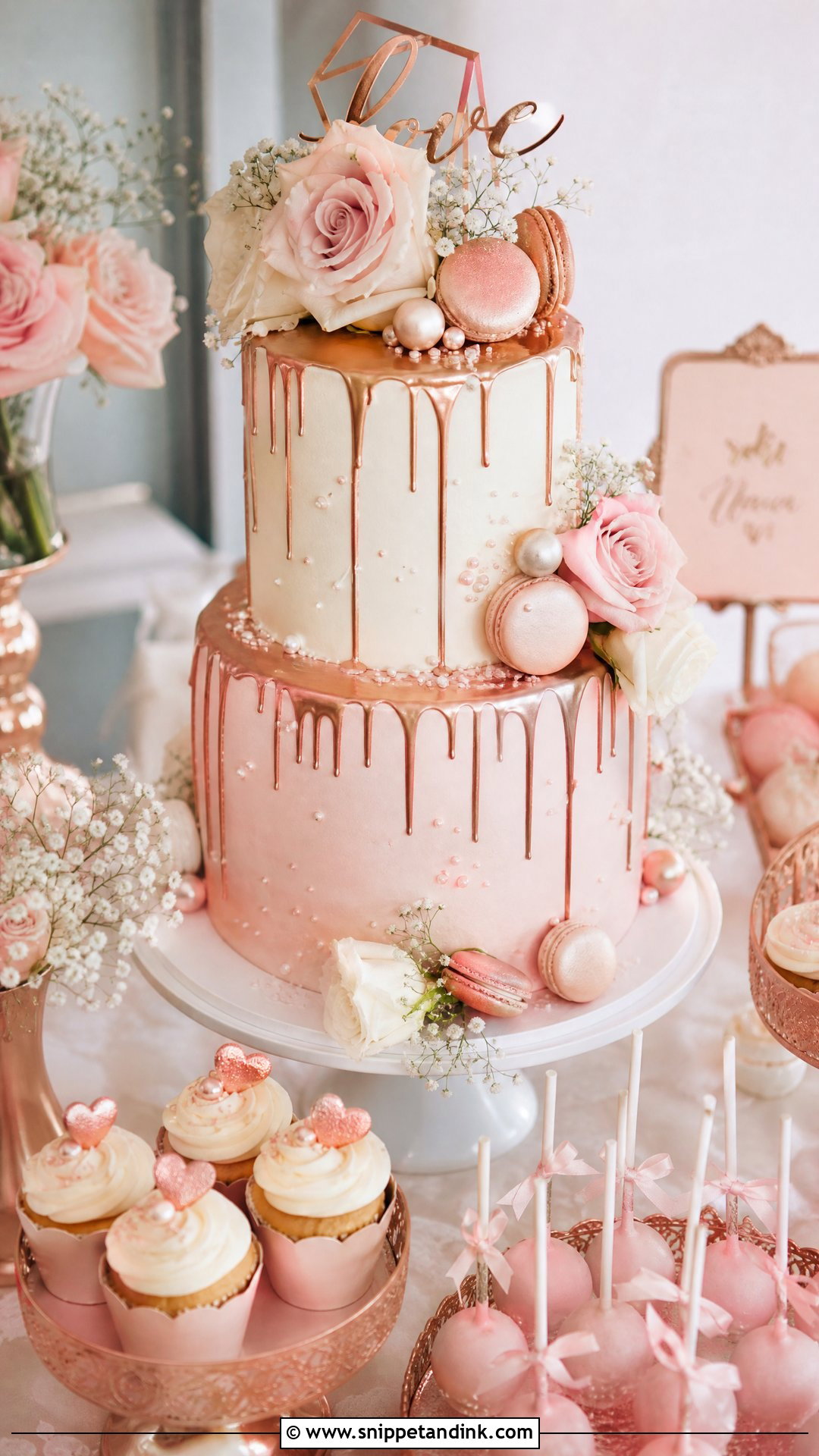
When the cake anchors a full sweets display, a rose gold dessert table wedding cake needs one standout feature, such as a drip, a sequin tier or a floral cascade, or it blends into everything around it. Two or three tiers with rose gold accents sit among matching cupcakes, macarons, cake pops and cookies, all kept to ivory, blush, champagne and rose gold. I like the cake raised on a stand well above the other treats. Several flavors across the table give guests real variety.
Edible, Non-Toxic and Decorative Mean Different Things
Metallic cake products are labeled in ways that sound alike but aren’t. Edible means it’s made to be eaten. Non-toxic or decoration-only means it won’t harm anyone in tiny amounts but isn’t meant to be eaten, so it belongs on pieces that come off before slicing. Some of the strongest metallic shades are only sold as decorative, which is worth knowing before you fall for a very bright photo.
Ask your baker which category each finish on your cake falls into. A good one answers straight away and may suggest putting a heavily dusted detail on a removable plaque or sugar piece. These should always come off before cutting:
- Acrylic and metal toppers
- Ribbon wrapped around the tiers
- Fresh, dried and painted flowers, along with the picks they sit in
- Dowels and boards between tiers, which whoever cuts the cake needs to expect
Give that list to your caterer as well. The person cutting late in the evening needs to know what to pull out before the knife goes in.
How Much Shine Your Reception Can Carry
Rose gold can look soft, glamorous, modern, rustic or vintage depending on how much of it you use and where it goes. A few metallic details lift a simple buttercream cake; a full rose gold tier turns it into the room’s focal point. For a romantic wedding I’d lean toward florals, lace, pearls and blush. For a modern one, marble, geometric lines, tall tiers or a single painted band. Either way, show your baker a photo of the venue lighting and any rose gold used elsewhere in the room, and the cake will look like it belongs there.
You'll Like These Ideas:







Leave a Reply