
Rose gold is one of the colors I get asked for most, and one of the trickiest to get right on sugar. It sits between pink and copper, so it can lean warm next to burgundy or quiet next to ivory and champagne. That range is why it suits so many receptions. I use it as a thin painted line, a full shimmer tier, a drip, scattered leaf or a single topper, and each of those behaves differently on buttercream than on fondant. Below are 25 Rose Gold Wedding Cake Ideas, with notes on how each one is actually made and where it can go wrong.
Rose Gold Is Never Quite the Same Shade Twice
Rose gold on a cake is almost always a luster dust mixed with a few drops of clear alcohol or lemon extract and painted on. The alcohol evaporates and leaves the shimmer behind. The trouble is that every brand mixes its rose gold differently: some lean pink, some lean copper, some look closer to champagne. Your invitations, your bridesmaid dresses and your cake can all be called rose gold and still look like three different colors side by side.
At the tasting, I paint a small swatch of each dust I’m considering onto a scrap of fondant. Bring anything you want the cake to sit beside: a ribbon, a napkin, a photo of the dress swatch. Then look at the swatches by a window and again under warm indoor light, because rose gold that reads pink in daylight can turn coppery under tungsten bulbs and candles.
- Pinker blends suit blush, ivory and soft pastel palettes.
- Coppery blends sit better beside burgundy, navy and autumn colors.
- Champagne-leaning blends are the safest choice if your linens or metals are already gold.
1. Rose Gold Wedding Cake With White Roses
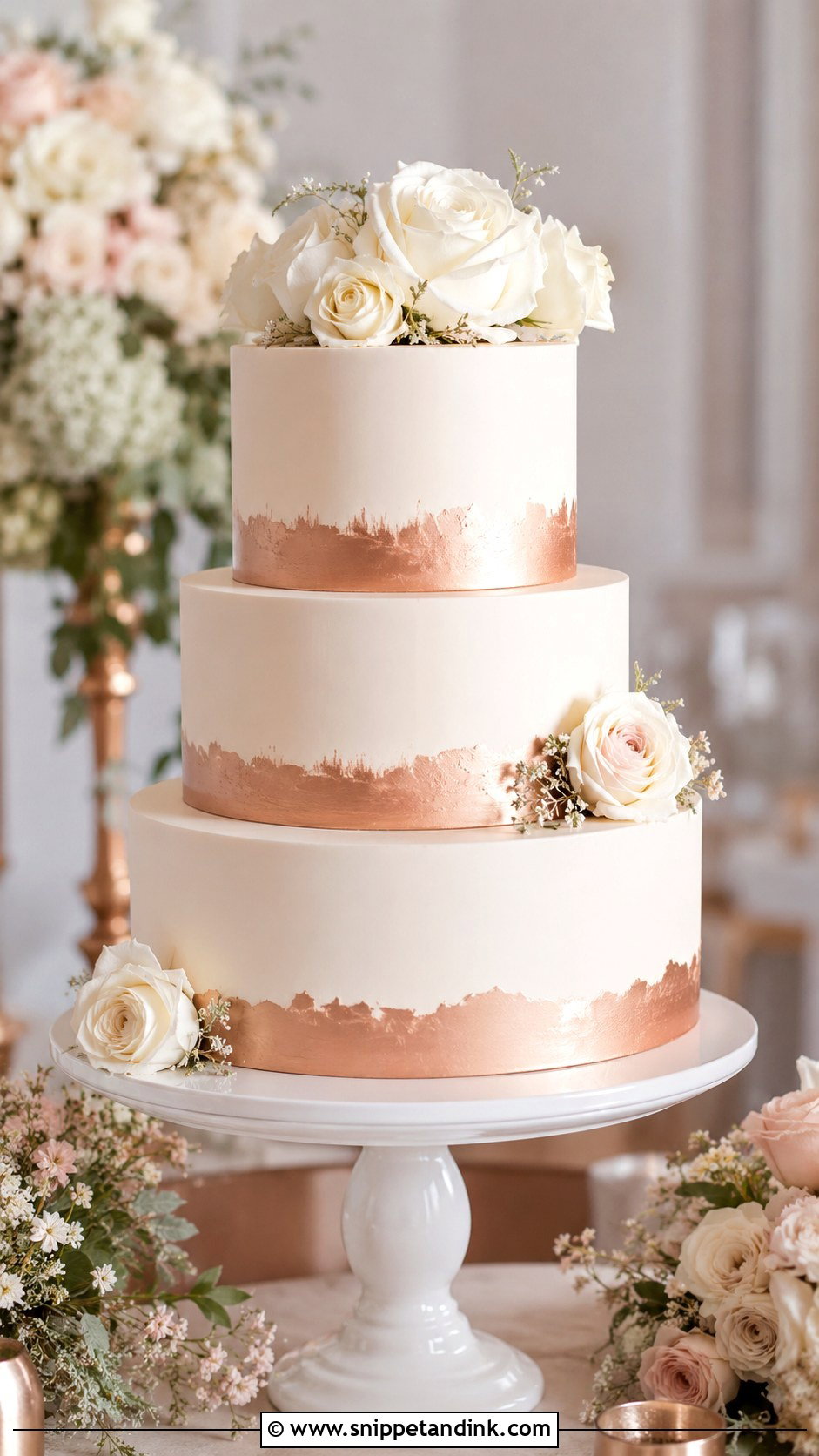
White roses and rose gold is the pairing I’d suggest to anyone nervous about metallics, because the flowers do most of the talking. I keep the base matte, either ivory buttercream or fondant, and limit the rose gold to thin painted bands or a few flakes of leaf. A fully metallic middle tier also works here, since the white blooms stop it from feeling heavy. If you plan on real roses, ask your florist to wrap the stems before they touch the cake.
2. Rose Gold Wedding Cake With Blush Flowers
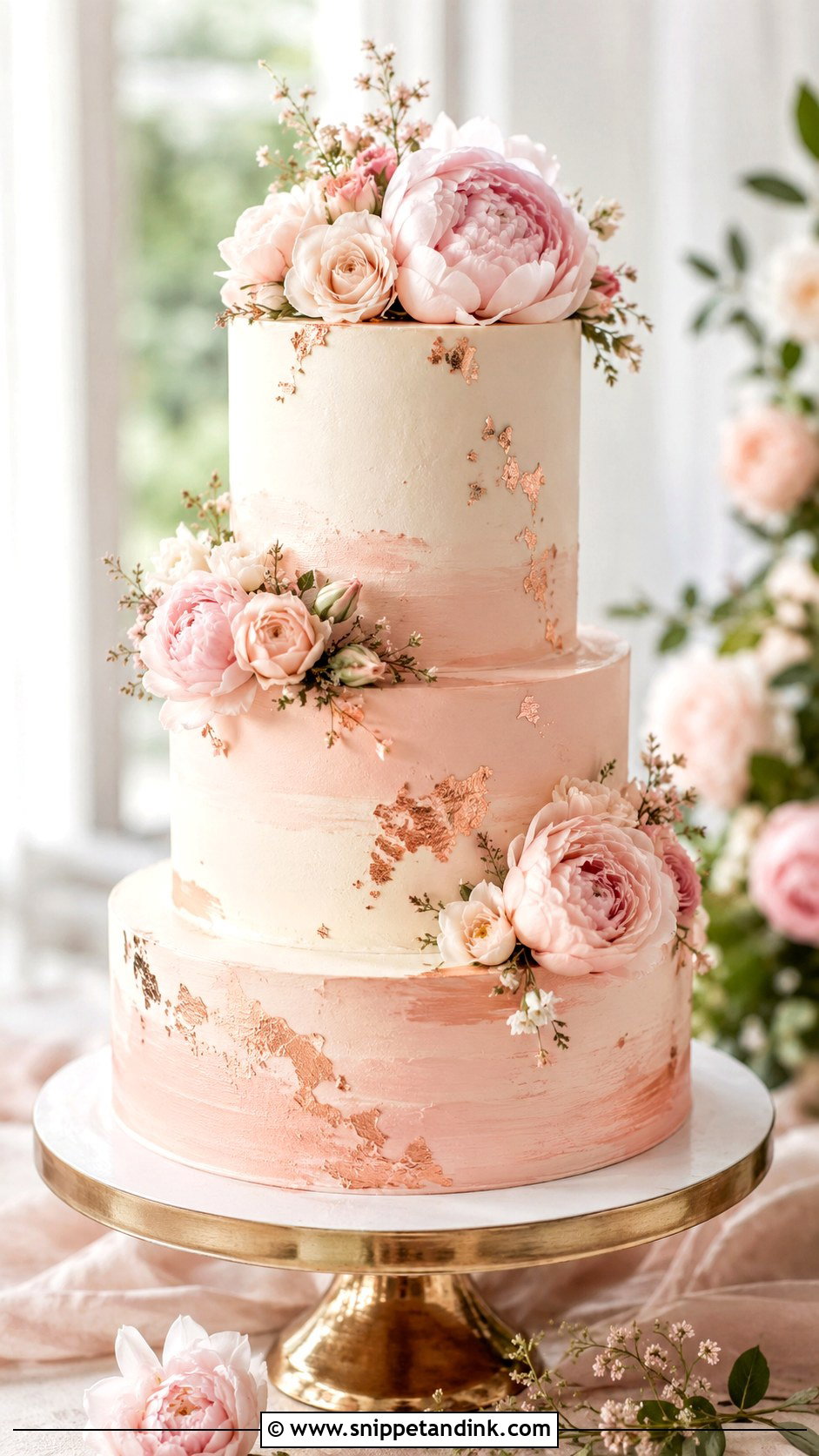
Blush flowers pull rose gold toward pink, which is useful if your palette is dusty or cream rather than bright. Peonies and ranunculus in a loose cascade read softer than tight rose clusters. With this much pink on the cake, I go easy on the metallic: a brushed tier edge or a fine shimmer is usually enough, and a heavy drip can make the whole thing look orange next to blush petals.
3. Rose Gold Wedding Cake With Marble
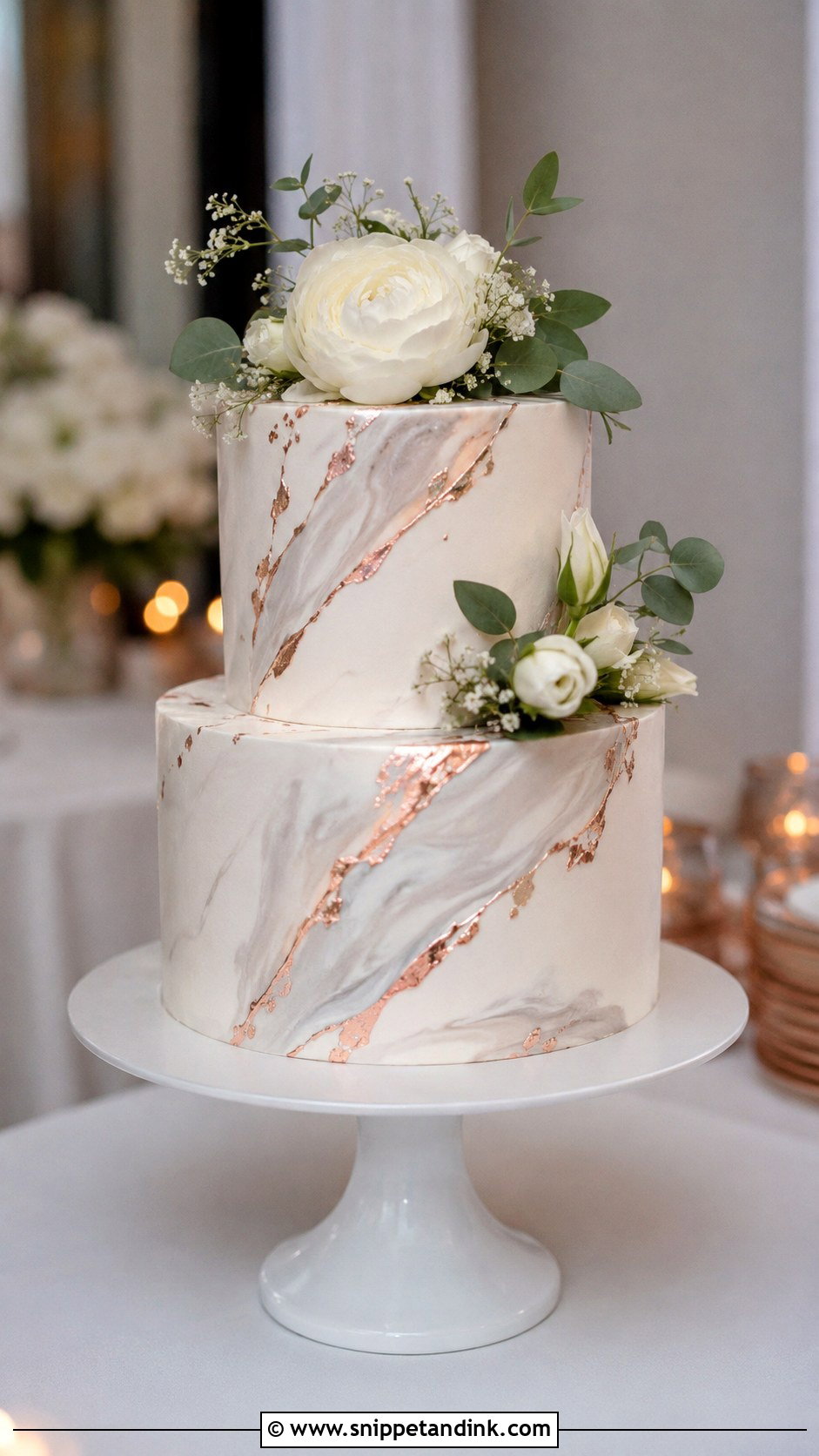
Marbling is done by folding streaks of color into fondant before it is rolled, so no two tiers come out identical, and I like that. The veining can be soft gray, blush or pale champagne, with rose gold painted along a few of the stronger lines once the fondant has firmed. Two or three tiers give the pattern room. My rule is to paint maybe a third of the veins, not all of them; lines that are too thick start to look like cracks in photos.
4. Rose Gold Wedding Cake With Drip
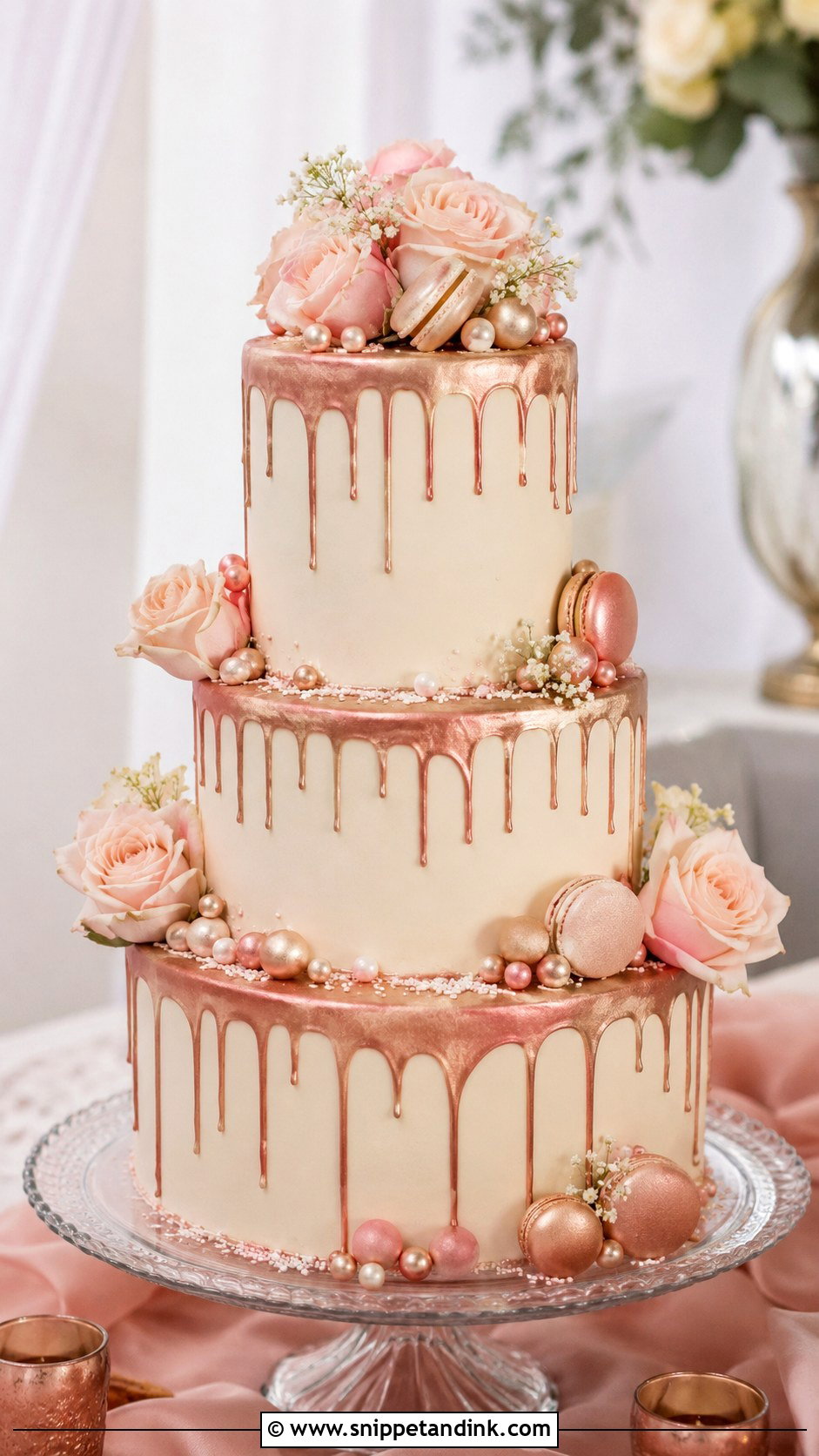
A drip is the most forgiving way to bring metallic onto a wedding dessert table. I pipe it in white chocolate ganache on a well-chilled buttercream cake, let it set, then paint the drips with rose gold luster mixed into a little clear alcohol. Painting straight onto warm ganache smears, so timing matters. Neat, evenly spaced drips feel formal; longer, uneven ones feel relaxed. Roses, sugar pearls or a few macarons sit well at the top edge where the drips begin.
5. Rose Gold Wedding Cake With Glitter Tier
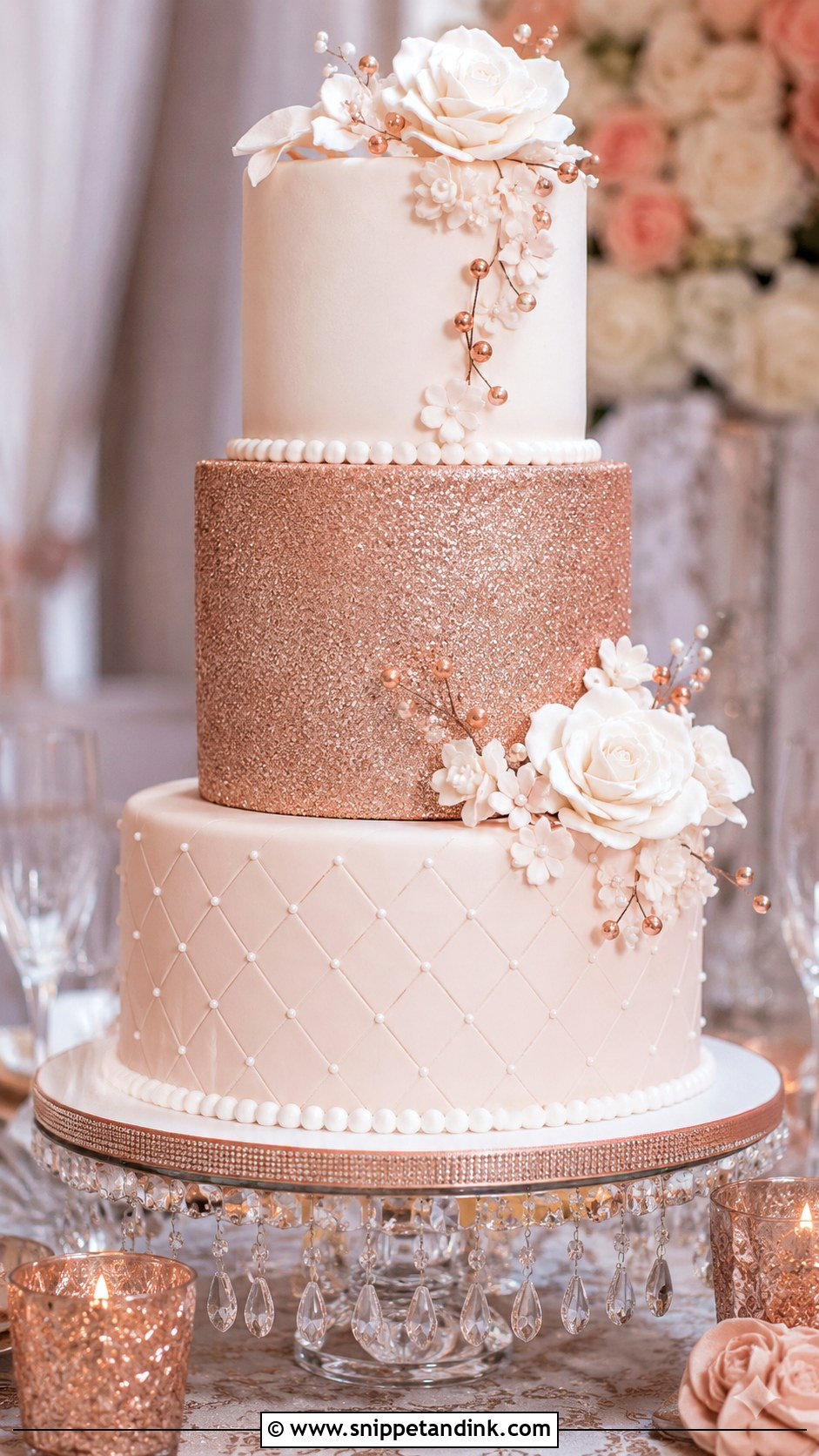
One glitter tier is plenty. I cover a single tier in edible shimmer and keep the rest smooth ivory, otherwise the cake looks like a disco ball under reception lights. Candlelit evening rooms suit this best, since the sparkle moves as people walk past. Check what the glitter is made of: much of the craft glitter sold for cakes is plastic and marked only as non-toxic, and I won’t use it on anything a guest might eat.
6. Rose Gold Wedding Cake With Geometric Pattern
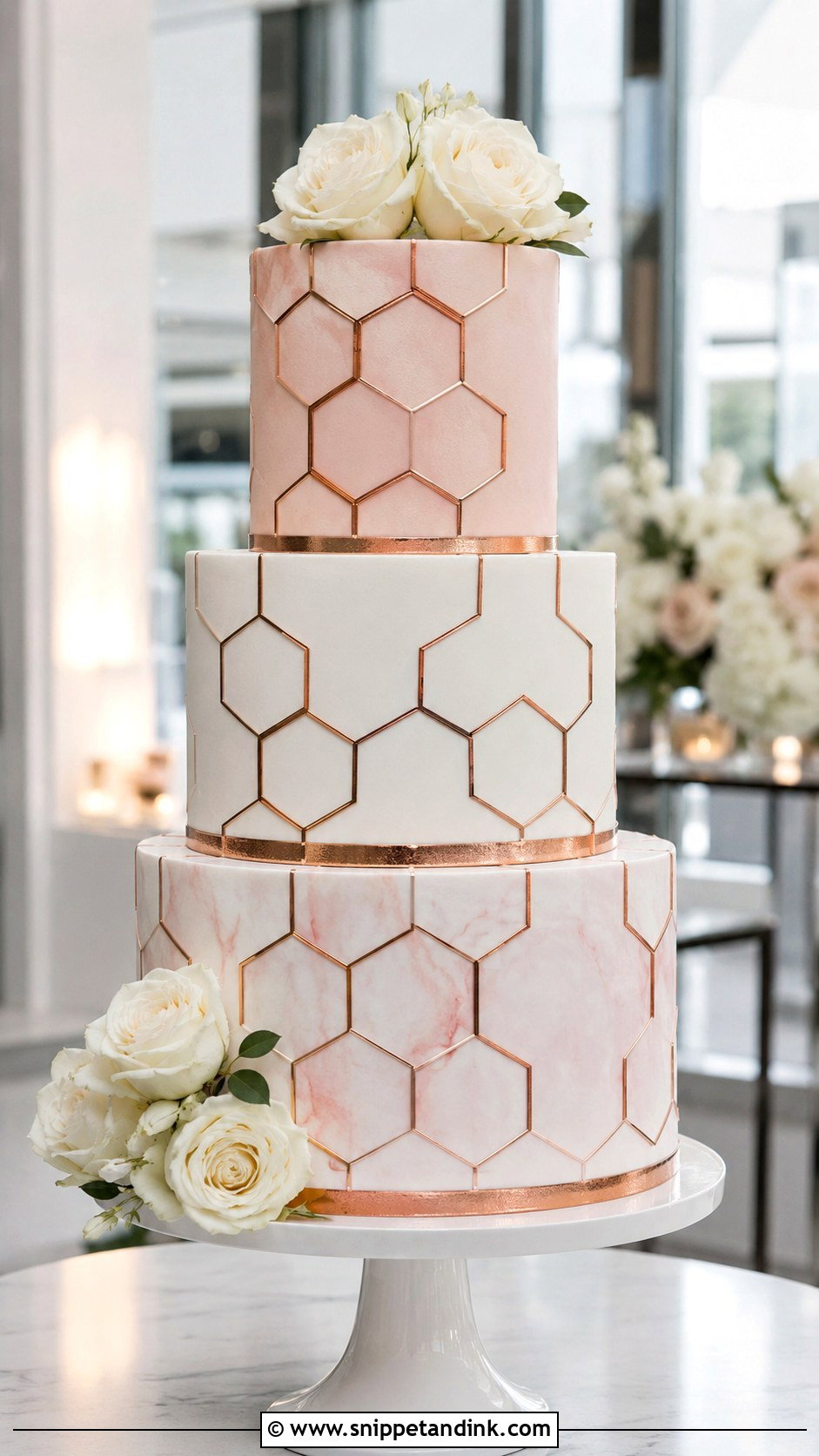
Geometric work needs fondant, or at least a very sharp buttercream edge, because hexagons and triangles only look crisp on a flat surface. I score the pattern lightly with a ruler and template first, then paint the rose gold over the marks with a fine brush. It suits art deco rooms and couples who prefer clean lines over floral-heavy cakes. A couple of roses can soften it, but a cake with no flowers at all makes the pattern stronger.
7. Rose Gold Wedding Cake With Fondant
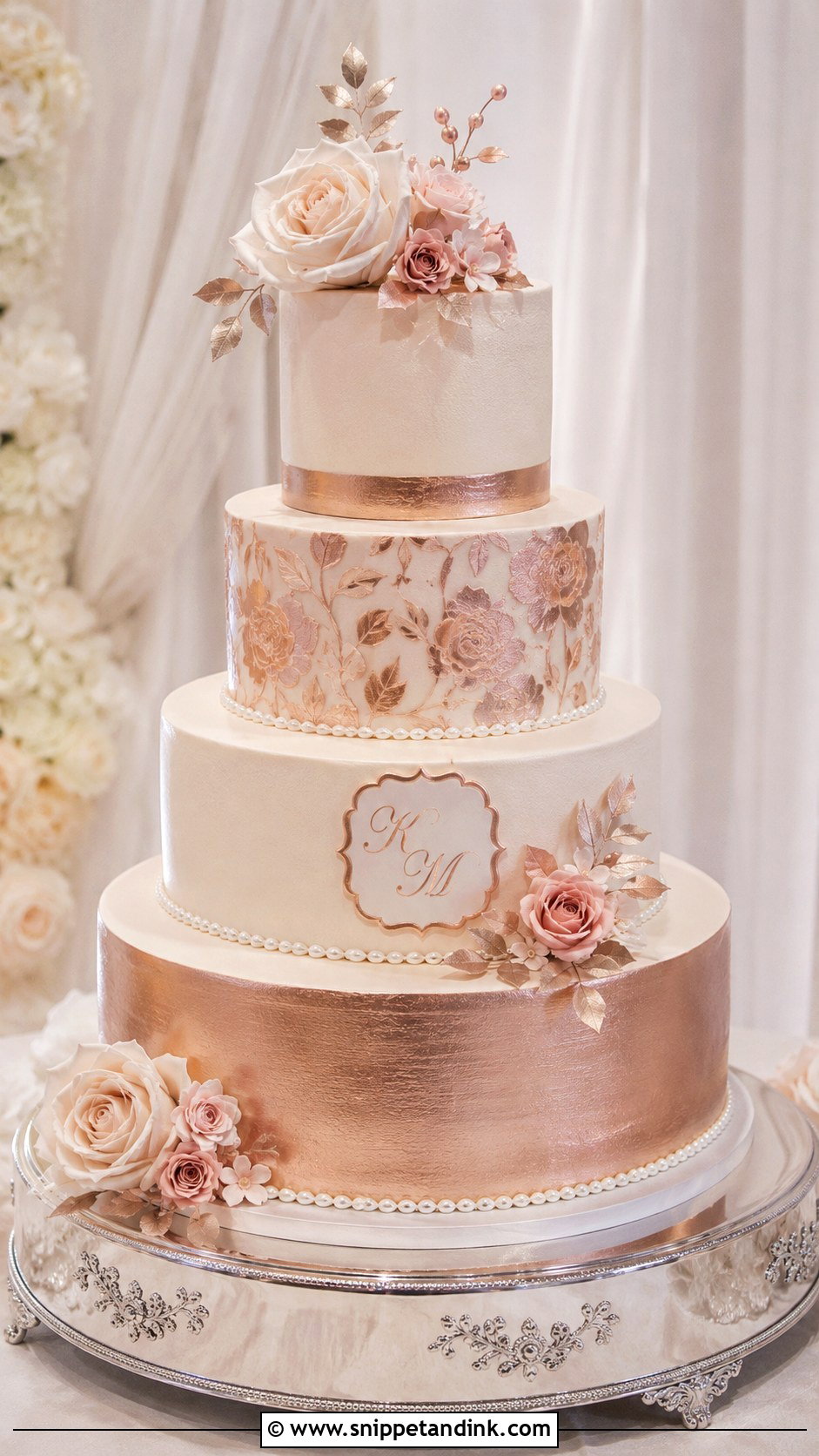
Fondant gives the smoothest canvas for metallic paint, and it’s the only finish where I’d attempt a fully rose gold tier. It also handles a warm room better than buttercream does. What it doesn’t like is a cold-to-warm move: a fondant cake taken straight from the fridge into a humid hall sweats, and the beads of water leave dull spots on painted areas. I let fondant cakes come up to room temperature in their box before they’re set out.
8. Rose Gold Wedding Cake With Buttercream
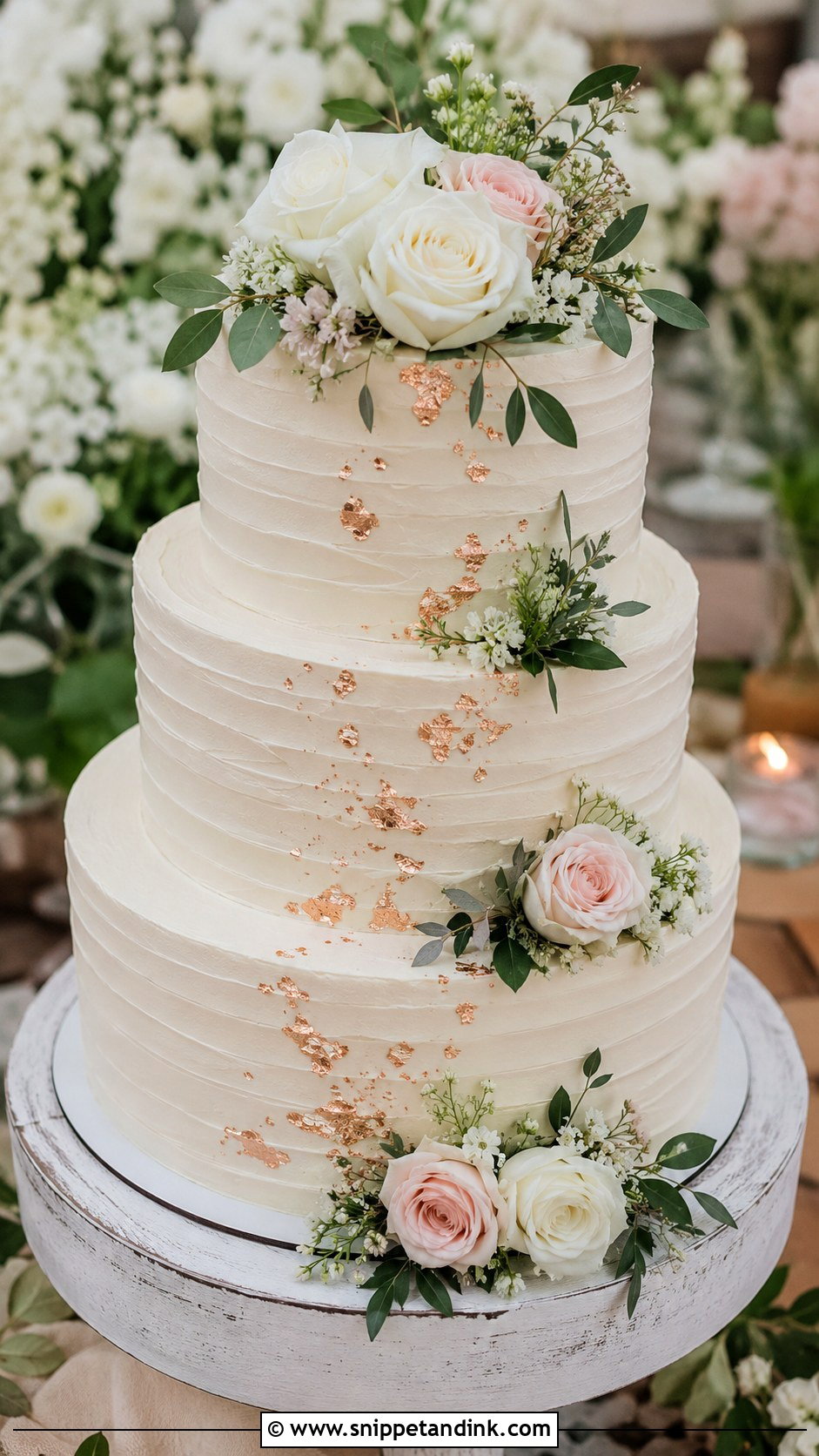
Buttercream is the honest choice if taste comes first. Metallic paint won’t sit as evenly on it, so I lean on texture instead: palette-knife swipes with rose gold leaf pressed into the ridges, or light brush strokes over a chilled, crusted surface. It’s a natural fit for barns, gardens and smaller dinners. Expect a softer shine than fondant gives you; that’s part of its charm.
9. Rose Gold Wedding Cake With Fresh Flowers
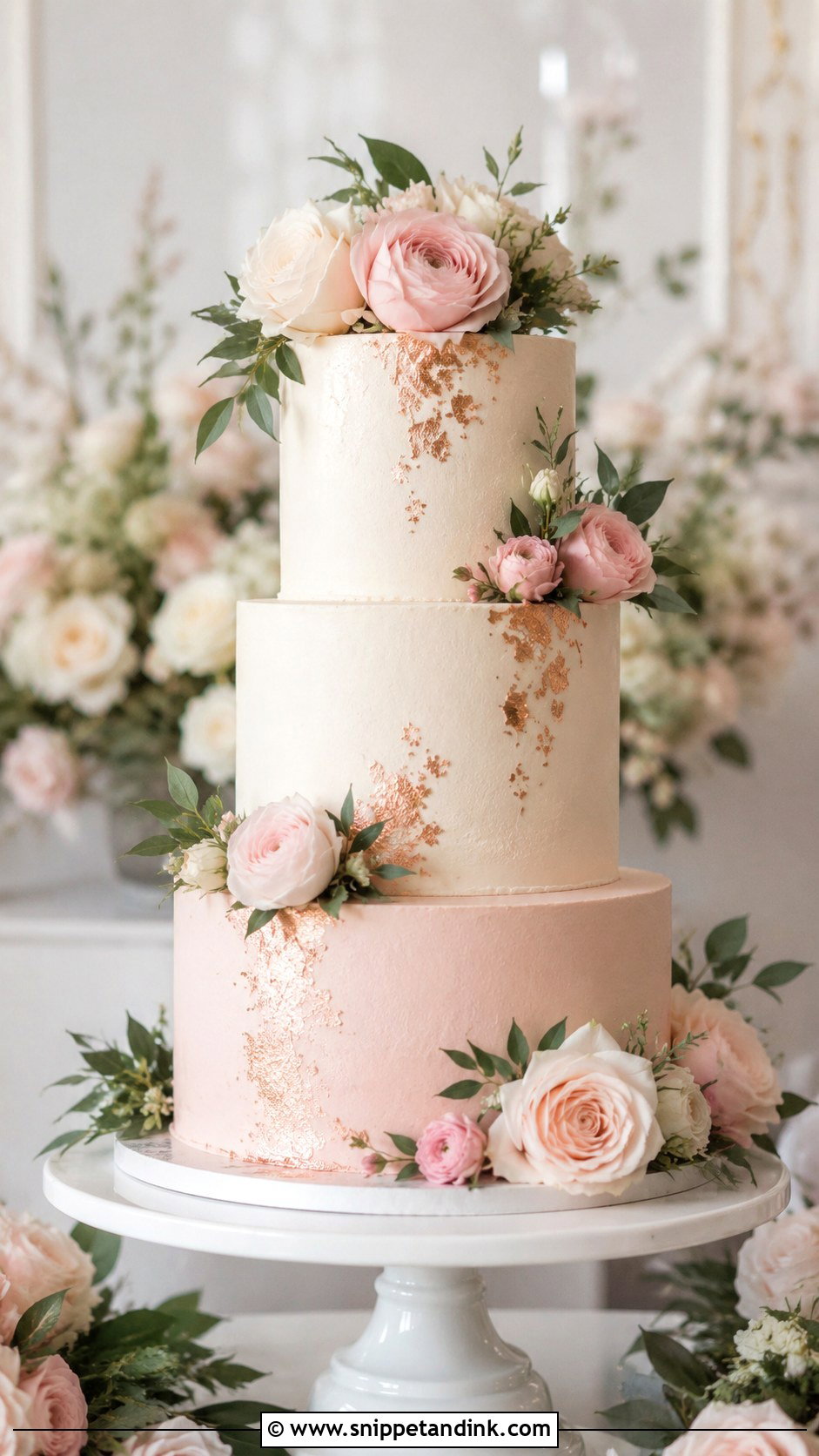
Fresh flowers make the cake match the room, which is why so many couples ask for them. Roses, orchids, peonies, hydrangeas and ranunculus all sit comfortably beside rose gold. My concern is safety. Not every flower is food-safe, florist stems can carry pesticide, and hydrangeas wilt fast without water. I wrap every stem in floral tape and push it into a straw or pick so nothing touches the sponge. Loose blooms suit a garden; tighter arrangements suit a ballroom.
10. Rose Gold Wedding Cake With Pearls
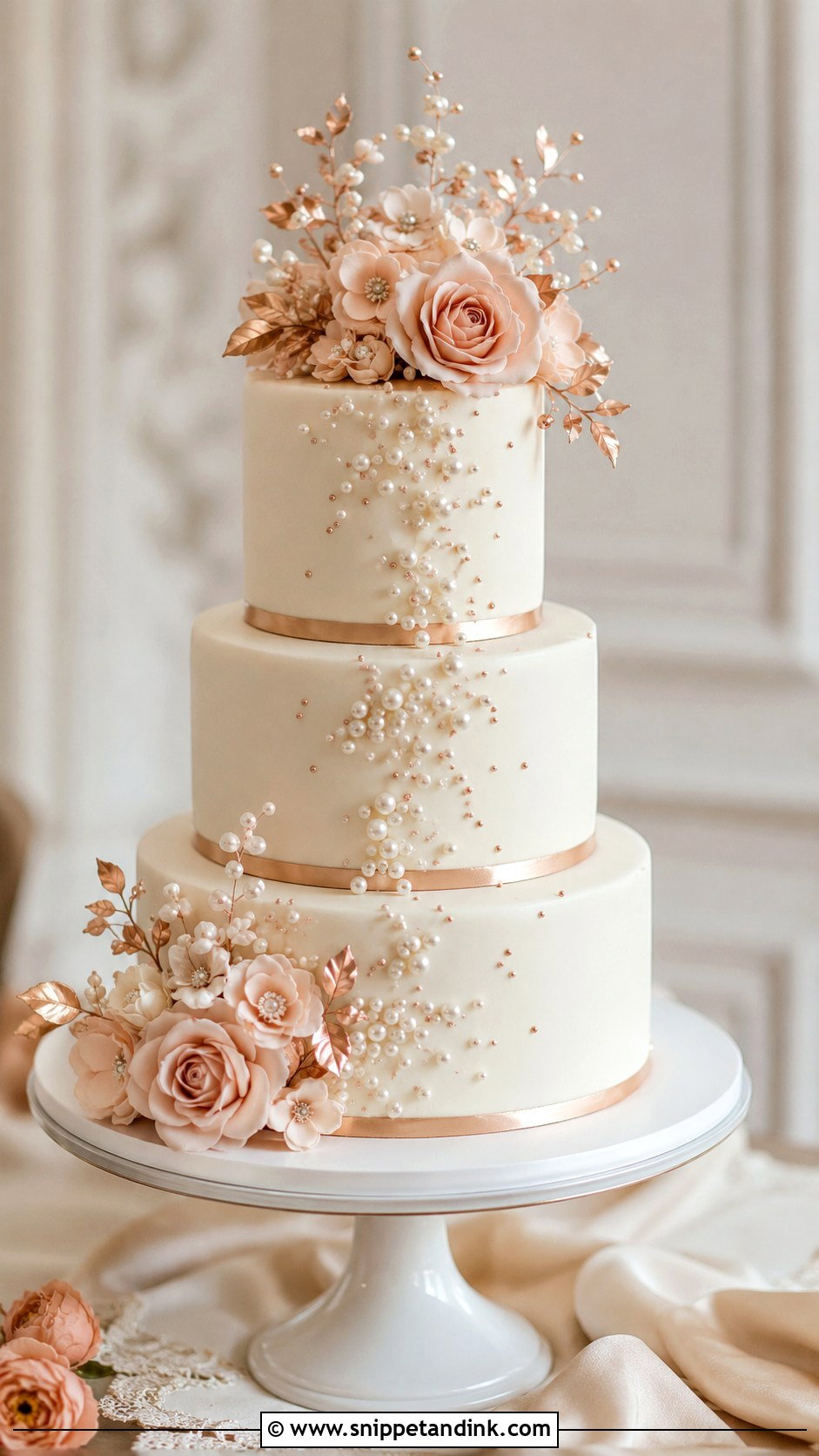
Pearls are a quieter partner for rose gold than sequins or glitter. I pipe tiny borders at the base of each tier or press in sugar pearls in clusters, then pick out a band of rose gold above them. White or ivory frosting keeps it clean. The mistake I see most is too many elements at once: pearls, lace, metallic and flowers on one cake starts to look busy, so drop one.
11. Rose Gold Wedding Cake With Lace
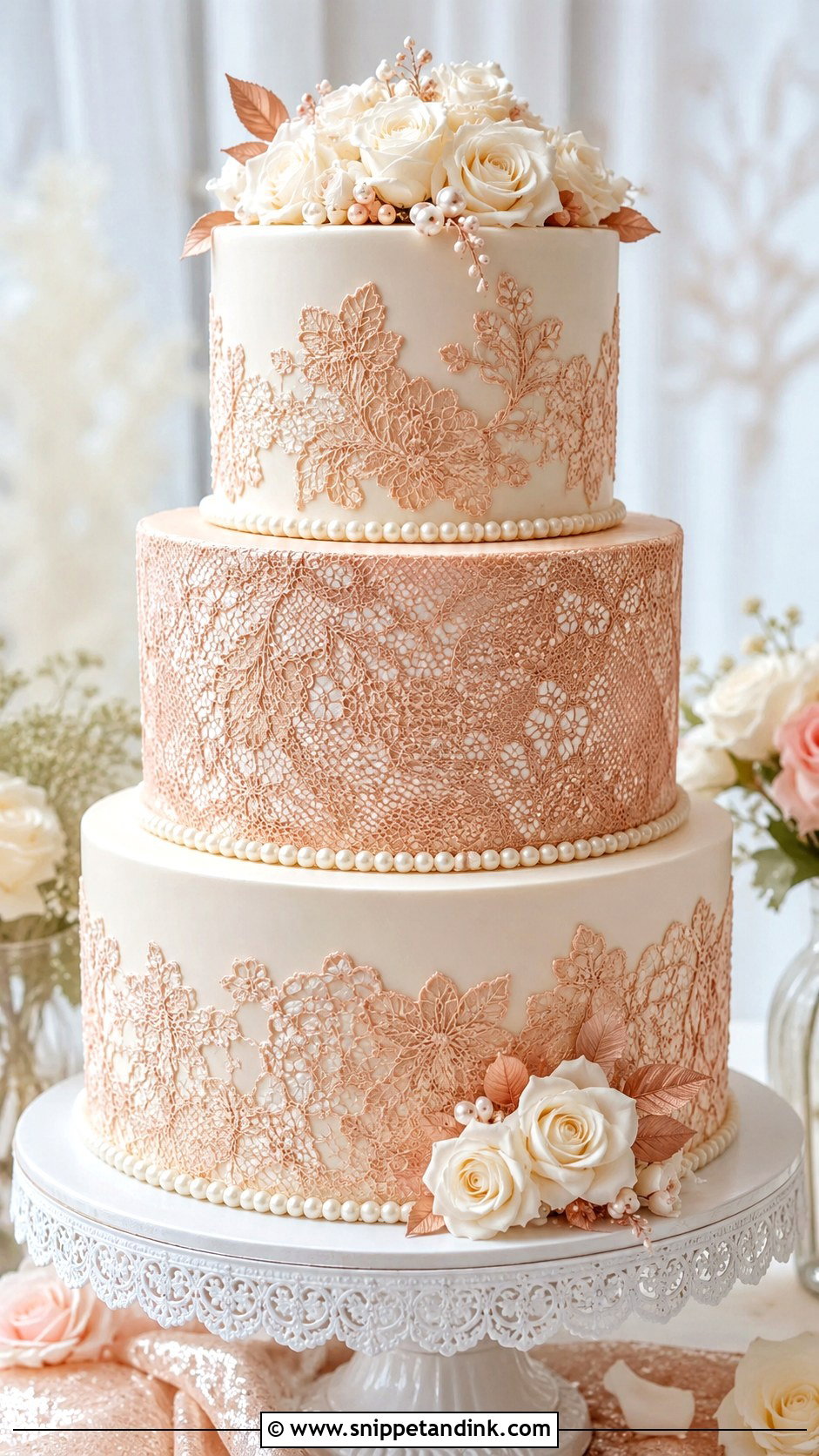
Lace on a cake usually comes from a silicone mat filled with sugar lace paste, or from a mold pressed into fondant. If your gown has lace, bring a photo or a fabric offcut to the tasting; I won’t copy it stitch for stitch, but I can echo the motif. Brushing rose gold just along the scalloped edges keeps the lace readable from a distance. Sugar lace softens in humidity, so for a summer marquee I’d use pressed fondant lace instead.
12. Rose Gold Wedding Cake With Sequins
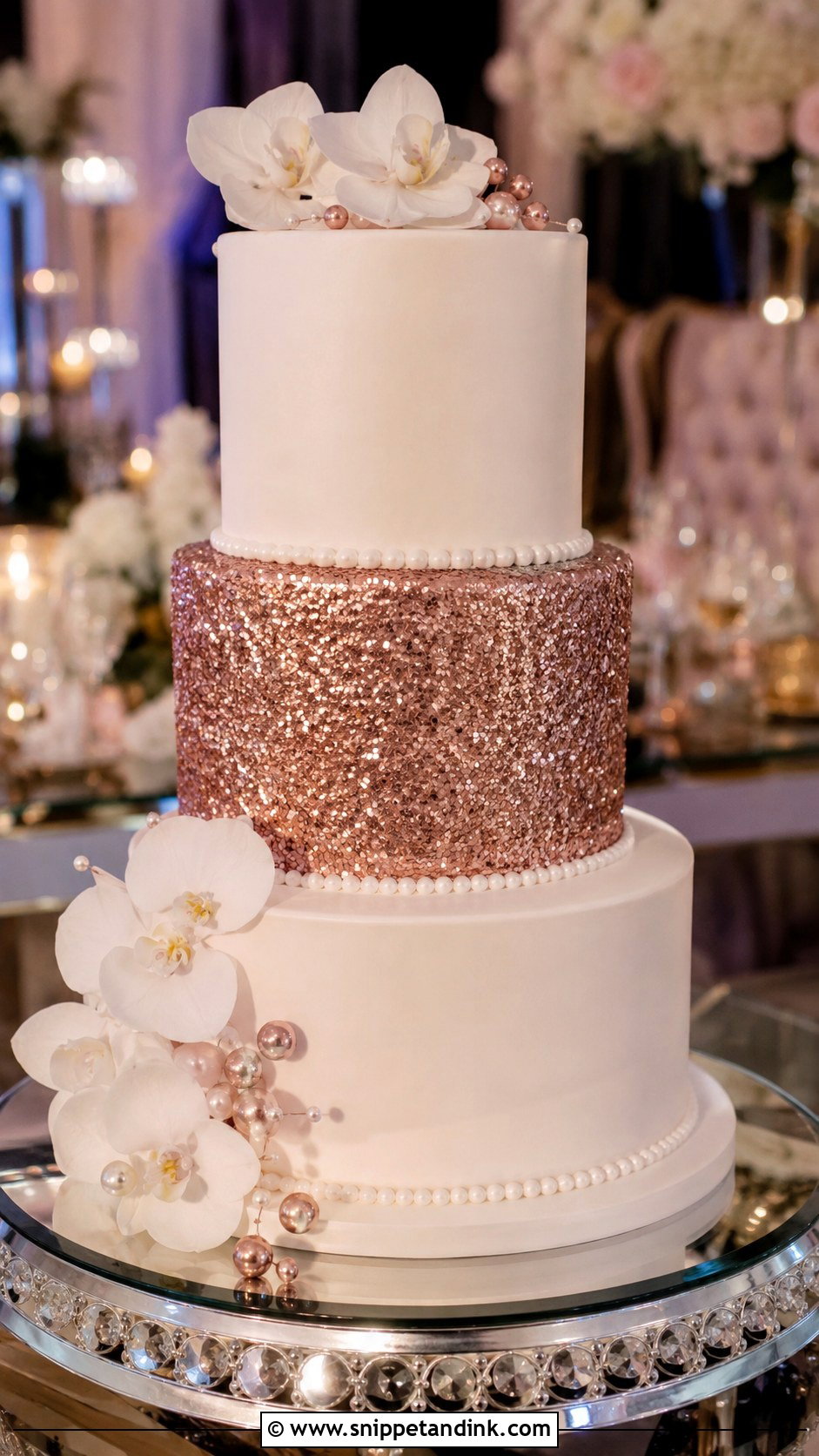
Edible sequins are cast from gelatin, cut into tiny discs and painted, then attached one at a time with piping gel. They’re slow to apply, and they react to damp air by going soft, so they’re made a few days ahead and stored airtight. I keep them to a single tier and leave the others smooth. This one really belongs to evening receptions, where the light can catch it.
13. Rose Gold Wedding Cake With Ombre
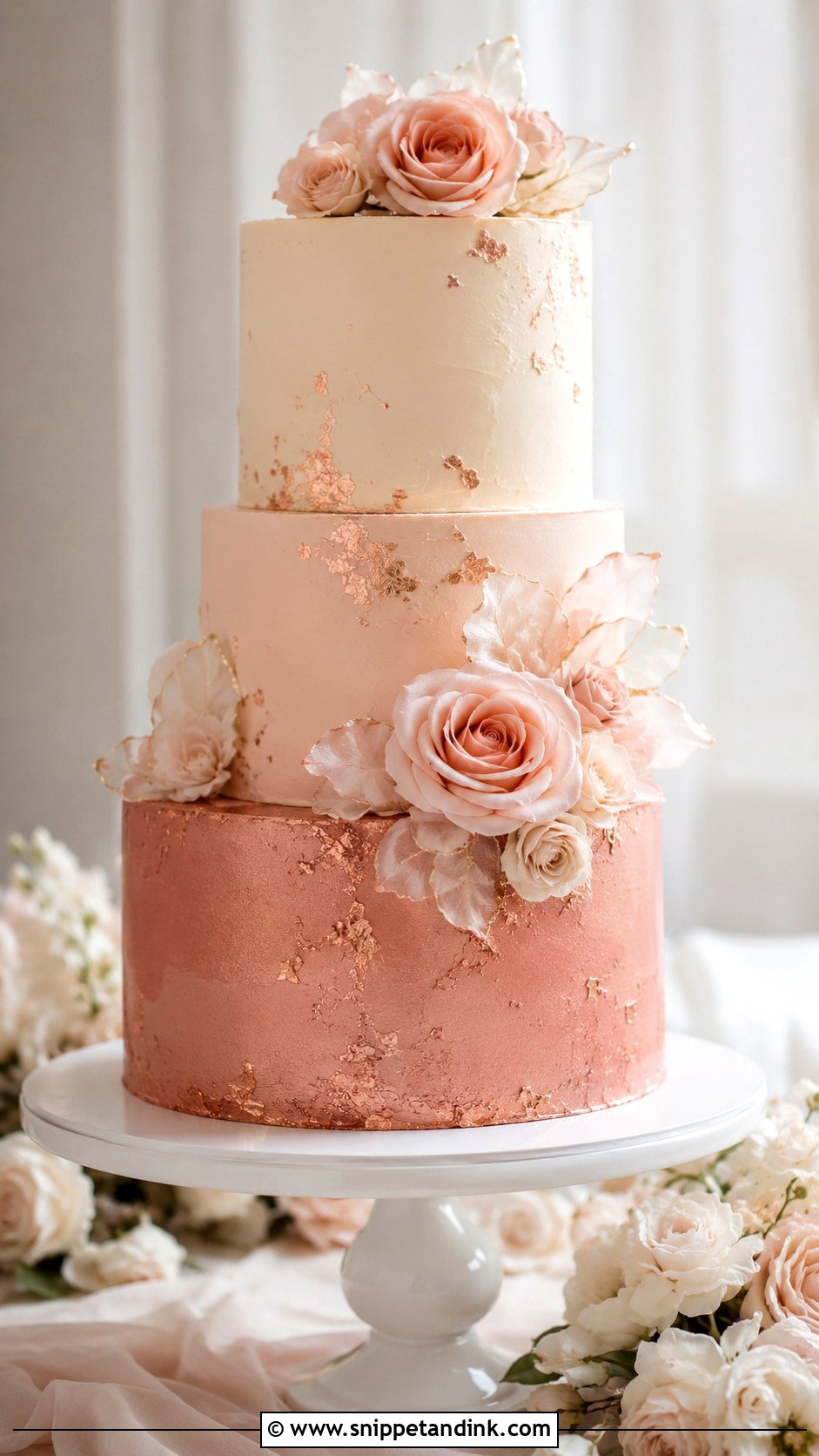
An ombre should look like it fades from ivory to blush and then into rose gold without visible steps. On buttercream I blend each tint into the next with a scraper; on fondant I airbrush, which gives the smoothest gradient. The metallic belongs only on the deepest band, otherwise it fights the soft shading. Sugar roses or wafer paper flowers suit the top tier. You can tune the depth of color to the season, lighter in spring and warmer in autumn.
14. Rose Gold Wedding Cake With Black
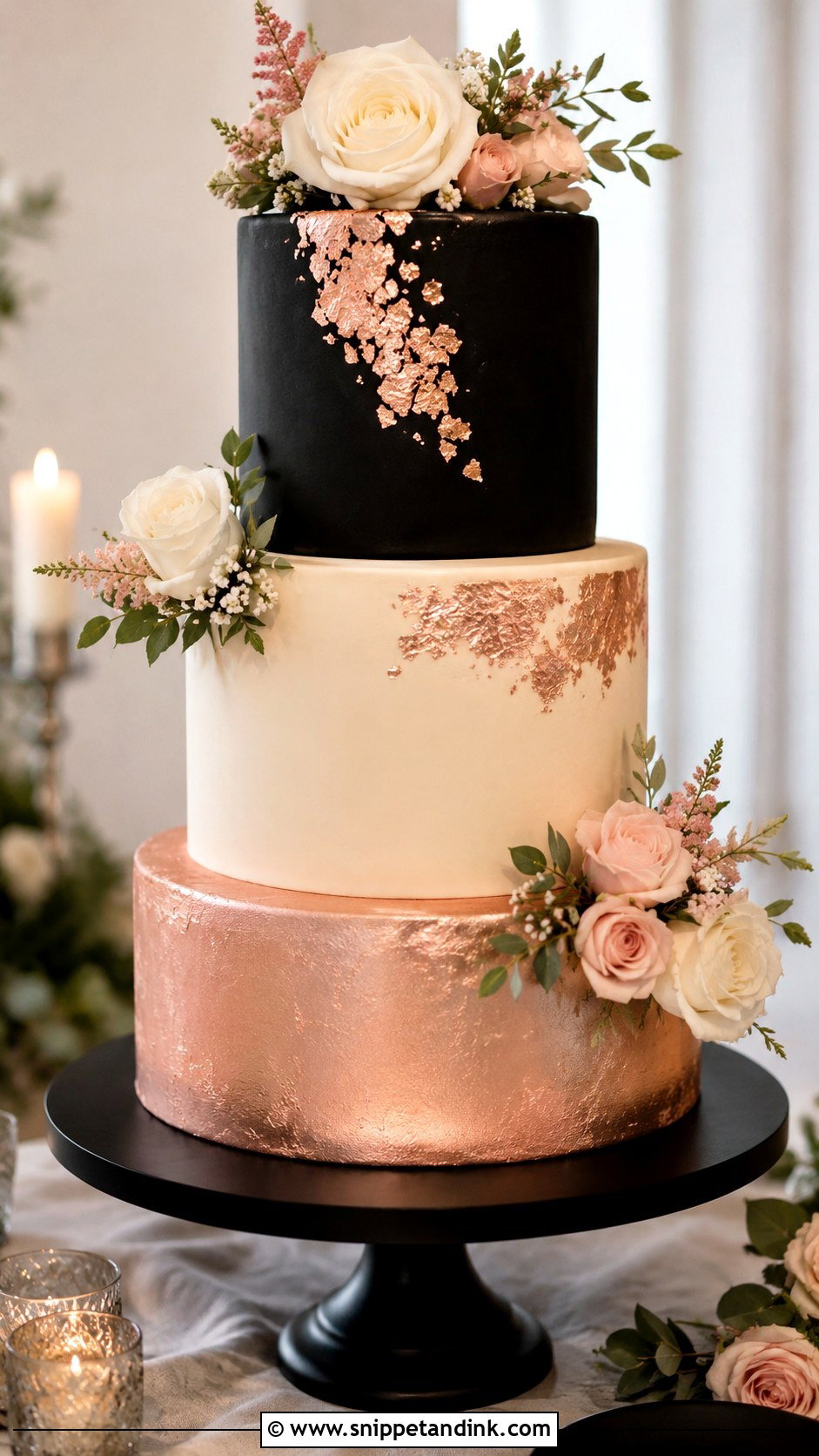
Black and rose gold is dramatic, and it is not for every room. Black fondant needs a lot of color, which can taste bitter and stain teeth, so I usually make black tiers in fondant or chocolate rather than tinted buttercream. One black tier between ivory ones is easier to live with than a fully black cake. Rose gold foil or a drip reads especially well against that dark surface, and white flowers stop it feeling severe.


15. Rose Gold Wedding Cake With Navy
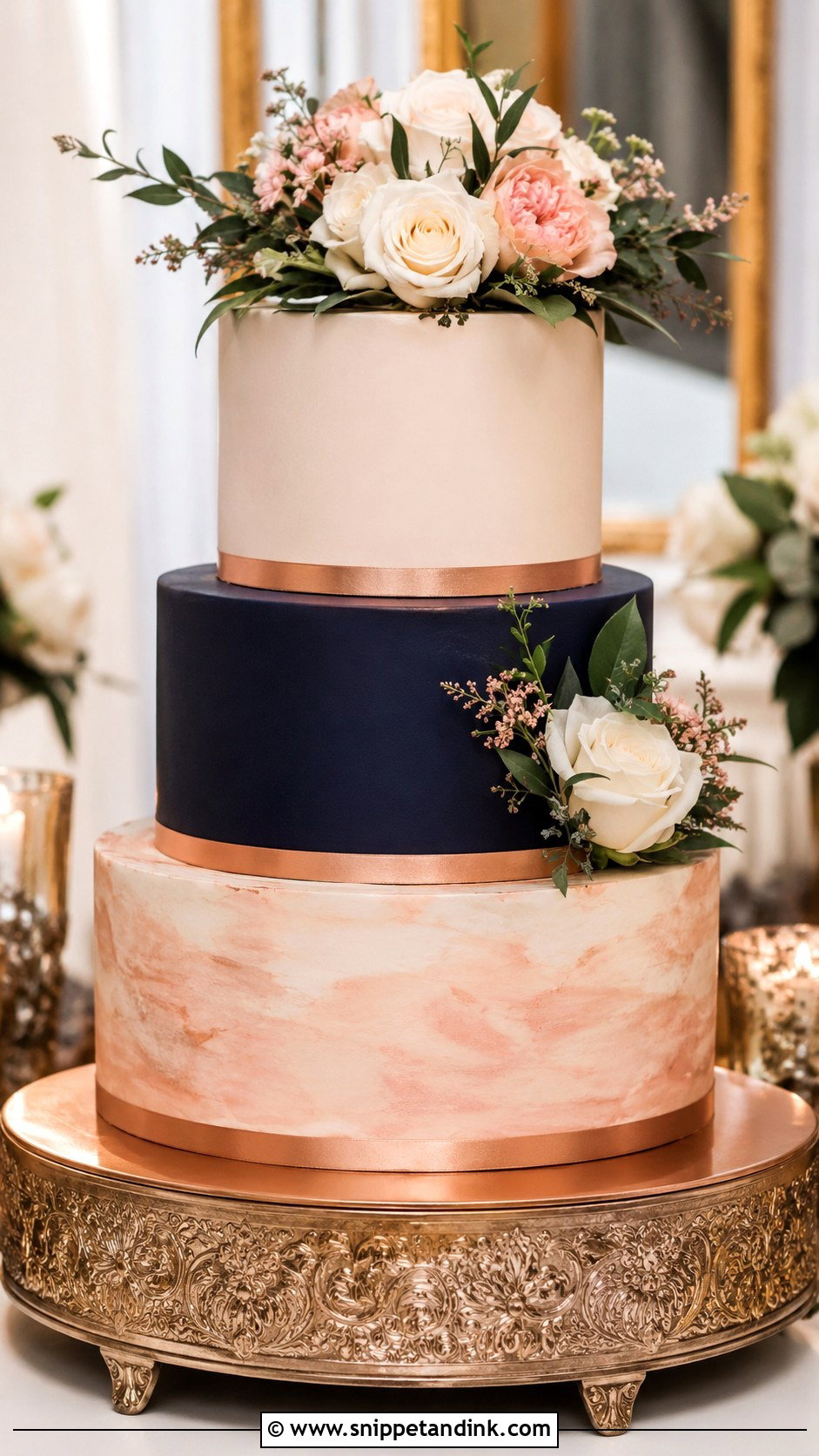
Navy gives rose gold more depth than blush does, and it’s less expected. I keep navy to one or two tiers, with ivory ones in between, and paint the rose gold in thin borders or loose brush strokes. Dark fondant shows every fingerprint and crumb, so it gets covered last and handled with gloves. It ties in easily with navy bridesmaid dresses or invitations, and it suits a formal autumn evening.
16. Rose Gold Wedding Cake With Burgundy Flowers
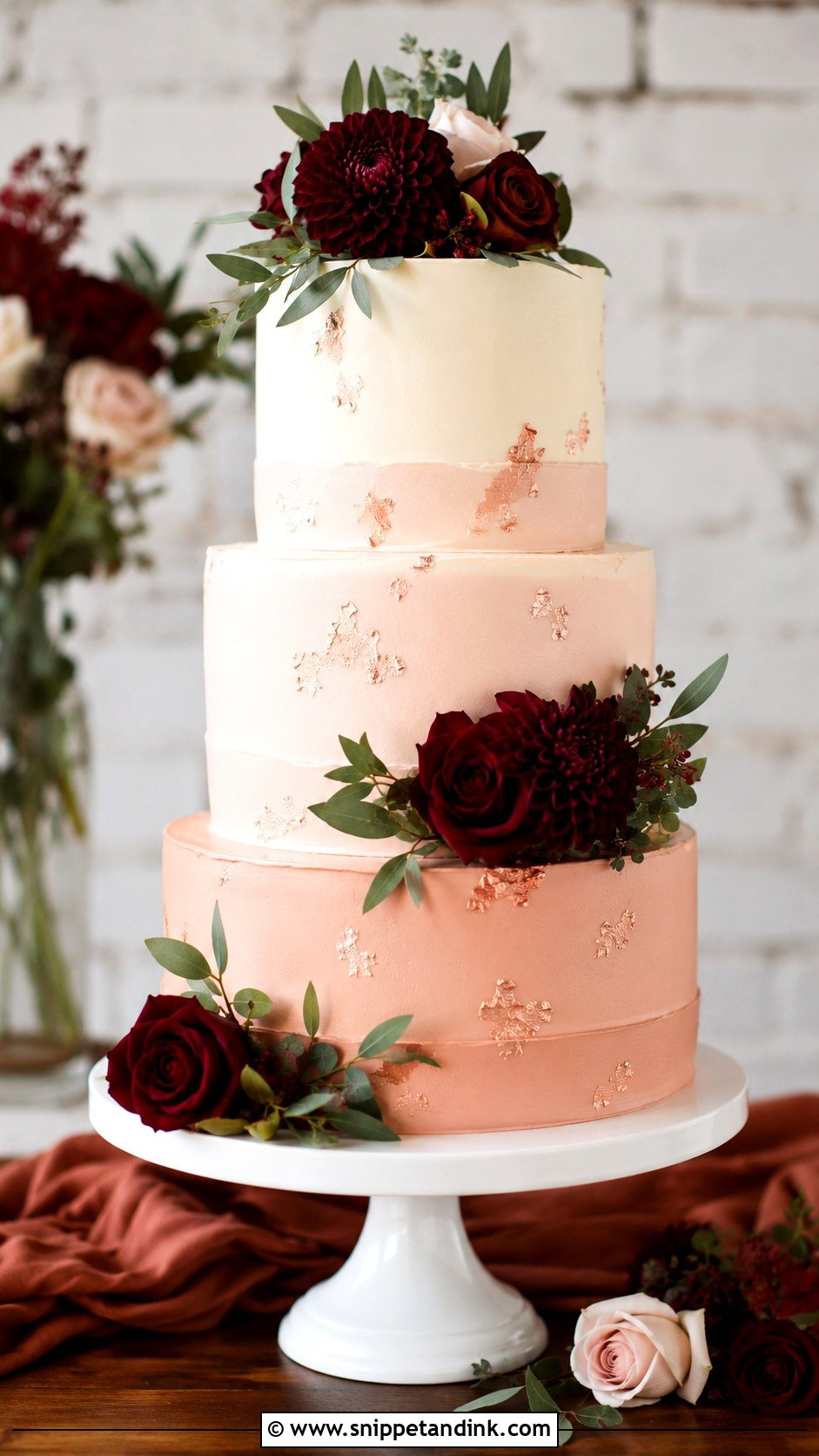
Burgundy flowers turn rose gold warm and moody, especially for autumn. I start from an ivory or blush base and add the metallic through foil, a drip or painted edges, then let deep roses, dahlias or ranunculus take over. Dark petals can bleed color onto pale frosting if they sit there for hours, so I place them as late as possible. A little greenery or soft pink between the burgundy and the metallic helps the colors connect.
17. Rose Gold Wedding Cake With Greenery
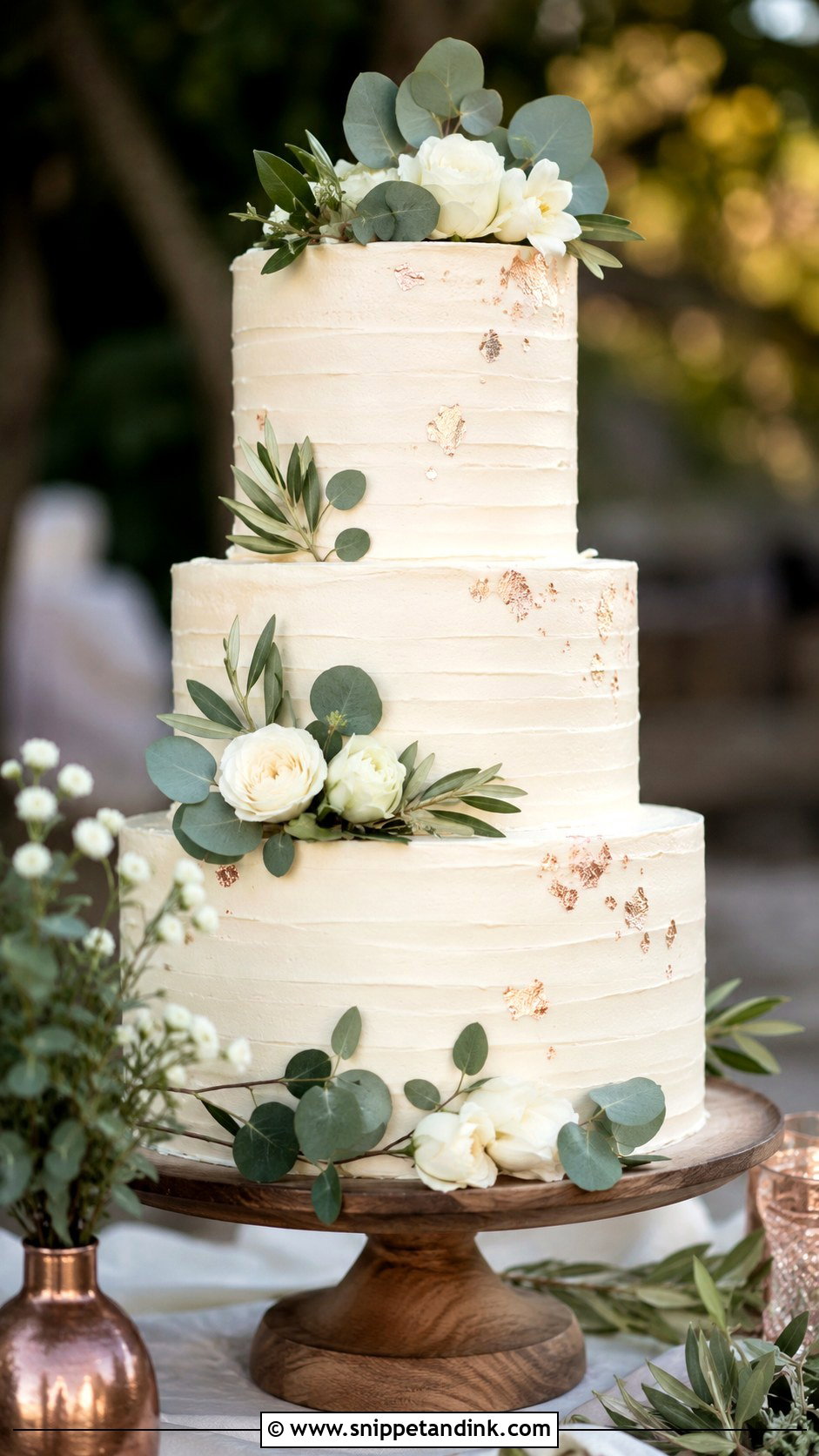
Greenery is the gentlest way to add life to a rose gold cake. Eucalyptus is the most requested, and it’s one I treat with care: it’s not food-safe, so it gets taped and kept off the sponge entirely. Olive leaves and ferns sit flatter against the tiers. Scattered leaf over white buttercream suits an outdoor reception, and I’d only add white flowers if the cake looks bare without them.
18. Rose Gold Wedding Cake With Sugar Flowers
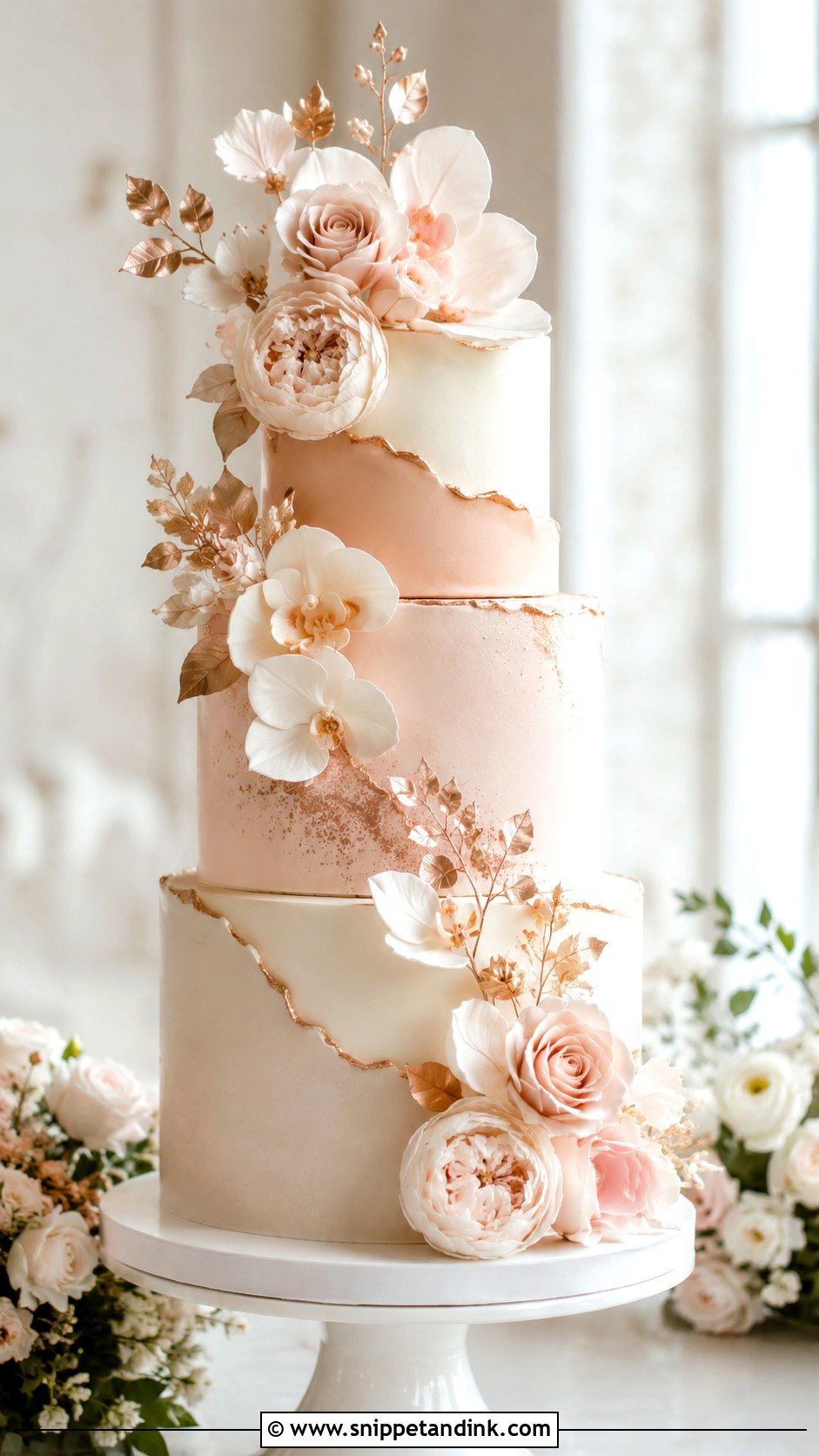
Sugar flowers are made petal by petal from gum paste, wired, dried and dusted, so they need to be ordered well ahead. The upside is control: I can match your bouquet or a dress detail closely, and they don’t wilt or carry pesticide. They also solve the problem of out-of-season blooms. Blush roses, ivory peonies and pale ranunculus all suit rose gold edges. Keep in mind they’re decorative; most guests won’t eat them.
19. Rose Gold Wedding Cake With Macarons
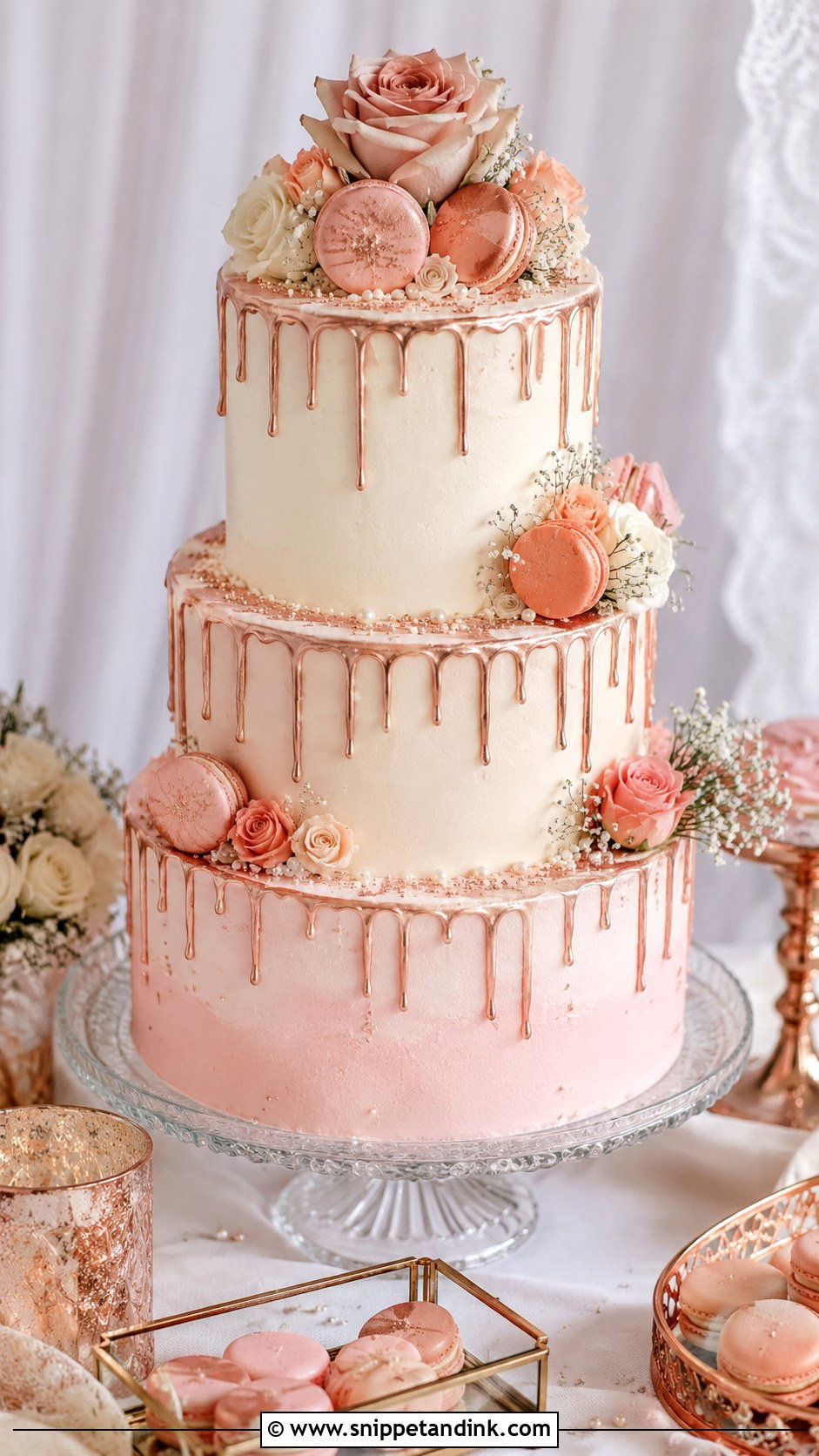
Macarons tie the cake to the rest of the sweets, which is why I like them for dessert-led receptions. I place them around the base or tucked between flowers, attached with a dab of buttercream so they don’t slide. Painting a few with rose gold luster links them to the cake. Macarons pick up moisture from buttercream, though, so they go on the day, not the night before, or the shells turn chewy.




20. Rose Gold Wedding Cake With Cake Topper
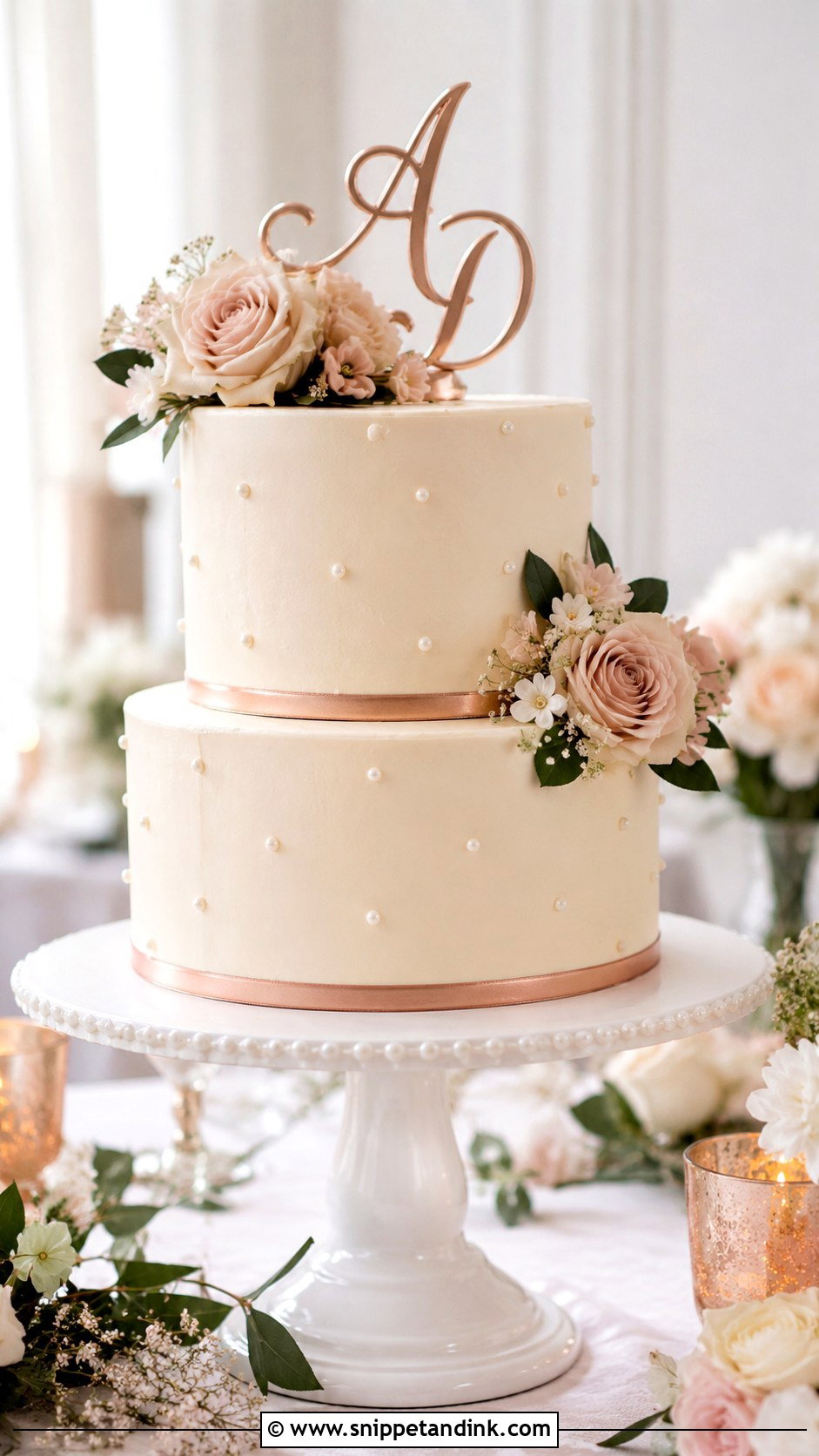
A rose gold topper is the simplest way to bring in metallic without changing the cake itself, and it’s kind to a tighter budget. Initials, a surname or a short phrase all work. I ask couples to send me the topper’s width and the length of its stakes ahead of time, because a wide acrylic piece on a small top tier looks oversized. Keep the cake underneath clean, with thin rose gold borders, so the topper looks planned rather than added on.
21. Rose Gold Wedding Cake With Metallic Leaf
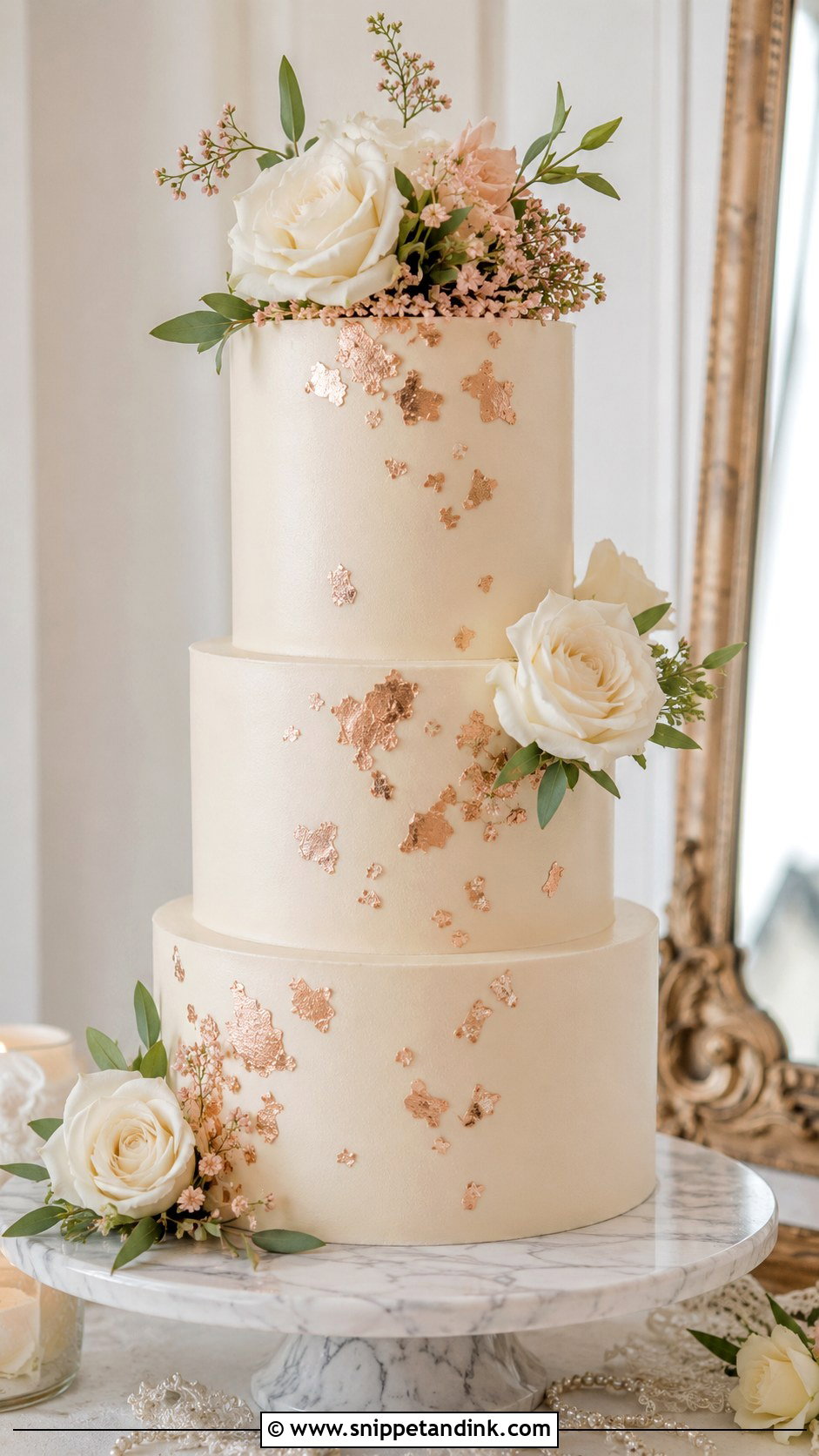
Metallic leaf is the finish I reach for when I want a handmade feel. It tears unevenly, so each tier gets its own texture, and it sits well on buttercream, fondant or marble. I apply it with tweezers and a dry brush because it sticks to warm fingers. Scattered lightly, clustered beside flowers or framing one side, it works in most settings. One caution: some rose gold leaf contains copper and is sold for crafts, so confirm the label says edible before it goes on.
22. Rose Gold Wedding Cake With Ruffles
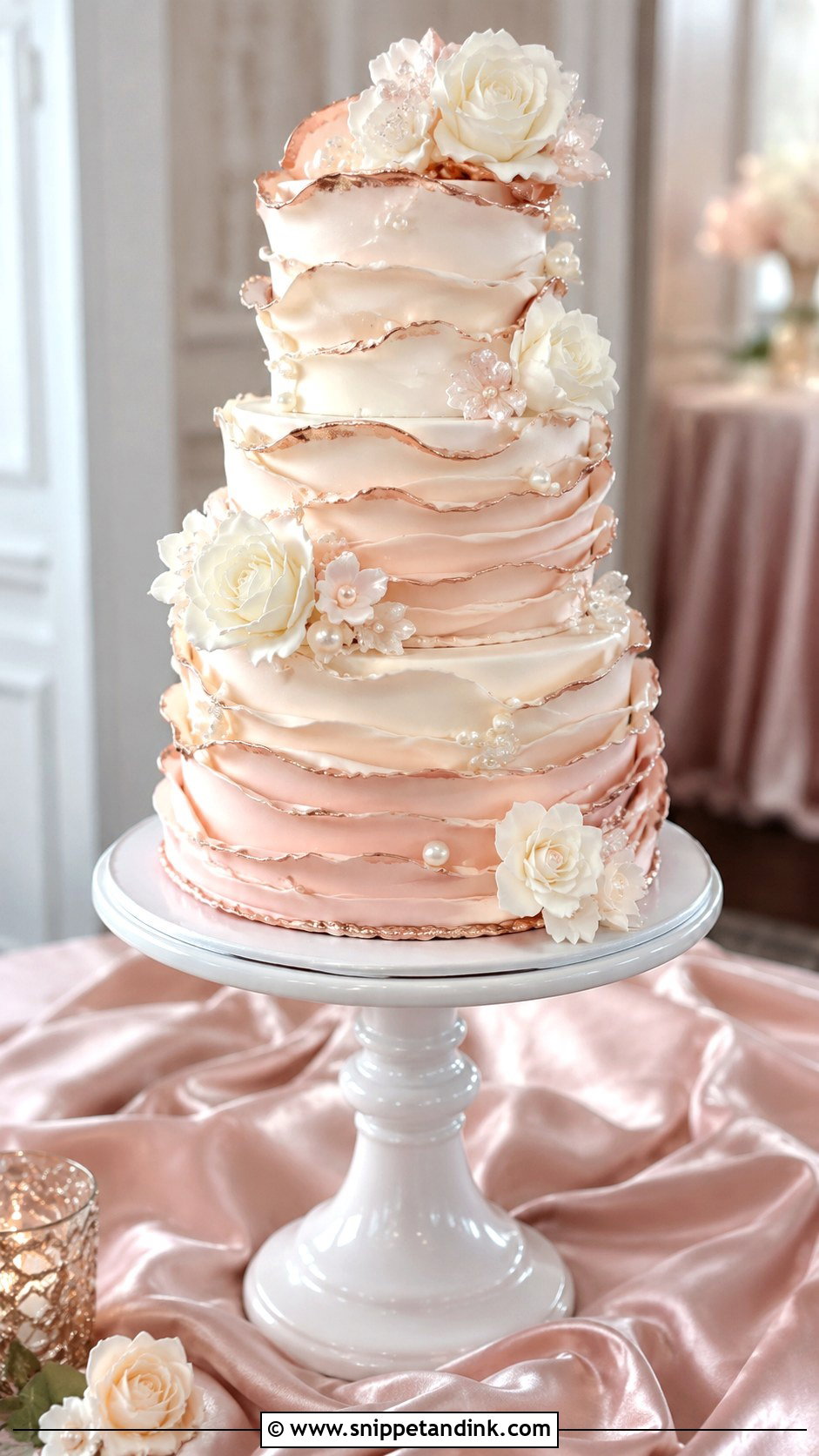
Ruffles bring movement without needing many flowers. I make them from fondant strips thinned at one edge, from piped buttercream or from wafer paper, which is the lightest of the three. Brushing the edges with rose gold catches just the ruffle tips. Fondant ruffles are heavy, so on a tall cake they need good dowelling below. A couple of white or blush sugar flowers is all I’d add.
23. Rose Gold Wedding Cake With Watercolor
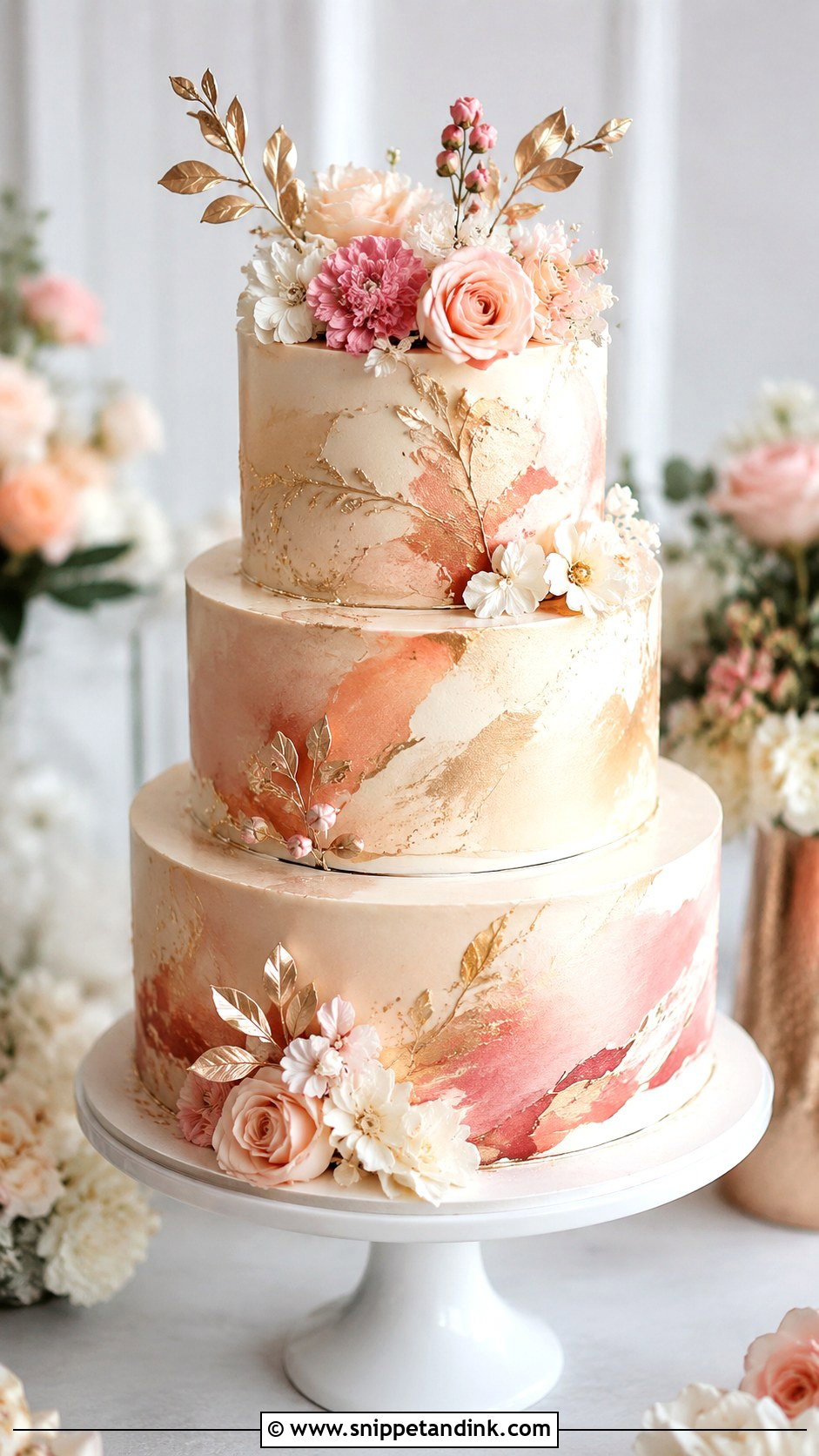
A rose gold watercolor wedding cake is painted in thin washes of diluted gel color, blush over ivory over champagne, so the layers stay translucent. It works on fondant or very smooth, chilled buttercream. I add the rose gold last, as fine lines or a few hand-painted flowers, and stop well before it covers the color underneath. It suits art-led weddings and relaxed garden receptions.
24. Rose Gold Wedding Cake With Champagne Color
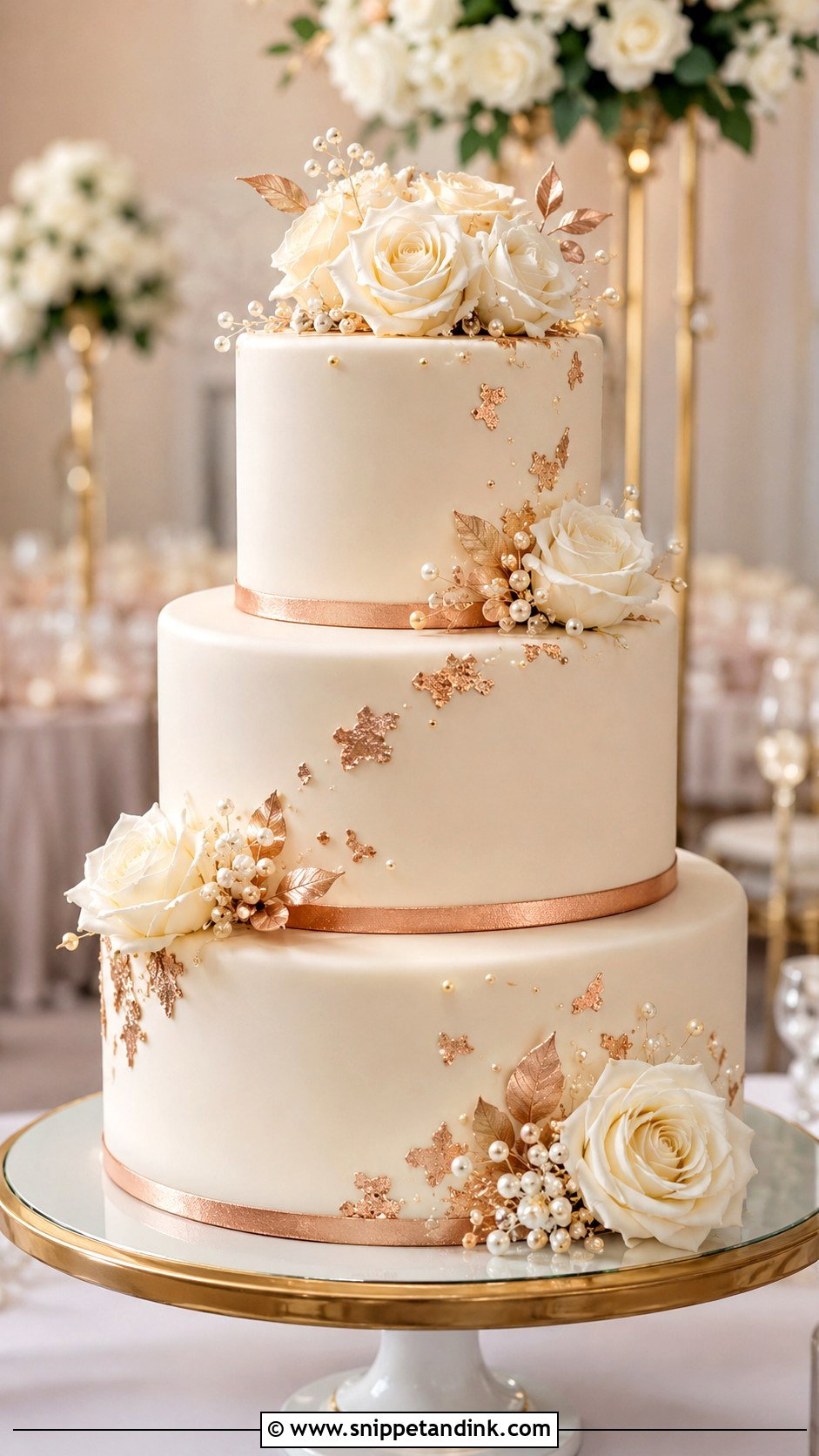
Champagne and rose gold are close in tone, so this cake is about subtle contrast. A champagne fondant or a soft buttercream with a light shimmer makes a warm base, and the rose gold comes in as borders, foil or a delicate drip. Champagne is easier to photograph than bright white, which can blow out under a flash. Ivory flowers, pearls and candlelight finish it without adding noise.

25. Rose Gold Wedding Cake With Tall Tiers
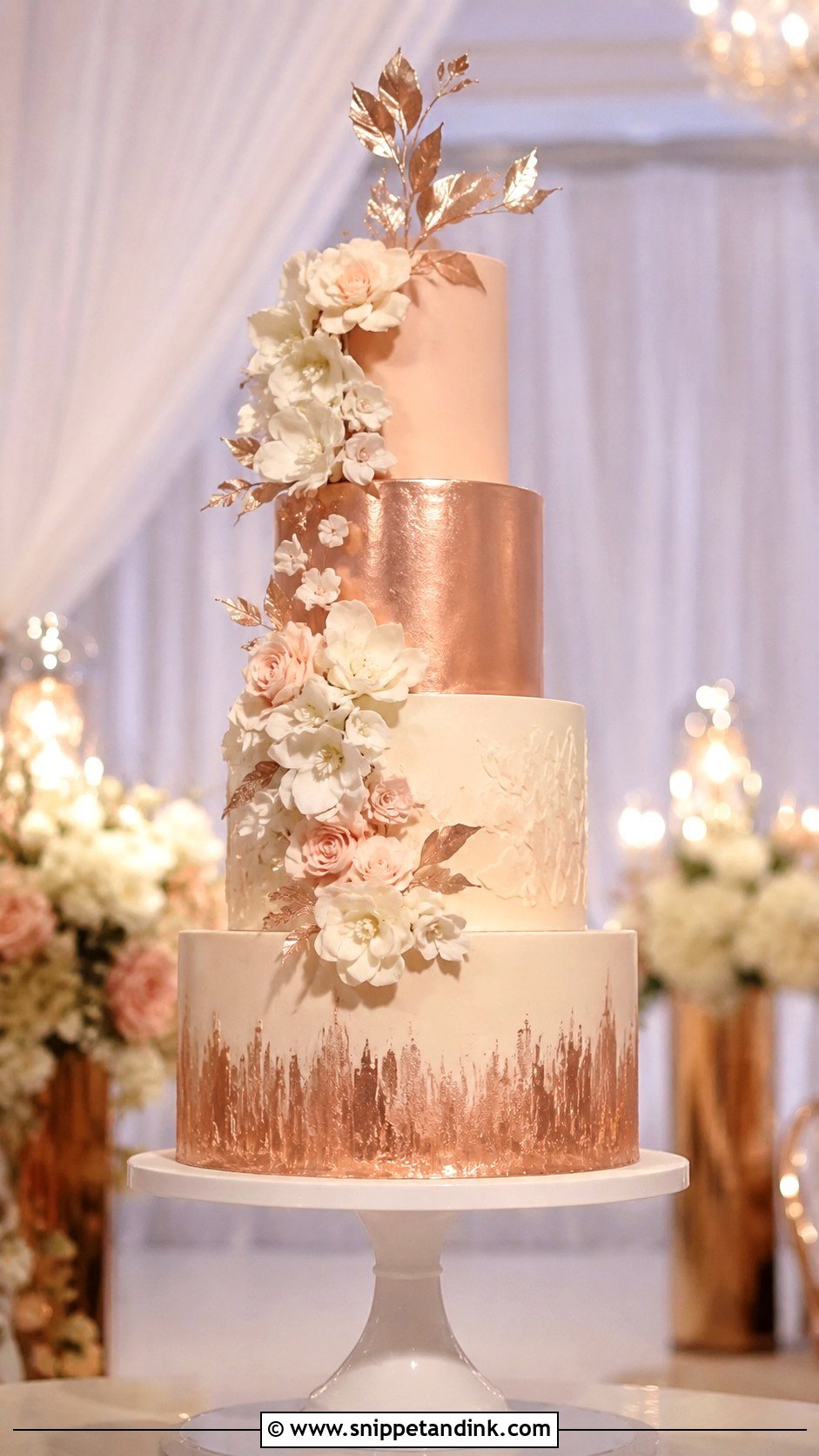
Tall tiers are usually extended with double-barrel layers, two cakes stacked on one board with a central dowel, which adds height without extra width. That height gives space for metallic panels or a floral cascade. A tall cake is less stable, though, so I deliver it in sections and stack it at the venue. It suits large rooms, where a short cake can disappear. Keep the shape simple and repeat a flower from your bouquet to tie it to the day.
Is That Shimmer Something Guests Can Eat?
This is the question I wish more couples asked. A lot of metallic products sold for cakes are labeled “non-toxic” or “for decoration only”, which is not the same as edible. They are meant for pieces that get removed before serving. On a cake where guests will eat the painted tier, I only use dusts, glitters and leaf that are marked edible, and I’m happy to show the labels to anyone who asks.
Edible glitter is usually made from sugar or gum arabic, so it sparkles less than the plastic kind. Real edible leaf is gold or silver; rose gold leaf in particular often contains copper and is sold for crafts. If your baker can’t tell you what a product is made of, assume it’s decorative and ask for the piece to be taken off before cutting.
How a Metallic Cake Survives the Trip and the Reception
Painted finishes are fussier than plain frosting once the cake leaves the kitchen. Condensation is the main enemy. If a chilled cake goes straight into a warm, humid room, water beads on the surface and dulls or streaks the metallic. I let cakes rest boxed for a while before unboxing, so they warm slowly.
- Keep the cake table out of direct sun and away from heaters; buttercream softens and paint slides on a warm surface.
- Avoid placing it right beside candles if the tiers are buttercream.
- Ask your planner to keep guests from touching the painted tier; luster dust rubs off on fingers and leaves prints.
- If you’re saving the top tier, wrap it well once it is fully cold. The shimmer may dull in the freezer, but the cake will taste fine.
For outdoor summer receptions, I’d honestly push you toward fondant or a mostly-buttercream cake with just a metallic topper. Fully painted buttercream tiers on a hot afternoon rarely look as crisp at cutting time as they did at setup.
Where the Shine Should Stop on Your Cake
Rose gold can go romantic, modern or glamorous depending on where you put it. The cakes that work best balance one shiny element against texture, flowers and clean frosting. For a romantic look, blush flowers, lace, pearls or watercolor all suit it. For something modern, try marble, geometric lines, black accents or tall tiers. If you’re unsure, white roses on buttercream with a little metallic leaf is the version I find hardest to get wrong.
You'll Like These Ideas:







Leave a Reply