
I’ve never found body-shape rules much use in a fitting room. What actually decides whether a gown works on a midsize body is how it’s built, how the fabric hangs, and how well it’s altered. A good seamstress can refine the fit through the bust, waist, hips and hem far more than any silhouette chart. The gowns below range from classic lace and satin to slip dresses, separates and a black-bow surprise, and for each I’ve noted the construction detail I’d check first and the accessories that keep it balanced.
Reading Fabric Weight in the Fitting Room
Two gowns with the same silhouette can look completely different on a midsize body, and the reason is usually the fabric. Heavier fabrics fall straight and skim. Lighter ones follow every contour. Before trying a gown on, I do a few quick checks with my hands.
- Hold a layer up to the light. If you can see your fingers clearly through the skirt lining, it will show underwear lines in daylight photos.
- Pinch and release. Crepe and heavy satin spring back; thin satin and polyester charmeuse hold small creases, which means wrinkles after sitting.
- Stretch it gently across the grain. A little stretch with good recovery is comfortable; fabric that stays stretched will bag at the seat by evening.
- Feel the inside. Smooth linings and finished seams mean less rubbing over a long day.
None of this means lightweight fabric is wrong. Chiffon and soft tulle suit a midsize bride beautifully when they’re layered and properly lined. It just tells you where the gown will need help.
1. Mid Size A-Line Lace Wedding Dress
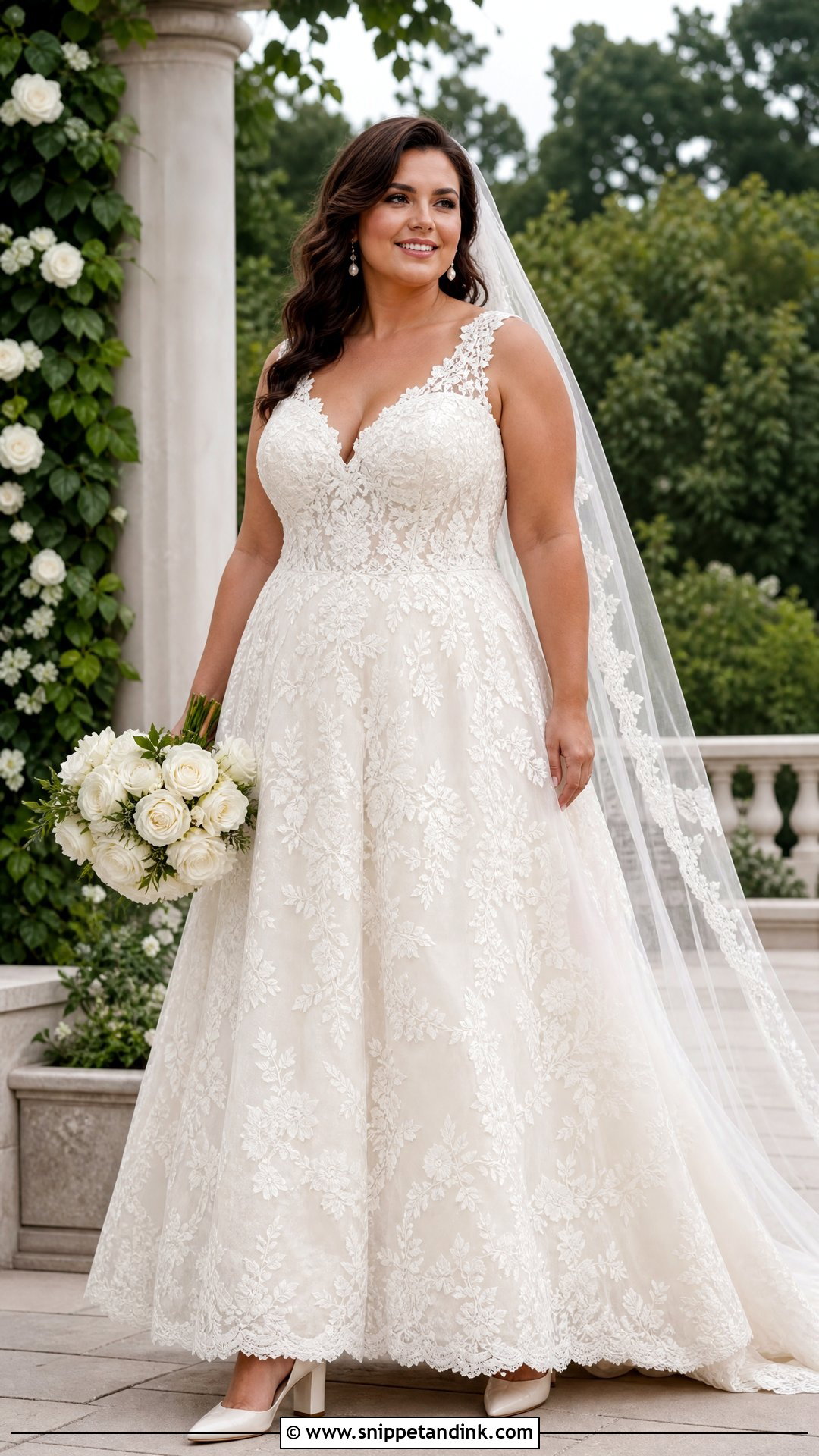
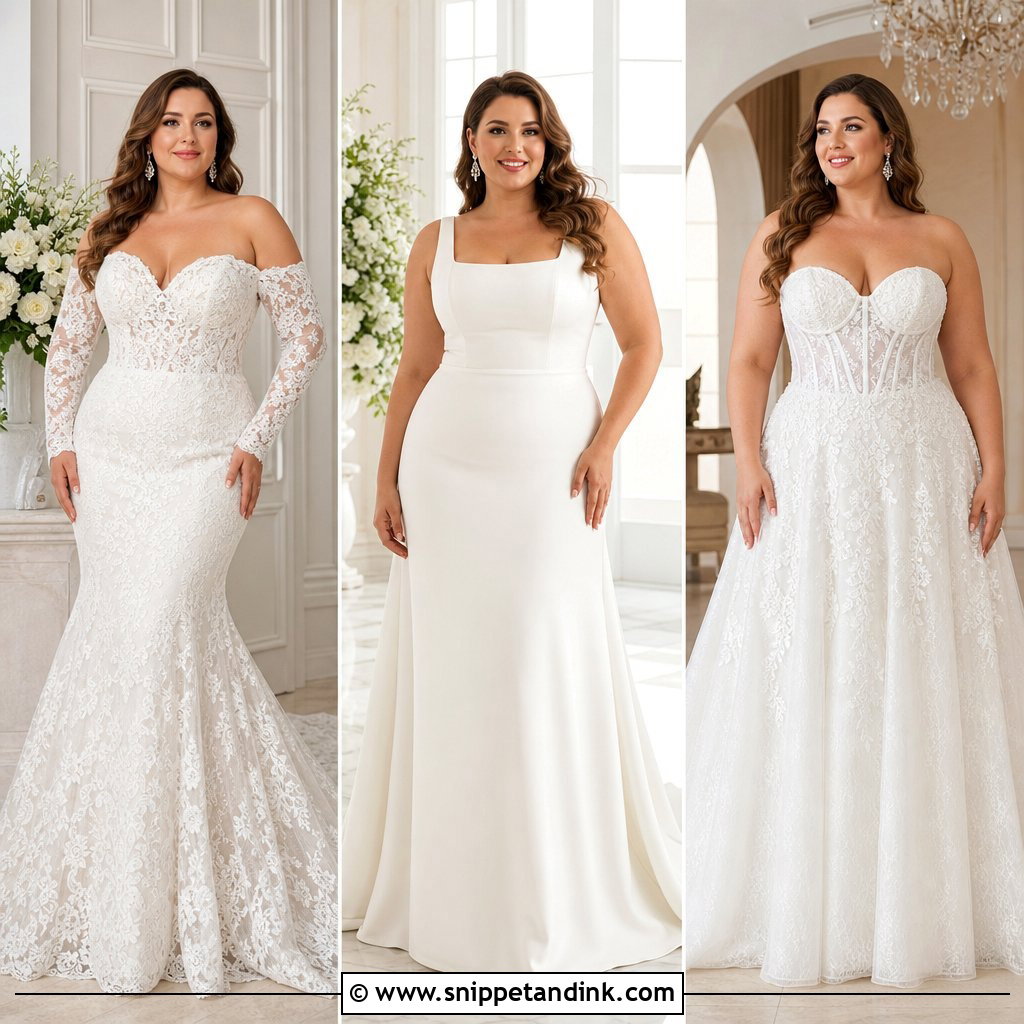
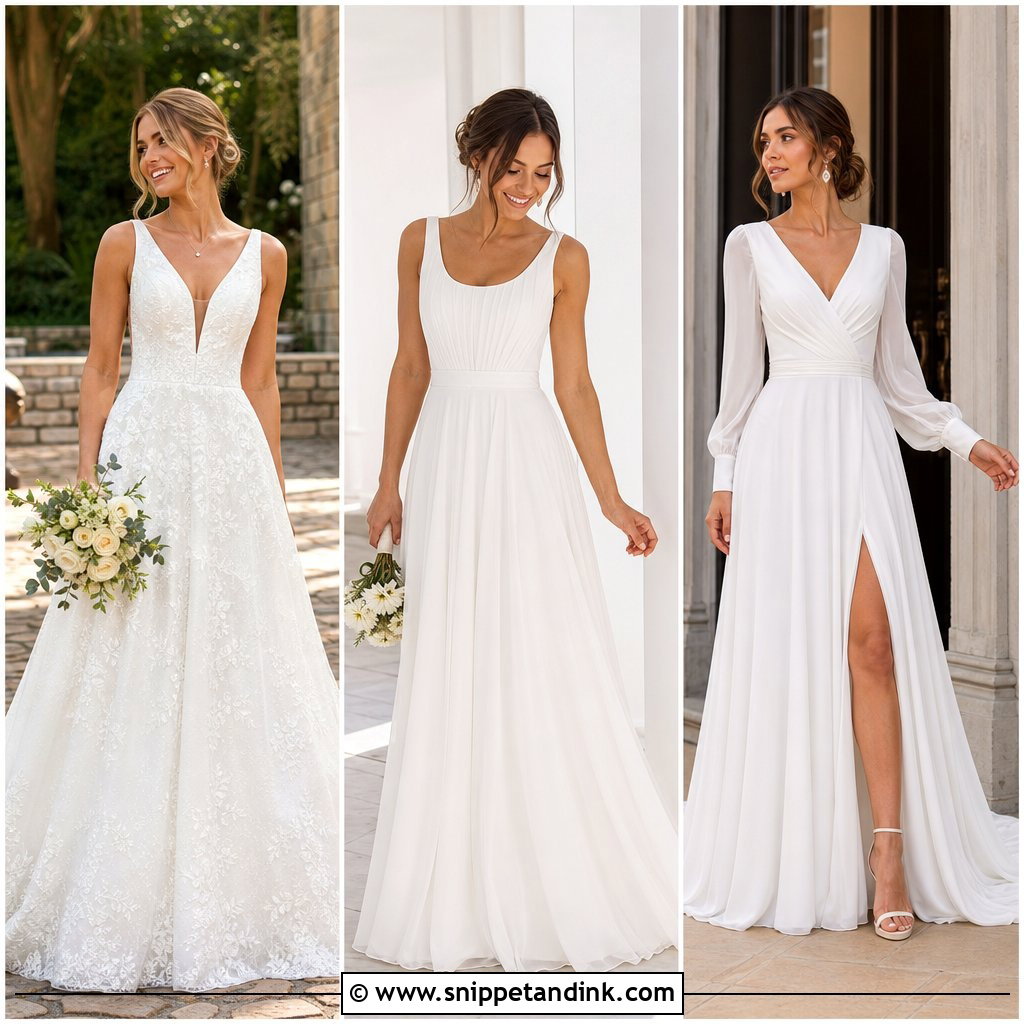
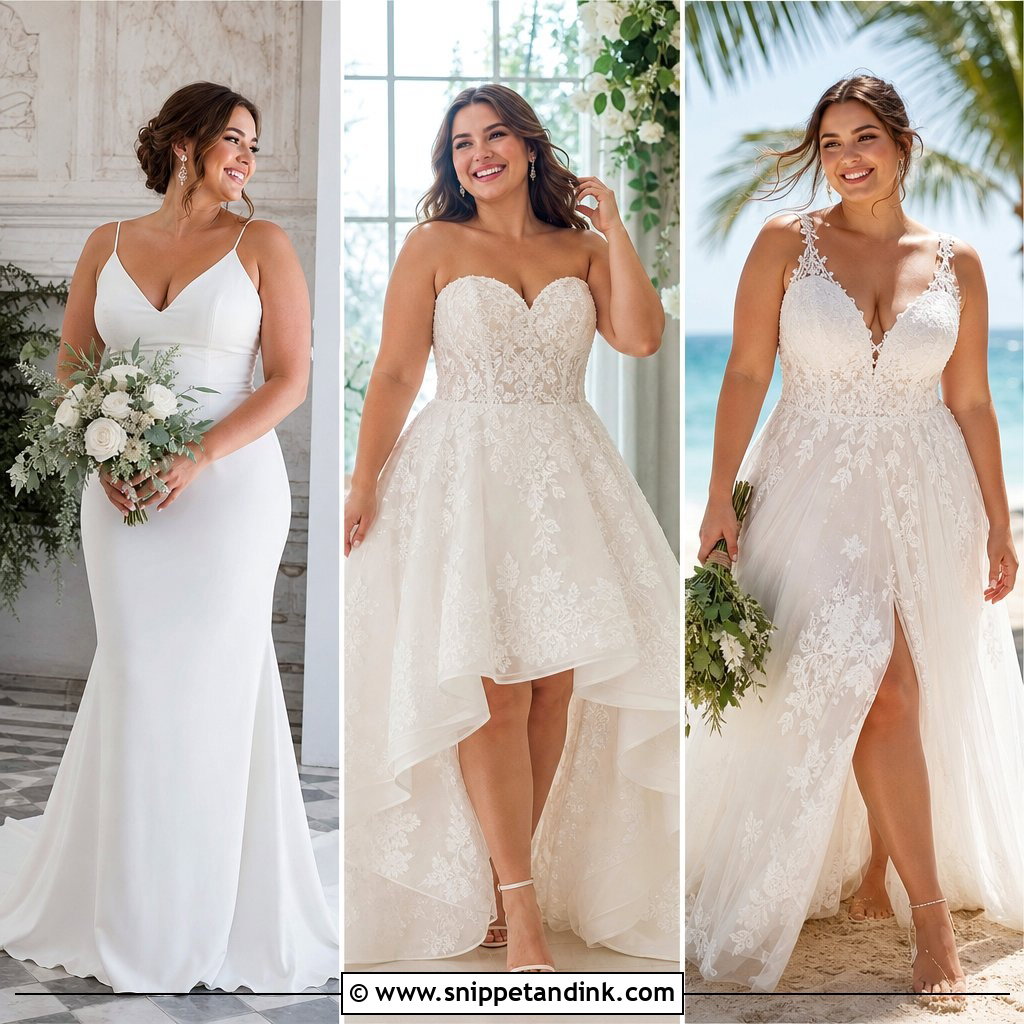
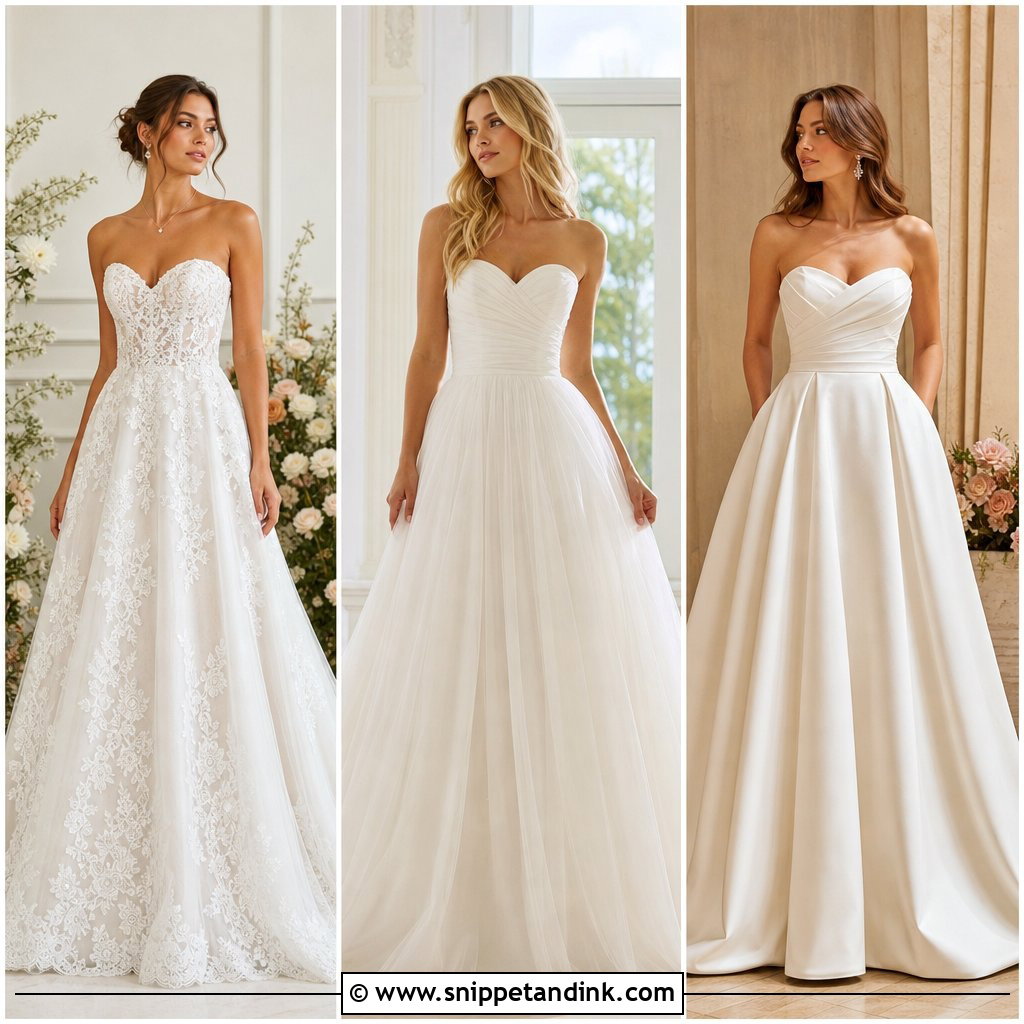
Lace A-lines are the gown I’d call the safest bet, and I don’t mean that as faint praise. The waist is defined, the skirt opens slowly toward the floor, and floral lace hides small seam adjustments well. Ask for an ivory lining under the lace rather than nude if you want the pattern to show crisply in photos. Pointed block heels, pearl drops and a fingertip veil with a narrow lace edge suit it. At alterations, sit down and check that the waist seam doesn’t dig into your ribs.
2. Mid Size Satin Ball Gown Wedding Dress
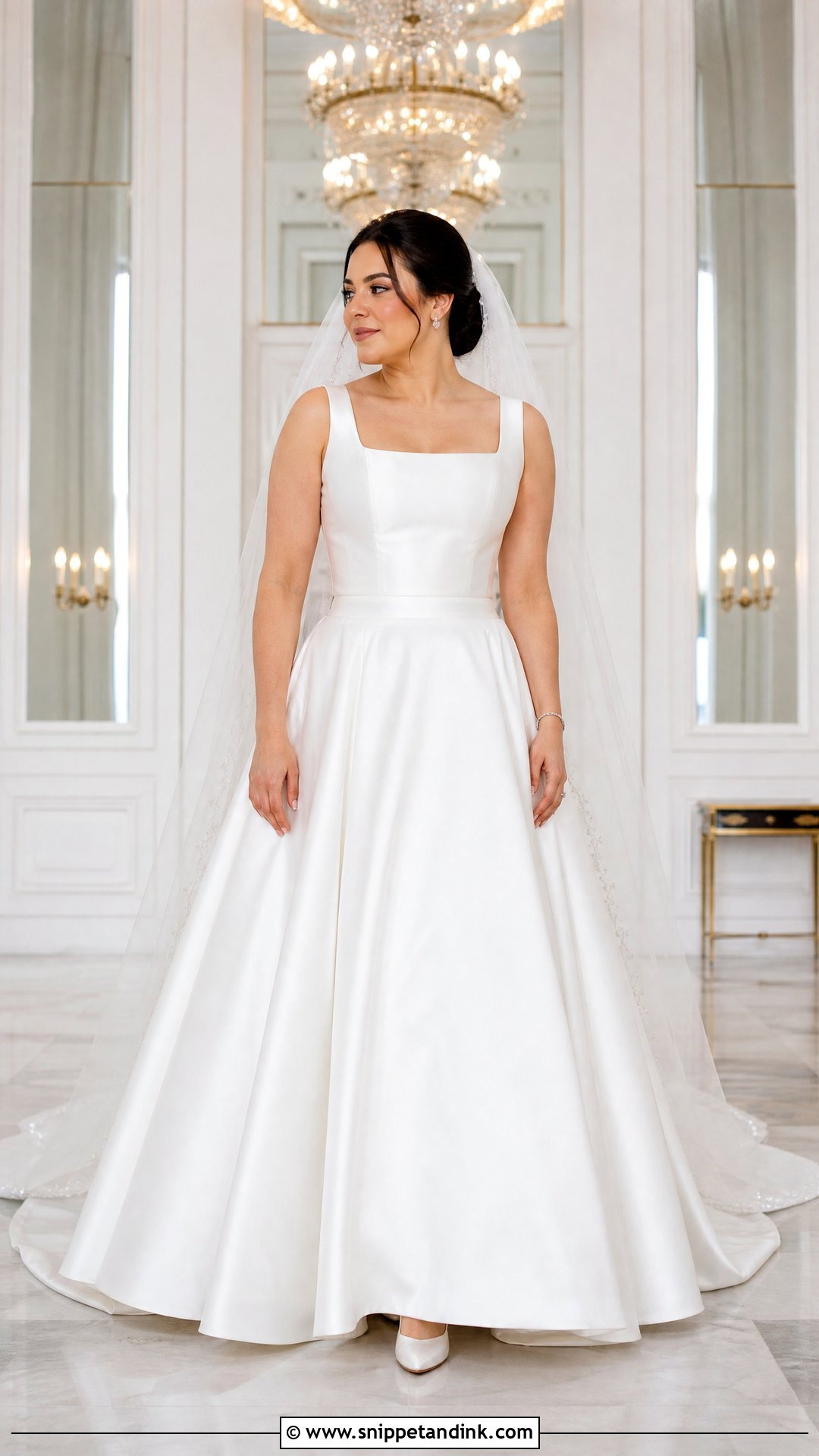
Satin ball gowns depend on seaming, not padding. Look for vertical seams that shape the torso instead of stiff decoration added on top. A square neck with wide straps feels modern and leaves room for a proper bra if you want one. Satin shows every wrinkle and pull, so have your seamstress check the bodice from the side and back, not just the front. Hem it while you’re wearing your actual wedding shoes. Crystal studs, a low chignon and a cathedral veil finish it.
3. Mid Size Off Shoulder Fit And Flare Wedding Dress
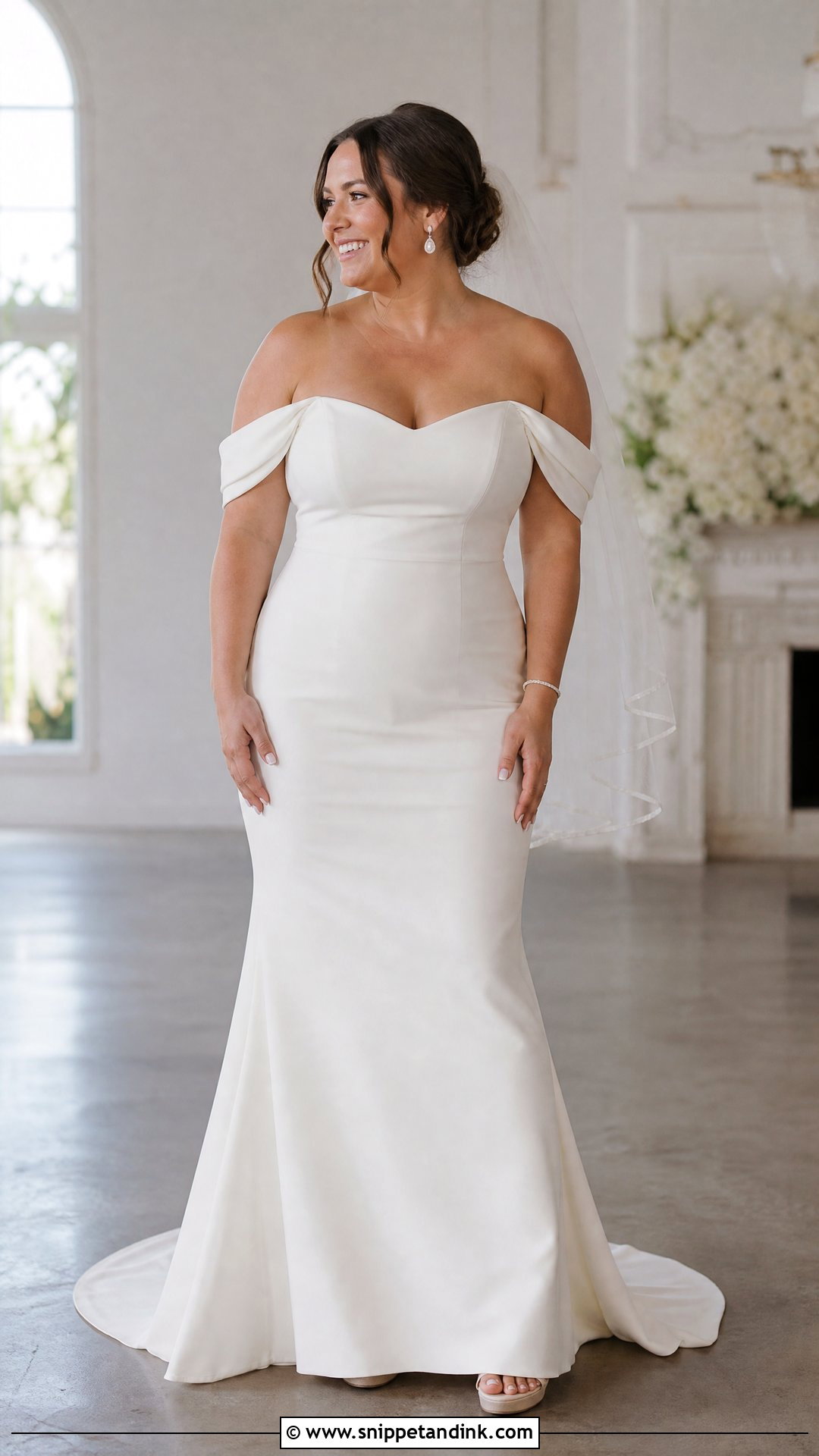
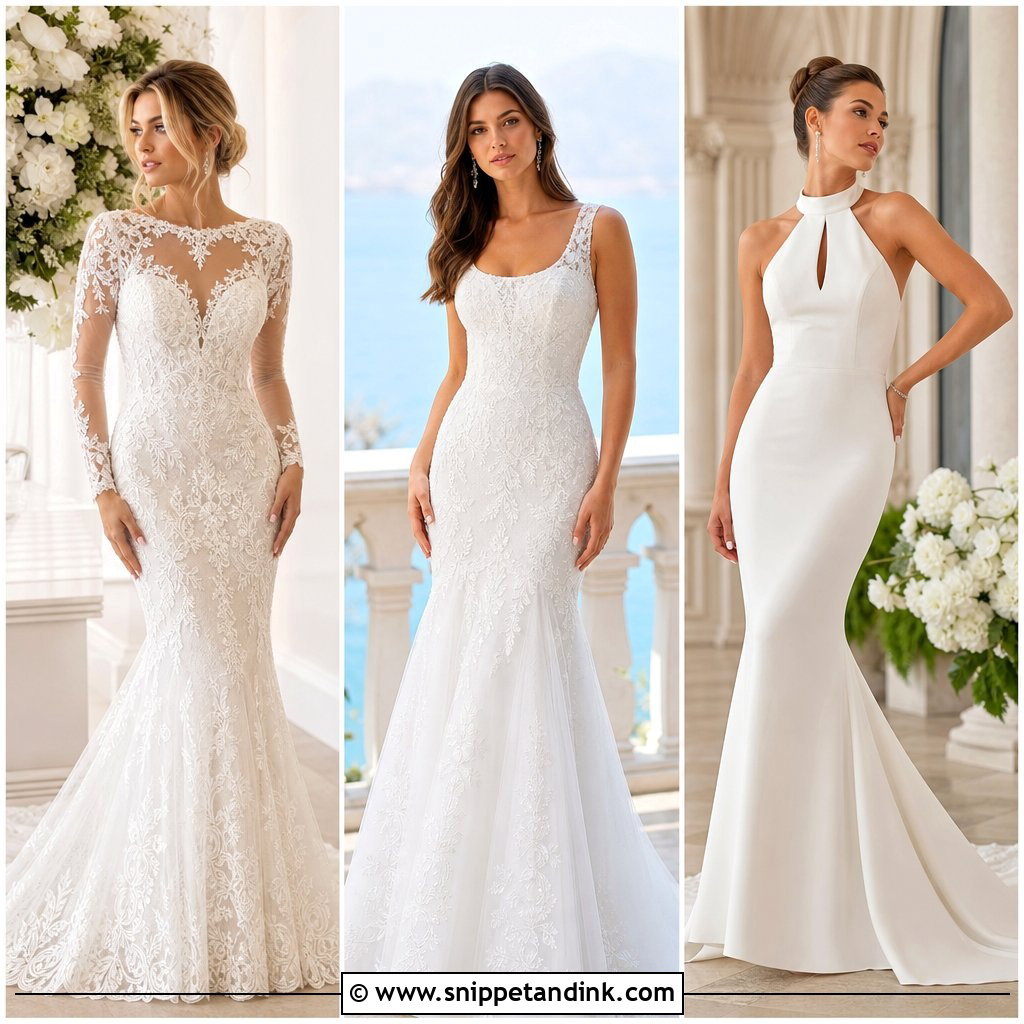
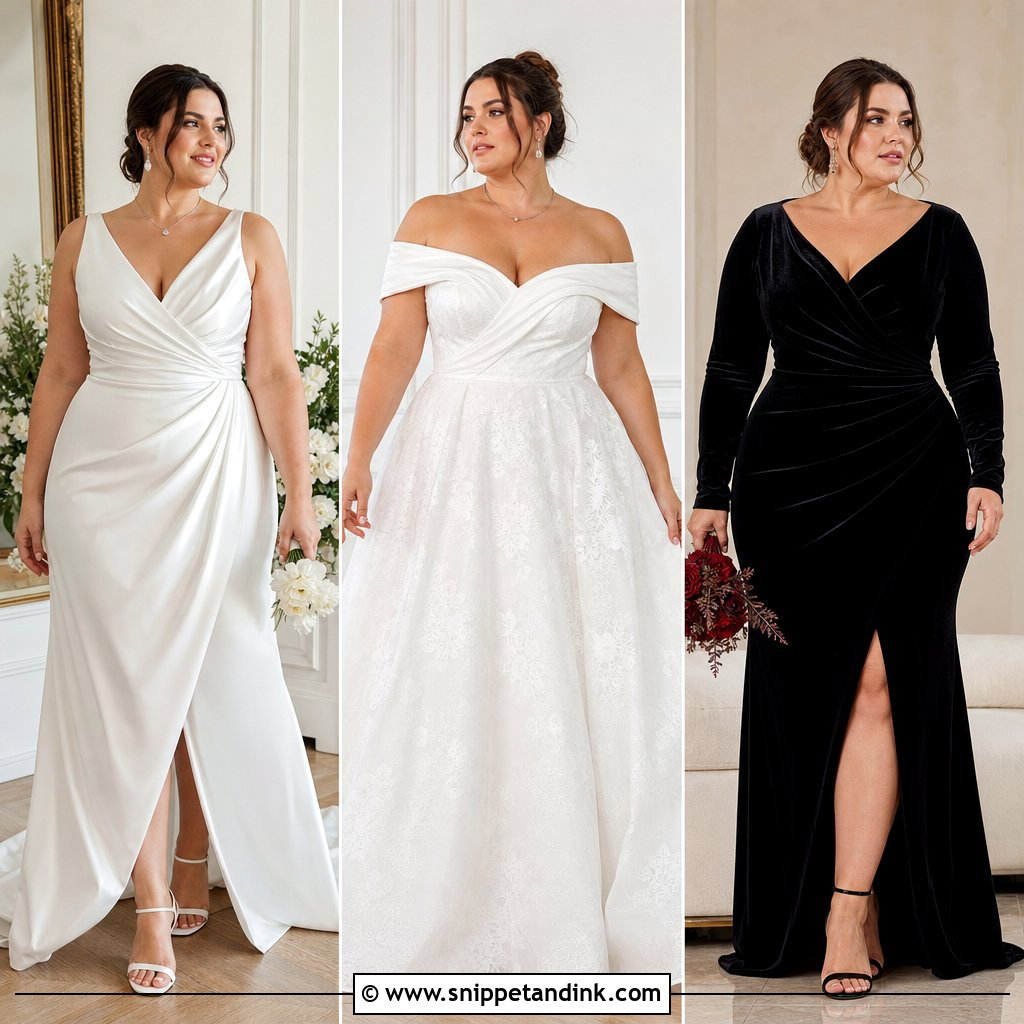
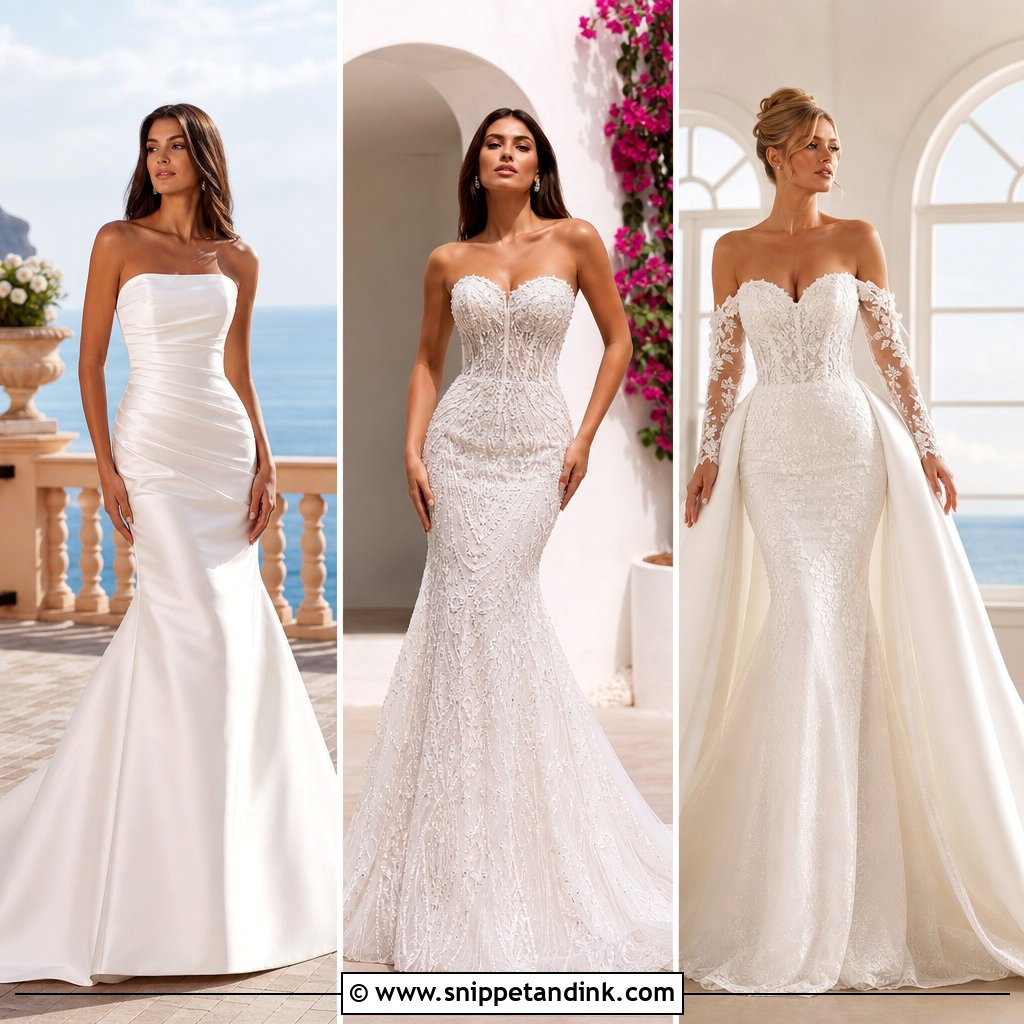
Can a fitted gown still feel comfortable? With an off-shoulder fit-and-flare, yes, if the flare opens around the lower thigh rather than right at the knee. That gives you a proper stride. Internal boning holds the bodice so the draped sleeves don’t have to. Stretch crepe gives a clean line; lace softens it. Low platform heels feel more stable than stilettos under a narrow skirt. Raise your arms and hug someone at every fitting to test the sleeves.
4. Mid Size Long Sleeve Crepe Wedding Dress
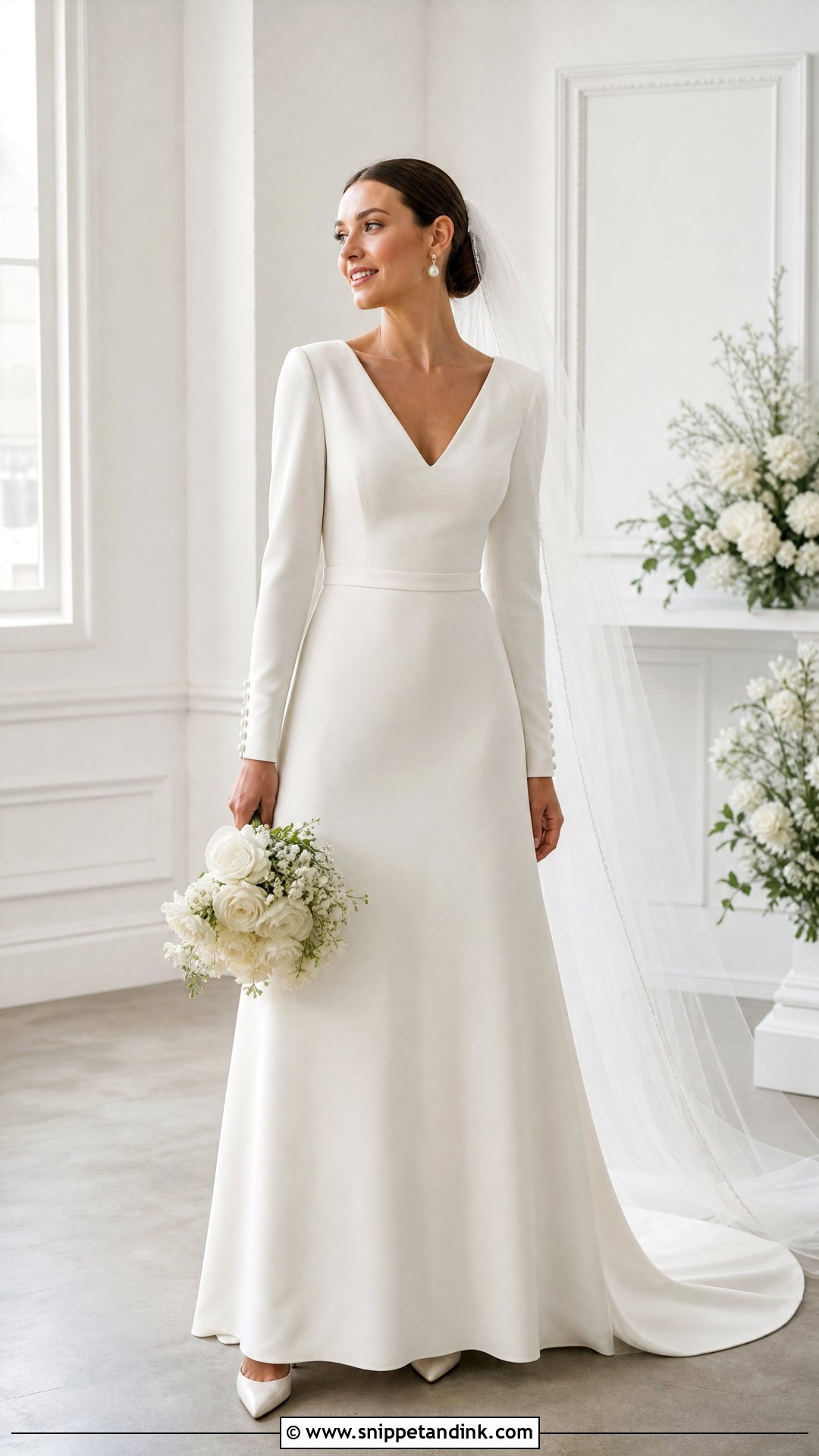
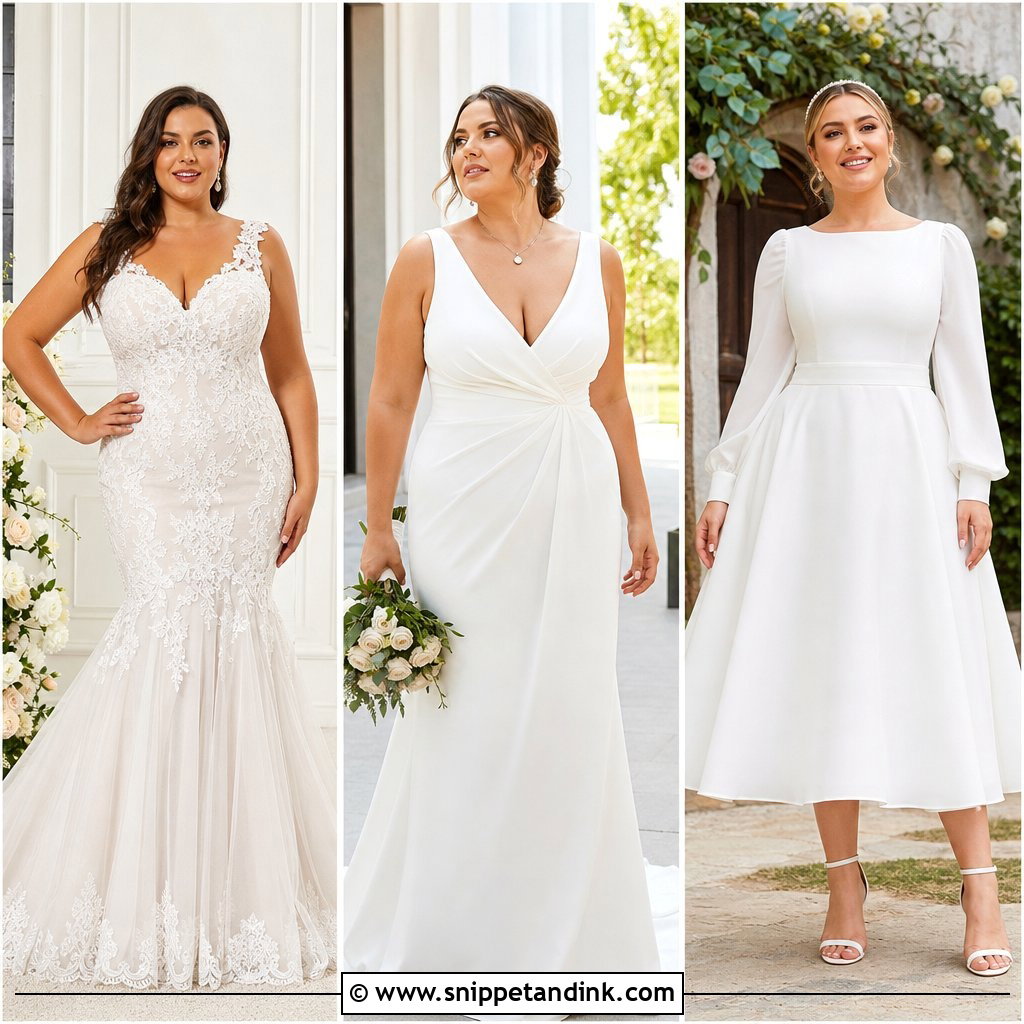
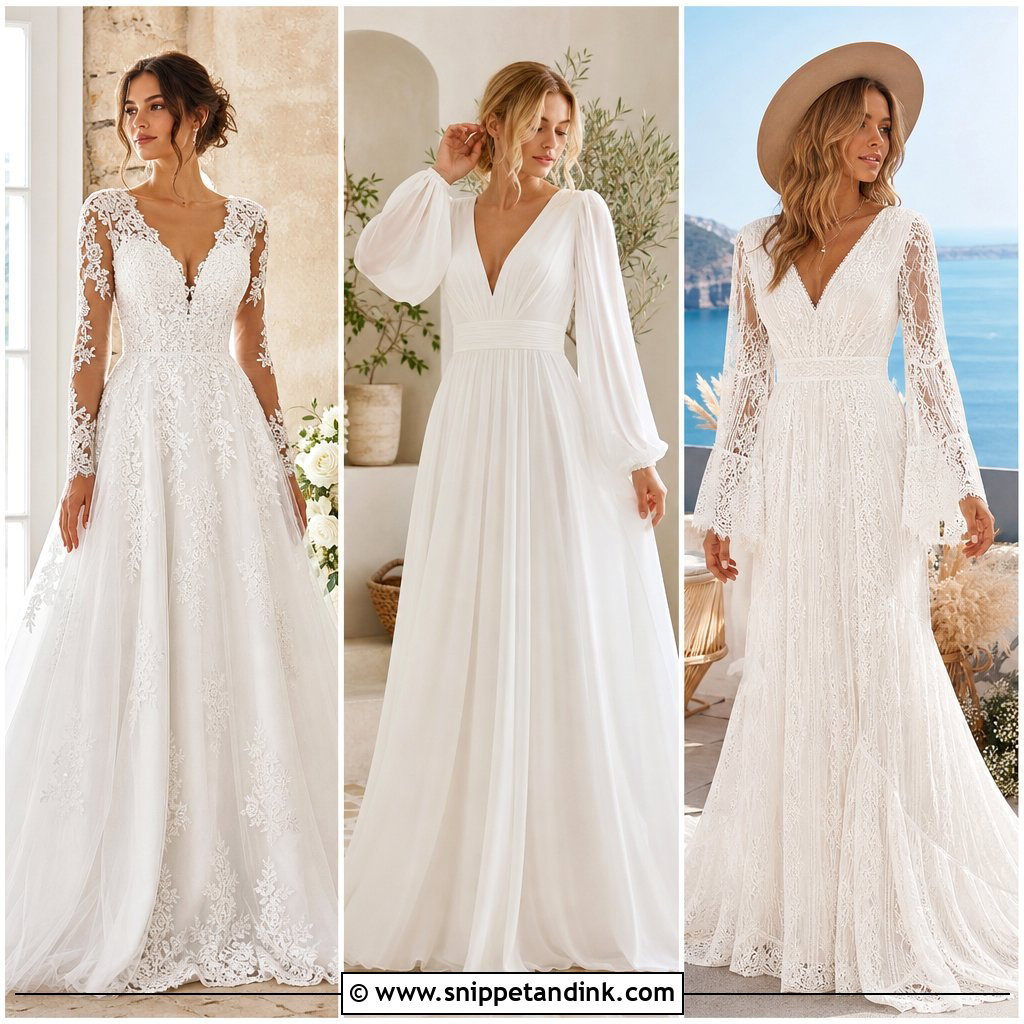
Crepe sleeves are warm without being heavy, which makes them the right call for a winter or autumn ceremony. A V-neck or soft curve at the front and a relaxed A-line skirt keep the look calm. Covered buttons at the cuffs add a quiet bridal detail. The thing I always check: unlined crepe sleeves can be more see-through than you expect under flash. Shoulder seams also need to be set correctly, or the sleeves twist when you lift your arms.
5. Mid Size Corset Tulle Wedding Dress
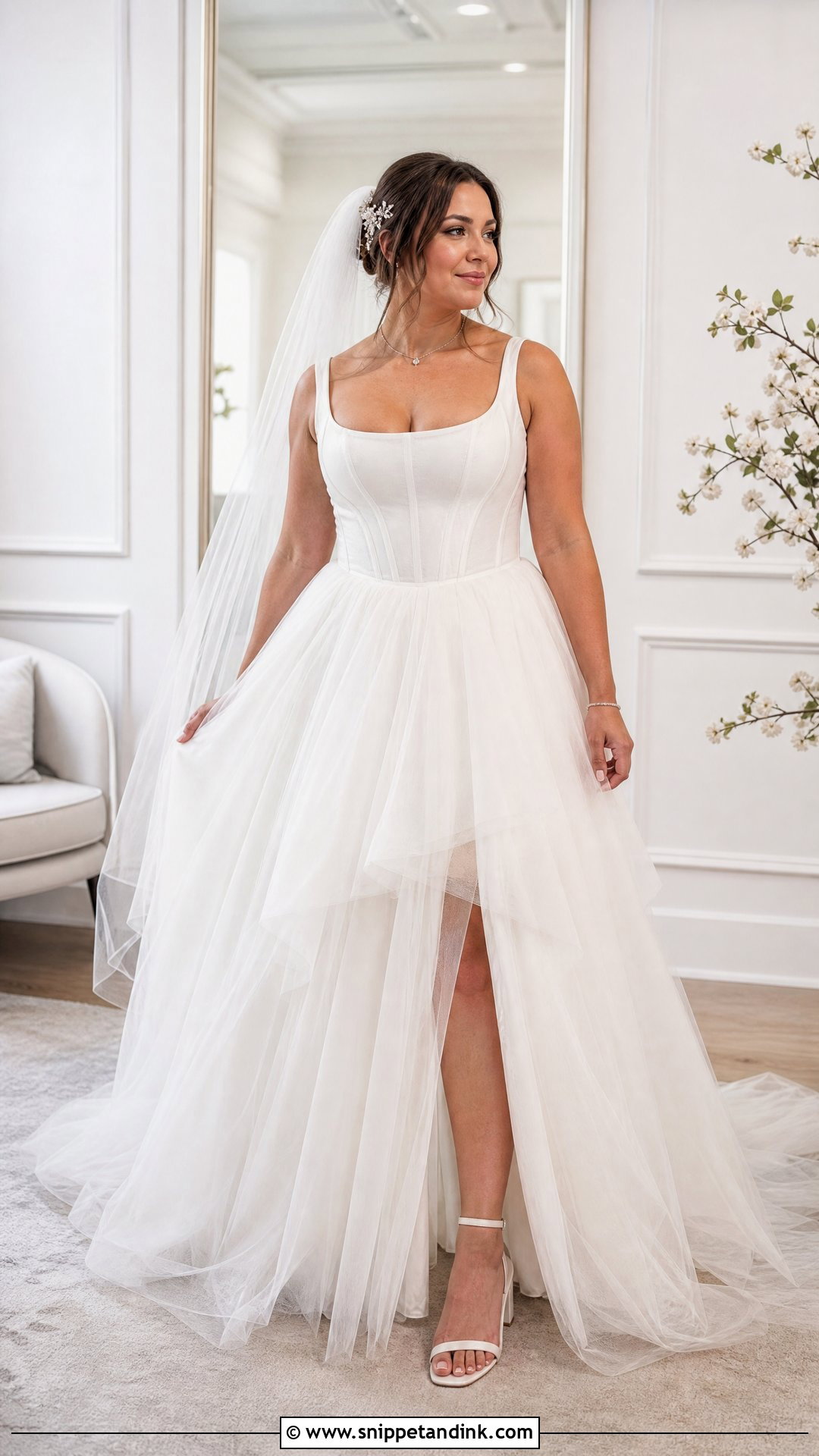
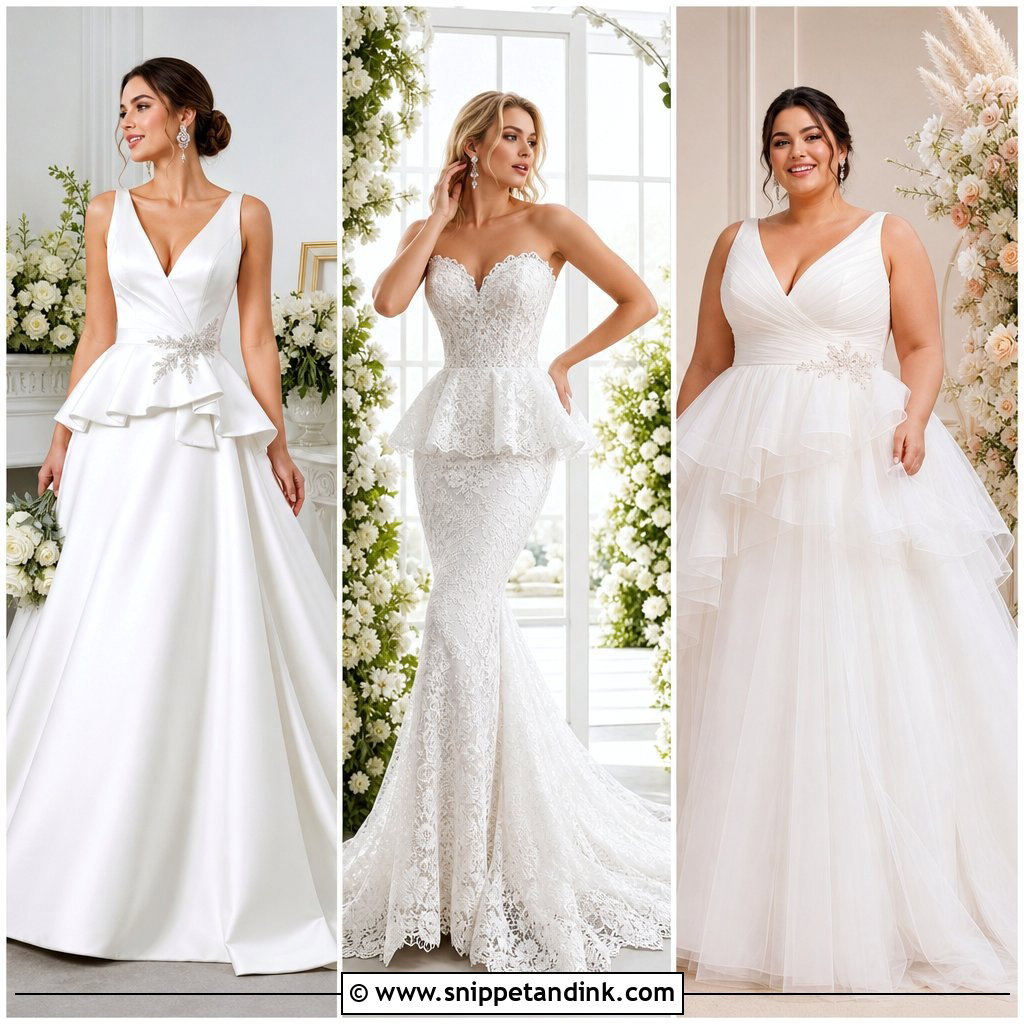
Visible corset structure under floating tulle is a lovely contrast, but only when the boning is properly finished. Run your fingers along each bone inside the bodice; any rough end will rub through by evening. Supportive cups and a scooped neckline keep it romantic rather than theatrical. Don’t judge this gown by a clipped sample. The right size, properly altered, should hold you without pinching. Crystal pins and a plain sheer veil keep the focus on the bodice.
6. Mid Size Basque Waist Wedding Dress
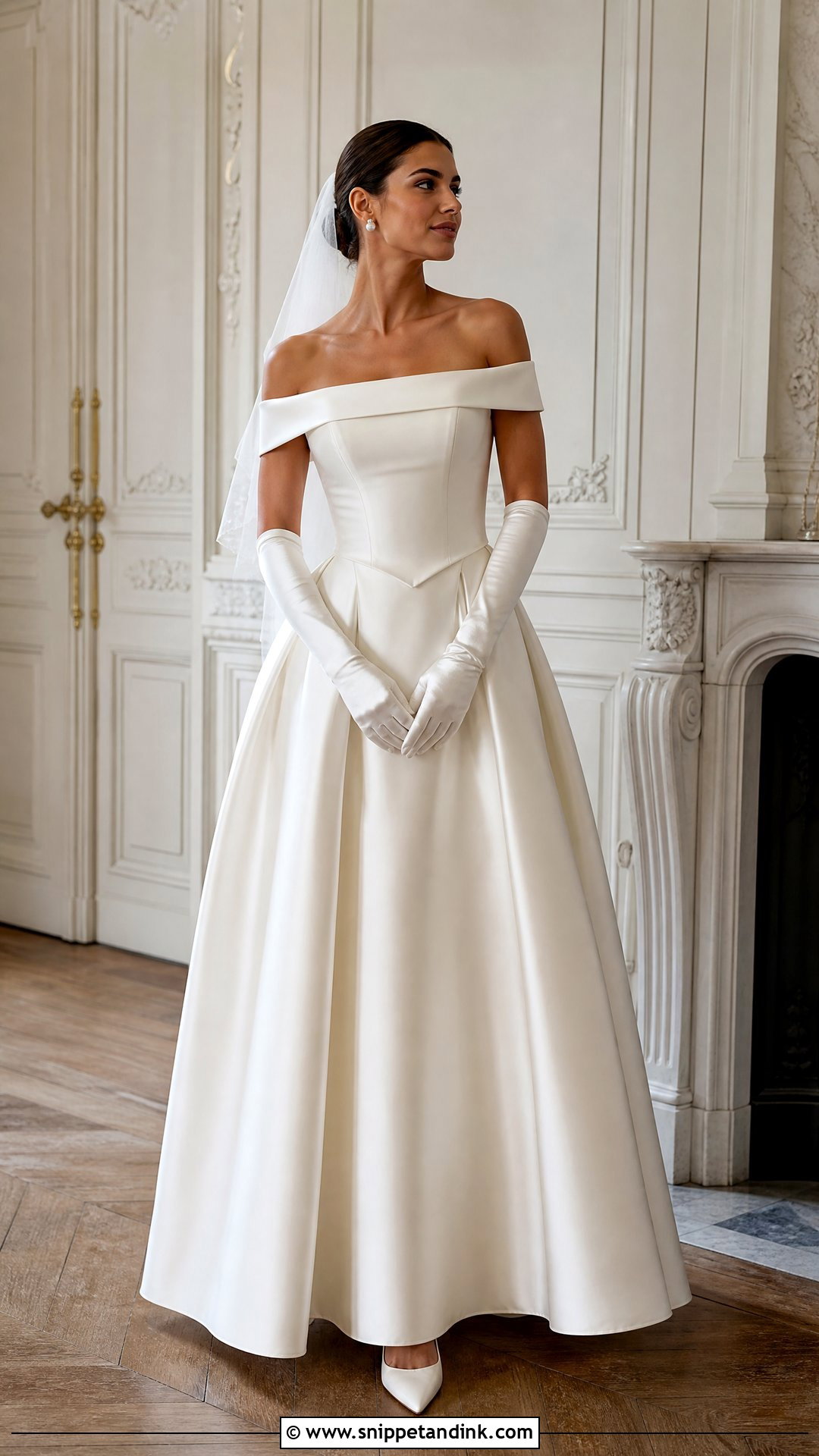
A basque waist dips below the natural waistline in a V or U shape, and it’s one of the most sculpting seams in bridal. A gently pointed version is easier to sit in than a deep one. Satin, mikado and taffeta hold it best, especially over a full skirt. The waist point is where I’d spend the most fitting time: a small shift up or down changes the proportions of the whole gown. Elbow gloves and almond-toe heels suit its vintage feel.
7. Mid Size Empire Waist Chiffon Wedding Dress
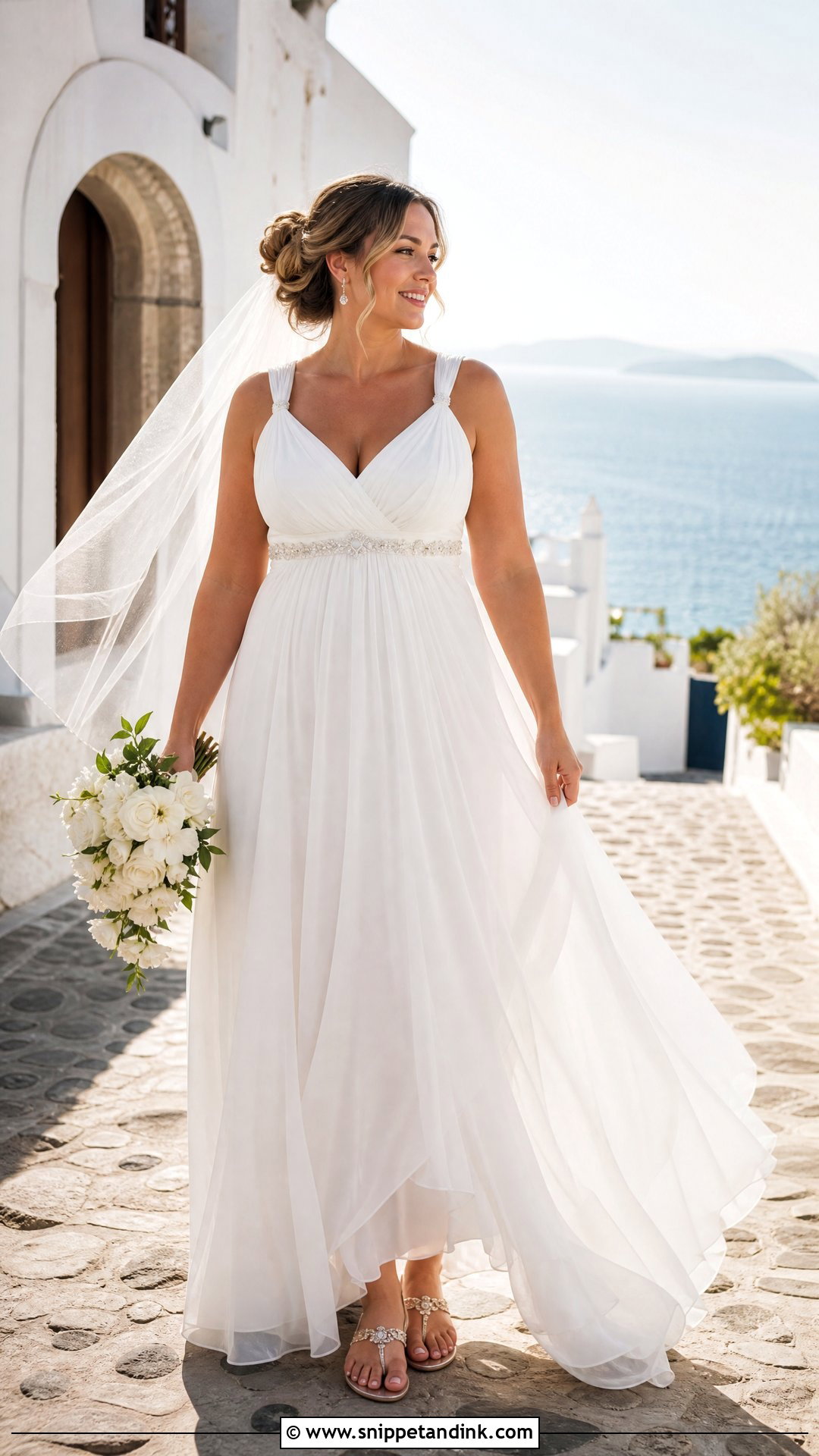
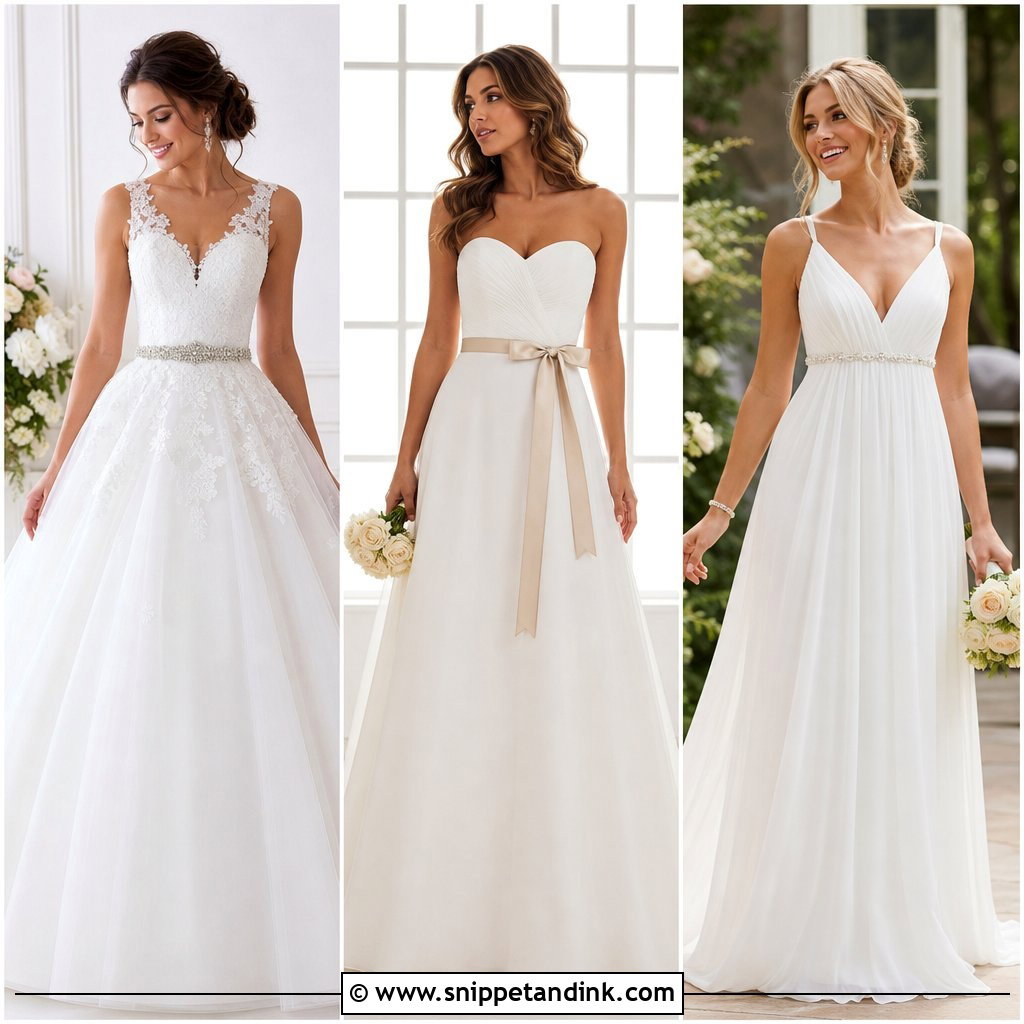
An empire waist lets chiffon fall freely from just below the bust, so nothing presses on the waist. It suits destination and warm-weather weddings. Without structure in the bodice, though, the fabric shifts and the seam rides up, so look for supportive straps and a firm band. Chiffon can be sheer, so check the lining in daylight and under flash. The hem should skim the ground without bunching around your feet on grass. Metallic flat sandals and a loose updo complete it.
8. Mid Size Tea Length Wedding Dress
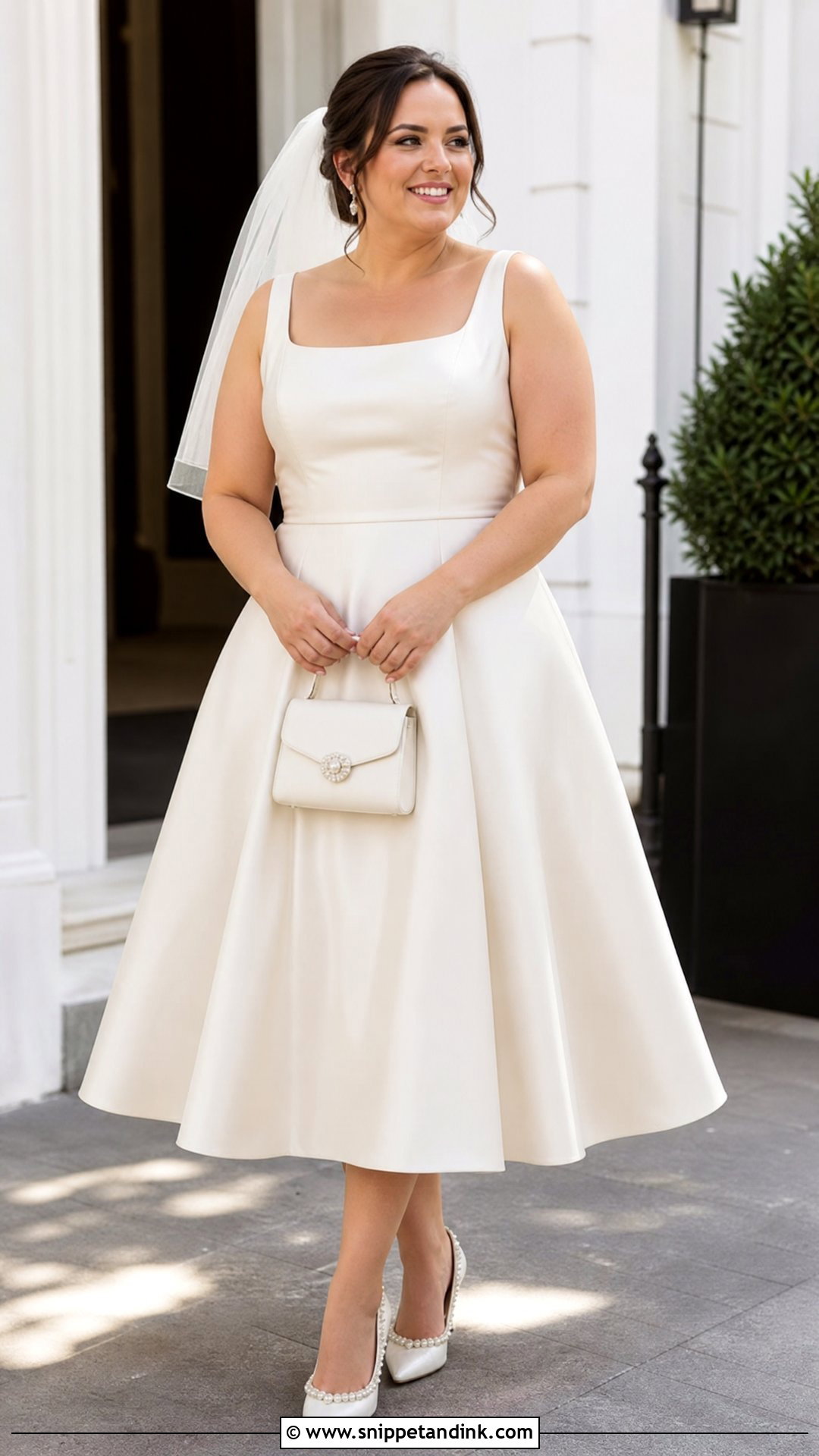
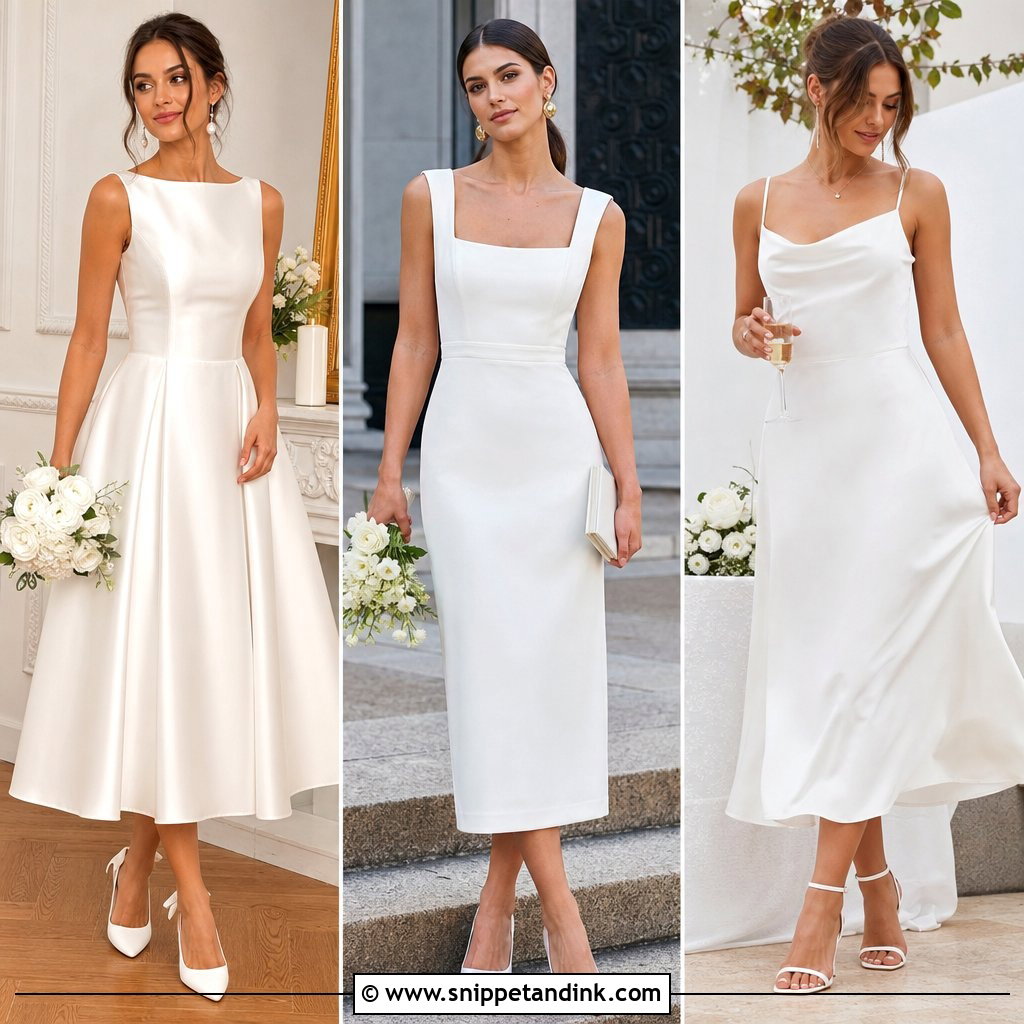
Tea length shows your shoes, so the shoe becomes part of the outfit: pearl-trimmed pumps, bow heels or slingbacks. A hem at the lower calf, a fitted bodice and a softly flared skirt keep it balanced. Satin looks structured and retro; lace and organza feel lighter. Ask for the hem to be set with your exact shoes on, since even an inch makes a visible difference at this length. A short veil and small bag finish it.
9. Mid Size City Hall Midi Wedding Dress
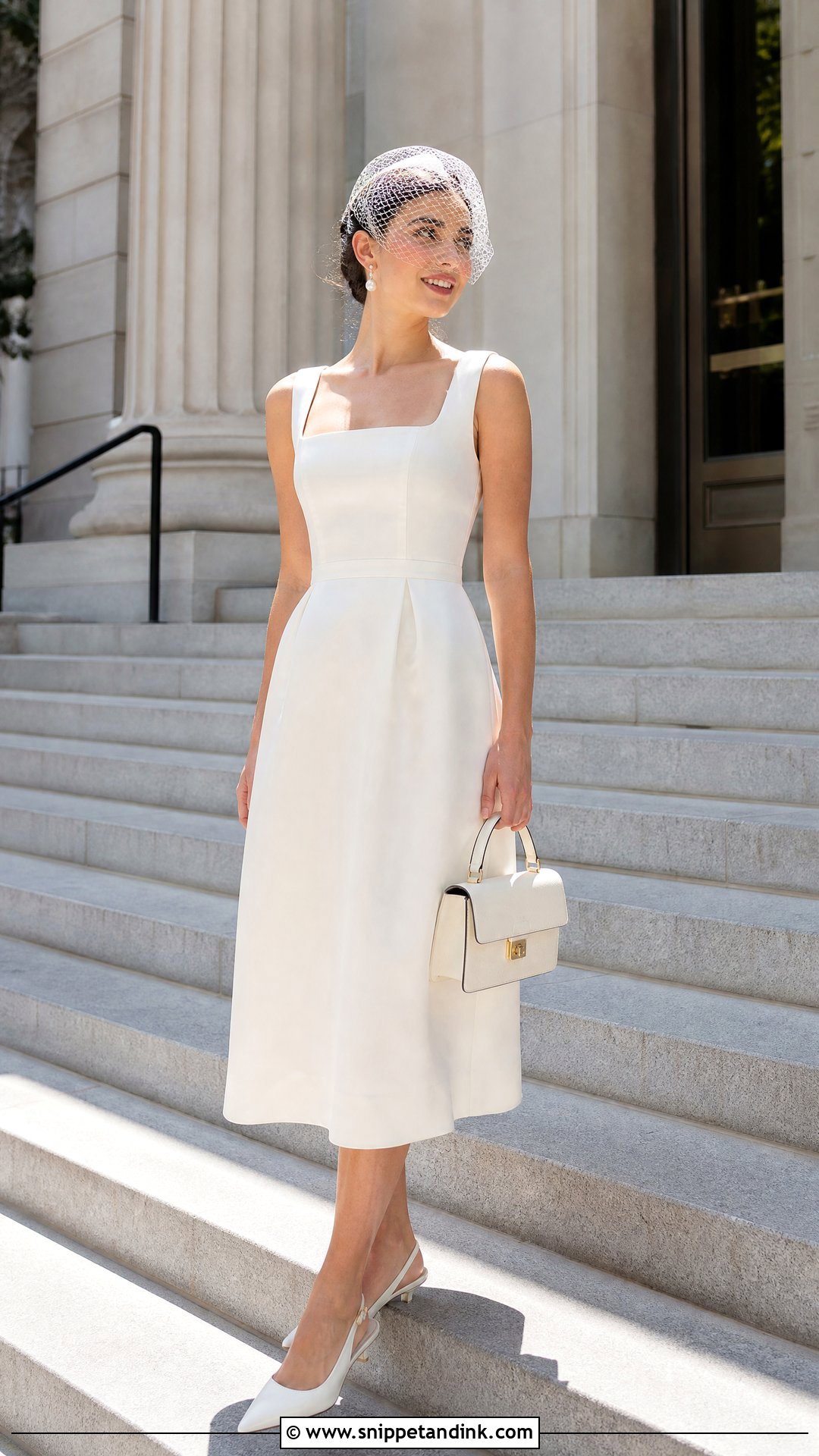
A polished midi dress works best at city hall when it’s built like tailoring. A square neck, defined waist and a straight or gently flared skirt in heavy crepe or a satin blend hold their shape between locations. Sit, climb a step and walk fast in the fitting room; city weddings involve all three. A birdcage veil or big hair bow makes it read bridal. Pack flats and a light coat.
10. Mid Size Boho Lace Wedding Dress
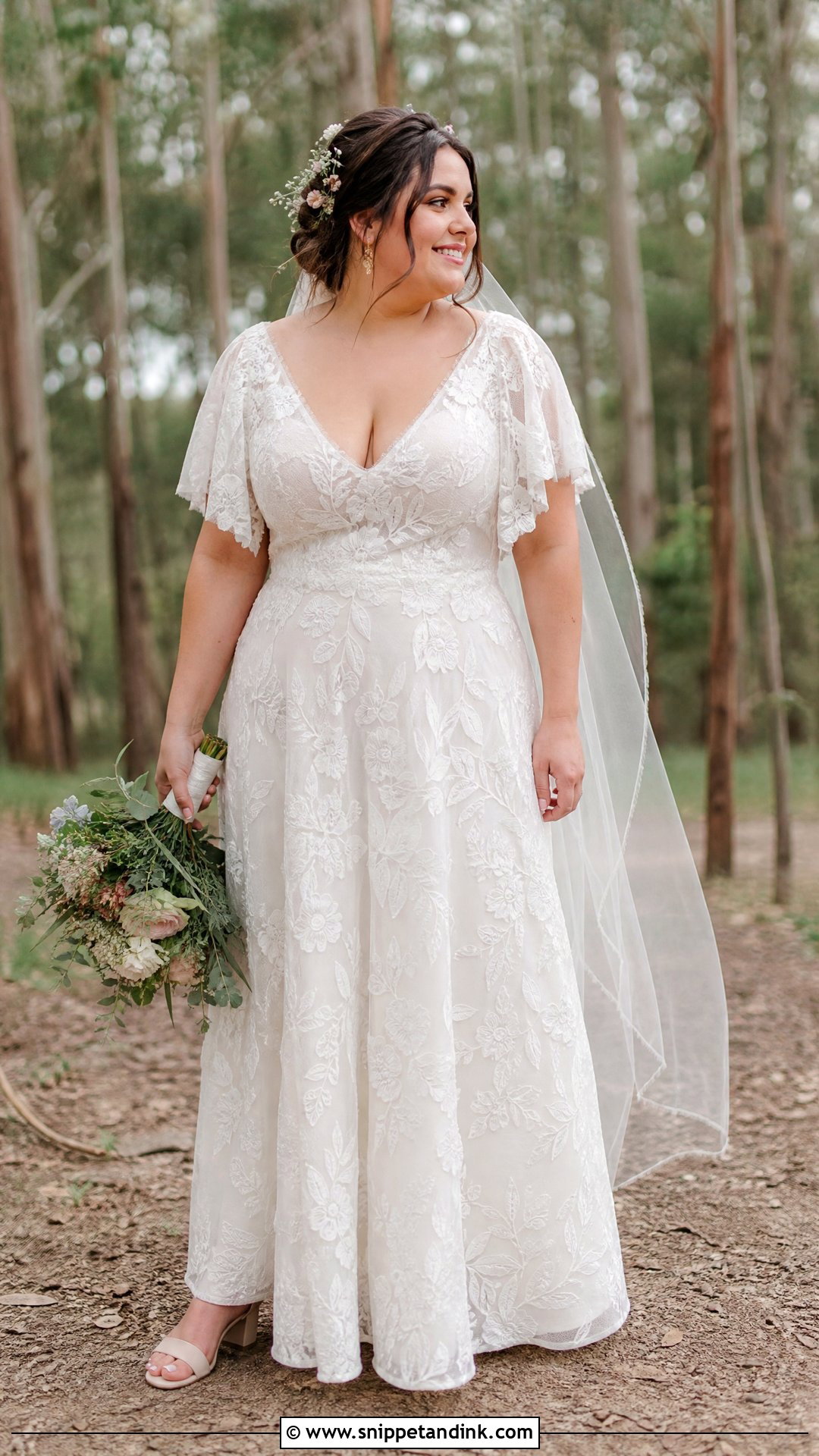
Boho lace looks best when it moves rather than holds a rigid shape. Botanical lace, a soft V-neck and flutter or sheer sleeves suit barns, gardens and woodland venues. Pay attention to the lining color, since a lining that contrasts too much makes the lace look busy. A raw-edge veil and a braided updo with small floral pins keep it natural. Test the bustle before you buy, because outdoor dancing on a long lace train is asking for a tear.
11. Mid Size Floral Applique Wedding Dress
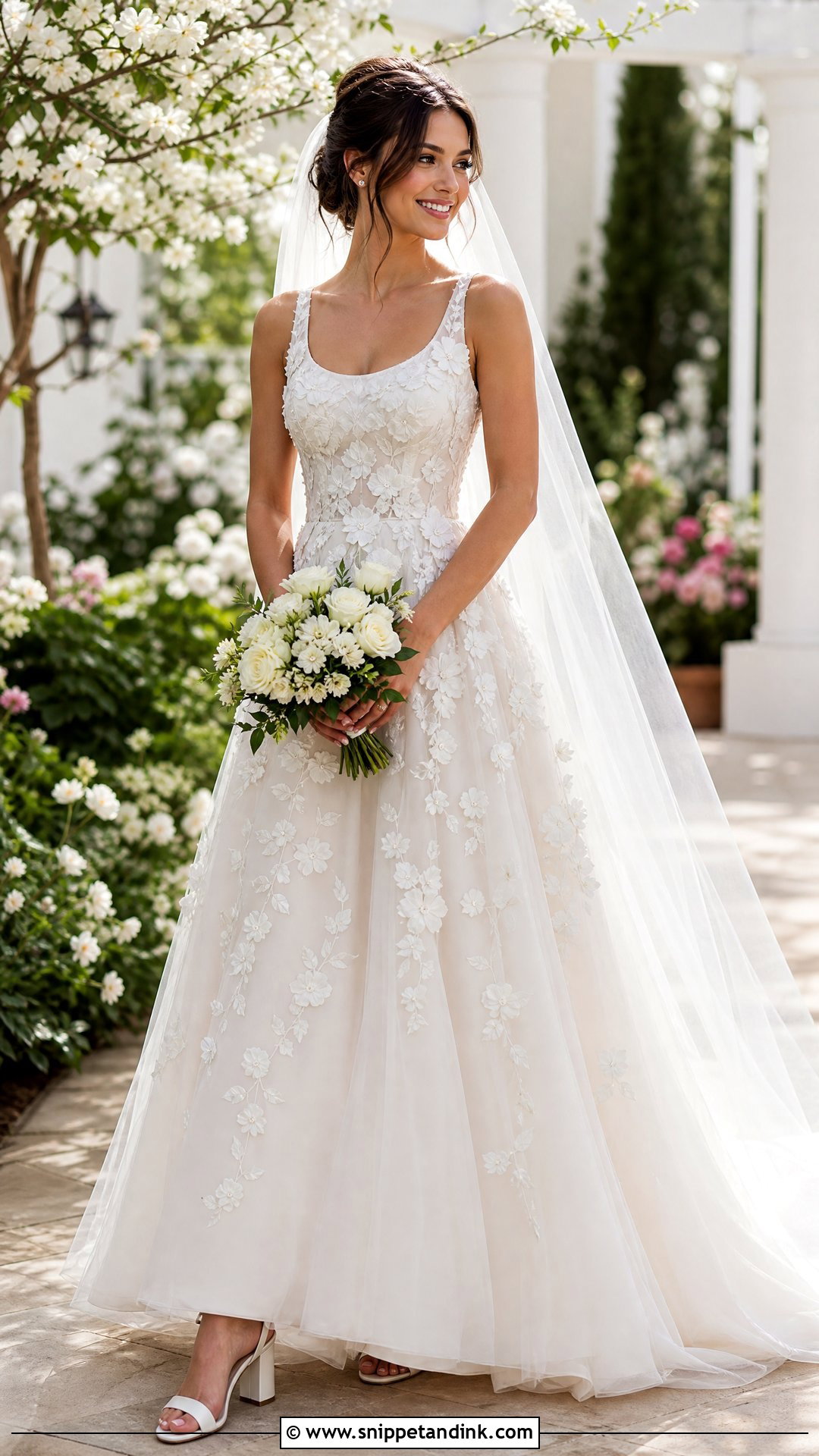
Raised appliqués add dimension without sparkle. I prefer them concentrated on the bodice and fading out across the skirt, which keeps the design connected from neckline to hem. A scoop neck and supportive straps hold the structure underneath. Look closely at the appliqués near the side seams before alterations, since that’s where a seamstress has to lift and replace them by hand. Satin block heels and a sheer chapel veil let the flowers lead.
12. Mid Size Beach Slip Wedding Dress
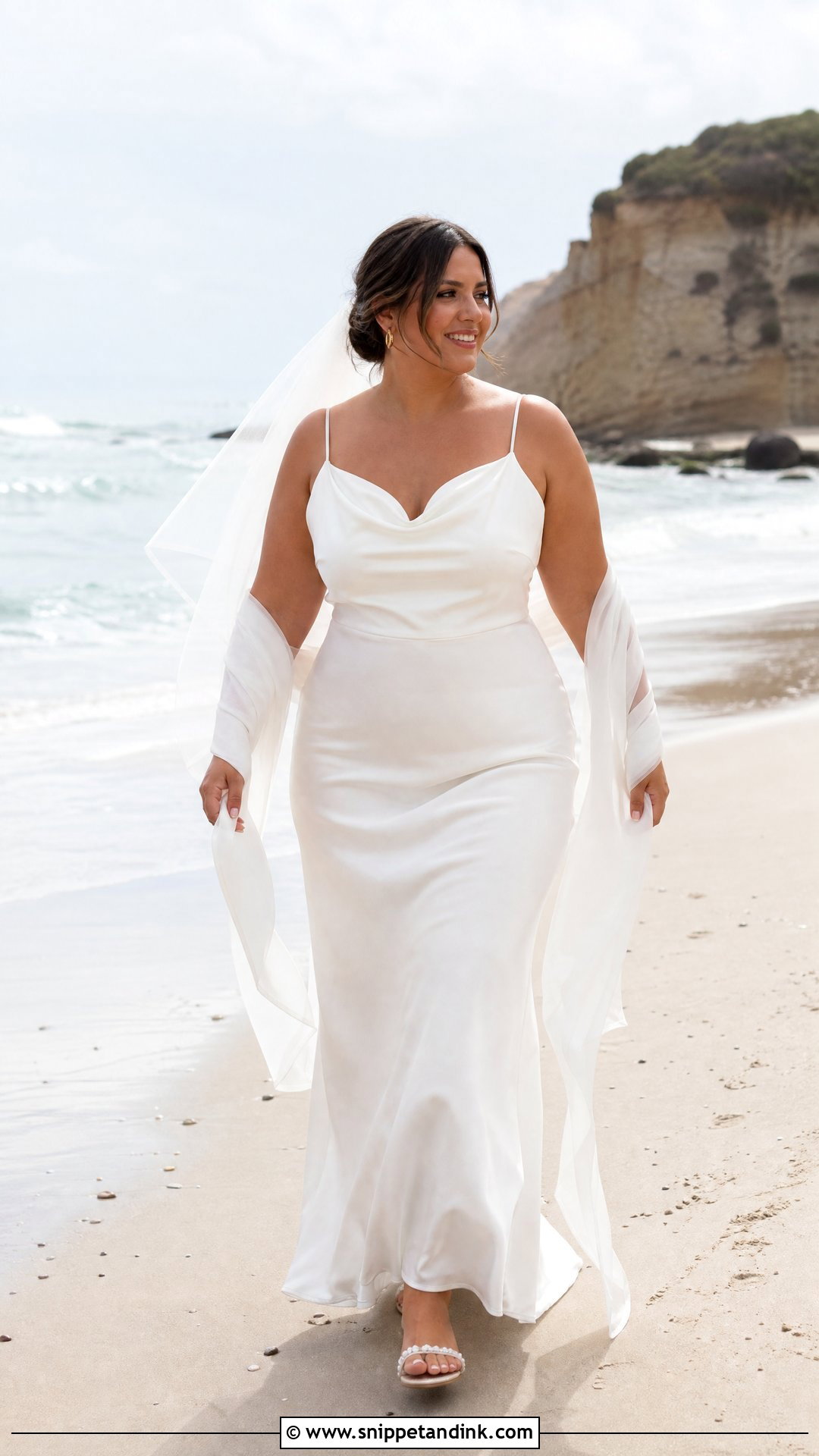
A slip gown by the water feels elegant and relaxed, but it is the least forgiving dress here. Thin satin shows seams, underwear lines and changes in lining color in bright sun. Choose one with substantial lining and adjustable straps, and a cowl neck that adds a little movement at the bust. A softly flared hem walks better on sand than a narrow column. Flat pearl sandals and a short, light veil cope with wind. Bring a chiffon wrap for coverage after sunset.
13. Mid Size High Neck Wedding Dress
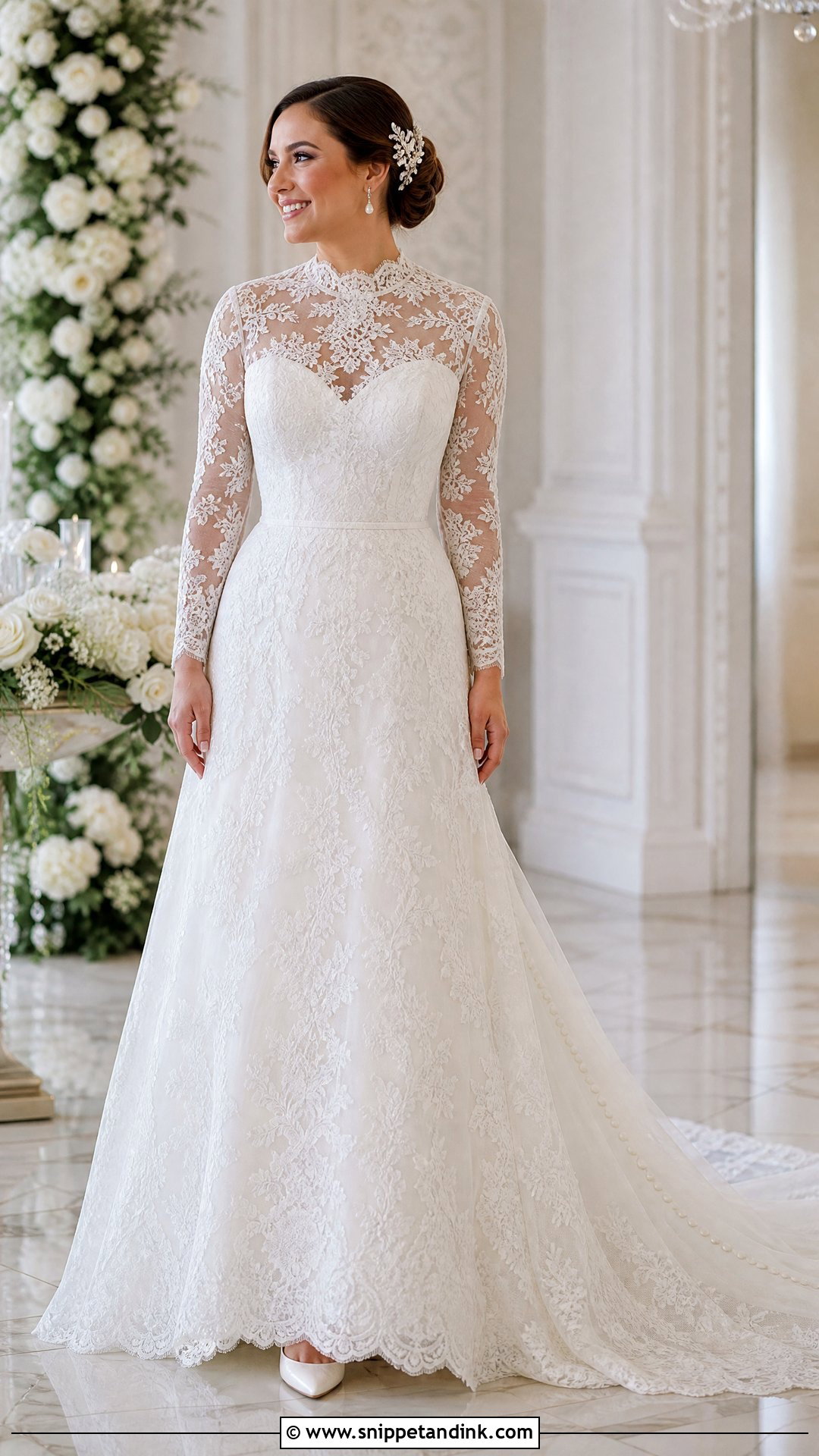
A high neck can be a sleeveless lace bodice over a sweetheart base, or a full sleeved version for more coverage. A defined waist and flowing A-line keep the look open. Skip the necklace for pearl earrings and a hair comb. Pointed pumps and a button-trimmed chapel train give it a traditional finish. Turn your head at fittings: the collar should sit flat without rubbing. Lace should match across the shoulder seams.
14. Mid Size Cap Sleeve Wedding Dress
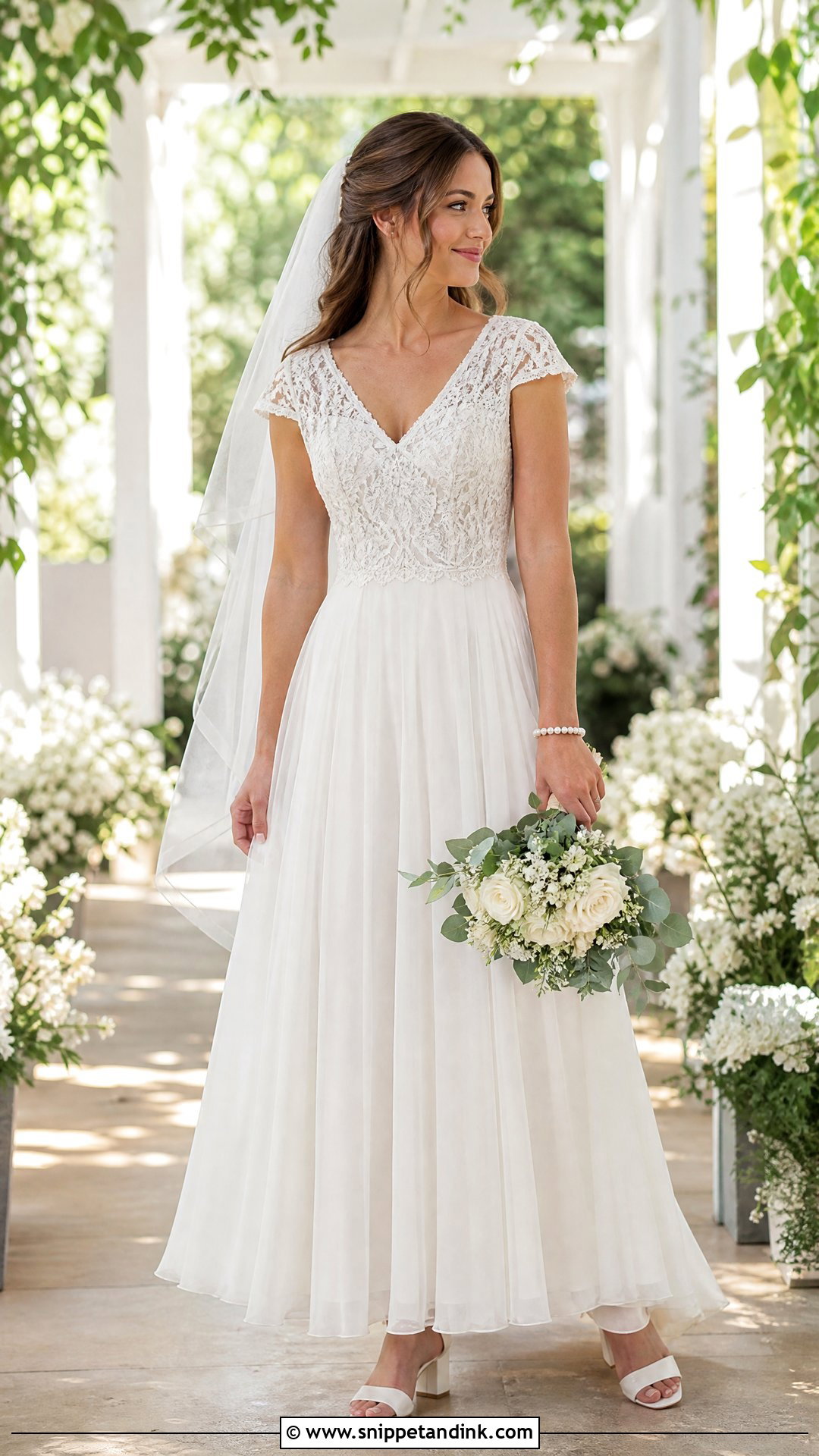
Cap sleeves can dig into the upper arm if they’re narrow bands. I look for sleeves wide enough to rest on the shoulder itself. A V-neck lace bodice with a chiffon or tulle A-line suits spring and summer ceremonies. Lift and rotate your arms at the fitting to find tight spots around the openings. A seamstress can reshape the sleeve or add a small stretch panel without changing the design. A half-up style keeps the fingertip veil light.
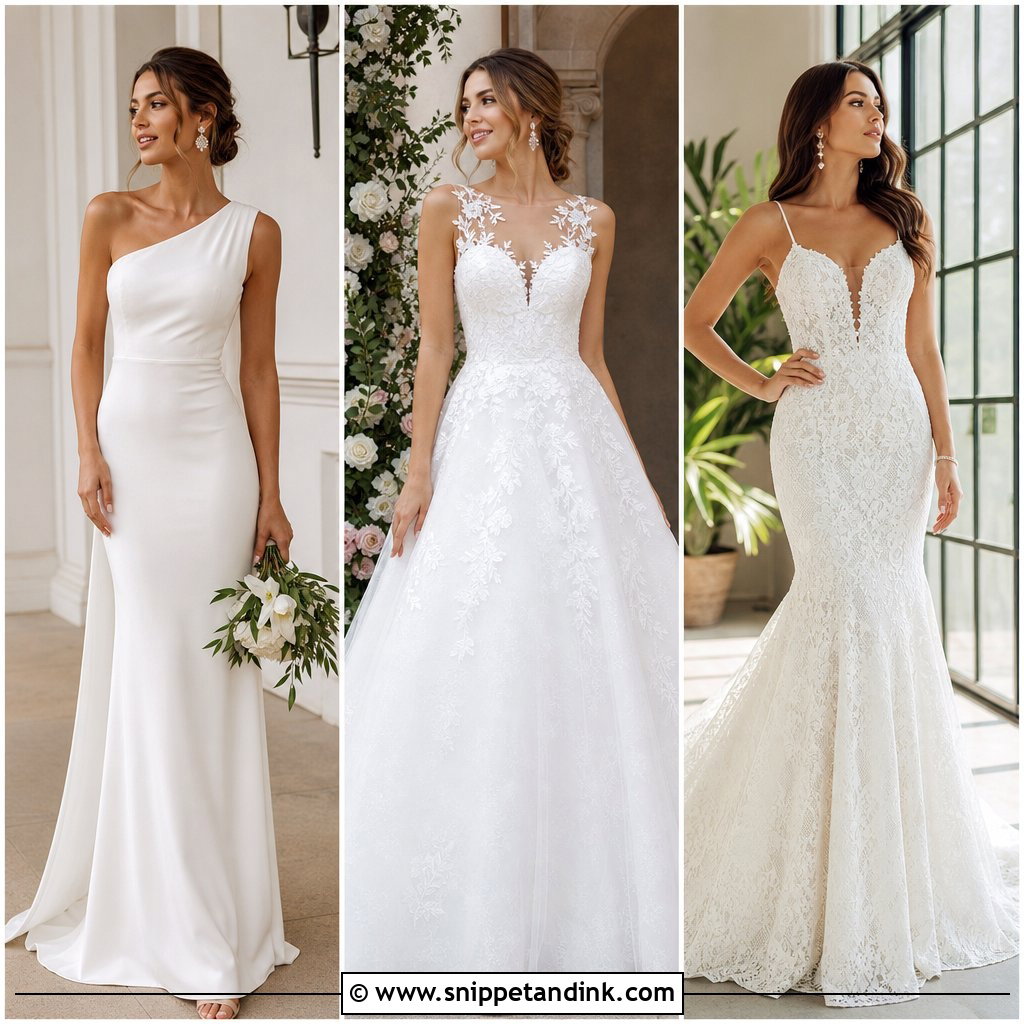
15. Mid Size One Shoulder Wedding Dress
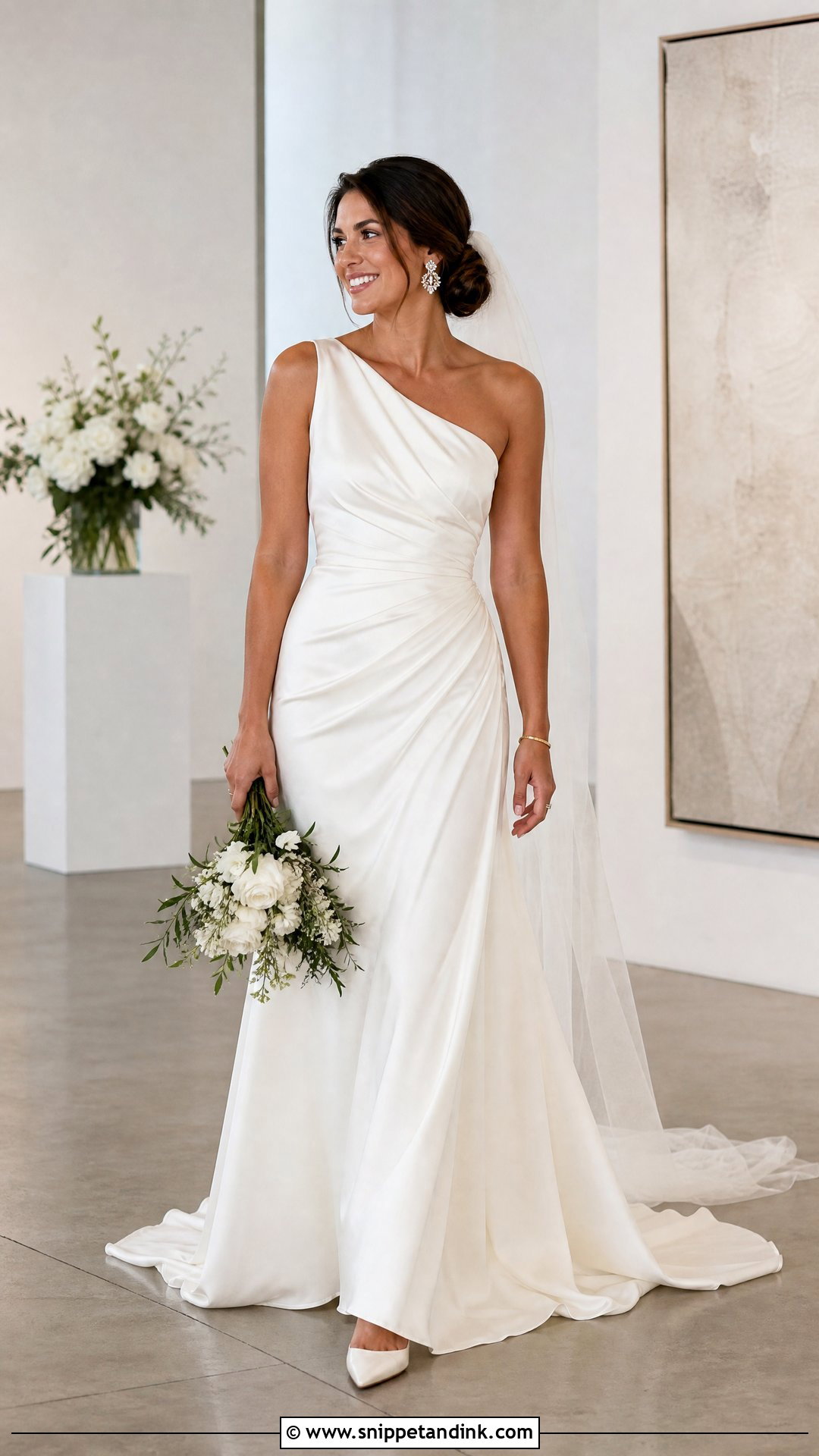
One-shoulder gowns create a diagonal line that draws the eye across and up. Draping from the shoulder to the waist ties the neckline to the skirt. Crepe or satin looks sleek; chiffon is lighter outdoors. Sweep a low side bun to the bare shoulder so the covered side stays clear. The single strap must feel secure without biting into the shoulder, so reach, sit and turn before finalizing the alterations. Skip the necklace.
16. Mid Size Halter Wedding Dress
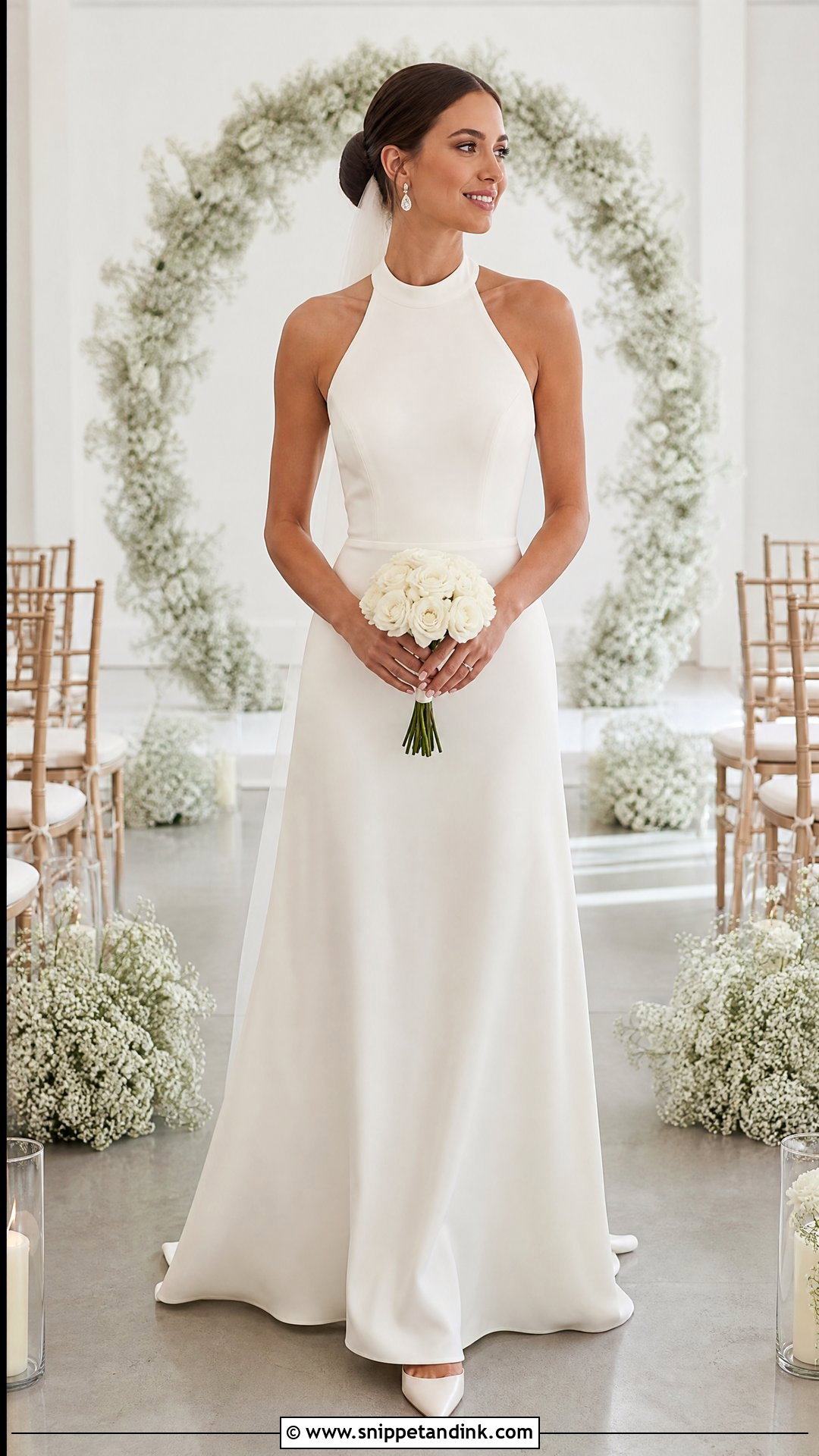
A halter shouldn’t hang from your neck. The inner bodice must carry most of the weight, or you’ll feel it at the back of the neck by the speeches. A high halter suits a fitted crepe skirt; a softer V-halter pairs with an A-line. Check for rubbing under the arms and at the neck, especially with beading or lace. Drop earrings, a smooth updo and a veil attached below the bun keep the back neckline visible.
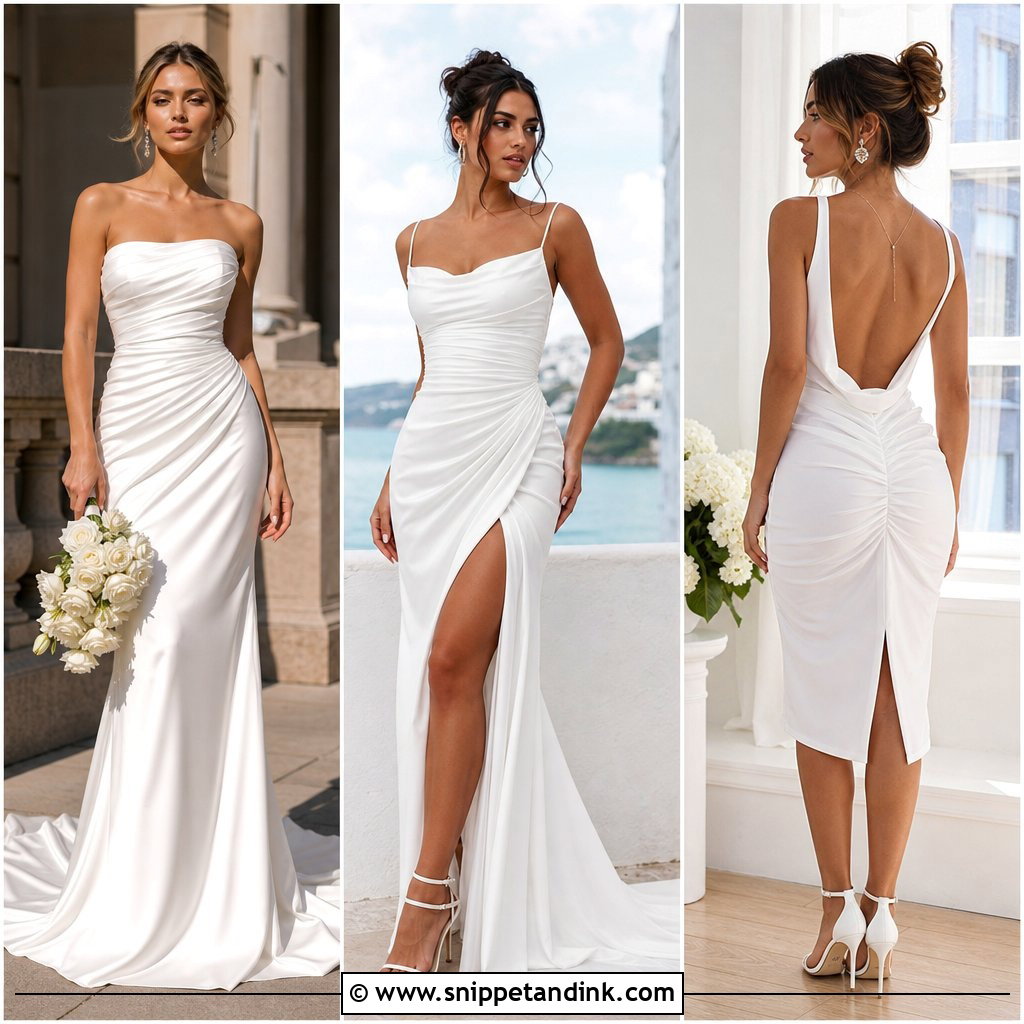
17. Mid Size Strapless Ruched Wedding Dress
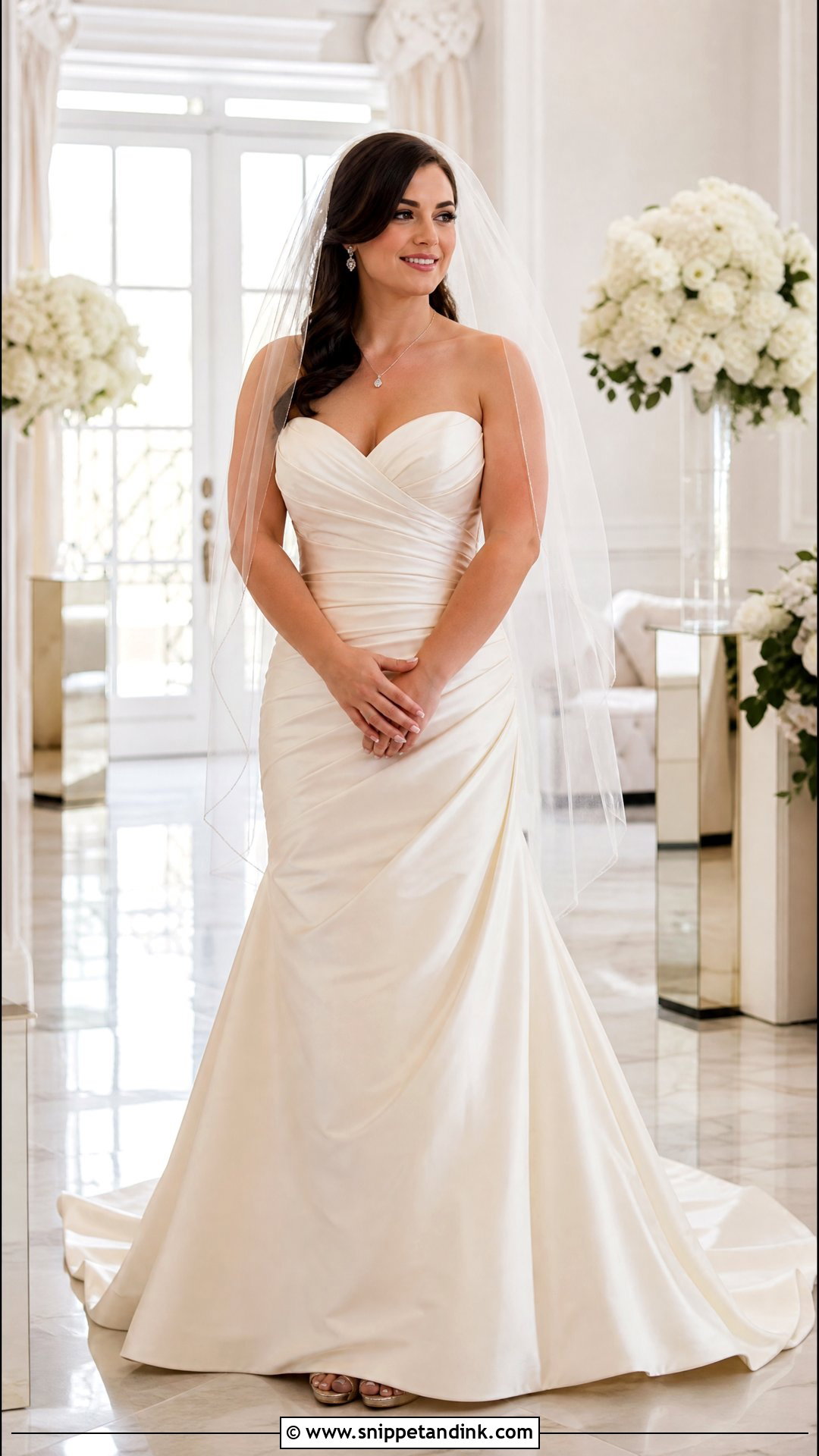
Ruching adds texture and a little give, which is helpful if your size changes slightly between fittings. Diagonal gathers that follow the bodice look smooth; heavy gathering adds bulk. A sweetheart or soft scoop neckline works with an A-line or fit-and-flare skirt. A delicate pendant and crystal studs finish it. A strapless gown should be held up by its internal structure, not by a tight top edge. Check for gaping and rolling before you approve the fit.
18. Mid Size Pearl Wedding Dress
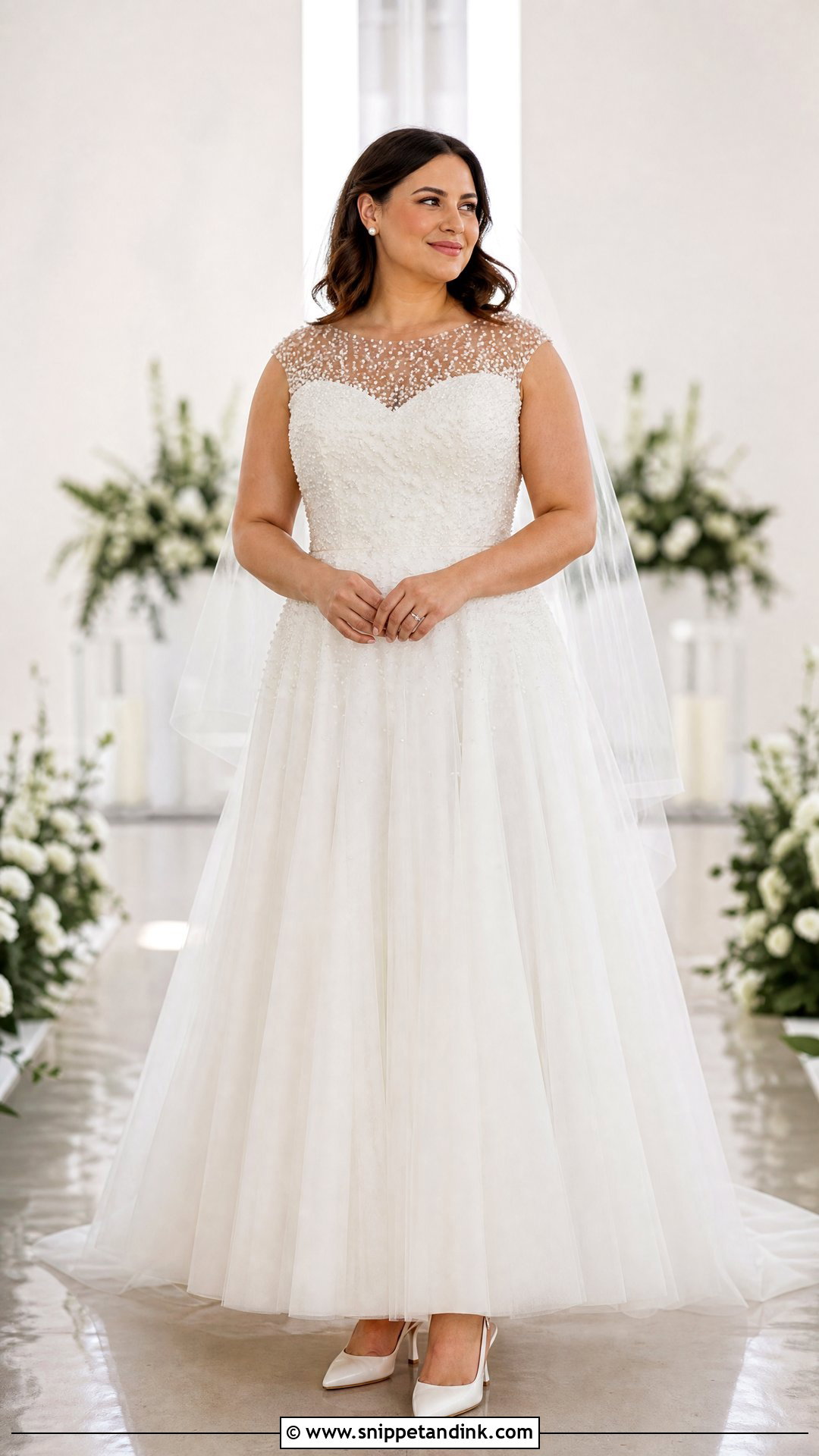
Pearls glow rather than sparkle, which feels softer than crystal under daylight. I prefer them concentrated along the neckline, straps or bodice and fading into a clean skirt. Tulle feels romantic; satin or crepe more modern. Feel the inside of the bodice: pearl backs should be smooth against your skin. Ask the shop for spare pearls before the wedding so loose ones can be replaced quickly. Simple pearl studs and an unembellished veil keep it from looking overdone.
19. Mid Size Wedding Dress With Detachable Overskirt
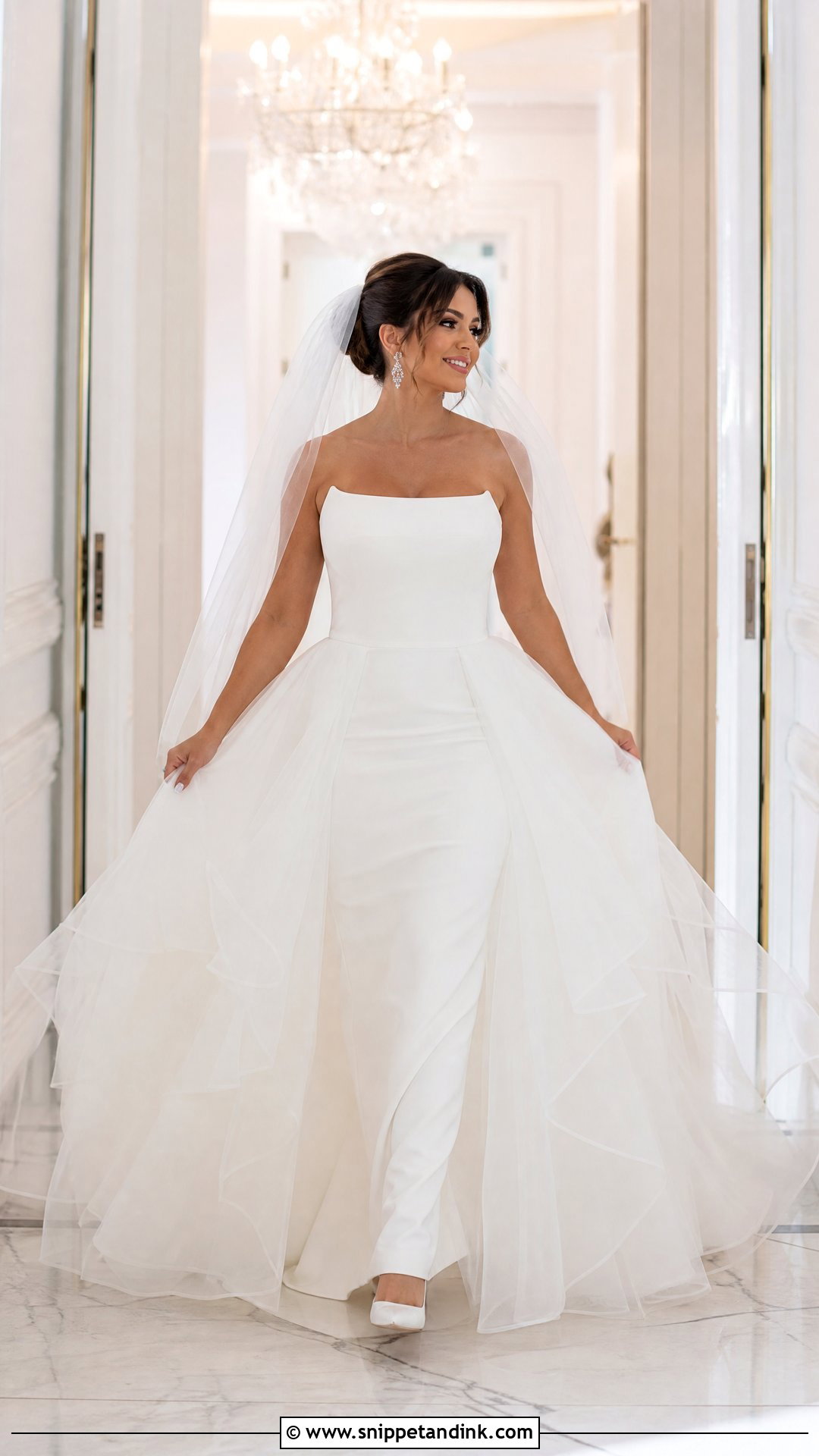
Here’s how a detachable overskirt usually works: a fitted crepe, lace or satin column underneath, with a tulle or satin layer for the ceremony that adds full volume. Afterward, it comes off for dancing. Swap the long veil for a jeweled comb at the same time. The attachment is the part to test. It should sit flat at the waist, stay secure when you sit, and come off without needing a professional.
20. Mid Size Statement Sleeve Wedding Dress
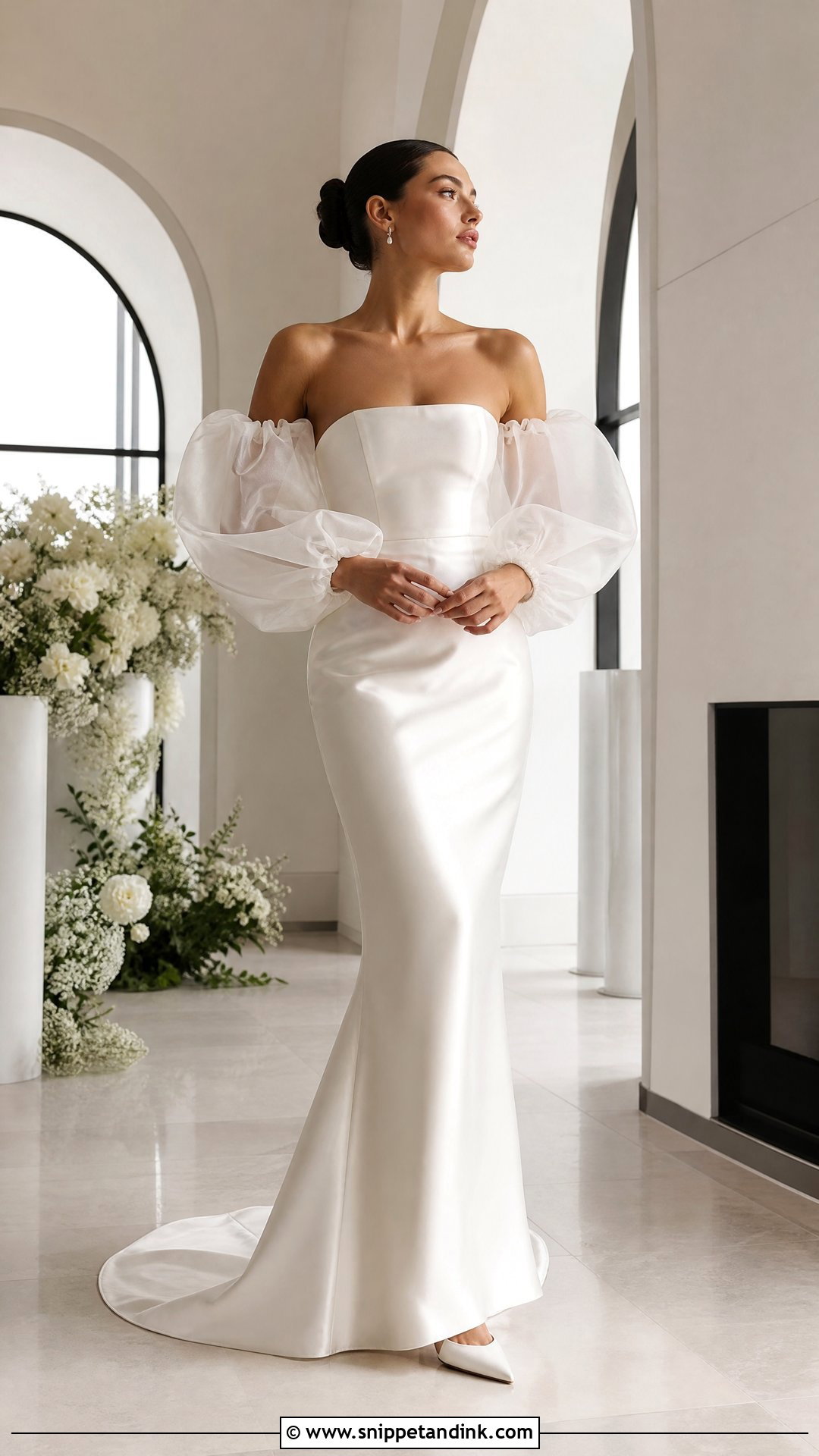
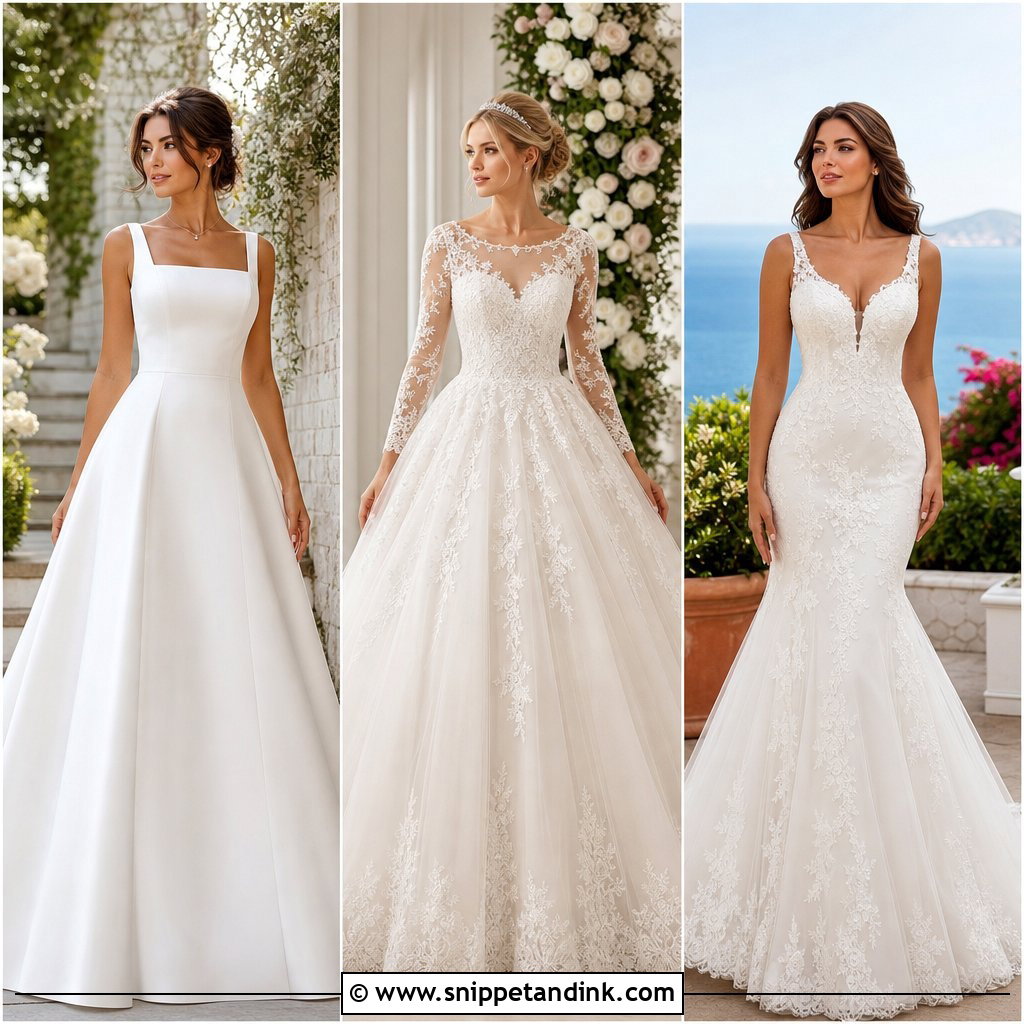
Statement sleeves make a simple gown look fashion-led. Puff sleeves, sheer bishop sleeves or draped off-shoulder sleeves all work on a fitted crepe or satin dress, with a clean skirt so the sleeves stand out. If they’re detachable, test the fastenings several times and give someone the job of keeping them safe. Lightweight fabrics are much easier to wear for hours than heavily beaded sleeves.
21. Mid Size Drop Waist Wedding Dress
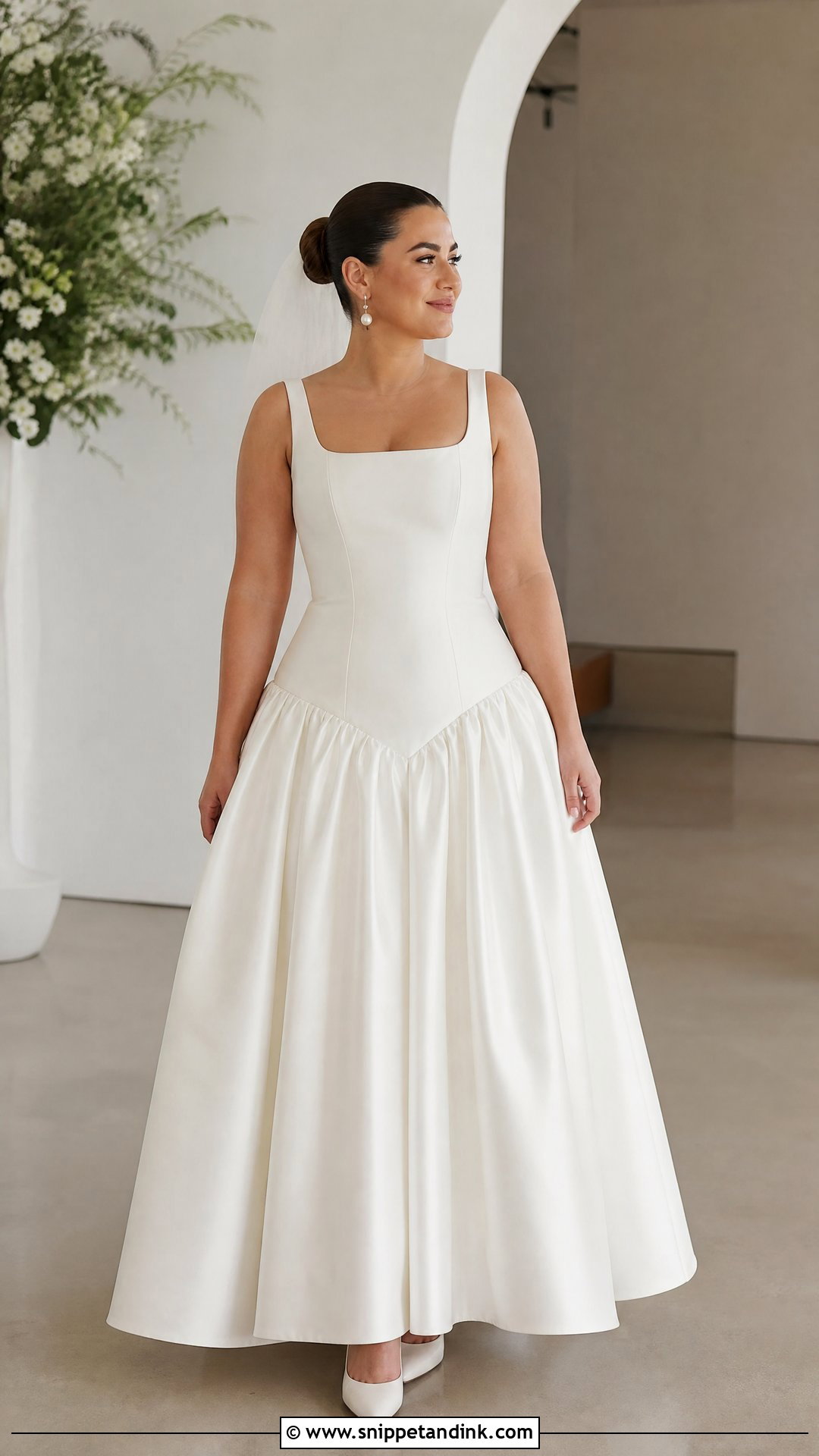
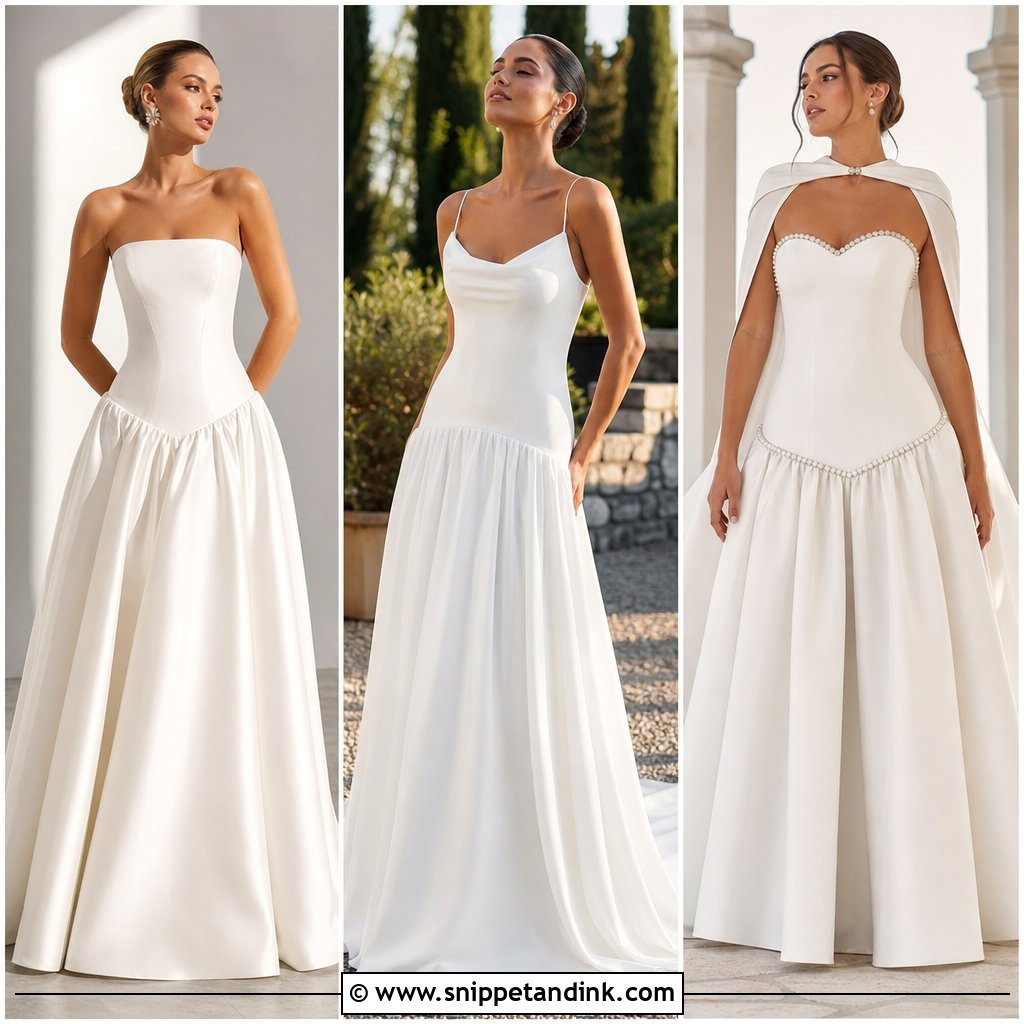
A drop waist runs the bodice over the upper hips before the skirt opens. It looks modern in satin or mikado and slightly vintage in softer fabrics. On a midsize frame, where the skirt begins matters most; too low and you look shorter, too high and it loses its line. Sit and bend at every fitting to check the bodice doesn’t ride up. A square or strapless neckline balances it.
22. Mid Size Wrap Wedding Dress
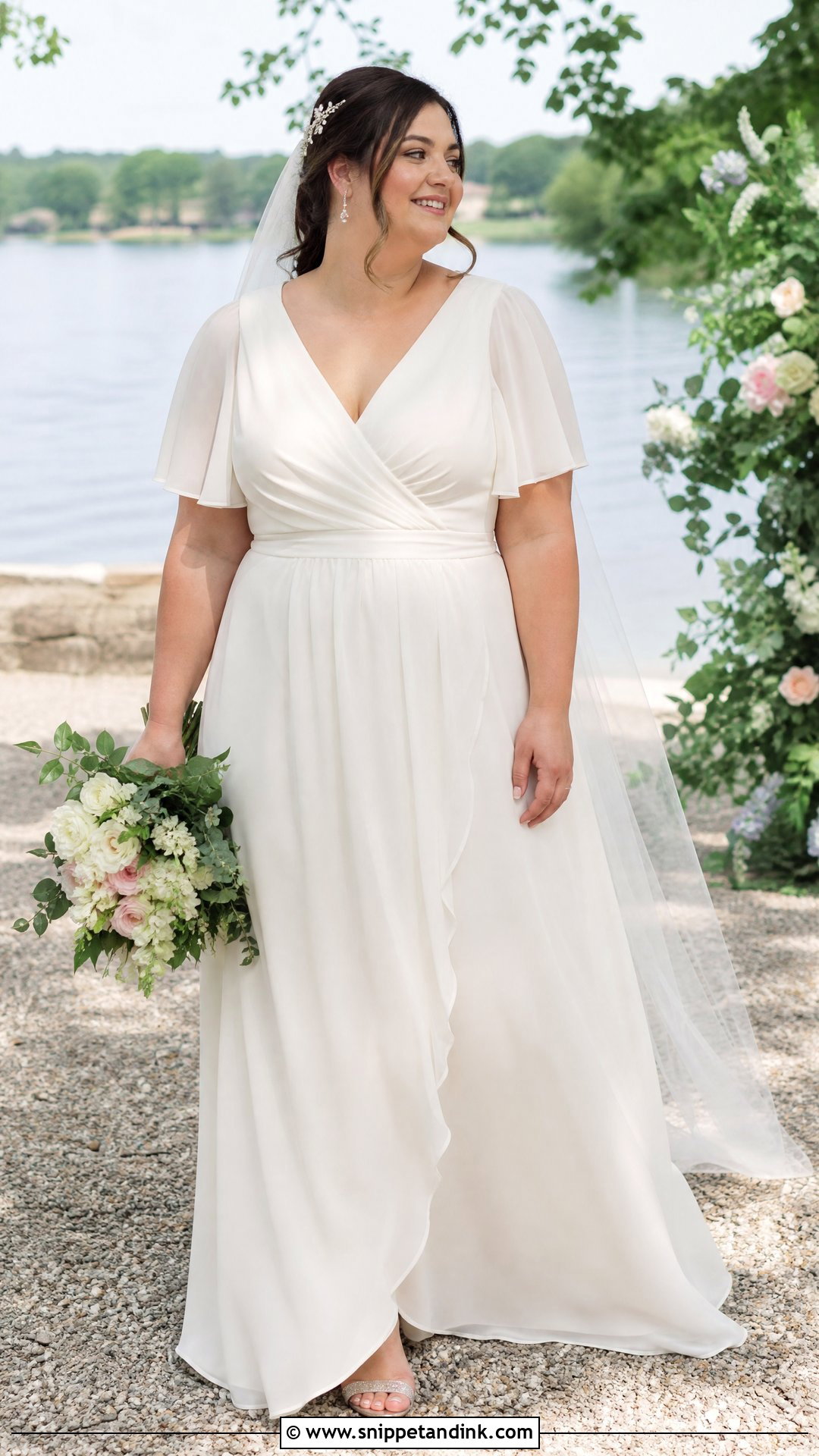
A bridal wrap gown needs more security than a casual wrap dress. Look for a fully secured bodice with hidden snaps or internal stitching at the neckline, so it doesn’t shift when you lean forward. A wide waistband and flowing chiffon skirt suit intimate and destination weddings. The waist tie should lie flat without pressing. Low metallic heels and a lightweight veil complete it, with a floral comb once the veil comes off.
23. Mid Size Blush Tulle Wedding Dress
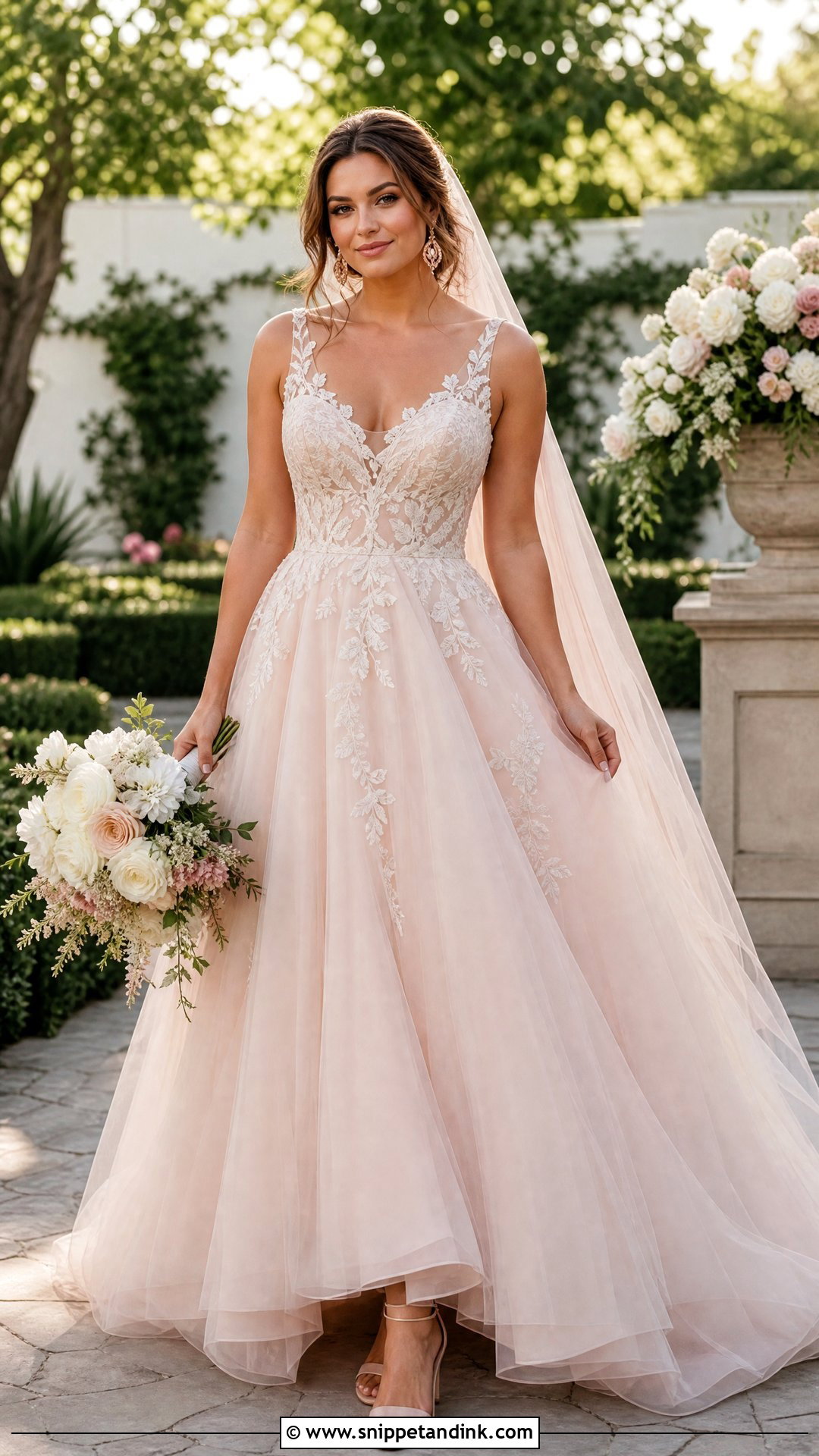
Blush tulle is softer than white and still clearly bridal. Choose a shade that suits your skin, whether pale rose, soft nude or champagne. The lining decides the final color, so a lace bodice over a blush lining reads differently in daylight, indoors and under flash. Compare the full gown rather than a small swatch. Rose-gold earrings and a mostly white bouquet with touches of muted pink keep it coordinated.
24. Mid Size Wedding Dress With Black Bow
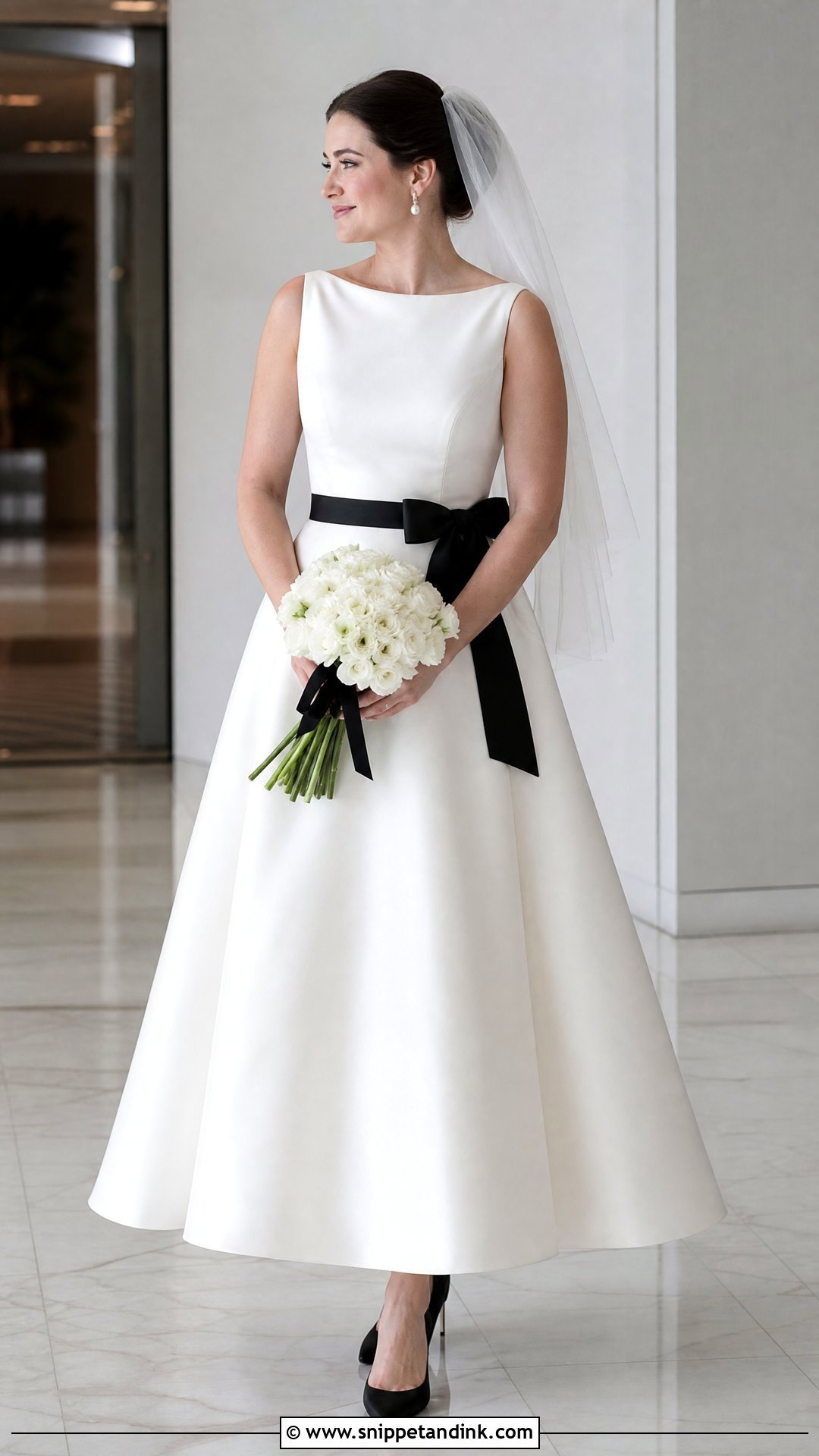
One black detail on an ivory gown looks deliberate and graphic. Put it at the back, waist or shoulder, and only in one place. Start with a simple satin A-line, fitted crepe or structured tea-length dress. Black pointed pumps and a slim black ribbon on the bouquet repeat the accent. Check at fittings that the bow stays centered and holds its shape. A detachable bow gives you an all-ivory option later.
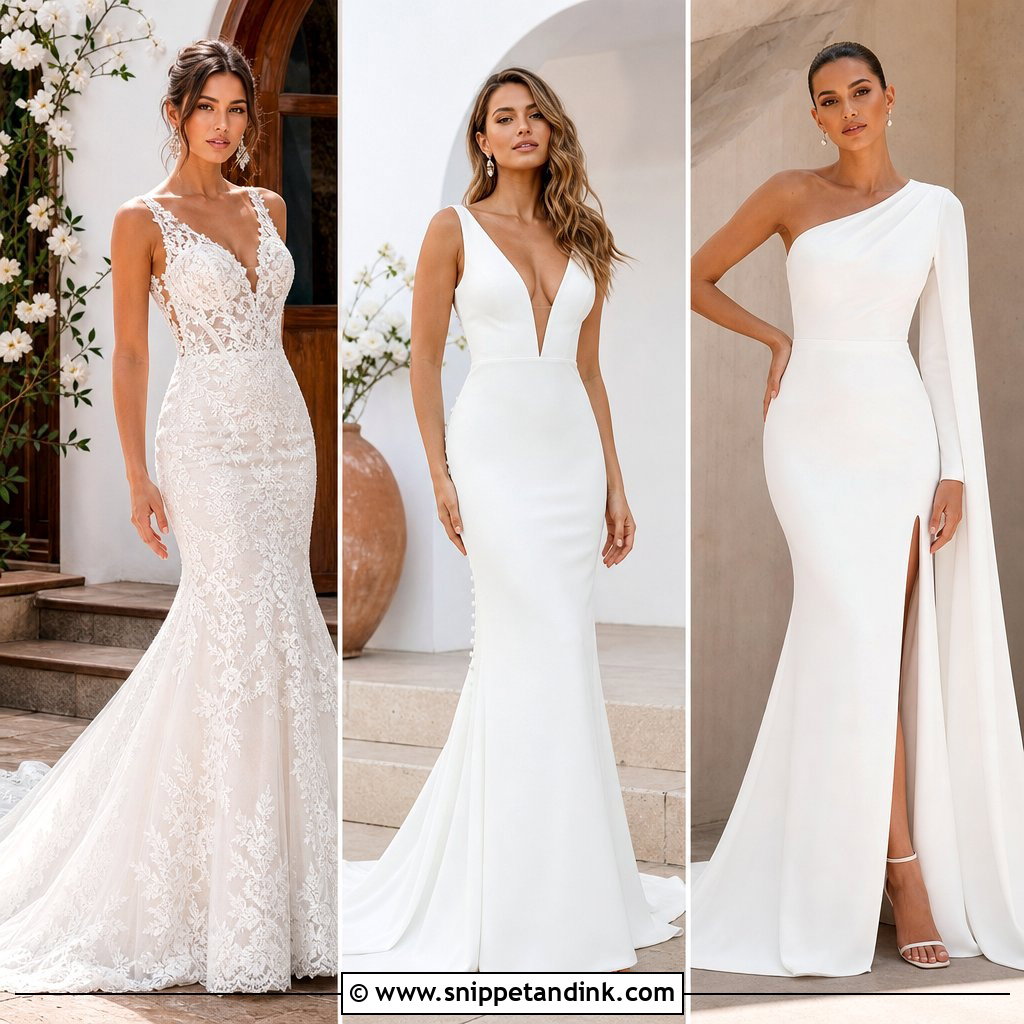
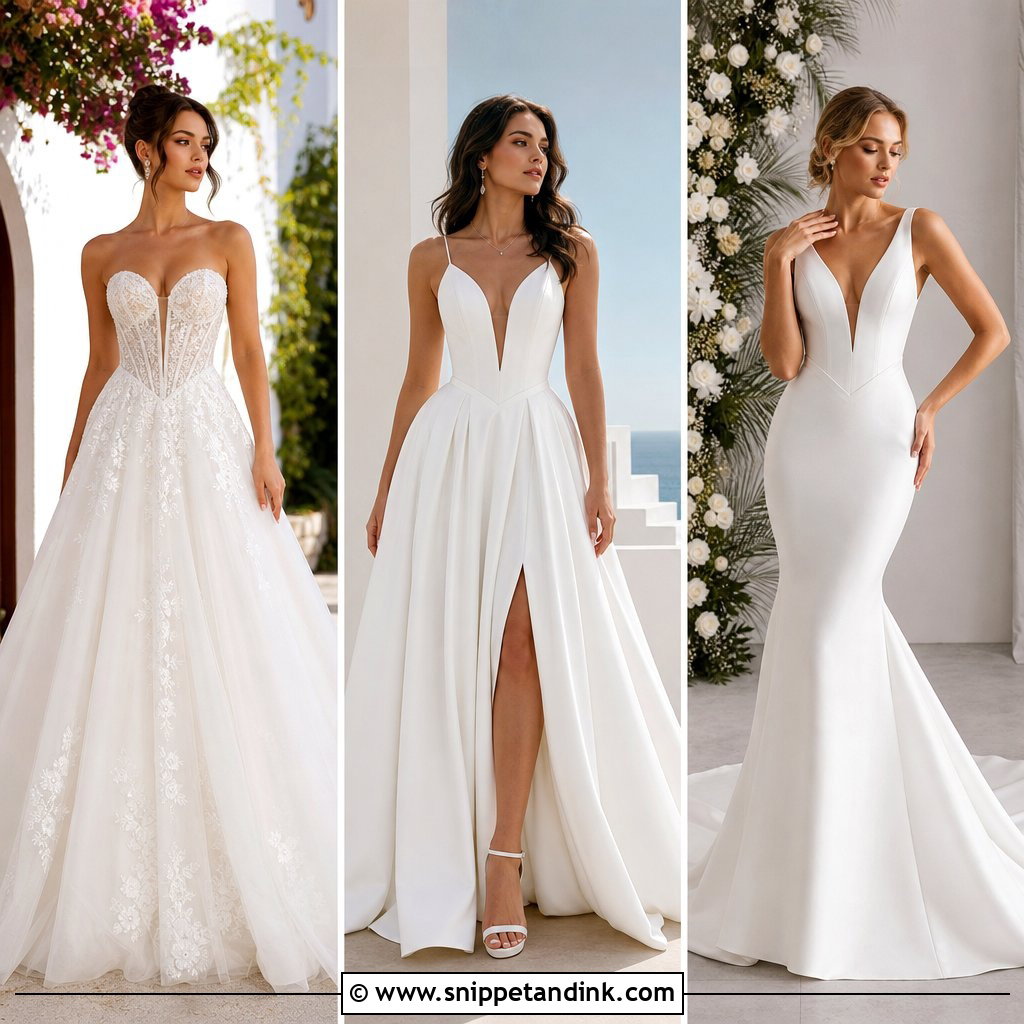
25. Mid Size Minimal Sheath Wedding Dress
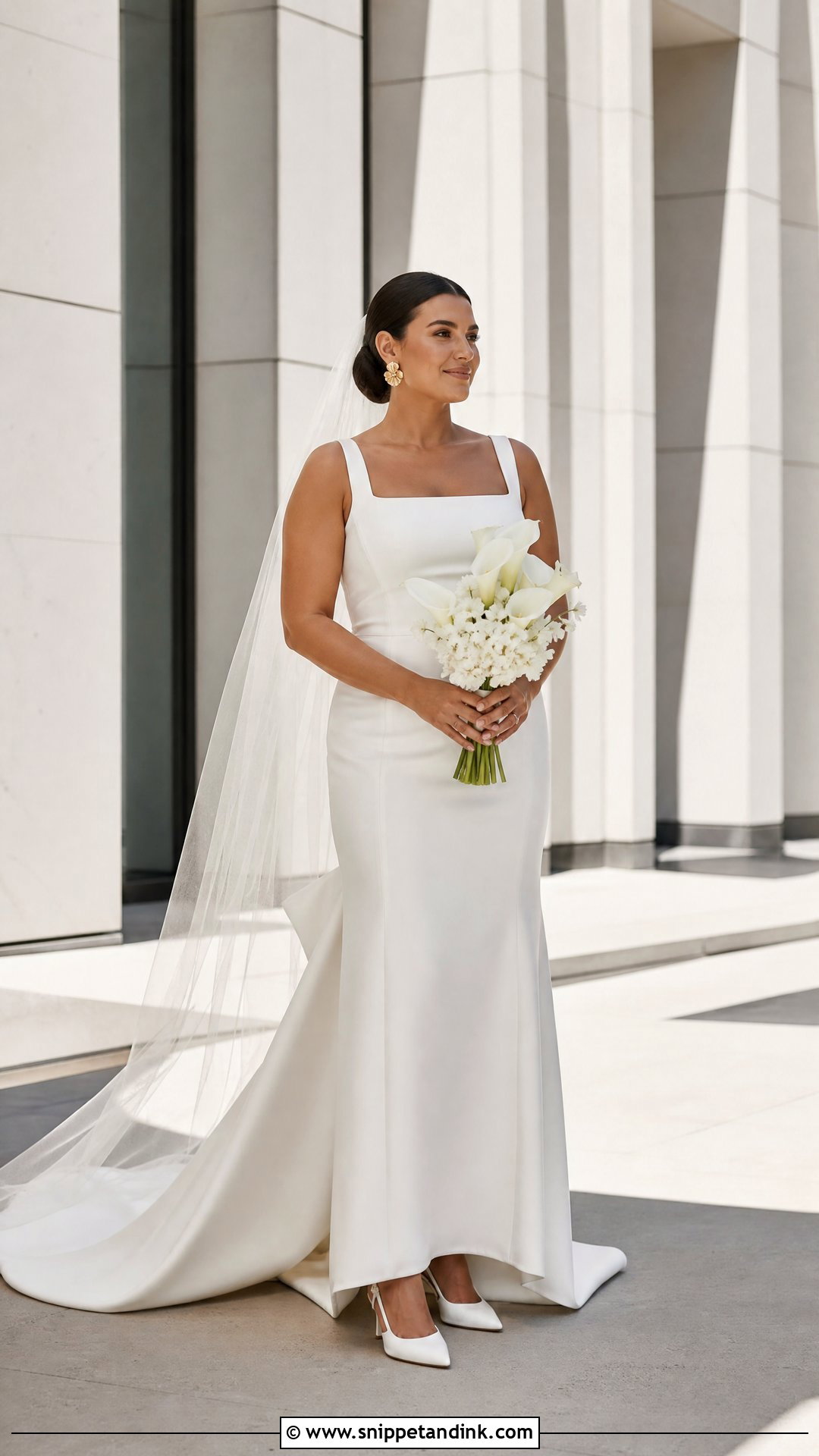
A sheath has nowhere to hide, so fabric weight is everything. Thick crepe, matte satin or a double layer skims the body; thin fabric clings. A square neck, wide straps and subtle waist seams add structure. Since there’s no decoration, seam placement, lining and hem length all become visible, so try it with your planned underwear and shoes before final alterations. A removable train or back bow adds drama for the ceremony.
What Alterations Usually Cost You in Time and Money
Almost every wedding dress needs some alterations, and midsize brides often need a few more because off-the-rack gowns are graded from smaller sample sizes. Prices vary widely by region and seamstress, so ask for an itemized quote at the first fitting instead of a single figure.
Straightforward work
Hemming a plain skirt, shortening straps, taking in the side seams, adding a simple bustle and sewing in bra cups are routine. They usually take two or three fittings.
Work that takes longer
Letting a gown out depends on how much seam allowance it has, and some have very little. Lace hems, beaded seams and appliqués have to be lifted and re-sewn by hand. Adding sleeves or changing a neckline is closer to redesigning than altering. If you know you’ll want one of these, mention it before ordering, since the shop may be able to order a different size or extra fabric from the designer.
For timing, I’d book the first fitting about two to three months before the wedding and the last one within a couple of weeks of it. Hand work on lace or beading adds weeks, not days, so the more complex the change, the earlier you should start.
Start With Construction, Then Fall in Love
No silhouette, neckline or body-shape rule decides the right dress for you. It’s the gown that supports your body, suits your venue and makes you feel like yourself. Try a few unexpected styles alongside your favorites, and pay more attention to movement and construction than to the size on the label. Bring your shoes and underwear to every fitting, and budget for professional alterations where you can. A well-fitted dress you can move in will always look better than the most expensive one that doesn’t.
You'll Like These Ideas:





Leave a Reply