
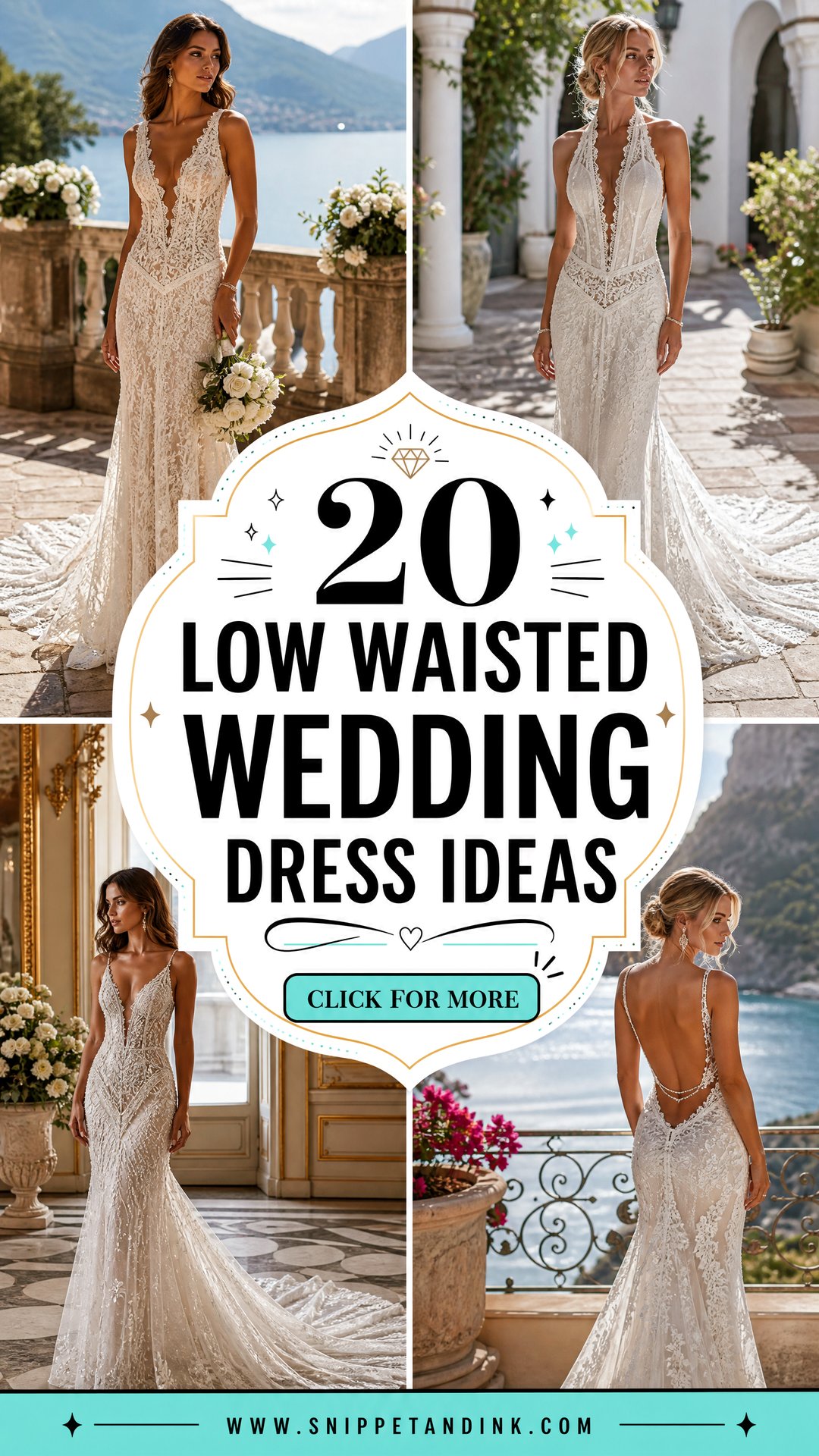
Move a waist seam a few inches down and a familiar wedding dress suddenly looks longer, leaner and more deliberate. That’s the whole idea of a drop waist: the seam sits below your natural waist, often near the top of the hips, so the bodice reads longer. Fabric, neckline and skirt shape decide whether the effect is soft or sharply defined. Below are full bridal looks built around the shape, from plain satin ball gowns to romantic lace and a couple of designs made for the reception. As you go through them, think about your torso length, how much structure you’ll tolerate for ten hours and how much drama your venue can hold.
Sizing a Gown When the Seam Sits on Your Hips
A natural-waist gown is mostly sized by bust and waist. A dropped waist moves the fitted part of the dress down onto your hips, so the hip measurement suddenly matters as much as anything else. I take all three measurements before a bride orders and size by the largest, because taking a gown in is far easier than letting it out.
Bridal sizes also tend to run smaller than everyday clothing, so ignore the number on the label and trust the tape measure.
Get the bodice length right at the order stage
Raising or lowering a waist seam after the gown arrives means detaching the whole skirt from the bodice. It’s possible, but it’s one of the costliest alterations there is and it can leave marks on satin. Many designers will adjust bodice length when you order, so ask before you sign anything, especially if you have a notably short or long torso.
Trying on samples in the wrong size
If the shop sample is too big, it will slump and the seam will look lower than it really sits. Ask the consultant to clip the back so the bodice stays up, then look at where the seam lands relative to your hip bones. That’s the honest preview.
1. Strapless Satin Low Waisted Wedding Dress
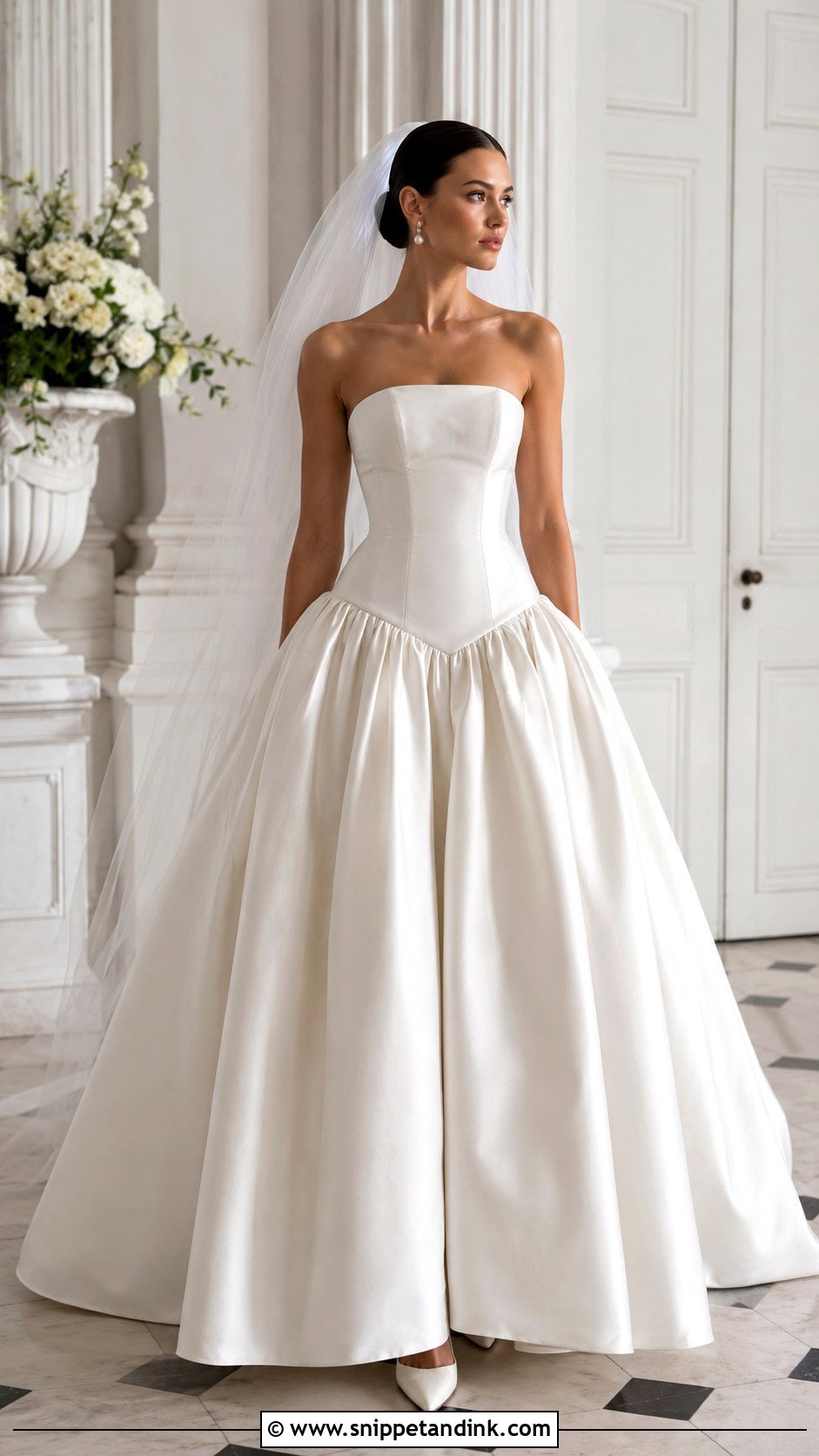
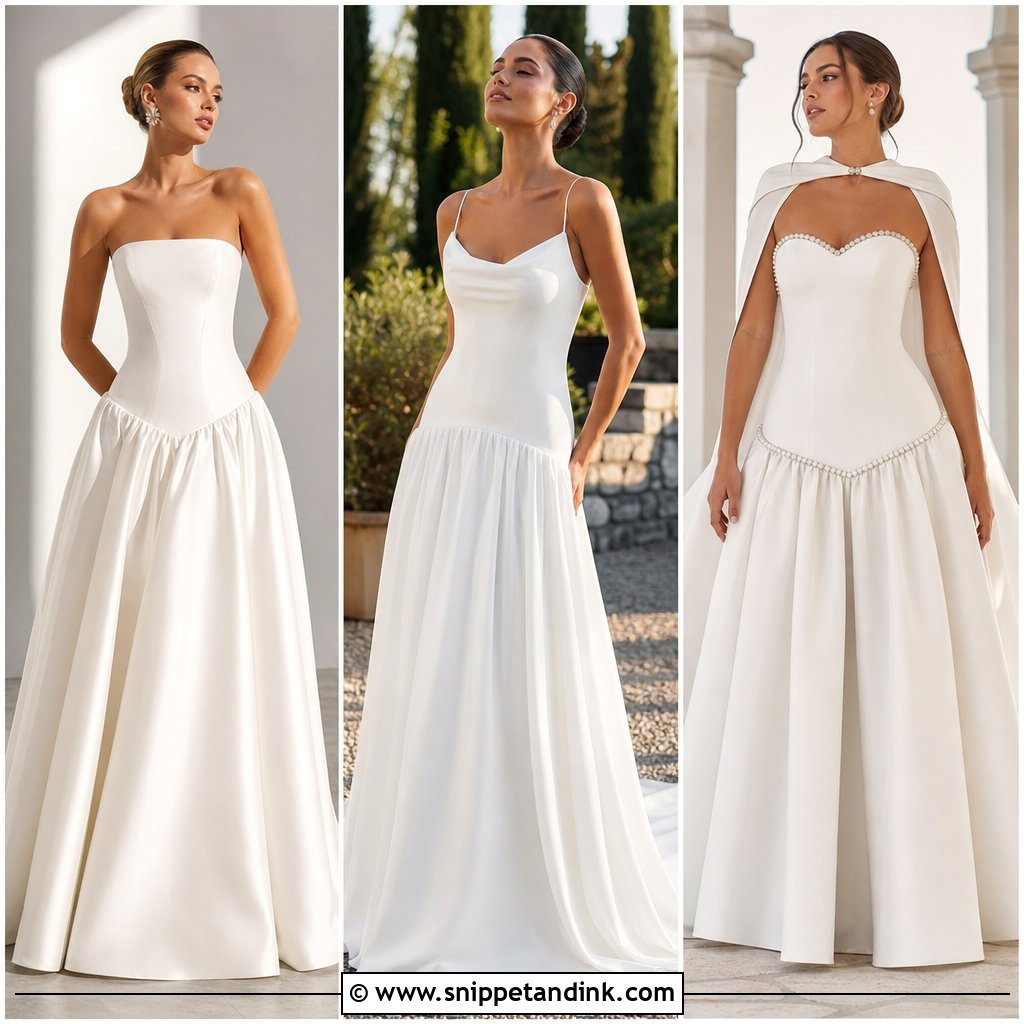
Strapless satin is the cleanest way to show a lowered seam, because nothing above it competes. A structured bodice with a straight or softly curved neckline runs to the upper hips, then a full pleated skirt adds ball gown volume. I’d have the bodice length checked with your wedding shoes on, since standing taller in heels slightly changes where the seam appears to fall. If it lands at an awkward point on your hip, it looks like a mistake rather than a design choice. Pointed ivory pumps, pearl drops and a neat low bun suit it, with a plain cathedral veil and a small bouquet of white roses.
2. Corset Low Waisted Wedding Dress
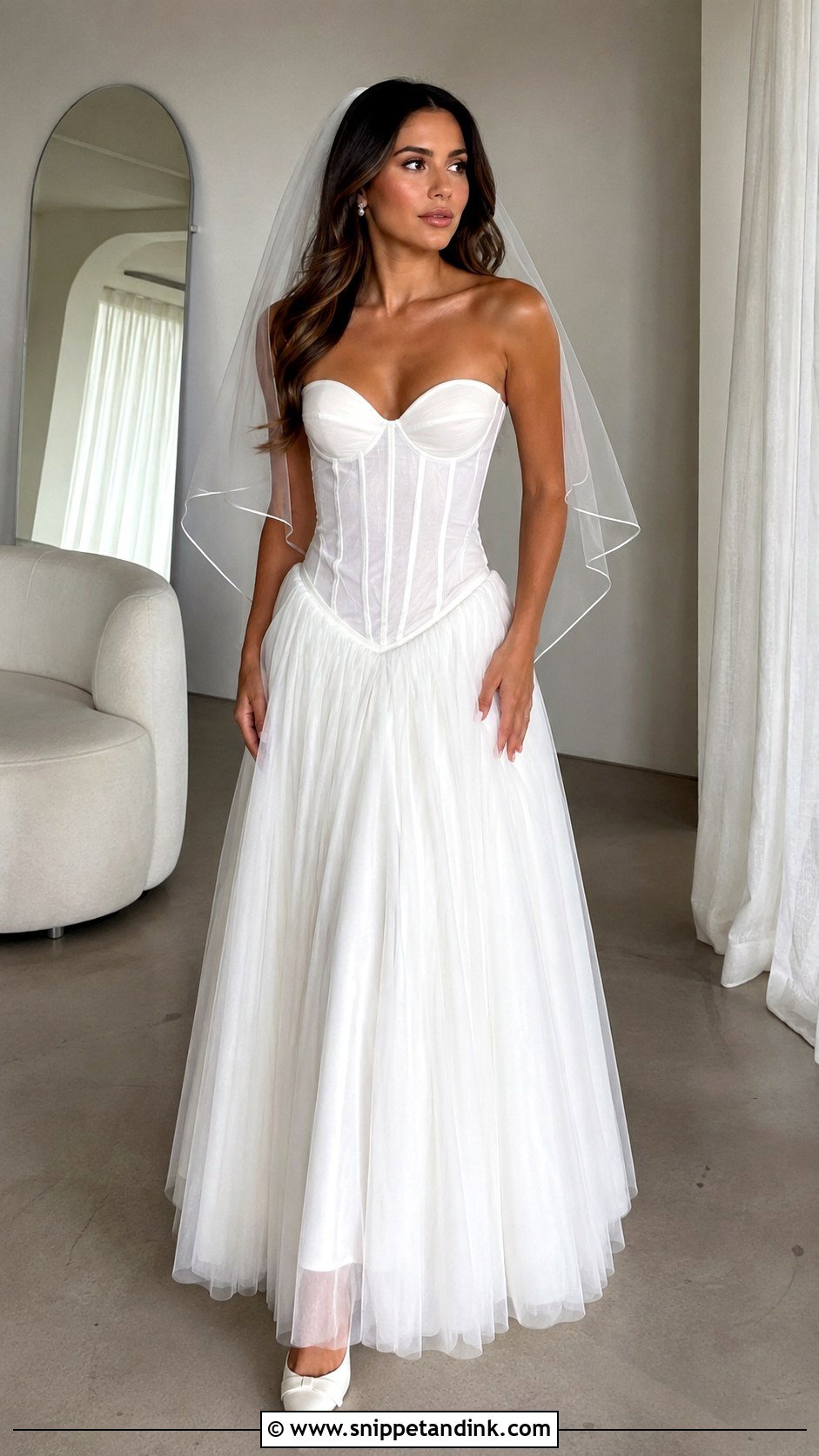
Boning plus a gently dipped seam gives a corseted gown its defined shape. A softly sculpted sweetheart neckline suits the longer bodice, and a gathered tulle skirt keeps it from looking severe. Full lining matters on a corset; unlined boning channels show through as ridges in flash photos. At every fitting, sit, walk and lift your arms. A corset that only works standing still won’t survive dinner. Satin slingbacks, a fingertip veil, delicate studs and a compact bouquet of peonies suit it, and loose waves add softness without covering the neckline.
3. Lace Low Waisted Wedding Dress
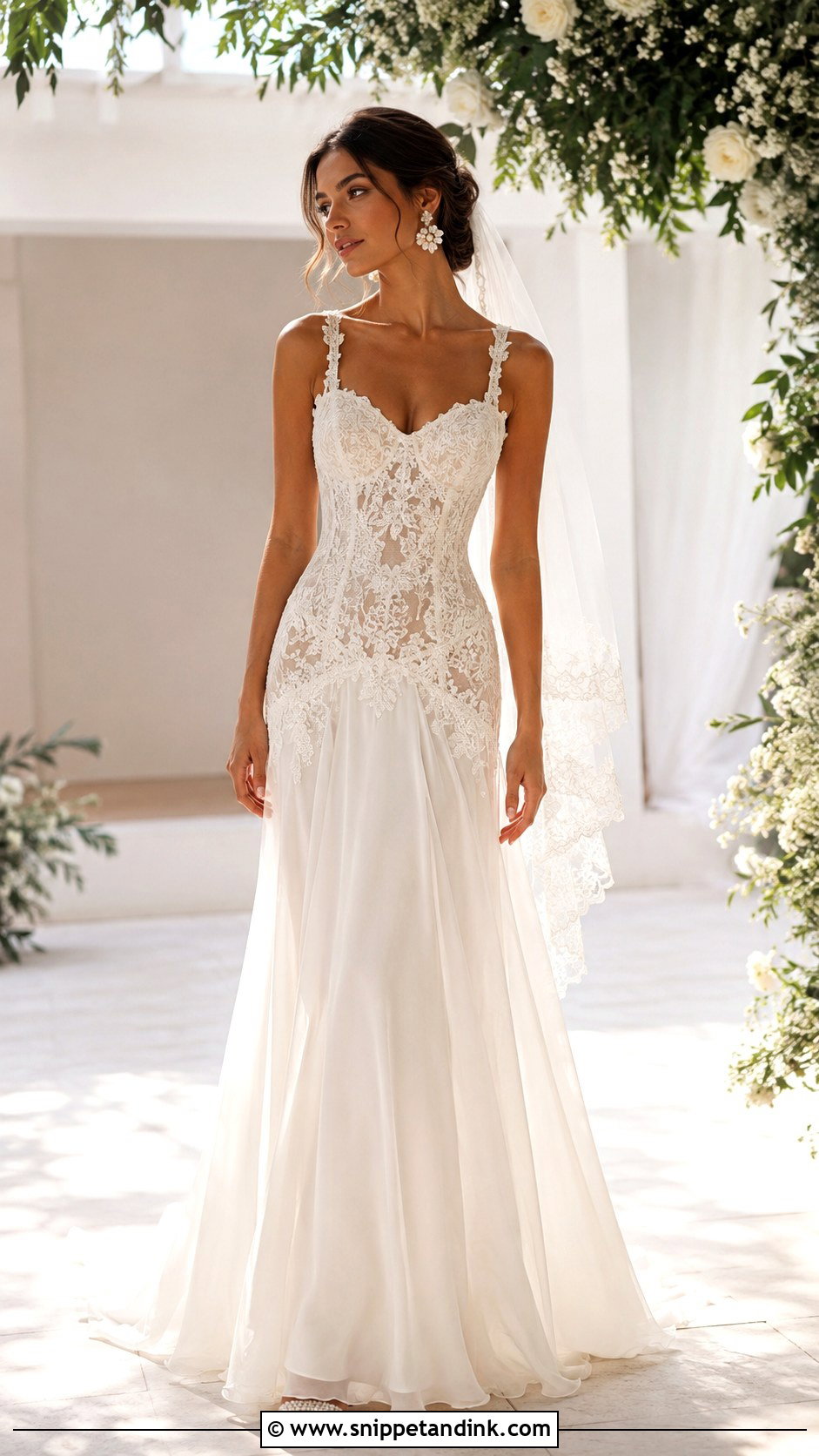
Lace that carries across the lowered seam is what makes this version work. If the appliqués stop dead at the waist, the bodice and skirt look like two garments; if they travel over the join into the organza or tulle below, the transition disappears. A subtle sweetheart neckline with narrow straps keeps it light. Pearl-embellished heels, a fine-edged veil, floral earrings and a loose chignon finish it, along with white garden roses and soft greenery. With highly detailed lace, hold back on everything else; the handwork and the long torso should lead.
4. Long Sleeve Low Waisted Wedding Dress
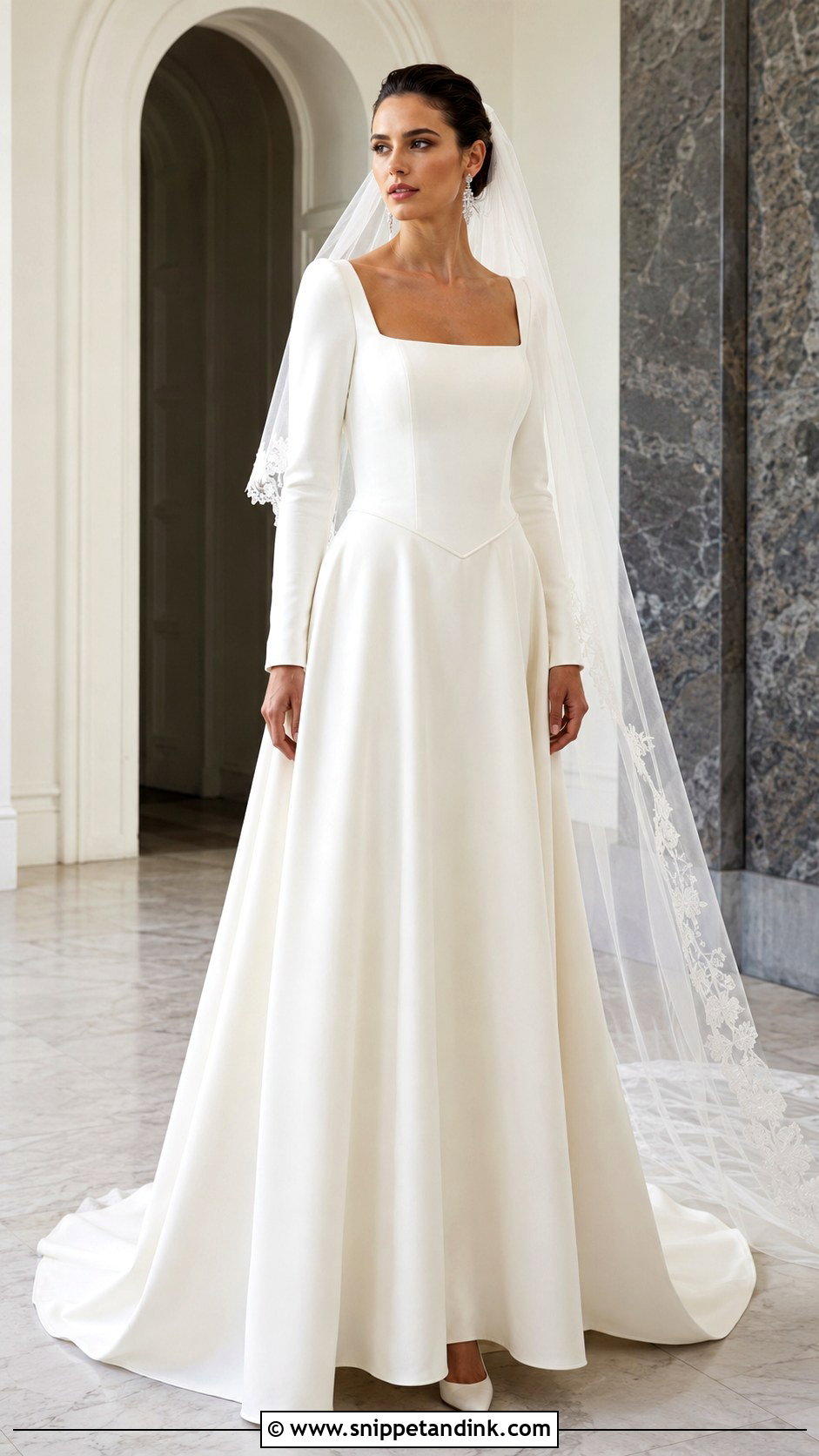
Sleeves and a long bodice together can feel like a lot of fabric, so the neckline needs to open things up. A square neck on a fitted matte crepe, lace or satin bodice does that, with the seam running toward the hips before an A-line skirt. Stretch lining through the arms and torso is my strongest recommendation here; rigid sleeves on a long fitted bodice make reaching for anything a struggle. Closed-toe pumps, small diamond or crystal studs and a chapel veil suit it, with a sleek bun so the neckline and sleeves stay visible. A formal ceremony or a cool-season wedding fits it.
5. Square Neck Low Waisted Wedding Dress
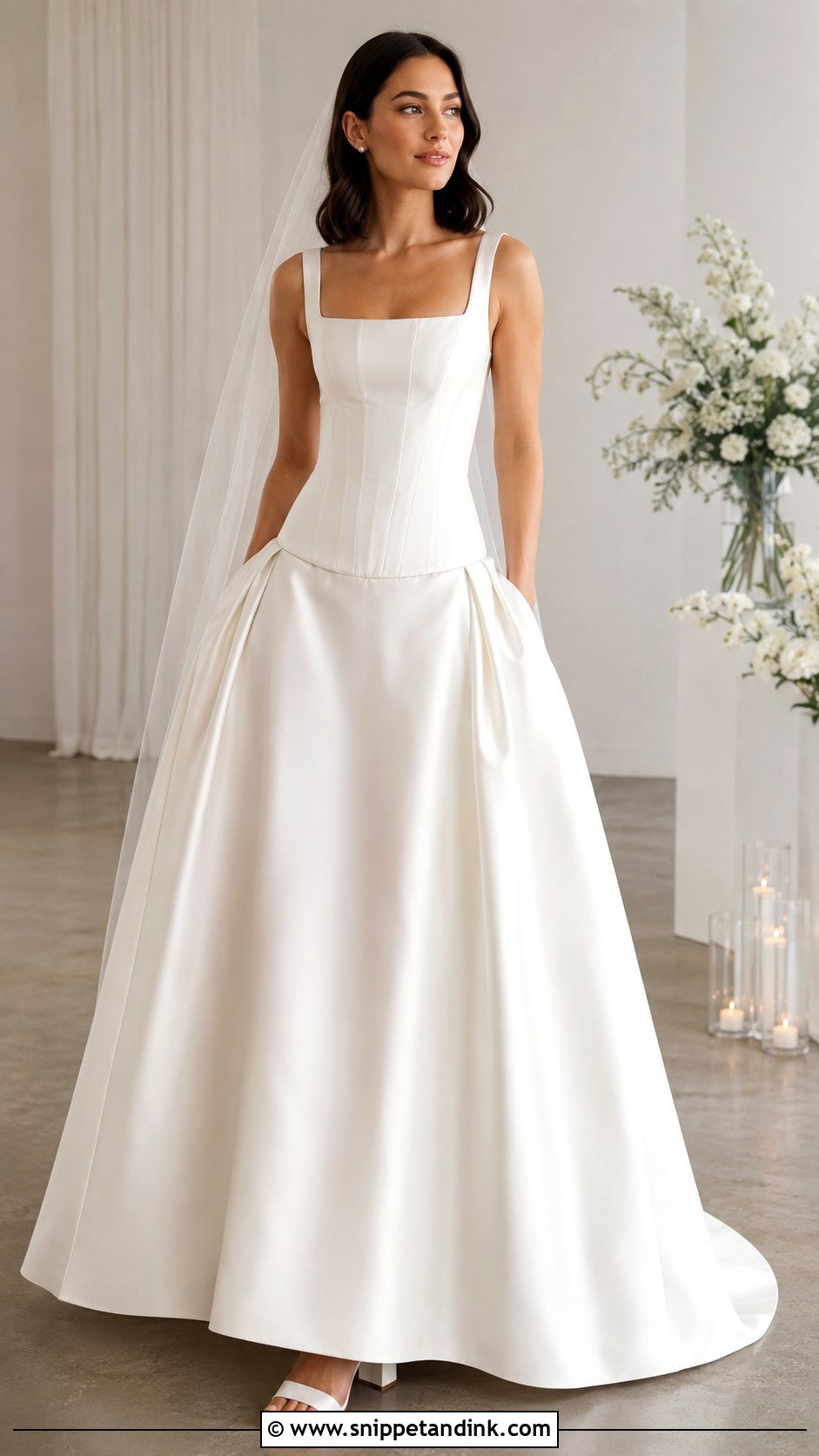
Mikado or heavier satin holds a square neckline and a lowered waist crisp from morning to night, where softer fabric starts to bow at the corners. Wide straps, clean princess seams and a structured skirt starting just above the hips make the shape. If you need more support, wider straps or discreet inner cups can be added without changing how the dress looks. Leave off the big necklace, since the neckline already frames your collarbones. Block-heel ivory sandals, a smooth shoulder-length veil, pearl studs and a center-parted low bun keep it modern, with a softly rounded bouquet.
6. Scoop Neck Low Waisted Wedding Dress
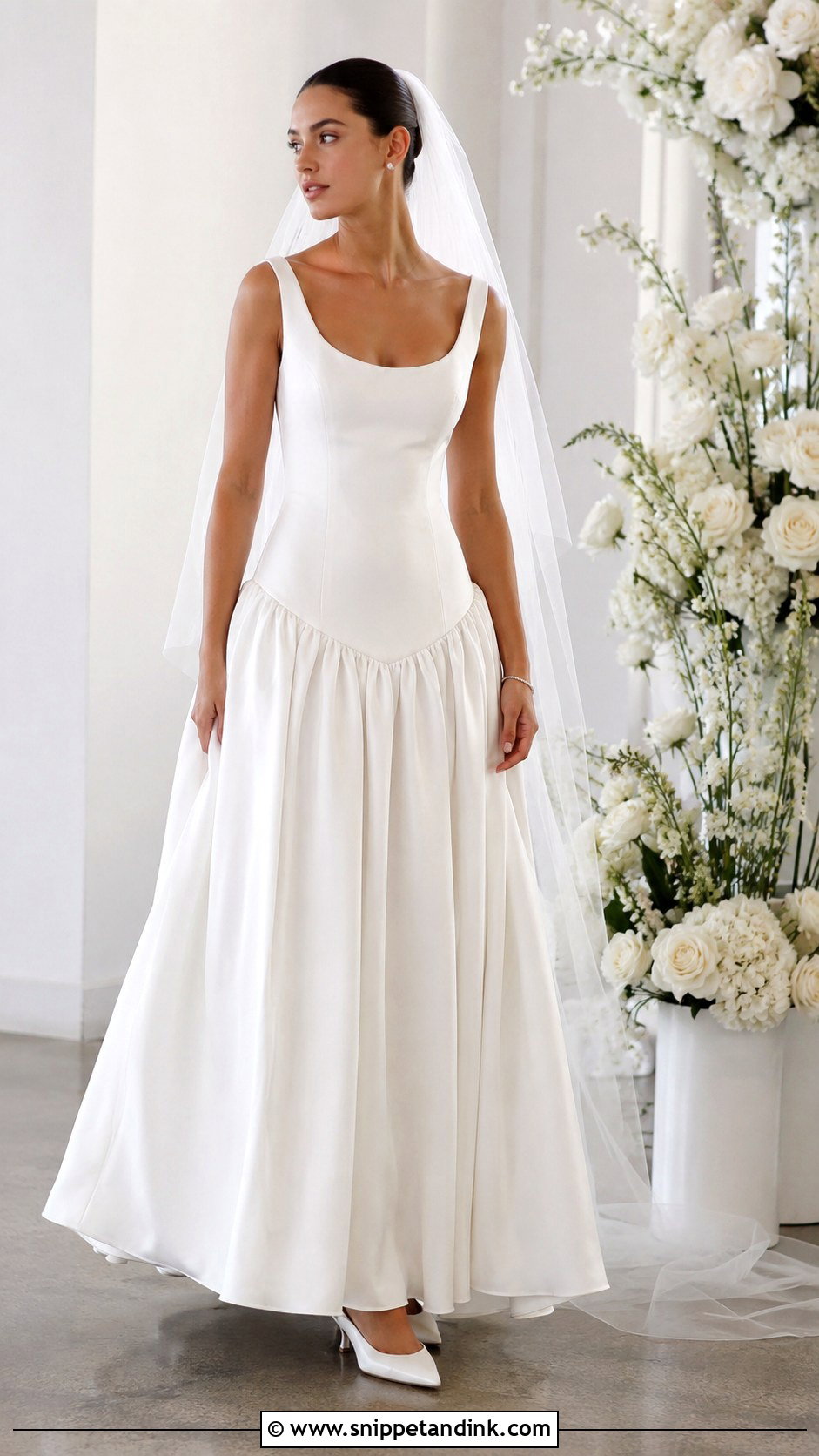
A scoop neck softens the architecture of a low waist. A fitted satin or crepe bodice with a wide rounded neckline and a gently curved waist seam, over a softly gathered skirt, keeps the torso streamlined. Wide scoops can gape when you lean forward, especially if you’re between sizes at the bust, so bend at the fitting and watch the mirror. Kitten-heel pumps, a sheer fingertip veil, a slim tennis bracelet and bright studs suit it. A soft updo with face-framing pieces echoes the curve, and loosely arranged white ranunculus finish the look.
7. Off Shoulder Low Waisted Wedding Dress
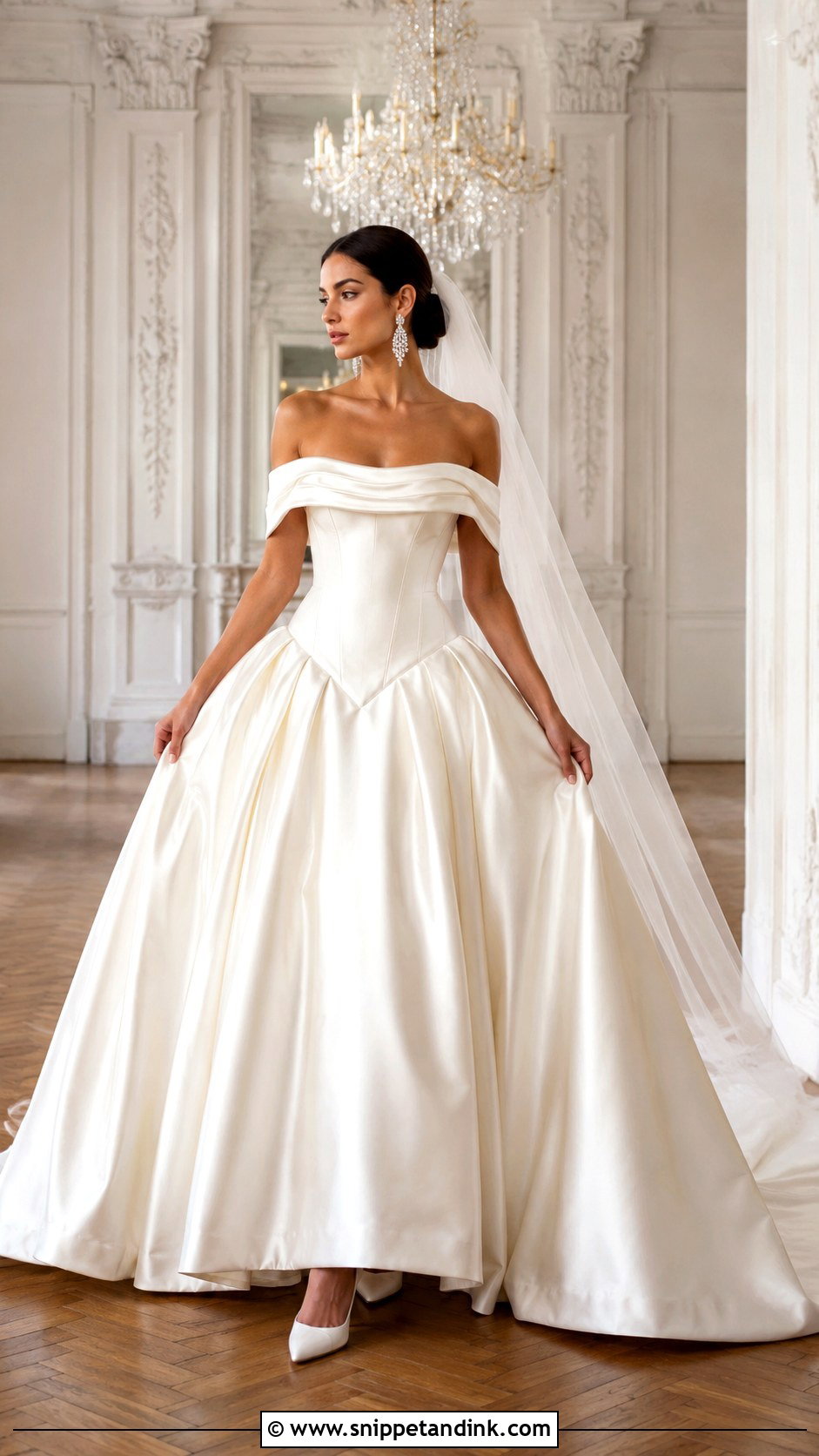
Off-shoulder sleeves spread the eye across the shoulders, then the V-shaped seam pulls it down to the hips. With a structured satin bodice and a voluminous skirt, it’s a ballroom gown through and through. Folded sleeves need room to move. I ask brides to hug me at the fitting; if the sleeves pin their arms, a hidden elastic or a detachable strap can fix it without spoiling the neckline. Pointed pumps, chandelier earrings and a long plain veil beneath a polished updo suit the scale, with a structured bouquet of white roses. Grand ballrooms and formal indoor venues are its setting.
8. Halter Low Waisted Wedding Dress
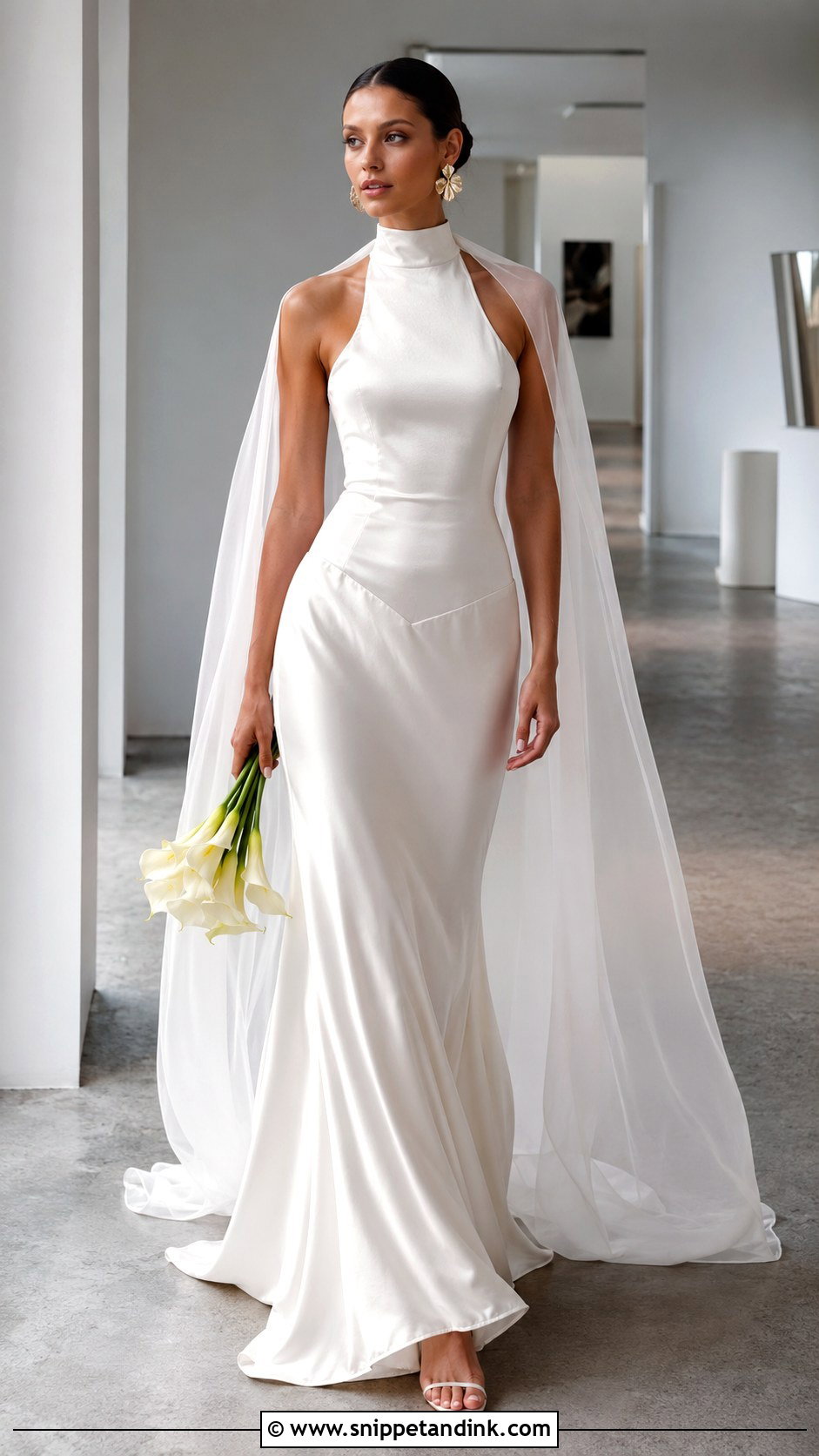
Sleek and spare, a halter with a dropped seam draws a clean vertical line from neck to hip. Smooth crepe or satin with a fitted high-neck bodice, bare shoulders and a softly flared skirt keeps it modern. Armholes are the fitting challenge: halters gape at the sides if they’re cut even slightly wide, so I pin them while the bride stands with her arms relaxed, not raised. Strappy ivory heels, sculptural earrings and a simple comb above a low bun suit it. A sheer cape attached at the shoulders works in place of a veil, and a slim bouquet of callas matches the shape.
9. Basque Low Waisted Wedding Dress
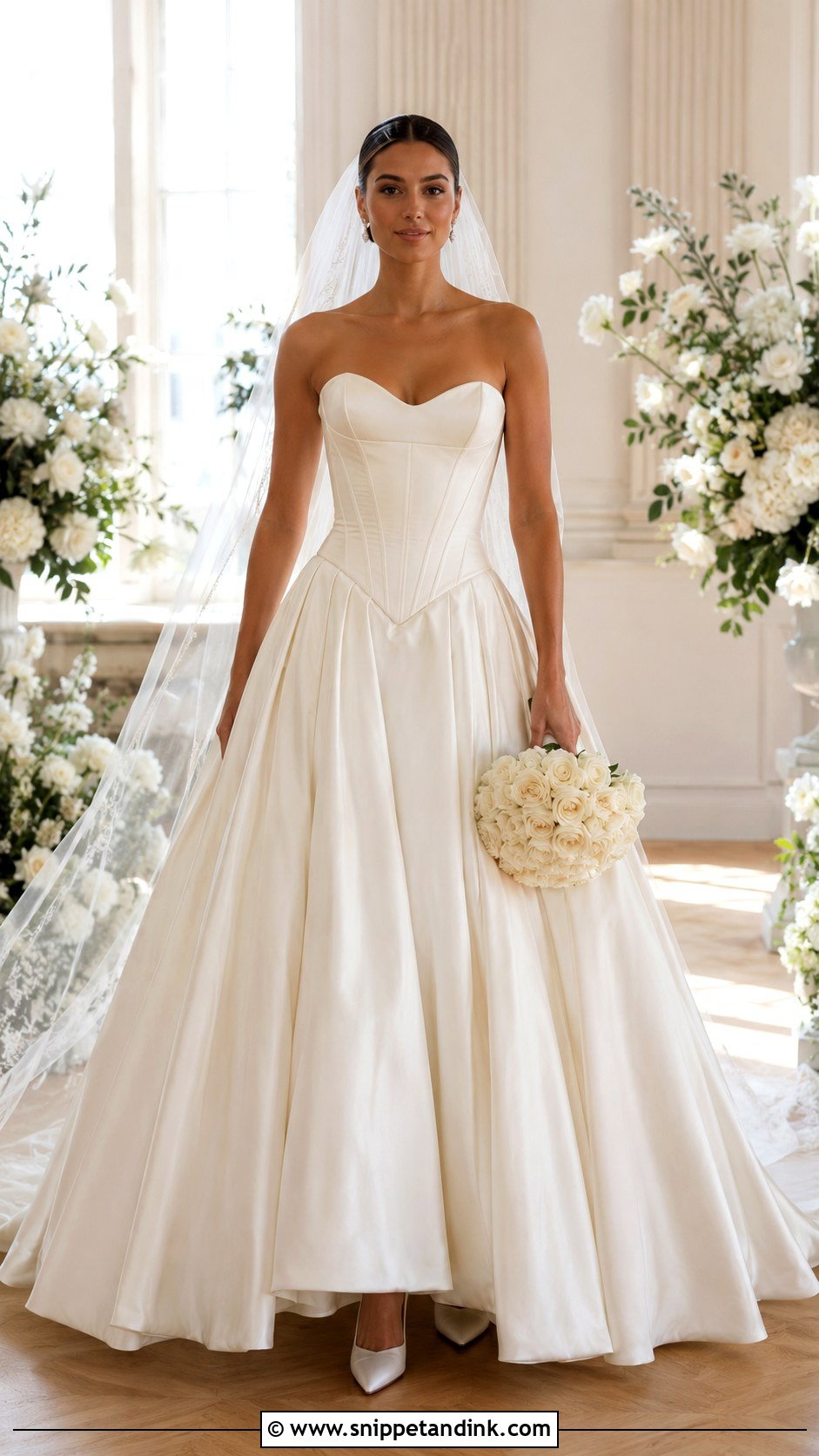
A basque point drops the center of the waist toward the hips in a V, extending the bodice further than a straight seam. The classic version is a strapless corset bodice in ivory satin over a full pleated skirt. That point has to sit flat. If it folds or flips up when you bend, the boning is too short or the skirt is too heavy for it, and the seamstress should look at all three together. Classic pumps, pearl and crystal earrings, a cathedral veil and a formal updo suit it. Ivory roses with trailing greenery add a little movement without crowding the waist.
10. Tulle Low Waisted Wedding Dress
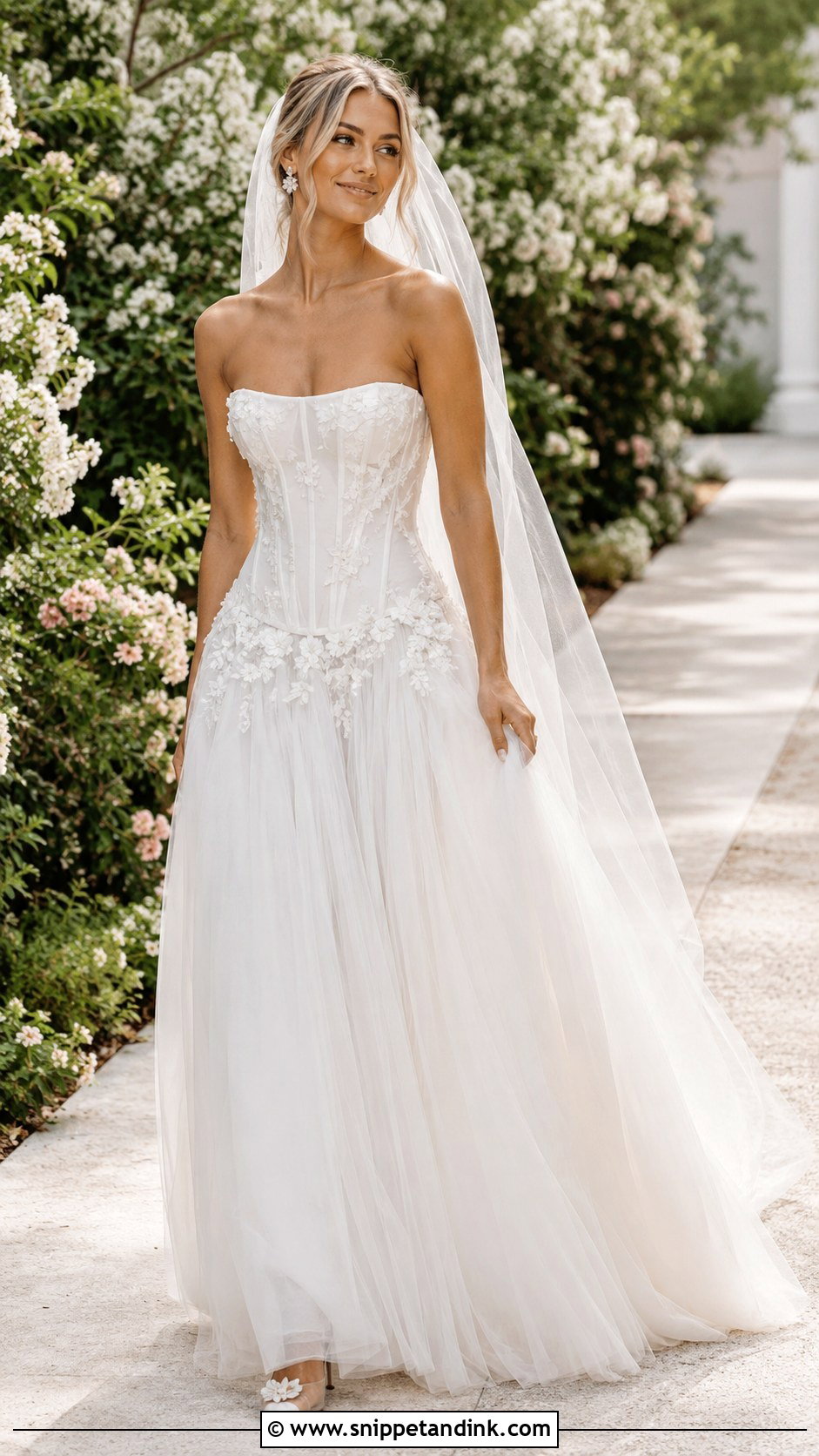
Tulle takes the weight out of a lowered waist. A fitted, lightly boned bodice in matching ivory over several soft tulle layers keeps it airy, and a straight strapless neckline looks modern. The quality of the tulle decides everything: fine, soft tulle falls away from the seam, while stiff netting sticks out at the hips and adds width exactly where you don’t want it. Scattered fabric flowers or subtle beading give dimension. Embellished flats or low heels, floral studs, a sheer chapel veil and a loose bun with a few soft pieces suit it, with sweet peas or ranunculus in a small bouquet.
11. Minimal Crepe Low Waisted Wedding Dress
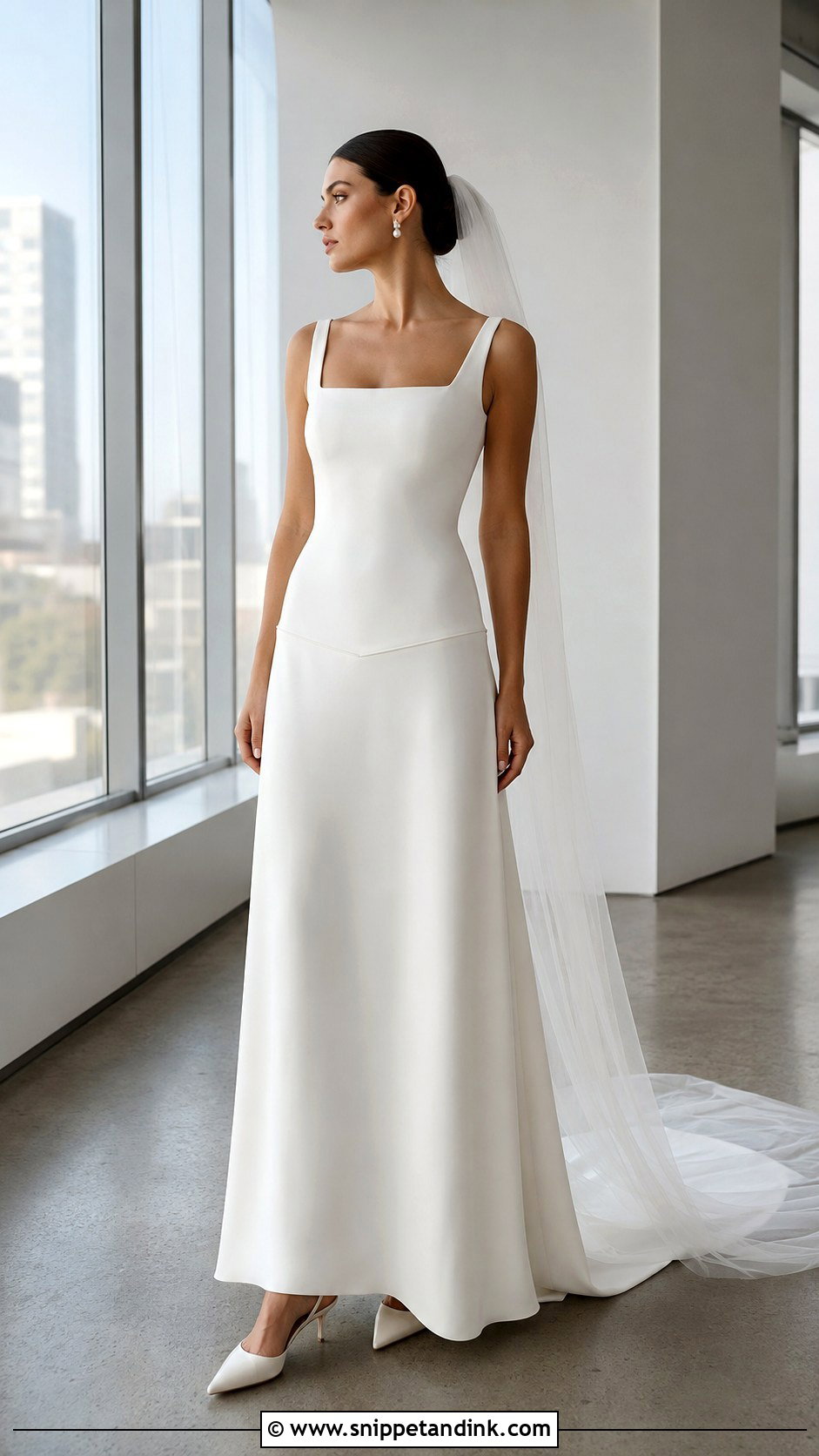
Crepe with almost no decoration relies entirely on fit. A bateau or square-neck bodice with long princess seams and a skirt beginning just below the natural waist, then easing into an A-line, keeps the lowered seam understated. Because crepe shows every line, the underwear has to be right first and the lining smooth. Ask for a little ease through the hips; a crepe bodice fitted tight to the hip while standing pulls into creases the moment you sit. Pointed slingbacks, small gold or pearl earrings, a sleek bun and a plain floor-length veil finish it, with white tulips as a single-variety bouquet.
12. Floral Low Waisted Wedding Dress
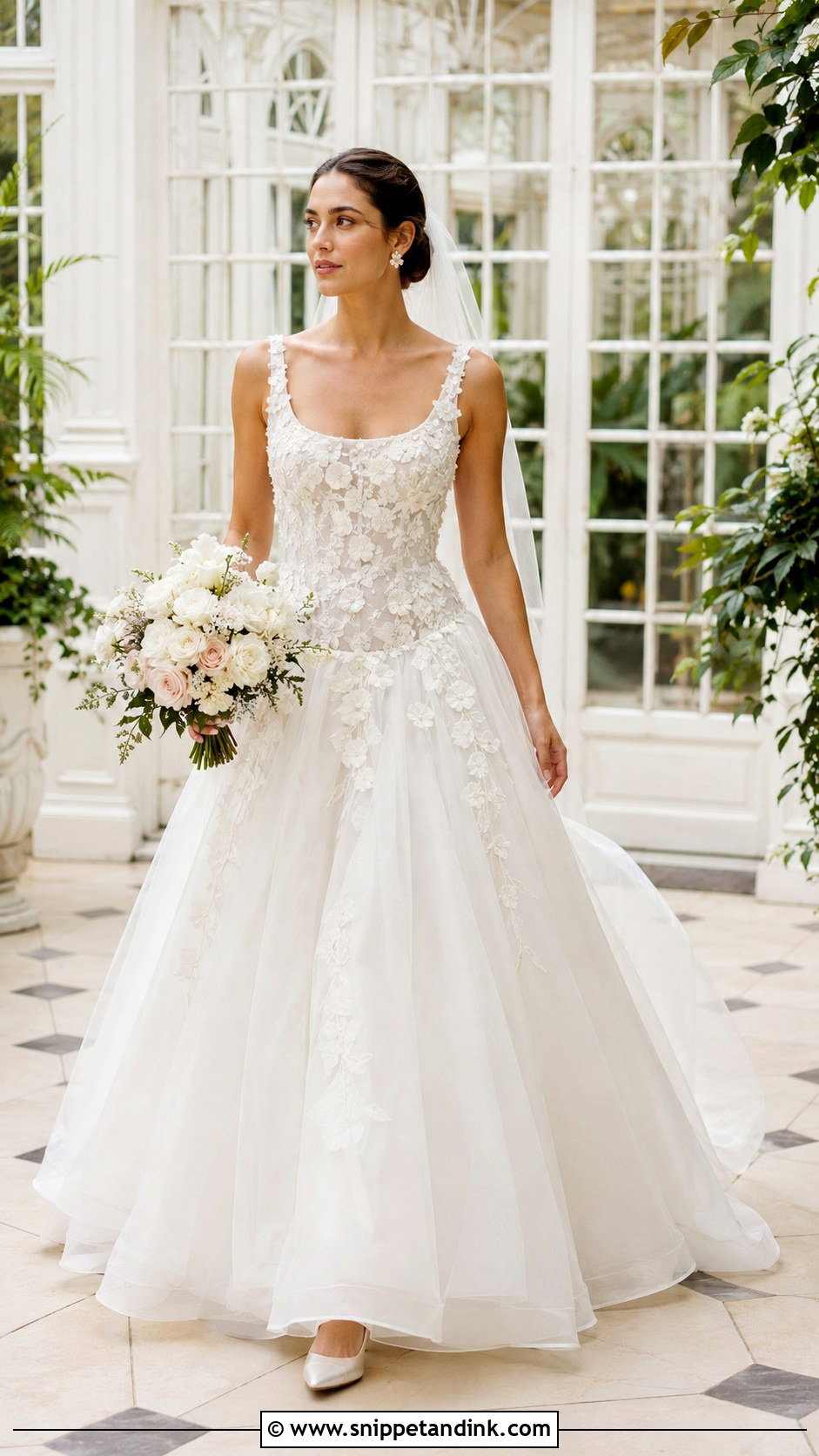
Embroidered flowers on a corseted bodice that continue lightly onto a full organza skirt give this gown an artist’s touch. Where the largest flowers sit is my main concern. Clustered at the hips, they add bulk exactly where the seam already draws the eye; placed higher on the bodice and thinning toward the waist, they lengthen the line instead. A soft scoop or sweetheart neckline balances the texture, and a partly sheer upper layer over full lining adds depth. Simple satin pumps, petite floral earrings, a plain veil and a smooth center-parted chignon keep the rest calm, with white and pale blush flowers in the bouquet.
13. Beaded Low Waisted Wedding Dress
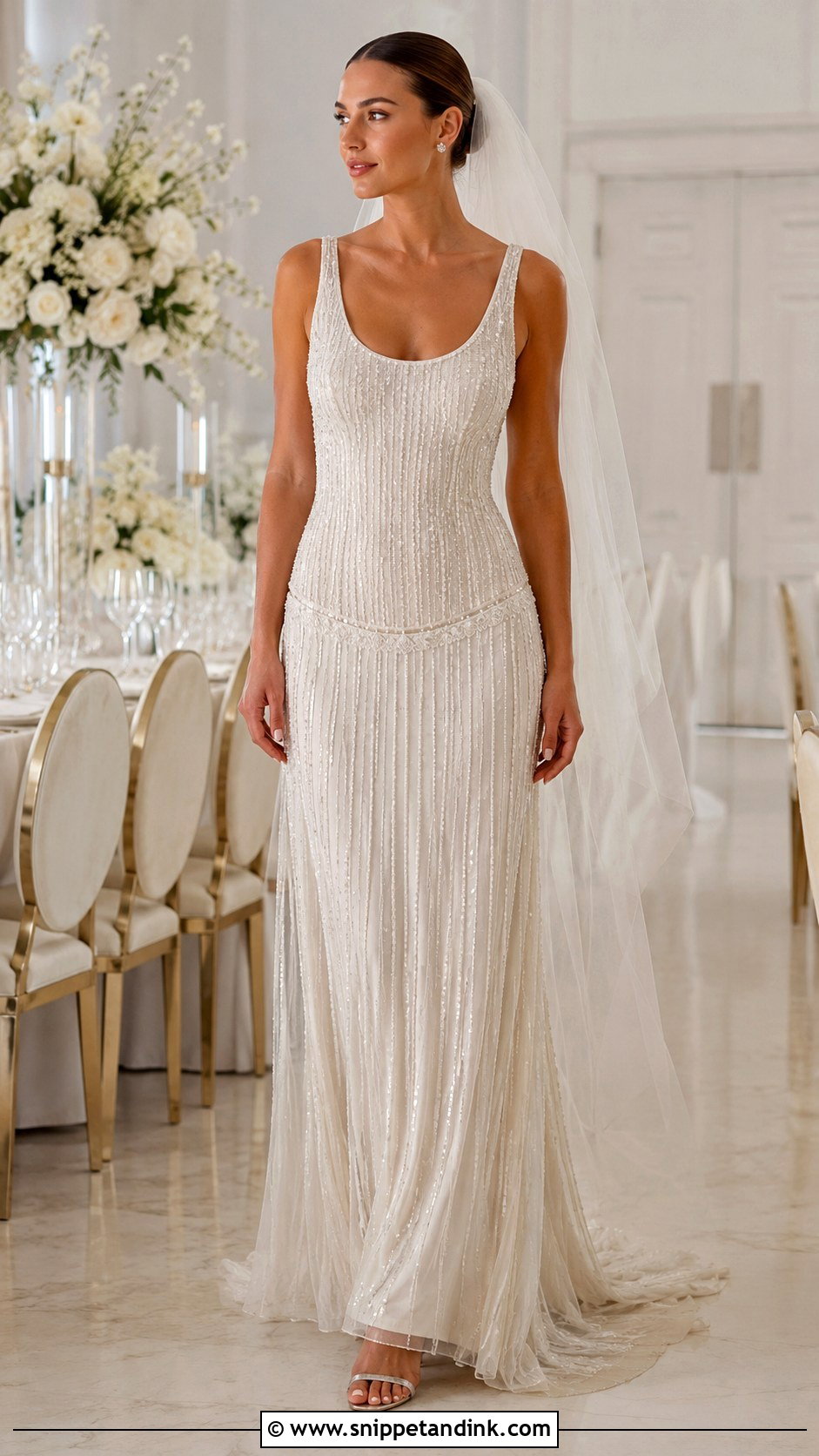
Beading that runs vertically or diagonally down the torso makes a long bodice look longer still, which is why it suits this shape for an evening wedding. A fitted sleeveless bodice with a modest scoop neckline is a calm base for the sparkle. Run your fingers under the armholes at the fitting. Rough beads there rub skin raw over a long day, and a seamstress can add soft edging to cover them. Metallic ivory sandals, crystal studs and a fine-edged veil suit it, along with a sleek ponytail or low bun and a few clean white flowers.
14. Vintage Low Waisted Wedding Dress
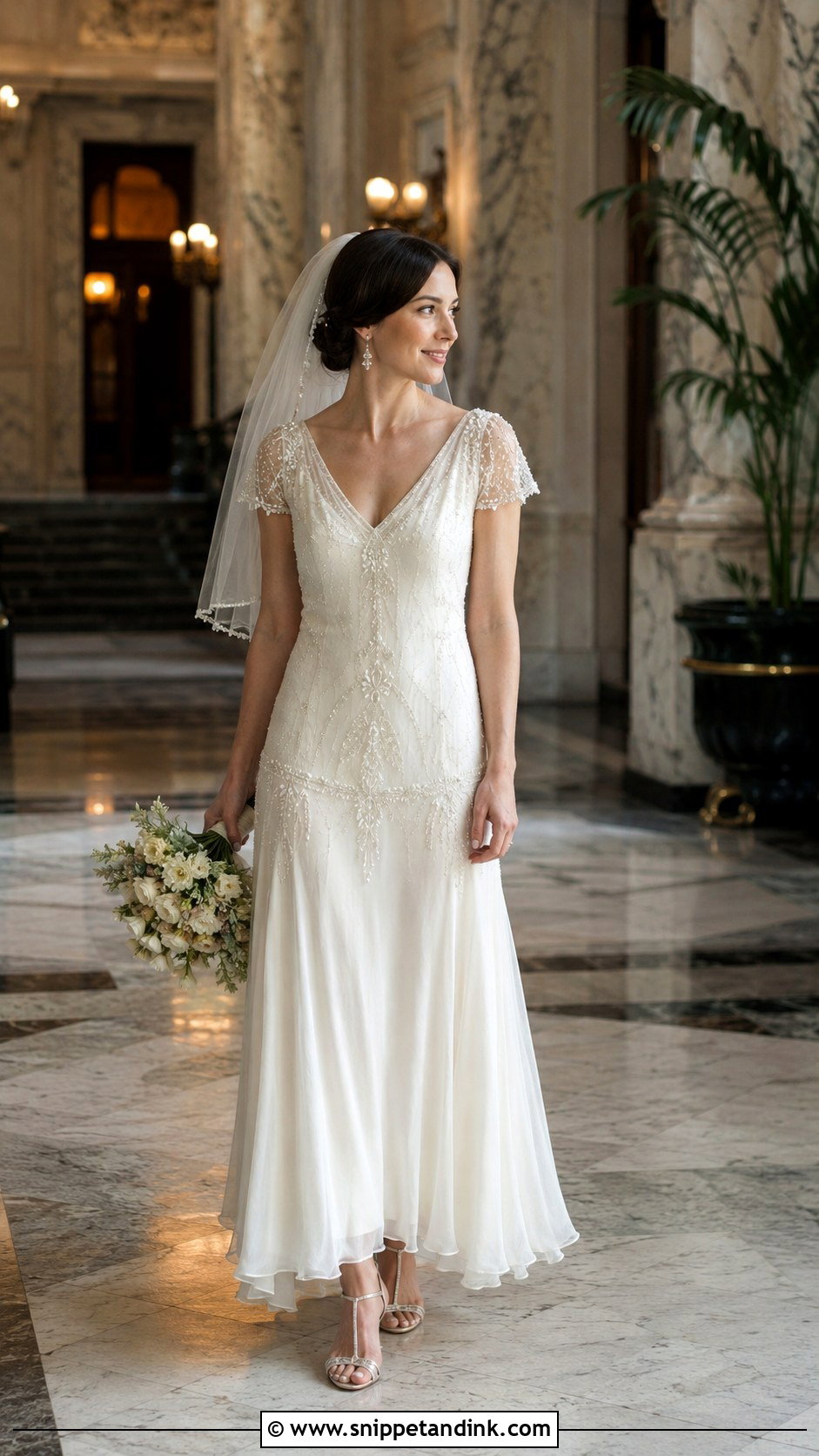
The 1920s gave us the original dropped waist, and a softly fitted silk gown with the seam near the upper hips and a fluid skirt nods to that era without copying it. Delicate cap sleeves, a little beadwork and a shallow V-neck bring period character. The danger is going full costume, so I’d keep it to one or two era references. Low T-strap heels, small drop earrings and a softly waved bob or a pinned faux bob suit it, with a fingertip veil and a compact white-and-green bouquet. Modern lining and secure closures make it practical for a full day.
15. Mermaid Low Waisted Wedding Dress
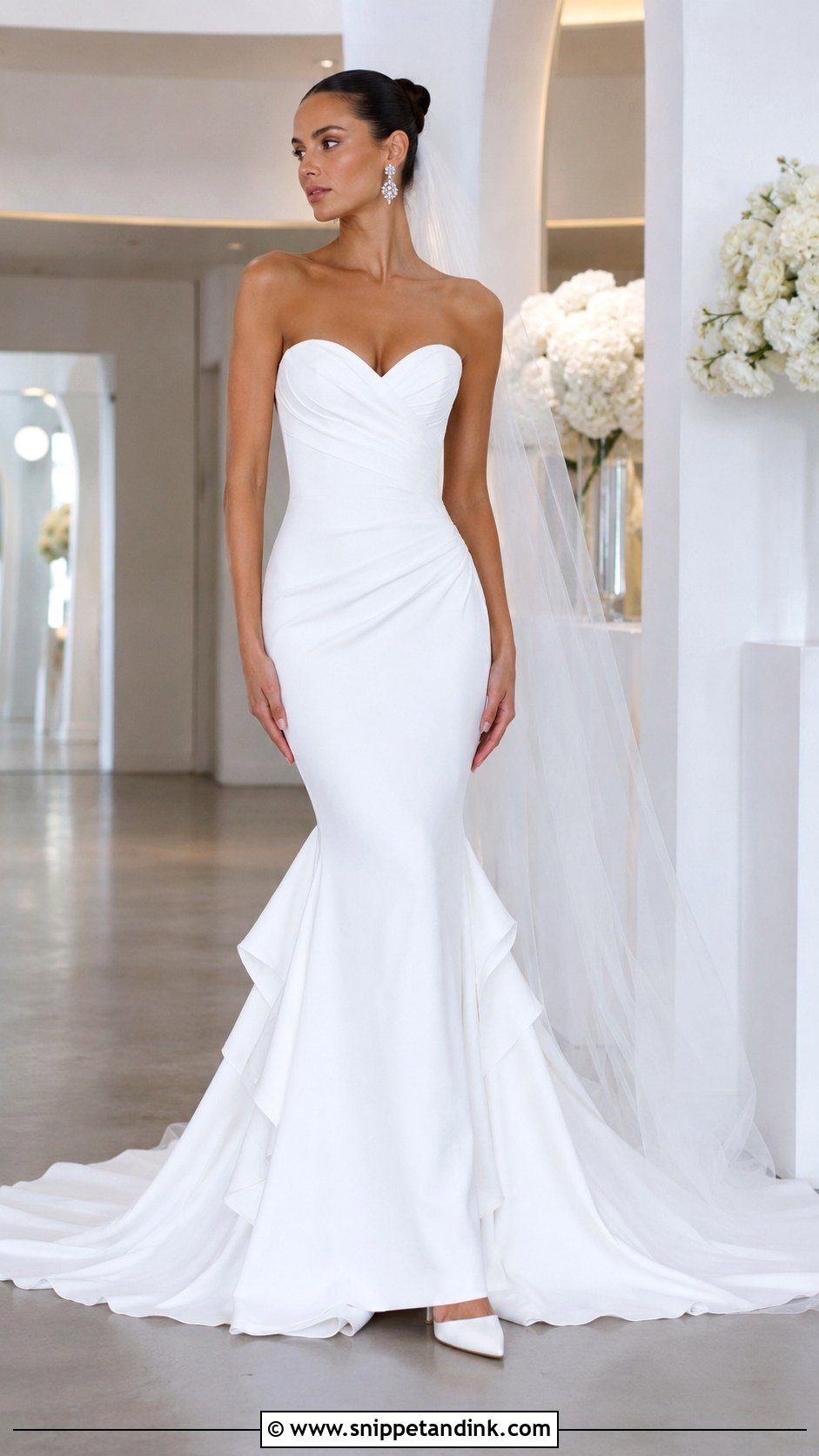
Two fitted shapes stacked together make a mermaid with a lowered waist one of the boldest silhouettes here. Supportive stretch crepe or lined lace lets the bodice follow torso and hips without squeezing. Climb a step at your fitting. A mermaid that flares too low stops you managing stairs, and on a long bodice there’s less room to adjust. A strapless sweetheart neckline suits the curves, and a softly layered train adds movement behind. Pointed heels, statement earrings and a long veil under a smooth updo suit it, with a slim bouquet. Ask for a sturdy bustle so the train lifts neatly for dancing.
16. A Line Low Waisted Wedding Dress
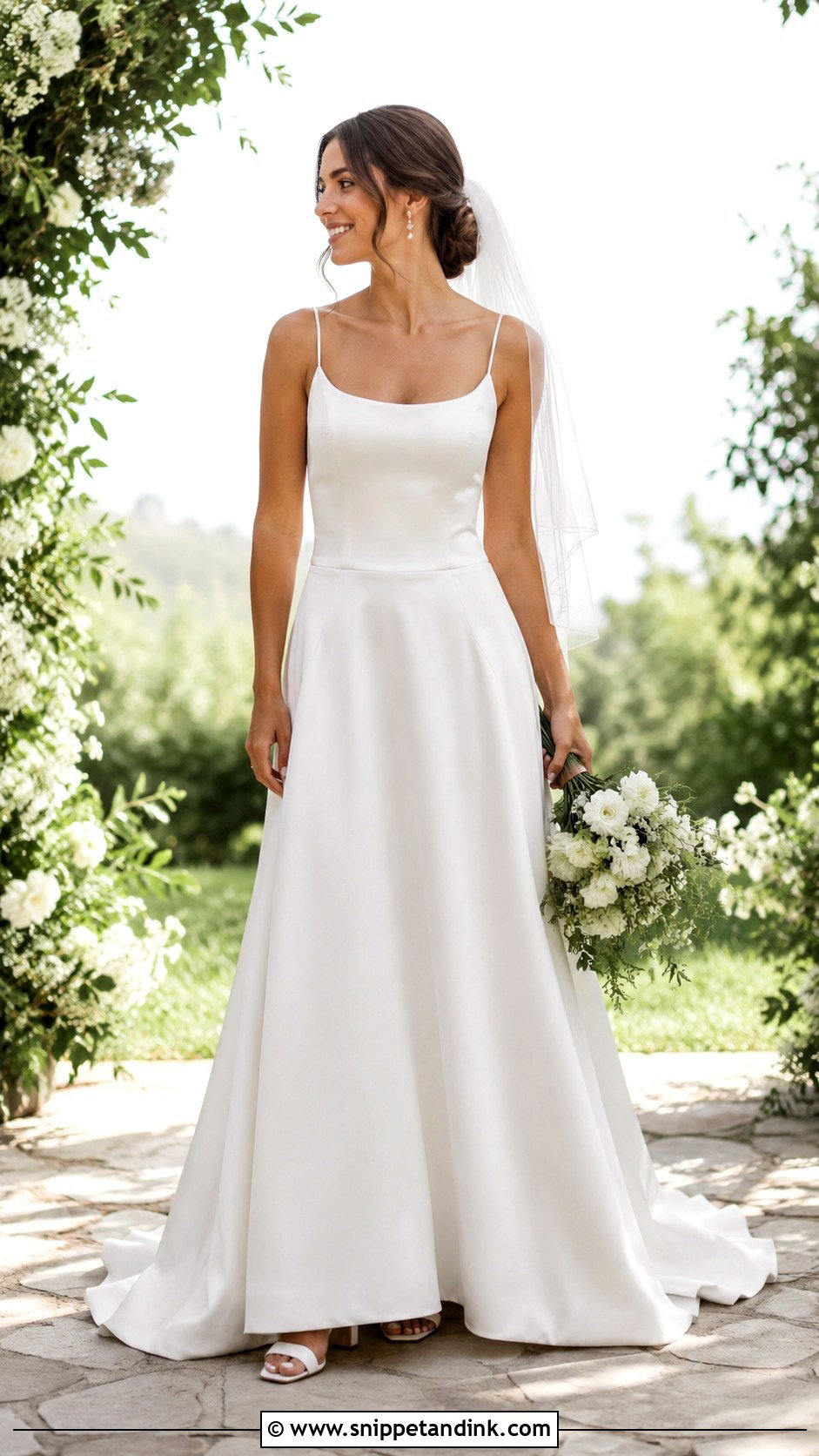
If you like the idea but not the volume of a ball gown, an A-line is the easy way in. The bodice extends only slightly below the natural waist, and the skirt widens gradually toward the floor in soft satin, organza or matte crepe. At the appointment, ask the consultant to pin the sample at two or three different waist heights while you watch in the mirror; the difference of an inch is surprisingly visible. A subtle drop usually looks more refined than an extreme one. Comfortable block heels, pearl drops, a medium-length veil and a relaxed low bun suit it, with white roses and seasonal greenery.
17. Low Back Low Waisted Wedding Dress
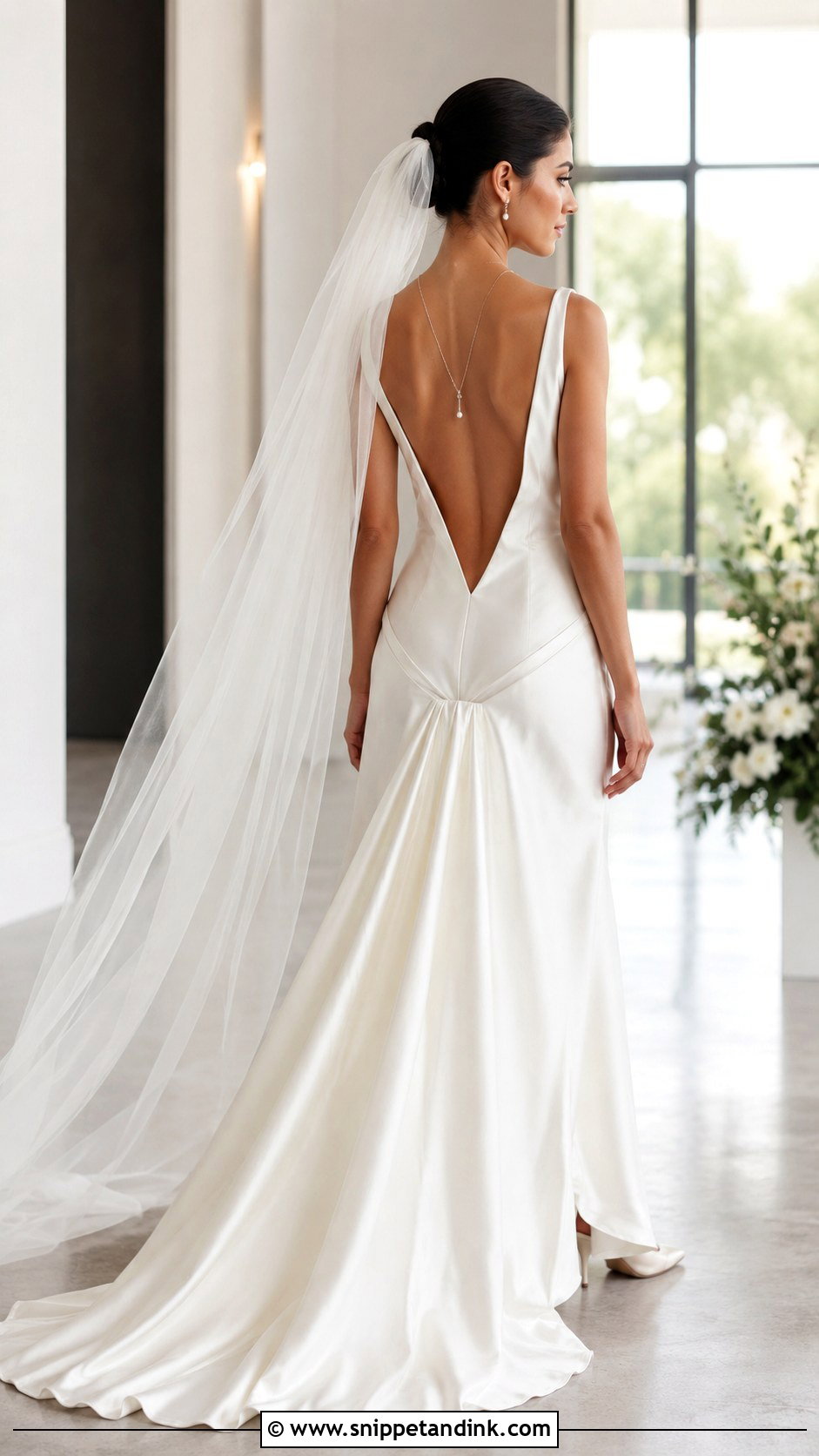
A plain front and a deep back give this gown two different personalities. A square or boat neckline in front, a deep rounded or V back behind and a fitted satin bodice running into a softly pleated skirt keep it refined. The bra question has to be settled early, since standard straps won’t work. I’d ask about built-in cups, supportive boning and fine mesh panels at the first appointment, not the last. Ivory pumps, a delicate back-drop necklace, small studs and a veil secured below a smooth bun suit it. Keep the bouquet minimal so the back gets its moment during the entrance.
18. Detachable Skirt Low Waisted Wedding Dress
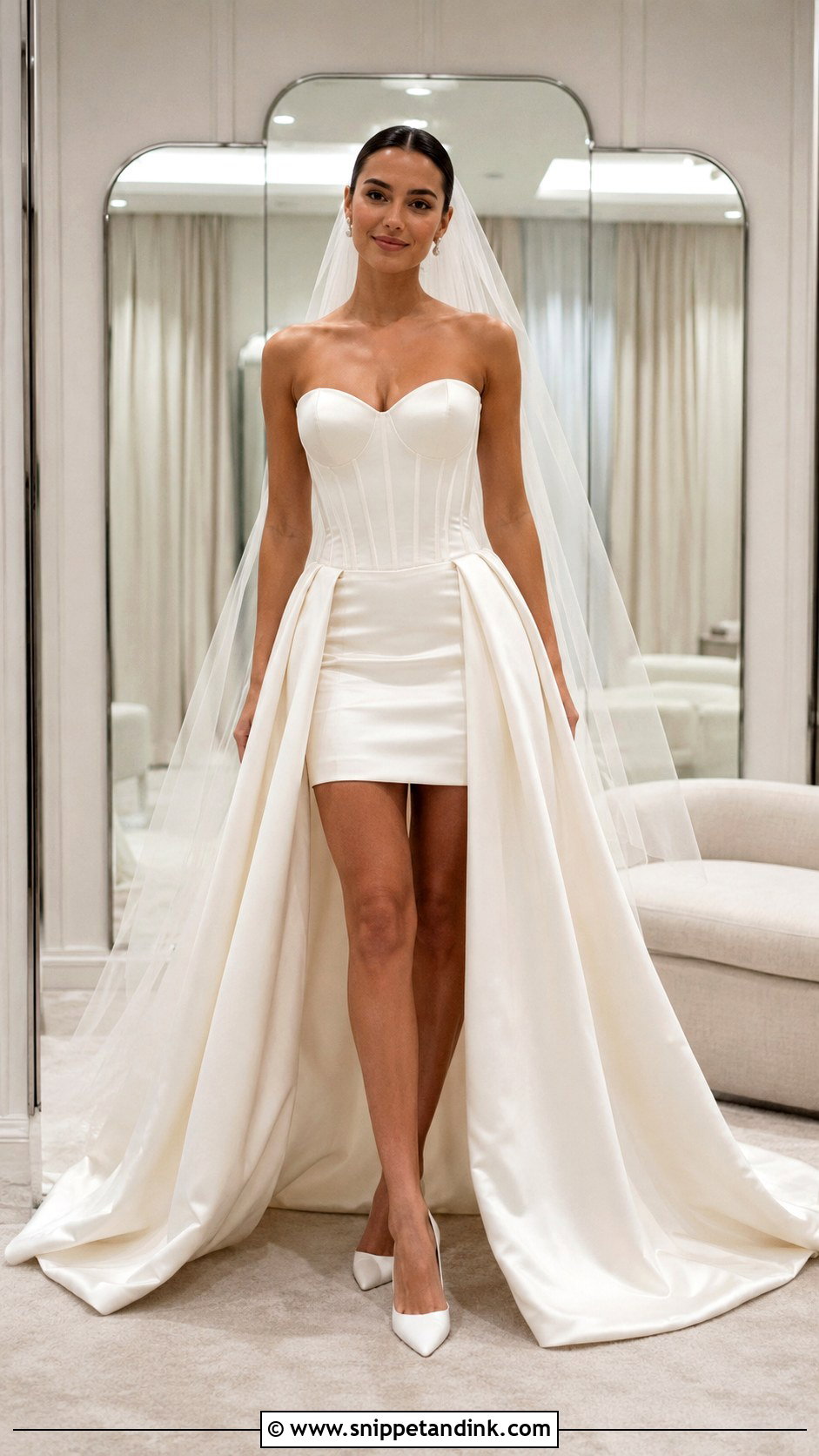
A detachable skirt gives you two outfits from one fitting schedule. A structured longline mini or fitted column dress sits underneath, and a full overskirt attaches around the upper hips. For the ceremony, wear it all with pointed heels, a cathedral veil, pearl earrings and a formal bouquet; afterward, the overskirt and veil come off for dancing, and a small hair accessory or bold earrings refresh the look. Test the attachment repeatedly at fittings. Hidden hooks, snaps or a concealed zip should hold firmly and release without a struggle, and none of them should add bulk at the lowered seam.
19. Short Low Waisted Wedding Dress
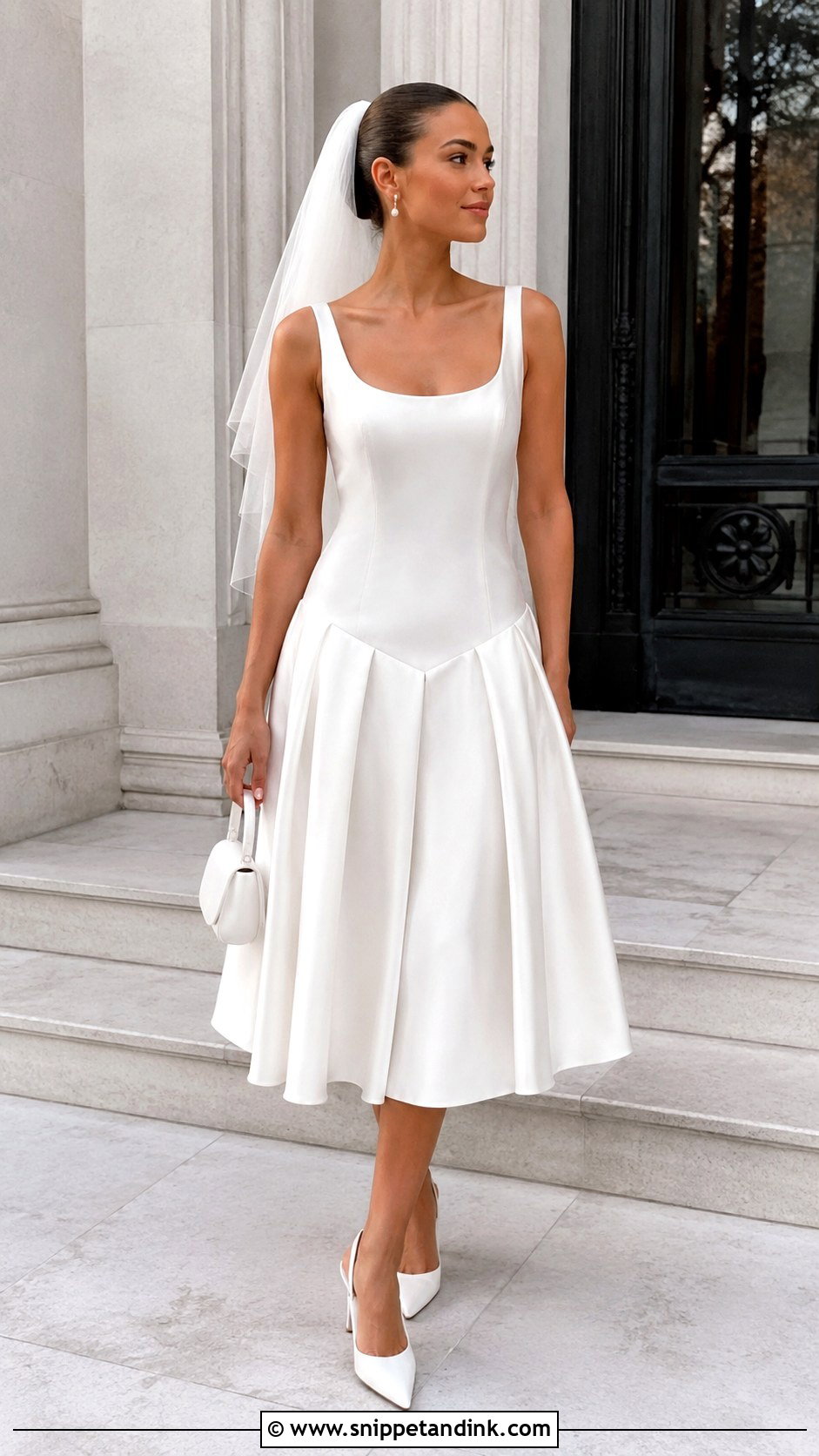
Short and low-waisted together is playful, and it suits a courthouse ceremony, a welcome party or a reception change. A fitted satin bodice reaching the upper hips opens into a structured mini or tea-length skirt; a scoop neckline and wide straps keep it balanced, and a bubble or pleated hem adds shape. With so little skirt below such a long bodice, proportion is everything, so sit and walk in it before final alterations and check the hem doesn’t ride up. Pointed slingbacks, pearl earrings, a top-handle bag and a short veil or hair bow finish it. Choose shoes that feel special and comfortable.
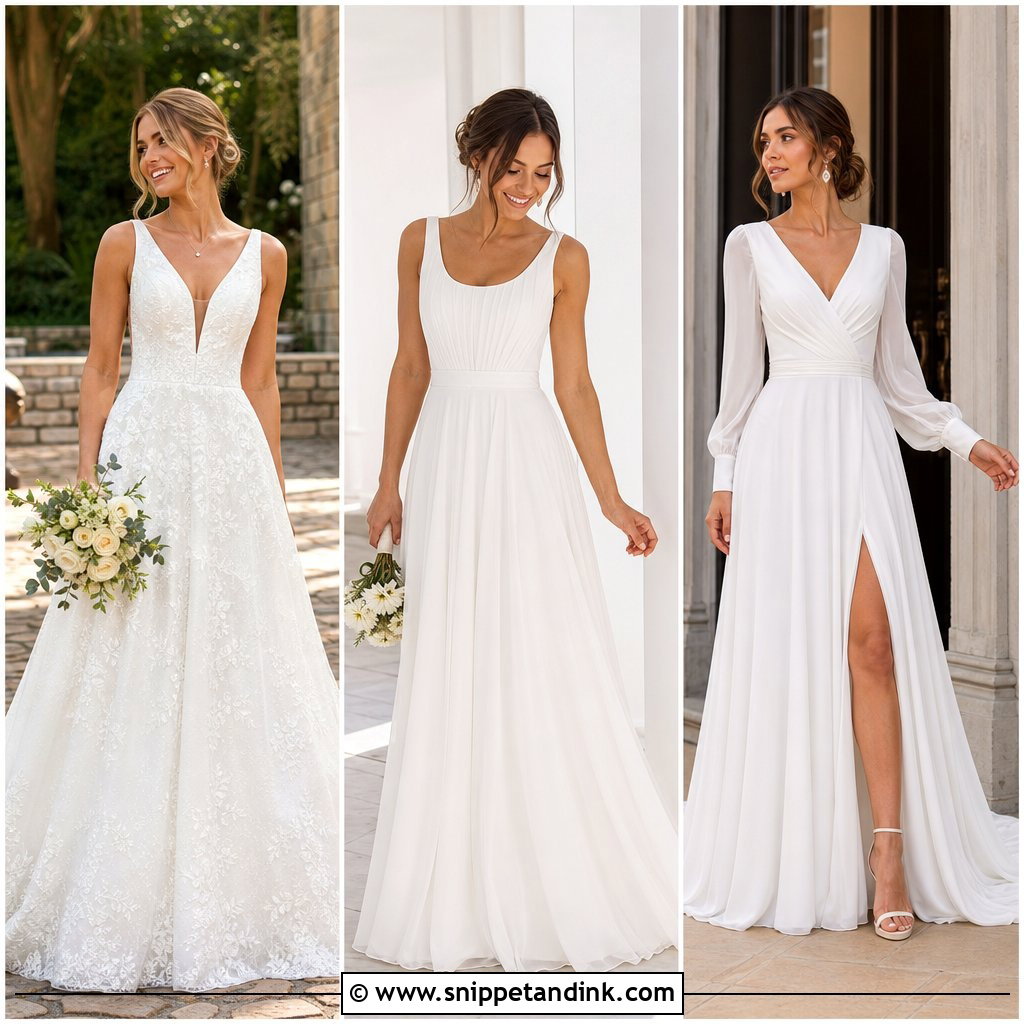
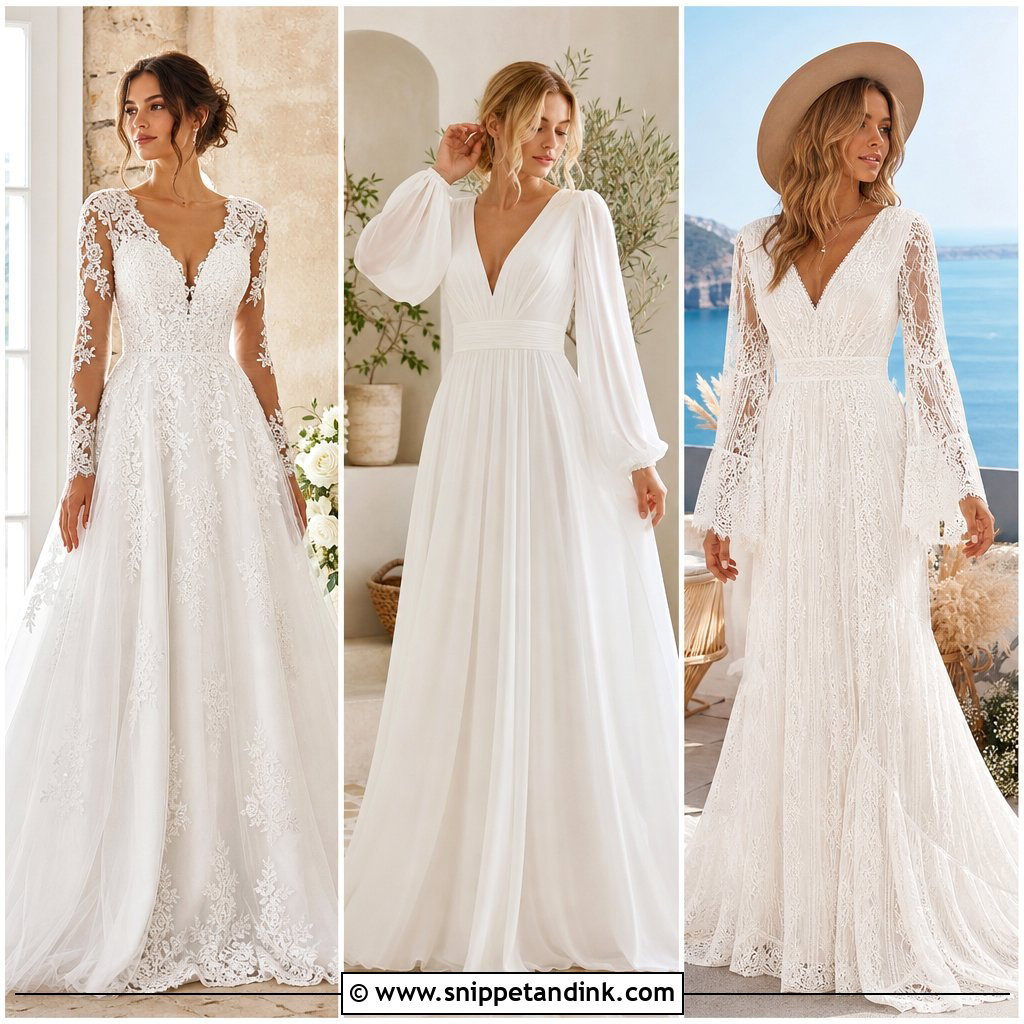

20. Plus Size Low Waisted Wedding Dress
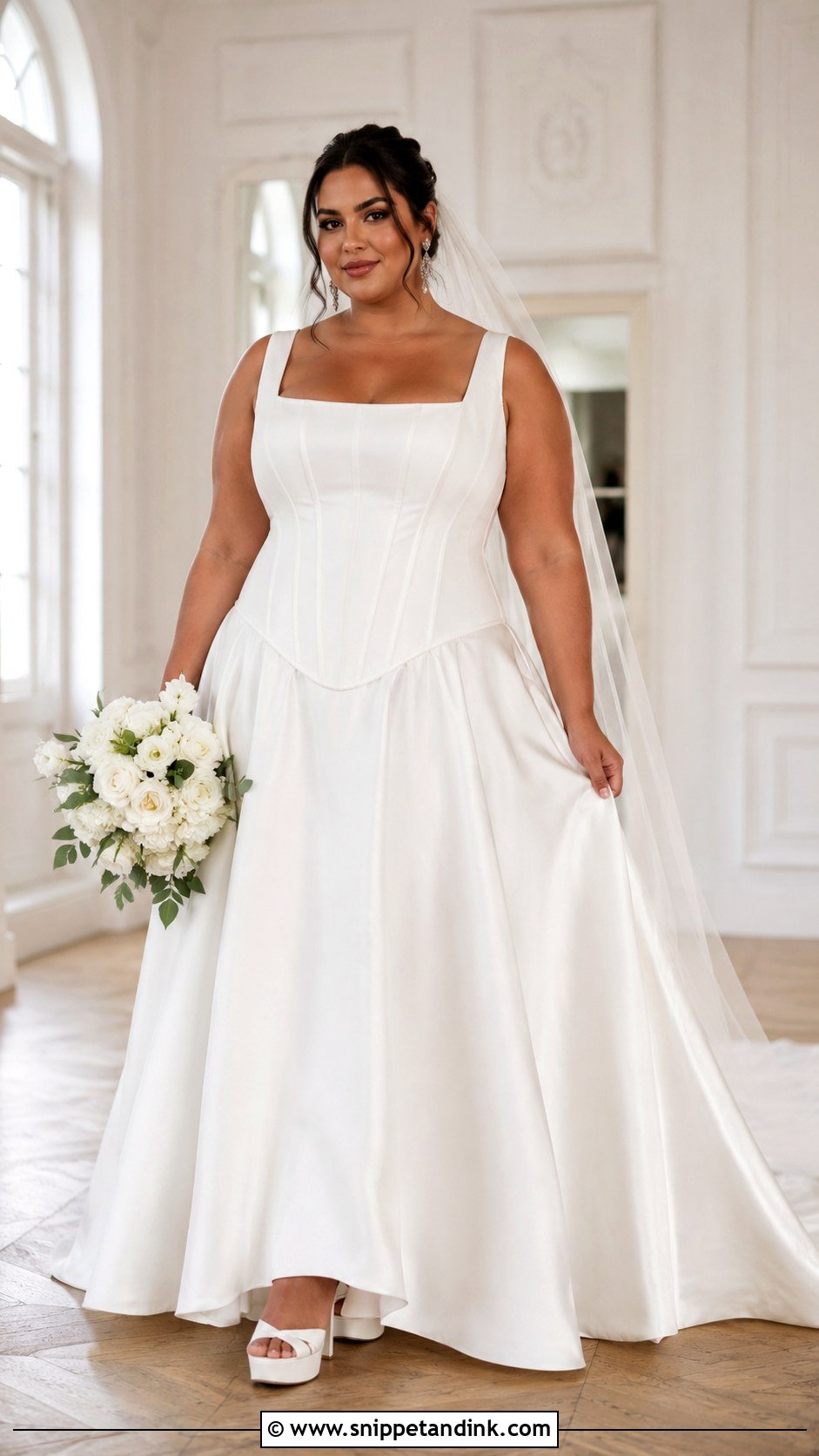
Choose this by your own proportions and comfort, not by rules written for someone else. A longline bodice with flexible boning, a secure neckline and a seam placed for your torso is the starting point, and a basque or softly curved seam adds definition before an A-line or full skirt. Wide straps, sleeves or strapless can all work when the construction is sound. Try a sample close to your size where possible; clipping a much smaller sample tells you little about where the seam will fall. Supportive block heels, statement earrings and a venue-appropriate veil complete it. Alterations should shape the gown to you, never the reverse.
Where Your Bouquet Sits Changes the Whole Photo
This sounds like a small thing until you see a full set of portraits. Brides tend to hold the bouquet at hip height with both hands, which on a dropped waist sits right over the seam and erases the very line you chose the dress for.
- Hold it a little higher, around the bottom of your ribs, with elbows relaxed and slightly away from your body.
- On a basque point, angle the bouquet to one side so the V stays visible in front.
- For seated portraits, perch near the front edge of the chair with a straight back. Slumping crumples a long bodice into folds across the stomach.
- Ask your photographer for a few shots with the bouquet lowered to one side so the full bodice reads from neckline to seam.
Also keep the bouquet in proportion to the bodice. A wide round bouquet on a long, narrow torso looks heavy; a slimmer or slightly trailing shape carries the line downward instead.
Judge the Seam on Your Body, Not in Sample Photos
A lowered waist works across satin, lace, tulle, crepe, beading, sleeves and every skirt shape above, but only when the support and movement are right. Start by deciding how much structure and volume you actually want. Then treat the venue, shoes, veil, jewelry and hair as one outfit. Most of all, look at where the seam lands on you, in the mirror, standing and sitting, rather than trusting how it fell on a model. A good seamstress can adjust bodice length, support and the transition into the skirt; your job is to pick the version you can stand tall in and forget about by the first dance.
You'll Like These Ideas:





Leave a Reply