
A princess cut is two garments working together: a fitted bodice that has to hold you, and a full skirt that has to move with you. When I style a bride in the princess silhouette, most of my attention goes to where those two meet at the waist, because that seam decides whether the gown looks sculpted or simply big. The ideas below cover satin, lace, sleeves, sparkle, pockets and trains, each styled from head to toe. With every one I’ve noted what I check at a fitting and who I’d point toward something else, since the accessories should sit back and let the volume do its work.
What Actually Holds a Princess Skirt Out
The fullness you see in the photos below rarely comes from the skirt fabric alone. Most princess gowns have layers of tulle or a stiff net built into the lining, and some rely on a separate petticoat or hoop worn underneath. Knowing which kind you’re trying on saves surprises later.
- Built-in layers move with you and pack more easily, but the volume is fixed once the dress is made.
- A separate petticoat lets you adjust the fullness and can be swapped for a slimmer one at the reception. Ask the shop if the sample you’re wearing has one under it, because samples are often styled with extra volume.
- Hoops give the widest, most even shape but make car rides, narrow aisles and bathroom trips harder. I suggest them only for big venues with room to move.
At the first appointment, ask what’s under the skirt and how much it weighs in total. A heavy satin gown with several tulle layers can be a real load on your waist by evening, and that weight is worth knowing about before you fall for it.
1. Satin Princess Cut Wedding Dress
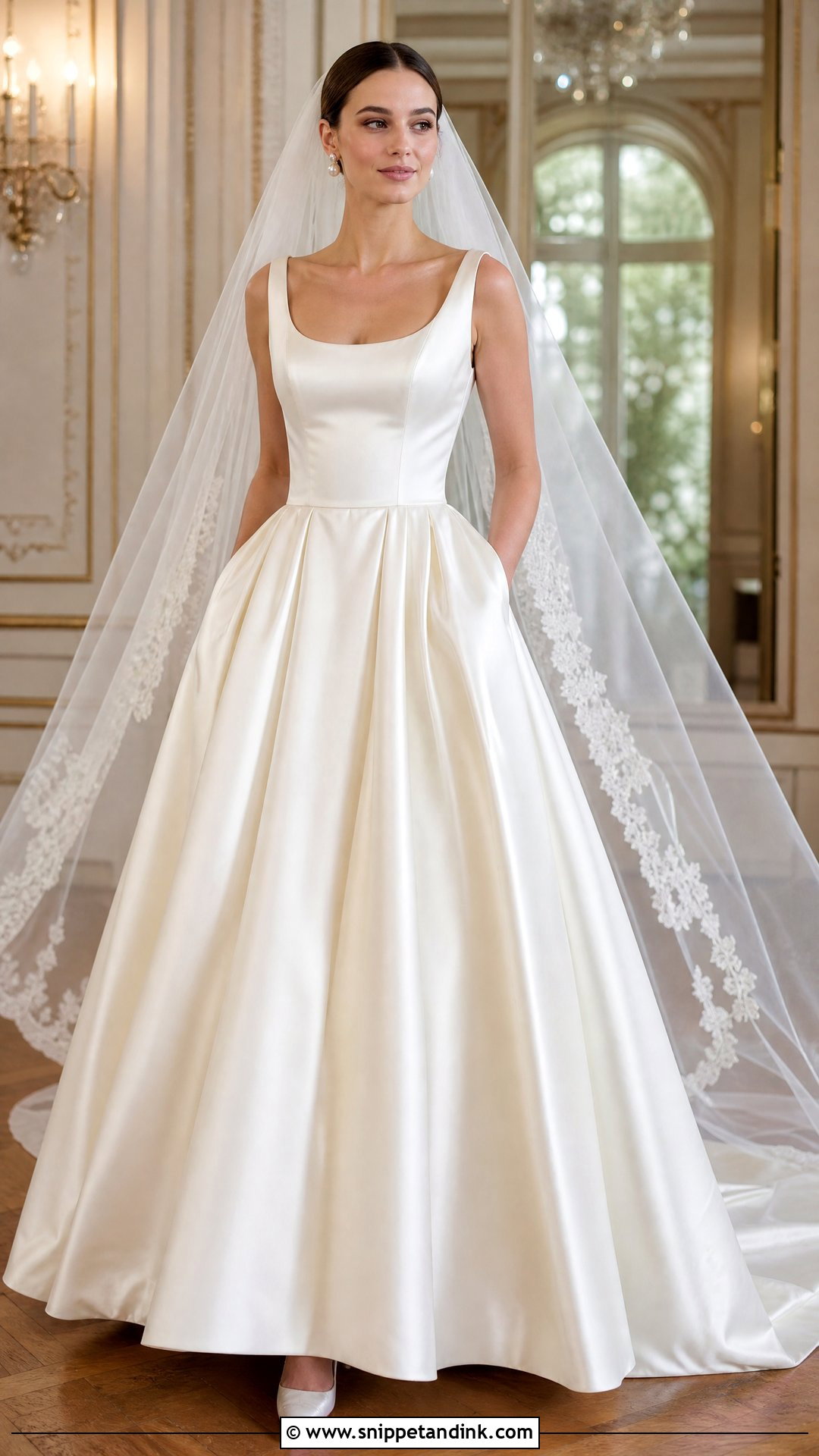
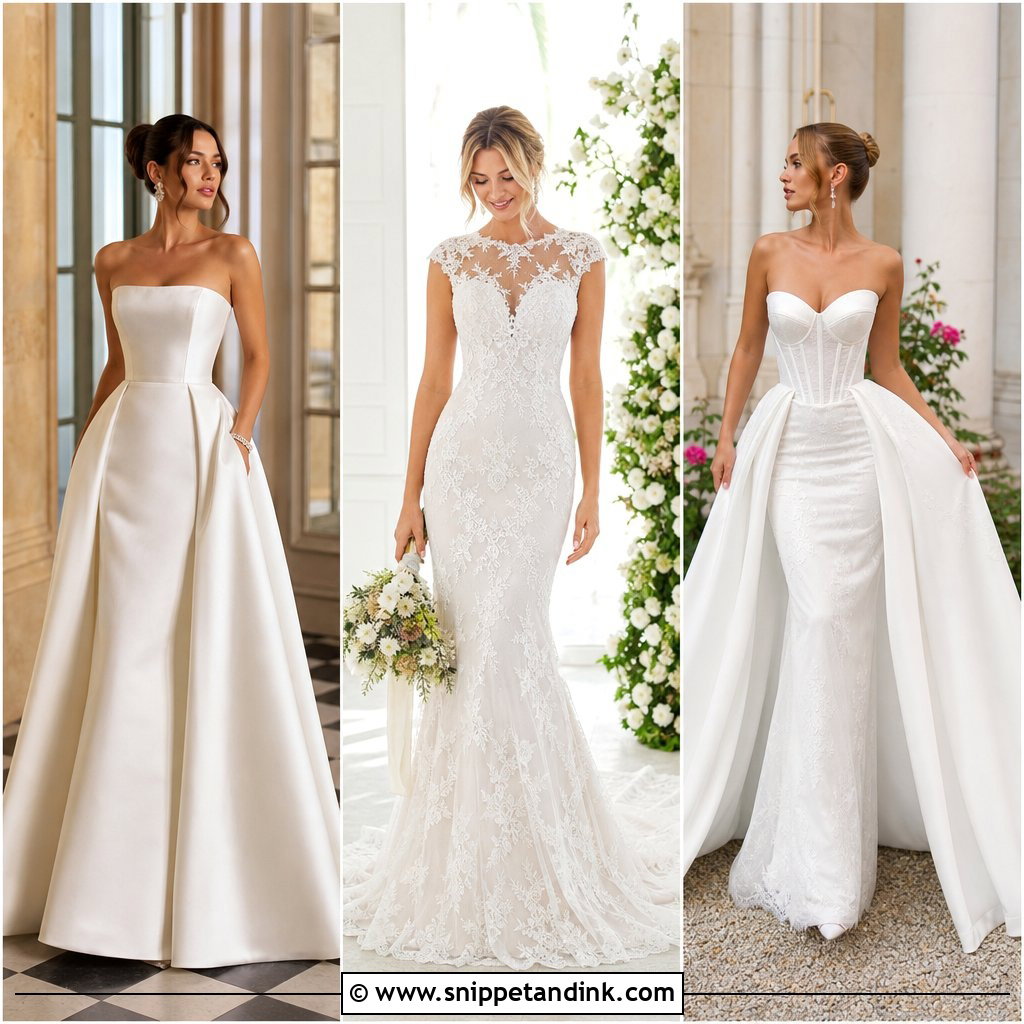
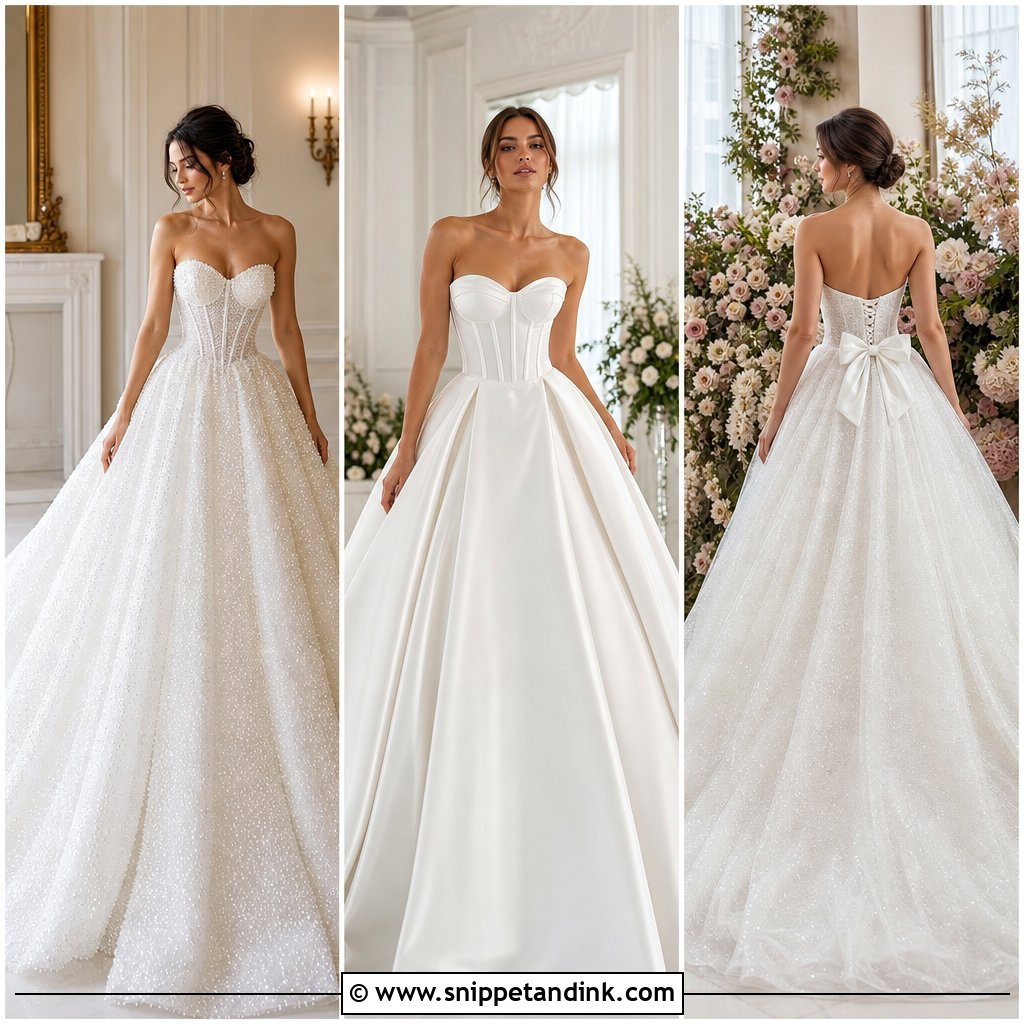
Satin is the most honest fabric for this shape. It shows every seam, so a satin princess cut wedding dress only looks expensive when the bodice fit is close to perfect. I look for soft box pleats at the waist rather than gathers; pleats hold their fold through a long day, while gathers in heavy satin can bunch and look bulky once you’ve been sitting. A straight or gentle sweetheart neckline, pointed ivory pumps, pearl drops and a cathedral veil with a narrow ribbon edge are all it needs. Keep the hair in a low bun. One practical note: satin creases at the hip crease when you sit in a car, so ask your seamstress about a multi-point bustle and plan a quick steam before the reception entrance.
2. Lace Princess Cut Wedding Dress
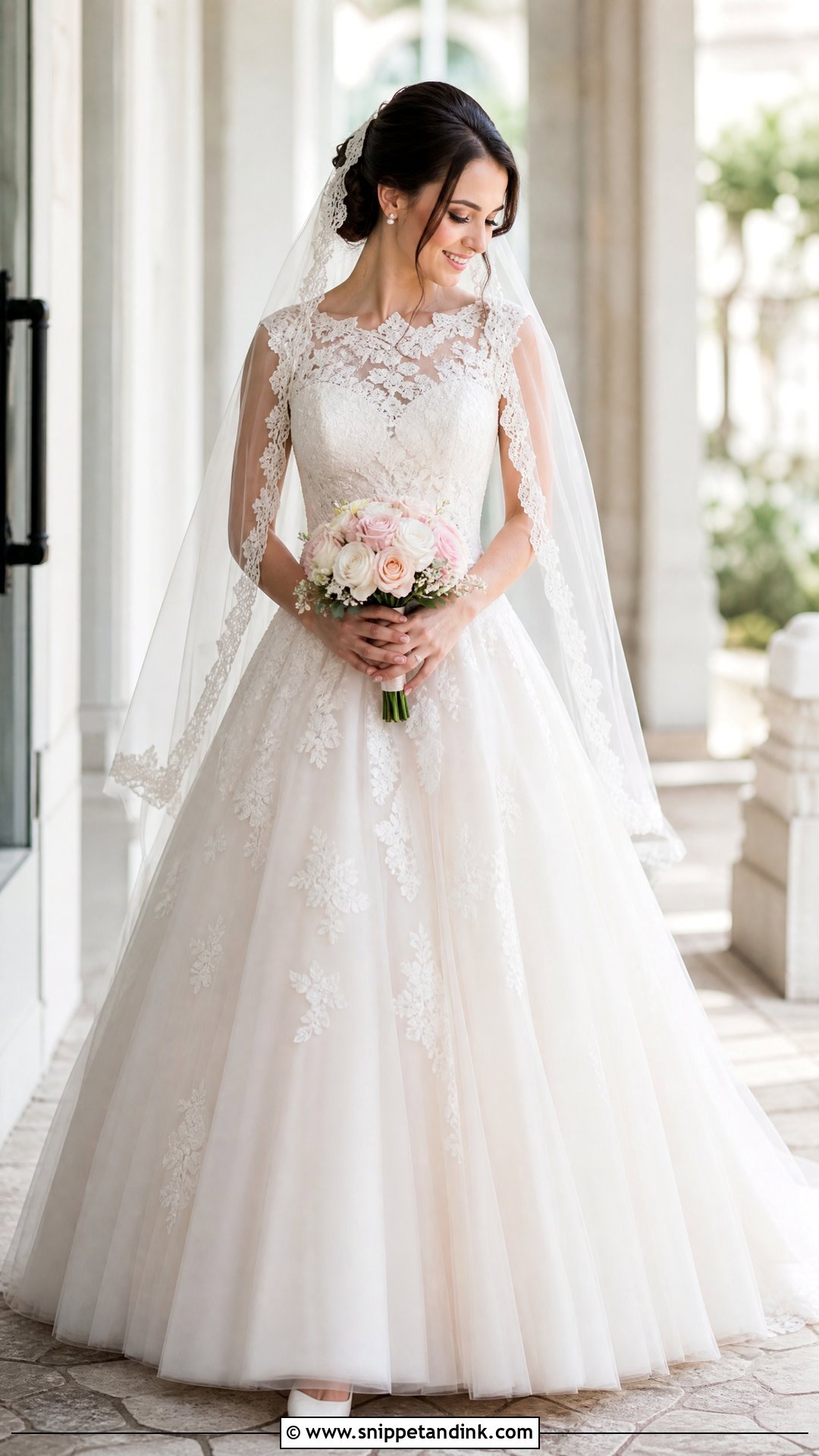
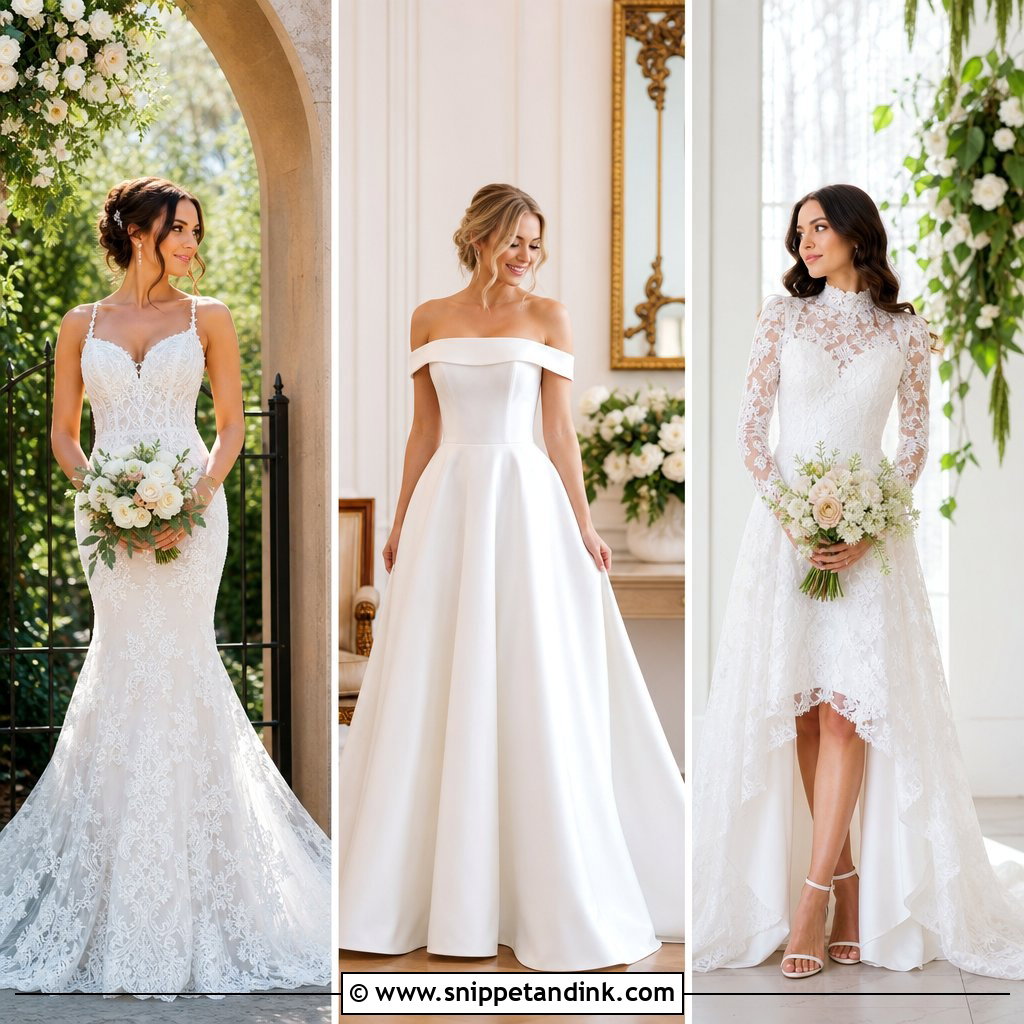
The lace bodices I like best don’t stop dead at the waist. The motifs break up and drift down into the tulle or organza, so the eye travels instead of hitting a hard line. That placement also hides small fit adjustments, which is useful. Choose a veil whose lace is related to the gown’s rather than a copy, because two identical patterns layered over each other turn into visual noise in photos. A loose chignon, pearl studs, closed-toe ivory heels and a compact bouquet of white and pale blush are plenty. Keep that bouquet small enough that it doesn’t sit over the bodice detail you paid for.
3. Long Sleeve Princess Cut Wedding Dress
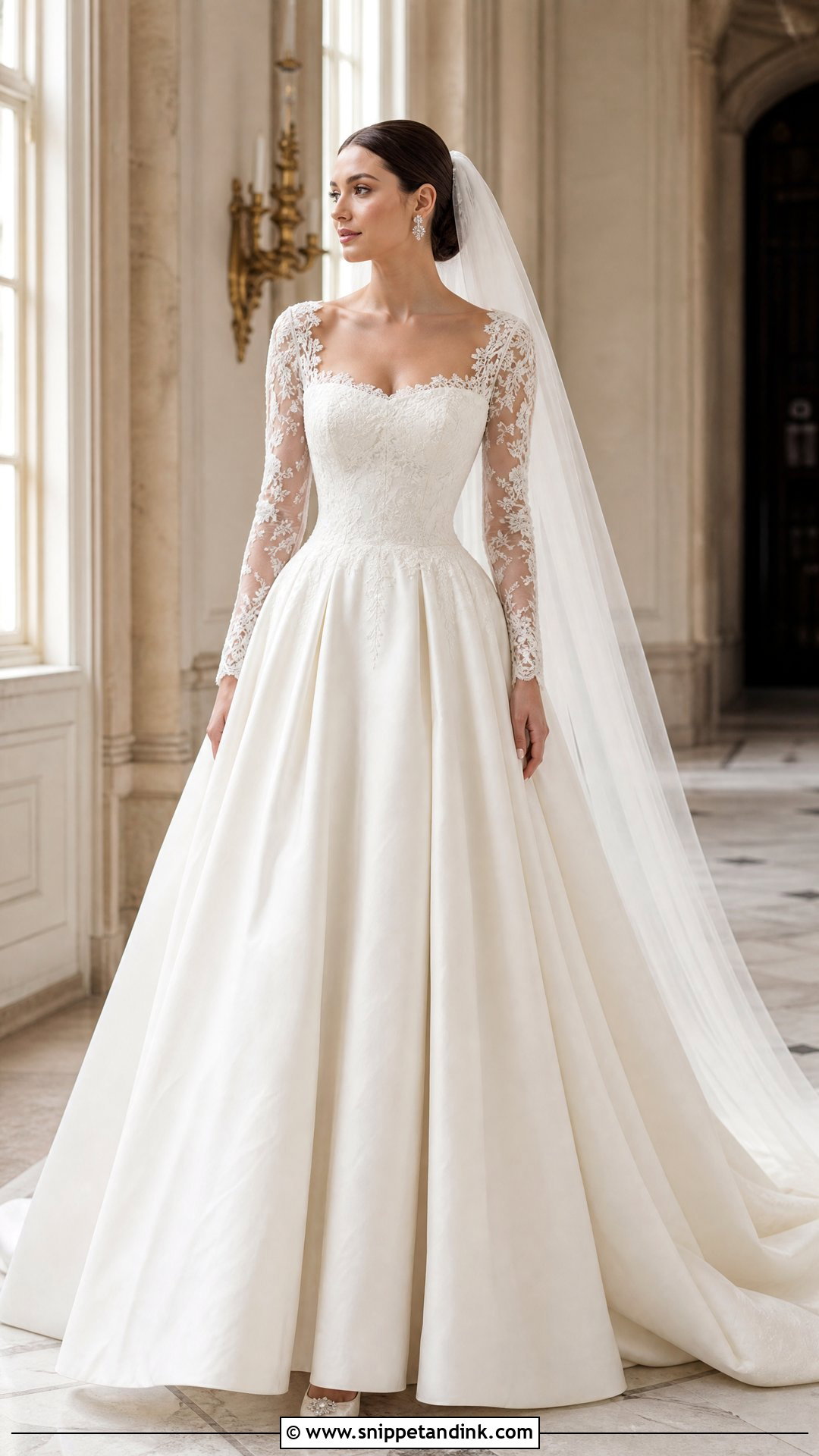
Long sleeves on a full skirt need more room than brides expect. The test I run at every fitting is simple: arms straight up, then a hug. If the back of the bodice pulls or the sleeve head digs into the shoulder, the armhole needs adjusting before anything else. Sheer lace sleeves read lighter; opaque satin or crepe gives a cleaner, more architectural line. Pair either with a long plain veil, small crystal earrings and pointed pumps or a supportive block heel, and sweep the hair into a low bun so the neckline stays clear. Leave the chunky bracelets at home. They catch on lace and on the little wrist loops that keep sleeves in place.
4. Off Shoulder Princess Cut Wedding Dress
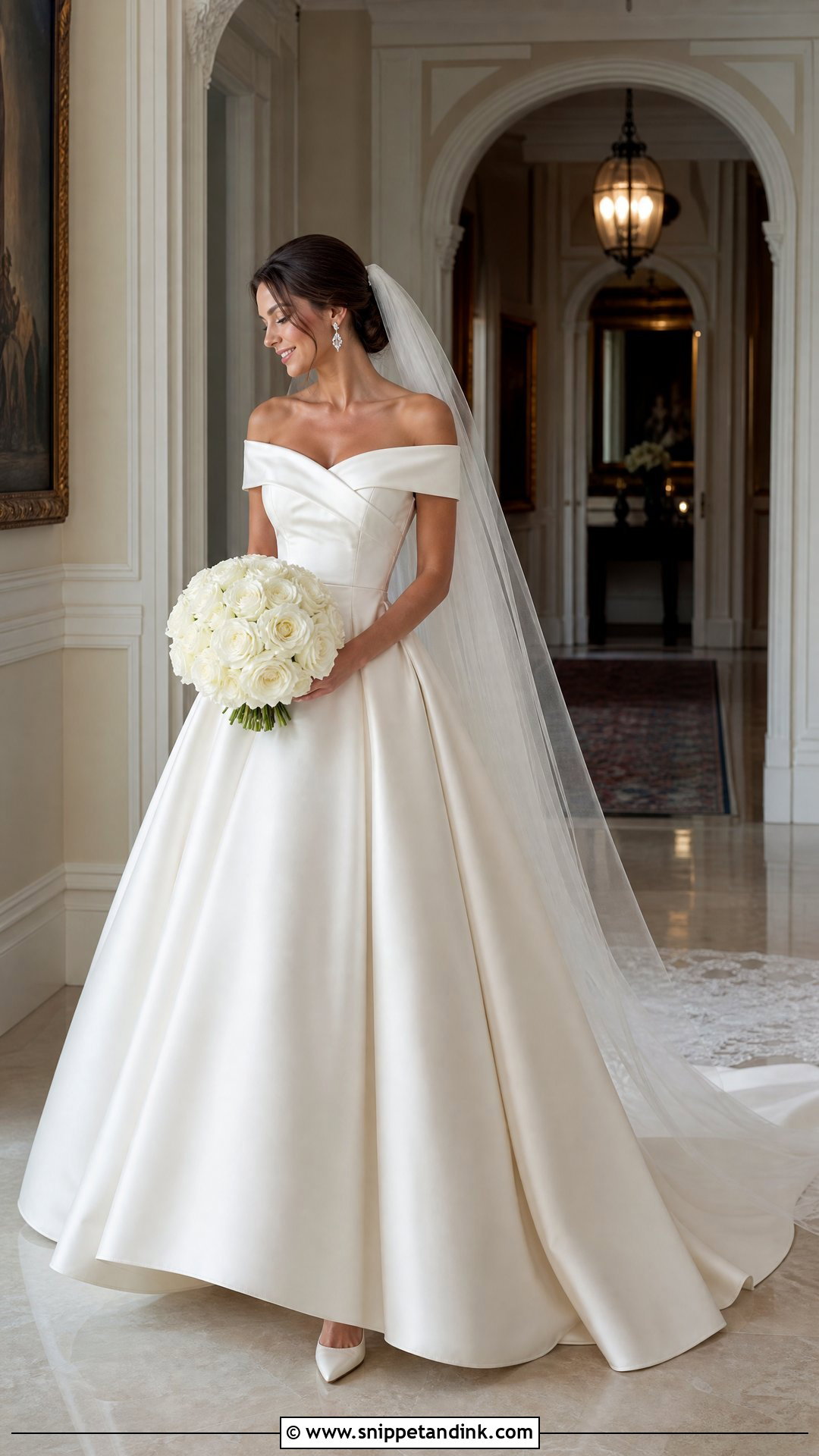
Off-shoulder necklines balance a wide skirt by adding width up top, which is why they look so natural on this shape. The risk is constant hitching. If the bodice isn’t built with firm internal boning and a grip tape or silicone strip along the top edge, you’ll spend the ceremony pulling it up. A folded satin cuff looks structured; draped tulle feels softer. I keep jewelry to teardrop earrings and maybe a slim bracelet, because a necklace crowds that open collarbone. The veil goes under a smooth updo, and the bouquet sits a little below the waist to keep the proportions even.
5. Sweetheart Princess Cut Wedding Dress
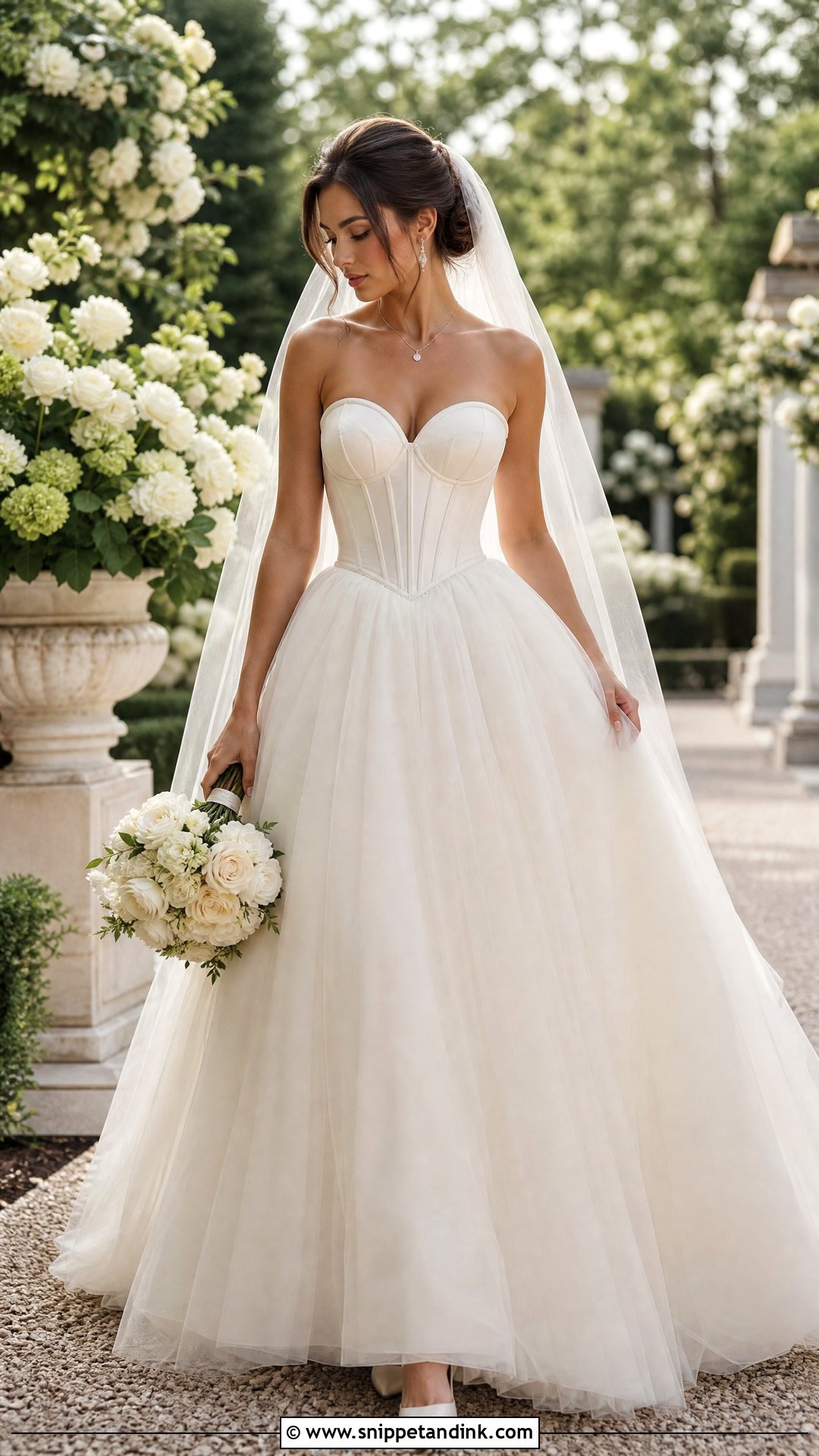
A sweetheart neckline and a corseted princess bodice are an easy match, because the curve repeats the shape the boning is already creating. Ask how the bodice is built: a proper corset foundation with spiral steel or flexible boning holds better through dancing than plastic stays sewn into lining. Tonal beading is enough decoration. A fine pendant, small drops and ivory pumps finish it, and I’d attach the veil below the crown so it doesn’t fall over the neckline. For a religious ceremony that asks for coverage, detachable sheer sleeves or a light wrap can come off for the evening.
6. Square Neck Princess Cut Wedding Dress
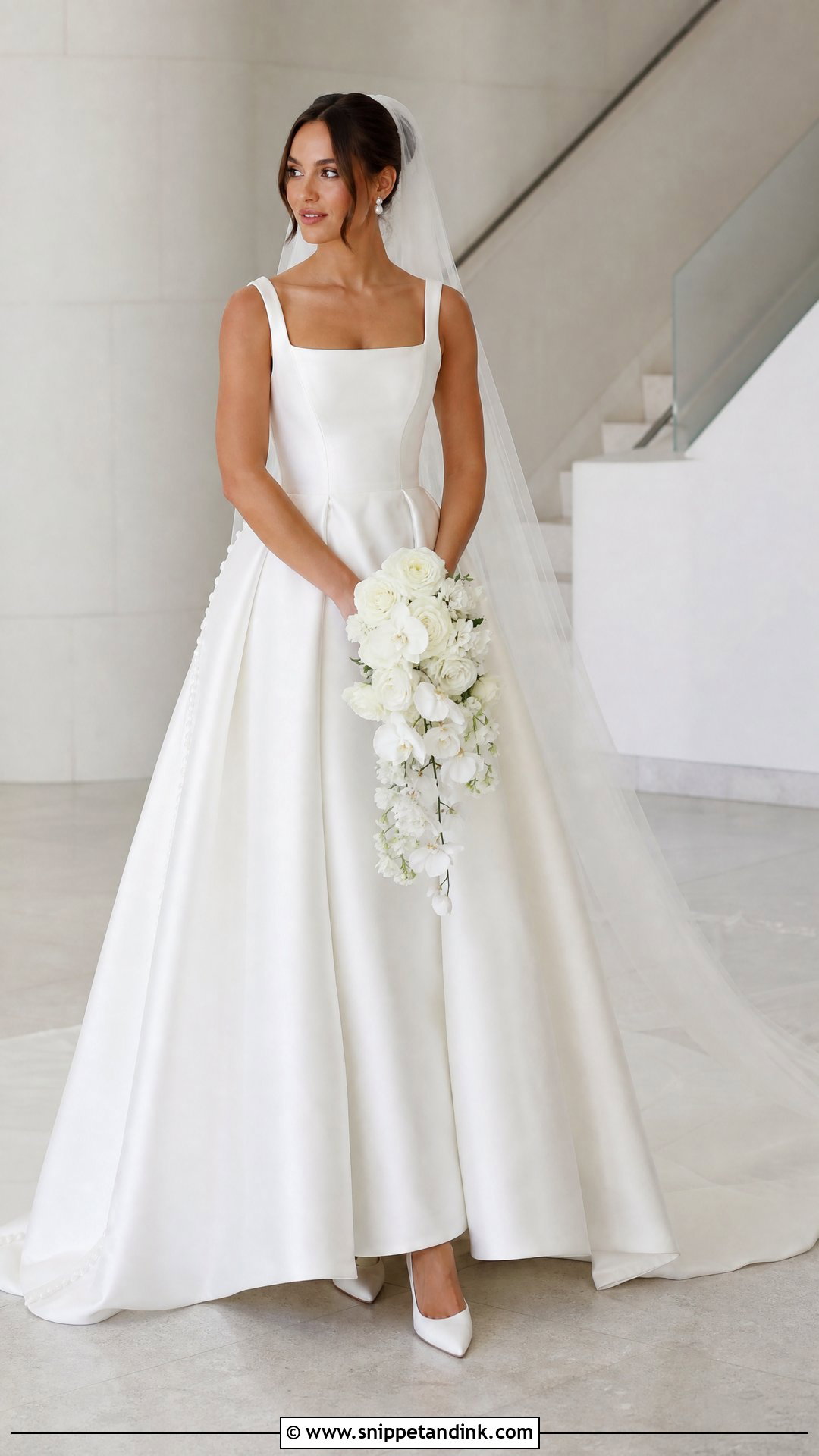
Square necklines are less forgiving than they look. The corners have to sit flat against the chest, and on a small bust they can gape outward when you lean forward. I always have brides lean over a table at the fitting to check. Wide straps, a structured bodice and crisp Mikado make this the modern pick of the list. Pearl buttons down the back, a low chignon, pearl-and-crystal earrings and a stable mid-height heel keep it clean. A chapel veil and an elongated bouquet, rather than a round one, leave the neckline and waist visible.
7. V Neck Princess Cut Wedding Dress
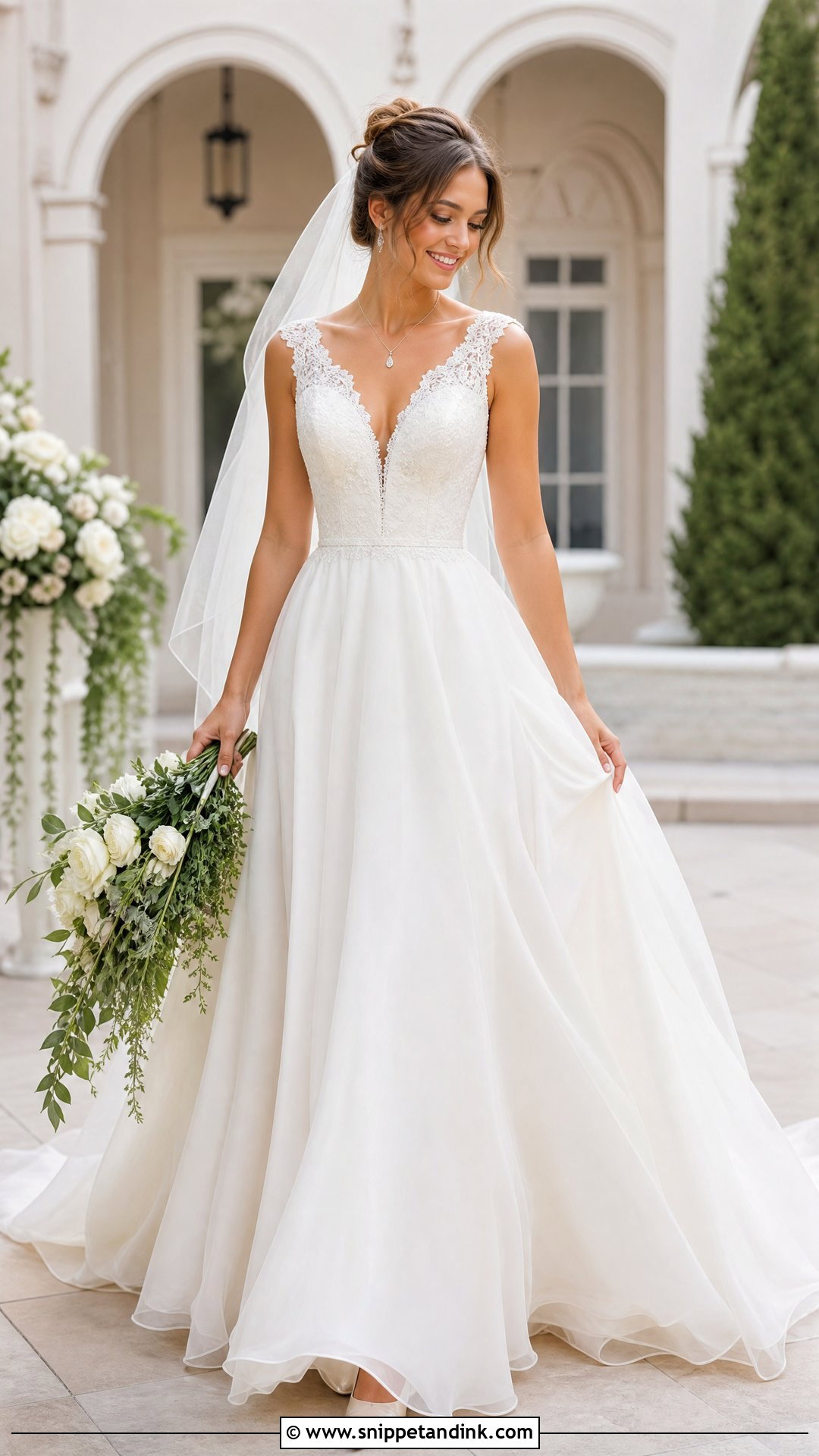
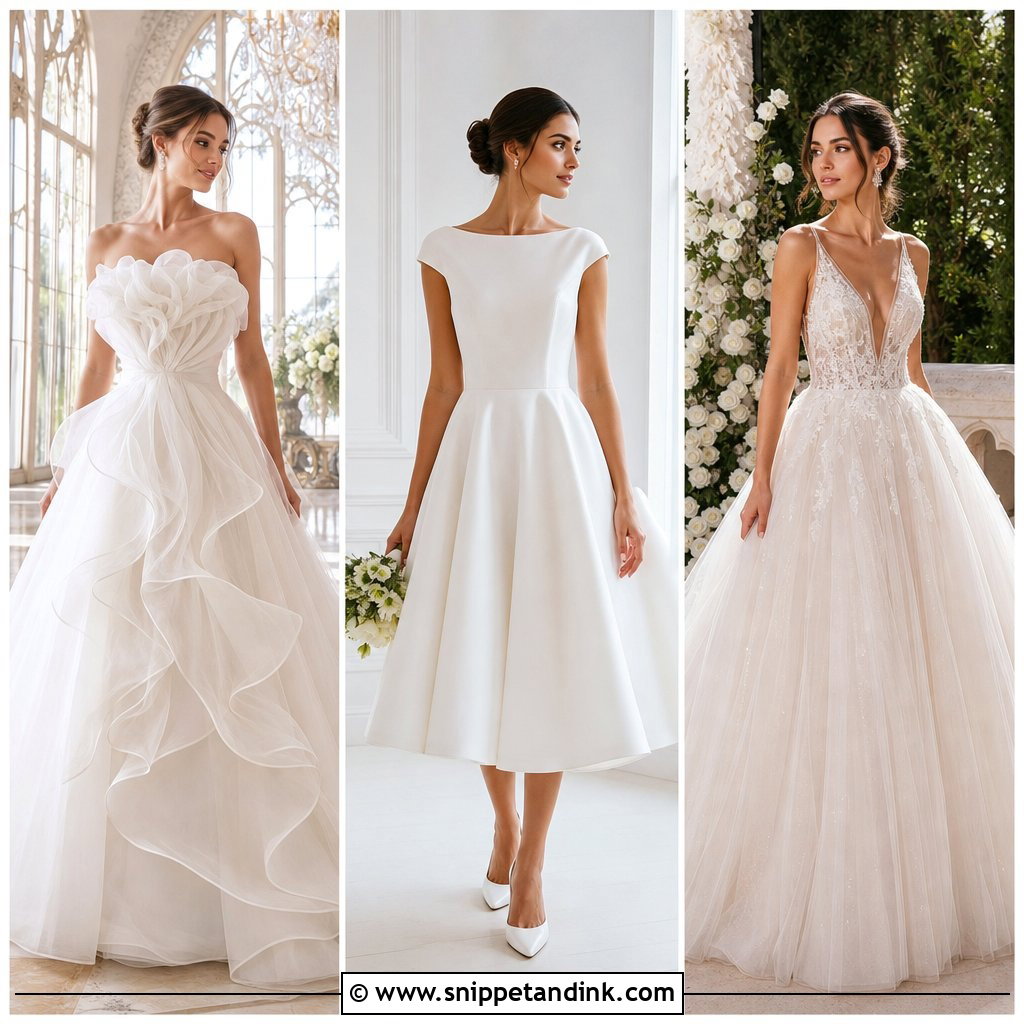
A V neck draws the eye up and away from the skirt, which lightens the whole gown. Choose the depth you’d be comfortable bending in, and if you’re unsure, illusion mesh in the plunge gives security without spoiling the line. Lace straps feel romantic; plain satin straps are more minimal. Add a slim pendant, quiet earrings and a sheer veil without a heavy border, and keep the hair in a soft updo or side-swept waves. A bouquet with a little trailing greenery carries the vertical feeling down. At alterations, sit and bend fully. A V that stays put standing can open up the moment you lean in to sign the register.
8. High Neck Princess Cut Wedding Dress
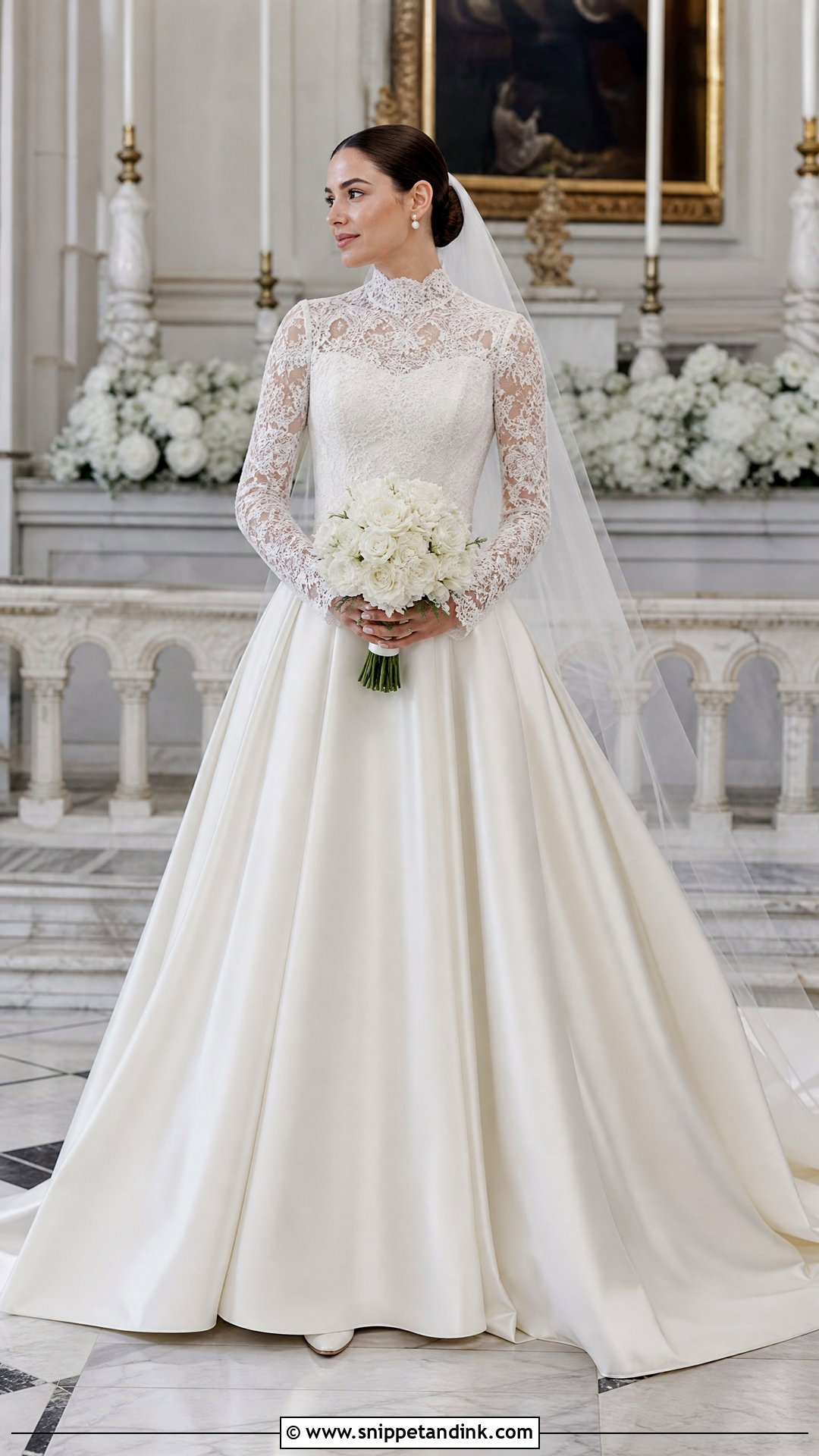
High necklines put the detail near your face, so I take jewelry off the neck entirely and use small pearl or crystal earrings instead. An illusion lace neckline reads delicate, while opaque crepe or satin is sharper and more contemporary. The collar should let you turn your head fully without pressing on the throat; if you feel it when you swallow, it’s too snug. Finish with an understated veil, closed-toe pumps and a bun at the middle or nape of the head. Structured white flowers suit the restraint, and the look comes into its own in cooler months and historic interiors.
9. Corset Princess Cut Wedding Dress
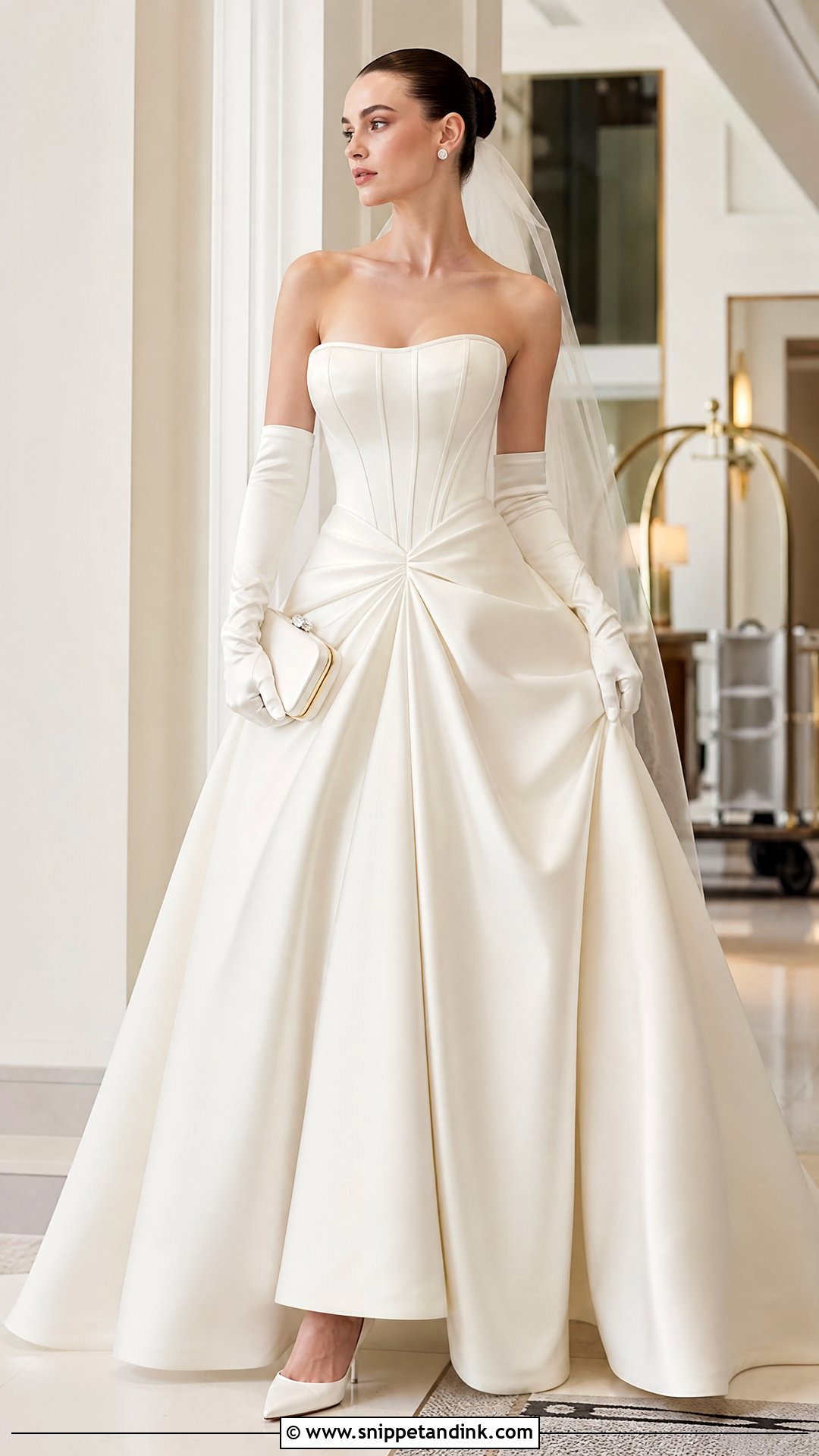
Visible boning is the fashion version of this shape, and it only works when the corset is fitted to your ribs, not just your waist. I ask brides to take a deep breath and then sit; if either feels tight, the bodice needs letting out, because you’ll be eating and dancing in it. A draped satin or layered tulle skirt softens all that structure. Elbow-length gloves push it formal, crystal studs keep it lighter. If the back laces, ask for a modesty panel underneath and decide in advance who is lacing you, since it takes practice to pull evenly. A compact clutch, pointed pumps and a sleek bun finish it.
10. Floral Princess Cut Wedding Dress
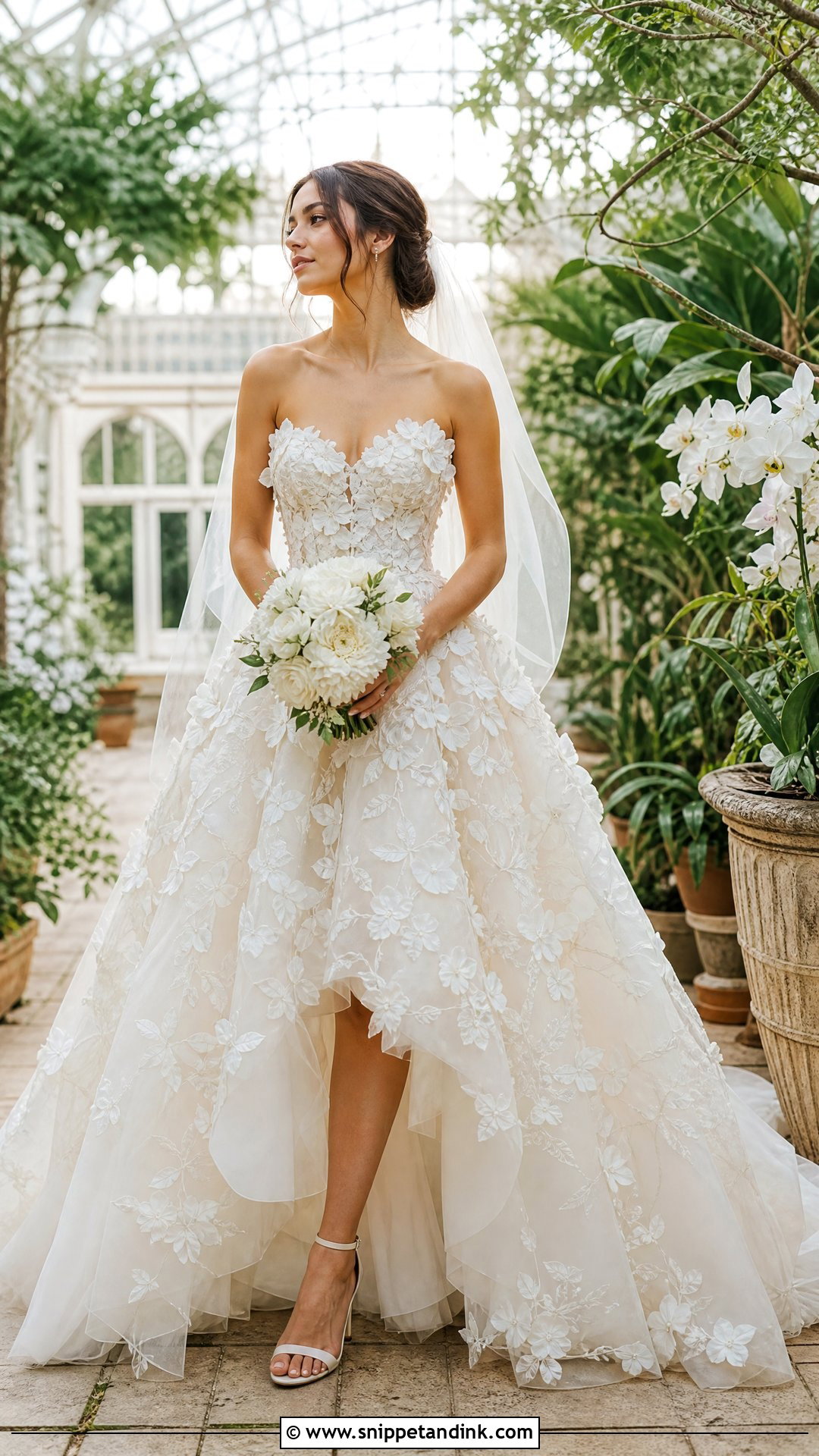
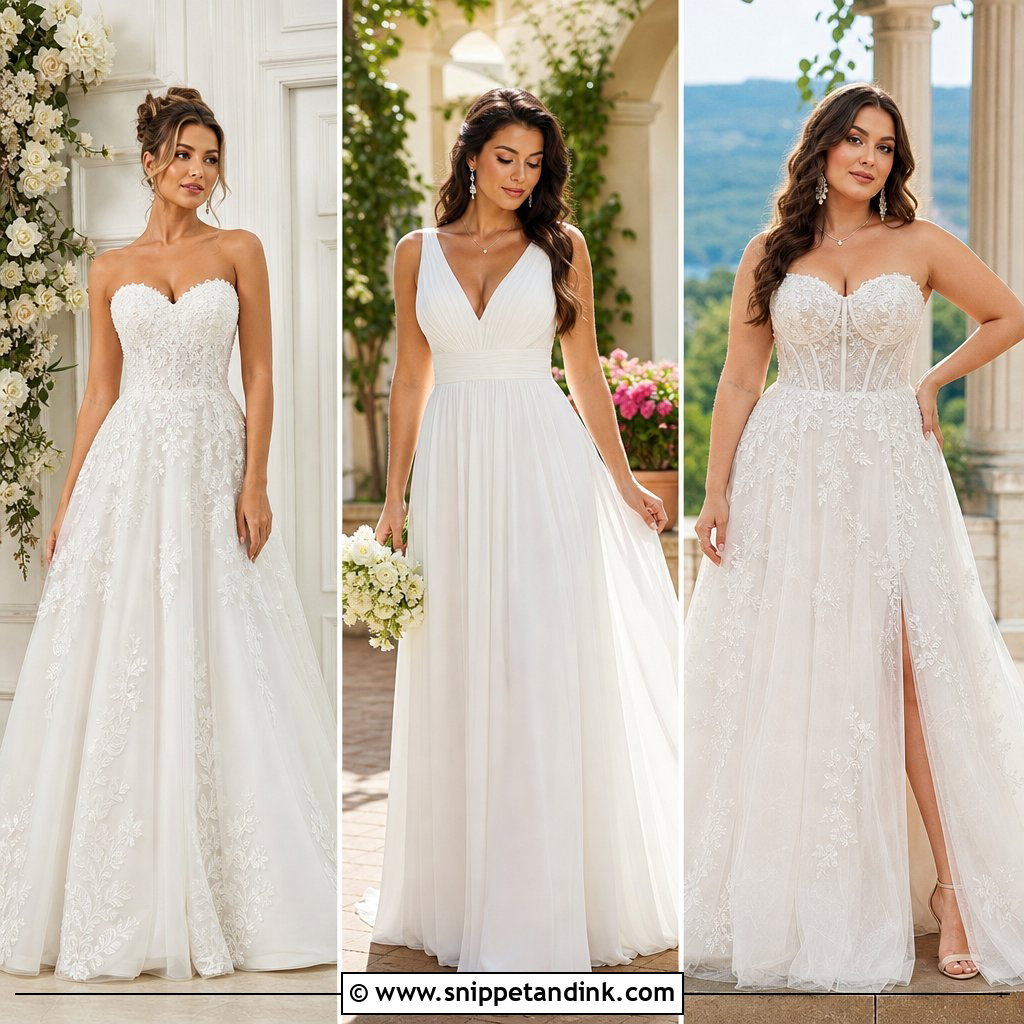
Three-dimensional flowers look best concentrated on the bodice and waist, then thinning out across the skirt. Scattered evenly everywhere, they flatten the shape. Keep the colour to ivory, soft white and the faintest blush. My main concern with raised petals is snagging: tulle veils catch on them, and so do beaded bracelets. Try the veil over the dress at a fitting and walk a few steps before you commit to either. Simple earrings, ankle-strap heels and loose waves or a soft updo suit the texture, and a bouquet using a couple of the flowers already on the gown ties it together without overdoing it.
11. Sparkle Princess Cut Wedding Dress
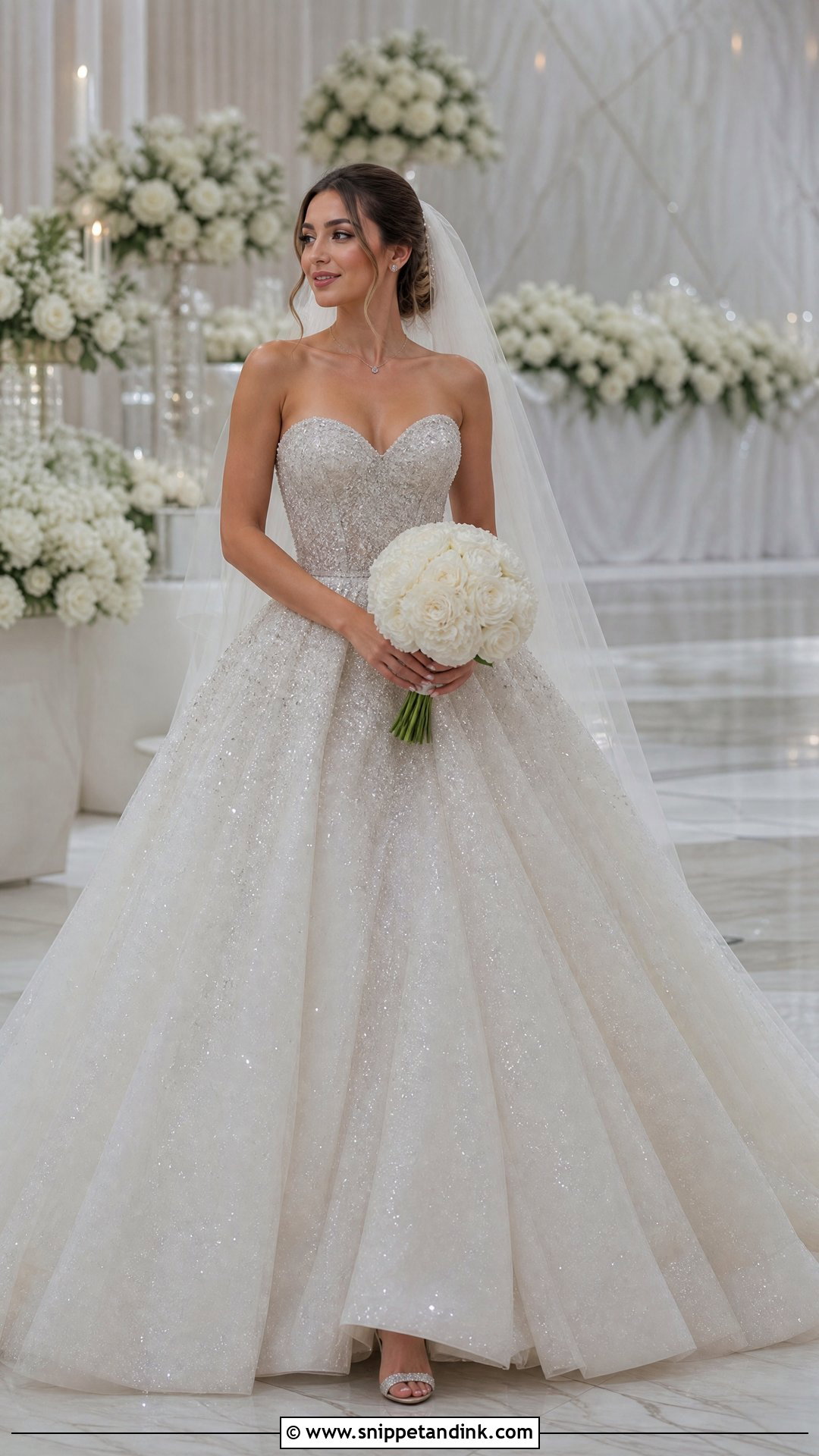
Glitter tulle under a plain outer layer gives a soft shimmer; beading on the top layer gives sharp sparkle. Both change completely between daylight and evening lighting, so I ask brides to see the gown near a window and under warm indoor bulbs before they decide. Check the inside of the arms too, because rough sequins at the side seams can rub skin raw by the end of the night. With this much light already on the dress, keep everything else quiet: crystal studs, metallic ivory heels, a sheer veil with minimal edging, a sleek ponytail or low bun and a clean white bouquet.
12. Minimalist Princess Cut Wedding Dress
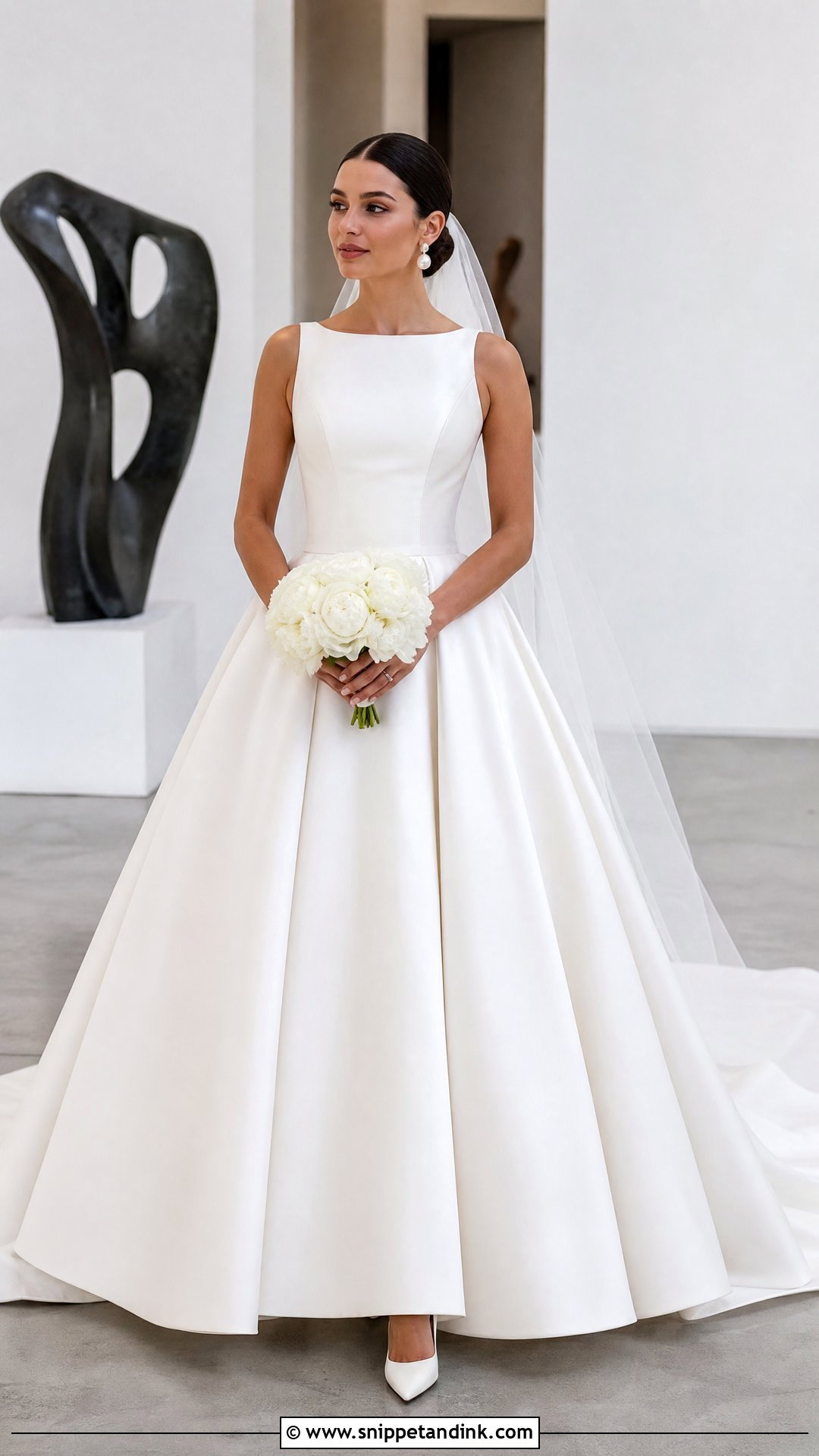
What if you love the drama of the silhouette but not the decoration? Then the tailoring becomes the whole story, and that cuts both ways. With no lace or beading to hide behind, a crooked seam or an uneven hem shows from across the room. Choose a clean satin or Mikado gown with a defined waist, and when you book alterations, ask the seamstress how much plain satin she’s worked on. Sculptural pearl earrings, sleek pumps, a plain cathedral veil and a centre-parted bun are all the styling it wants. One flower variety in a small structured bouquet suits it better than a loose garden mix.
13. Princess Cut Wedding Dress With Bow
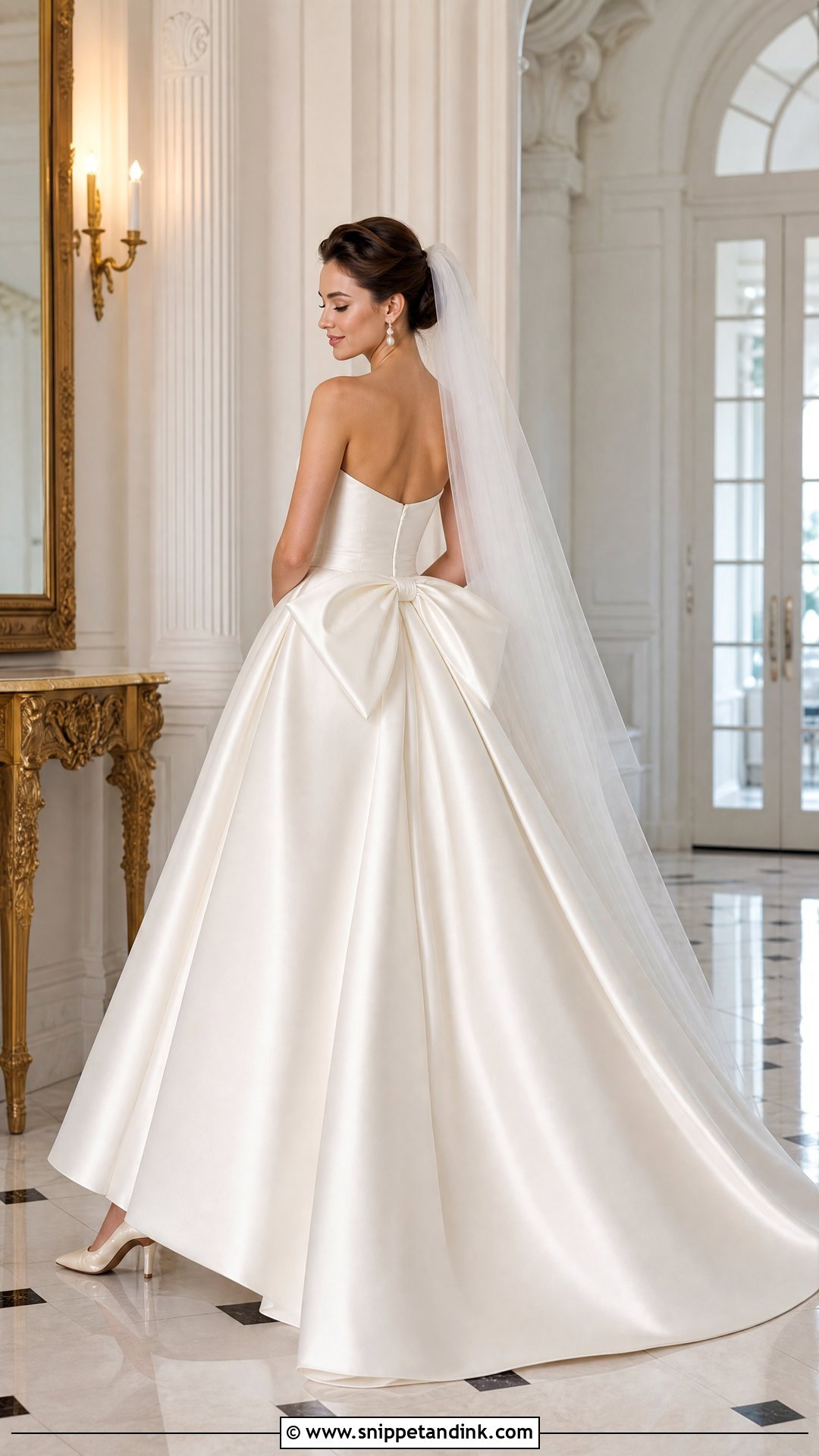
A bow gives this shape a focal point without covering the gown in detail. A slim bow at the waist is subtle; an oversized back bow is the entrance piece. Clean satin is the best background for either. The thing I watch is the veil: placed too low, it hides the bow during the walk, so I set the comb high enough that the bow shows through or beneath it. Pearl earrings, pointed heels and an updo or polished half-up style keep long curls from covering it too. If the bow detaches, practise the fastening, and take it off before dancing if it sits over the bustle.
14. Princess Cut Wedding Dress With Pockets
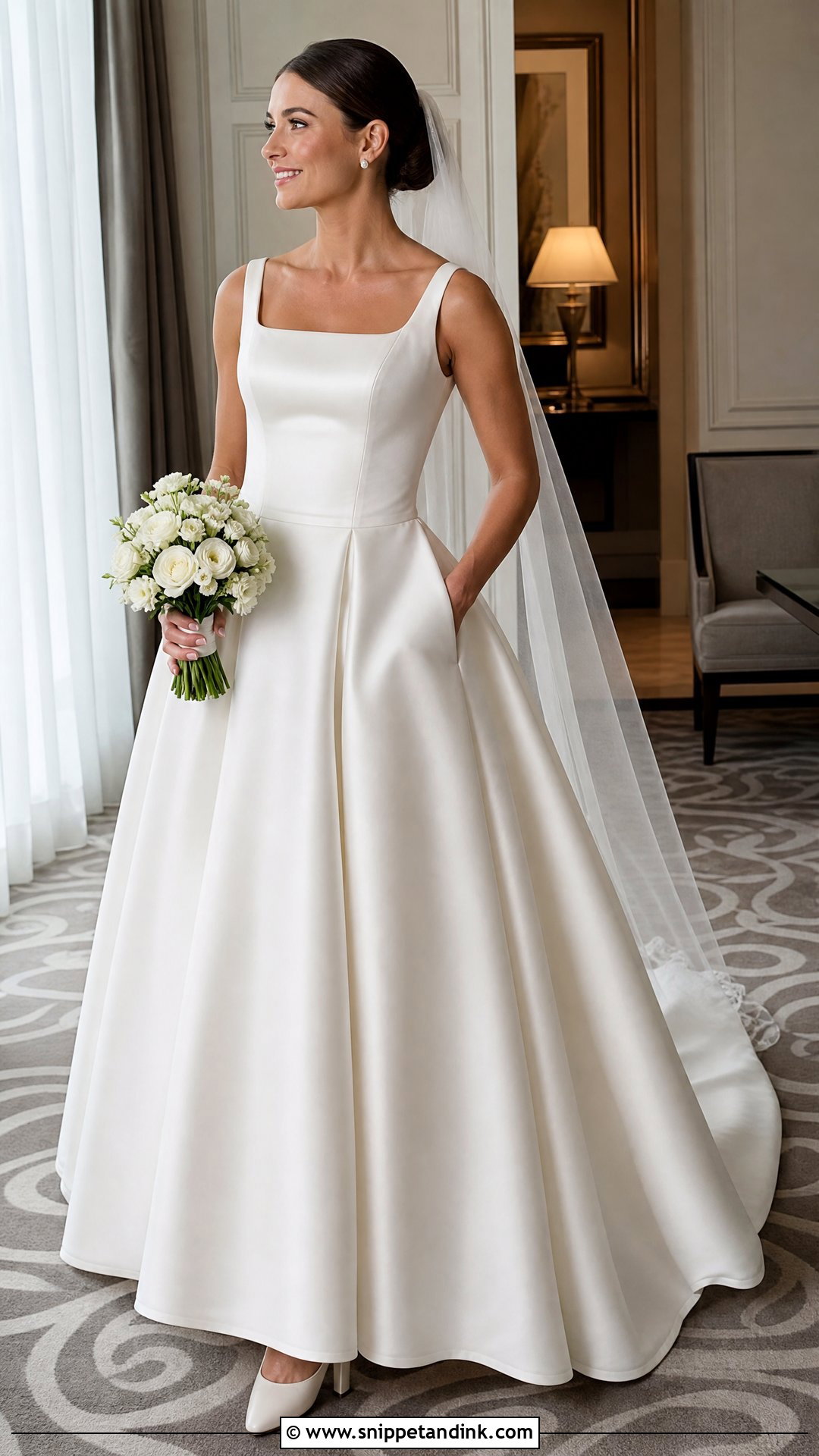
Pockets are a comfort thing as much as a style choice. They behave best in structured satin, Mikado or taffeta skirts, where the fabric has enough body that the openings don’t pull the silhouette out of shape. Put your hands in them at every fitting; if the opening gapes, the seamstress can stabilise it with a strip of interfacing. Use them for a handkerchief or lip balm, not a phone, because a heavy item drags one side of the skirt down in photos. A square or strapless neckline, pearl studs, block-heel pumps, a light chapel veil and a sleek bun suit the easy mood.



15. Detachable Sleeve Princess Cut Wedding Dress
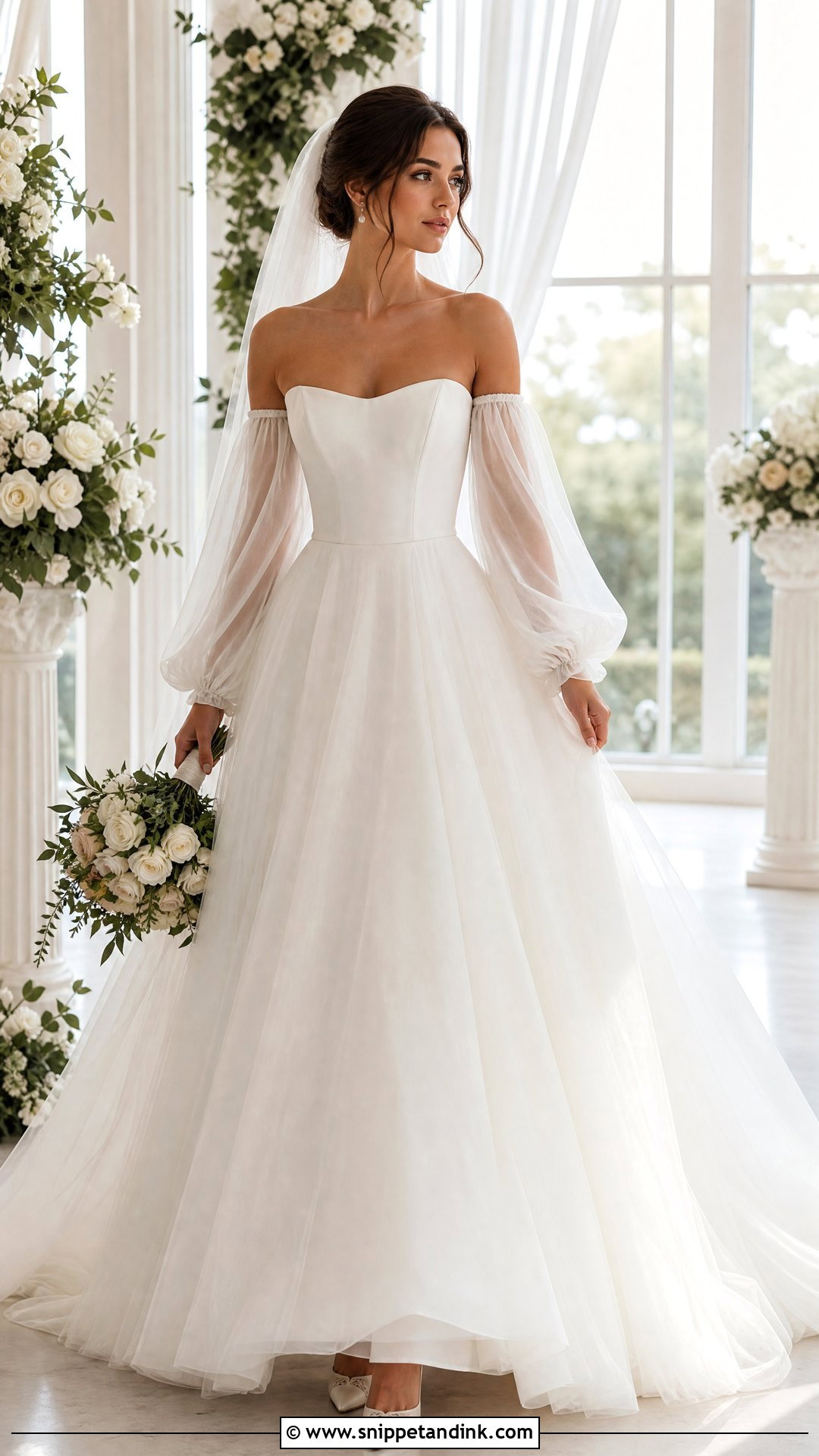
Detachable sleeves give you two looks from one dress: fitted lace, draped off-shoulder straps or airy bishop sleeves for the ceremony, then a bare bodice for dancing. The attachment points matter more than the sleeves. Snaps and tiny buttons are fiddly with nervous hands, so have a bridesmaid practise removing them before the day and bring a small bag to store them flat. Swap the veil for a pearl comb or bow when the sleeves come off so the change actually reads. Drop earrings, comfortable ivory heels and a modest bouquet work for both versions.
16. Basque Waist Princess Cut Wedding Dress
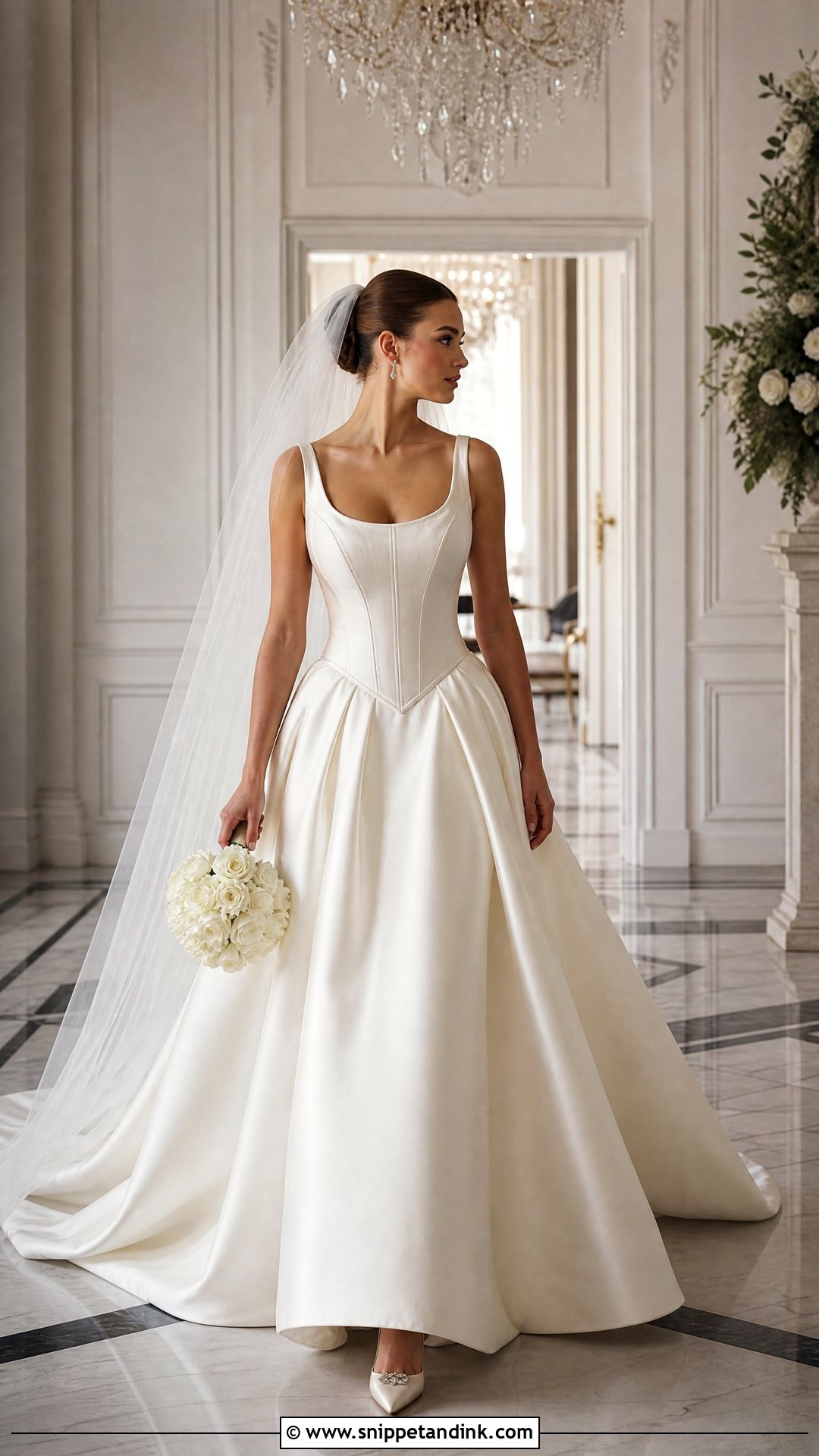
A basque waist dips into a low V below the natural waist, which lengthens the bodice and gives a corseted look without visible boning. It’s the most flattering waistline in this list for many brides, but the point has to sit dead centre. I check it from the front, the side and in a three-way mirror, because a point that drifts even slightly reads as crooked in photos. Skip belts; they cut across the very line you chose. A scoop or sweetheart neckline, delicate earrings, pointed pumps and a veil under a neat bun keep the waist the focus, with the bouquet held just below it.
17. Blush Princess Cut Wedding Dress
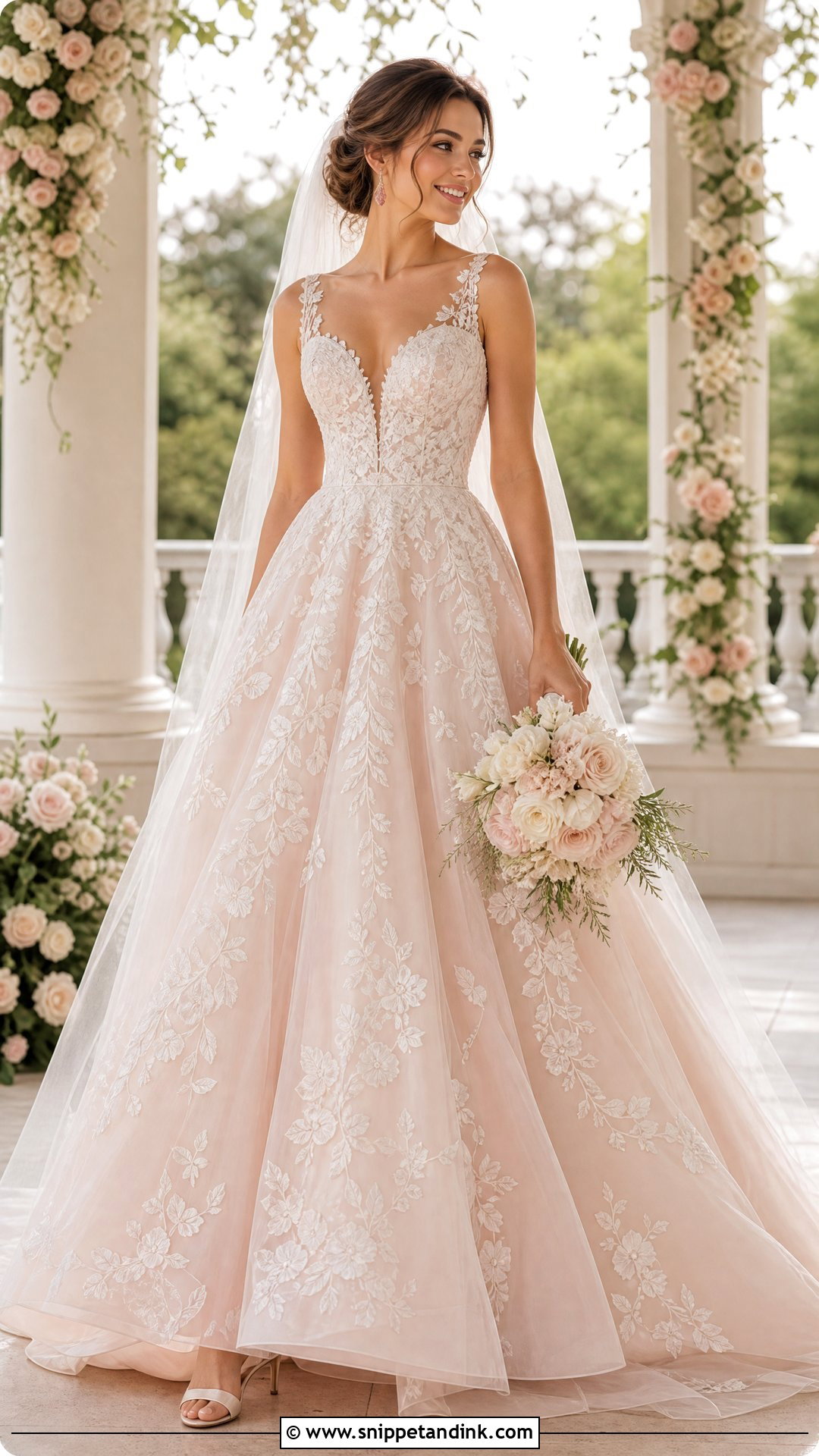
Blush works best as an underlayer beneath ivory lace or tulle. The colour lifts the detail forward and gives the skirt depth instead of turning the whole dress pink. Shades vary widely, and a blush that looks rosy in the shop can photograph peach outdoors or beige under tungsten lighting, so ask to see it near natural light before you order. Ivory shoes and veil connect it to traditional bridal pieces. Rose-toned pearls, soft waves and fresh makeup suit it. For flowers, choose cream and pale pink with muted greenery, but don’t match the dress exactly, or the bouquet disappears against it.
18. Plus Size Princess Cut Wedding Dress
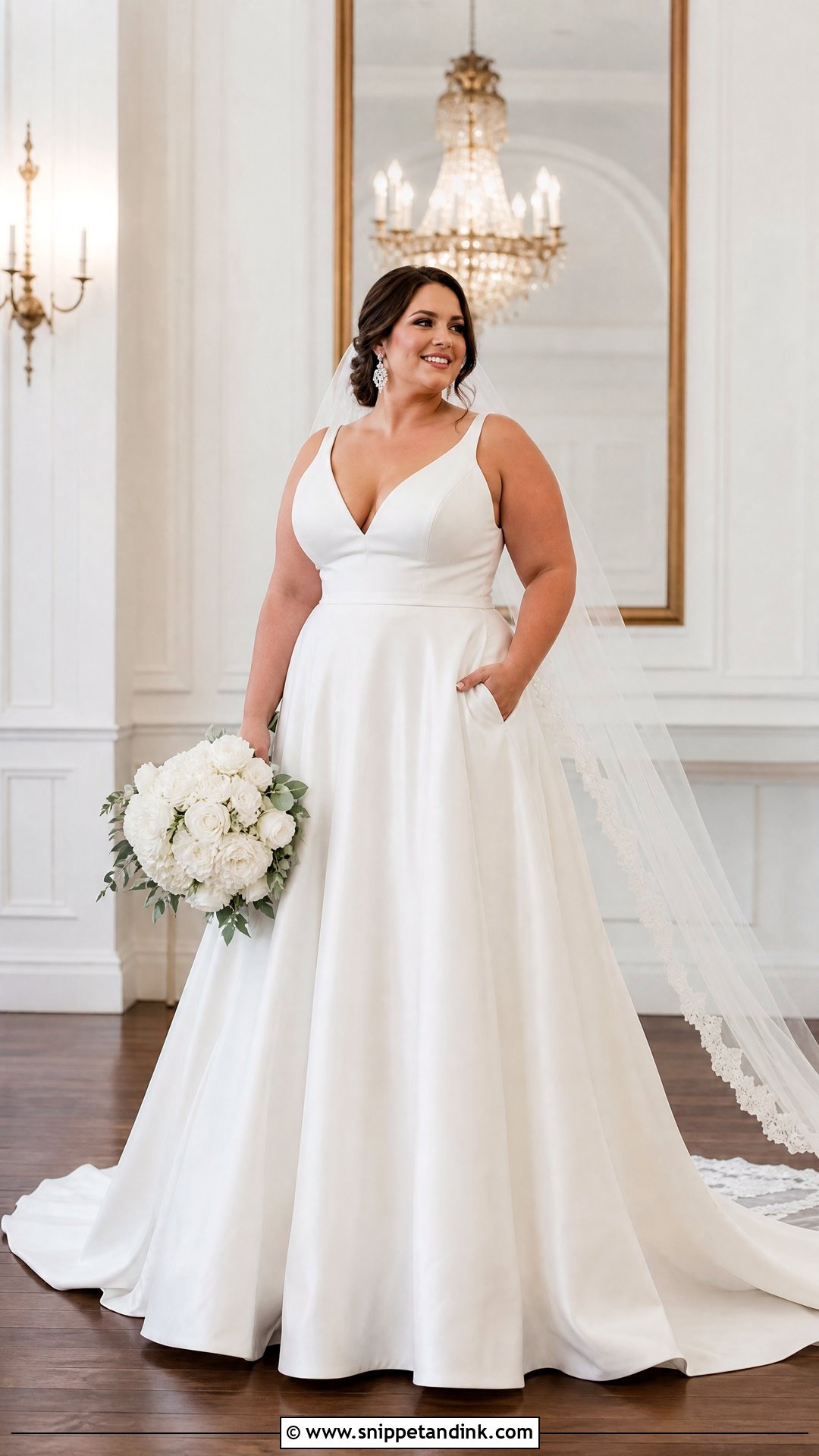
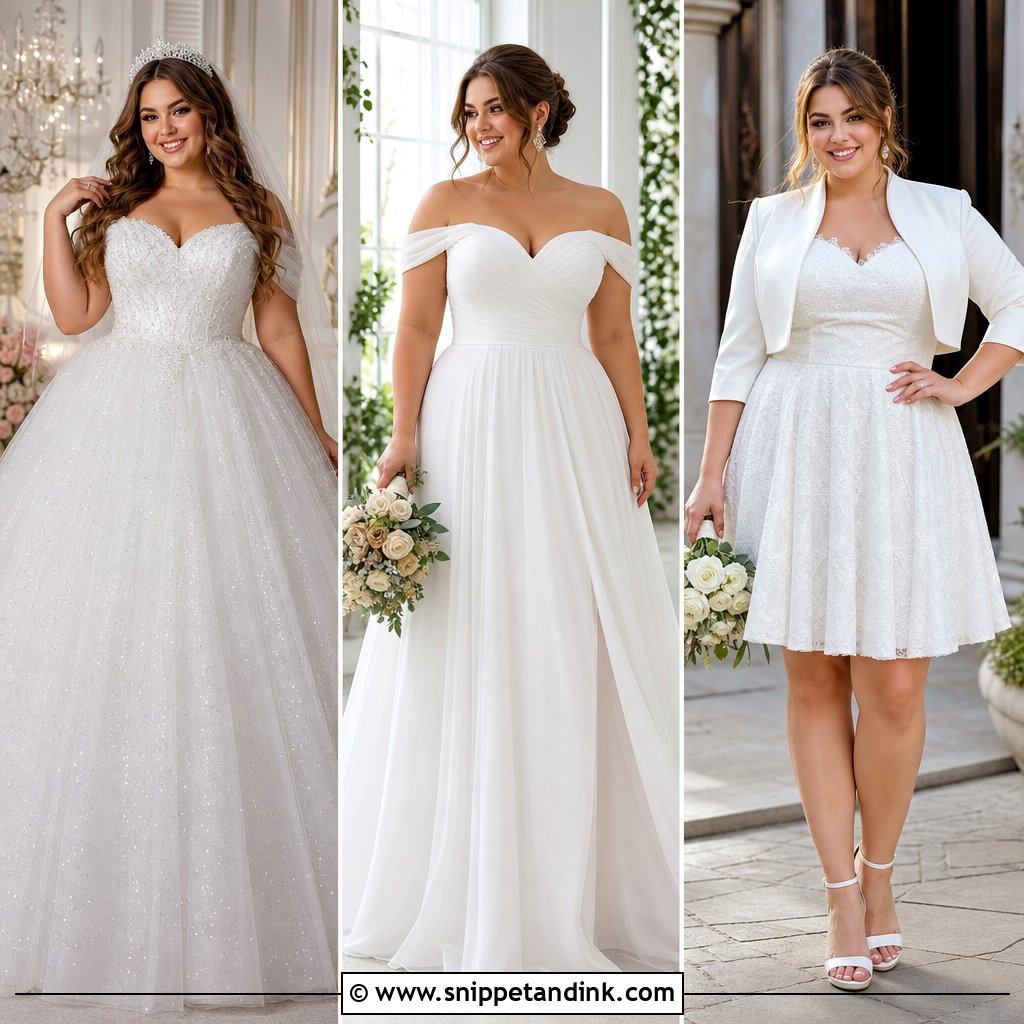
A plus size princess cut gown should be built for support first. I look for real internal boning, straps or a strong band that carry weight without digging in, and a skirt that falls from the waist with layers graded so they don’t add bulk at the hip. Pick the neckline you feel good in; square, V, sweetheart and off-shoulder all work, and old body-shape rules are less useful than how you feel moving. A good bridal seamstress can take in the bust, adjust straps and waist and shorten the hem without losing the design. Bring your actual shapewear and shoes to every fitting. The gown has to stay secure when you hug people and dance, not just when you stand still for the mirror. Block heels, statement earrings and a veil scaled to the skirt finish it.
19. Petite Princess Cut Wedding Dress
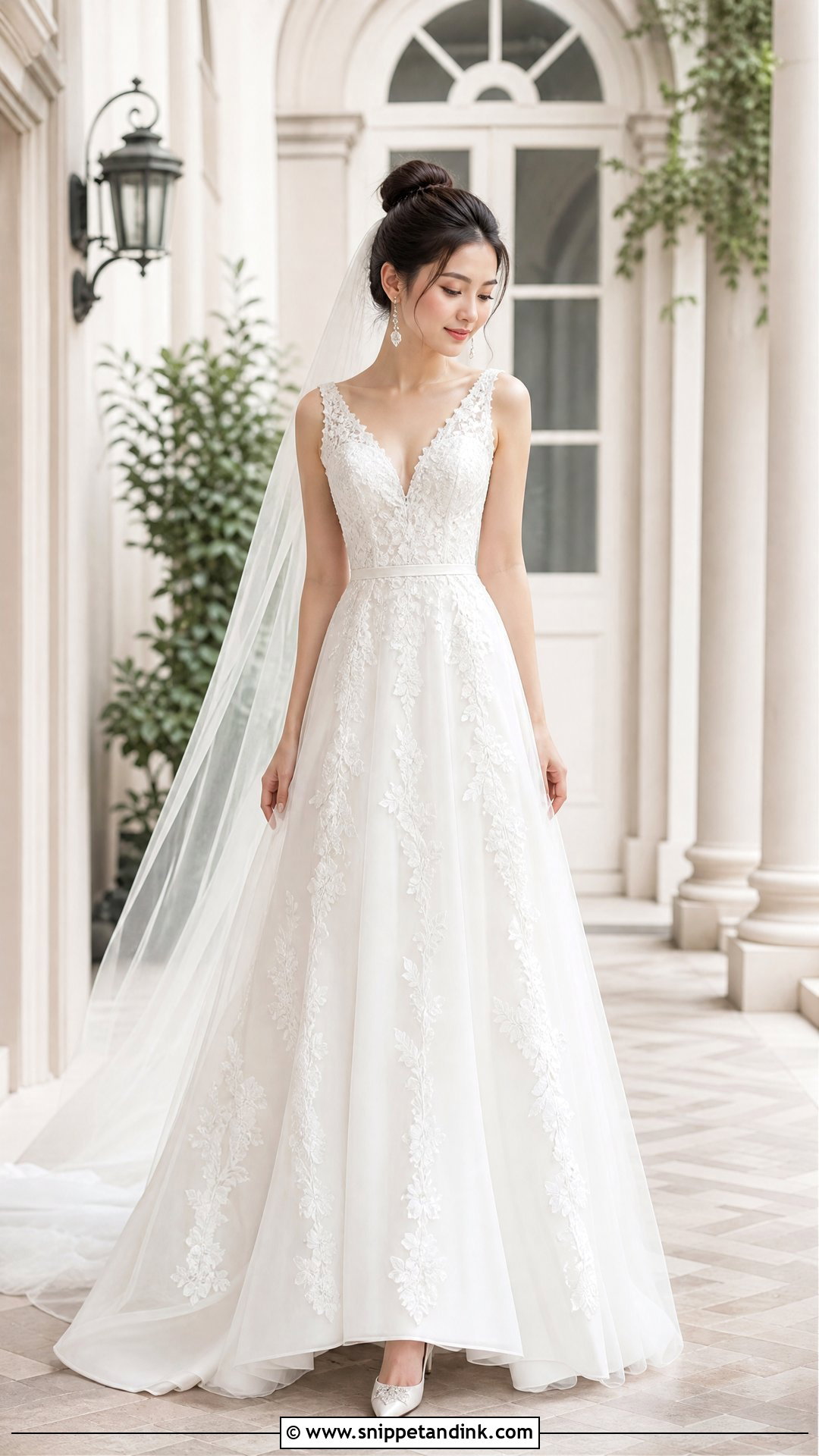
Petite brides can carry a full princess silhouette, but scale is everything. A natural or slightly raised waist, a fitted bodice and skirt volume kept close to the body stop the dress from overwhelming you. Vertical seams, a modest V and appliqué that gets smaller toward the hem lengthen the line. My strongest advice: ask whether the gown can be ordered with your hollow-to-hem measurement. Cutting several inches off a lace-bordered skirt after it arrives can remove the scalloped edge or the motifs placed at the bottom. Pointed heels, small earrings, a narrow veil and a high or mid-height bun keep things in proportion.


20. Princess Cut Wedding Dress With Cathedral Train
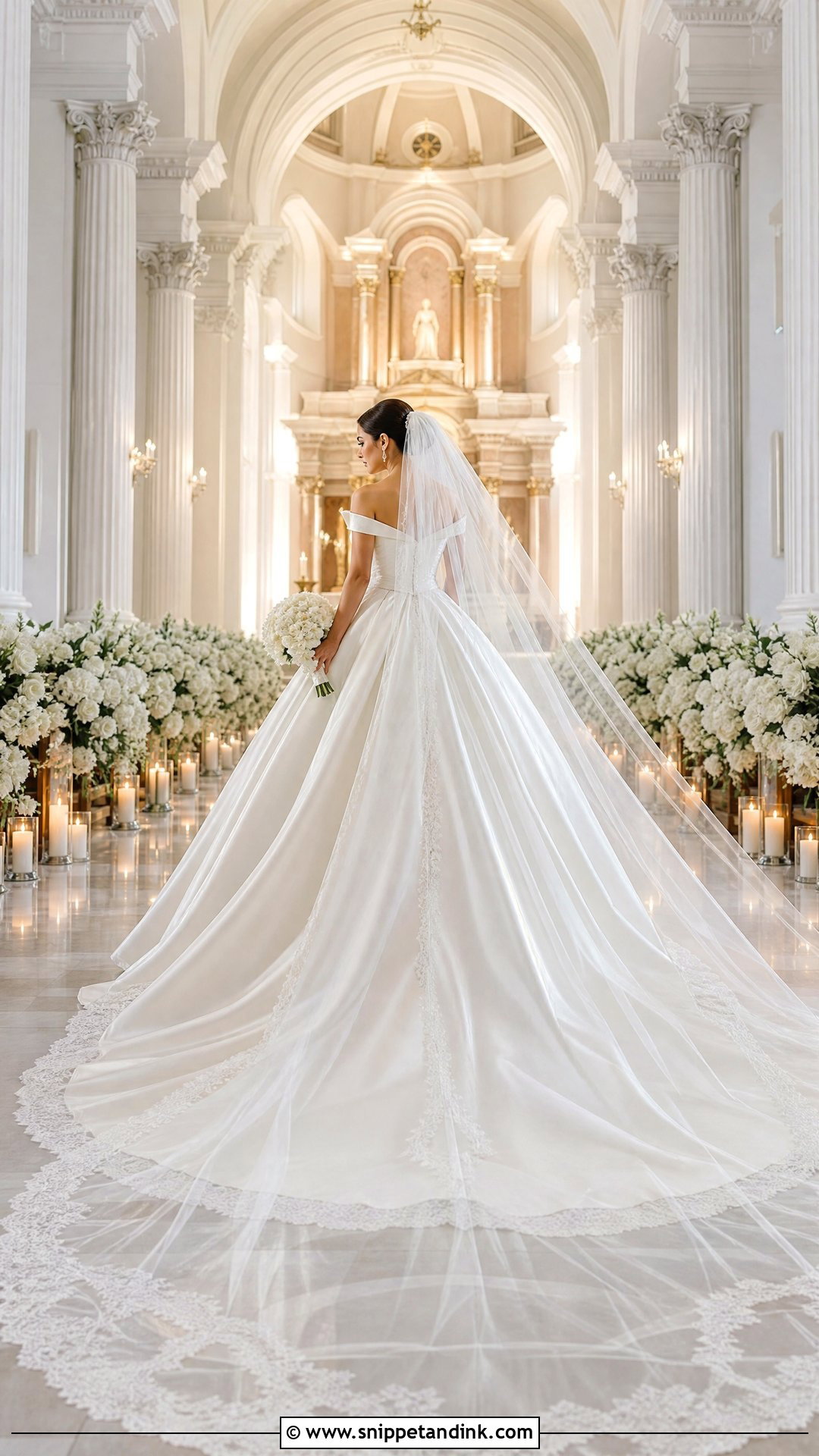
A cathedral train needs a bodice and skirt with enough structure to carry the extra fabric; on a flimsy gown, the weight drags the waist seam backward. Satin sweeps cleanly, while lace or appliquéd tulle adds detail on the floor. Choose a cathedral veil that either repeats the train’s edging or stays completely plain. Name one person to arrange the train before the processional and before group photos, and have that same person learn the bustle, which should be multi-point on a train this long. Practise turning and climbing steps in your actual shoes. An updo, quiet earrings and comfortable heels keep the back of the dress in view.
The Car, the Bathroom and the Staircase
Full skirts are wonderful in a ballroom and awkward in small spaces. I run brides through the unglamorous parts of the day at the last fitting, because that’s where a princess gown either works or becomes a problem.
Getting in and out of the car
Sit down backwards onto the seat first, then swing your legs in while someone gathers the skirt in after you. Going in head first crushes the front layers. A larger car or a van makes a real difference with a hoop or a cathedral train.
Bathroom trips
The easiest method is to face the toilet, step the skirt up around you from the back and let one helper hold the layers. Practise once at home in the actual dress. Brides who try it the first time on the day tend to lose time and some calm.
Stairs and tight doorways
Lift the front of the skirt with both hands going up, and hold the side going down so you can see your feet. Check your venue for spiral staircases or narrow corridors before the day. If the walk from the bridal suite is long and narrow, a petticoat you can loosen helps.
A Realistic Calendar From Order to Final Fitting
Princess gowns are usually made to order, and the extra fabric and hand finishing can make production longer than a simpler sheath. Timings vary by designer, so treat these as typical rather than fixed.
- Start trying on roughly nine to twelve months before the wedding, so you have time to compare fabrics in person.
- Place the order with enough room for production, which often runs several months, plus a cushion for shipping delays.
- Book the first alteration appointment about two to three months out. Full skirts with layered hems take longer to shorten than a single-layer gown.
- Plan two or three fittings, with the last one a week or two before the day, wearing your exact shoes and underwear.
- Learn the bustle at that last fitting, with the person who will actually do it on the day.
Fabric Decides More Than the Neckline Does
If I had to pick one thing to get right first, it would be the fabric, because satin, lace, tulle and Mikado each move, crease and photograph so differently that they change how the same cut feels. Necklines and sleeves come next, then accessories scaled to the skirt. And do the full movement test at your final fitting: walk, sit, turn, raise your arms and hug someone. A princess gown that passes all of that will feel like yours all evening.
You'll Like These Ideas:





Leave a Reply