
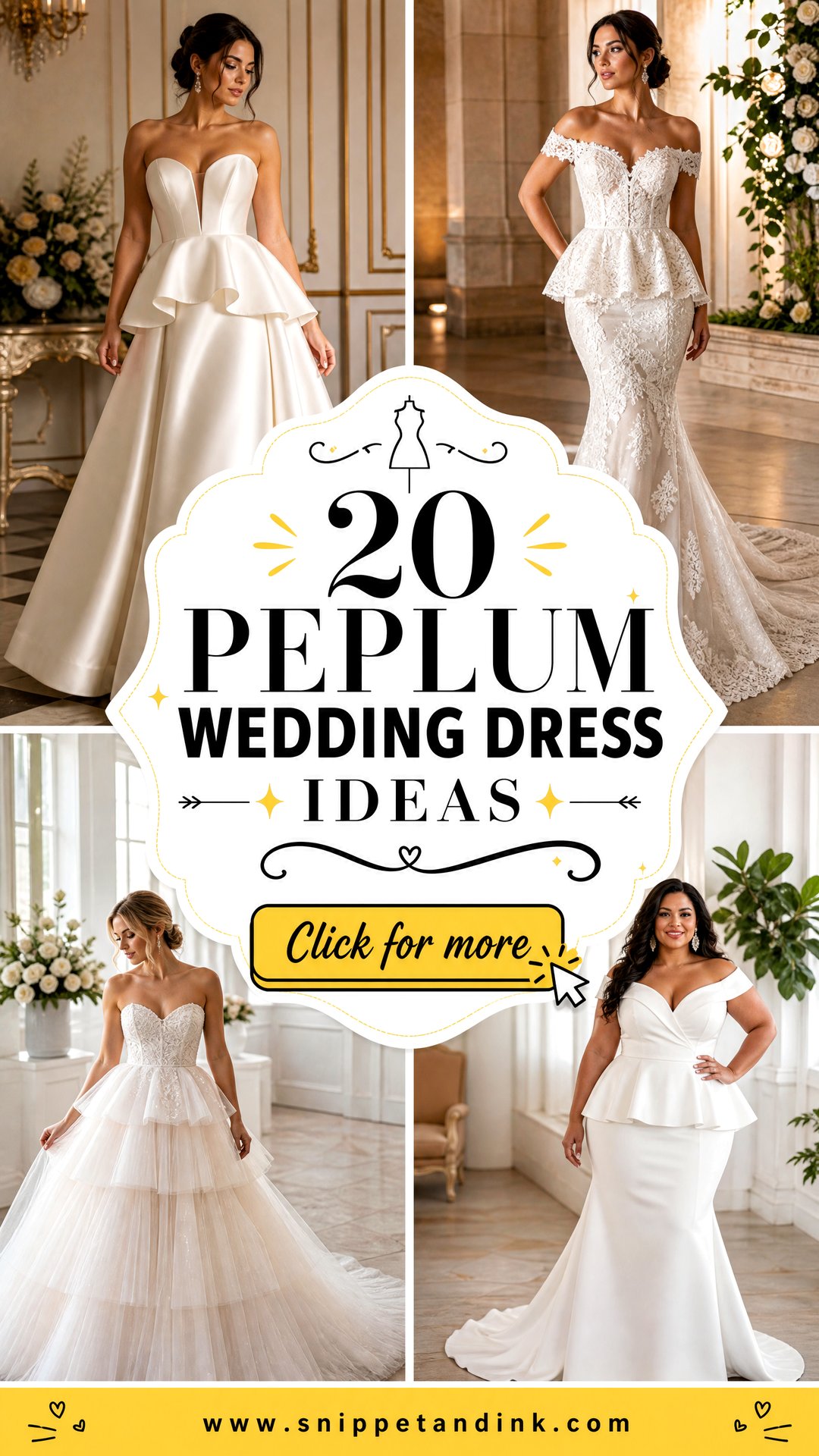
A peplum is a short flared layer sewn at the waist, and in bridal it does one job very well: it marks the waist and adds shape at the hip without committing you to a full ball gown. I see brides come round to it after trying a dozen plain gowns that felt like something was missing. Its renewed runway presence has brought back crisp architectural versions, soft draped ones and detachable peplums that give you two looks in a day. Proportion is everything, so pay attention to where each one starts, how far it extends and what skirt sits under it. Below are twenty ways to wear it, from ball gowns to a reception mini.
Where Should a Peplum Sit on Your Body?
The peplum’s starting point and its depth decide whether it flatters you. I always mark both on the bride with pins before a seamstress cuts anything, because a single inch changes the whole outline.
- If you’re short-waisted, a peplum that starts slightly below the natural waist, or from a dipped Basque point, gives you more torso.
- If you’re long-waisted, start it right at the natural waist so your legs look longer.
- Wider hips usually suit a peplum that falls past the hip bone rather than one that stops on it, since stopping there adds width at the widest point.
- Slimmer, straight figures get the most curve from a crisp, shorter peplum that stands away from the body.
Also think about your bouquet. Most brides hold flowers at hip height, exactly where the peplum sits. A large round bouquet covers it in almost every ceremony photo, so I’d go for a smaller posy or a trailing arrangement held a little lower and to one side.
1. Satin A-Line Peplum Wedding Dress
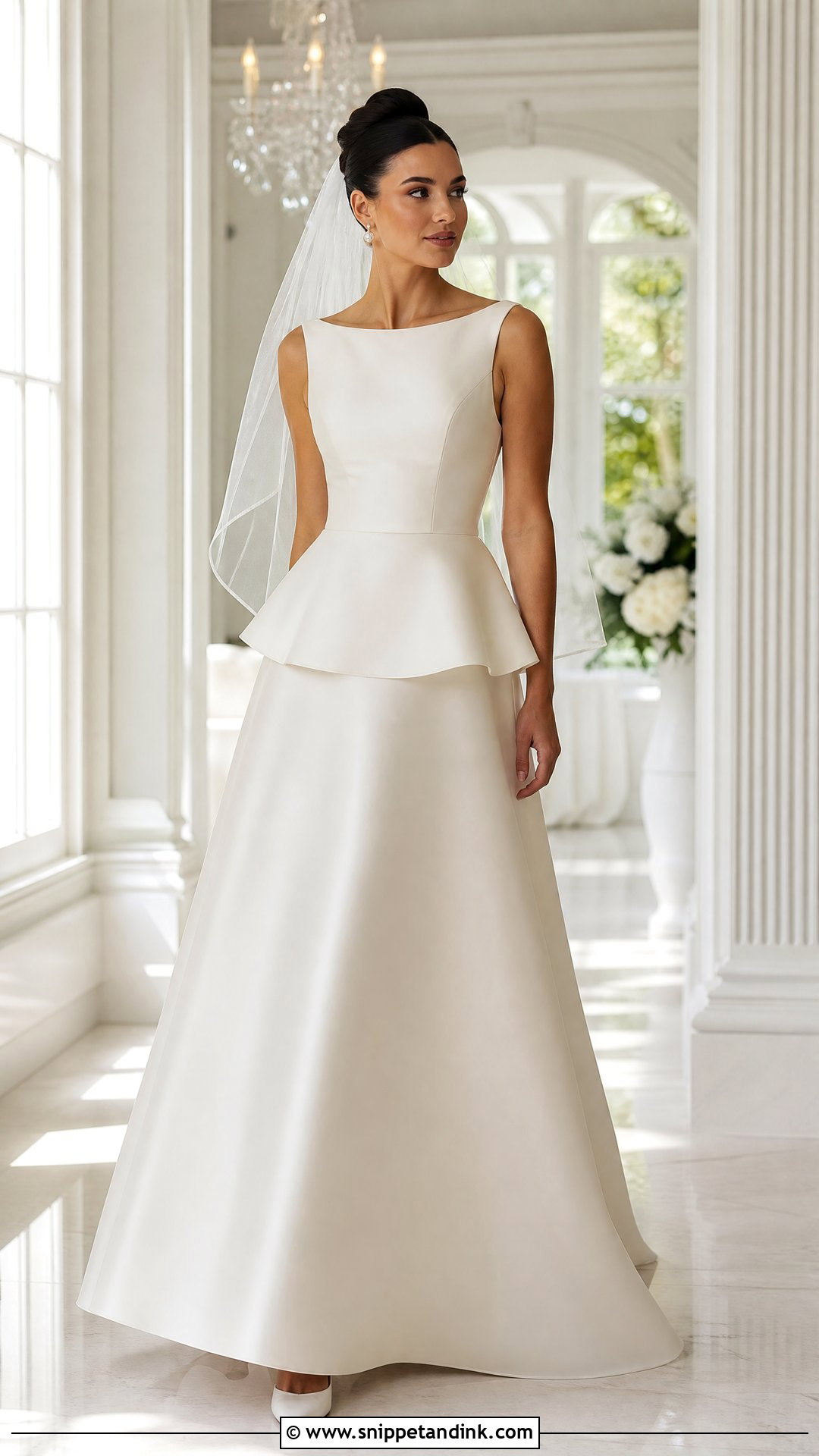
Satin A-lines are the gentlest way into the trend. The peplum sits at a natural waist on a fitted bodice and flares just enough before the skirt takes over, so the waist reads clearly without extra volume. Ivory or diamond-white satin keeps it clean. I’d finish it with pointed satin pumps, pearl drops, a structured mini bag and a low chignon, and choose a raw-edge fingertip or chapel veil so nothing fights the waist. Satin shows every crease, so whoever steams the dress on the morning should give the peplum its own attention; a flattened peplum loses its point.
2. Lace Mermaid Peplum Wedding Dress
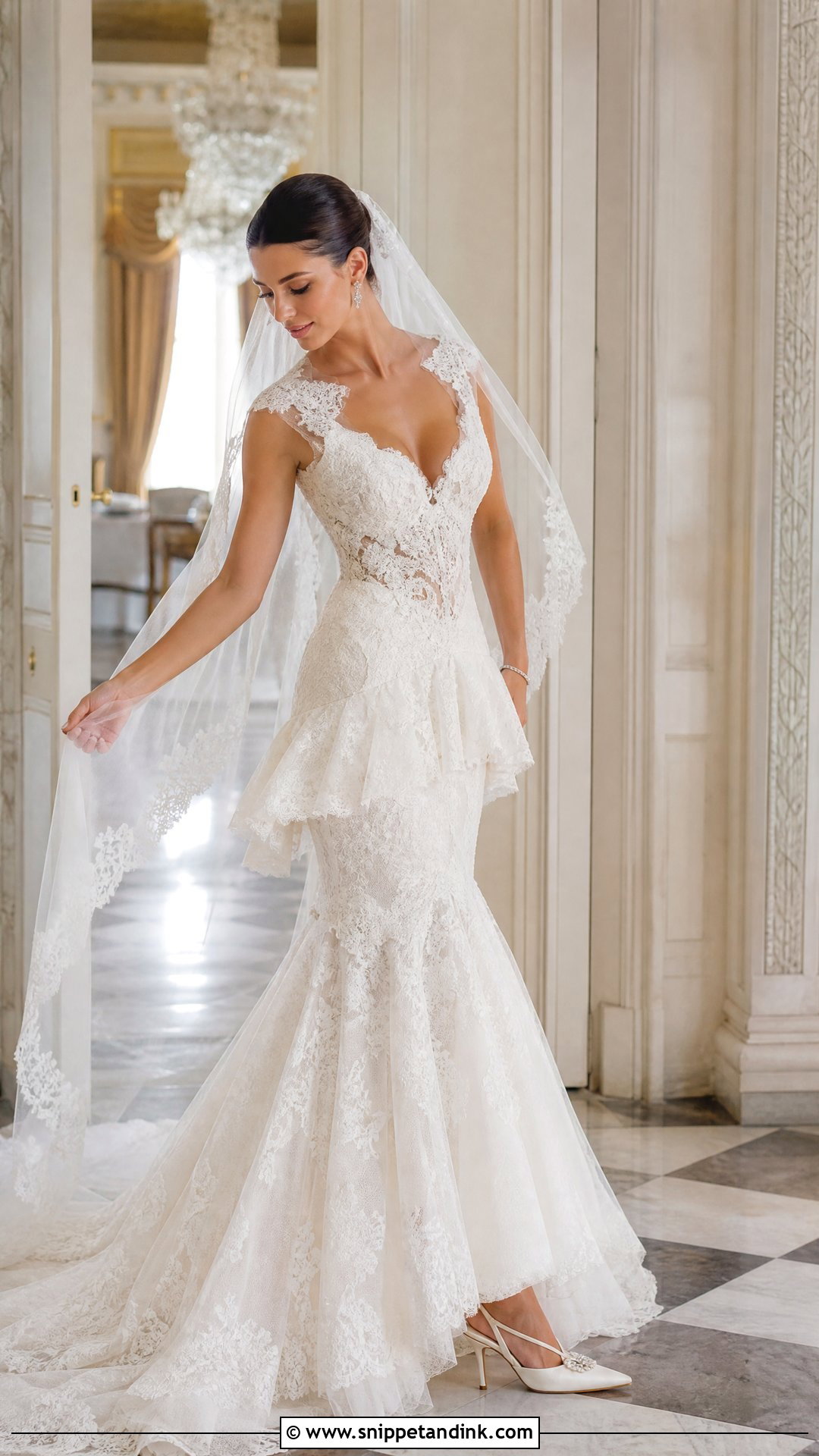
Lace over a mermaid skirt is fitted all the way down, so the softly ruffled peplum is the only place the dress relaxes. The lace has to run continuously from the bodice onto the peplum; if the pattern breaks at the waist seam, the peplum looks stitched on as an afterthought. I like a version that’s longer at the back and blends into the train while the front stays short. Ivory slingbacks, crystal earrings and a lace-edged cathedral veil suit it, with loose waves or a half-up style. Historic estates and grand venues carry this much detail well.
3. Strapless Ball Gown Peplum Wedding Dress
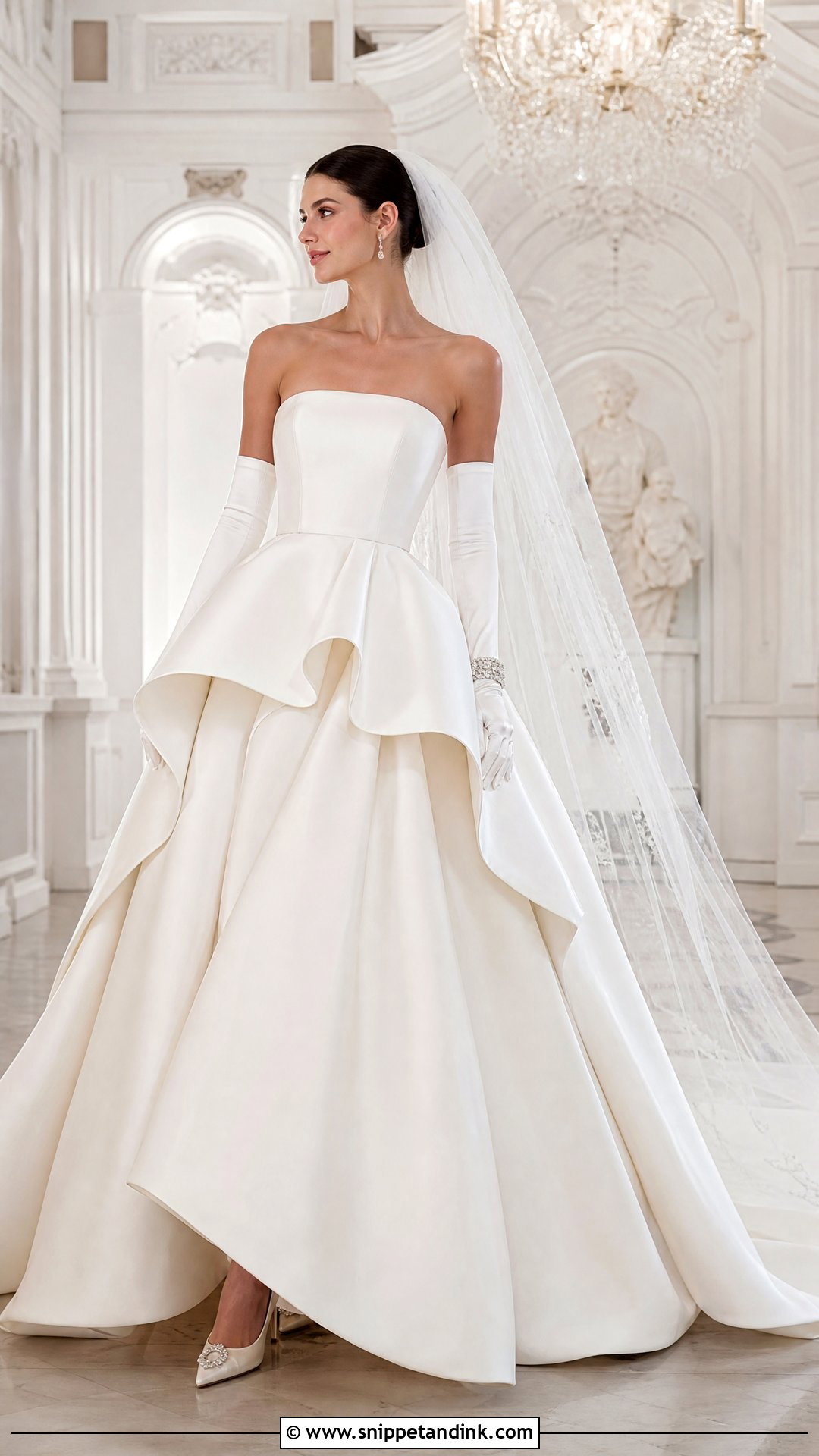
Pairing a peplum with a full ball gown is a bold call, and it only works if the peplum hugs the waist before it opens. Too much flare at the top and you add width where you don’t want it. Mikado or duchess satin holds the shape for hours; softer fabrics collapse into the skirt by the cocktail hour. Closed-toe pumps, a tennis bracelet and small studs keep it regal, and a sleek bun suits the long veil. Detachable gloves for the ceremony are a nice touch on a plain bodice. You’ll need a ballroom or a museum hall with space for that skirt.
4. Minimalist Column Peplum Wedding Dress
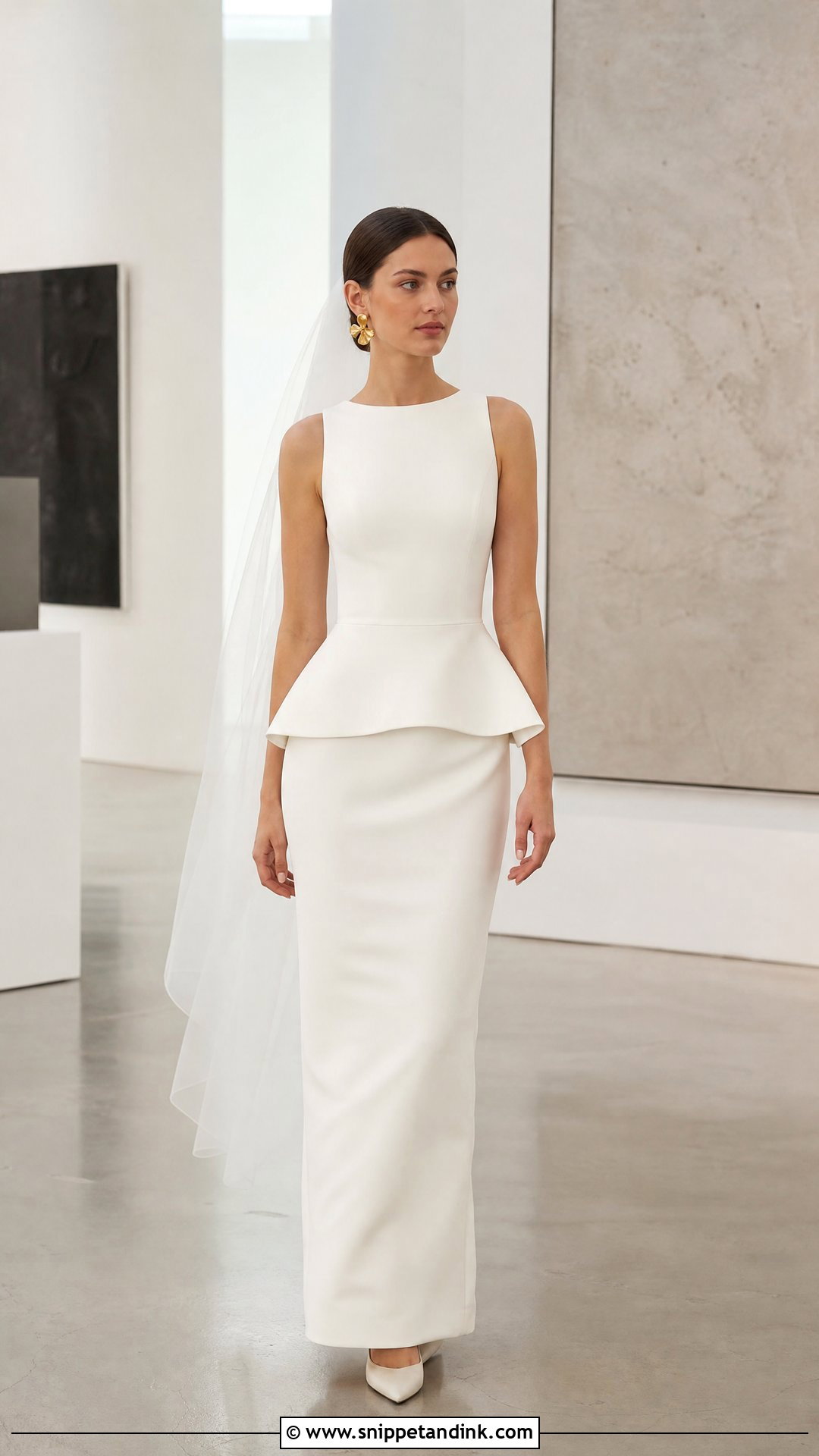
On a column dress I keep the peplum narrow and close to the body. Silk crepe or matte satin, a straight or softly draped neckline and a peplum that follows the hip rather than jutting out give the cleanest result. Slim white heels, sculptural gold earrings and a top-handle bag finish it, with a polished ponytail and a plain chapel or birdcage veil. The waist detail is what stops a column from looking flat in photos, and it suits galleries, rooftops, courthouses and modern hotels. Bring the bag you’ll carry to the fitting, too; a wide clutch held at the hip covers exactly the spot where the peplum should be seen.
5. Long Sleeve Lace Peplum Wedding Dress
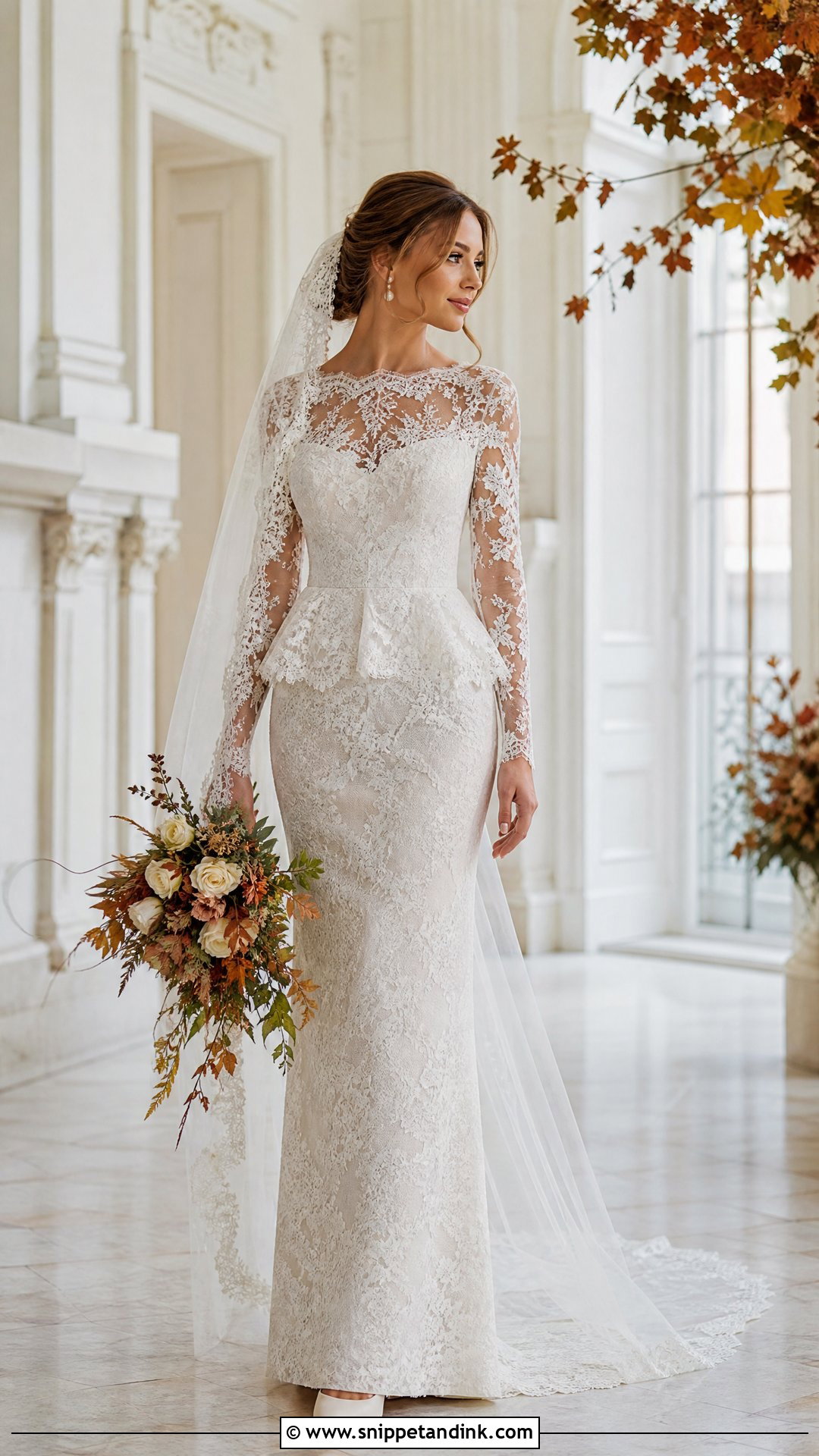
Long lace sleeves add coverage while the peplum keeps the waist defined. A fitted bodice with sheer or lined sleeves and a lace peplum over an A-line or straight skirt is the classic build, and covered buttons down the back give it a traditional finish. Low ivory heels, pearl-and-crystal earrings and a lace-trimmed veil that echoes the fabric without copying it are enough. Keep the hair in a soft updo. For autumn and winter, a white wrap for outdoor portraits is wise. Try reaching forward in the sleeves at the fitting; lace sleeves cut too tight at the elbow tear at the seam.
6. Corset Peplum Wedding Dress With Basque Waist
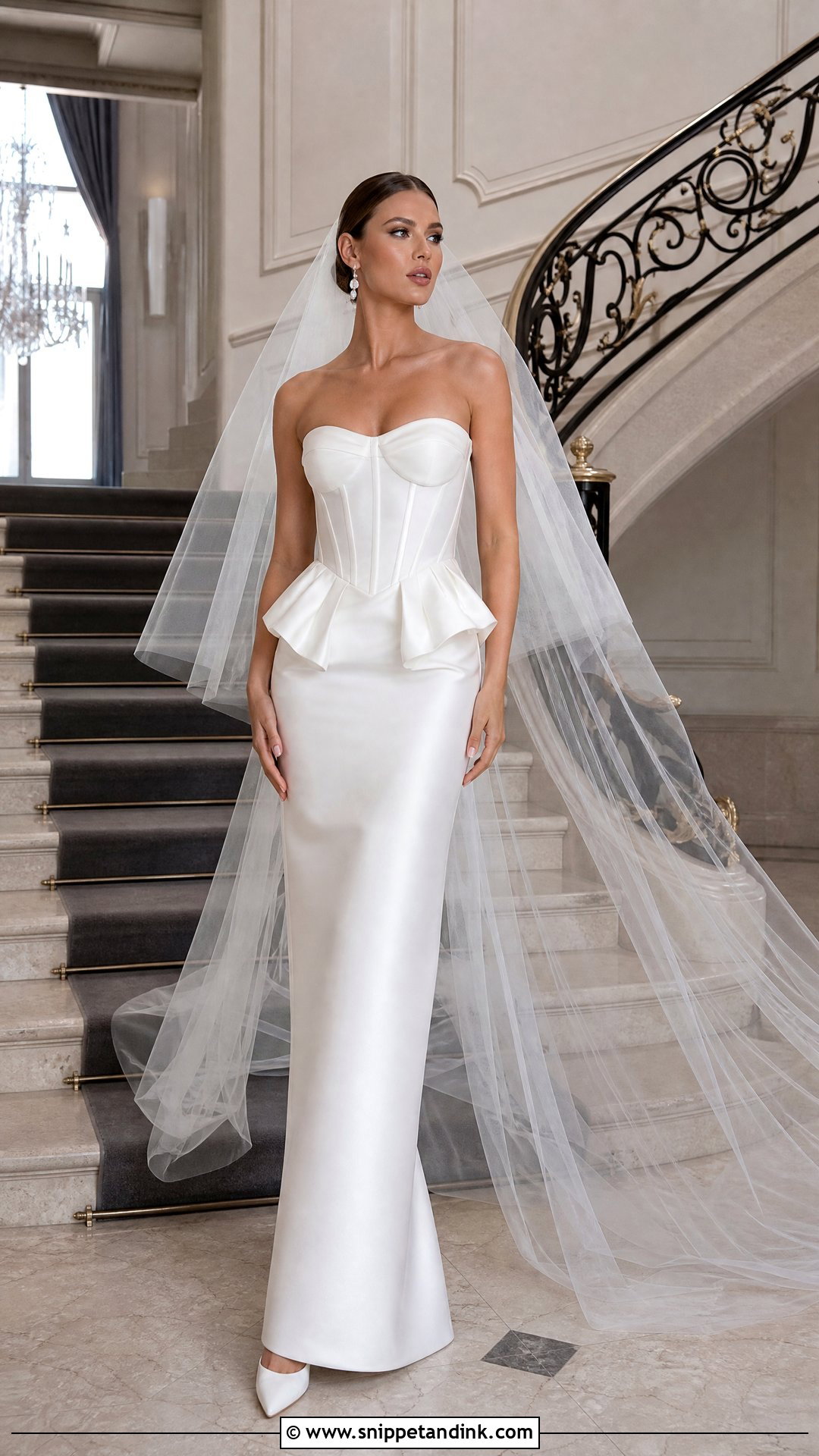
A Basque waist dips into a gentle V at the center front, and when a peplum flares from that point it lengthens the torso noticeably. That’s the reason I suggest it to brides who feel short-waisted. A plain satin skirt balances visible boning, lace panels or embroidered corsetry above. Finish with pointed pumps, a fine pendant and understated drops, and soften the strong bodice with a loose bun and face-framing pieces. A sheer cathedral veil without a heavy border keeps the outline sharp. It’s built for grand staircases and editorial-style bridal portraits.
7. Detachable Peplum Wedding Dress
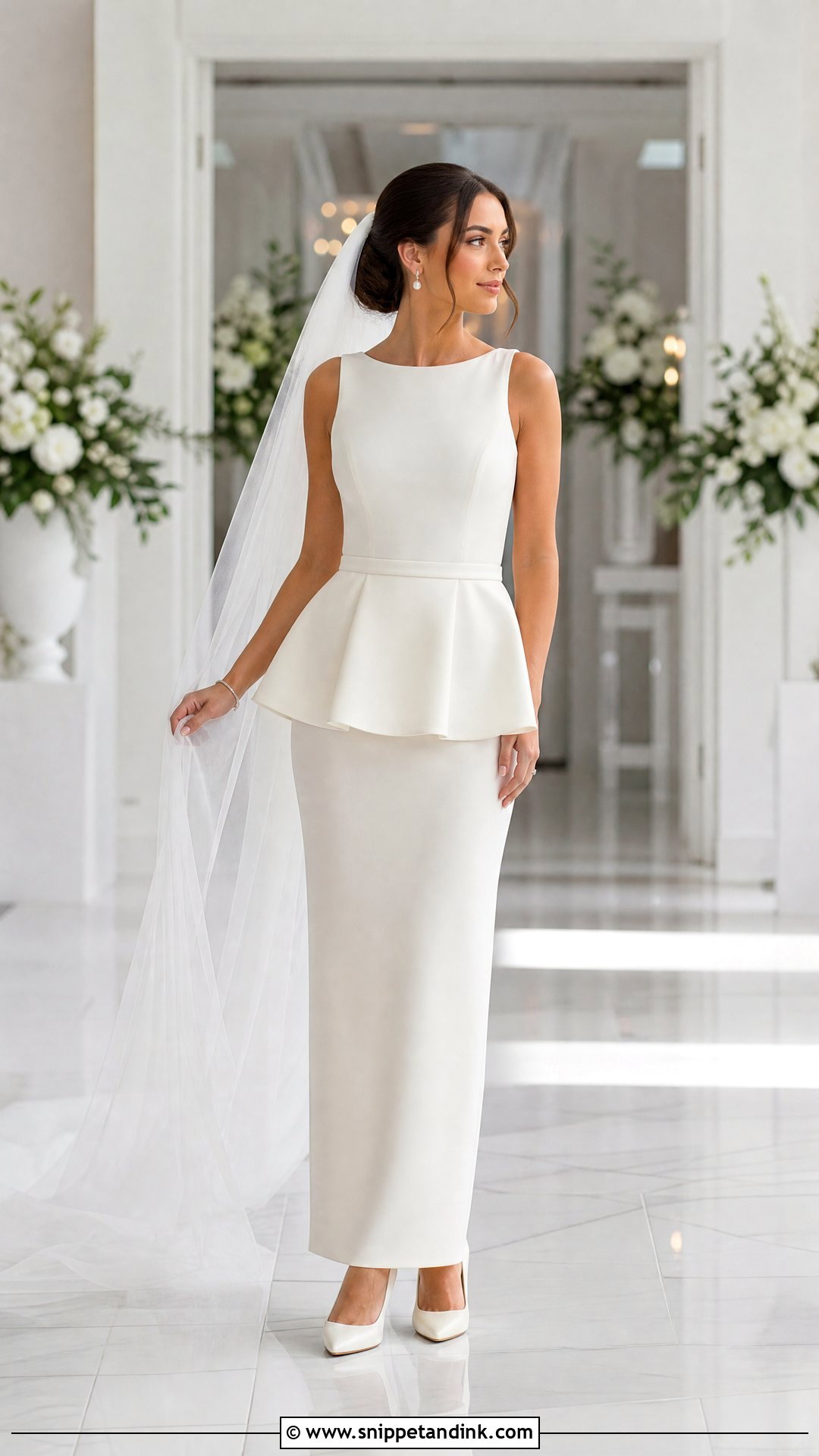
Detachable peplums are my favorite way to give one dress two personalities. Wear it for the ceremony for volume and a defined waist, then unhook it for a slimmer reception line. The attachment is what I check first: hooks or snaps should sit hidden under a belt, a seam or a row of covered buttons, and someone in the bridal party needs to practice removing it. A fitted crepe gown, satin sheath or simple A-line makes a good base. Pair the ceremony look with a long veil, classic pumps and pearls, then switch to statement earrings and a short veil or jeweled clip once it comes off.
8. High Neck Peplum Wedding Dress
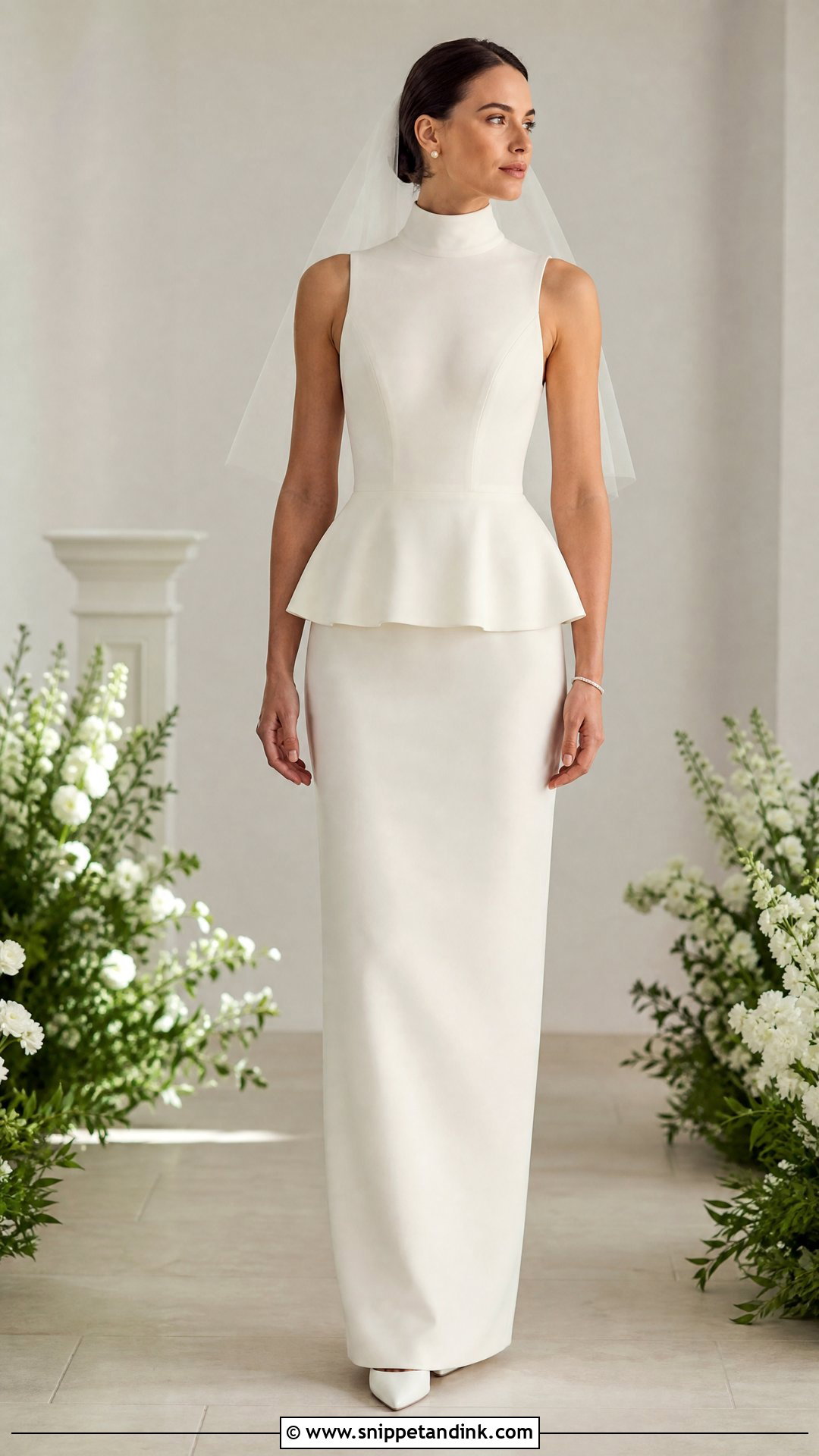
A high neckline with a peplum is modest and very feminine at once. I look for a lace, crepe or satin bodice with a clean waist seam and a peplum that follows the hip, over a straight skirt with a short train. Pointed heels, small pearl studs and a slim bracelet keep it neat. Hair goes up, in a low knot or high bun, so the neckline is fully visible, and a shoulder-length veil or a simple comb replaces the usual long veil. Check the neck fit while you turn your head both ways; a high collar that’s snug when facing forward can pinch when you look at your partner.
9. Off Shoulder Peplum Wedding Dress
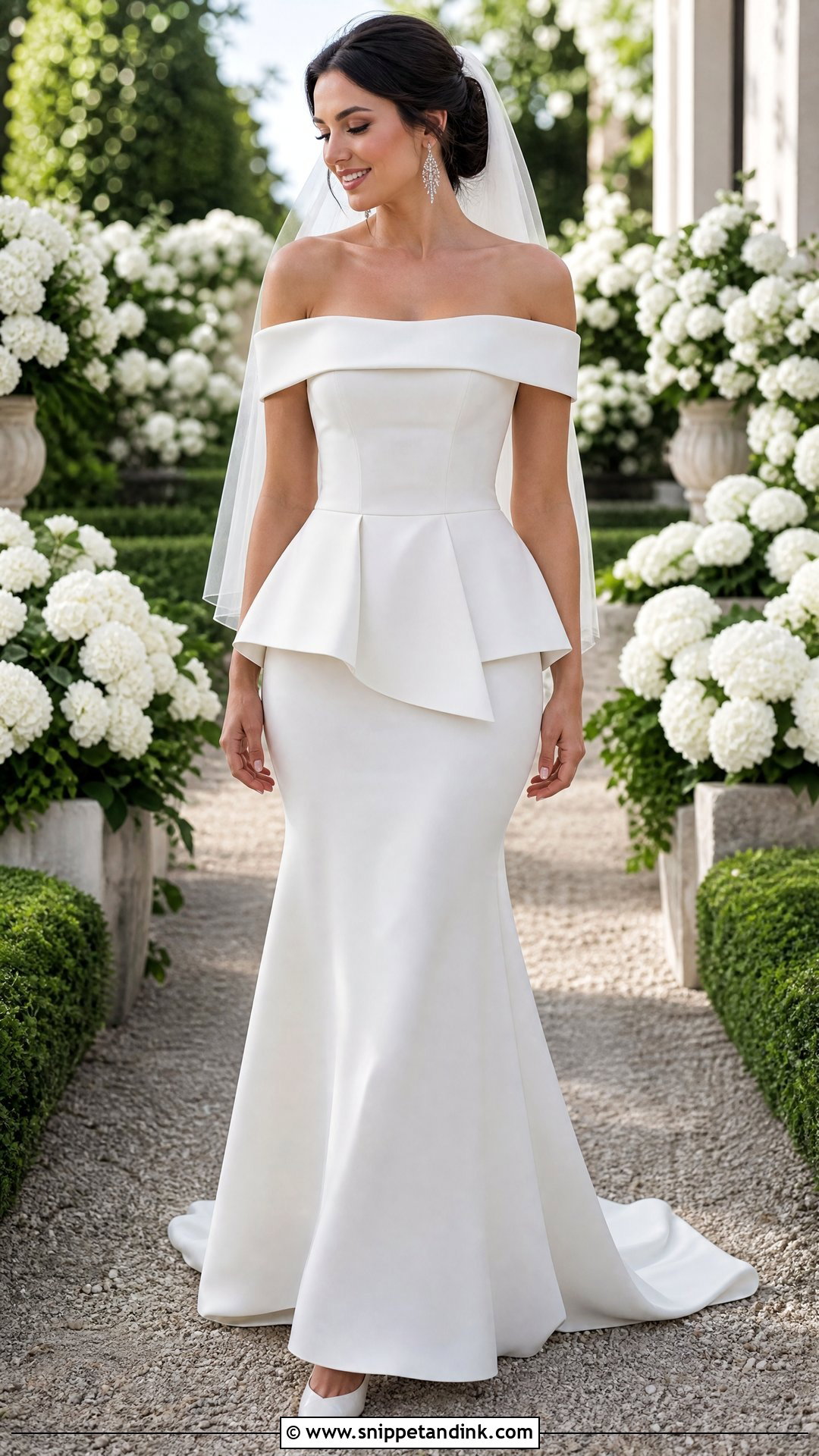
Off-the-shoulder necklines soften a structured peplum, but the bodice has to hold itself up, so I check for proper internal boning before anything else. A folded satin neckline looks polished; lace or tulle sleeves feel more romantic. Crystal drops, pointed ivory shoes and a small satin clutch for later are enough. Sweep the hair back to show the shoulders and give the veil a secure base. With a dramatic peplum, keep the veil medium length, because long layers on top of a flared waist start to look crowded.
10. Square Neck Peplum Wedding Dress
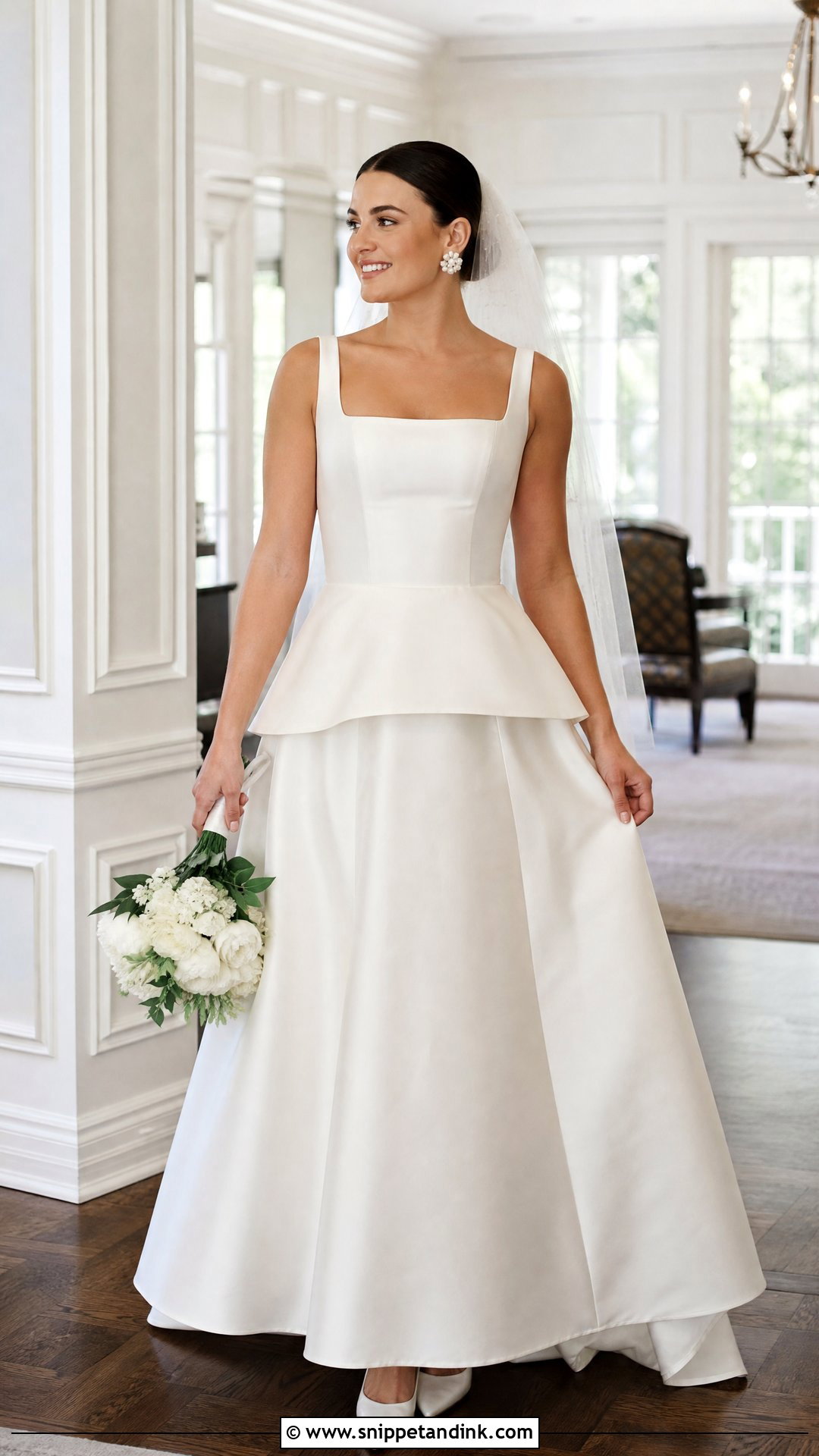
Square necks and peplums share the same geometry, which is why they look settled together. The neckline frames the face and works with straps, short sleeves or long ones. I’d choose satin or crepe with a softly structured waist detail and an A-line skirt, add pearl cluster earrings and a fine chain bracelet, and wear block-heel pumps for a long day. A low twisted bun takes the edge off the straight lines. It suits gardens, country clubs and traditional ceremonies without needing heavy embellishment.
11. One Shoulder Peplum Wedding Dress
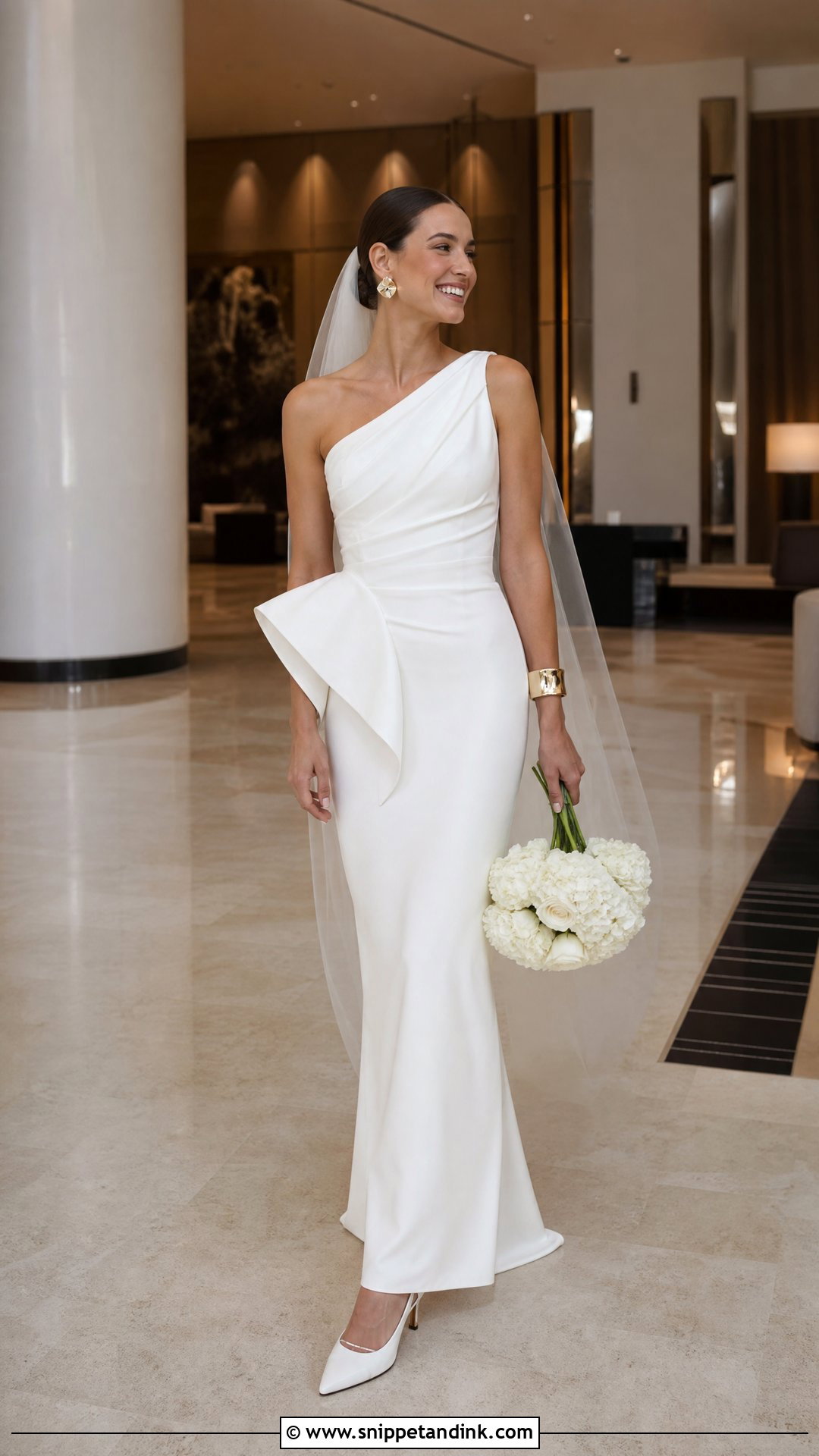
One-shoulder bodices bring movement. Draping that runs diagonally toward a fitted waist and a sculpted side peplum gives the dress a spiral line, and a straight or gently flared skirt keeps it from getting complicated. Sleek slingbacks, a metallic cuff and, at a fashion-forward wedding, a single statement earring on the bare side finish it. I’d put the hair in a low ponytail to show the neckline and pick a plain veil from the back of the head. Do a full arm swing at the fitting; one-shoulder straps cut too tight ride up as soon as you wave.
12. Pearl Peplum Wedding Dress
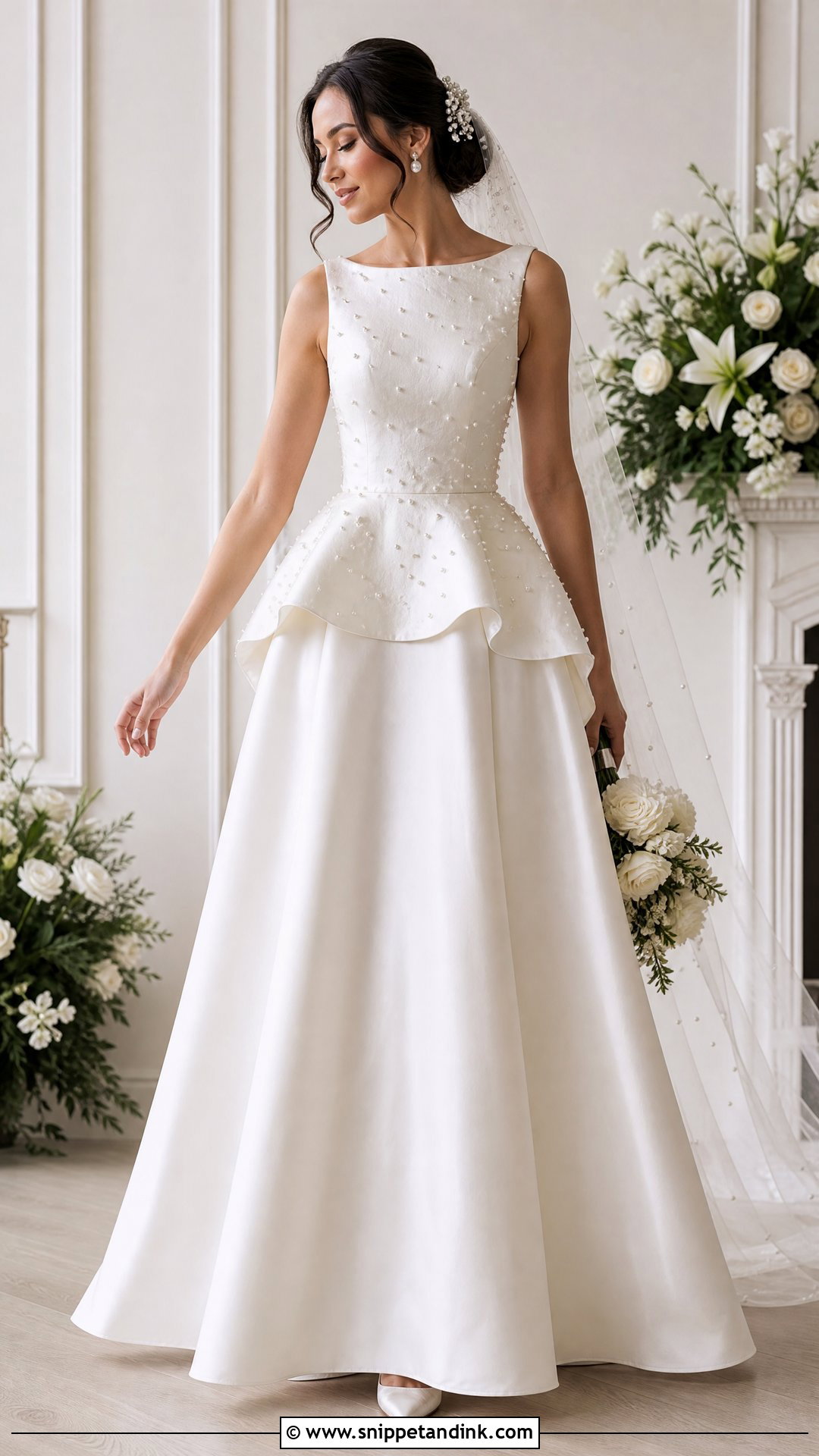
Pearls placed on the peplum itself draw the eye straight to the waist. I prefer them scattered over the bodice and waist rather than covering the dress top to bottom, so the skirt stays light. A fitted satin or tulle bodice over a flowing A-line balances it well. Pearl studs, a small pearl comb and simple satin heels are plenty; a heavy beaded necklace competes. A sheer veil with a few widely spaced pearls ties it together. Ask about the stitching: individually sewn pearls survive hugs, while glued ones can drop off during the day.
13. Floral Appliqué Peplum Wedding Dress
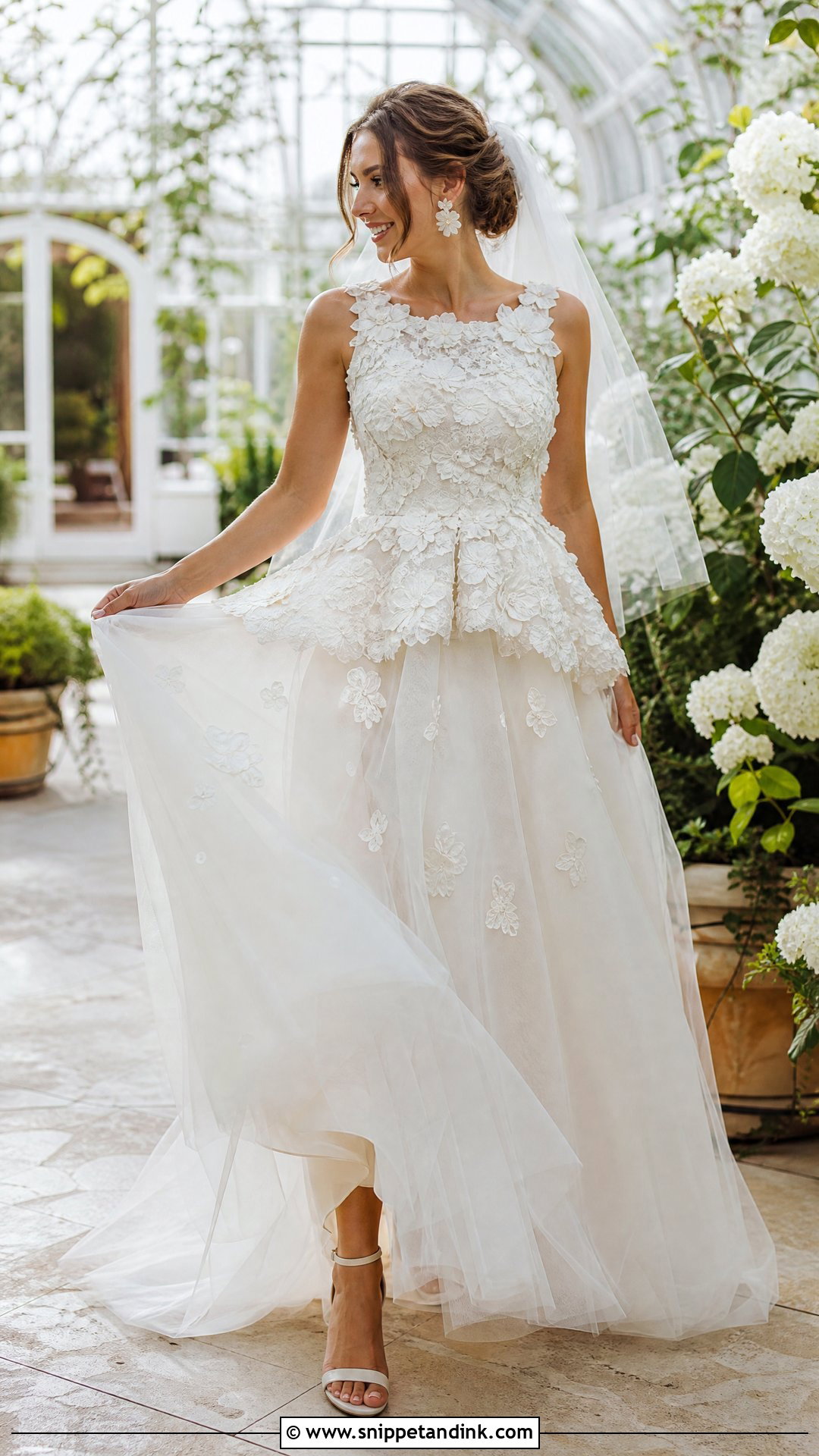
Floral appliqués give the waist texture. They look most natural concentrated on the bodice and peplum, then thinning out onto a tulle or organza skirt, so the waist stays the focus. Delicate ankle-strap heels, small floral earrings and a soft veil with a few appliqués near the edge pull it together, with loose waves or a relaxed bun with tiny floral pins. Keep the bouquet white; colored flowers next to dimensional blooms read cluttered. Spring and summer gardens, greenhouses and estates suit it, and I’d keep a long veil off the peplum, where it snags on raised petals.
14. Layered Tulle Peplum Wedding Dress
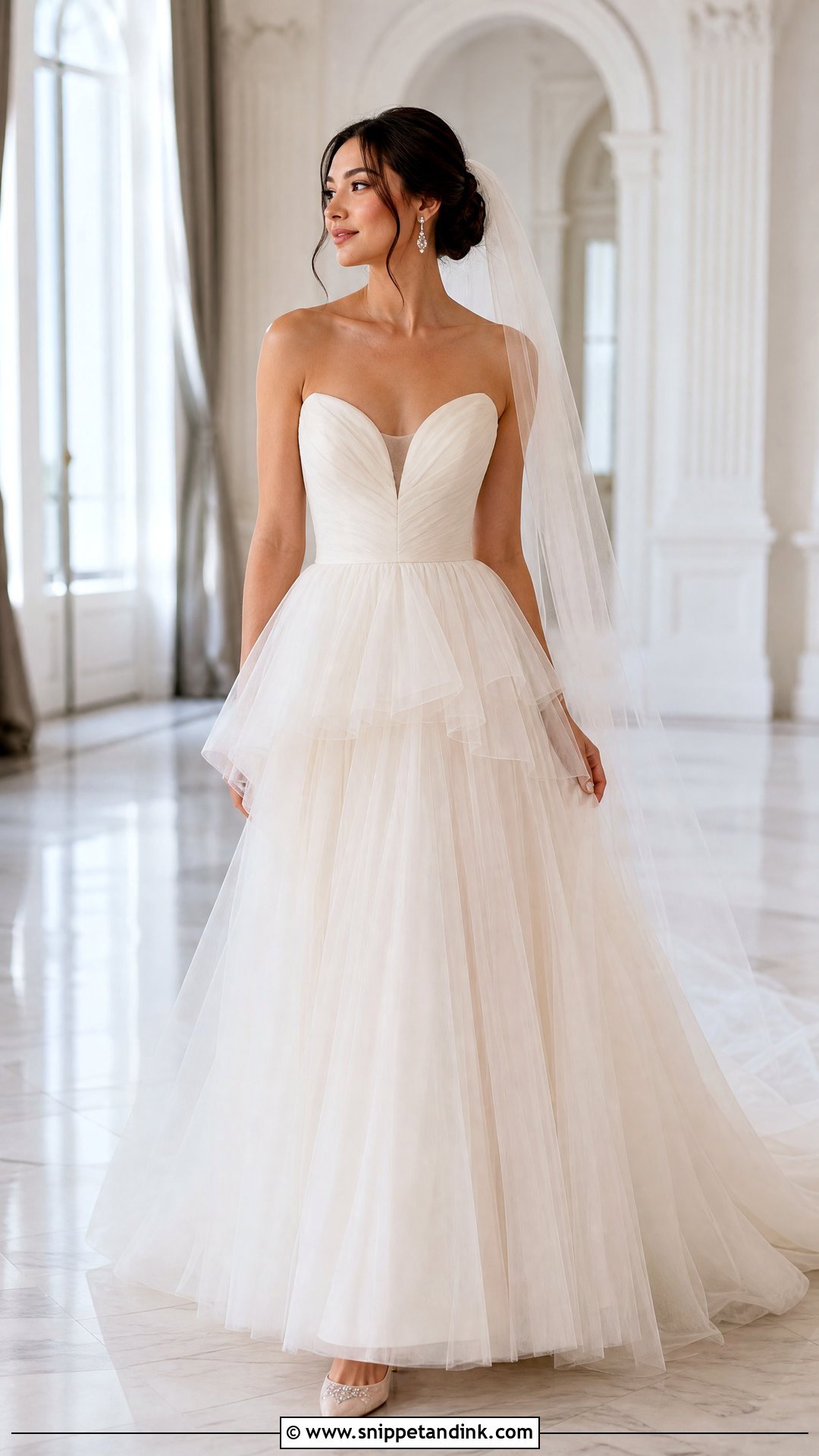
Tulle turns a peplum airy instead of rigid. A fitted bodice with a gathered or tiered waist layer flowing into a tulle A-line can be asymmetrical, longer at the back or split into overlapping panels. Sparkling low heels, fine drops and a sheer veil that moves with the skirt suit it, with a romantic updo or loose braided bun. A small bouquet matters here, since a big one hides the waist detail in every photo. It gives volume without the stiffness of satin, which suits outdoor ceremonies and bright ballrooms.
15. Structured Mikado Peplum Wedding Dress
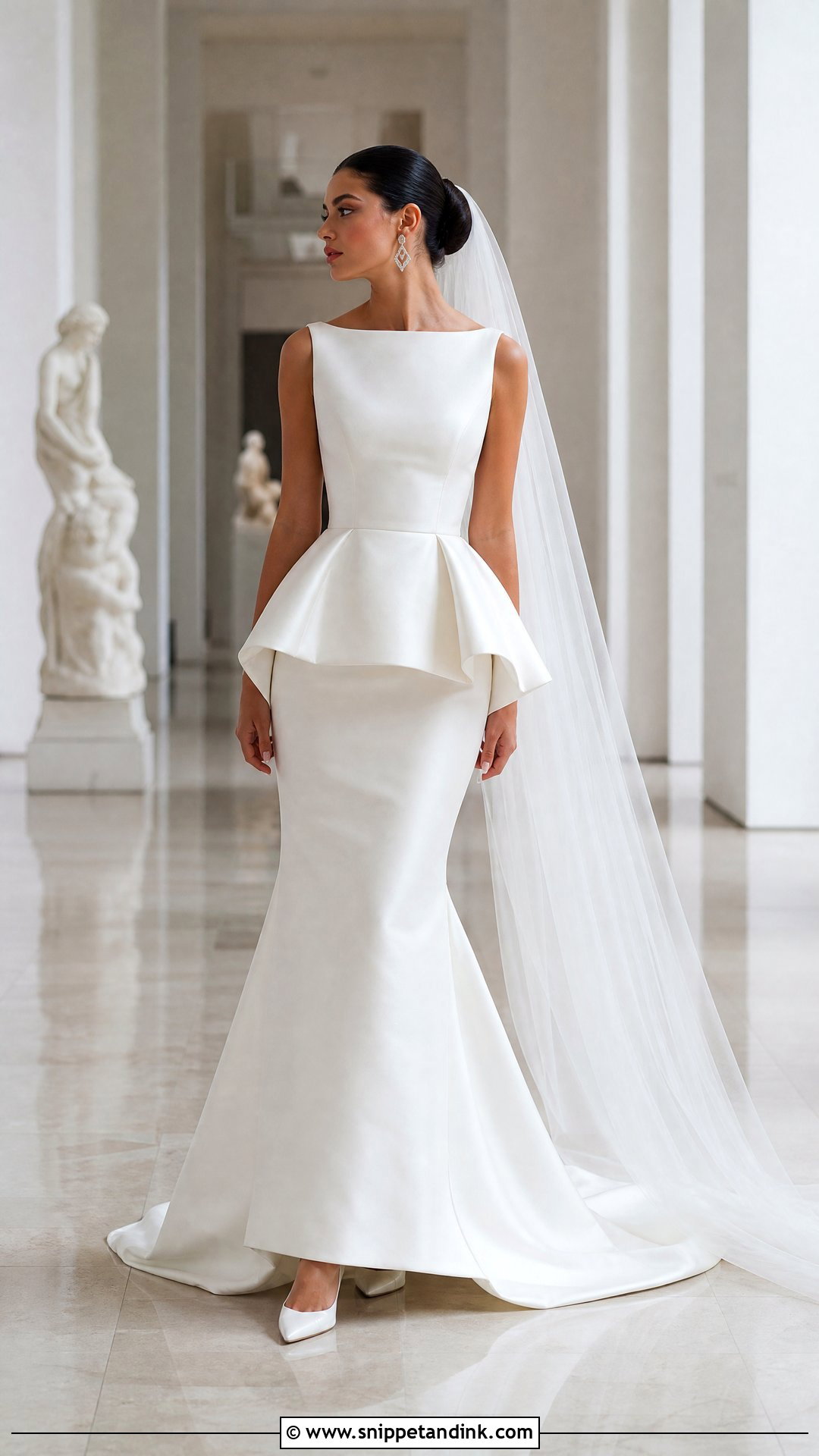
Mikado holds a crisp edge like almost nothing else, which makes it the fabric for a sculptural peplum. A fitted bodice and a sharply defined waist with a peplum that’s even all round, or rises slightly at the front, works over a straight skirt for a sleek line or a full one for drama. Closed-toe satin pumps, a structured clutch and geometric crystal earrings fit the mood. Keep the hair in a polished bun. The trade-off is that mikado creases when you sit, so I’d plan the formal portraits before dinner, while the peplum is still sharp.
16. Draped Peplum Wedding Dress
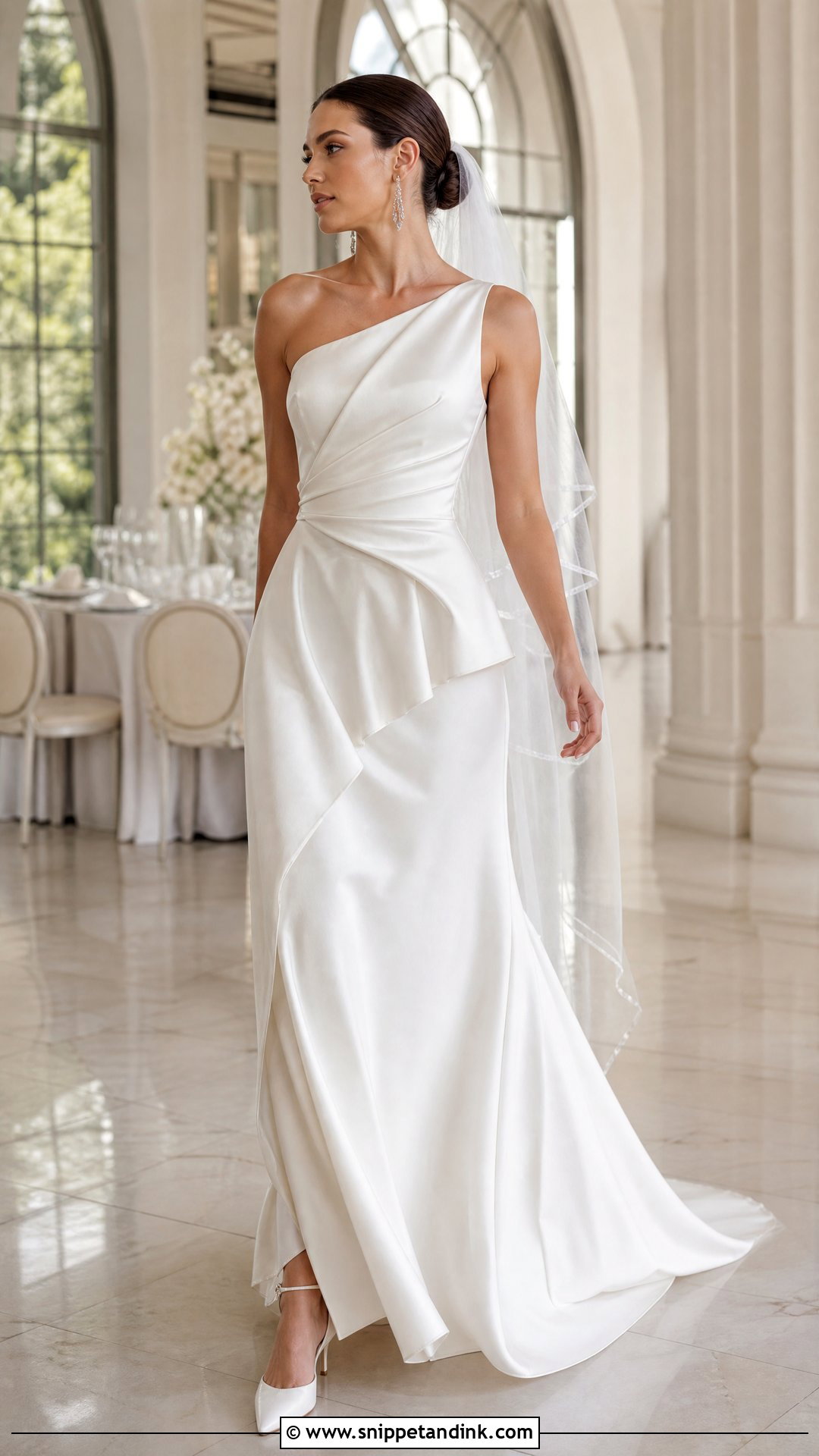
Draped peplums are the soft alternative to a stiff horizontal flare. Diagonal folds gathered at one side fall across the hips and move as you walk. Silk satin, crepe and lightweight faille drape well and stay polished. Pointed slingbacks, slim chandelier earrings and a small metallic or pearl bag finish it, and a side-parted low bun echoes the asymmetry. Keep a narrow veil falling behind the dress, not over the draping. Brides who dislike rigid construction tend to love this one, especially for evening weddings indoors.
17. Tea Length Peplum Wedding Dress
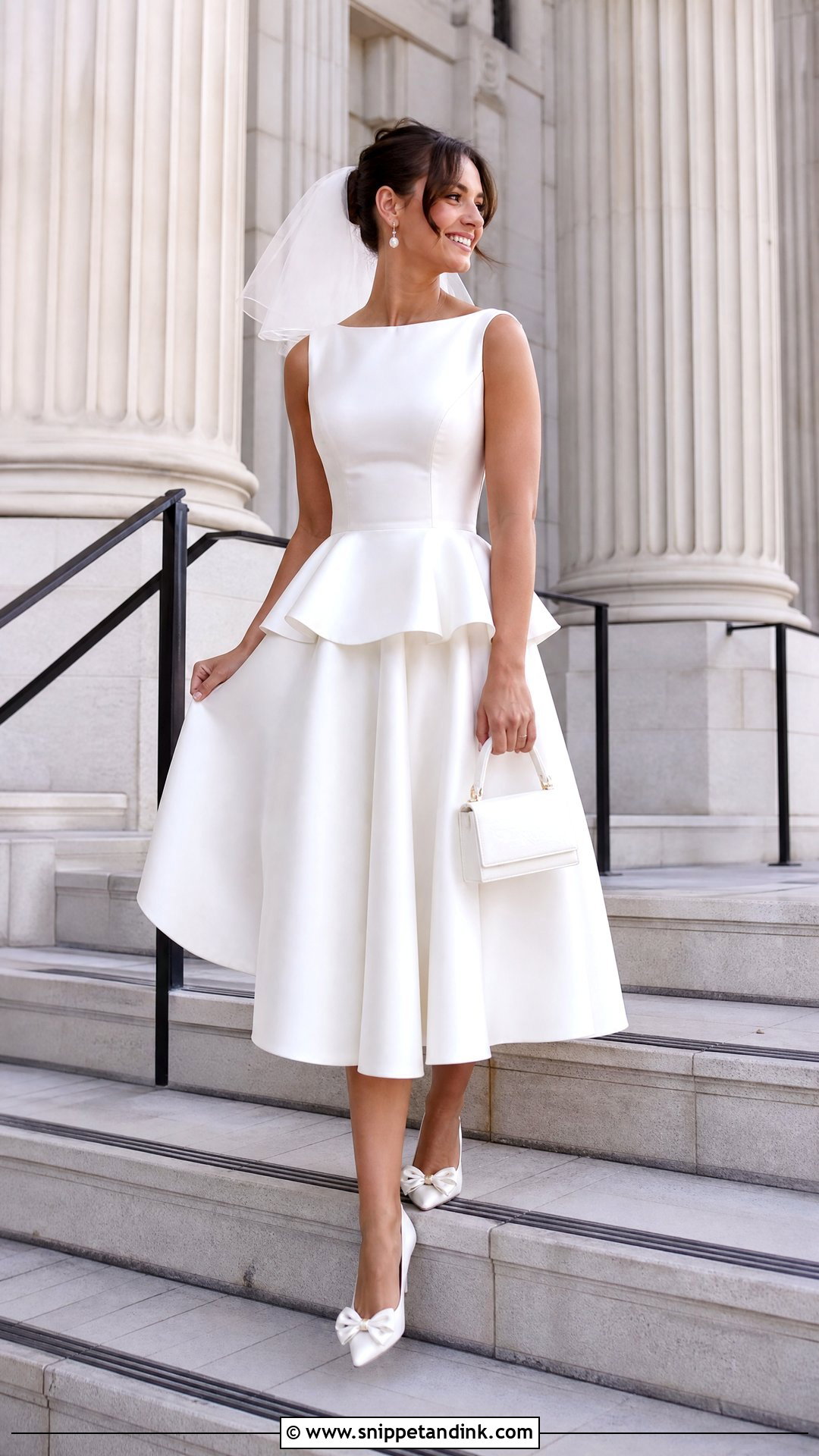
Tea length shows your shoes and keeps the peplum playful. A fitted bodice with a neat peplum and a hem between knee and ankle reads mid-century. Satin or faille gives structure, lace feels softer. Since the shoes are on view, I’d invest there: pointed pumps, bow-trimmed heels or fine ankle straps. Add pearls, a short veil and a small bag, with a smooth bun or waved bob. Courthouse ceremonies and daytime receptions suit it, and you can dance without lifting a hem.
18. Peplum Wedding Mini Dress
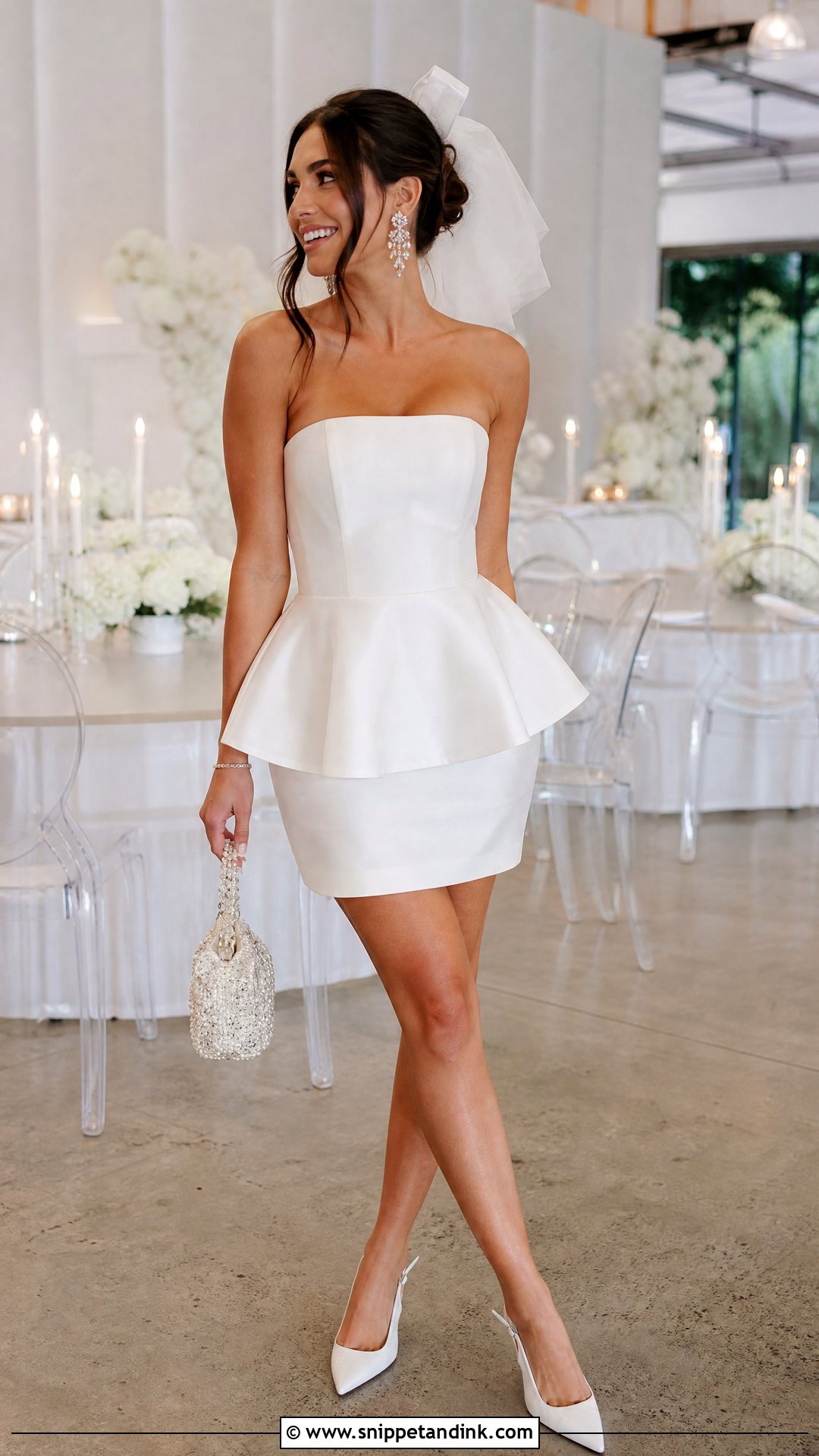
A peplum mini is a confident choice for a reception, an after-party or a relaxed ceremony. Keep the peplum compact so it defines the waist without covering most of the skirt; on a short dress, a deep peplum almost swallows the hemline. Satin, crepe or an embellished fabric makes it feel bridal. Pointed pumps or slingbacks, statement earrings and a small beaded bag suit it, with a short veil, bow or pearl headband. Sheer white tights work for colder months. If the ceremony gown has a peplum too, the mini carries the detail into the evening.
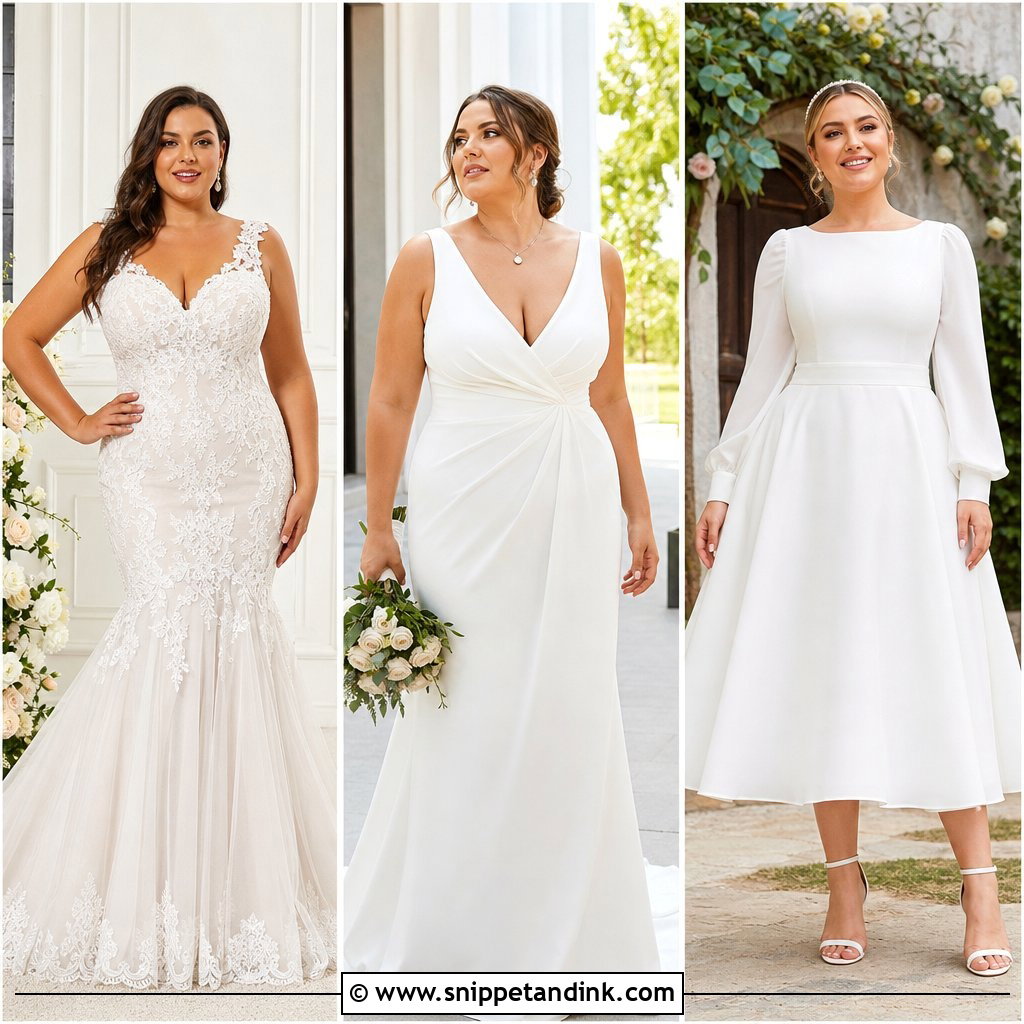
19. Plus Size Peplum Wedding Dress
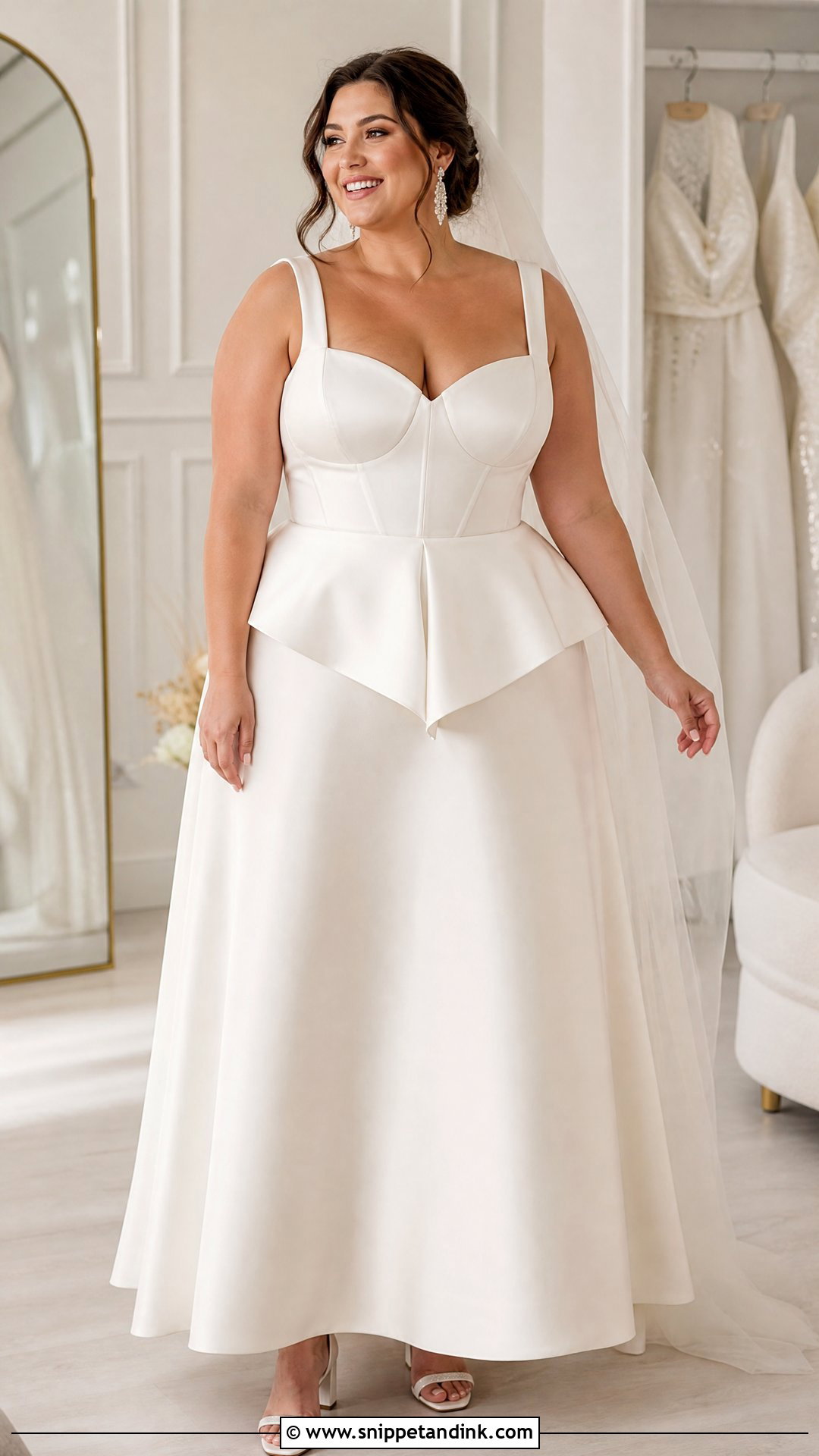
A peplum works across every dress size when the tailoring is right, and I don’t style it to hide anyone. One that starts at the natural waist and falls smoothly over the hips sits well on an A-line, trumpet or column skirt. Supportive corsetry and comfortable straps make a bigger difference to the fit than any single design choice. Stable block heels, balanced drops and a veil scaled to the gown finish it, with a soft updo. Bring your actual undergarments and shoes to every fitting, because the peplum’s length is judged against your hip with the real shoes on.
20. Vintage Inspired Peplum Wedding Dress
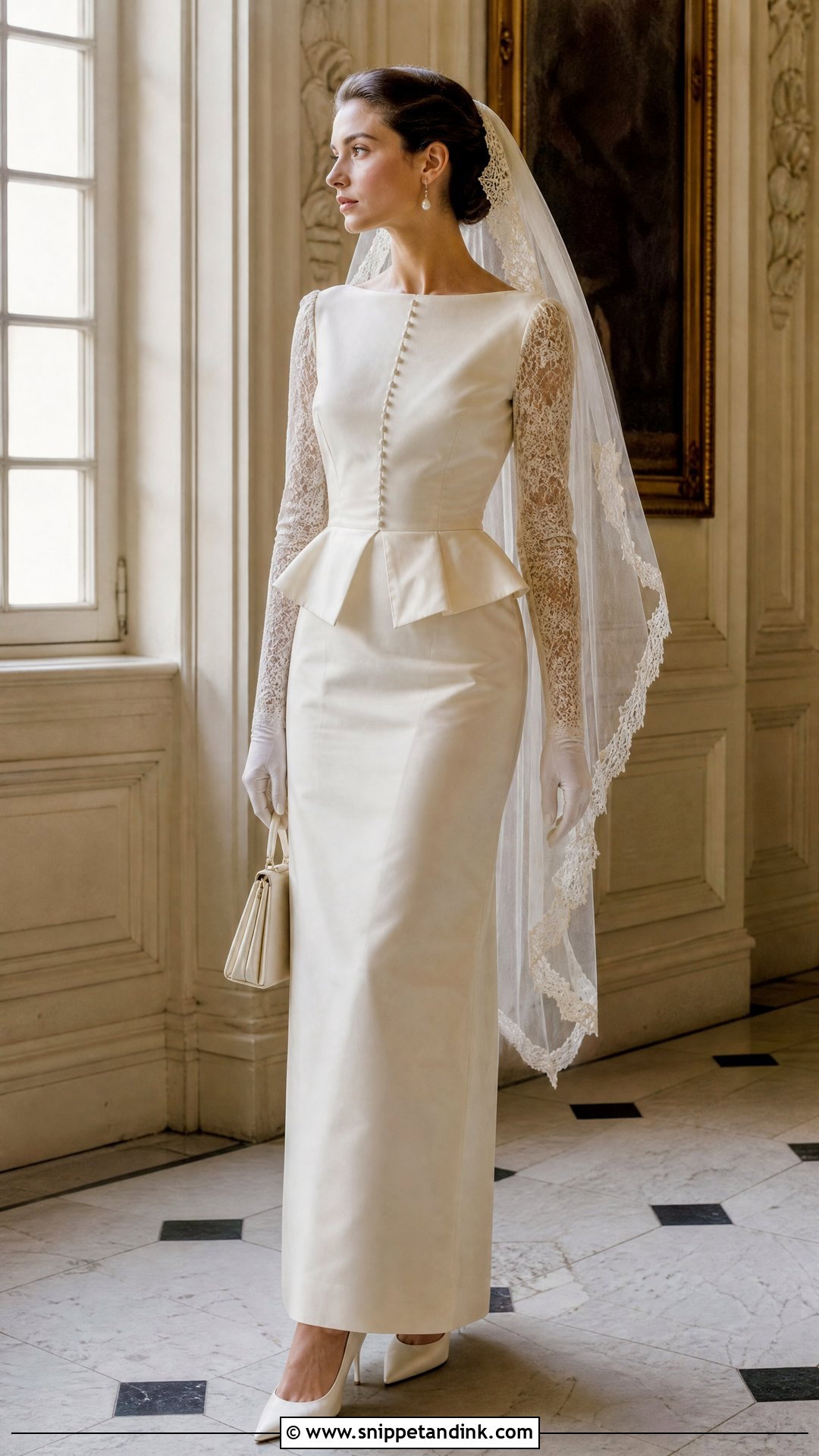
Vintage-inspired peplums should nod to the past, not look like a costume. I’d look for satin with covered buttons, lace sleeves, a softly pointed waist and a modest peplum that blends into the skirt. Tea length feels mid-century; a long fitted skirt feels more formal. Ivory pumps, pearl earrings and a small structured bag fit either. A birdcage veil suits the shorter dress and a lace-edged fingertip veil the long one. Polished waves, a rolled updo or a neat chignon finish it, and I keep the palette to ivory, cream and soft metallics so nothing looks theatrical.
Living With a Peplum From Car Ride to Last Dance
A peplum is the part of the dress that gets sat on, crushed in the car and squeezed in every hug. A few habits keep it looking the way it did in the fitting room.
- In the car, gather the peplum up and lay it on your lap rather than sitting on it. Stiff fabrics like mikado hold a fold for hours once pressed flat.
- Give the person helping you a handheld steamer for the bridal suite. A minute of steam from underneath revives a flattened tulle or satin peplum.
- After you sit at dinner, stand up and shake the skirt out at the waist before photos or the first dance.
- If yours is detachable, put the fastenings and the person who handles them on the timeline, so it comes off before dancing rather than halfway through.
Adding one to a dress you already own
If you’ve already bought a plain gown and miss some shape at the waist, a good bridal seamstress can make a detachable peplum from matching or contrasting fabric and fix it with hidden hooks. Leave time for it, as making and fitting a new piece takes longer than a standard hem. Ask to see a sample of the fabric next to your dress in daylight; ivories that look identical indoors can differ outside.
Check the Peplum From the Side, Not Just the Front
A good peplum balances waist, skirt and fabric. Structured satin gives bold volume, while lace, chiffon and tulle soften it, and a detachable peplum or a reception mini gives you options. At appointments, look at every dress from the front, the side and the back, because the profile is where a peplum succeeds or fails. Sit, walk and move as you would on the day. Bring your shoes and undergarments, and whichever of these looks you love, let the fit decide.
You'll Like These Ideas:





Leave a Reply