
Most of the size 16 brides I dress arrive expecting to be told what they can’t wear. My answer is that the silhouette matters less than the engineering inside it: where the support comes from, how the fabric is lined, whether the waist seam sits where your waist actually is. The gowns below are chosen to celebrate your shape rather than hide it, from A-lines and ball gowns to columns and a reception mini. Shop by your bust, waist and hip measurements rather than the label, because bridal brands size inconsistently, and plan on alterations whichever one you choose. Under each idea I’ve written what I check when a bride steps into it.
Trying On Gowns When the Shop Sample Is Two Sizes Smaller
Many bridal shops stock their samples in the 10 to 12 range, so a size 16 bride often tries on dresses that are clipped at the back or only zipped halfway. It’s frustrating, and it can make good dresses look wrong. I’d tackle it in three ways.
- Call ahead and ask which designers they carry in larger samples, and book a time when a stylist can pull those for you.
- Ask about size-inclusive trunk shows, where a designer brings a fuller range for a weekend.
- When a sample doesn’t close, judge the neckline, sleeves and skirt shape, and let the stylist explain how the bodice will fit once it’s made in your measurements.
Once you’ve narrowed it down, ask whether the brand offers made-to-measure options. Some will adjust the pattern for a small fee, which saves money at alterations.
1. Size 16 A-Line Wedding Dress With Sweetheart Neckline
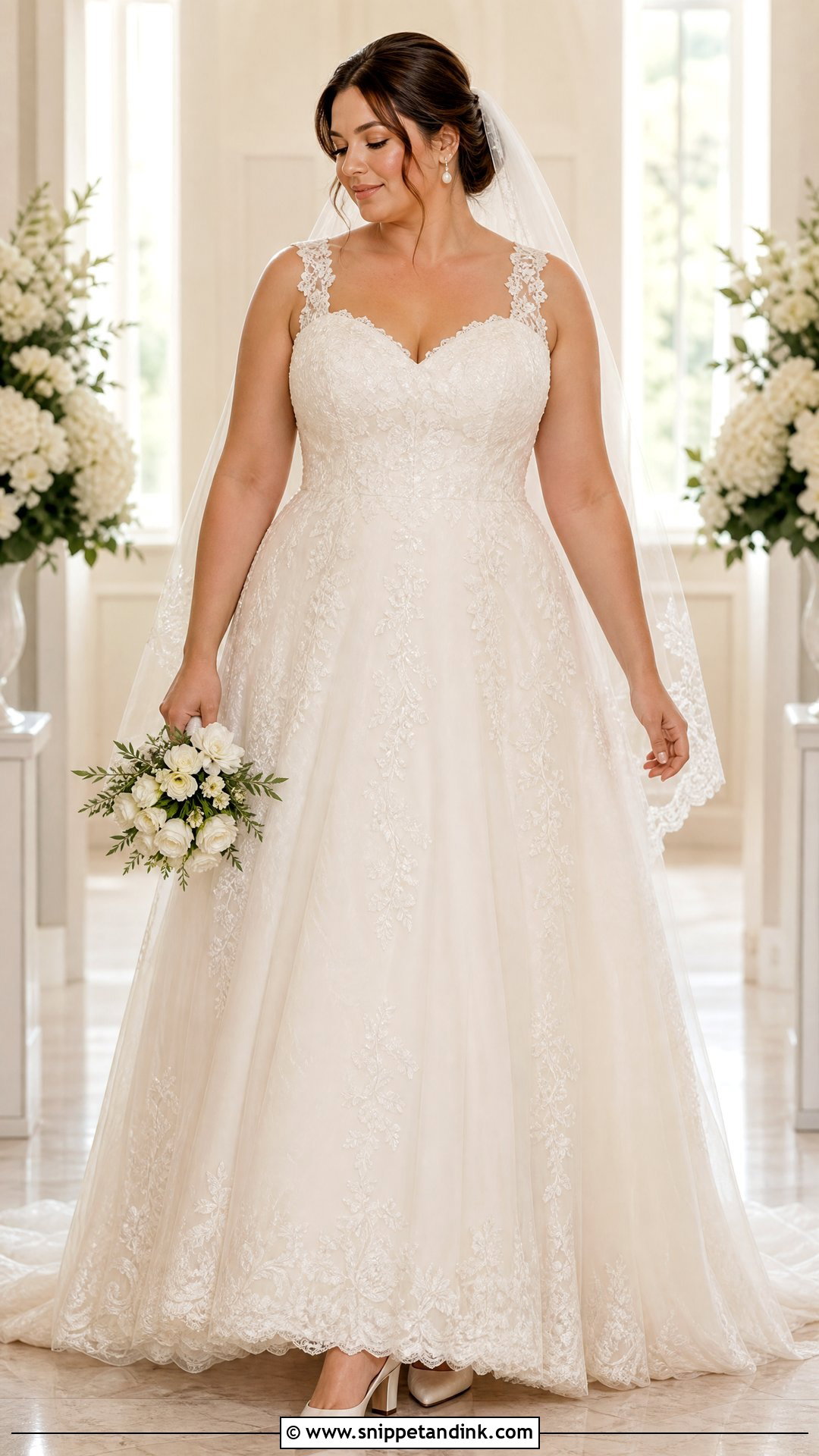
Sweetheart necklines need the bodice to do the lifting, so I look inside first: light boning, shaped cups and straps at least an inch wide if you want them. The A-line skirt should start at your natural waist and skim over the hips without tenting. Satin gives a clean finish; lace adds texture and hides the small creases a long day brings. The test that matters is sitting down and raising your arms. If the top edge of the sweetheart moves away from your skin, it needs taking in at the side seams.
2. Size 16 Satin Ball Gown With Basque Waist
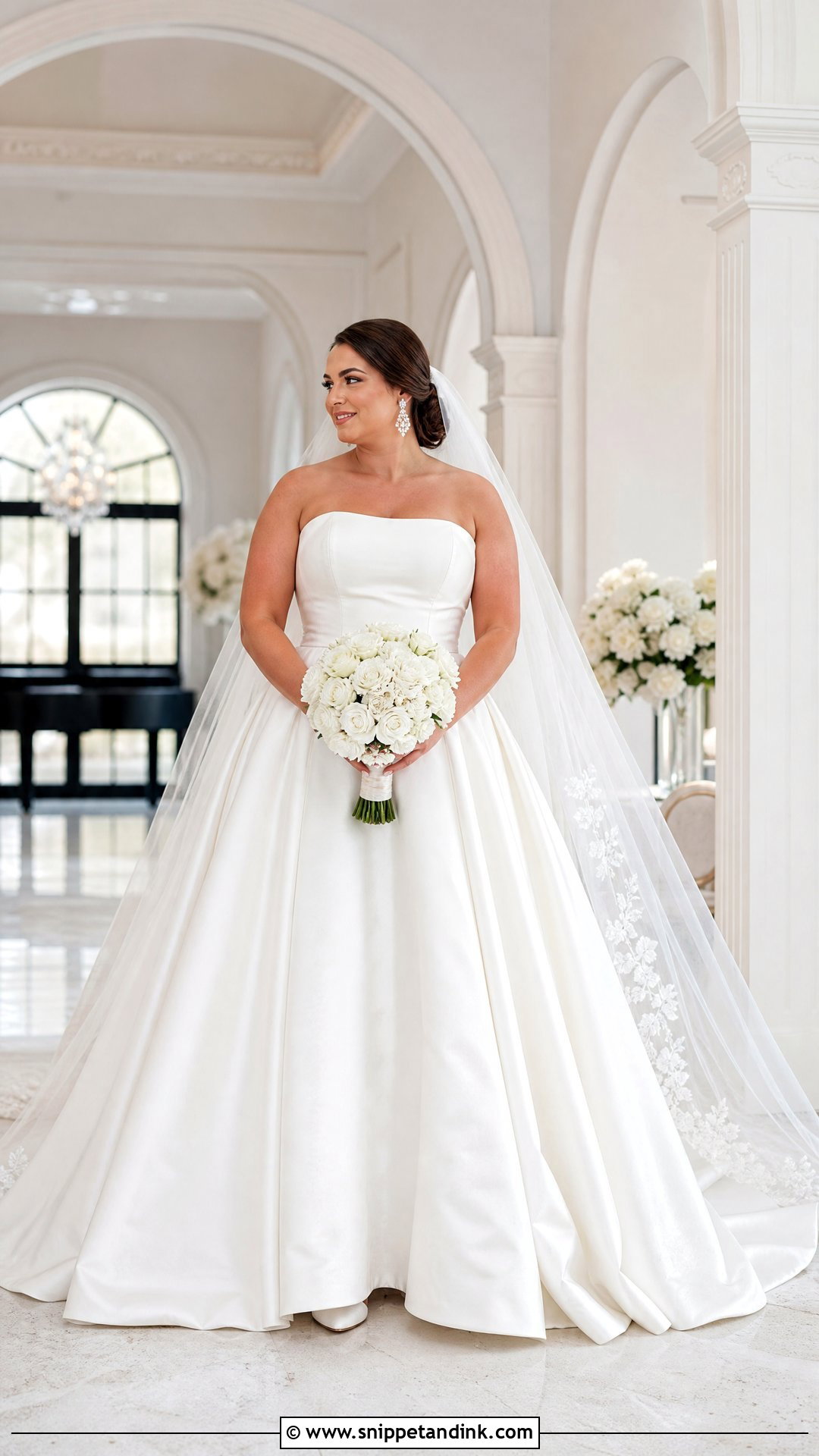
If you want a dramatic entrance, a satin ball gown with a Basque waist is hard to beat. The V-point below the natural waist lengthens the torso, and the full skirt balances the hips. Mikado holds the shape far better than thin satin, which collapses under its own weight. Strapless is possible, but I often suggest an off-the-shoulder version to carry the bodice on a fuller bust. The skirt is heavy, so ask for a bustle with several anchor points. A single hook will tear out by the second dance.
3. Size 16 Lace Fit-And-Flare Wedding Dress
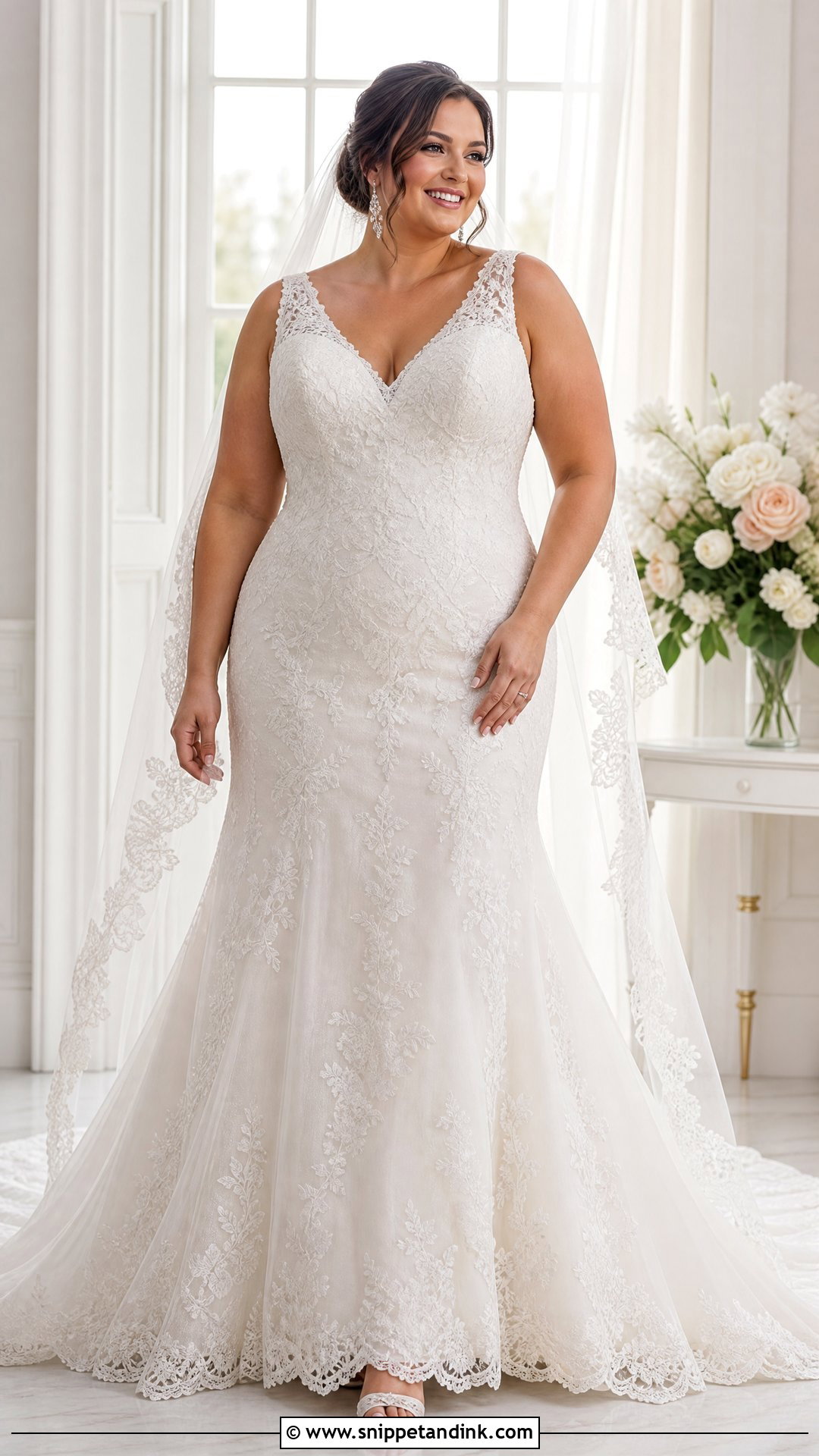
Lace fit-and-flares follow the body through the hips, and the question is where the flare begins. Above the knee gives you a proper stride; below the knee looks dramatic and makes stairs a negotiation. I’d pick the higher flare for most brides. An opaque lined bodice under the lace stops the shapewear showing through. Walk a staircase at your fitting and sit on a hard chair, then check the thighs for pulling across the lace.
4. Size 16 Crepe Mermaid Wedding Dress With Off-Shoulder Sleeves
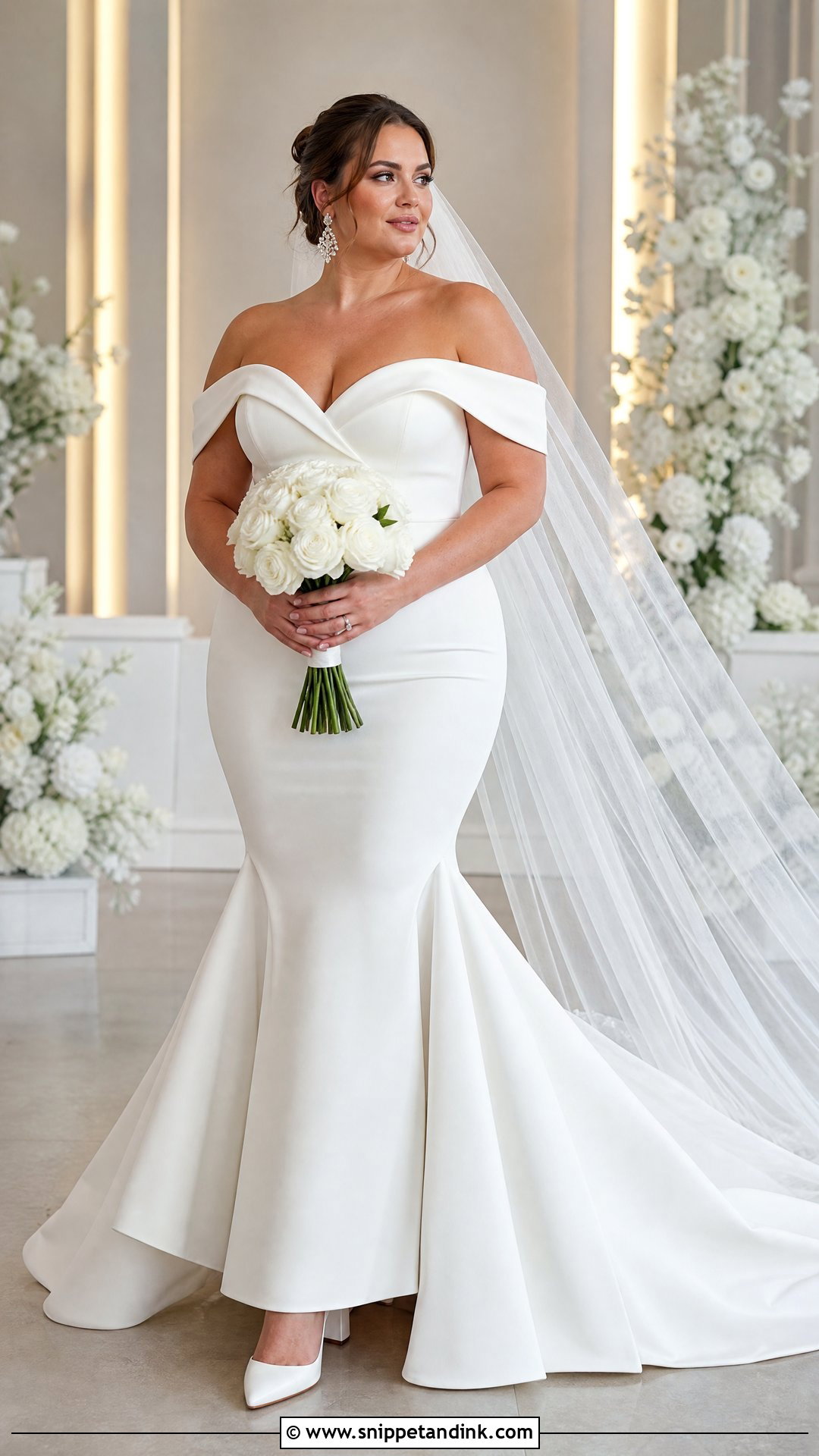
Crepe mermaids make a strong hourglass shape, and crepe is honest fabric: it shows any lumps from undergarments, so it needs a stretch lining and good internal structure. The draped off-shoulder sleeves soften the fitted shape and also give the bodice somewhere to anchor. Take full strides and dance a little in the shop. If you find yourself shuffling, ask whether the flare can be raised by a few inches, which most seamstresses can do.
5. Size 16 Chiffon Empire Waist Wedding Dress
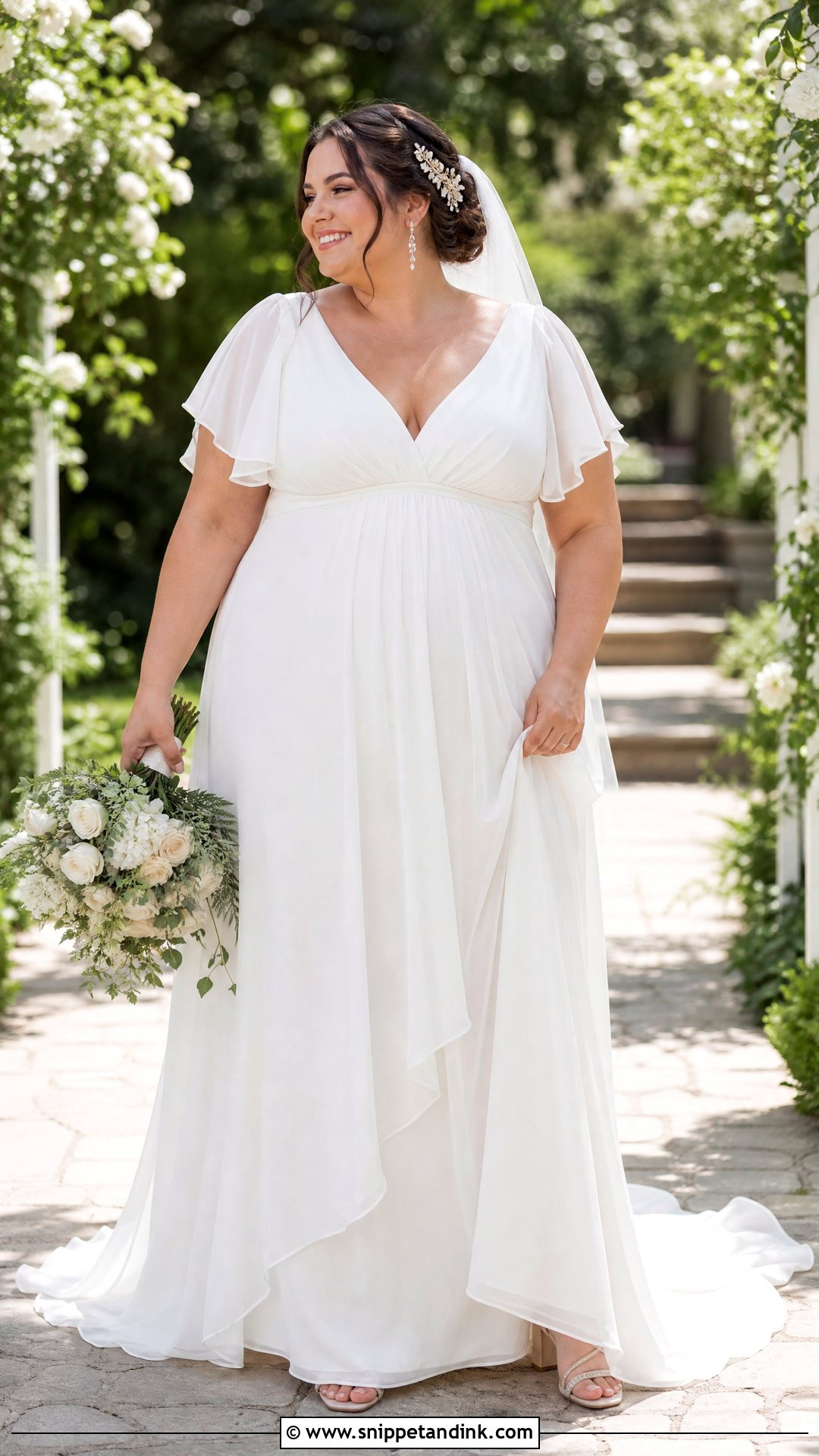
Empire waists don’t cling at the stomach, which is why many brides like them. The weak point is the bust, since the seam sits right under it and has to hold. A secure bust construction with built-in cups or a sewn-in bra makes the difference between floaty and shapeless. Chiffon suits warm weather and outdoor ceremonies; flutter sleeves add coverage without heat. Before buying, stand by a window. Chiffon in direct sun can go sheer, and the lining needs to cover fully.
6. Size 16 Square-Neck Wedding Dress With Long Sleeves
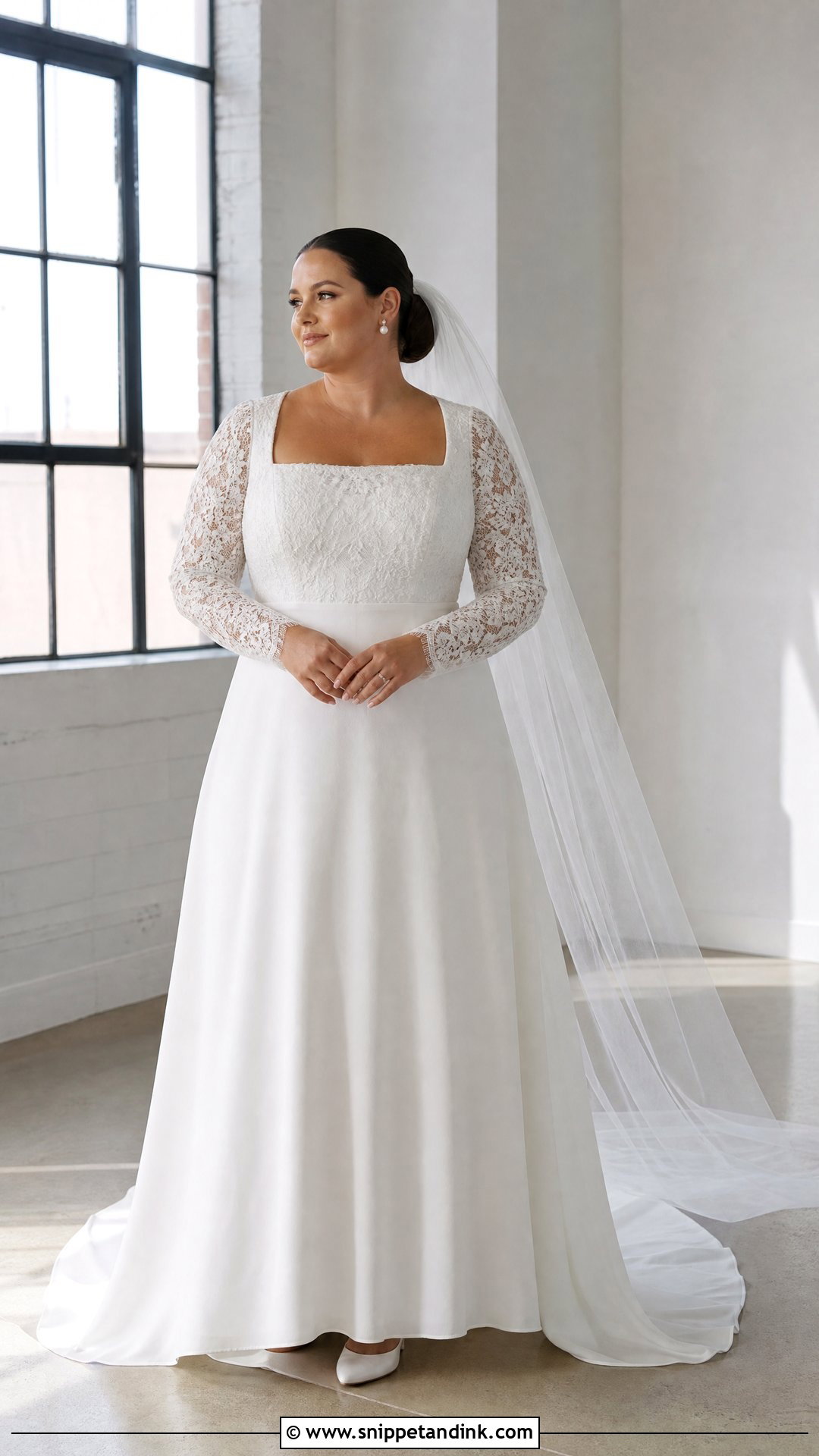
Long fitted sleeves plus a square neck is a lovely vintage combination, and it’s the one most likely to feel restrictive. Crepe sleeves need stretch; lace sleeves need lining that doesn’t scratch. I ask brides to hug themselves and lift their arms to shoulder height. If the bodice lifts away from the waist when you do, the sleeve armhole is cut too low and needs reworking. Keep the veil plain so the neckline does the talking.
7. Size 16 Tea-Length Wedding Dress With Block Heels
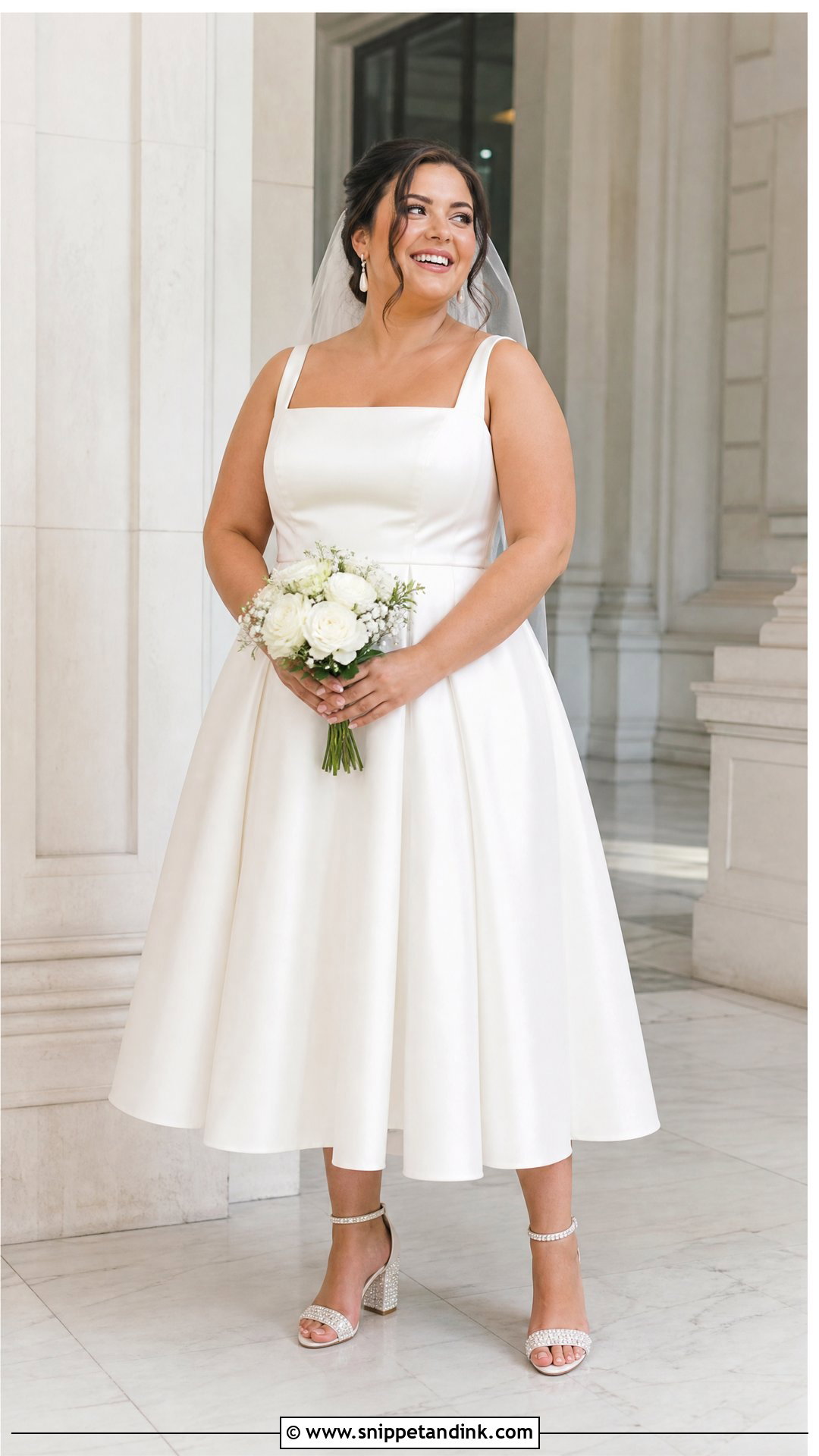
Tea-length is the cheerful option and the easiest one to dance in. The skirt lands between knee and ankle, so the shoes become part of the dress. A structured A-line with wide straps keeps the proportions balanced. Dotted tulle or lace adds personality; satin keeps it classic. Small differences in hem length show clearly at this length, so stand on a raised platform at the fitting and check it all round. Block heels in a shoe you’ve worn in will see you through a dance floor.
8. Size 16 Column Wedding Dress With Bridal Cape
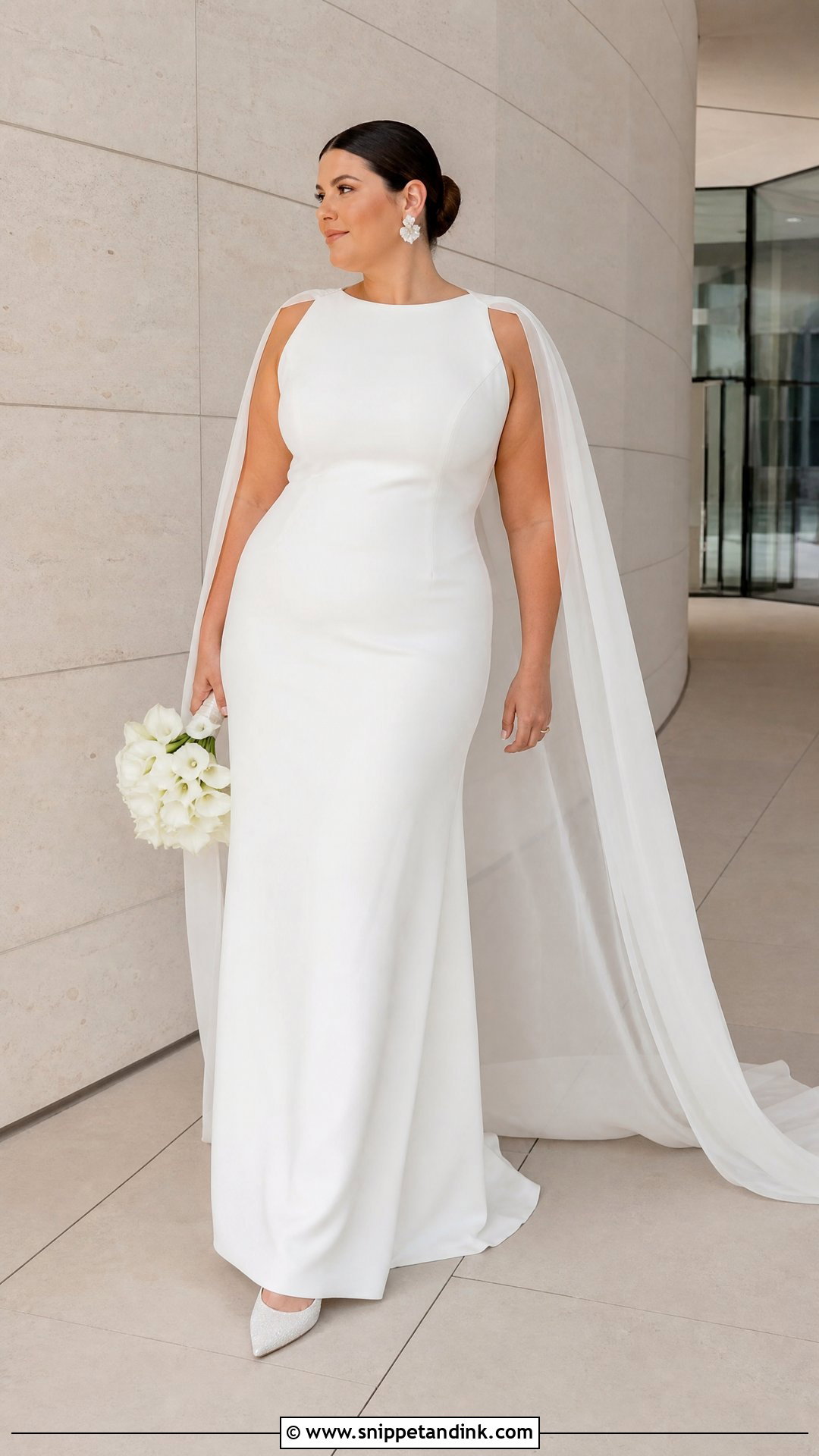
A column is the most minimal shape here, which means fabric choice is everything. Thin crepe or satin will show every seam and strap underneath; heavy crepe with princess seams and a stretch lining skims instead. The detachable cape adds ceremony drama and comes off for the reception. Have the cape attached at the shoulders or the back, not the neckline, so it doesn’t drag the front of the dress down. Hem the gown to just clear the floor in your shoes.
9. Size 16 Boho Lace Wedding Dress With Bell Sleeves
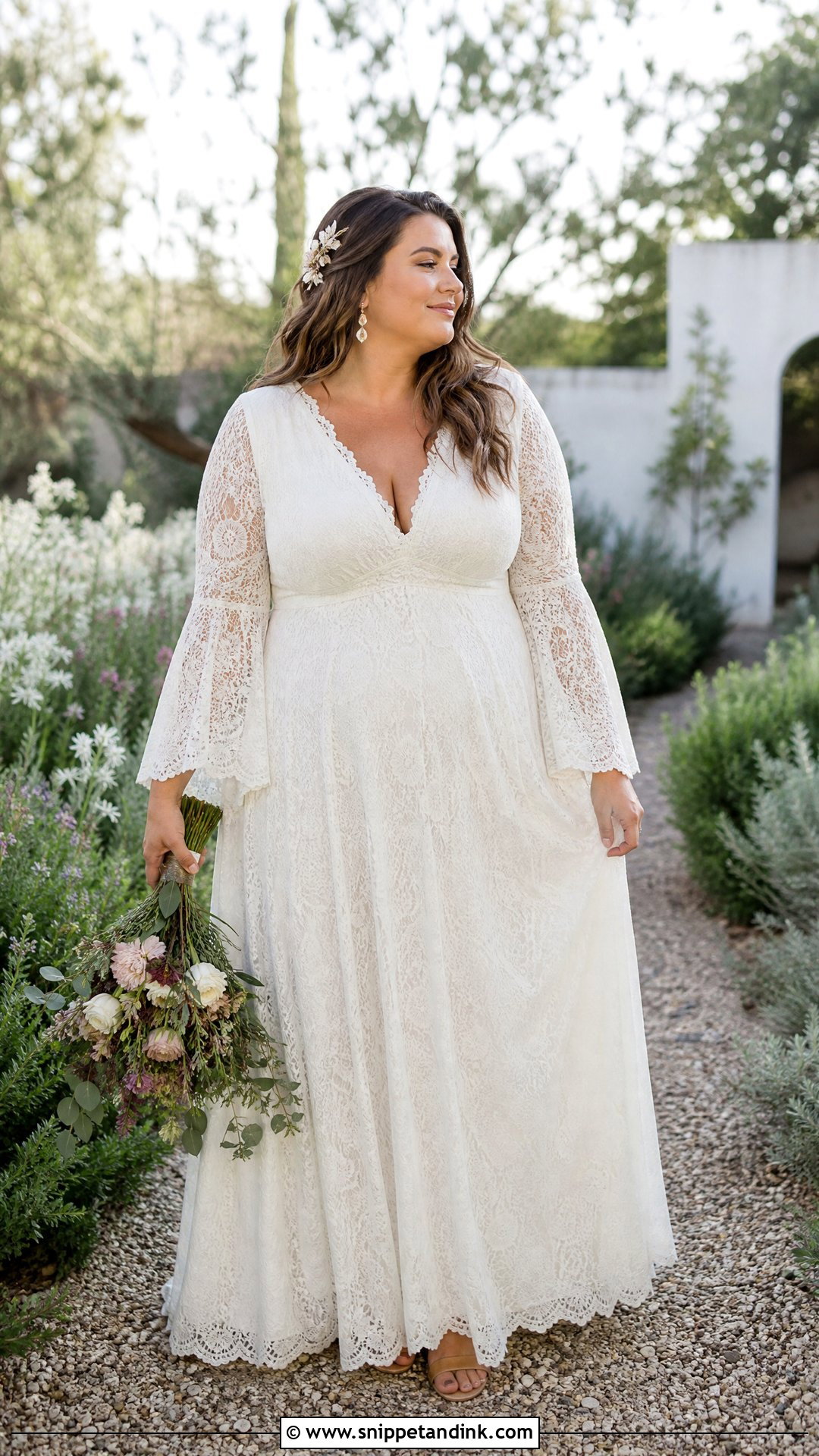
Boho lace with bell sleeves is relaxed, and it works best when the support is quietly built in. A modest back panel and a properly lined bodice let you skip heavy shapewear, which fights the easy feeling of the dress. Choose open lace motifs for warmth. Short sweep trains are much easier on grass than chapel-length ones. Feel the inside of the sleeve against your arm before buying; some lace is harsh on bare skin.
10. Size 16 Corset Wedding Dress With Tulle Skirt
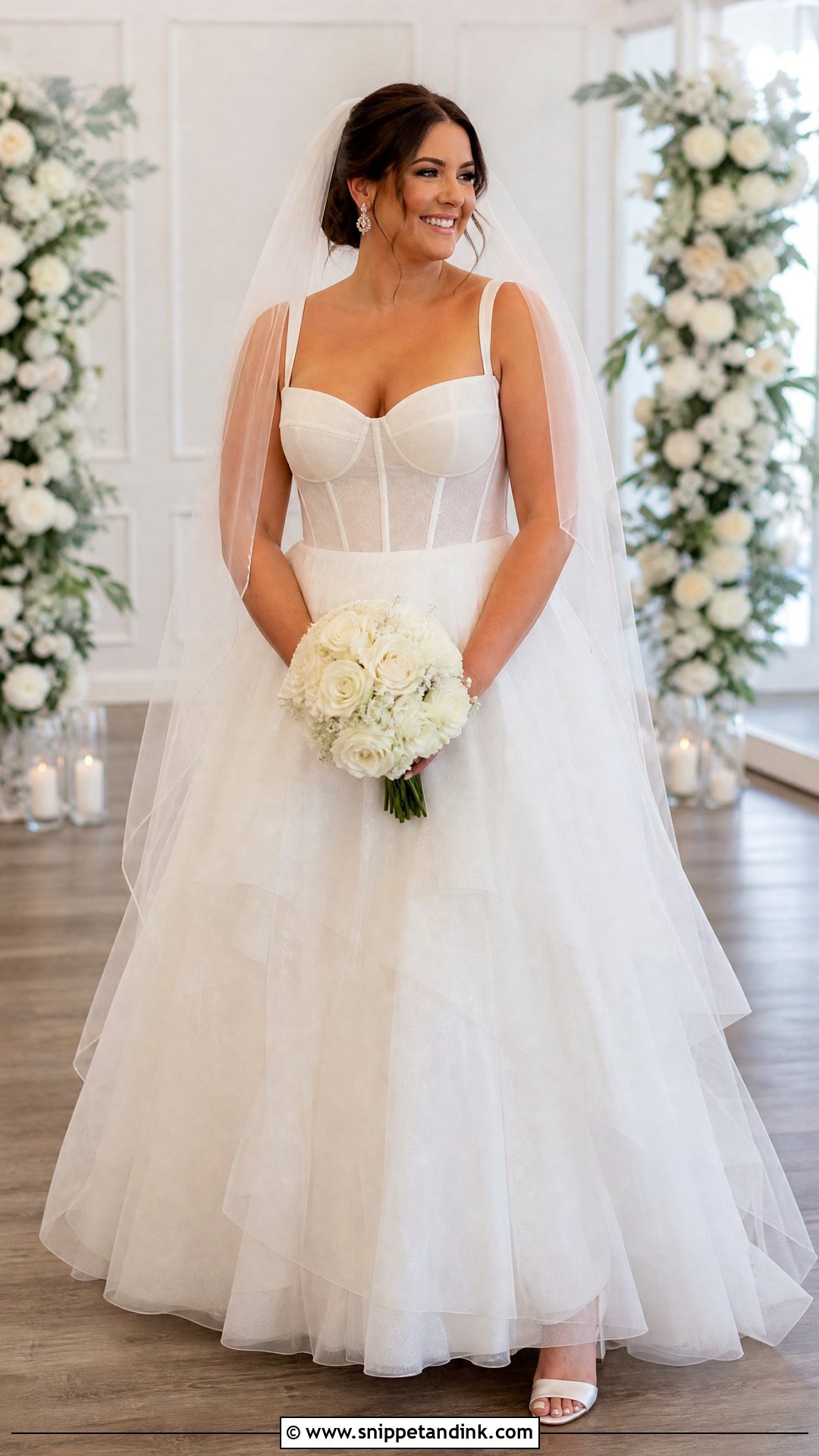
Corset bodices on curvier brides need more care than any other construction here. Flexible boning, cups placed at your bust point and a lace-up back that can be tightened or loosened on the day. I want you to be able to sit, eat and breathe deeply after it’s laced. A plain tulle skirt balances the structure, and simple accessories let any exposed boning detail show. Wear your planned undergarments to every single fitting.
11. Size 16 Wrap Wedding Dress With Flutter Sleeves
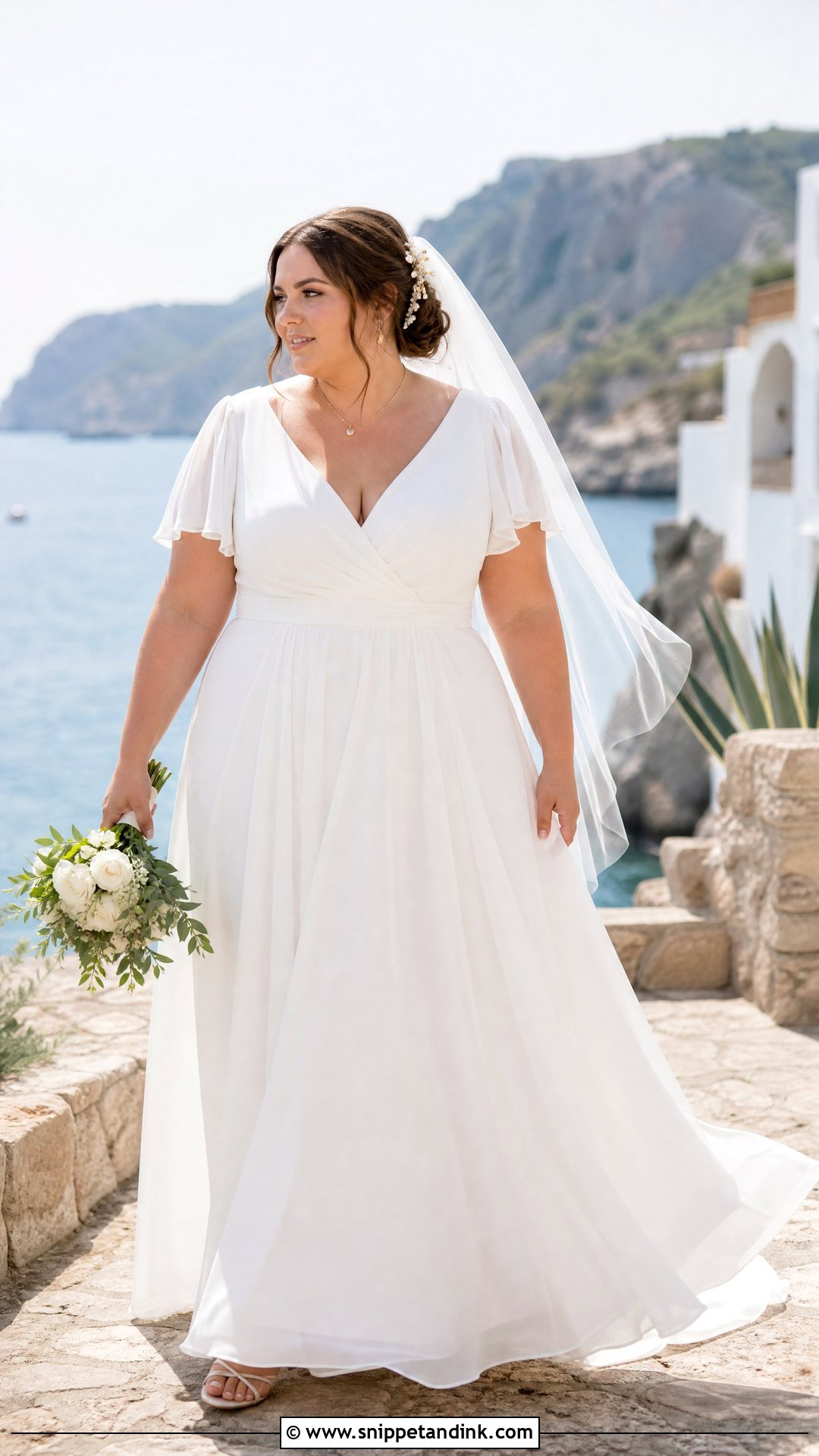
Wrap bodices give you shaping without boning. I’d only choose one with a sewn crossover, never a tie that relies on a knot staying put all day. Add a hidden snap at the neckline for reliable coverage when you lean forward. Chiffon, georgette and soft crepe all drape well. Sit and walk in it to check the overlap stays flat. It’s the most relaxed gown on this list and suits outdoor or destination weddings.
12. Size 16 One-Shoulder Draped Wedding Dress
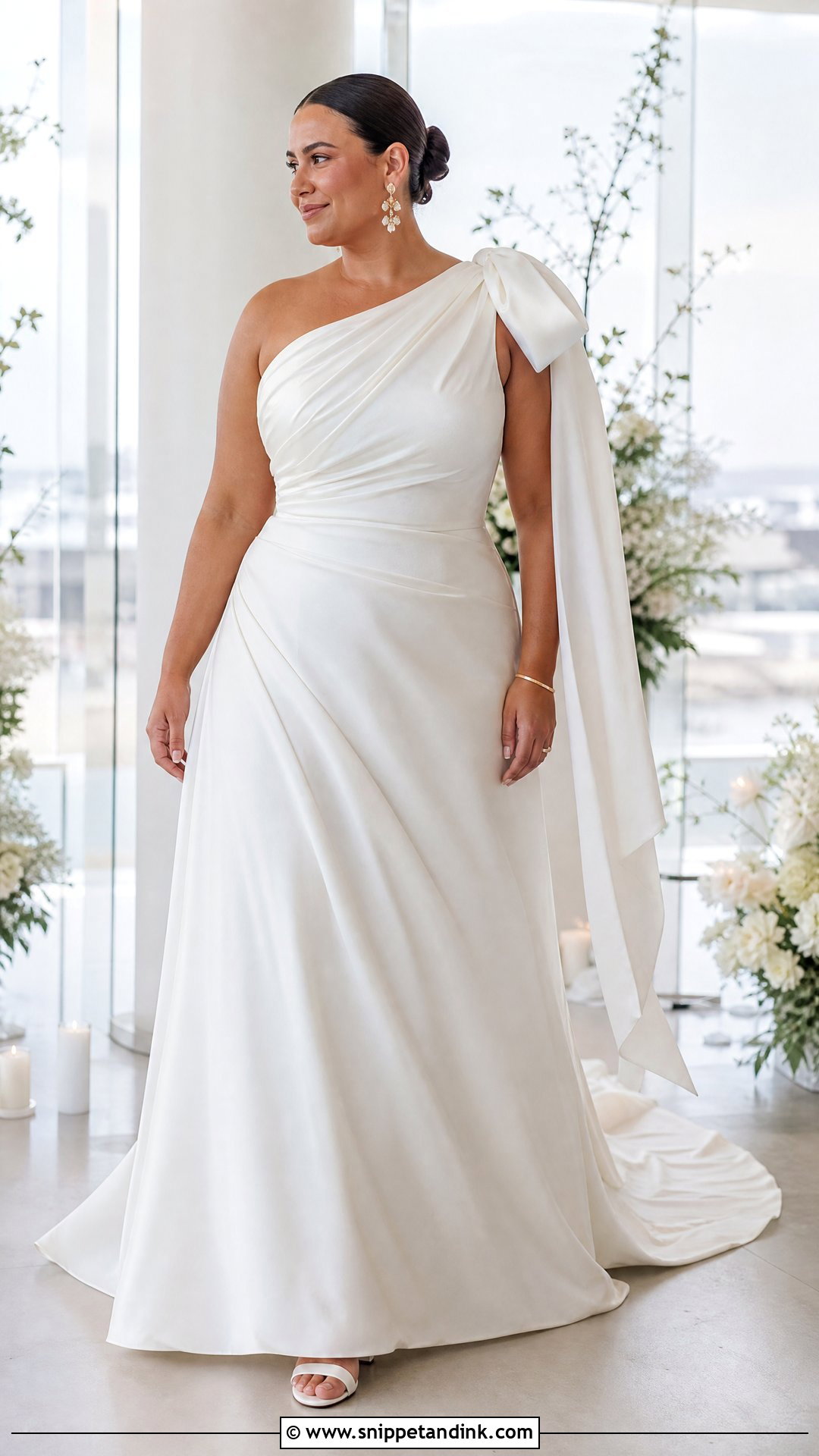
Draped satin or crepe on a one-shoulder gown creates diagonal lines that lead the eye up to the face. The single strap should be decoration; the opposite side of the bodice needs its own strong internal support. Check the strap doesn’t dig into the shoulder after you’ve worn it for ten minutes. A statement earring on the bare side and a slim bracelet are plenty. Raise both arms before you buy.
13. Size 16 Halter Neck Wedding Dress With Open Back
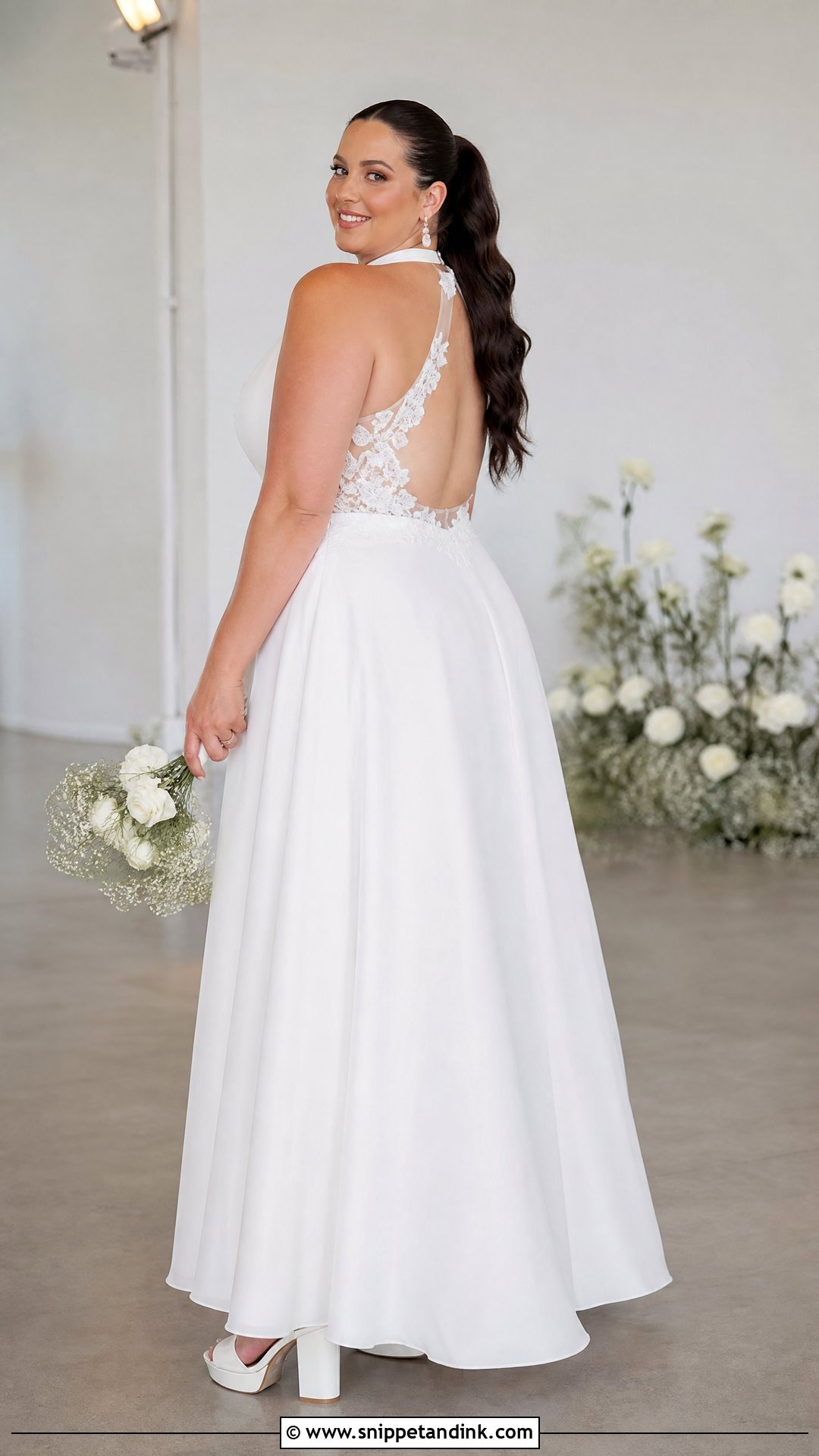
I’d always choose a wide halter band over a thin tie for a fuller bust, because a thin tie concentrates the weight on the back of the neck and gives most brides a headache by evening. Built-in cups or a supportive lining are essential with an open back; a normal bra won’t work, so discuss options at the first alteration appointment. A soft A-line skirt is the more relaxed version, a fitted crepe the sleeker one. Check the neckline while sitting and dancing.
14. Size 16 Illusion Neck Wedding Dress With Lace Sleeves
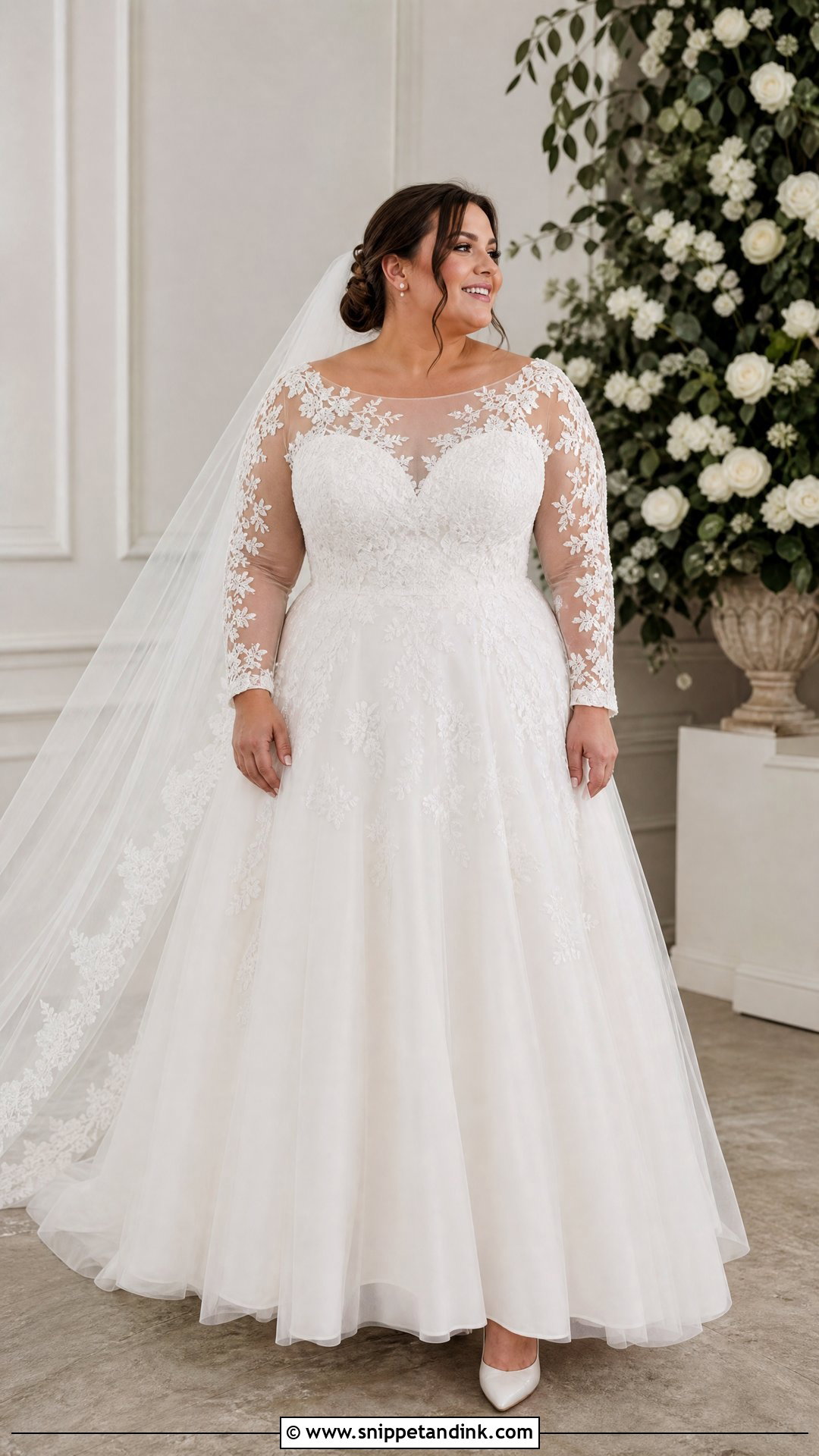
An illusion neckline gives coverage while looking open, but only if the mesh matches your skin. Bring a swatch to compare under daylight; the wrong shade shows up as a visible panel in photos. Lace appliqués running from bodice onto the sleeves create a continuous line. At fittings, check the mesh doesn’t bunch at the shoulders or scratch at the underarm. Small adjustments here make the mesh practically invisible.


15. Size 16 High-Low Wedding Dress With Statement Shoes
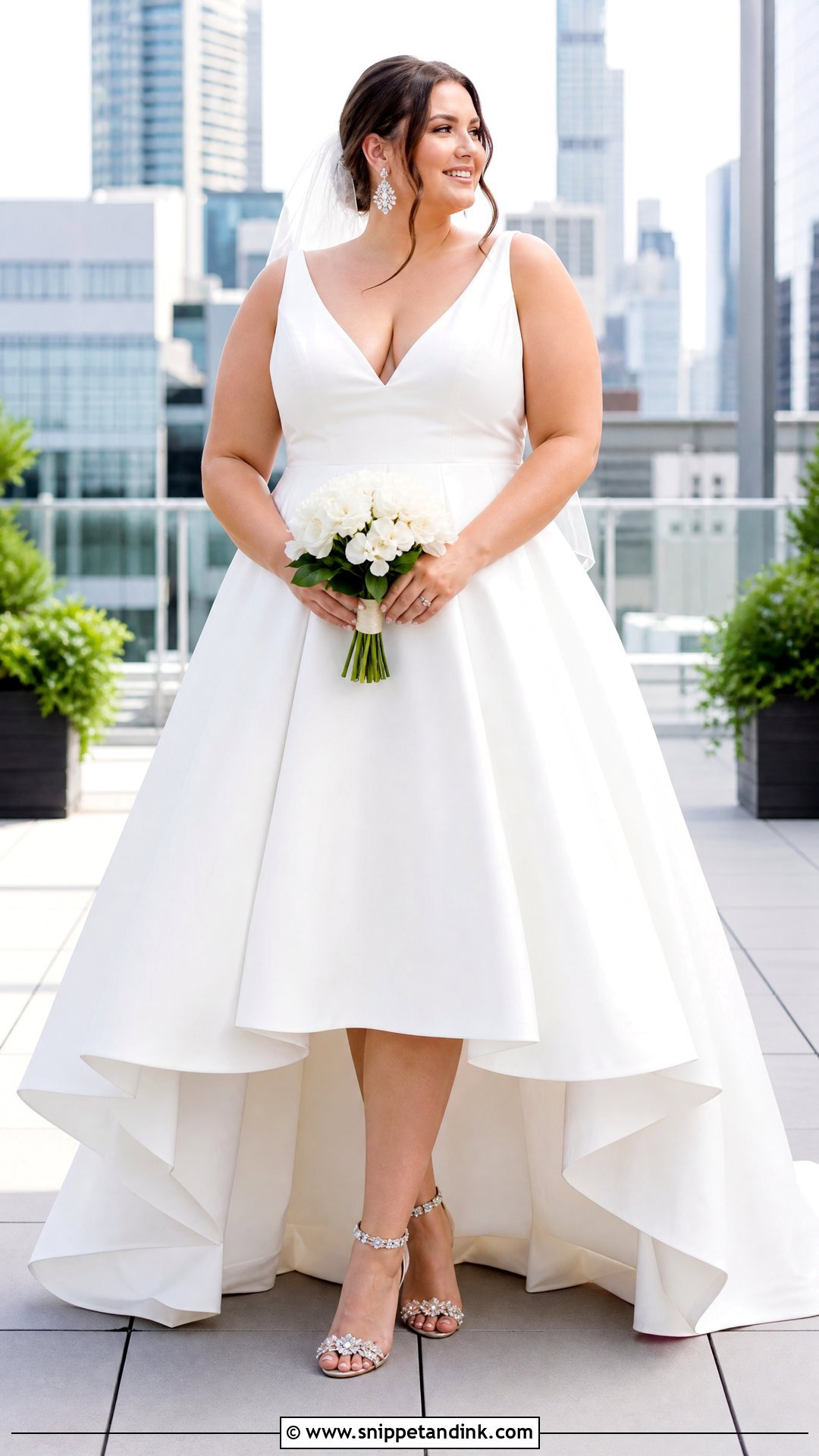
High-low hems need confident shoes. The front should end around knee or mid-calf and the back fall to ankle or floor, with a gradual slope between them. A structured bodice and full A-line skirt keep the shape clear. Satin looks polished; layered tulle looks lighter. Ask your seamstress to balance the lengths so the hem looks intentional, and keep the bouquet small enough not to hide the front.
16. Size 16 Floral Appliqué Wedding Dress With Tulle Skirt
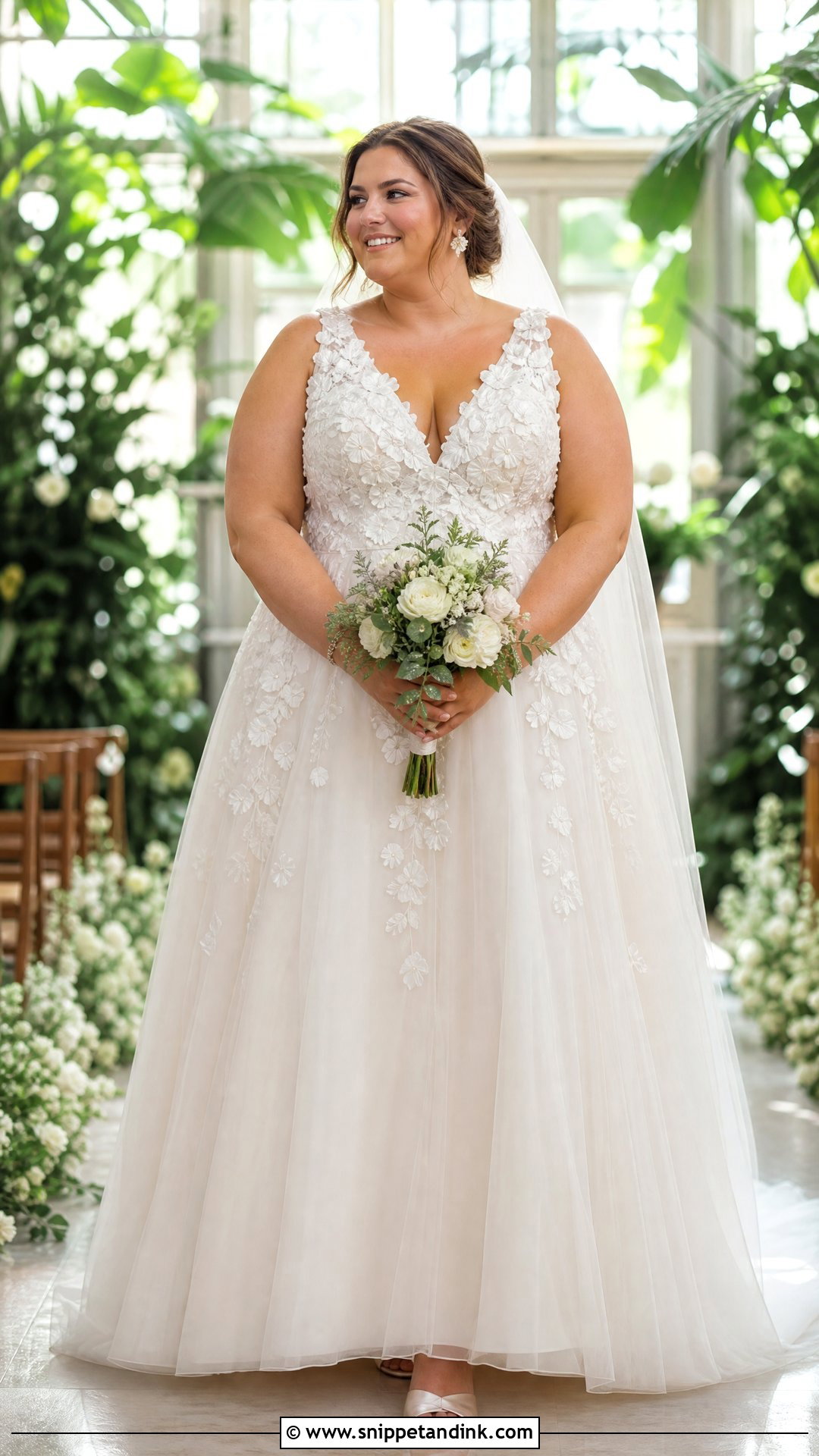
Three-dimensional appliqués are wonderful to look at and need checking in places most people forget: the underarms, the waist and the seat. A bulky flower under the arm will rub all day, and one on the seat becomes a lump when you sit. Ask for those to be moved or flattened. Flowers clustered on the bodice and scattered down the tulle skirt keep the waist defined. Plain veil, plain shoes, and a bouquet with a short color palette.
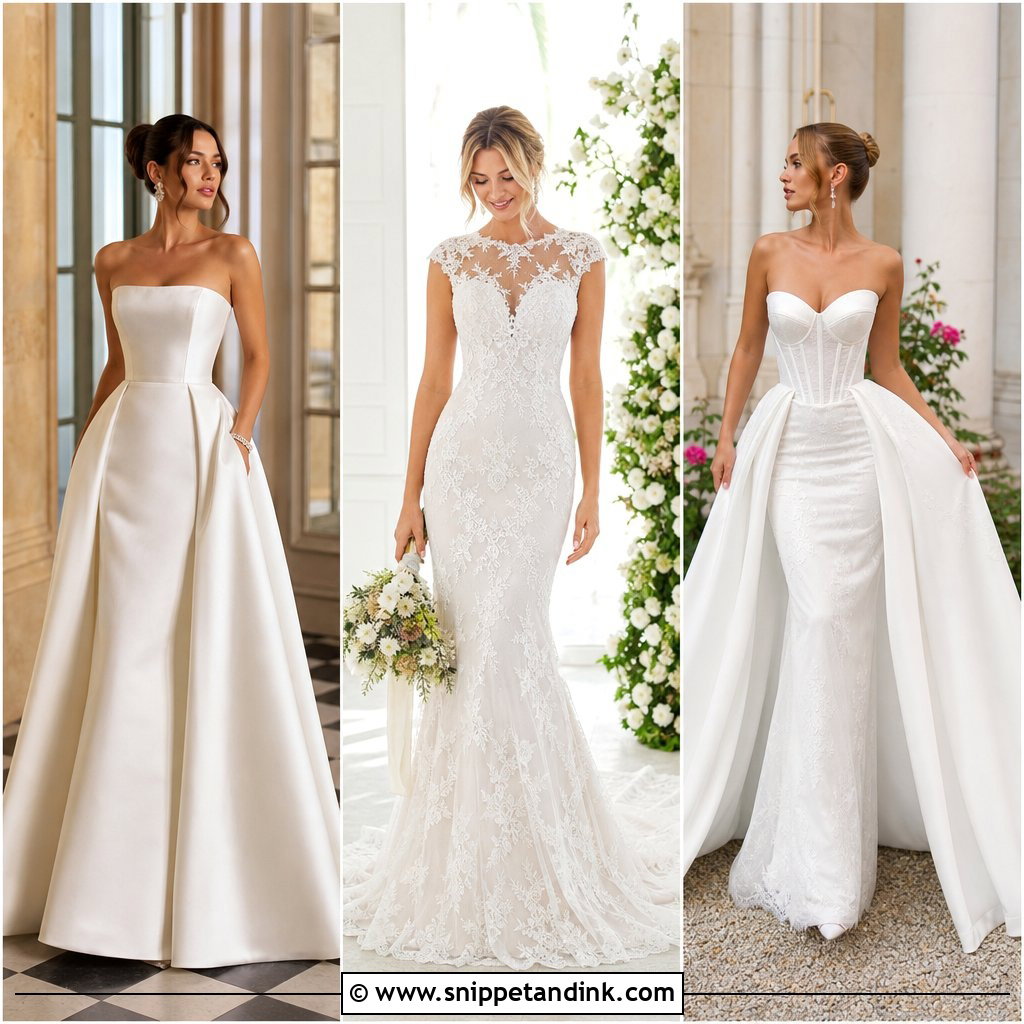
17. Size 16 Wedding Dress With Detachable Overskirt
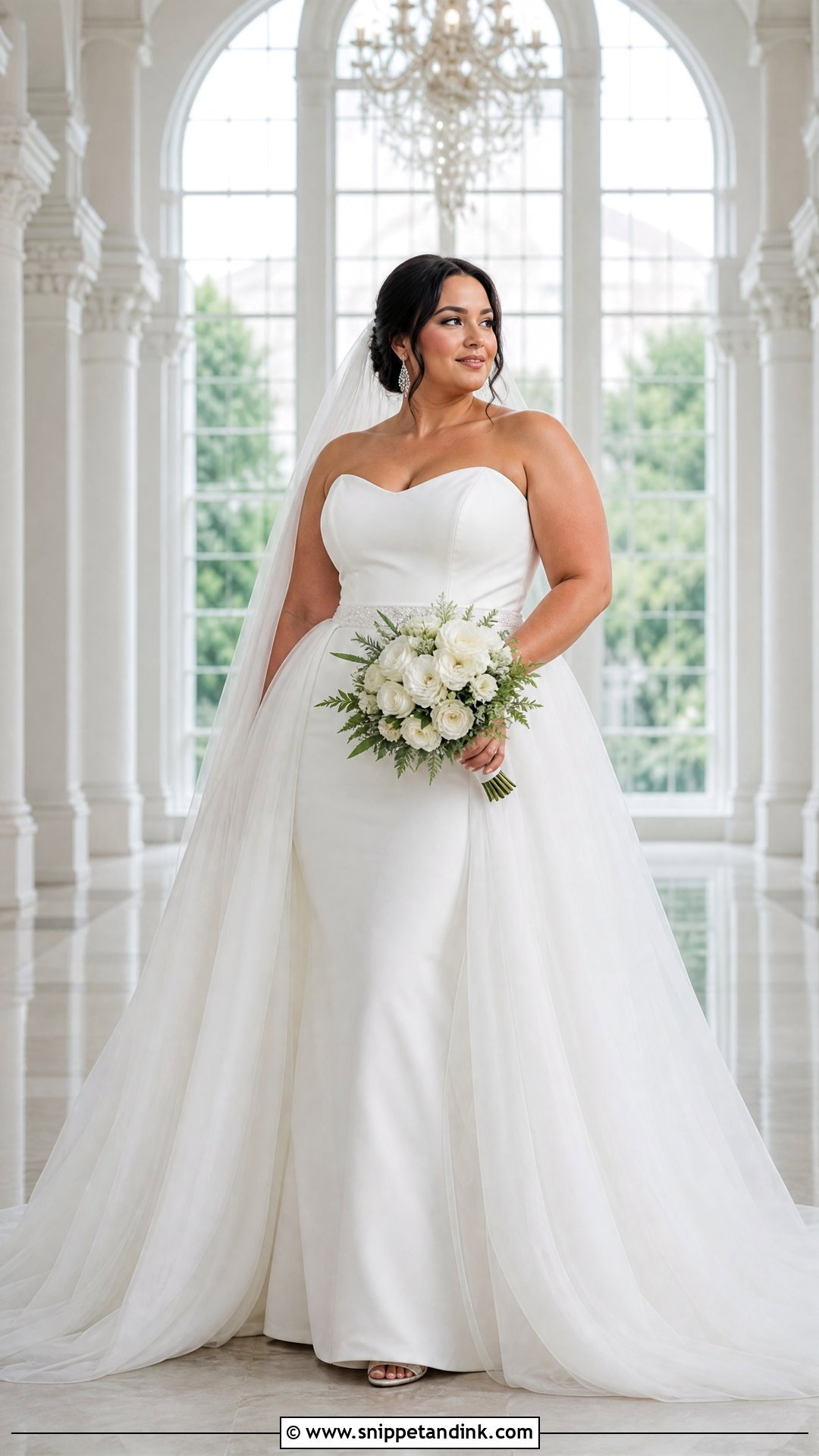
Detachable overskirts give you a ball gown for the ceremony and a slimmer dress for the reception. Choose the base gown first and make sure you’d be happy in it alone, since you’ll wear it longest. The overskirt waistband should sit smoothly without adding a bulky layer at the waist. Practise attaching and removing it with the attendant who will help, ideally at the final fitting with the seamstress present.
18. Size 16 Champagne Wedding Dress With Gold Accessories
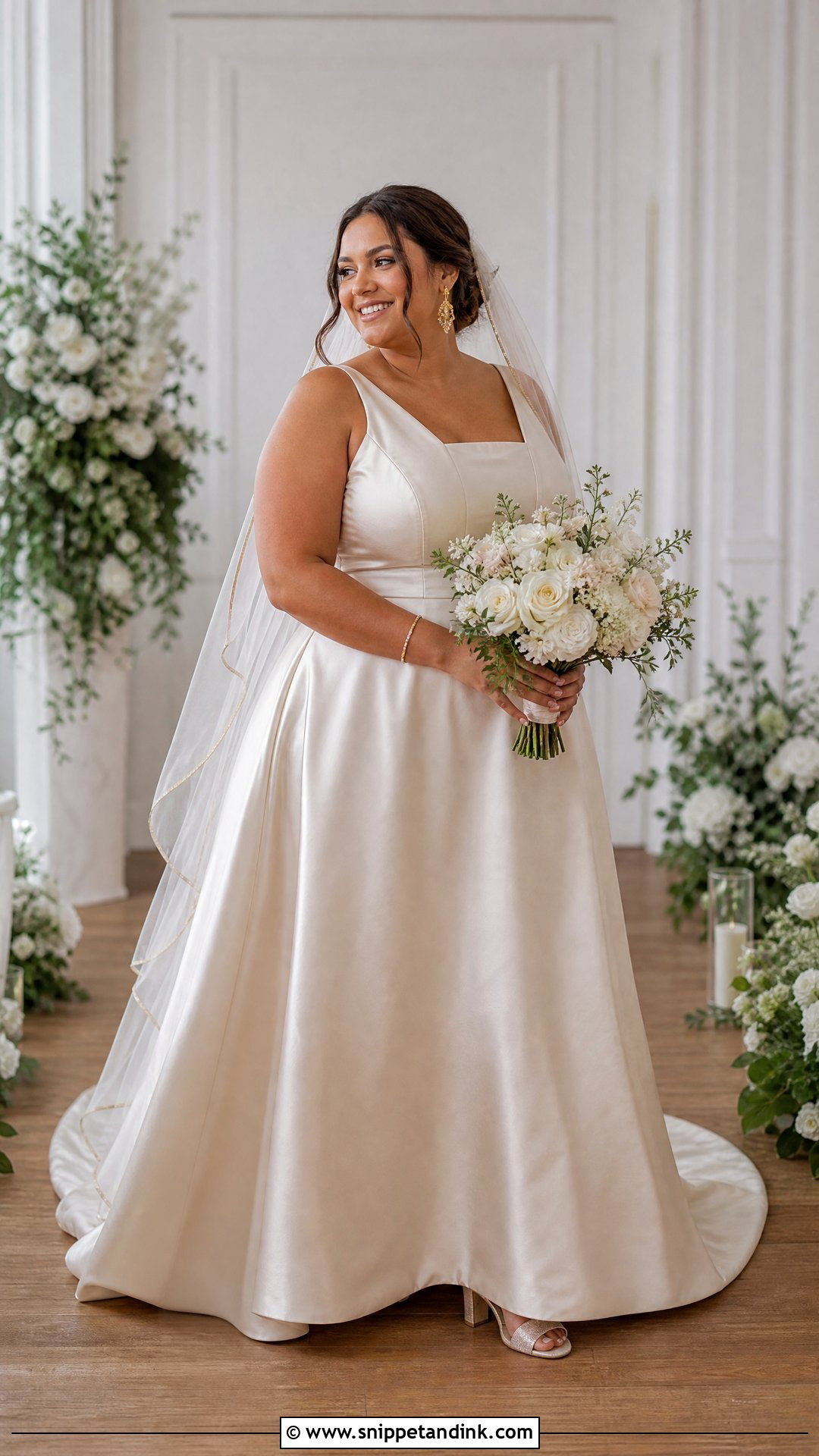
Champagne warms up skin that bright white can wash out, and it pairs naturally with gold accessories. Undertones vary a lot between fabrics, so check the veil and the dress together in natural light before ordering both. Choose undergarments in a shade close to your skin tone rather than white, which can show through a champagne lining. Gold drop earrings and metallic block heels finish it.
19. Size 16 Courthouse Wedding Midi Dress
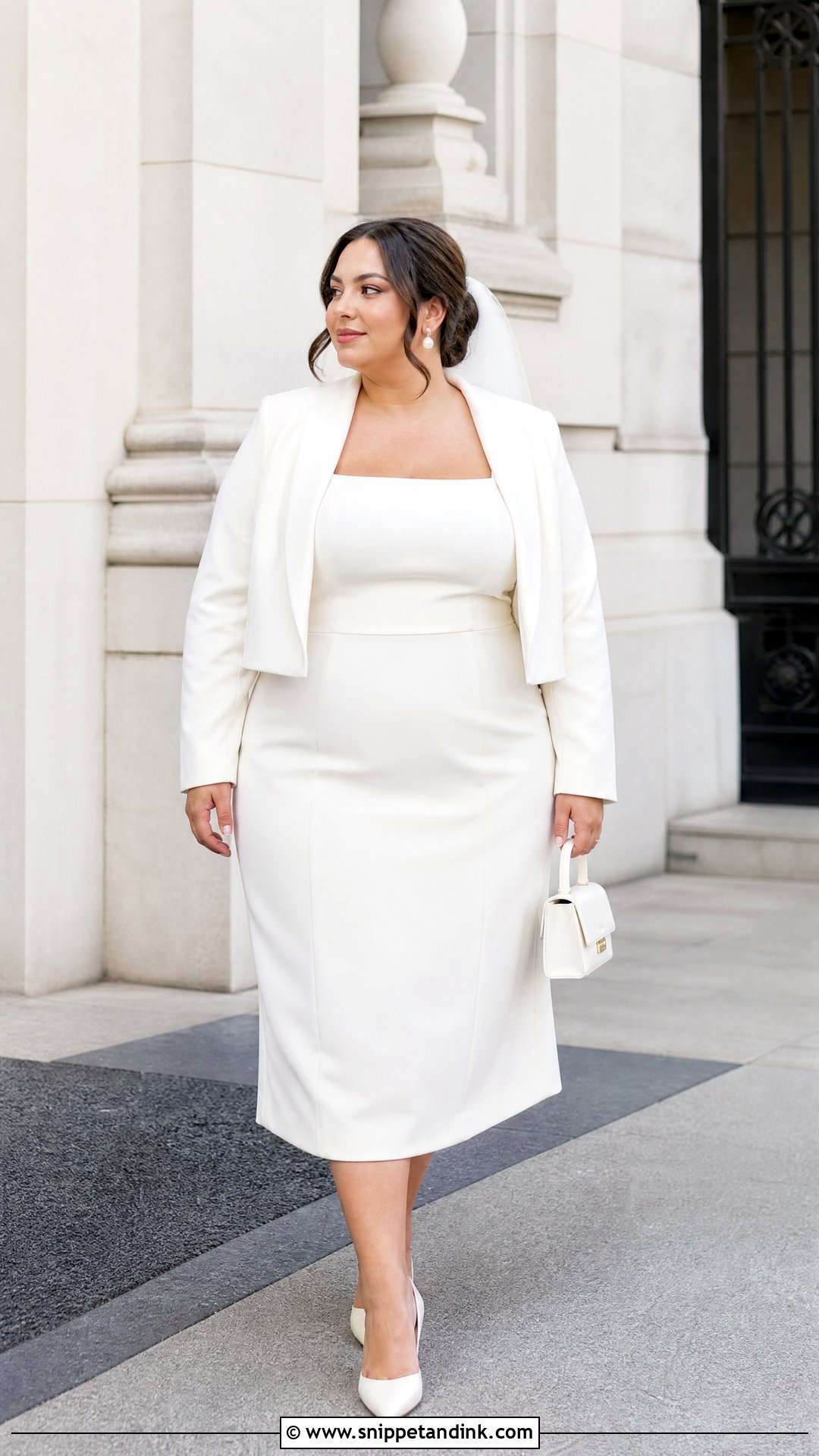
Courthouse weddings involve stairs, pavements and often a long wait, so a midi is a practical choice. A square-neck A-line or a draped crepe sheath both work at this length. Hem below the knee to the lower calf, and check you can climb steps comfortably. A cropped blazer for cooler weather should stop at your waist so the dress shape still shows. Close-up photos are the norm at small ceremonies, so pay for good fabric.

20. Size 16 Reception Wedding Mini Dress
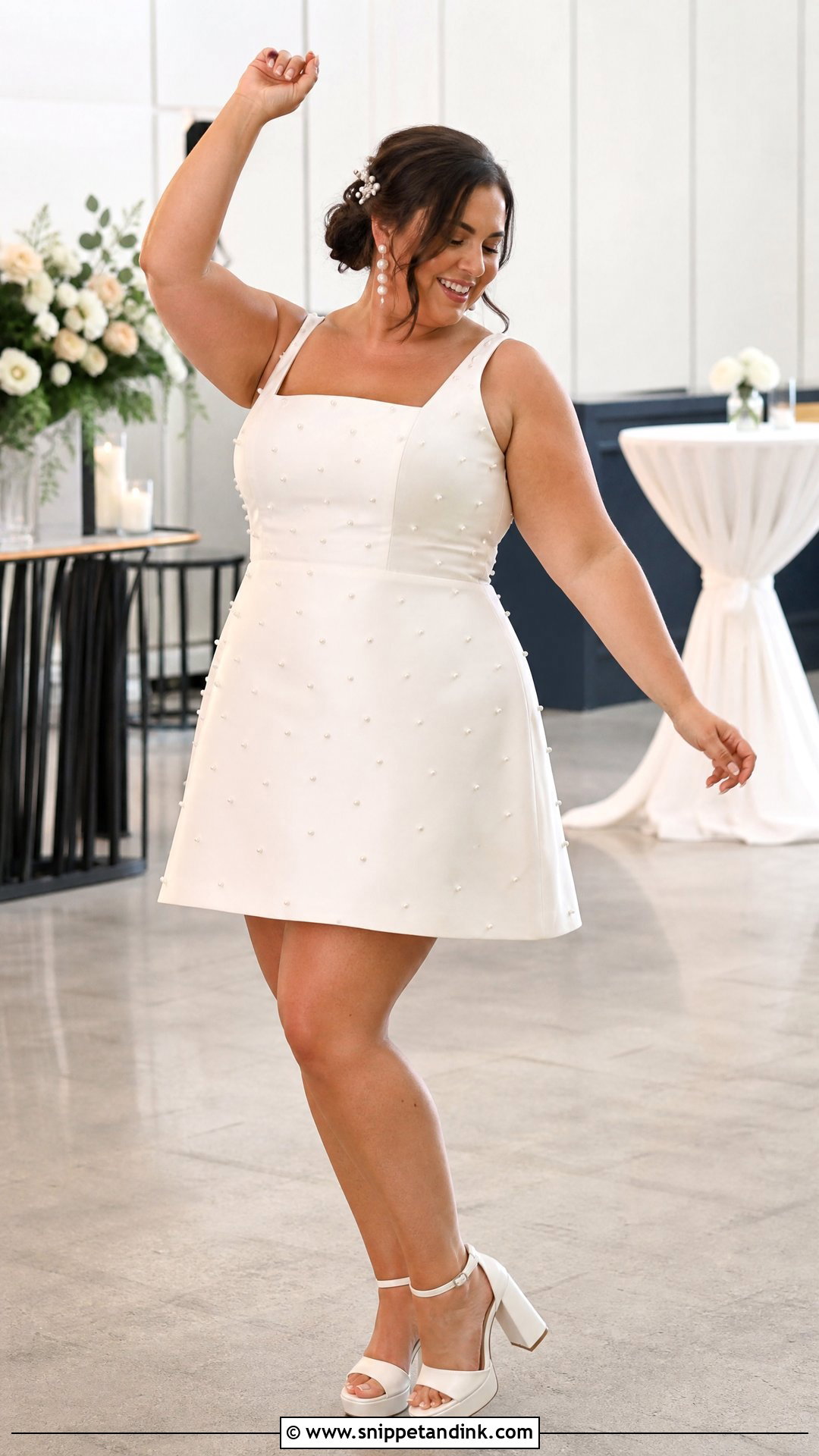
A reception mini is for dancing, so test it by dancing. I mean jumping, spinning and sitting down quickly. Pearl or floral appliqué details look bridal; heavy feathers can look like costume. A structured A-line or tailored shift holds its shape best. Sheer tights add coverage if you want it. Keep a light wrap nearby for outdoor photographs, and wear the shoes with the dress at home before the day.
What Goes Under the Gown
Undergarments decide how half of these dresses fit, so I sort them out before the first fitting rather than after. A few things I’ve learned from dressing curvier brides:
- Built-in cups beat a separate strapless bra for most strapless and halter gowns. Ask your seamstress to sew cups into the lining in your size.
- A longline bra spreads the weight across the ribs and stays put better than a short strapless bra.
- Anti-chafe shorts or a balm between the thighs make a long day of standing and dancing far more comfortable.
- Shapewear should smooth, not squeeze. If it rolls at the waist when you sit, it will show through crepe and satin.
- Buy everything before the first fitting and wear the same pieces to each one.
Planning for weight and heat
Full skirts in satin and mikado can weigh a lot. Before you commit, wear the dress for twenty minutes in the shop, not two. If you’re marrying in summer, look for breathable linings and ask if a lighter crinoline or fewer tulle layers is possible.
A small kit in your bag helps too: anti-chafe balm, plasters for heels and a few safety pins for a strap that loosens.
Forget You’re Wearing It by the First Dance
That’s the real goal. No size label or list of body-shape rules decides the right gown; support, comfort and movement do. Try several silhouettes, including ones you’ve written off, and judge each by how it holds you up and lets you move. Bring your shoes and undergarments to every fitting, look at the back as carefully as the front, and walk, sit and dance before you sign off on the last alteration.
You'll Like These Ideas:






Leave a Reply