
The number on a wedding dress label tells you far less than the number on your jeans. I’d rather a bride walk into a fitting room knowing her bust, waist and hip measurements than her usual size, because bridal brands cut differently from each other and from high-street clothing. That said, a size 10 frame has real advantages: most silhouettes are open to you, and the gowns you try on in a shop are often close to your fit. Below are twenty dress shapes and details, from A-lines and ball gowns to sheaths, mermaids and bridal separates, each with the fitting checks I’d make before saying yes. Treat the label as a starting point and plan for alterations either way.
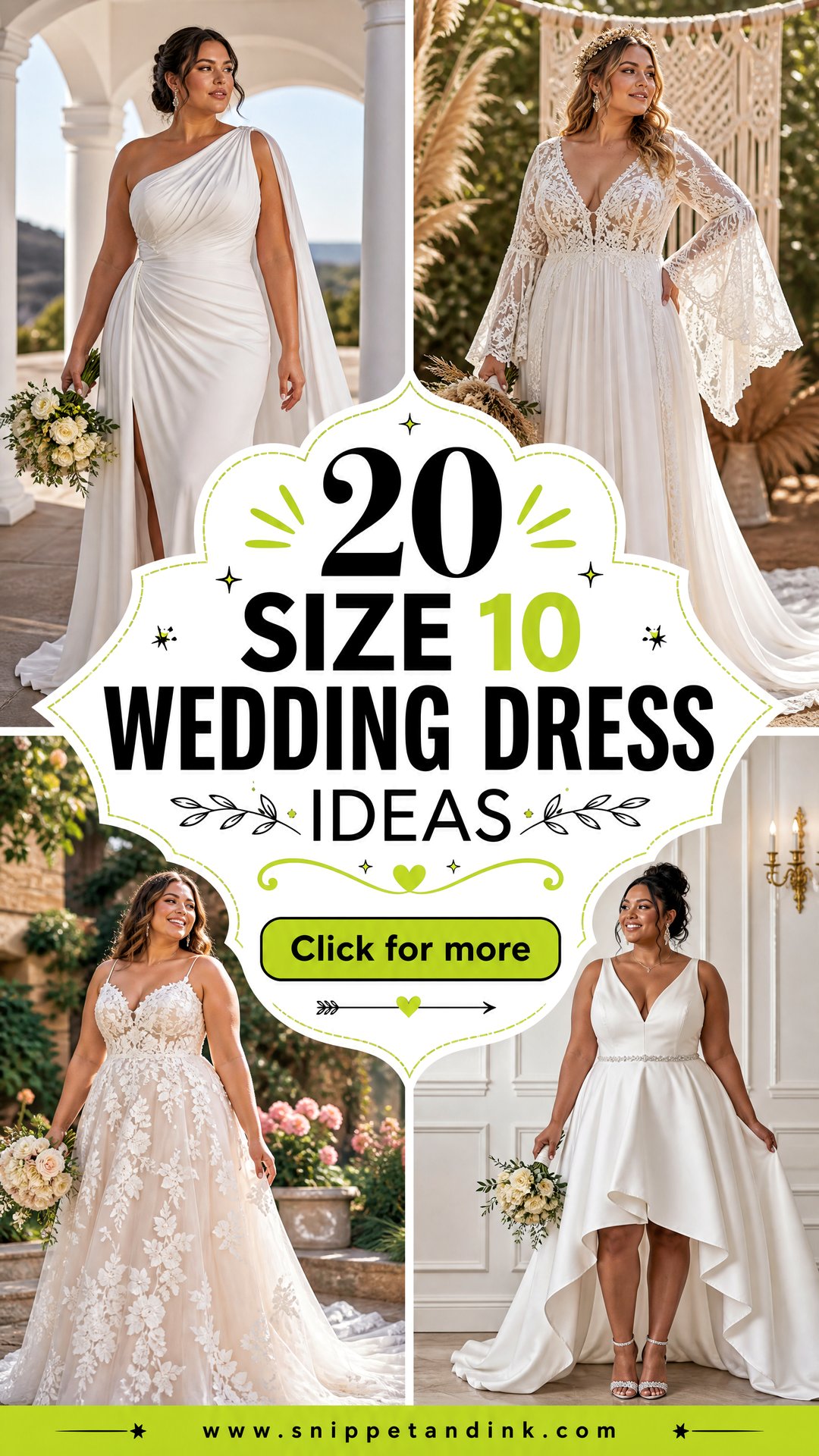
Why a Size 10 Bride Often Orders a 12
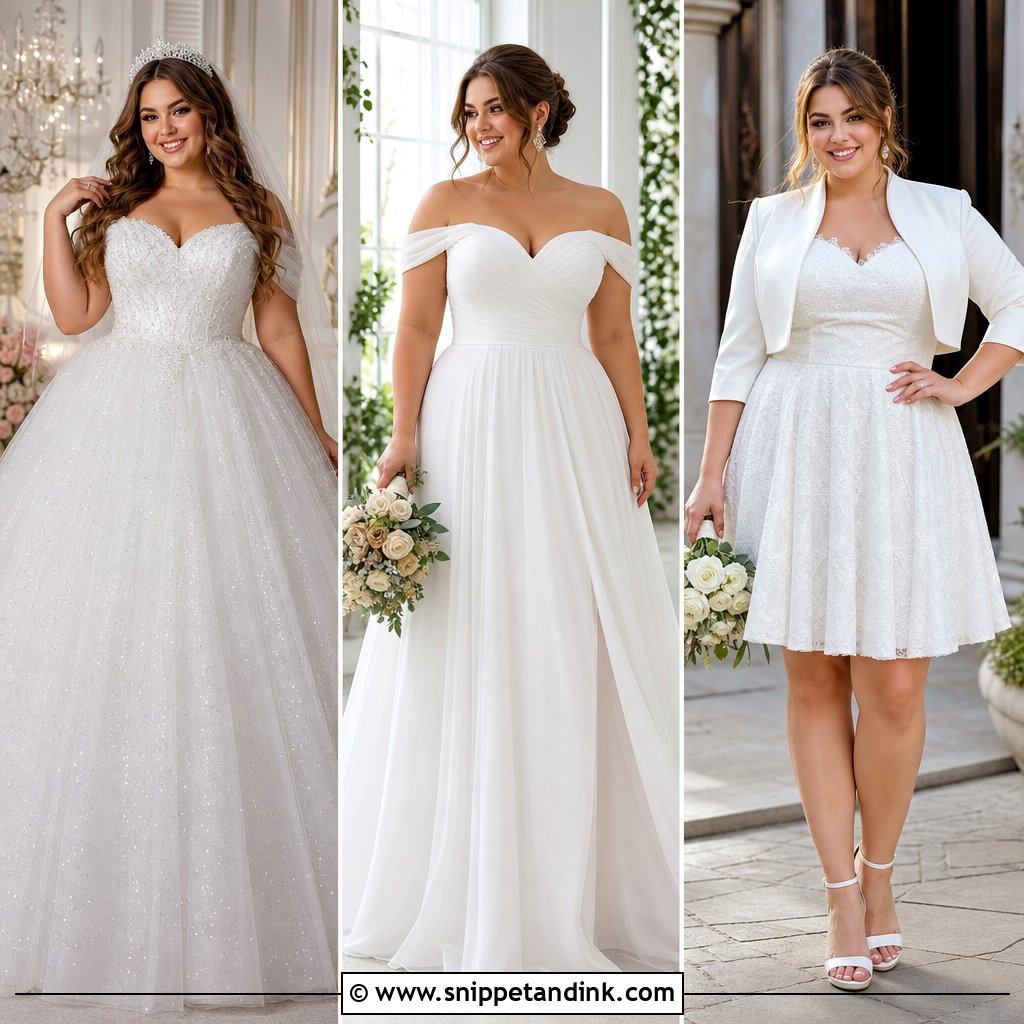
Bridal sizing usually runs smaller than everyday clothing, and it isn’t consistent from one designer to the next. A bride who wears a 10 in shops may be a 12 or even a 14 on a bridal chart. It’s not a reflection on your body; the charts were simply built differently.
I always take three measurements before ordering: the fullest part of the bust, the natural waist and the fullest part of the hips. Then I compare them with that specific designer’s chart and order for the largest of the three. A seamstress can take a gown in easily, but letting it out depends on how much seam allowance is there, and some fabrics, satin especially, show old stitch holes.
- Measure in the underwear you plan to wear on the day.
- Keep the tape snug but not tight, and stand naturally.
- If you’re between sizes, order up and tailor down.
- Ask the shop which measurement the gown fits closest to, since some styles are cut to the bust and others to the hips.
Don’t let the tag bother you. Nobody at the wedding will see it, and what they will see is a gown that fits.
1. A-Line Lace Wedding Dress
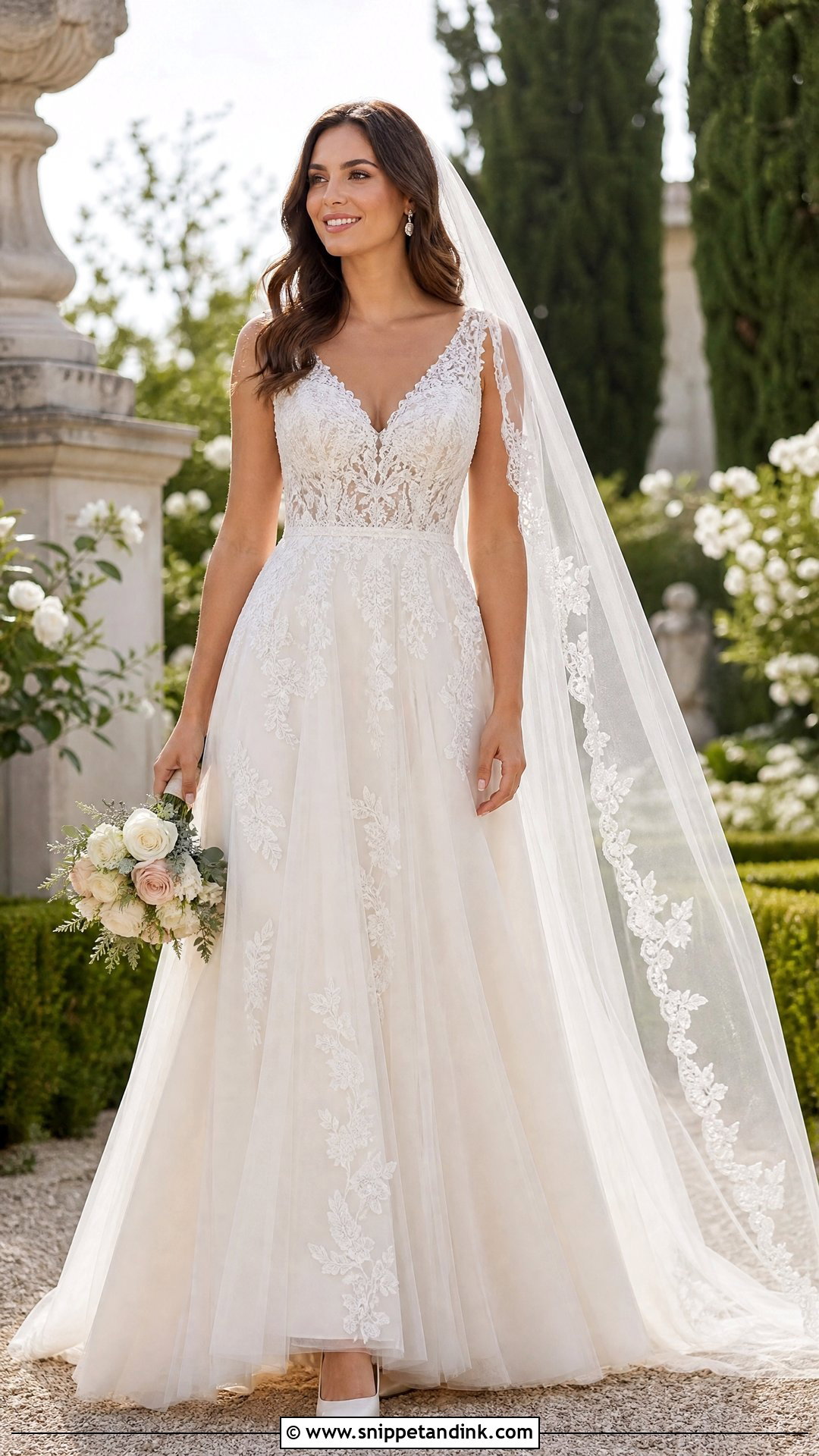
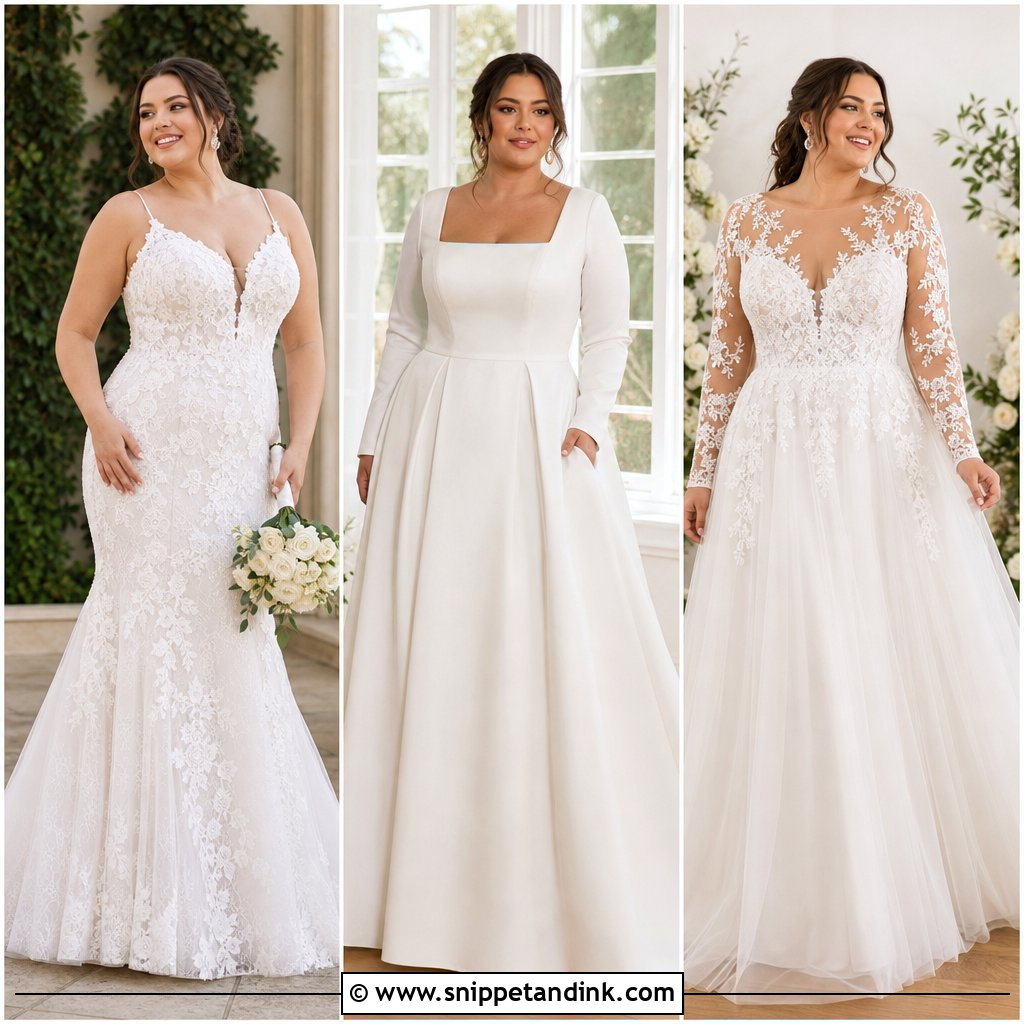
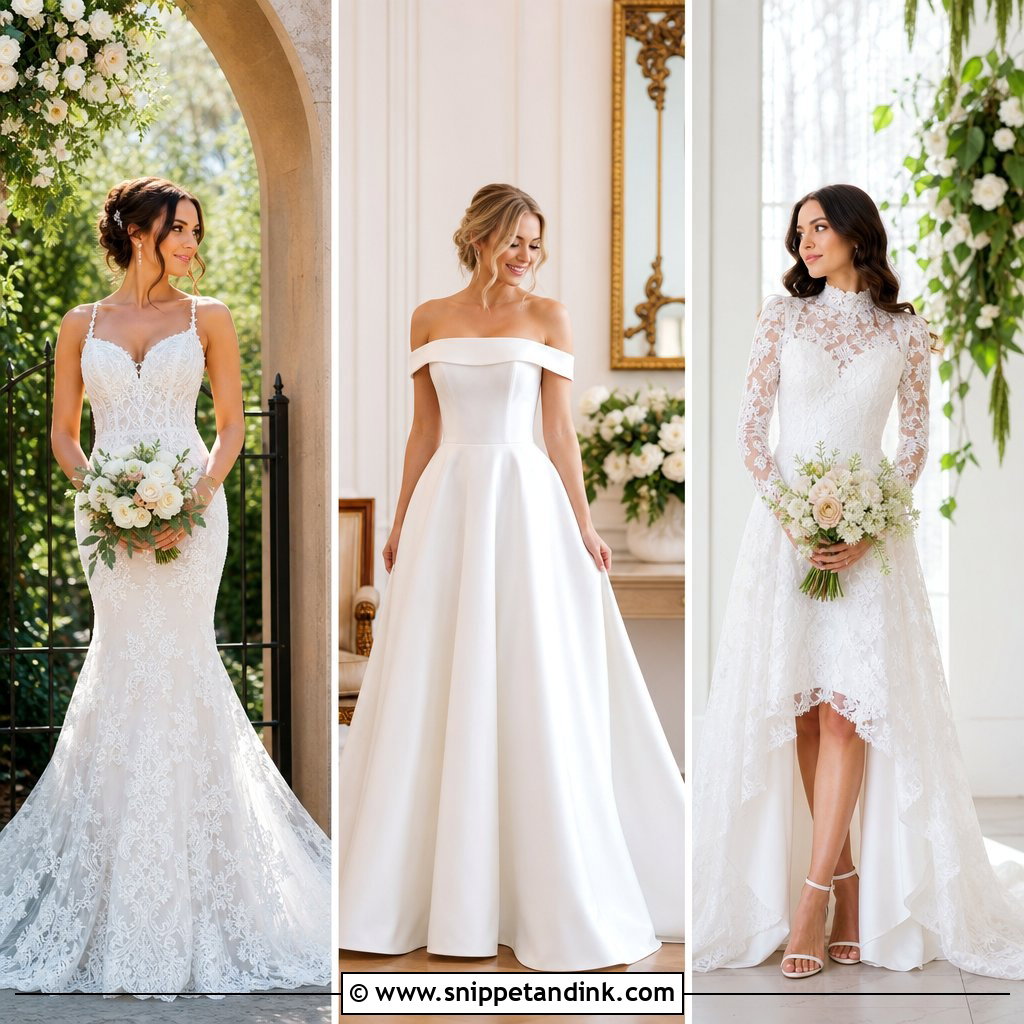
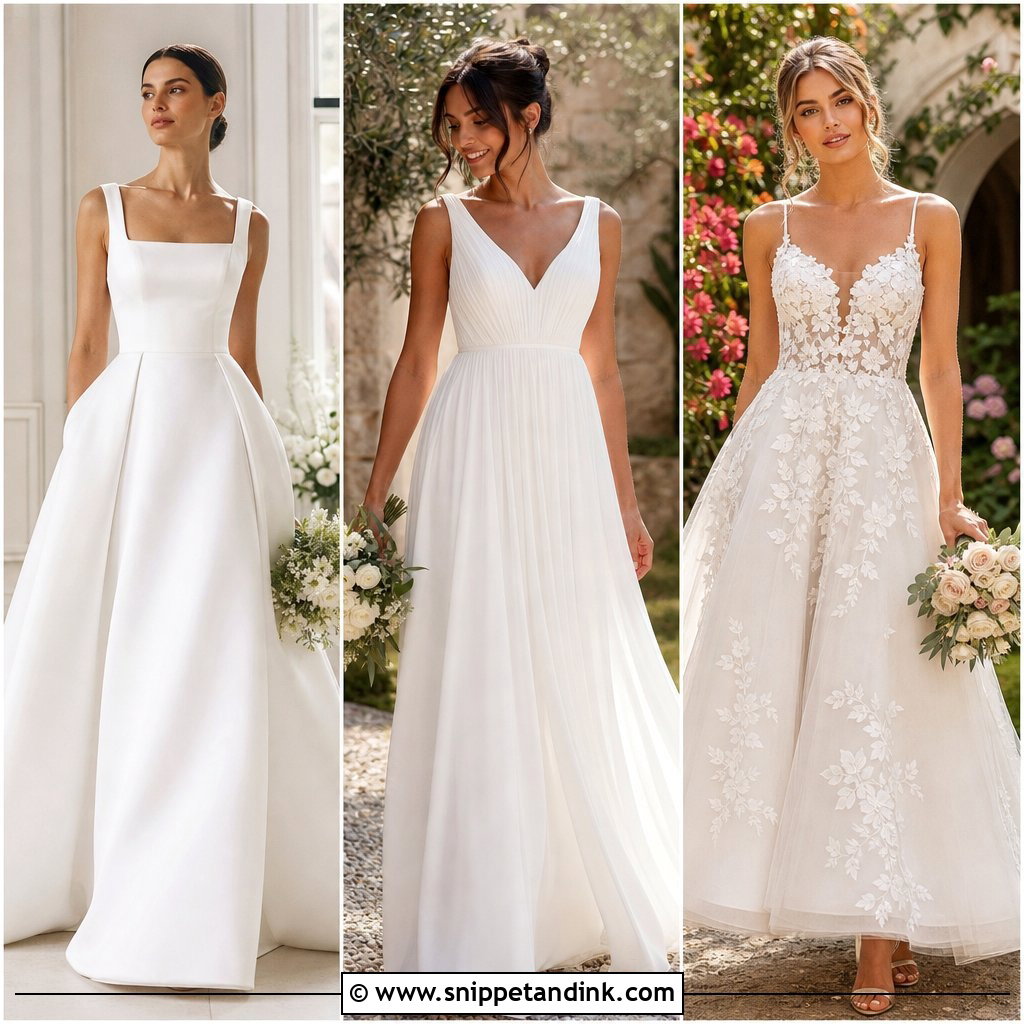
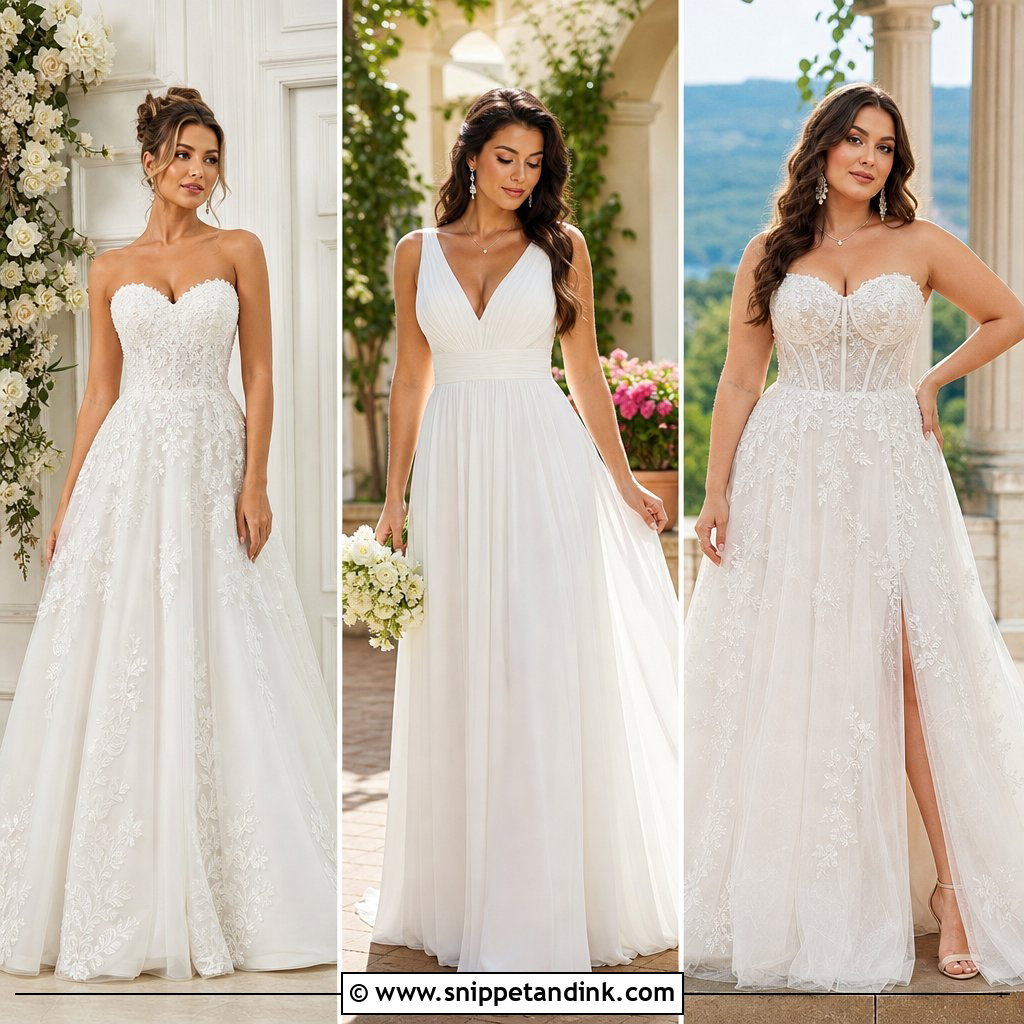
An A-line in lace is the shape I hand most brides first, because it shows me where their waist wants to sit. The bodice should hold at the natural waist and the skirt should fall away without a shelf over the hips. Floral lace over a light lining gives depth without weight. Wider straps carry the bodice better than thin ones if you have a fuller bust. When you approve the hem, wear your heels and walk the length of the room, then check the waist from the back and side as well as the mirror view.
2. Strapless Satin Ball Gown Wedding Dress
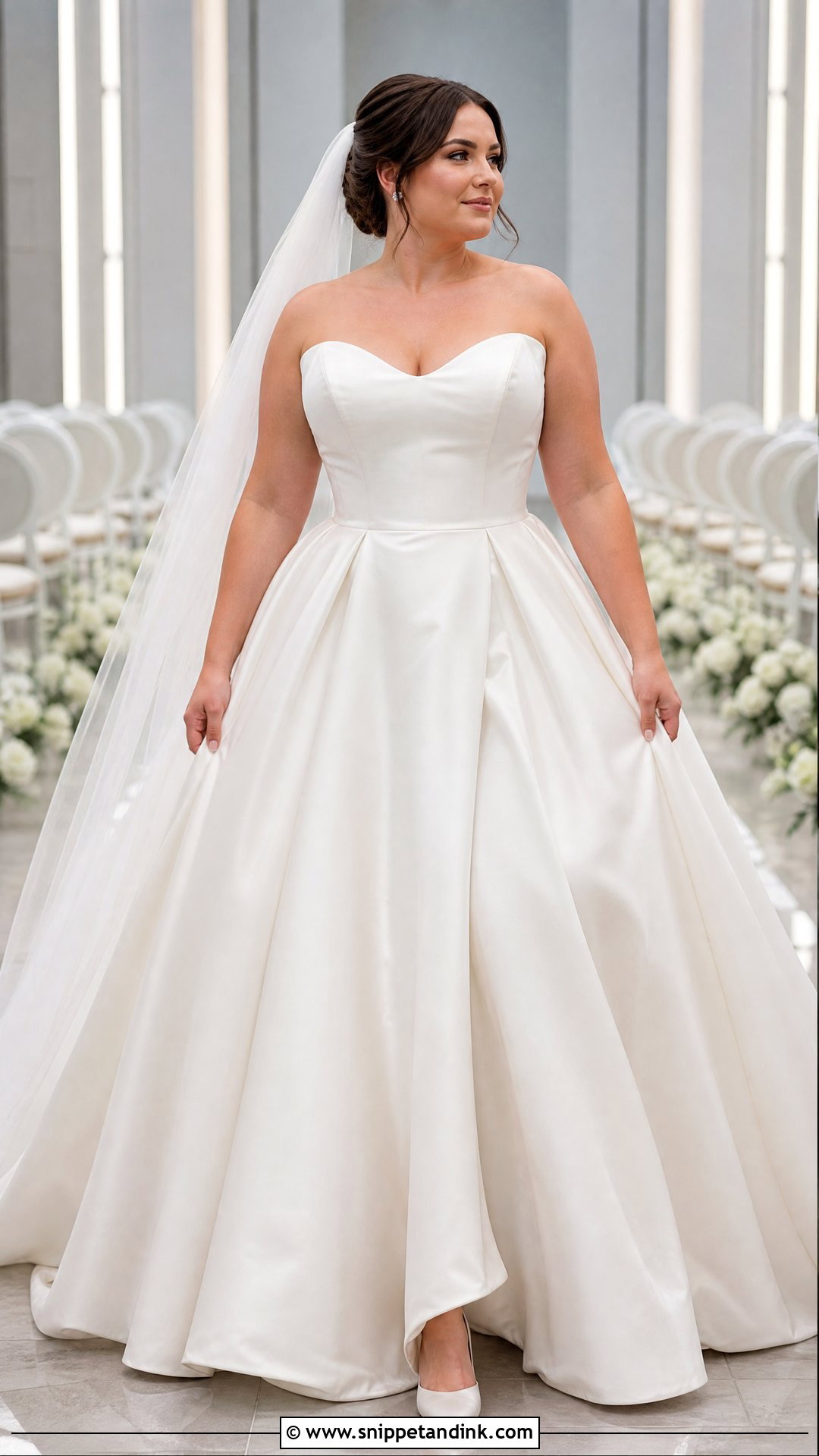
Strapless satin is the dress that exposes bad tailoring fastest. Satin reflects light along every seam, so a puckered side seam or a bodice that gaps at the top edge shows clearly in photos. I want to see internal boning and, ideally, a waist stay, a grosgrain band inside that anchors the bodice so it doesn’t slide down. Look at it in daylight, not only under shop spotlights. Then sit, walk and lift both arms: if you need to hitch it up afterward, it isn’t ready. A plain cathedral veil and crystal studs keep the neckline clean.
3. Off-the-Shoulder Fit-and-Flare Wedding Dress
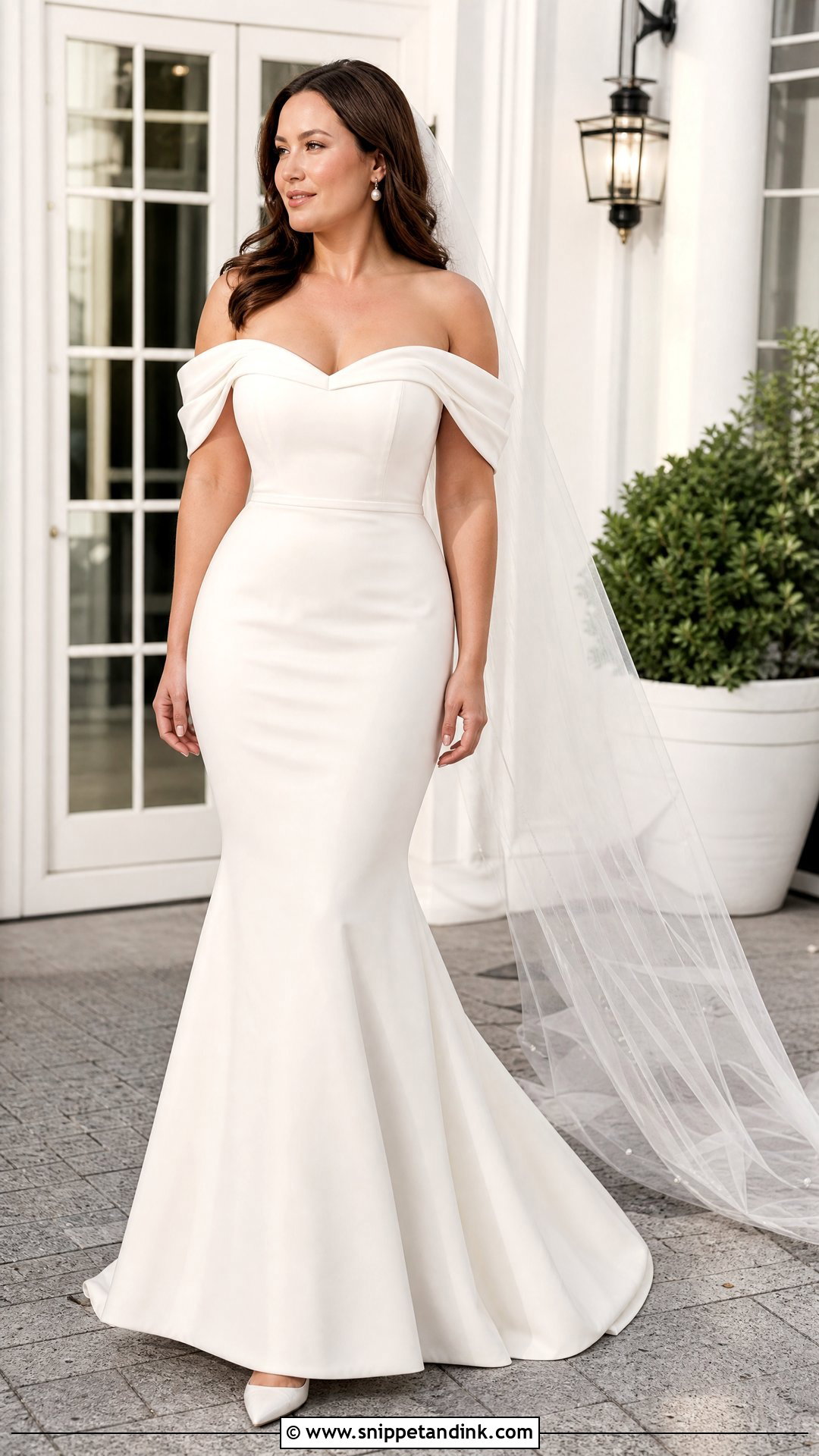
The off-the-shoulder fit-and-flare fails at one spot: the sleeves. They need to sit low enough to show the shoulder and stay put when you hug people, which usually means elastic or a hidden strap tacked to the bodice. Make sure the flare starts at or just above the knee so your stride isn’t hobbled. Crepe shows the shape cleanly; a lightly textured fabric hides small fit irregularities. Pearl earrings and a low bun keep the neckline open.
4. Square-Neck Crepe Wedding Dress
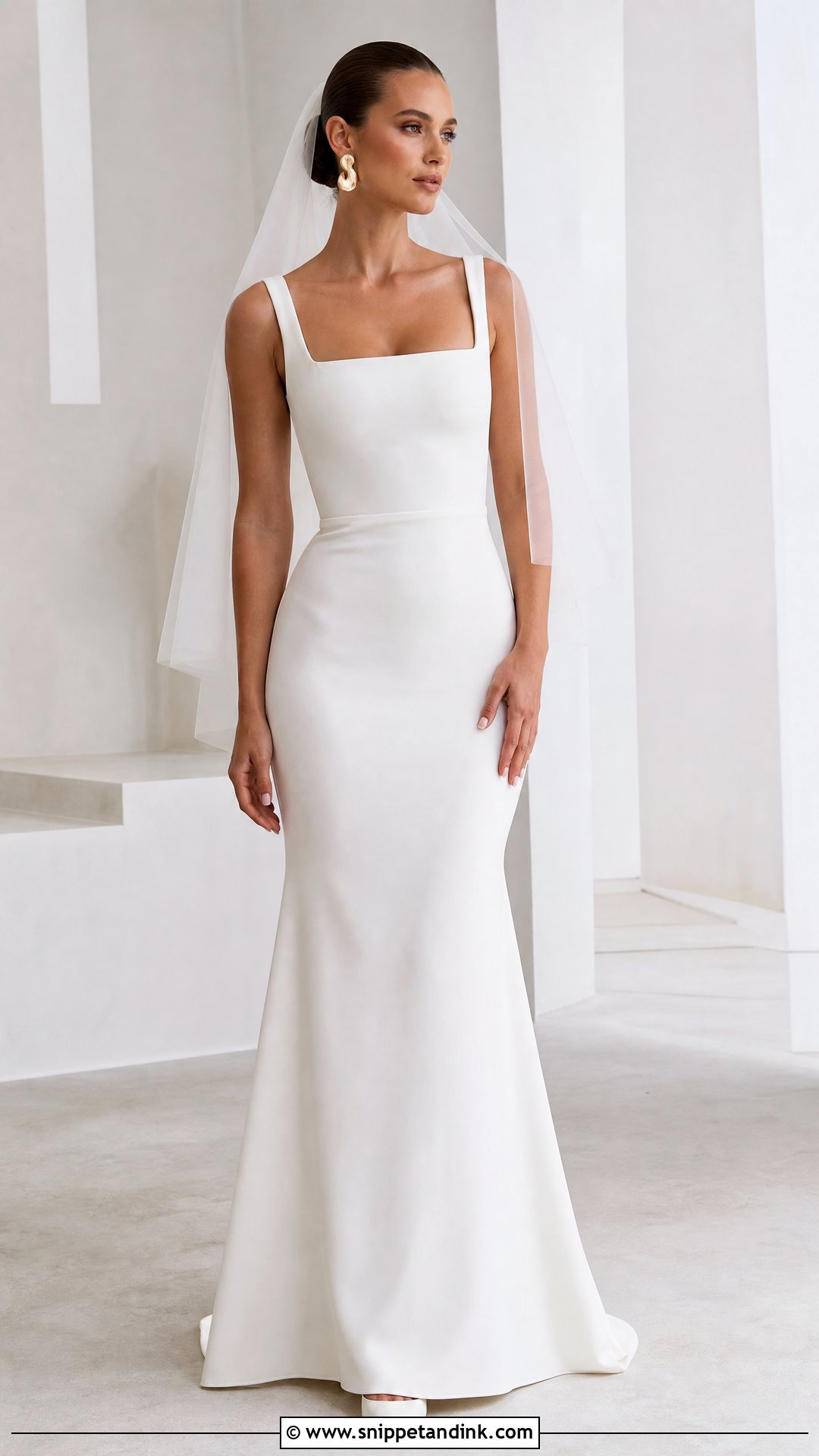
With an undecorated straight sheath skirt and a square neck, a crepe gown has nowhere to hide. Every seam and dart is part of the look, so I check the back and sides more carefully than the front. Heavy stretch crepe is kinder than stiff woven fabric because it moves with you. Wide straps support the square neckline, which can otherwise drift outward at the corners. Ask for a bustle you can fasten in under a minute, and practise it with whoever will be helping you.
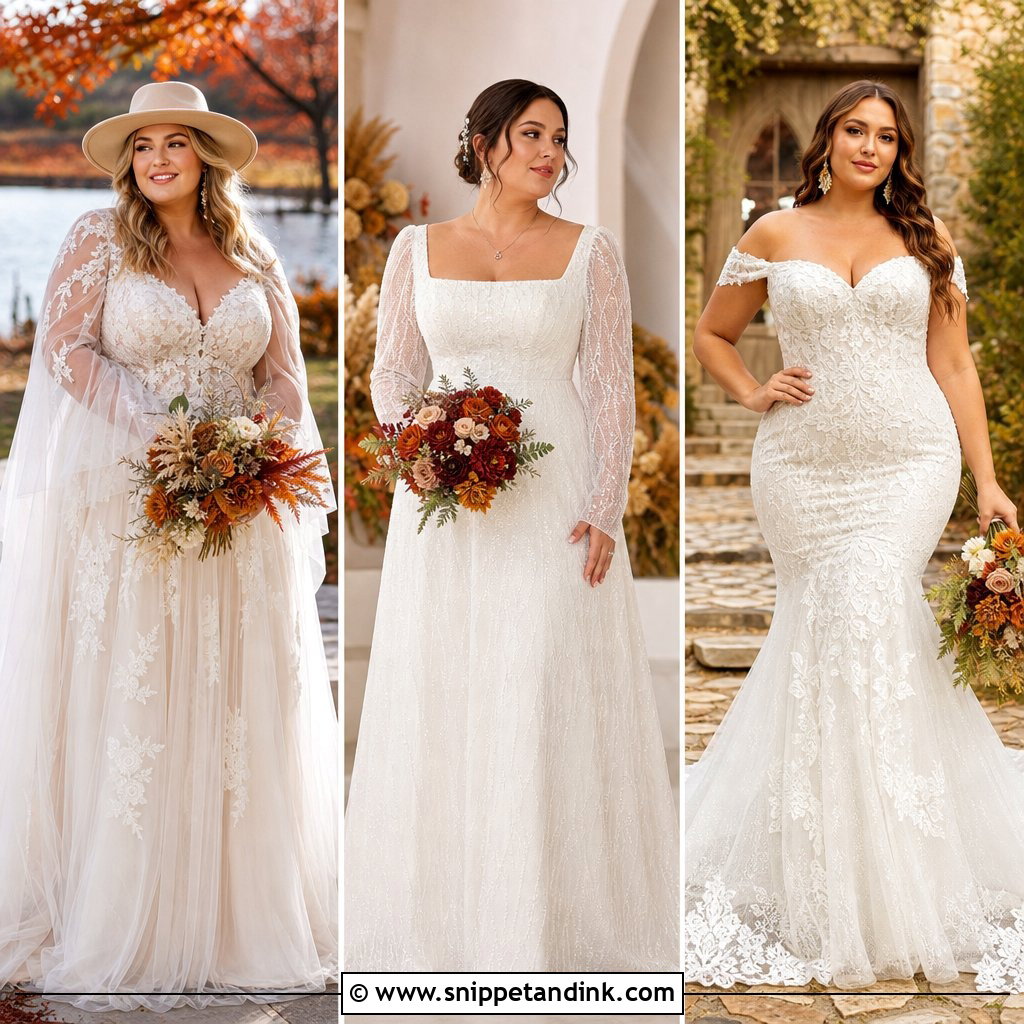
5. Long-Sleeve Lace Wedding Dress
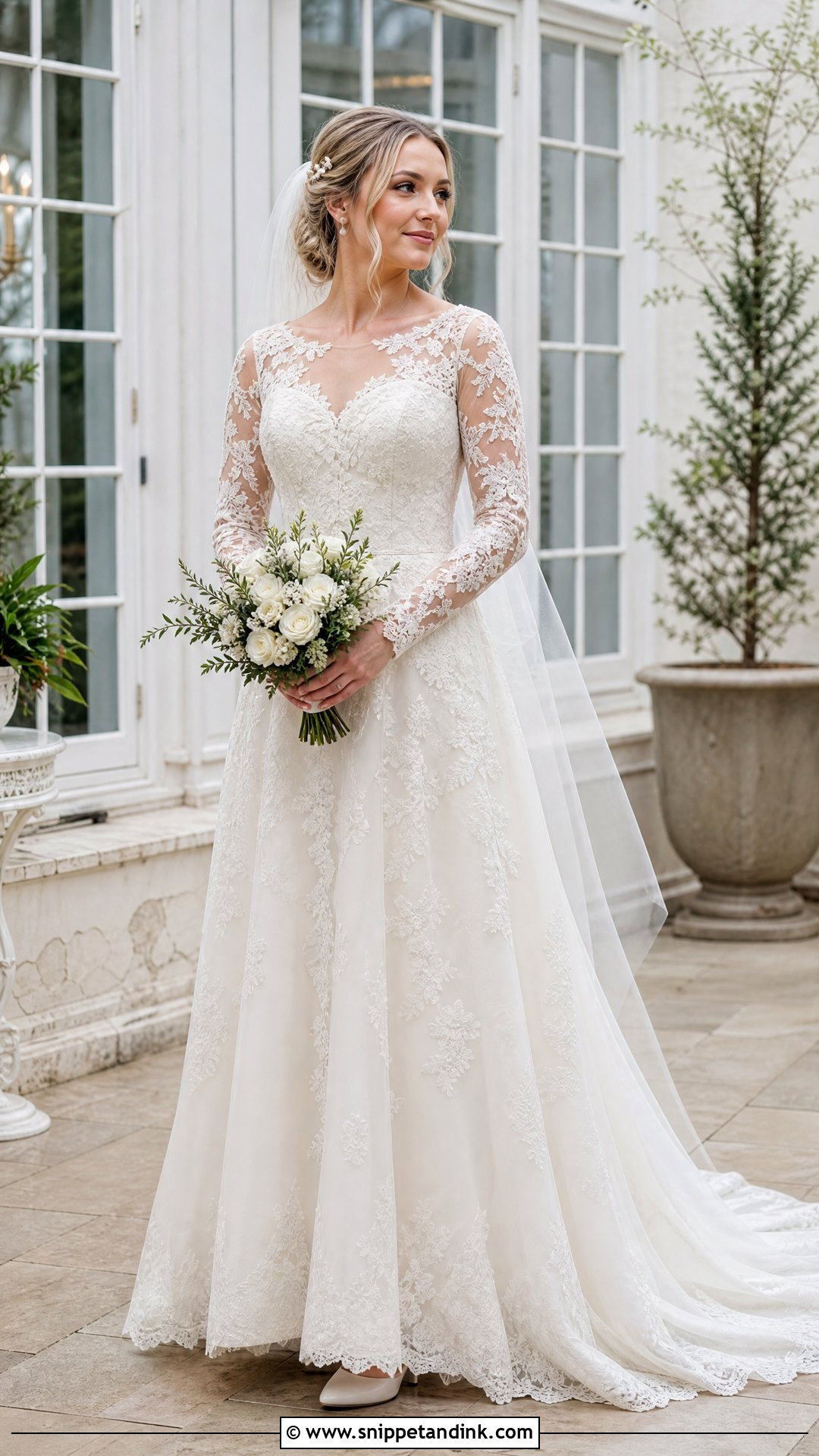
Illusion sleeves look delicate but they get pulled more than any other part of a gown: reaching for hands, hugging, raising a glass. I ask brides to cross their arms and reach overhead in the fitting room. If the mesh pulls at the shoulder seam, the sleeve needs more ease. The cuff should end cleanly at the wrist bone without bunching. Choose a plain tulle veil so it doesn’t argue with the lace, and skip a necklace if the neckline is high.
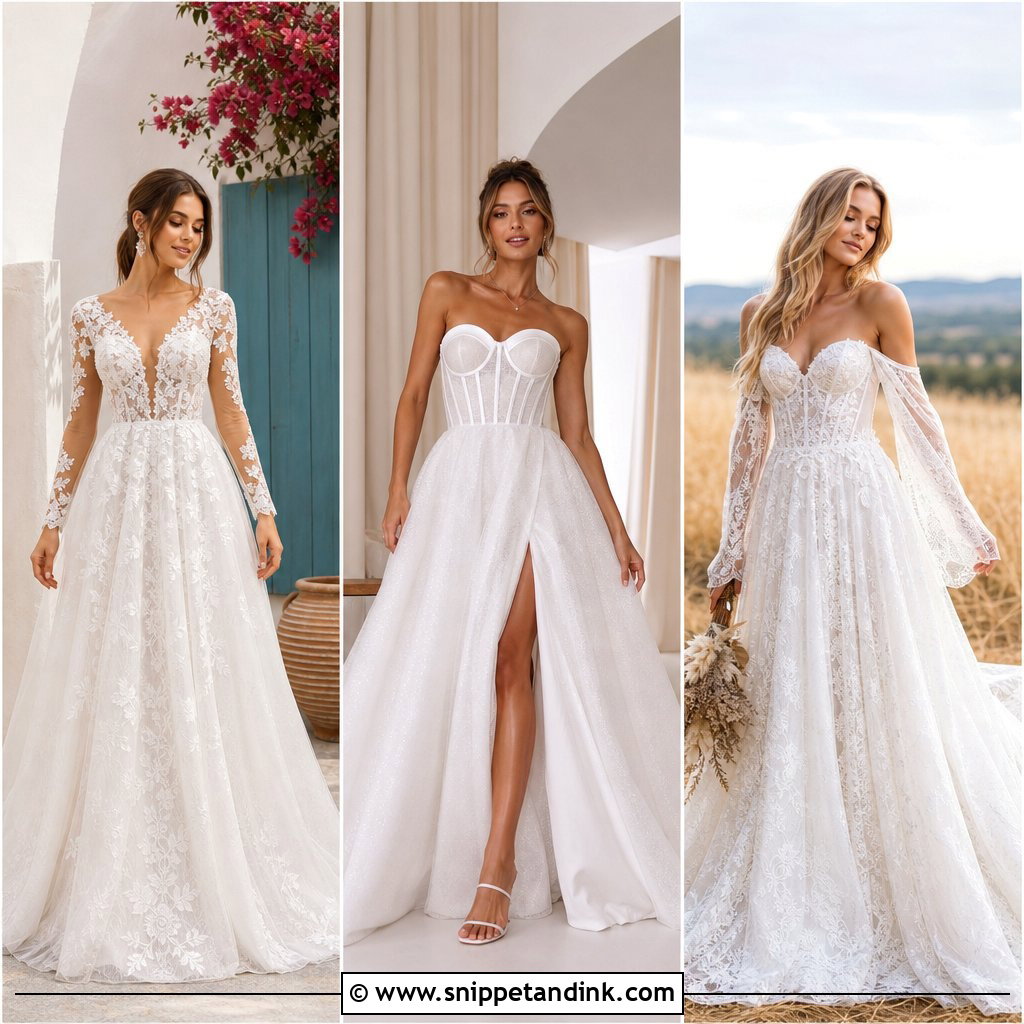
6. Sweetheart Corset Wedding Dress
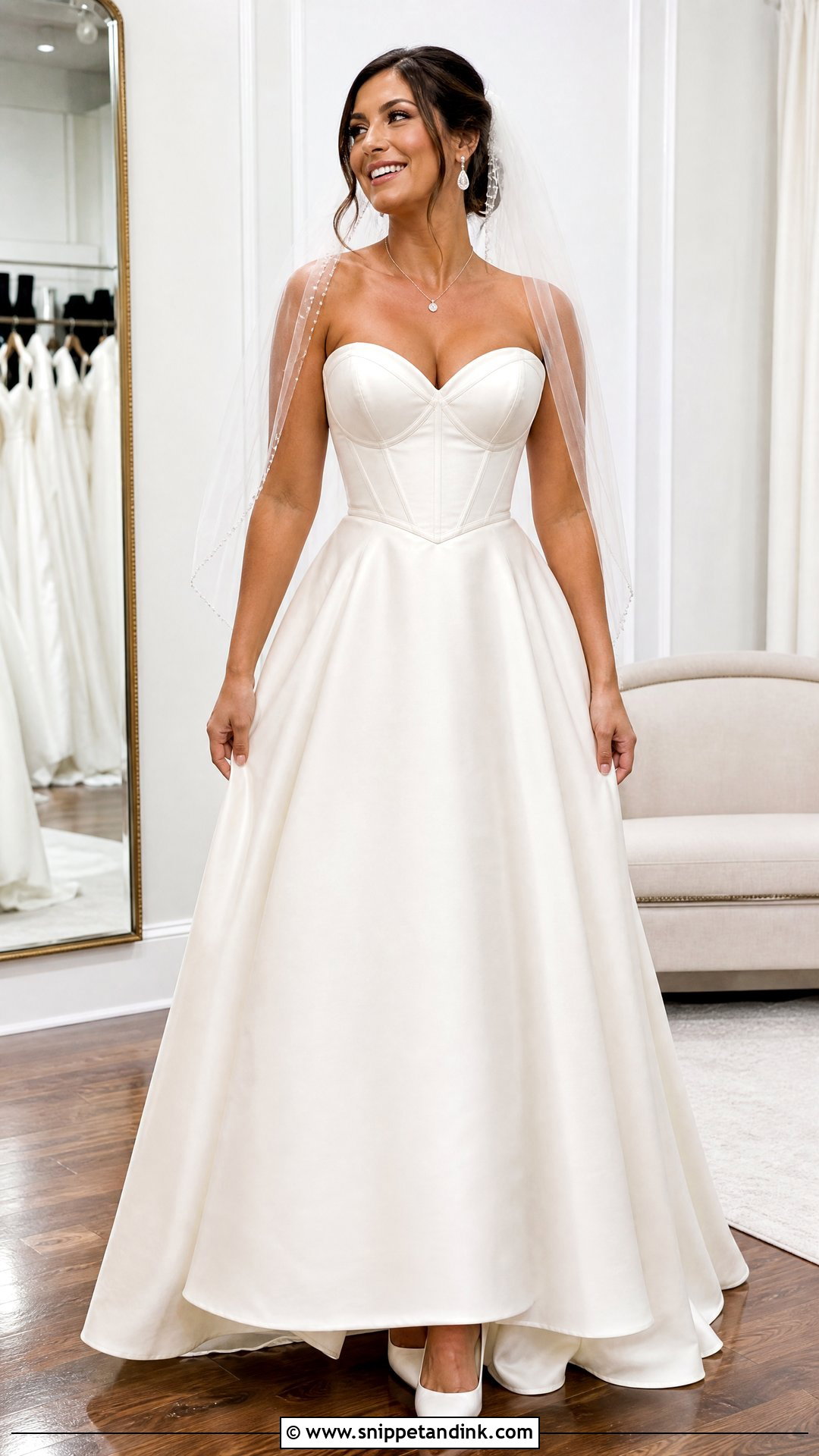
A sweetheart corset wedding dress lives or dies on cup placement. If the cups sit too high, the neckline looks stiff; too low, and you’ll feel exposed every time you bend. Flexible spiral boning is more comfortable over a long day than rigid boning. Bring the exact underwear you’ll wear to every fitting, because a few millimetres of padding changes the fit. Then breathe deeply and sit down. You should be held, not squeezed. A soft A-line skirt balances the structure.
7. V-Neck Chiffon Wedding Dress
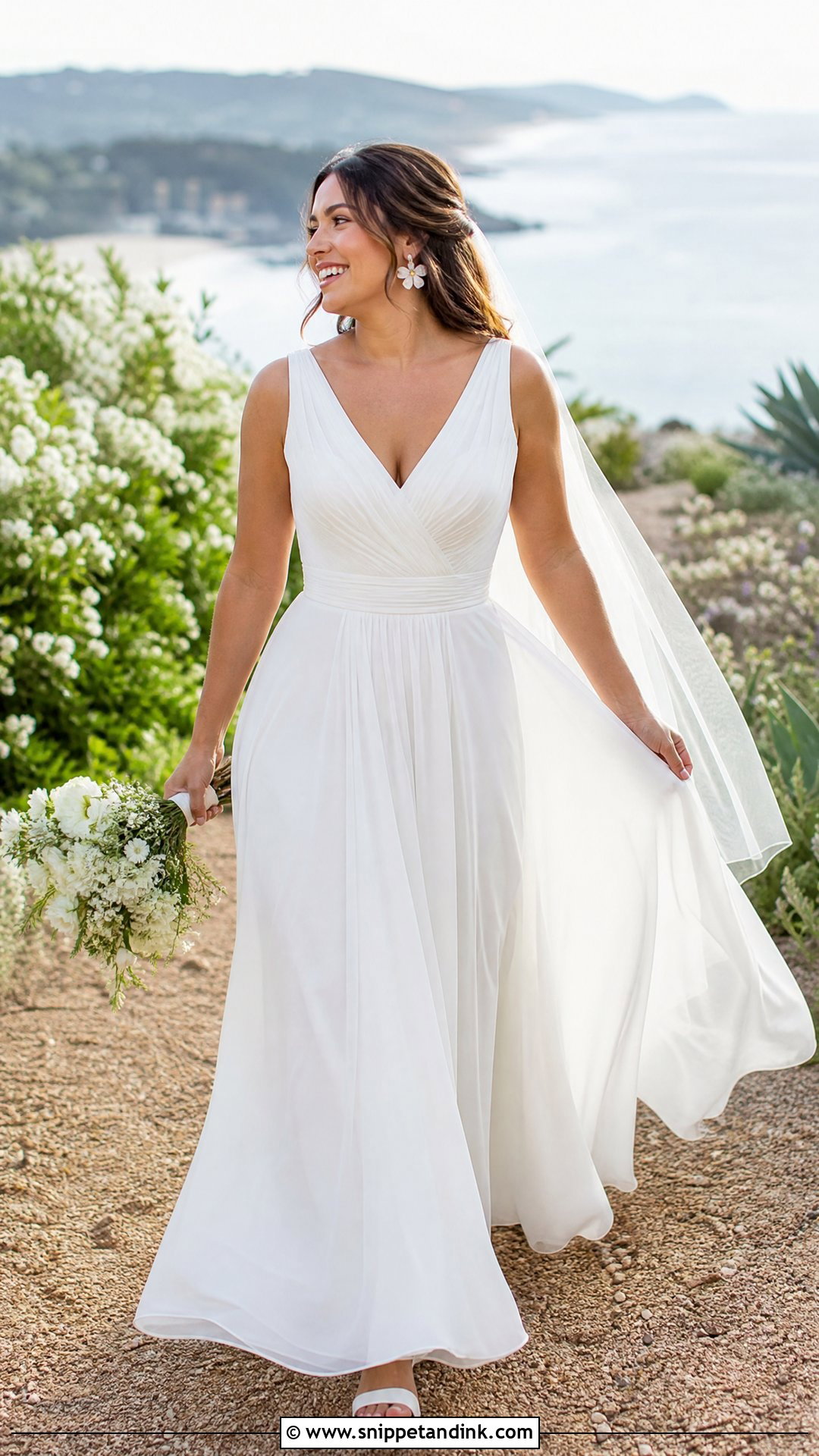
Chiffon is the right fabric for heat and wind. It’s light, it breathes, and it moves when you walk. It’s also delicate: it snags on rough stone, beaded shoes and bouquet wire, and unlined chiffon turns sheer in strong sun. Insist on a full skirt lining and stand in daylight before buying. A V-neck with supportive straps and a defined waistband gives it shape. For the bustle, ask for ribbon loops rather than hooks, which can tear fine fabric.
8. Basque Waist Ball Gown Wedding Dress
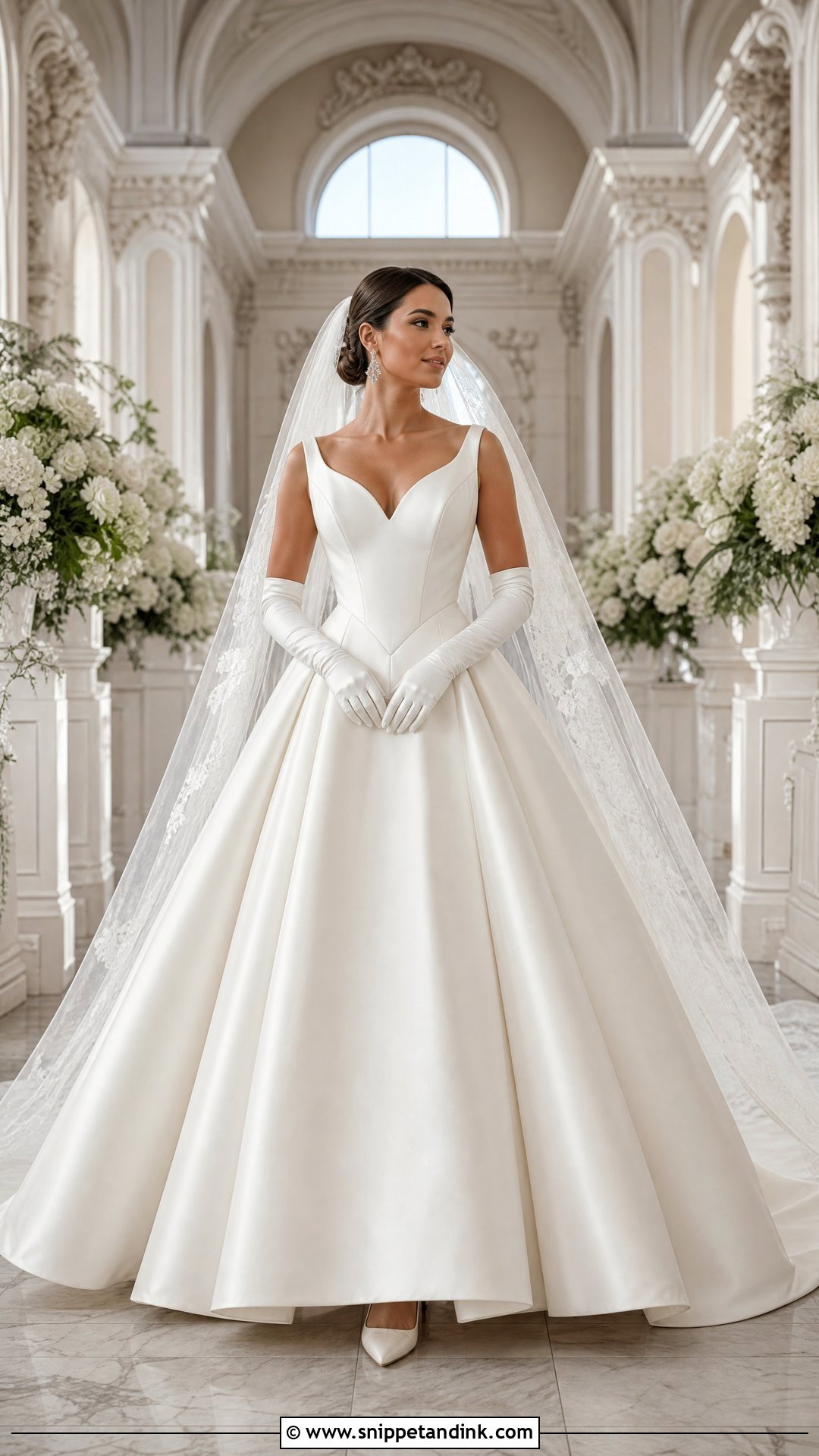
The Basque waist dips into a V below the natural waistline, which lengthens the torso and suits a size 10 frame with a defined waist. The point has to sit dead centre and lie flat when you sit, and that’s the alteration I watch most closely. Mikado holds the full skirt crisply. Long gloves add formality, but keep them plain if the bodice is draped. The skirt is heavy, so you’ll want a secure bustle with several attachment points.
9. One-Shoulder Draped Wedding Dress
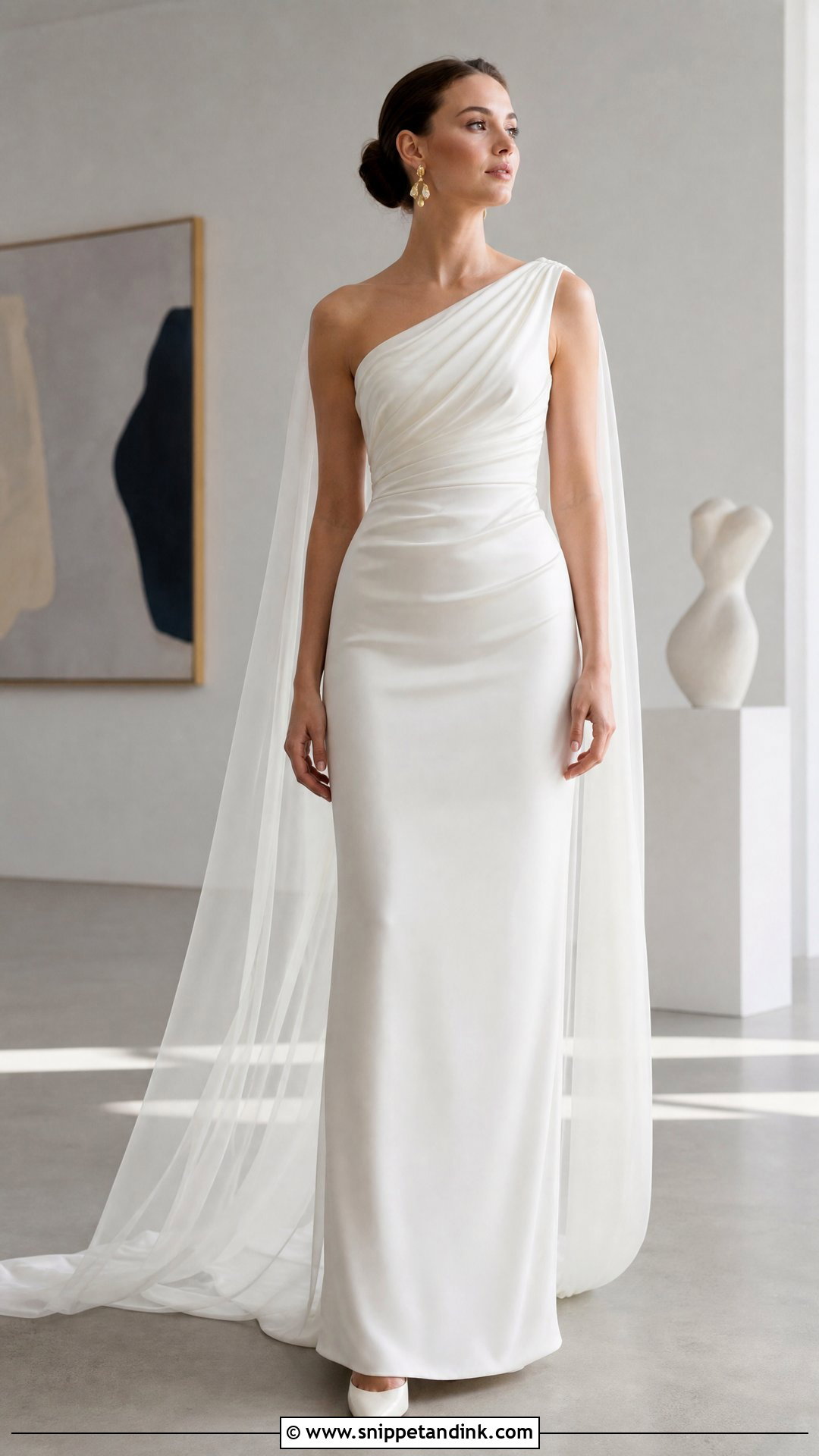
Never let the single shoulder carry the dress. A good one-shoulder gown is supported by a fitted bodice with its own boning, and the strap is decoration. I test this by having the bride lift the arm on the covered side. If the drape pulls tight, the strap is doing structural work and needs adjusting. Soft crepe or satin gathers smoothly. Wear one statement earring and a sleek bun, and consider a veil attached low at the back.
10. High-Neck Column Wedding Dress
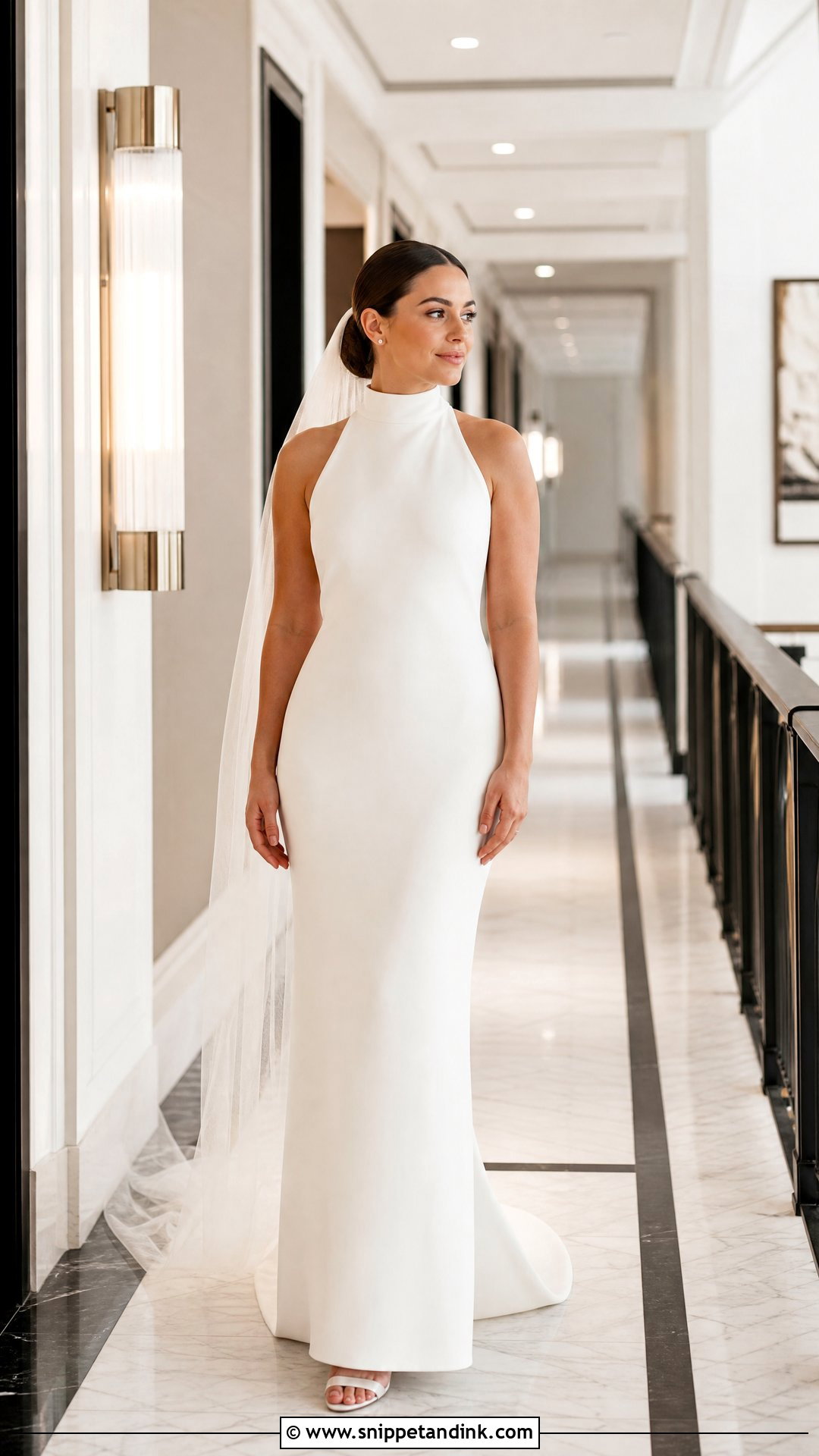
A high-neck column is long and narrow, so movement is the problem to solve. Look for a back slit, a stretch lining or a slight flare at the hem. Climb a few steps in it in the shop, because a column that’s fine on flat floor can trap your knees on stairs. Clean crepe looks architectural; lace softens it. Stud earrings only, no necklace, and secure the veil under the hairstyle so the neckline stays clear.
11. Tea-Length Wedding Dress
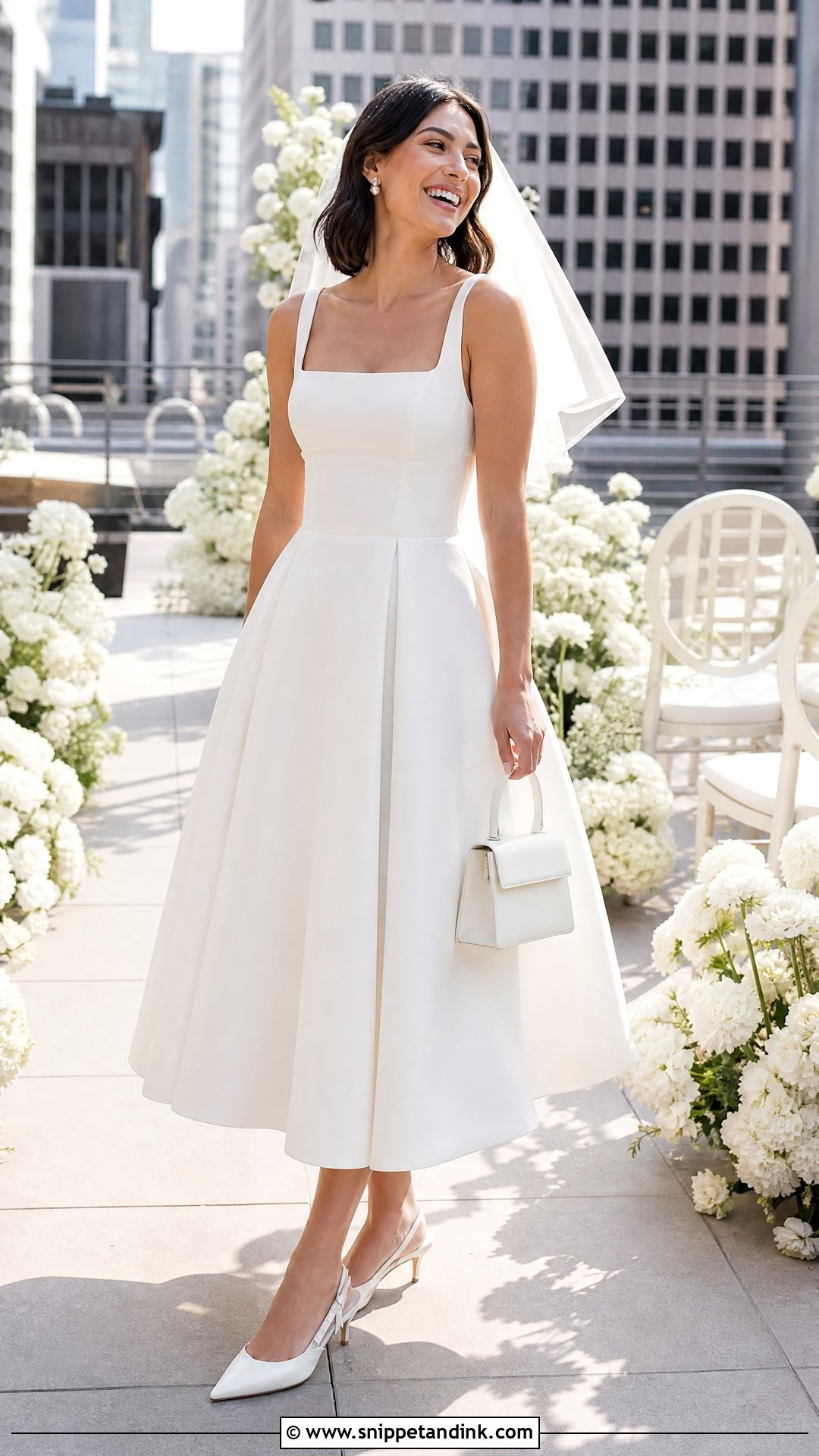
Tea-length brings your shoes into every photo, so choose them early and bring them to fittings. The skirt should end between knee and ankle; I adjust it until the hem doesn’t cut across the fullest part of the calf. Satin, mikado, lace and layered tulle each give a different character. Check the skirt doesn’t fold behind the knees as you walk. Pointed slingbacks and a short birdcage or shoulder-length veil suit the proportion.
12. Empire Waist Wedding Dress
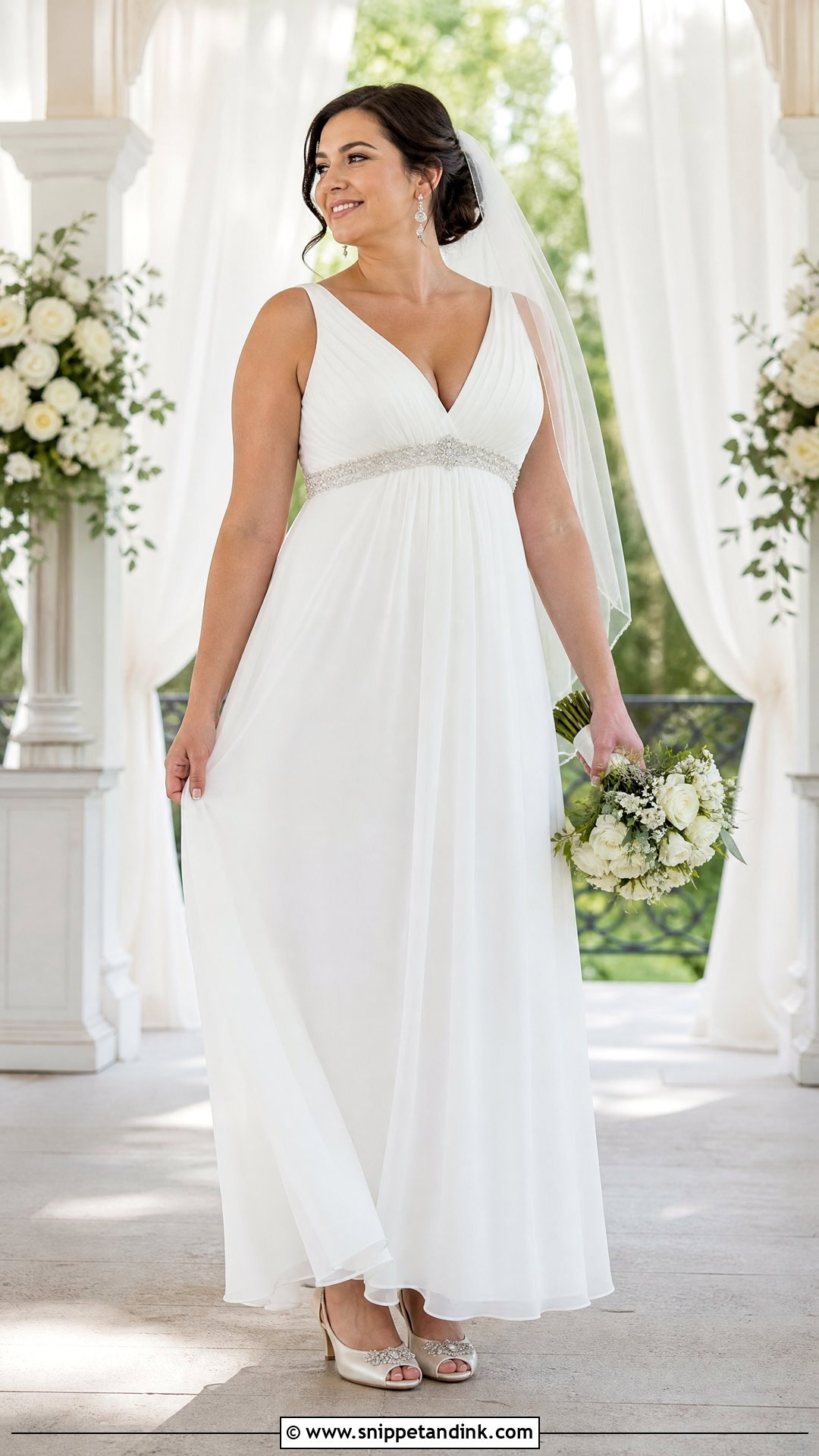
An empire waist wedding dress raises the seam to just under the bust and lets the skirt fall loosely. It’s comfortable and forgiving, which makes it a good choice for a long day or for brides who don’t want anything fitted at the waist. The underbust seam has to fit closely or the dress looks shapeless, and I check it doesn’t ride up when you lift your arms. Chiffon and soft tulle suit it best. A thin ribbon at the seam can mark the line.
13. Mermaid Wedding Dress With Detachable Overskirt
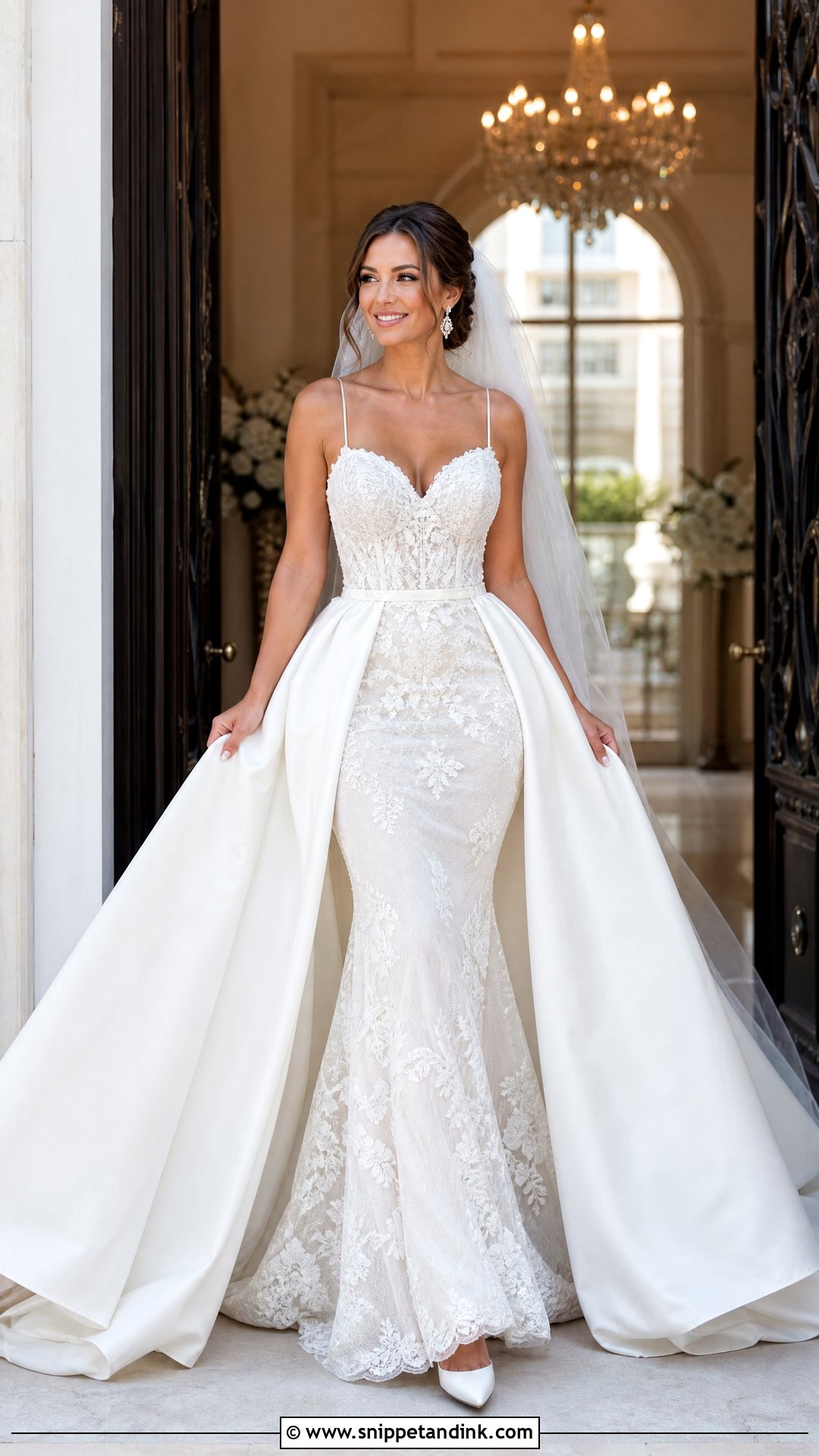
This is two dresses for the price of a fitting schedule. A mermaid with a detachable overskirt gives you volume for the ceremony and a fitted line for the reception. The attachment, usually hooks or snaps under a waistband, has to be hidden and quick. I’d rehearse removing it with your helper at the last fitting. Walk and sit in both versions: mermaids are often too tight at the knee for dancing, so ask for a little extra room there.
14. Boho Bell-Sleeve Wedding Dress
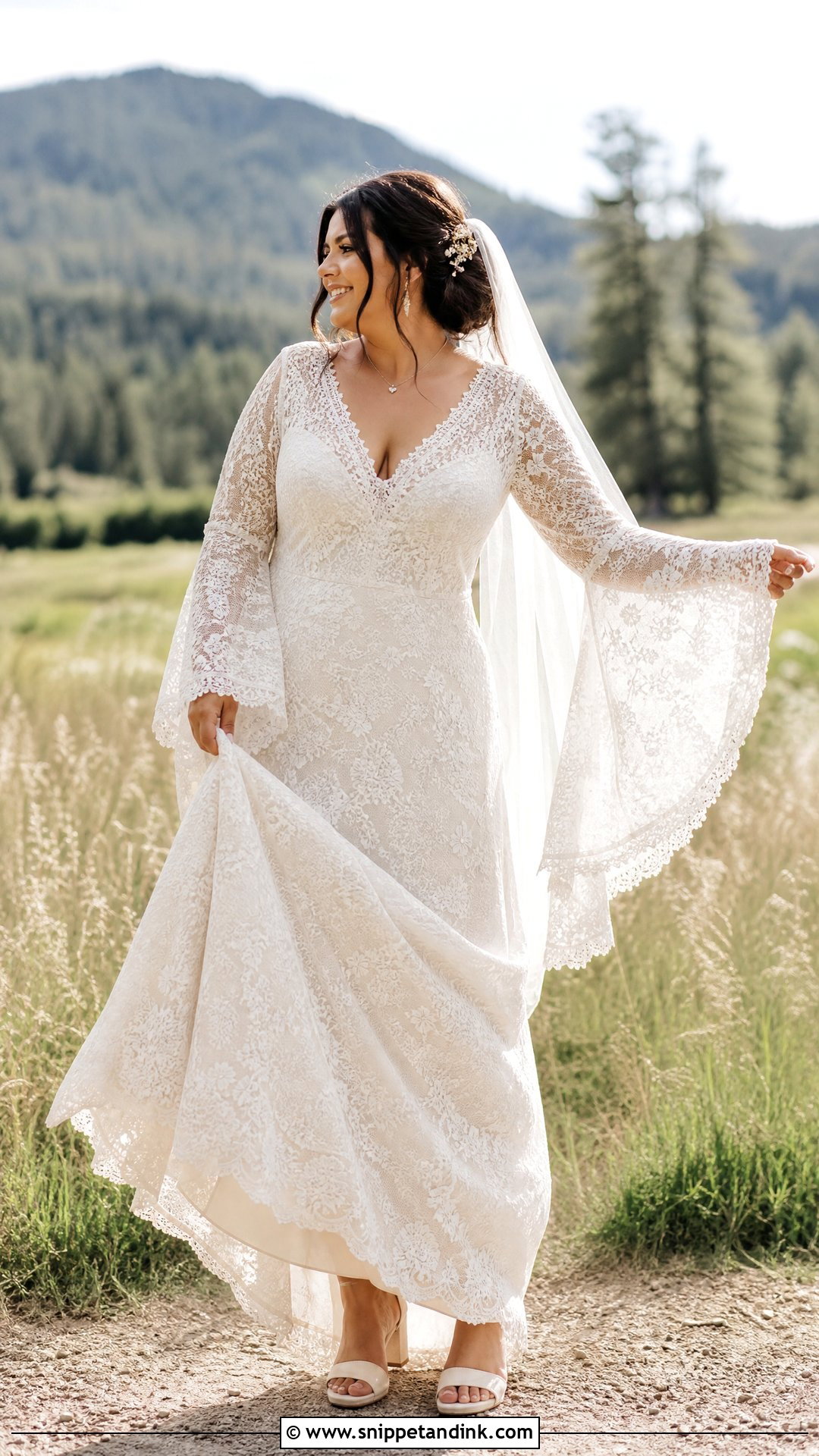
Bell sleeves widen below the elbow and look relaxed outdoors. The practical issue is length: they drag through cake, catch on chair backs and brush the bouquet. I usually shorten them a little so they clear the wrist when your arm is bent. A boho bell-sleeve wedding dress also needs soft lace if you’ll wear it all day; scratchy lace against the inner arm becomes unbearable by evening. Pair it with loose waves and a flower comb.


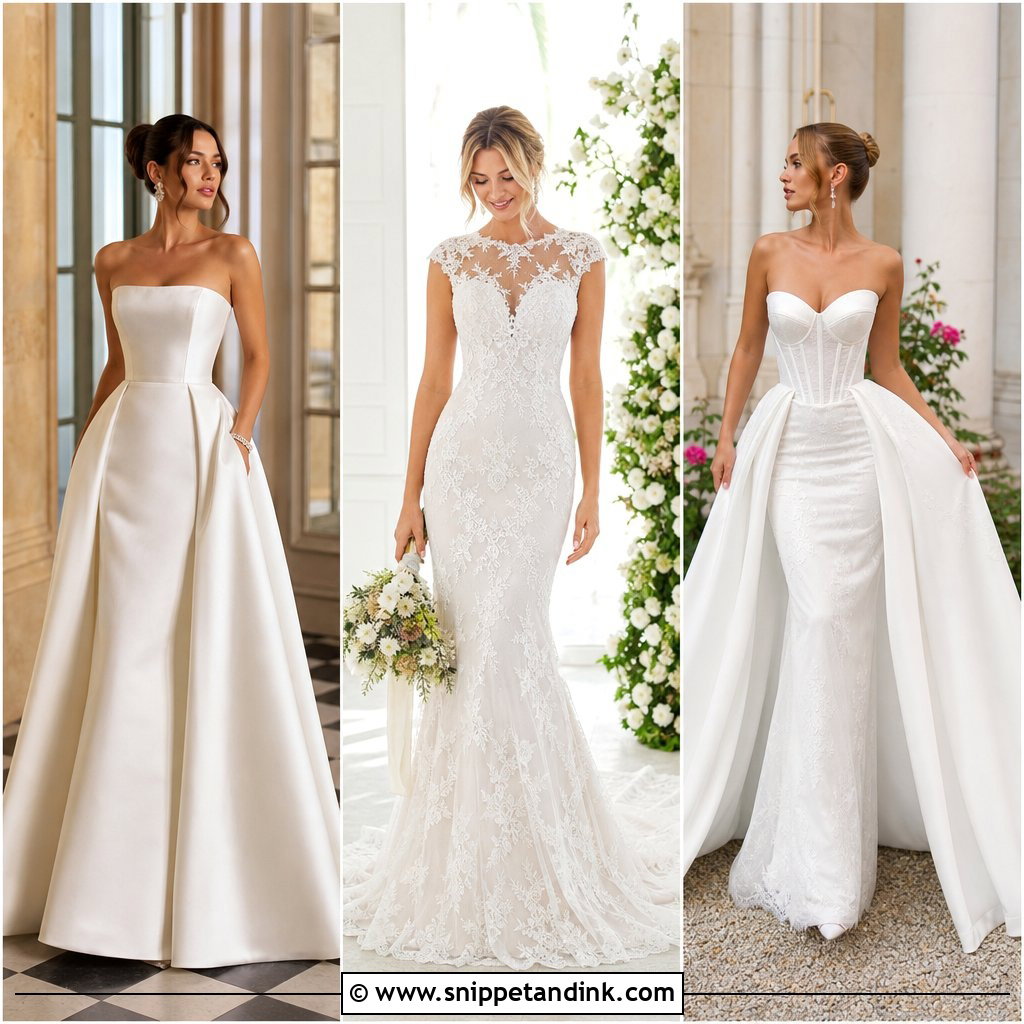
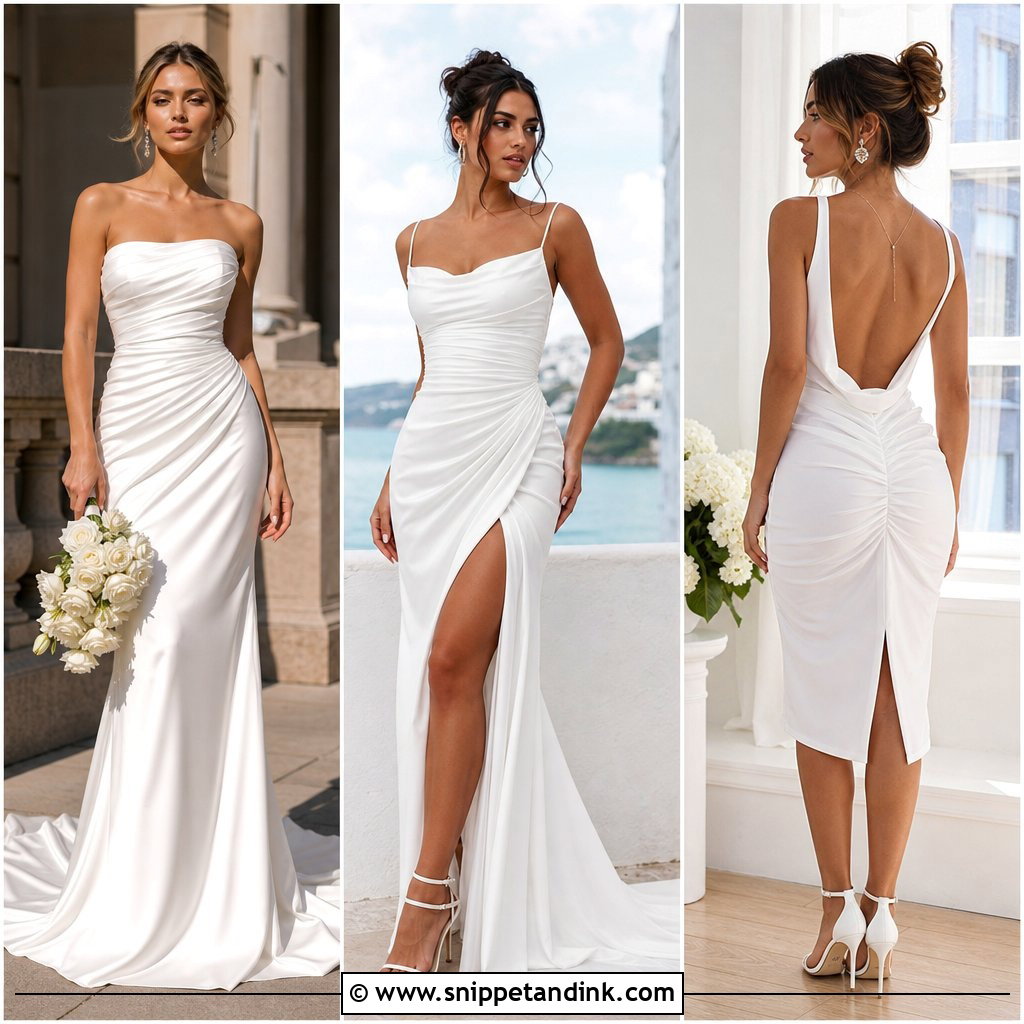
15. Minimalist Slip Wedding Dress
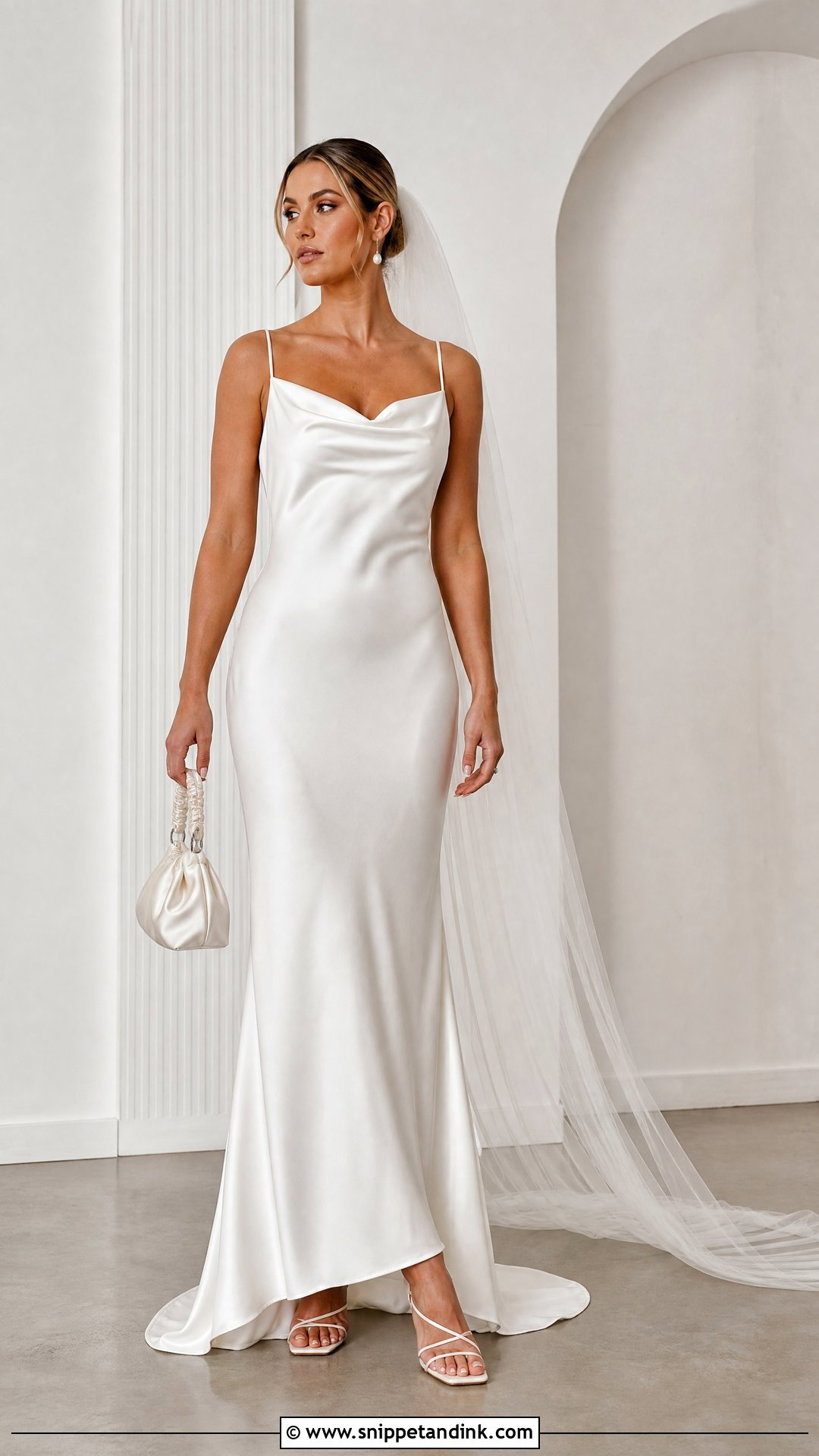
A bias-cut slip looks simple and is one of the hardest gowns to fit. The fabric clings, so the bust, waist and hip seams need to be exact. Small changes in weight or underwear show up immediately. Look for a slip with a supportive lining or room for your bra. Adjustable straps let you set the neckline at the right height. Photograph yourself in it under different lighting before approving the final alteration. A sheer cathedral veil adds length without hiding the line.
16. Floral Appliqué A-Line Wedding Dress
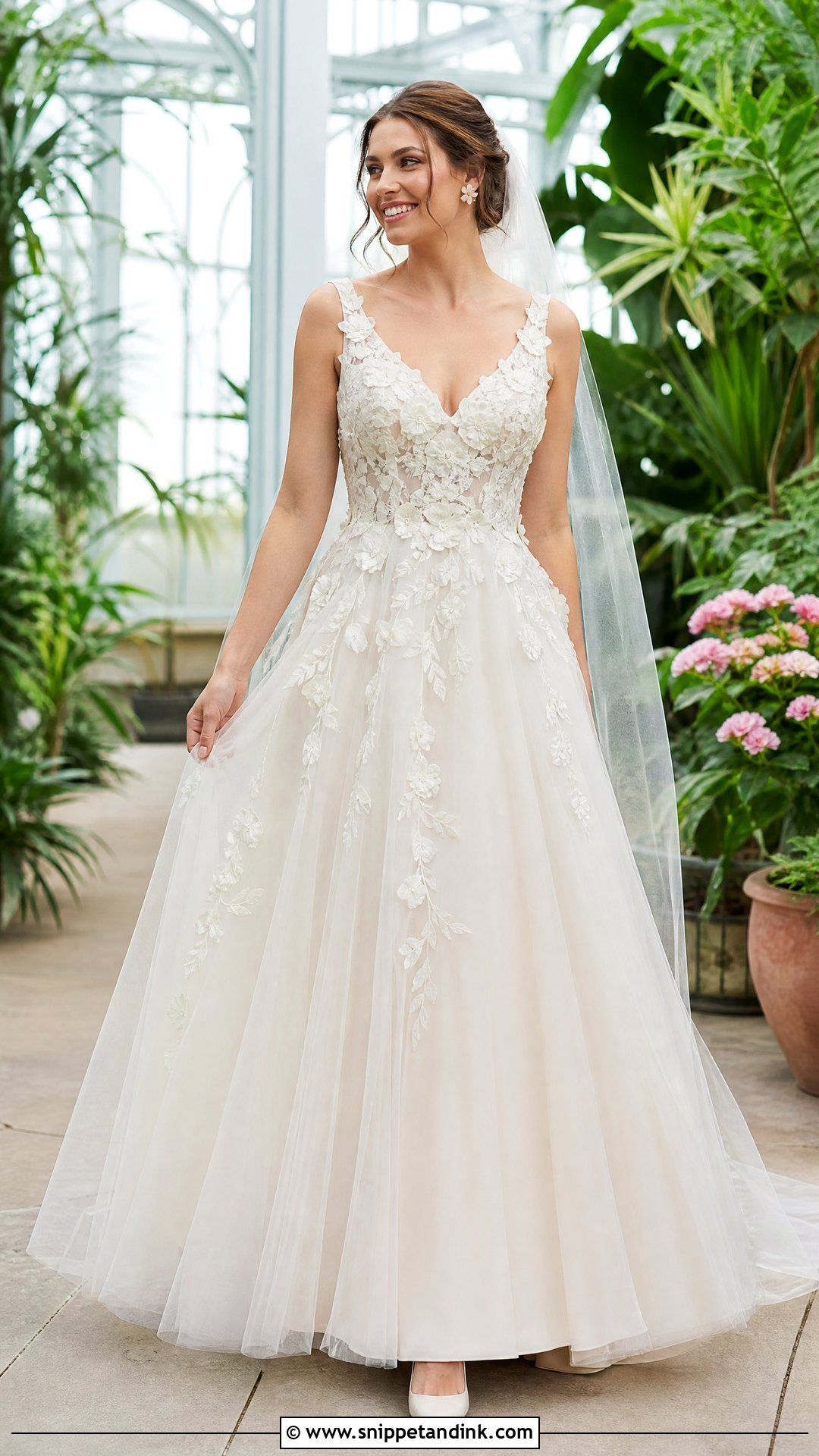
Floral appliqués should be heaviest on the bodice and lighter toward the hem; I find gowns with even appliqués everywhere tend to look busy and lose the waist. Check every flower at the final fitting and have loose edges tacked down, because they lift with wear. Plain pumps, small earrings and an untrimmed veil let the texture stand out. Keep the bouquet simple.
17. Cape Sleeve Wedding Dress
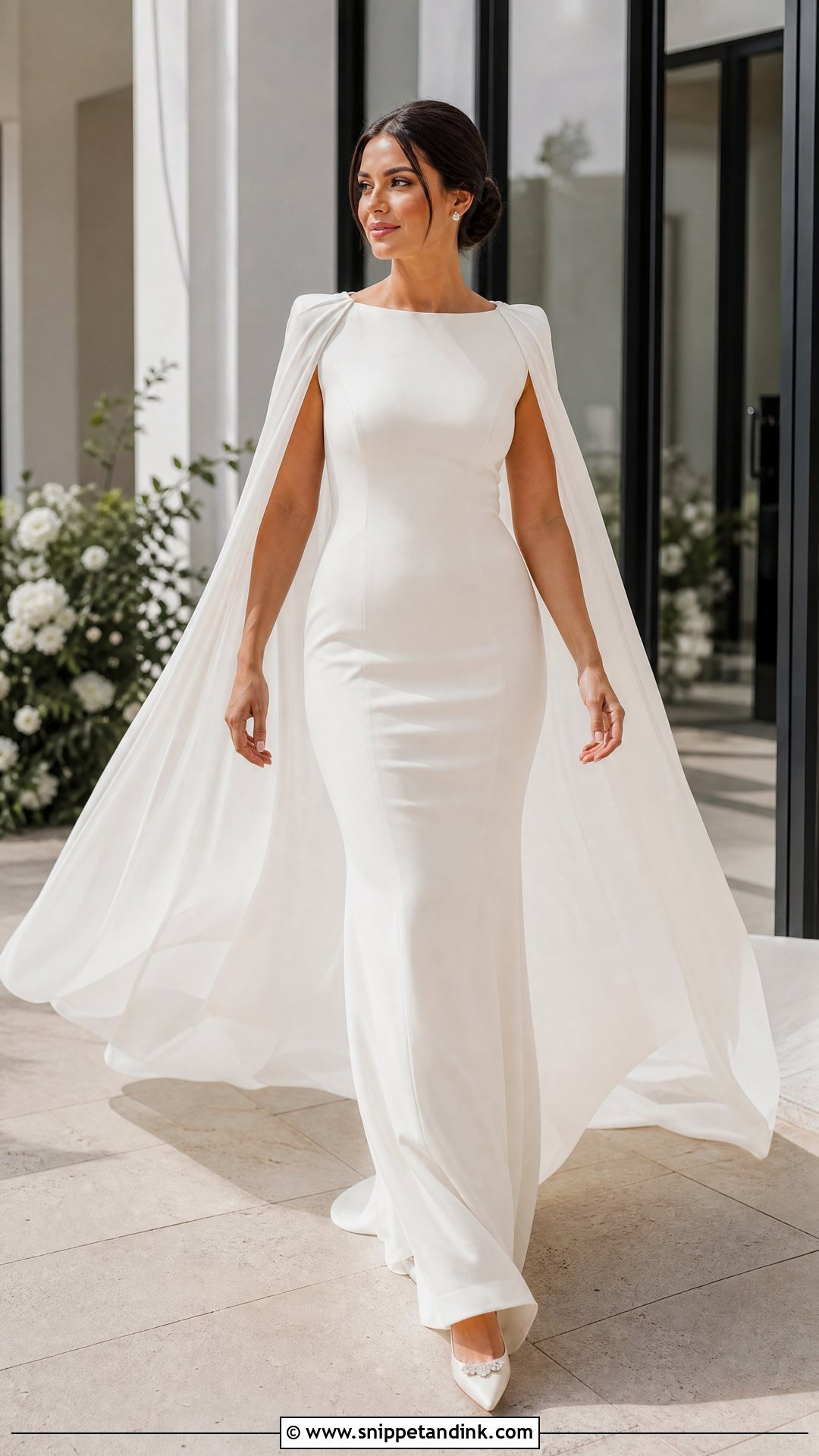
A cape sleeve gives light coverage and a lot of movement. It can attach at the shoulders, the neckline or the back, and each one restricts your arms differently. Walk down a corridor and turn a few times to see how it moves, then reach forward as if you’re hugging someone. If the cape forms a train, I’d skip the veil. Crystal studs and a sleek updo suit a crepe or satin base.
18. High-Low Wedding Dress
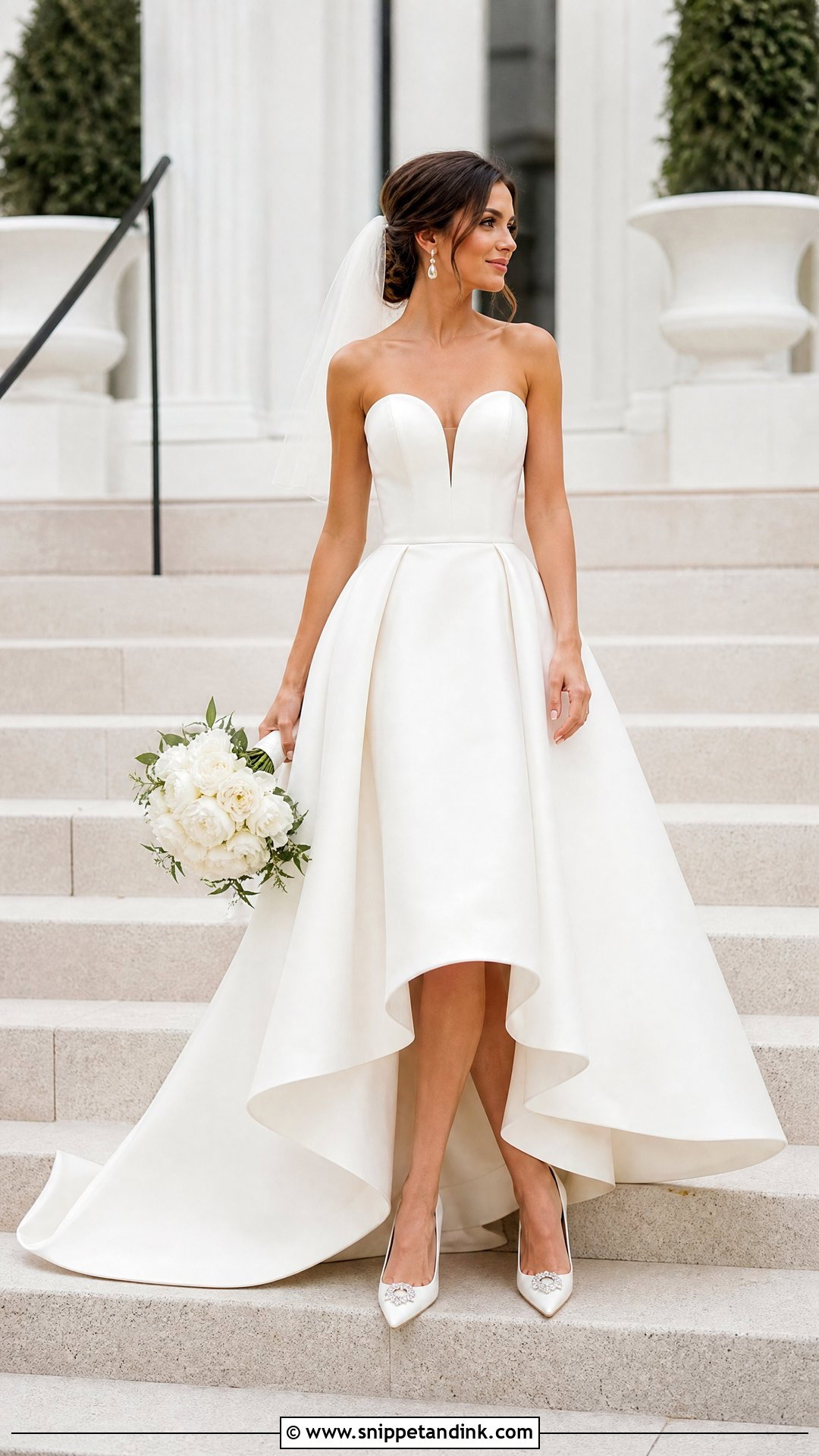
High-low hems are about the shoes, so buy a pair you love and can stand in. The transition from short front to long back should be gradual; a sharp step looks unfinished in photographs. At the fitting, check the front hem clears your toes when you walk without looking too short when you stand still. Ask for a simple bustle on the back train for dancing.
19. Two-Piece Wedding Dress
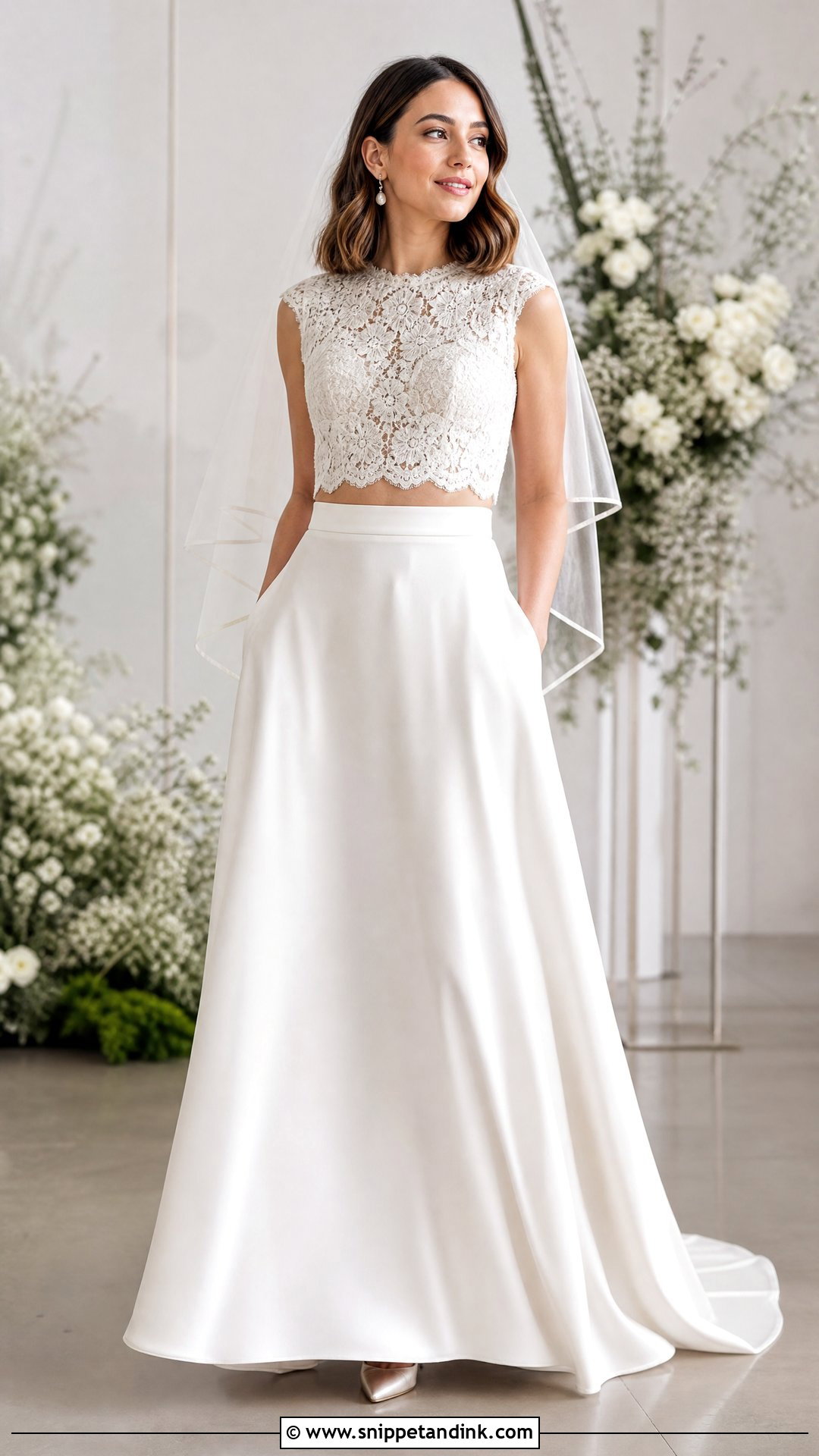
Separates let you fit top and skirt in different sizes, which is a real advantage if your bust and hips sit in different columns of a size chart. A narrow gap at the waist looks modern; an overlapping top reads like a full gown. A fitted top suits a fuller skirt and the other way round. The problem I see is the top riding up, so ask your seamstress for hidden hooks or a waist tab that keeps the pieces aligned. Raise your arms and sit in both pieces to check.

20. Blush Tulle Wedding Dress
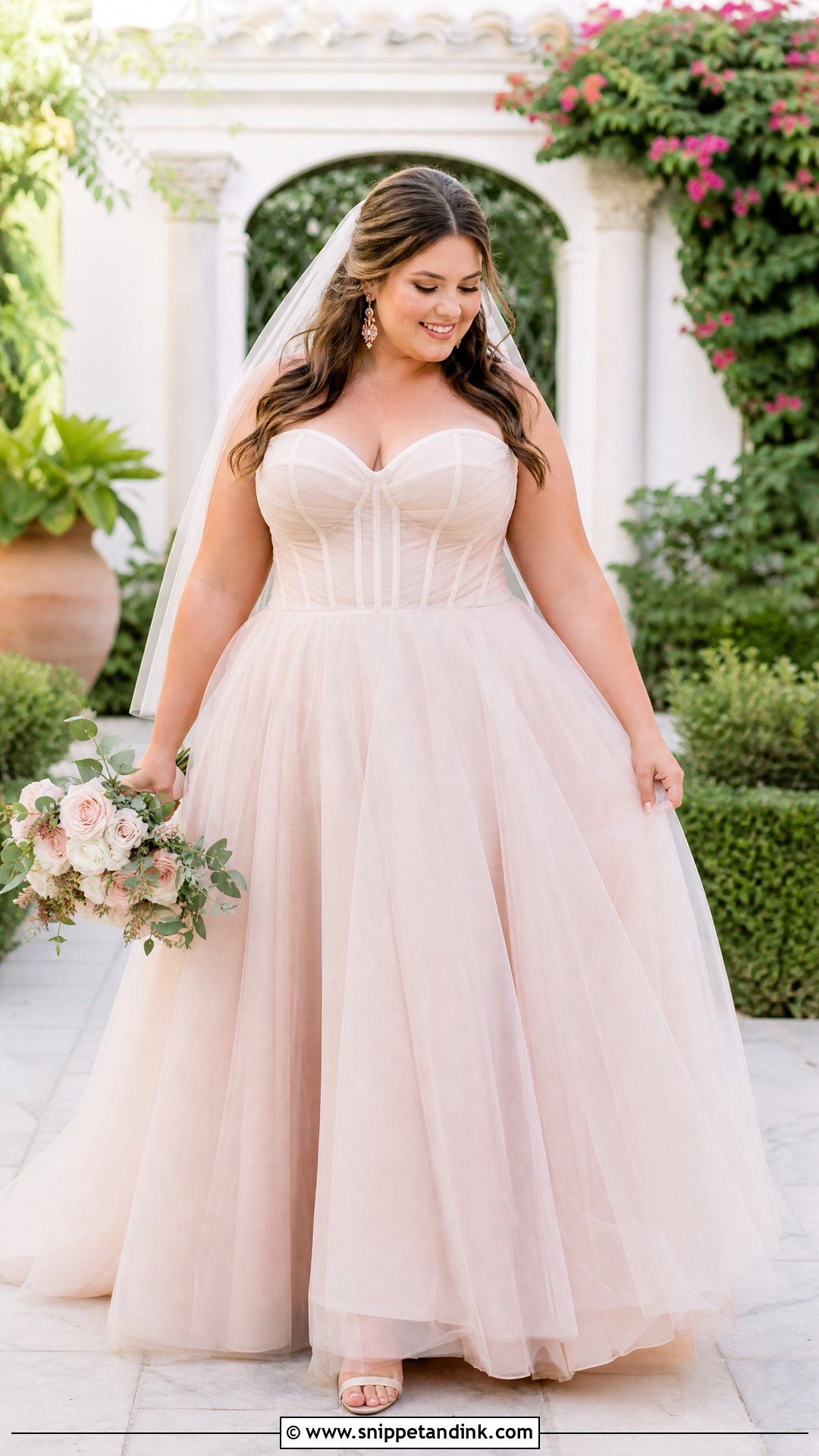
Blush tulle is softer than white, but the color changes with lighting. A shade that looks pink in a shop can appear peach in candlelight or almost grey in shade outdoors. Look at it near a window and under warm indoor light before you decide, and ask your photographer how they handle blush. Keep accessories neutral so the color stays the focus, and make sure each layer of tulle is hemmed evenly around the shoes.
The Sample Size Advantage, and Its Limits
Many bridal shops keep their sample gowns in sizes close to 10 or 12. For you, that means try-ons are unusually accurate: you’ll see how the dress actually sits on your body rather than imagining it from a clipped-in sample. Use that. Sit, walk and lift your arms in every serious contender.
Remember that samples have been worn many times. The fabric may be stretched or slightly marked, and the color may have dulled, so ask to see a swatch of the new fabric for the final decision.
A rough timeline for ordering
Most made-to-order gowns take several months to arrive, and alterations take another two to three months with two or three fittings. I’d start shopping eight to twelve months before the wedding and order no later than six months out. If your weight is likely to change, tell the shop, and time the final fitting about two weeks before the date.
Does the Label Matter Once the Tailor Is Done?
Not much. Try several silhouettes, including ones you’d normally dismiss, and judge each on neckline, waist placement, support and how you move in it. Bring your shoes and underwear to every alteration appointment. Good tailoring decides how the dress looks far more than the size you order. The dress that works is the one you can walk, sit, eat and dance in without thinking about it.
You'll Like These Ideas:






Leave a Reply