
A Marathi bridal hairstyle has one job before any other: it has to hold a mundavalya straight across the forehead for hours while the bride bows, sits, stands and turns for the camera. That is why most of the looks below stay smooth at the front and put the drama at the back, in an ambada, a gajra or a long dressed braid. They also have to sit right with a Paithani or Nauvari saree, where the drape and the border decide how much of the back view anyone actually sees. I’ve written each one up the way I’d talk it through at a trial, including where it tends to slip.
Mundavalya Strings Decide the Front Hair
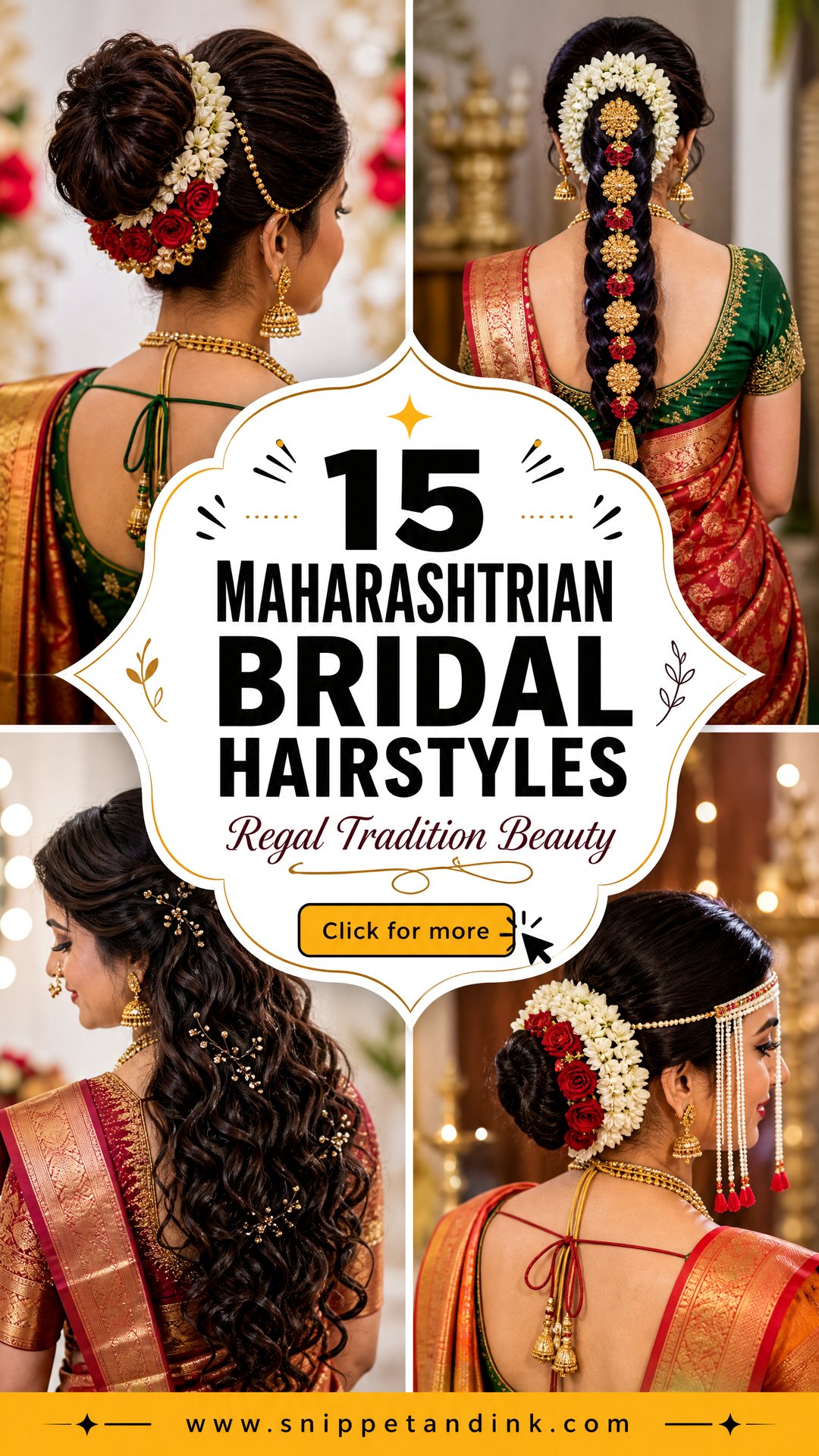
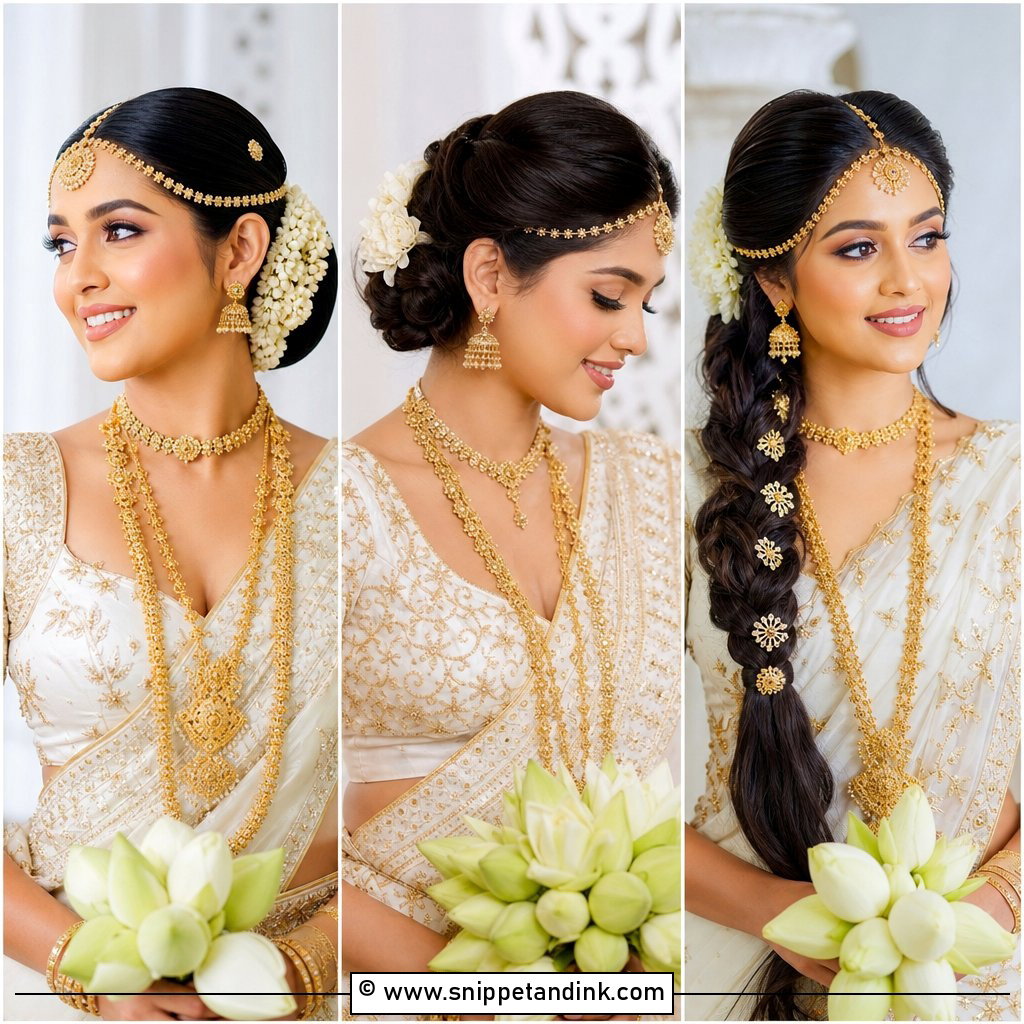
Before I settle on a bun shape with a Marathi bride, I ask to see her mundavalya. Pearl strings tied across the forehead behave differently from flower ones, and both decide how the front hair has to be done. Pearls are heavier and slide on silky, freshly washed hair, so I prep the front with a little texture spray and a light backcomb at the roots, right where the strings will rest.
The order I work in
- Base first: part the hair, smooth the front and anchor the ponytail that holds the bun or braid.
- Mundavalya next, tied behind the head above the bun so the knot hides under it, then pinned through the strings at each temple.
- Heavy ornaments after that, with the khopa, veni phool or ambada pin hooked into the bun wrap.
- Flowers last, because gajra crushes if anything is pinned over it.
Working in this order means nothing heavy sits on the flowers, and the mundavalya never has to be retied around a finished bun, which is how front hair usually gets dragged loose. If your mundavalya is borrowed or arriving late, bring something of similar weight to the trial so your stylist can test the hold. And wash your hair the night before rather than that morning. Day-old hair grips pins and strings far better than squeaky clean hair.
1. Maharashtrian Bridal Ambada Bun
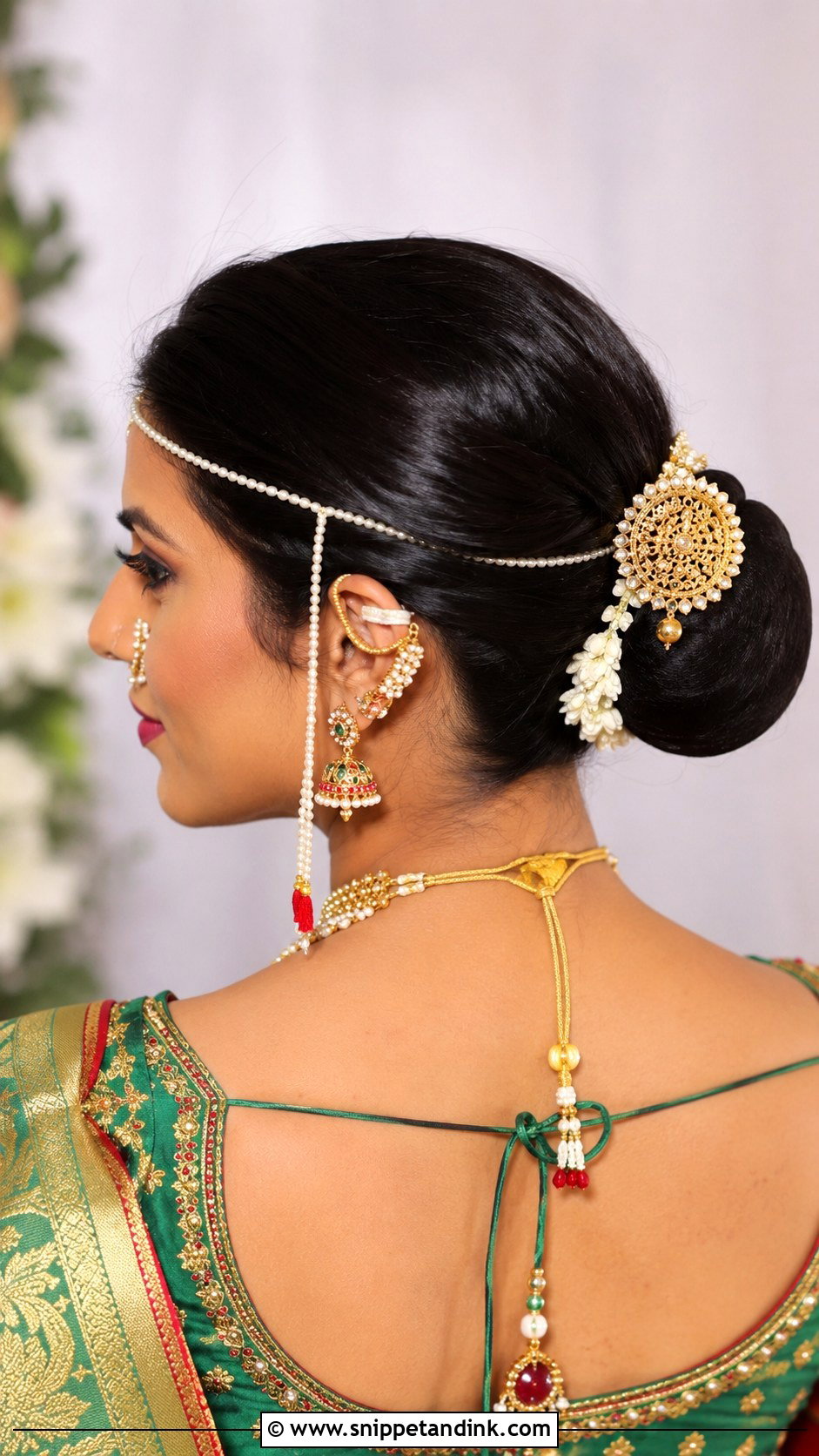
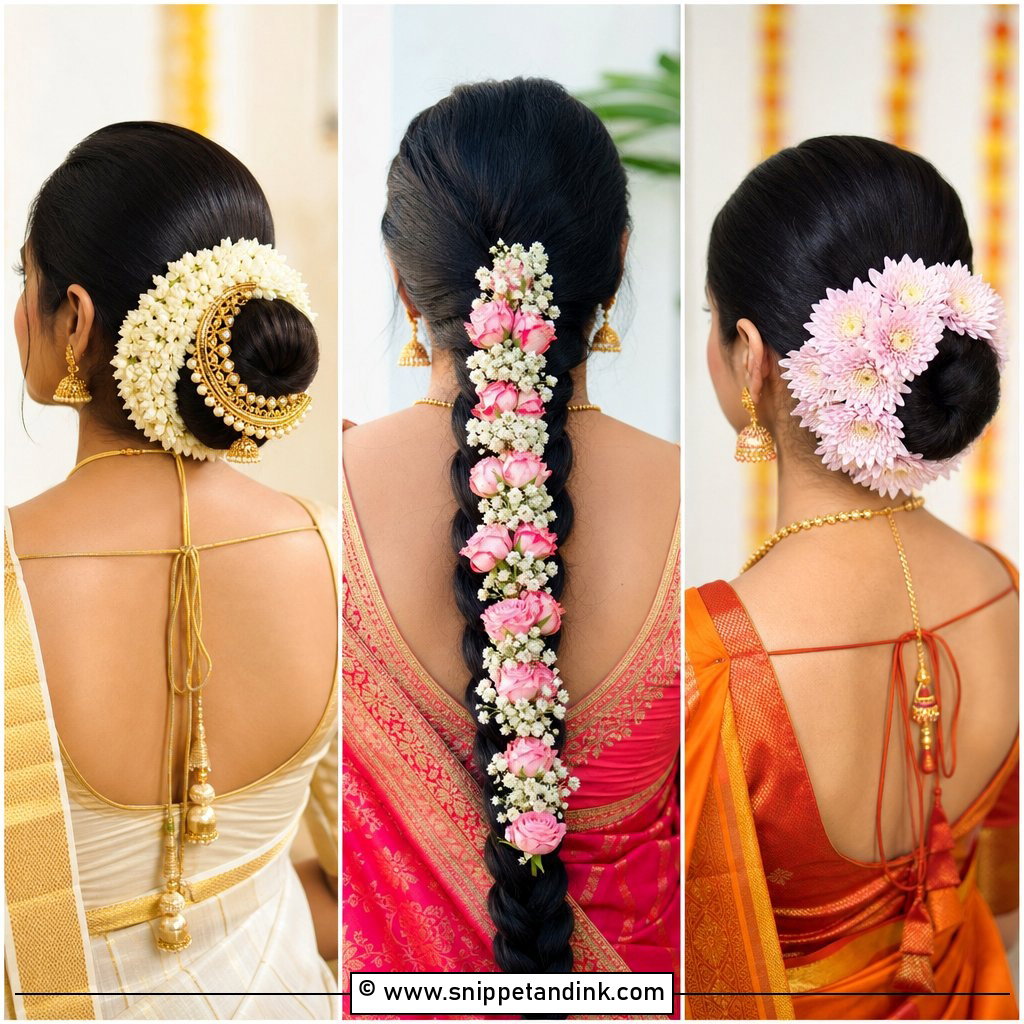
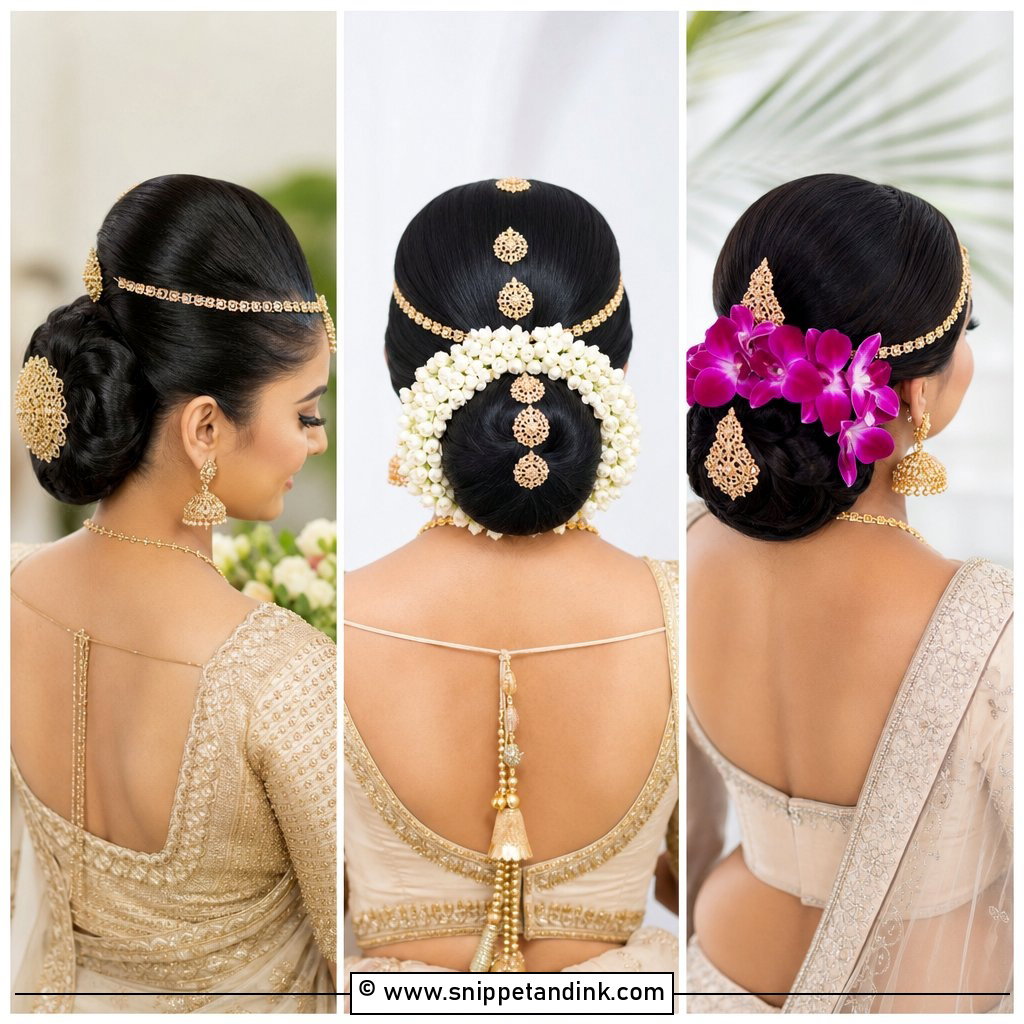
The Maharashtrian bridal ambada bun is the shape most families picture first: a round, firm bun at the back of the head or a little lower toward the nape. I build it on a tight ponytail base and wrap the hair around a padded bun maker when the bride’s length is short, because a hollow ambada loses its roundness the moment a heavy khopa pin goes in. With the front kept clean, the mundavalya, nath and layered pearls each get their own space. It’s the style I trust most for a long ritual schedule, since a well-anchored ambada barely moves when you bend forward.
2. Maharashtrian Bridal Bun With Gajra
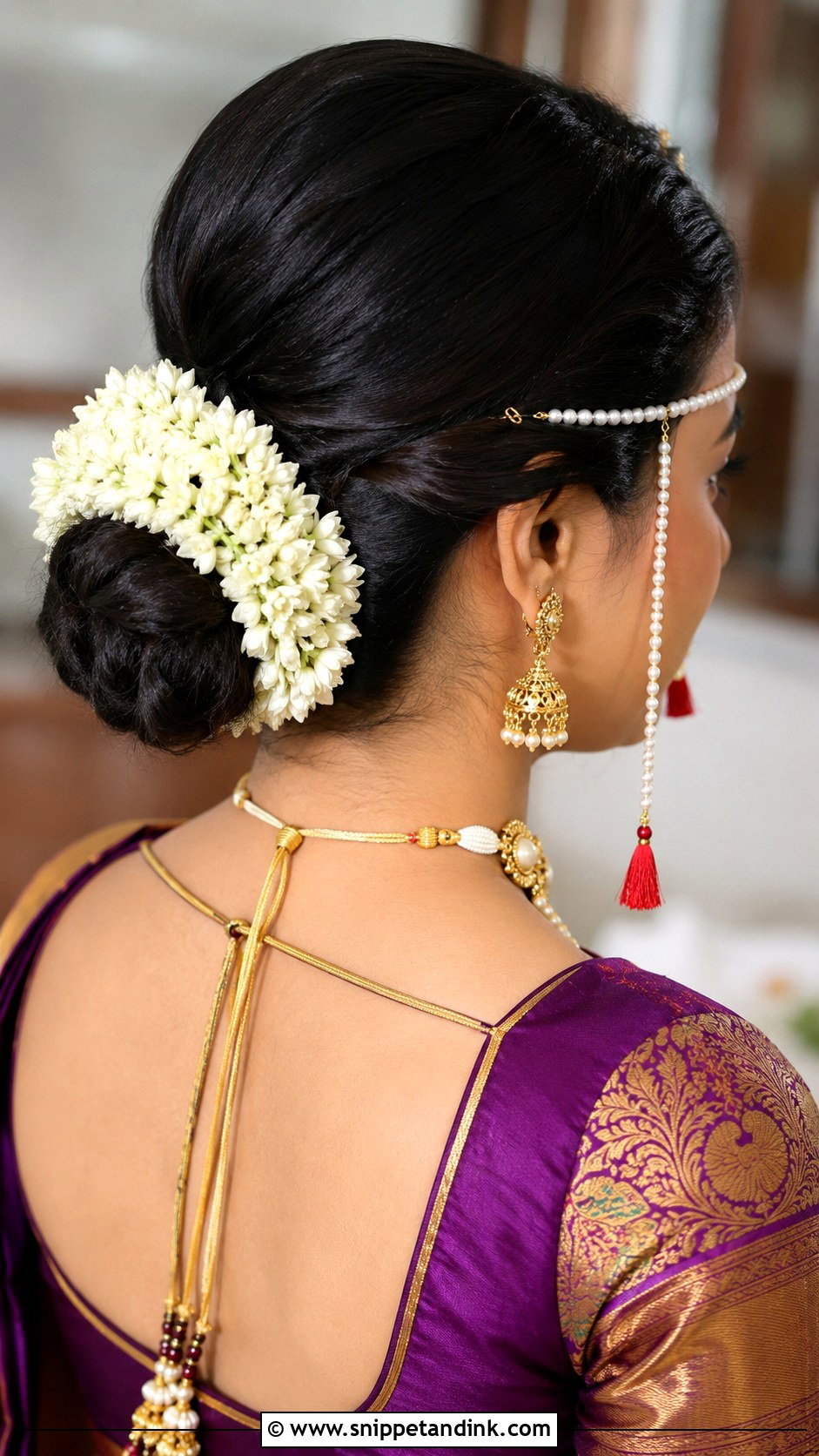
Mogra around a bun does half the festive work on its own, and the fragrance reaches the bride long before anyone sees the back of her head. I smooth the crown, set a low or mid bun, then wrap fresh mogra around its base. Two rounds is usually the limit on a medium bun; past that the gajra hangs off the hair rather than hugging it. Fresh gajra is heavier than it looks, so I anchor it with U-pins pushed into the bun itself, never into loose hair around it. The white calms down heavy gold jewelry on any Paithani shade, and one gold ambada pin in the centre is enough polish.
3. Maharashtrian Bridal Bun With Veni Phool
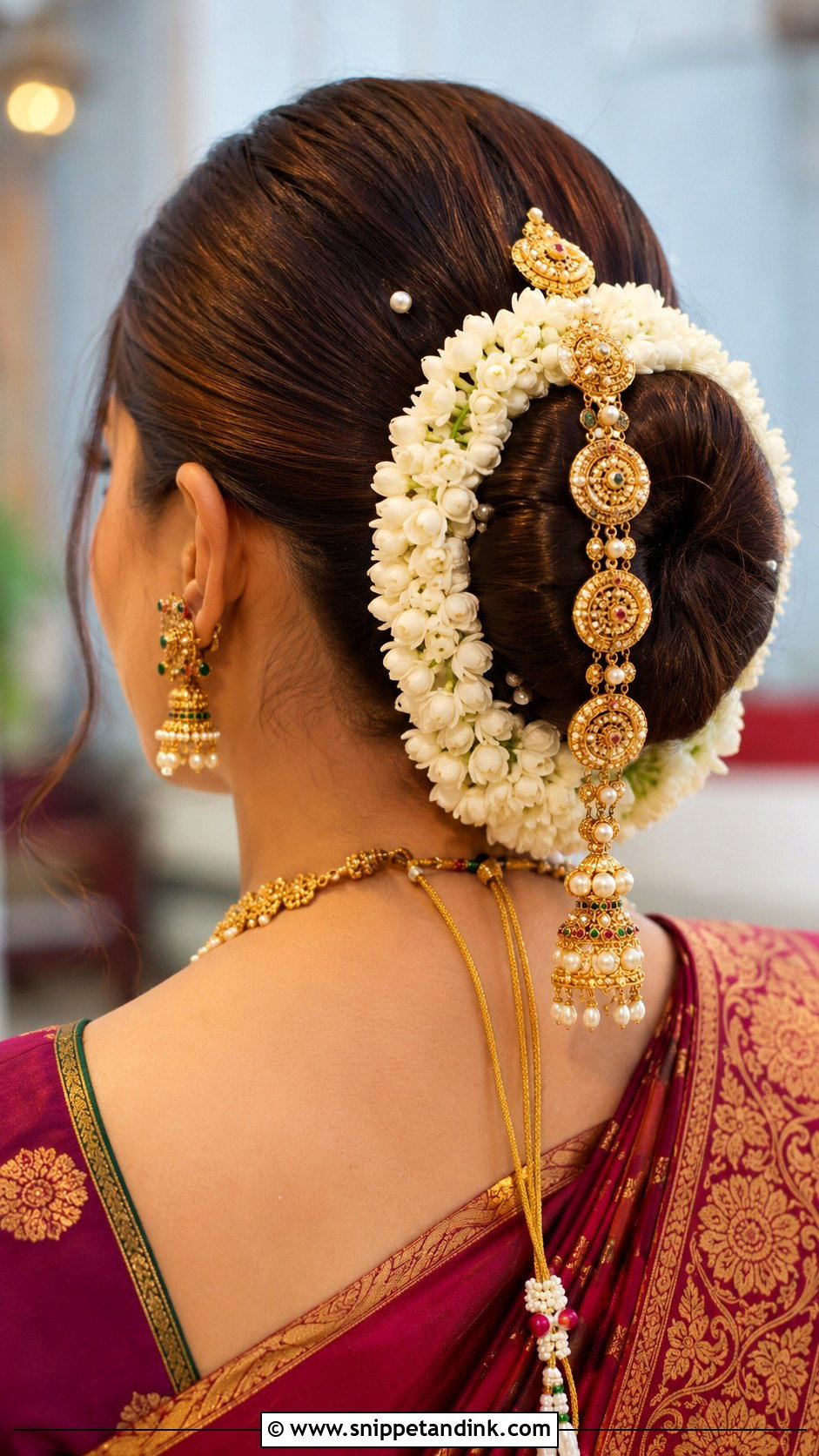
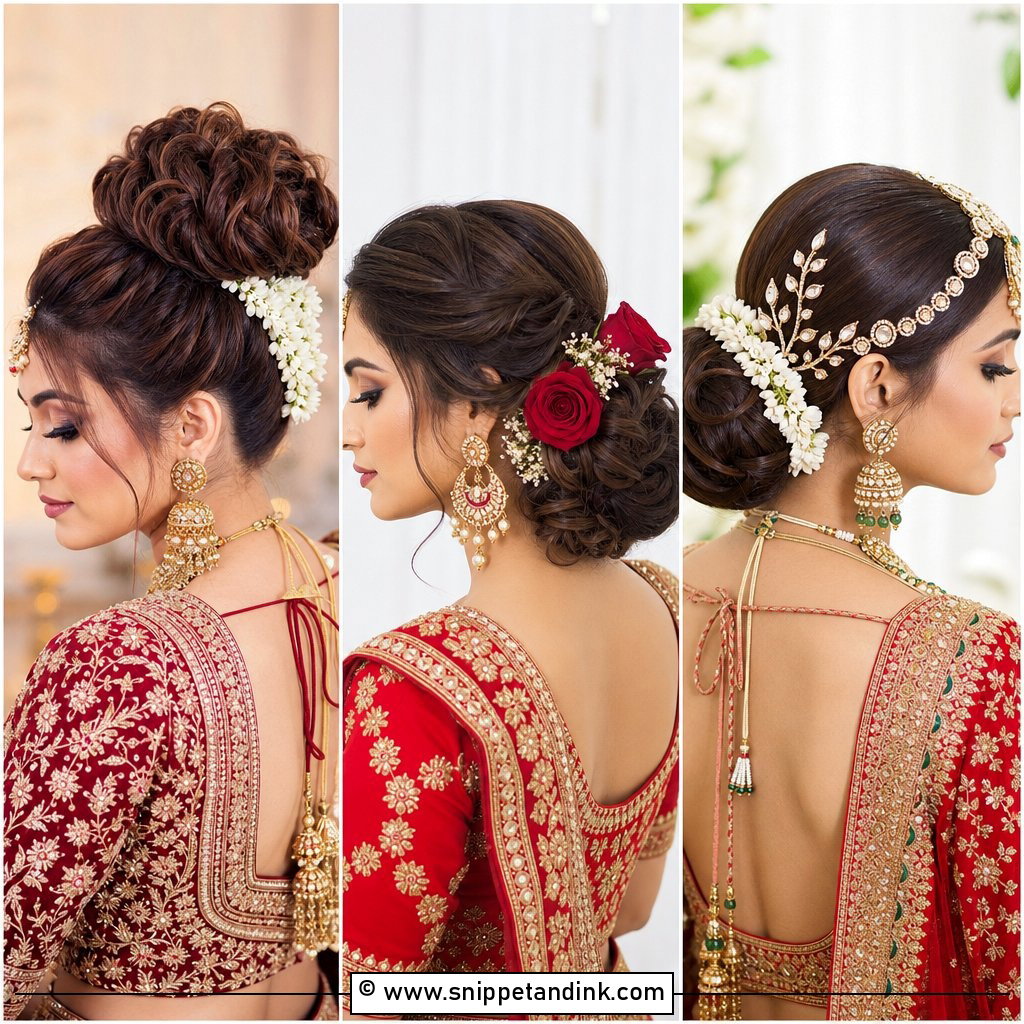
A gold veni phool turns a plain sleek bun into the detail people photograph from behind. The ornament sits around or just above the bun, often in flower, sun, peacock or lotus shapes that echo traditional Maharashtrian jewelry. These pieces are metal and some are weighty. I pin the bun extra firm and hook the ornament into the bun’s wrap instead of resting it on top, where it slowly tilts downward over a few hours. If you’d like the back softer, tuck a thin gajra under the ornament’s lower edge.
4. Maharashtrian Bridal Low Bun
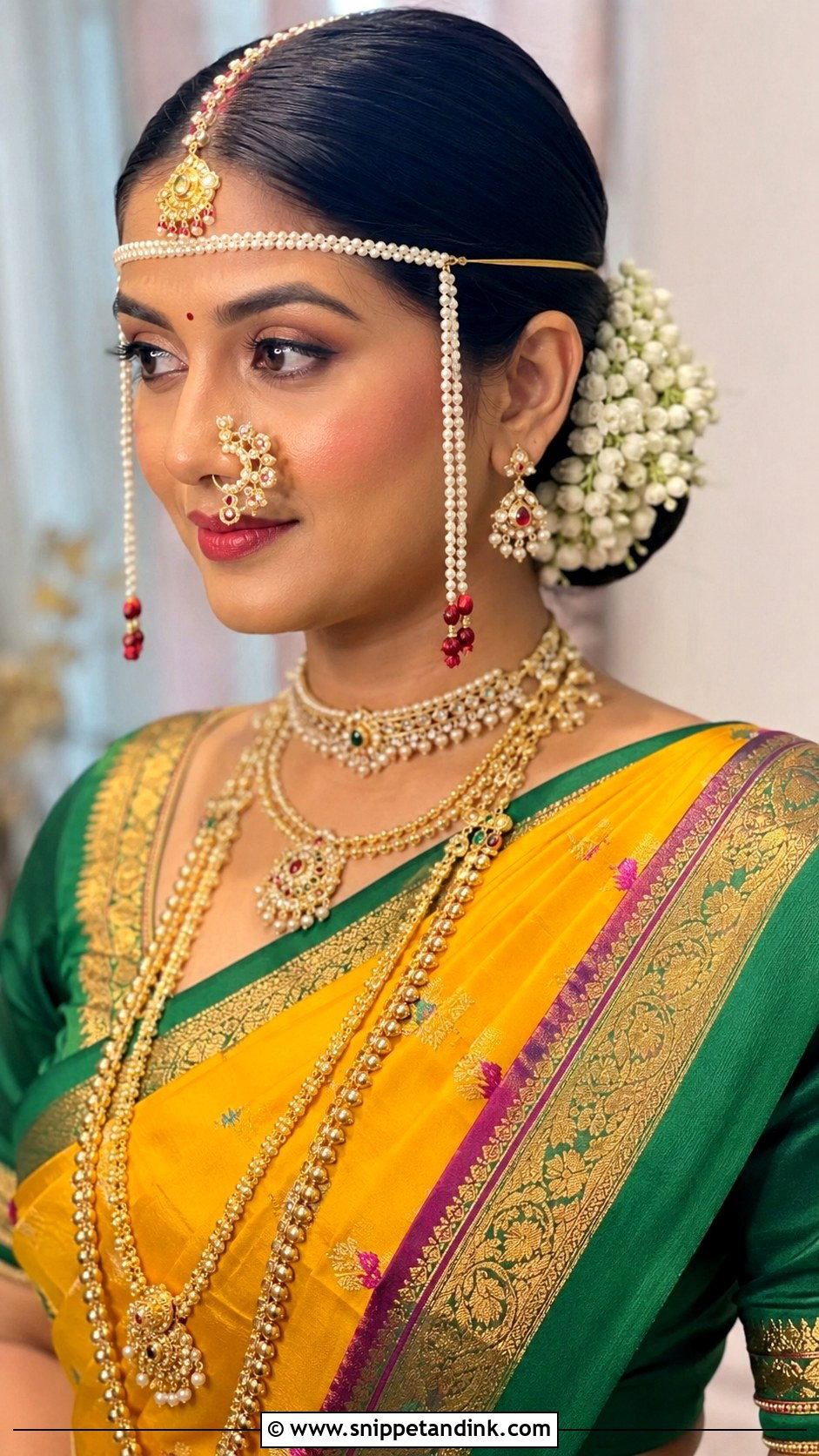
Set close to the nape, a low bun sits comfortably under a pallu and doesn’t press into anything when you lean back in a chair. The front can be centre-parted, gently puffed or kept sleek, depending on your face. It stays out of the way of a heavy necklace, a chandrakor bindi and a pearl mundavalya, which is why I suggest it to brides whose jewelry is the main story. One thing I check: a very low bun collides with the mangalsutra clasp and a high blouse back, so I place it just above the nape hairline, not on it. A short arc of jasmine is all it needs.
5. Maharashtrian Bridal Braided Bun
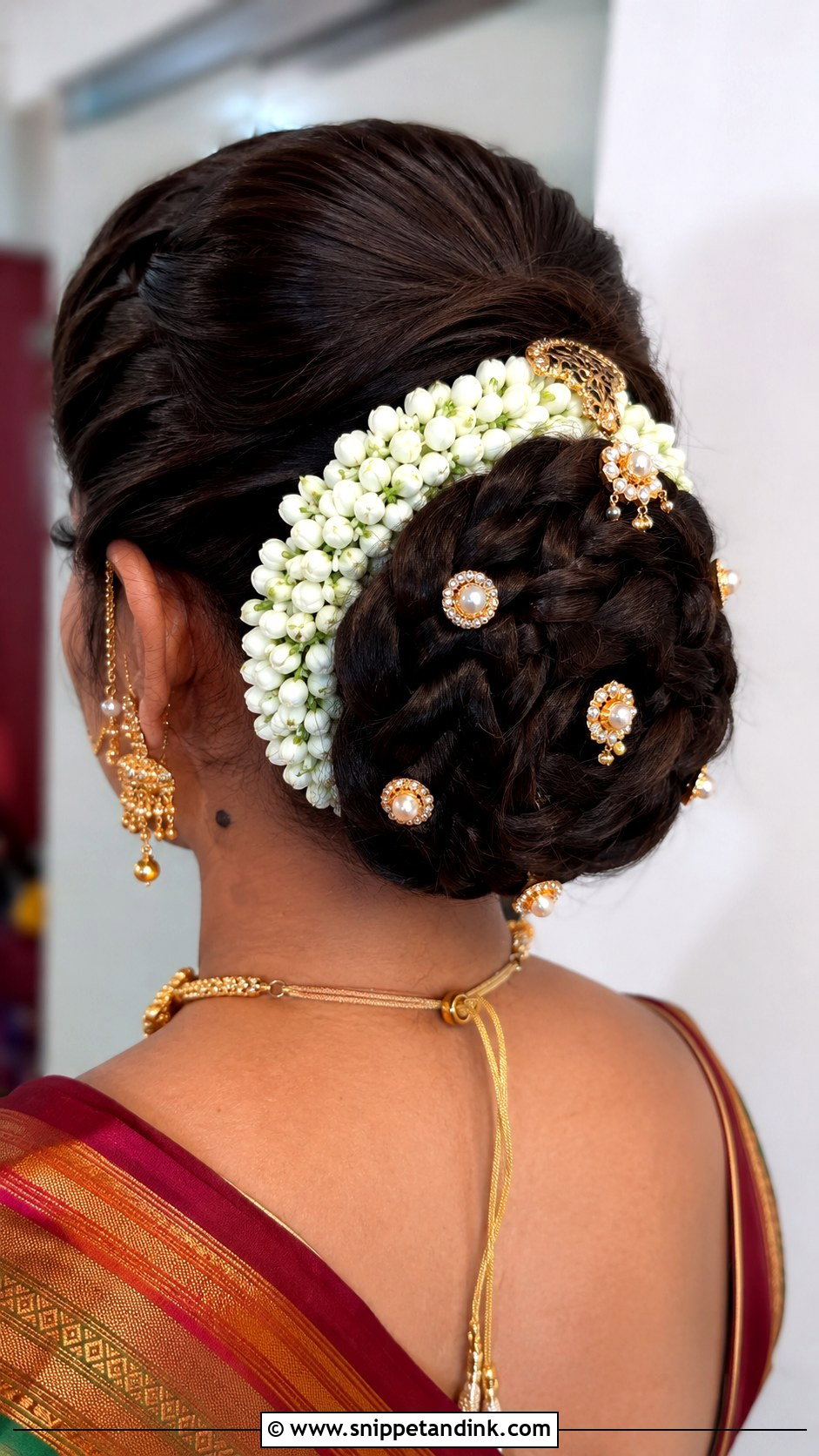
This one solves a specific problem: medium-length hair that makes a small, flat bun. The hair is braided in sections first, then the braids are coiled into the bun, which adds bulk and gives the camera texture to catch in close-ups. I loosen each braid slightly with my fingers before coiling, because pulled-out braids look fuller than tight ones. It holds very well, since every braid is pinned separately and nothing relies on one elastic. Add gajra or a few gold pins, but leave some braid showing, or the texture disappears under flowers.
6. Maharashtrian Bridal Side Bun
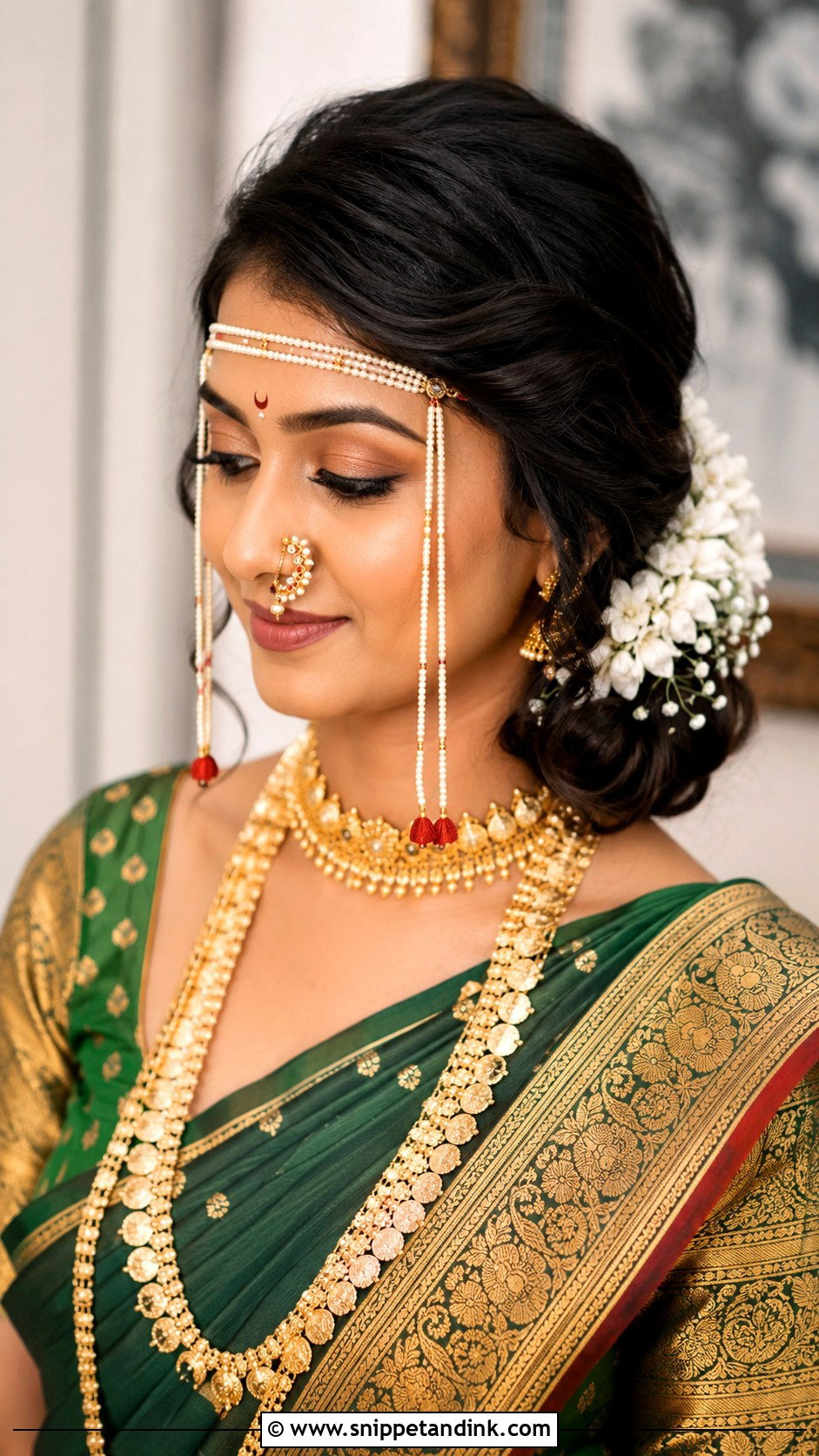
Moving the bun to one side gives the traditional Marathi bridal look a more current shape, and your flowers and bun ornament show up in front-facing photos without you turning around. I place it low, behind the ear rather than level with it, because a mundavalya string runs right there and the two will fight all day. With a Nauvari saree and a statement nath it reads balanced. Be warned that a side bun shows every stray hair, so it needs more smoothing at the finish than anything else on this list.
7. Maharashtrian Bridal Puff Bun
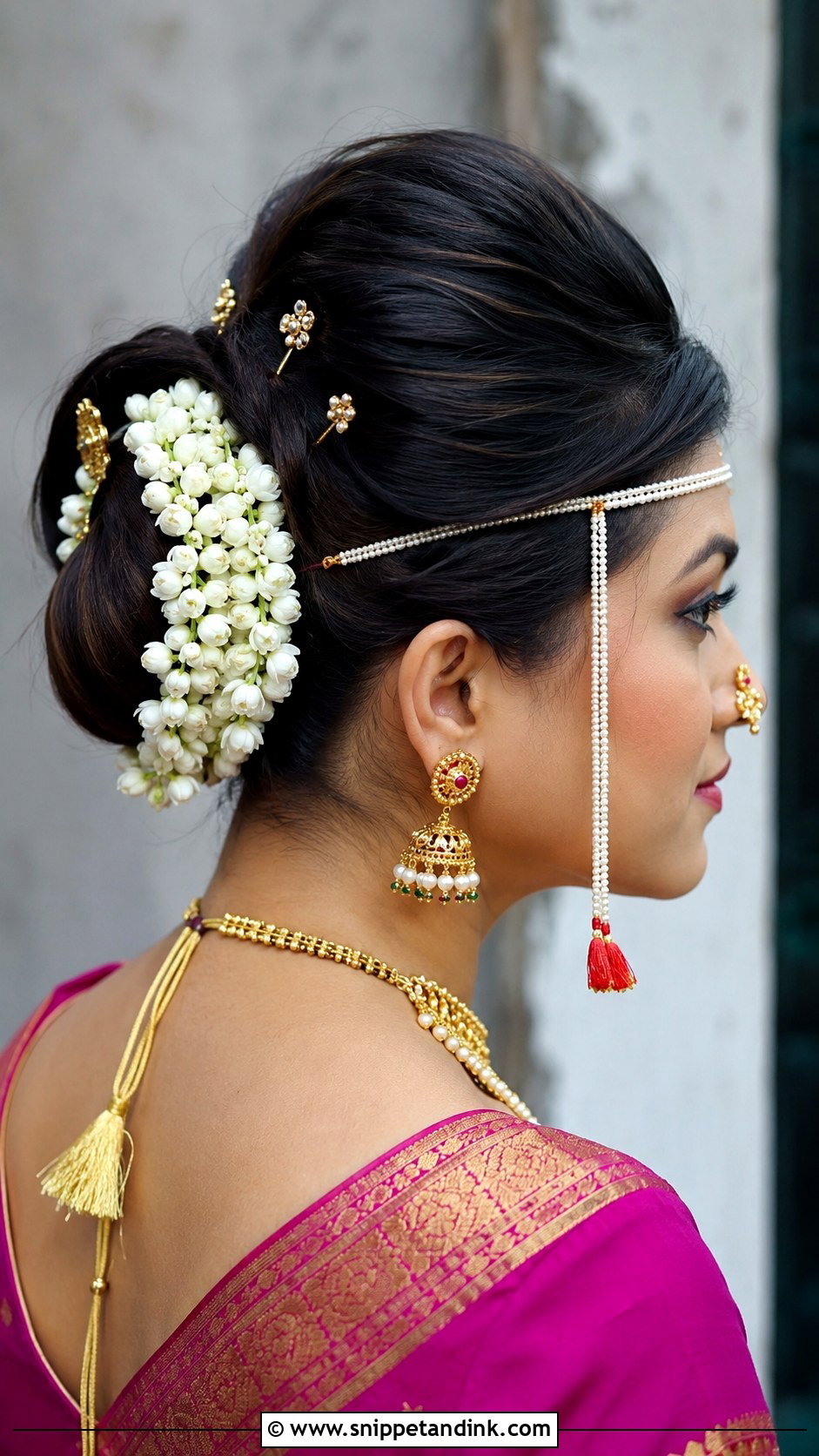
The puff adds height at the crown before the hair is gathered back, which lengthens round and heart-shaped faces and gives the whole look a more formal finish. It also gives the mundavalya a firm base, since the strings rest against lightly backcombed hair instead of sliding on slippery straight strands. I keep the puff modest, a finger or two of lift. A tall puff pushes the mundavalya forward and changes how it hangs at the temples. With a rich saree border or heavy jewelry, this shape frames the face without crowding it.
8. Maharashtrian Bridal Center Part Bun
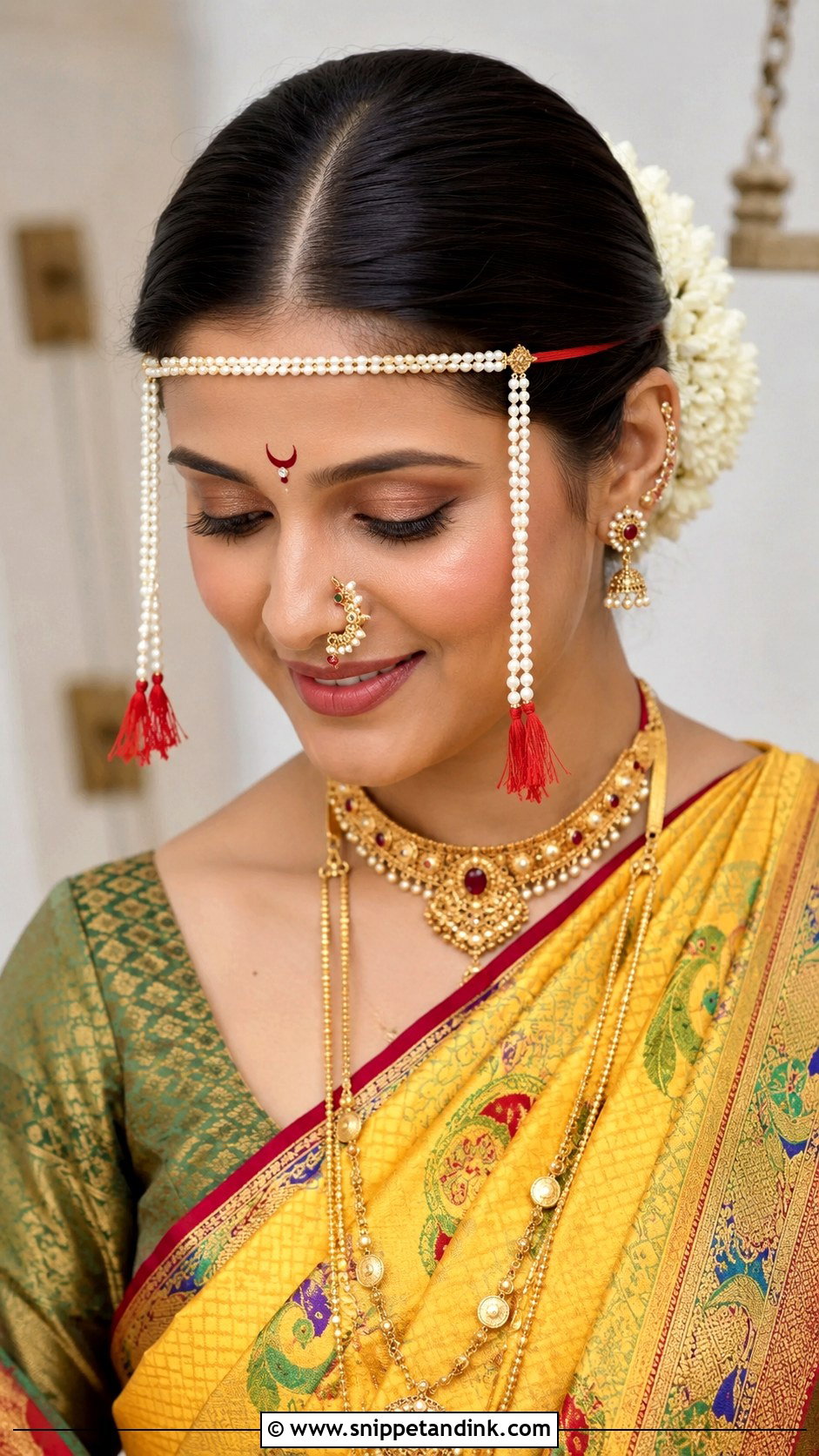
A clean centre part is about as Maharashtrian as bridal hair gets. Both sides are smoothed back into a neat bun, and the mundavalya, bindi, nath and earrings take the stage. Symmetry is unforgiving, though. If the part sits even slightly off, the mundavalya hangs lower on one side and every straight-on portrait shows it, so I mark the part from the bridge of the nose, never by eye from the side. Ask for the sides smoothed but not plastered; completely flat sides can make the face look wider under strong lights.
9. Maharashtrian Bridal Long Braid
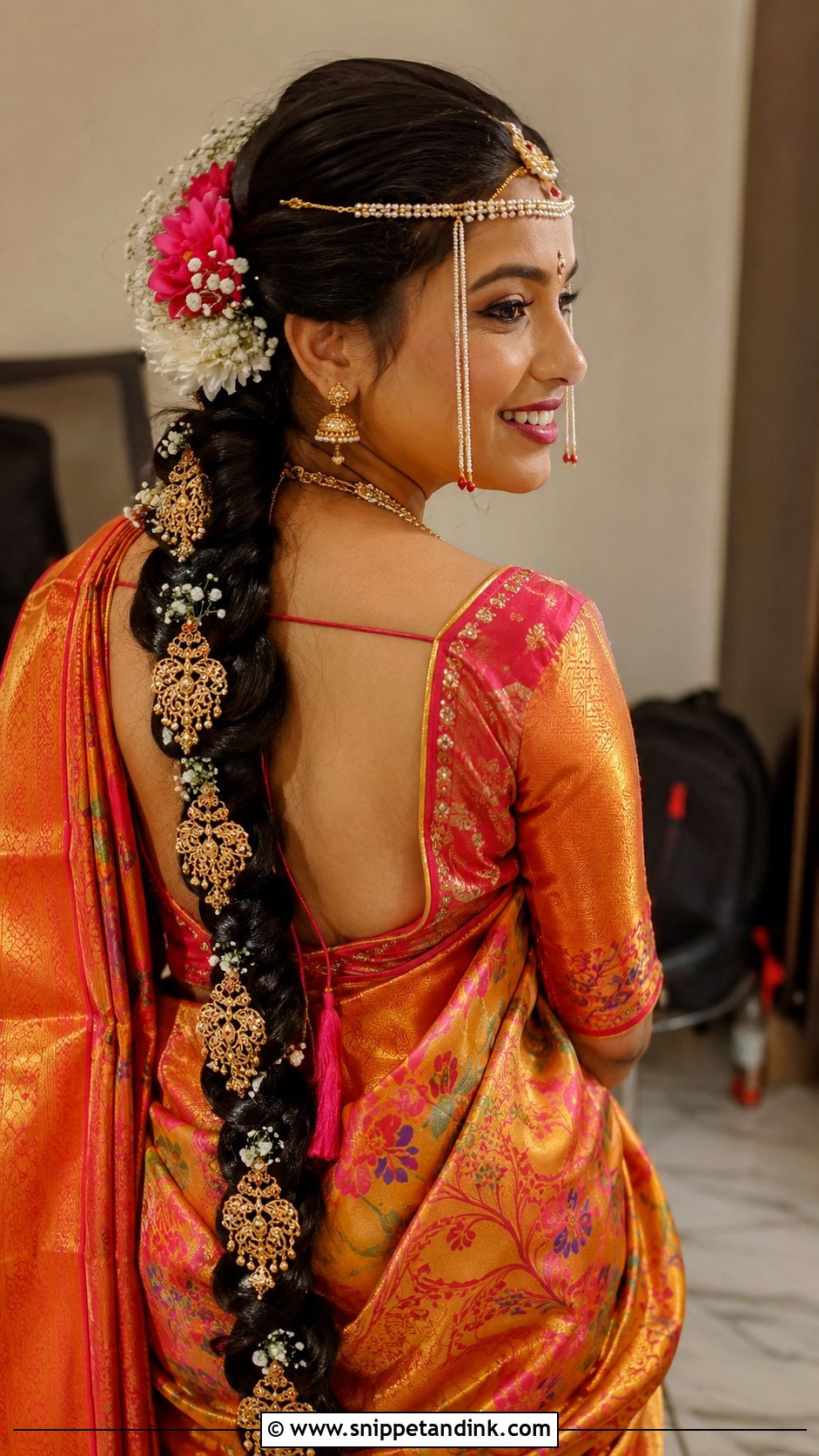
A long braid brings length and movement, dressed along its run with flowers, gold pieces, pearl strings or small pins. It suits pre-wedding rituals, temple ceremonies and brides in a Nauvari saree, and it shows in side and back photos without any effort. If your own hair is shorter, clip-in extensions fill it out, but I match their texture to your hair first and braid them in from the very start instead of adding them at the end. One honest drawback: a long braid gets sat on. In cross-legged rituals, bring it over your shoulder.
10. Maharashtrian Bridal Braid With Gajra
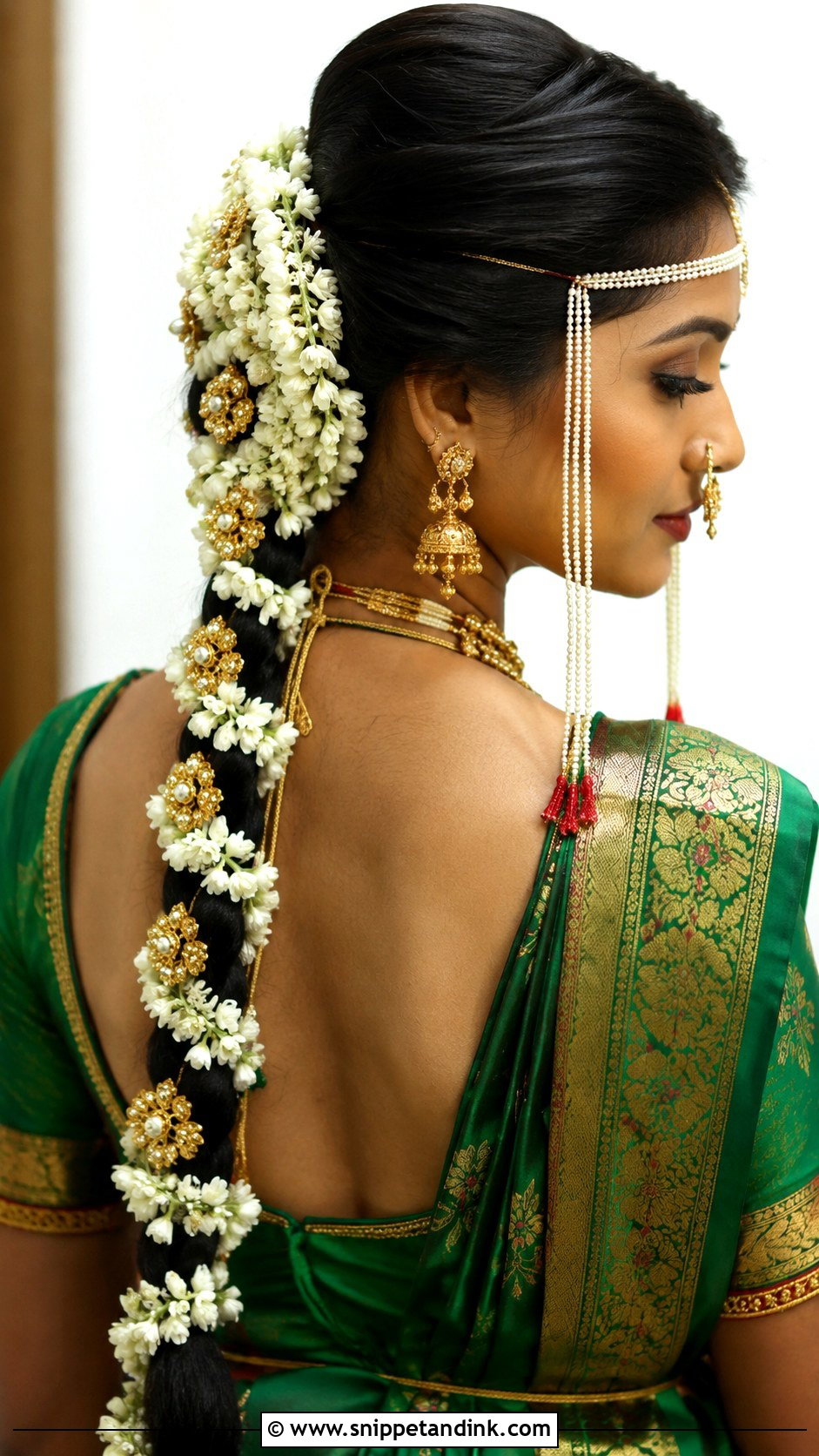
Jasmine on a braid can be wound round it, laid in loops or run as a thick trail down its length, and it’s the natural pick if you want flowers but not a bun. On a silk drape the braid falls over the back and frames the border. Gold braid accessories between the flowers add richness. I braid firmly through the lengths but keep the top section relaxed. A braid pulled tight at the crown gives most brides a headache by afternoon, and a long gajra adds weight to exactly that point.
11. Maharashtrian Bridal Half Up Hairstyle
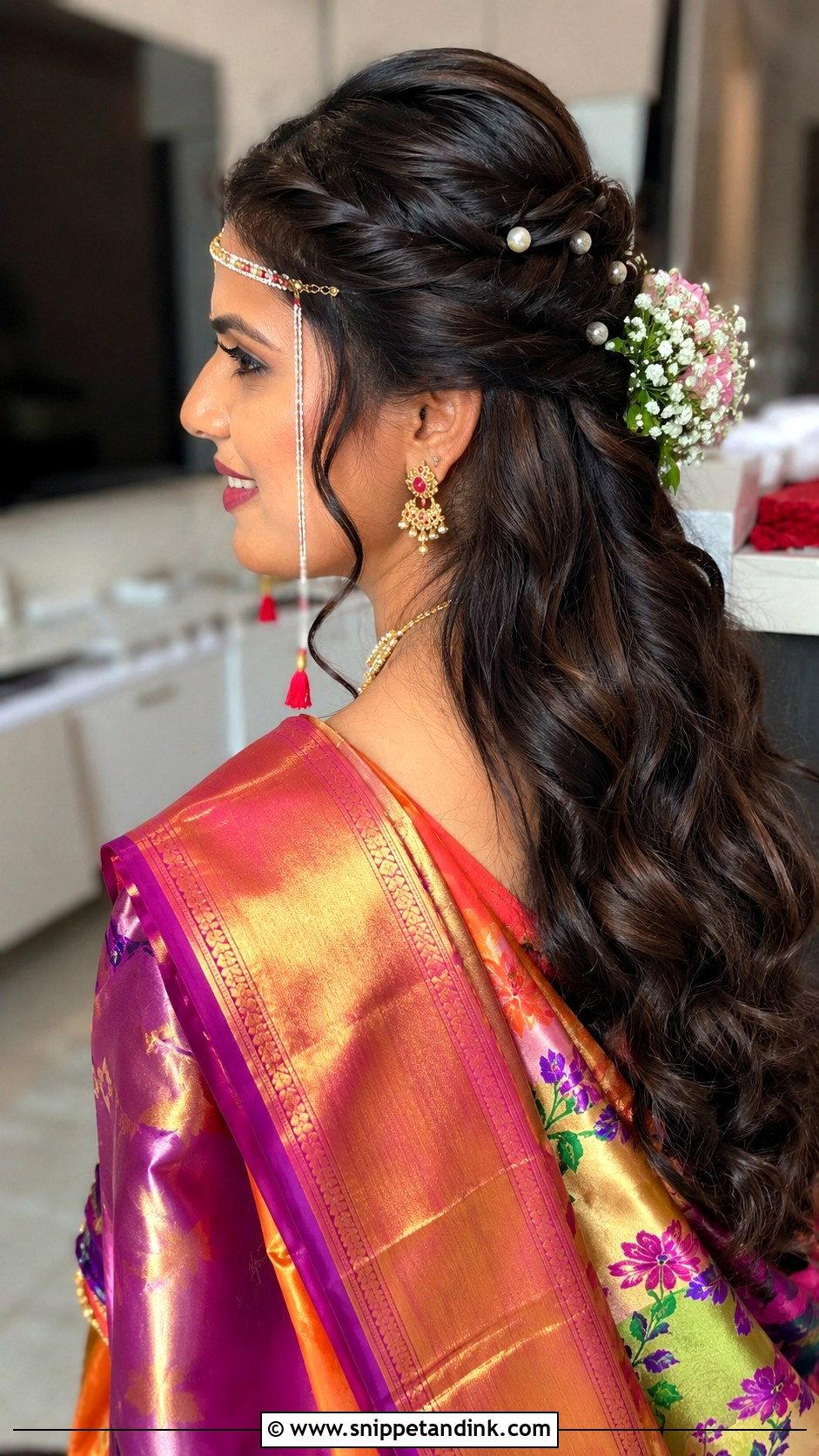
Half up pins the top section back neatly while the rest falls in soft waves. The face stays open for the mundavalya and nath, but the whole thing sits lighter, so I mostly suggest it for the reception, the engagement or a change after the main rituals. Keep the crown polished or the style drifts toward casual. The waves are the weak point. In a humid hall they relax within a couple of hours unless each one is pinned while it cools and sprayed before release. Pearl pins or a small gold accessory at the back are plenty.
12. Maharashtrian Bridal Open Curls
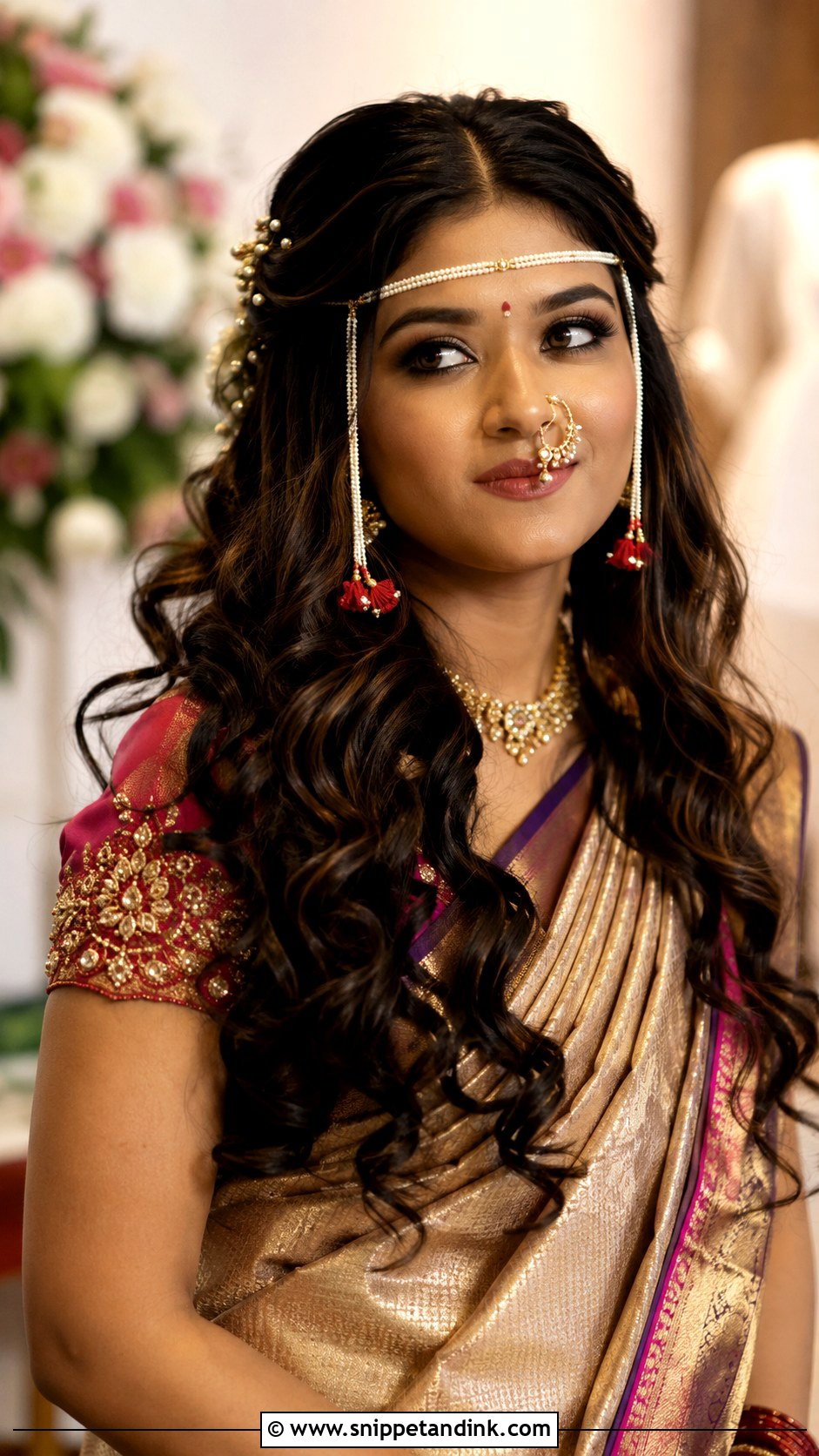
Open curls over a silk saree belong to the reception, haldi or engagement far more than the main ceremony. The hair is parted neatly, given controlled volume and curled through the lengths. With hair down, I keep accessories light: a slim mundavalya, a few pearl pins or one small flower cluster. Heavy ornaments need a bun or braid to anchor into, and loose curls simply can’t hold them. Expect the back to rub flat where you sit against a chair, so I curl those sections a little tighter to allow for it.
13. Maharashtrian Bridal Floral Bun
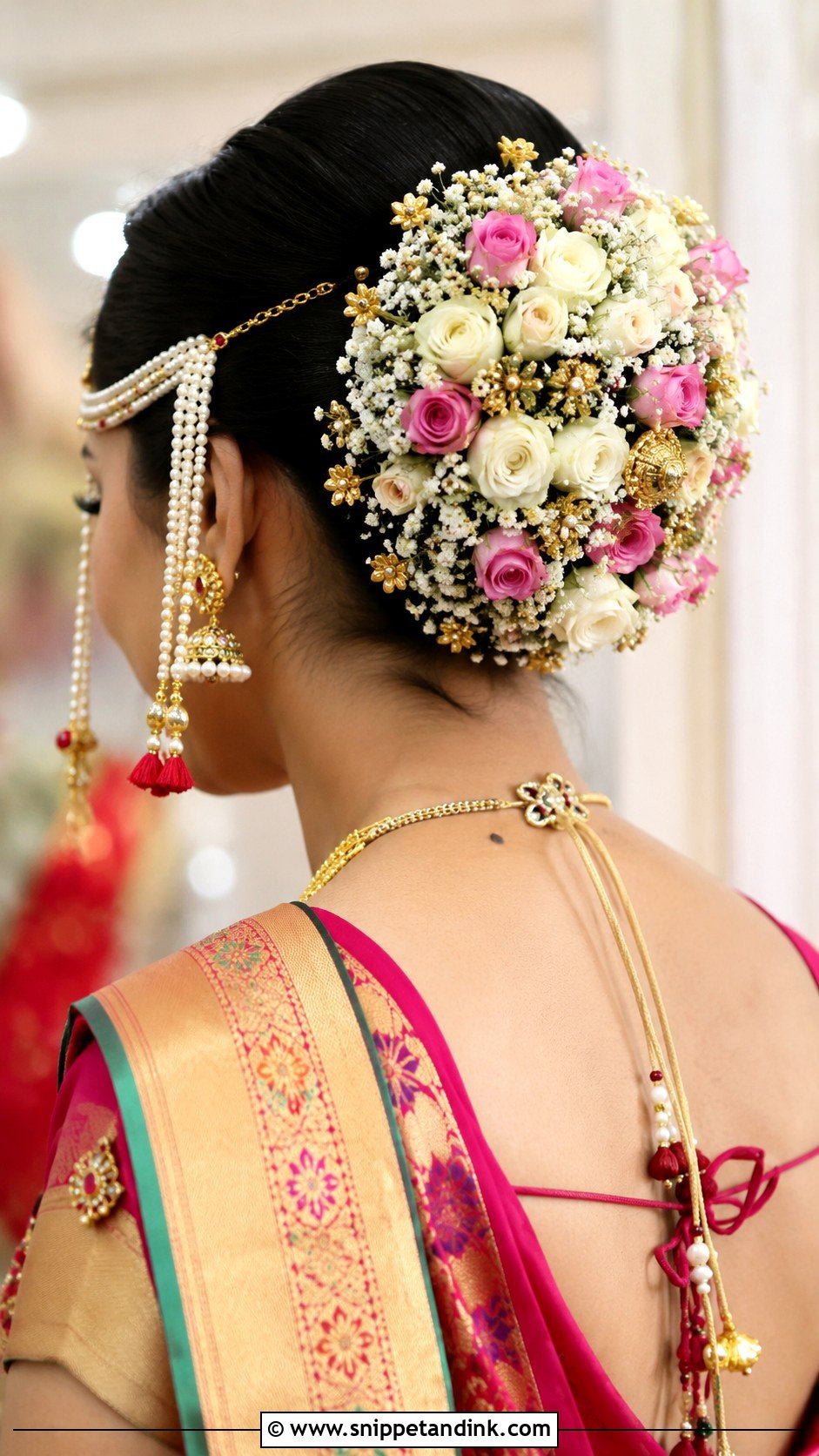
A Maharashtrian bridal floral bun goes beyond jasmine to roses, marigolds, baby’s breath or orchids matched to the saree. The bun underneath has to be firm, because every flower is pinned into it; on a soft bun they sag and the whole thing turns bulky. Daylight ceremonies show the colours best. With a bright Paithani, I take the flower colour from the border or blouse rather than the body of the saree, which stops the bun blending into the drape. A gold pin in the centre pulls it back toward tradition.
14. Maharashtrian Bridal Rose Bun
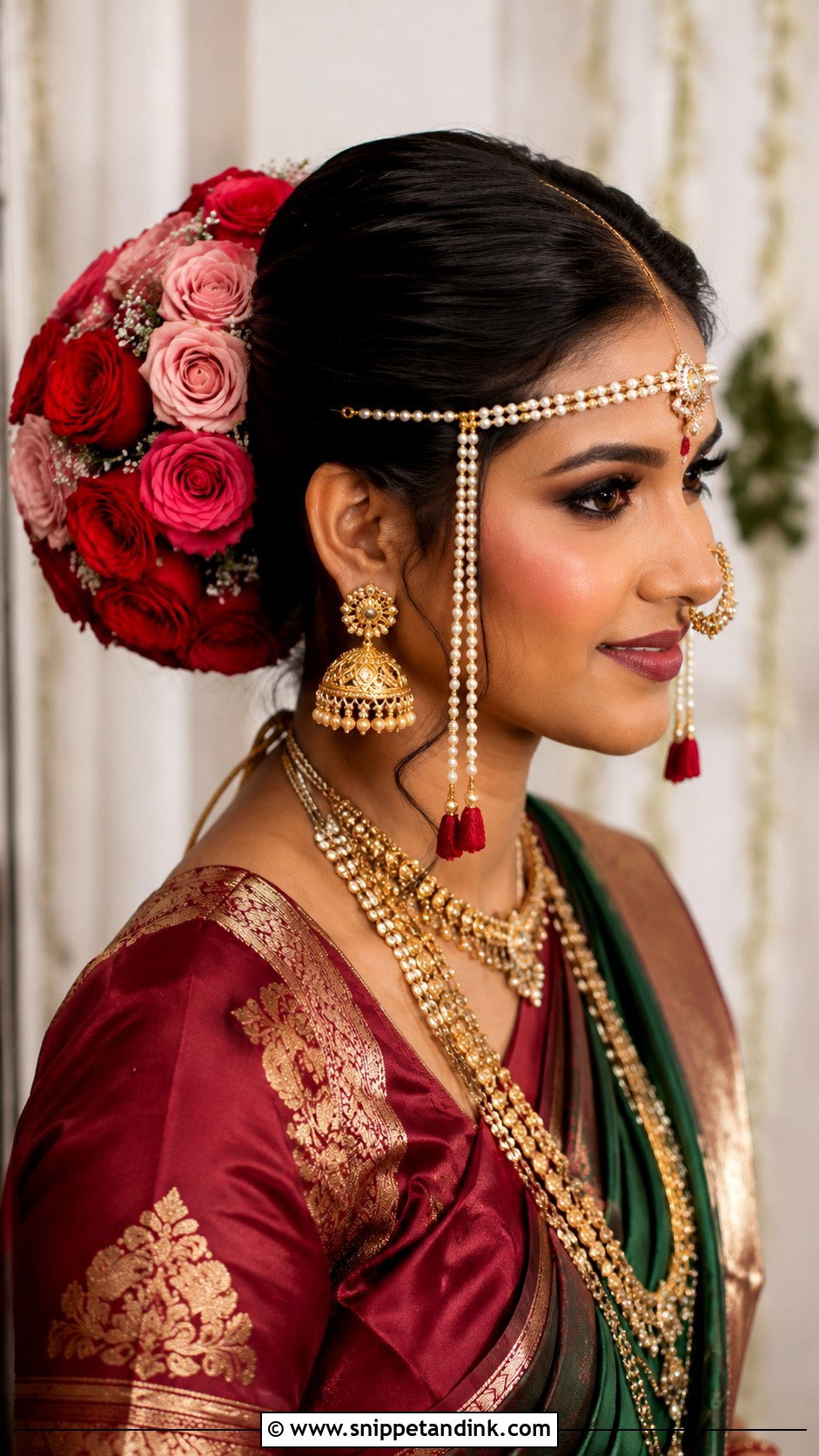
Roses give a bun a richer, more romantic back view, either covering it completely or ringing its lower edge. They bruise easily and droop once they warm up, so I use tight half-open heads, pin through the base of each bloom and add them as late in the getting-ready as I can. Red, pink or peach roses read well against deep green, magenta, maroon or gold sarees. Keep the front sleek so the look doesn’t turn busy, and let a pearl mundavalya and a classic nath do the rest.
15. Maharashtrian Bridal Bun With Mundavalya
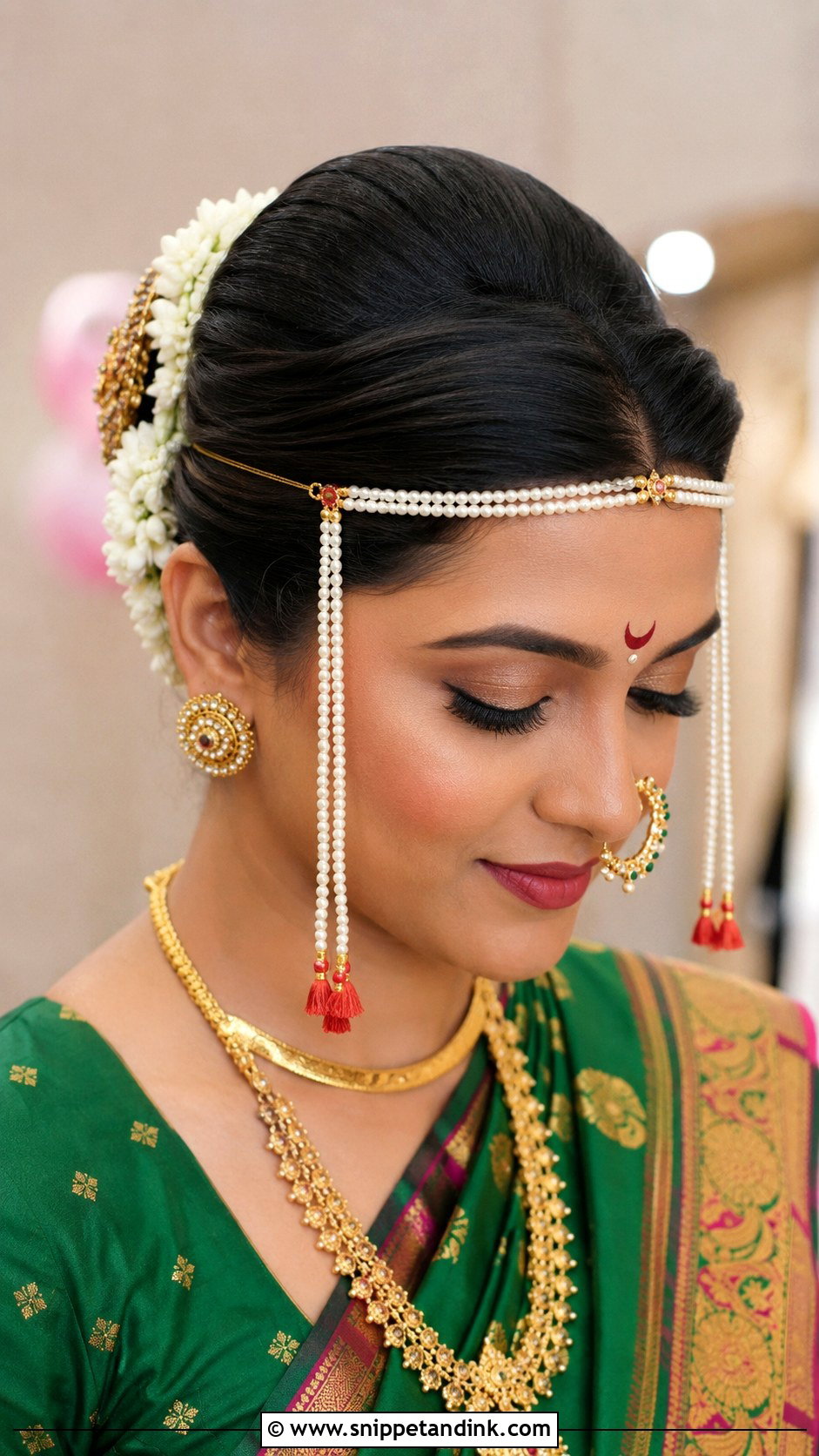
This is the look most people recognise instantly as a Marathi bride. The bun is neat and the front is kept smooth so the pearl mundavalya sits straight across the forehead and falls evenly on both sides. Balance is the whole idea. I tie the mundavalya strings behind the head just above the bun, hide the knot under its top edge, then pin through the strings so they can’t ride up when you bow to elders. Finish with gajra, a veni phool or a plain gold pin, depending on how much your saree and jewelry are already carrying.
Akshata, Antarpat and Other Ritual Hazards
Marathi wedding rituals are hard on hair in ways a photo shoot never is. During the mangalashtak, guests shower akshata over the couple, and those rice grains lodge in gajra, in braid twists and inside a backcombed puff. I keep a soft brush and a tail comb in the touch-up kit and pick the grains out once the antarpat comes down, before the next round of photos.
Bowing to elders is the other test. Every time you bend forward, a heavy bun ornament pulls toward your face and a long braid swings round. Anchor ornaments into the bun, not the outer hair, and pin a long braid at the nape so it stays down your back.
Then there’s the mangalsutra. A bun sitting right on the nape hairline gets in the way of the clasp and gets tugged while it’s fastened. A finger’s width higher avoids both problems, and nobody will notice the difference in photos.
Mogra That Still Smells Sweet at the Vidaai
Fresh jasmine is the part of a Marathi bridal hairstyle that fails first, especially in the hot months. Tight buds open slowly through the day, so I ask for gajra strung from unopened buds that morning and kept wrapped in a damp cotton cloth somewhere cool until it goes on. Don’t seal it in a plastic box; trapped moisture browns the petals where they touch.
Order a spare length if you’re changing for the reception. A gajra that has been through the ceremony, lunch and a hundred hugs looks tired by evening. If strong scent gives you a headache, mix a few silk strands in at the back, where nobody will see them up close.
A Bun That Lasts From Haldi to Vidaai
Every style here comes down to the same few questions: how your saree is draped, how heavy your jewelry is, what the weather is doing and how many hours of rituals the hair has to survive. A sleek front is what lets a mundavalya sit properly, while decorated buns and braids give you the back-view photos. Go for the one you can sit, bow and dance in without thinking about your head. If you’re torn between two, try both at your trial with the real mundavalya on, and the choice usually makes itself.
You'll Like These Ideas:







Leave a Reply