
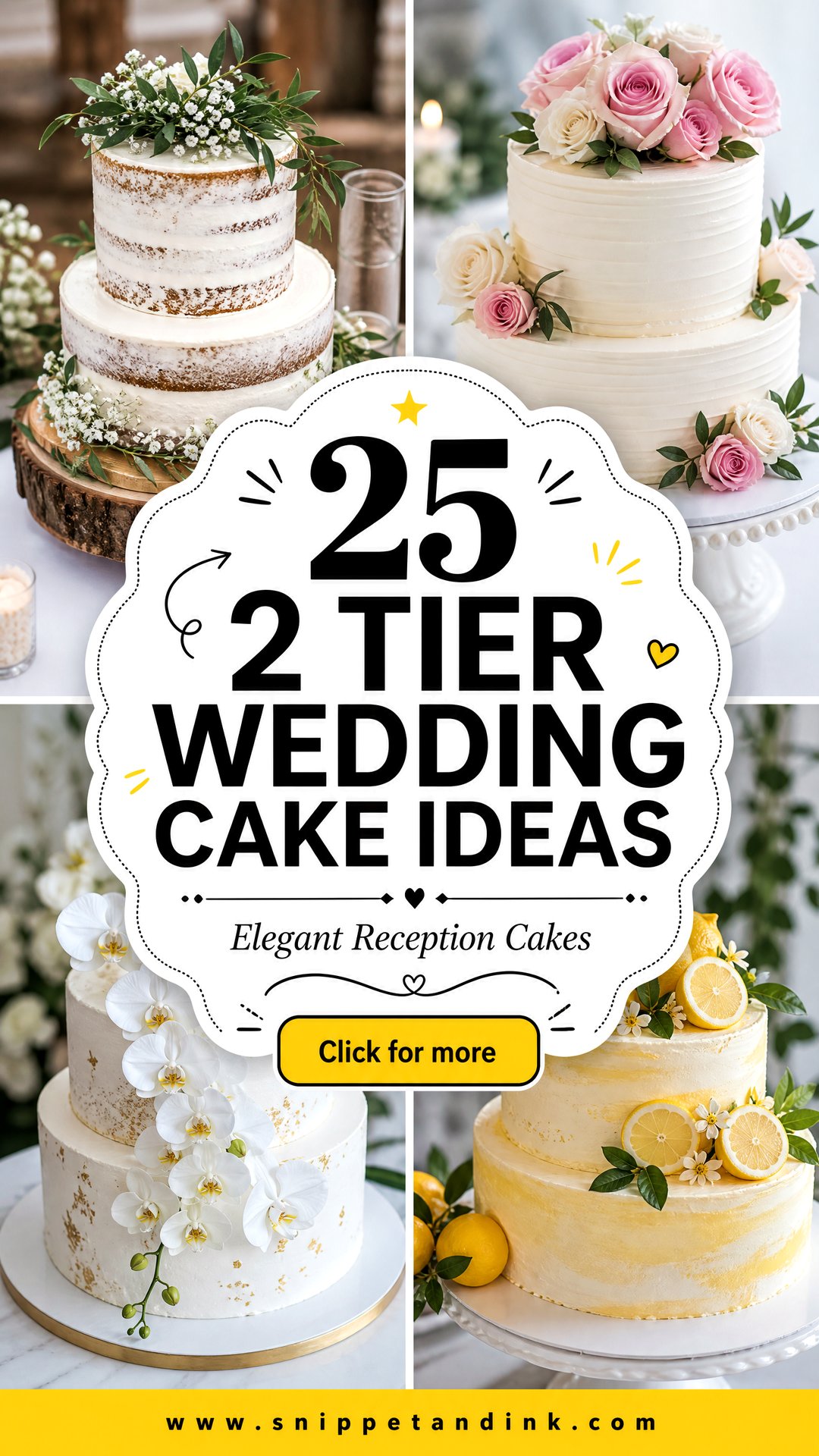
Two tiers is the size I build most often for weddings under about sixty guests, and it is the one couples underestimate. It is tall enough for a proper cutting photo, small enough to carry by two people, and it lets you put a different flavor in each tier. A 2 tier wedding cake also shows every decision you make, because there is no third or fourth tier to spread the design across. Below are twenty-five finishes I’d happily make, from vintage piping and pearls to fruit, watercolor and plain sharp buttercream, with notes on how each one holds up on the day.
How Many Guests Two Tiers Will Actually Feed
Wedding portions are smaller than party slices, usually a finger-sized piece about an inch wide and two inches across. Using that cut, these are the rough servings I plan around. Bakers cut differently, so treat them as a starting point.
- Six-inch on eight-inch: about 35 to 40 wedding portions.
- Eight-inch on ten-inch: about 60 to 65.
- Taller extended tiers, around six inches high instead of four, add roughly half again per tier.
If your guest list is bigger than that, you don’t need a third tier. Many couples keep the two-tier cake on display for the photos and have one or two plain sheet cakes in the same flavor waiting in the kitchen. Guests never see the difference on the plate.
Getting the proportions right
Two tiers can look squat if they are too close in size. I prefer at least a two-inch step between them, so a six on an eight or an eight on a ten. An extended-height top tier on a standard bottom tier gives you a tall, slim silhouette without any extra width, and it photographs better from a seated angle.
1. Simple 2 Tier Wedding Cake
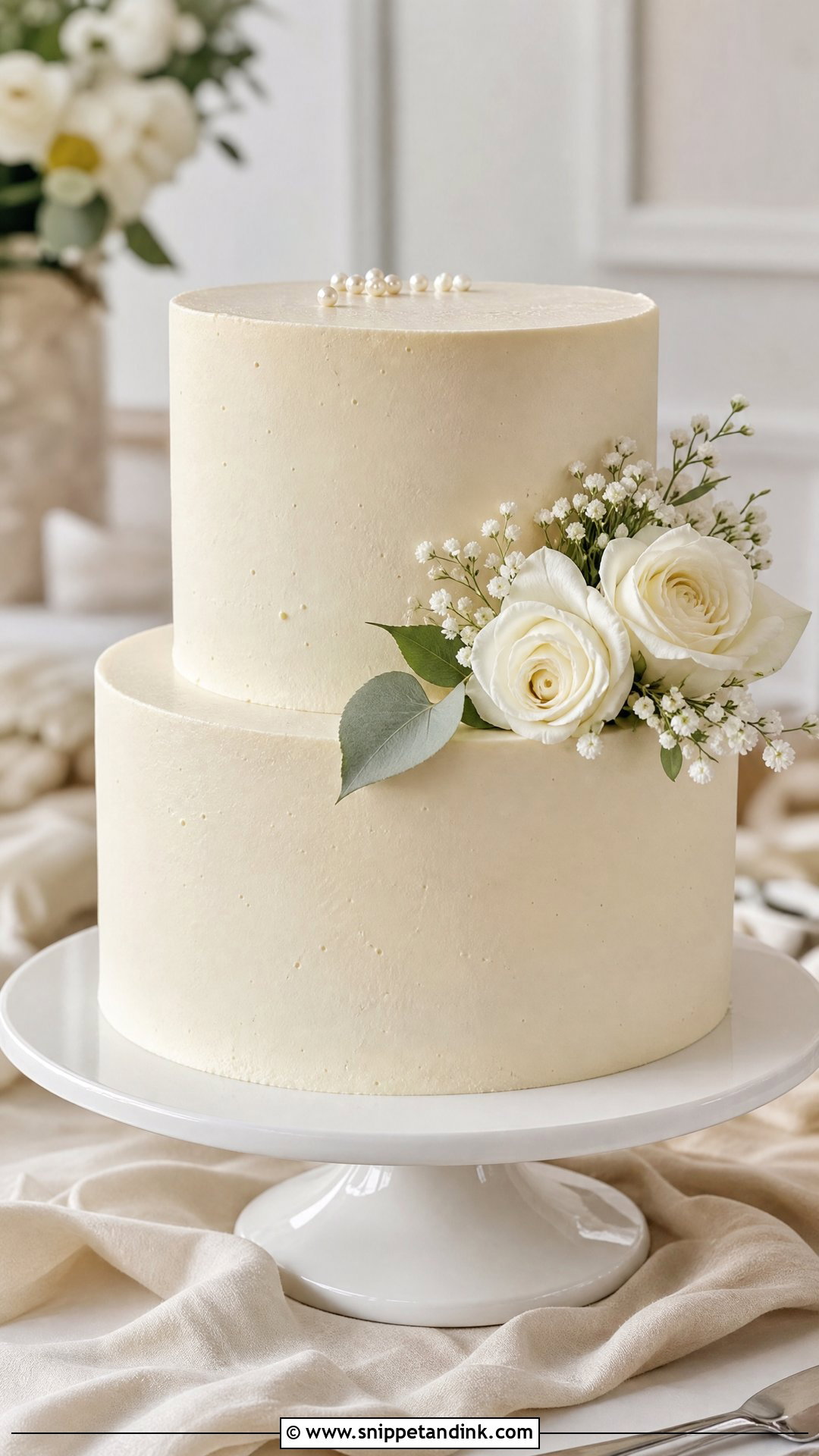
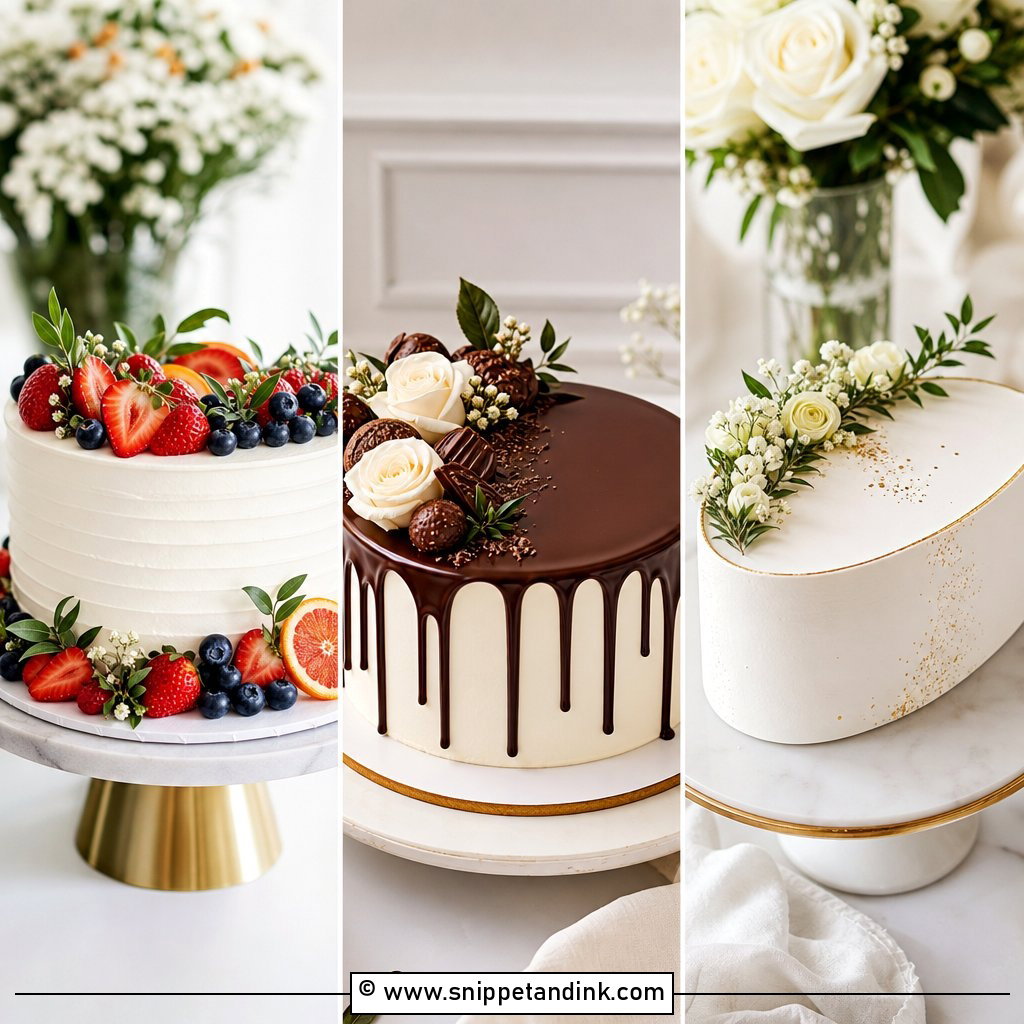
Smooth ivory buttercream, sharp top edges and one small cluster of flowers on the side or between the tiers. That is the whole design, which is exactly why the execution has to be clean. I chill each tier hard between coats and use a tall scraper to get the sides straight, because any lean or wobble shows instantly when there is nothing else to look at. Ask to see photos of plain cakes in a baker’s portfolio, not just decorated ones. Vanilla bean, almond, lemon and white chocolate all suit the quiet look and please most guests.
2. 2 Tier Wedding Cake With Flowers
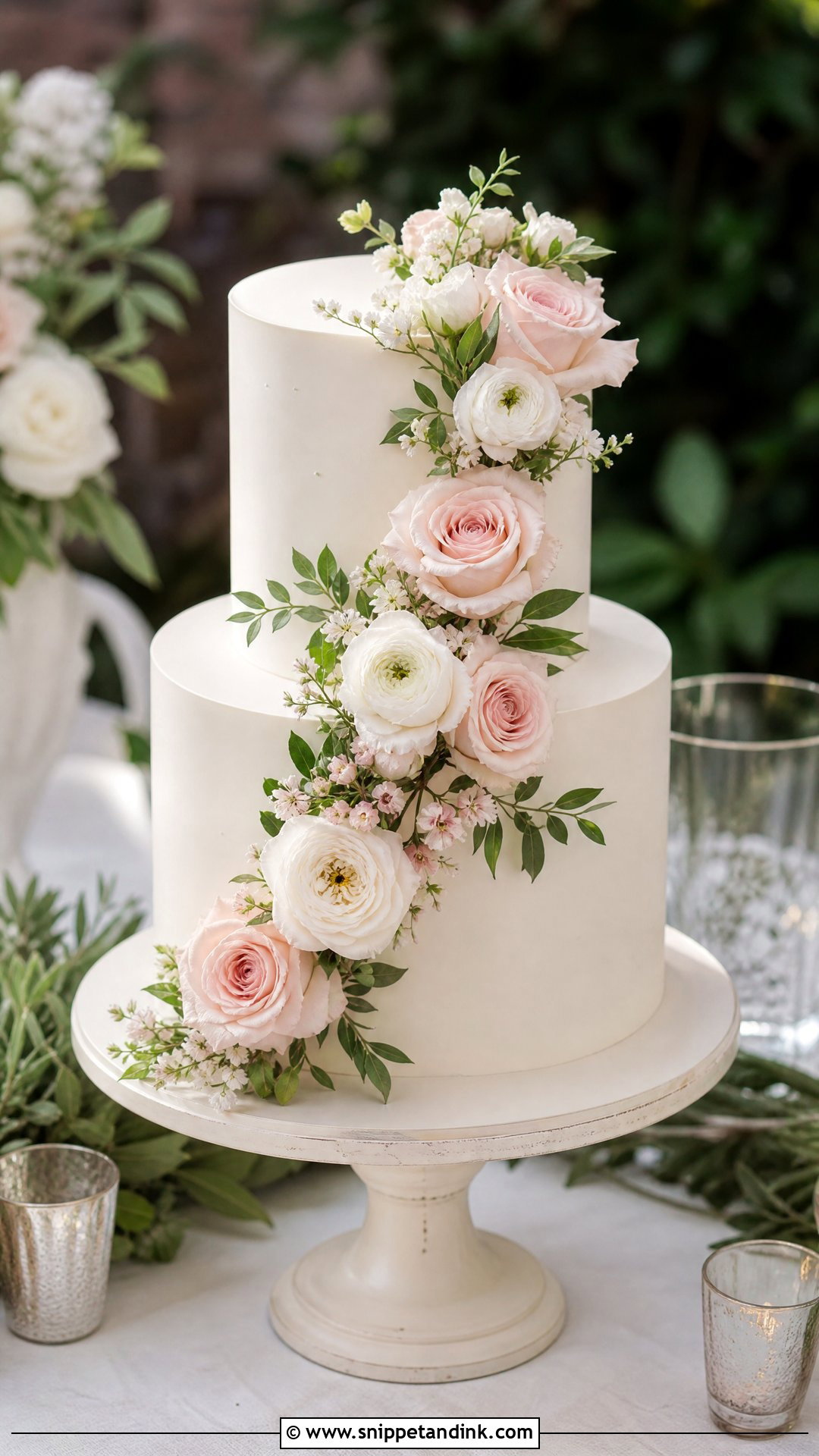
Fresh flowers placed in a diagonal line, gathered at the base or tucked between the tiers make the cake feel connected to the bouquet. The question I ask first is where the stems will go. Roses, ranunculus, orchids and lisianthus look pretty, but most florist flowers are grown with sprays and aren’t meant to touch food, so every stem is wrapped in floral tape and set into a pick or a small food-safe holder. Edible pansies are the exception and can sit directly on the buttercream. Keep the frosting pale and plain, and pick white, blush or champagne blooms so the flowers carry the color.
3. 2 Tier Buttercream Wedding Cake
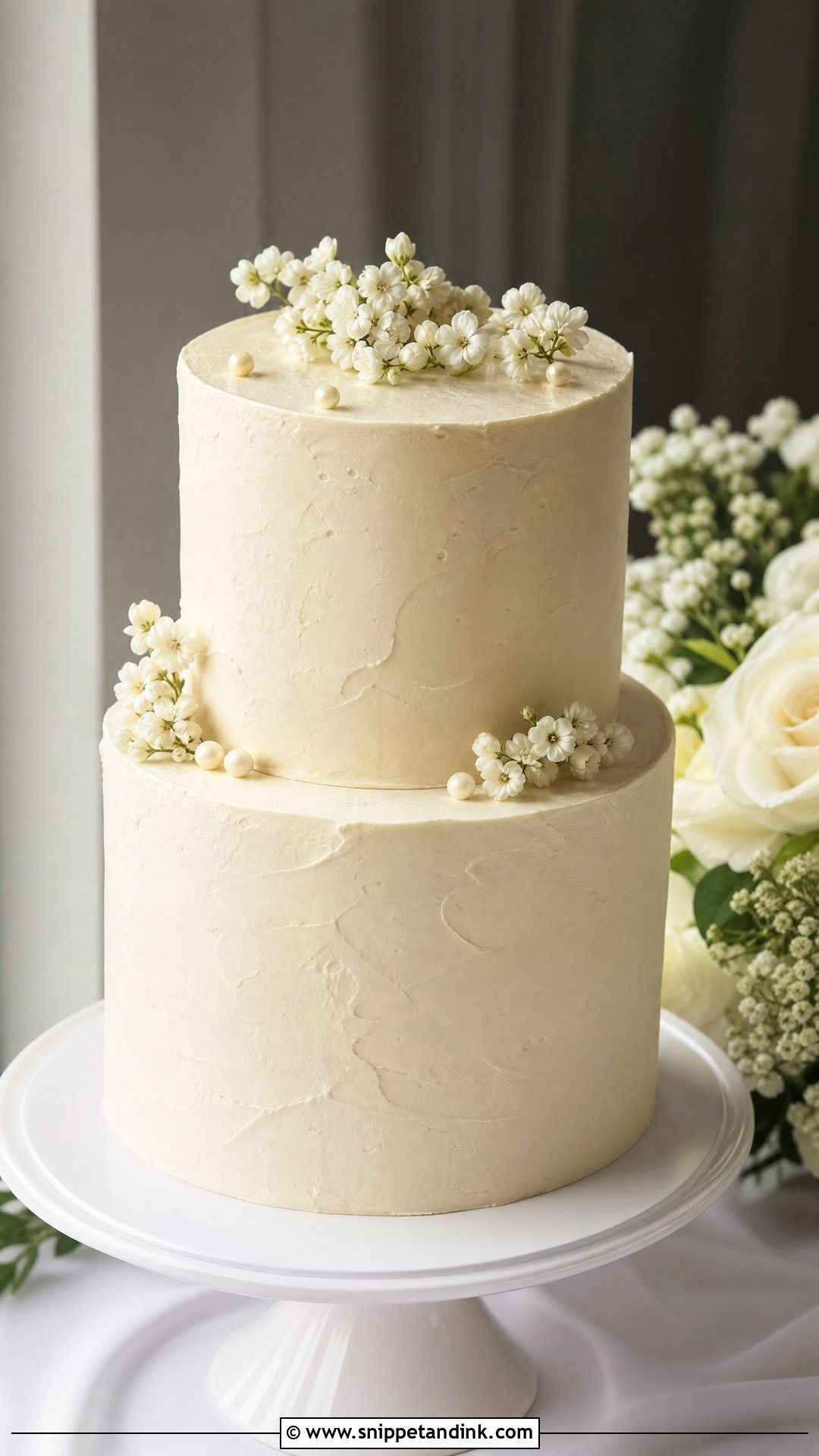
Buttercream tastes better than fondant to most guests, and that alone wins the argument for a lot of couples. The trade-off is heat. A meringue-based or American buttercream starts to soften in a warm room, sag at the base and slide where the tiers meet. For a summer reception I adjust the recipe so it holds better and ask the venue where the cake table will sit. Smooth gives a polished finish, light texture a rustic one, and horizontal scraper lines look modern. Flowers, fruit, pearls or a small topper all sit happily on top.
4. 2 Tier Vintage Wedding Cake
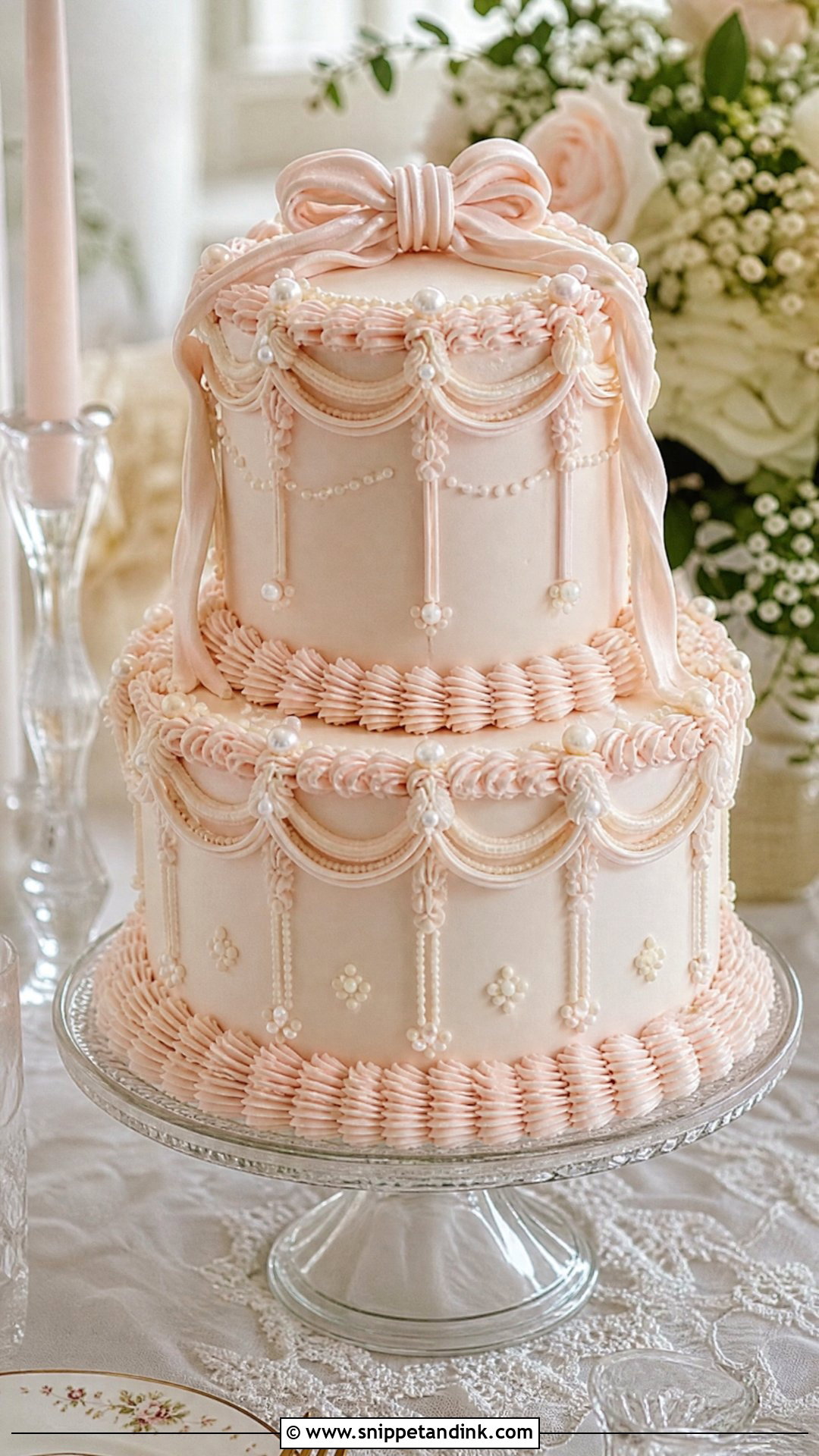
Vintage piping is having a real revival after years of very plain cakes: shells, swags, scallops and fine scrollwork, often in the old Lambeth style. Two tiers is actually a good size for it, since each tier has enough surface for the pattern to repeat without crowding. The key is restraint with color. Ivory, blush, pale blue or butter yellow keep it soft. Lambeth piping is slow, built up in layers with several tips, so expect it to cost more than a smooth cake of the same size. Tiny bows or sugar pearls finish the nostalgic look.
5. 2 Tier Pearl Wedding Cake
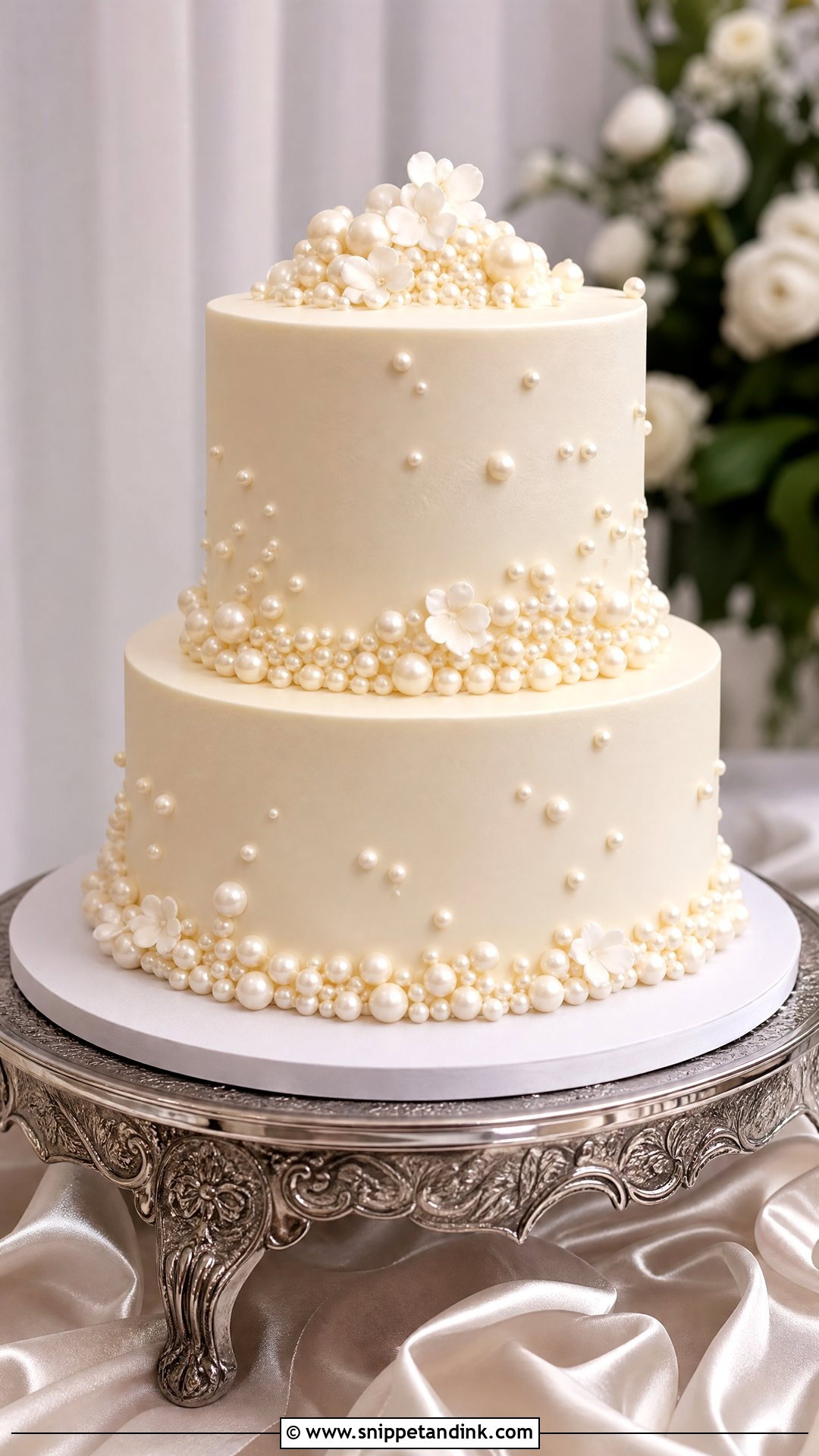
Pearls suit a satin gown and pearl jewelry better than almost any other detail. They can be scattered over smooth buttercream, lined around the base of each tier or used to pick out piped scrolls. Hard sugar dragées look the most like real pearls but can be tough on teeth, so on the cutting surfaces I switch to softer fondant or piped pearls. Uneven clusters look more modern than full coverage. Ivory, champagne and soft white let the sheen look natural. Vanilla bean, almond sponge or white chocolate raspberry sit well underneath.
6. 2 Tier Floral Wedding Cake
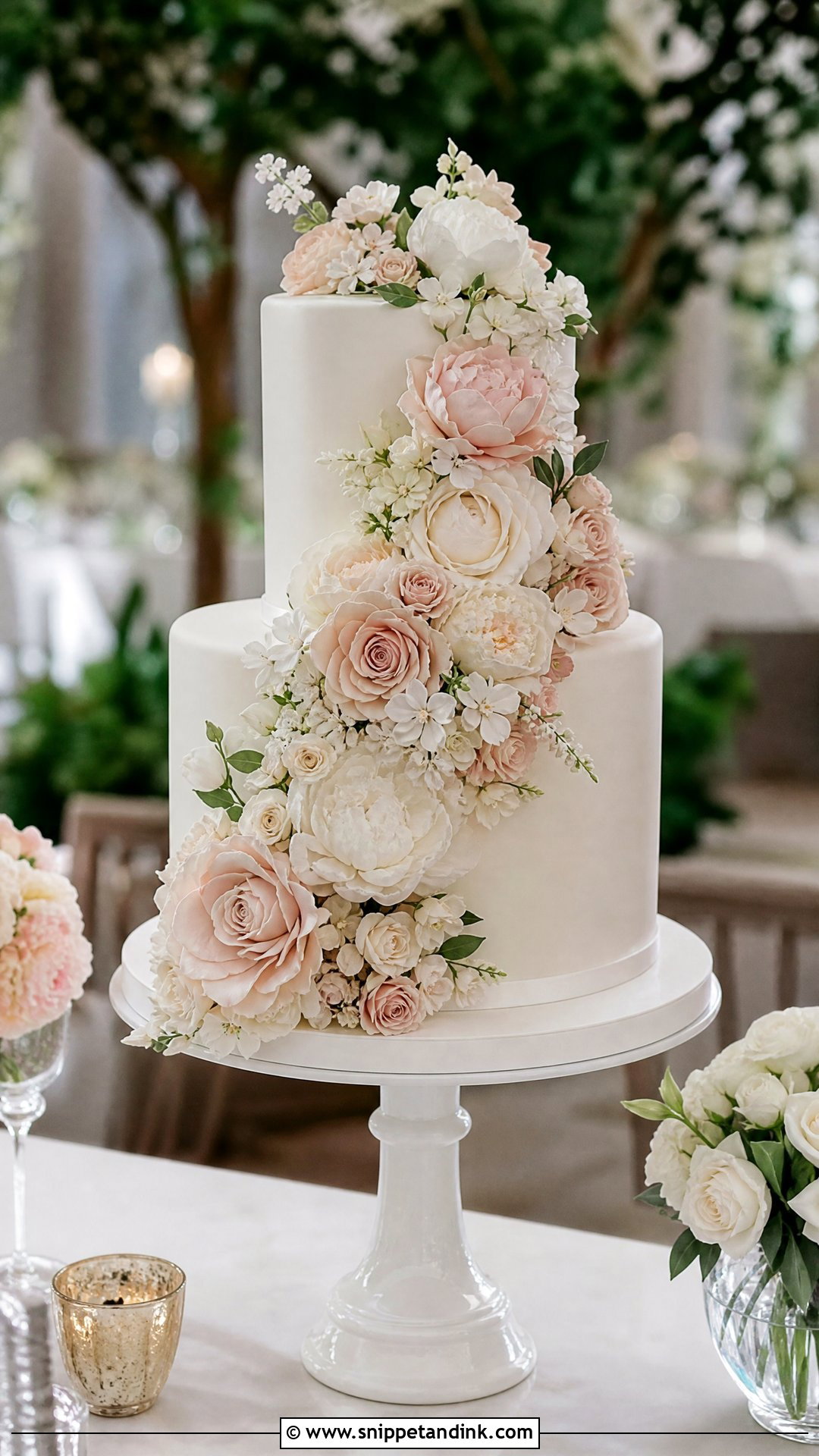
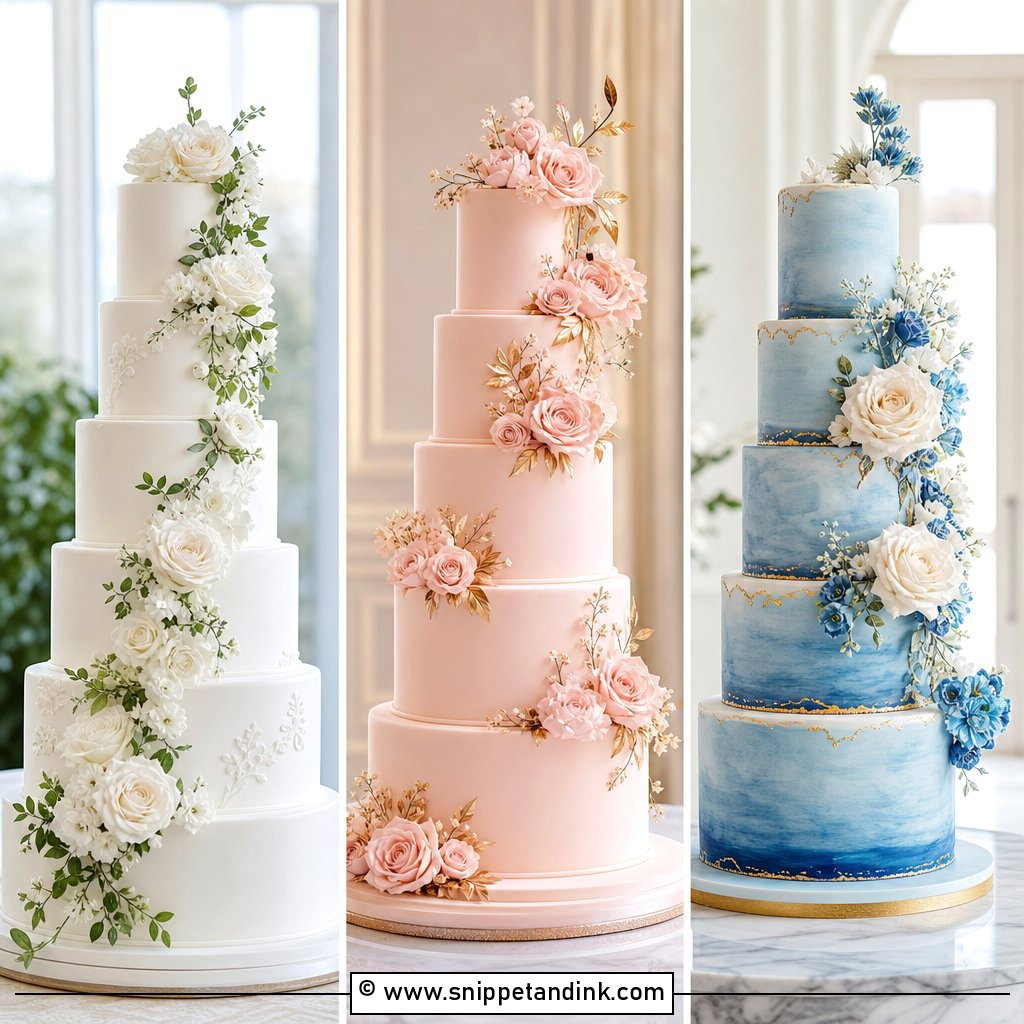
With florals on two tiers, I plan one main movement, usually starting on the top tier and drifting down across the join to the lower one. That single line looks deliberate; flowers dotted on both tiers start to look busy fast. Sugar flowers are the better pick if your colors are hard to match or the cake will sit out for hours, since they don’t wilt. Fresh ones look airier and suit a garden wedding. Keep the stand plain and let the flowers repeat what is in the bouquet or the centerpieces.
7. 2 Tier Rustic Wedding Cake
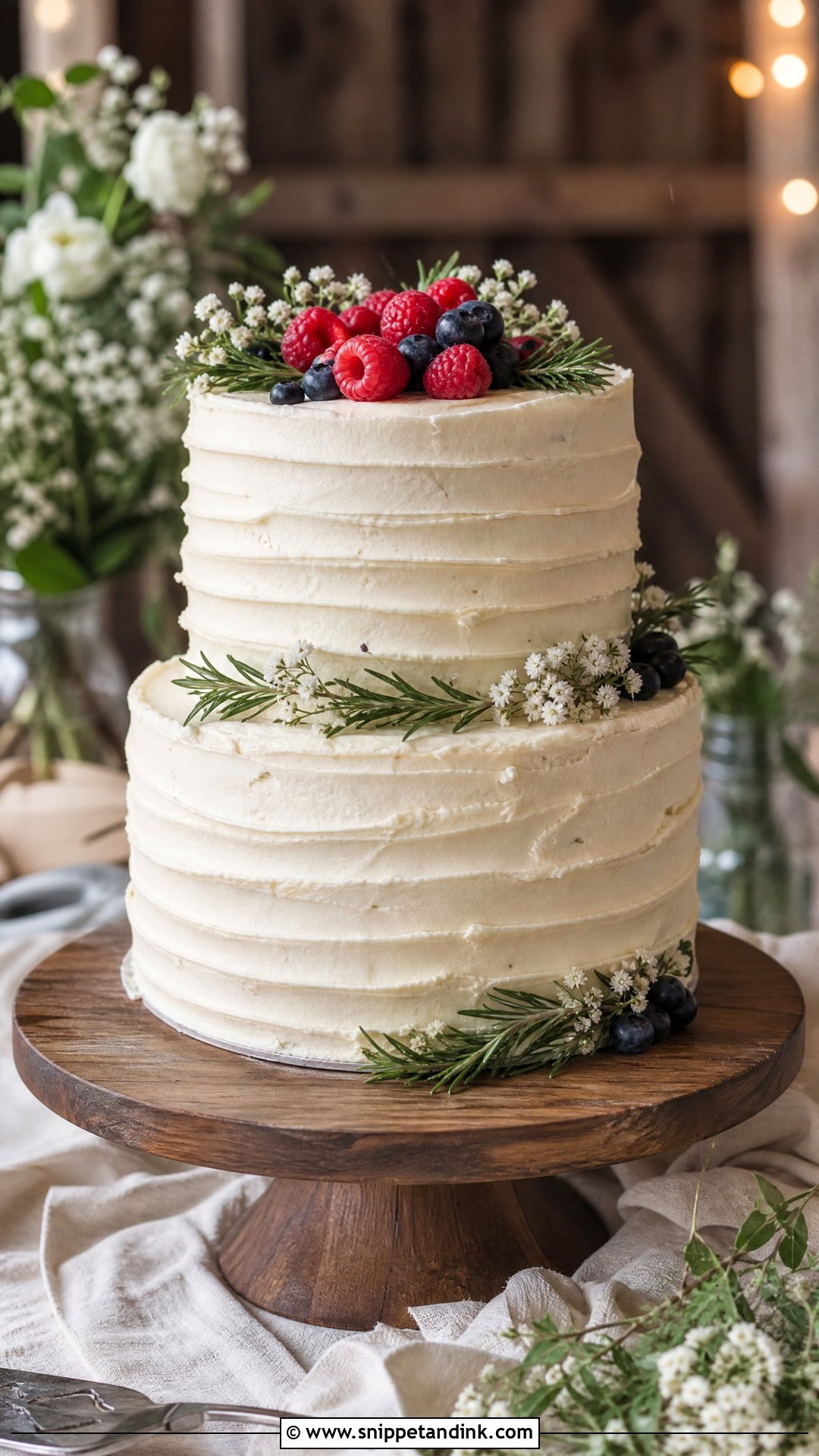
Barns, vineyards and outdoor receptions suit textured buttercream, semi-naked sides, a little greenery and seasonal fruit. Rustic should look relaxed, but it still needs to be level and well supported. Outdoors, my real worry is heat and sun. Direct sunlight will soften buttercream on one side long before the rest, and small flowers wilt within the hour. Ask for a firmer frosting, keep delicate decorations off it, and get the table into shade. Carrot cake, spice cake, vanilla with berries and chocolate with salted caramel are the flavors couples keep coming back to here.
8. 2 Tier Naked Wedding Cake
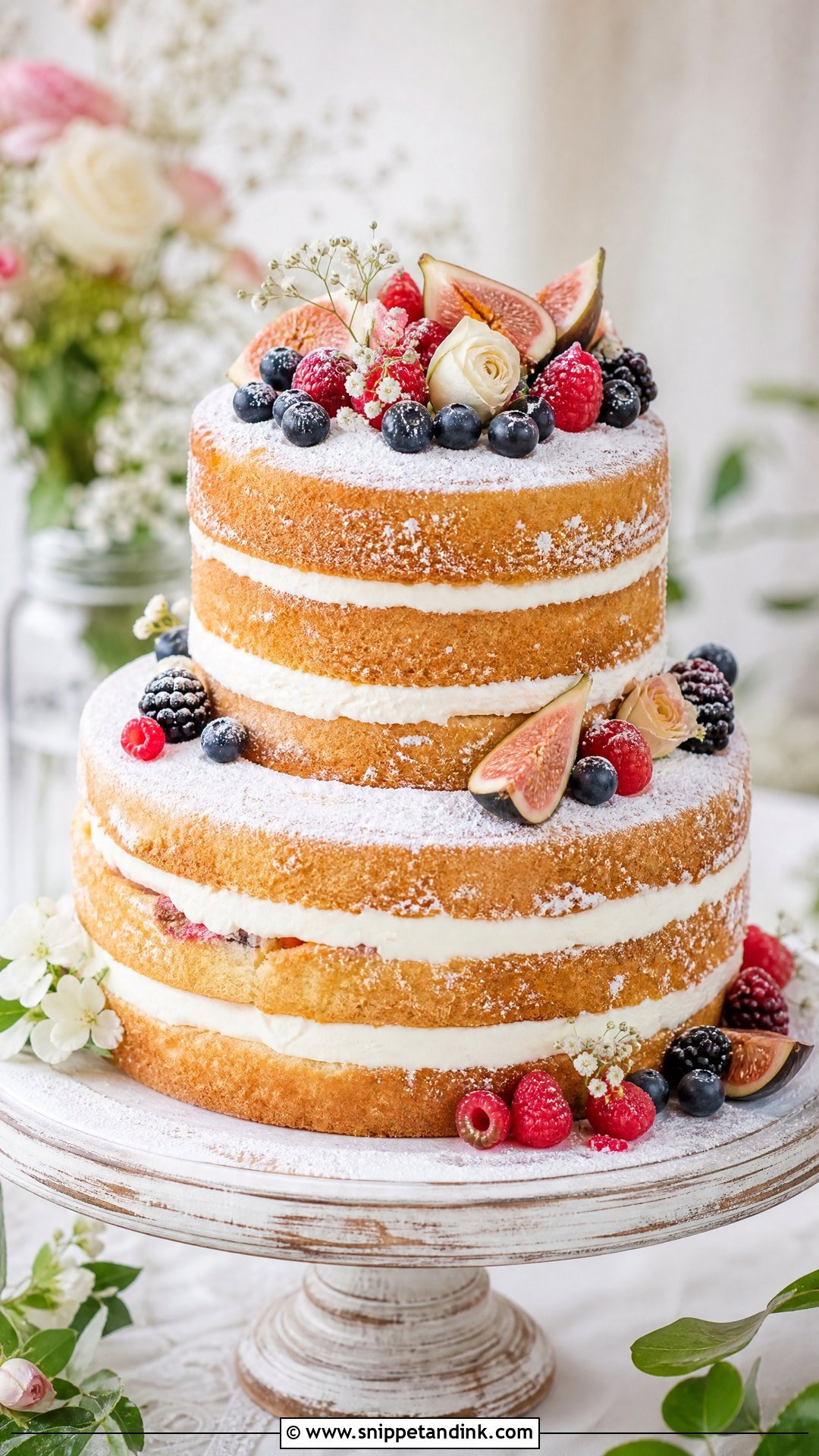
A 2 tier naked wedding cake has little or no frosting on the outside, so everything depends on the layers being even and the filling being neat. With nothing protecting the sponge, it dries out quickly once exposed to air. I brush each layer with syrup and assemble as close to the wedding as I can, then add berries, figs, herbs, small flowers and a light dusting of icing sugar at the venue. Lemon berry, vanilla cream and chocolate raspberry all show off well through the open sides.
9. 2 Tier Semi Naked Wedding Cake
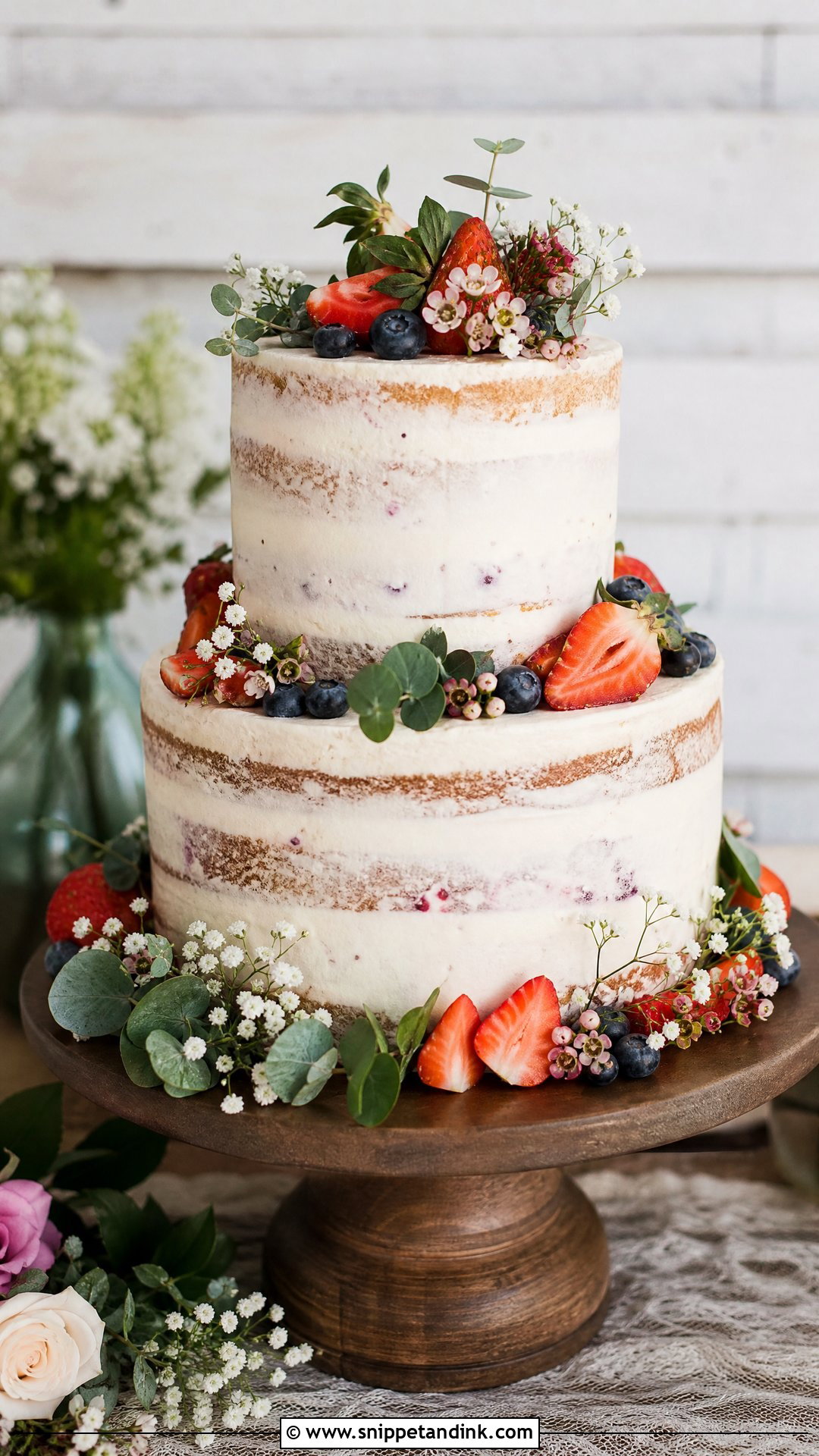
Semi-naked is my usual suggestion for couples who like the naked look but worry about dry cake. A thin coat of frosting is scraped back so the layers show through, which keeps more moisture in and gives the tiers a bit more structure. Red velvet, spice and chocolate look especially good peeking through. Fresh berries, edible flowers or small sugar blooms decorate it; if you want eucalyptus, keep it wrapped or use a sugar version, since it isn’t food-safe. Leave the edges a little soft rather than razor sharp.
10. 2 Tier Wedding Cake With Gold
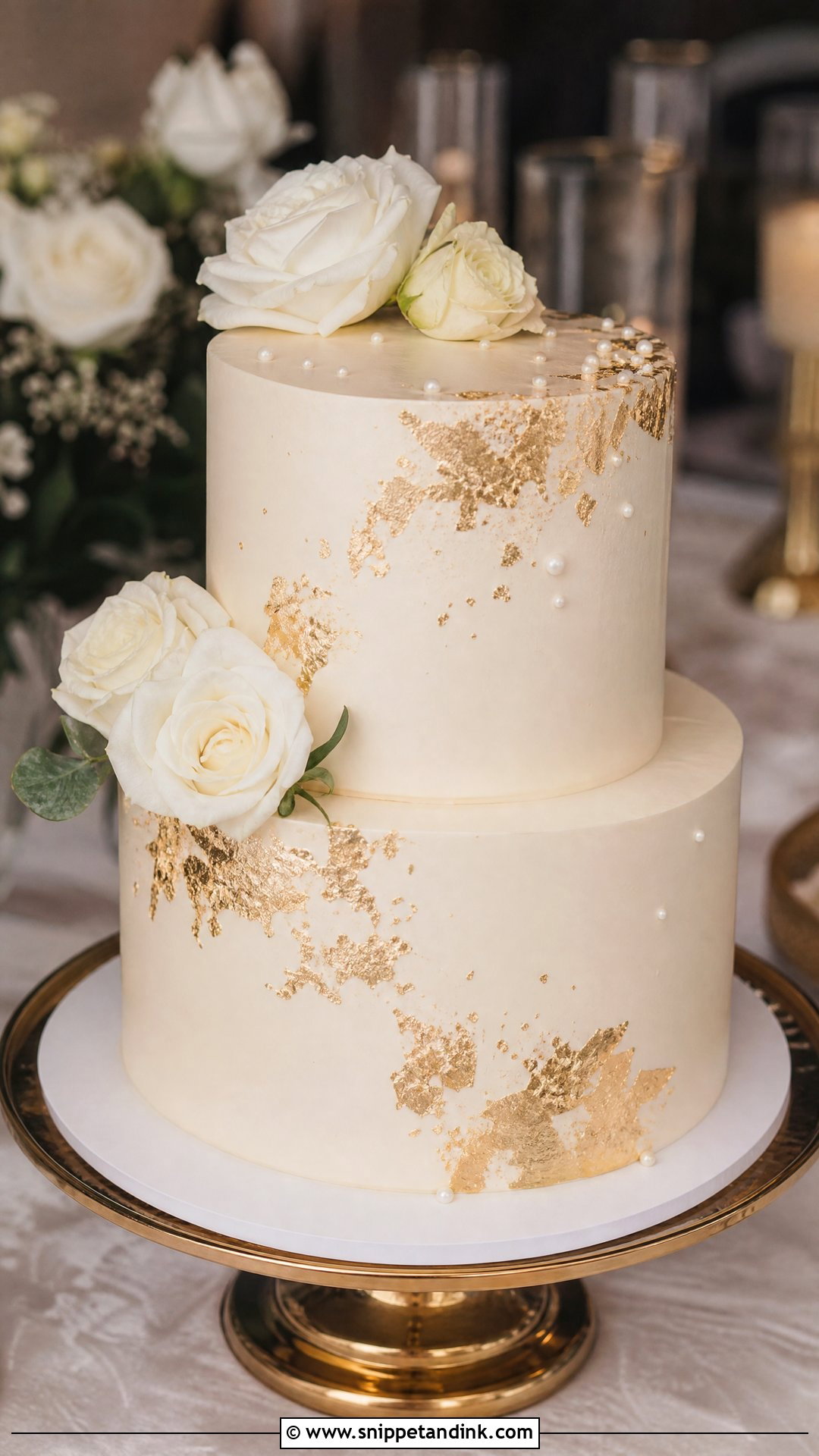
Gold leaf works best as an accent, not the whole story. I lay it in soft patches on smooth buttercream, brush it along the edges of textured tiers, or cover just one tier for contrast. Real edible gold leaf is safe to eat; some metallic paints and dusts are labeled for decoration only, so ask what your baker uses. Ivory, blush, taupe and sage all sit well next to gold. Under warm evening lighting, gold picks up every candle on the table, so ballrooms and hotel receptions suit it best. Almond, champagne, vanilla bean or chocolate ganache underneath.
11. 2 Tier Wedding Cake With Greenery
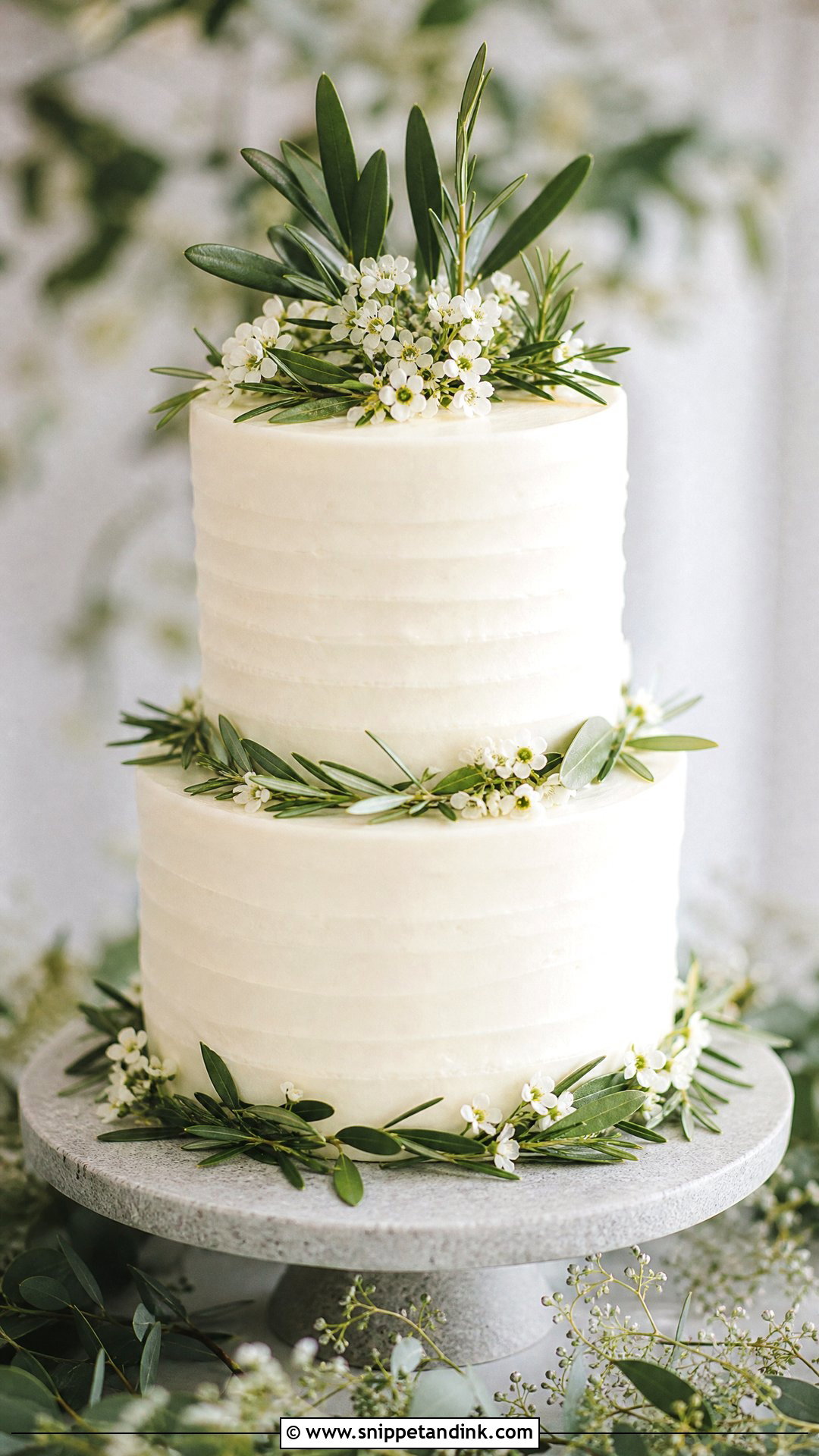
Greenery is a good fit when the wedding flowers are mostly white and the centerpieces are leafy. Olive leaves, rosemary and small herb sprigs are among the safer choices near food. Eucalyptus is the one I see most in photos and the one I’d keep away from the frosting entirely, wrapped or replaced with a sugar or wafer paper version. Your baker and florist should agree on exactly what goes on. Smooth buttercream keeps the look clean; textured buttercream makes it more rustic. Lemon, vanilla, pistachio and honey suit the fresh feel.
12. 2 Tier Wedding Cake With Roses
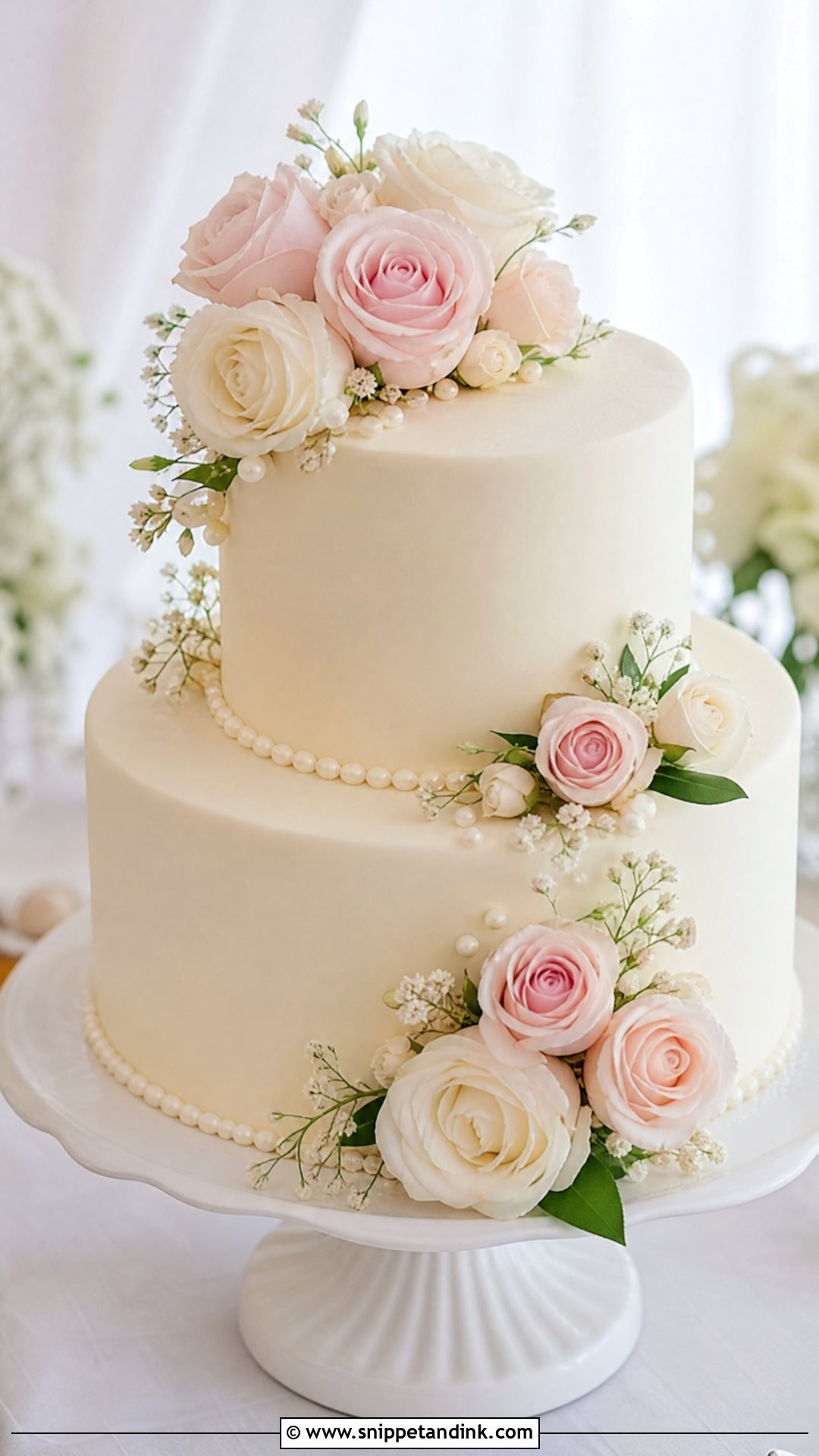
Roses feel bridal almost instantly, which is why this is such a steady favorite. White roses keep it classic, blush adds warmth and deeper pink gives real color. On two tiers, a crescent that wraps around the join between the tiers balances the cake well, and so does a cluster at the base. Garden roses open quickly in a warm room, so I place them as late as possible. Smooth ivory buttercream lets them lead, with perhaps a fine pearl border. Vanilla raspberry, almond and rosewater flavors fit the theme.
13. 2 Tier Wedding Cake With Orchids
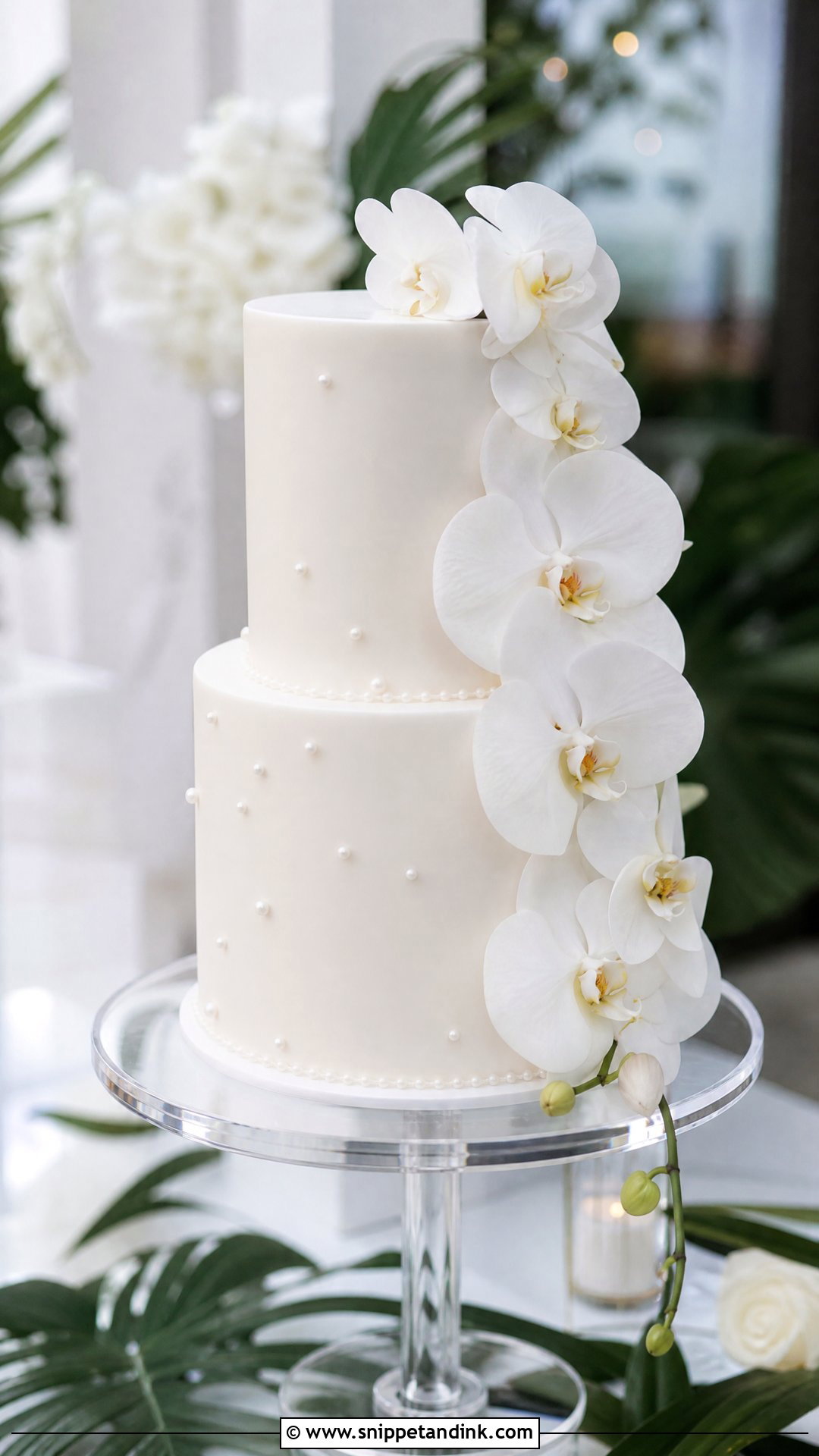
Orchids have sculptural shapes that lift a very plain cake, especially as a single cascade down one side. White orchids on ivory buttercream look crisp; pale pink or mauve softens the effect. Fresh orchids are fairly sturdy but still need wrapping where they meet the cake, and sugar orchids are a good choice if the cake will sit in a hot room. Keep everything else minimal, with a smooth fondant or buttercream finish. Coconut, vanilla bean, passion fruit and white chocolate flavors match the tropical elegance of orchids.
14. 2 Tier Wedding Cake With Fruit
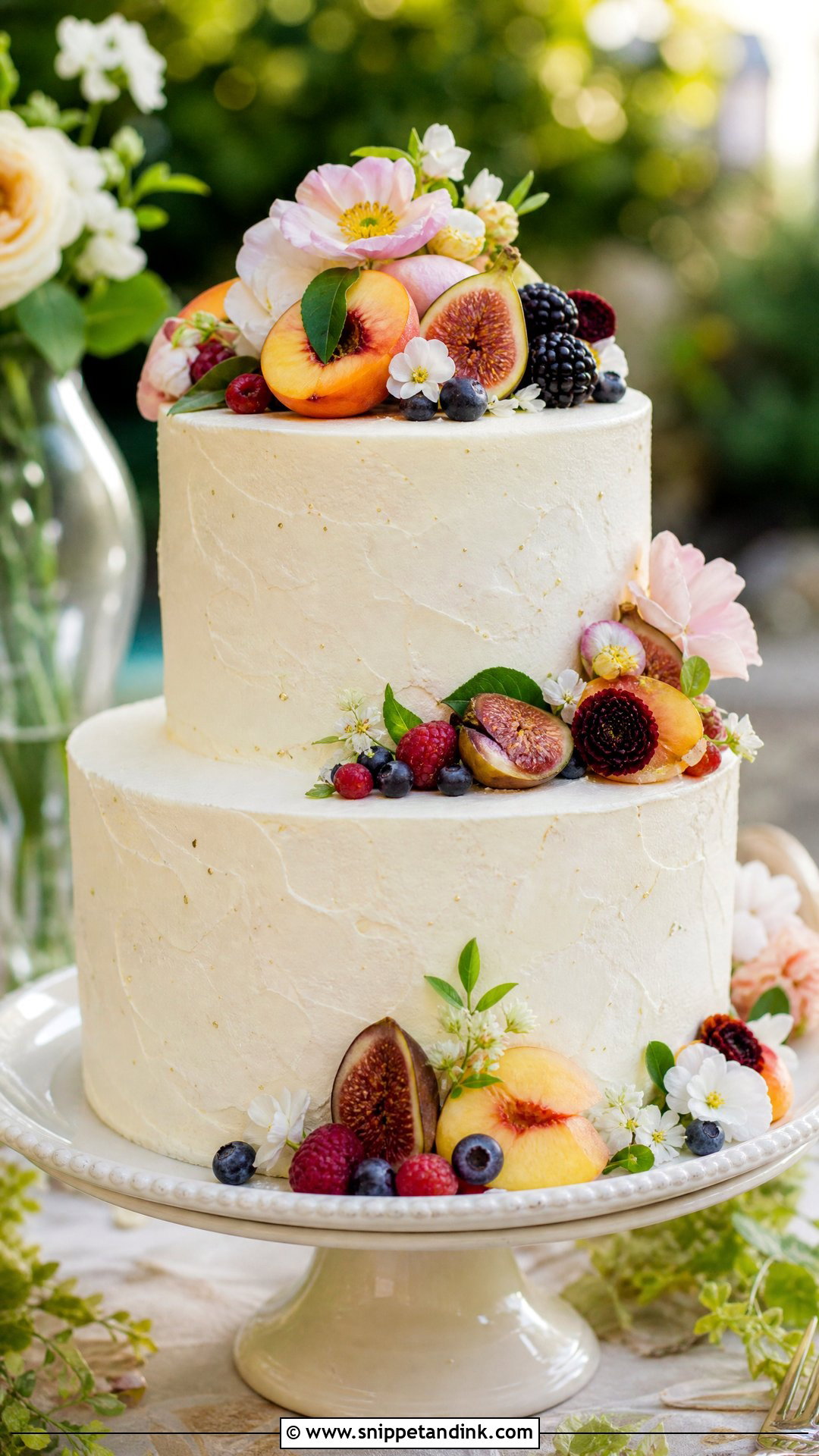
Fruit looks fresh and generous, and spring and summer weddings, brunch receptions and outdoor venues suit it best. Fresh berries, figs, peaches, citrus slices and cherries all work, grouped in small clusters rather than scattered. Cut fruit is the problem. It weeps juice and darkens, so I keep cut pieces to a minimum, brush them with a little glaze, and add everything at the venue shortly before guests see the cake. Pair it with smooth, lightly textured or semi-naked tiers. Lemon elderflower, vanilla berry, almond apricot and chocolate cherry all suit fruit on top.



15. 2 Tier Lemon Wedding Cake
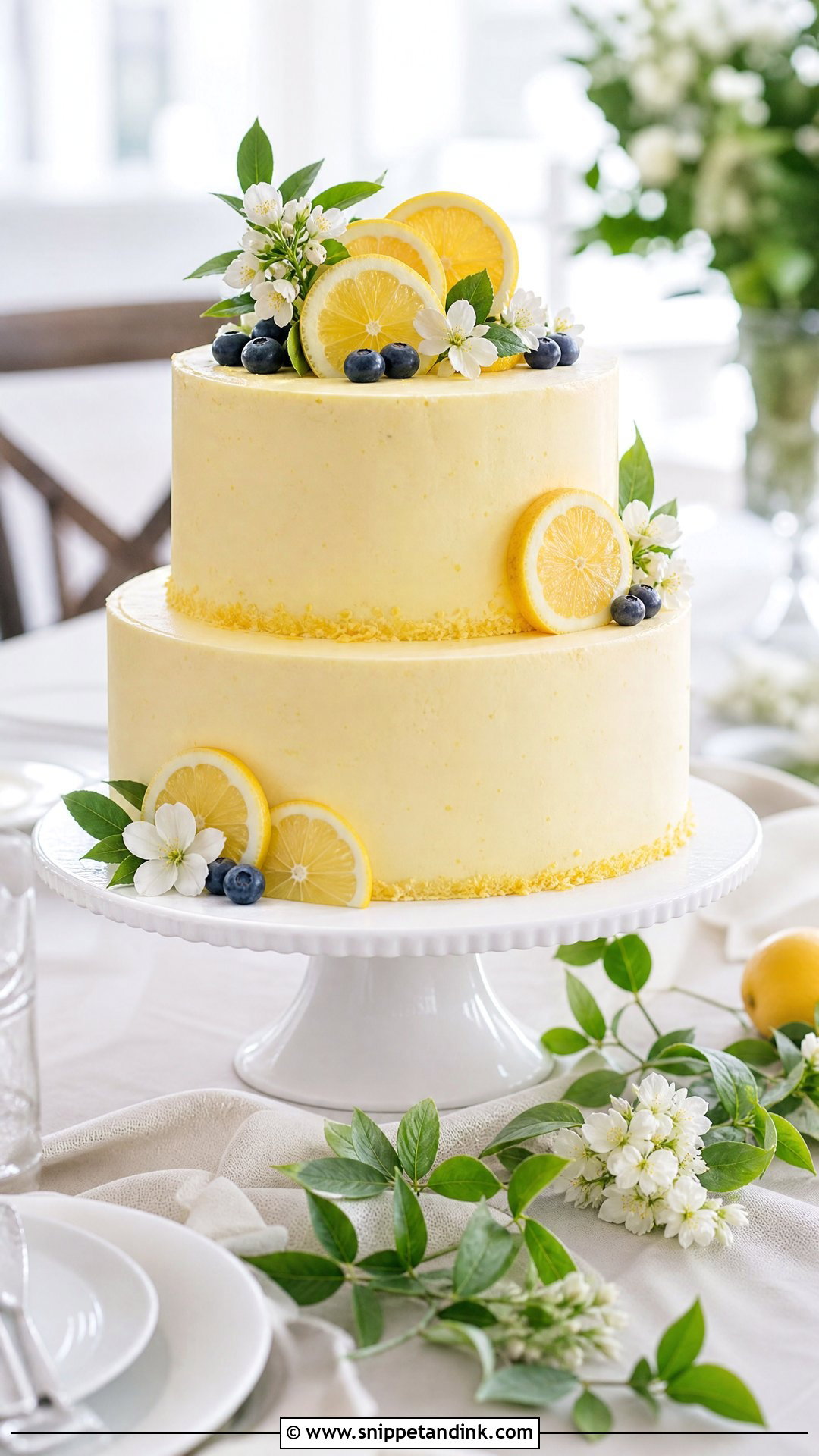
Lemon tastes right at an afternoon garden reception in a way chocolate rarely does. Keep the outside pale: soft yellow buttercream with white flowers and a few thin lemon slices, or ivory with tiny citrus accents. A strong yellow can look harsh beside white florals, so I tint very lightly. Raspberry, blueberry compote, elderflower buttercream or vanilla cream between the layers balance the sharpness. If the filling includes lemon curd, it needs a buttercream dam around each layer, or it will bulge out of the sides under the weight of the top tier.
16. 2 Tier Chocolate Wedding Cake
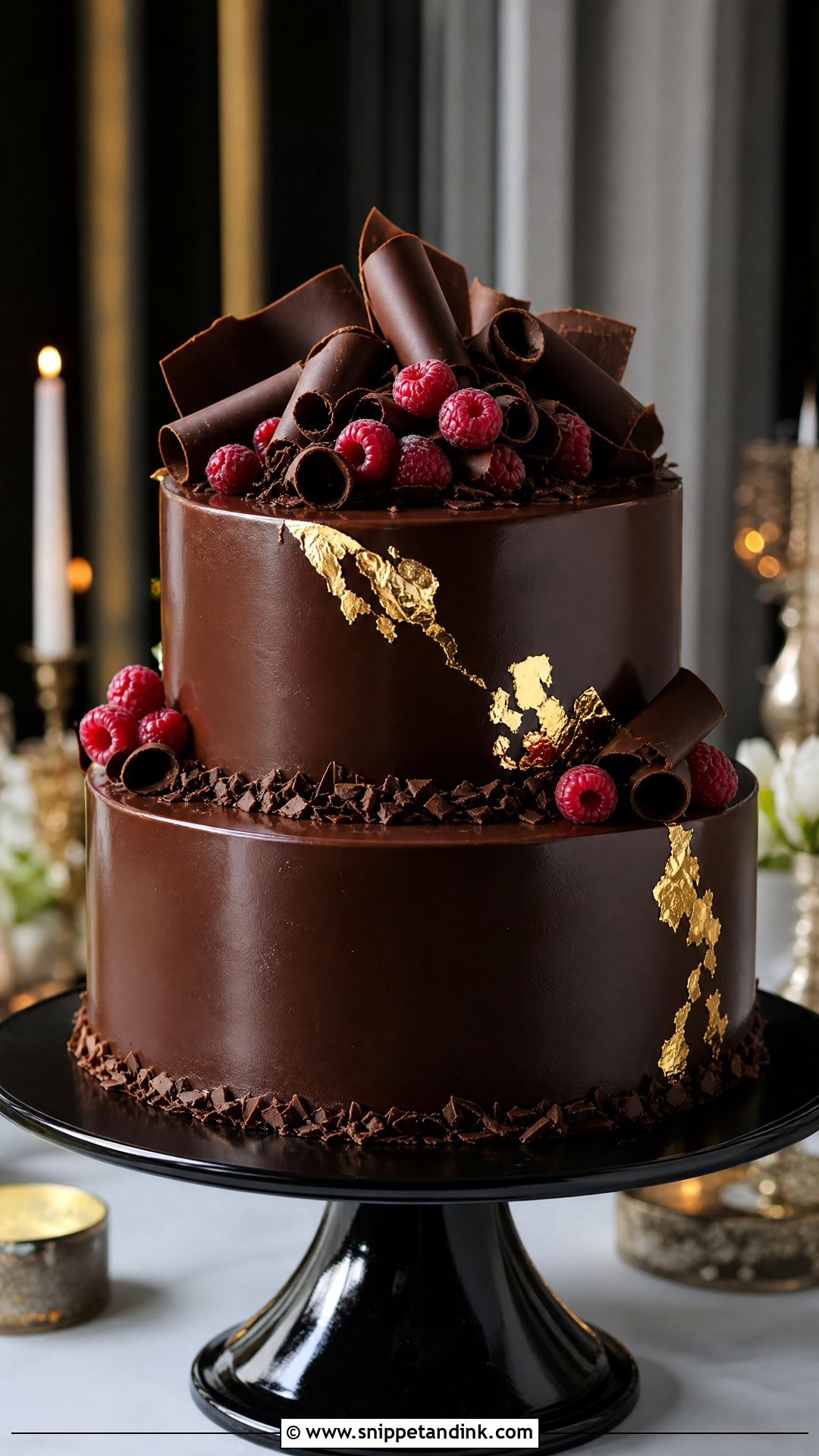
A 2 tier chocolate wedding cake is for couples who are tired of white cake. The outside can be dark ganache, cocoa buttercream, or ivory frosting with a chocolate drip for contrast. Ganache is my favorite finish here because it sets firm and gives very sharp edges, and it handles warmth better than most buttercreams. Berries, gold leaf, espresso accents or dark red flowers all look dramatic against it, especially at autumn and candlelit receptions. Chocolate raspberry, mocha, salted caramel and hazelnut are the flavors I’m asked for most.
17. 2 Tier Red Velvet Wedding Cake
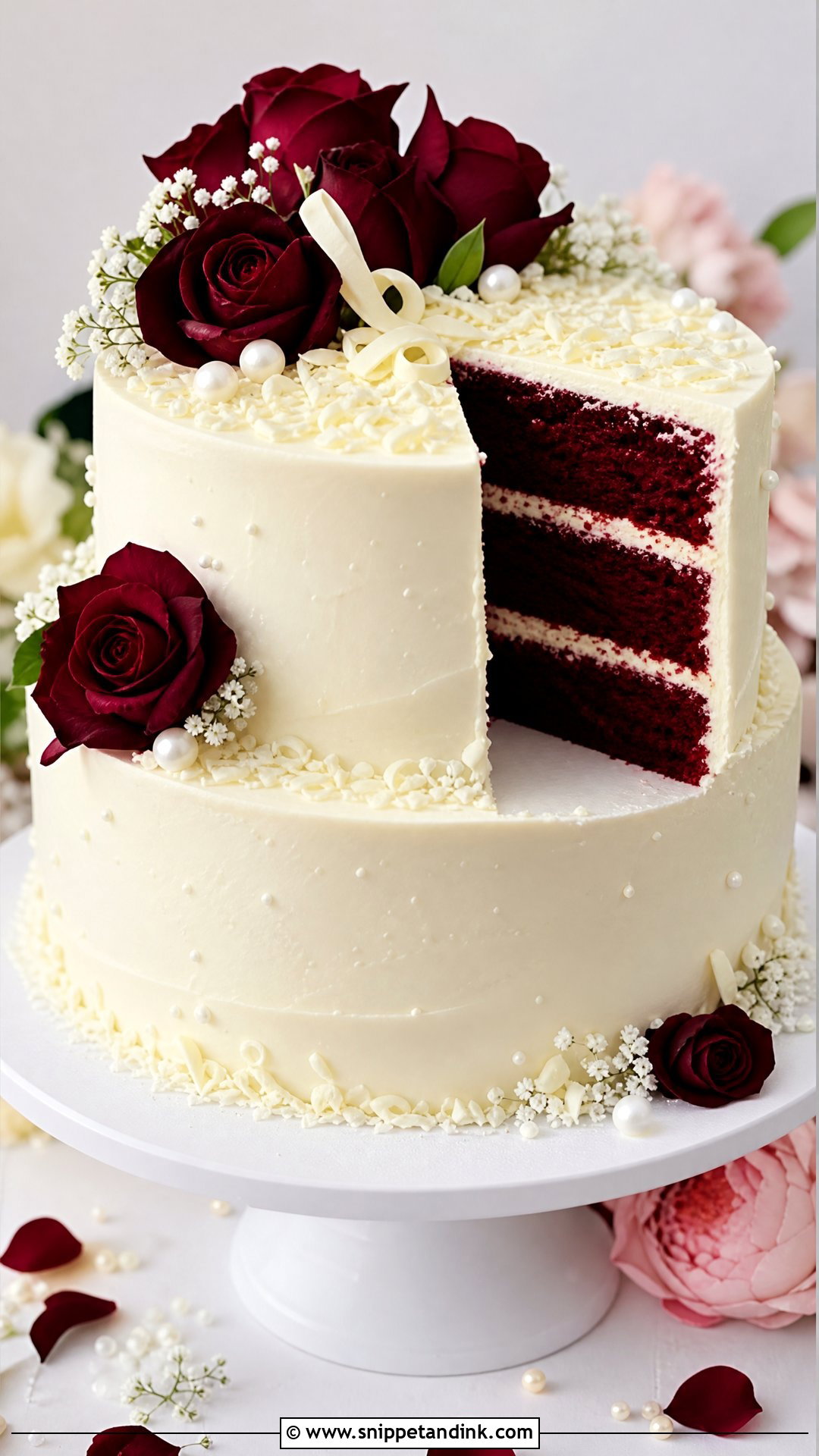
The surprise comes when you cut it, that deep red crumb against pale frosting. Outside, smooth cream cheese frosting or ivory buttercream keeps it classic, with fresh roses, pearls or a clean piped border. The stability question matters here. Cream cheese frosting is much softer than buttercream, so on a stacked cake I often fill with cream cheese and coat the outside in a firmer buttercream that tastes similar. Ask your baker how they plan to keep the top tier sitting straight. Raspberry or white chocolate buttercream inside keeps it from tasting too heavy.
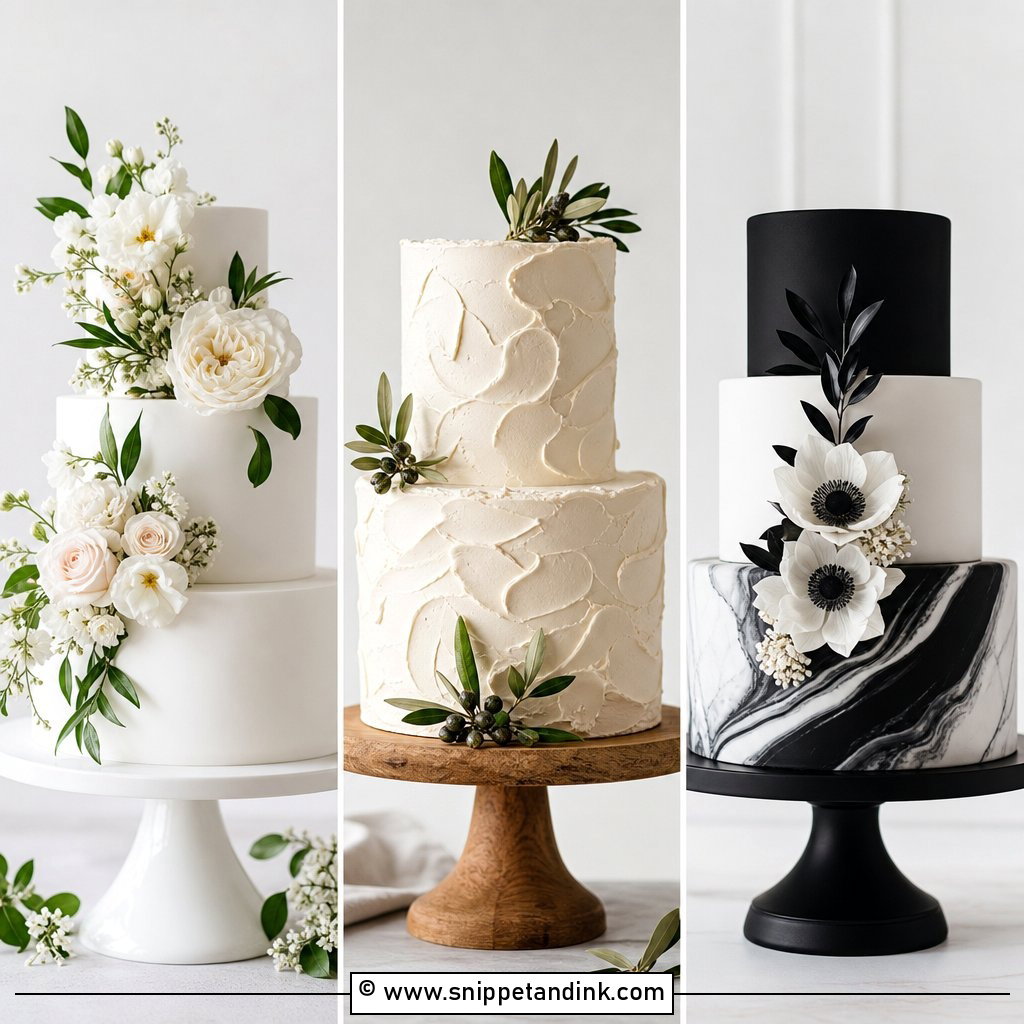
18. 2 Tier Black And White Wedding Cake
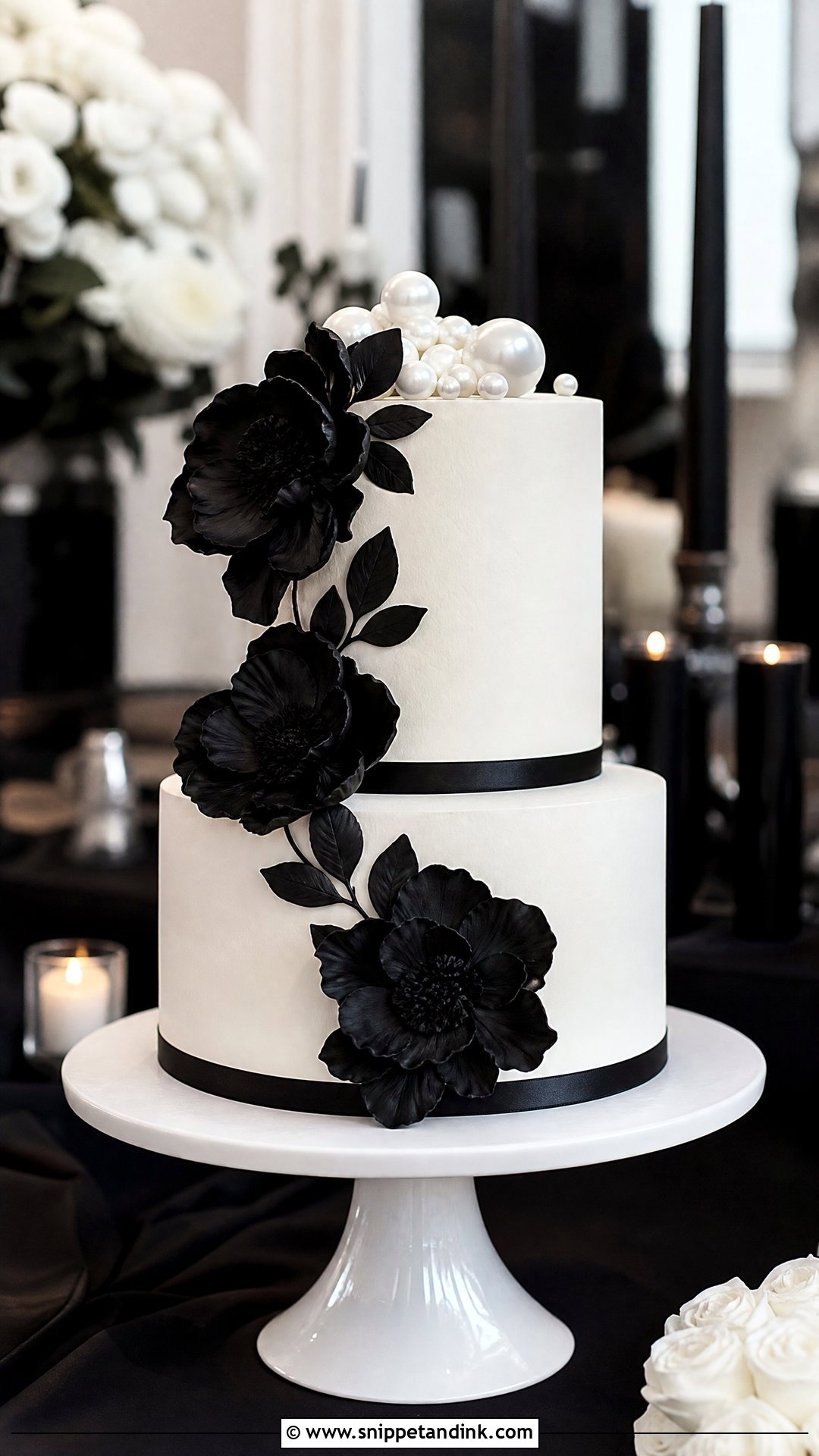
Black and white is crisp and very photogenic, and it suits city weddings and black-tie receptions. The tiers can stay white with a black fondant band, black painted florals or a sharp black lower tier. Fully black frosting takes a lot of coloring, which can taste bitter and stain teeth and fingers, so I prefer to keep black to accents or use black fondant rather than black buttercream. Black piping or sugar flowers give a softer version. An acrylic stand, white flowers and gentle lighting stop the contrast feeling harsh. Vanilla, chocolate or cookies and cream inside.
19. 2 Tier Blue Wedding Cake
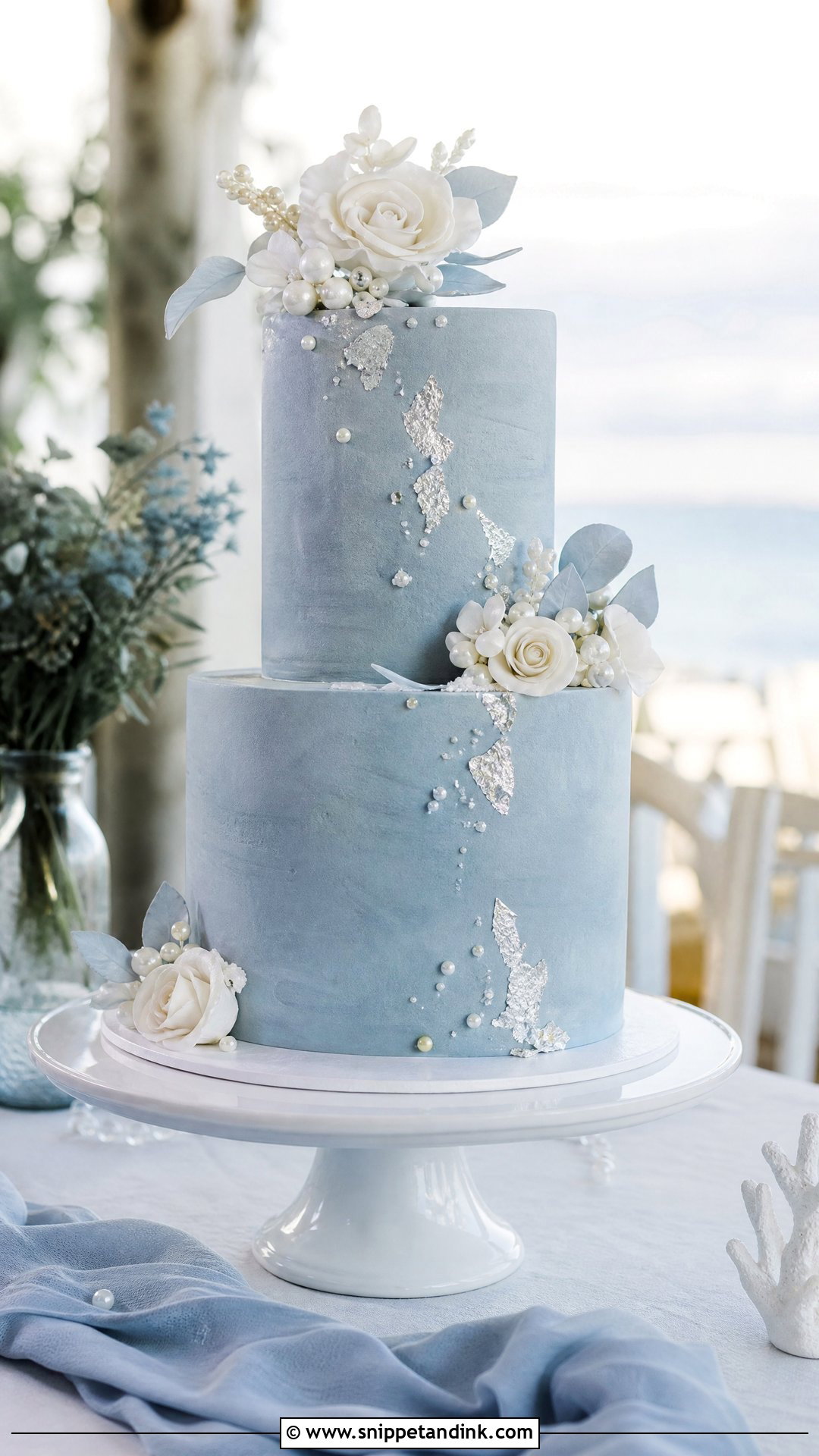
Dusty blue, powder blue and blue-grey look refined in buttercream, while brighter blues can turn slightly teal under warm venue lighting. I mix and test the shade in daylight and under a warm bulb before I color the full batch. White flowers, pearl accents or a soft watercolor wash keep it bridal, and blue pairs well with silver, ivory, sage and pale peach. One smooth tier and one lightly textured tier gives depth. Vanilla bean, lemon blueberry, almond and earl grey suit the color.

20. 2 Tier Pink Wedding Cake
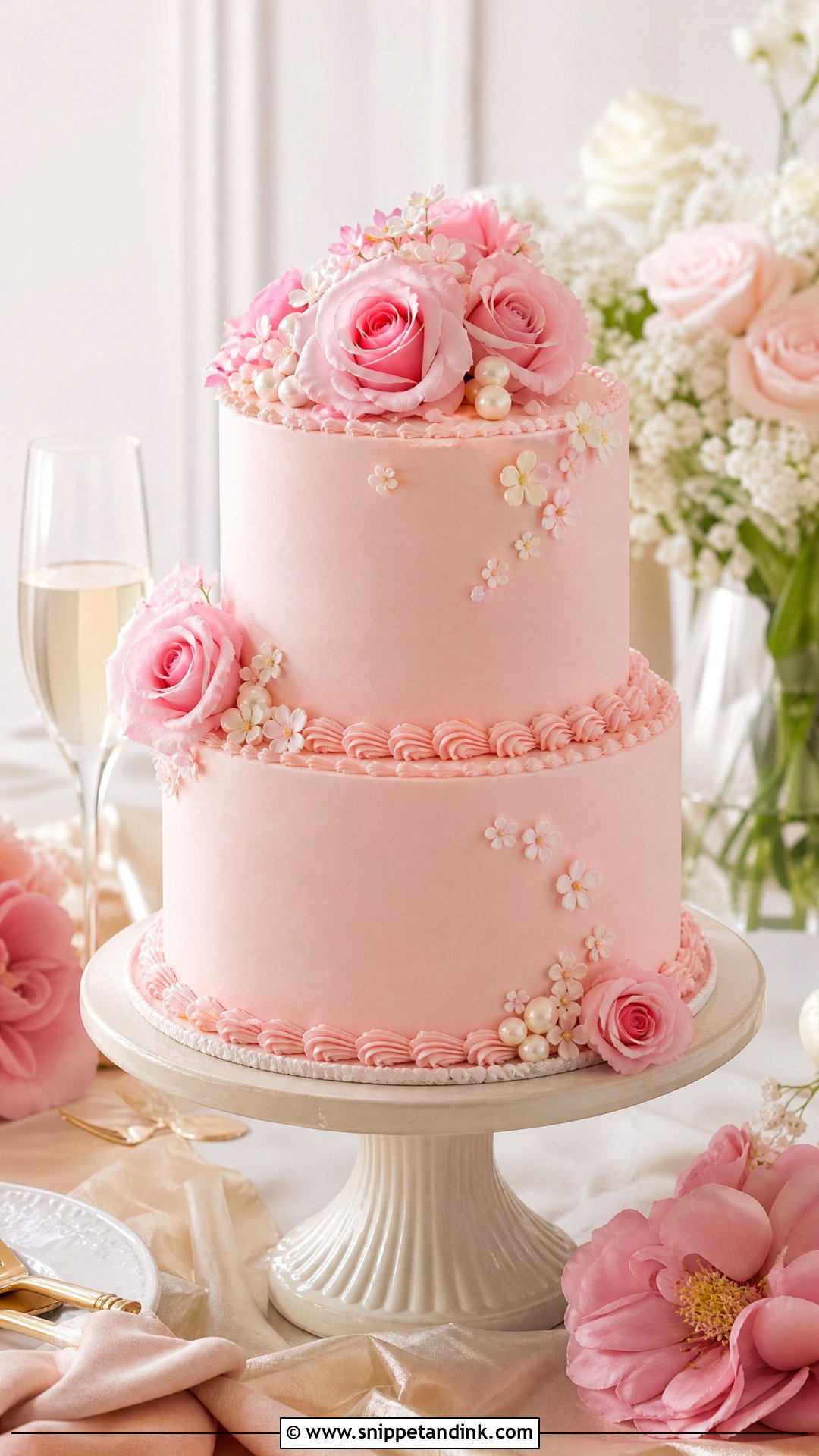
The shade decides the mood. Blush reads bridal, dusty rose feels vintage, and a bright pink makes a playful, modern cake. Pink buttercream can fade in strong light, especially on the side facing a window, so I keep these cakes out of sunlight until the cutting. Smooth buttercream, gentle piping and fresh roses or sugar flowers in matching tones carry it well. Keep the stand plain. Ivory, gold, champagne and soft green sit nicely beside pink, and strawberry, raspberry, rose vanilla or almond cherry flavors suit it.
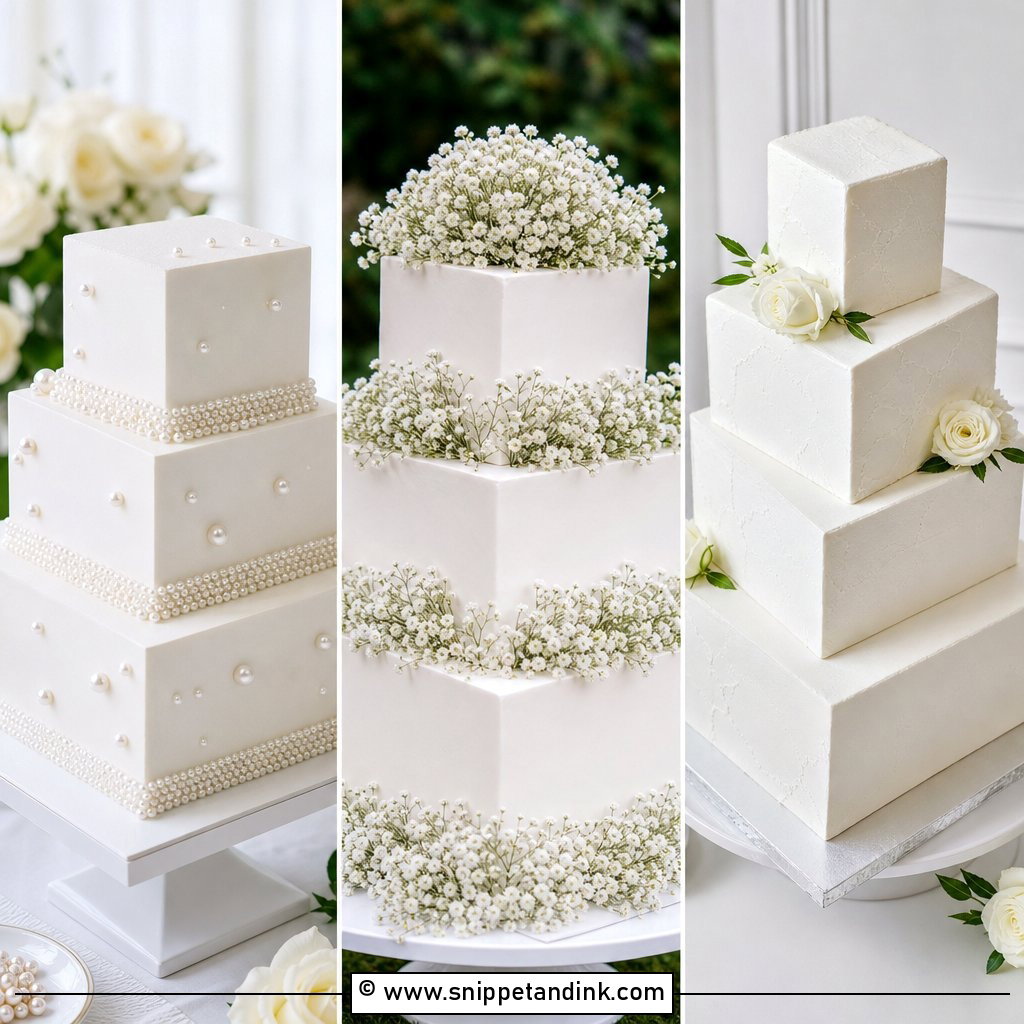
21. 2 Tier Square Wedding Cake
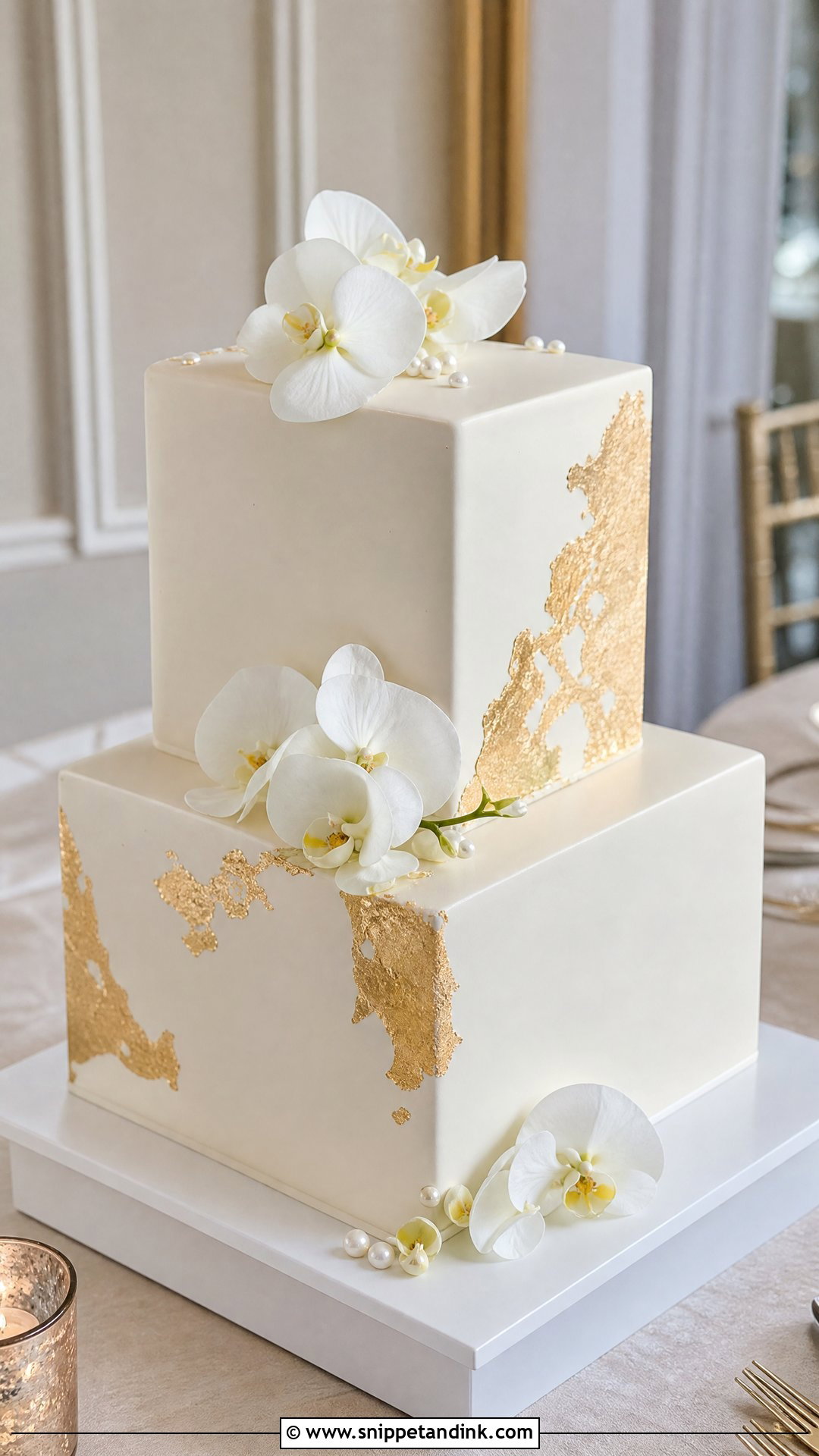
Square tiers look structured and a little more formal than rounds, and they are harder to make. Getting four sharp corners and flat sides takes more time and practice, so look for square cakes in a baker’s portfolio before you commit. Square tiers also serve slightly more guests than round ones of the same width. Minimal flowers, gold leaf, fine piping or a single topper suit the shape; a cluster of romantic flowers on one corner softens it. Galleries, hotels and modern indoor venues suit this cake. Vanilla almond, chocolate espresso and white chocolate raspberry fit the polished look.
22. 2 Tier Watercolor Wedding Cake
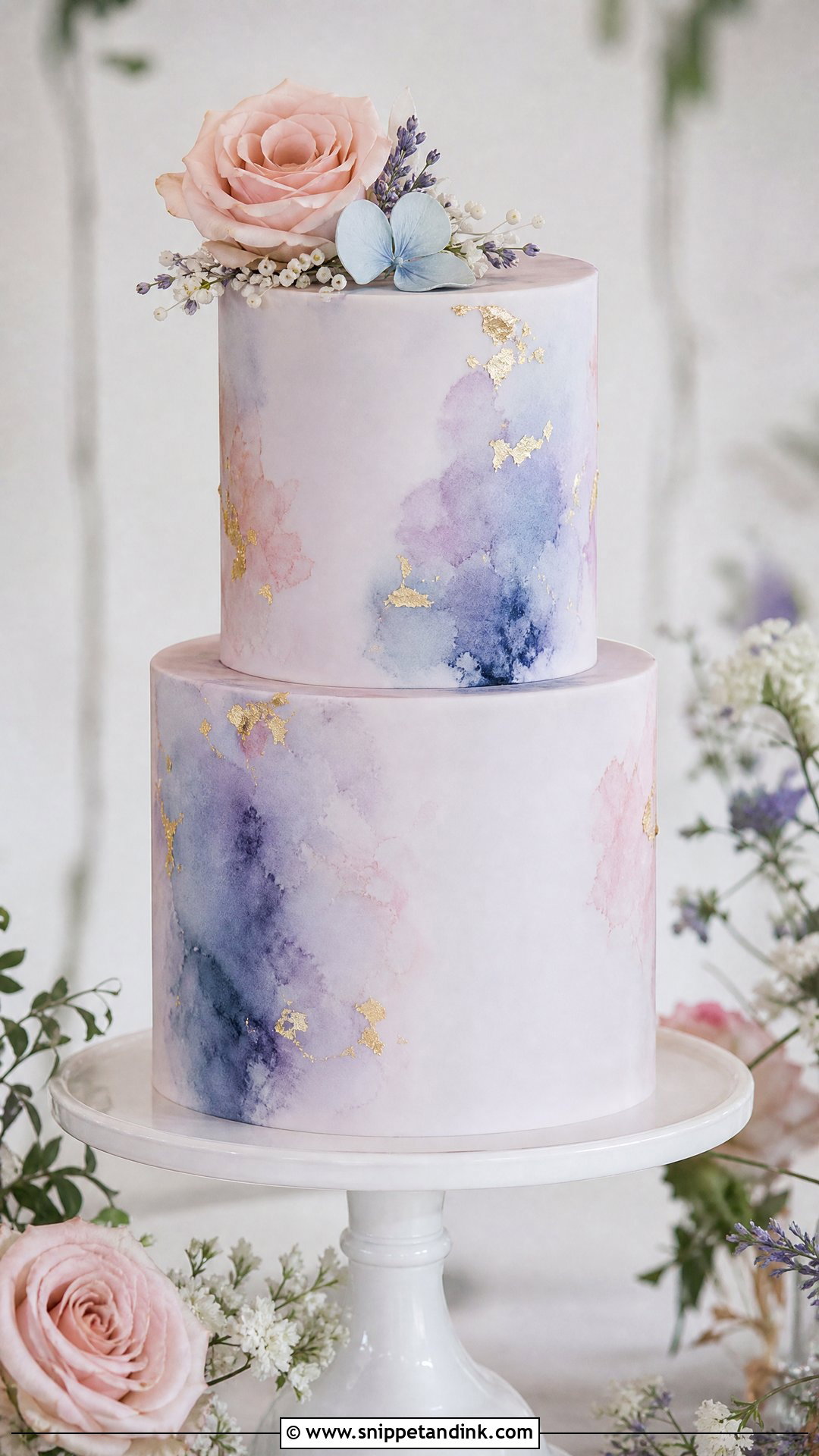
Watercolor gives you color without shouting. I paint soft washes of blush, blue, lavender, peach or sage with thinned food coloring on fondant, or blend shades of buttercream on with a palette knife and scrape back. Each cake comes out slightly different, so treat your inspiration photo as a direction rather than a blueprint. Simple flowers, a little gold leaf or a delicate topper finish it. Spring and garden weddings suit it best, with lemon lavender, vanilla berry, honey almond or earl grey inside. Keep the table styling simple so the colors can be seen.
23. 2 Tier Ruffle Wedding Cake
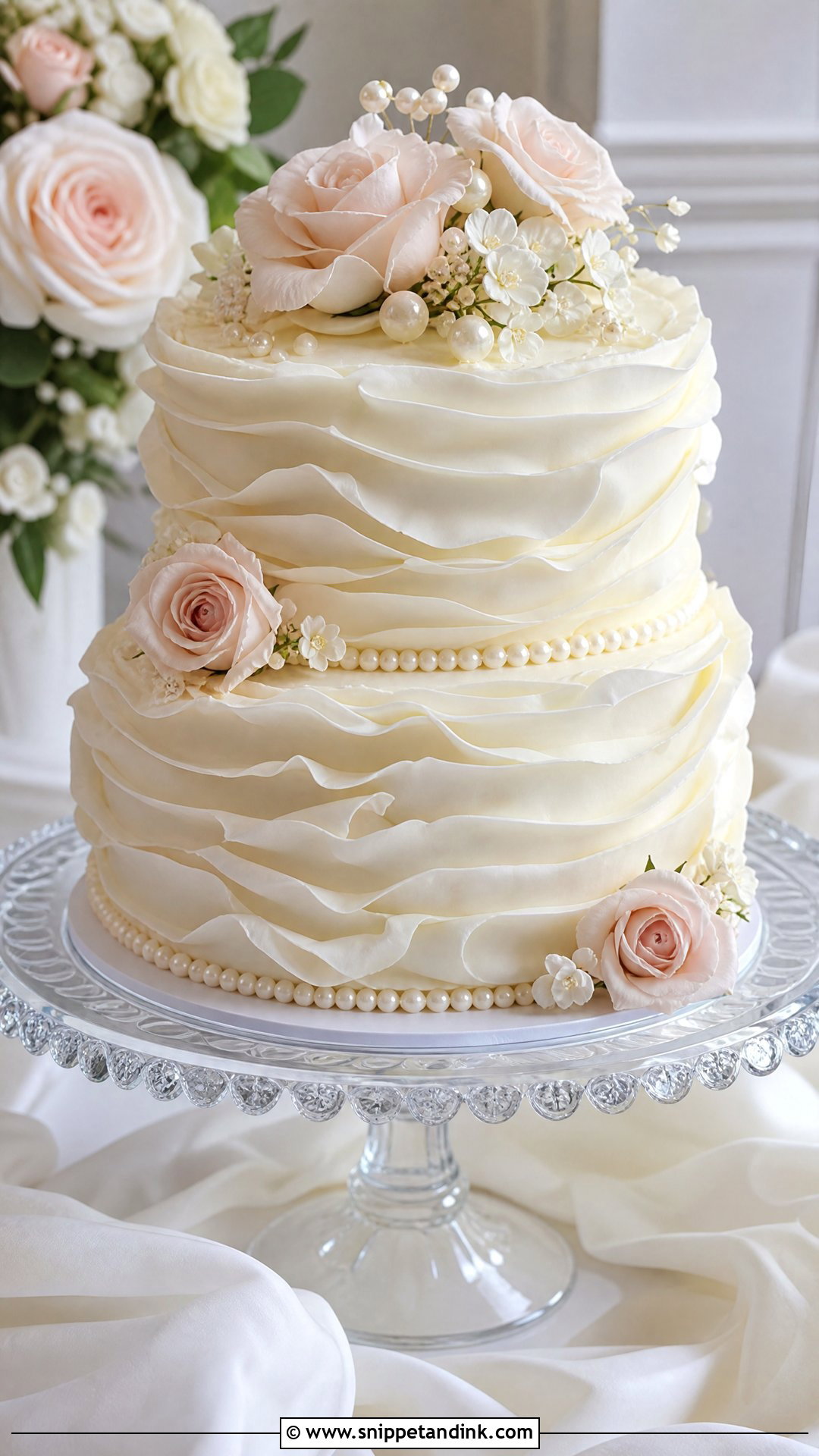
Ruffles bring movement to a cake. They can cover both tiers for drama or just one for balance. Buttercream ruffles look airy but are the least forgiving of heat, since each thin frill softens and droops before a smooth surface would. Fondant ruffles are more structured and hold up better in warm rooms. Ivory, blush, champagne and pale peach suit the texture. Keep other decoration light, a small floral cluster or a few pearls. Vanilla, coconut, strawberry and white chocolate flavors match the delicate look.
24. 2 Tier Minimalist Wedding Cake
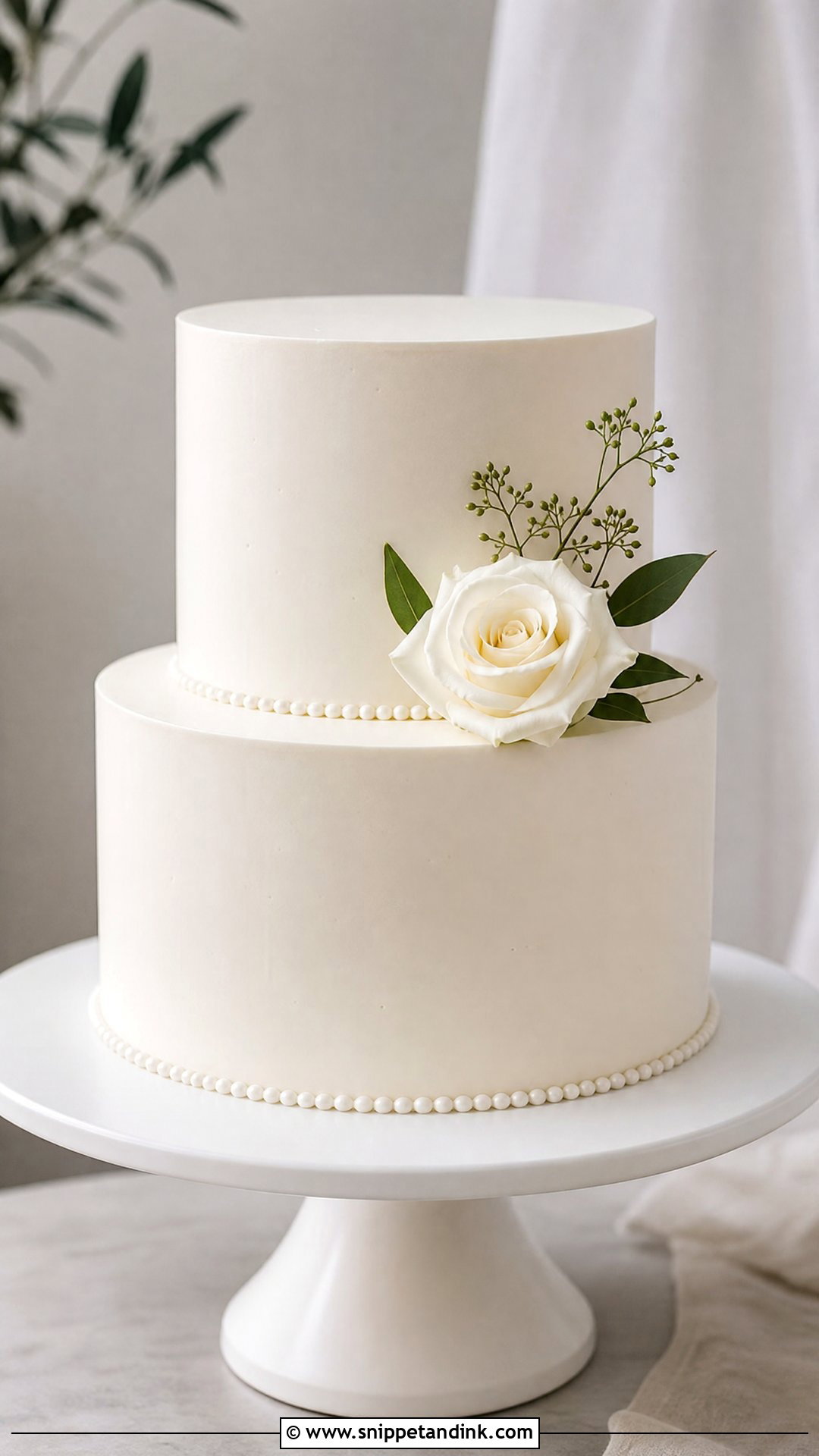
Minimalist is clean lines and one intentional accent: a single flower, a ribbon or a tiny pearl border. With so little decoration, interest comes from proportion. A taller top tier, an extended lower tier or slightly offset stacking changes the whole look without adding anything to it. White, ivory, taupe and soft grey are strong colors. A subtle texture on just one tier adds depth. Vanilla bean, almond, lemon or coconut keep it light and suit most guests.


25. 2 Tier Beach Wedding Cake
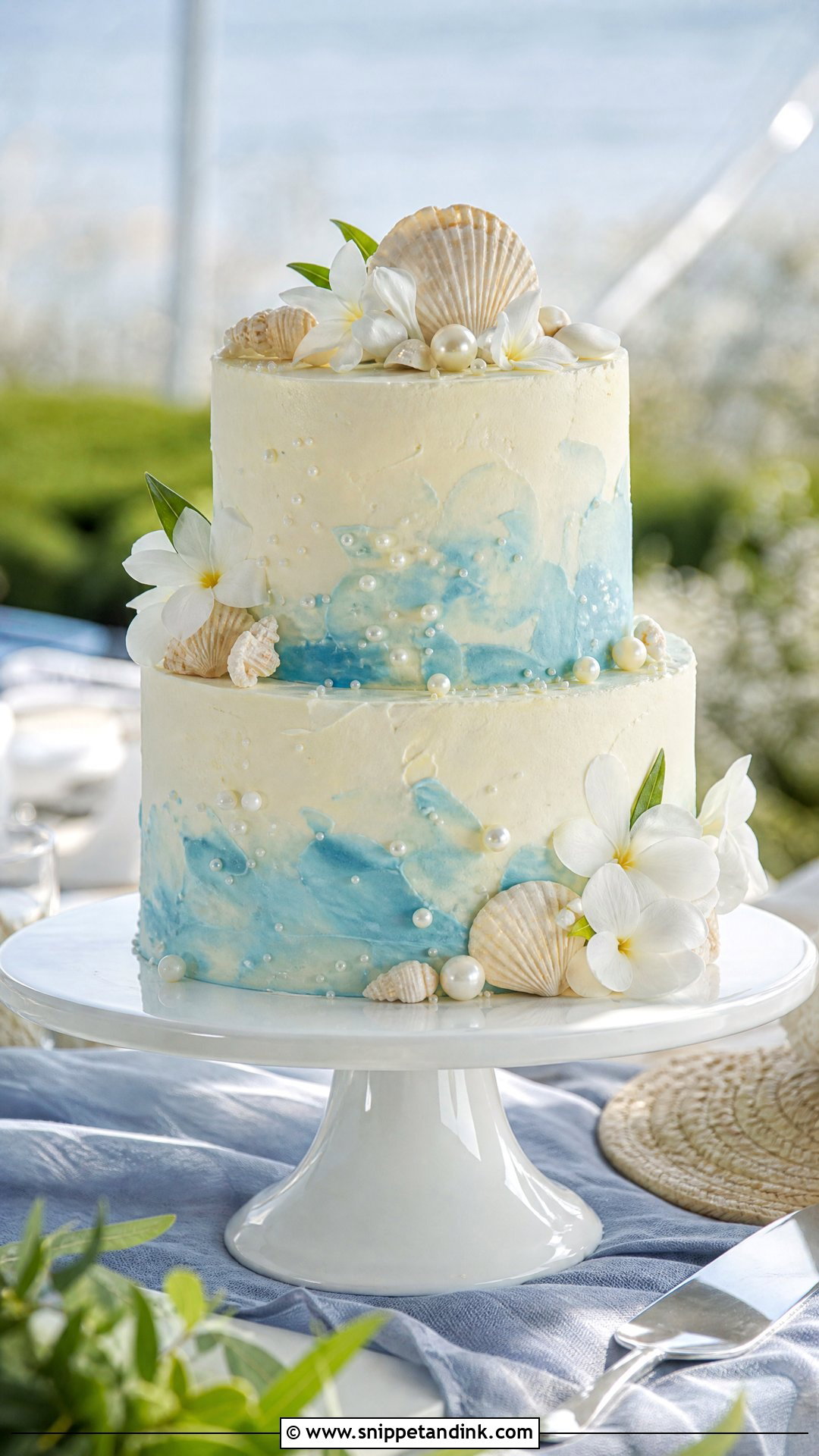
A 2 tier beach wedding cake works best when it hints at the coast rather than spelling it out. Ivory buttercream, a pale blue watercolor wash, pearls and white tropical flowers do that without shells everywhere; if you want shells, make them edible, from chocolate or sugar. Salt air and humidity make sugar decorations sticky and soft, and sun on sand is fierce, so this cake should stay indoors or in deep shade until the cutting. Coconut, lime, passion fruit, vanilla and pineapple fillings suit a seaside wedding, and a firm, stable frosting is a must outdoors.
From the Van to the Cake Table Without a Lean
Two tiers can often travel already stacked, which is one of their quiet advantages, but only with a central dowel running through both tiers into the base board and a non-slip mat under the box. I keep the van cool and drive slowly; most damage happens on speed bumps and sharp corners, not long distances.
Where the cake sits at the venue matters as much as how it got there. A few things I check before I set up:
- The table is sturdy and level. A folding table that wobbles when someone brushes past it is a real risk.
- It is out of direct sun and away from heaters, windows, the kitchen door and the dance floor speakers.
- Someone at the venue knows the cake goes into a cool room if the cutting is delayed by more than an hour or so.
- The cutting knife and a cake server are on the table, and someone knows to remove any dowels and flower picks before slicing.
If you are collecting the cake yourself, ask your baker to show you how it is supported inside and where to lift the board from. A flat car footwell is safer than a seat, and the air conditioning should be on before the cake goes in.
What Makes a Two-Tier Cake Work on the Day
Two tiers have enough height to be a real centerpiece and still suit small weddings and dessert tables. Start with one clear direction, whether that is vintage piping, fresh flowers, pearls, fruit or a clean minimal finish, then choose flavors that match the season. Bring your favorite photos to your baker, but also ask how they will handle the heat, the stacking and the cutting. A good cake should look right on the table, cut cleanly and taste as good on the last slice as the first.
You'll Like These Ideas:










Leave a Reply