
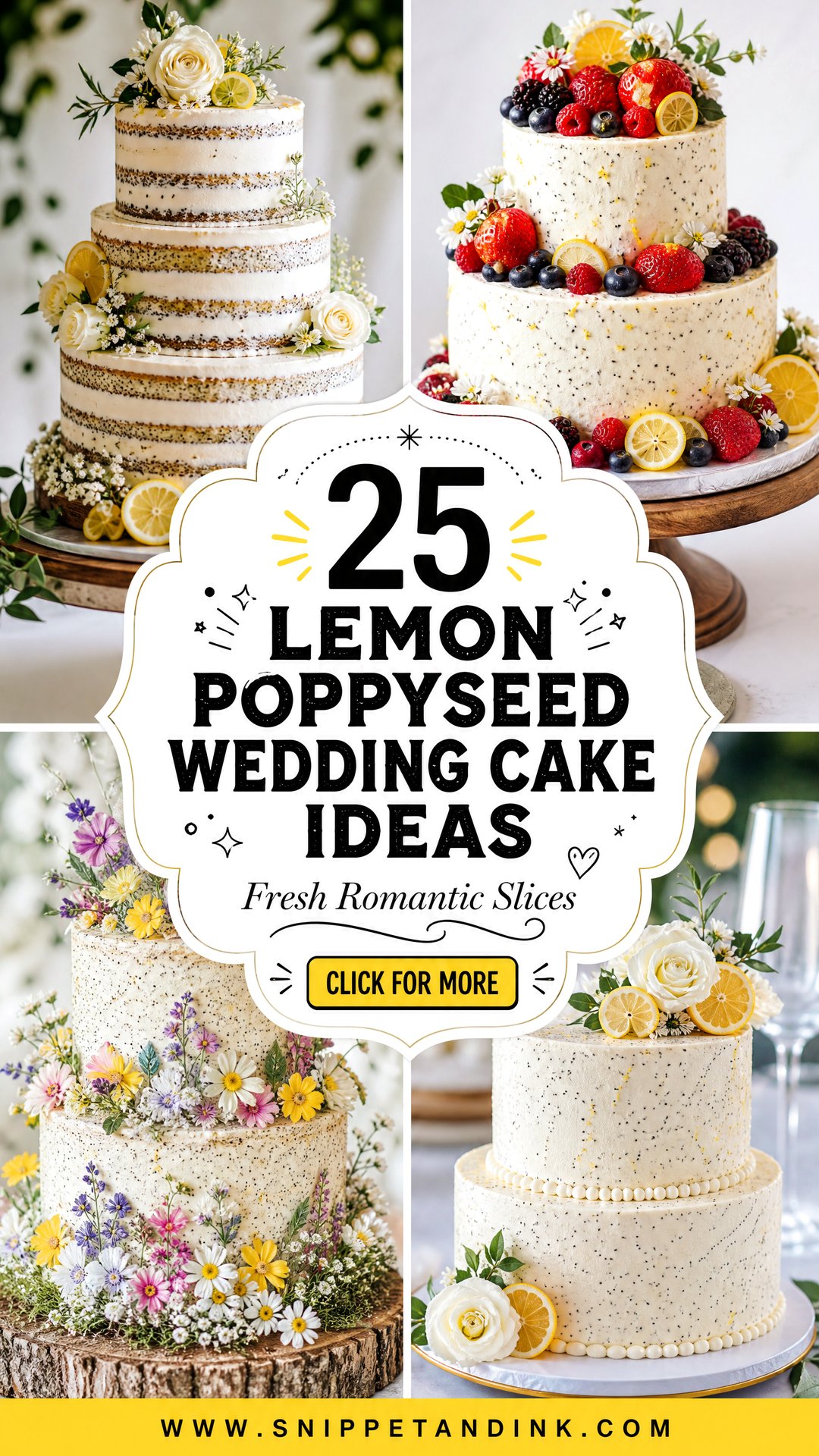
Lemon poppyseed is the flavour I see guests go back for after they’ve already had a slice. It’s bright without being sharp, the crumb is tender, and the tiny dark seeds make the cut face of the cake look speckled and homemade in a good way. It suits spring and summer weddings especially, and brunch receptions where a heavy chocolate cake would feel wrong. The fresh citrus flavor also gets along with a long list of partners: curd, raspberry, blueberry, cream cheese, elderflower, honey and plain vanilla. Below are the combinations and finishes I’m asked for most, with what each one asks of the sponge and the venue.
What Poppyseeds Actually Do Inside the Sponge
Poppyseeds add a faint nutty crunch and those dark specks, but they don’t add moisture, and lemon cakes dry out faster than most. Zest gives the real lemon flavour, since extract alone tastes flat. I bake with zest rubbed into the sugar to release its oils, then brush each layer with a lemon syrup as it cools. That syrup is what keeps a lemon tier moist through a long reception.
Two smaller things worth knowing. Seeds catch in teeth, so if you’re doing close-up photos of the cake-feeding moment, have a glass of water nearby. And poppyseed allergies exist, though they’re uncommon, so list the seeds on any allergen card on your dessert table along with eggs, dairy and gluten.
1. Lemon Poppyseed Wedding Cake With Lemon Curd
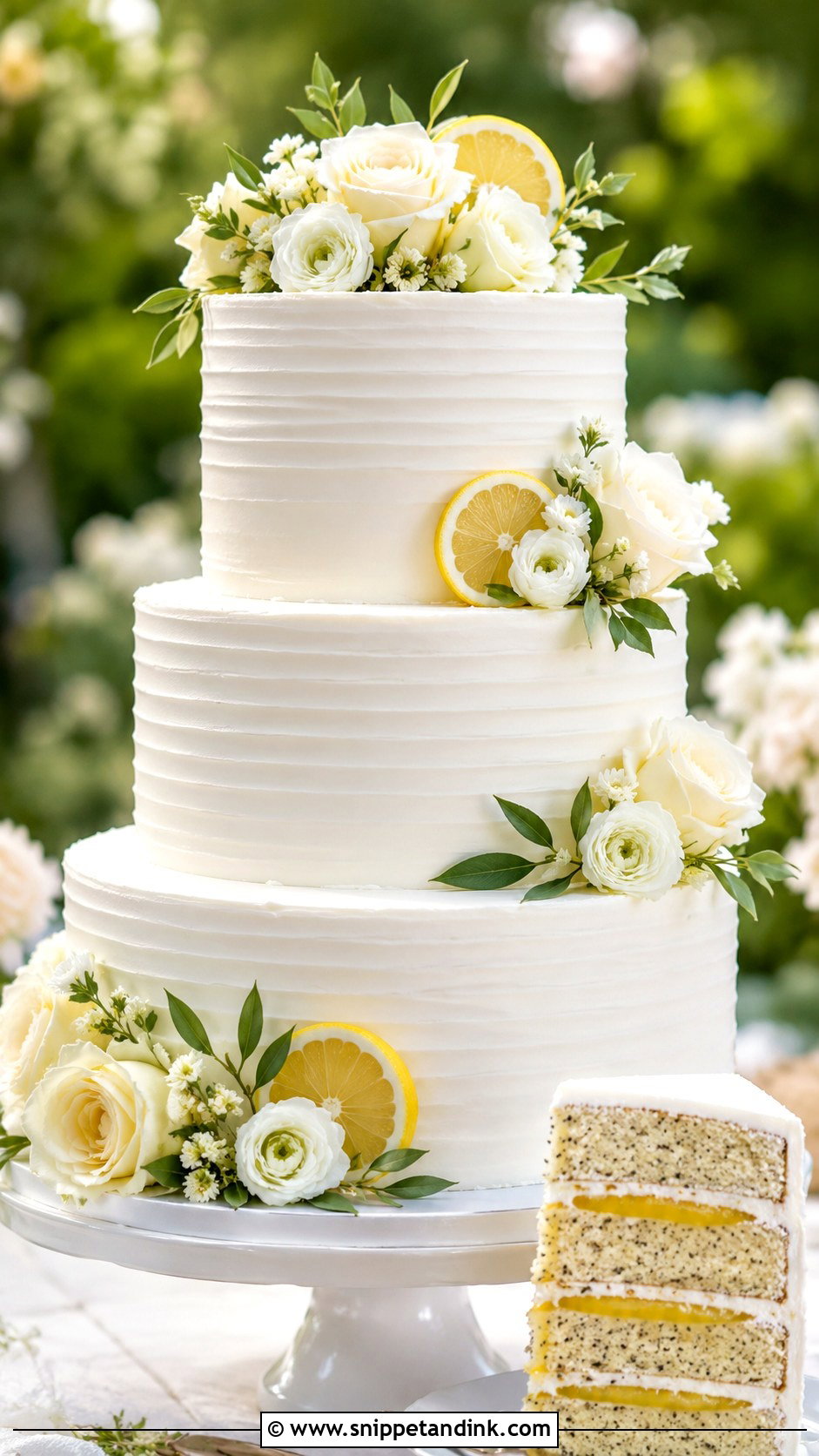
Curd is the filling that makes lemon taste most like lemon. I use a thick, well-set curd and pipe a firm ring of buttercream around the edge of each layer first, a dam, so the curd can’t push out the sides when the tiers above press down. Skip the dam and you get a bulging, weeping stripe around the cake by the reception. Outside, clean white buttercream with a softly smoothed finish and a few lemon slices or white flowers is all it needs. Curd contains eggs and butter, so the cake should stay cool until it’s cut.
2. Lemon Poppyseed Wedding Cake With Raspberry Filling
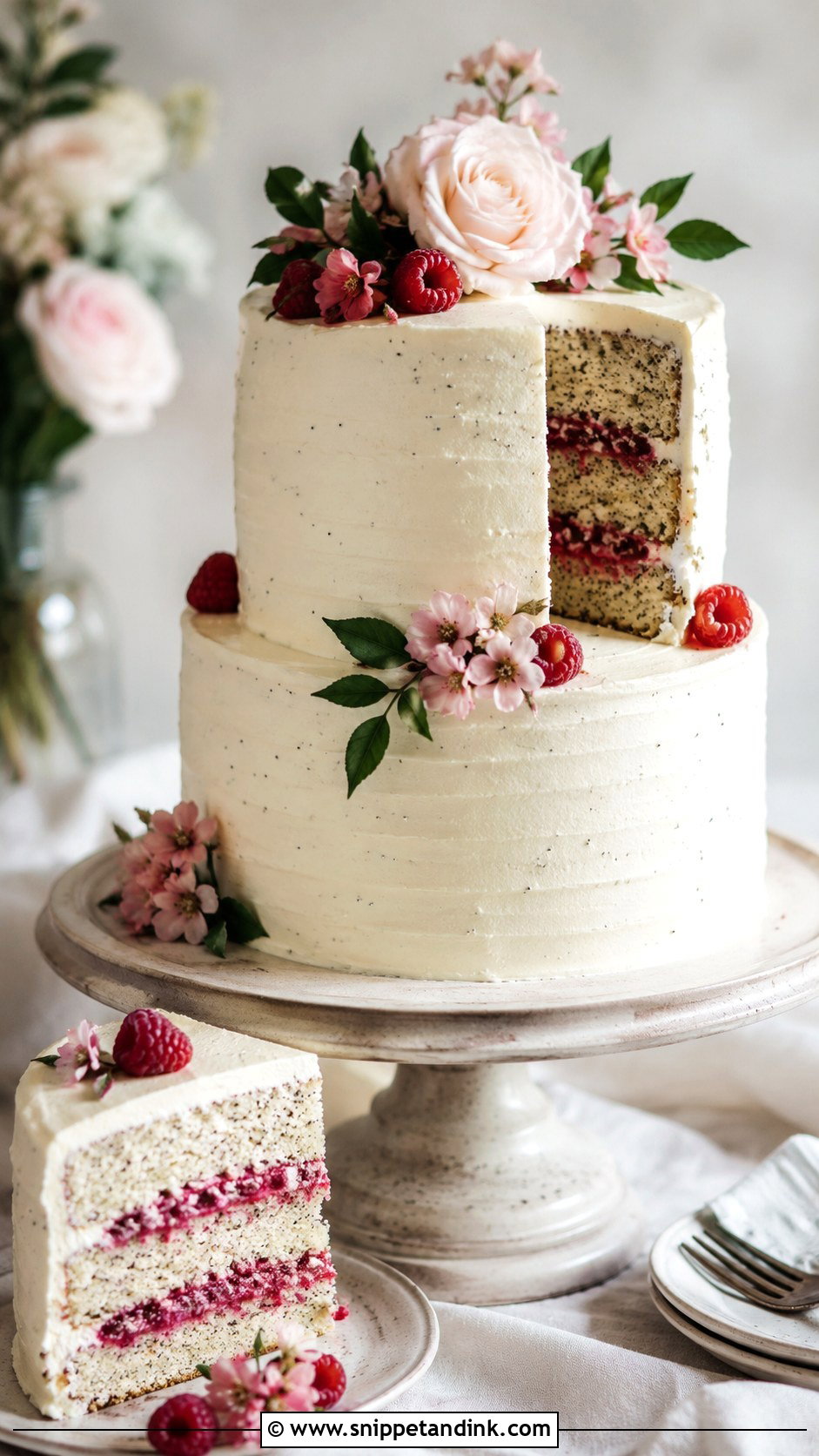
Raspberry gives lemon a deeper, slightly jammy note and puts a pink stripe through the pale sponge when it’s sliced, which guests always notice. I cook the raspberry filling down further than a pancake sauce so it holds between the layers, and I strain out some of the seeds, since poppyseeds plus raspberry pips can feel gritty together. White or ivory buttercream with fresh raspberries and a bit of greenery suits it. A thin raspberry drip is possible but goes juvenile quickly, so I keep it fine and stop it partway down the tier.
3. Lemon Poppyseed Wedding Cake With Cream Cheese Frosting
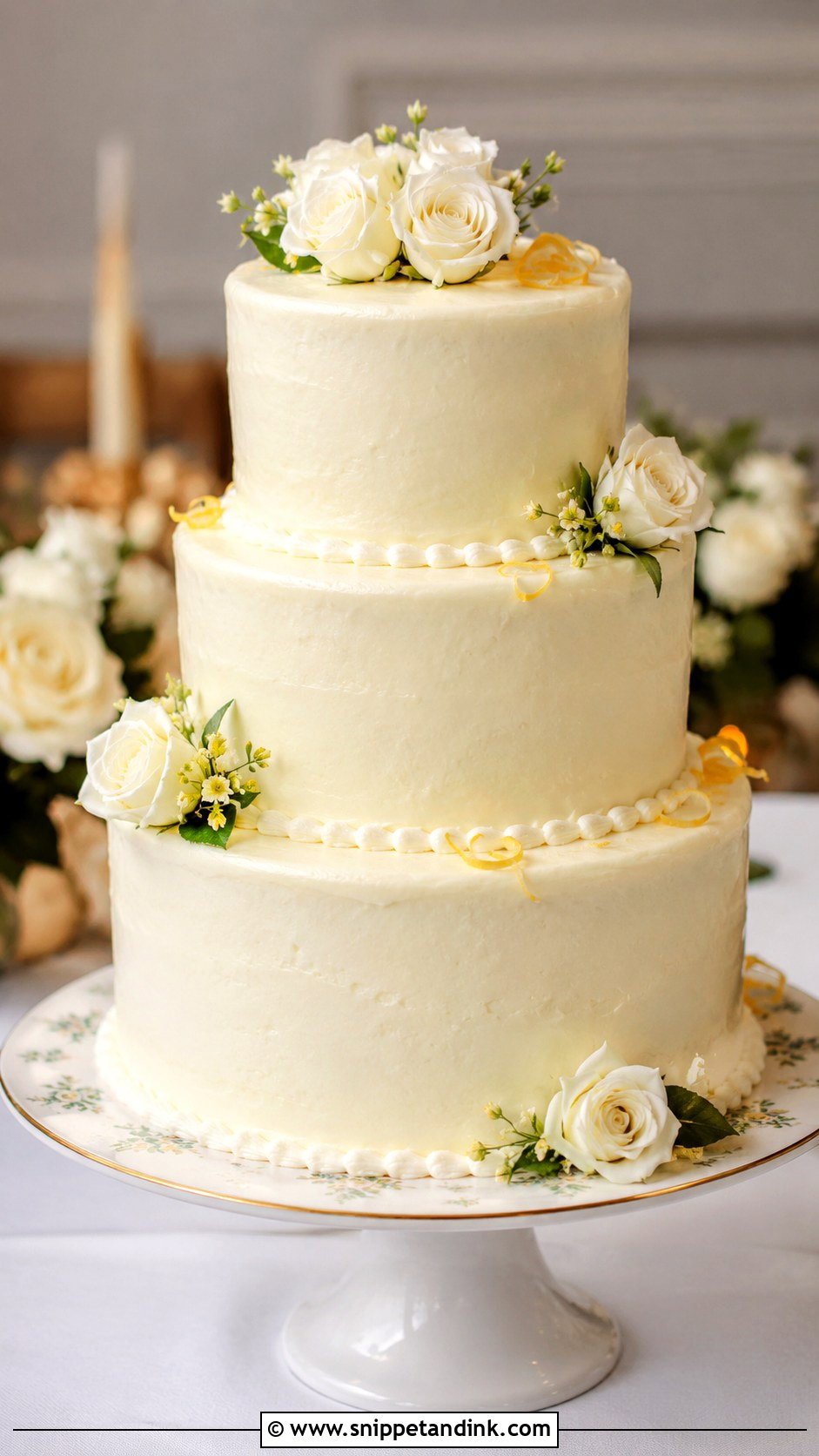
Cream cheese frosting brings a gentle tang and less sweetness than standard buttercream, and with lemon it tastes almost like cheesecake. The catch is structure. It’s softer than buttercream and needs refrigeration, so I’d only use it on a modest tier size, stack the cake with extra support and keep it cold until close to serving. It isn’t one I’d put on an outdoor summer table for hours. Smooth white finishes, gentle piping and soft yellow or blush flowers sit well on it, with curd or a thin layer of berry jam inside.
4. Lemon Poppyseed Wedding Cake With Blueberry Filling
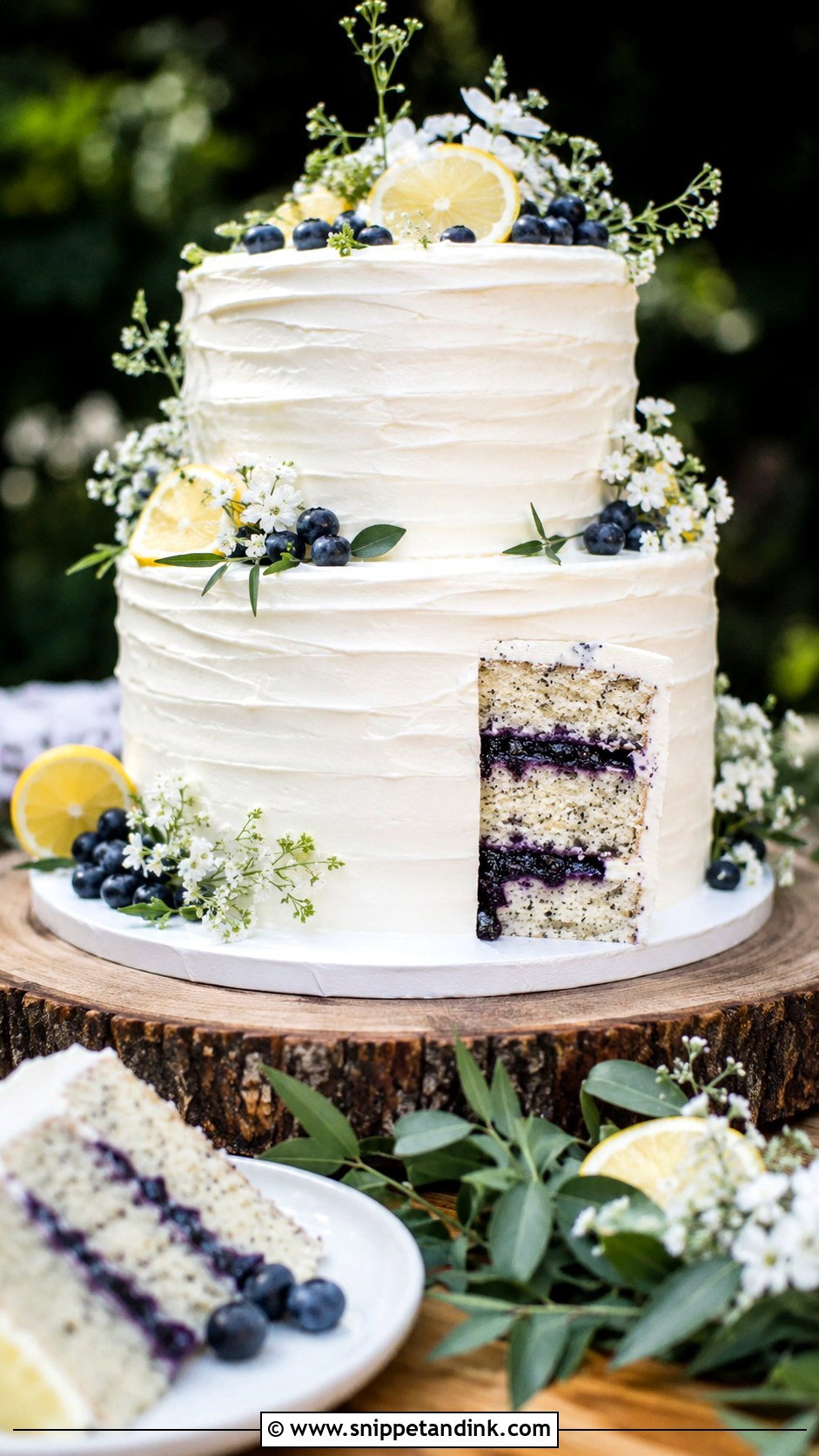
Blueberry softens lemon’s sharpness and gives the slice a blue-purple band between yellow layers. I make it as a compote with whole and burst berries rather than a smooth jam, because the texture reads homemade and it’s less sweet. Be aware that blueberry juice tints buttercream lilac where they touch, so the dam has to be solid. Outside, white buttercream, a few fresh blueberries and small white flowers keep it simple. It fits barn weddings, lakeside venues and brunch receptions.
5. Lemon Poppyseed Wedding Cake With Elderflower
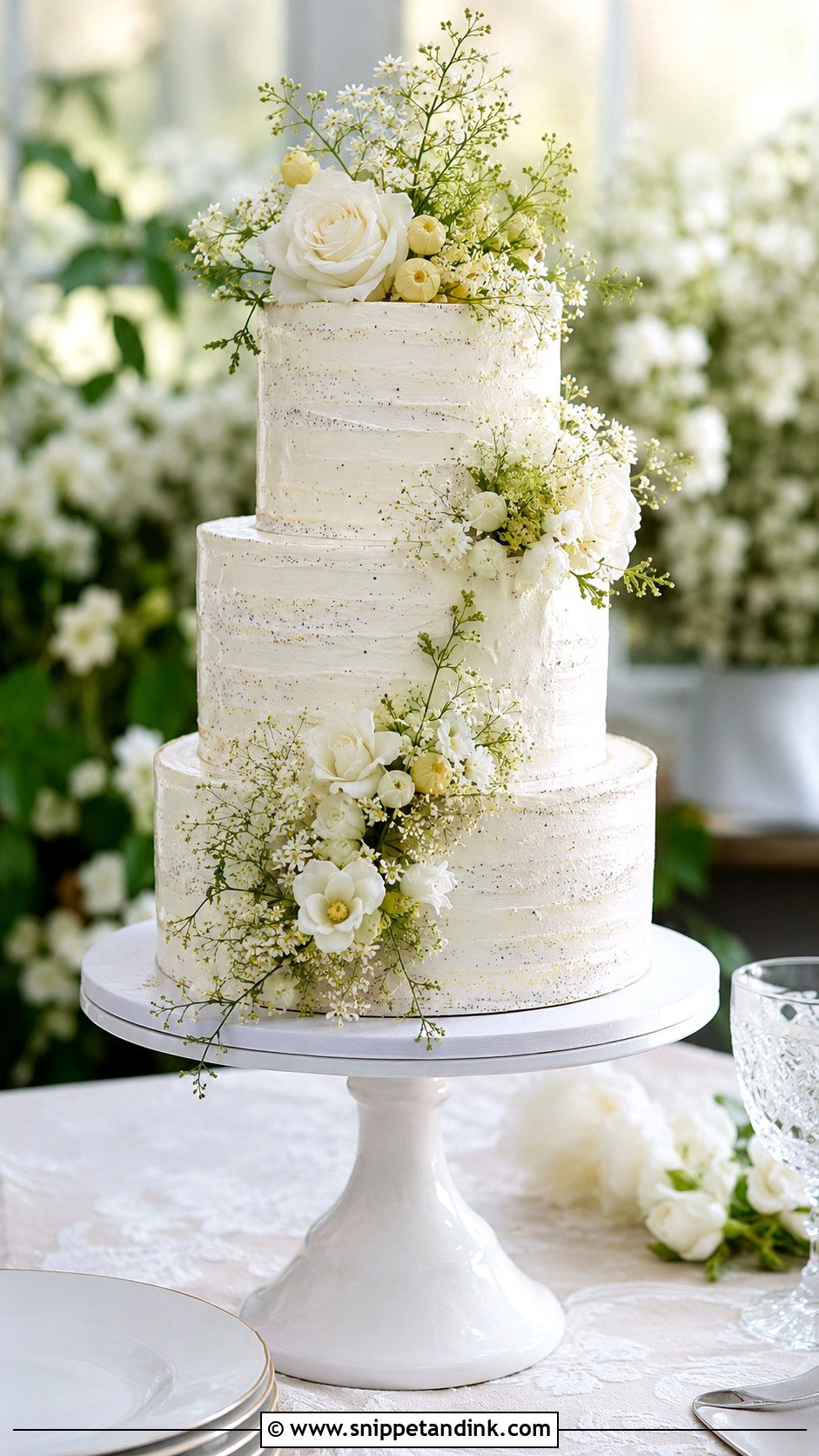
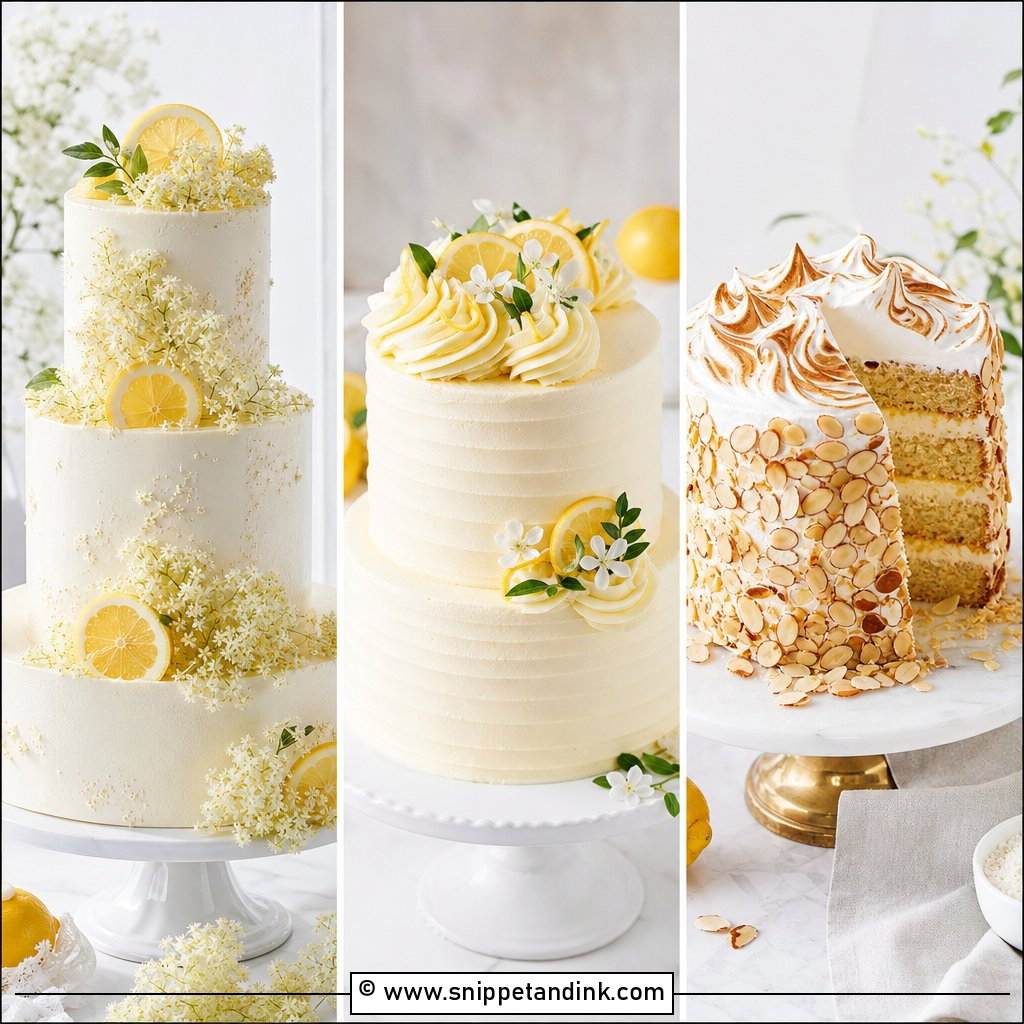
Elderflower adds a soft floral note that sits naturally with citrus, as long as it’s used with restraint; too much and the cake tastes like soap. I add it through a light syrup brushed onto the sponge or a gently flavoured buttercream rather than in the batter, which lets me taste and adjust. Lemon curd alongside it keeps the flavours clear. A smooth buttercream finish, loose fresh blooms and thin lemon accents suit it. Couples who want something a little unusual but not a gamble tend to land here.
6. Lemon Poppyseed Wedding Cake With Honey Buttercream
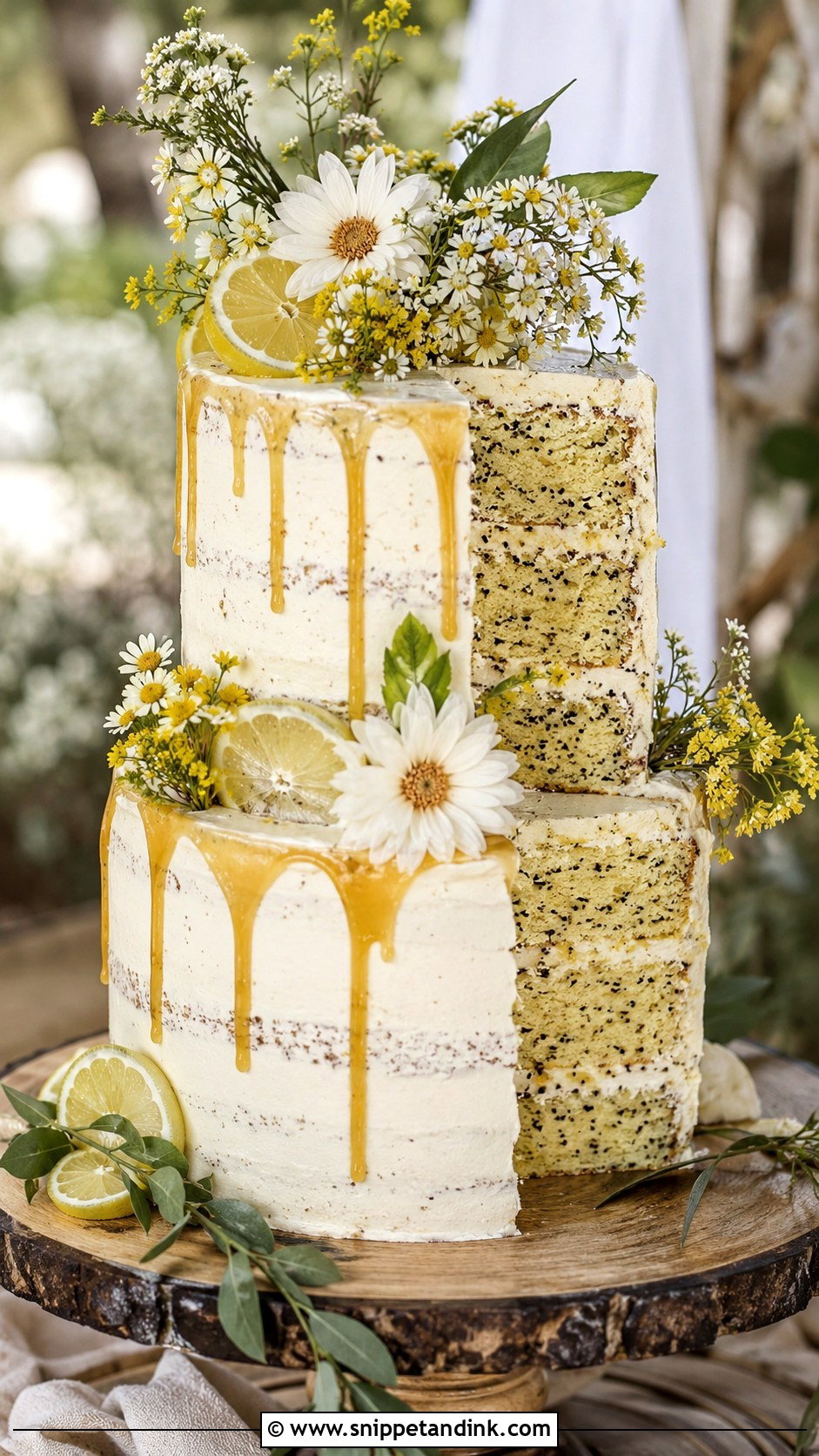
Honey buttercream rounds lemon off with a warm, golden sweetness. I use a mild honey; a strong dark one takes over the whole cake. Honey also softens buttercream, so I balance it with a little extra butter and keep the cake chilled before display. Ivory frosting, a few fresh flowers and small lemon pieces look right, and a thin honey-coloured drip can work if the rest of the styling is rustic. It belongs on a simple stand with greenery and linen, at garden parties and outdoor receptions.
7. Lemon Poppyseed Wedding Cake With Vanilla Buttercream
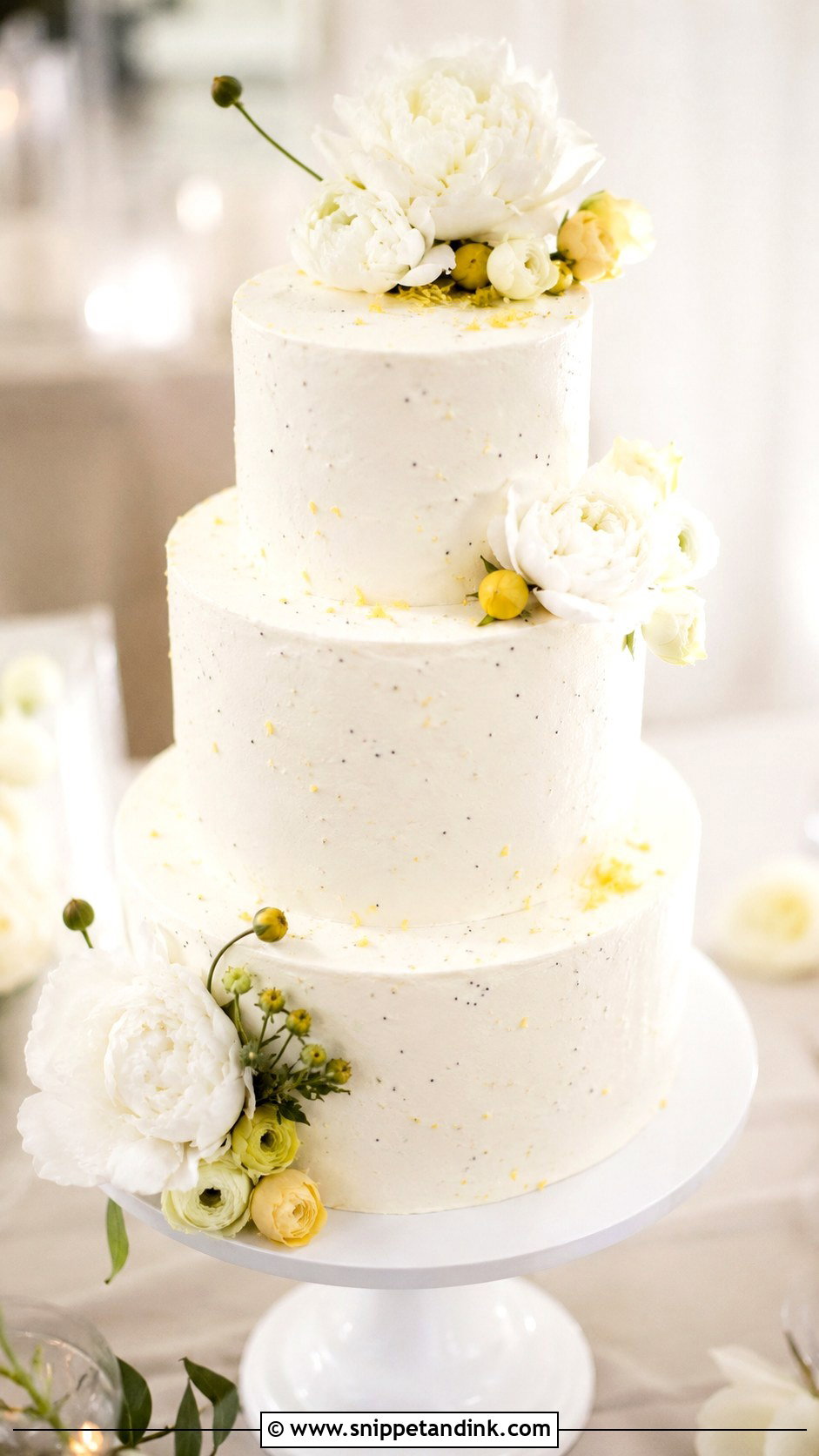
Vanilla buttercream is the safest partner for lemon poppyseed, and I mean that kindly. It keeps the citrus clean and familiar, so guests who are wary of anything new still eat it. It’s the version I suggest for large guest lists with mixed tastes. The outside can be smooth, softly textured or delicately piped, with white flowers, pale yellow buds or zest details. Because the flavour is so easy, it moves from a backyard ceremony to a formal ballroom without any change in the recipe.
8. Lemon Poppyseed Wedding Cake With Swiss Meringue Buttercream
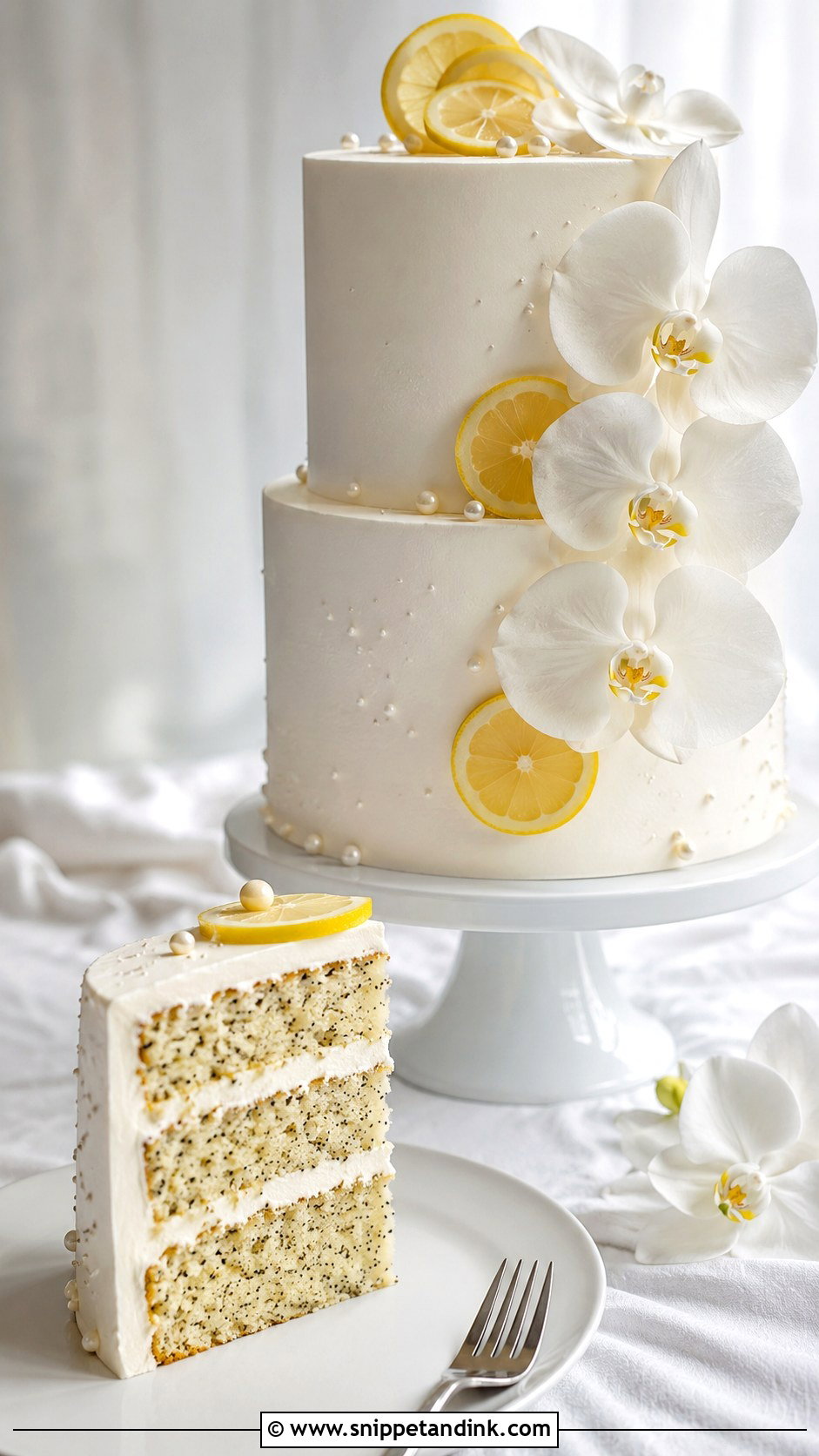
Swiss meringue buttercream is made by heating egg whites and sugar together, whipping them into a meringue and then beating in butter. The result is silky, less sweet than a powdered sugar frosting, and it smooths to sharp edges well when chilled. That lower sweetness lets the lemon come forward. I pair it with curd or raspberry inside, and decorate with fresh flowers, thin lemon slices or subtle piped pearls. It suits most colour palettes, though it softens faster than you’d think in a hot room.
9. Lemon Poppyseed Wedding Cake With Italian Meringue Buttercream
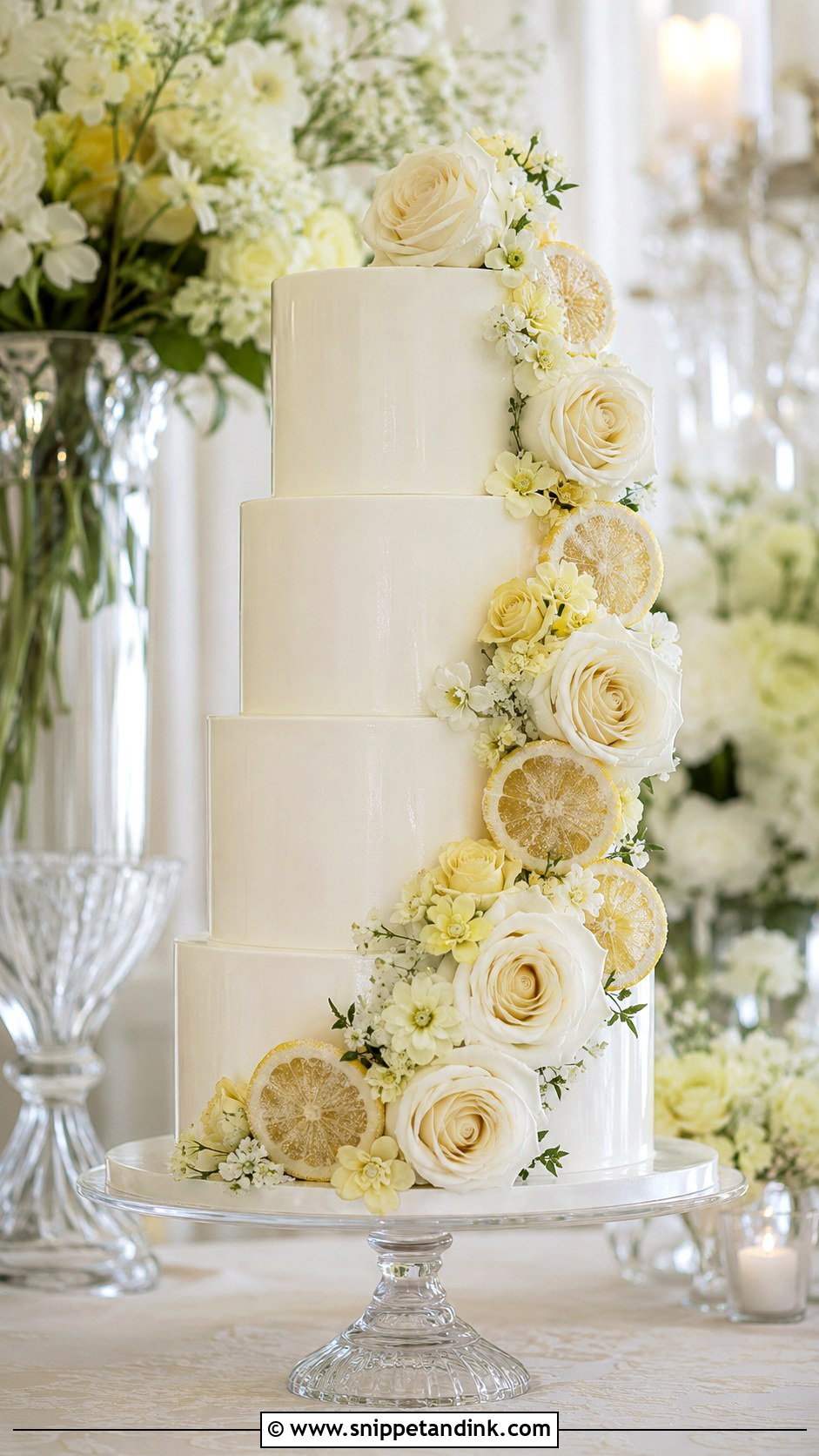
Italian meringue buttercream is built with hot sugar syrup poured into whipping egg whites, which gives a slightly firmer, more stable frosting than the Swiss method. That stability is why I use it for tall tiers and summer weddings. It takes clean edges and fine piping well. It pairs with curd, elderflower cream or a light berry filling. In ivory or soft white, with flowers cascading down one side and a few sugared lemon slices, it gives a bright flavour a classic presentation.
10. Lemon Poppyseed Wedding Cake With Whipped Frosting
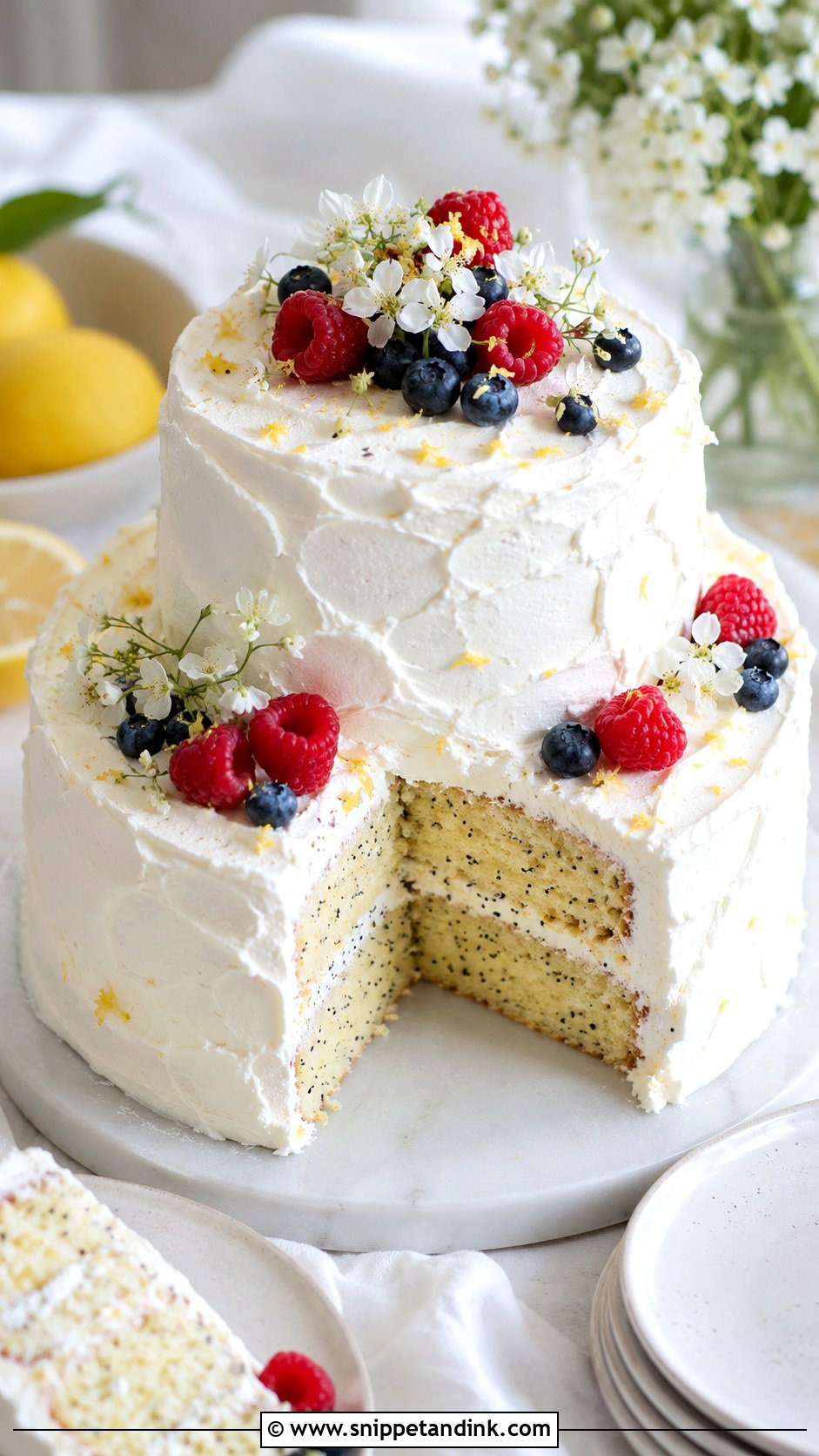
Whipped frosting keeps the cake light, which suits brunch weddings and small summer receptions. It’s also the least forgiving finish on this list. Even stabilised whipped cream needs refrigeration and starts to soften within a short time at room temperature, so I’d only use it where the cake can stay in a fridge until it’s cut. The design should be simple: a soft cloud-like finish, fresh berries, zest and a few small flowers. If you love the taste but have an outdoor reception, consider it for a small cutting cake with a sturdier frosting on the serving cakes.
11. Lemon Poppyseed Wedding Cake With Fondant
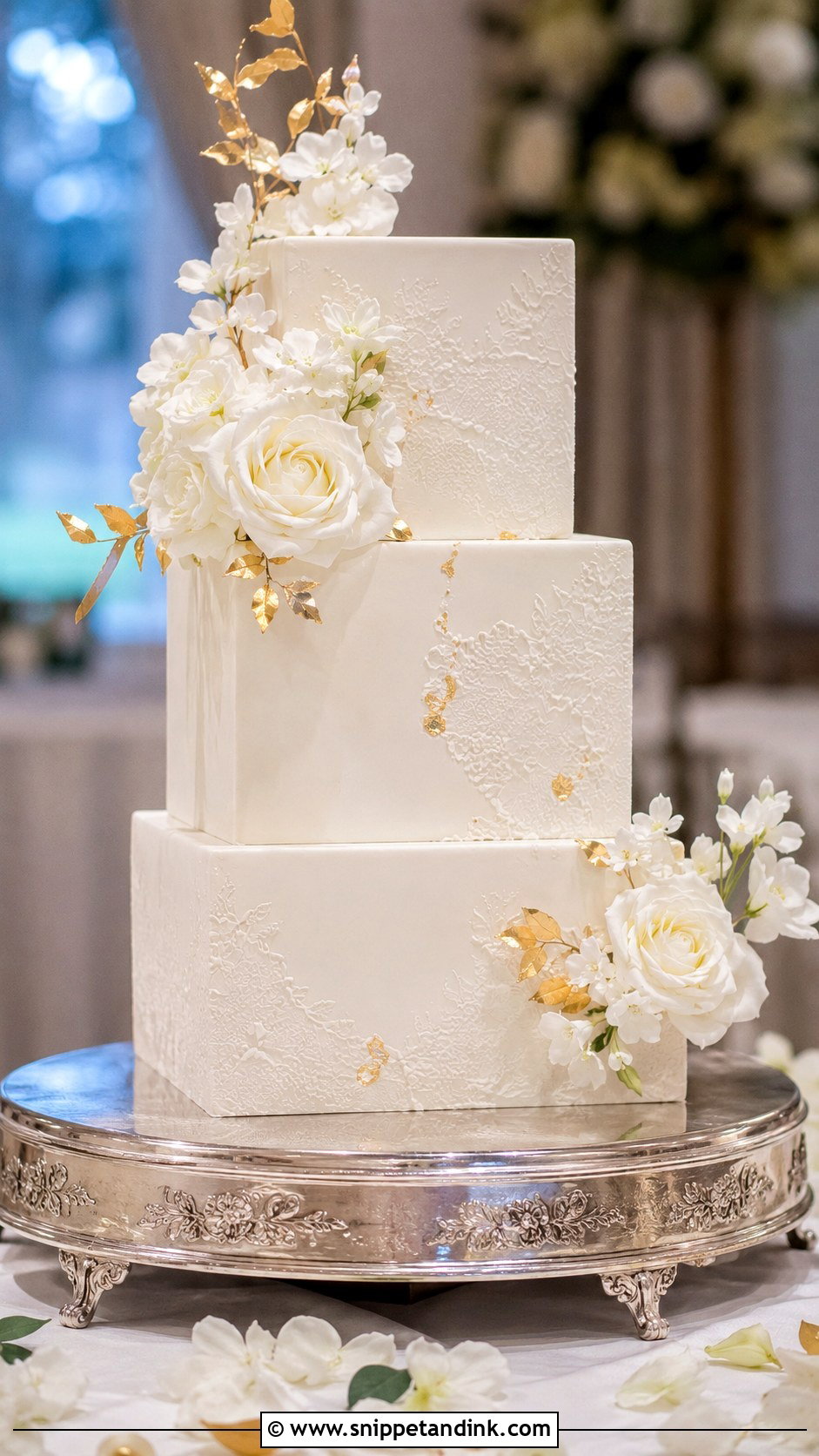
Fondant gives the cleanest, most formal outline: sharp edges, smooth tiers and room for embossed patterns. Lemon cakes under fondant need care, because curd and syrup add moisture that can make fondant soften from inside. I put a firm layer of buttercream or white chocolate ganache under the fondant to seal it, and keep curd layers thin. Inside, lemon curd, vanilla buttercream or raspberry all work. Sugar flowers, subtle texture or small gold touches finish it for ballrooms and hotel receptions.
12. Lemon Poppyseed Wedding Cake With Fresh Flowers
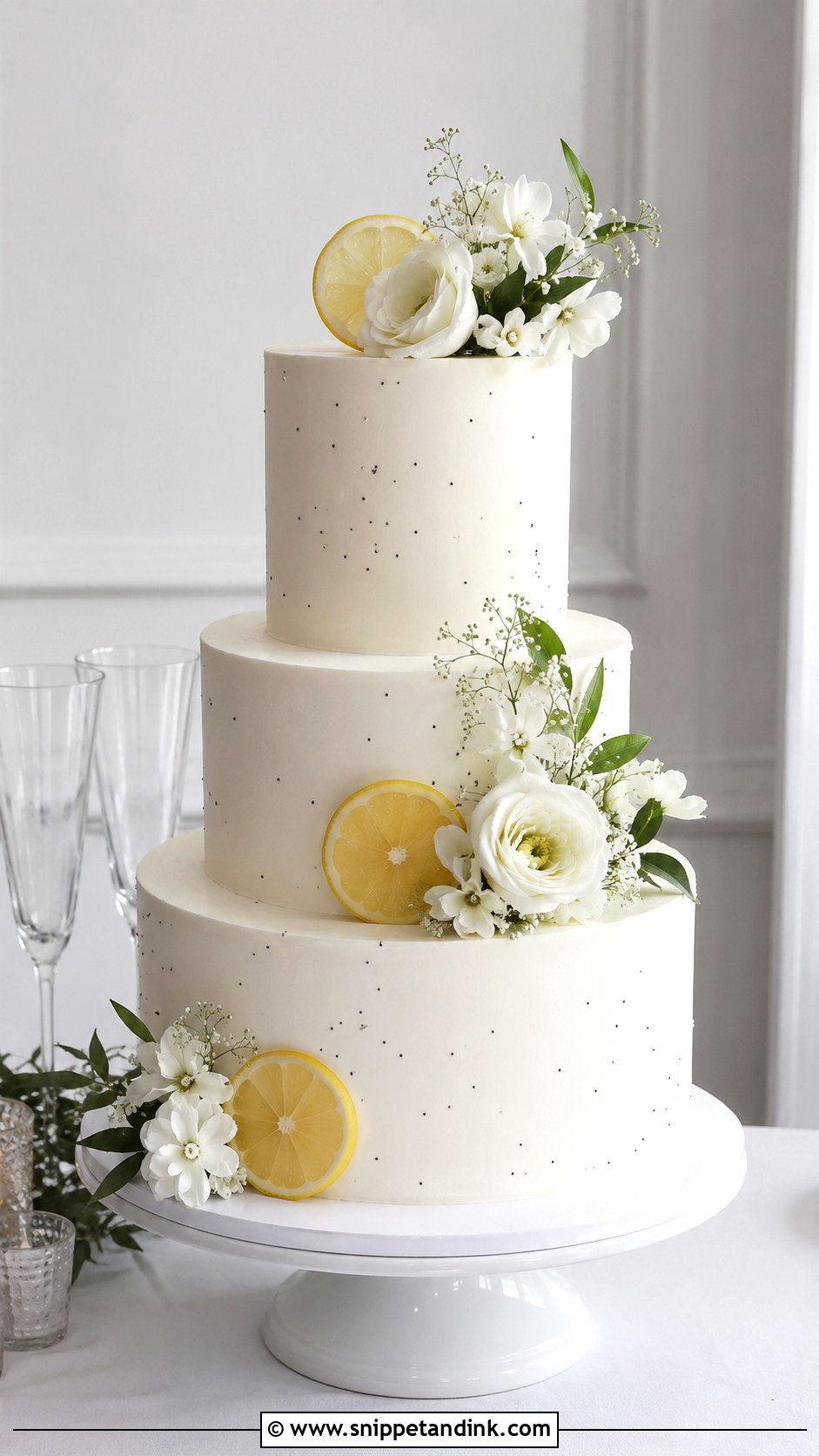
Fresh flowers suit lemon poppyseed’s bright personality, especially white roses, ranunculus, chamomile and small yellow garden flowers. Inside, choose lemon curd or raspberry filling depending on whether you want pure citrus or some fruit contrast. Safety comes first with this one. Many common flowers aren’t safe on food and most are sprayed, so I wrap stems, use food-safe picks and agree the exact flower list with the florist ahead of time. Smooth, textured or semi-naked buttercream all work underneath.
13. Lemon Poppyseed Wedding Cake With Sugar Flowers
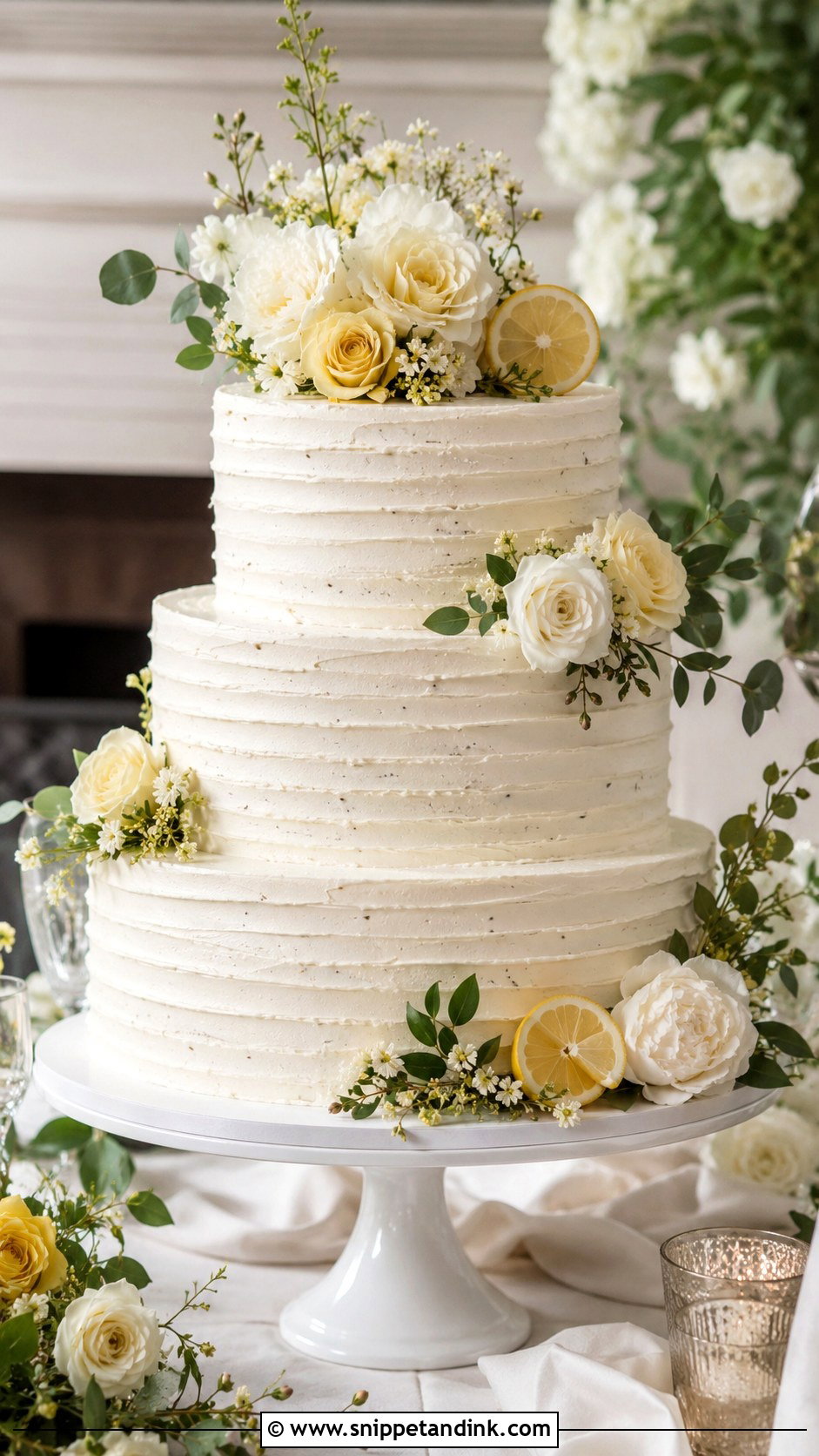
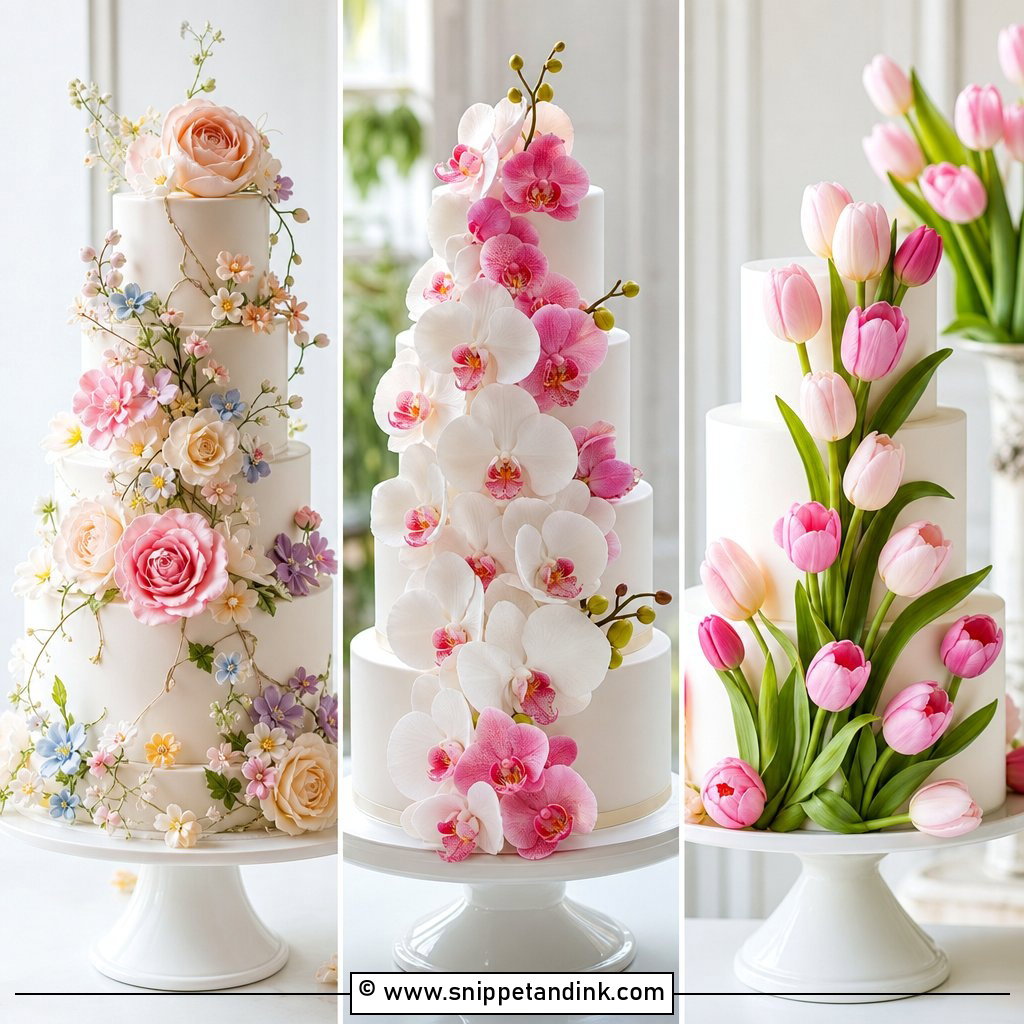
Sugar flowers suit couples who want an exact colour match or whose venue restricts fresh flowers on food. They’re shaped petal by petal from gum paste, wired and dried, often weeks before the wedding, so they’re long-lasting. Many couples keep the top spray as a keepsake. They aren’t really for eating, which is worth knowing if you imagine guests nibbling the decoration. A white buttercream or fondant background lets ivory, pale yellow or soft green blossoms show, while the sponge underneath still tastes fresh.
14. Lemon Poppyseed Wedding Cake With Gold Leaf
Gold leaf adds a celebratory finish to a flavour that’s otherwise quite cheerful and homely, and the contrast works. I apply it sparingly with a dry brush onto a chilled, firm surface, because on soft buttercream it smears and loses its shine. Small patches look intentional; full coverage looks heavy. Add lemon slices or tiny yellow blooms so the citrus theme still comes through. It suits formal receptions and tables with gold accents, as long as the metallic stays a highlight.
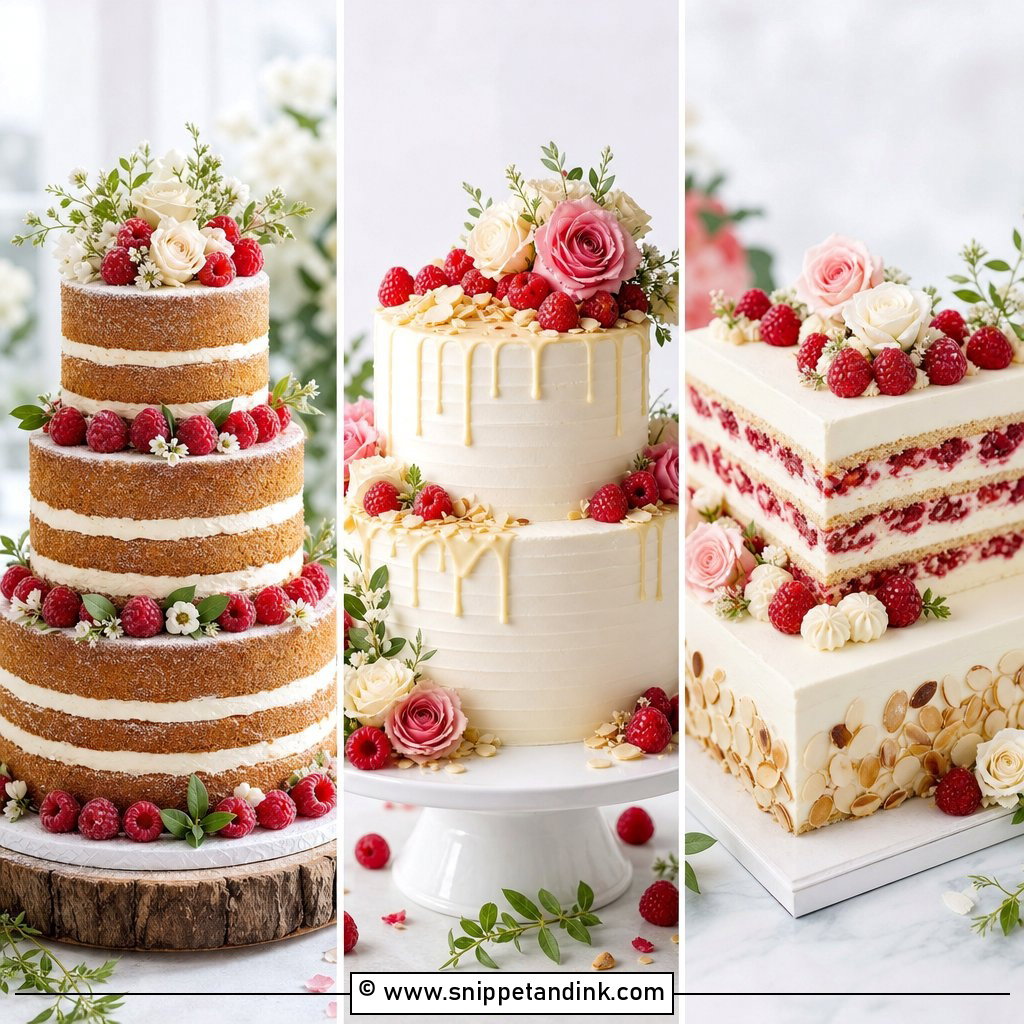


15. Lemon Poppyseed Wedding Cake With Semi Naked Frosting
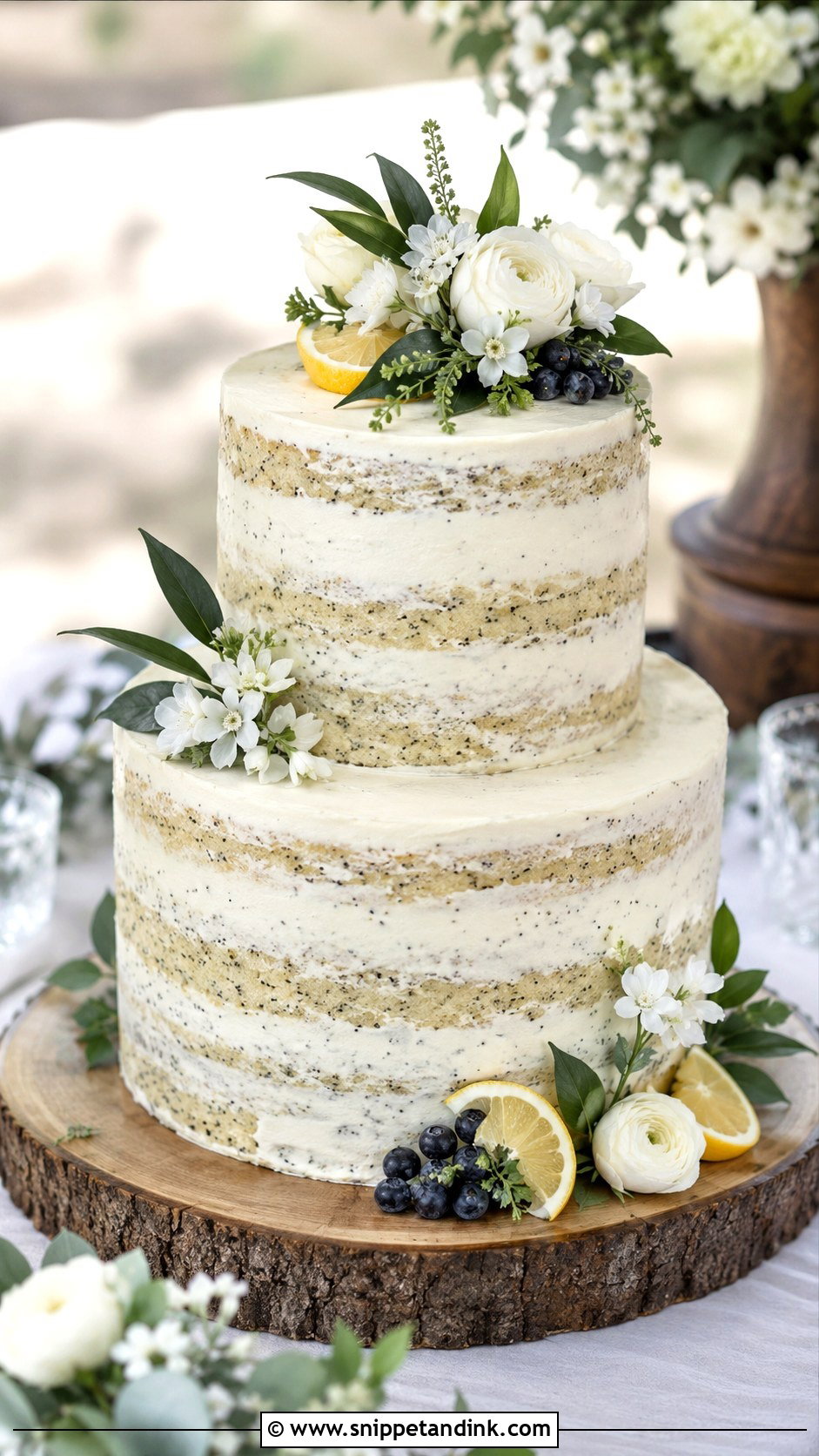
A semi naked lemon poppyseed wedding cake lets the pale sponge and seeds show through a thin scrape of buttercream, so the flavour becomes part of the design. The exposed sides dry out faster than a fully frosted cake, so I brush each layer with lemon syrup and bake as close to the wedding as practical. Lemon curd, vanilla cream or berry compote can go inside, with flowers, greenery or berries outside. Deliver it chilled, or the soft edges smudge during the drive.
16. Lemon Poppyseed Wedding Cake With Textured Buttercream
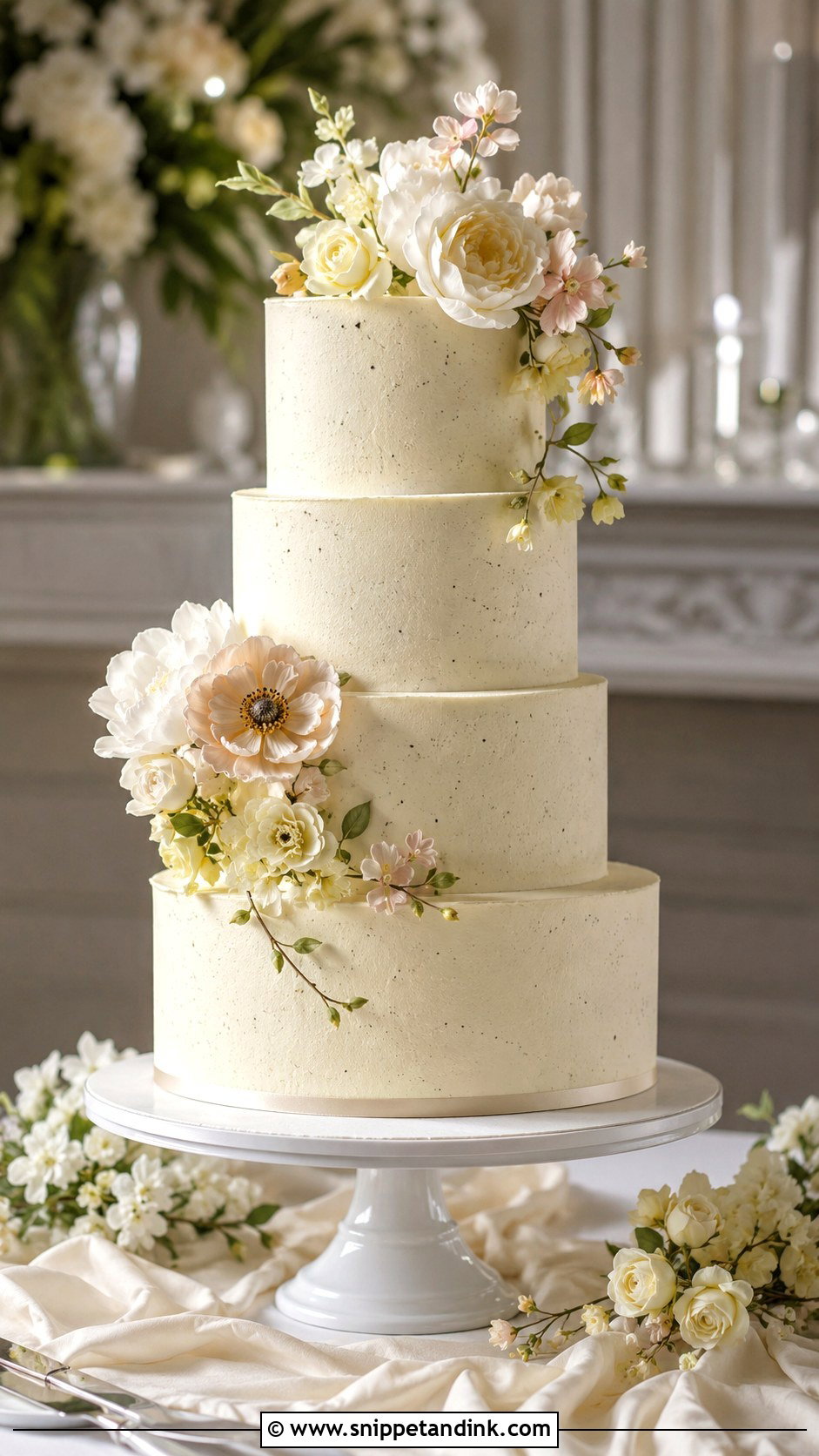
Textured buttercream, whether horizontal lines, waves or palette knife strokes, gives an approachable flavour an approachable finish. It also forgives small imperfections and stays attractive as it softens slightly through the evening. White, ivory or very pale yellow keeps it bridal. I’d add fresh flowers or small lemon accents around the tiers and keep everything else plain. It’s the finish I suggest most for couples who don’t want a cake that looks too formal next to a relaxed menu.
17. Lemon Poppyseed Wedding Cake With Smooth Buttercream
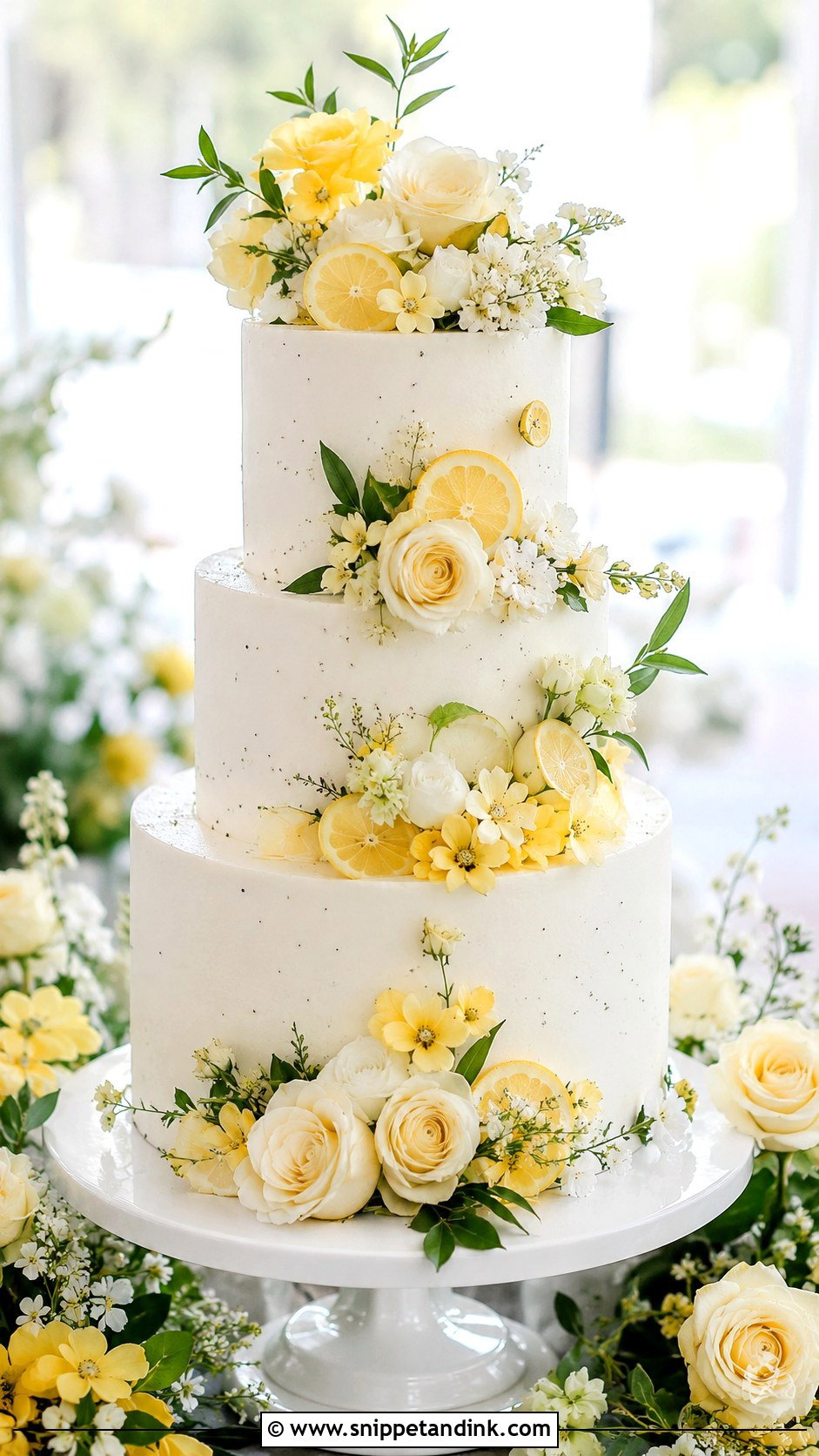
Smooth buttercream is clean and modern, and the flavour inside stays bright and friendly. It shows every flaw, so I chill the cake between coats and finish with a warmed scraper for crisp edges. Keep it all white or tint it a very pale yellow; lemon-coloured frosting goes sickly yellow quickly under warm reception lighting. Minimal flowers and small citrus details suit it. Curd, raspberry, blueberry or vanilla fillings all sit under it well.
18. Lemon Poppyseed Wedding Cake With Piped Pearls
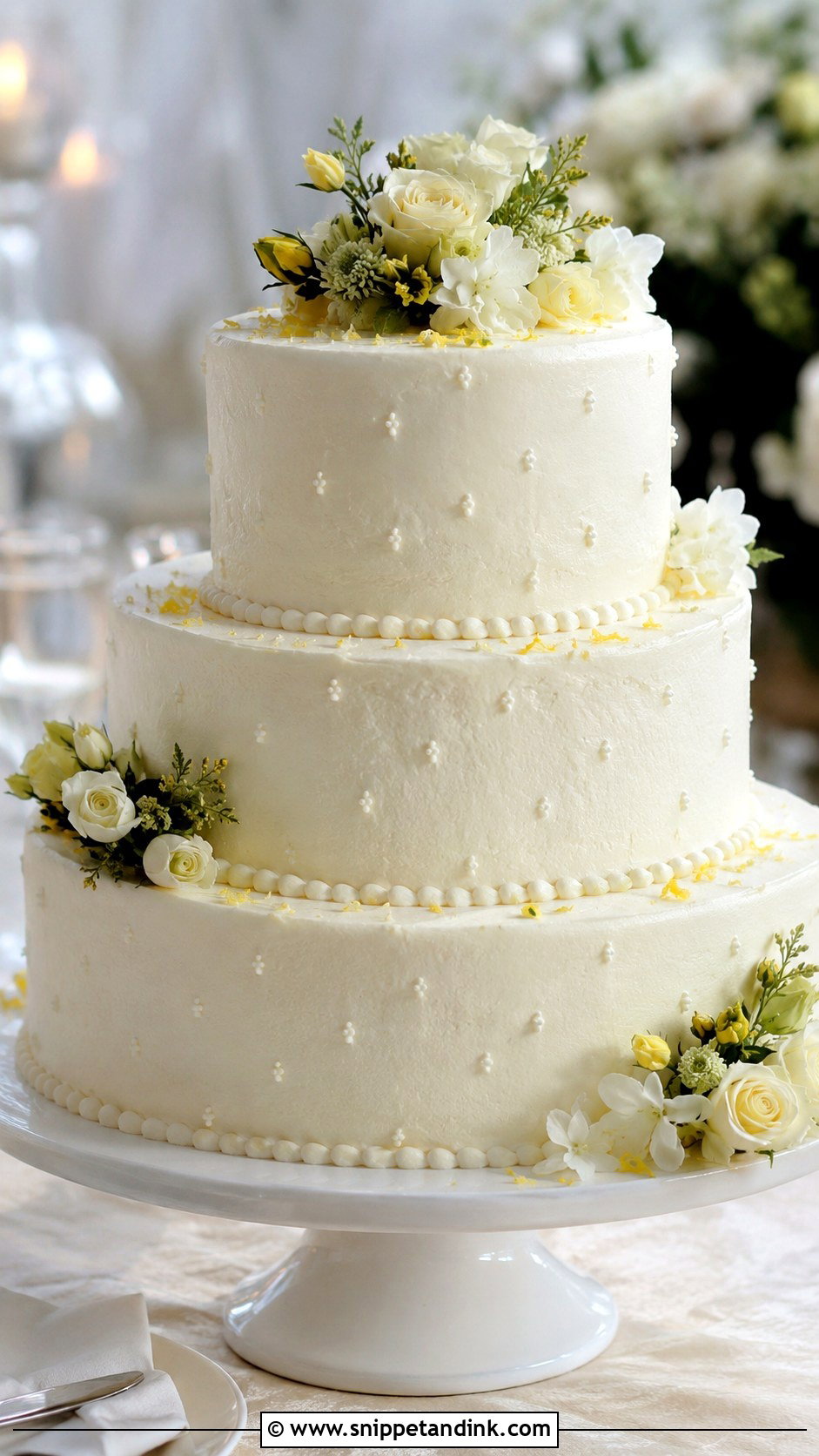
Piped pearls add classic texture without clutter. I pipe them with a round tip in rows or around tier bases, then press the little peak on each one down with a damp brush so they look round rather than pointed. They can frame each tier, cover one accent tier or run in vertical lines. White buttercream with curd or vanilla cream inside keeps the flavour bright. It’s a lot of piping time, so expect it to cost more than a smooth finish.
19. Lemon Poppyseed Wedding Cake With Lambeth Piping
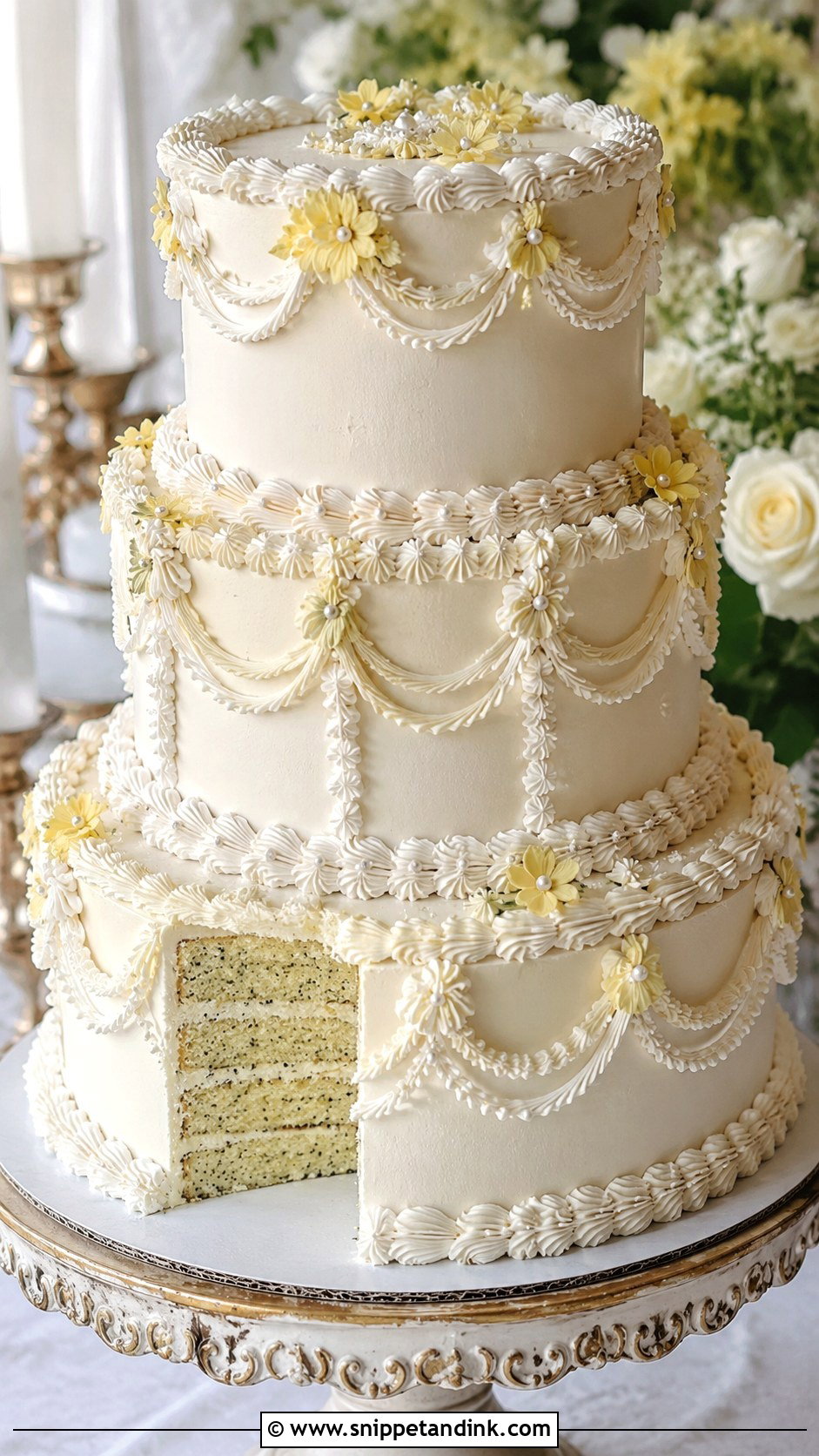
Lambeth piping, with its layered swags, shells and borders, gives lemon poppyseed a vintage look, and the fresh flavour keeps it from tasting old-fashioned. I pipe it in a firm buttercream, since soft frosting can’t hold the overlapping layers. White, ivory or pale yellow suits it, and small sugar pearls or a monogram can personalise it. The piping is already the decoration, so I keep toppers minimal. It’s a slow, skilled technique, and not every baker offers it.


20. Lemon Poppyseed Wedding Cake With Dried Citrus
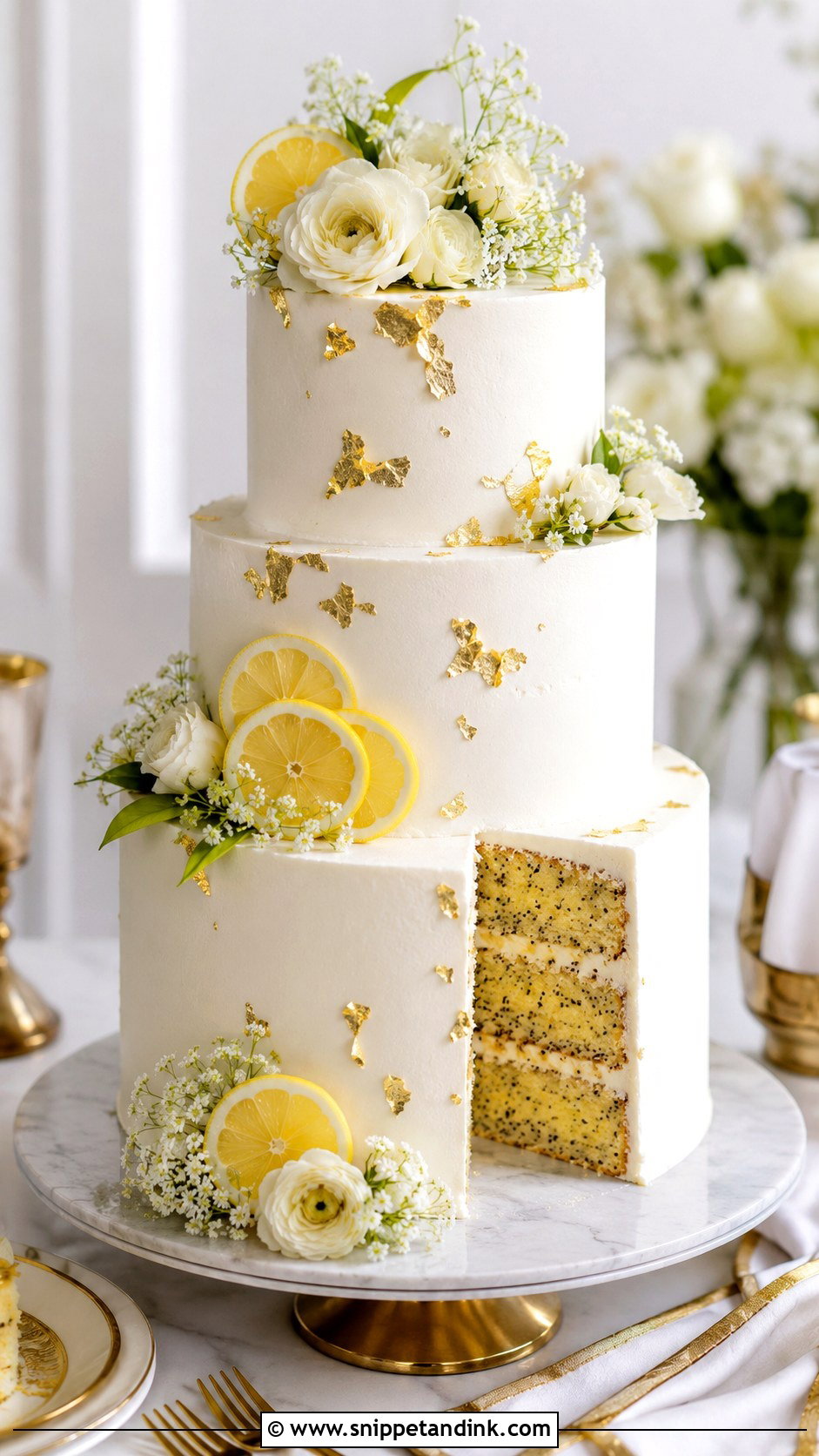
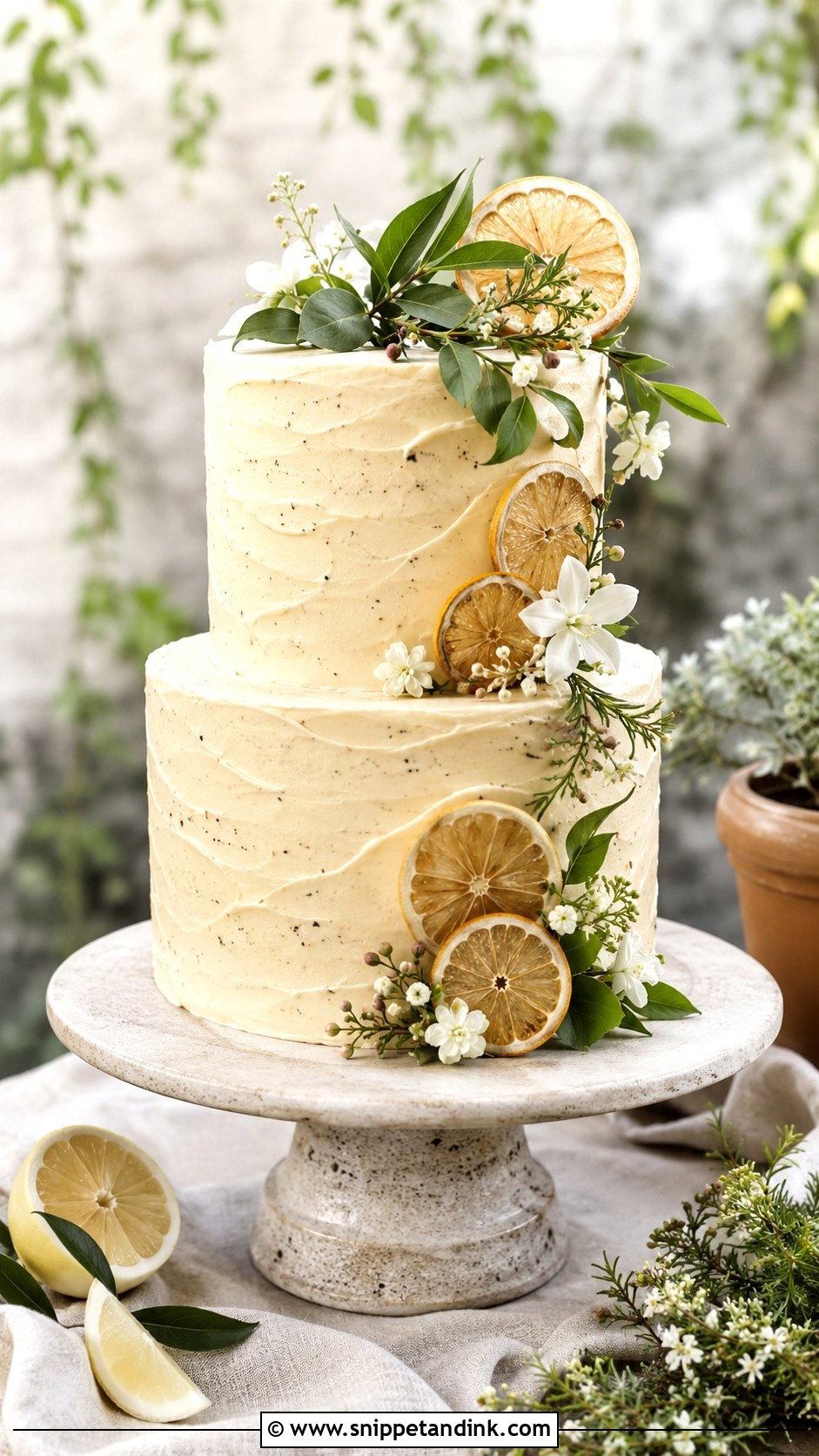
Dried lemon slices give a warmer, earthier look than fresh fruit. I dry them slowly in a low oven for several hours so they keep their colour; rushed slices brown at the edges. They can be tucked into buttercream, placed along tiers or arranged with greenery. They’re mostly decoration, since dried slices are tough to chew, so tell guests to set them aside. Curd, honey buttercream or vanilla filling suit them, and they work well at late summer weddings with linen, wood and stone around them.
21. Lemon Poppyseed Wedding Cake With Candied Lemon Slices
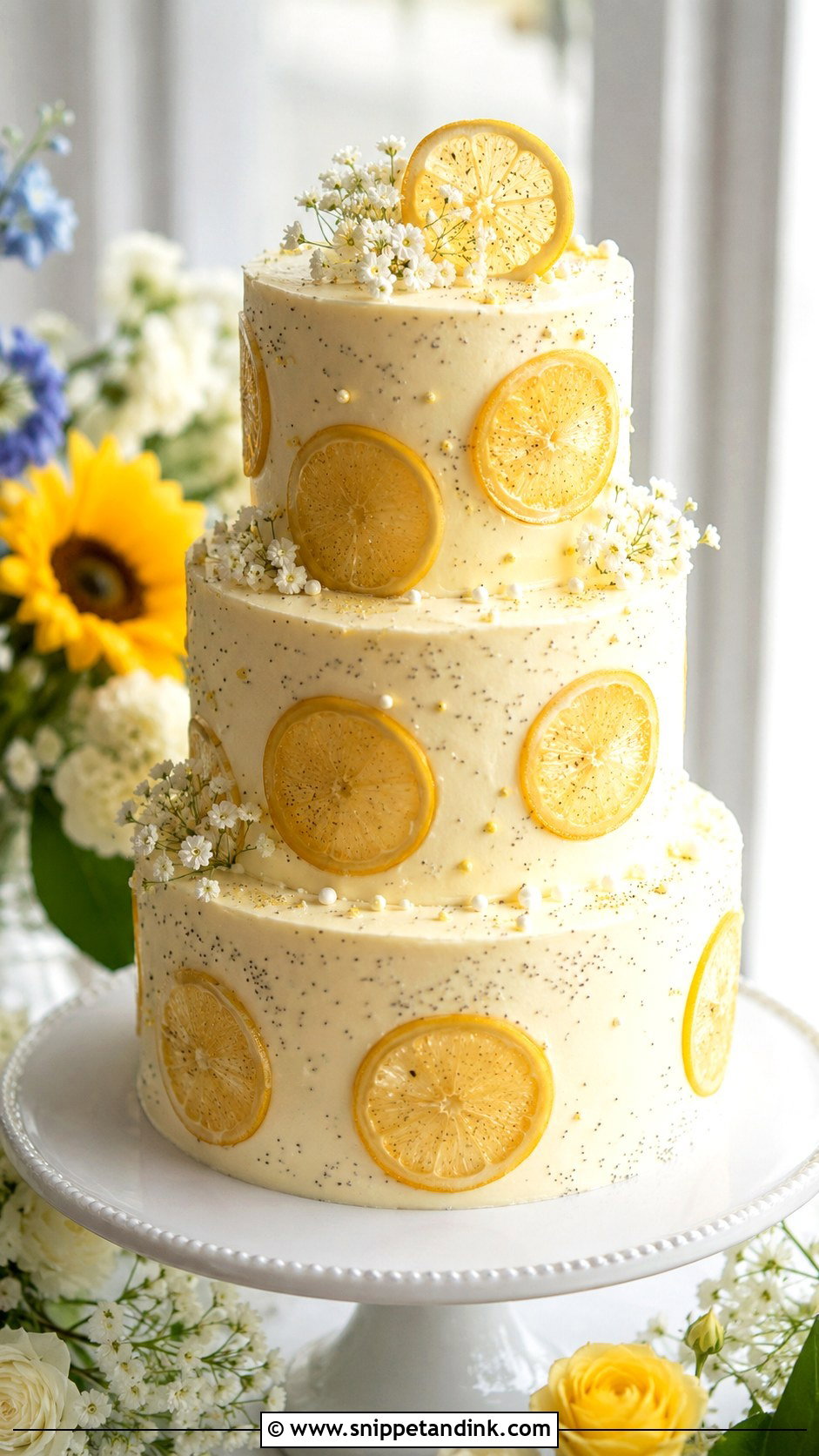
Candied lemon slices bring shine and a clear signal of the flavour inside. I simmer them slowly in sugar syrup until the peel turns translucent, which also softens its bitterness. In humid weather they get sticky and can weep syrup onto frosting, so I add them at the venue rather than before delivery. They sit well on white or pale yellow buttercream, on the top tier, around the base or in small clusters with flowers. Curd, vanilla cream, raspberry or elderflower filling all suit them.
22. Lemon Poppyseed Wedding Cake With Fresh Berries
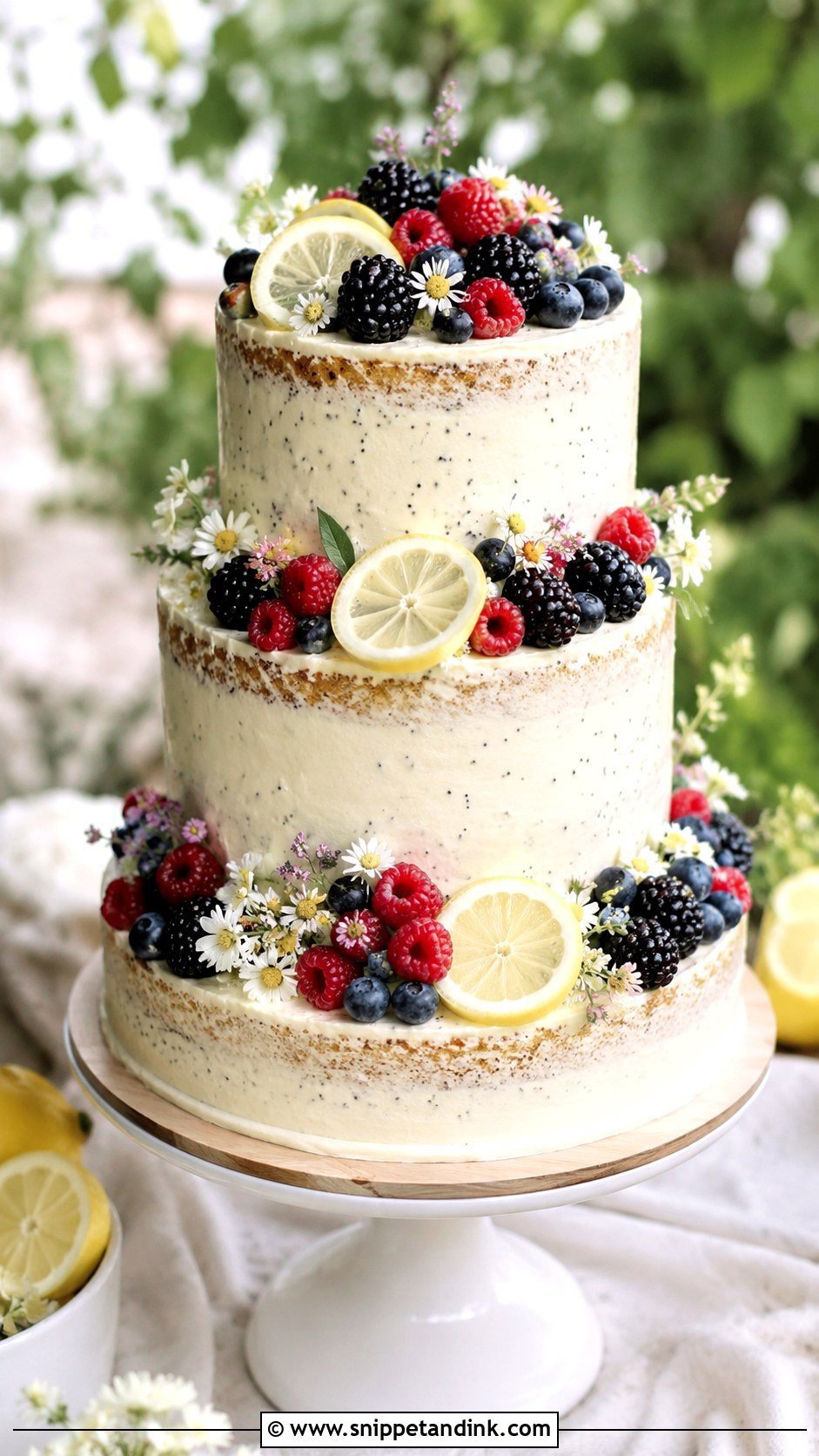
Berries all pair well with lemon, but they behave differently on a cake. Blueberries hold their shape for hours; raspberries crush easily; cut strawberries weep juice into frosting, so I use them whole or add them last. Raspberries feel romantic, blueberries feel natural, mixed berries feel abundant. Smooth or semi-naked buttercream with berries, small flowers and greenery makes a seasonal dessert table. If the cake will sit out, keep fruit to the ones that travel well and refresh the arrangement on site.
23. Lemon Poppyseed Wedding Cake With Floral Meadow
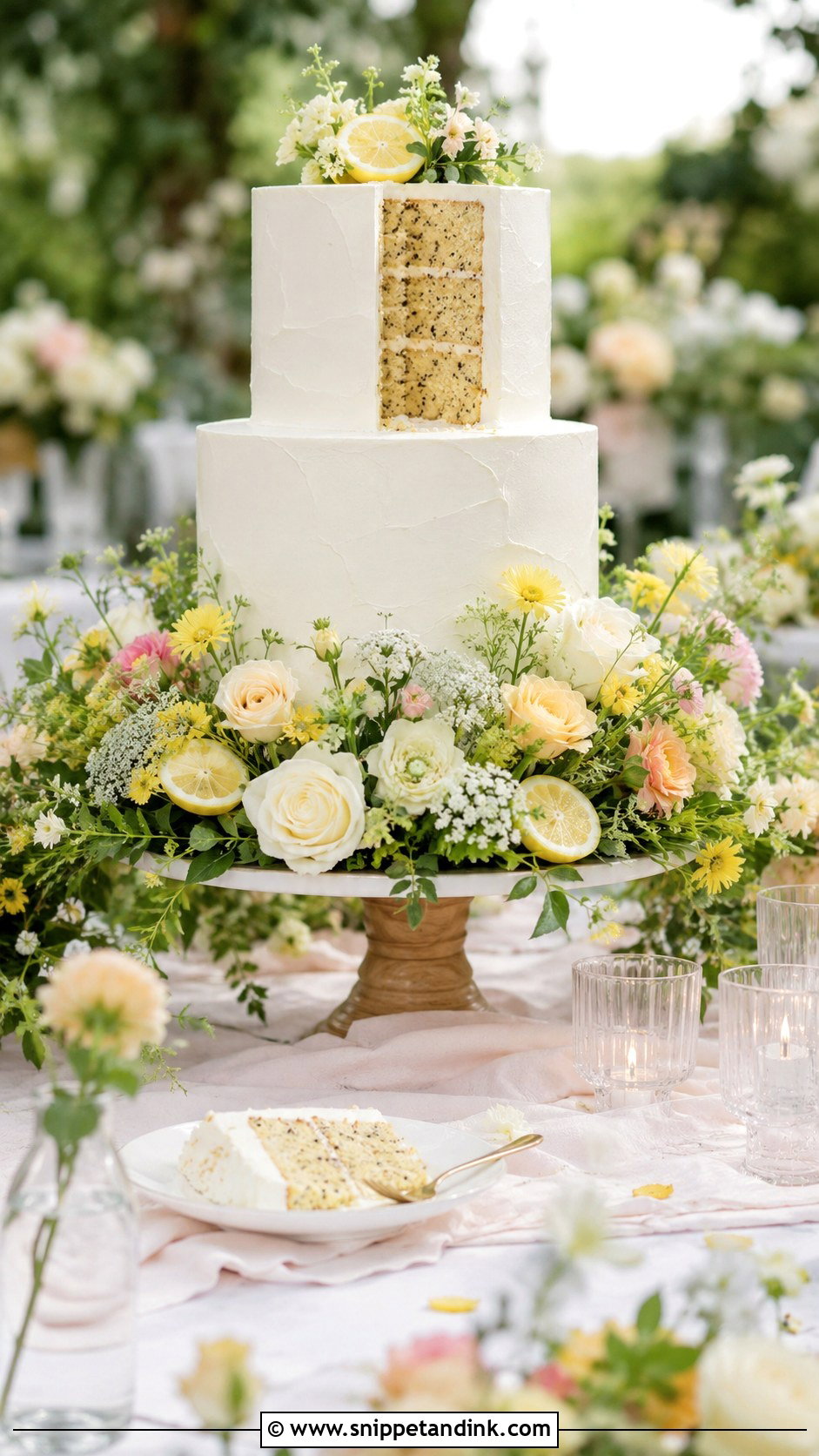
A floral meadow surrounds the base of the cake with blooms on the table, rather than placing flowers on the tiers. I like it because it gives a full garden look while keeping stems away from the frosting entirely, which solves most of the safety worries with fresh flowers. The cake itself can stay smooth white or gently textured, with curd, elderflower or vanilla inside. Ivory, pale yellow, blush and green flowers look natural. Ask your florist to arrange it on site, so the flowers are fresh and the cake isn’t moved after.
24. Lemon Poppyseed Wedding Cake With Two Tiers
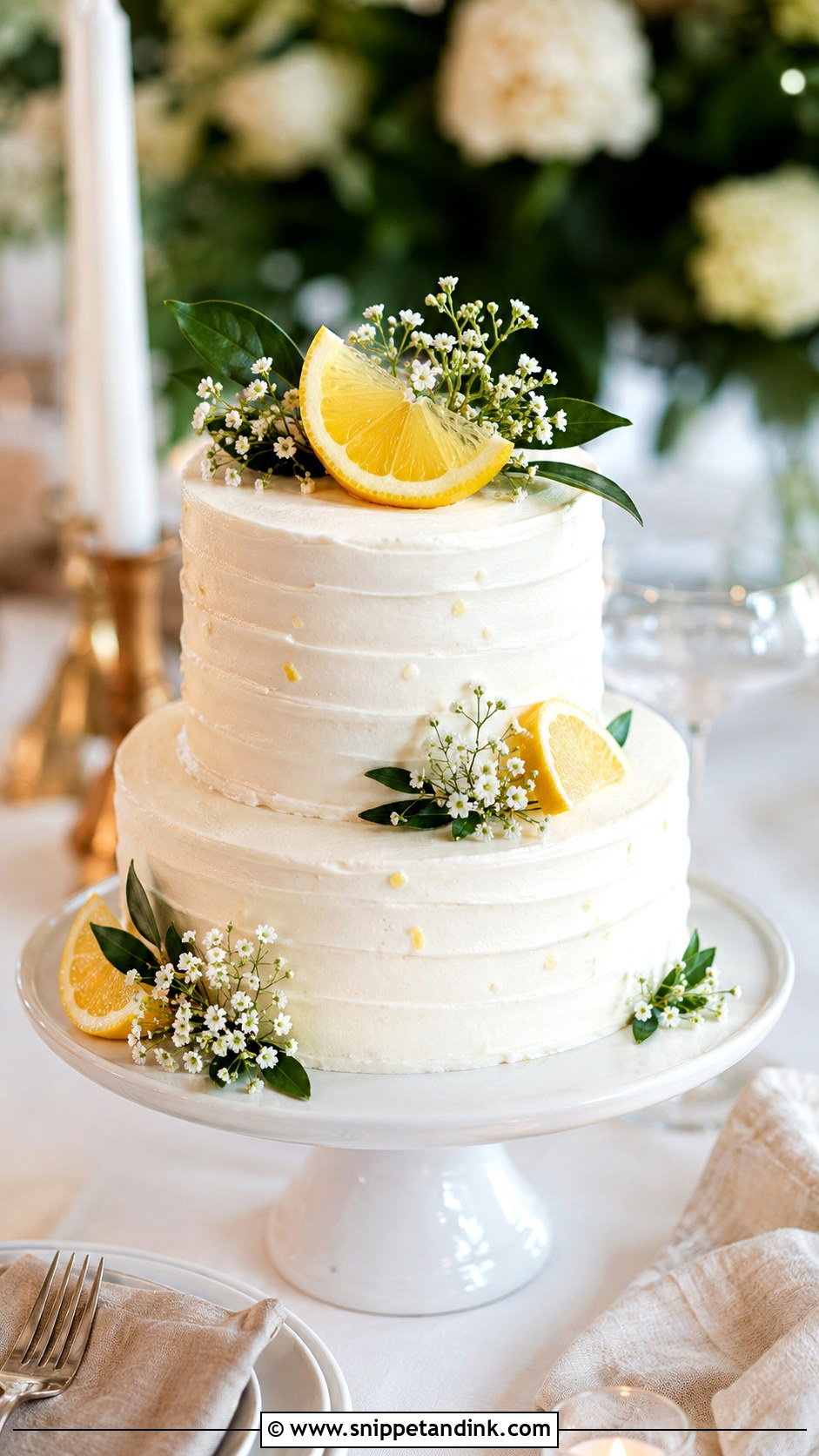
A two tier lemon poppyseed wedding cake suits smaller weddings and elopements while still giving you room for a filling and a little decoration. Curd gives a bright centre, raspberry adds colour, and vanilla keeps it simple. The outside can be smooth, textured, semi-naked or finished with small flowers. Put it on a pedestal stand; two tiers on a big table look smaller than they are. If your guest list grows, add a matching sheet cake in the kitchen rather than a third tier.

25. Lemon Poppyseed Wedding Cake With Three Tiers
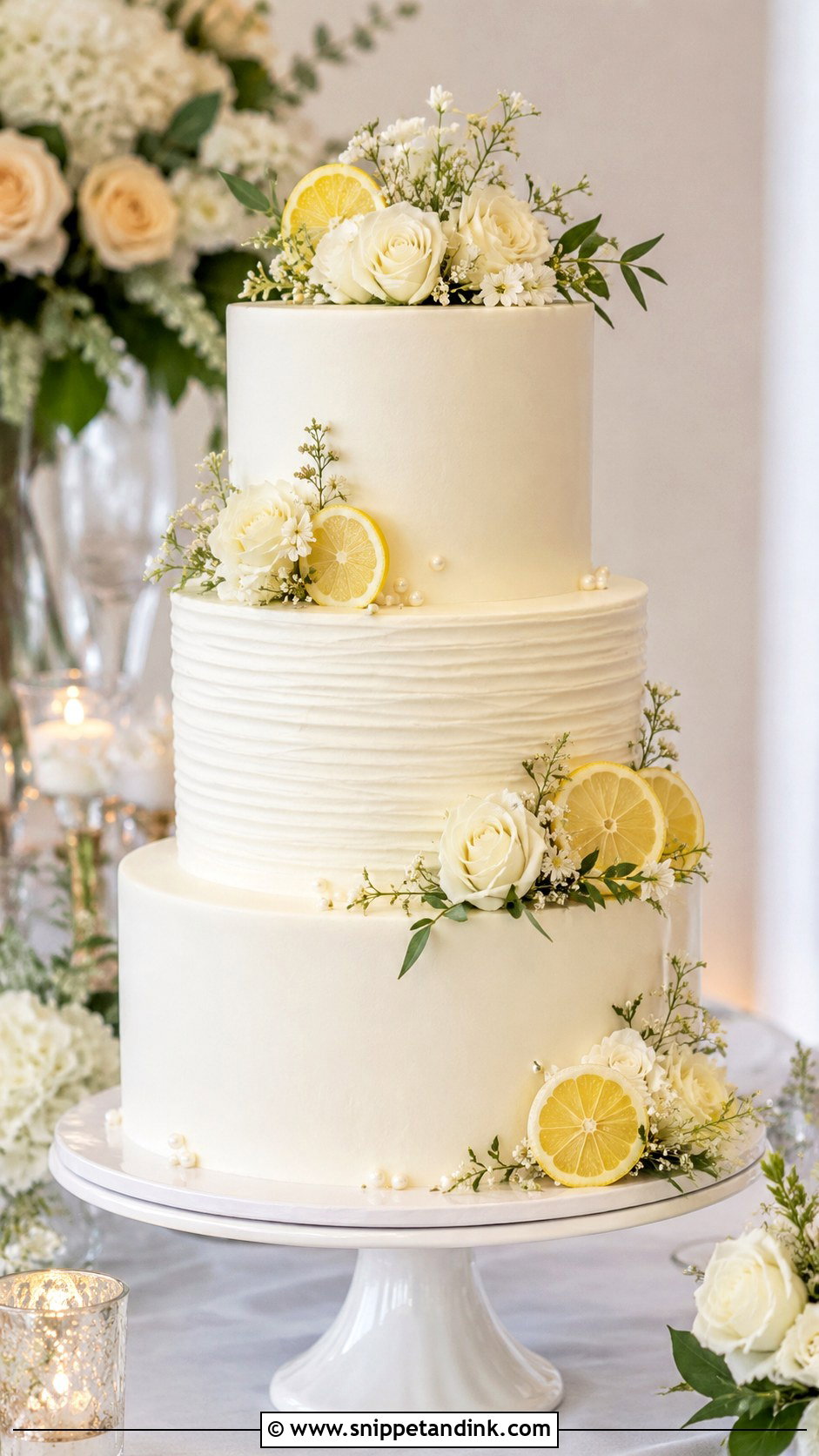
Three tiers give a classic centrepiece and suit medium-sized receptions. They also give you a chance to vary the inside: I often suggest lemon curd in one tier, raspberry in another and vanilla in the third, so guests can choose. Outside, keep the design cohesive, perhaps smooth tiers with one textured tier, fresh flowers and a few lemon accents, so it reads from across the room. Each upper tier needs its own board and dowels, especially with soft curd fillings, which compress under weight.
Tasting Three Lemon Cakes Side by Side
Lemon is a flavour where bakers differ a lot, so if you’re comparing a few, taste them with the same method. I’d do it like this:
- Start with the plainest sample, ideally sponge and vanilla buttercream, so you taste the base cake before any filling hides it.
- Check the crumb. It should be tender and moist, not crumbly or dense. Ask whether the sponge is soaked with syrup.
- Taste the curd alone. It should be tart enough to balance sweet frosting, not just sweet and yellow.
- Notice what lingers. Zest leaves a clean, oily freshness; artificial lemon leaves a candy note.
- Ask how old the sample is. A cake that tastes good the day after baking is a cake that will survive your wedding schedule.
Curd and Cream Cheese Need a Fridge Plan
Several of the fillings and frostings above contain eggs or soft dairy: curd, cream cheese, whipped cream. They need to stay cold, which affects when the cake is delivered and how long it can stand on display. Ask your venue whether there’s fridge space for the cake, and schedule the cutting earlier rather than later on a warm day. If the cake has to sit out for hours, choose a meringue buttercream outside and keep the curd layers thin.
Leftovers follow the same rule. Box any uncut tiers and get them into a fridge the same night, then bring slices back to room temperature for half an hour before eating, because cold buttercream tastes waxy and hides the lemon. If you plan to freeze the top tier for an anniversary, wrap it tightly in several layers and expect the texture to soften a little.
Why Lemon Poppyseed Works for So Many Weddings
Lemon poppyseed stands out from vanilla without scaring anyone off, which is rare in a wedding flavour. The right version depends on your season, venue and the frosting you love. Curd gives the boldest citrus, berries add colour, elderflower feels refined, and smooth buttercream keeps the look classic. From a small two-tier cake to a full floral display, it adapts to romantic, rustic or formal styling once the finish matches the room and the weather.
You'll Like These Ideas:









Leave a Reply