
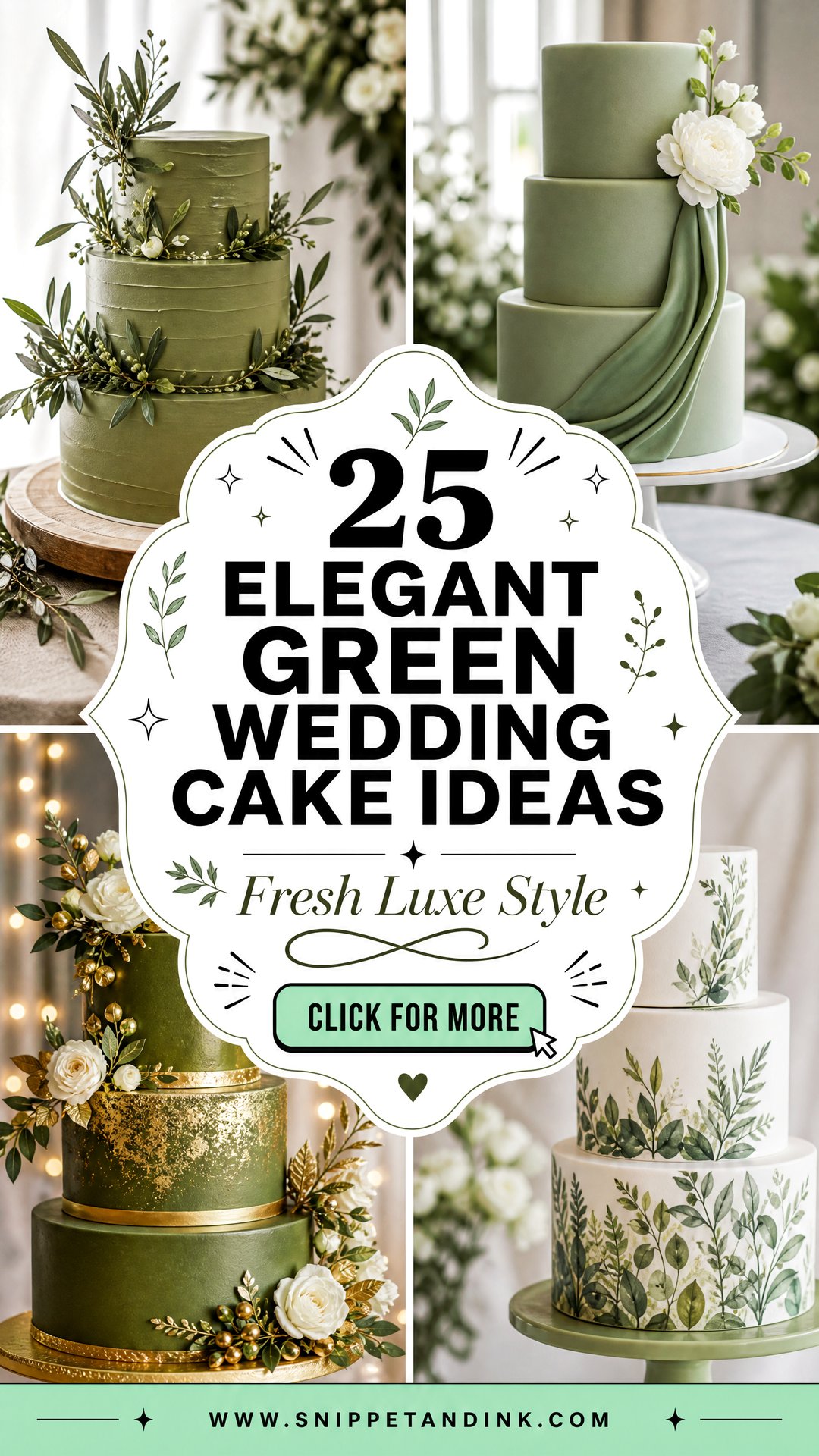
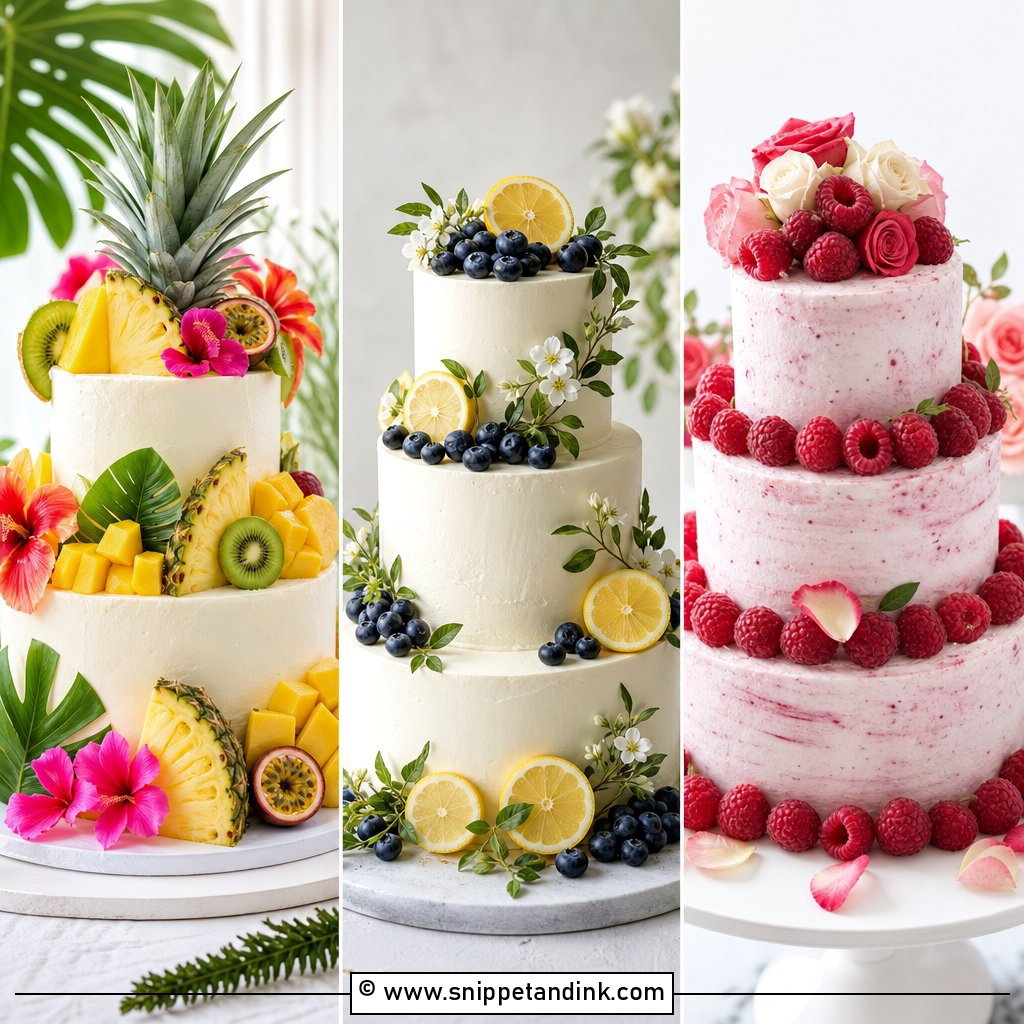
Green is the colour I’m asked for most often by couples who want something other than white but nothing loud. It suits garden venues, ballrooms, outdoor ceremonies and pared-back modern weddings. The range is wide. Sage feels airy, emerald formal, olive warm, pistachio fresh. The finish changes it again: smooth buttercream, fondant, watercolour painting, sugar flowers or plain fresh greenery each give green a different personality. Below are 25 green cakes, and with each I’ve added what I’d think about at the design stage, because green is one of the trickier colours to get exactly right in icing.
Why Green Icing Never Matches the Swatch First Time
Green is harder to hit than most colours in icing, and it’s worth understanding why before you fall in love with a shade on a screen. When a couple brings me a fabric swatch, I treat it as a target, not a promise.
- Butter is yellow. Buttercream made with real butter pushes every green toward olive, so a cool sage needs a little extra blue to land where you want it.
- Colour develops. Tinted icing deepens over several hours, so I mix lighter than the target and check it the next day before colouring a whole cake.
- Dark greens cost flavour. Emerald and forest green need a lot of colouring, which can taste bitter and stain mouths. Fondant over a lighter cake avoids that.
- Light fades it. Some greens fade under strong sun or bright lamps over a few hours, so placement on the day matters.
- Natural colourings behave differently. Matcha gives a muted, slightly earthy green with its own flavour; other plant-based greens can shift or dull, so ask your baker how their chosen colouring holds up.
My advice is to choose the green by looking at a tinted sample under the kind of light your reception will have. A sage that looks right at a midday tasting can read grey by candlelight.
1. Sage Green Wedding Cake With White Roses
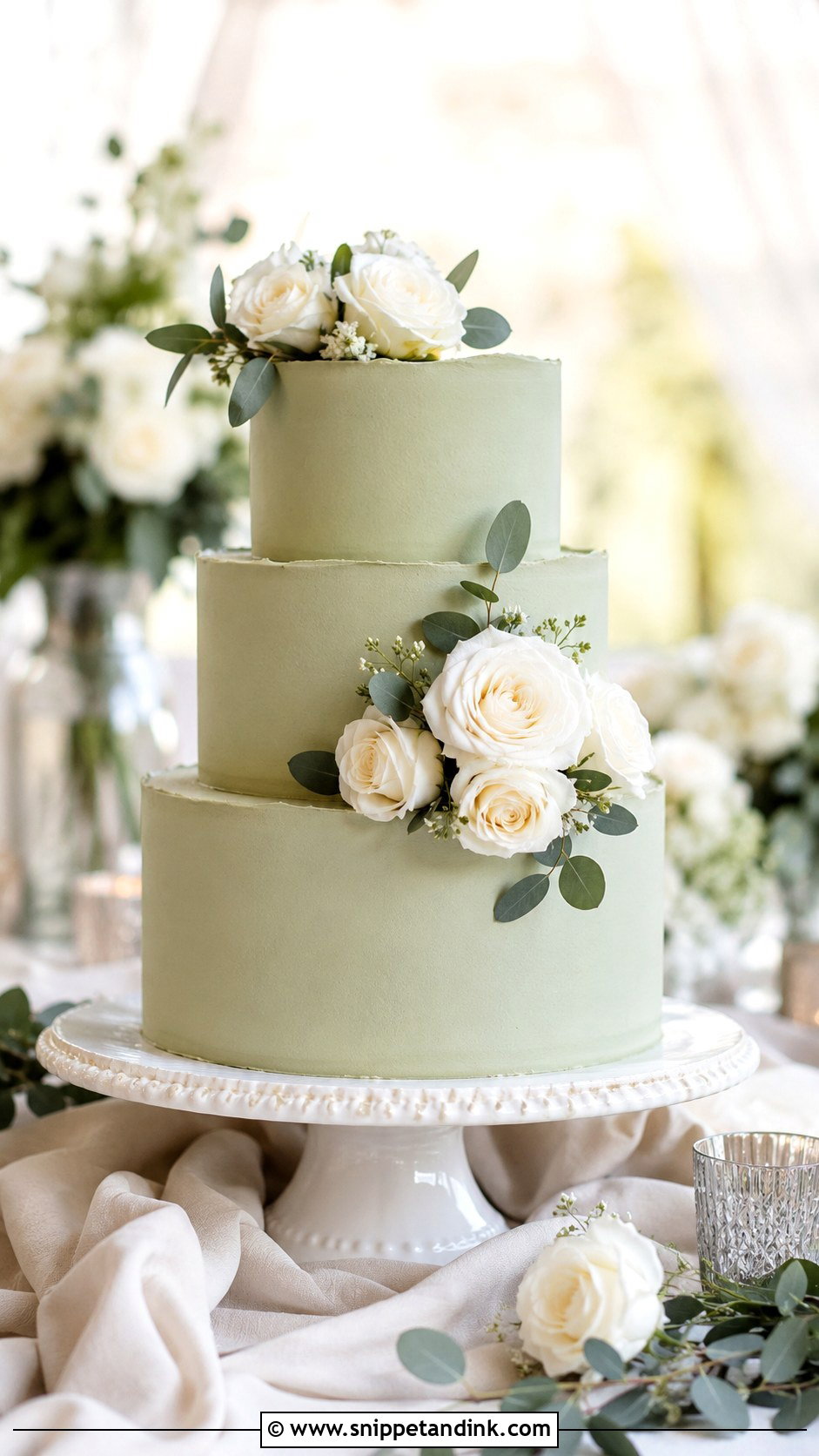
Muted sage with white roses is the version that rarely dates. The green keeps things calm and the roses add a clean bridal note, which suits spring weddings, gardens and bright indoor rooms. Smooth buttercream or fondant gives a polished look; a lightly textured buttercream feels handmade. I always tuck small leaves between the roses so the flowers look as though they grew there rather than being set on top. Sage made with real-butter buttercream leans warmer than the swatch, so I tint it a touch bluer to compensate.
2. Emerald Green Wedding Cake With Gold Leaf
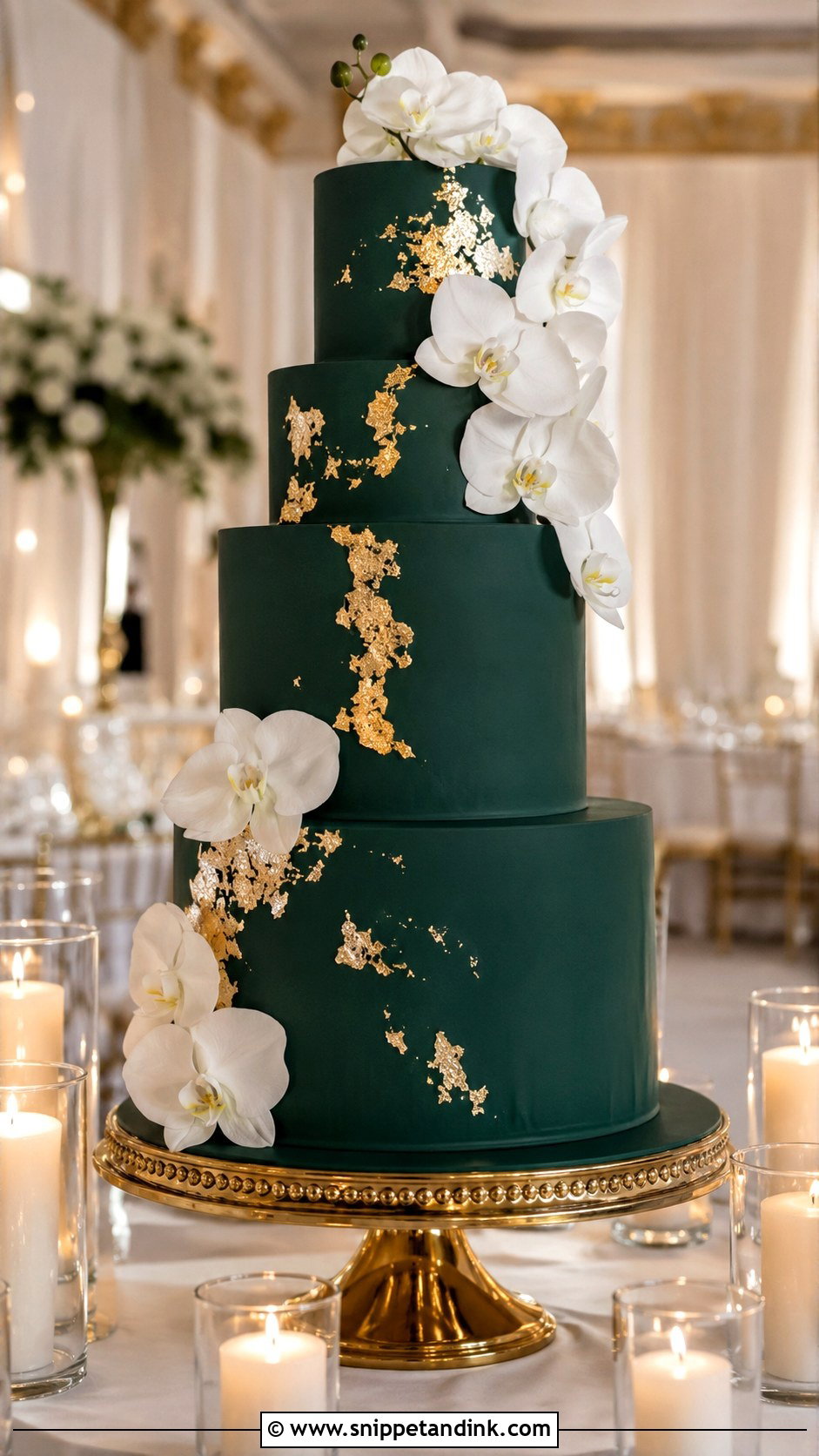
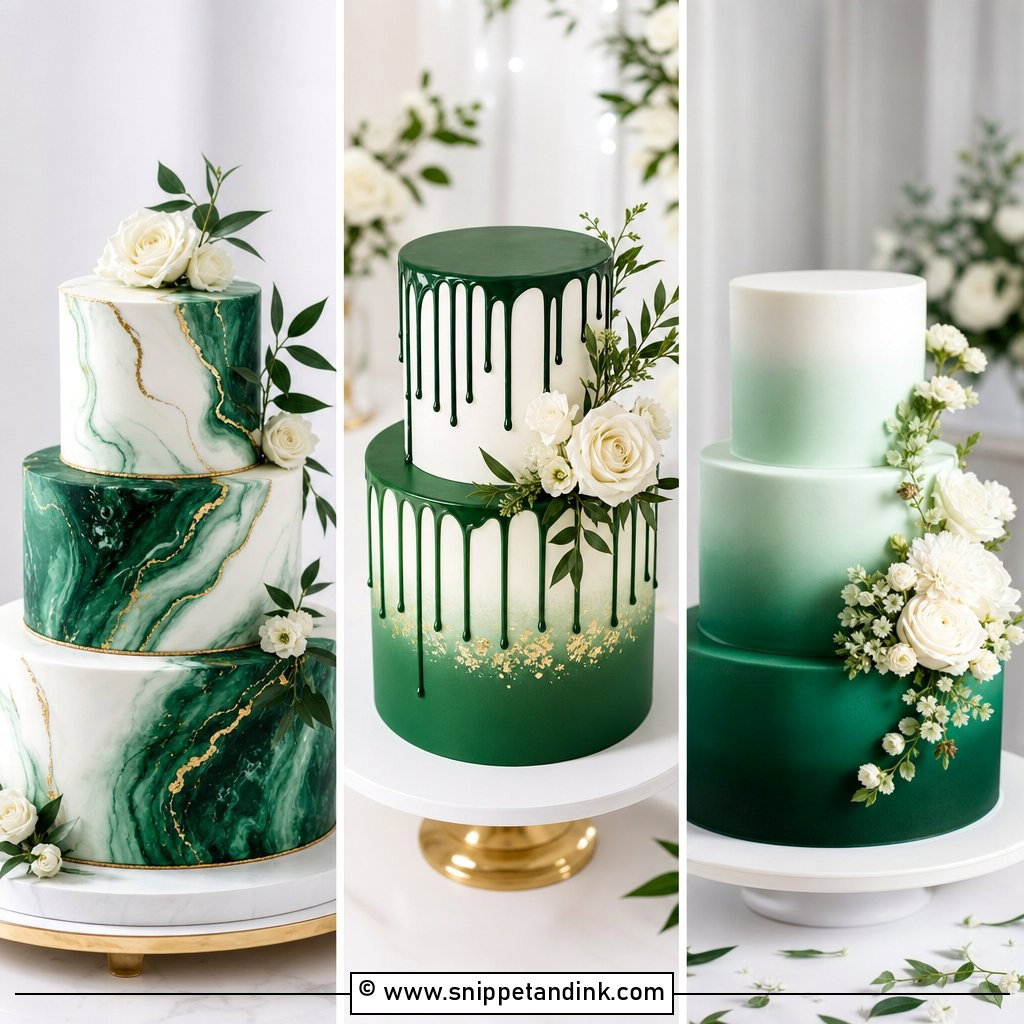
Deep green with gold is the formal end of this list. Emerald green and gold leaf suit evening receptions, black-tie weddings and hotel ballrooms. I cover emerald tiers in fondant rather than buttercream, because getting buttercream that dark takes so much colouring it can taste bitter and stain teeth. Fondant also gives the leaf a smooth, dry surface to grip. White orchids or ivory roses are plenty; the colour and the metal do the work.
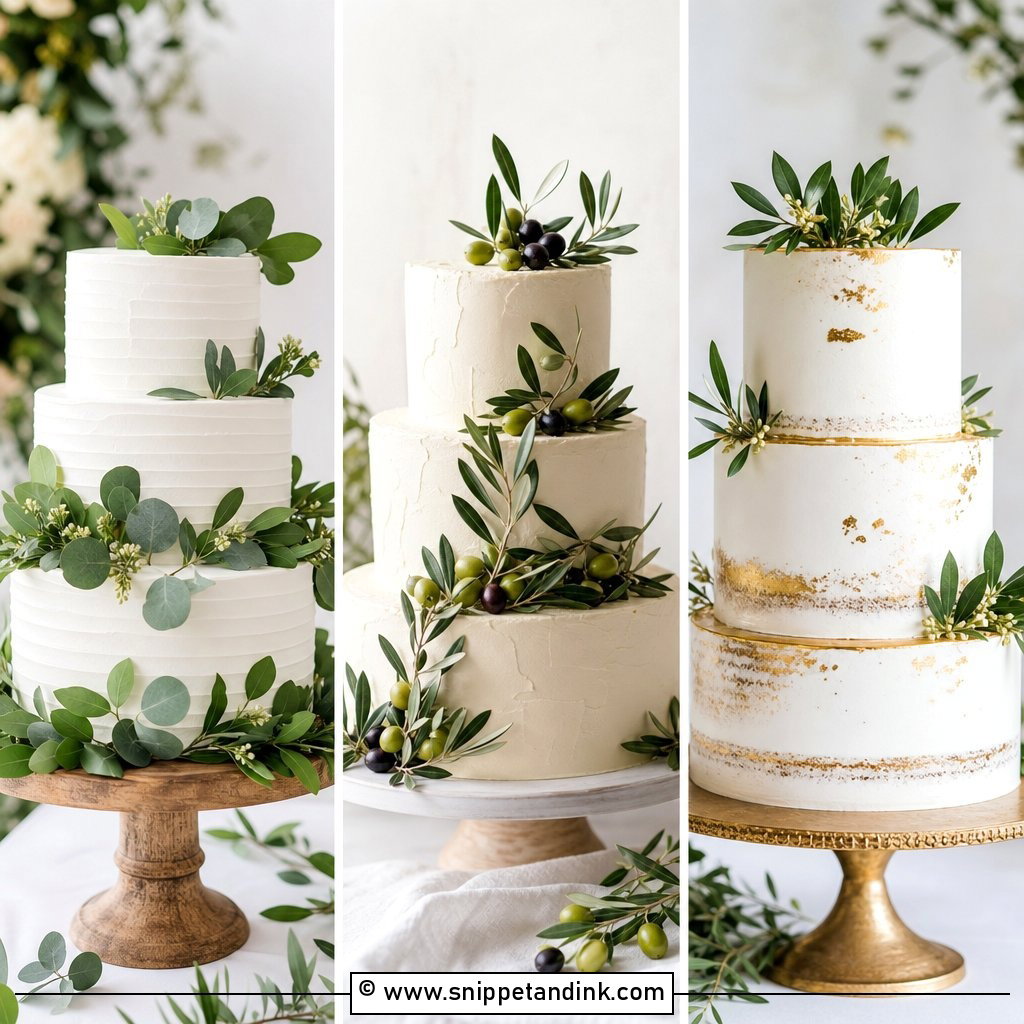
3. Olive Green Wedding Cake With Fresh Greenery
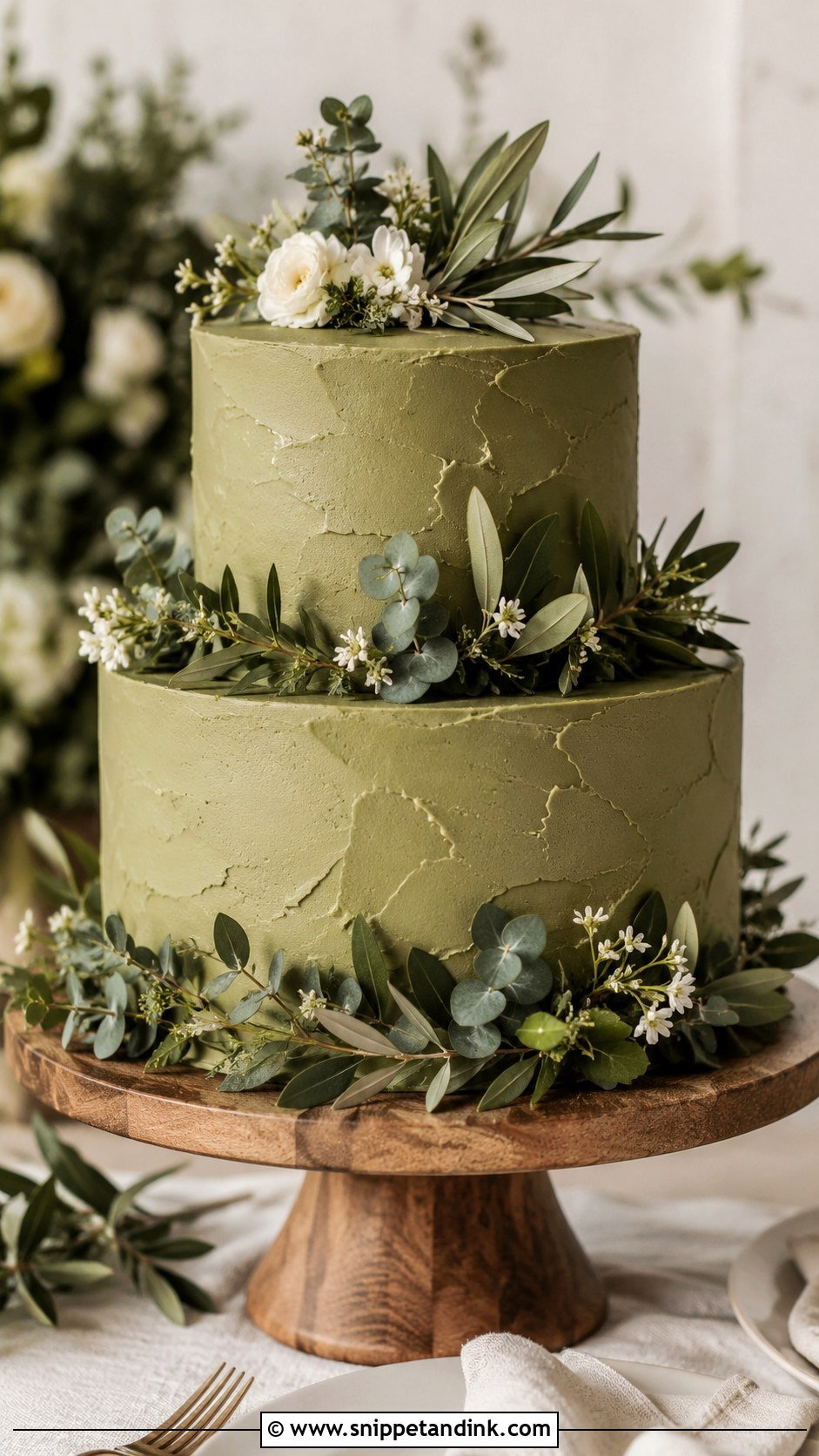
Olive has an earthy warmth that suits outdoor celebrations and rustic but polished venues, alongside eucalyptus, olive branches, white flowers and cream linens. A two- or three-tier olive green cake can stay simple and still look styled. Semi-smooth buttercream feels relaxed; smooth fondant with small clusters of greenery is more refined. Olive is one of the easier greens to mix in buttercream, because the natural yellow of the butter works with it rather than against it. It’s especially suited to late summer and autumn.
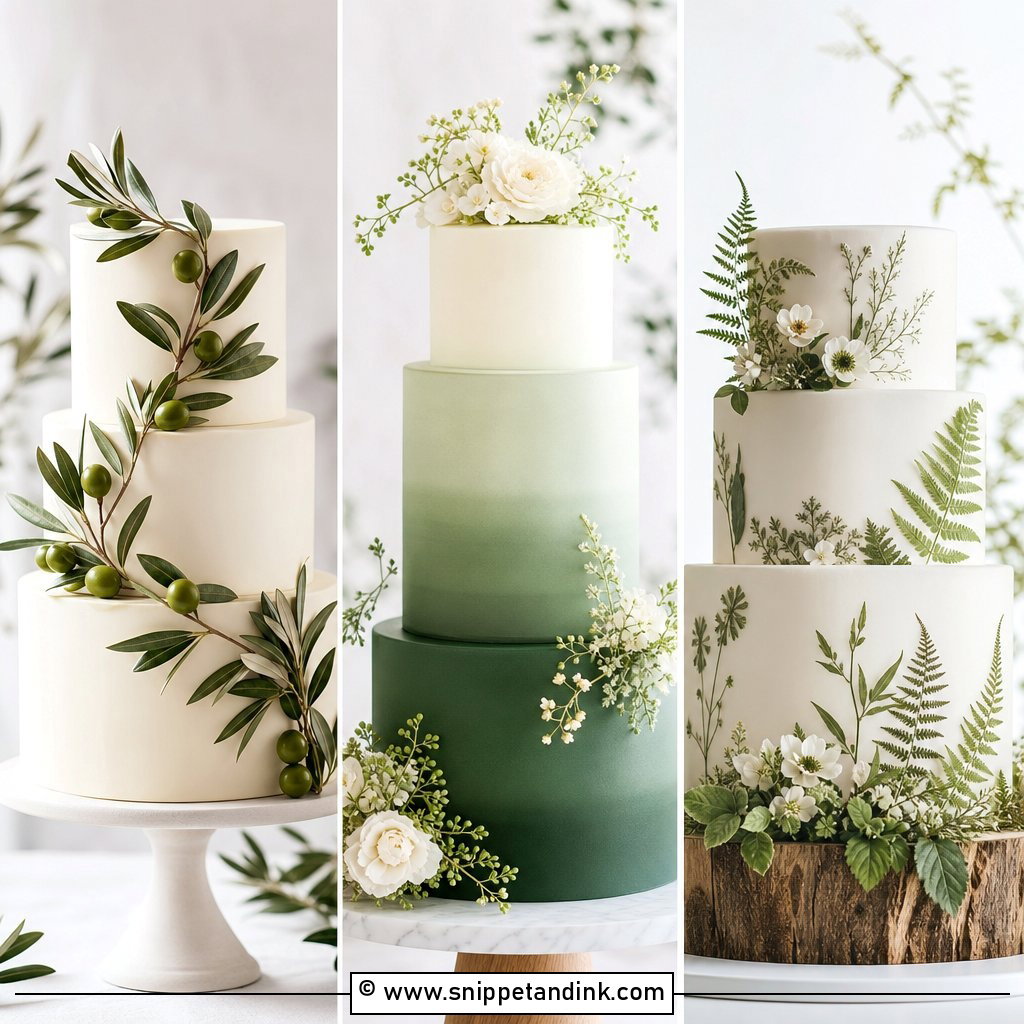
4. Green Ombre Wedding Cake
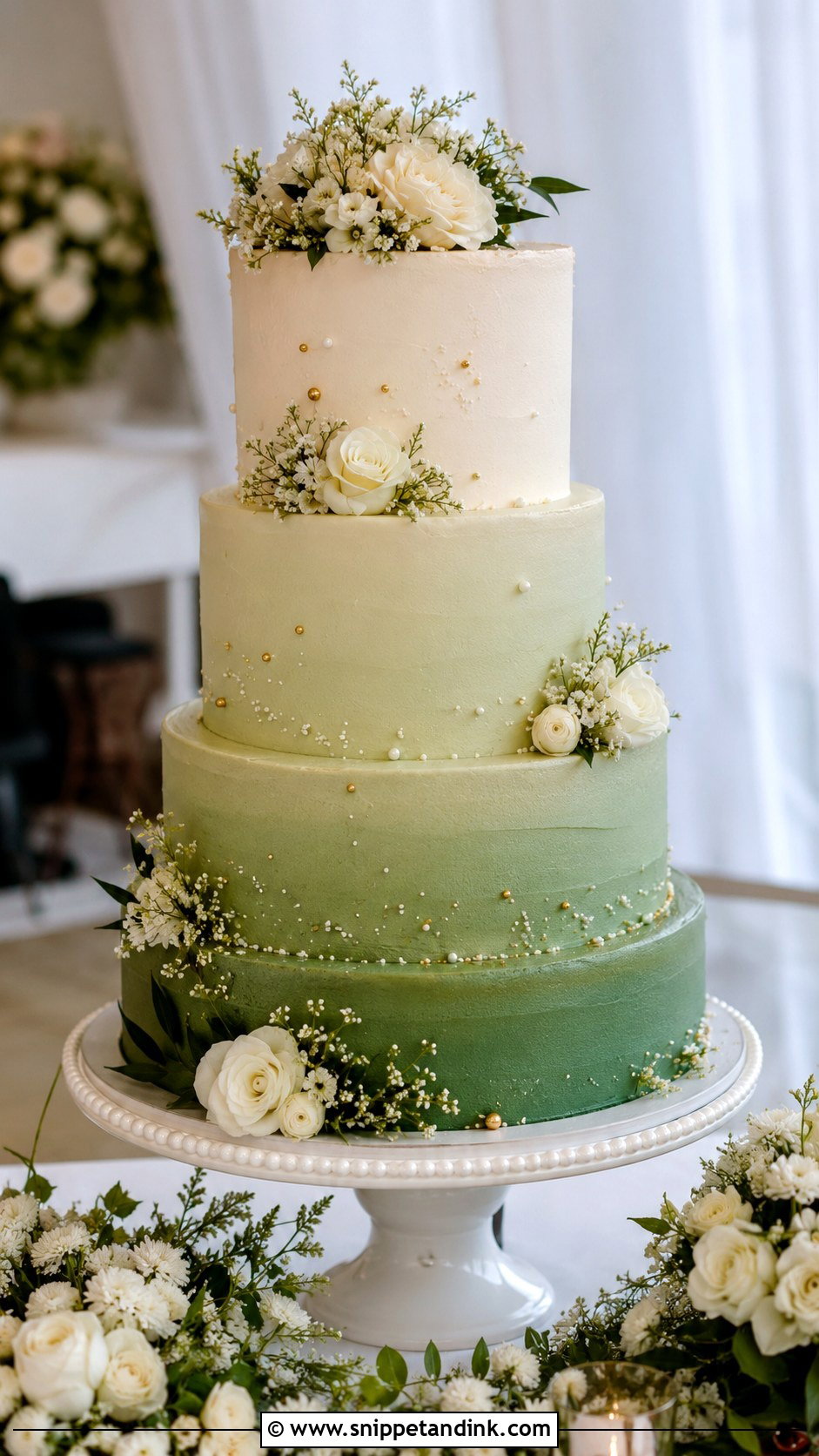
An ombre uses several greens without looking busy, fading ivory to sage, sage to olive, or pale green to emerald. Tall tiered cakes give the shift room to show. I mix every shade before starting so the steps are even, and I let tinted buttercream rest for a while before judging it, because green deepens as it sits. Smooth buttercream gives a soft finish; fondant looks crisper. Keep decoration light so the blend stays the focus.
5. Green Marble Wedding Cake
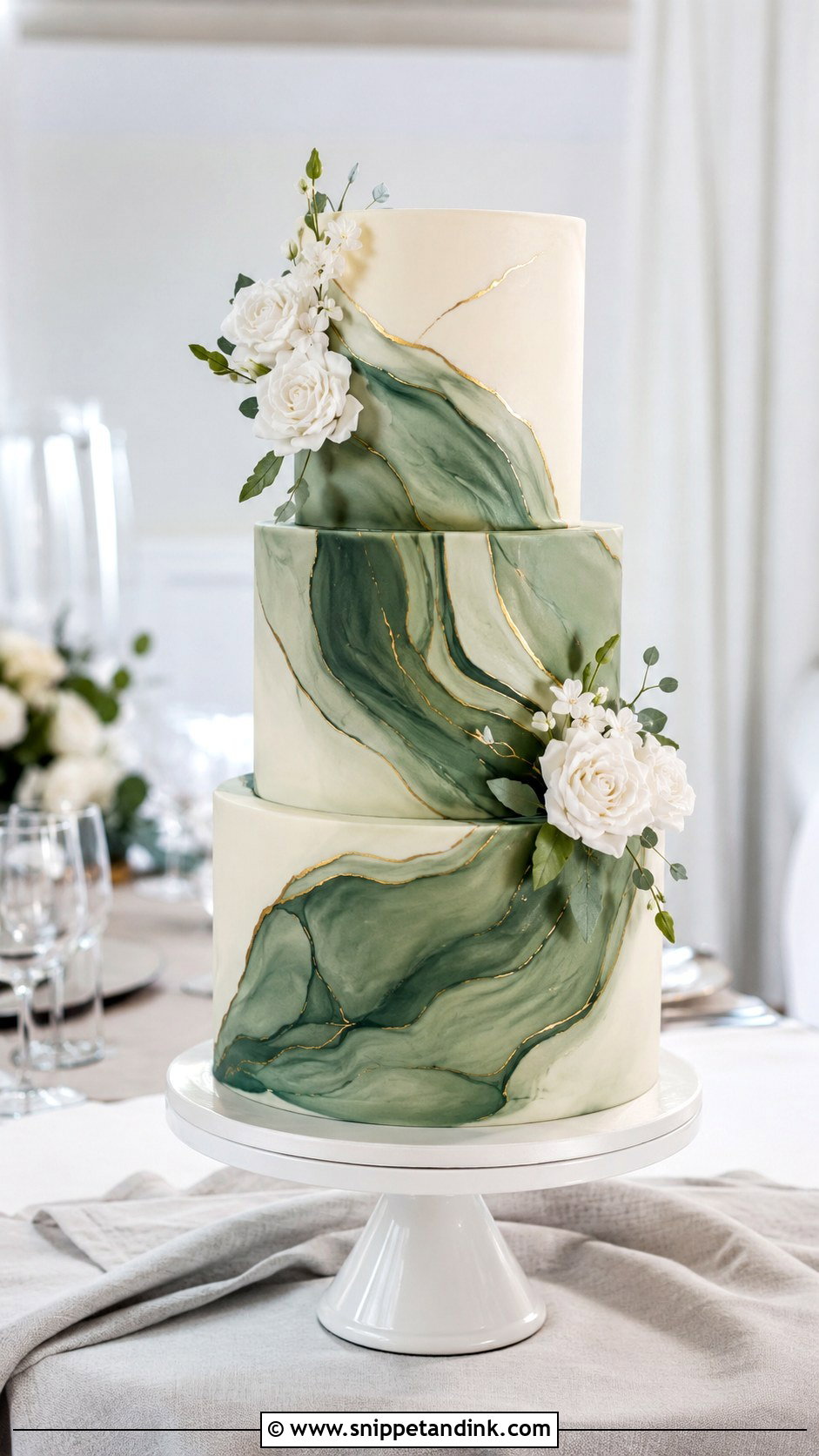
Sage marbling looks delicate; emerald marbling makes a statement. Marble works best on fondant, where I knead streaks of coloured paste into white and roll it out so the veining looks like real stone rather than painted lines. Each tier comes out slightly different, which is the point. Add gold veining for a luxury finish or keep it plain with white sugar flowers. It needs very little around it on the table.
6. Pistachio Green Wedding Cake
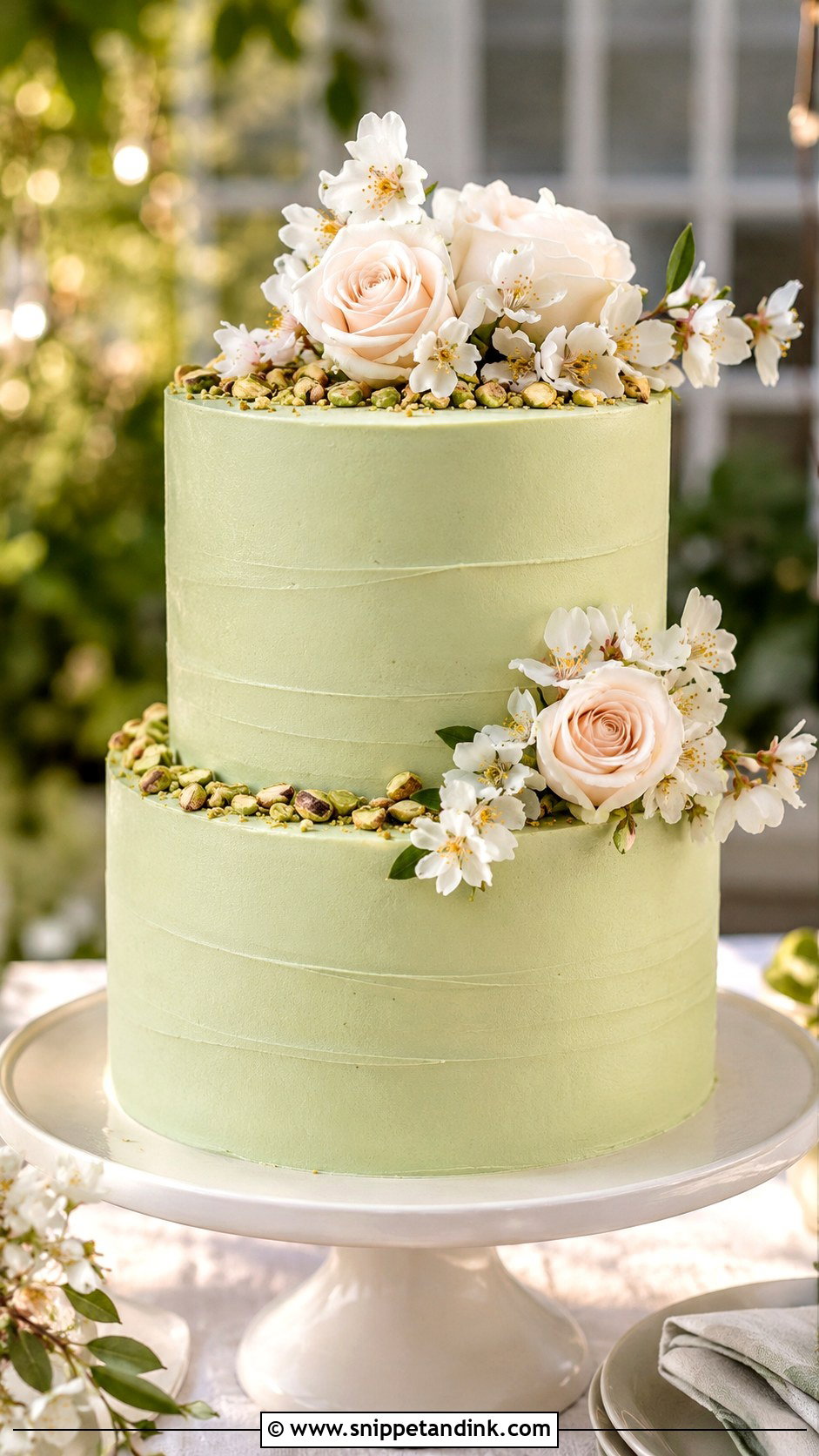
Pistachio green is light and slightly playful while still feeling grown-up. It pairs naturally with vanilla, almond, lemon or real pistachio sponge, and if you go with pistachio cake inside, tell your caterer about nut allergies early so labelling is sorted. Smooth buttercream keeps the colour soft. Chopped pistachios, white flowers, pale blush roses or a few gold accents finish it. It suits spring and summer and sits well beside ivory florals.
7. Sage Green And White Wedding Cake
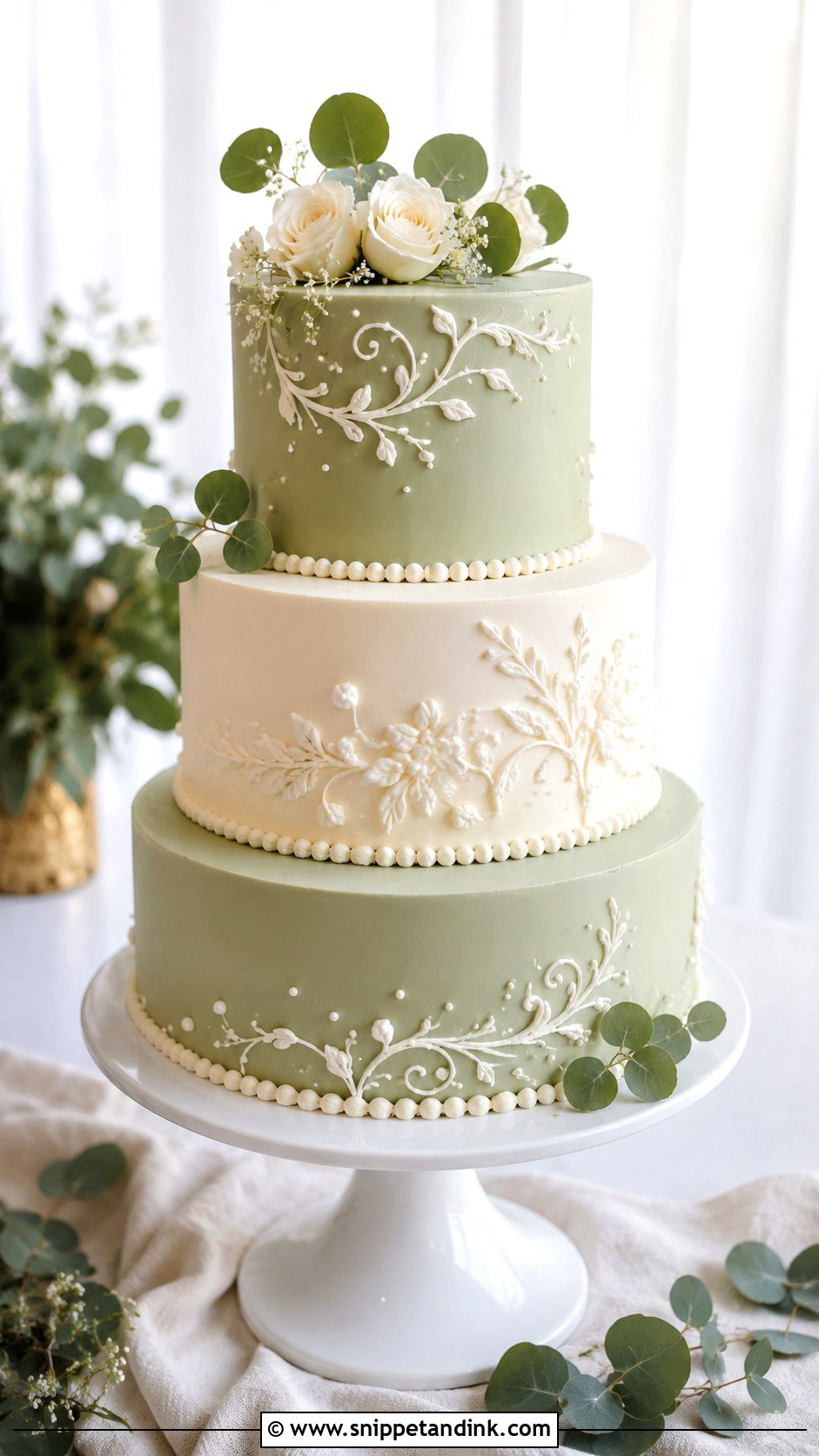
This is the safest way to bring in colour while keeping the cake bridal. One tier can be sage and one white, or white buttercream can carry sage brushstrokes, or a sage base can take white floral piping. White piping on a coloured base needs to go on cold, firm icing, otherwise the colours bleed at the edges. Silver pearls cool it down; gold details warm it up.
8. Dark Green Wedding Cake With White Flowers
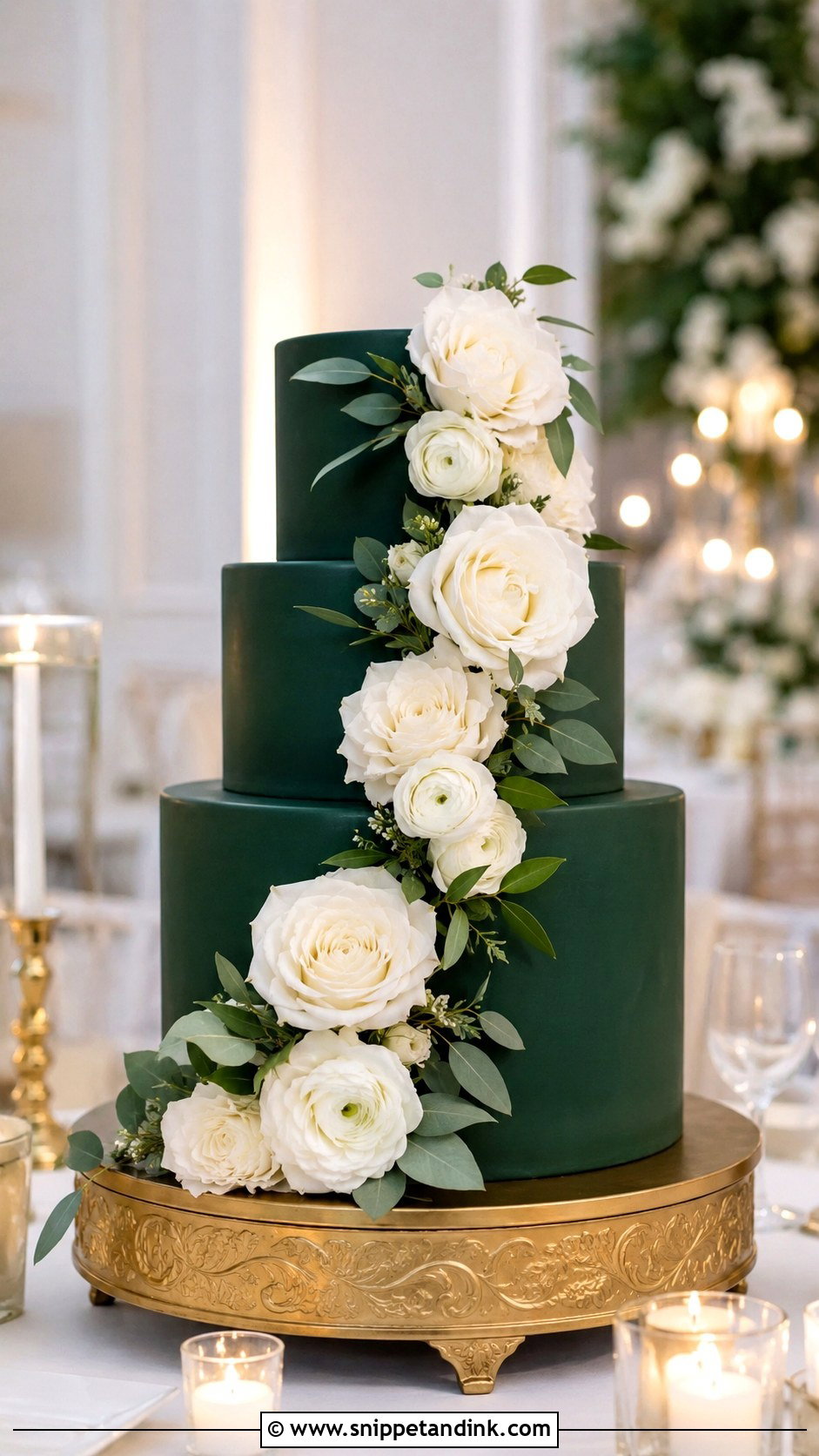
Forest, hunter or deep emerald green makes a bold focal point, and white flowers stop it feeling heavy. Smooth fondant suits a formal finish, while textured buttercream feels more organic. Dark colours show every crumb and smudge, so I’d ask any baker how they plan to keep the surface clean during stacking. Keep flowers to a diagonal cascade or one cluster between tiers. It comes alive in candlelight beside gold flatware and cream linens.
9. Green Wedding Cake With Pressed Flowers
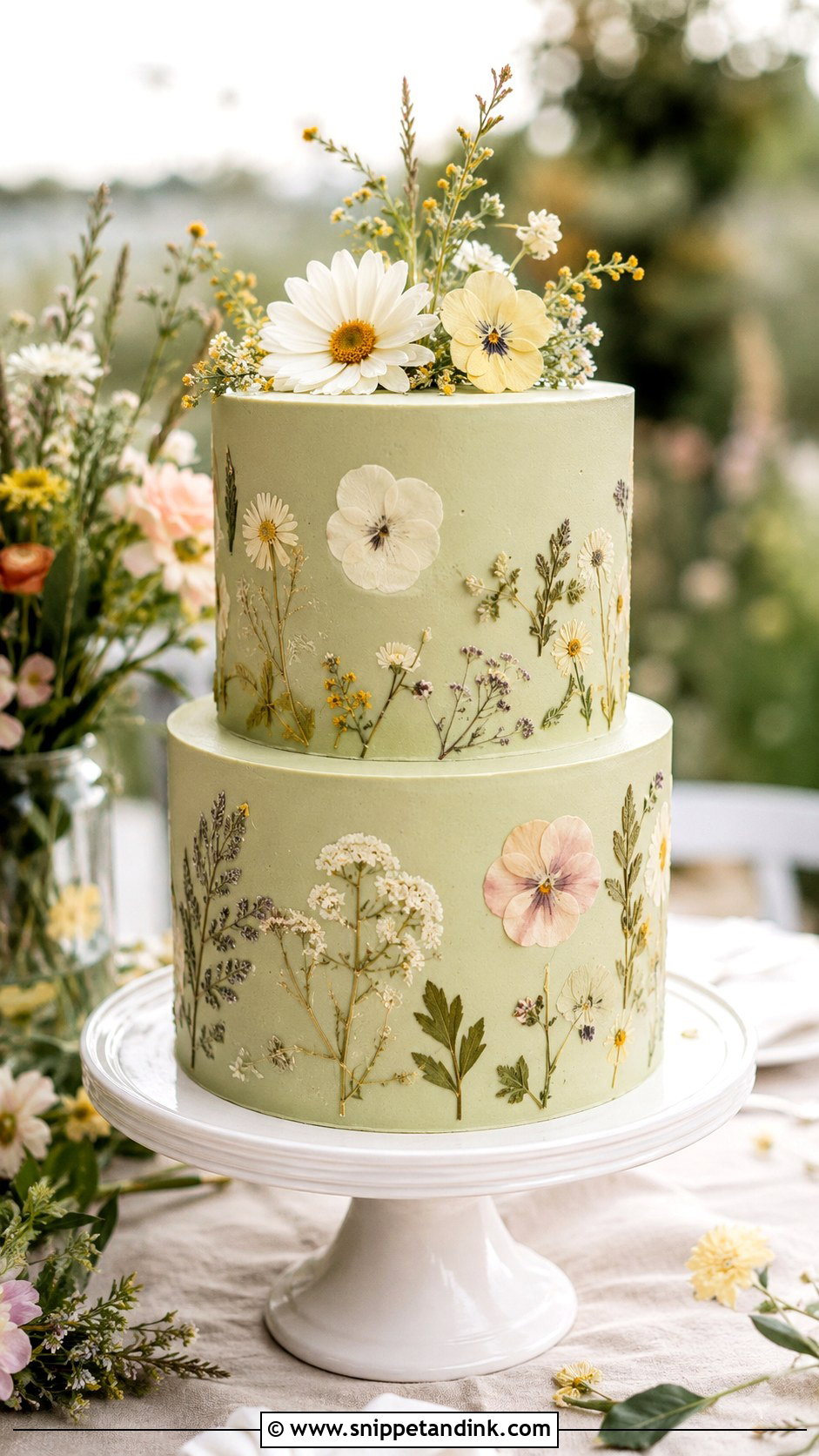
Pressed flowers lie flat on a pale sage or soft pistachio base and give a garden feel without bulk. They must be edible varieties, pressed specifically for food use, in white, yellow, blush or lavender tones. Smooth icing matters so each flower sits flat, and I brush a thin layer of piping gel or sugar glaze underneath to stick them. Pressed petals can absorb moisture and darken if the icing is damp, so I apply them close to delivery. A simple round tiered cake is all this needs.
10. Green Wedding Cake With Pearl Details
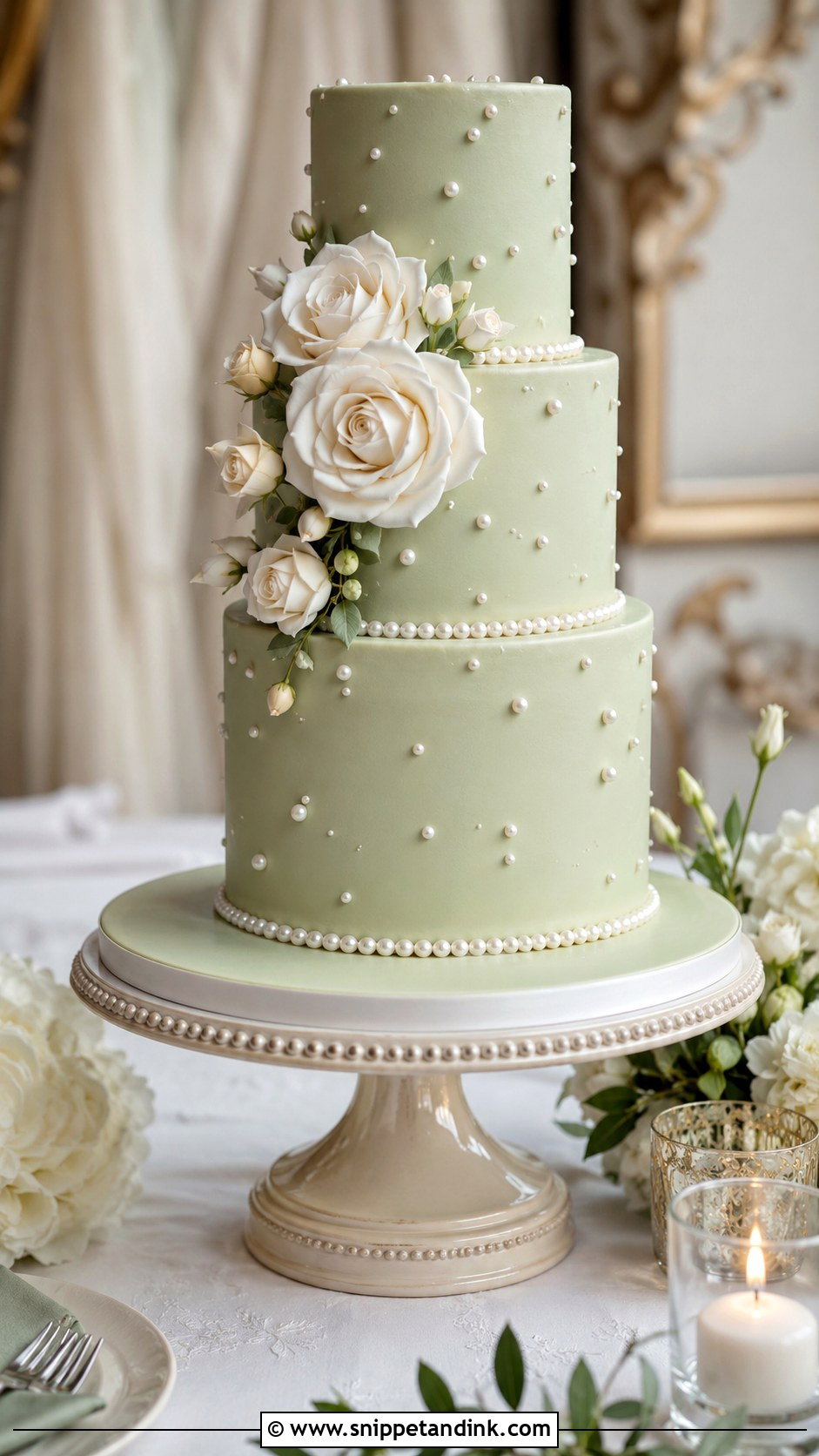
Pearls add a classic bridal touch, scattered lightly across sage buttercream or running as borders round each tier. A pale green base keeps them refined. Sugar pearls slowly soften on moist buttercream, so for a long reception I attach them to a crusted surface or switch to fondant. White roses, sugar orchids or simple piping can add detail. It suits vintage weddings, ballrooms and garden parties.
11. Green Buttercream Wedding Cake
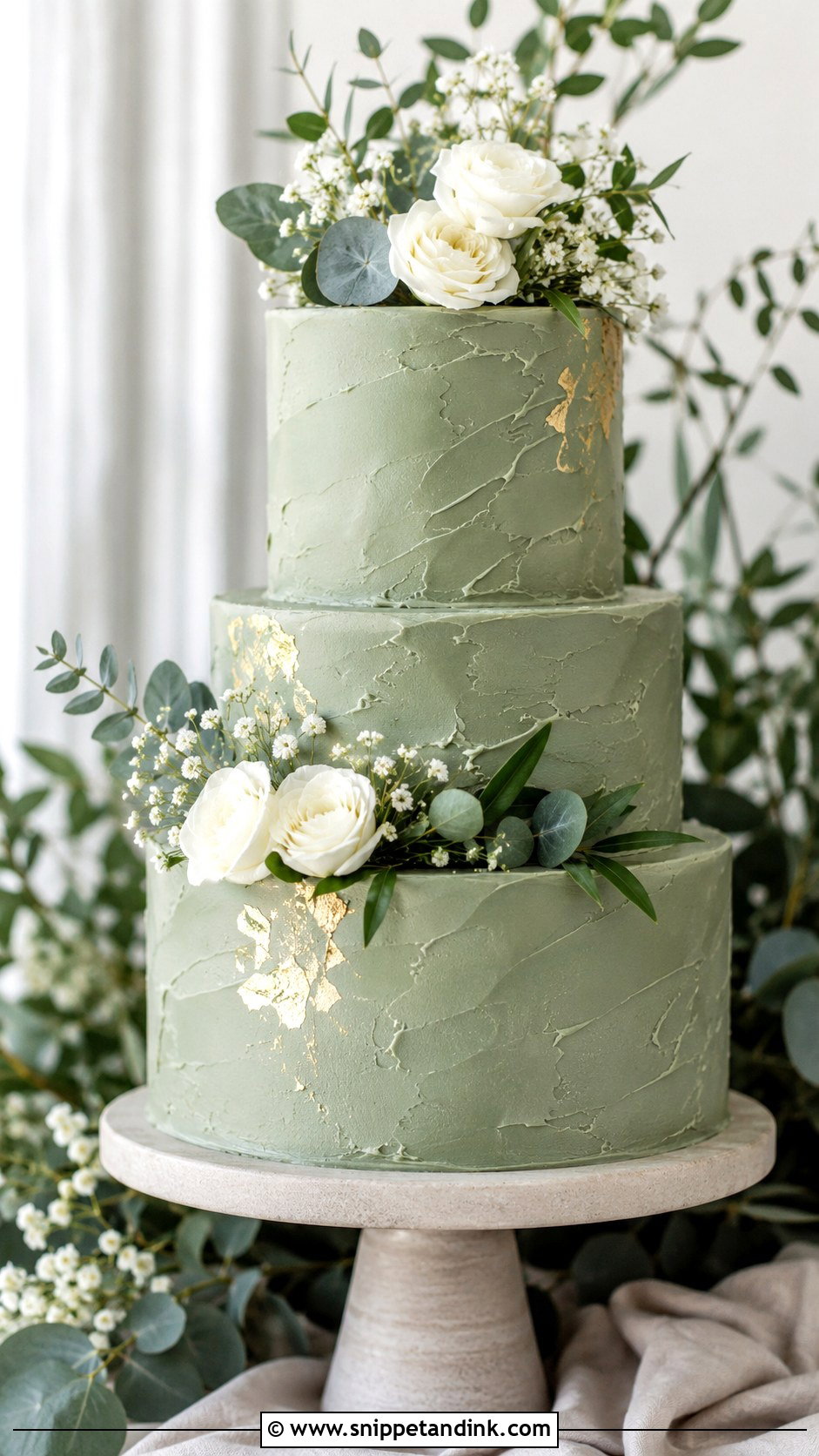
Buttercream is the flexible option: smooth, rustic, textured or softly swirled, in sage, olive, pistachio or eucalyptus green. It feels more relaxed than fondant but can still look polished. Its weak point is heat. In a warm marquee buttercream softens and the colour can bleed into white decorations, so for a summer outdoor wedding I’d plan the cake’s position away from sun. Fresh flowers make it romantic, gold leaf formal, greenery natural.
12. Green Fondant Wedding Cake
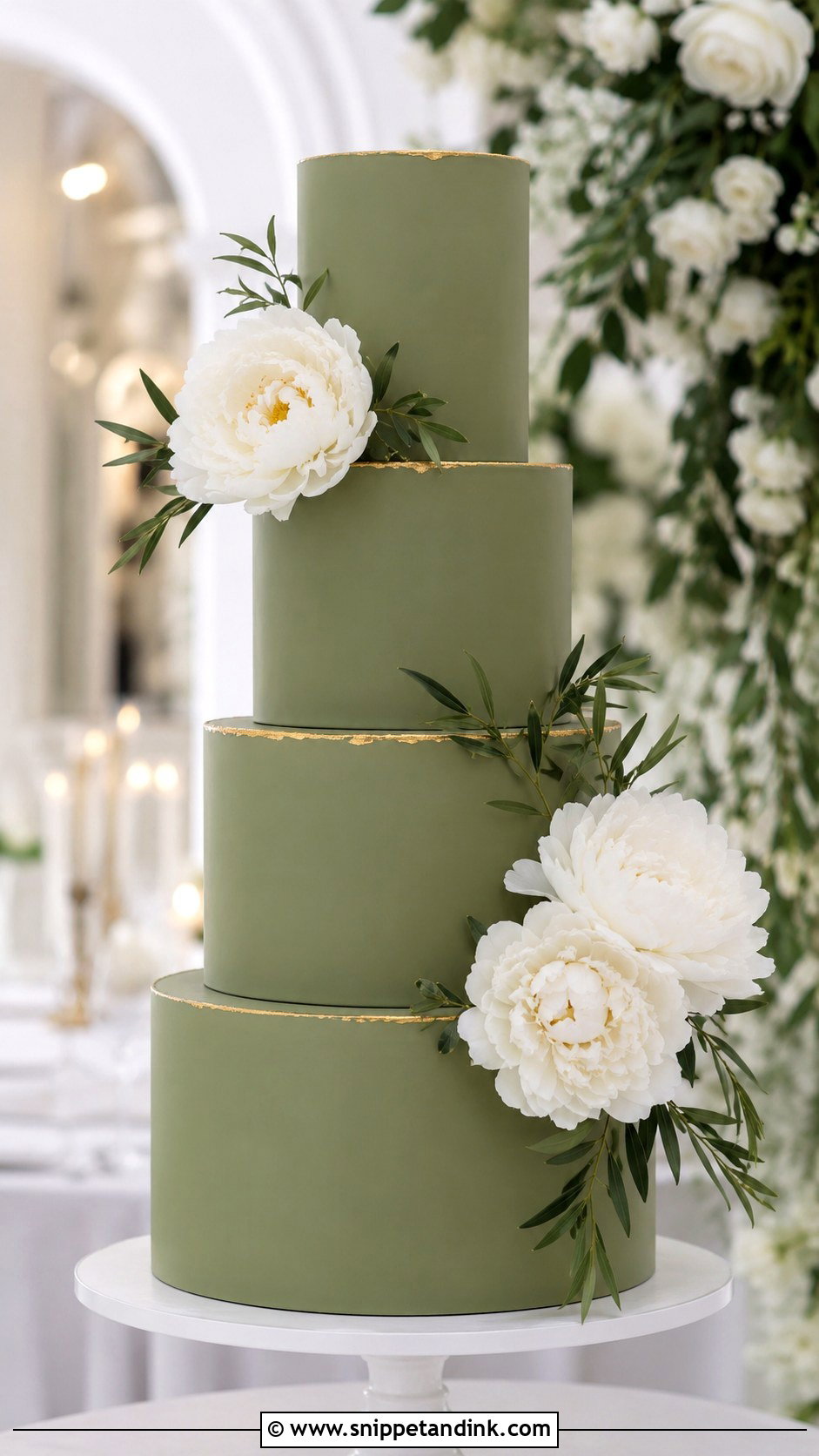
Fondant gives sharp edges and a perfectly even colour, which is why rich greens look so clean on it. Emerald fondant feels dramatic, sage modern, olive refined. It pairs with sugar flowers, metallic accents, painted detail or ribbon trim, and it’s my usual choice for a formal dress code. Coloured fondant can fade under strong light over several hours, so I keep green tiers out of direct sun during setup. Leave some of the surface bare so the finish shows.
13. Green Wedding Cake With Eucalyptus
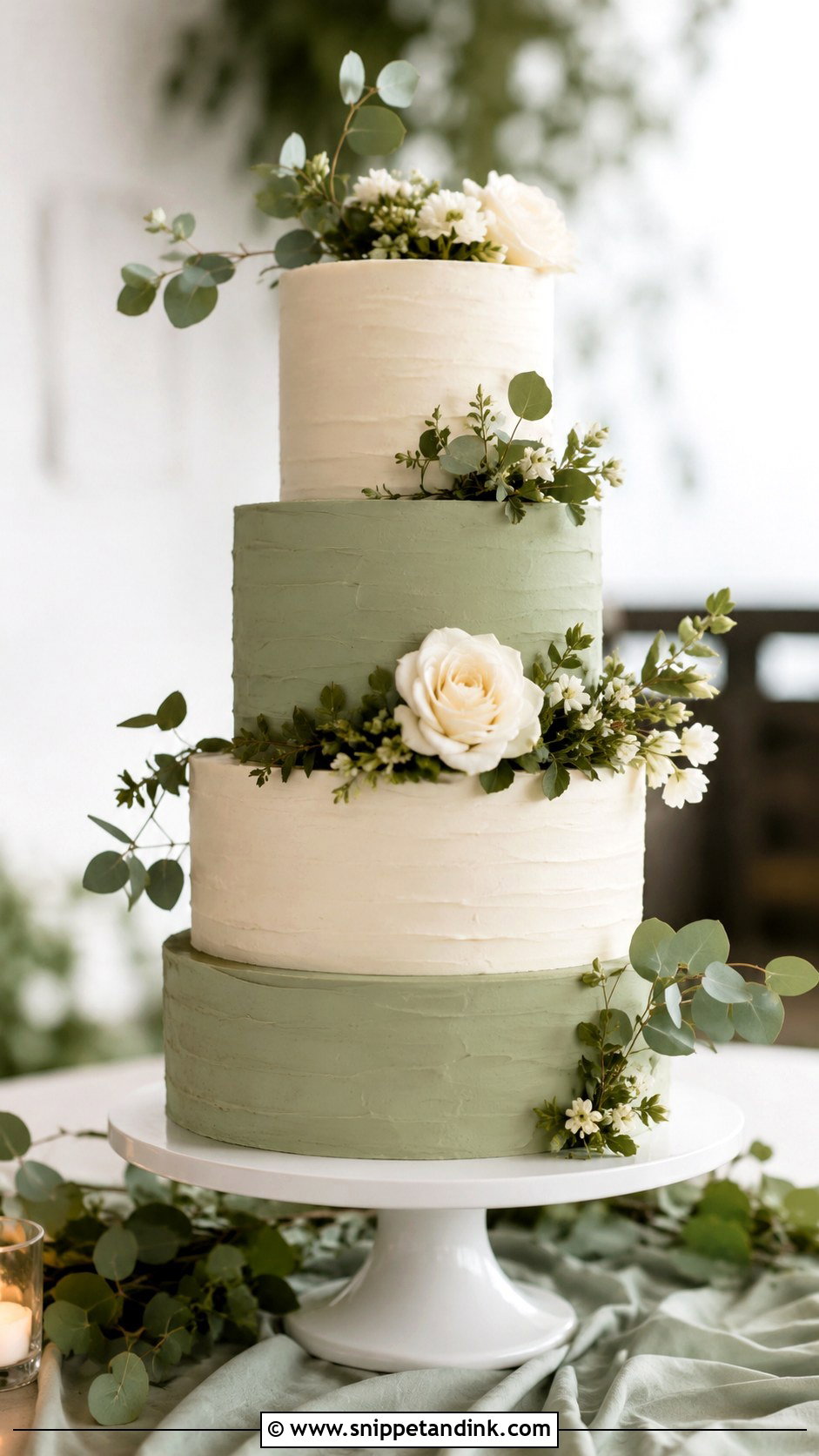
Eucalyptus is the quickest way to make a green cake look finished, and it suits sage, olive and white buttercream at garden, rustic, coastal and modern weddings. One caution I give every couple: eucalyptus isn’t safe to eat, so it should never be pushed straight into the cake. I wrap stems or use food-safe picks, and keep leaves off pieces that will be served. Small sprigs between tiers or a flowing cascade both work. Too much greenery hides the cake shape; a few clean clusters look intentional.
14. Green Wedding Cake With Blush Flowers
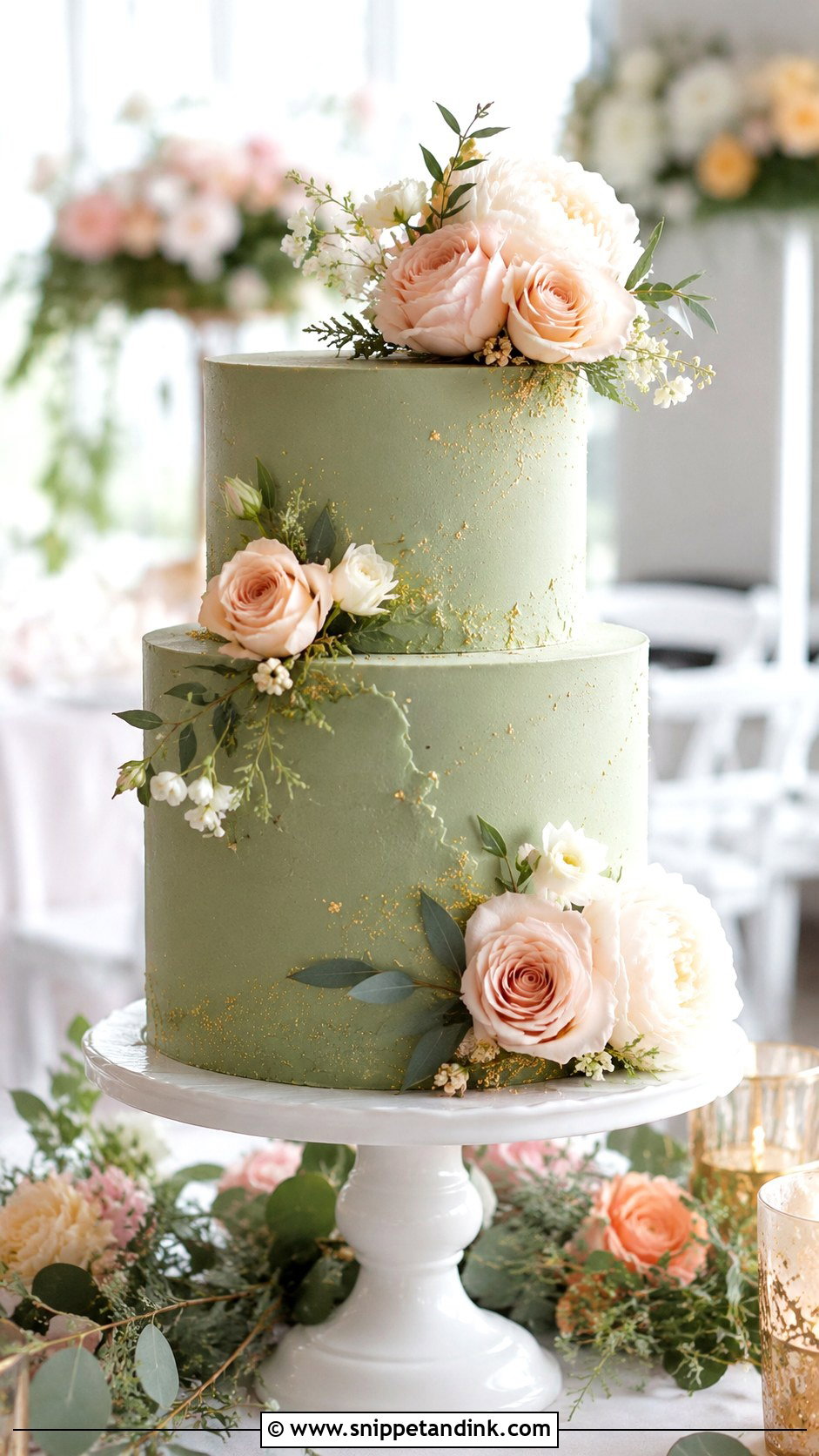
Green and blush make a romantic palette: sage with blush roses for spring, olive with dusty blush for autumn. Buttercream suits it because the softer texture matches the flower colours. Layer in ivory blooms or pale greenery, and add gold only if you want it more formal. Blush and sage need to sit close in tone, so I bring both colours to the tasting together and adjust whichever looks heavier.
15. Green Wedding Cake With Sugar Flowers
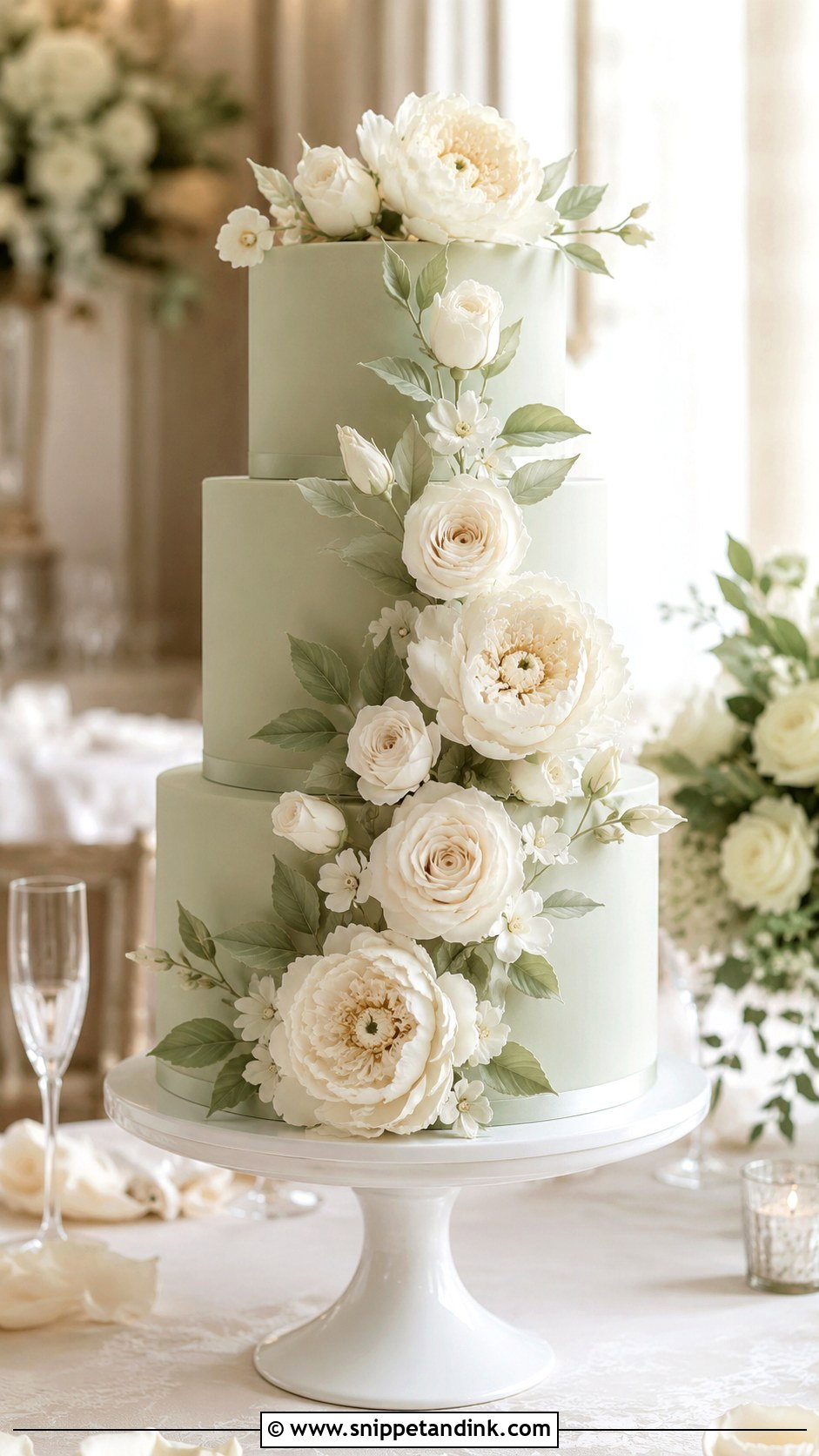
Sugar flowers match your palette exactly and last, which fresh flowers can’t promise. White sugar roses on sage feel classic; pale green sugar leaves on an ivory and green cake feel botanical; large sugar peonies on emerald are dramatic. Each flower is made petal by petal and dried for days, so the decoration has to be ordered well in advance. Ask for an arrangement that frames the tiers instead of covering them. Many couples keep the flowers afterwards.
16. Green Drip Wedding Cake
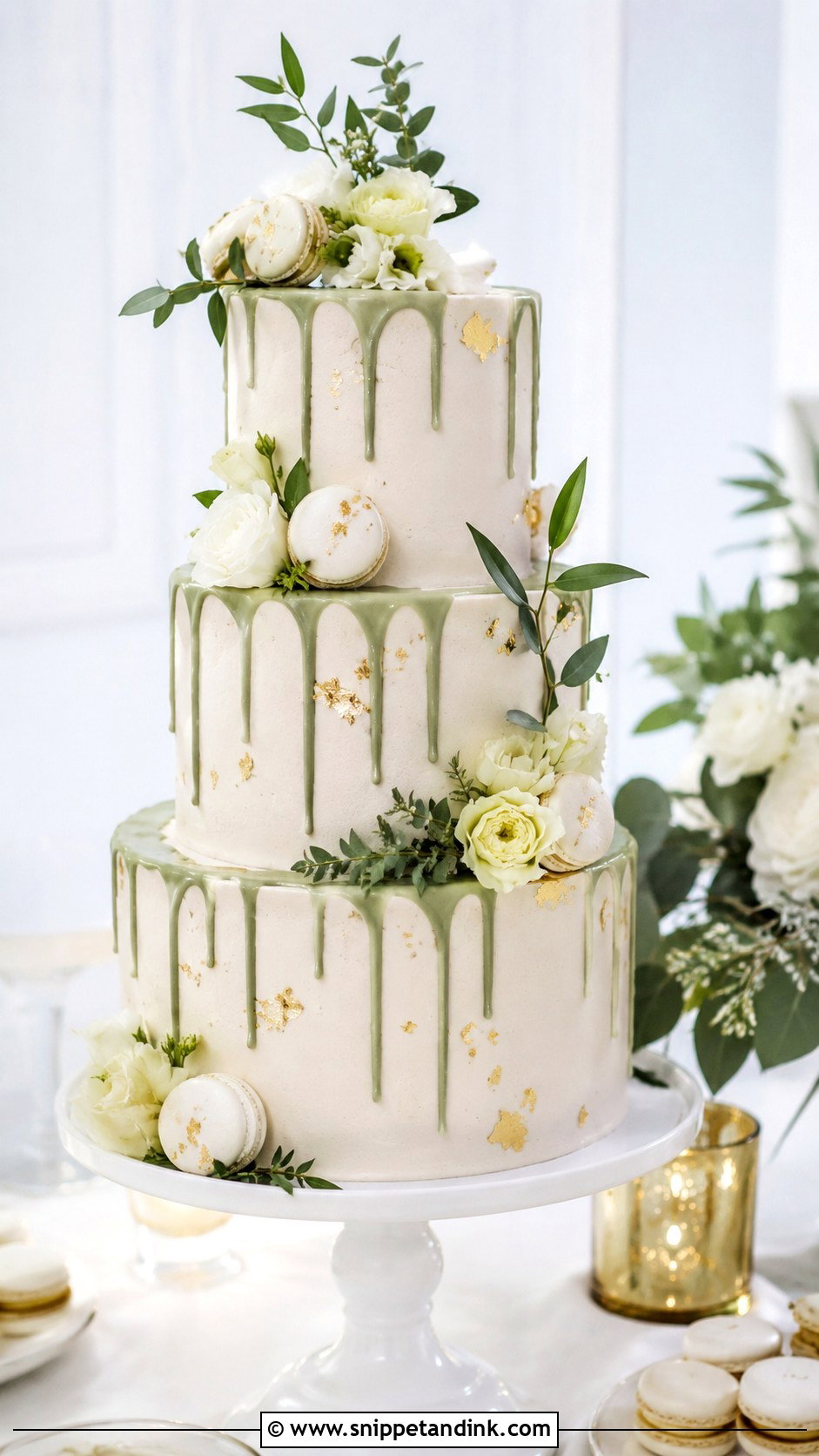
A drip feels modern but stays elegant when the colours are soft. White with a sage drip looks fresh; emerald over pale green is bolder. Macarons, white flowers, gold leaf or berries finish it. Drips run further than you expect on a warm cake, so I chill each tier and test a single drip on the back before going round. On a wedding cake the drips should be neat and evenly spaced, never messy.
17. Green And Gold Wedding Cake
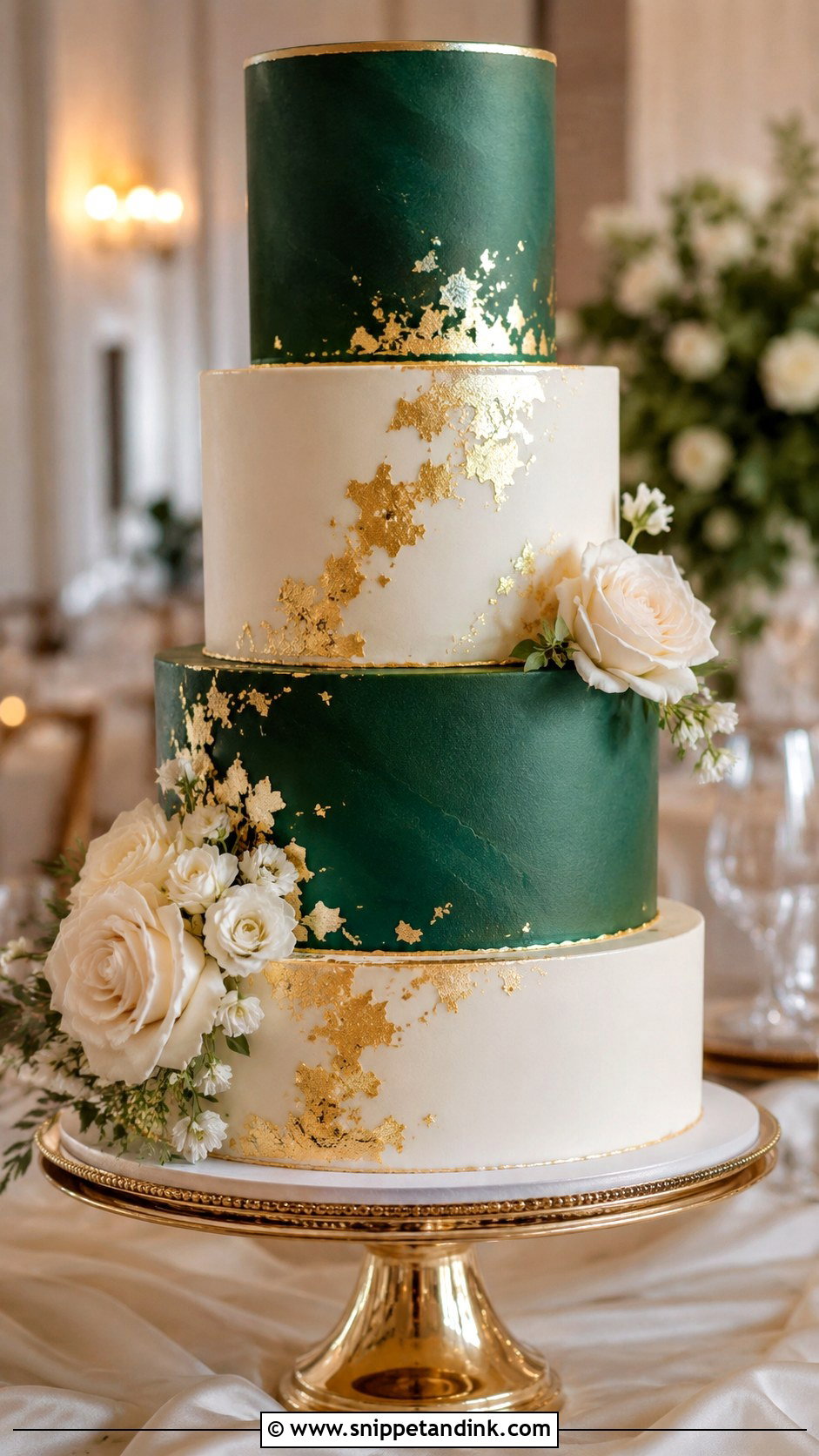
Green and gold feel festive without being loud. Sage with soft gold looks romantic; emerald with gold feels rich; olive with antique gold reads vintage. Gold can be leaf, painted edges, brushstrokes or thin separators between tiers. I match the gold tone to the green: bright yellow gold suits emerald, while softer champagne gold sits better with sage. Keep flowers simple, white blooms, cream roses, a little greenery, and set it on a gold stand with neutral linens.
18. Green And Ivory Wedding Cake
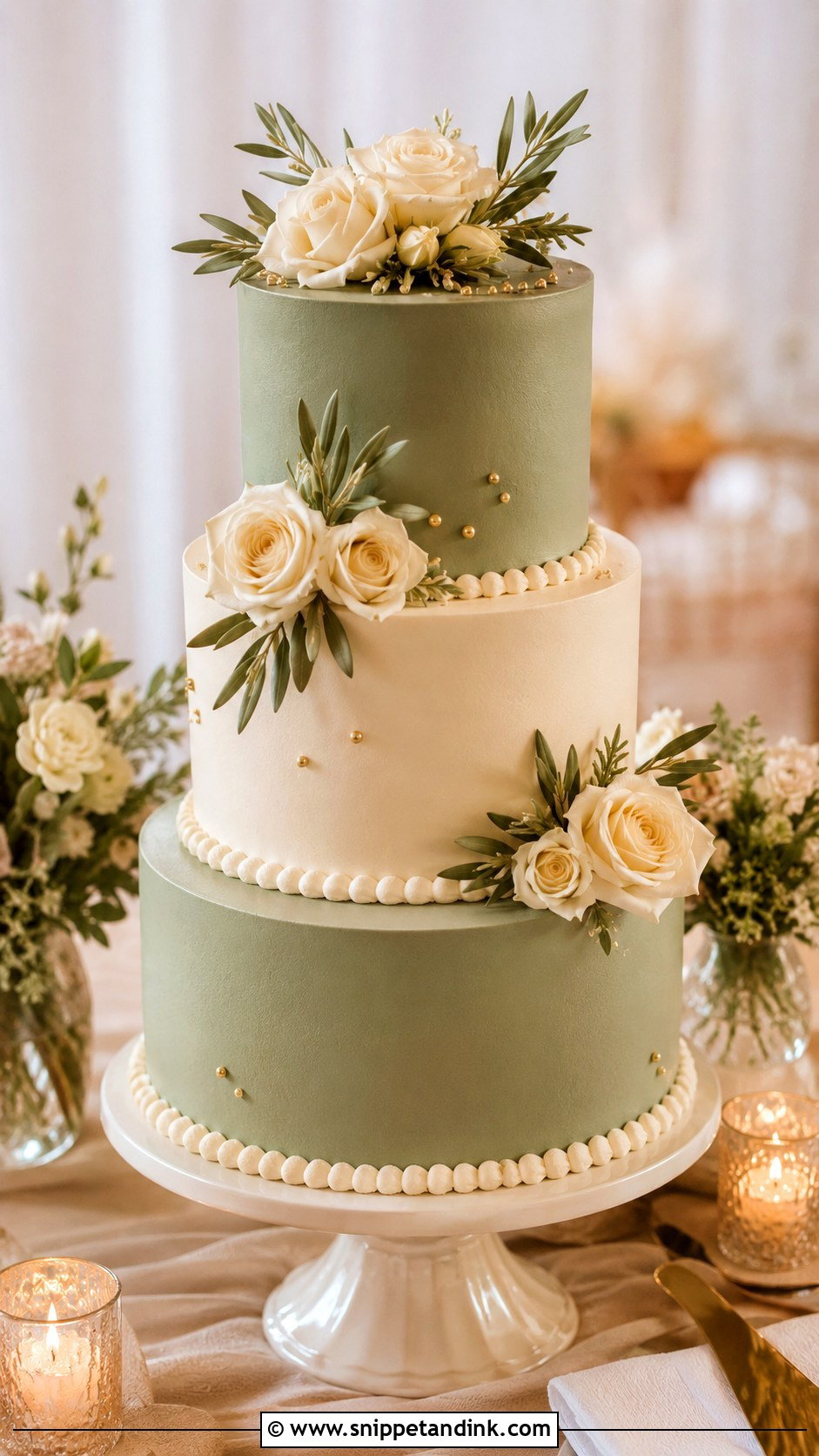
Ivory is softer than bright white beside green, and it suits sage, olive, moss and pistachio. Try an ivory cake with painted botanicals, or a green cake with ivory flowers and soft piping. Ivory buttercream happens naturally if you use real butter; pure white needs whitening or shortening, which changes the taste slightly, so ivory is often the better-tasting option too. It suits candlelight, linen, garden flowers and vintage details.
19. Minimalist Green Wedding Cake
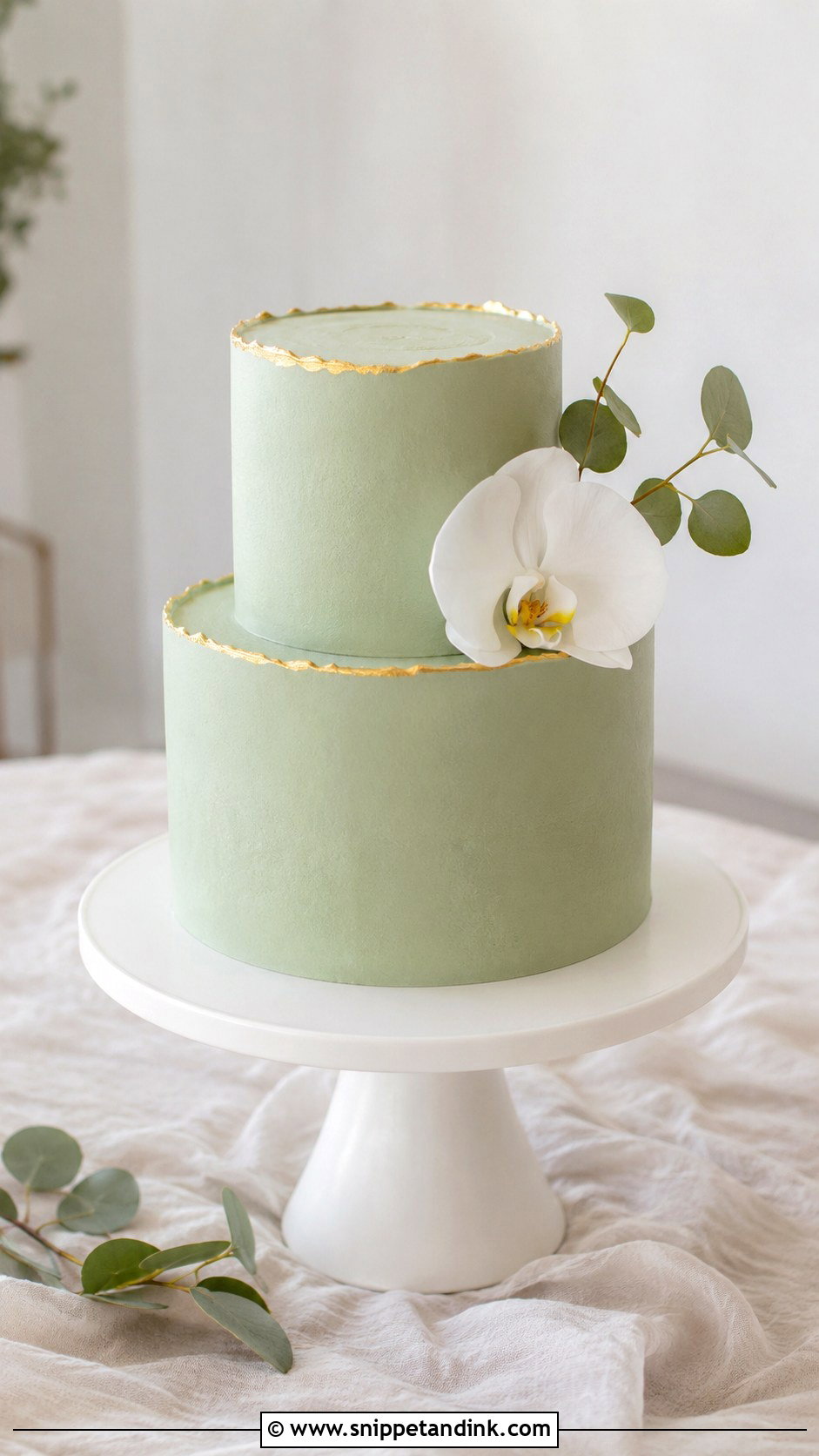
Clean lines, soft colour and one small detail: a single white flower, a thin gold edge or a few eucalyptus leaves. One or two tiers suit it best, in sage or pistachio. Minimal cakes are the hardest to hide flaws on, so smooth sides and sharp edges matter more here than on any decorated design. Skip heavy florals and busy piping. It suits intimate weddings, city hall ceremonies and modern venues.

20. Vintage Green Wedding Cake
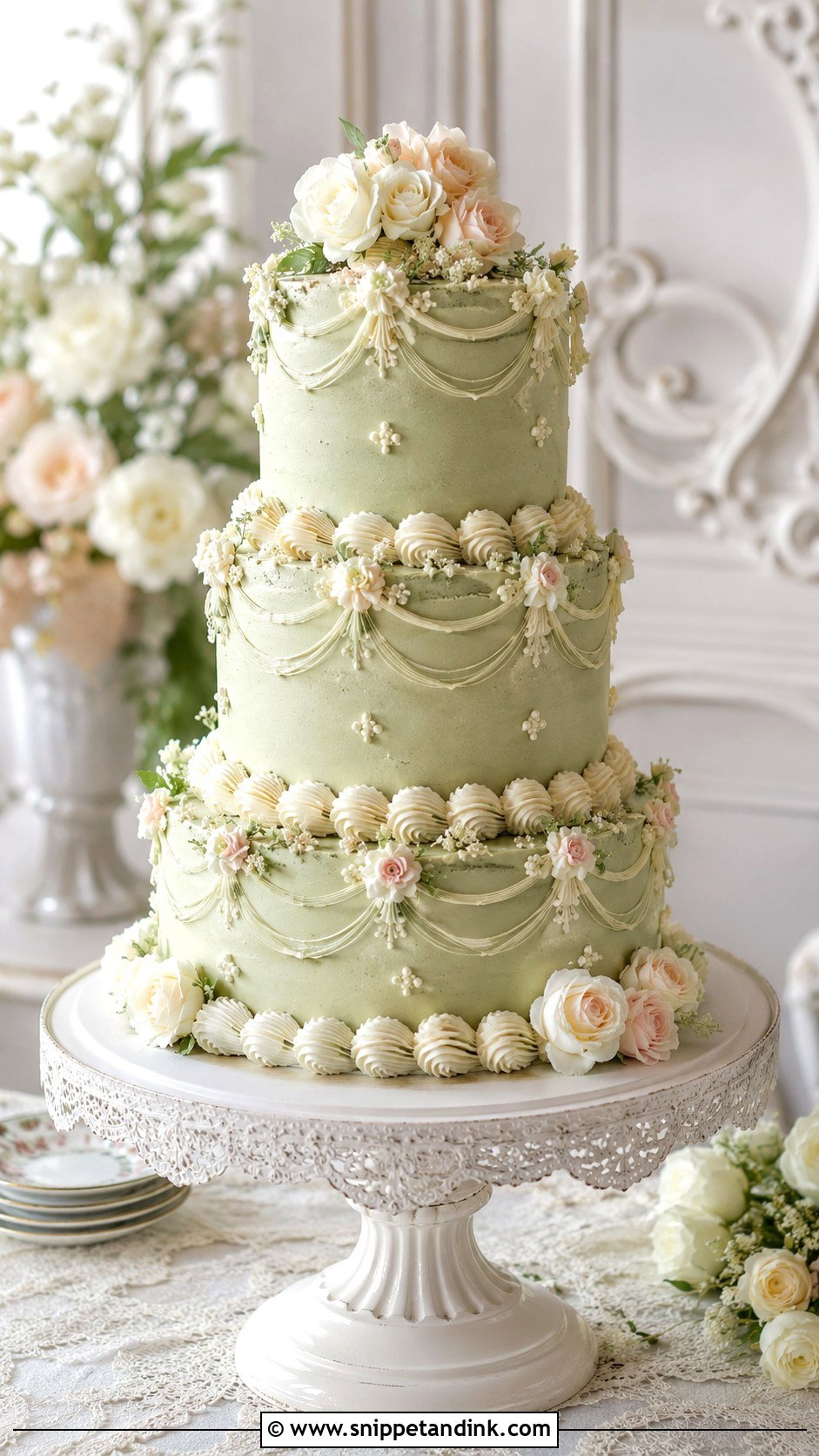
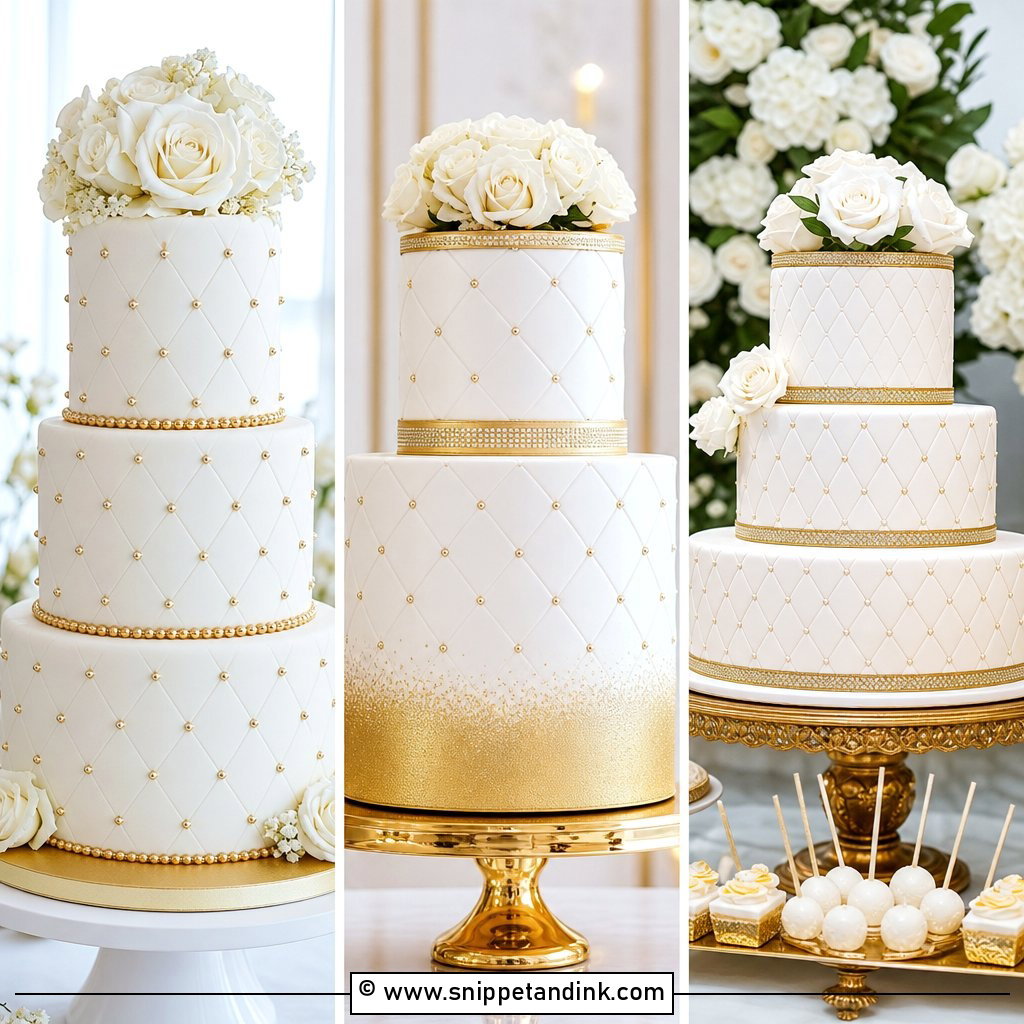
Vintage means piped borders, shell details, pearls and small floral touches, usually in sage or pistachio buttercream. It works on a round tiered cake or a single tall cake for a smaller wedding. Keep the green soft so the piping looks delicate. Over-piping, where layers of piping are built on top of each other, is the traditional technique here, and it needs a firm, crusted buttercream to hold its shape. Ivory, blush or white accents keep it bridal.
21. Green Wedding Cake With Floral Cascade
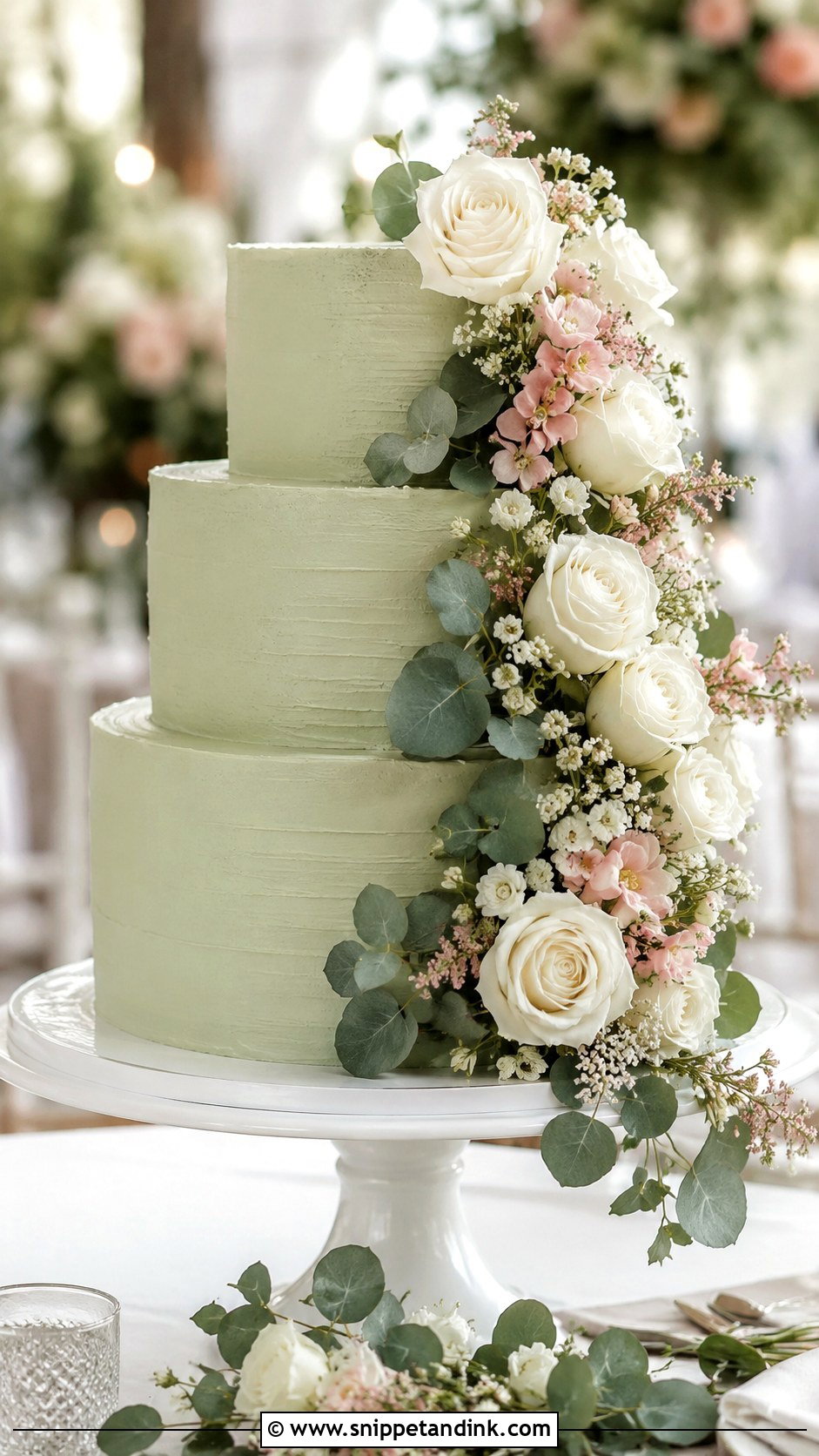
A cascade turns a simple green cake into a showpiece, flowing from the top tier down one side. Sage buttercream with white and blush flowers feels romantic, while emerald fondant with ivory orchids is bold and formal. It needs a taller cake to give the flowers room. Ask your baker and florist to talk to each other about scale, since large blooms swamp small tiers and tiny ones vanish on a big cake. I also confirm which flowers will be used, because some popular varieties shouldn’t touch food.
22. Green Wedding Cake With Botanical Painting
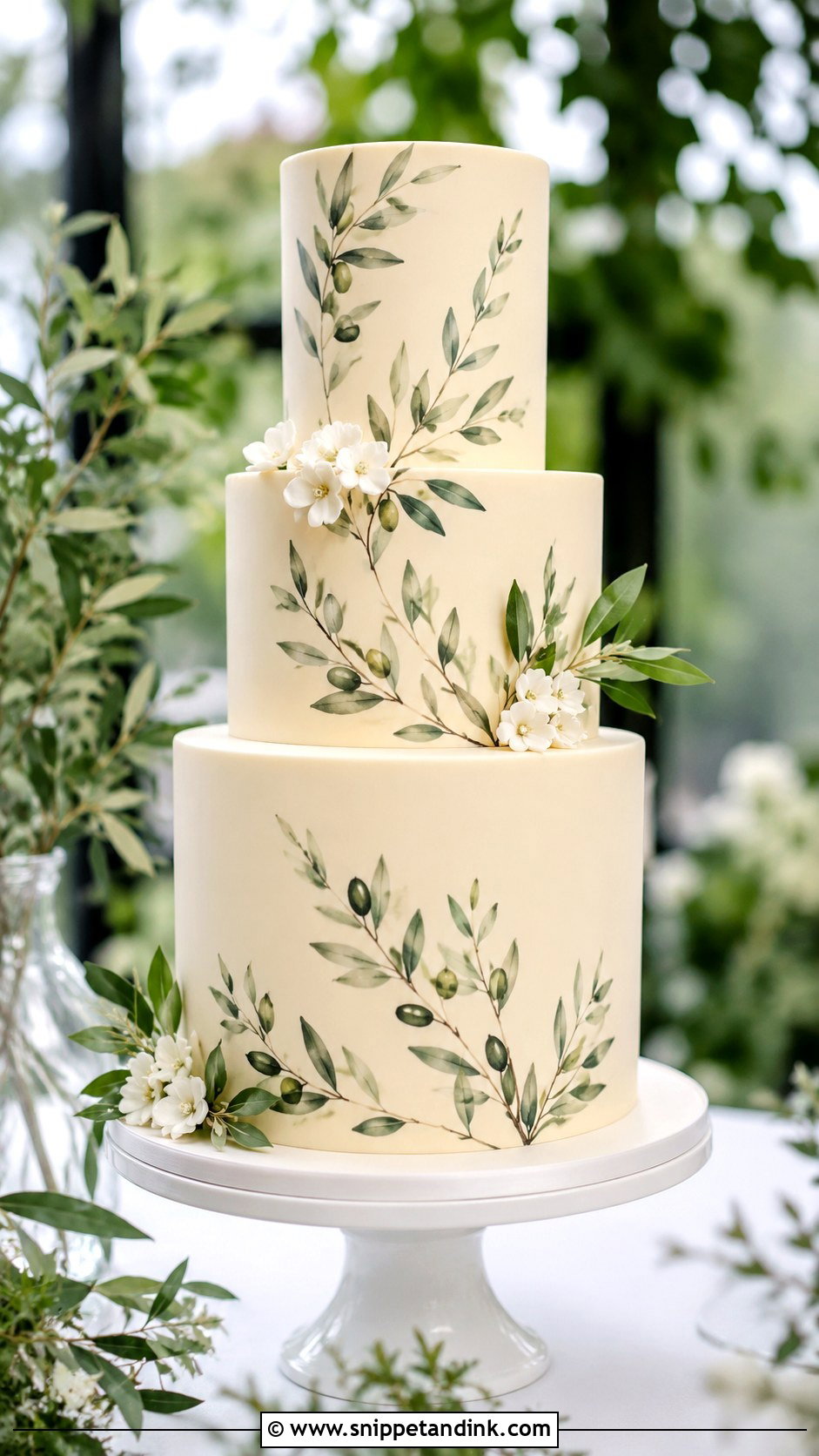
Sage leaves, olive branches, vines or fine floral stems painted onto smooth buttercream or fondant give a handmade, artistic look. Botanical painting brings in greenery without fresh decoration. A white or ivory base with green painting feels airy; pale green with darker painting feels layered. I paint on fondant or firmly chilled buttercream with food colour thinned in a little alcohol, which dries quickly and doesn’t soften the surface. A few small sugar flowers add dimension.
23. Green Wedding Cake With Textured Frosting
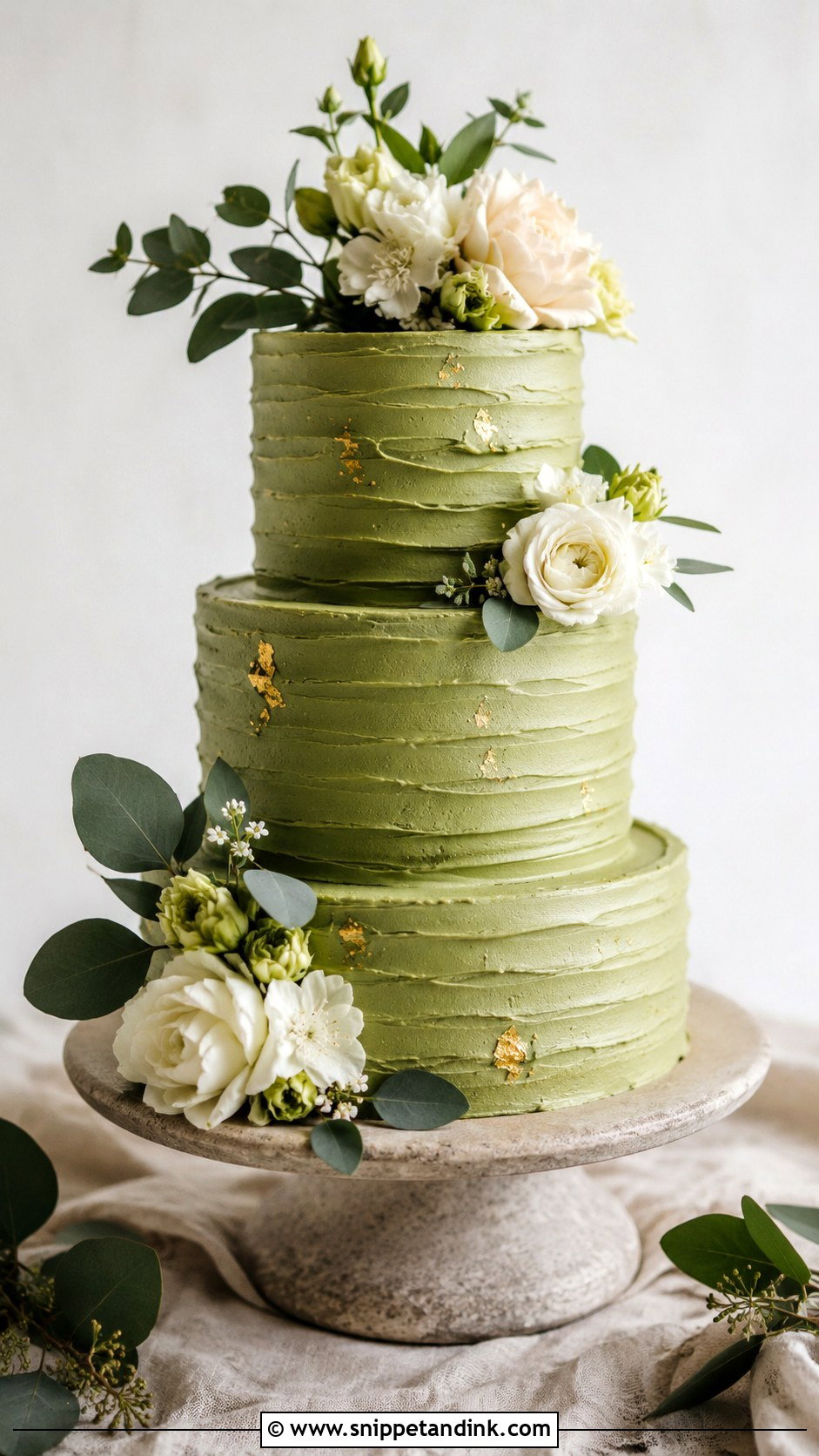
Instead of a smooth finish, the buttercream carries subtle ridges, palette-knife strokes, horizontal lines or gentle waves. Sage and olive look particularly good textured. It’s also forgiving: texture hides small imperfections that a smooth finish would show, and it holds up slightly better if the room is warm. Keep decoration simple, with white flowers, eucalyptus kept off the icing, or a touch of gold. The frosting itself is the design.
24. Green Wedding Cake With Ruffles
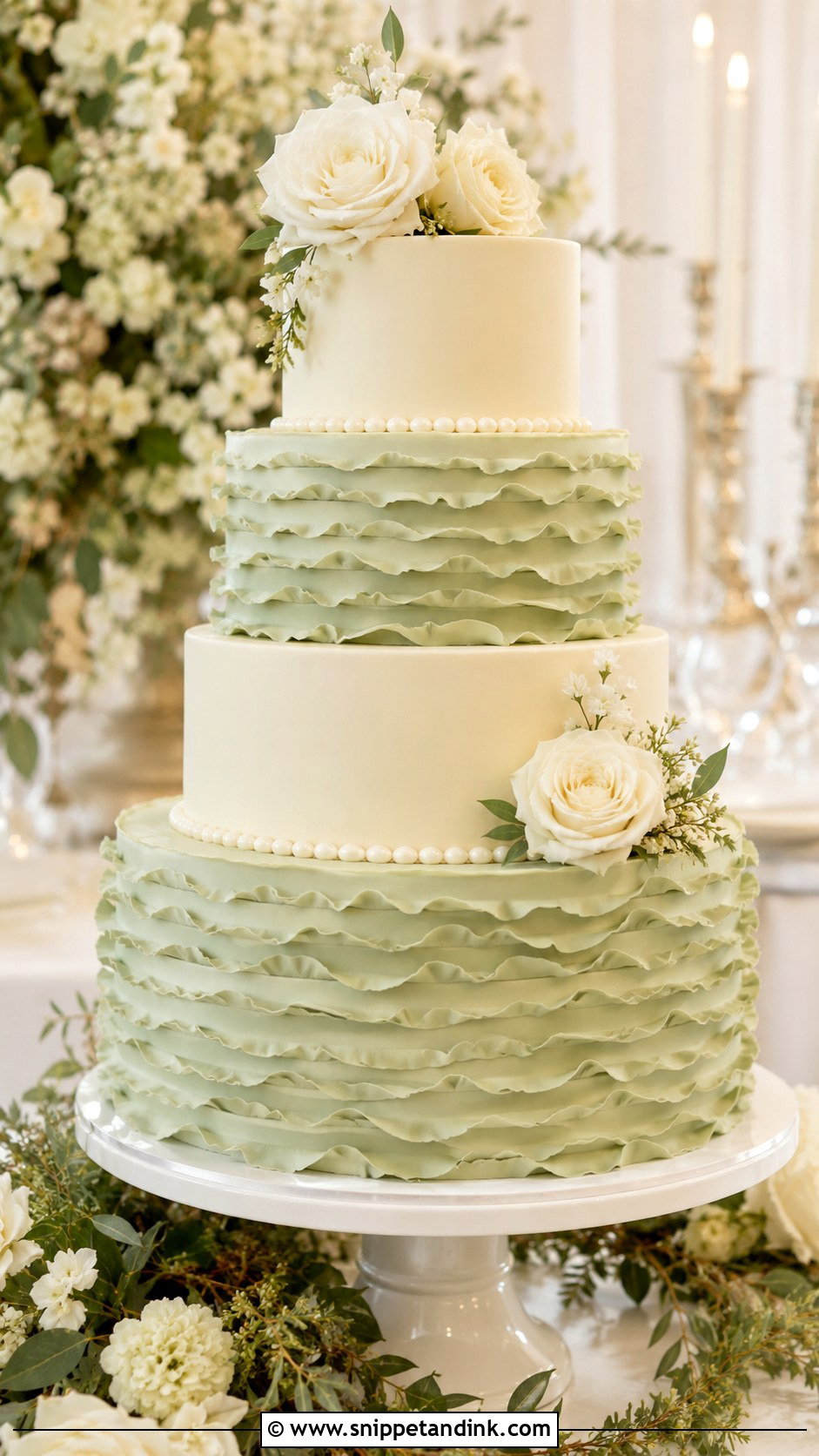
Ruffles can cover every tier or just one statement tier between smooth ones. Pale sage and pistachio look delicate; deeper green is more dramatic. Fondant ruffles hold crisp edges for hours, while buttercream ruffles look softer but can droop in heat. I’d only put buttercream ruffles on a cake that will stay somewhere cool. Add just a few flowers so the ruffles stay visible.


25. Three Tier Green Wedding Cake
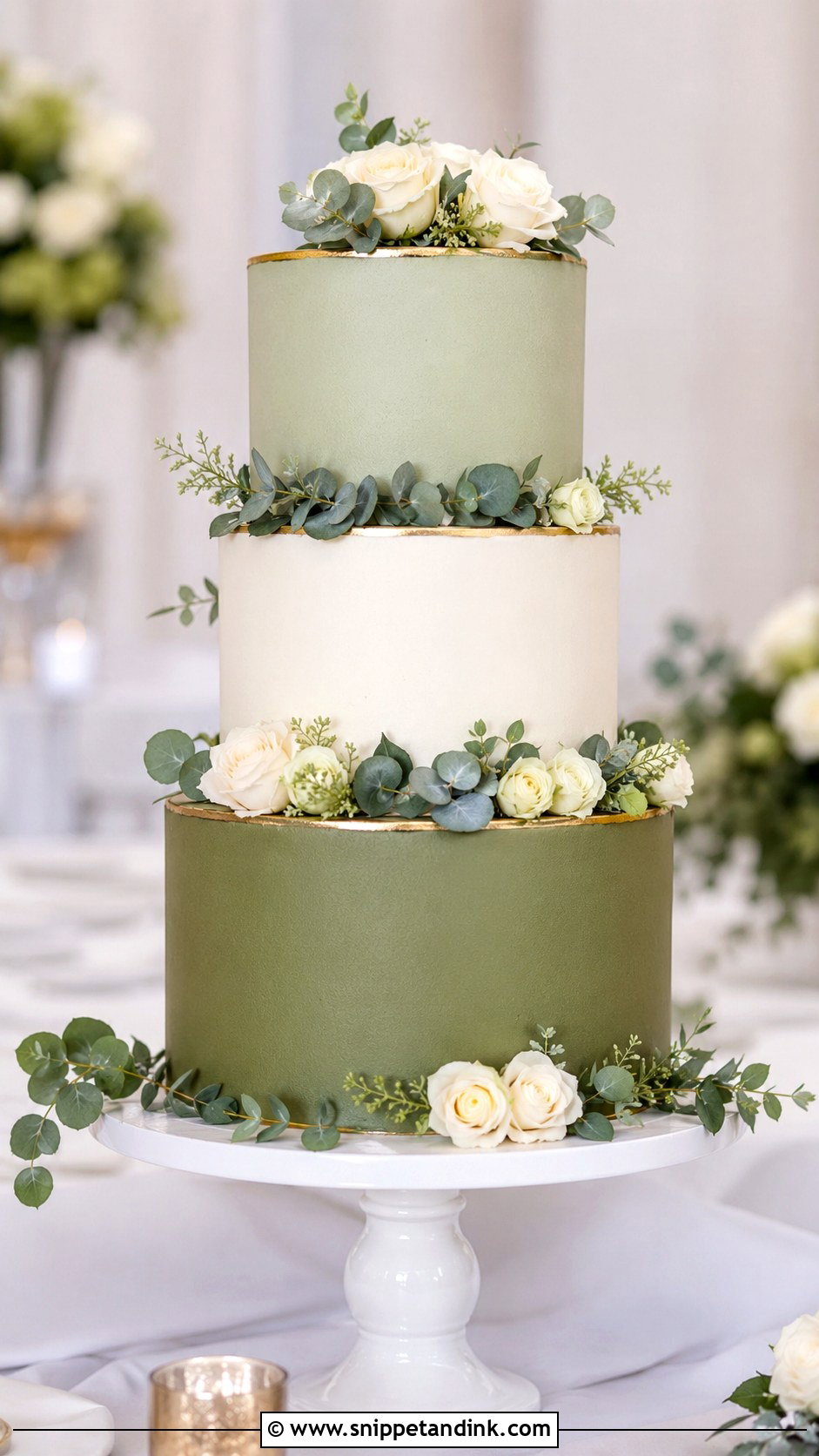
Three tiers give height and presence with plenty of space for decoration. A three tier green wedding cake can be one shade throughout, or mix ivory, sage and olive for depth. It suits medium-sized weddings; for a larger guest list, a kitchen cake kept out of sight can make up the servings without adding tiers. Smooth buttercream is softer, fondant sharper. Flowers between tiers, a small cascade or gold trim finish it.
Real Leaves on a Cake: What’s Safe and What Should Stay in the Vase
Fresh greenery is on half the cakes in this list, and it’s the part of a green wedding cake I’m most careful about. Foliage from a florist is grown to look good, not to be eaten, and it may have been treated with sprays.
How I handle fresh stems
Stems never go straight into the cake. I wrap them in florist tape or put them in food-safe picks, and I sit leaves on small discs of wax paper where they touch the icing. The greenery goes on as late as possible, on the day, because cut leaves wilt and can mark the icing as they dry.
Greens to treat with caution
Eucalyptus, ivy and several other popular foliage plants shouldn’t be eaten, so they stay decorative and are removed before cutting. Herbs like rosemary or bay, and olive sprigs, are friendlier choices if they come from an unsprayed source. If you’re unsure, ask your florist for a list of exactly what will be on the cake and check it with your baker.
When sugar greenery is the better call
For a hot outdoor wedding, a long setup window or a cake that has to travel far, I’d suggest sugar or wafer-paper leaves instead. They don’t wilt, they can be tinted to match your palette precisely, and nobody has to pick them off a slice.
Sage, Emerald or Olive on Your Cake Table
Green can be soft, bold, natural, modern or vintage depending on the shade and finish. Sage suits romantic garden weddings, emerald brings depth, olive feels earthy, pistachio adds a fresh note. Think about your venue, flowers, linens, season and lighting together, because the same green can look very different by daylight and candlelight. A good green cake feels connected to the rest of the wedding, and there’s a shade and finish here for almost any celebration.
You'll Like These Ideas:






Leave a Reply