
A naked cake shows everything: the sponge, the filling and how carefully the tiers were stacked. That honesty is why it suits garden, barn, backyard and outdoor-table receptions, and it’s also why the good ones take more care than they appear to. I want generous filling, straight layers and decoration that’s placed with intent, whether that’s fruit, food-safe flowers, greenery or a light dusting of sugar. The cut sides give a texture that smooth frosting never will. Here are twenty versions I’d happily build, with notes on flavour, season and what each one needs to hold up on the day.
Bare Sponge Dries Out, So the Schedule Changes
A frosted cake is sealed. A naked cake isn’t, so the exposed sides start drying from the moment it’s assembled. That’s the single biggest difference, and it shapes how I plan everything. I bake as close to the wedding as practical, brush each layer with a light sugar syrup, wrap the layers well while they chill, and assemble late. Once it’s on display, I’d like it cut within a few hours rather than standing all afternoon.
Fillings that cope with warm rooms
Heat is the other problem. Buttercream softens, cream cheese frosting softens faster, and whipped cream can slump. For a summer marquee or an outdoor table, these are the fillings I trust most:
- Swiss or Italian meringue buttercream, which holds its structure better than a simple butter-and-sugar frosting
- A firm ganache, which sets well and handles warmth better than cream-based fillings
- Fruit curds and jams, but only inside a piped buttercream ring so they can’t slide
- Cream cheese and whipped cream for cooler indoor receptions, or a cake served soon after it leaves the fridge
Ask where the cake table will be and when the cake will be cut. A spot in the shade, away from heaters and stage lighting, buys a lot of time.
1. Naked Wedding Cake With Fresh Flowers
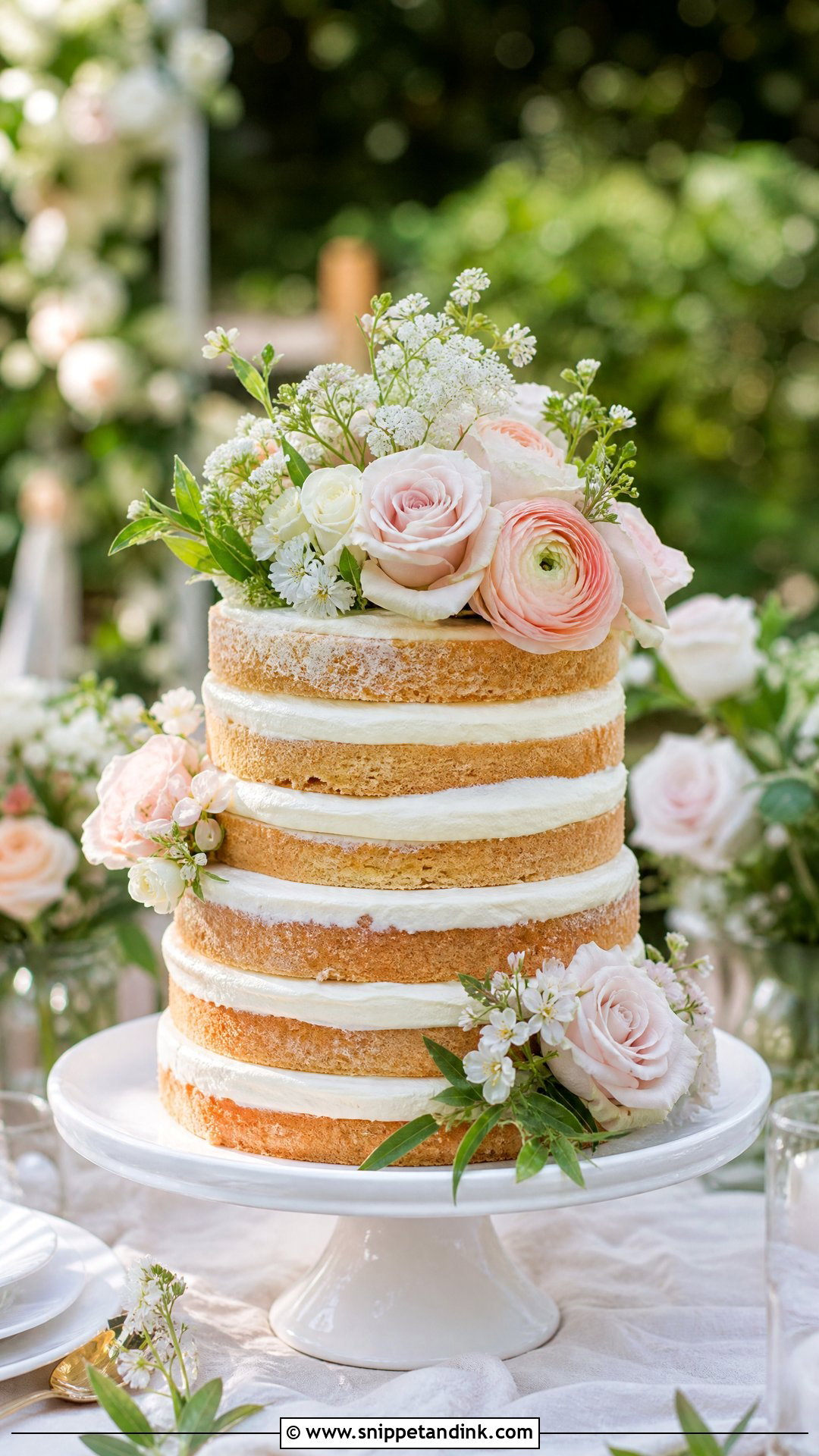
Fresh flowers are where most couples start, and they’re also where I’m strictest. The exposed layers need to be even, with buttercream or cream cheese frosting thick enough between tiers that the cake looks full rather than dry. Roses, ranunculus, chamomile and small garden blooms look best grouped in clusters on the top and down one side, in a palette close to the wedding colours. Every stem gets wrapped in floral tape or set into a food-safe pick, because florist flowers are often treated with chemicals that shouldn’t touch cake. Garden, spring and rustic receptions suit it best.
2. Naked Wedding Cake With Berries
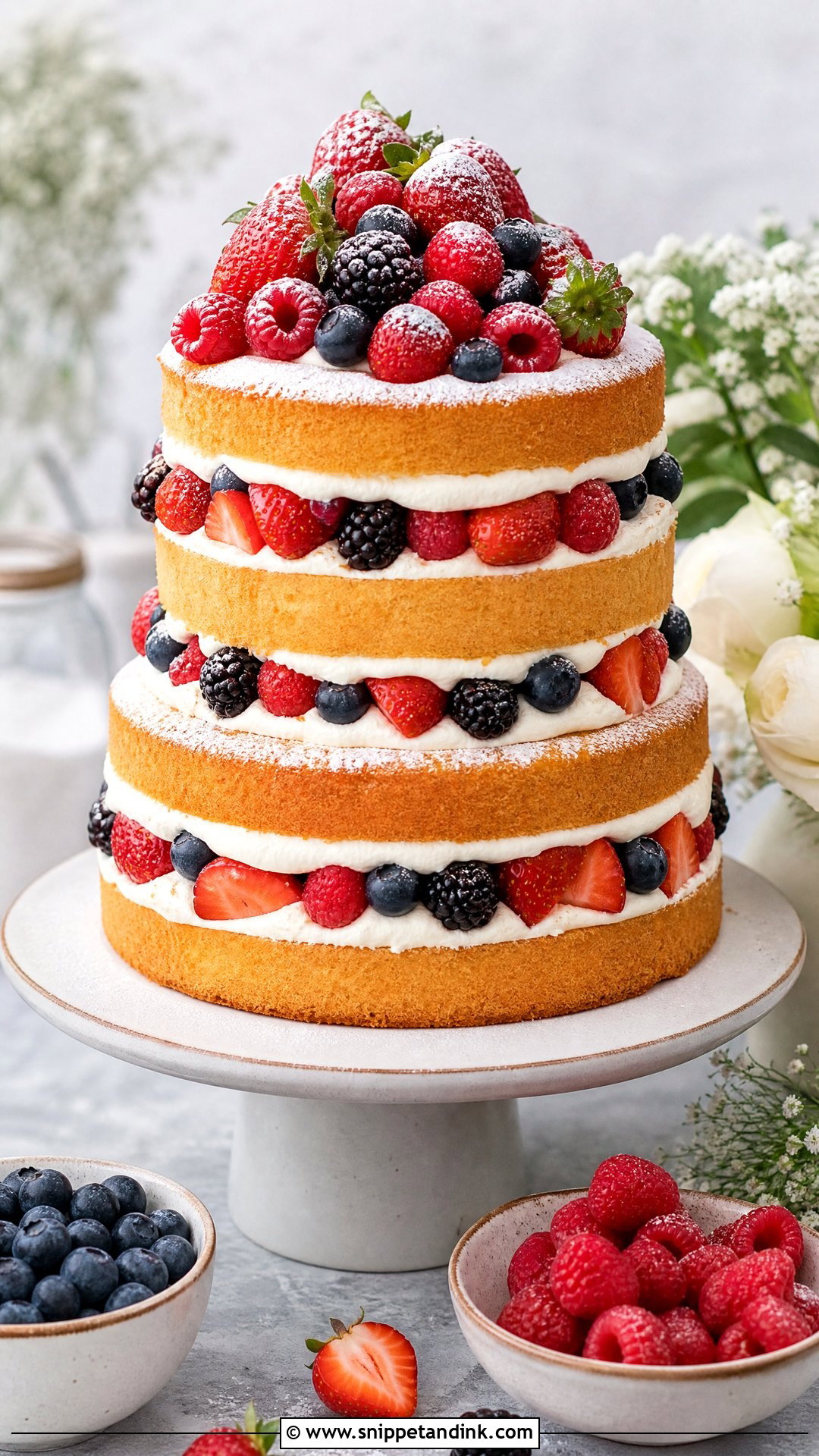
Berries are my favourite decoration for a naked cake because they look generous even in small amounts. Strawberries, raspberries, blueberries and blackberries can be tucked between layers, piled on each tier or scattered at the base. Don’t cover the whole cake; the golden sponge and pale filling should still show. Vanilla, lemon, almond and white chocolate sponges pair well. Berries must be washed and dried completely before they go on, or the juice bleeds into the buttercream within the hour. A light dusting of icing sugar, added at the venue, finishes it.
3. Semi Naked Wedding Cake With Greenery
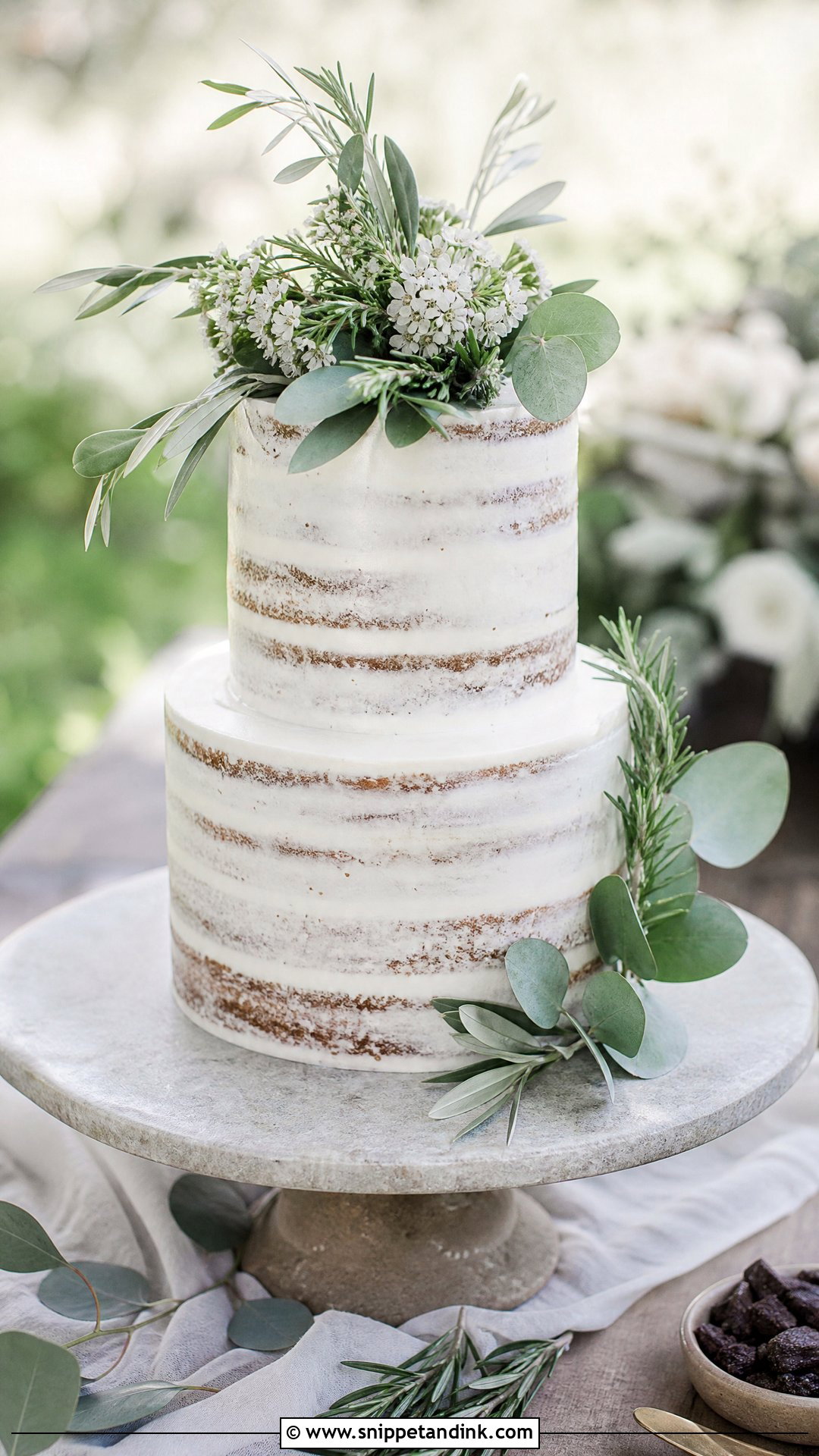
Semi naked means a thin scraped coat of frosting over the sponge, so the cake still peeks through but the sides are better sealed than on a fully bare cake. That thin coat matters more than people think, because it slows the sponge drying out. Eucalyptus, olive branches, rosemary or fern-style greenery can wrap a tier or trail down one side. I’d use it for outdoor weddings, neutral palettes and minimal receptions where you want texture without much colour. Eucalyptus isn’t edible, so it sits on a barrier and comes off before cutting.
4. Naked Wedding Cake With Lemon Curd
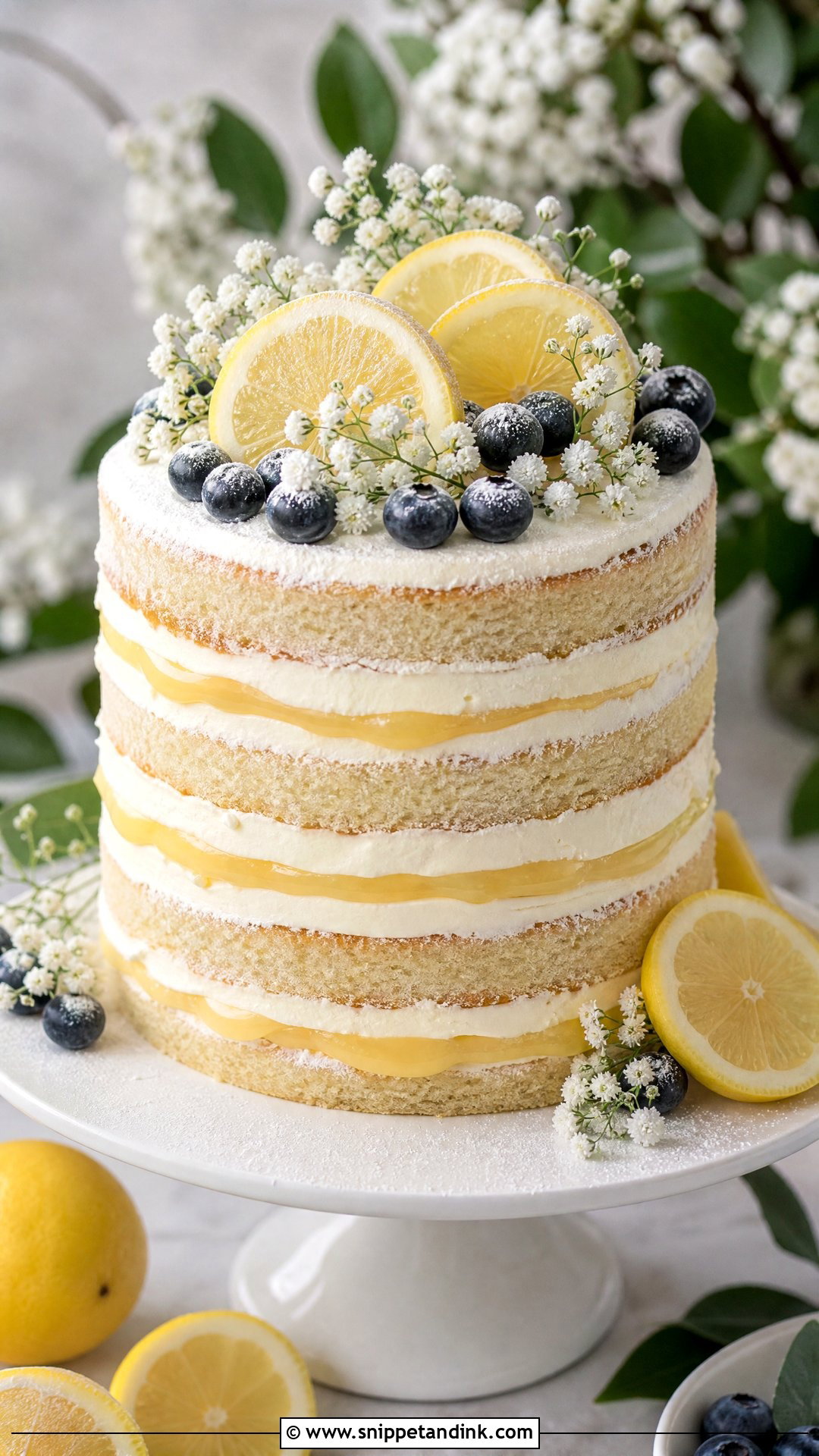
A pale band of lemon curd between vanilla or lemon sponge gives colour without any decoration at all. I pipe a ring of buttercream around the edge of each layer first and fill the centre with curd, because curd is soft and will squeeze out under the weight of the tiers above if nothing holds it in. Swiss meringue buttercream, whipped cream or cream cheese frosting all sit well with it. Lemon slices, tiny white flowers and a few blueberries complete the look. After a heavy meal, a citrus cake is often the one guests actually finish.
5. Naked Chocolate Wedding Cake
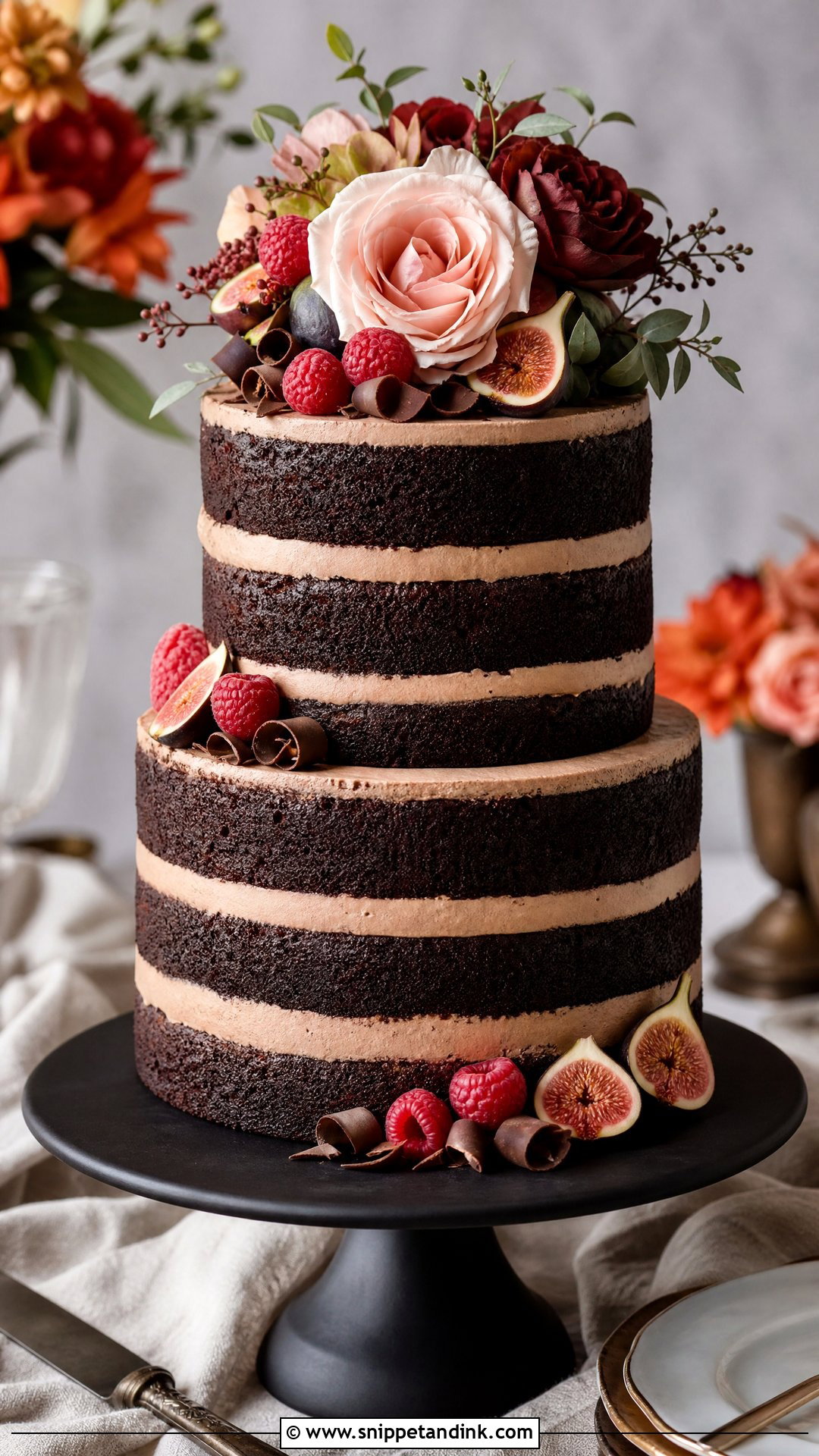
A naked chocolate wedding cake gets its drama from contrast: dark sponge against pale vanilla buttercream, mocha frosting or a glossy ganache filling. With the layers on show, it needs very little decoration. Fresh berries, figs, chocolate curls or a few soft flowers are enough. It suits couples who want something other than vanilla without losing elegance. One note from the kitchen: dark crumbs show badly in pale filling, so I chill and trim each layer before stacking to keep the lines clean.
6. Naked Red Velvet Wedding Cake
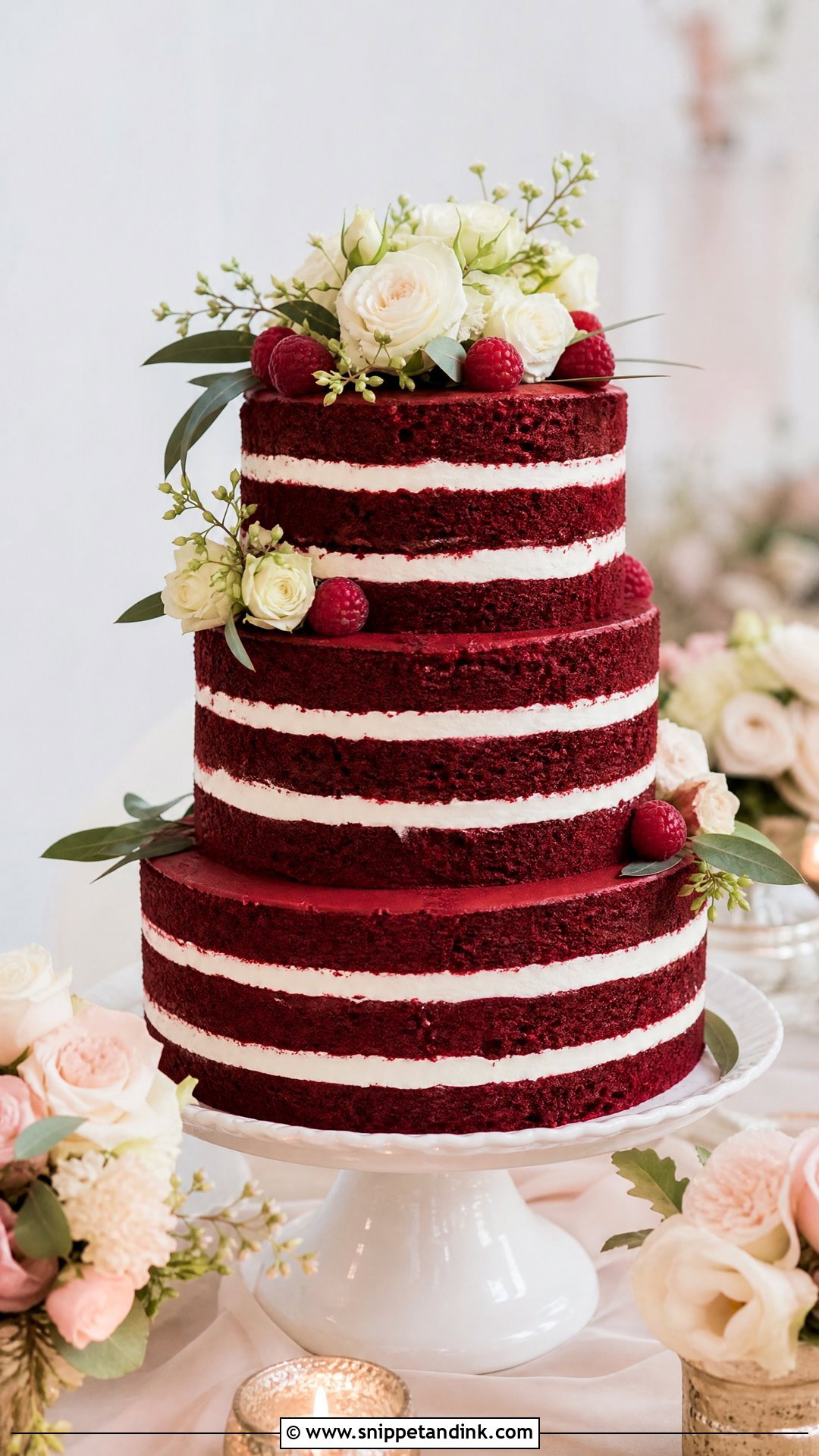
The colour does the work here. Deep red layers against cream cheese frosting give a contrast no decoration can beat, so I keep the outside to small roses, berries or a little greenery. Cream cheese frosting is softer than buttercream and dislikes heat, which is why I’d steer a red velvet naked cake toward an indoor or cooler autumn reception. Ask for even layers, since the red lines show any wobble in the stacking. Guests notice it again when it’s sliced.
7. Naked Carrot Wedding Cake
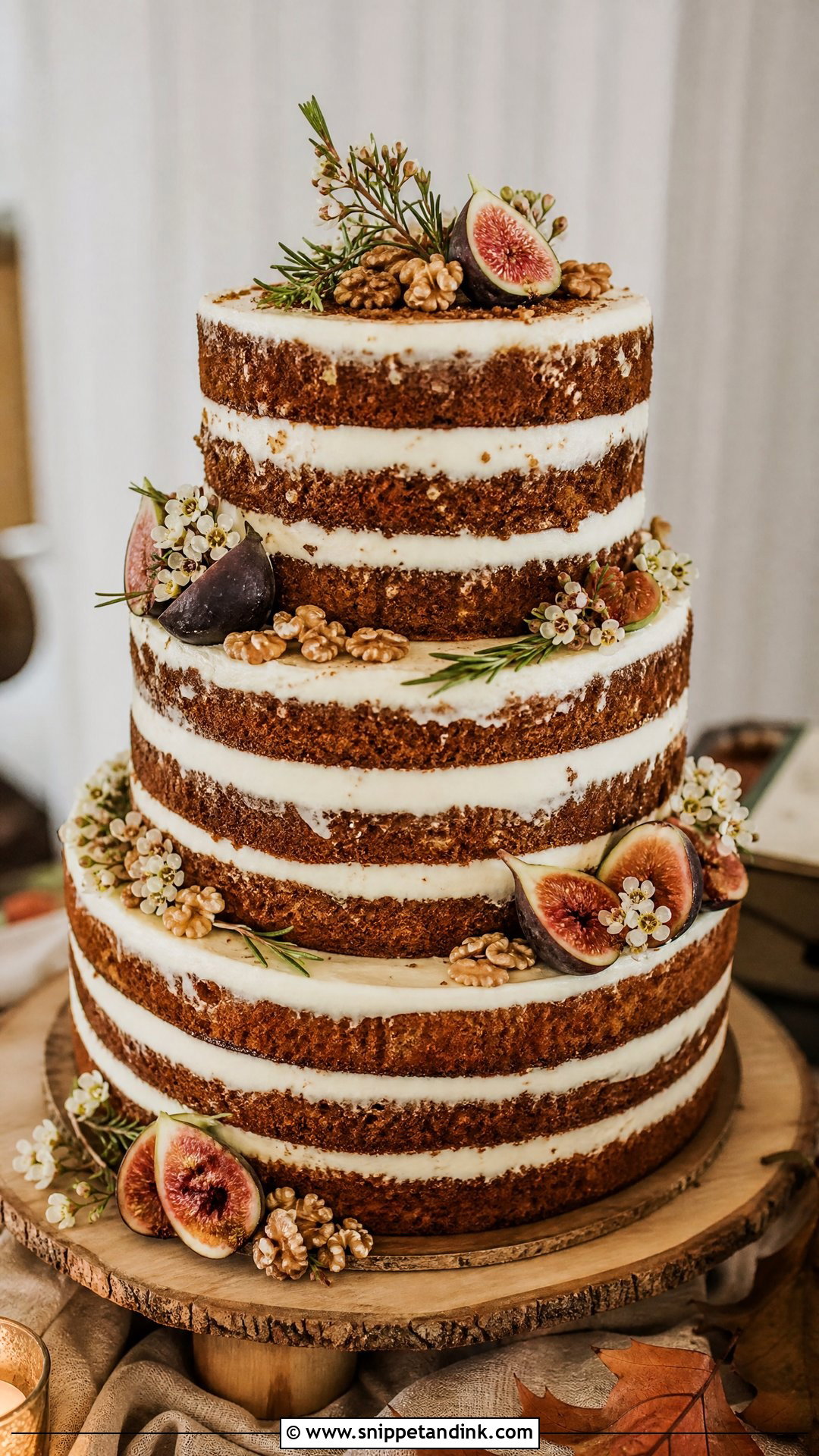
Carrot cake is the sponge that looks best naked, because the flecks of carrot, spice and nuts give the exposed sides real texture. Cream cheese frosting is the classic pairing, with toasted walnuts or pecans or a little caramel drizzle. Small white flowers, figs, herbs or chopped nuts at the base finish it simply. It suits autumn weddings and barn receptions. Carrot sponge is dense and moist, so it actually holds up better uncovered than a light vanilla sponge. Check your guest list for nut allergies before nuts go anywhere near the decoration.
8. Naked Strawberry Shortcake Wedding Cake
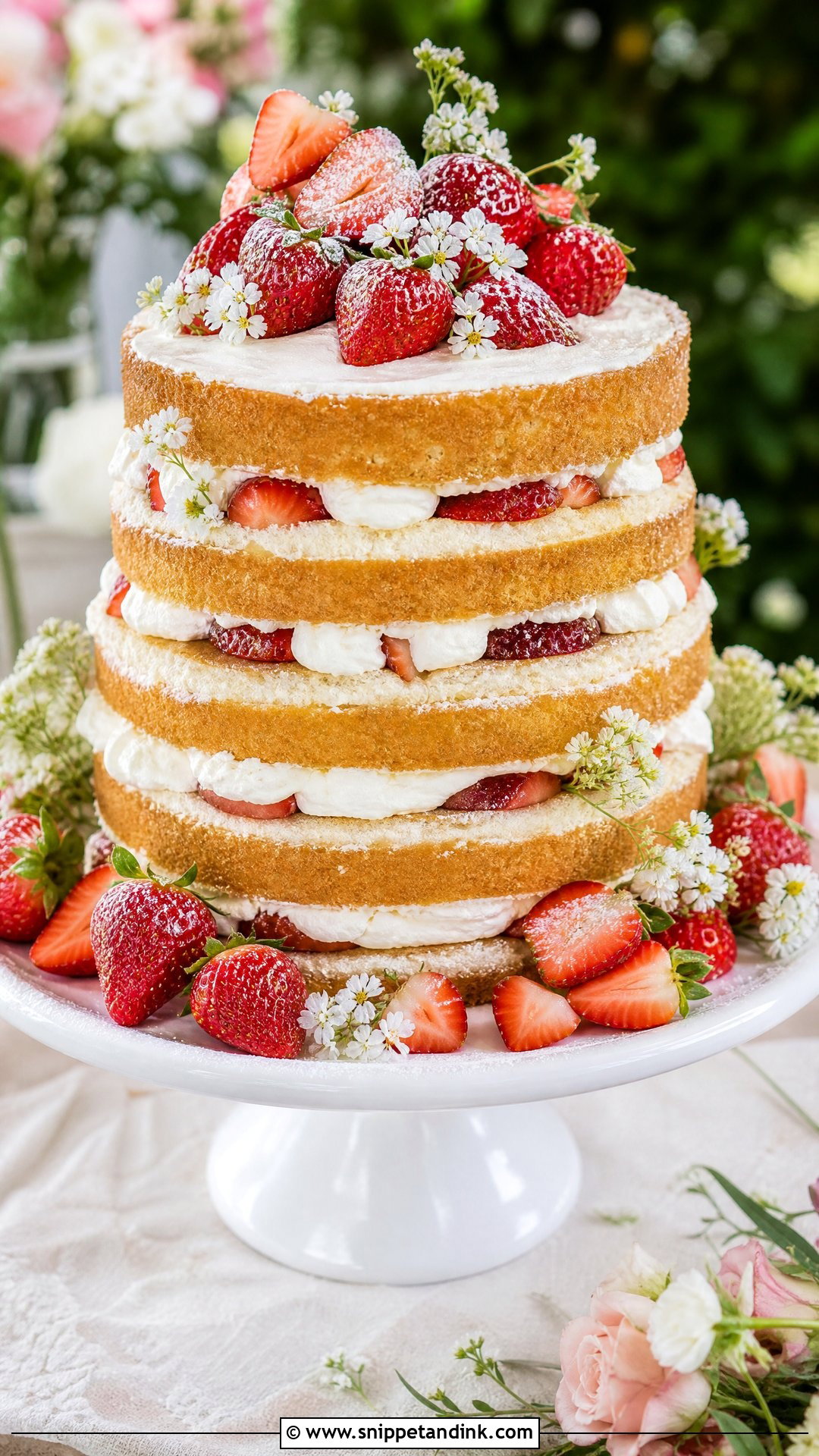
A naked strawberry shortcake wedding cake is light vanilla sponge, whipped cream and fresh sliced strawberries in visible layers, and it’s the most fragile cake on this list. Whipped cream softens quickly in warm air and cut strawberries release juice, so I assemble it as close to serving as possible and keep it chilled until it goes out. A stabilised whipped cream helps. Top it with whole strawberries, a few tiny flowers and a dusting of sugar. It suits a brunch reception or a cool garden afternoon far better than an all-day summer marquee.
9. Naked Wedding Cake With Figs
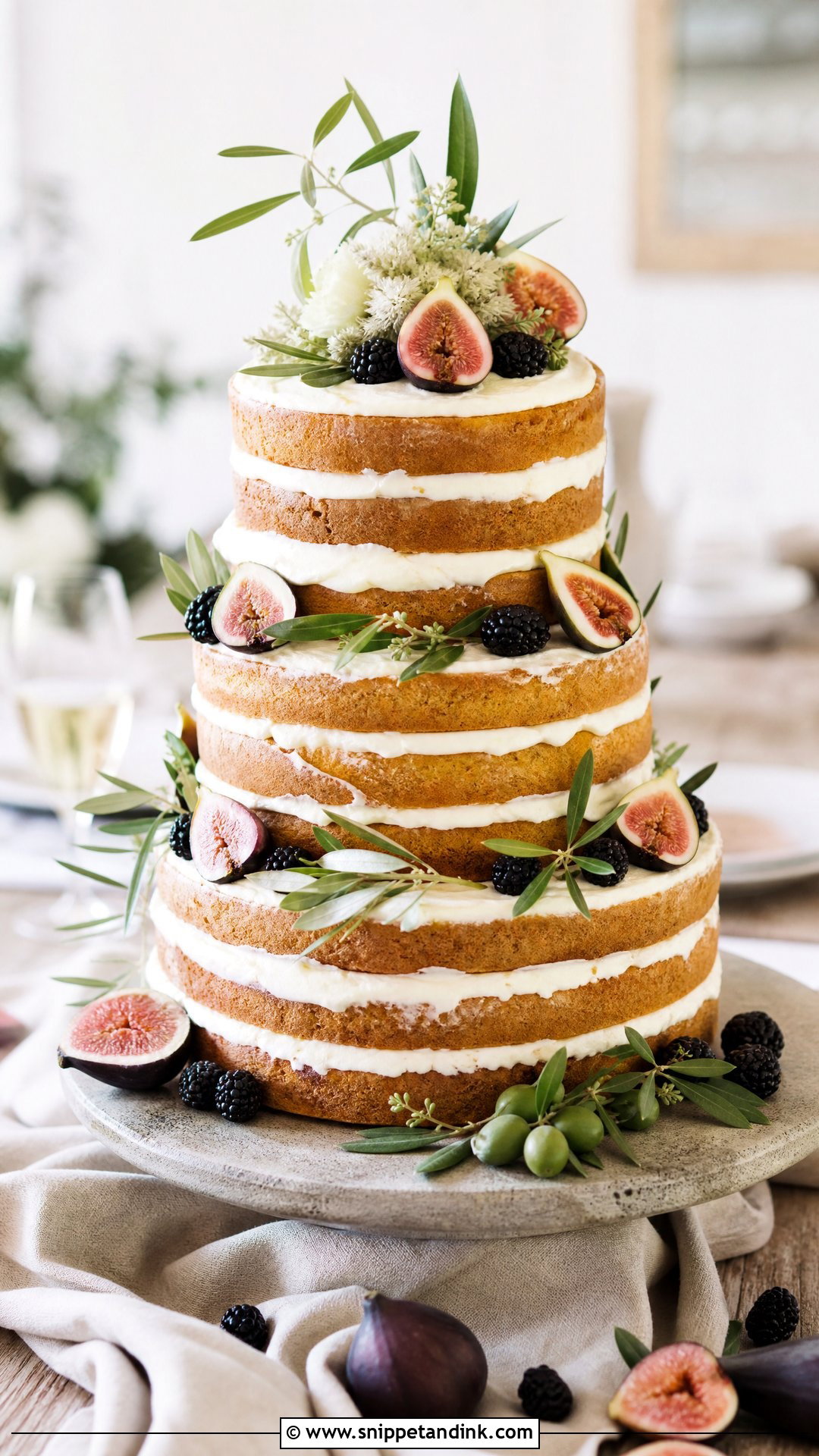
Figs bring deep purple, green and blush tones that look rich against vanilla, almond, honey or spice sponge. Halve them for the top, tuck them beside flowers or cluster them at the base with berries. Honey buttercream or a mascarpone-style filling keeps the cake from tasting too sweet. Fresh figs are at their best from late summer into early autumn, and that’s when I’d plan this cake; out of season they can be pale and dry inside. A few soft flowers or olive leaves keep the design natural.
10. Naked Wedding Cake With Dried Flowers
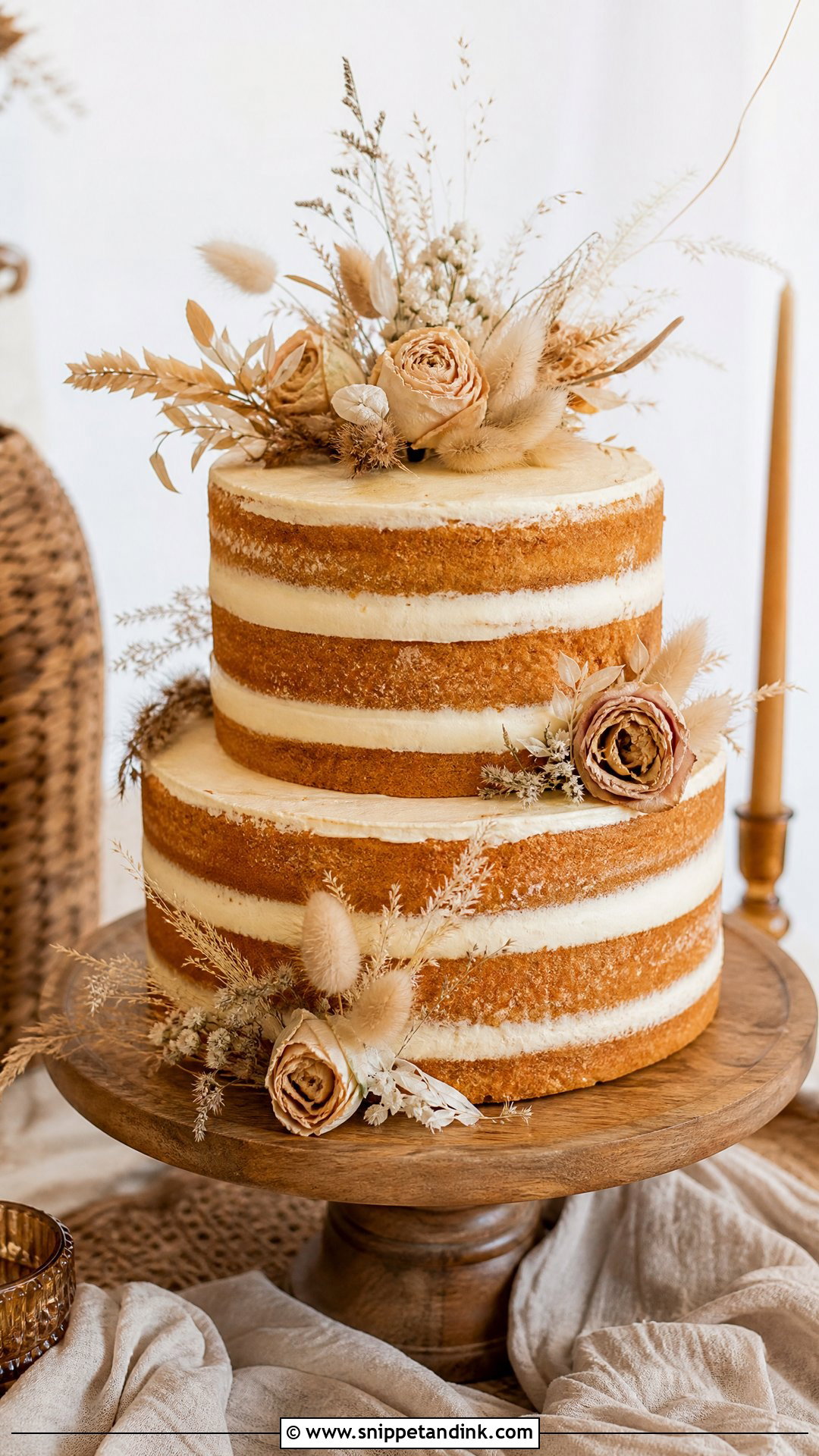
Dried flowers suit boho weddings and earthy palettes, and they have one real advantage: they don’t wilt under lights or in a warm tent. Dried blooms, preserved grasses, bunny tails and dried roses can be placed lightly around the tiers, leaving the layers visible. Vanilla, honey, almond and spice cakes all suit the look. Dried flowers are often dyed, bleached or sprayed, though, so they need the same barrier as fresh stems, and fluffy grasses shed. I place them on the day, not the night before. It looks right on a wooden table, a stoneware stand or a simple linen-covered dessert display.
11. Naked Wedding Cake With Gold Leaf
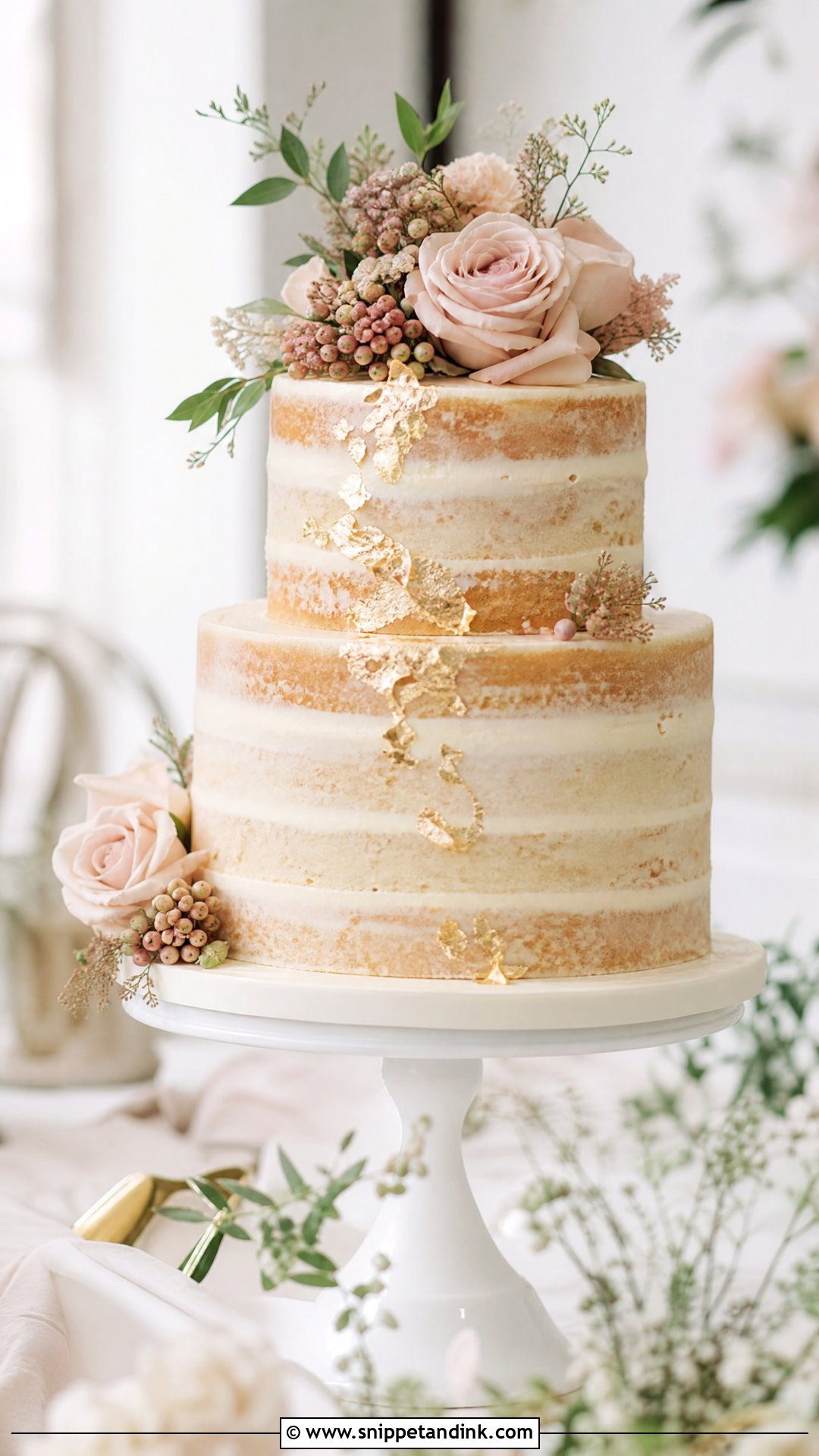
A few flecks of edible gold leaf lift a rustic cake toward something more formal. I place them along the frosting edges, around the top tier or lightly over one side, and stop there; too much gold hides the cake you’ve paid for. Vanilla, champagne-style, almond and honey sponges suit it, with white buttercream, soft blush flowers or tiny berries for balance. Gold leaf is so thin it clings to fingers and lifts in a breeze, so I apply it with a dry brush and tweezers, ideally once the cake is in its final spot.
12. Two Tier Naked Wedding Cake
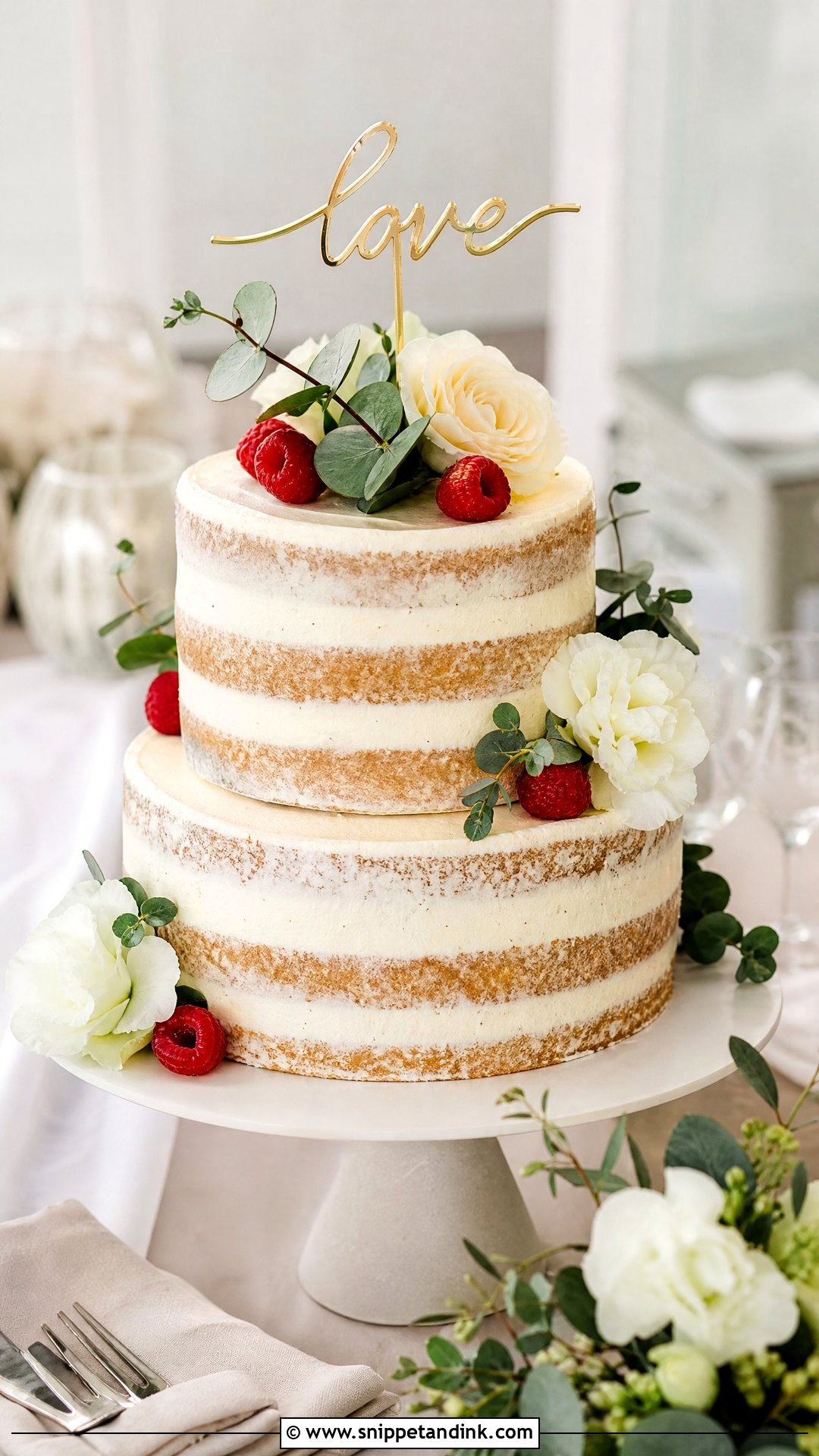
Two tiers give height and presence without an oversized cake, which suits smaller weddings, elopements and intimate receptions. At this size every detail sits at eye level, so even layers, clean filling lines and a stable stack matter more, not less. Fresh flowers, greenery, berries, figs or a small topper all work. If your guest count outgrows two tiers, a plain kitchen cake in the same flavour can be cut out of sight, and nobody can tell on the plate. A pedestal stand adds back the height.
13. Three Tier Naked Wedding Cake
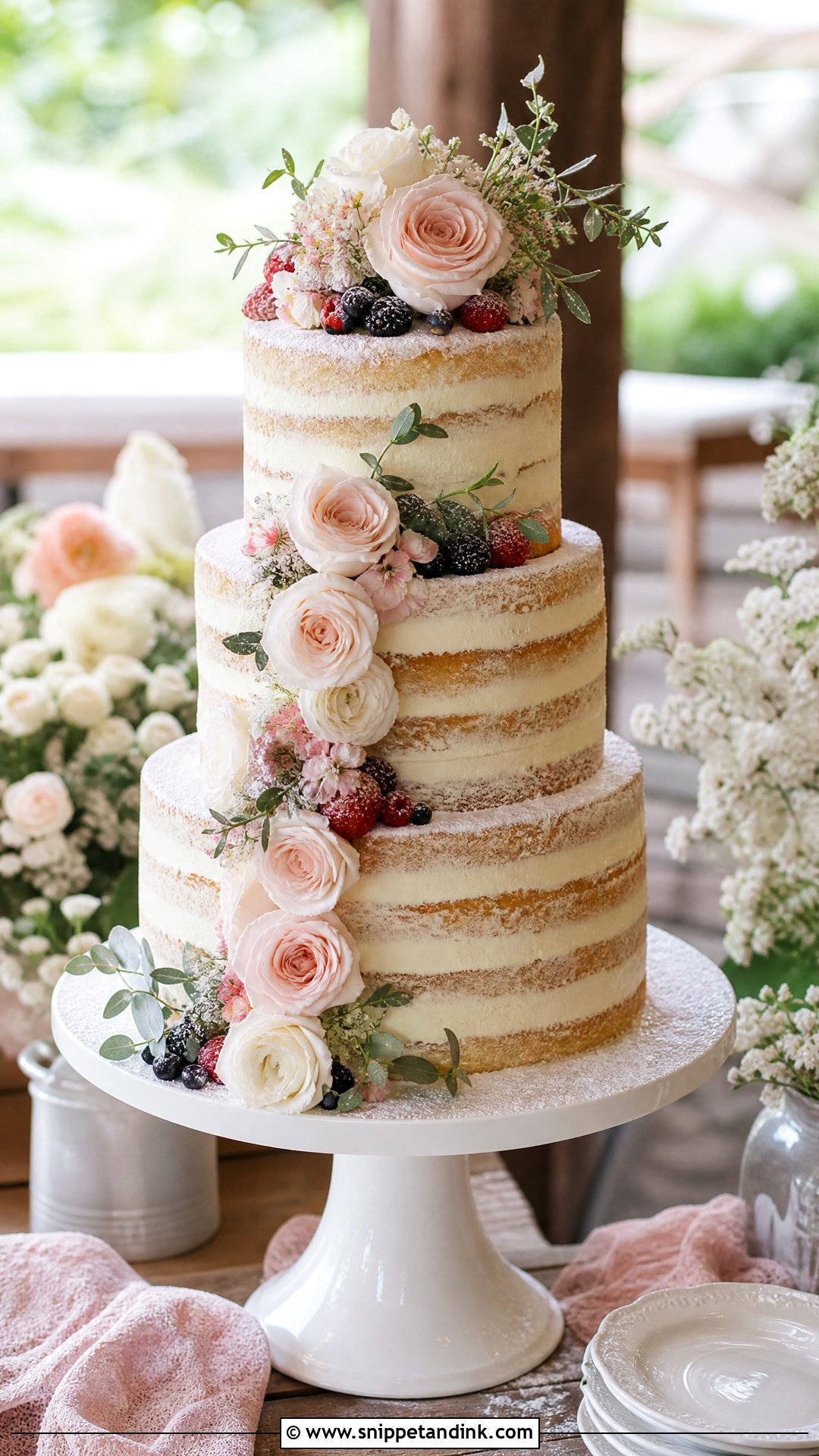
Three tiers make a true centrepiece for a medium or larger reception, and this is where the engineering starts to matter. Each tier sits on its own board with dowels or supports underneath; without them, the soft sponge of a naked cake compresses and the filling bulges out. I usually transport the tiers separately and stack them at the venue. Decoration can cascade down one side, with the bottom tier kept simpler and the upper tiers carrying most of the styling. Garden, barn and tent settings all suit it, as long as the tent isn’t hot.
14. Naked Wedding Cake With Roses
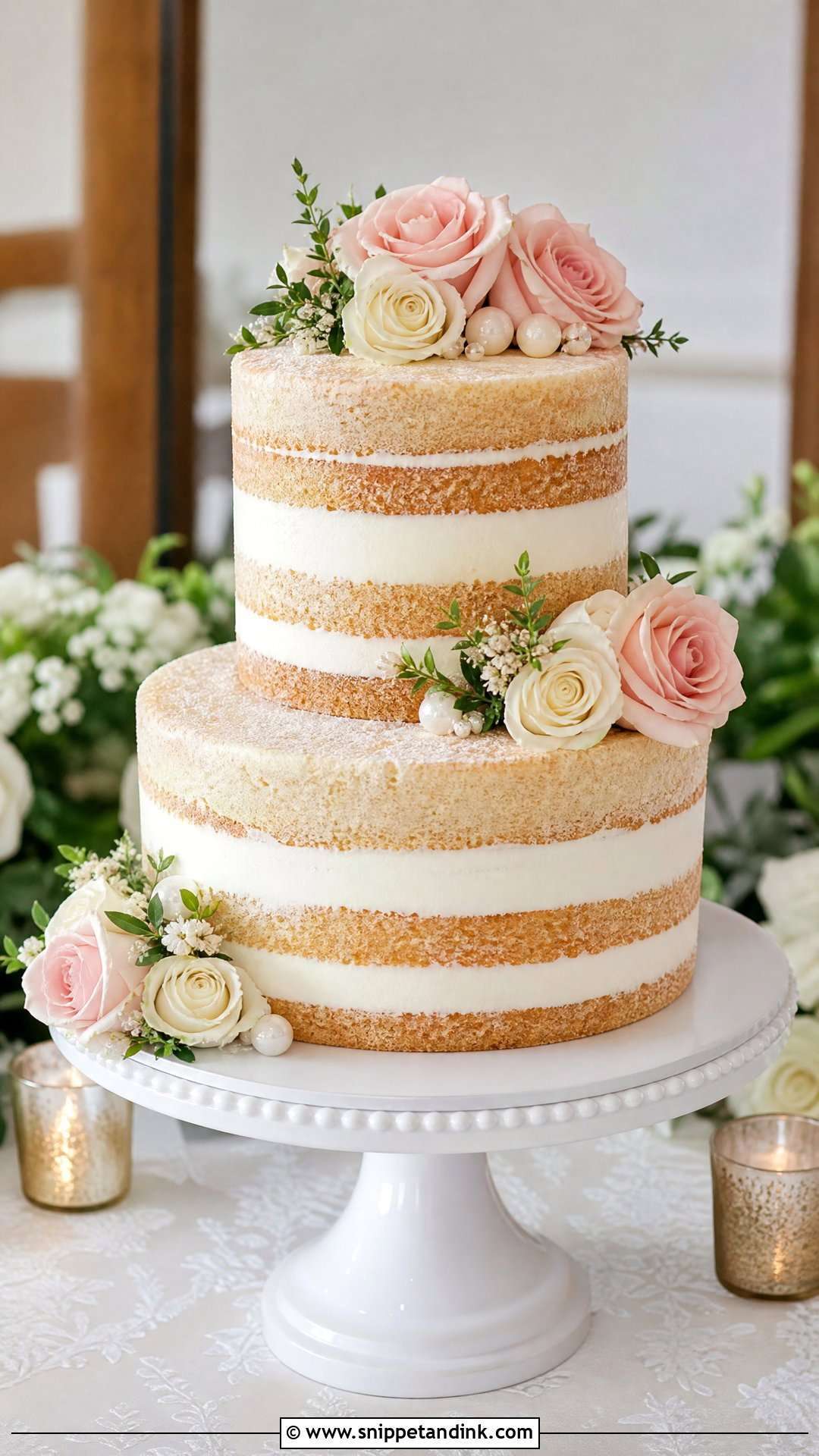
Roses in blush, ivory, peach or dusty pink turn bare layers into a centrepiece. Place them in small clusters rather than on every tier, so the texture and filling stay part of the design. Vanilla, almond, lemon and red velvet sponges all pair well visually, and a few sprigs of greenery or berries add depth. Garden roses grown without pesticides are edible, but most florist roses aren’t, so I either source unsprayed blooms or keep the stems wrapped and the petals off the cut surface. The colours and arrangement decide whether it reads rustic or formal.



15. Naked Wedding Cake With Peaches
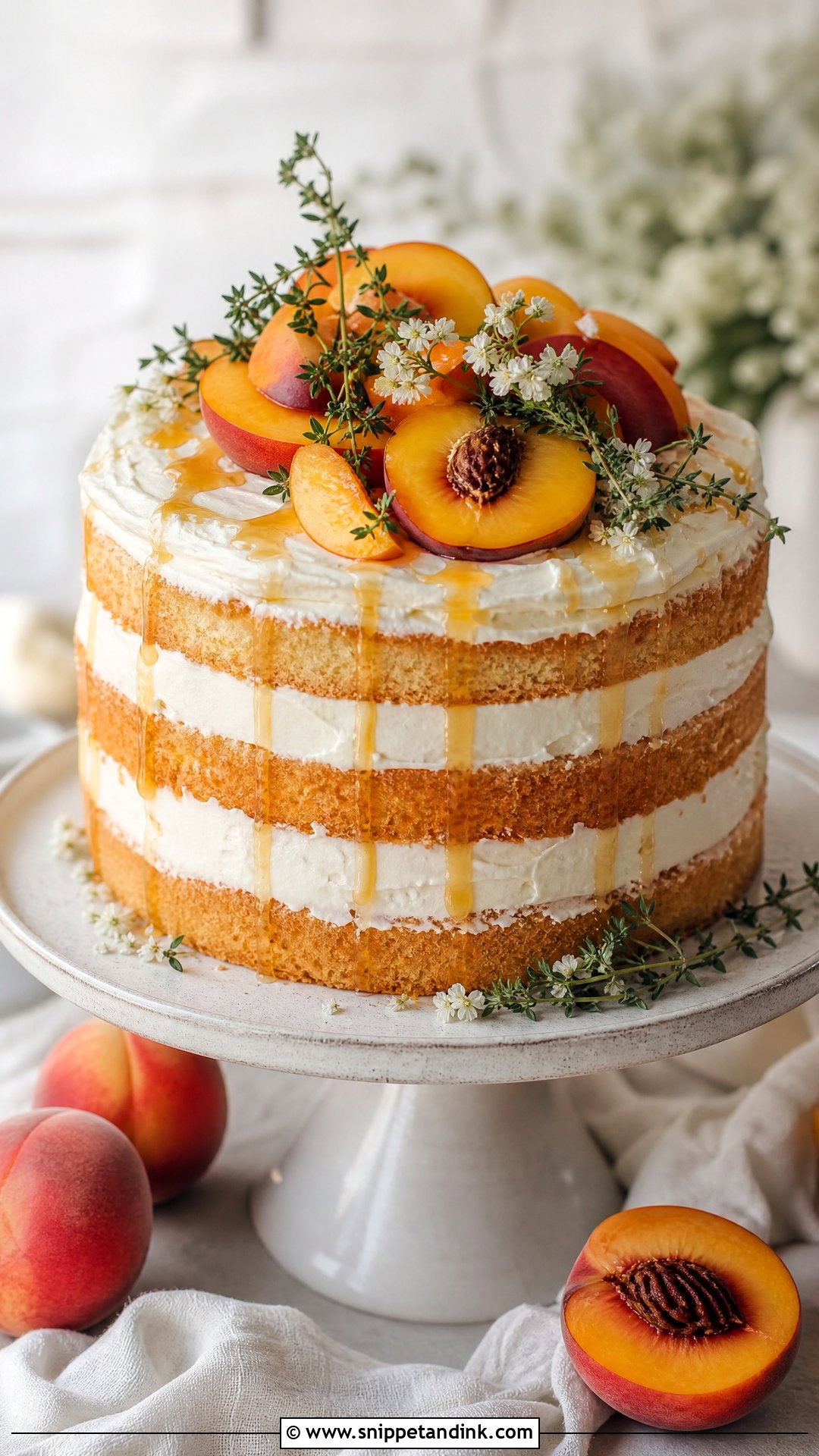
Peaches make a sunny late-summer cake. Sliced, halved or roasted, they sit between tiers and around the top, alongside vanilla, brown sugar, almond or lightly spiced sponge. Mascarpone, whipped cream or vanilla buttercream filling keeps it soft. Small white flowers, thyme sprigs or a thin honey drizzle finish it. Cut peach browns quickly, so I brush slices with a little lemon juice or a light glaze and add them close to serving. Keep this one in the shade at an outdoor reception.
16. Naked Wedding Cake With Macarons
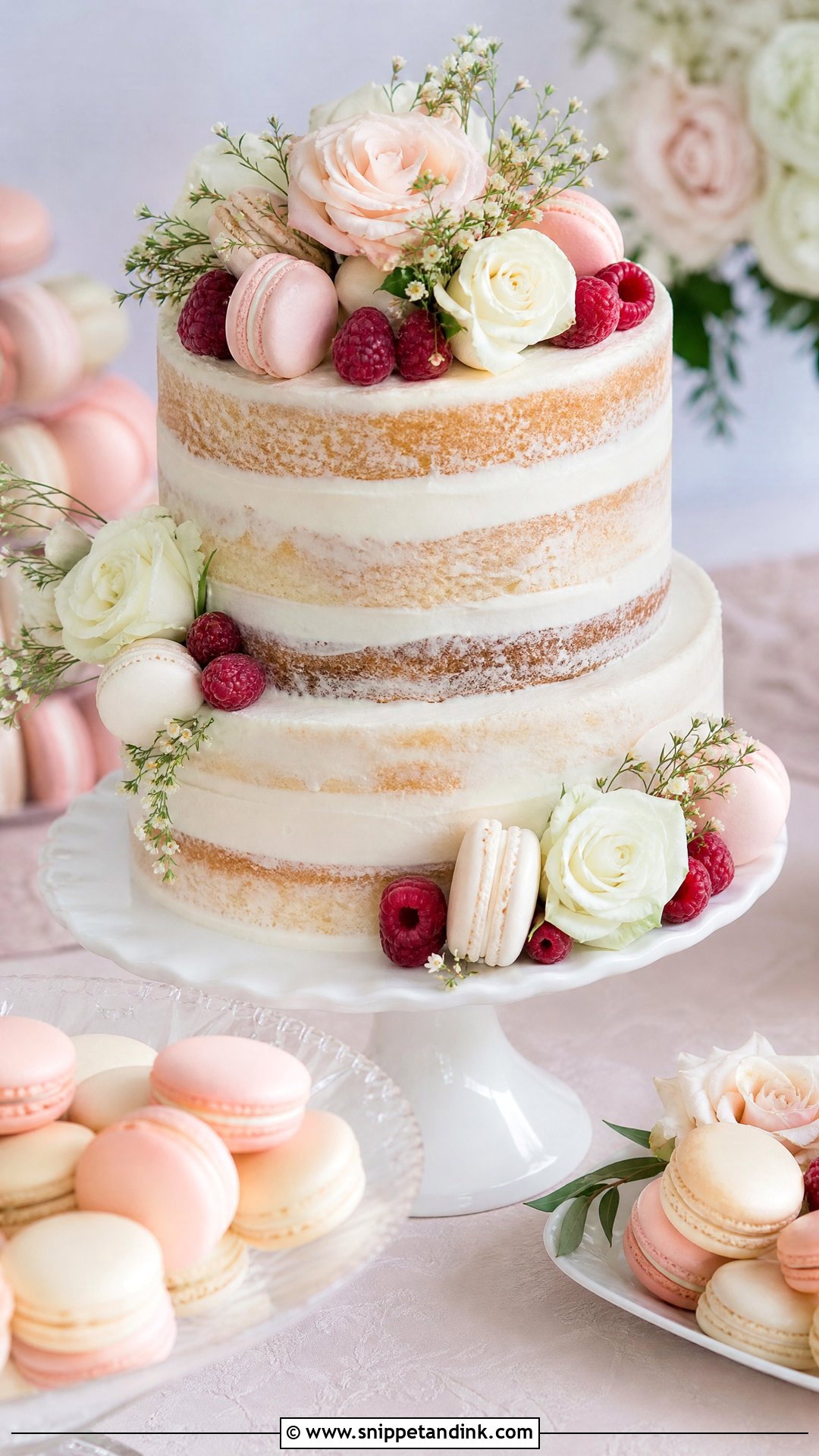
Macarons give a naked cake a playful touch and double as extra dessert. They can sit on top, rest beside flowers or ring the base, in colours matched to the wedding palette such as ivory, blush, sage or soft blue. Keep the cake itself simple, with visible sponge and clean filling lines. Vanilla, almond, raspberry and lemon fillings pair well. Macarons go soft in humid air and wherever they touch moist filling, so they’re the last thing I put on, spaced apart so the design stays calm.
17. Naked Wedding Cake With Caramel Drip
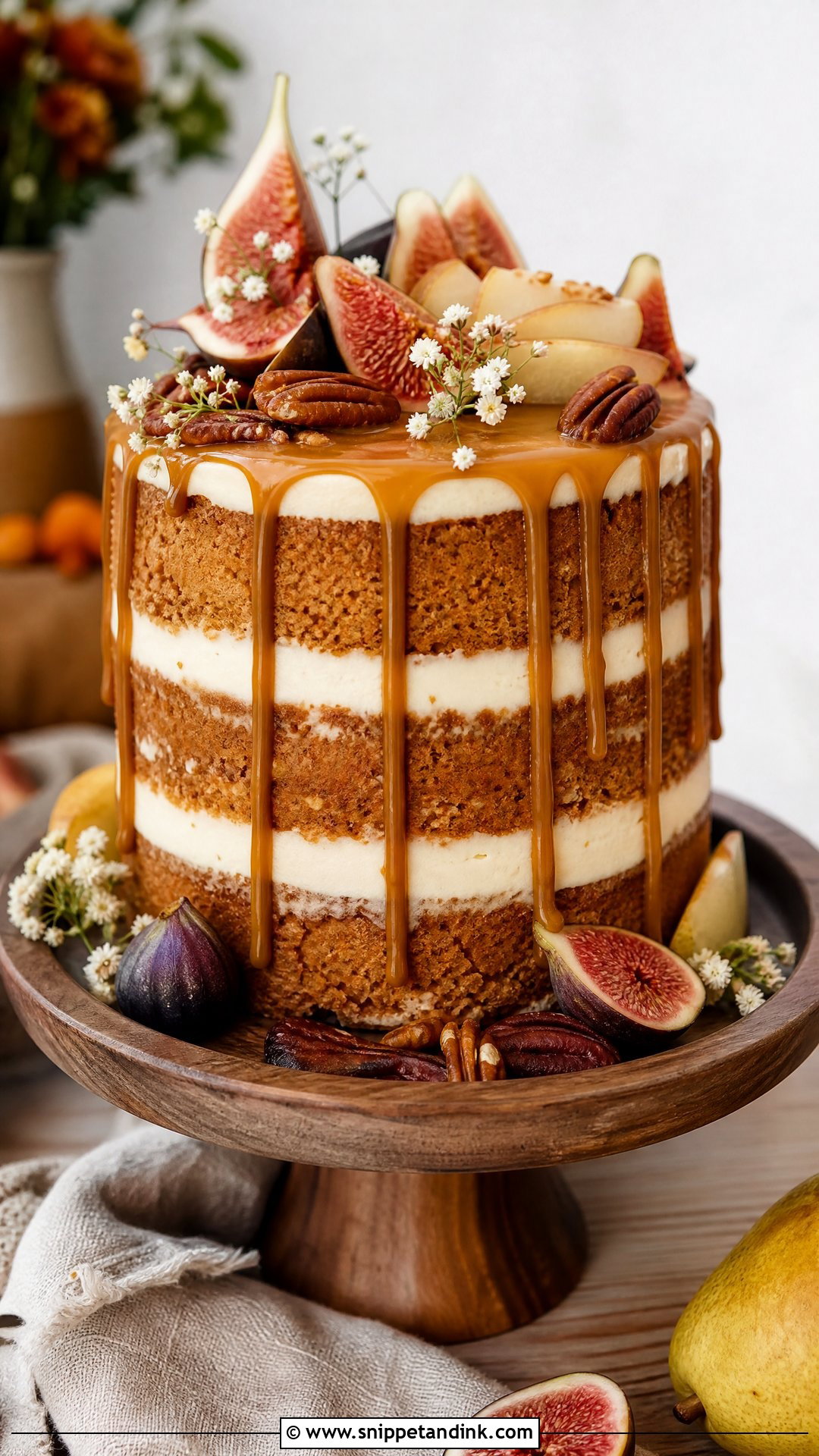
A caramel drip running over bare sponge looks warm and golden. It pairs with vanilla, apple spice, carrot, brown sugar or chocolate layers, with figs, pears, toasted nuts or small flowers to finish, and the palette belongs to autumn. I test the caramel’s temperature on the chilled cake before committing: too warm and it runs to the board, too cool and it sits in blobs. Ask for a controlled drip that stops partway down the tier. A heavy pour makes a rustic cake look messy.
18. Naked Wedding Cake With Lavender
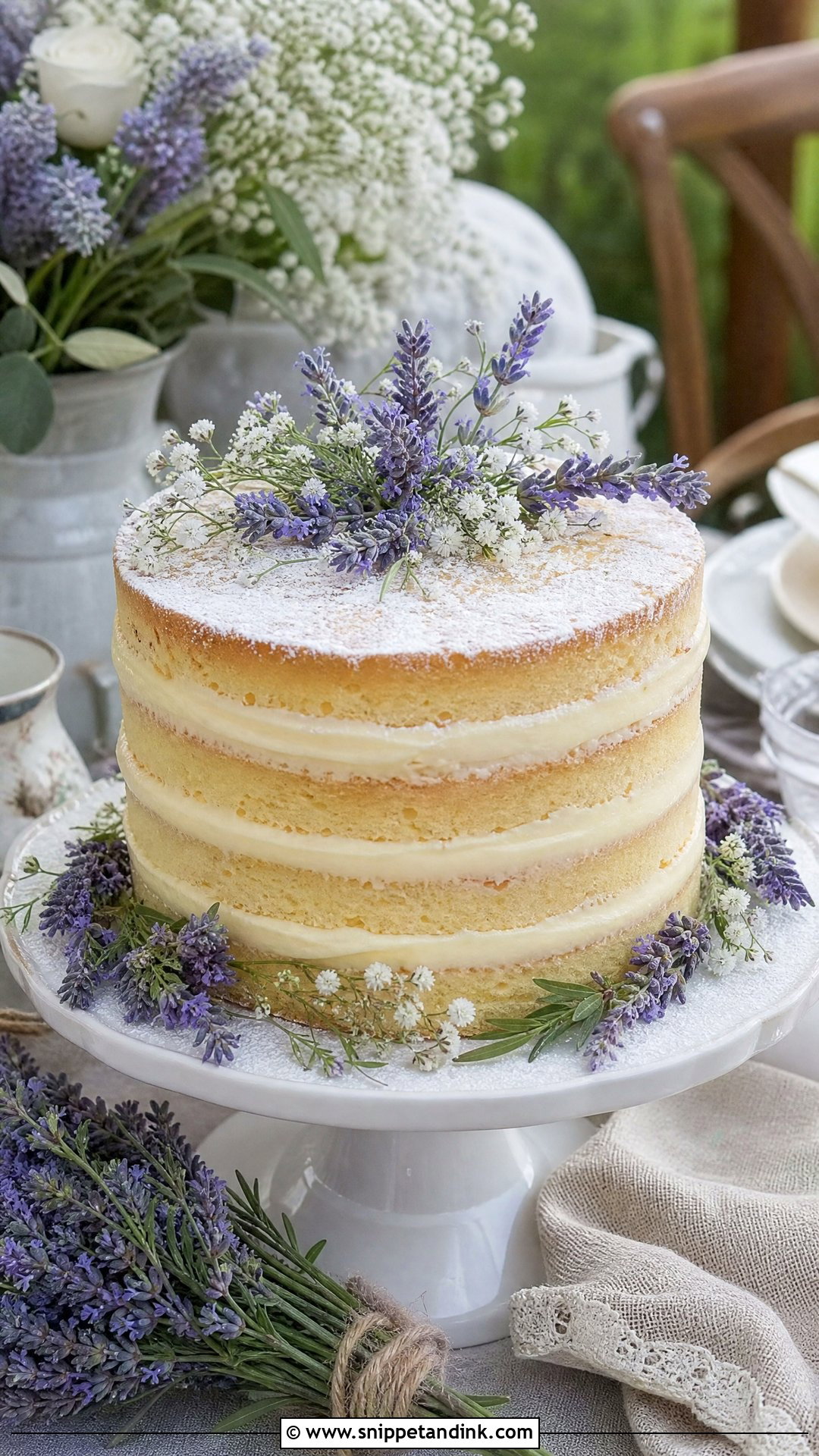
Lavender is the flavour I’m most cautious with. A little culinary lavender in lemon buttercream or honey cream tastes floral; slightly too much tastes like soap. The purple sprigs look delicate against pale vanilla, honey, lemon or almond sponge, with tiny white flowers and light greenery around them. Only culinary lavender should go in the cake, and decorative sprigs from a florist need a barrier. Garden weddings, spring receptions and outdoor tables suit it, and the gentle colour shows well in photos.
19. Naked Wedding Cake With Pears
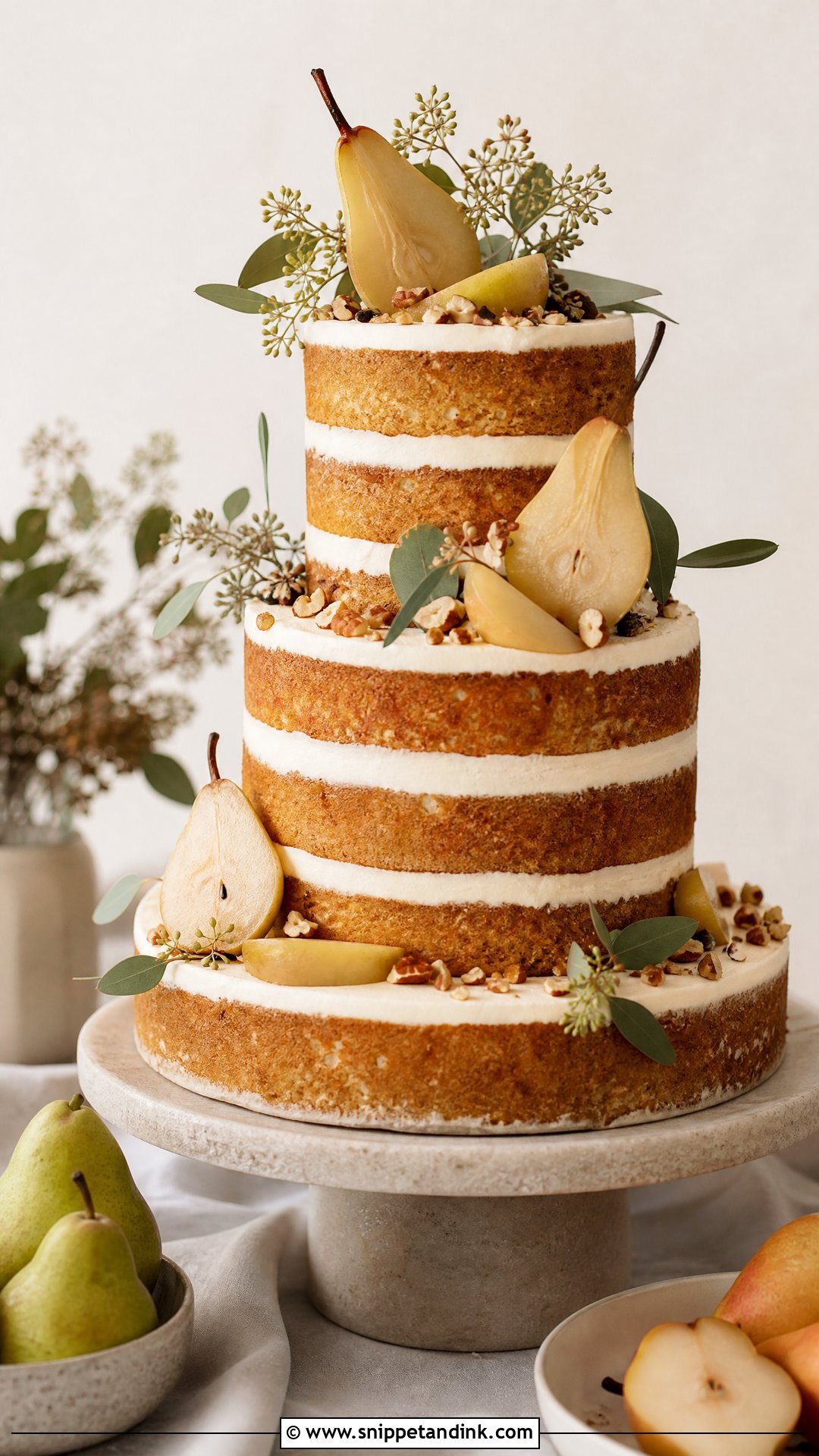
Pears give a quiet, golden-green cake for autumn and early winter. Thin slices, poached halves or small whole pears decorate the tiers. They pair with spice cake, vanilla bean, honey or almond sponge, with cream cheese frosting, vanilla buttercream or caramel between the layers. Poached pears hold their shape and colour on display far better than raw slices, which brown. Add greenery or chopped nuts for texture, and keep the styling soft so it doesn’t tip into a Christmas look.


20. Naked Wedding Cake With Edible Flowers
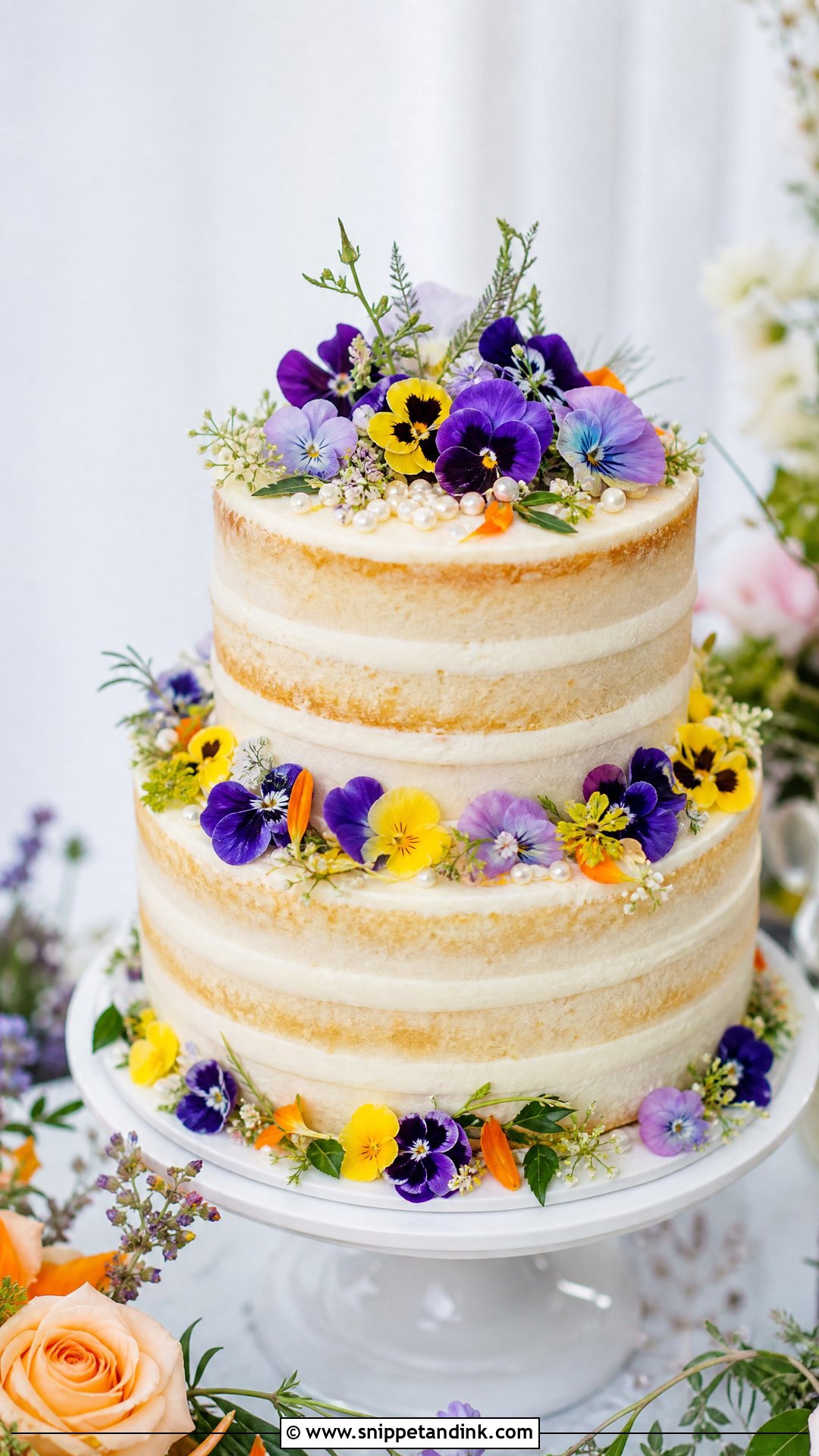
Edible flowers are the one decoration that can be pressed straight into the frosting. Pansies, violas and calendula petals are reliable, as long as they were grown for eating rather than pulled from a florist’s bucket. I’d pick a tight palette of two or three colours instead of a random mix. Vanilla, lemon, coconut and almond sponges make a clean background, and smooth frosting lets the petals stand out. Press them on within a few hours of the reception, since delicate petals wilt and fade. Spring weddings and garden receptions suit it best.
Flowers, Fruit and the Last Hour Before Guests Arrive
Most of the decoration on a naked cake goes on at the venue, and that’s where coordination with your florist counts. I ask for flowers that haven’t been sprayed, and every stem is wrapped or set in a food-safe pick before it goes near the sponge.
Flowers I keep off the cake
Some popular wedding flowers are toxic or irritating, so they stay off the cake entirely: lily of the valley, foxglove, hydrangea, sweet pea, daffodil and baby’s breath. If you love one of them, use it on the cake table around the stand instead.
On the day
- Tiers travel separately and are stacked on site, with supports already inside each tier
- Berries are dried thoroughly, and cut fruit goes on last
- Sugar dusting and gold leaf are added once the cake sits in its final spot
- Someone at the venue knows which decorations to remove before cutting
Where the Cake Stands Matters as Much as the Flavour
Venue, season, flavour and palette decide most of this. Flowers read romantic, berries bright, greenery modern, and caramel or figs rich and seasonal. Whichever you choose, ask your baker three things: how close to the reception the cake will be assembled, which decorations are safe to touch the sponge, and where the cake will stand. A naked cake kept out of the sun, assembled late and cut on time tastes as good as it looks.
You'll Like These Ideas:










Leave a Reply