
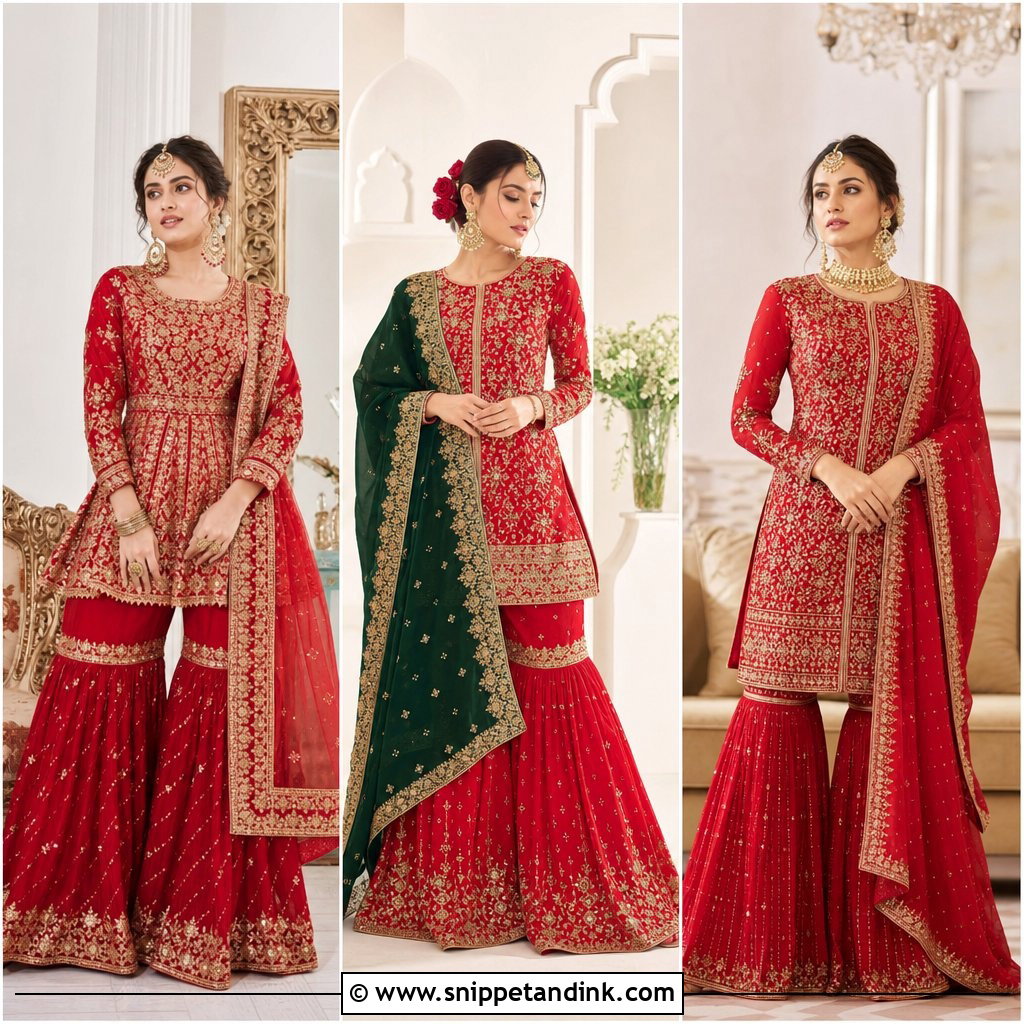
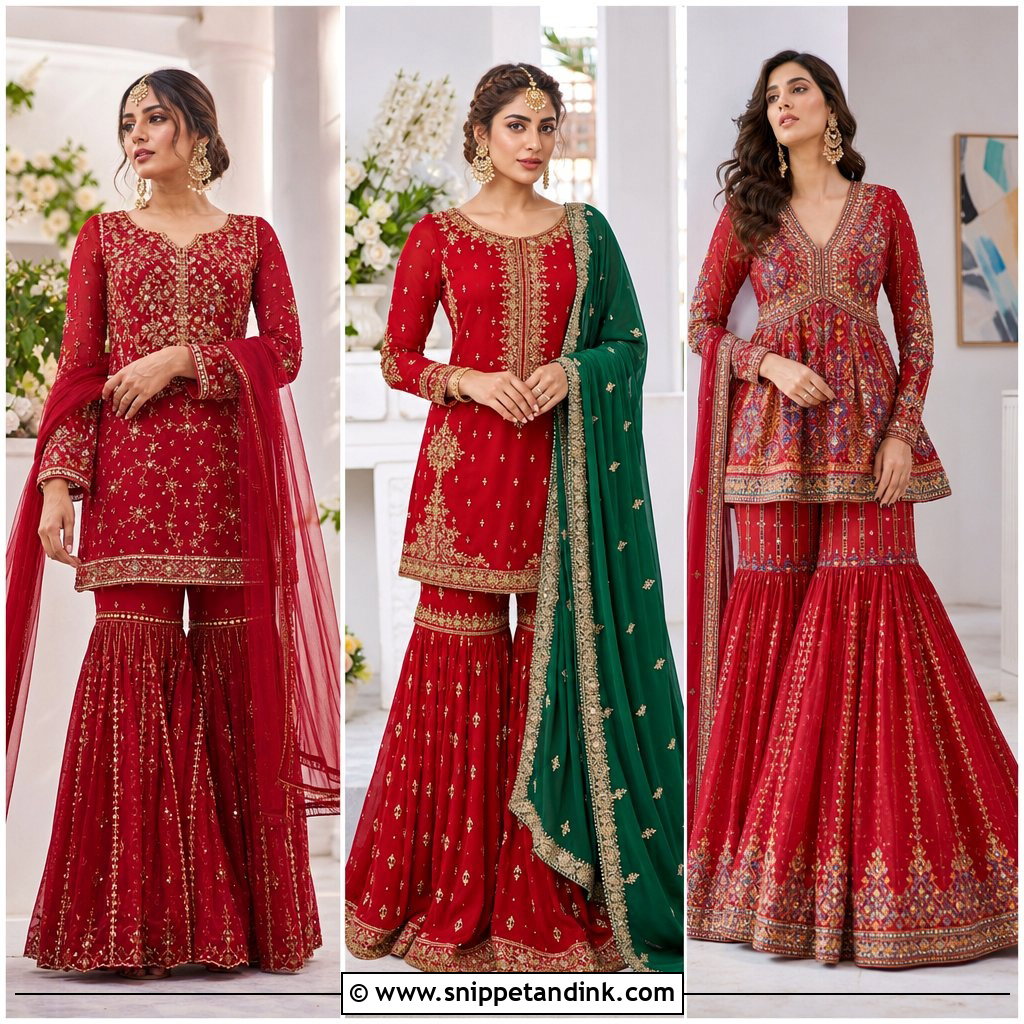
Red is the colour I get asked about most for gharara sets, by brides and by guests alike. The pants do the dramatic part on their own, so my job is mostly balance: the right kurta length, a dupatta that doesn’t fight the flare, shoes you can stand in, and jewellery that knows when to stop. A bride might go for velvet and zardozi; an Eid outfit can be plain chiffon; a peplum top makes it feel current. Shade changes the mood too. Scarlet is lively, ruby is rich, maroon is quiet. Below are twenty complete looks for weddings, Eid, family dinners and parties, with notes on who each one suits.
Your Height Sets the Kurta Hem, Not the Trend
Before I look at colour, I look at height, because a gharara cuts the body into three parts: kurta, fitted leg and flare. On a petite frame, a long kurta plus a deep flare leaves almost no visible leg, and the outfit swallows you. Taller women can carry a longer kurta comfortably.
- Under about five foot three: a short kurta at upper thigh, a knee band set right at the knee, and a small heel or platform inside the flare.
- Average height: short or hip-length kurtas both work; a peplum is fine if you like the waist defined.
- Tall: long straight or jacket kurtas with high side slits look natural on you, and a farshi length won’t trip you.
- Fuller hips: keep the kurta hem below the widest point and avoid peplums; a straight cut with slits is more flattering.
I also ask clients to look at themselves from the side. If the kurta flares out over the gharara’s knee seam, the two volumes merge into one shape, and it reads heavy in photos. Tighten one of them.
1. Red Gharara With Short Embroidered Kurta
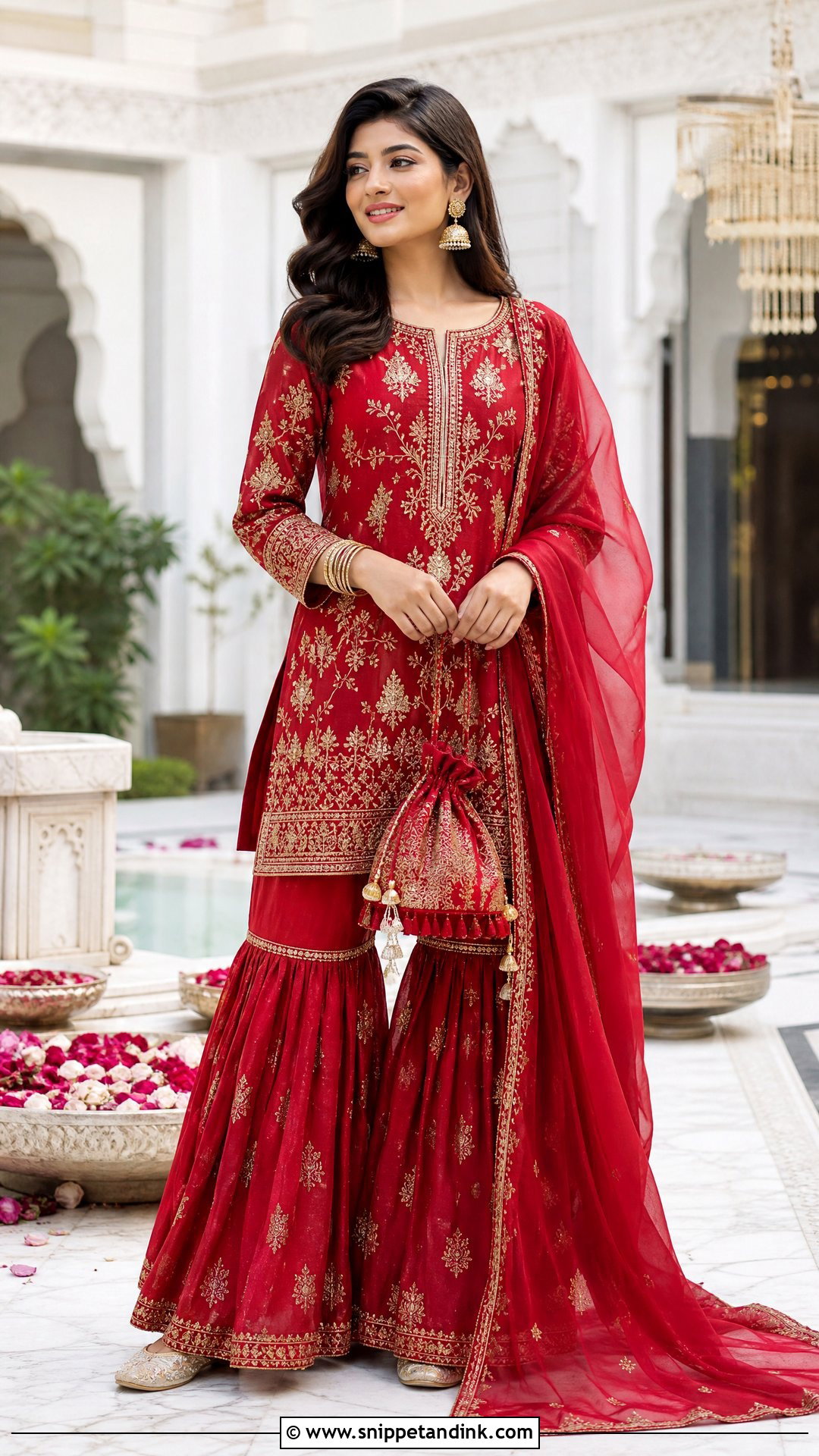
The short kurta is the starting point because it shows exactly what a gharara is: fitted to the knee, then the flare. I keep the hem at upper thigh. Any longer and the gathered knee seam disappears under it. Zari or small floral motifs are enough decoration, with a light organza dupatta bordered narrowly on top. Gold jhumkas, stacked bangles, a potli and cushioned gold juttis finish it, and a low center-parted bun keeps the neckline clear. I’d wear this to Eid, an engagement or a mehndi without changing a thing.
2. Red Gharara With Long Straight Kurta
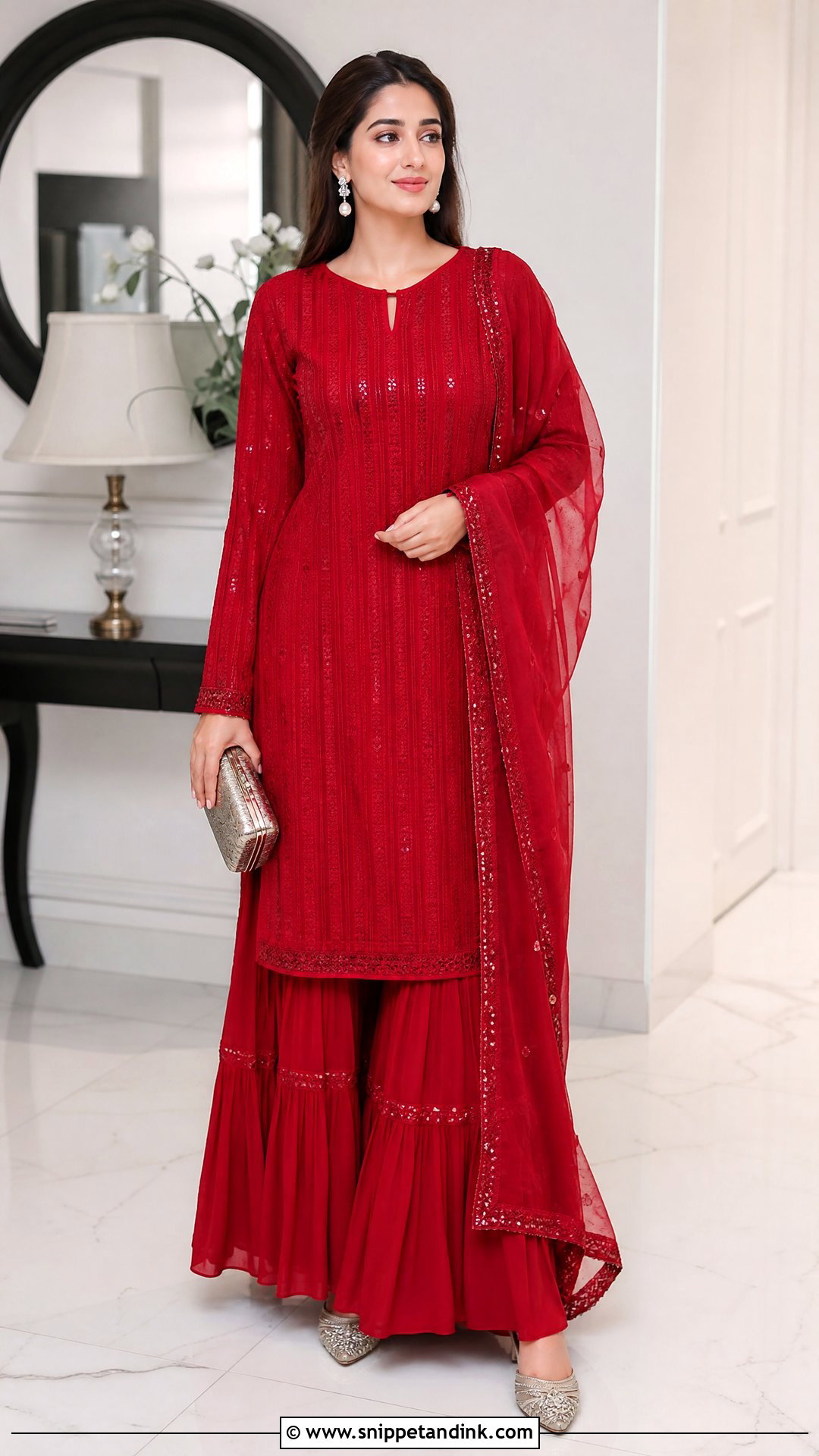
A long straight kurta is the more modest route, and the side slits aren’t optional. Without them the kurta hem sits on top of the flare and you lose the gharara shape entirely, plus walking gets harder. I like vertical embroidery or a detailed neckline here because it draws the eye up and lengthens the body. A sheer red dupatta with scattered sequins keeps it monochrome. Pearl drops, a slim bracelet, a metallic clutch and pointed embroidered flats suit a formal dinner or a long day as a guest.
3. Red Gharara With Peplum Top
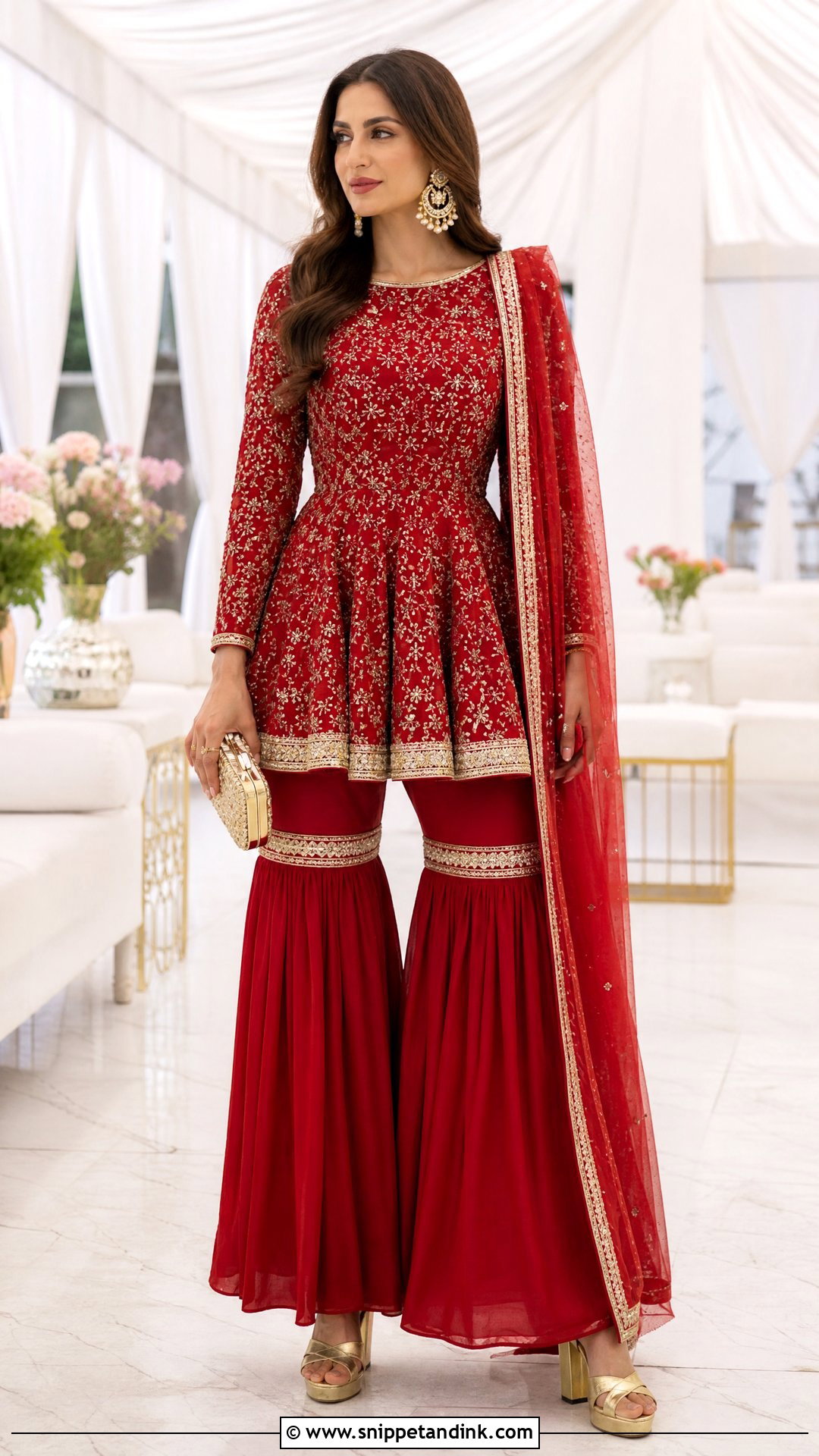
Peplums define the waist, which a straight kurta never does, so this is the version I suggest to anyone who feels shapeless in traditional cuts. Go for a V or soft curved neck to balance the volume below. Tonal embroidery looks clean; gold reads more formal. Since the peplum already moves, keep the dupatta light and on one shoulder only. With kundan earrings, a box clutch, block heels and a half-up wave, it’s particularly suitable for a sangeet, or any evening where you want tradition with a modern edge. One warning: peplums add width at the hip, so I’d skip it if that’s where you’d rather not add volume.
4. Red Gharara With Gold Dupatta
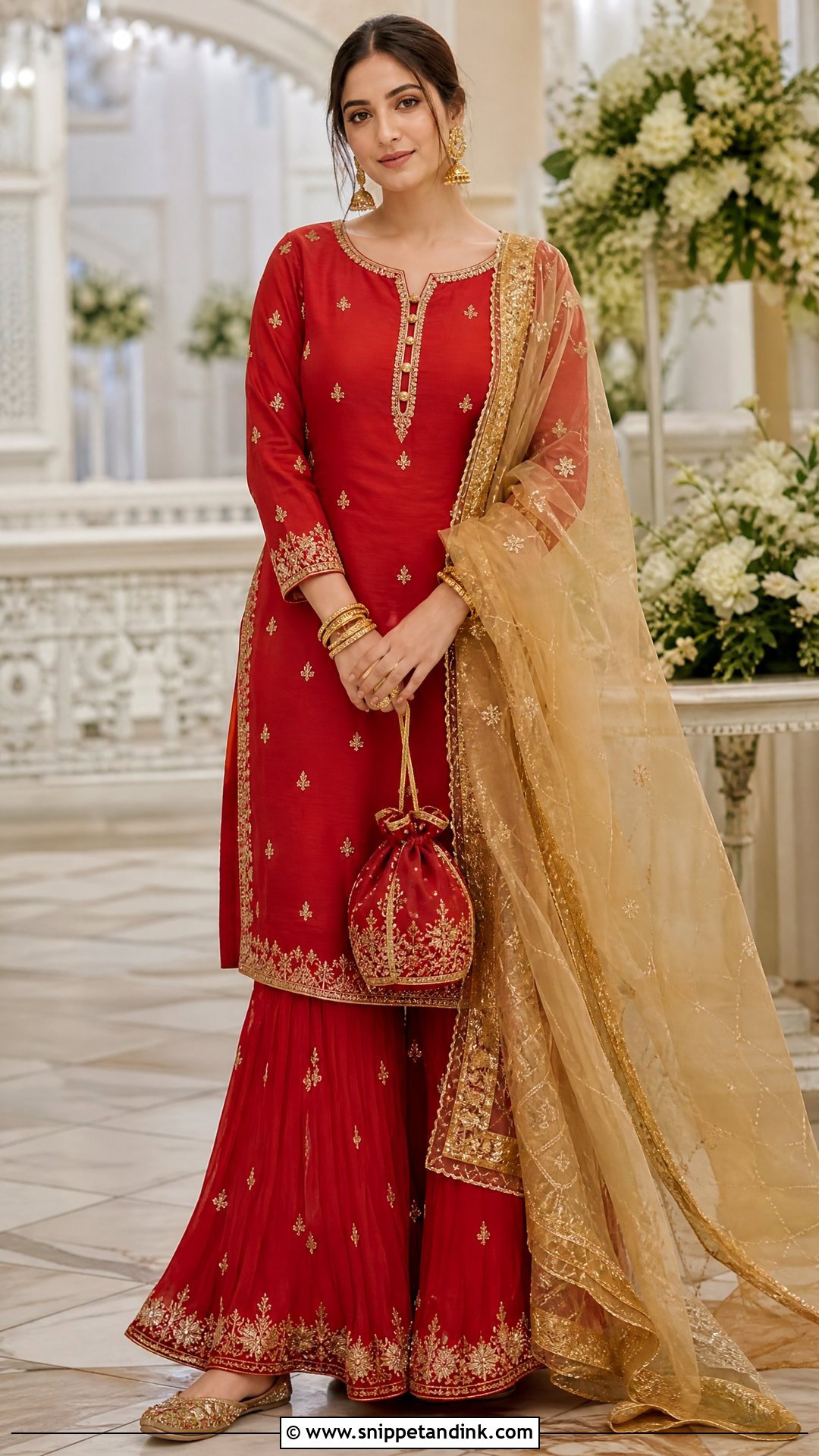
Here the dupatta is the feature. Keep the red kurta and gharara solid or lightly embroidered, then bring in gold tissue, brocade or organza on top. Tissue is stiff and crinkles, so I pin it neatly over one shoulder; left loose it balloons and hides the silhouette. Jewellery should be in the same tone of gold, and less than you think: medium jhumkas, one ring, a few bangles. Add a red-and-gold potli, gold heels or juttis and a sleek bun for a ceremony or a formal family dinner.
5. Red Gharara With Green Dupatta
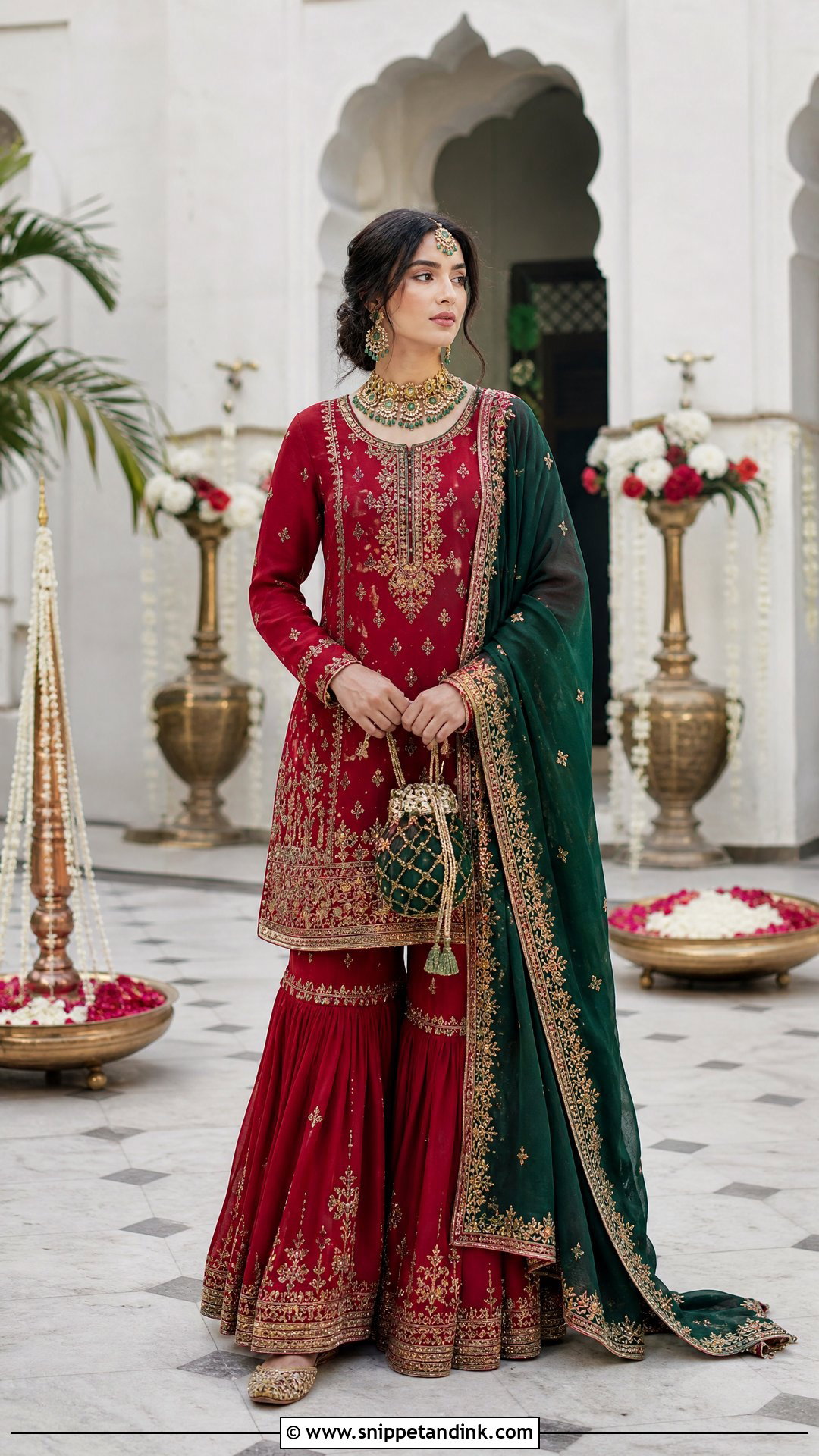
Green and red is a traditional pairing, and it only works when the two shades sit at the same depth. Emerald or bottle green goes with ruby; olive suits maroon. I’d keep kurta and gharara in a single red and choose a green dupatta with a red-and-gold border so the colours hand over to each other. Green stones in a compact choker repeat the accent. Hold back on everything else: a neutral gold clutch and antique juttis, plus a low braided bun. It’s strong enough for a bride at her mehndi or nikah.
6. Red Gharara With Pink Dupatta
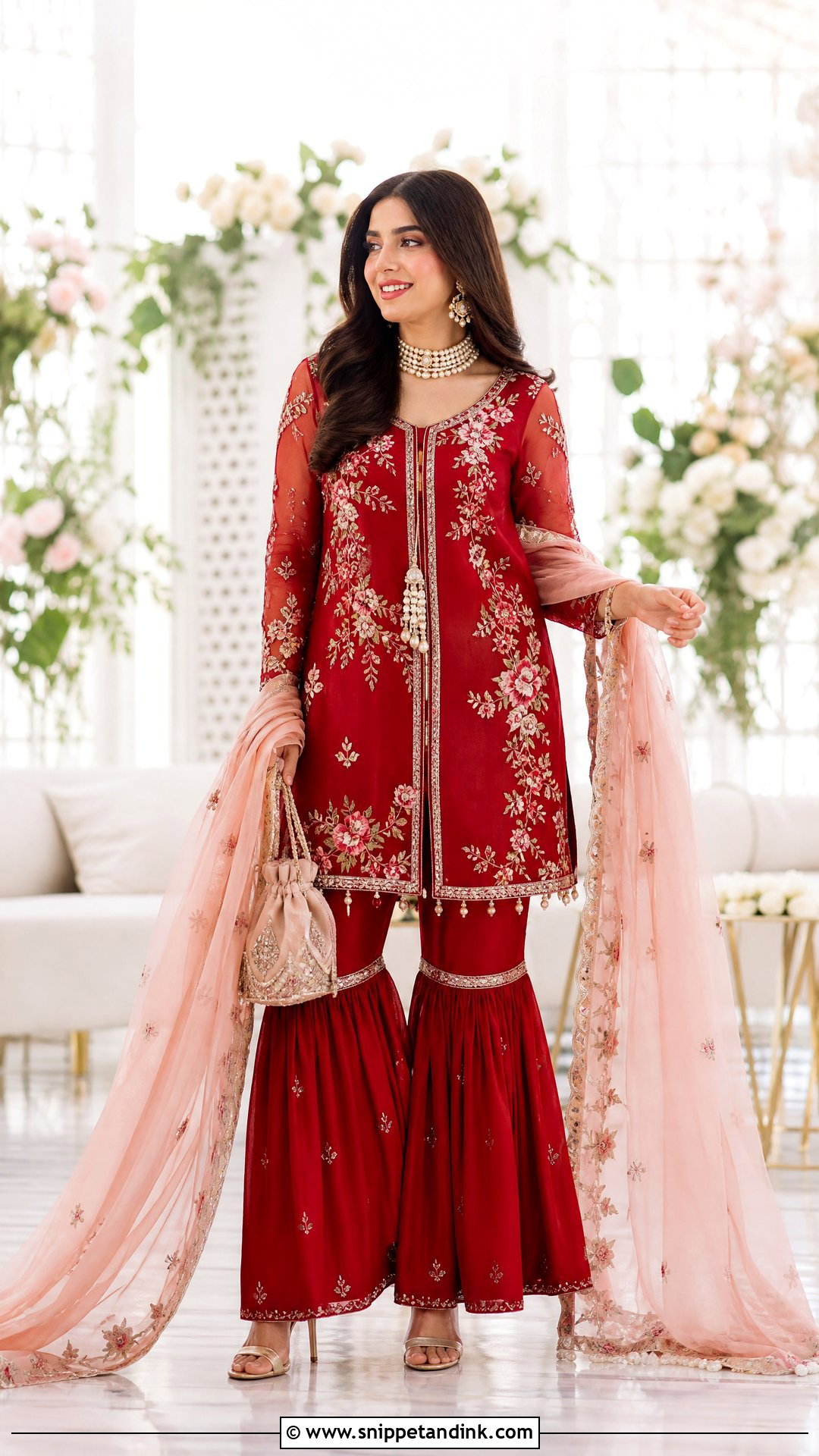
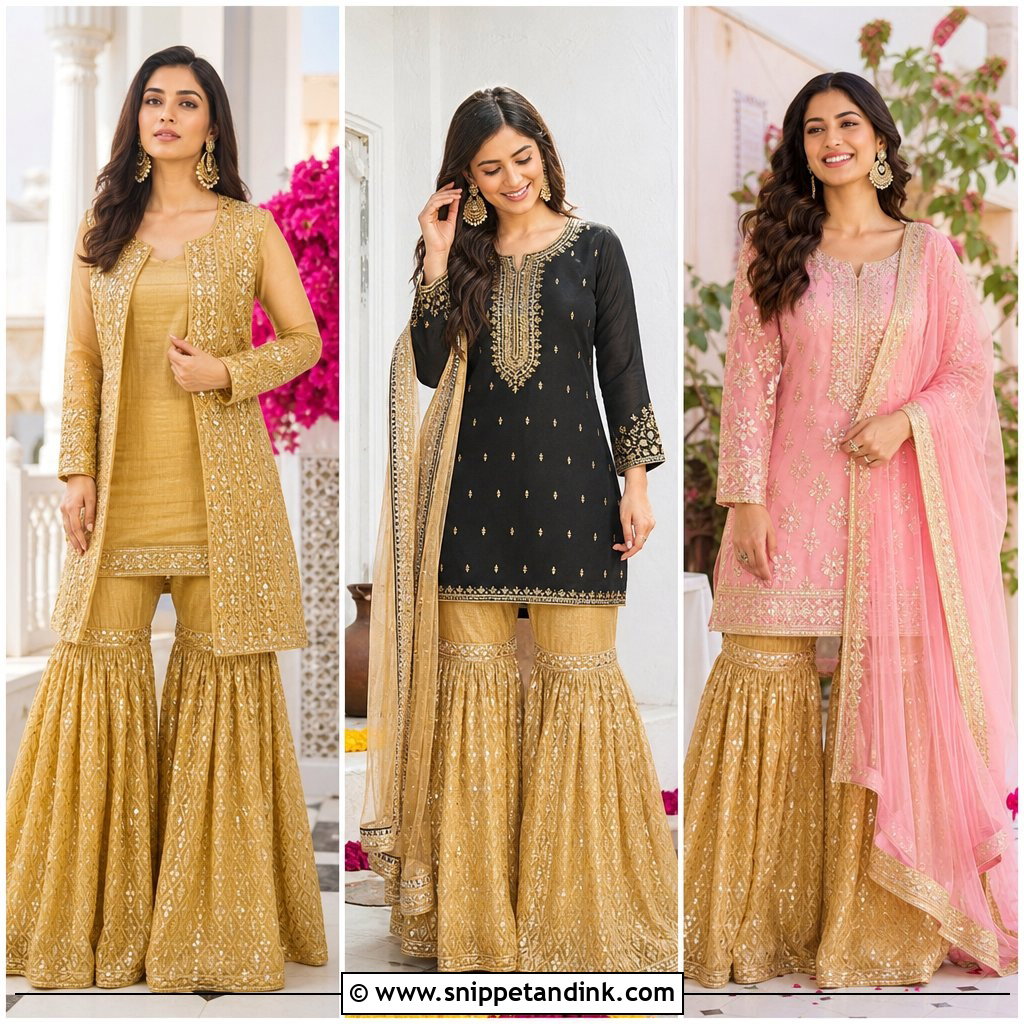
Red and pink clash only when their undertones disagree. A blue-based red wants a blue-based pink like rose or magenta; an orange-red looks better with a warmer blush. Pale pink organza feels like daytime, while magenta has evening energy. I like a kurta with a few pink flowers in its embroidery, so the dupatta looks planned rather than borrowed. Pearls or rose-toned kundan, a blush potli, champagne block heels and loose curls keep it light for an engagement or a daytime function.
7. Red Gharara With Ivory Kurta
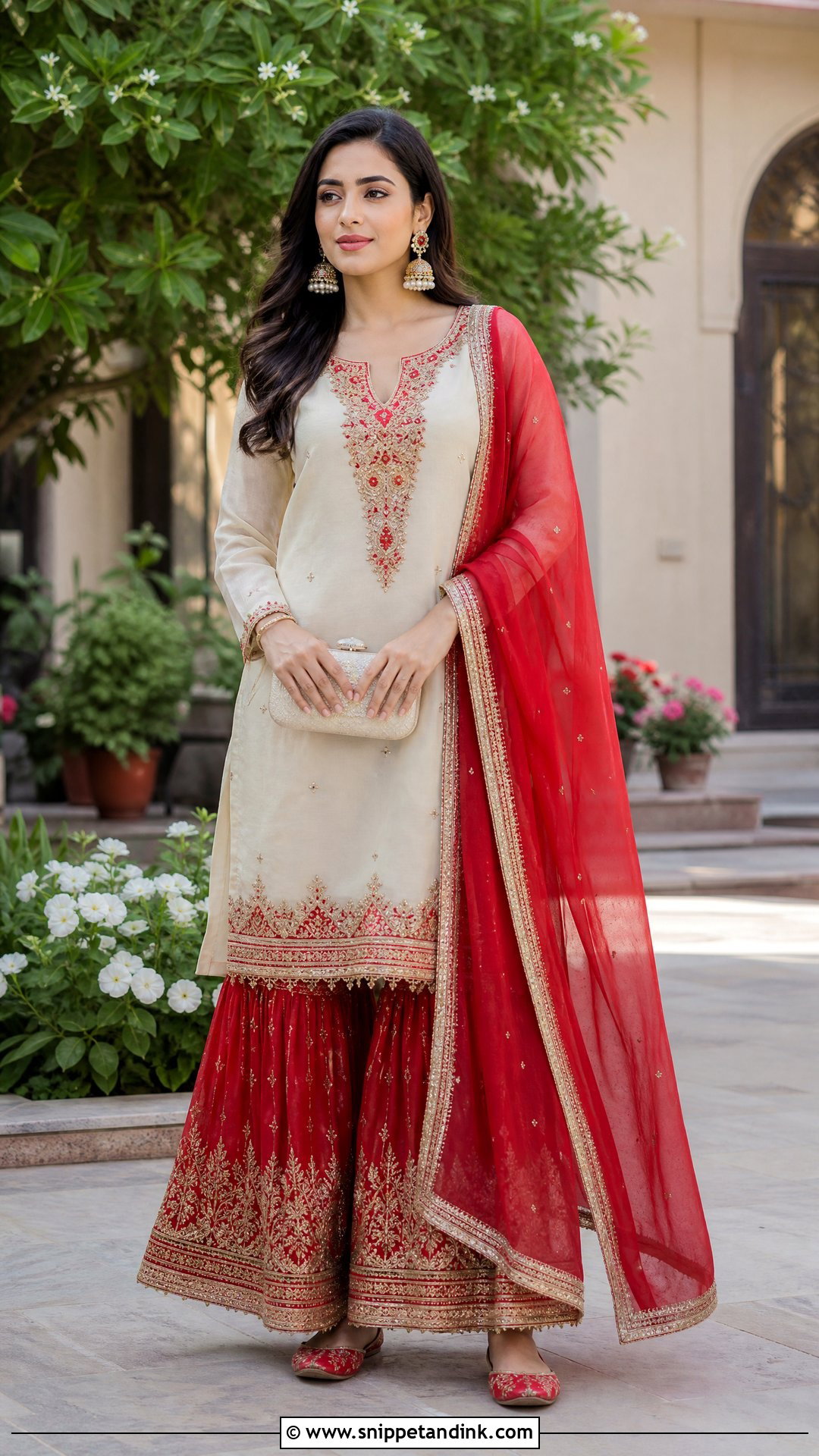
An ivory kurta takes the edge off bright red pants, and it’s my go-to for guests who worry an all-red outfit will look bridal. Tie the two halves together with red threadwork, gold borders or small mirrors on the kurta. A red chiffon dupatta brings colour back near the face. Pearl jhumkas, a gold bracelet and an ivory clutch stay refined. Ivory picks up every mark, though, so keep it away from mehndi and food stations until the photos are done.
8. Red Gharara With Black Kurta
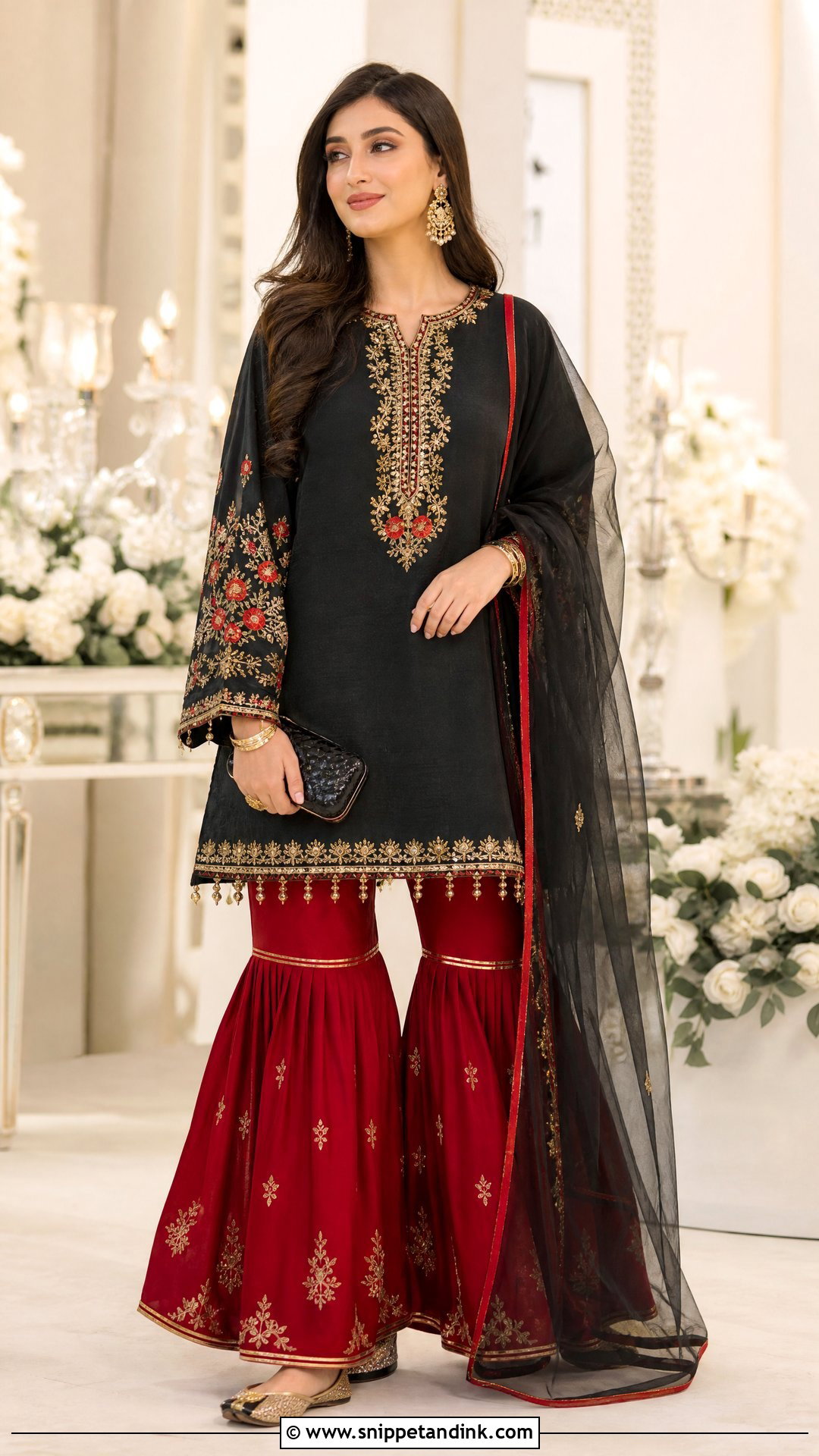
Black over red is sharp and confident, and better at night than in daylight. Choose a short black kurta with red embroidery or antique gold at the neck, and let the gharara stay the brightest piece. A sheer black dupatta with a thin red border joins top and bottom. I’d keep jewellery antique gold and add gold-trimmed juttis, a black clutch, a sleek low ponytail and defined liner. Do check family expectations first; some households still avoid black at weddings.
9. Red Gharara With Cape Top
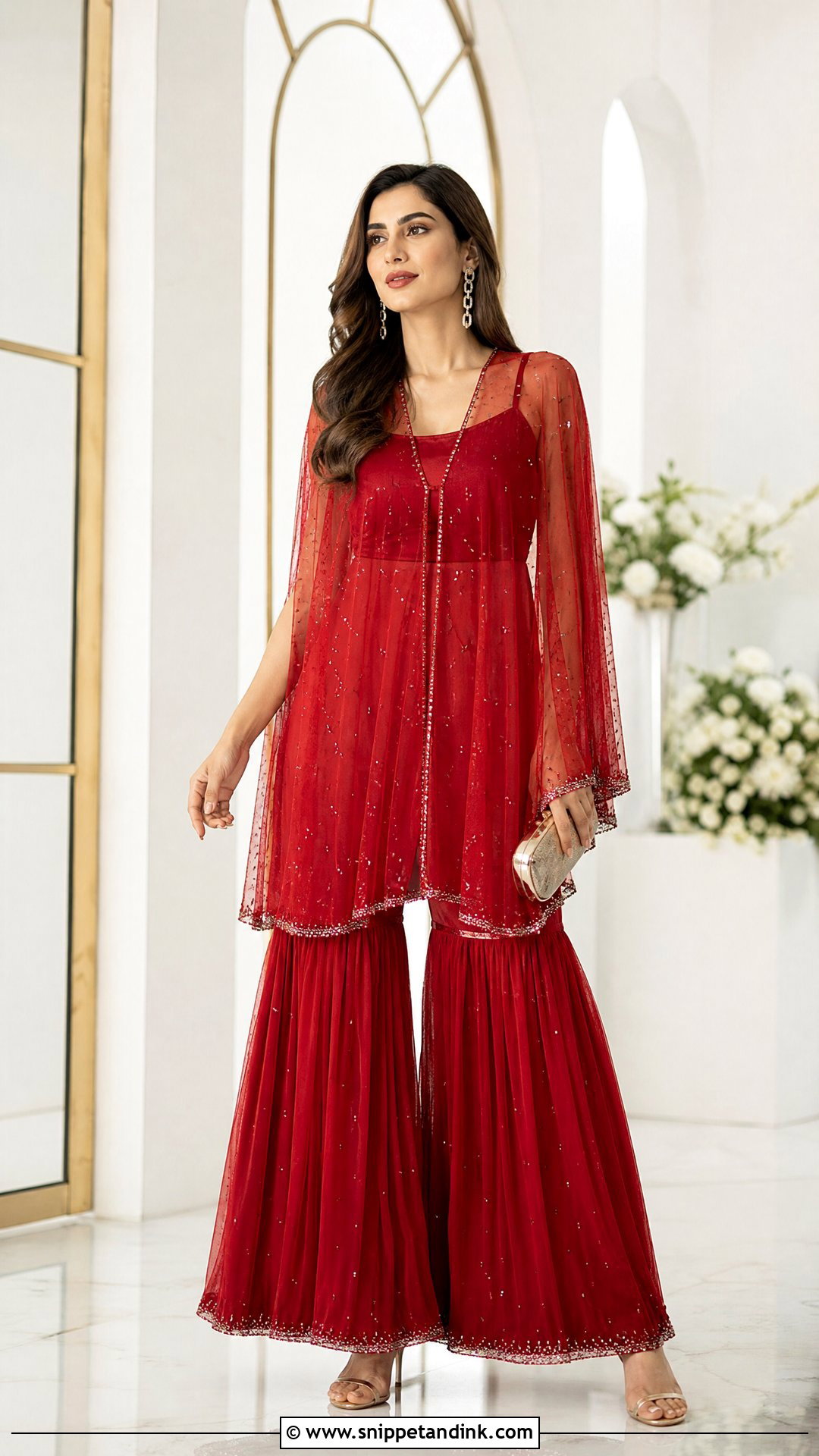
A cape top gives arm coverage without a dupatta to manage, which is why I suggest it to guests who plan to dance. The cape should end at the waist or upper thigh; longer and it starts competing with the flare. Chiffon, net or organza all work, and small sequins or tonal beads catch the light as you move. Skip the dupatta entirely. Long earrings, a compact metallic clutch, heeled sandals and a bun or high ponytail keep the neckline visible for a reception or sangeet.
10. Red Gharara With Angrakha Kurta
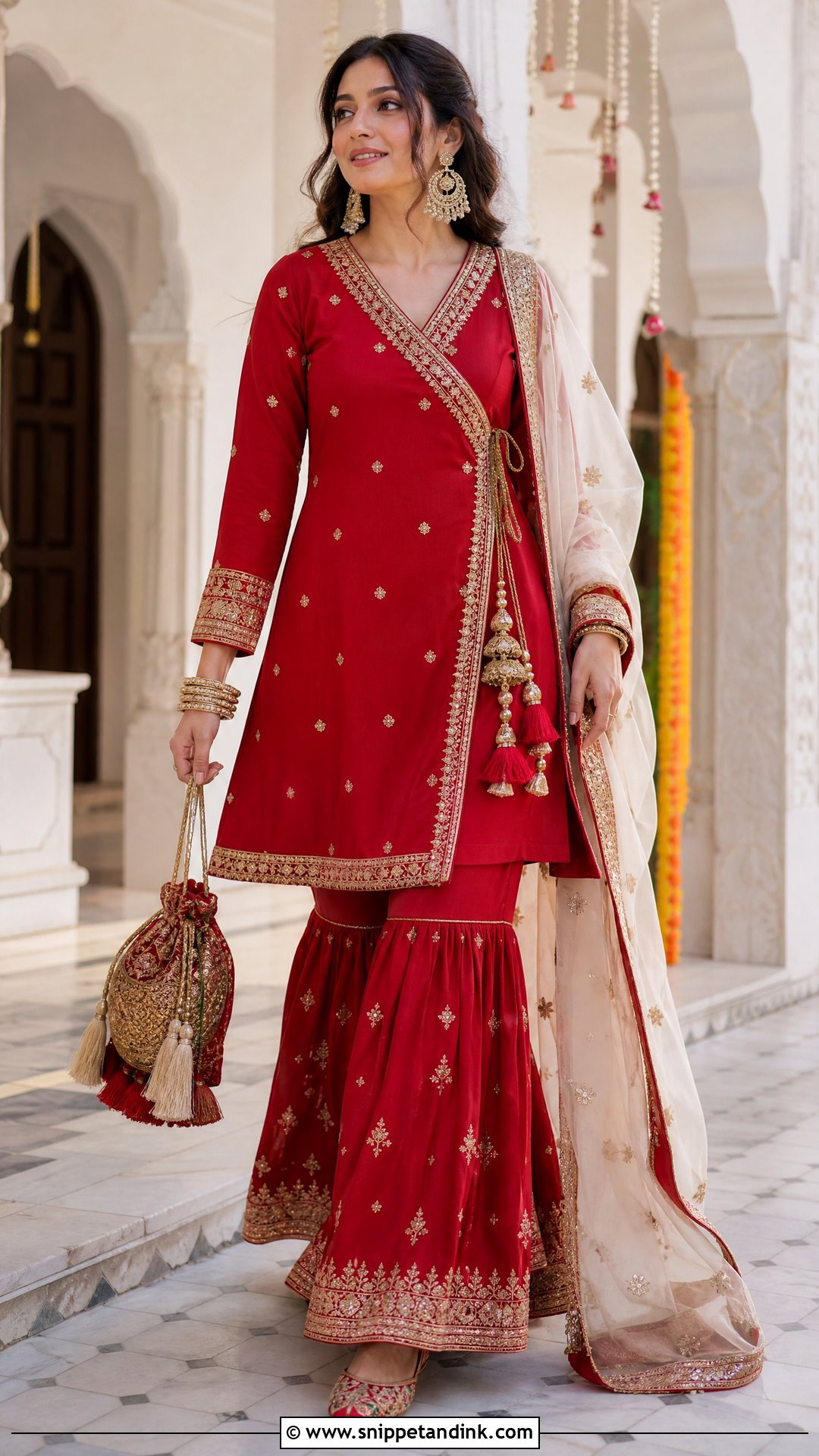
The angrakha wraps across the body with ties at the side, and the embroidery usually follows that diagonal. A short or hip-length cut defines the upper body and leaves the flare free. If the kurta is busy, keep the gharara plain; a lightly embellished dupatta softens the whole thing. Small chandbalis, stacked bangles and a tasselled potli suit it. In my experience angrakha ties work loose over an afternoon, so double-knot them or ask your tailor for a hidden hook underneath.
11. Red Velvet Gharara Outfit
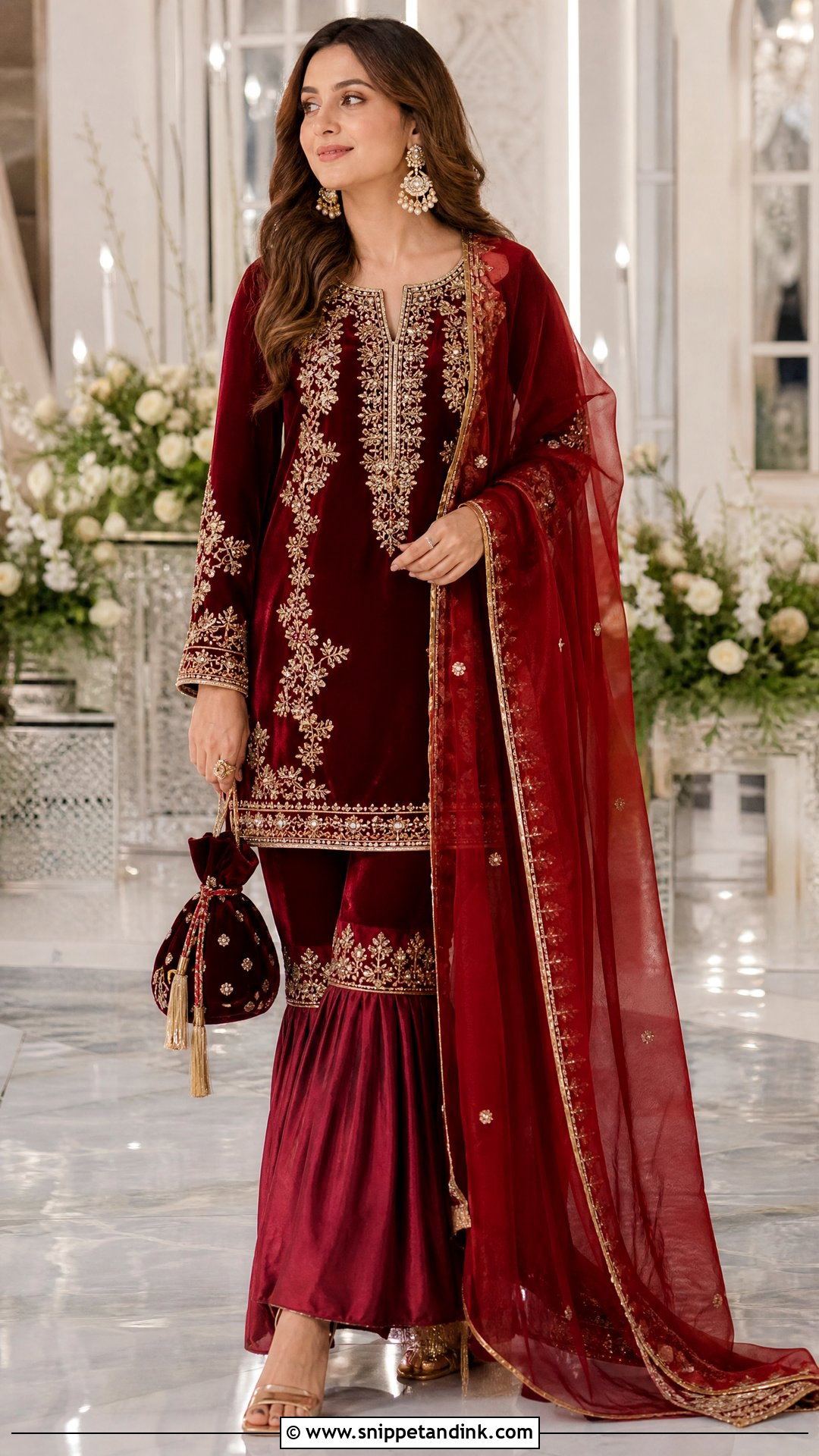
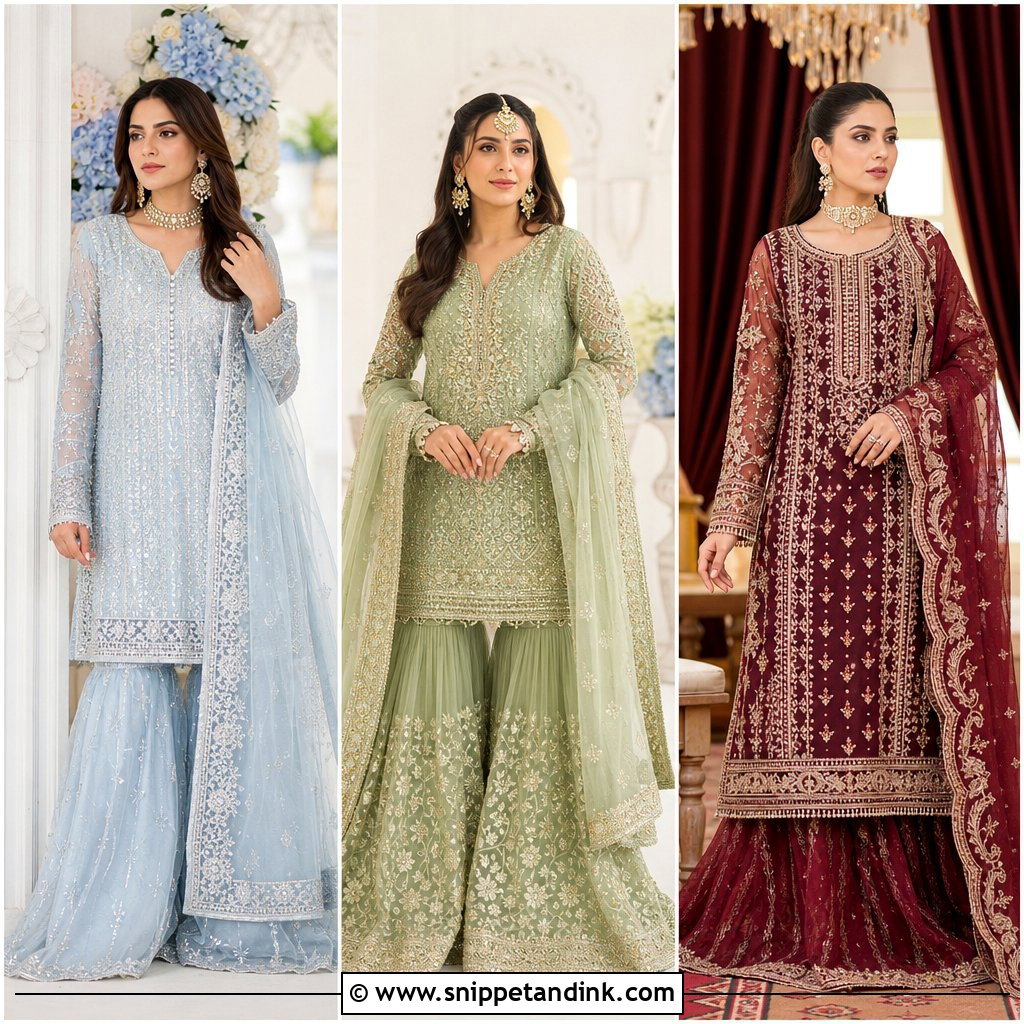
Velvet looks rich and holds its shape, but a full velvet gharara is heavy and hot. I put velvet only on the short kurta and the knee panels, and keep the lower flare in something lighter that swings. Gold zardozi, antique embroidery or a worked neckline look best on maroon and burgundy pile. A sheer net dupatta avoids piling one dense fabric on another. Kundan earrings, a velvet potli, gold heels, a low bun and matte makeup belong to winter weddings and cool evening venues.
12. Red Silk Gharara Outfit
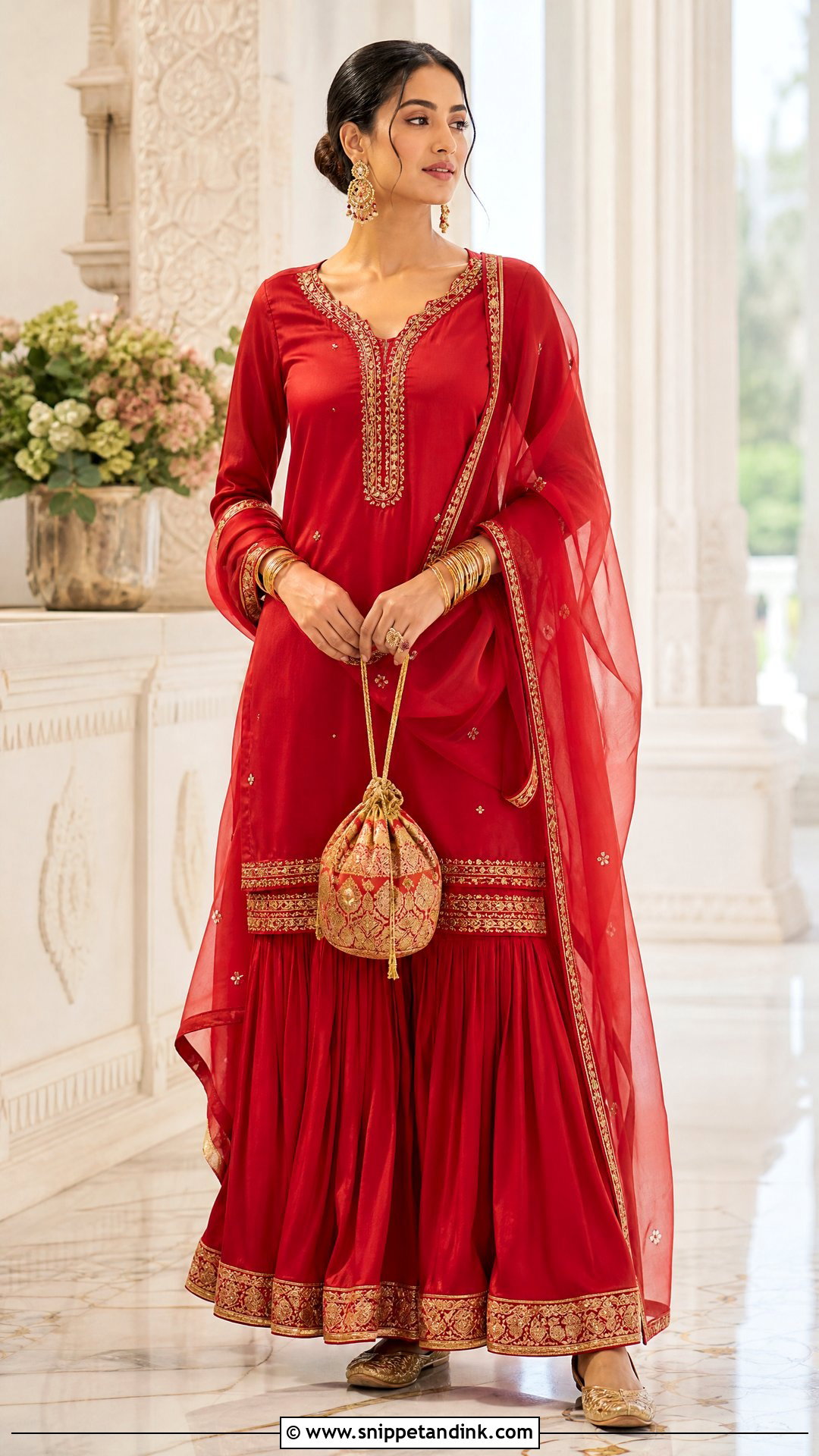
Silk has natural body, so it looks finished without much embroidery. A ruby or vermilion kurta with a clean neck, fitted sleeves and a tailored waist pairs with matching pants edged in gold at the knee and hem. A light organza dupatta with scattered motifs balances the weight. Temple-style earrings, slim bangles, a structured potli and gold juttis or low block heels finish a formal look. Raw silk creases where you sit, so steam the gharara on the hanger right before you leave.
13. Red Chiffon Gharara Outfit
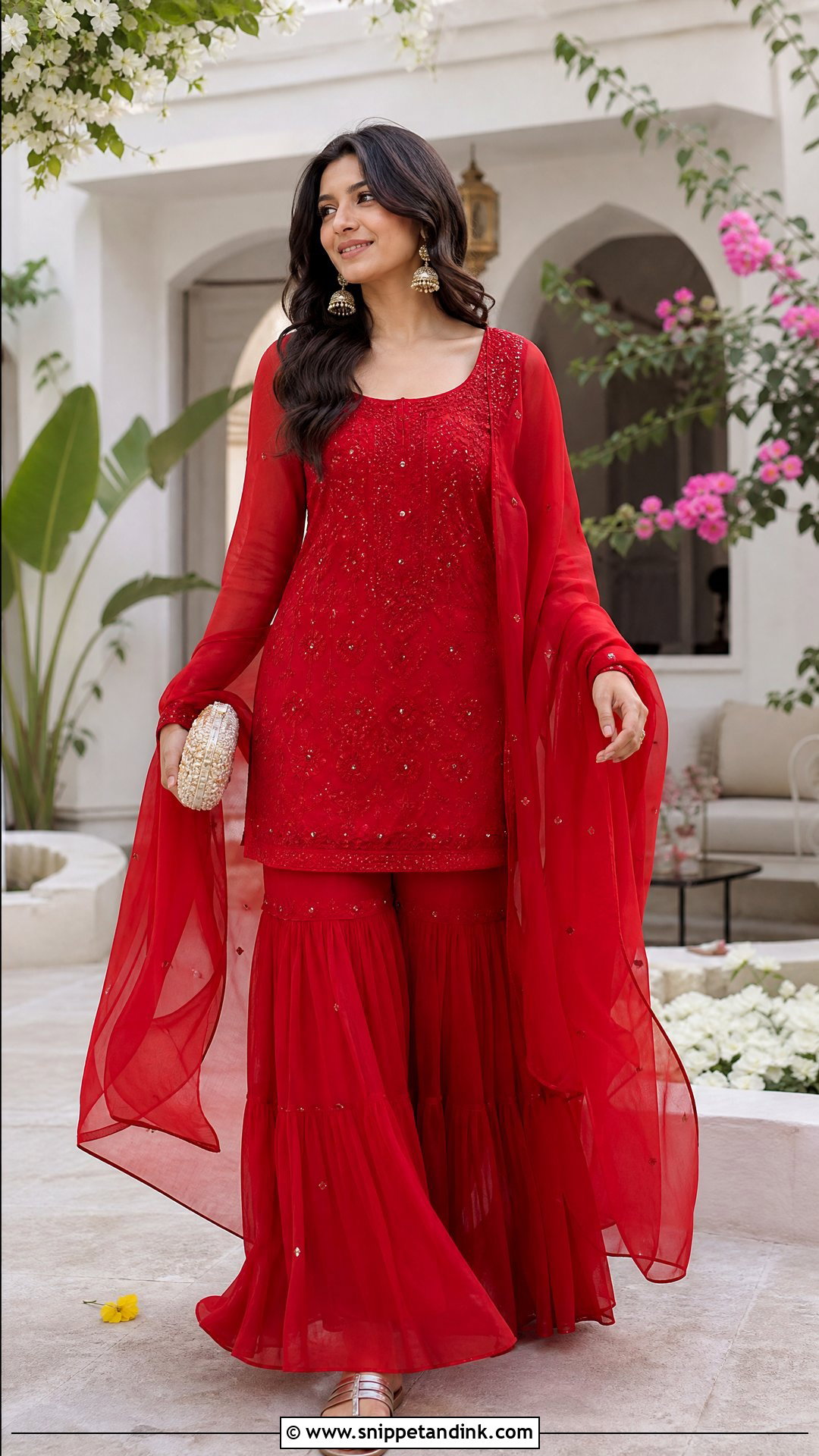
For summer, chiffon is the kindest fabric. It does need lining in the kurta, or it turns see-through under daylight and flash. Keep the embroidery to the neckline, cuffs and hem, and give the pants enough fabric to move without tangling. The matching dupatta can sit loose on one shoulder or pinned for hands-free comfort. Light jhumkas, a beaded clutch and low sandals keep it airy; heavy jewellery fights the fabric. Ideal for outdoor Eid lunches and daytime functions.
14. Red Gharara With Mirror Work Kurta
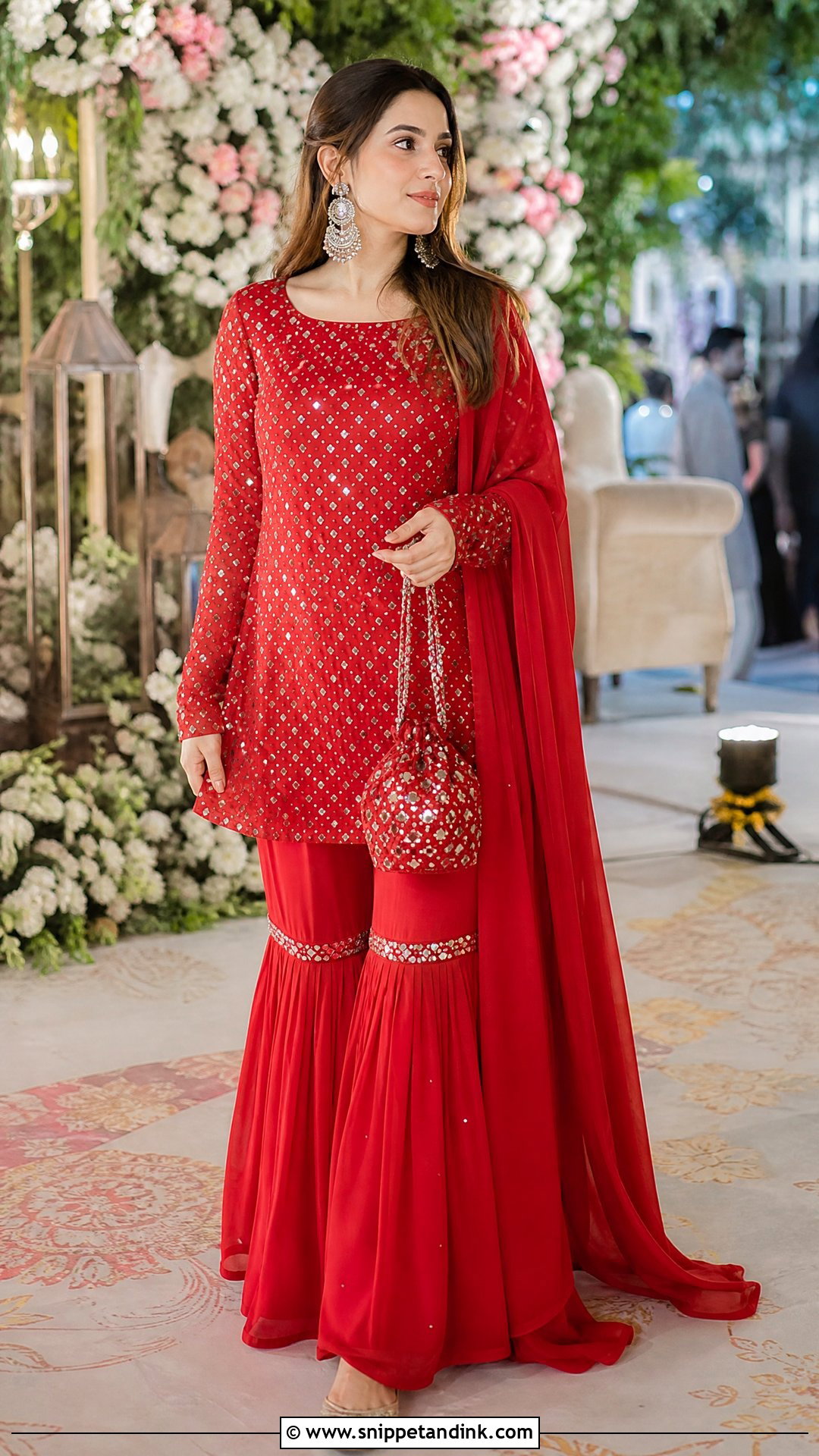
Mirror work suits the busiest events, where you’re moving, dancing and constantly in candid shots. I prefer small, evenly spaced mirrors on a short kurta over big reflective pieces, which flare white in photos. Solid red pants with a slim mirror band at the knee keep continuity, and a plain chiffon dupatta lets the kurta speak. Silver chandbalis, a mirrored potli and metallic juttis go with it. A braided ponytail finishes a look made for sangeets and colorful pre-wedding events.
15. Red Gharara With Floral Kurta
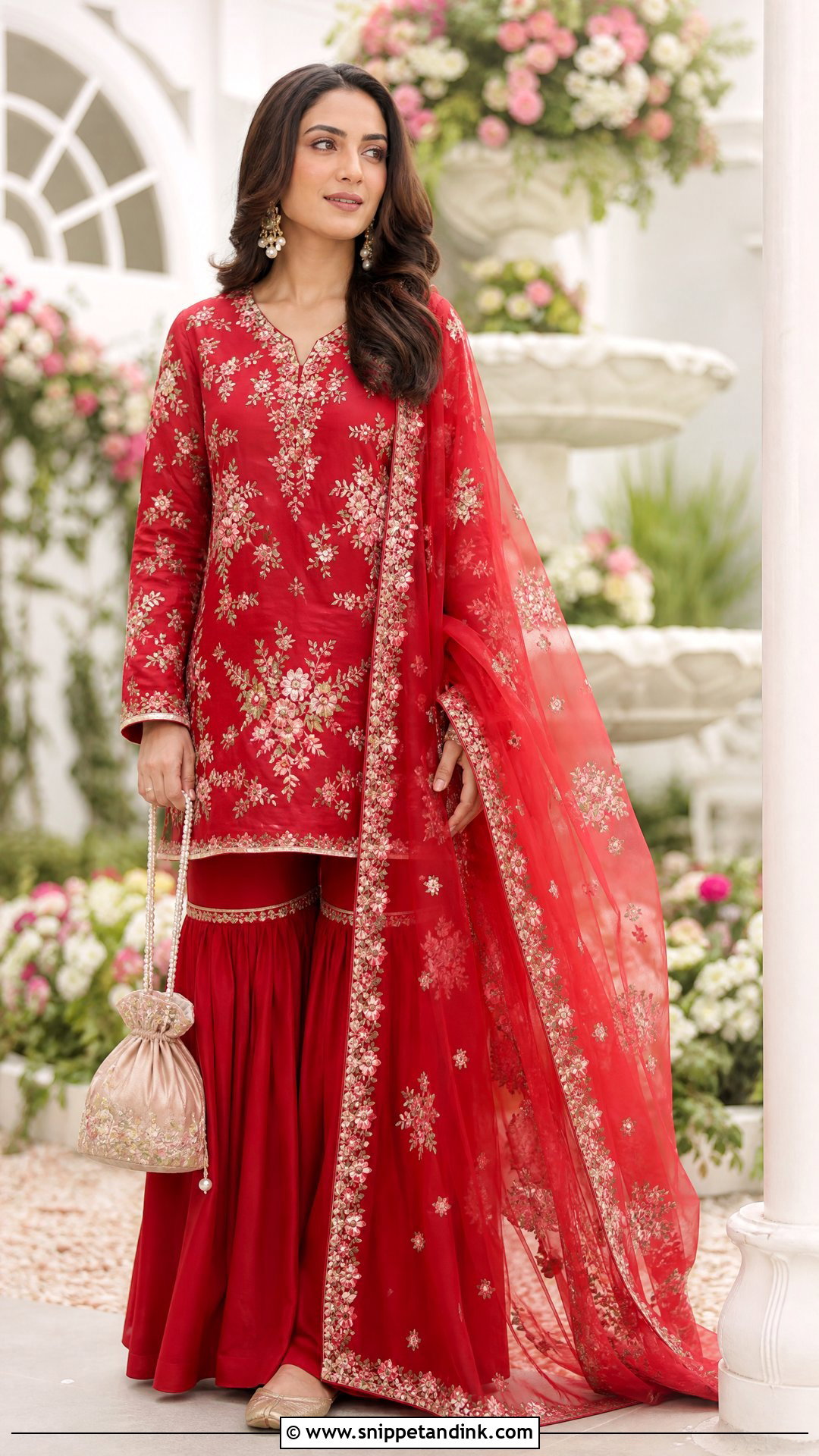
Floral embroidery softens red without taking the festive feel away. Ivory, pink, green or muted gold flowers on a short kurta, concentrated at the neck and hem, keep the balance right. Solid red pants underneath, and a sheer dupatta with a fine floral border. Pearl earrings, a pastel potli and champagne heels or embroidered flats suit it. For a more modest version I’d choose full sleeves and pin the dupatta across both shoulders. Spring lunches and daytime weddings are where this one shines.
16. Red Gharara With Jacket Kurta
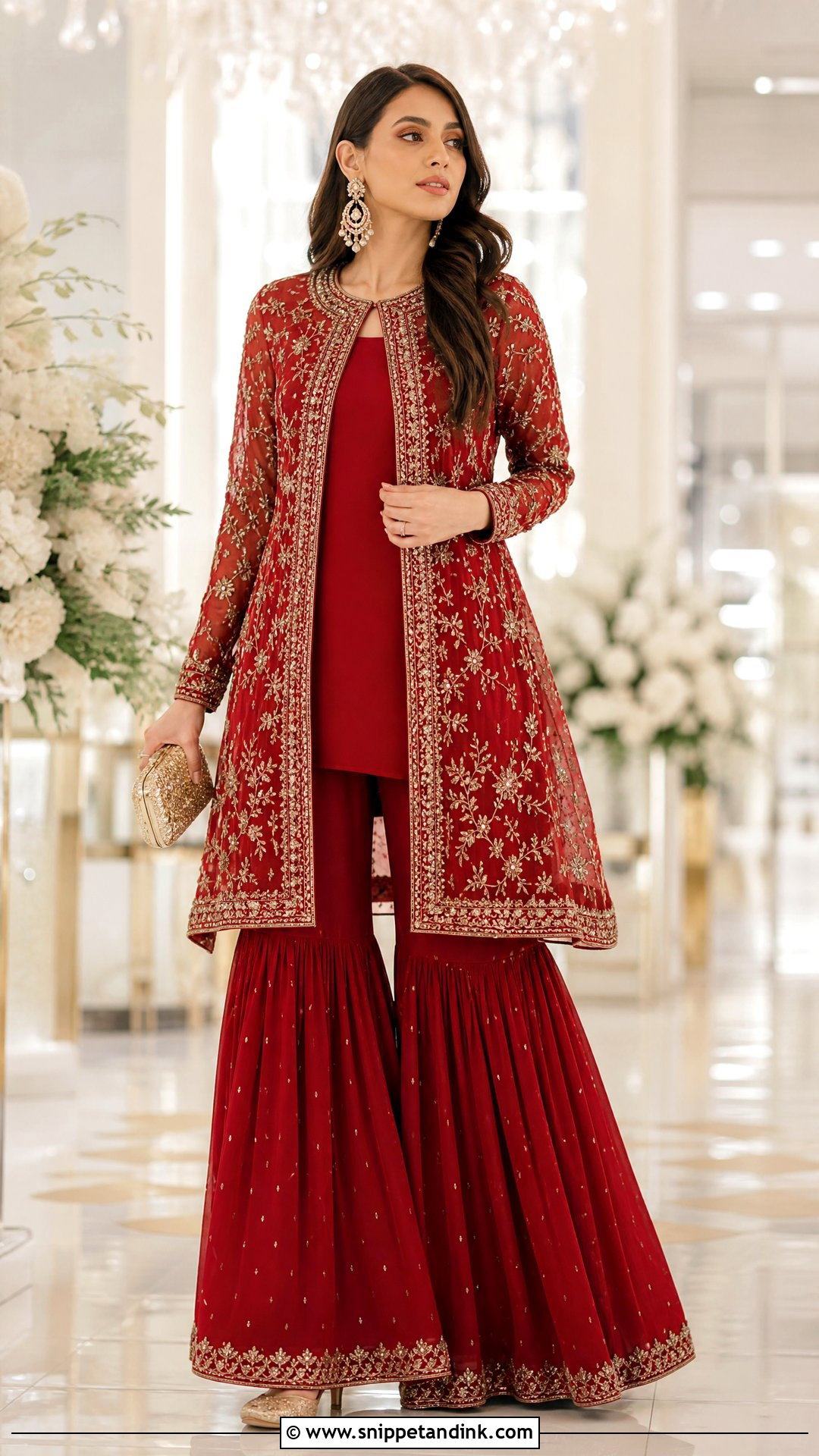
A long open jacket over a fitted inner kurta gives structure and movement together. Organza, embroidered net or light brocade all work, as long as the jacket opens at the front or sides so the gharara flare stays visible. I’d go tonal red for a monochrome look, or touch in gold for formality. Statement earrings, a slim clutch and heeled juttis, with a high bun so the layers don’t look busy. It’s a smart choice for receptions and engagement parties where you want coverage without a traditional dupatta.
17. Red Bridal Gharara With Heavy Embroidery
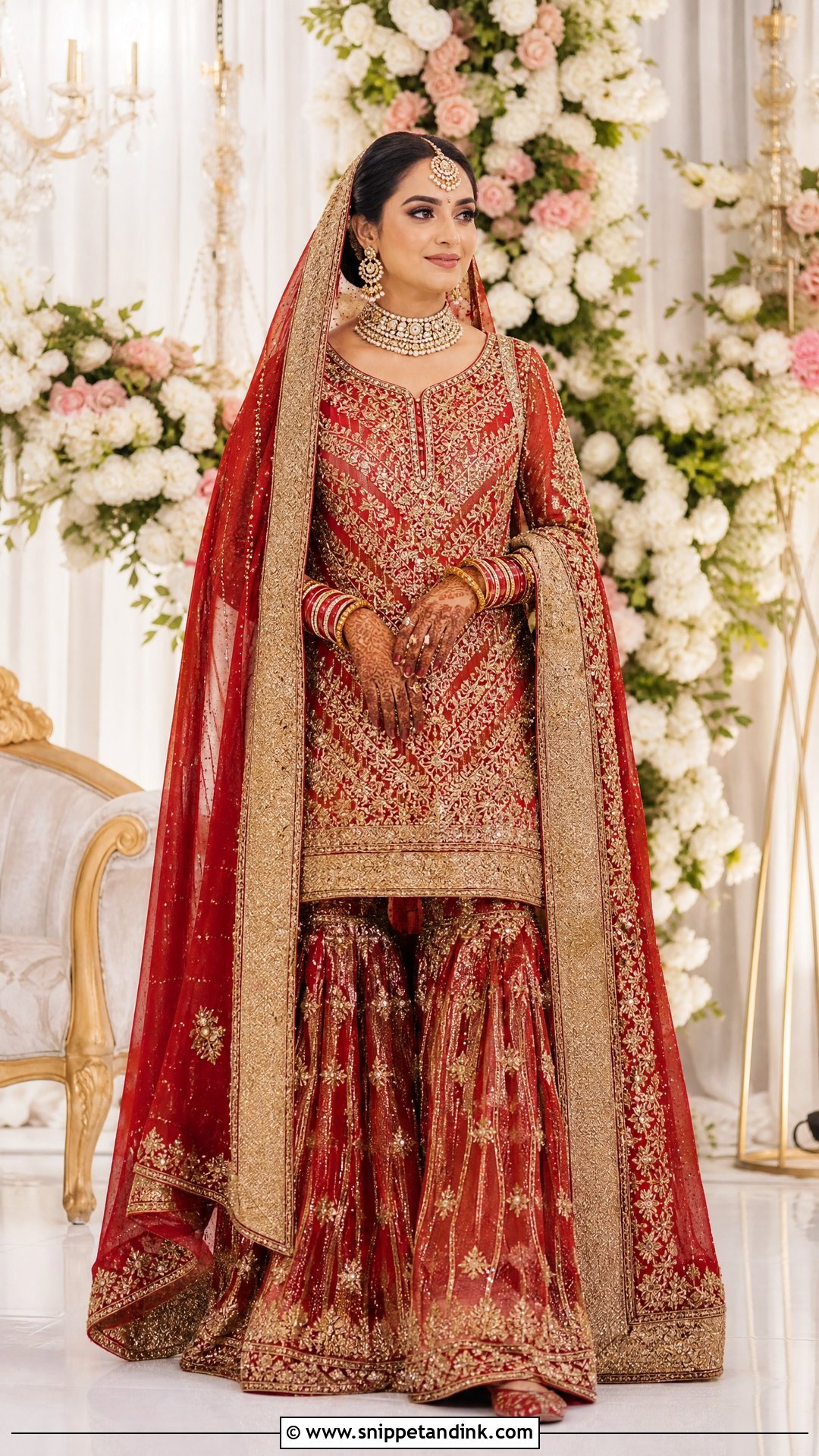
A bridal red gharara can carry heavy embroidery and still look balanced if the work is placed with intent. Zardozi, dabka, sequins and gold thread on a structured short kurta, then repeated at the knee joint and wide hem. One dupatta on the shoulder, and a lighter veil for the head if you want it. Kundan choker, earrings, bangles, maang tikka. I always ask brides to try heavy embroidery seated, because it can dig in at the waist and underarms. Platform heels or padded juttis and a secure low bun complete a strong alternative to a lehenga.
18. Red Gharara With Minimal Kurta
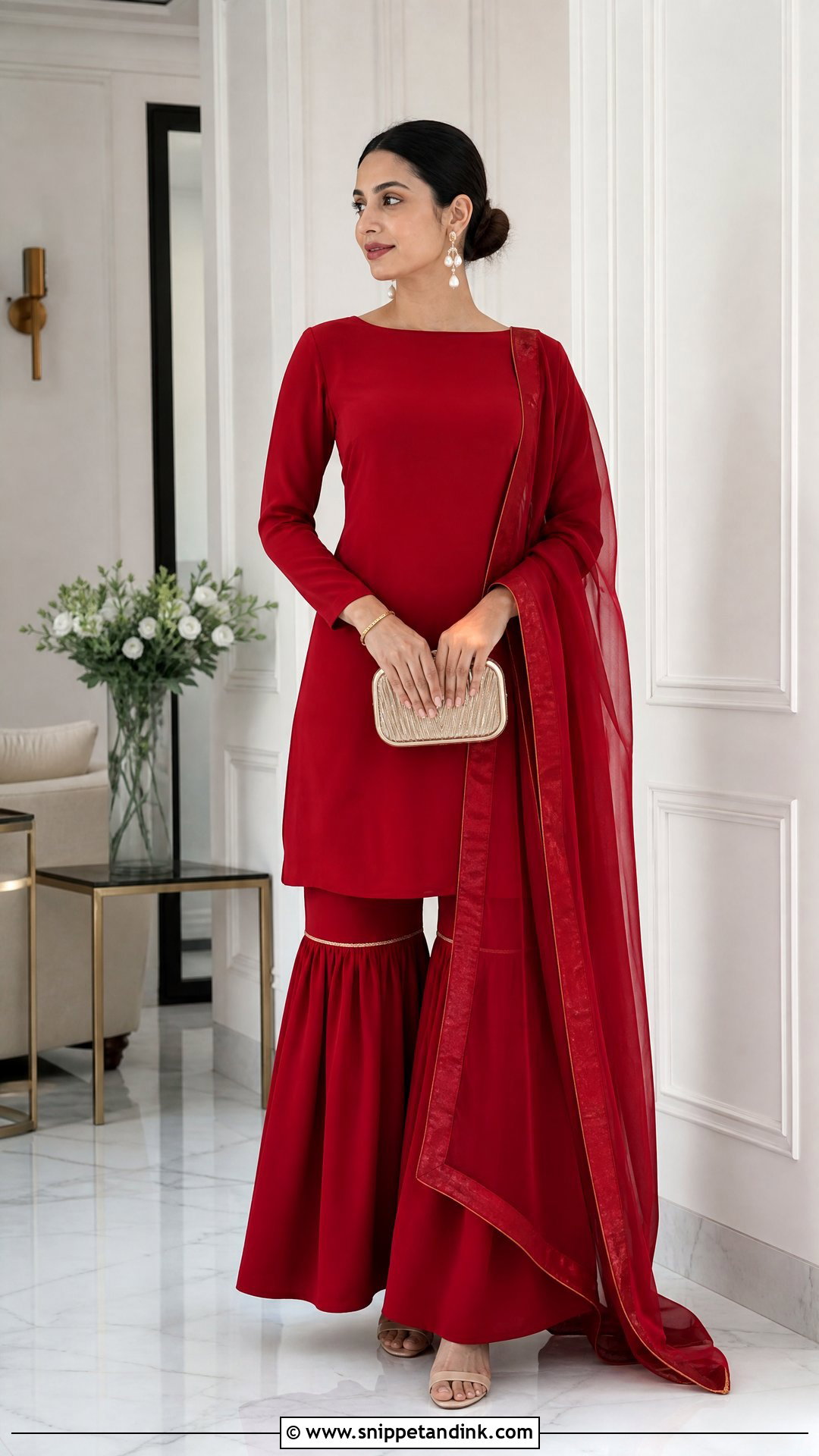
Minimal works when the tailoring is excellent; there’s nothing to hide behind. A plain crepe or georgette kurta with a boat neck and three-quarter sleeves, matched pants with narrow piping or a small knee band, and a sheer dupatta with a simple border. Pearl drops, one slim bracelet, a neutral clutch and nude block heels. Get the pants hemmed to your exact shoe height, because on a plain outfit an uneven hem is the first thing anyone notices. I’d wear it to a small family dinner or a nikah at home.
19. Red Gharara With Belted Dupatta
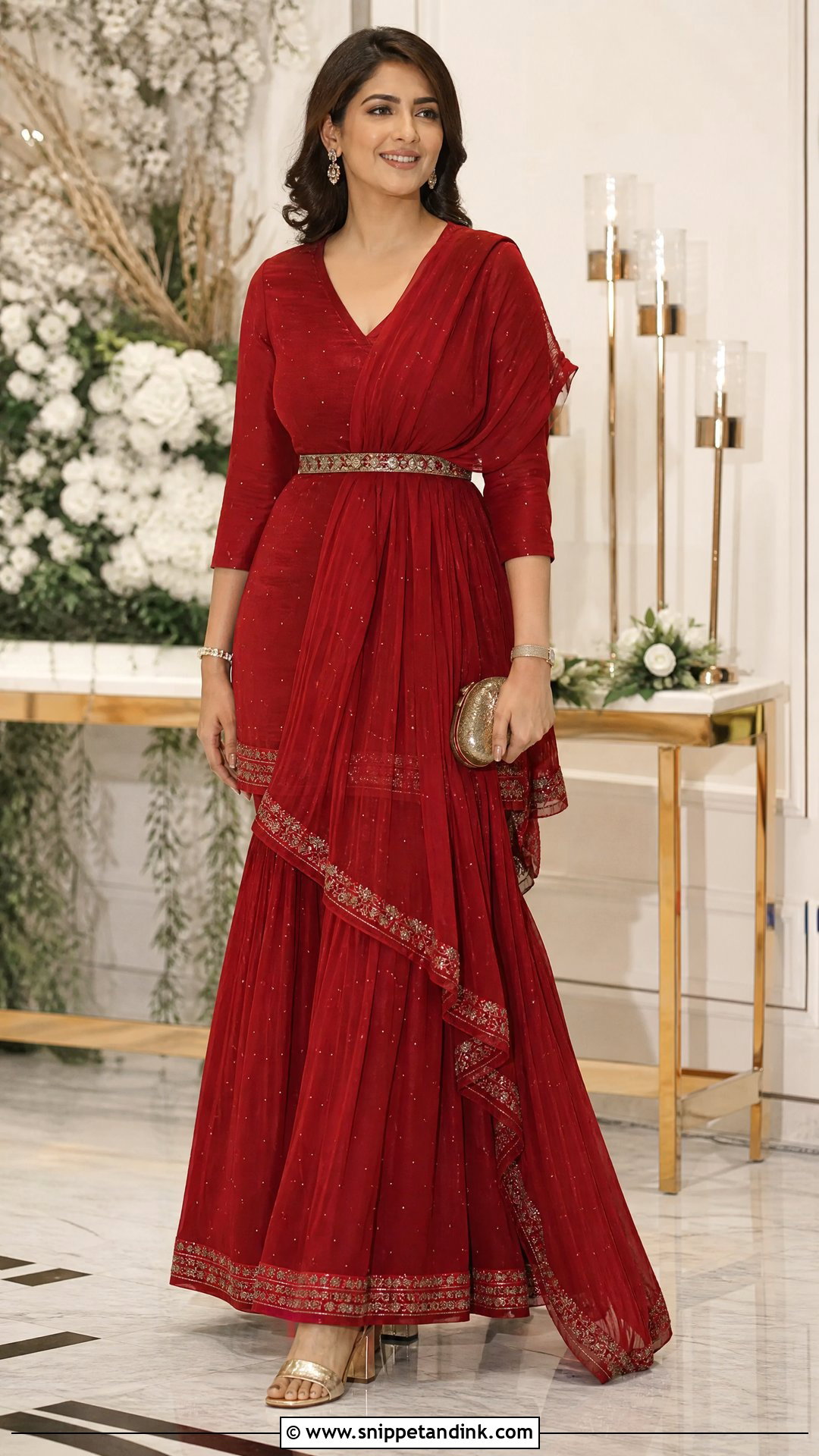
A slim belt fixes the dupatta’s biggest problem: it slides. Drape a light dupatta diagonally over a fitted short kurta, then cinch it at the natural waist with an embroidered or metal belt. Keep the belt narrow, since a wide one shortens the torso. Medium earrings, a compact clutch, block heels and a sleek ponytail give it a contemporary finish. I recommend this to anyone dancing at a sangeet, because you stop adjusting fabric every few minutes.
20. Red Gharara With Hijab
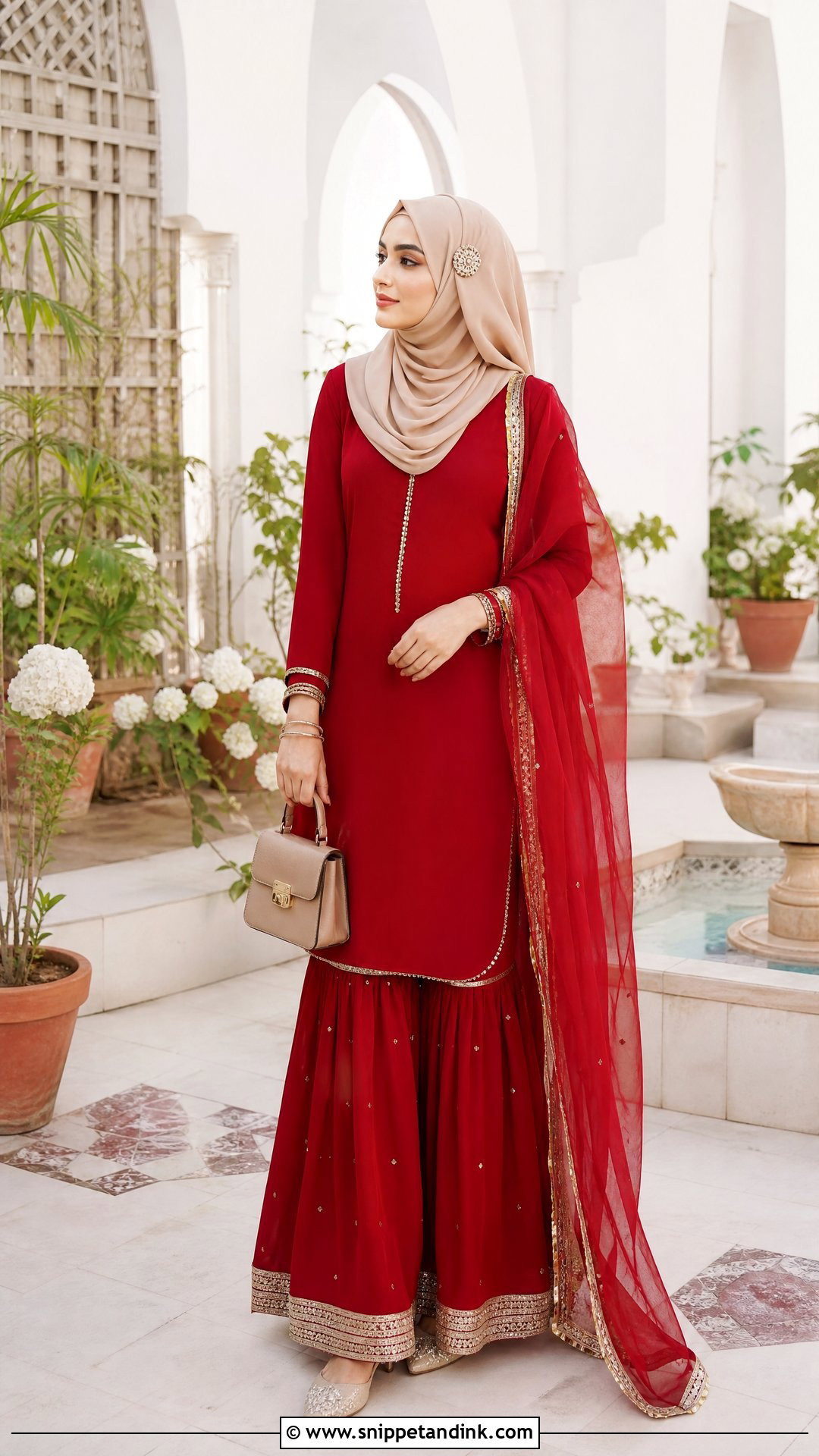
A red gharara works very well with a hijab, and the full silhouette still shows. Choose a long-sleeved kurta to the knee with side slits, a structured gharara and a light dupatta on one shoulder. For the hijab, chiffon or georgette in red, soft beige, muted gold or maroon. Fabric weight matters: I’d keep the hijab lighter than the dupatta so the two don’t bulk up around the neck. A brooch, slim bangles, a small top-handle bag and closed-toe embellished flats complete a coordinated look for Eid or a wedding.
One Red Gharara, Three Events
Guests often attend a mehndi, a baraat and a walima in a single week. A good red gharara can cover all three if you buy the pants plain or lightly worked and change what goes on top. That’s how I build a wedding-week wardrobe on a sensible budget.
- Mehndi: an ivory or floral kurta, a pink or green dupatta, a braided ponytail and flat juttis for floor seating.
- Baraat: the matching red kurta with gold embroidery and a gold tissue dupatta, with your fullest jewellery.
- Walima or dinner: a black or long jacket kurta, no dupatta or a sheer one, and a single statement earring.
Stairs, Floor Seating and the Washroom
A gharara can hold eight metres of fabric or more in the flare. Lift it from the sides at knee height on stairs, not from the front, or you’ll step on the back. For floor seating at a mehndi, sit first and then spread the flare, which stops creasing at the knee band. For the washroom, a wide flare is far easier if the kurta is short, and I always pack two safety pins and a small clip so the dupatta can be fixed out of the way.
Kurta Length Does More Work Than the Embroidery
Red is one colour, but it covers bridal, festive, minimal, modern and modest dressing depending on how you cut and layer it. The steady rule across all twenty looks is proportion: kurta length and fabric weight set against the flare. Light dupattas belong with heavily worked sets, and a strong dupatta lifts plain ones. Gold, green, ivory, black and pink each change the mood without taking the red away. Think about the weather and how many hours you’ll be wearing it before you choose jewellery, and never skip a trial walk in your real shoes.
You'll Like These Ideas:


Leave a Reply