
A garara sits close through the thigh, breaks at the knee, then opens into wide flared panels, and that shape gives a bride both drama and the ability to walk. I dress brides in it for every function, from nikkah, mehndi, barat, and walima looks, because the cut changes character with the fabric. Deep reds and jewel tones still lead for the barat, while ivories and pastels have taken over the nikkah and walima. Zardozi, gota, dabka, pearls and sequins on jamawar, organza, velvet or tissue all carry the look in different ways. Here are the ideas I’d show a bride at a first styling meeting, with what each one asks of her on the day.
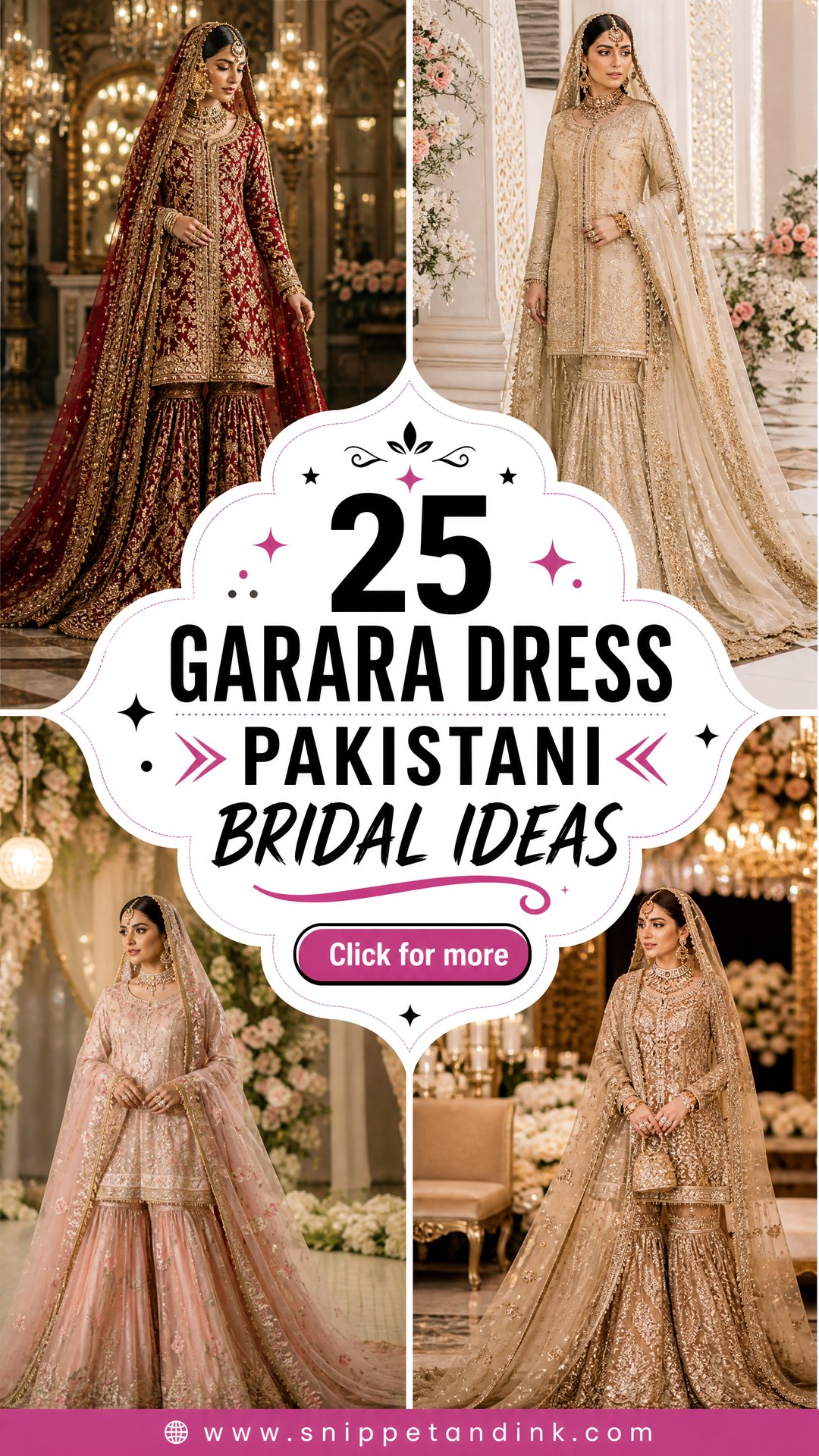
Where a Garara Breaks at the Knee, and Why the Fitting Starts There
A garara is two fitted legs that each split into flared panels at the knee, joined at a seam that’s usually covered with a band of embroidery or gota. That joint is the first thing I look at. Too high and the flare starts at mid-thigh and looks like a sharara; too low and you can’t take a full step.
I measure the joint while the bride is standing in the heels or khussas she’ll wear, then have her walk and climb a step. A farshi or full barat garara uses a lot of fabric, so the panels can weigh more than people expect. Ask the tailor to add a soft lining to the upper legs; it stops heavy embroidery scratching and helps the fitted part slide when you walk.
- Order the outfit early. Hand embroidery like zardozi and dabka takes time, and designers often need several months for a bridal set.
- Keep at least two fittings, and bring the jewelry and shoes to the last one.
- Ask for the waistband to have a drawstring or hook with some give; you’ll eat at your own wedding.
- Check that the knee band on both legs sits at exactly the same height.
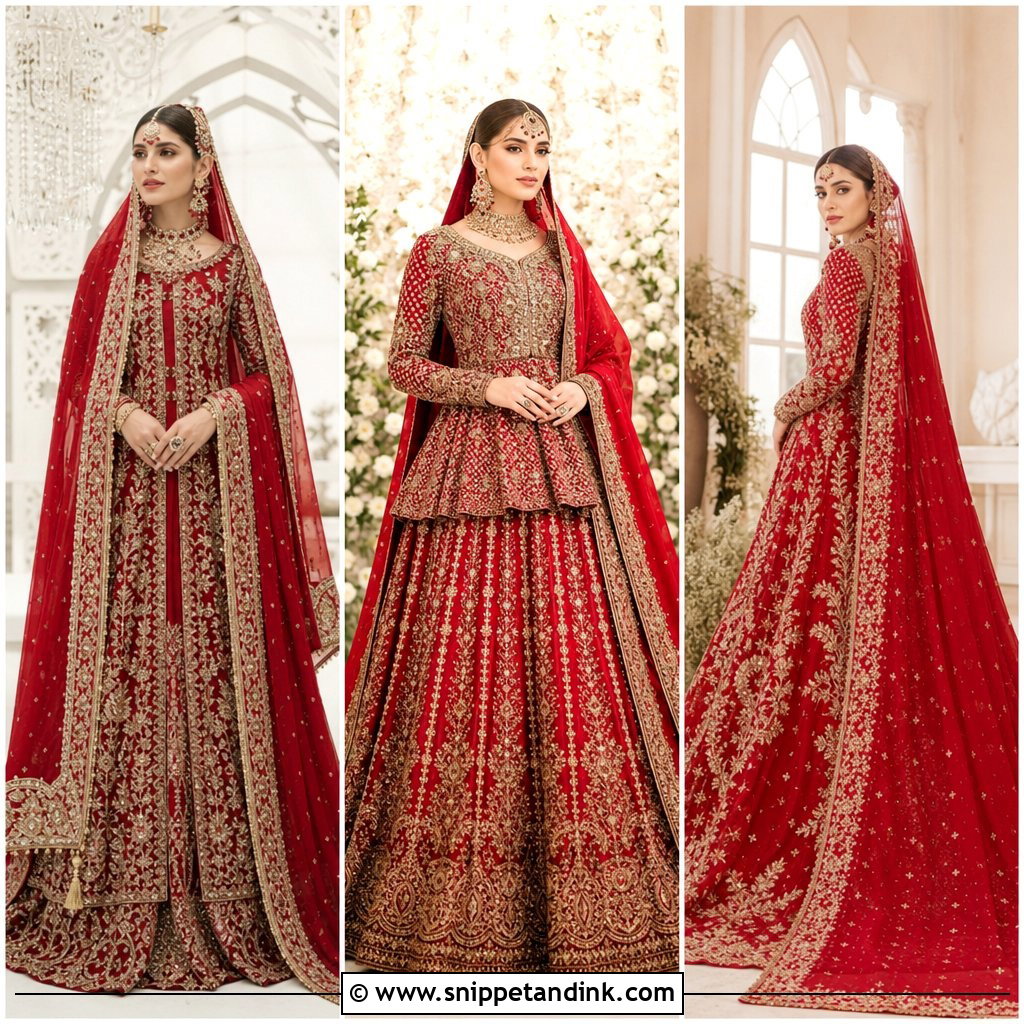
1. Red Pakistani Bridal Garara Dress
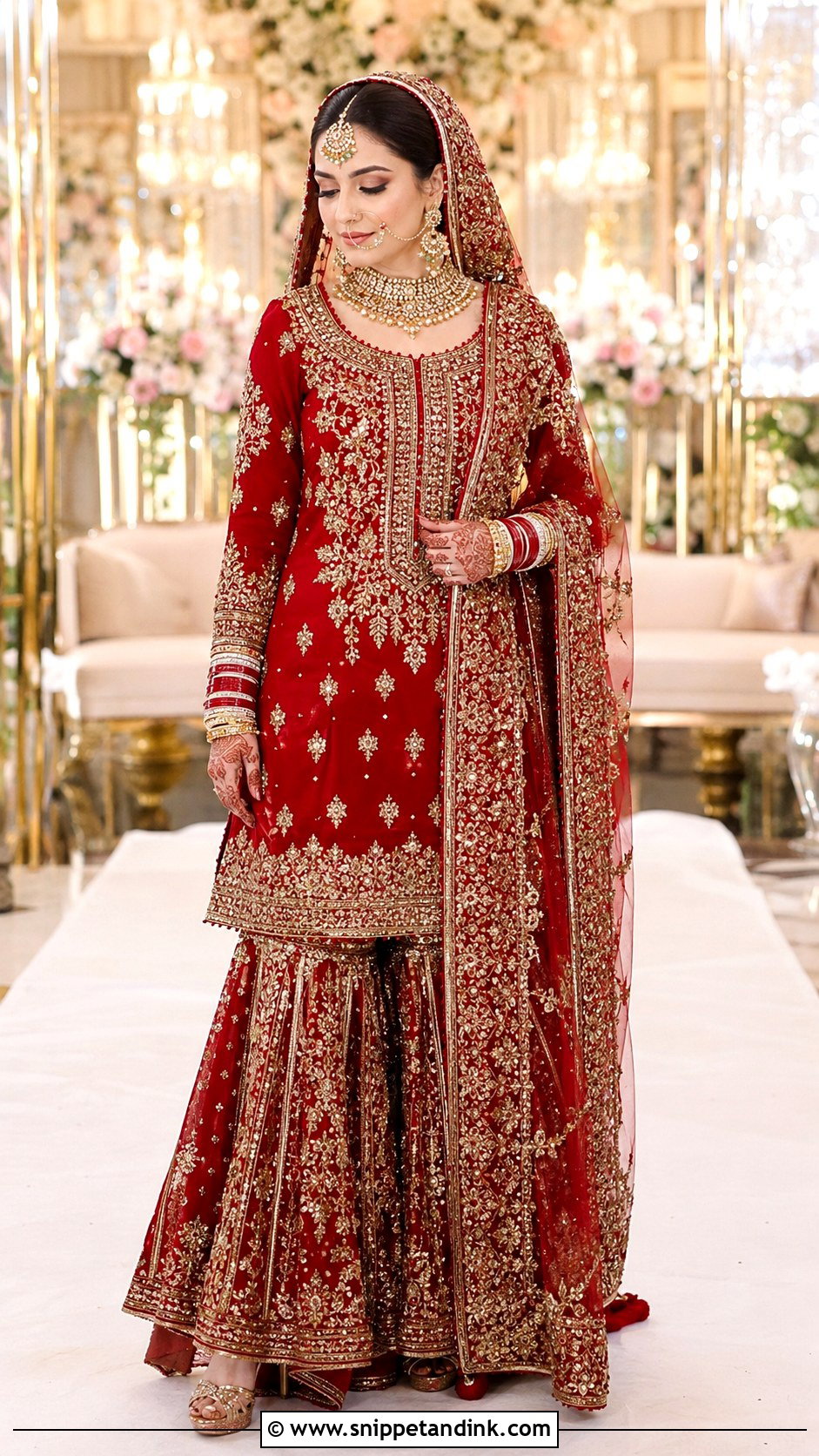
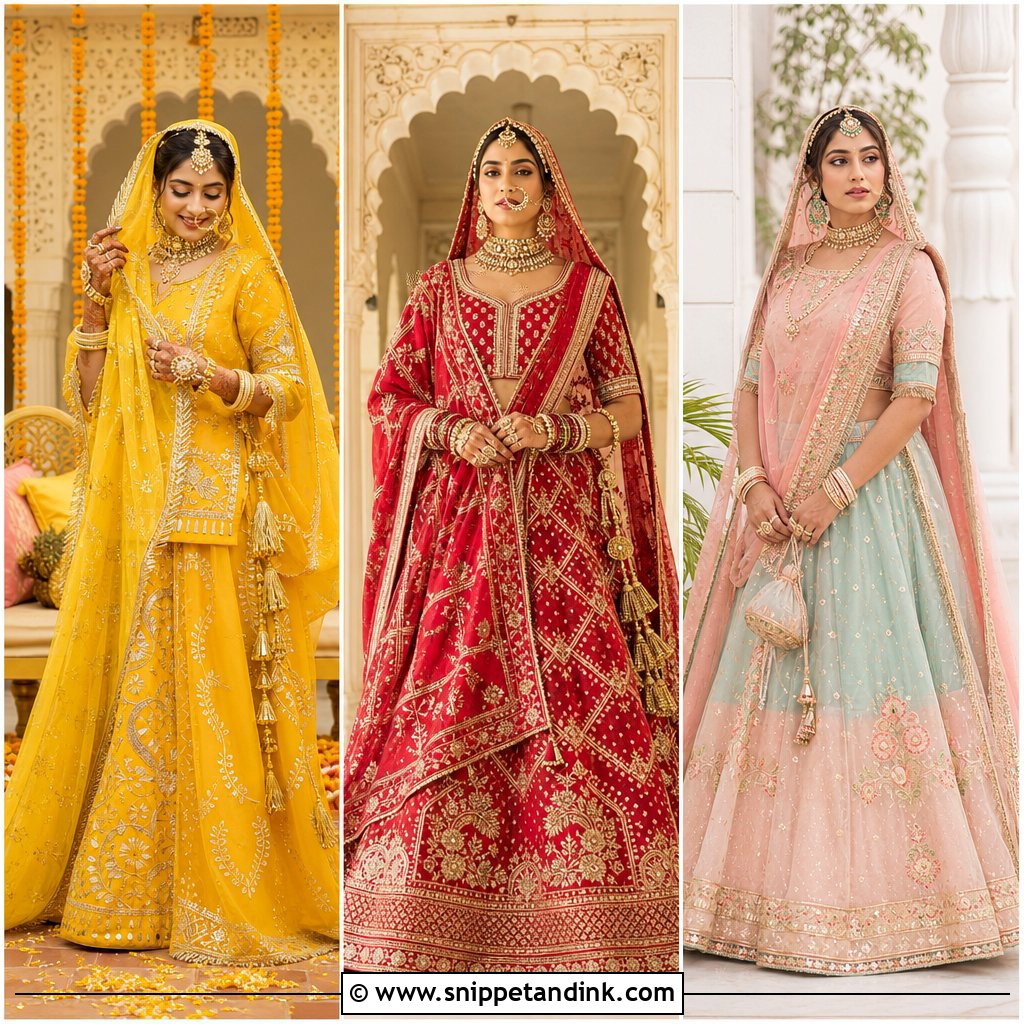
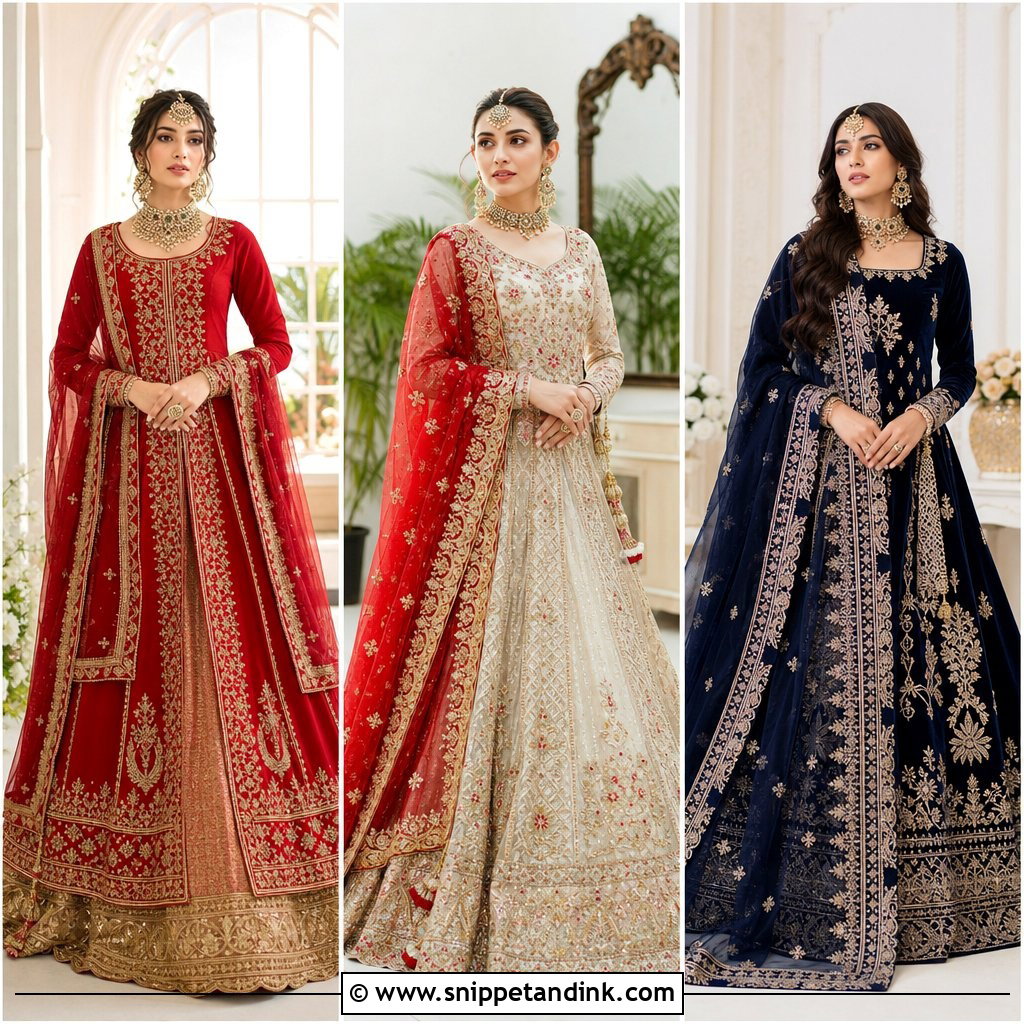
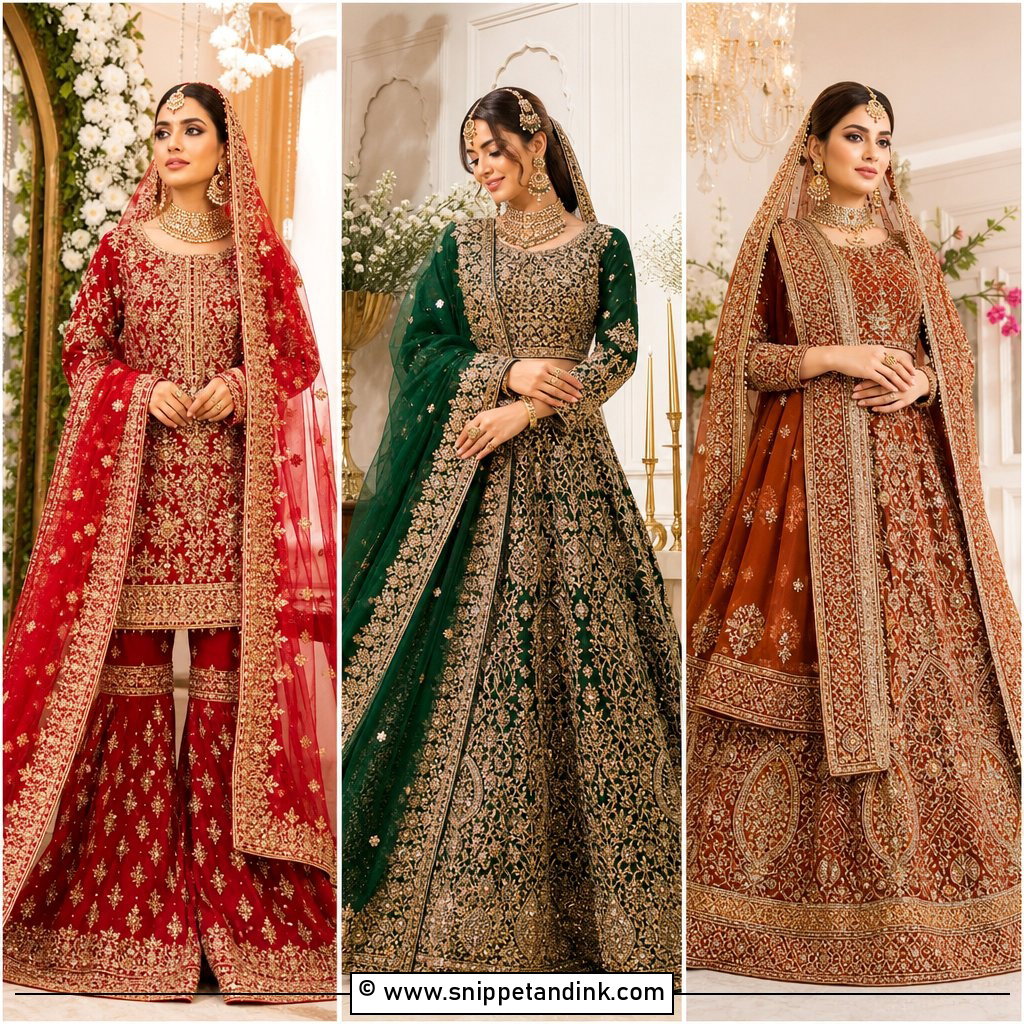
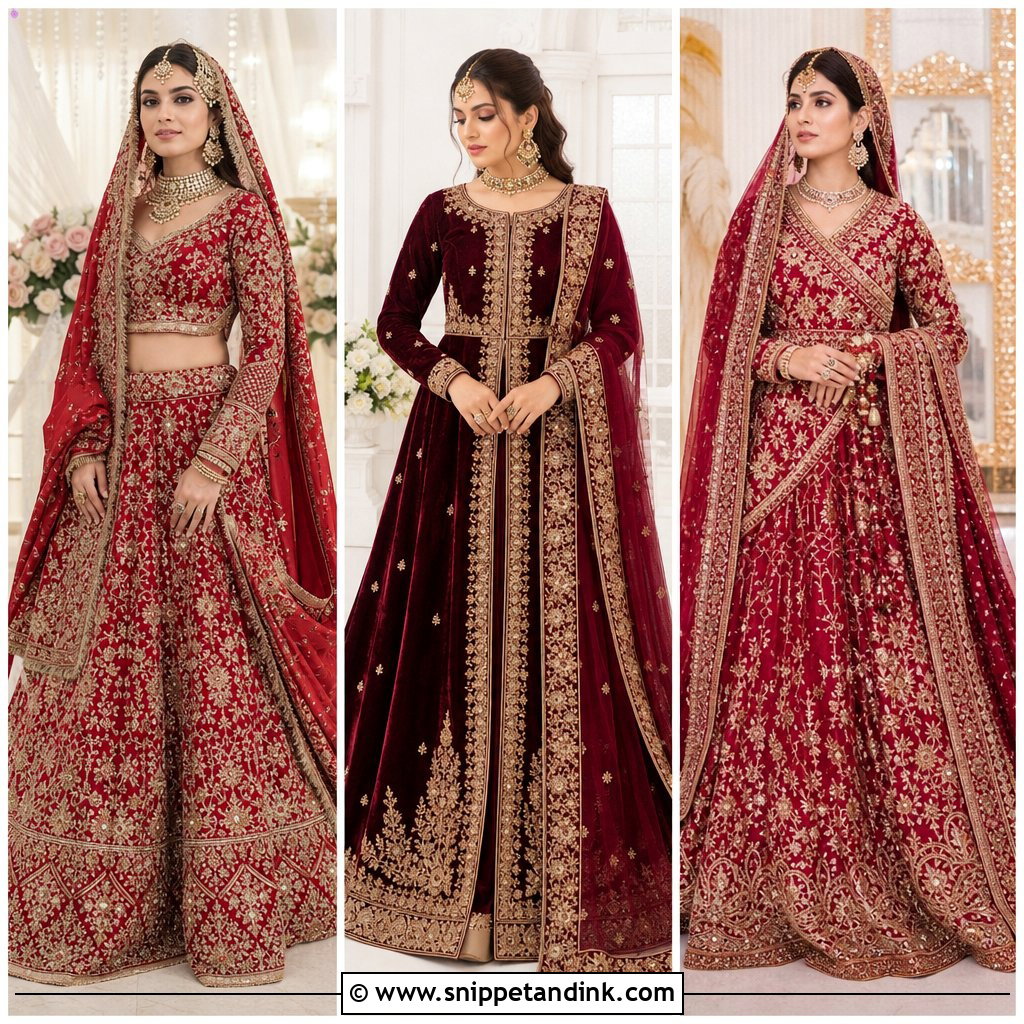
Red is still the barat color I’m asked for most, and the shade decides how it reads. Deep red, ruby or antique red hold their richness under stage lights, while a bright tomato red can look orange in photos. The usual set is a short or mid-length kameez, a heavily worked garara and a dupatta with a wide border, finished in gold zardozi, dabka and kora. If the dupatta is heavy, I keep the neckline simple so the jewelry has room: a choker, jhumkas, matha patti, bangles and khussa heels.
2. Maroon Pakistani Bridal Garara Dress
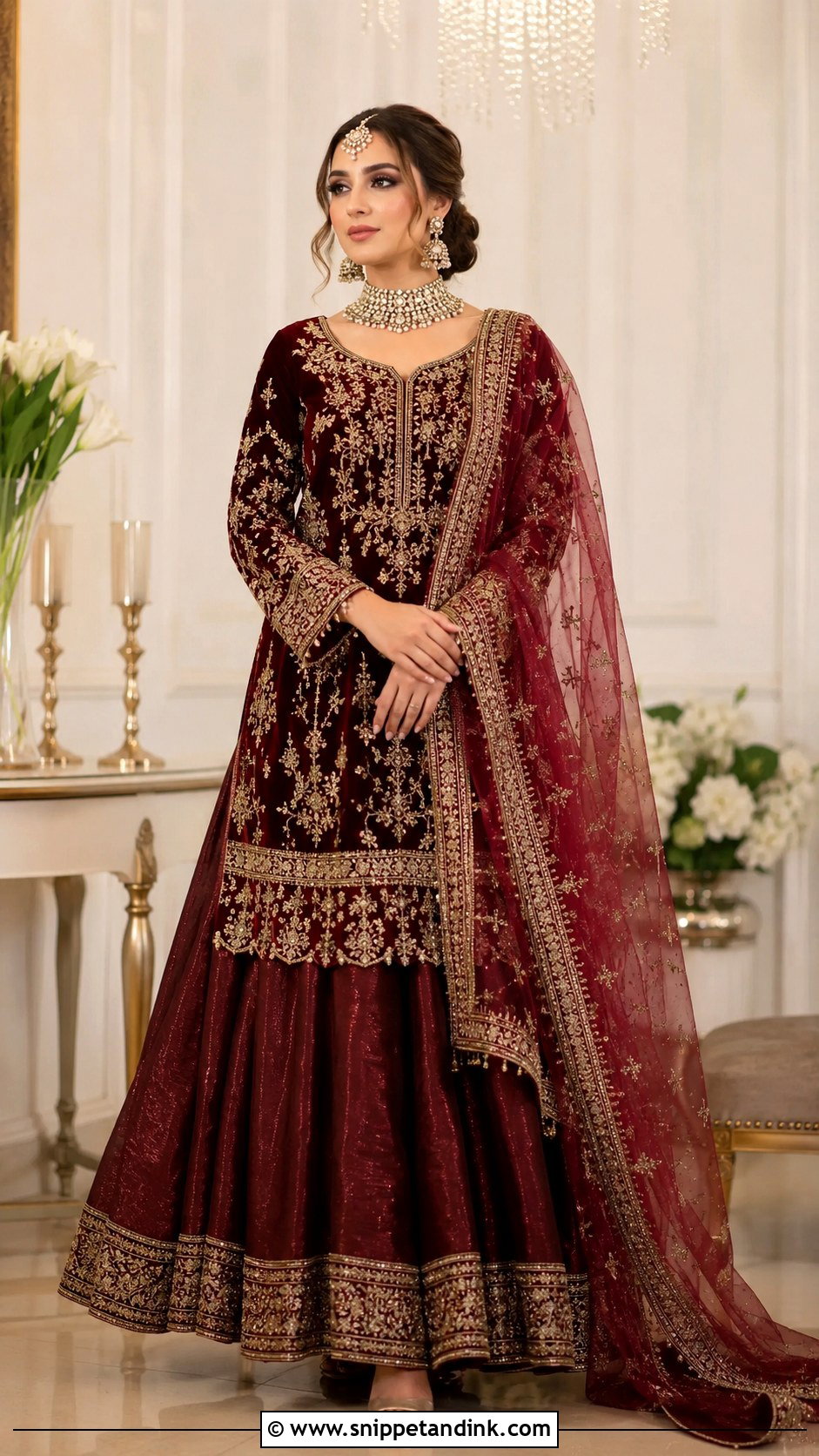
Maroon is what I suggest to a bride who loves red but wants it deeper and a little less expected. In velvet, jamawar or raw silk with antique gold embroidery, it looks heavy in the right way. A short kurti with a scalloped hem over a wide garara with worked knee panels is the shape I’d choose. Polki jewelry, a center-parted bun and a dupatta over the head give it a traditional finish, and maroon holds its color in evening light, both indoors and out.
3. Ivory Pakistani Bridal Garara Dress
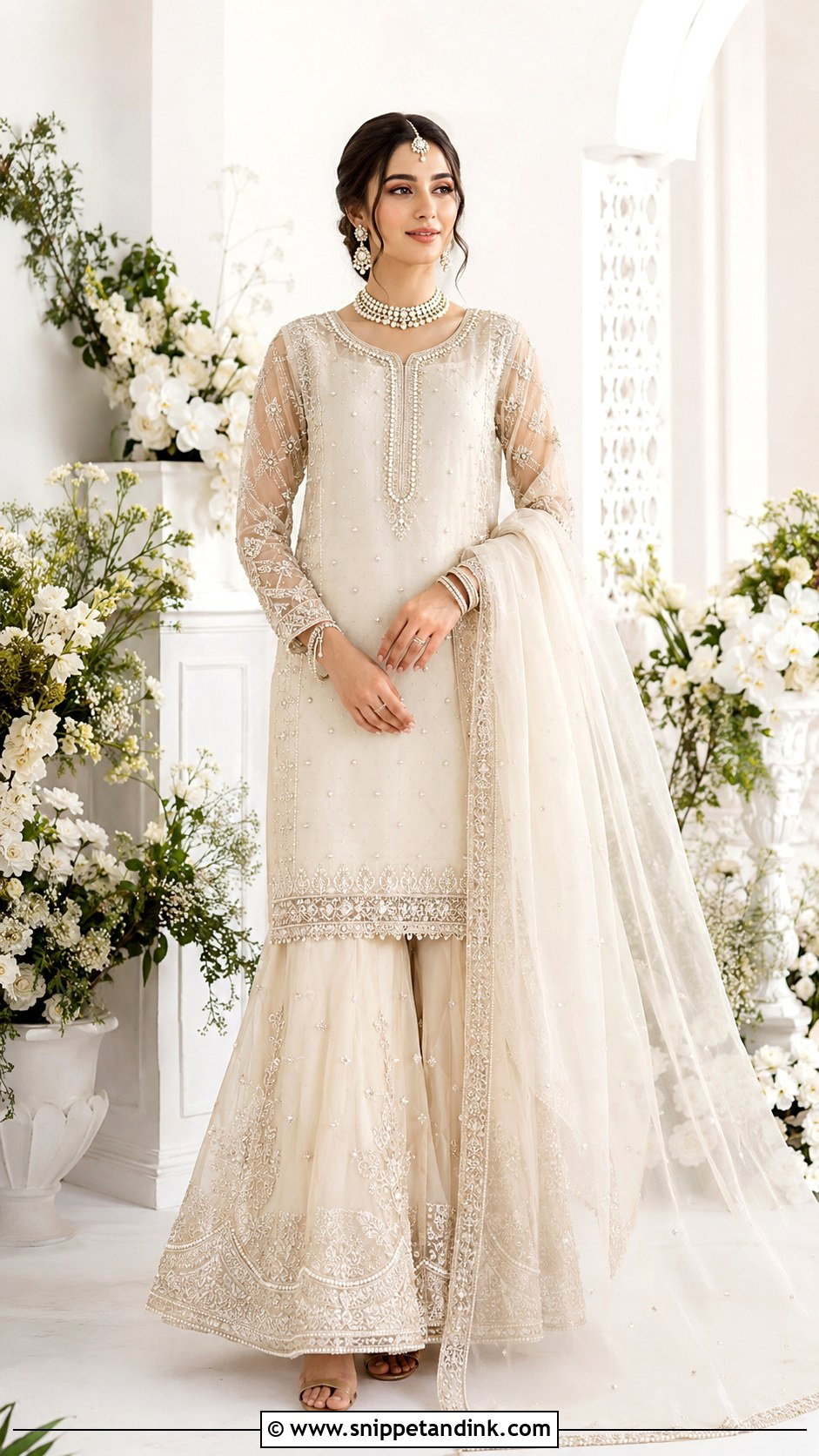
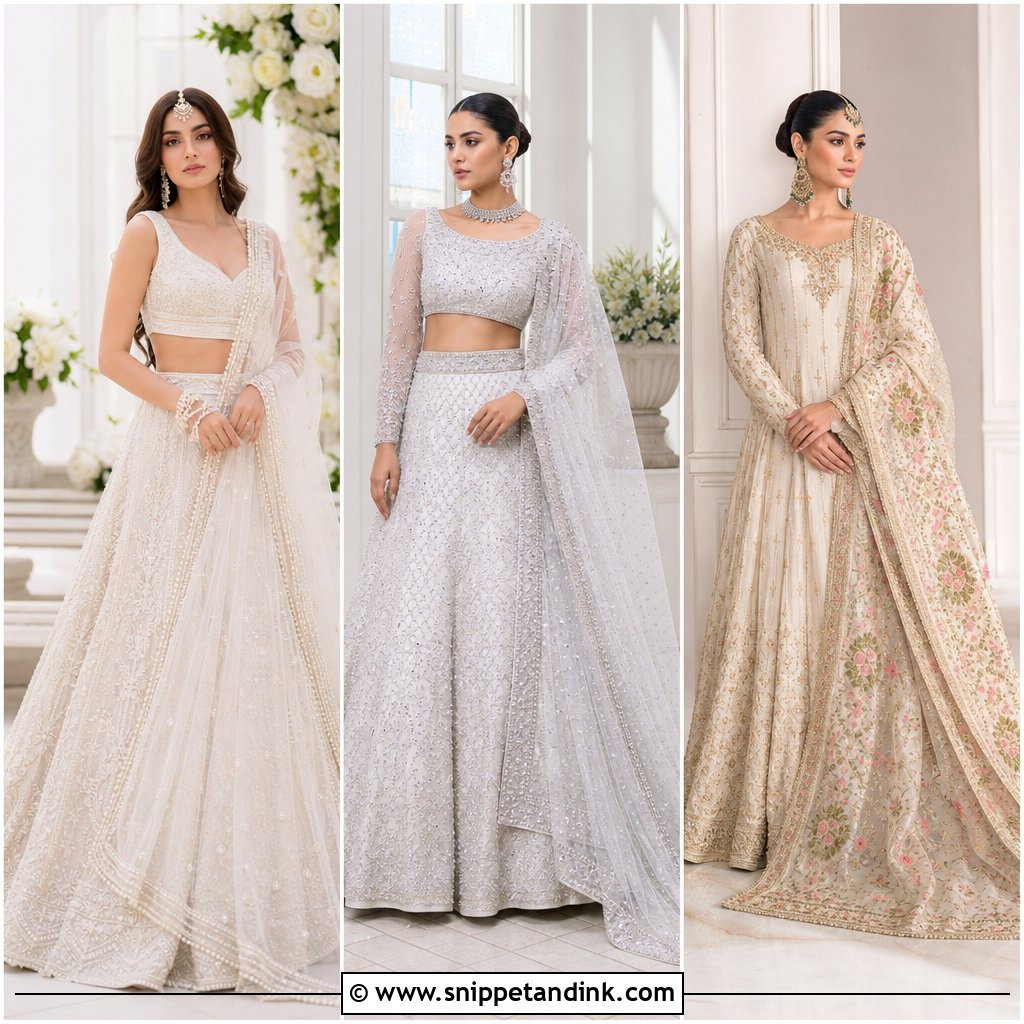
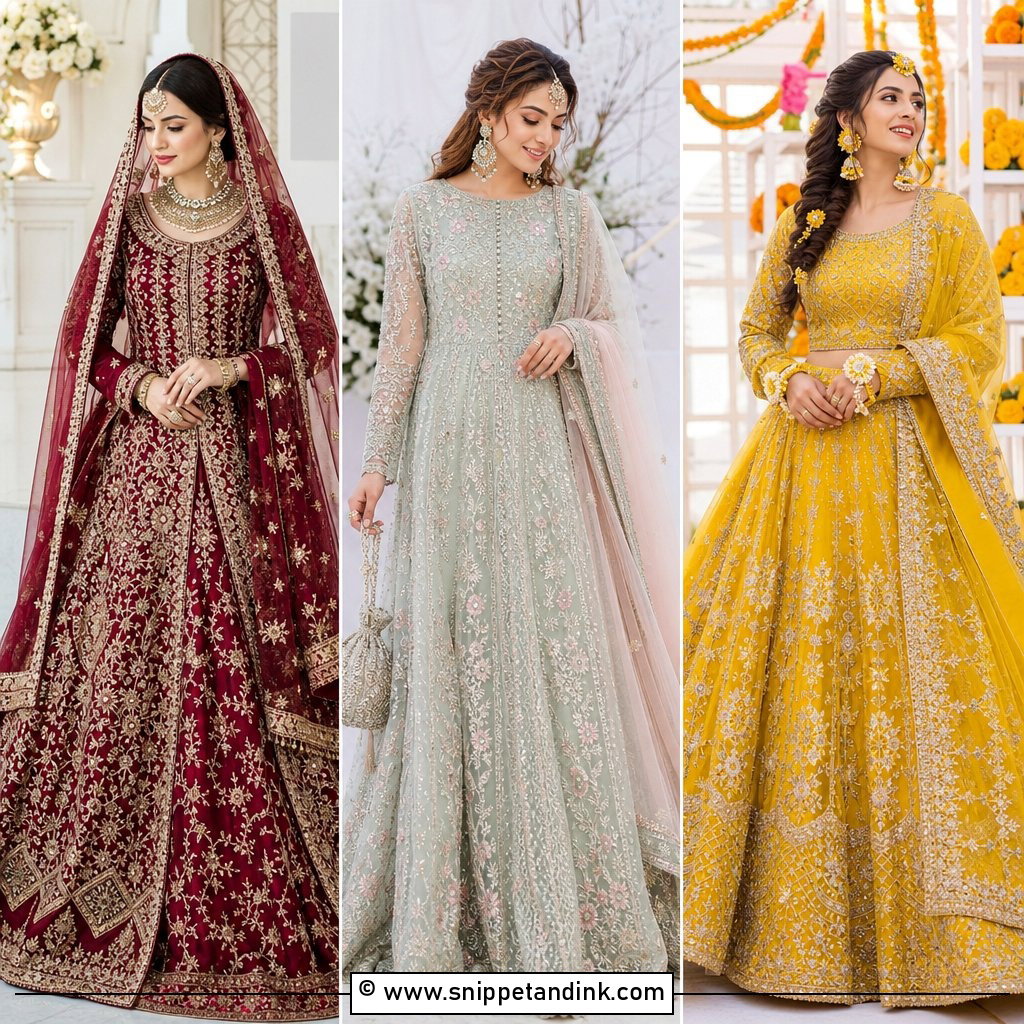
Ivory has become the calm choice for a nikkah. Tonal threadwork, pearls, crystals and light gold embroidery show up well against it, and the classic set is a straight shirt, flared garara and a sheer organza dupatta with a fine border. The thing I check is how the ivory sits against the bride’s skin in daylight; a cool white ivory can wash out warm undertones. Pearl jewelry, soft glam makeup and metallic heels finish it, and a second dupatta in pale gold or champagne adds weight if she wants more bridal impact.
4. Gold Pakistani Bridal Garara Dress
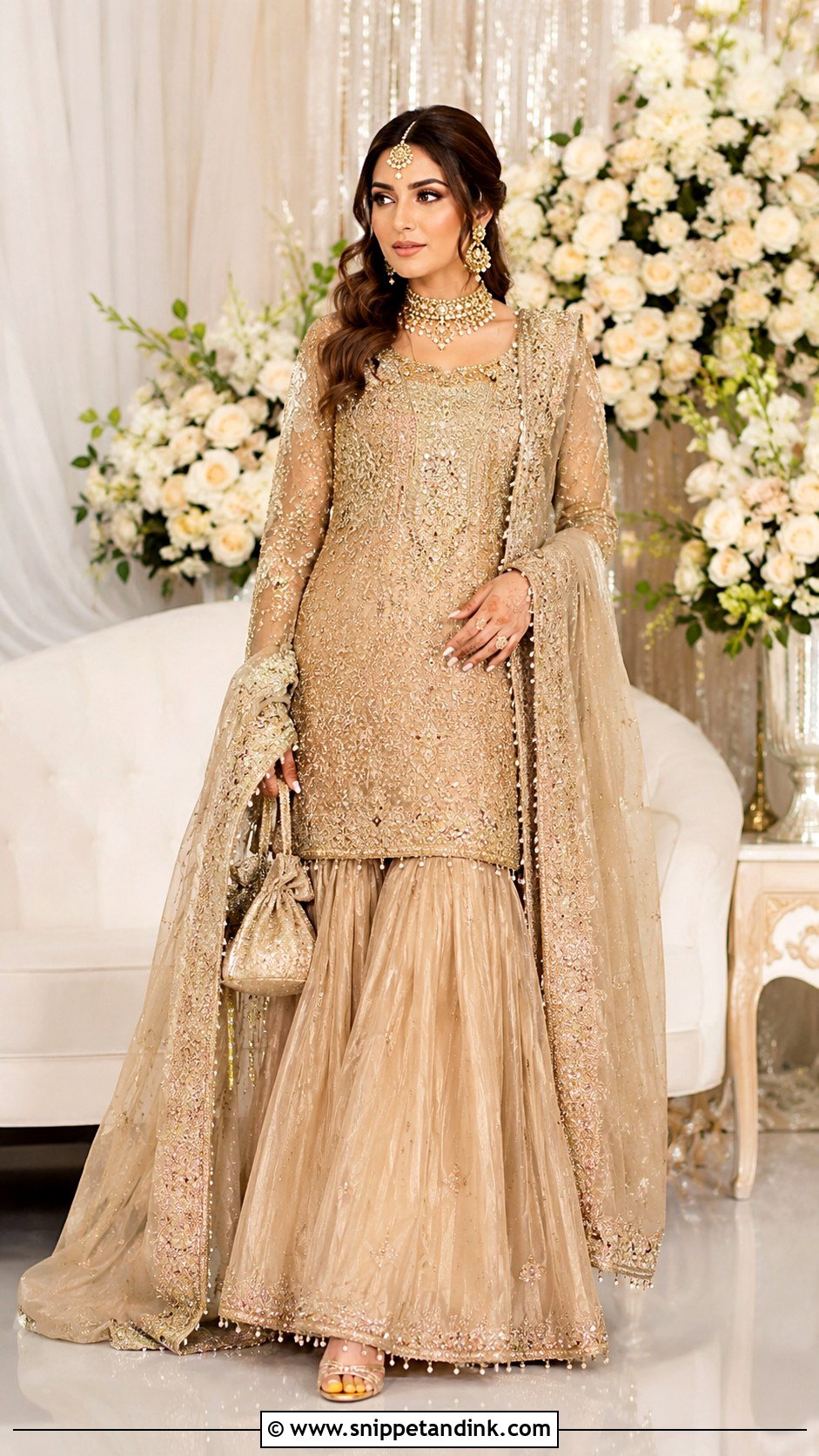
Gold works as a color on its own, which is why I like it for walima, a reception, or a bride who wants shine without red. I steer toward dull, champagne or antique gold; a very bright metallic can look cheap under flash. A heavily worked kameez over a tissue or jamawar garara gives depth. Kundan jewelry, nude makeup and soft gold heels fit, and a sheer dupatta with embroidered edges keeps weight off the face. Keep the embroidery, fabric and jewelry in the same warm family.
5. Farshi Pakistani Bridal Garara Dress
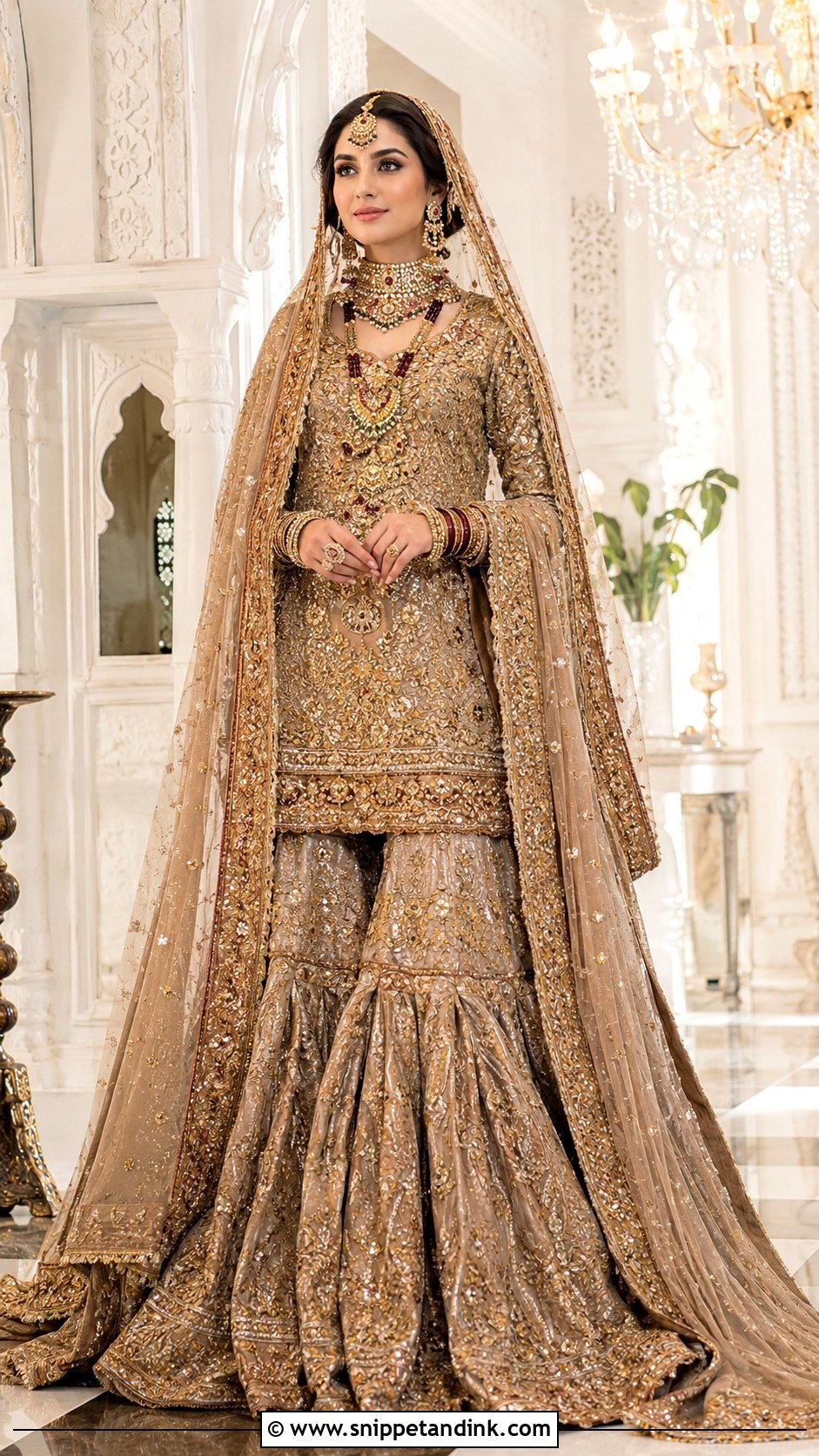
The farshi cut sweeps the floor behind the bride, which is where its grandeur comes from and also its main problem. I fit farshi gararas with the bride’s actual shoes on, because a centimeter of hem decides whether she glides or trips on the stage steps. A short kameez, heavy borders and a dupatta over the head or one shoulder balance the volume. Velvet, tissue, jamawar and brocade give the panels enough body to fall properly. Match the jewelry to the scale with a matha patti and layered necklace; it suits a formal nikkah, barat or heritage portraits.
6. White Pakistani Bridal Garara Dress
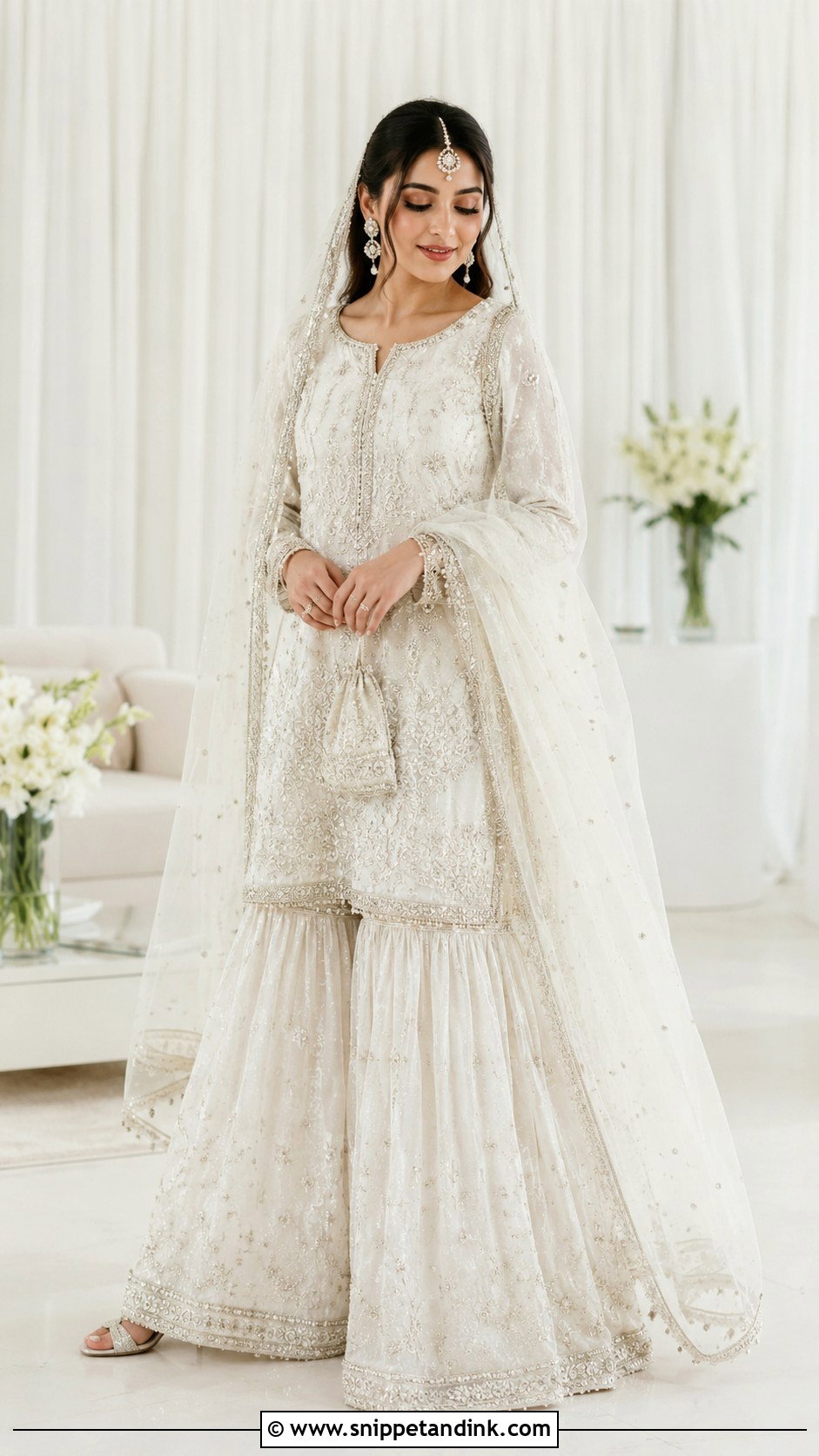
White suits a nikkah because it asks for so little. A white or off-white shirt, a soft flared garara and an organza dupatta with fine embroidery is enough, with silver, pearl, champagne or pale gold work for bridal detail. Full sleeves and a longer shirt add coverage if the family prefers it. A sleek bun, pearl earrings and soft pink makeup keep it fresh, and I’d always ask the photographer to expose for the dress so the embroidery doesn’t blow out.
7. Blush Pink Pakistani Bridal Garara Dress
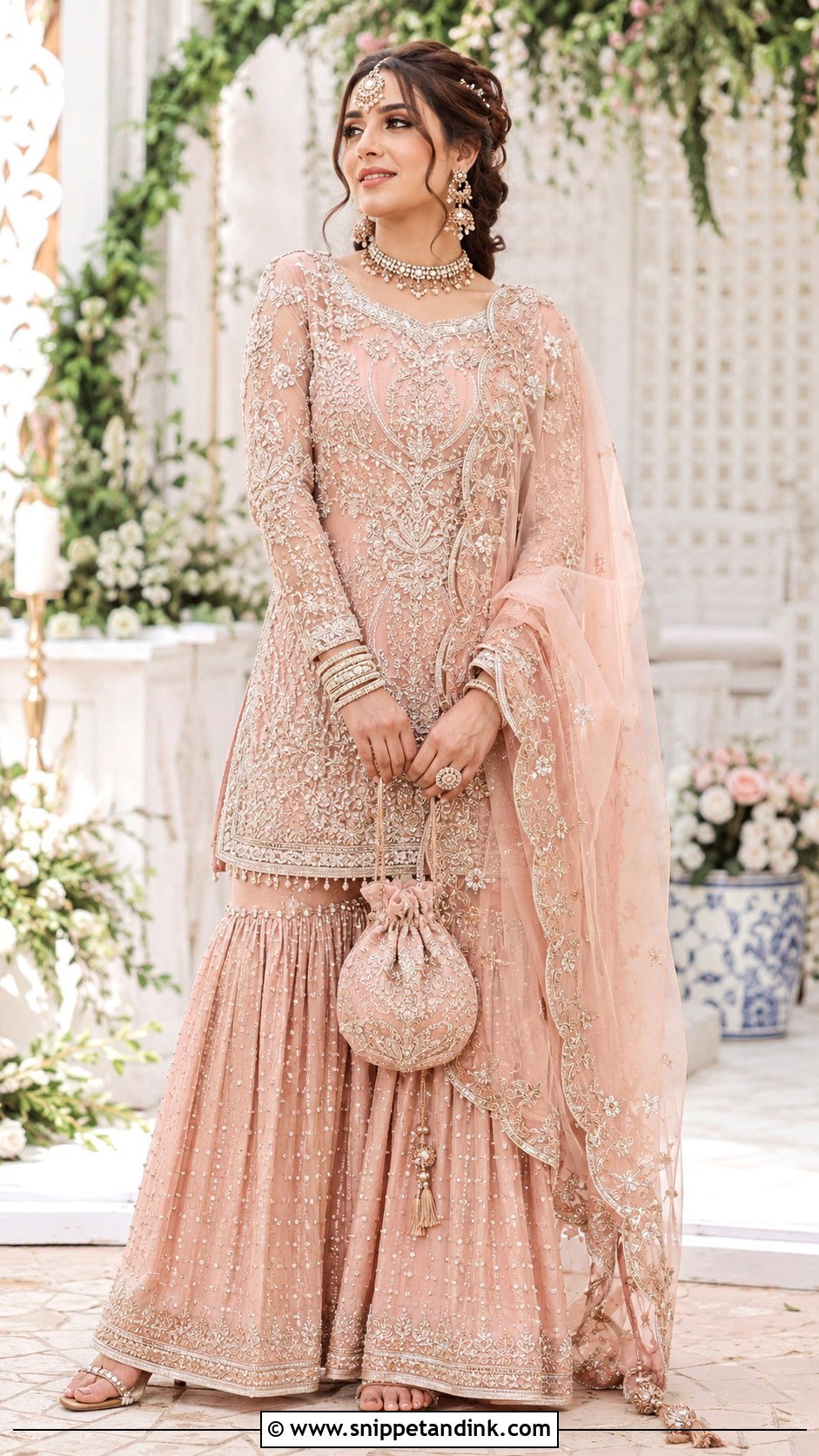
Blush gives softness without losing the festive feeling, so I reach for it for a nikkah, walima or daytime event. A blush shirt with pearl, sequin and light gold work pairs with a raw silk or tissue garara, and a sheer dupatta with a scalloped border frames the face. Keep jewelry delicate: pearls, polki or rose-gold accents. One caution from fittings: some blush fabrics turn peach under warm tungsten light, so I hold the swatch under the venue’s lighting type before ordering. Soft curls, fresh makeup and embroidered heels finish it for a garden, hotel or studio setting.
8. Emerald Green Pakistani Bridal Garara Dress
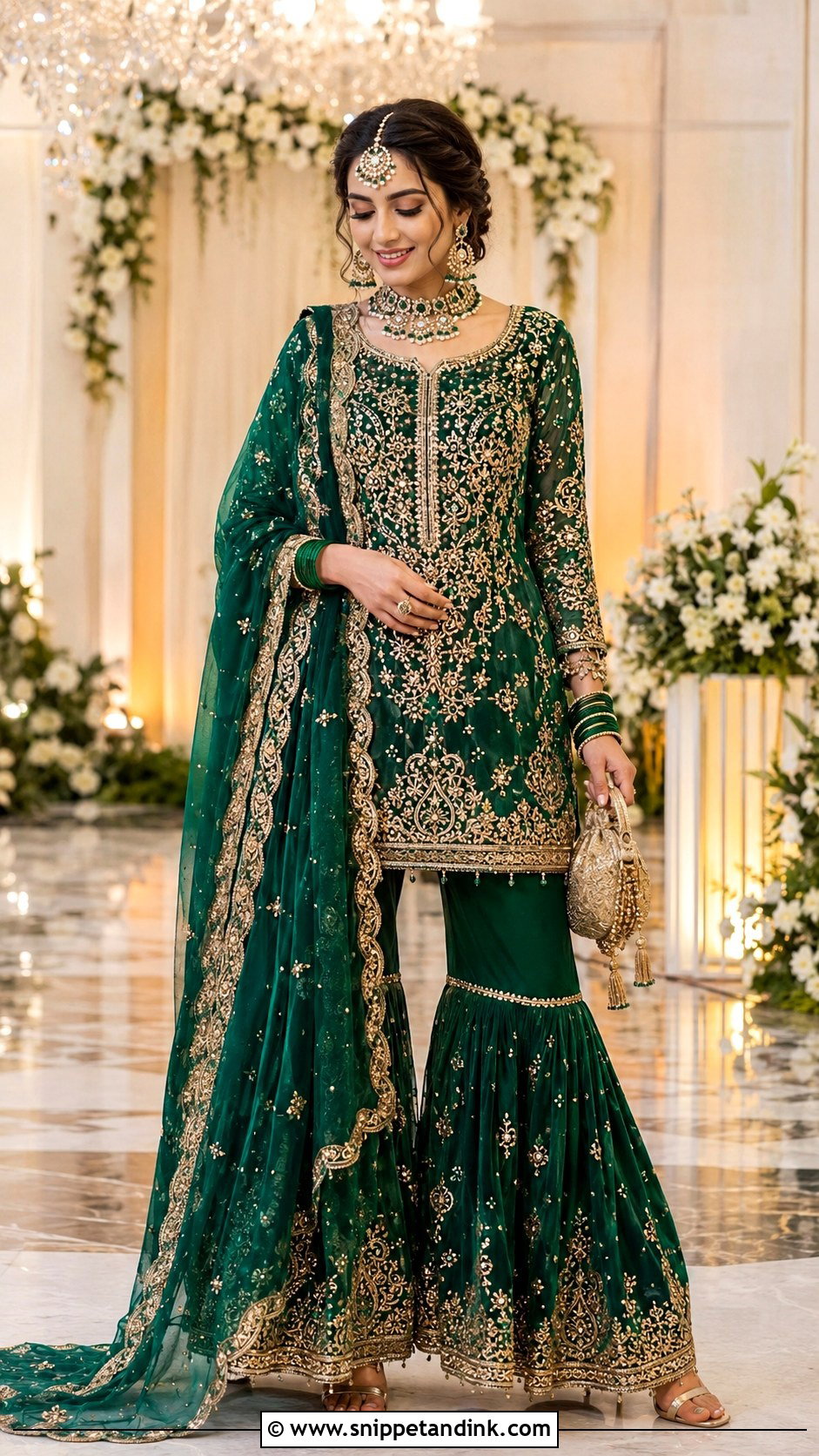
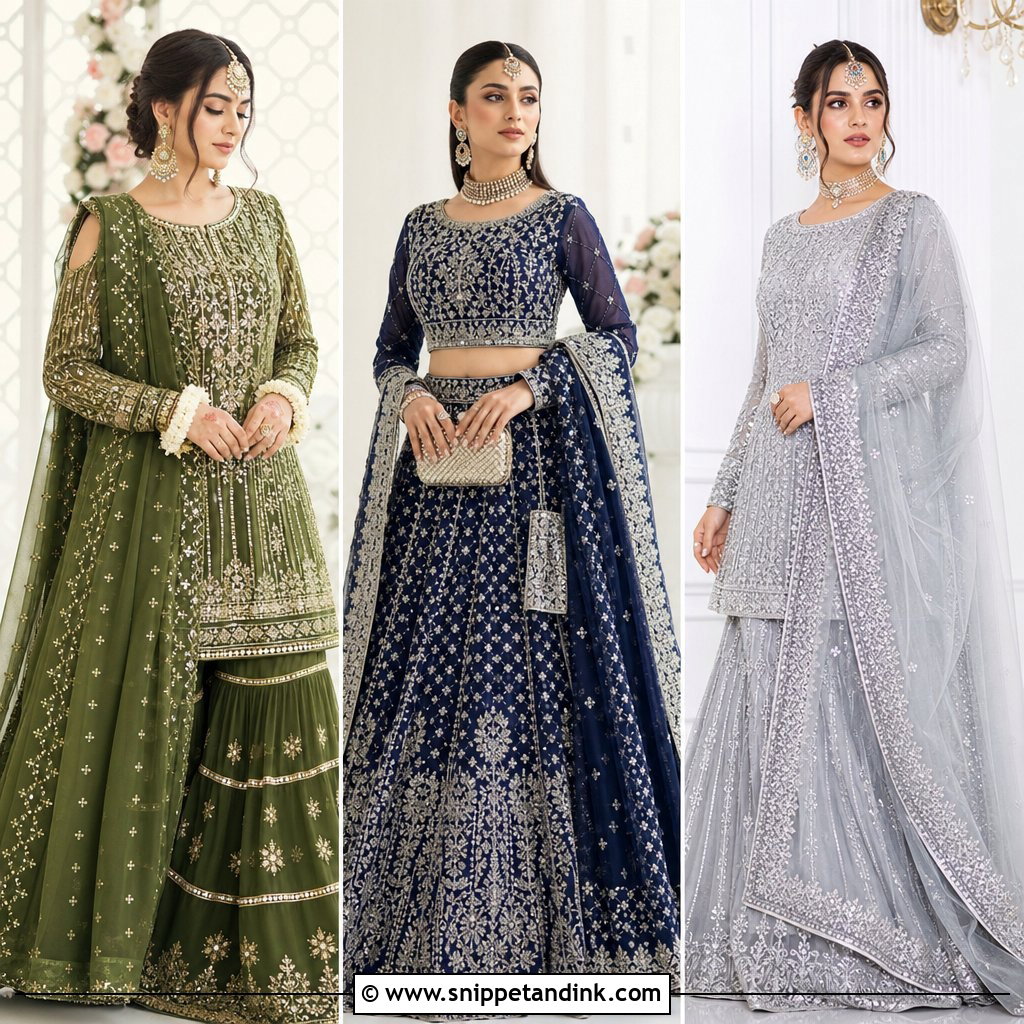
Emerald works for mehndi, barat or reception, and it suits a wide range of skin tones. Antique gold embroidery on a short, heavily worked shirt over a structured garara is the balance I aim for. For contrast, add a dupatta in matching green, mustard, gold or rust. Kundan jewelry, green bangles and gold heels are enough. Season decides the fabric: velvet for winter, raw silk or organza when it’s warm, because emerald velvet in a summer marquee is miserable to wear.
9. Mustard Pakistani Bridal Garara Dress
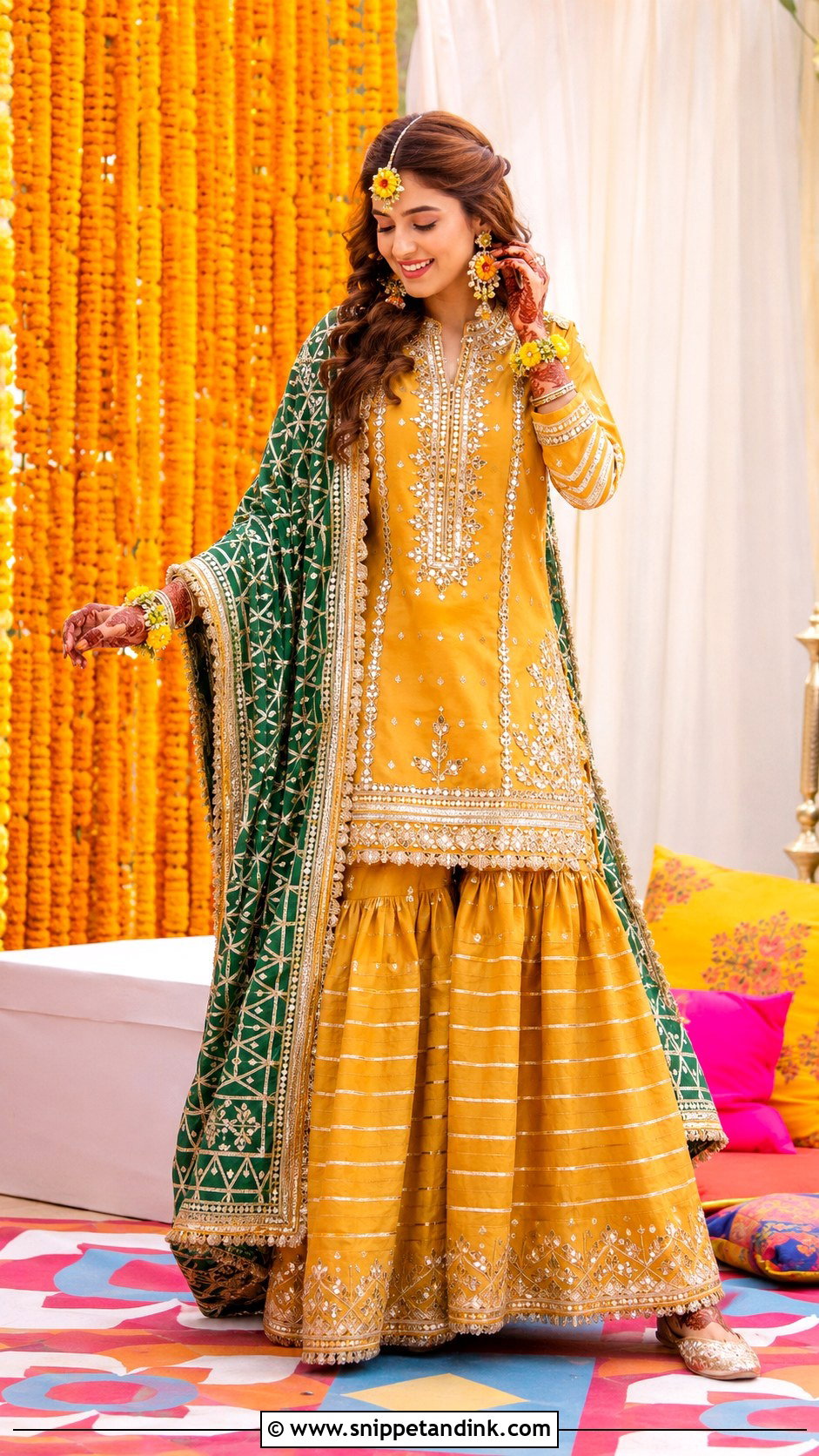
Mustard is a mehndi color first. It reads joyful without being harsh, especially with a gota-work garara and a contrasting dupatta in green, pink, orange or gold. Mirror work, gota patti and thread embroidery suit dancing, and I keep the garara a touch shorter than a barat hem so it doesn’t catch under the feet during a dholki. Floral jewelry, jhumkas, bangles and embellished khussas finish it, with glowing skin and a warm lip.
10. Black And Gold Pakistani Bridal Garara Dress
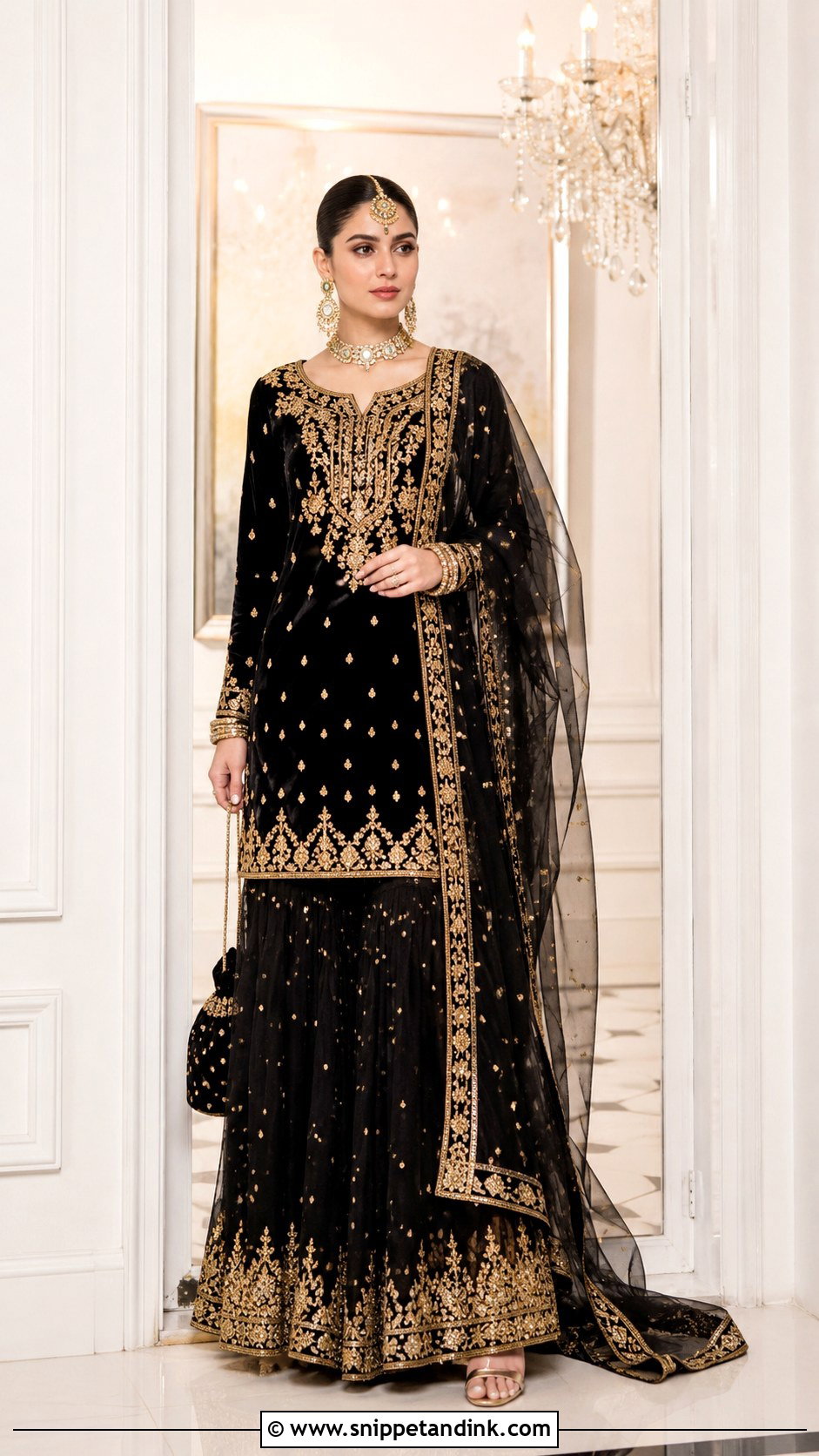
Black isn’t a traditional bridal color, and some families will object to it, so I raise that conversation before anything is ordered. For reception portraits or a modern pre-wedding event, black velvet or raw silk with antique gold embroidery and a garara with heavy border work is striking. A gold or black organza dupatta adds balance. Kundan jewelry, sleek hair and gold heels finish it; I’d keep everything else restrained so the contrast does the work.
11. Pastel Pakistani Bridal Garara Dress
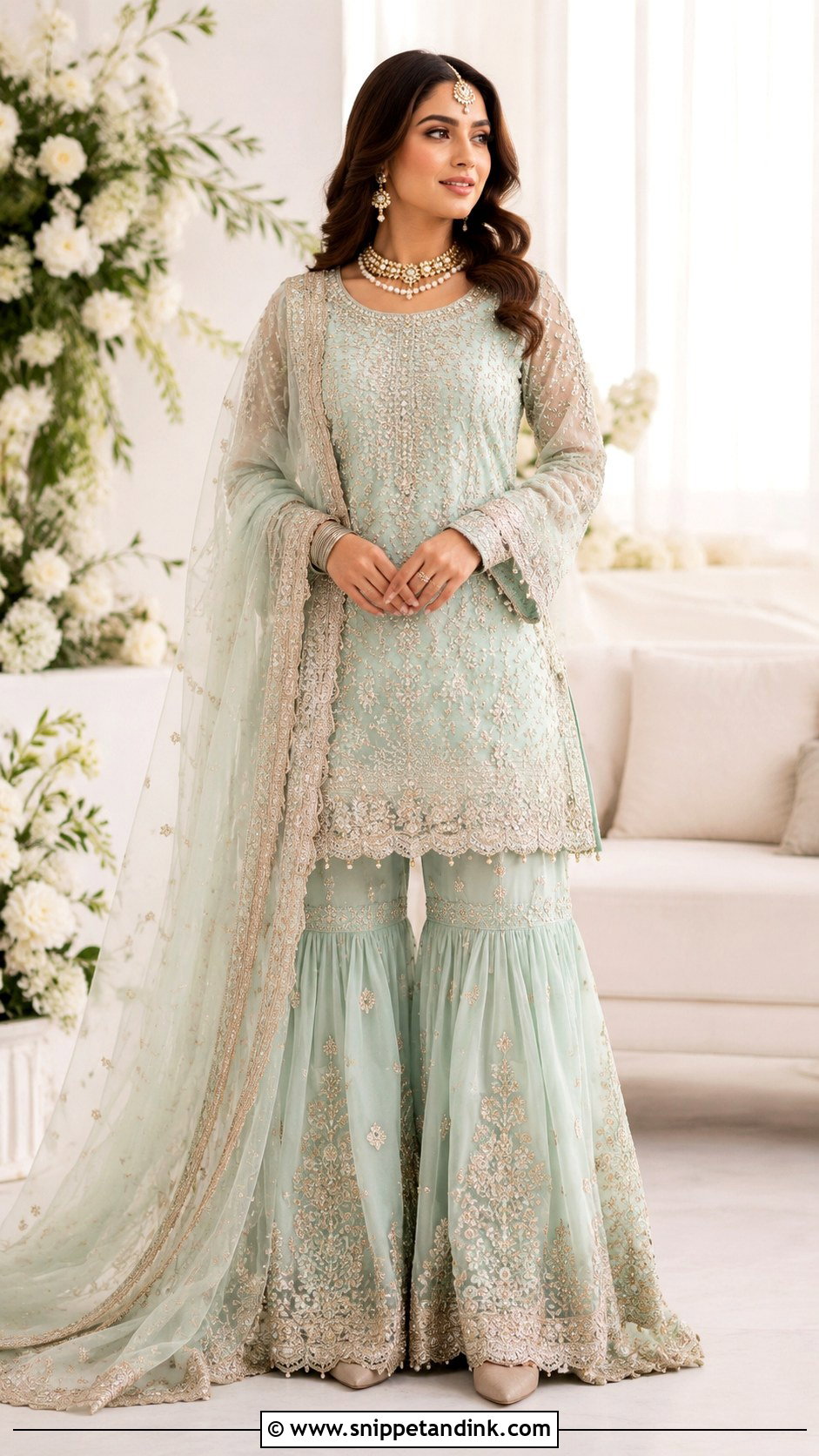
Mint, powder blue, lilac, peach and champagne all fall under the pastel Pakistani bridal garara dress family, and they suit a nikkah or walima best. Tonal or softly metallic embroidery keeps pastels refined; bright multicolor work tends to cheapen them. A pastel shirt, flared garara and sheer dupatta look light but still bridal. Pastels forgive nothing in the tailoring, so I’m fussier about seams and hems on these than on heavier reds. Pearl jewelry, delicate bangles and neutral heels finish it.
12. Velvet Pakistani Bridal Garara Dress
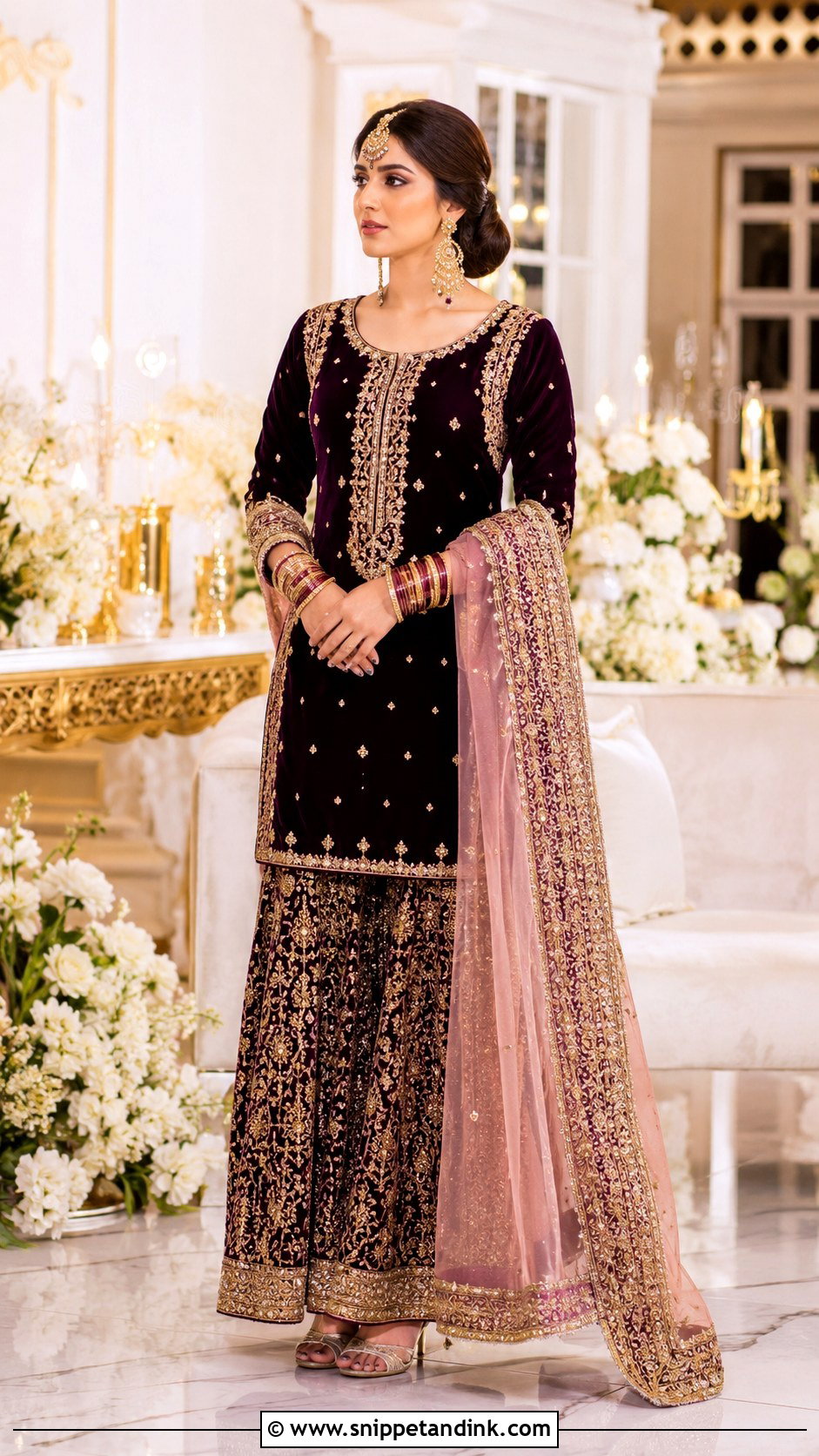
Winter weddings are where velvet earns its place. Maroon, emerald, navy, deep red or plum velvet with a jamawar or velvet garara gives warmth and richness, and gold embroidery, dabka and sequins stand out against the pile. Velvet is heavy on the body, so I always pair it with an organza or net dupatta rather than another heavy layer. A low bun, traditional jewelry and metallic heels suit evening barat events and indoor receptions.
13. Peplum Pakistani Bridal Garara Dress
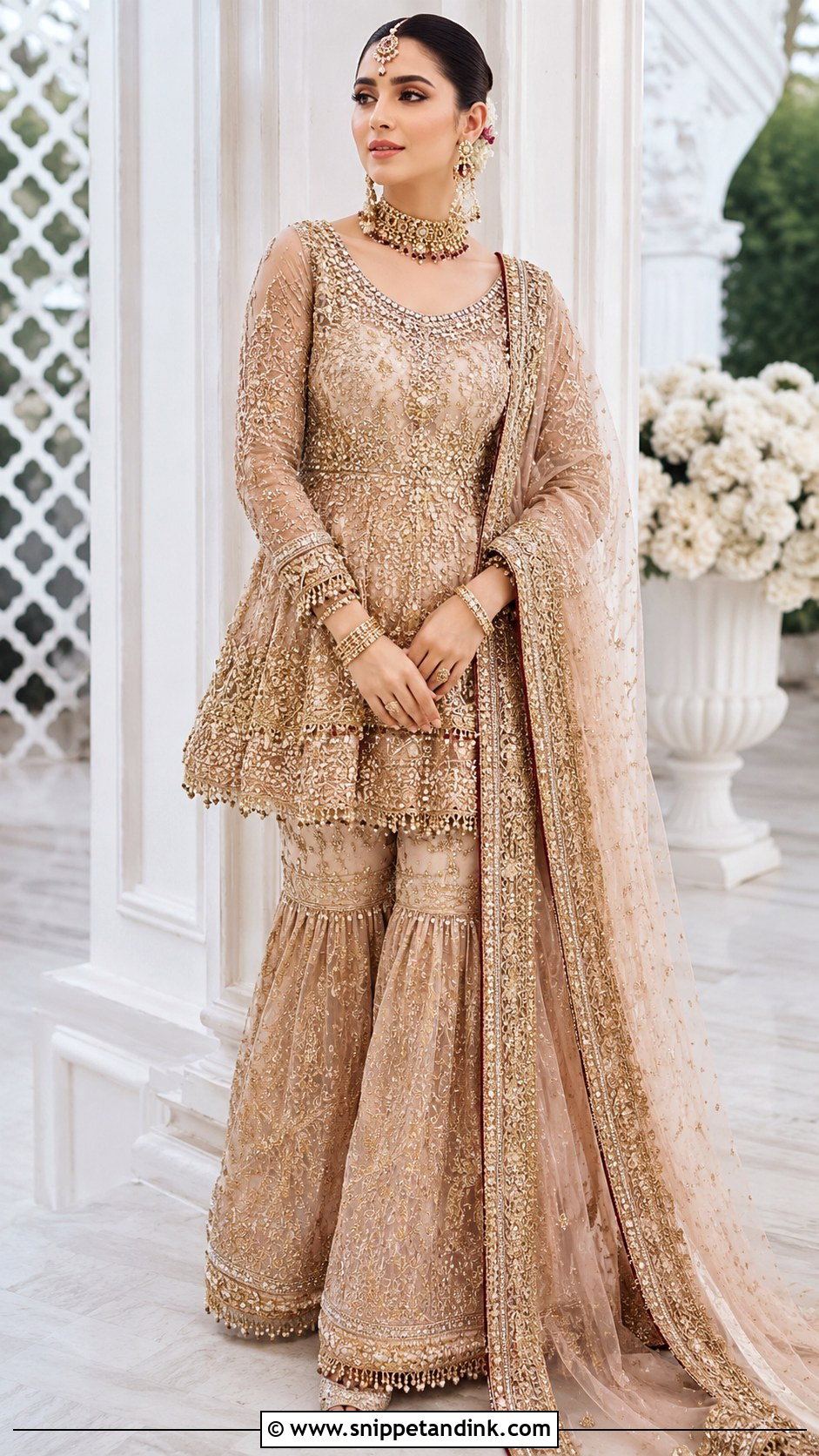
A peplum top gives a defined waist, which is why brides who feel lost in a straight kameez often love it. The structure up top balances the garara’s volume below. Red, gold, ivory, blush and emerald all work. I ask the designer to repeat the embroidery at the neckline, waist, sleeves and hem so the peplum ties visually into the garara border. Drape the dupatta over one shoulder or lightly over the head, and add statement earrings, a choker and embellished heels.
14. Long Shirt Pakistani Bridal Garara Dress
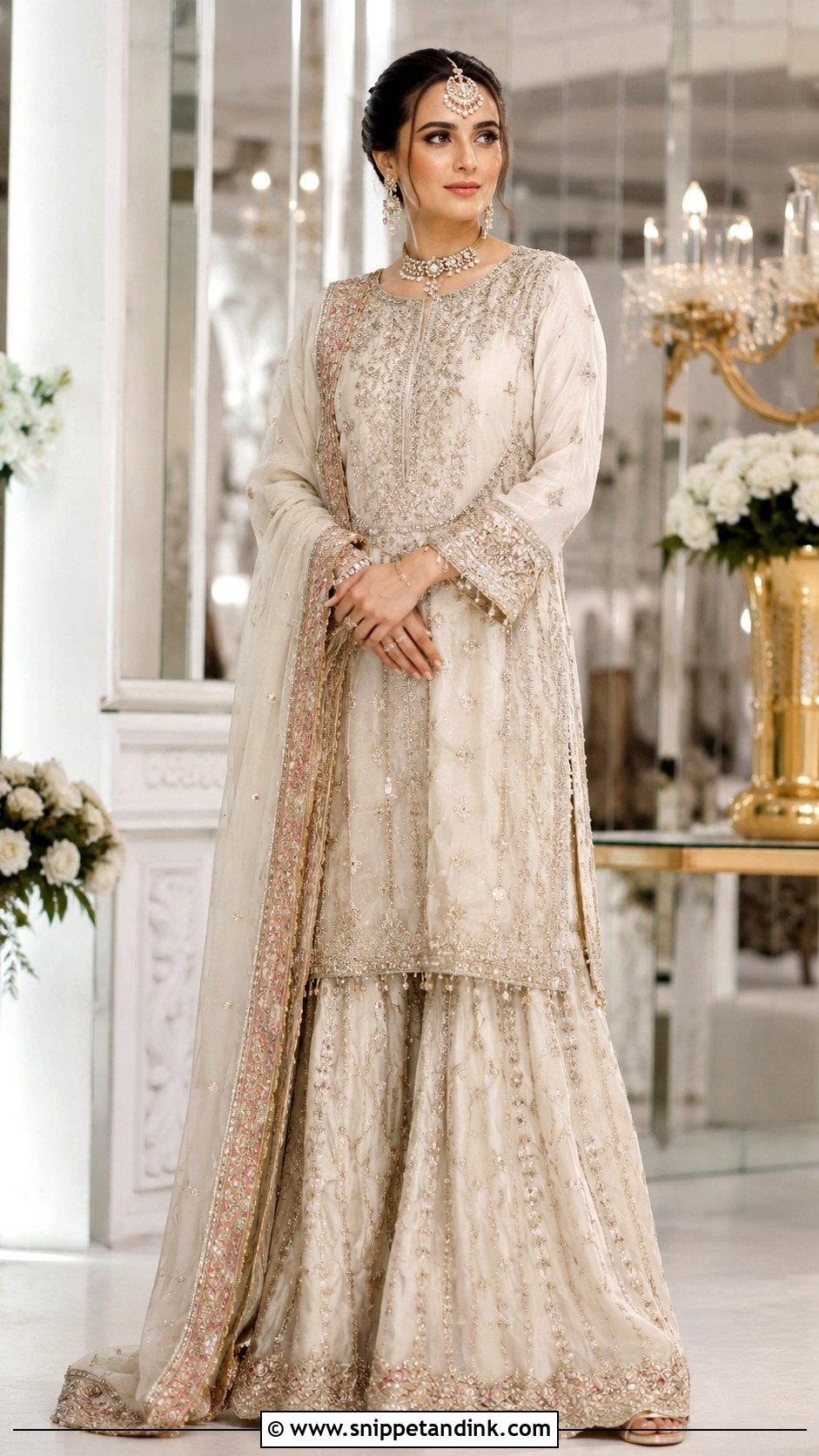
A longer kameez gives more coverage and lets just the flare of the garara show at the bottom. It suits nikkah, barat and family-focused events where modesty matters to the bride or her elders. Side slits, embroidered panels and a detailed hem keep it from looking plain, and raw silk, chiffon, tissue or organza keep it polished. I’d check that the slits are high enough to walk and sit without the shirt pulling across the hips. A dupatta with a heavy border and lighter center, classic jewelry, soft heels and neat hair complete it.



15. Short Kurti Pakistani Bridal Garara Dress
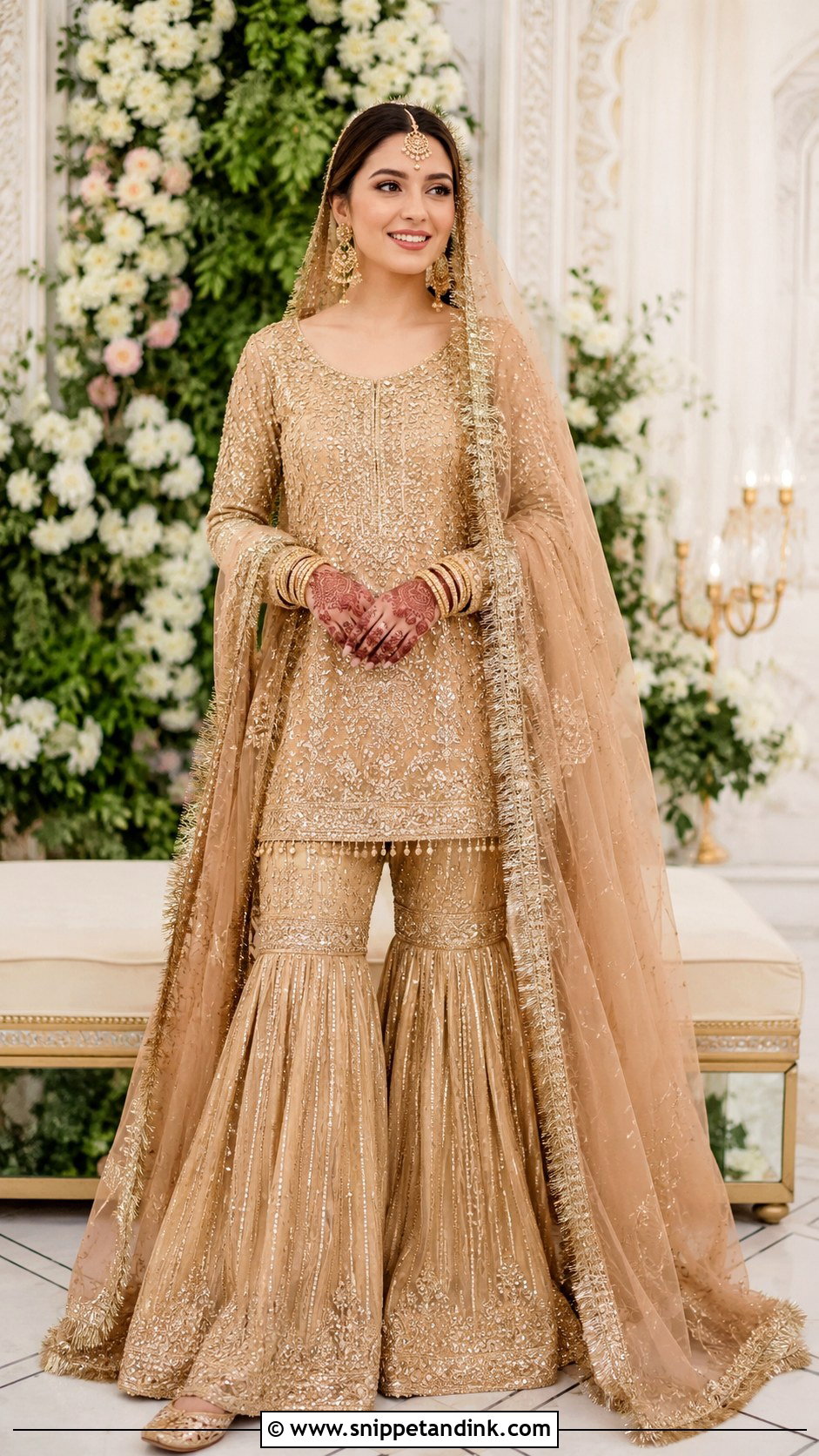
Shorten the kurti and the garara becomes the star: the knee joint, flare and border work are all on show. Red, maroon, green, mustard and gold suit this style. I’d match the kurti’s neckline, sleeve and hem embroidery to the garara so the two read as one outfit, then add a dupatta with kiran, gota or scalloped edging. Khussas or low heels make the long functions manageable, and with a short top every step shows the shoe, so pick ones you like.
16. Angrakha Pakistani Bridal Garara Dress
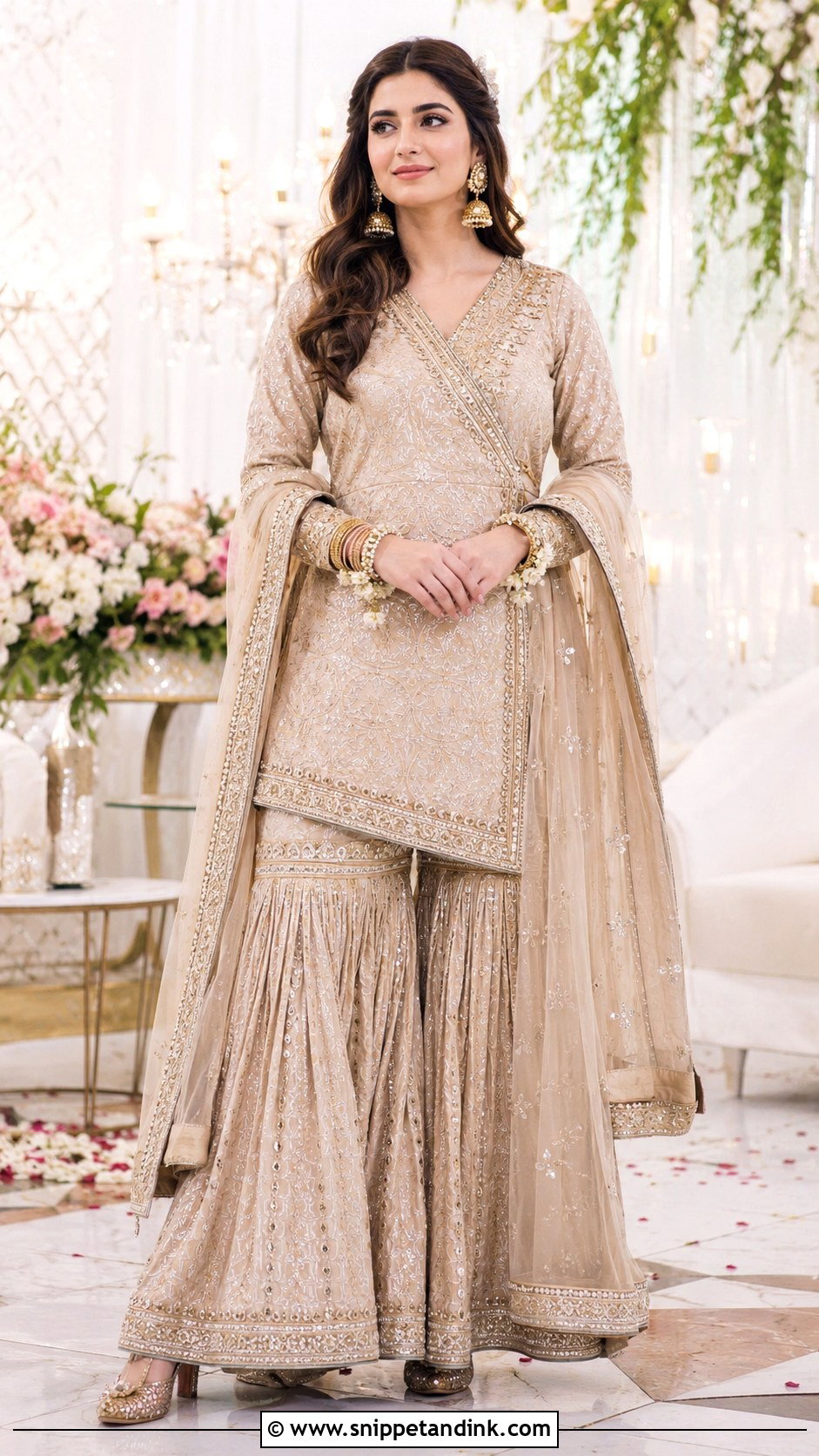
The angrakha’s crossover front defines the waist without the tightness of a fitted kameez, which makes it a comfortable choice for long functions. The angled line adds movement and detail. It works with a flared garara and a sheer dupatta, in gota, zardozi, mirror work or thread embroidery depending on the event. Mustard, ivory, red, peach and green suit it well. I always check that the overlap is secured with an inner tie as well as the outer one, so it doesn’t open when the bride bends to greet elders. Jhumkas, bangles and soft curls finish it.
17. Jamawar Pakistani Bridal Garara Dress
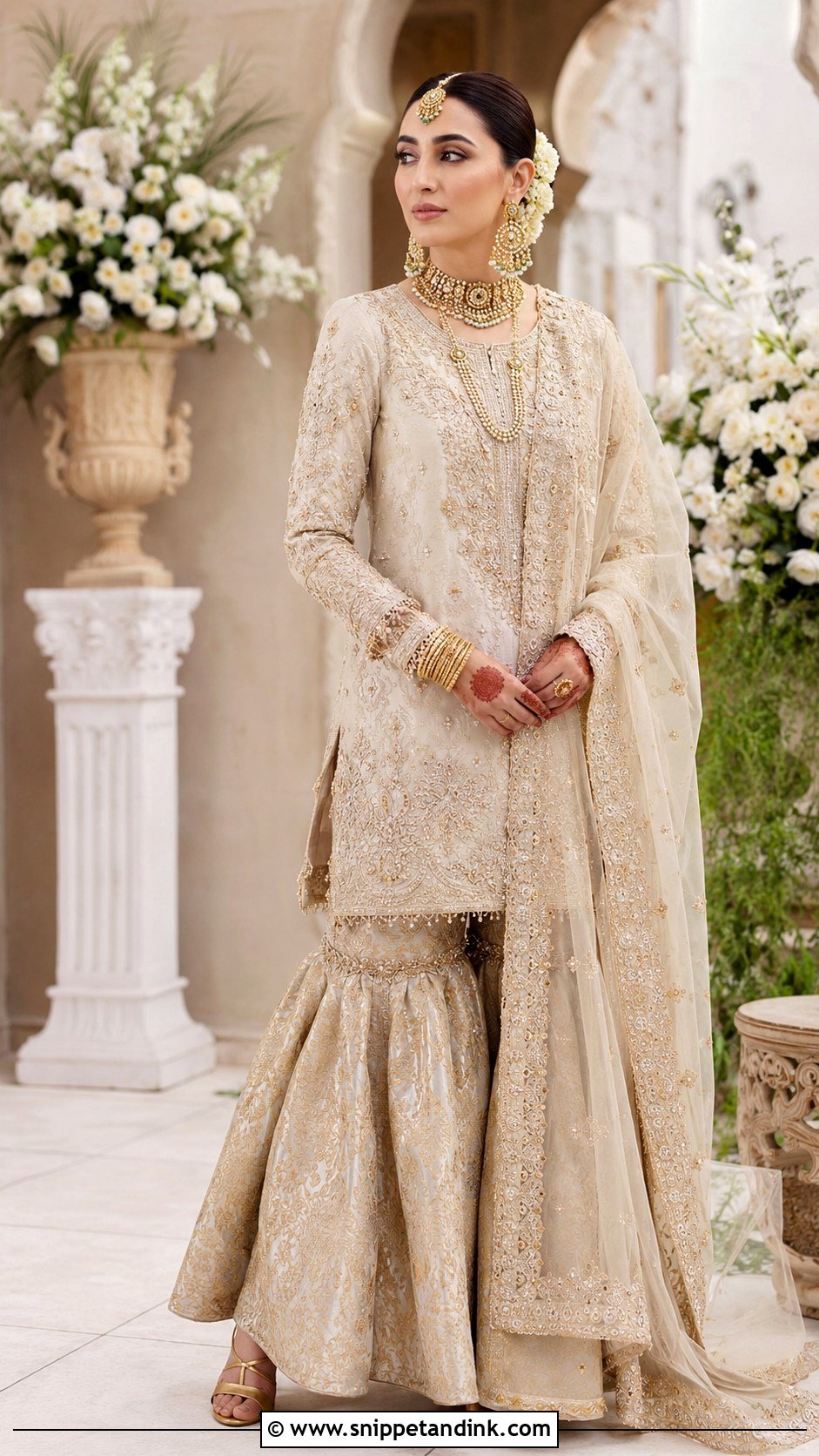
Jamawar has pattern woven in before a single stitch of embroidery is added. That’s why a jamawar Pakistani bridal garara dress usually works best with a solid embroidered shirt; a full jamawar set is heavier and suits a barat. Gold, maroon, rust, green and ivory are all rich in this weave. I keep the dupatta lighter, organza or net, so the whole outfit doesn’t feel dense. Antique jewelry and classic heels finish a heritage look.
18. Organza Pakistani Bridal Garara Dress
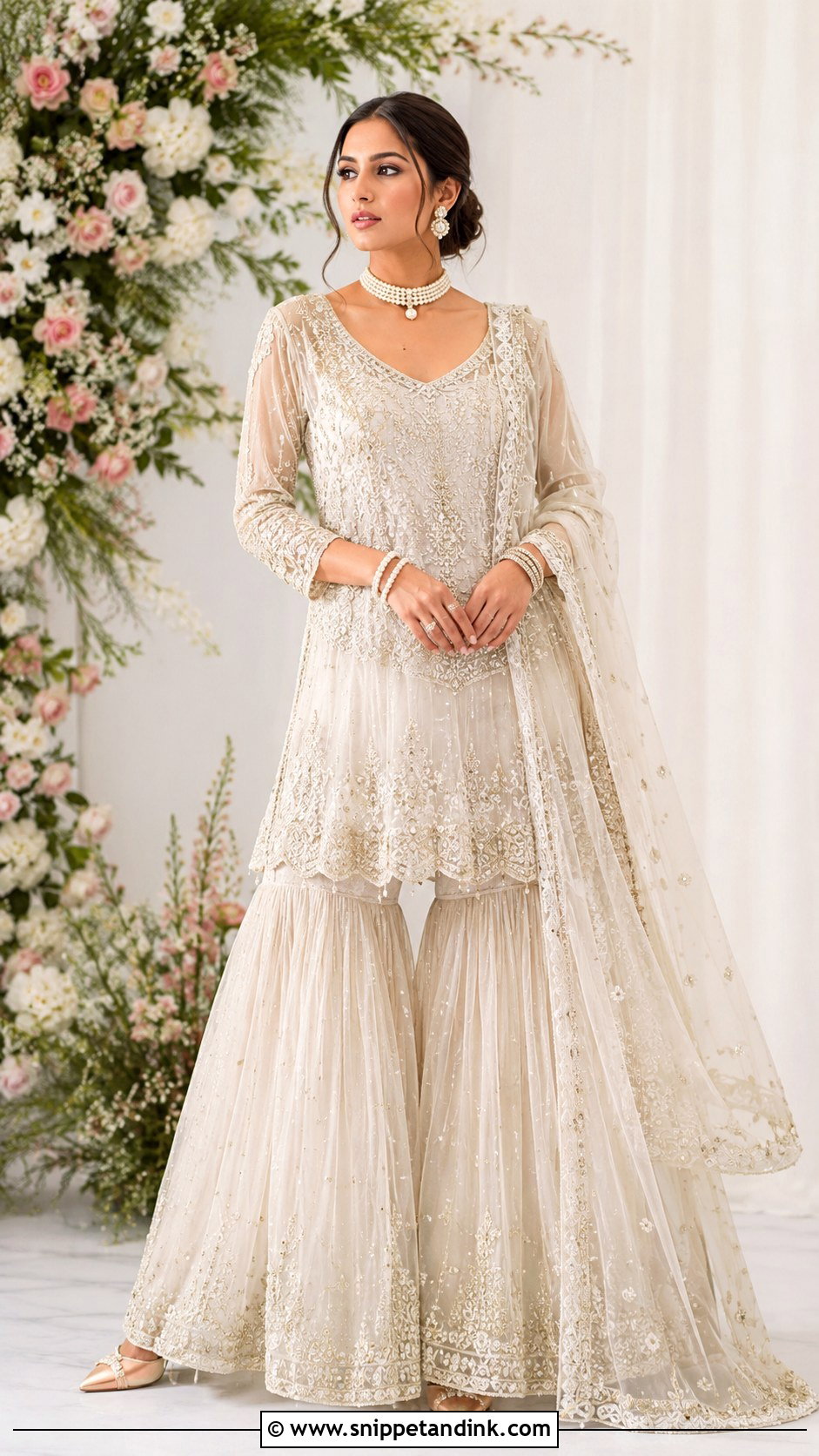
Organza holds its shape, which is why it gives volume without weight and suits dupattas, overlays, sleeves and flared panels. Pastel, ivory, champagne and soft gold keep it light, and pearls, sequins, crystals or fine threadwork add sparkle without overpowering it. An organza shirt, layered garara and matching dupatta make a full look for a nikkah, walima or daytime photos. My one warning: organza creases sharply when sat on, so I have brides steam the garara on the morning and sit with the panels spread. Pearl jewelry, dainty heels and clean makeup finish it.
19. Tissue Pakistani Bridal Garara Dress
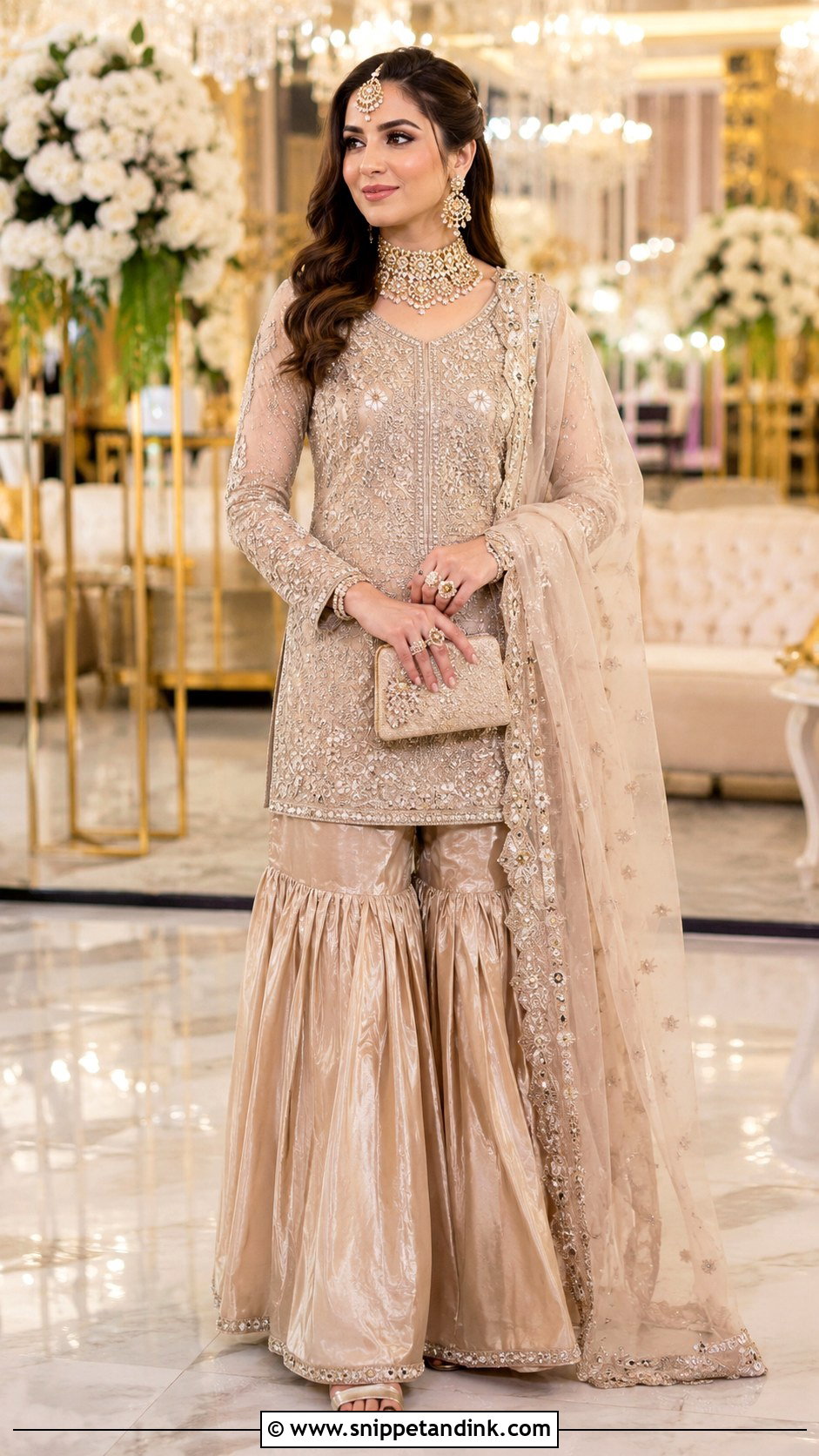
Tissue has a soft shine that catches light gently rather than glaring, so it suits a reception or walima. Gold, champagne, rose, silver and ivory are the strongest shades. A tissue garara with an embroidered short shirt looks rich without bulk; add a sheer dupatta with fine borders and minimal scatter work. Keep traditional jewelry refined so the fabric stays in front. Metallic heels and a small embellished clutch complete it.

20. Net Pakistani Bridal Garara Dress
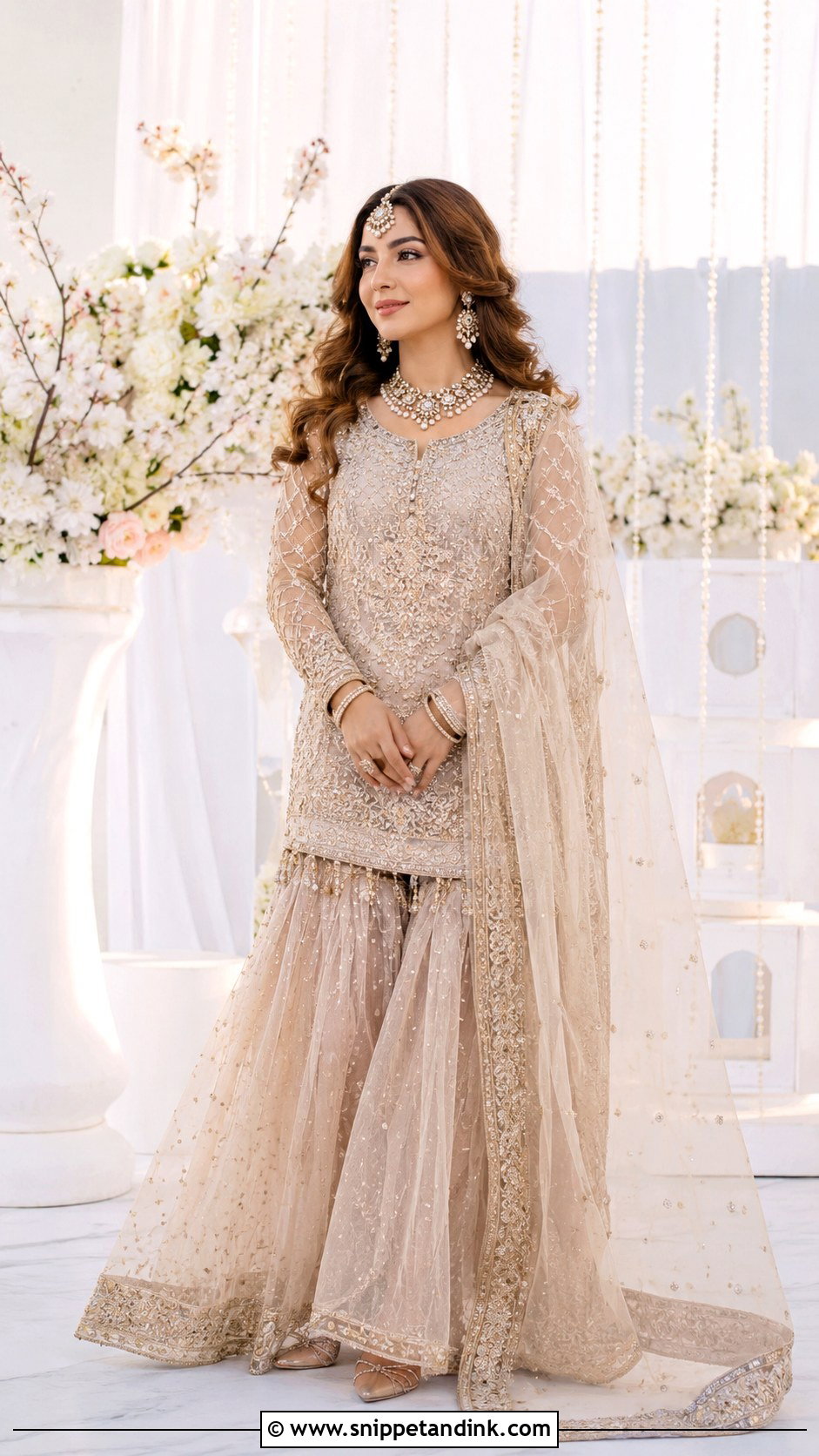
Net needs a lining and a plan. Used as an overlay on a lined shirt, with a structured garara and a matching dupatta, it looks layered and soft; used everywhere, it reads too sheer. Blush, ivory, mint, silver and champagne suit it, and pearl, crystal and sequin work add lightness. I check every net garara for snags before the event, since heel buckles and bangles catch it easily. Delicate jewelry, soft curls and pointed heels complete the look.
21. Banarasi Pakistani Bridal Garara Dress
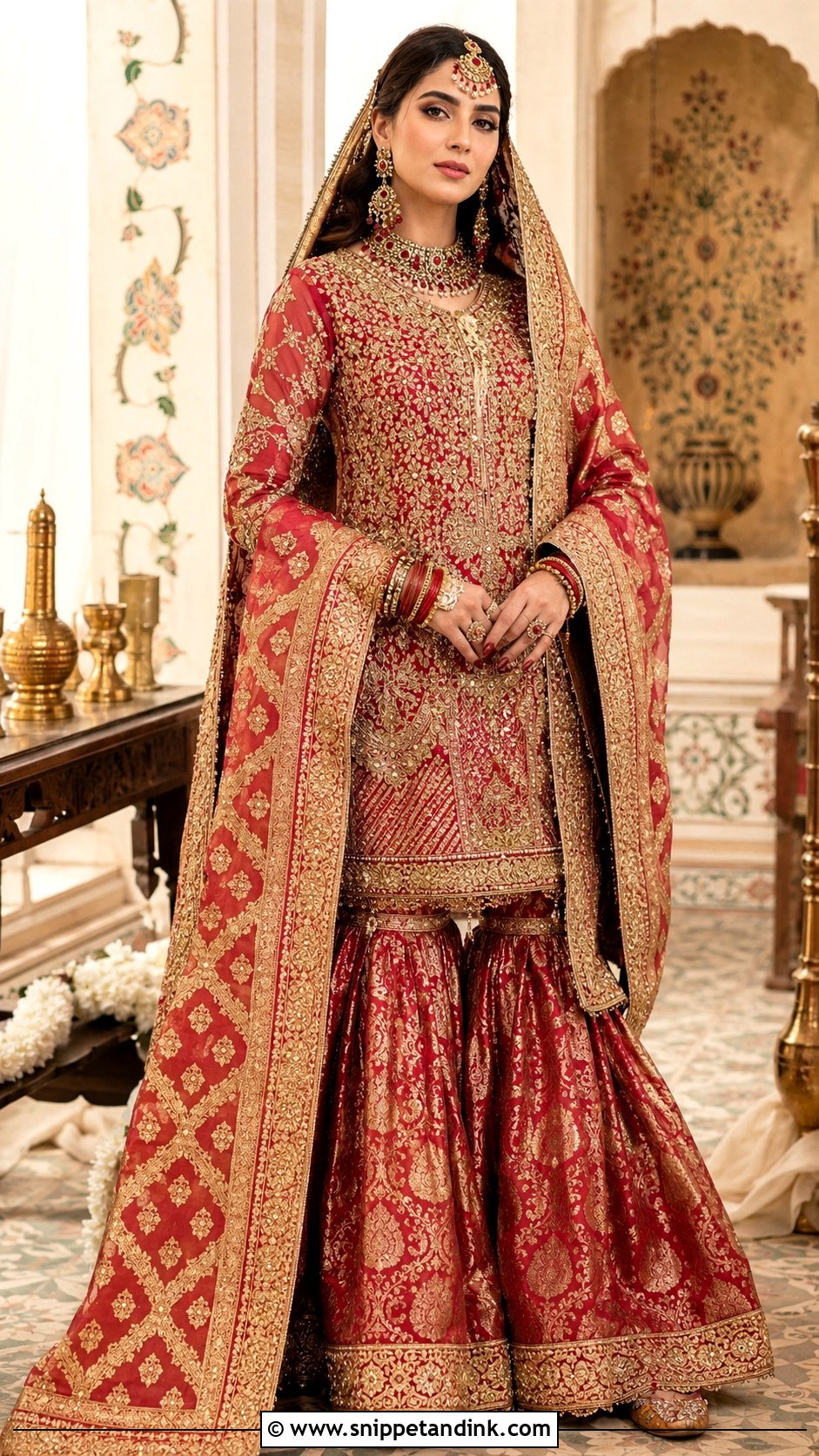
Banarasi brings woven tradition with motifs already in the cloth, so embroidery has to be placed carefully: on the shirt, sleeves, borders and dupatta rather than over the weave. A Banarasi garara with a plain but heavily worked kameez is the balance I like. Red, gold, rust, green and magenta are the usual choices. Traditional jewelry, bangles and embroidered khussas finish it, and a wide-bordered dupatta ties it together.
22. Mirror Work Pakistani Bridal Garara Dress
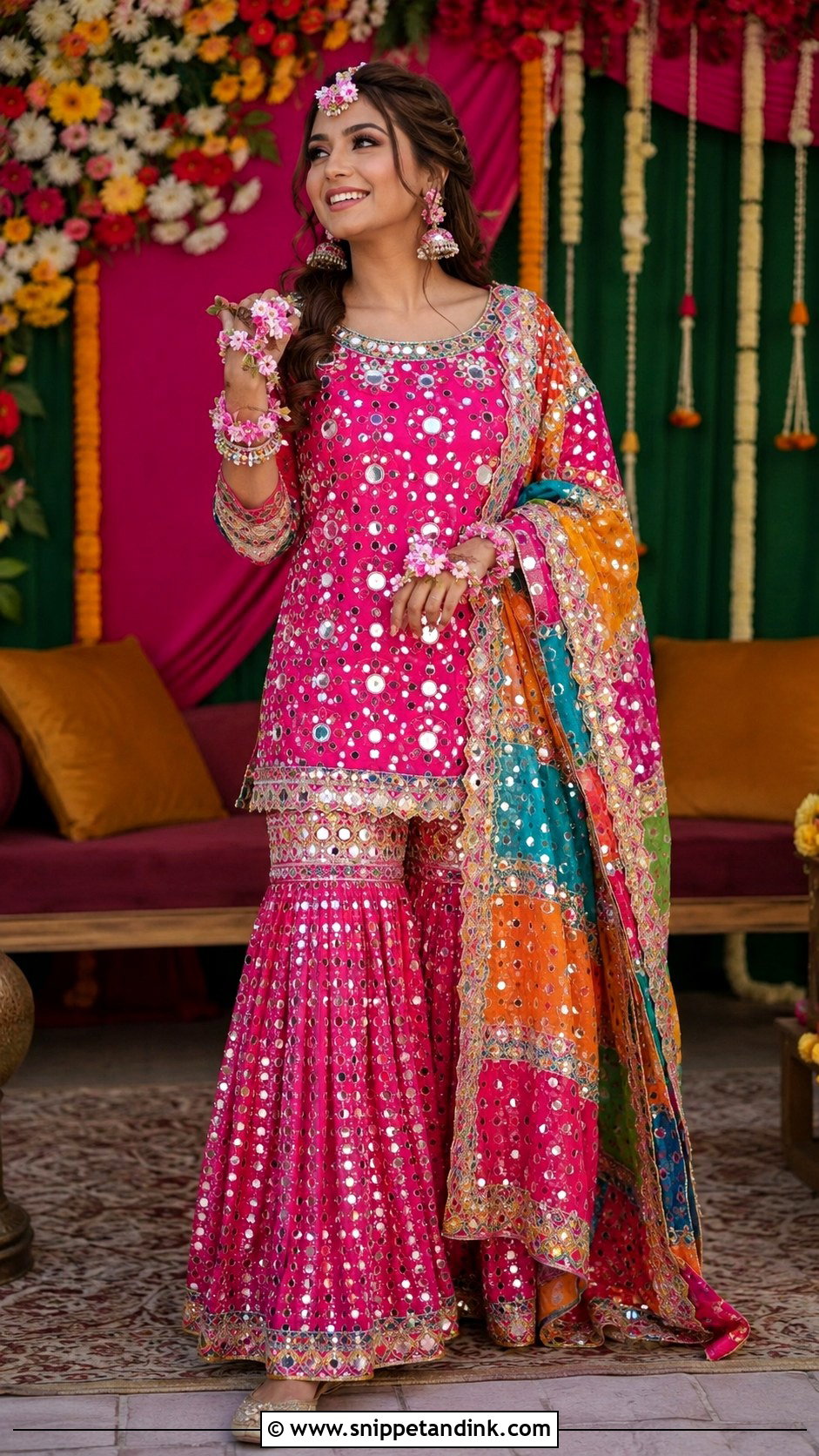
Mirrors catch light every time the bride moves, which is exactly what a mehndi needs. A mirror work Pakistani bridal garara dress in mustard, fuchsia, orange, green or turquoise, with a short mirror-work shirt, gota borders and a colorful dupatta, is festive and easy to dance in. Mirrors are heavy and have edges, so I make sure the inside is lined smoothly to stop them scratching the skin. Jhumkas, bangles, floral accessories, comfortable khussas and fresh, glowing makeup complete it.
23. Gota Pakistani Bridal Garara Dress
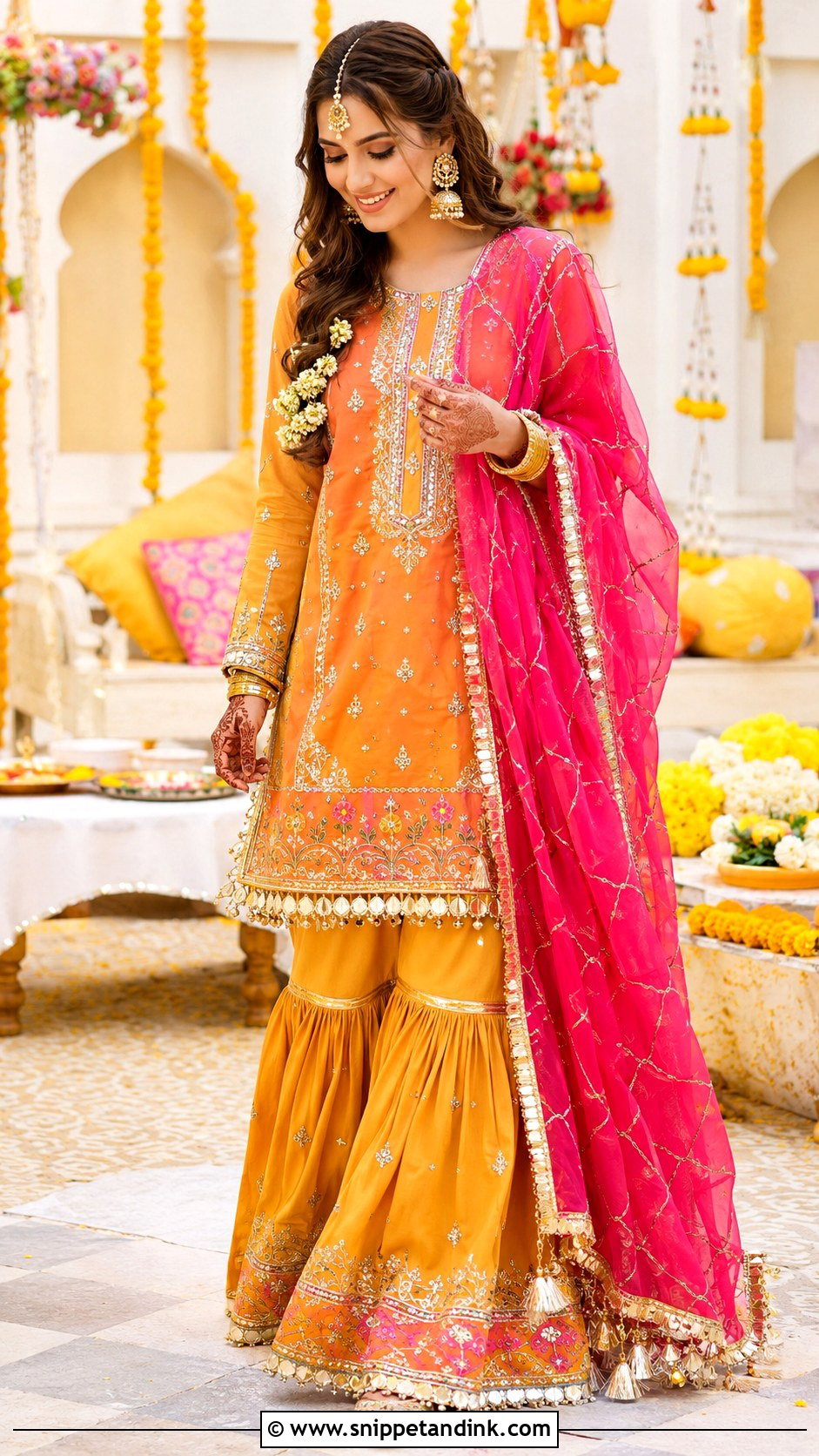
Gota is a quick way to make an outfit festive, and it belongs to the mehndi, mayun and dholki before anything else. It can feel bridal too when the design is rich enough. A mustard, orange, pink or green shirt with a gota-detailed garara is bright and traditional, and a contrasting dupatta with kiran edging adds movement. Real gota tarnishes over time while synthetic stays bright, so I ask which one the designer is using. Jhumkas, bangles, tikka or floral pieces and comfortable khussas finish it for long celebrations.
24. Double Dupatta Pakistani Bridal Garara Dress
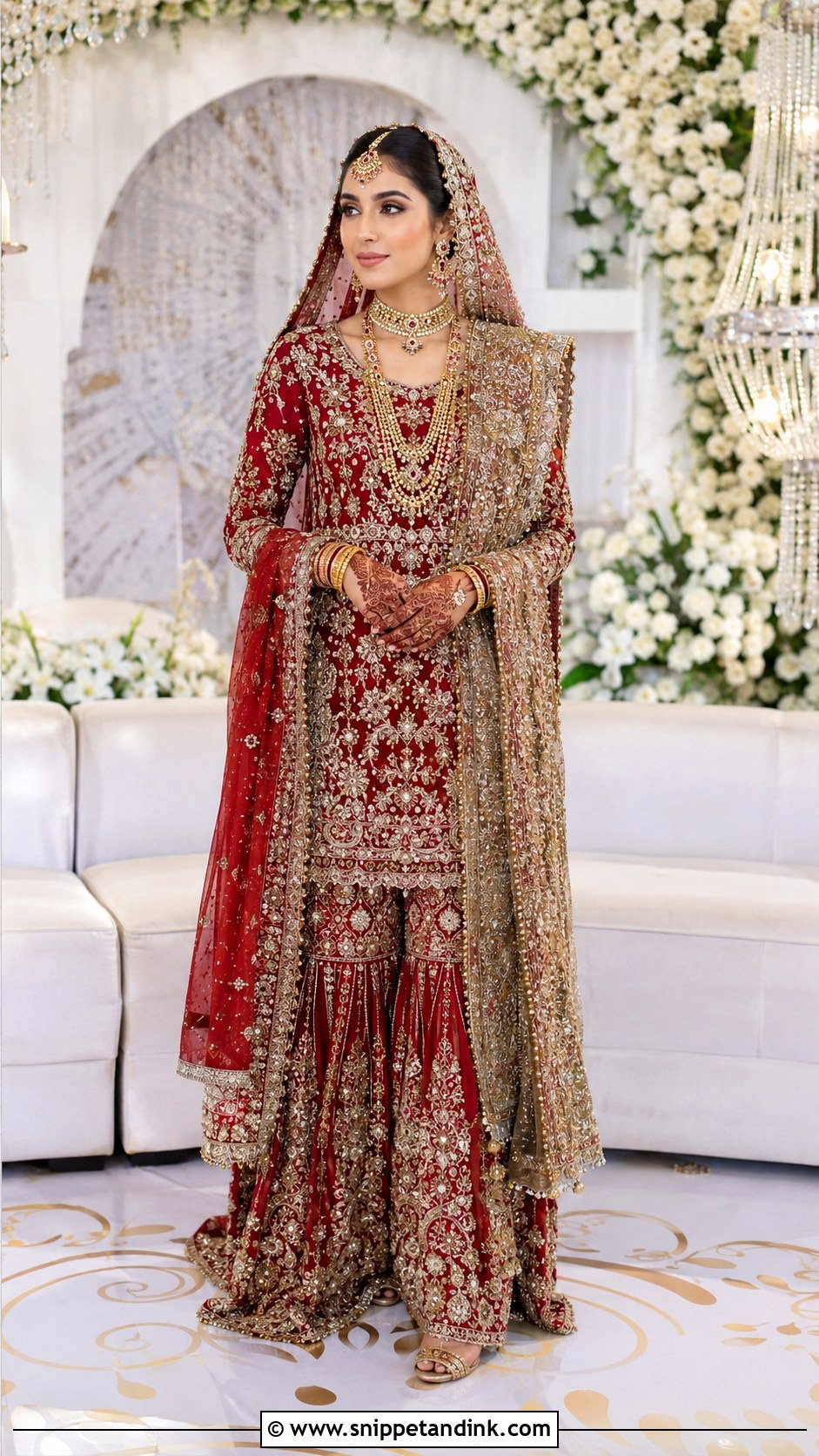
Two dupattas give a more formal, covered look: one over the head, the second across the shoulder or around the arms. It works with red, maroon, ivory, gold and pastel gararas. The rule I follow is one heavy dupatta with borders and one light one, otherwise the weight on the head and shoulders becomes too much by the rukhsati. A fitted shirt, wide garara, layered jewelry and embellished heels complete it, and barat brides can wear both for the ceremony, then drop one for portraits.




25. Walima Pakistani Bridal Garara Dress
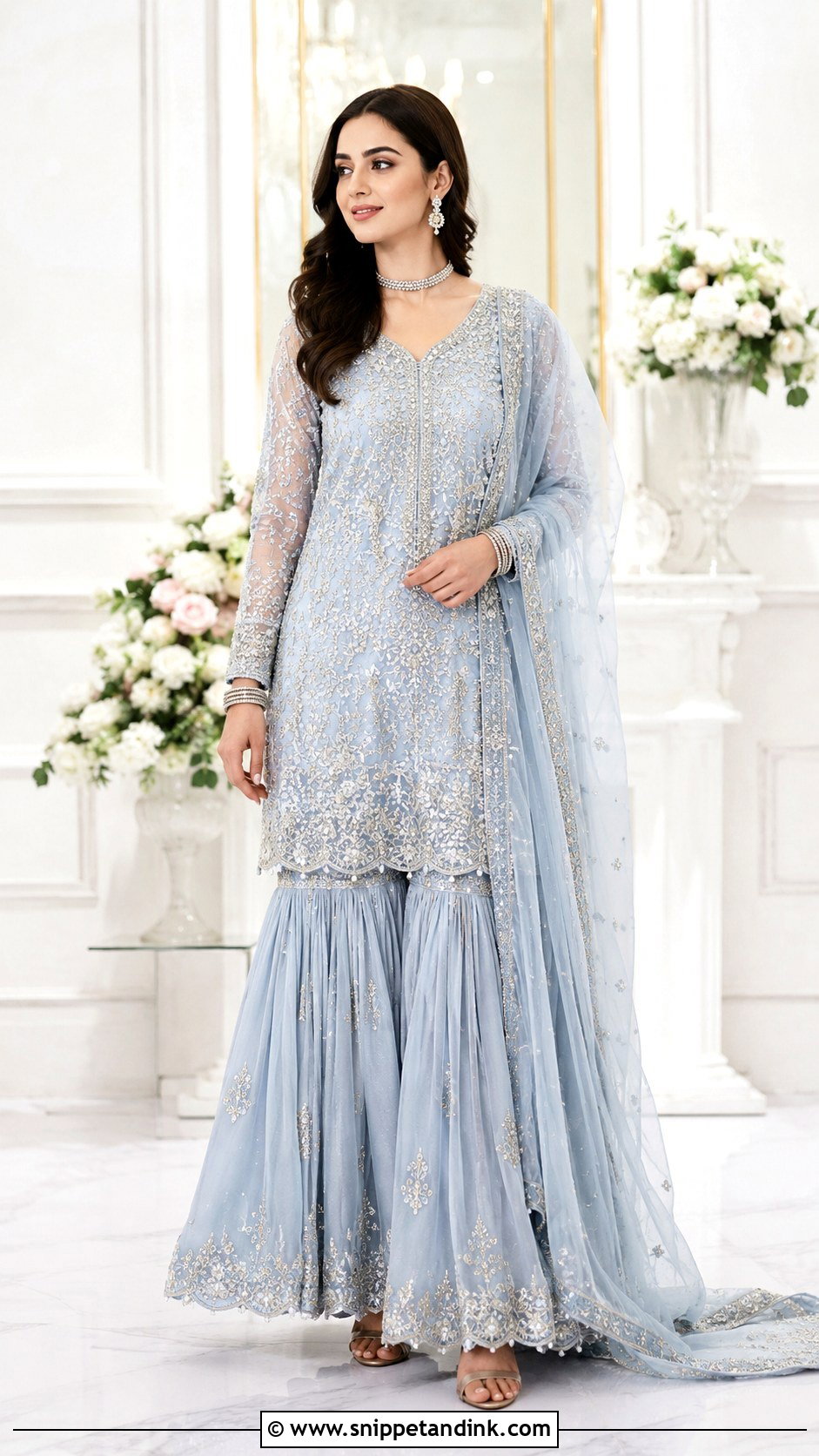
The walima is usually softer than the barat, and I style it that way. Champagne, silver, blush, powder blue, mint, ivory and pale gold all work. A refined shirt with pearl, crystal or threadwork over a garara with a clean border, plus a sheer dupatta that frames the face, keeps it light. Jewelry can be delicate yet still bridal: a pearl choker, drop earrings and slim bangles, with metallic or nude heels. After two or three days of heavy outfits, many brides tell me this is the one they feel most comfortable in.
Climbing the Stage, Sitting for Hours and Holding a Heavy Dupatta
Pakistani weddings ask a bride to walk in, climb a stage, sit for a long time and stand for every family photo. The garara handles most of it if you know how to move in it.
On steps
Lift the front panels slightly with both hands at knee level, not from the hem, so the weight comes up evenly. I always assign one person, usually a sister or cousin, to manage the back panels and dupatta on stairs.
Seated on stage
Spread the panels out to each side before you sit rather than sitting on them; it keeps the border flat for photos and stops creases at the knee. A heavy head dupatta should be pinned into a secure bun base with plenty of U-pins, not just to the top of the hair, or it will drag back by the time the rukhsati comes.
Keep a small pouch nearby with safety pins, a needle and matching thread, and blotting papers. A loose bead or a slipped dupatta is easy to fix in a minute if someone has the kit.
Red Velvet for the Barat, Ivory Organza for the Nikkah
A garara gives you heritage, shape and room to move in one outfit, which is why I keep coming back to it for every function. Red velvet, ivory organza, gold tissue, mustard gota or a farshi silhouette each fit a different event, so I’d match the fabric to the event first and then choose a color you love. Pay attention to fabric weight, dupatta draping, jewelry scale and shoe comfort, because they decide how you feel by the end of a long day, from nikkah to walima.
You'll Like These Ideas:







Leave a Reply