
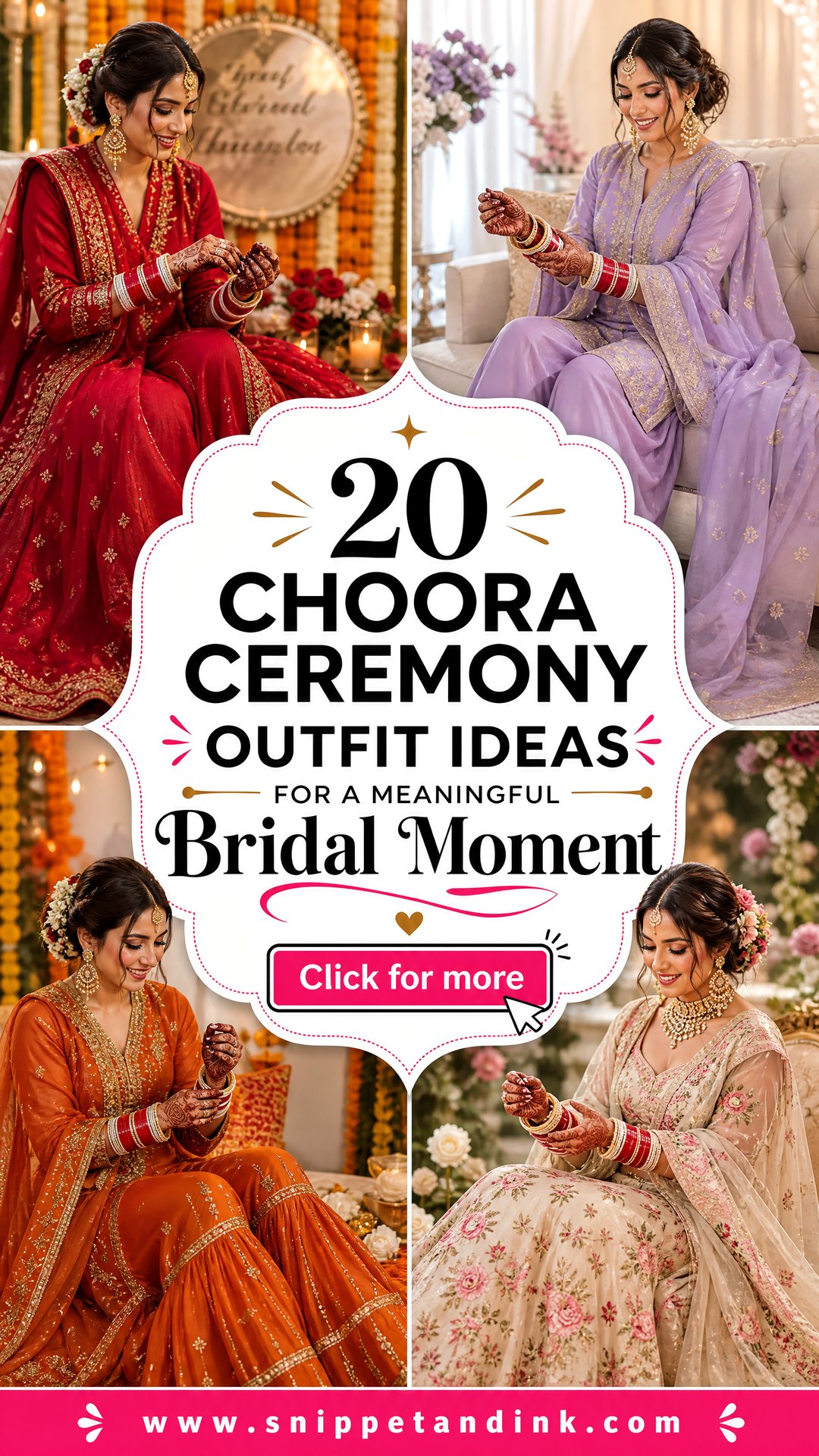
The choora ceremony is usually the morning of a Punjabi wedding, often at home, often with tears, and almost always with the bride’s arms stretched out in front of her for a long time. That last part shapes everything I suggest for it. The outfit can be a graceful salwar suit, an embroidered anarkali, a light lehenga or a sharara set, but it has to leave the forearms free, stay put while you sit cross-legged and let the bangles show. Pastels glow in morning light; reds, maroons and jewel tones read more bridal. Below are twenty outfits, each with jewellery, shoes and a sleeve length that works with the stack.
What the Ritual Asks of Your Sleeves and Dupatta
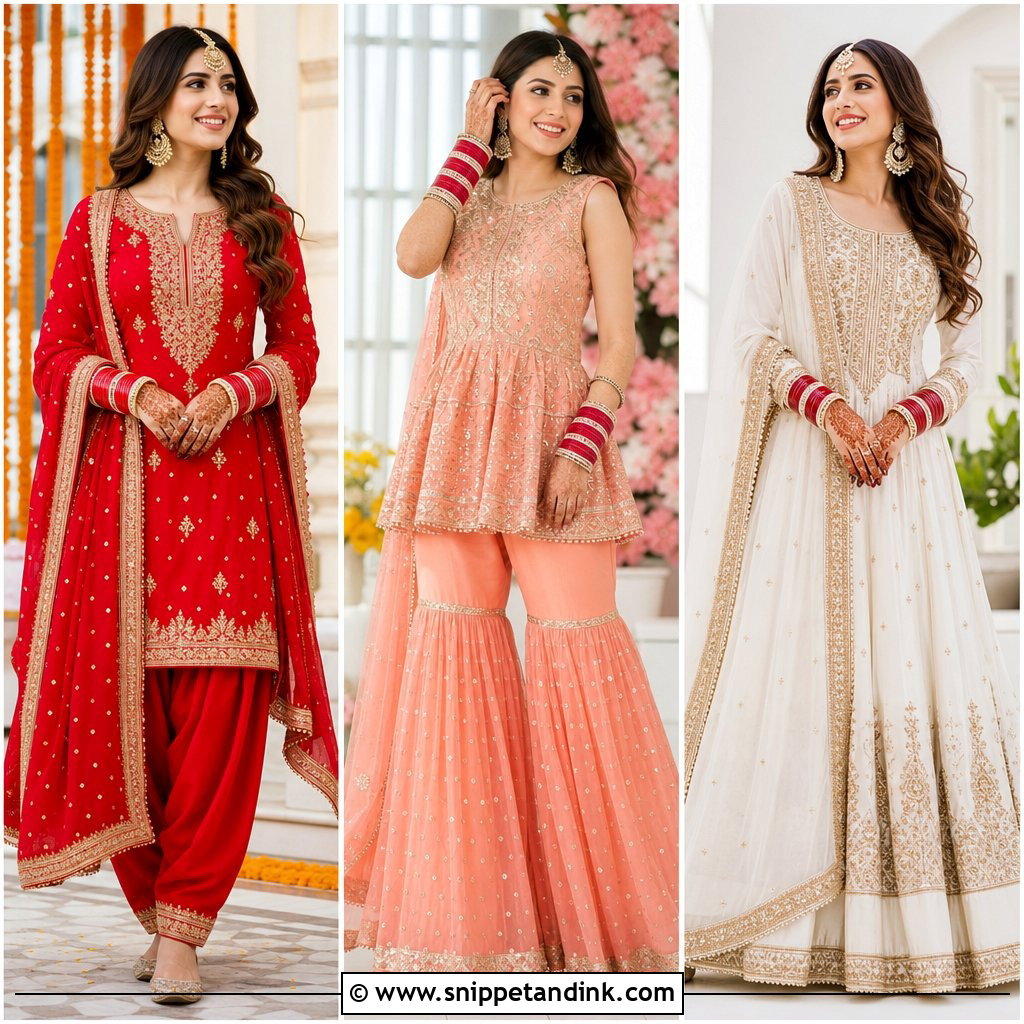
Traditionally the choora is given by the bride’s maternal uncle, and in many families it is first dipped in milk or lassi before he slides it onto her wrists. Some brides keep their eyes covered or closed until the bangles are on. Afterwards, sisters and friends tie kaleere, the dangling gold ornaments, onto the choora. Customs vary from family to family, but the physical side is fairly consistent, and I dress brides around it.
- Your arms will be held out, often for a long time and photographed from close up. Sleeves should end at or above the elbow, or be loose enough to push up.
- Milk and lassi drip. Delicate pale silks and velvet mark easily, so keep a small towel nearby and avoid heavy embroidery right at the cuff.
- You’ll likely sit on the floor or a low seat. Patiala salwars, shararas and ghararas sit more comfortably than a narrow lehenga or a heavy anarkali skirt.
- Dupattas slip forward when you lean. Pin yours at the shoulder and at the back of the head if it’s worn over the hair.
- Kaleere swing and catch. Avoid lace edges, tassels or loose beadwork on sleeves and dupatta borders near the wrists.
Once the choora is on, you’ll wear it with every outfit for the rest of the wedding. That’s worth remembering when you plan your mehndi, wedding and reception sleeves too.
1. Red Anarkali Choora Ceremony Outfit
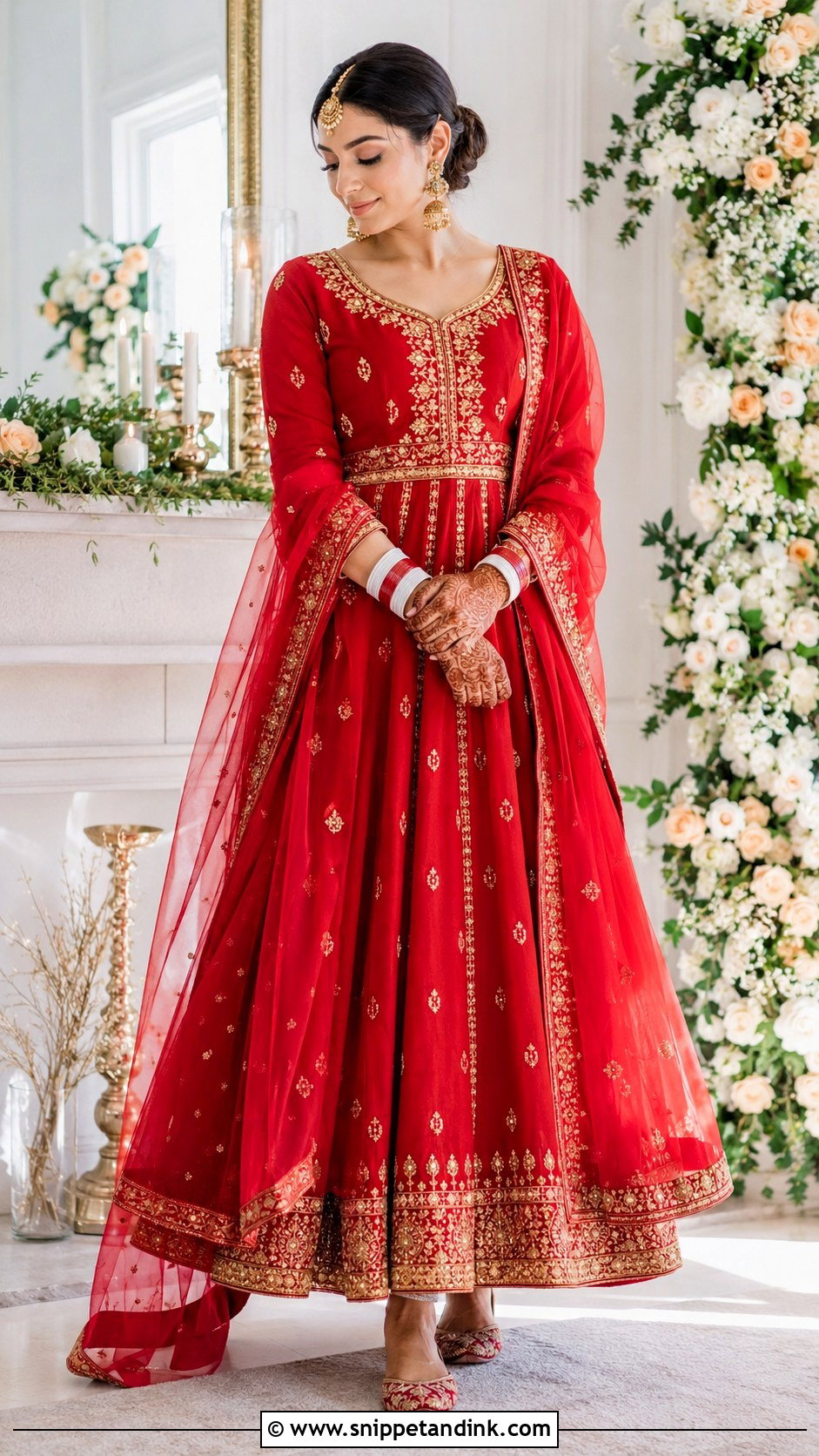
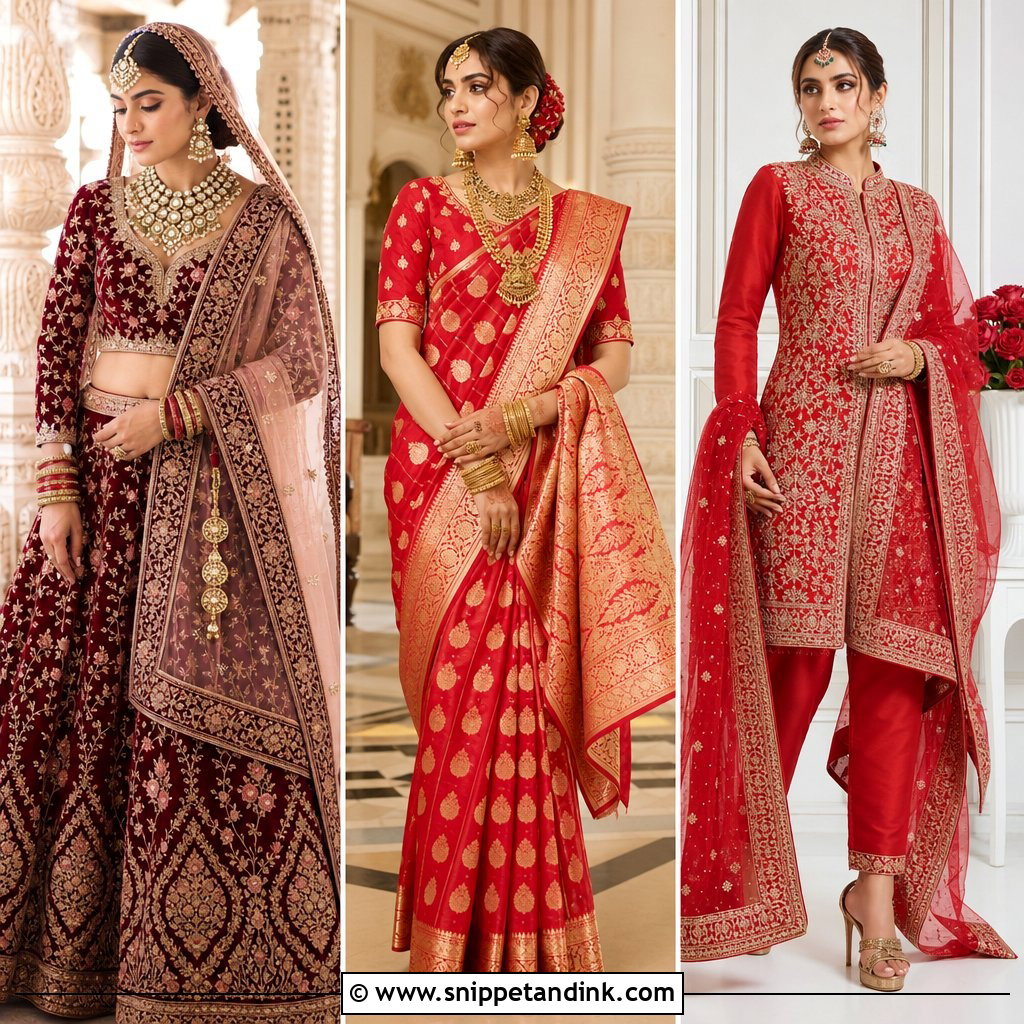
Red anarkali, gold work at the neck, cuffs and hem: it says bride without the weight of the wedding lehenga. Three-quarter sleeves are what I’d insist on, as they stop just where the choora begins. A floor-length anarkali has a lot of skirt to sit on, so when you settle on the floor, sweep it forward first or it pulls tight across the back. A light organza dupatta with a narrow border can go over one shoulder or loosely over your head. Gold jhumkas, a small tikka and embroidered juttis complete it, with defined eyes and a soft red lip.
2. Ivory Salwar Suit Choora Ceremony Outfit
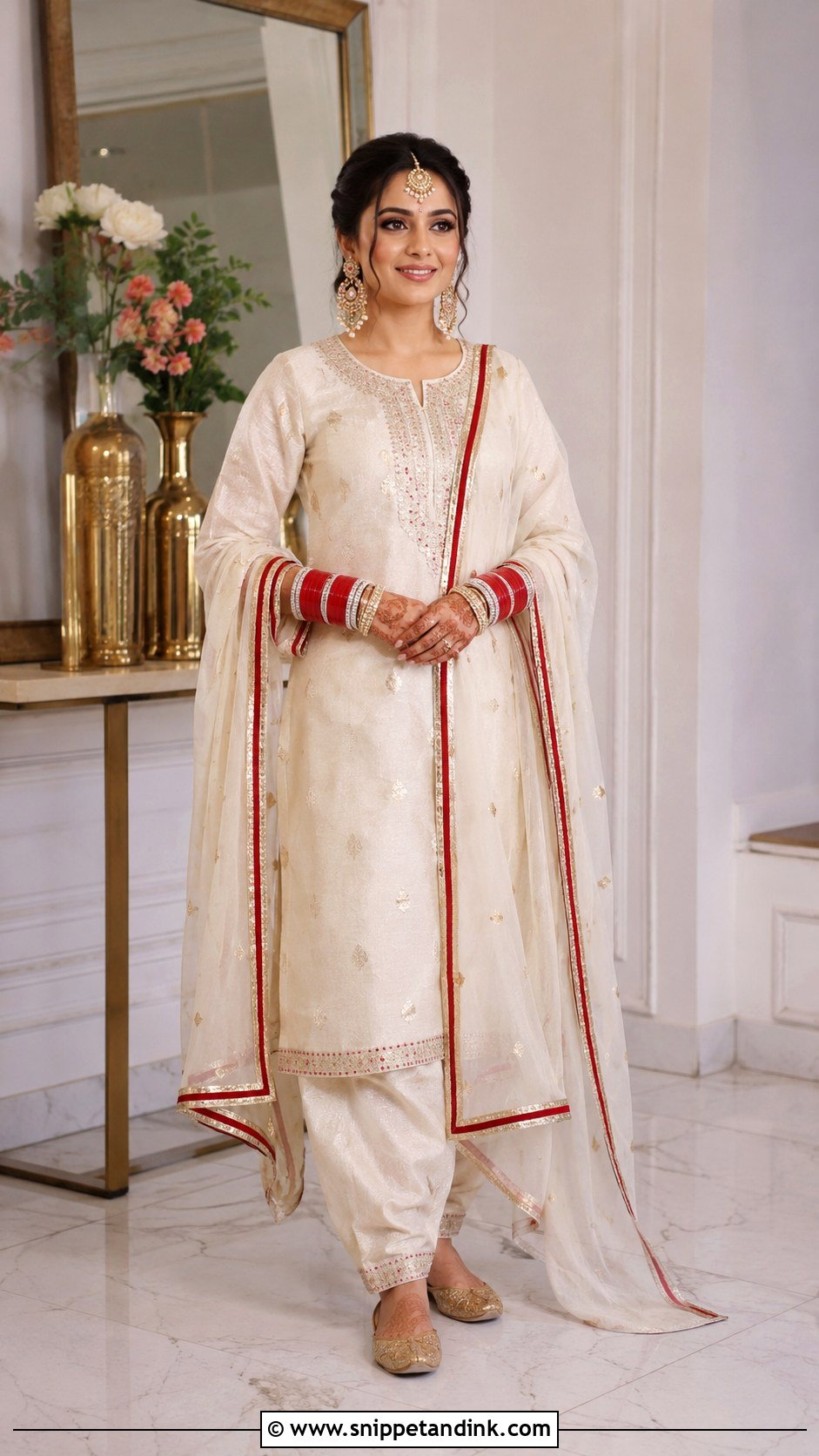
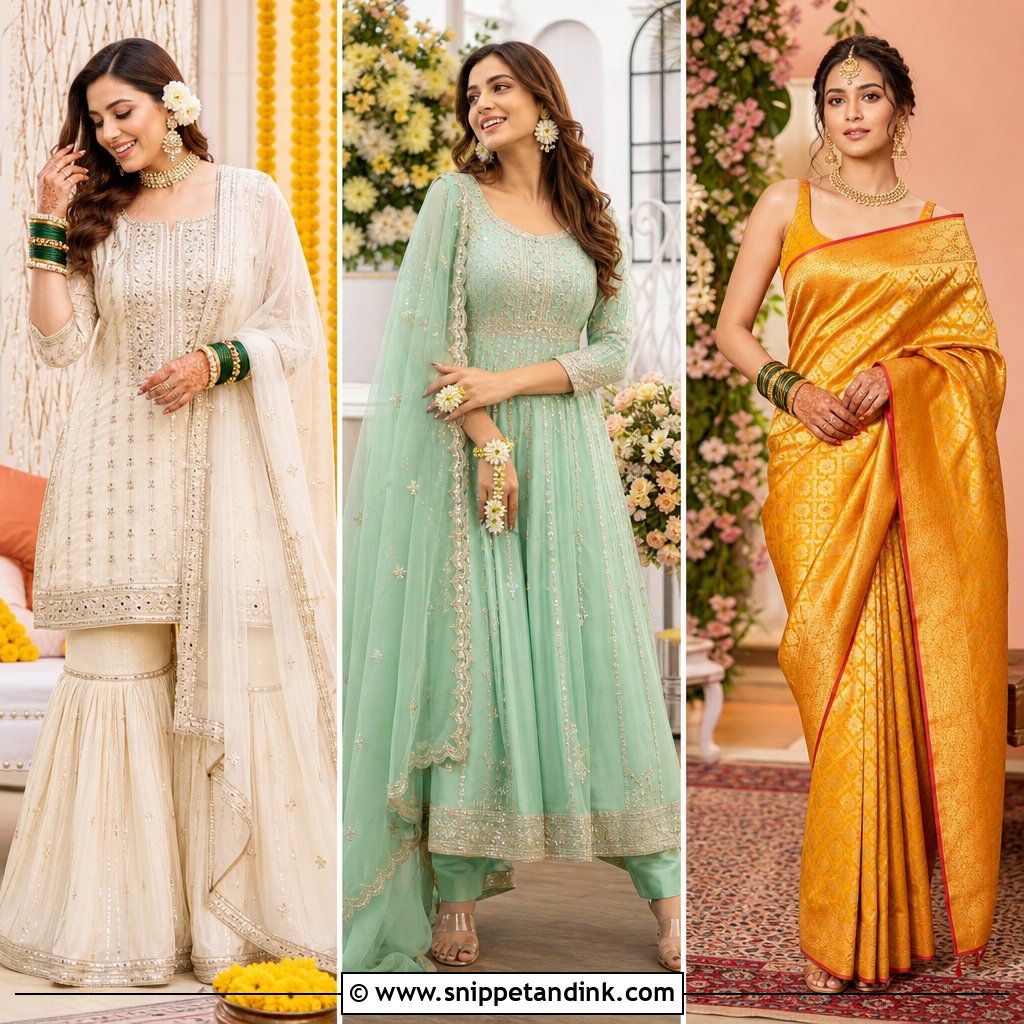
If you want the bangles to be the brightest thing in the room, wear ivory. A straight silk or chanderi kurta with fine gold or pearl work, plus easy straight pants or a relaxed salwar, keeps the background calm. Chanderi is light and slightly crisp, so it doesn’t cling in a warm room full of relatives. The red-bordered dupatta is the piece that ties ivory to a red choora. Pearl chandbalis, a fine tikka, gold juttis and a low bun with white flowers suit it. Give the face some warmth with blush, since ivory can drain it in photographs.
3. Blush Pink Sharara Choora Ceremony Outfit
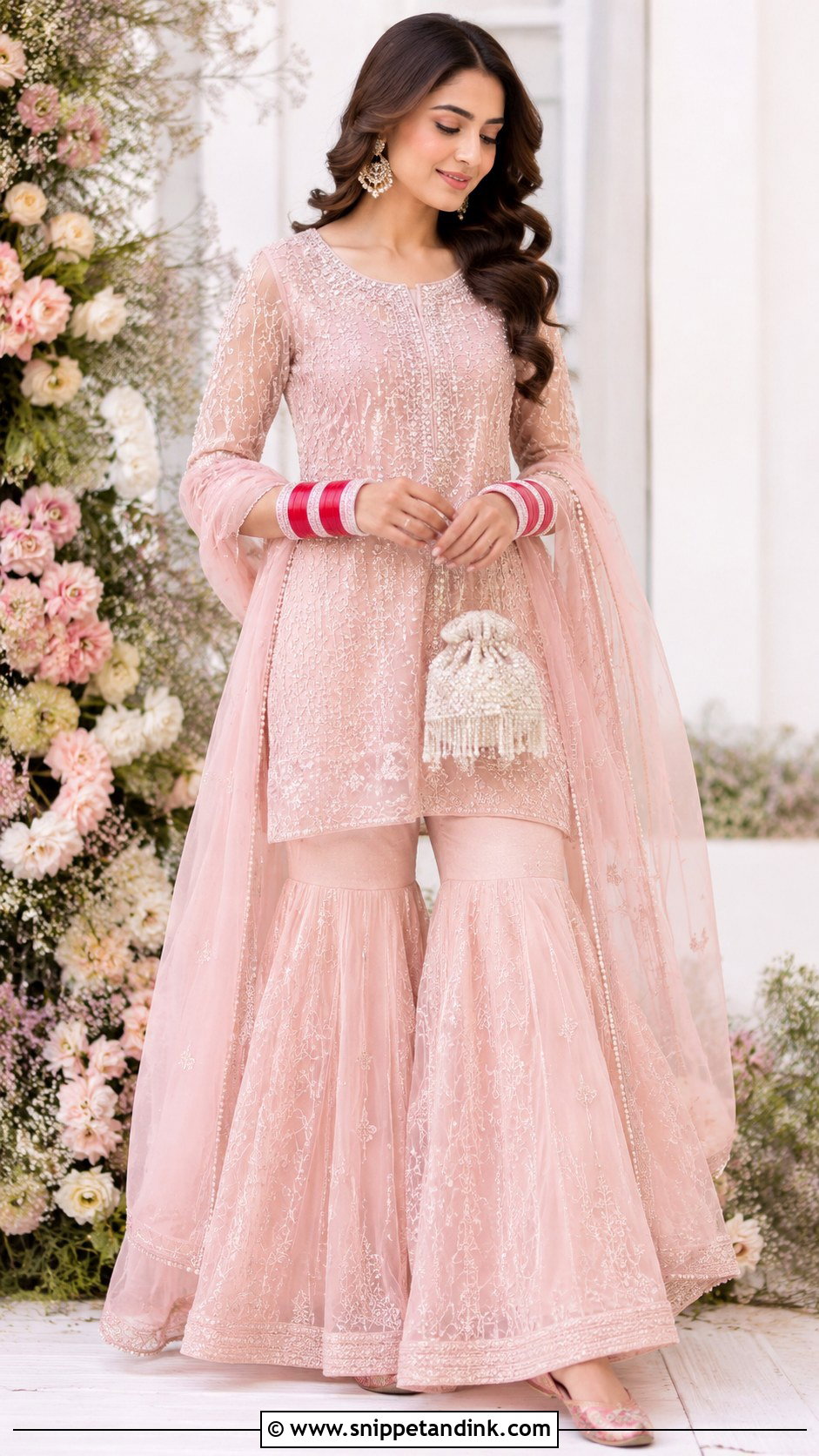
Blush pink and soft morning light are made for each other. A short embroidered kurti over a high-waisted sharara with controlled flare is lighter than any lehenga. I’d keep the sharara flare moderate; very full shararas pool around you when you sit, and relatives tend to step on the hem while leaning in. Drape the sheer dupatta across one shoulder so both arms stay clear. Kundan earrings, a small tikka, blush juttis and a pearl potli finish it, with loose waves or a soft half-up style. Red choora gives contrast; pink or ivory bangles keep it tonal.
4. Yellow Patiala Suit Choora Ceremony Outfit
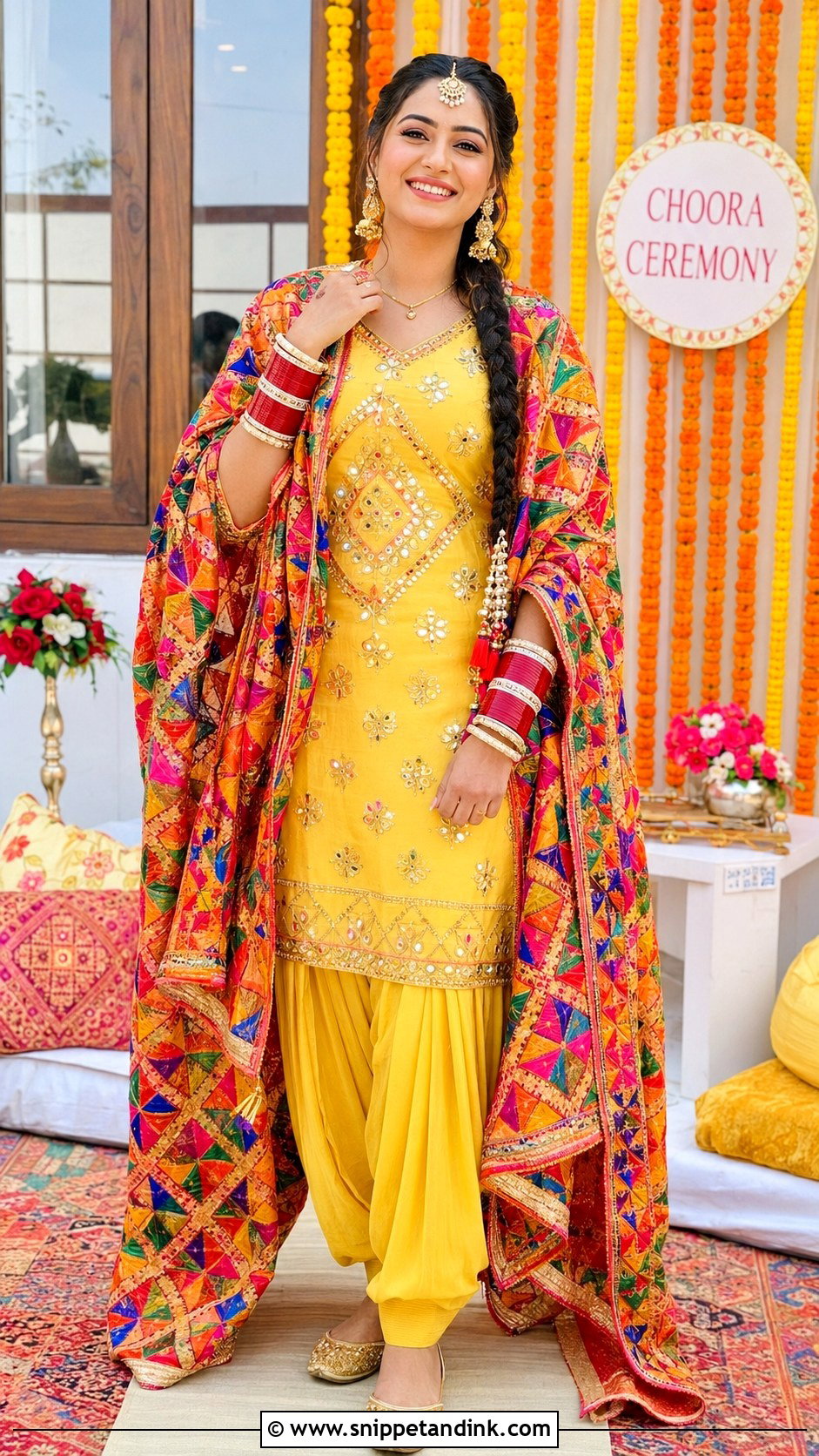
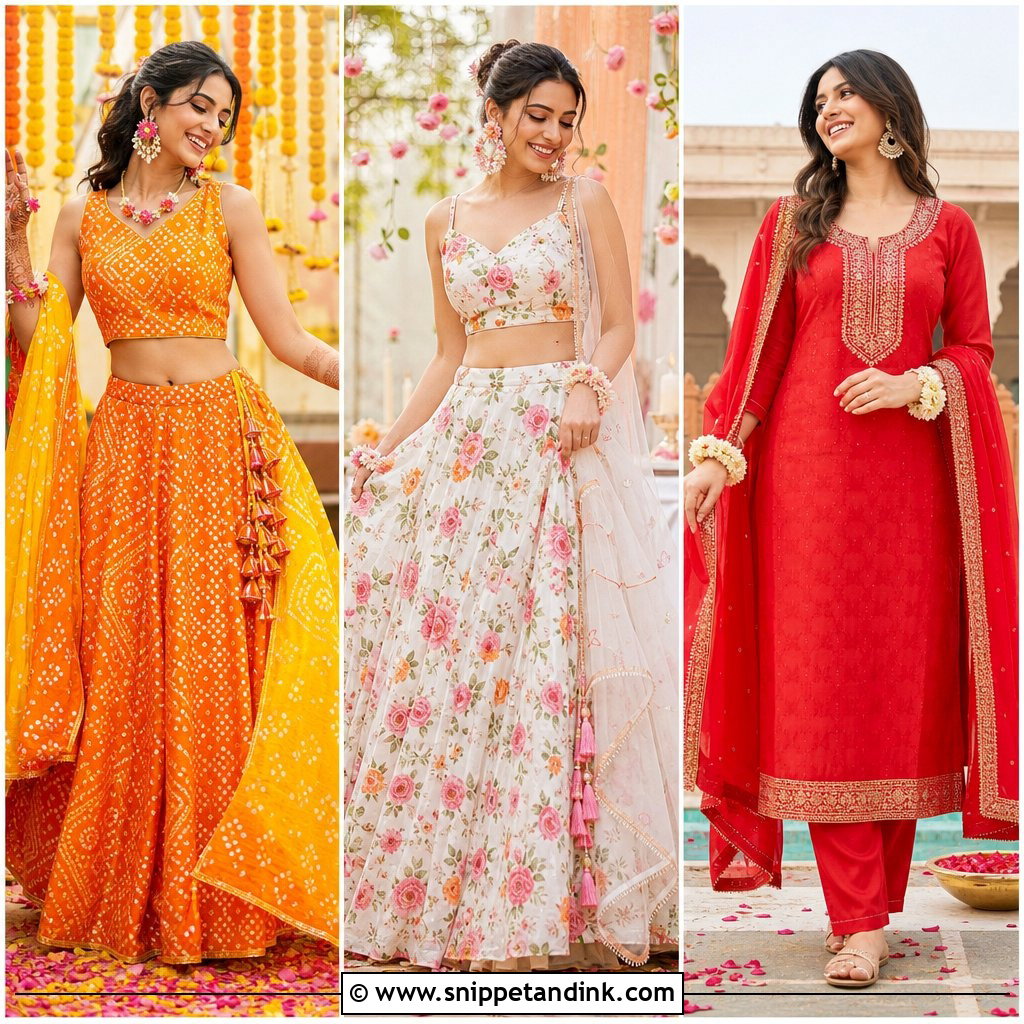
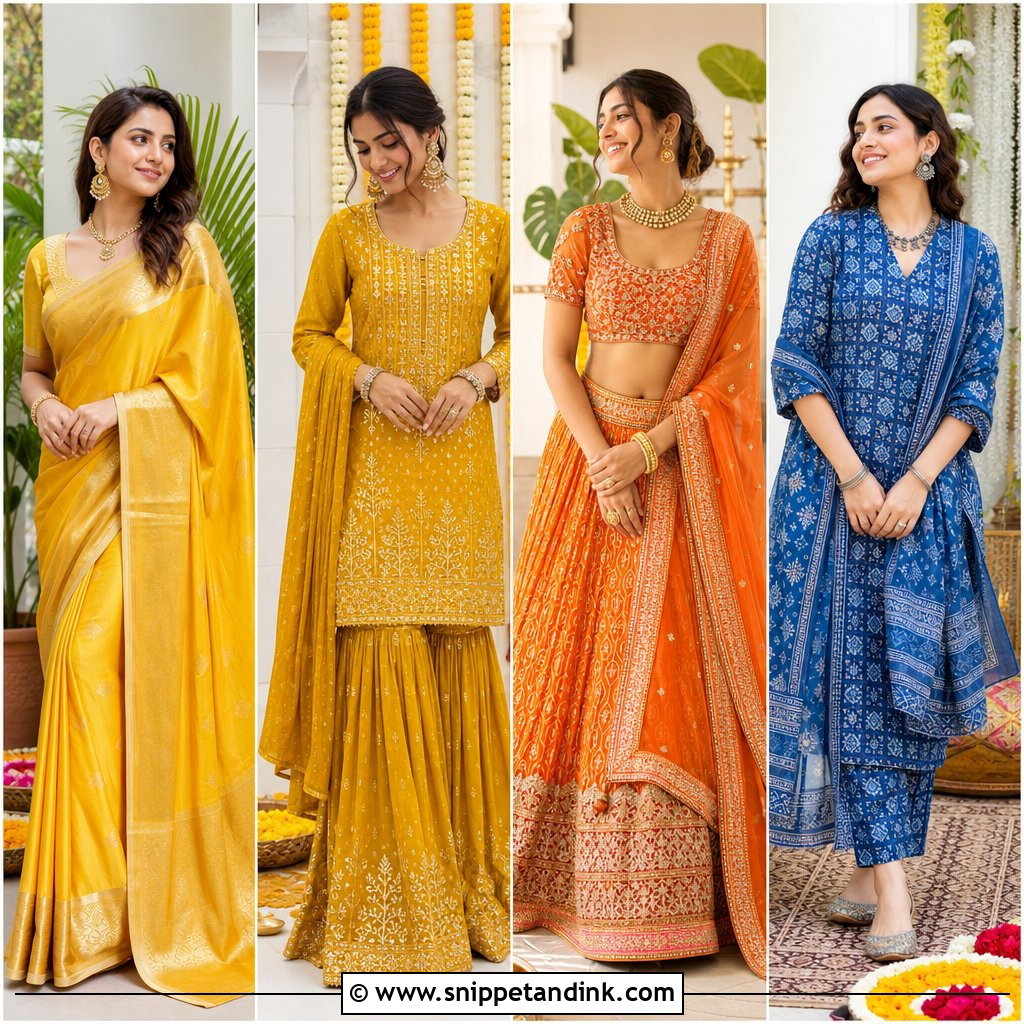
Yellow is pure Punjabi cheer, especially when the choora and haldi share a morning. A short kurti with gota patti, mirror work or phulkari-style embroidery sits over a matching Patiala salwar, whose deep pleats are comfortable for sitting on the floor. One caution if haldi follows straight after: turmeric stains silk and gota permanently, so many brides I dress change between the two or choose a cotton set for haldi. A pink, orange or multicoloured dupatta, gold jhumkas, a simple passa, juttis and a braid with a paranda complete it. Fitted sleeves are fine, but not tight over a wide stack.
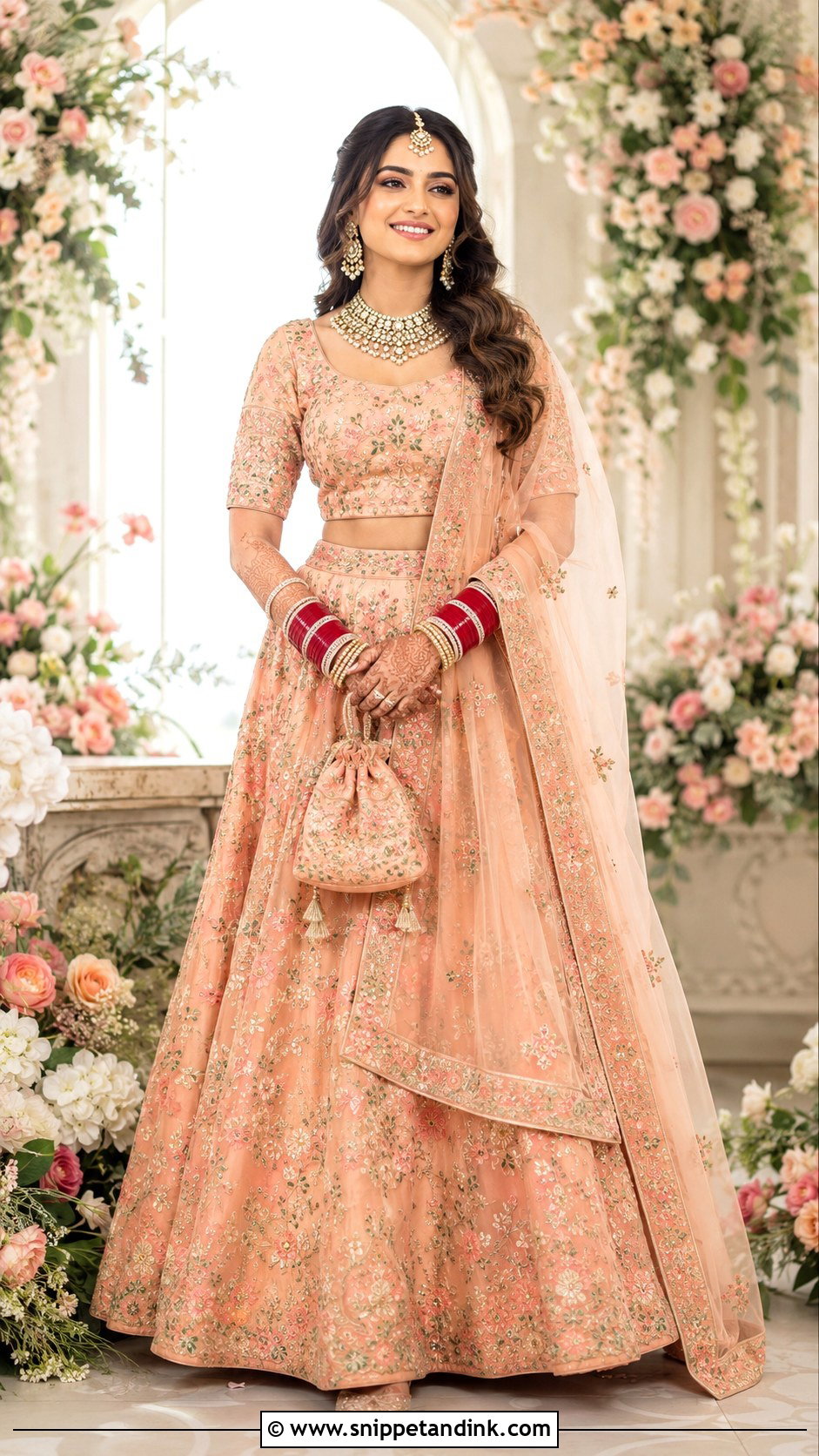
5. Peach Lehenga Choora Ceremony Outfit
Peach is bridal without being red, which suits brides saving the strongest colour for the wedding itself. A light lehenga with floral threadwork or scattered gold motifs, rather than dense embroidery, keeps the weight down. Elbow-length blouse sleeves are what I’d choose here: long enough to feel finished, short enough to clear the choora. The sheer dupatta can cross the body diagonally or rest over your head during blessings. Polki earrings, a small necklace, nude-gold juttis and a potli complete it. Add red piping or a red dupatta border so the bangles look connected to the outfit.
6. Green Gharara Choora Ceremony Outfit
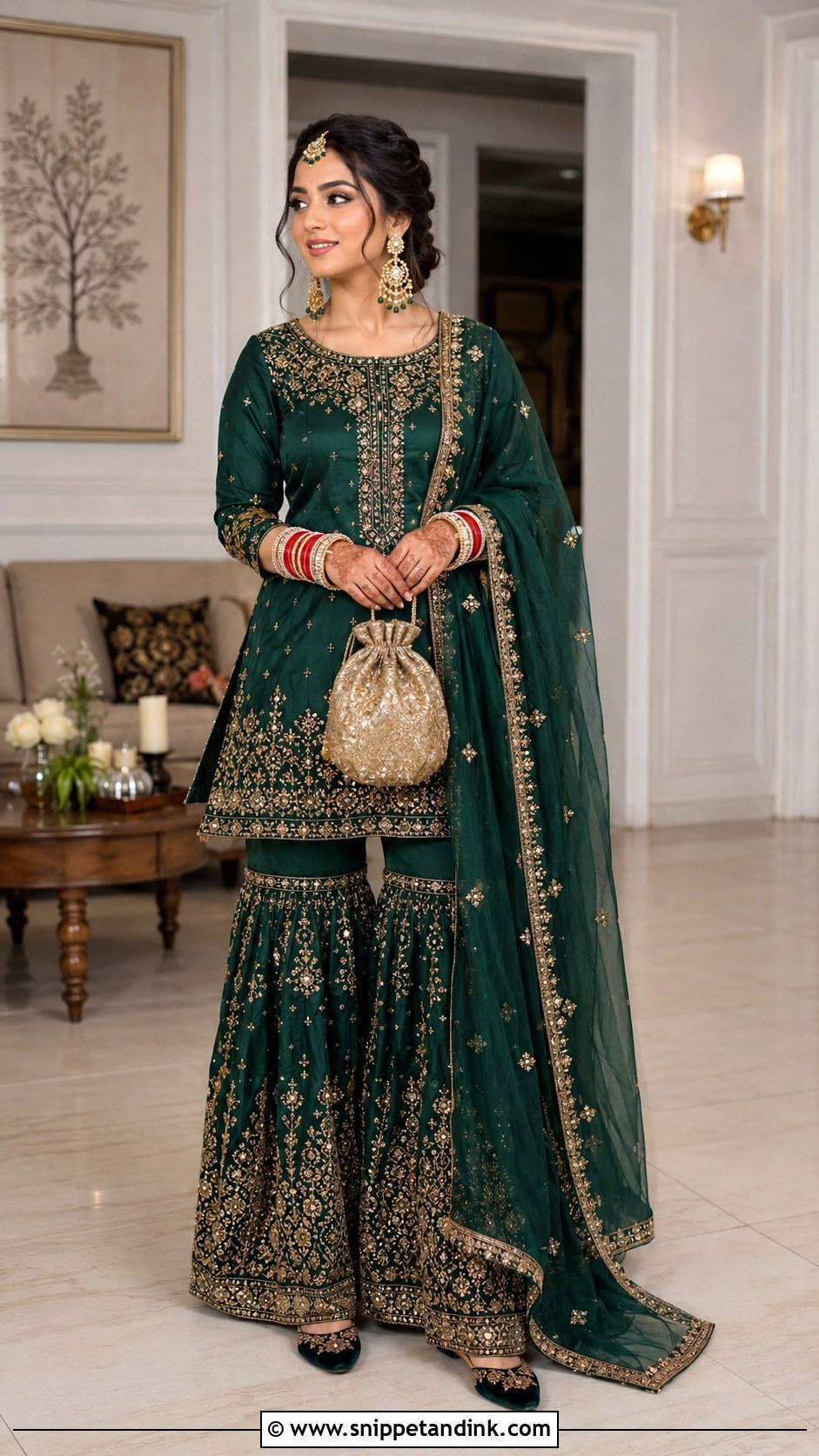
Green is my favourite non-red choice for this ceremony because red bangles stand out against it so clearly. Emerald, bottle green or deep olive with antique gold work all look rich. A fitted short kurti and structured gharara photographs well seated, since the gharara’s gathered knee line spreads neatly on the floor. Keep the net or organza dupatta away from your wrists. Antique gold earrings, a tikka, velvet juttis and a small potli suit it, with a sleek low bun or soft braid. Define the eyes so the deep colour doesn’t dominate.
7. White Phulkari Suit Choora Ceremony Outfit
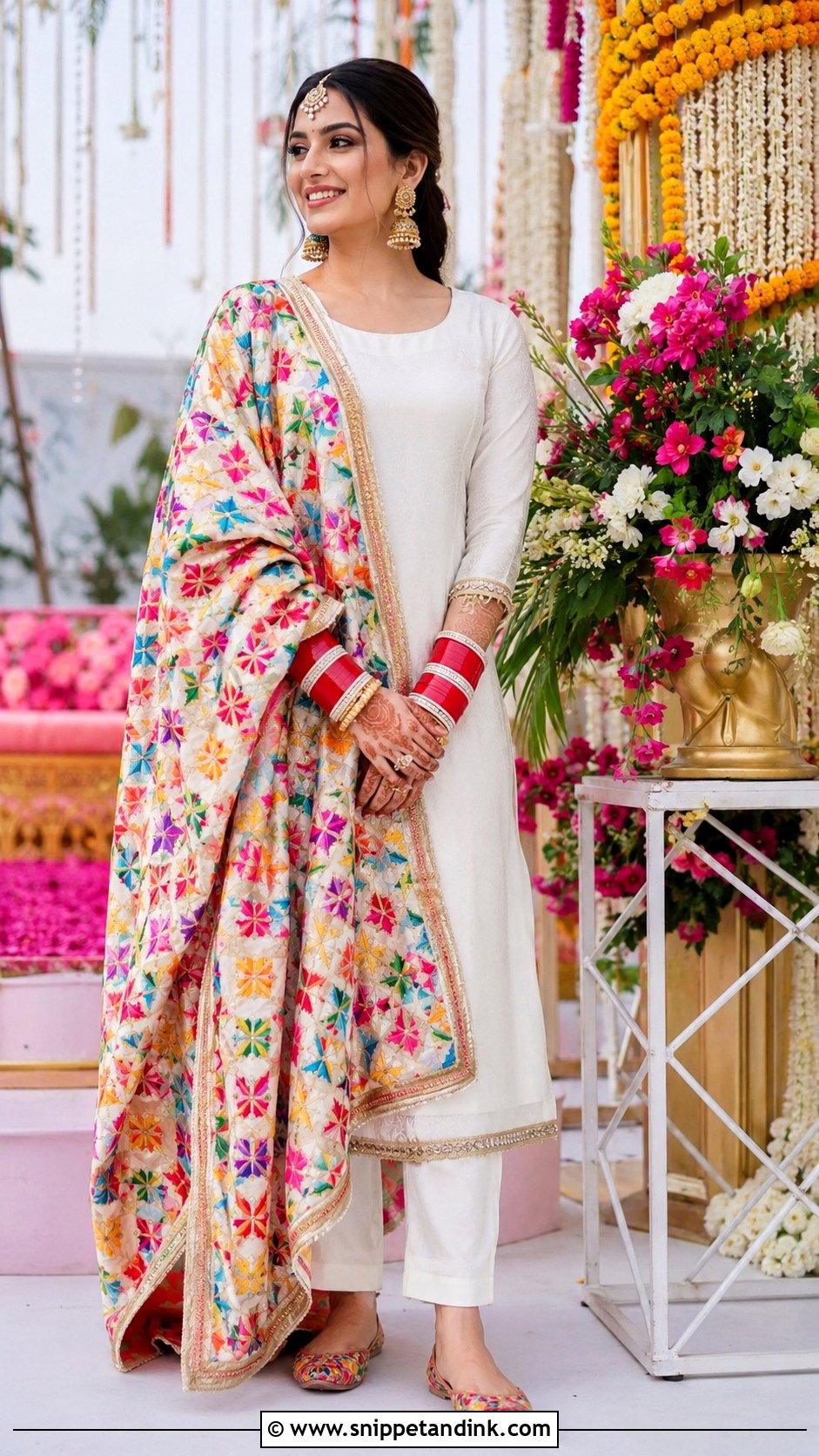
Phulkari is Punjab’s own embroidery, and a white or cream suit lets a phulkari dupatta carry the whole outfit. Keep the kurta and pants plain and straight; the dupatta’s red, pink, orange, green and blue threads give all the colour the photos need. Genuine hand phulkari is worked in silk floss on the reverse of the cloth and can be heavy, so I pin it at the shoulder rather than trusting it to stay draped. Colourful juttis, small gold jhumkas and a simple tikka are plenty. A braid or low ponytail keeps it relaxed, and the pale base makes red-and-ivory choora very clear in close-ups.
8. Lavender Palazzo Suit Choora Ceremony Outfit
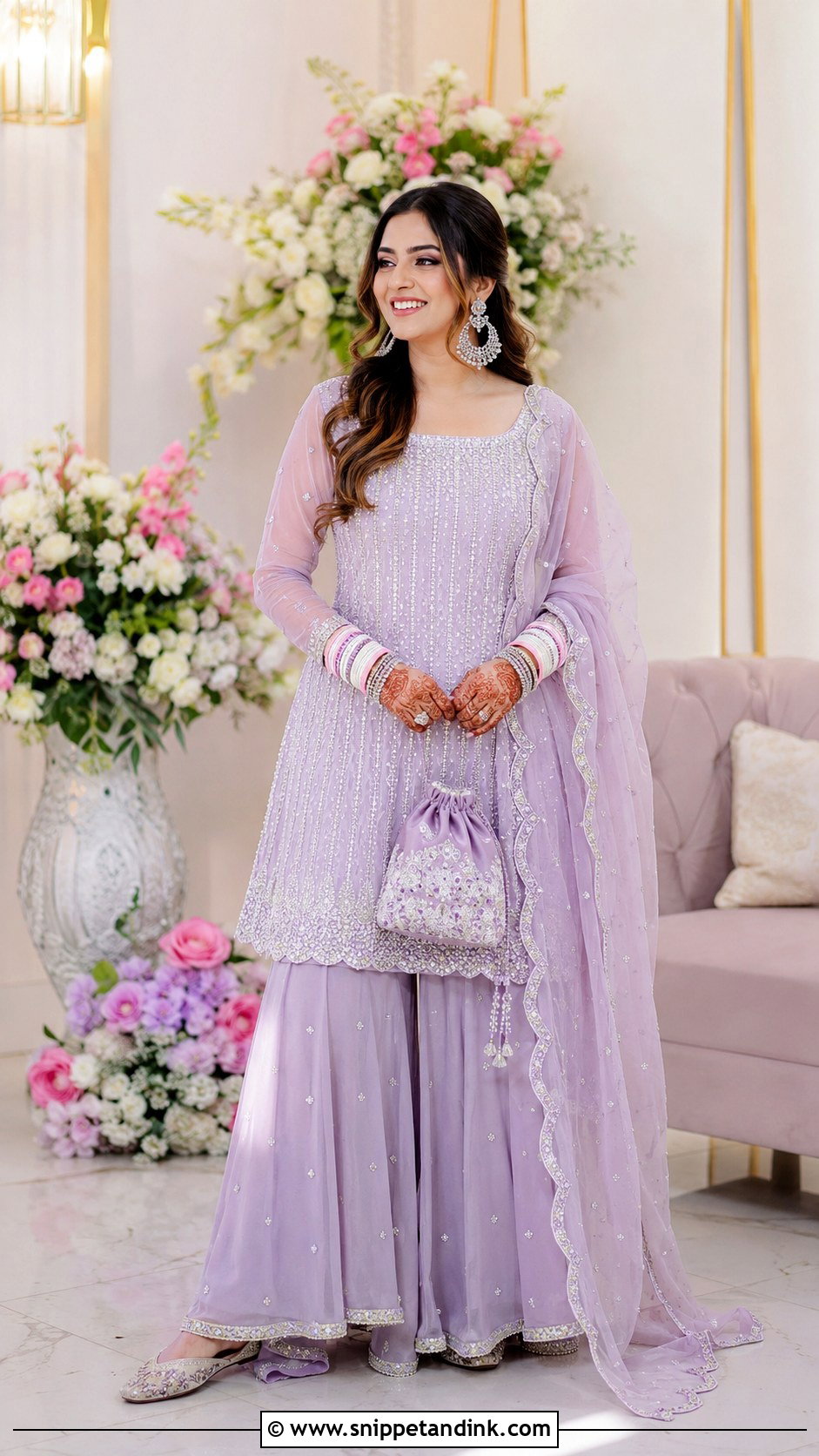
Lavender is for the bride who’s tired of the same pinks and yellows. An embroidered A-line kurta, flowing palazzos and a sheer matching dupatta keep it soft; silver thread, pearls or clear sequins suit the cool tone better than yellow gold. I’d pair silver-toned chandbalis, a fine tikka, embellished flats and a lavender potli, with soft curls and a pink lip. Be aware that red choora against lavender is a strong clash some people love and some don’t, so try a red bangle against the fabric before deciding. Ivory or blush choora is the safer match.
9. Maroon Velvet Suit Choora Ceremony Outfit
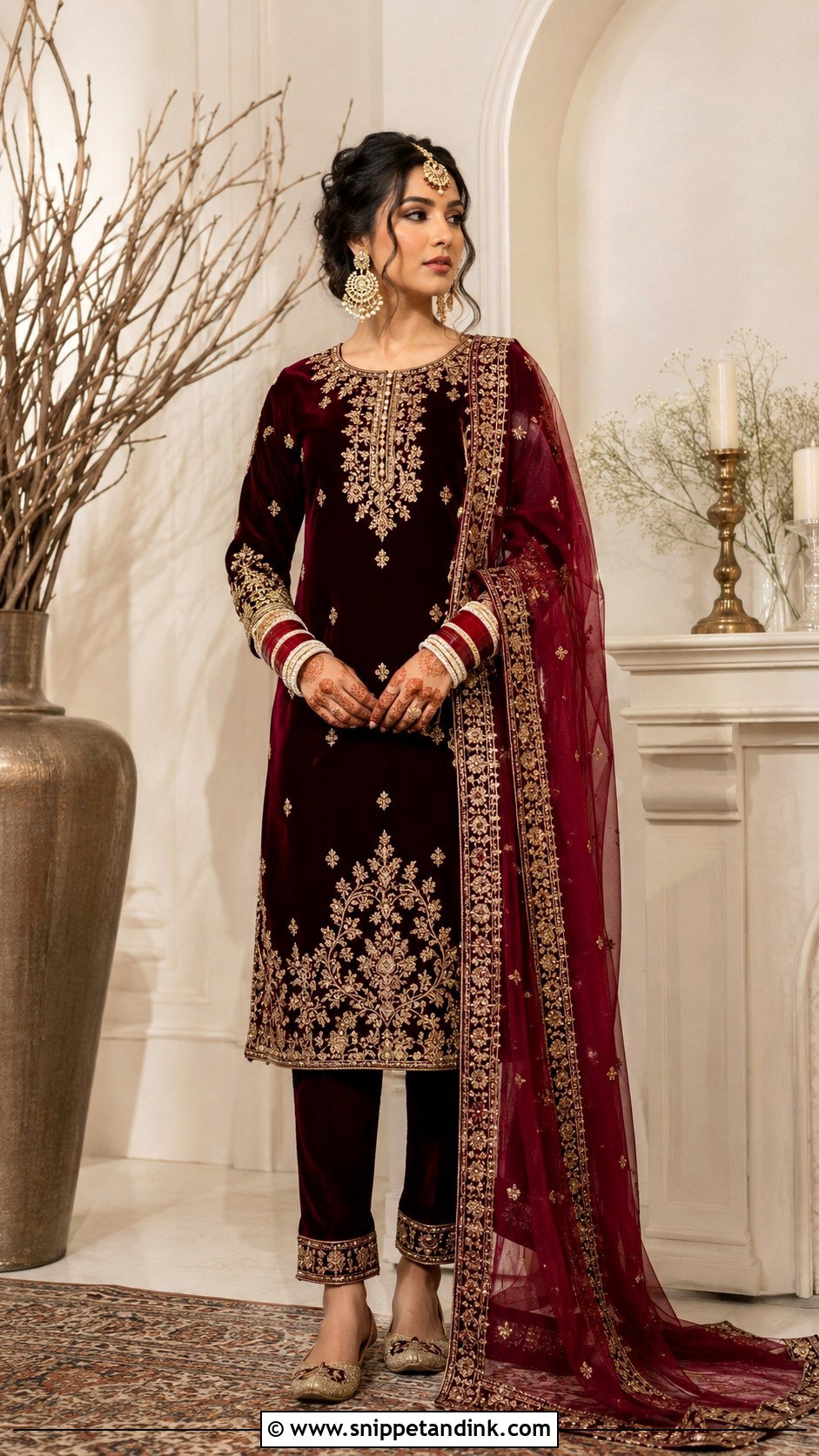
Winter ceremony? Maroon velvet keeps you warm and looks regal. A straight or slightly flared kurta with antique gold work at the neckline, side panels and hem, plus matching pants or a salwar, is the base; an organza dupatta stops the outfit feeling heavy. Velvet has almost no give, so the sleeves need extra room around the forearm. I ask the tailor to leave the sleeve wider than usual or add a small slit at the cuff. Antique chandbalis, a small tikka, embroidered juttis and a structured potli complete it. Red-and-ivory choora blends well with maroon, and the gold kaleere look rich against it.
10. Mint Green Anarkali Choora Ceremony Outfit
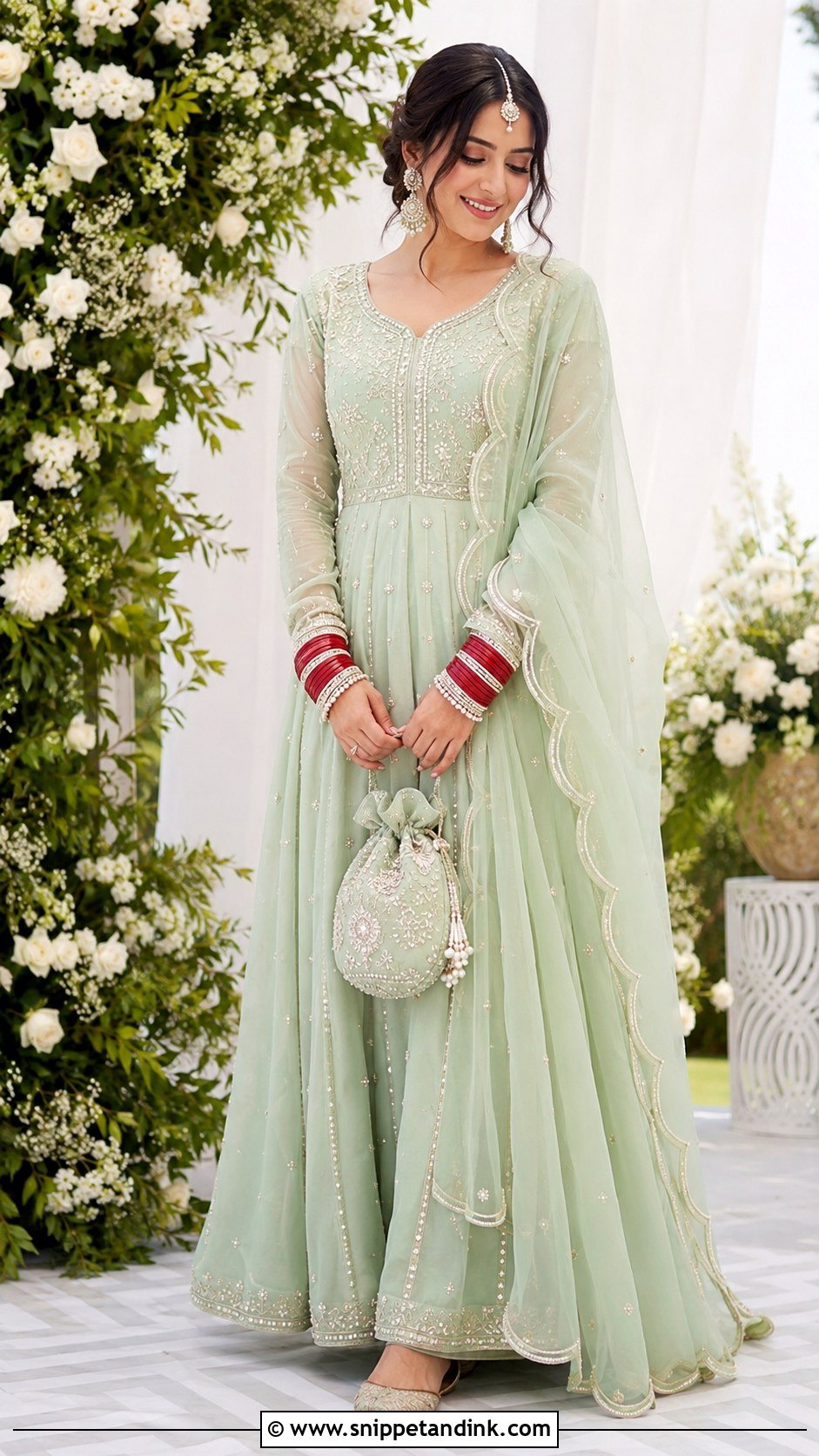
Mint green looks fresh in daylight, with white threadwork, pearls or restrained gold. A flowing anarkali works as long as the skirt is easy to manage indoors. Place the scalloped organza dupatta over one shoulder rather than around both arms, otherwise it ends up tangled in the kaleere. Pearl earrings, a fine tikka, metallic juttis and a small potli suit it, with loose waves or a low bun. Mint is pale, so oily skin and dewy make-up can look shiny in morning photos; I’d blot before the ritual starts.
11. Coral Kurta Set Choora Ceremony Outfit
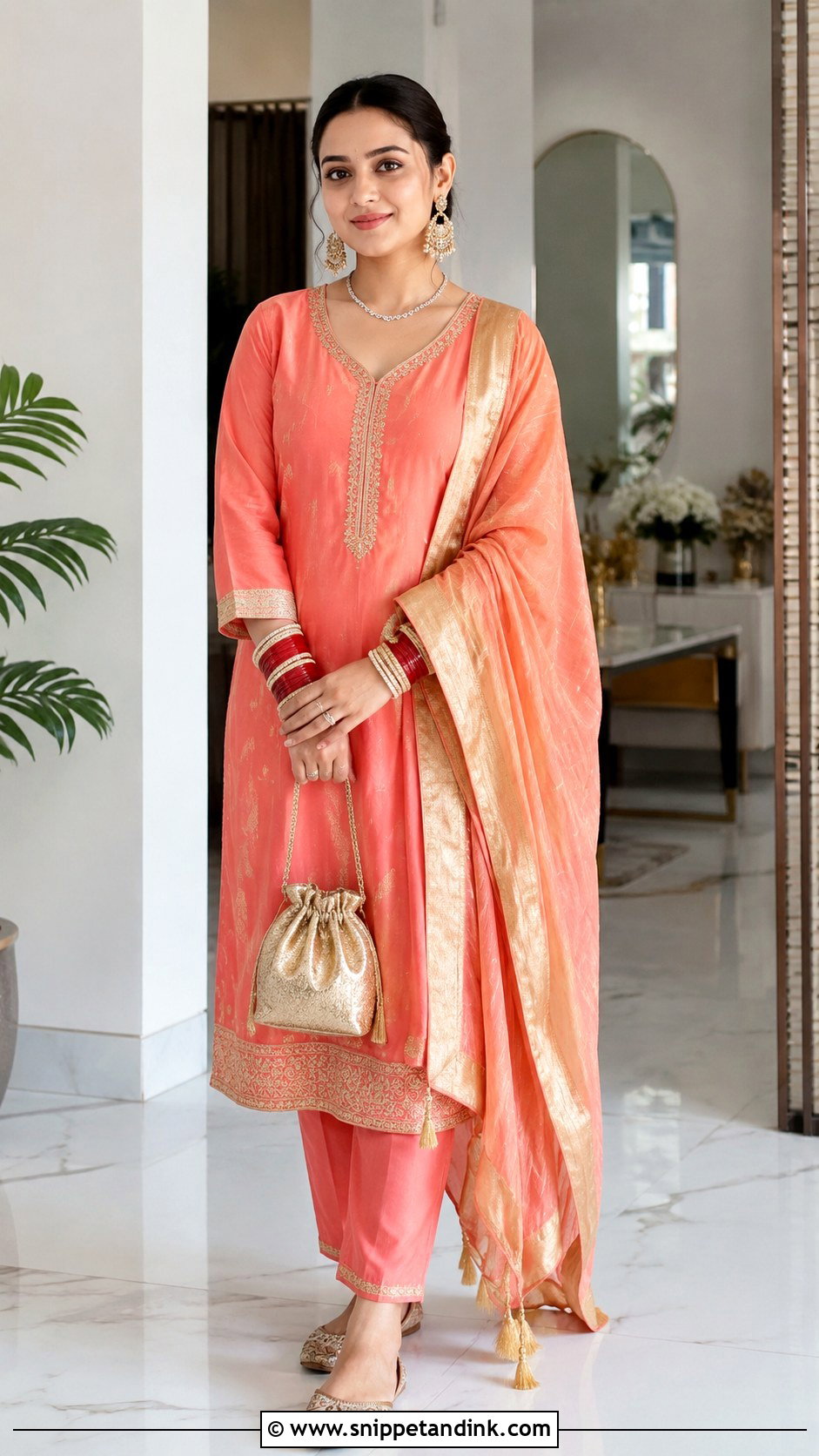
Coral is warm like the traditional colours but softer, and it won’t compete with your wedding lehenga. A knee-length silk kurta with straight pants and an embroidered dupatta is the cleanest outfit in this list. Medium kundan earrings, a fine necklace, embroidered juttis and a gold potli suit it, with a low ponytail and soft face-framing pieces. Red, ivory or coral choora all coordinate. If you want long sleeves, tell your tailor the choora will sit underneath; a slim sleeve bunches badly once the full stack is on.
12. Powder Blue Cape Lehenga Choora Ceremony Outfit
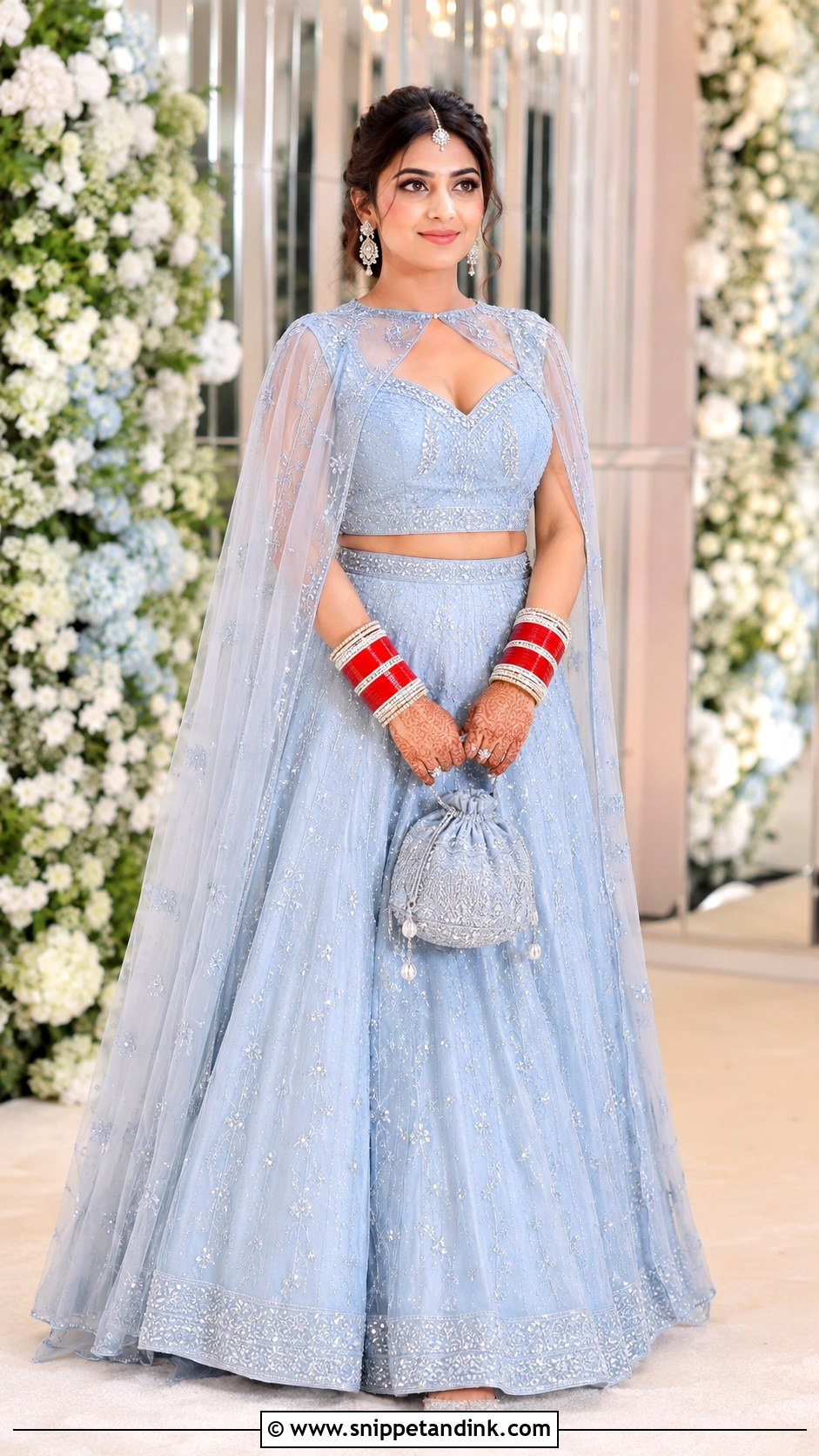
Powder blue with a sheer cape instead of a dupatta is the modern option, and the cape is practical too: nothing to re-drape each time someone hugs you. It must fall from the shoulders and stop above the hands so relatives can reach your wrists. Pearl work, silver thread and small florals suit the pale blue. Pearl drops, a minimal tikka, silver juttis and a blue potli complete it, with polished waves or a low bun. Red choora becomes the strongest accent; blush bangles make it softer.
13. Magenta Banarasi Suit Choora Ceremony Outfit
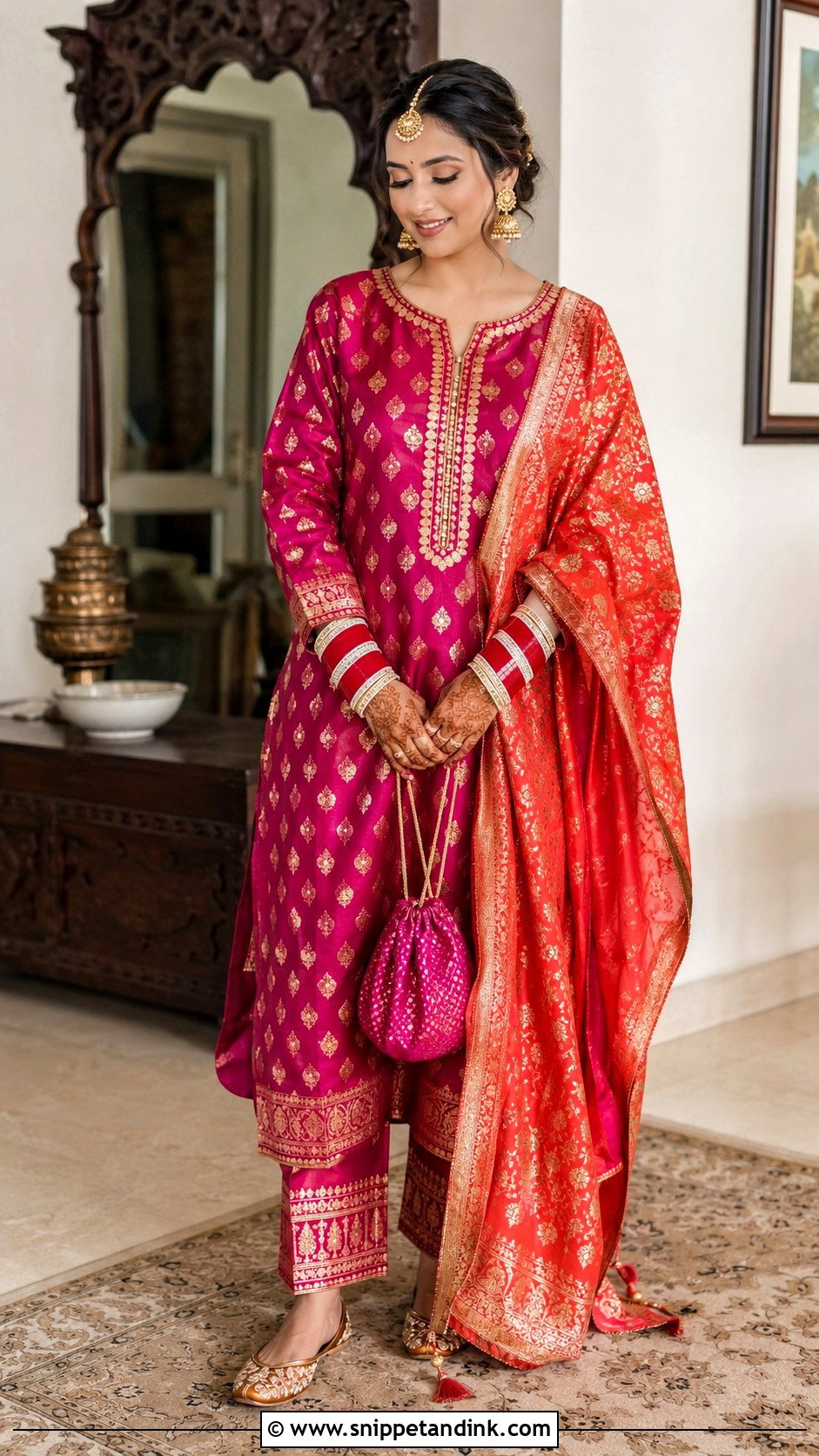
Look closely at magenta Banarasi fabric and you’ll see gold woven right into it, which is why it looks rich even in a simple cut. A clean kurta with straight pants or a salwar is all it needs; extra embroidery on top just competes. Banarasi silk is fairly stiff, which means a fitted sleeve has no stretch at all, so get the cuff measured with your hand relaxed, not clenched. An orange, red or gold dupatta adds Punjabi warmth. Gold jhumkas, a small tikka, brocade juttis and a centre-parted low bun complete it. You’ll wear this suit again long after the wedding.
14. Champagne Jacket Set Choora Ceremony Outfit
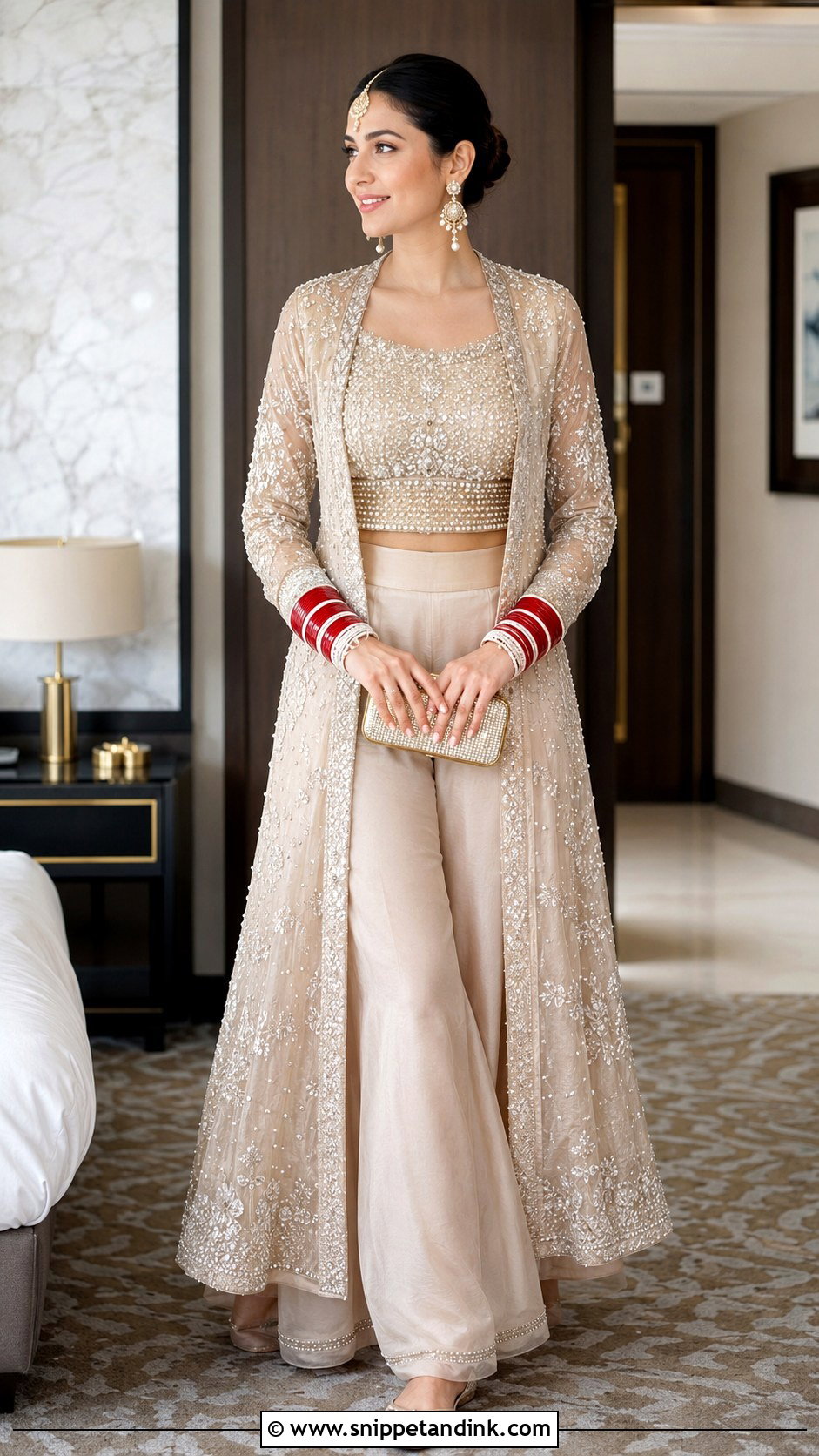
A champagne jacket set is the fusion choice: fitted embroidered blouse, wide-leg pants and a long open jacket. The jacket is the risk, because a jacket sleeve over a choora is a lot of fabric on the forearm. Choose one with loose or three-quarter sleeves, or plan to slip it off for the ritual itself. Light sequins or pearl detailing keeps it soft. Pointed embellished flats or low block heels, crystal earrings, a delicate tikka and a small metallic clutch complete it, with a sleek low ponytail. It suits a hotel suite or modern indoor venue.
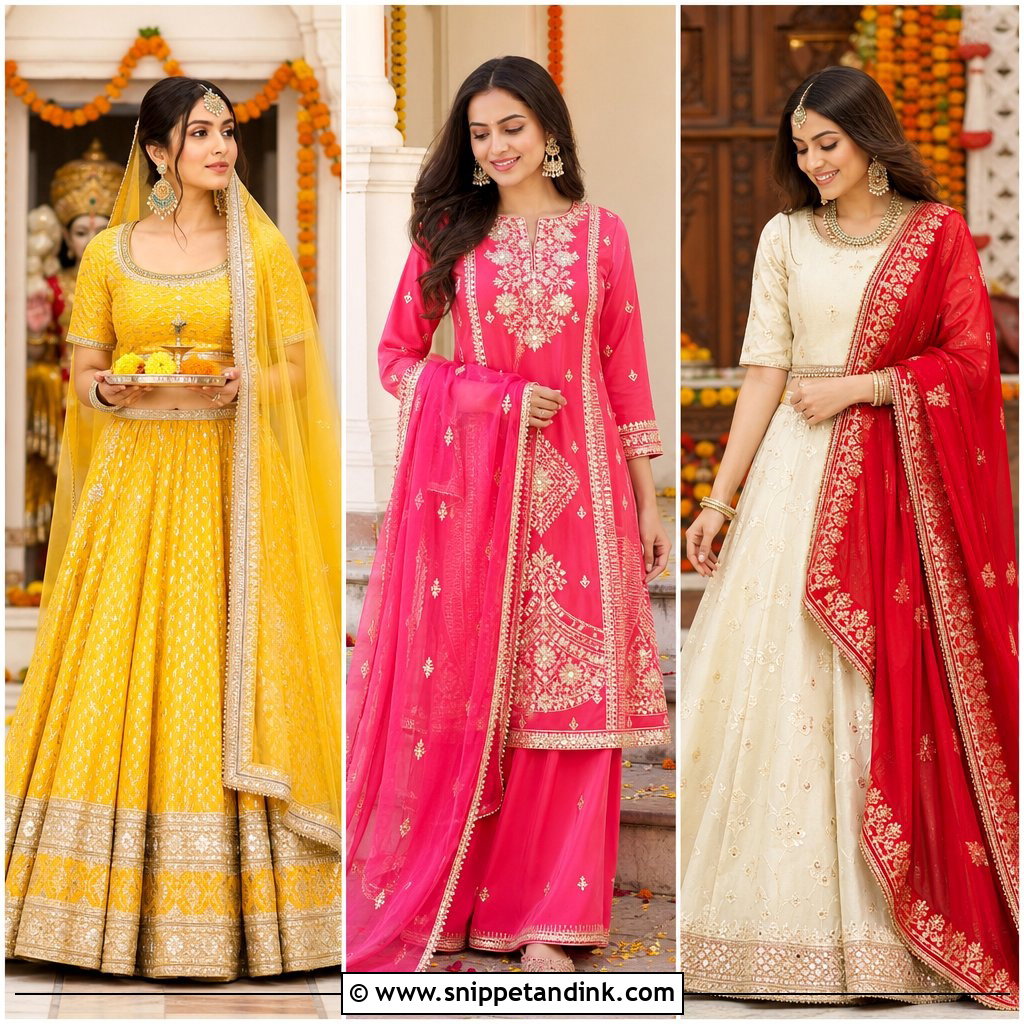
15. Rust Orange Sharara Choora Ceremony Outfit
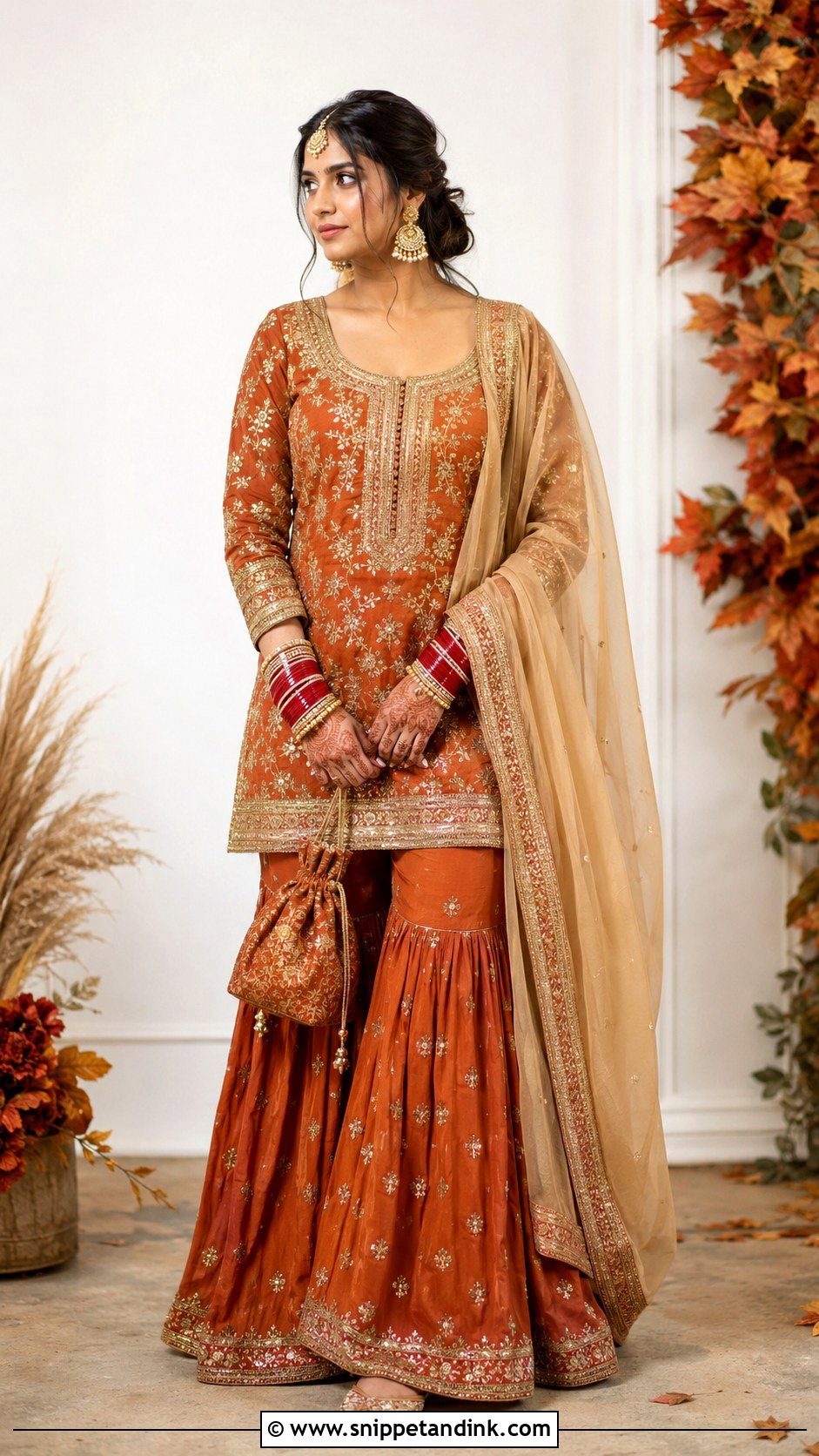
Rust and autumn belong together. A short kurti with antique gold work over a sharara with moderate flare, with a beige or matching rust dupatta, keeps the palette earthy and warm. Antique jhumkas, a small tikka, gold juttis and a brocade potli suit it, with a relaxed braid or textured bun. Red choora melts into rust rather than contrasting with it, so if you want the bangles to pop in photos, ivory-heavy choora is the better partner. Bronze eyes, peach blush and a muted rose lip finish the face.
16. Rose Pink Saree Choora Ceremony Outfit
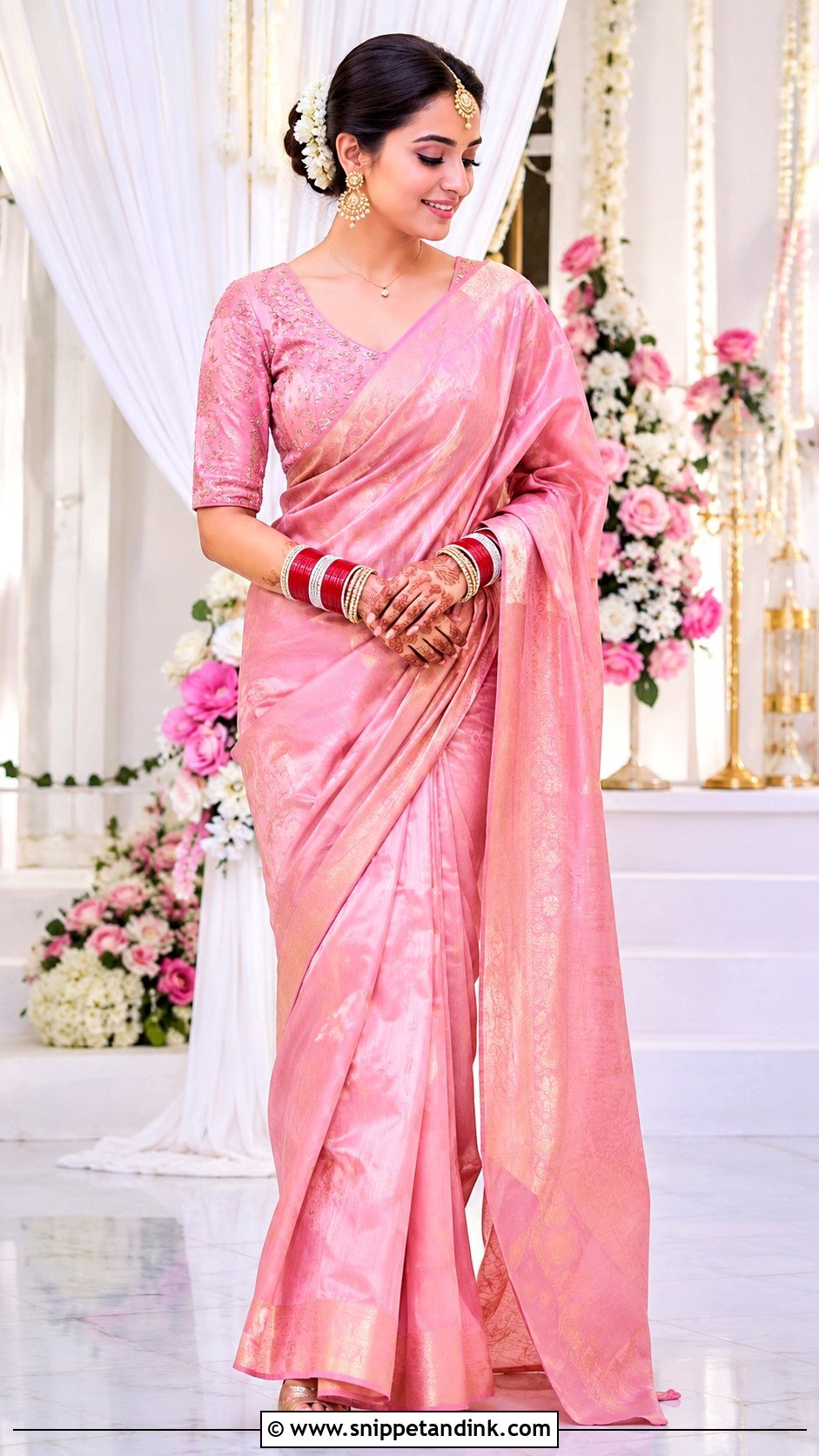
Sarees are the least forgiving outfit for this ritual, and I only suggest one to brides who already drape and wear them comfortably. Lightweight silk, organza or georgette, pinned firmly at the shoulder and pleats, won’t need constant adjusting while you sit. Choose an elbow-length blouse with a sleeve opening that clears the choora. Pin the pallu well away from your forearms, since a loose pallu slides down onto the bangles each time you lift your arms. Kundan earrings, a small necklace, a tikka and low gold heels or embellished flats complete it, with a bun and white flowers.
17. Teal Peplum Sharara Choora Ceremony Outfit
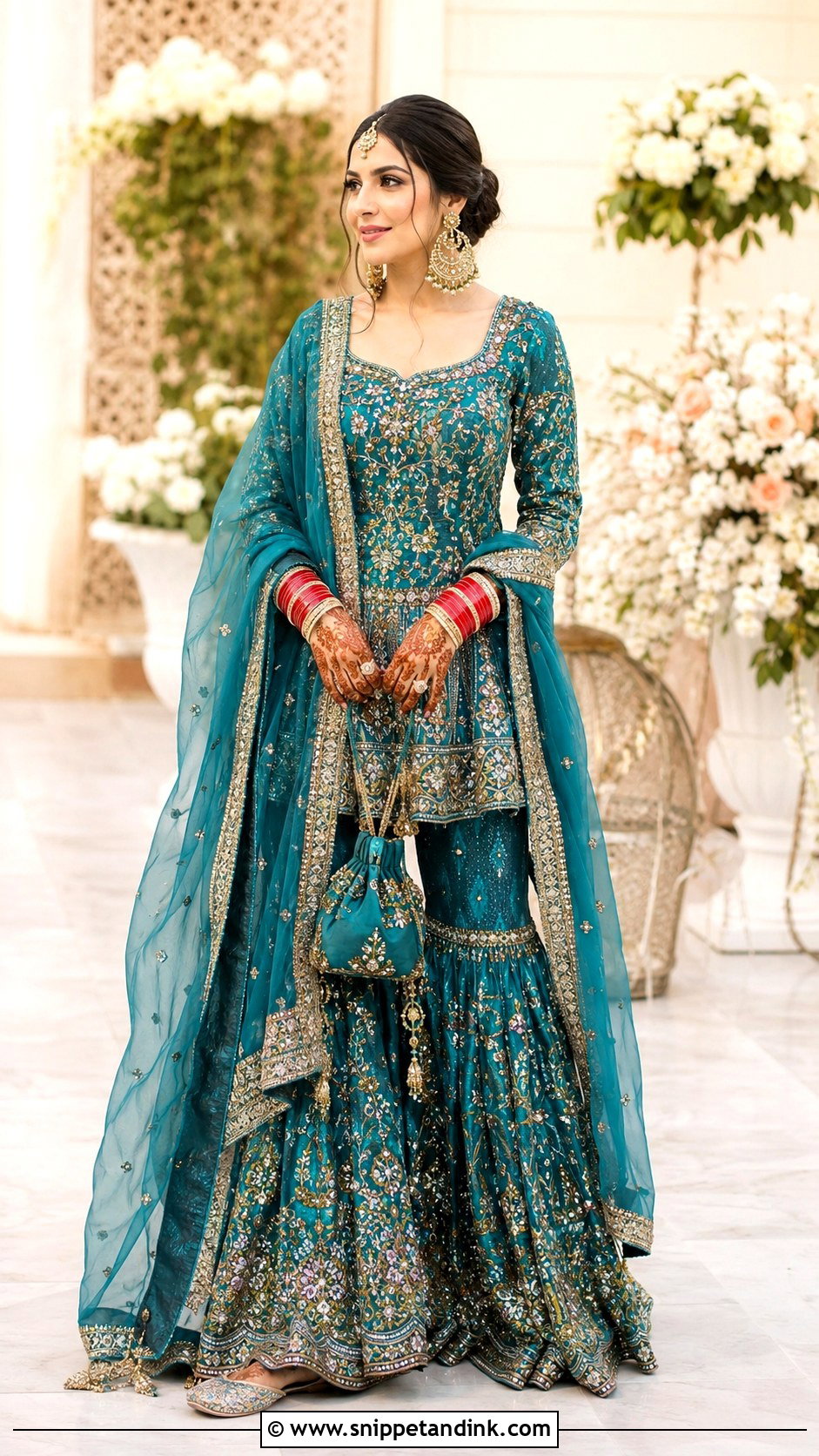
Teal is a jewel tone that feels festive without repeating bridal red. A fitted peplum kurti over a sharara or flared palazzo is flattering seated, because the peplum hides any crease at the waist. Keep embroidery at the neckline and waist and leave the sleeves fairly plain so the choora has space. A sheer dupatta with a gold border over one shoulder, kundan chandbalis, a small tikka, embroidered juttis and a teal potli complete it. Red choora against teal looks vivid in photos, morning or evening.
18. Beige Floral Lehenga Choora Ceremony Outfit
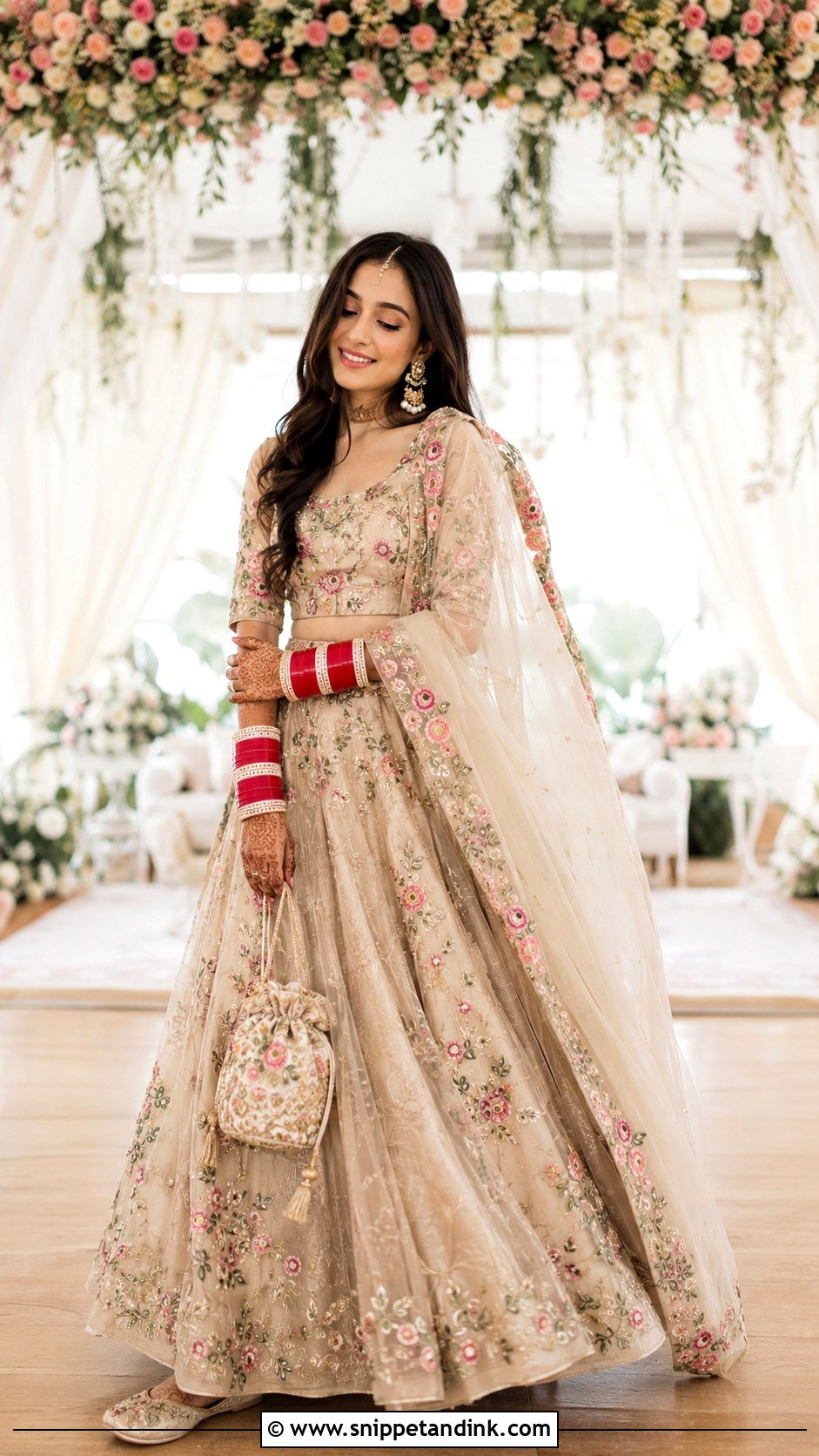
Beige with floral embroidery is a soft background for red bangles. Look for a flowing lehenga with pink, peach, green or red flowers and a fitted blouse with elbow sleeves and a modest neckline. The sheer dupatta can go over your head for the blessings and move to one shoulder after. I’d keep the florals small near the waist, because big flowers at the hip spread out when you sit on the floor. Pearl and kundan earrings, a small tikka, neutral juttis and a floral potli finish it, with loose waves or a low bun ringed with flowers.
19. Royal Blue Straight Suit Choora Ceremony Outfit
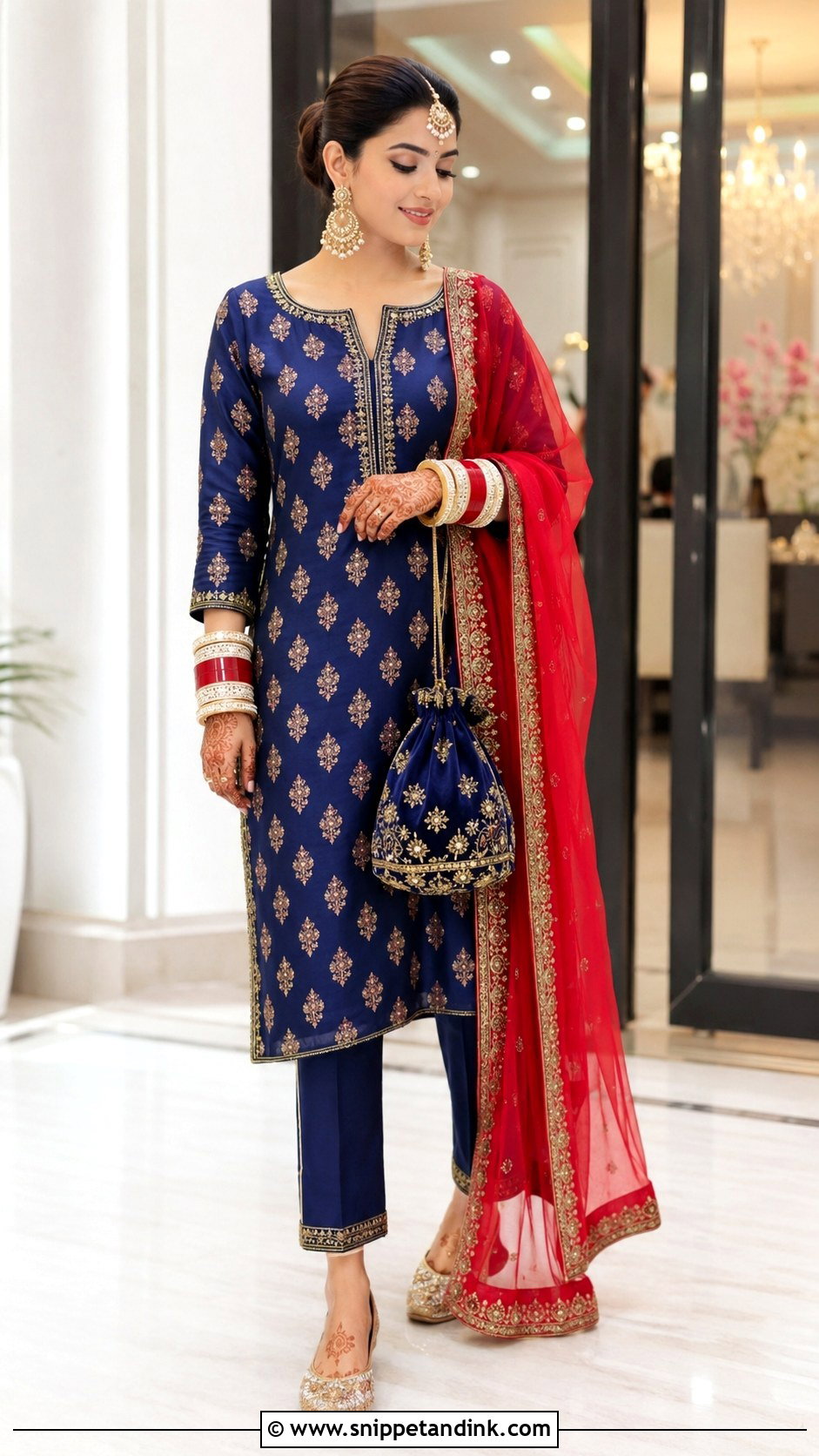
Royal blue is saturated and confident, and it needs a warm partner to sit beside a red choora. A straight silk kurta with gold motifs and side slits, cigarette pants or a salwar, and a pink or red dupatta make that link. Sleeves should end just below the elbow. Gold earrings, a compact tikka, brocade juttis and a matching potli complete it, with a sleek braid or low ponytail. Of everything here, this is the outfit you’re most likely to wear again at family weddings.

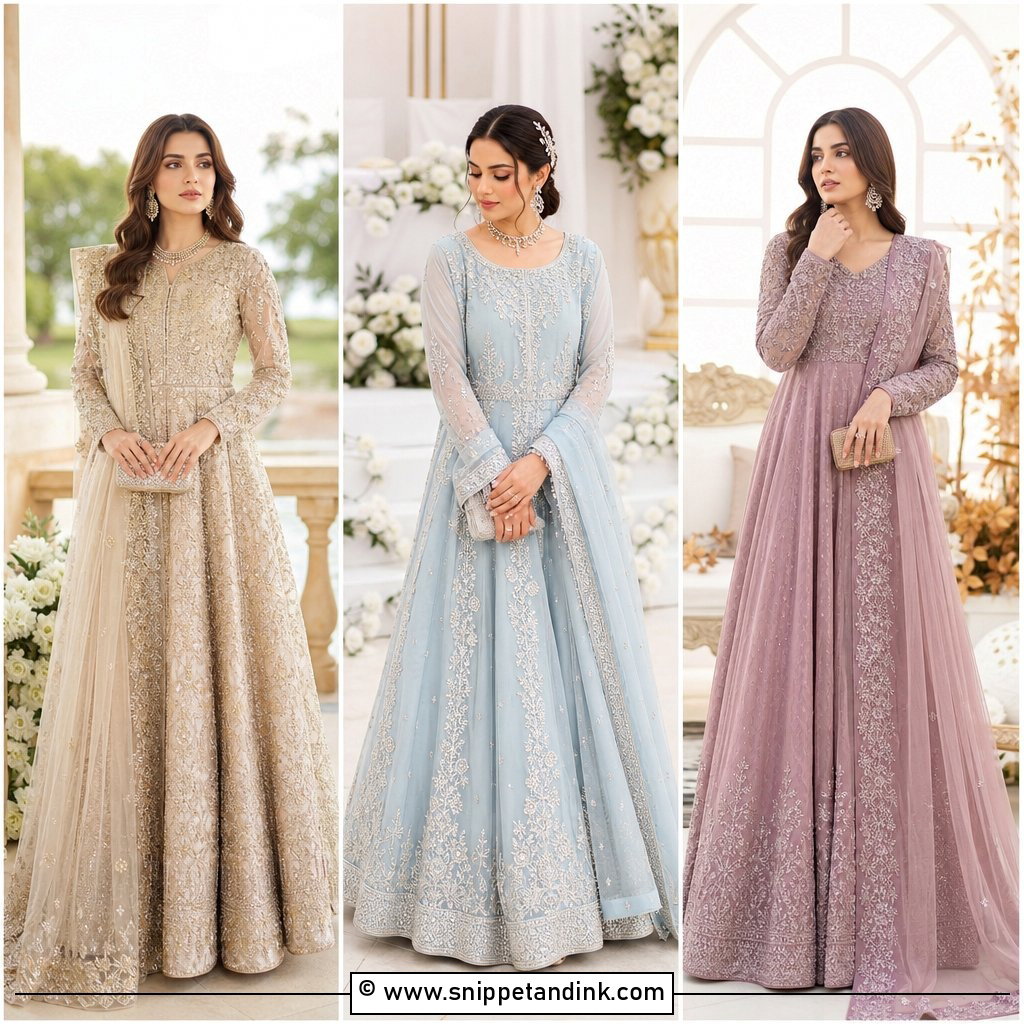
20. Red Phulkari Lehenga Choora Ceremony Outfit
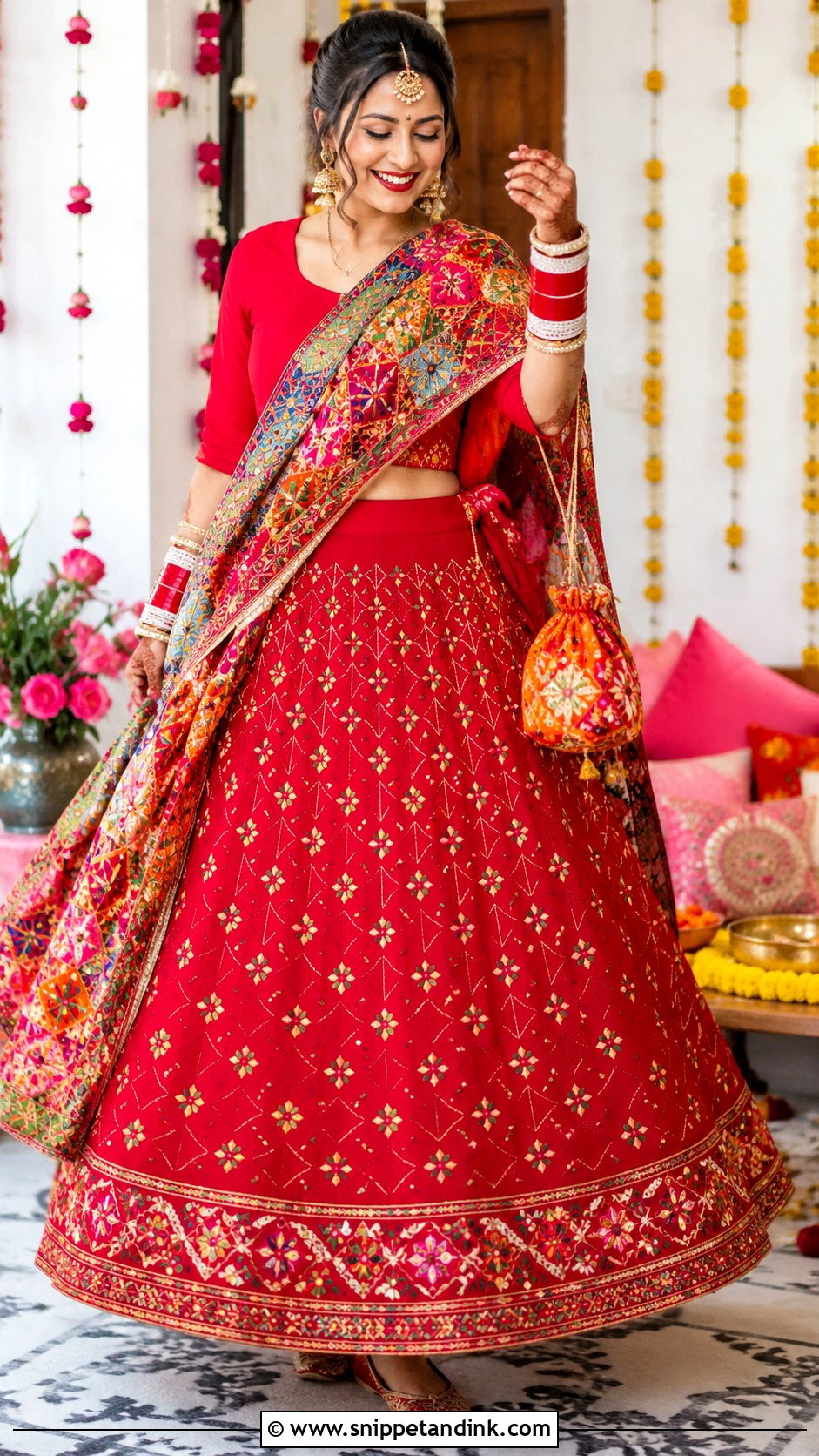
A red phulkari lehenga is as Punjabi as this ceremony gets. A moderately flared skirt with colourful thread embroidery, a plain red or pink blouse and a phulkari dupatta over one shoulder show off the craft without hiding the choora. The textile is busy, so jewellery stays balanced: gold jhumkas, a small tikka and maybe a fine necklace. Embroidered juttis and a bright potli complete it, with a braid, low bun or soft pinned waves. Red-and-ivory choora blends into the palette, yet the change in texture keeps it visible. Expect music, dancing and a lot of photos in this one.
Getting the Choora Size Right Before the Morning Arrives
A choora that’s too tight is miserable to put on and to wear; one that’s too loose slides around and knocks against everything. Bangle size is set by the widest part of your hand, across the knuckles with the thumb tucked in, not by your wrist. I always suggest trying a regular bangle you already own that slips on comfortably and taking that size to the shop, or bringing the shop’s sizing tool home to check.
On the day
Hands swell slightly in warm rooms and after travel, so keep a little lotion or a thin plastic bag over the hand to help the bangles slide over the knuckles. Do your nails and mehndi first; a fresh manicure gets chipped when a full stack is eased on. Have the outfit’s sleeves already pushed up or pinned before your uncle begins, because there’s no graceful way to adjust a tight cuff mid-ritual.
Living with it afterwards
How long a bride wears her choora is a family decision; traditionally it was longer, and many brides now keep it on for a few weeks. Most modern sets are lacquered or acrylic, so harsh cleaners and hand sanitiser can dull the surface. I’d suggest a dry cloth after washing your hands, and taking it off only the way your family’s custom says.
Comfortable Enough to Hold Your Arms Out for an Hour
The outfits that work best for a choora ceremony all solve the same practical problems: sleeves that clear the bangles, a dupatta that stays off the wrists, and a skirt or salwar you can sit on the floor in. Get those right and the colour is simply a matter of taste, from red suits and phulkari to Banarasi, pastel shararas and jacket sets. Wear stable shoes, keep jewellery light and choose a hairstyle that won’t need fixing between rituals. Then you can stop thinking about your clothes and just be present for your family.
You'll Like These Ideas:



Leave a Reply