
The pheras are the part of a Hindu wedding where the outfit is tested hardest. You sit low for a long stretch, rise, walk the rounds tied to your groom, and sit again, all within a few feet of an open fire. So I dress a phera bride for that sequence first and for photographs second. The looks below range from classic red lehengas and regional silk sarees to pastels, shararas and pared-back silk, each with notes on blouse, dupatta, jewellery and footwear, and the practical point I’d check at her final trial.
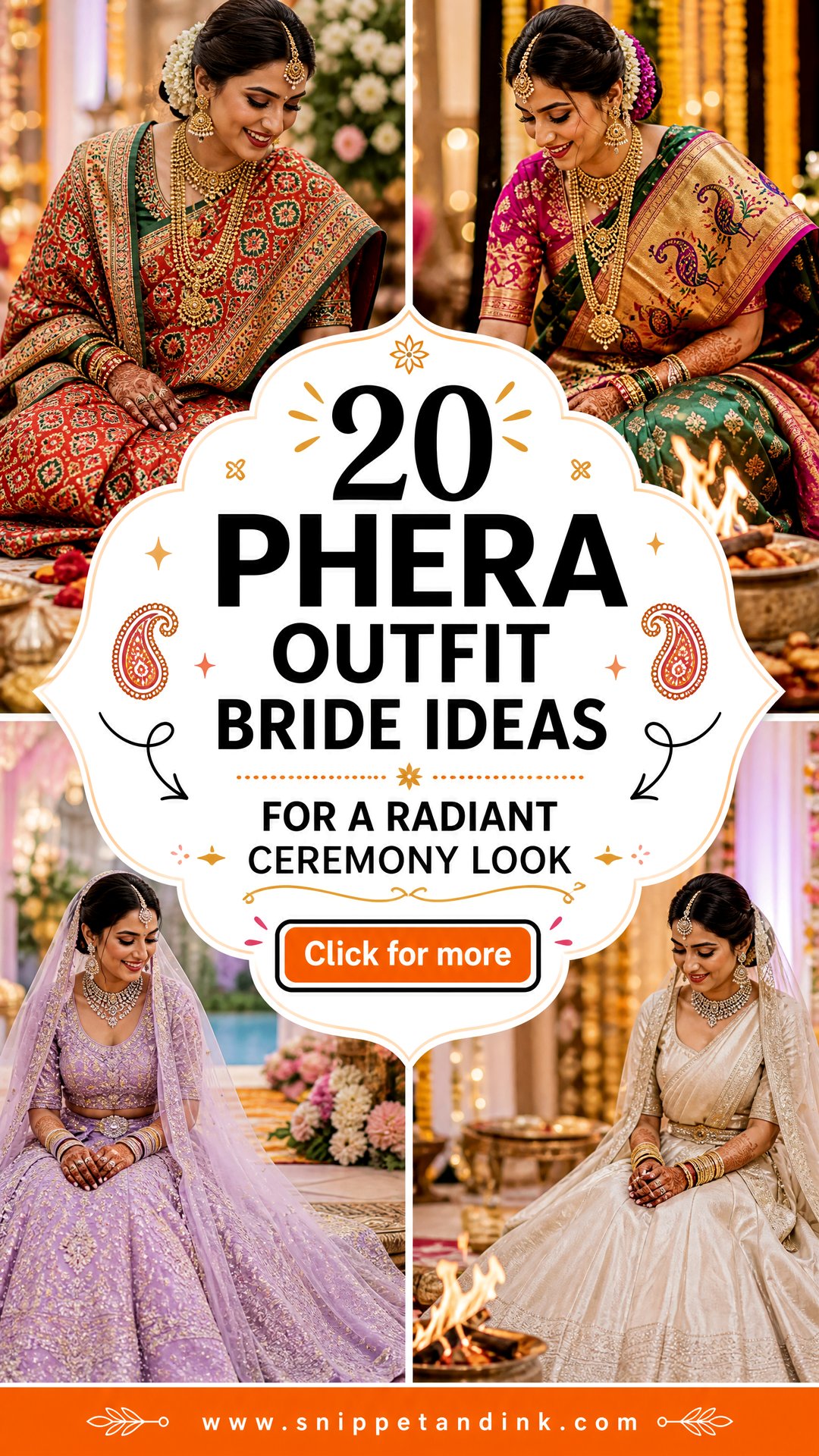
What the Phera Ritual Asks of Your Outfit
The phera portion of the ceremony can run anywhere from under an hour to well over two, depending on the priest and your family’s customs. For most of that time you sit on a low seat or the floor at the mandap. Then you stand and walk around the fire, four or seven rounds depending on community, usually with the gathbandhan knot tying your dupatta or pallu to your groom’s stole. A lehenga that looks perfect standing can be miserable in that sequence.
At the final trial, I ask the bride to go through these moves in the full outfit:
- Sit cross-legged, or on a low stool, for at least fifteen minutes and note where the blouse and waistband dig in.
- Stand up from the floor without using your hands on the skirt, since they’ll often be holding something.
- Walk a slow circle with someone holding a corner of your dupatta, to feel the pull of the knot.
- Bend forward as if placing offerings into the fire and check that nothing swings ahead of you.
Fabric near an open flame
Many bridal nets, georgettes and sequins are synthetic, and synthetics melt and stick when they get too close to heat, whereas silk and cotton tend to scorch. I’d keep the fabric closest to the fire, the dupatta ends and the hem, in natural fibres where possible, and make sure nothing trails or flutters forward. Ask the person seating you to keep a clear gap between your knees and the havan.
1. Red Bridal Lehenga for Phera
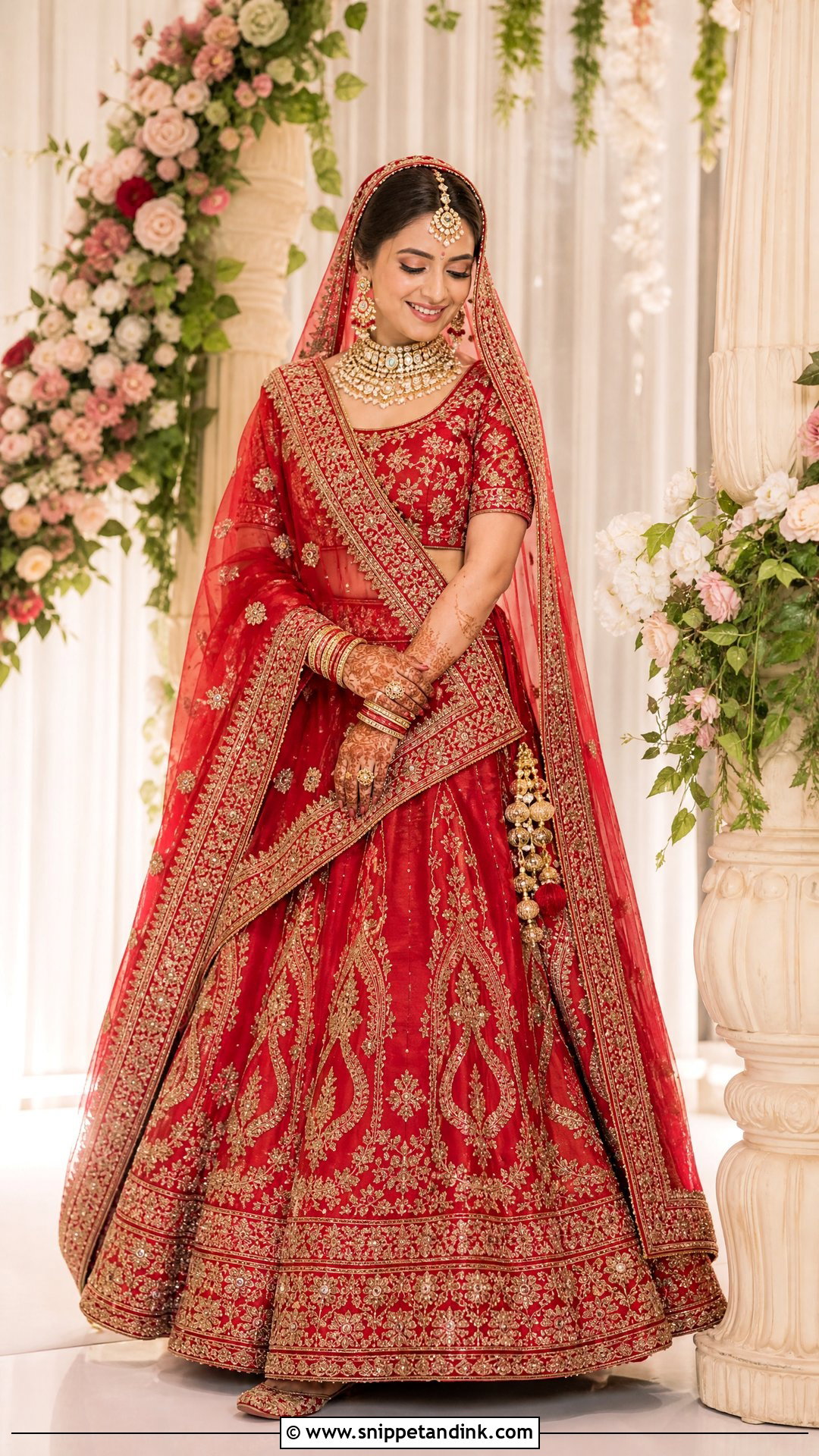
Red lehengas are heavy, and most of that weight is the embroidery and can-can underneath. For the pheras, I’d ask the designer to keep the flare moderate and use a lighter lining so you can rise from the floor seat without help. Silk, raw silk or velvet with zari, dabka or floral work. The blouse should let you sit hunched forward for an hour without the back neckline cutting in. A red dupatta over the head and a lighter one on the shoulder. Kundan, red and gold bangles, a maang tikka and embroidered juttis. A sleek bun with fresh flowers.
2. Maroon Velvet Lehenga for Phera
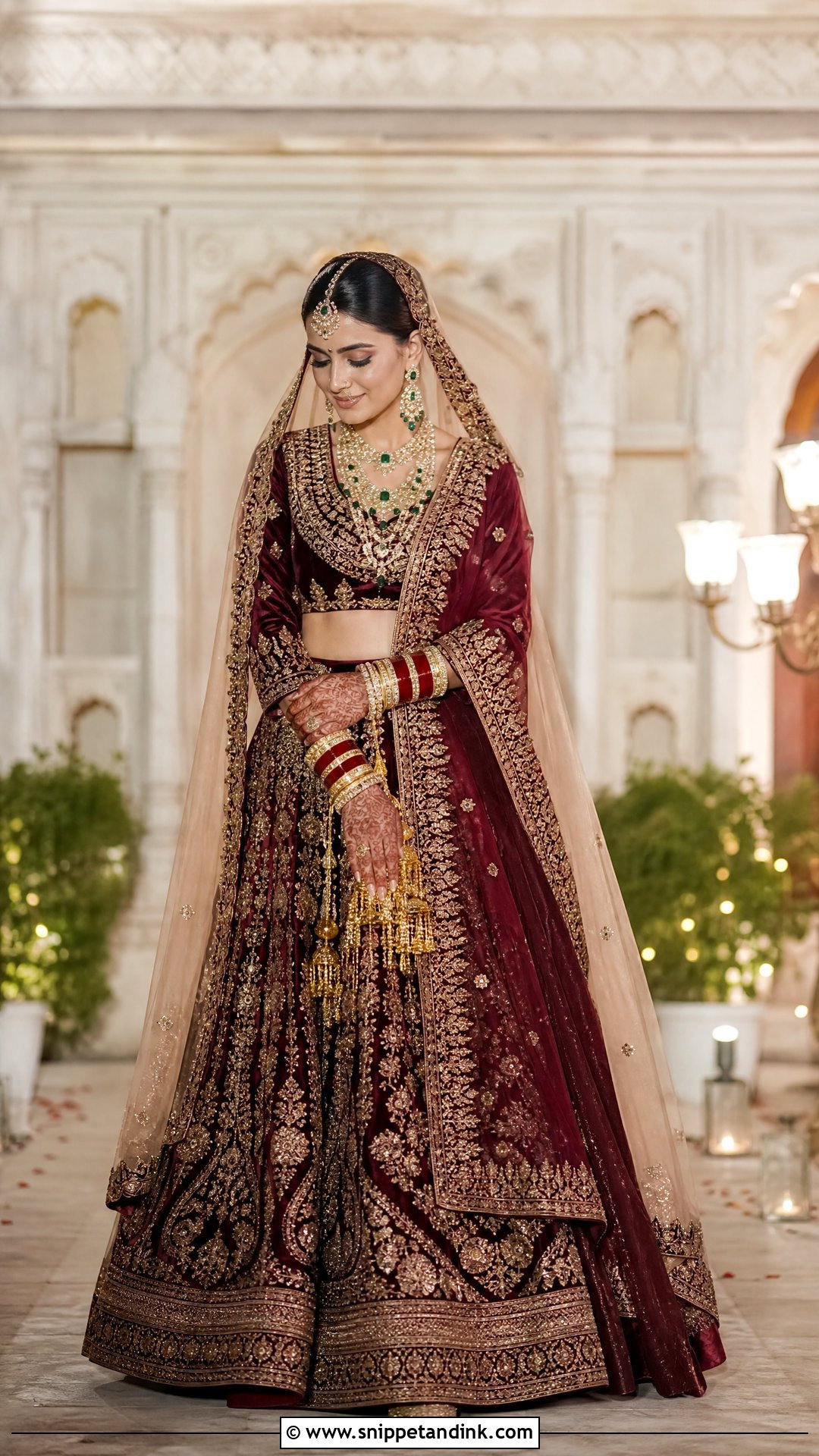
Velvet is warm, which is wonderful for a winter night mandap and miserable at a summer afternoon one, so I’d only suggest a maroon velvet lehenga when the date and venue are cool. It looks deep and rich under evening light. Keep embroidery to antique-gold borders and scattered motifs; velvet plus all-over embellishment gets very heavy. A velvet blouse with a soft net or organza head dupatta, since velvet over the head slides off. Polki with emerald accents, stacked bangles, a nath and cushioned gold juttis. A centre-parted low bun anchors the dupatta.
3. Ivory and Red Lehenga for Phera
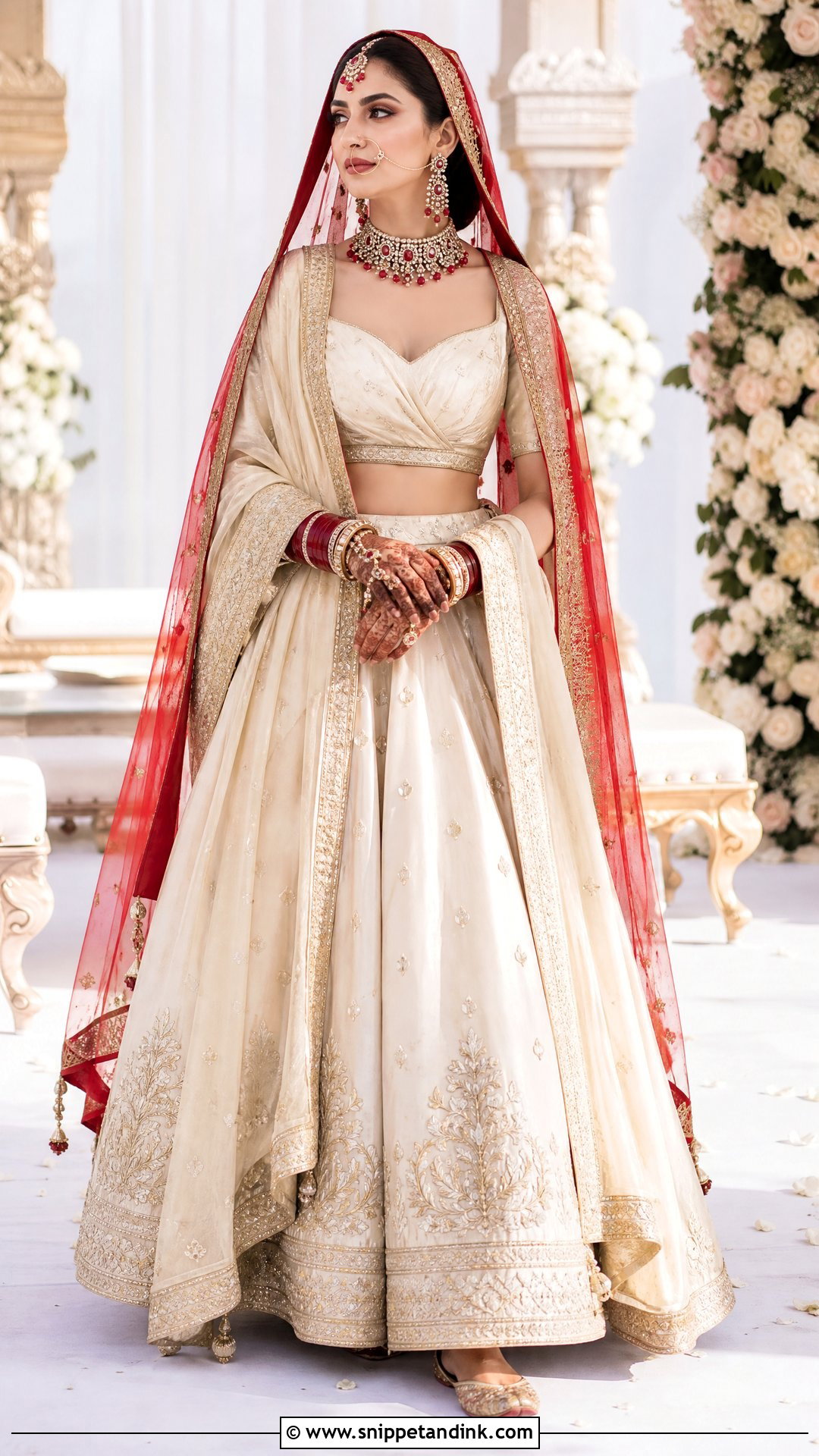
Ivory sitting beside a havan picks up soot and turmeric marks more readily than red does, so I’d keep this look for brides who don’t mind a few marks, or plan the ivory in a raw silk that hides small spots. The skirt carries gold threadwork, small motifs or a red border, with an ivory blouse. A sheer red dupatta over the head puts the bridal colour at the face; a second ivory one sits on the shoulder. Kundan with red beads, red bangles and metallic juttis connect the two colours. It’s at its best at a bright daytime ceremony.
4. Pink Bridal Lehenga for Phera
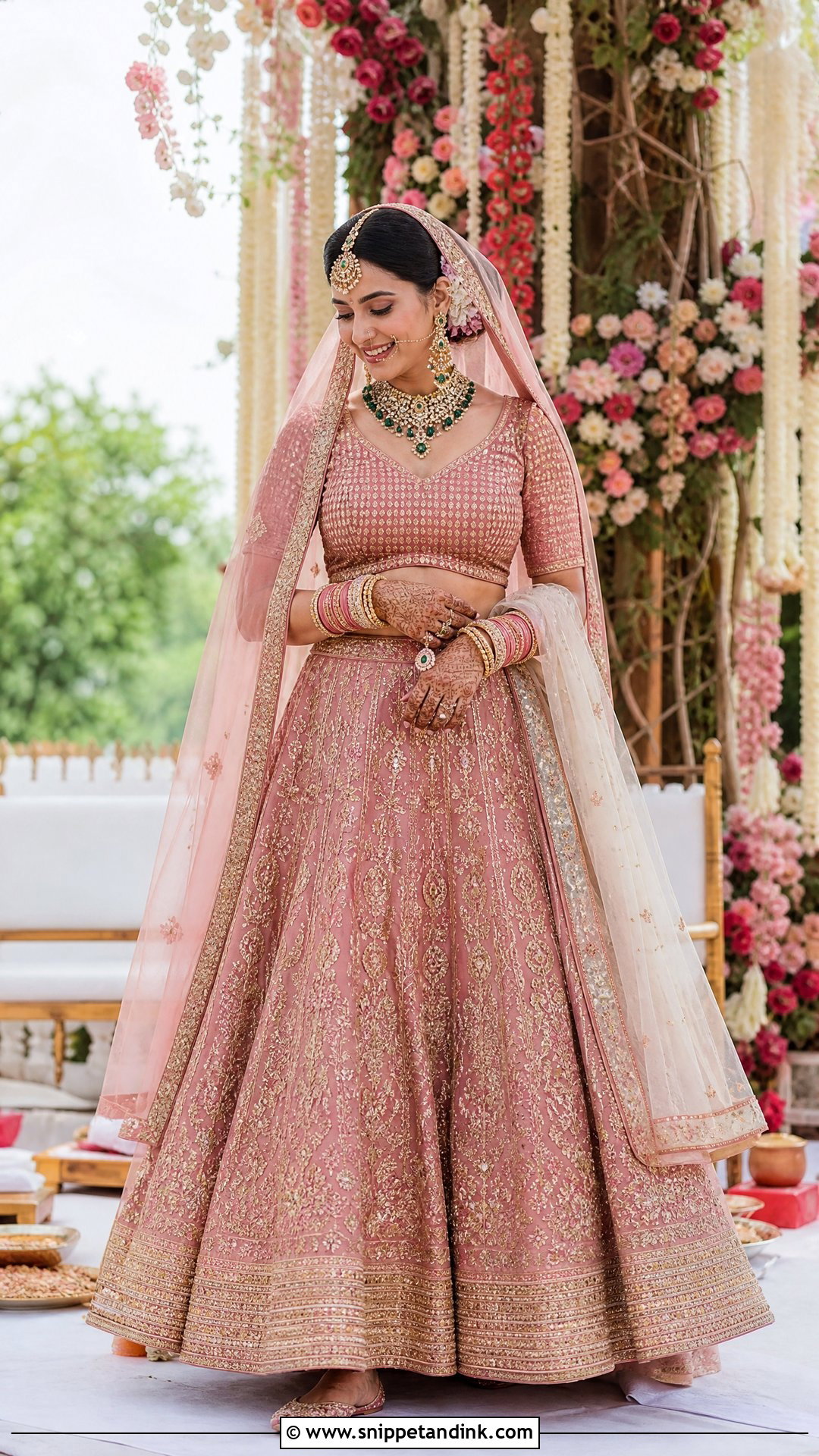
The shade of pink matters more than the style. Rose pink can wash out under warm yellow mandap lights, while rani pink and fuchsia hold their colour at night, so I’d hold fabric swatches up in the actual lighting before ordering. Gold embroidery and a structured blouse make pink read bridal rather than festive-guest. A matching head dupatta and a lighter contrast dupatta across the body. Emerald or pearl kundan suits it. Have the tailor check you can raise your arms fully in the blouse, since rituals involve offering and lifting.
5. Orange Bridal Lehenga for Phera
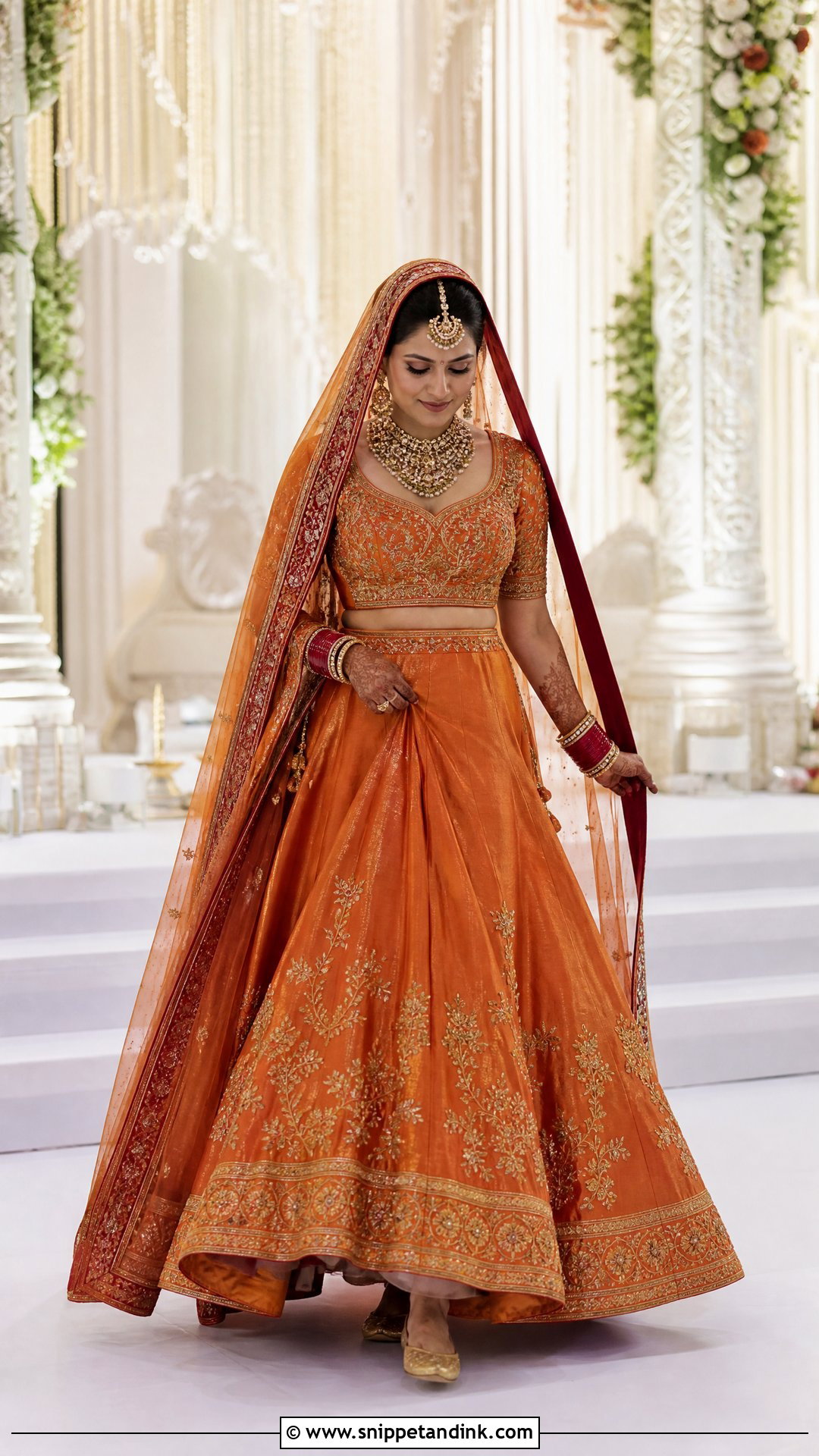
Orange glows next to the fire and photographs warmly, which is exactly why I like it here. Vermilion, burnt orange, rust or saffron in raw silk. A matching embroidered blouse and a red-bordered head dupatta, firmly secured. Antique gold, a statement tikka and layered necklaces suit the warm palette. Watch the hem: long tassels and loose latkans swing towards the fire when you turn on the rounds, so keep them short or tucked. A neat braided bun with small flowers holds through the rituals.
6. Pastel Peach Lehenga for Phera
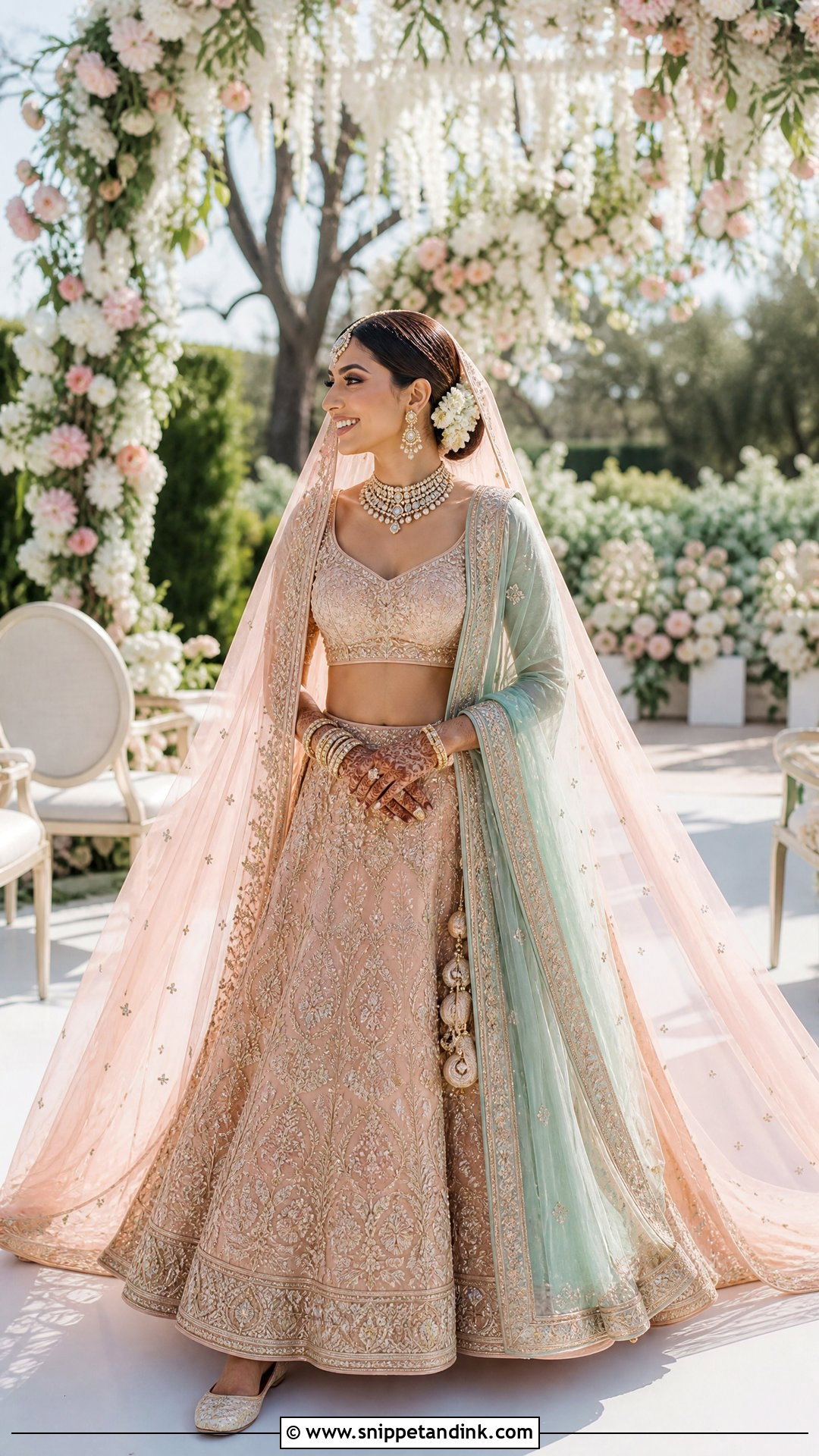
Pale peach can look washed out in photos unless the makeup has some definition, so for this look I’d brief the makeup artist to deepen the eyes and lip a step more than usual. Champagne-gold embroidery, a few sequins or multicoloured floral threadwork on peach. A fitted blouse with sleeves and a sheer peach head dupatta, with mint, ivory or blush on the shoulder. Pearl and polki jewellery and rose-gold juttis. A low bun with white flowers. Morning pheras, garden mandaps and warm days suit it best.
7. Green Bridal Lehenga for Phera
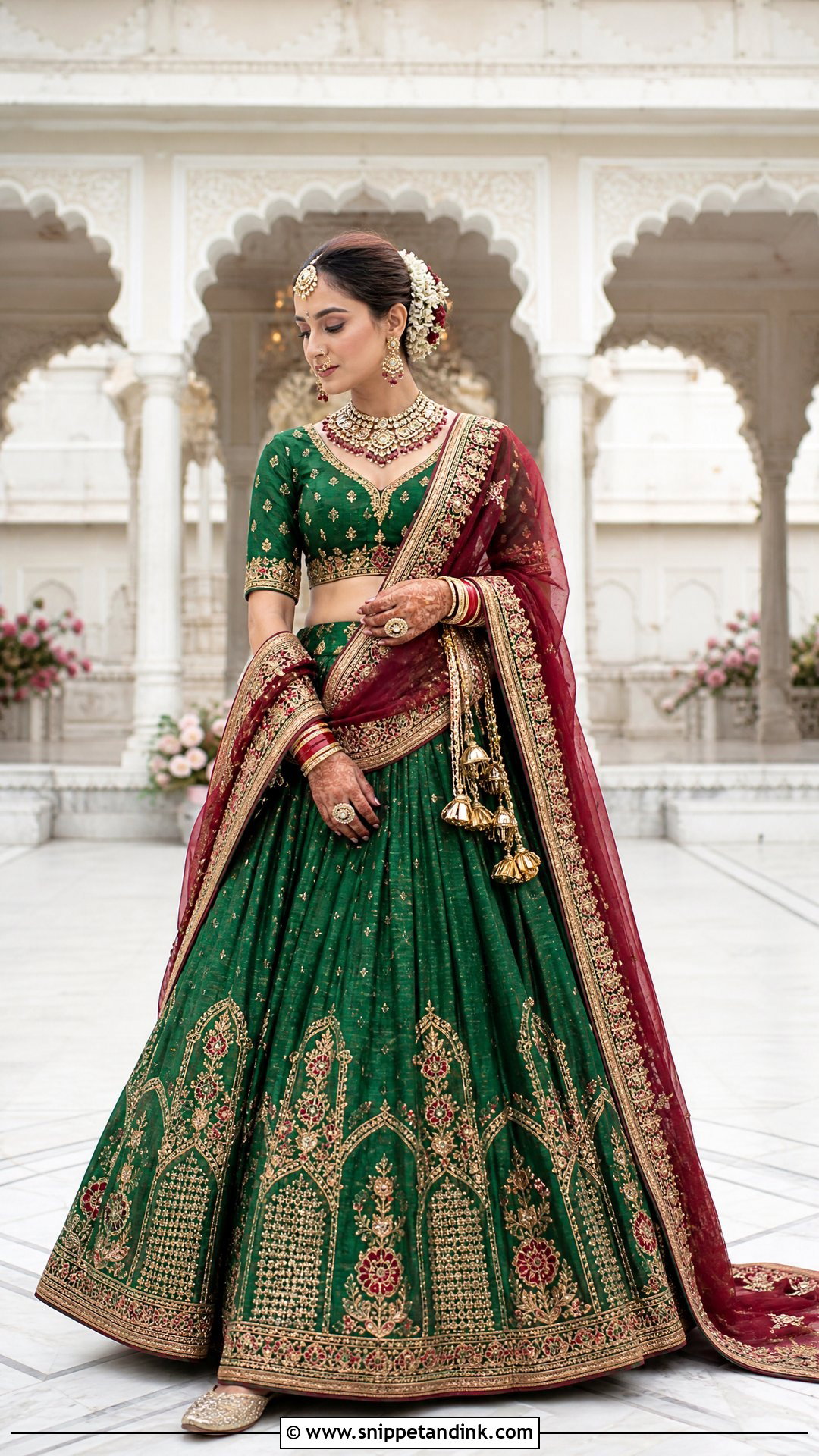
Would you prefer something traditional but less expected? Emerald, bottle or forest green lehengas look regal, and a red or maroon head dupatta keeps the bridal cue clear. Gold zari with small red details links the colours. Temple jewellery, antique gold or kundan with rubies warm the green. A well-secured dupatta leaves your hands free to hold the offerings. One thing I check: some deep greens turn almost black in dim evening light, so look at the fabric under warm bulbs before committing.
8. Banarasi Silk Saree for Phera
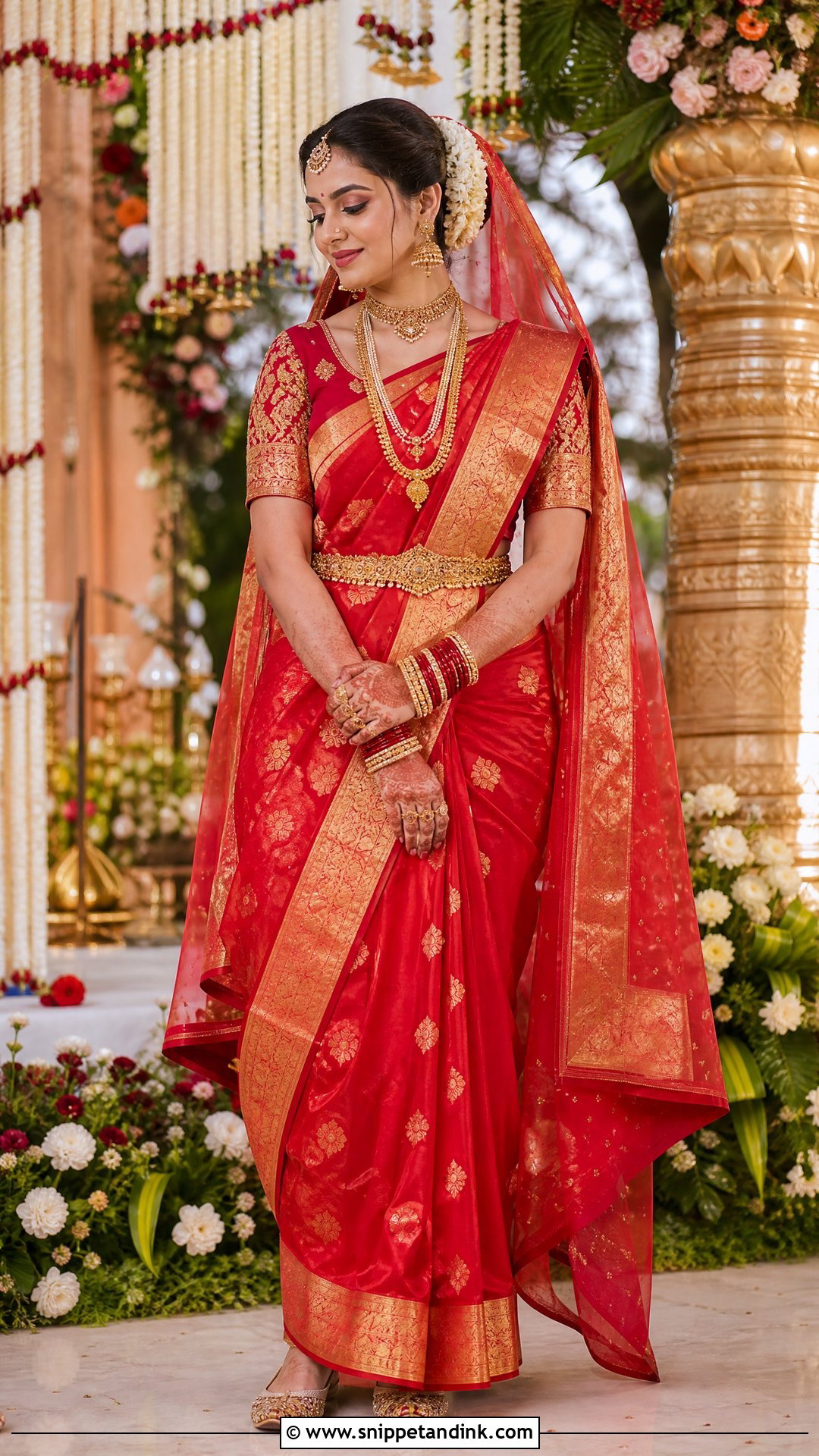
Banarasi sarees are among the easiest bridal drapes to sit in for a long ceremony, provided the pleats are pinned properly. I’d have the draper pin each pleat at the waist and fix the pallu at the shoulder and back so walking the rounds doesn’t loosen anything. Red, maroon, pink or rust with gold zari and a strong border. A brocade blouse with room to move the arms. A light veil over the head if your family expects it. Layered gold, jhumkas, bangles, a waist belt and low embroidered footwear. A smooth bun with fresh mogra.
9. Red Kanjivaram Saree for Phera
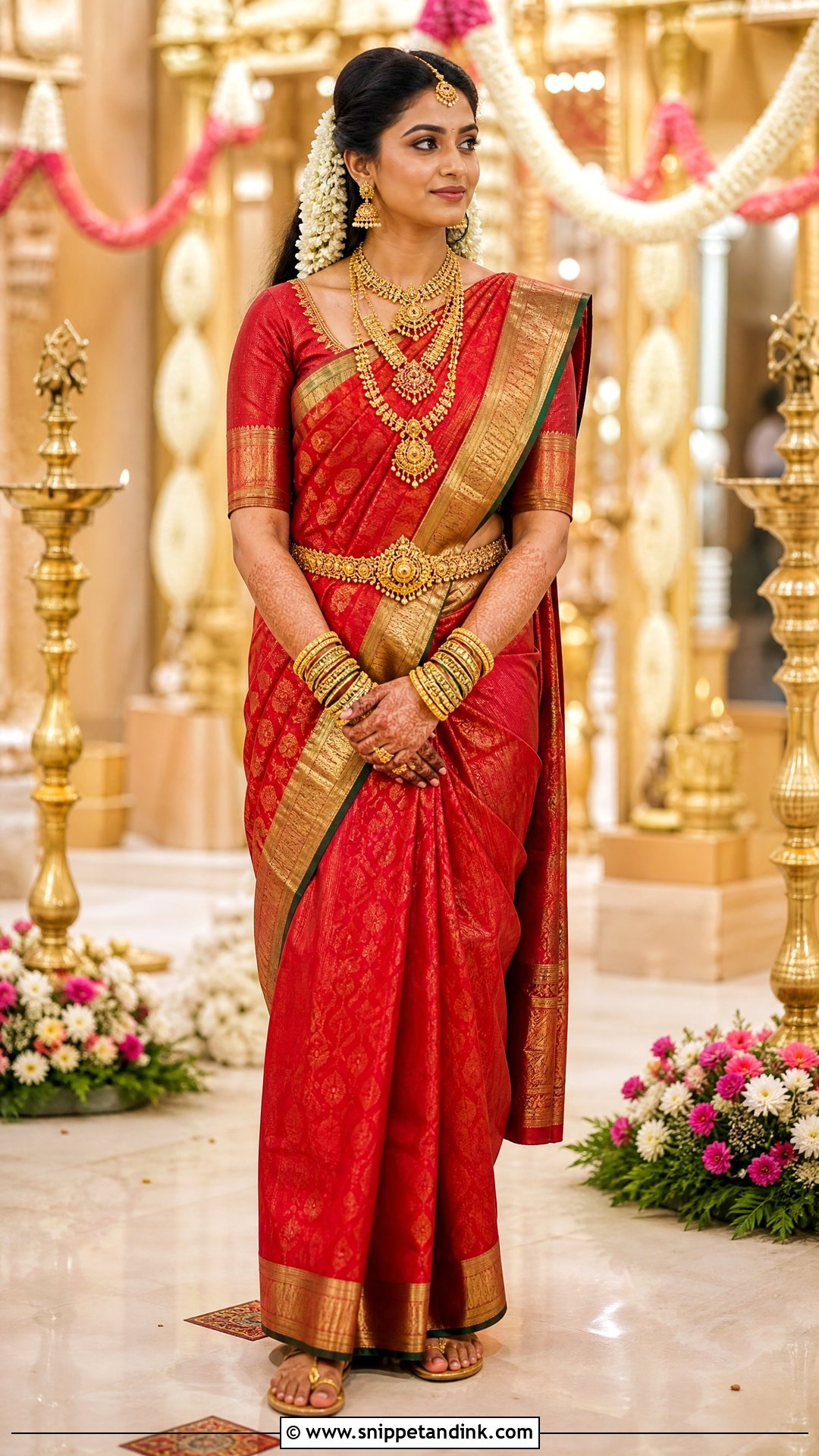
Kanjivaram silk is thick and stiff when new, which helps the pleats stay sharp but means the drape can feel bulky at the waist at first. A good draper uses a waist belt to hold the pleats flat and keep them in place around the fire. Choose red with a contrasting gold, green or magenta border and woven motifs. A fitted silk blouse with elbow sleeves. Temple jewellery, layered gold, jhumkas, bangles and an ornate hair piece. Flat sandals. A long braid or low bun with jasmine finishes the regional look.
10. White and Red Bengali Saree for Phera
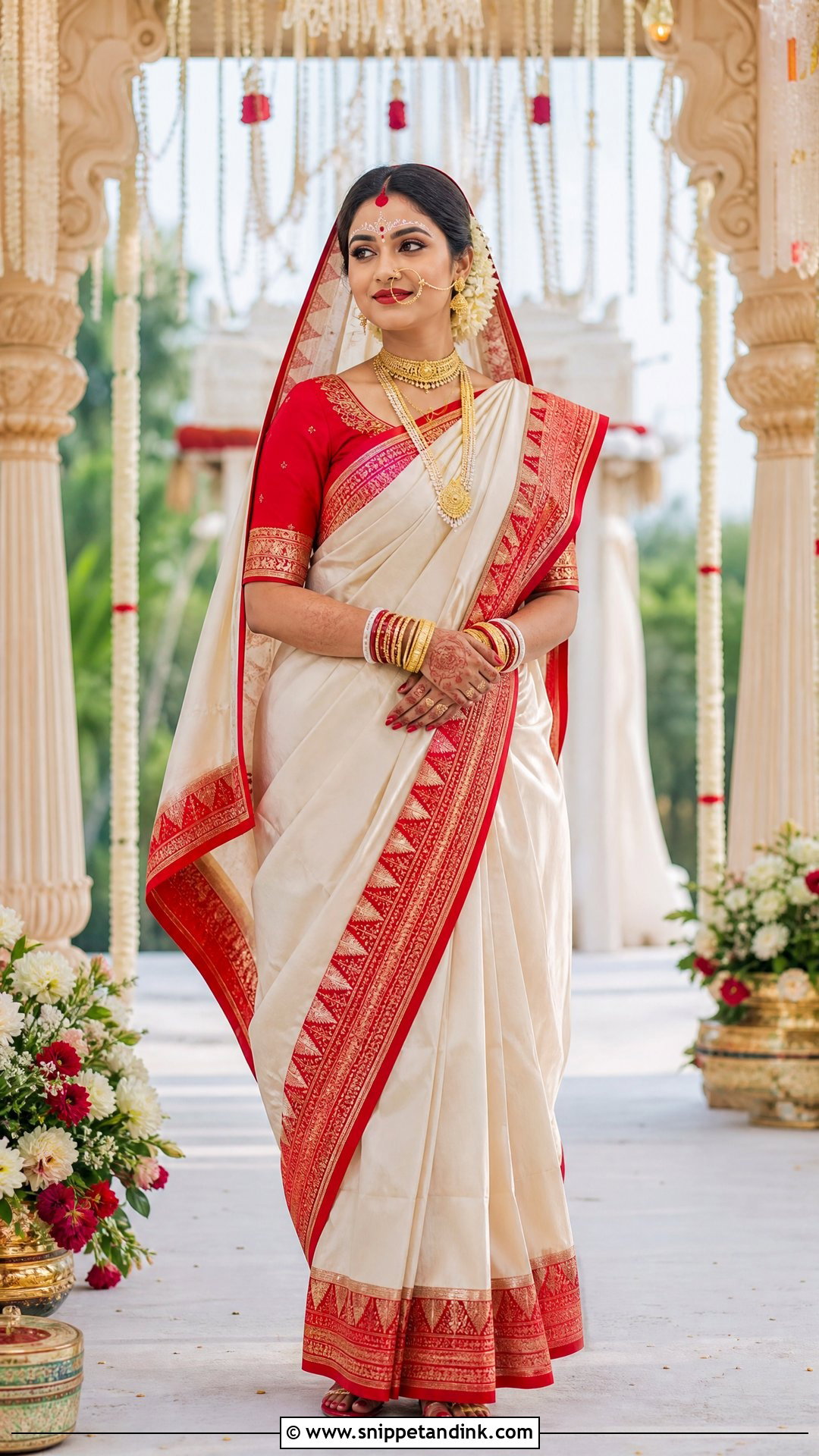
A white or ivory saree with a bold red border is the classic Bengali bridal combination. Choose silk, Garad or another fabric that holds a crisp pleat. A red blouse with gold detailing and comfortable sleeves. Layered gold, a statement nath, red and white bangles and, if it’s part of your custom, decorative forehead designs. The pallu can go over the head with small pins. Red or gold flats. Garad is fairly thin, so wear a well-fitted petticoat in a matching shade to avoid the outline showing in daylight.
11. Maharashtrian Nauvari Saree for Phera
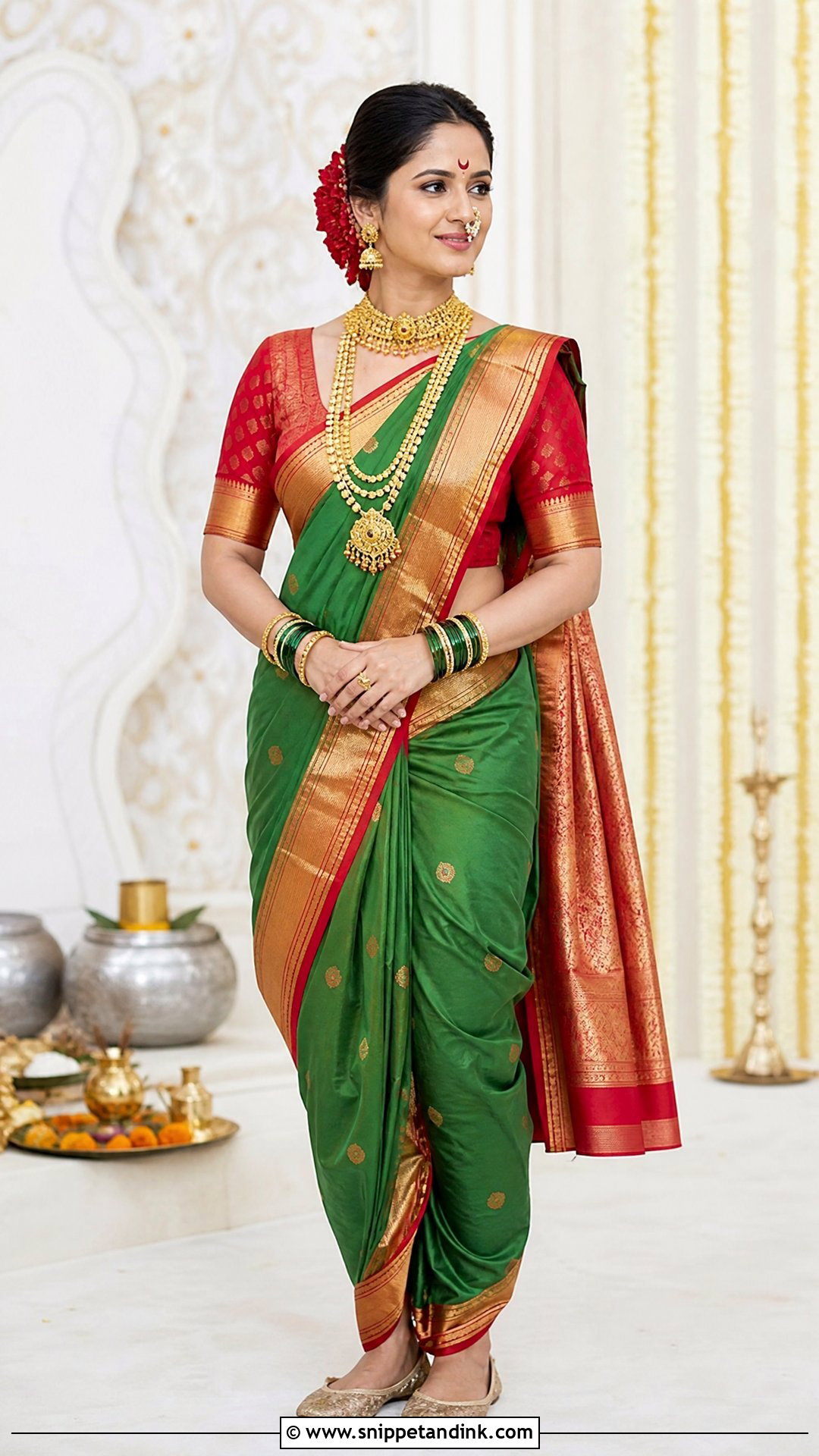
Nauvari is draped between the legs like a dhoti, which gives far more freedom for sitting and walking than most bridal styles, as long as it’s tied by someone who knows the drape well. I’d always book an experienced draper rather than trying a pre-stitched version for the first time on the day. A vibrant Nauvari saree in red, green, yellow or deep purple with a contrasting short-sleeved blouse. A nath, layered necklaces, bangles and a crescent bindi. Add a shela if your ceremony calls for a head covering. Traditional flats and a sleek bun with flowers.
12. Gujarati Panetar Saree for Phera
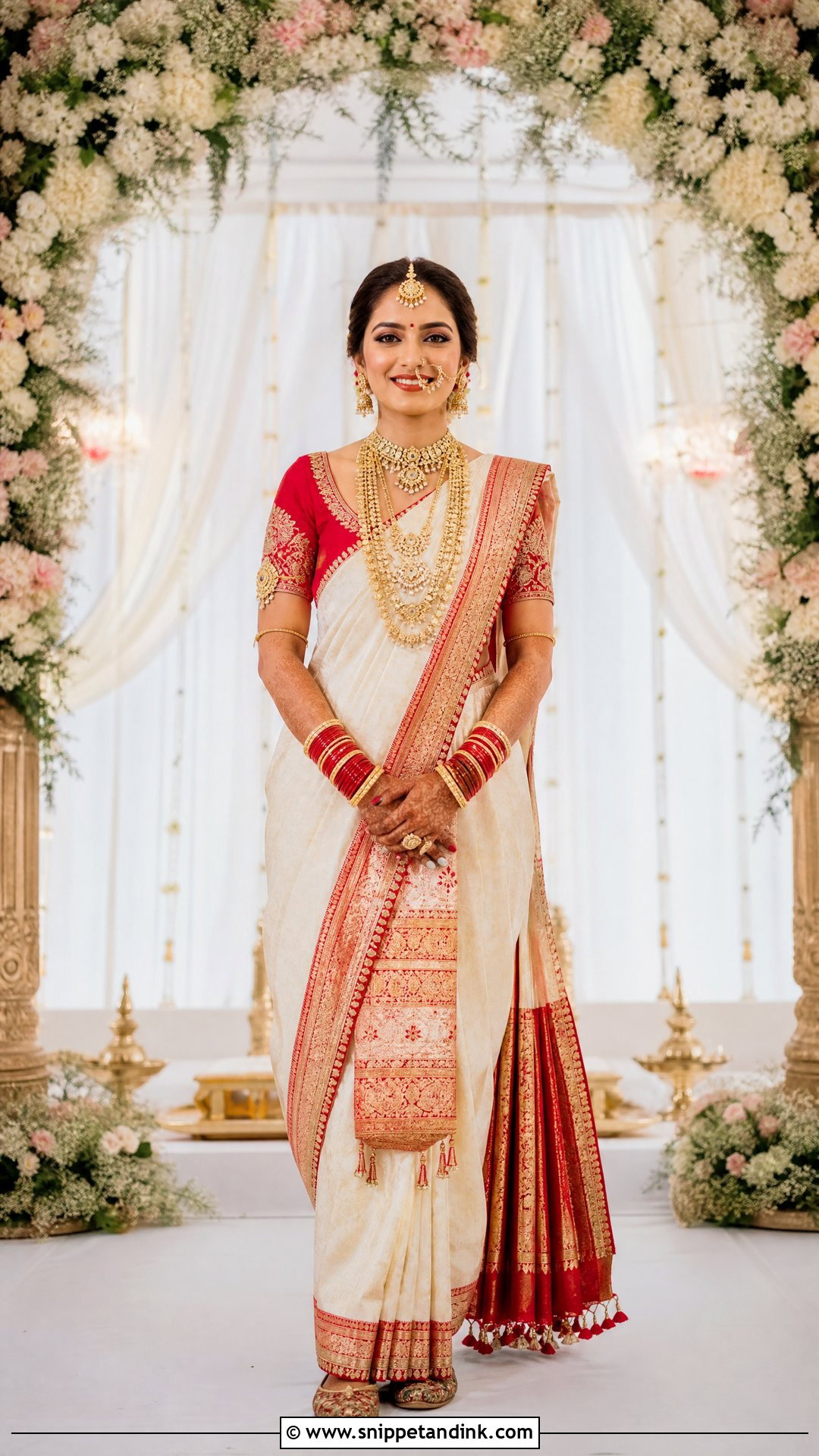
The Gujarati Panetar is white or ivory with a red border, and it’s often worn with the pallu brought over the right shoulder to the front, so the decorated pallu is fully on display. That front drape needs extra pins at the shoulder because it moves with every step of the rounds. Silk with gold zari and traditional motifs, a richly embroidered red blouse, kundan, layered necklaces, a nath, red bangles and juttis. A secure low bun supports the head drape.
13. Patola Saree for Phera
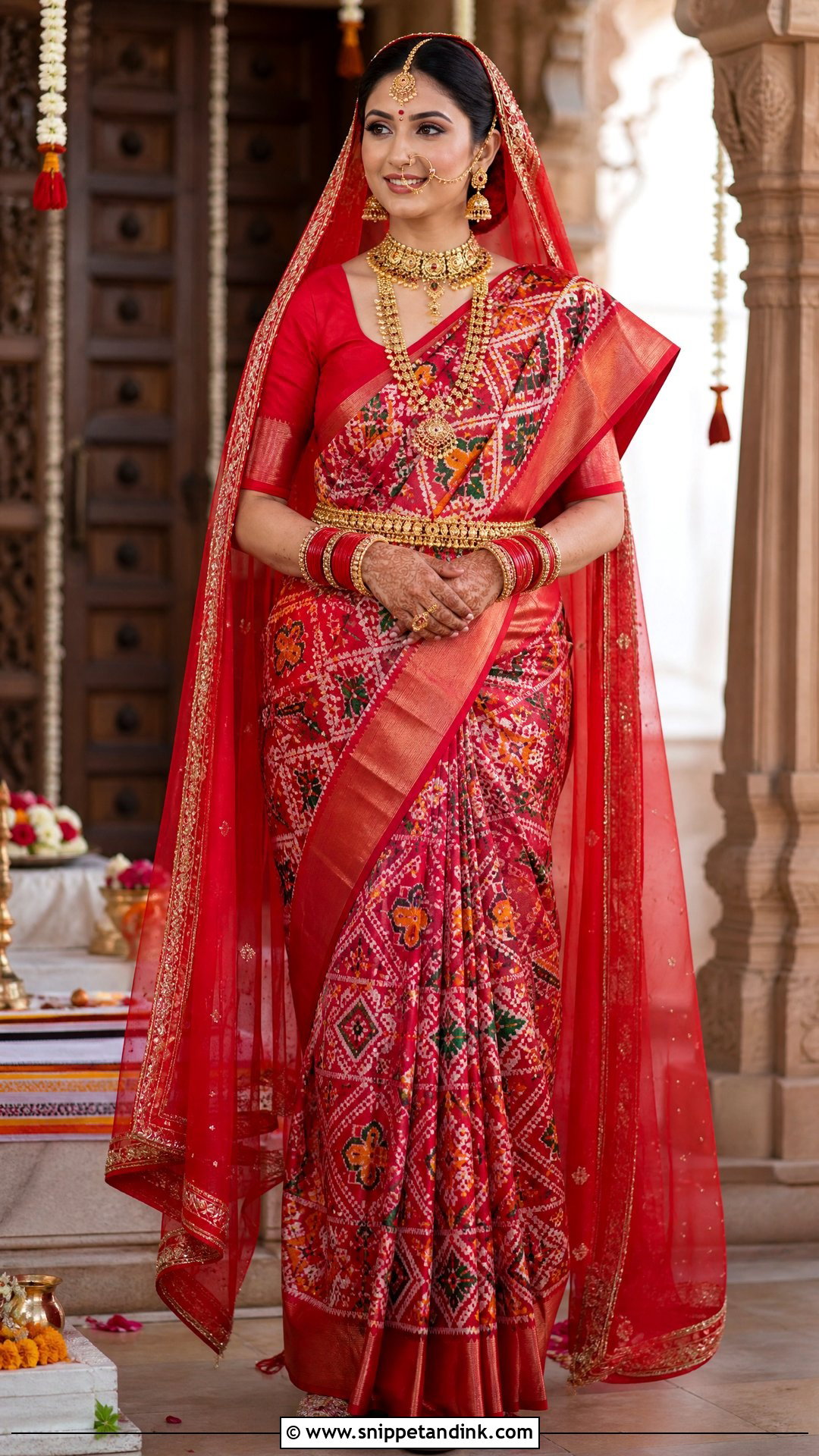
Patola is double-ikat, so the pattern is in the weave itself, and no surface embellishment is needed. That also makes it lighter than an embroidered lehenga. Red, magenta, green or multicolour with a strong border, and a plain silk blouse so the weave leads. Hidden pins on the pleats and a slim waist belt. Gold or kundan jewellery, coordinated bangles and embroidered flats. If you need a veil, keep it light; a second heavy fabric over a Patola pulls the drape out of shape.
14. Paithani Saree for Phera
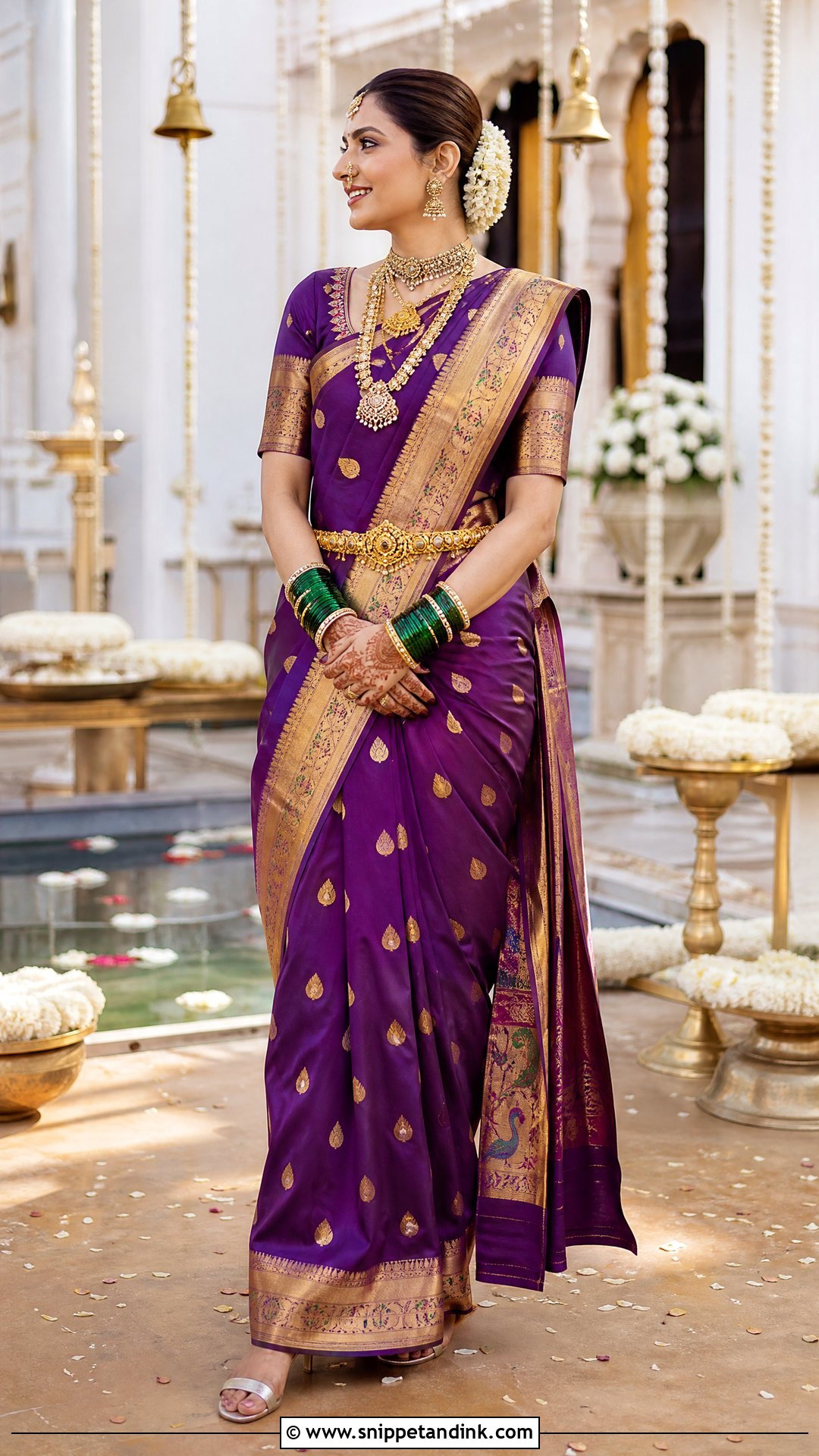
The ornate pallu of a Paithani saree is its showpiece, so I drape it to fall where the camera will see it during the rounds. Magenta, purple, green or red with a contrasting gold border. A fitted silk blouse and a traditional waist belt. Gold necklaces, a Maharashtrian nath, green glass bangles and statement earrings. Metallic sandals hidden under the hem. A centre-parted bun with jasmine. It’s lighter to move in than most heavily embroidered lehengas.
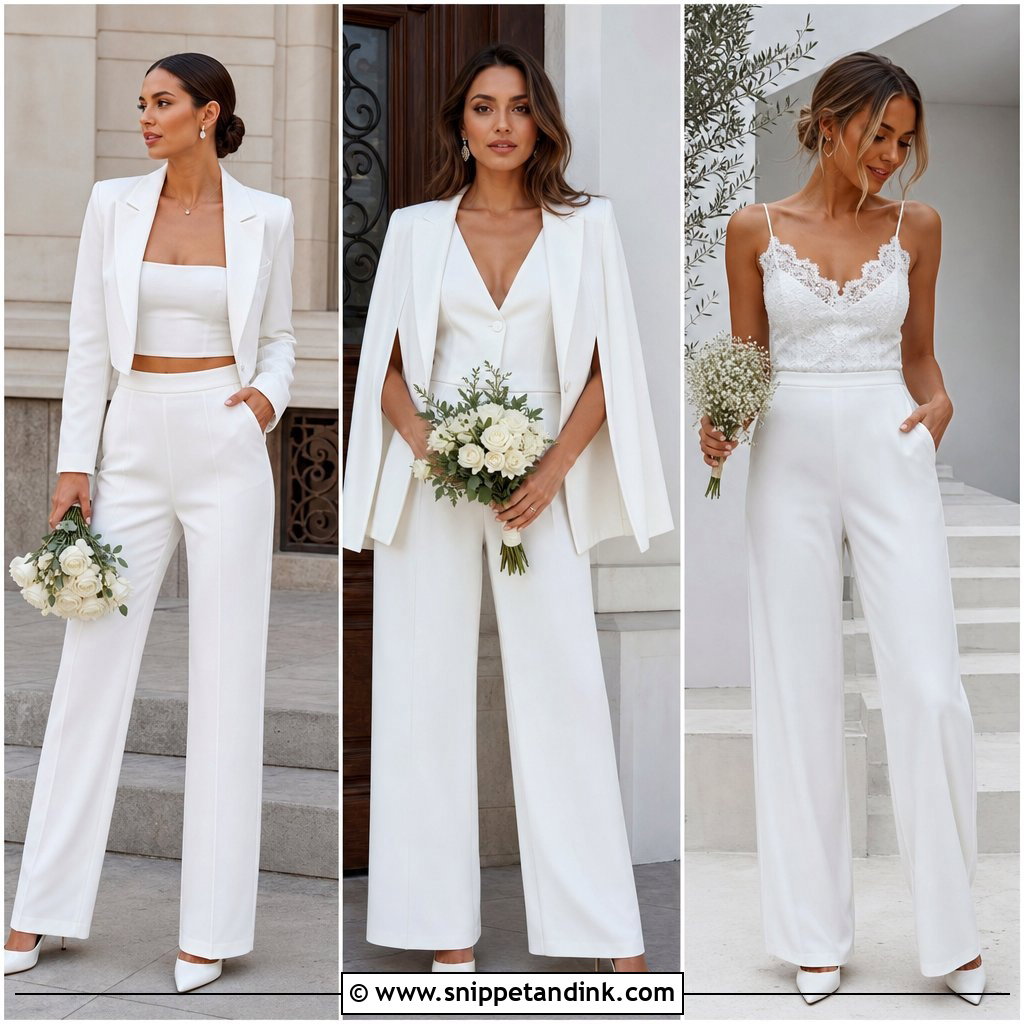
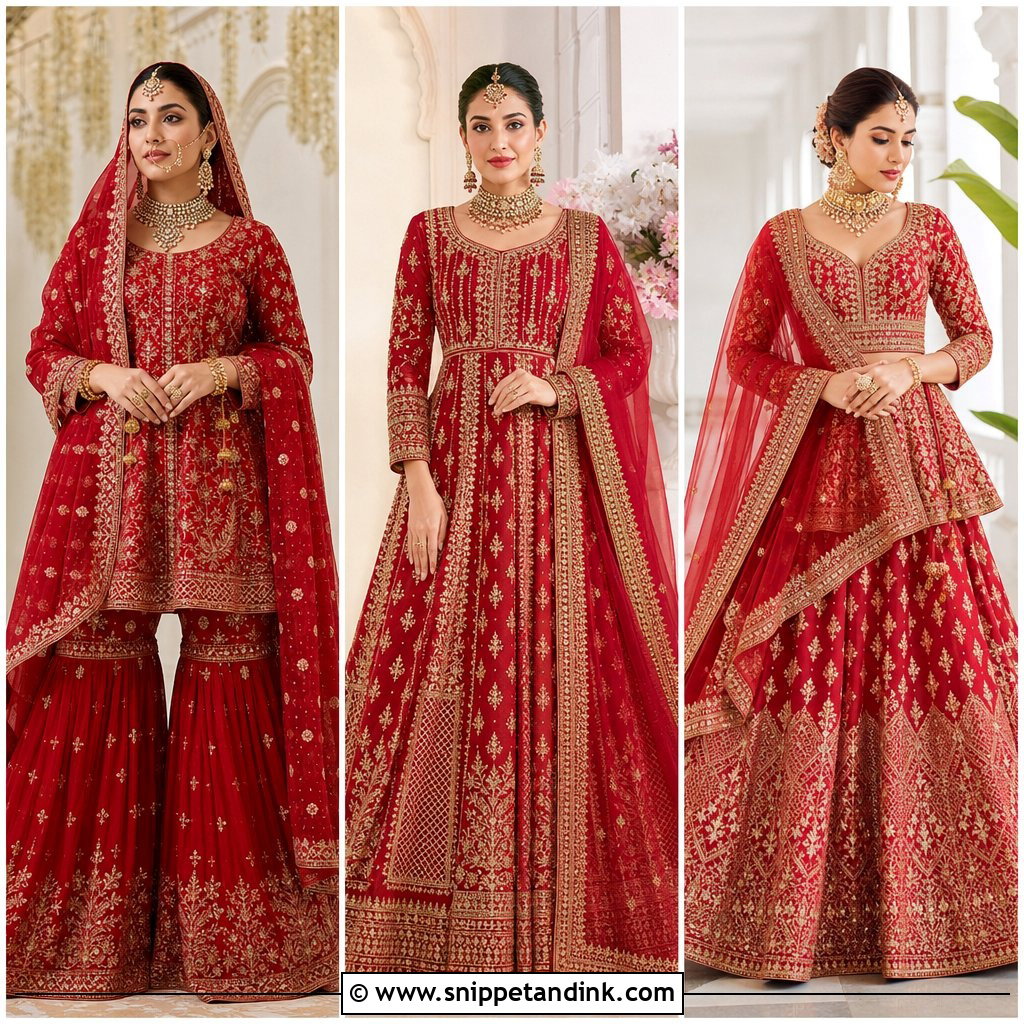
15. Red Bridal Sharara for Phera
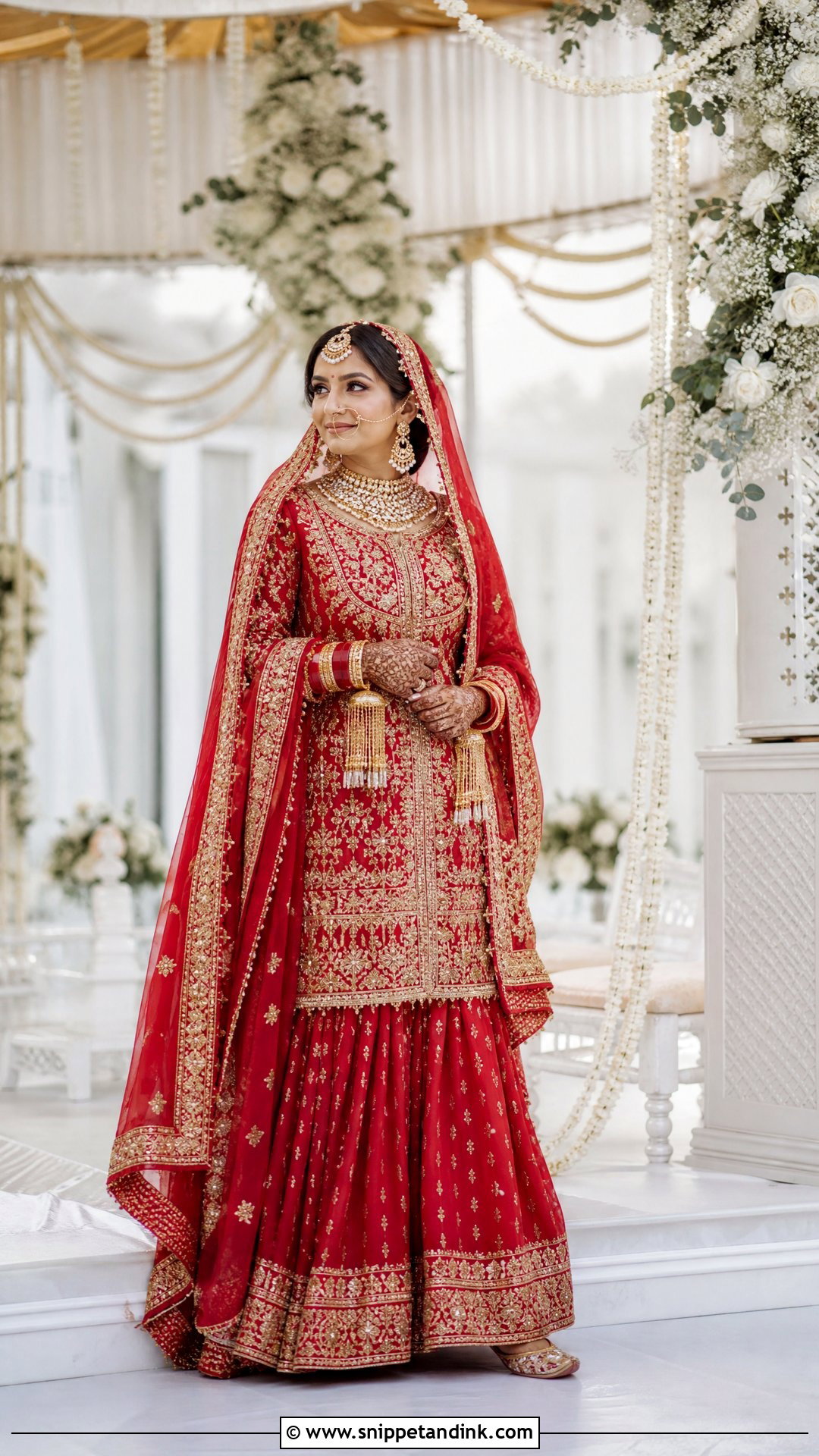
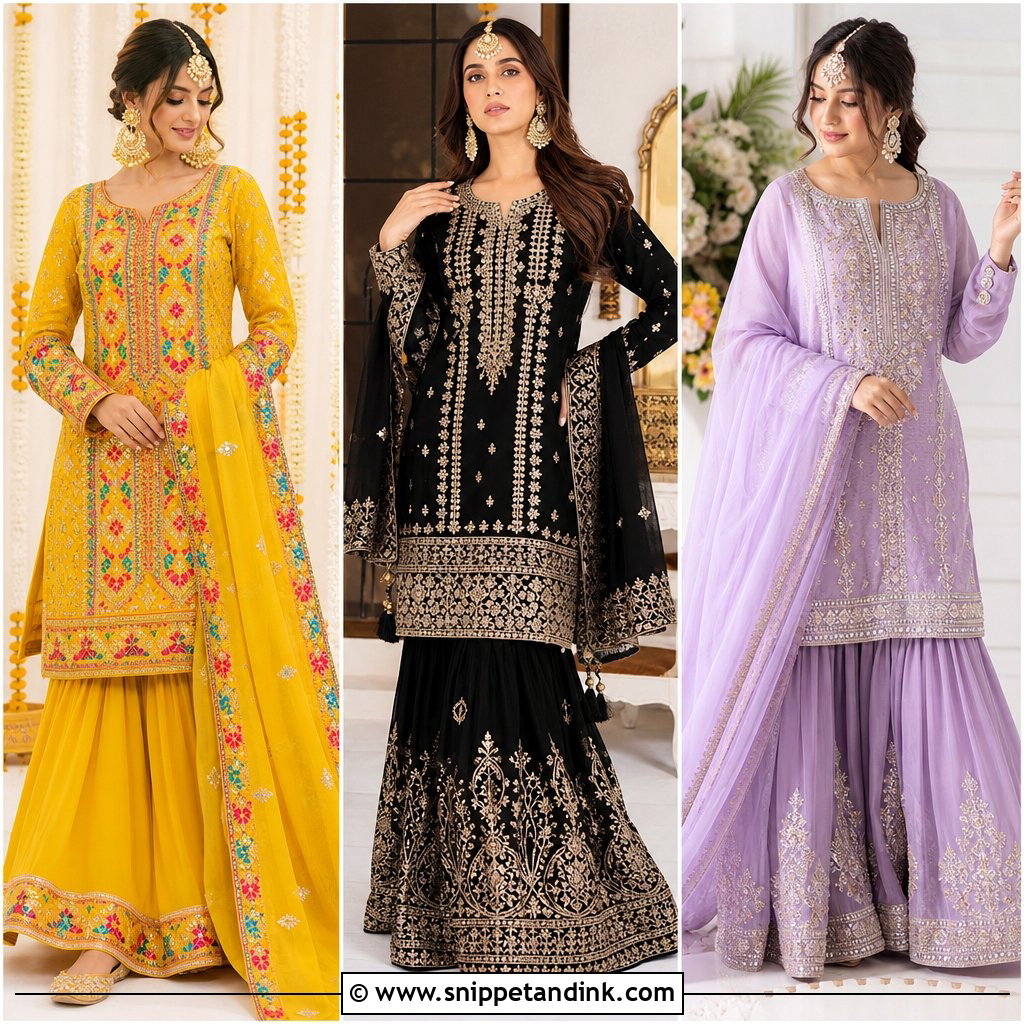
Shararas flare from the knee and can catch on your heel when stepping backwards from a seated position, so the hem length is the fitting detail I fuss over most. Have it hemmed in the footwear you’ll wear. Silk or georgette wide-leg bottoms with an embroidered mid-length kurta that covers comfortably when seated. A head dupatta in red and a lighter one on the shoulder. Kundan, a maang tikka, red bangles and embellished juttis. A low bun and softly defined makeup. Comfort is the reason to choose this, so keep the kurta weight reasonable.
16. Bridal Anarkali for Phera
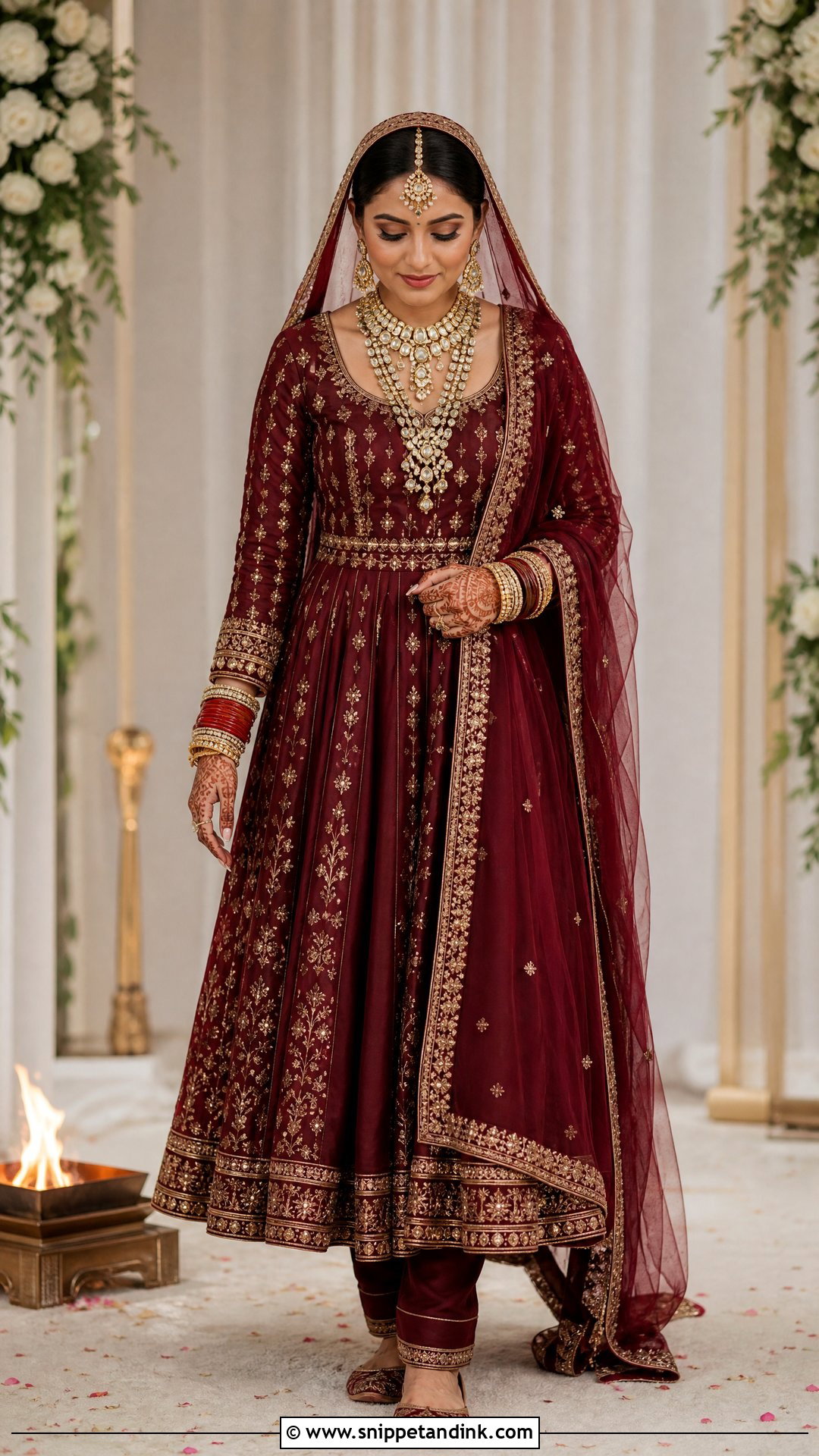
An Anarkali gives the lehenga outline with fewer pieces to manage, which suits brides who don’t want a separate skirt and blouse shifting apart when they sit. The flare should be generous enough to fold neatly when seated cross-legged; too narrow and it pulls across the knees. Red, maroon, rust or deep pink in silk, brocade or light velvet. Fitted pants, low juttis and a light dupatta pinned over the head. Layered kundan, statement earrings, bangles and a tikka. A neat bun keeps the neckline visible.
17. Gold Bridal Lehenga for Phera
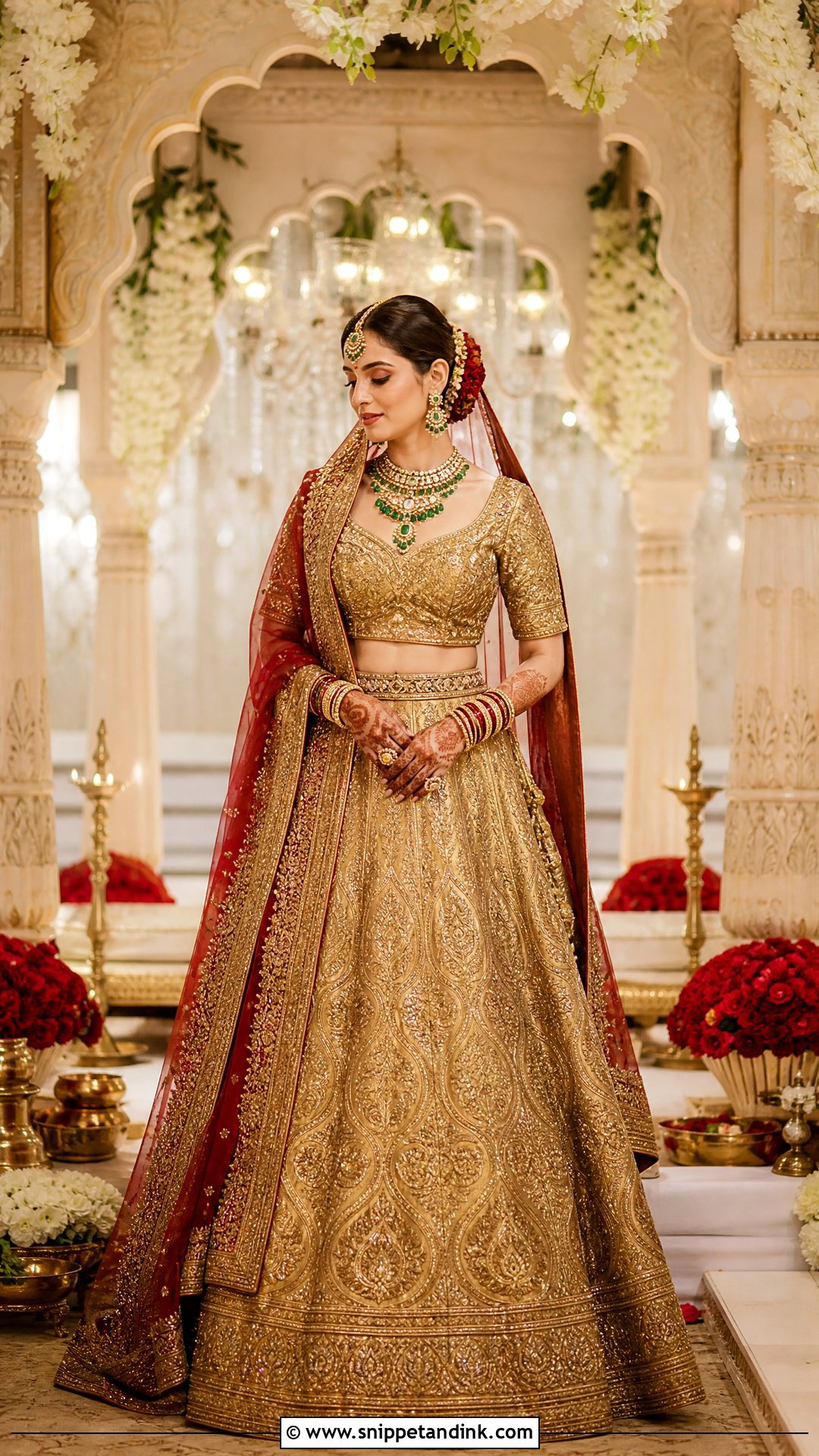
Gold lehengas reflect firelight, so the most reflective finishes can flare out in photos. I’d go for antique gold, champagne or muted bronze rather than a mirror-bright lamé. The bridal colour comes through a red, maroon or deep pink head dupatta. Emerald-accented kundan jewelry breaks up the single tone. Stacked bangles, a waist belt and gold juttis. Ask for a deeper lip so your face doesn’t disappear into all that gold. Evening pheras and palace venues suit it.
18. Lavender Bridal Lehenga for Phera
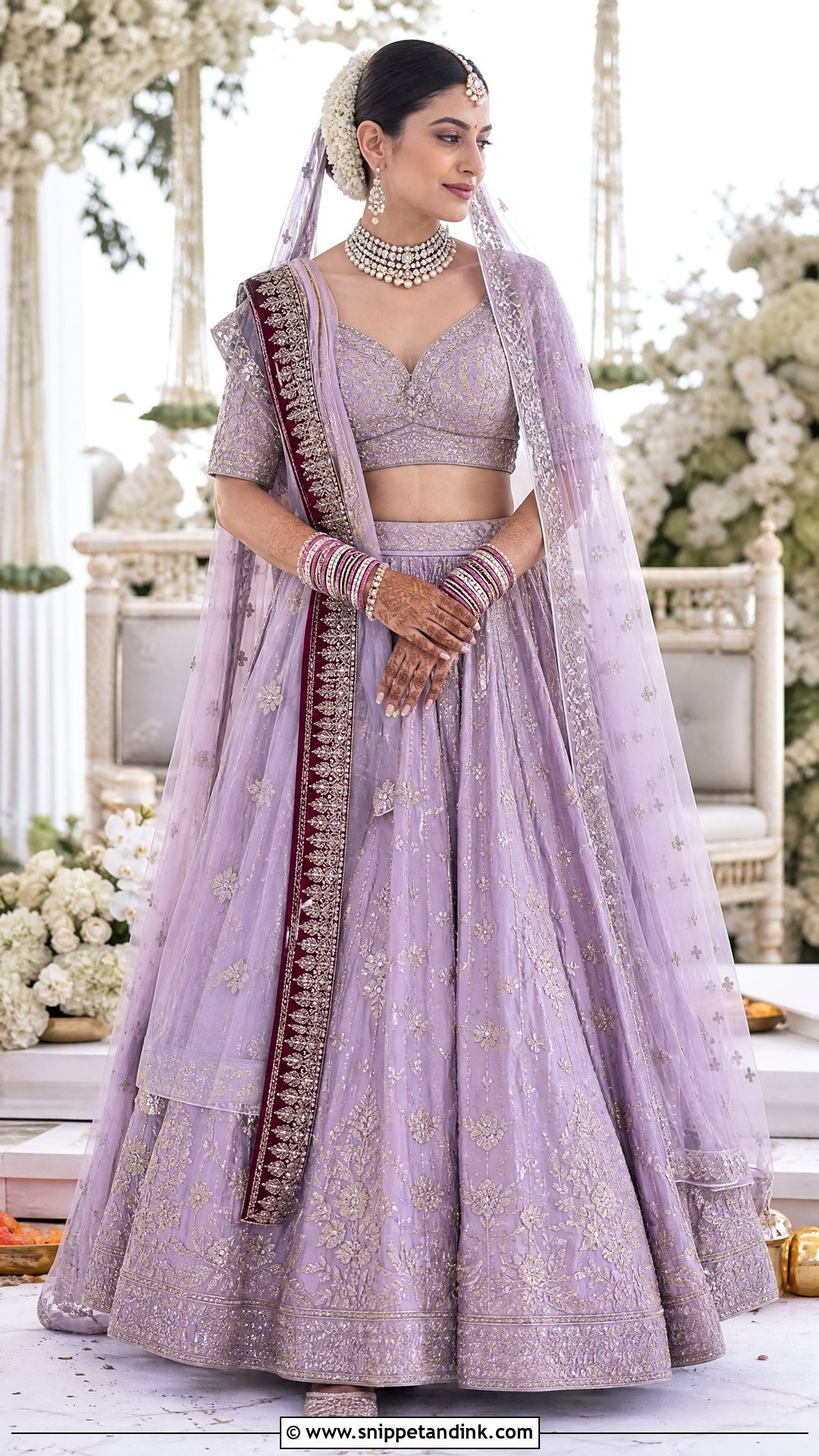
Lavender is the cool-toned choice, and it reads soft rather than bridal unless you give it a cue. A second dupatta with a pink or burgundy border solves that. Silk or organza with silver-gold embroidery, delicate florals or tonal beadwork. A structured matching blouse and a sheer lavender head dupatta. Diamond-style pieces, pearls or cool kundan. Silver juttis and a low bun with white flowers. Organza is light but slippery, so pin both dupattas firmly.
19. Floral Bridal Lehenga for Phera
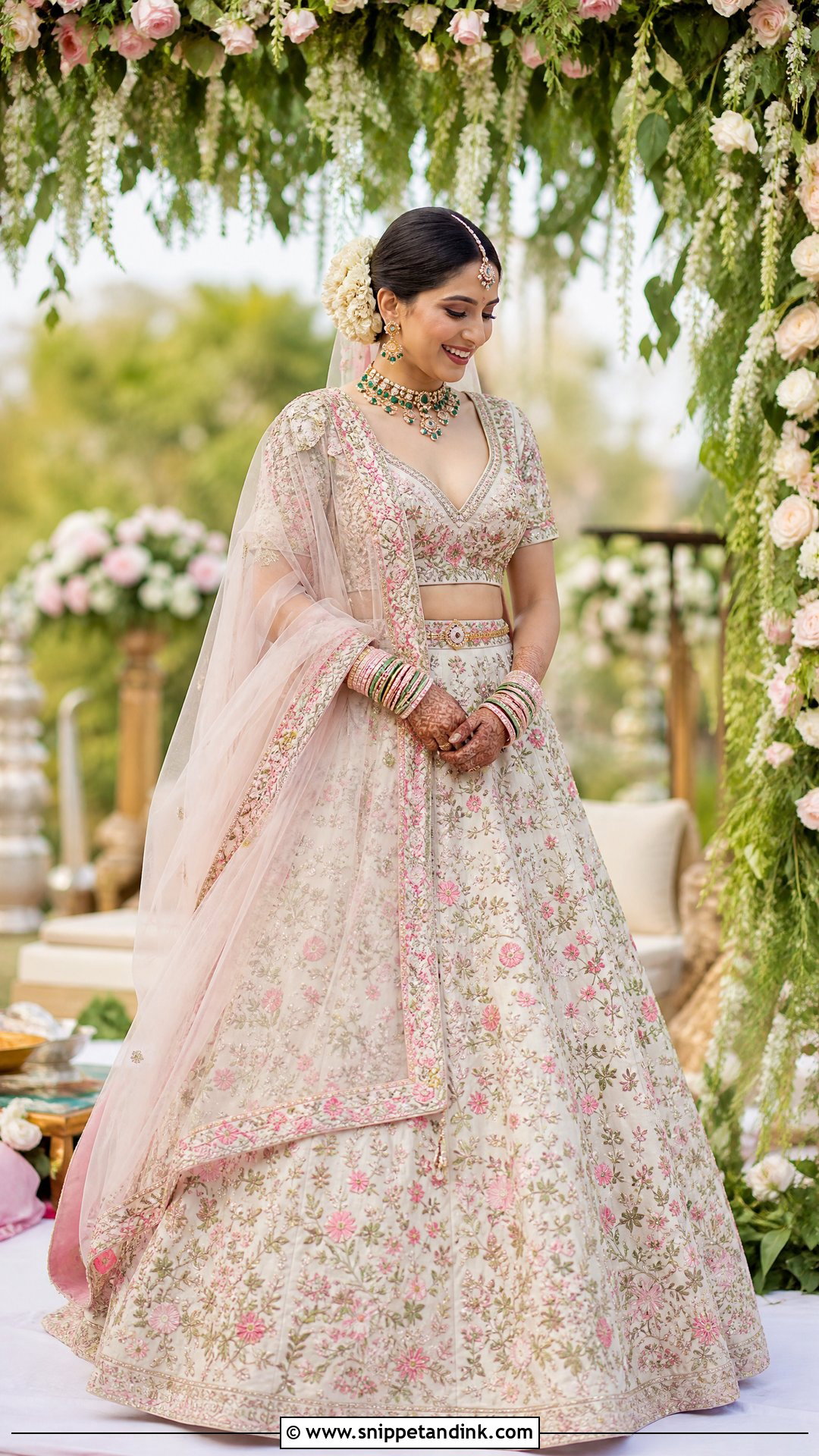
Floral embroidery spaced well on an ivory, blush, peach or pale pink base looks fresh in daylight. When motifs are crowded, the effect turns busy from a distance, so I look at the skirt from across the room before approving it. A coordinating blouse and a sheer dupatta with a defined red or pink border keep it bridal. Polki with coloured beads, floral-toned bangles, neutral juttis and a small waist belt. Fresh white or pink flowers in the bun. It suits outdoor and daylight mandaps.
20. Minimal Silk Lehenga for Phera
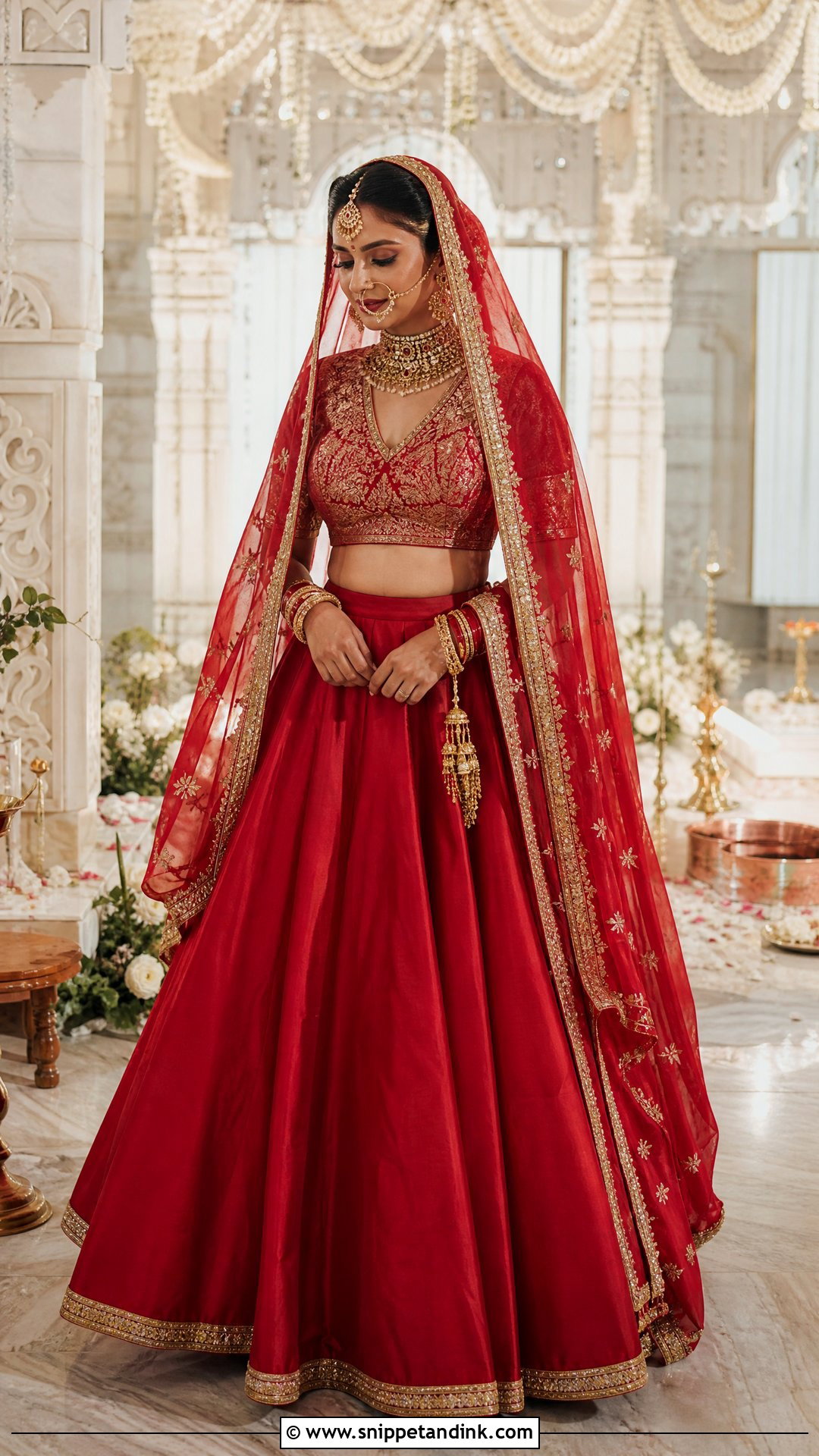
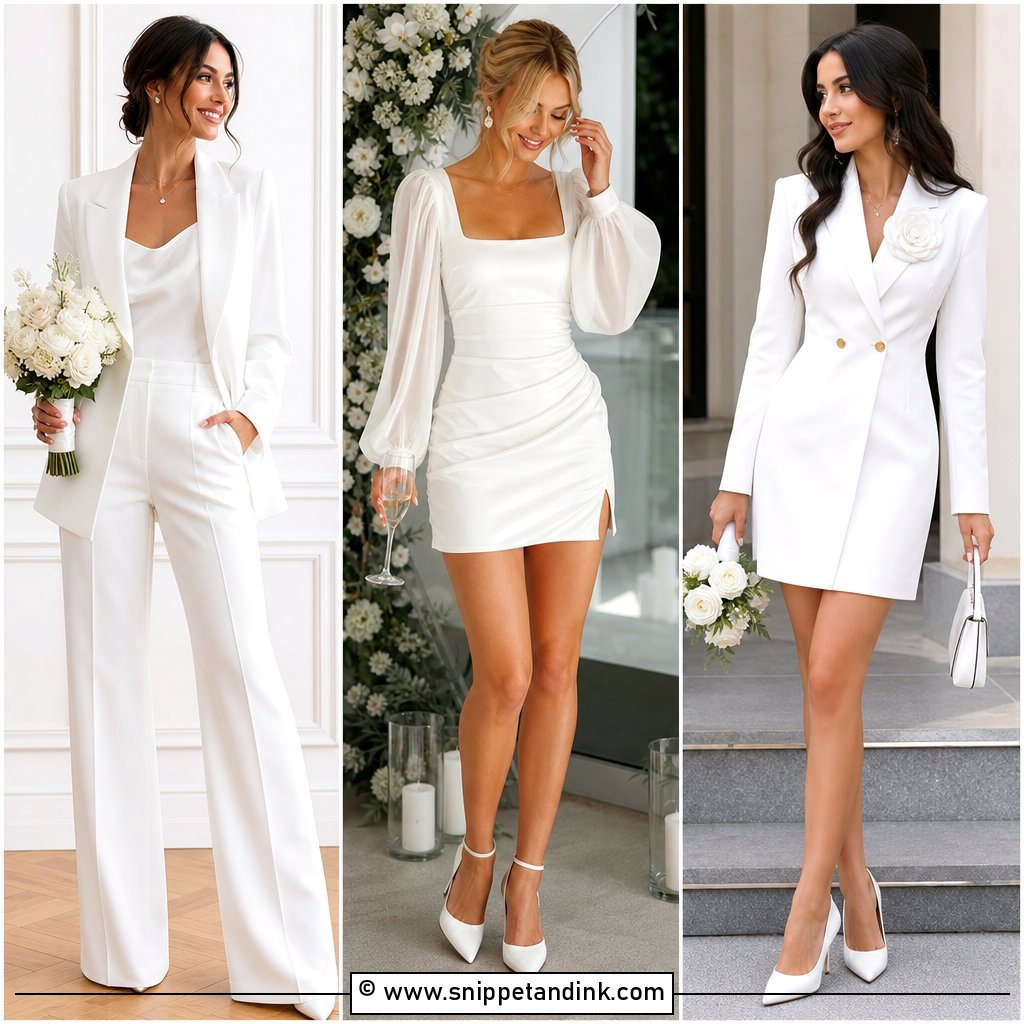
Sometimes the easiest outfit to wear is the one you remember most fondly. A minimal silk lehenga in red, rust, pink or maroon relies on fabric, cut and a good border rather than dense work, and it can be worn again. A brocade blouse and a lighter embroidered head dupatta. Heirloom gold, a maang tikka, bangles and a nath carry the bridal weight. I’d hem it just above the floor so you’re not stepping on it during the rounds, and pair it with cushioned juttis. A classic bun and clean makeup.
A Head Dupatta That Stays Put Through the Gathbandhan
The head dupatta is the piece most likely to slip, because the knot tugs on it every round. The method that works best for me starts with the hair: a low, firm bun gives the pins something solid to grip. Then:
- Use the lighter of your two dupattas on the head; heavy embroidered ones belong on the shoulder.
- Fix it at the crown with large U-pins pushed into the bun, and again behind each ear.
- Pin the side that falls over the shoulder to the blouse strap, hidden from the front.
- Tie the gathbandhan to the shoulder dupatta or the pallu, never the head one, so the pull doesn’t drag it back.
- Hand a trusted cousin or friend a small kit with spare pins, a safety pin chain and tissue.
Do one dress rehearsal with the actual dupattas and jewellery at least a week before. A maang tikka chain, earring hooks and dupatta net love to catch on each other, and it’s much easier to find a better pin position calmly at home than in the middle of the ceremony.
Rehearse the Rounds in Full Outfit Once
Weigh tradition, venue, weather and the length of your ceremony together before deciding. Red lehengas never go out of favour; regional sarees honour family heritage; pastels, jewel tones, shararas and plain silk are all valid choices. Whatever you choose, do a full rehearsal: sit on the floor, stand without using your hands, walk a circle with the dupatta, jewellery and shoes on. Secure every loose drape, keep the hem off the ground and keep delicate fabric away from the flame. Then you can stop thinking about the outfit and be present for the rounds.
You'll Like These Ideas:


Leave a Reply