
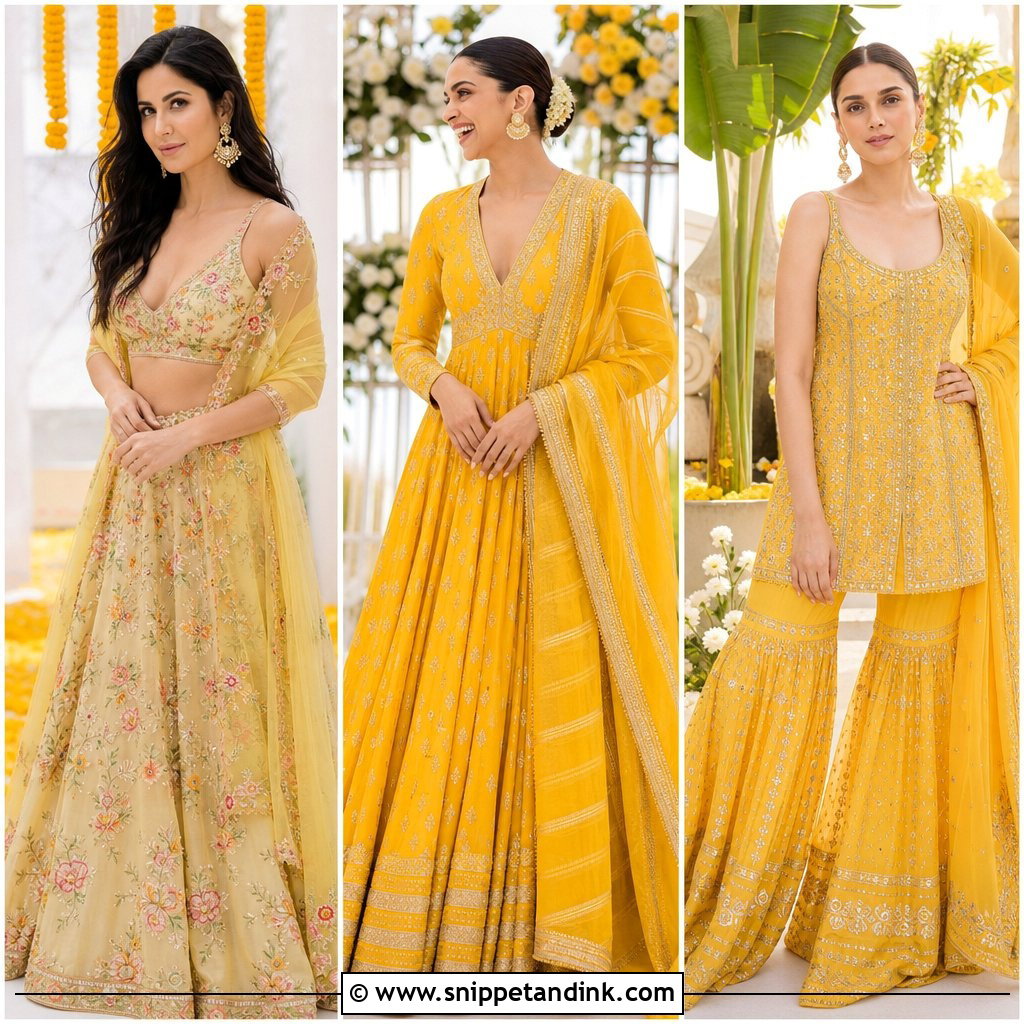
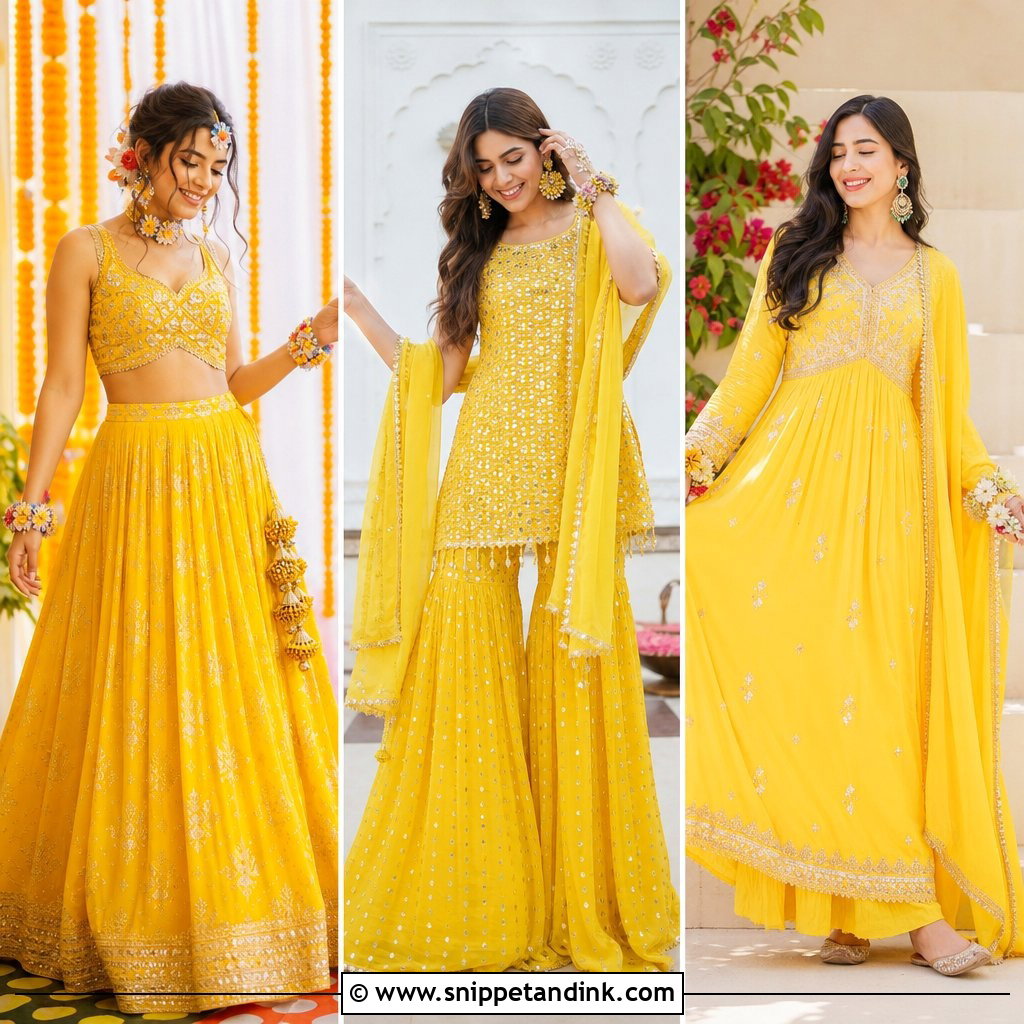
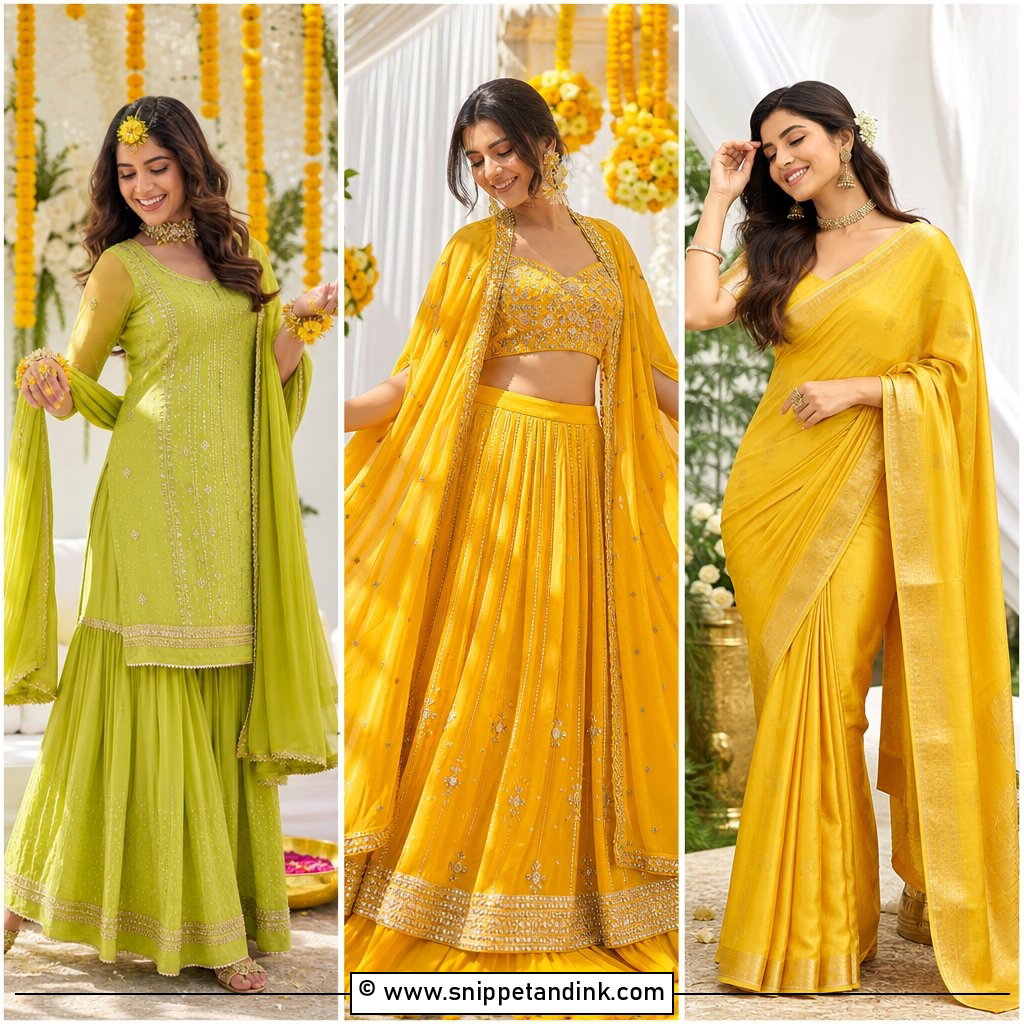
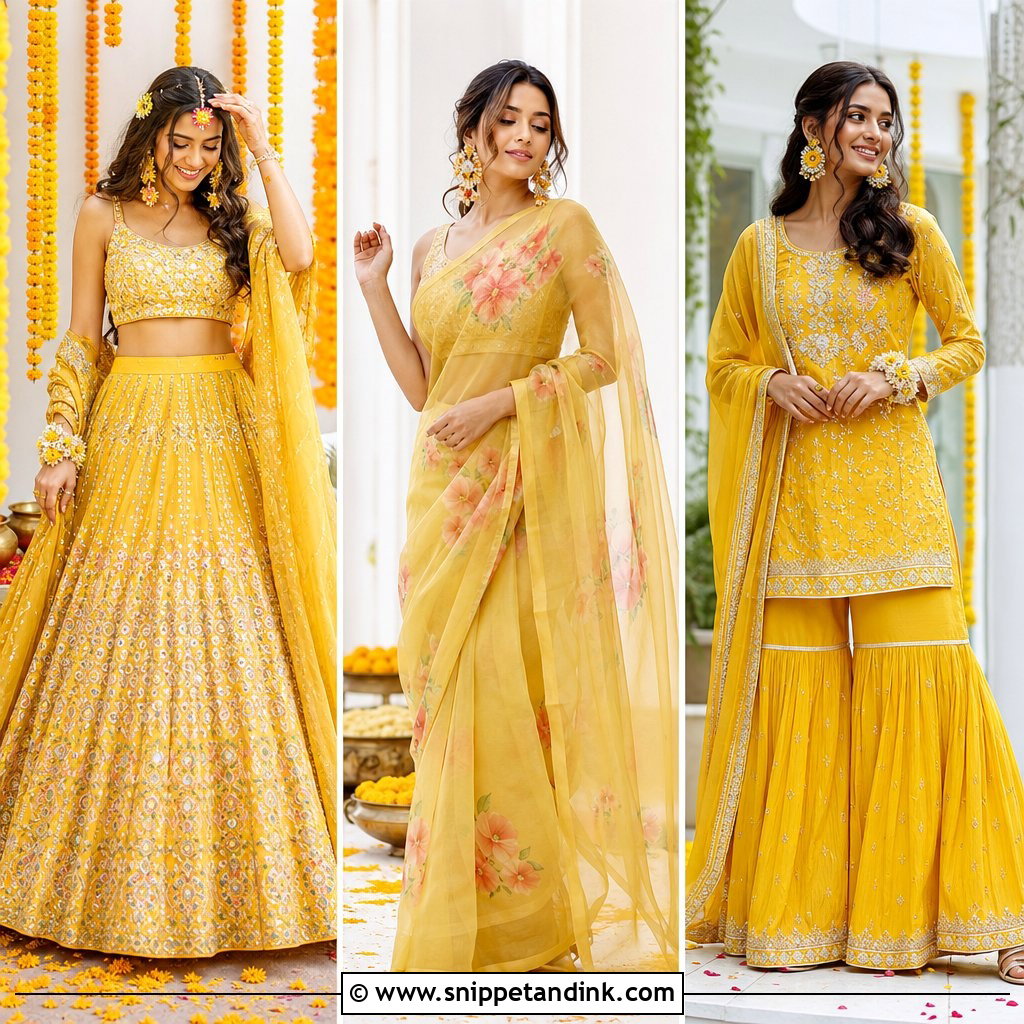
A South Indian Haldi is the one wedding function where the outfit is expected to get dirty. Turmeric paste, water, flowers, rituals on low seats and a stream of relatives with cameras all happen in a couple of hours, so I dress brides for this event very differently from the muhurtham. The looks below run from pattu and half sarees to light lehengas, anarkalis, shararas and co-ords, styled with jasmine gajras, glass bangles, temple earrings and sandals you can kick off. Yellow leads, but mustard, mango, marigold, lime, ivory, orange and green all sit naturally in South Indian wedding settings, and each idea comes with a note on how it copes with turmeric.
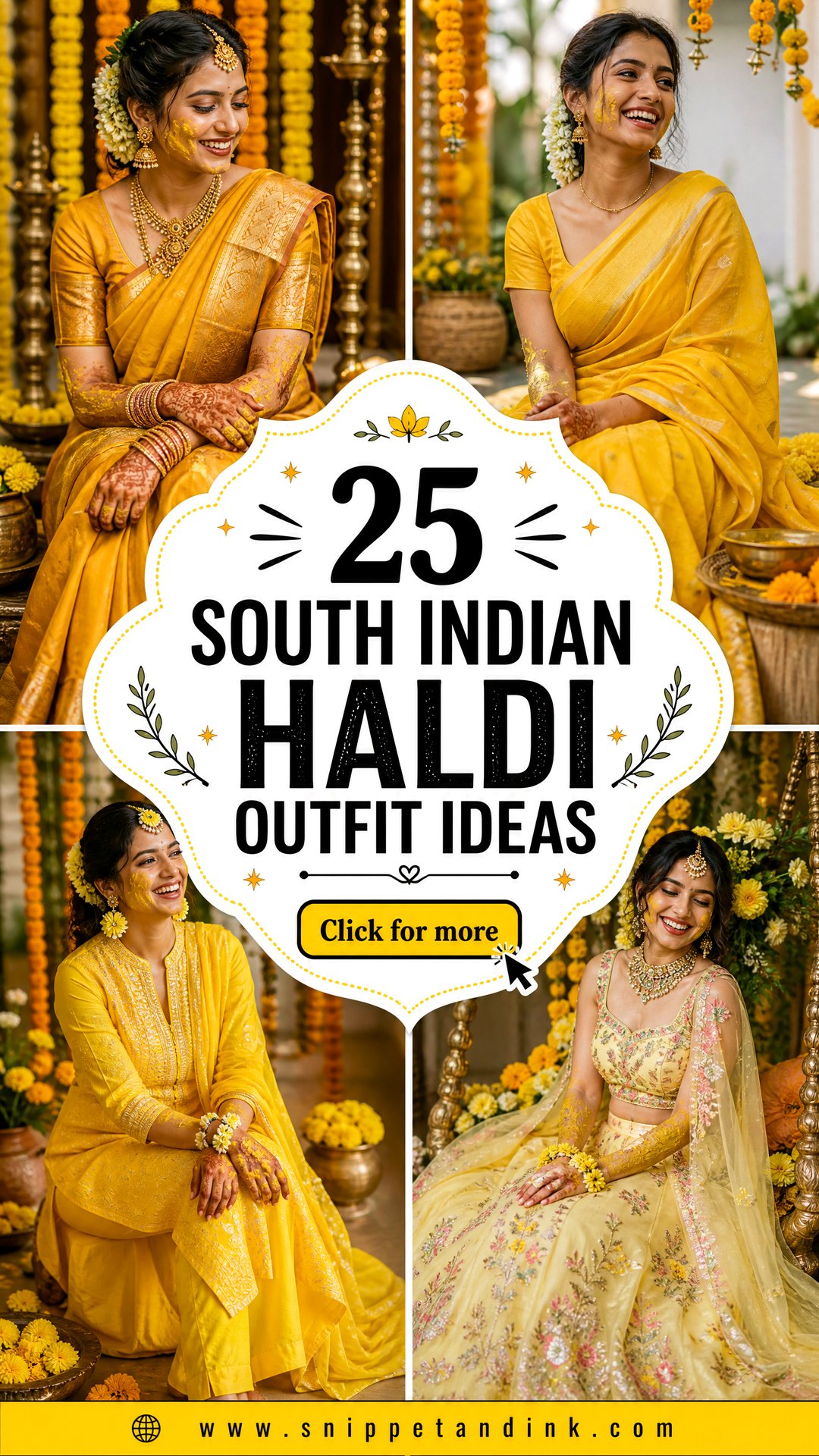
Fabric That Forgives a Turmeric Splash
Turmeric dye binds quickly to natural fibres, and the paste is often mixed with oil, which helps it spread. Before I talk colour with a bride, I ask how the family does the ritual. A few dabs on the cheeks and hands is very different from a full paste bath in the courtyard.
- Light application: silk, organza and Chanderi are fine, with a little care.
- Generous application or water play: cotton, linen and washable blends only. Keep heirloom silk for another function.
- Dark or busy borders hide marks better than pale plain fabric, so put the deeper colour on the skirt or hem.
- Choose a blouse and inskirt that won’t turn sheer when wet, and wear a darker slip if the saree is pale.
Plan a second, simple outfit to change into straight after the ritual if lunch or more photos follow. Most families don’t want the bride sitting in damp, yellow fabric for the rest of the afternoon.
1. Yellow Pattu Saree Haldi Outfit
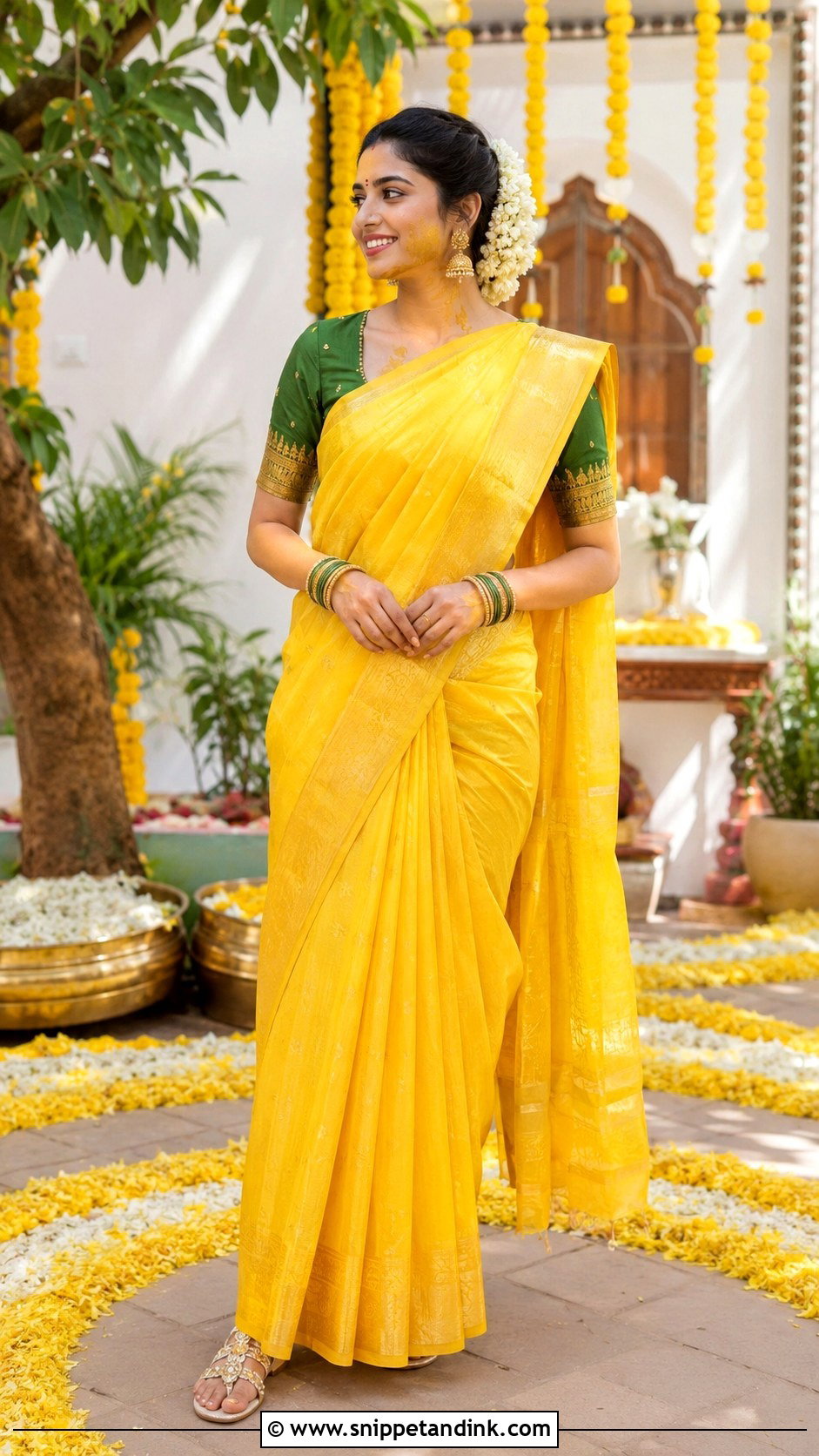
Yellow pattu is the classic. Silk gives the outfit a wedding richness and the yellow is right for the ritual. I always steer brides to a lightweight pattu rather than heavy bridal silk here, for two reasons: outdoor daytime Haldis get hot, and you won’t cry over a turmeric mark on a lighter, less precious saree. A contrast blouse in green, pink, orange or red makes it festive. Jasmine, gold jhumkas, glass bangles and flat embellished sandals finish a traditional look that doesn’t feel overdressed before the wedding.
2. Mustard Kanjeevaram Saree Haldi Outfit
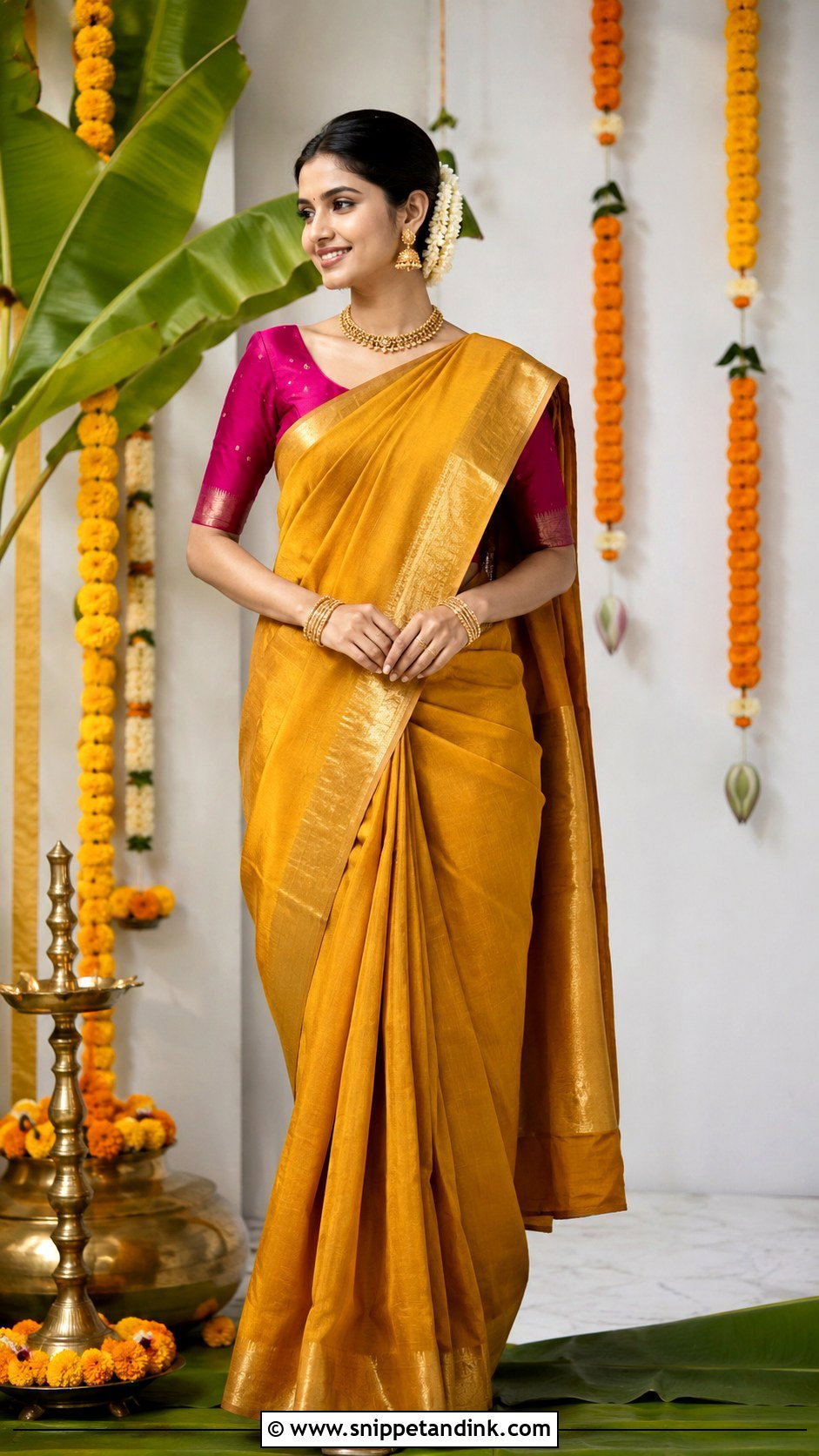
Mustard is the grown-up yellow. A mustard Kanjeevaram saree looks regal and warm against marigold decor, banana leaves and temple-style backdrops, and it hides turmeric splashes far better than pale lemon. Choose a simple zari border so the saree stays manageable during rituals. A magenta or bottle green blouse gives strong South Indian contrast. Temple earrings, a short necklace and flowers in the hair keep it balanced. Mothers, sisters and close family suit it as much as the bride.
3. Yellow Half Saree Haldi Outfit
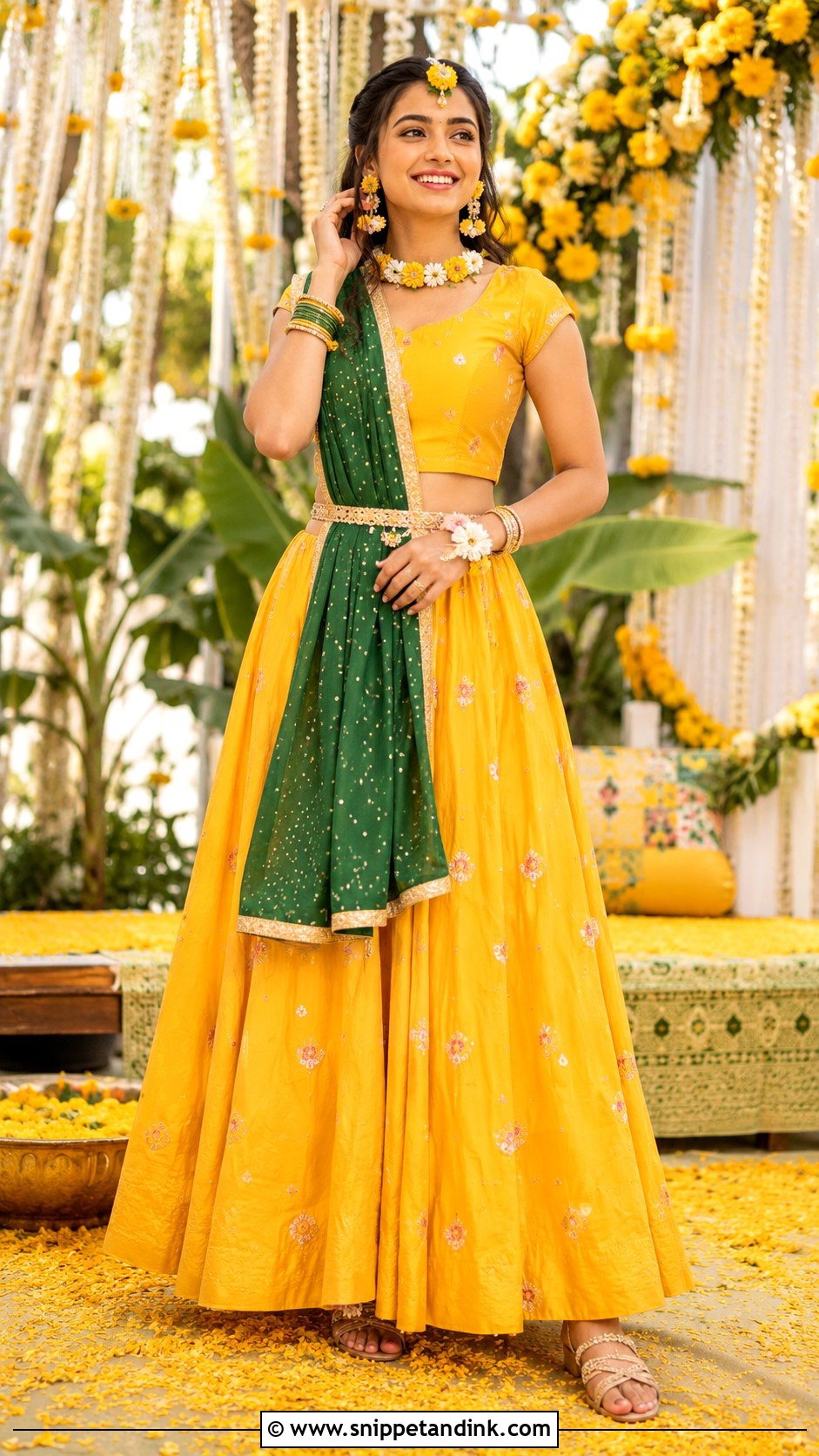
Half sarees move well, which is exactly what you want when cousins pull you up to dance between rituals. A yellow flared skirt with a green, pink or orange dupatta and a fitted blouse with small zari details looks festive without weight. On a Haldi day I tuck and pin the dupatta more firmly than usual, because wet hands grab at it. Floral jewellery, bangles, anklets and comfortable sandals finish it. Younger brides, sisters, cousins and bridesmaids all wear it well, and it photographs with lots of movement.
4. Mango Yellow Lehenga Haldi Outfit
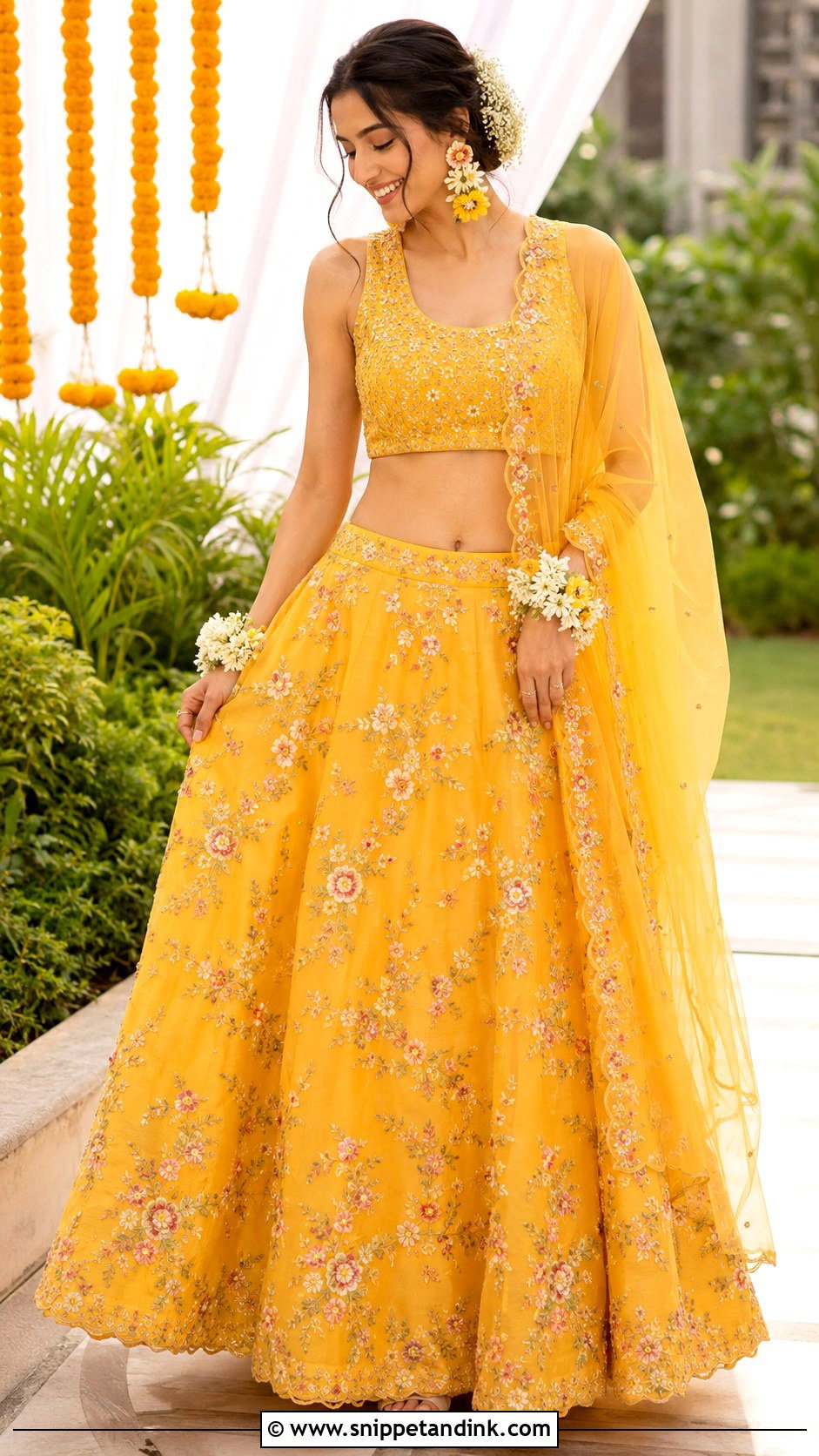
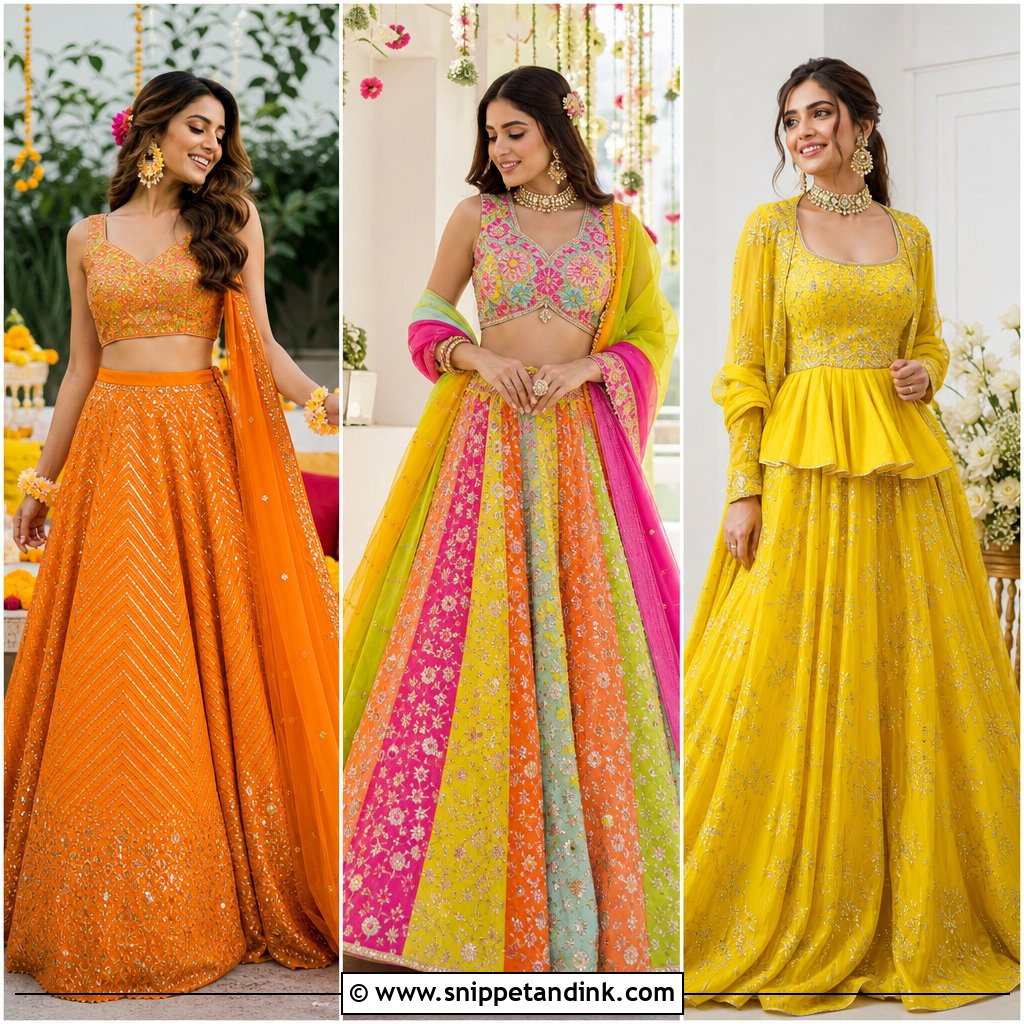
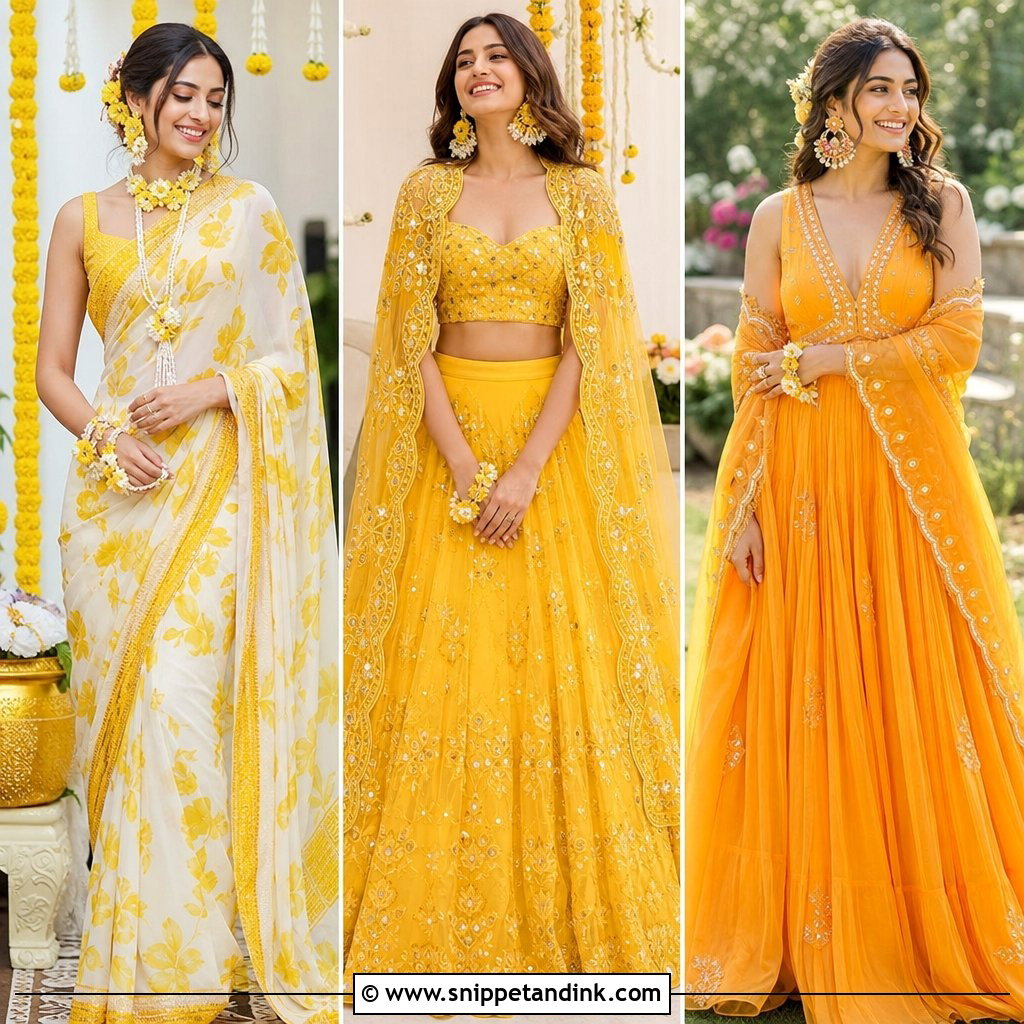
Mango yellow is bright without the harshness of neon, so it flatters skin in daylight photos. A lightweight silk, cotton silk, georgette or organza lehenga with minimal mirror work or floral embroidery is the right weight. Mirror work catches turmeric paste in the edges of each mirror, so keep it sparse if the family applies paste generously. A short blouse and an easy dupatta drape let you sit on low seats comfortably. Floral jewellery suits it, kept neat. Soft curls or a braid, a fresh gajra, stackable bangles and flats or low wedges complete it.
5. White And Yellow Saree Haldi Outfit
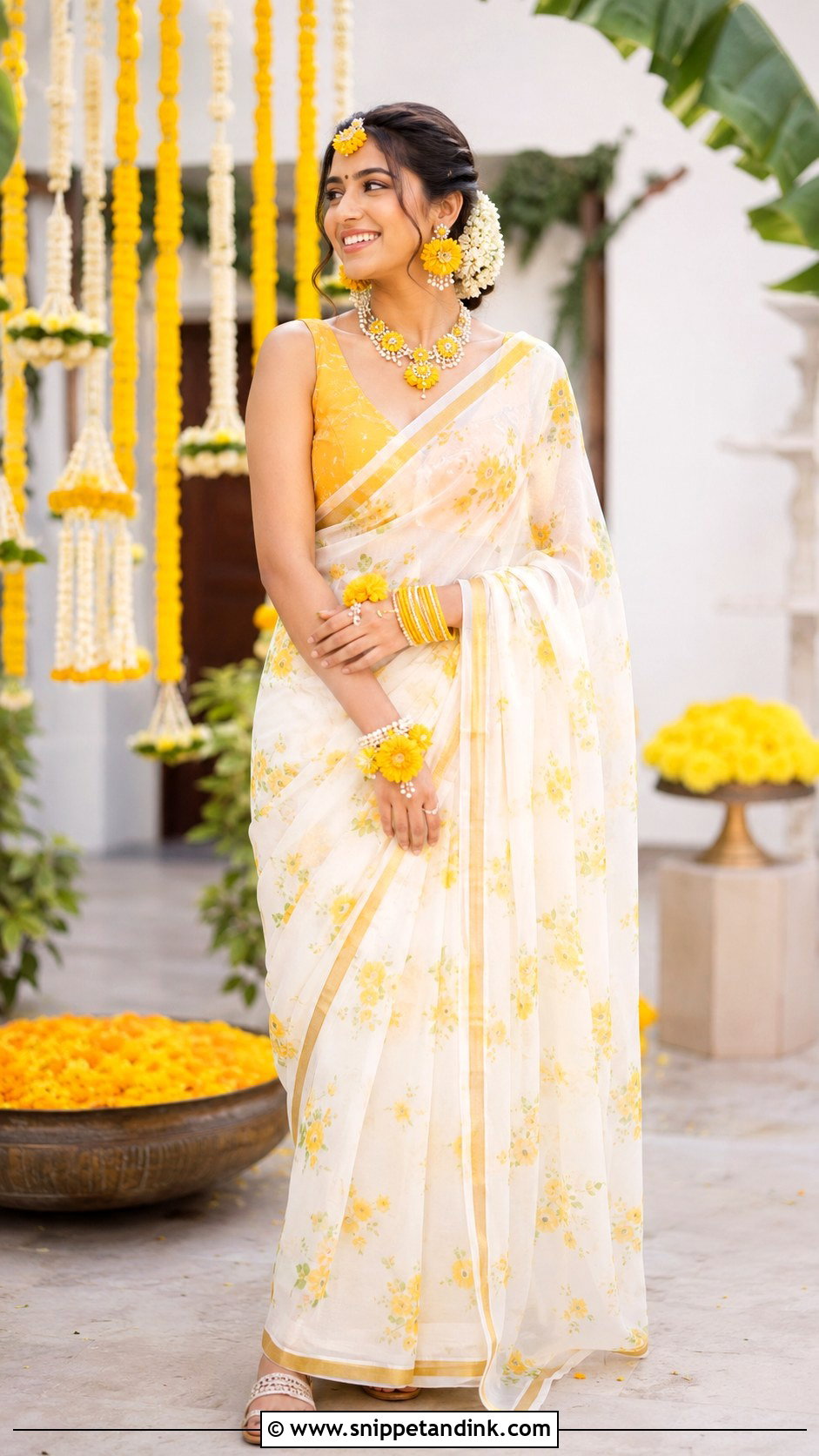
White with yellow is the fresh, softer version of Haldi dressing: a white saree with yellow florals, a yellow border or light embroidery, and a yellow blouse to tie it together. White is also the colour that shows turmeric most. I only suggest it in washable cotton, linen, organza or a light silk blend, never an heirloom, and only to a bride who’s happy for the stains to become part of the memory. Marigold jewellery, pearl accents or jasmine keep it natural for morning ceremonies and garden setups.
6. Lime Green Saree Haldi Outfit
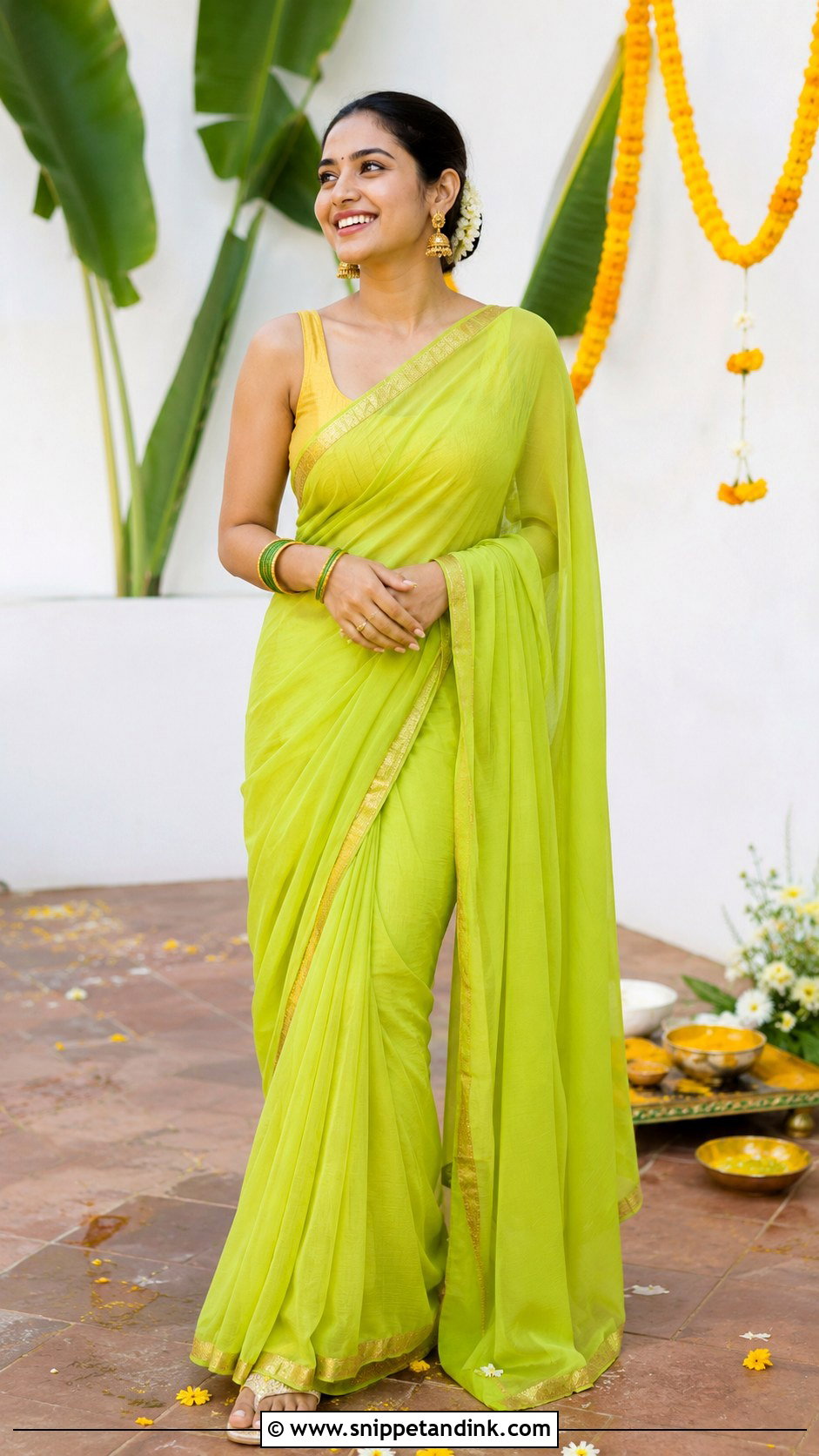
Lime green is my pick when the decor is already a wall of yellow and the bride would disappear into it. It still reads festive and natural. A lime saree with a yellow or gold border, worn with a yellow blouse, ties it back to the theme. Lime is a tricky shade on some skin tones, so hold it up to your face in daylight before buying; a slightly deeper parrot green may suit you better. Gold jhumkas, bangles, fresh jasmine and a small bindi keep it traditional.
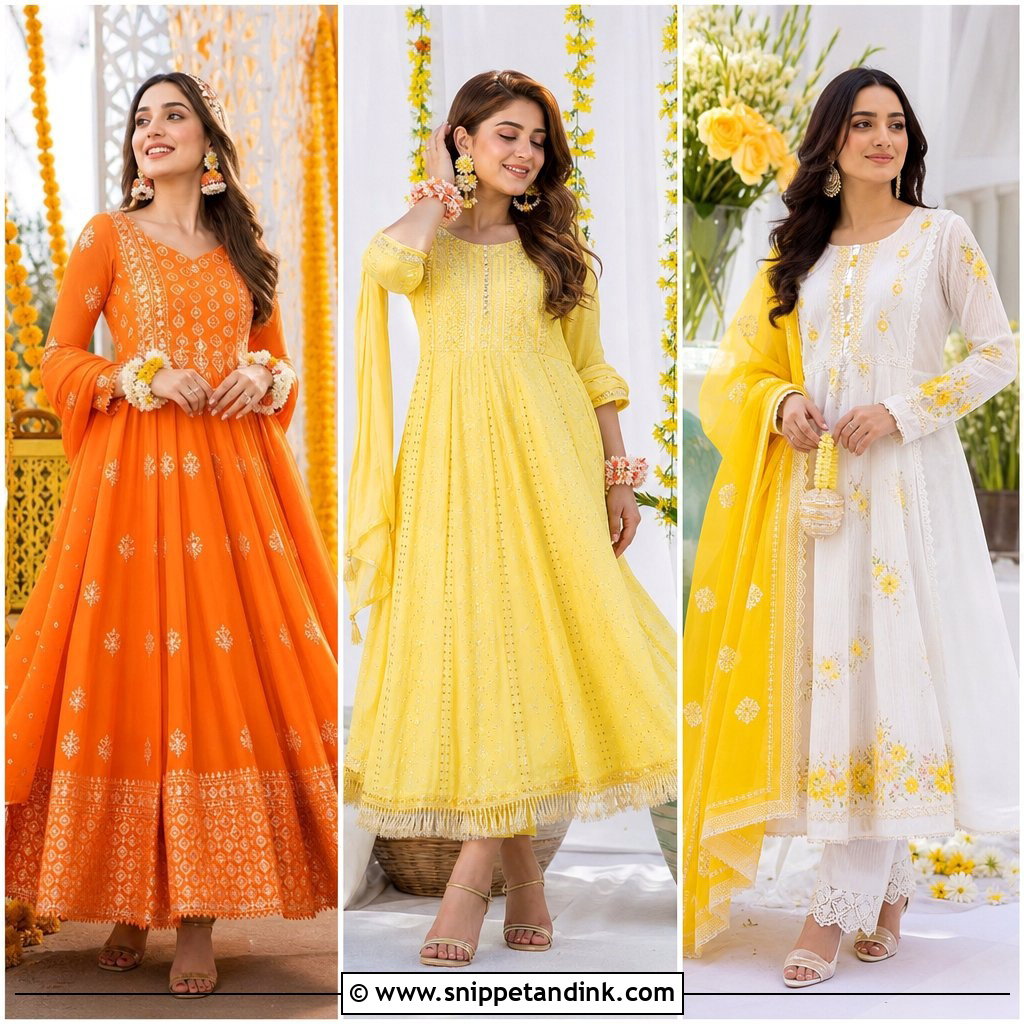
7. Yellow Anarkali Haldi Outfit
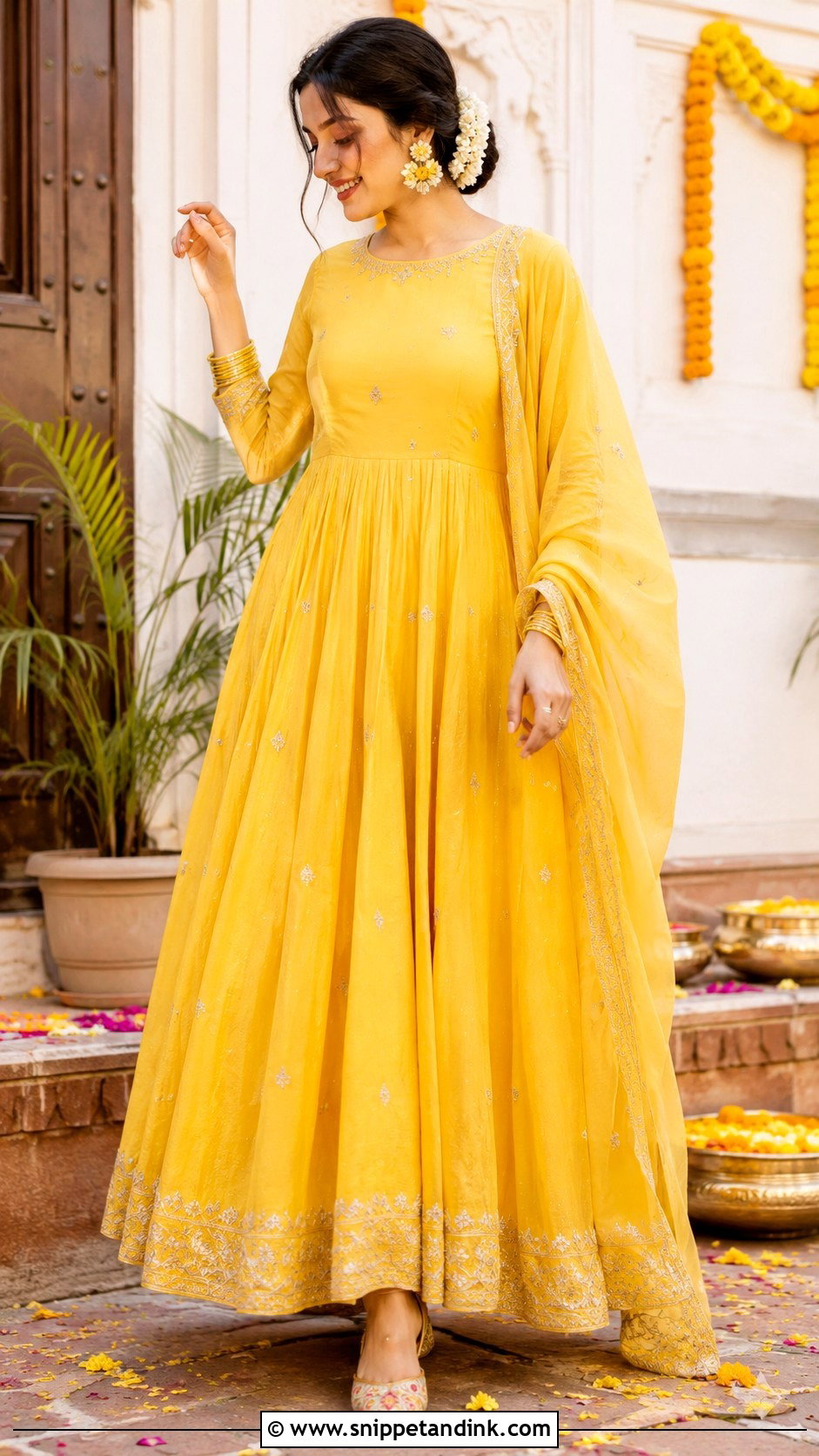
There’s no drape to fix mid-ritual in an anarkali, which is why I recommend it to anyone who doesn’t want to think about their outfit during the ceremony. Cotton silk, chanderi, georgette or light silk with minimal embroidery at the neckline and sleeves keeps it airy. A matching or contrast dupatta adds polish. The flare of an anarkali spreads around you when you sit on the floor, so expect the hem to collect some turmeric. Floral earrings, bangles, a low bun with jasmine and juttis or sandals finish a graceful look for bridesmaids, sisters, guests or brides.
8. Orange Saree Haldi Outfit
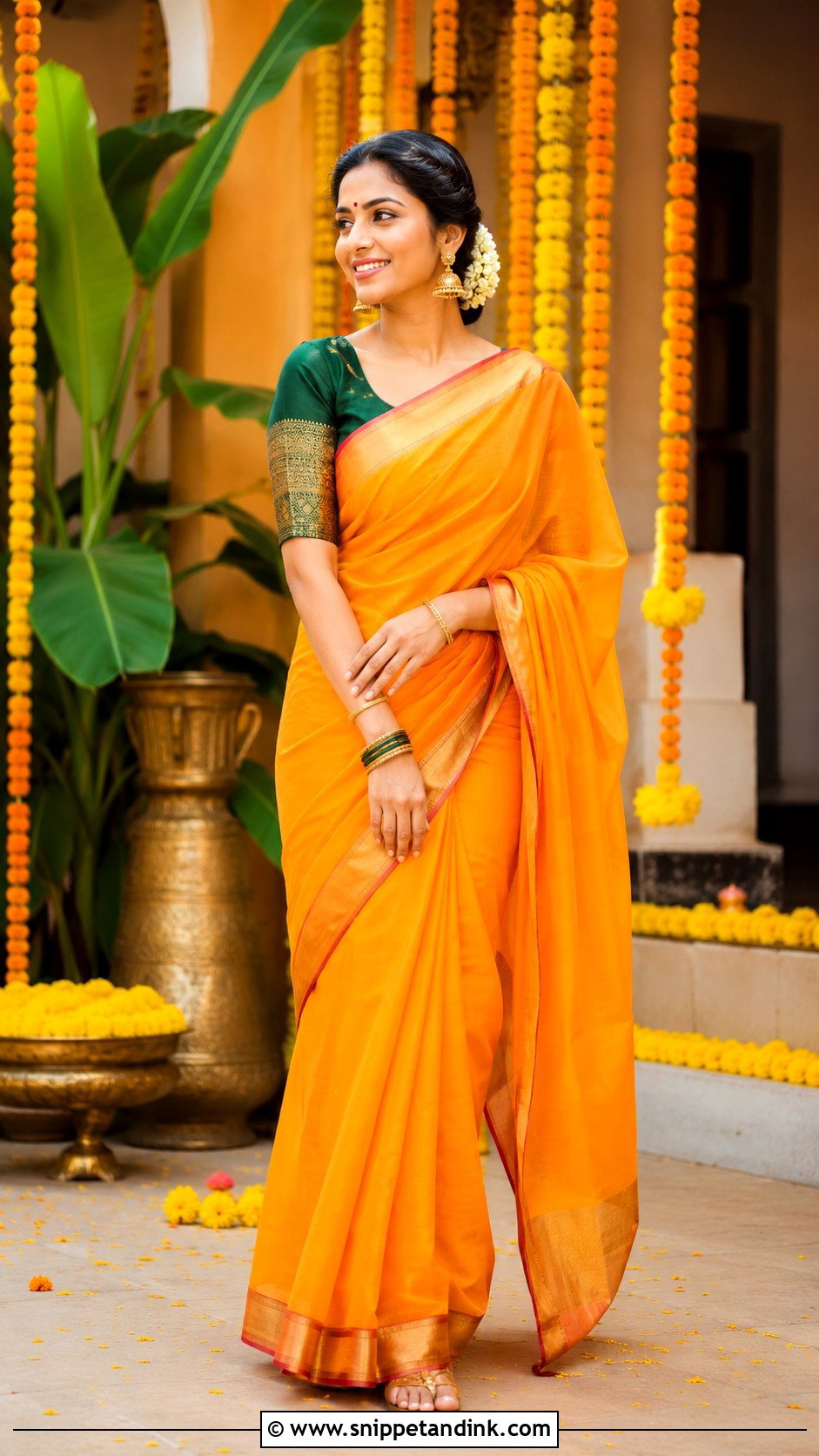
Orange sits right beside turmeric and marigold, so it looks festive and warm, and it glows in outdoor light. An orange saree with gold zari, a yellow border or a green blouse gives a rich traditional palette. Choose lighter fabric if there’ll be active rituals, dancing and group photos. Temple jewellery, fresh flowers and simple bangles are enough; heavy bridal pieces feel out of place at a Haldi. Close family who want to fit the mood without matching the bride’s yellow often choose orange.
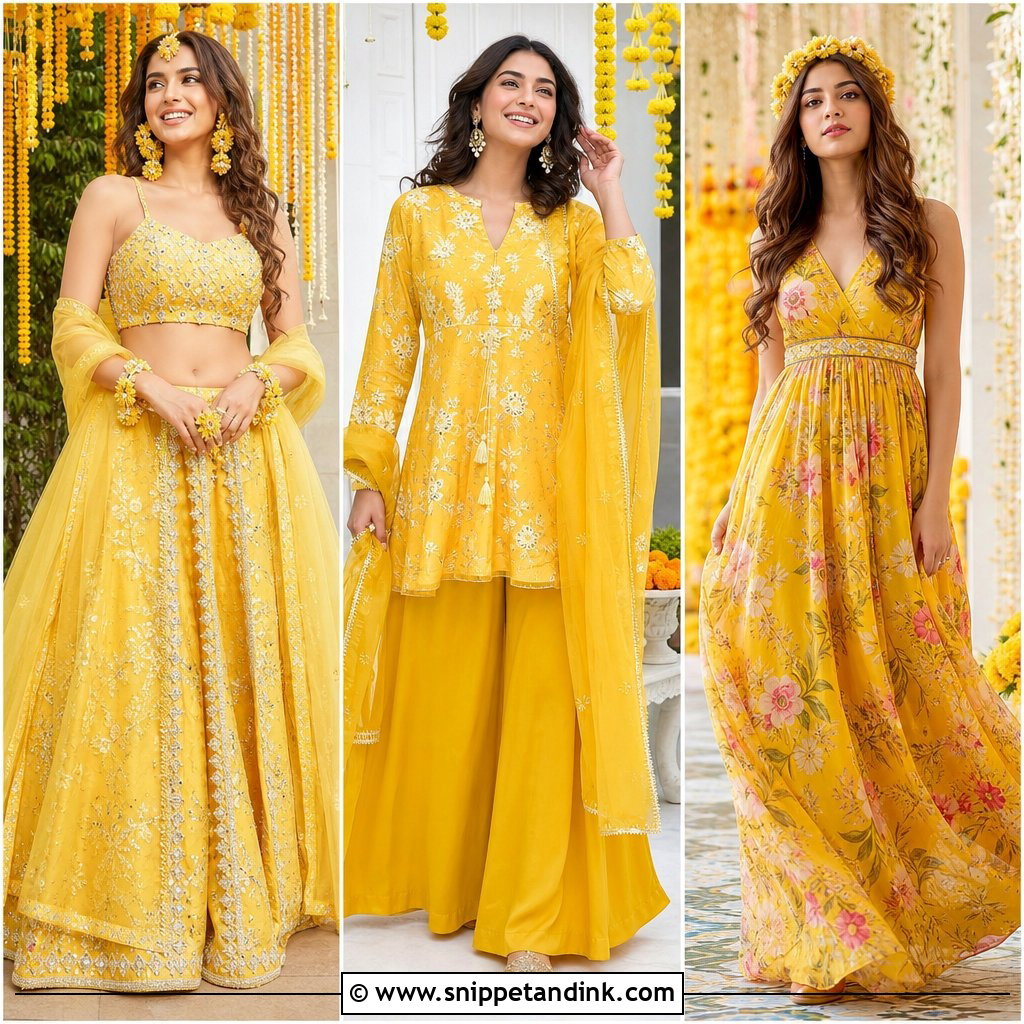
9. Yellow Kurta And Sharara Haldi Outfit
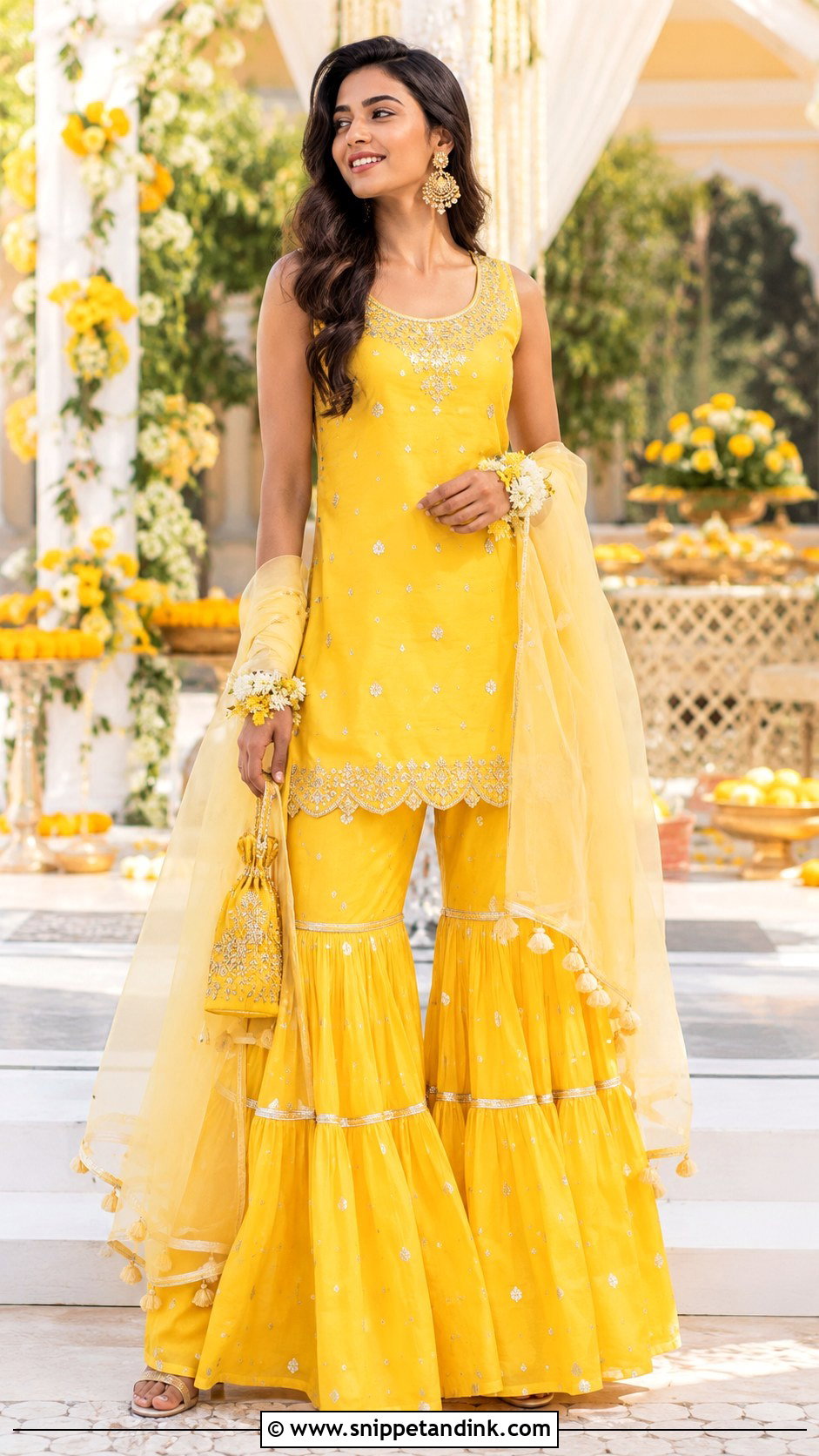
A yellow kurta and sharara set is the practical pick for the sisters and cousins who will be running the ceremony, carrying bowls and pouring water. It moves more easily than a lehenga and still looks festive. A short or knee-length kurta with a flared sharara in soft cotton, georgette or a silk blend works well. Keep the sharara hem just off the floor; a dragging hem soaks up water and paste. A light dupatta with tassels or lace, floral bangles, statement earrings, a small potli bag and flats complete it.
10. Yellow Chanderi Saree Haldi Outfit
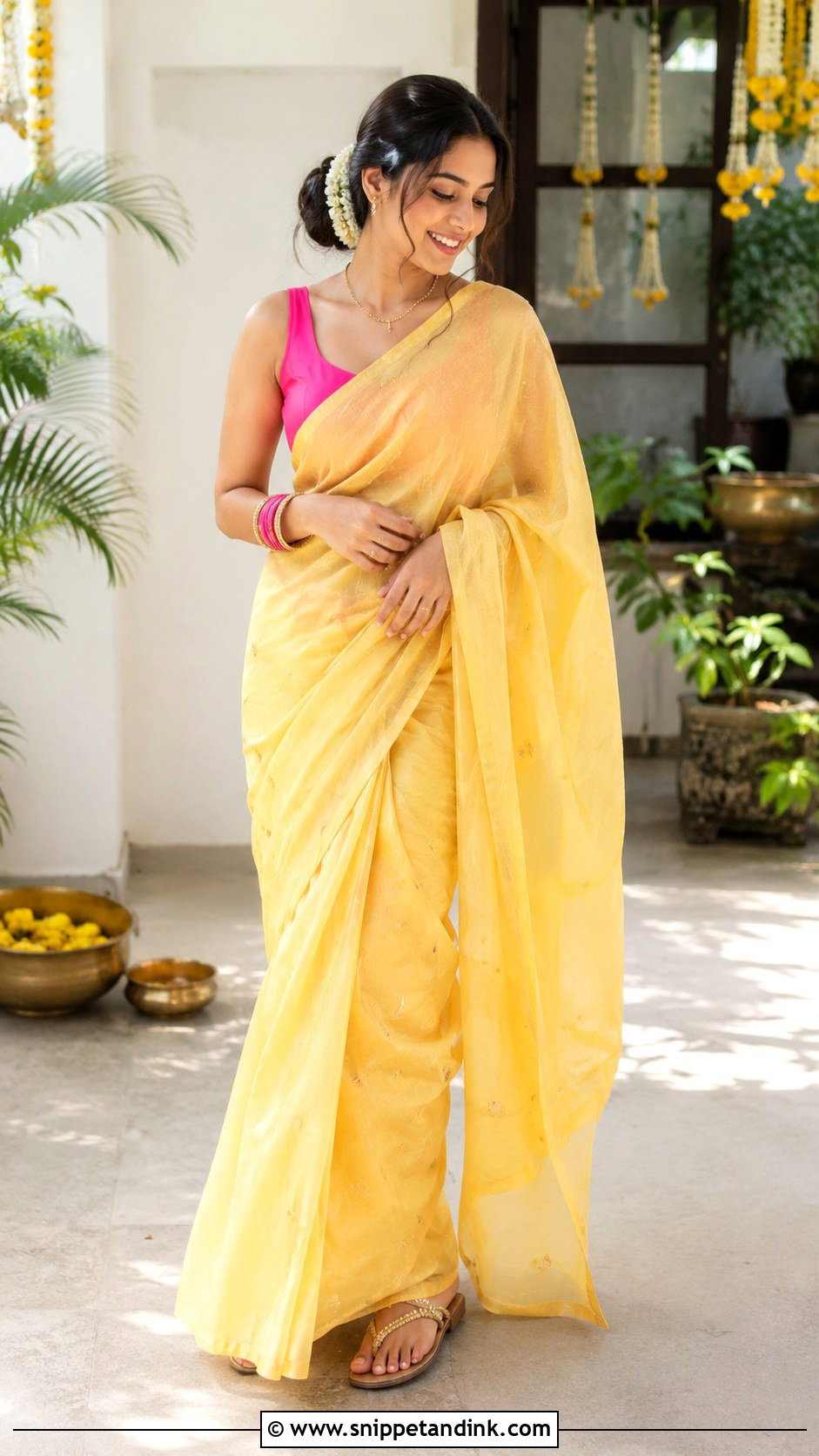
Chanderi has a soft sheen and very little weight, so it feels special while staying cool through a long morning. Choose a plain yellow Chanderi saree with a gold border, or one with delicate buti work. Chanderi is semi-sheer, so I’d pick a blouse and petticoat that match the saree closely, otherwise the inskirt shows through in sunlight. A contrast blouse in pink, green or orange livens it up. Fresh jasmine, minimal gold jewellery and glass bangles keep it light and breathable.
11. Floral Lehenga Haldi Outfit
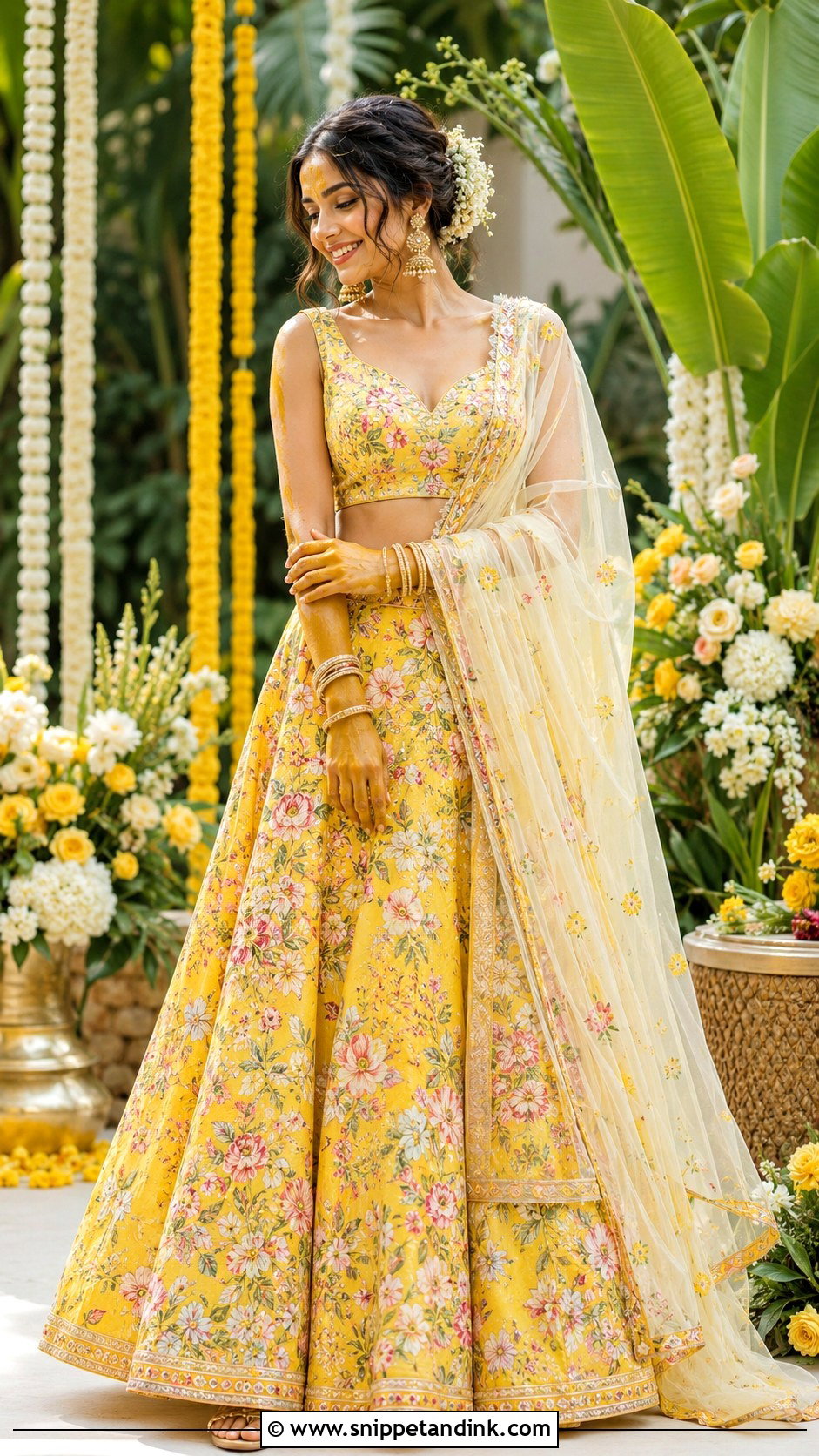
Florals suit a ceremony that is already full of flowers and sunlight. A yellow, ivory, peach or green base with floral prints or embroidery feels modern without straying far from tradition. Temple earrings, jasmine and a dupatta draped neatly over one shoulder give it a South Indian touch. Organza, georgette and cotton silk keep it airy. Busy prints also hide turmeric marks well, which is a quiet advantage. Fresh makeup, soft bangles and sandals that slip off easily for rituals complete it.
12. Yellow Cotton Saree Haldi Outfit
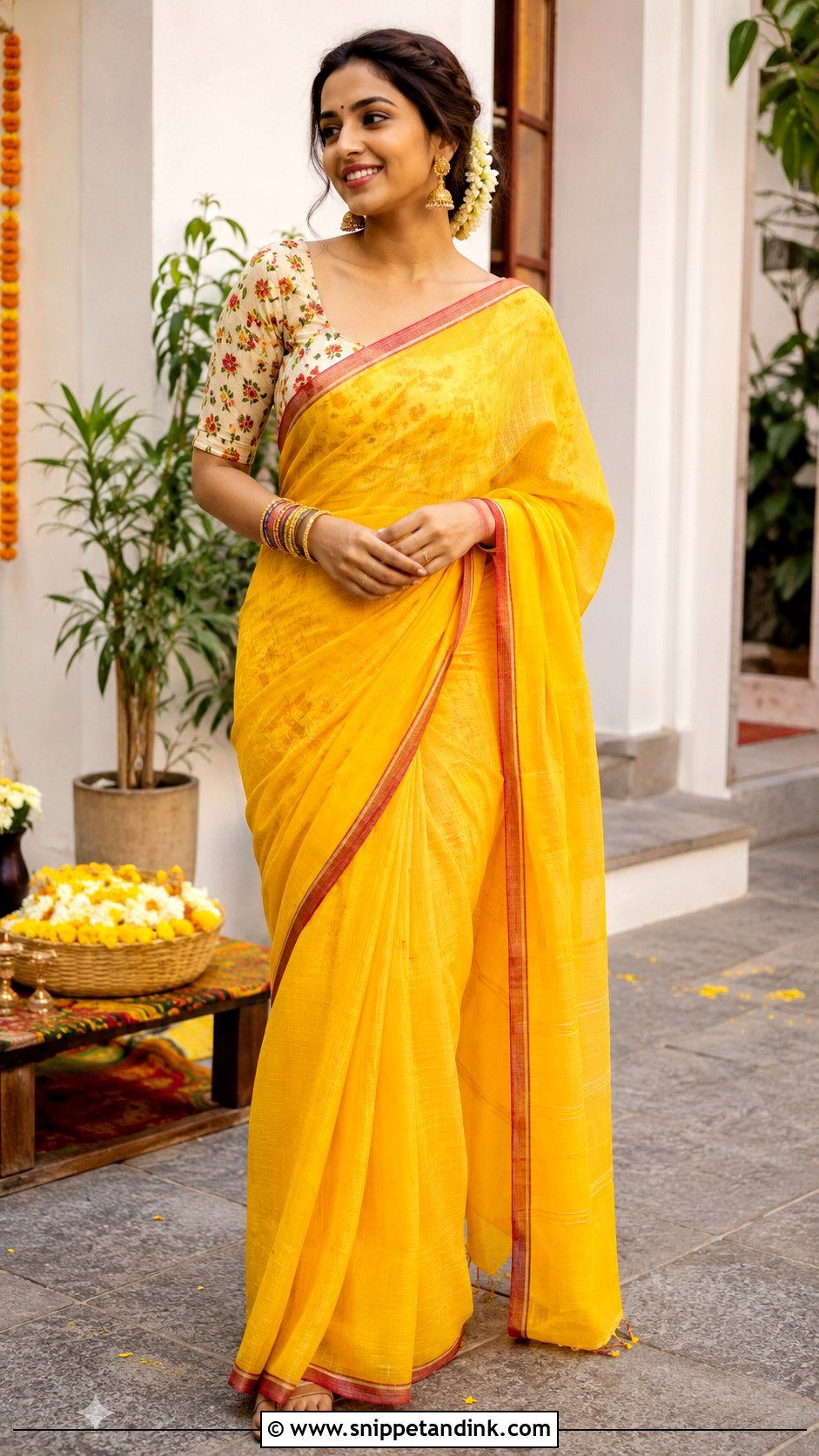
Cotton is the honest choice for a Haldi with lots of paste, water and outdoor seating. It’s breathable, it dries quickly and it can be washed properly afterwards, which you can’t say for expensive silk. Bright yellow handloom cotton with a contrast border looks clean and South Indian. Lightly starch it and the pleats hold even when damp. A printed or solid blouse in green, pink or red, fresh flowers, gold studs or jhumkas and colourful bangles finish it, for intimate home ceremonies and traditional morning rituals.
13. Yellow Organza Saree Haldi Outfit
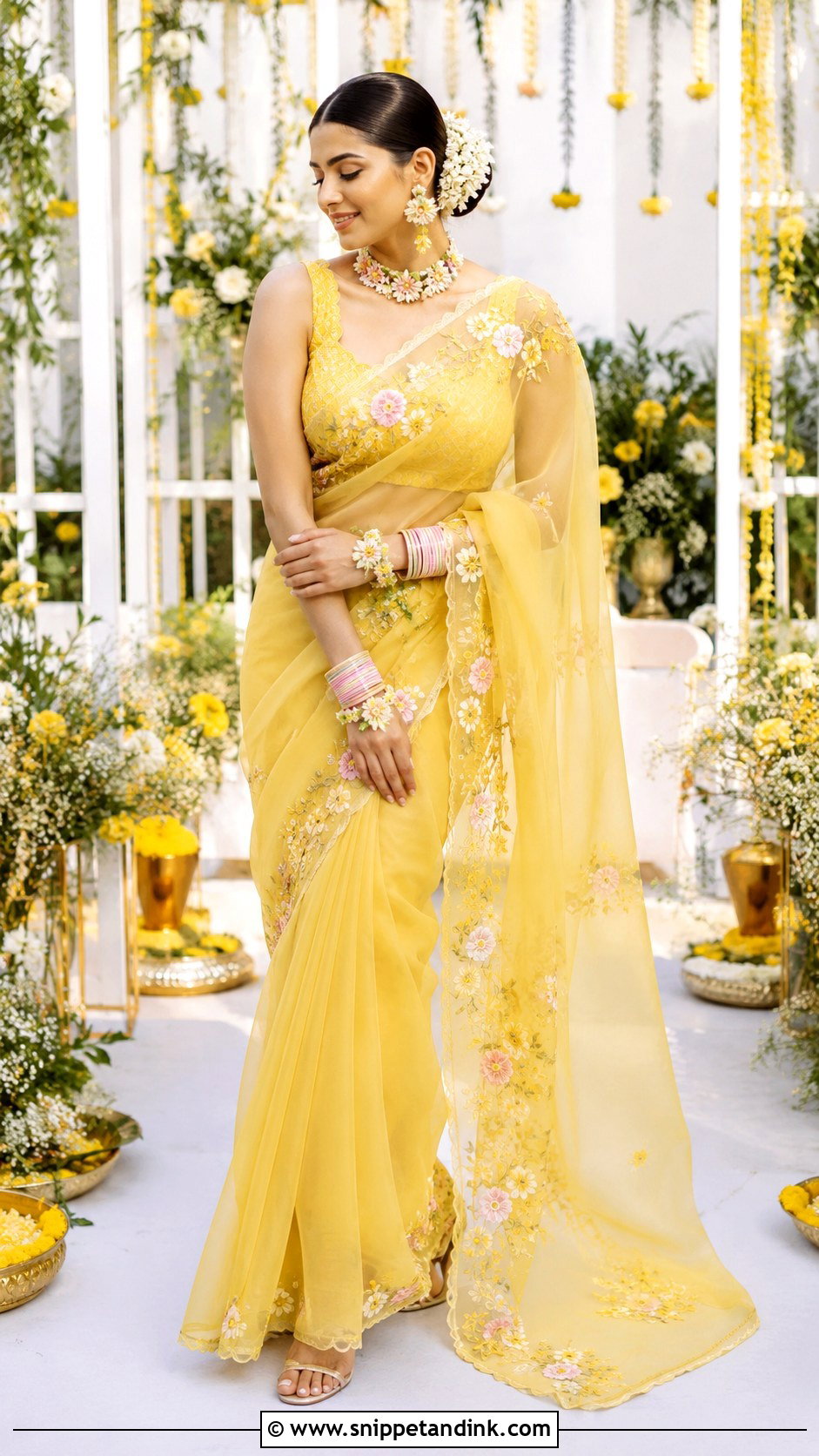
Organza gives a soft, dreamy finish while the saree shape keeps it traditional. Delicate floral embroidery, scalloped borders or small thread details suit it better than heavy stonework. Organza also repels liquid briefly, so paste can often be lifted off before it soaks in, if someone acts quickly with a dry tissue. A sleeveless, elbow-length or puff-sleeve blouse changes the mood. Floral jewellery and organza are a natural pair. Add a sleek bun, a jasmine gajra, pastel bangles and low heels or sandals.
14. Green And Yellow Half Saree Haldi Outfit
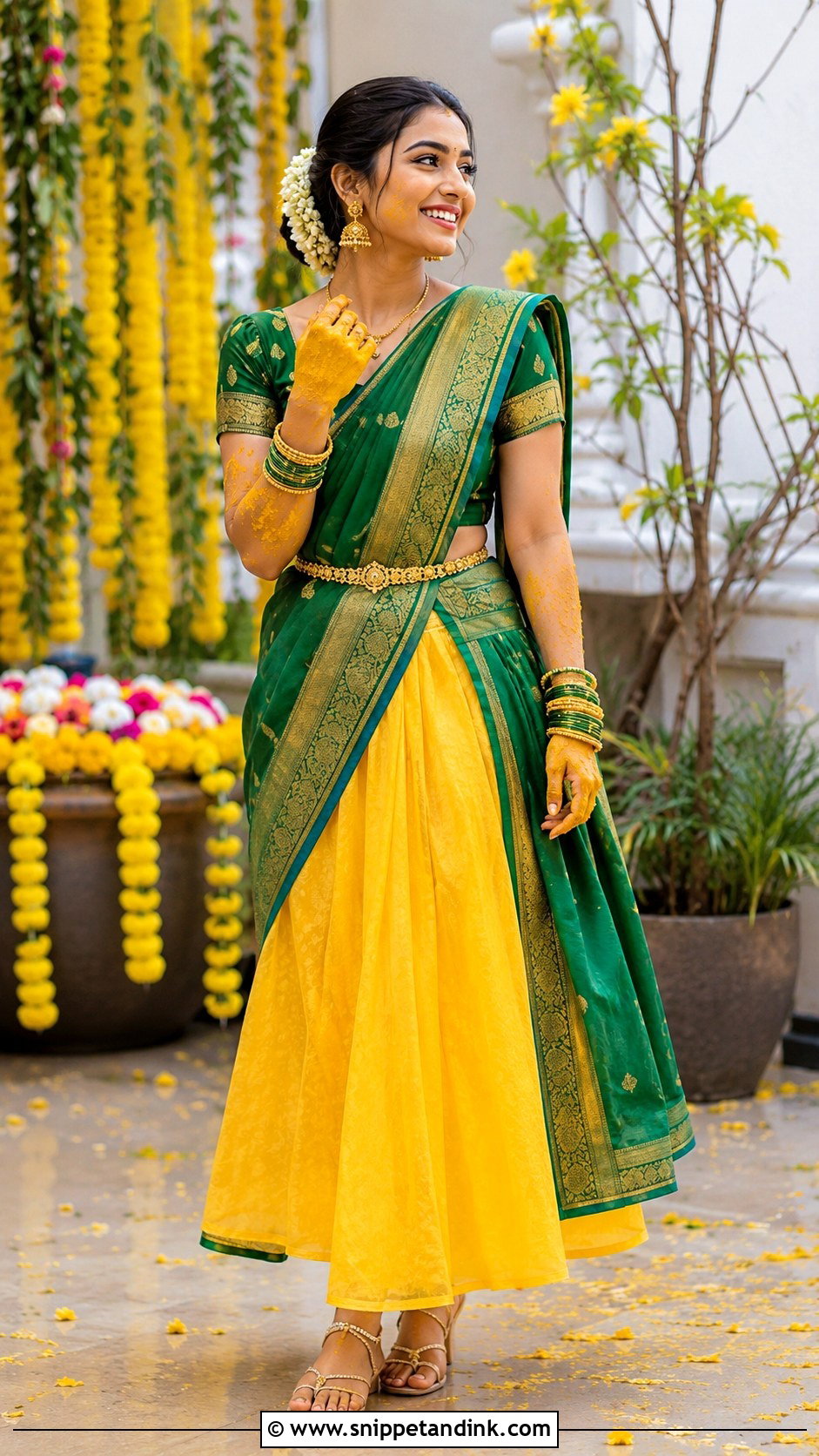
Green and yellow is the South Indian pairing that feels auspicious and lively. Try a yellow skirt with a green dupatta and blouse, or reverse it with a green skirt and yellow drape. The darker colour hides stains better, so I put the green on the skirt when the paste is expected to fly. Zari borders, temple motifs and small embroidered details make it wedding-ready. Gold jewellery, jasmine and glass bangles in both shades complete a youthful look for bridesmaids, sisters or brides.
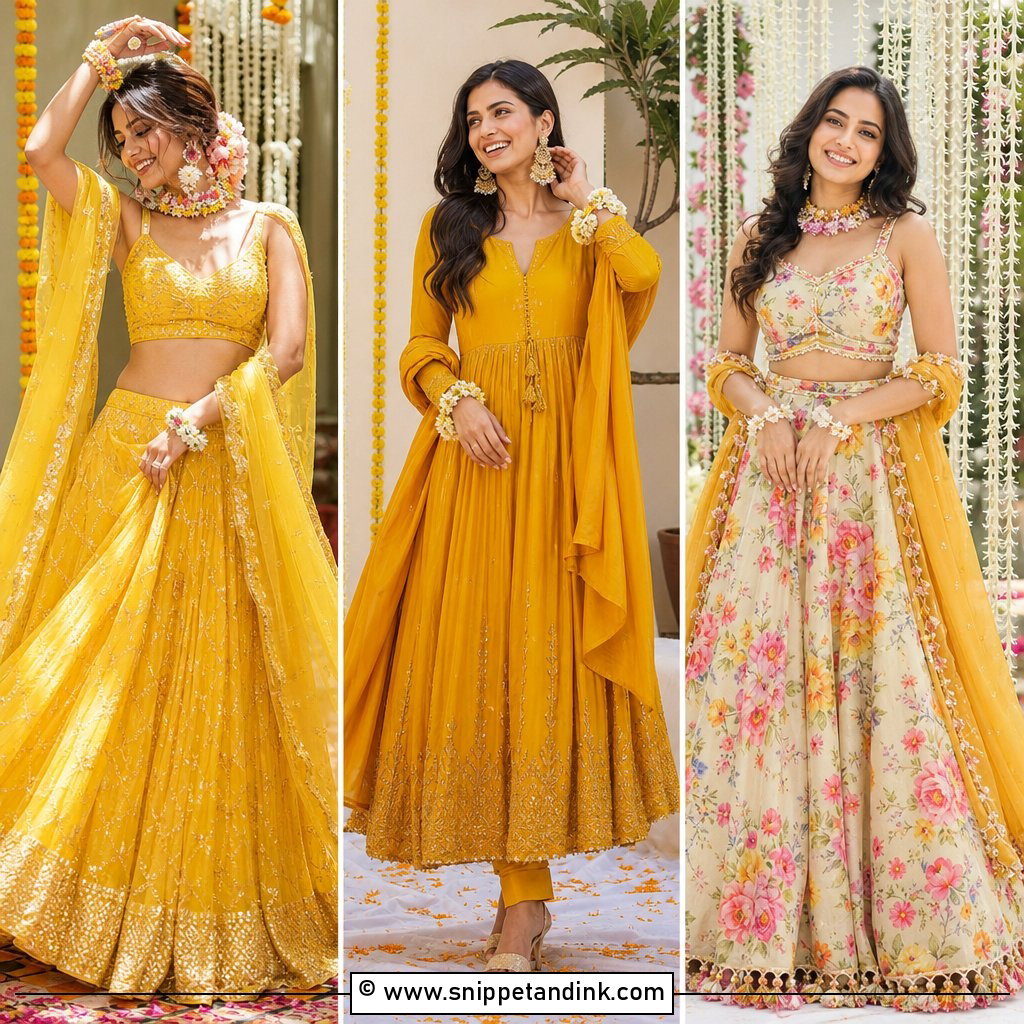

15. Yellow Silk Kurta Set Haldi Outfit
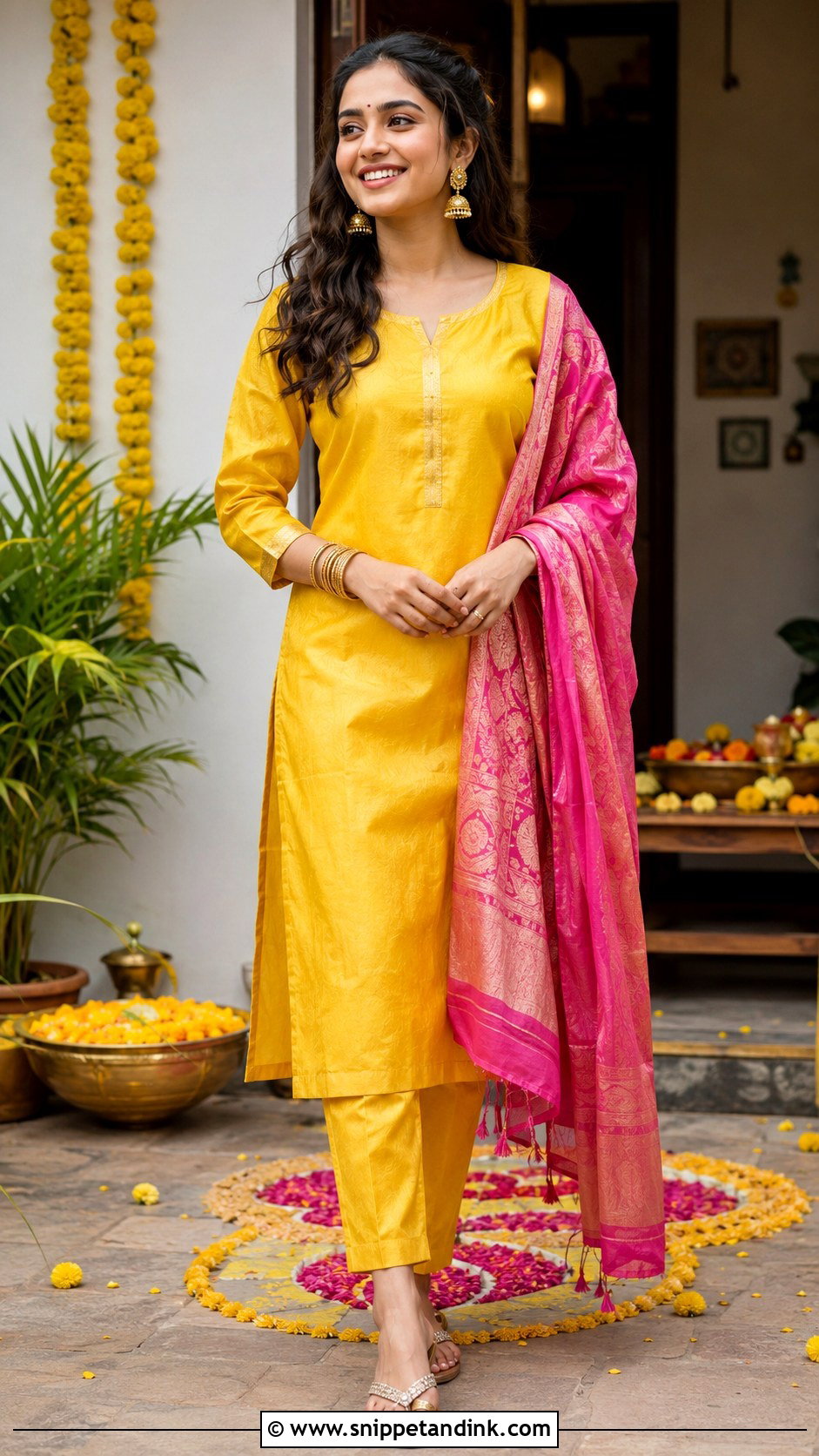
A yellow silk kurta set looks dressed up without the weight of a saree or lehenga, and it suits a smaller Haldi at home. A straight kurta with tapered trousers, palazzos or a flowing skirt covers most comfort preferences. A contrast dupatta in pink, orange or green makes it festive. Silk shows water spots, so I’d go for a silk blend that tolerates a splash. Gold earrings, a small bindi, bangles and embellished sandals are enough for brides who like minimal styling and guests who want something traditional but simple.
16. Yellow Pre Draped Saree Haldi Outfit
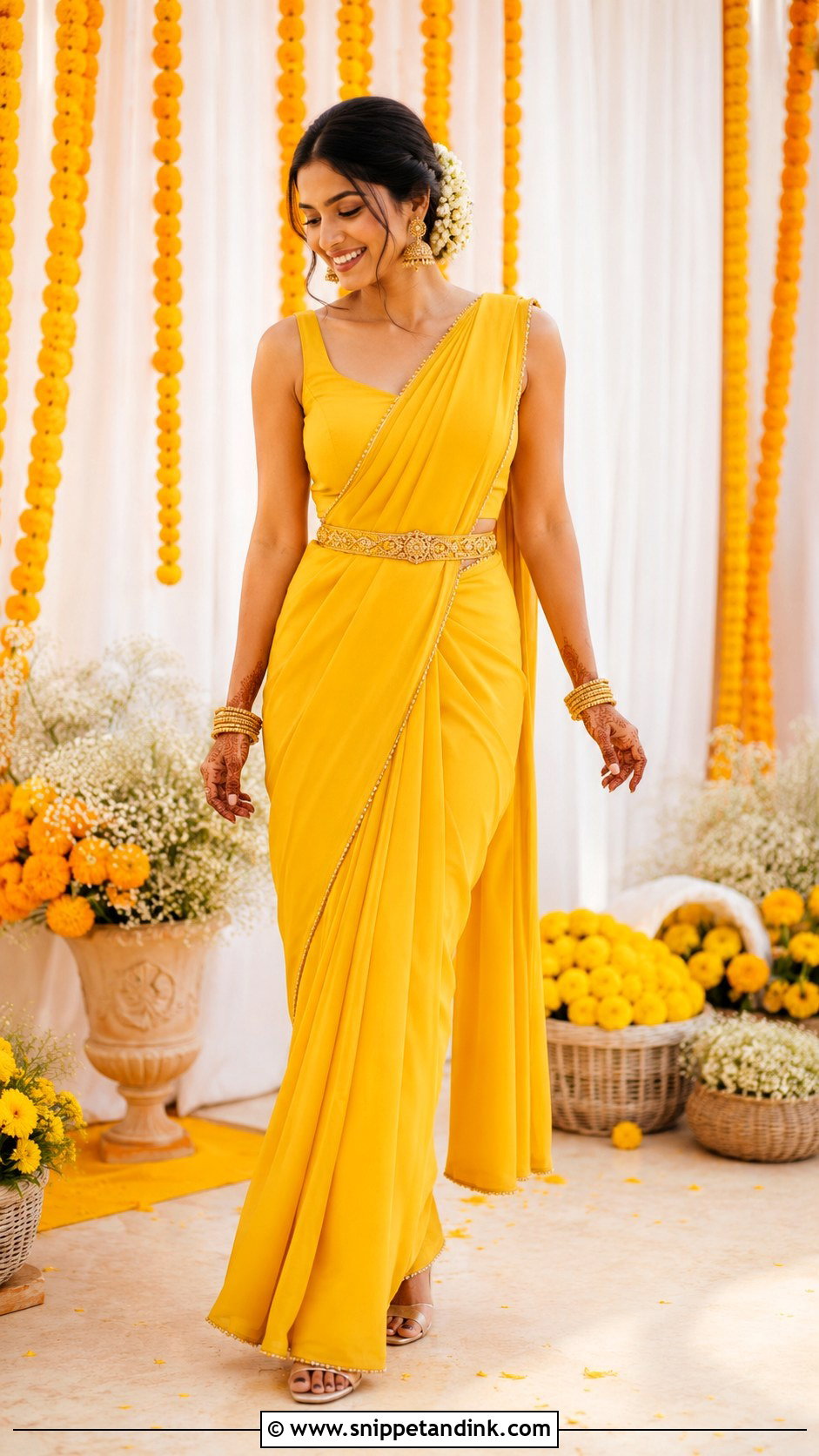
Pre-draped sarees give the look of a drape without pleats shifting mid-ritual. Light georgette, crepe or satin silk with a simple blouse works well. A belt with subtle embroidery or gold detail defines the waist and holds everything in place. The one thing to check is the zip: side zips on pre-draped sarees are hard to reach with turmeric on your hands, so get help dressing and undressing. Jhumkas, jasmine and comfortable heels or flats suit modern brides, bridesmaids and destination Haldis.
17. Marigold Yellow Lehenga Saree Haldi Outfit
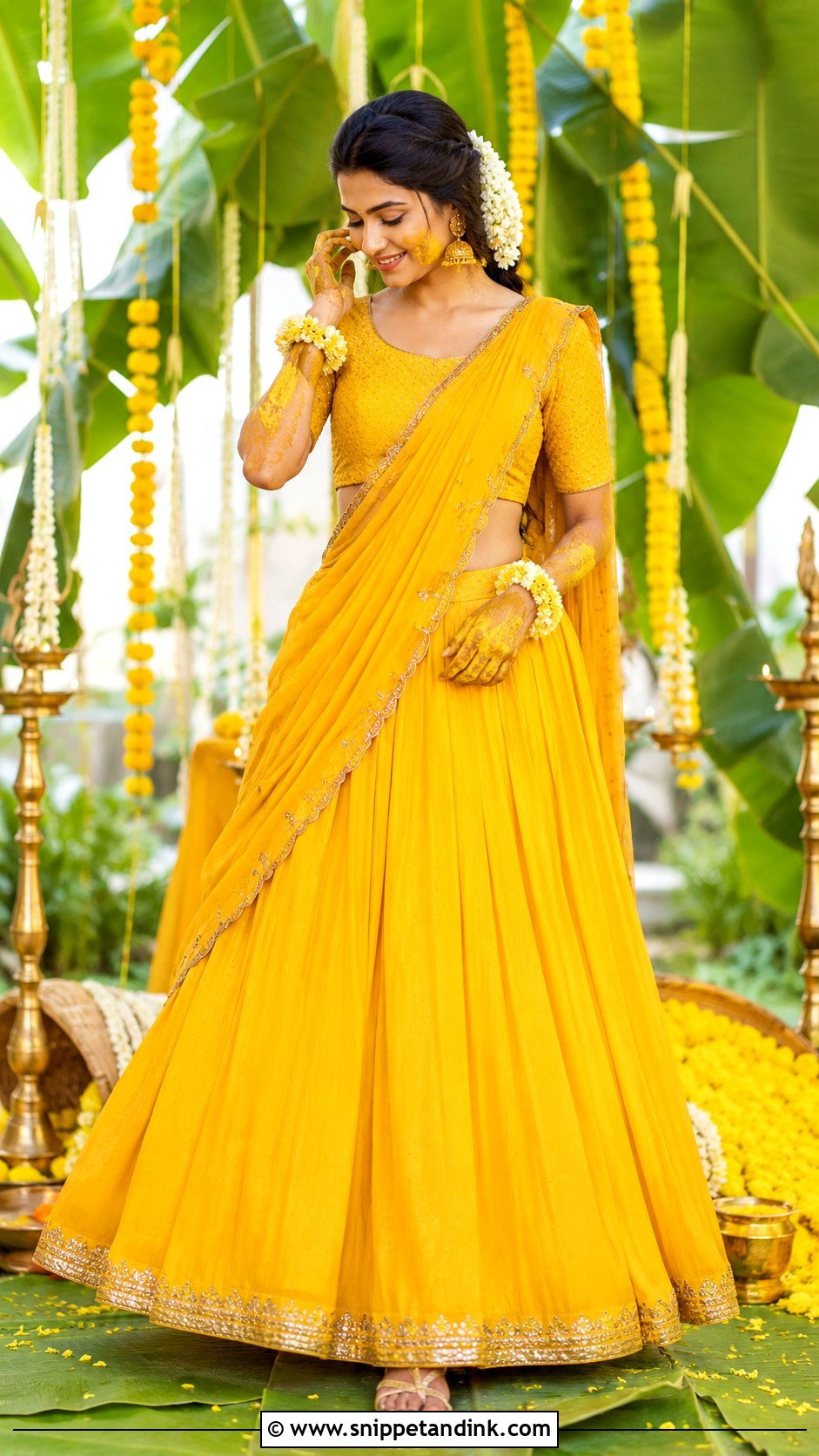
A marigold yellow lehenga saree sits between a simple saree and a heavy bridal lehenga, with a flared skirt, fitted blouse and a draped or attached dupatta. An attached dupatta is the one I’d choose for Haldi, because nothing slips while relatives lean in to apply paste. A gold border or South Indian motifs root it in the wedding setting. Temple earrings, floral bangles, jasmine in the hair and soft makeup complete it, and it glows against marigold or banana-leaf decor outdoors.
18. Ivory And Yellow Lehenga Haldi Outfit
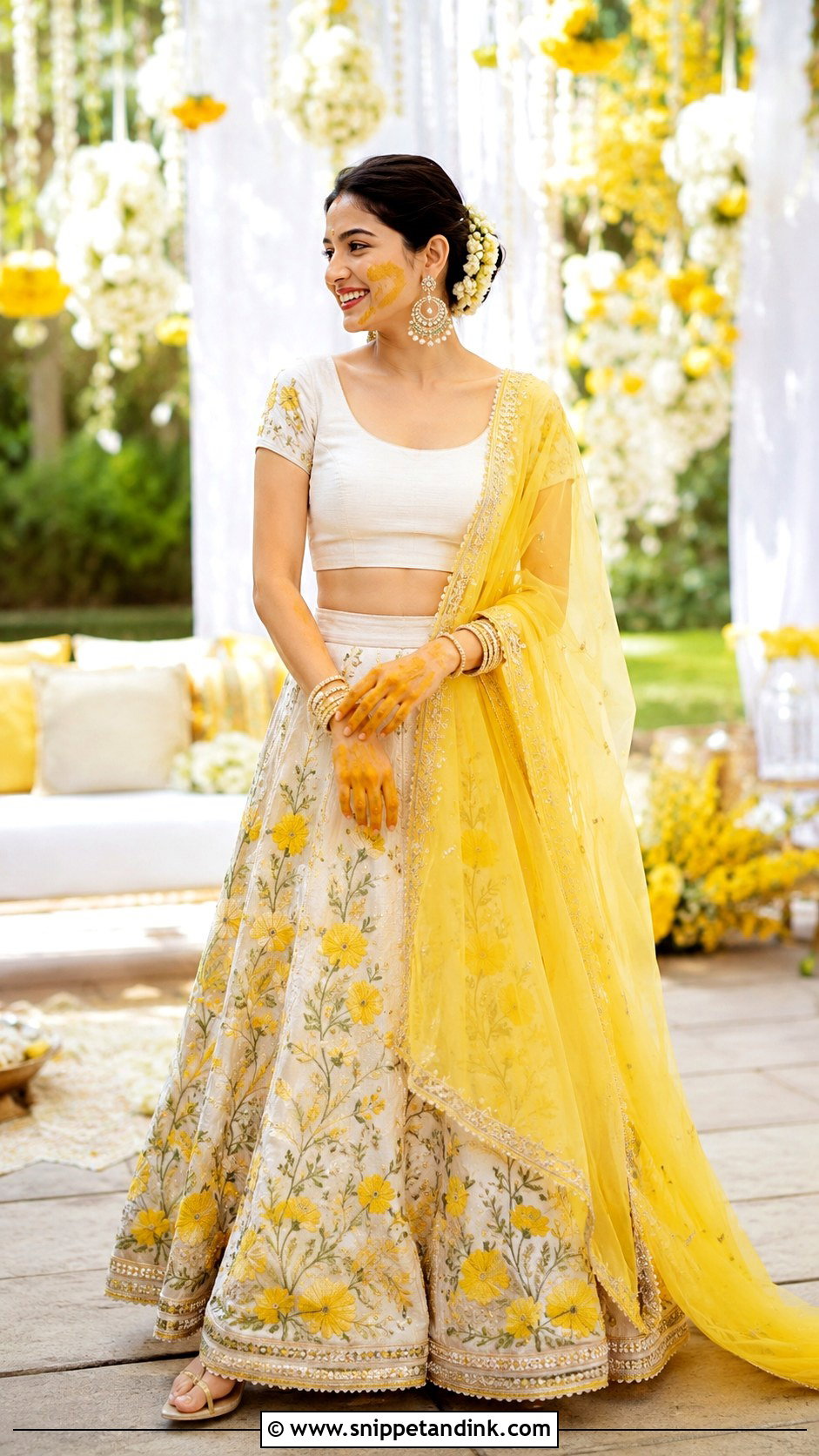
Ivory with yellow gives a softer look for brides who don’t want full yellow: an ivory lehenga with yellow floral embroidery, a yellow dupatta or a marigold border. It looks soft and bright in natural light and pairs well with floral jewellery. Ivory will take turmeric, so choose sturdy, washable fabric if paste will be applied directly to the outfit. Keep the blouse simple and let the dupatta or skirt carry the colour. Pearls, jasmine, gold bangles and neutral sandals give it a gentle festive glow.
19. Yellow Pavadai Dhavani Haldi Outfit
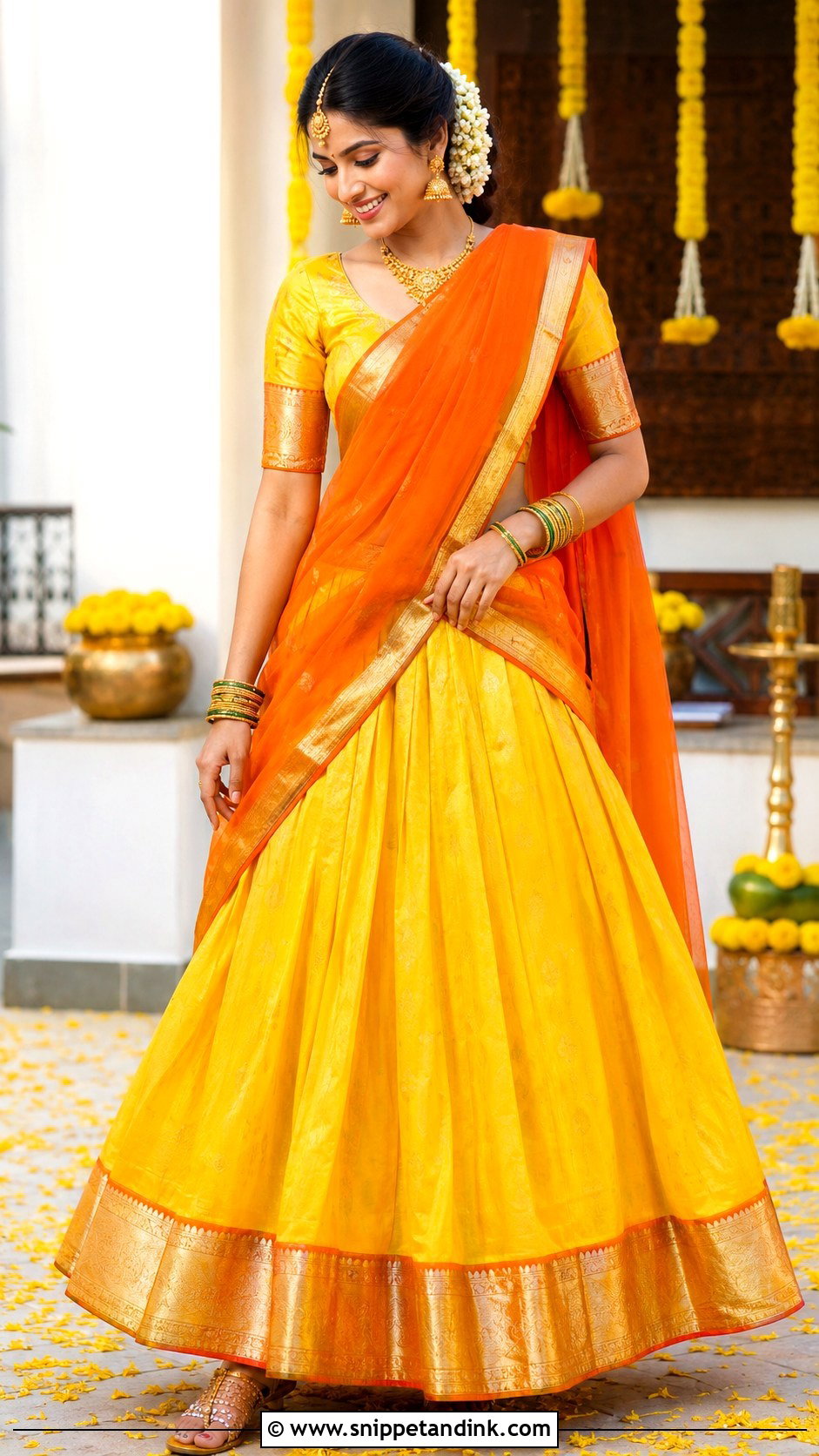
The pavadai dhavani is the traditional skirt, blouse and draped dhavani that so many South Indian girls grow up wearing. A yellow skirt with a contrast border and a green, pink or orange dhavani is lively and festive without being formal. I like it for Haldi because the skirt lets you sit cross-legged on the floor during rituals without pulling at anything. Gold jewellery, glass bangles, jasmine and anklets complete it, for younger women, sisters, cousins and brides who love cultural dressing.
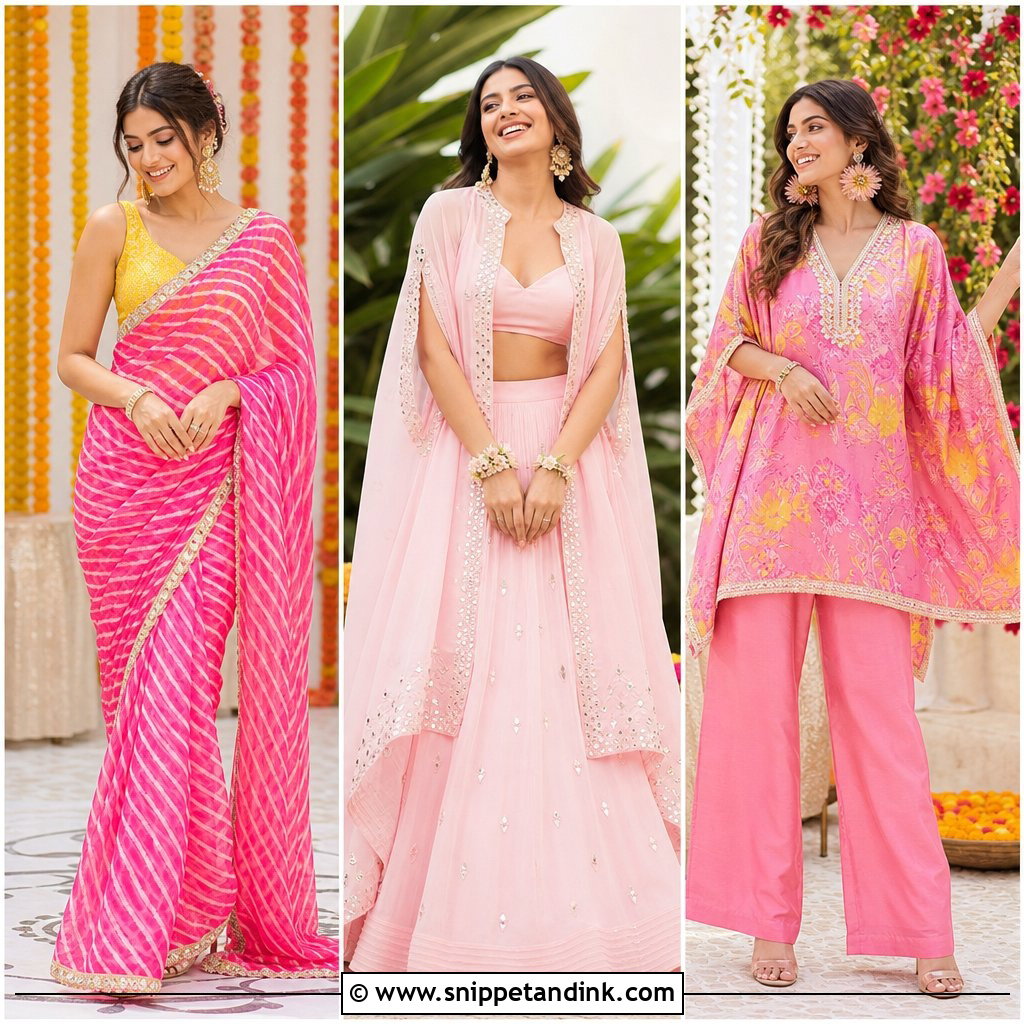

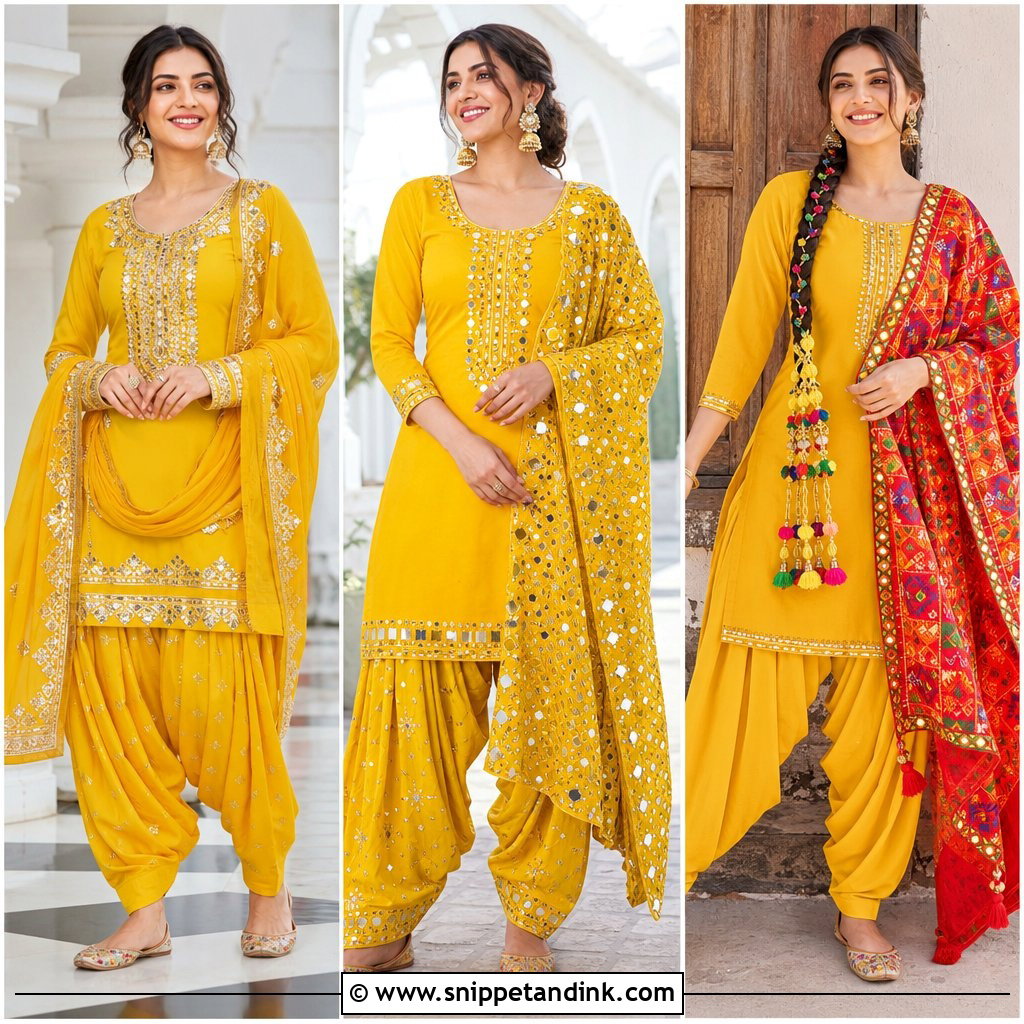
20. Yellow Palazzo Suit Haldi Outfit
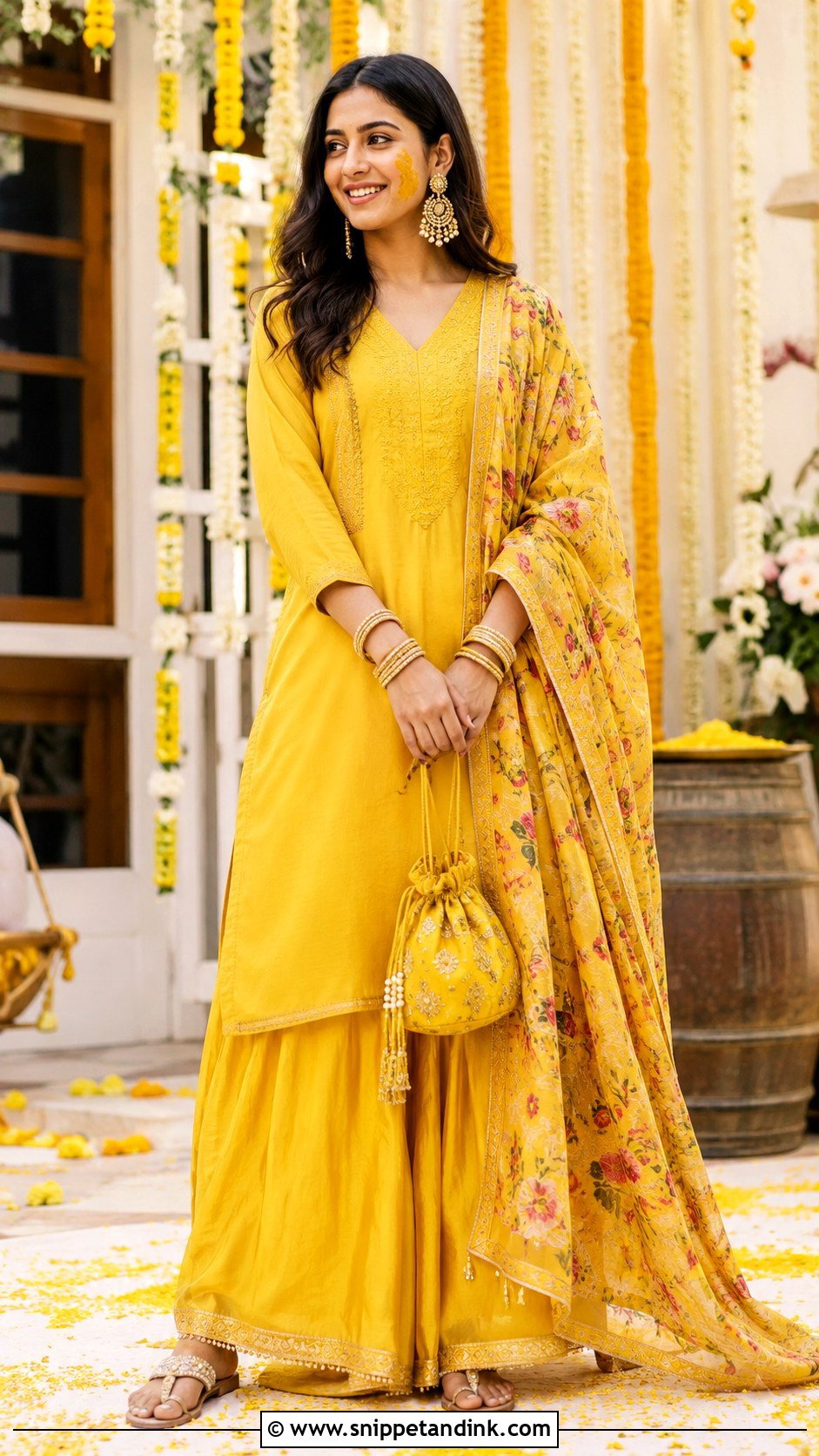
Palazzo suits are relaxed and easy through a busy function. The wide legs let you move and the kurta keeps it modest. A short kurta looks youthful; a long straight one looks more polished. A printed dupatta with floral, block-print or zari detail adds interest without weight. Wide palazzos can catch on stools and wet floors, so ankle length is safer than full floor length here. Statement earrings, bangles, a small potli bag and flat sandals suit bridesmaids, guests and family members who want to coordinate comfortably.
21. Yellow Saree With Pink Blouse Haldi Outfit
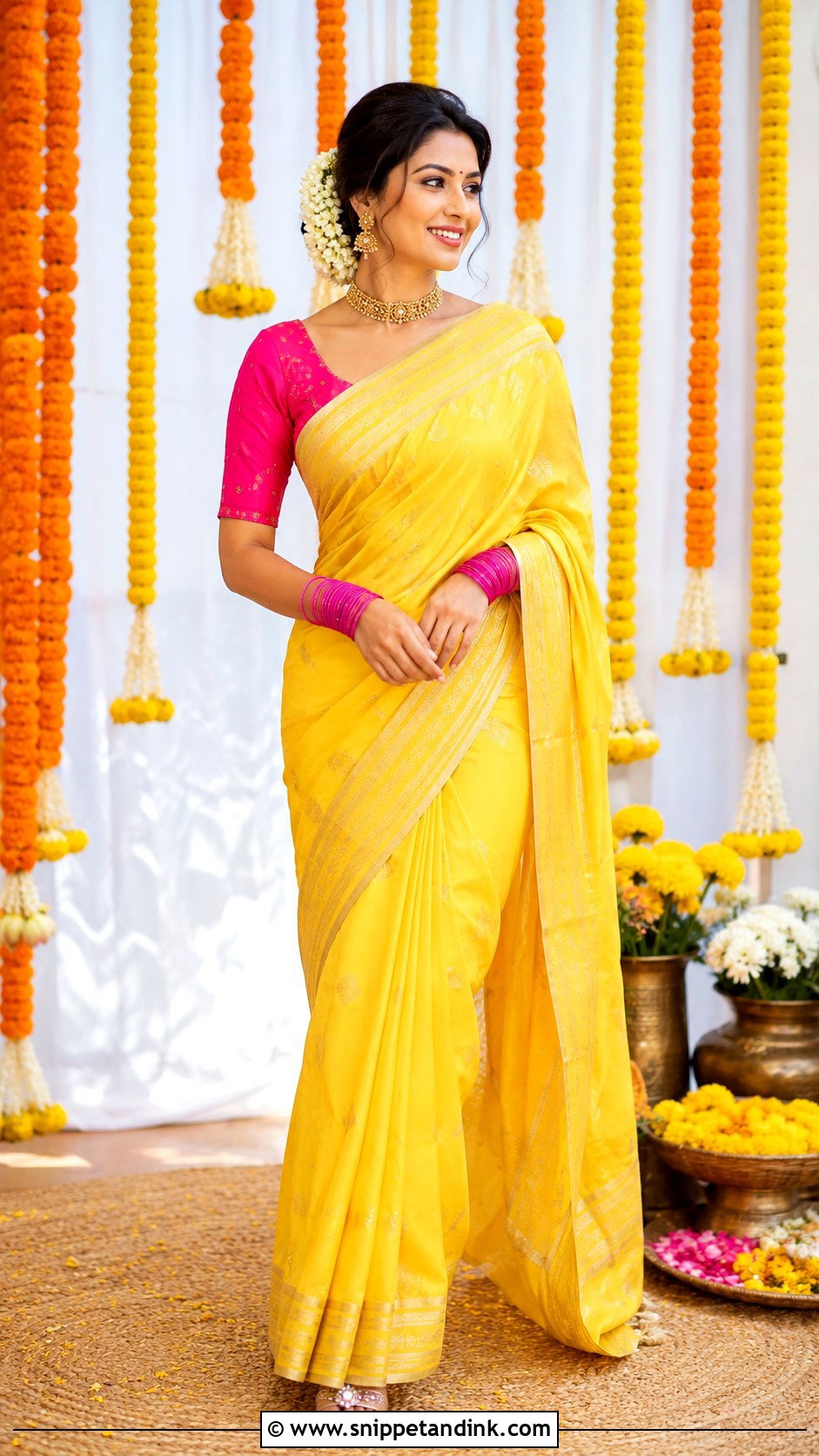
Yellow with a pink blouse is bright, cheerful and very South Indian. Choose a plain yellow saree if you want the blouse to lead, or one with a pink border to tie them together. Pink and yellow can clash if both are warm, so I pair warm yellow with a cooler, bluer pink like rani or magenta. Gold jewellery, jasmine, pink bangles and a tiny bindi finish it, and it sits naturally against marigold decor and fresh flower backdrops for brides, sisters or guests.
22. Yellow Saree With Green Blouse Haldi Outfit
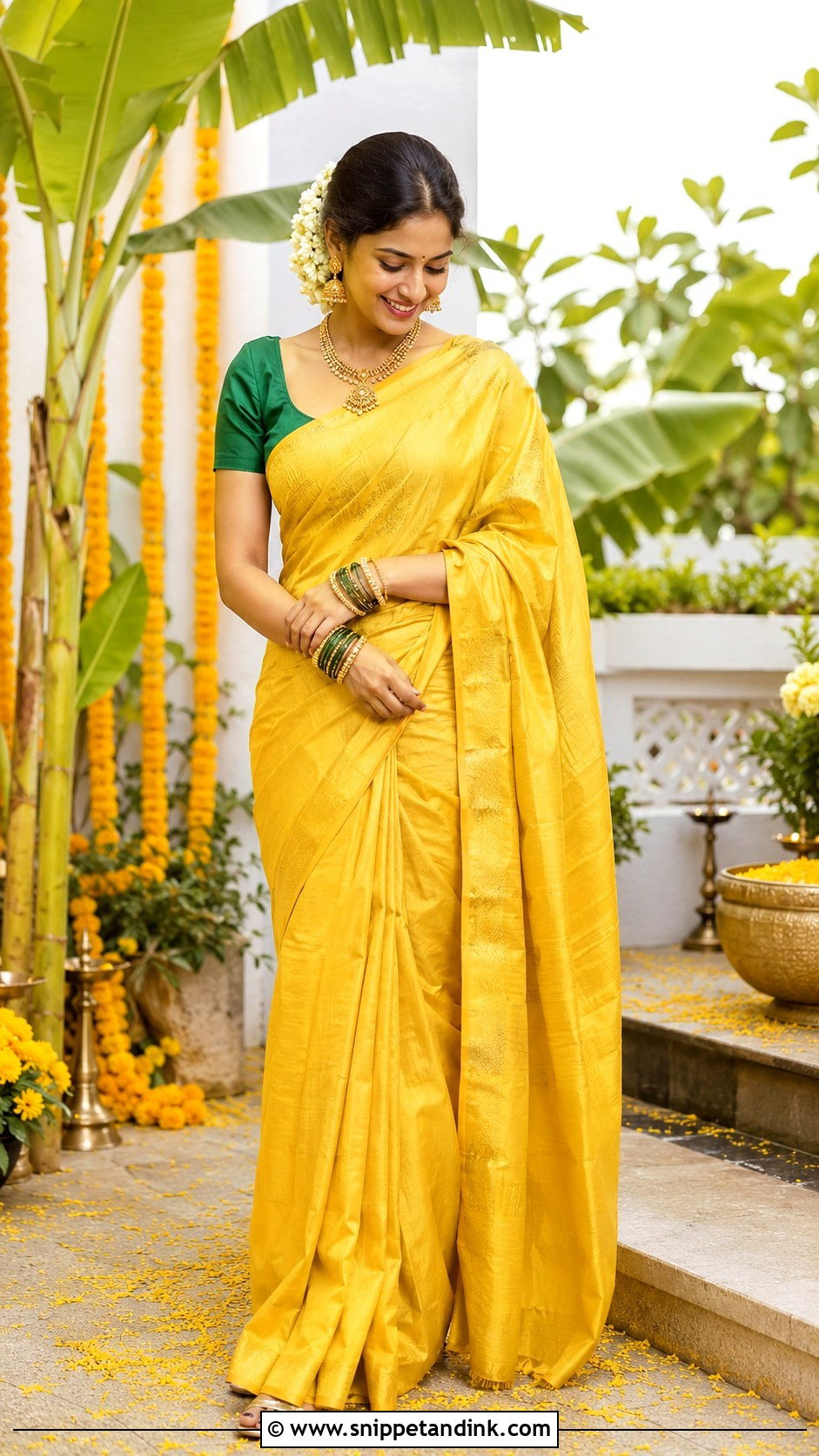
Yellow and green together are among the oldest South Indian pairings, and they feel auspicious at a Haldi. A yellow silk, cotton silk or Chanderi saree with a parrot green, emerald or bottle green blouse works every time. Temple jewellery and jasmine give a traditional finish; floral jewellery and simple bangles soften it. I like this combination for brides on a budget, because both pieces mix easily into festivals and family events later.
23. Pastel Yellow Lehenga Haldi Outfit
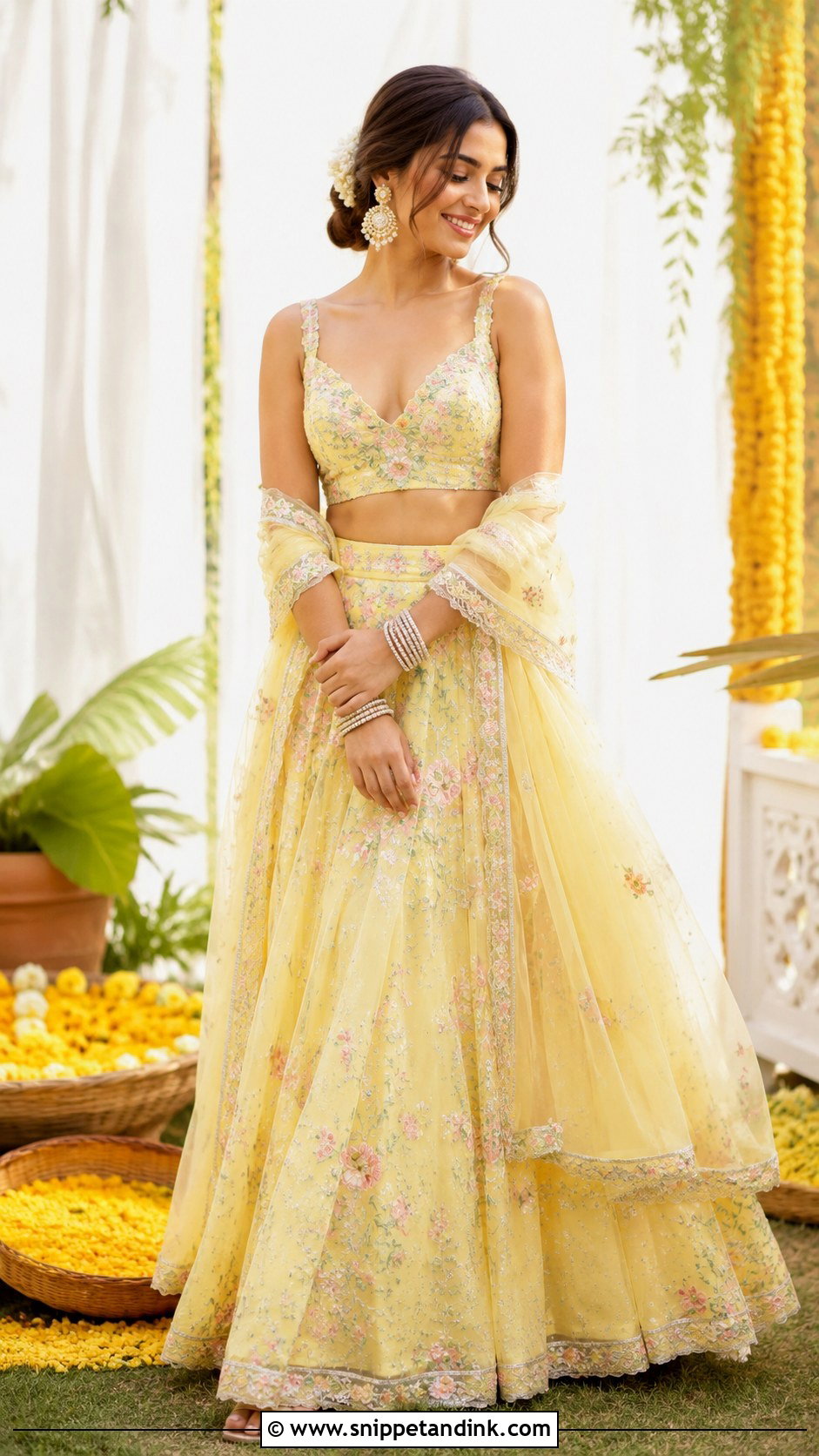
Pastel yellow is the gentle option, light and modern while still on theme. Floral embroidery, mirror details or lace borders add texture, and a sheer dupatta, minimal blouse and floral jewellery keep it from looking plain. Pale pastels can look washed out on camera in very harsh noon sun, so a pastel lehenga suits morning ceremonies or shaded garden and courtyard setups best. Pearl earrings, jasmine, glass bangles and low heels complete a delicate, comfortable look for a bride who prefers understatement.
24. Yellow Skirt And Crop Top Haldi Outfit
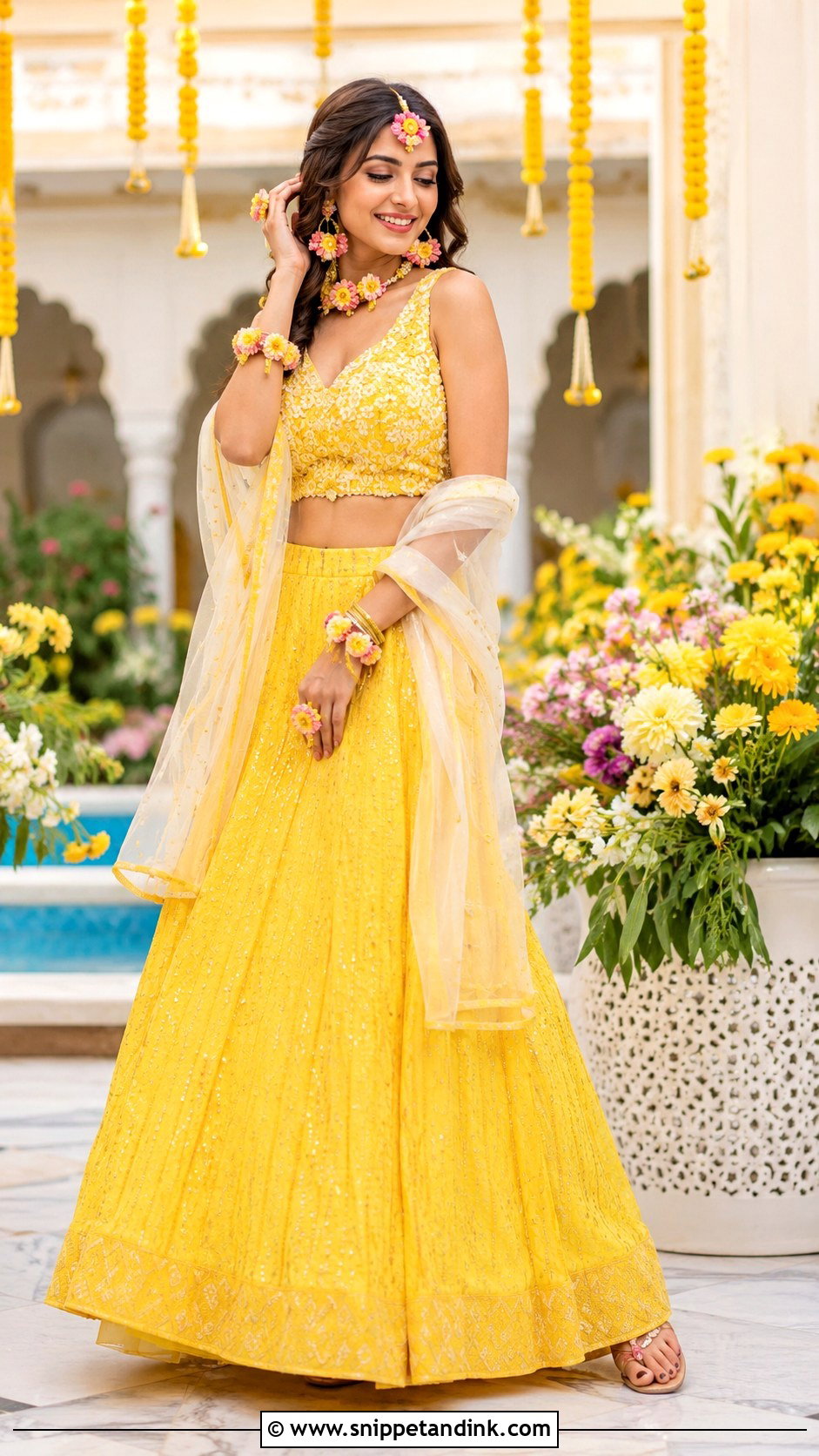
A skirt and crop top is the modern take, and Indian accessories keep it festive. A flared skirt in cotton silk, brocade or georgette with a fitted blouse or crop top moves easily. Add a light dupatta for family rituals, along with floral jewellery, bangles, a maang tikka and comfortable sandals. Crop tops show the midriff when you lean forward for rituals, so if family elders will be close, I’d go for a longer blouse or a dupatta pinned across. It suits bridesmaids, younger guests and casual Haldis.

25. Yellow Co Ord Set Haldi Outfit
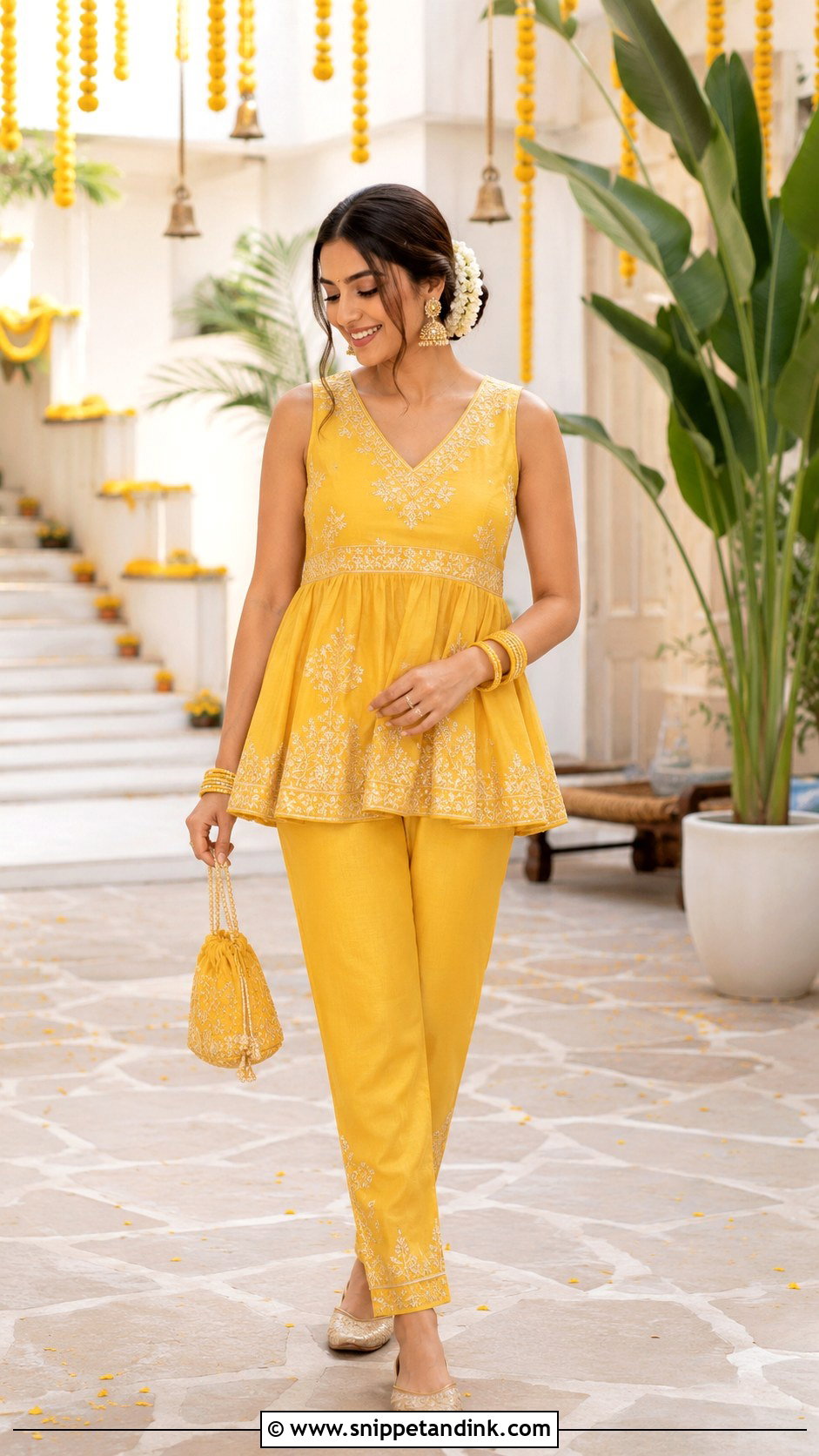
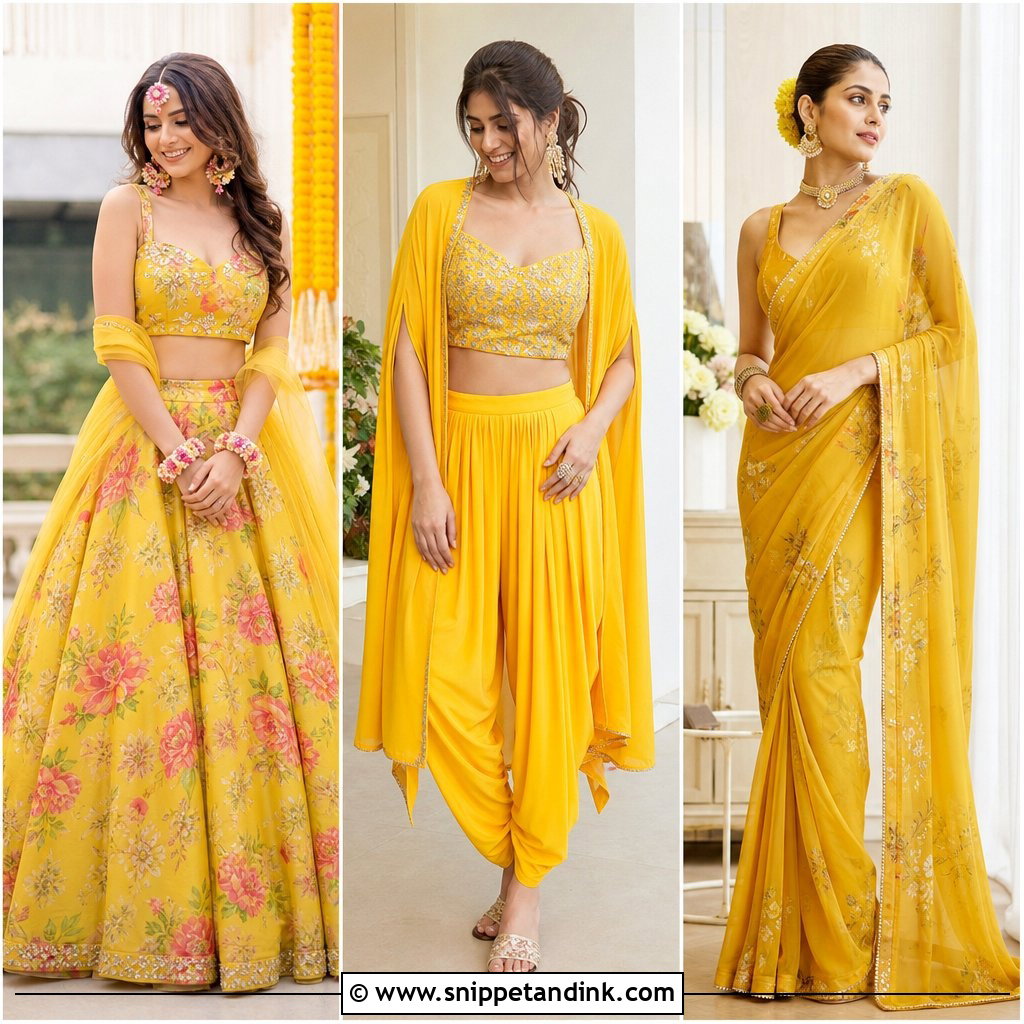
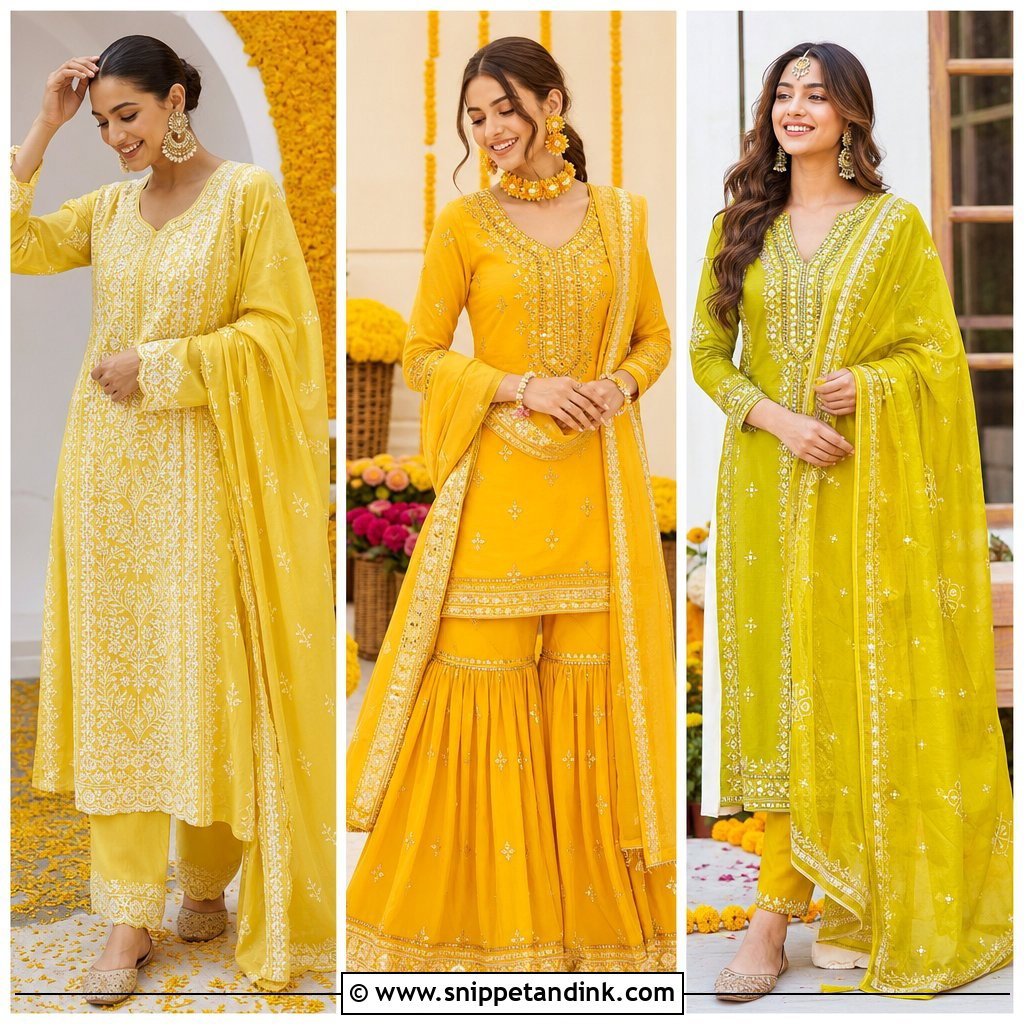
Co-ord sets suit relaxed, modern Haldis, especially at destination weddings, poolside Haldi setups or small events at home. A kurta-style top with matching trousers, a peplum with sharara pants or a cape set in breathable fabric all work. For a pool Haldi, choose fabric that won’t turn see-through when wet, and test it under a tap before the day. Jhumkas, bangles, jasmine and embellished flats keep the occasion visible. A printed or embroidered set gives enough detail for photos with very little fuss.
Flower Jewellery That Lasts Until the Last Photo
Fresh marigold and jasmine jewellery is a big part of Haldi styling, and it is also the first thing to wilt. Order it for the morning of the ceremony rather than the night before if you can, and ask that it be kept cool and lightly misted until you dress. Jasmine buds open over a few hours, so a gajra that looks tight at nine is usually at its best by eleven.
Marigold pieces get heavy. I sew the heavier ones onto a fabric base or thread, rather than relying on hooks, and I pin a gajra into the bun with several U-pins so it doesn’t drag the hair down. Keep floral earrings light enough that they don’t pull the earlobe forward.
Getting Turmeric Out of Fabric and Skin Afterwards
- Scrape off wet paste with a blunt edge; rubbing pushes it deeper.
- Rinse from the back of the fabric with cold water. Hot water tends to set the stain.
- Work in liquid detergent or dish soap on washable fabric. Soap can turn the stain reddish for a moment, which is normal, and it fades with rinsing.
- Dry washable pieces in the sun. Sunlight fades turmeric stains noticeably.
- Take silk and zari straight to a dry cleaner and tell them the stain is turmeric and oil.
On skin, a little coconut or almond oil massaged in before a gentle cleanser lifts most of the colour. Any faint tint usually fades within a day, so a morning Haldi rarely affects how your skin looks at the wedding.
Dressing for the Yellow Mess and the Photos Alike
A good Haldi outfit has to look festive, feel comfortable and survive the ceremony. Pattu and half sarees, lehengas, kurta sets and co-ords all have a place, and while yellow is the favourite, green, orange, ivory, mustard and pastels sit just as naturally in a South Indian setting. Prioritise breathable fabric, a secure drape, footwear you can slip off and accessories that won’t snag during rituals. Then accept that some turmeric will land on you. A Haldi outfit with a faint yellow mark is often the one people keep longest.
You'll Like These Ideas:








Leave a Reply