
A Patiala salwar is one of the few wedding outfits that actually gets easier to wear the longer the day runs. All those pleats mean you can sit on the floor, crouch to hug a grandmother and dance in the courtyard without anything pulling. That is why I keep steering haldi clients toward it, and why yellow Patiala suits show up at so many Punjabi haldi mornings. The looks below mix classic Punjabi charm with practical choices for a hot, messy daytime ceremony: cotton and chikankari, mirror work, phulkari and gota patti, and outfits for the bride as well as sisters, bridesmaids and guests. Each one comes with what I would actually check before wearing it.

Where a Patiala Salwar Goes Wrong at the Tailor
Most disappointing Patialas I see were let down by the cut, not the color. The salwar takes a lot of fabric, several meters of it folded into deep pleats, and the way those pleats are set decides whether you look graceful or bulky.
Fabric weight
Soft cotton, cotton silk and light georgette fall into folds. Stiff cotton or heavy silk pushes the pleats outward at the hip, which adds width exactly where most people don’t want it. I scrunch a corner of the fabric in my hand before it is cut; if it springs back with sharp creases, it will pleat stiffly.
Waist and cuff
- Ask for a drawstring with a short strip of elastic at the back. Pure drawstring waists loosen when you dance, and pure elastic gathers so much fabric that it bunches under a short kurti.
- The cuff at the ankle should be snug enough to hold the pleats but wide enough to slide over your heel without a zip.
- Have the pleats stitched down a few inches below the waistband. Loose pleats all the way up add bulk to the tummy.
Kurti length matters too. A Patiala is made to be seen, so the kurti usually stops around mid-thigh. Long kurtis hide the pleats and turn the outfit into an ordinary salwar suit.
1. Mustard Yellow Patiala Suit With Phulkari Dupatta
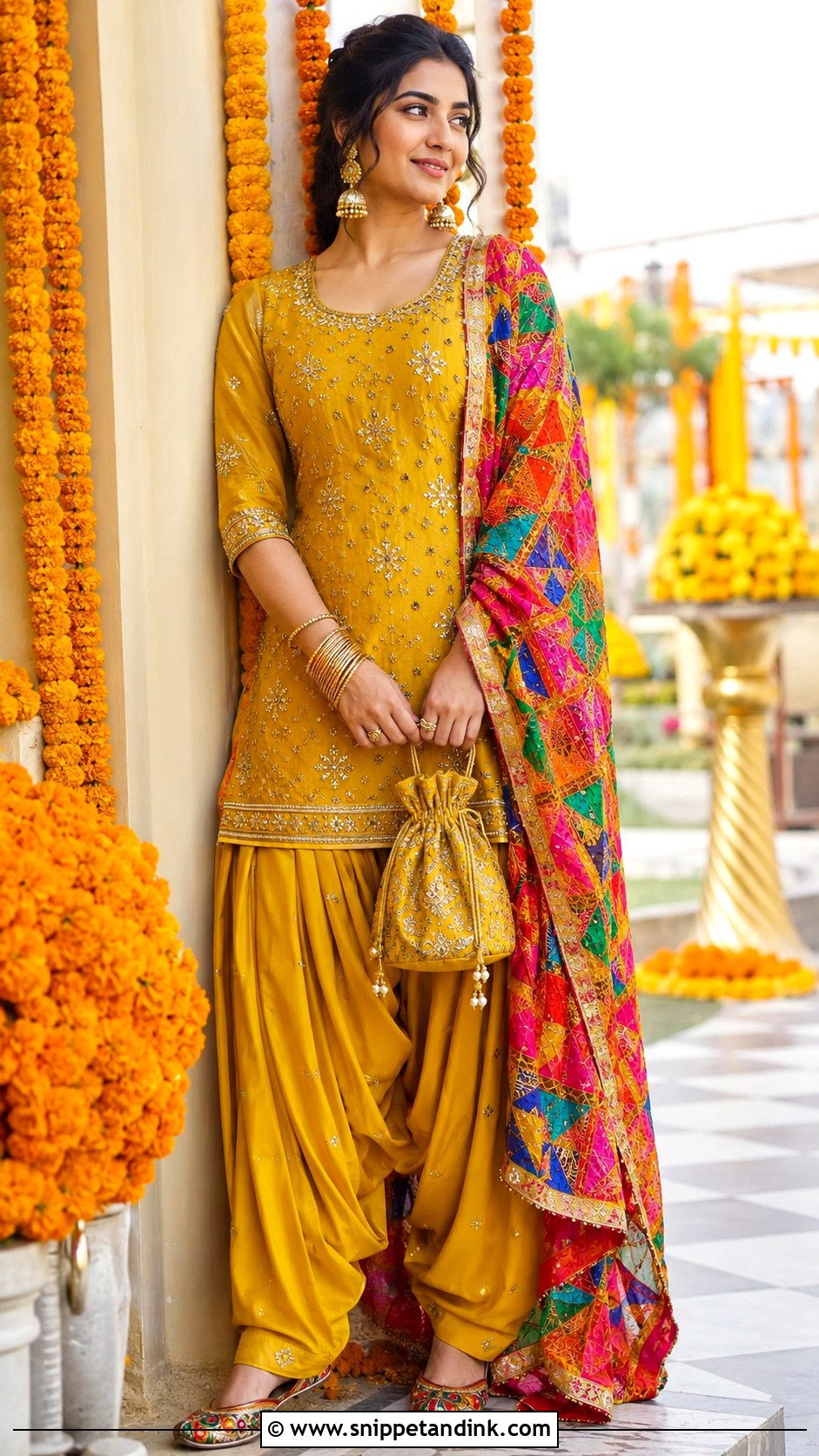
Mustard is my favorite yellow for an outdoor haldi. It has enough depth to hold its color in harsh sun, and a stray smear of turmeric barely shows on it. Wear a short mustard kurti with a little threadwork over a well-pleated matching salwar, then let a bright phulkari dupatta in pink, green, orange and blue do the work. Embroidered juttis, gold jhumkas, slim bangles and a small potli are all you need. A loose braid with tiny flowers suits the mood. I’d put the bride’s sister or a close friend in this; it reads festive without tipping into formal.
2. Lemon Yellow Patiala Suit With Floral Jewelry
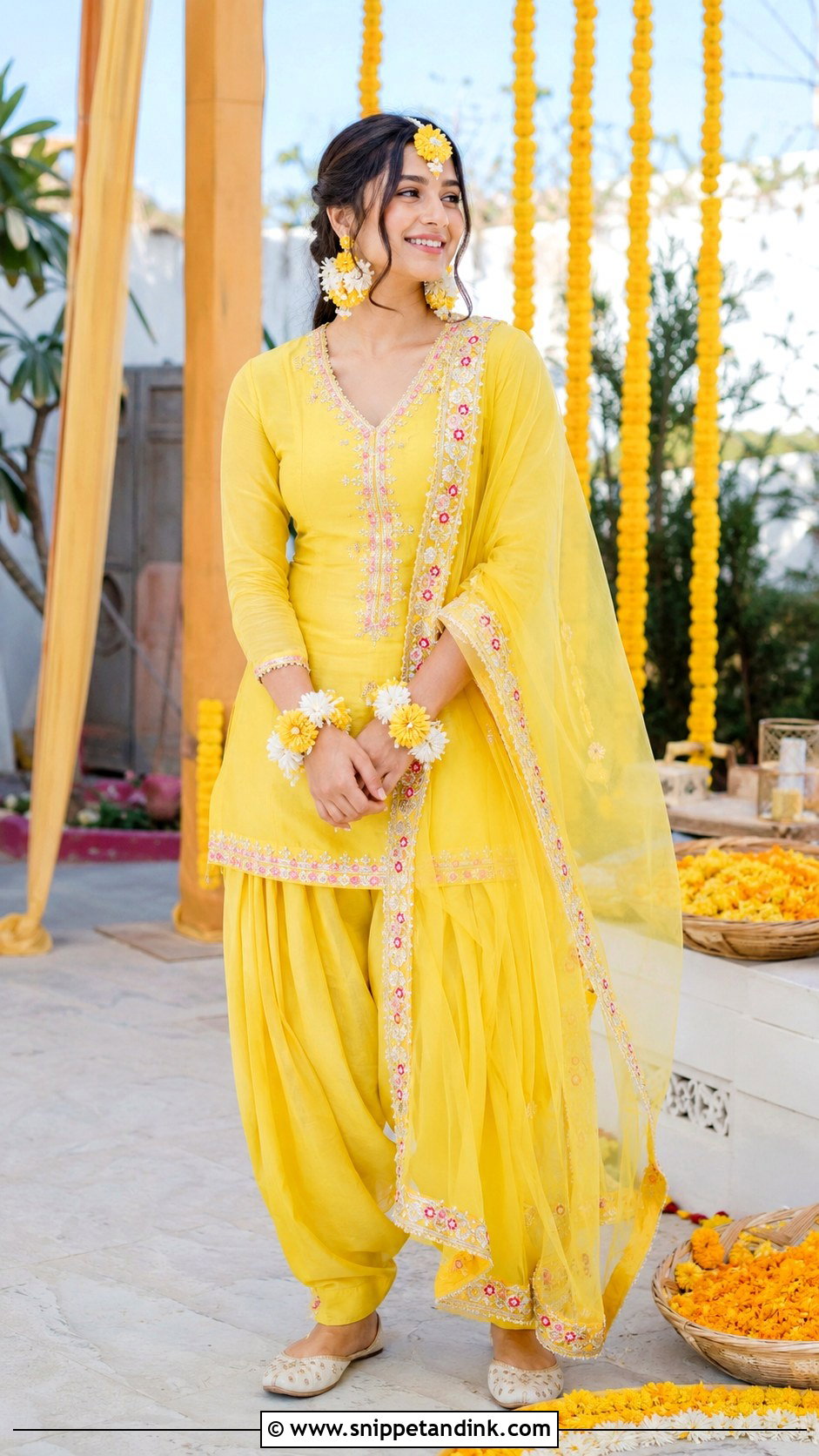
Lemon yellow belongs to the morning. It looks fresh in soft early light and can look a little washed out by noon, so I check the ceremony time before recommending it. A light cotton or georgette kurti, a softly pleated salwar in the same shade and a sheer dupatta with a narrow floral border keep it easy. The floral jewelry is the point here: white-and-yellow earrings, a floral maang tikka and wrist pieces. Cream or pale yellow juttis stay out of their way. For makeup, I ask for waterproof mascara and a dewy base, because a haldi bride’s face gets wet. It suits a bride who wants traditional clothes and playful accessories, and the white flowers stand out well against marigold decor.
3. Yellow Gota Patti Patiala Suit With Matching Juttis
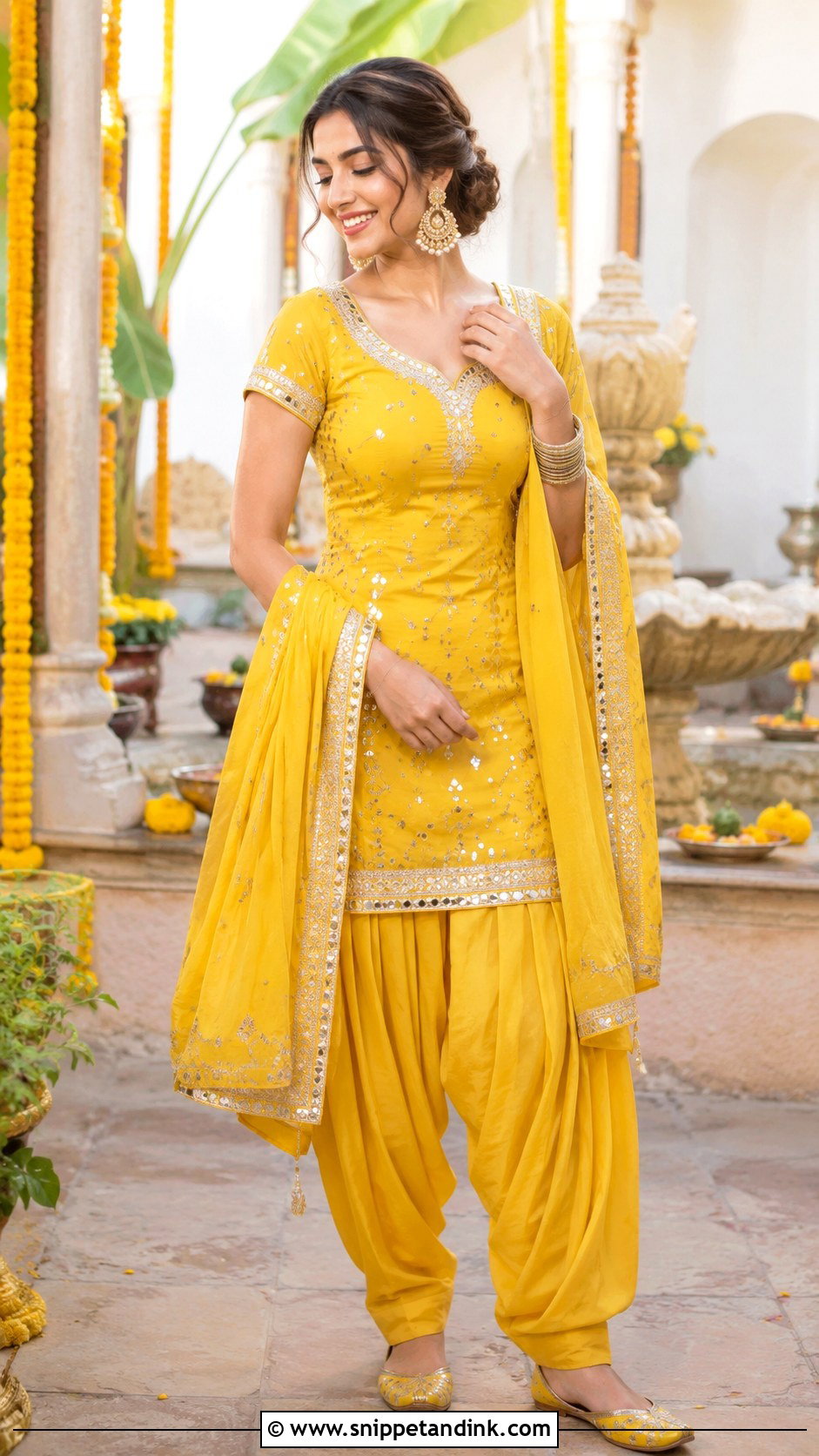
Gota patti is what makes a simple suit look like it belongs at a wedding. I’d keep it to thin lines at the neckline, sleeves and hem of a fitted short kurti, with a plain pleated salwar underneath. Gota is a metallic ribbon, and it reflects a lot of sun, so the more of it you add, the more glare you get in outdoor photos. A matching dupatta with scattered gota motifs is enough extra shine. Gold or yellow juttis with minimal metallic work, small chandbalis and glass bangles complete it. Skip large jewelry entirely. A low bun or braided ponytail stays put through the ceremony. Bridesmaids and guests look polished in this without much effort.
4. Pastel Yellow Patiala Suit With Organza Dupatta
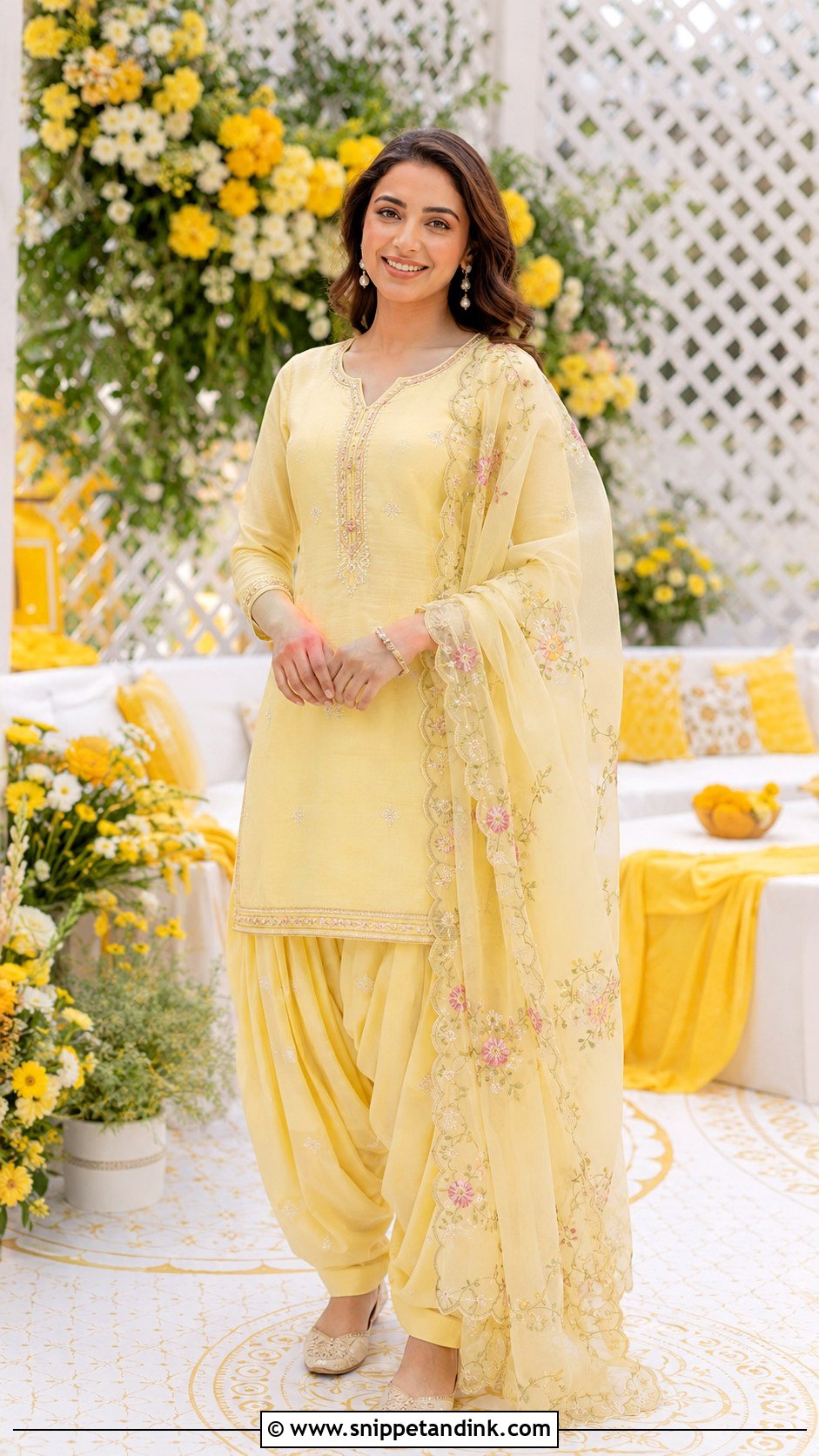
Pastel yellow is the gentler route, and it suits anyone who finds bright turmeric shades loud on their skin. A silk-blend kurti with a matching salwar is the base; silk blends give the pleats a fluid fall rather than the crisp fold of cotton. Add a transparent organza dupatta with small embroidered flowers or a scalloped edge and pin it at the shoulder, because organza is slippery and springy and will not stay put by itself. Pearl earrings, a delicate bracelet and ivory juttis fit the soft palette. Hair in loose waves or half-up. I often suggest this to older sisters and daytime guests who want to look festive but understated.
5. Sunflower Yellow Patiala Suit With Mirror Work
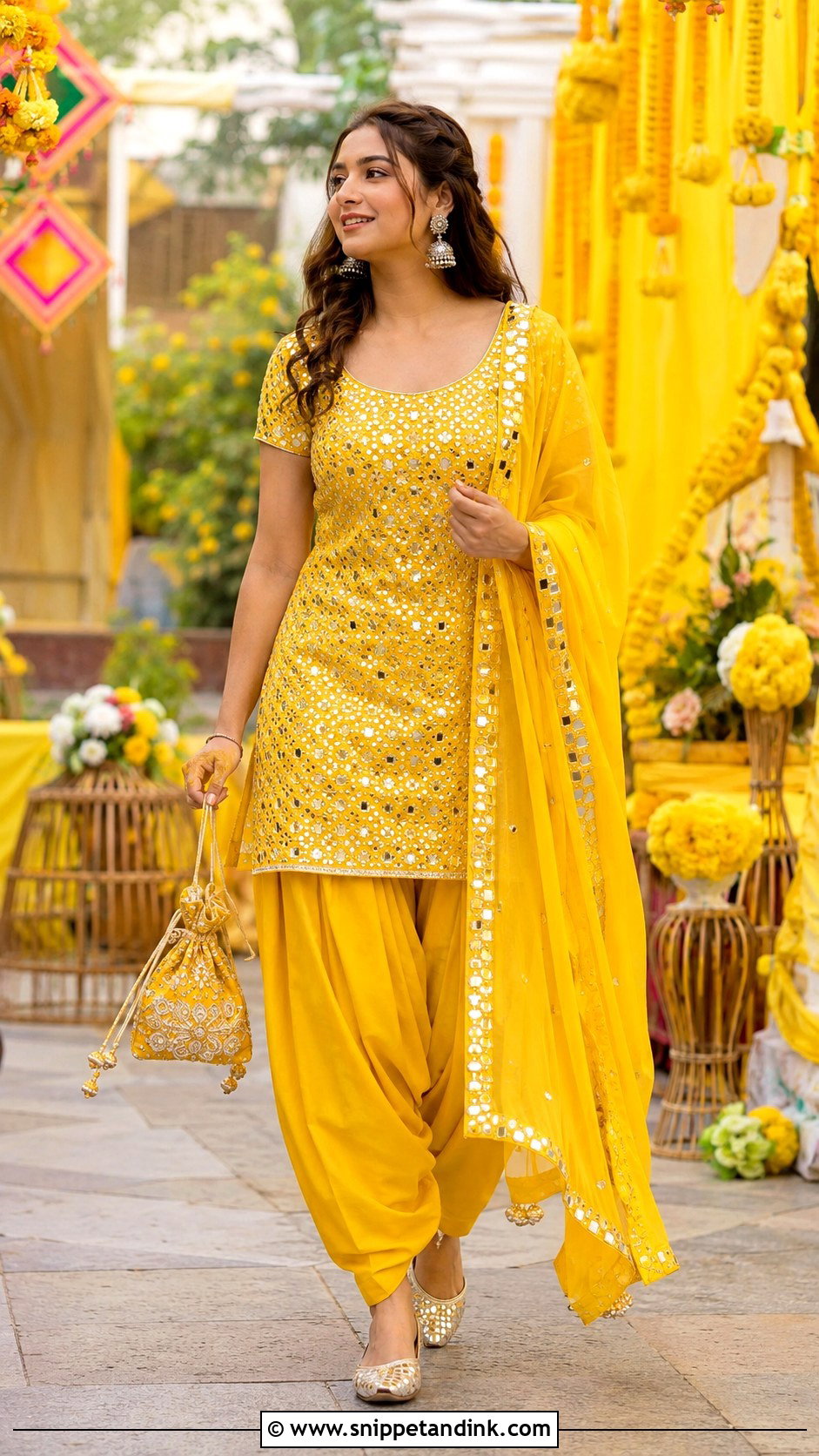
Sunflower yellow and mirror work both catch light, so I keep the mirrors to the neckline and cuffs rather than scattering them over the whole kurti. Fewer, well-placed mirrors sparkle; too many look busy and make the kurti heavier. Balance it with a plain cotton-silk salwar and a light chiffon dupatta with a narrow mirror border. Silver jhumkas and mirrored juttis connect the accessories to the top, and a compact potli holds the essentials. Tie your hair into a high ponytail or side braid; loose hair and wet turmeric paste are a bad mix. It’s a cheerful choice for outdoor ceremonies and younger guests who plan to dance.
6. Yellow Chikankari Patiala Suit With White Accessories
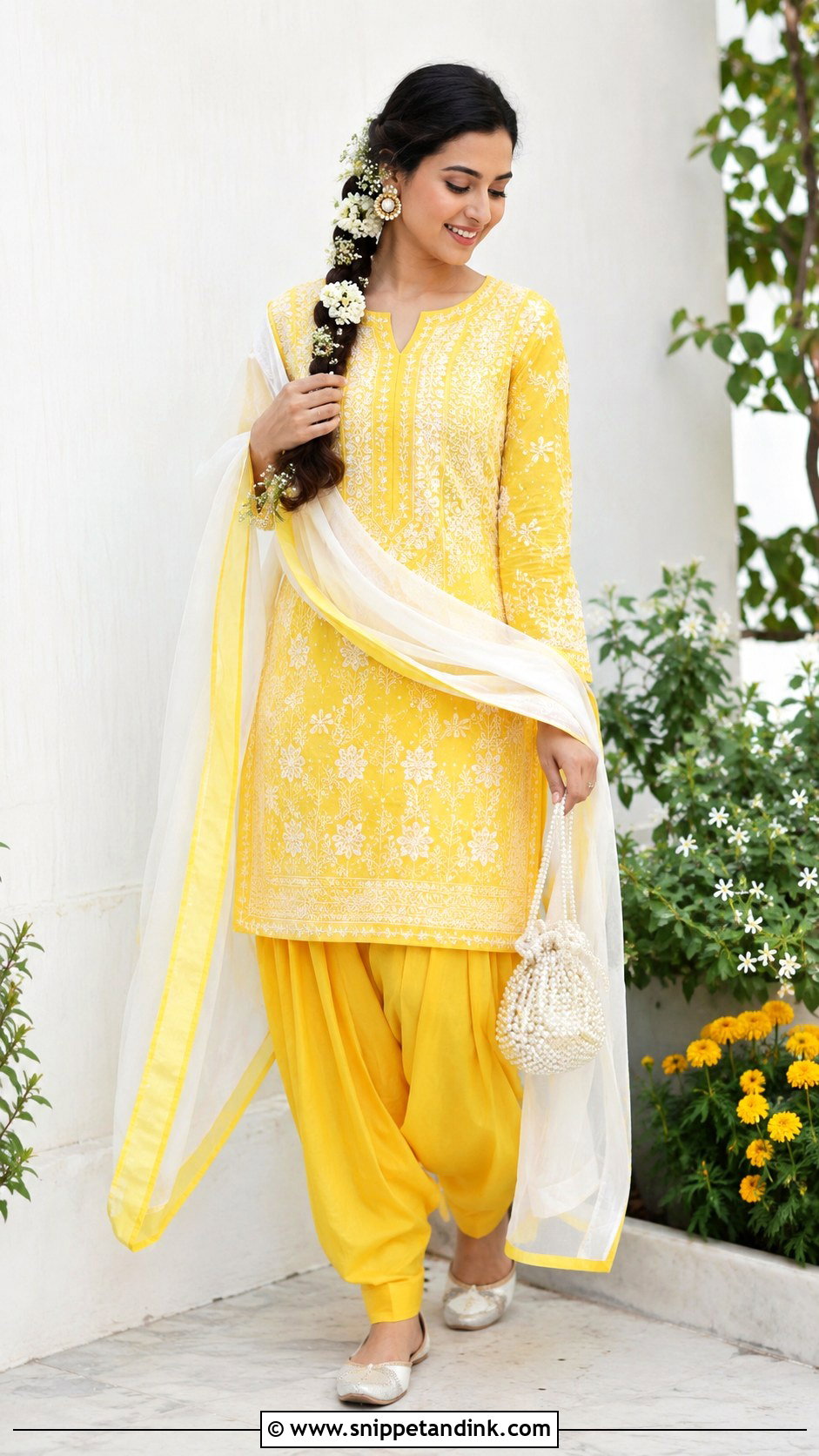
Chikankari is the coolest thing you can wear on a hot haldi morning, quite literally. It is traditionally worked on fine cotton or mulmul, and the open stitches let air through. Pair a cotton chikankari kurti in white or tonal thread with a plain yellow salwar, and a white chiffon dupatta with a yellow border to frame the embroidery. White juttis, pearl drops, a pearl-trimmed potli and a few white flower clips in a low bun finish it. One warning: fine chikankari can be sheer in bright sun, so I ask for a slip or lining under the kurti. It suits guests and bridesmaids who want detail without sequins or heavy metallic work.
7. Bright Yellow Patiala Suit With Pink Dupatta
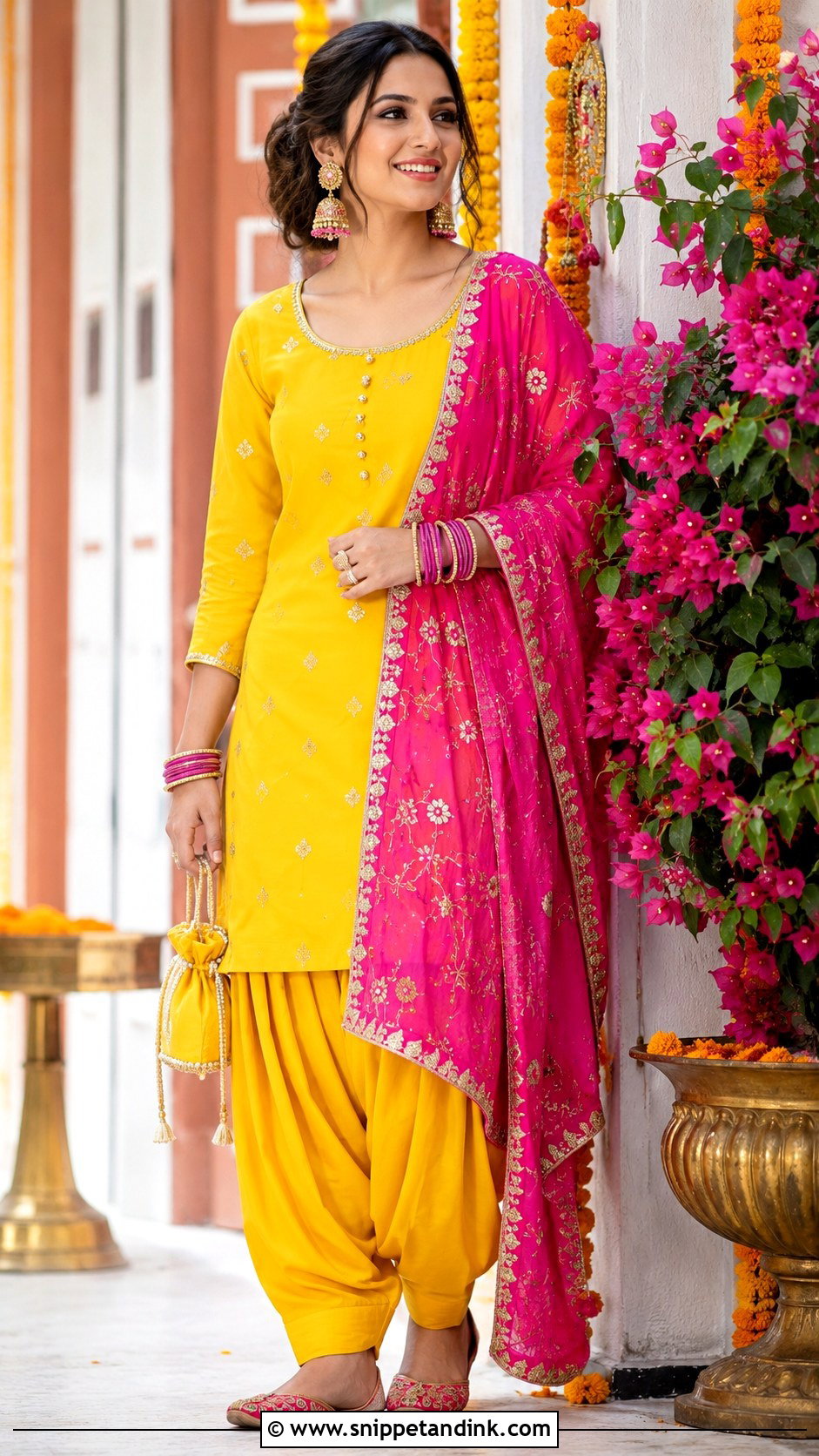
Pink and yellow is the pairing I use most when I want a suit to look festive with very little effort. A pink dupatta can turn a simple yellow Patiala suit into the brightest thing in the courtyard. Start with a bright yellow kurti with a clean neck and a touch of gold piping, a matching salwar, and a fuchsia or rani-pink dupatta with a thin embroidered edge. Pink-and-gold juttis, small jhumkas and bangles that mix both colors tie it together. Carry a yellow potli rather than a pink one so the pink stays in one place. Soft curls or a braided half-up style. Sisters, cousins and best friends look great in this as a group, especially against pink flowers and marigold garlands.
8. Yellow Patiala Suit With Green Bandhani Dupatta
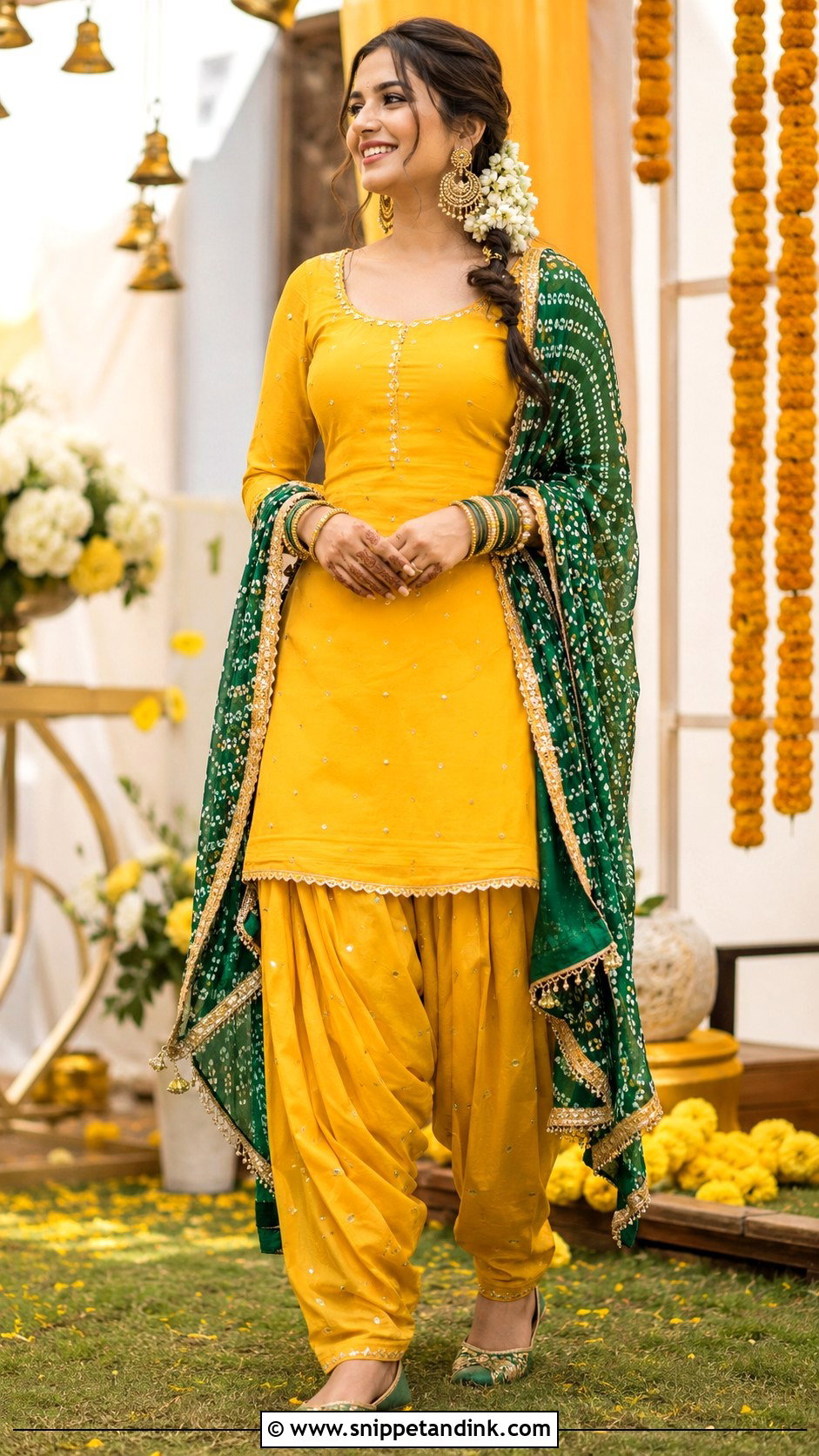
Green bandhani and turmeric yellow sit side by side in a lot of Punjabi and Rajasthani wardrobes for good reason; the contrast is fresh without fighting. Wear a plain turmeric-yellow kurti with a shaped waist and side slits over a soft cotton salwar, and lay the green bandhani dupatta over one shoulder. Real bandhani can bleed its dye when wet, and a haldi involves water, so I test a corner with a damp white cloth first. Green embroidered juttis, antique-gold earrings, mixed green-and-yellow bangles and a small braid with fresh jasmine complete it. Keep everything else simple. It’s also the cheapest way to refresh a basic yellow suit you already own.
9. Yellow Patiala Suit With Multicolor Embroidery
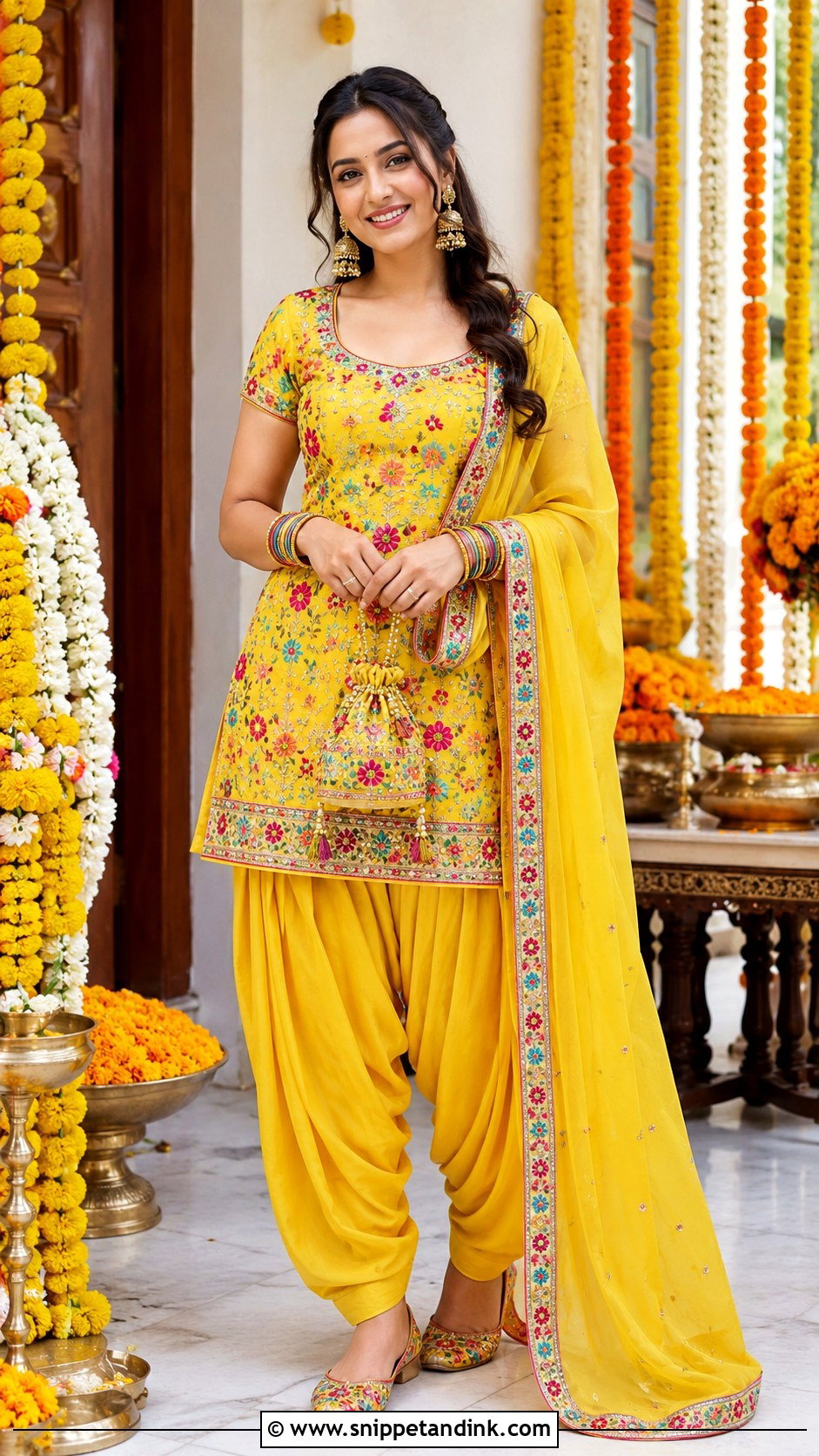
If the decor is a riot of color, multicolor embroidery helps the outfit belong in the photos rather than standing apart from them. A short yellow kurti with small pink, orange, blue and green flowers, a solid salwar and a plain dupatta with a matching multicolor edge is the formula. Pick the potli in one single shade taken from the embroidery; that one small choice makes the whole thing look planned. Embroidered juttis, colorful bangles and modest gold earrings. A sleek braid keeps attention on the neckline. It works for almost any age and is easy to sit and dance in.
10. Yellow Silk Patiala Suit With Gold Dupatta
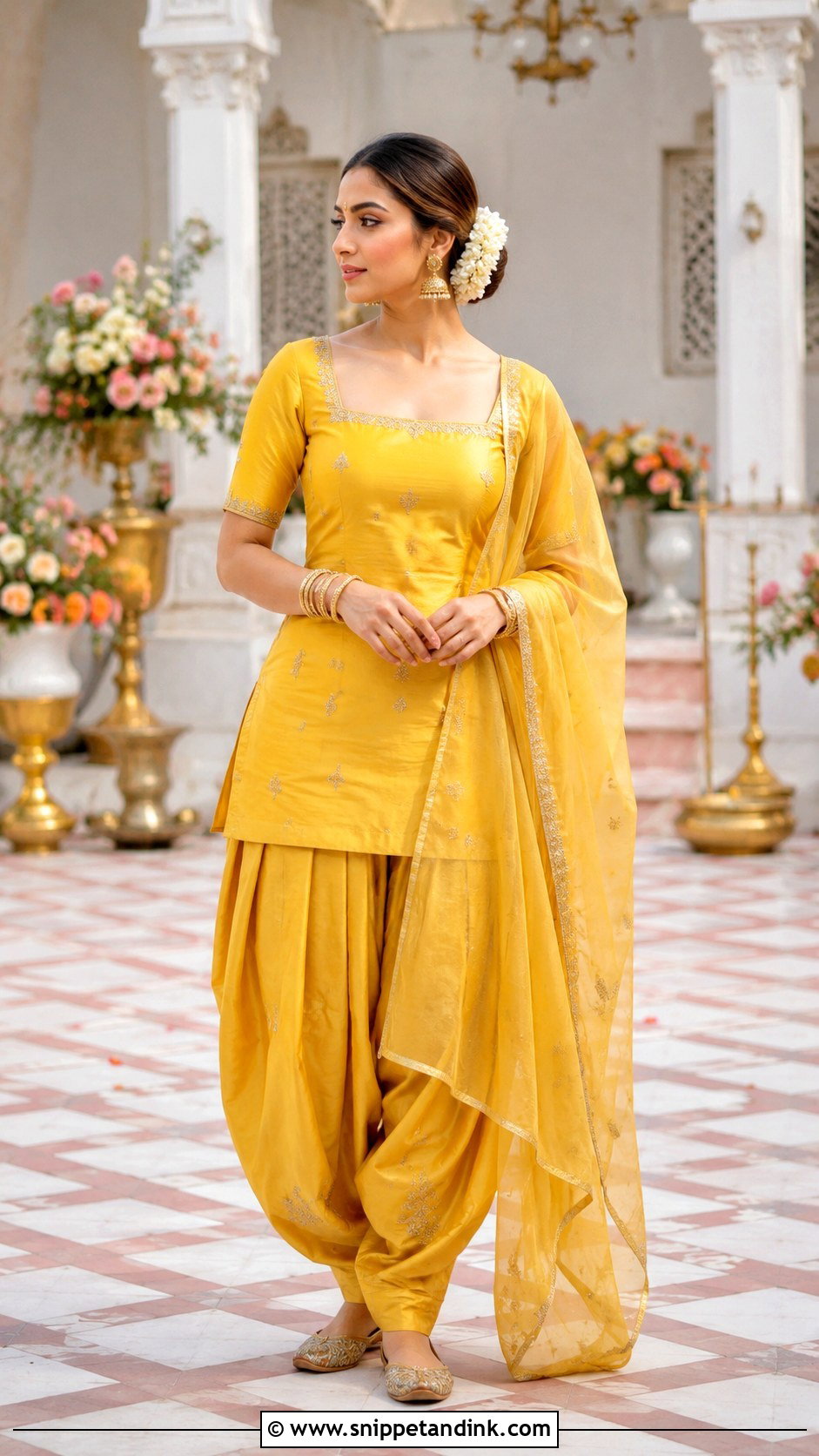
Silk changes how a Patiala behaves. A pure silk salwar holds a stiffer pleat that can stick out at the hip, so I usually pair a structured silk kurti with minimal zari over a softer silk-blend salwar that folds cleanly. Add a lightweight gold tissue or organza dupatta instead of heavy brocade, which drags on the shoulder for hours. Gold juttis, classic jhumkas and a few bangles. A tidy bun with small white flowers around the base. This is the dressier option for the bride or immediate family. Silk also shows turmeric badly, so I’d only choose it if you can live with a mark or the paste stays on your face and hands.
11. Yellow Cotton Patiala Suit With Printed Dupatta
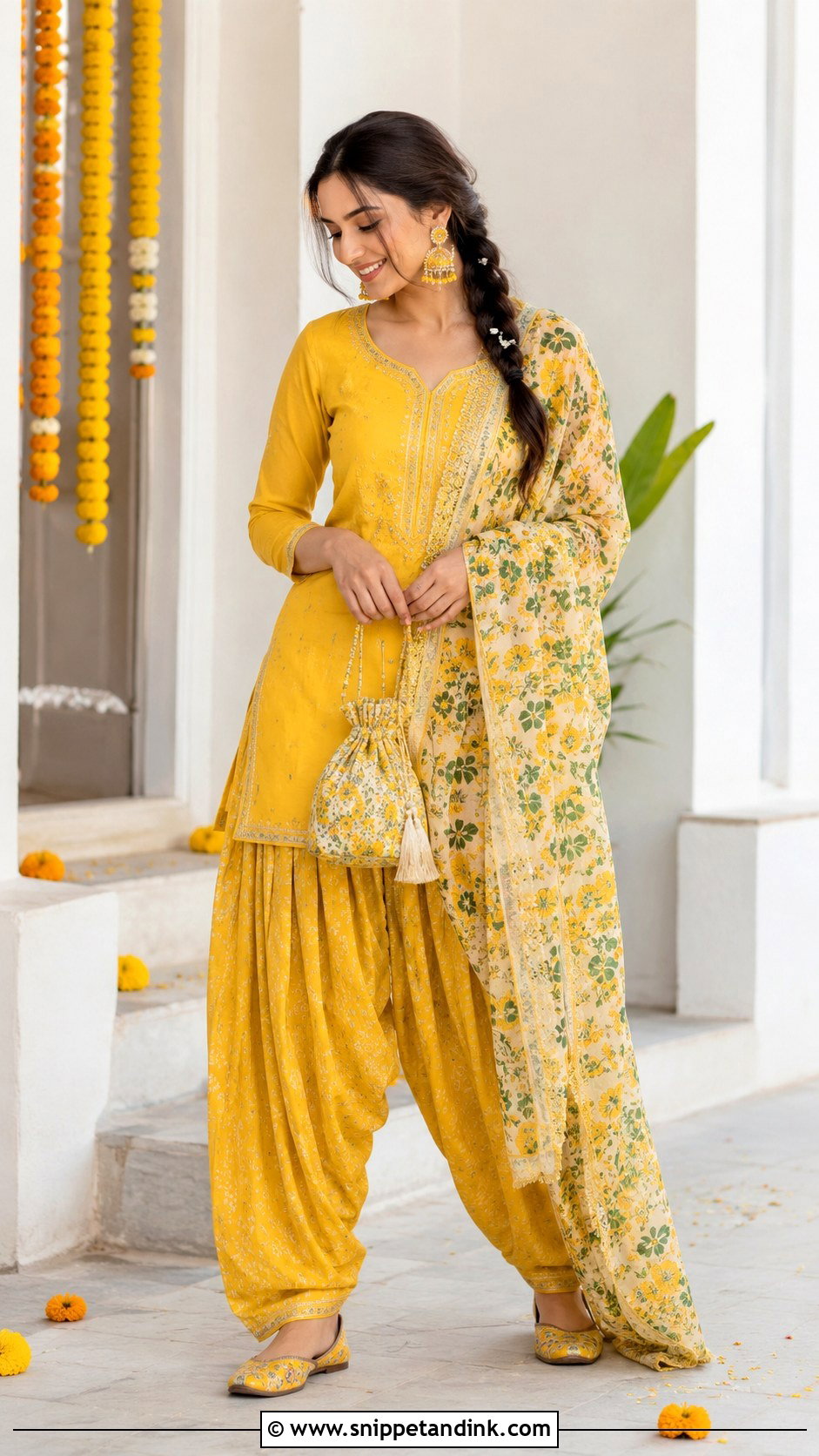
Haldi functions run long, and cotton is the fabric that still feels pleasant by the end. A breathable yellow cotton kurti with a roomy salwar keeps its traditional shape and lets you move. A printed dupatta in floral, paisley or small block motifs adds interest; drape it across both shoulders or over one side and pin it so you aren’t adjusting it every few minutes. Flat printed juttis, light hoops and a fabric potli. Practical braid, natural makeup. I like this one for guests at an outdoor or home ceremony, and it rewears easily for festive lunches afterward.
12. Yellow Patiala Suit With Cape Dupatta
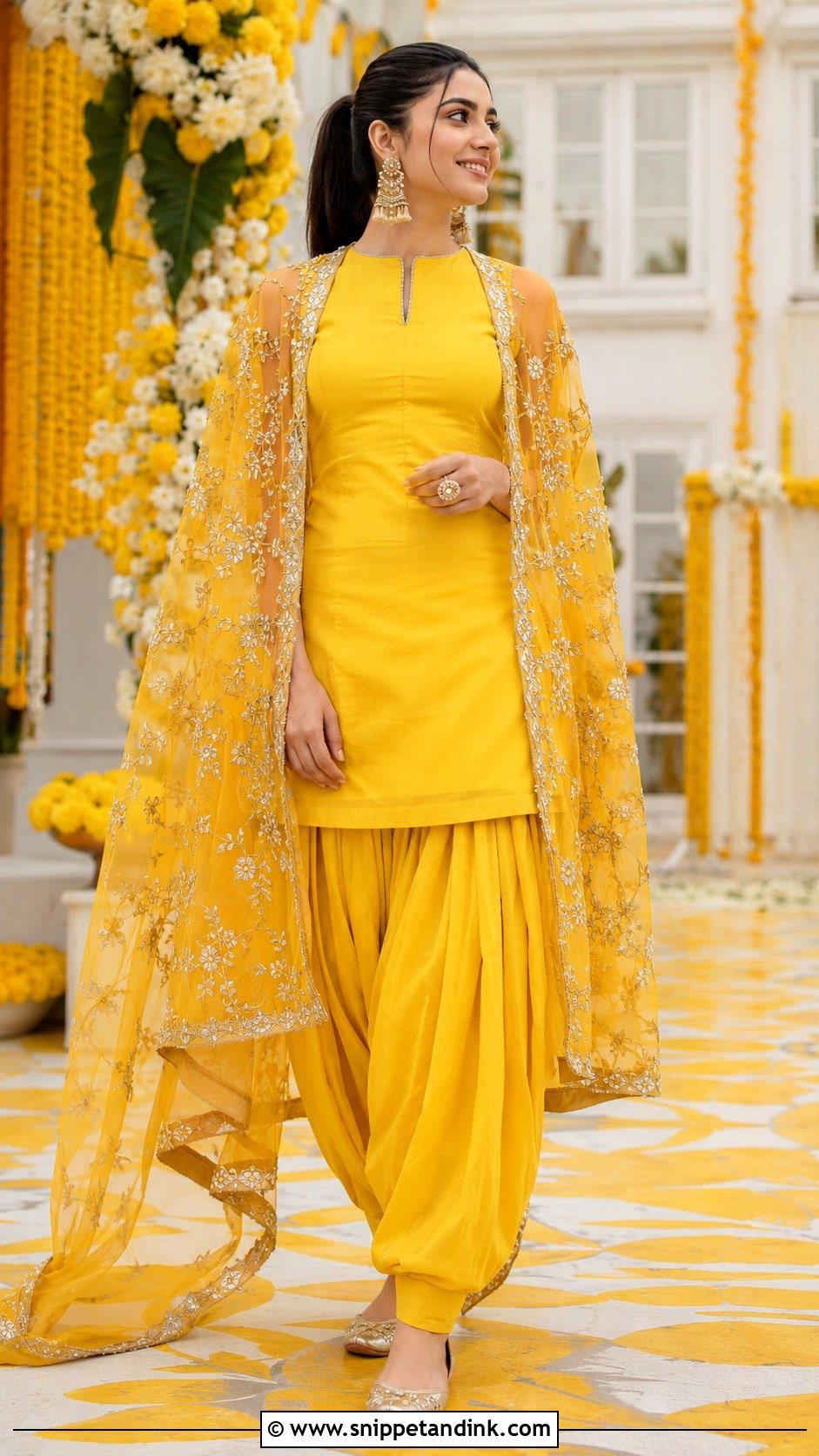
A cape solves the dupatta problem. Wear a sleeveless or short-sleeve yellow kurti with a matching salwar, and replace the dupatta with a sheer yellow cape trimmed with subtle floral thread or a narrow gota border. Your hands are free for greeting people, dancing and the rituals. The detail I watch is length: a cape that falls past the knee covers the salwar’s pleats, which are the whole reason to wear a Patiala, so keep it at hip or knee length. Metallic juttis, statement earrings, one bracelet and a sleek ponytail. Bridesmaids and younger relatives who like modern Indian fashion tend to choose this.
13. Yellow Patiala Suit With Short Peplum Kurti
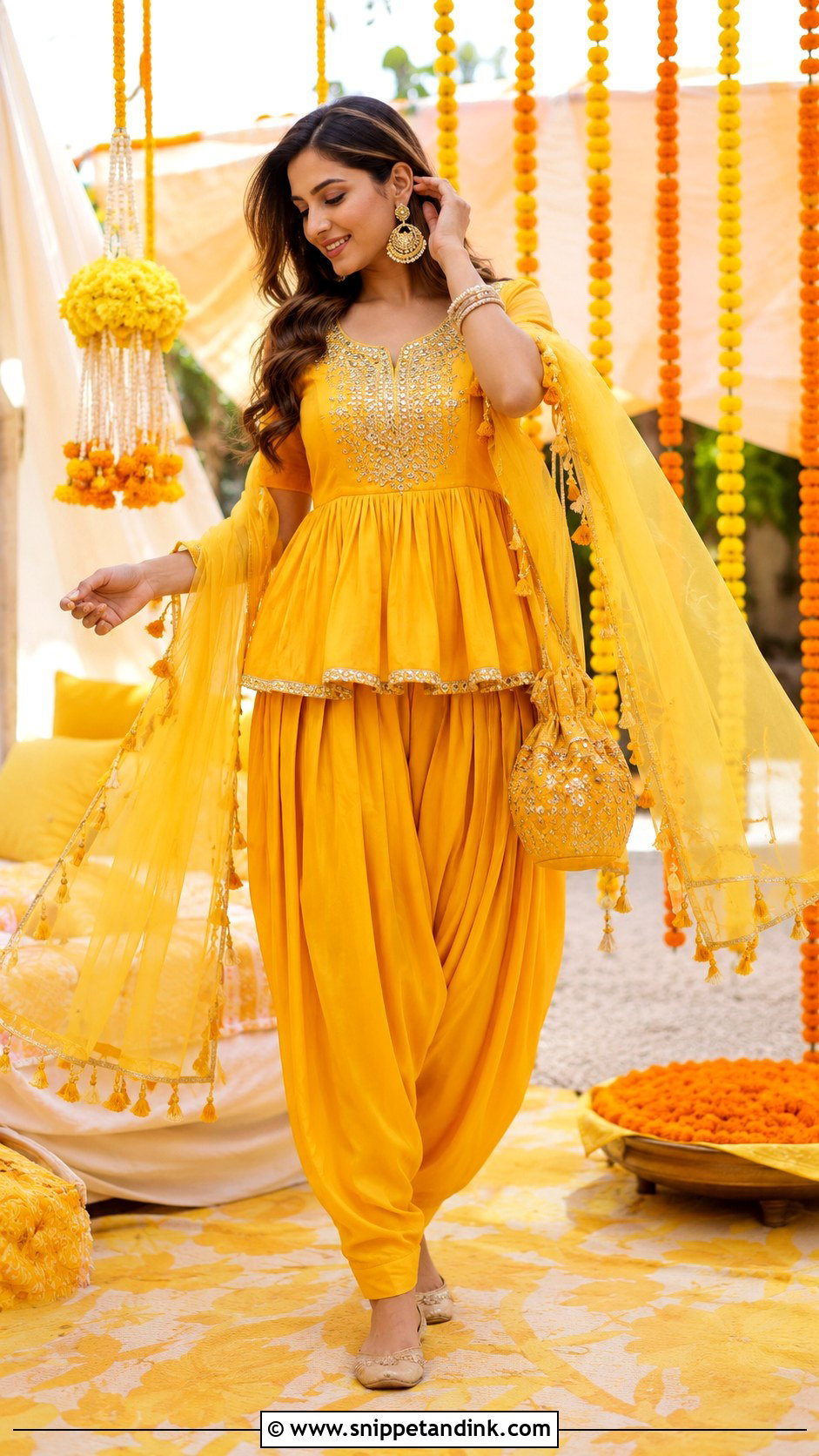
Pairing a peplum with a Patiala is a balancing act between two volumes. The peplum flares at the hip and the salwar balloons below it, so I keep the salwar plain and the peplum’s flare gentle. Choose a marigold-yellow peplum top with light embroidery at the neckline and make sure its waist seam sits right at your natural waist; if it rides higher, the outfit looks top-heavy. A sheer tasselled dupatta over one shoulder, pointed juttis, medium chandbalis and a compact potli finish it, with a low ponytail or loose braid. It flatters several body shapes and suits cousins, friends and sisters at a lively daytime function.
14. Yellow Patiala Suit With Sleeveless Kurti
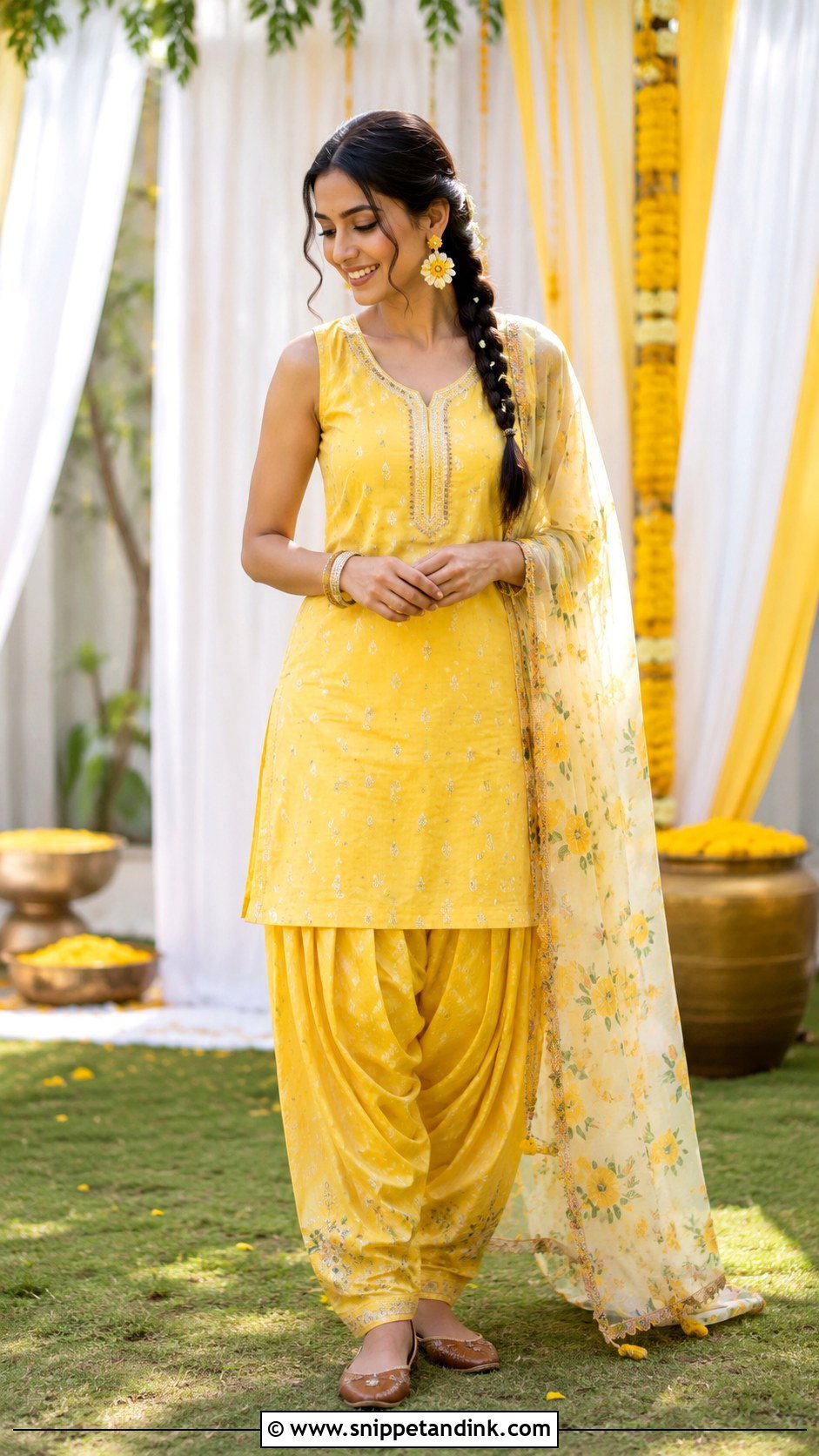
For a hot outdoor ceremony, I’d go sleeveless. A yellow kurti in cotton, a linen blend or soft georgette with a modest round or V neck, and a little embroidery near the armholes so the edge looks finished. Fully pleated cotton salwar underneath. Carry a printed or lightly embellished dupatta on one shoulder. Floral earrings, slim bangles and soft leather juttis keep it light. Tie your hair up; a high braid keeps the back of your neck cool. If you want coverage, cap sleeves give it to you with the same airy styling. Best for guests and bridesmaids.

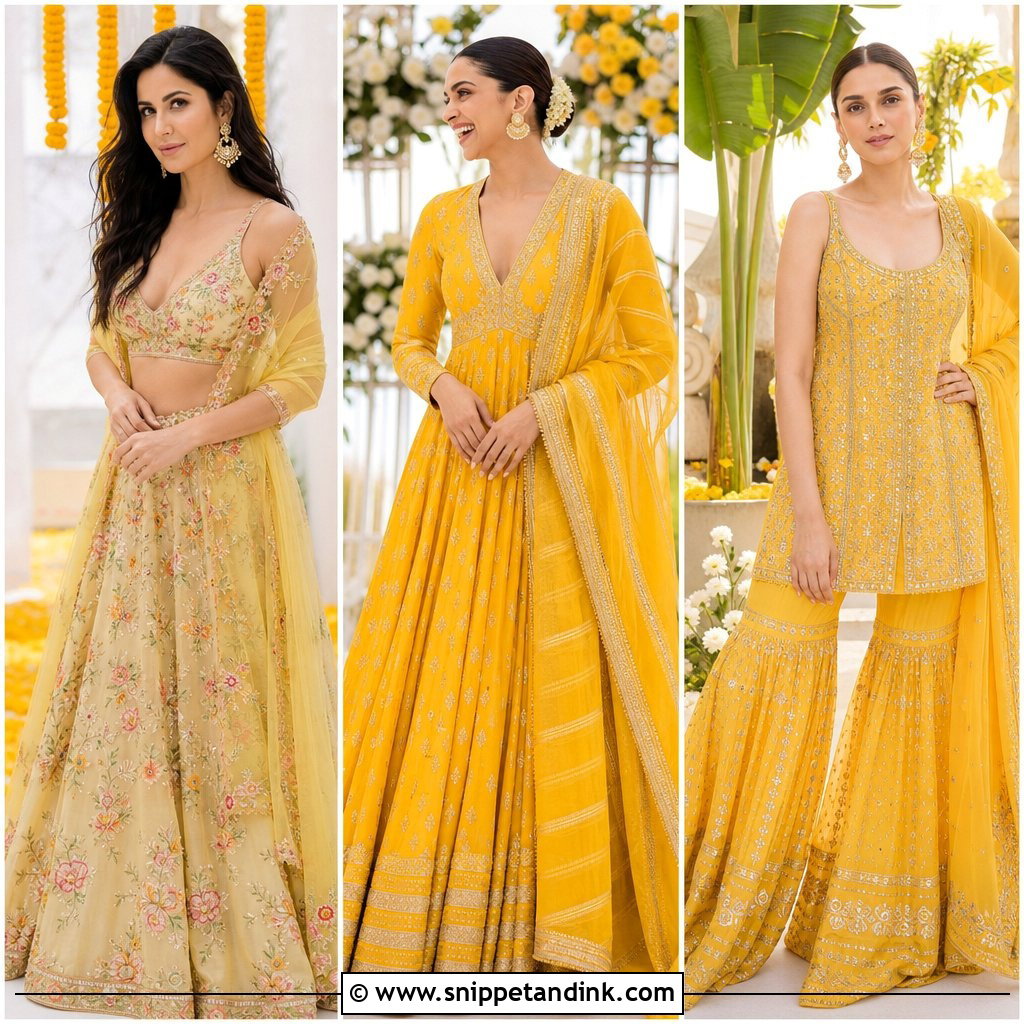
15. Yellow Patiala Suit With Full-Sleeve Kurti
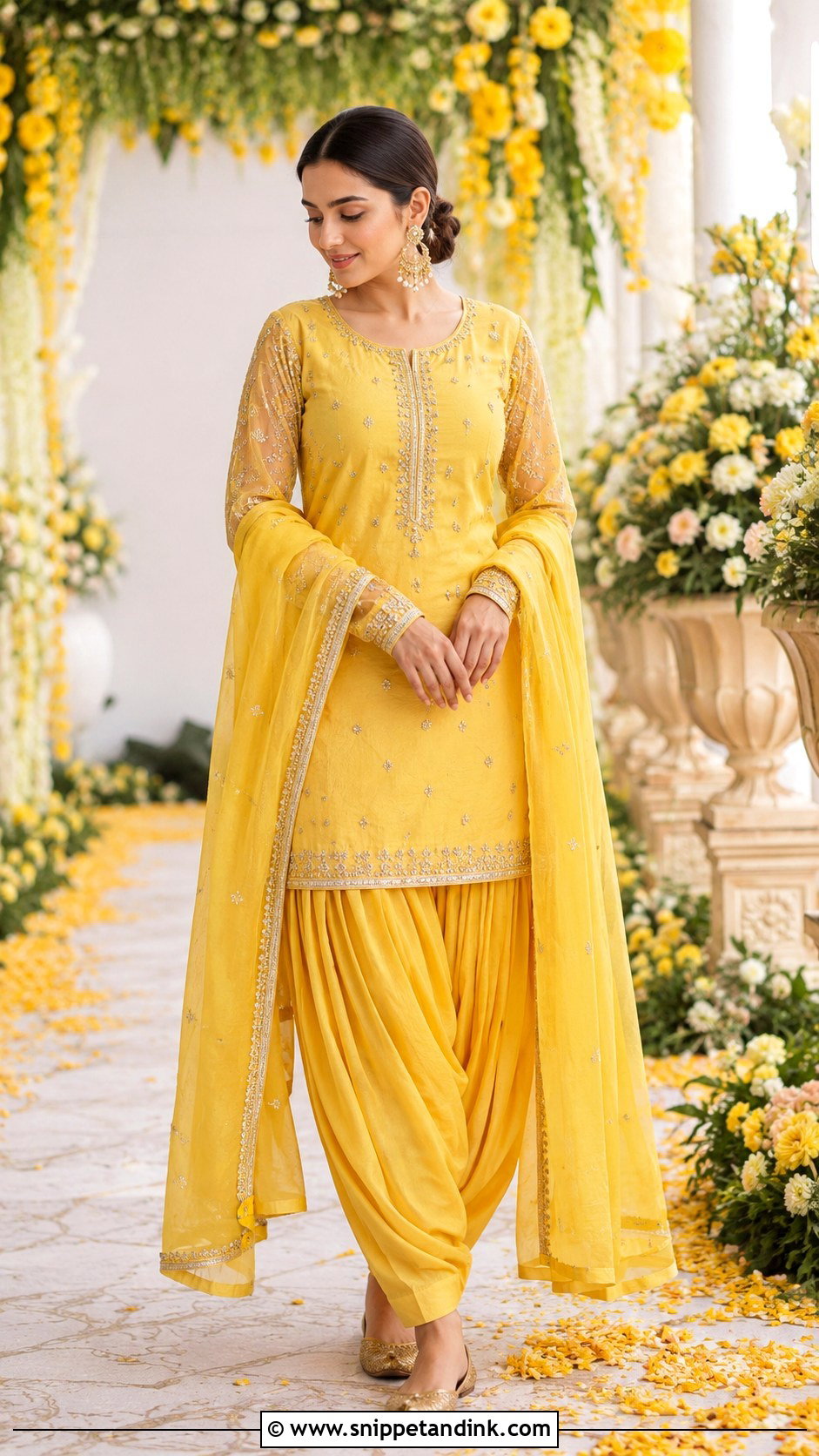
Full sleeves make sense in cooler weather or at an indoor ceremony, and they give older relatives coverage without looking formal. Choose a lightweight yellow kurti with sheer embroidered sleeves and fitted cuffs on a straight body, a well-pleated salwar and a matching chiffon dupatta draped over one arm so the sleeve shows. Gold juttis and drop earrings. Fitted cuffs and bangles don’t always get along, so try the bangles on over the cuff before the day; if they don’t slide on comfortably, leave them off. A center-parted low bun. Avoid thick linings and dense sleeve embroidery, which get hot and stiff when you are active.
16. Yellow Patiala Suit With Floral Print Kurti
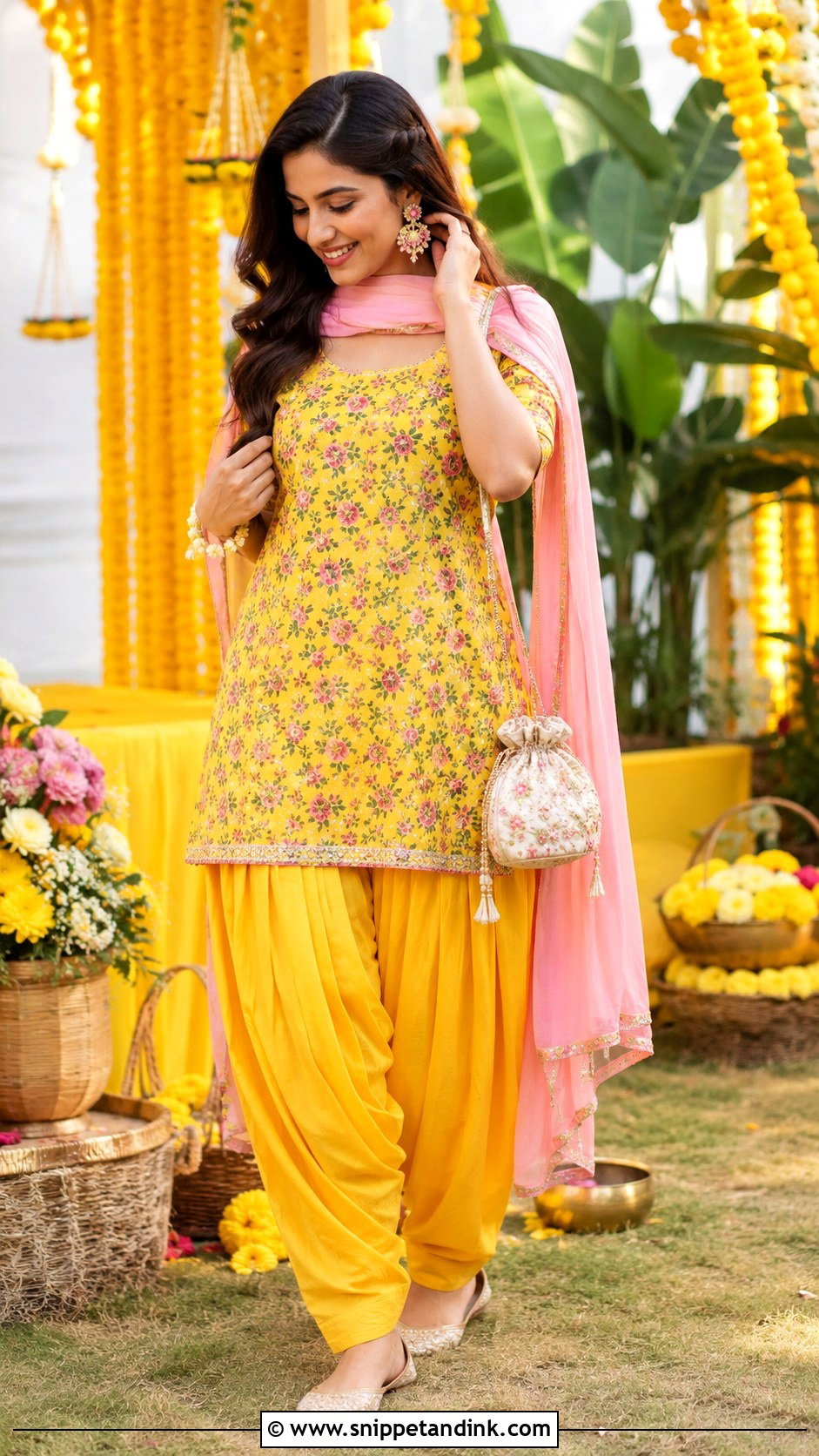
Floral prints soften the Patiala shape and are an easy pick for a garden haldi or a small home ceremony. A yellow base with small pink, white or green flowers, a solid yellow salwar and a plain chiffon dupatta in one color from the print keep it cohesive. I prefer small-scale prints here; large flowers get swallowed and distorted in the salwar’s pleats, while small ones read evenly. Neutral juttis, delicate floral earrings and a crossbody potli so your hands stay free. Soft waves or a braid with flowers. You’ll wear this again for festive lunches and family events.
17. Yellow Patiala Suit With Punjabi Paranda
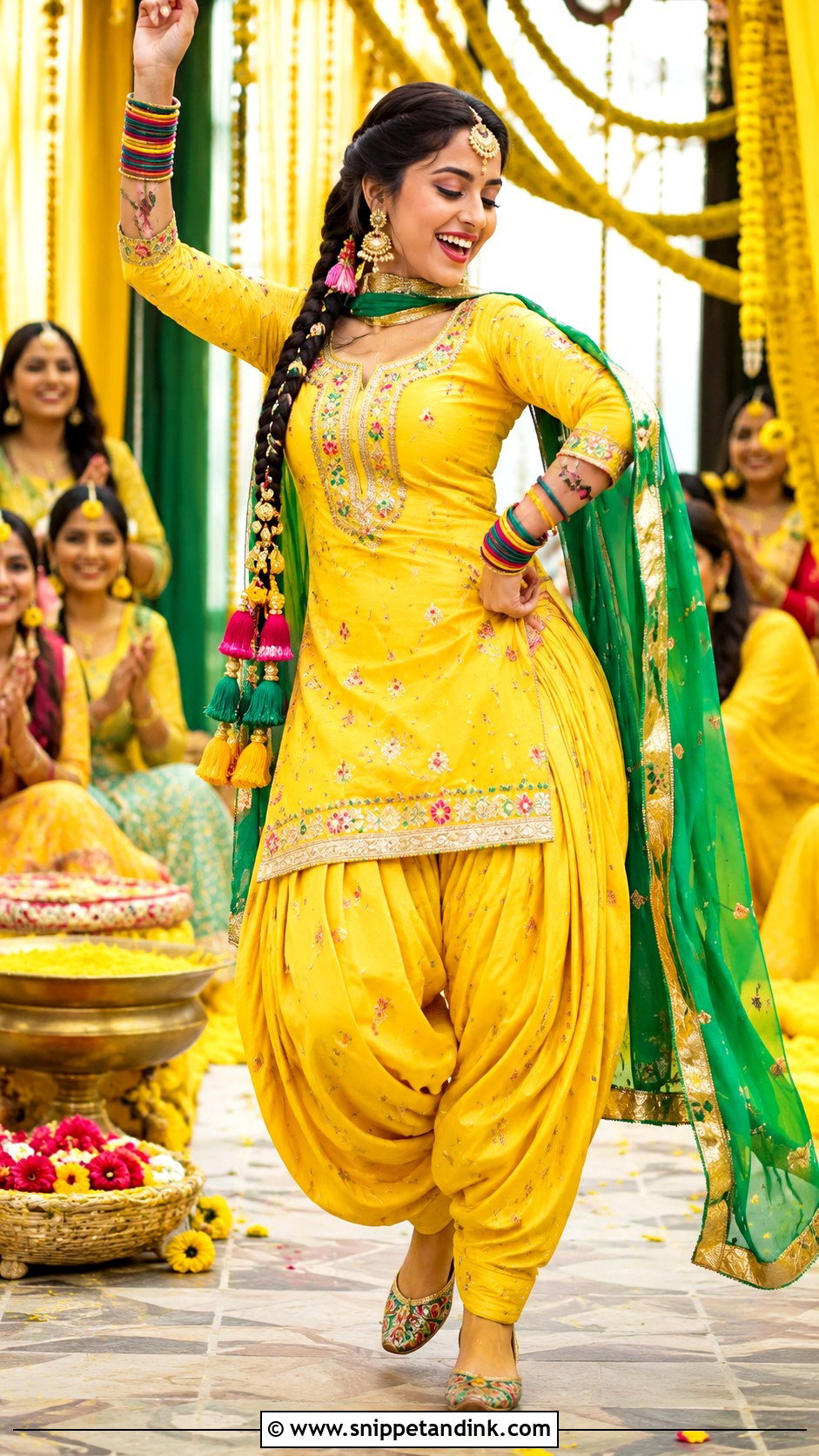
Few accessories suit a Patiala as naturally as a colorful Punjabi paranda. Wear a vivid yellow kurti with embroidered borders and a matching salwar, and choose a red, pink or green dupatta that echoes a color in the paranda. The paranda is woven into the lower part of a braid, so the braid needs to be secure and fairly tight at the top; a loose braid lets the weight of the tassels drag it apart as you dance. Traditional juttis, bold jhumkas and colorful bangles. It photographs wonderfully during dancing and works equally for the bride, sisters and bridesmaids. Keep the kurti embroidery moderate so the braid and dupatta can share the attention.
18. Yellow Patiala Suit With Red Phulkari Dupatta
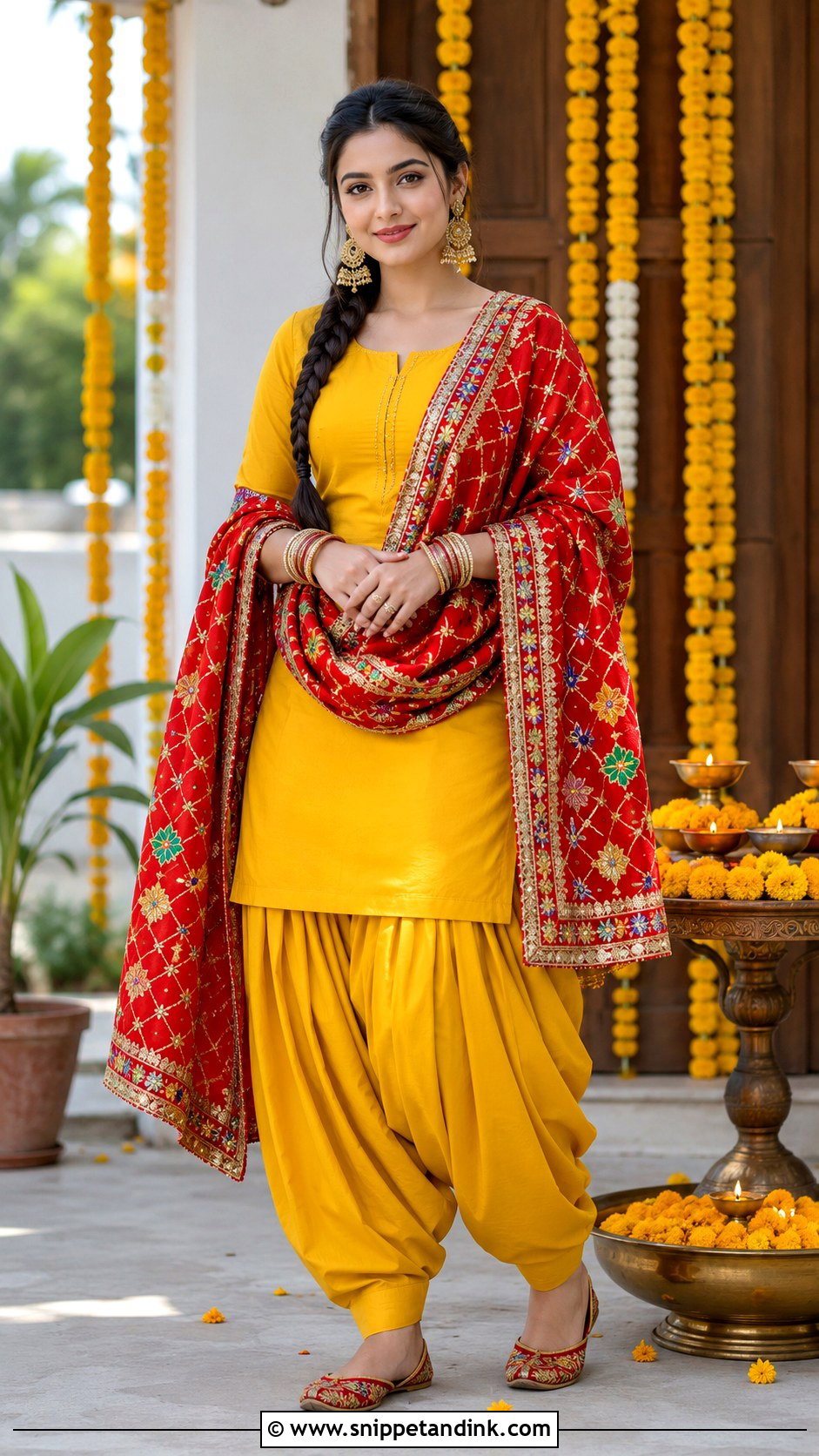
Yellow and red is the most traditional pairing on this list. A plain golden-yellow kurti, a matching salwar and a red phulkari dupatta dense with embroidery is all it takes. Drape the dupatta diagonally across the torso if the ceremony is active, since that drape stays put far better than one shoulder. Red-and-gold juttis, antique jhumkas and red glass bangles. A neat side braid with small floral pins. Because the phulkari carries so much detail, carry a plain potli and keep neck jewelry minimal. Close family members get a strong traditional presence without a heavy suit.
19. Yellow Patiala Suit With Marigold Accessories
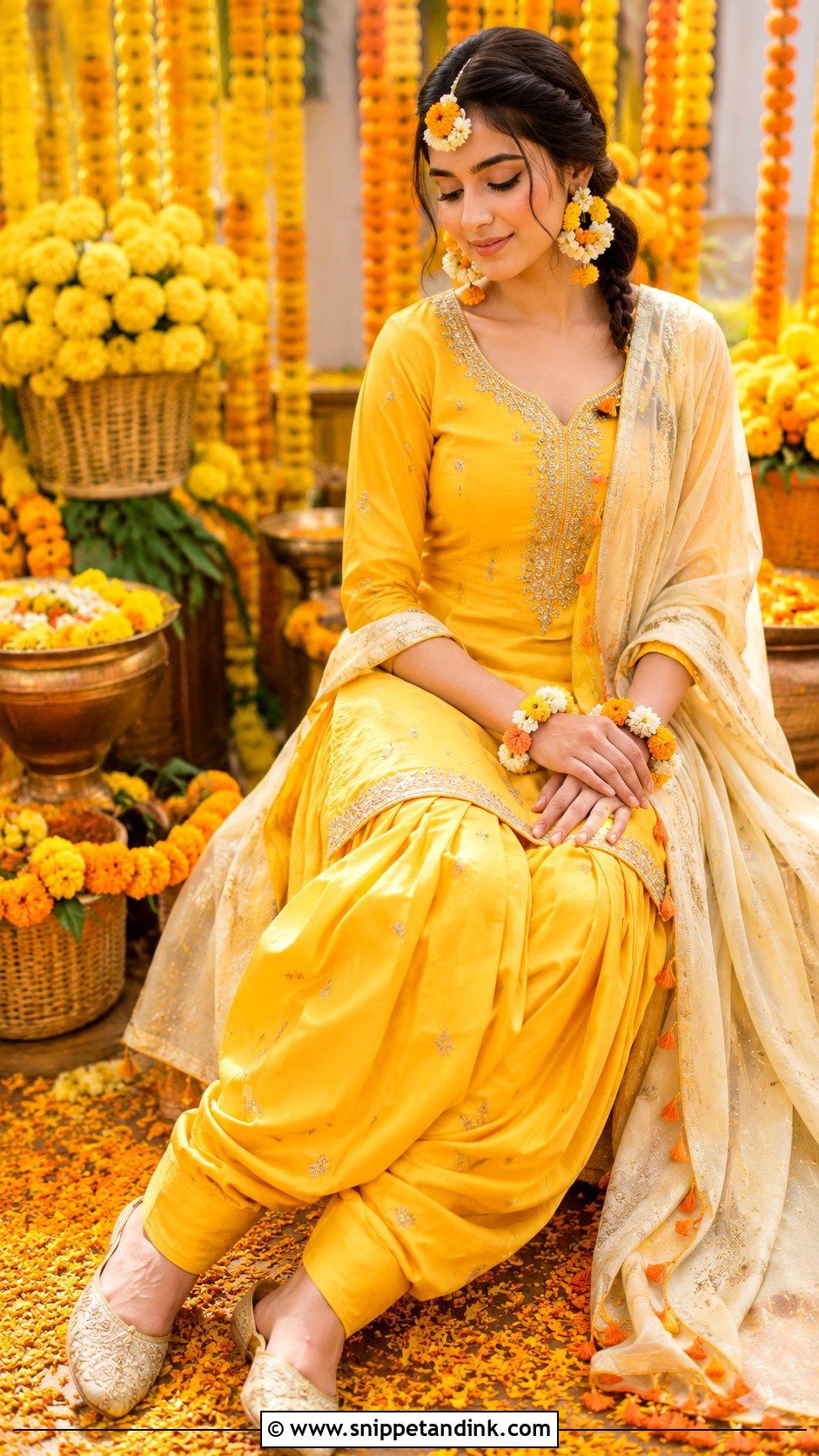
For the bride, marigold accessories are what separate her from a courtyard full of guests in yellow. Start with a simple turmeric-yellow kurti and salwar in cotton silk or light georgette, and a plain dupatta with tiny orange tassels. Then add marigold-style earrings, floral wrist pieces and a small floral maang tikka. Plain yellow or cream juttis keep it from looking busy. Real marigold jewelry is heavier than people expect, so I ask the florist to thread fewer, smaller blooms on light wire and attach everything firmly; a dangling earring that tugs at your lobe for three hours is miserable. A low braid or bun gives a secure base for extra flowers.
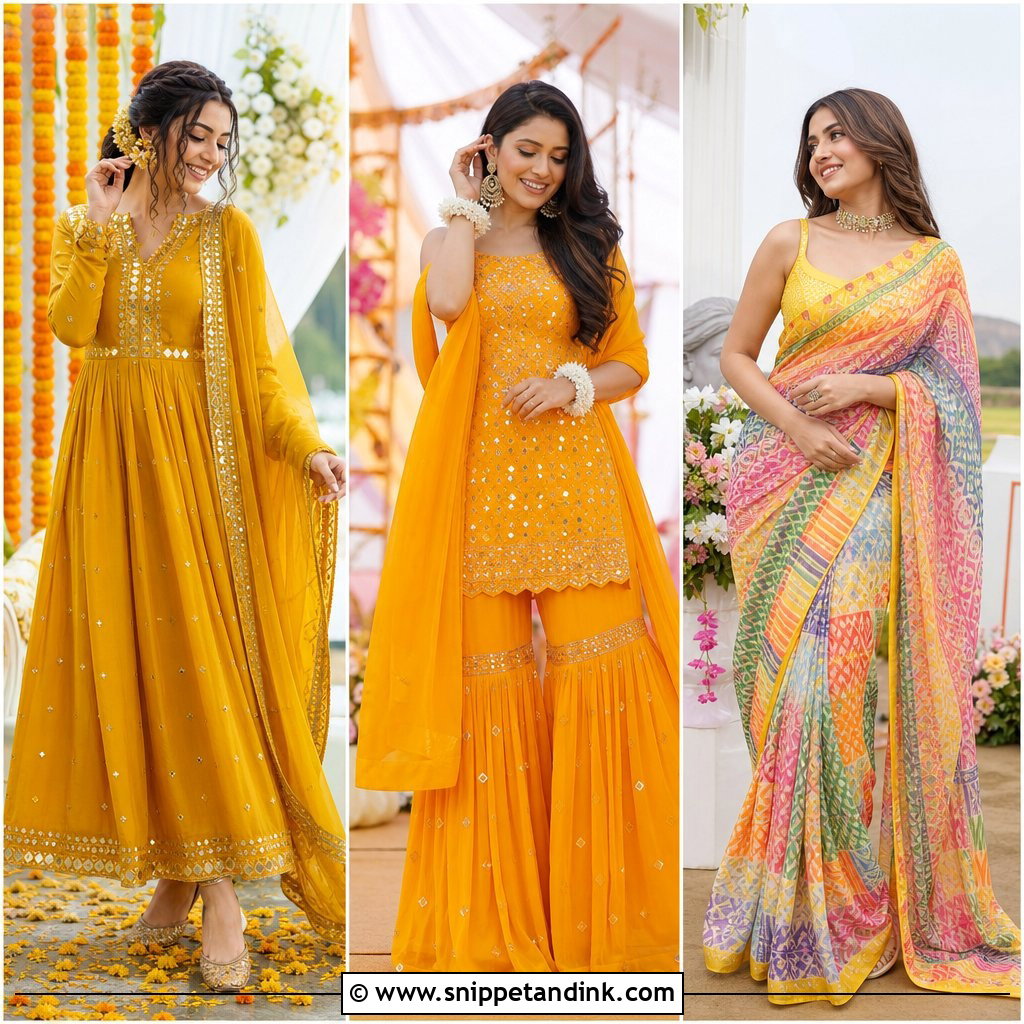
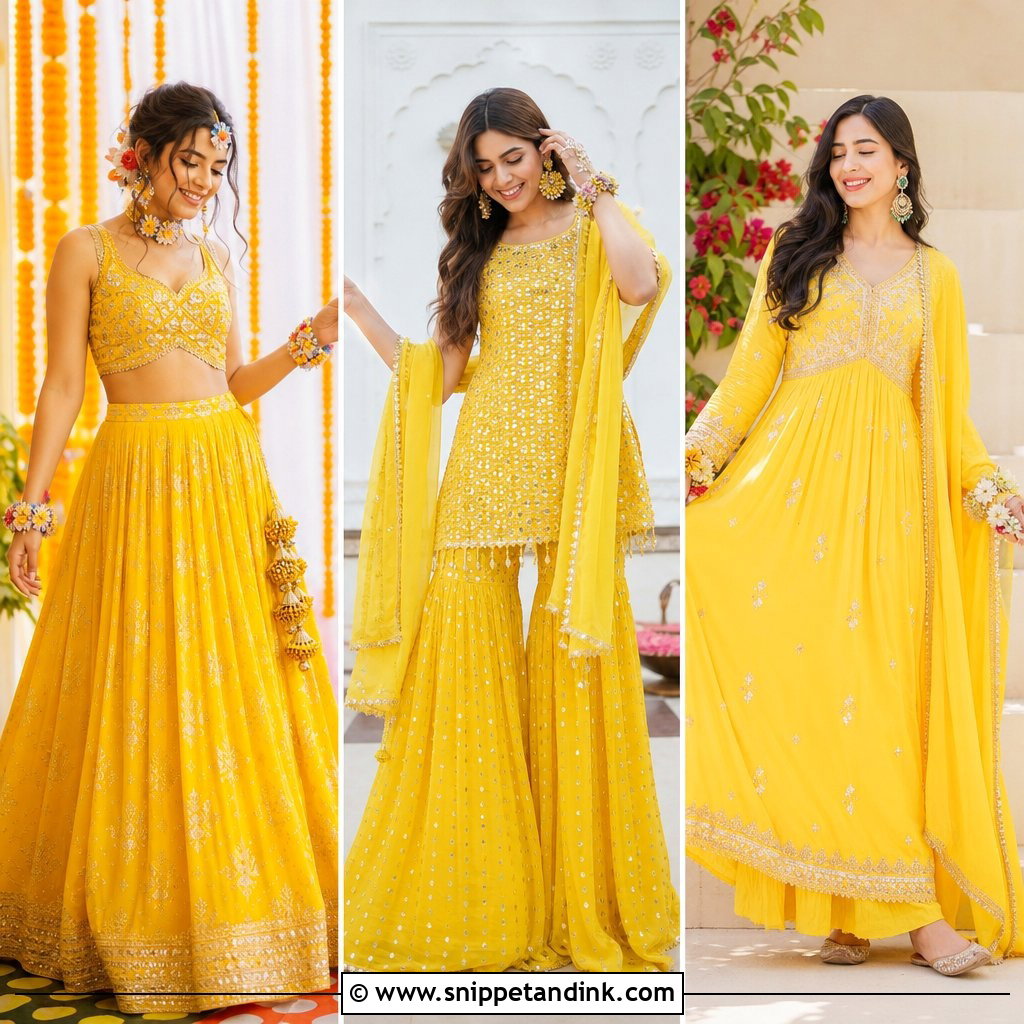
20. Yellow Patiala Suit With Contrasting Blue Dupatta
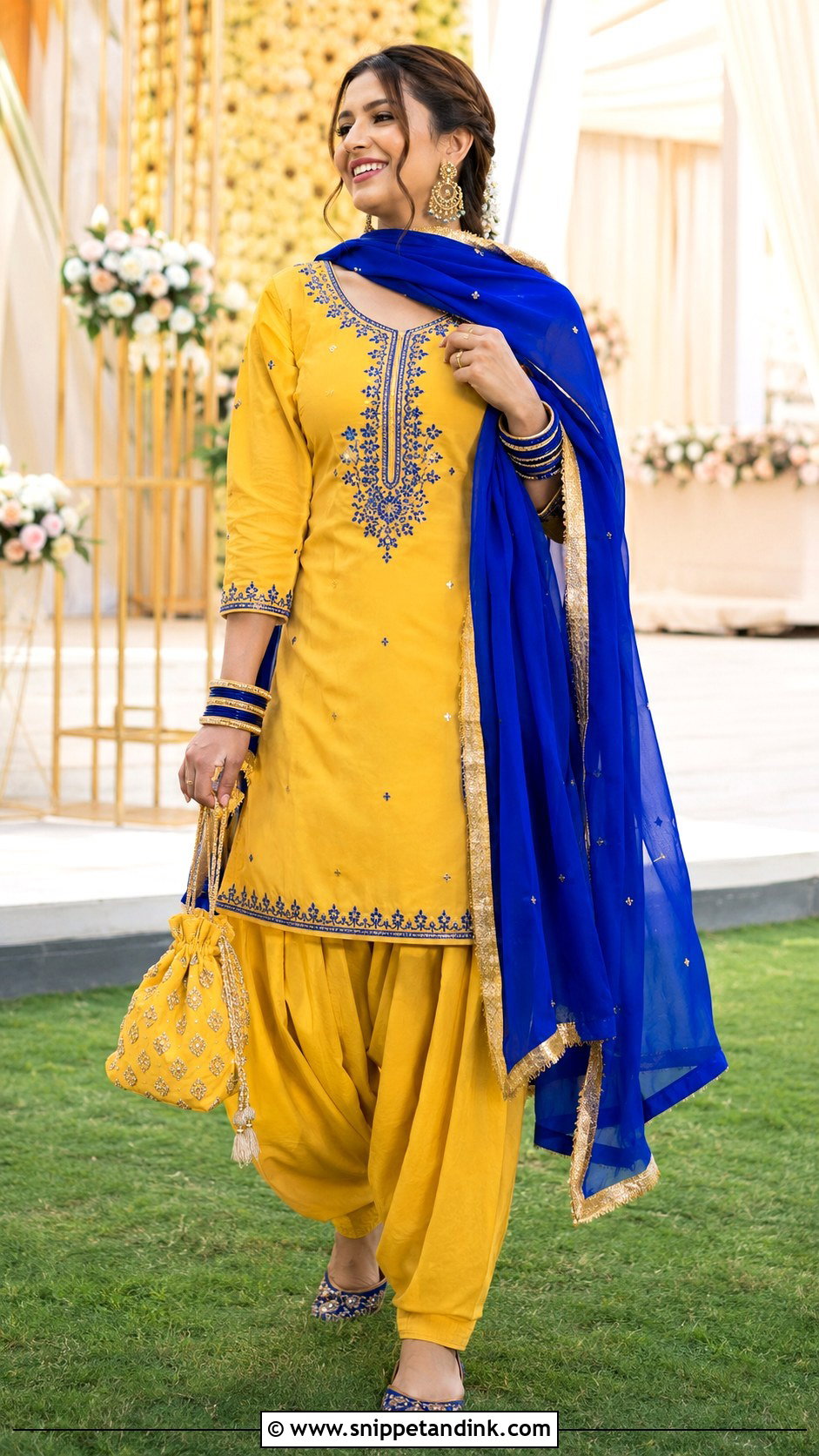
Royal blue against sunny yellow is a bolder contrast than the usual pink or green, and it holds up in photos. Choose a clean yellow kurti with fine blue embroidery at the neckline, a plain yellow salwar and a royal-blue chiffon or bandhani dupatta with a narrow gold edge. Blue embroidered juttis, gold earrings and a few blue bangles. Carry a yellow potli so the blue doesn’t take over. A polished ponytail or side braid. It suits bridesmaids, sisters and guests who want something different, and looks especially vivid on a green lawn.
Dressing Sisters and Cousins in Yellow Without Twinning
When a whole group of women wears yellow Patialas, the photos can flatten into one block of color. I’d rather give the group a shared rule and let each person vary inside it.
My usual approach is to fix the yellow and vary the dupatta. Everyone wears a kurti and salwar in roughly the same family of yellow, then each picks a different dupatta color from a short list: pink, green, red, blue. In group shots that reads as a planned palette rather than a uniform.
- Keep the bride in the richest fabric or the heaviest embroidery so she stands out even in a crowd of yellow.
- Spread the shades by role: mustard and deeper tones for the bride’s side, brighter or paler yellows for friends.
- Agree on one shoe style, usually flat juttis, so nobody is wobbling on wet floors while the paste is being applied.
- Let older relatives choose full sleeves or a longer kurti without it looking like they missed the brief; shared color is enough to tie them in.
Tailors get busy before wedding season, so I’d hand over the fabric for group outfits well ahead and allow time for one trial and a round of alterations.
Pleats First, Then Everything Else
I’d judge any Patiala suit in this order: how the salwar is cut, how the dupatta stays on and only then the decoration. Get breathable fabric, a waistband you can sit in and a secure drape, and nearly any of these yellow looks will carry you through the rituals. Phulkari, floral jewelry, embroidered juttis and glass bangles are the easy layer on top. Match the shade to the time of day, soft pastel or lemon in the morning and mustard or sunflower under strong sun, and let the suit bring joyful Punjabi character to the celebration.
You'll Like These Ideas:








Leave a Reply