
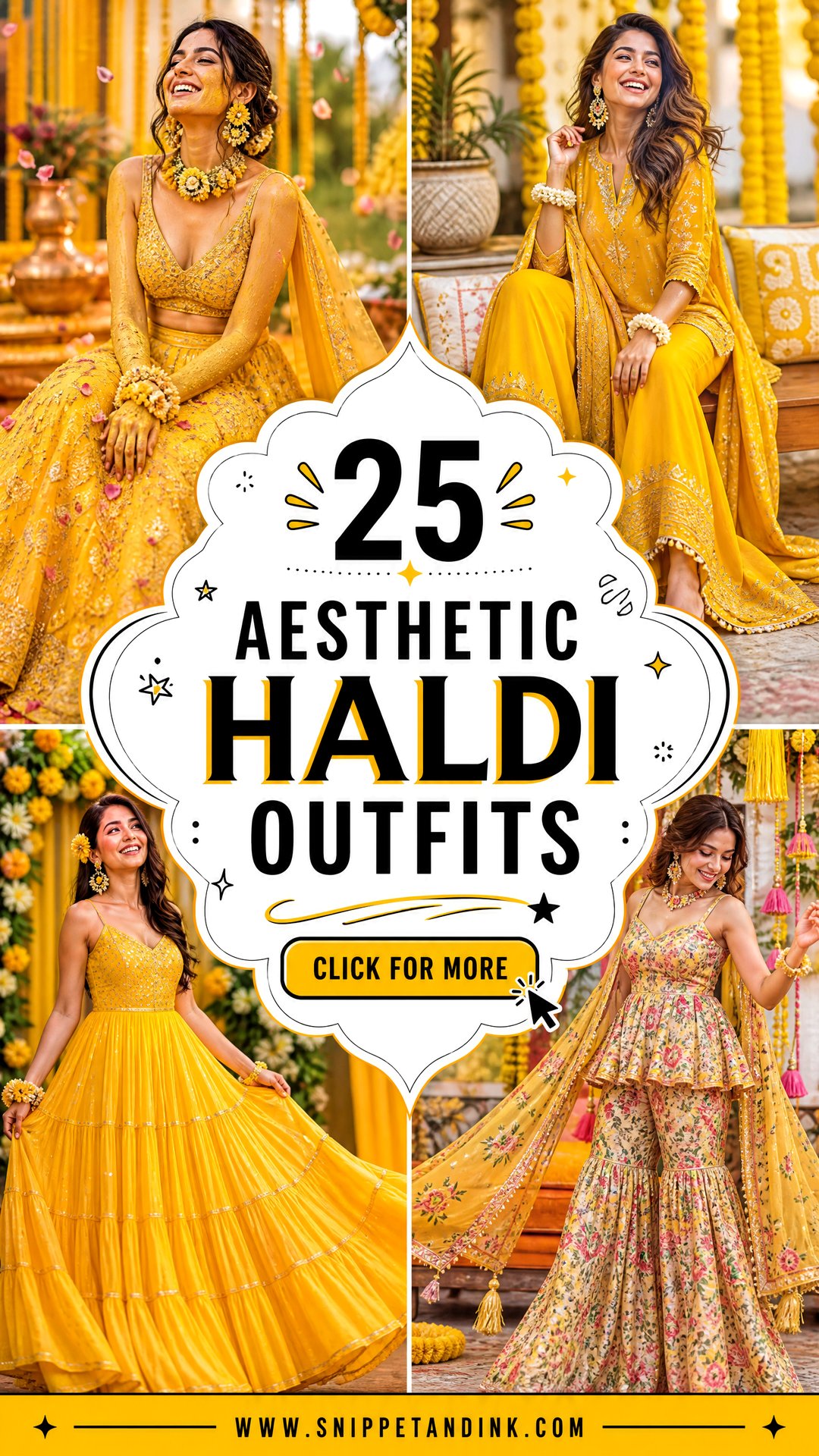
Haldi is the one wedding function where I tell brides to dress for mess first and photographs second. You’ll be sitting low, laughing, getting turmeric paste smeared on your face, arms and feet, and probably getting splashed with water at the end. The outfits here cover traditional lehengas and sarees, fusion separates and simple sets for brides, bridesmaids and guests. Sunny yellow is the obvious choice, but marigold, fresh green, ivory, pink and floral prints all hold their own. What matters more is light fabric, secure draping, flat shoes and accessories you won’t mind getting yellow, like flower jewellery, gota trim, glass bangles or a small potli bag.
Which Fabrics Survive a Lap Full of Turmeric Paste
Turmeric dyes almost anything it touches, and the paste usually has oil, gram flour or milk mixed in, which helps it cling. So before colour or cut, I sort Haldi fabrics into three groups.
Easy to rescue
Cotton, cotton silk, mulmul and most polyester georgettes. They can be rinsed in cold water straight after the ritual and usually come back to their original colour, especially if the outfit is yellow to begin with.
Risky
Pure silk, organza, tissue and anything with zari. Water alone can leave marks on these, and the metallic threads in zari can tarnish when soaked. Keep them for family and guests who’ll be standing back from the action.
Hard to clean in any case
Ivory, white and pastel fabrics, plus heavy thread embroidery, which holds paste in its stitches. If the bride wants to wear one of these, I plan the portraits first and bring a second, simpler outfit for the ritual itself.
The same thinking applies to jewellery. Fresh flower jewellery suits Haldi because nothing is lost if it gets stained. Real pearls, kundan and stone settings trap paste in their crevices, so I’d leave the family pieces for the wedding day.
1. Yellow Lehenga Haldi Outfit
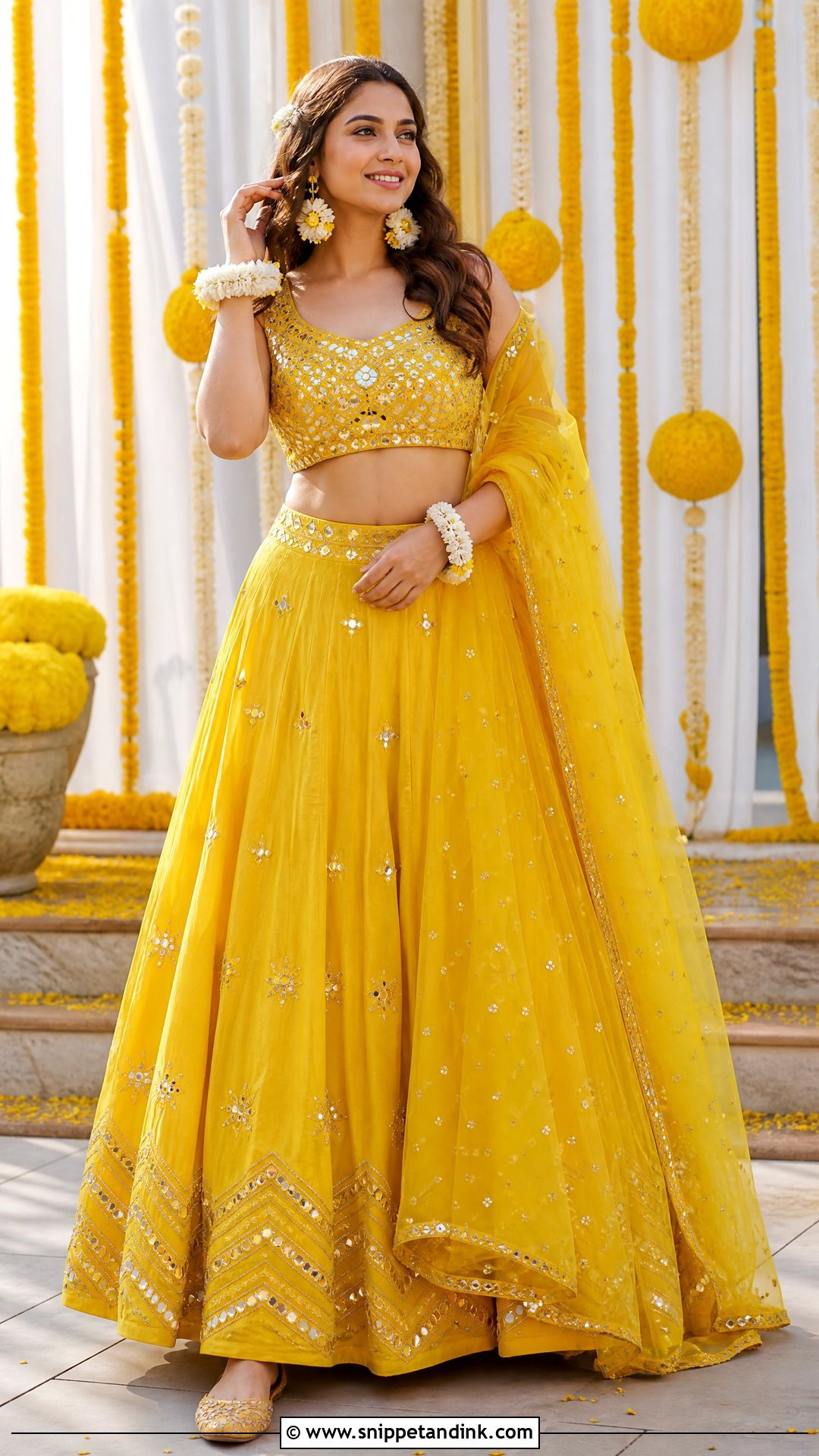
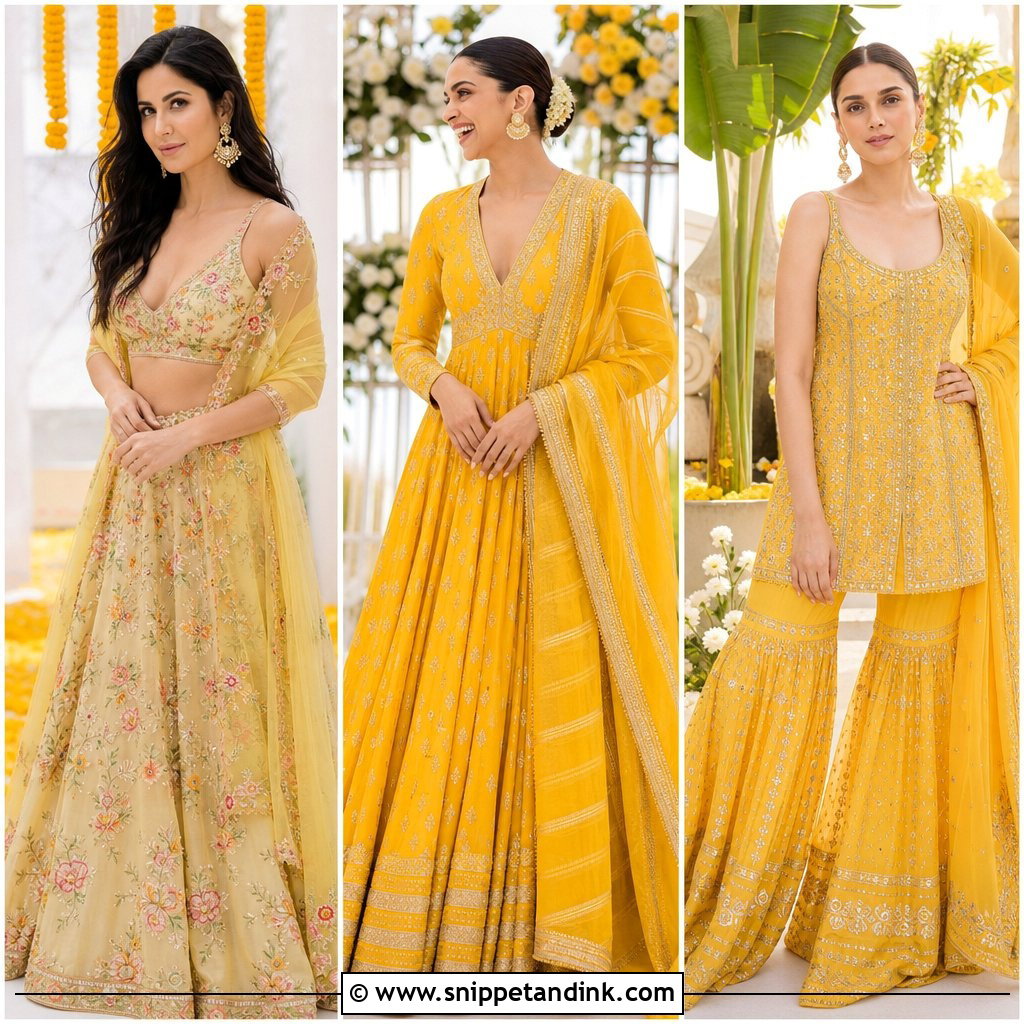
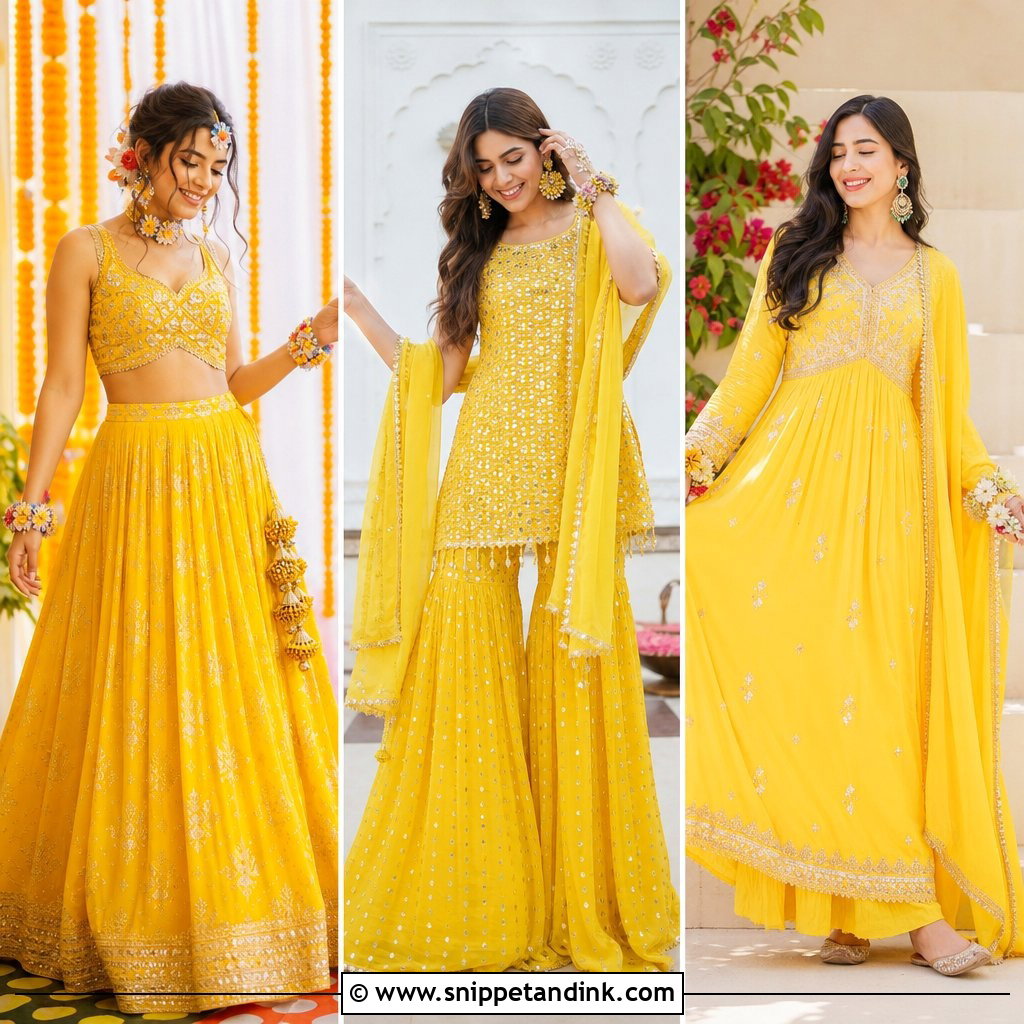
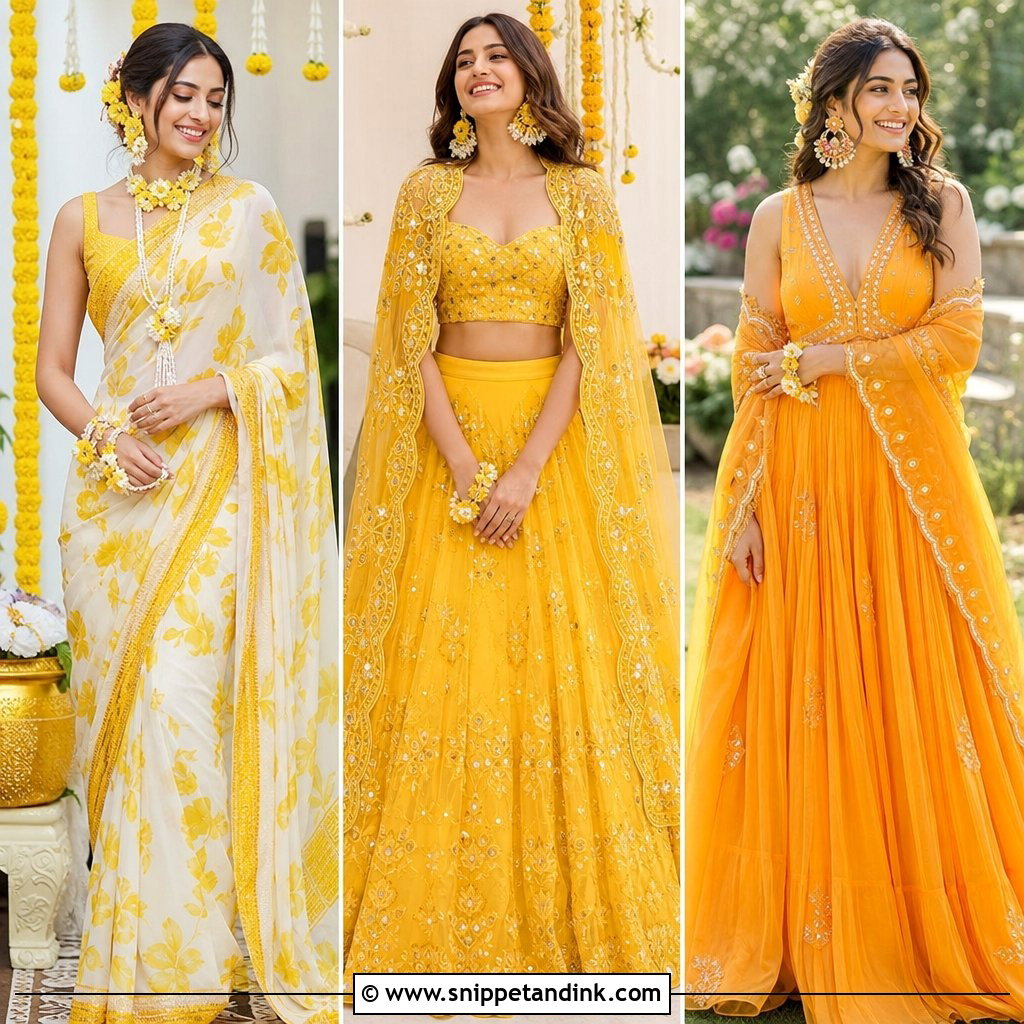
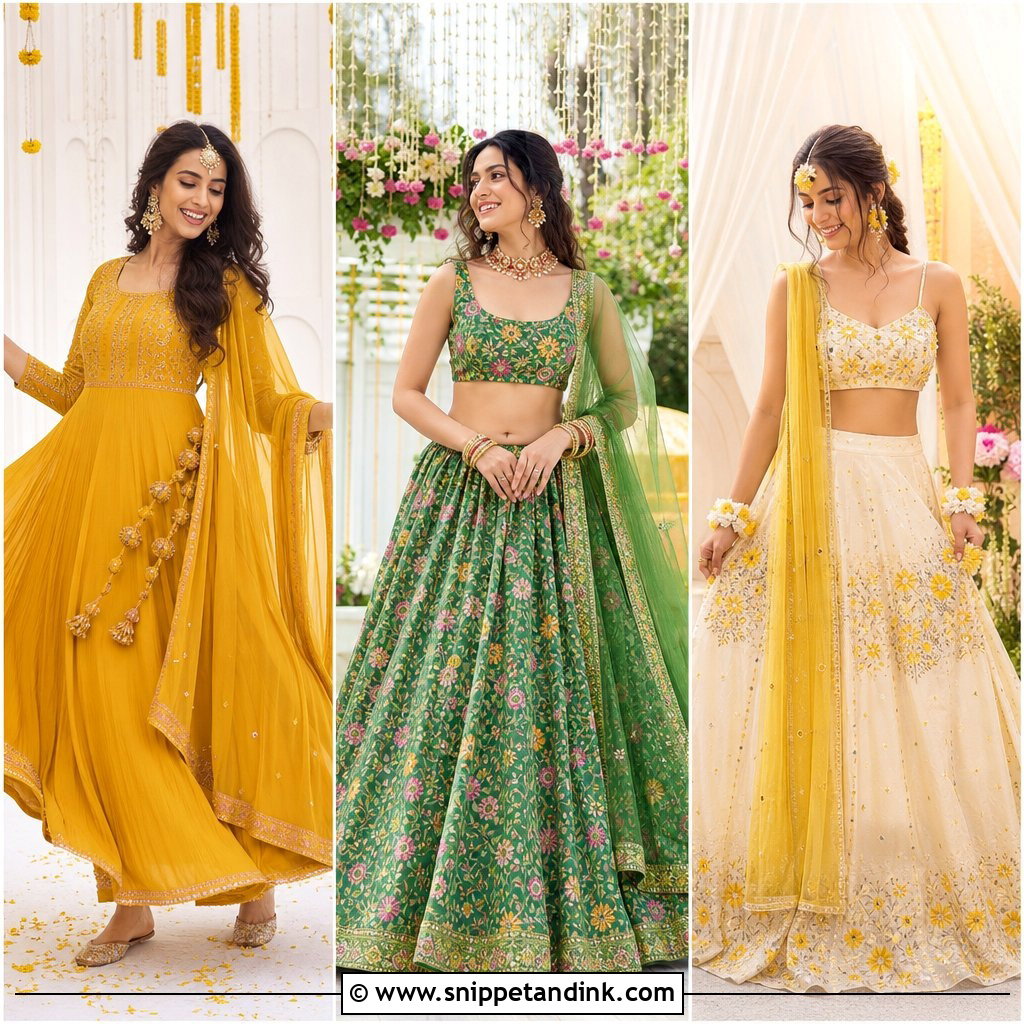
A yellow lehenga is the classic, and the skirt fabric decides whether you enjoy wearing it. Cotton silk, georgette or organza stay light; a heavy embroidered skirt becomes a weight on your lap during an hour of sitting cross-legged. A cropped blouse with a few mirror accents gives sparkle without formality. I’d pin the dupatta at the shoulder and the back of the waist, because family will be reaching across you all morning. Brides can add flower earrings, a floral maang tikka and wrist garlands; guests might choose gold jhumkas and bangles. Embroidered juttis or flat sandals, with a low bun, loose braid or soft waves.
2. Floral Lehenga Haldi Outfit
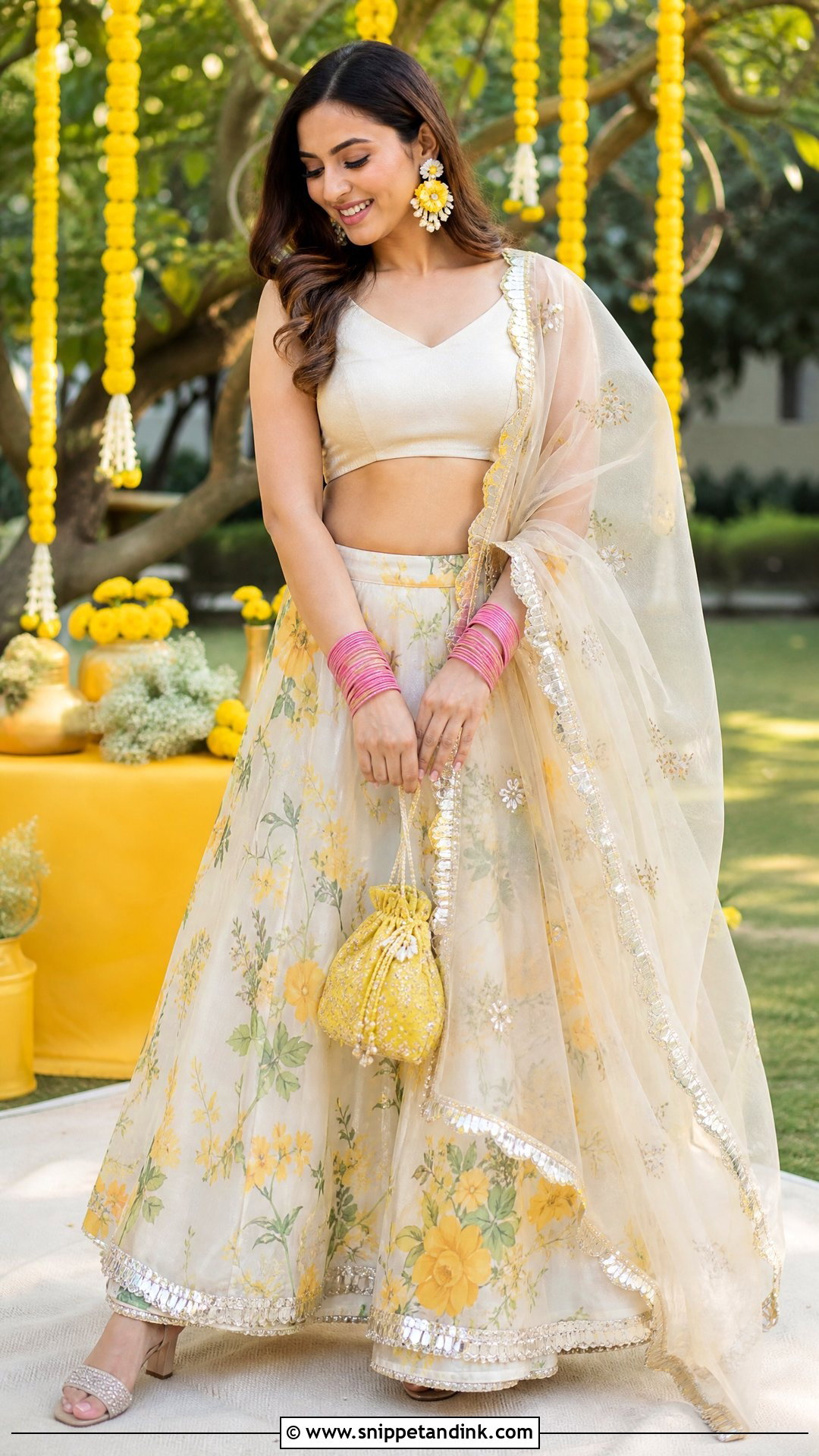
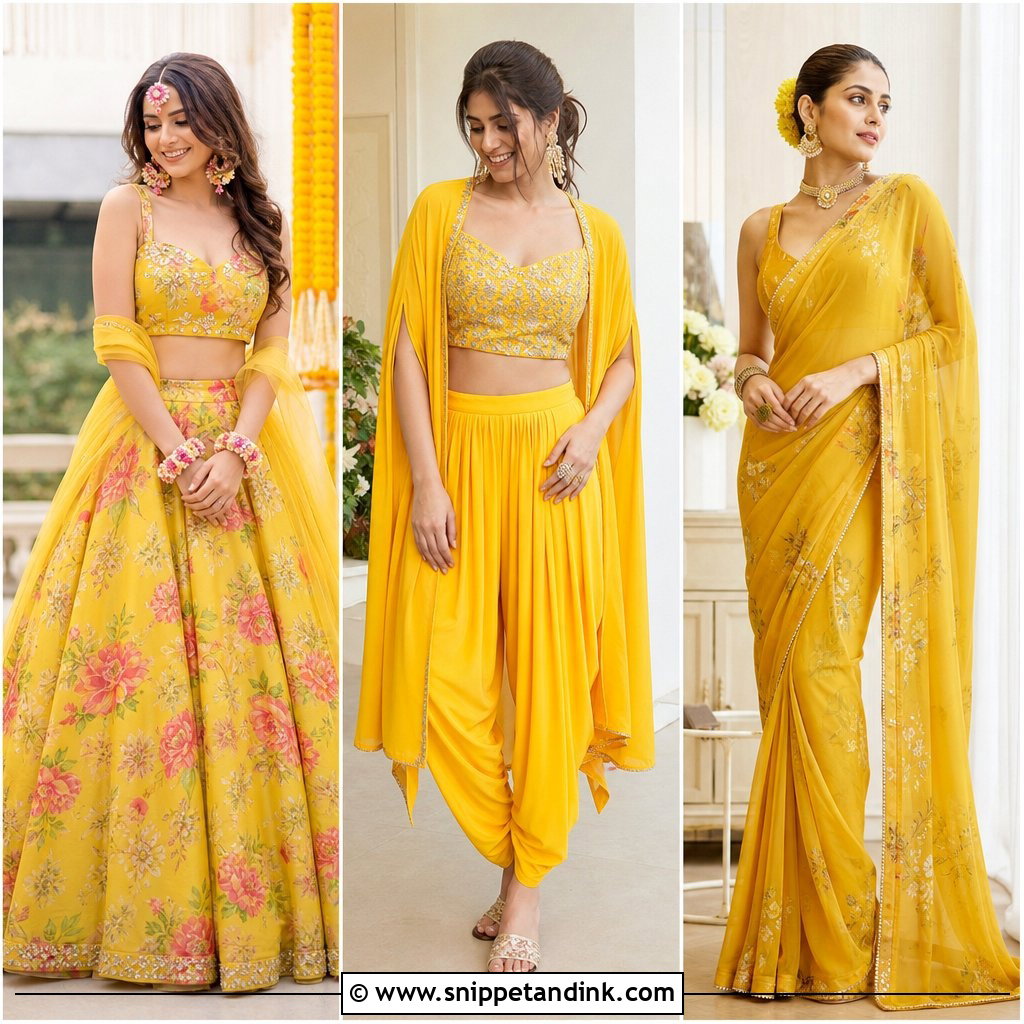
A floral lehenga carries colour through print rather than embroidery, so it stays light for a daytime function. Yellow, ivory, peach or lime bases with pink and orange flowers look cheerful in sunlight. Keep the blouse plain so the print leads, and choose a sheer dupatta with a narrow floral or gota border. A busy print also hides a stray smudge of turmeric far better than a solid colour, which brides rarely think about until the photos. Flower studs, stacked bangles and a compact potli finish it. Block heels on a hard floor, juttis on a lawn, and soft, natural makeup.
3. Yellow Saree Haldi Outfit
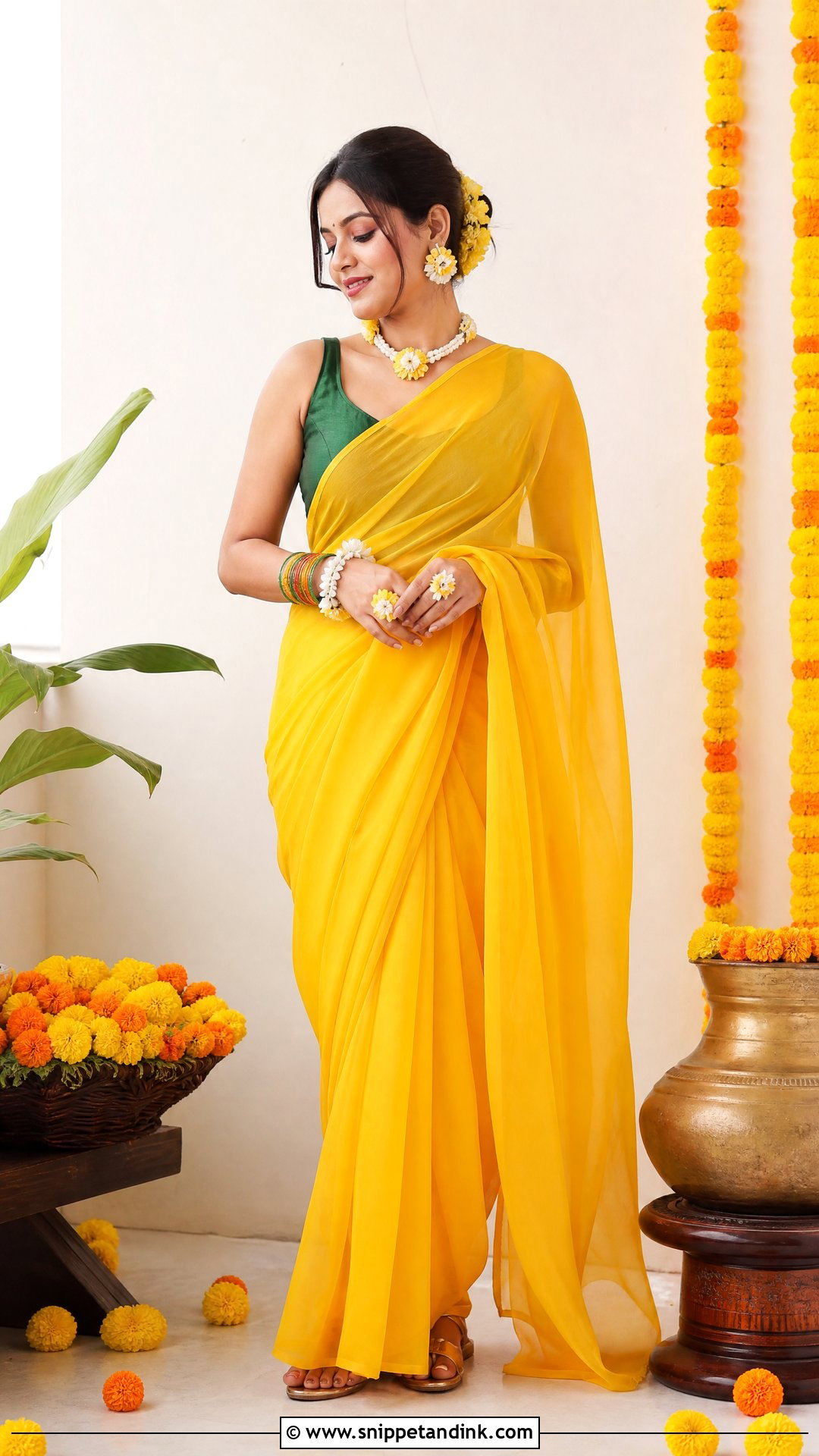
A yellow saree is the most traditional answer, and the drape is where it succeeds or fails. Chiffon, georgette, cotton or a soft silk blend falls smoothly without bulk. A matching blouse gives a clean monochrome; green, pink or orange gives contrast. I pin the pleats at the waist and again a little lower, because you’ll be sitting and standing dozens of times and loose pleats spread out every time. Floral jewellery suits a bride; guests can wear small gold earrings and glass bangles. Flat metallic sandals, a neat bun with fresh flowers and a small clutch finish it. Keep the hem slightly raised outdoors.
4. Organza Saree Haldi Outfit
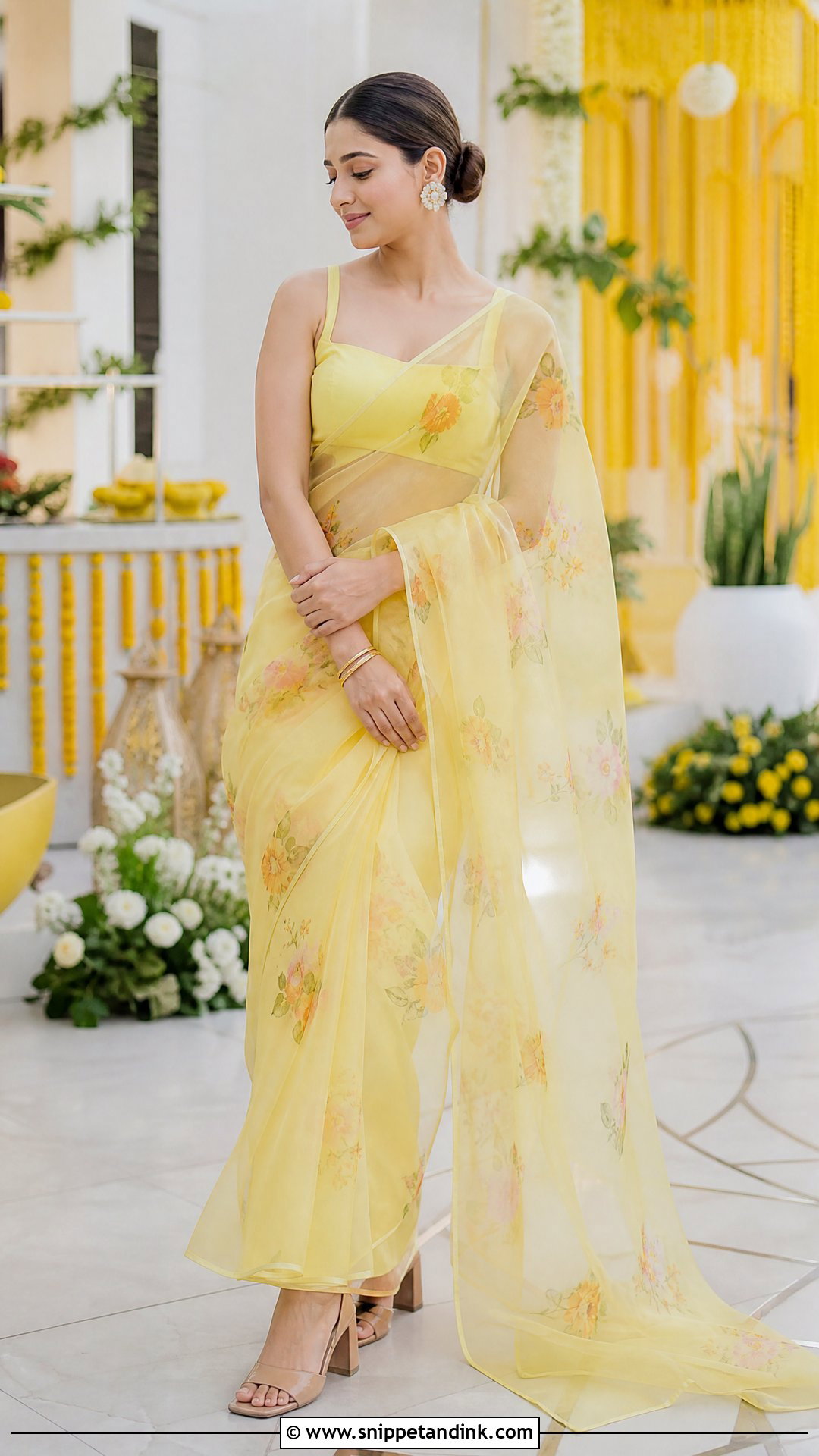
Organza looks crisp and airy, but I’d be honest: it is the fabric I’d least like to see near wet turmeric paste, because organza water-marks and the stain sits on its surface. That makes it a better choice for bridesmaids and close family than for the bride in the centre. A sheer yellow saree with embroidered flowers, scalloped edges or a fine gota border holds its structure well. Pair it with a fitted blouse, sleeveless for a modern feel or with short puff sleeves for softness. Pin the pallu neatly. Pearl-flower earrings, slim bangles, low block heels and a sleek bun are enough.
5. Mustard Sharara Haldi Outfit
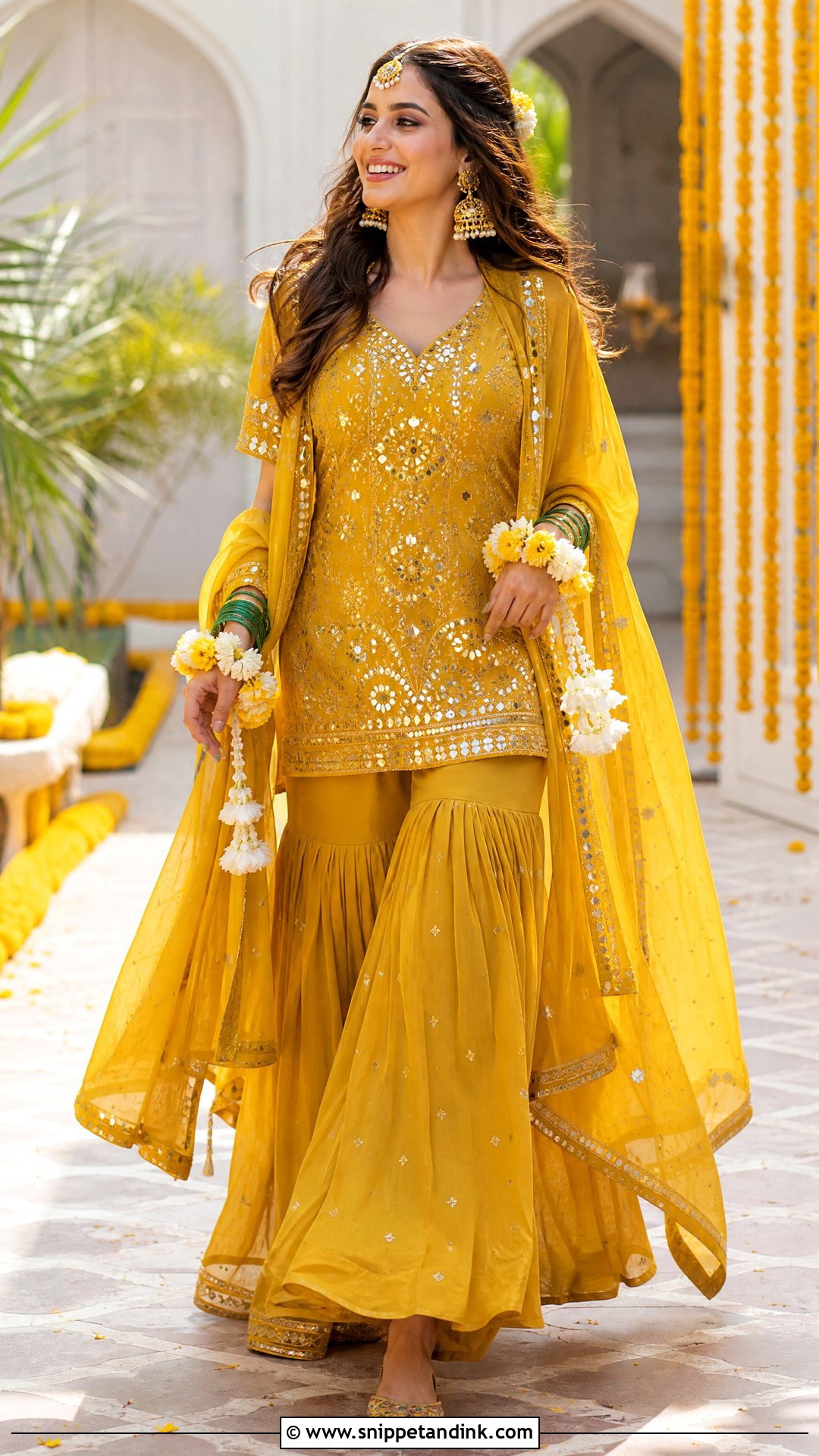
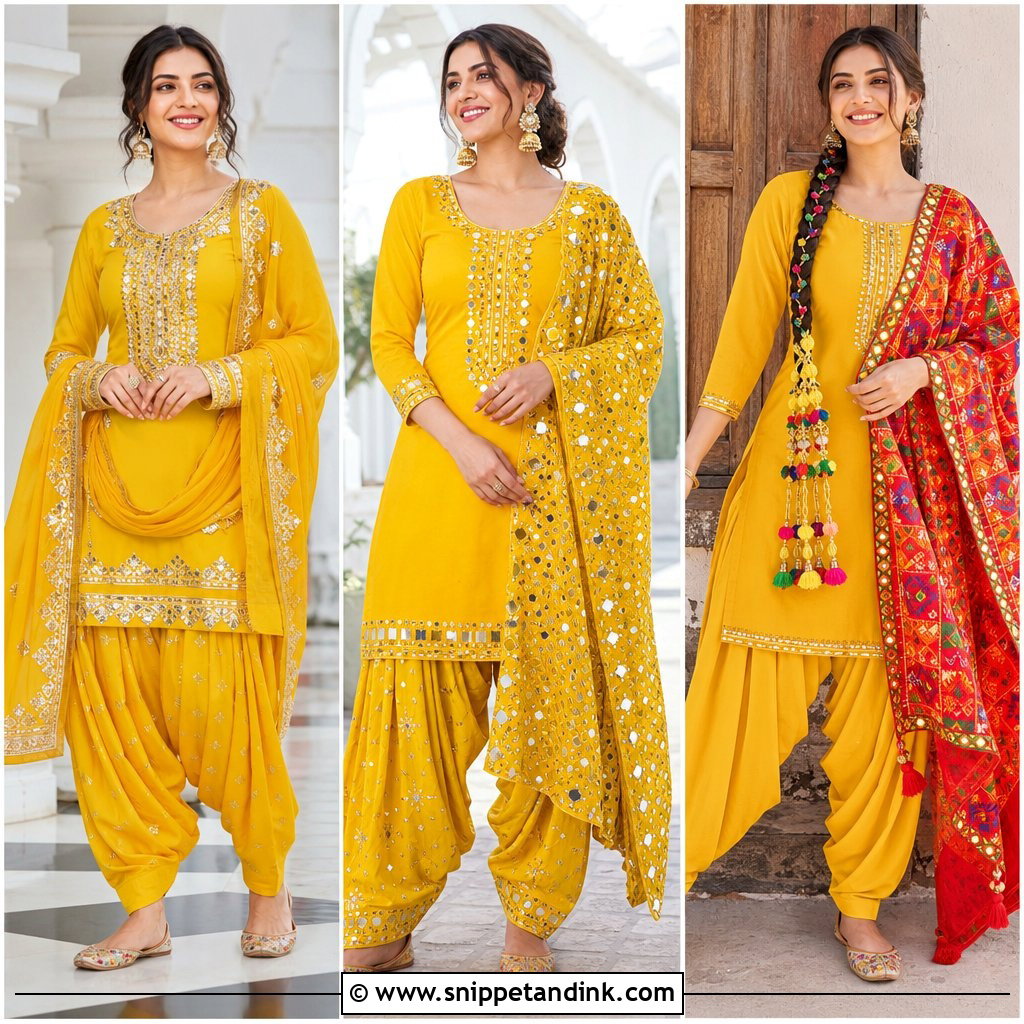
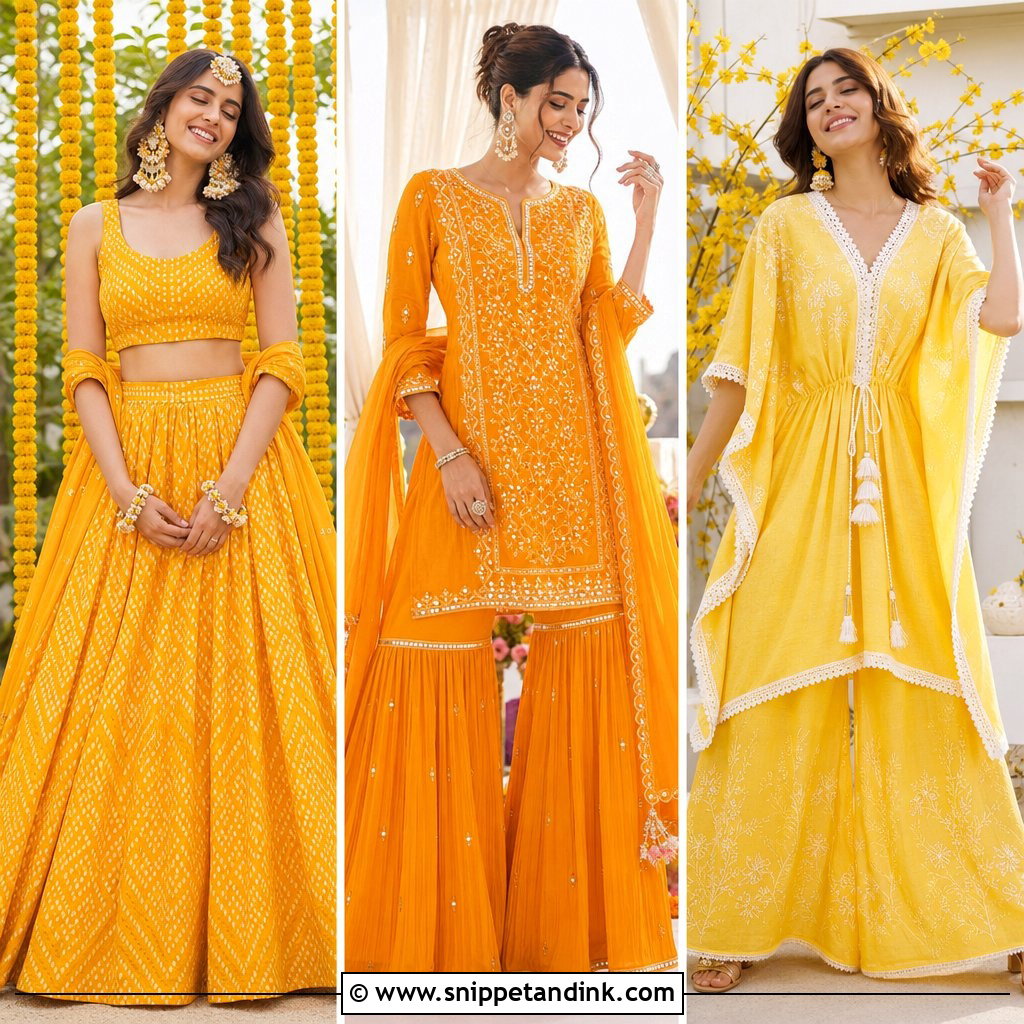
Mustard is a richer, deeper yellow than lemon and stands out against marigold-heavy decor, where bright yellow can blend into the backdrop. Wide sharara pants with a short kurta in restrained mirror work or gota trim make sitting on the floor easy. The dupatta can go around the arms or over one shoulder. Green glass bangles, gold jhumkas and an embroidered potli add contrast. A braid or half-up hairstyle keeps it youthful, and flat juttis suit outdoor events. Brides can add floral kaleeras; guests should keep accessories simpler. Mustard also flatters deeper skin tones beautifully, where pale lemon sometimes looks flat.
6. Floral Sharara Haldi Outfit
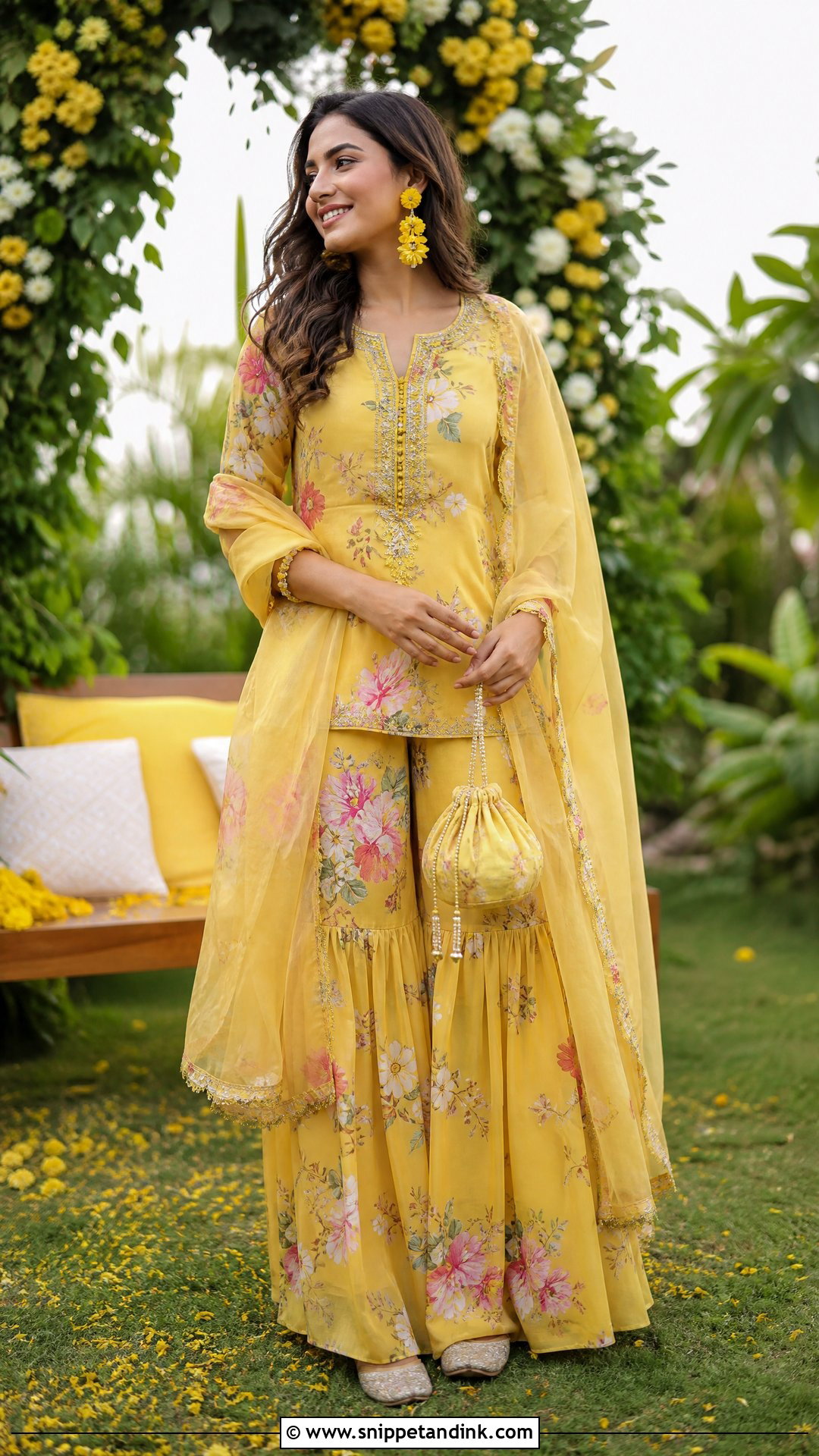
A floral sharara set is a short printed kurta, wide pants and an optional dupatta, and it’s the outfit I’d point to for a playful look that still looks put together. Small botanical prints read subtle; big blooms read bold. Yellow mixed with pink, green, coral and ivory brightens a sunny venue. Because there’s already so much colour, keep accessories simple: flower earrings, a thin stack of bracelets and neutral juttis. A kurta with a defined waist stops the wide pants from swamping a smaller frame. A loose ponytail or soft curls and light makeup finish it.
7. Gota Patti Anarkali Haldi Outfit
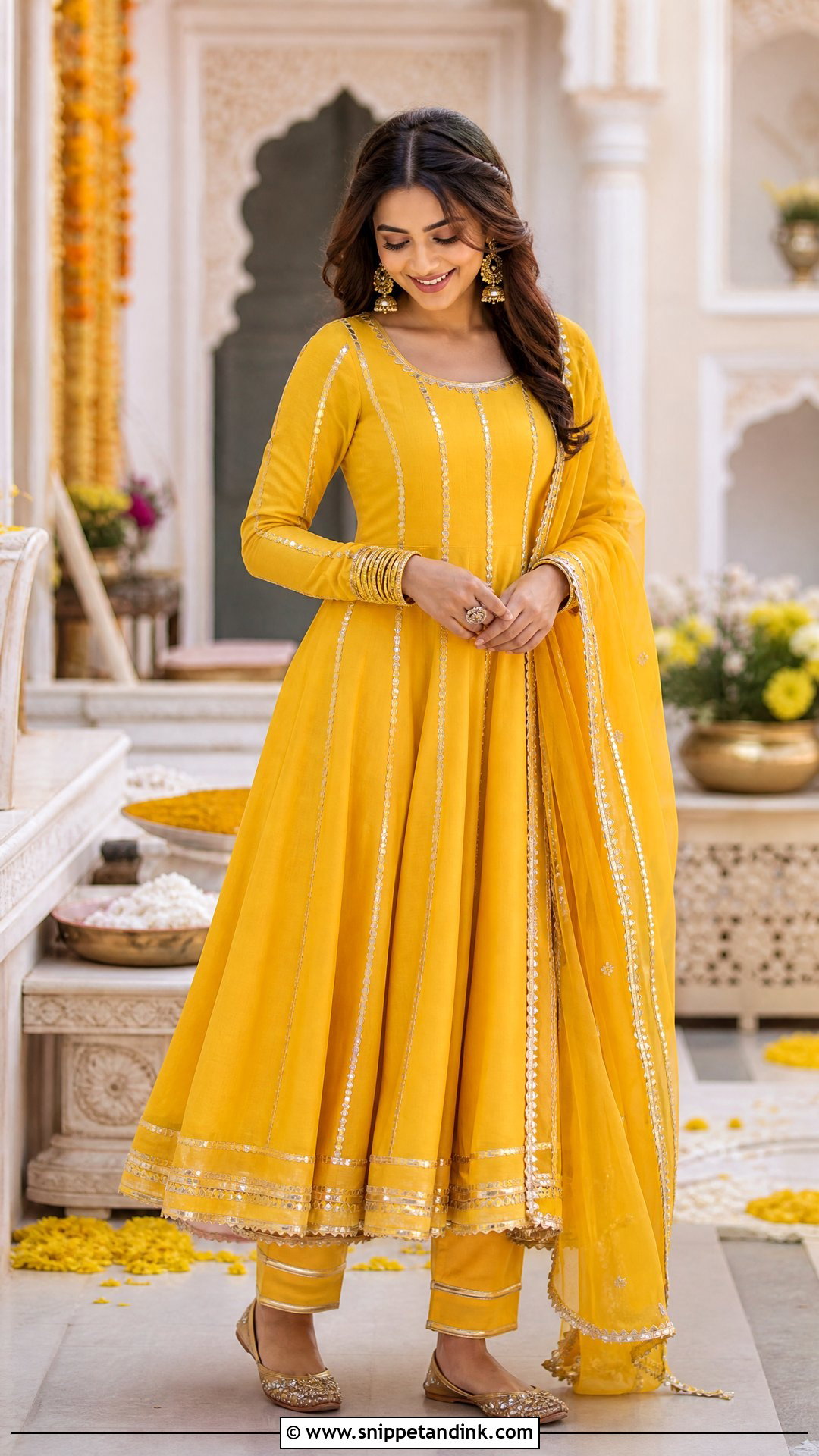
An Anarkali flares when you turn, which gives candid photos lots of movement. In yellow or marigold, keep the gota patti to narrow lines at the neckline, sleeves and hem. The fitted bodice shapes the top while the skirt gives plenty of room. Straight pants feel modern; churidar reads more traditional. Pin the dupatta at one shoulder so it doesn’t slip during greetings. Gold jhumkas, stacked bangles and embellished flats complete it. My one caution: a long, full Anarkali gathers paste at the hem when you sit on the floor, so tuck it under you or hold it to one side during the ritual.
8. Chikankari Kurta Set Haldi Outfit
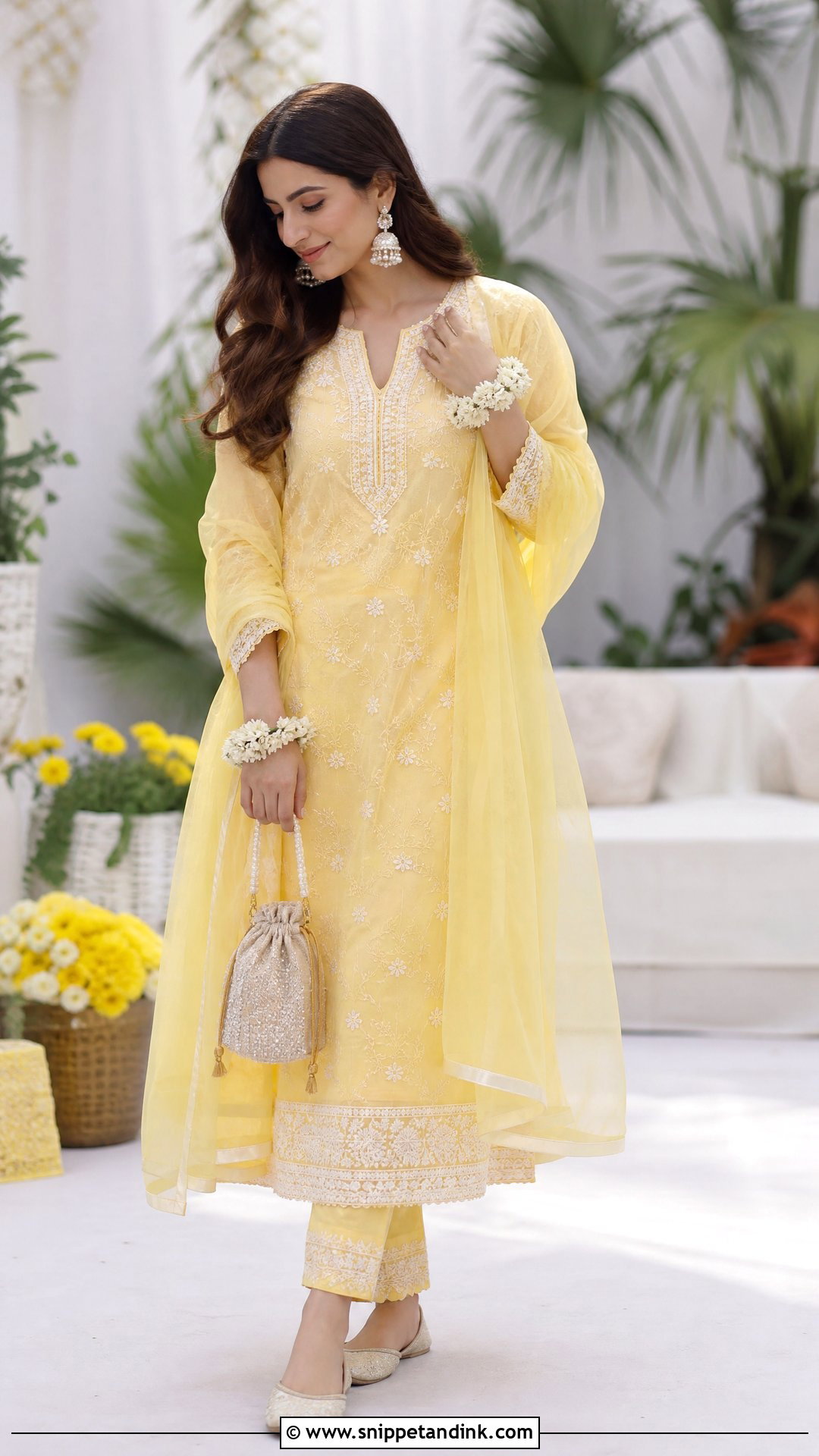
Soft chikankari embroidery gives texture without ornament, and cotton chikankari is about the most breathable thing you can wear in midday heat. Lemon, butter or pale marigold with straight pants keeps it clean. White thread contrasts gently; yellow-on-yellow reads quieter. A light chiffon dupatta adds movement, though it works without one at a casual gathering. Pearl jhumkas, white flower bracelets, ivory juttis and a small potli complete it. Keep makeup dewy and hair relaxed. Chikankari is thin, so a matching slip or lining matters if you’ll be splashed with water.
9. Yellow Palazzo Set Haldi Outfit
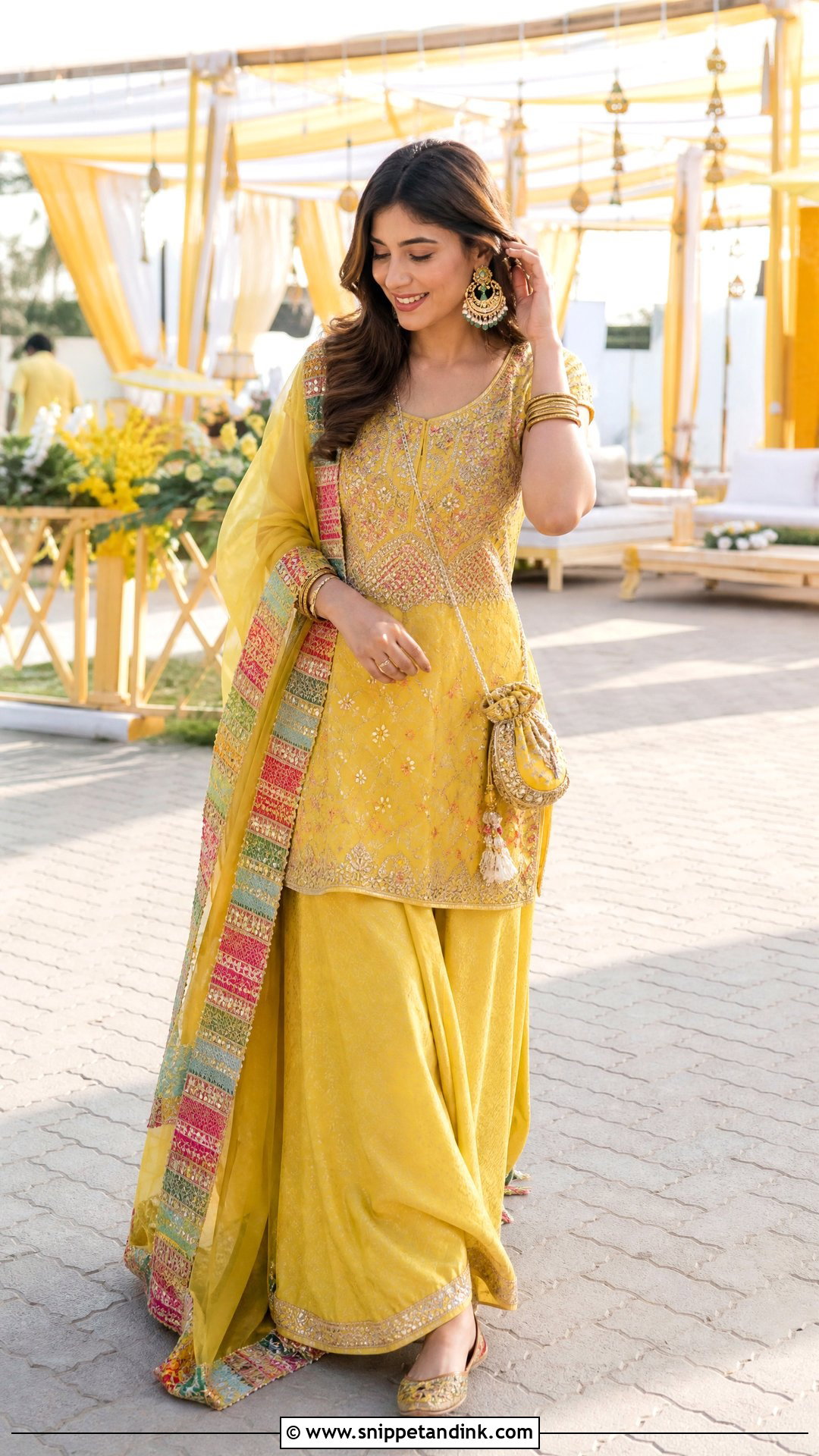
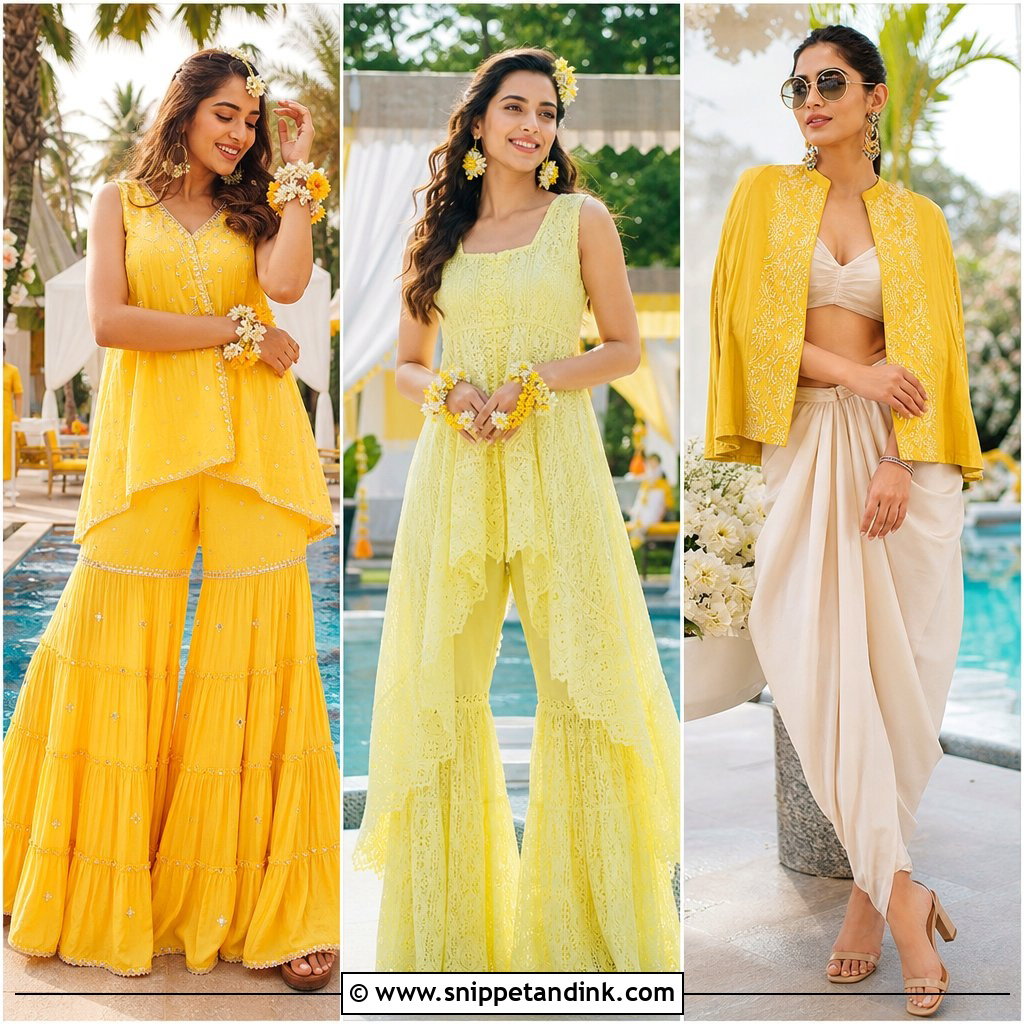
Palazzos are what I recommend when someone tells me they just want to be comfortable. Wide pants with a short kurta, peplum or cropped blouse balance a fitted top against a flowing lower half. Cotton silk, crepe or georgette moves well and doesn’t wrinkle much. A sheer dupatta with a colourful border adds tradition. Chandbalis, bangles and flats or juttis finish it. Bridesmaids can choose different blouse shapes in one colour. A small crossbody potli leaves your hands free for applying paste to the bride.
10. Peplum And Dhoti Pants Haldi Outfit
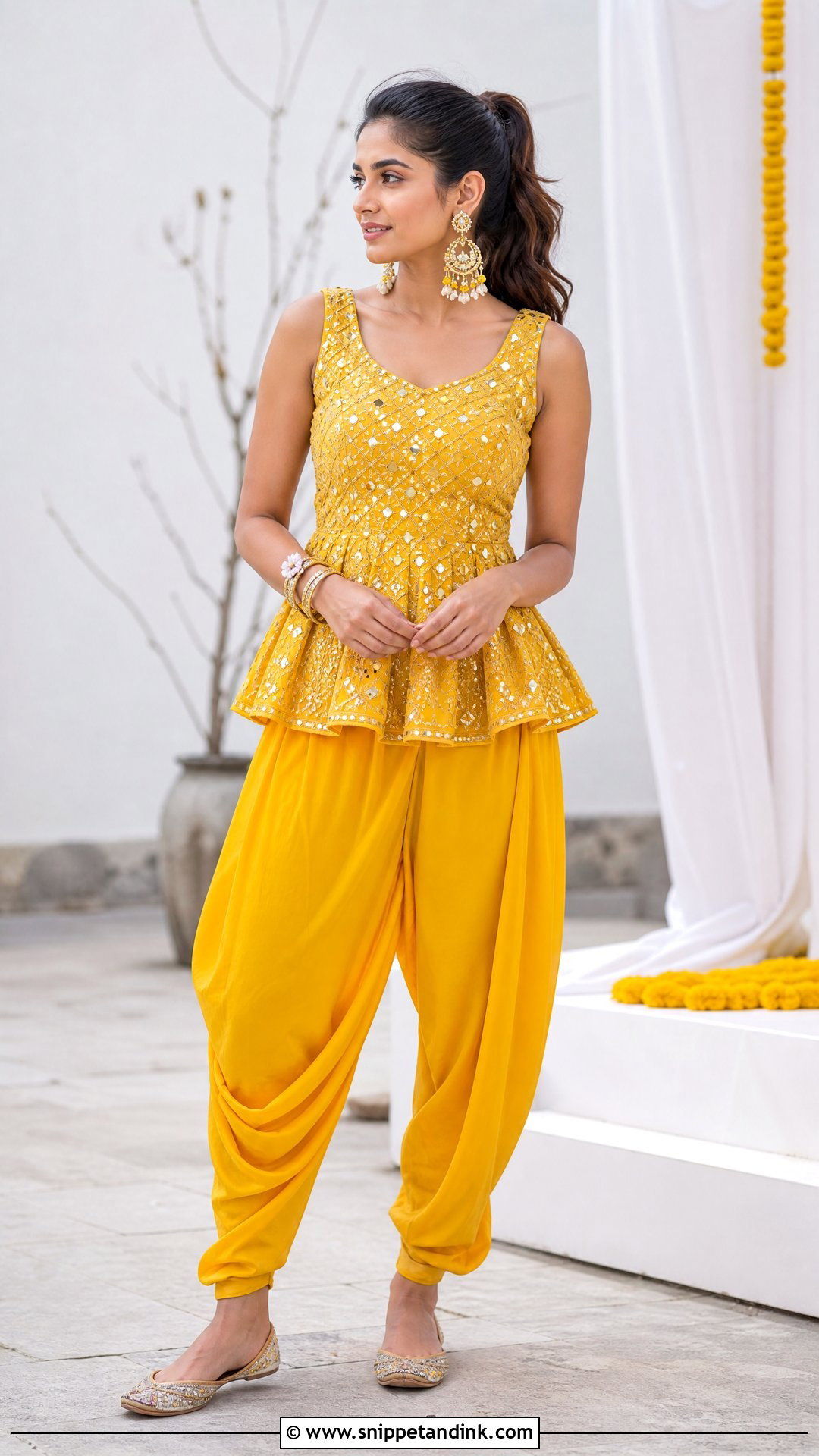
A peplum with dhoti pants makes a sharp Indo-Western Haldi look for a lively function. A fitted yellow peplum with mirror work, thread embroidery or tiny florals, over draped dhoti pants in the same shade, gives one long unbroken line. The peplum adds structure at the waist; the dhoti keeps the legs free for dancing. Skip the dupatta for a streamlined look, or add a short cape for coverage. Statement earrings, metallic bangles and embroidered juttis finish it, with a high ponytail or a neat braid. Check that the dhoti drape is stitched, not tied, since tied drapes loosen with movement.
11. Yellow Co-Ord Set Haldi Outfit
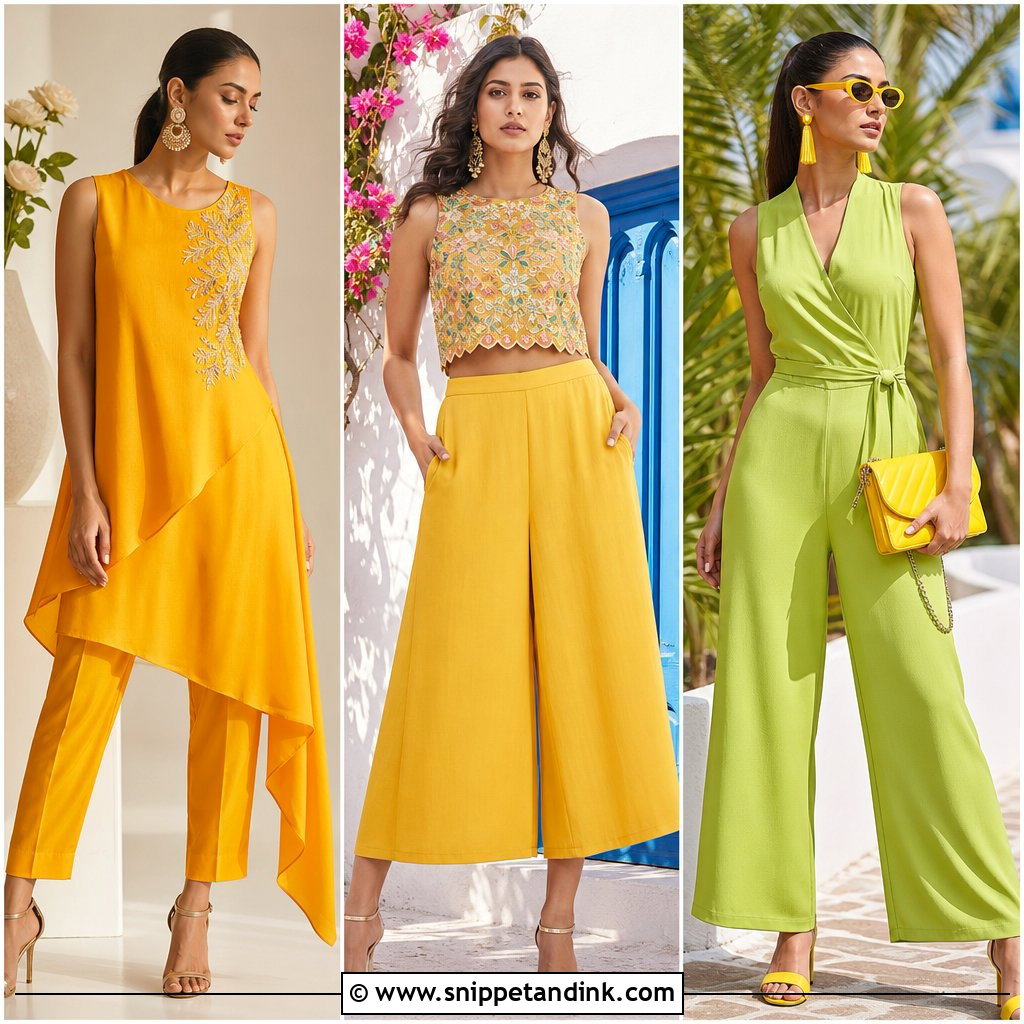
A co-ord set looks modern and suits a relaxed Haldi. Cropped top and skirt, tunic and pants, or blouse and palazzo in matching yellow all work. A little embroidery at the neckline or cuffs adds festive detail. If the set is plain, bring texture through flower jewellery, a beaded potli or patterned juttis. A cape or cropped jacket can stand in for a dupatta. Keep the colour consistent top to bottom. Loose waves, fresh makeup and flats complete it. It suits destination weddings and bridesmaids who want something they’ll wear again.
12. Yellow Cape Lehenga Haldi Outfit
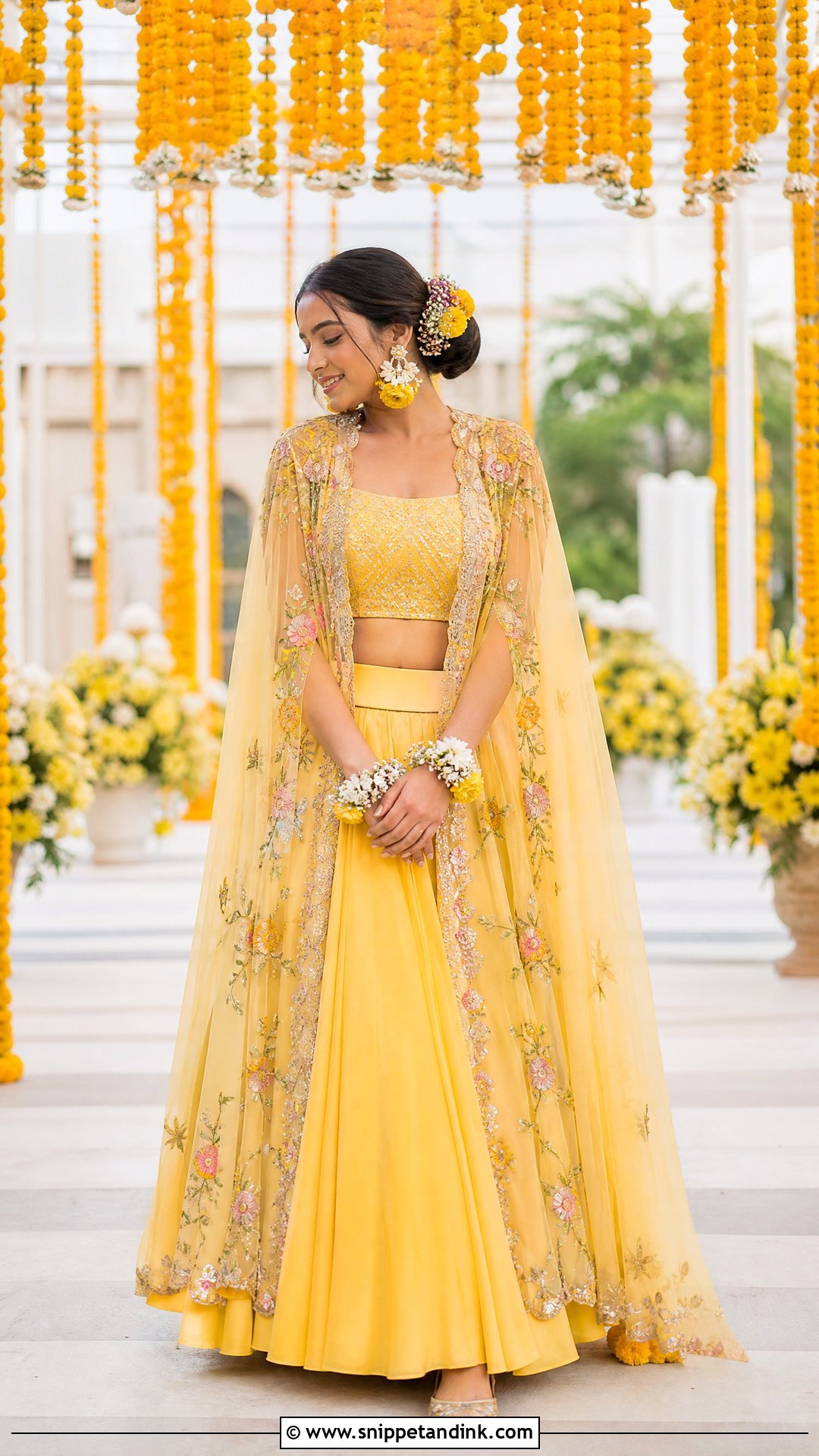
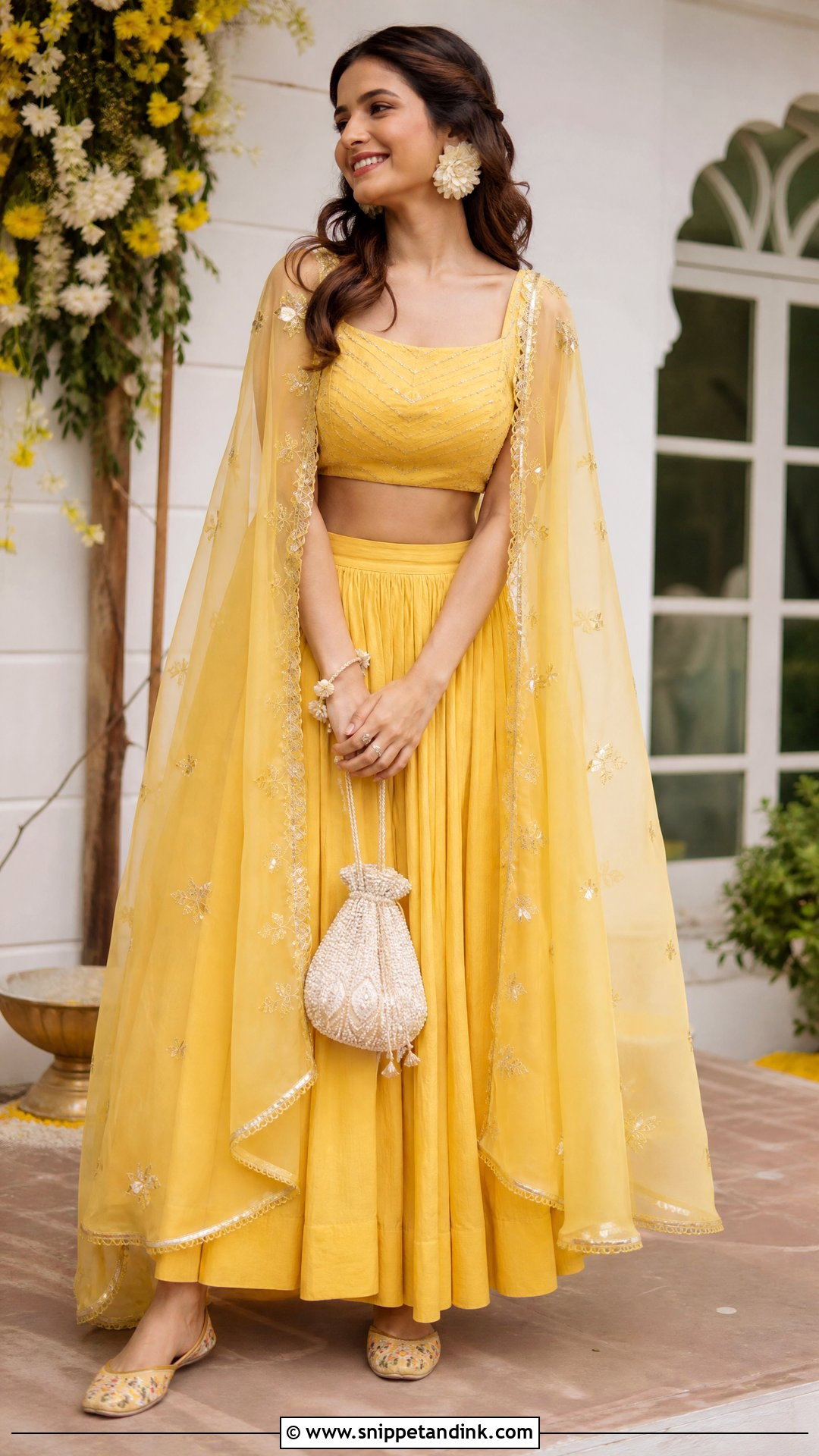
A cape lehenga solves the dupatta problem entirely, which is why I suggest it to anyone who hates managing fabric while their hands are full. A light yellow skirt and blouse with a sheer cape over the shoulders, embroidered with florals, scattered sequins or a scalloped edge, stays airy. A waist-length cape suits a petite frame; a longer one looks more bridal. Flower earrings, delicate bangles and metallic juttis keep it light. Wear your hair low or in a side braid so the cape shows. It also gives shoulder coverage over a cropped blouse.
13. Pre-Draped Saree Haldi Outfit
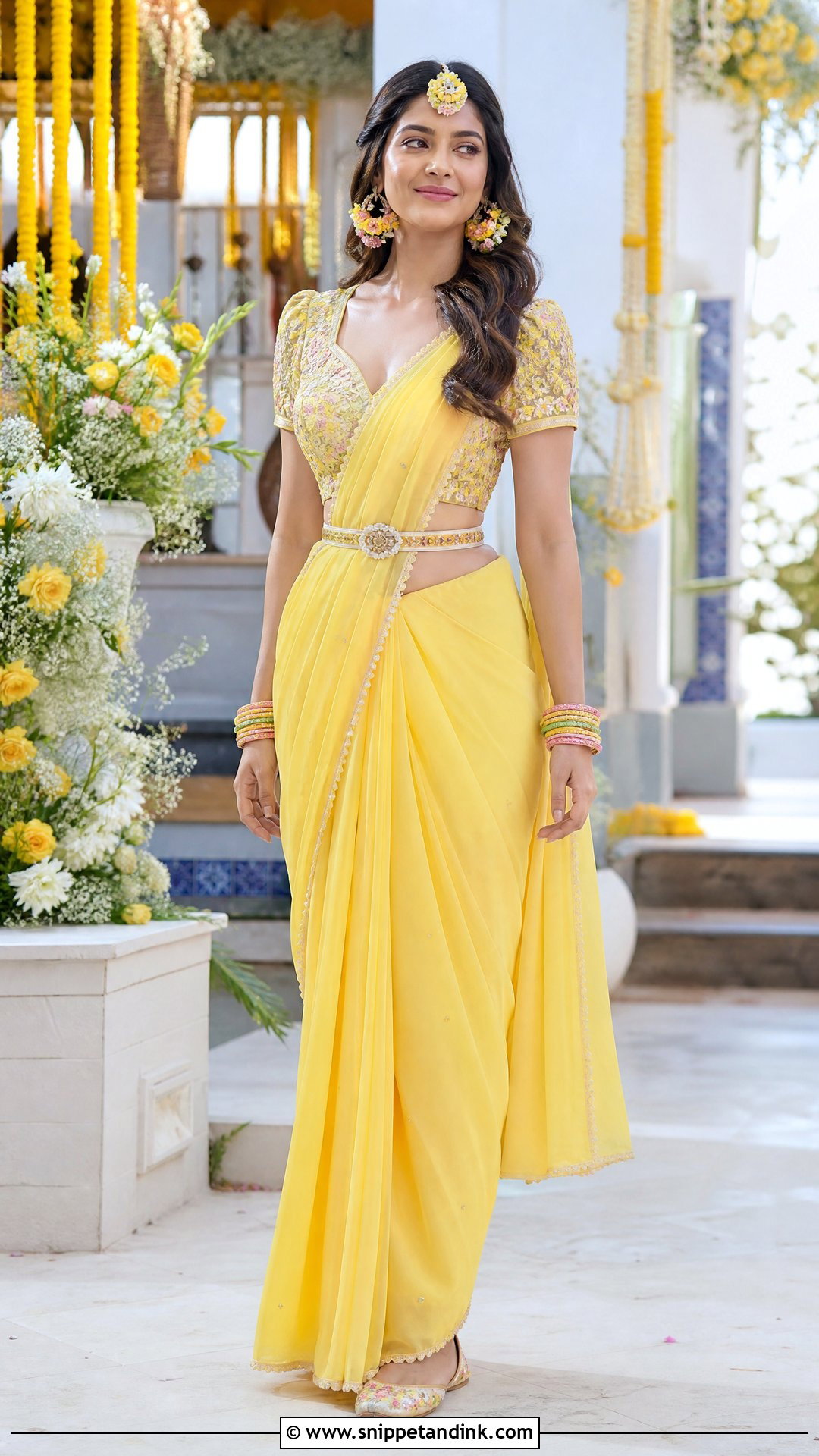
A pre-draped saree gives the saree look with none of the readjusting. The pleats are stitched and the pallu pins at the shoulder, so it stays in place through sitting, rituals and dancing. Pair it with a structured blouse, cropped jacket or embroidered bustier for the coverage you want. A slim belt holds the drape. Flower earrings, a small maang tikka and coordinating bangles finish a bridal version; guests can wear minimal gold. Block heels or embellished flats with a sleek ponytail. I’d recommend this to anyone who has never worn a saree for hours.
14. Yellow Skirt And Crop Top Haldi Outfit
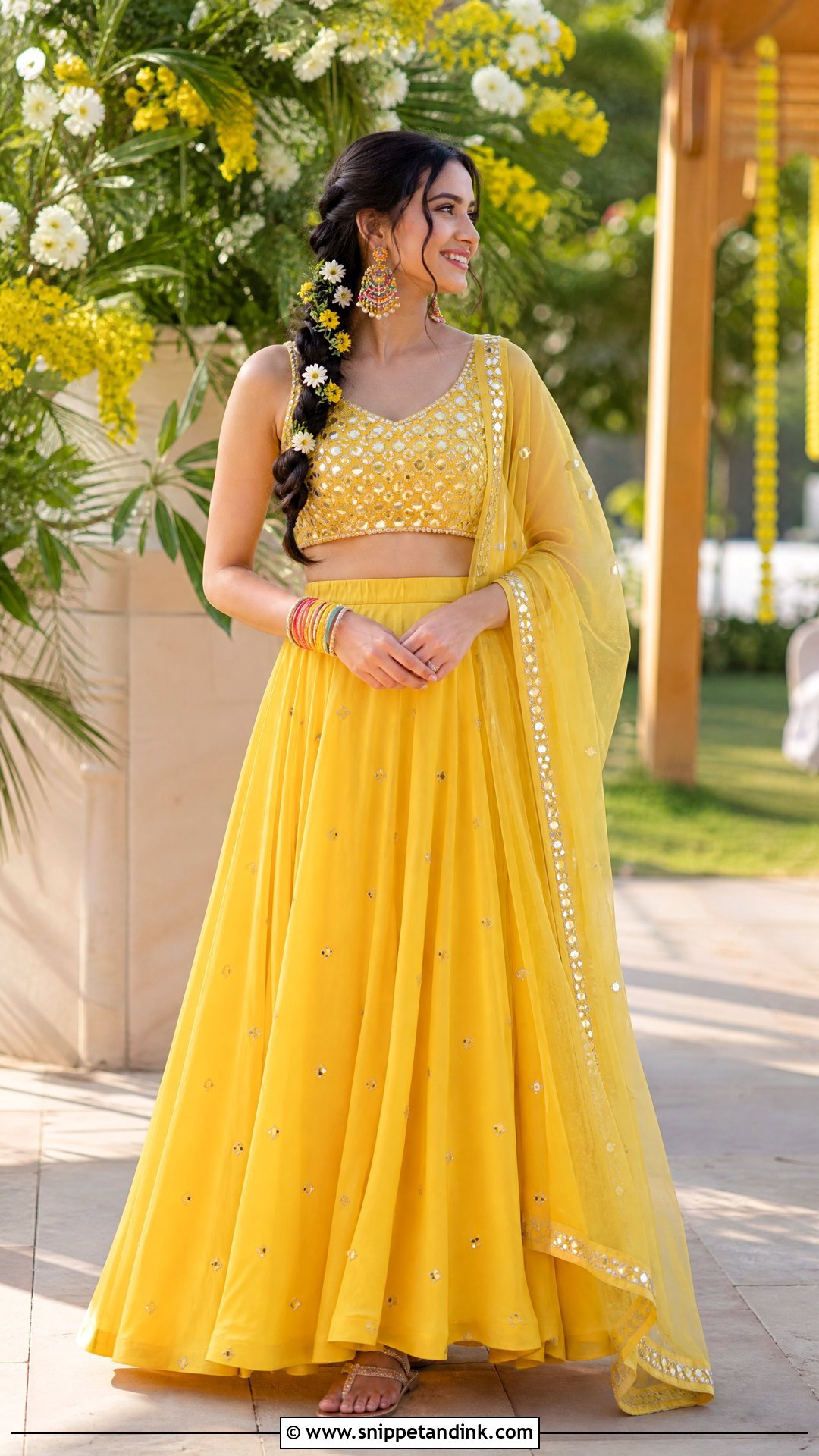
A yellow skirt and crop top is the simplest festive set, and it adapts in both directions. A high-waisted skirt with enough flare to sit in, and a fitted top with short sleeves, straps or a square neck, make the base. Small mirrors, floral embroidery or textured fabric lift it. Add a dupatta for a traditional event; skip it at a poolside or garden function. Colourful earrings, stacked bangles and flat sandals finish it, with a flower braid. These separates come back out for other functions, so guests get real value from them.


15. Ivory And Yellow Lehenga Haldi Outfit
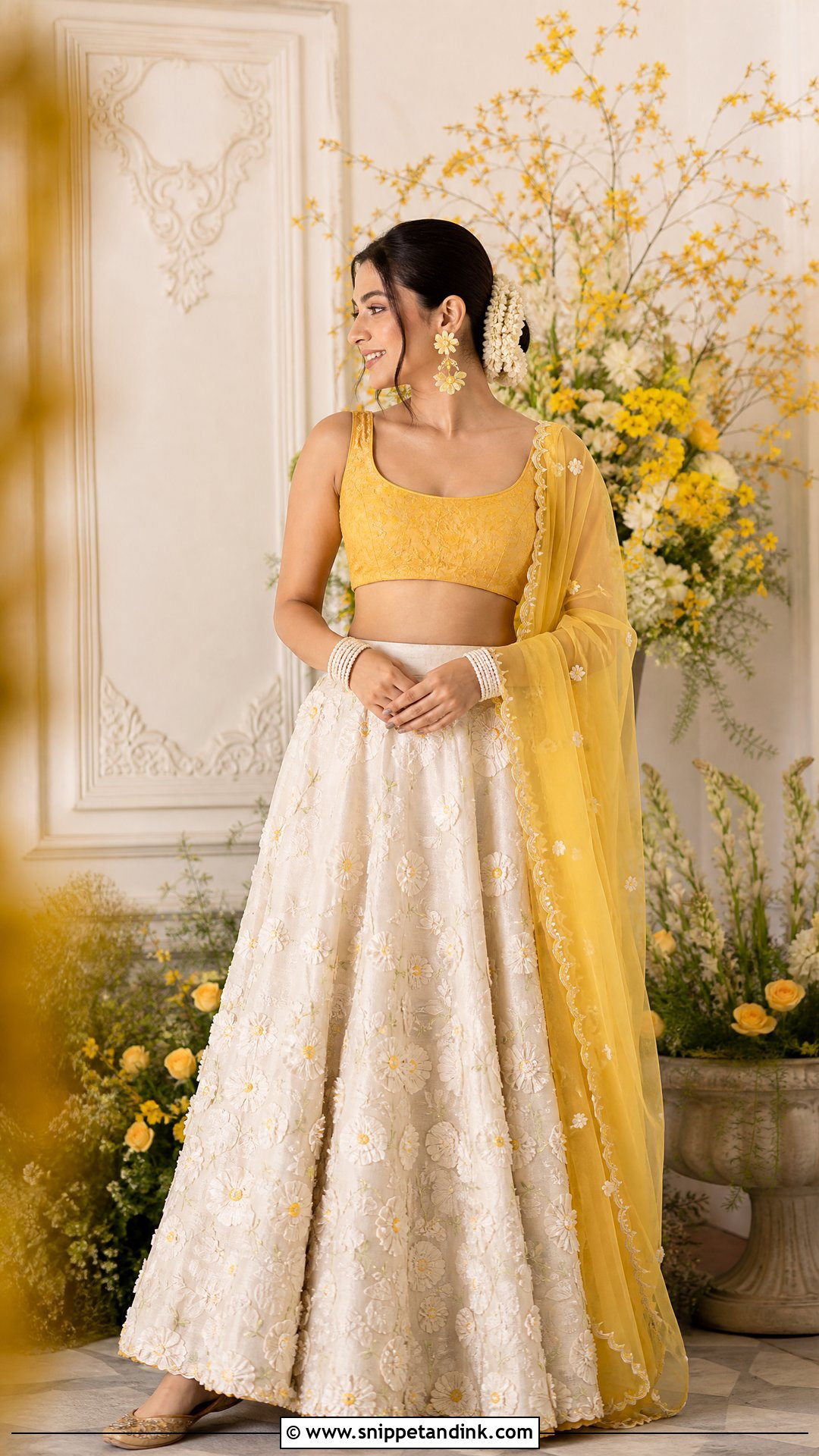
Ivory lets yellow details stand out, whether in an ivory lehenga with marigold embroidery, a yellow blouse and a sheer yellow dupatta, or an ivory set scattered with yellow flowers. The obvious risk: turmeric will mark ivory more visibly than anything else on this list. I’d do the portraits before the paste comes out, or choose a washable cotton rather than silk. Yellow flower earrings, white bangles, gold juttis and a jasmine-wrapped bun finish it. Minimalist brides love it; guests can copy the palette with less embroidery and fewer flowers.
16. Pink And Yellow Lehenga Haldi Outfit
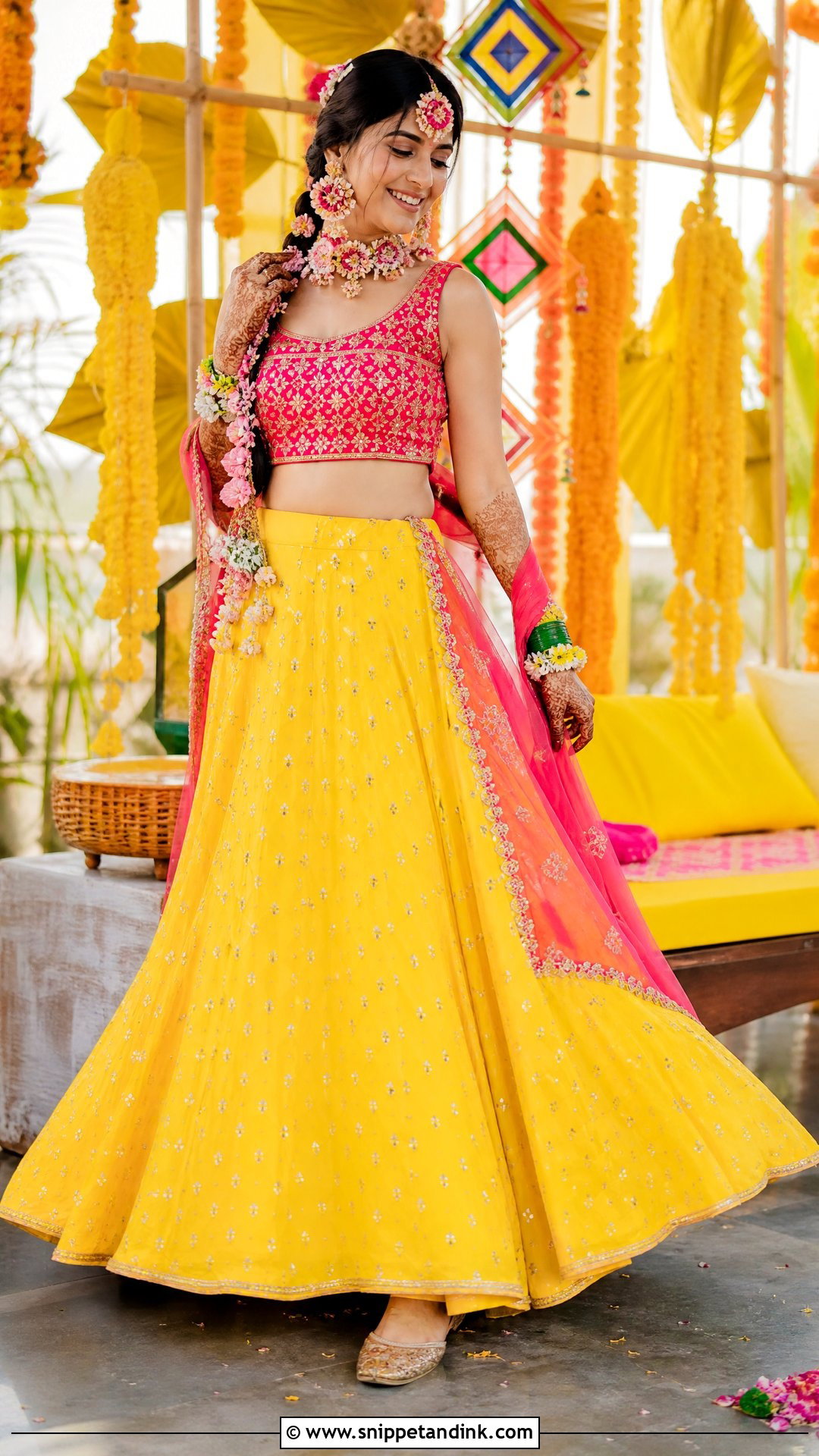
Pink and yellow together is pure celebration. Try a yellow skirt with a pink blouse and dupatta, or flip them. Floral embroidery in both shades links the pieces. Keep one piece fairly plain so the outfit doesn’t get crowded. Green bangles or small emerald-tone earrings bring in a third accent. Gold juttis, a compact potli and a flower-decorated braid complete it. Brides can choose a fuller skirt and statement floral jewellery; guests, lighter fabric and less embellishment. Hot pink and yellow both photograph strongly against marigold and greenery.
17. Green And Yellow Sharara Haldi Outfit
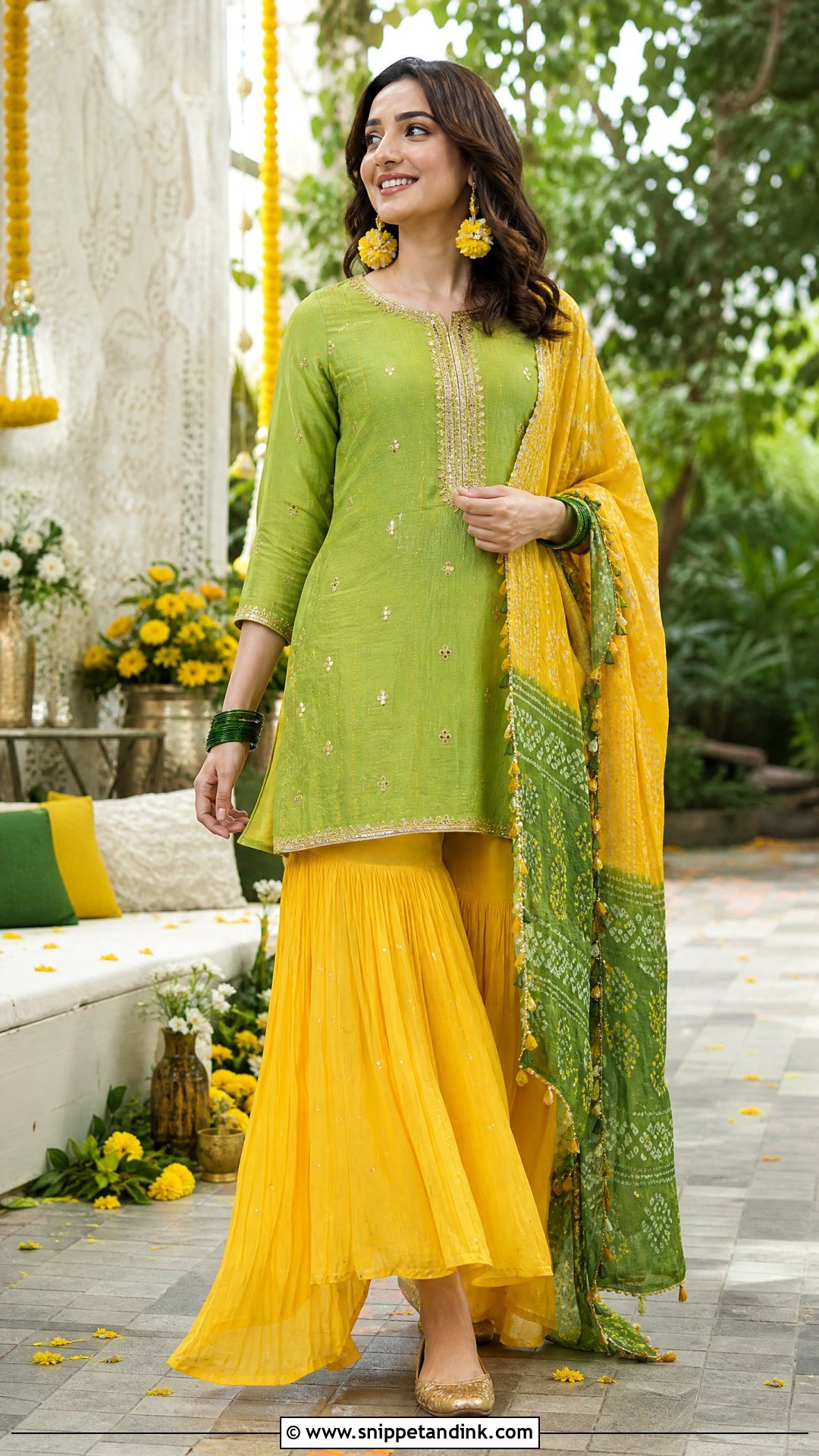
Green against yellow feels like leaves and petals, and it gives bridesmaids a way to stand apart from an all-yellow bride. Yellow sharara pants with a green short kurta, or the reverse, joined by a dupatta printed with both, look intentional. Breathable cotton silk or georgette suits outdoor events. Yellow flower earrings, green glass bangles and gold juttis tie it together. Bridesmaids can share the palette while switching which colour dominates. A low braid or loose curls keeps it soft, and the loose cut lets you dance, sit and help with preparations.
18. Orange Bandhani Saree Haldi Outfit
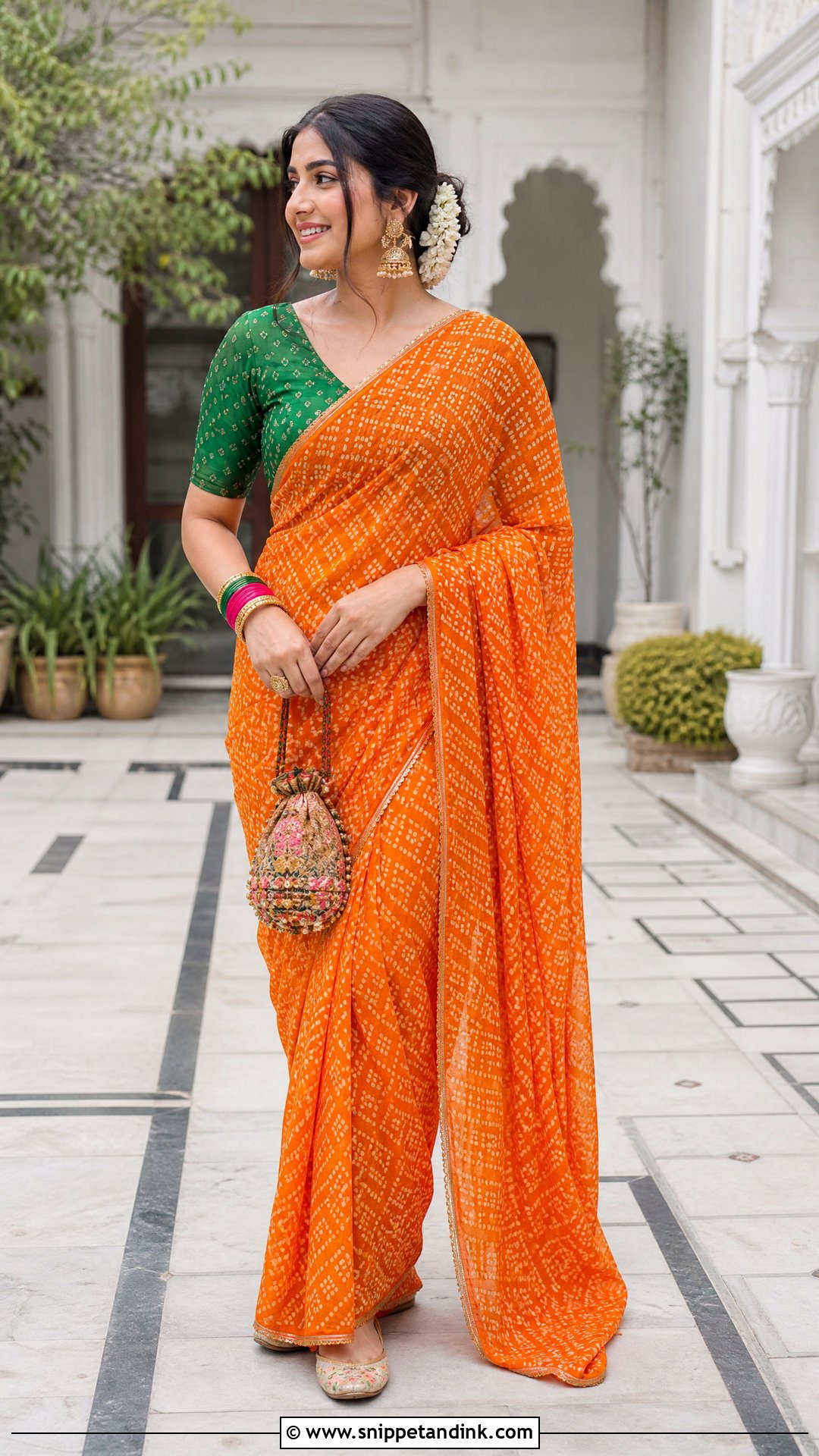
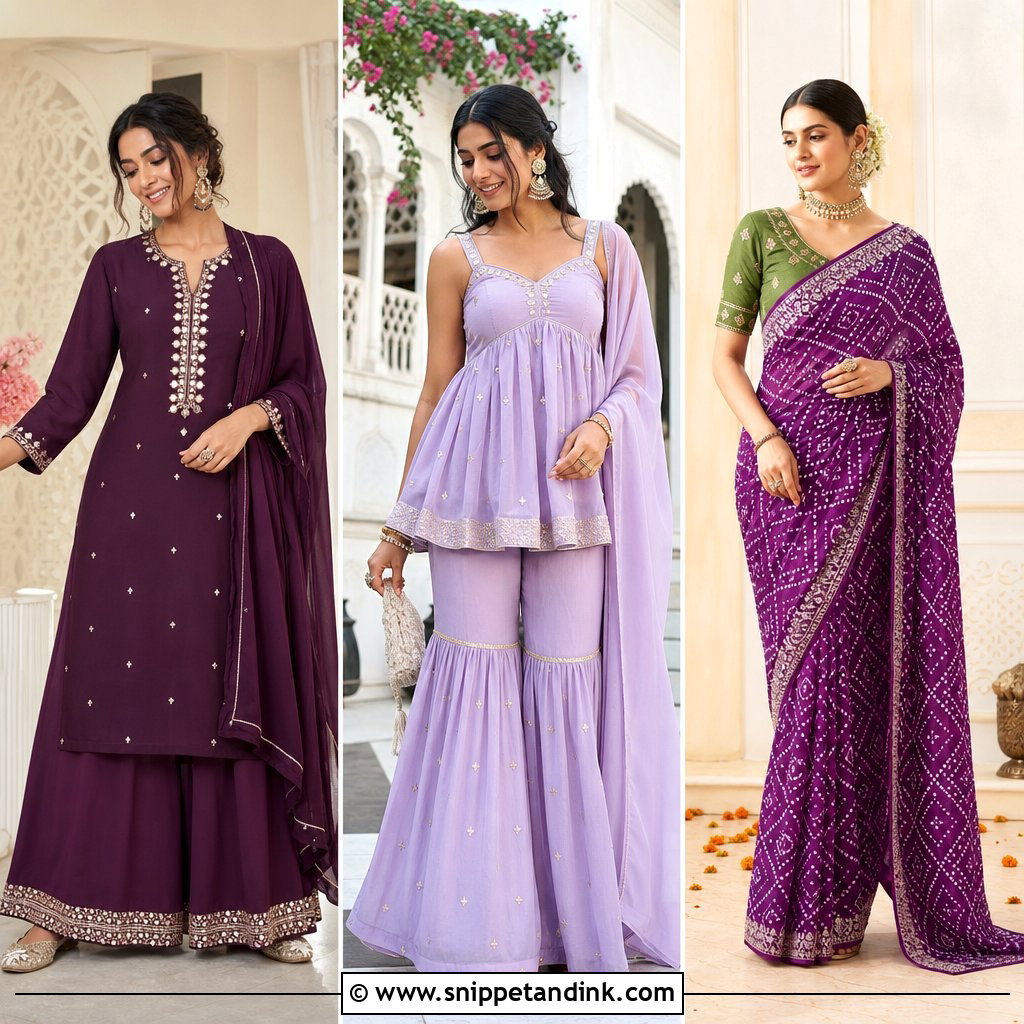
An orange Bandhani saree brings regional pattern and saturated colour. Choose lightweight mango, saffron or orange-yellow with white tie-dye dots, and frame it with a solid green, pink, red or orange blouse. Gold jhumkas, colourful bangles and a fabric potli suit the textile. Hidden pins on the pleats and pallu keep it secure. A low bun with jasmine or small yellow flowers finishes it, with flats or juttis rather than thin heels outdoors. Genuine bandhani can bleed its dye when wet, so I’d keep it away from a white blouse and give it a cold, quick rinse afterwards.
19. Yellow Leheriya Saree Haldi Outfit
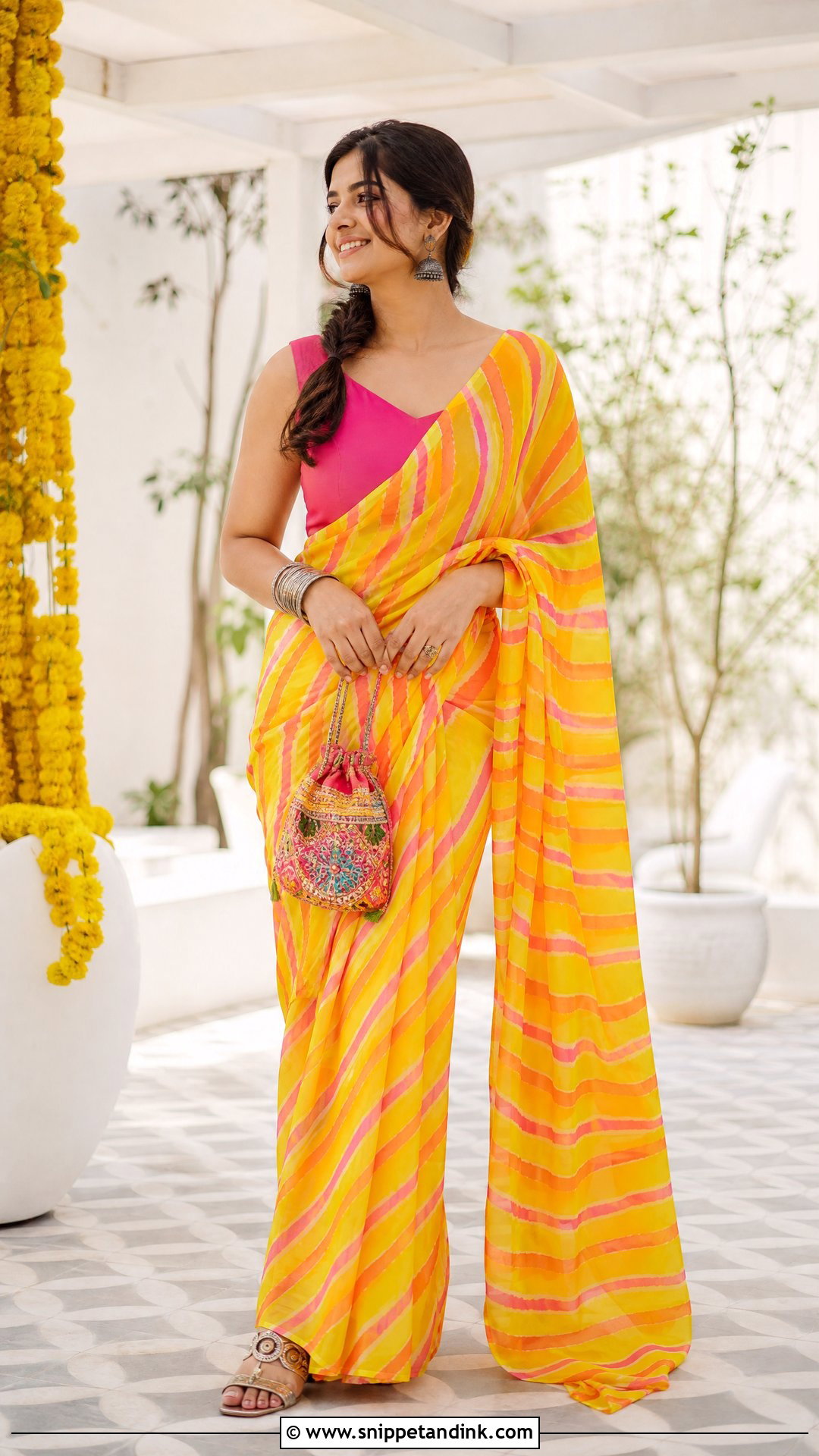
Leheriya’s diagonal waves of colour give the saree movement even when you’re standing still. Choose yellow striped with pink, orange, green or white, and match the blouse to one accent. A plain fitted blouse lets the pattern lead. Oxidised silver earrings go bohemian; gold looks more traditional. Glass bangles and a small potli complete it. A secure shoulder drape, comfortable flats and a side braid or sleek bun suit the strong pattern. It’s a good daytime alternative for guests who don’t want solid yellow.


20. Yellow Maxi Dress Haldi Outfit
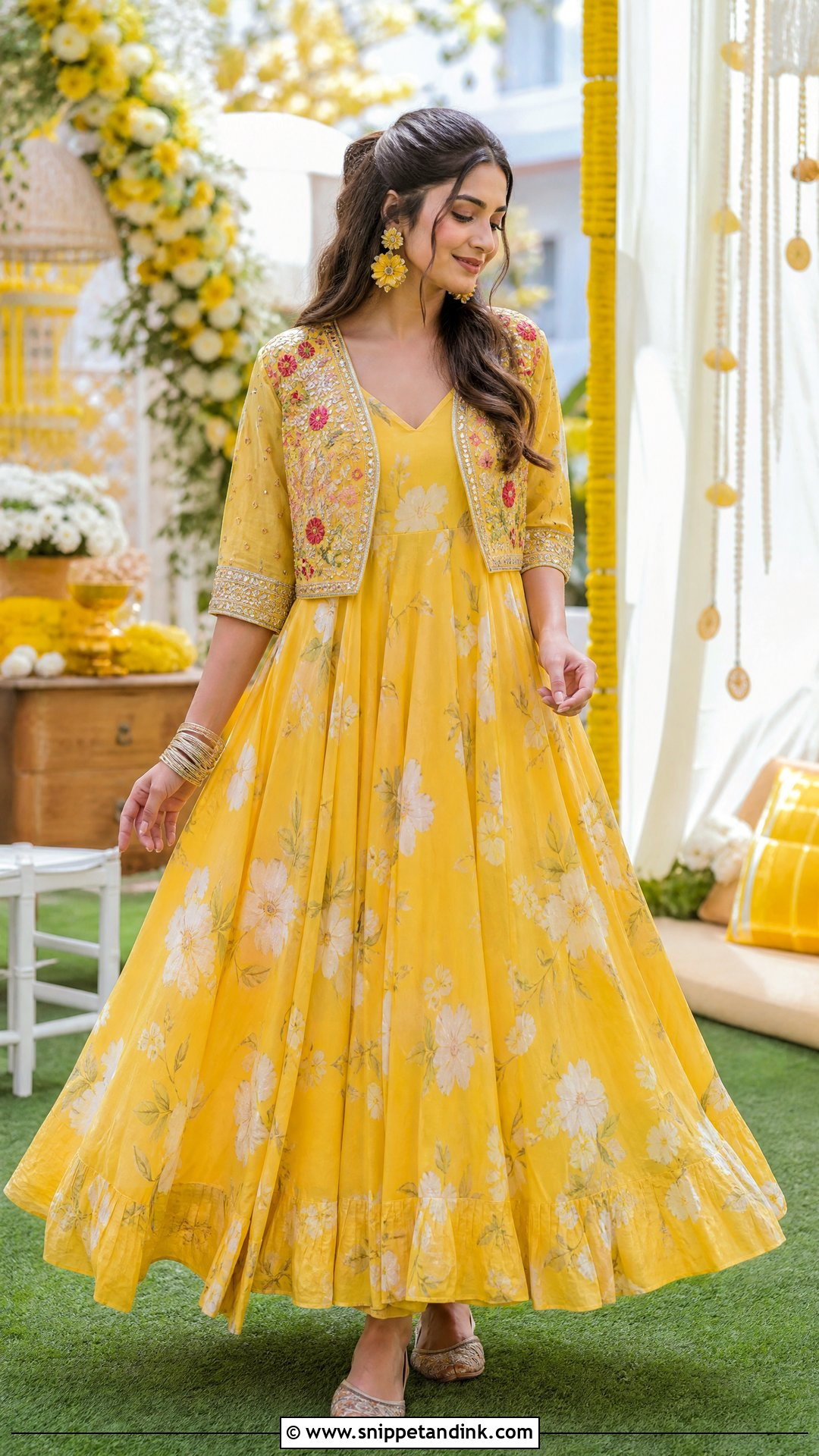
A maxi dress works at a relaxed or fusion Haldi without looking underdressed, as long as there’s something festive in it. Ankle length with a fitted waist, flutter sleeves or a tiered skirt is the shape; a floral print, mirror accents or an embroidered border connect it to the occasion. Flower earrings, metallic bangles and embroidered juttis do the rest. A cropped ethnic jacket adds structure and coverage. Keep the hem off the ground outdoors. Soft curls, a half-up style or a loose braid finish it, and the dress goes straight into a holiday suitcase afterwards.
21. Mirror Work Kurta Set Haldi Outfit
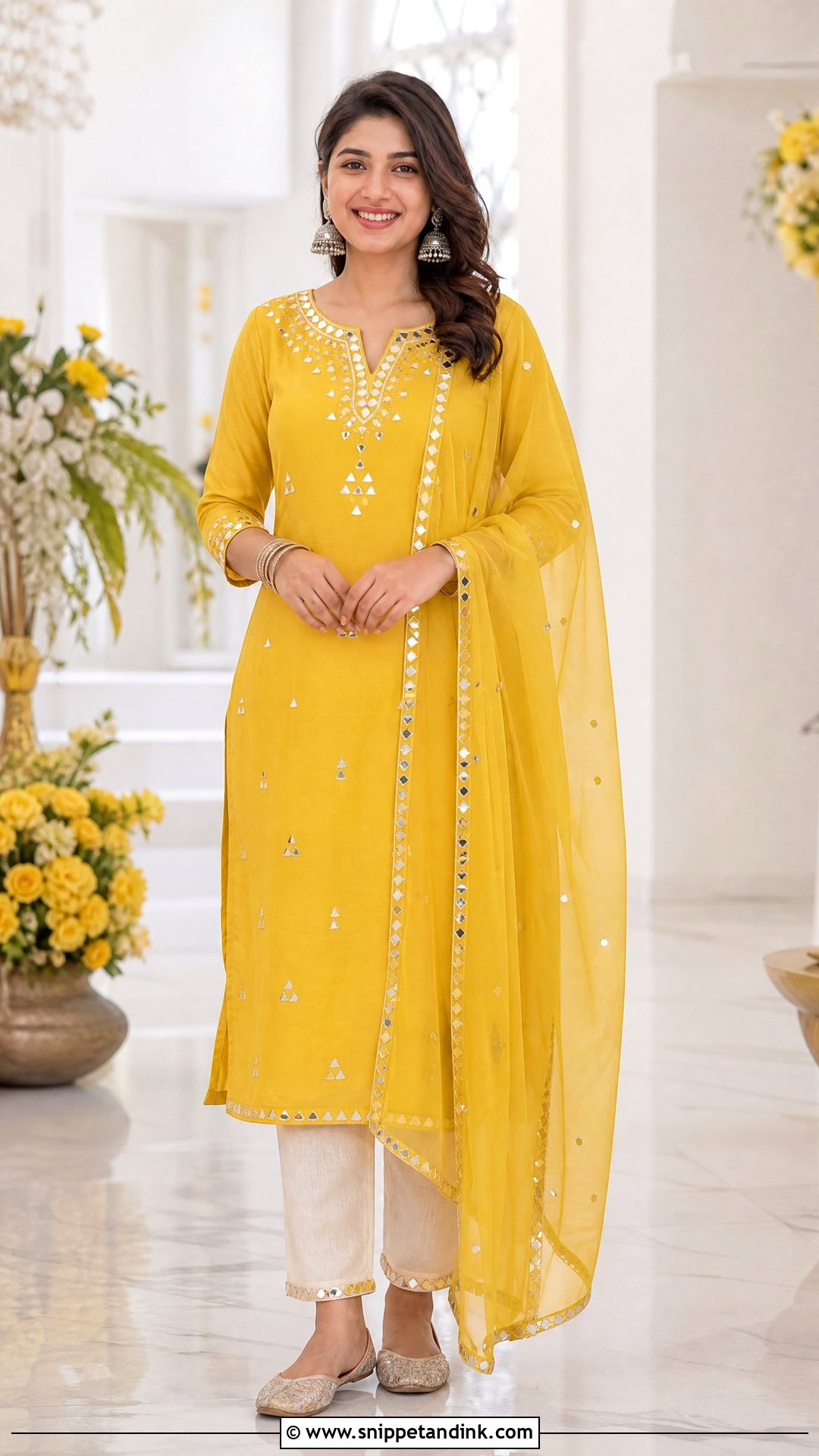
Tiny mirrors catch daylight and throw it back, which makes a mirror-work kurta festive without heaviness. A yellow straight kurta with matching pants, or with ivory pants for contrast, works. Keep the mirrors concentrated at the neckline so the garment stays light. A narrow-bordered dupatta suits a formal event; otherwise let the kurta lead. Silver jhumkas, slim bangles and metallic juttis complete it. A low ponytail or braid keeps hair off the neckline. Turmeric paste wipes off mirror work more easily than off thread embroidery, a small bonus at this event.
22. Yellow Jacket And Palazzo Haldi Outfit
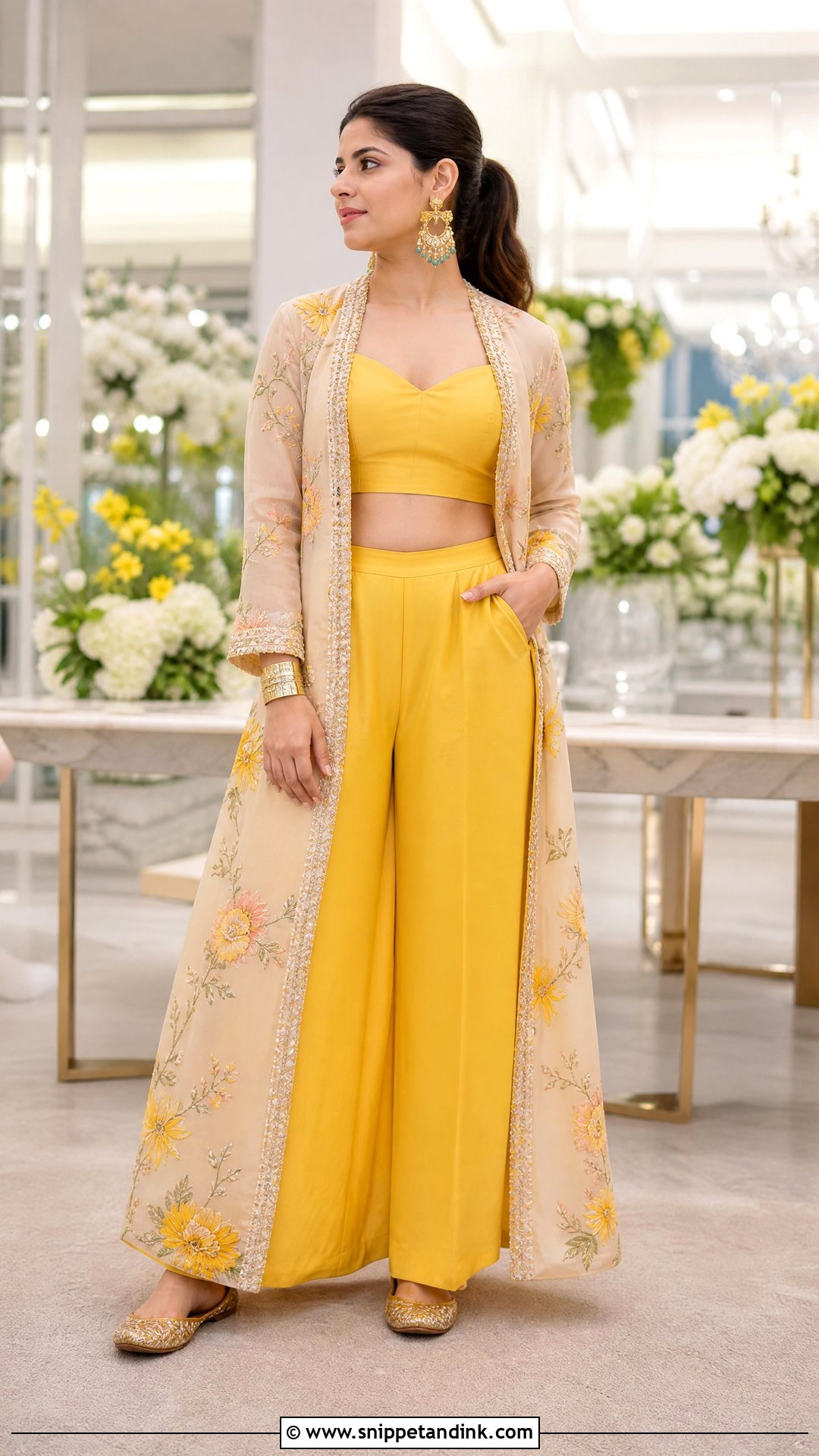
A long embroidered jacket turns a palazzo set into a dressed-up outfit. Start with a yellow crop top and matching wide pants, then add an open-front jacket in yellow, ivory or a floral print. Choose a lightweight layer ending at the knee or ankle, with delicate threadwork, gota edging or small mirrors. Because the jacket adds length, keep the inner pieces fitted. Statement earrings, a cuff, and block heels or juttis finish it, with a sleek bun or ponytail. It gives more coverage than a plain crop-top set. I’d take the jacket off before the paste comes out and put it back on for photos.
23. Yellow Ruffle Saree Haldi Outfit
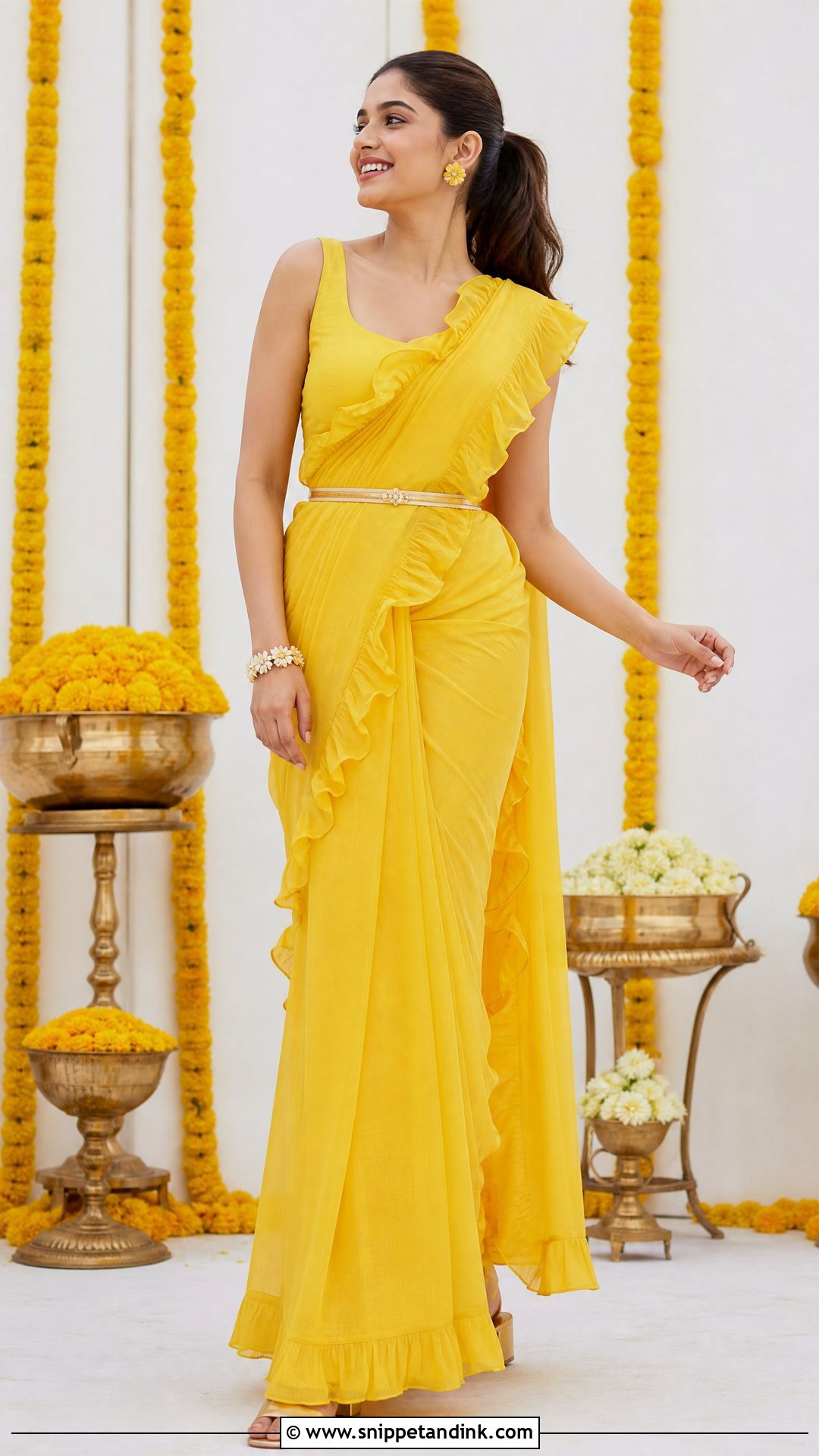
Ruffles bring volume and fun to a familiar saree. A pre-stitched or easy-drape yellow saree with soft ruffles along the pallu and lower edge keeps things simple to wear. A fitted blouse balances the volume, and a waist belt holds the drape. Floral studs, one statement bracelet and a small ring are plenty. Low block heels and a sleek ponytail or bun finish it. Ruffles crush under you when you sit, so steam it on the morning and choose georgette over organza if the function involves floor seating. Bridesmaids, sisters and fashion-led guests tend to love it.
24. Floral Peplum Sharara Haldi Outfit
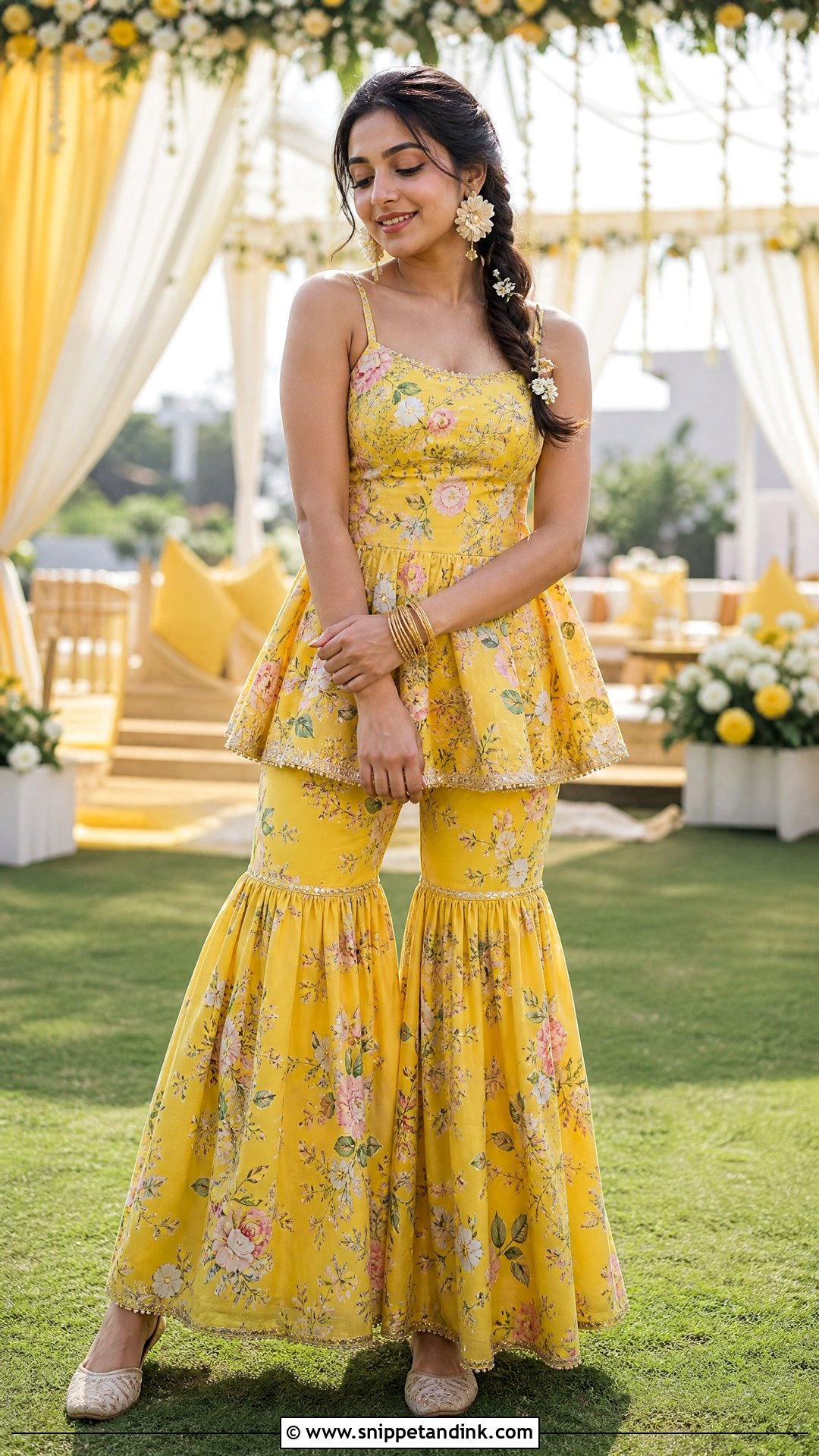
A floral peplum and sharara combination gives shape and movement in one outfit. A fitted peplum with a defined waist over matching flared sharara pants works well, on a yellow base with pink, orange and green flowers, or an ivory base for something softer. Since the print is busy, keep embellishment minimal. Flower earrings, thin bangles and neutral juttis finish it. Skip the dupatta for a fusion look or add a light solid one for coverage. A high ponytail or side braid keeps the neckline visible. It works for an informal Haldi where the bride wants to move freely.

25. Pastel Floral Saree Haldi Outfit
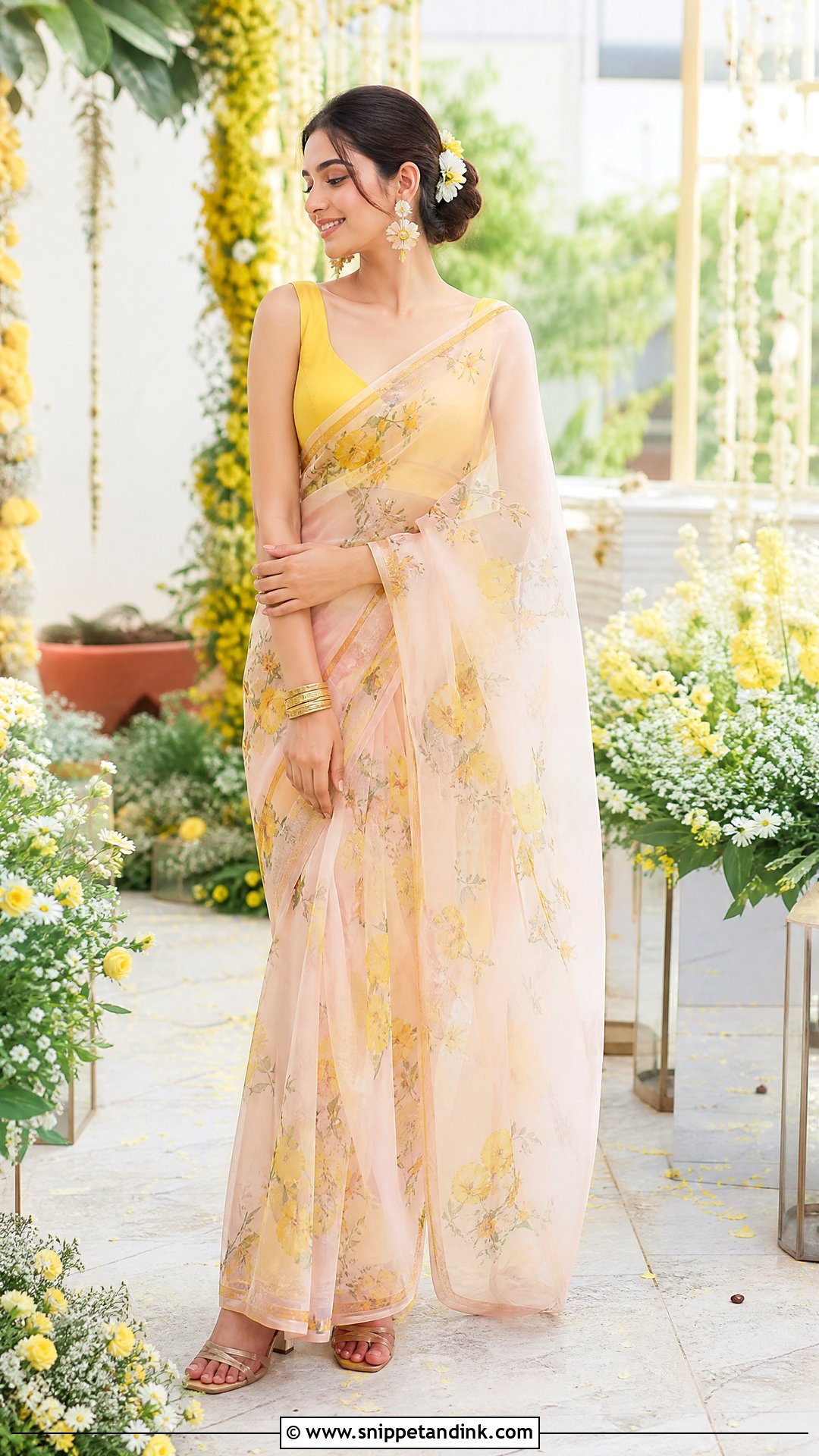
Pastel florals offer a gentler alternative to strong yellow while keeping the daytime mood. Blush, peach, mint, ivory or pale yellow printed with small marigold and botanical motifs, with a solid blouse in one of the accent colours, gives a considered contrast. Organza looks structured and romantic; chiffon drapes more easily. Pearl-flower earrings, slim gold bangles and low block heels complete it, with a neat bun and a few fresh blooms. Pale fabrics show turmeric quickly, so this one suits an indoor, more formal Haldi where the paste stays on the bride.
Rescuing the Outfit Once the Paste Has Dried
The sooner you treat it, the better. Turmeric sets as it dries, and fresh stains come out far more easily than ones left overnight.
- Scrape off as much dried paste as possible with a blunt knife or the edge of a card. Don’t rub, which pushes it deeper.
- Rinse from the back of the fabric with cold water. Hot water helps the stain set.
- Work a little liquid dish soap into the mark and leave it for a few minutes before rinsing again.
- Dry it in sunlight if the fabric can take it. Sunlight fades turmeric stains noticeably, though it can also fade bright dyes, so turn coloured pieces inside out.
- For silk, zari or heavy embroidery, skip all of the above and take it to a dry cleaner who handles wedding wear, telling them it is turmeric.
One thing that surprises people: many soaps are alkaline, and turmeric turns reddish-brown on contact with them. That colour change looks alarming but usually washes out with continued rinsing, and it returns to yellow once the soap is gone.
Shoes and potlis need the same quick attention. Embroidered juttis are almost impossible to clean once stained, so I suggest slipping them off and going barefoot for the ritual.
Dress for the Paste, Then for the Pictures
Your role, the venue and how hands-on the ritual is should decide your outfit before colour does. Brides can go for flower jewellery, fuller shapes and standout details; guests and bridesmaids can wear lighter versions of the same ideas. Yellow lehengas and sarees will always belong here, but floral prints, pastels, fusion separates and contrast colours give plenty of alternatives. Whatever you pick, choose fabric that breathes, draping that stays put and shoes you can kick off. And if a piece is precious, keep it away from the paste.
You'll Like These Ideas:





Leave a Reply