
A haldi is the one wedding function where I tell clients to expect their outfit to get dirty. Turmeric paste gets smeared on arms and faces, marigold petals get thrown, and at many family haldis someone ends up with a bucket of water. So when I dress a bride or her people for it, the first question isn’t the colour, it’s what the fabric will do when it meets wet yellow paste and a floor cushion. Yellow is the obvious anchor, but mustard, marigold orange, lime, ivory and soft florals all sit happily in the same room. The ideas below run from bridal lehengas to easy guest kurta sets, and I’ve added the practical things I’d check for each one.
Turmeric, Water and Floor Cushions: Planning Fabric Around the Ritual
Before I look at colour, I ask a family three things: will the bride sit on the floor or a low stool, will there be water poured at the end, and does the paste go on the bride only or on everyone? The answers decide the fabric more than any trend does.
- Cotton, mul and cotton silk are washable and breathable, and a turmeric mark fades from them far more readily than from silk.
- Georgette and chiffon dry quickly if water is involved, but they cling when wet, so I suggest a slip or lining.
- Pure silk and organza water-mark, and turmeric settles into their weave. Save them for guests who are watching rather than taking part.
- Heavy all-over embroidery traps paste in the stitches. Keep embellishment to borders and necklines.
- Flats or juttis with a grip. Wet marble and turmeric paste make one of the most slippery floors I know.
If the bride will be properly smeared, I plan a two-outfit morning: a nicer look for portraits before the ritual, then a simple cotton set she can change into. It costs little and saves the expensive piece.
1. Yellow Haldi Lehenga Dress
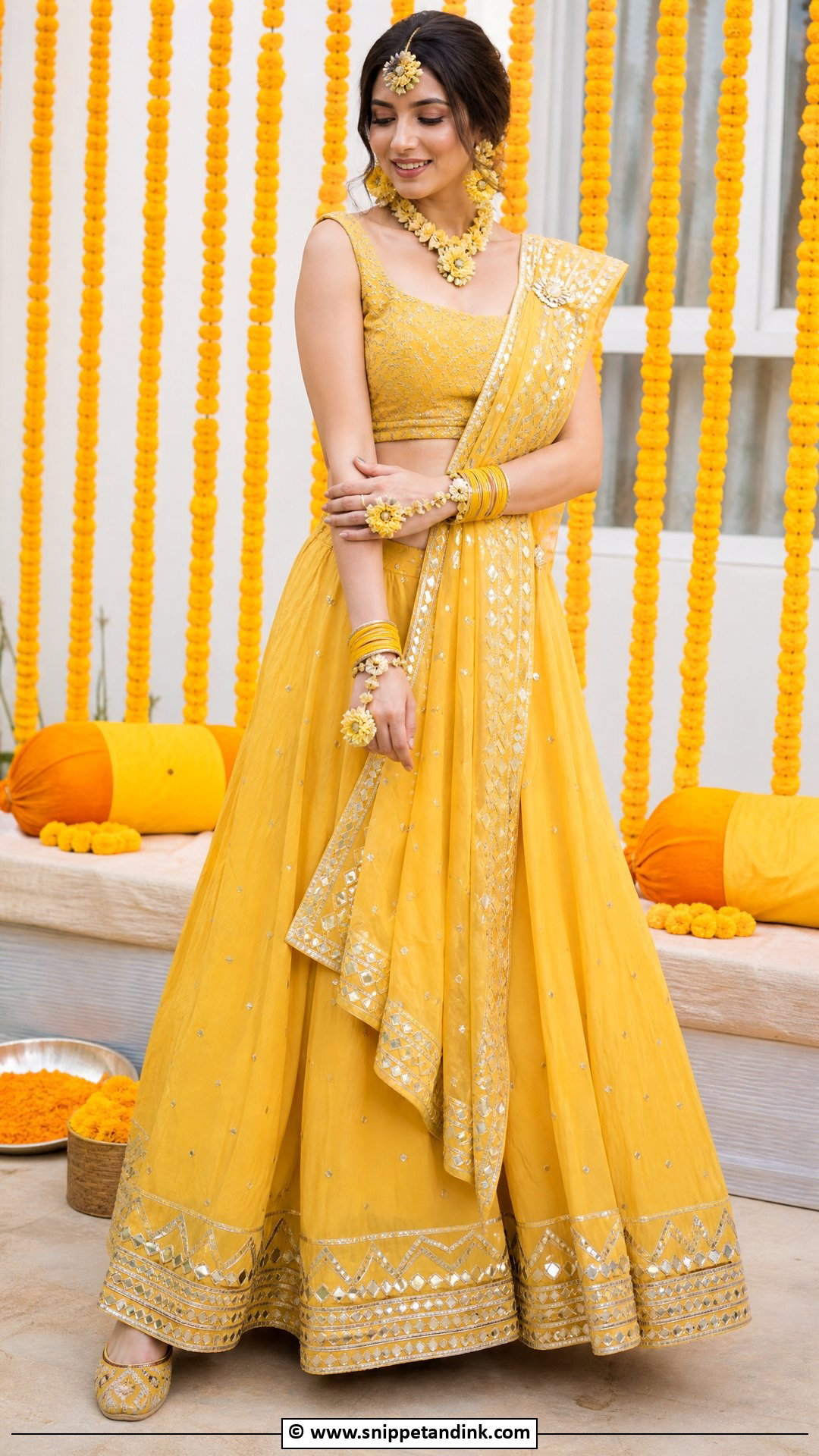
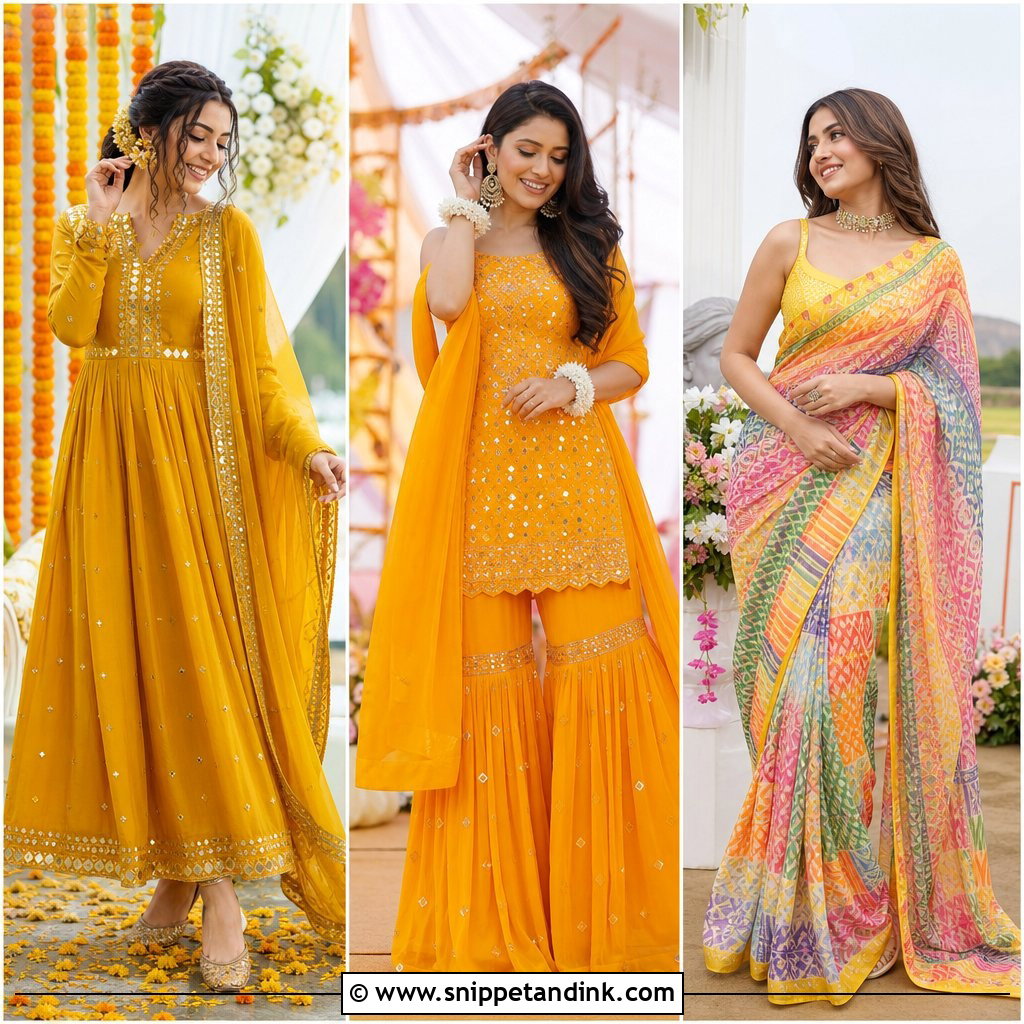
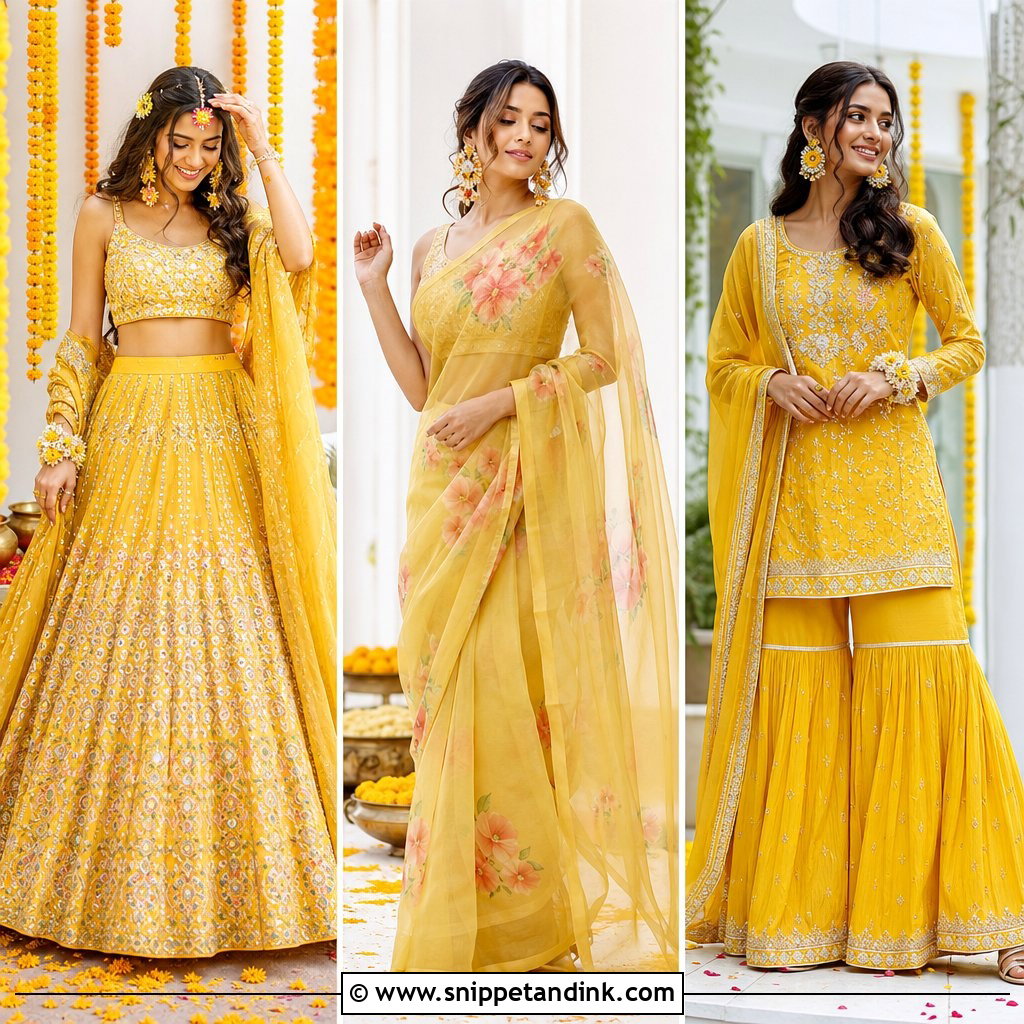
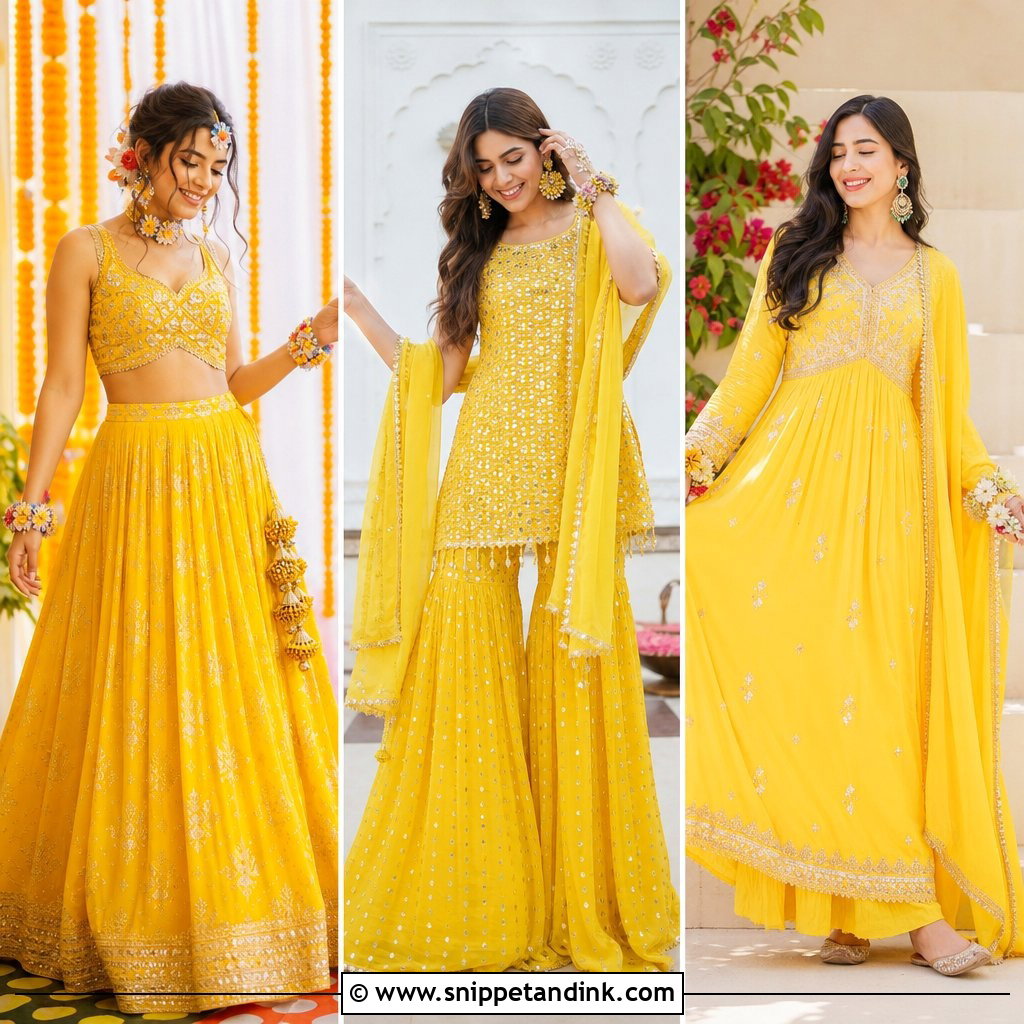
A yellow haldi lehenga dress is still what most brides picture, and it works best when the skirt is light enough to sit cross-legged in. I look for gota patti or mirror work on the border rather than all over, because heavy embroidery traps turmeric in every stitch. Pin the dupatta at the shoulder and the back of the blouse, since a loose one will trail through the paste bowl. Fresh marigold earrings and a maang tikka keep metal jewellery away from the mess, and I always switch brides into embellished flats for this function.
2. White And Yellow Haldi Saree Dress
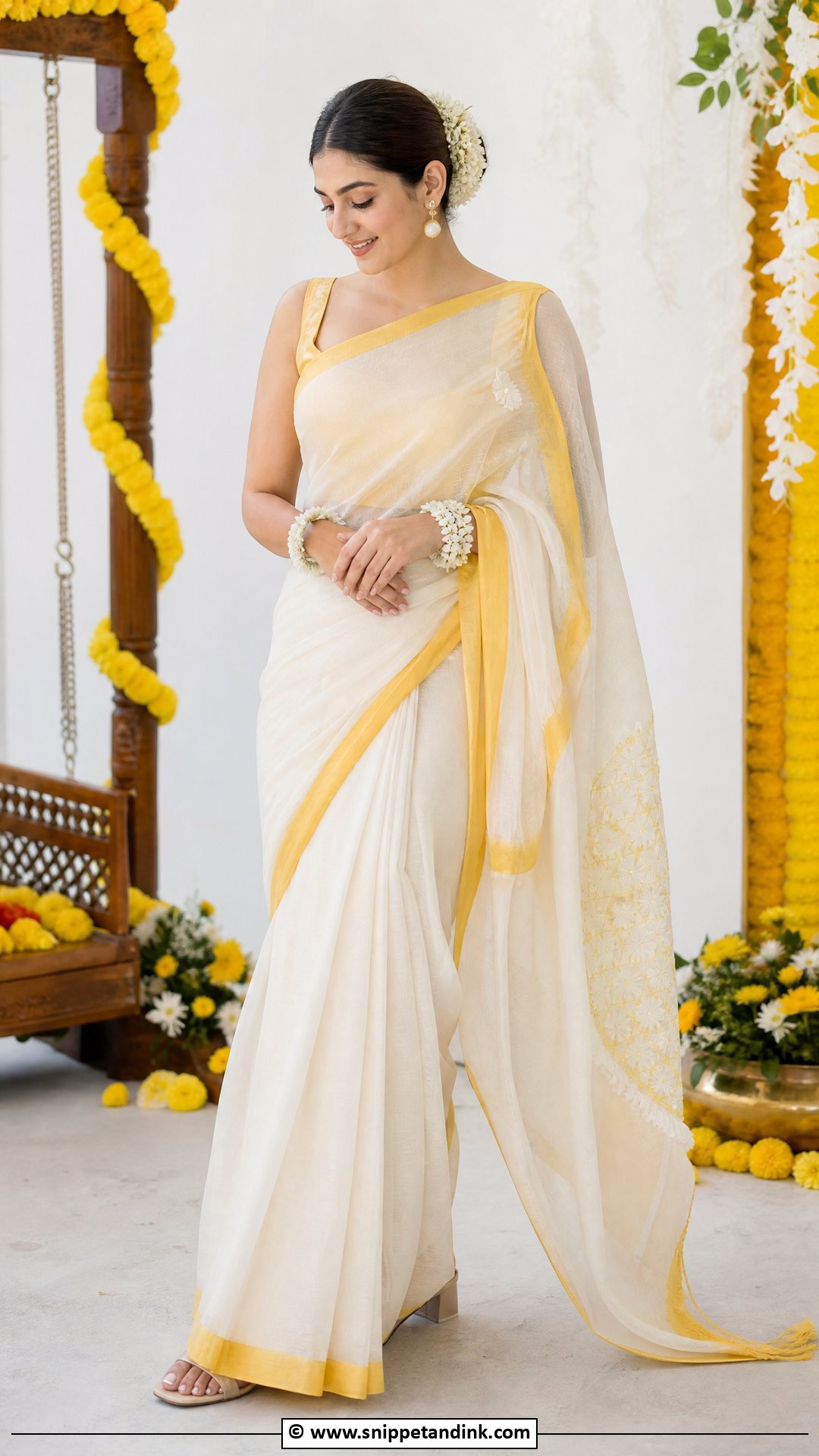
White with a yellow border reads fresh in morning light, but I’m honest with brides about the risk: turmeric on a white base is the hardest stain there is to shift. Mul cotton or a soft georgette drapes easily and is cheap enough that a permanent mark won’t hurt. A yellow blouse ties the look to the theme, and a bun with flowers keeps hair out of the paste. Wear flat sandals, because you’ll be standing for family photos far longer than you expect.
3. Mustard Haldi Sharara Dress
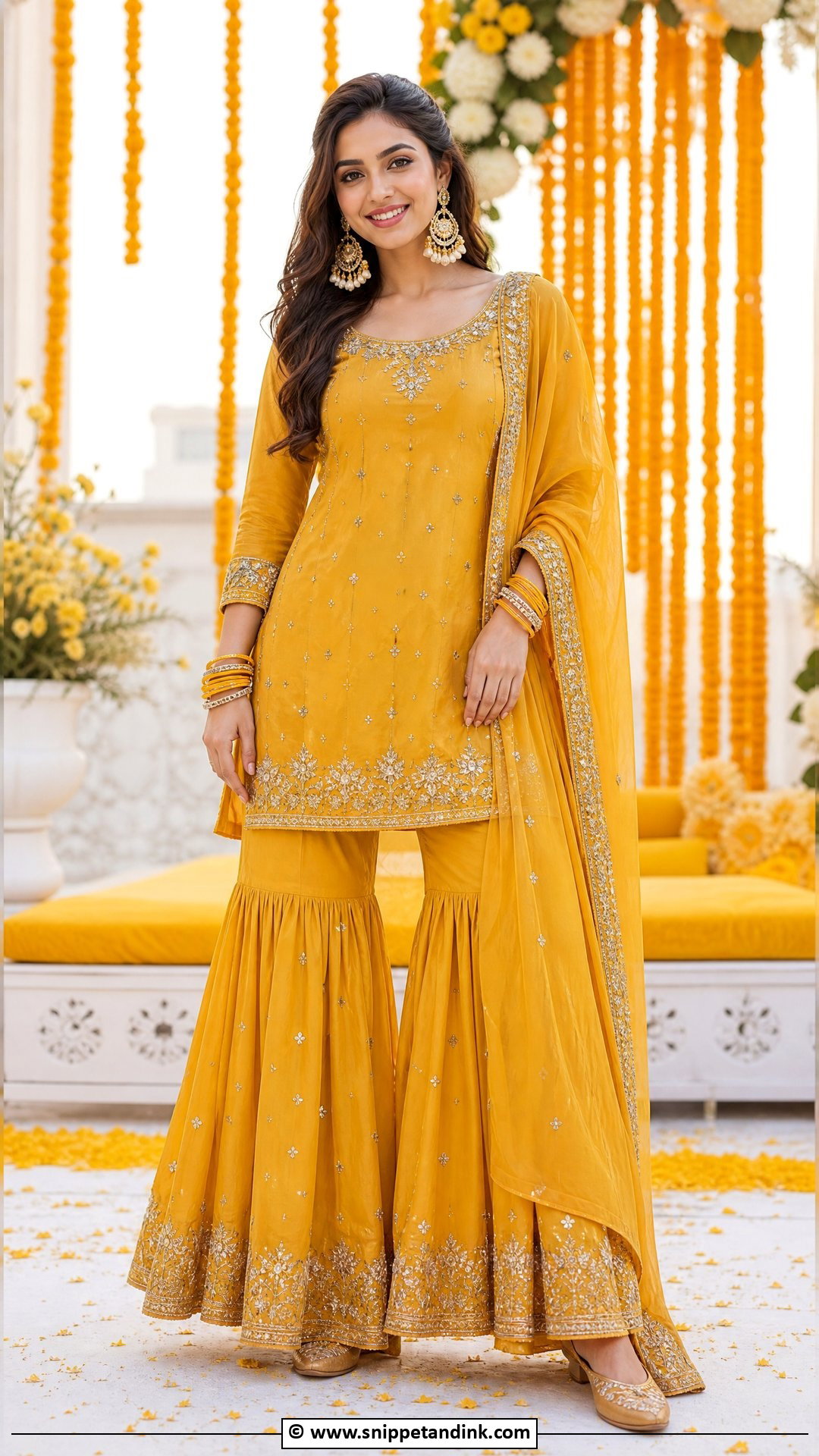
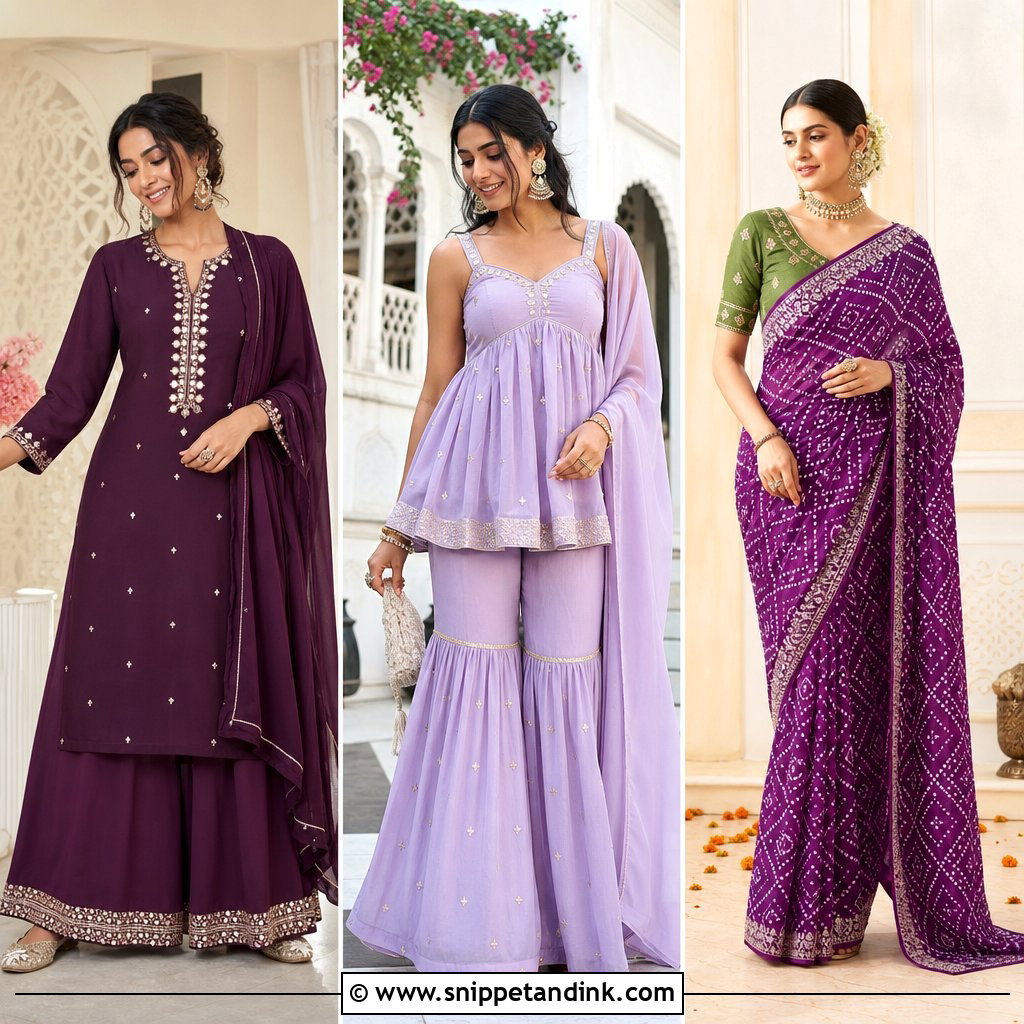
Mustard is the shade I reach for when a client says plain yellow washes her out. It has enough brown in it to sit well on deeper and olive skin, and it doesn’t go neon on camera the way lemon can. A short kurti with flared sharara pants gives real leg movement for dancing, and the hem stays clear of the floor when you sit. Throw the dupatta over one shoulder and secure it with a pin under the kurti. Jhumkas, stacked bangles and embellished juttis are all it needs.
4. Yellow Anarkali Haldi Dress
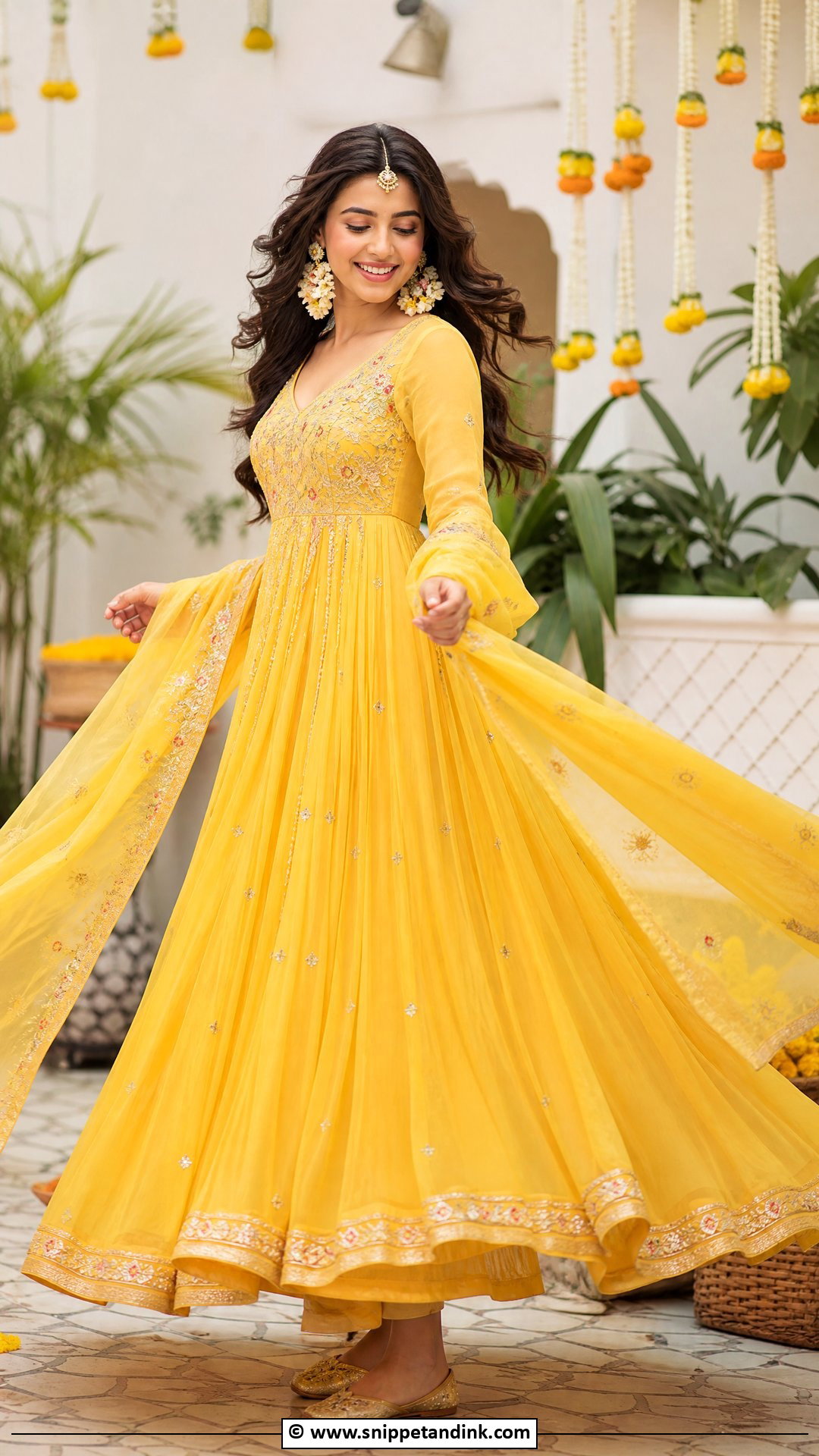
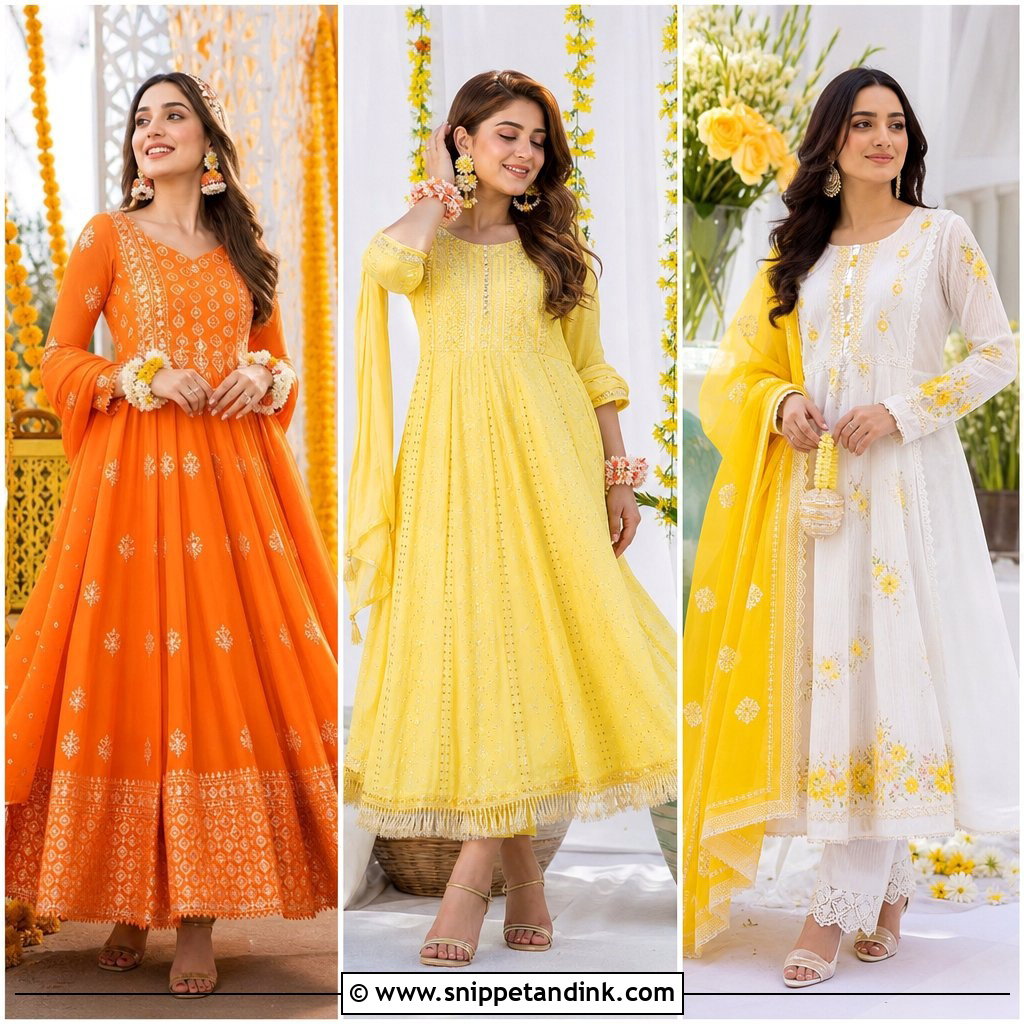
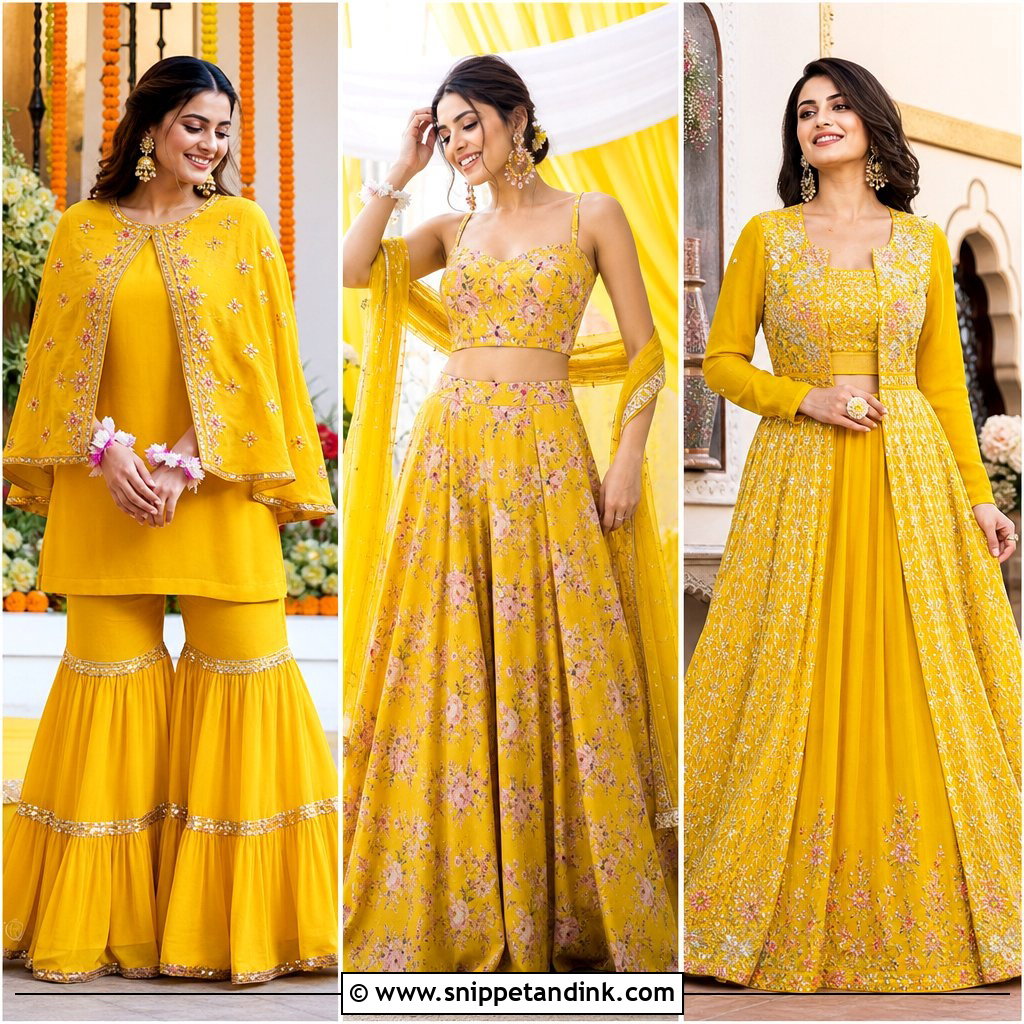
An anarkali gives you the twirl of a lehenga with half the weight, which matters at a ceremony where you’re lifted, hugged and pulled into dances. Chanderi or cotton silk breathes better than georgette in a hot courtyard. The one fitting note I always give: check how the flare behaves when you sit on a low stool, because a very full anarkali can bunch up awkwardly at the waist. A tie-up back or a fine sleeve detail keeps it from looking like everyday wear, and a small maang tikka finishes it.
5. Floral Haldi Lehenga Dress
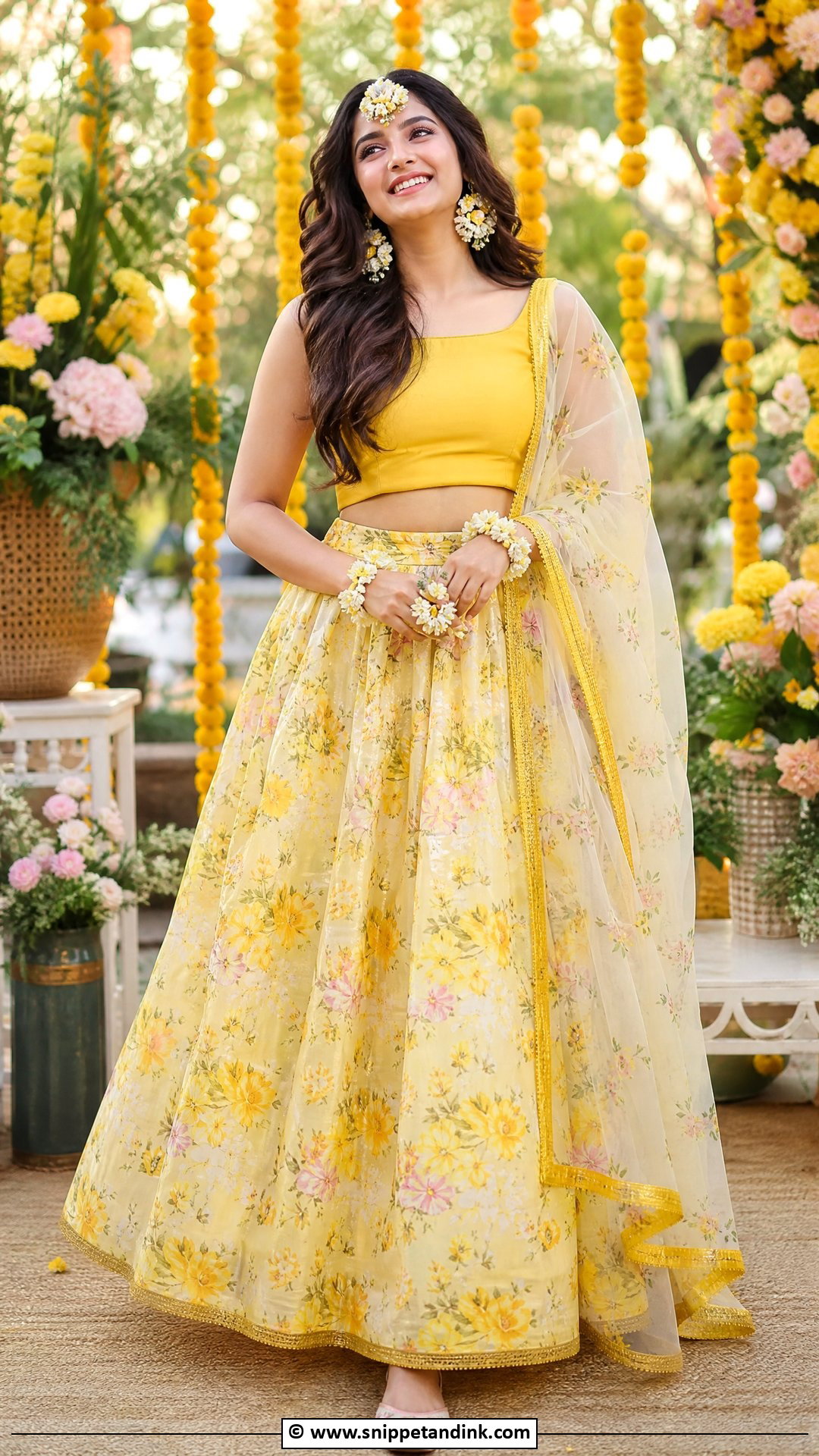
Printed florals are forgiving at a haldi. A smudge of turmeric on a busy print disappears in photos, whereas on plain silk it becomes the only thing anyone sees. Choose a printed or lightly embellished skirt in yellow, pink or green florals and keep the blouse plain so the print has room. A sheer dupatta stops the outfit getting heavy. A loose braid with a few blooms tucked in suits the softness, and garden venues pick up the pattern naturally.
6. Yellow Kurta Palazzo Haldi Dress
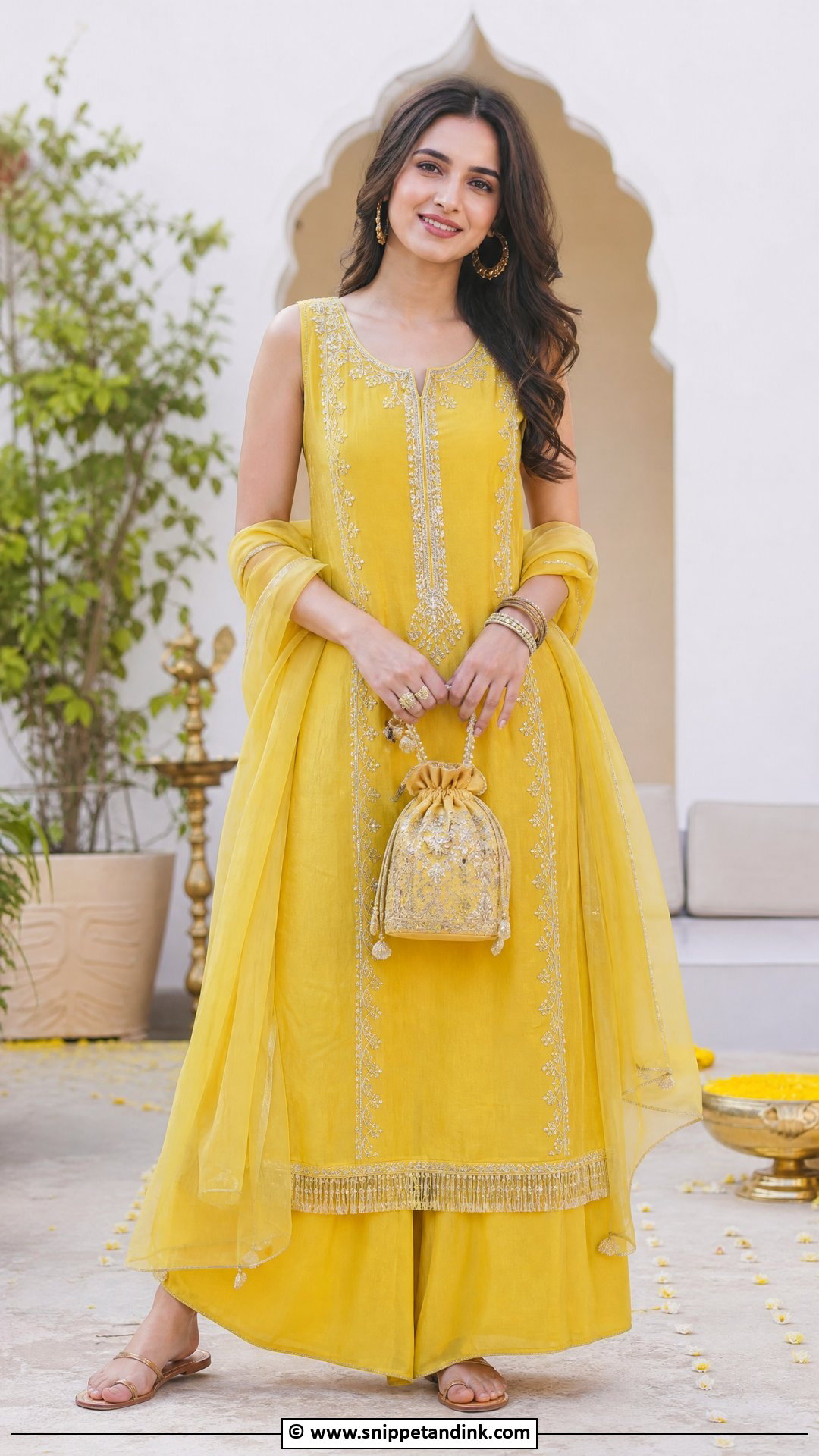
For anyone who’ll be running the ritual rather than sitting in it, a kurta with wide palazzos is my default suggestion. You can kneel, carry trays and climb stairs without holding up a hem. Put the embroidery on the neckline and cuffs, which are the parts that show in group photos. Organza or cotton for the dupatta, gold hoops, a potli and embroidered flats complete it, and the whole set will get worn again at Diwali.
7. Ivory Haldi Lehenga Dress
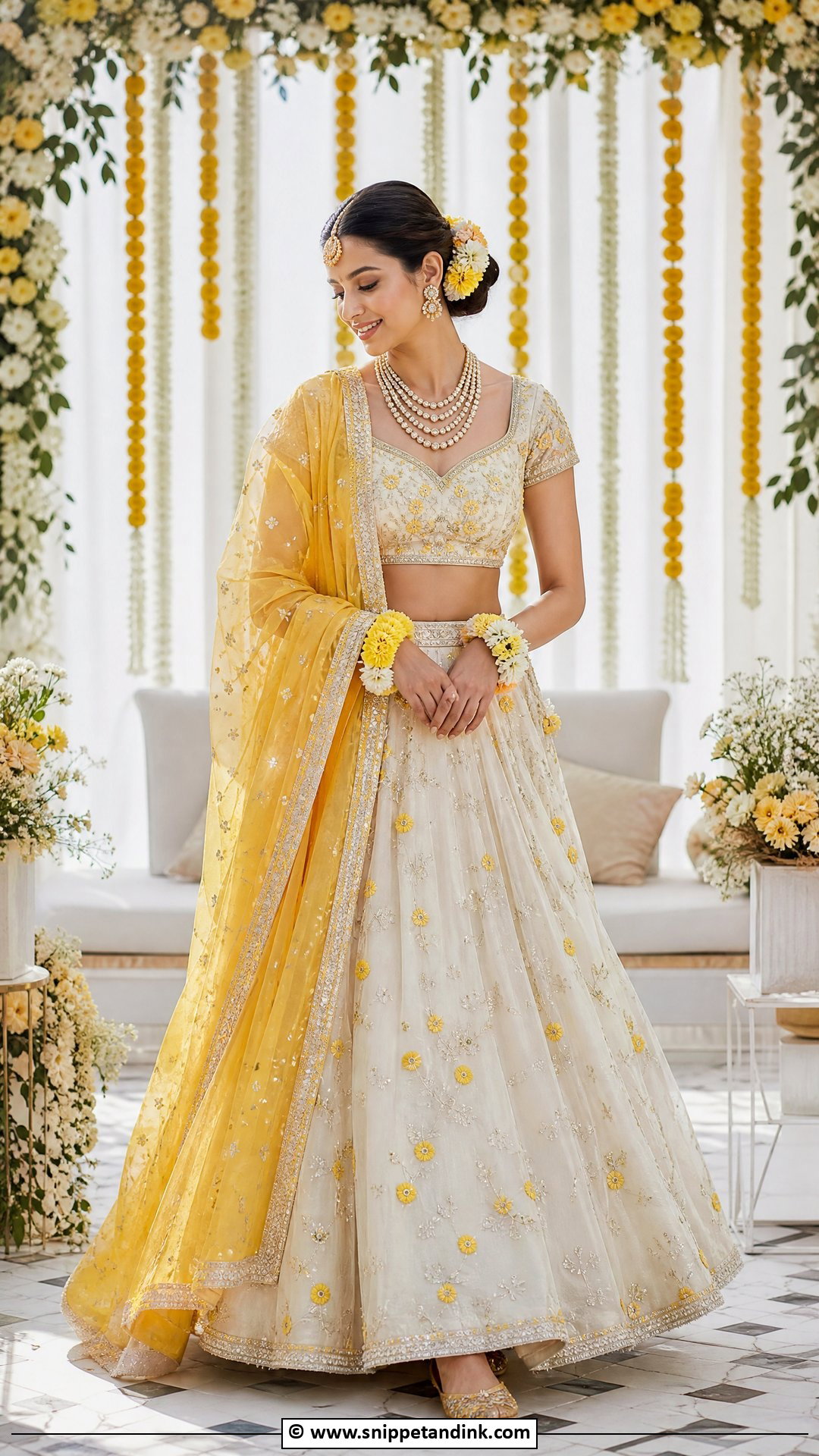
An ivory lehenga with yellow embroidery looks soft and expensive, which is exactly why I plan it carefully. Most brides who choose ivory wear it for the pre-ritual portraits and then change, or accept that the skirt will carry turmeric afterwards. If you go ahead, pick a marigold dupatta so the yellow is still clearly there. Pearls and a sleek bun keep it refined, and gold juttis are kinder than heels on a damp floor.
8. Orange Haldi Saree Dress
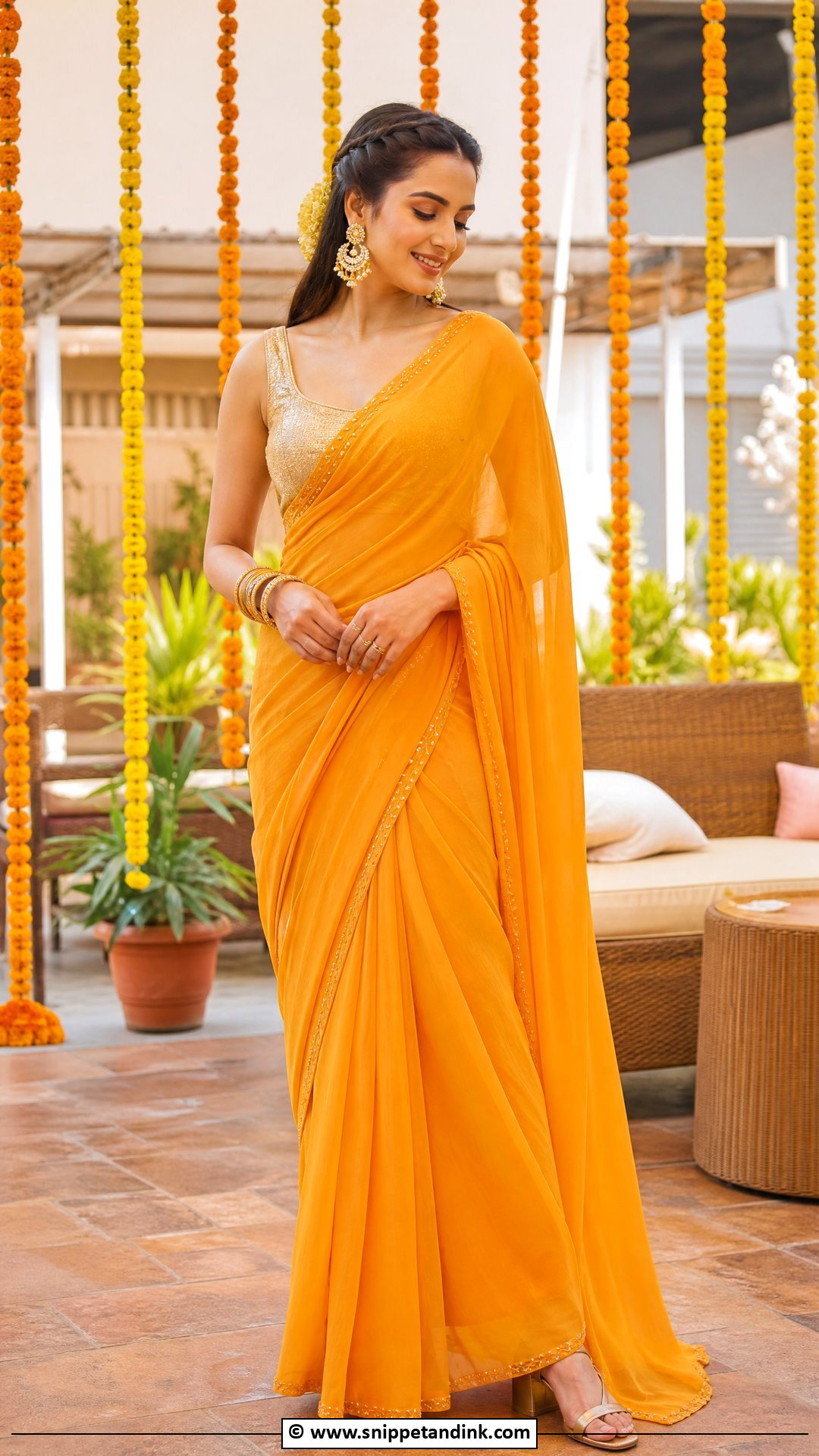
Orange sits right next to turmeric yellow on the colour wheel, so it looks deliberate beside marigold decor instead of competing with it. That makes it a strong pick for bridesmaids who want to stand out from the bride without clashing. A chiffon or silk-blend saree with a gold blouse is enough; add statement earrings and bangles and stop there. If the haldi is outdoors, tie your hair back, because humidity and flying petals undo open hair within the hour.
9. Yellow Gharara Haldi Dress
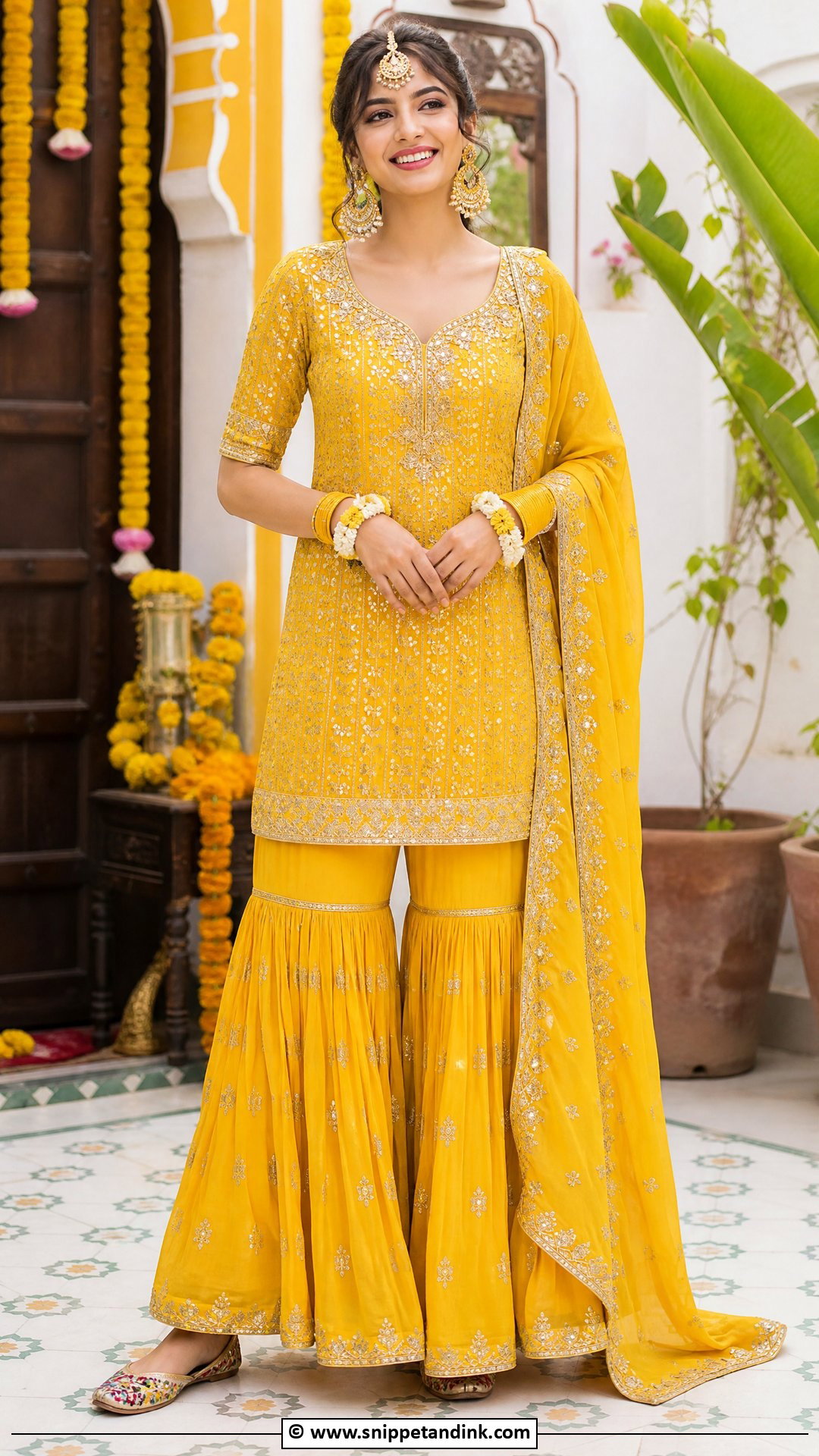
A gharara has a distinctive shape, fitted to the knee and gathered into a flare below it, and that gathered joint is where the drama comes from. It’s usually the outfit I suggest for the bride’s sister or closest friend. The thing to check at the fitting is the knee band: if it’s tight you’ll struggle to sit on the floor, so ask for a little ease. Gota or zari work on a short kurti, chandbalis, a passa and juttis make it complete, and a lighter fabric keeps it right for a casual morning.
10. Yellow Indo Western Haldi Dress
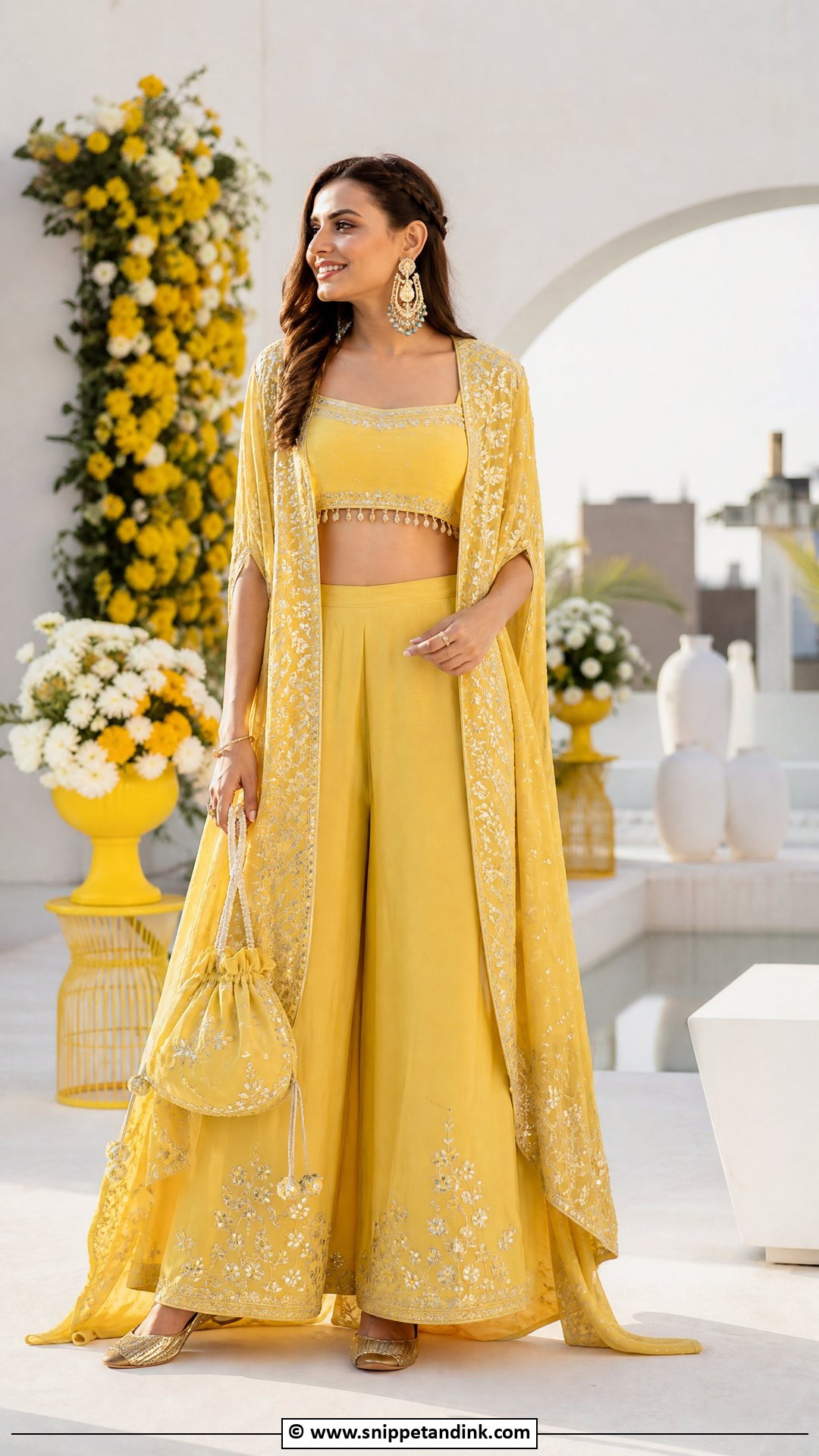
A yellow Indo western haldi dress suits guests who don’t want a saree but still want to look dressed for the occasion. A crop top with wide-leg pants, a cape set or a dhoti-style bottom all count. I like a cape over a dupatta here because it leaves both hands free to apply haldi. Keep the colour strong and the styling simple: mirror earrings, metallic flats and a small potli.
11. Lime Green Haldi Dress
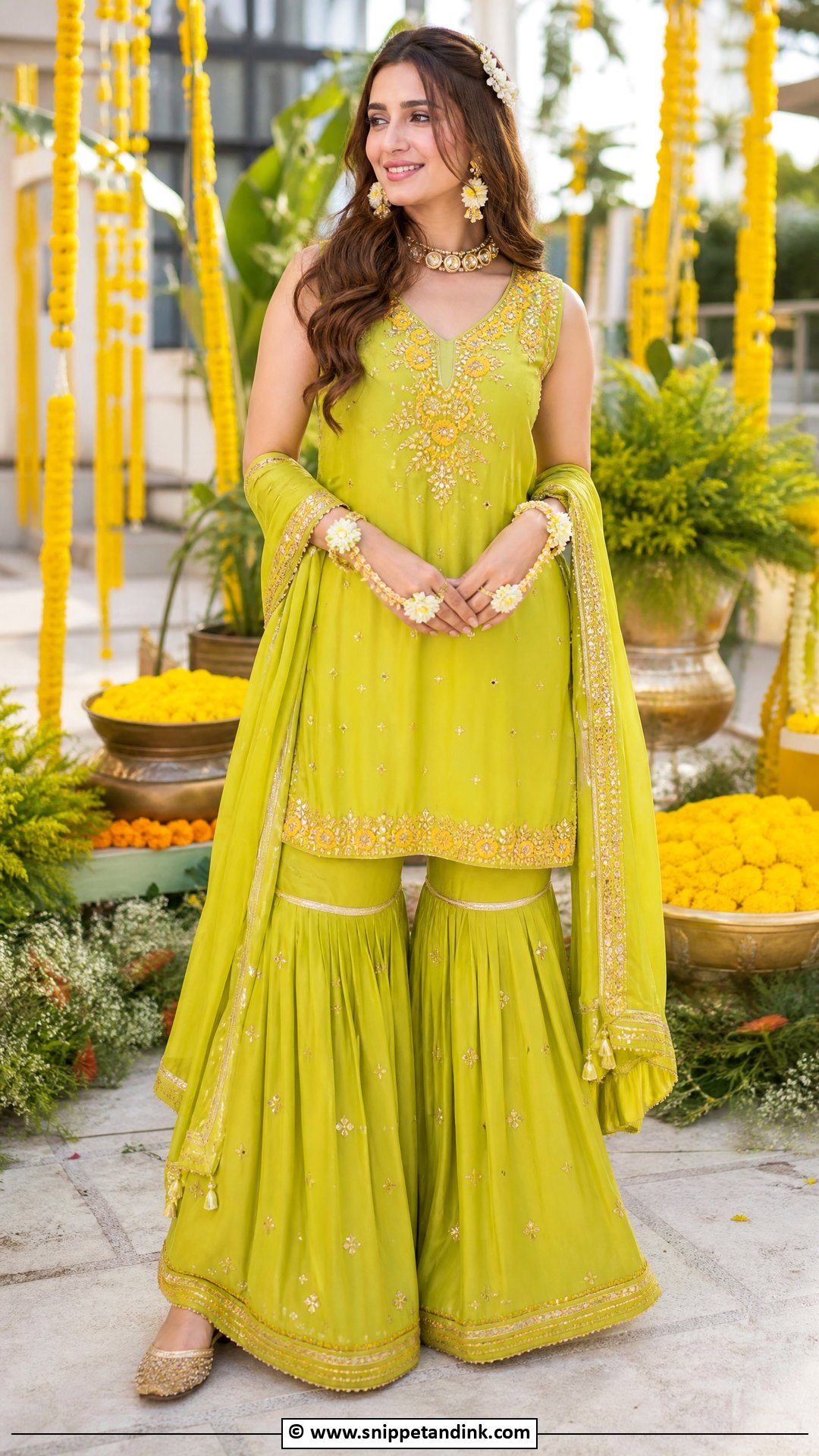
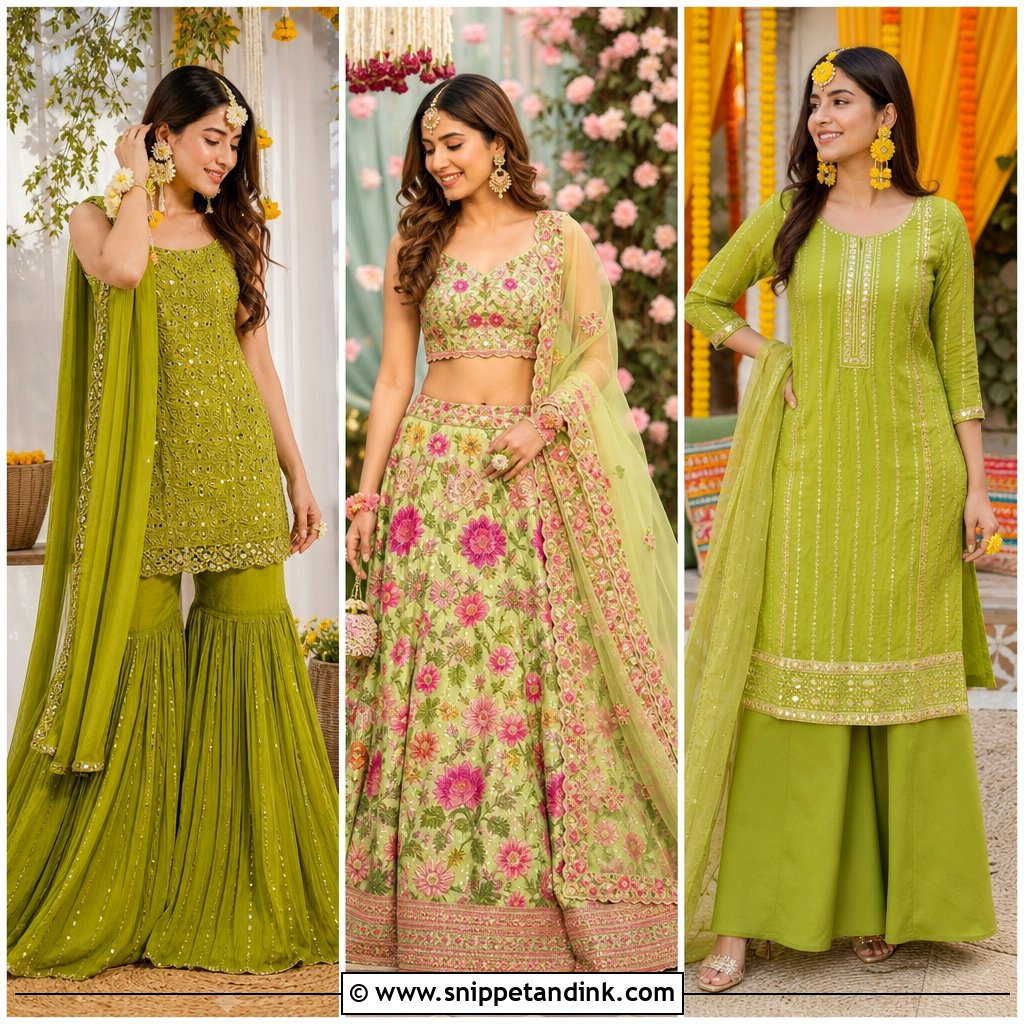
Lime is my favourite swap for a guest who doesn’t want to match the bride. Against marigold orange it looks bright without blending in, and a touch of yellow embroidery keeps it on theme. Gold jewellery warms the green, which can otherwise look cold on fair skin in shade. Keep the makeup nude so the colour does the talking, and finish with gold flats.
12. Yellow Chikankari Haldi Dress
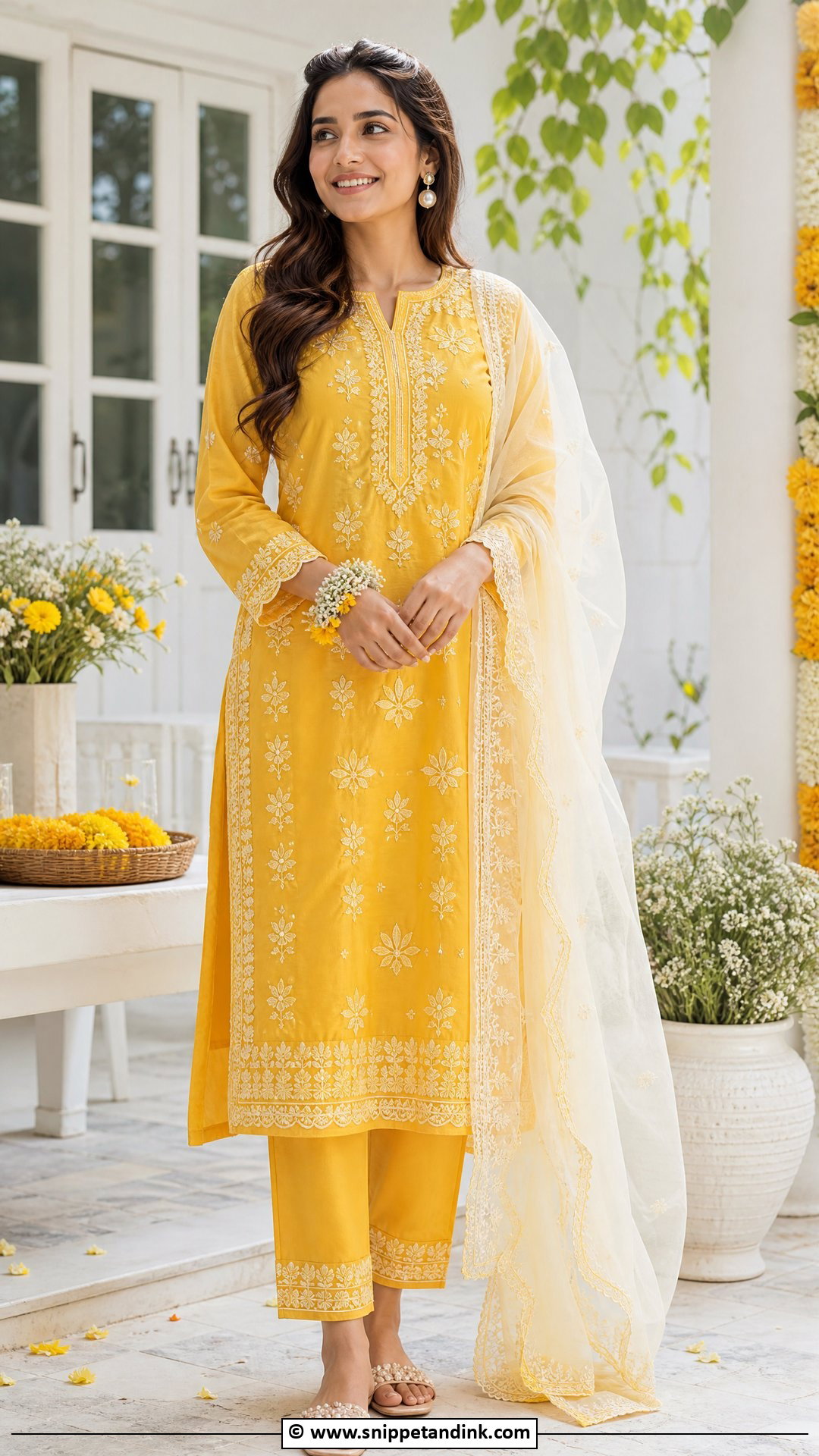
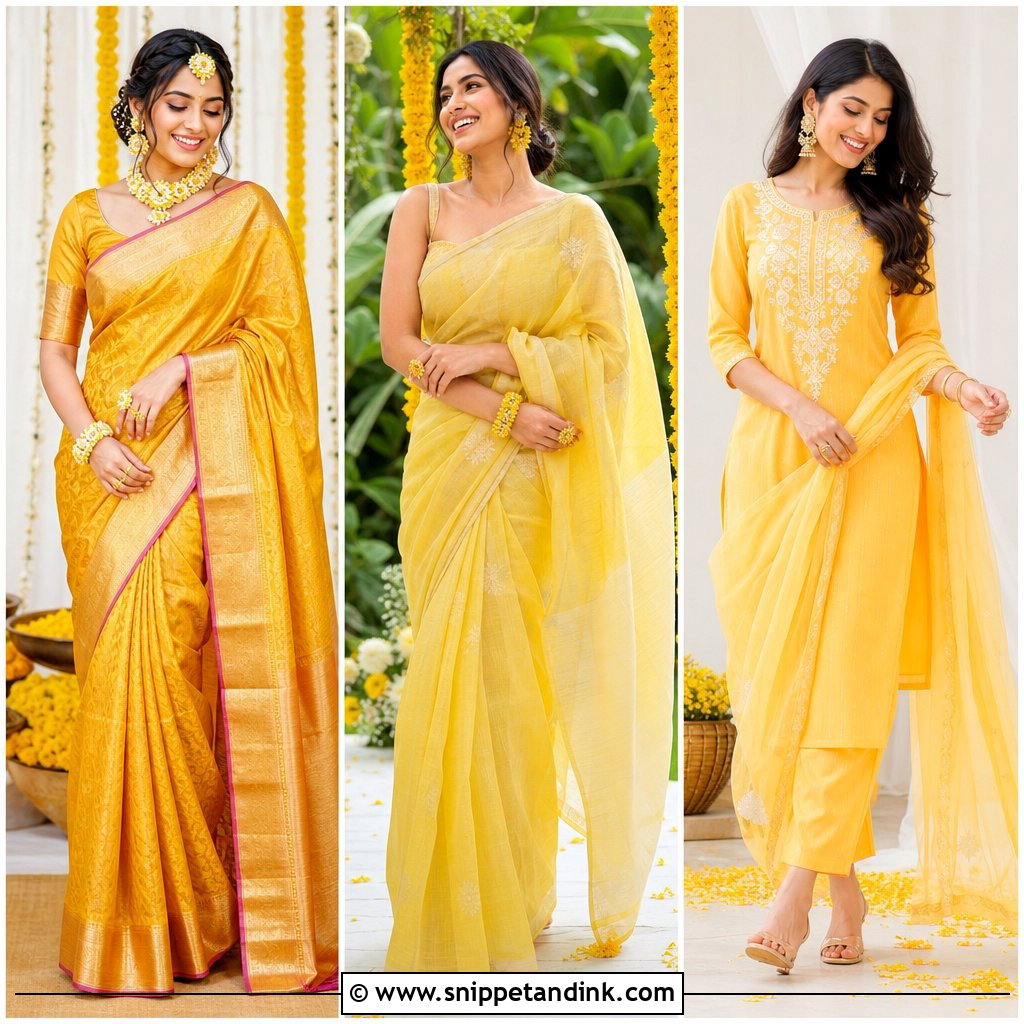
Chikankari is hand embroidery in white thread on fine cotton or georgette, and on yellow it looks crisp in daylight. It’s one of the coolest things you can wear to a summer haldi. My one caution is that the delicate stitching snags on bangles and sequinned clutches, so keep accessories smooth. A straight kurta with palazzos suits most guests, and a chikankari anarkali dresses it up for a formal family.
13. Yellow Saree With Floral Blouse Haldi Dress
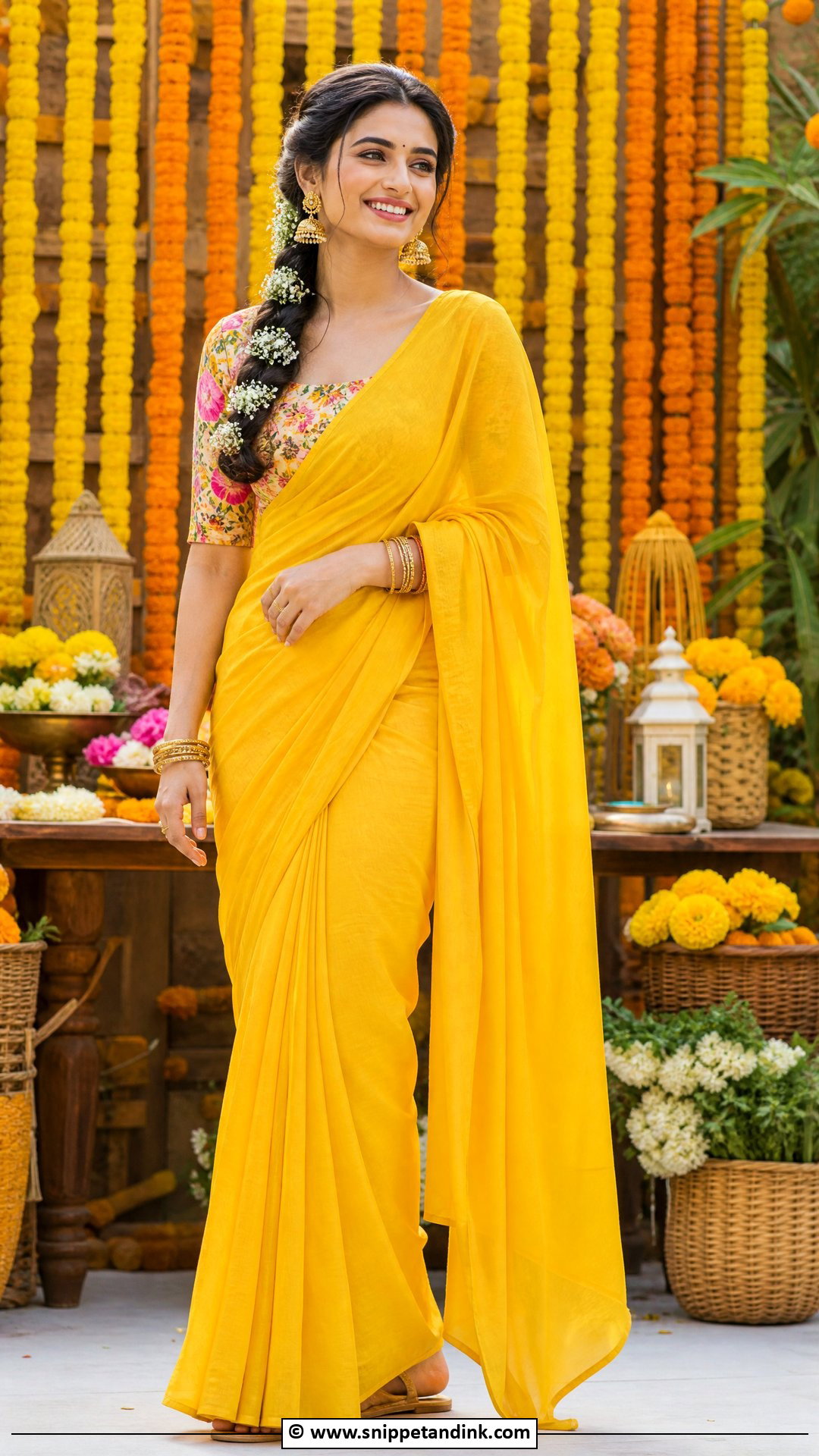
A plain yellow saree with a floral blouse is the easiest outfit on this list to put together from your own wardrobe. Choose a blouse print with pink, green or ivory in it so it connects to the decor. A light fabric is easier to drape and to re-pin after someone pulls you into a dance. If you’re nervous about the pallu slipping during rituals, a slim waist belt holds the pleats flat. Jhumkas, a bindi and a flower braid finish it.
14. Yellow Cape Lehenga Haldi Dress
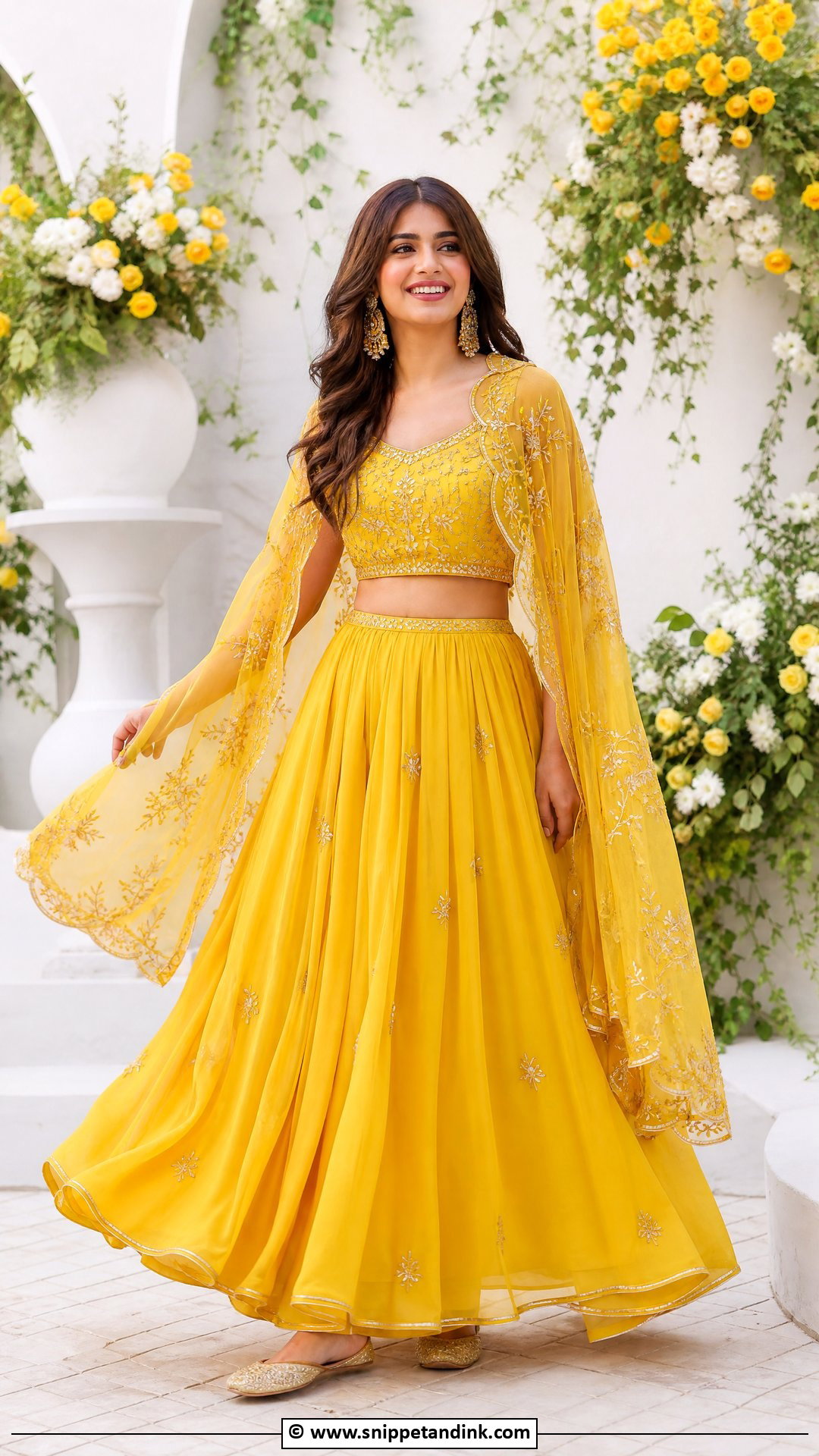
Capes solve the biggest practical problem of a haldi lehenga: the dupatta. With a sheer or embroidered cape over a crop top, nothing slides off your shoulder into the paste. Mirror work or light sequins add sparkle without weight. I’d skip this one for a bride who’ll be seated and heavily smeared, as turmeric on a sheer cape shows from every angle, but for a friend or sister who’s dancing it’s ideal. Pair with loose curls and metallic flats.

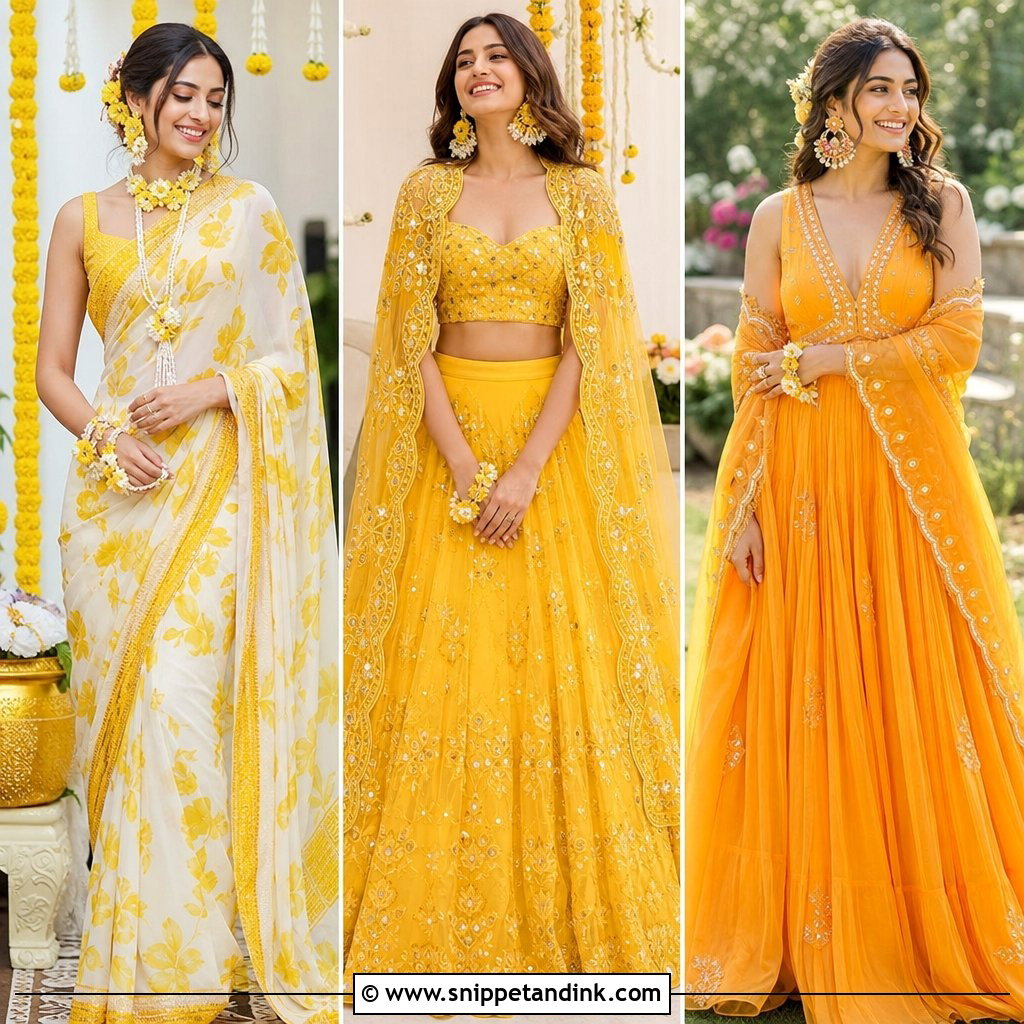
15. Printed Haldi Co Ord Dress
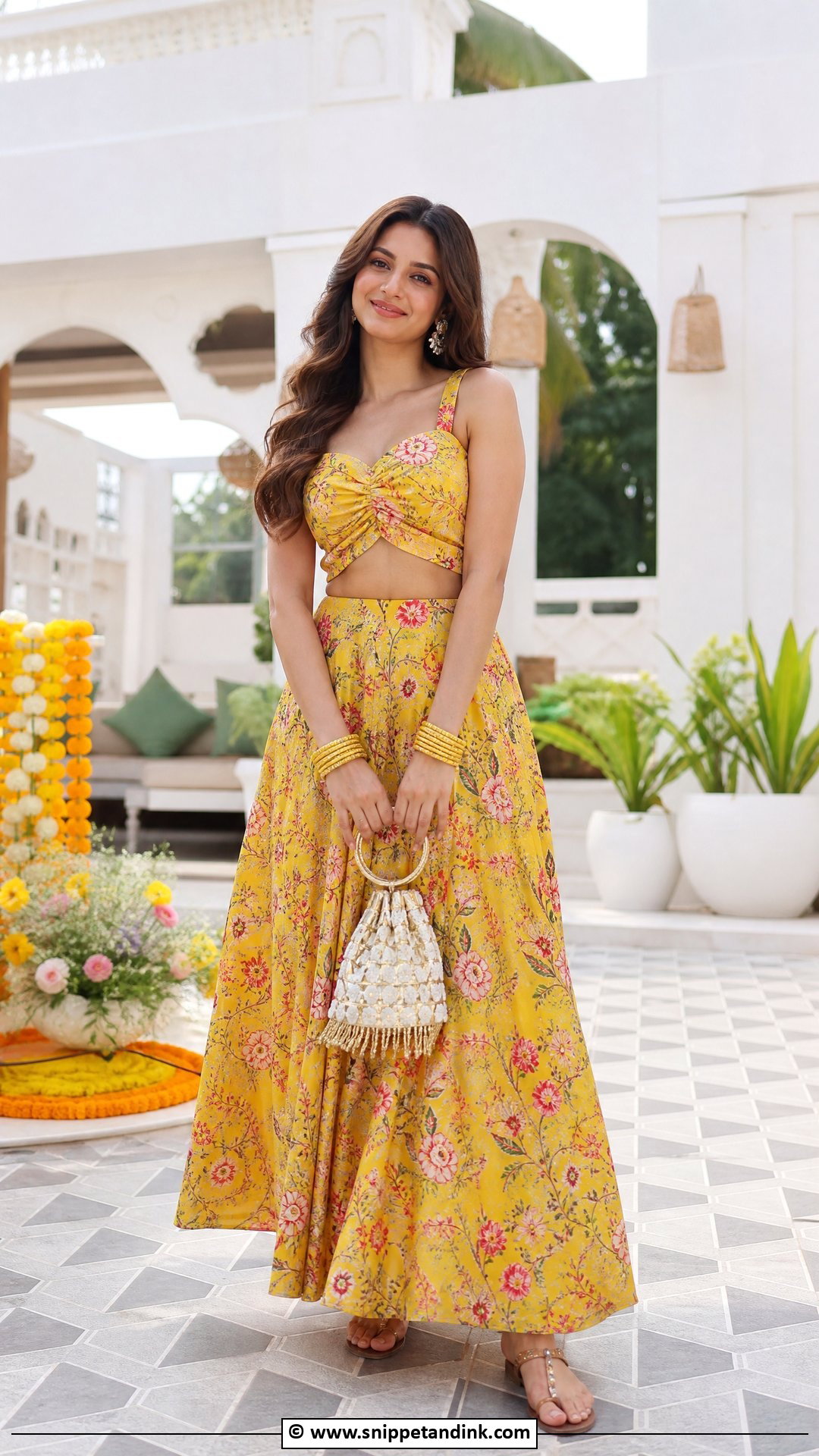
A printed haldi co ord dress is what I suggest to guests travelling for a destination wedding, because two matching pieces fold small and come out of a suitcase almost uncreased. Muslin and cotton are the fabrics to look for, and crepe if you need something that resists wrinkles. Simple earrings, bangles and flat sandals are enough. It also suits anyone who feels awkward in heavy ethnic wear.
16. Yellow Ruffle Saree Haldi Dress
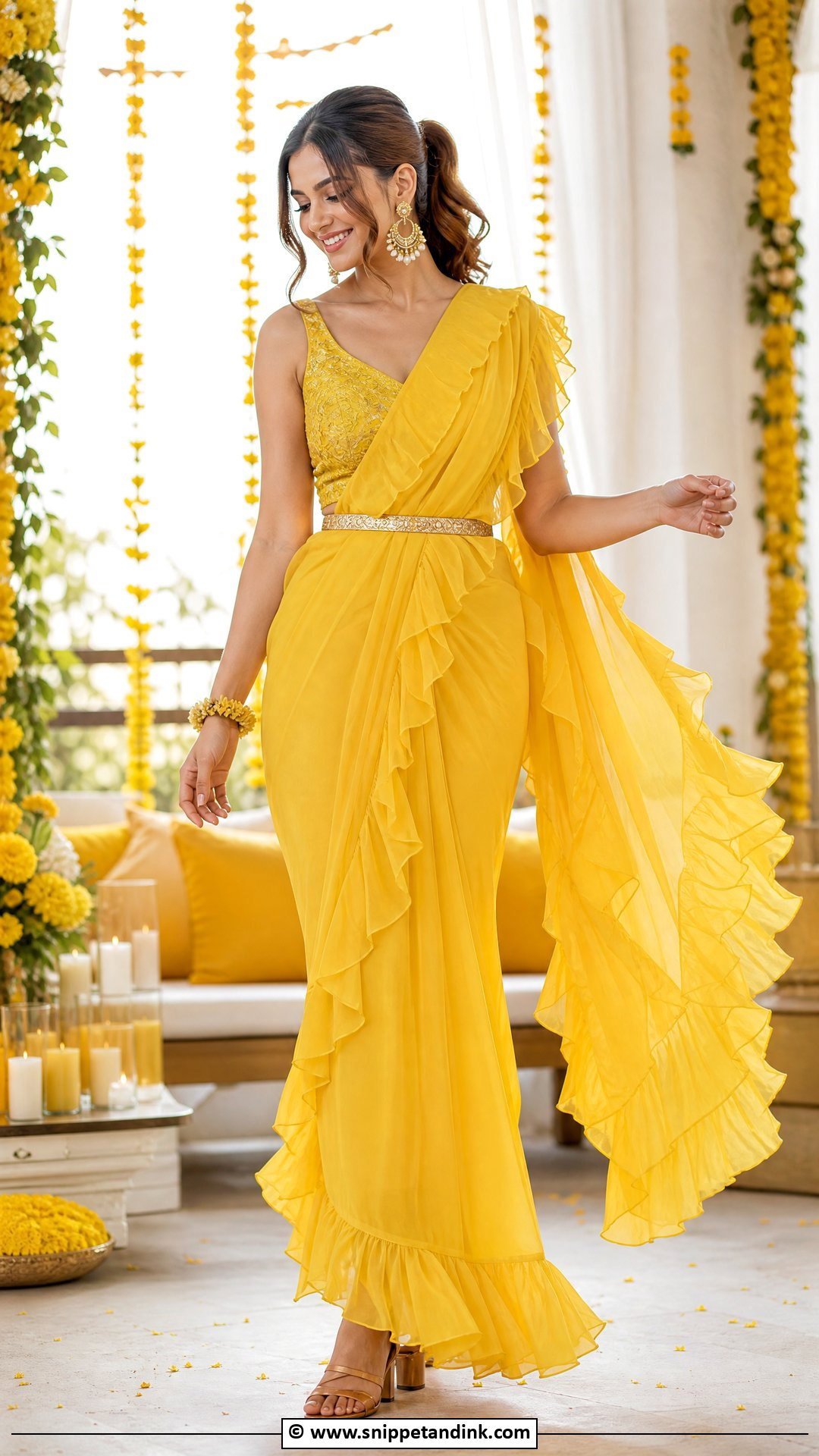
Ruffles give a saree volume at the hem, so the drape already has a strong shape before you add anything. That’s why I keep accessories minimal with this one: a fitted blouse, a slim belt and statement earrings. Ruffled georgette is light, but the extra fabric at the bottom does catch on heels, so I’d go for wedges or block heels. A ponytail or low bun keeps the neckline clean.
17. Yellow Dhoti Kurta Haldi Dress
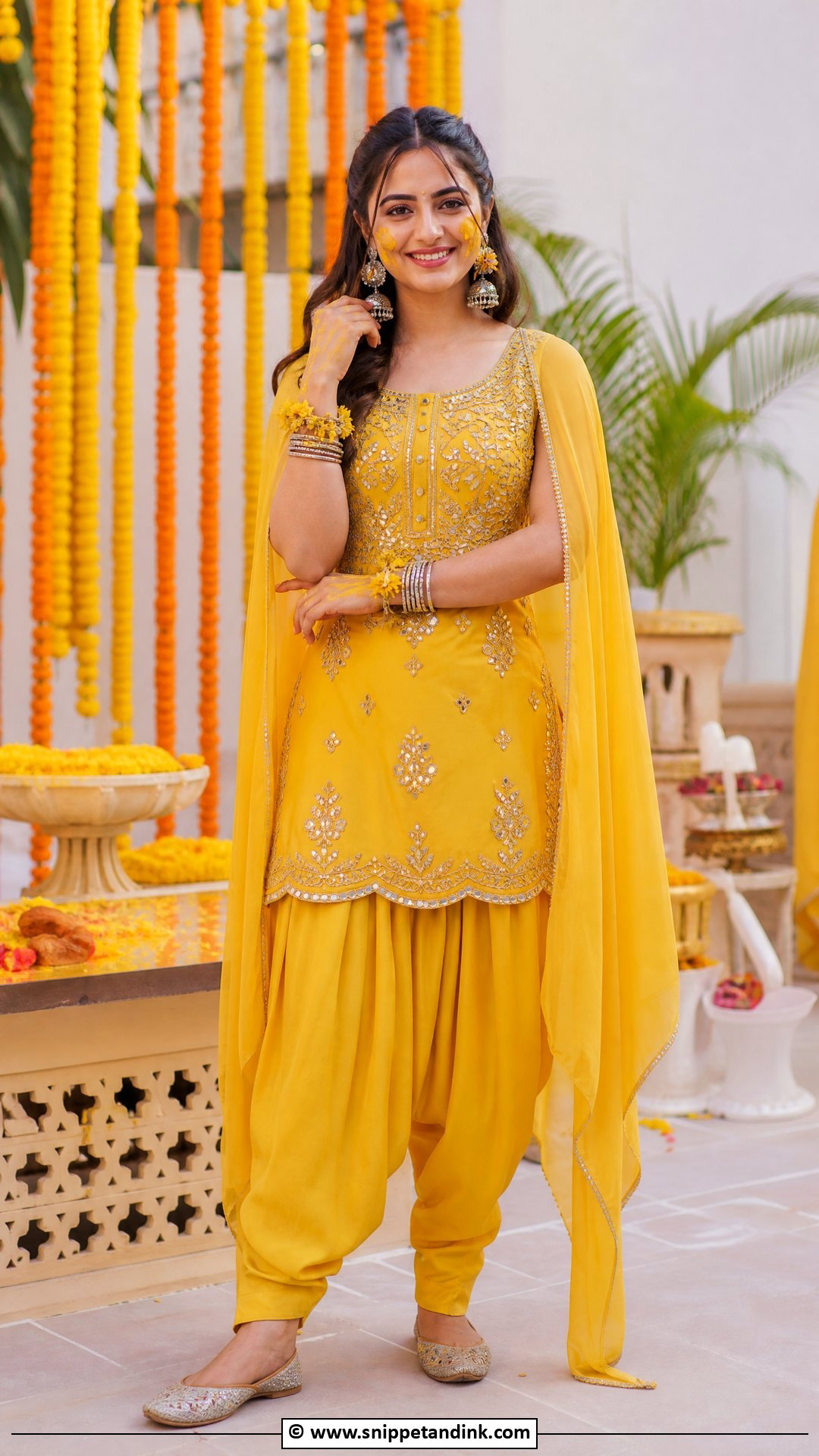
A dhoti bottom is built for sitting on the floor, which is where much of a haldi happens. The draped crotch gives you room to kneel and fold your legs without tugging at a seam. Pair it with a short embroidered kurta or an asymmetric tunic, and add a light cape only if you want softness. Juttis and oxidised earrings suit the slightly rustic feel. I’d steer formal-dress families towards something more conventional, as some elders read a dhoti as casual.
18. Yellow Peplum Sharara Haldi Dress
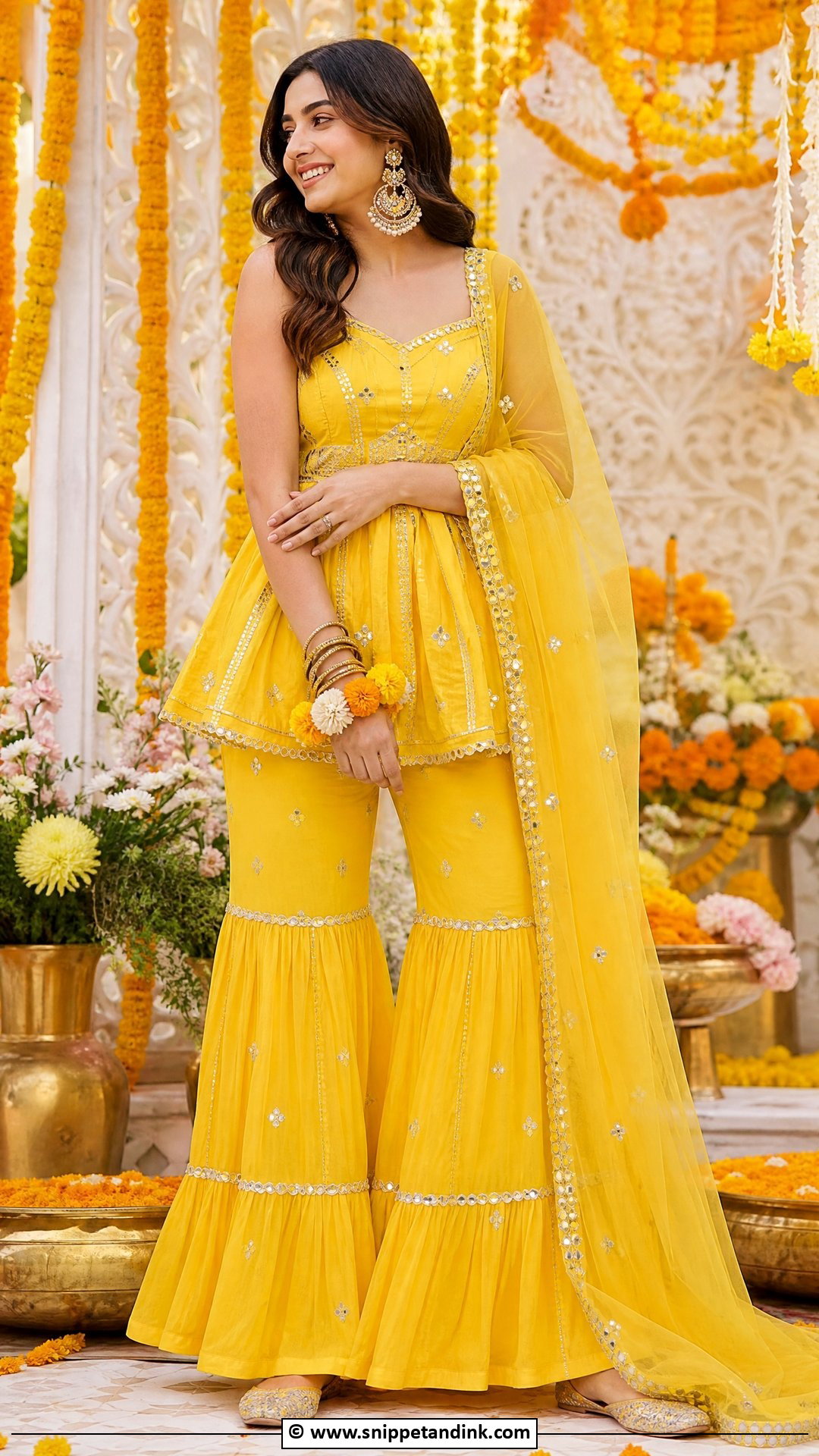
A yellow peplum sharara haldi dress defines the waist, which helps in group photos where loose kurtas can look shapeless. The peplum flare should hit at the high hip; any lower and it fights with the volume of the sharara. Mirror work or gota keeps it festive. If the top is detailed enough, skip the dupatta entirely. Chandbalis and embellished flats finish it for a sister or bridesmaid.
19. Pink And Yellow Haldi Dress
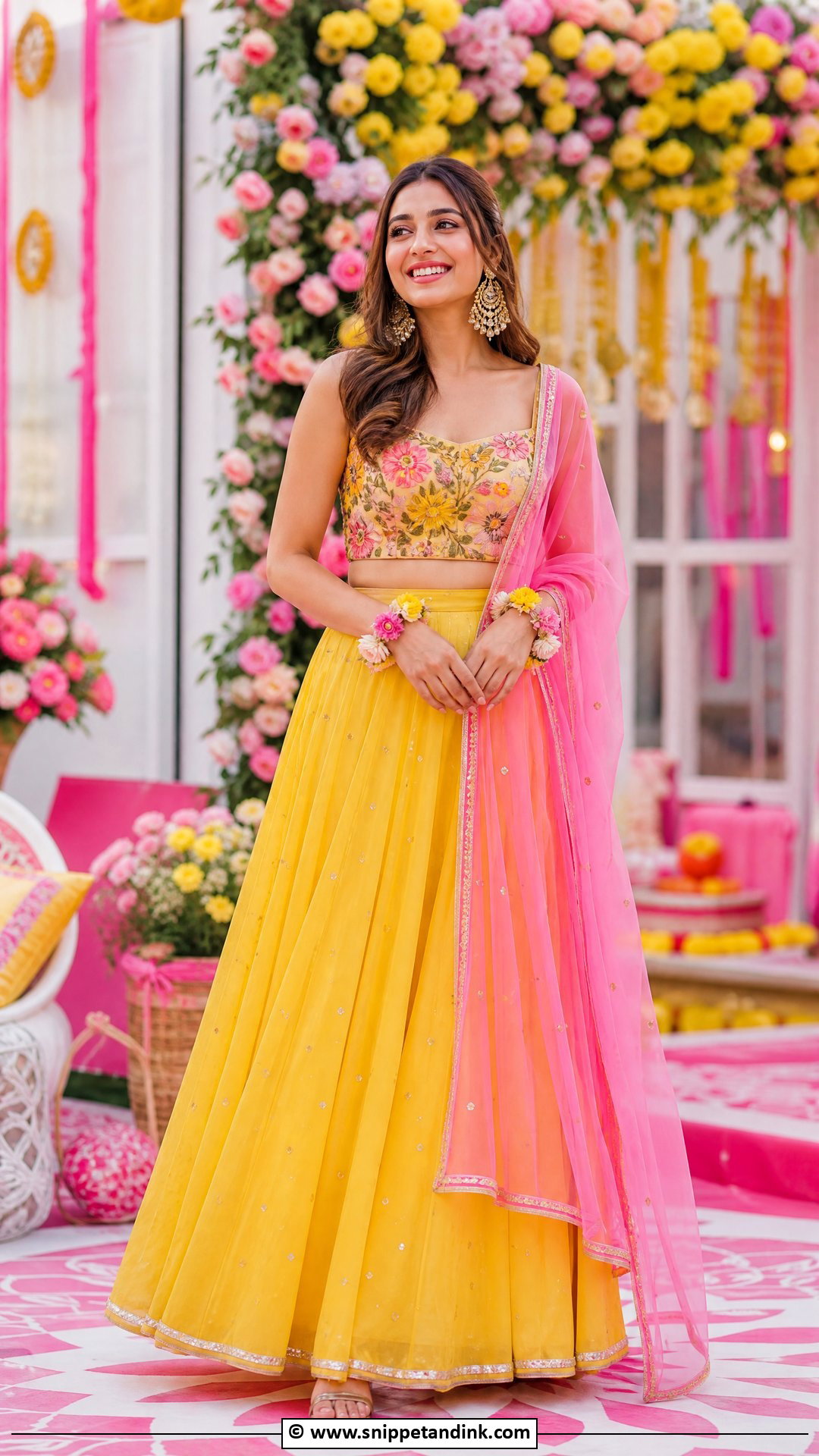
Pink and yellow is a cheerful pairing, and the trick is choosing which one leads. A yellow lehenga with a pink dupatta reads as haldi; a pink kurta with yellow palazzos reads more like a mehndi. Keep jewellery to gold or pearl so the palette doesn’t get busy, and add a few fresh flowers. It suits younger guests especially well.

20. Yellow Mirror Work Haldi Dress
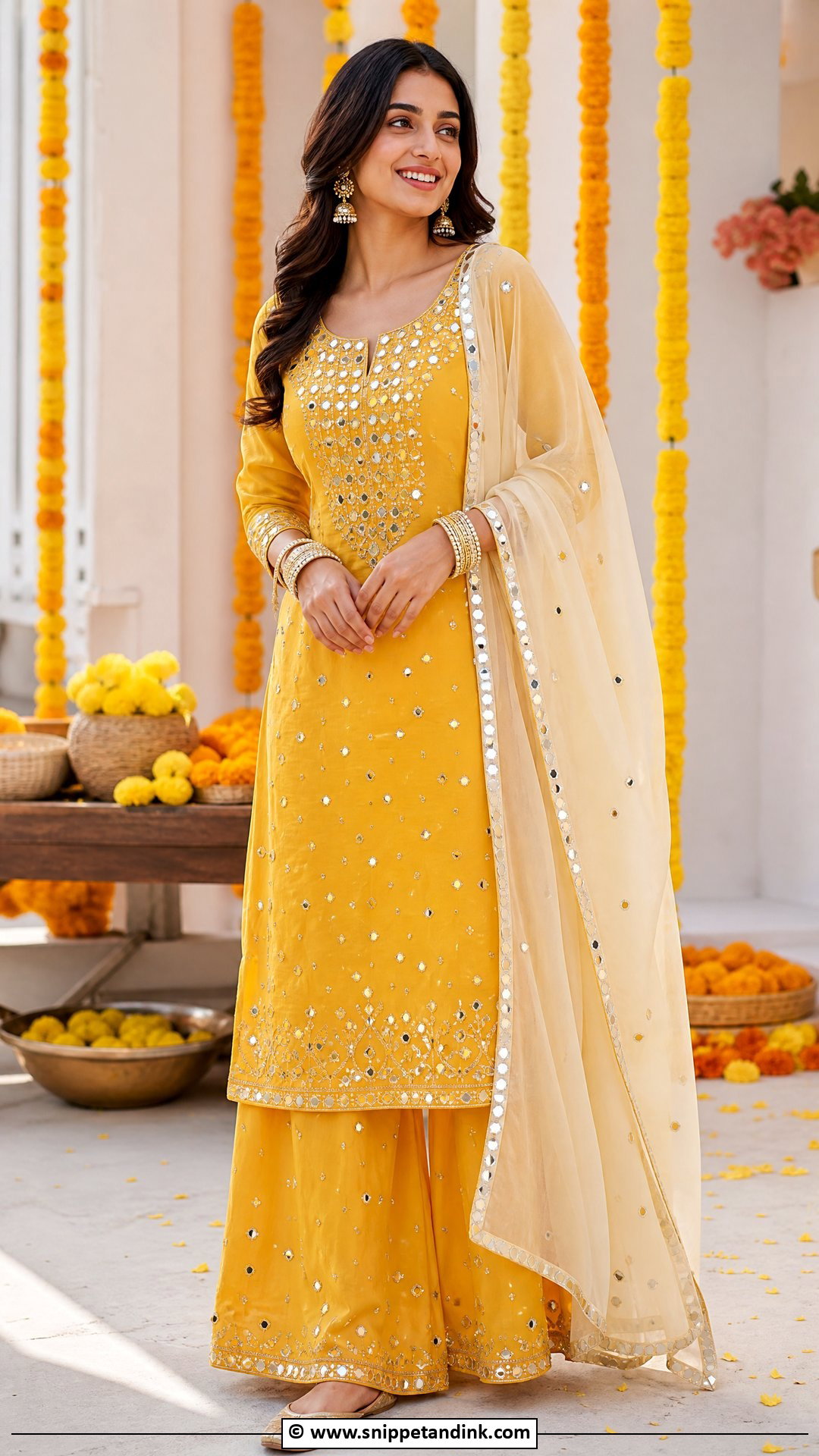
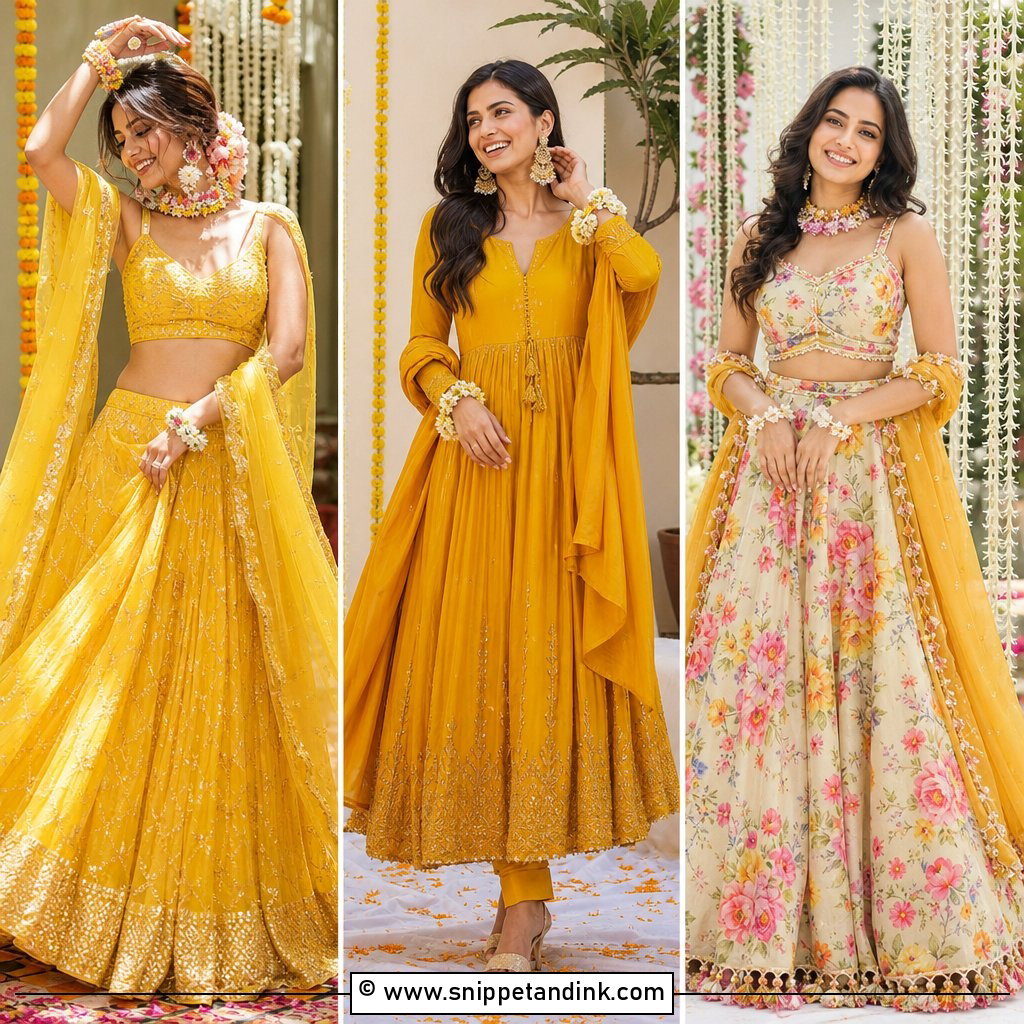
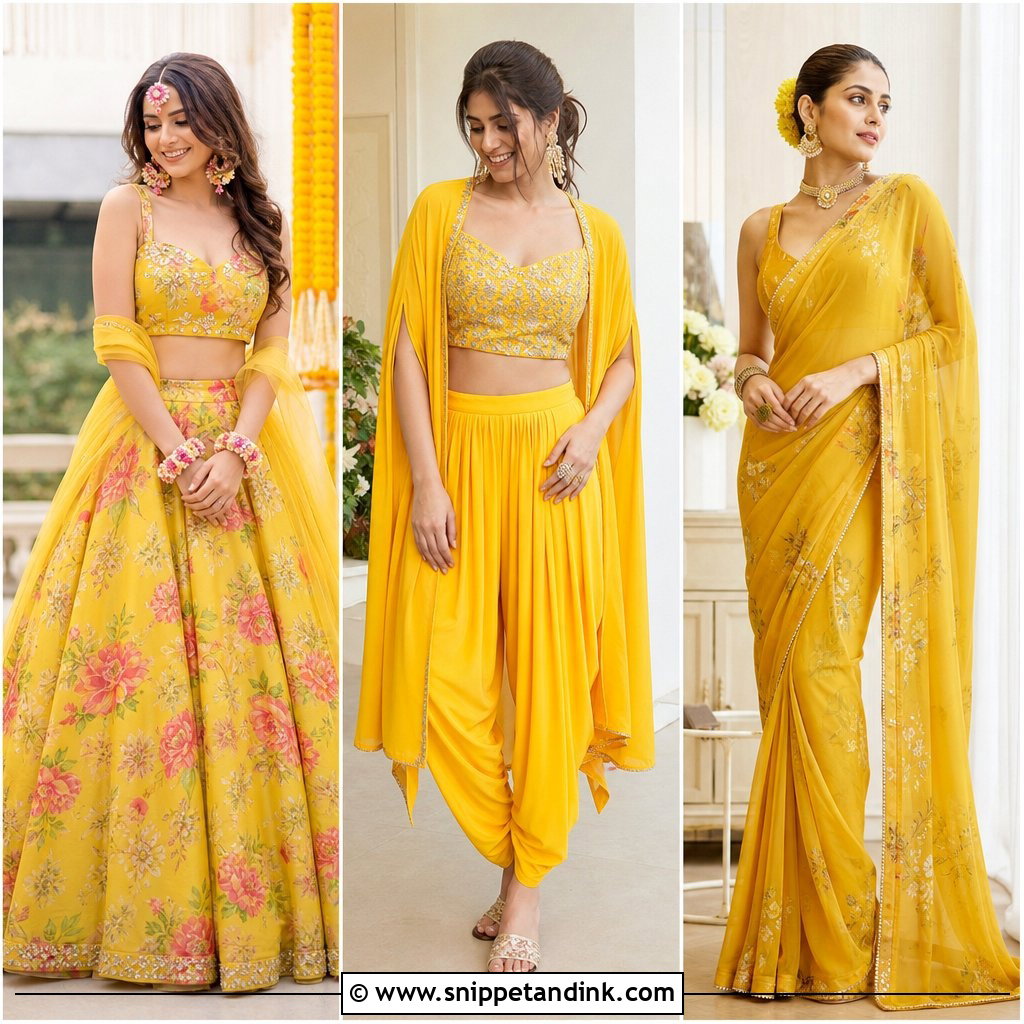
A yellow mirror work haldi dress gives you shine that suits daylight, because each small mirror throws back sunlight rather than relying on evening lamps. I tell clients that real glass mirror work is heavier than it looks, so a fully mirrored lehenga will drag by midday. Choose a kurta set or sharara with mirrors at the borders. When the neckline is heavily worked, skip the necklace and wear earrings only.
21. Yellow Organza Saree Haldi Dress
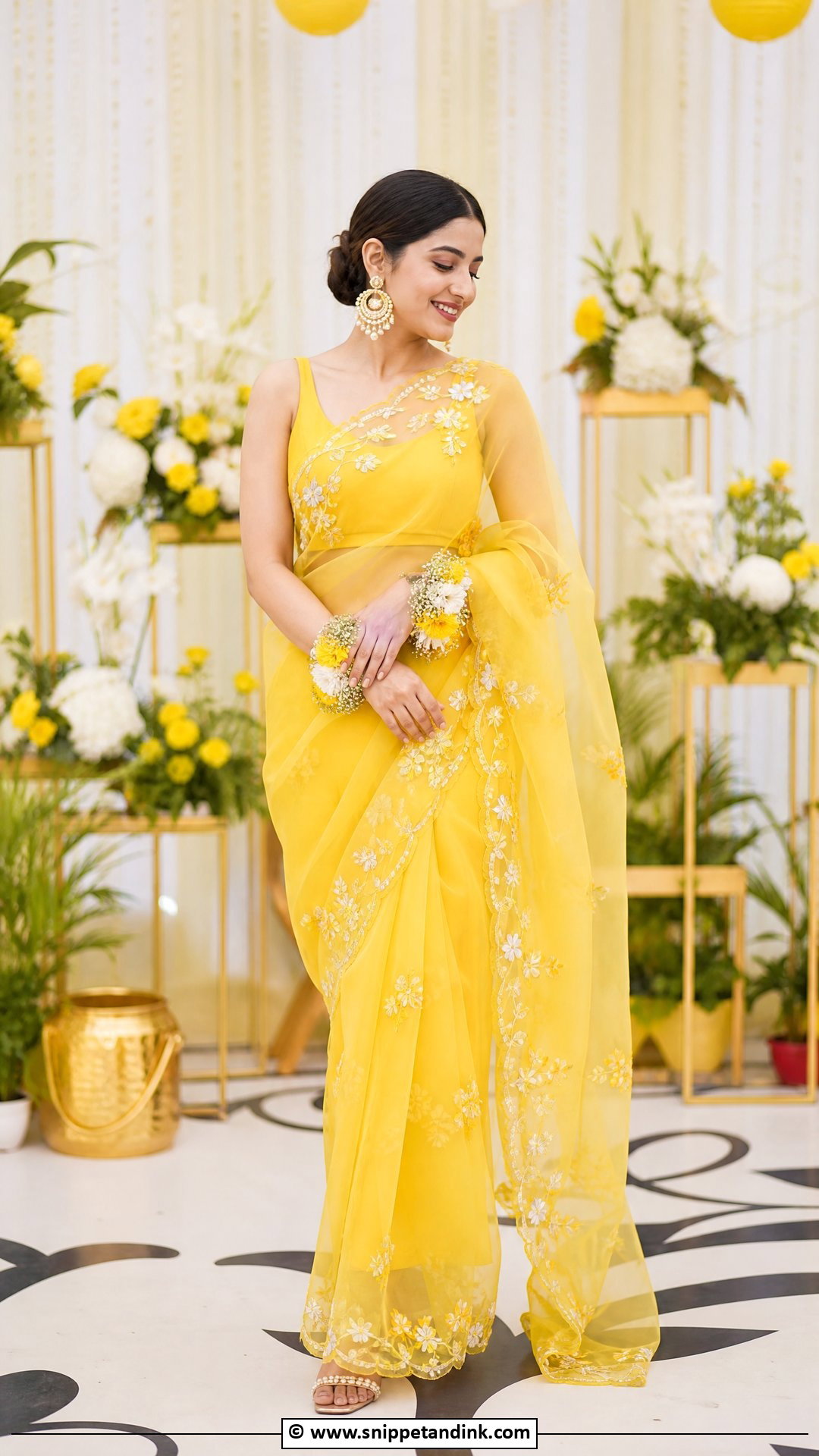
Organza is crisp, so it holds its shape and floats a little when you walk. The same stiffness means the pleats spring open unless they’re pinned firmly, so I pin at the waist and again at the shoulder. Floral embroidery or scalloped borders suit it, with a sleeveless blouse for daytime heat. I’d reserve this saree for guests on the edge of the ritual: organza water-marks easily and turmeric settles into its open weave.
22. Yellow Skirt And Crop Top Haldi Dress
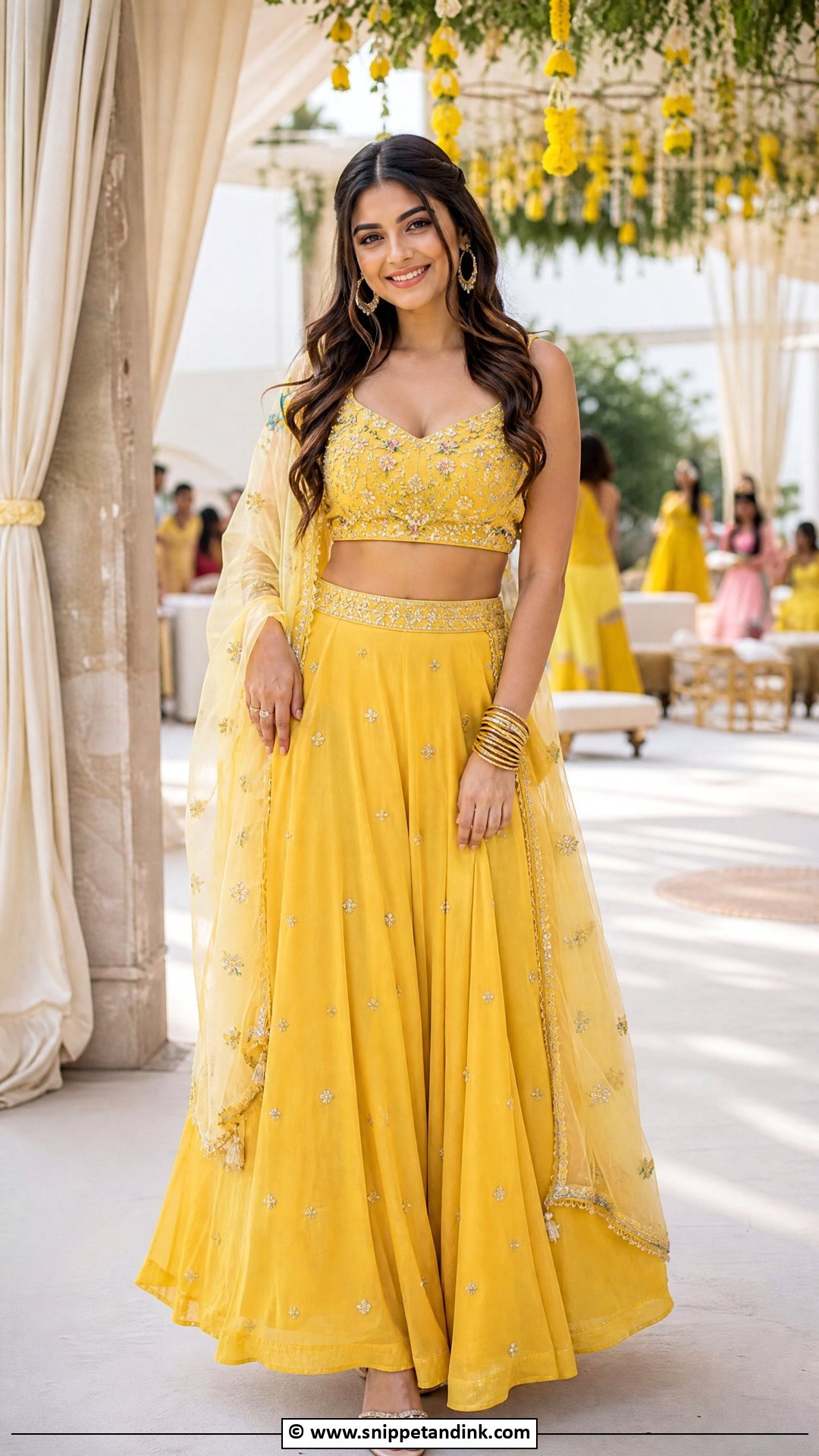
A skirt and crop top is a lehenga with fewer rules, and it’s easier to dance in. Add a shrug or light dupatta if you want more coverage for elders. Tassels and tie-up backs give the festive touch, and hoops with embellished sandals keep it young. The real advantage is that each piece can be worn separately afterwards, which is why I often suggest it to cousins on a budget.
23. Yellow Bandhani Haldi Dress
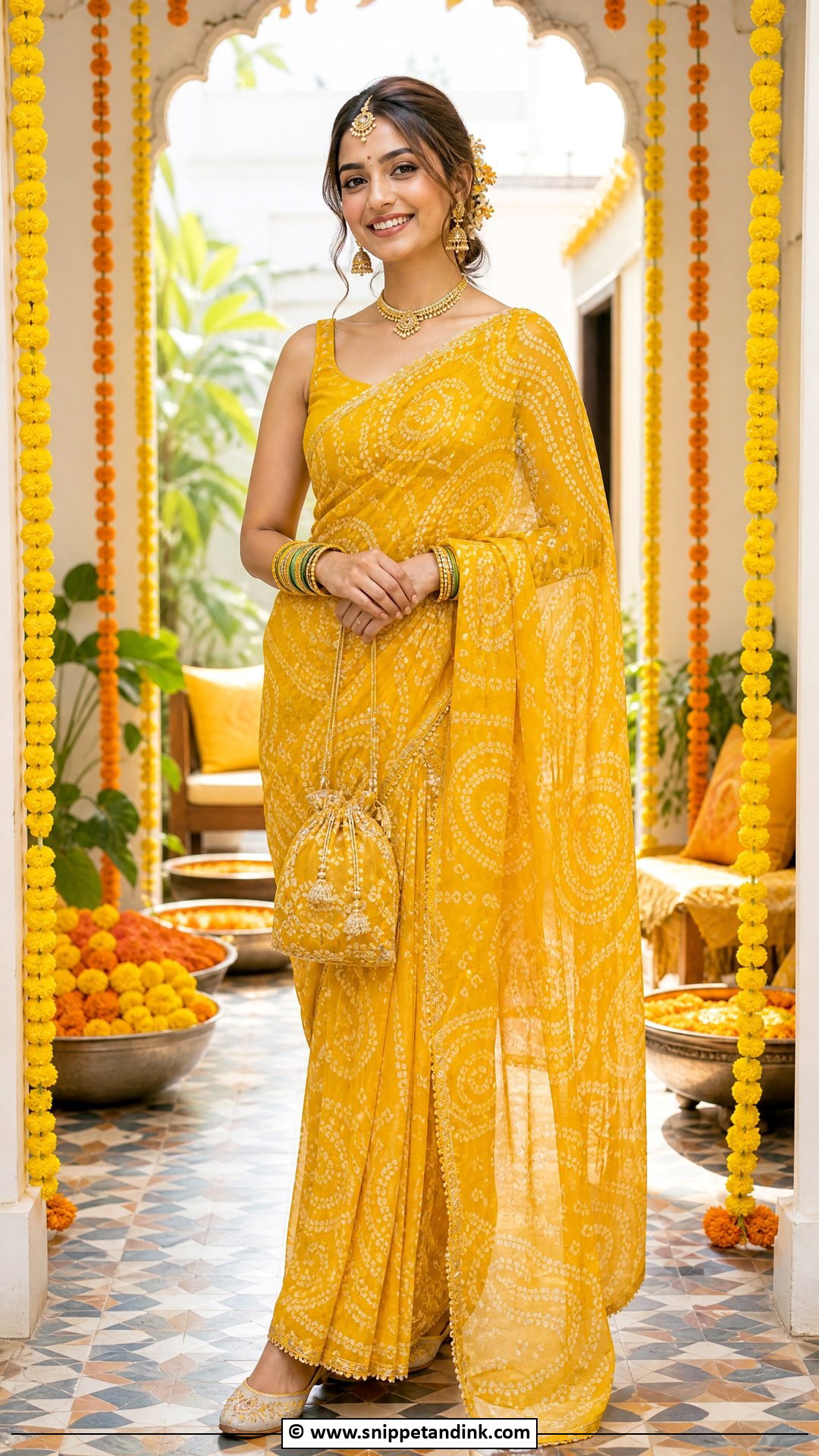
Bandhani is tie-dye made by pinching and binding tiny points of cloth before dyeing, which is why the dots have that slightly irregular, handmade look. On yellow with orange or red accents it feels traditional without any embroidery. Keep the blouse or kurta plain so the dots have space. Gold jewellery, juttis and a potli bag are all it needs. Genuine bandhani can bleed in its first wash, so wash it alone in cold water.
24. Yellow Jacket Kurta Haldi Dress
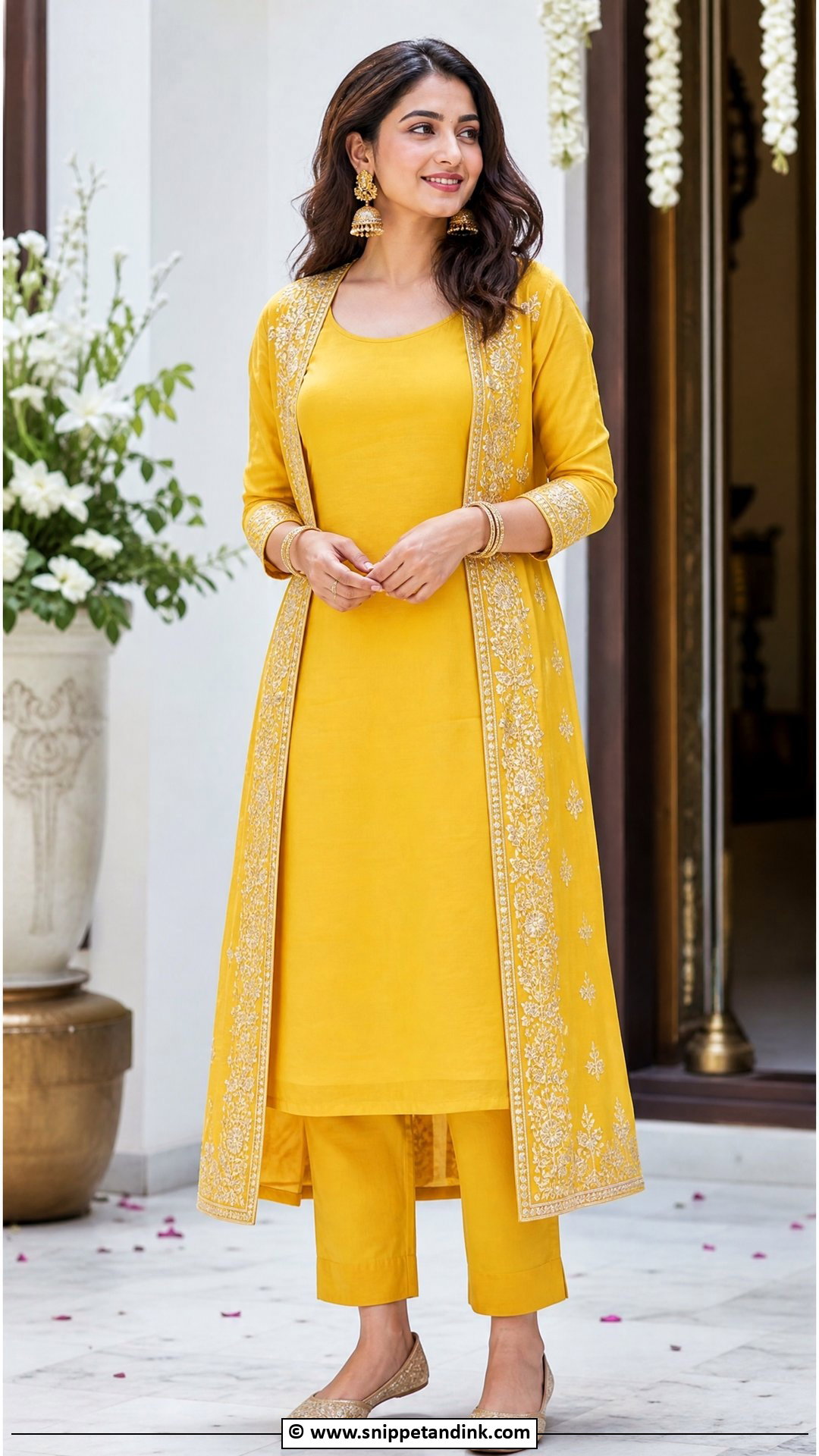
A jacket over a straight kurta and pants does the job of a dupatta without ever falling off. I like a mirror-work or printed jacket because it makes a plain kurta set look finished from the back, which is the angle people forget in candid shots. A cropped jacket feels modern; a long one adds drama. It’s also the outfit I suggest for a winter haldi, when a sleeveless look leaves you cold by noon.
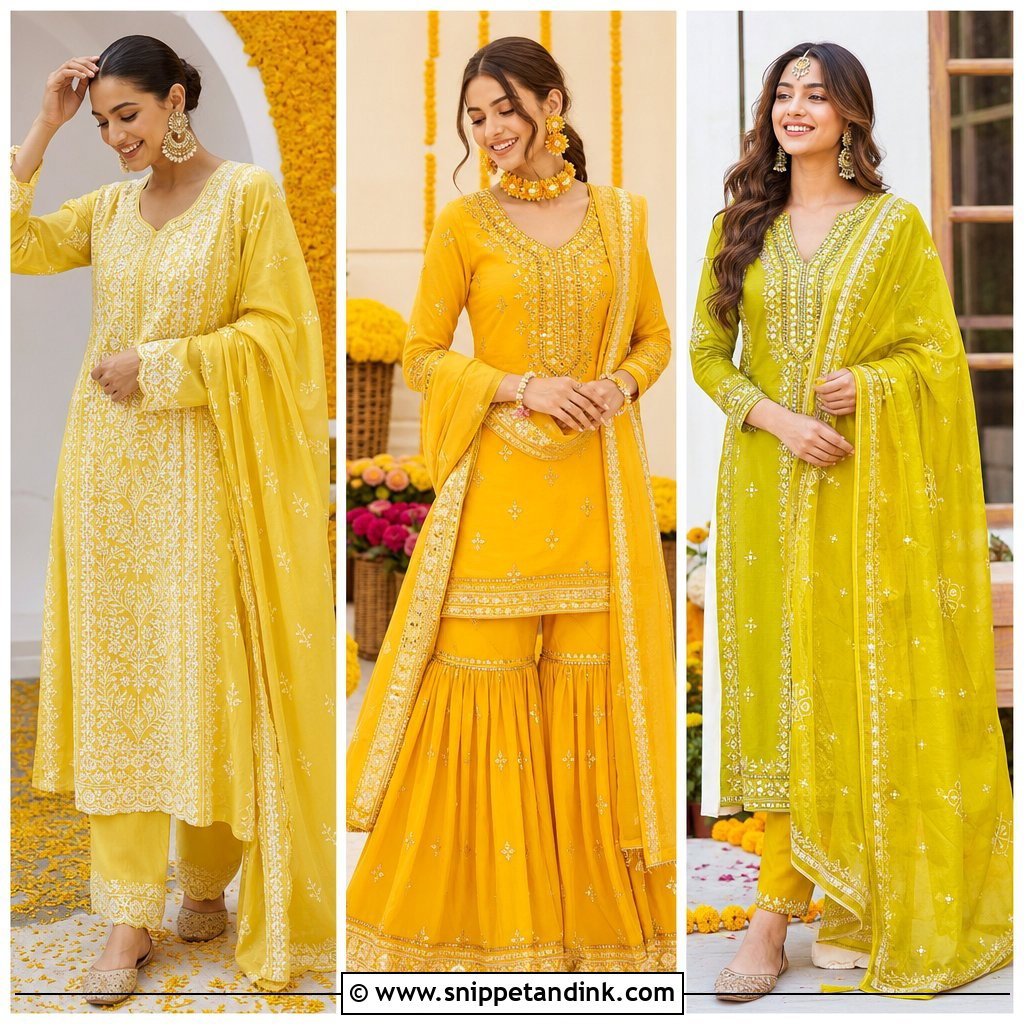
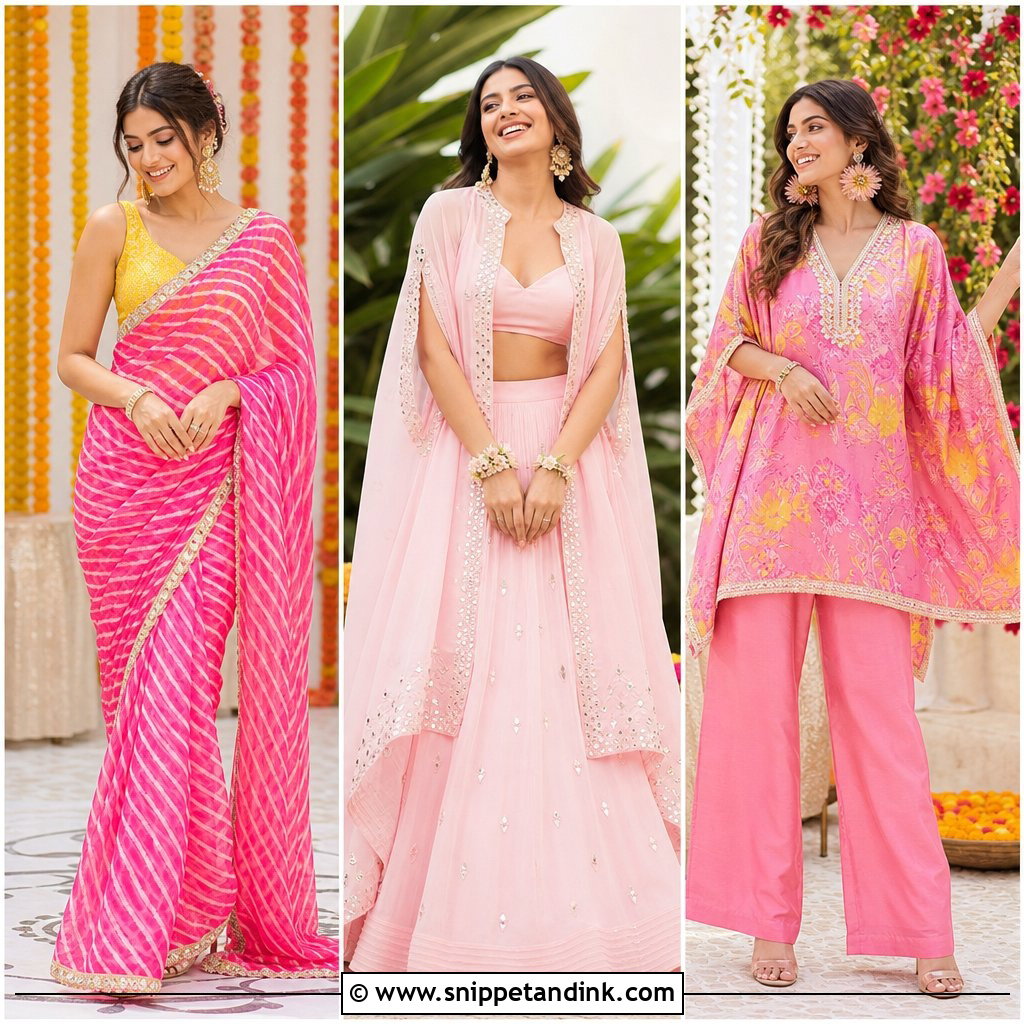

25. Yellow Silk Saree Haldi Dress
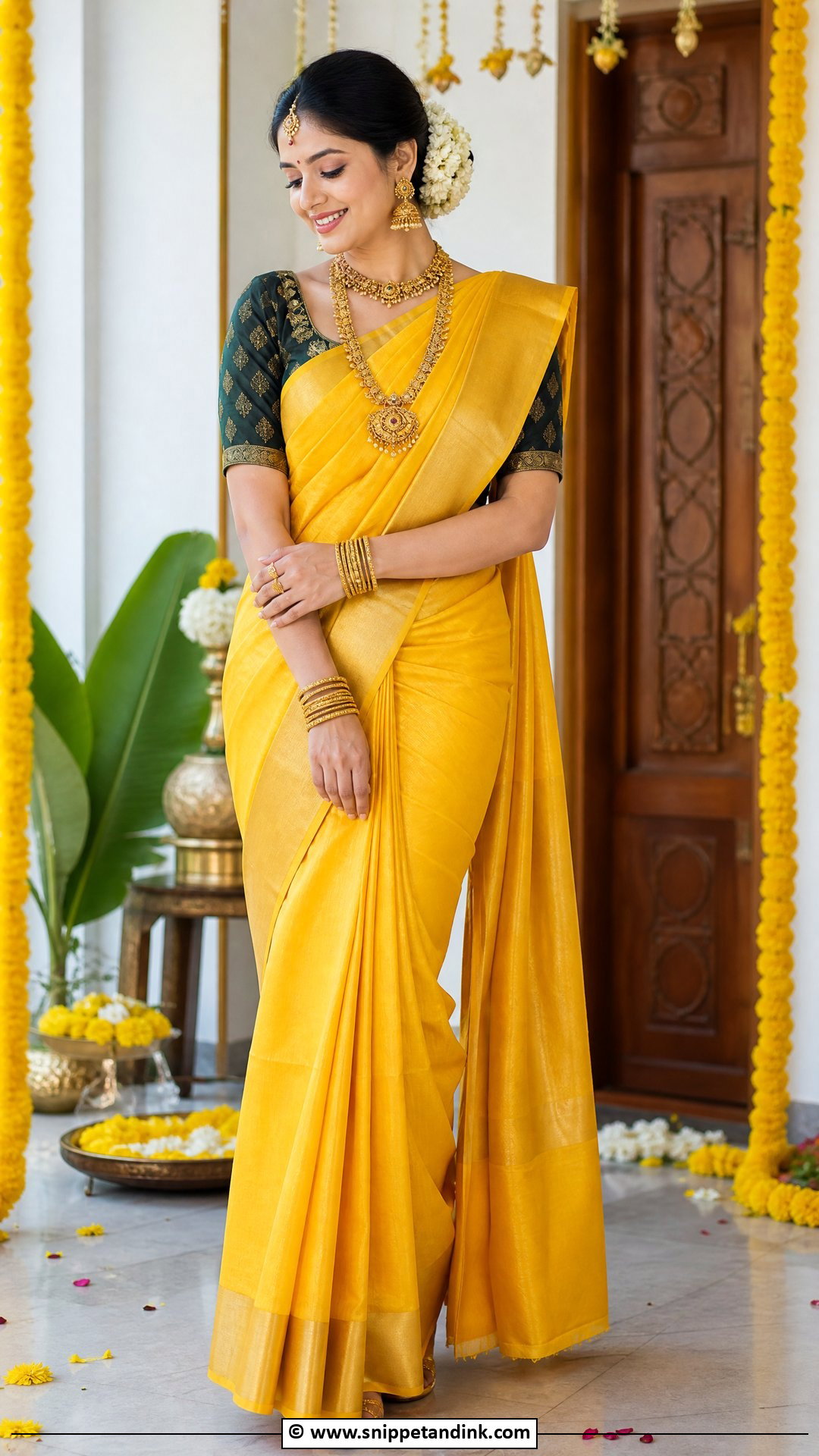
A yellow silk saree is the traditional choice for mothers, aunts and brides from families who expect it. I always ask for lightweight silk or silk-cotton for a daytime ritual, because heavy silk in a hot hall is miserable after an hour. Temple jewellery, jasmine and a classic bun carry the look. Pin the drape at several points if you’re part of the ritual, and remember that silk spots with water, so keep it away from the splashing.
26. Yellow Maxi Dress Haldi Dress
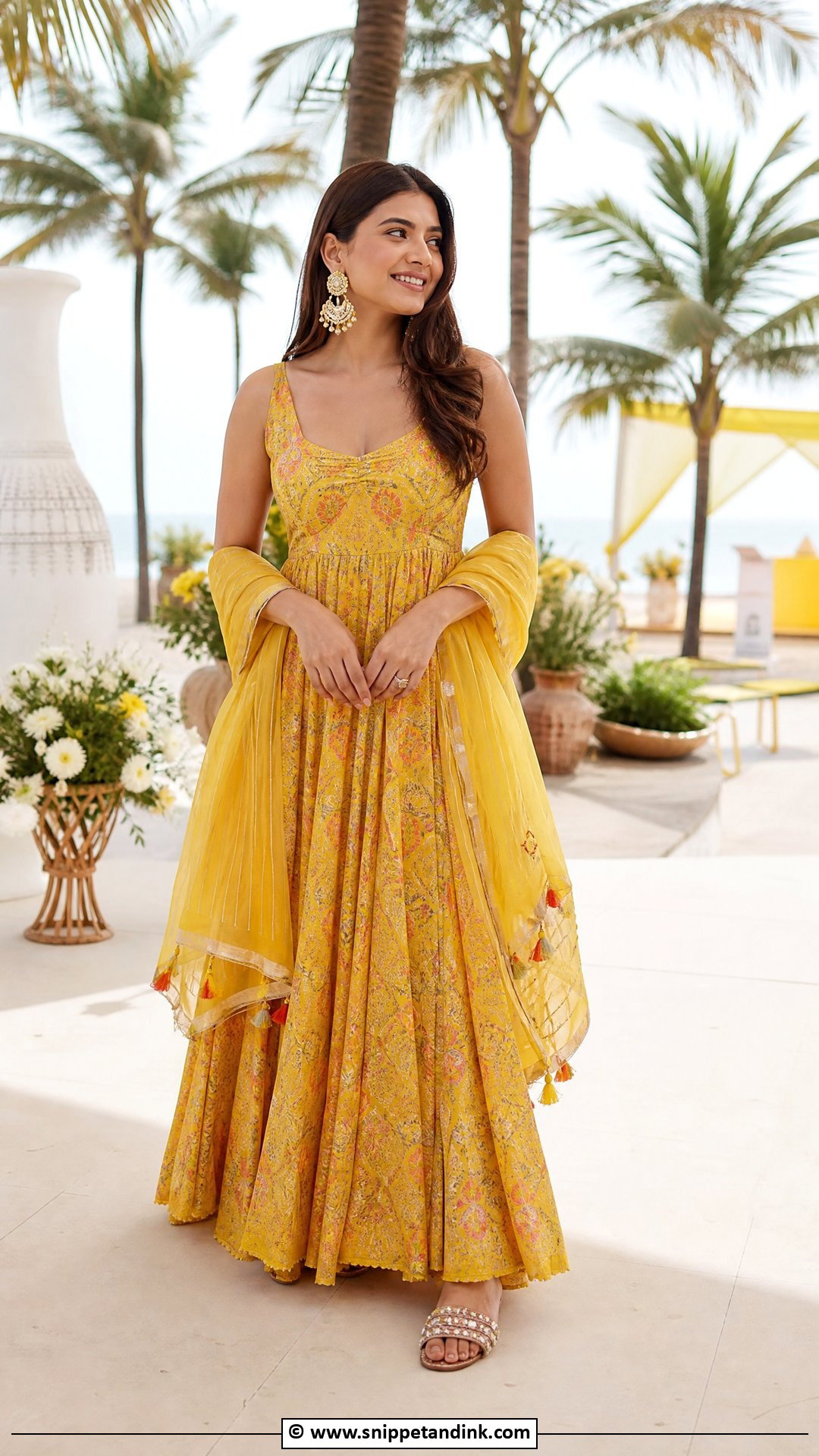
For guests at their first Indian wedding, a yellow maxi is the outfit I suggest most. A block-printed or mirror-detailed maxi feels festive and respectful without needing any draping skill. Add a dupatta or long shrug to take it from day dress to wedding wear. Flat sandals or wedges suit garden and beach venues better than heels.
27. Yellow Jumpsuit Haldi Dress
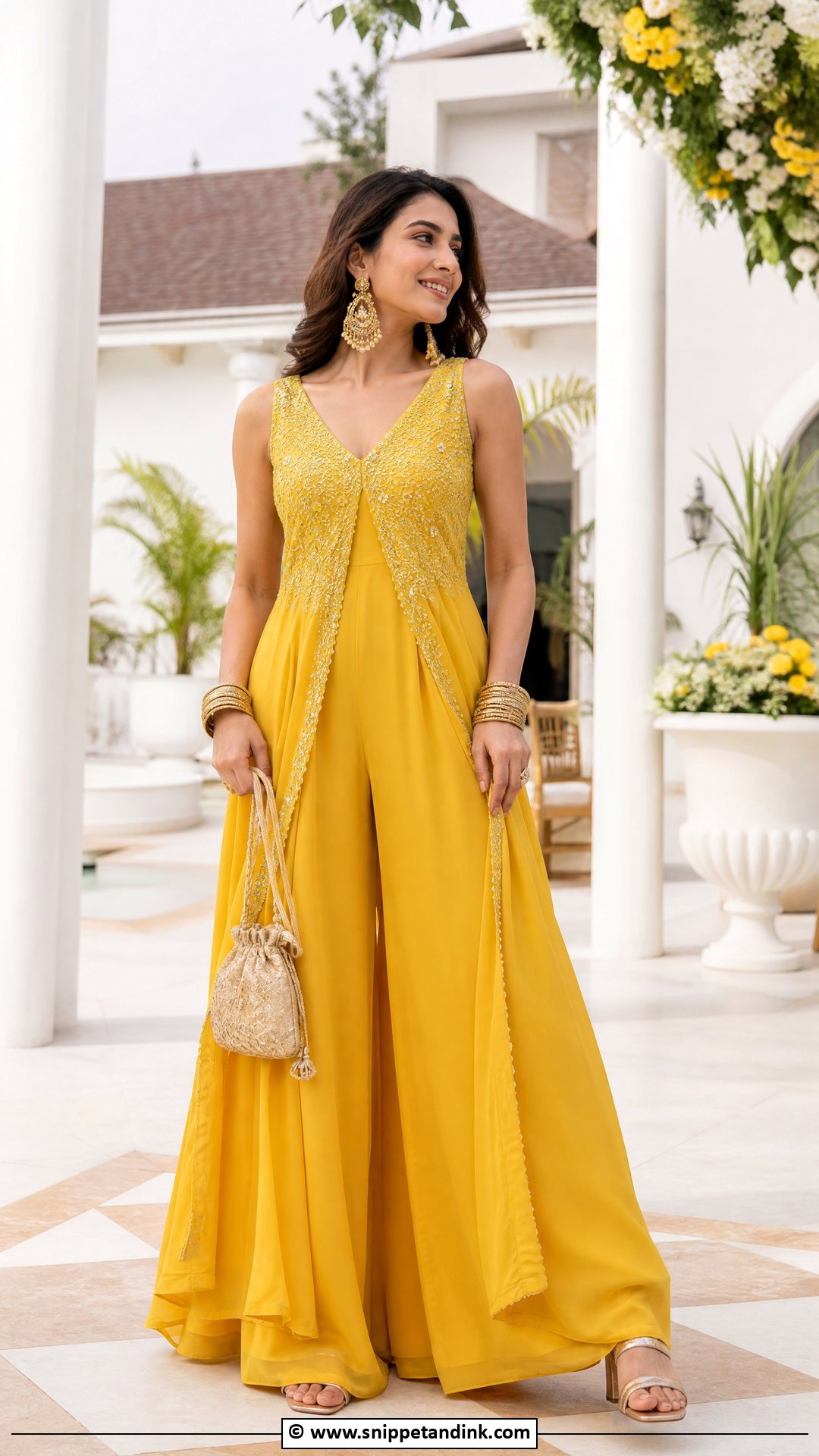
A jumpsuit stays put in a way draped outfits don’t: no pleats to re-tuck, no pallu to catch. Choose a wide-leg cut with a draped overlay or cape sleeves so it doesn’t look office-ready. Gold earrings, bangles and a potli bag do the rest. The honest drawback is bathroom breaks in a one-piece, so look for a side zip rather than a back zip if you’ll be on your own.
28. Yellow Printed Anarkali Haldi Dress
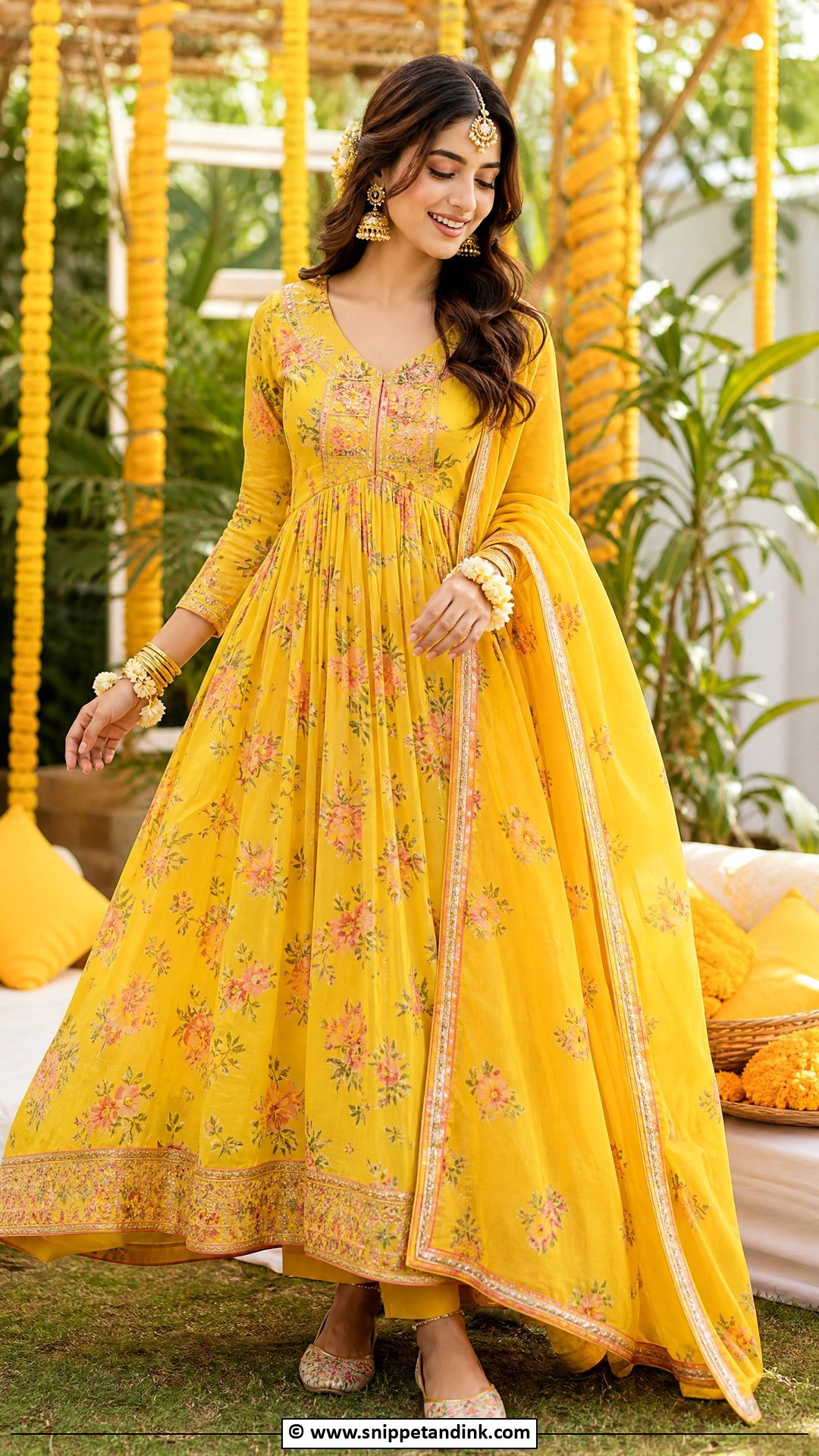
A printed anarkali flatters most body shapes because the fitted bodice and the flare from just under the bust skim rather than cling. Floral, paisley and leheriya prints keep it light for daytime. It’s comfortable for sitting through long rituals, and the print hides the odd turmeric smudge. A matching dupatta, jhumkas and juttis are enough.
29. Yellow Blazer Palazzo Haldi Dress
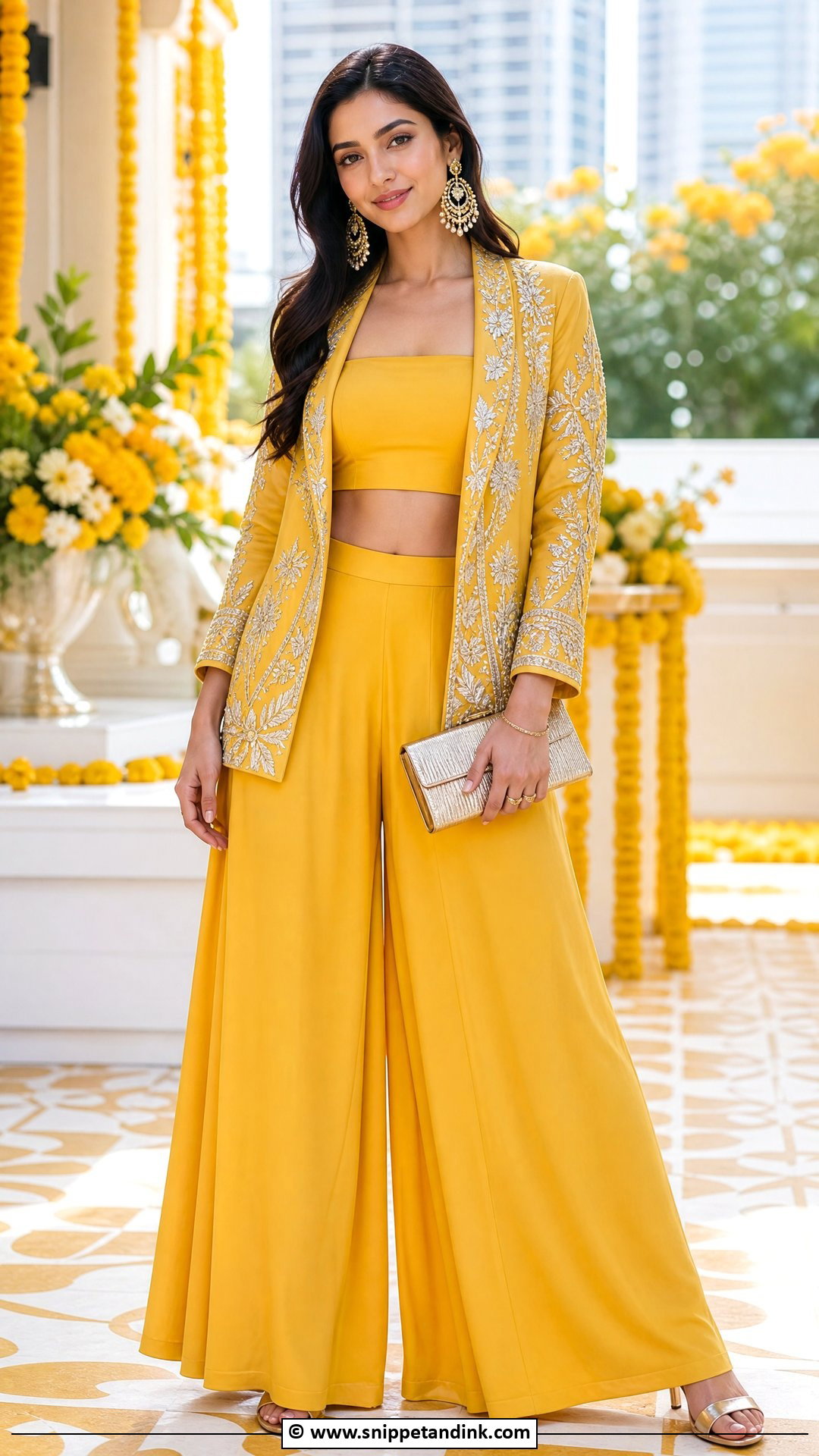
A yellow blazer palazzo haldi dress works for the guest who loves tailoring. A camisole or crop top under a matching blazer, with wide palazzos, looks sharp at a city or resort wedding. Brocade or embroidered lapels keep it festive. I’d only advise it for a haldi that’s more party than ritual, because a structured blazer is the last thing you want covered in wet paste. Sleek hair and glowing skin suit the tailoring.
30. Yellow Leheriya Haldi Dress
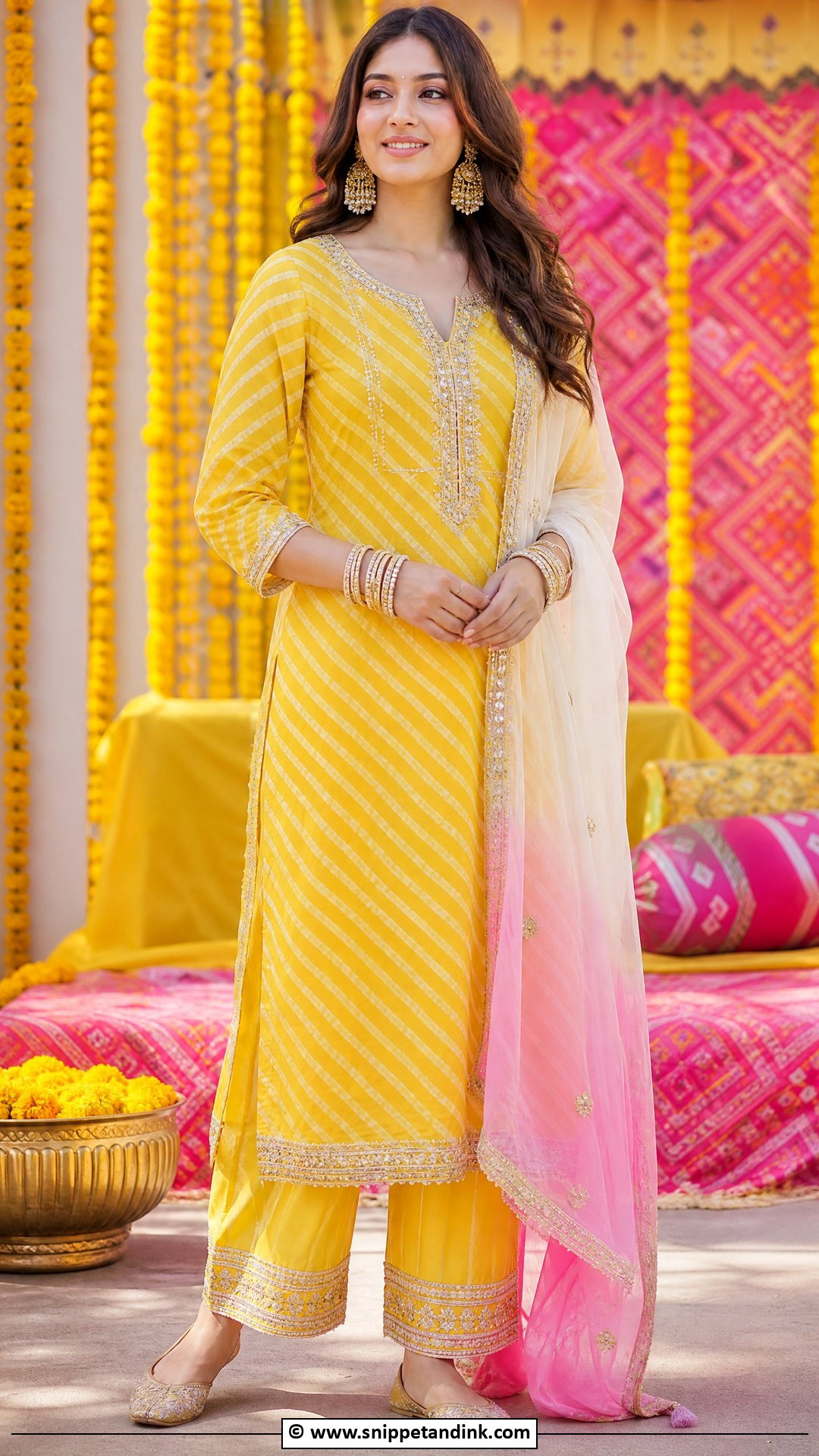
Leheriya is a Rajasthani resist-dye technique where cloth is rolled and tied diagonally before dyeing, which creates those rippling stripes. Because the pattern has movement built in, even a plain silhouette looks lively. Yellow with pink or orange is the classic combination. Glass bangles, gold earrings and juttis keep it traditional, and you’ll wear it again at Teej or Holi.
31. Pastel Yellow Haldi Dress
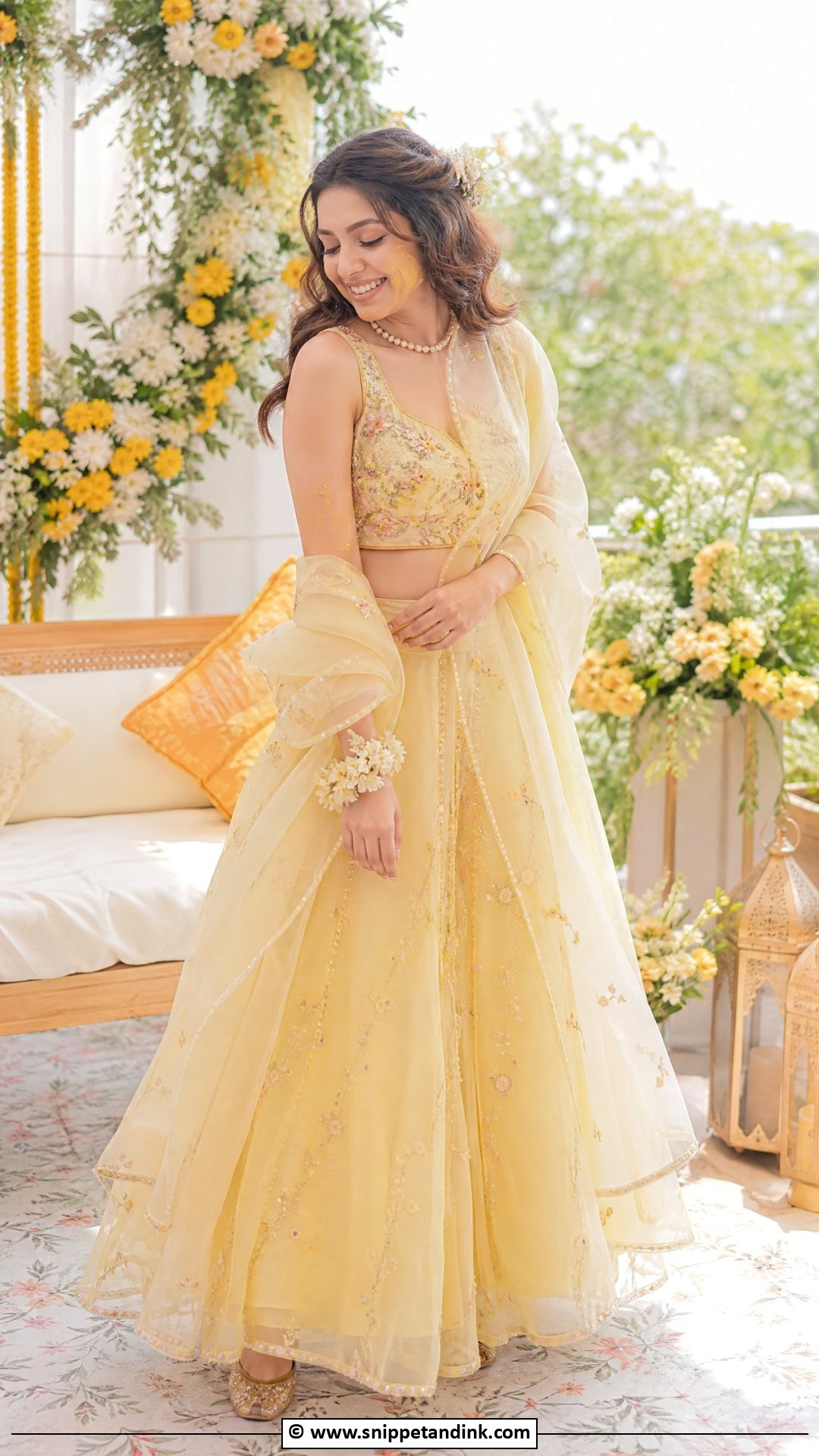
Pastel yellow, butter or pale gold, suits clients who find marigold too loud. The risk is that pale colours look flat in strong sun, so I always add texture: organza layers, lace borders or tonal embroidery. Pearls and delicate gold accessories suit the softness. It’s at its best at a morning ceremony, and nude sandals or pale gold juttis keep the palette quiet.
32. Yellow High Low Kurta Haldi Dress
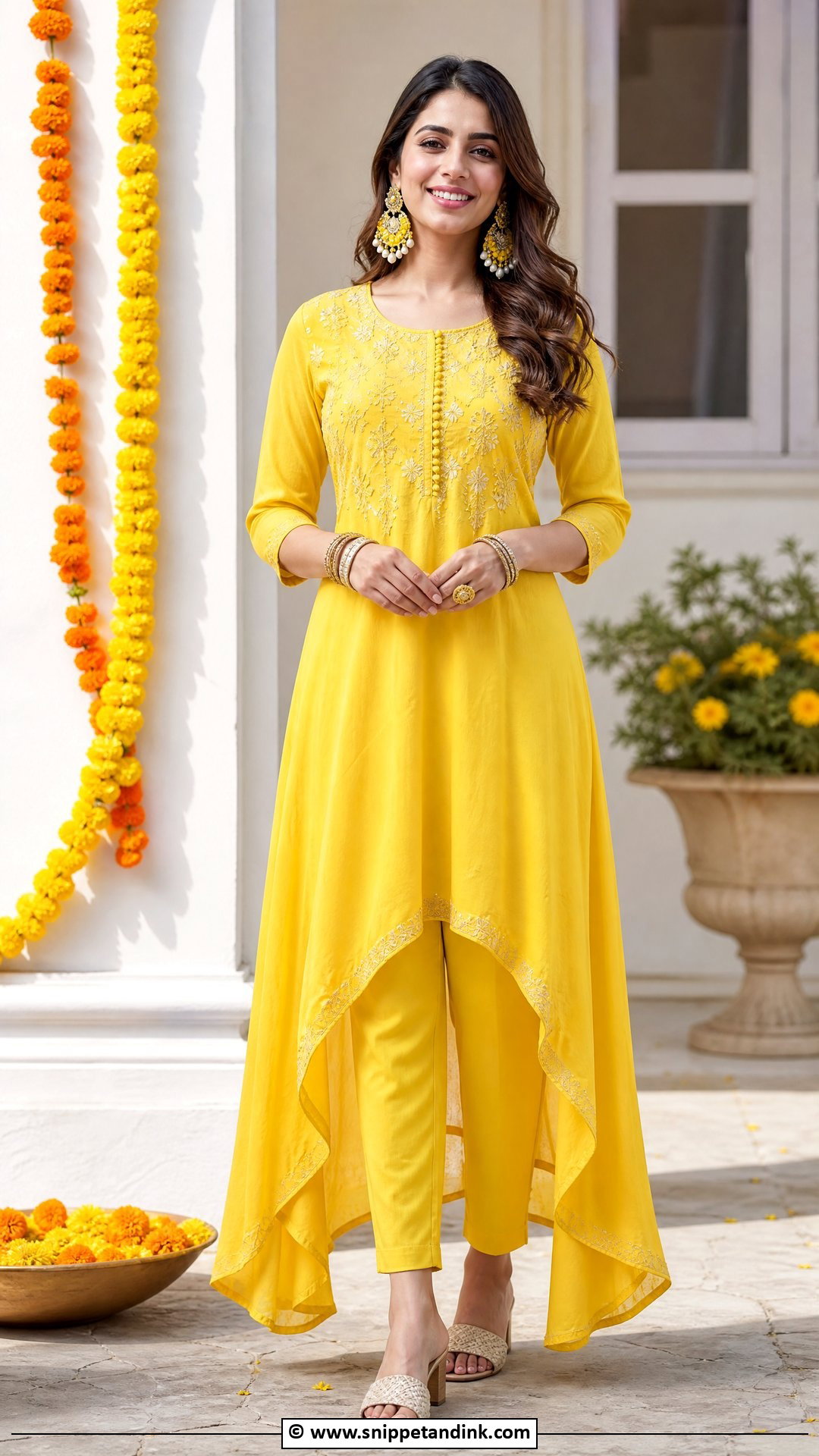
The high-low hem is shorter at the front and longer behind, which updates a basic kurta set without adding weight. Cigarette pants make it sharper; dhoti pants or palazzos make it relaxed. Mirror work or thread embroidery is enough decoration. It needs almost no styling, which is why I recommend it to guests who’ll be getting ready in a hotel room with ten minutes to spare.
33. Yellow Dupatta Suit Haldi Dress
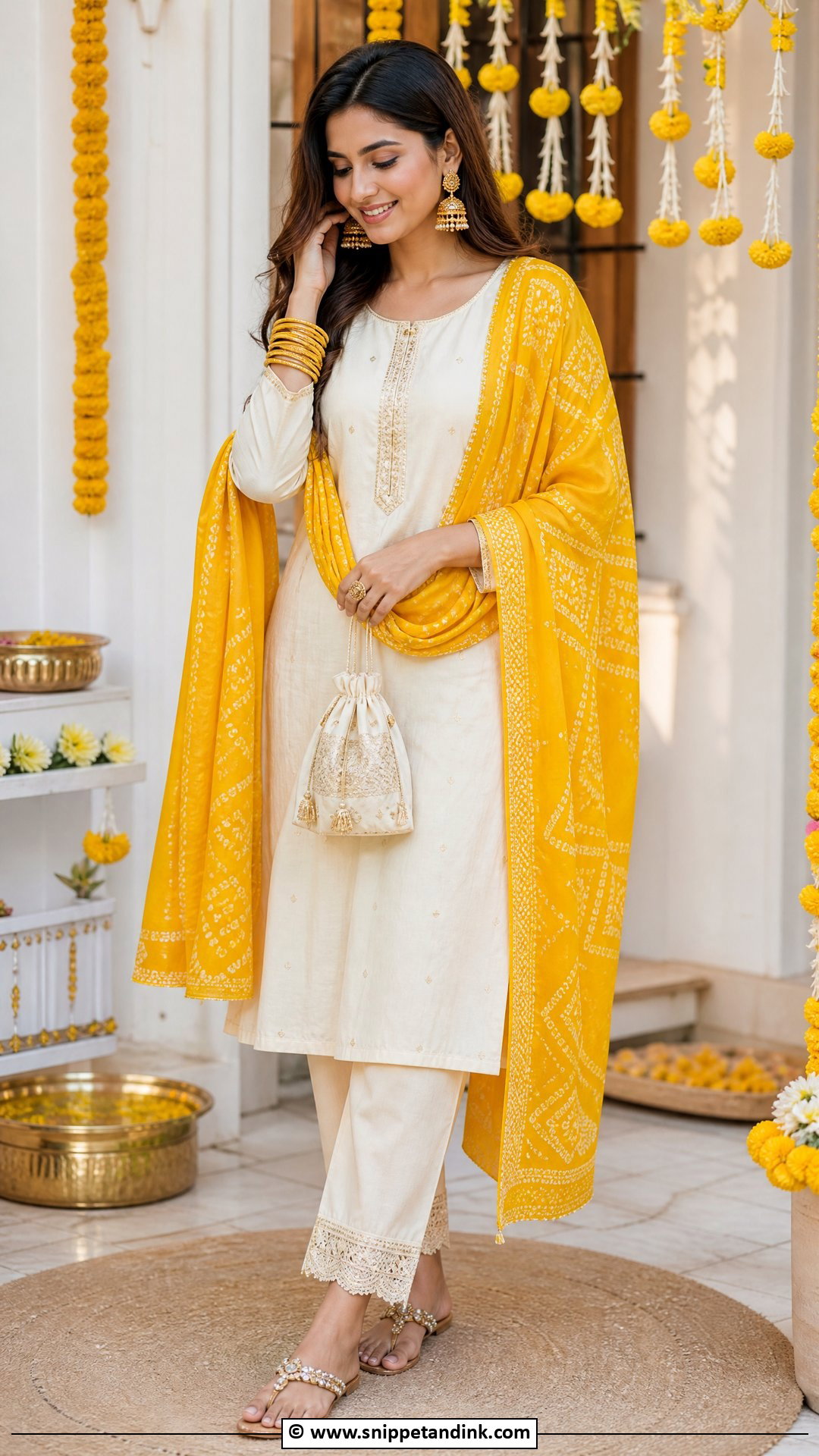
Sometimes the right haldi outfit is one you already own. A white, ivory or pink kurta set becomes a haldi look the moment you add a bright yellow dupatta in gota, phulkari or bandhani. This is my standard answer for anyone expecting to get properly smeared, because the dupatta is the only new piece at risk. Add jhumkas, bangles and comfortable sandals.
34. Yellow Floral Jewelry Haldi Dress
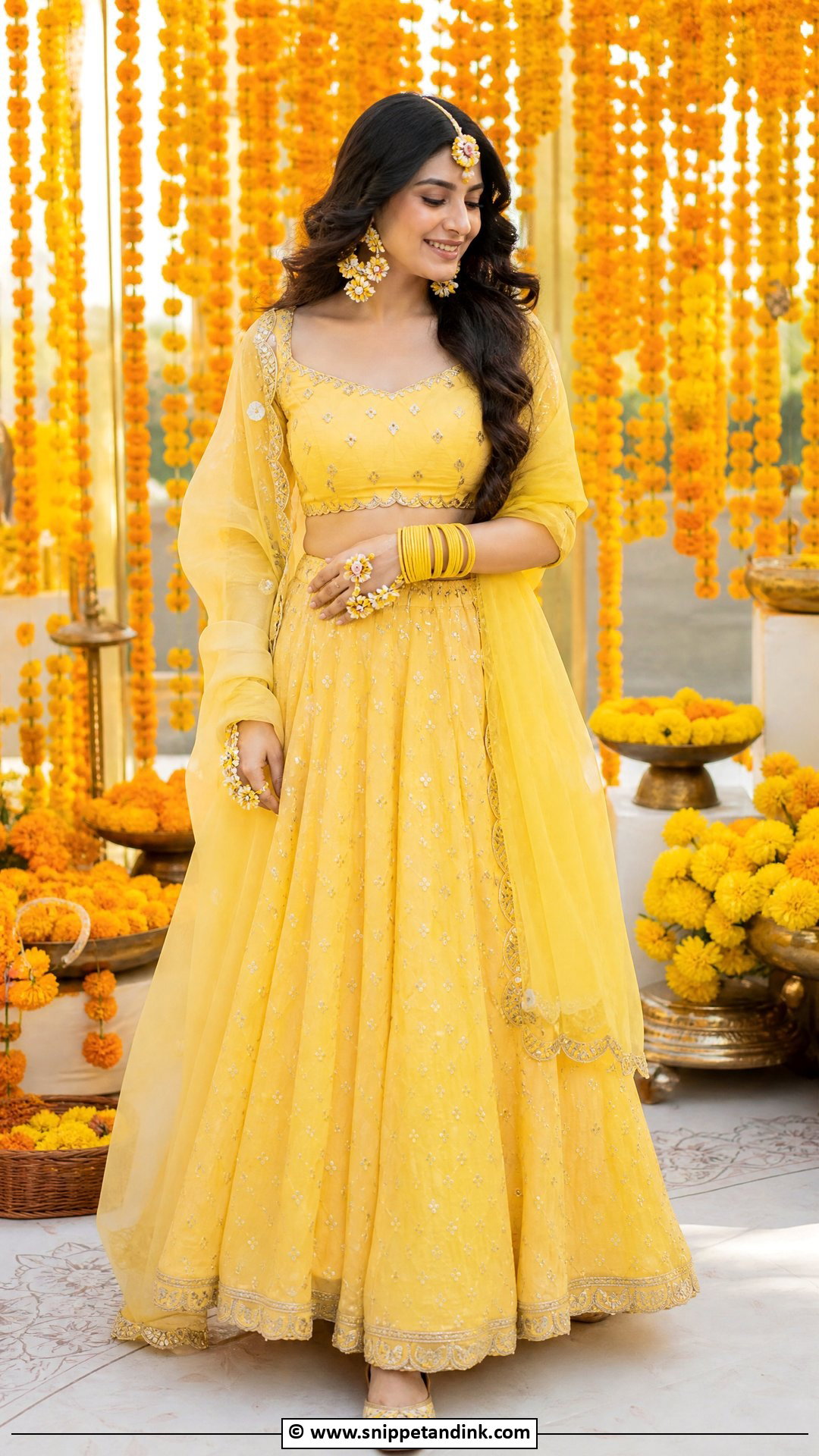
Flower jewellery is often the real star at a haldi, and I plan it as carefully as the outfit. A haath phool, maang tikka, earrings and bangles in marigold or jasmine turn a simple yellow lehenga or kurta set into a bridal look. Keep the clothes lighter so the flowers aren’t competing. Fresh flowers wilt within a few hours in heat, so I order them for the morning itself and keep them chilled until dressing; artificial pieces are a sensible backup for an afternoon haldi.
35. Yellow And Green Haldi Dress
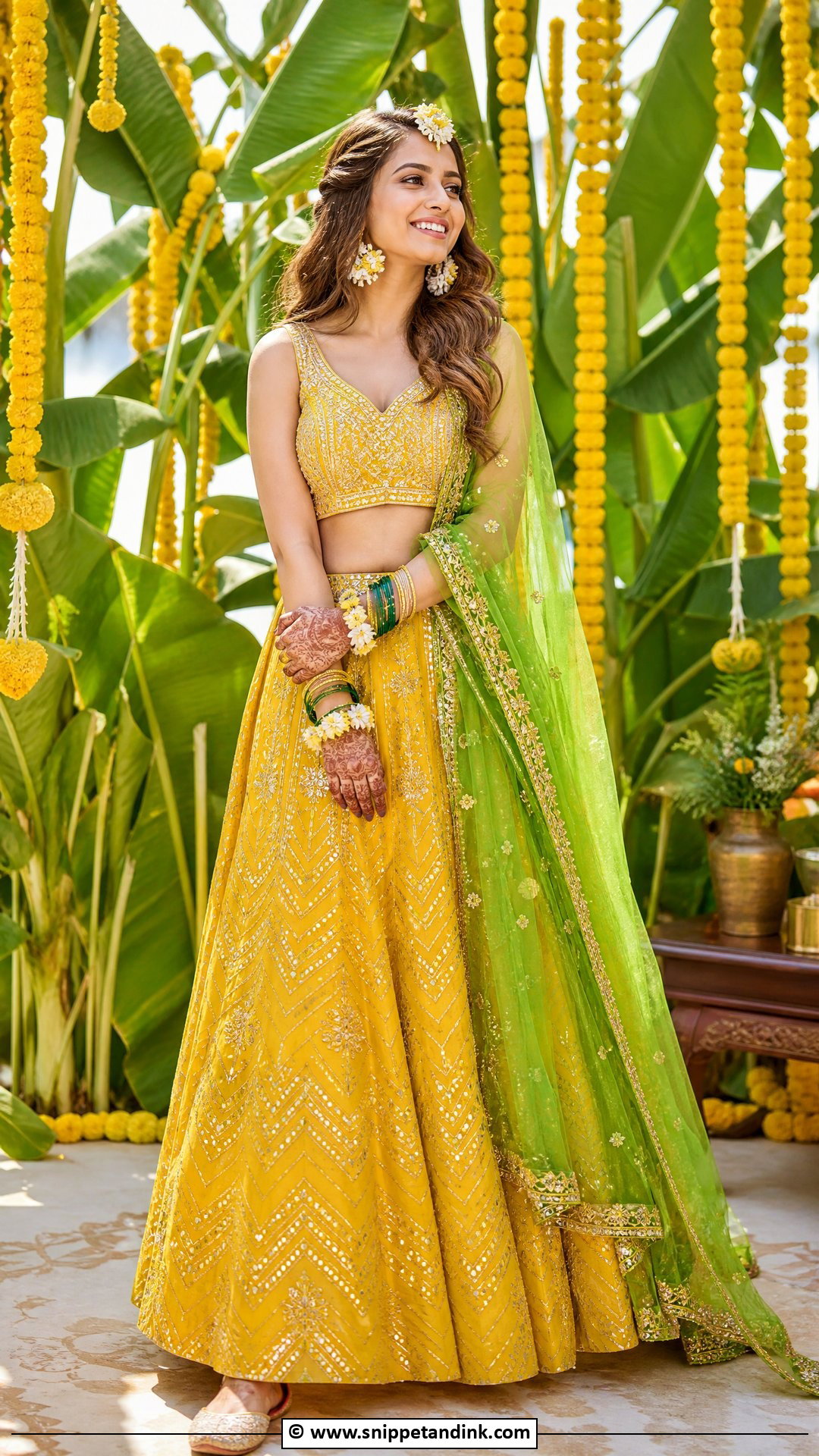
Yellow and green echo marigolds and banana leaves, the two things you’ll see at most traditional haldi setups. The rule I follow is to let one colour lead and use the other as an accent, for example a yellow lehenga with a green dupatta, so the outfit doesn’t split in half visually. Gold jewellery suits the pairing, and fresh flowers soften it. It’s a good pick for sisters who want colour but still want to look traditional.
Getting Haldi Stains Out Once the Ceremony Is Over
Turmeric stains because its colour, curcumin, binds strongly to fibre, and it sets faster the longer it sits. I keep a small kit in my bag for the bride and her family, and this is the order I work in.
- Scrape off wet paste with a blunt edge before it dries. Don’t rub, as that pushes colour deeper.
- Rinse from the back of the fabric in cold water. Hot water helps set the stain.
- Be careful with ordinary soap: curcumin turns reddish in alkaline conditions, so a mark can briefly look worse. Keep rinsing; it usually settles back to yellow.
- Dry washable cotton pieces in direct sunlight. Curcumin fades in UV light, and an afternoon in the sun often lifts what washing didn’t.
- Silk, zari and anything with mirror work goes to a dry cleaner. Tell them it’s turmeric so they treat it before cleaning.
Should Guests Wear Yellow if the Bride Does?
Most families are delighted to see a room full of yellow, and I wouldn’t worry about matching the bride at a haldi the way you might at a reception. If you want to be safe, ask what colour she’s wearing and move one step along the palette: mustard, orange, lime or a print that includes yellow. Close family sometimes agree on a shared colour for photos, so check the group chat before you buy.
Guests should also dress for the possibility of joining in. Even if you aren’t applying the paste, a hug from a freshly smeared bride will leave its mark, and nobody minds when your outfit is ready for it.
Your Haldi Outfit Is Meant to Get Messy
My best advice for any haldi is to dress for the paste and the floor first, and for the photos second. Yellow is the expected colour, but mustard, orange, lime, ivory and pastels all work when the fabric is light and the drape is pinned. Pick comfortable flats, keep your best gold for later functions, and decide in advance whether this outfit is one you’re happy to see stained. Get those choices right and you’ll spend the morning enjoying the ritual instead of protecting your clothes.
You'll Like These Ideas:








Leave a Reply