
A Haldi is the one wedding event where your outfit is guaranteed to get dirty. Turmeric paste goes on cheeks and arms, people hug you with yellow hands, and half the rituals happen sitting on a low stool or the floor. So when I dress someone for it, I start with the practical questions: will this fabric breathe in midday sun, can you sit cross-legged in it, and will you cry if it gets stained? Current Haldi fashion has opened up well past plain yellow, with mango, ivory, lime, orange, blush, mirror work, organza and Indo-western sets all showing up at ceremonies now. Below are thirty complete looks, from the bride’s centrepiece outfit to easy guest sets, with my notes on how each one actually behaves on the day.
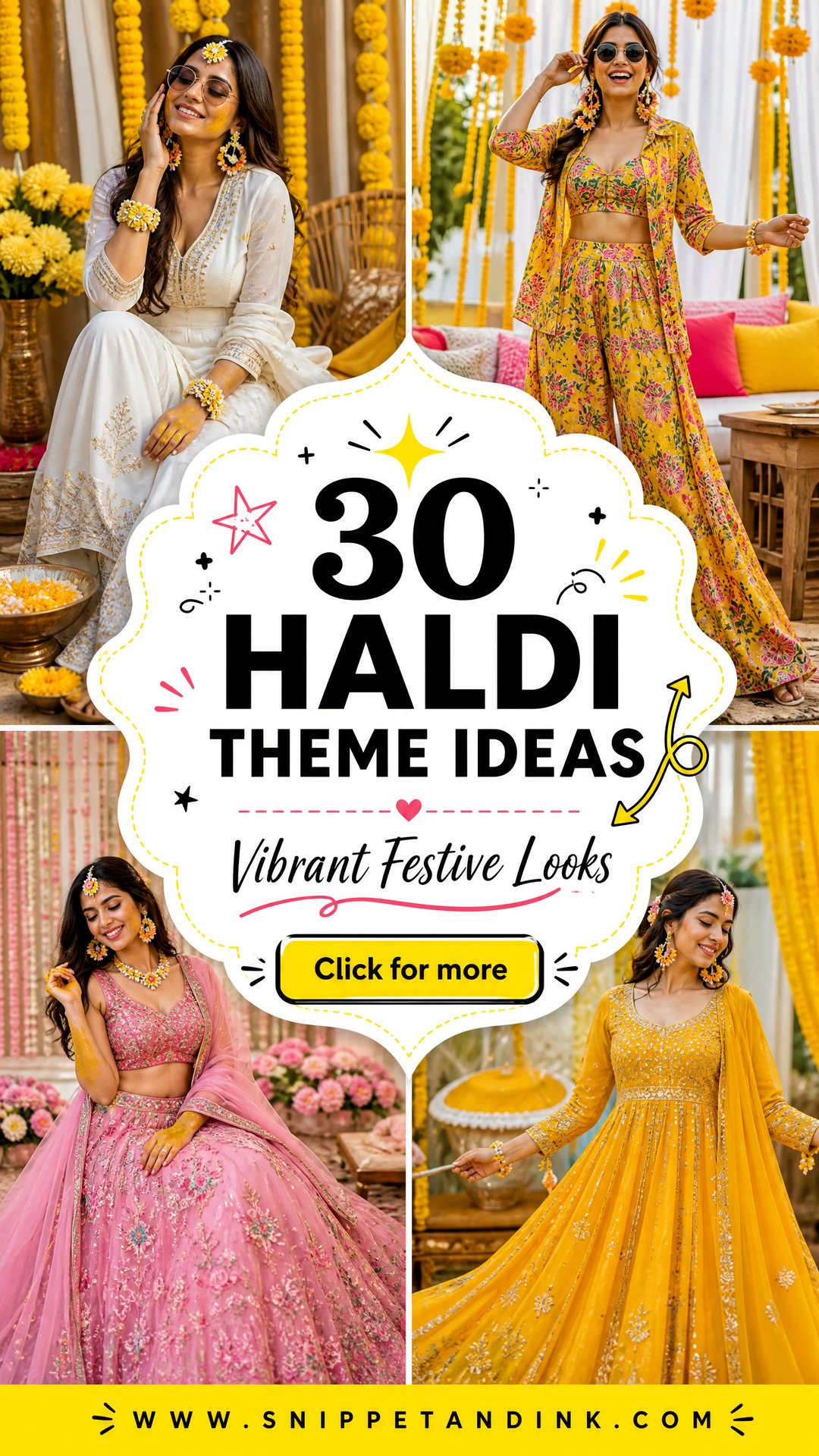
Turmeric, Silk and Mirror Work: What Survives the Ceremony
Haldi paste is usually turmeric mixed with gram flour, oil and rosewater or milk, which makes it both a dye and a grease. That combination is why it marks fabric so stubbornly. Before I choose anything for a client, I ask how close she will be to the bowl, because the bride and her mother take the paste directly while most guests only catch a smear from a hug.
- Cotton, mul and printed georgette are the most forgiving. Cotton can be washed at home, and prints disguise a mark.
- Pure silk, organza and raw silk need a dry cleaner once stained, and pale silks may never come fully clean.
- Mirror and gota work survive well, but the paste settles into the stitching around them, so expect to brush it out once dry.
- Heavily beaded or sequinned pieces are the worst choice for the bride. Paste gets under every bead and cleaning them is slow and expensive.
My rule of thumb is simple: if the outfit costs more than you’d be happy to lose, wear it to a different function and choose something washable for the Haldi.
1. Yellow Lehenga Haldi Outfit
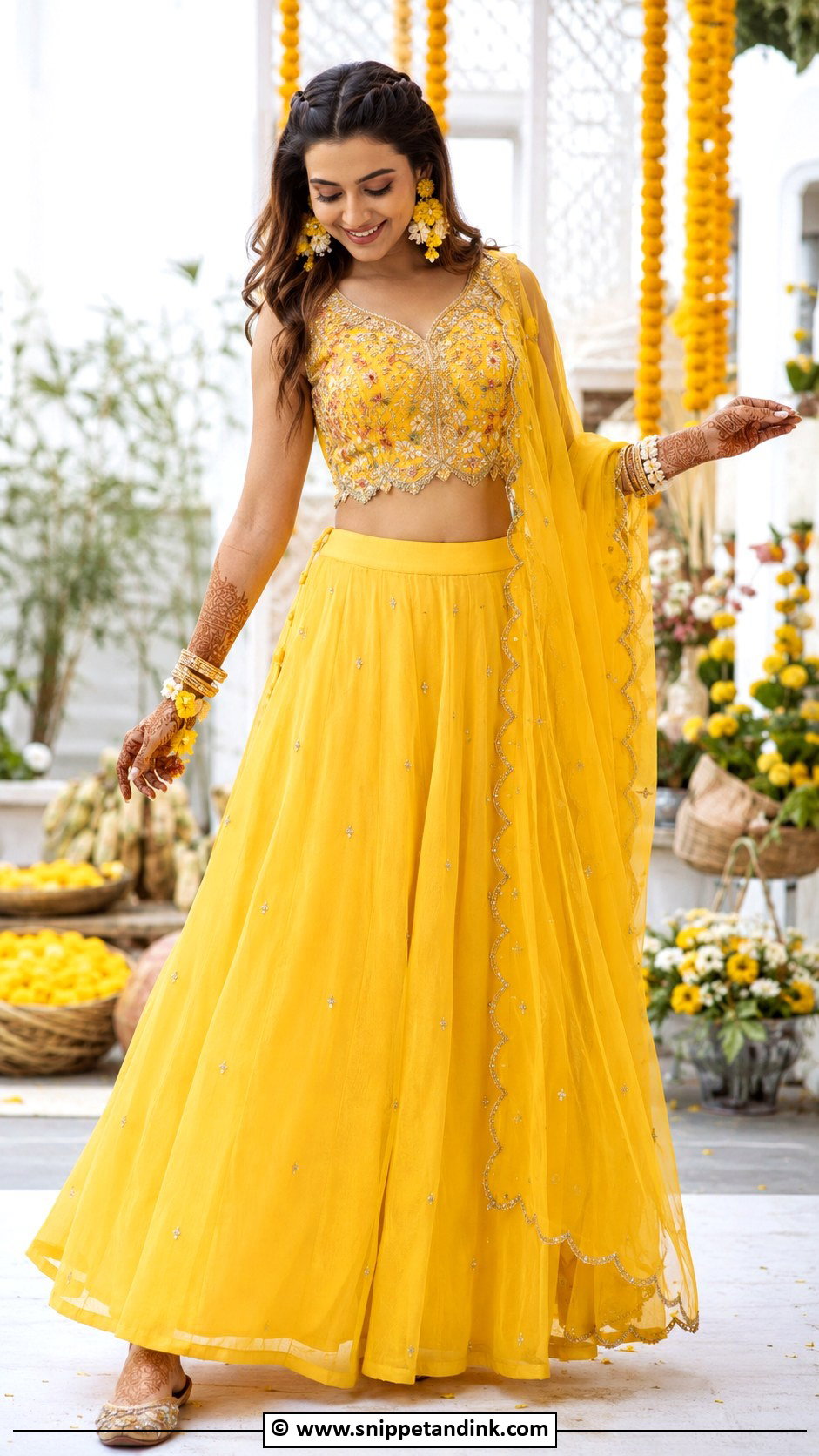
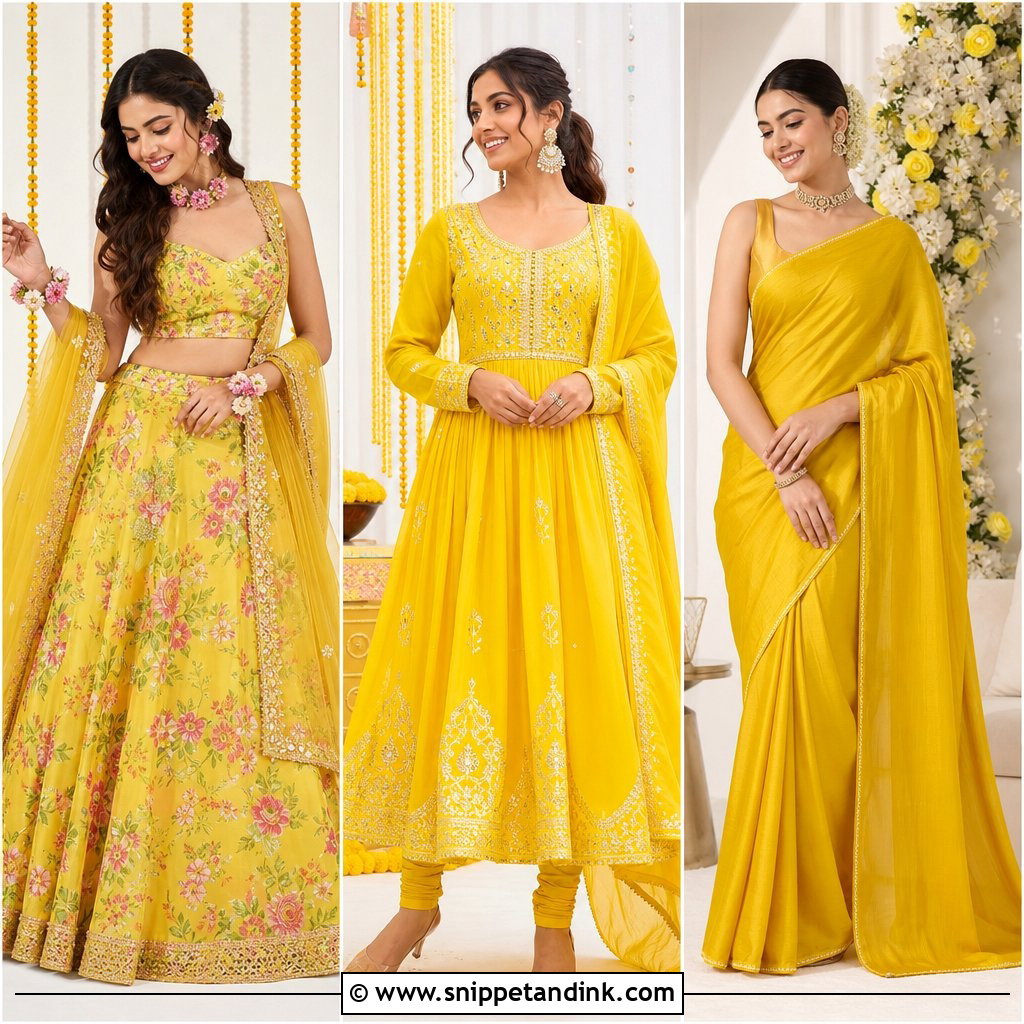
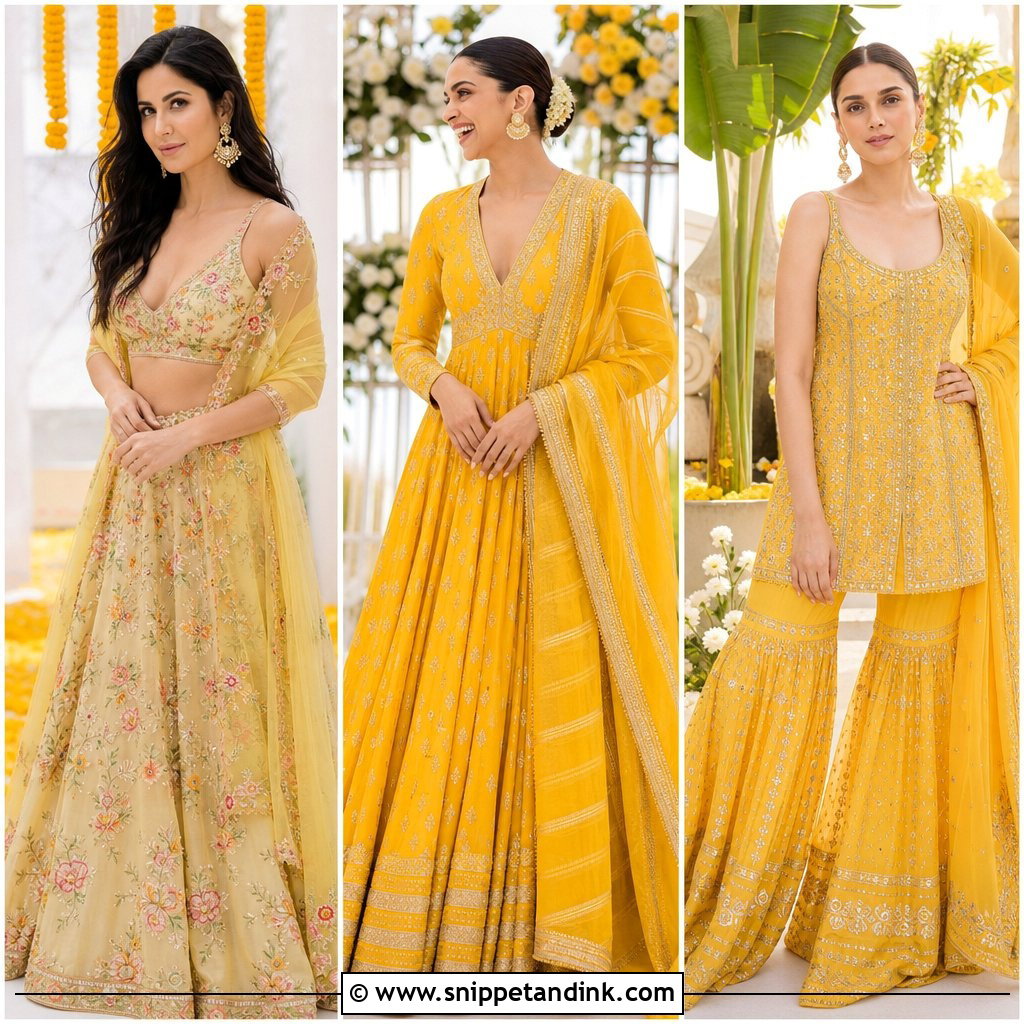
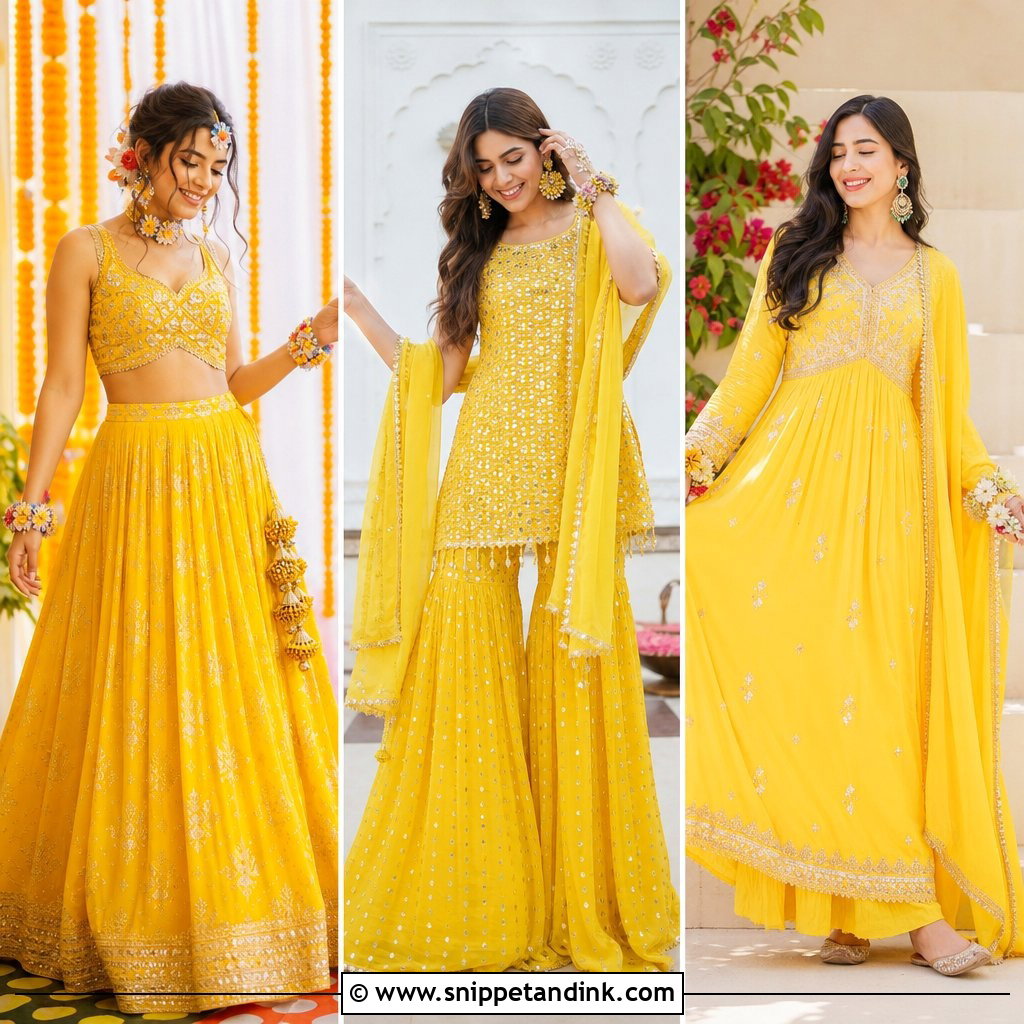
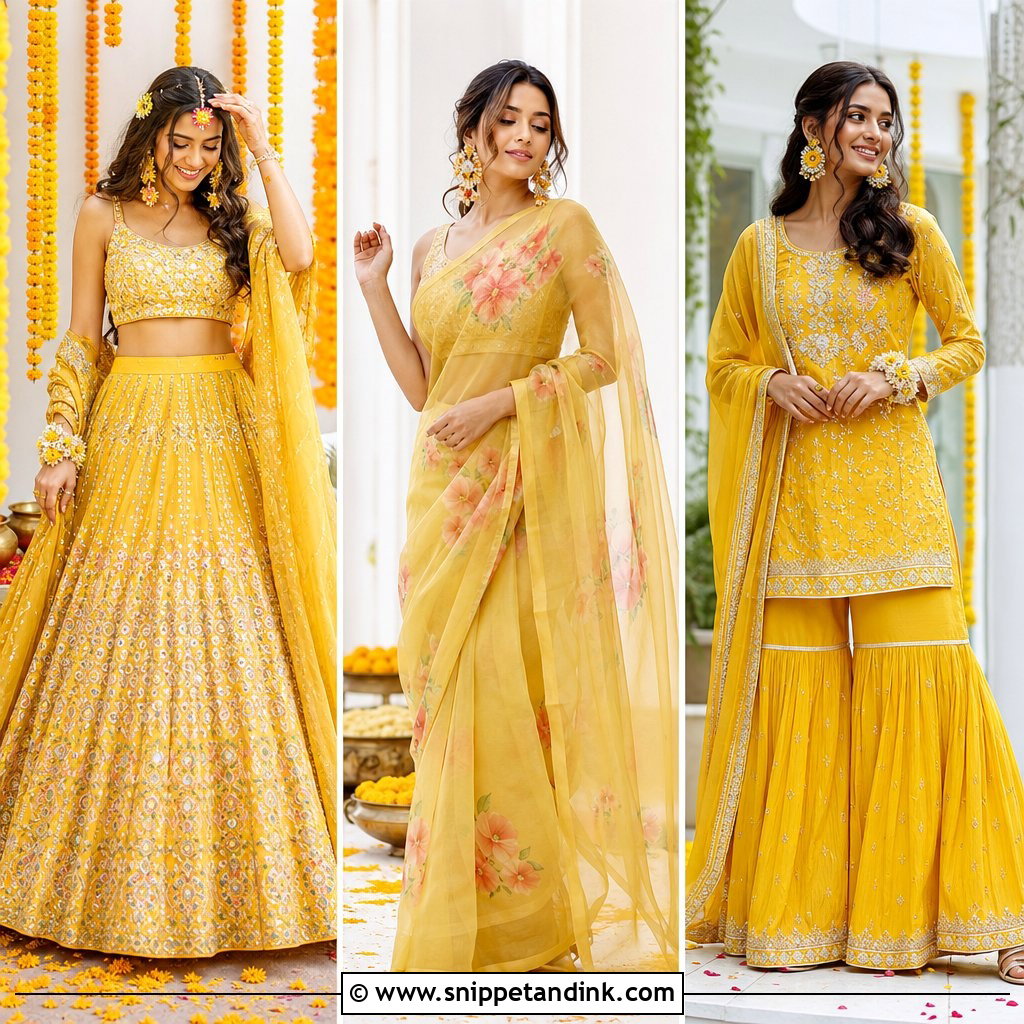
A yellow lehenga is the classic for a reason: it sits right inside the colour story of the ritual. For a daytime event I go for georgette or cotton silk over heavy raw silk, because a stiff can-can skirt gets hot fast when you are sitting under a canopy. Gota patti and small mirrors keep it festive at a fraction of the weight of zardozi. The one thing I always check is the dupatta: pin it at the shoulder and the back of the blouse, or it will slide into the paste bowl the first time someone leans in. Brides can go a step richer on the blouse; guests should let the colour carry the look and keep jewellery light.
2. White Kurta Sharara Haldi Outfit
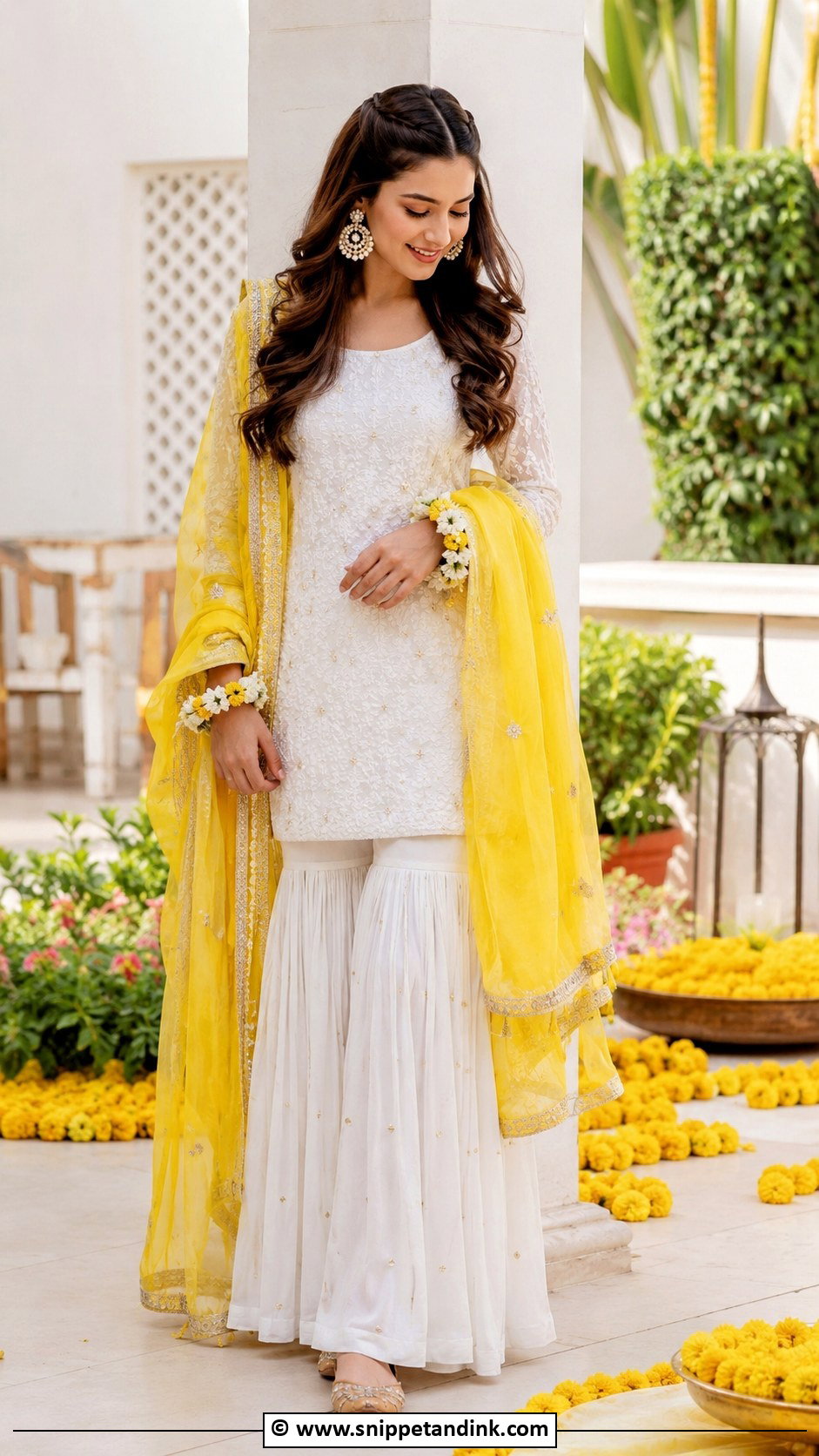
A white kurta with a sharara is the outfit I suggest to sisters who want to look fresh beside a yellow bride without matching her. White reads very clean against marigolds and turmeric decor. The honest trade-off is obvious: white shows every handprint. If you love it anyway, choose a short kurta in cotton or mul with chikan or thread embroidery, since busy embroidery hides a smudge far better than a plain panel. A yellow or lime dupatta ties you to the theme, and pearls with embellished flats keep it daytime rather than formal.
3. Floral Saree Haldi Outfit
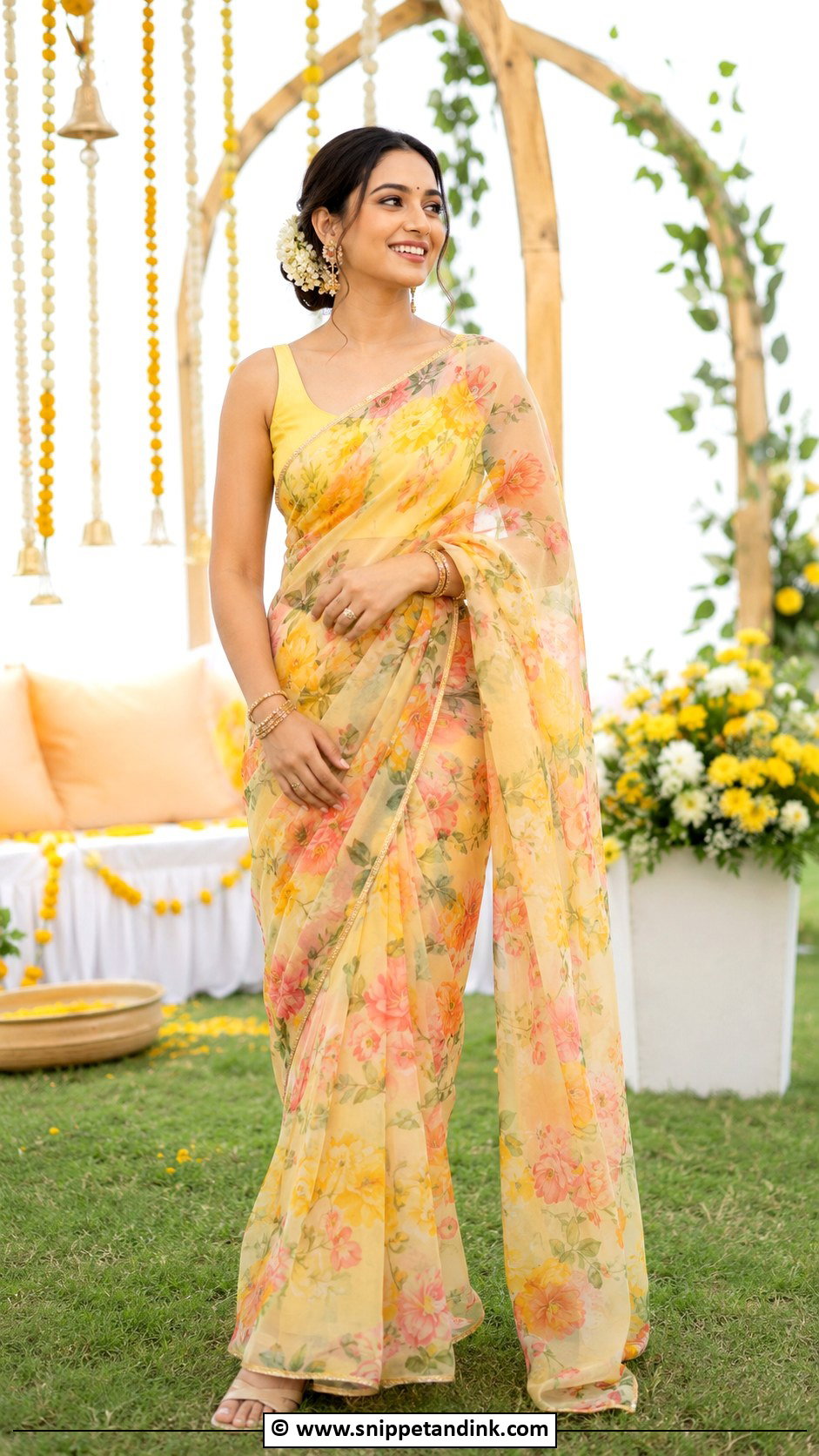
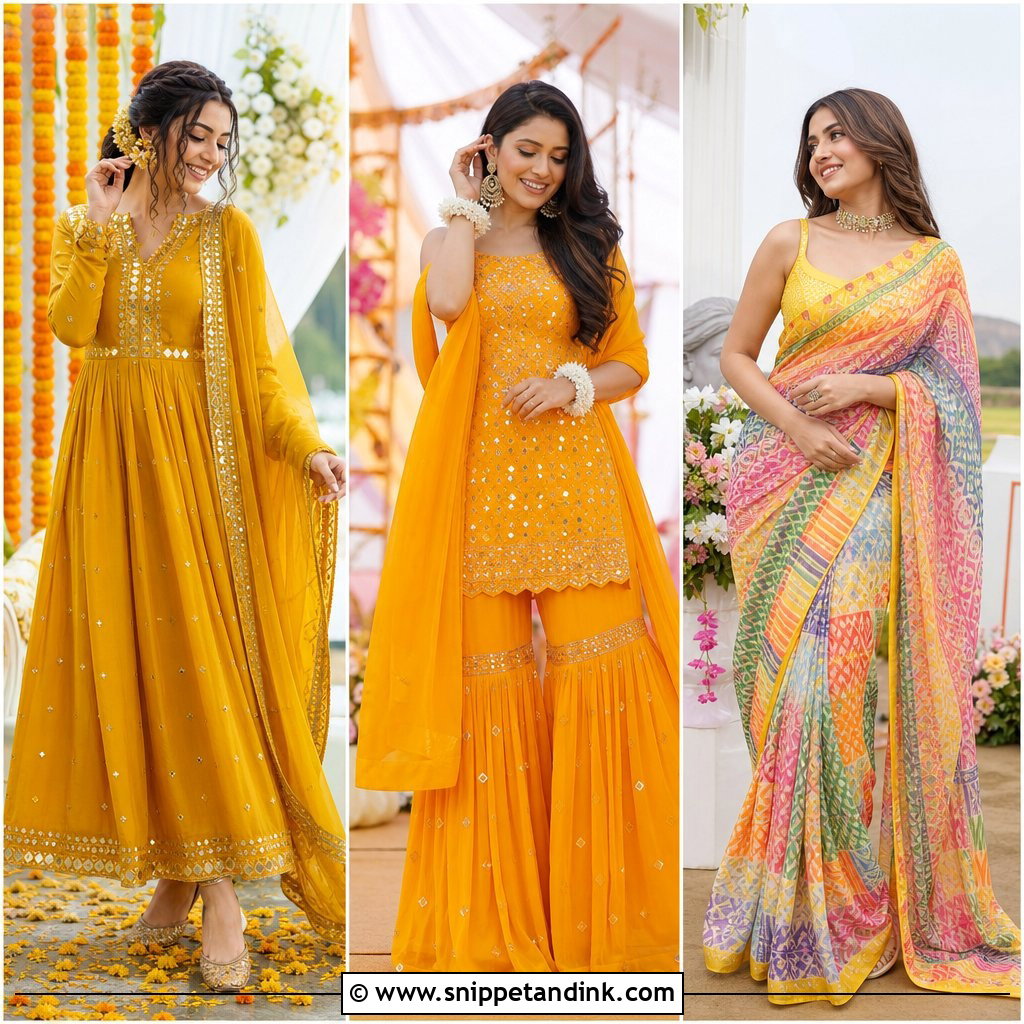
Floral sarees in chiffon or soft organza are among the easiest drapes to manage at a Haldi, because they are light enough that the pleats don’t drag when you sit. I match the blouse to one colour pulled from the print, usually the leaf green or the deepest peach, so the saree doesn’t look busy from a distance. Keep the pallu pinned rather than free-flowing. A low bun with fresh flowers finishes it. This is the drape I hand to aunts and friends who want something traditional but not weighed down by embellishment.
4. Mustard Anarkali Haldi Outfit
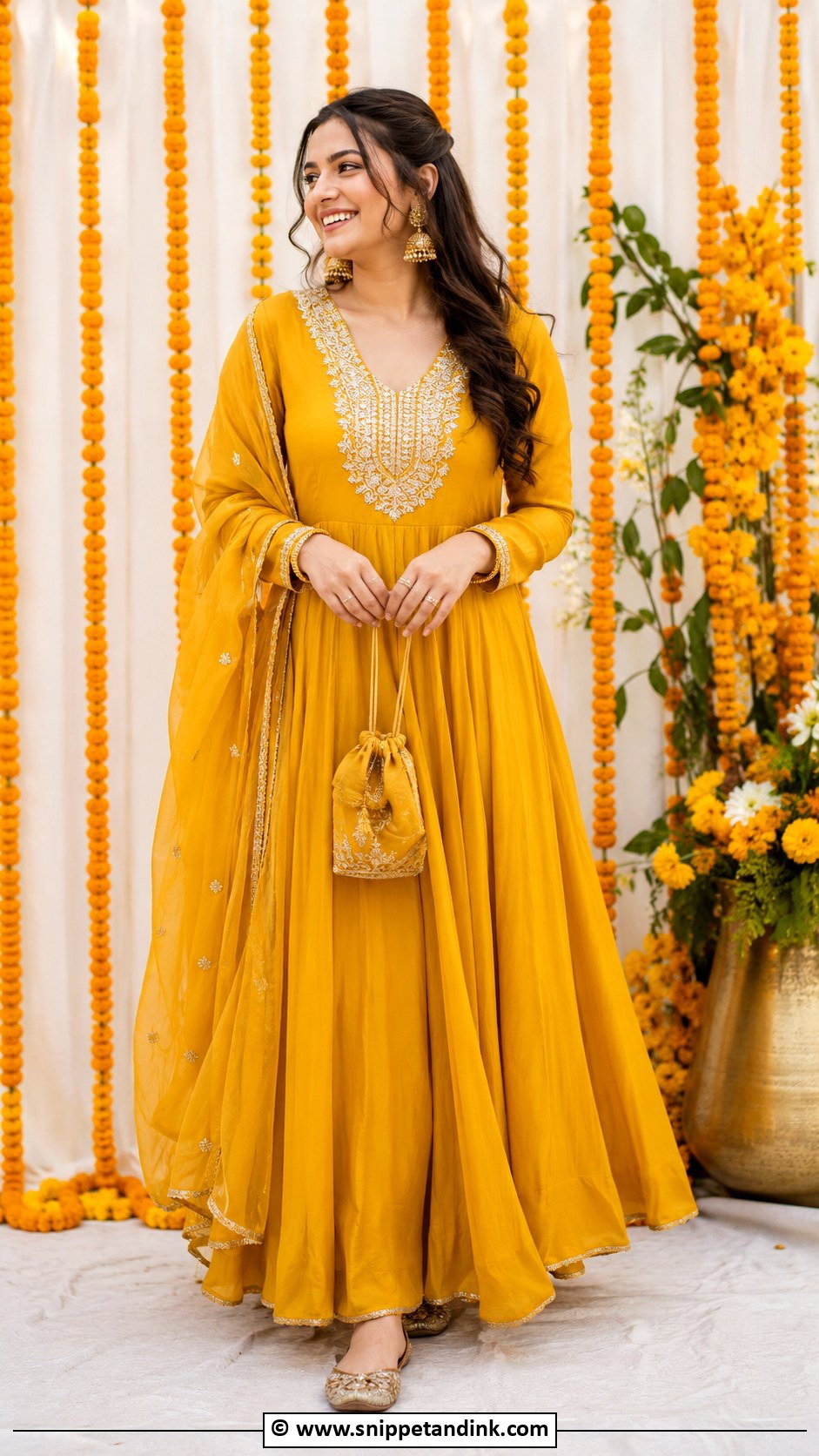
Mustard is kinder to most skin tones than lemon yellow, which can wash out fair skin and look flat in harsh sun. An Anarkali in cotton silk, chanderi or georgette gives you coverage and a flare that moves well in candid shots. I look for embroidery concentrated at the neckline and hem rather than all over, since a fully worked Anarkali gets heavy around the waist after a couple of hours. Juttis, a small potli and gold-toned earrings are all it needs. Before buying, sit down in it: a long flared kalidar should pool neatly around you, not bunch up under your knees.
5. Orange Kurta Palazzo Haldi Outfit
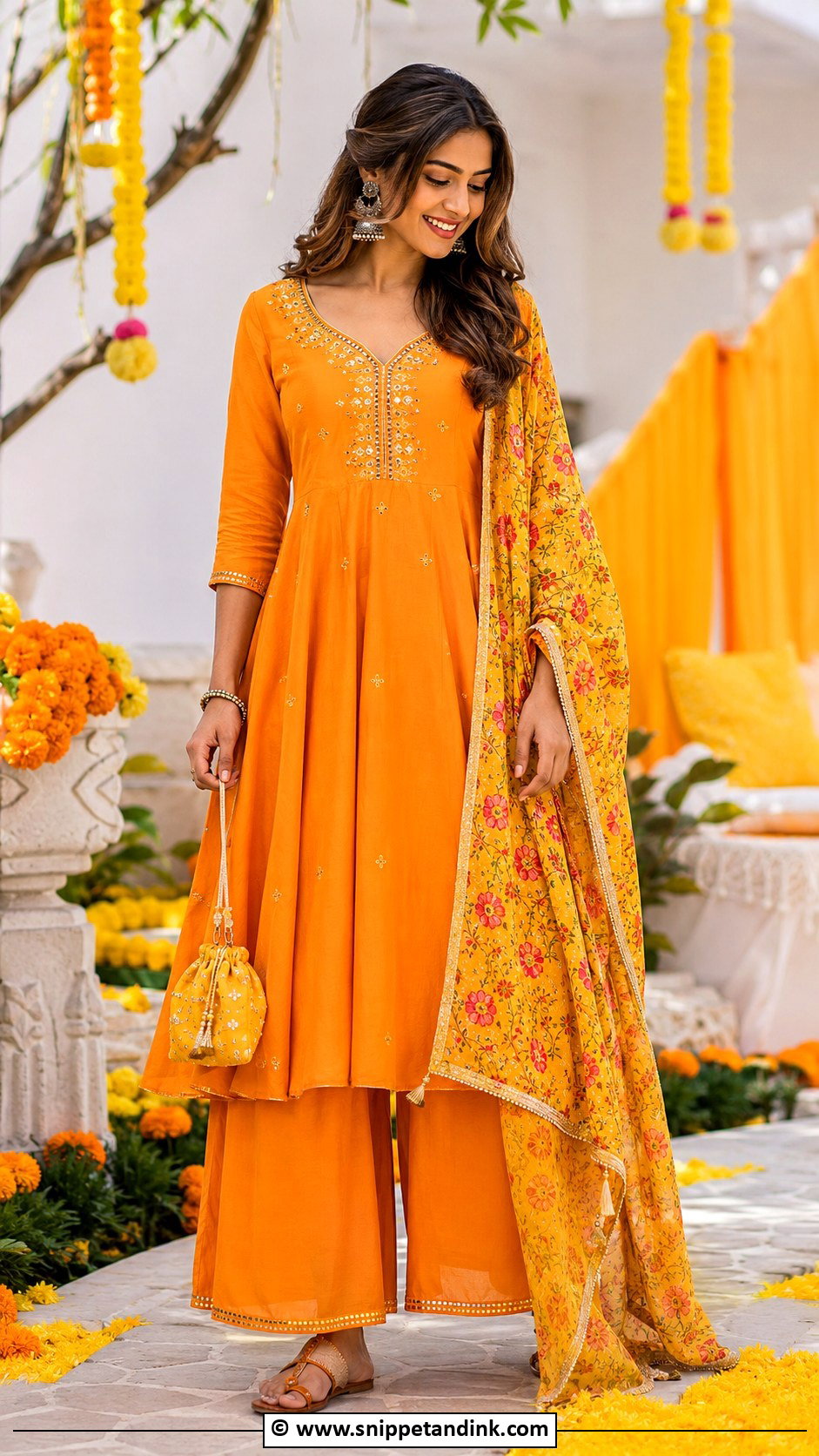
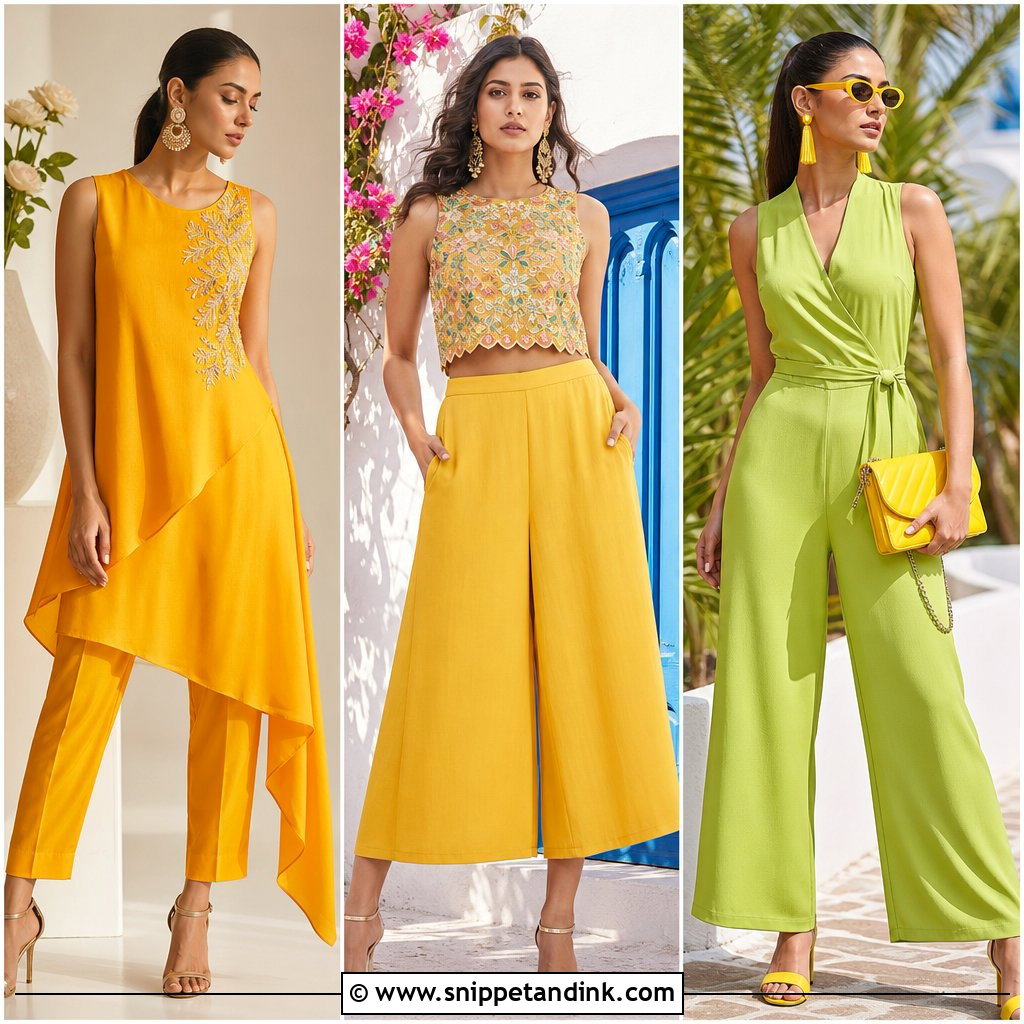
Orange sits right next to yellow on the colour wheel, so an orange kurta with palazzos feels on theme while giving you more warmth. Cotton, rayon or a silk blend all work, and a straight or A-line kurta is easier to sit in than a fitted one. A printed dupatta with small touches of pink or green makes it festive. I pair this with kolhapuris and oxidised earrings, because a relaxed set looks odd with formal gold. It’s the set I’d hand a guest heading to an outdoor ceremony in heat, since the palazzos let air move.
6. Lime Green Lehenga Haldi Outfit
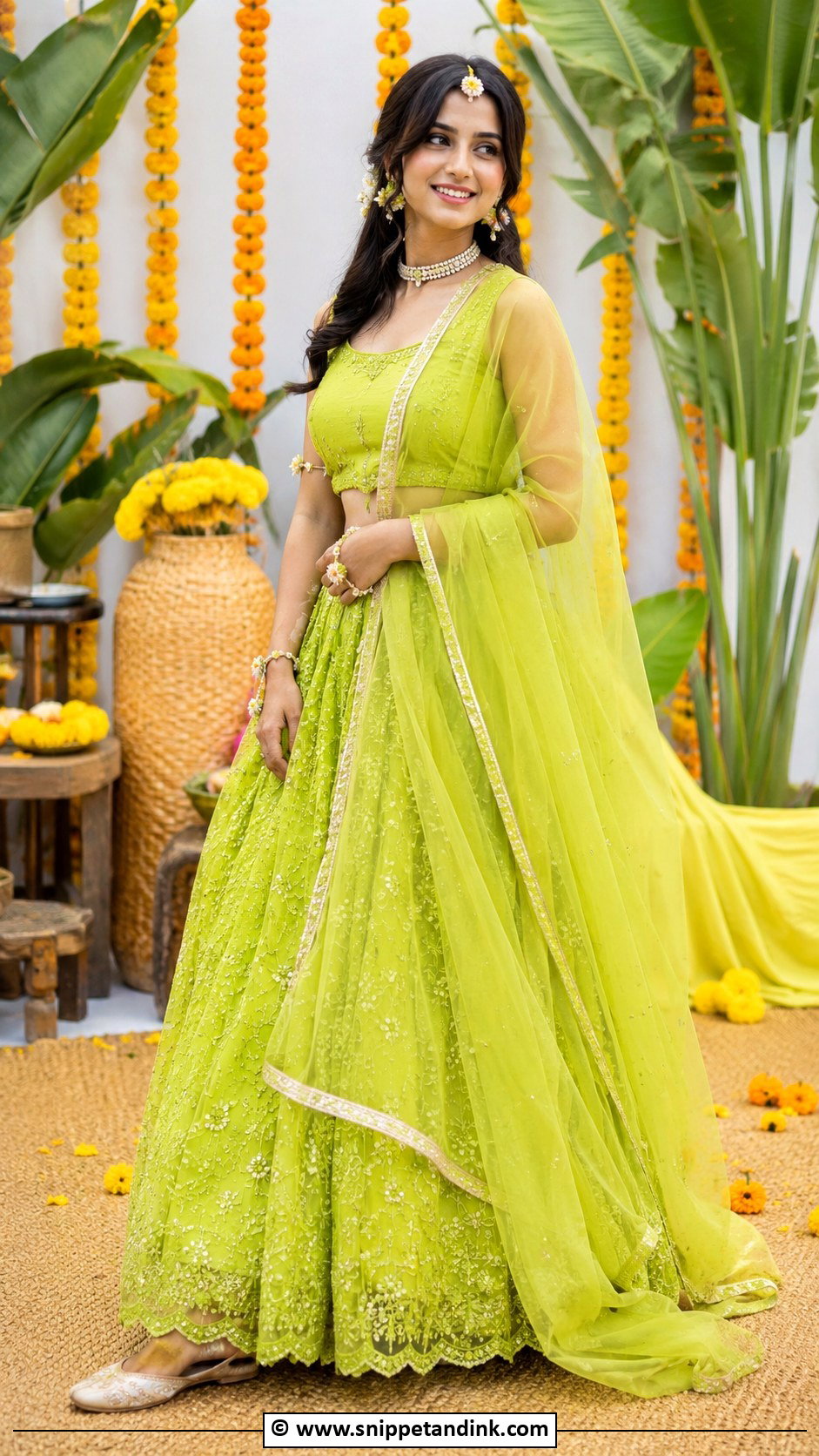
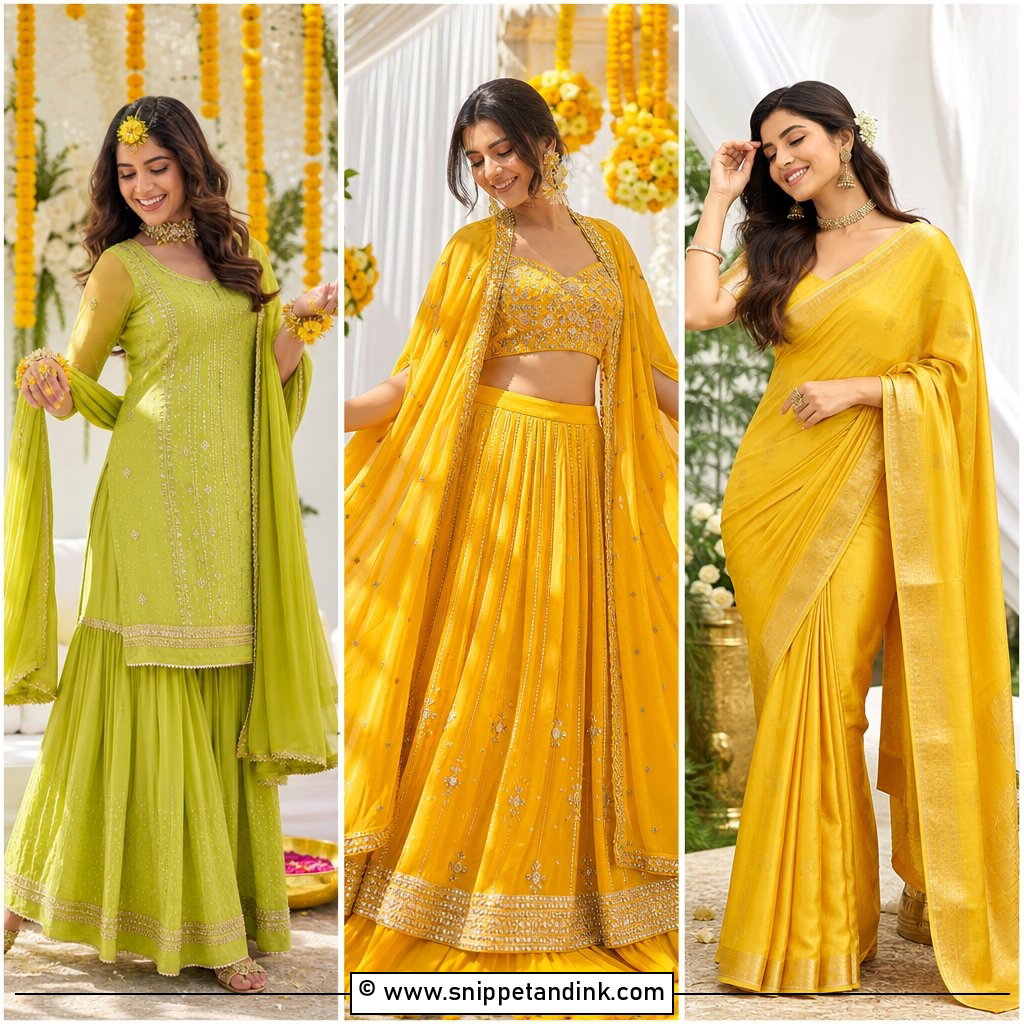
Lime green has become my favourite way to break the all-yellow look in a group. A lime green lehenga with a matching blouse reads bright in daylight and still feels connected to the ceremony, especially when the decor uses banana leaves or marigold. Light threadwork or small mirrors are plenty. I keep the jewellery to pearls and neutral juttis so nothing competes with the colour. One caution: lime can look sallow on cool, pale skin indoors, so check it near a window, not under shop lighting, before you commit.
7. Yellow Saree With Floral Jewelry Haldi Outfit
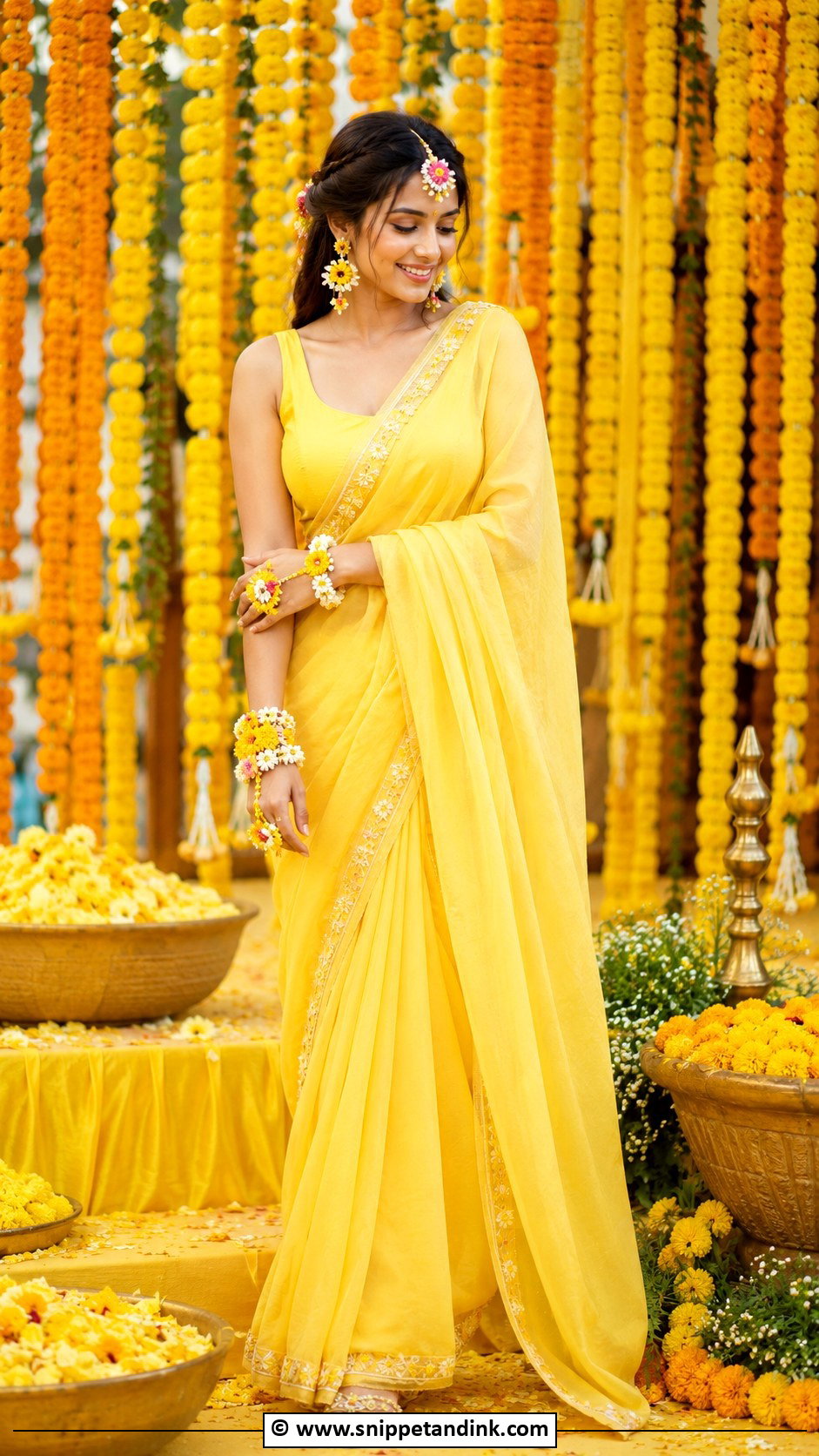
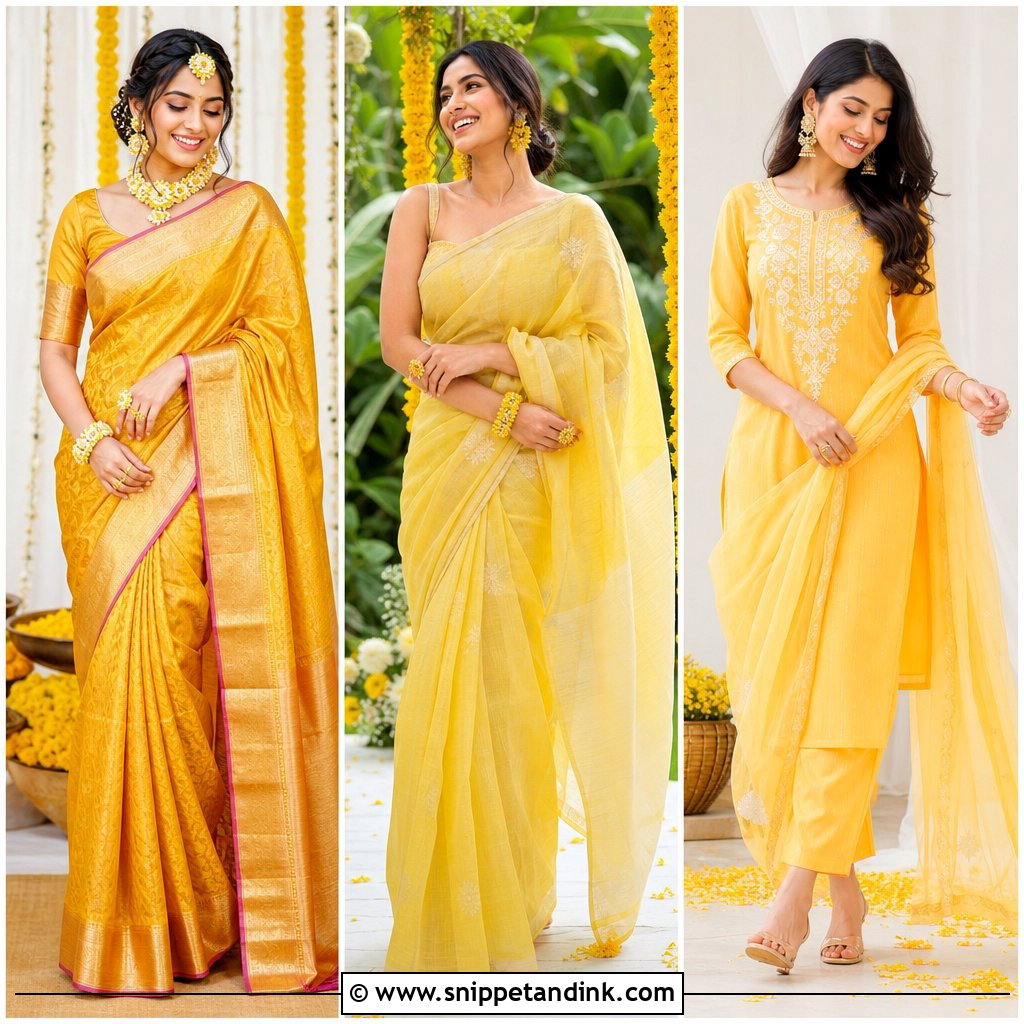
A yellow saree with fresh floral jewellery is still the look most brides picture for their Haldi. I prefer soft silk or chiffon here; heavy Kanjeevaram silk is a shame to stain and too warm for a morning event. A short-sleeve or sleeveless blouse keeps you cool. For the flowers, ask the florist to wire the maang tikka, earrings and haath phool the same morning, and keep them in a cool room until dressing, since jasmine and rose buds wilt quickly on warm skin. Dewy makeup, flat sandals, and you’re done.
8. Printed Co Ord Set Haldi Outfit
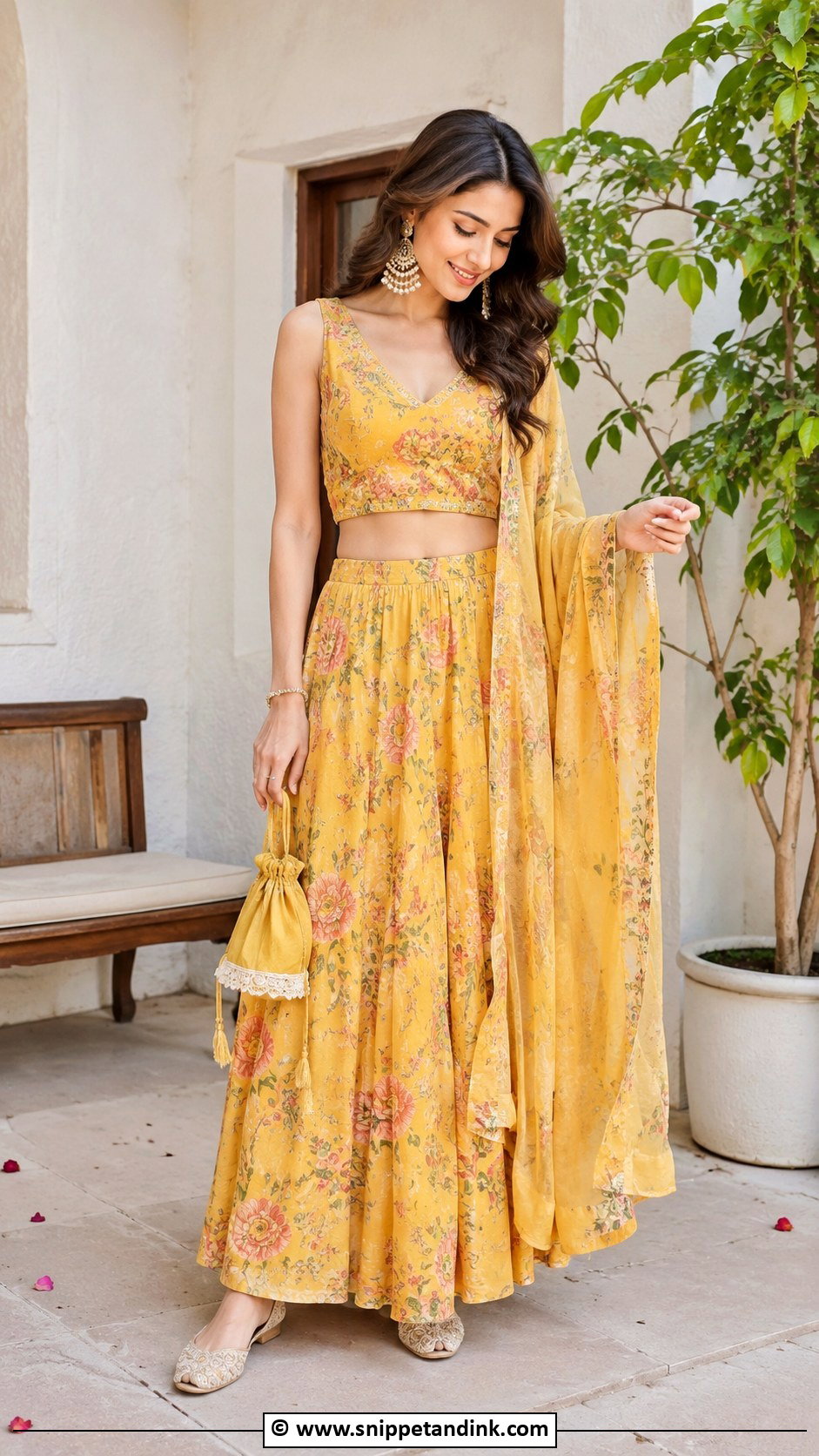
Co ord sets are what I steer cousins toward when they want to dance at the Haldi and wear the outfit again later. A crop top and skirt, kurta and pants, or tunic and palazzo in matching print all count. Cotton, muslin and linen blends are the coolest choices, though linen creases the moment you sit, so either embrace that or pick a muslin. Statement earrings and a small potli dress it up enough for the ceremony. I’d skip this for the bride, since it can look underdressed next to a family in full lehengas.
9. Ivory Lehenga With Yellow Dupatta Haldi Outfit
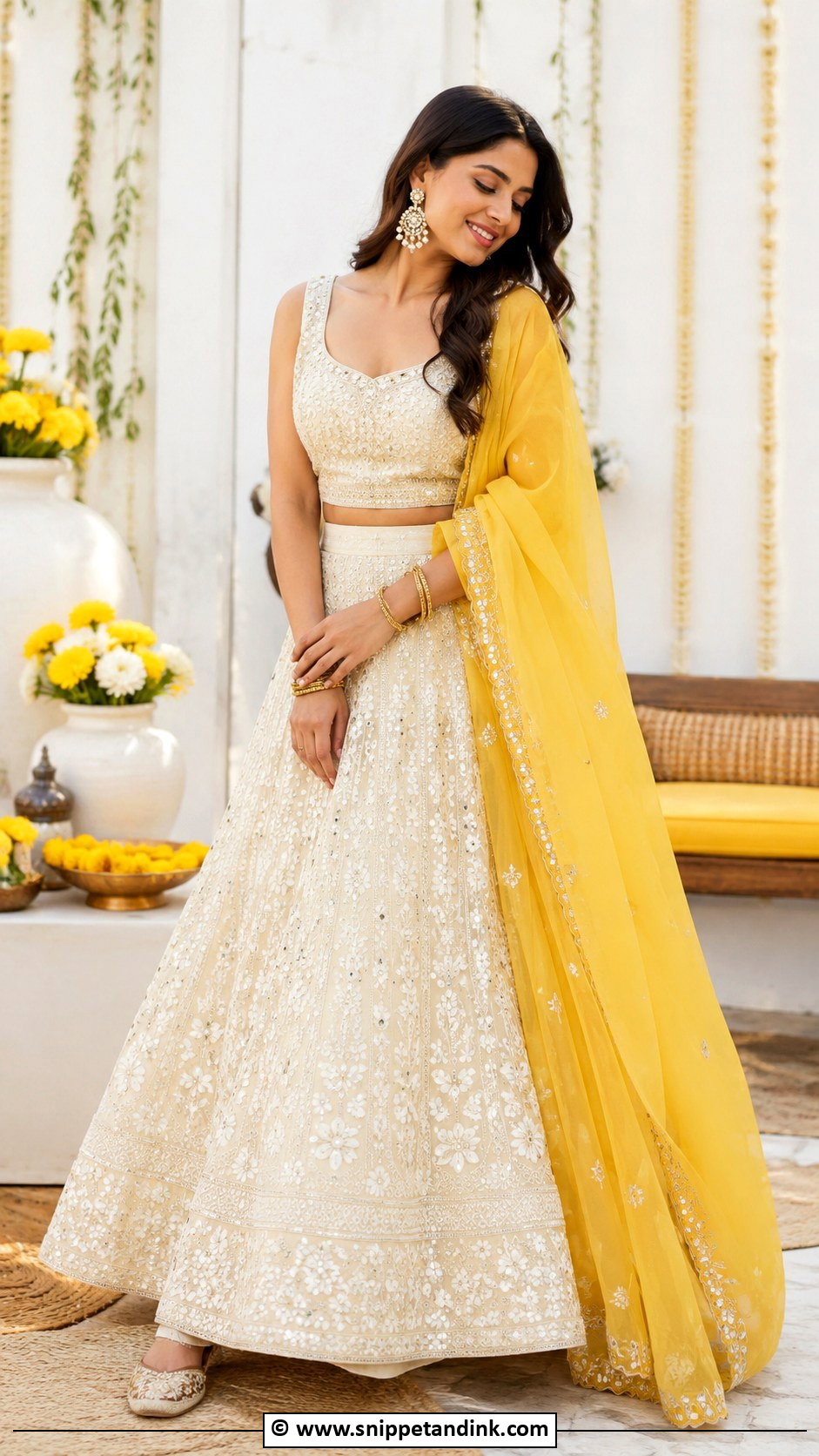
An ivory lehenga with a yellow dupatta is the clever way to wear the ceremony colour without being covered in it. The ivory base keeps the outfit refined, and the dupatta does the ritual work. I look for threadwork or tiny mirrors scattered rather than dense, because ivory with heavy gold embroidery starts to look like a reception outfit. Add pearl earrings and gold bangles. For the bride, a heavier dupatta and a maang tikka shift it from guest to bridal very simply.
10. Yellow Sharara Haldi Outfit
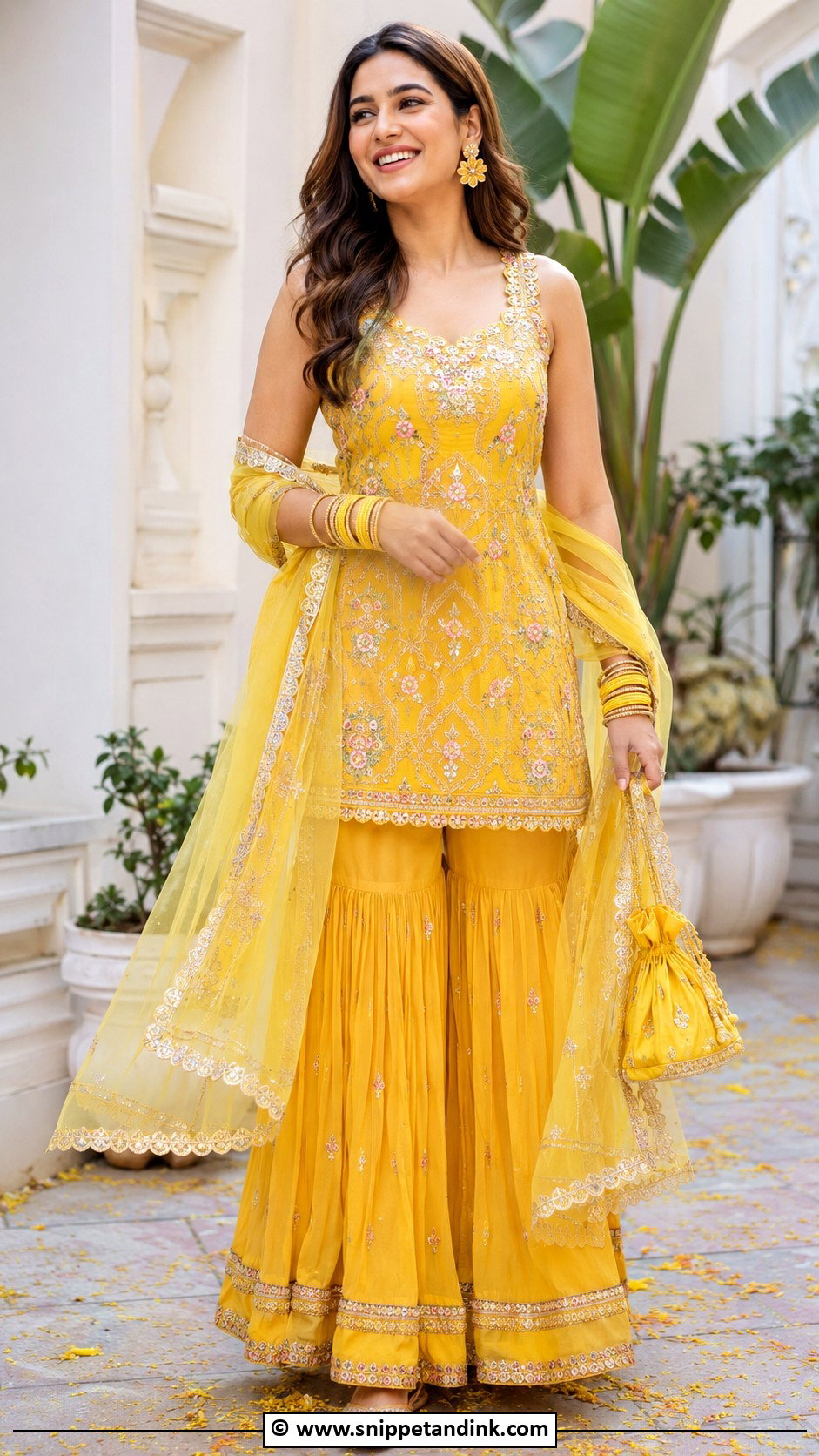
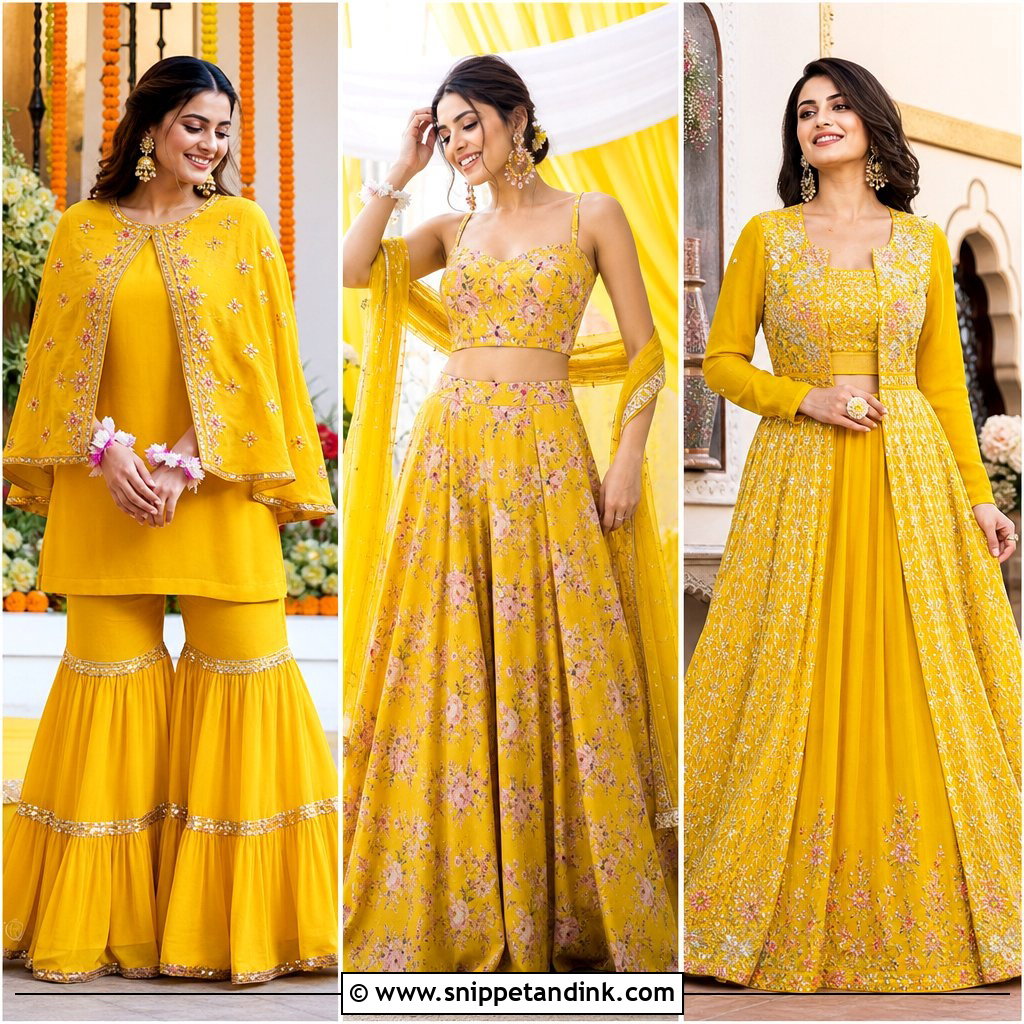
A yellow sharara is the outfit I recommend most for ceremonies held on the floor. The flared pant gives you modesty and movement when you sit cross-legged, which a lehenga skirt never quite manages. Pair a short kurti with gota or mirror work and a light dupatta. Check the sharara’s flare starts at the knee, not mid-thigh; a high flare adds bulk when you’re seated. Jhumkas and juttis keep it festive, and brides who don’t want the weight of a lehenga can wear a richer version of this too.
11. Pink Lehenga Haldi Outfit
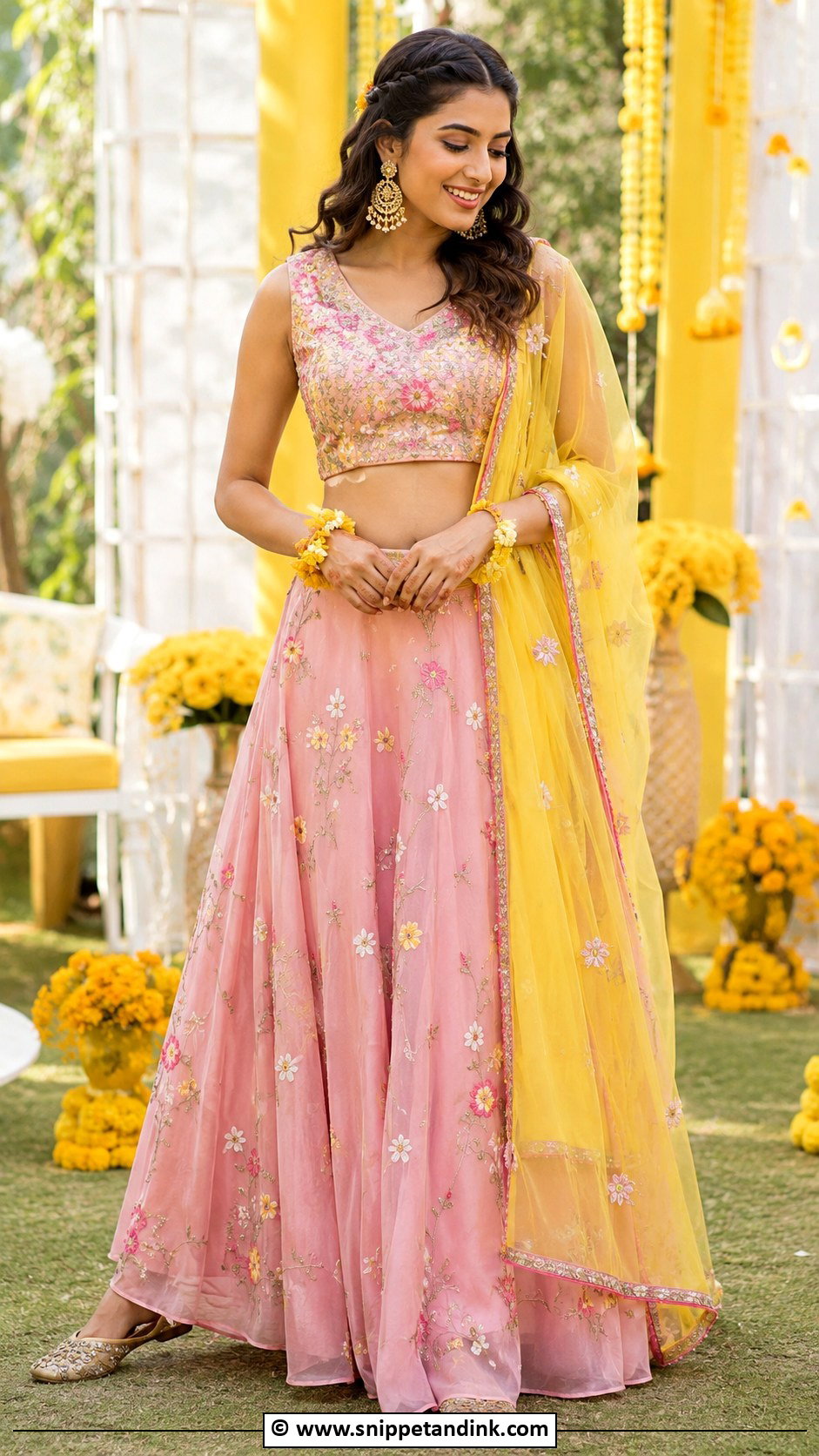
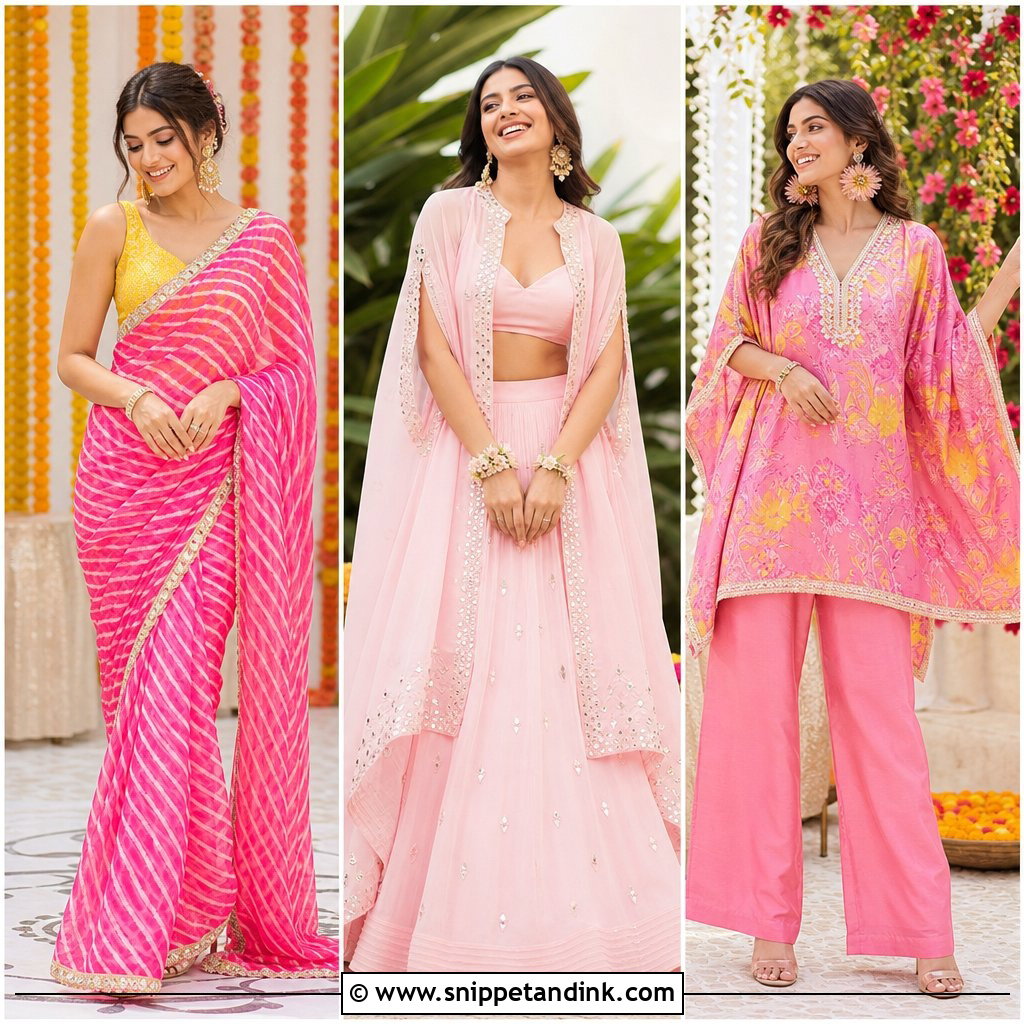
Pink is the easiest non-yellow colour to wear at a Haldi because almost every shade of it, from blush to rani, looks warm next to marigold decor. A lightweight lehenga with floral print or a little sequin work feels right for daytime. Want a clear tie to the theme? Throw a yellow dupatta over it. Gold jewellery and soft waves suit it. I find coral pink flatters deeper skin tones especially well in outdoor light, while pale blush can disappear on fair skin in a photo taken in strong sun.
12. Yellow Kurta Skirt Haldi Outfit
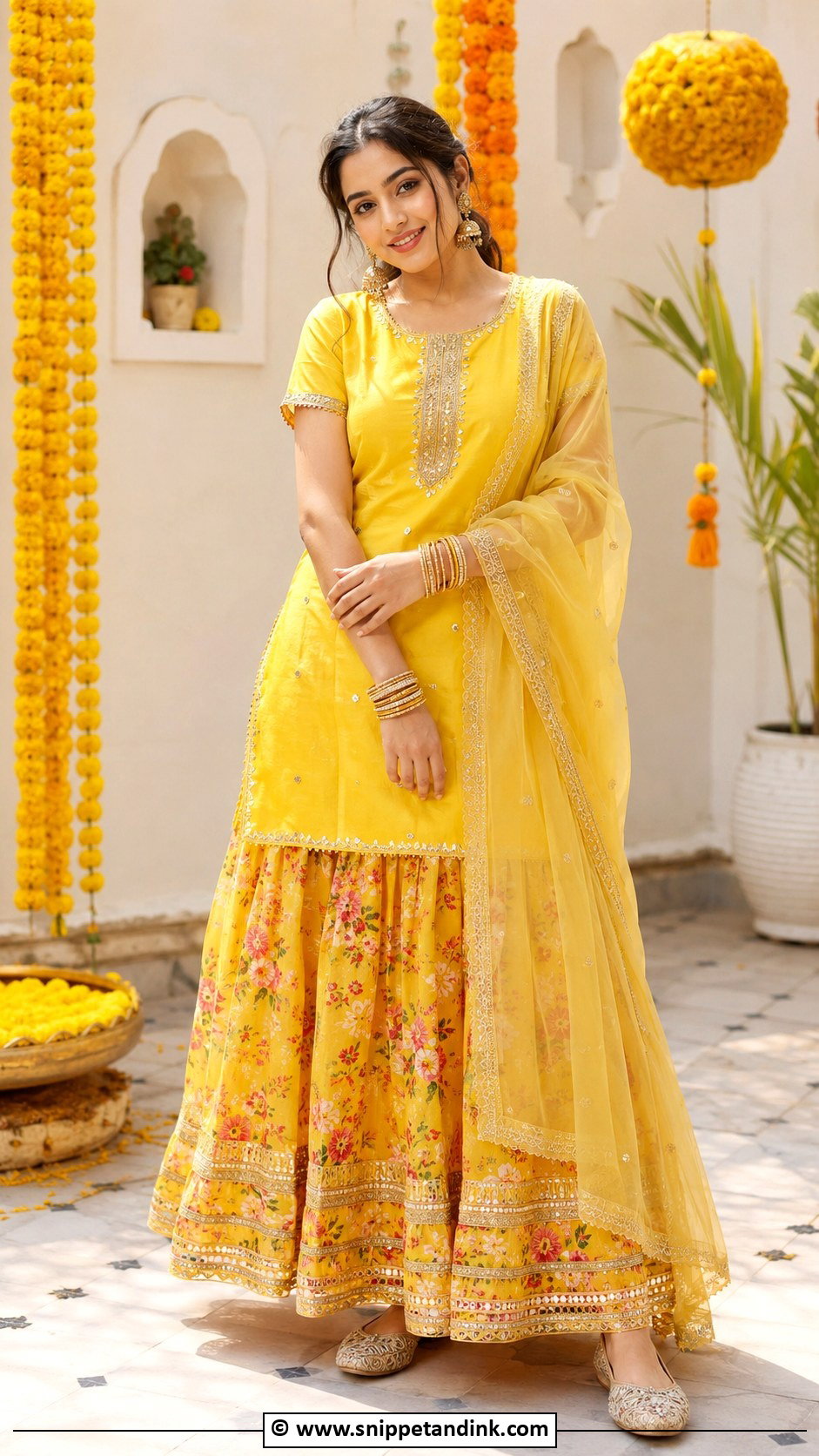
A yellow kurta over a long skirt gives you the comfort of a kurta with the swing of a lehenga, and it costs less than either a full lehenga or a fitted Anarkali to have tailored. Mid-length kurtas work best; a long kurta over a full skirt can swallow a petite frame. The dupatta is optional for a relaxed morning event. Block prints, gota borders or small mirrors add interest. I like this for mothers and aunts who want something easy to move in that still looks put together.
13. Green Saree Haldi Outfit
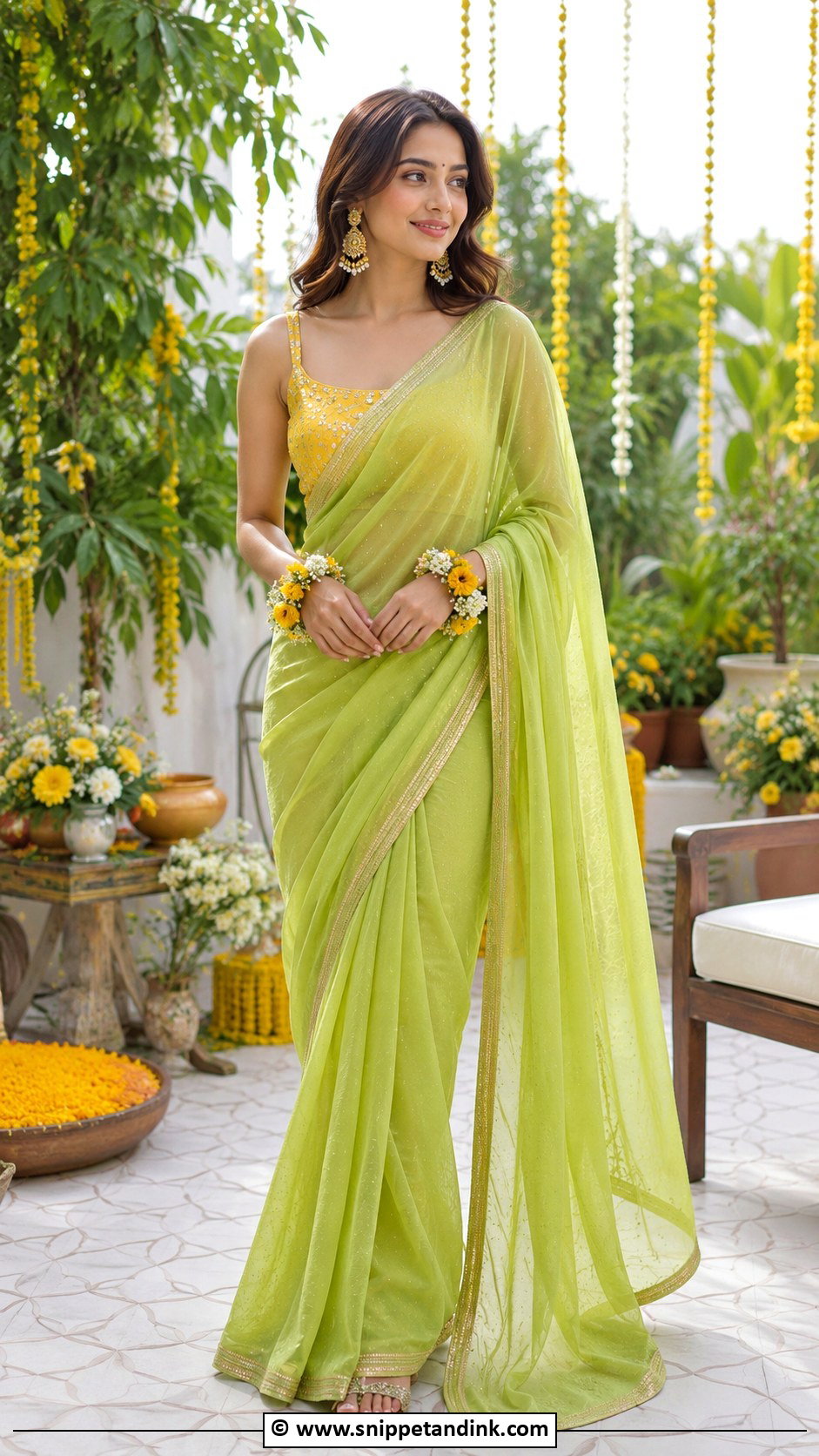
Green is the natural partner to a Haldi setting full of leaves and marigolds. Lime, mehendi, mint or parrot green each give a different mood, so pick by your skin’s undertone: warmer skin glows in mehendi and parrot, cooler skin often suits mint. Pair the saree with a yellow or gold blouse to stay on theme. Chiffon, organza and georgette are all comfortable for daytime. Gold earrings and a small bindi complete it, and the deeper greens hide a turmeric smudge better than pastels do.
14. Yellow Gharara Haldi Outfit
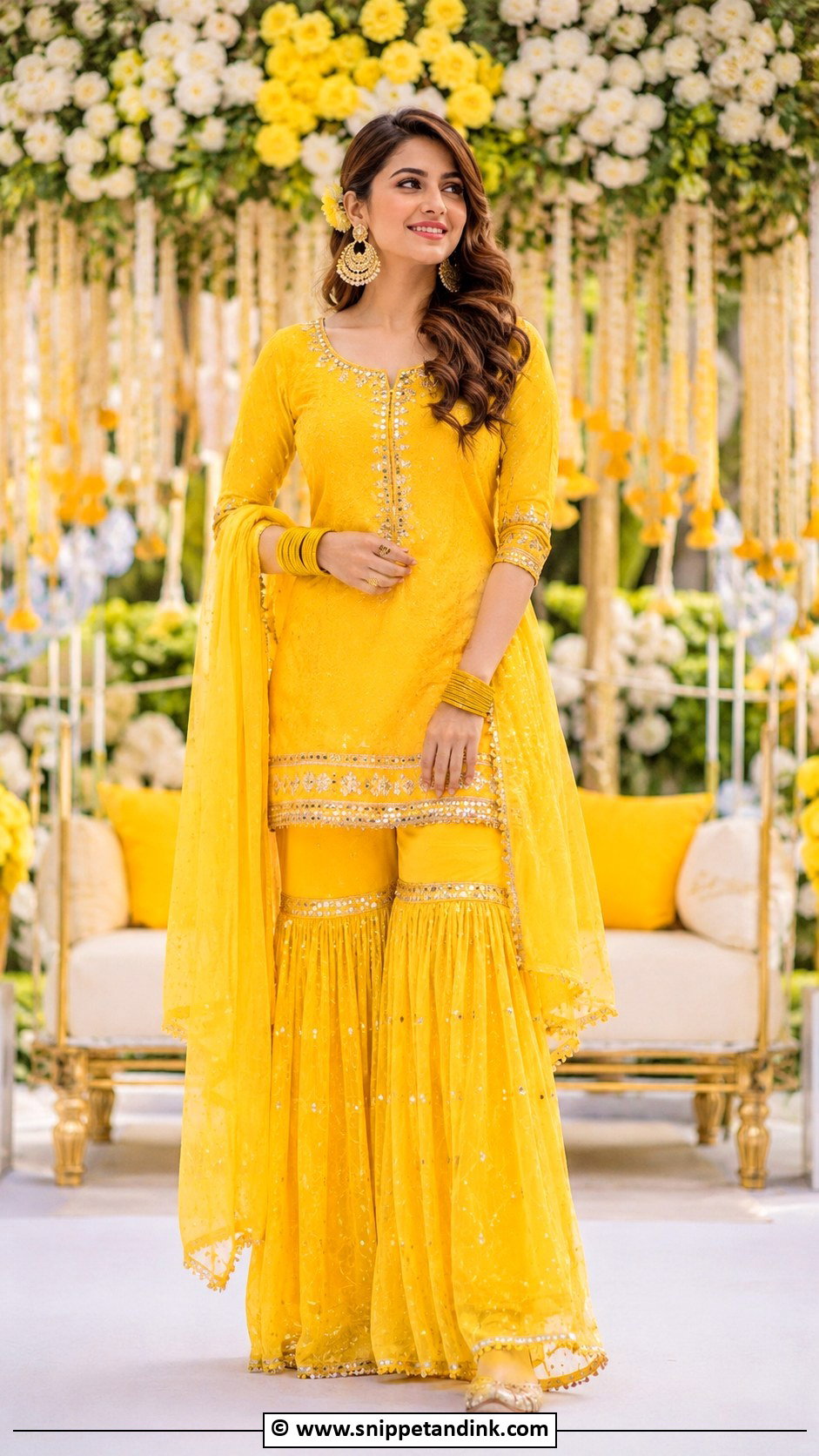
A yellow gharara outfit has a fitted leg to the knee and a gathered flare below, joined by a decorative band. That join is where I check fit first, because if it sits too high, the gharara looks short and the flare bunches when you walk. Pair it with a short kurti finished in lace or gota and a soft dupatta. Chaandbalis and juttis give it a traditional finish. It looks dressed up without the weight of a lehenga, and the flare photographs well in motion.
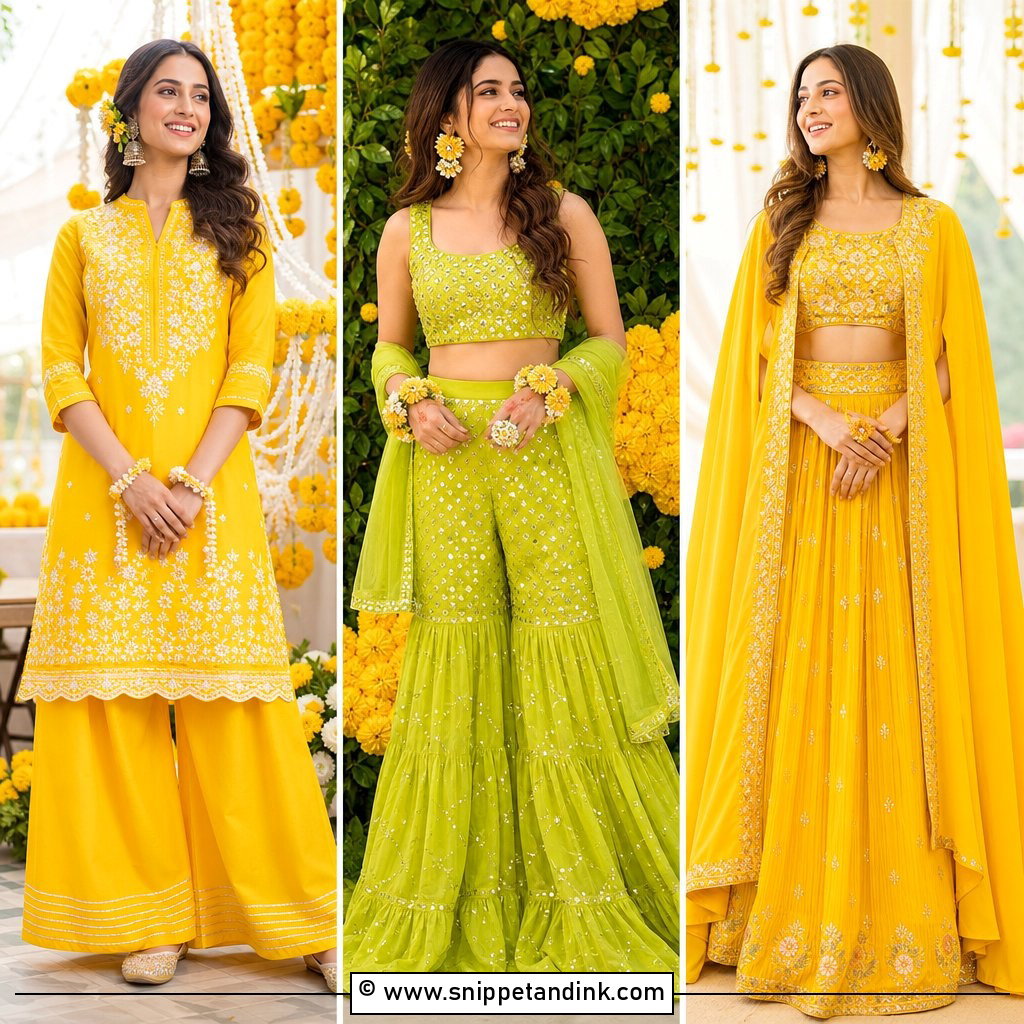

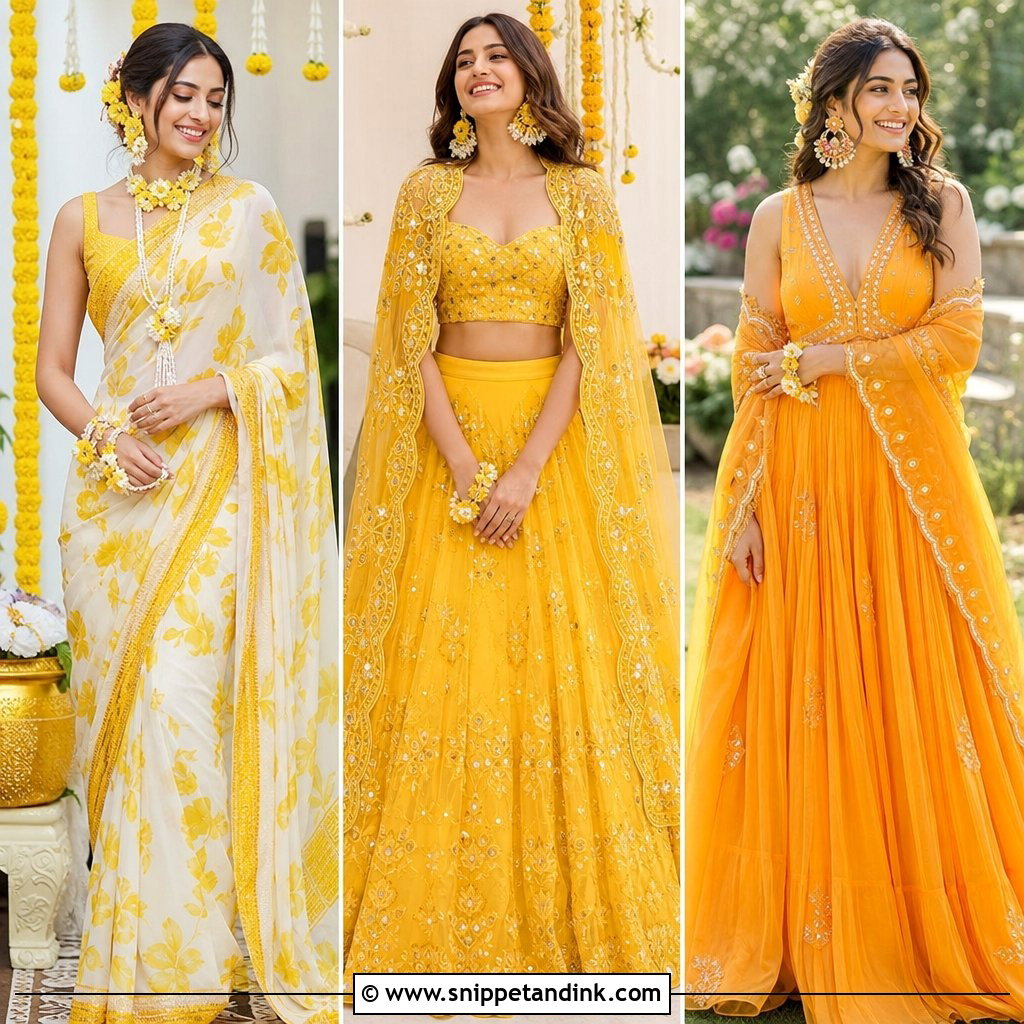
15. Mango Yellow Anarkali Haldi Outfit
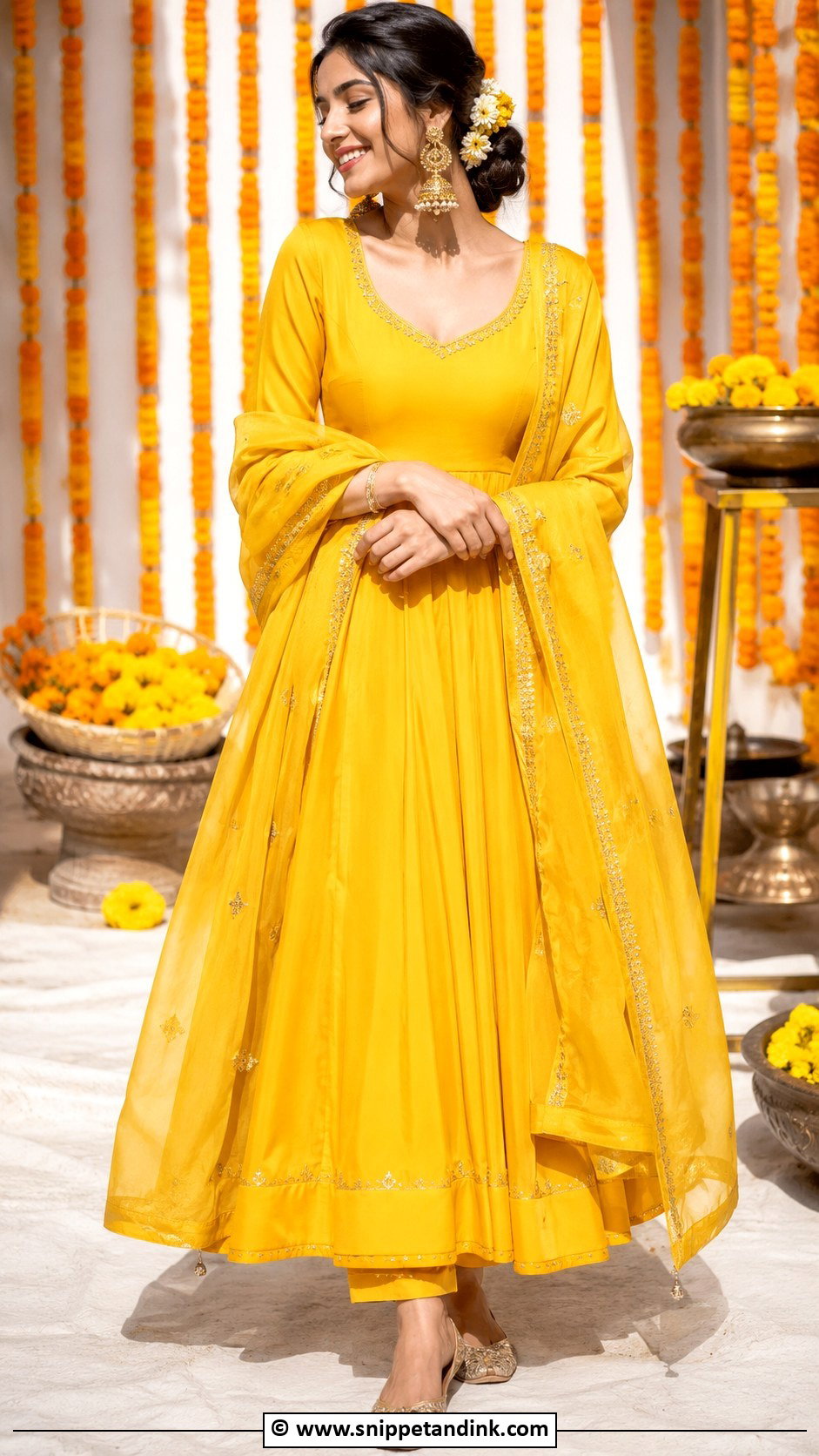
Mango yellow is the shade I reach for when a client says pure yellow makes her look tired. It has enough orange in it to warm the face. An Anarkali in this colour with light embroidery or printed panels moves well and catches candids. Wear embellished flats or a low block heel; stilettos sink into garden lawns and are miserable on a floor seating setup. Gold jhumkas and a flower in the hair are enough, so the colour can do its work.
16. Pastel Lehenga Haldi Outfit
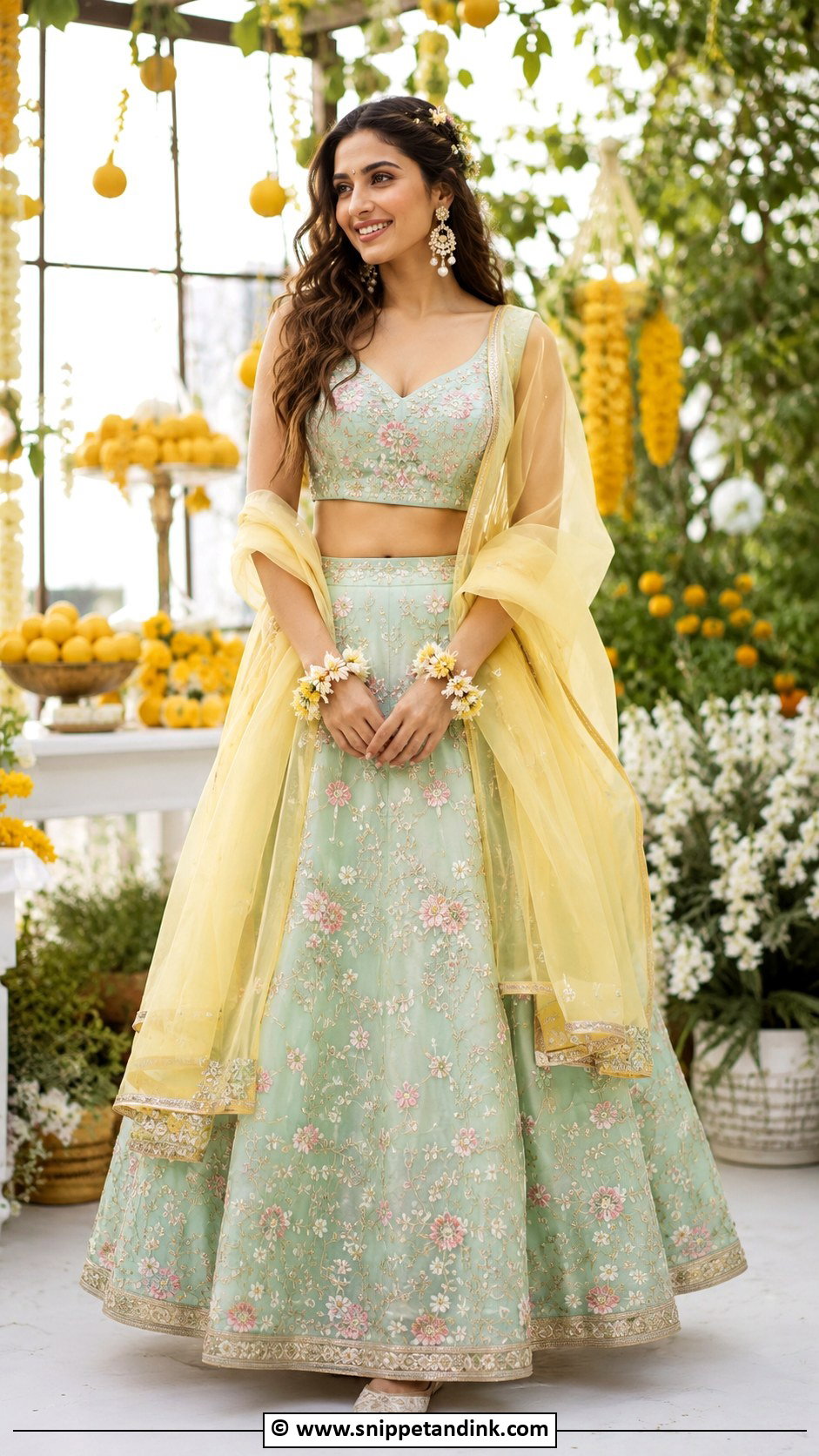
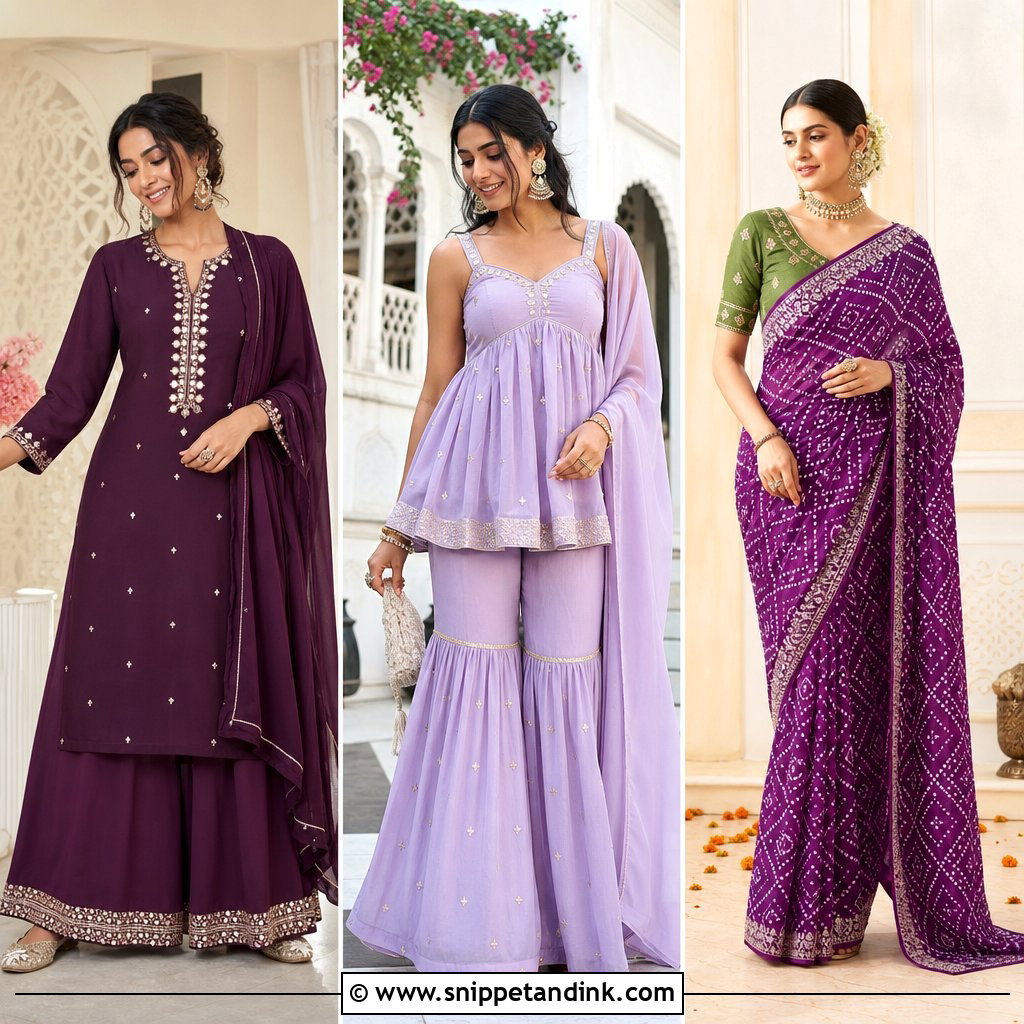
A pastel lehenga in mint, powder yellow, peach or lavender softens the Haldi palette, and it looks lovely in open shade. Delicate floral embroidery suits pastels better than heavy mirrors, which can look harsh on a pale base. Add a yellow or ivory dupatta if you want a clearer link to the ceremony. One honest warning: pale pastels are the hardest colours to rescue from turmeric, so I suggest them for bridesmaids who will stand slightly back from the paste, not for the bride at the centre of it.
17. Mirror Work Lehenga Haldi Outfit
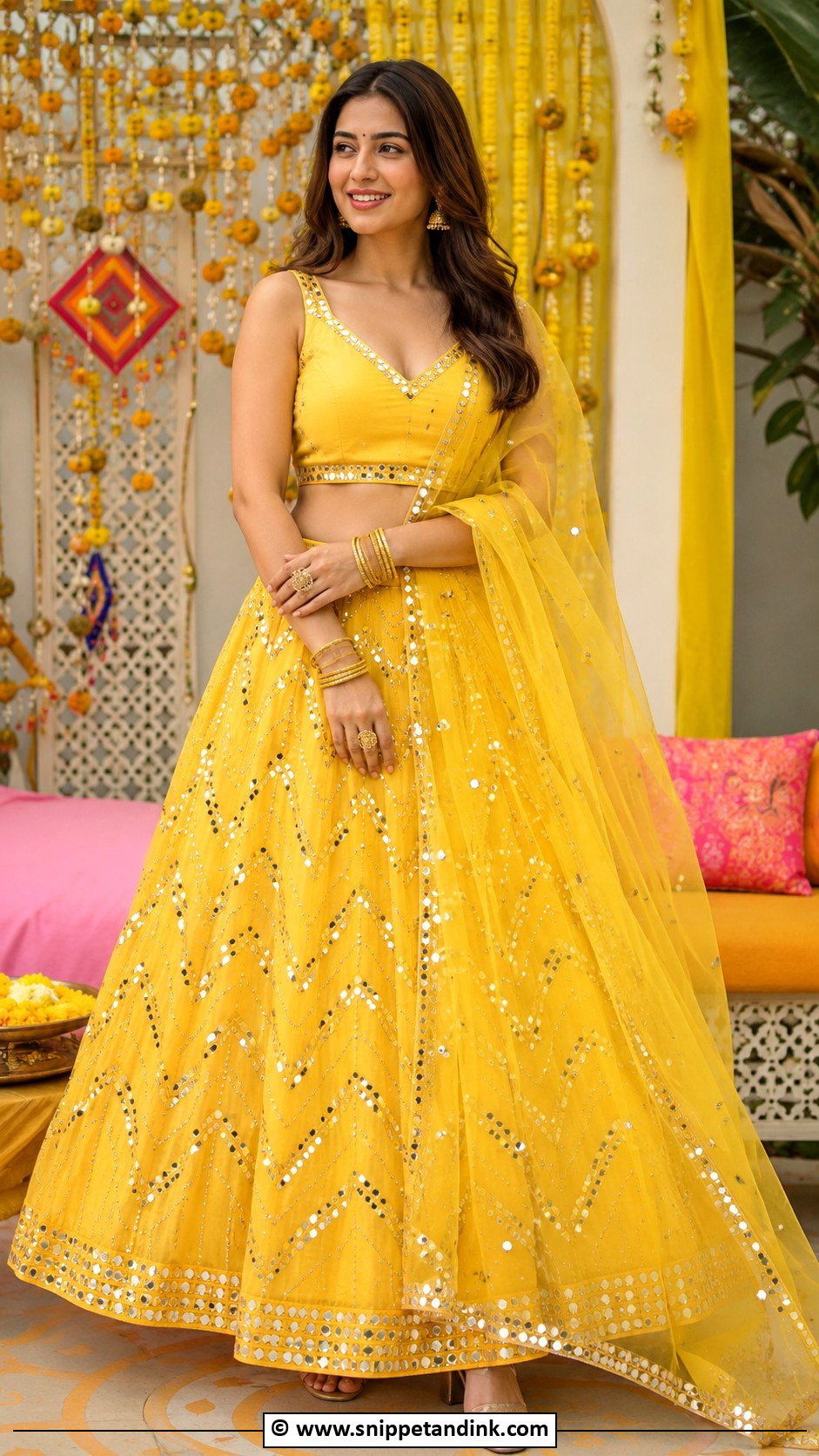
Mirror work catches daylight and throws little flashes in every frame, which is why it suits Haldi so well. Because the outfit already has shine, I keep the jewellery small: studs or light jhumkas and maybe a fine maang tikka. Juttis or low heels are best for movement. Check the mirrors are stitched down firmly around the edges, especially on the blouse back; loose ones scratch skin when you’re hugged, and they catch on dupattas. For a bridesmaid who wants sparkle without evening sequins, this is my go-to.
18. Floral Lehenga Haldi Outfit
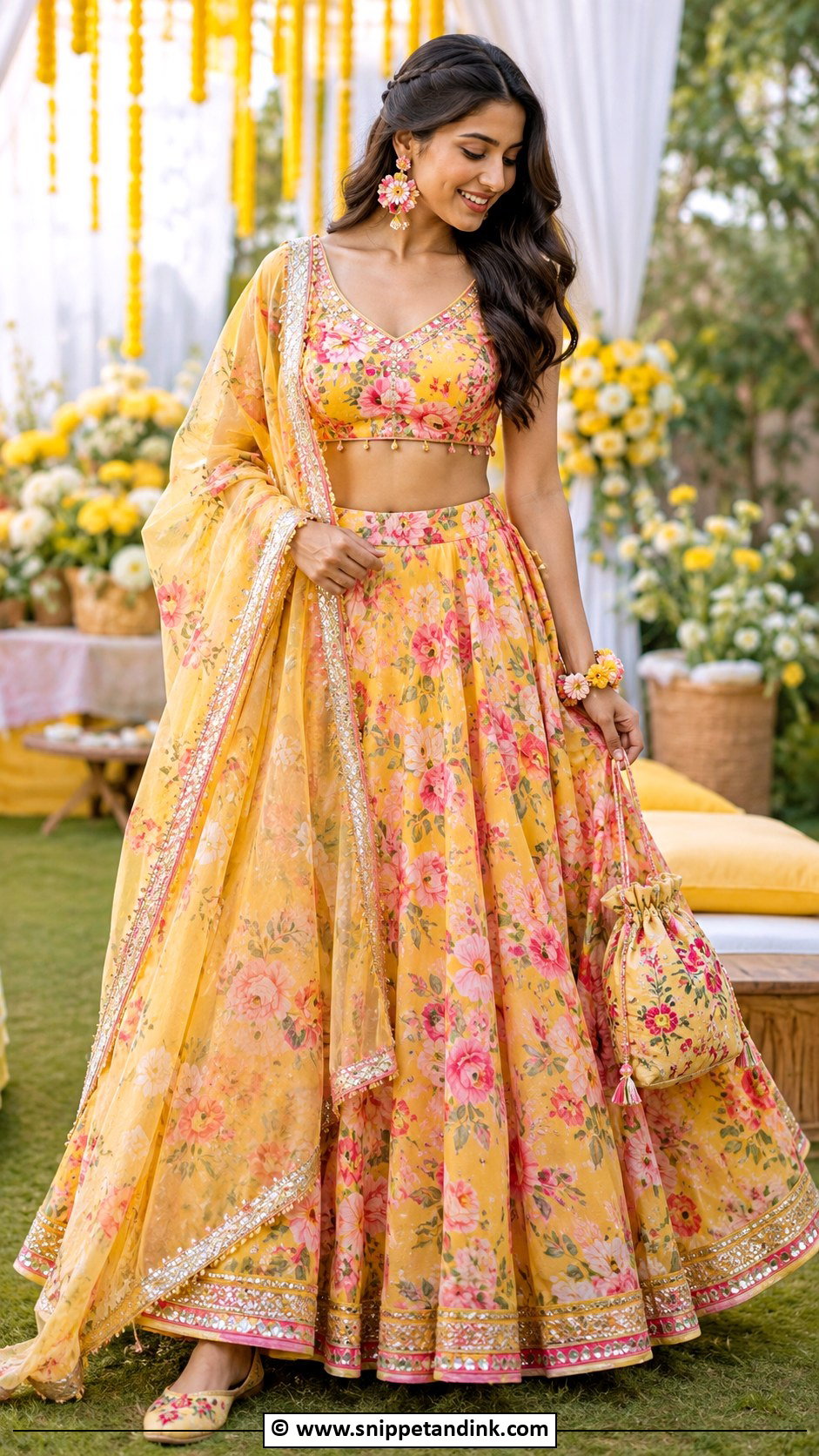
Floral lehengas suit a garden or courtyard Haldi because the print echoes the setting. I look for prints that include at least one yellow or orange tone so the outfit still reads as Haldi in group photos. A plain blouse balances a busy skirt; a printed blouse and printed skirt together can get noisy on camera. Floral earrings and a potli bag finish it. Brides can choose a richer embroidered floral version with fresh flower jewellery to separate themselves from the guests.
19. Yellow Dhoti Set Haldi Outfit
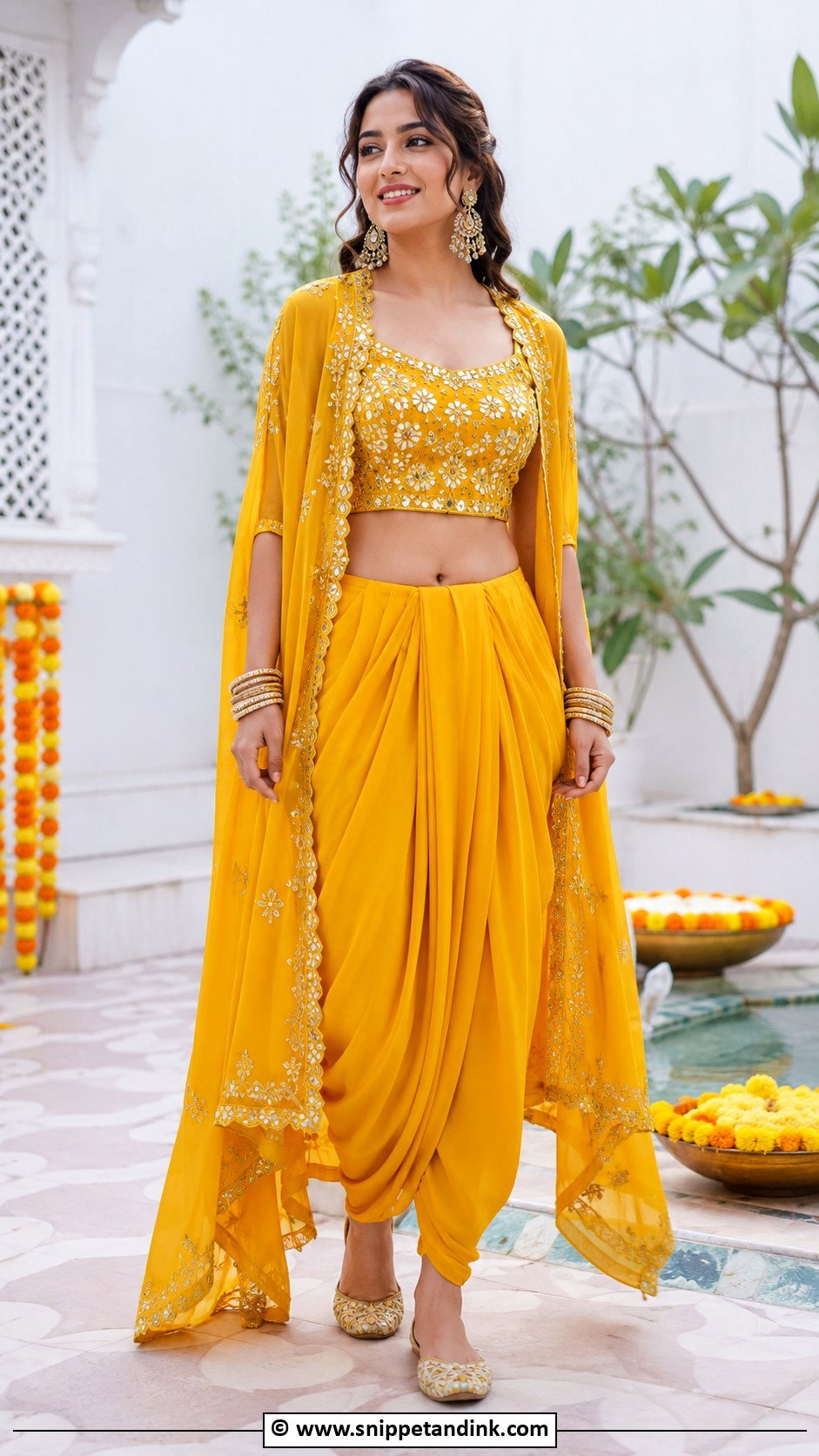
A yellow dhoti set gives you draped pants that feel like a skirt but behave like trousers, so sitting, dancing and stepping onto a low platform are all easy. Pair them with a crop top, a short kurti or a cape. Choose a light fabric; a dhoti in thick silk adds bulk at the hips. Statement earrings and stacked bangles carry the festive side. I’d steer more traditional families toward a sharara instead, but for younger bridesmaids this always gets compliments for feeling different.



20. Bandhani Saree Haldi Outfit
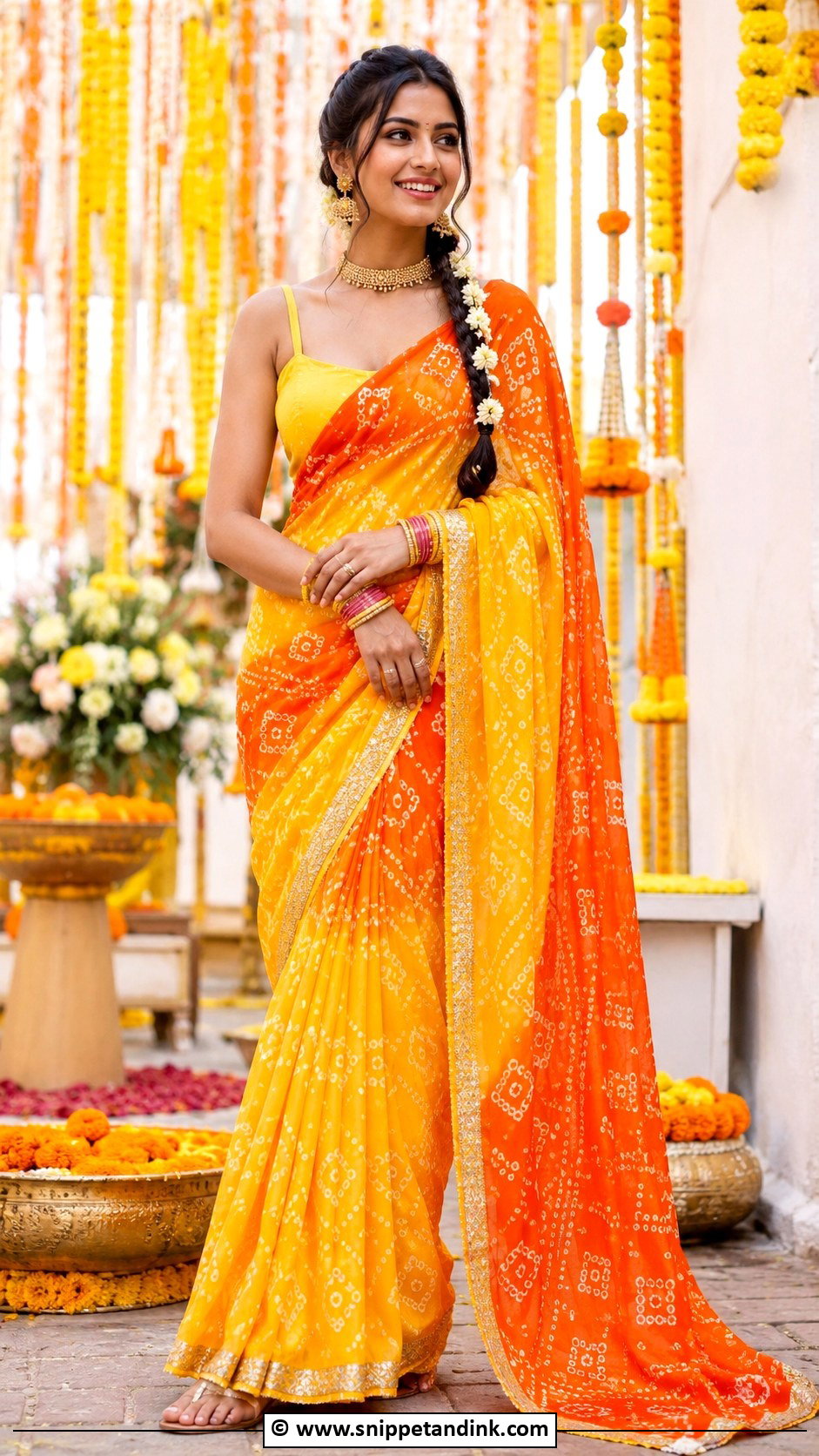
Bandhani is tie-dye made by pinching and binding tiny points of cloth before dyeing, and the resulting dotted pattern is rooted firmly in Gujarati and Rajasthani celebrations. Yellow, orange, green or red bandhani all suit a Haldi. Keep the blouse plain so the pattern leads. Oxidised or gold jewellery both work, along with glass bangles and a braid with flowers. My favourite practical point: the busy dot pattern hides small stains far better than plain fabric, which makes it a smart pick for anyone sitting near the paste.
21. Yellow Jumpsuit Haldi Outfit
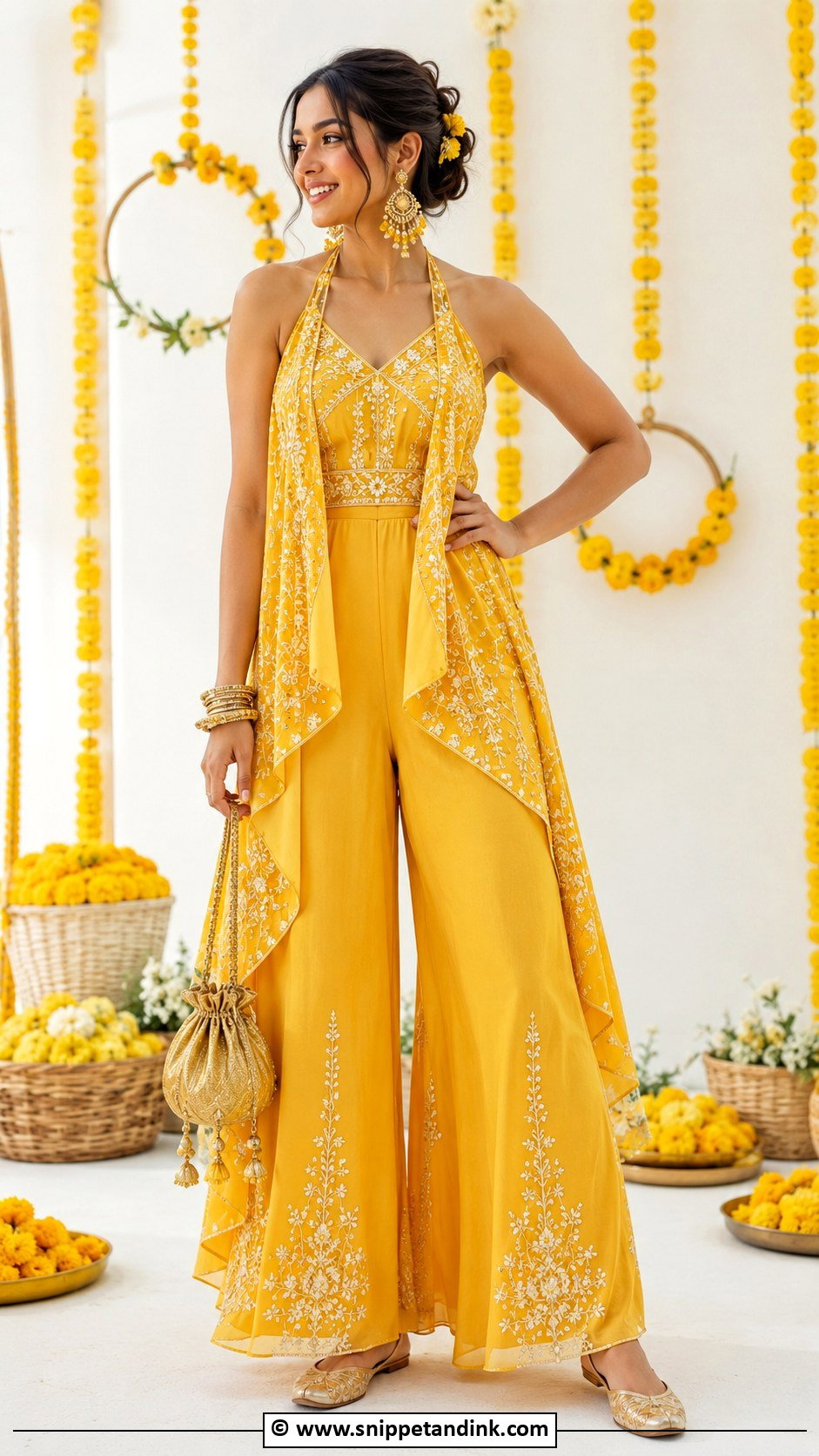
A yellow jumpsuit is the Indo-western option for guests who don’t want to manage a dupatta at all. Wide-leg cuts with an embroidered yoke or a draped overlay feel festive enough for the ceremony. Metallic flats and a small potli complete it. Before you buy, check how you’ll get in and out of it: a back zip on a one-piece outfit is a nuisance at a venue with limited washrooms. Bangles or a floral hair clip add a traditional note if you need one.
22. Chikankari Kurta Haldi Outfit
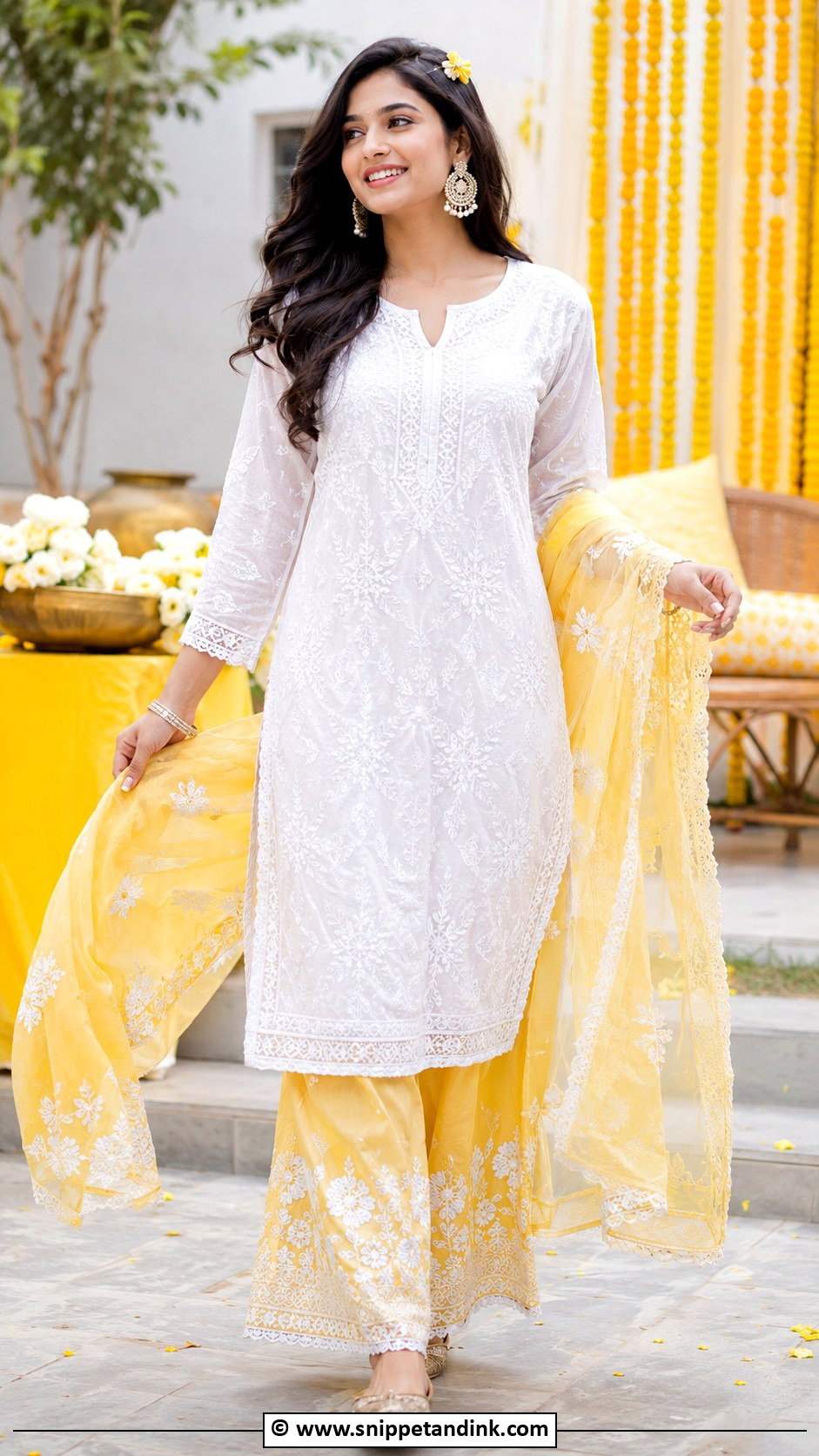
Chikankari is fine white-on-white or tonal hand embroidery from Lucknow, traditionally worked on cotton or mul, and it is about the most breathable thing you can wear to a summer morning Haldi. White, yellow, pastel green or peach kurtas all work over straight pants, palazzos or a sharara. Pearl earrings and juttis keep it simple. Hand chikankari is delicate, so I’d keep it a step back from the turmeric bowl and hand-wash it gently afterward rather than scrubbing.
23. Yellow Cape Set Haldi Outfit
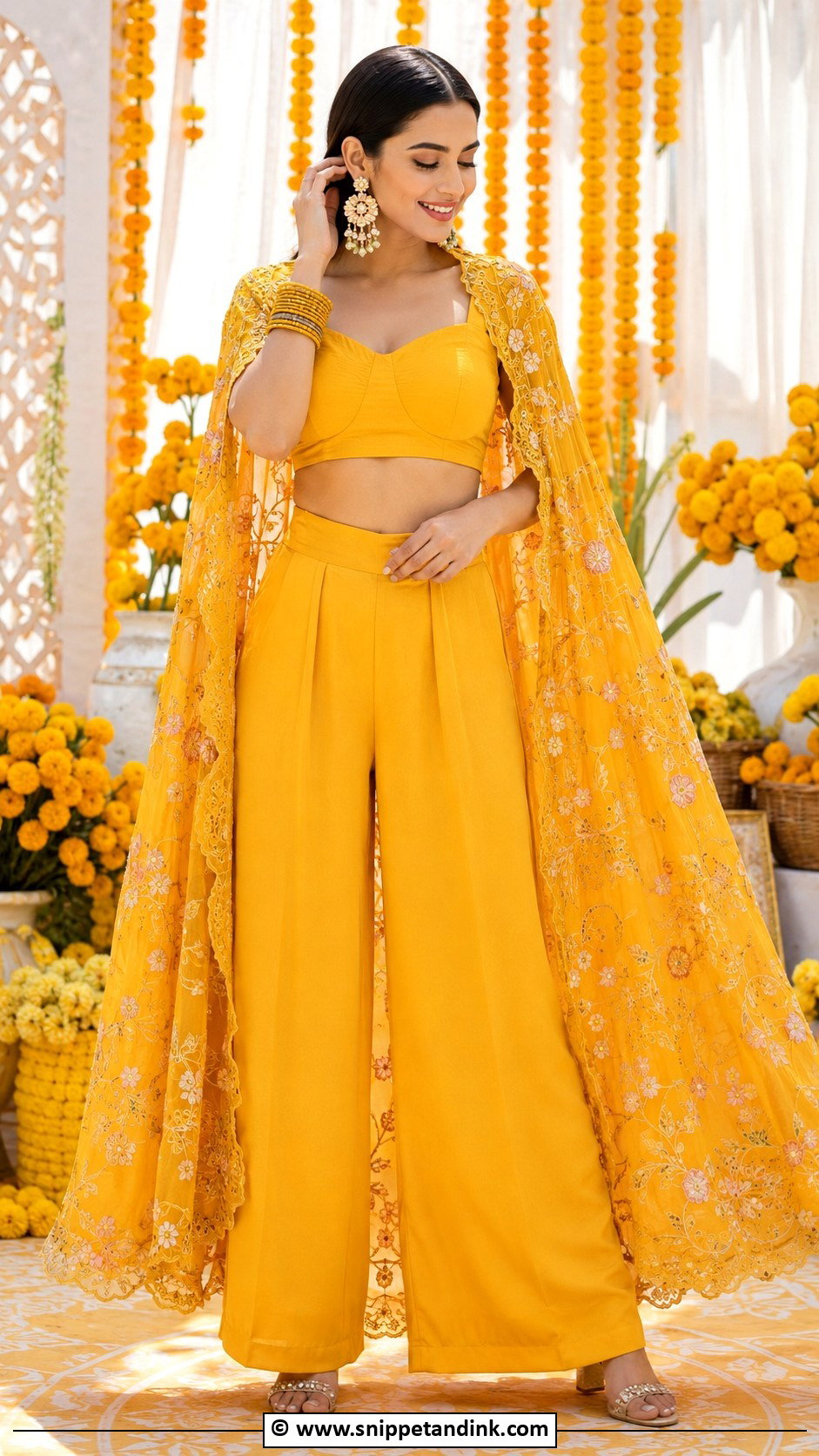
A yellow cape set replaces the dupatta with a cape, usually over a crop top and pants or a skirt. That one change solves the biggest Haldi annoyance, which is constantly adjusting a dupatta while people hug you. Embroidered, tasselled or mirrored capes all look festive. I pair it with sleek hair and statement earrings, since a cape already adds volume at the shoulders. Bridesmaids who plan to dance at the sangeet later often reuse a cape set there too.
24. Organza Saree Haldi Outfit
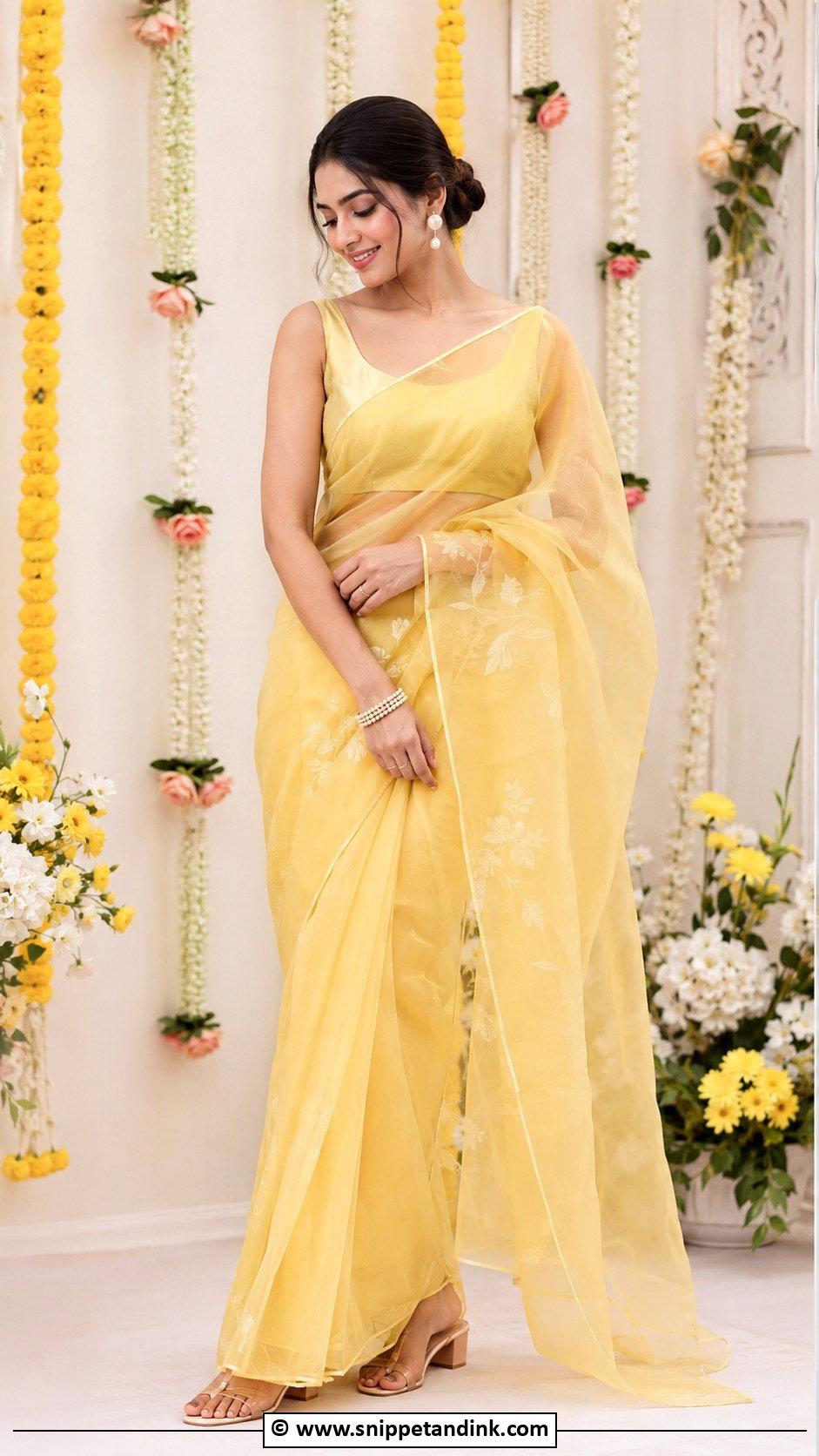
Organza is crisp and slightly sheer, so an organza saree holds its shape around you rather than clinging. That body is the reason I always secure the pleats and pallu with several pins: organza has a habit of springing out of place. Yellow, ivory, peach or floral organza all suit daylight. A fitted blouse and refined jewellery, pearls or small jhumkas, keep it polished. It also wrinkles less visibly than chiffon after hours of sitting, which helps if your photos come at the end of the ceremony.

25. Yellow Peplum Sharara Haldi Outfit
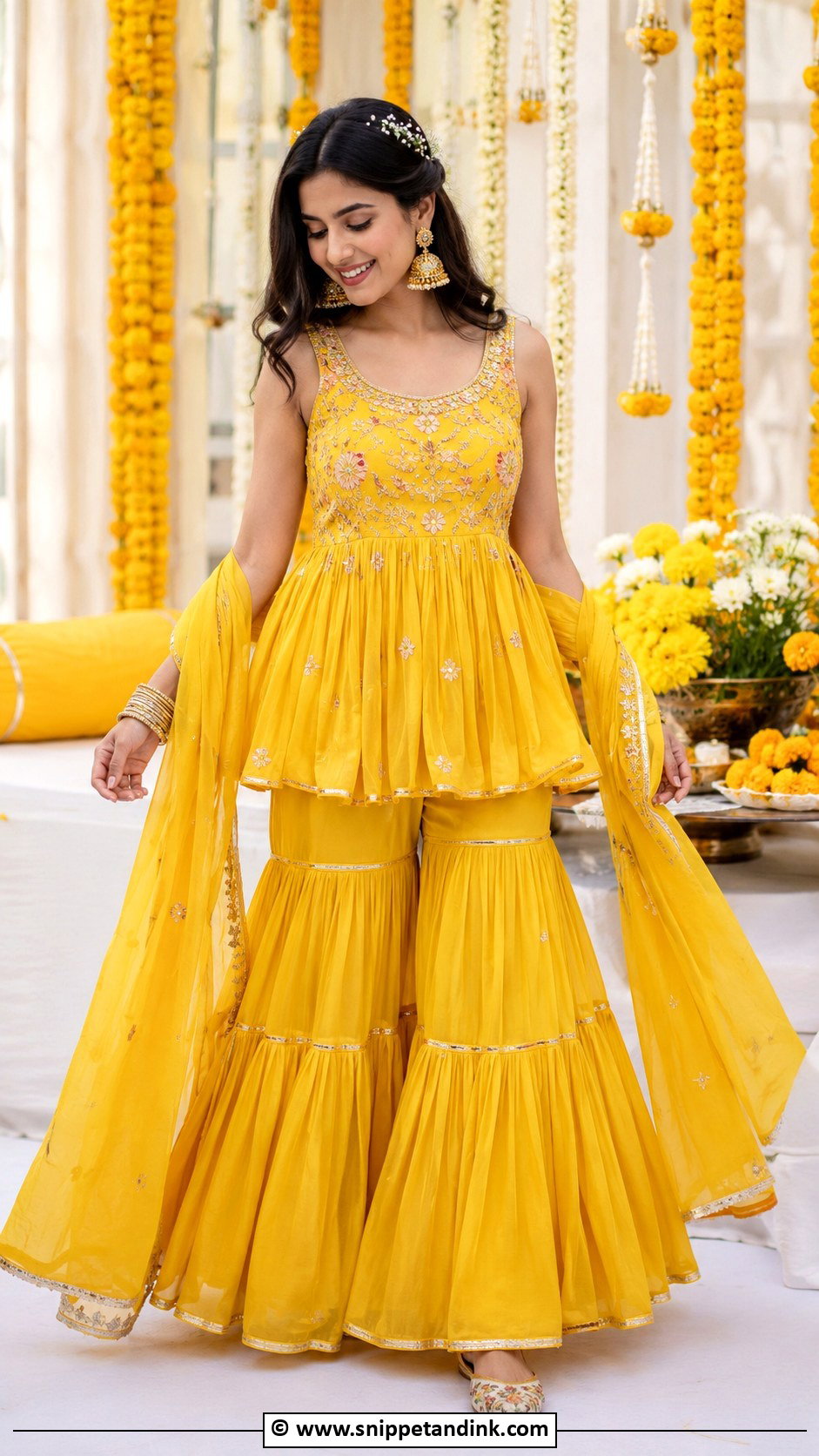
The peplum top in a yellow peplum sharara set gives shape at the waist, and the sharara gives you room everywhere else. I find this set flatters a wide range of body types because it defines without squeezing. Light mirror work, floral embroidery or gota borders all suit it, with a matching or contrast dupatta. Jhumkas and juttis complete it. Check the peplum length when you sit: if it rides up over the hip, go a size up in the top or ask for it to be lengthened.
26. Yellow And Pink Haldi Outfit
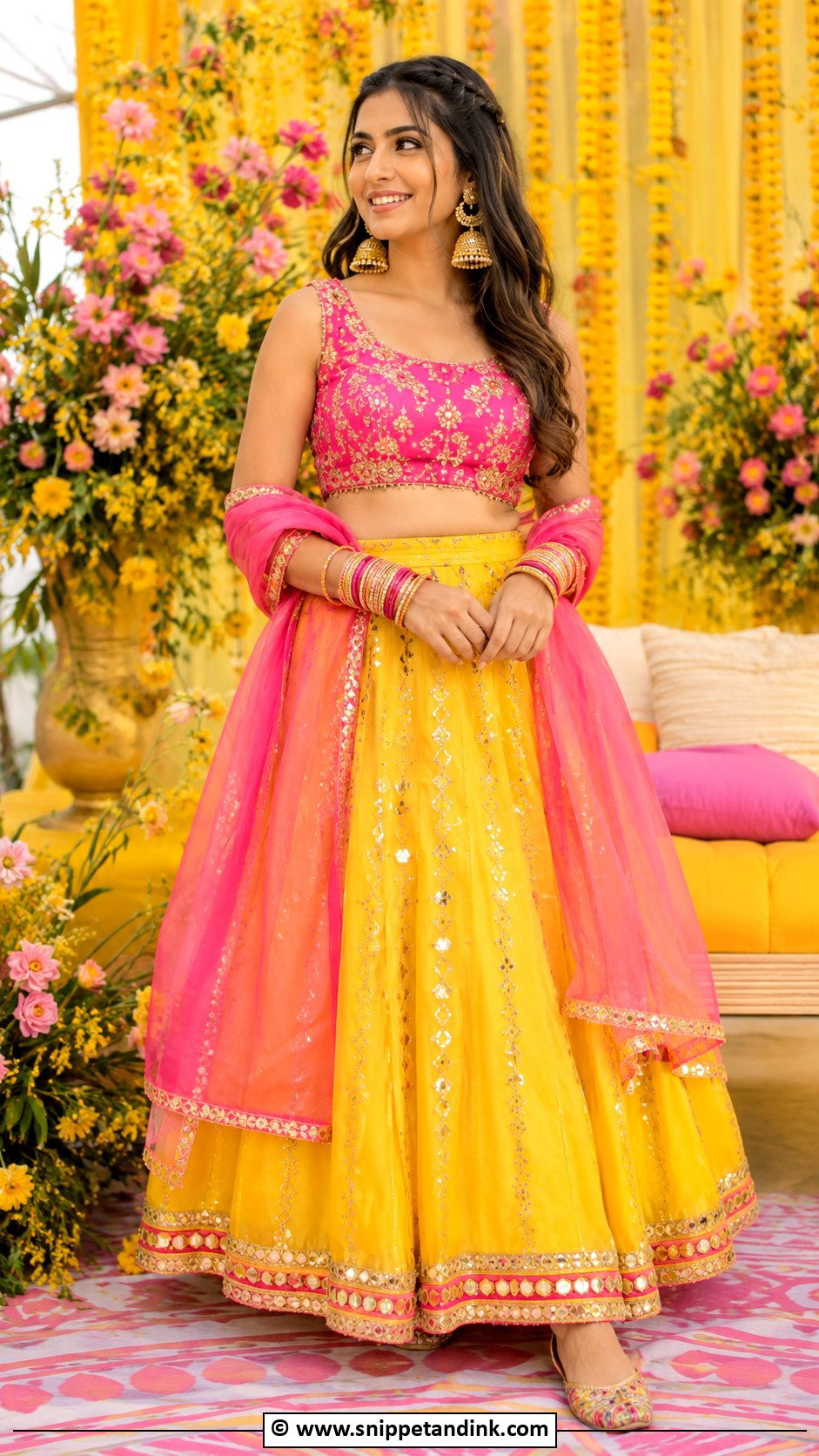
Yellow and pink is the most cheerful combination at a Haldi, and it’s flexible. You can do a yellow lehenga with a pink dupatta, a pink kurta with yellow palazzos, or a two-tone sharara set. Keep the fabrics light so the pairing stays fresh rather than heavy. For a group, I give each bridesmaid the same two colours but let them choose the proportion, which looks coordinated in photos without everyone appearing in uniform.
27. Yellow And White Haldi Outfit
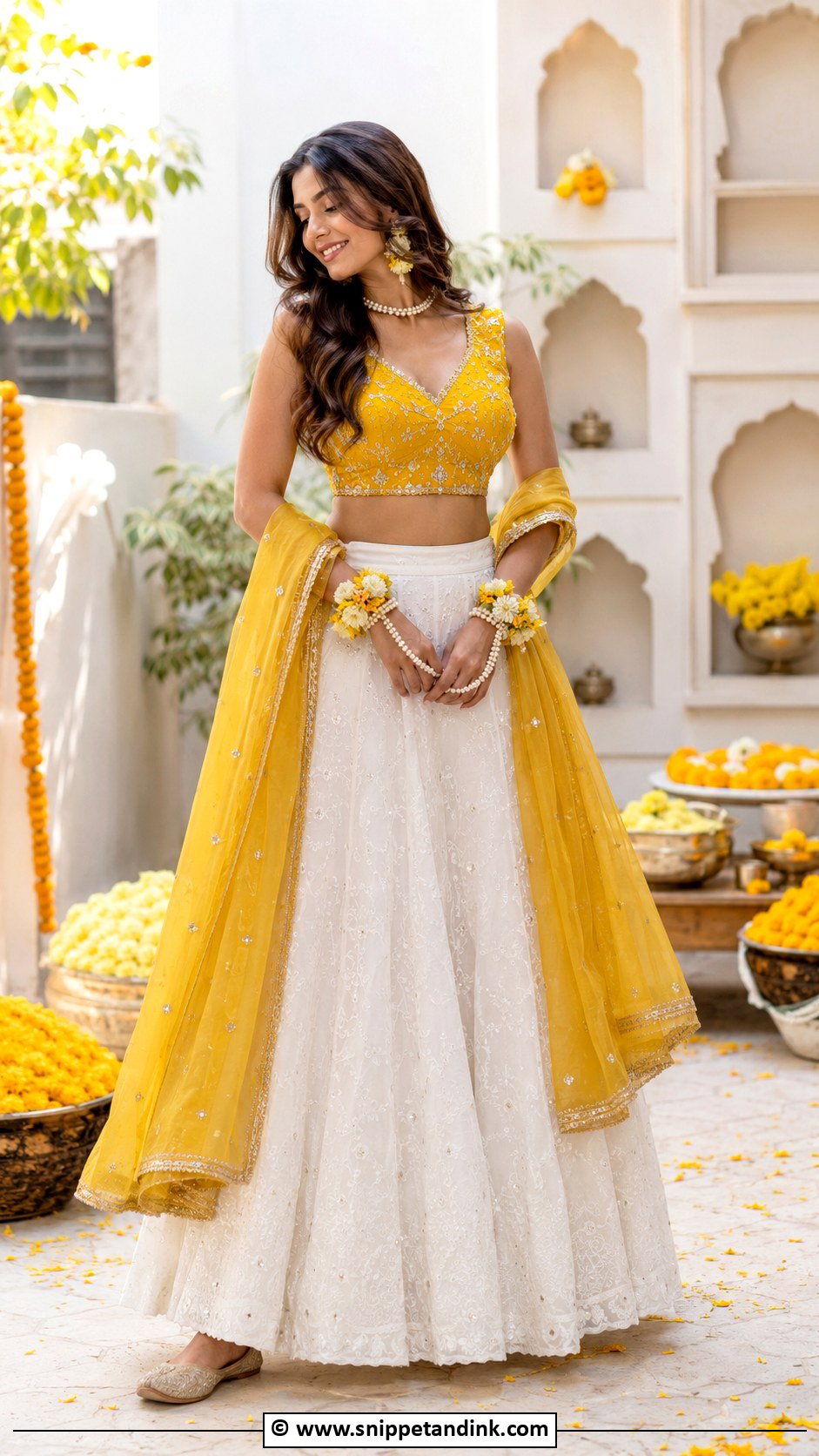
Yellow and white is the cleanest pairing for daylight: the white bounces light onto the face and the yellow keeps you on theme. A white lehenga with a yellow blouse, a yellow kurta with white palazzos, or a white saree with a yellow border all work. Pearls and neutral juttis finish it. Families planning a loose dress code love this one because it’s easy to source. Just accept that the white parts will take some turmeric, and plan your cleaning before the day, not after.
28. Yellow Maxi Dress Haldi Outfit
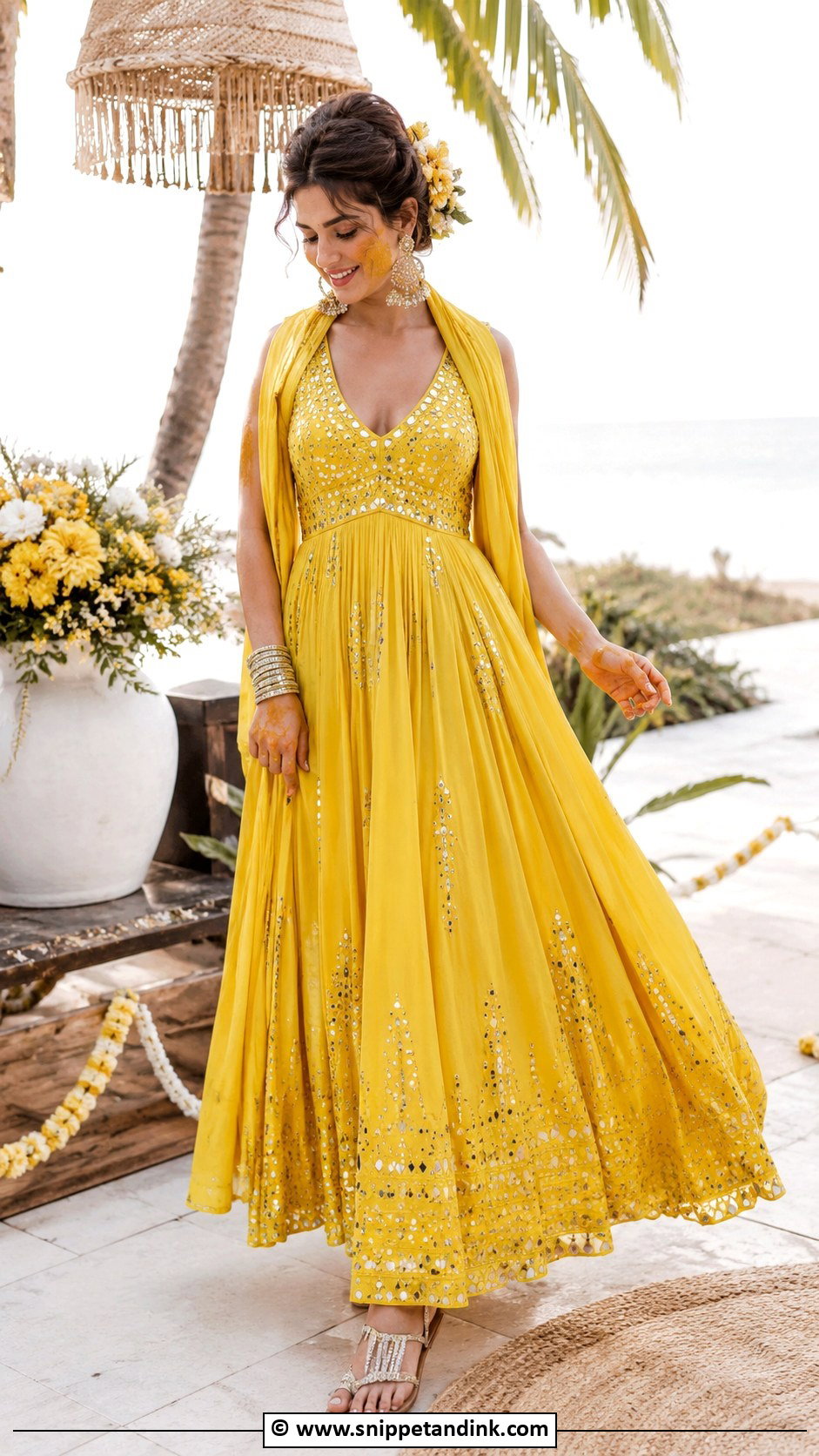
A yellow maxi dress suits a relaxed or destination Haldi, especially by a beach or in a backyard where a lehenga would feel like too much. Mirror work, block print or an embroidered border keeps it from looking like a holiday sundress. Jhumkas, bangles, flat sandals and a flower in the hair make it ceremony-ready. I’d only suggest it where the dress code is clearly casual; at a traditional family Haldi, it can read as underdressed.
29. Haldi Bridesmaid Matching Outfit
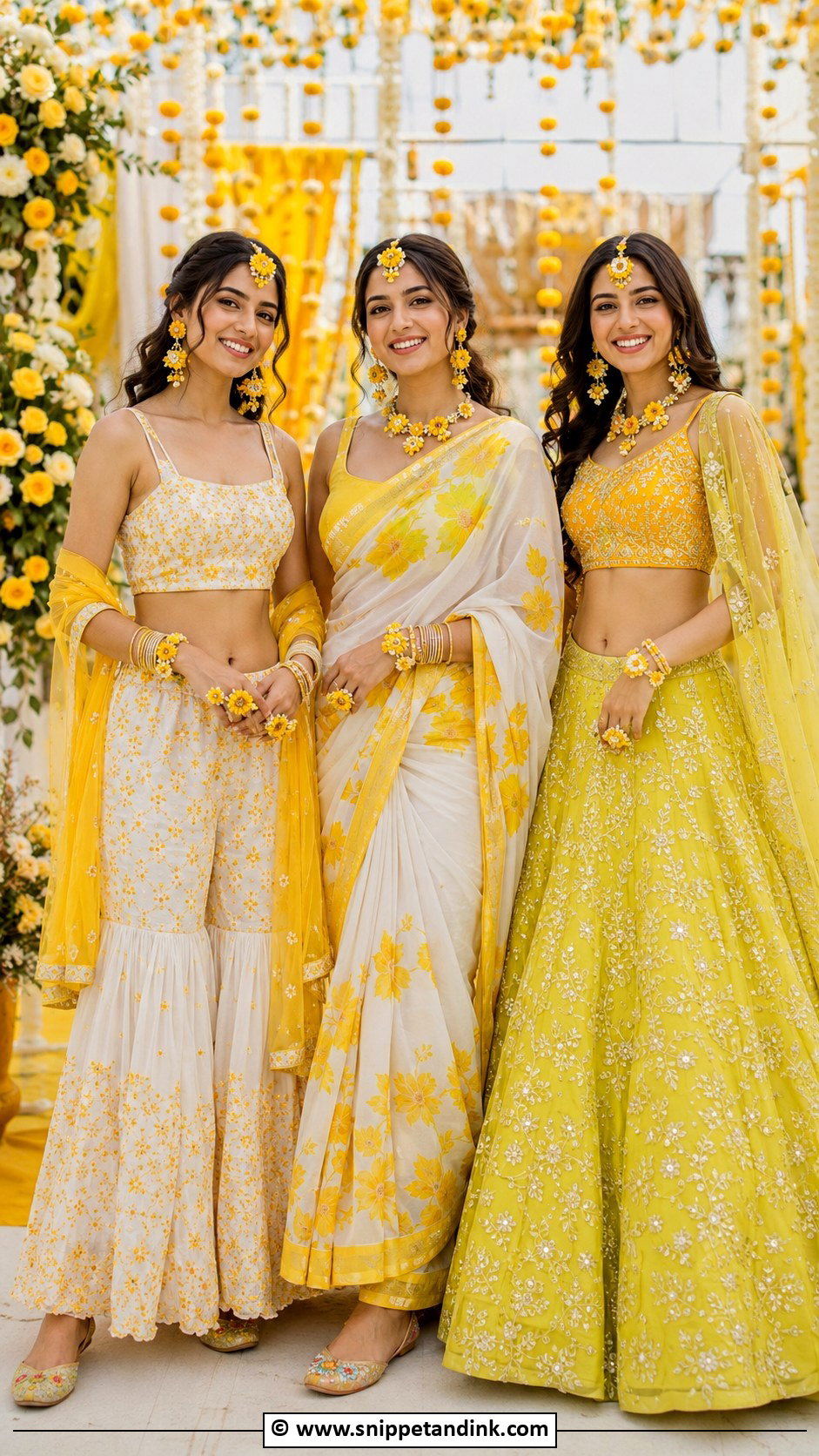
Matching bridesmaid outfits don’t need to be identical to photograph as a group. I give the girls one palette, yellow and white or lime and ivory, and let each choose a saree, sharara or lehenga that suits her body and comfort. Matching accessories, such as the same floral jewellery or bangles, pull it together. It’s far easier than forcing one silhouette on six different bodies, and everyone relaxes more when they’re wearing something they chose.
30. Haldi Bride Statement Outfit
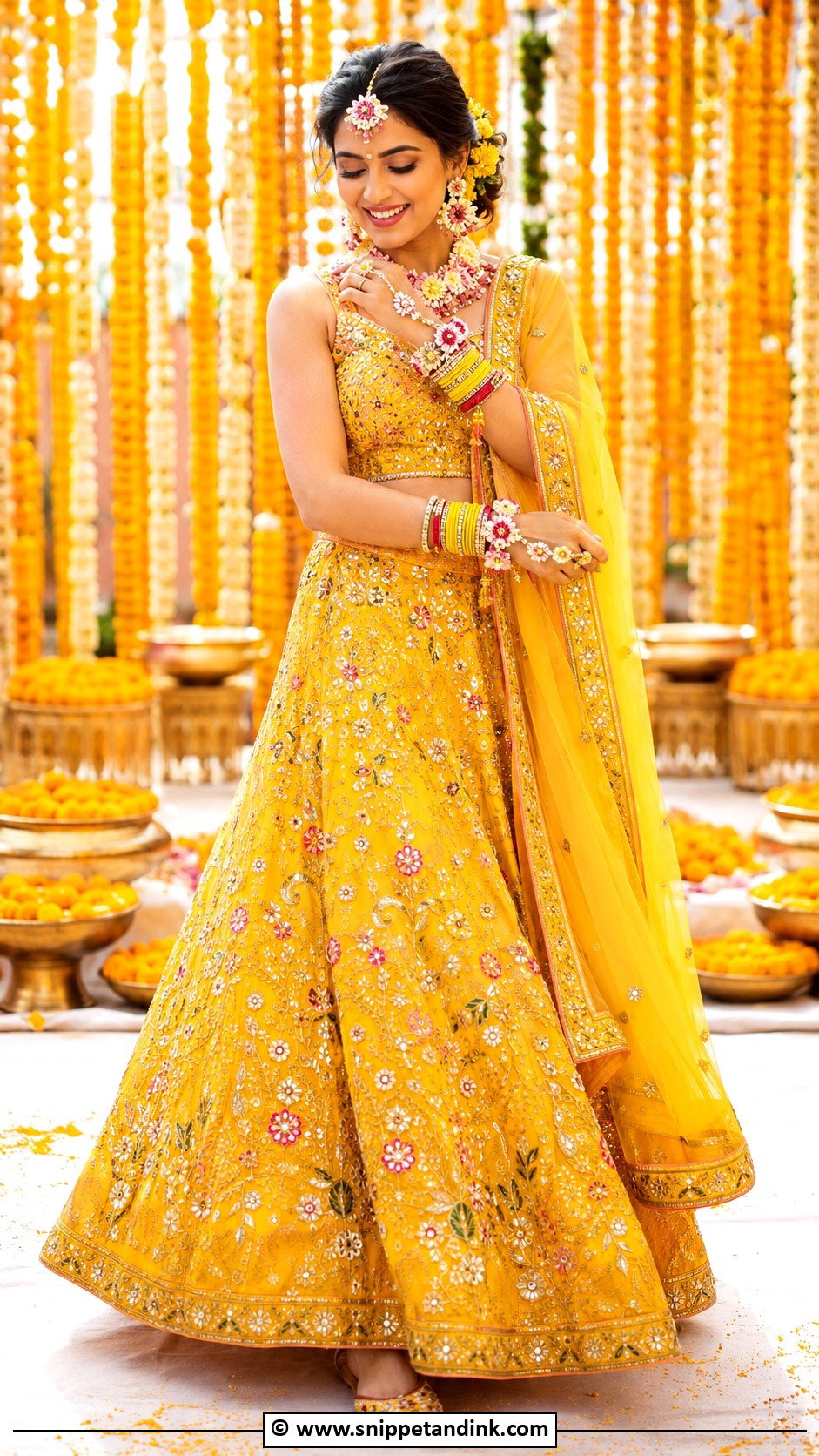
A Haldi bride statement outfit needs to set you apart from the guests while staying light enough to get messy in. A bright yellow lehenga, an ivory and yellow saree, a floral sharara or an embroidered cape set can all do this. Bridal details carry the distinction: floral jewellery, a maang tikka, haath phool and layered bangles. If the dress code asks guests to wear yellow, I often move the bride to ivory, lime, pink or a deeper mango so she stands out in every group shot. Whatever you choose, do one full sit-and-stand test at your fitting.
Getting Haldi Stains Out Once the Music Stops
Act the same day if you can. Turmeric sets as it dries and oxidises, so a stain left overnight is much harder to shift. I pack a small bag for my brides with a butter knife, paper towels and a zip pouch for anything that has to go to the cleaner.
- Let the paste dry, then gently scrape and brush off as much as you can. Rubbing wet paste only spreads it.
- Flush the back of the stain with cold water. Hot water fixes the colour into the fibre.
- For washable cotton, work a little liquid dish soap in to lift the oil, rinse, and dry the piece in direct sun. Sunlight fades turmeric noticeably on white and light cotton.
- Don’t panic if a soapy stain turns reddish. Turmeric changes colour with alkaline cleaners; it usually returns to yellow on rinsing and fades in the sun.
- For silk, organza, embroidered or beaded outfits, don’t experiment at home. Take it to a dry cleaner within a day or two and tell them it is turmeric with oil.
Shoes, Hair and Dupatta Pins for a Floor-Seated Morning
Most Haldi problems I’m called in to fix aren’t about the outfit at all. They’re about the bits around it. Shoes come off for many rituals, so I prefer juttis or slip-on flats you can step out of without bending. Hair should be up or half up and secured, because the paste always finds loose strands, and turmeric in light or highlighted hair can leave a yellow tint that takes a few washes to fade.
Pin every dupatta in at least two places, at the shoulder and at the back waist or blouse, using safety pins hidden under the fold. Wear a fitted slip or shorts under sheer skirts, since you’ll be photographed from low angles while seated. And bring an old shawl or cotton dupatta to throw over your outfit while the paste is applied, then remove it for the photos.
Dress for the Paste, the Floor and the Photos
Every outfit above can work; the right one depends on where you’ll be sitting and how close to the paste you’ll get. Brides can carry the statement with floral jewellery and richer fabric, while bridesmaids and guests do well in shararas, sarees, kurta sets, co ords or pastel lehengas. Yellow remains the anchor, but ivory, lime, orange, pink, green and florals all belong at a modern Haldi. Prioritise breathable fabric, pinned drapes, flat shoes and jewellery that won’t snag, and you’ll spend the morning enjoying the ritual instead of fixing your clothes.
You'll Like These Ideas:




Leave a Reply