
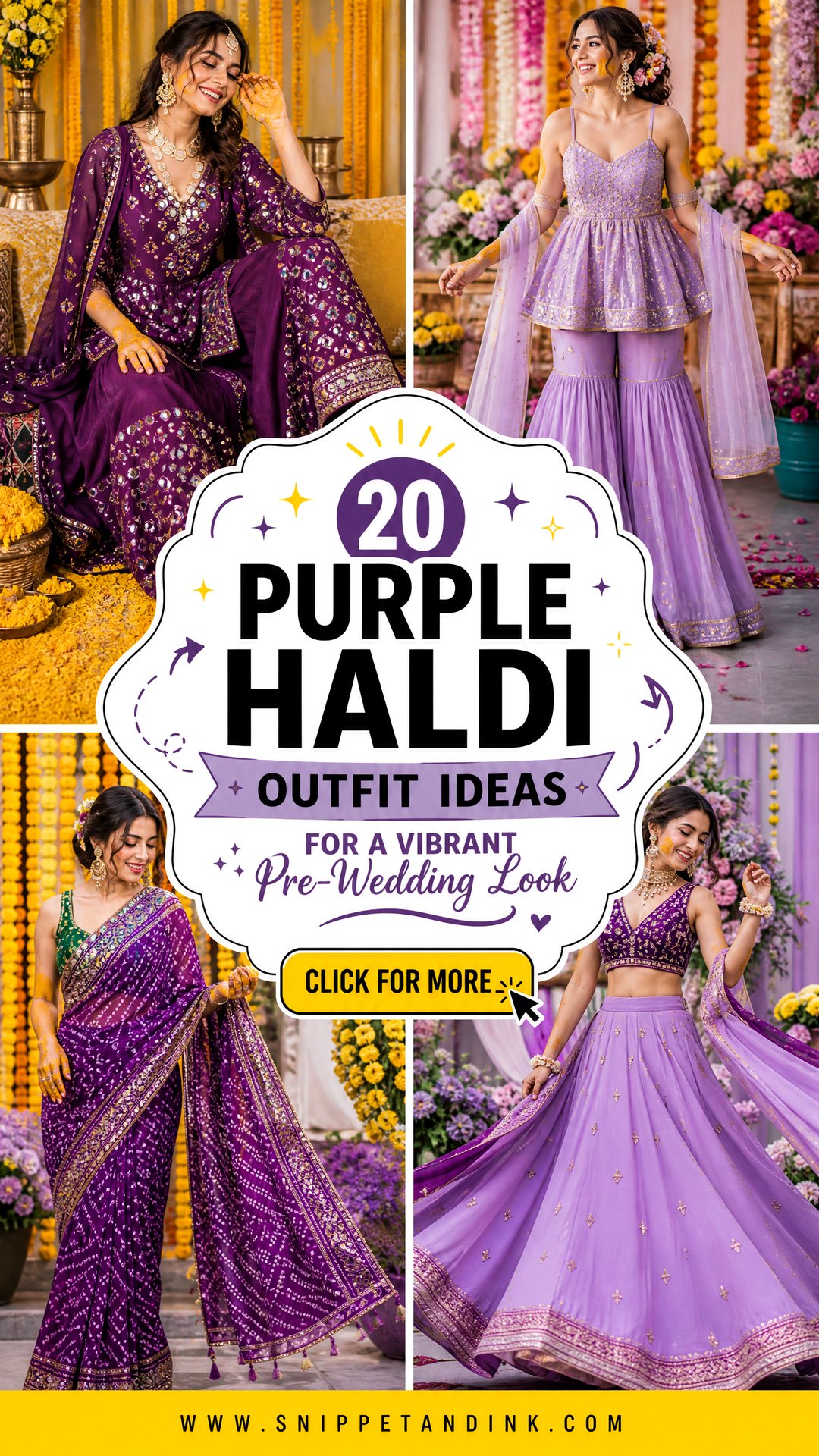
Haldi has always meant yellow, and I love seeing purple turn up beside it. Lavender, lilac, plum and violet all sit well against marigolds and turmeric, and they give brides, sisters, bridesmaids and guests a way to stand out without fighting the decor. What matters most at a haldi isn’t the shade, though. It’s that you can sit cross-legged, get paste on your arms, dance in the sun and still look put together. So below I’ve styled twenty purple outfits for the day, from lehengas and kurta sets to fusion pieces, with the fabric, jewellery and footwear choices I’d make for each.
Dress for the Paste, Not Only the Photos
Turmeric stains almost everything it touches, and at a haldi it touches a lot. Before I pick a fabric or a shade with someone, I ask one question: will you be the one getting the paste? The bride and groom, and often siblings and cousins, end up covered on the face, arms, feet and sometimes everywhere. Guests usually just get a smudge on the cheek.
If the paste is coming for you
- Choose cotton, cotton-silk blends or georgette over pure silk and zari. Silk holds turmeric stains stubbornly and metallic work can tarnish.
- Go short-sleeved or elbow-length so relatives can apply paste on the arms without smearing the sleeves.
- Prefer prints and mid-tones to pale lavender; a darker plum or a floral print hides marks.
- Treat it as an outfit you might not wear again, and save the heirloom dupatta for another function.
If you’re a guest
You can go lighter and more delicate, but sit a step back from the bride during the ritual. Families often end with a playful round of smearing, and white pants or chikankari won’t survive it.
1. Purple Lehenga With Yellow Dupatta
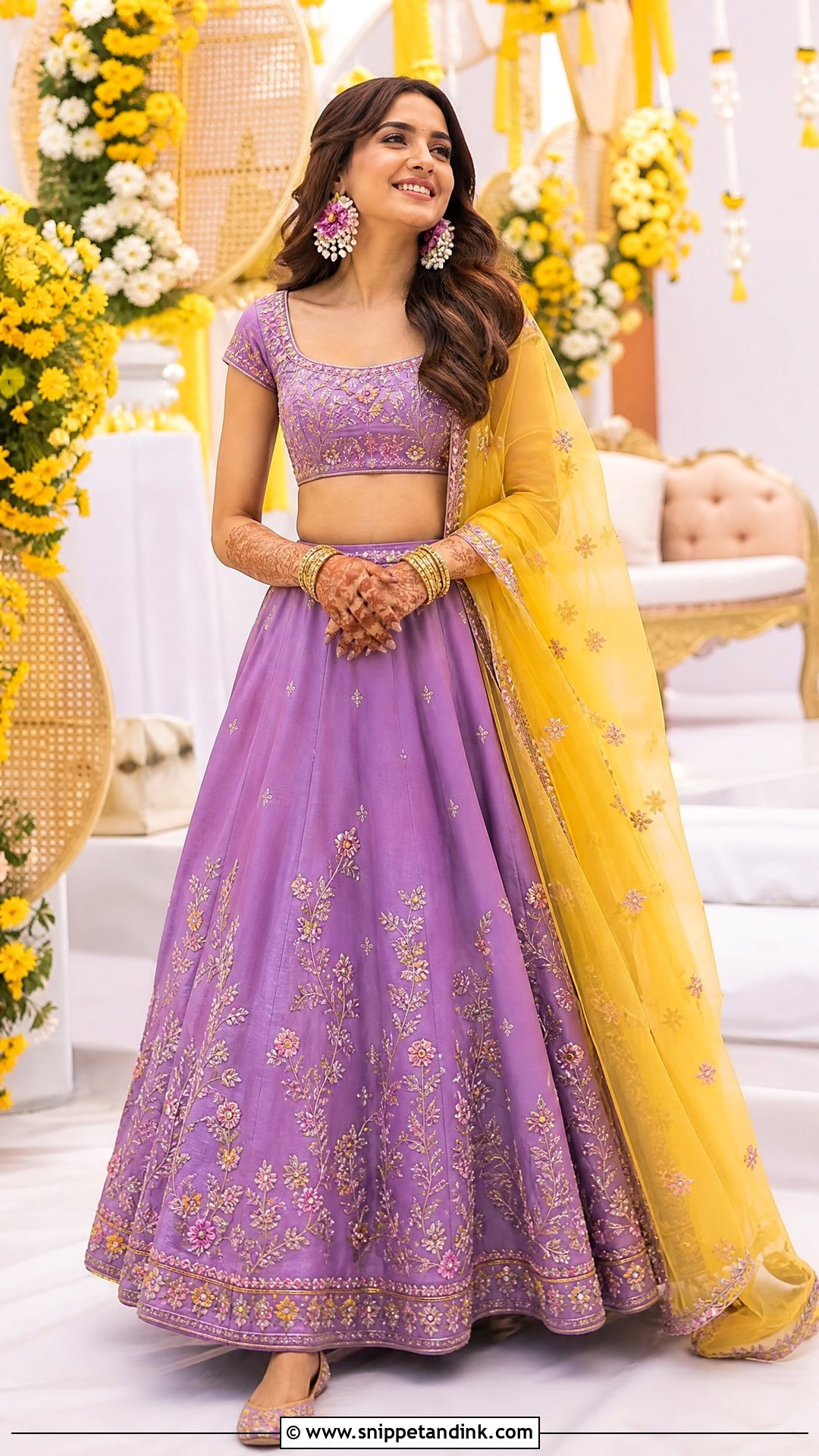
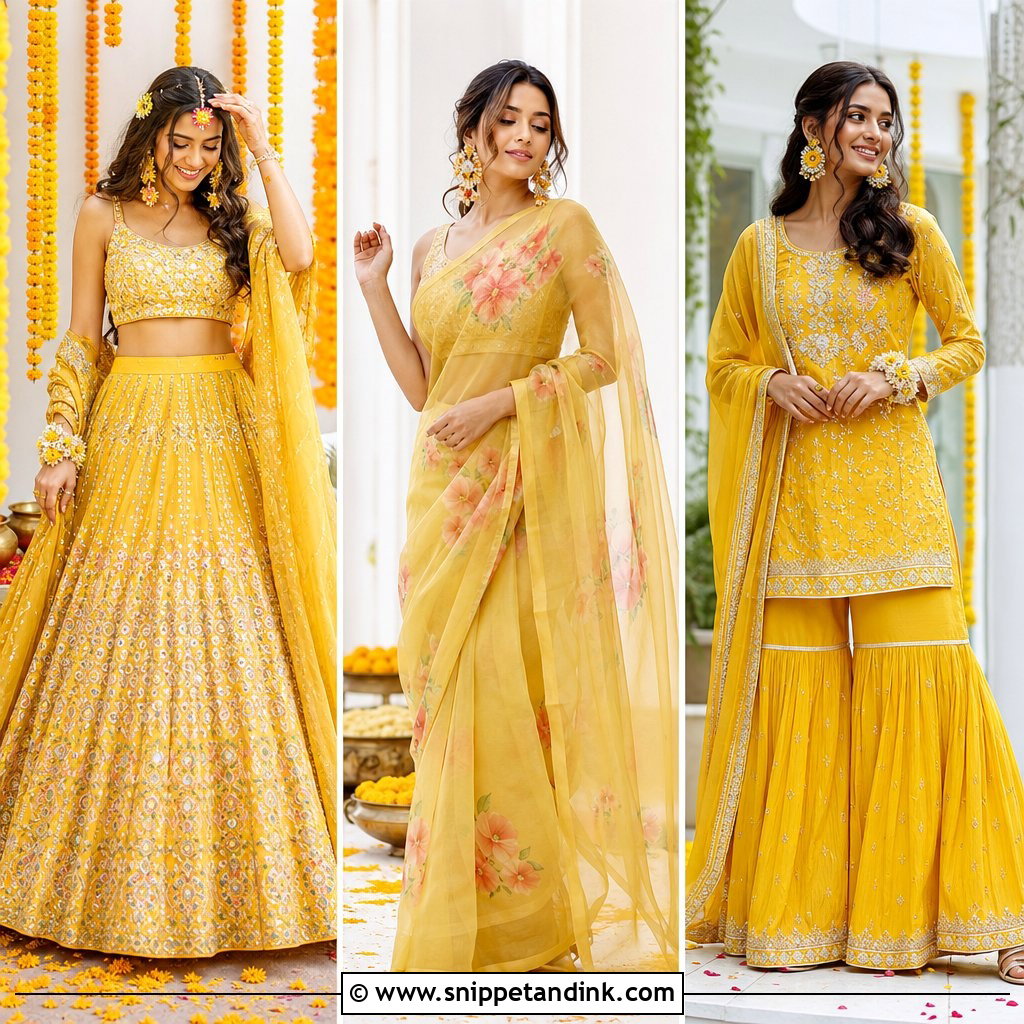
Purple and yellow are opposites on the colour wheel, which is why a purple lehenga with a yellow dupatta looks so bright in daytime photos. I’d pick georgette or cotton-silk with light floral embroidery; heavy zari only gets ruined by turmeric. Keep the blouse purple and pin the yellow dupatta over one shoulder so both hands are free when relatives come at you with paste. Floral earrings, slim gold bangles and embroidered juttis finish it, with a low braided bun and small yellow flowers. Waterproof mascara is a must.
2. Lavender Sharara With Floral Jewelry
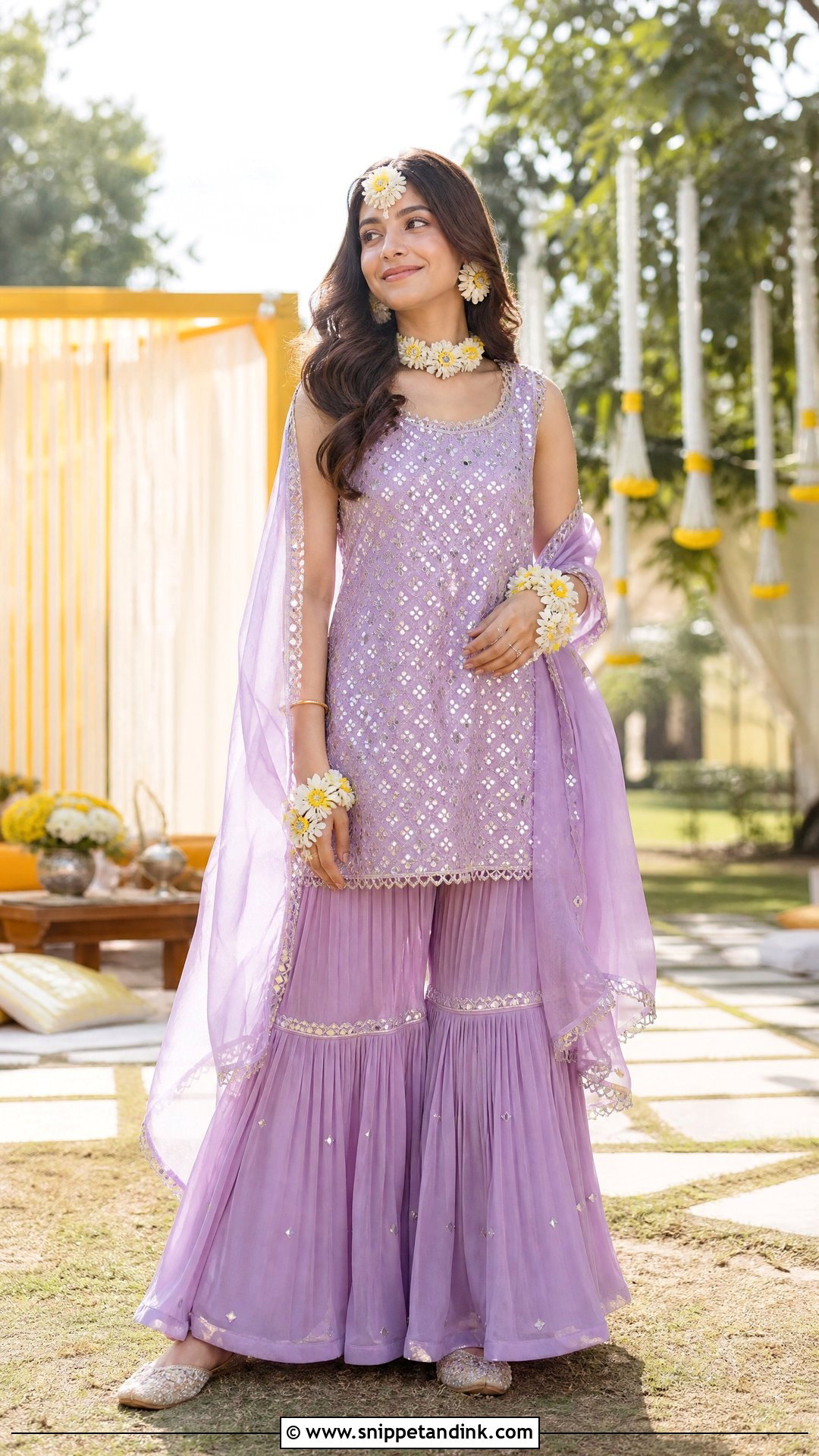
Soft lavender in a sharara set feels light enough for a hot morning. A short kurti with a little mirror or thread work over wide sharara pants lets you sit on the floor without fuss. A sheer lavender dupatta with a simple border keeps it airy. I’d go for floral jewellery in white, yellow and pale purple, including a small maang tikka. Flat juttis beat heels on a mattress-and-cushion setup. Loose waves or a half-up style and a dewy, simple face.
3. Purple Anarkali With Gold Juttis
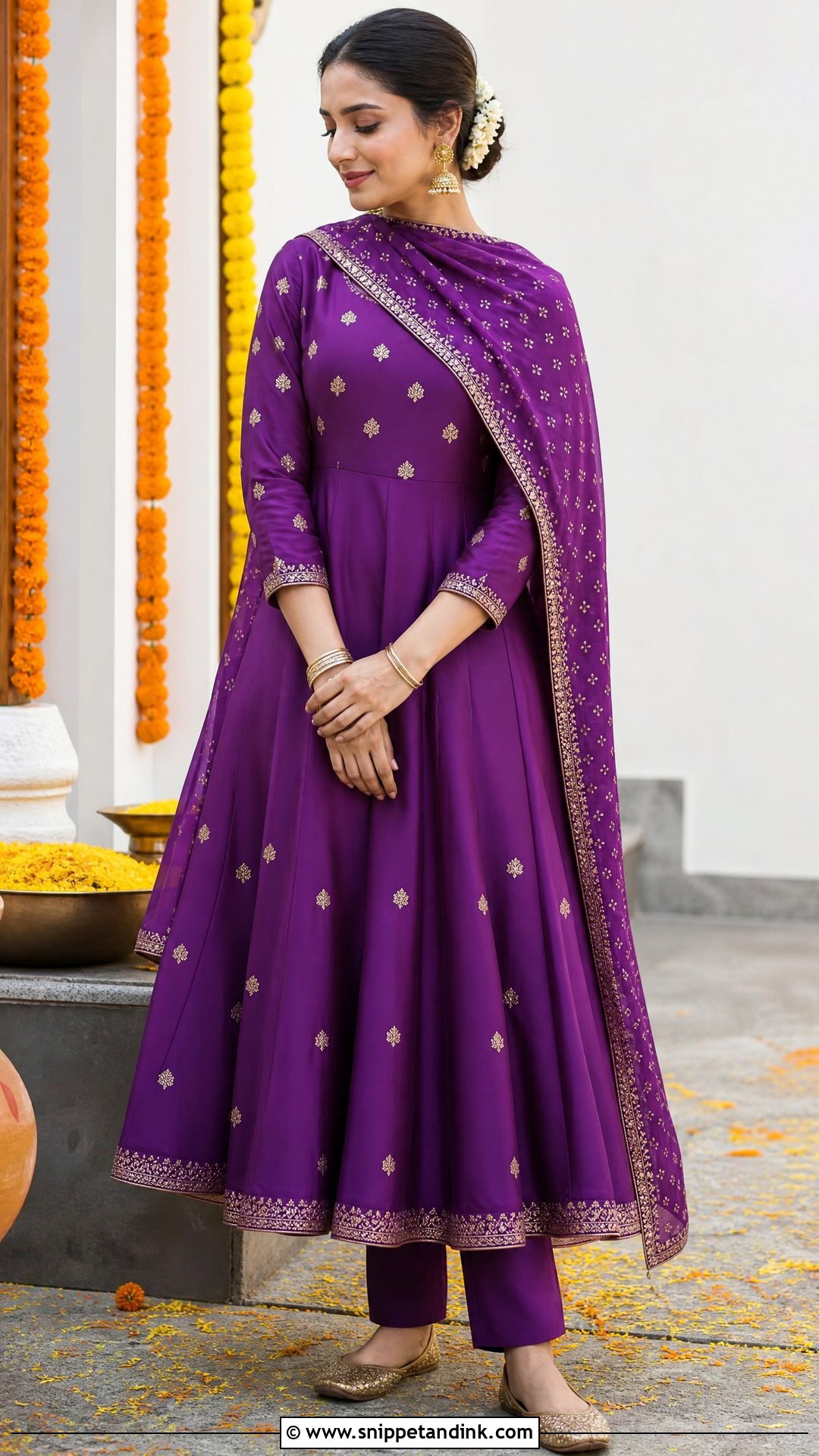
If you want coverage and comfort, a flowing purple Anarkali in cotton-silk or georgette is hard to beat. A fitted bodice and an easy flare look graceful, and small gold motifs or a gota border give enough shine. The one thing I check on Anarkalis is the skirt width: very full kalis pool around you when you sit on the floor, and that’s where the turmeric bowl ends up. Pin the dupatta at the shoulder, add gold juttis, medium jhumkas and a soft ponytail or braid.
4. Lilac Saree With Yellow Blouse
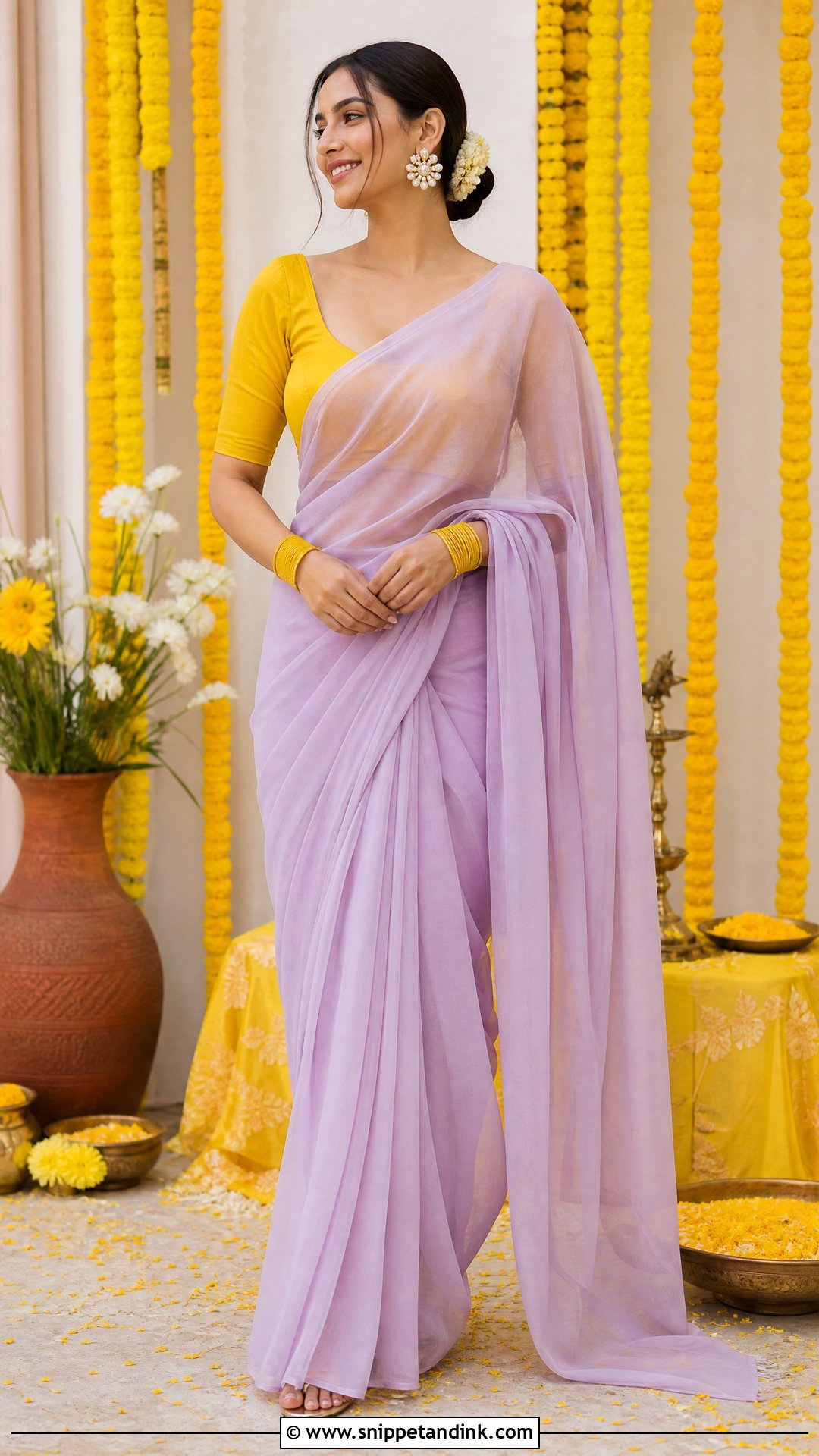
A lilac saree with a yellow blouse brings the haldi yellow right up to the face, where it glows in photographs. Organza, chiffon or soft cotton stay manageable. Sarees are the outfit I see adjusted most at haldis, so pin the pleats firmly at the waist and the pallu at the shoulder before you leave the room. A sleeveless or short-sleeved blouse leaves the arms free for the paste. Pearl-and-floral earrings, yellow bangles and a low bun with white flowers suit a classic drape.
5. Purple Salwar Suit With Lace Dupatta
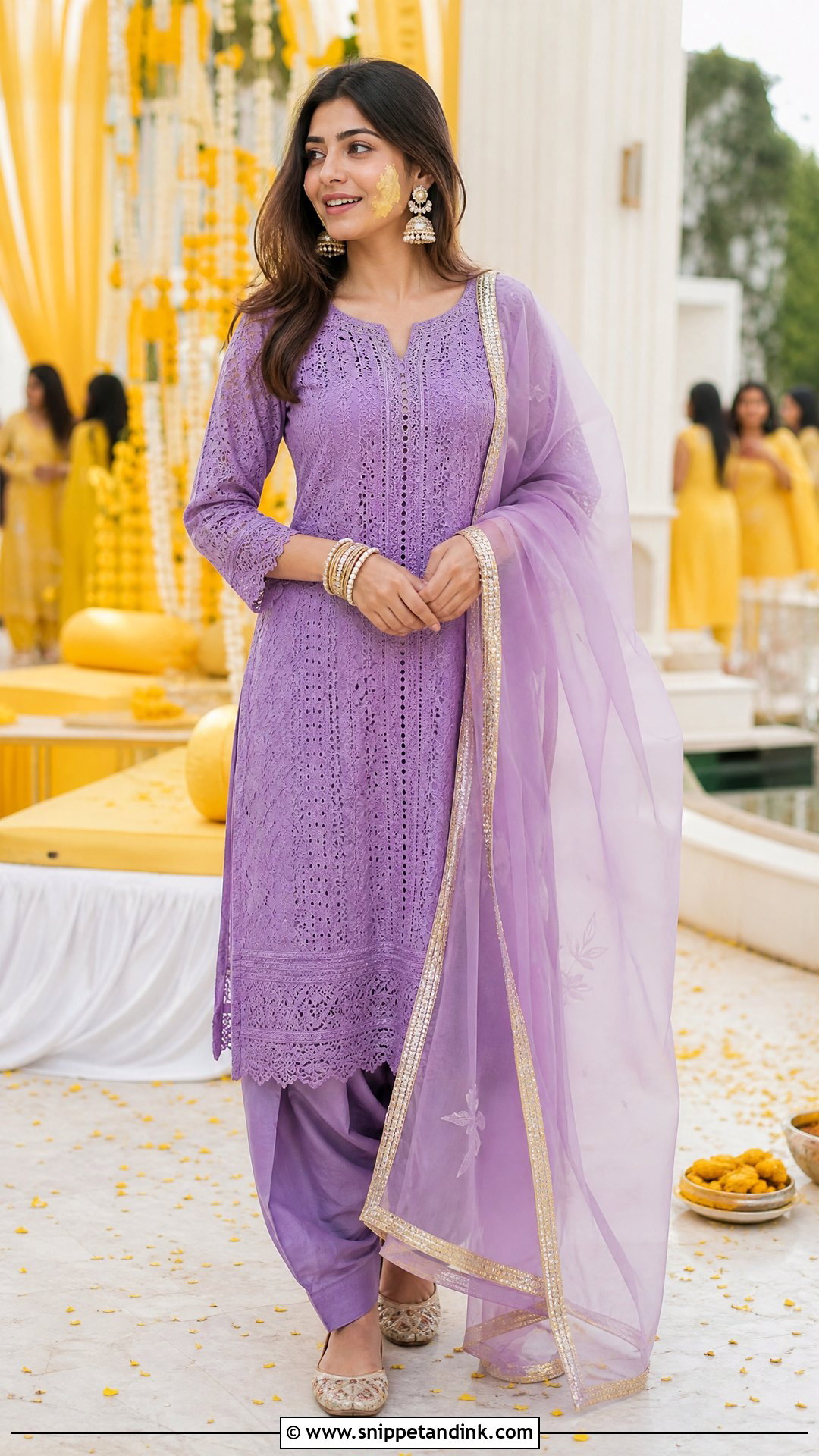
A purple salwar suit is simple and works for every age in the family. A straight or gently flared kameez over comfortable salwar lets you kneel and stand easily. I’d avoid heavy embroidery on the front, since that’s where paste lands if it’s being applied to you. An organza dupatta with a white or gold lace edge gives some detail. Pearl jhumkas, a few bangles and flat juttis, with a low braid rather than open hair if you’ll be in the middle of the action.
6. Plum Palazzo Set With Mirror Work
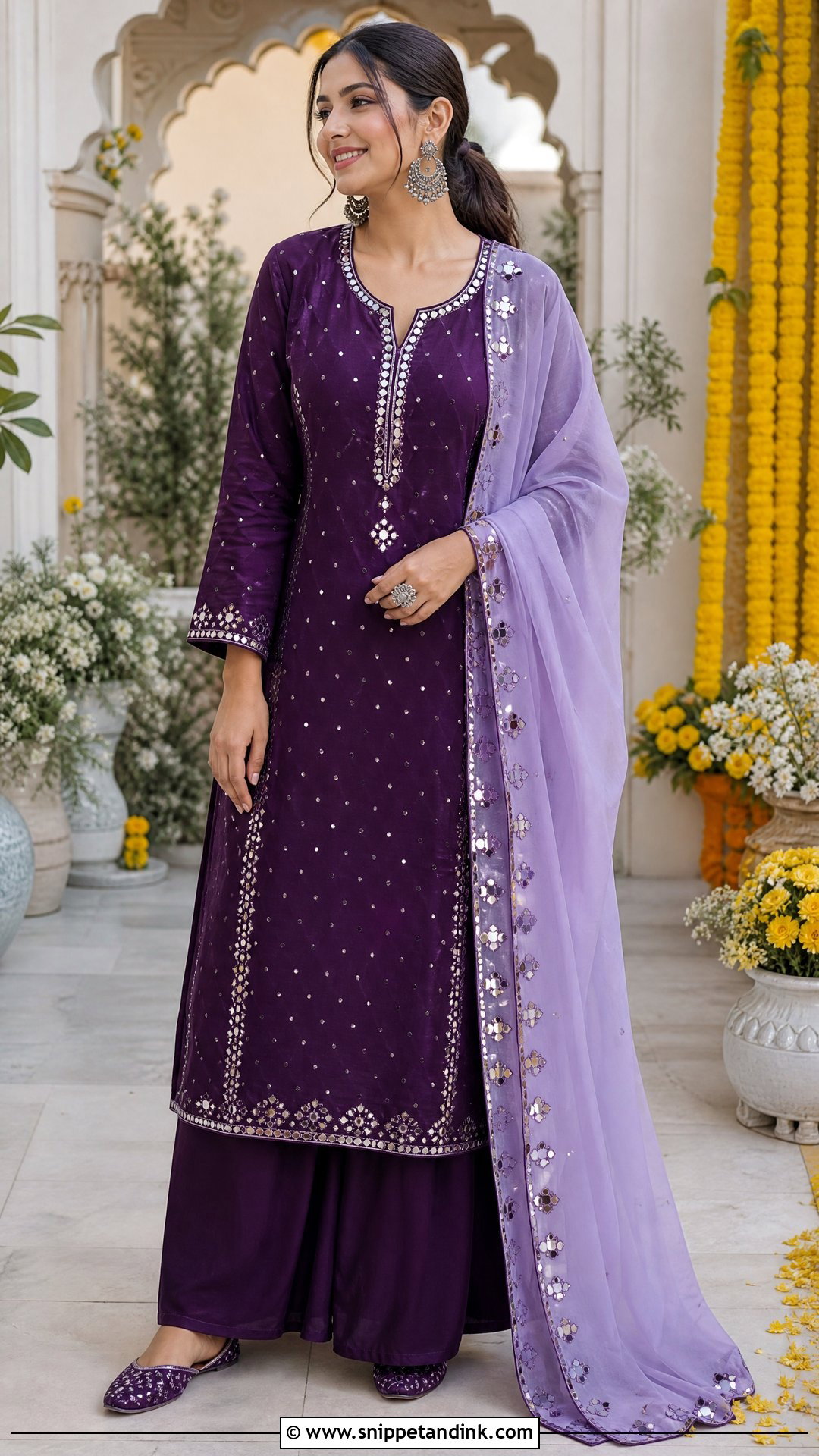
Deep plum in a palazzo set looks rich without feeling serious. A short mirror-work kurta with a proper lining (mirror backs can scratch otherwise) over high-waisted, wide-leg palazzos is easy to dance in. Mirror work throws light everywhere, so keep accessories light: oxidised silver earrings, one ring and plain purple juttis. A centre-parted low ponytail and plum eyeliner tie the colour together. It suits a sister or close friend who wants to look festive but not bridal.
7. Purple Gharara With Gota Work
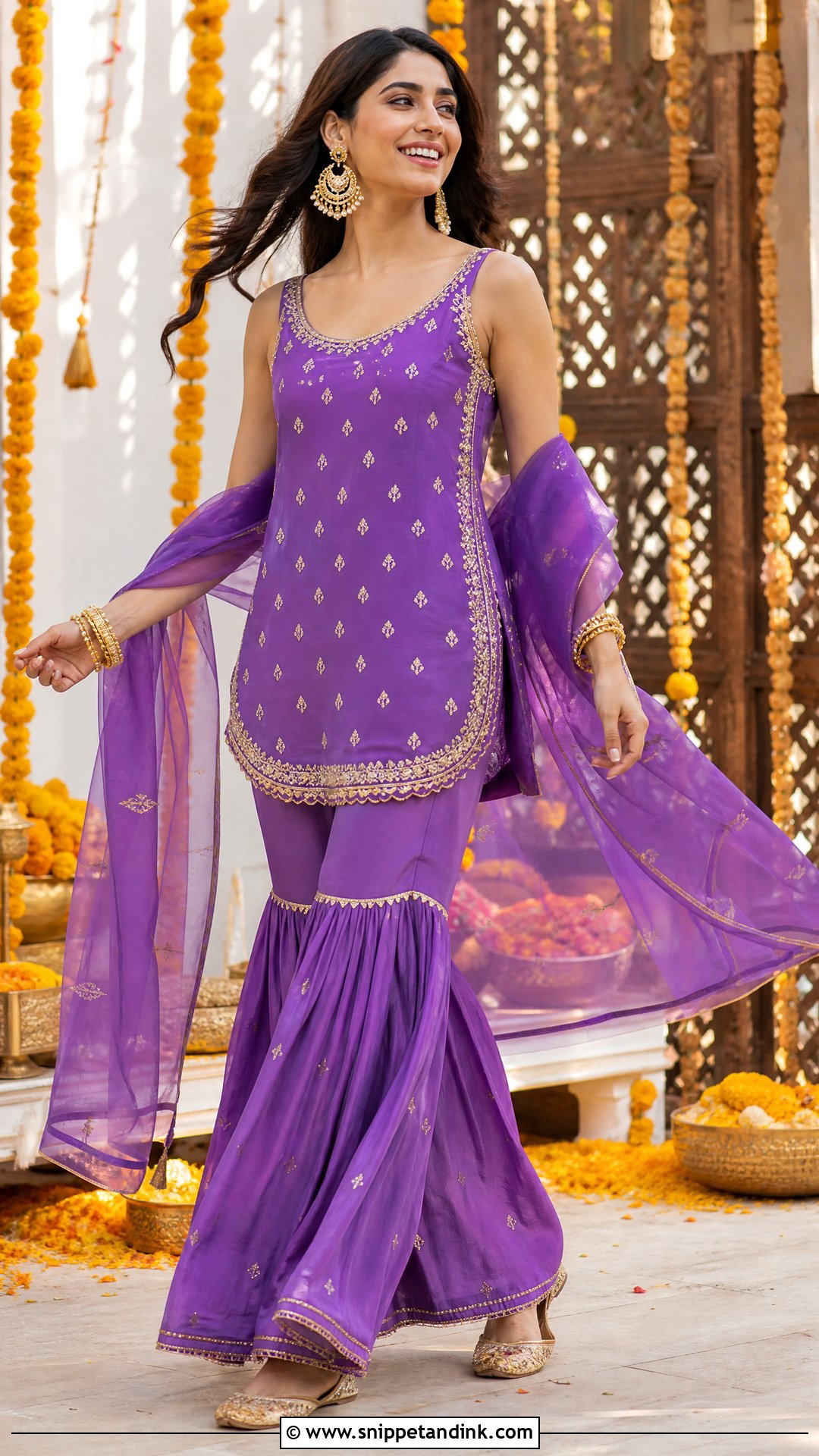
Gharara pants have that gathered flare at the knee, so the kurti should end just above it or you hide the best part. Gold gota along the neckline, cuffs and hem gives sparkle on its own, which means jewellery can stay simple: chandbalis and gold bangles. Gota is metallic ribbon and can tarnish when it gets wet turmeric on it, so I’d keep this one for guests rather than the person being smeared. A net or organza dupatta, cushioned juttis and a braided ponytail with small flowers finish it.
8. Violet Kurta With Dhoti Pants
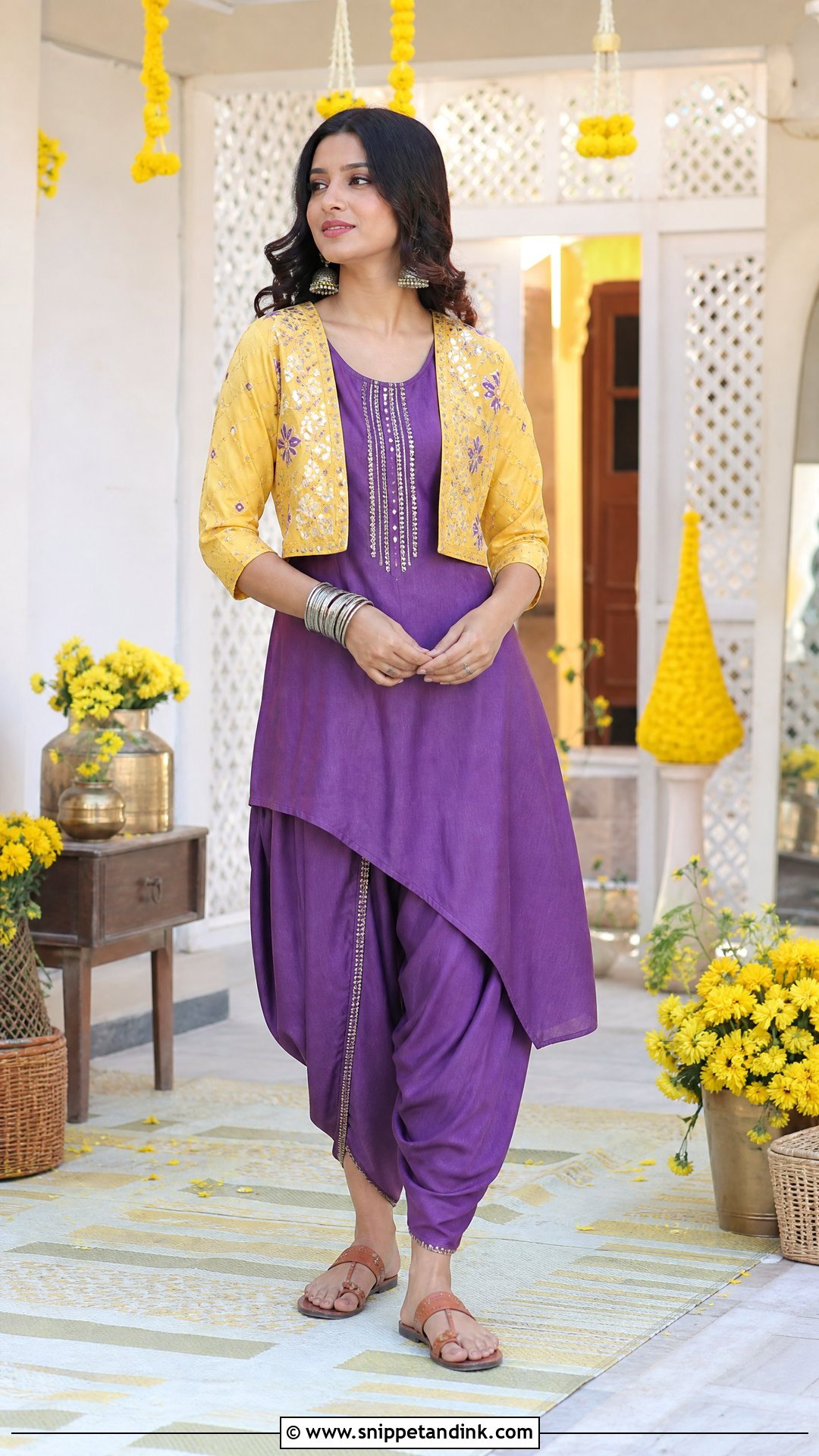
A violet kurta with dhoti pants is traditional with a twist, and pre-stitched dhotis save you any draping. An asymmetric kurta with light embroidery or scattered mirrors keeps it current. Add a cropped yellow or green jacket for contrast, or a narrow purple dupatta. Kolhapuri sandals and oxidised jhumkas give it an earthy feel. It’s one of the most comfortable options here for an outdoor haldi, and a loose braid shows off the neckline.
9. Purple Floral Lehenga With Crop Top
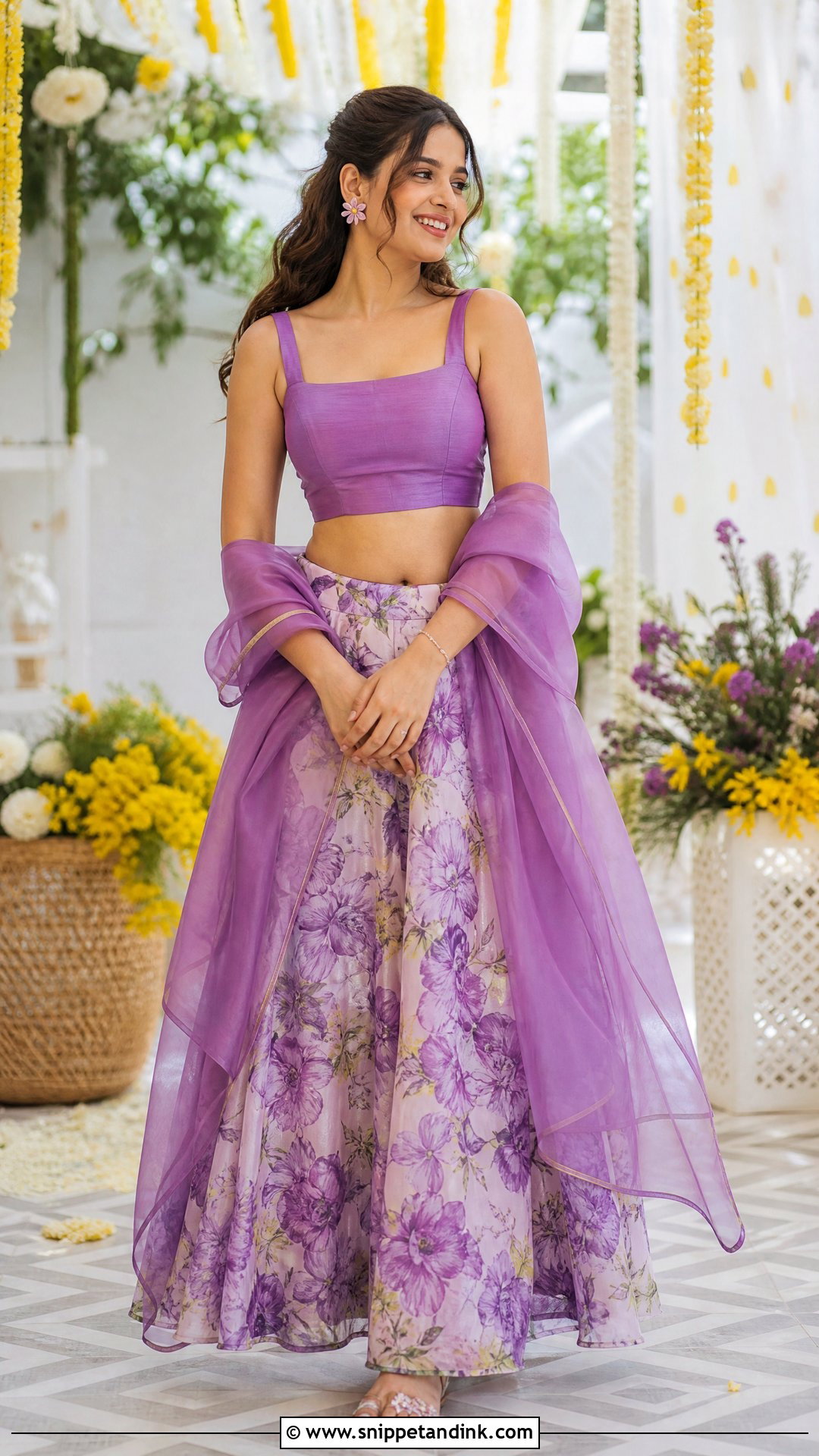
A floral printed lehenga hides turmeric splashes far better than a solid colour, which is a practical reason I like it for haldi. Choose a purple skirt with yellow, pink, white or green flowers, a solid purple crop top and a plain organza dupatta to calm the print. Floral studs or small jhumkas and flat embroidered sandals are enough for a bridesmaid or guest. A bride can make it more her own with a floral maang tikka, bigger earrings and a more detailed blouse. Half-up waves keep hair under control.
10. Purple Cape Set With Wide-Leg Pants
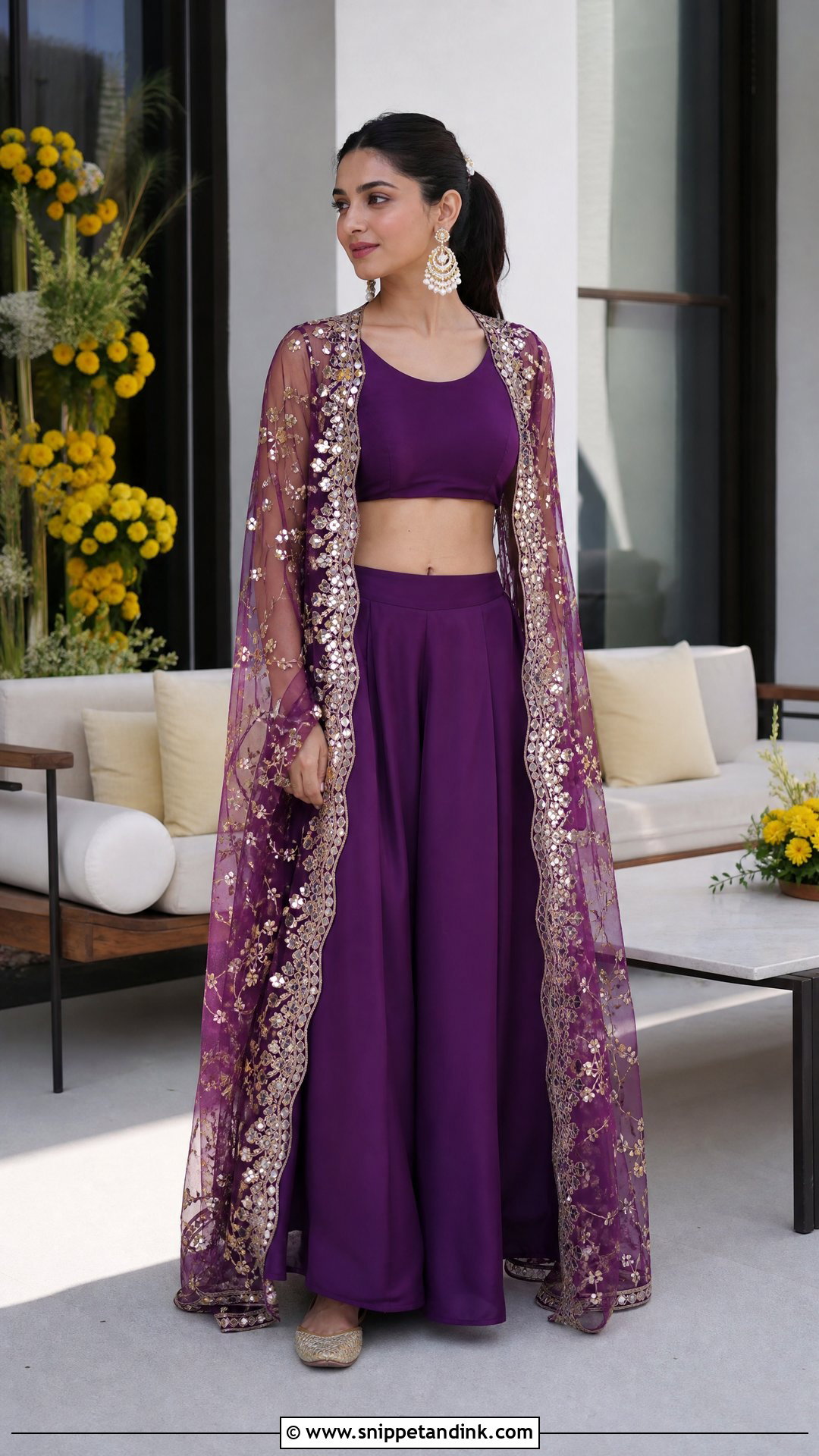
For a modern take, a sheer purple cape over a crop top and wide-leg pants gives coverage and movement without a dupatta to manage. Georgette or crepe pants keep the line fluid. Floral or mirror embroidery on the cape edge is plenty of decoration, so stick to statement earrings and a slim bracelet. Capes catch on chair backs and bangles, so I’d keep the jewellery smooth. Metallic flats or low block heels and a sleek ponytail finish a look that suits fusion-loving guests.
11. Lavender Peplum Top With Sharara
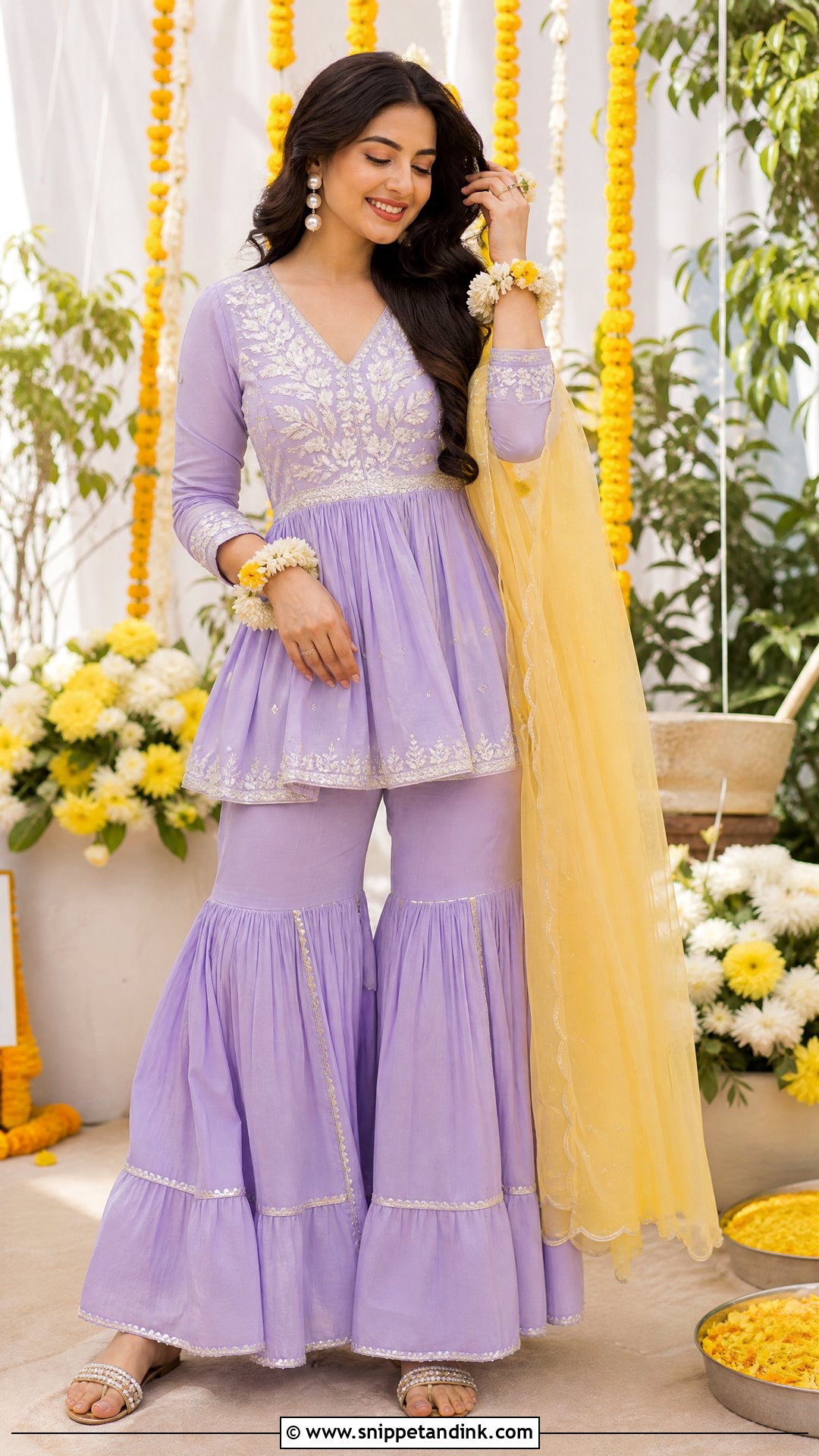
A peplum top is flattering because it nips in at the waist then flares over the hips, and with a matching lavender sharara it gives a balanced shape. Light embroidery at the neck and peplum edge is enough. You choose the mood with the dupatta: pale yellow for contrast, lavender for a soft monochrome. Pearl earrings, floral bangles and embellished flats, with a side braid threaded with tiny flowers. It works for the bride, her sister or a close friend.
12. Purple Bandhani Saree With Green Blouse
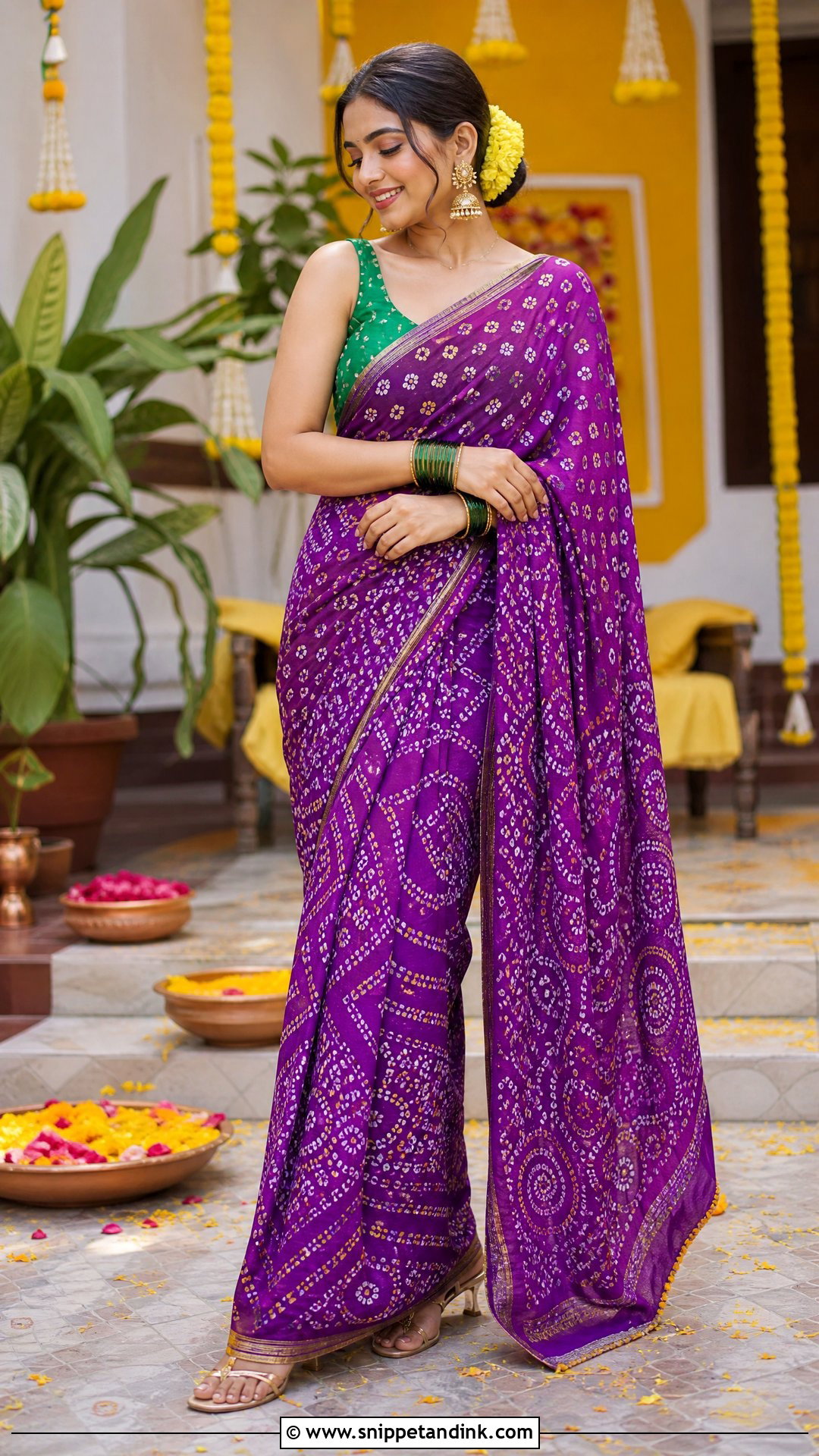
Bandhani is tie-dyed by hand, and a purple bandhani saree with a green blouse brings real textile character to a haldi. The green stands out against yellow decor. Natural bandhani dyes can bleed when wet, so be careful with wet paste and water games in this one, and wash it separately afterwards. A lighter saree with a shorter pallu is easier for active rituals. Gold jhumkas, green glass bangles and a low bun with yellow flowers, plus kohl and a small bindi.
13. Purple Jacket Lehenga With Yellow Skirt
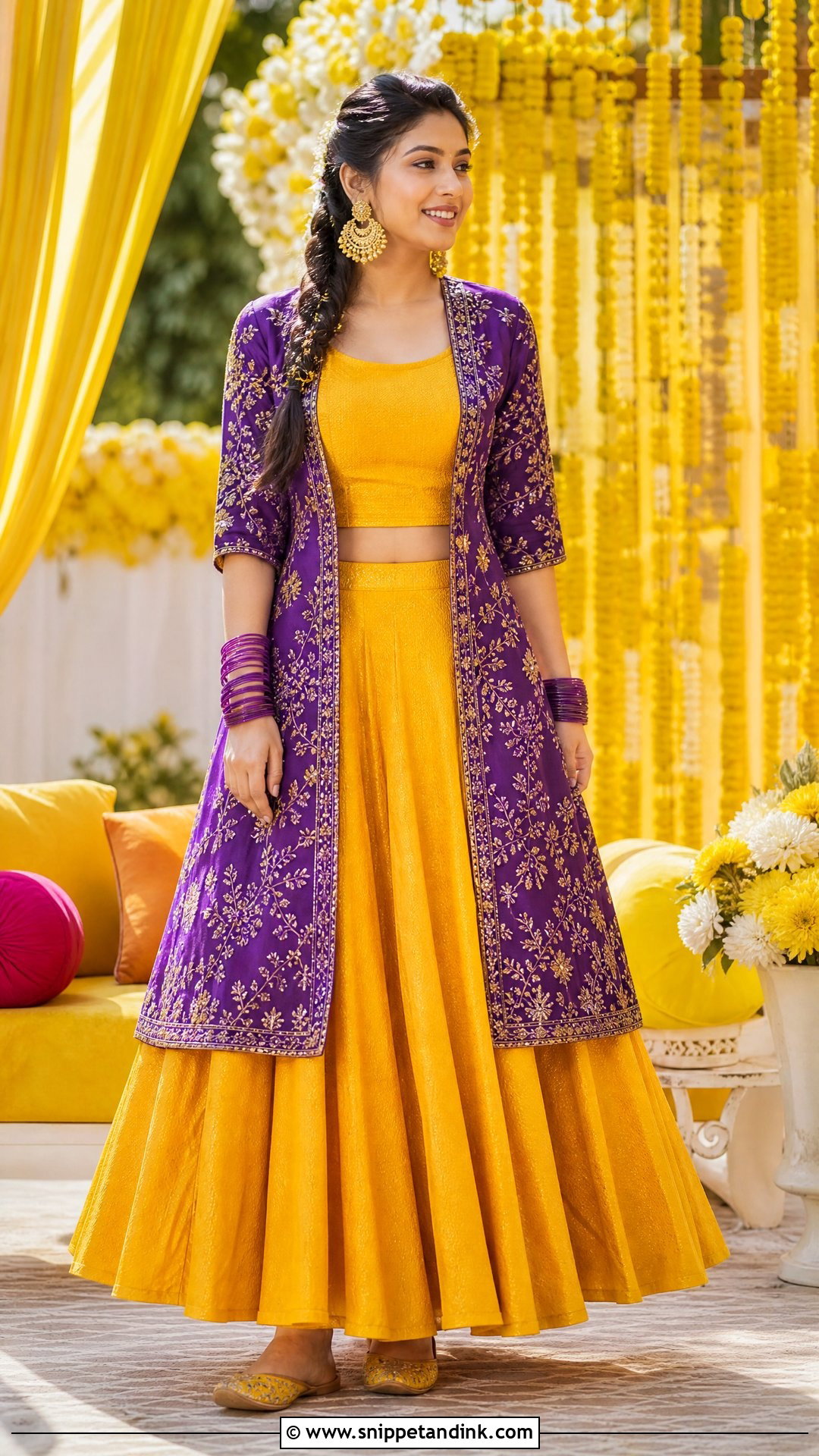
Here the purple sits on top: a knee-length embroidered jacket over a marigold or lemon-yellow skirt and blouse. Worn open, it shows both colours and replaces the dupatta, which is one less thing to hold. Keep the jacket’s embroidery controlled, a little mirror work or gota, because the layers already add volume. Gold earrings, purple bangles and yellow juttis tie it together. A sleek braid or low ponytail stops the outfit looking busy, and dewy skin with berry lips suits the warm palette.
14. Mauve Co-Ord Set With Organza Dupatta
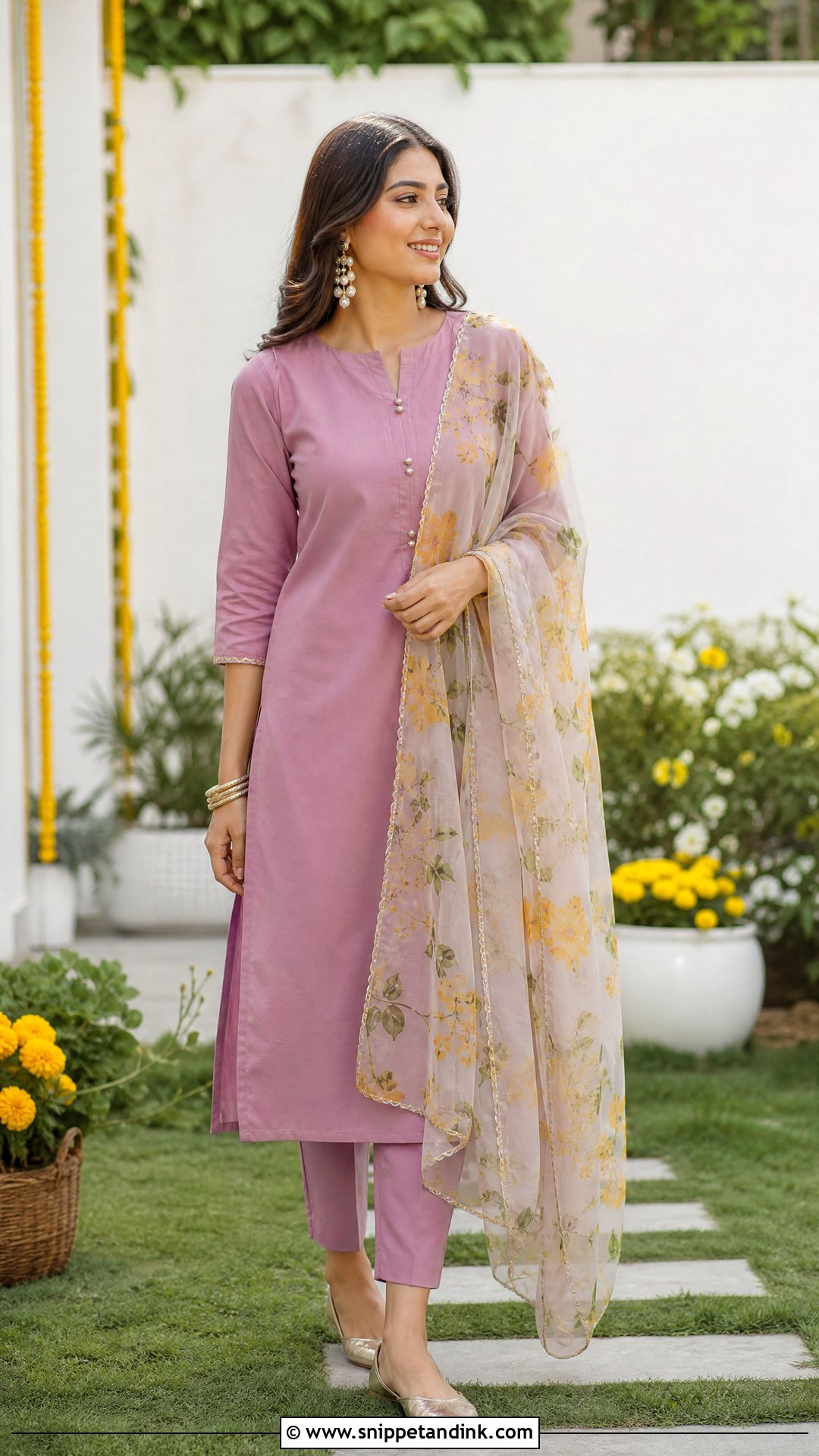
A mauve co-ord set is clean and simple, and I’d recommend it to anyone who wants to wear their outfit again afterwards. A short tunic or fitted kurta with straight pants in cotton-silk or crepe stays cool. The festive part comes from a floral organza dupatta with touches of yellow and green. Pearl drops, a slim bangle stack and metallic flats keep it polished, with a soft ponytail or half-up style and natural makeup.

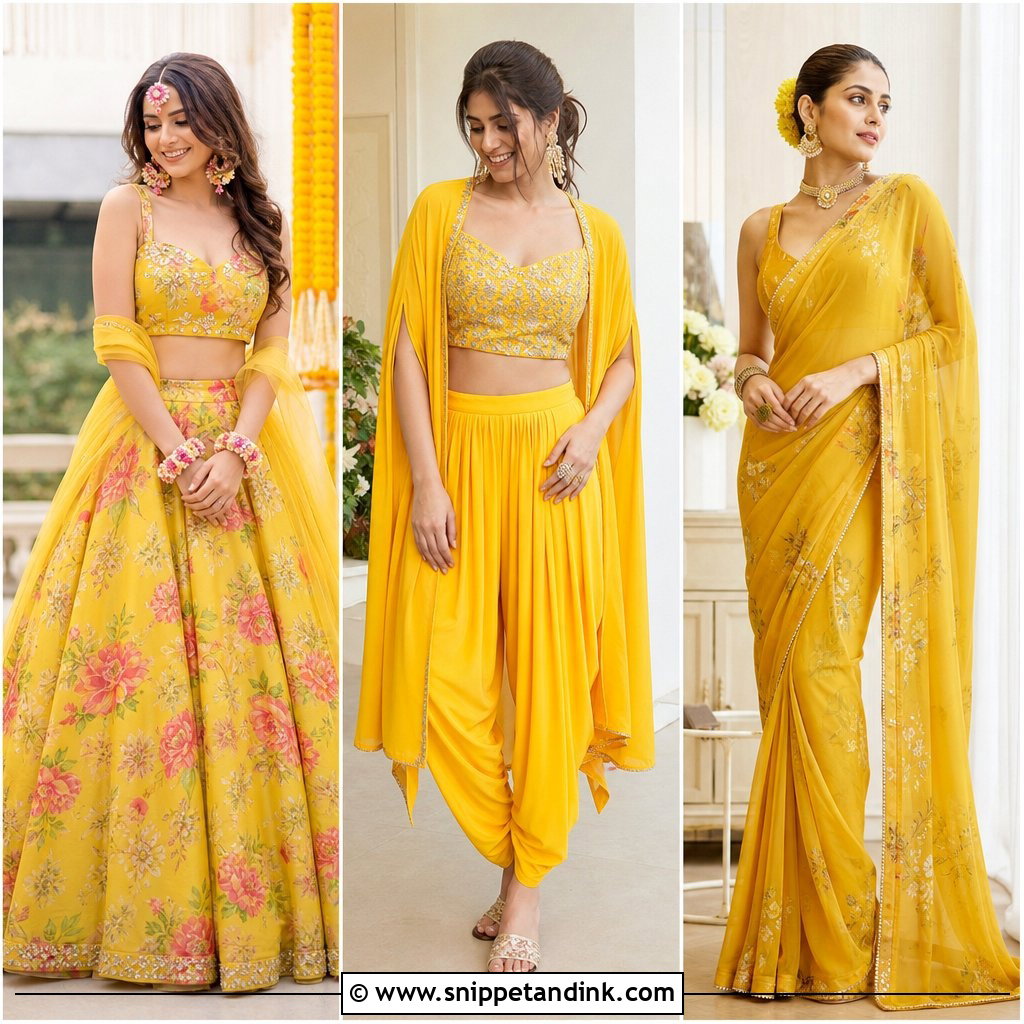
15. Purple Ruffle Saree With Belt
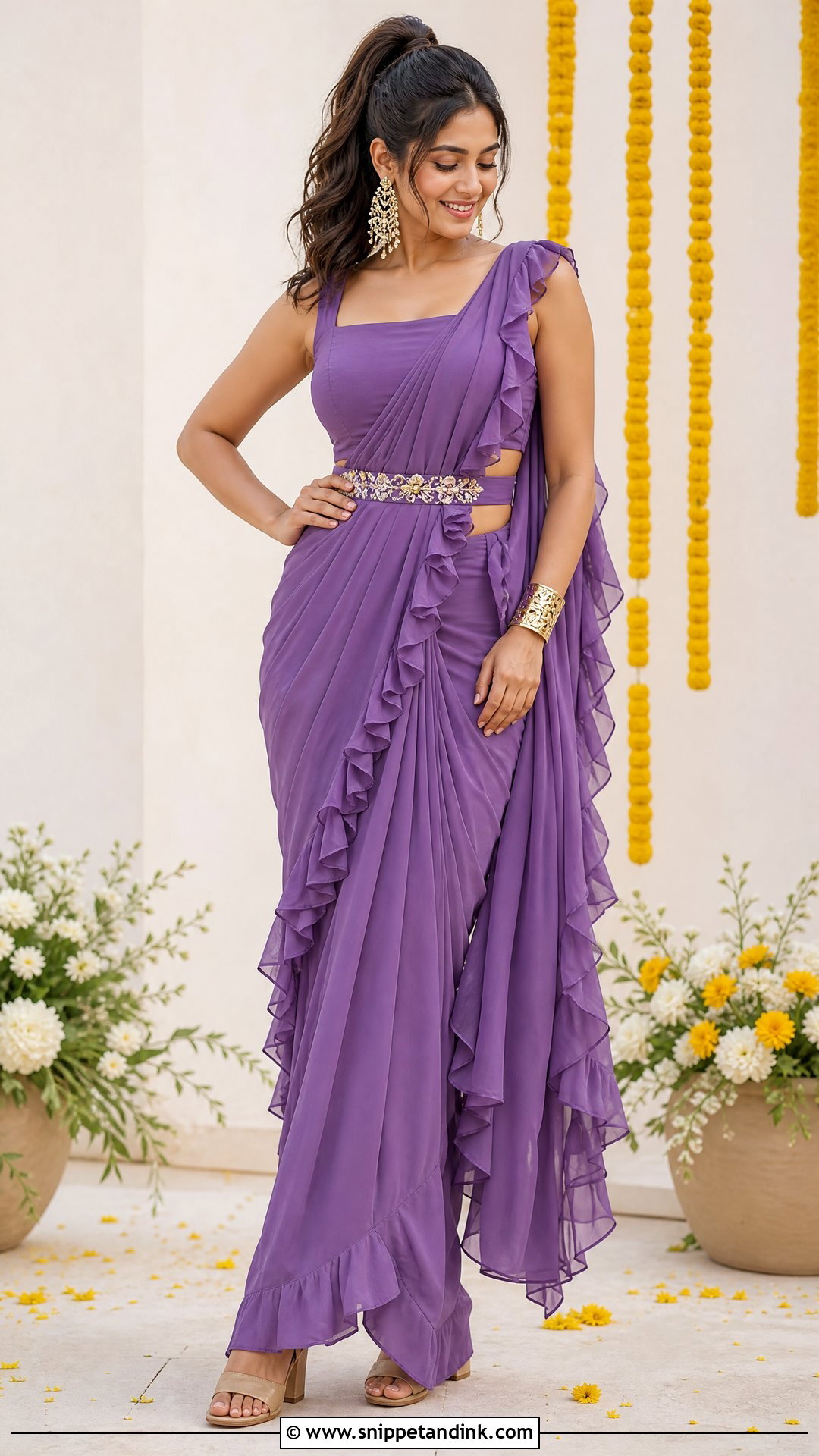
A pre-stitched ruffle saree gives you the drape without the pleating, which is a relief for anyone who doesn’t wear sarees often. A slim embroidered belt holds the pallu in place while you dance and defines the waist. A fitted blouse with a square or round neck keeps it modern. Skip the necklace so the ruffle edge shows; statement earrings, one cuff and low block heels are enough. A high ponytail adds energy. It suits bridesmaids and sisters who love fusion.
16. Purple Patiala Suit With Phulkari Dupatta
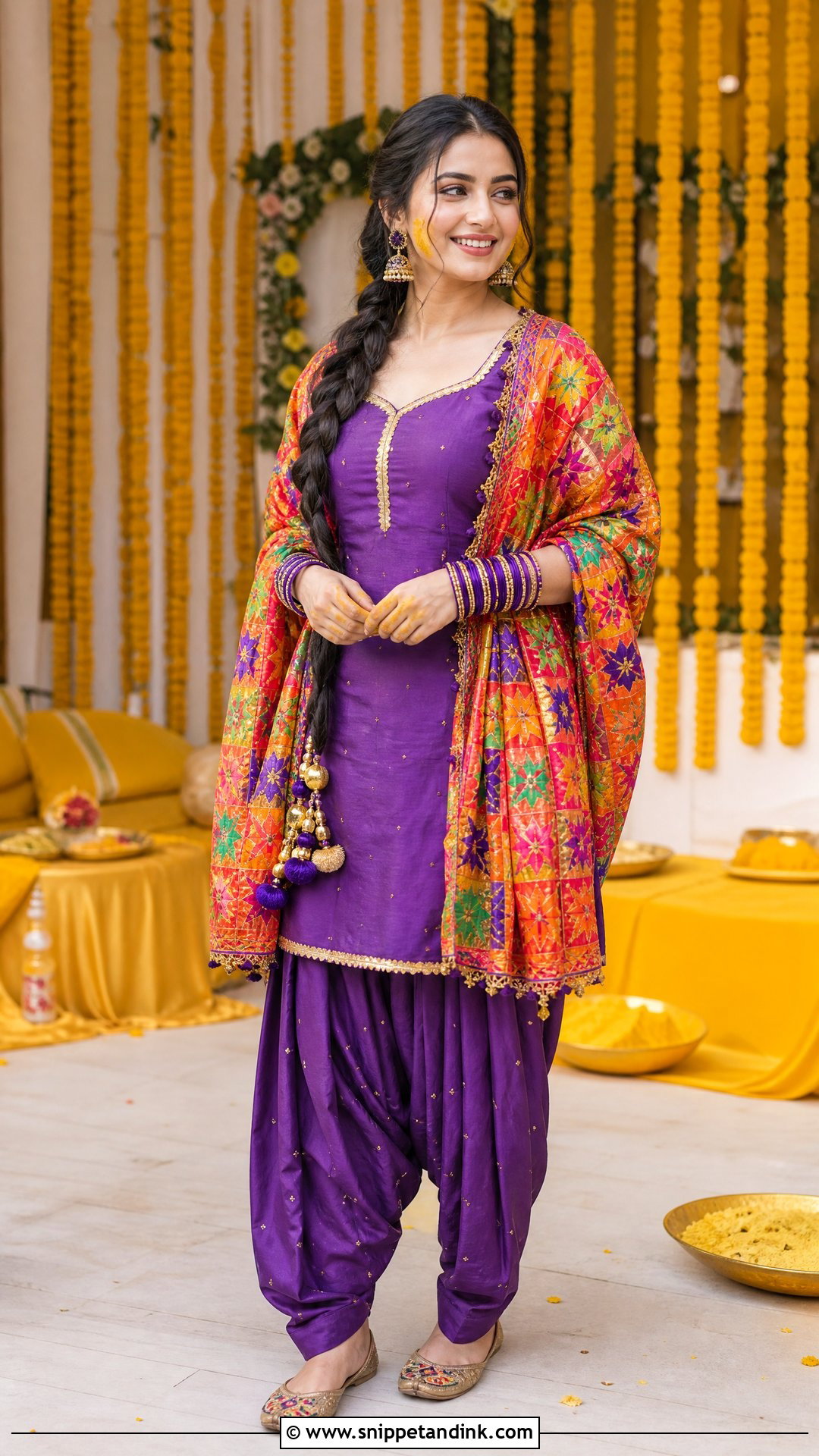
A purple Patiala suit with a Phulkari dupatta makes a cheerful Punjabi-inspired haldi outfit. The deep pleats of Patiala pants are about the most comfortable thing you can wear to sit and dance. Phulkari embroidery brings yellow, pink, orange and green into one piece, so the rest can stay purple. Good Phulkari is hand-embroidered and precious, so if it’s an heirloom, I’d keep it clear of the paste. Traditional jhumkas, stacked bangles, bright juttis and a long braid with a paranda finish it.
17. Lilac Skirt With Purple Blouse
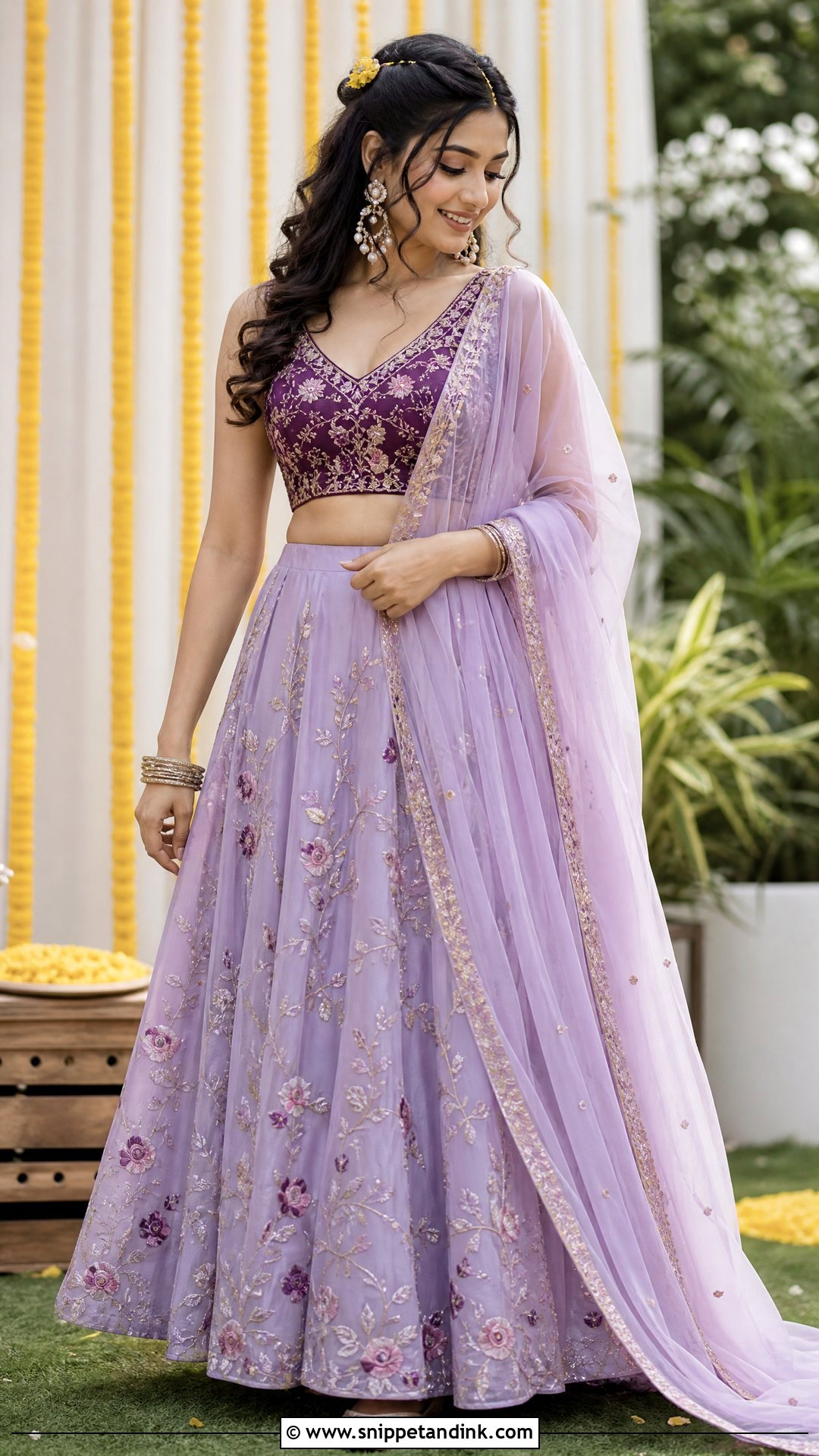
Pairing a lilac skirt with a deeper purple blouse gives you a tonal look with enough contrast to avoid looking flat. The skirt can carry small florals or a gota border; the blouse can do puff sleeves or a square neck. Pick one of them to be detailed, not both. A sheer lilac dupatta pinned at the shoulder, pearl earrings, silver bangles and embroidered flats. Add yellow floral jewellery if you want a stronger haldi link.
18. Purple Kaftan Set With Statement Earrings
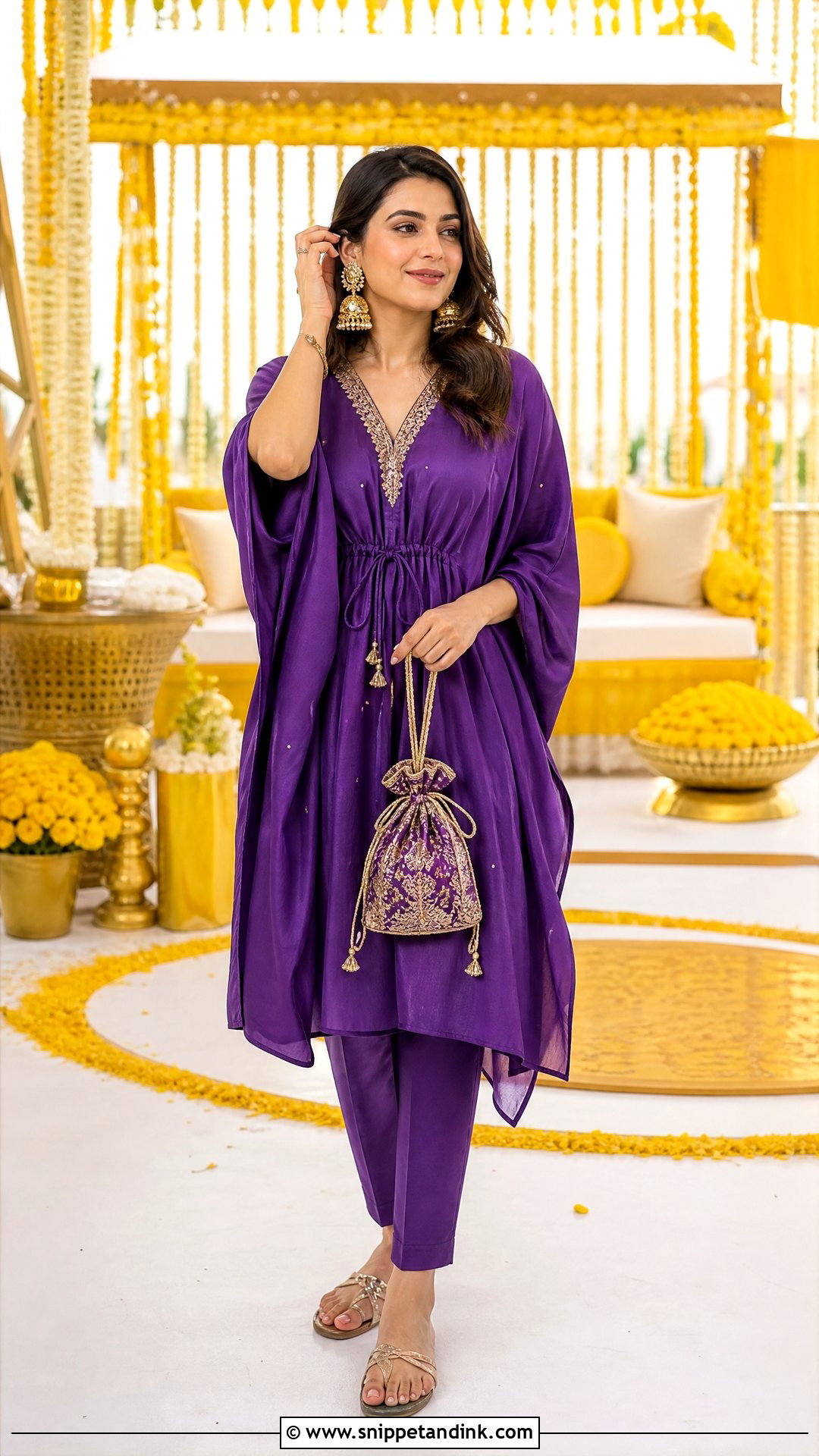
A purple kaftan set is the comfort pick. A knee or calf-length kaftan with a defined waist and flowing sleeves, worn over narrow pants or soft palazzos, looks finished rather than loungewear. Statement earrings in gold or bright colours carry the decoration. Flat sandals and a small embroidered potli for your phone and tissues. I often suggest this to mothers, aunts and pregnant guests, since nothing digs in and you can sit on the floor easily. Natural makeup with defined lashes and berry lips.
19. Purple Fusion Jumpsuit With Dupatta
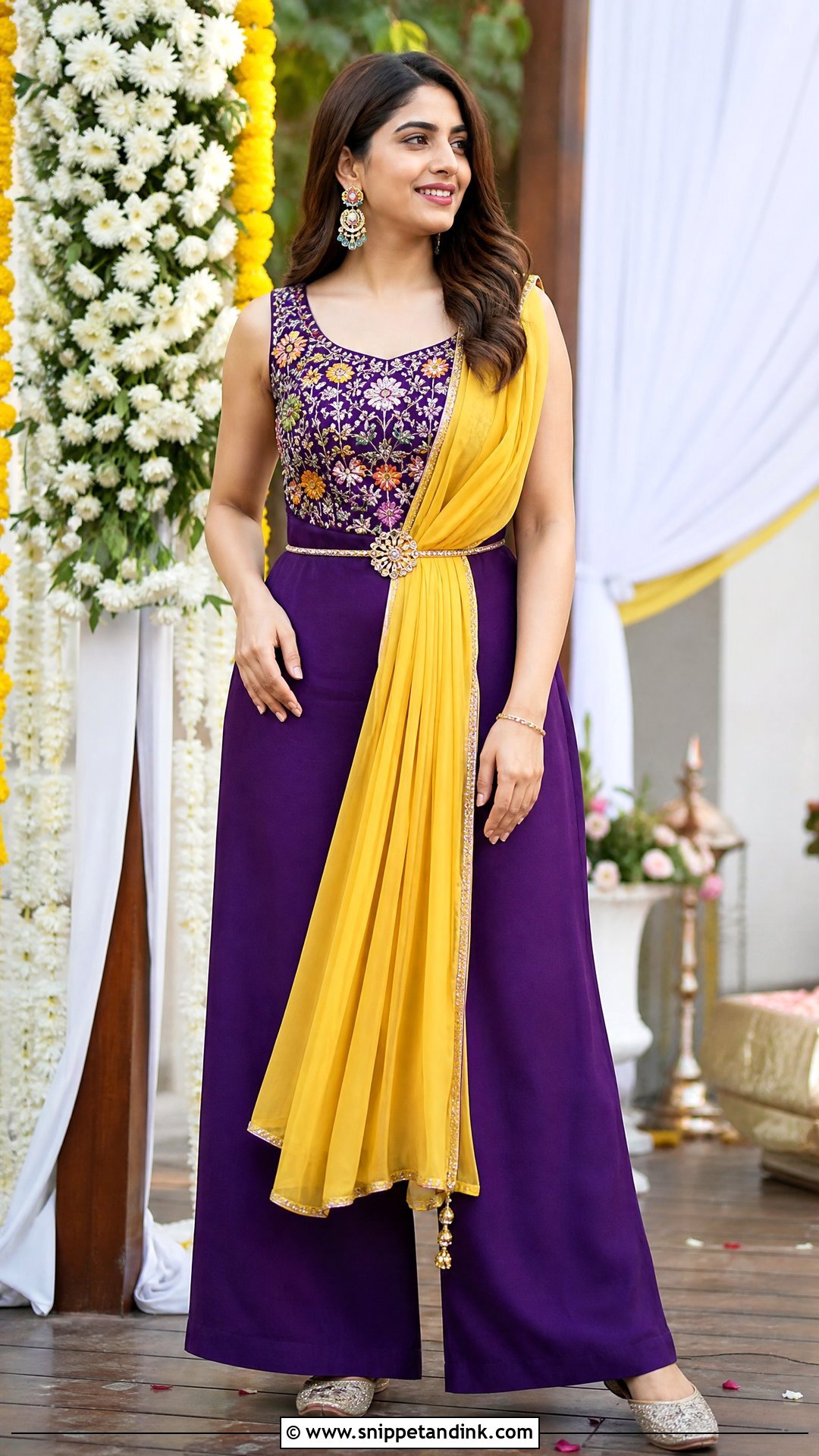
A jumpsuit is one piece, so there’s nothing to tuck or re-pin all day. Look for a fitted waist, wide legs and an embroidered or draped bodice. A light yellow dupatta over one shoulder, held with a decorative belt, adds the haldi colour and softens the Western cut. The honest downside: bathroom trips in a jumpsuit plus dupatta take planning. Bold earrings, a slim bracelet, metallic flats and a sleek ponytail suit younger guests and bridesmaids.

20. Purple Chikankari Kurta With White Pants
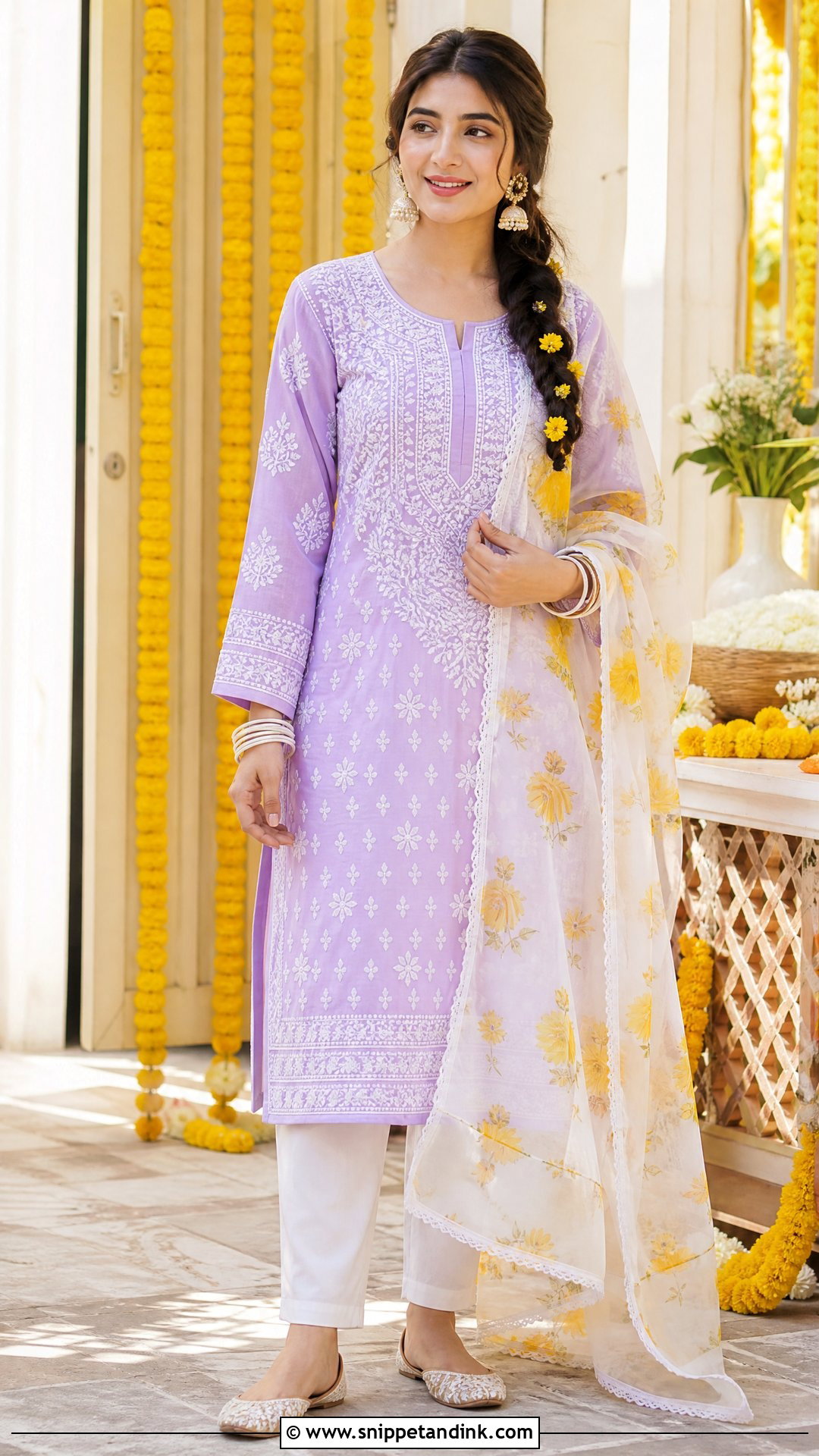
Chikankari is fine hand embroidery from Lucknow, traditionally done on light cotton, and a purple chikankari kurta with white pants is one of the coolest outfits for a hot daytime haldi. Make sure the kurta is lined, because fine cotton is sheer in sunshine. White pants and turmeric are a risky pair, so this is a guest outfit, not one for the person getting smeared. A yellow-and-white floral dupatta, pearl jhumkas, white bangles and neutral juttis complete it, and it’s easy to wear again at family gatherings.
Getting Haldi Out of Purple Fabric
Act fast. Scrape off any thick paste with a blunt knife or spoon, then rinse the stain from the back of the fabric under cold water so you push it out rather than through. Hot water sets turmeric. A drop of plain liquid dish soap worked in gently with your fingers helps lift the oil it was mixed with.
Sunlight fades turmeric stains well, and many families dry haldi clothes in the sun for exactly that reason. On purple, though, there’s a trade-off: the same sun will fade the dye. I’d lay the garment in shade with only the stained patch in light, and check every half hour. Never use chlorine bleach on dyed fabric, and test any stain remover on an inside seam first. Silk, zari and bandhani are better sent to a dry cleaner who knows the stain is turmeric.
Fresh Flower Jewellery Wilts by Afternoon
Floral earrings, tikkas and haathphool are a natural fit at a haldi, but real flowers in a warm room start to droop within a few hours. Ask your florist to deliver them on the morning itself, keep them in the fridge in a box with a damp cloth until you dress, and choose sturdier blooms like mogra buds, baby’s breath and small chrysanthemums over soft petals. If the function runs long, artificial flower jewellery in the same colours is a fair swap and photographs almost the same.
Purple, Yellow Flowers and a Lot of Turmeric
Purple gives you a way to stand out at a haldi while still looking festive among all the yellow. Lavender and lilac feel soft and fresh; violet, mauve and plum feel richer. Let the weather, the decor and your role guide the shade, and favour light fabrics and secure draping over heavy layers. Wear shoes you can kick off, jewellery that won’t snag and makeup that can take a splash. Bring yellow in through the dupatta, flowers or embroidery, and you’ll have an outfit you can enjoy for every ritual.
You'll Like These Ideas:






Leave a Reply