
Satin is the fabric I’d call the most honest in bridal: it shows the cut, the fit and every seam underneath. That is exactly why it suits vintage shapes so well, from fluid 1930s bias-cut gowns to structured 1950s tea-length dresses and bare 1990s slips. The weight of the satin decides which of those it can become. Covered buttons, cowl necklines, gloves, pearls and lace-edged veils push the look further into a particular decade. I’ve grouped twenty of my favorite satin looks below, from modest and romantic to sleek and modern, with the venue and season each one handles best.
Duchess, Charmeuse or Crepe-Back: Which Satin Is in the Photo?
Brides often show me a picture and say they want satin, but the word covers fabrics that behave completely differently. I always identify the satin before talking about silhouette, because the wrong one simply can’t make the shape you love.
Duchess satin
Heavy, firm and smooth, with a soft sheen. It holds pleats and full skirts, which makes it right for ball gowns, strapless bodices and 1950s shapes. It is warm, though, and it creases sharply where you sit.
Charmeuse
Light, liquid and very shiny on one side. This is the satin of the 1930s bias gown and the 1990s slip. It drapes beautifully and hides nothing, so fit and underwear must be perfect.
Crepe-back satin, peau de soie and mikado
Crepe-back satin has a matte reverse and is often used for cowls and soft sleeves. Peau de soie has a duller, finely ribbed surface that photographs with less glare. Mikado is a heavy twill weave with a low sheen; it creates architectural, structured skirts and resists wrinkling better than duchess. If you’re nervous about shine under flash, ask to see peau de soie or mikado alongside the glossier options.
1. 1930s Bias Cut Satin Wedding Dress
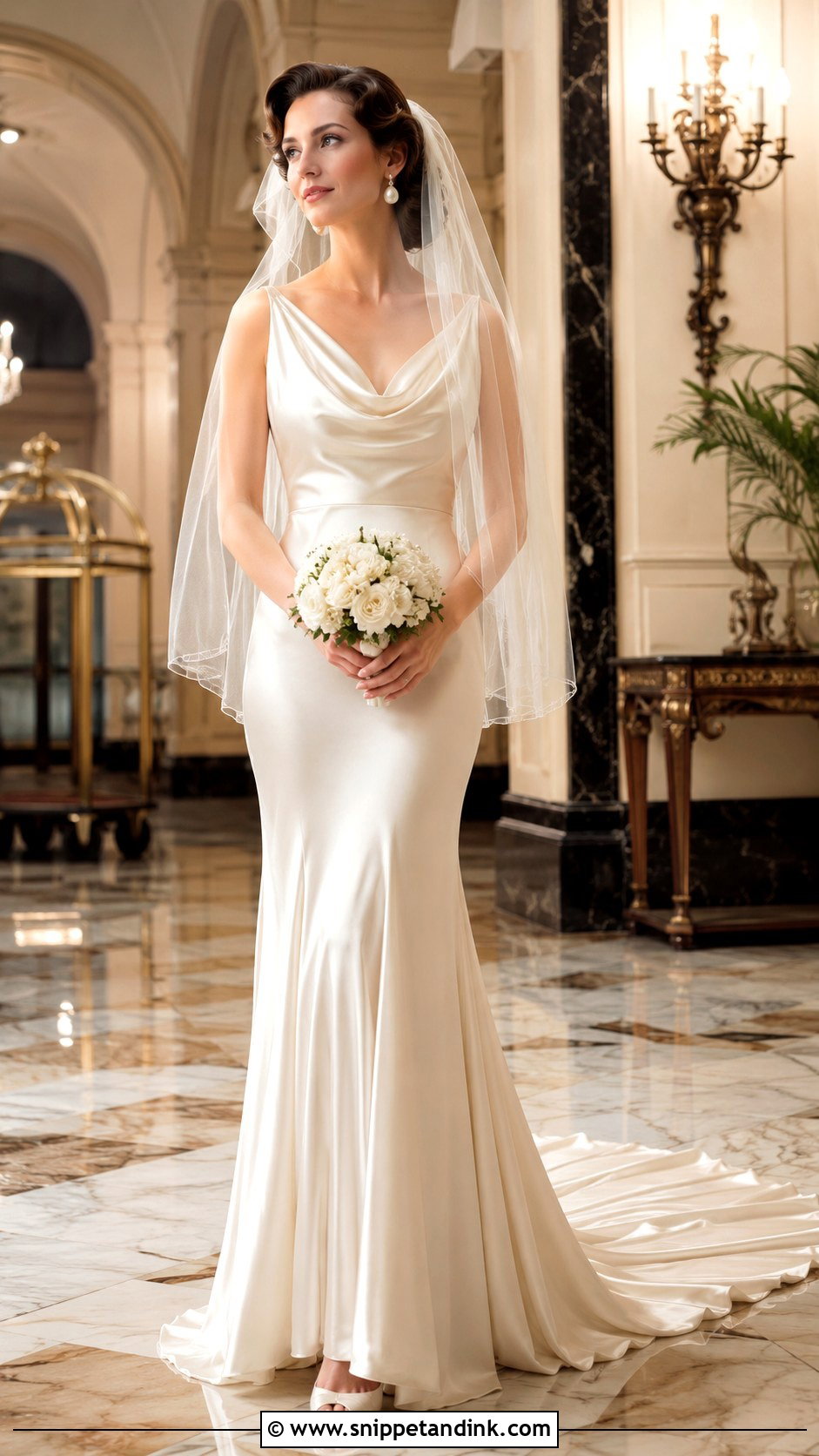
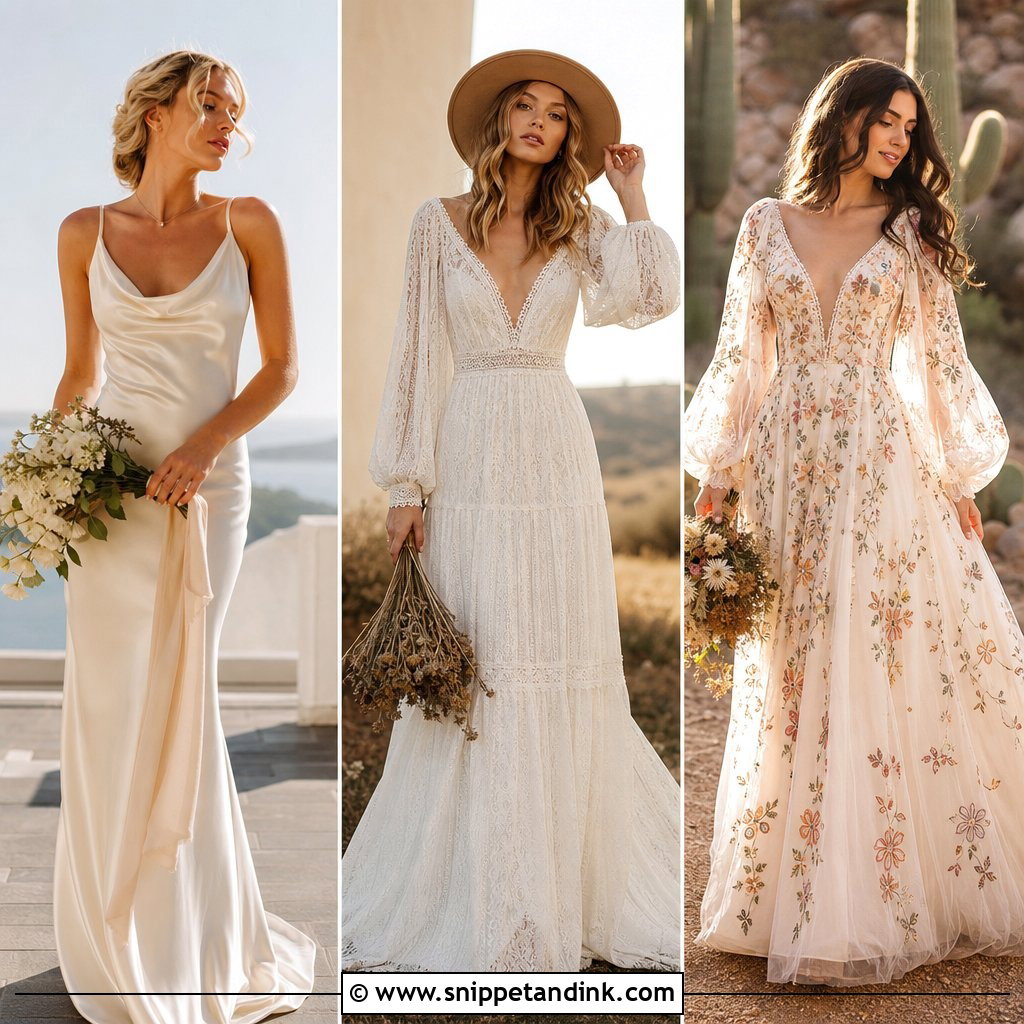
Cutting satin on the bias, diagonally across the weave, lets it stretch slightly and fall close to the body without boning. That is the secret of the 1930s gown, and also its difficulty. I’d choose a soft charmeuse with a gently draped neckline, a fitted waist and a small sweeping train. Peep-toe heels, a raw-edge fingertip veil, side-parted waves and pearl drops keep it Old Hollywood. Glossy bias satin magnifies every bump, so line-free underwear and an experienced tailor are worth more than any accessory with this dress.
2. Cowl Neck Satin Wedding Dress
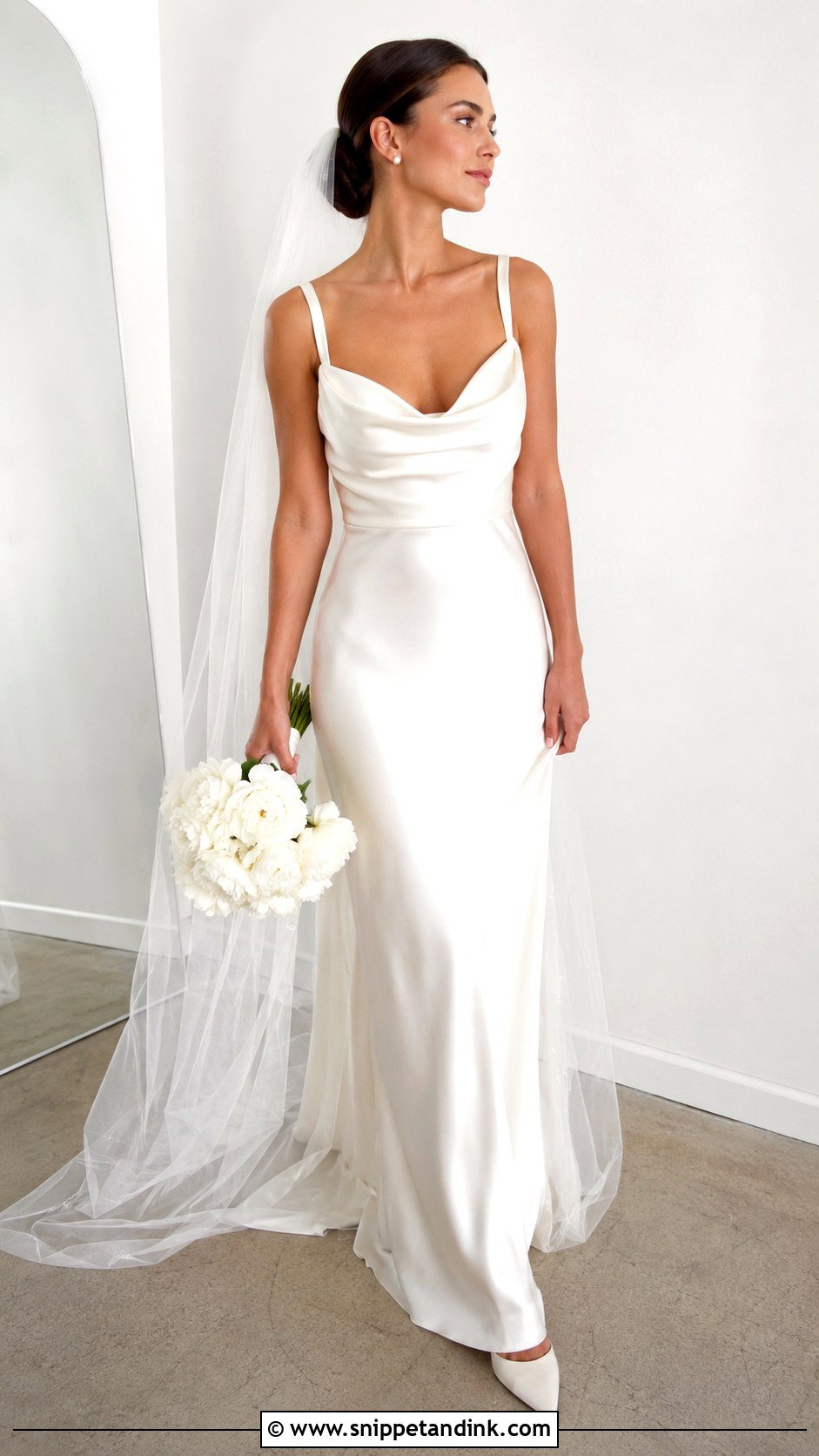
A cowl is a loose fold of fabric across the neckline, and in satin it catches light along each ripple. I’d put it on a slim column or a gentle A-line, since a full skirt competes with it. Wide straps give more support; thin ones lean 1990s. Skip a necklace; the folds are the jewelry. Pointed pumps, pearl studs and a long sheer veil below a low bun finish it. Cowls can fall open when you lean forward to sign the register, so have the tailor check it while you bend and add a tiny weight or tack if needed.
3. Long Sleeve Satin Wedding Dress
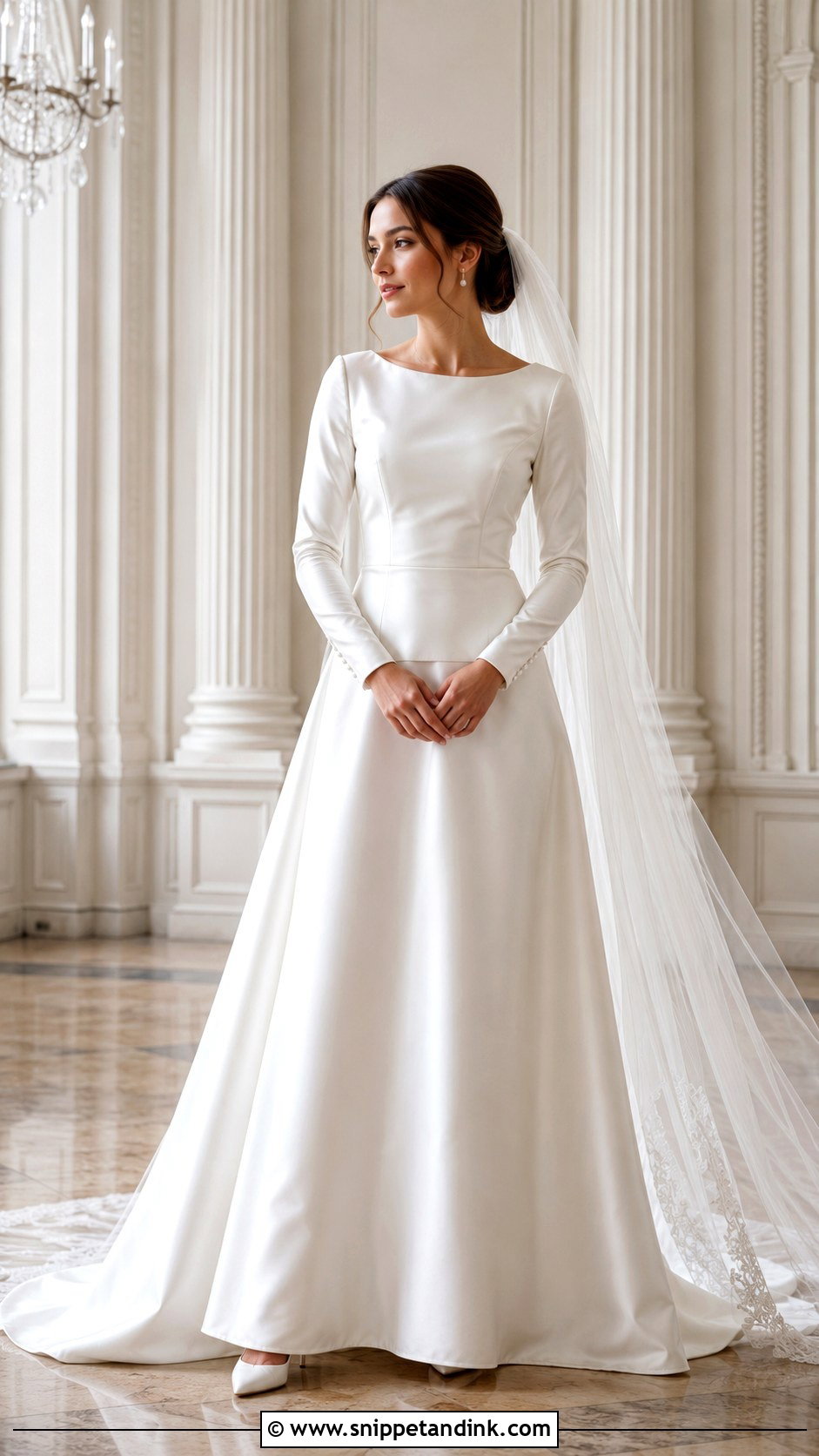
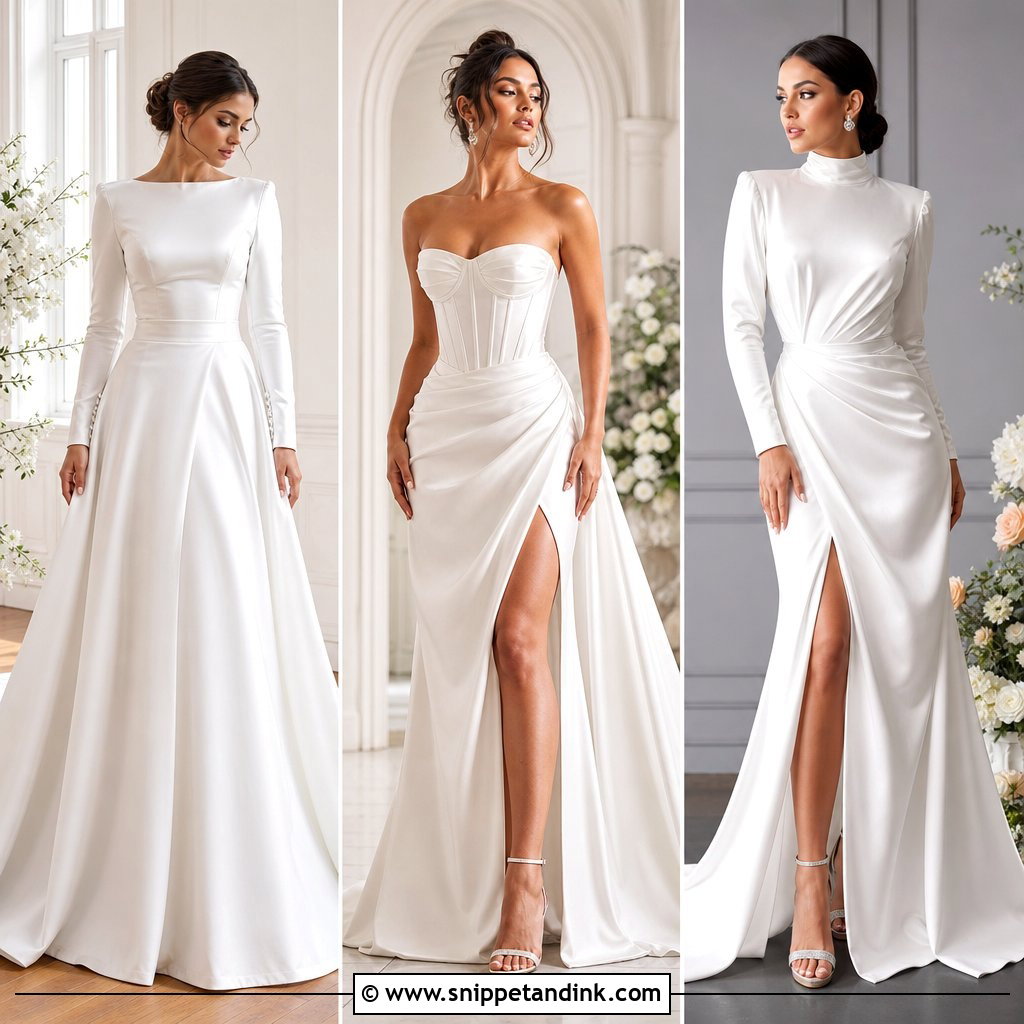
Long satin sleeves have no stretch, which makes the armhole the most important part of this dress. Fitted sleeves with covered wrist buttons look refined, but if the armhole is set low for a sleek line, you won’t be able to lift your arms to hug anyone. Raise your arms, sit and embrace someone at the fitting. A bateau or modest V-neck, a softly defined waist and a floor-length skirt with light pleats suit heavier satin better than a big skirt. Closed-toe pumps, a cathedral veil and a smooth low chignon complete it.
4. High Neck Satin Wedding Dress
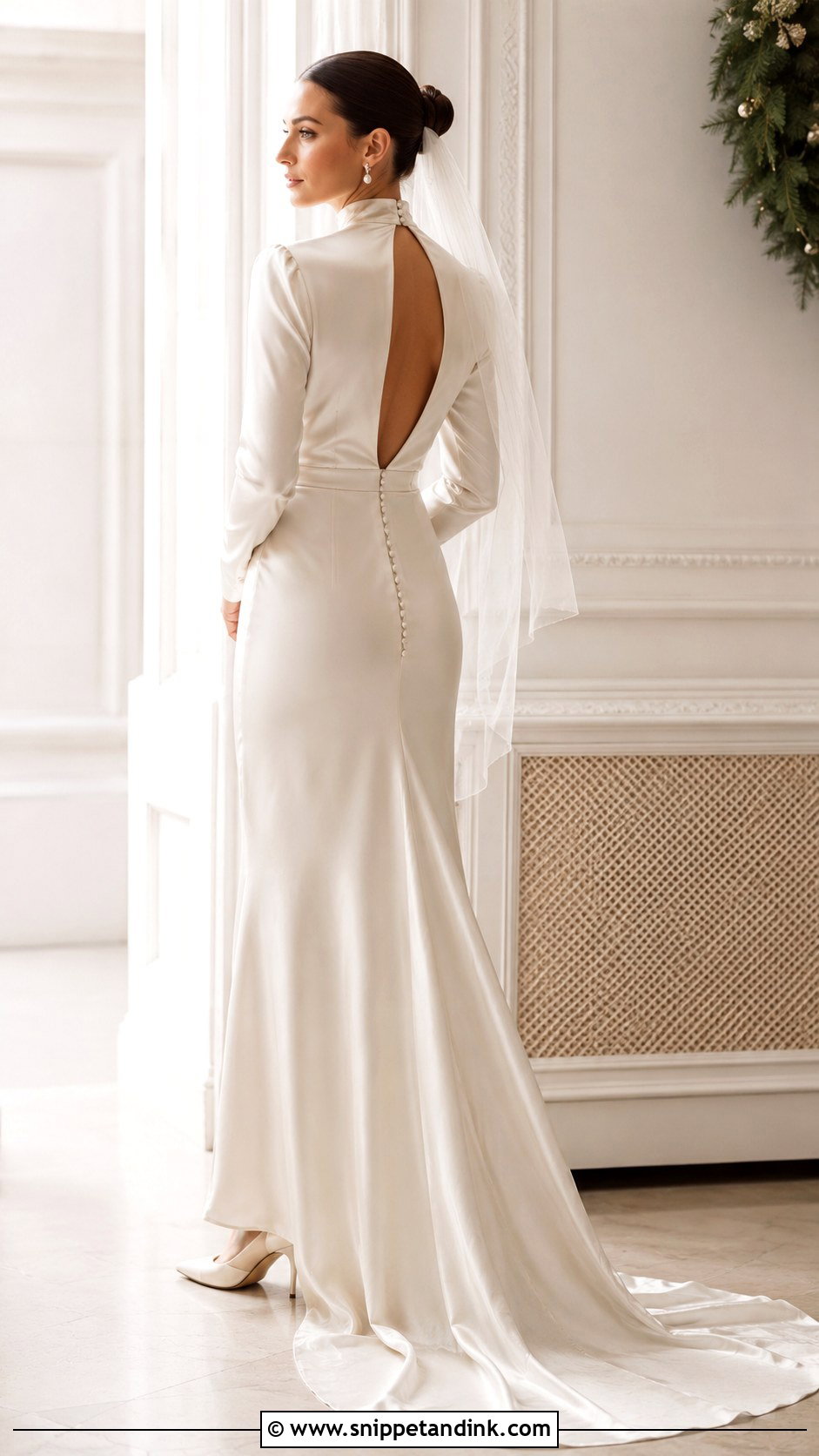
This gown borrows from the 1940s and the Edwardian years: a high neck, long fitted sleeves and a fluid skirt. With a touch of 1940s tailoring, a softly gathered neckline looks better in satin than a stiff stand collar, which can wrinkle at the throat whenever you look down. Pearl button earrings, ivory pumps and a veil below a sleek bun keep it clean. Leave out the necklace. Put any extra detail at the back, in a keyhole or a row of covered buttons, or in a comb or embroidered veil.
5. Tea Length Satin Wedding Dress
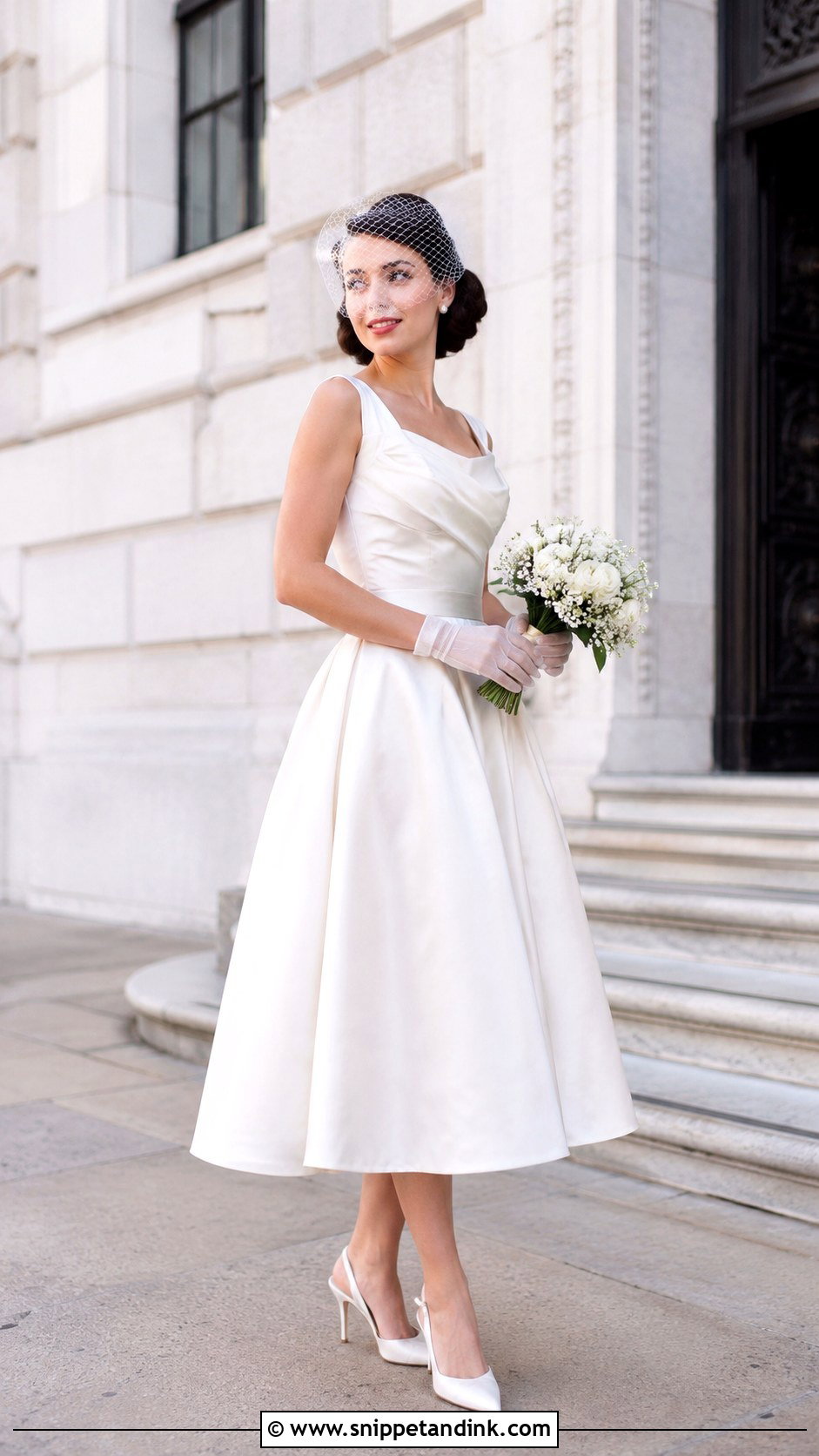
Mid-calf hems put your shoes on display all day, so I pick them early with this dress and bring them to every fitting. Slingbacks, low block heels or satin ankle straps all work. A fitted bodice, a defined waist and a gently flared skirt are the classic shape. Tea-length bridal silhouettes are closely tied to the waist-defining looks of the 1950s. Add a birdcage veil, pearl studs and short gloves. I’d place the hem at the narrowest point of the lower leg, just above the ankle bone. Ask for hidden pockets.
6. Strapless Satin Wedding Dress
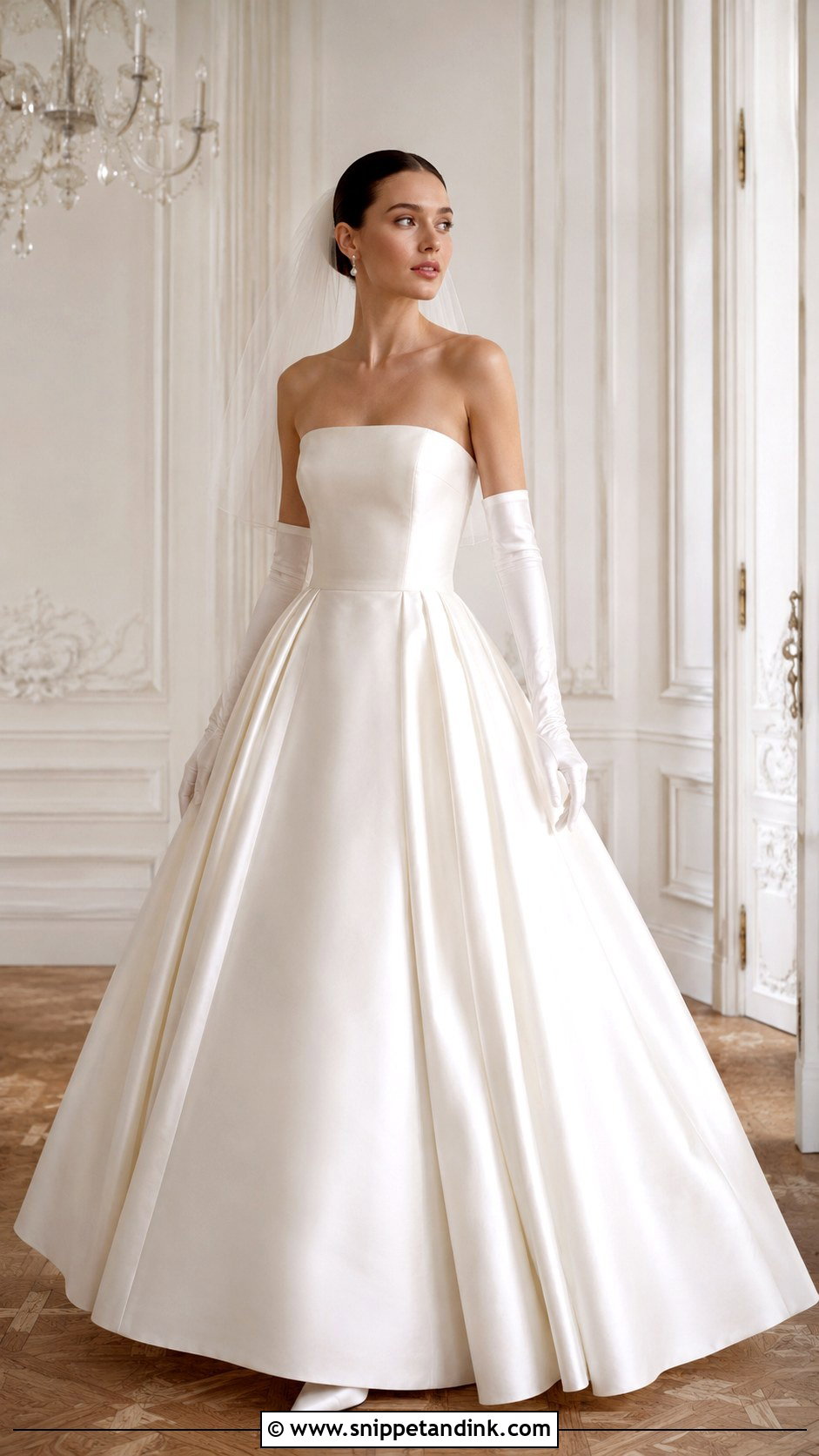
Strapless satin feels mid-century when the neckline goes straight across or curves softly, rather than plunging. A full A-line with subtle box pleats and covered buttons down the back finishes it. Elbow gloves, pearl earrings, pointed pumps and a shoulder-length veil complete the look. The real question is support. A strapless satin bodice needs internal boning and a waist stay, a ribbon fastened inside at the waist that takes the weight of the skirt, or you’ll be hitching it up all night. A removable satin bolero in the exact same shade adds ceremony coverage.
7. Off Shoulder Satin Wedding Dress
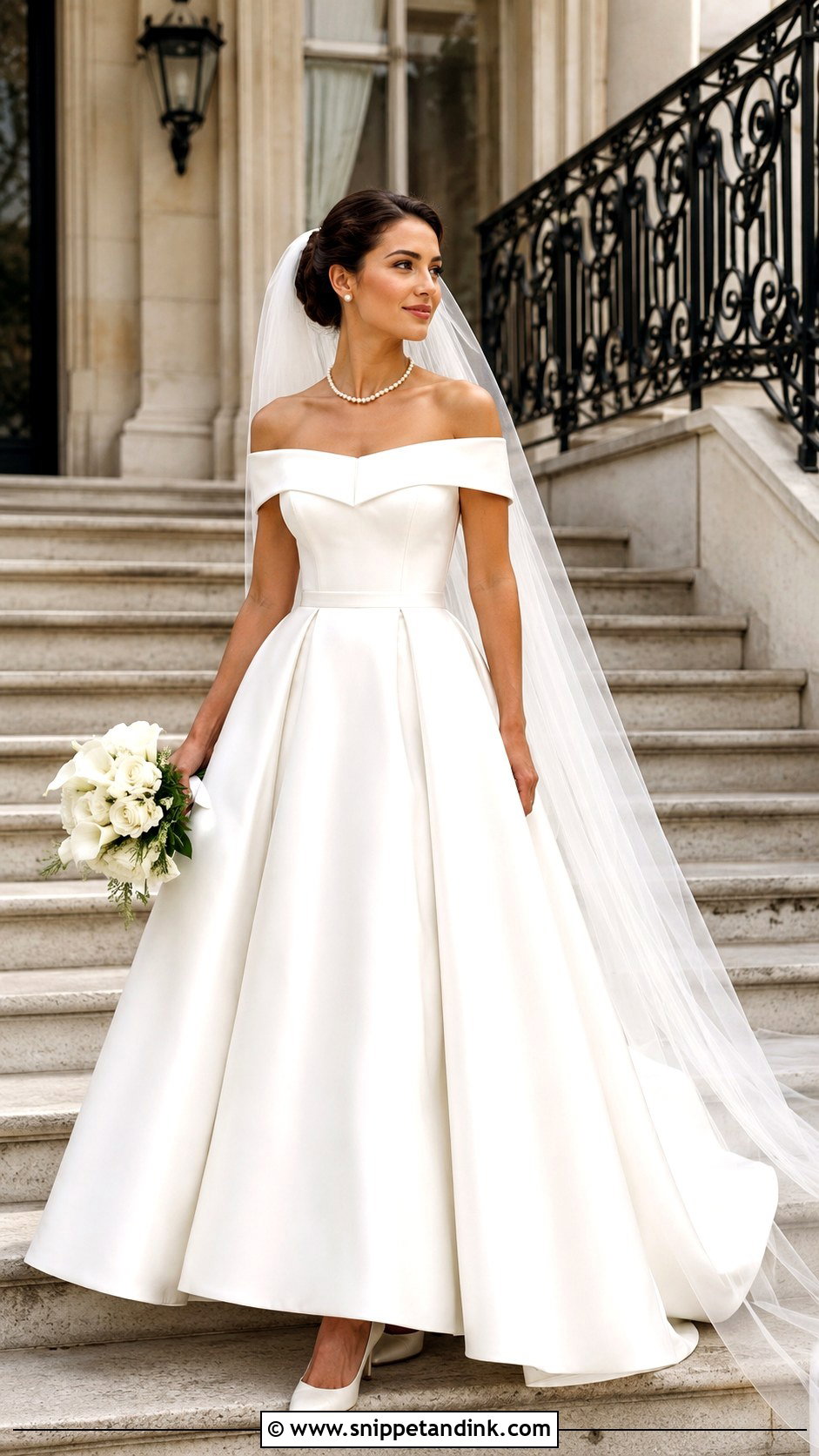
Off-shoulder satin shows the collarbones, and a folded portrait band across the arms makes it feel vintage. I always say the bodice must hold the dress up, not the shoulder band. If the band is doing the work, it slides when you sit and restricts your arms. A supportive bodice and a full pleated skirt balance the look. Wear a short pearl necklace and matching earrings, satin pumps and a long veil under a polished updo. Opera gloves are optional. Ballrooms and historic hotels suit it.
8. Sweetheart Neck Satin Wedding Dress
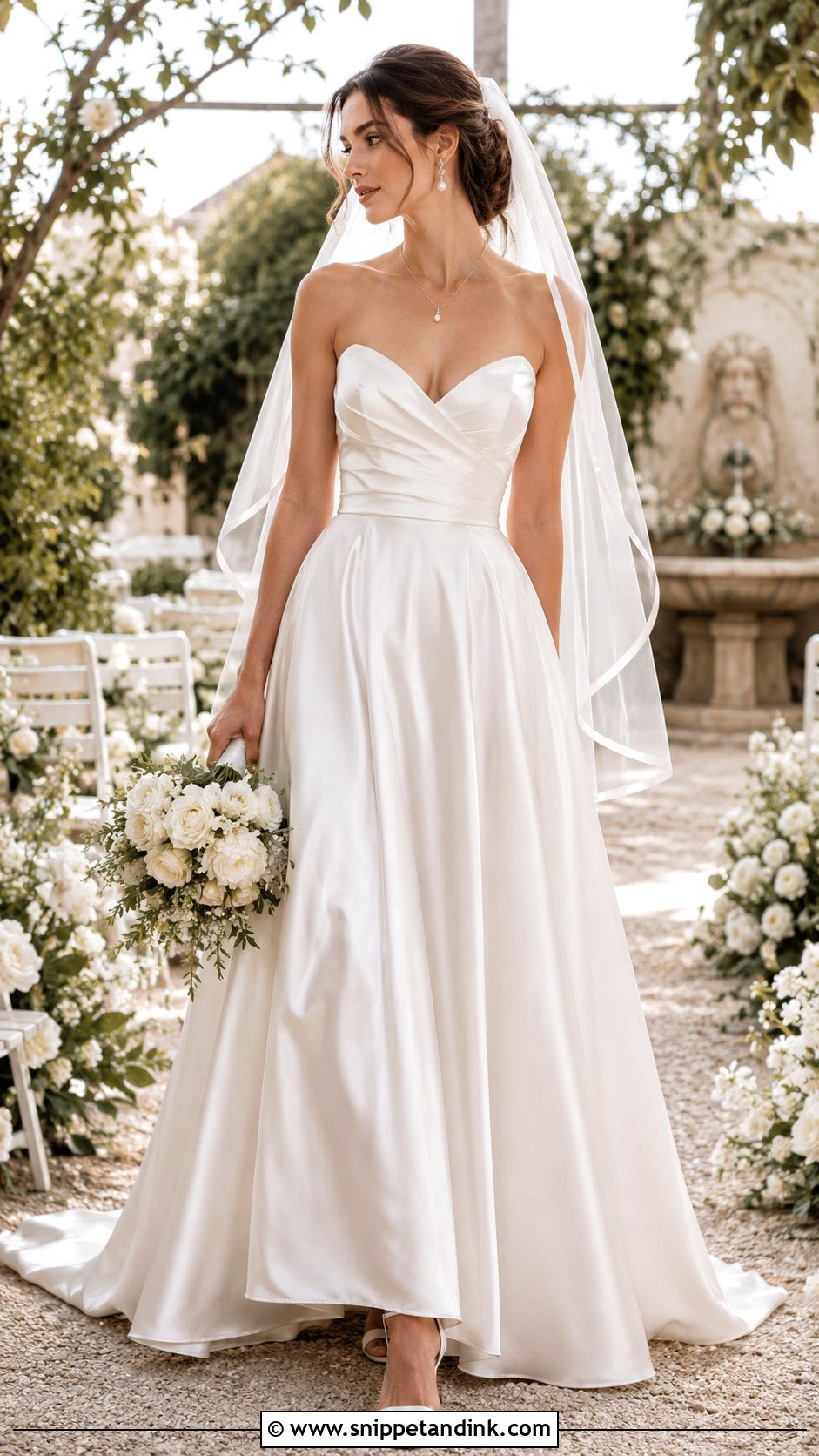
Subtle ruching across a sweetheart bodice, a softly pointed waist and an A-line or circle skirt give this neckline its vintage feel. I’d add a pearl pendant that sits just above the curve, small drops and a fingertip veil with narrow satin edging. Rounded pumps or slingbacks suit the soft shape. Satin already reflects plenty of light, so skip the sparkle. A fitted lace bolero or detachable cap sleeves add coverage. Make sure whatever you add follows the curve of the neckline rather than cutting straight across it.
9. Satin Ball Gown Wedding Dress
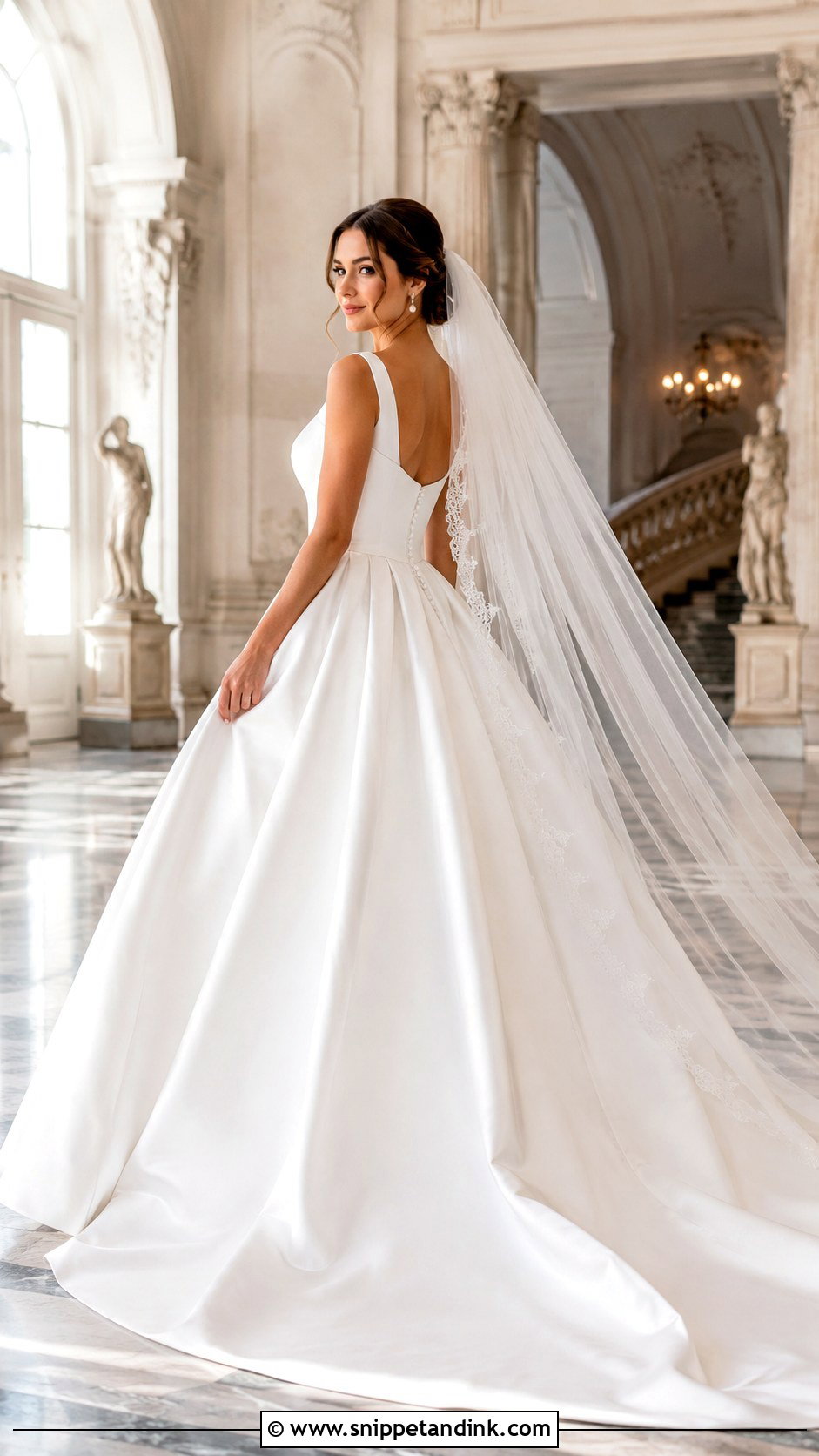
Few dresses feel as ceremonial as a satin ball gown, and none is as heavy. A natural waist, broad pleats, covered back buttons and a moderate train with a square, bateau or straight strapless neckline make it vintage. Pearl earrings, a cathedral veil and comfortable closed-toe heels finish it. Weight is what I discuss first. Layers of duchess satin can be tiring by evening, so compare fabric weights and ask whether a single soft petticoat could replace several dense underskirts. A low bun keeps the neckline visible.
10. Basque Waist Satin Wedding Dress
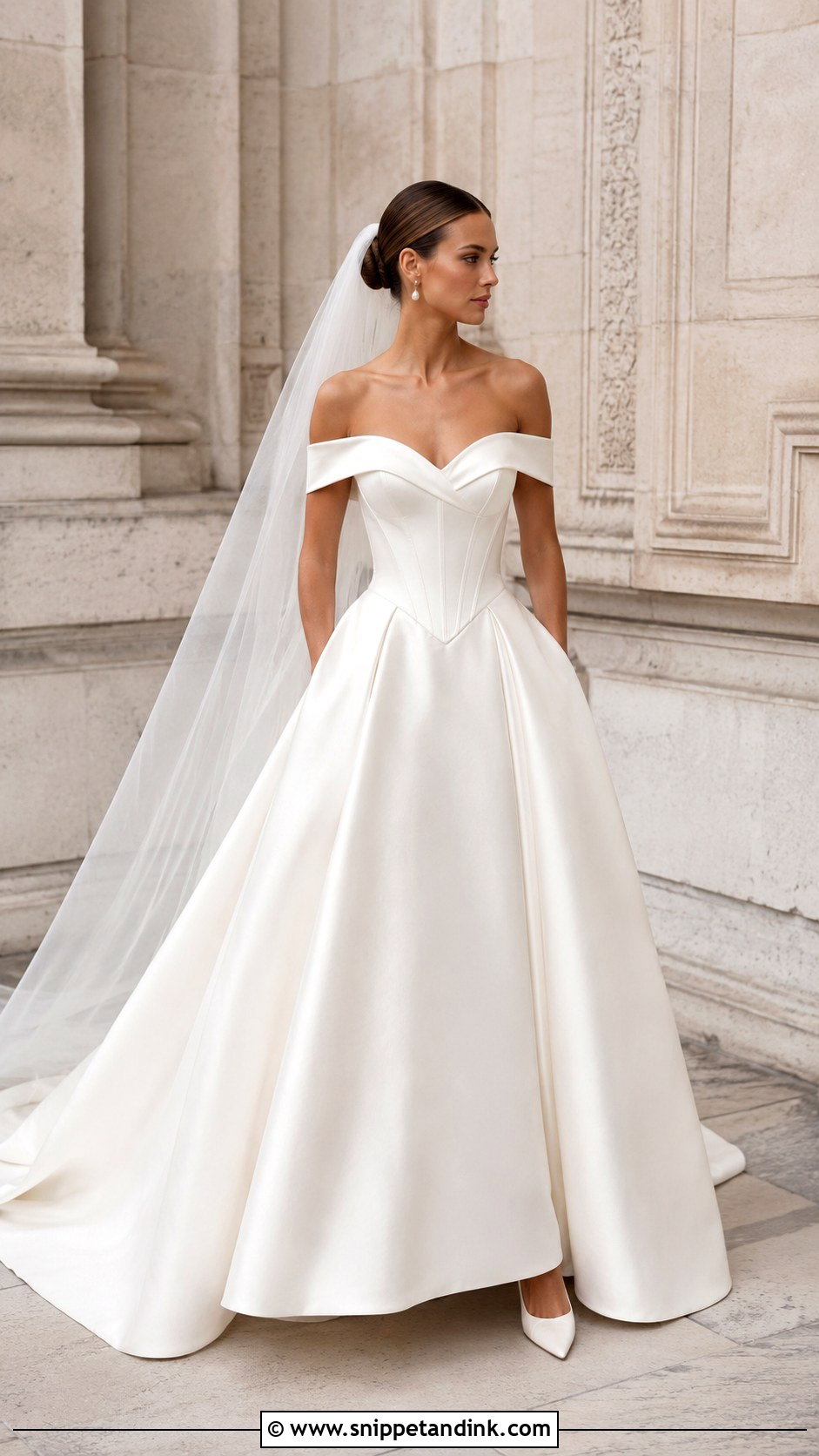
The bodice of a basque waist dips below the natural waist into a point at the front, which lengthens the torso in a very historical way. Clean satin keeps it from looking like costume. A scoop or off-shoulder neckline and a full skirt with controlled volume balance it. Drop pearls, a plain long veil, pointed heels and a sleek bun are all it needs. Never add a belt; it fights the line. Sit down at every fitting. The point of the basque can press into the top of the thighs when you’re seated if it’s too long.
11. 1940s Structured Satin Wedding Dress
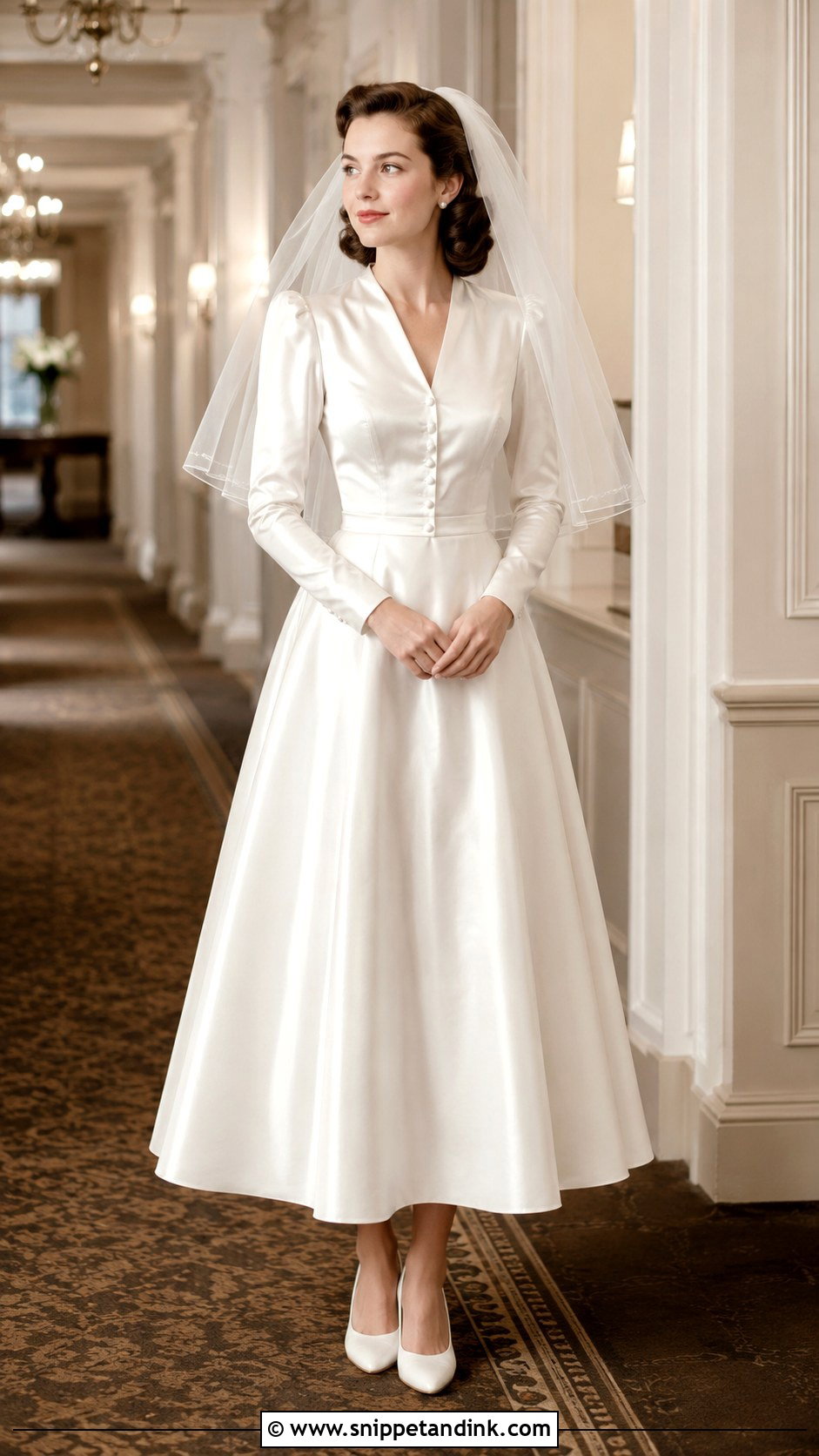
Shoulders are what make it 1940s. Light shaping, long sleeves, a modest V-neck, a narrow waist seam and covered buttons give the structured look, with an A-line skirt instead of a ball gown. Closed-toe pumps, pearl studs, a small bouquet and a shoulder-length veil keep it simple. Smooth side waves or a rolled updo strengthen the period feel. I’d ask for soft, flexible padding rather than firm pads; heavy shoulder pads look exaggerated in satin and get uncomfortable by the time you’re dancing.
12. 1960s Satin Mini Wedding Dress
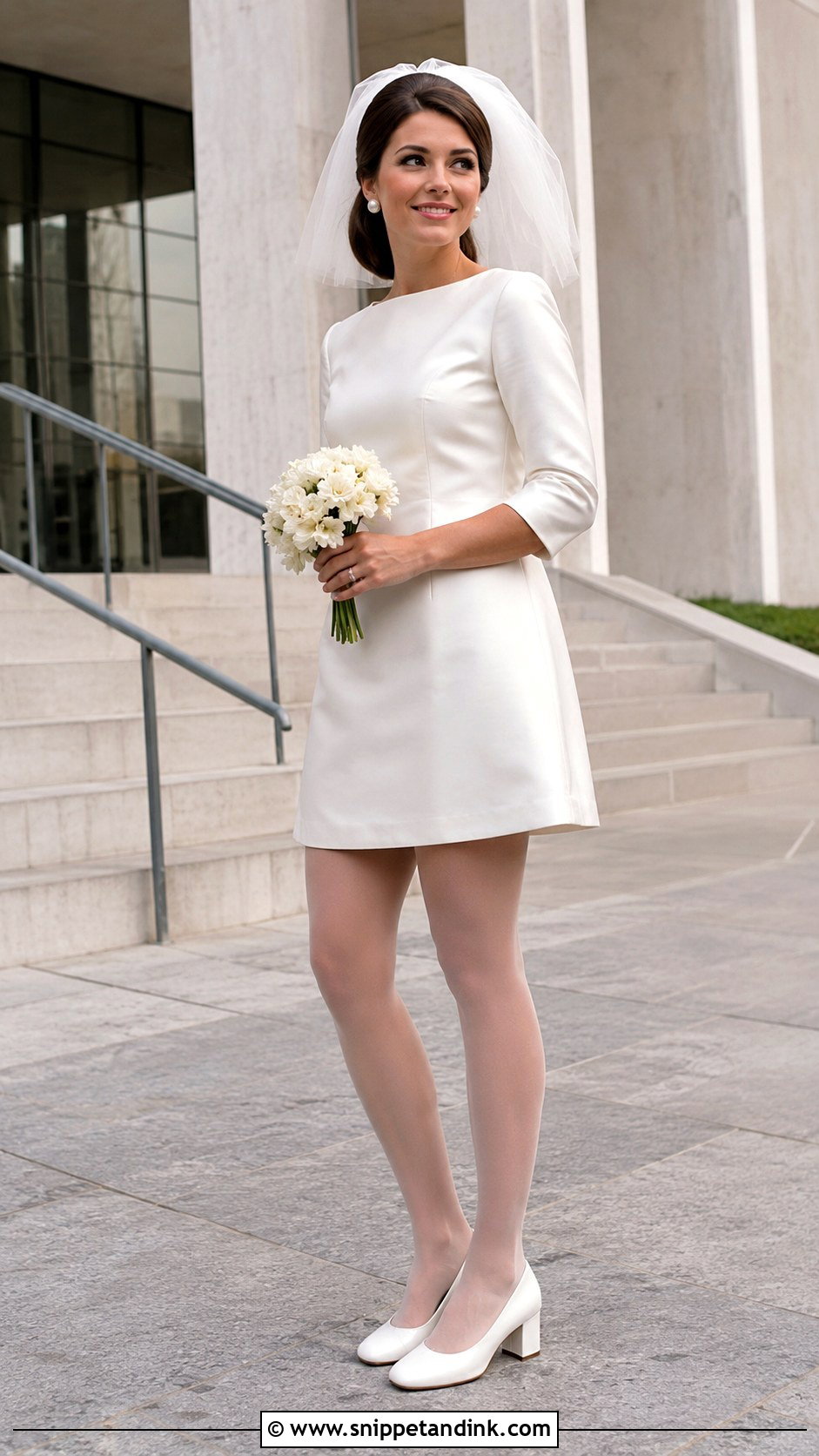
Heavier satin is what makes a 1960s satin mini wedding dress work, because the A-line needs to hold its own shape instead of clinging. A high bateau neck, bracelet sleeves that end above the wrist and a hem a little above the knee are the classic proportions. White block heels, sheer tights, pearl button earrings and a short veil complete the look, or swap the veil for a pillbox hat or wide satin headband. Skip embellishment. Sit, walk and lift your arms before the final alteration, since a short hem rises more than you’d expect.
13. 1970s Bell Sleeve Satin Wedding Dress
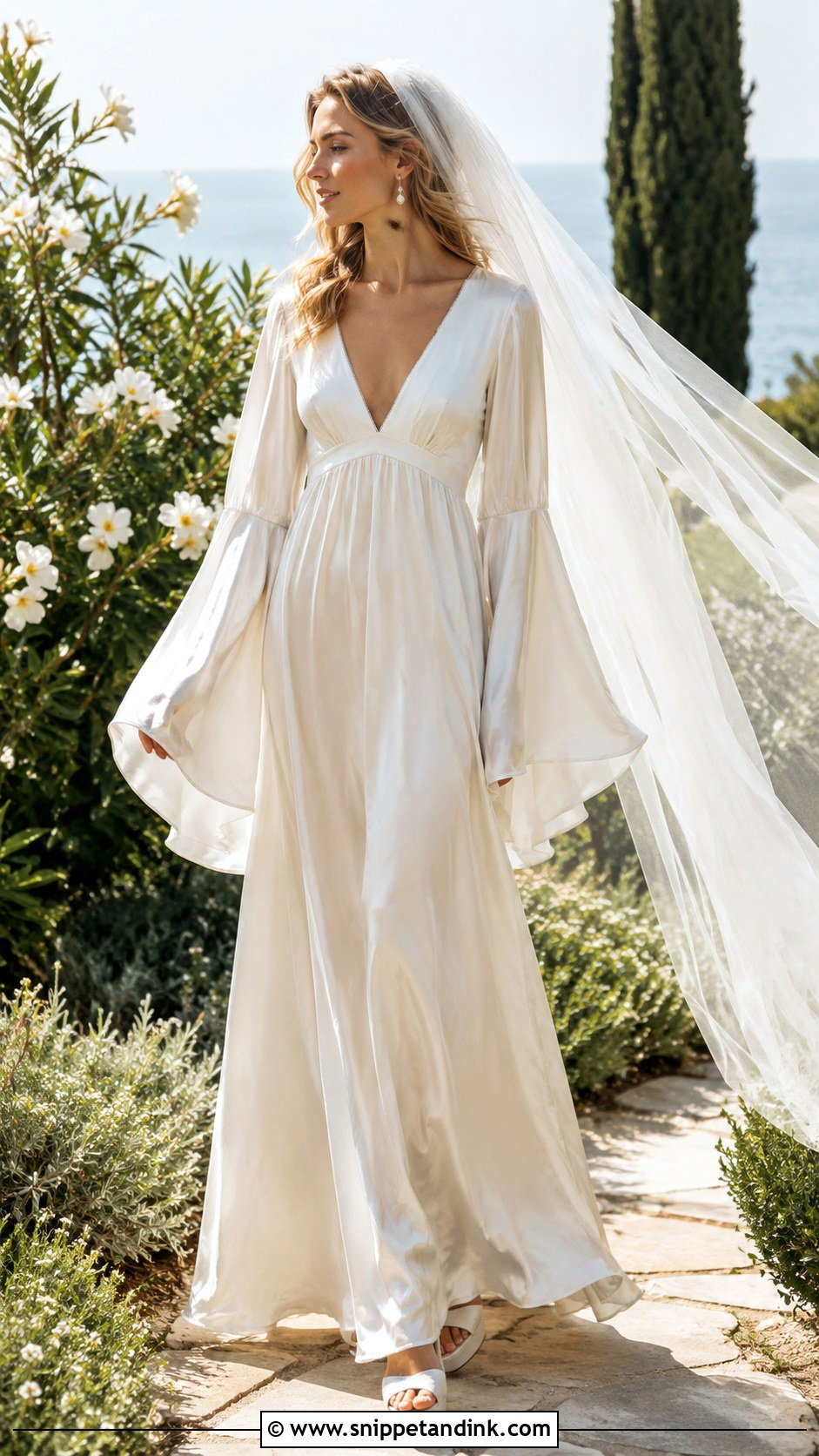
Bell sleeves bring a 1970s ease to satin, but only if the satin is light. Heavy satin turns a bell sleeve into a stiff cone. Start with an empire waist or a gently fitted gown, a narrow V-neck and a fluid floor-length skirt. Platform sandals or low block heels, a long veil, gold-toned earrings and loose center-parted waves keep it relaxed; a floral comb can replace the veil outdoors. The cuffs should end above your hands. Otherwise they sweep across every table you reach over.
14. 1980s Puff Sleeve Satin Wedding Dress
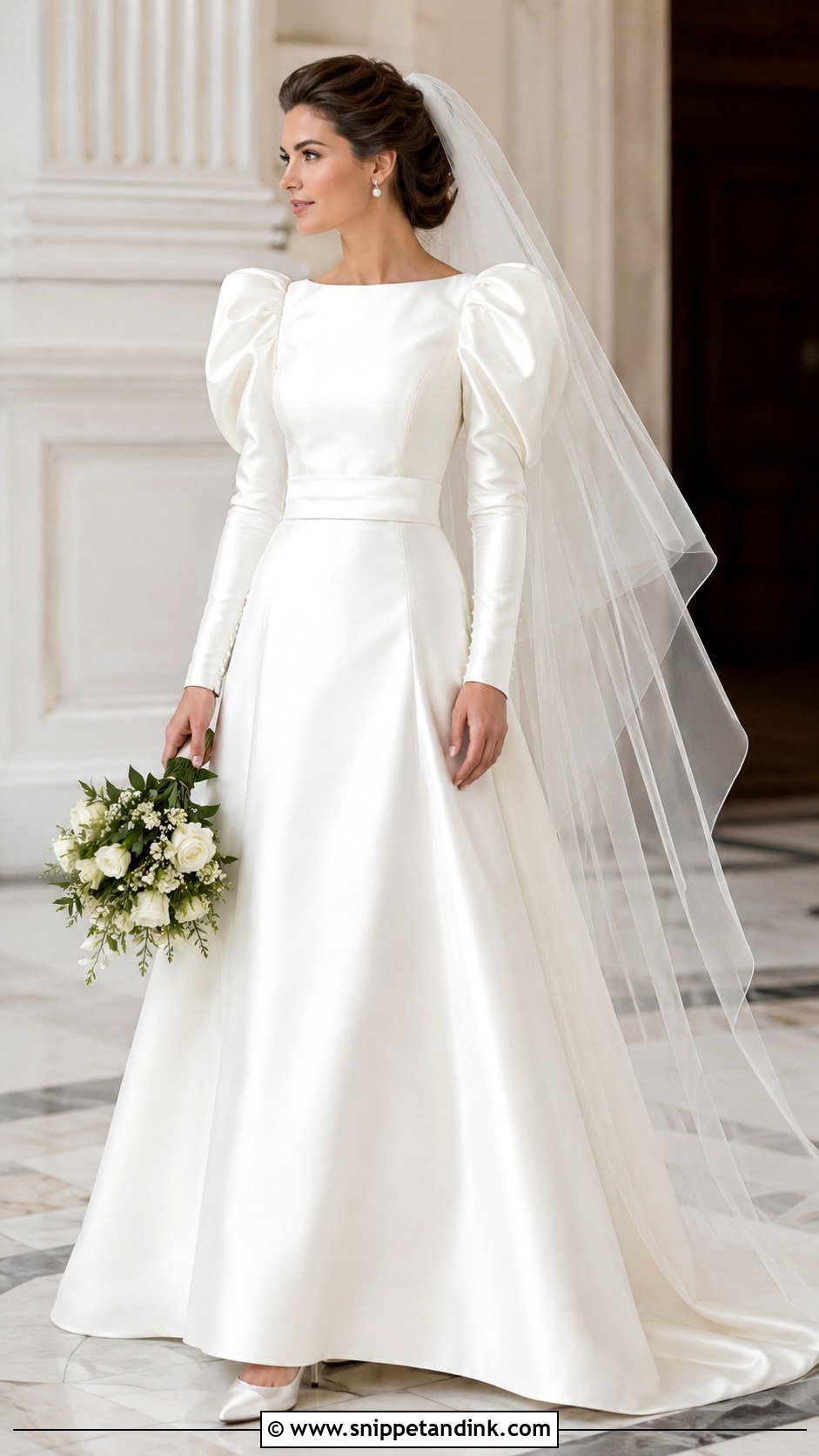
1980s puff sleeves still work when the rest of the dress is held back: moderately rounded shoulders, fitted lower sleeves, a defined waist and a streamlined A-line. Oversized sleeves plus ruffles plus beading plus a huge skirt is too much. Pearl drops, classic pumps, a plain cathedral veil and a smooth bun or half-up style finish it. Many satin gowns from this decade are heirlooms, and a skilled bridal tailor can reshape the sleeves, adjust the neckline and reduce the skirt. I always insist on pinned, temporary fittings before anything is cut, because satin shows old needle holes.
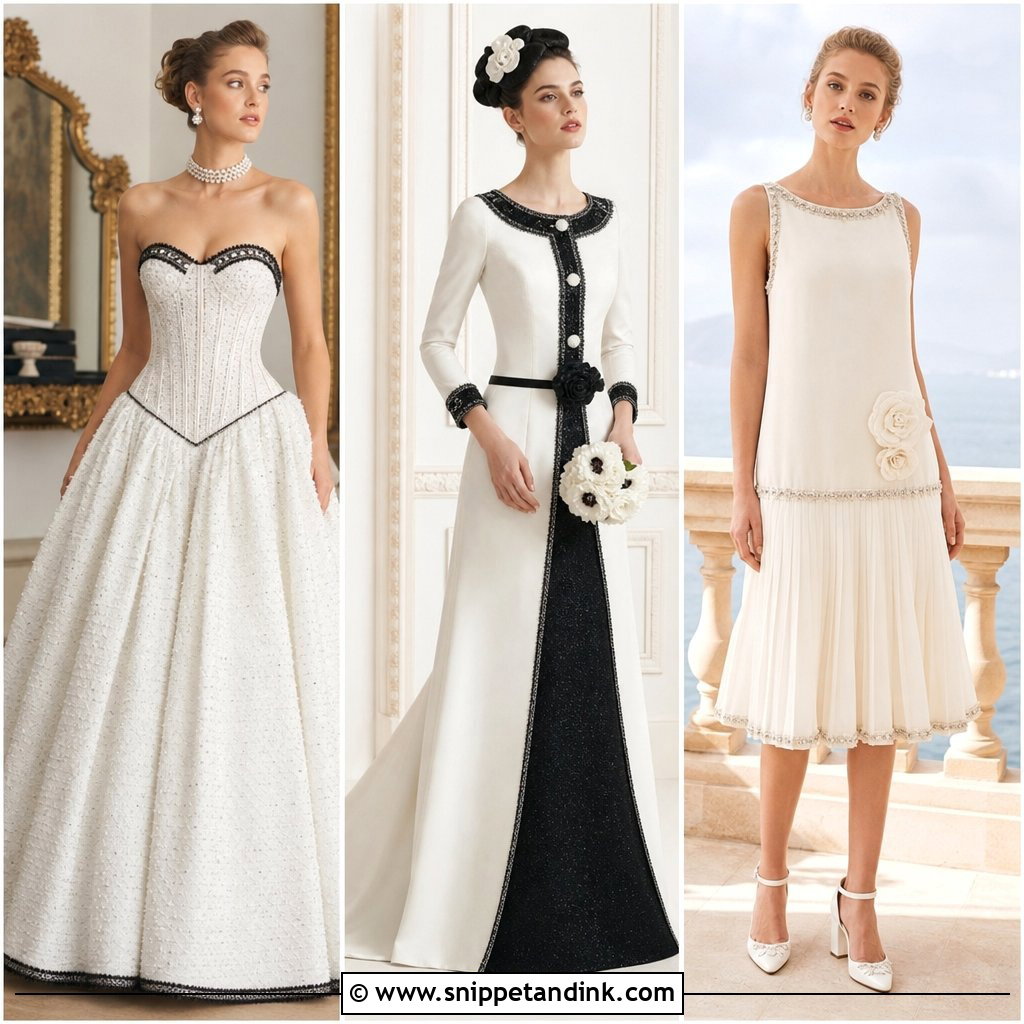


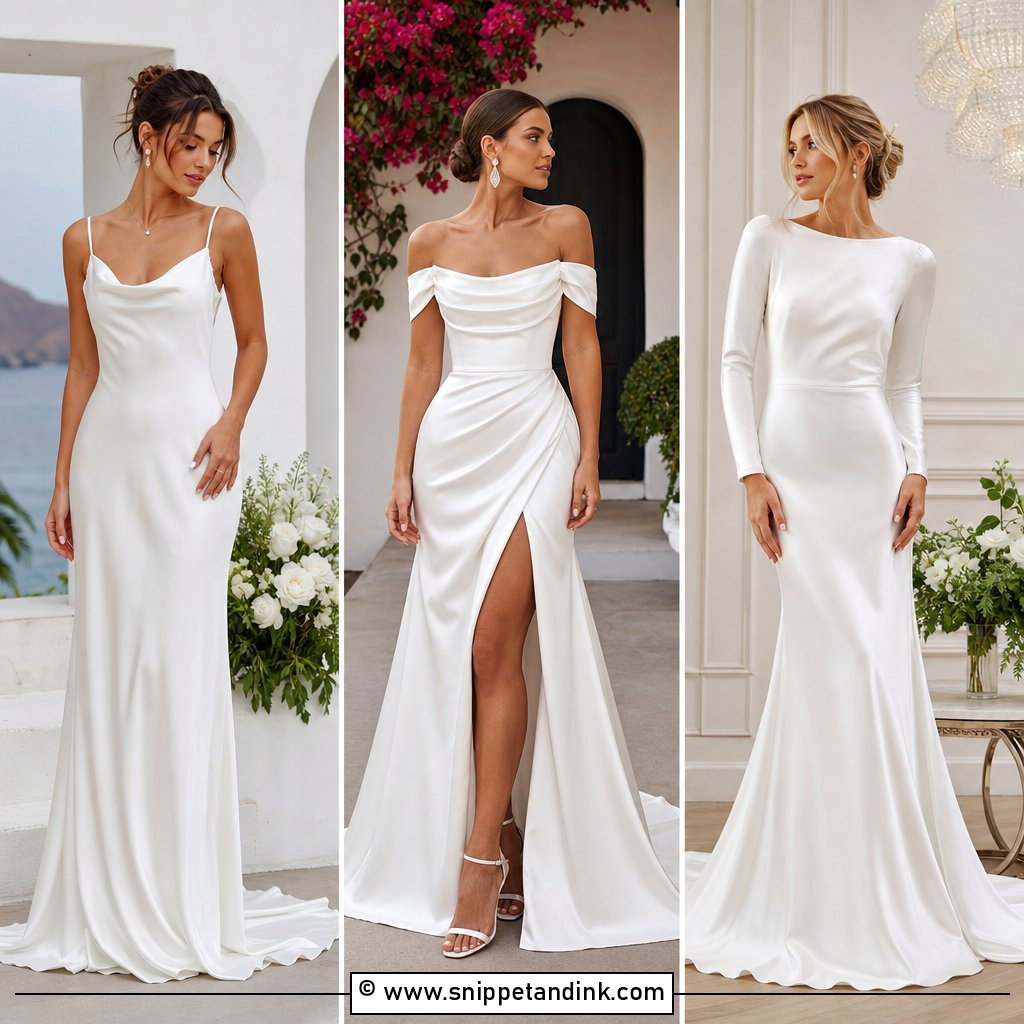
15. 1990s Satin Slip Wedding Dress
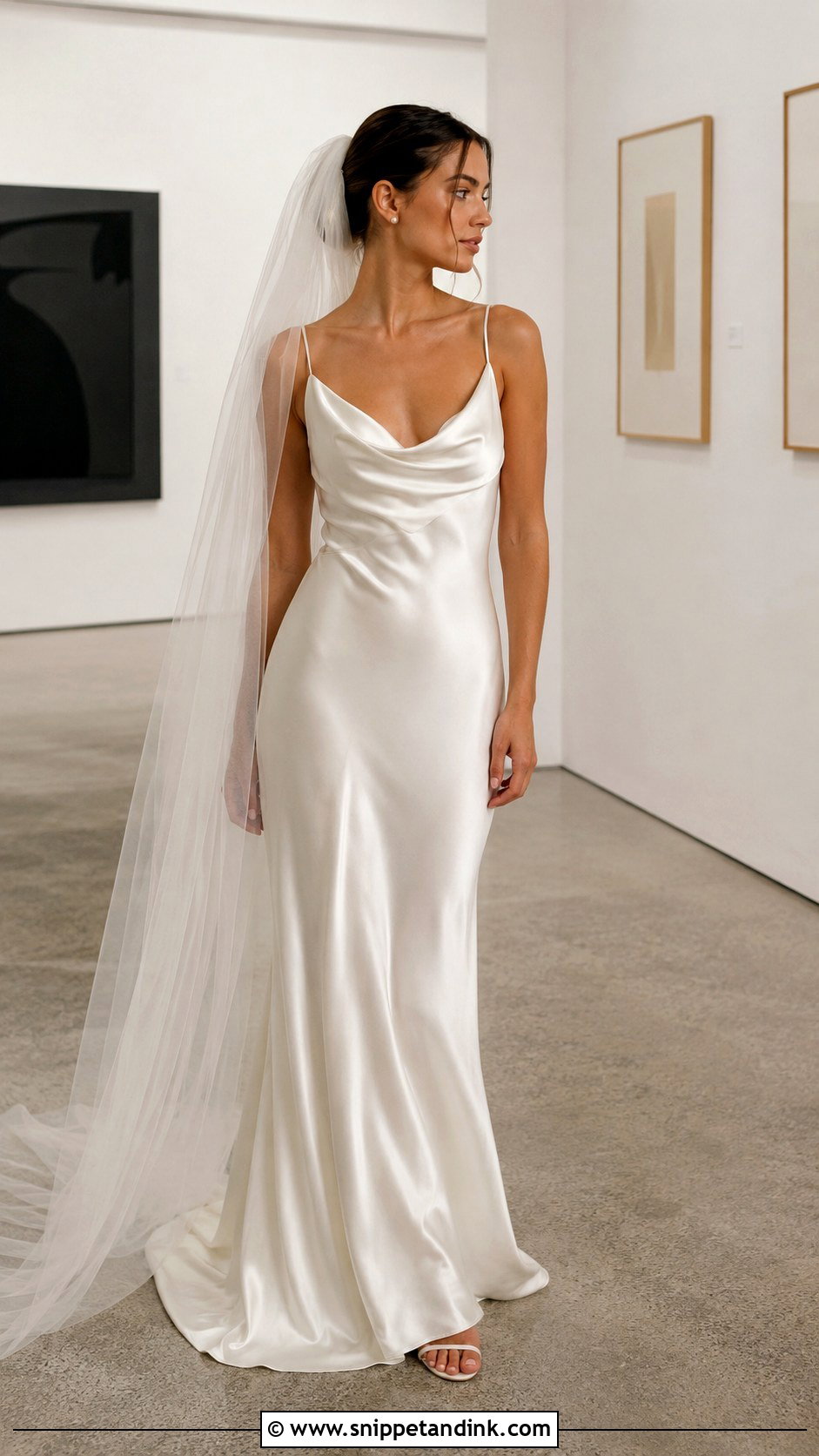
Simple dresses depend on quality. A 1990s satin slip wedding dress needs good fabric, a precise fit and very few accessories. Bias-cut satin with spaghetti straps, a cowl or square neckline and a low back is the classic shape, and it still influences bridal design today. Barely-there sandals, small pearls and a sheer floor-length veil suit it, with a sleek bun. Don’t size down. A slip should skim; if it pulls, it creases across the hips. Try several underwear options, since any seam or texture shows.
16. Art Deco Beaded Satin Wedding Dress
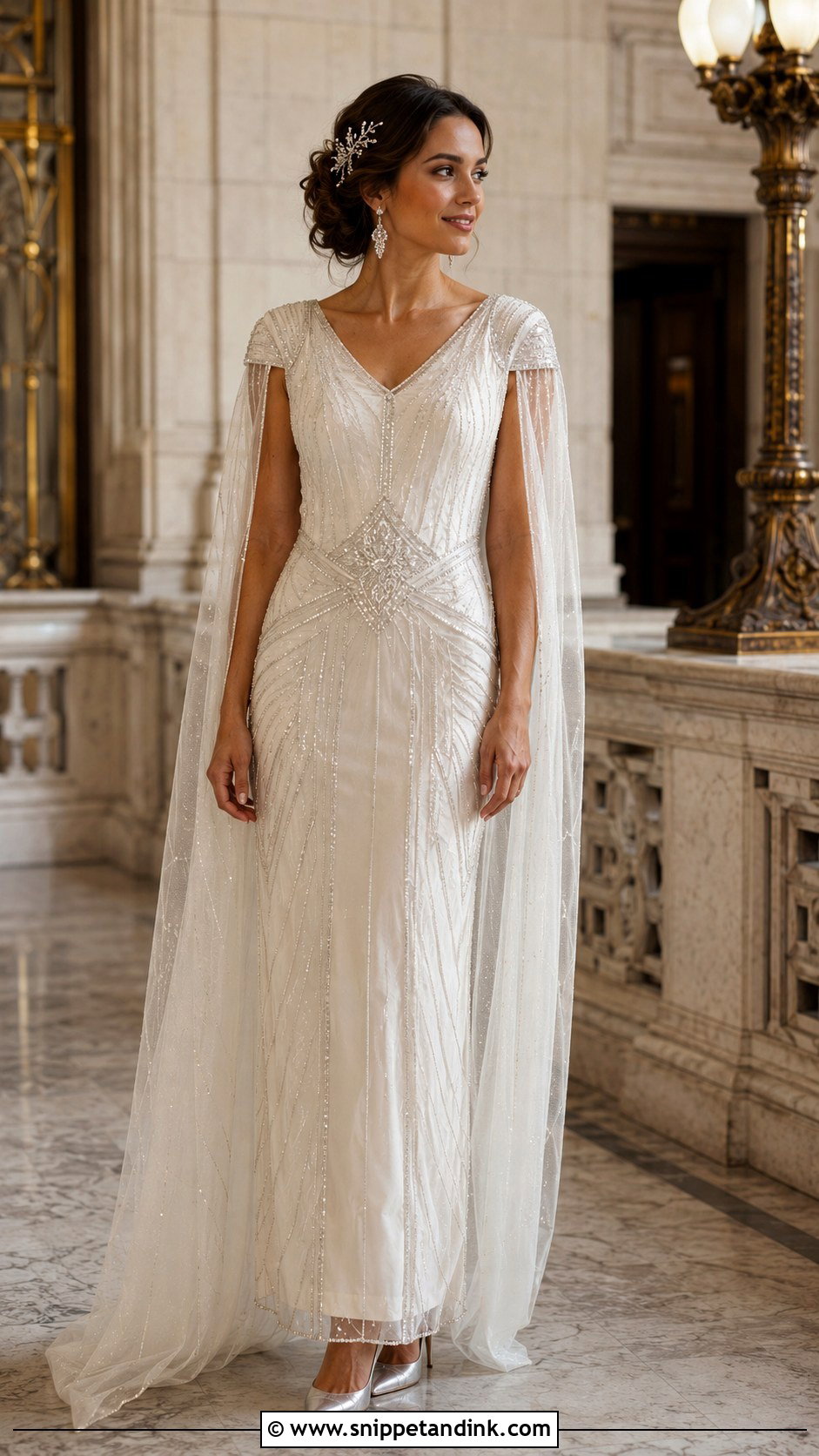
Geometric beading on a satin column with a shallow V-neck and cap sleeves gives an Art Deco look. I’d keep the beading to the neckline or waist, where it frames the body without weighing down the skirt. Silver earrings, a crystal comb and metallic closed-toe heels support the period. A soft tulle veil or a light cape veil won’t compete. Check the inside: beads should be backed so they don’t scratch your arms. After the wedding, store it flat or fully supported, because hanging beaded satin stretches.
17. Edwardian Lace Trim Satin Wedding Dress
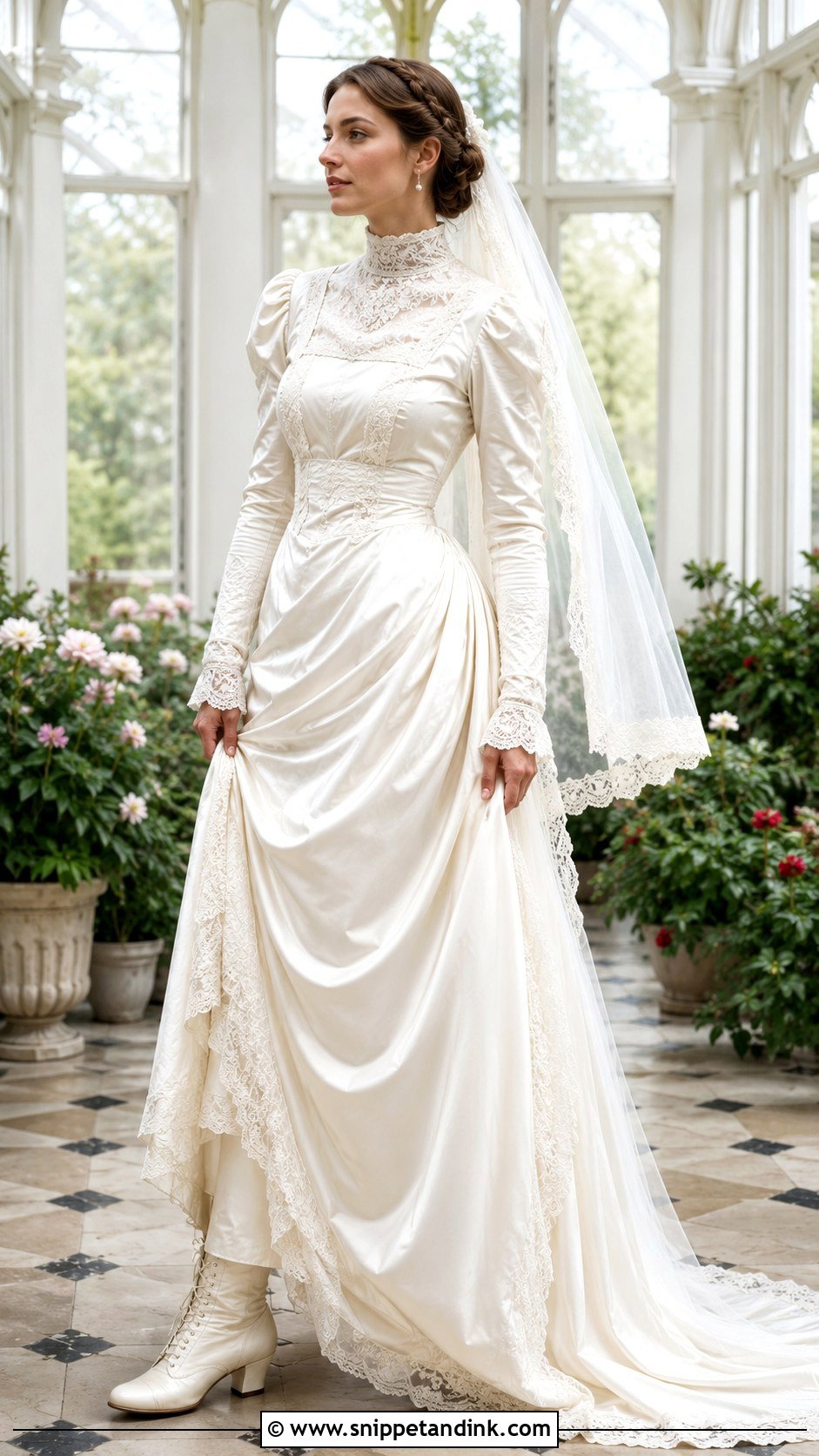
Lace trim brings an Edwardian-inspired softness to satin while the satin keeps its glow. A high neckline, lightly puffed shoulders, fitted sleeves and a natural or slightly raised waist suit it. I keep the lace to the collar, cuffs and bodice. Buttoned ivory boots, pearl earrings, a lace-edged veil and a low braided bun complete the look. Lace at the throat and wrists rubs all day, so choose a soft lace and ask for a smooth backing where it meets the skin. A lightly gathered skirt is much easier to wear than full period volume.
18. Satin Wedding Dress With Cape
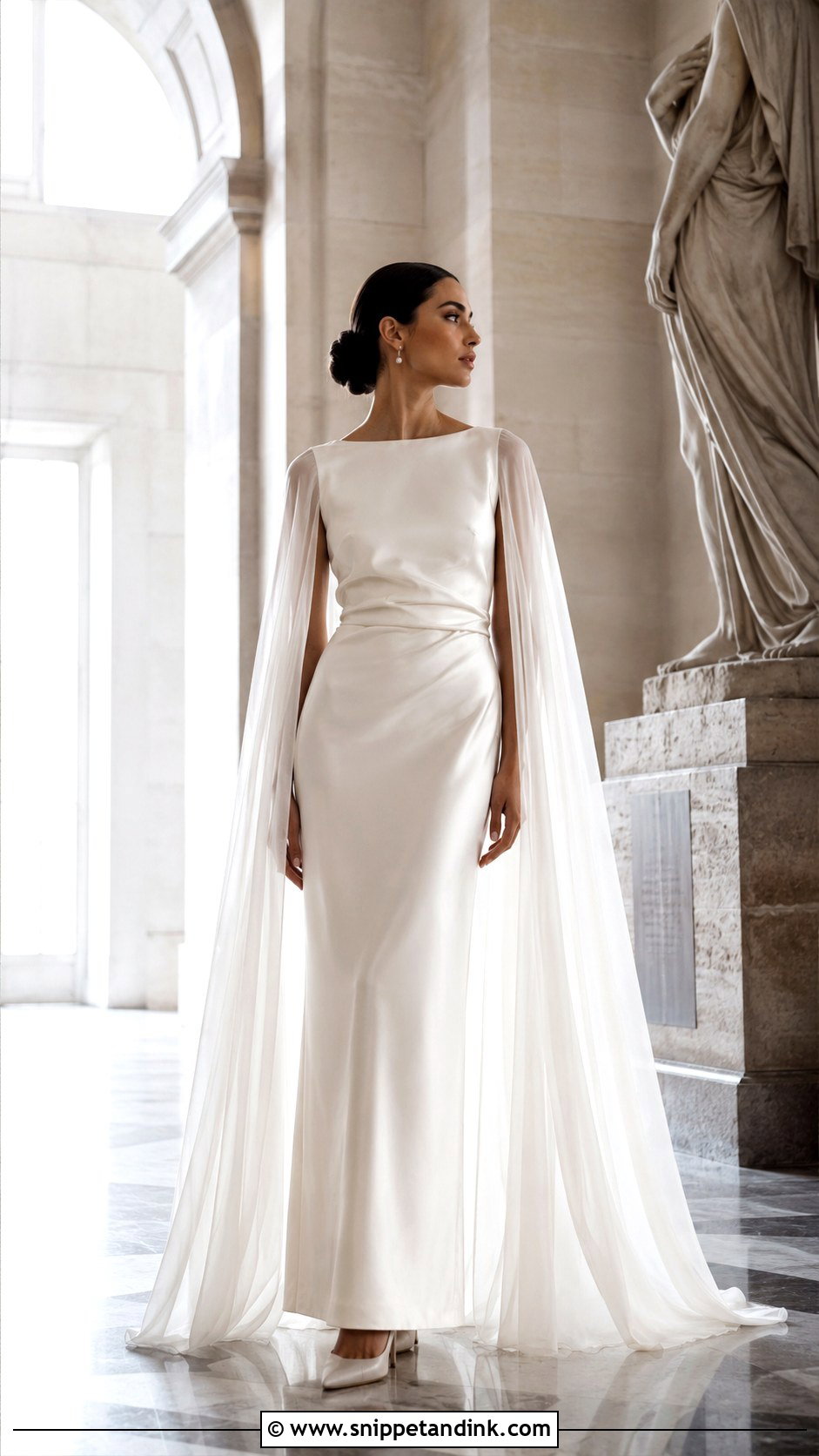
A cape gives drama and shoulder coverage without sleeves. A simple column or A-line with a clean neckline is the right base. A sheer chapel-length cape moves softly; a structured satin capelet looks sharper and more mid-century. Pointed pumps, pearl earrings and a sleek low bun finish it, and if the cape trails into a train, I leave out the veil. How it attaches matters. Tiny loops or hidden snaps at the shoulders should hold it without pulling the gown backward, and you can remove it after the portraits.
19. Satin Wedding Dress With Detachable Train
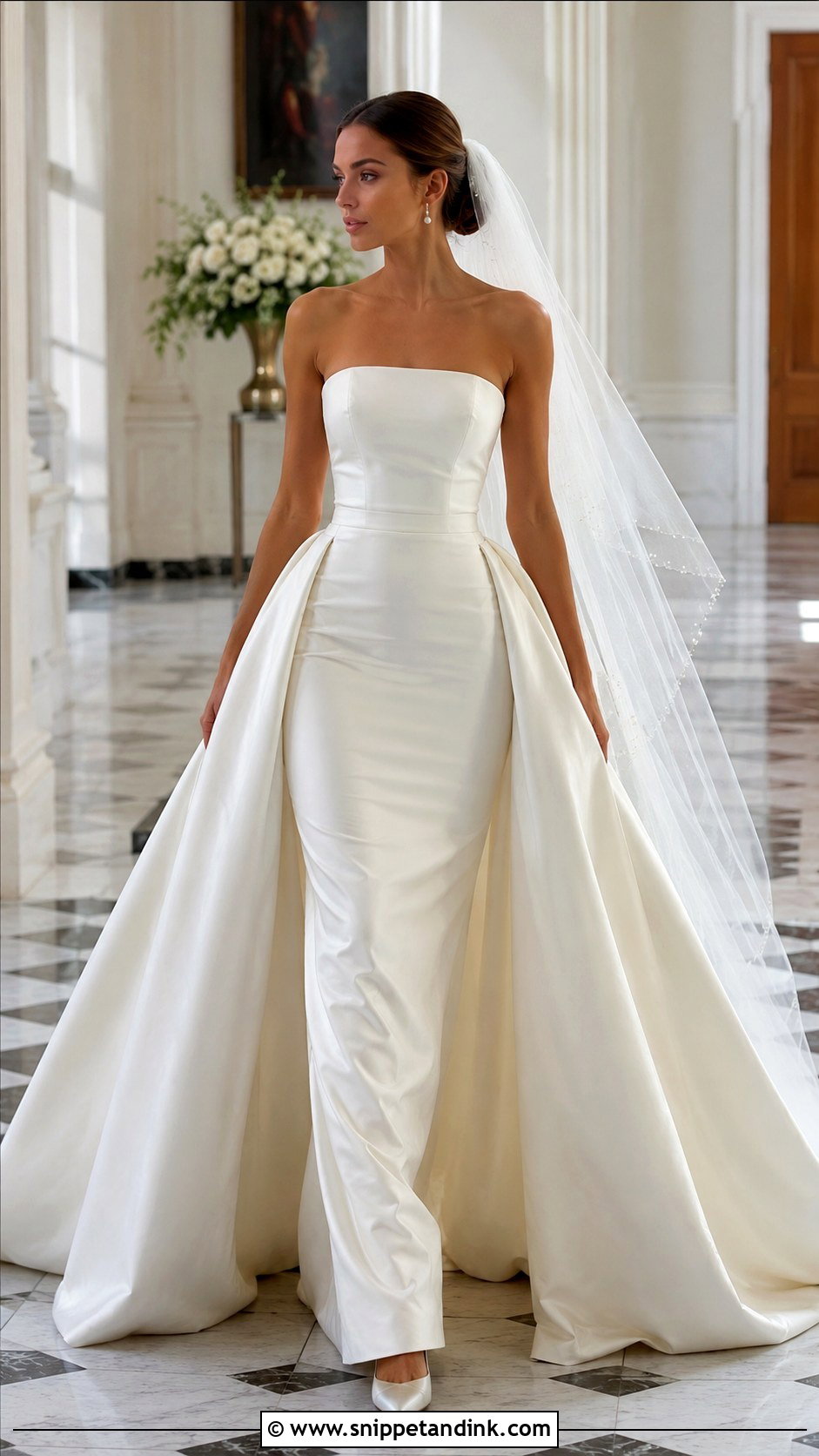
A detachable train lets you have a formal entrance and a practical reception in one dress. Start with a fitted column, a tea-length dress or a slim A-line, then attach an overskirt or a watteau train, which falls from the upper back, at the waist or shoulders. Pair it with pearl earrings, satin pumps and a fingertip veil that won’t tangle in the train. The fastenings must be hidden and easy for an attendant to release, so practice at least once. Once the train is off, the dress should still look finished; covered buttons or a defined waist seam can hide where it attached.


20. Vintage Satin Courthouse Wedding Dress
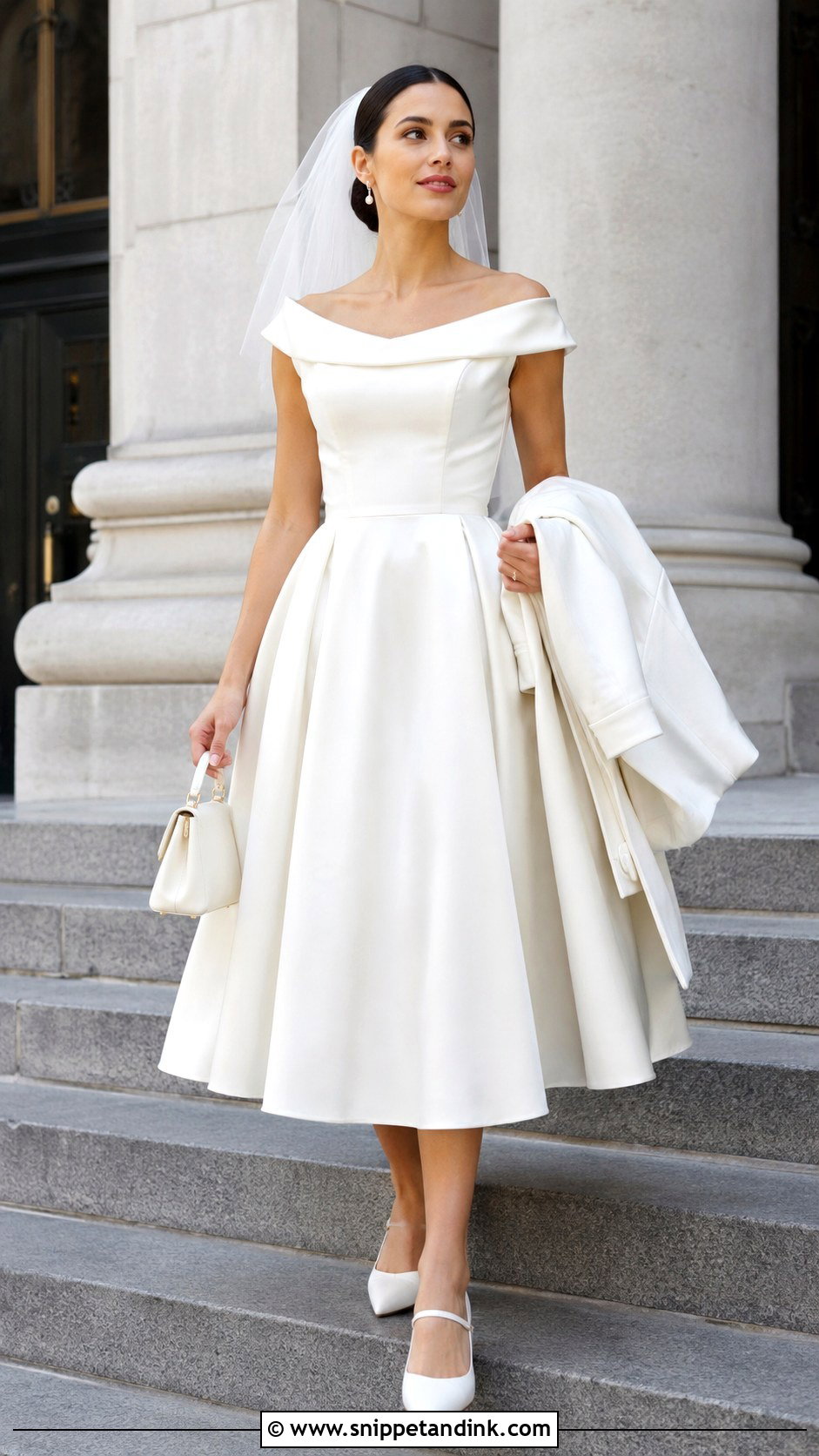
City hall dresses need to handle sidewalks, stairs and a small room, so I keep them short or simple: a tea-length fit-and-flare, a long-sleeve midi or a satin mini with a structured neckline. Satin, a decorative headpiece, statement shoes and a tailored outer layer make even a plain outfit feel bridal. Slingbacks, pearl earrings, a short veil and a top-handle bag complete it. Add a cropped jacket or a full-length white coat in cold weather. Leave the train at home; it’ll be dragging through street grit by the first photo.
Creases, Water Spots and the Car Ride
Satin looks perfect on the hanger and starts creasing the moment you sit down. That’s normal, and you can plan around it. I’d do the main portraits before the car journey whenever possible, or bring a handheld steamer to the venue with someone who knows how to use it on the reverse side, at low heat, from a distance.
- In the car, sit on the skirt’s lining rather than the satin, and spread the skirt across the seat instead of bunching it under you.
- Never dab a drink spill with water. Water leaves a ring on satin that is often harder to remove than the original mark; blot gently with a dry white cloth and leave it.
- If rain is possible, carry a clear umbrella and keep the hem lifted with a bustle or a wrist loop.
- Chalk or a white stain-removal pen is better than wet wipes for small marks on the hem, but test it inside the seam first.
After the wedding, have the dress professionally cleaned as soon as you can, even if it looks clean. Sugar from drinks is invisible at first and can turn brown on satin over the following months.
The Weight of the Satin Decides the Era
Satin can be fluid and quiet or structured and dramatic, and that depends almost entirely on its weight and how it’s cut. Look at the whole outfit, not just the gown: shoes, veil, gloves, jewelry, outerwear and hair all tell people which decade you’re referencing. They should support the dress rather than compete with it. Book alterations early, buy your underwear before the first fitting and practice moving in the finished dress. A 1930s bias cut, a 1950s tea length or a 1990s slip will feel natural once all of that is in place.
You'll Like These Ideas:










Leave a Reply