
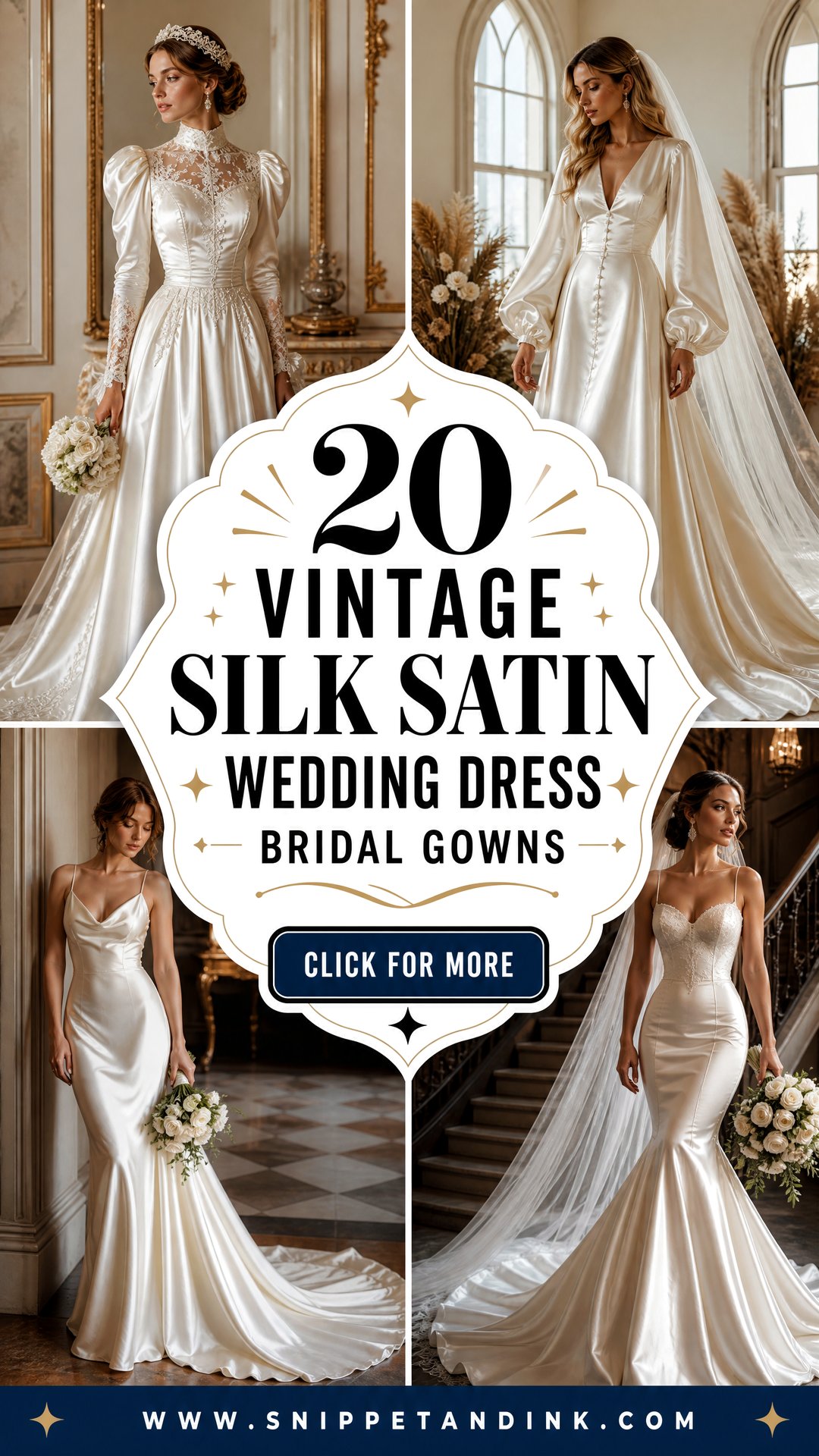
Is It Really Silk? Reading a Satin by Weight and Shine
Satin is a weave, not a fibre. The shine comes from long threads floating on the surface, and those threads can be silk, polyester, acetate or a blend. That’s why two dresses both labelled satin can look and behave completely differently.
- Silk charmeuse is light and fluid, with a soft glow. It’s the fabric of thirties bias gowns and nineties slips, and it shows everything underneath.
- Duchess satin is heavy and structured, often silk or a silk blend. It holds pleats, ball skirts and crisp bodices.
- Polyester satin is cheaper and tougher, with a brighter, glassier shine. It holds heat against the body and builds static more easily.
When I’m not sure what I’m looking at, I check three things. Silk feels cool and warms quickly in your hand. Its shine is softer and slightly deeper than polyester. And the label should give the fibre content; if it just says satin, ask. Neither choice is wrong, but you should know which one you’re paying for, because silk needs gentler handling on the day and after it.
1. Edwardian Silk Satin Wedding Dress
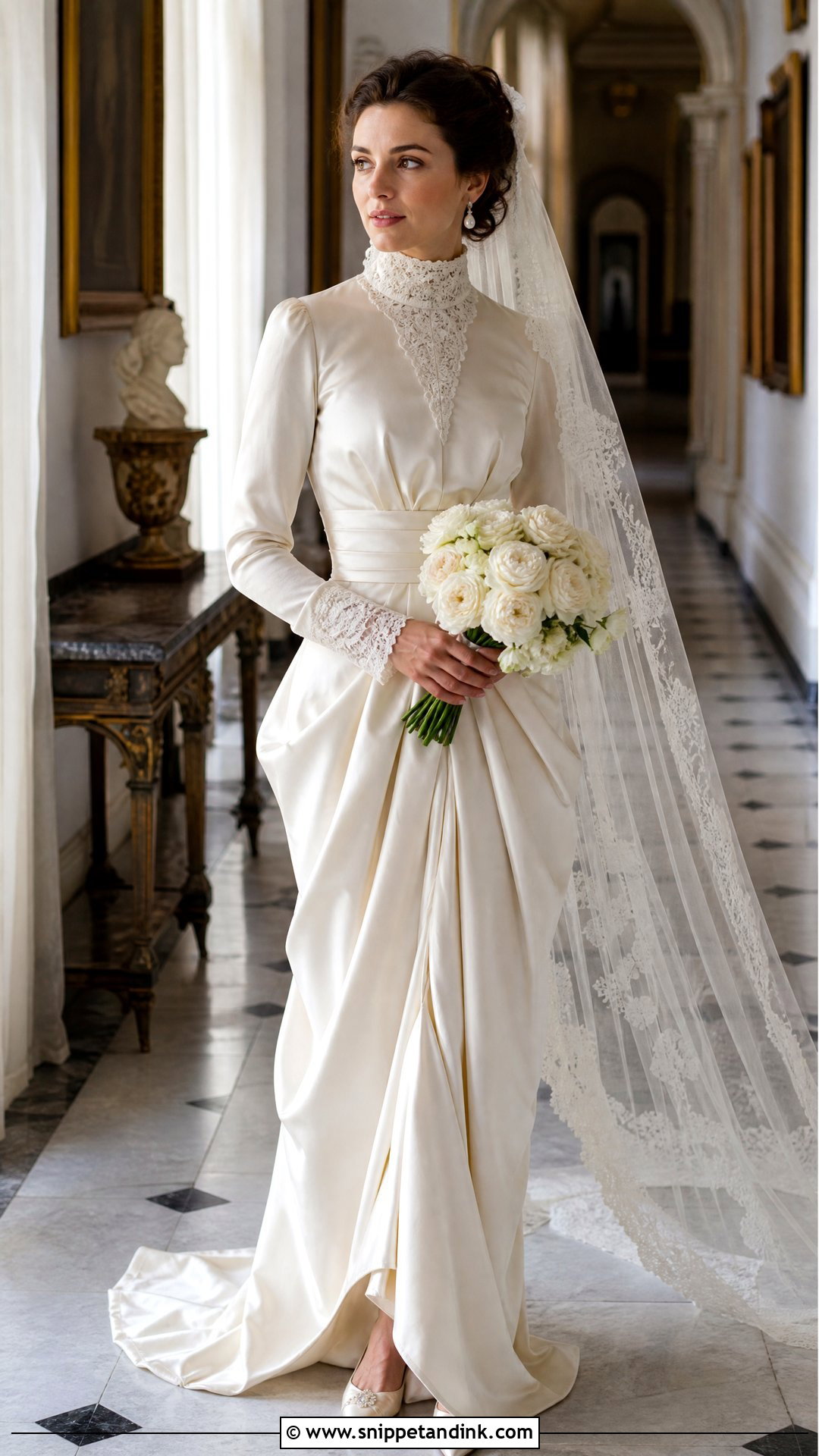
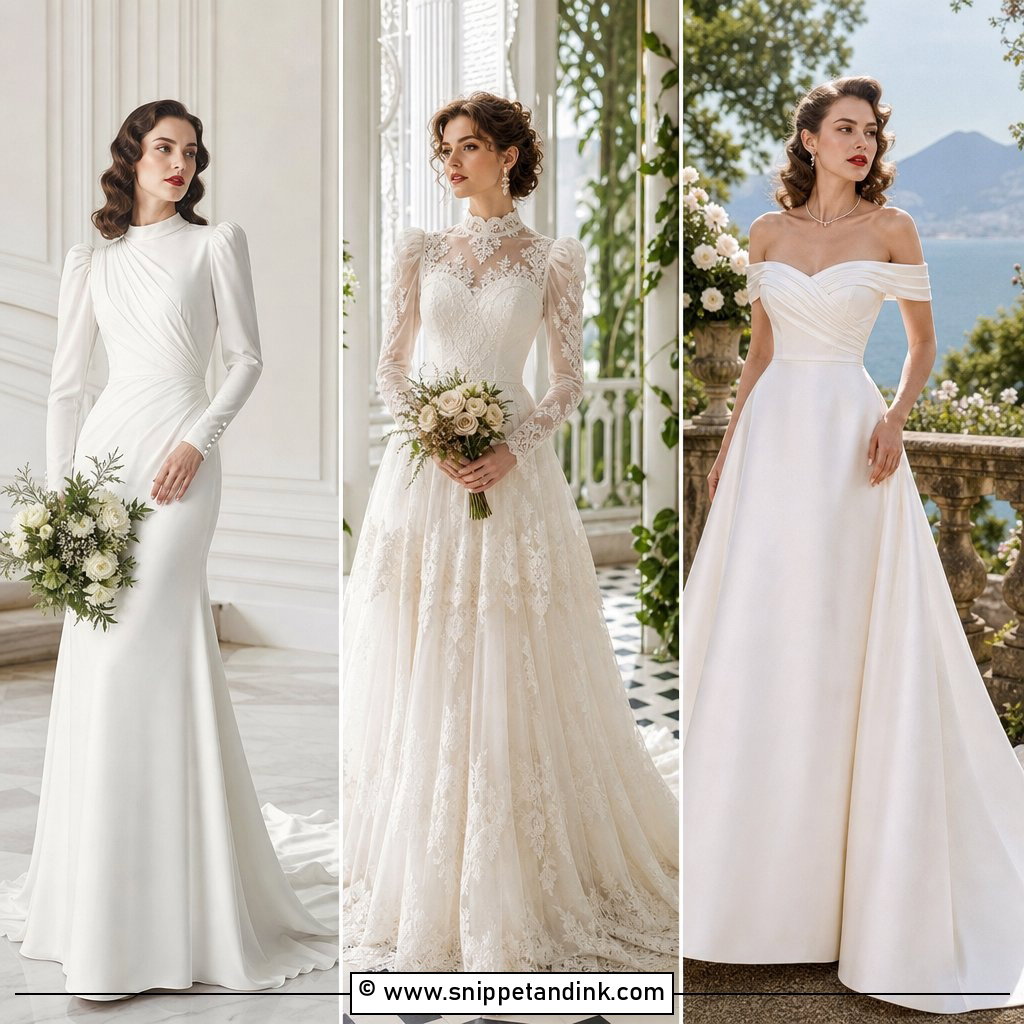
An Edwardian silk satin wedding dress pairs a high neckline and fitted bodice with a softly gathered floor-length skirt. Lace at the collar, cuffs and upper bodice keeps the satin from looking severe, and long sleeves give coverage without weight. Small covered buttons and a defined waist add the period structure. Ivory pointed pumps, pearl drops and a lace-edged cathedral veil under a neat low bun suit it, with loose garden roses and trailing greenery. If you buy a genuine Edwardian piece, I’d have every seam checked before you even try it on properly. Silk of that age splits along stress points, and reinforcing it first saves a heartbreaking tear in the fitting room.
2. 1920s Drop Waist Satin Wedding Dress
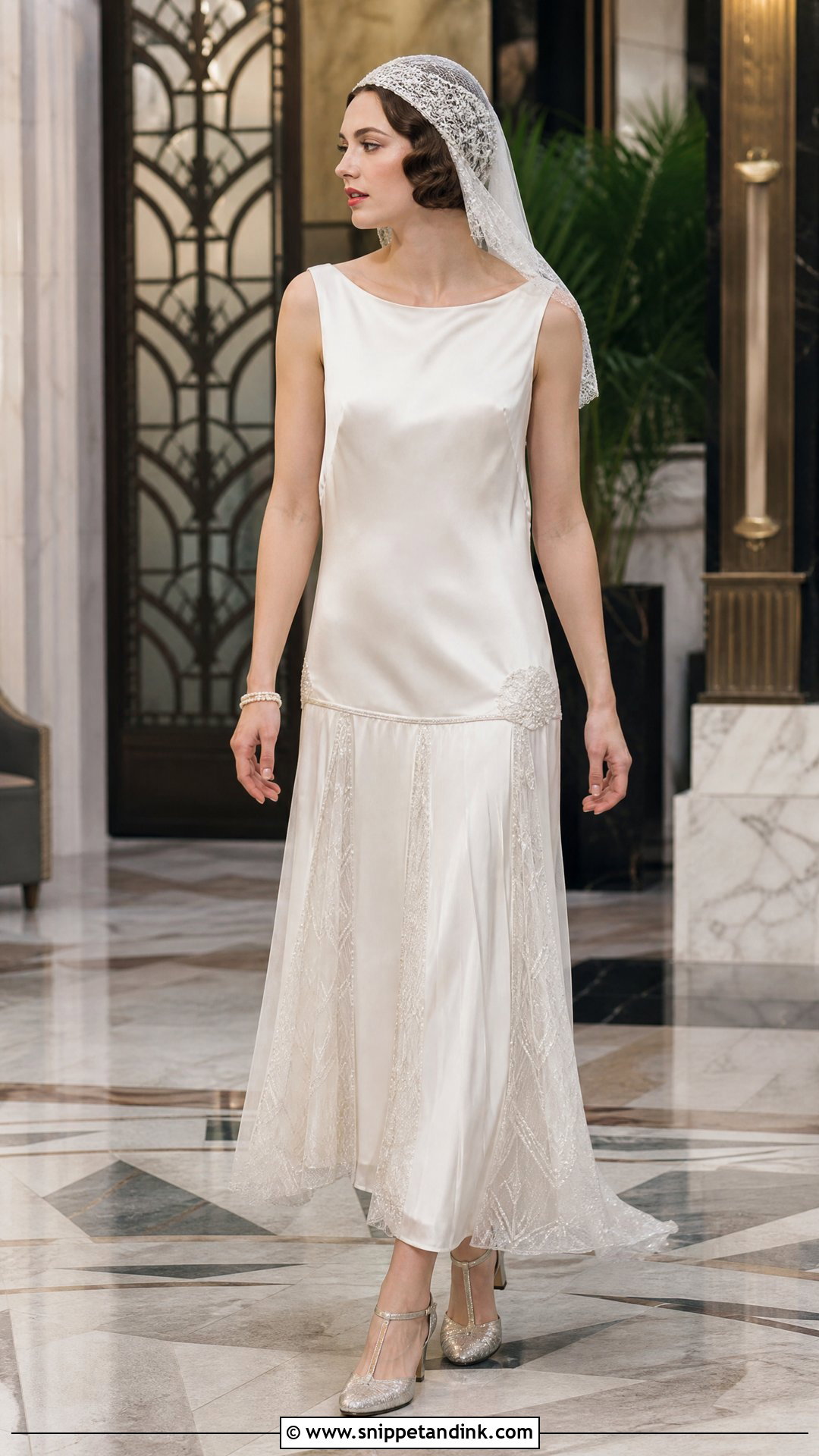
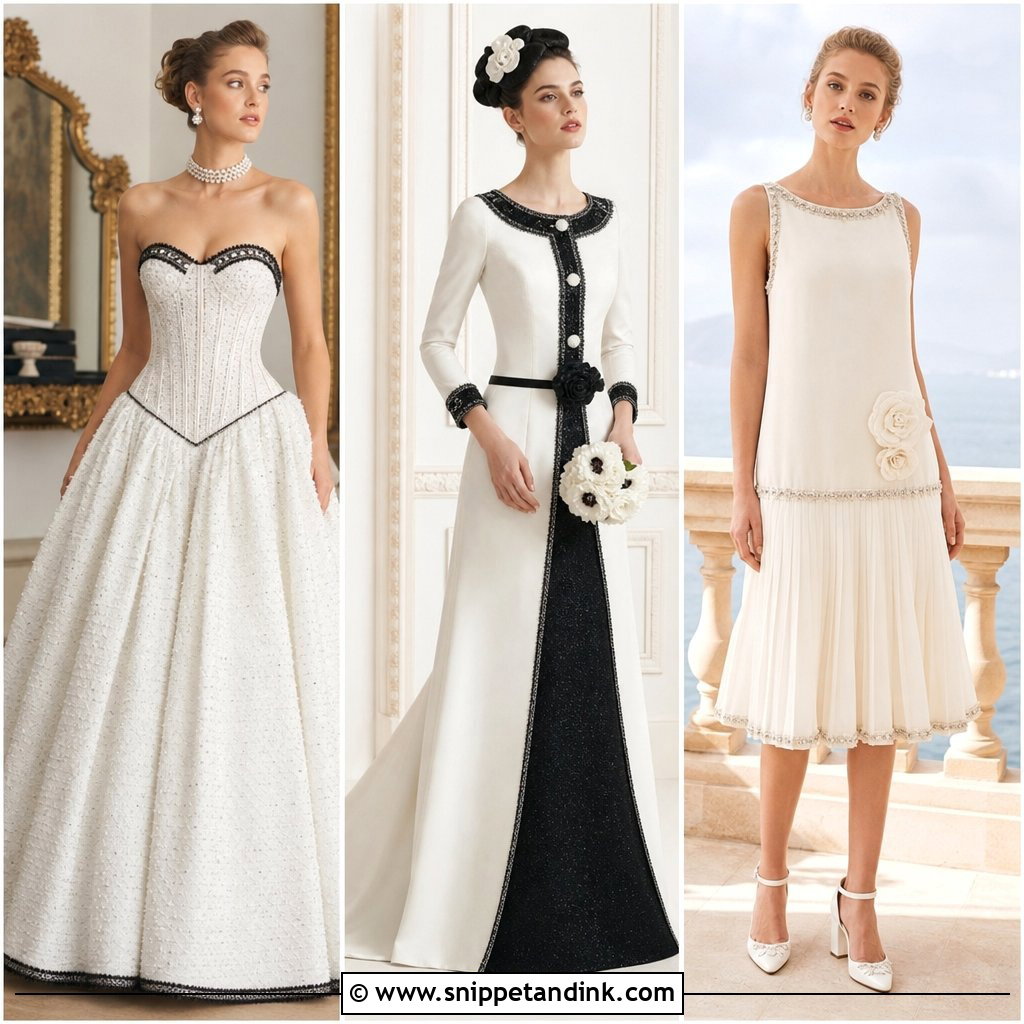
A drop waist gives a long, relaxed line straight out of the twenties, when low waists and straight shapes with decorative movement defined the decade. Choose a sleeveless ivory silk satin gown with a bateau neckline, a low seam and lightly beaded skirt panels. Floor length feels more bridal than a short flapper dress. Silver T-strap heels, a pearl bracelet and a beaded cap veil over soft waves suit it, with a compact bouquet. Satin on a drop waist shows the seam clearly, so I always check where it falls against the widest part of the hip. A centimetre too low and it pulls across the seat when you sit. Art Deco venues and hotel ballrooms suit it.
3. 1930s Bias Cut Satin Wedding Dress
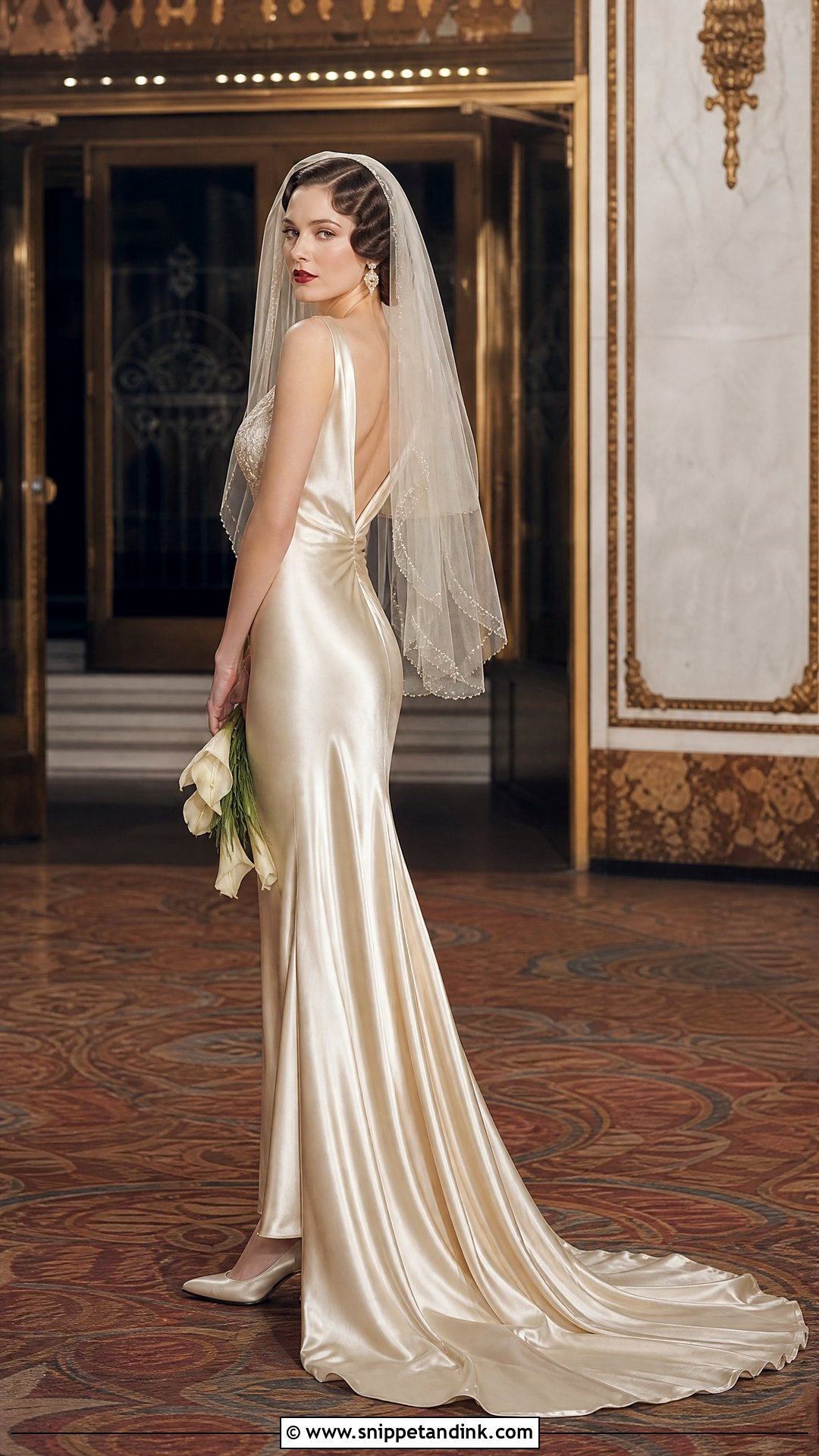
Silk satin cut on the bias gives that famous thirties liquid drape. Cutting across the grain lets the cloth fall around the body instead of holding a stiff shape. A softly gathered bust, natural waist, low back and slim train are the classic details, in ivory or pale champagne. Closed satin pumps, crystal drops, a fingertip veil on a side comb, soft waves and glowing makeup finish it. Bias silk is the most honest fabric there is: it shows every line underneath and every extra centimetre of fit. It also stretches as it hangs, so a careful seamstress lets it rest overnight before marking the hem. Evening ceremonies and restored theatres suit it.
4. 1940s Long Sleeve Satin Wedding Dress
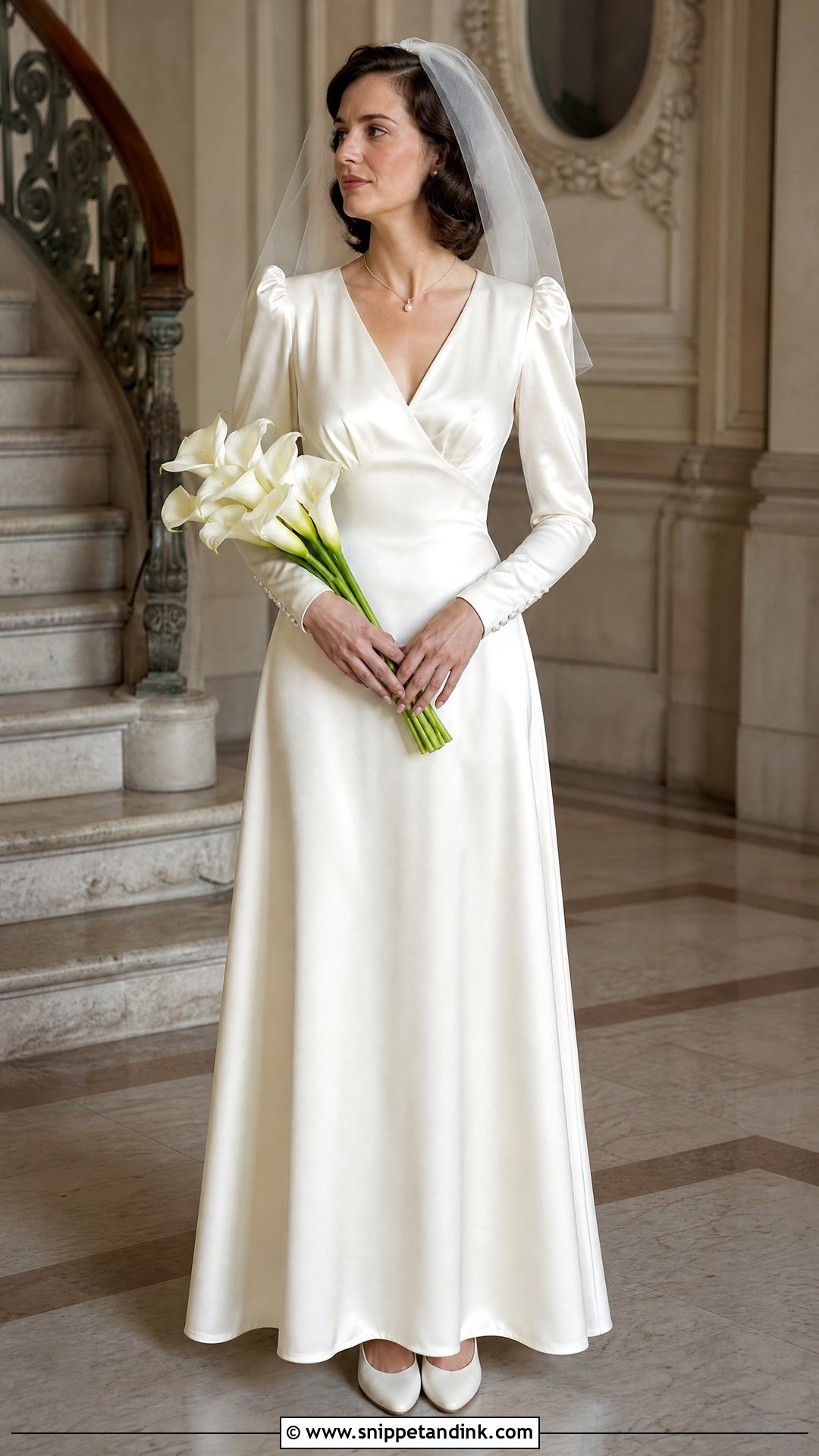
Crisp shoulders and a defined waist give the forties satin gown its tailored confidence. A modest V-neck, softly structured shoulders, fitted sleeves and a skirt opening into a gentle A-line is the shape, with covered buttons running down to the wrist. Ivory block-heel pumps, a pearl pendant and a shoulder-length veil above a rolled updo suit it, with calla lilies. Keep the jewelry small, since a heavy piece competes with the neckline and with the sheen of the satin. Fitted satin sleeves crease badly at the inner elbow, and silk creases hold. I’d ask for a slightly roomier sleeve; it photographs smoother over a long day. Autumn and winter weddings suit it.
5. 1950s Satin Ball Gown Wedding Dress
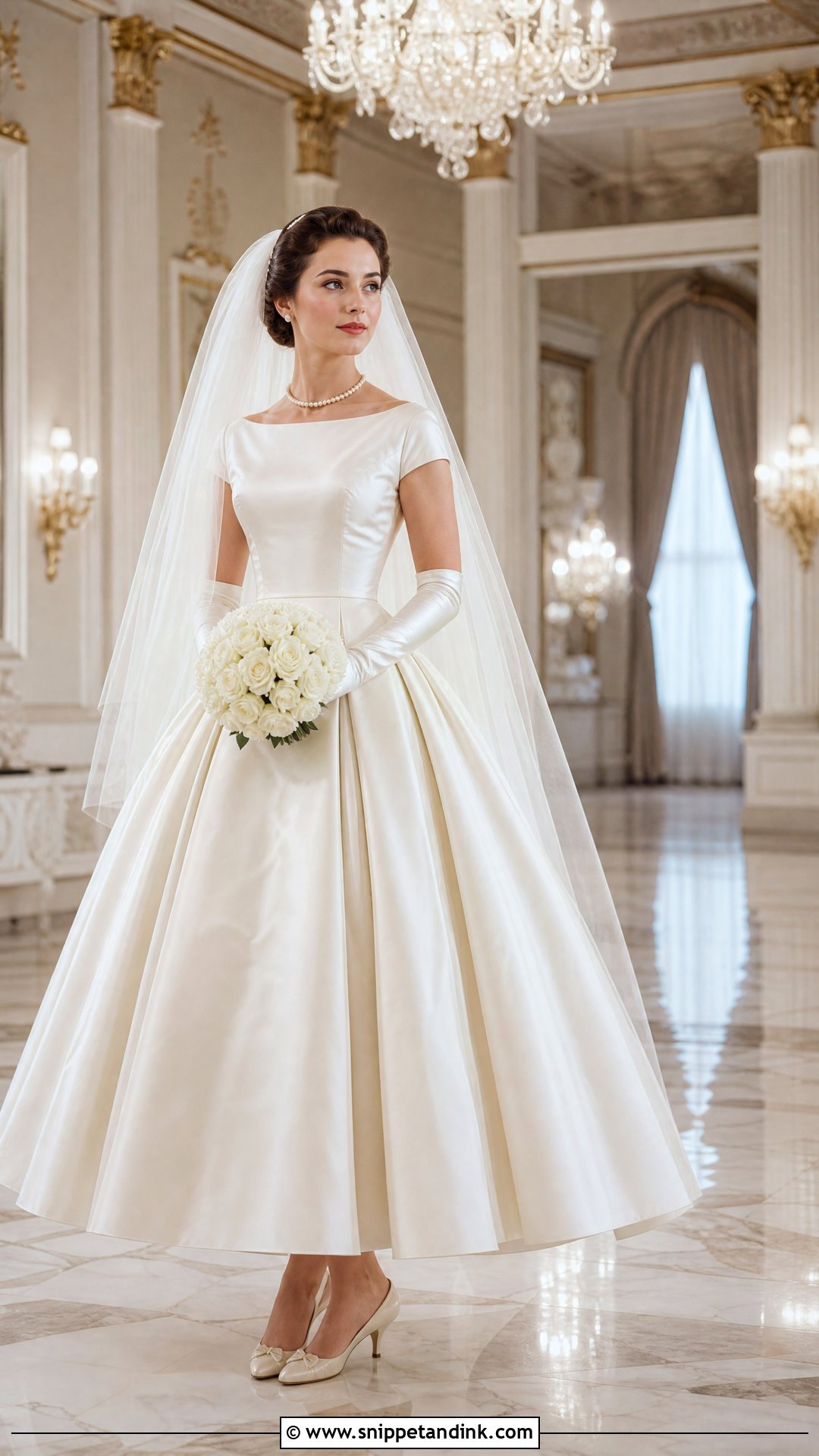
A 1950s satin ball gown is the classic bridal silhouette: fitted bodice, narrow waist and a dramatic full skirt. The silk satin needs real weight to hold pleats without looking stiff, which is why duchess satin is the usual choice. A bateau or sweetheart neckline suits elbow gloves and a fine pearl necklace; add ivory kitten heels, a small top-handle bag and a waist-length veil on a pearl comb, with a round bouquet. For petite brides, I suggest box pleats instead of layers of petticoat. You keep the shape and lose the bulk that can swallow a small frame. Grand ballrooms suit it best.
6. 1960s Column Satin Wedding Dress
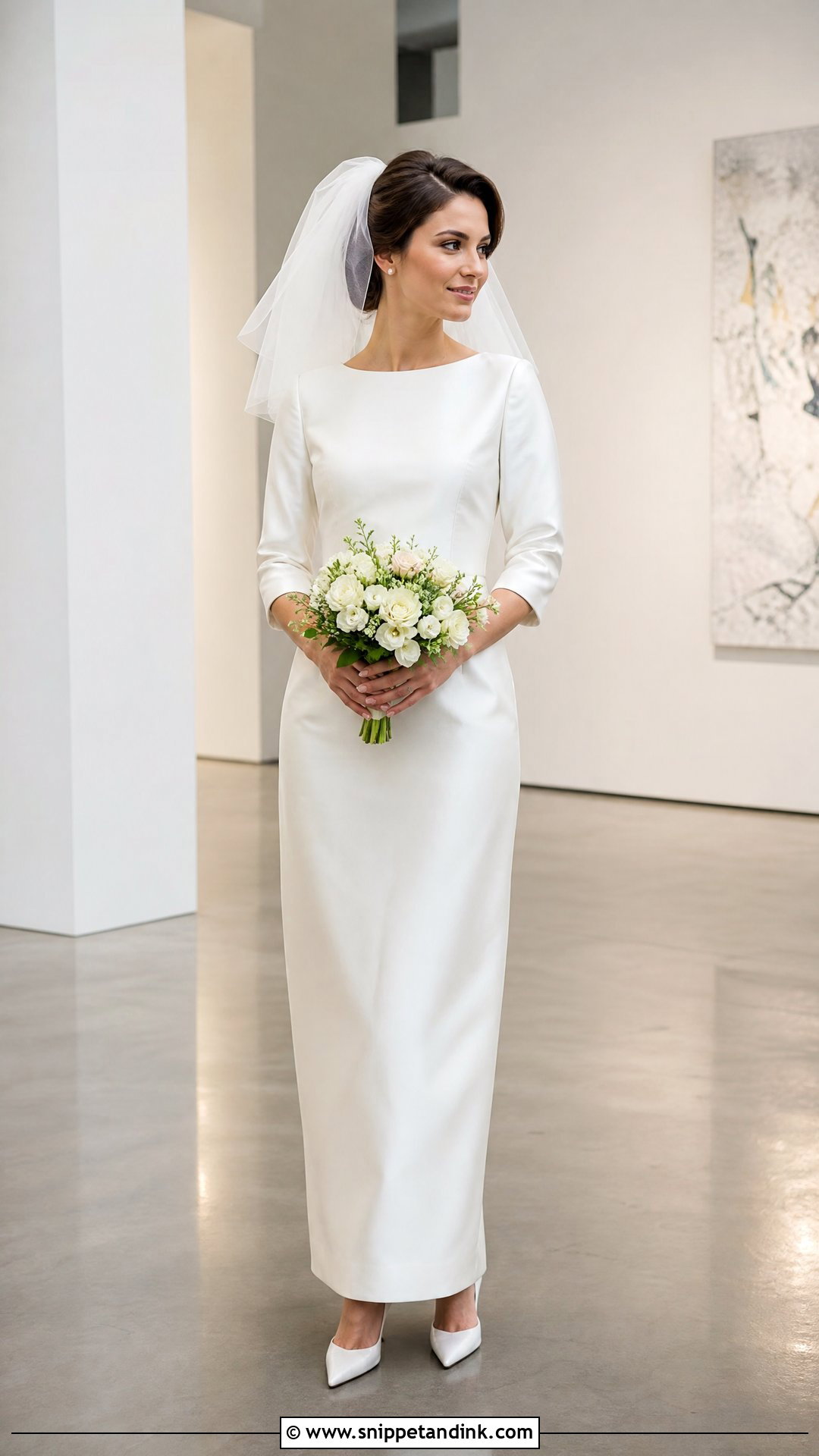
A sixties column suits a bride who wants vintage character without decoration. Ivory silk satin with a jewel neckline, fitted upper body and a straight skirt that skims the hips is the shape; three-quarter sleeves or sleeveless both work. Pointed kitten heels, pearl studs and a short bouffant veil give the period nod, with a polished low bun and a compact tulip bouquet. A column has nowhere to hide uneven seams, and satin magnifies them. Ask for a small back slit or kick pleat at the first fitting rather than discovering on the day that you can only shuffle. Courthouses, galleries and intimate hotels suit it.
7. 1970s Bishop Sleeve Satin Wedding Dress
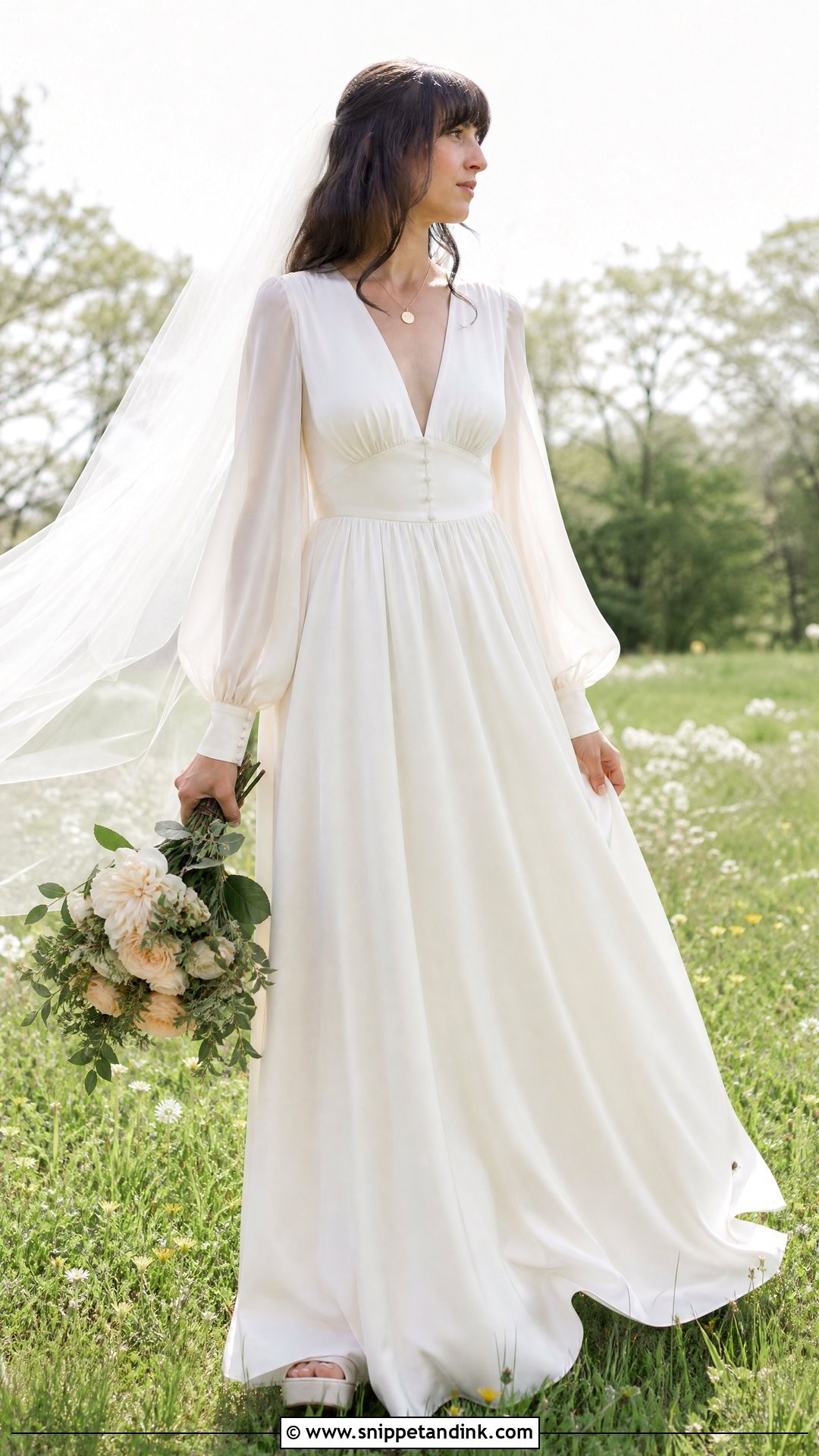
Bishop sleeves bring movement to a seventies satin gown. Soft silk satin with a narrow V-neck, empire or natural waist and a lightly gathered skirt is the base; sheer chiffon sleeve panels soften the satin, and fitted cuffs define the wrist. Platform sandals, a fine gold pendant and a long unstructured veil under loose waves suit it, with daisies and garden roses. On the practical side, chiffon and satin react differently to steam, so the sleeves need a lower heat than the body of the dress. Keep the waist seam smooth and the accessories minimal. Meadows and woodland estates suit the mood.
8. 1980s Puff Sleeve Satin Wedding Dress
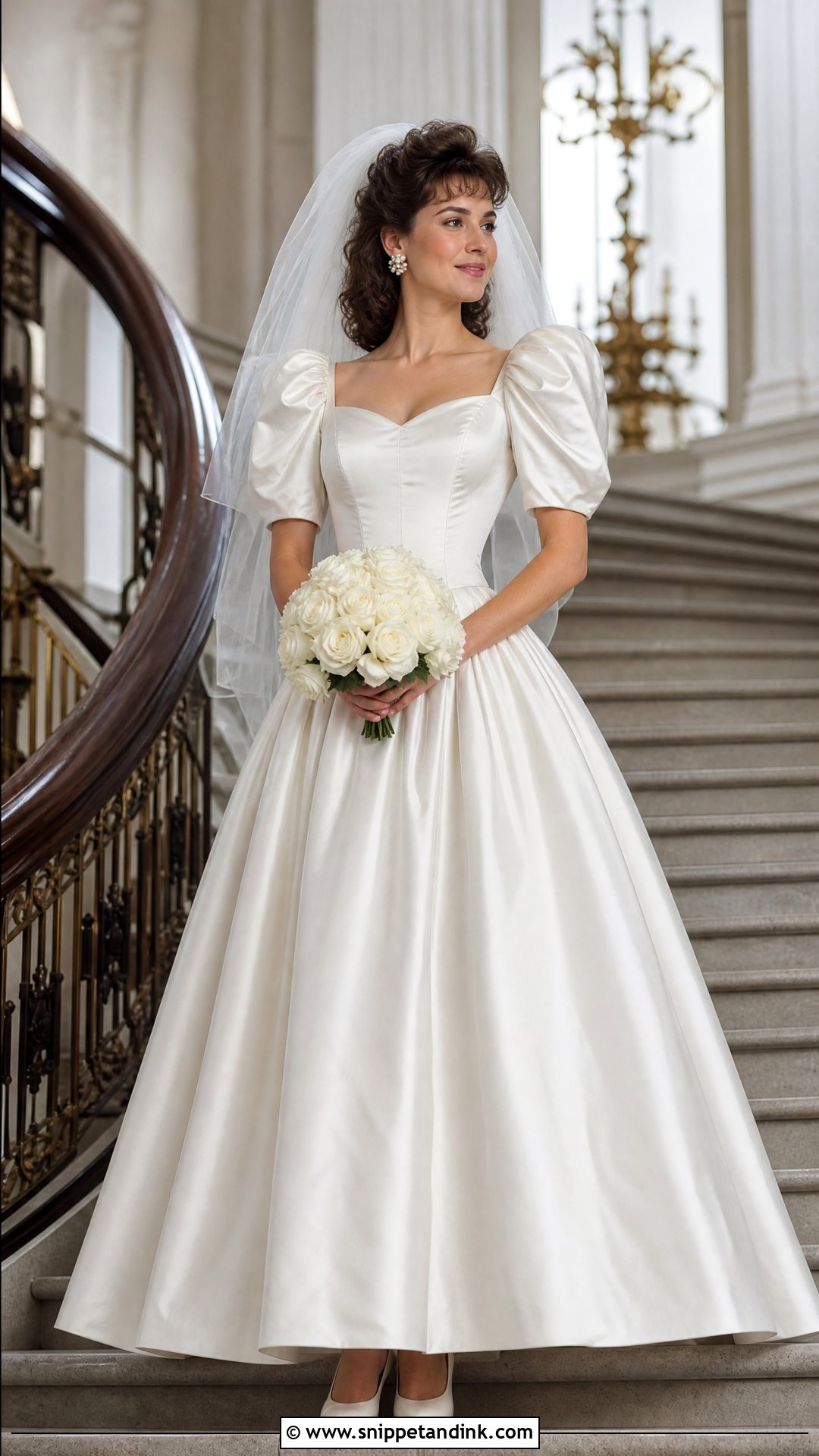
An eighties puff sleeve in satin looks refined when the volume is kept in check. A silk satin gown with rounded shoulders, a fitted basque bodice and a full skirt from a sharp waist is the shape; moderate sleeves look current where huge ones look like fancy dress. Plain ivory pumps, pearl cluster earrings, a medium veil with a cut edge and a sleek bun suit it, with a structured rose bouquet. Satin puffs need an inner net to stay round, so I check inside the sleeve before anything else. Loose sleeves or a slack waist throw the proportions off quickly. Formal ballrooms and large historic venues suit it.
9. 1990s Silk Satin Slip Wedding Dress
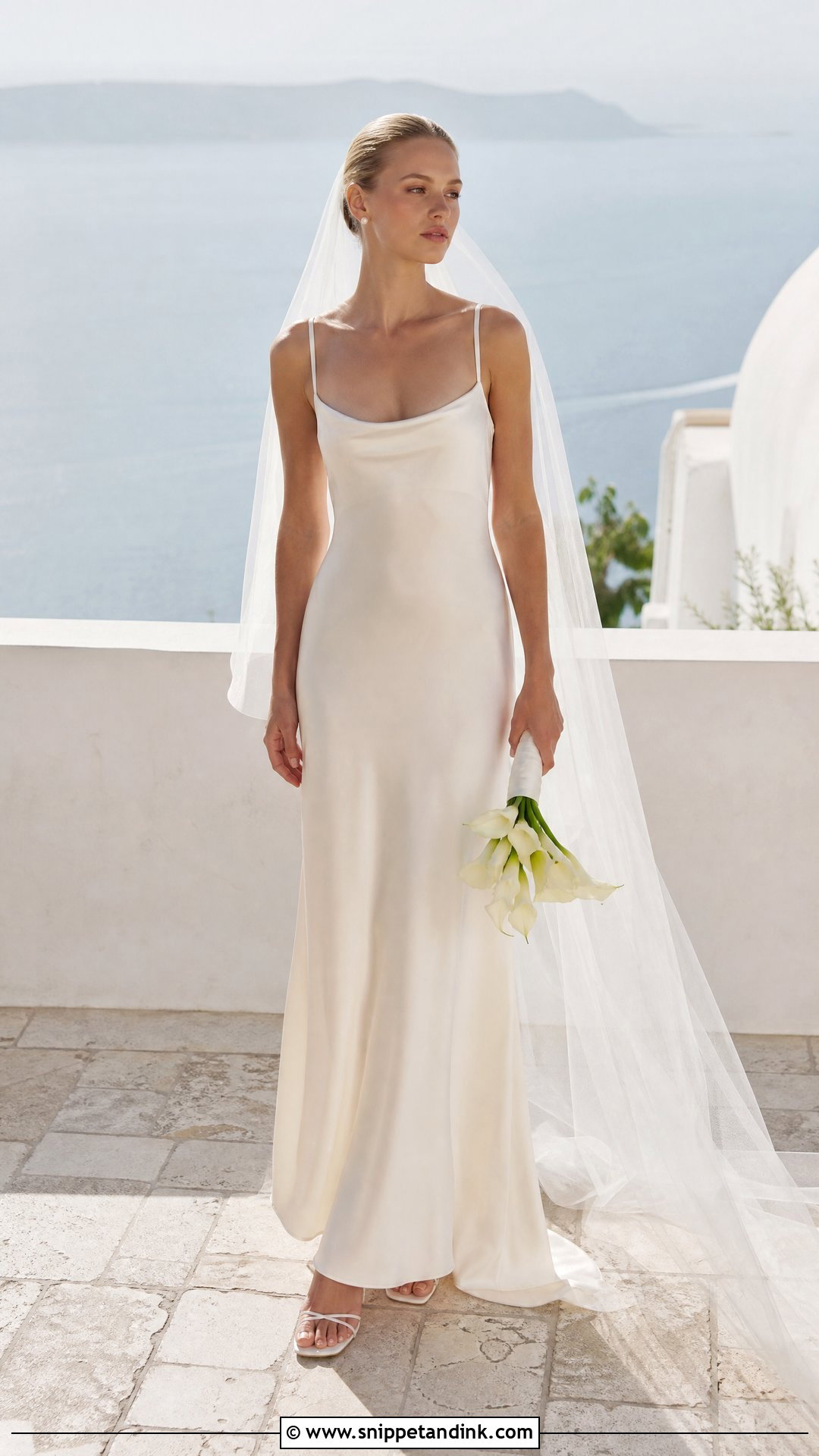
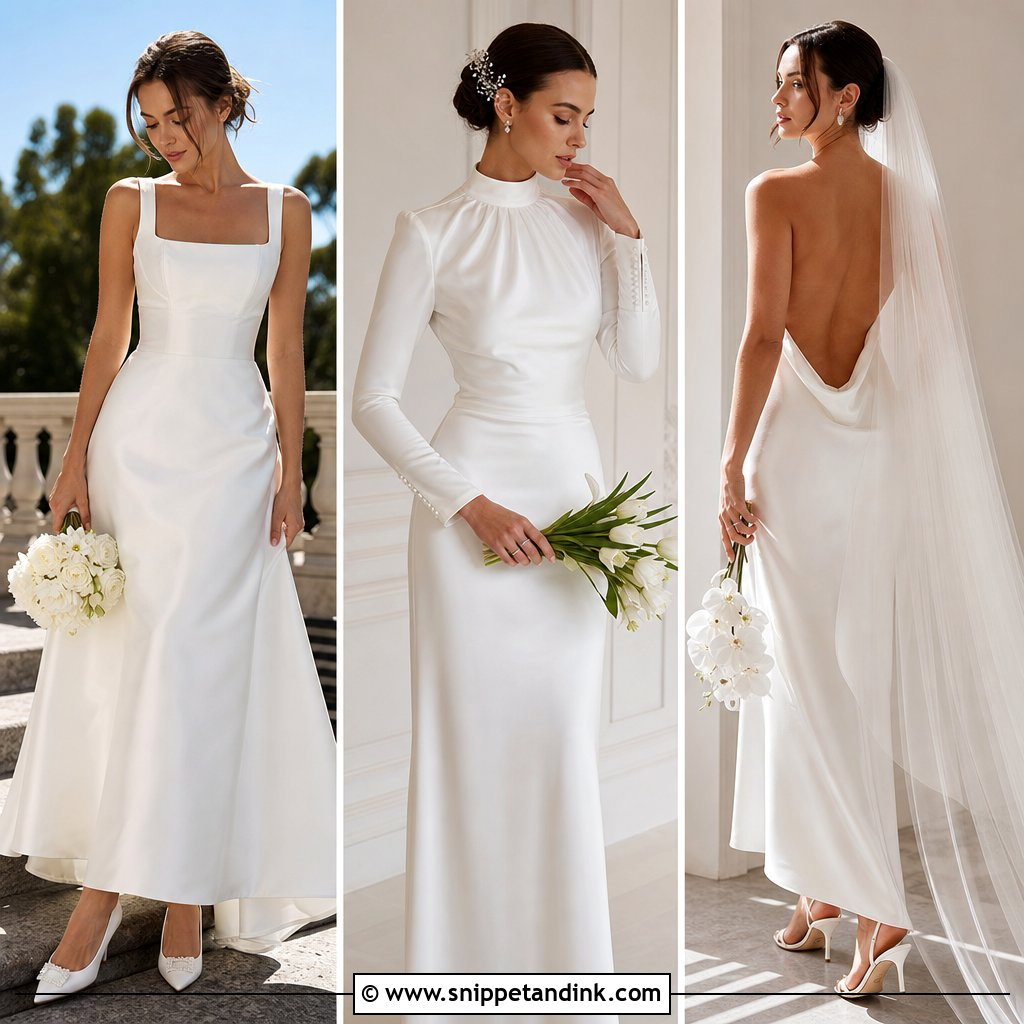
The nineties slip dress is minimalism with a little nostalgia. A bias-cut ivory gown with narrow straps, a softly curved neckline and a skirt falling close to the body before opening at the hem is the whole design, which is why fabric quality and fit matter more here than on any other dress. Strappy heels, small pearl earrings, a long sheer veil, a smooth low bun and natural makeup keep it clean, with a loose bundle of calla lilies. Underwear must be invisible: laser-cut, skin-toned and nothing with a seam. I’d also warn you that a slip in lightweight silk shows sweat at the back and underarms quickly on a hot day. Coastal ceremonies and city lofts suit it.
10. Cowl Neck Satin Wedding Dress
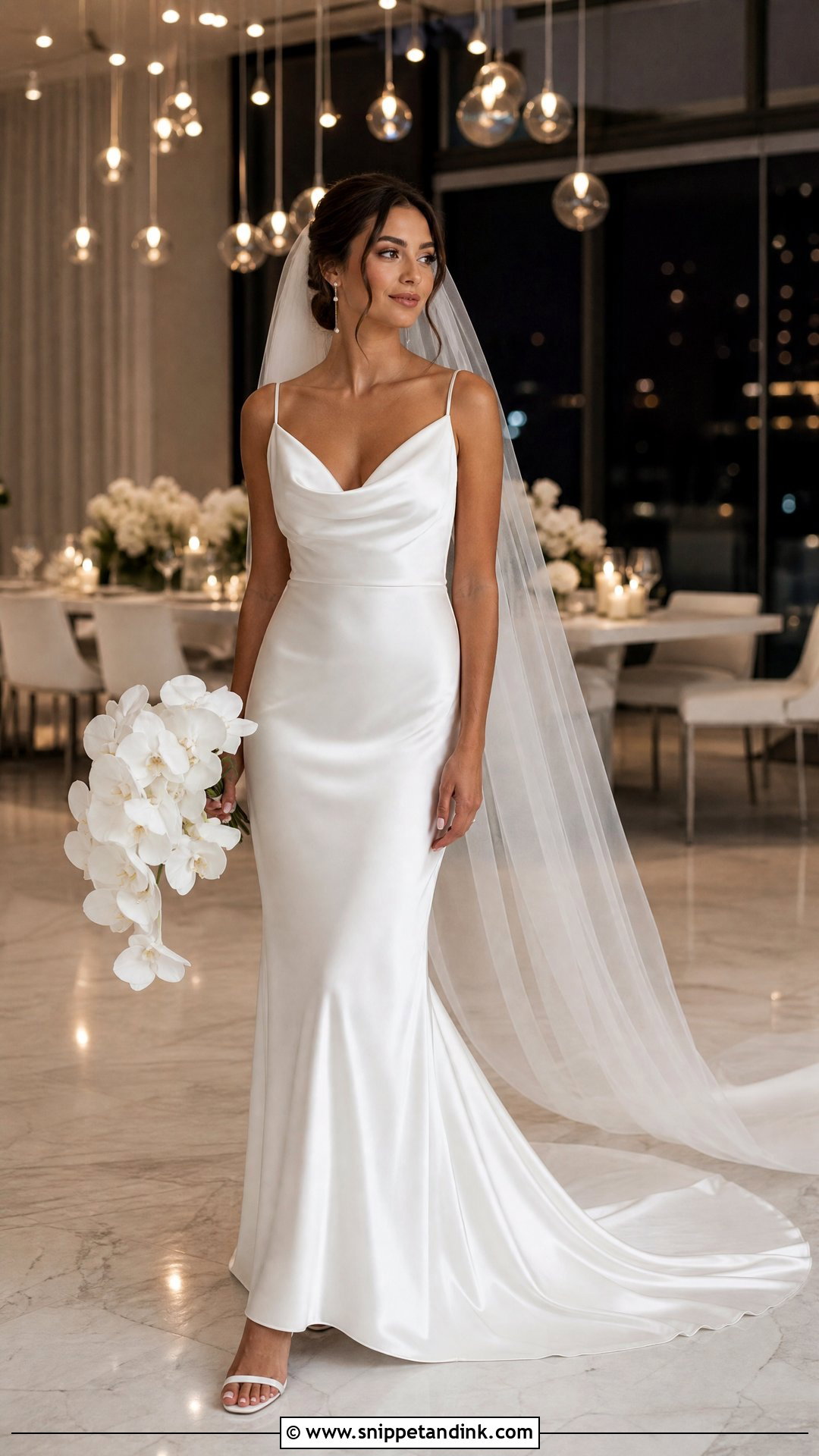
Soft folds at the neckline make a cowl neck satin wedding dress romantic and flattering. Ivory silk satin with a draped front, slender straps and a fitted skirt widening slightly below the hip is the shape. The cowl should fall naturally, neither exposing too much nor bunching at the bust; a tiny weight sewn into the drape helps it settle. Ivory slingbacks, pearl threaders and a chapel veil under a relaxed chignon suit it, with white orchids. If you need support, ask for an internal corset or discreet cups. The outer satin stays smooth, and you stop worrying about the neckline every time you lean over. Evening and destination weddings suit it.
11. Square Neck Satin Wedding Dress
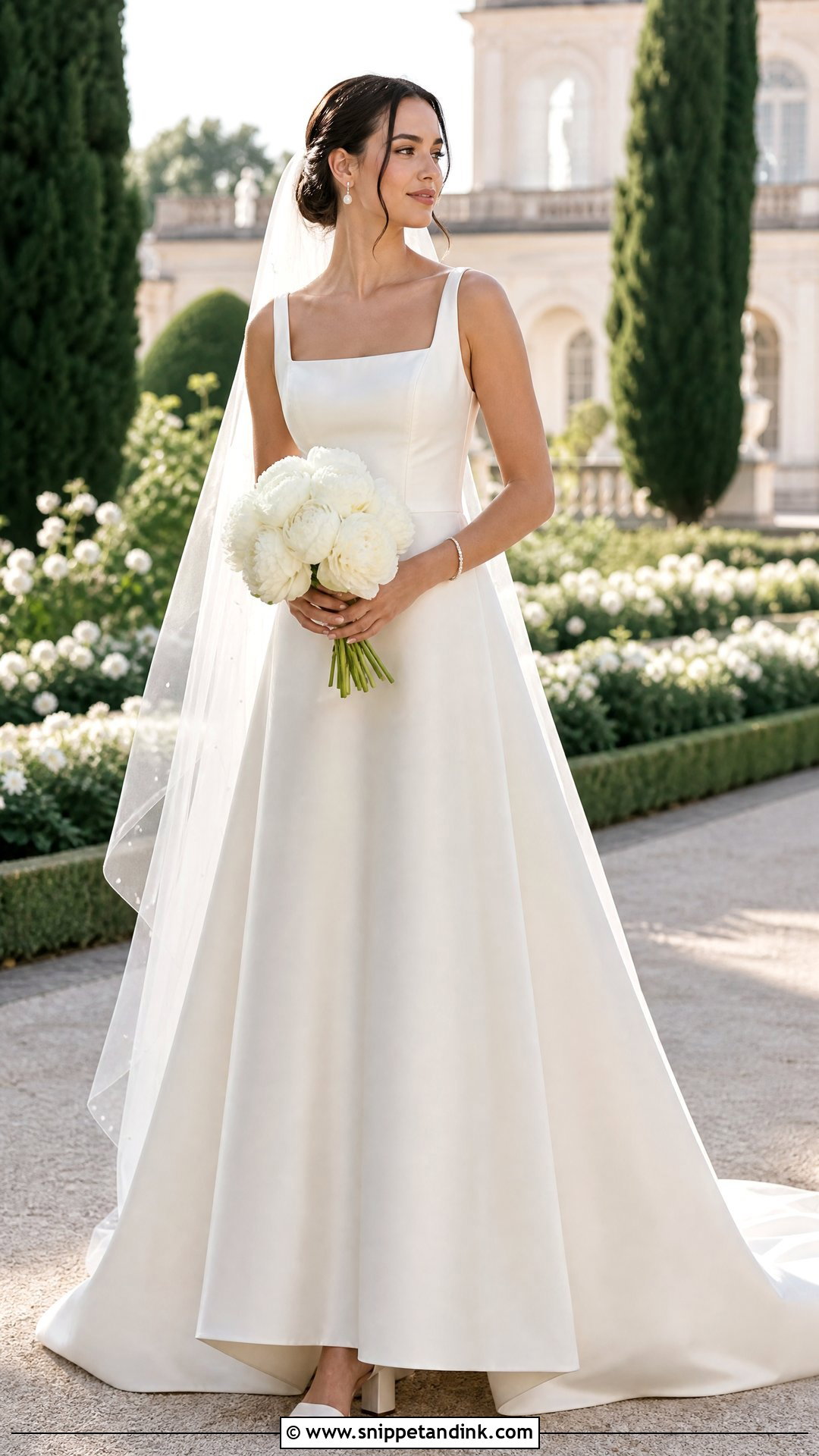
A square neck frames the face and collarbone with clean lines. Wide straps, a fitted bodice and an A-line skirt in softly lustrous silk satin, with covered buttons down the back, keep it vintage without distraction. Pearl drops, ivory block heels, a fingertip veil above a low twisted bun and a fine tennis bracelet suit it, with peonies or garden roses. The corners of a square neck are the first thing I check on satin. They tend to gape slightly if the bodice is loose, and that small gap catches light in every photo. A fitted satin jacket works over it for cold weather or a church with a cover-up rule.
12. Off Shoulder Satin Wedding Dress
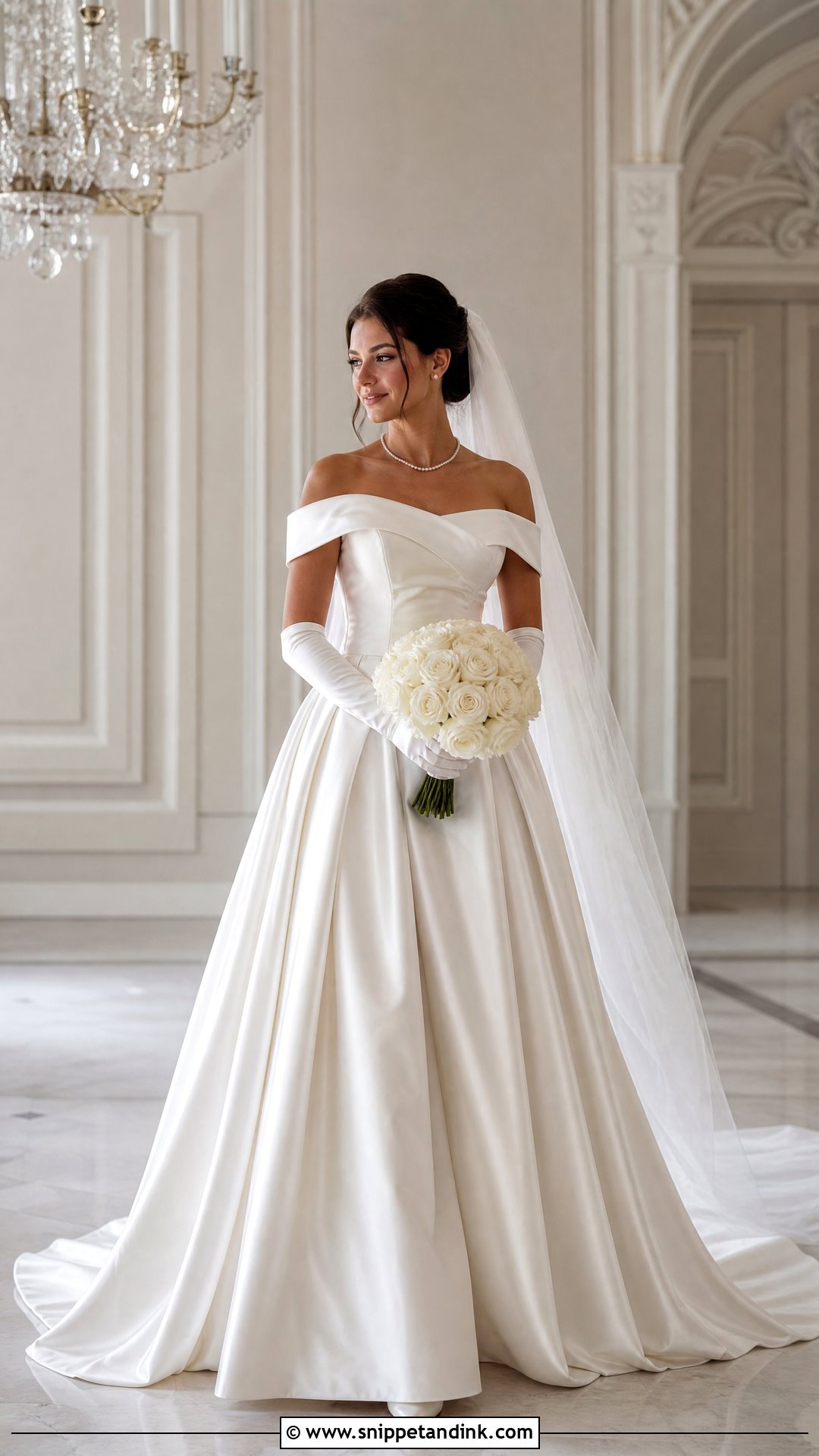
Off the shoulder satin mixes softness with structure. An ivory silk satin gown with a folded neckline, fitted bodice and a full skirt gently pleated at the waist is the shape, and the neckline should sit firmly across the upper arm without pinning you. A short pearl necklace, pointed pumps and a cathedral veil under a polished bun suit it; long satin gloves work for portraits and come off for dinner. Carry a round rose bouquet. Ask for internal boning or discreet elastic at the neckline so it stays put through hugs and dancing. Ballrooms, mansions and winter ceremonies suit it.
13. Basque Waist Satin Wedding Dress
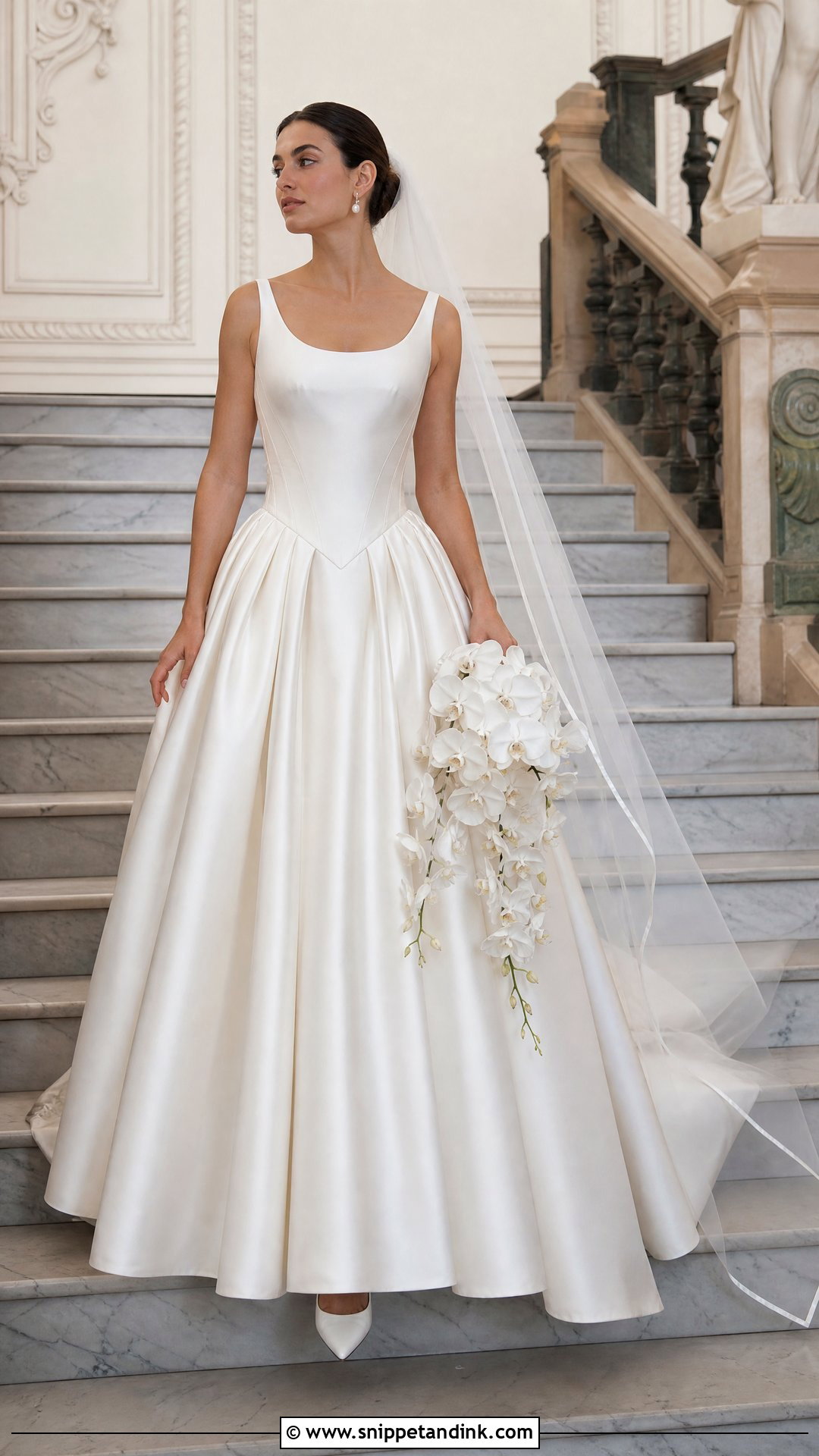
A basque waist gives a striking hourglass shape, with the bodice dipping to a point below the natural waist. Structured silk satin with a scoop neck, fitted torso and full pleated skirt is the look, and the long bodice draws the eye to the centre. Pearl earrings, ivory court shoes, a long veil edged in narrow satin ribbon and a French twist keep the bodice on show; a cascade of orchids balances the skirt. On satin, a basque point that isn’t perfectly centred is obvious from across a room. Check it seated and standing, through the waist and hips, for any pulling or diagonal creases.
14. Empire Waist Satin Wedding Dress
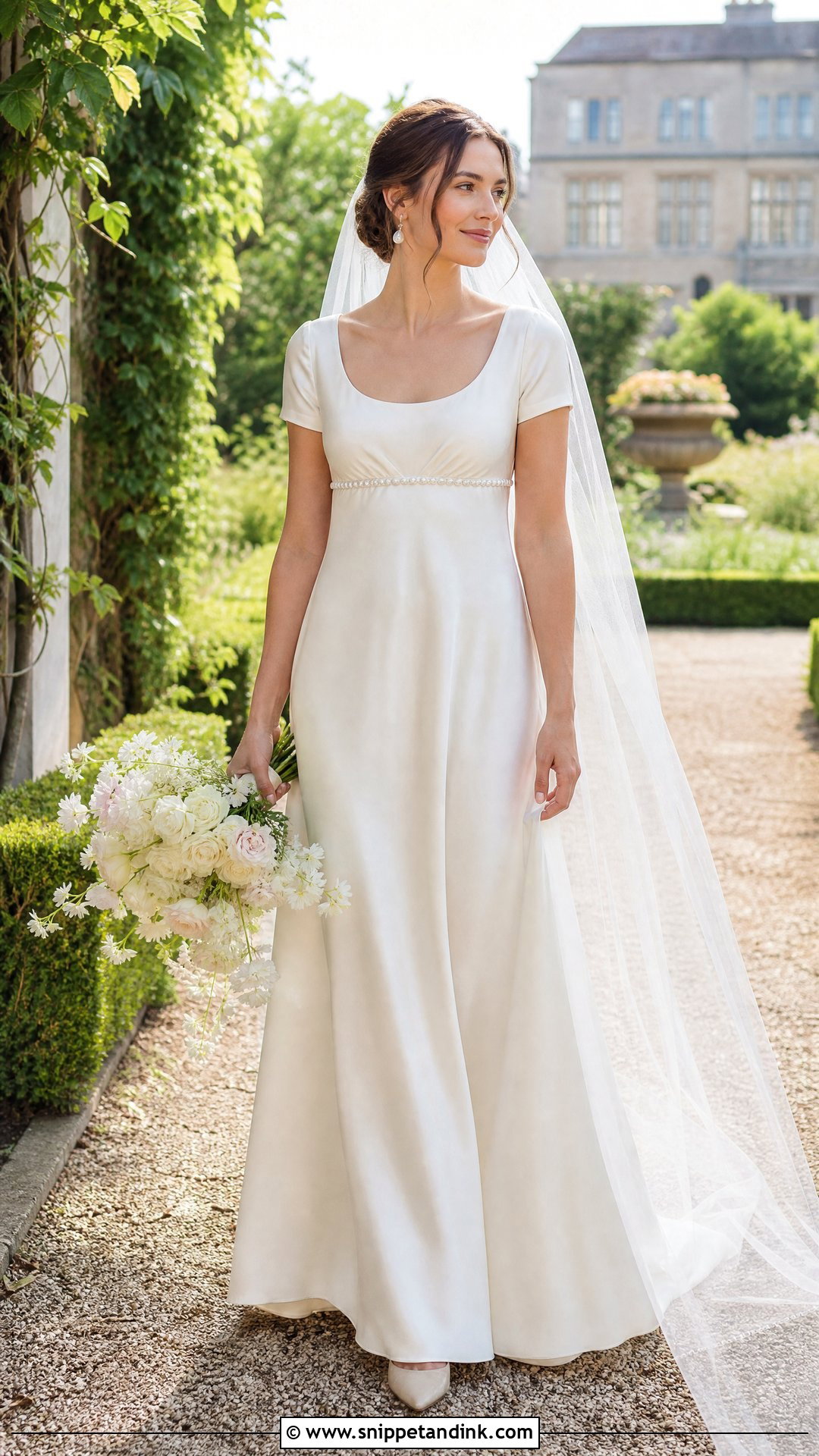
An empire waist starts the skirt just under the bust, so the whole dress feels light. Soft silk satin with a modest scoop neck, short sleeves and a long skirt without heavy gathering is the shape; a narrow satin band or pearl trim marks the raised waist. Ballet-style flats or low heels, small drops, a sheer chapel veil and a loose braided updo suit it, with a slender bouquet of sweet peas and roses. Keep the hem long enough to graze the floor but not pool. Satin pooled around the feet catches under the toe on stairs, and silk shows a scuff mark instantly. Gardens and historic homes suit it.



15. Mermaid Satin Wedding Dress
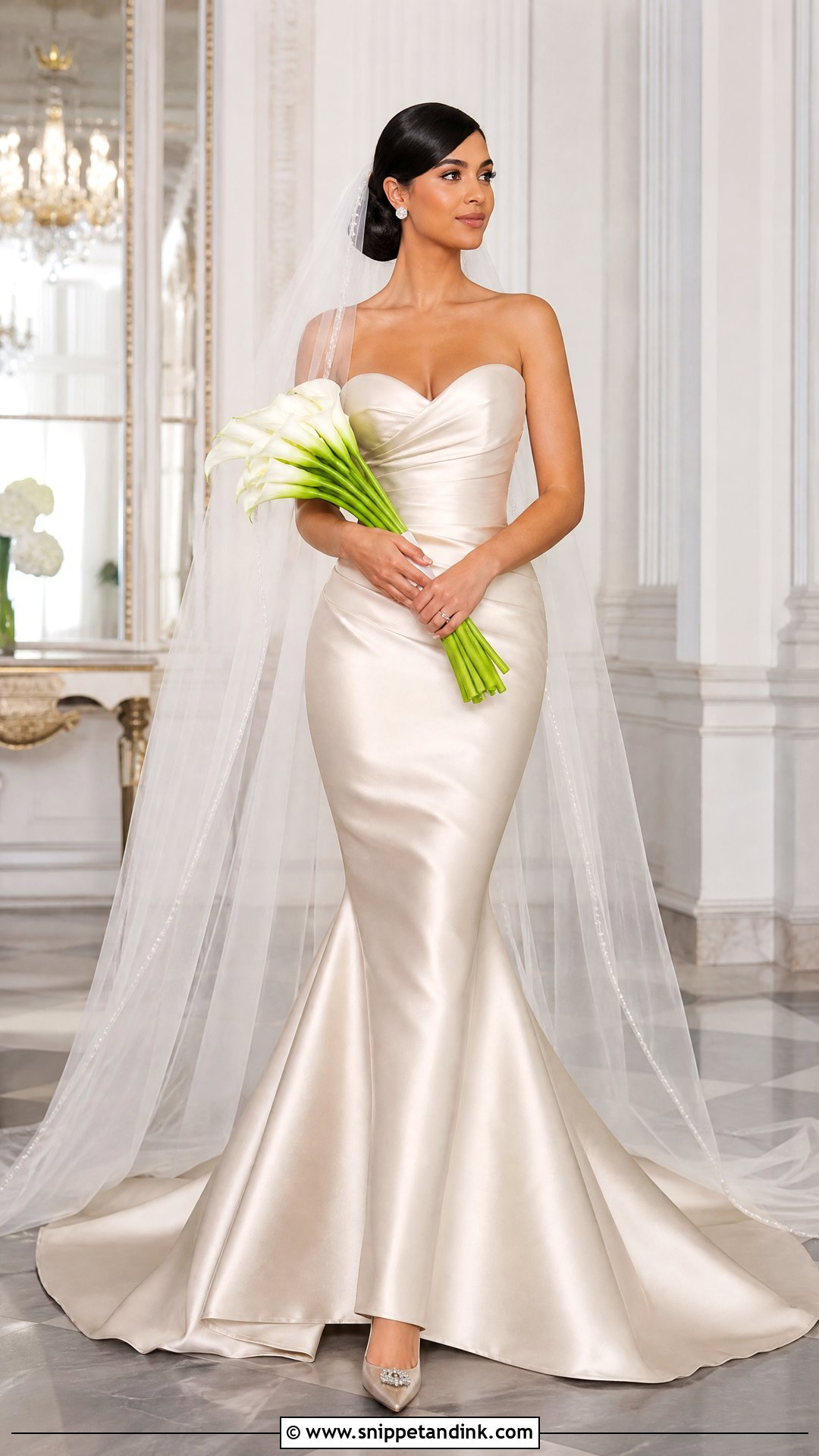
A satin mermaid is fitted through the bodice, waist and hips before flaring at the knee. Ivory or champagne silk satin that flares gradually rather than all at once looks more vintage and moves better. A sweetheart neckline and covered back buttons soften the line. Pointed satin heels, crystal studs, a plain cathedral veil beyond the train, a sleek side bun and long calla lilies complete it. Satin mermaids crease across the lap the moment you sit, so expect a few soft lines in later photos. In the fitting, sit, walk and climb a stair; if you can’t take a normal step, the flare needs to start a little higher. Indoor venues keep the satin clean.
16. Tea Length Satin Wedding Dress
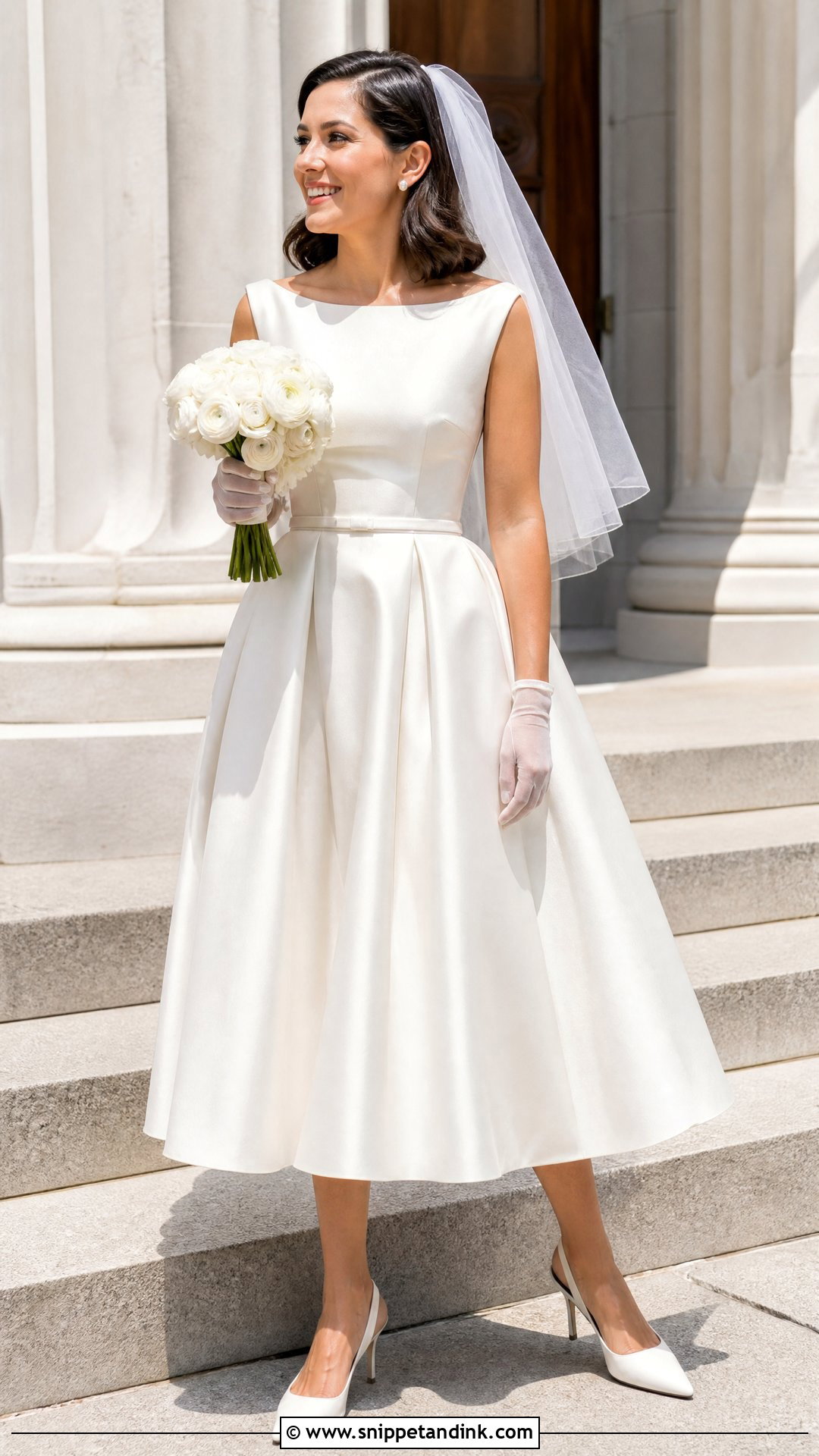
Tea length keeps the shoes in view and the mood cheerful. A fitted ivory bodice with a bateau neckline and a softly pleated skirt falling between knee and ankle is the shape; structured silk satin holds the skirt without lots of underlayers. Pointed slingbacks, pearl studs, short gloves and a birdcage or shoulder-length veil suit it, with ranunculus and roses and a narrow satin belt at the waist. I set the hem at the slimmest part of the lower leg, measured with the wedding shoes on. Courthouses, daytime receptions and small gardens suit it.
17. Lace Inset Satin Wedding Dress
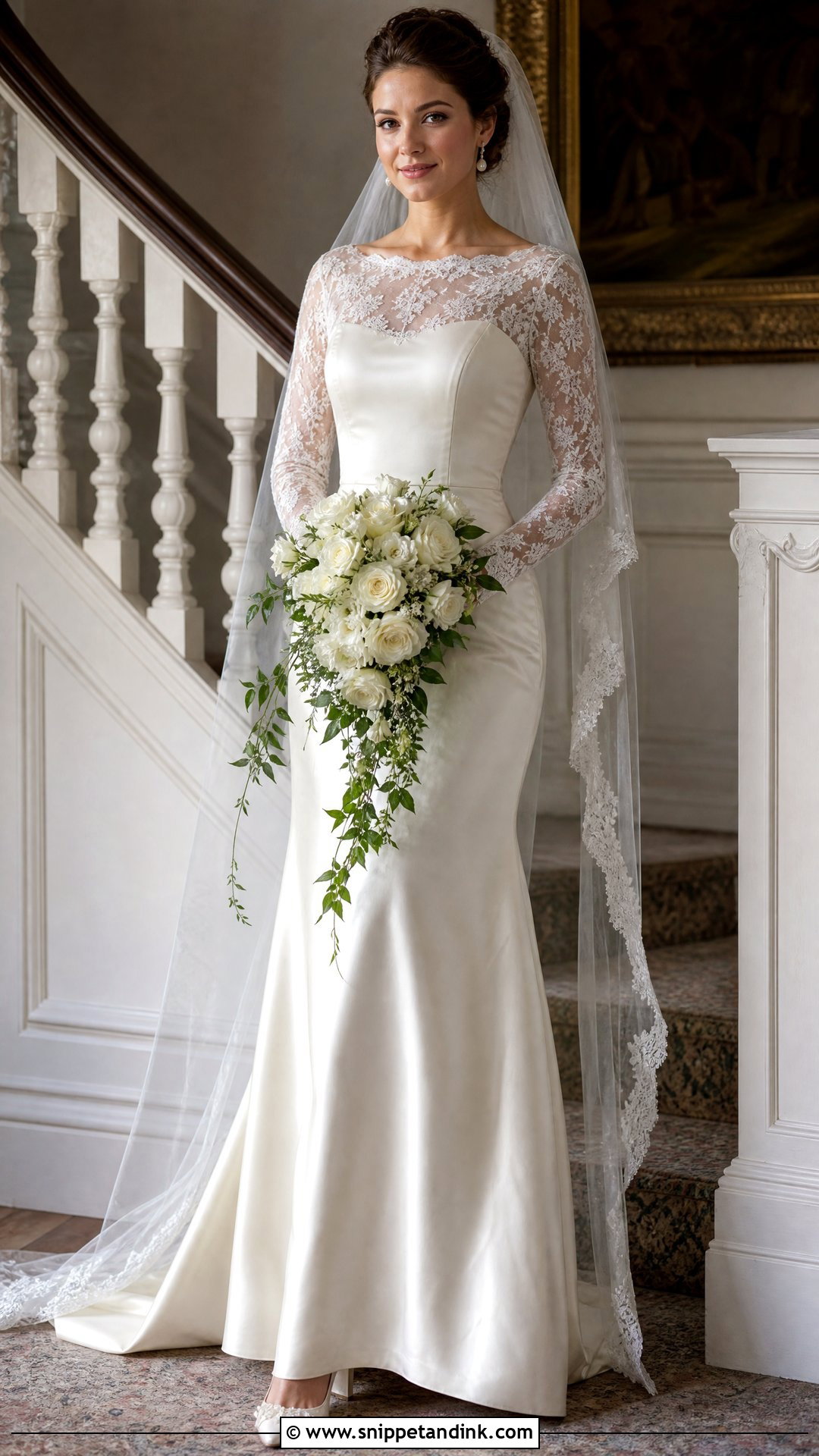
Lace insets add antique character while the satin keeps things polished. Put the lace at the neckline, sleeves or upper back instead of all over. A fitted bodice, natural waist and softly flared skirt make a clean base. Ivory closed heels, pearl earrings and a lace-edged veil that complements the gown without copying it suit it, with a low chignon and loose roses. Where lace is set into satin, the two fabrics stretch differently, and that join is where vintage gowns usually fail. If you’re altering an old dress, use a specialist who can repair lace without pulling the surrounding satin. Historic houses suit this one.
18. Pearl Beaded Satin Wedding Dress
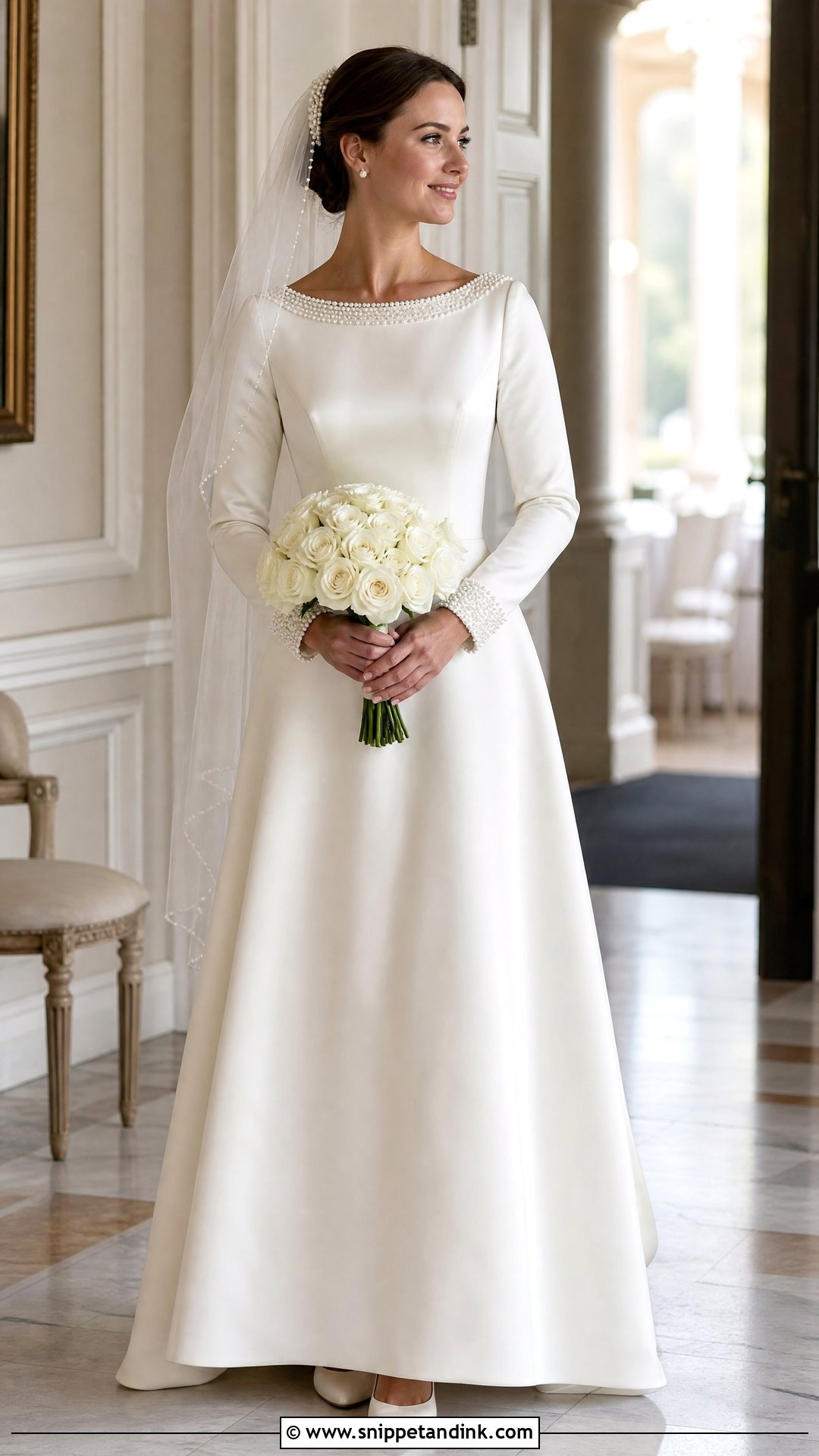
Pearl beading gives satin texture without heavy sparkle. Small pearls at the neckline, cuffs or waist rather than all over, on a simple A-line, keep the handwork visible. Plain ivory pumps, pearl studs and a sheer fingertip veil on a pearl comb suit it; skip the necklace if the bodice is already worked. White roses and lily of the valley suit the bouquet. Beading on silk satin is heavy for such a fine fabric, and it can pucker the satin around each stitch if it’s dense. I look for small, spaced pearls on satin, and on any vintage gown I check every thread before tailoring or cleaning.
19. Bow Back Satin Wedding Dress
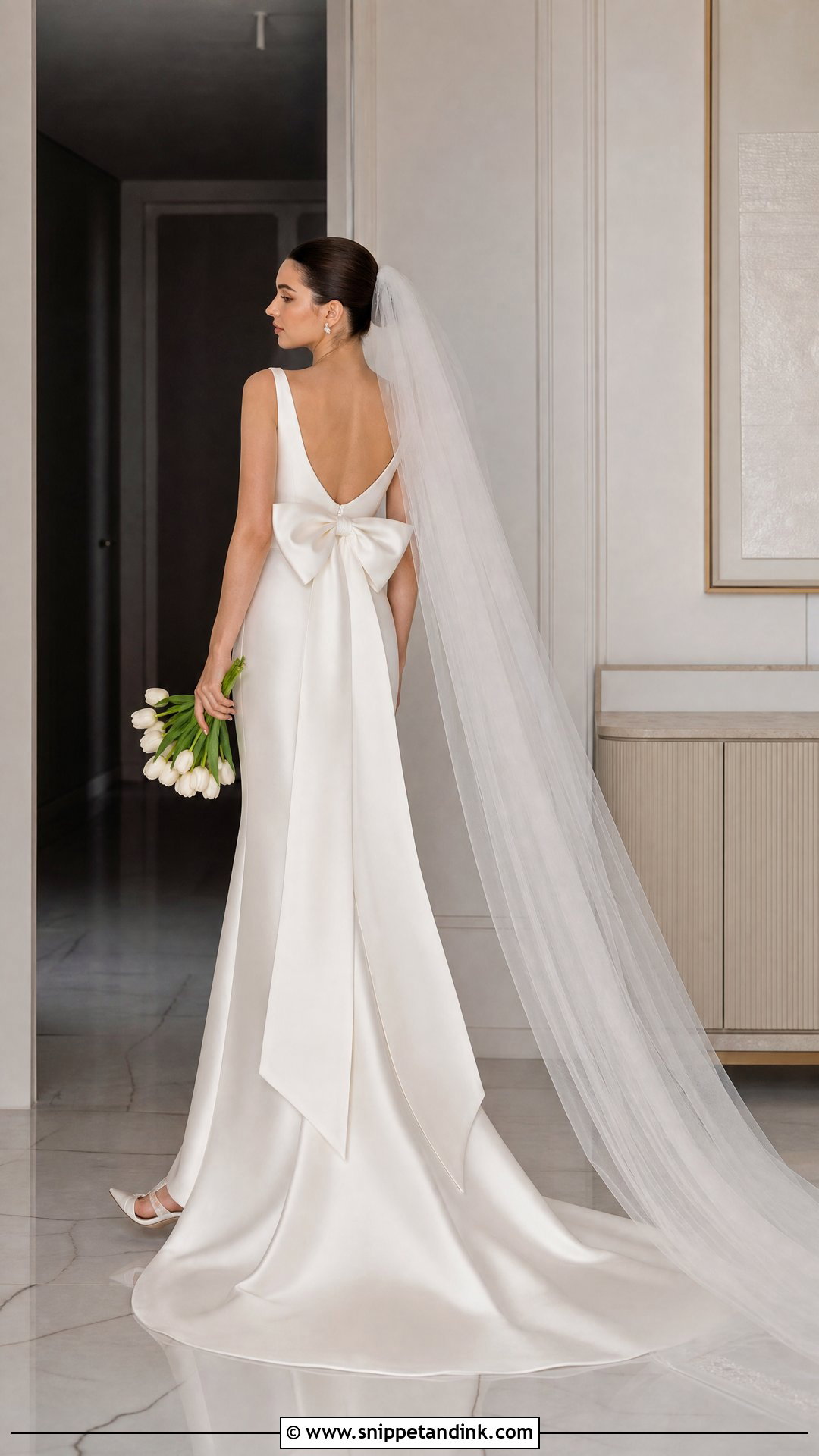
A bow at the back gives you a statement for the aisle and the portraits. A streamlined silk satin gown with a square or bateau neckline, fitted waist and a removable bow at the lower back, its tails trailing over a chapel train, keeps the bulk down. Ivory slingbacks, small diamond or crystal studs and a plain cathedral veil suit it, with your hair up and a clean tulip bouquet. A big satin bow crushes the moment you sit against a chair back, so detachable is the way to go. Wear it for the ceremony and photos, and take it off before dinner. Minimalist venues and hotels suit it.

20. Cape Sleeve Satin Wedding Dress
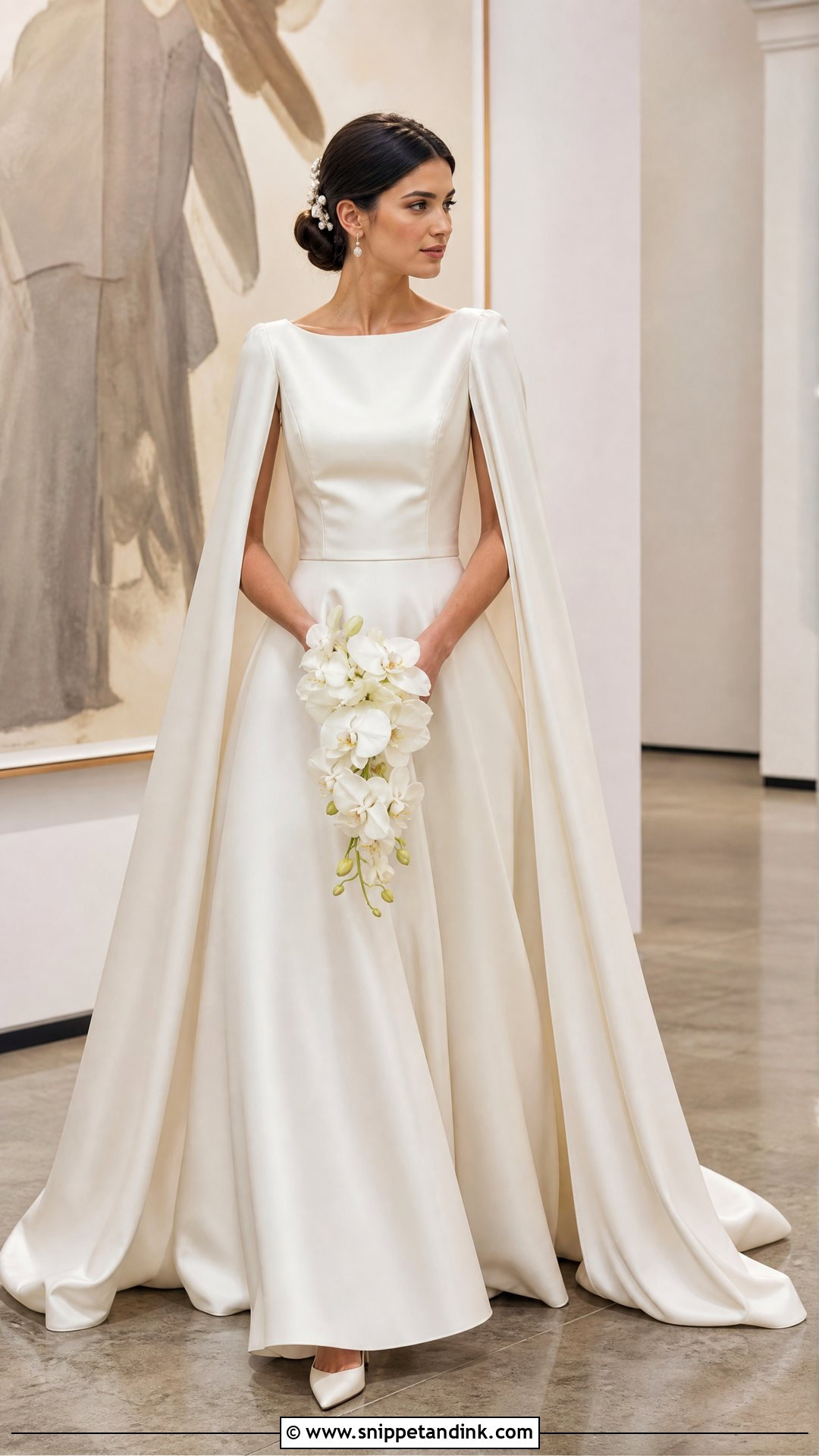
Cape sleeves give coverage and movement without a fitted sleeve. An ivory silk satin column or A-line with cape panels falling from the shoulders, in light satin, silk chiffon or both, is the shape. Pointed pumps, delicate drops and a low bun with a small pearl comb suit it; skip the full veil if the cape runs into a train, since the two compete. Carry orchids or calla lilies. A satin cape is heavier than a chiffon one and pulls back on the neckline, so I’d choose chiffon if you want length. Check that you can lift your arms comfortably at the fitting. Galleries and ballrooms suit it.
Water Spots, Lap Creases and Sweat on a Satin Gown
Silk satin is the most luxurious fabric on this list and the least forgiving on a long, busy day. Three problems come up again and again.
Water marks
A drop of water, rain or a splash of a drink can leave a ring on silk satin once it dries. Don’t rub it. Blot gently with a clean white cloth and leave it alone; trying to scrub it on the day usually spreads the mark and roughs up the surface. Keep a clear umbrella in the car if the forecast is uncertain.
Creases
Satin creases where you sit, and silk holds those creases. A handheld steamer at a distance on the inside of the skirt lifts most of them in a few minutes. Never let anyone put a hot iron straight onto silk satin at the venue; it can leave a shiny scorch.
Sweat and deodorant
Light satin shows damp patches, and deodorant leaves marks that are hard to shift. Let deodorant dry fully before dressing, and ask your seamstress to sew thin dress shields into the underarms. After the wedding, get the gown to a cleaner who handles silk within a few weeks, since sweat and spills discolour silk as they age.
Silk Satin Rewards a Good Cut and a Careful Seamstress
One fabric, many moods: silk satin can look regal and structured, soft and cinematic, or clean and modern, depending entirely on the cut. Start with the era and silhouette that suit you, your venue and how comfortable you need to be, then add shoes, jewelry, hair, veil and flowers that support the gown. If you buy a real vintage dress, have it professionally cleaned and repaired before the final alterations, never after. And move in every fitting. A satin gown has to photograph well and still let you walk, sit and dance.
You'll Like These Ideas:








Leave a Reply