
Satin is the most honest fabric in a bridal shop. With no lace or beading to distract, every seam, every dart and every inch of fit is on show, which is why a plain satin gown can look either expensive or ordinary depending on details most people never notice. I love dressing brides in it for that reason. Below are 25 shapes, from slips to ball gowns, with notes on the necklines, veils and shoes I’d pair with each, and on the fit points I check before anyone says yes to the dress.
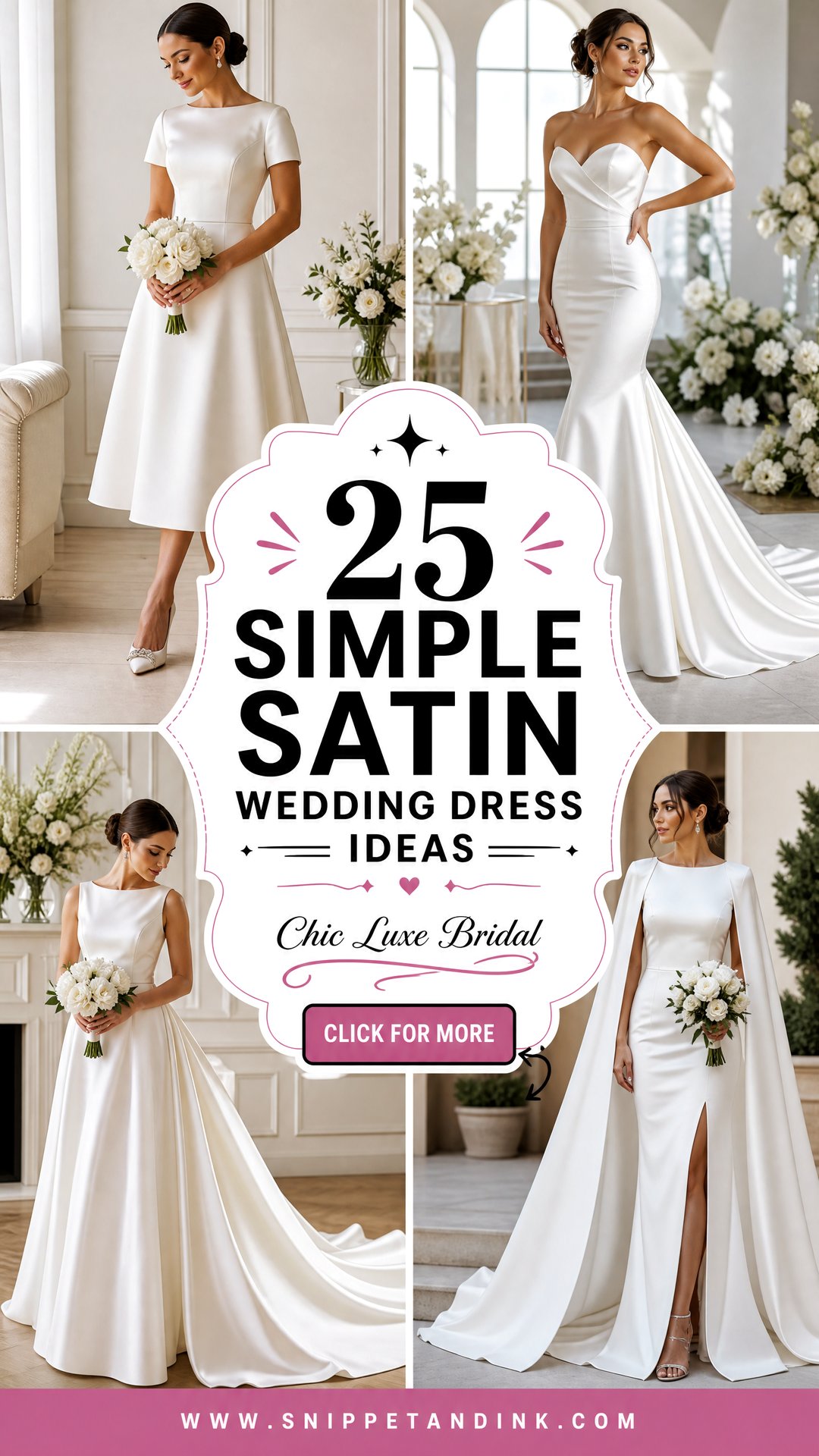
Duchess, Charmeuse or Crepe-Back: The Satin Underneath the Shape
Satin is a weave, not a fibre, and the word covers fabrics that behave completely differently. Before I talk silhouette with a bride, I hand her two or three swatches, because the satin decides which shapes are even possible.
Duchess satin
Heavy, dense and slightly stiff. It holds a ball gown skirt, a crisp off-shoulder fold and a structured train. It’s warm to wear in summer and shows creases less than lighter satins.
Charmeuse
Light and liquid, the fabric behind most slip dresses, usually cut on the bias so it skims the body. It is the least forgiving: it shows every line underneath and marks easily with water.
Crepe-back satin
Satin face with a matte crepe reverse. It drapes more softly than duchess and has more weight than charmeuse, which makes it a good middle ground for sheath and column gowns.
Silk satin has a deeper, softer glow; polyester satin is cheaper, more crease-resistant and tends to shine harder under a camera flash. Both can be well made. Rub the fabric between your fingers, and look at it under a phone torch to see how it reflects.
1. Simple Satin A Line Wedding Dress
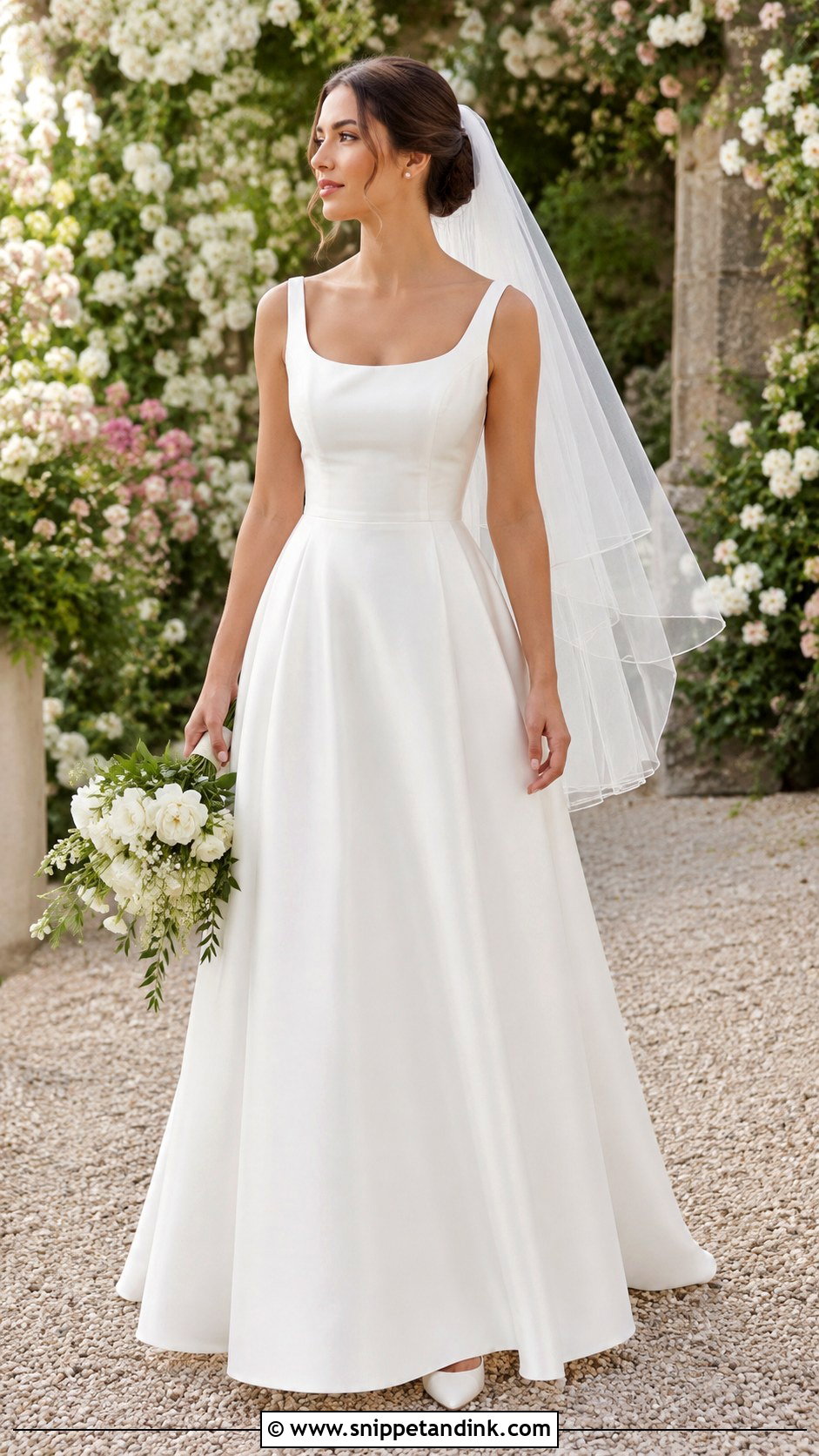
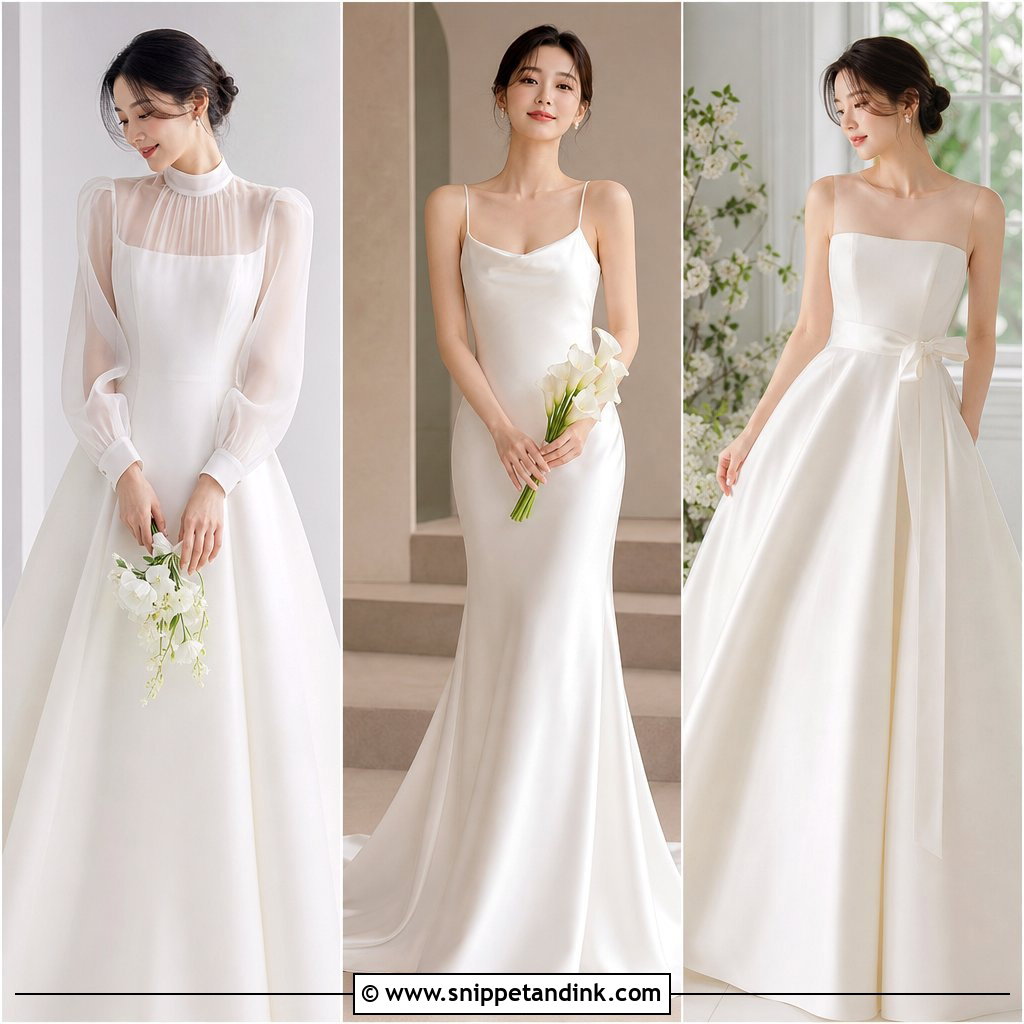
If I could only stock one satin silhouette, it would be the A-line, simply because it suits the widest range of bodies I fit. The bodice defines the waist and the skirt falls away from the hips without much fullness, so the satin can drape instead of fighting a petticoat. A scoop, square or strapless neckline keeps the fabric the focus. I’d add pointed ivory heels, pearl studs and a plain fingertip veil, and keep the bouquet soft, roses or ranunculus, so nothing competes with that smooth skirt.
2. Simple Satin Ball Gown Wedding Dress
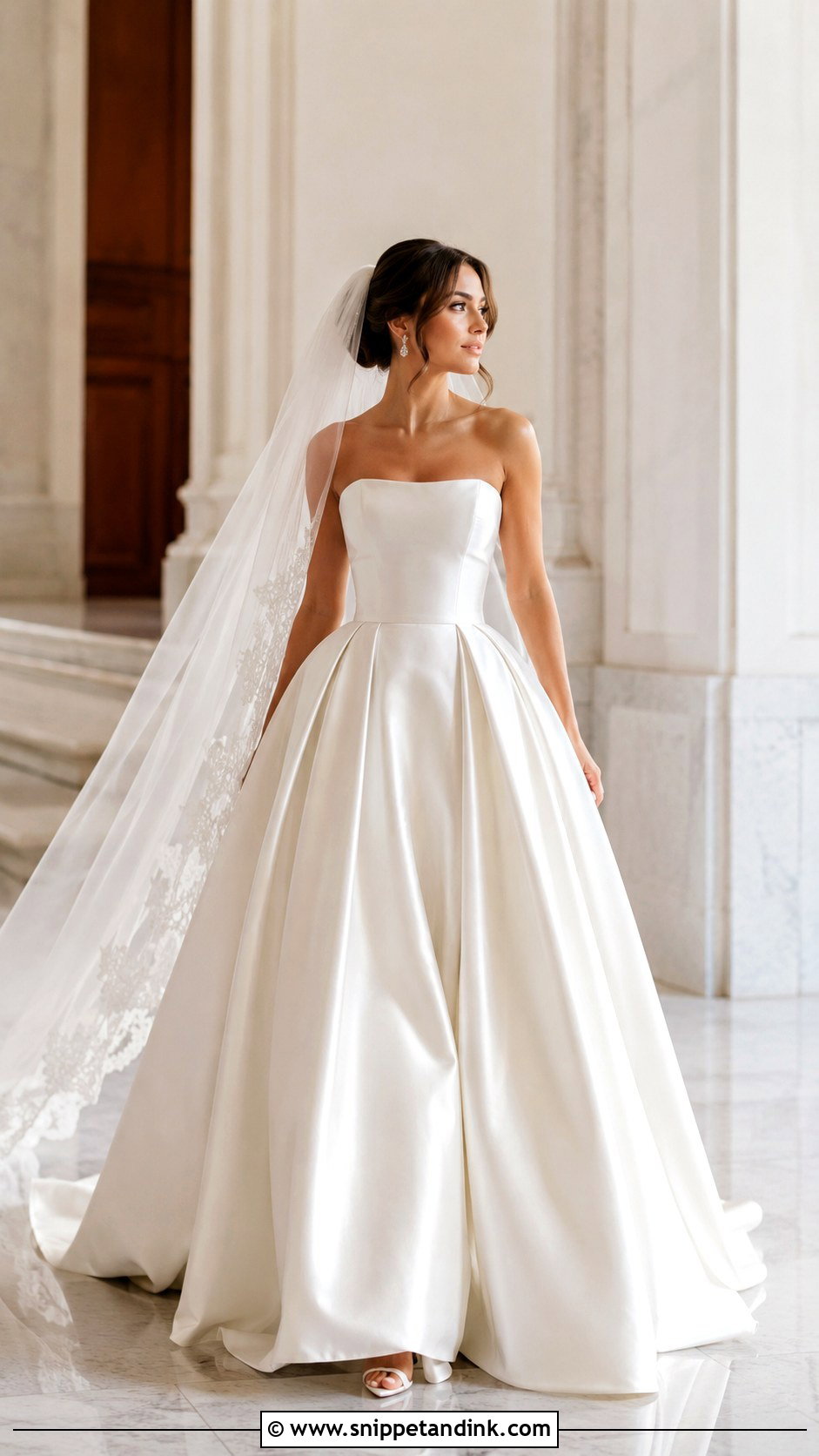
Do you want a ceremony moment without any sparkle at all? A satin ball gown gets there with structure alone: a firm bodice, a full skirt and a surface that throws light across every fold. The skirt needs a good petticoat or layered tulle underneath, or heavy satin collapses flat by the reception, so ask what’s inside it at the fitting. A strapless or bateau neckline, a cathedral veil and low heels hidden under the hem are all I’d add. Hotel ballrooms and large formal rooms give the volume space to breathe.
3. Simple Satin Slip Wedding Dress
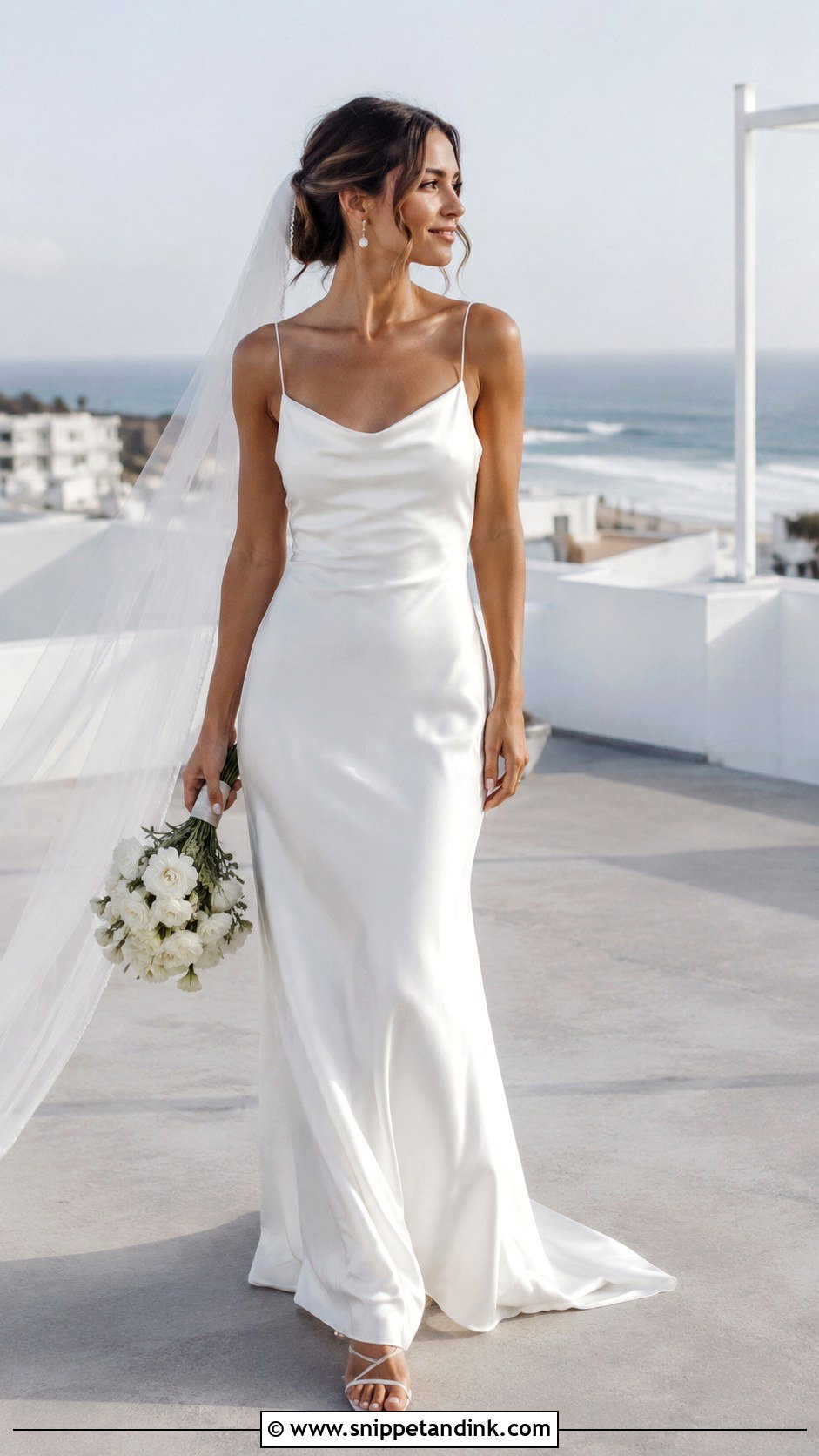
The slip is the least forgiving dress in this list. Usually cut on the bias in a fluid satin, it skims the body, which means it also shows underwear lines, a bra strap and every alteration seam, so fit and fabric quality matter enormously. At fittings I check it seated and walking, because bias-cut satin twists slightly if a seam was pulled. Strappy sandals, a sleek bun, small pearls and a sheer veil keep it modern. For a cooler church, a tailored bridal blazer or sheer wrap covers the shoulders during the ceremony.
4. Simple Satin Strapless Wedding Dress
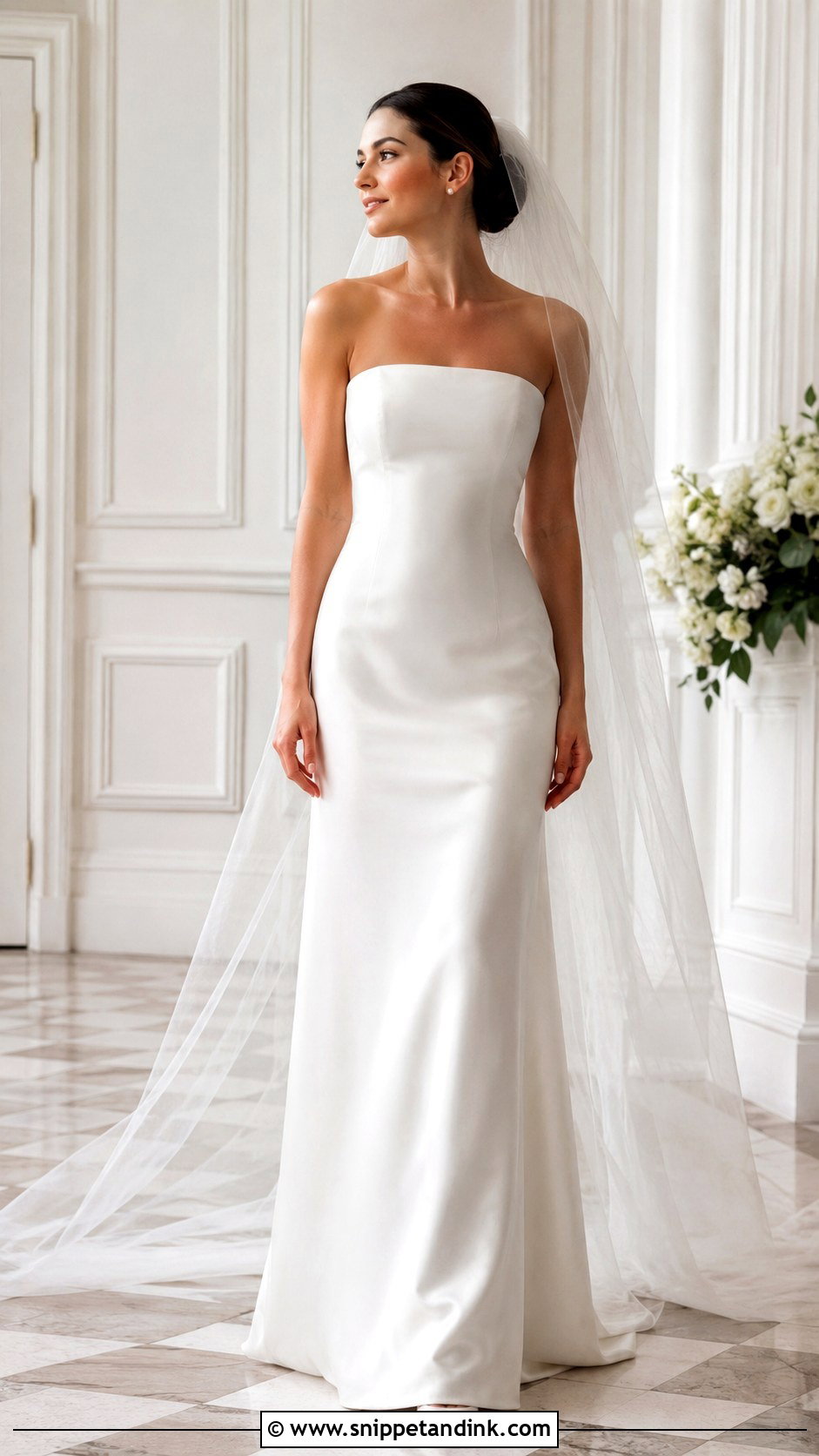
Strapless satin depends entirely on the bodice’s inner structure. I want boning and a waist stay inside, and I ask brides to raise both arms and hug someone at the fitting; if the bodice slides, it will slide all night. A straight-across neckline looks modern, a sweetheart softer. A smooth chignon, crystal or pearl studs and pointed satin pumps are enough, and a long veil adds movement behind that clean bodice.
5. Simple Satin Square Neck Wedding Dress
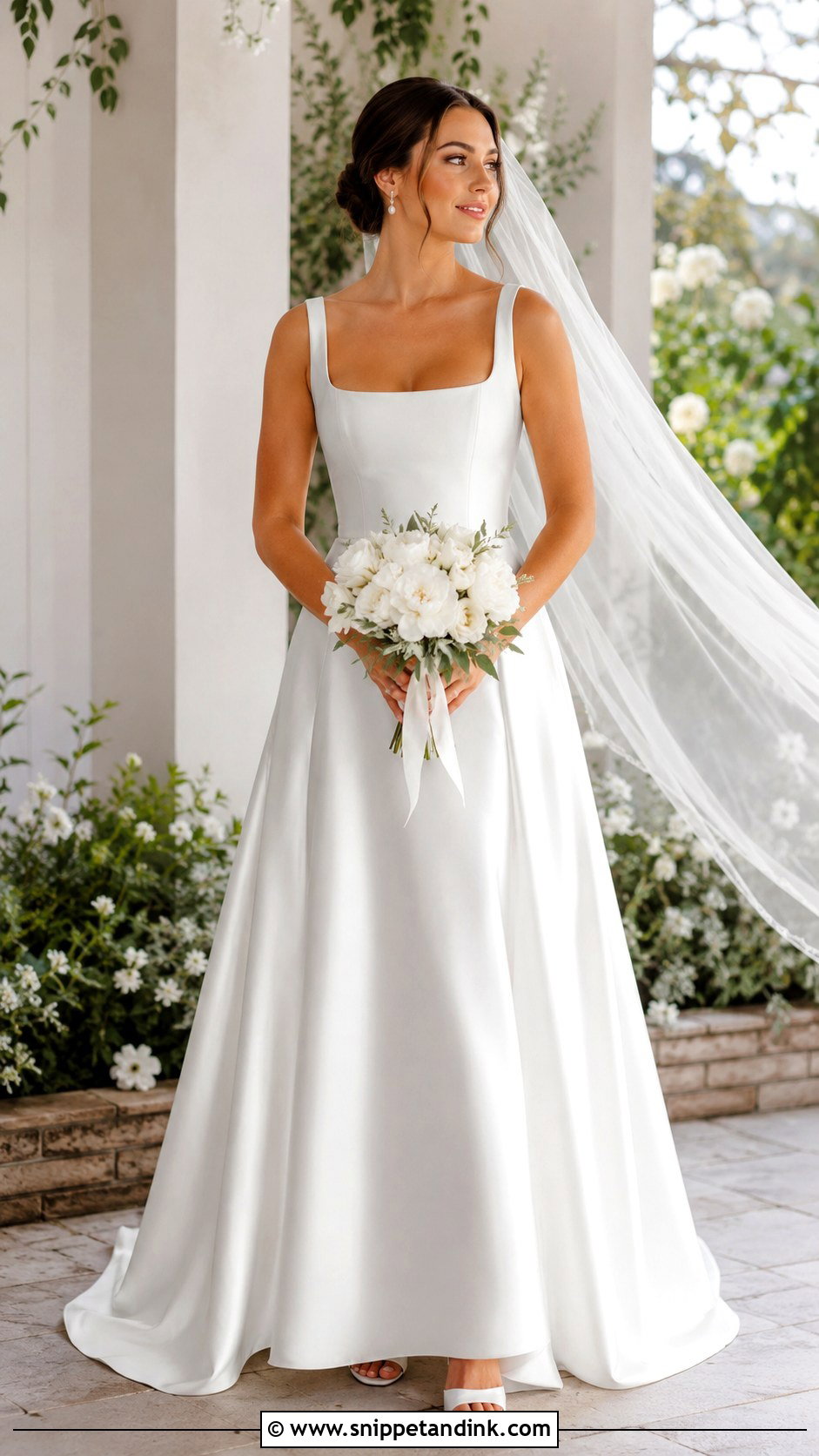
Square necklines frame the collarbone with more support than thin straps, which makes them a favourite of mine for brides with a fuller bust who still want an open neck. The width matters: too wide and the straps slip off the shoulder, too narrow and it reads more like a sundress. It sits well on A-line, sheath and fit-and-flare shapes. Low pearl earrings, a smooth veil and block heels if you want comfort; a soft low bun balances the straight lines.
6. Simple Satin V Neck Wedding Dress
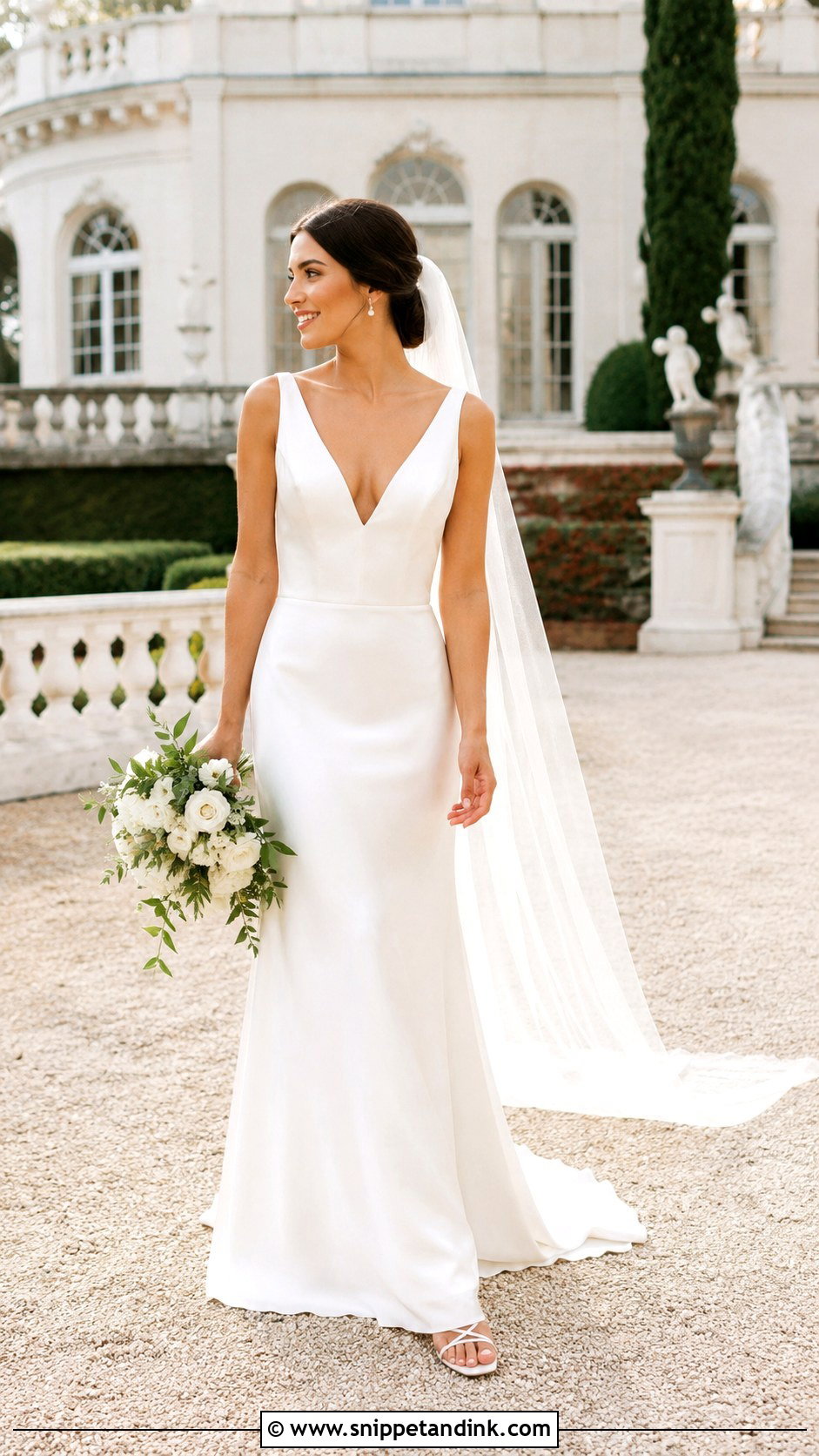
A V neck draws the eye up and lengthens the torso, especially over a smooth satin skirt. A shallow V feels classic and a deep one more modern, but in satin a deep V needs either a mesh panel or fashion tape, since the heavier fabric can gape when you lean. Delicate earrings, a barely-there necklace and a chapel veil work. If you need more support, look for wider straps or a structured bodice so it stays put from the ceremony onward.
7. Simple Satin Off Shoulder Wedding Dress
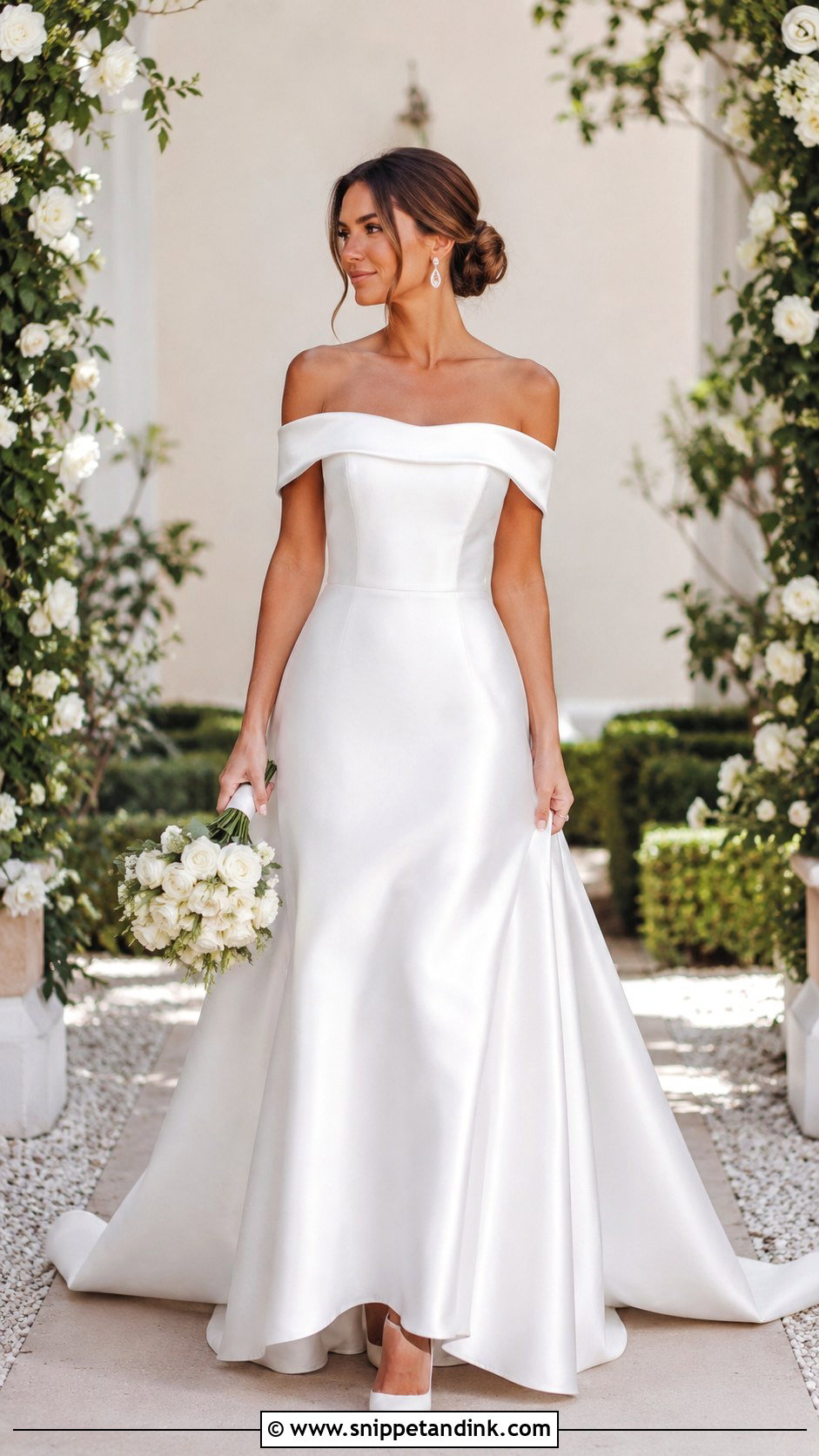
The off-shoulder fold is a detail satin does particularly well, because the fabric holds a crisp roll where chiffon would collapse. What I watch for is arm movement: an off-shoulder band restricts how high you can lift your arms, so try hugging, dancing and holding a bouquet before you commit. A low bun with the veil tucked under keeps the shoulders visible. Small drops and ivory pumps finish it, over a soft A-line skirt or a fitted shape with a gentle train.
8. Simple Satin Halter Wedding Dress
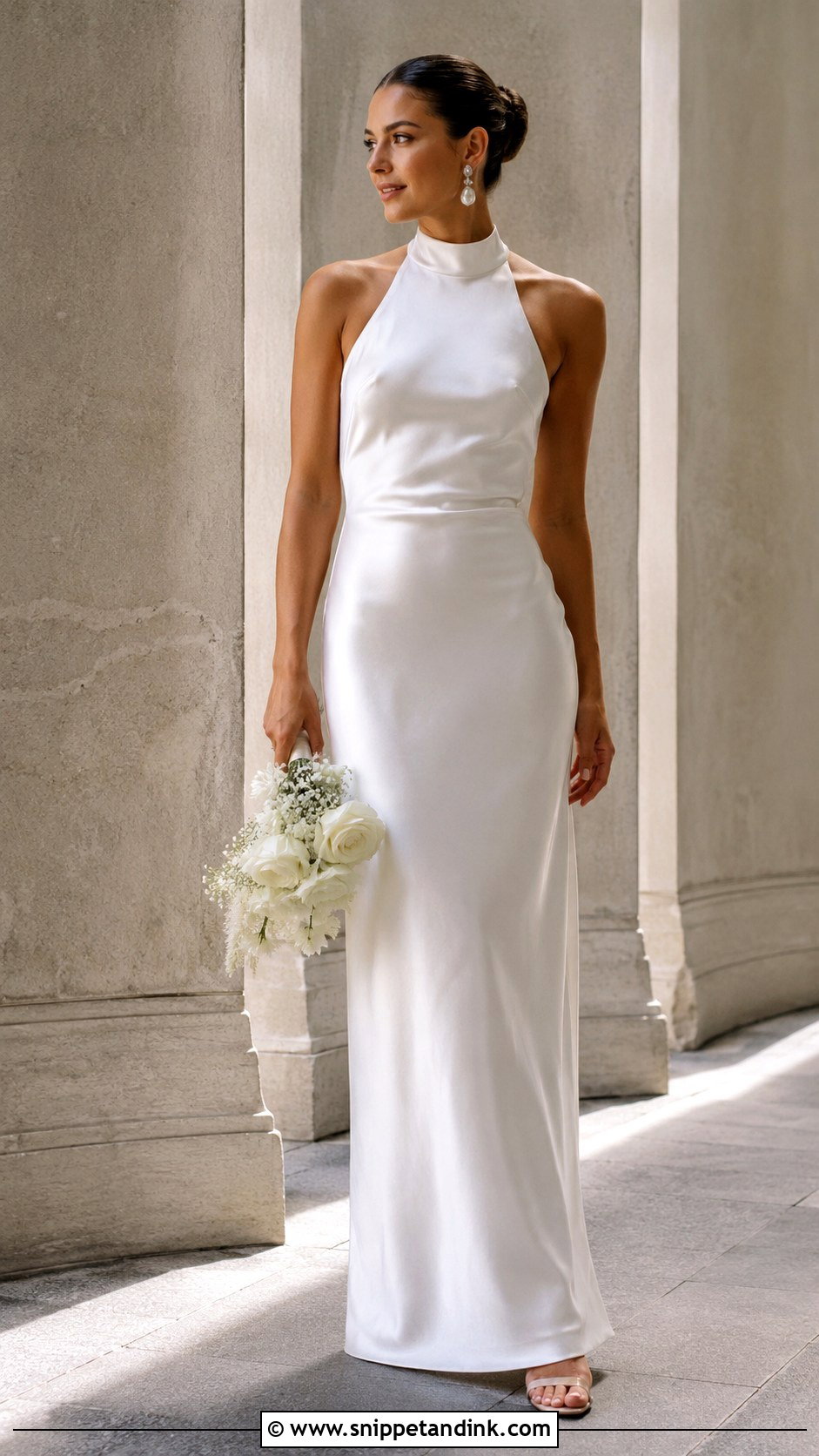
Halters put all the attention on the shoulders and upper back, so I’d skip a necklace and let the cut speak. They suit athletic or broader shoulders very well; on narrow, sloping shoulders, a halter can make them look narrower still. A column or fit-and-flare skirt keeps the line streamlined. A smooth updo matters here, because loose hair hides the neckline. With a low open back, I’d go for a short veil or none at all.
9. Simple Satin High Neck Wedding Dress
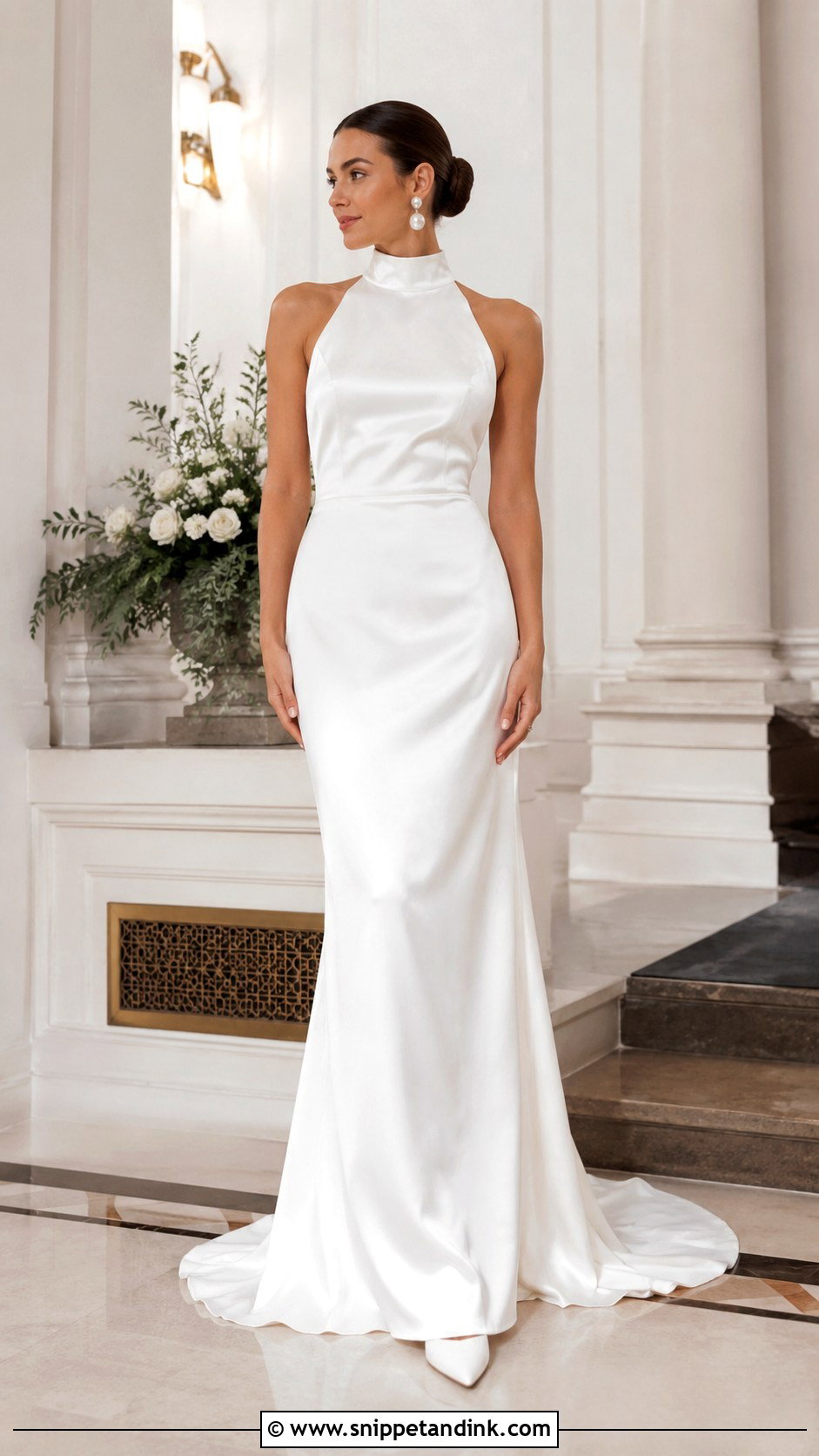
High necks look refined and covered without feeling heavy, but the neckline has to sit right on the throat. I check whether you can turn your head and swallow comfortably, since a satin collar cut too close will rub by the end of the night. Column, A-line and softly fitted skirts all suit it. With no skin at the neck, earrings do the work a necklace would; statement pearls and a sleek bun are my usual pairing, with a long veil set at the crown.
10. Simple Satin Boat Neck Wedding Dress
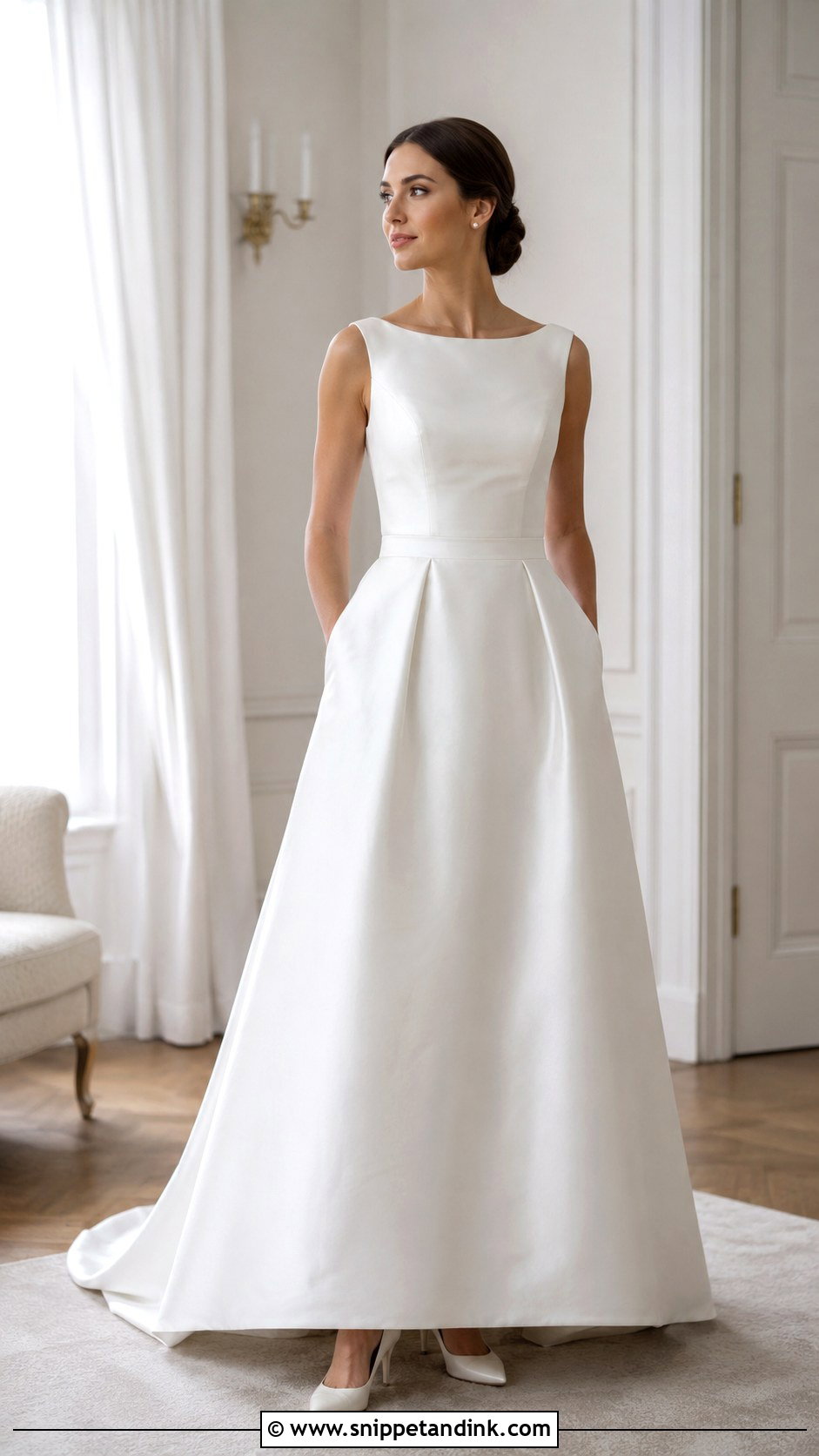
The boat neck runs wide across the collarbone in a soft horizontal line, and it’s the neckline I suggest most often when someone wants a vintage lean without it looking like costume. It widens the shoulders visually, which balances a fuller hip under an A-line skirt. Pearl studs, a neat low bun and classic pumps. A short or chapel veil works because it doesn’t compete with the neckline.
11. Simple Satin Long Sleeve Wedding Dress
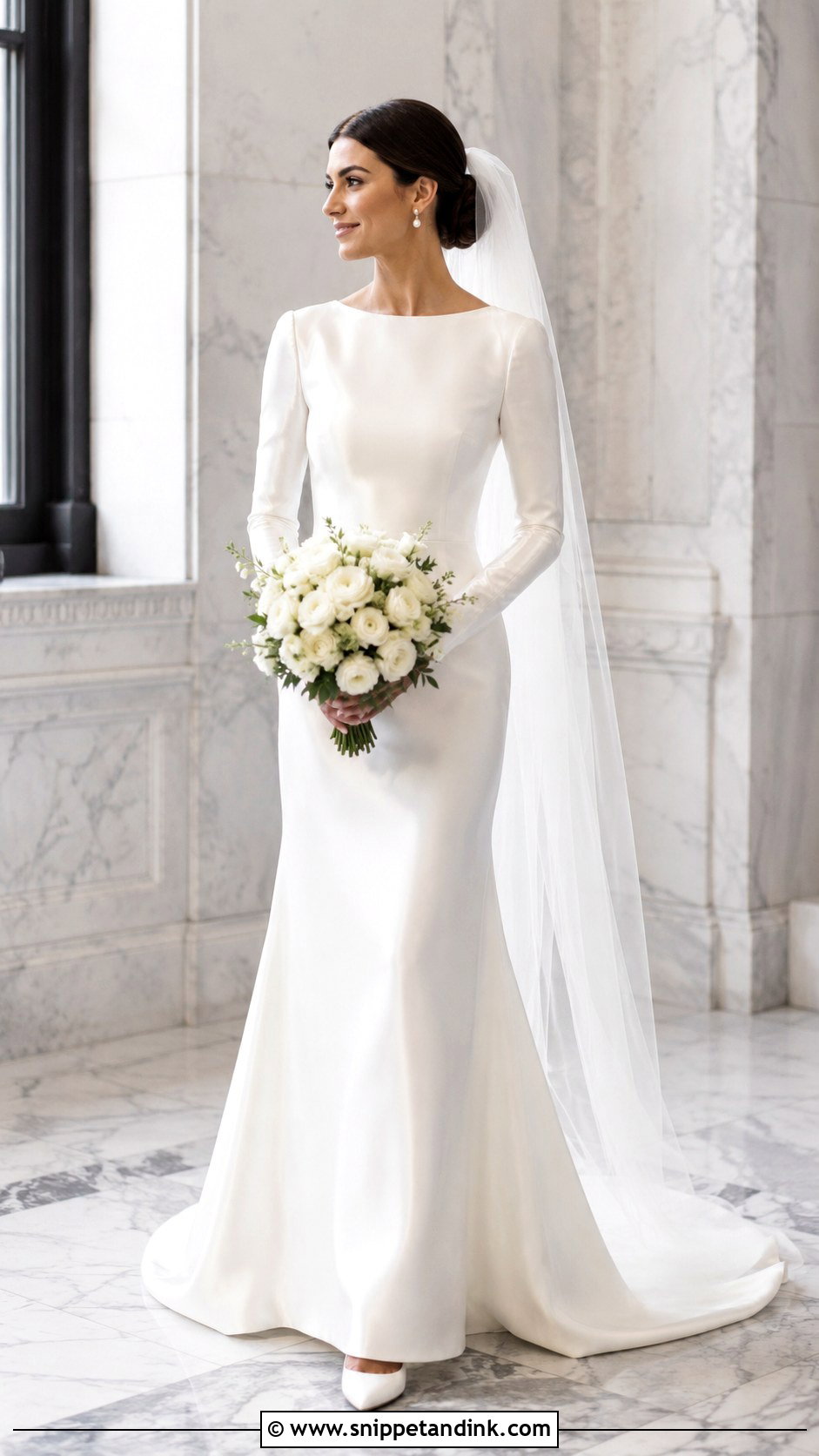
Long satin sleeves are wonderful for autumn and winter, but satin has no stretch, so a fitted sleeve has to be cut with enough ease at the elbow for you to hold a glass and hug people. Ask your seamstress to fit the sleeves with your arm bent. Softer, slightly fuller sleeves feel more relaxed. Closed-toe heels, pearl earrings and a low bun keep the neckline tidy, and a line of covered buttons down the back adds detail without breaking the plain front.
12. Simple Satin Short Sleeve Wedding Dress
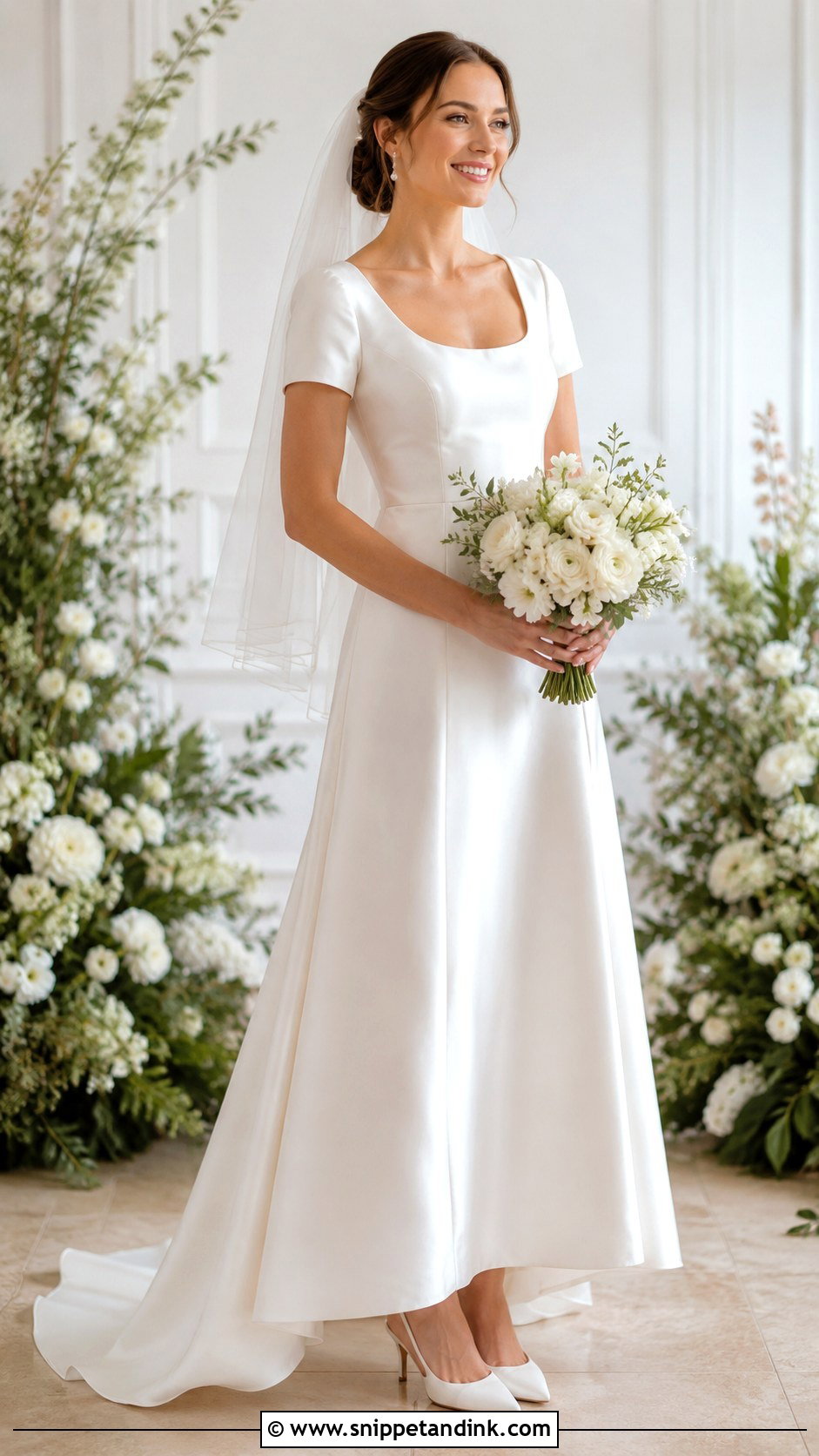
Short sleeves give a little arm coverage while keeping the gown light, which is why I like them for spring and daytime ceremonies. The sleeve hem should land at the narrowest part of your upper arm, usually just above the midpoint; a sleeve that ends at the widest point makes arms look fuller in photos. A fitted bodice over a soft A-line feels classic, a sheath more modern. Pair with square, scoop or bateau necklines, low heels and a simple veil.
13. Simple Satin Midi Wedding Dress
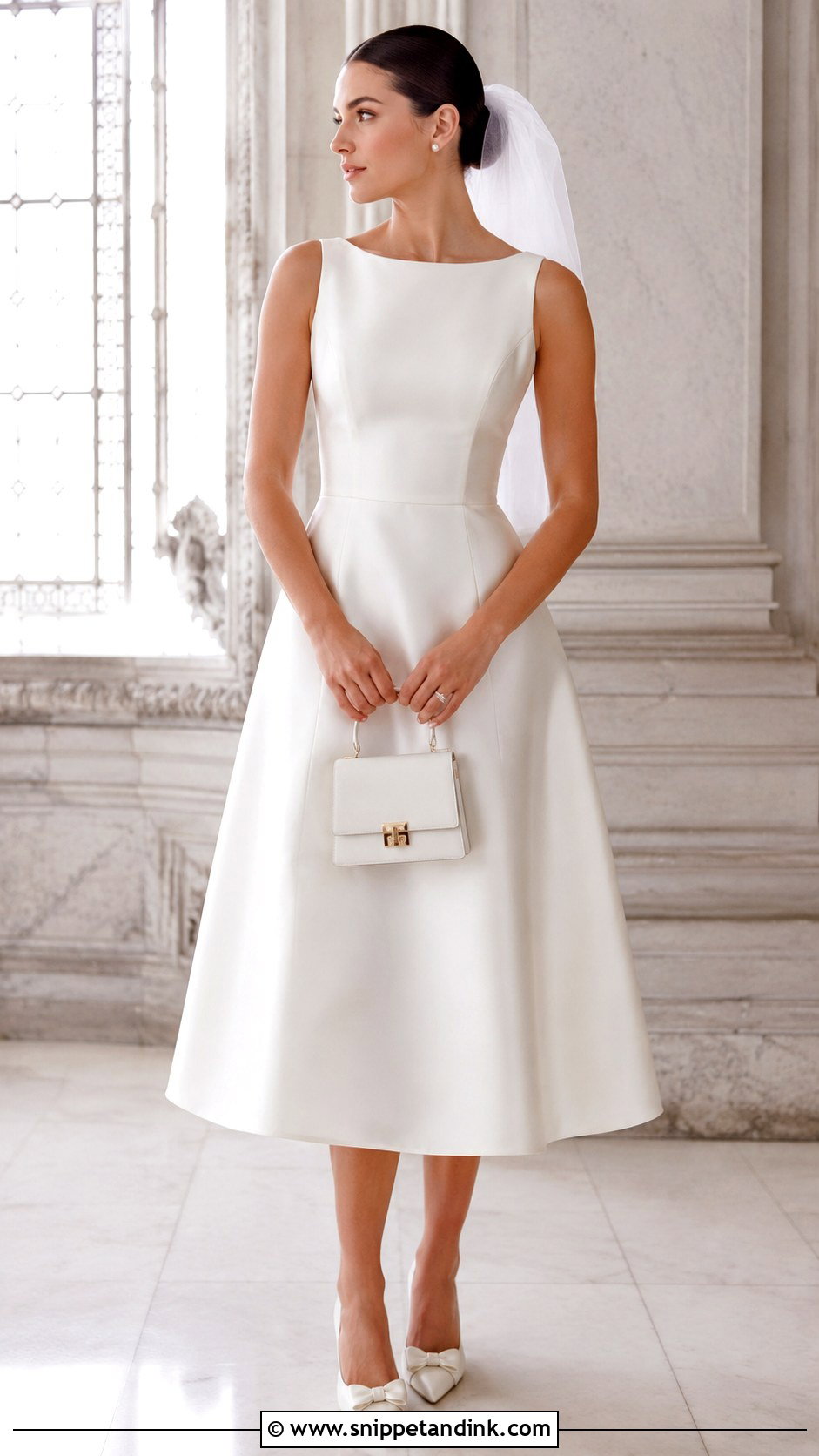
A satin midi suits courthouse ceremonies, civil weddings, rehearsal dinners and small celebrations, and it’s far easier to move in than a long gown. The hem shows your shoes, so this is the place for the bow heels or pearl sandals you love. Satin creases most at the back of a skirt that’s sat on, and on a midi that crease is at eye level, so steam it right before you leave. A structured bodice with a full skirt feels classic; a slip midi feels modern. Add a short veil and a small bag.
14. Simple Satin Mini Wedding Dress
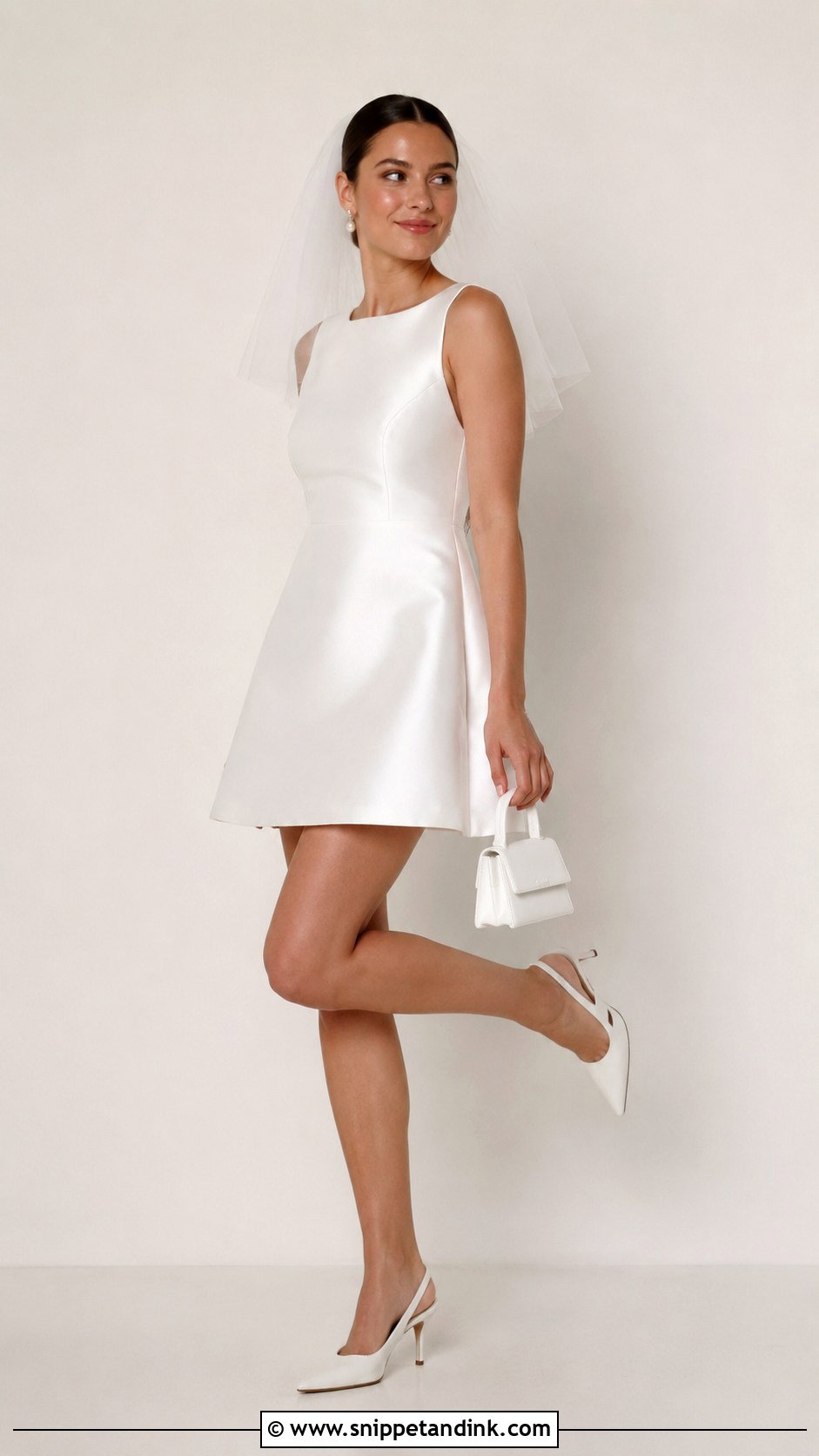
Satin is what makes a mini feel bridal instead of just short. It’s a common second look, or a choice for a relaxed ceremony, and a straight, A-line or shift cut all work. The shorter the hem, the more structure I want in the fabric, because a thin satin mini rides up when you sit. Slingback heels, pearl earrings and a structured mini bag; a bow veil or short tulle veil is fun here. It’s great for courthouse weddings, reception exits and after-parties.

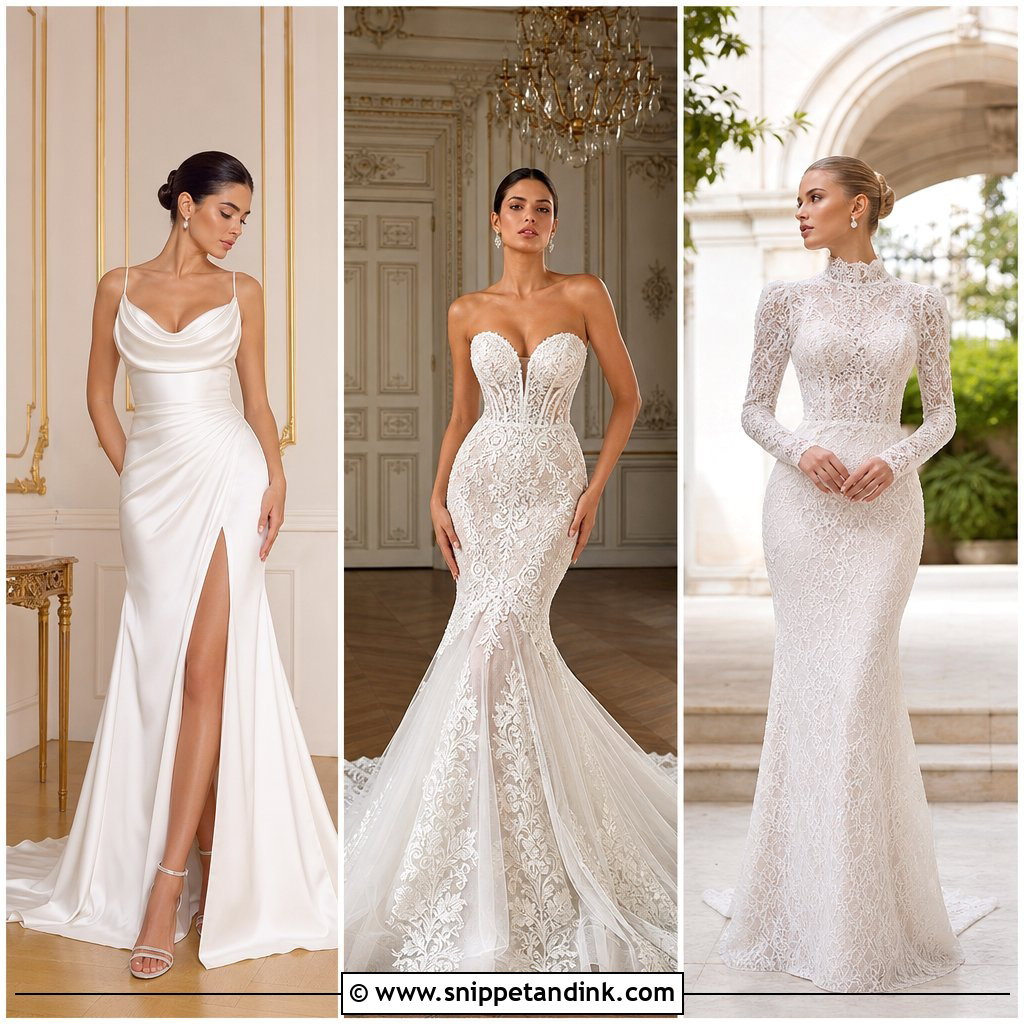
15. Simple Satin Mermaid Wedding Dress
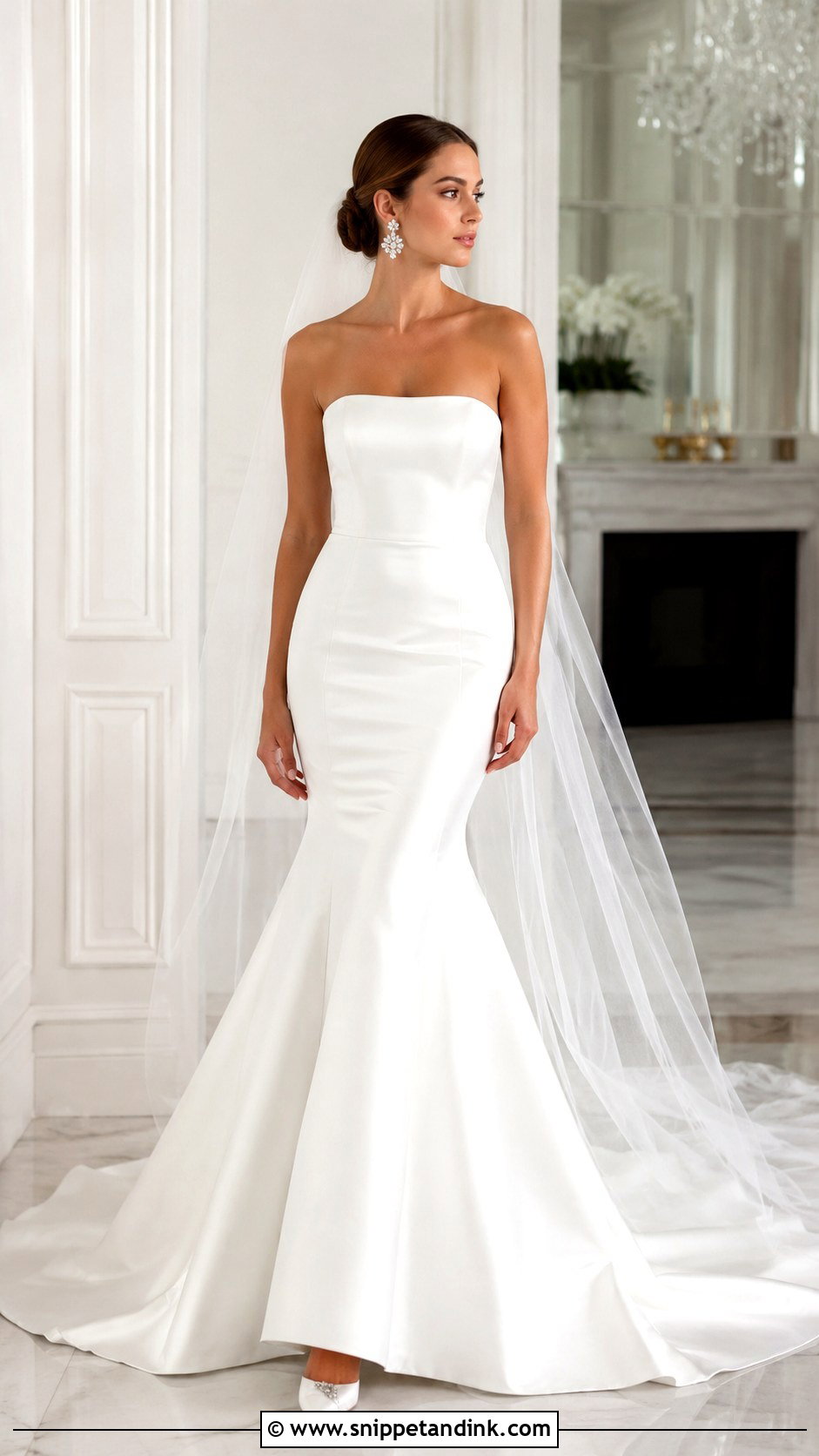
Mermaids are fitted through the bodice, waist and hips and flare near the knee. Plain satin makes the shape dramatic without beading, but it also means tailoring has to be precise, because a mermaid flare set too low makes walking and stairs hard. I always have brides climb a step and sit on a chair at the last fitting. Strapless, square or off-shoulder necklines suit the shape, with pointed heels, a long veil and sculptural earrings. Bring your exact wedding shoes to every fitting so the hem lands right.
16. Simple Satin Fit And Flare Wedding Dress
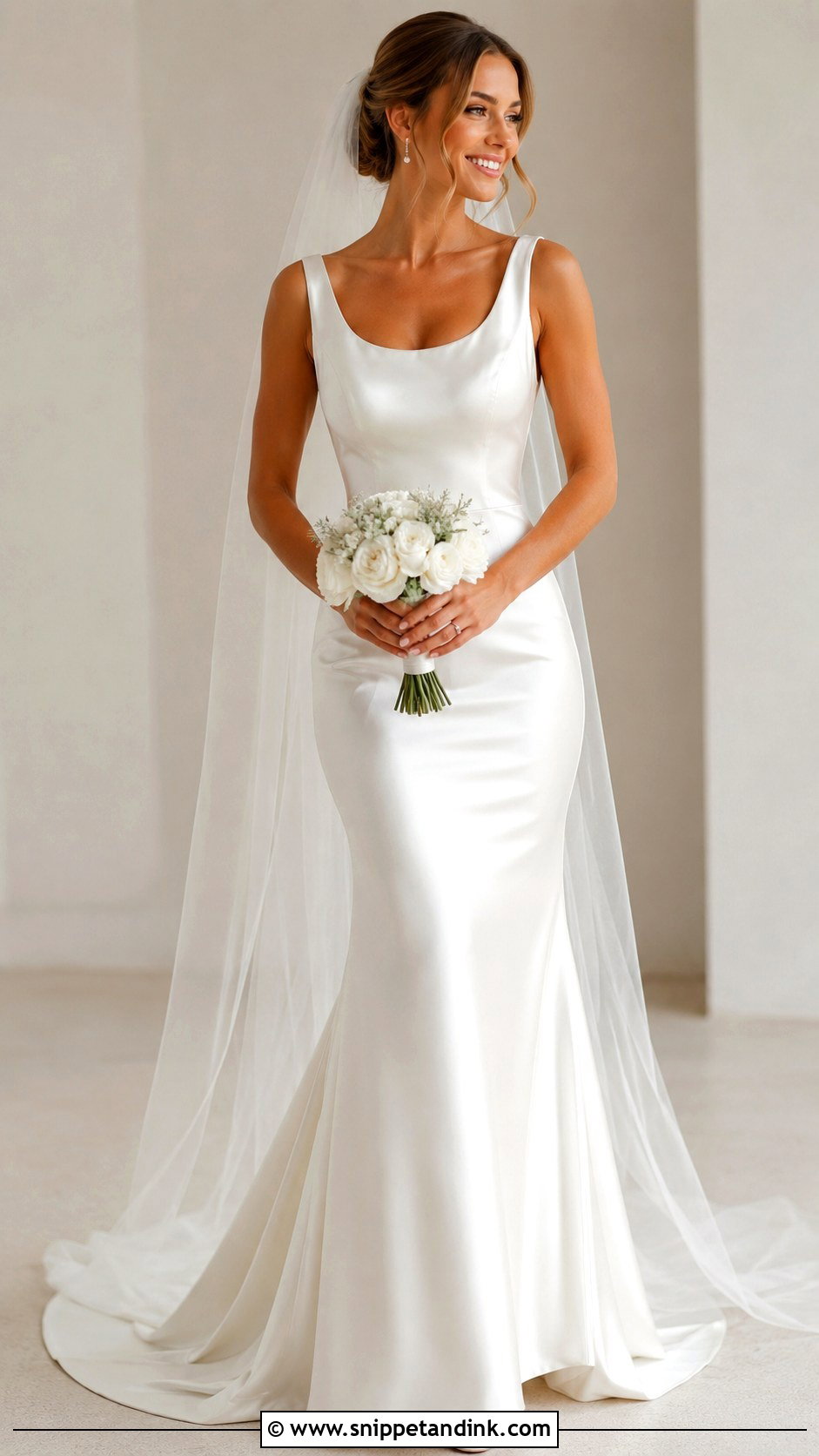
Fit and flare shapes the waist and hips, then opens into a softer skirt higher up than a mermaid does, which gives you far more freedom of movement. It’s the shape I suggest when someone loves the mermaid look but needs to dance. A scoop neck, V neck or strapless bodice all sit well on it. Slim heels, a plain veil, delicate earrings, and a slightly rounded bouquet that won’t hide the waistline.
17. Simple Satin Sheath Wedding Dress
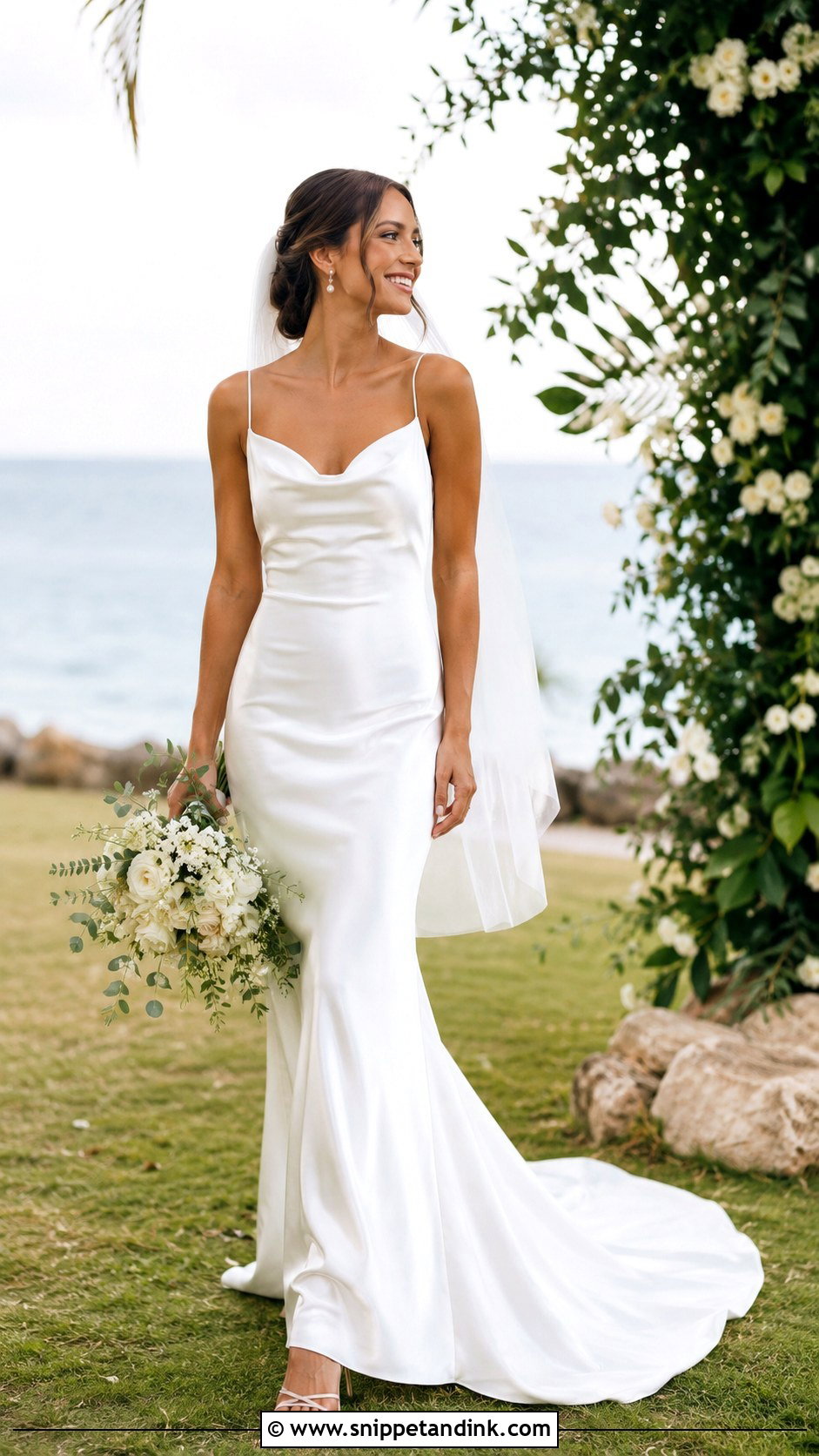
A simple satin sheath wedding dress follows the body’s natural line without a dramatic flare, and it’s the lightest option here to wear all day. Because it’s narrow, the walking slit or kick pleat at the back matters; without one, your stride shortens noticeably. A slight train or seamed waist gives more shape. Strappy heels, a soft veil and small earrings, and it sits comfortably at beach, garden, city hall or very minimal venues.
18. Simple Satin Column Wedding Dress
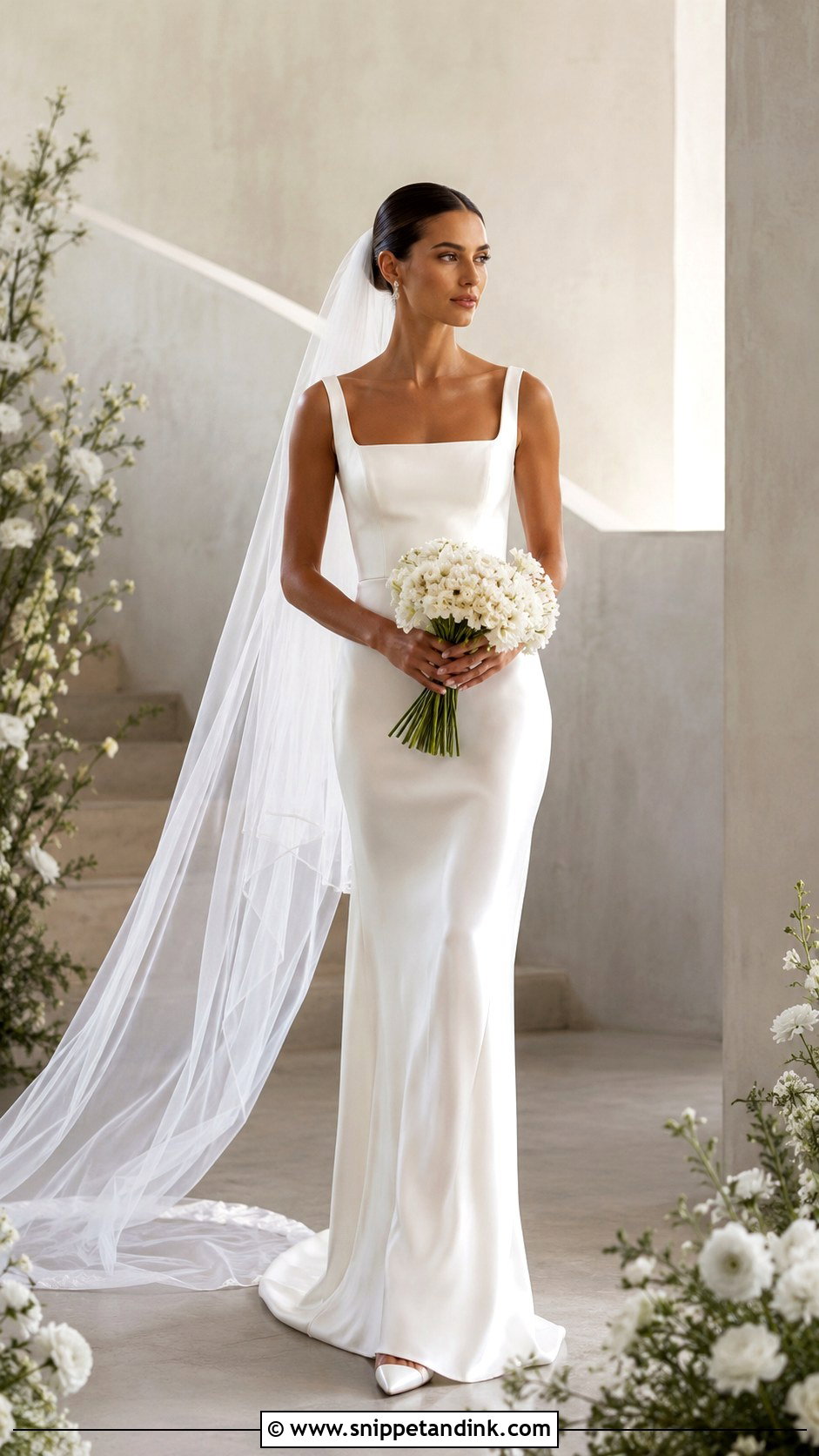
The column is straight, long and less clingy than a slip, since it’s usually cut from a heavier satin that stands slightly away from the body. That weight is what makes a simple satin column wedding dress feel formal with no decoration at all. Square, high or strapless necklines all suit it. Proportion is the trick: a long veil or a structured bouquet adds balance to such a narrow shape. Pointed heels, a sleek updo and polished earrings finish it.
19. Simple Satin Corset Wedding Dress
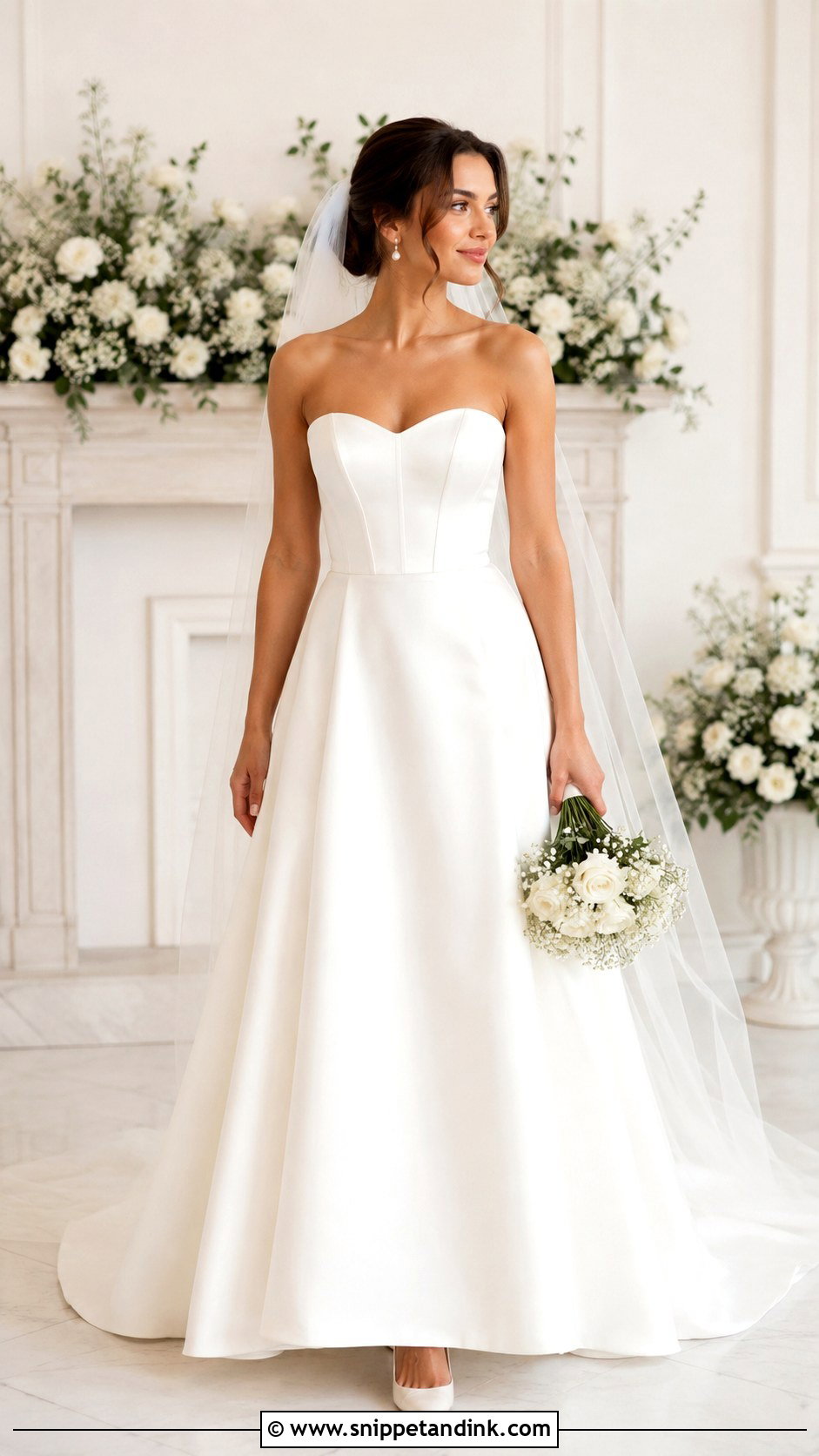
Corset bodices shape the waist and support the bust, and satin keeps the result smooth. Look at the inside: spiral steel boning bends with you, while cheap plastic boning warps and shows through the fabric as ridges after a few hours of body heat. Keep visible detail subtle if you want it simple. An A-line, ball gown or fit-and-flare skirt can sit under it; add pearl earrings, a soft veil and classic heels. Good tailoring is what makes it feel secure rather than restrictive.
20. Simple Satin Drop Waist Wedding Dress
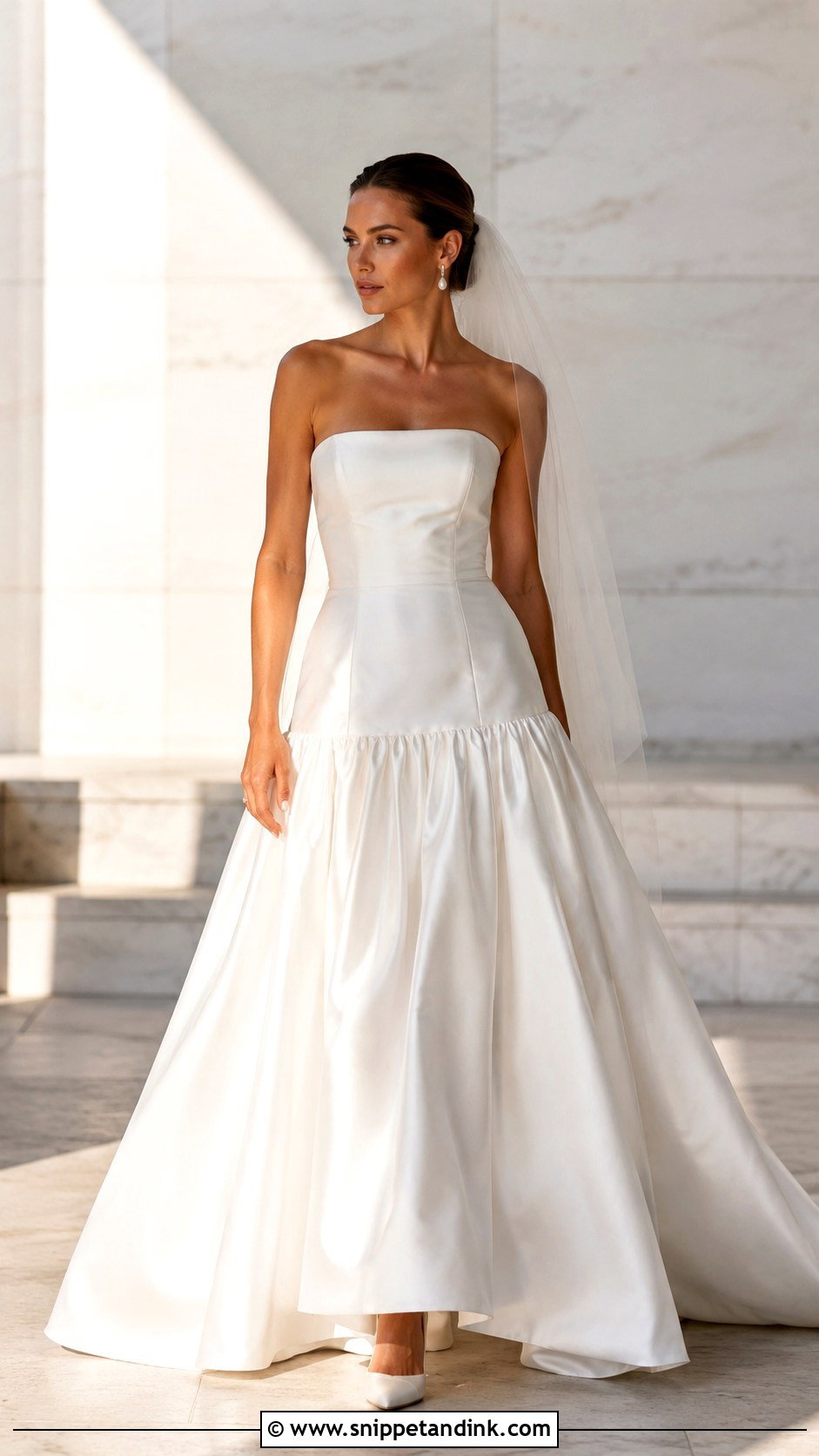
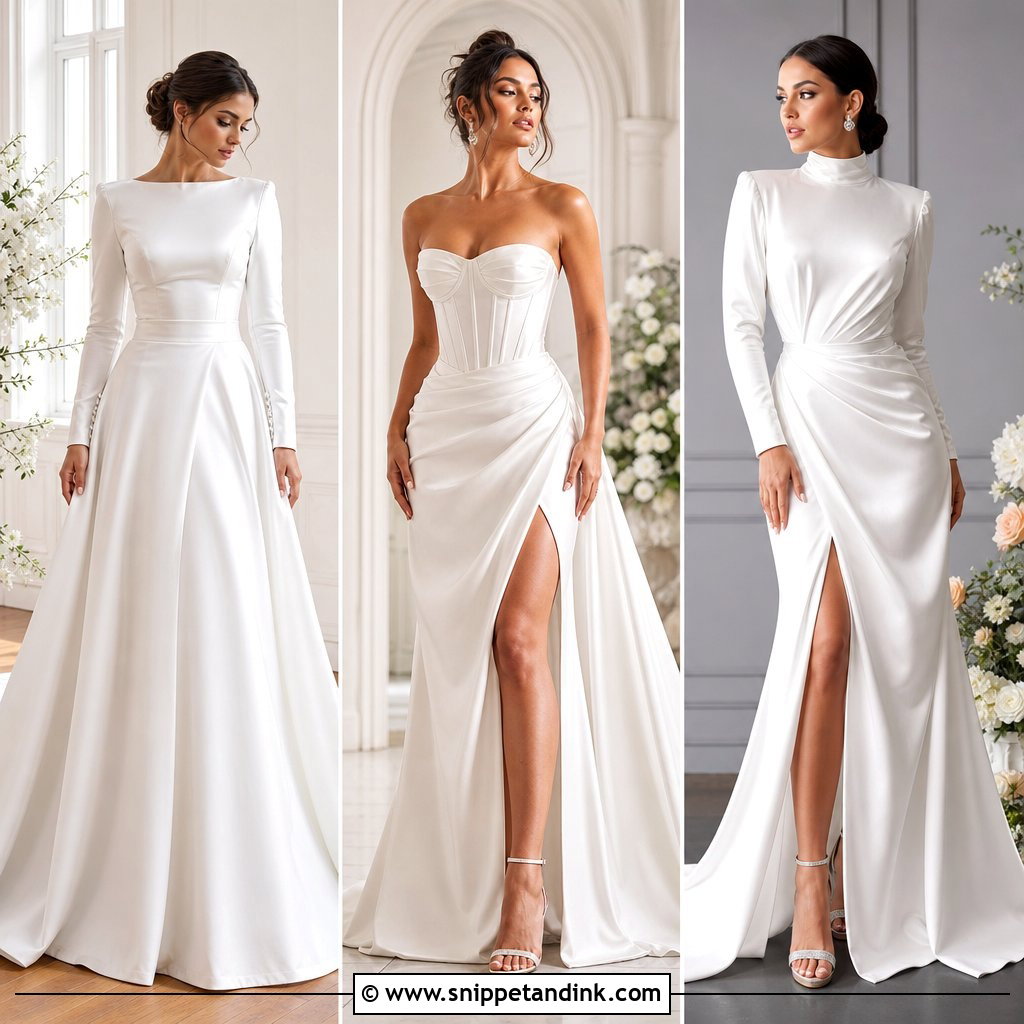
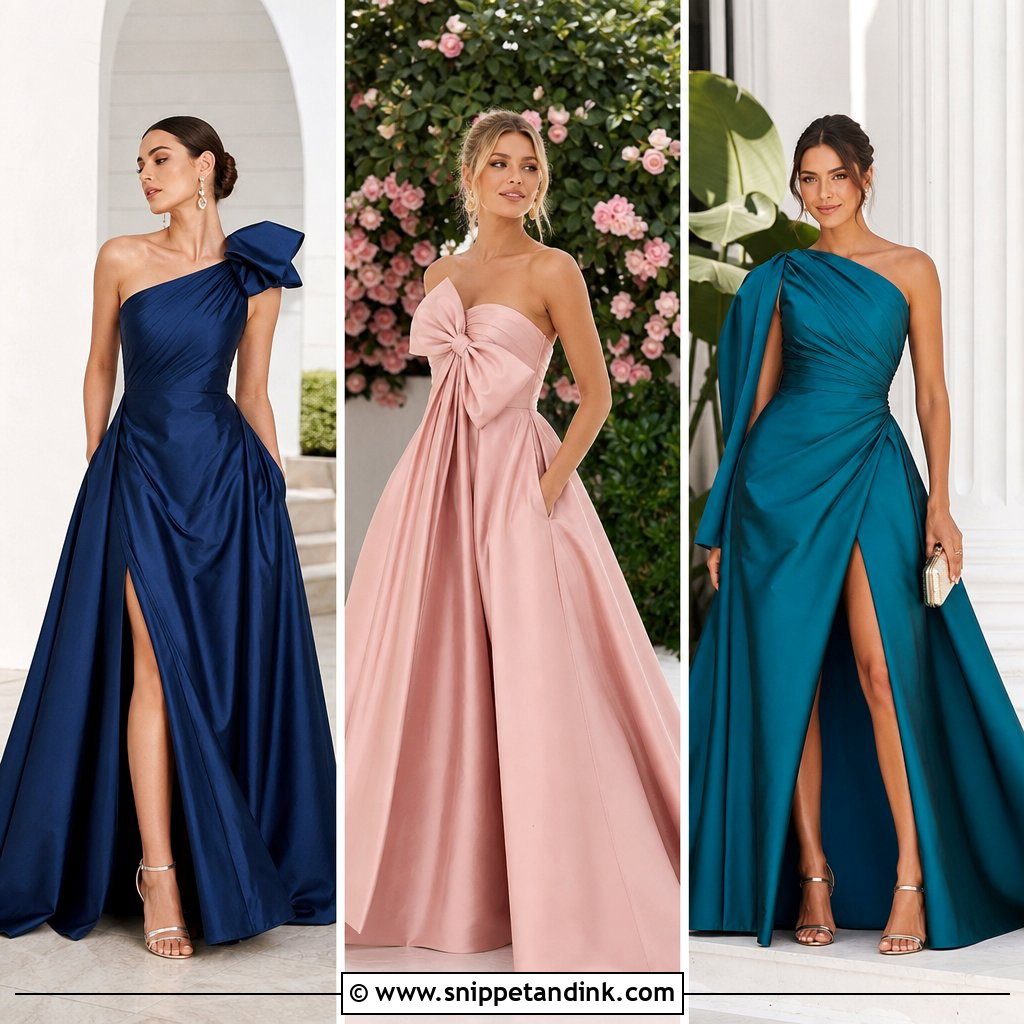
Drop waists sit lower on the body and lengthen the torso, but they are proportion-sensitive. On a shorter torso, a waistline dropped too far makes the legs look short, so I mark the seam on you at the first fitting rather than trusting the sample. A full skirt is romantic, a slim one modern. Keep accessories minimal, with clean heels and a veil set low in the hair, and let the waistline carry the look.
21. Simple Satin Wedding Dress With Train
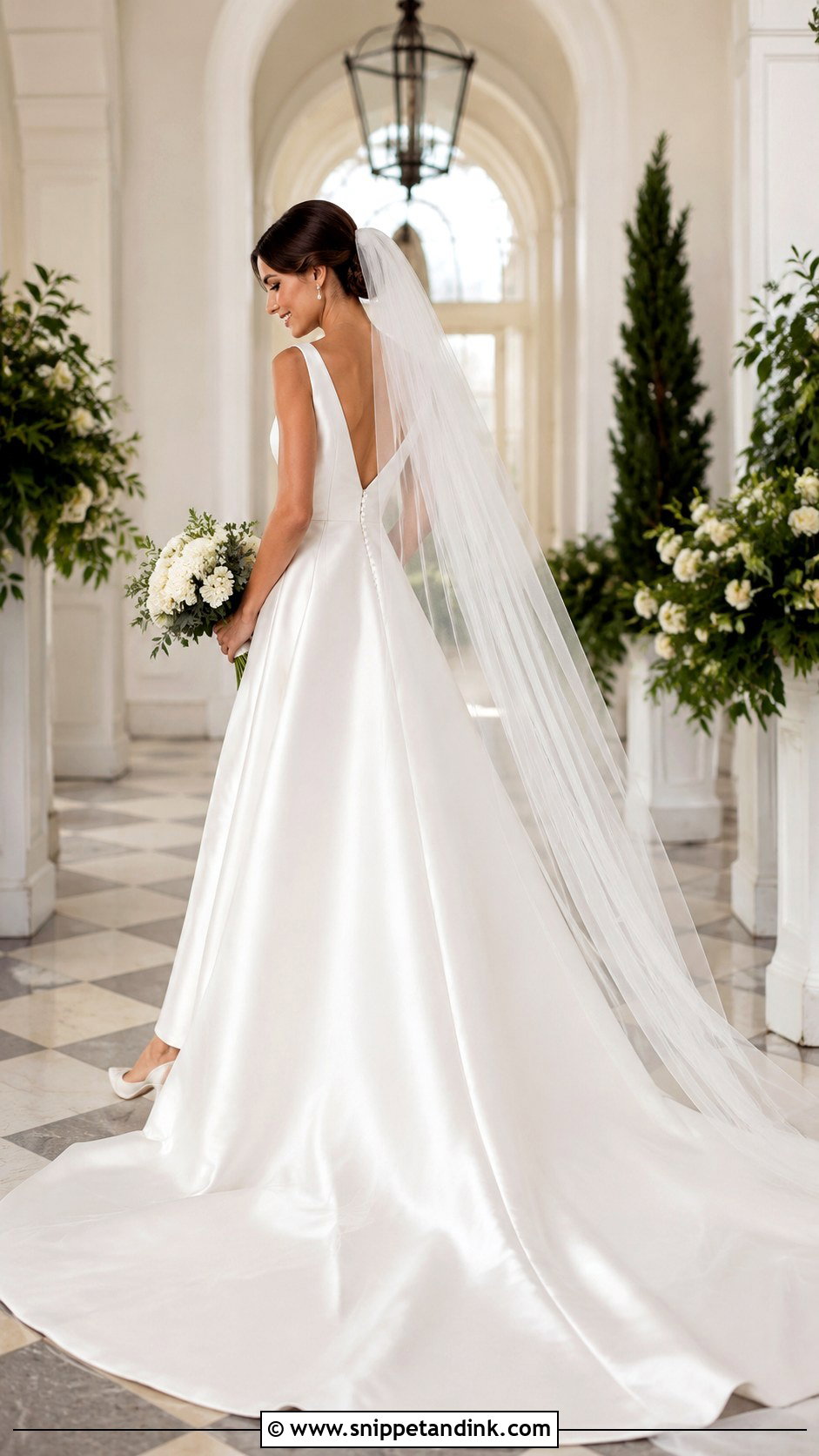
A train gives a clean gown its drama from behind while the front stays easy to wear. A chapel train is manageable; anything longer is formal, and heavy satin trains are genuinely heavy to drag across grass. The bustle is the detail most brides forget to ask about. Satin bustles well with an over-bustle of hidden hooks or a French under-bustle tied with ribbons, and you should see it done at your last fitting. Pair with a long veil, simple earrings and comfortable heels.
22. Simple Satin Wedding Dress With Bow
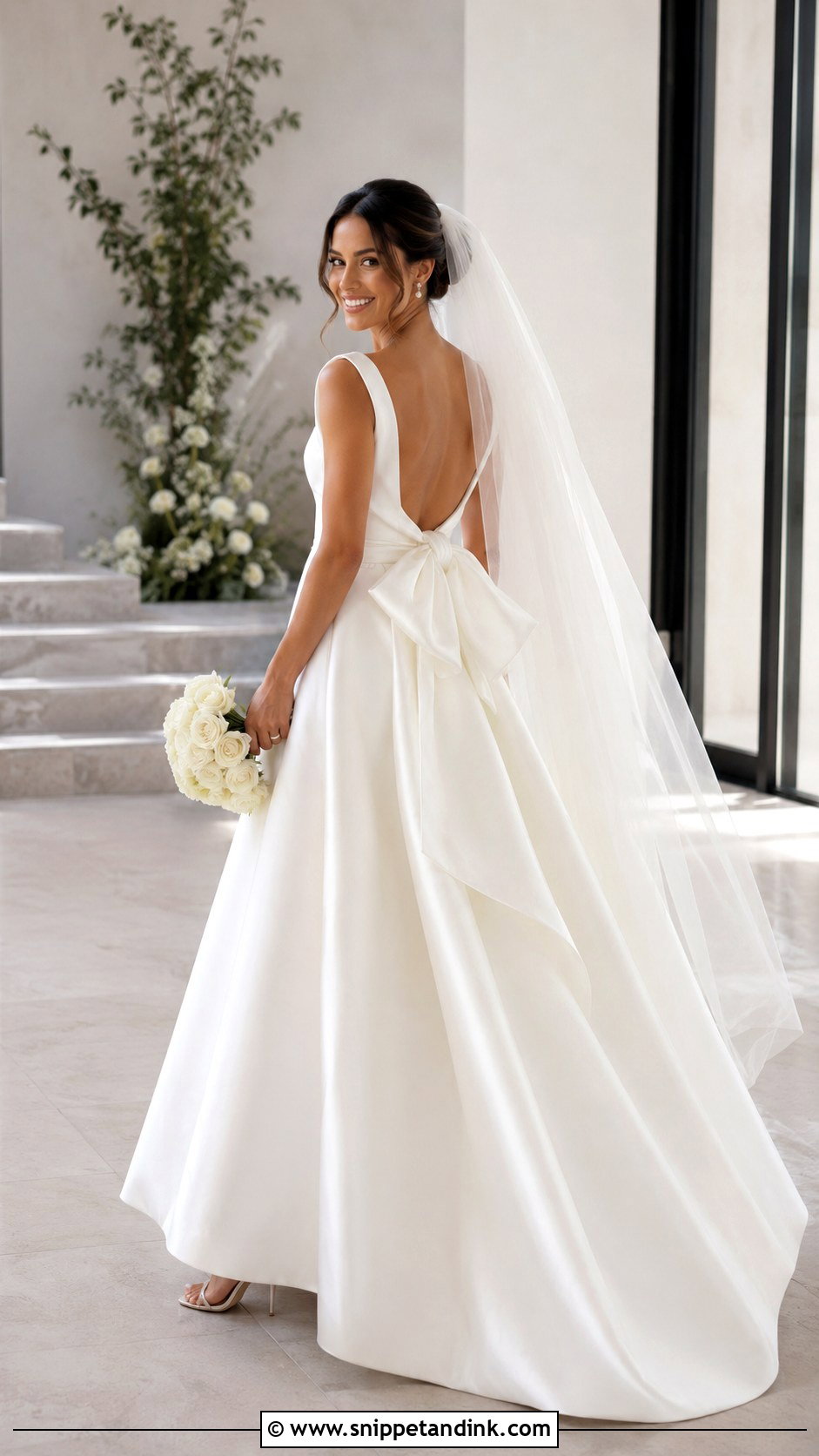
One bow is enough detail for a satin gown. It can sit at the back waist, the shoulder, the neckline or the train; a back bow on a clean A-line reads classic, shoulder bows read more romantic. I check that a large back bow is stitched to an inner stay rather than just to the outer fabric, or it droops by the reception. Skip big jewellery and hair pieces, and go for pearl earrings, soft heels and a plain veil.
23. Simple Satin Wedding Dress With Buttons
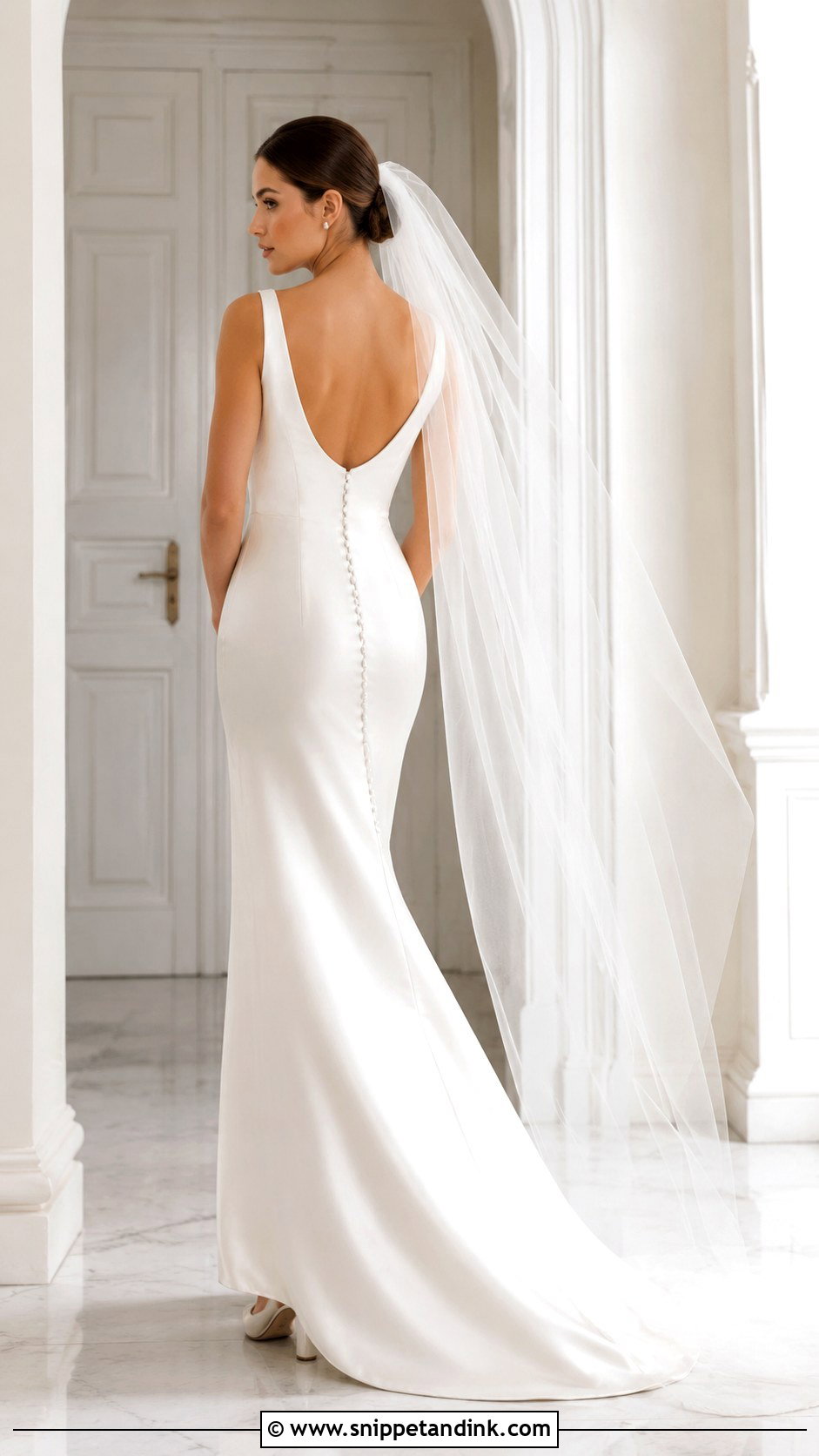
Covered buttons down the back add texture while the front stays plain. Many are decorative over a hidden zip, which is what I’d recommend, because 30 or more real loop buttons take a long time to fasten on the morning. It works on A-line, sheath, fit-and-flare and ball gown shapes. Choose a sheer veil so the buttons still show in aisle photos, with pearl earrings and a smooth hairstyle.
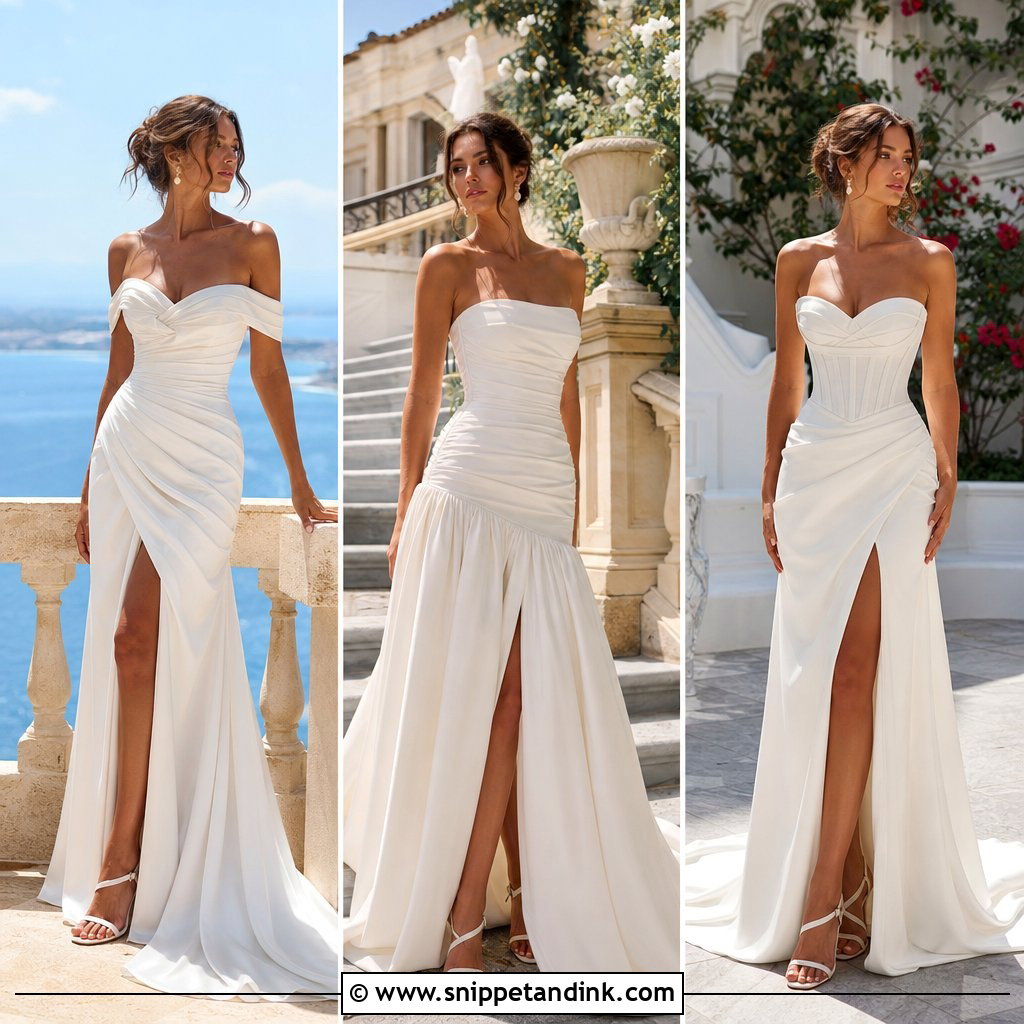
24. Simple Satin Wedding Dress With Slit
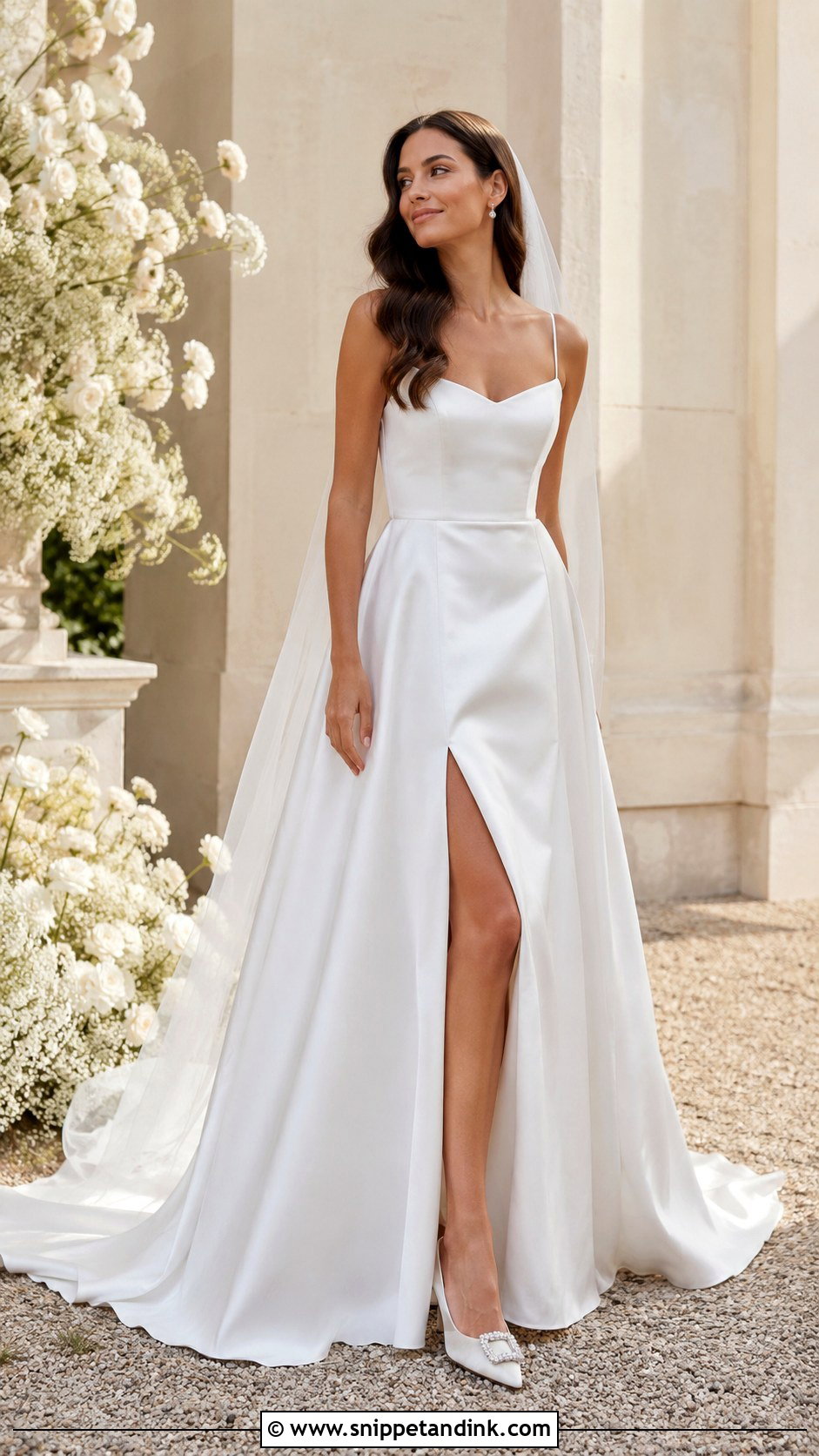
A slit makes satin easier to walk and dance in, especially on a sheath or column. The height is personal, but I always test it seated, because a slit that looks modest standing can open much further when you cross your legs. Your shoes will flash through every step, so make them the statement: a metallic or embellished pair. Keep the rest simple with small earrings, a clean veil, and soft waves or a low bun.
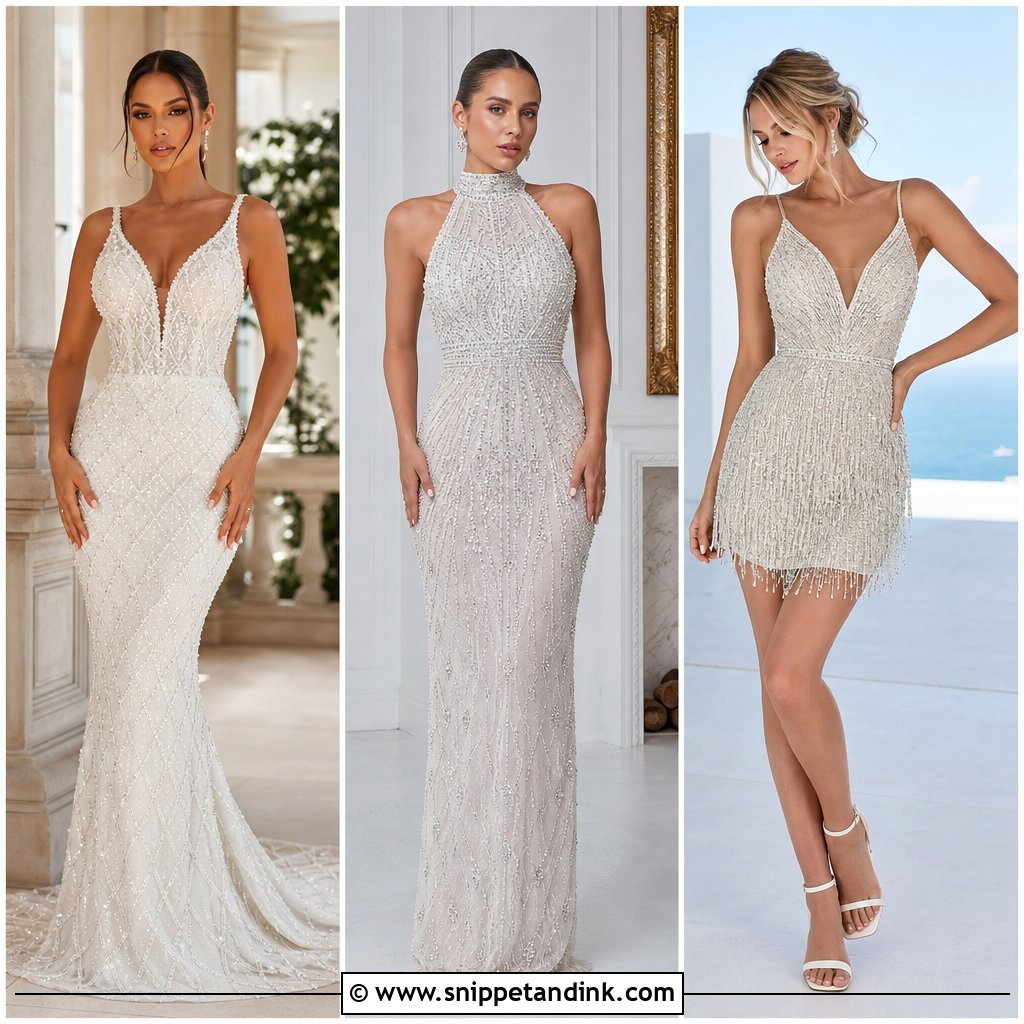
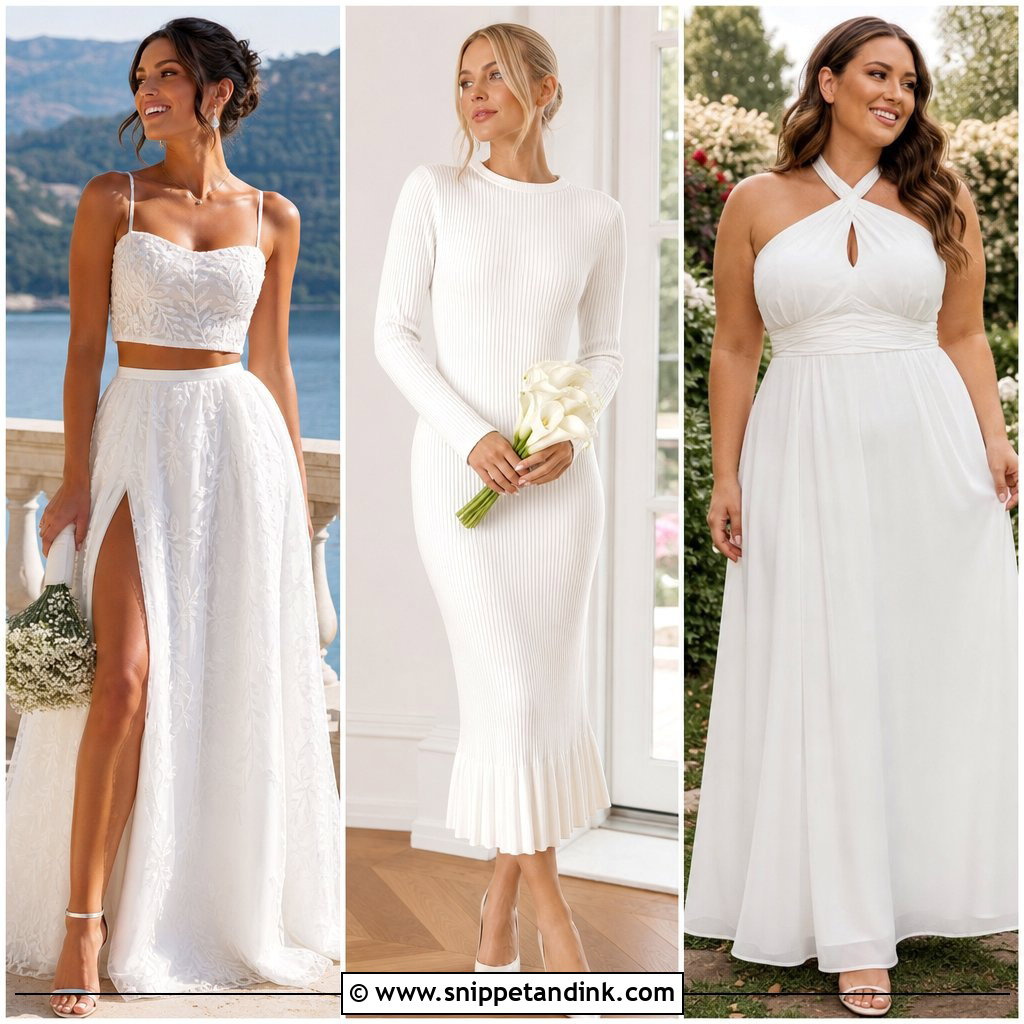

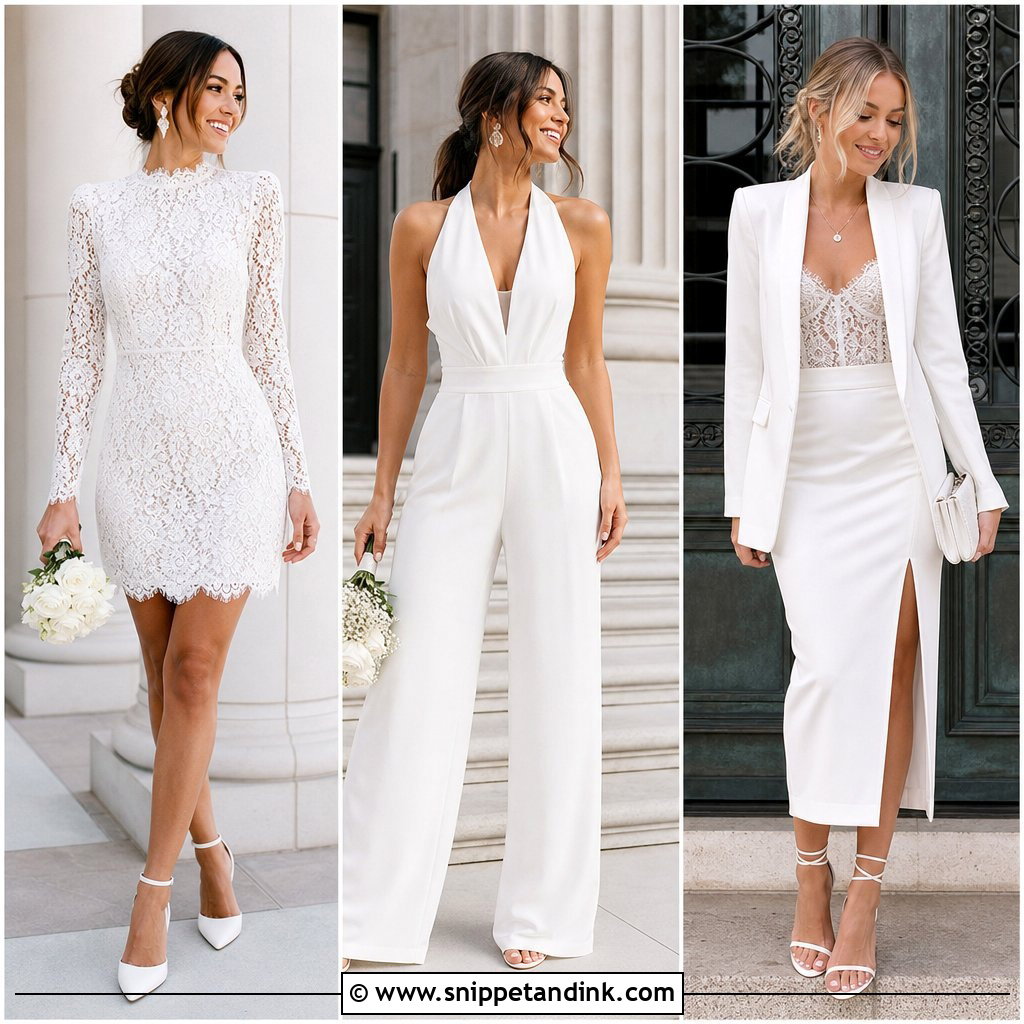
25. Simple Satin Wedding Dress With Cape
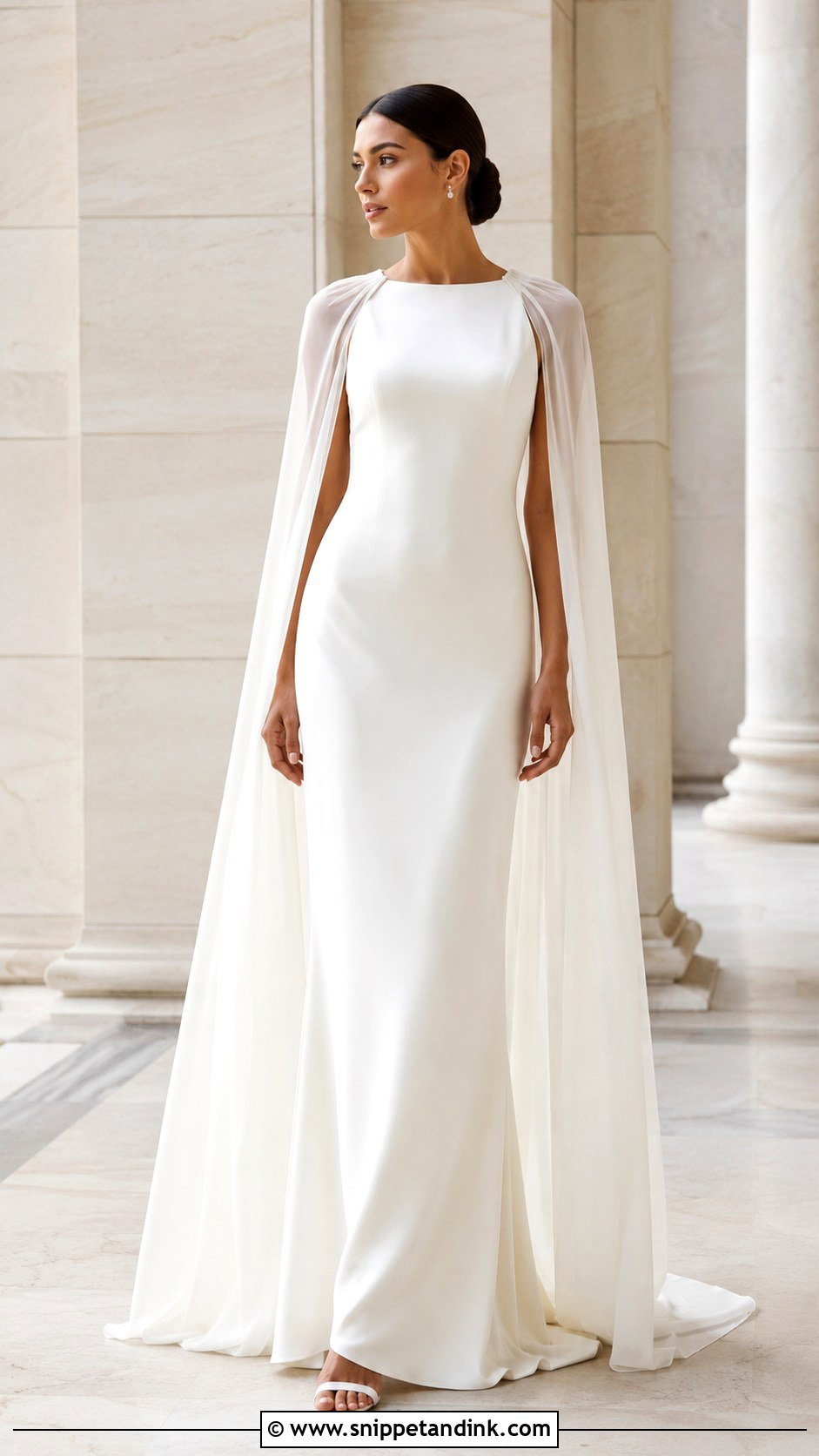
Capes add movement and coverage without embellishment. Sheer, satin and lightweight crepe all work, and a cape can stand in for a veil entirely. Watch the attachment point: capes that fasten at the shoulder seam pull the neckline back, so I prefer ones that clip under the arm or at the back of a strapless bodice. A strapless, square neck or column gown gives the cape room to fall. A detachable cape is the practical choice, since it comes off for the reception.
How Satin Behaves Over a Long Wedding Day
Satin’s smooth surface is also its weak spot. Most satin problems I sort out on a wedding morning are predictable, so plan for them:
- Creases: sitting in the car crushes the back of the skirt. Ask whoever is dressing you to lift the skirt behind you before you sit, and pack a handheld steamer for the venue.
- Water marks: a drop of water can leave a ring on silk satin. Keep drinks away during photos, and don’t dab a spill; blot it gently with a dry white cloth.
- Deodorant and makeup: let deodorant dry fully before you step in, and step in rather than pulling the dress over your head. A scarf over your face stops foundation transfer onto the neckline.
- Bouquet stems: wet, cut stems can stain the skirt green. Have your florist wrap and seal the handle.
Satin After the Wedding: Cleaning and Storage
Get the dress to a specialist cleaner within a few weeks. Champagne and sugary drink spills can be almost invisible at first, then oxidise into brown marks months later, and they get harder to remove the longer they sit.
For storage, fold it with acid-free tissue in the creases and keep it in an acid-free box or a breathable cotton bag, somewhere cool, dry and dark. Avoid plastic dry-cleaning covers, which trap moisture and can yellow satin, and don’t hang a heavy gown long-term by its shoulder straps, because the weight pulls the bodice out of shape.
Fit Is What Makes Plain Satin Look Expensive
Satin carries its own shine and structure, so a plain gown in it doesn’t need decoration to look like a wedding dress. What it needs is fit. Whichever shape you lean toward, an A-line, a slip, a ball gown, a mermaid or something with a cape, spend your energy and budget on alterations and on a good-quality fabric, and keep the accessories in support. Try it seated, walking and with your arms up before the final fitting is signed off.
You'll Like These Ideas:










Leave a Reply