
Satin is the fabric I reach for when a bride wants the cut of her dress to do the talking. It reflects light along every seam and curve, so a good pattern looks sculpted and a poor one has nowhere to hide. The shapes brides keep asking me for are clean lines, sculpted bodices, basque waists, corsetry, off-the-shoulder necklines and minimalist slip gowns. Satin suits a city hall as easily as a ballroom, and it takes pearls, gloves and a cape without fuss. Below are twenty-five satin dresses, each with what I’d style it with and what to watch for in the fitting room.
Duchess, Charmeuse or Crepe-Back?
Satin is a weave, not a fiber, and the label tells you less than you’d think. Two dresses both called satin can behave completely differently in the fitting room, so I ask about the specific cloth before I look at the silhouette.
- Duchess satin is heavy and stiff, with a low sheen. It holds ball gowns, basque waists and structured bows, and it hides underwear lines well. In August heat it is warm to wear.
- Silk charmeuse is fluid and light, with a high shine. It drapes into slip dresses and cowls but clings, shows every line beneath it and marks easily with water.
- Crepe-back satin has a shiny face and a matte reverse. It sits between the two in weight, and designers often use both sides in one gown.
- Polyester satin costs far less and wrinkles less, but it can look plasticky under camera flash and traps heat.
Ask for a swatch and do two quick tests at home. Crush a corner in your fist for ten seconds and see how fast the creases drop. Then photograph it with your phone flash on, because that’s closer to what a reception camera will show than the boutique’s soft lighting.
1. Satin A Line Wedding Dress
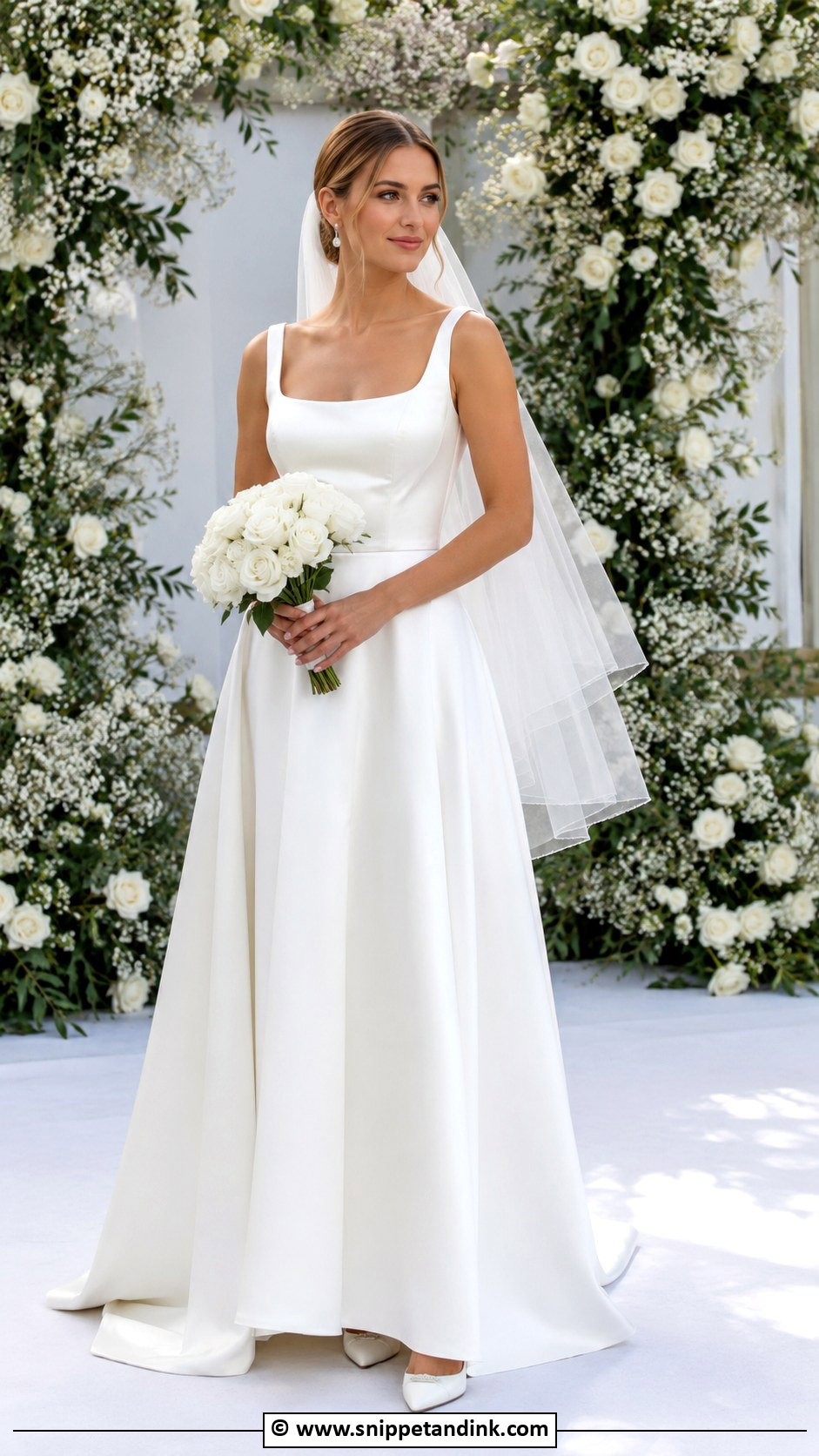
An A-line is the shape I suggest first to brides who aren’t sure where to start. The fitted bodice marks the waist and the skirt falls away from the hips, and satin has just enough body to hold that line while still moving when you walk. A fingertip veil, pearl drops and pointed ivory heels keep it graceful, and a tight bouquet of white roses or calla lilies matches its restraint. It sits comfortably in a hotel, a garden or a church.
2. Satin Ball Gown Wedding Dress
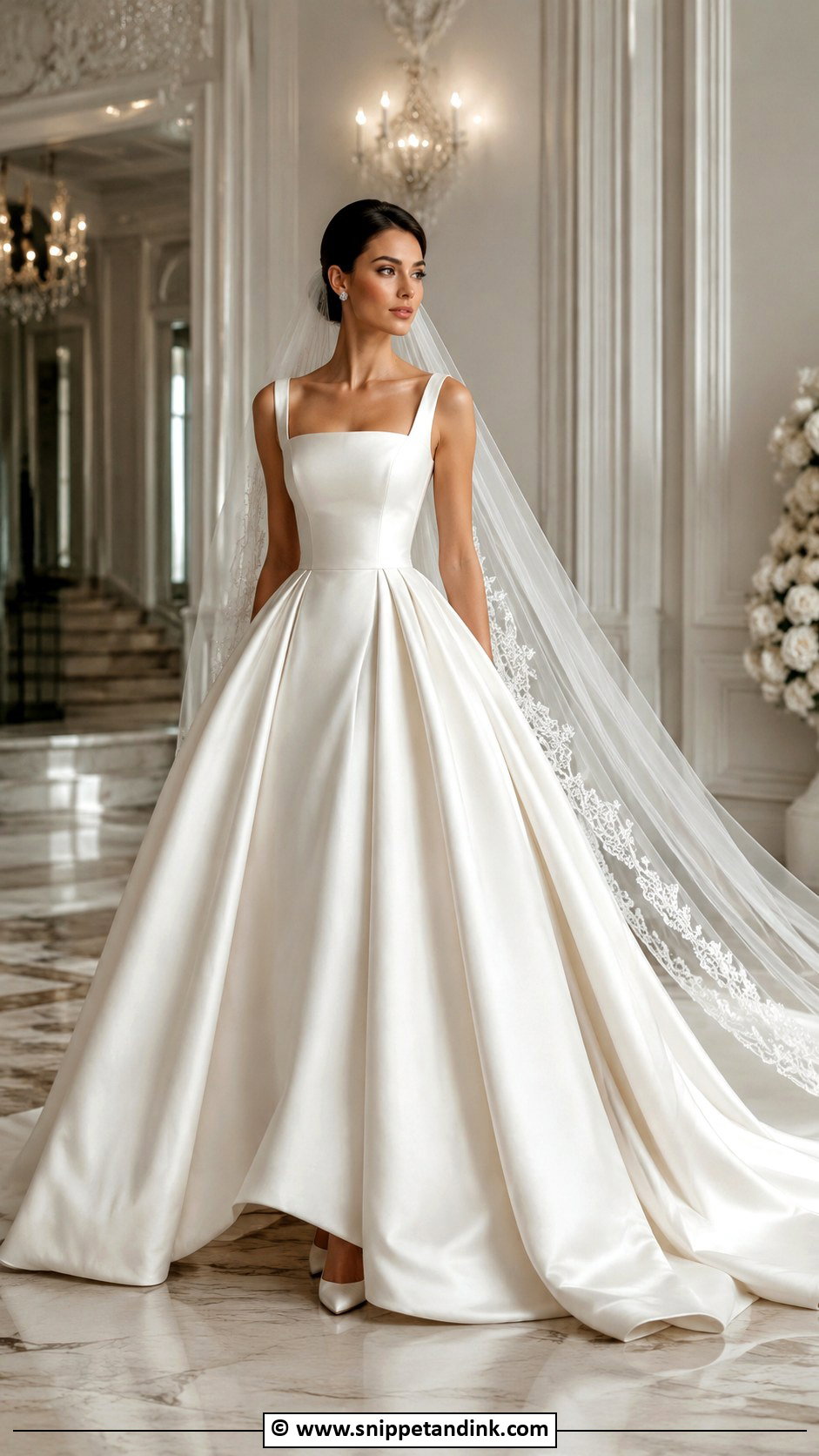
Volume in satin looks grand rather than fussy, because the eye reads one smooth surface instead of layers of tulle and lace. That’s why a satin ball gown wedding dress can still look clean. Balance the skirt with a fitted bodice and a straight or sweetheart neckline, then add a cathedral veil, crystal studs and satin pumps. Ask about the weight before you commit. A full satin skirt over a petticoat is heavy, and I always have brides walk the shop floor and sit down in it before deciding. It needs room: a ballroom, an estate, a wide aisle.
3. Satin Mermaid Wedding Dress
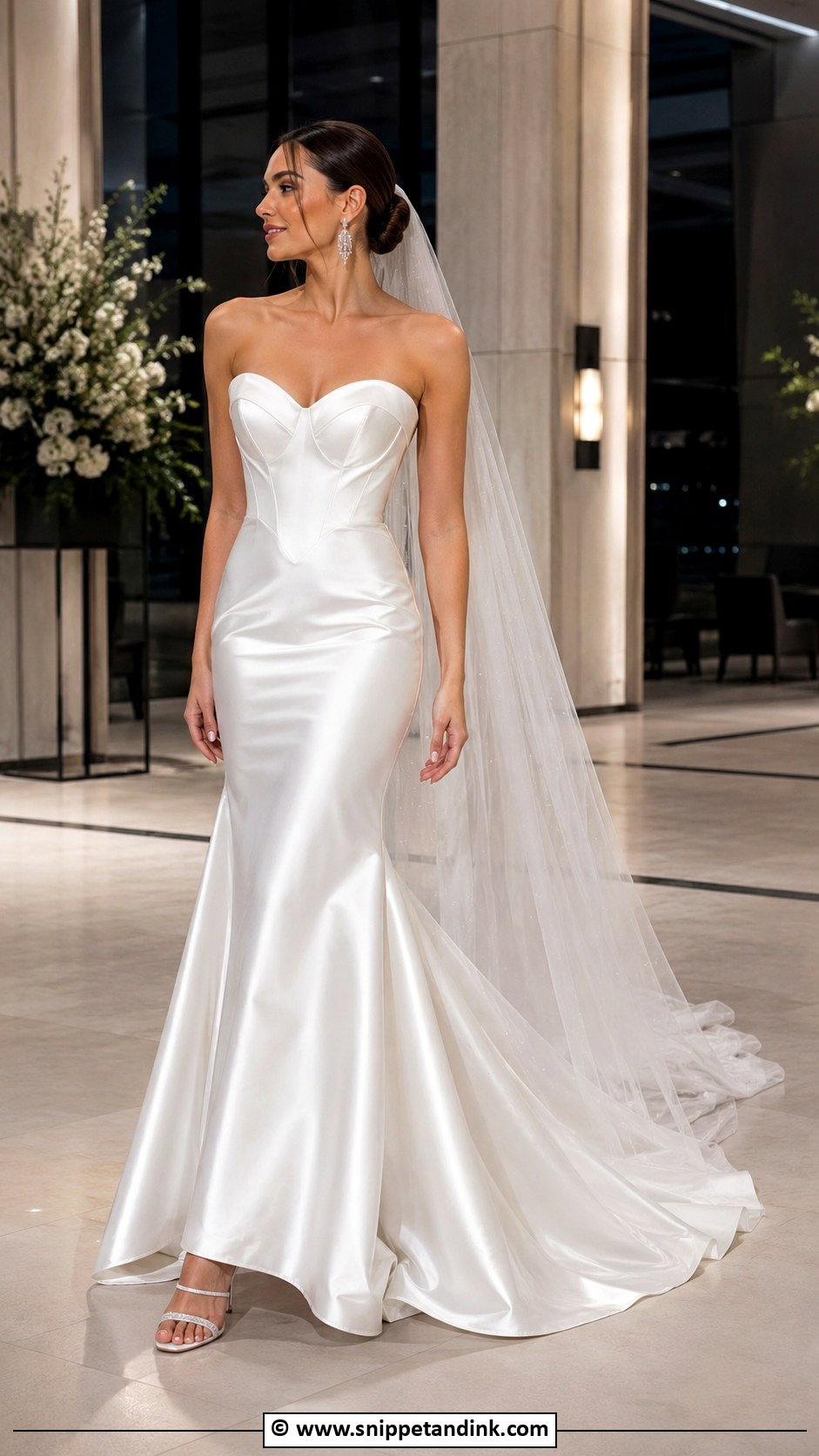
Mermaid in satin is unforgiving, and that’s its strength and its risk. The fabric shows the line of the cut from bust to knee, so the hip fitting matters more than any other alteration, and smooth, invisible underwear is not optional. If you can’t take a full stride in it at the first fitting, the flare is set too high. Style it with a low bun, statement earrings and fine strappy heels. A long veil adds movement behind the fitted shape, which suits evening weddings and black-tie rooms.
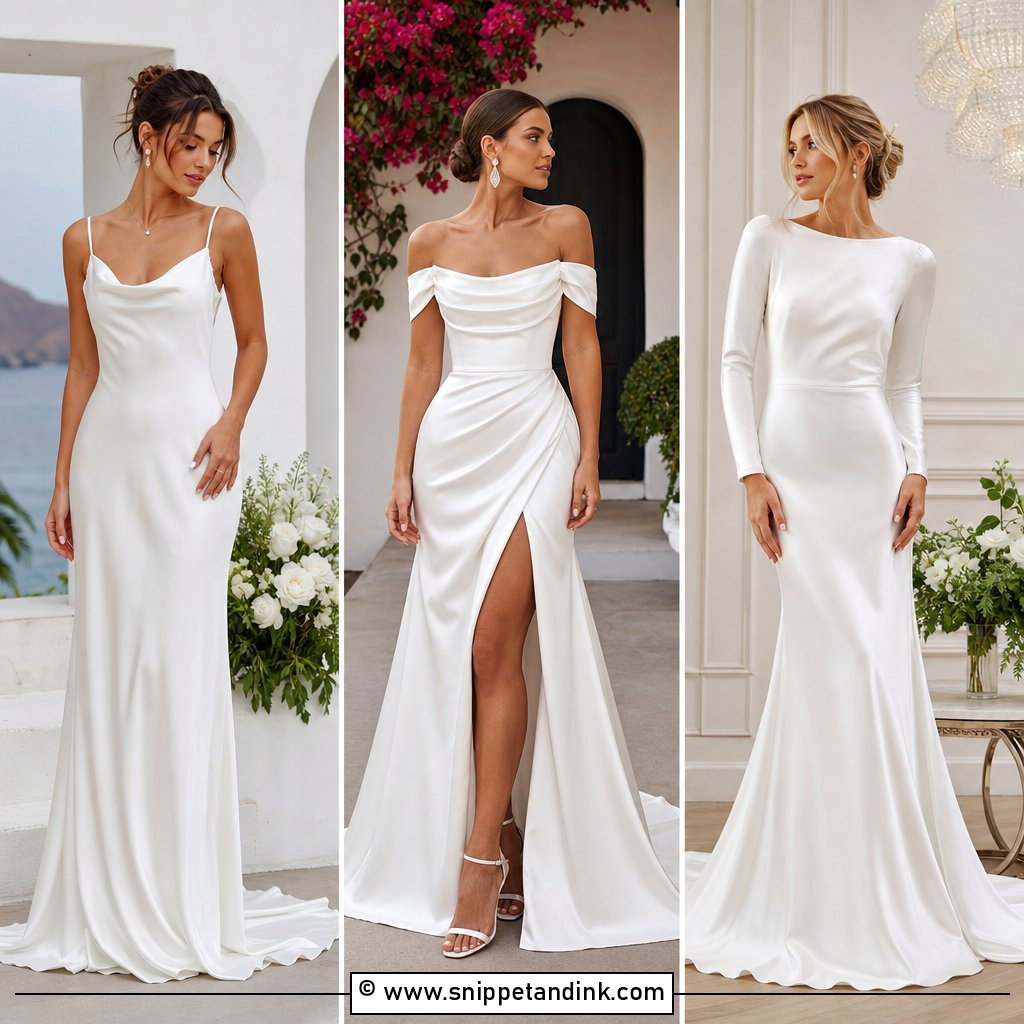
4. Satin Slip Wedding Dress
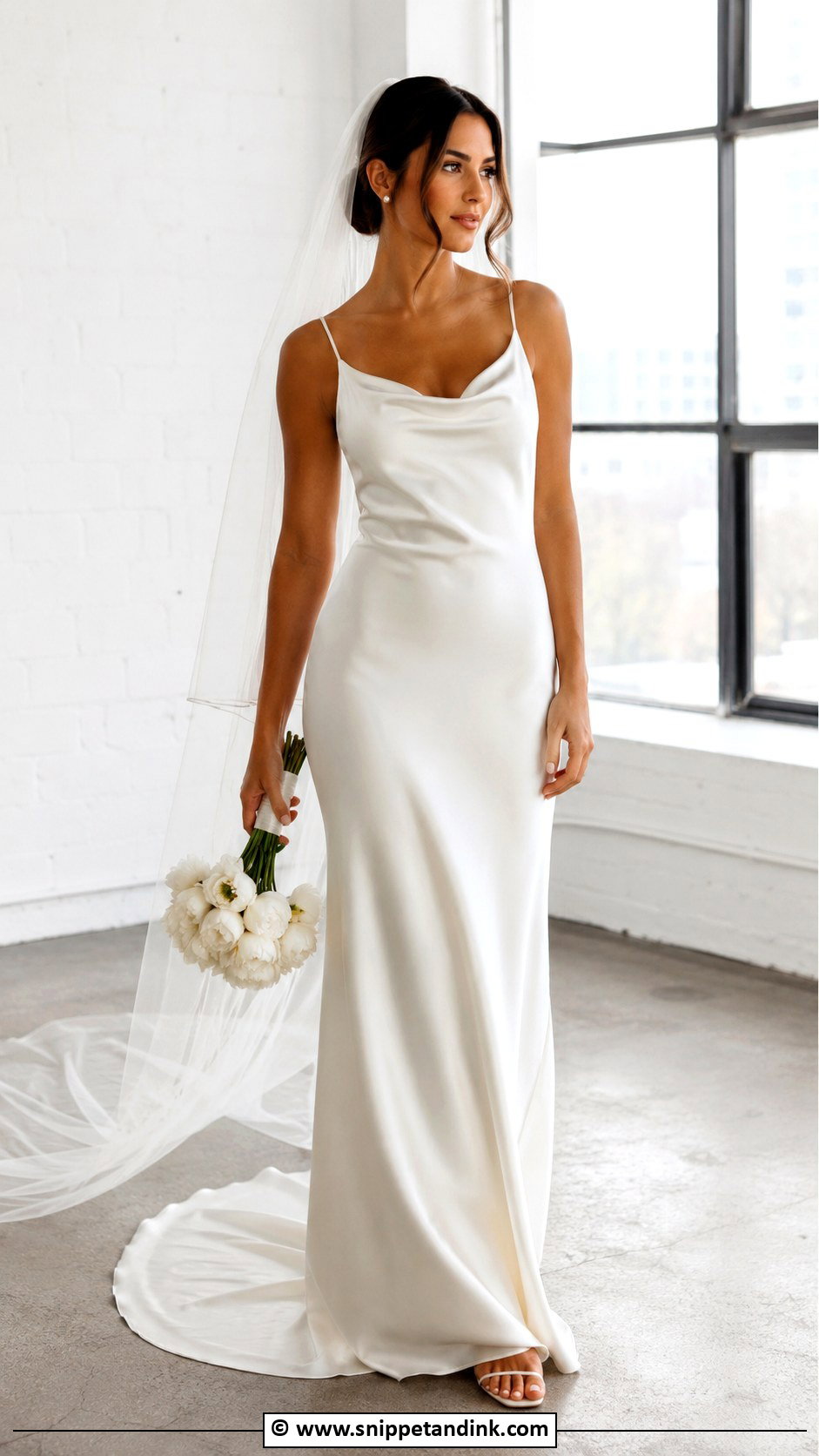
A slip dress looks simple, but it’s the hardest satin gown to fit. Cut on the bias, it skims and clings at the same time, so it shows every line beneath it and moves with your body rather than over it. I’d only steer a bride toward it if she’s comfortable with that. A sheer veil, pearl studs, sleek sandals and a small bouquet are enough. For a cool evening, a chiffon wrap or a tailored blazer over the shoulders works well, and the dress suits destination ceremonies and city hall weddings where a big gown would feel out of place.
5. Strapless Satin Wedding Dress
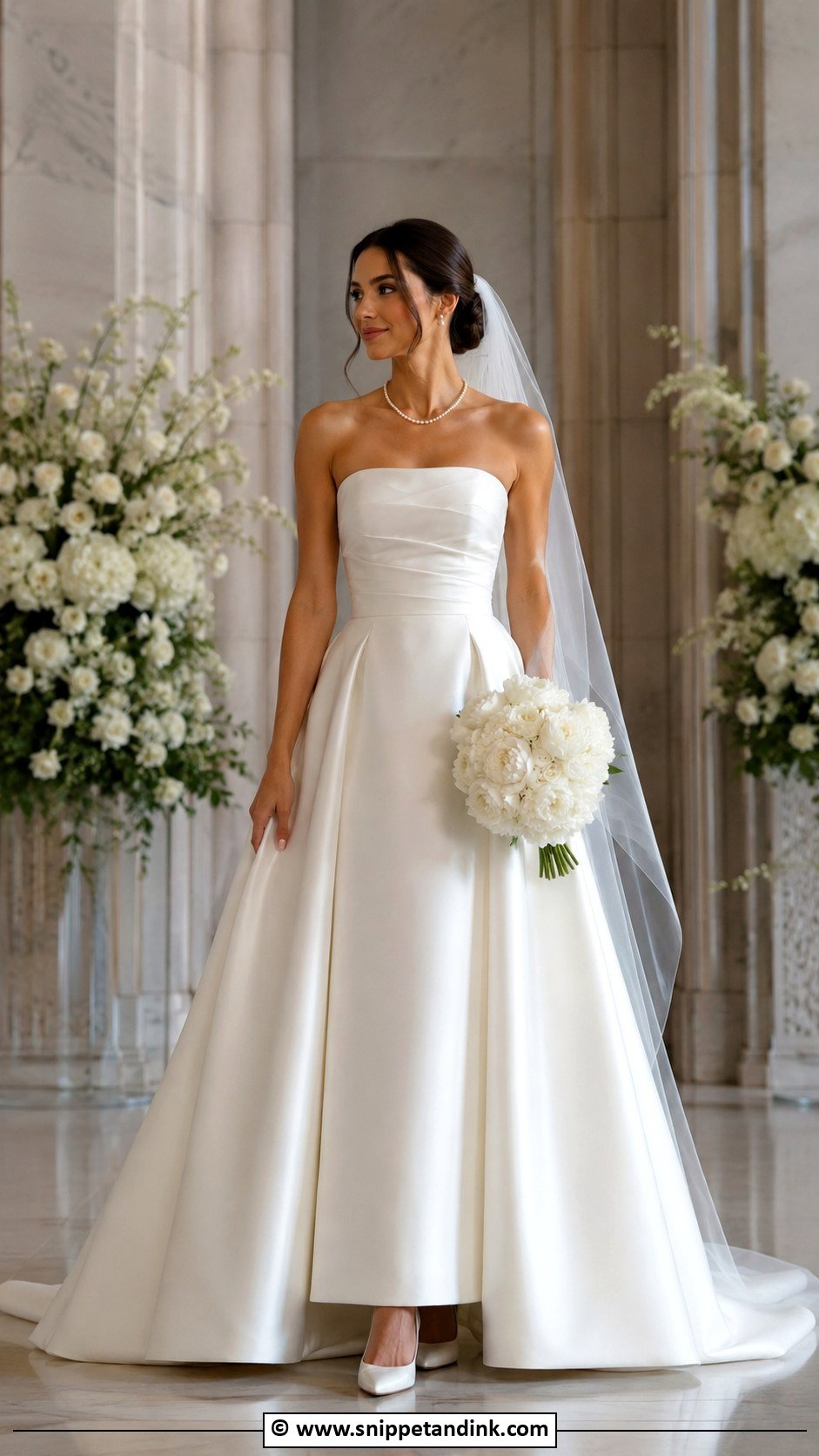
A strapless satin wedding dress stays up because of the bodice construction, not the fit at the bust. Before buying, I check for internal boning and a grip band at the waist; without them, a heavy satin skirt drags the bodice down by the reception and you’ll spend the night tugging. In an A-line or fit-and-flare it shows the collarbones and shoulders cleanly. Pair it with a pearl necklace, a structured veil and satin pointed-toe heels, and keep detachable gloves or a wrap ready if the ceremony asks for coverage.
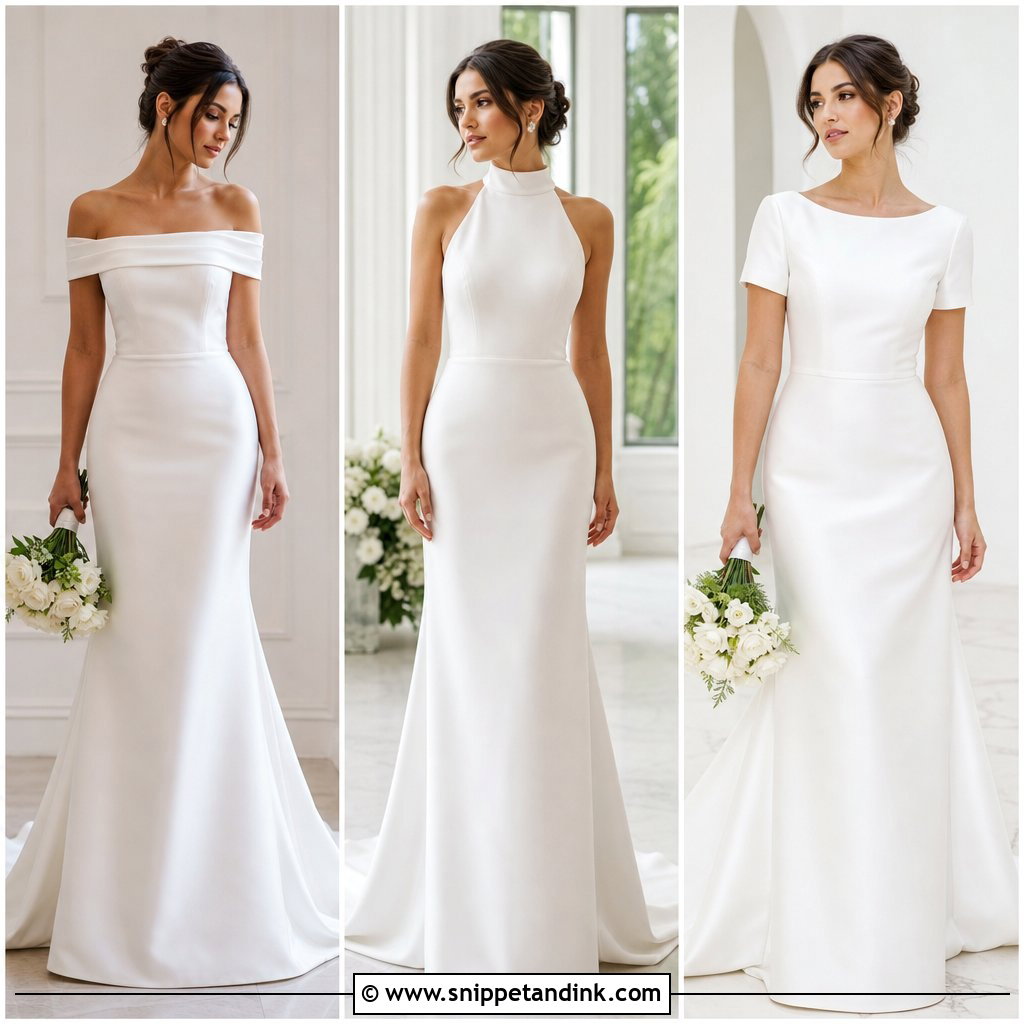
6. Off The Shoulder Satin Wedding Dress
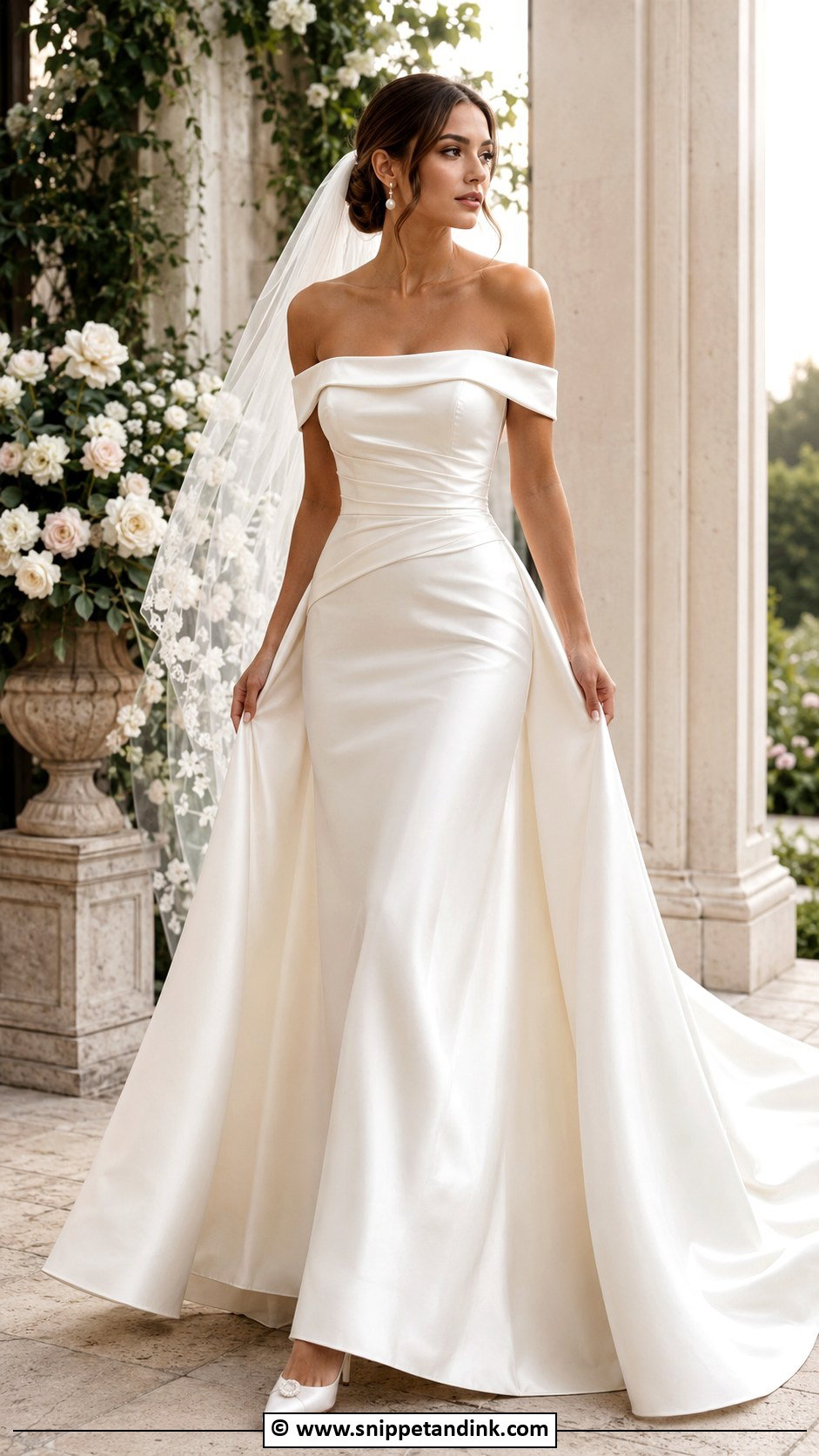
Off-the-shoulder satin is pretty, but it limits your arms. A band that sits across the upper arm restricts how high you can lift them, so try hugging and reaching up in the fitting room before you fall for it. A stretch lining in the band helps a great deal. Once it fits, wear a low chignon and pearl earrings so the neckline gets all the attention, with a chapel-length veil, ivory heels and a simple bouquet. Estates and candlelit receptions suit it.
7. Square Neck Satin Wedding Dress
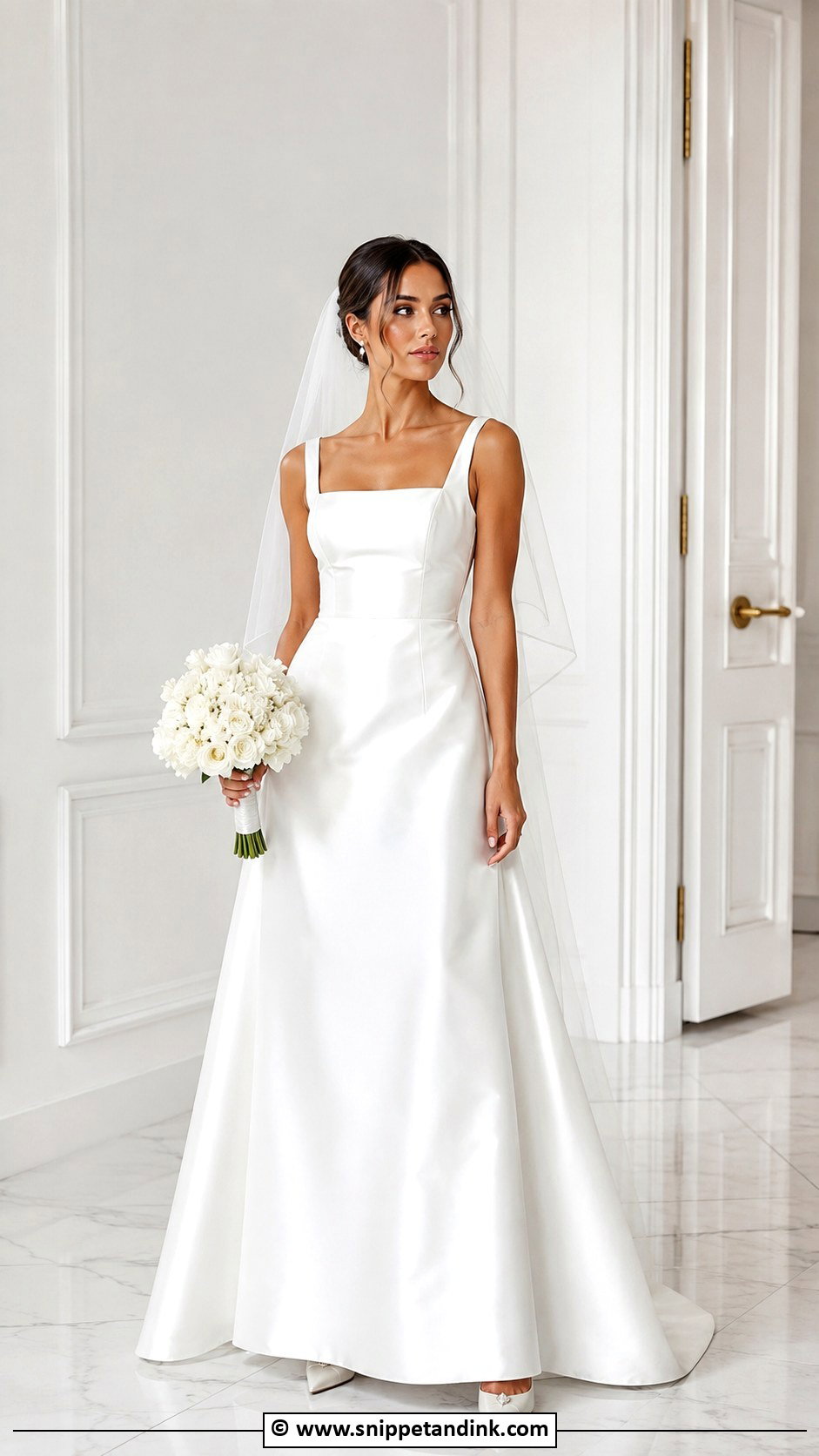
Square necks have a slightly vintage feel, and in satin the corners stay crisp without beading or lace. The thing I watch is the width: a neckline cut too wide slips off narrow shoulders, and one cut too narrow makes broad shoulders look broader. Wide straps help it sit. A smooth updo, pearl studs and a medium veil finish it, with block heels for a garden or pointed pumps indoors. It’s a modest neckline that still looks current.
8. Deep V Satin Wedding Dress
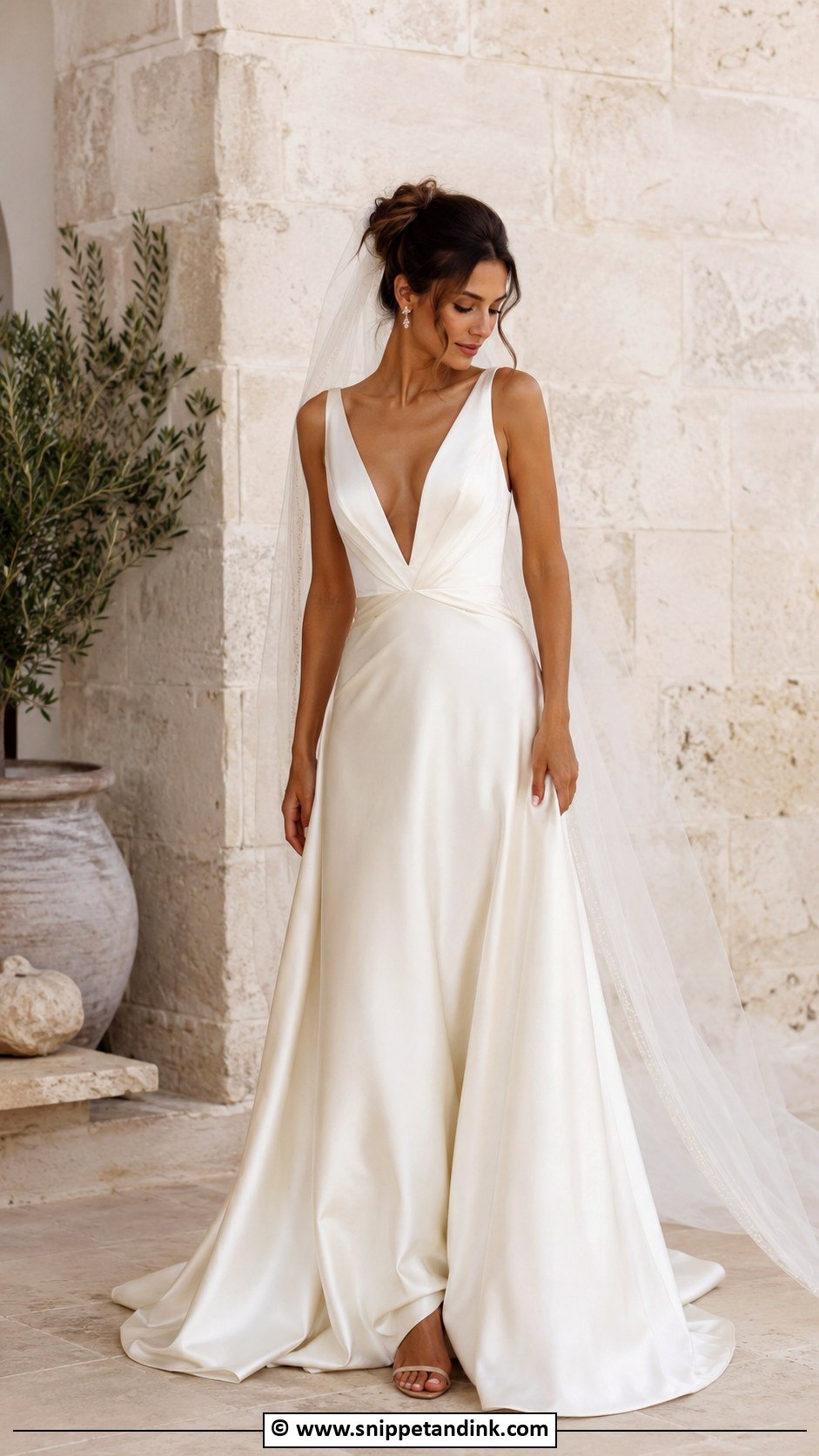
Deep V gowns depend on fashion tape and a well-placed internal mesh panel more than anything you see. I fit them with the bride moving, arms up and leaning forward, to be sure nothing shifts. A flowing A-line or a soft fit-and-flare skirt balances the plunge. Delicate earrings, a fine bracelet and barely-there heels keep it from looking too much, and a sheer veil or a light cape adds coverage for the ceremony without hiding the line. Modern venues and evening weddings suit it.
9. Long Sleeve Satin Wedding Dress
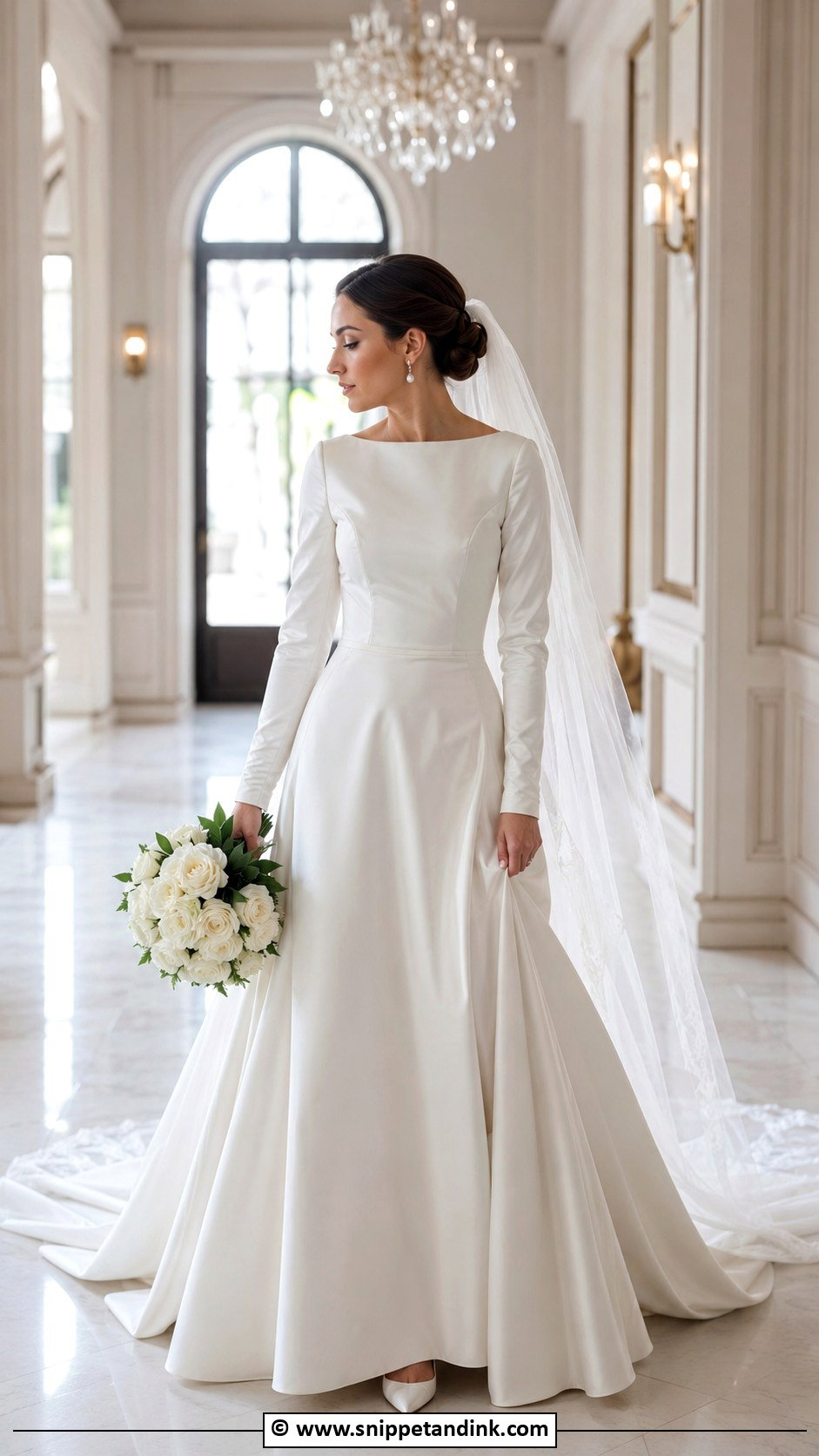
Satin sleeves look sleek but have no give, so check that you can lift your arms to hold a bouquet, hug and dance. A slightly longer sleeve with a small gusset under the arm, or a stretch satin, solves most of it. A high neck, square neck or bateau neckline suits the sleeve. Style it with pearl earrings, a low bun and closed-toe heels for fall or winter, and a long veil to soften the structure. Historic buildings and evening ceremonies suit it, as do brides who want coverage with real drama.
10. Satin Wedding Dress With Bow
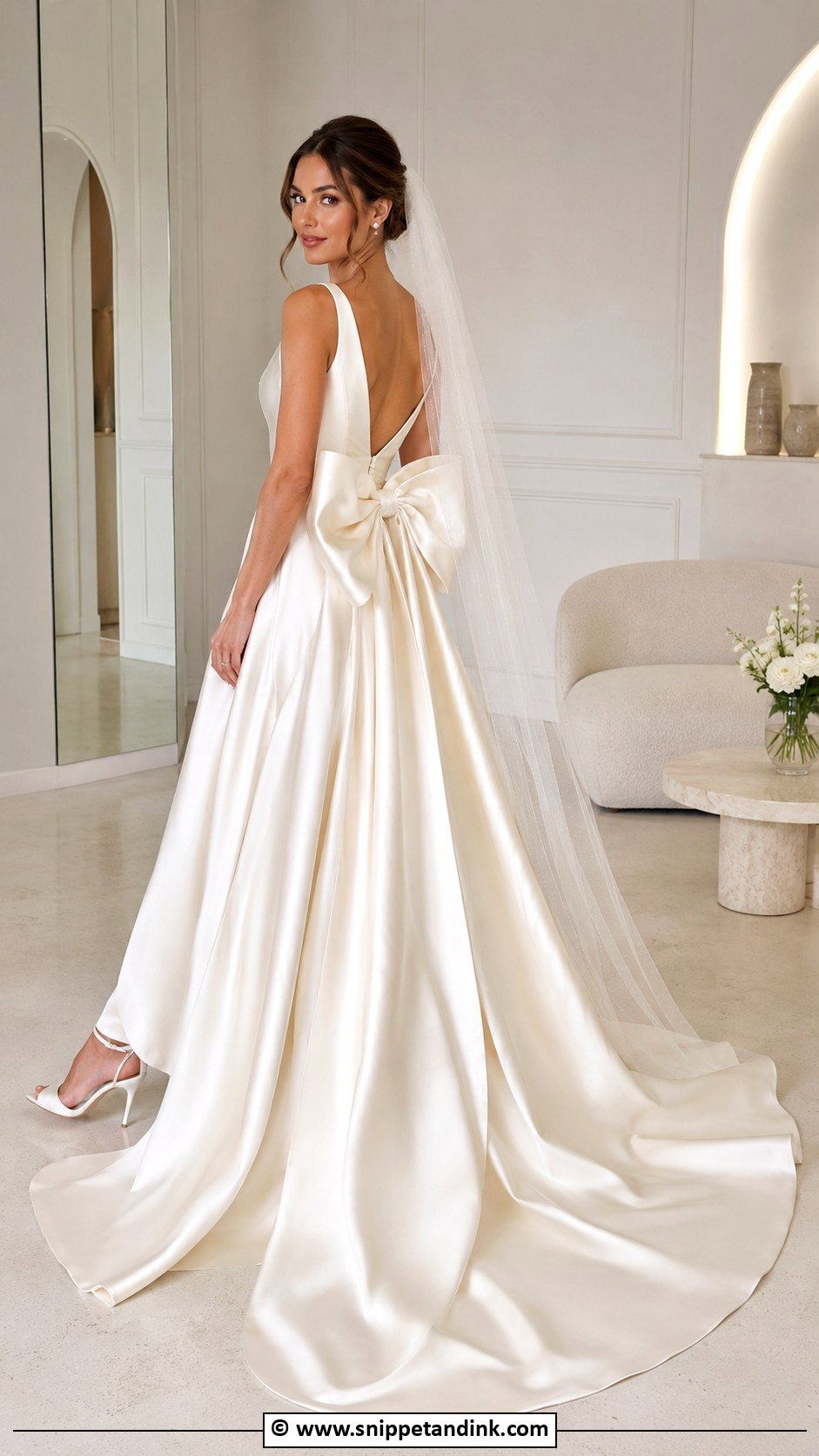
A satin bow holds its shape because the fabric has body, which is why bows work far better in satin than in chiffon. Where you place it changes the mood: at the back waist it’s classic, on one shoulder it’s more fashion-forward. A big bow draws the eye, so skip heavy jewelry and keep the veil clean. One practical note: a large bow at the back waist gets crushed when you sit for dinner, so ask the seamstress to make it removable or interfaced so it springs back.
11. Satin Wedding Dress With Pockets
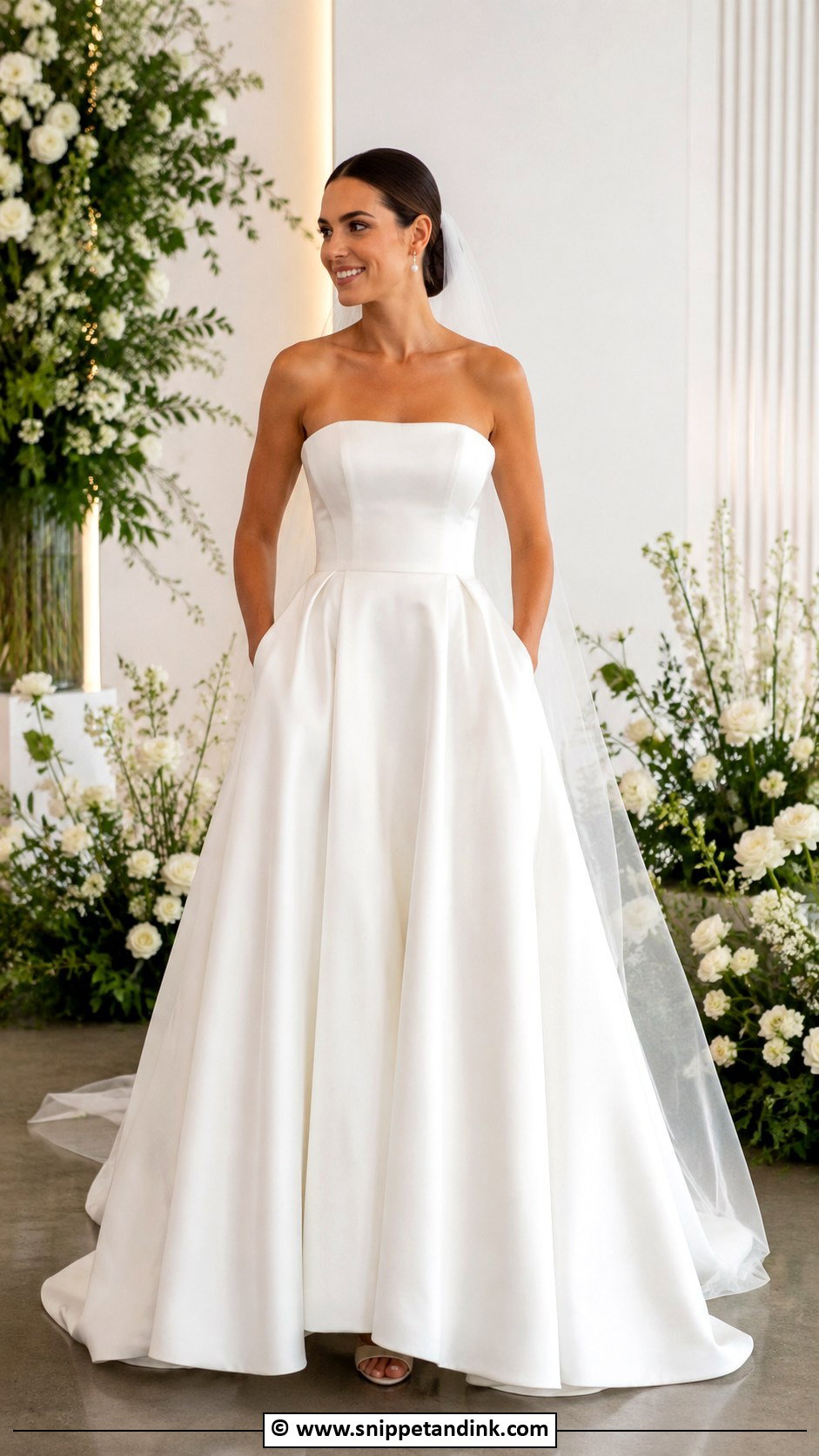
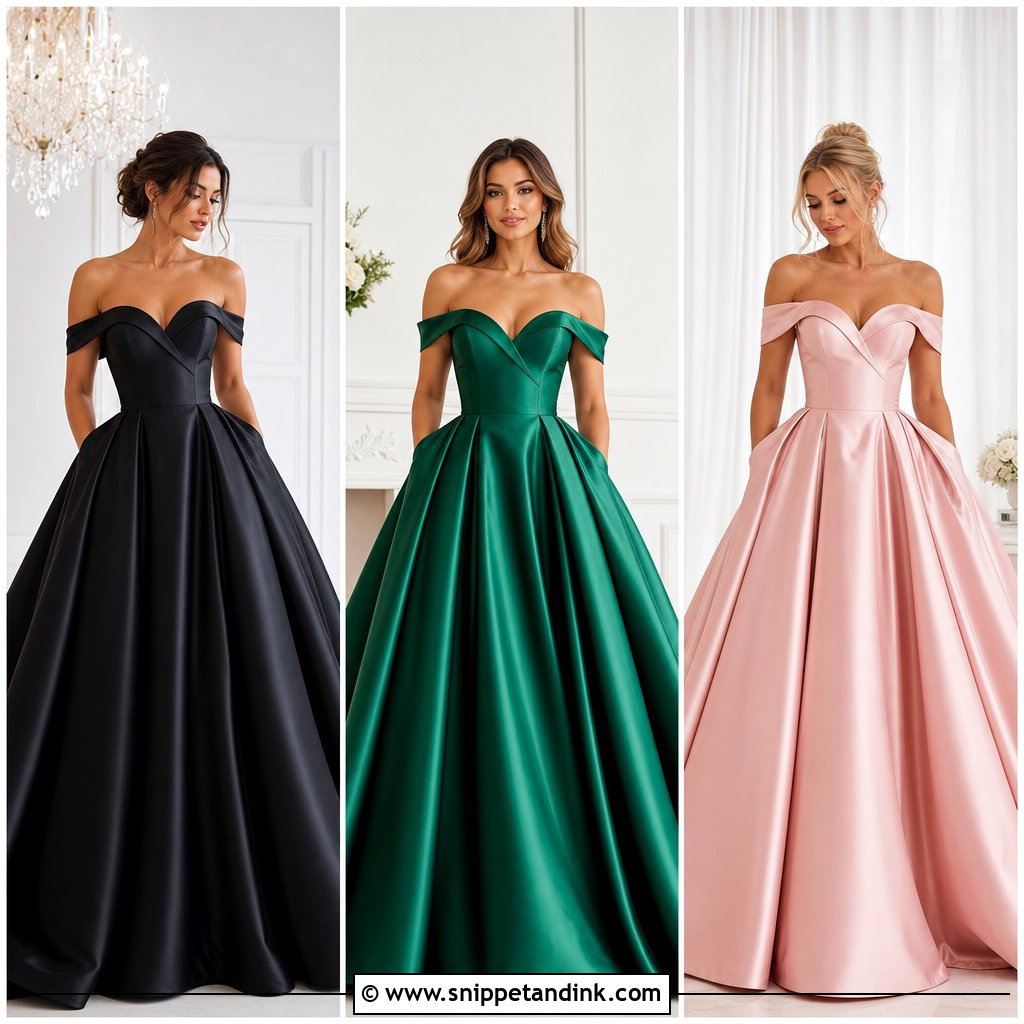
Pockets are the detail brides thank me for later. They hide best in an A-line or ball gown, where the fuller skirt swallows the opening, and they’re handy for a lip balm and a tissue during the ceremony. Do keep them light, though: anything heavier than a lipstick pulls the satin and shows as a dent at the hip. Simple heels, pearl earrings and a smooth veil keep the rest clean, and a bouquet with greenery adds freshness. Hands resting in the pockets also make candid photos look relaxed.
12. Satin Corset Wedding Dress
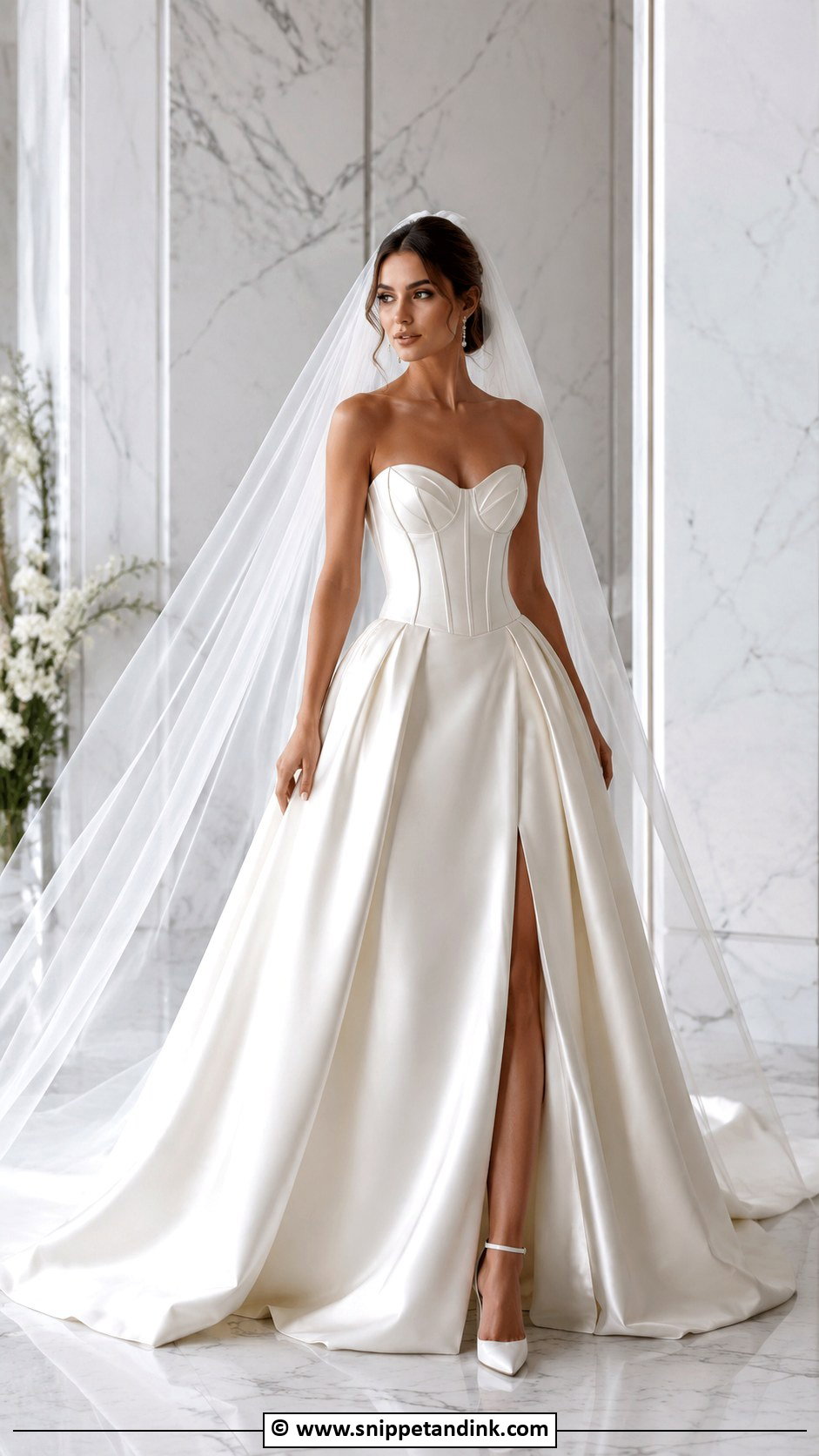
Corset bodices give real support, and that’s the main reason I like them for fuller busts. The boning holds the shape, so the satin sits smooth instead of wrinkling at the waist. Lacing at the back also lets the fit be adjusted on the morning if your weight has shifted. Pair it with a full or fitted skirt, a long veil, sleek earrings and pointed heels. If the seams or boning are visible on the outside, let them be the detail and keep jewelry quiet. It looks current now but structured enough to age well in photos.
13. Satin Basque Waist Wedding Dress
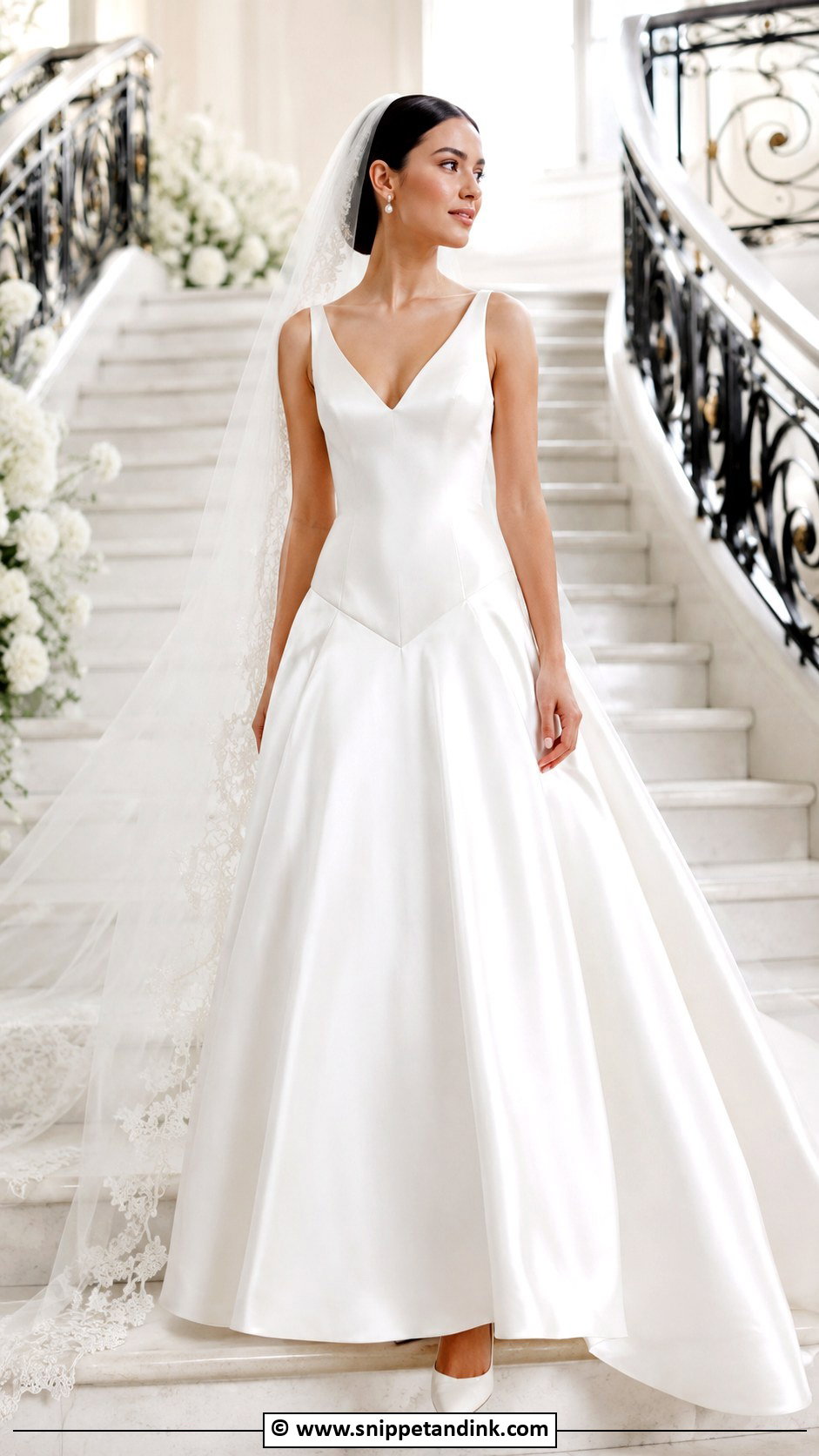
The dipped V of a satin basque waist wedding dress lengthens the torso, which is why it flatters brides with a short waist. On a very long torso it can make the legs look shorter, so I’d try it before committing. In satin the point of the V is sharp and tailored. A cathedral veil, pearl earrings and ivory heels suit its formality, and a soft updo keeps the neckline and waist visible. It’s a princess shape without the sparkle, at home on a grand staircase.
14. Satin Halter Wedding Dress
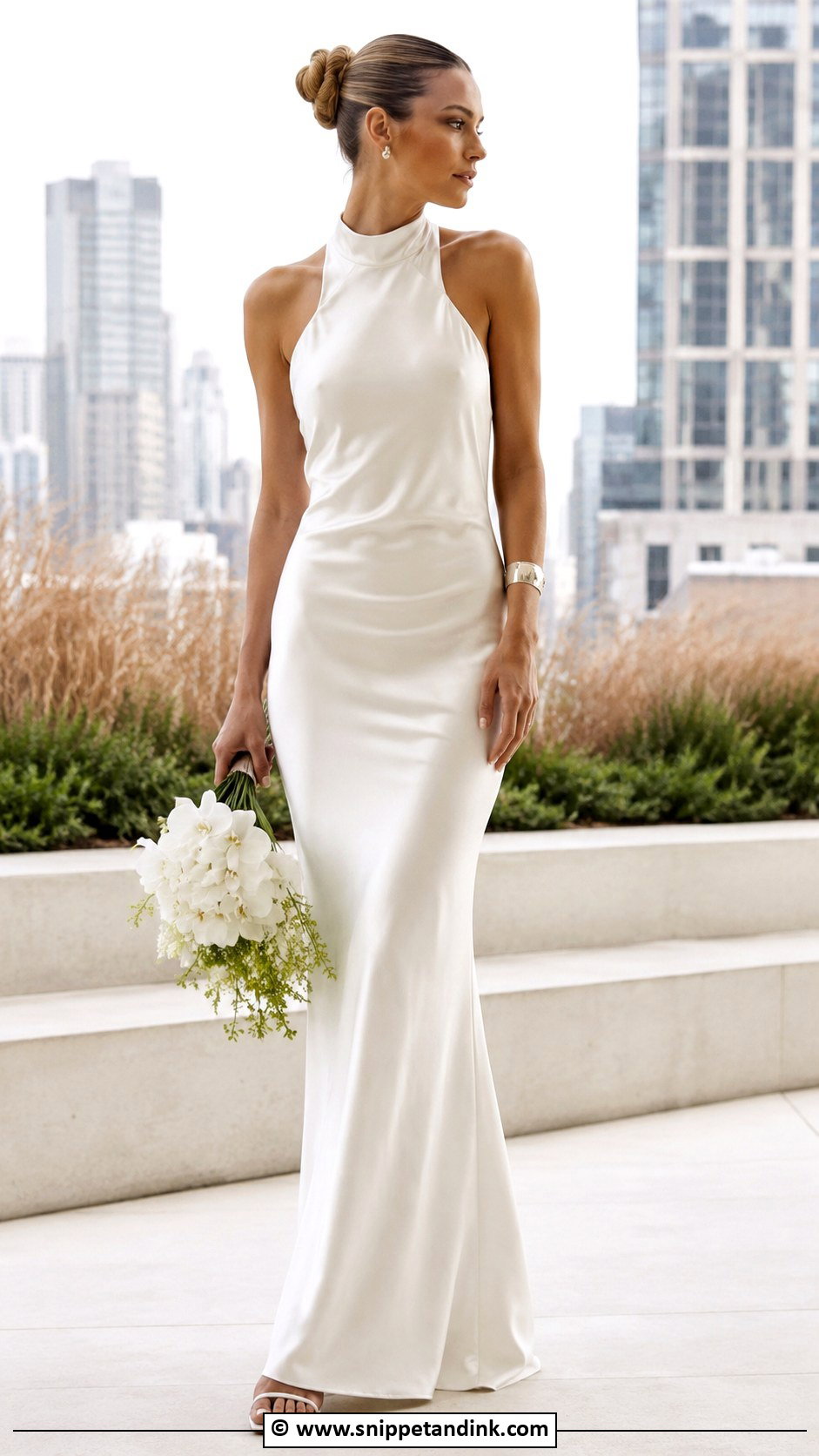
Halter necks hold the dress up from the neck, which means the weight of the gown sits on the back of your neck all day. On a light column dress that’s fine; on a heavy satin skirt it can ache by evening, so I prefer a halter with a supported bodice underneath. It shows strong shoulders well. Wear your hair up or in a sleek ponytail to keep the neckline clear, with small earrings, a cuff bracelet and slim heels. Rooftops and city venues suit it.

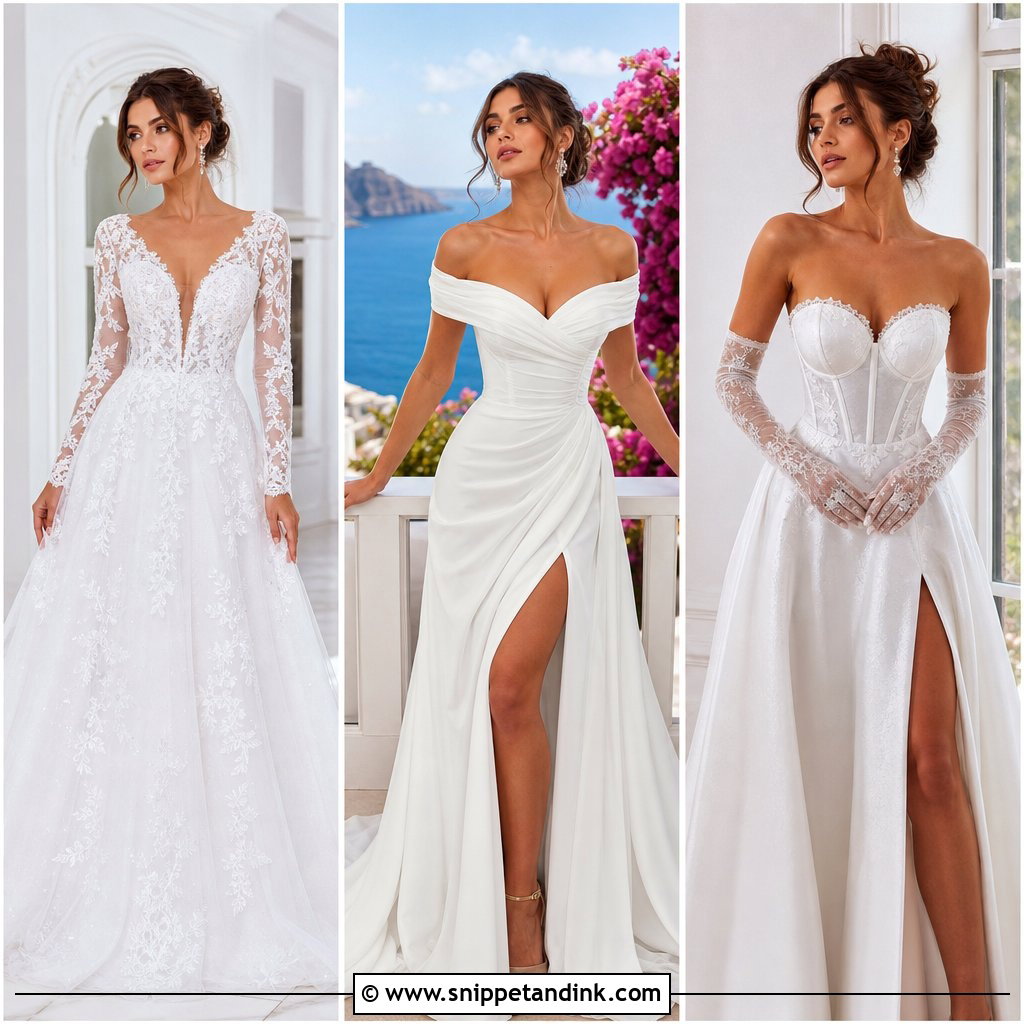
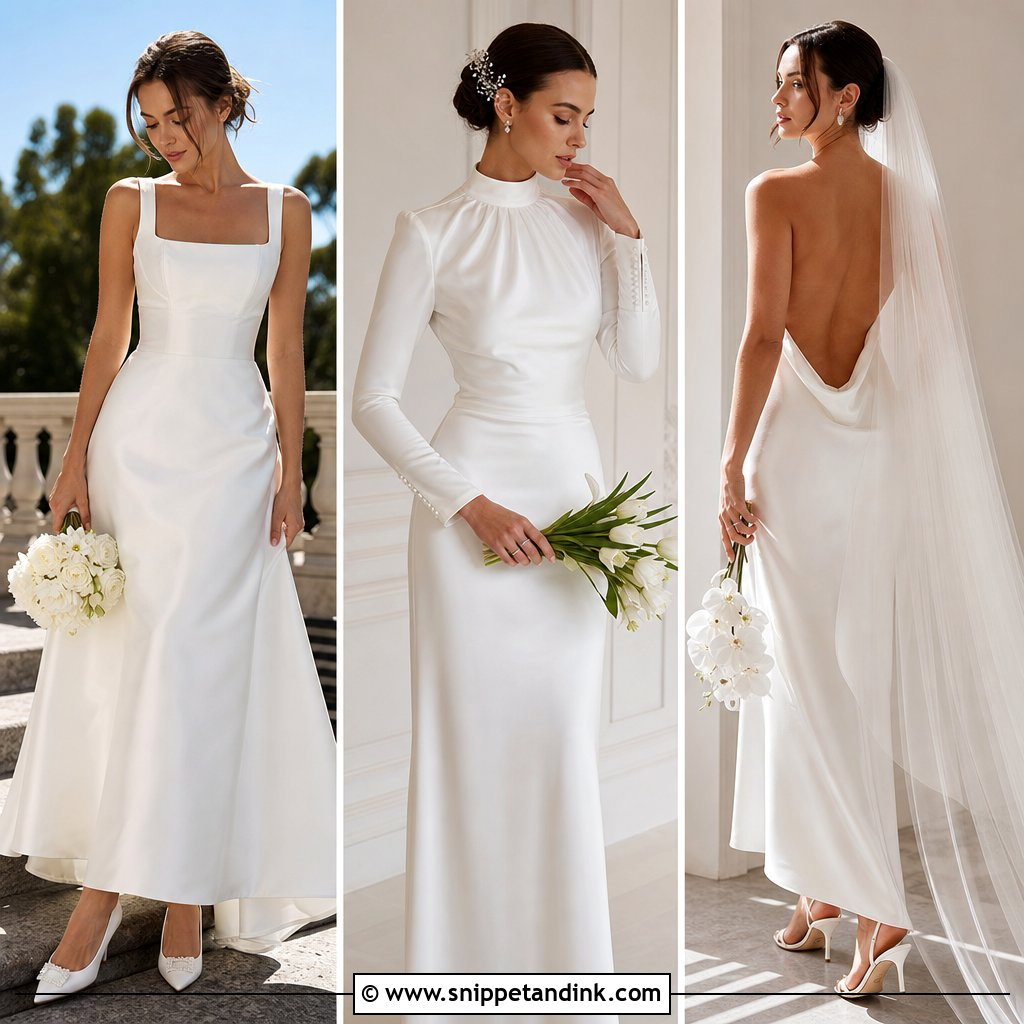
15. Satin High Neck Wedding Dress
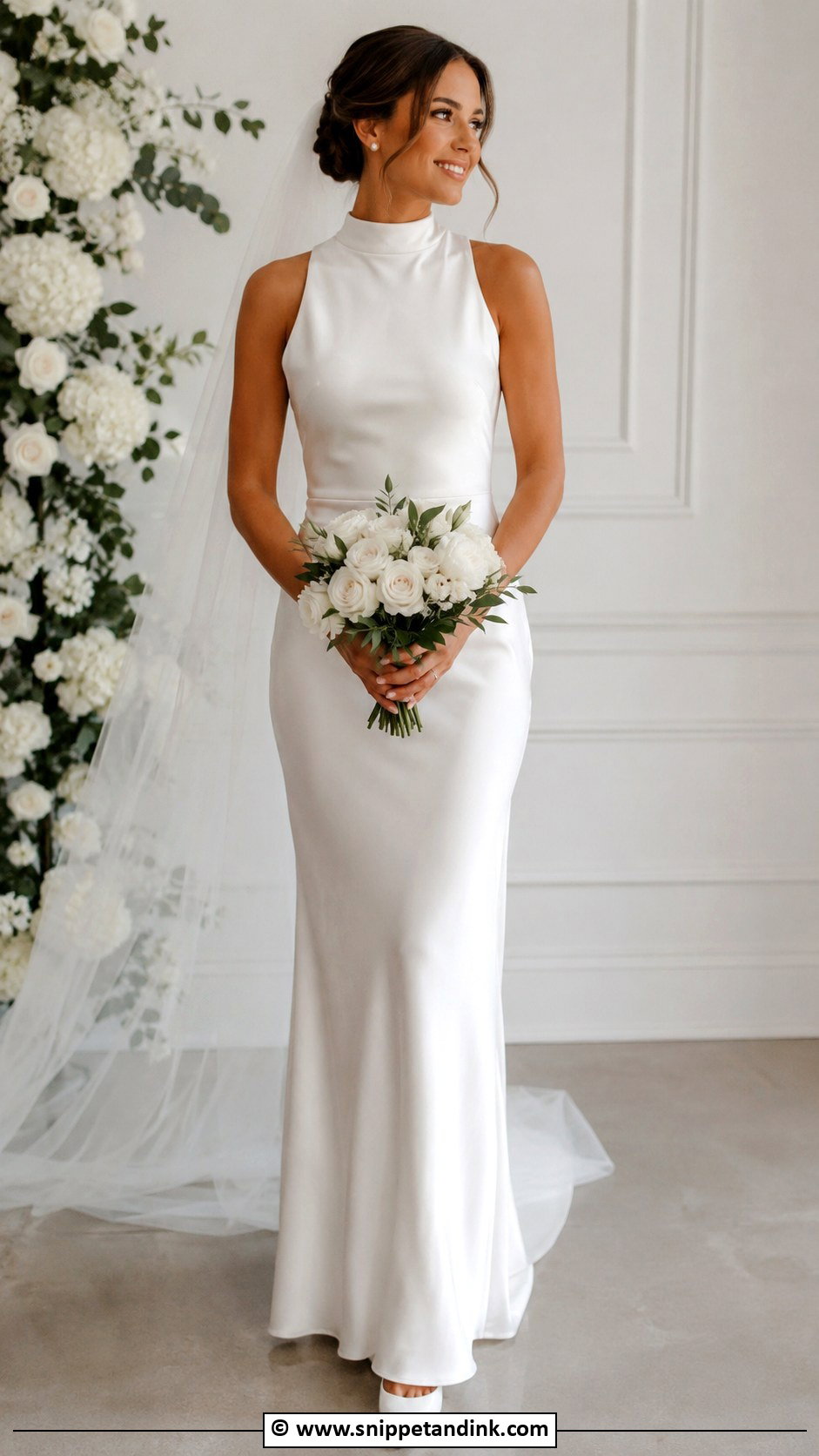
A high neck needs a long, clean neck line to look right, so I always check the collar height while the bride is seated; a collar that’s comfortable standing can press under the chin when she sits. Pair it with a slim column skirt or a dramatic open back for contrast. Pearl studs, a neat updo and pointed closed-toe heels suit it, and a plain veil lets the neckline lead. It’s quietly editorial, and right for formal winter ceremonies.
16. Satin Fit And Flare Wedding Dress
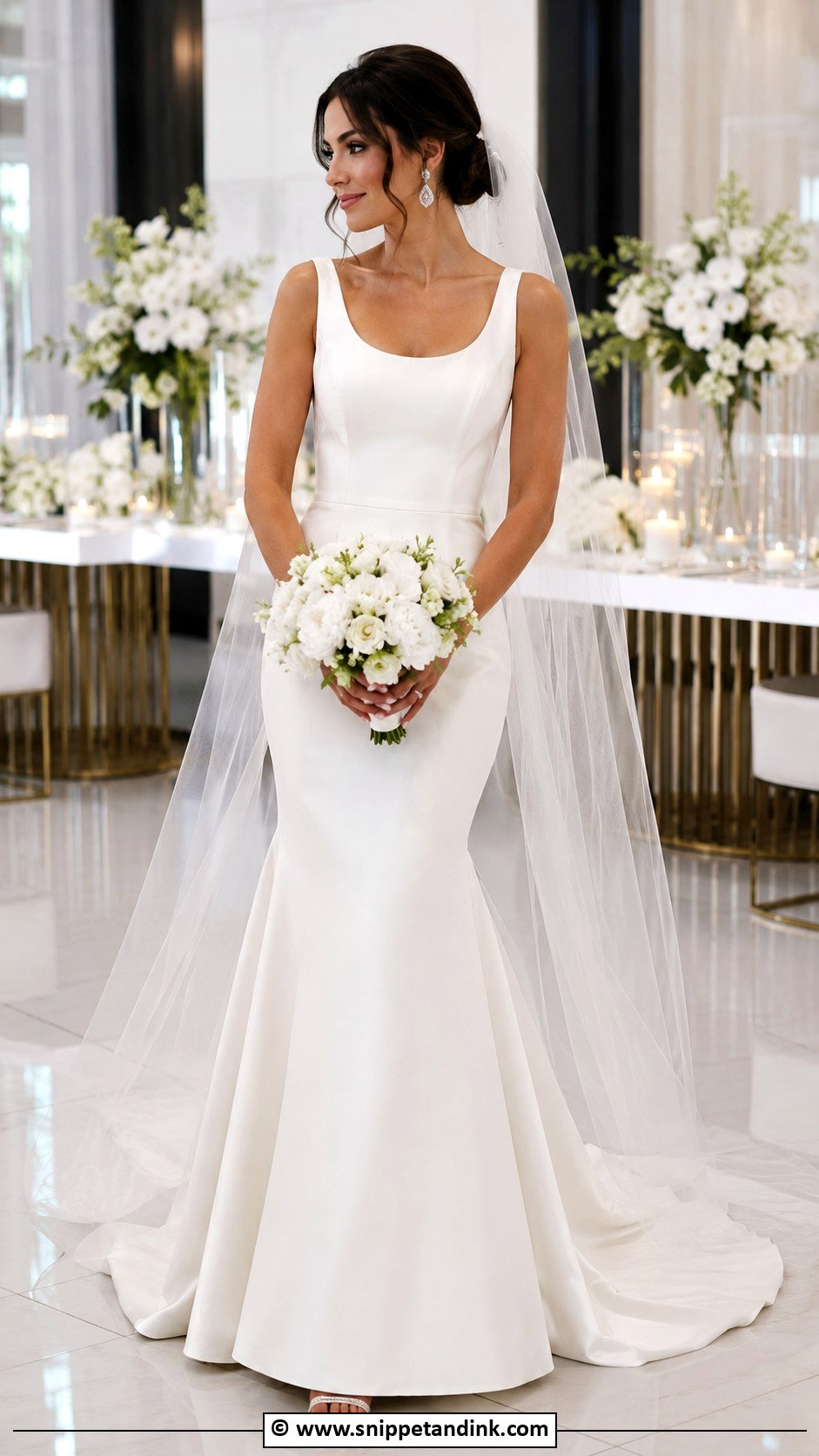
Fit-and-flare is the gentler cousin of the mermaid. It hugs the waist and hips, then opens from mid-thigh, so you can walk, sit and climb stairs without the struggle a true mermaid brings. Satin keeps the line smooth. A scoop, square or strapless bodice all work above it. Drop earrings, a chapel veil and slim heels are enough. I recommend it to brides who want shape but plan to be on the dance floor for hours.
17. Satin Wrap Wedding Dress
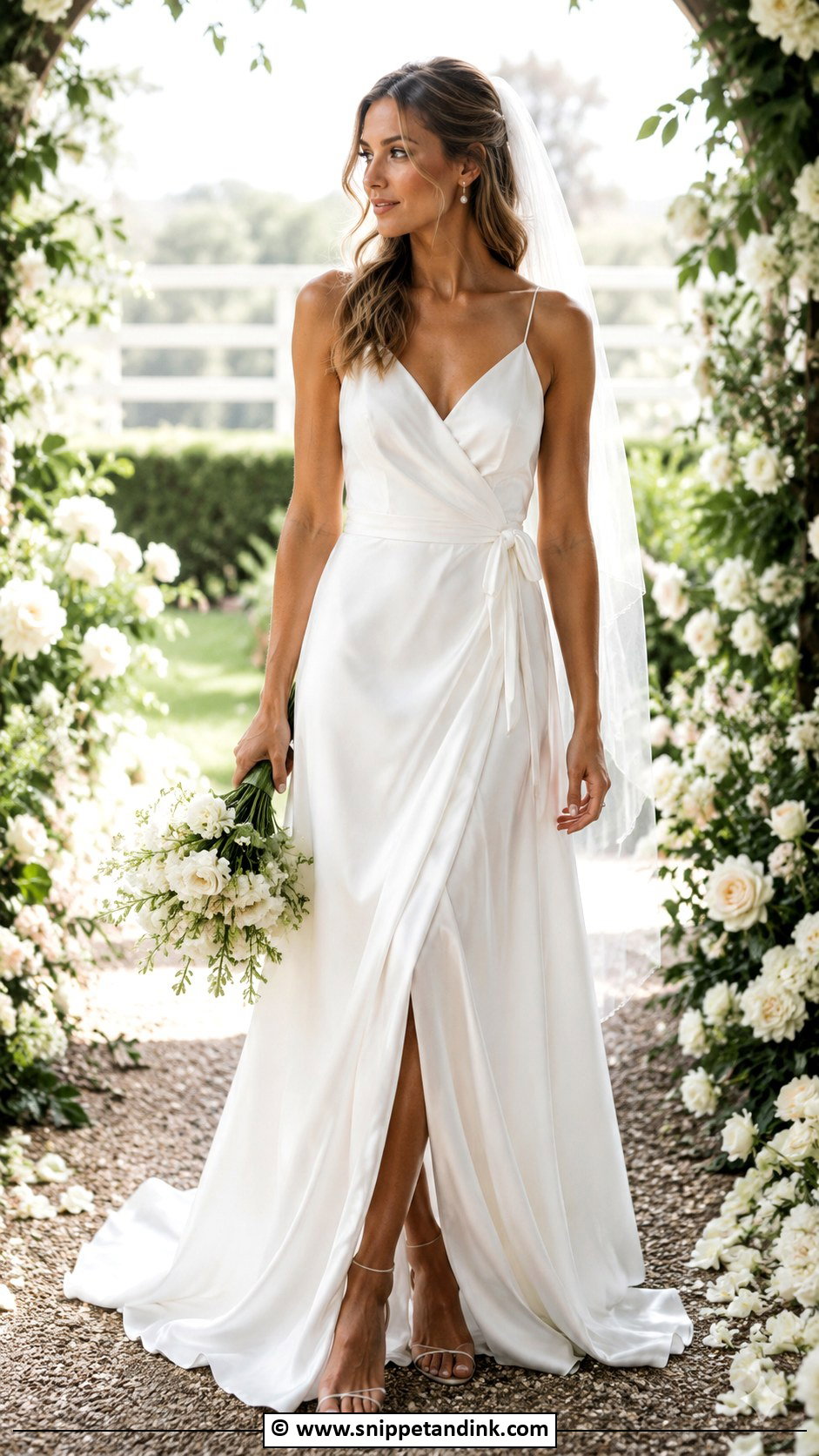
Wraps flatter a wide range of bodies because the crossover adjusts to the bust. In real wrap construction, though, satin can slip open when you move, so I nearly always suggest a faux wrap with the overlap stitched in place, or a hidden snap at the bust. It’s fluid without feeling casual. Delicate sandals, pearl earrings and a soft veil suit it, and it’s comfortable for an intimate wedding or a beach ceremony.
18. Satin One Shoulder Wedding Dress
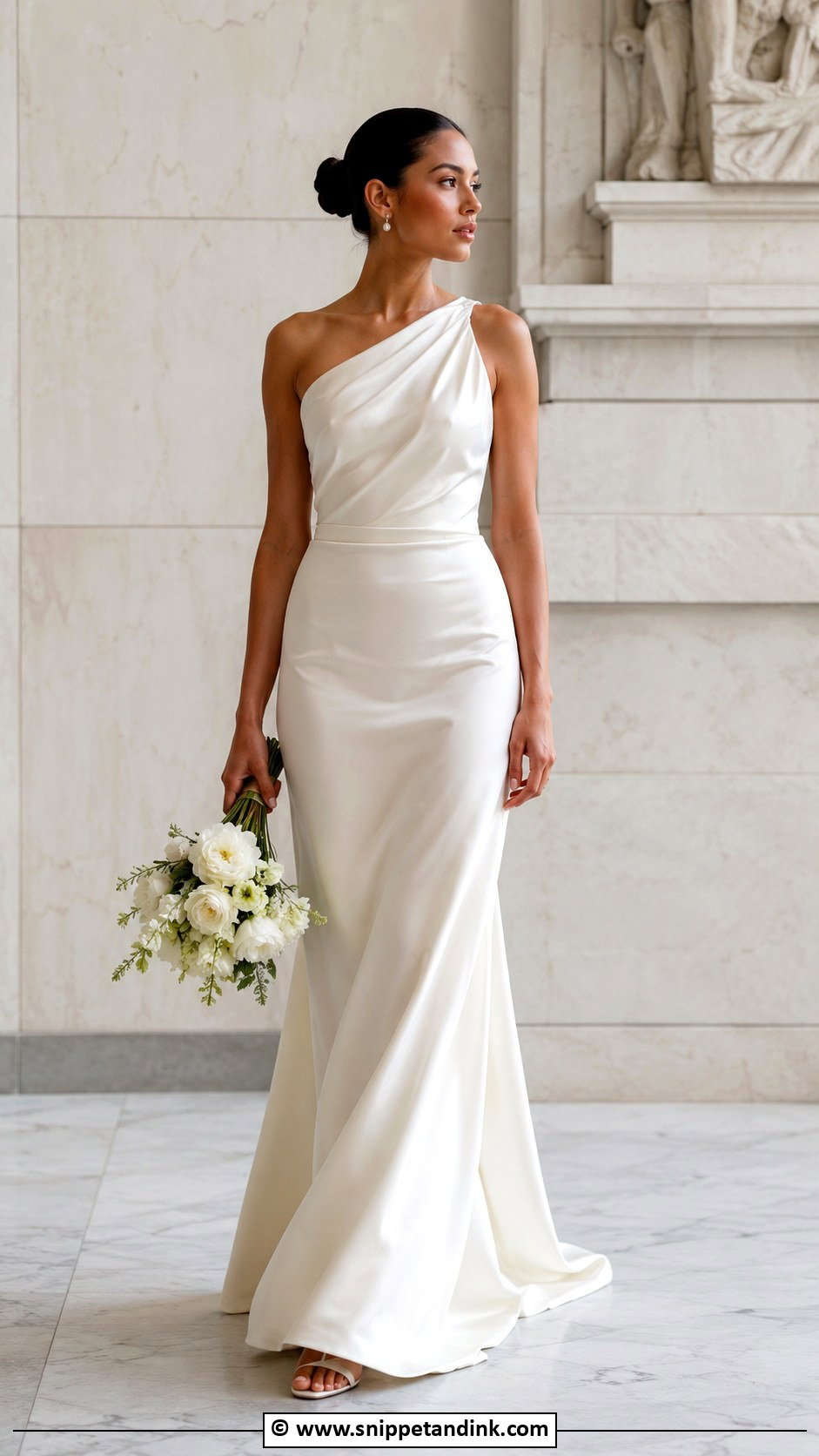
One-shoulder gowns are asymmetrical, so balance matters: I put the earring on the bare side and skip the necklace entirely. Satin reflects light across the shoulder line, which emphasizes the shape. A sleek bun keeps the neckline sharp. A veil can work, but many brides go without and let a clean hairstyle carry the look. Museum weddings and contemporary venues suit it, and it never feels overdone.
19. Satin Wedding Dress With Detachable Train
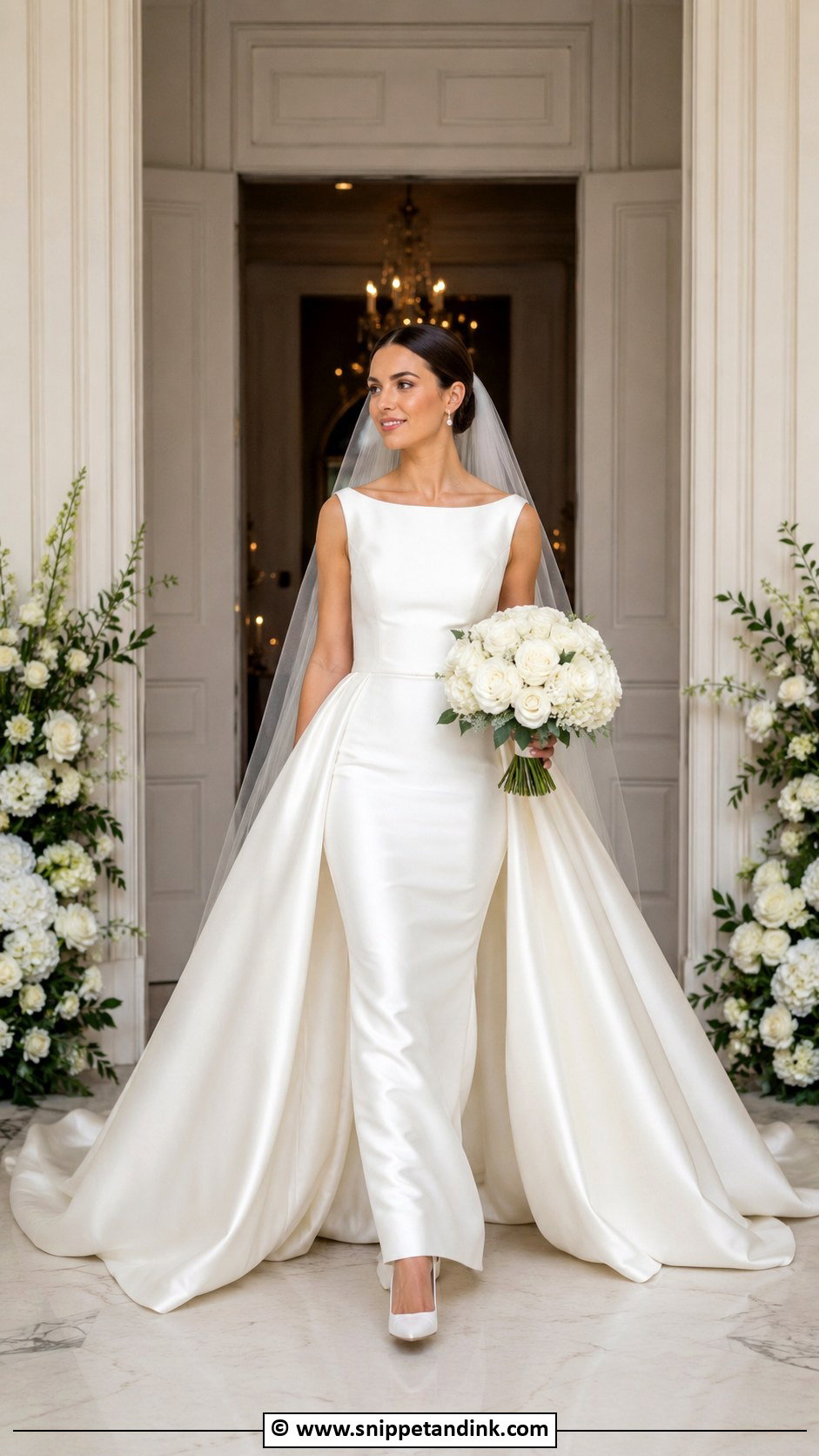
A detachable train gives you two silhouettes, and the ceremony-to-reception switch is far easier than bustling. The catch is the attachment. Check whether it fastens with hooks, snaps or buttons, and practice removing it with whoever will help you on the day, because fiddling with tiny hooks on satin in a dim corridor is stressful. Ceremony styling can be a long veil, pearl earrings and classic heels; for dancing, add a hair accessory and switch to comfortable shoes.
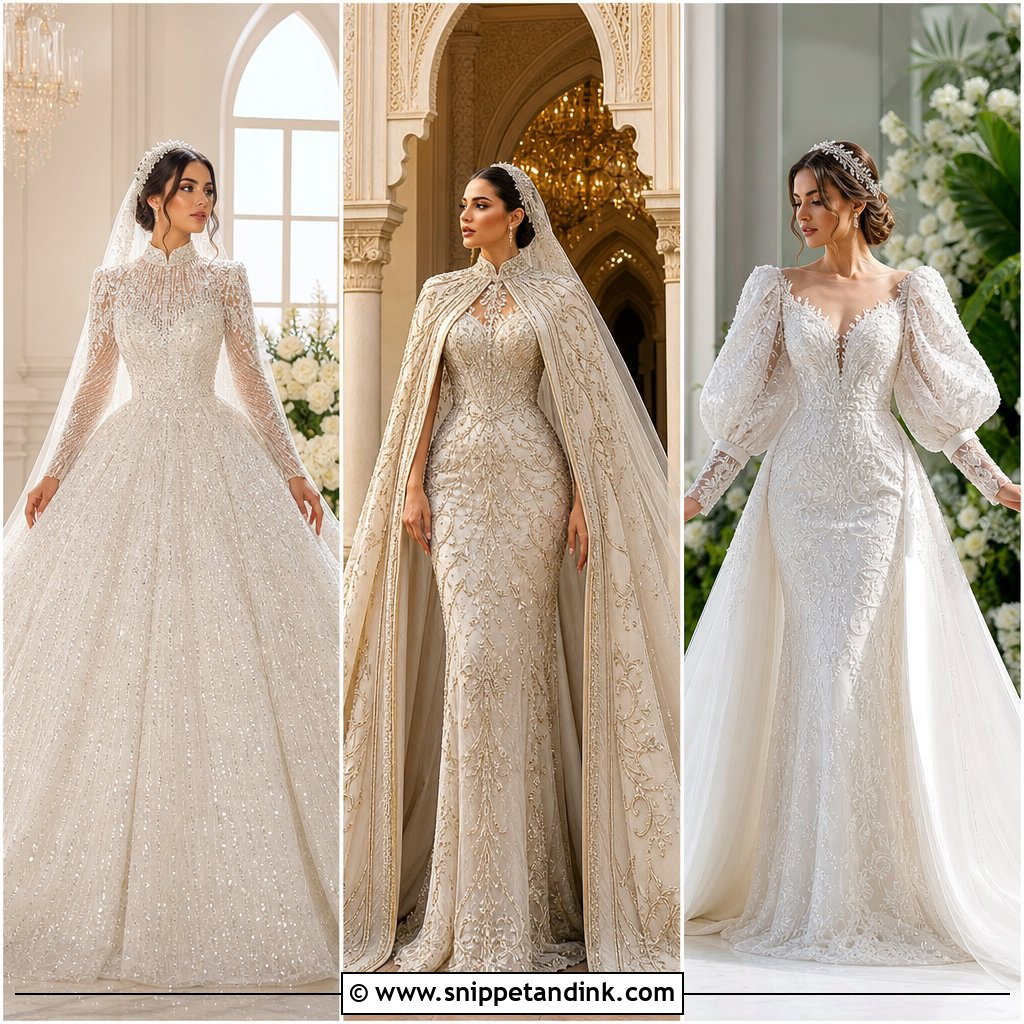

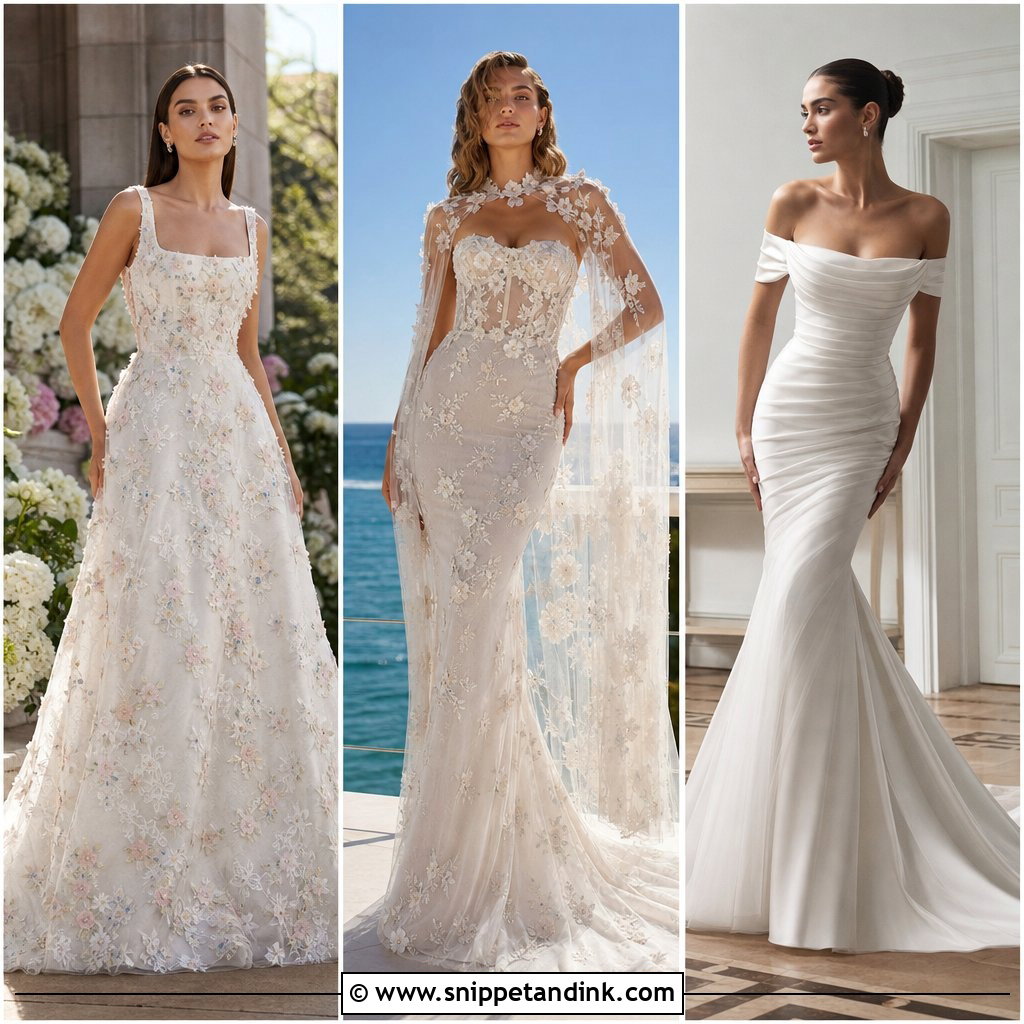
20. Satin Wedding Dress With Slit
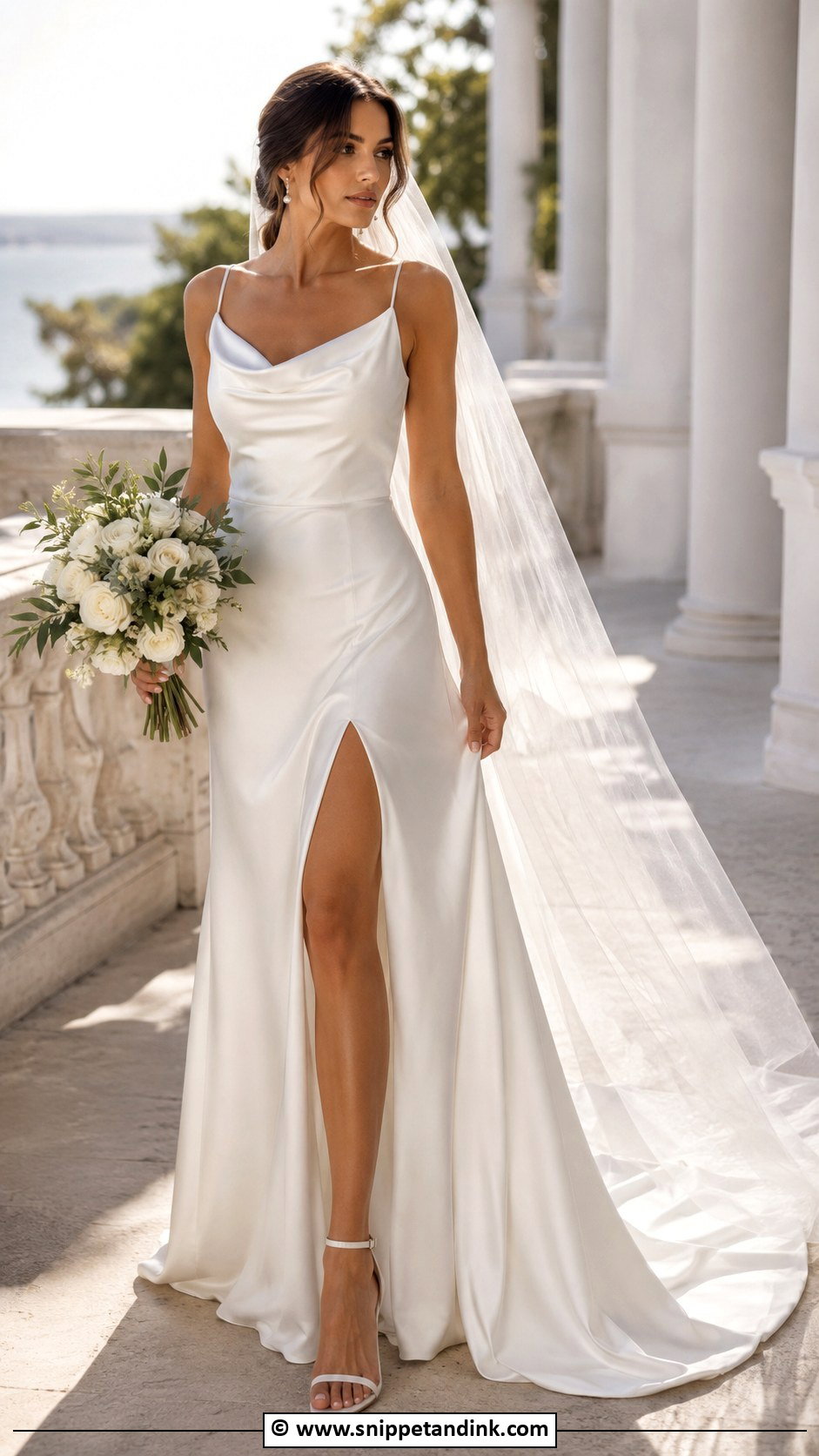
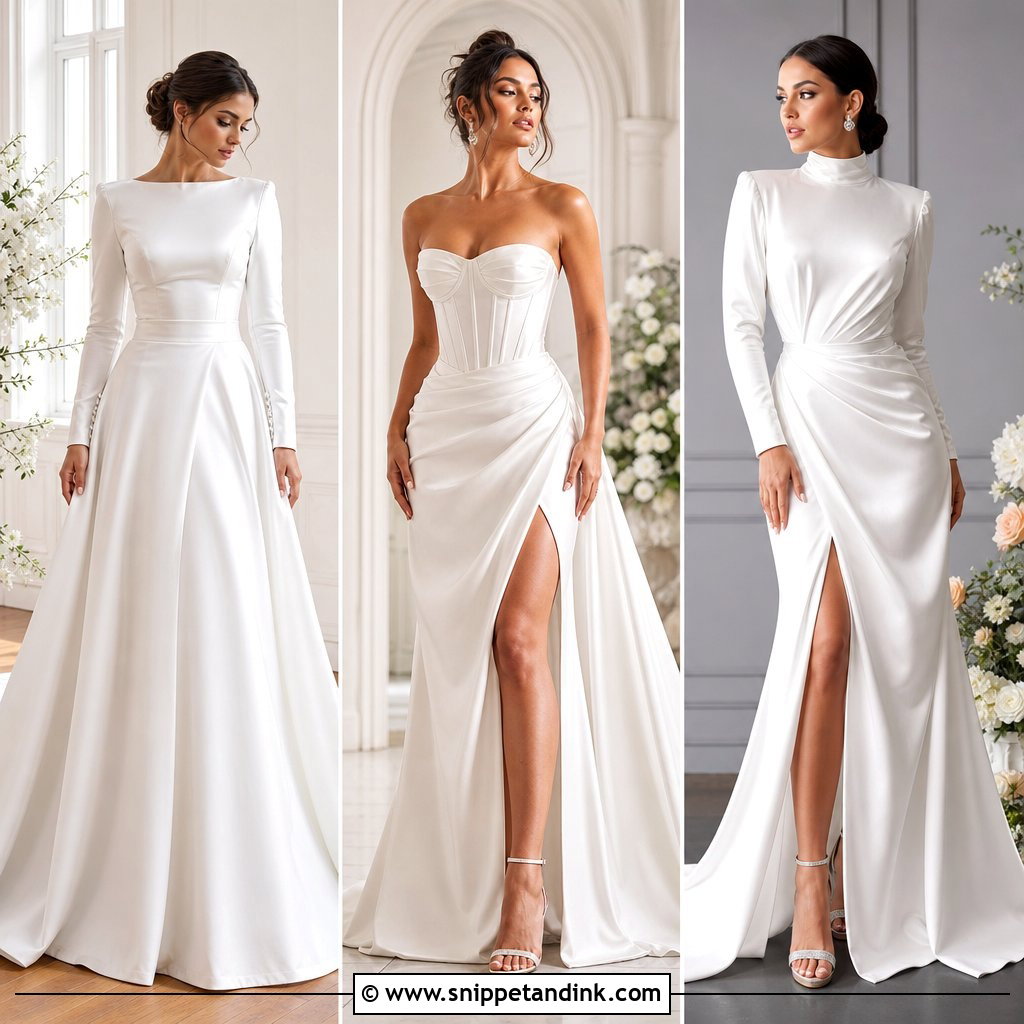
Slits make satin practical. A front or side slit lets you walk fast and take stairs without lifting the skirt, which matters more than people expect. Ask where it sits when you walk, not just when you stand; a slit cut too high flashes the hip in candid shots. It suits a clean A-line, wrap or fitted silhouette, and because it shows your shoes, choose a pair you love. Delicate earrings and a soft veil finish it, and it suits summer and destination weddings.
21. Simple Satin Wedding Dress
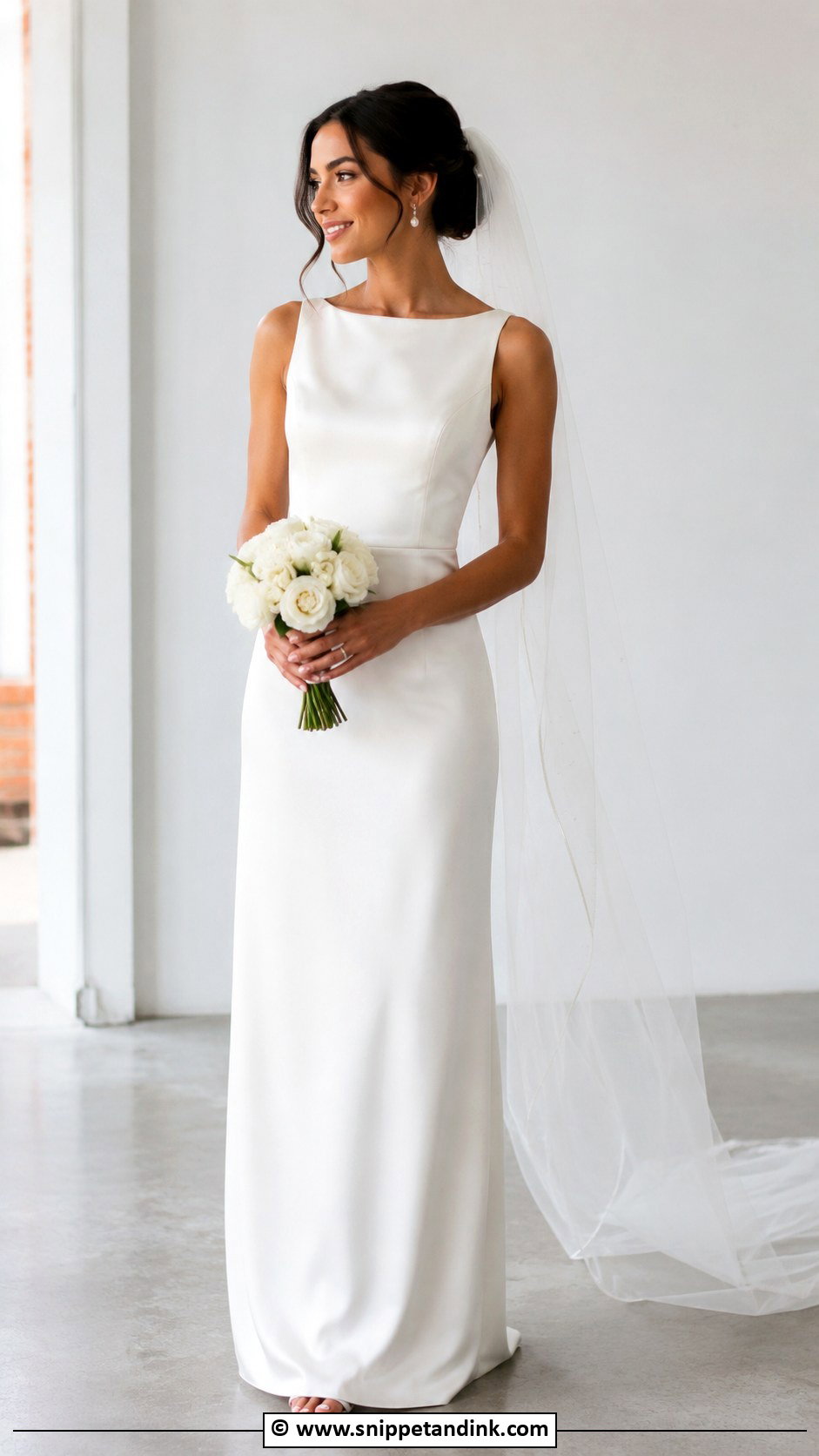
Simple satin is not the easy option. With no embellishment, fit and seam quality become the whole dress, so I’d budget more for alterations here than on a beaded gown. A column, A-line or strapless shape all work. Pearl earrings, a sheer veil and minimal ivory heels suit it, with either a sleek bun or soft waves. The plain canvas also makes it easy to personalize with flowers, heirloom jewelry or a special veil.
22. Satin Tea Length Wedding Dress
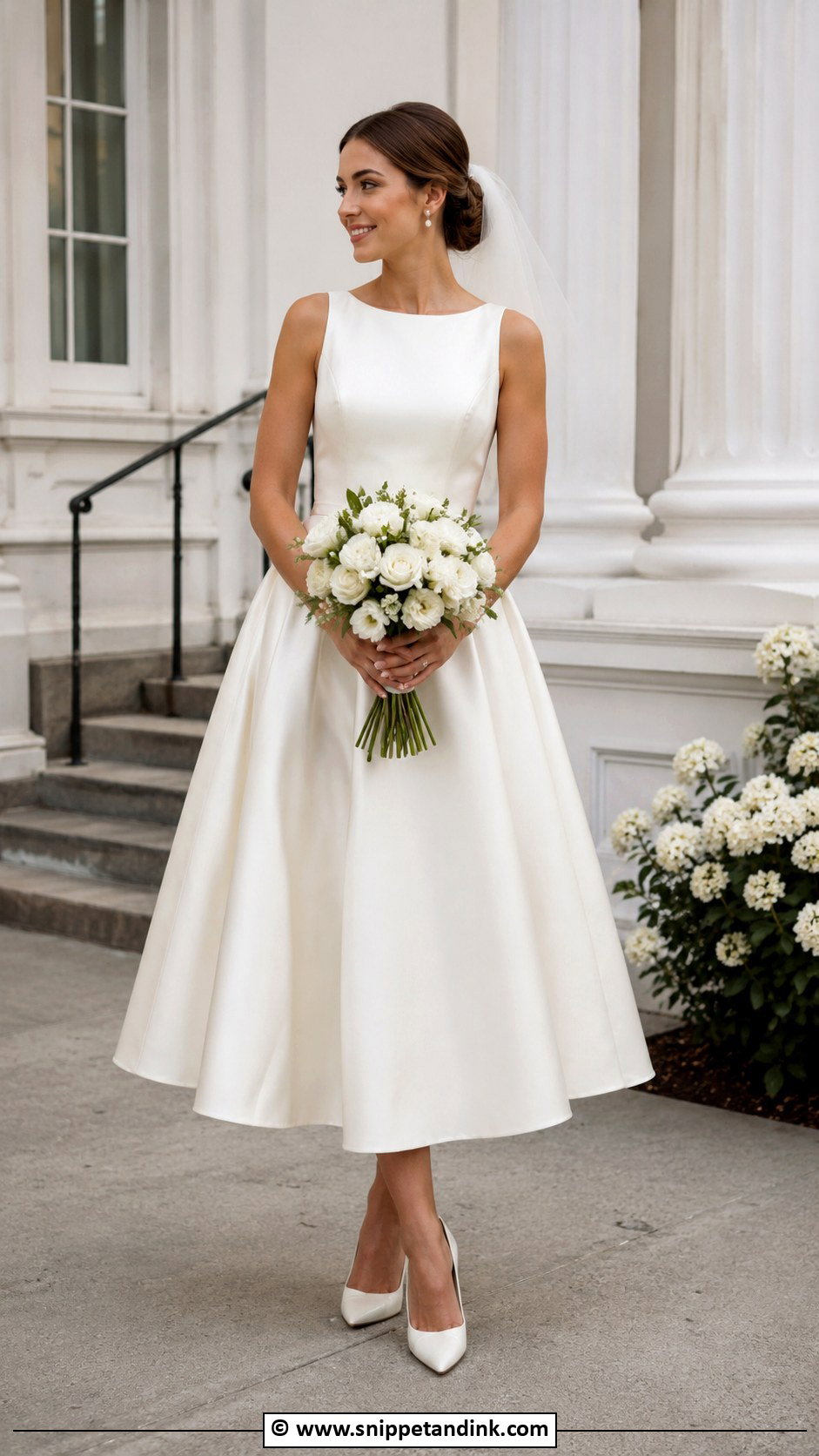
Tea length, falling between knee and ankle, puts your shoes in every photo. Pair it with pointed pumps, slingbacks or bridal block heels, and pick shoes you can walk in, because the short hem means the whole step shows. A short veil, pearl studs and a structured bouquet keep it bridal rather than casual. Satin gives the length weight and polish. It’s a natural choice for courthouse weddings, brunch receptions and brides who love a fifties line.
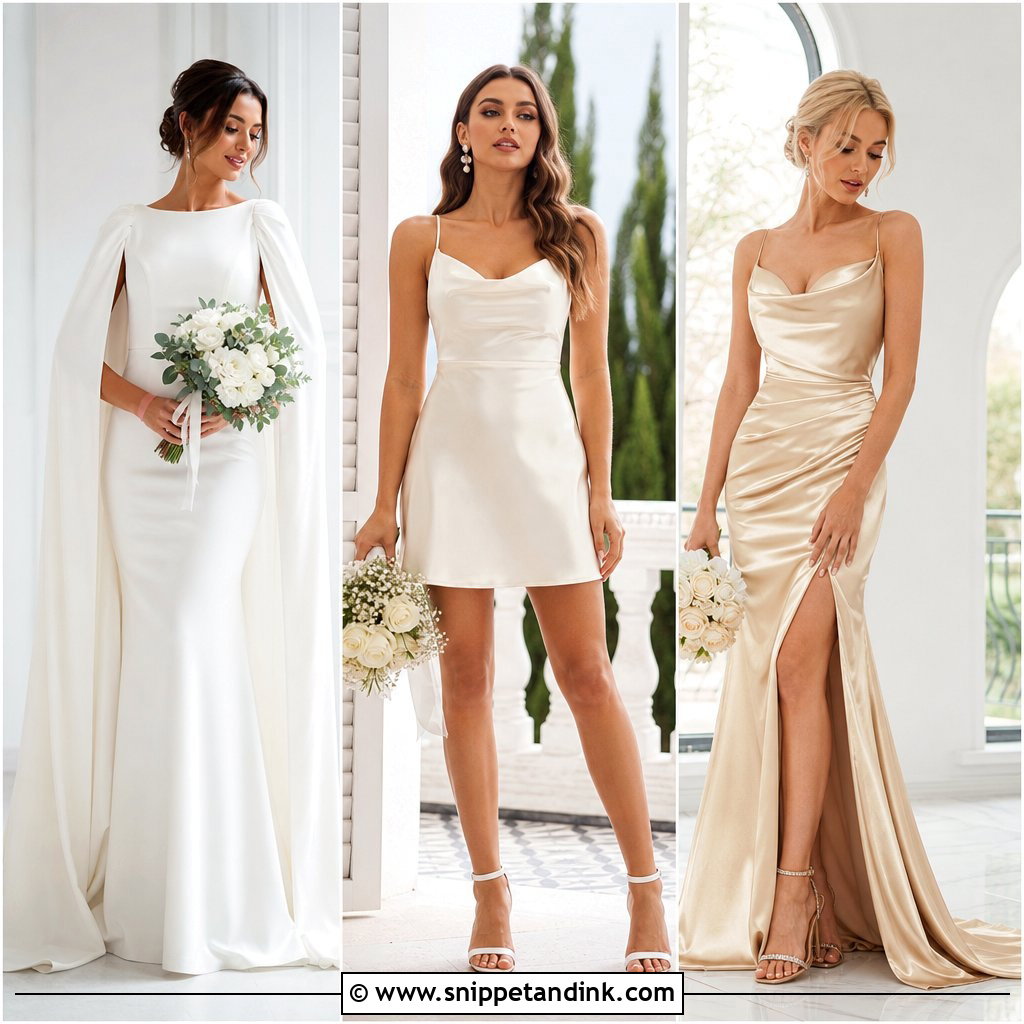
23. Satin Mini Wedding Dress
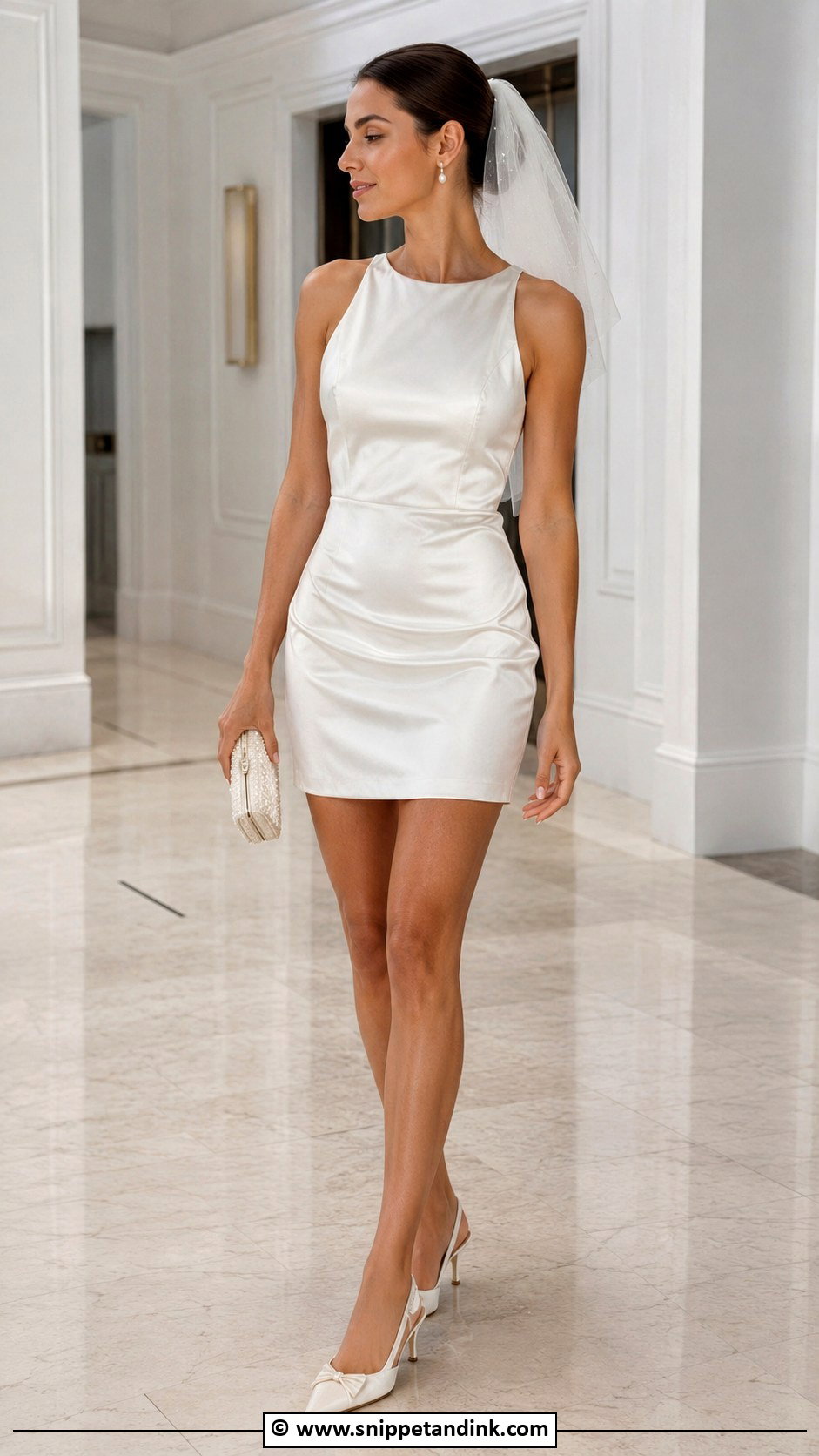
A satin mini works best as a reception change or a civil-ceremony dress. Tailoring is everything at this length: a mini that’s slightly loose looks like a slip, so ask for a structured bodice, long sleeves or a crisp shift shape. Slingback heels, pearl earrings and a short veil or a bow clip suit it, with a small bouquet or a structured clutch. Keep accessories clean.
24. Satin Wedding Dress With Cape
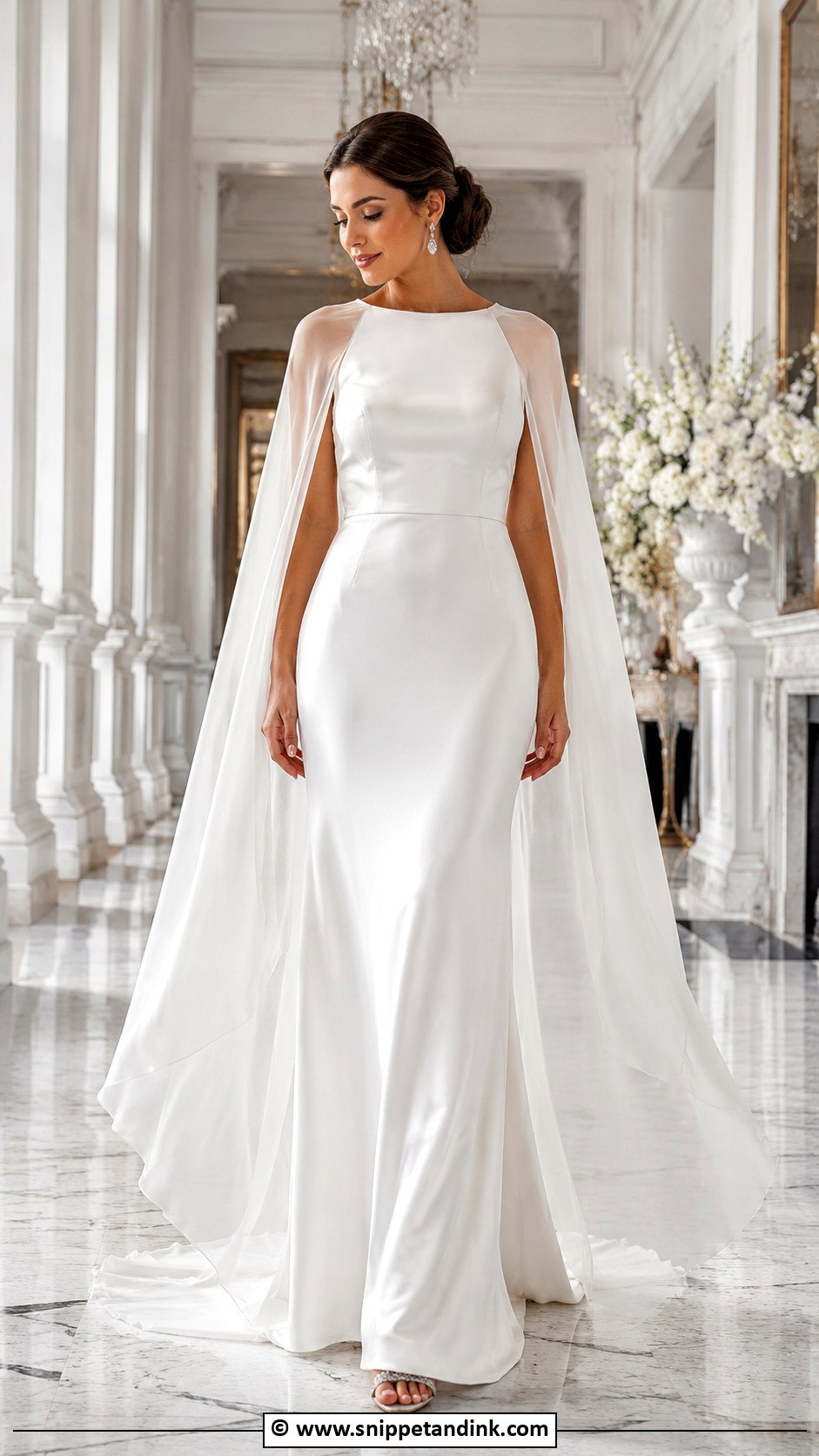
A satin wedding dress with a cape gets its drama from movement, so the fabric of the cape matters. Sheer capes float and suit day; satin capes have weight and look regal in winter. A cape pairs well with a strapless, square neck or column gown, and it can replace the veil entirely. Ask how it attaches. Capes clipped at the shoulder can pull a strapless bodice down, so a cape fixed to a separate collar or a thin band is often more secure. Wear an updo and sleek earrings so the shoulders stay clear.
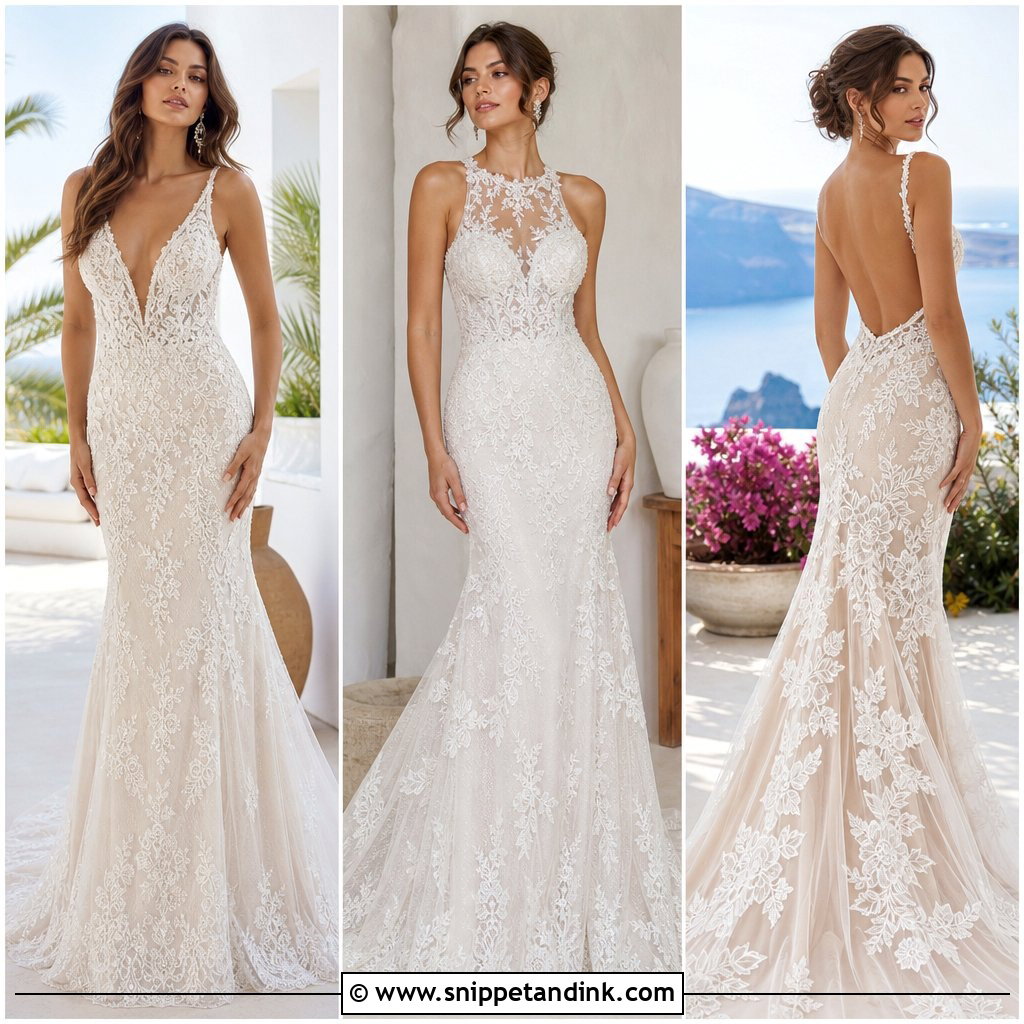

25. Satin Wedding Dress With Gloves
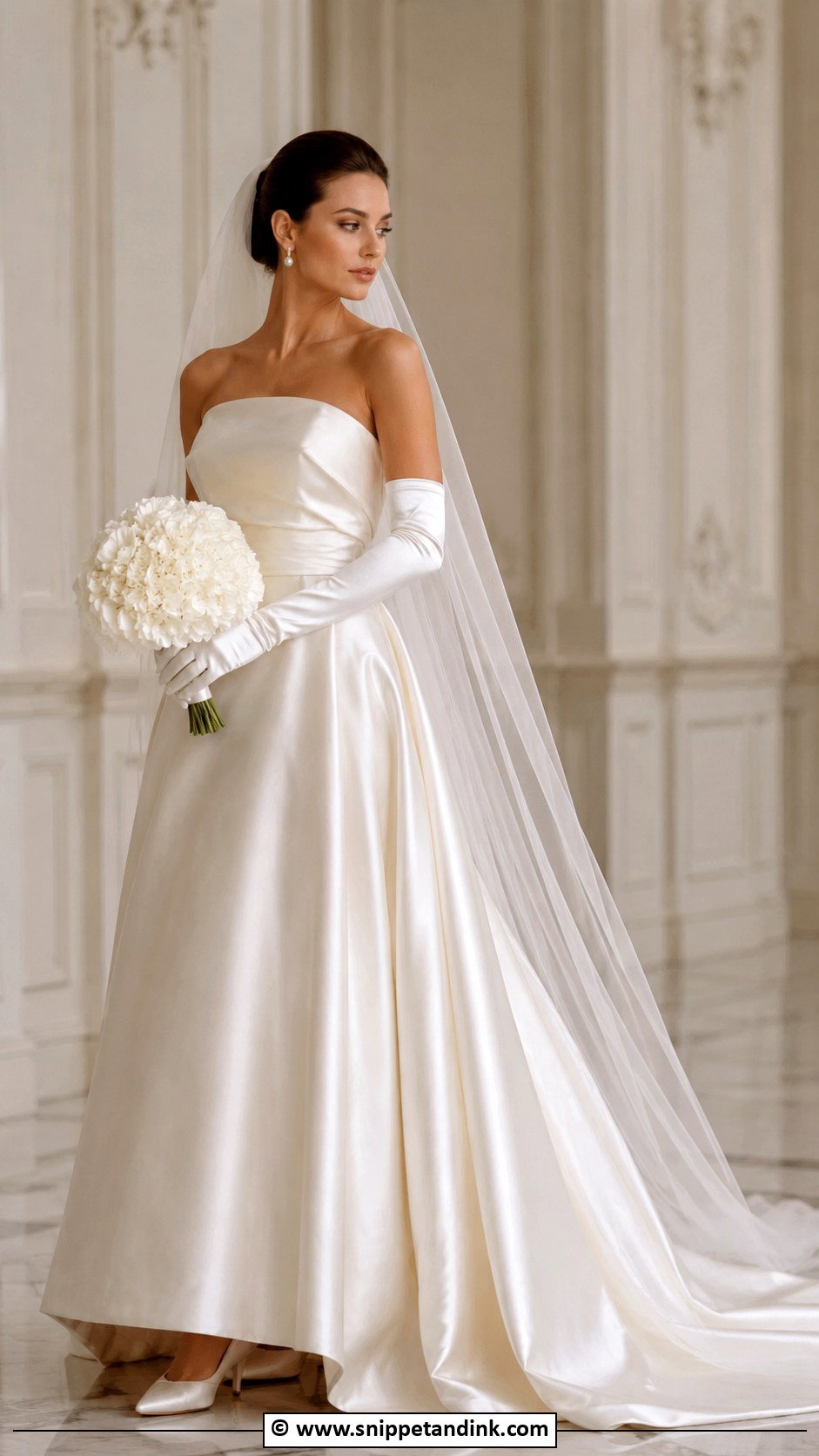
Gloves change a gown’s era instantly. Opera-length satin gloves feel formal and vintage; short sheer gloves feel softer and more modern. They pair best with strapless, off-the-shoulder or sleeveless satin. Plan the ring exchange: either take the left glove off before the vows, or have a seamstress open the ring-finger seam so the ring can go on over it. Pearl earrings, a smooth veil, classic pumps and a simple bouquet complete it.
Water Spots, Car Creases and the Morning Steam
Satin’s two enemies on the day are water and sitting. Silk satin in particular can ring where a drop of water dries, so keep drinks away while you dress and blot any spill with a dry white cloth rather than rubbing. Never dab it with a wet napkin.
Creases come from the car. Before you sit, lift the skirt and lay it behind you over the seat so you’re sitting on the lining, not the satin face. Steam the dress the morning of the wedding, from the inside or through a thin cloth, holding the steamer a hand’s width away so water doesn’t spit onto the fabric.
What to do with it afterward
Have it cleaned within a few weeks. Champagne and cake sugar are invisible at first but turn yellow-brown as they oxidize, and that stain is much harder to lift after months in a cupboard. Store it flat or folded with acid-free tissue in each fold, inside a breathable cotton bag rather than plastic, somewhere dark and dry. Hanging a heavy satin gown for years stretches the shoulders and straps out of shape.
Satin Rewards a Good Cut More Than Any Other Fabric
Satin can look minimal, romantic or sculpted, and the silhouette you pick decides which. Start from your venue, the season and how much you’ll move: a ballroom can carry a full gown, a city hall suits a slip or a mini, and a long dancing reception favors a fit-and-flare or a detachable train. Pearls, gloves, capes and simple heels all sit naturally with this fabric. Above all, budget for a good seamstress, because in satin the fit shows more than any detail you add.
You'll Like These Ideas:











Leave a Reply