
Satin is the fabric I reach for when a bride wants a ball gown that looks expensive from across a room. It has no lace or beading to hide behind, so the cut, the weight of the cloth and the fit of the bodice carry everything, and that honesty is exactly why it photographs so cleanly. Below are 25 ways I’d style a full satin skirt, from inky black to a gown with hidden pockets, with the jewelry, shoes and hair that keep each one balanced rather than busy.
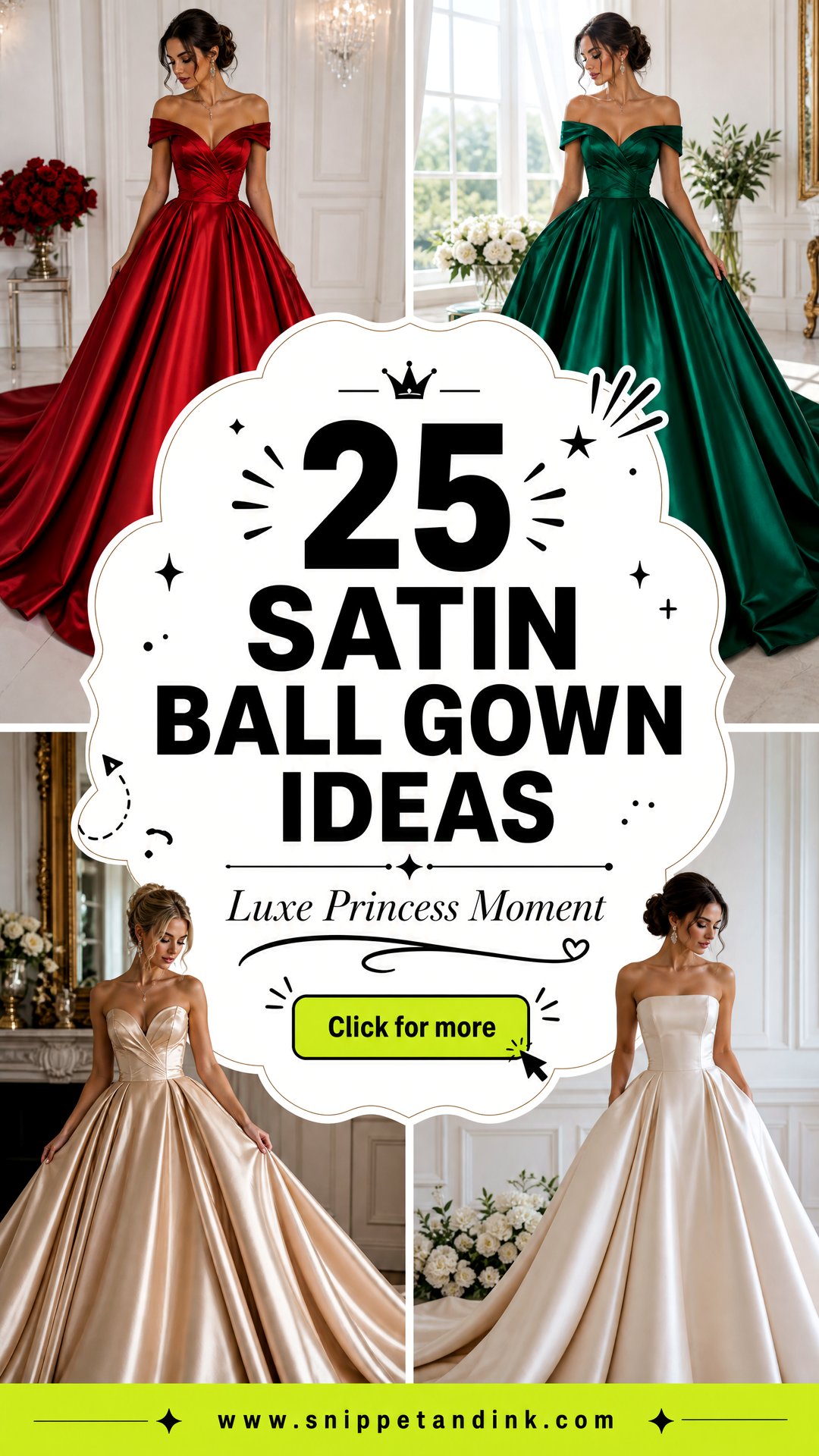
Duchess, Mikado or Charmeuse: Feel the Satin Before the Shape
Satin is a weave, not a fiber, so two gowns both labelled satin can behave completely differently. The first thing I do with any ball gown is pinch a handful of skirt fabric and let it drop. A full princess skirt needs cloth with real body, or it collapses onto the petticoat by the end of the night.
- Duchess satin: heavy, smooth and lustrous. It holds a big skirt with little help, which makes it the classic ball gown cloth, but it is warm in summer and adds noticeable weight.
- Mikado: a stiffer, more sculptural weave with a lower sheen. It keeps sharp folds and pleats well, so it suits clean, architectural gowns.
- Charmeuse: thin, fluid and very shiny. It drapes rather than stands, so I keep it for slip dresses, not full skirts.
- Polyester satin: more affordable and less prone to water spotting than silk, though cheaper versions can look glassy under flash.
Then turn the bodice inside out. Satin shows every seam allowance and every boning channel that sits too close to the surface, so a well-made gown has a layer of underlining between the boning and the face fabric. Run your hand down the front. If you can feel each channel as a ridge, the camera will pick it up too.
1. Black Satin Ball Gown
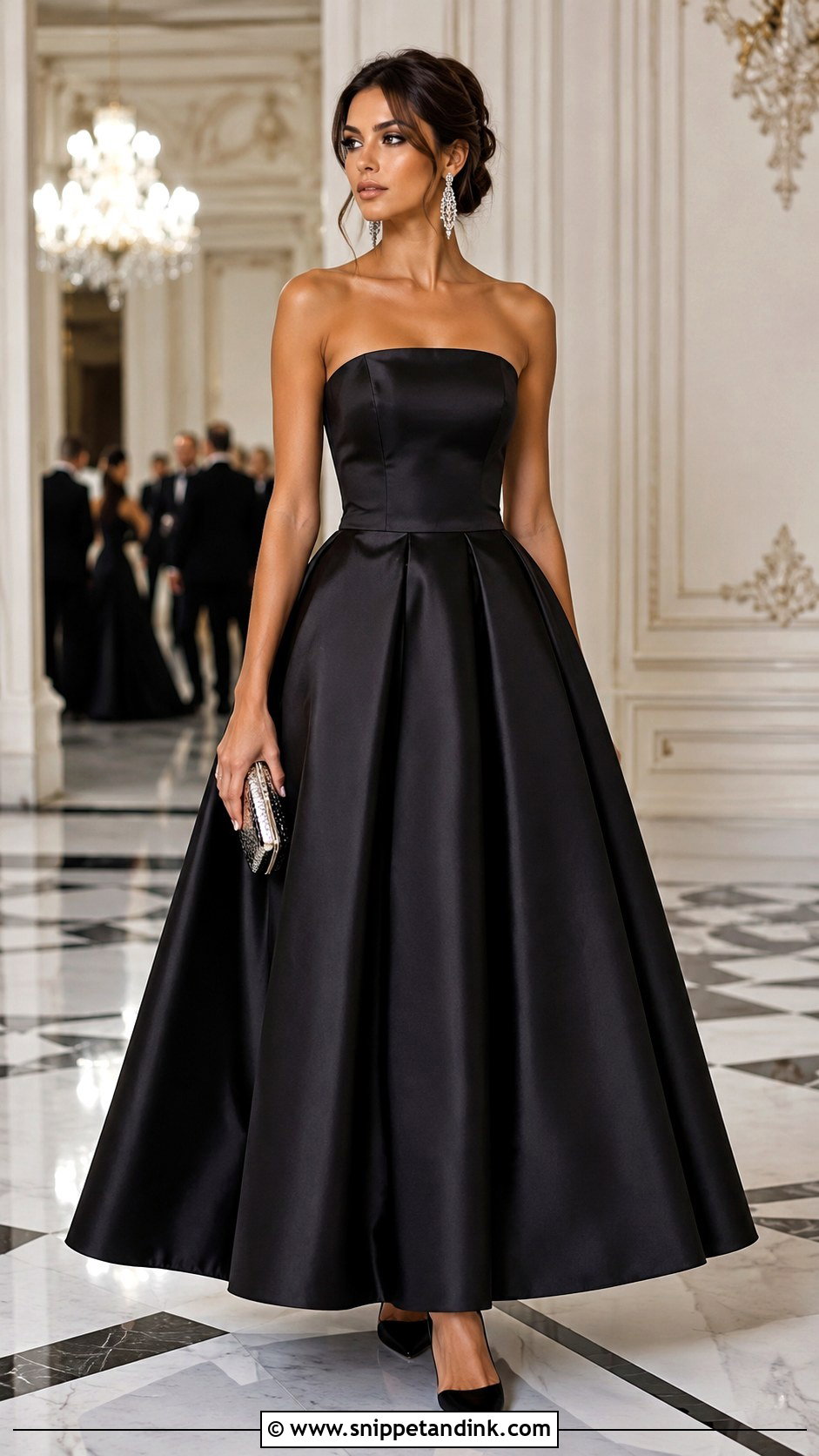
Black is the most forgiving color on this list, because the deep tone hides the small pulls and ripples that show up on paler satin. Ask for a structured strapless or off-shoulder bodice with a skirt that holds its shape on its own, then let silver drop earrings, a crystal bracelet and pointed satin heels do the shining. I keep the clutch small, a black box or a metallic minaudière. A smooth bun suits it, and a red lip gives the contrast black satin quietly asks for.
2. White Satin Ball Gown
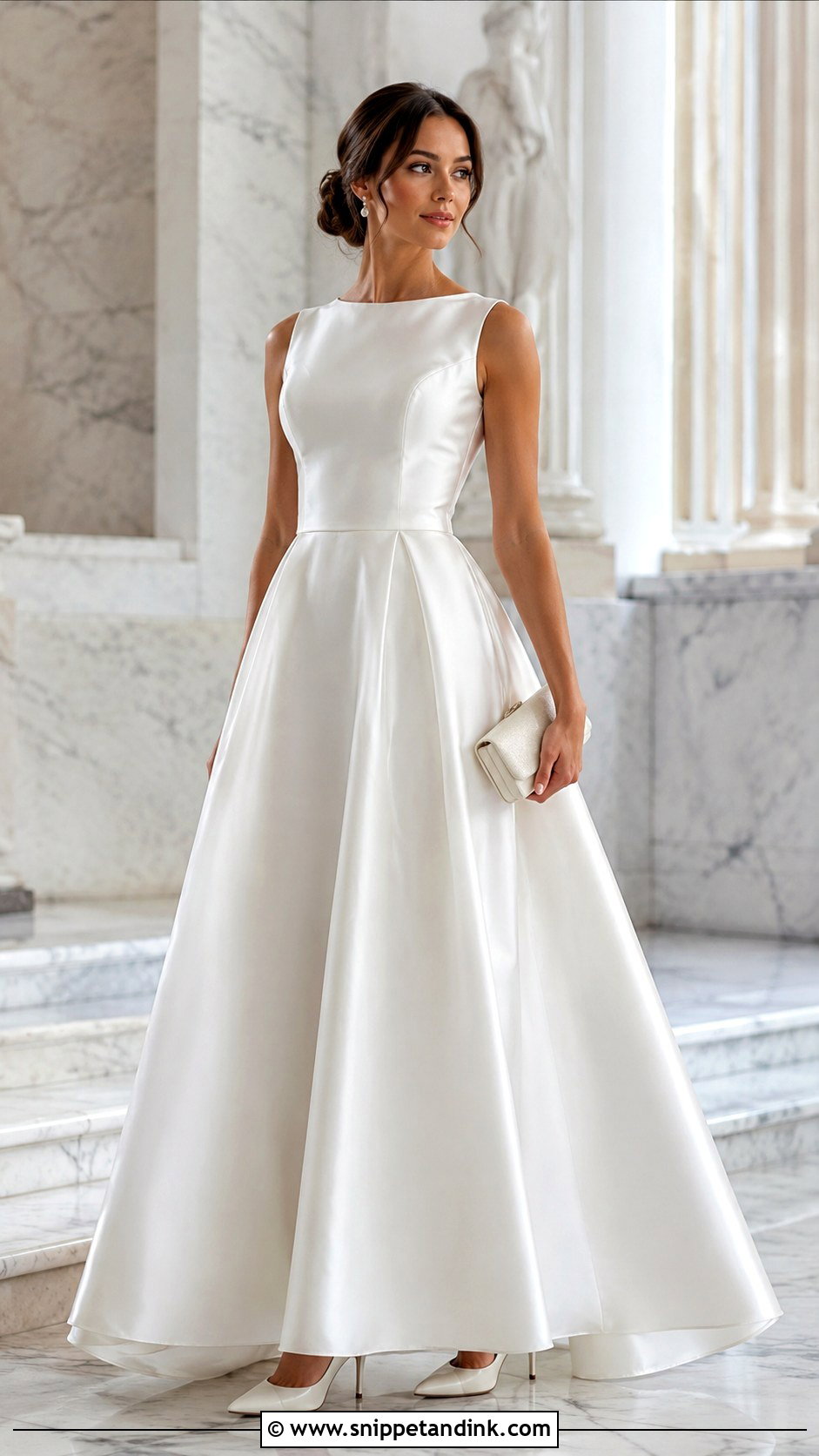
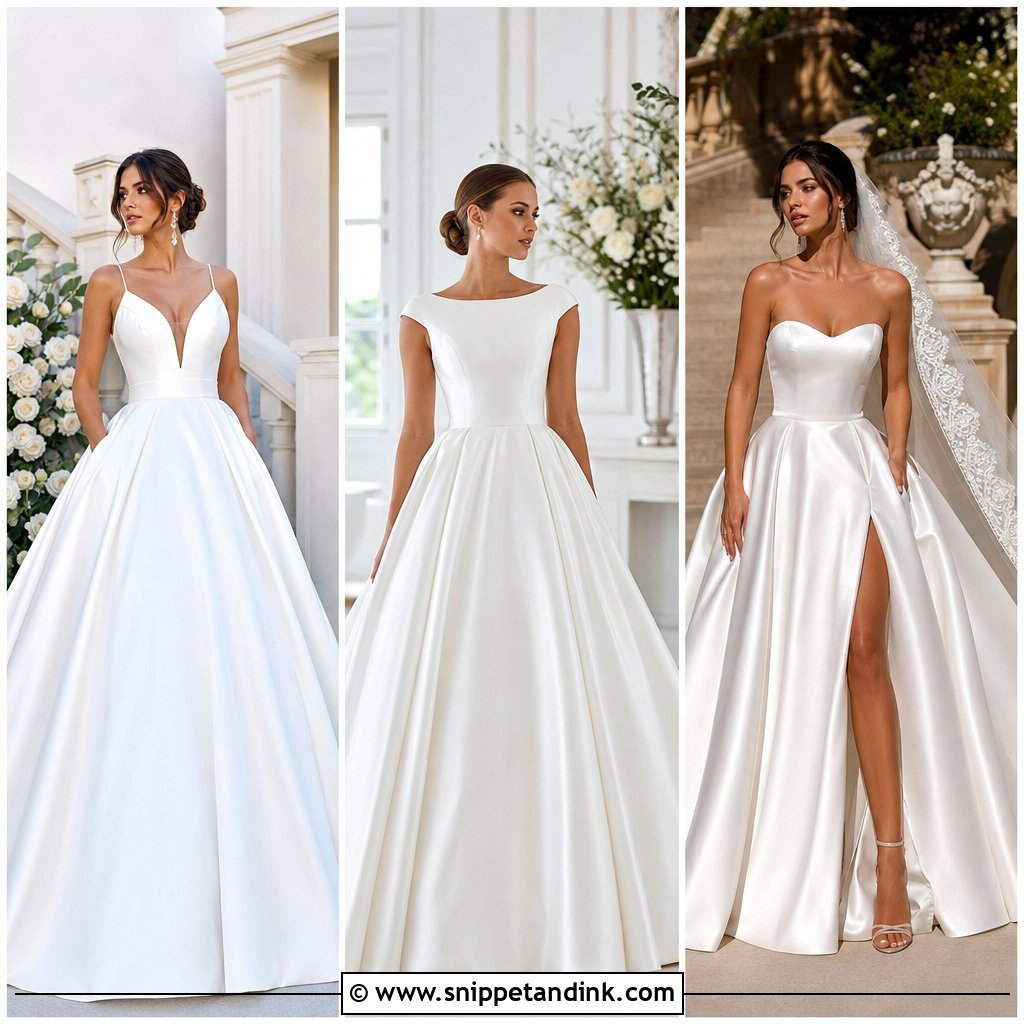
White satin is the hardest shade to fit well. Every tight spot across the bodice shows as a shadowed ripple under flash, so when I fit one I look for subtle pleating at the waist, which breaks up the expanse of fabric and forgives a little movement. Pearl earrings, ivory heels and a satin clutch keep it coordinated, and a delicate pendant helps if the neckline is very plain. Mix a little texture into the accessories so the outfit doesn’t read flat in pictures. A sleek updo shows off the neckline and balances all that skirt.
3. Red Satin Ball Gown
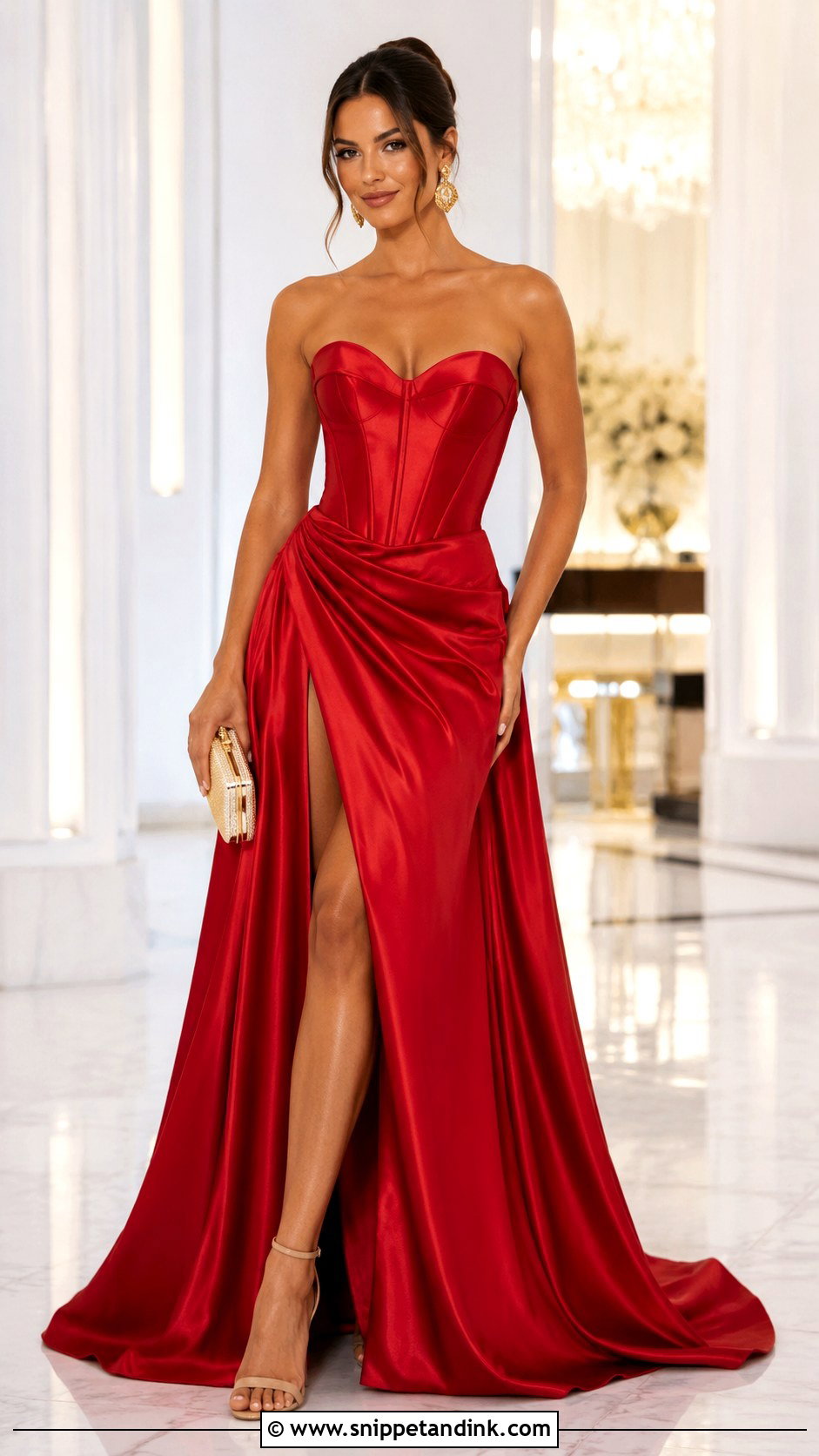
Red enters the room before you do, so I plan everything else around it. A fitted corset bodice, sweetheart neckline or wide straps gives the full skirt something solid to hang from, and gold earrings, nude heels and a plain clutch stay out of the color’s way. With a bright red, I keep makeup classic with soft eyes and a defined lip; a deeper ruby takes warmer metals. One fitting habit worth copying: rub an inside seam with a white tissue, because strongly dyed satin can transfer onto pale shoes and skin on a hot night.
4. Navy Satin Ball Gown
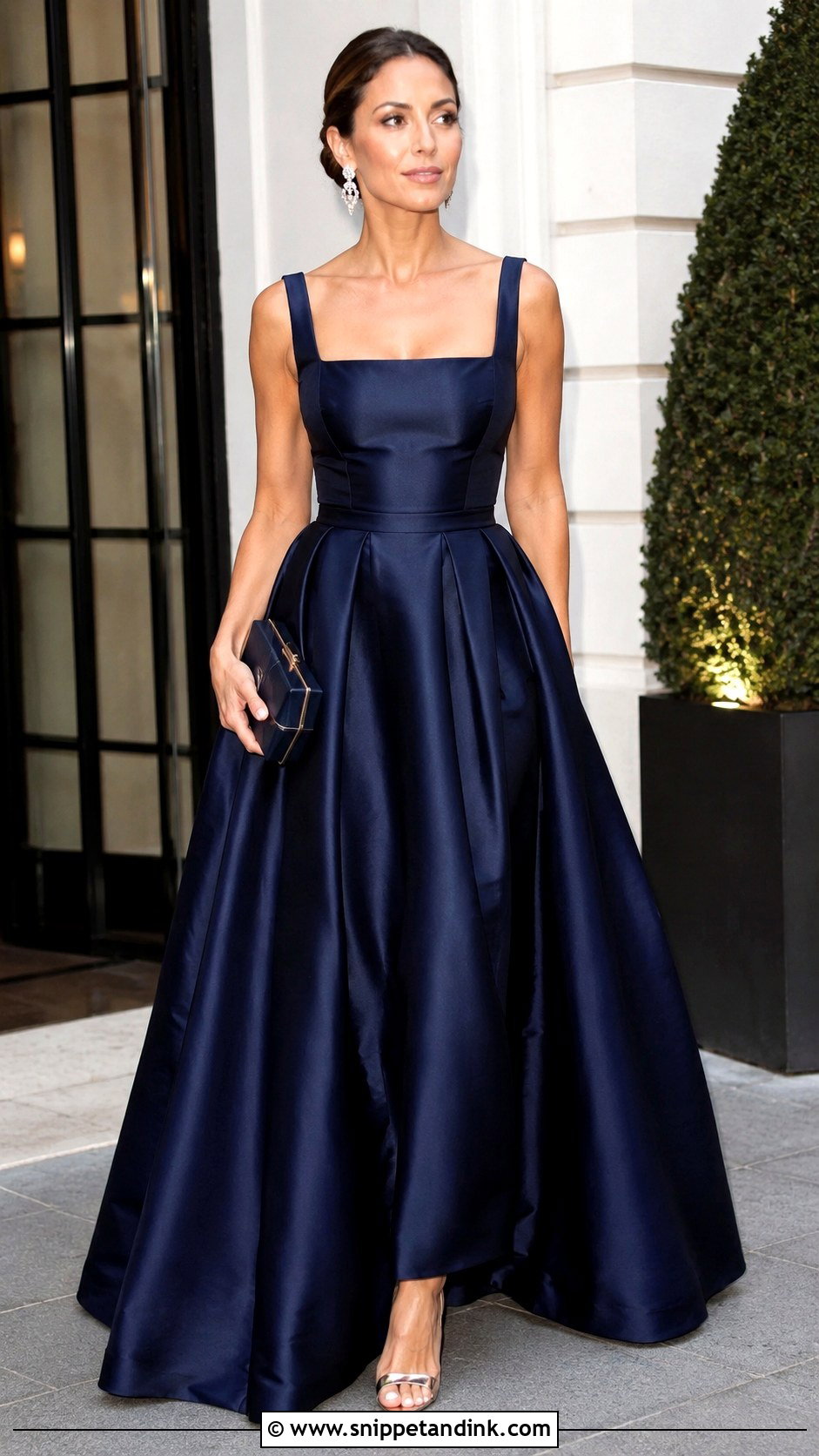
Navy reads softer than black but is every bit as formal. Under warm reception lighting it can drift very close to black, so look at the fabric in daylight before you commit. A square neckline, corset waist or off-shoulder sleeves all suit it, and my usual pairing is silver earrings, metallic heels and a structured clutch, with clear crystal if you want sparkle without embellishing the gown. Soft curls pinned to one side stop it feeling stiff.
5. Emerald Green Satin Ball Gown
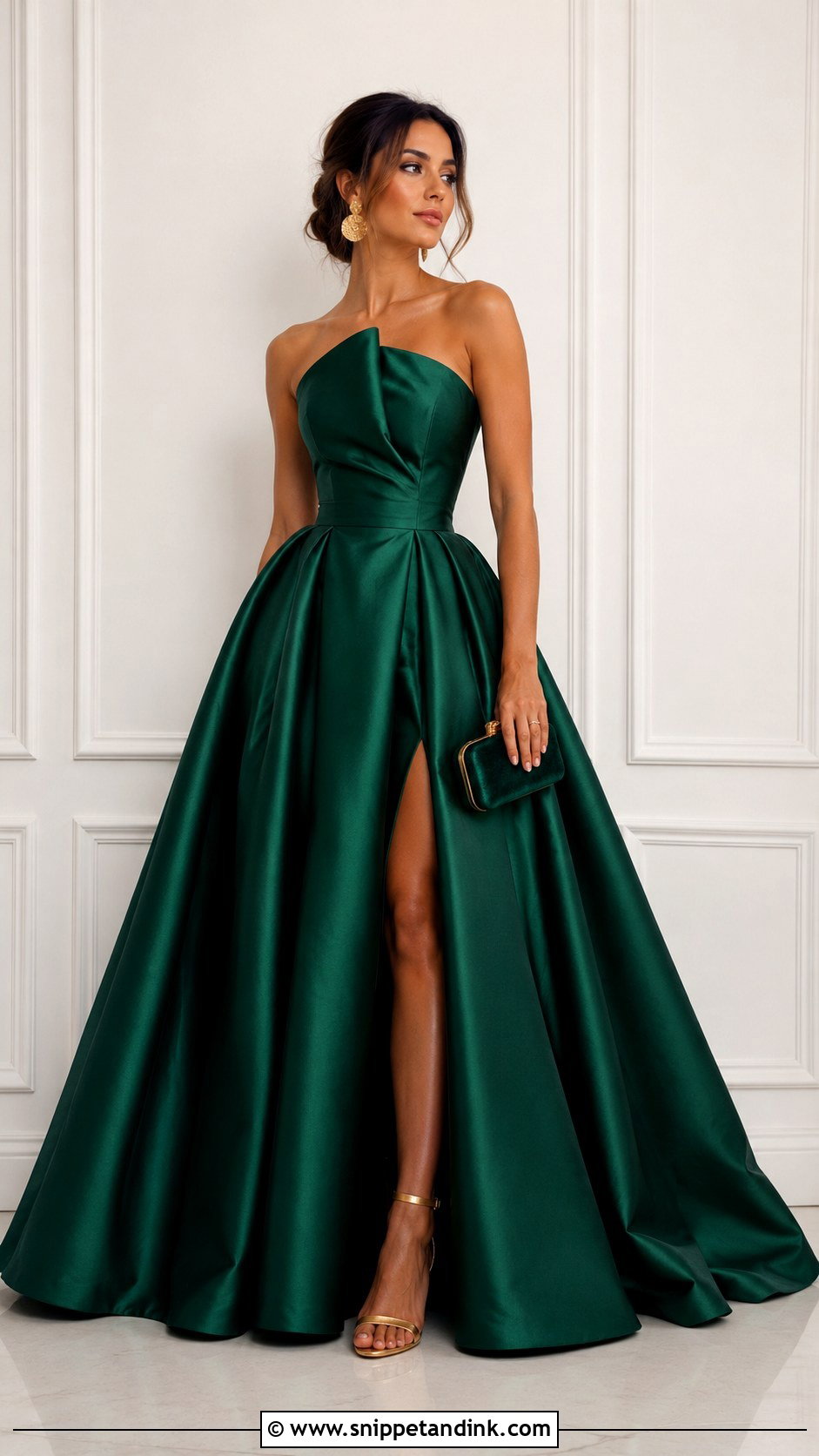
Emerald already carries the drama, so keep the shape simple: a fitted waist and a flowing full skirt. Gold is the metal I’d pick every time here, in fine hoops, a cuff and strappy heels. The shade itself matters more than people expect. I steer cooler skin toward a bluer emerald and warmer skin toward a yellower one, because the wrong undertone right beside the face shows in every close-up. A dark green clutch blends in, a gold one adds contrast, and a low bun keeps it polished.
6. Burgundy Satin Ball Gown
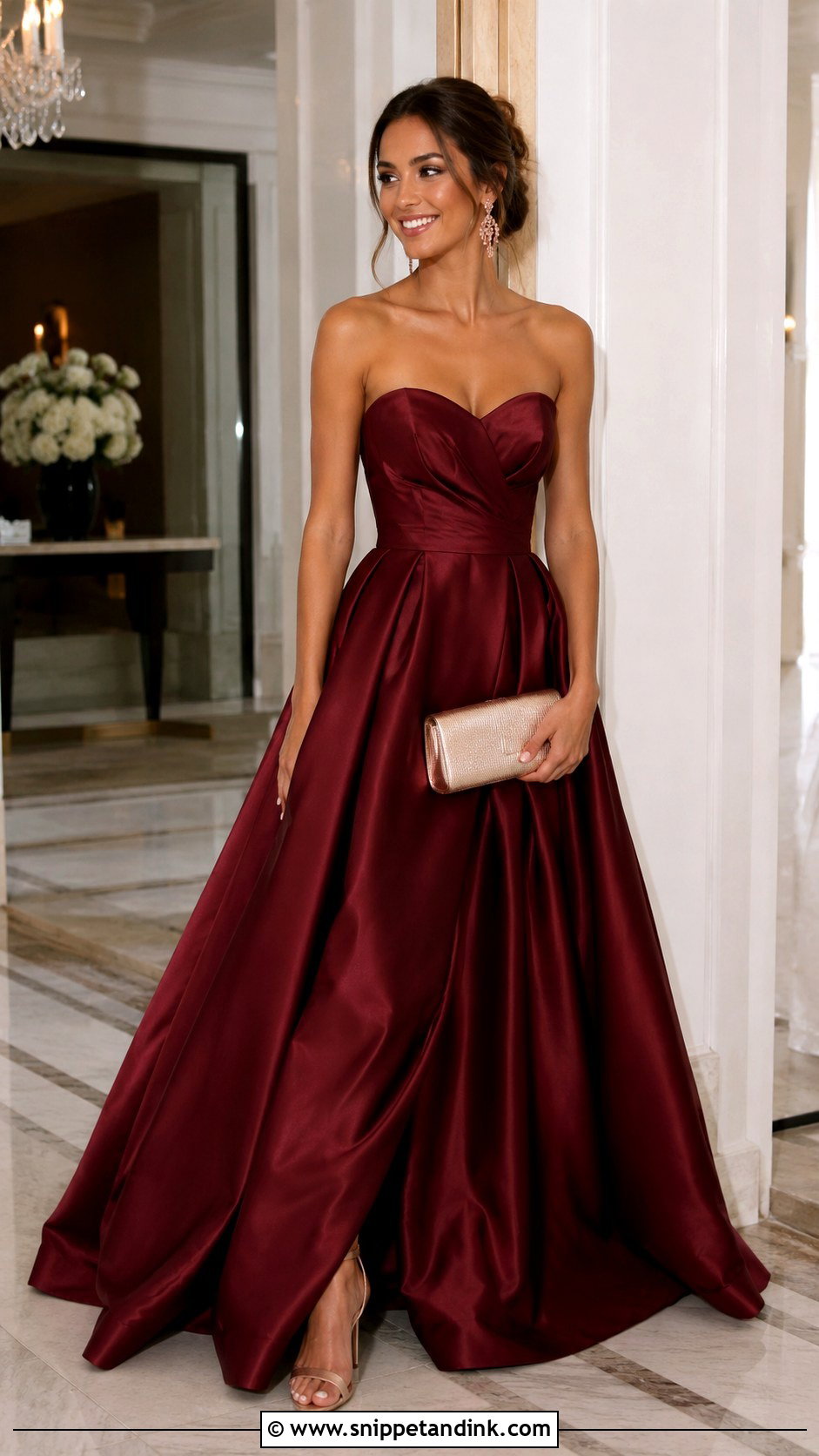
Burgundy is the color I suggest most for autumn and winter weddings, because it keeps its depth in low evening light. A burgundy ball gown with a sweetheart neckline, basque waist or draped bodice sits comfortably between classic and current. Rose-gold jewelry, neutral heels and a champagne satin clutch finish it. For makeup, brushed brows and a warm lip keep the face from looking muddy against such a deep fabric.
7. Blush Pink Satin Ball Gown
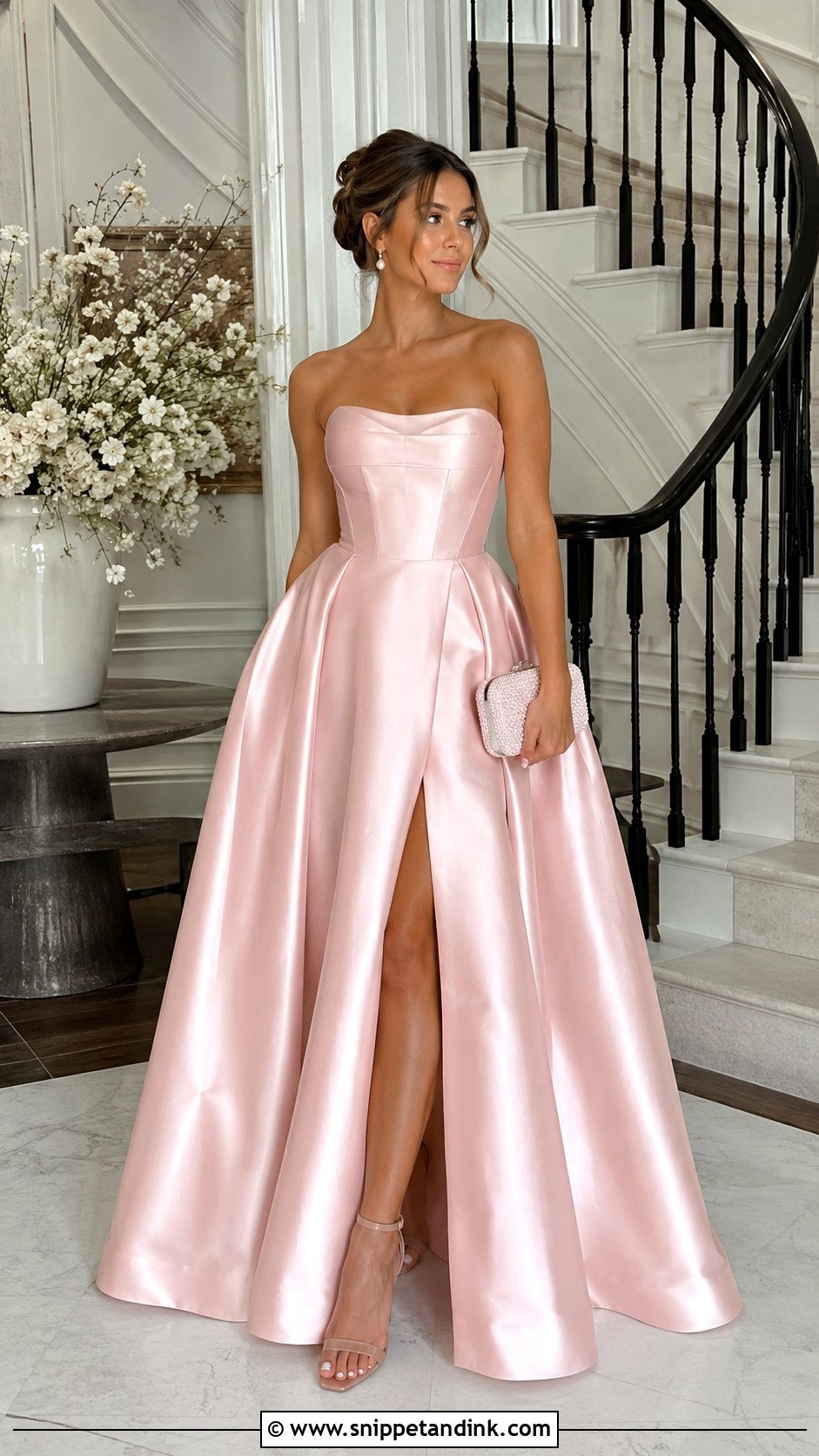
Blush can tip into sugary when the construction is soft, which is why I only recommend it with a structured bodice and a clearly defined waist. Pale satin also shows water and perspiration marks more readily than dark shades, so for a summer date I’d ask about a breathable lining. Nude heels, pearl earrings and a pale pink clutch keep the palette quiet. Silver jewelry and sleek hair make it feel more modern.
8. Champagne Satin Ball Gown
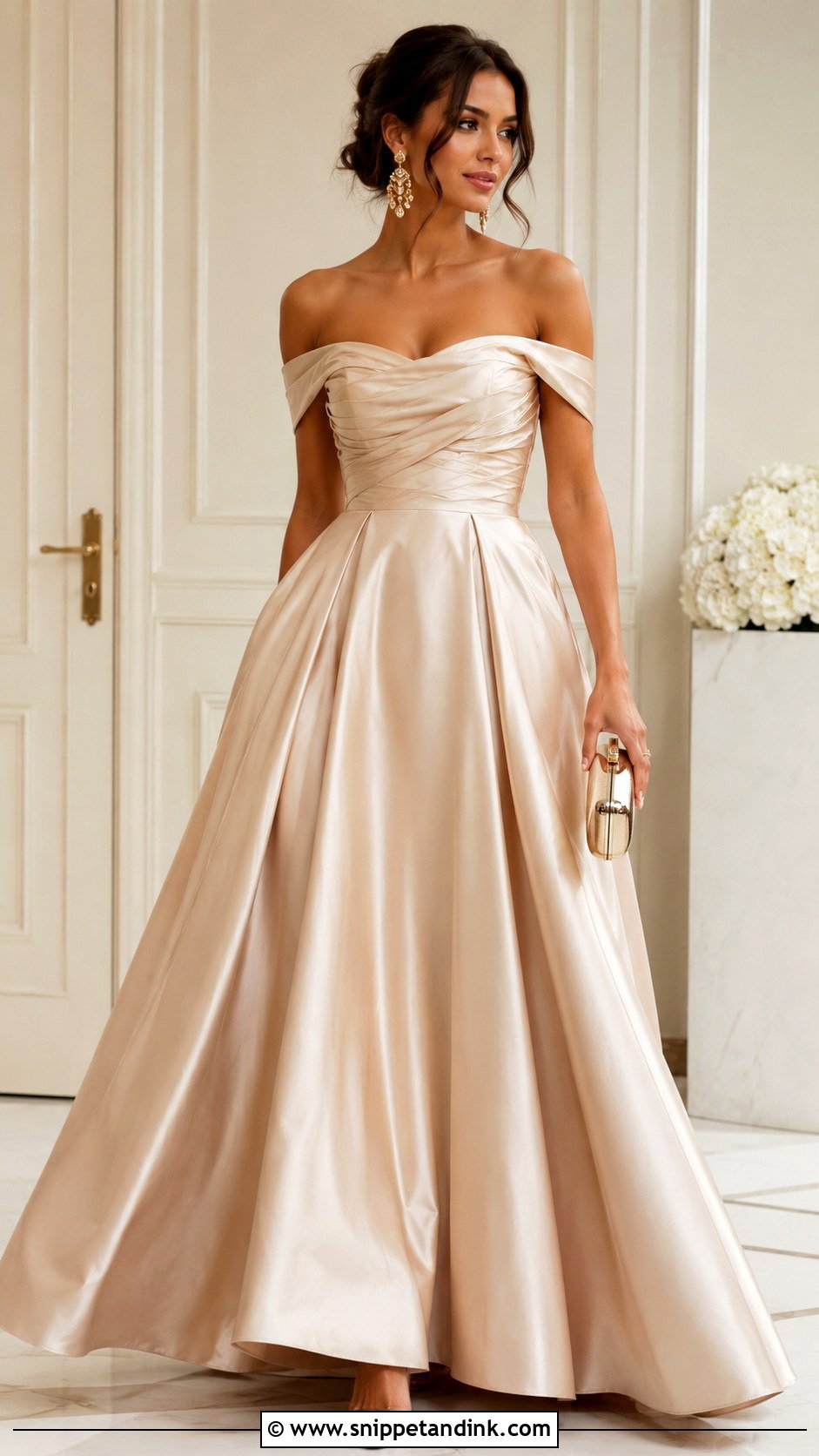
Champagne is the neutral I offer brides who find bright white harsh against their skin. The gold-beige tone sits well with a ruched bodice, an off-shoulder neckline or a structured corset, and ruching is especially kind in satin because the gathers absorb small fit changes over a long evening. Gold jewelry, nude heels and a small metallic clutch, then stop. Hold the fabric beside your face in natural light first: some champagnes go grey on one person and peachy on another.
9. Silver Satin Ball Gown
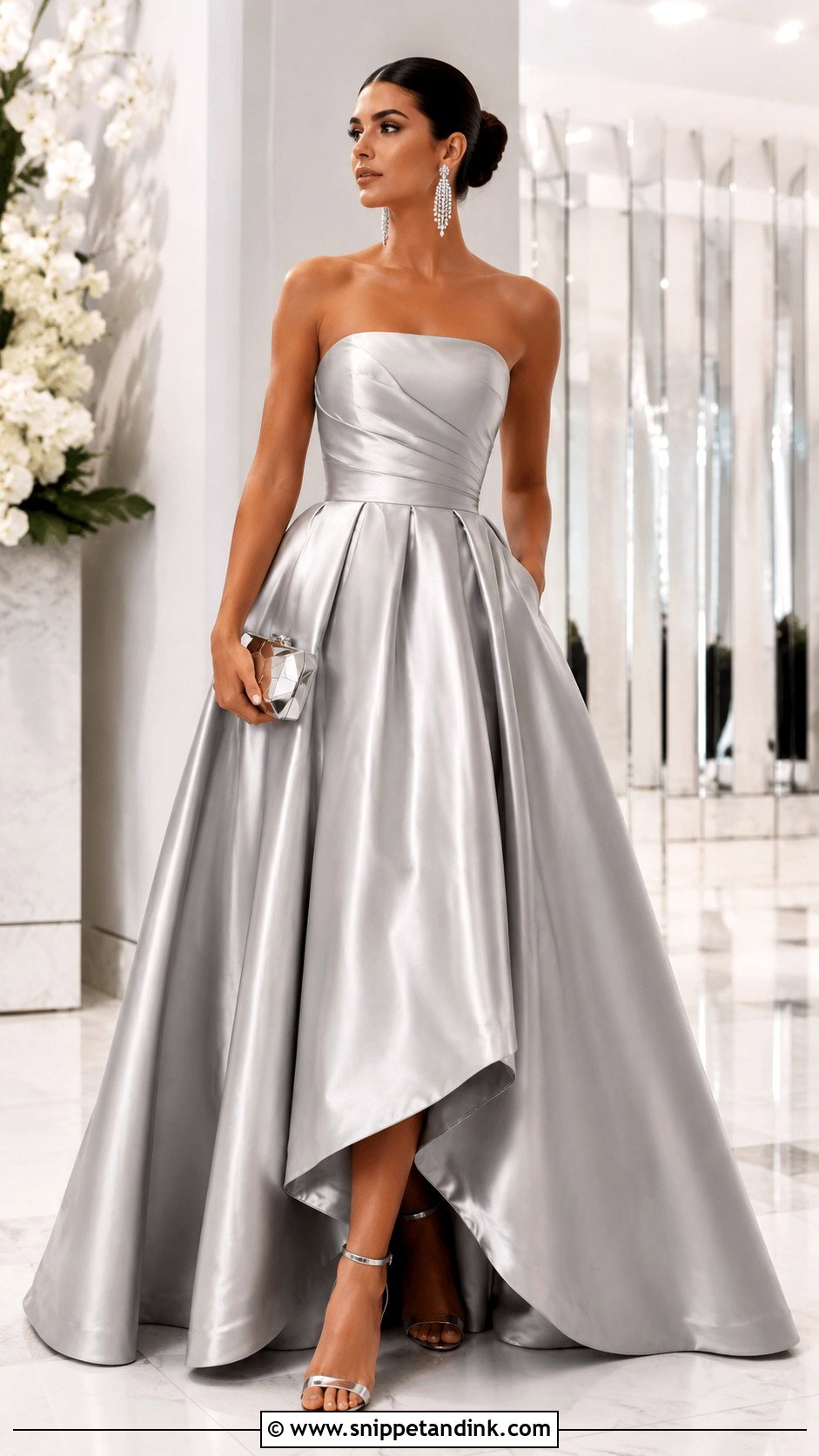
Silver satin looks like costume the moment the cut gets fussy. I keep it to a clean strapless neckline, a structured bodice and a full skirt, with crystal earrings, silver heels and a mirrored clutch. Metallic satin can lose its detail under direct flash, so mention the fabric to your photographer before the day. Cool-toned shimmer on the eyes and a sleek bun sharpen the whole thing.
10. Gold Satin Ball Gown
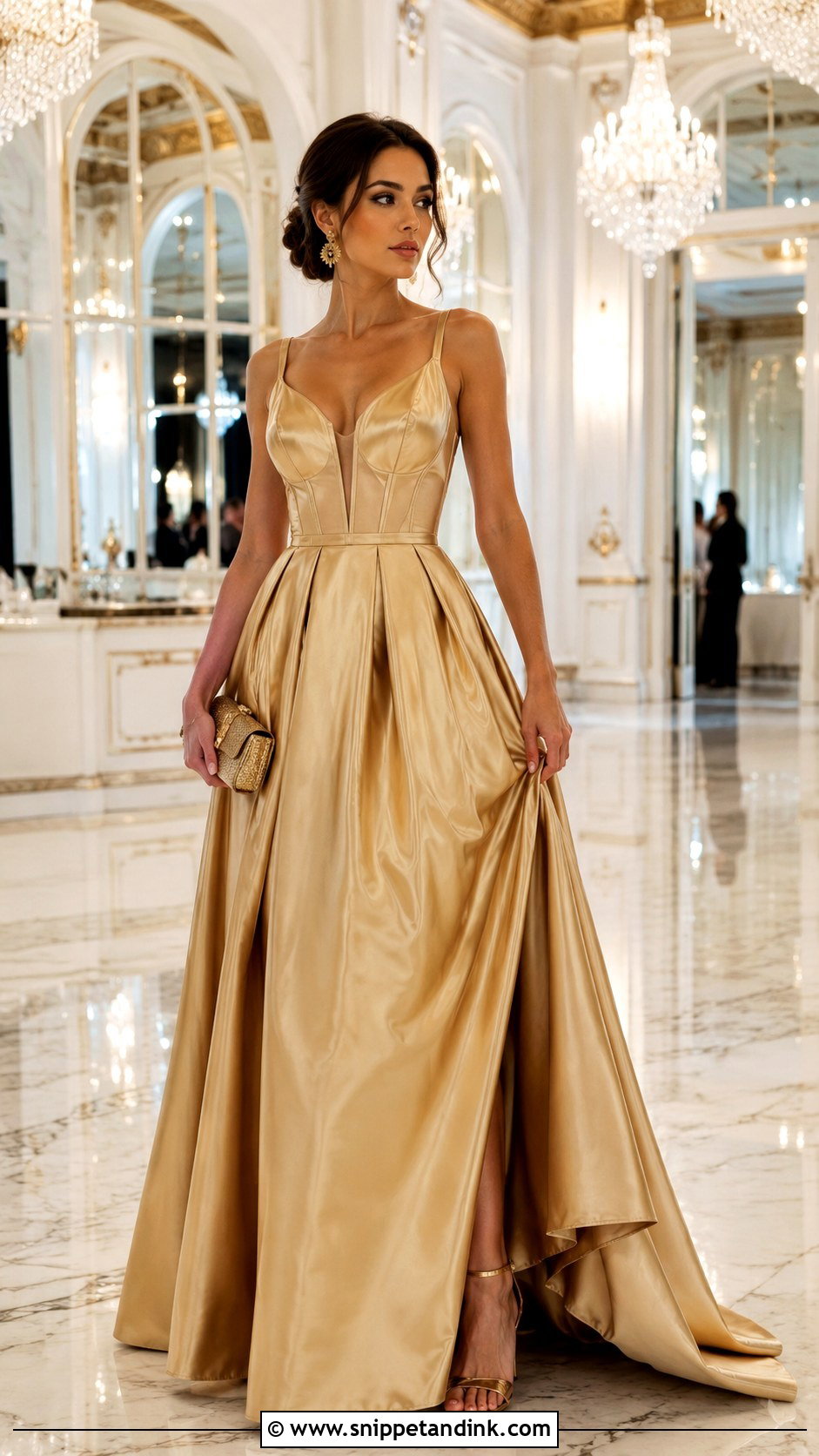
Gold comes down to the exact shade. Pale gold usually flatters cooler, fairer skin, while antique gold sits better on warmer and deeper tones, and I always hold both against the face before a bride decides. A fitted bodice and a plain full skirt look powerful without tipping into excess. Matching heels, small statement earrings and a clean clutch are plenty; skip the necklace and let a soft updo with bronzed makeup finish it.
11. Royal Blue Satin Ball Gown
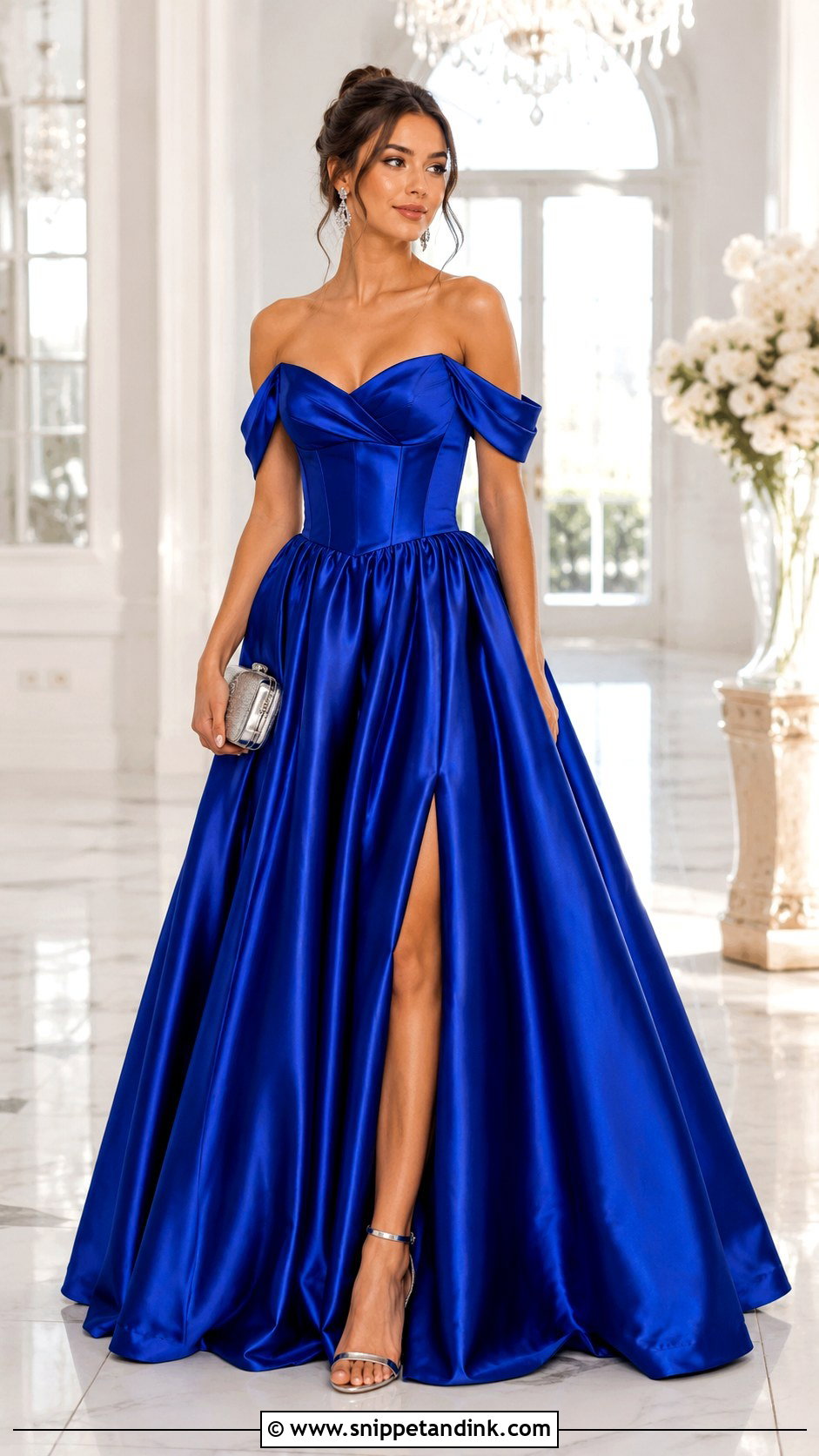
Saturated blue throws a little color back onto the skin under the chin, which can leave a bride looking pale in close photos. That’s why I keep the makeup balanced, defined eyes, a soft lip and enough warmth in the base. The gown itself suits a corset bodice or a classic sweetheart neckline. Silver jewelry keeps it crisp, metallic heels and a small clutch complete it, and a high bun shows off the shoulders.
12. Lavender Satin Ball Gown
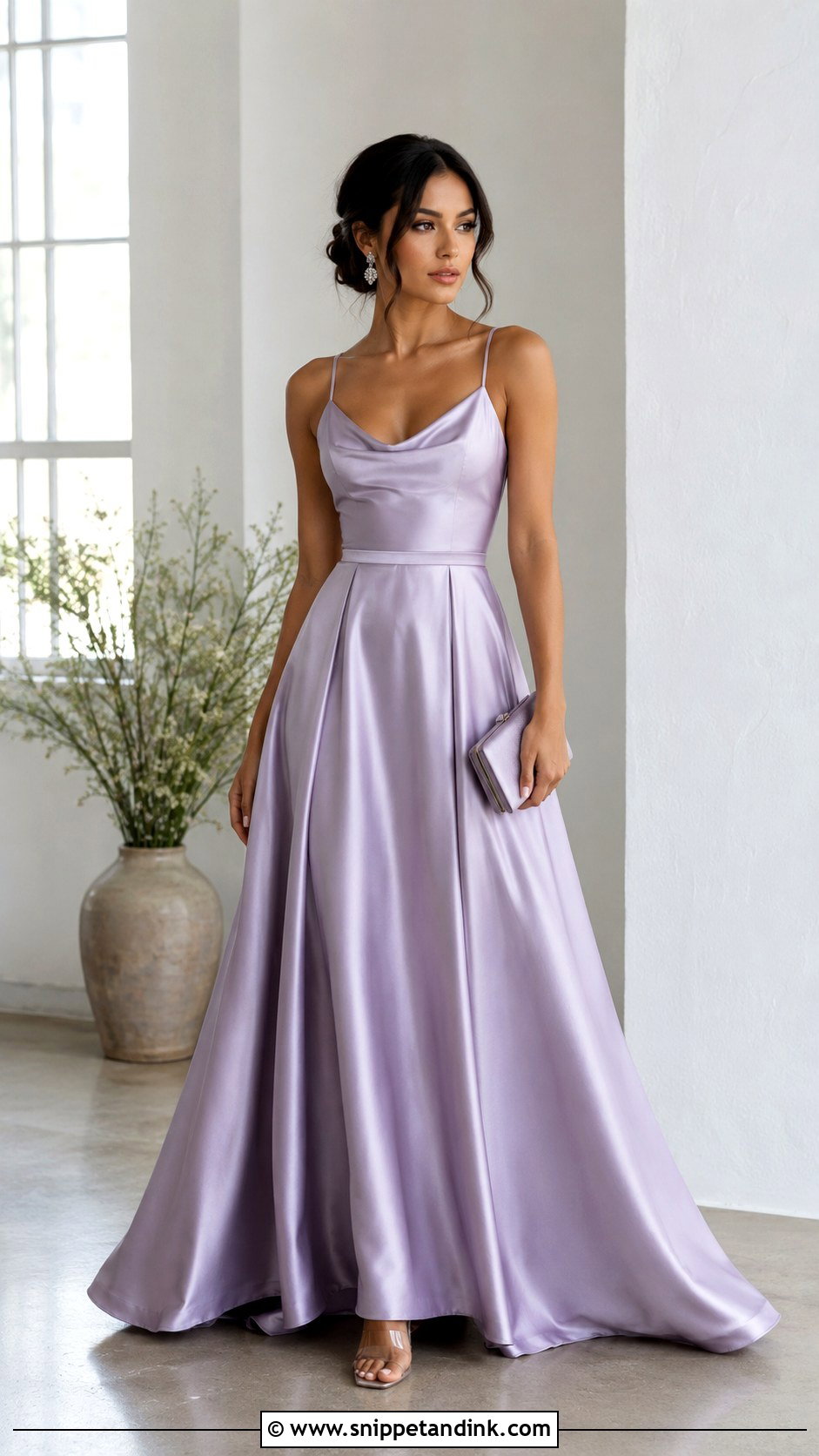
Lavender is one of the trickiest colors to buy from a screen. It shifts between grey, pink and blue depending on the light, so I always order a swatch first. A fitted waist, a full skirt and a gentle neckline suit it for spring and summer, worn with silver earrings, clear heels and a pearl clutch. Ornate accessories push it toward costume; simple ones keep it modern. Loose curls soften it further.
13. Sage Green Satin Ball Gown
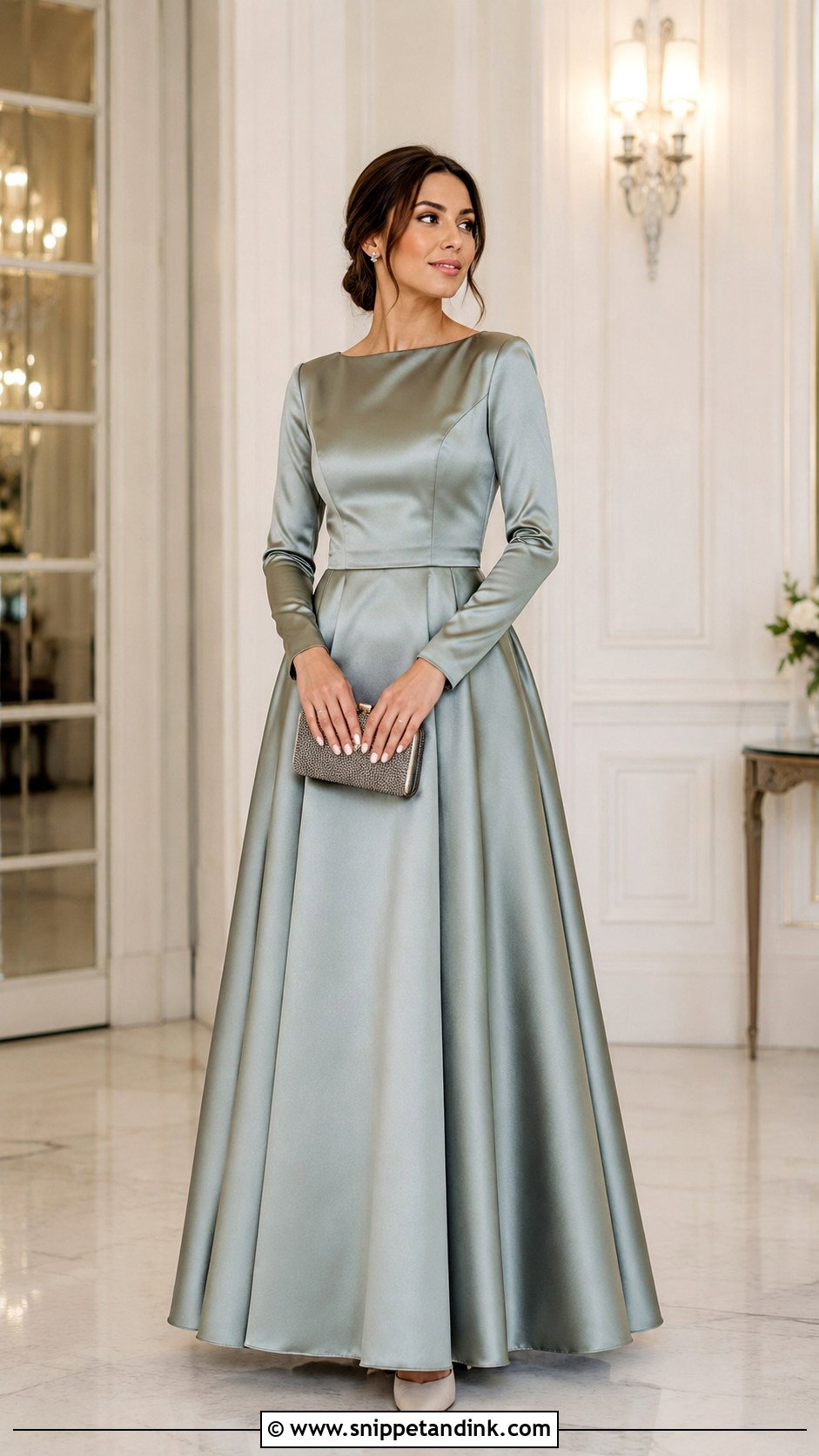
Sage is muted enough to feel fresh rather than loud, which makes it a good daytime-to-evening shade in spring or early fall. I’d choose an A-line ball gown shape with a defined waist and a smooth bodice. Pearl earrings, nude heels and a cream clutch keep it soft; gold warms it, silver cools it. Pale, muted satin shows creases more than deep greens do, so have it steamed close to the time you dress. Natural makeup and a low bun suit its calm.
14. Off Shoulder Satin Ball Gown
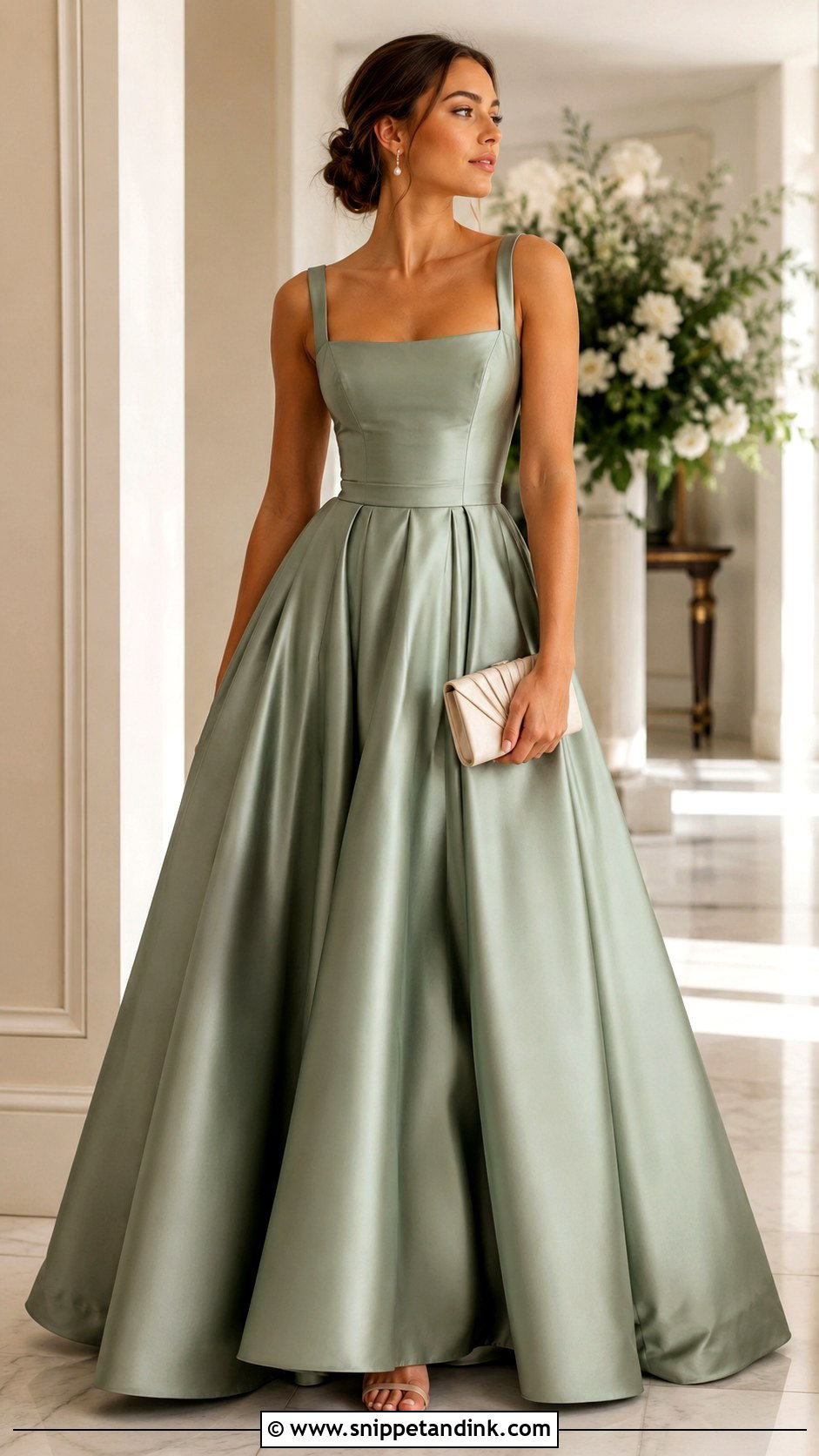
Off-shoulder necklines show the collarbone, but the real question at a fitting is whether you can lift your arms. Satin doesn’t stretch, and a tight off-shoulder band can pin your elbows to your sides all night, so I have every bride hug someone and raise a glass before we approve the fit. Structured sleeves over a fitted bodice give the best balance. Drop earrings, a bare neck and a polished updo frame it, with a small clutch and heels in satin, metallic or nude depending on the gown.



15. Strapless Satin Ball Gown
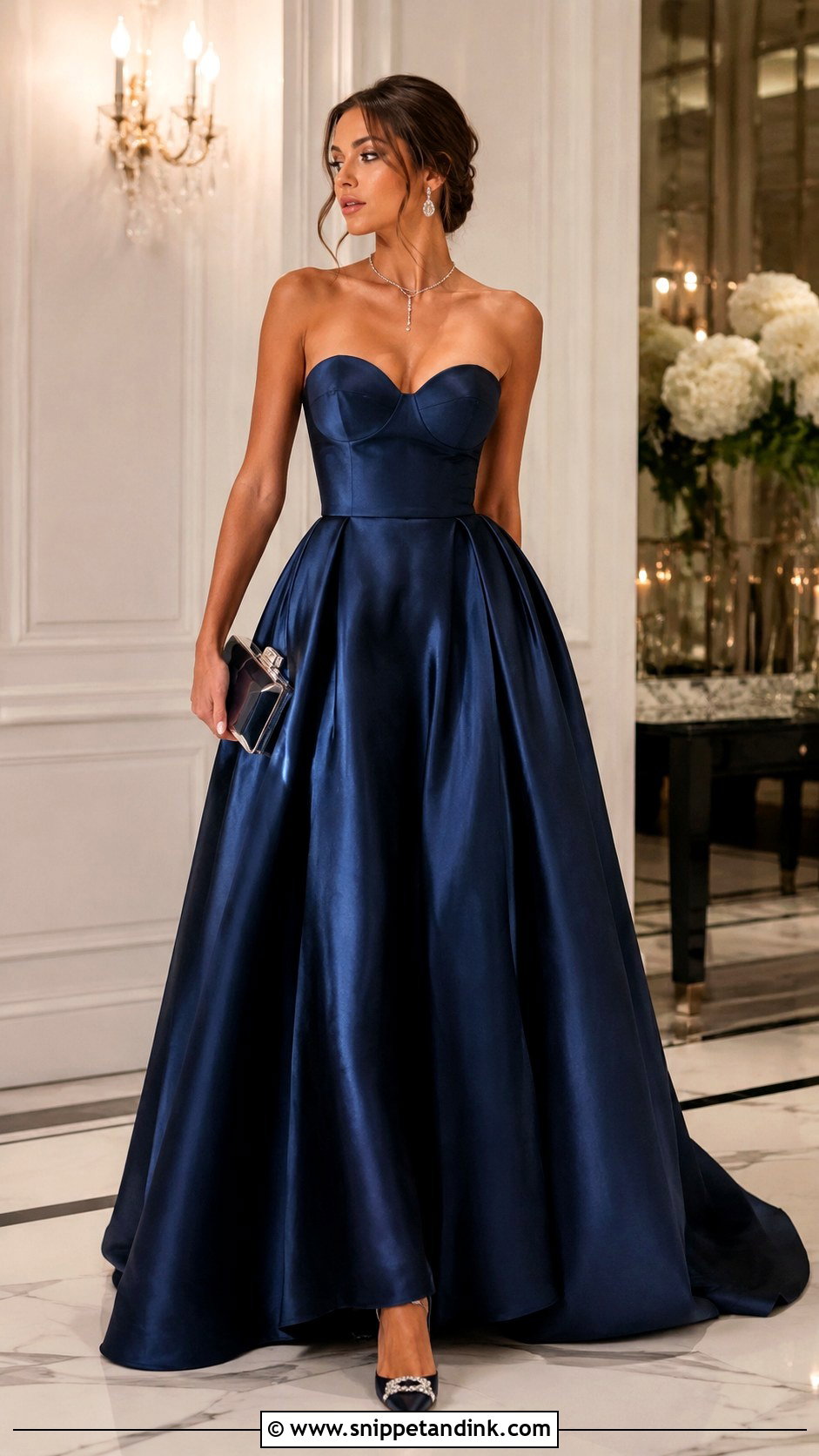
A strapless satin ball gown lives or dies on its bodice. I test the fit by having the bride sit, bend and dance a few steps; if the top edge gaps or slides, the boning or grip tape gets adjusted before anything else is discussed. A straight-across or sweetheart line both work. With so much open skin, choose statement earrings or a delicate necklace, not both, and finish with pointed heels, a structured clutch and smooth hair.
16. Corset Satin Ball Gown
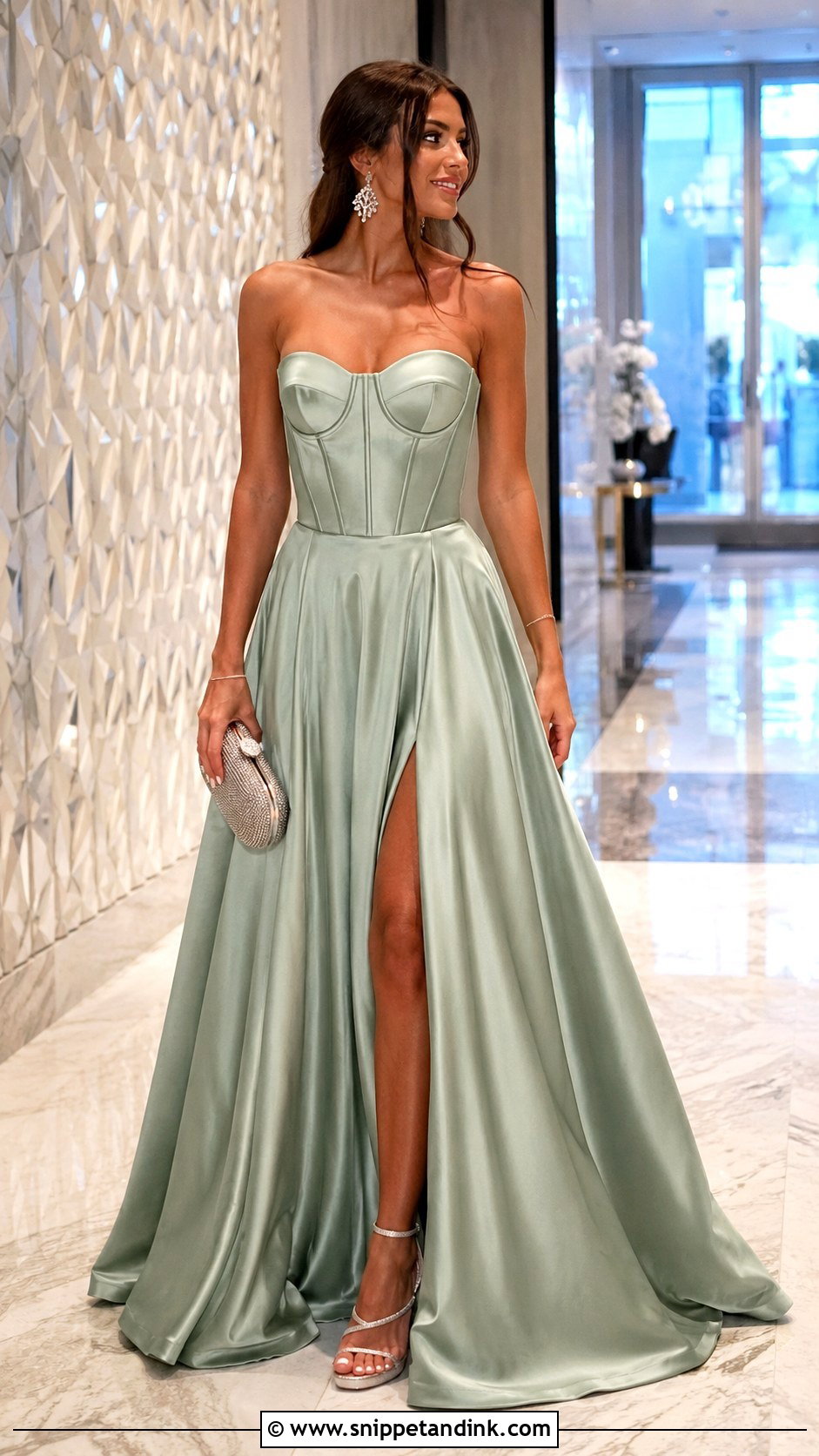
Corset gowns give you shape and a defined waist, but satin shows every boning channel, so decide early whether you want that structure visible or hidden under a smooth outer layer. With a full skirt, the effect is a strong hourglass. Drop earrings, a slim bracelet and elegant heels are enough, and plainer jewelry is better if the back laces up. Practise sitting and eating in it at the last fitting. A corset fitted while standing can feel very different by the time the speeches start.
17. Sweetheart Satin Ball Gown
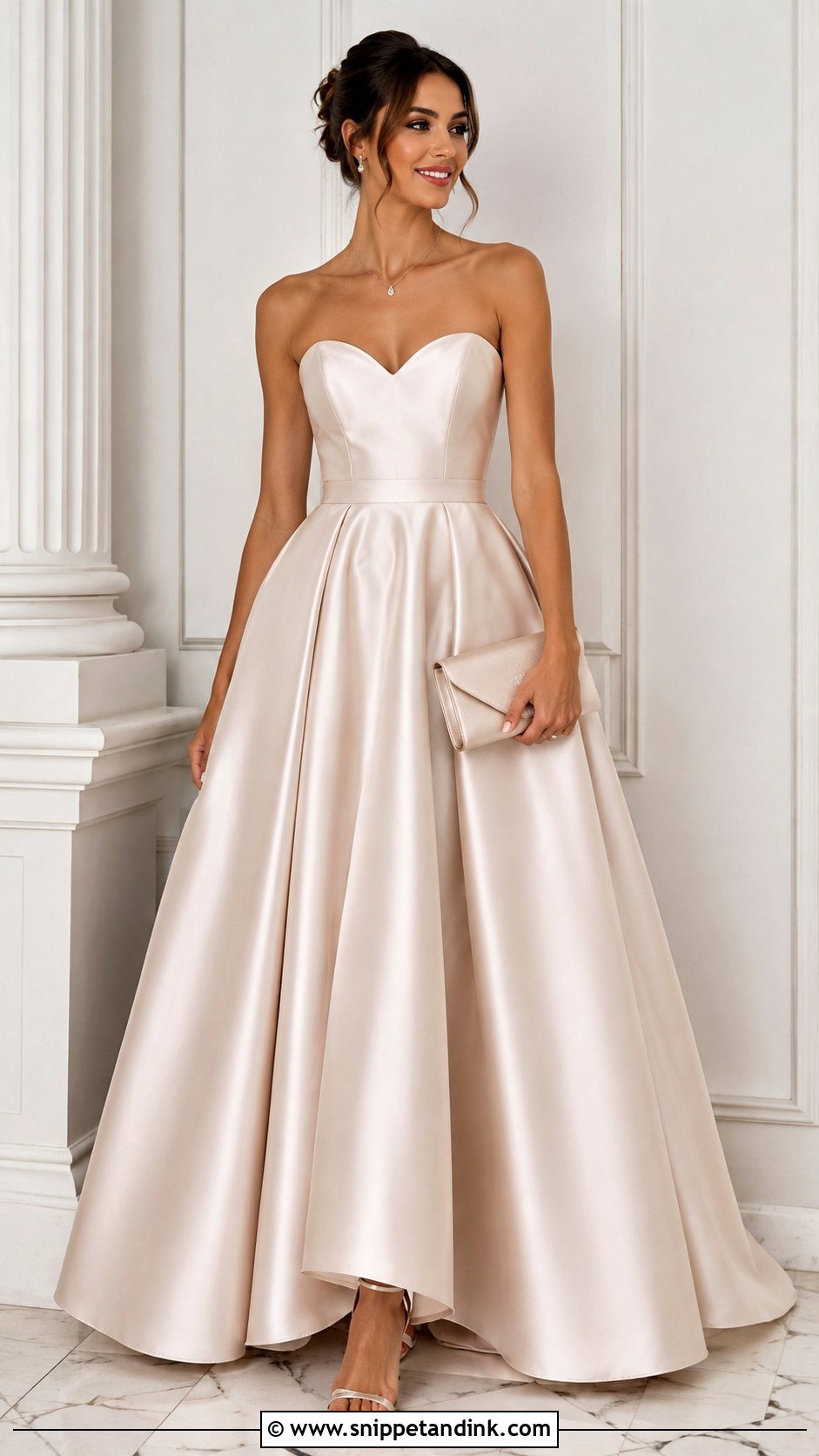
The dip of a sweetheart neckline breaks up a stiff satin bodice, which is why it suits so many different busts. It works best on a fitted bodice with the skirt starting at the natural waist. I keep the jewelry light, delicate earrings and a small pendant, with heeled sandals and a matching satin clutch. Loose waves frame the curve of the neckline.
18. Long Sleeve Satin Ball Gown
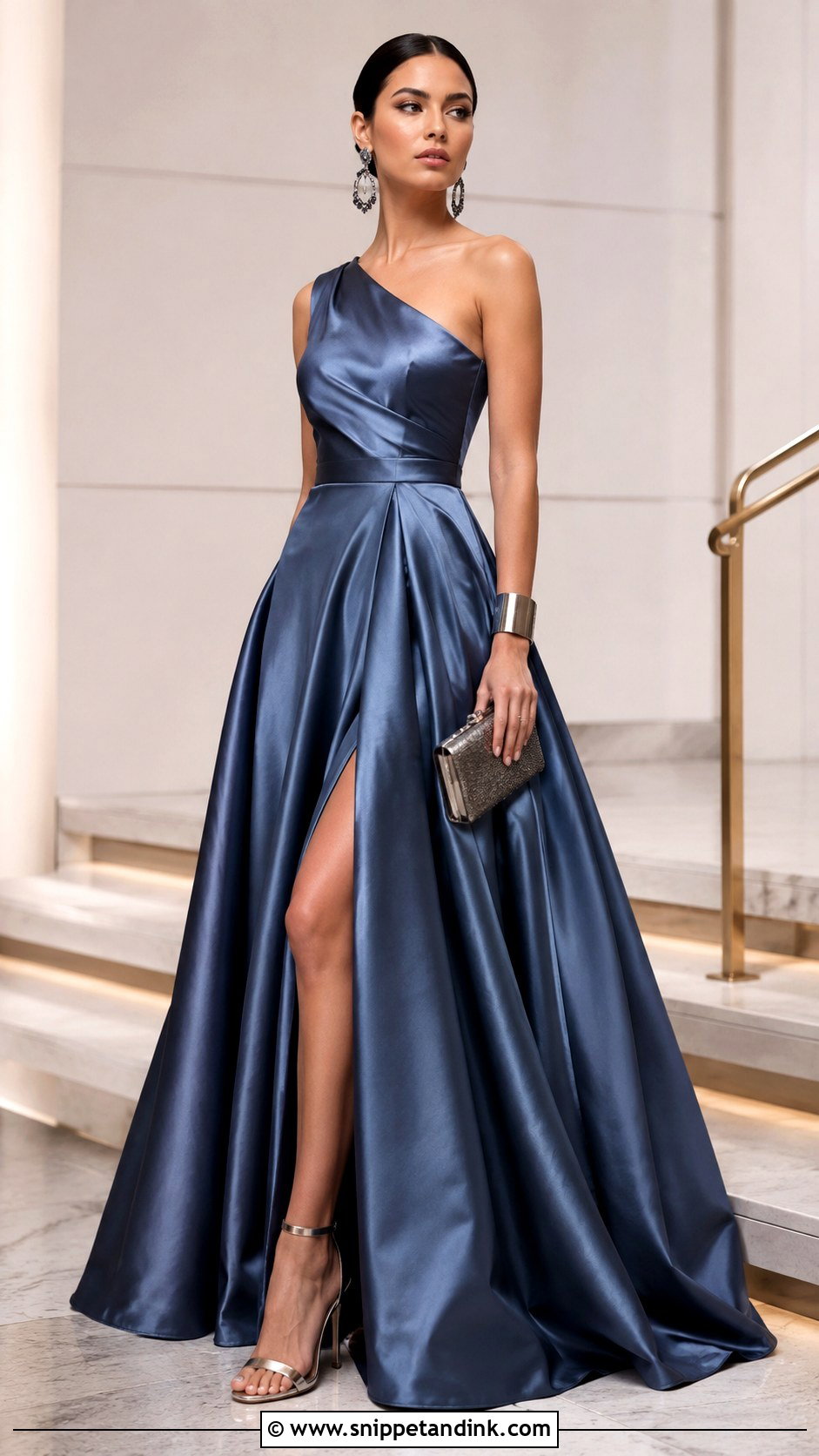
Long sleeves change how satin reads: the extra coverage calms the shine, which suits deeper colors like navy, black or burgundy. Sleeves can be fitted satin, sheer illusion, or lightly puffed. Fitted satin sleeves have no give at all, so I check the armhole by asking the bride to reach forward as if for a hug; a cramped armhole is what you notice first when wearing one for hours. Stud earrings, a polished clutch and closed-toe heels suit a cool season, with a low bun or sleek waves.
19. One Shoulder Satin Ball Gown
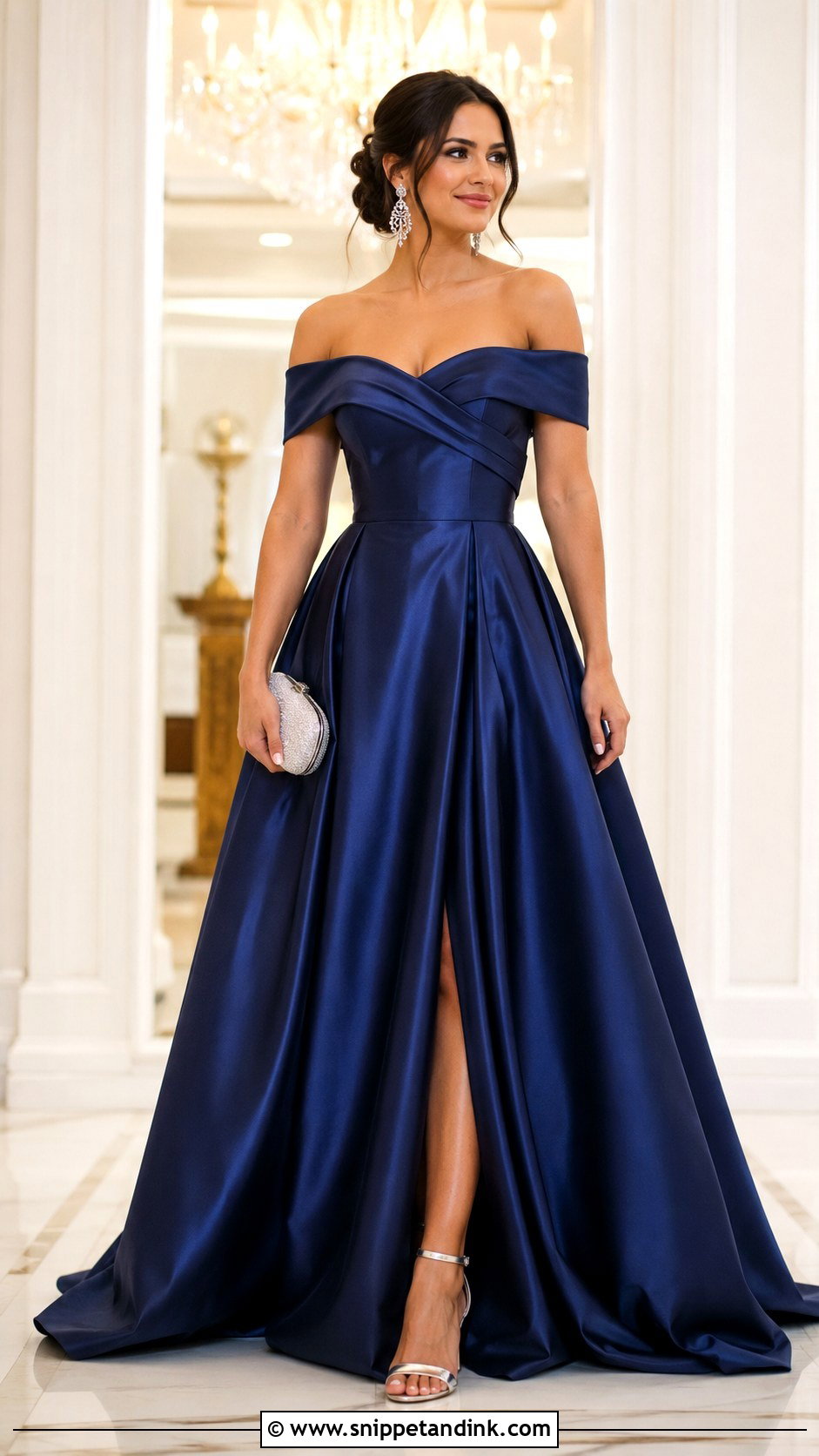
The asymmetry does the work, so keep the bodice smooth, the skirt full and the necklace off. Bold earrings or a cuff bracelet are enough, with metallic heels and a simple clutch. A single strap carries more of the bodice’s weight than you’d think, and without a hidden elastic or silicone grip inside, you’ll be hitching it up all evening. A side part or low bun follows the diagonal line nicely.


20. Pleated Satin Ball Gown
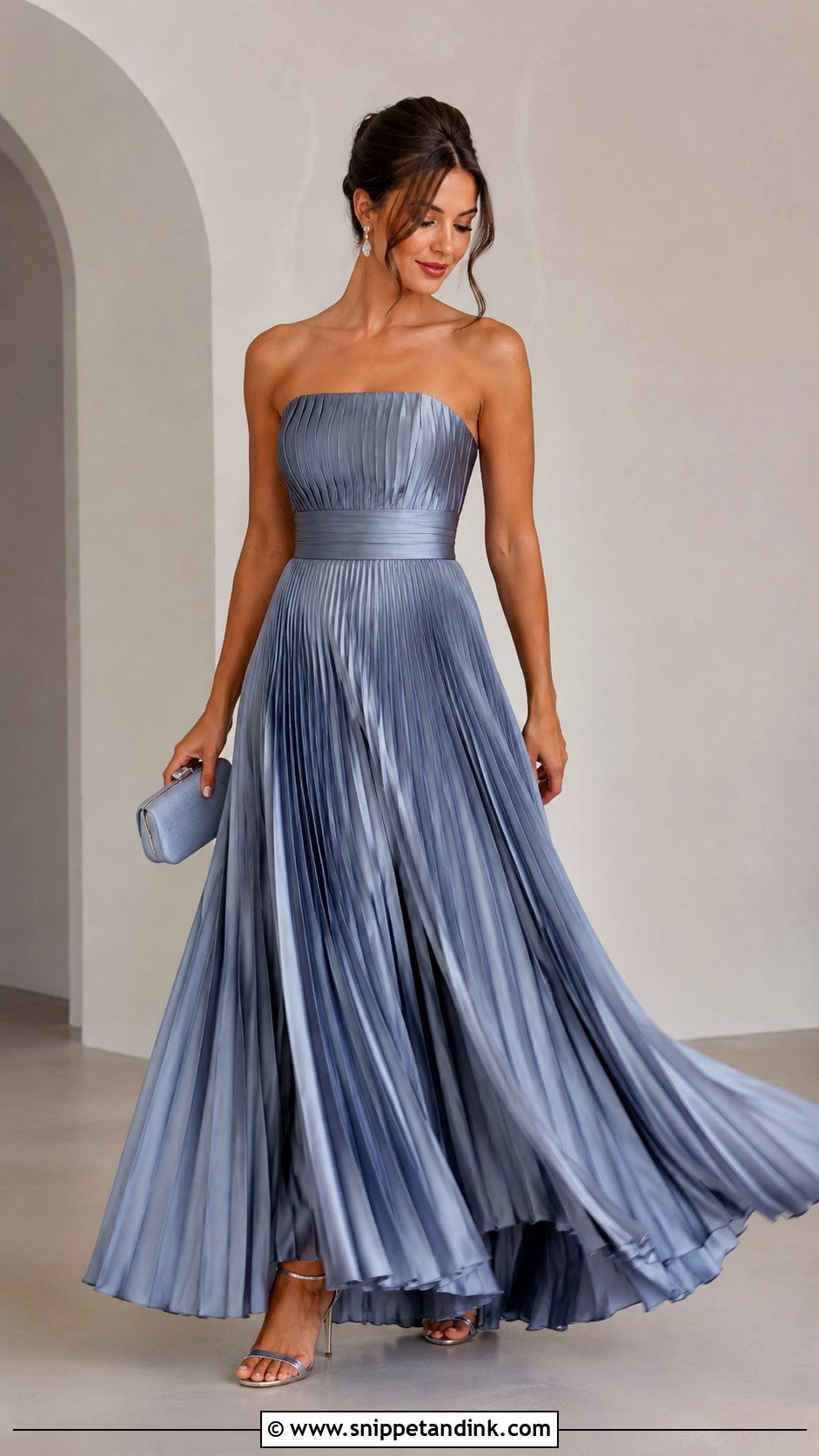
Pleats give satin movement and hide a lot. A pleated bodice forgives small fit changes, and a pleated skirt swings when you walk, which is why I like it for a dance-heavy ballroom. Stick to a solid color so it doesn’t look busy, then add simple earrings, heeled sandals and a clutch that matches the gown or the jewelry. Pressed pleats soften after hours of sitting. If you want them crisp in late photos, have them steamed, never ironed, before you dress.
21. Bow Satin Ball Gown
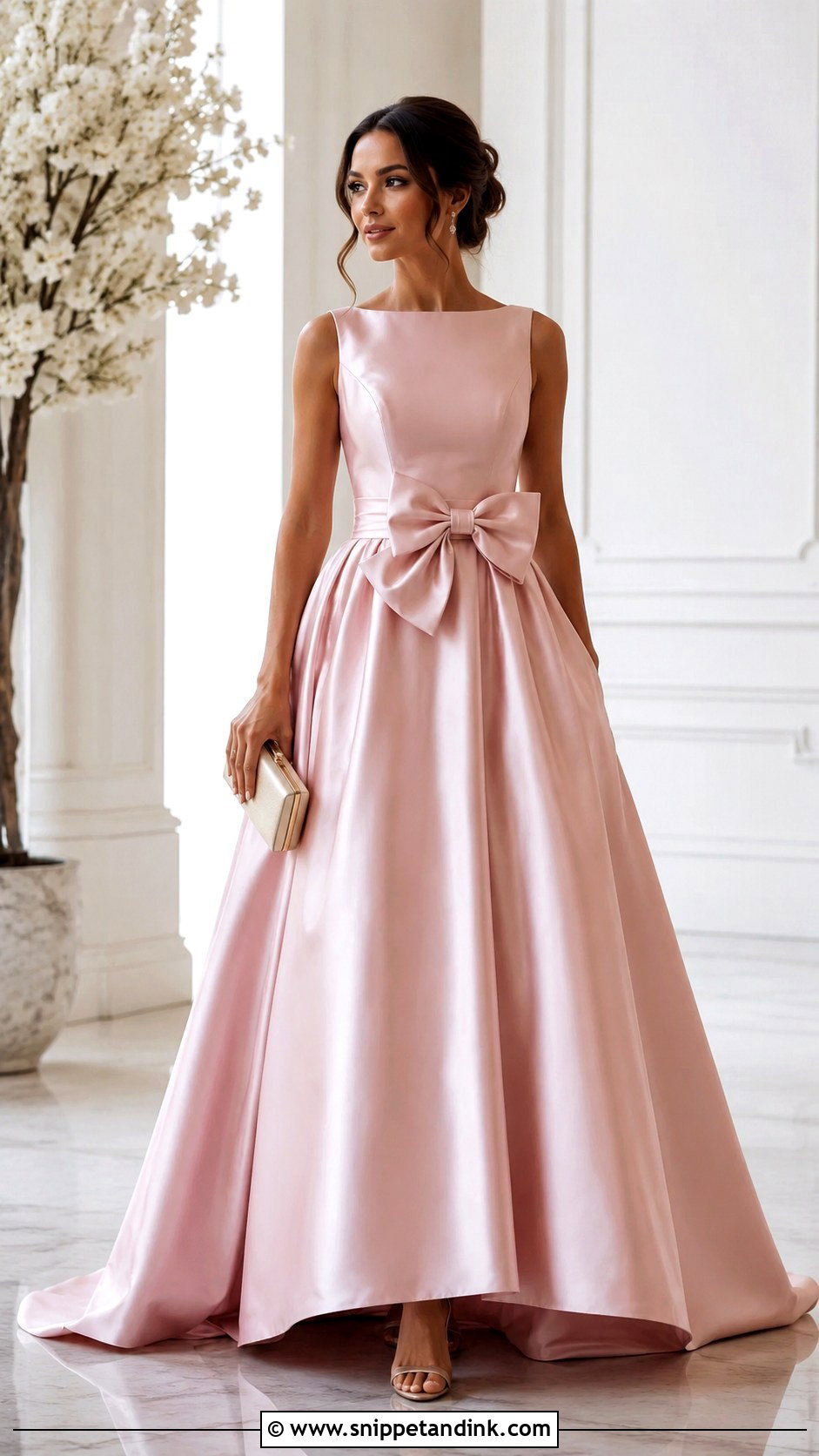
A bow either makes the gown or cheapens it, and the difference is placement and scale. A back bow suits a bride who will be photographed walking away; a waist bow helps define a straighter figure; a shoulder bow pulls the eye up toward the face. Large back bows get crushed every time you sit, so ask whether yours can be detachable for the reception. Skip heavy necklaces and let small earrings, simple heels and sleek hair keep a very full skirt grown-up.
22. High Low Satin Ball Gown
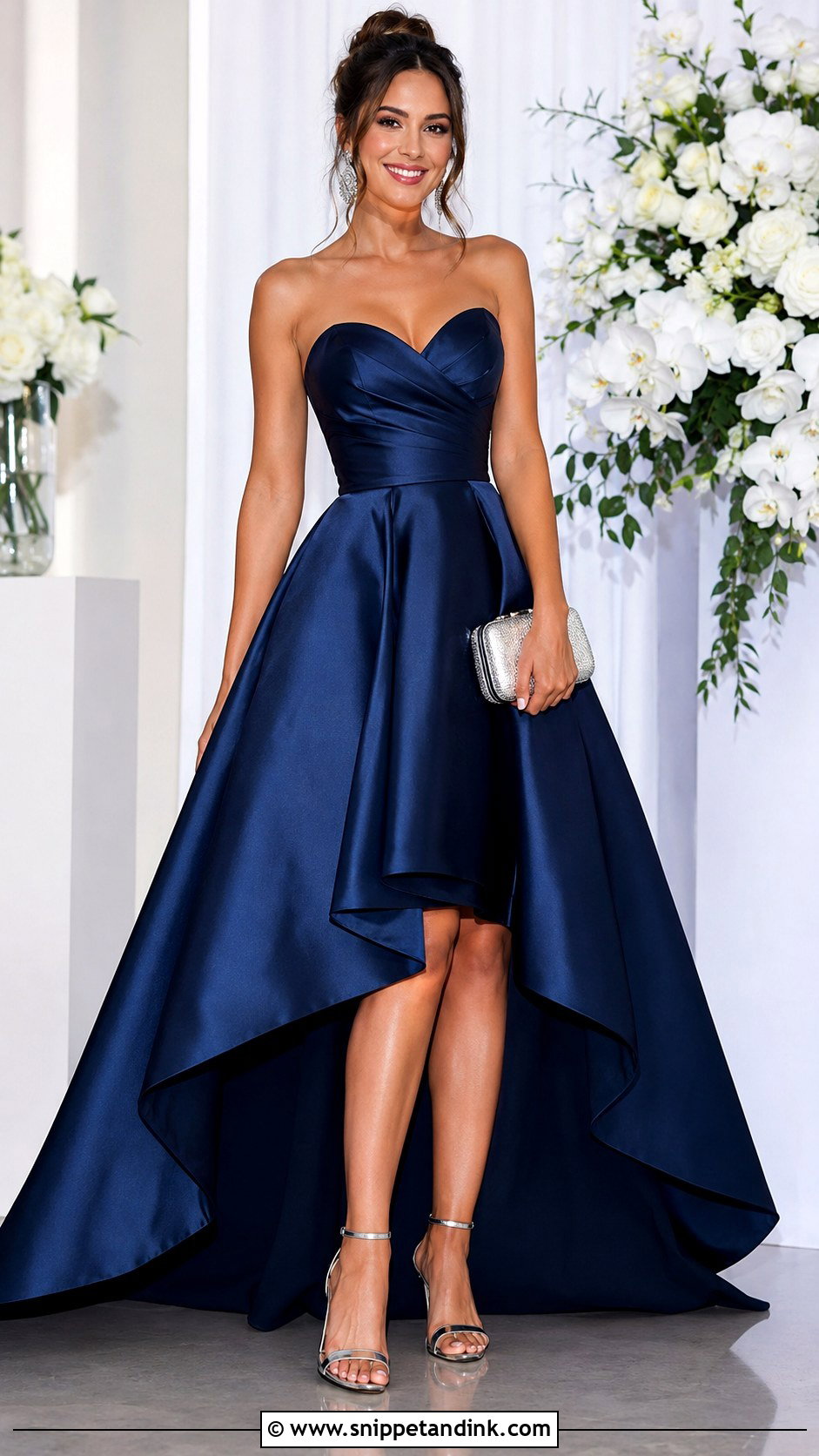
This one shows your shoes, so choose them as part of the gown: metallic ankle-strap sandals or pointed satin pumps. The short front gives movement and the long back keeps it formal. I’m cautious with high-low hems in satin because the edge is so visible. A firm hem finished with horsehair braid holds a clean curve, while a limp one looks unfinished. Keep the bodice structured, add statement earrings and a compact clutch, and you’ll find it very easy to dance in.
23. Floral Satin Ball Gown
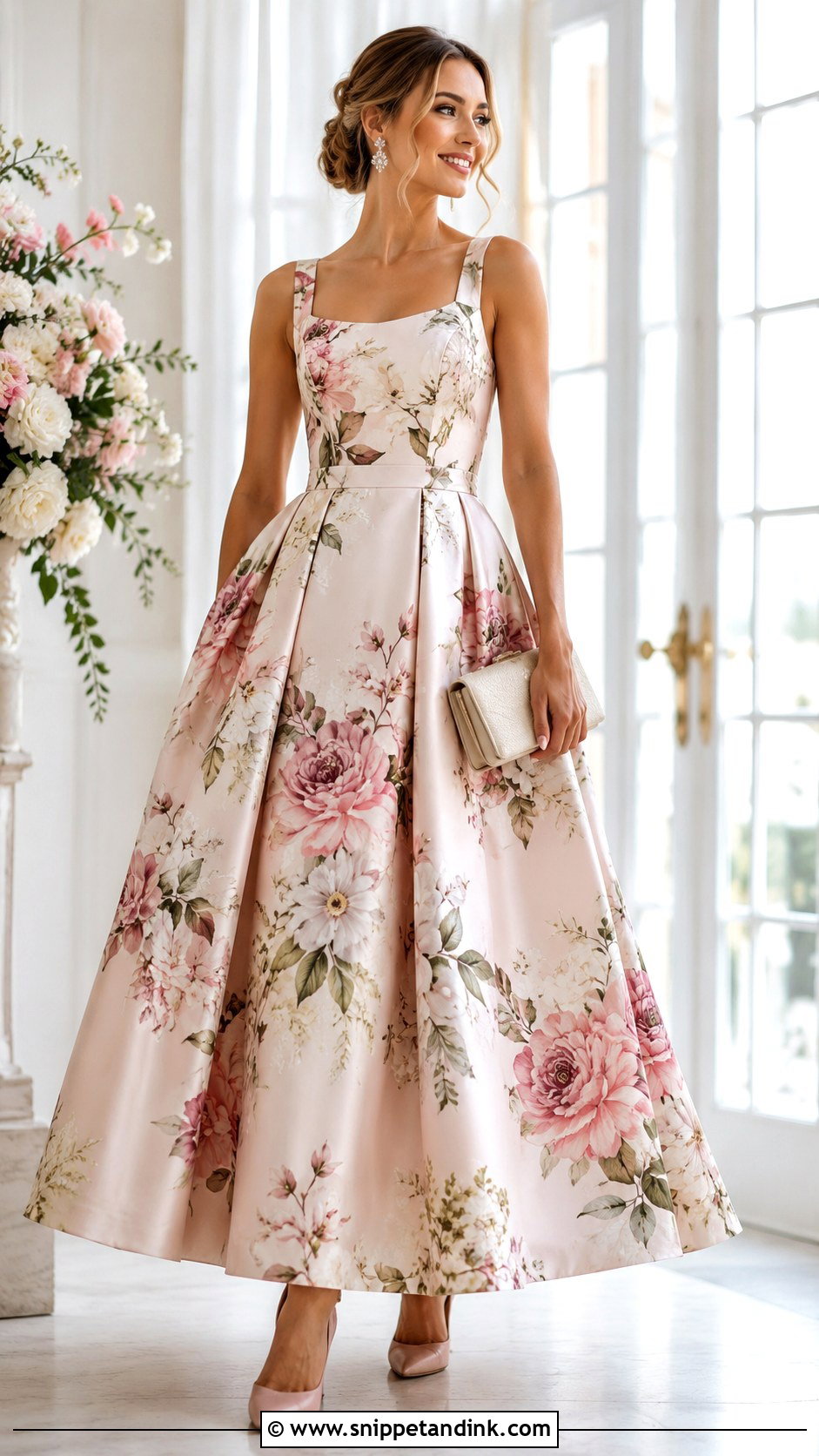
Printed satin is harder to find than solid, and scale is everything: large blooms look formal, tiny prints look like a sundress. A fitted bodice and a full skirt keep it polished. I pull accessories from just one color in the print, such as blush heels or a cream clutch, rather than trying to match several. Hair stays soft and simple. It suits a spring garden reception better than almost anything else here.
24. Minimalist Satin Ball Gown
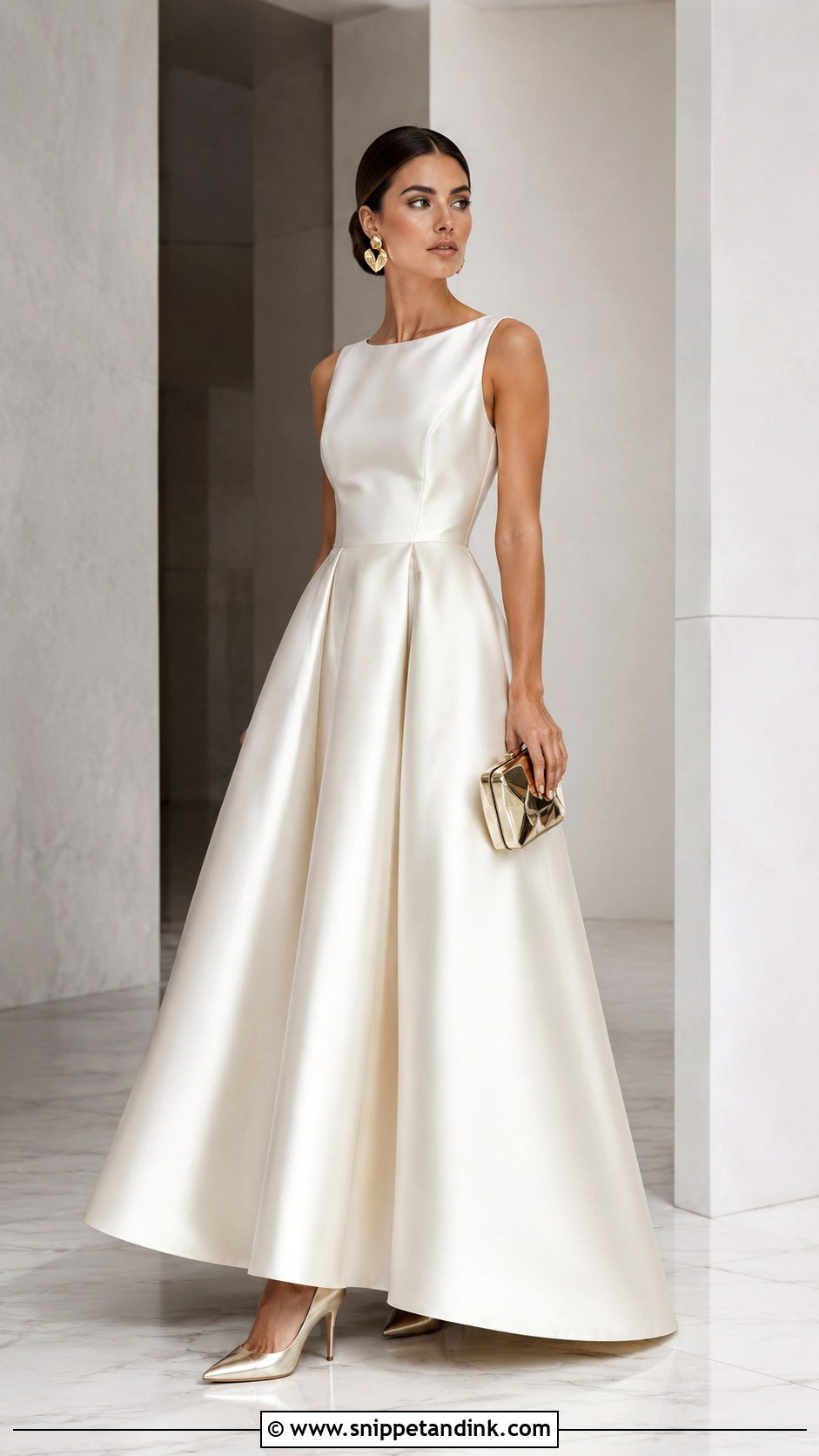
With no beading, nothing hides a poor fit, so a minimalist satin gown is where I spend the most time on tailoring. A clean neckline, smooth bodice and plain full skirt rely entirely on fabric weight, and a heavy duchess satin holds that skirt far better than a thin one. Neutrals like black, white, champagne, navy and soft grey suit it best. Sculptural earrings, sleek heels and a modern clutch are the only extras I’d add, with polished hair and fresh makeup.
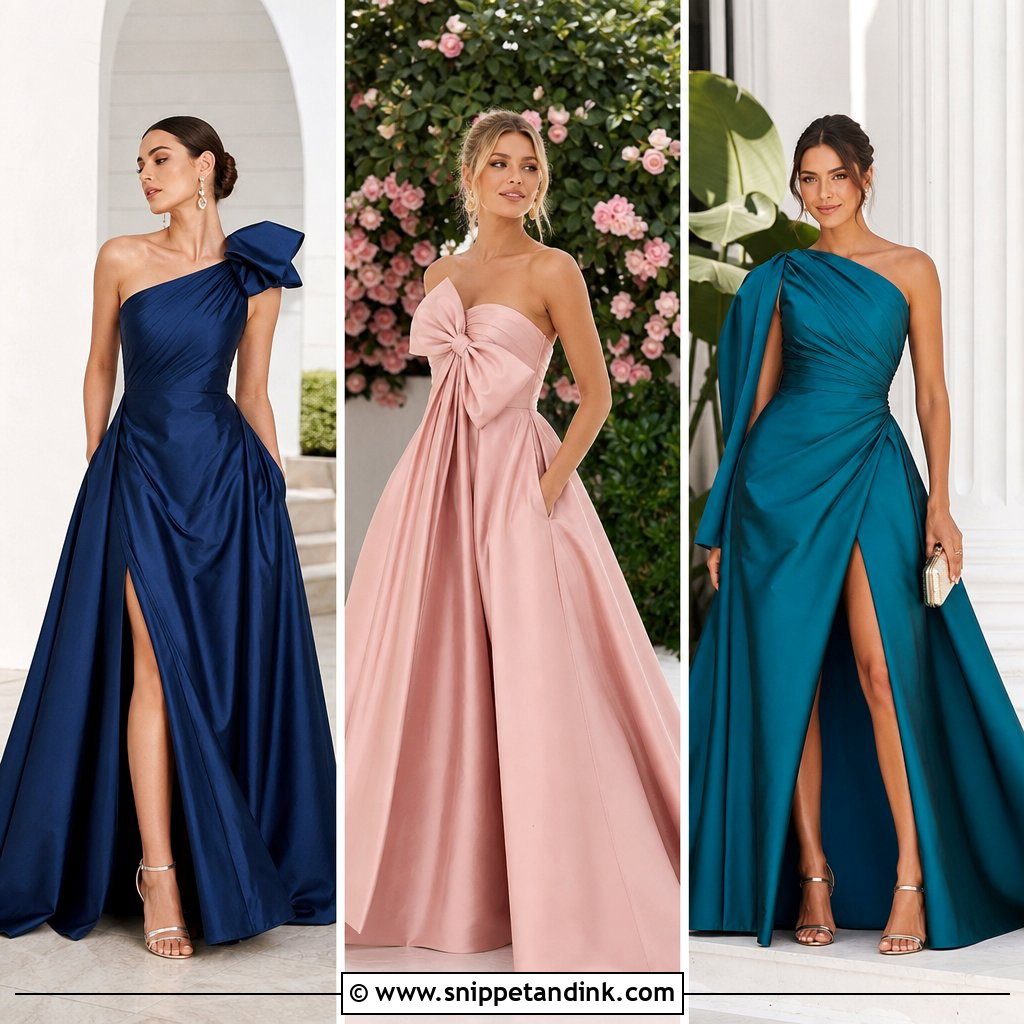

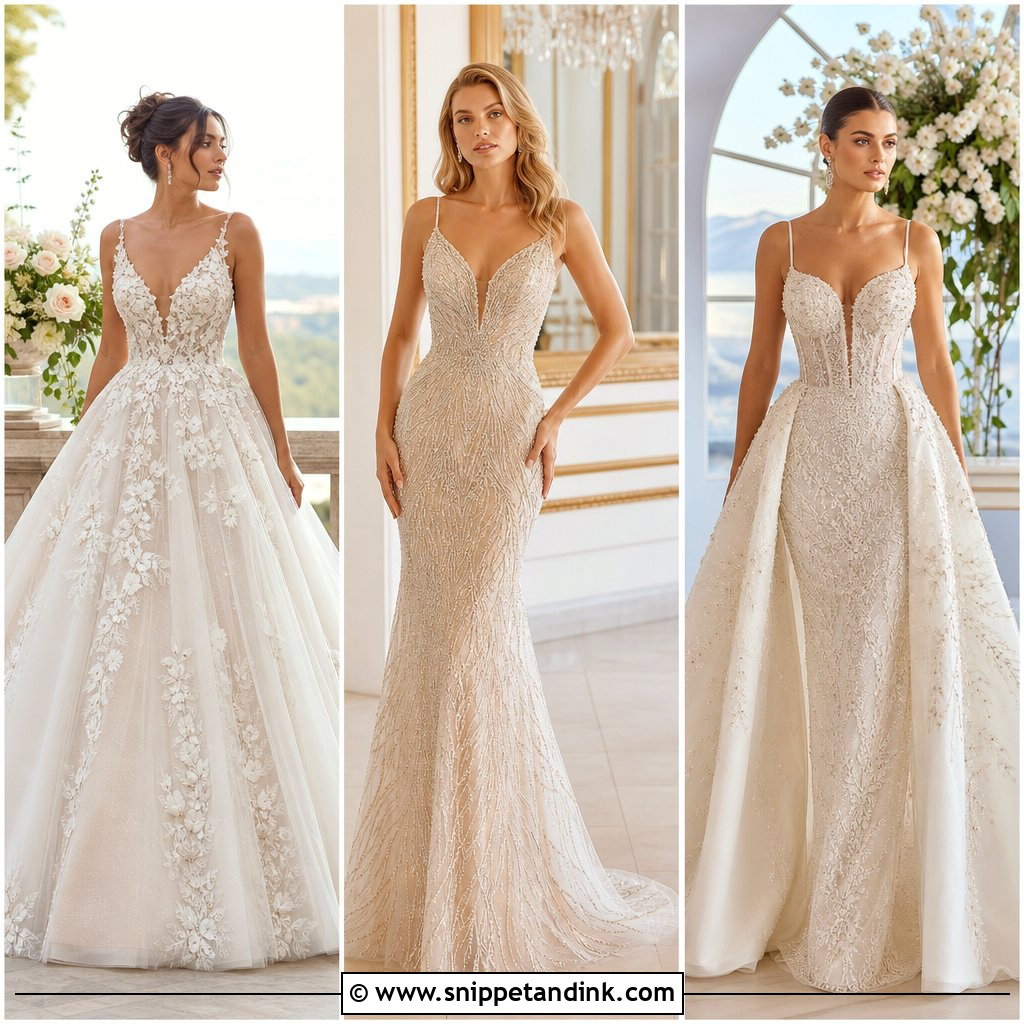

25. Satin Ball Gown With Pockets
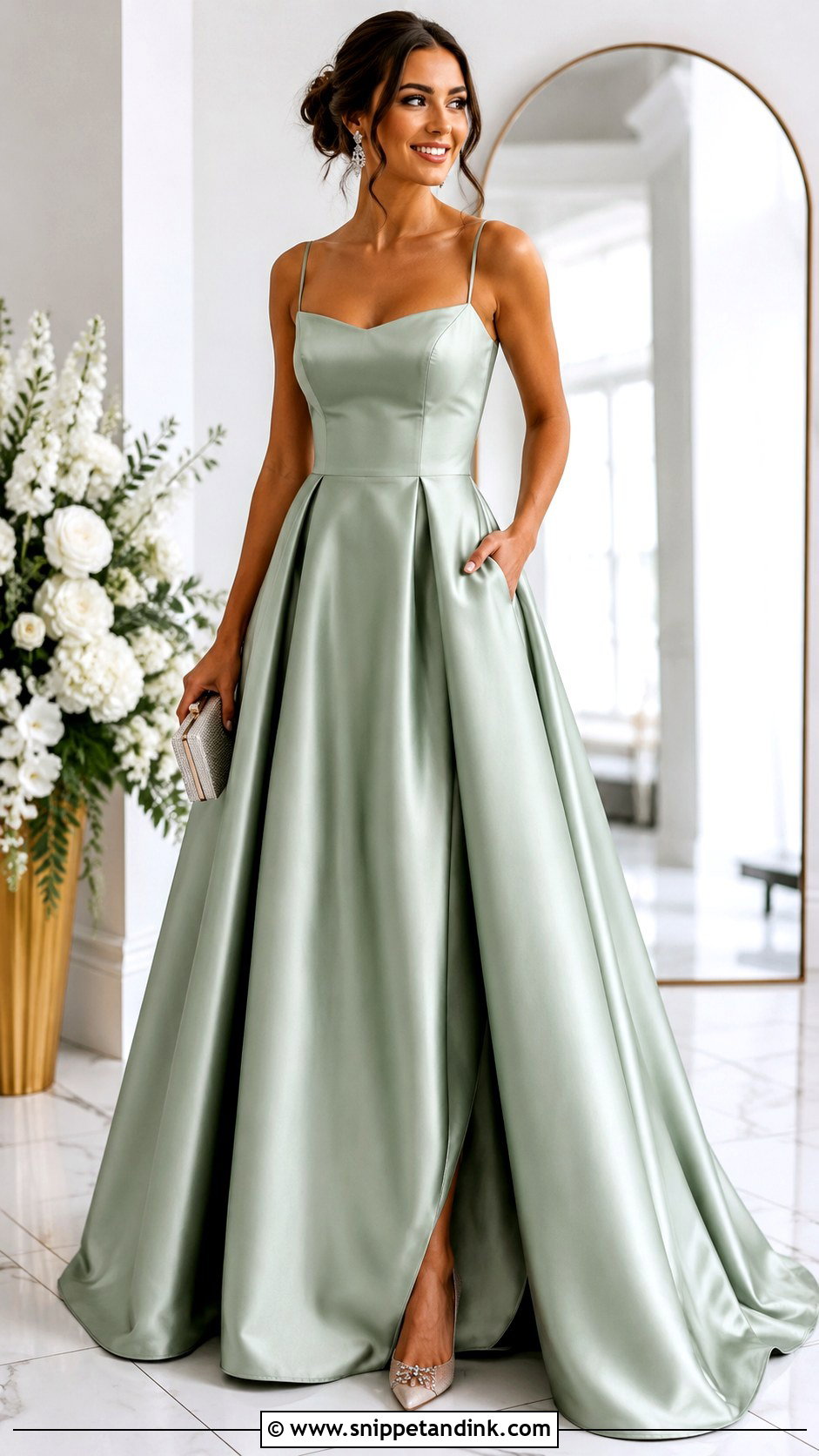
Pockets hidden in the side seams give your hands somewhere to go in photos and hold a lipstick and a tissue, which is why brides tend to love them by mid-evening. In satin, though, anything heavy drags the seam and breaks the line of the skirt, so keep the load light. A structured bodice and full skirt let the pockets disappear into the design. I still pair it with earrings, heels and a clutch so it reads as formal.
What Satin Does Between the Aisle and the Last Dance
Satin creases where you sit, and nothing stops that entirely. Fold lines across the lap after a seated dinner are normal. Heavier satins recover better than thin ones, and a full petticoat lifts the skirt off your lap so less of it gets crushed in the first place.
On the day
- Have the gown steamed on the morning, never pressed with a direct iron, which can leave shiny marks on satin.
- Lift the back of the skirt as you sit so you’re sitting on the lining rather than crushing the outer fabric.
- Blot spills with a clean white cloth. Rubbing water into silk satin tends to leave a ring that’s harder to remove than the spill.
- Practise the bustle with whoever will fasten it. A satin train is heavy, and loose hooks give way on the dance floor.
Afterwards
Get the gown to a cleaner who handles bridal satin within a few weeks. Sugary spills like champagne can be invisible at first and turn brown as they oxidise. At home, store it in a breathable cotton bag rather than plastic, and pad the folds with acid-free tissue so the creases don’t set into permanent lines.
Satin Does Most of the Work, So Let It
Satin gives you shine and structure in one fabric, so the decisions that really matter are color, neckline and how much you want to move. Black, navy, emerald, burgundy and champagne suit an evening wedding; blush, lavender, sage and florals feel softer and lighter. Corsets, off-shoulder lines, pleats, bows and pockets make the gown yours. Keep the jewelry restrained, and pick a clutch that supports the dress instead of competing with it.
You'll Like These Ideas:











Leave a Reply