
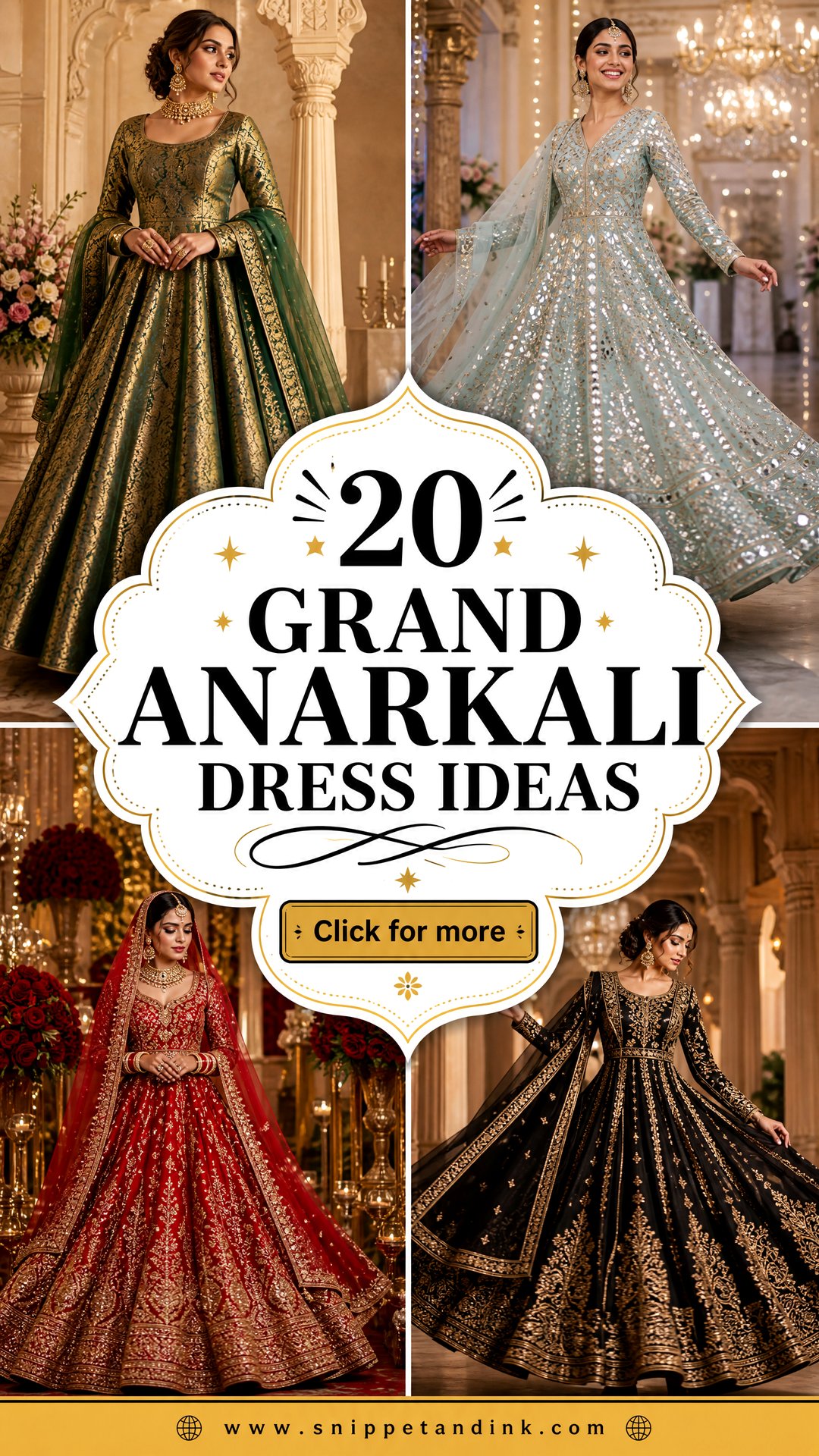
A grand Anarkali earns the word from its construction: a fitted bodice, a waist seam at exactly the right height, and a skirt cut from enough panels to swing when you turn. Get those three right and the dress looks regal at a wedding, a reception or a formal family dinner, and it’s still comfortable after hours of standing. Right now I’m seeing a lot of floor-length hems, jewel tones, lighter layers, mirror work, heritage embroidery and newer touches like capes and jackets. Accessories should support the dress, not fight it: one pair of statement earrings, embroidered shoes, a neat clutch and a dupatta you’ve actually practised draping. Red and gold or soft pastels, the outfits below cover both, each styled from head to toe.
Kalis, Can-Can and Where the Hem Should Stop
Most of what makes an Anarkali look grand happens at the fitting, not in the shop. When I take a client through a custom or altered piece, these are the three things I settle first.
The waist seam
It should sit at or just above your natural waist. Too low and the flare starts at the hip, which makes the body look longer and the legs shorter. Too high and it tips into maternity wear. Lift your arms at the fitting; if the seam rides up more than a finger’s width, the bodice needs more room through the ribs.
Panels and support
More kalis give a rounder, more even flare. A light can-can or a layer of soft net between lining and shell adds volume, but it also adds heat and stiffness, so I only use it on silk or brocade that would otherwise hang flat. Chiffon and georgette rarely need it.
Hem and shoes
Decide the shoes before the hem is cut and bring them to every fitting. For a floor-length Anarkali I aim for the hem to clear the floor by a few millimetres in those shoes. If you’ll change into flats for dancing, choose a slightly lower heel for the whole evening instead, because a hem cannot be right for two heights.
1. Floor Length Embroidered Anarkali Dress
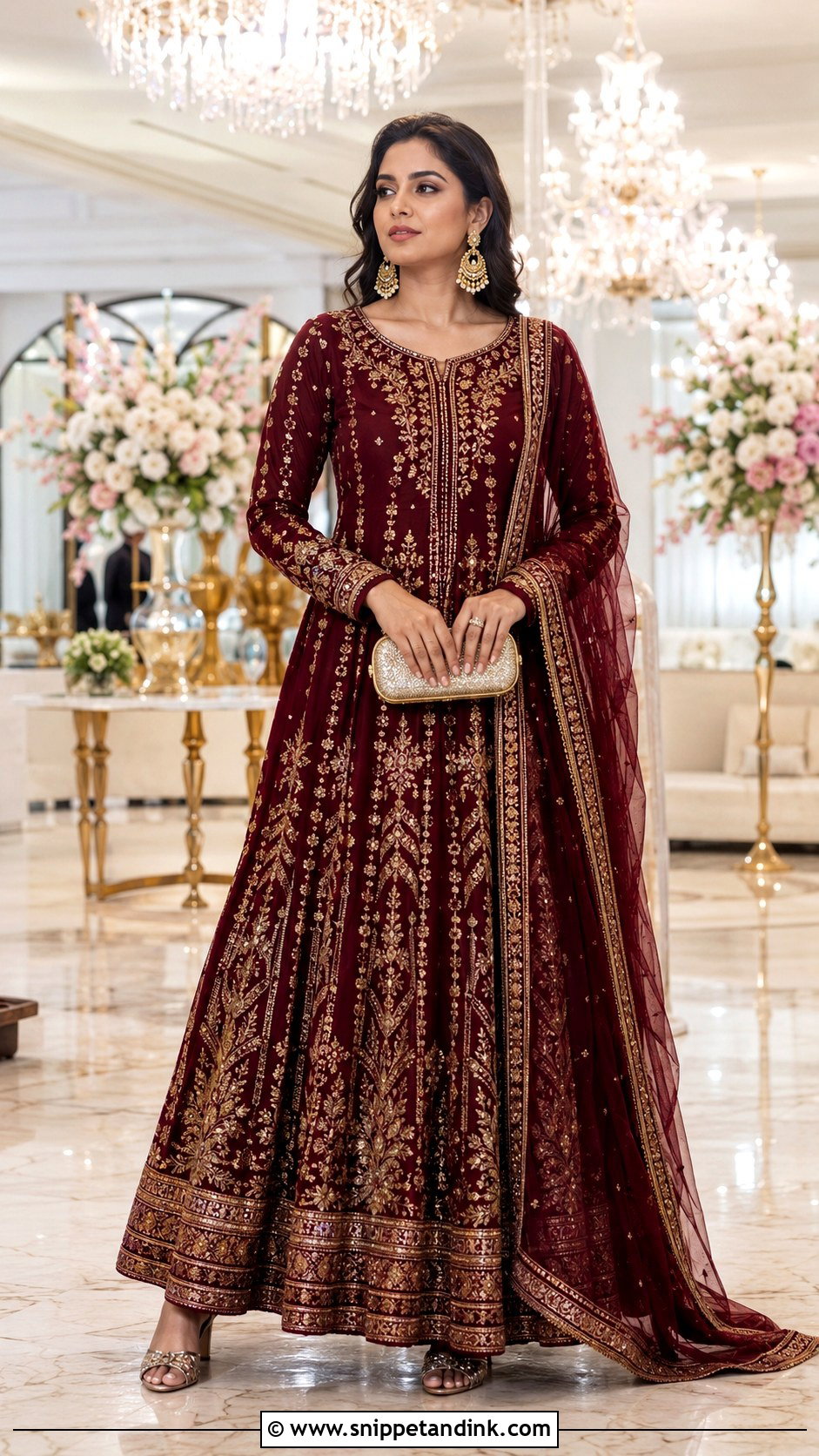
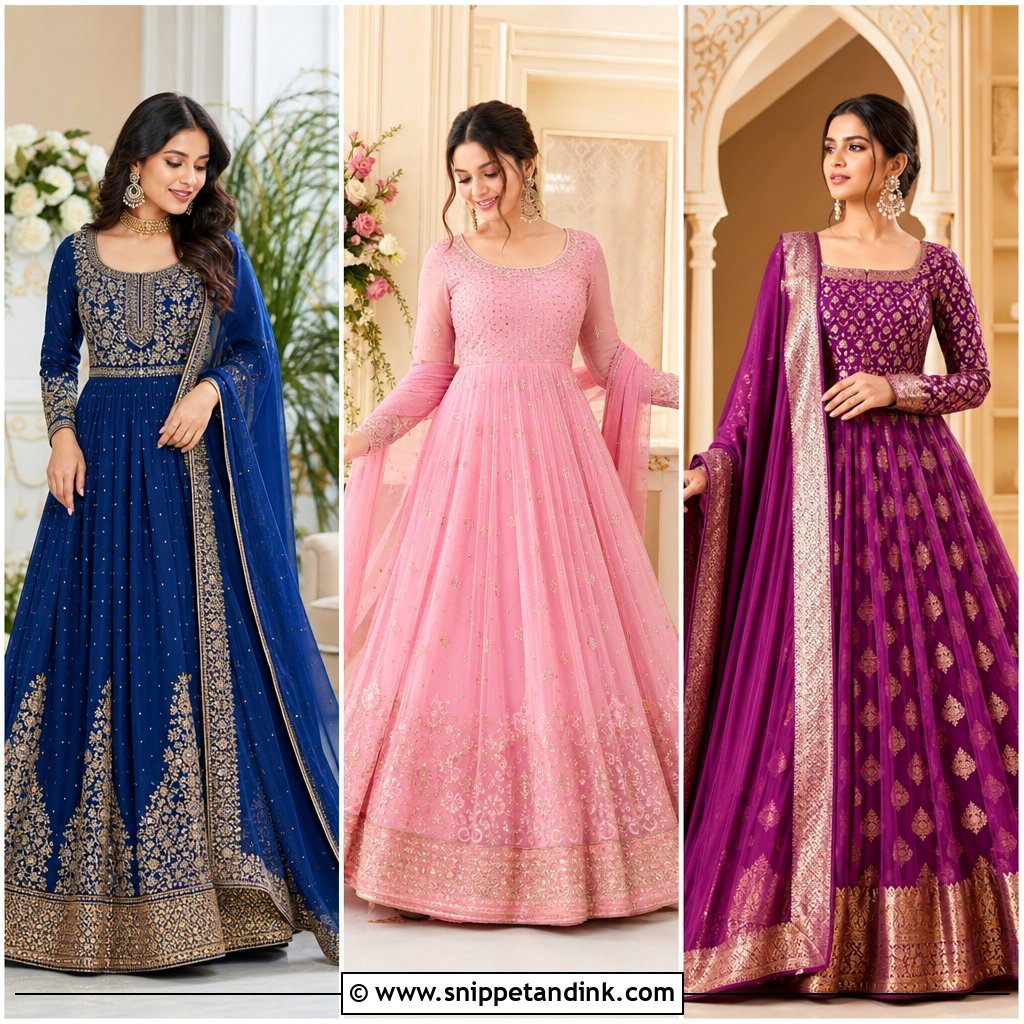
A floor-length embroidered Anarkali is the most formal shape on this list and the easiest to get right. I’d go for deep maroon, navy or emerald with gold threadwork concentrated at the neckline, bodice and hem, and a moderately wide flare you can still walk through a crowded hall in. A sheer, lightly bordered dupatta over one shoulder, gold chandelier earrings, a metallic clutch and embroidered block heels. Skip the necklace: the neckline embroidery is already doing that job, and a heavy set on top just hides it. A sleek low bun and softly defined makeup.
2. Velvet Anarkali Dress With Gold Dupatta
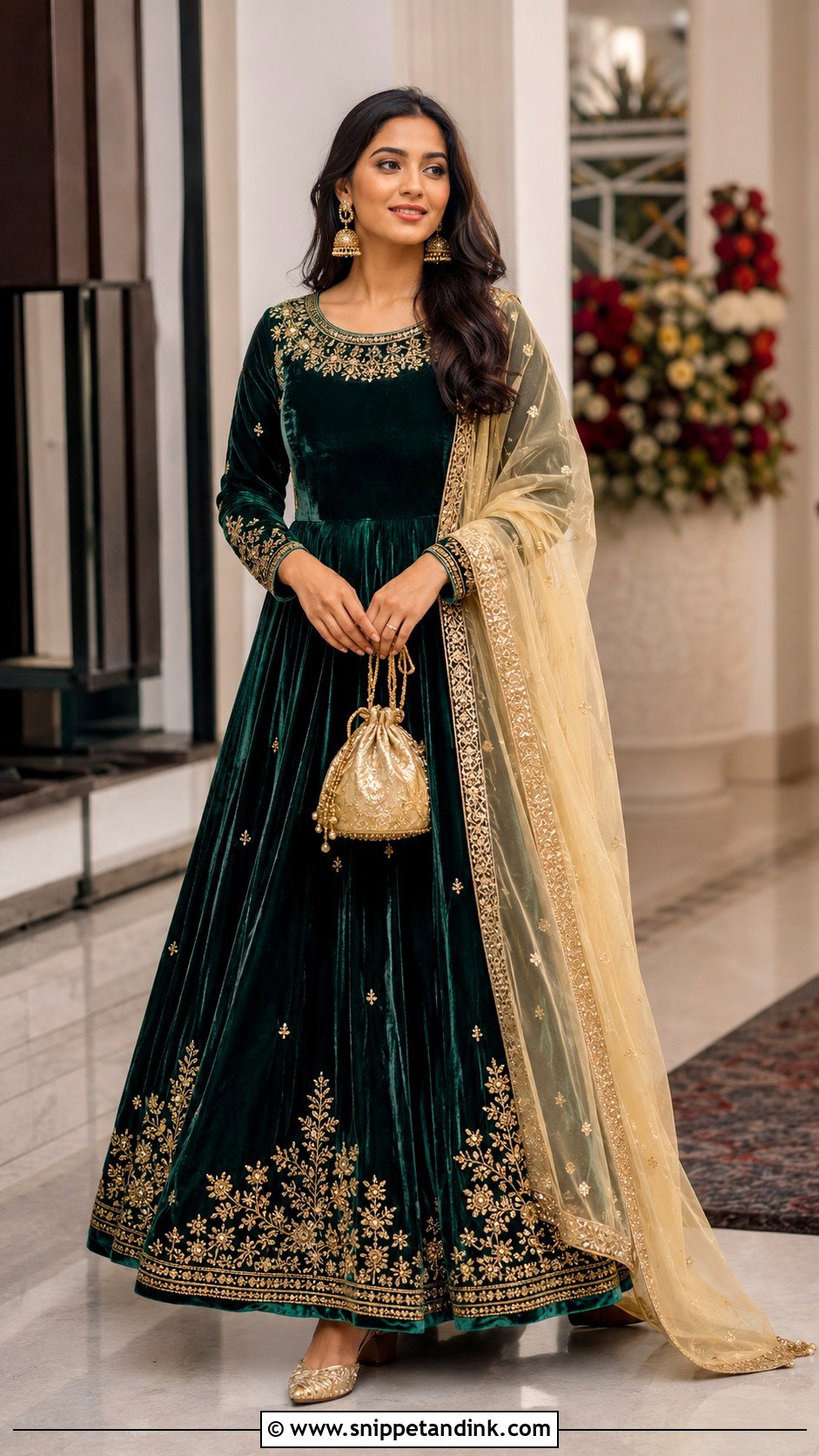
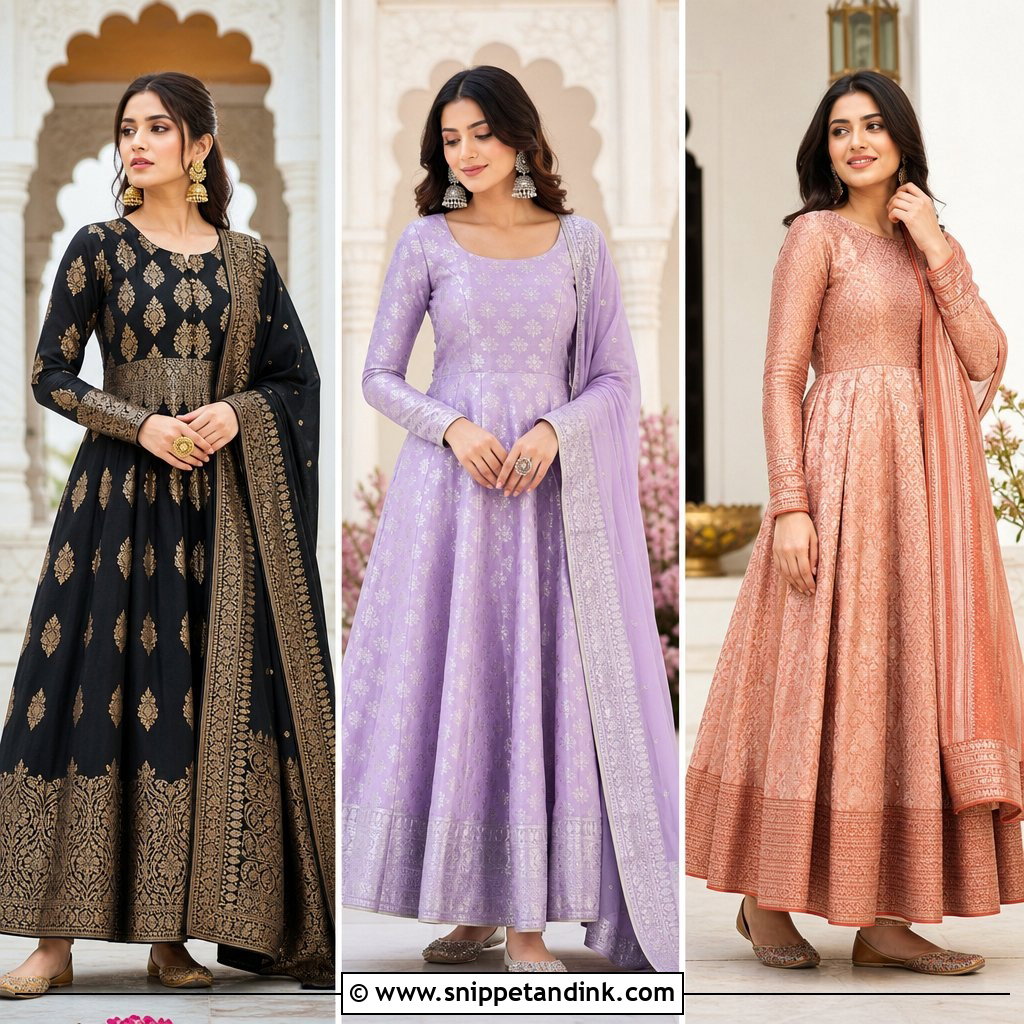
Velvet absorbs light where silk reflects it, so under evening lights a wine, midnight blue or forest green velvet Anarkali looks deep and rich. It’s warm, which makes it a cool-weather dress only. Ask for a fitted top, a controlled floor-length flare and fine metallic embroidery; velvet is heavy, and dense work on top makes the skirt drag. A gold tissue or organza dupatta lifts the dark fabric. Full sleeves suit it. Jhumkas, a small potli, gold heels and a centre-parted bun with a rich lip. Go easy on bangles, which catch and rub the pile at the cuff.
3. Silk Brocade Anarkali Dress
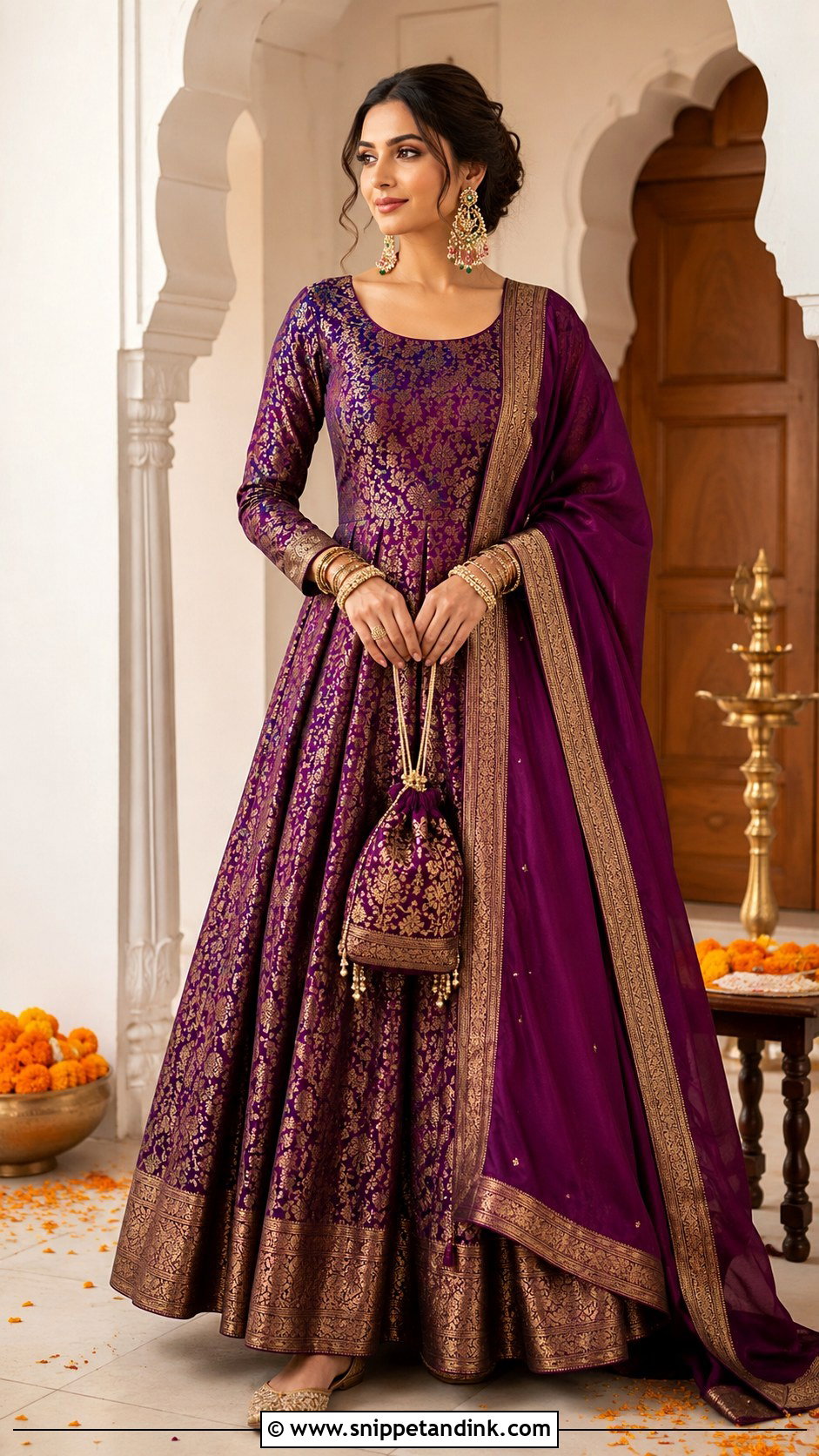
Brocade has the pattern woven into it, so it looks grand without any surface work at all. Choose a jewel tone with traditional gold motifs and a broad, structured flare. On a busy weave I like a plain silk yoke at the top, which stops the pattern swallowing a smaller frame, and a square or soft round neckline. A solid dupatta in one of the weave’s colours, kundan earrings, stacked bangles and an embroidered potli. Gold juttis are far easier than heels under a long brocade hem. Finish with a polished bun and small hair accessories. One fitting note: brocade has no stretch, so the bodice needs ease to sit and eat in.
4. Mirror Work Anarkali Dress
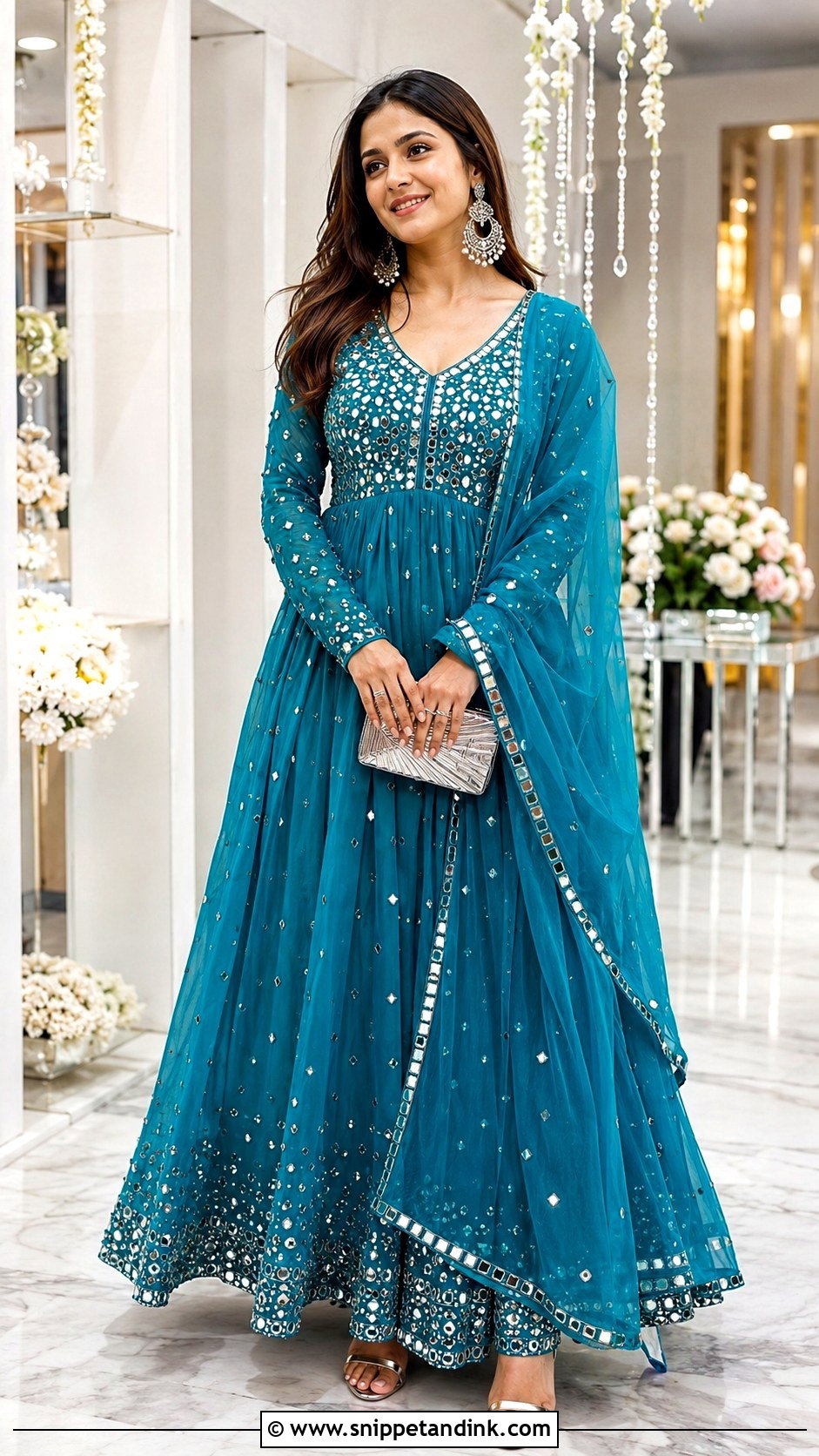
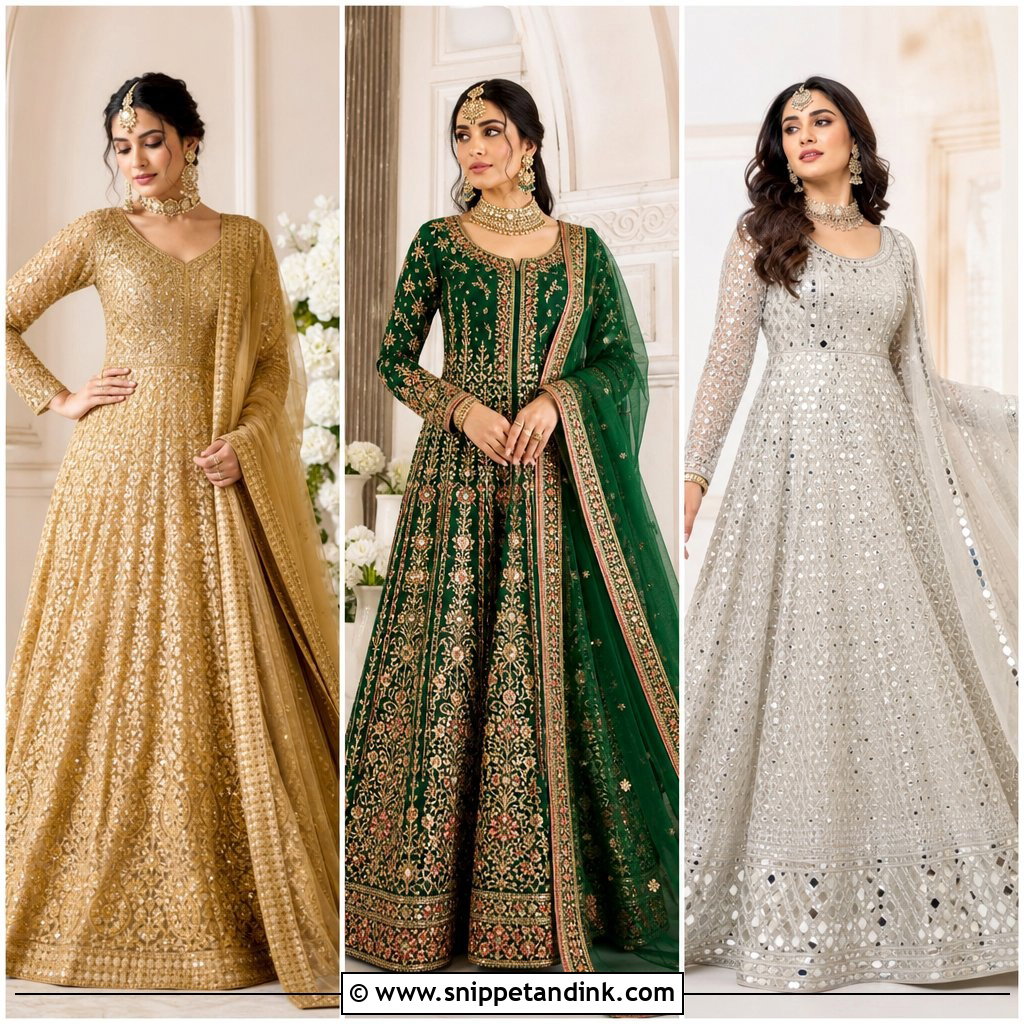
Mirror work is made for a sangeet, where the dress spends the night moving under coloured lights. Teal, fuchsia, cobalt or deep purple all suit an Anarkali with mirror work spread evenly over the bodice and lower panels. A georgette base keeps the flare fluid despite the weight of the glass. The catch: mirrors on the inner arm and side seams rub and scratch over a long evening, so I check there’s lining behind them. A sheer dupatta with a mirror border, silver-toned earrings, metallic sandals and a plain hard-case clutch. Smooth hair and luminous skin rather than glitter.
5. Zardozi Anarkali Dress
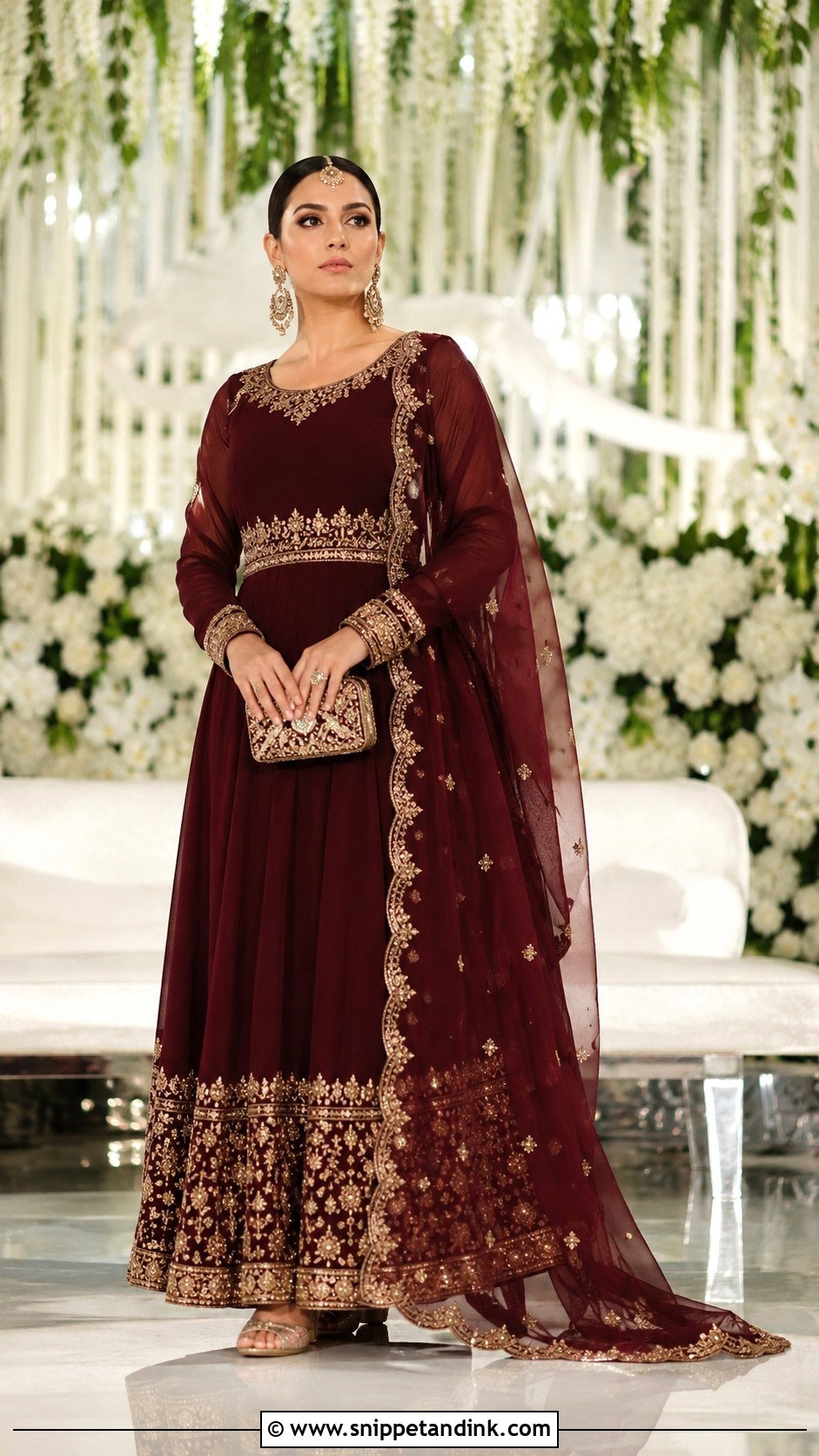
Zardozi is raised metallic embroidery worked by hand, and it adds real weight. On a zardozi Anarkali in burgundy, plum or antique gold, I’d want it placed to frame the neckline, waist, cuffs and hem rather than covering everything. That placement defines the shape and keeps the dress wearable for a whole event. A net dupatta with a scalloped border, antique-finish earrings and a small embroidered clutch. Closed juttis or steady block heels. A smooth bun shows the neckline. Keep makeup controlled and the wrists nearly bare, since zardozi snags on bracelets.
6. Sequin Anarkali Dress With Churidar
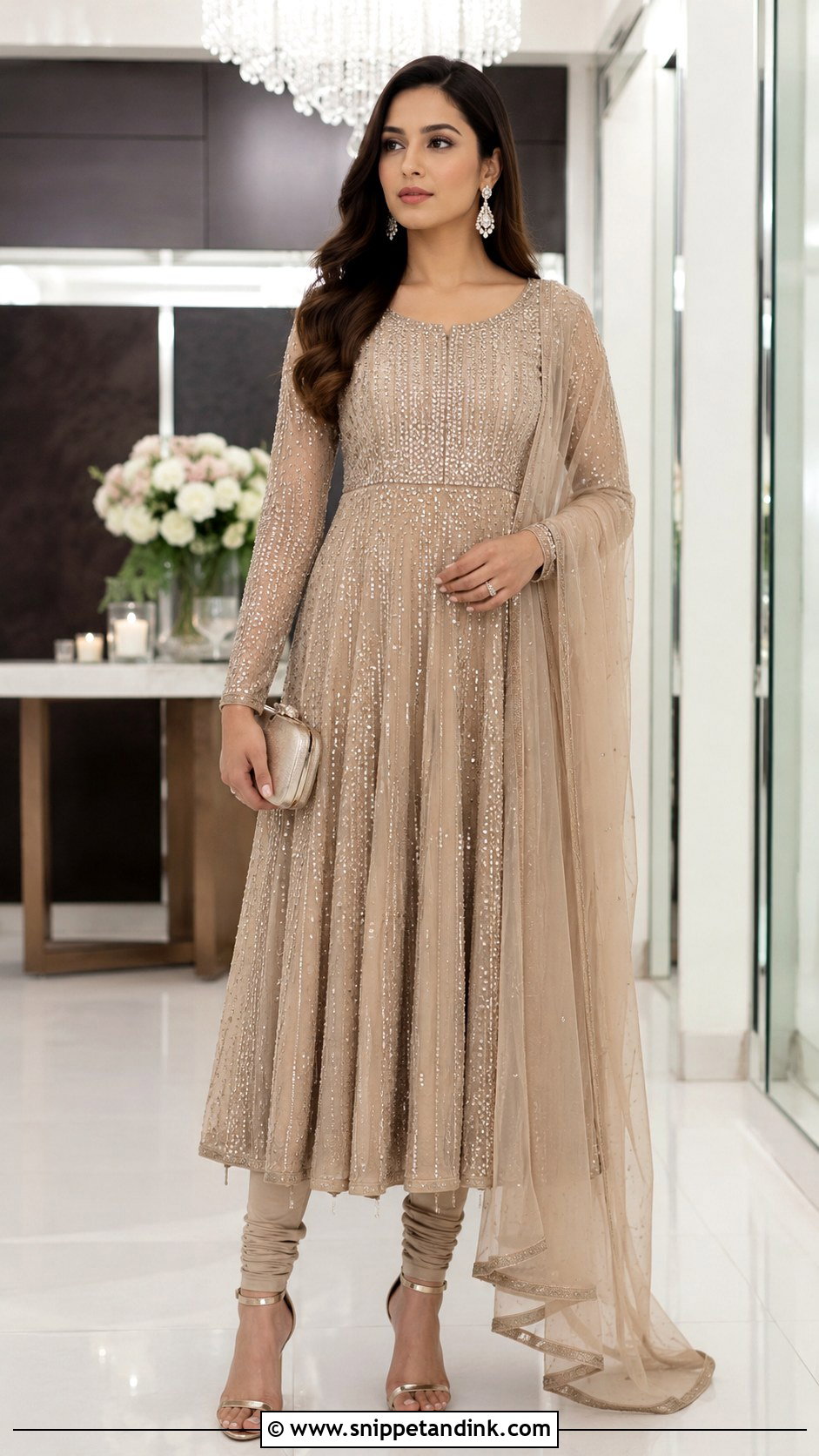
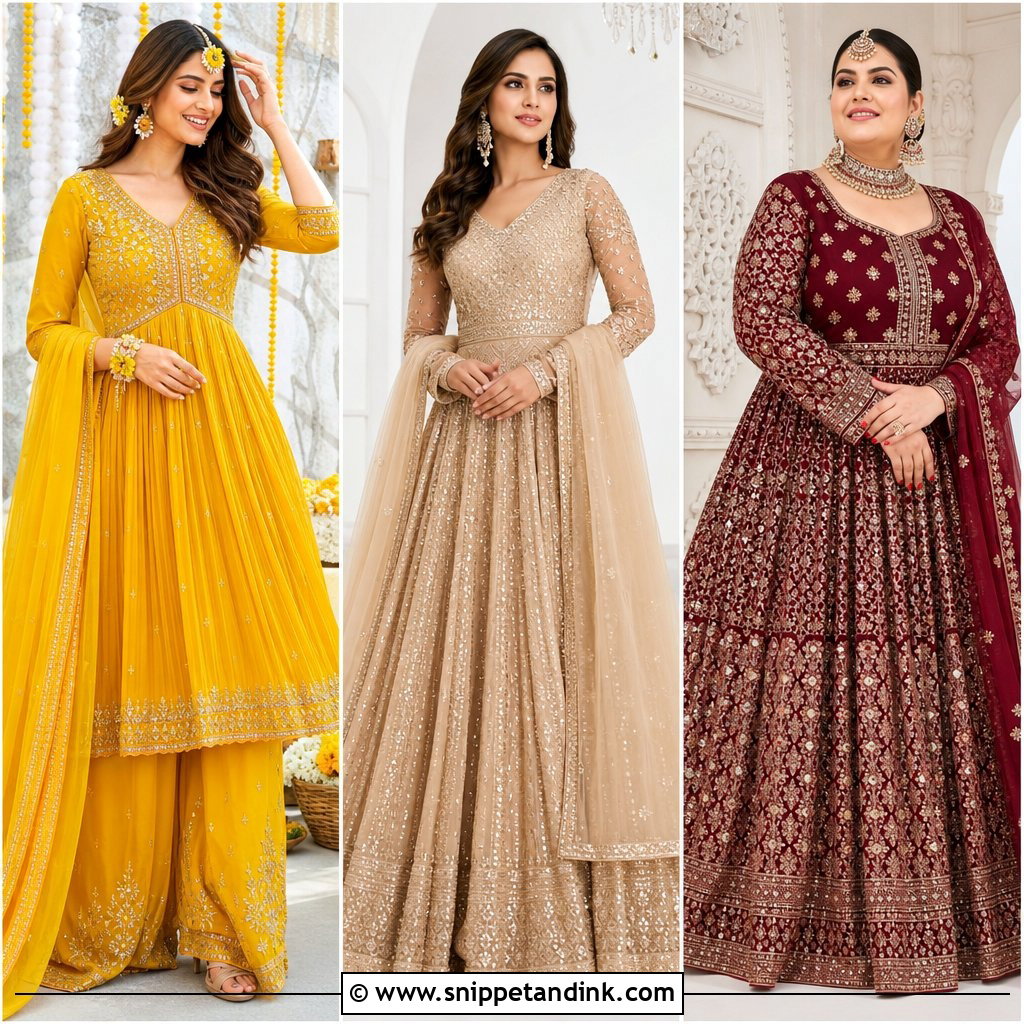
Tonal sequins catch the light softly; contrast sequins look harsh up close and on flash. That’s the first thing I check on a sequin Anarkali for a reception: champagne on champagne, rose on rose, navy on navy. A fitted bodice into soft georgette panels lets it move. Wear a matching churidar for comfort and coverage even though the hem hides it. A plain net dupatta, crystal drops, a satin clutch and slim metallic heels. Soft waves or a low ponytail. Only add a big necklace if the neckline is plain and open, or the outfit tips into costume.
7. Jacket Style Anarkali Dress
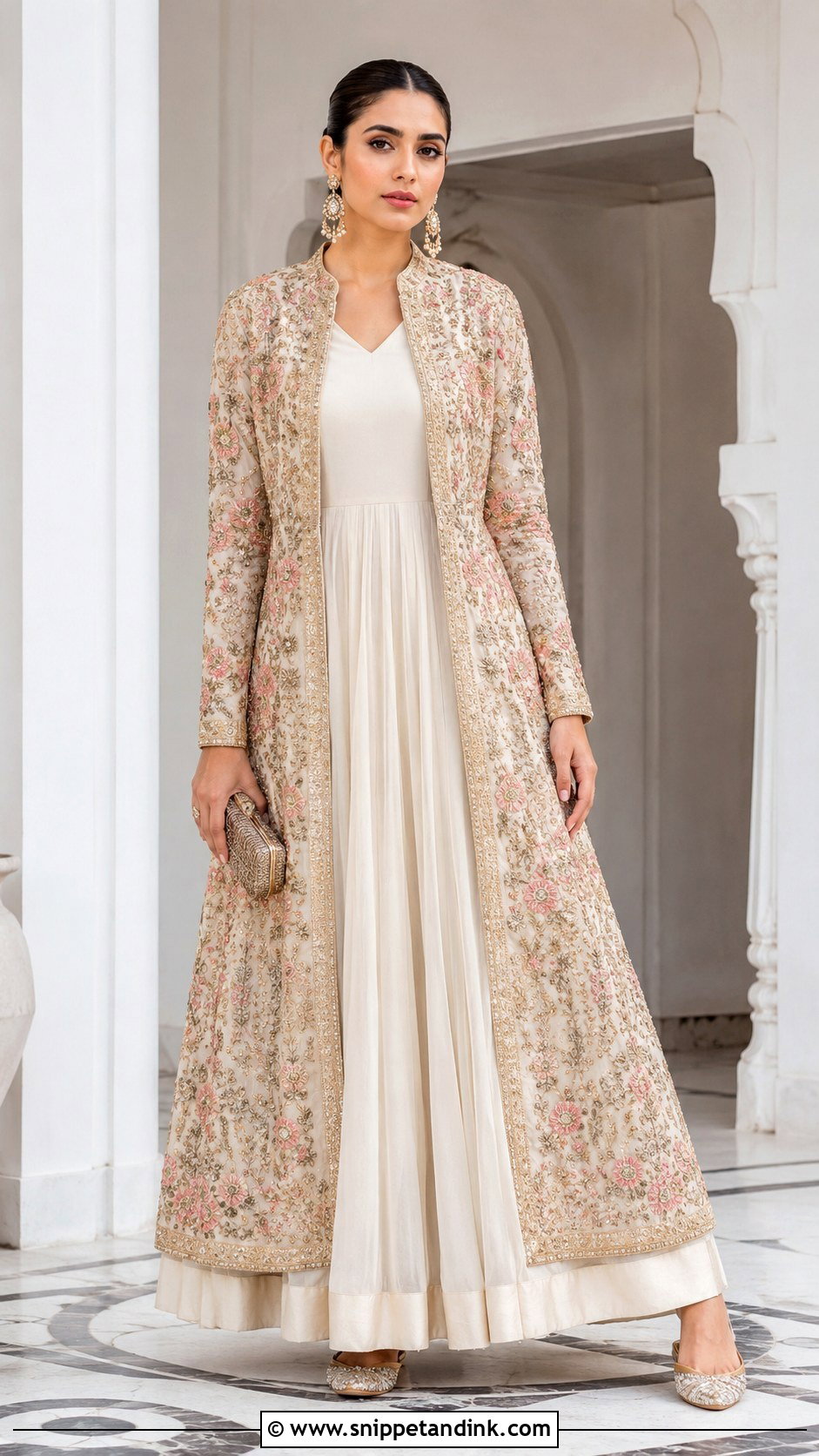
An embellished long jacket turns a plain Anarkali into an occasion outfit, and it’s the version I suggest to anyone who wants to rewear the dress alone later. Start with a sleeveless or short-sleeved silk Anarkali in ivory, rose, navy or emerald, and layer an open floor-length jacket with embroidery on the front, shoulders and cuffs. The jacket must stay open enough to show the fitted waist; buttoned shut, the flare disappears. Statement earrings, a box clutch, pointed flats or low heels. A dupatta is optional and should be nearly plain if you add one. A sleek bun or side-parted waves.
8. Cape Style Anarkali Dress
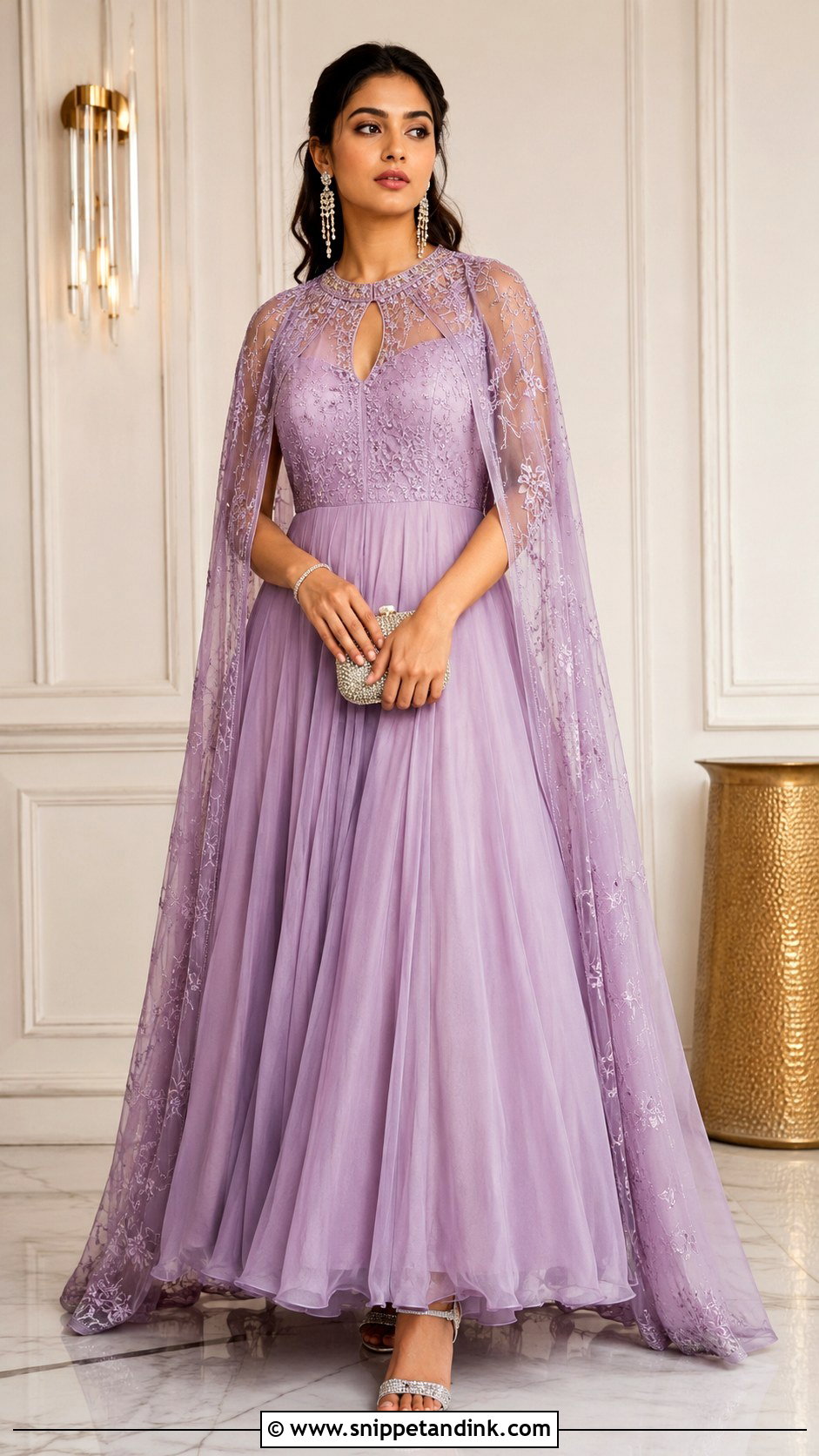
A cape gives you the drape of a dupatta with nothing to hold, which is a relief at a reception where you’ll be carrying a plate or a drink all night. Look for a floor-length dress with a fitted inner bodice and a sheer embroidered cape attached at the shoulders or neckline, in lavender, sapphire, blush or champagne. The waist must stay defined under the cape, otherwise the whole shape reads as a tent. Long earrings, a fine bracelet, a compact clutch and heels in a matching metallic. Keep the neck clear with a smooth ponytail or low bun.
9. Layered Anarkali Dress
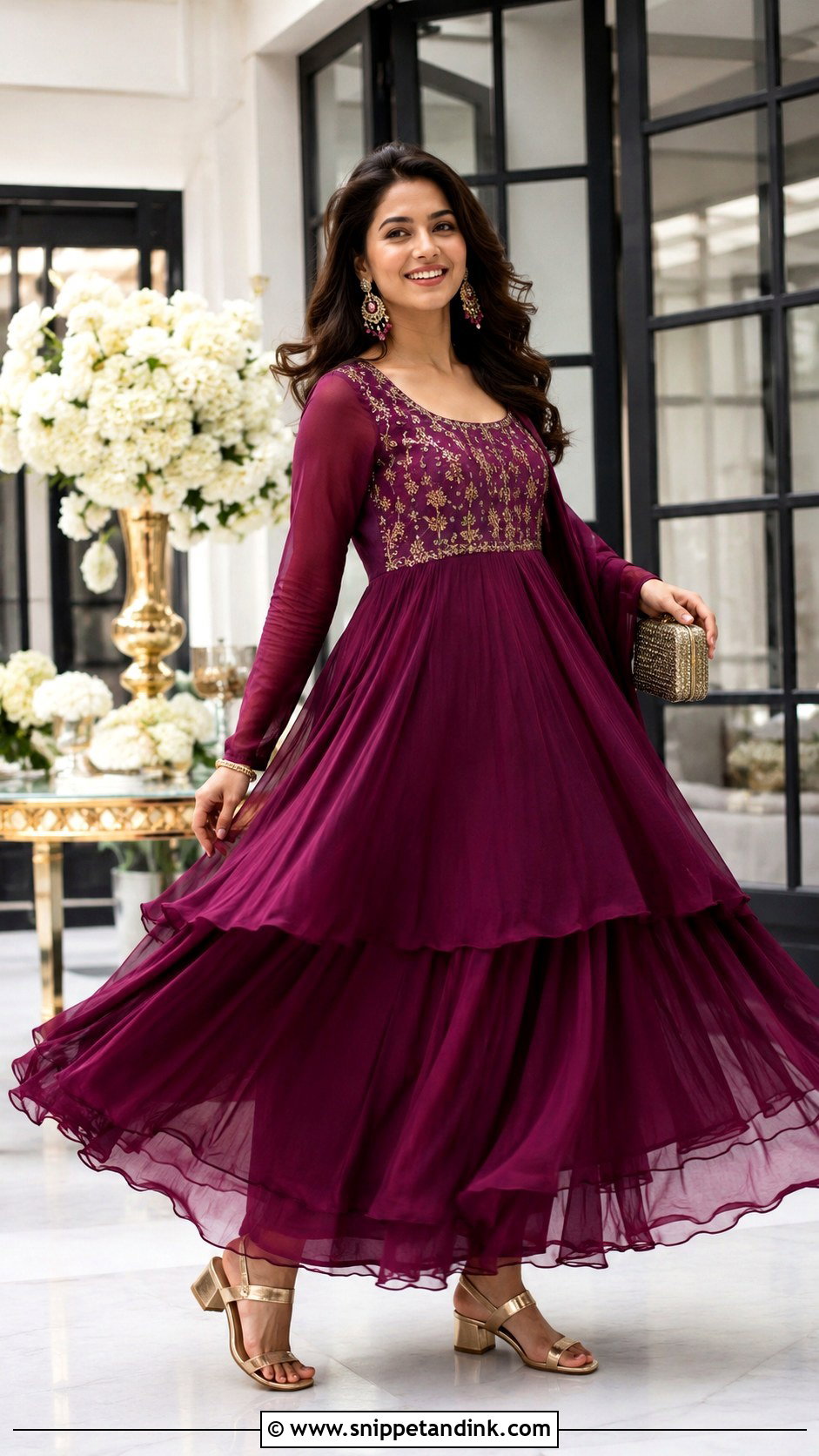
Tiers multiply the movement, so each layer has to be light: chiffon or georgette, never anything stiff. A tonal palette such as berry and wine, ivory and champagne, or pale blue and navy keeps the volume sophisticated. The embroidered bodice anchors it. A narrow dupatta, or none at all. Drop earrings, a minaudière and sturdy block heels for a bit of height under the tiers. A half-up style balances the fullness below. I’d warn anyone planning to sit through a long dinner that tiers crush where you sit, so ask your tailor to cut the back layers slightly shorter.
10. Kalidar Anarkali Dress With Contrast Dupatta
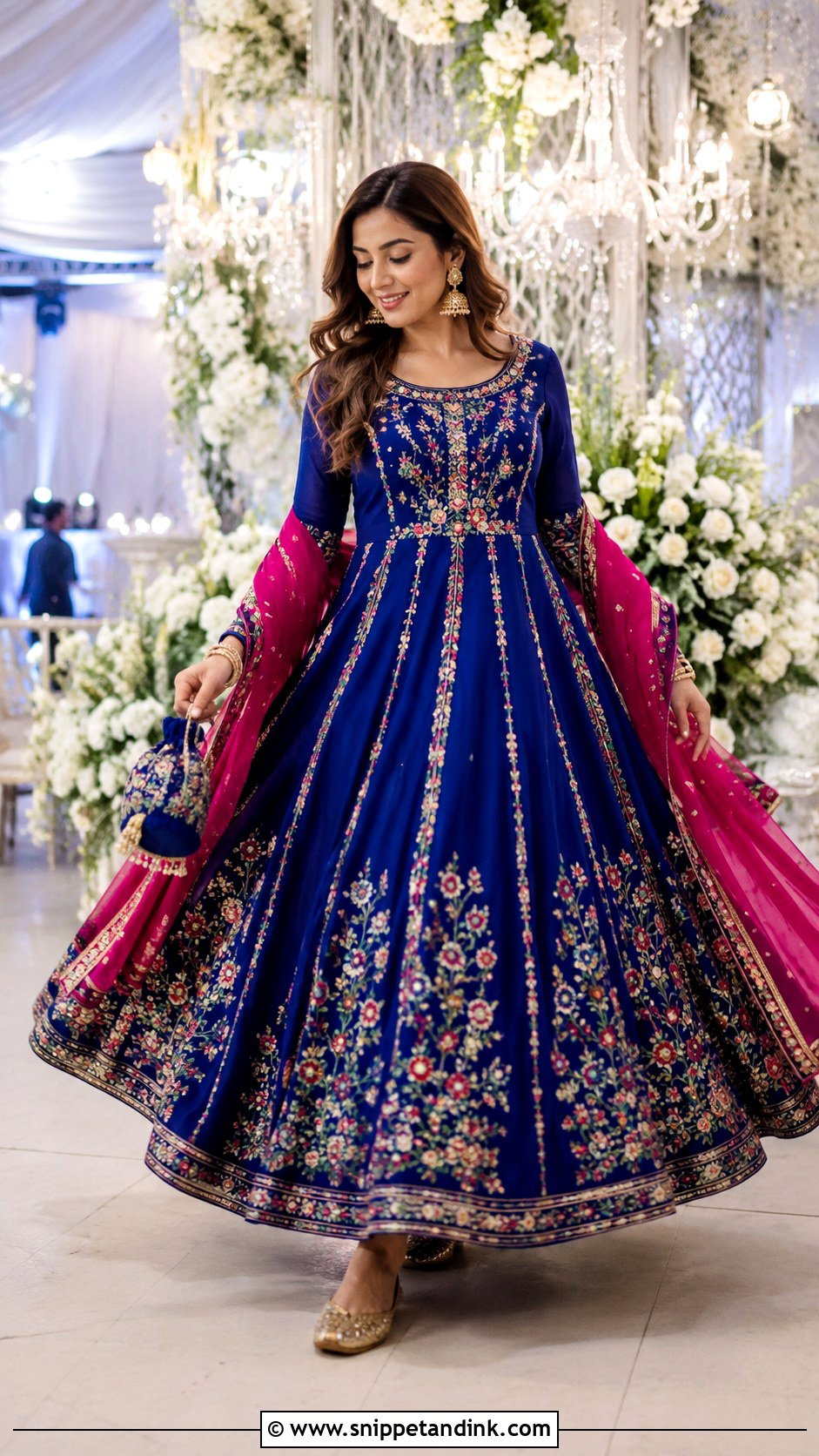
A kalidar Anarkali is built from many triangular panels, and the more panels there are, the more evenly the flare falls. That’s why it looks impressive both standing still and turning. Rich silk or georgette in deep green, ruby, mustard or royal blue, with embroidery along the panel seams, shows off the cutting. A contrasting magenta, turquoise or burnt orange dupatta with a matching border. Jhumkas, slim bangles, an embroidered potli and cushioned juttis, with a braided or smooth low bun. Have the hem finished in the shoes you’ll actually wear; a wide flare that drags is a trip waiting to happen on stairs.
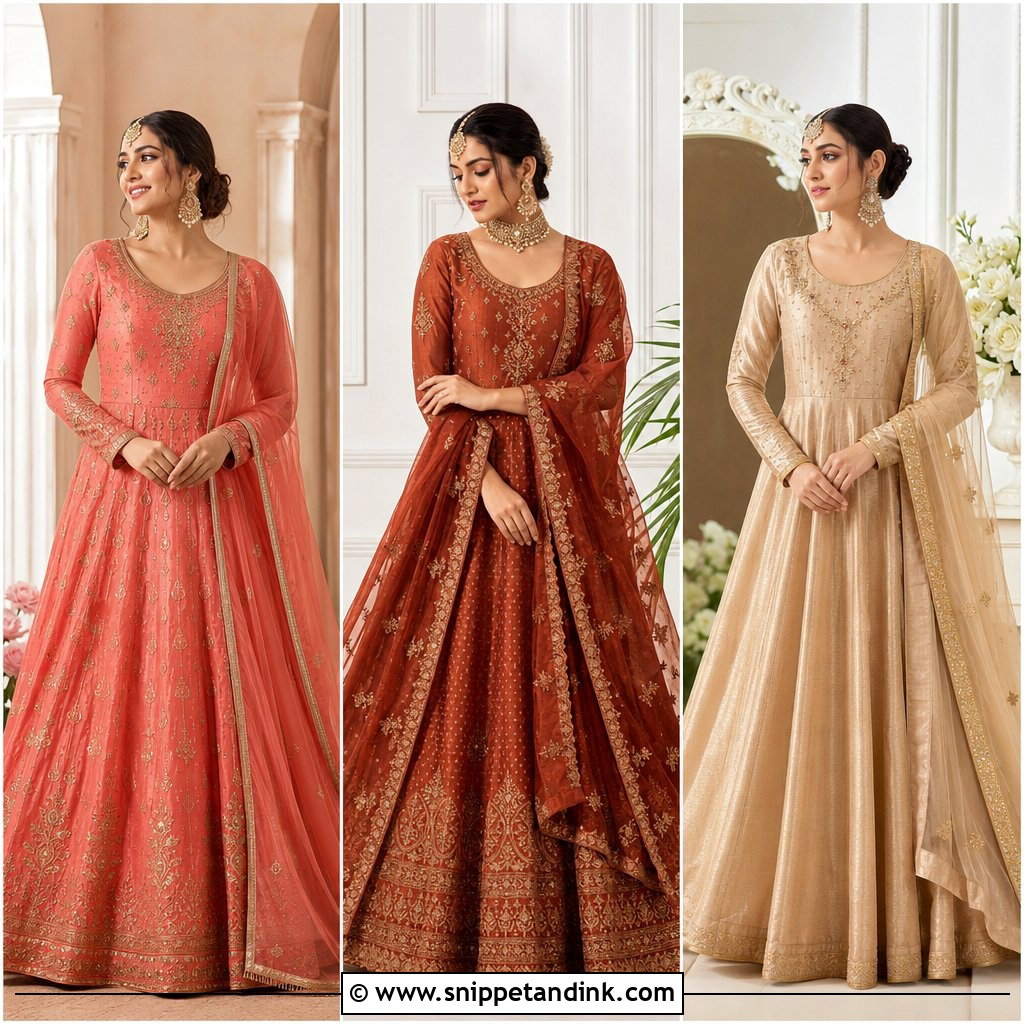
11. Bridal Red Anarkali Dress
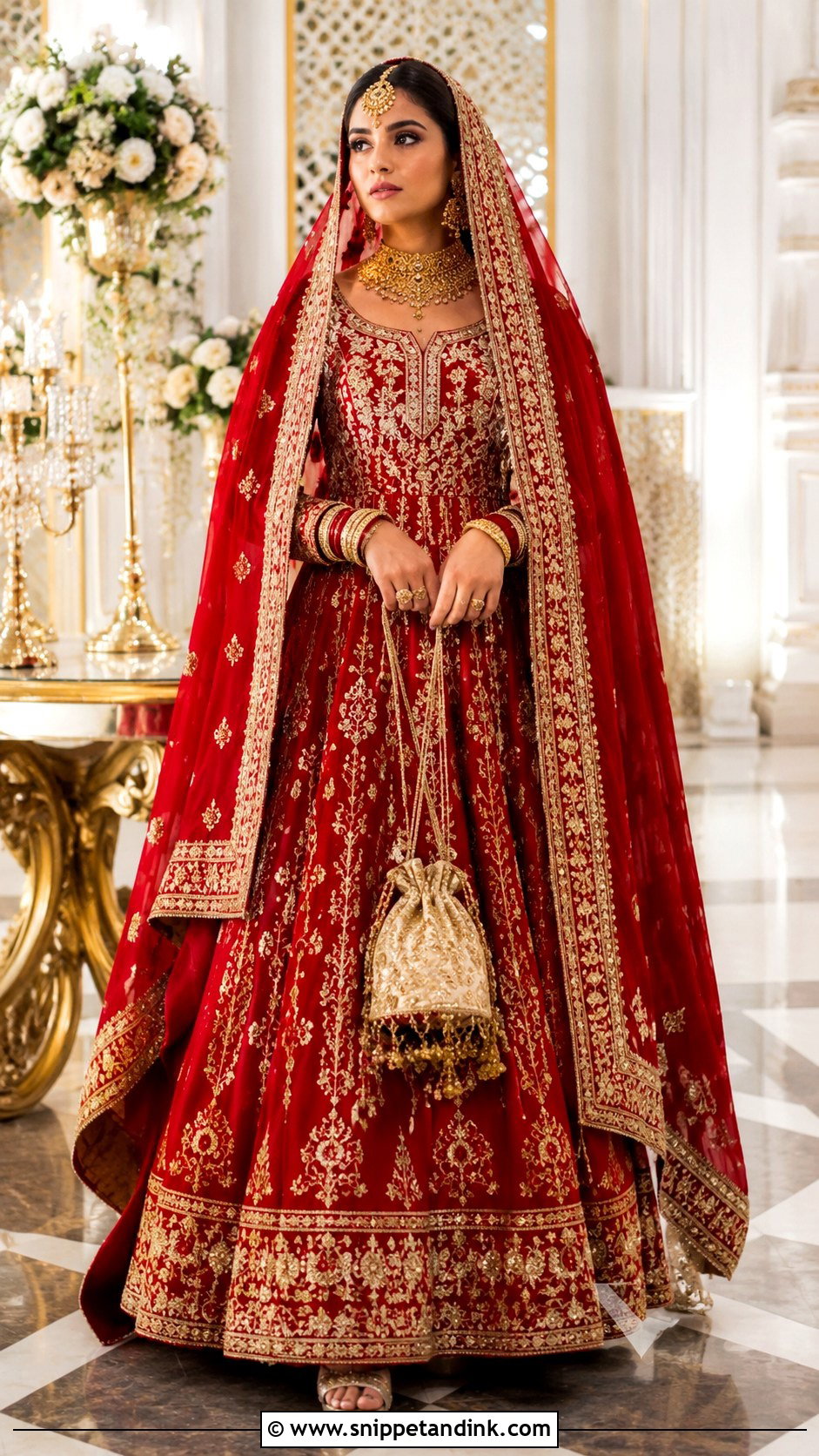
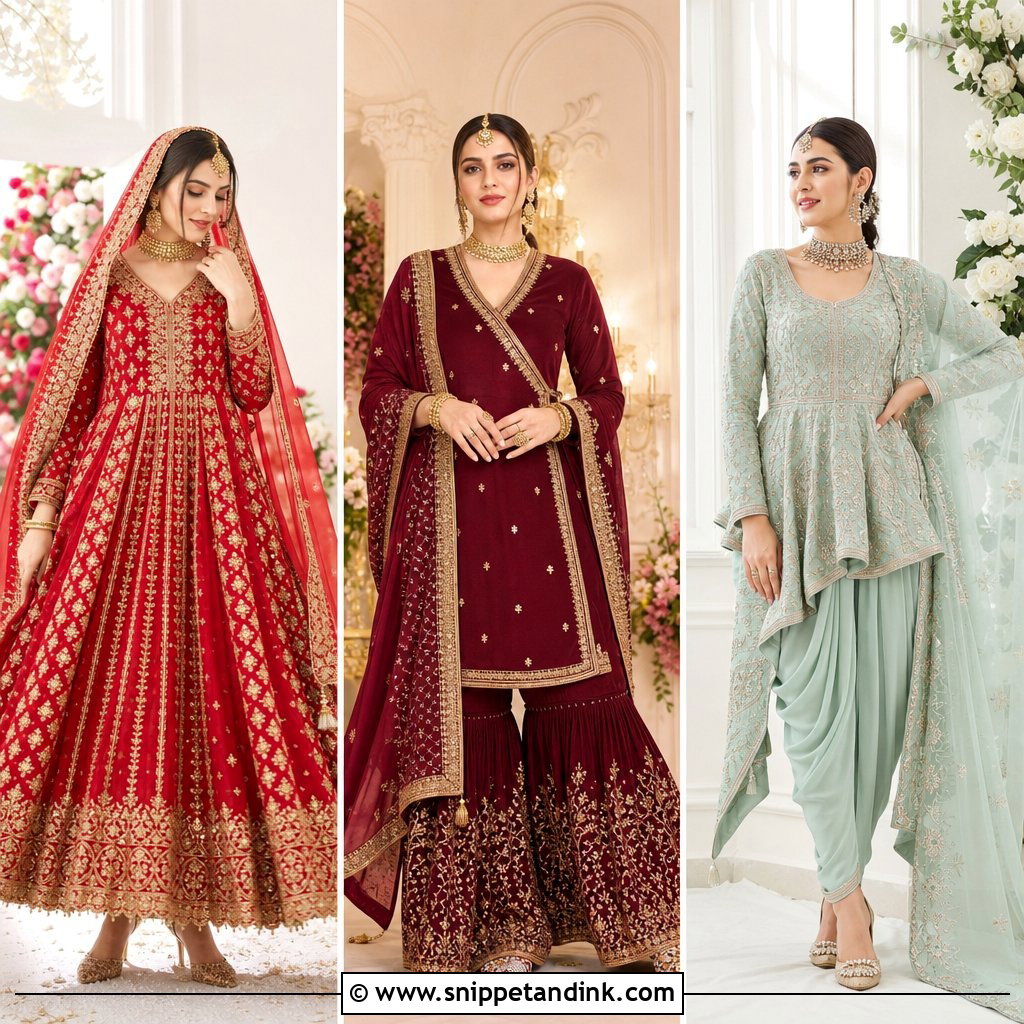
A red Anarkali gives a bride the impact of a traditional outfit in a softer, more fluid shape. Crimson, ruby or vermilion with antique gold on the bodice, sleeves and wide hem, and a skirt with real flare. Drape an embroidered dupatta over the head or across both shoulders, whichever suits the ceremony. Coordinated kundan, bridal bangles, an embellished potli and comfortable platform or block heels. A sleek bun gives the dupatta something to pin to. The tailoring is what makes or breaks it: the bodice should skim, never pull, before the flare opens. Fit it wearing the bridal jewellery, since a heavy necklace changes how the neckline sits.
12. Black And Gold Anarkali Dress
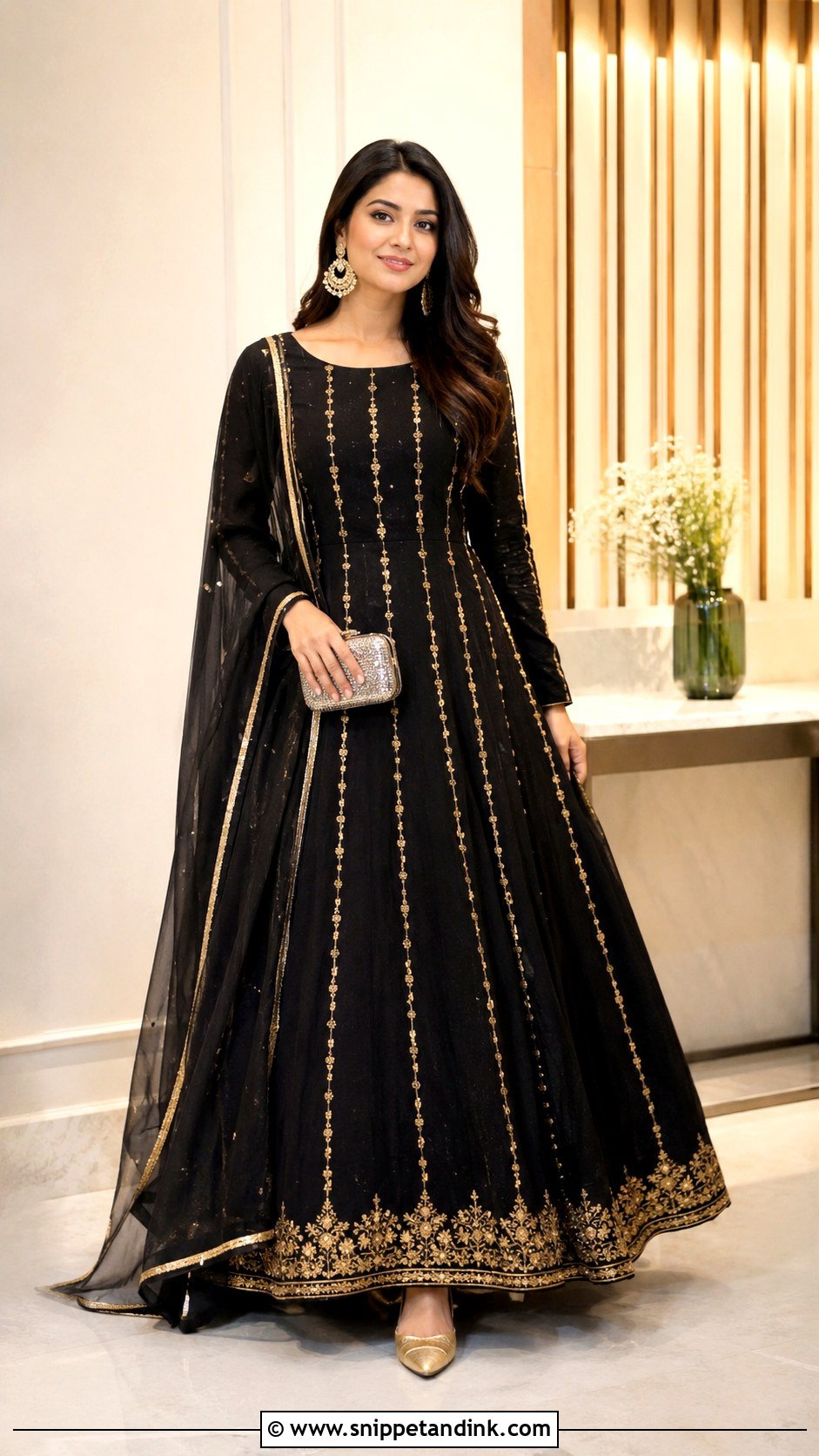
Black and gold suit an evening event, but check first: some families avoid black at weddings. If it’s welcome, look for a black floor-length Anarkali with gold embroidery running vertically along the bodice and panels. Vertical lines lengthen you, and a defined waist keeps the dark fabric from looking shapeless. A sheer black dupatta with a fine gold border, sculptural gold earrings and a matching clutch. Pointed flats, juttis or low block heels. Polished waves or a low bun, warm metallic eyes. Repeat one gold tone throughout instead of mixing motifs, and it’ll look deliberate.
13. Emerald Green Anarkali Dress
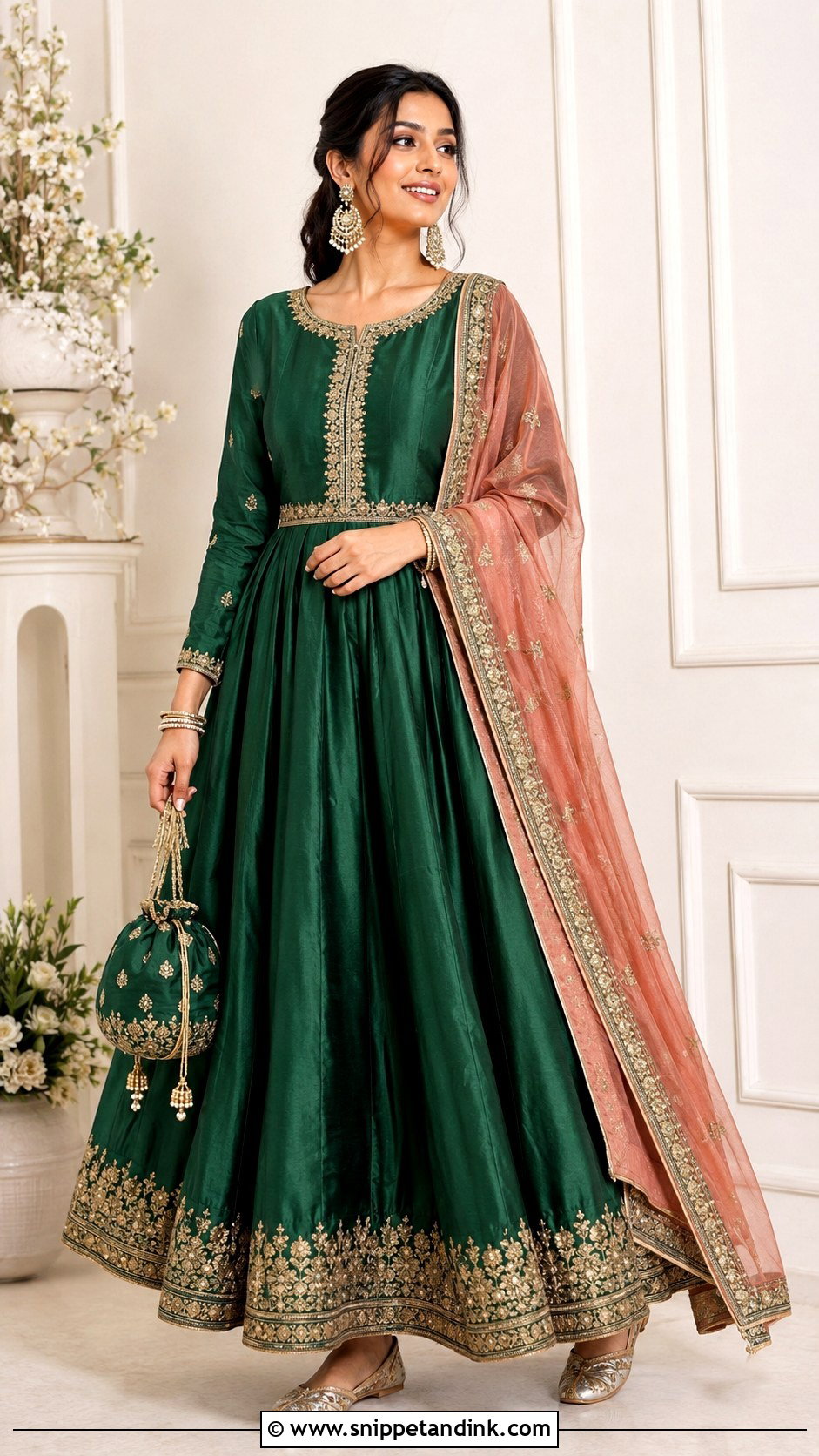
Emerald has the depth of a jewel and works by day or night, and it suits a wide range of skin tones. Choose silk or georgette with a structured bodice, a generous flare and restrained gold or antique silver work. A matching dupatta gives a single column of colour; rose or muted gold makes it more traditional. Kundan earrings, a few slim bangles and a small potli. Metallic juttis for comfort, or block heels if the hem is cut floor-grazing for them. A side-parted bun and defined eyes. Keep jewellery to the face and wrists so the green stays the centre of attention.
14. Royal Blue Anarkali Dress
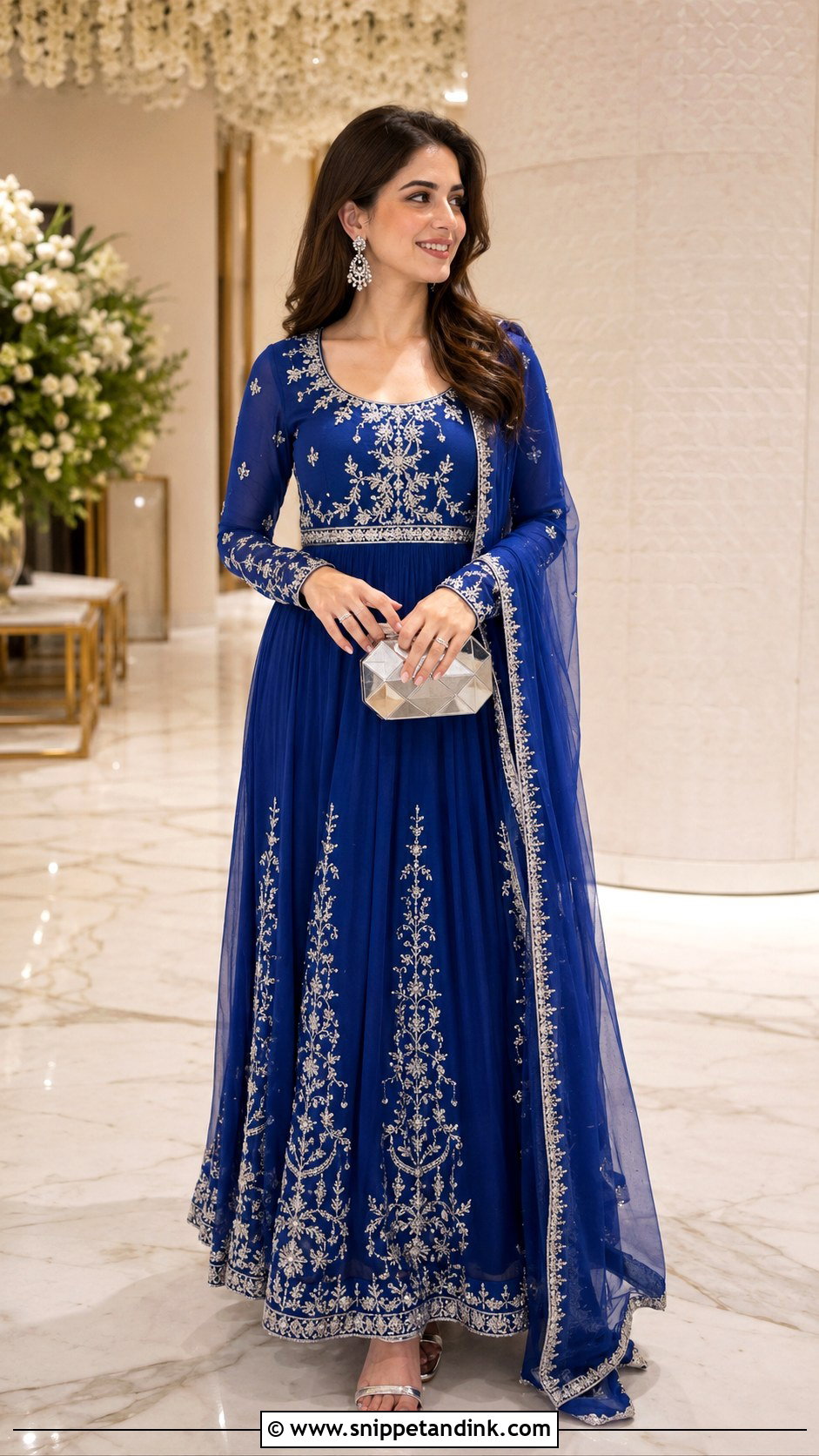
Royal blue looks freshest with cool accents: silver, pearl or cool-toned mirrors. A floor-length georgette Anarkali with fitted sleeves and a clean waistline before the skirt opens is the shape I’d choose. Silver embroidery at the neckline and hem adds light without dulling the blue. A light matching dupatta, crystal earrings, a silver clutch and metallic sandals. With a high neckline, skip the necklace and go bigger on earrings. Soft waves or a neat ponytail. I keep makeup fresh with defined lashes; very dark lids against royal blue can look heavy in photos.

15. Pastel Pink Anarkali Dress
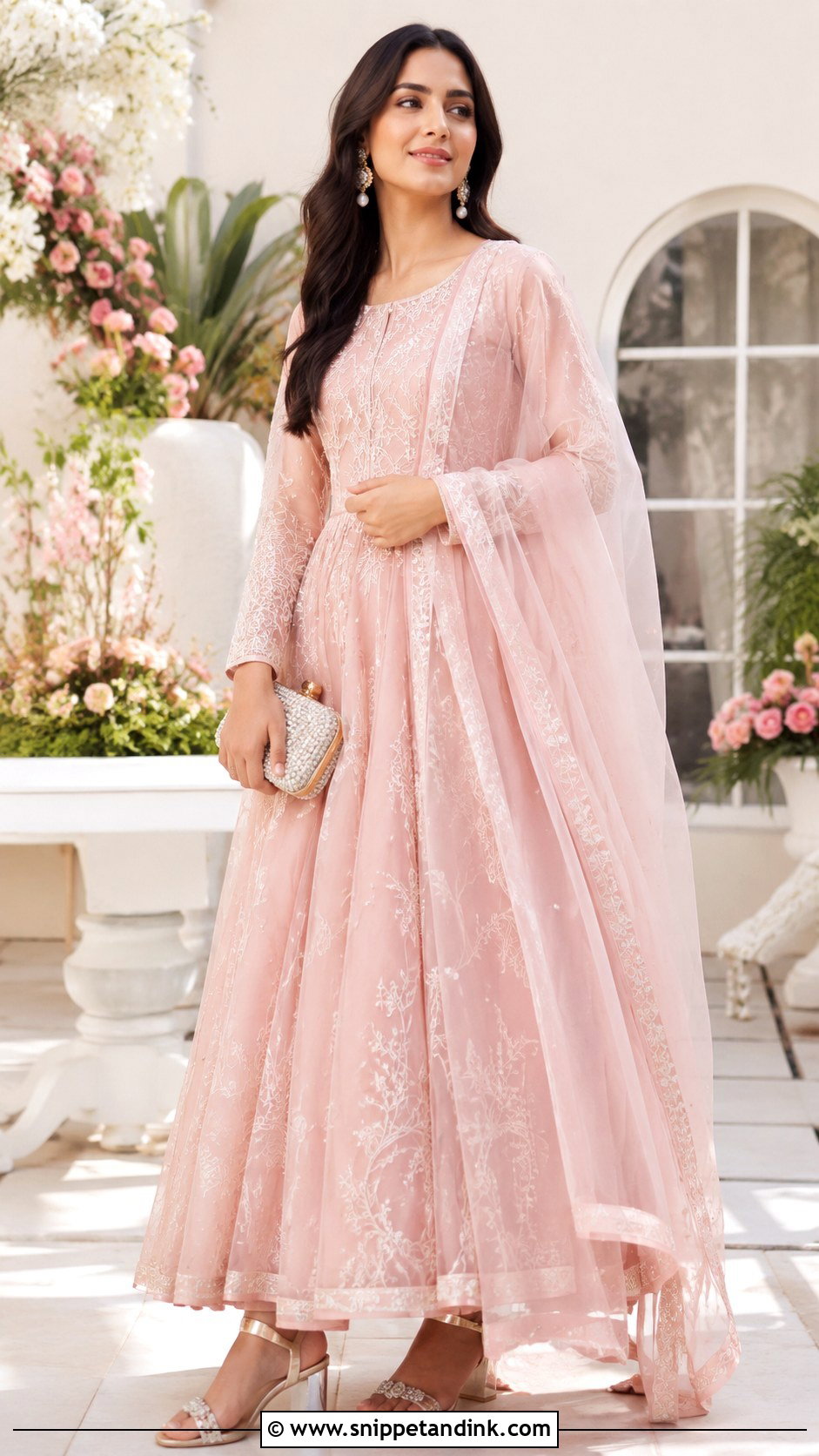
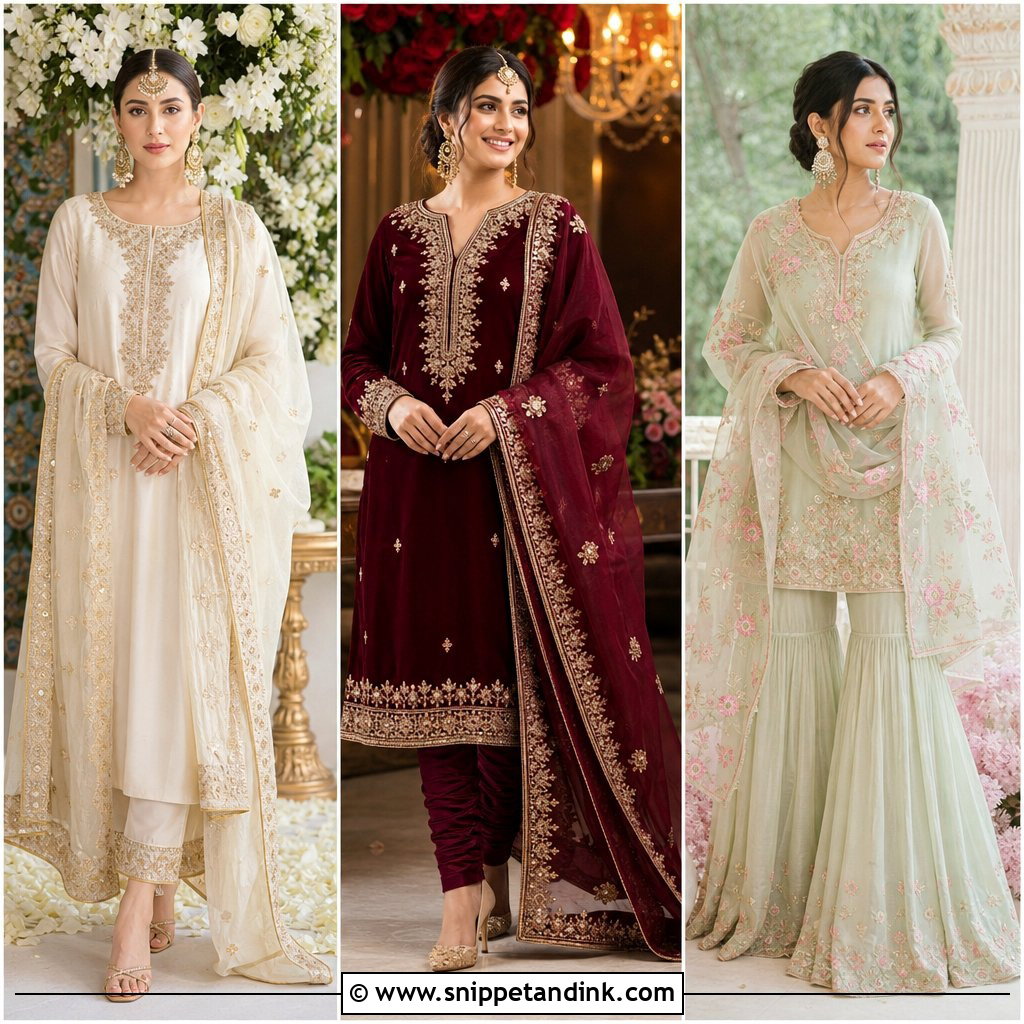
Pastel pink only looks formal when everything about it is soft. A blush or dusty pink Anarkali in organza, chiffon or light silk, with pearl, thread or subtle sequin work, a fitted bodice and an airy floor-length flare. Drape a sheer dupatta loosely over one shoulder and pin it out of sight. Pearl drops, a beaded clutch and champagne block heels, with soft waves or a textured low bun. Pale pink shows makeup transfer at the neckline, so set foundation well and use a scarf over your face when you dress. Rosy makeup and a natural lip suit it, as long as nothing matches too exactly.
16. Ivory And Gold Anarkali Dress
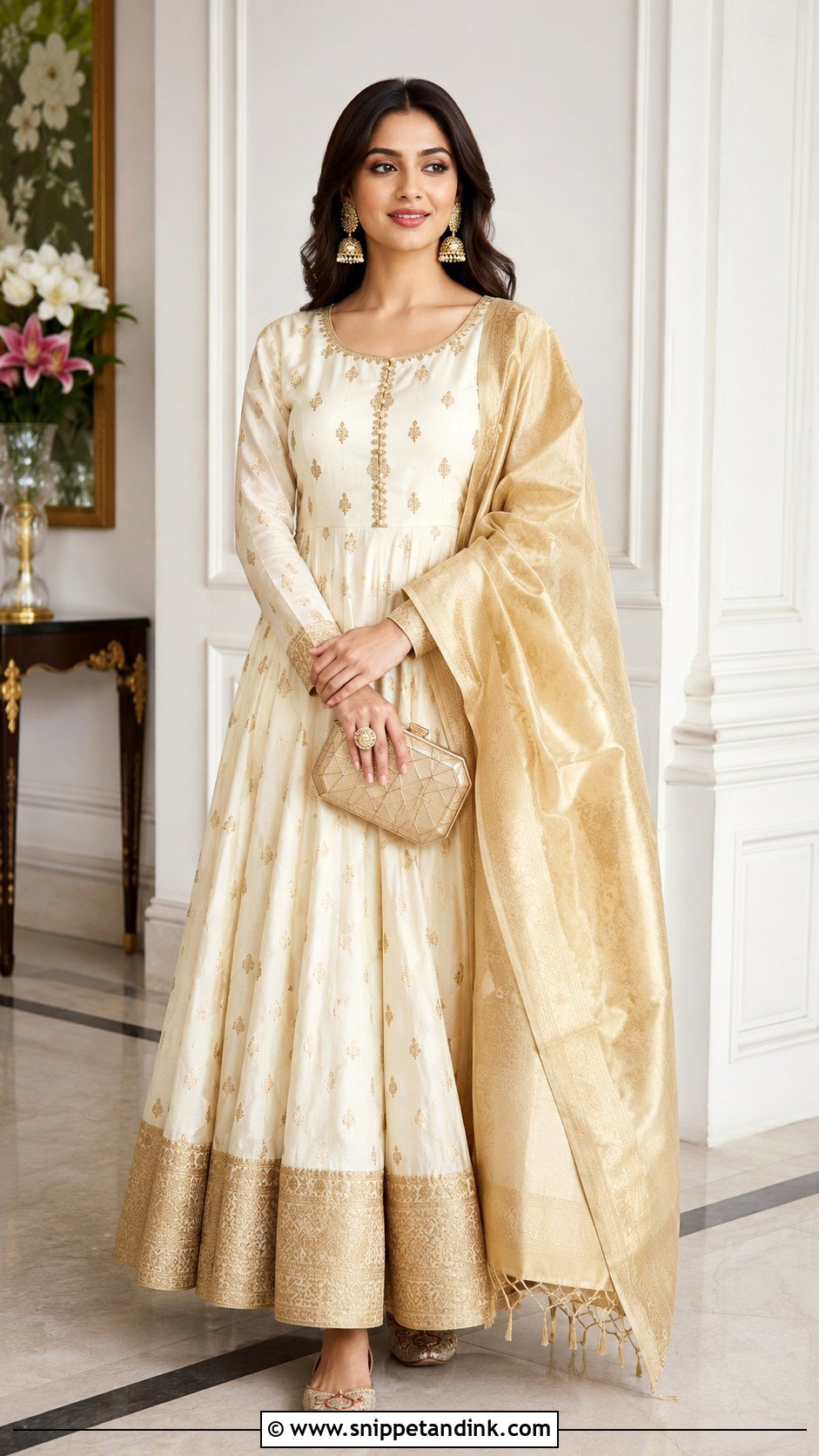
Ivory and gold rely on a glow rather than contrast. An ivory Anarkali with gold woven borders, fine embroidery or small motifs across the bodice and skirt, plus a gold tissue dupatta that helps the pale dress stand out against a busy venue. Antique gold earrings, a statement ring, a structured clutch and embroidered juttis or block heels. A polished low bun lets the jewellery show; soft definition around the eyes and a neutral lip. Before you wear ivory to a wedding, check the cultural expectations, as some families keep white tones for mourning. Where it’s welcome, it looks expensive without much decoration.
17. Floral Organza Anarkali Dress
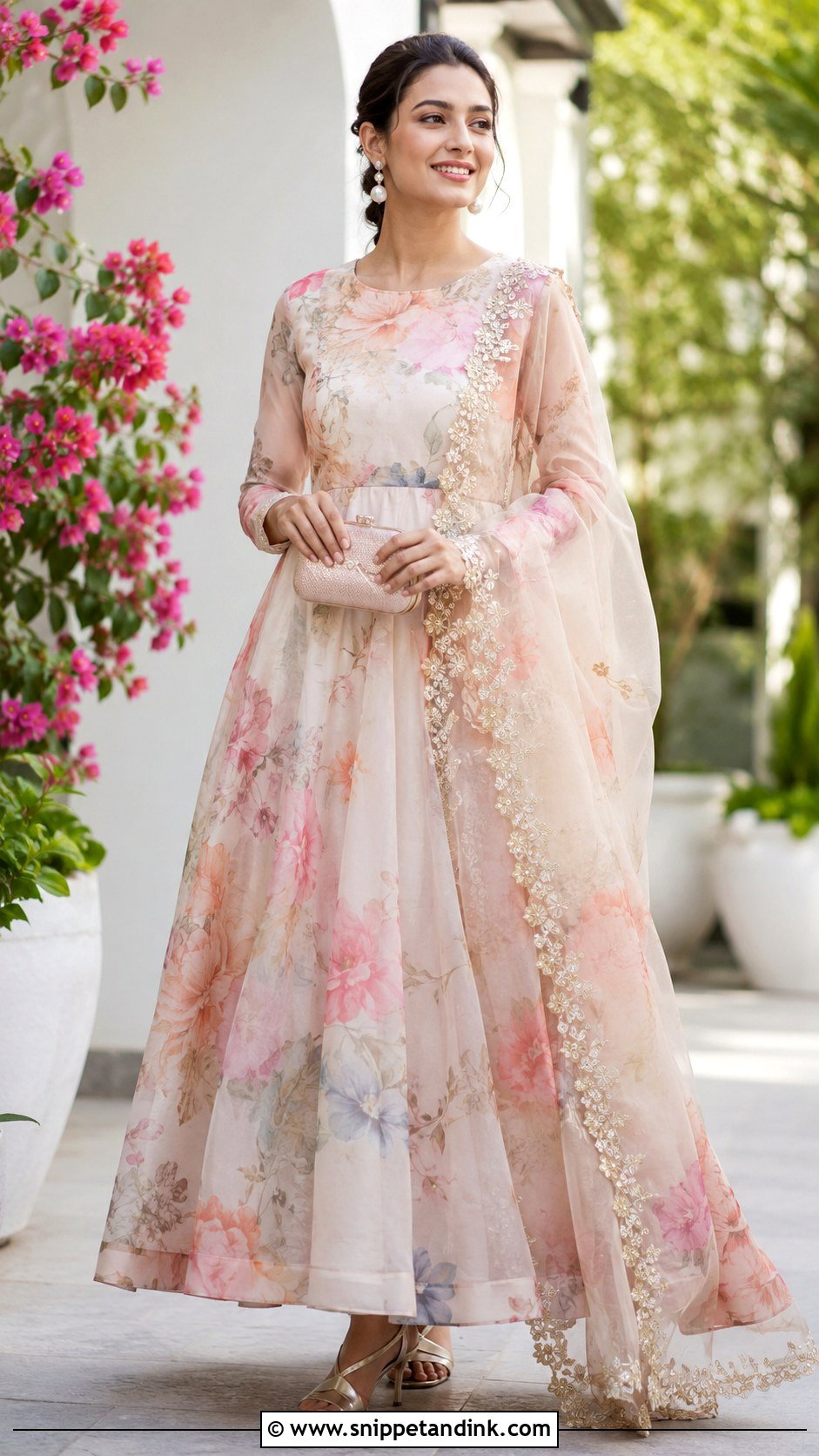
Organza holds its shape because it’s crisp, which means a floral organza Anarkali keeps a wide skirt without any can-can underneath. Printed or embroidered flowers on the sheer outer layer need an opaque lining in a complementary shade; I hold the dress up to a window at the fitting to check. A defined bodice, a plain organza dupatta with a delicate edge, pearl or stone earrings, a pastel clutch and low metallic heels. Soft waves, a low ponytail or half-up hair. One floral element is enough: let the fabric be the print and keep everything else plain.
18. Anarkali Dress With Palazzo Pants
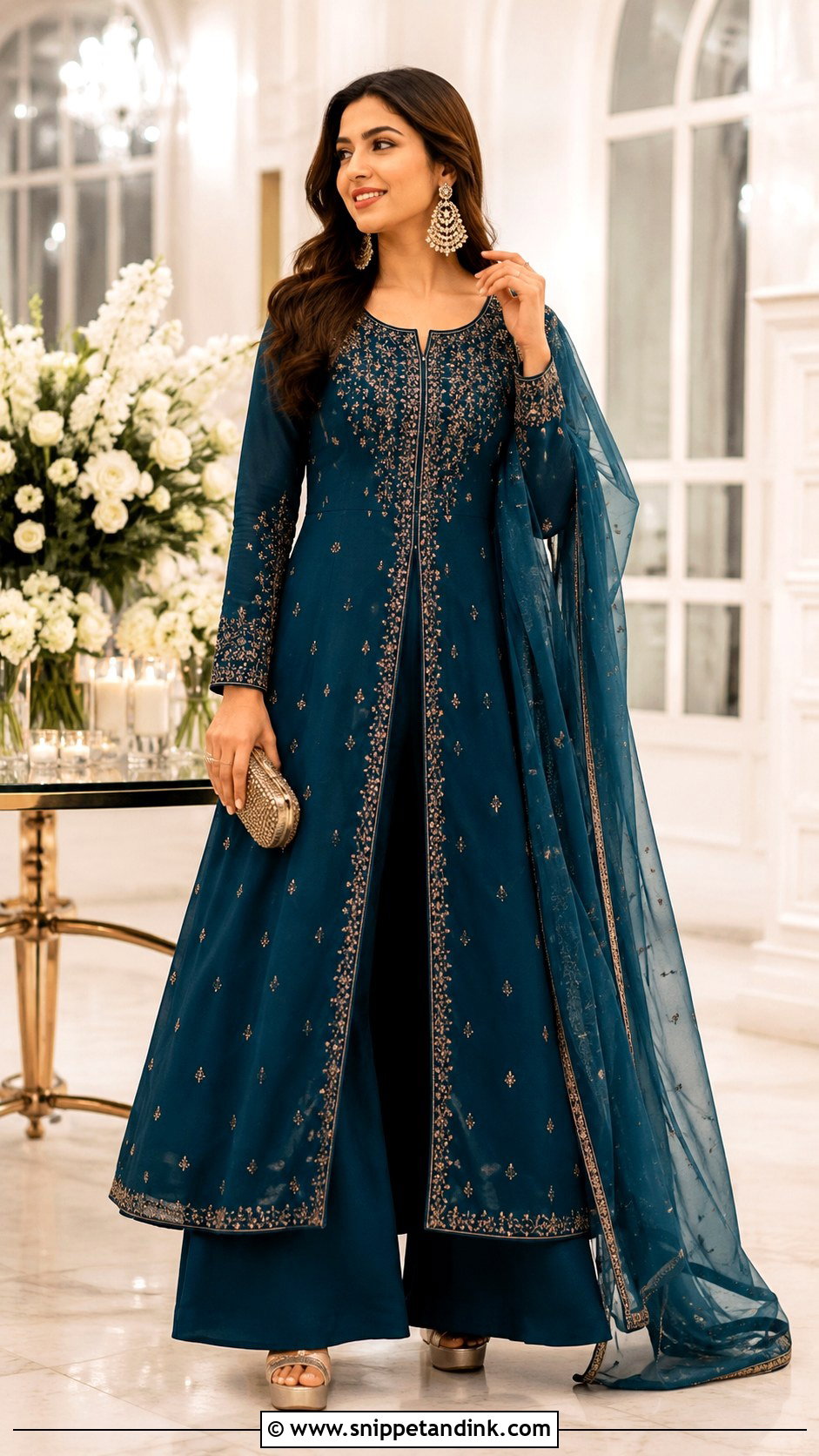
An Anarkali with palazzo pants gives far more movement than a churidar, and it’s the combination I recommend for a long night of dancing. A front-slit or calf-length Anarkali lets the wide pants show as part of the design. Deep teal, plum, rust or navy keep it formal. Embroidery around the bodice and slit, palazzos with a matching border, a light dupatta, long earrings, a small clutch and platform heels to balance the width. A sleek ponytail or centre-parted bun. Keep the flare controlled; full volume over wide trousers swamps all but the tallest frames.
19. Anarkali Dress With Sharara Pants
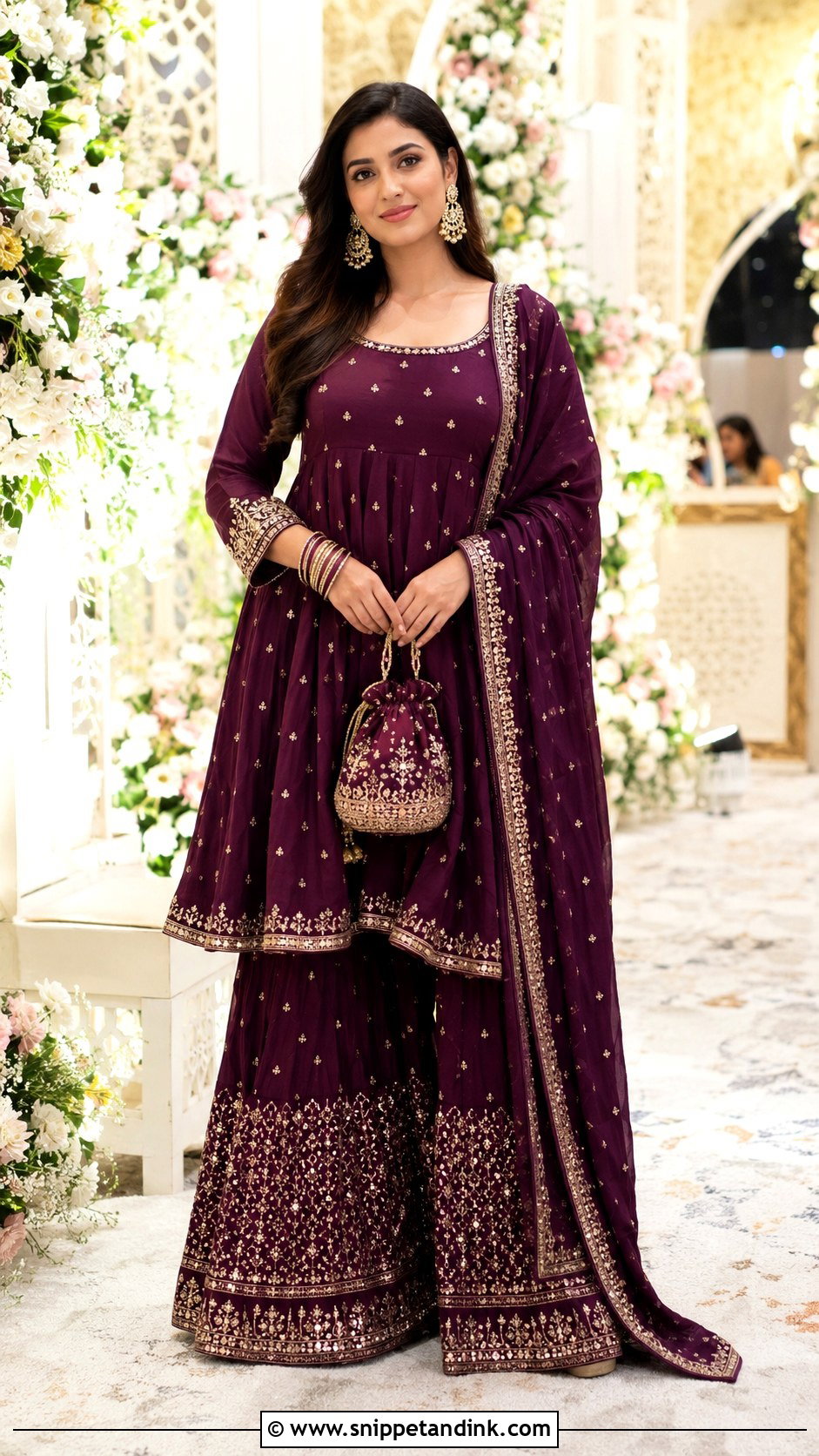
Volume on top of volume needs careful proportion. A knee-length or high-low Anarkali with a fitted waist and moderate flare lets the sharara stay visible below. Match the jewel tones, or wear a solid Anarkali over intricately bordered pants. A slim dupatta over one shoulder adds tradition without hiding the layers. Chandbalis, stacked bangles, a potli and platform heels under the sharara. Smooth, pulled-back hair balances the fullness. I’d test the sharara on stairs at the fitting: a wide hem with heels is easy to step on going down, and a slightly shorter length solves it.
20. High Low Anarkali Dress With Cigarette Pants
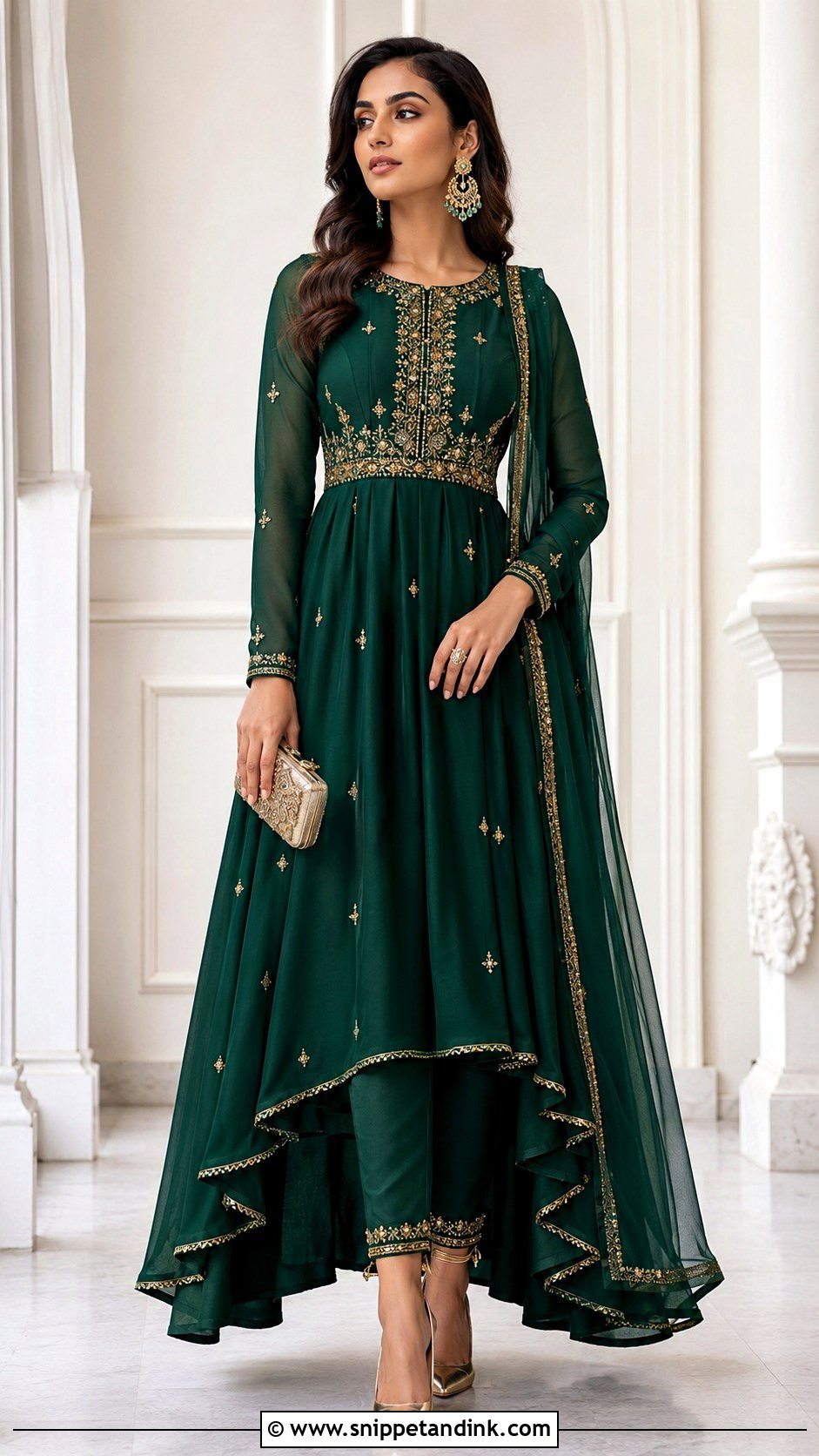
A high-low hem shows the pants and shoes at the front and keeps graceful length behind, so this is the one outfit where the shoes are fully on display. Structured silk, brocade or embroidered georgette in burgundy, emerald, navy or muted gold, over slim cigarette pants. Pointed embroidered flats or metallic heels, a narrow dupatta, statement earrings and a box clutch. A sleek ponytail or sculpted low bun. Watch the front hem at the fitting: if the curve is cut too steeply, the fabric bunches around the knees when you sit, so a gentler slope usually looks cleaner.
Folding Heavy Embroidery So It Survives to the Next Wedding
A grand Anarkali is usually worn again, and how you store it in between decides what it looks like next time. Heavy zardozi or mirror work pulls the shoulders out of shape if it hangs for months, so I fold these dresses rather than hanging them.
- Have it dry cleaned by someone who handles embroidered occasion wear, and point out any food or makeup marks when you drop it off.
- Wrap it in soft cotton or muslin, never plastic, which traps moisture and dulls metallic thread.
- Put acid-free tissue between the folds so mirrors and sequins don’t scratch the fabric they rest on.
- Refold along different lines every few months to stop permanent creases forming in the panels.
- Velvet is the exception: its pile crushes in folds, so hang it on a wide padded hanger with the weight of the skirt supported.
Never press steam straight onto sequins or zardozi. Turn the dress inside out and steam from the lining side, or let it hang in a steamy bathroom for an hour before the event.
Proportion First, Then the Shine
A grand Anarkali stands or falls on proportion: the waist seam, the width of the flare, and accessories that support the dress instead of competing with it. Floor-length embroidery, velvet, brocade, mirror work, capes, jackets and modern pants all give a different kind of formality, and colour changes the mood from bridal red and emerald to blush and ivory. Think about the event, the season, the venue and how much you’ll move before you choose. Put your money into tailoring and practise the dupatta drape once at home. Start with the outfit on this list that fits your evening, and build the rest of the look around it.
You'll Like These Ideas:






Leave a Reply