
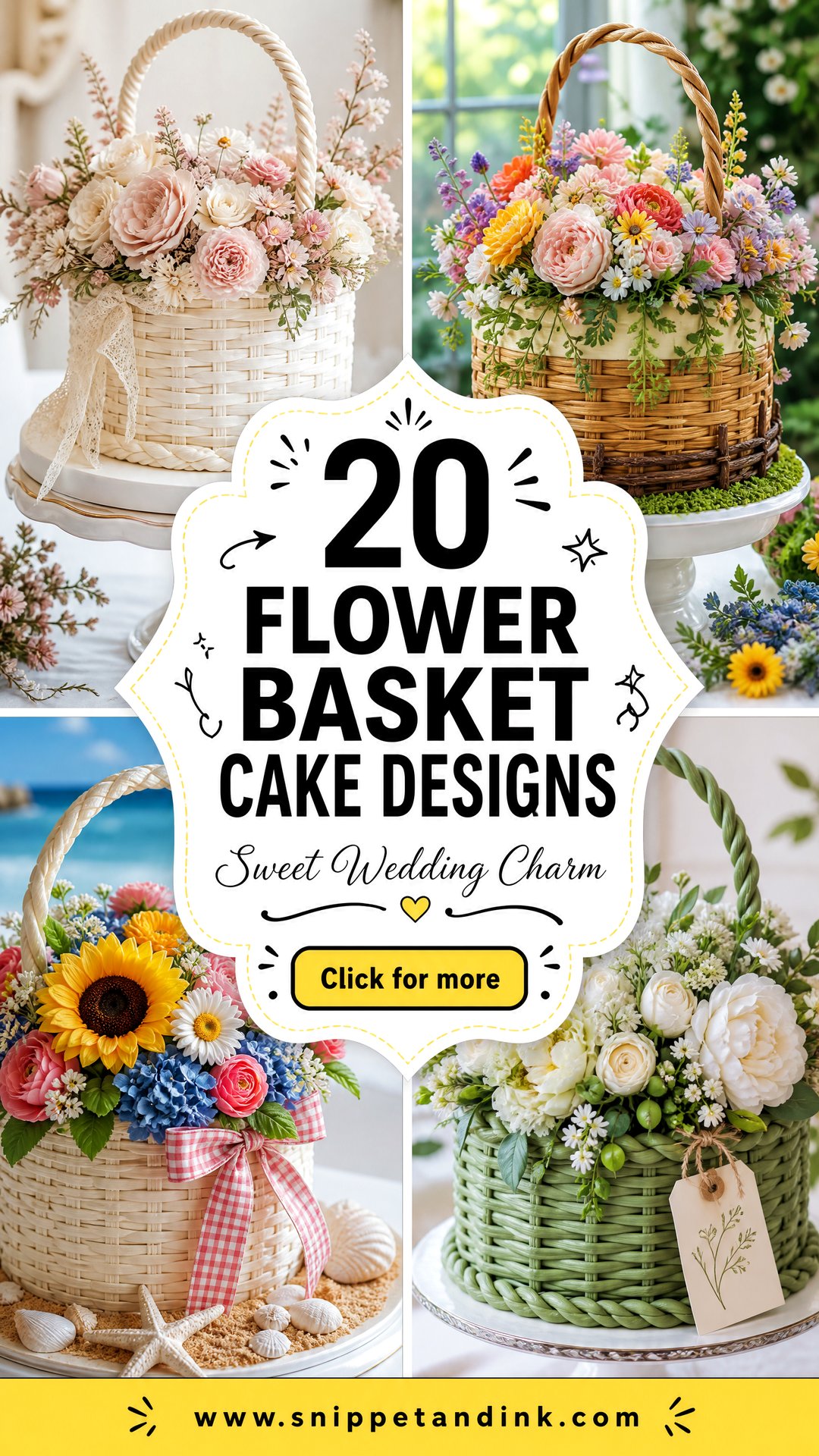
Flower basket wedding cakes are one of the oldest piping styles in the trade, and they still win people over at tastings because the weave looks so obviously made by hand. The sides are piped or shaped to look woven, and the top is filled the way a florist fills a real basket. Those flowers can be buttercream, fondant, sugar or fresh stems placed by a florist, and the choice changes how the cake handles heat, transport and a long reception. I’ve grouped the twenty designs below from simple single tiers through seasonal palettes to finish, with notes on how each one is built and what to watch for.
How a Basketweave Is Piped, and Why It Shows on the Quote
A basketweave isn’t a stamp or a mold. I pipe it with a flat, ridged tip, laying one vertical line, then a row of short horizontal bars across it, then the next vertical line over their ends, and so on all the way round. Each tier is several hundred small strokes, and they all have to stay even in width and spacing.
That’s why a woven cake usually costs more than a smooth one of the same size, and why the frosting matters. A crusting buttercream sets with a light skin and keeps the ridges sharp in a warm room. A silky meringue buttercream tastes lighter but softens sooner, so the weave can blur by the end of a summer evening.
- Ask your baker which buttercream they pipe the weave in, and how it behaves in heat.
- If budget is tight, weave one tier and keep the others smooth. It still reads as a basket cake.
- Fondant or embossed panels give the woven look with less risk of softening, at the cost of a firmer bite.
1. Buttercream Flower Basket Wedding Cake
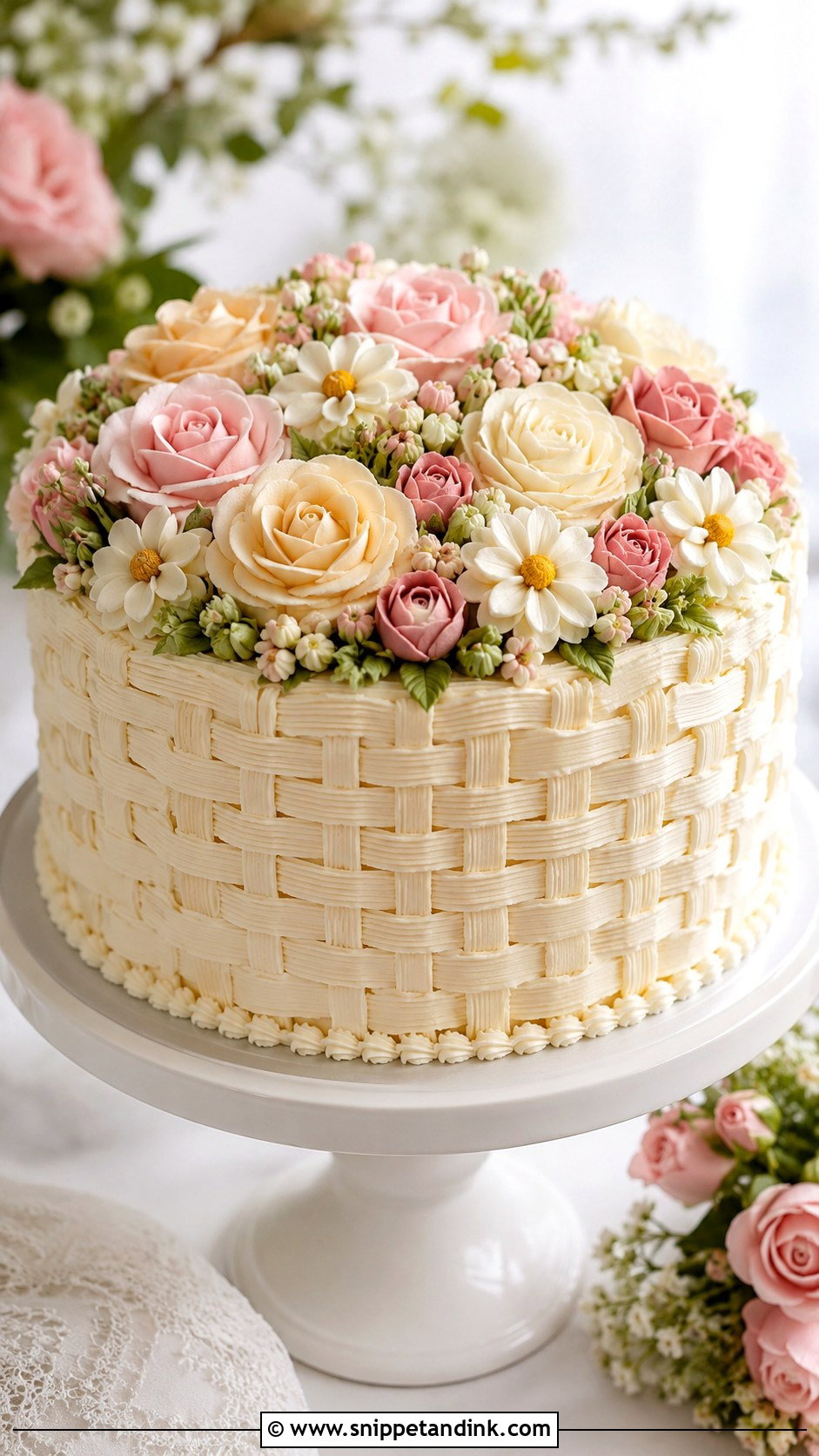
This is the version most people picture: piped basketweave sides and a top crowded with roses, blossoms, leaves and tiny fillers. An ivory, cream or pale blush base lets the flowers lead. As a single tier it makes a good cutting cake for an intimate reception, or a display cake alongside a kitchen cake for larger numbers. If the room will be warm, ask for a crusting buttercream for the flowers. It sets with a light skin and keeps petals defined longer than a softer meringue buttercream. Echo the bouquet colors and it looks planned rather than quaint.
2. Two Tier Flower Basket Wedding Cake
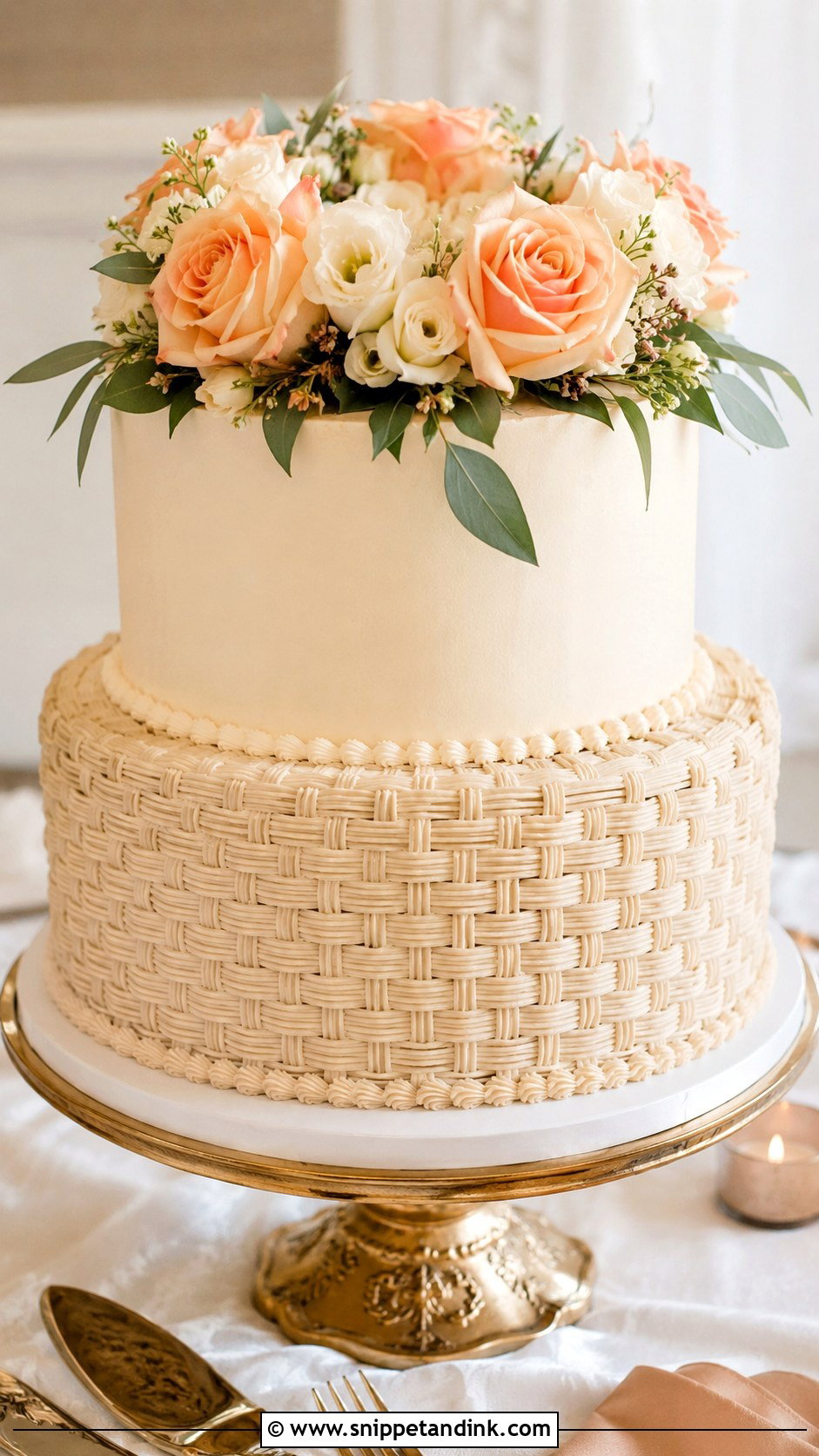
Two tiers give height without a cake that dwarfs a small table. I usually weave only the lower tier and leave the top smooth with a floral crown, because two woven tiers stacked can read as busy. Peach roses, ivory blossoms and loose greenery give a garden feel. It suits small to medium weddings and sits comfortably with candles and linen. The smooth top tier also gives the flowers a clean edge to sit against, which photographs far better than flowers on texture.
3. Three Tier Flower Basket Wedding Cake
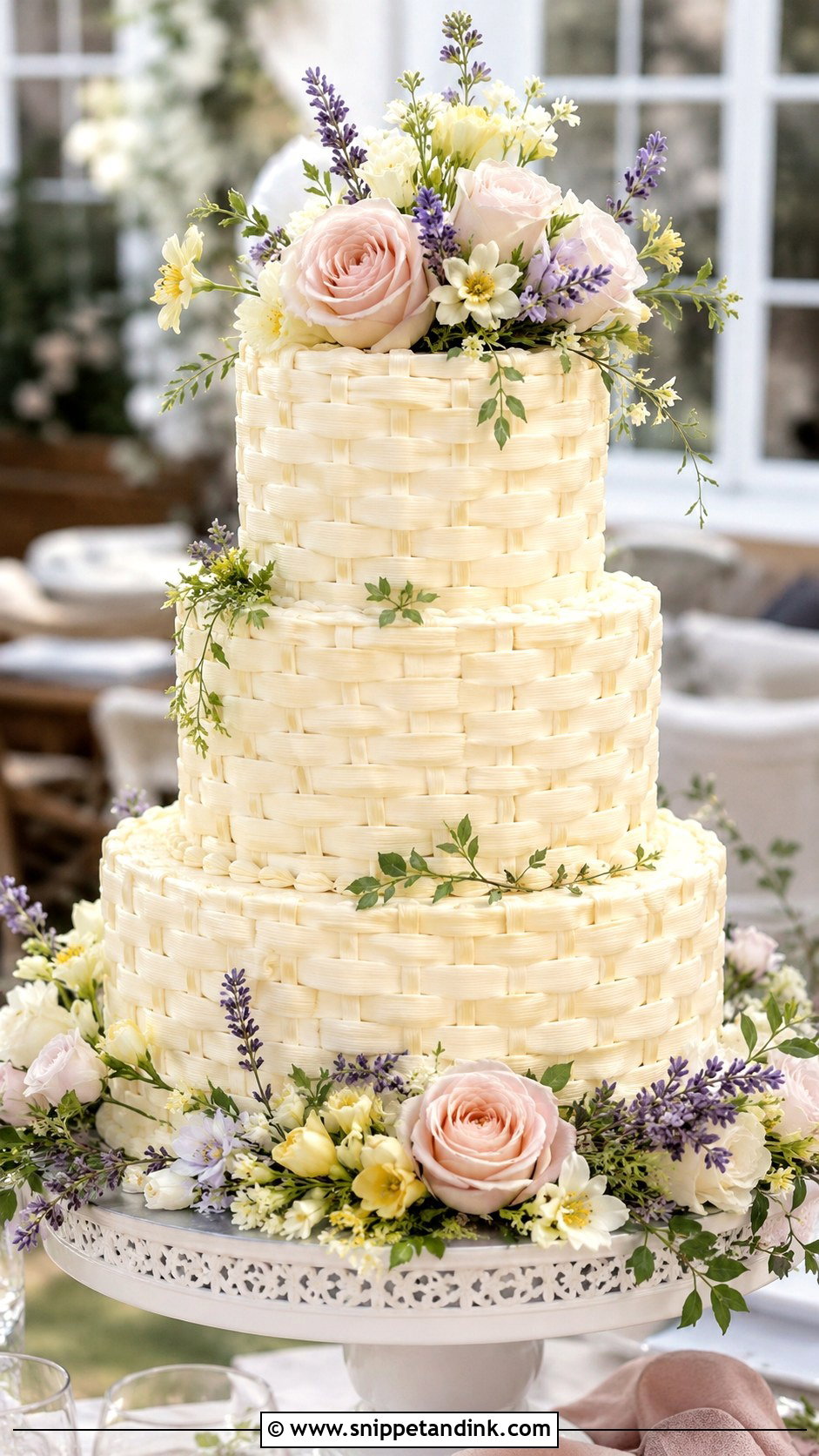
With a three tier flower basket wedding cake, I decide early whether the weave wraps every tier or just the middle one. Wrapping all three is traditional and takes a lot of piping time; one woven tier between two smooth ones feels more current. Flowers can spill from the top and gather again at the base so the whole cake reads as one overflowing basket. Hold the palette to three or four tones such as ivory, blush, sage and pale yellow. Estates, gardens and tented receptions suit its scale.
4. Round Flower Basket Wedding Cake
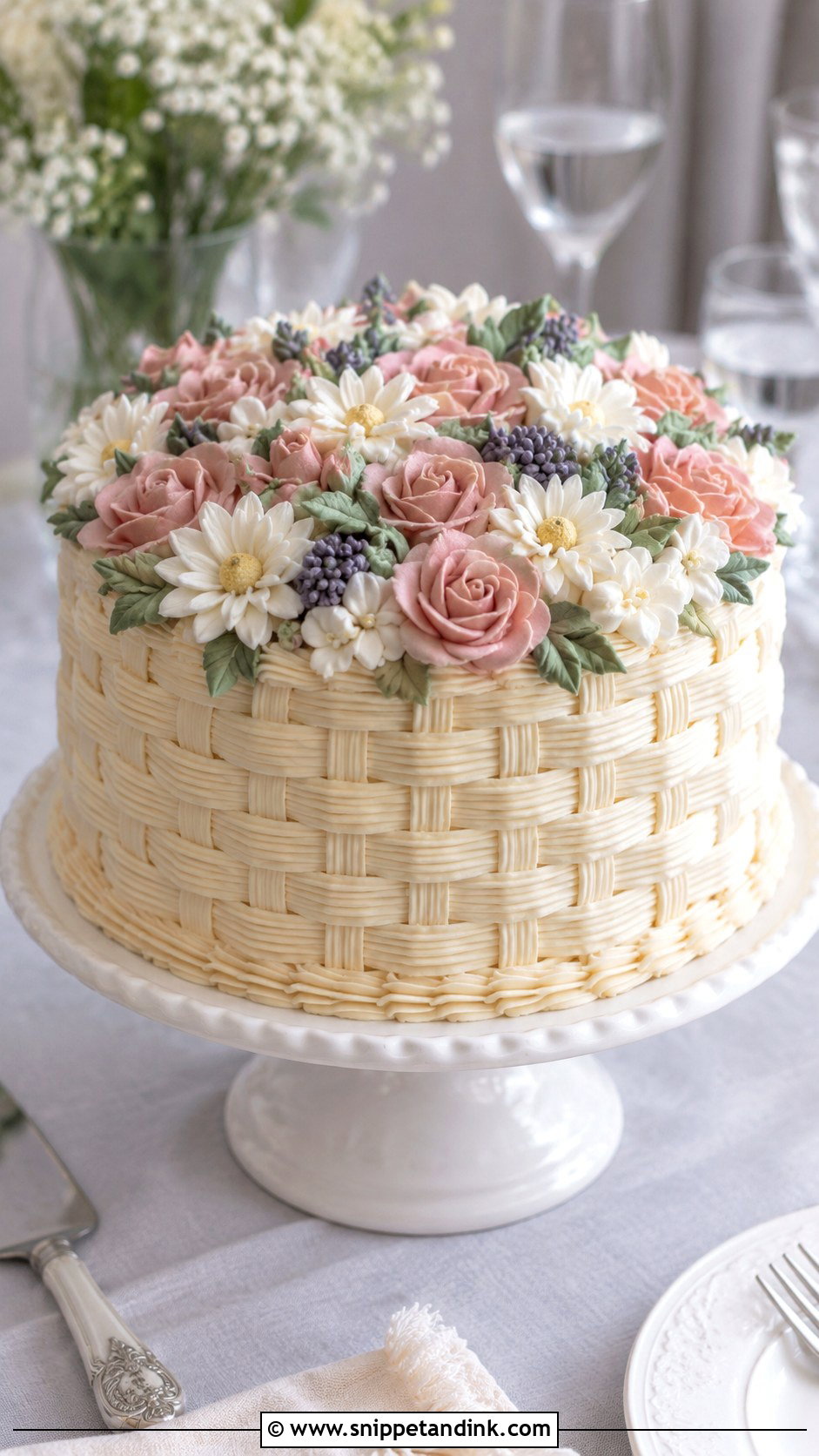
Round is the easiest shape for basketweave, since the piping can travel around the curve without breaking at a corner, and it looks closest to a real woven basket. The top can be packed with buttercream roses, daisies, ranunculus or tiny buds. I’d steer away from very bright colors unless the whole wedding uses them; cream, blush, dusty pink and soft lavender read more refined. Round cakes also sit happily on almost any stand, ceramic or gold.
5. Square Flower Basket Wedding Cake
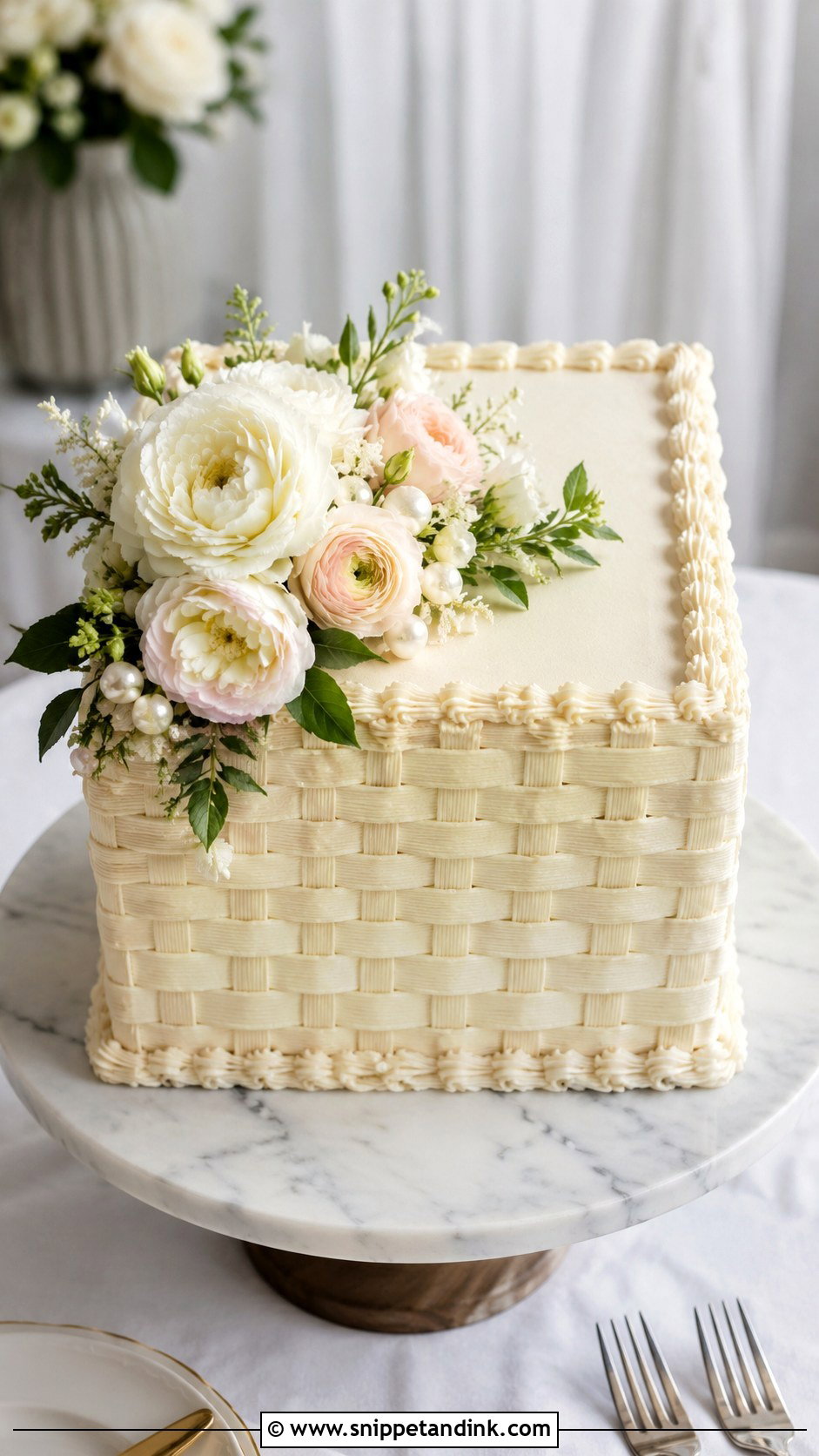
Square cakes are harder to weave than they look. Each corner needs the pattern to turn cleanly, and any uneven row is obvious against a straight edge. When it’s done well, though, the effect is tailored and modern, and it pairs naturally with geometric decor or a formal ballroom. Flowers can gather in one corner, run along the rim or cover the top. A practical bonus: square tiers cut into even portions with less waste.
6. Vintage Flower Basket Wedding Cake
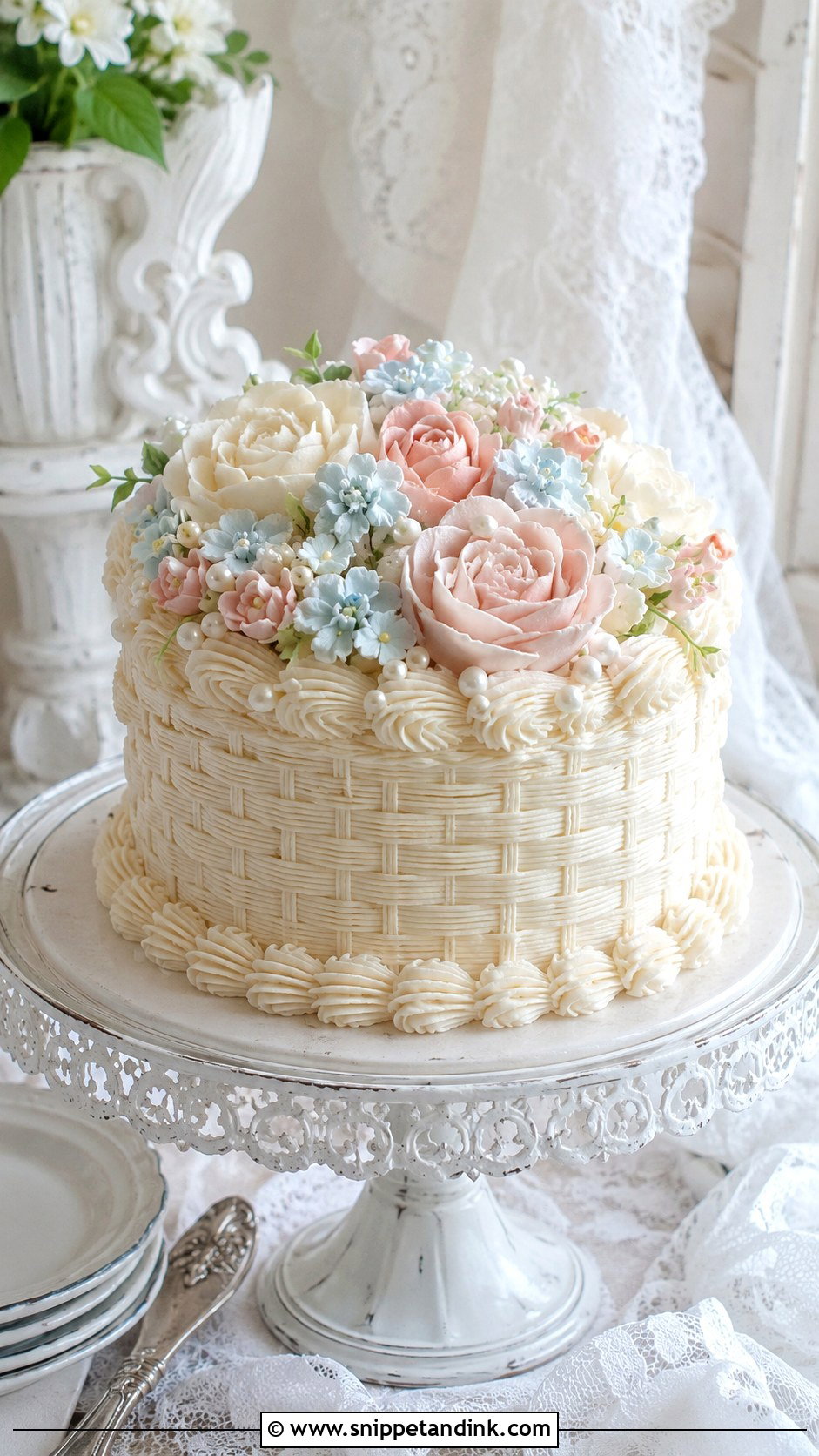
Vintage basket cakes borrow from the piping styles of decades past: shell borders, piped roses, ivory buttercream and pastel blooms. They can tip into dated if the colors get too sugary, so I keep to cream, blush, pale blue and sage. A few small sugar pearls add detail without competing with the weave. Tea garden receptions and historic venues suit this one, and it often means something to couples who remember a grandmother’s cake looking like it.
7. Rustic Flower Basket Wedding Cake
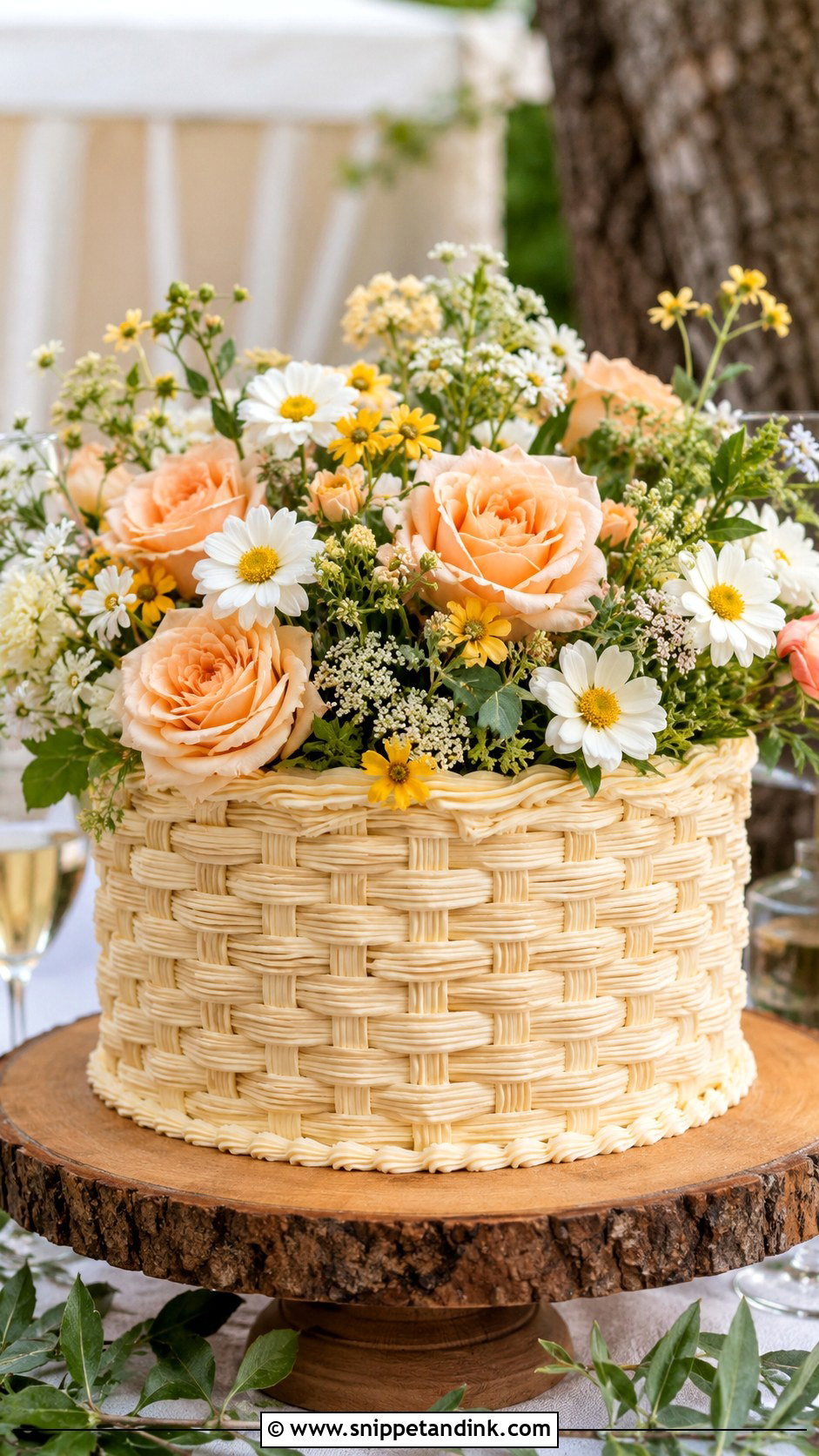
A rustic flower basket wedding cake allows a looser weave. I pipe it with slightly uneven rows and let the texture breathe, which suits barns and garden patios. Warm ivory frosting, honey tones and peach flowers make it cozy, and small edible flowers, sugar daisies or piped leaves fill out the top. A wooden stand finishes it. Loose is fine; untidy isn’t. The edges of the tiers and the base border still need to be clean, or it starts to look unfinished.
8. Elegant Flower Basket Wedding Cake
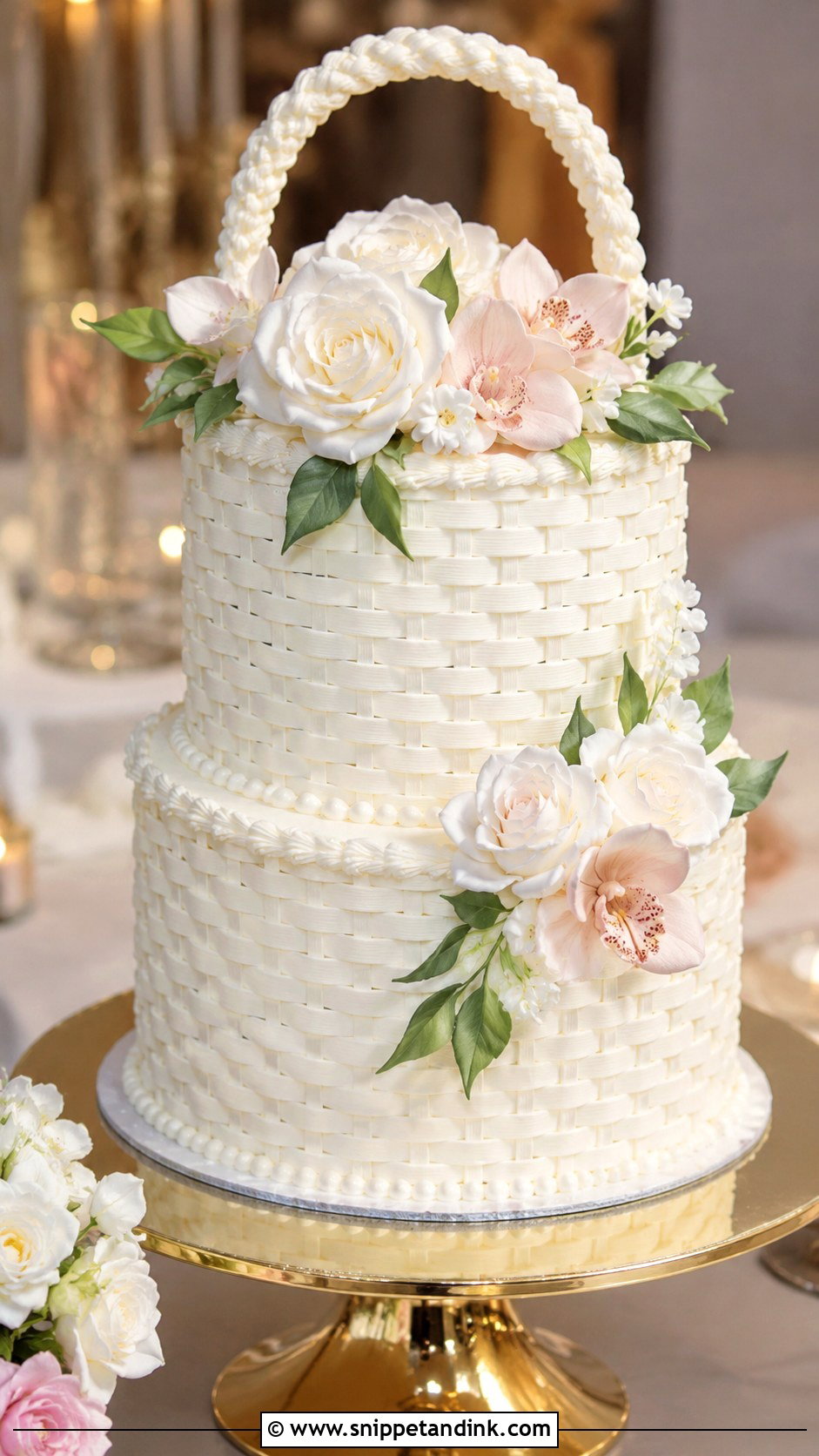
Restraint is what makes a basket cake formal. I use a smooth ivory base with a fine, shallow weave and only a few carefully placed white or blush flowers. Sugar roses, orchids and small blossoms hold their shape all evening, which matters in a hotel ballroom where the cake might be on display for hours before cutting. A pearl border or a touch of gold is enough. The weave here is quiet texture, not the headline.
9. Garden Flower Basket Wedding Cake
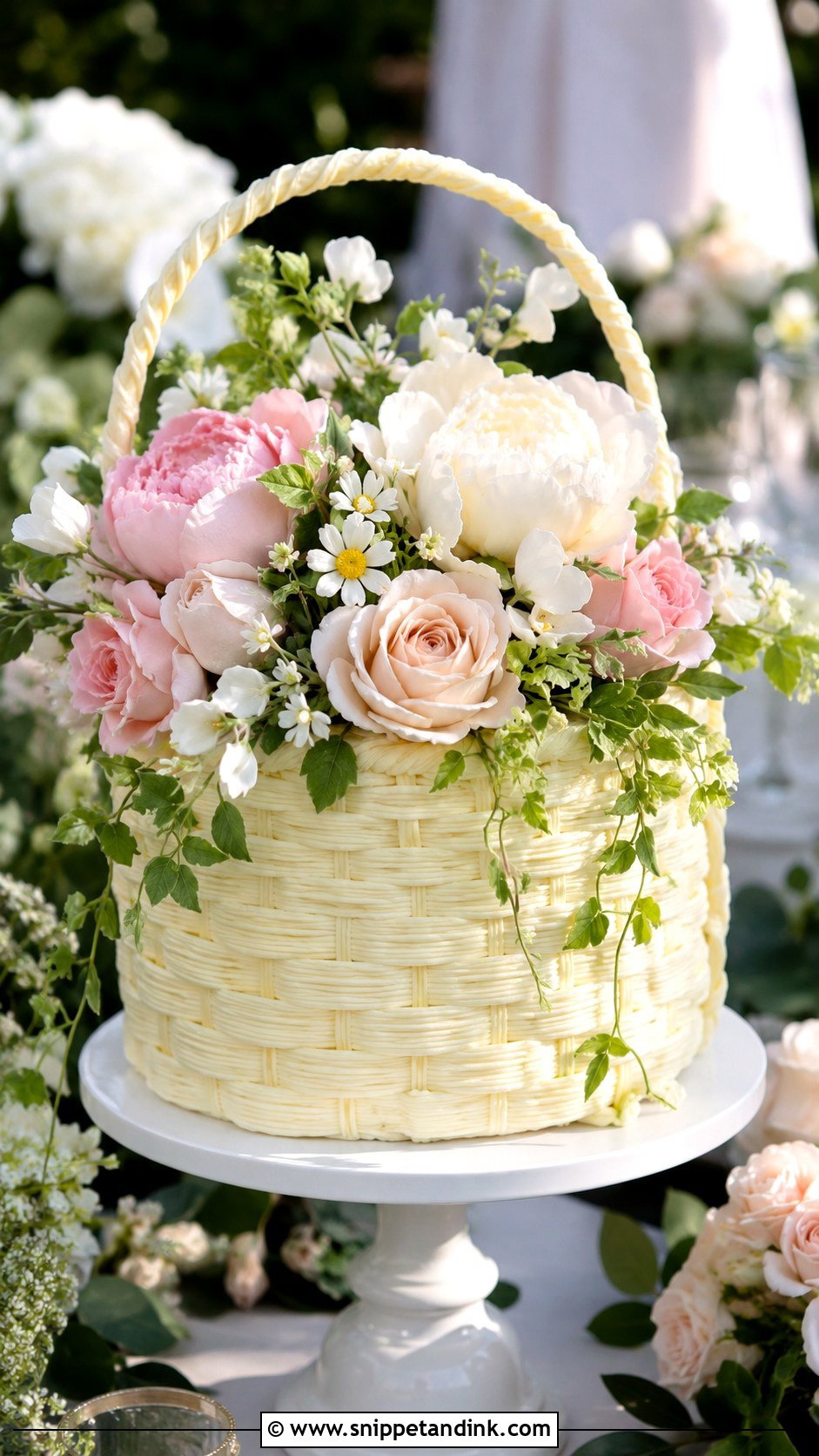
The aim is a cake that looks filled from a spring arrangement. I layer buttercream or sugar flowers in tiers of size, larger blooms first, then smaller ones and greenery tucked between. Roses, daisies, peonies, sweet peas and tiny blossoms are all good shapes for it, and if any of those come fresh from the florist, sweet peas must stay off the cake since they aren’t food safe. Natural light shows the texture well, so outdoor ceremonies and greenhouse venues suit it. Keep a little shape to the top rather than one flat mound of flowers.
10. Spring Flower Basket Wedding Cake
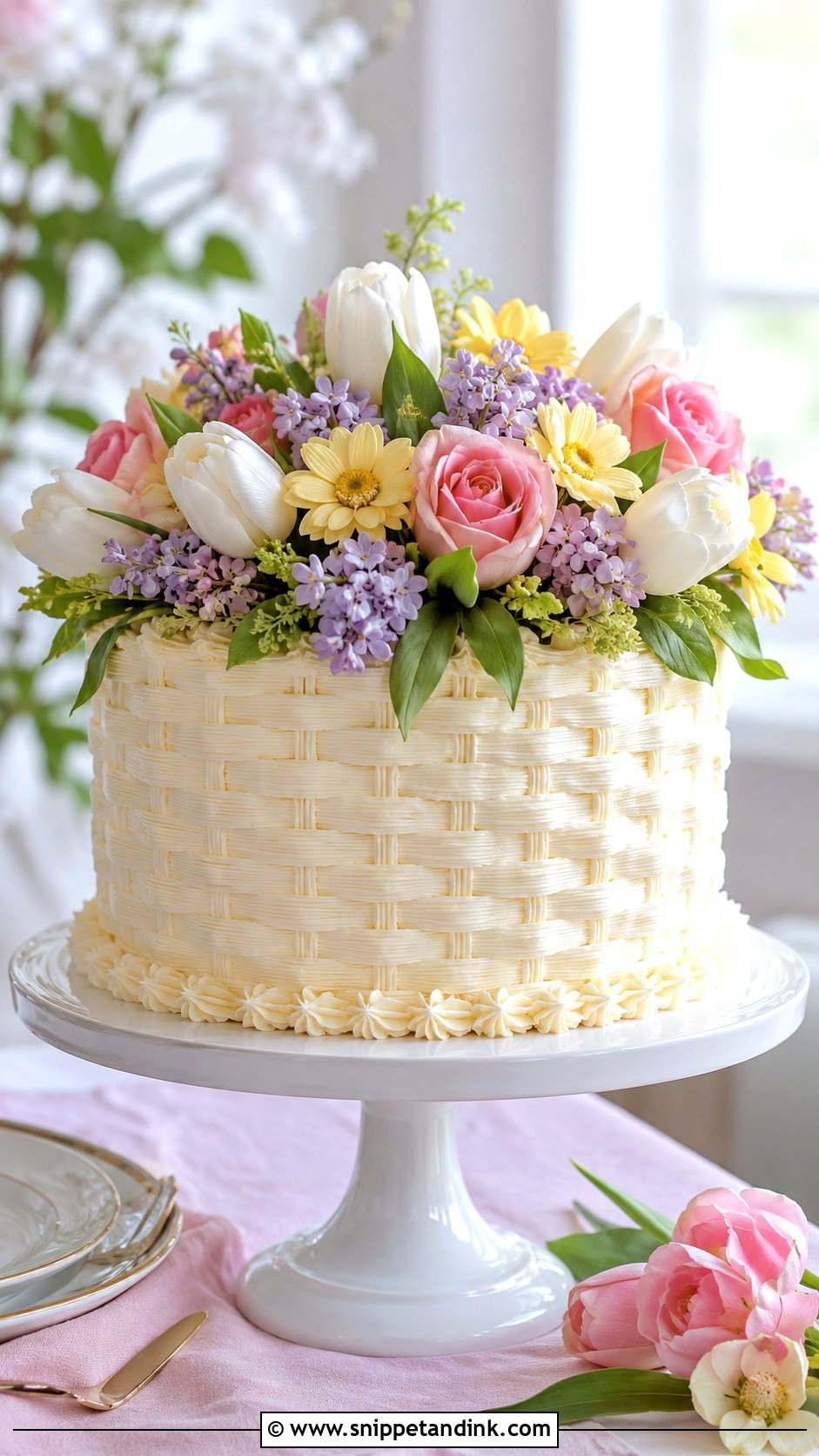
A spring flower basket wedding cake uses the lightest palette: pale pink, butter yellow, soft lilac and fresh green over ivory or vanilla weave. Sugar tulips, daisies, roses and small blossoms make the top. It fits naturally into April, May and early June weddings. My one firm rule is pastels, not bright rainbow colors, which is where a basket cake starts to look like a birthday cake. White linens and simple glassware let it stand out.
11. Summer Flower Basket Wedding Cake
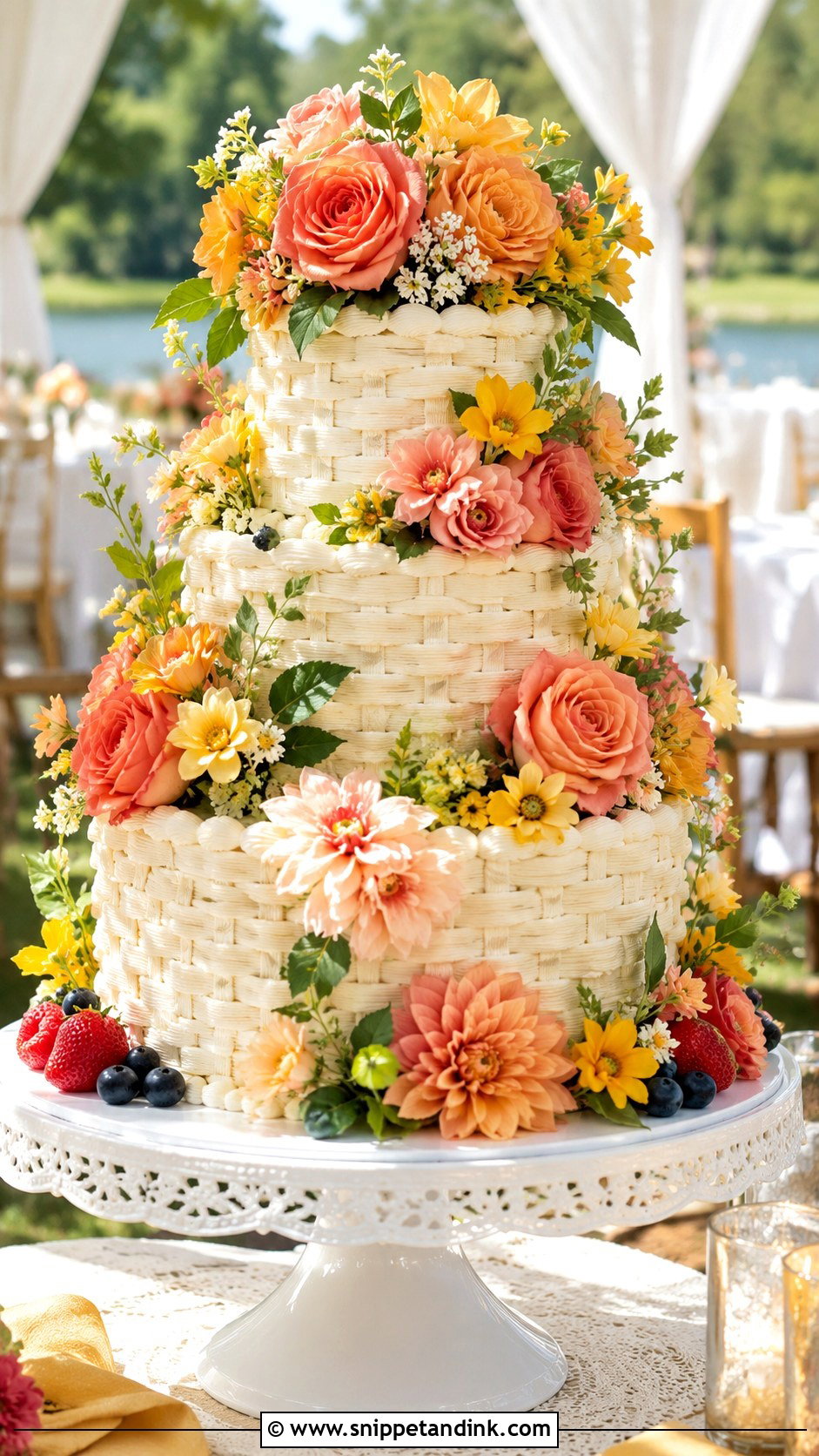
Summer can take stronger color: coral, peach, pink and yellow against an ivory weave. Heat is the real challenge. A piped weave carries a lot of buttercream, and in a warm tent it softens and can start to sag at the base tier. I use a sturdier buttercream, keep the cake cool until the last moment, and choose sugar flowers or well-conditioned fresh ones. Berries around the base add color, but they bleed juice onto icing if they sit too long, so they go on late.
12. Fall Flower Basket Wedding Cake
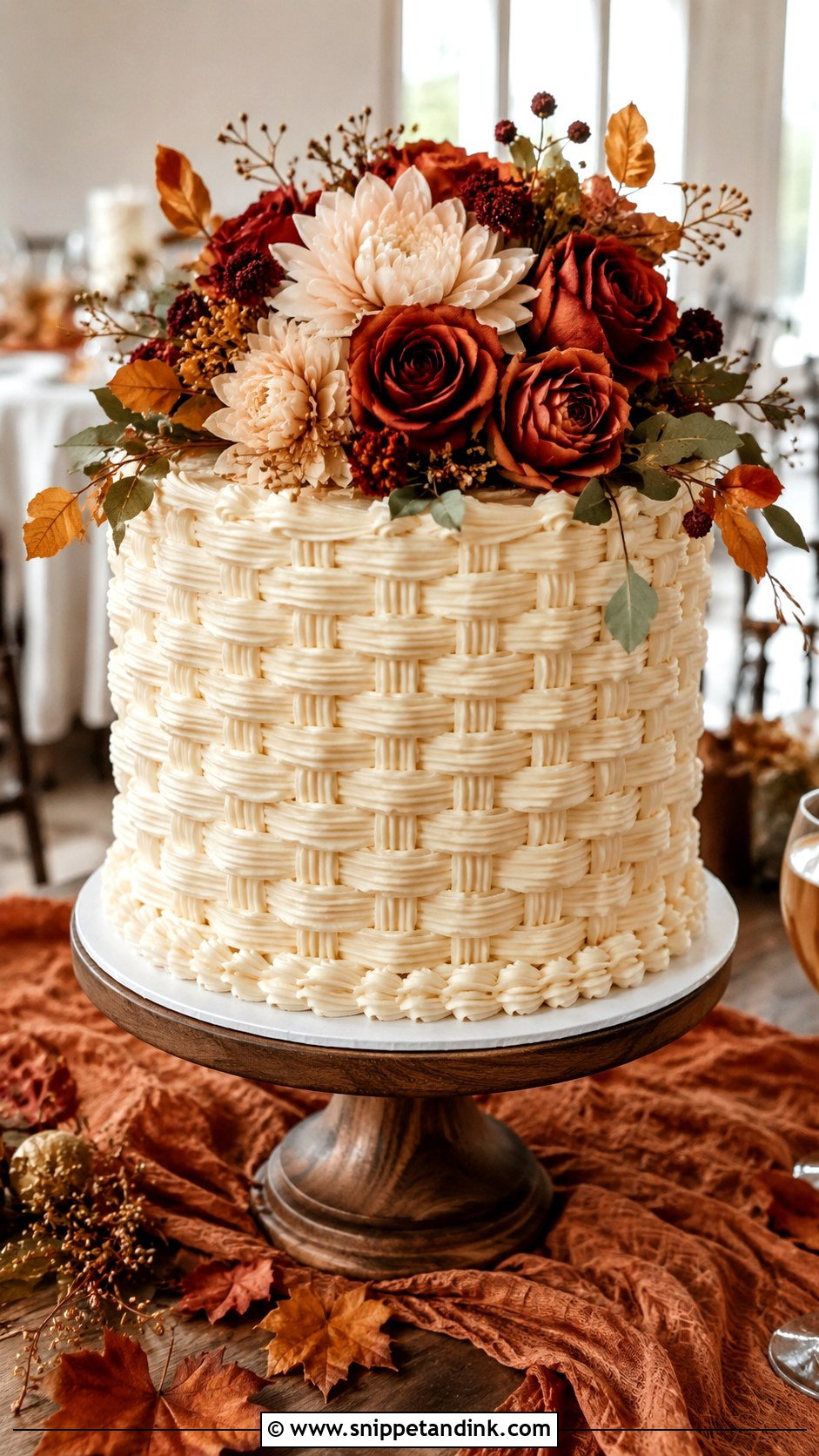
Autumn doesn’t need dark colors to feel warm. I tint the weave a soft caramel and fill the top with peach, rust, cream, burgundy and muted gold flowers: sugar dahlias, roses and small leaves. Dahlias are worth doing in sugar, since fresh ones bruise easily. A touch of edible gold keeps it looking like a wedding cake. Barns and cozy indoor venues suit it. Arrange the flowers like a soft harvest basket rather than a holiday table centerpiece.
13. White Flower Basket Wedding Cake
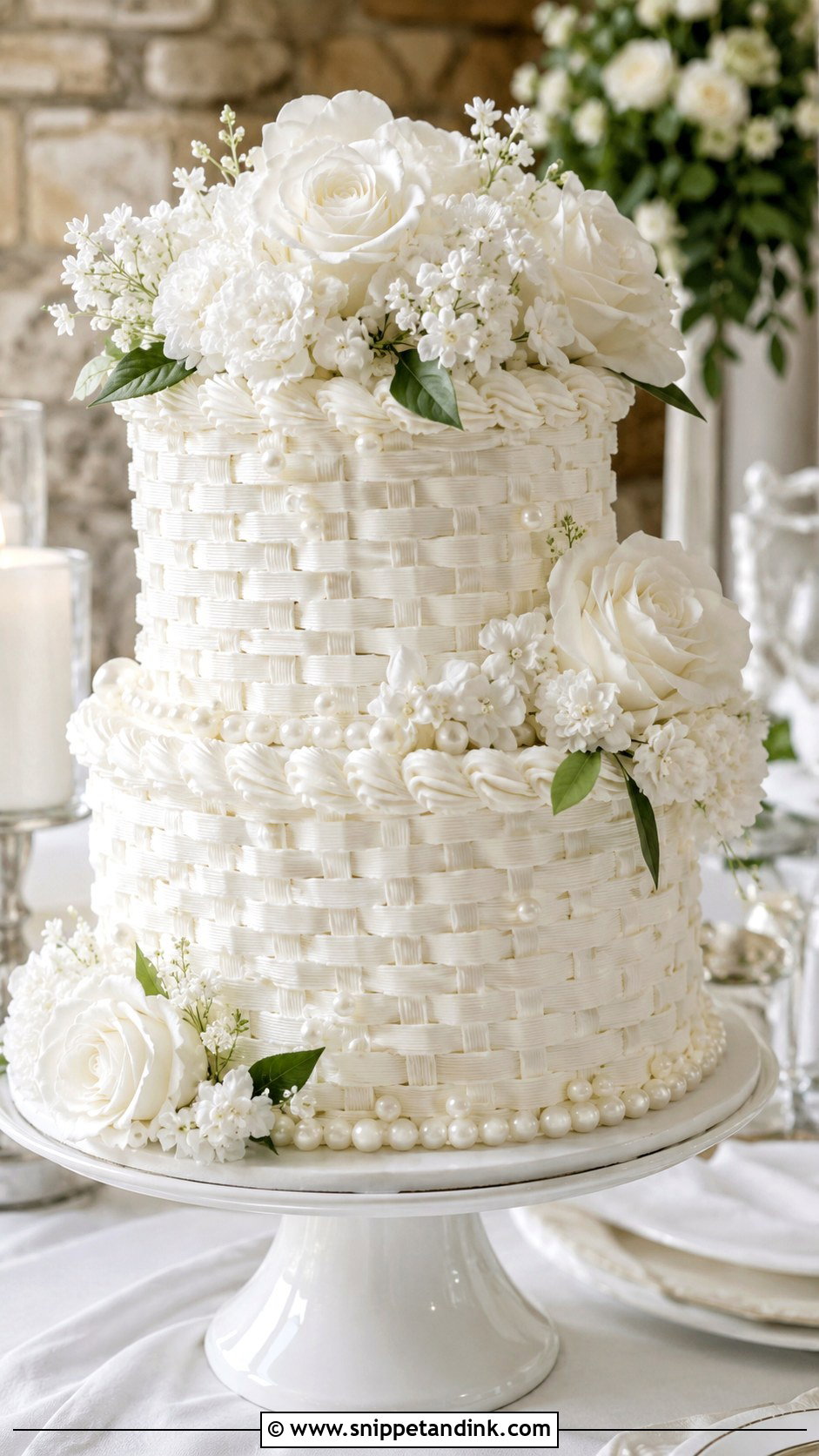
White on white depends entirely on shape and shadow. Piped white or ivory weave with white sugar roses, blossoms and soft green leaves can look flat unless I vary the flower forms: a few full roses, some open blossoms, some buds. Pearl details, lace-style piping or a satin ribbon at the base add another texture. It fits a church wedding as easily as a minimalist venue, and it’s the safest basket cake if you’re unsure of your final palette.
14. Pink Flower Basket Wedding Cake
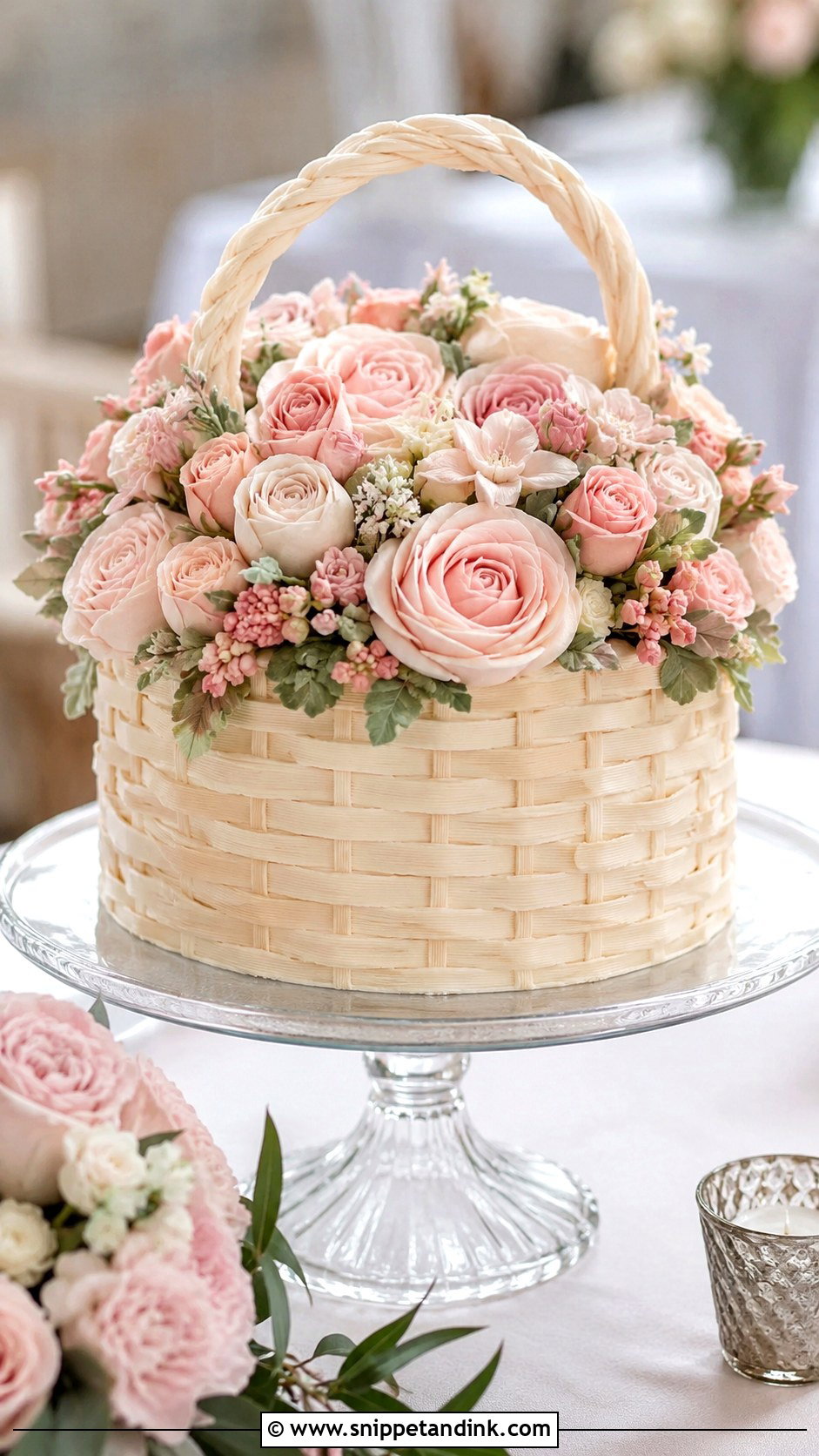
A pink flower basket wedding cake pairs blush buttercream flowers and pale pink roses with an ivory weave. Muted tones are what keep it bridal: dusty rose, ballet pink and soft mauve against cream frosting and sage leaves. Bright pink on a basketweave is the quickest way to make a wedding cake look like a child’s party cake. The flowers can cover the top or drift a little down one side. Neat piping matters here more than anywhere.

15. Blue Flower Basket Wedding Cake
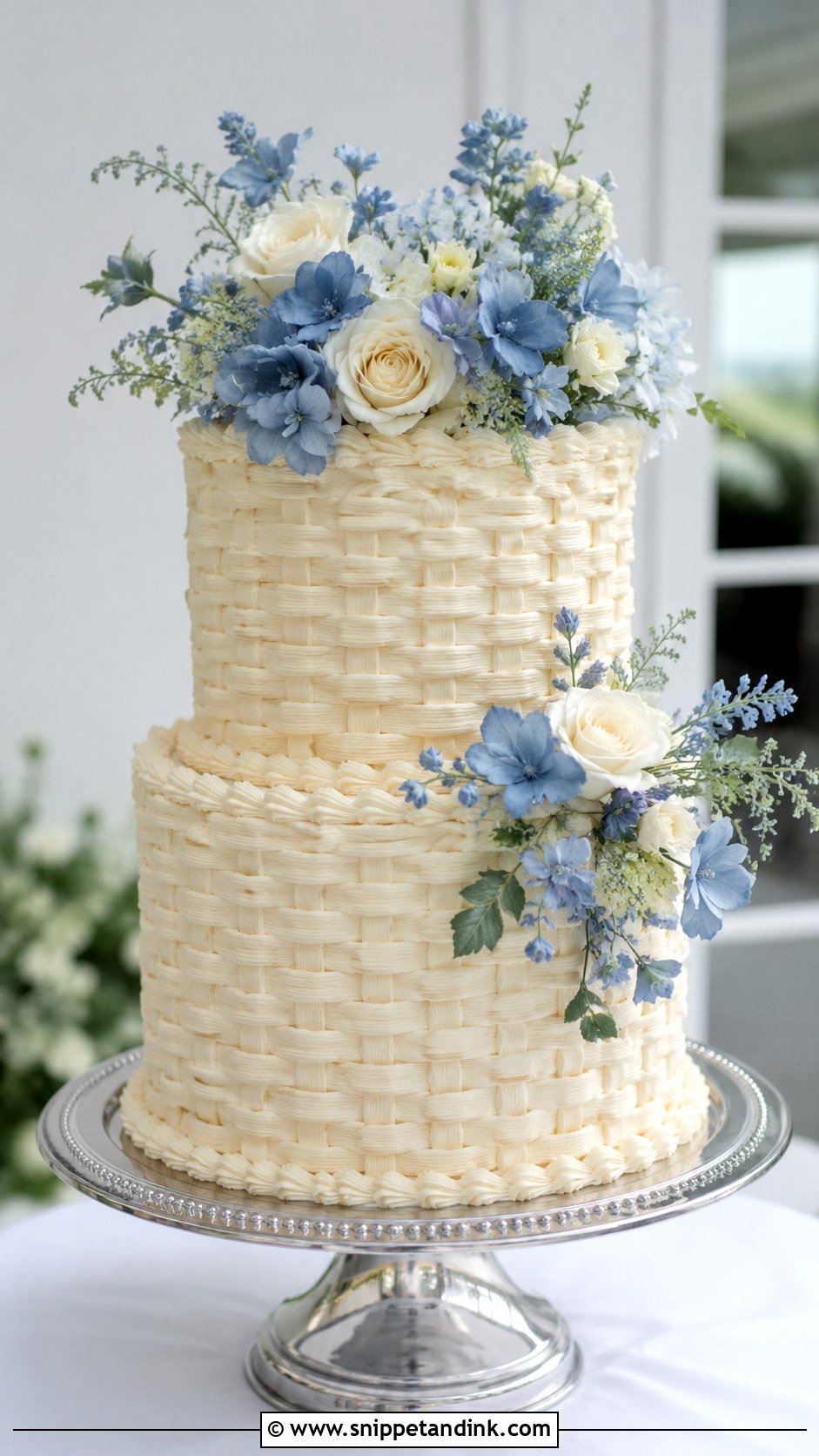
Dusty, pale and slate blues work best in the flowers rather than the icing. Blue buttercream needs a lot of coloring, and it can turn greyish or take on a slightly bitter edge. So I keep the weave ivory and gather blue sugar flowers on top, softened with white roses and muted greenery. Ribbon or delicate painted accents can carry more blue if you want it. Coastal weddings and cool-toned floral schemes suit it.
16. Lavender Flower Basket Wedding Cake
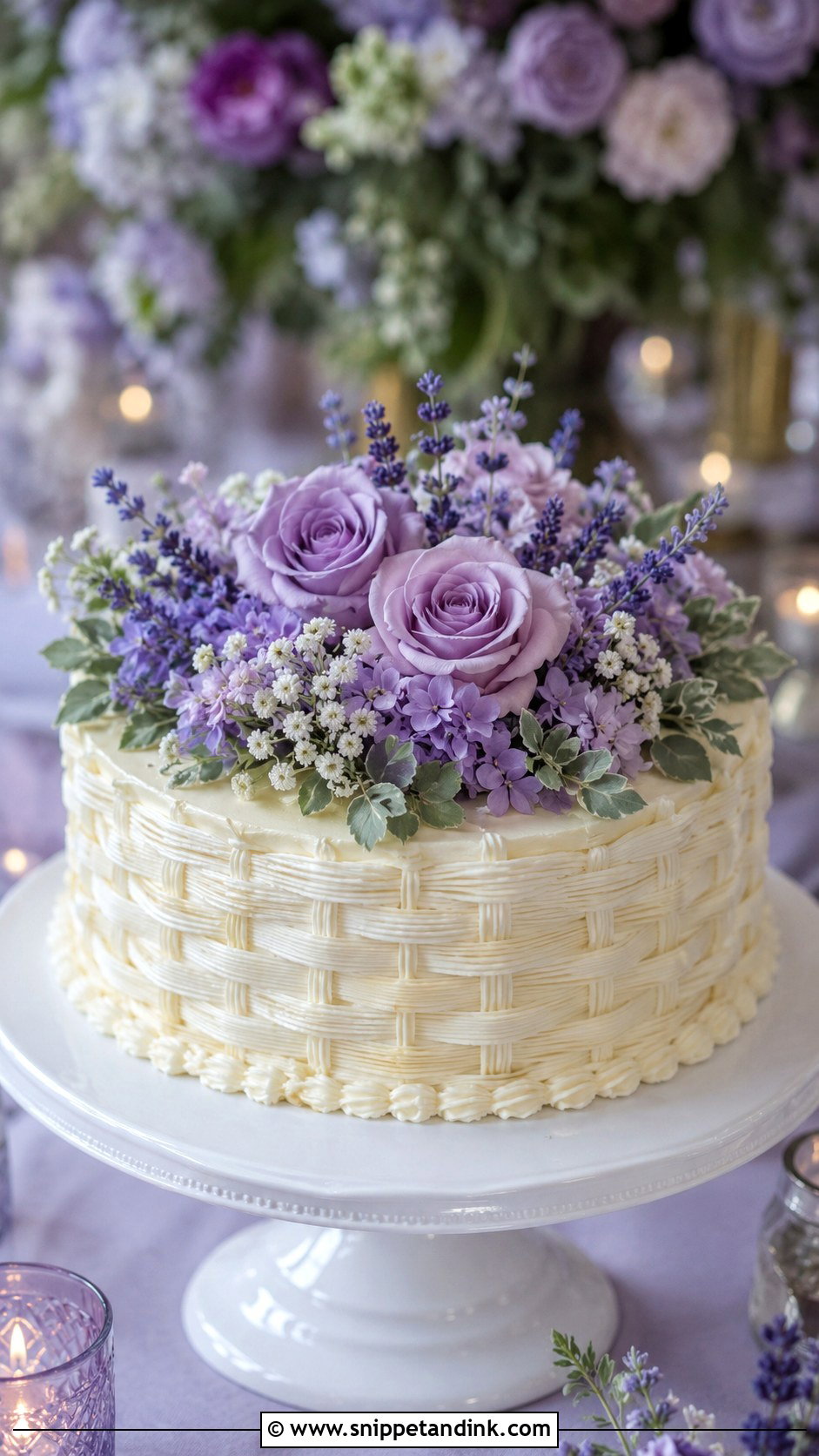
Lavender roses, lilac blossoms and pale purple fillers on an ivory weave give a gentle color that feels like a garden even when everything is sugar or buttercream. Purple tints are prone to fading under strong light, and some can shift toward blue or grey, so I mix the shade a little deeper than the final look and keep the cake out of direct sun. Green leaves make the color look natural, and a few white flowers lift it. Spring and summer gardens suit this one.
17. Fresh Flower Basket Wedding Cake
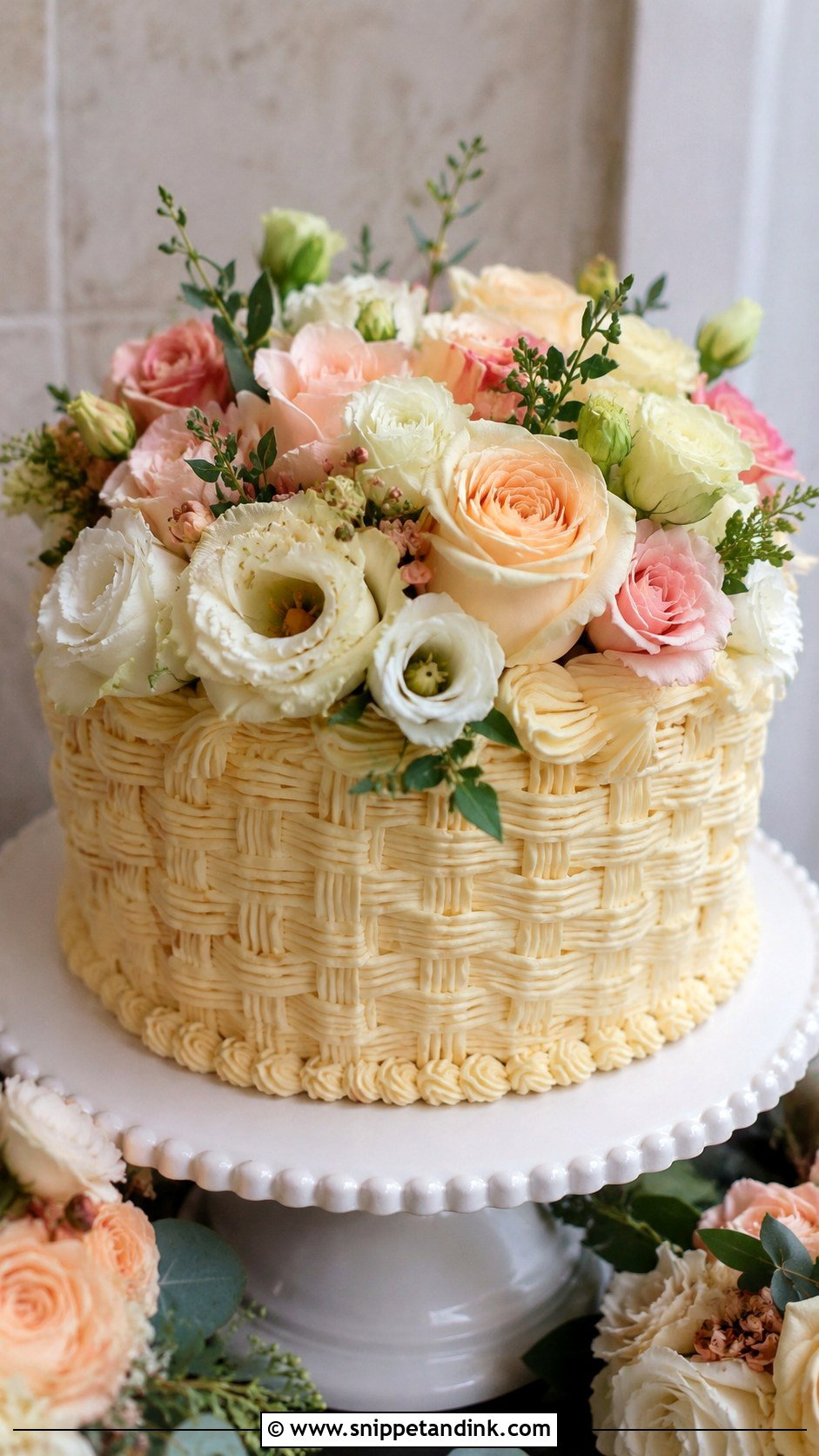
Fresh flowers make a basket cake look truly abundant, but they need handling. The weave is piped as normal, then the florist or I add the blooms with stems wrapped and set into picks or straws so nothing raw touches the cake. Roses, ranunculus, lisianthus and small greenery are usually reliable; anything toxic stays in the centerpieces. This style ties the cake directly to the bouquet. Plan for the flowers to go on at the venue, not the night before, or they’ll be tired by the cutting.
18. Sugar Flower Basket Wedding Cake
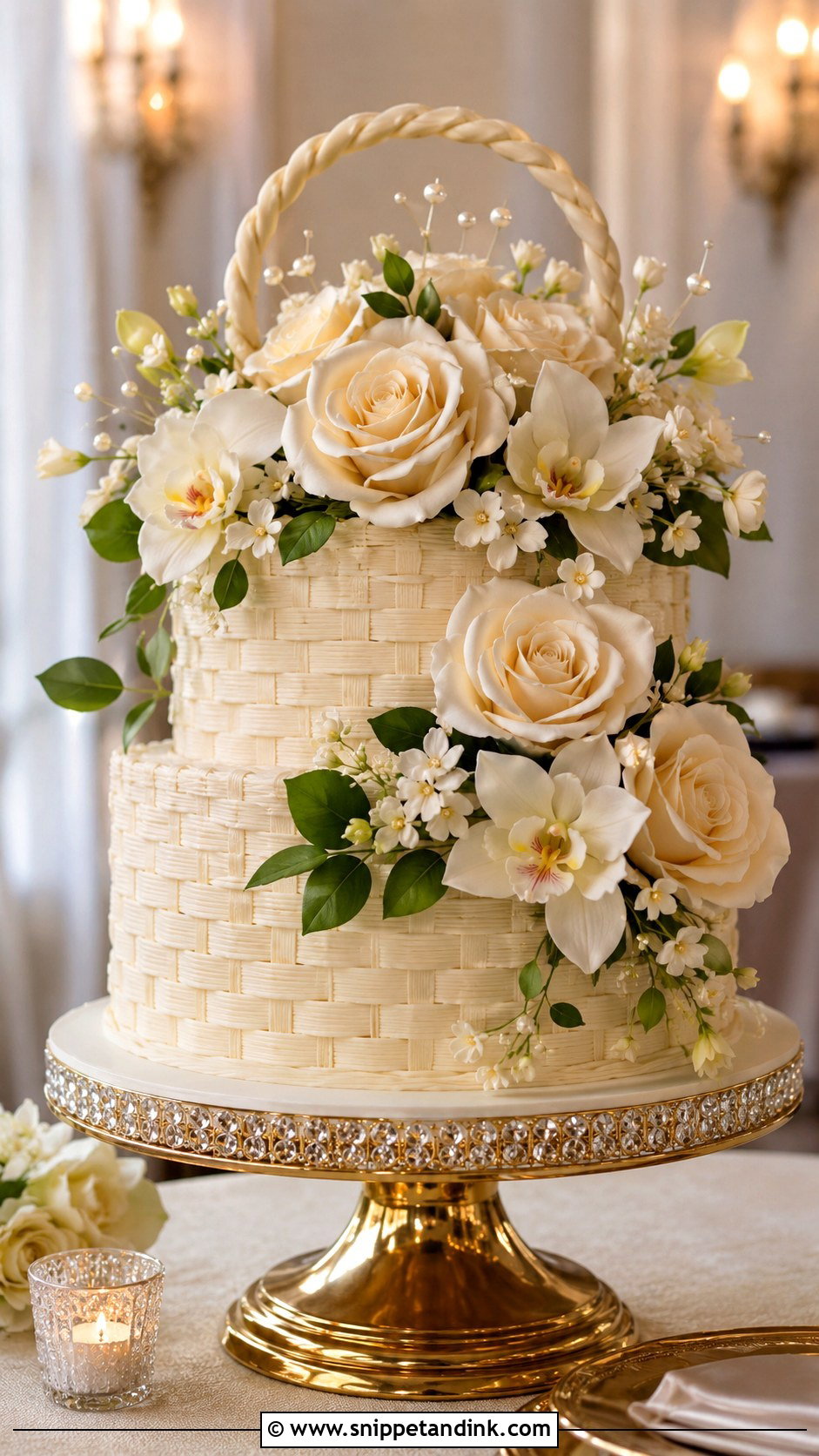
Sugar flowers don’t wilt, which makes them the sensible choice for warm venues and long receptions. They can be made to match nearly any palette, from white orchids to blush roses and tiny garden blossoms, and each petal is shaped with natural movement. Because each bloom is handmade and needs drying time, this is the version to order earliest. The basket texture gives a crafted base, and the flowers can be kept afterward as a memento if they stay dry.
19. Fondant Flower Basket Wedding Cake
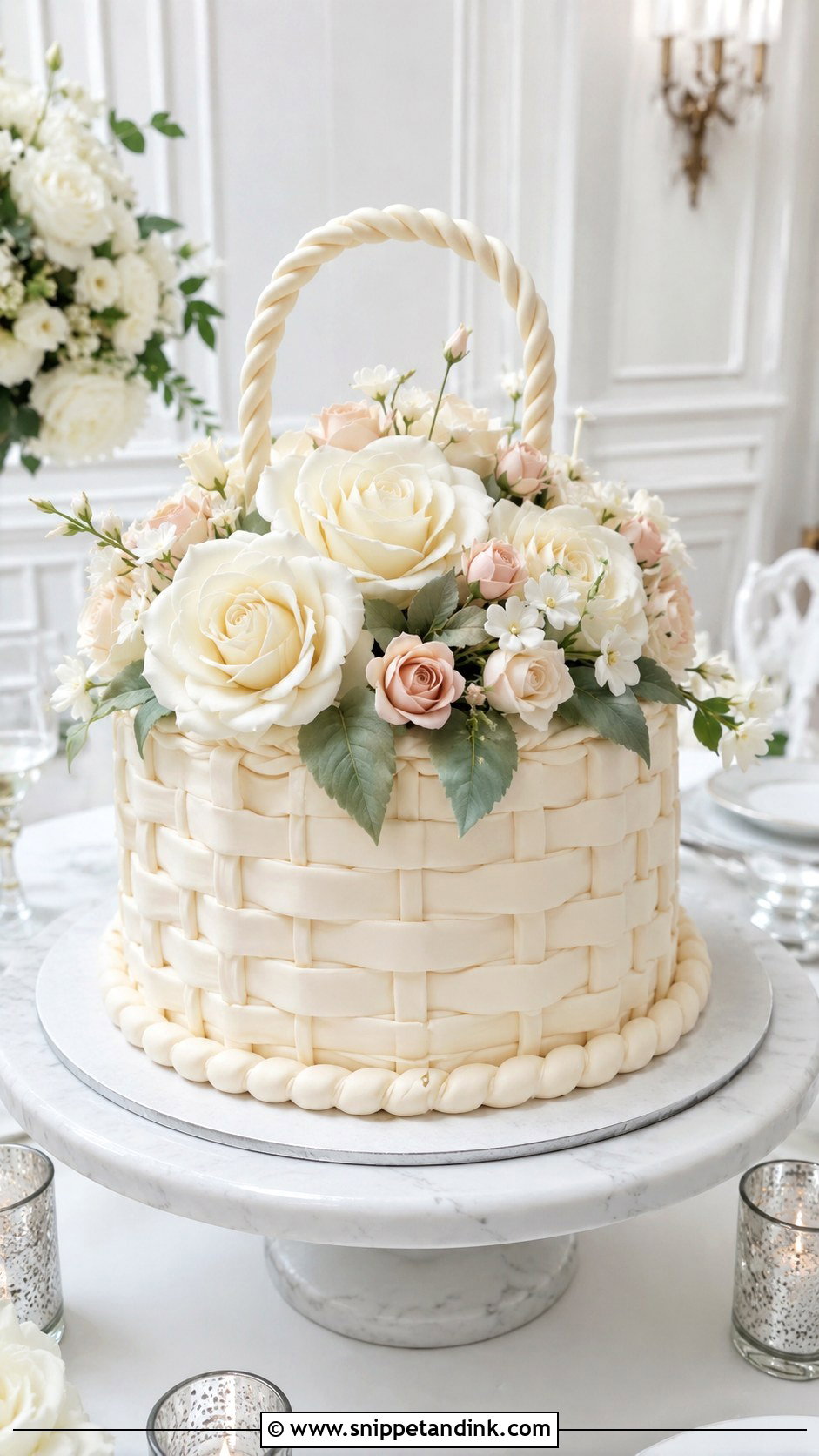
Fondant gives the basket a structured, almost architectural feel. The weave can be built from fondant strips, pressed in with an embossing mat or shaped panel by panel. It holds sharp lines and won’t soften the way a piped weave can in a warm room, which is why I suggest it for formal or summer weddings. Ivory, cream or soft beige basket base with flowers in the wedding colors keeps it elegant. The trade-off is taste: many guests peel fondant off, so the cake inside needs to be good.

20. Mini Flower Basket Wedding Cake
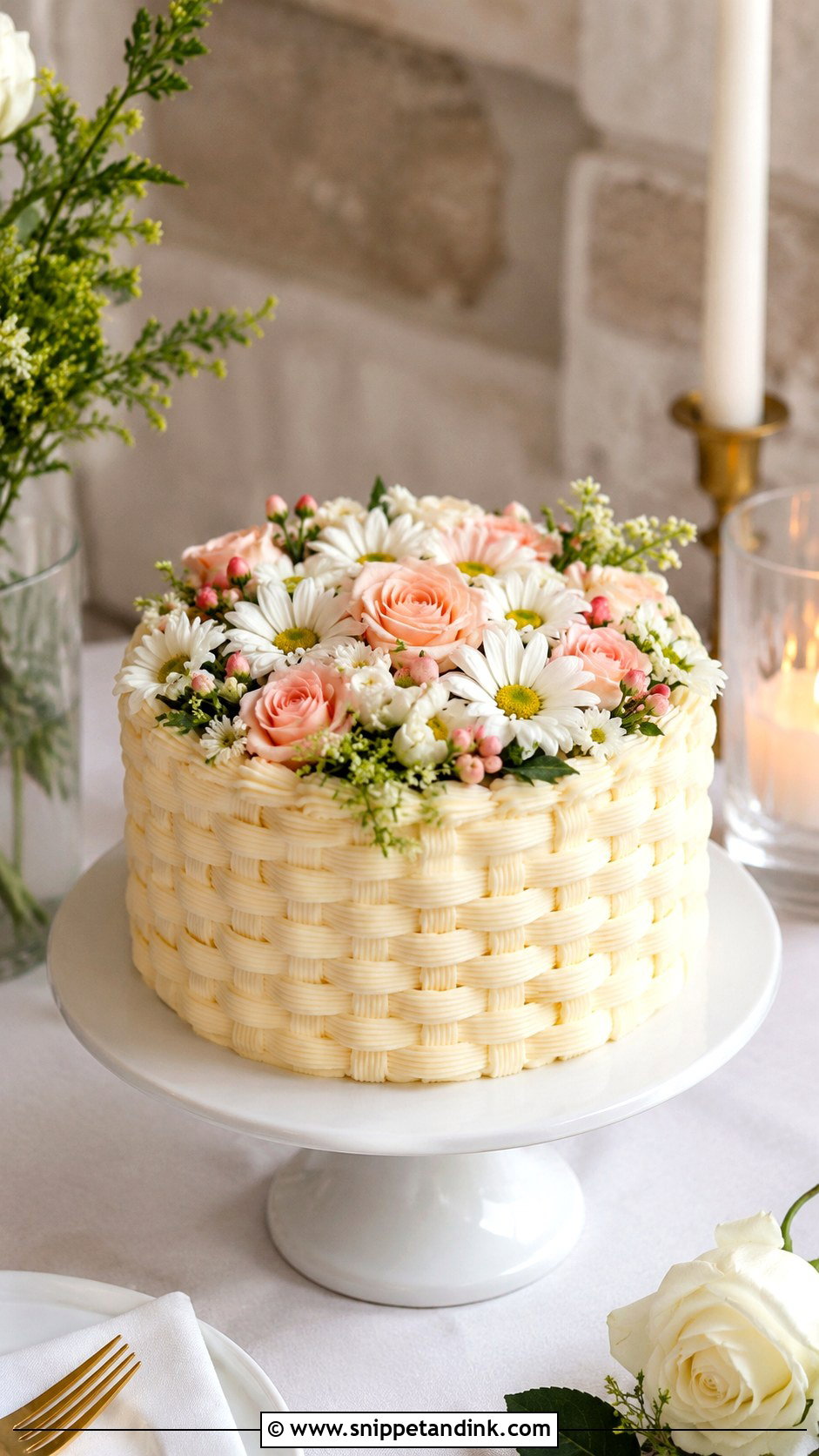
A single small tier with a woven side and a generous floral top suits an elopement, a micro wedding, a bridal brunch or a sweetheart table. At that size every flower is seen up close, so I scale everything down: tiny roses, small blossoms and fine leaves. On a pretty pedestal stand it still gives you a proper cake-cutting moment. It’s also a smart option if you’re serving other desserts or a plain kitchen cake for most guests.
Getting a Piped Basket From the Bakery to the Venue Intact
Piped texture is far less forgiving in transit than smooth icing. One brush against a box or a hand and the ridges flatten, and that’s hard to repair invisibly. For anything over two tiers, I travel with the tiers boxed separately, chilled firm, on non-slip matting in a cooled car, and stack them at the venue on internal dowels.
The flowers go on last, once the cake is stacked and in place. I bring a small bag of matching buttercream and a spare tip to touch up any scuffed rows. Make sure the venue knows the cake needs a sturdy, level table away from heaters and windows, and that nobody moves it once it’s dressed.
More Icing in Every Slice: Serving a Basket Cake
A woven finish sits on top of the usual crumb coat and outer coat, so each slice carries noticeably more buttercream than a smooth cake. Some guests love that. If you’d rather it didn’t taste overly sweet, choose a lighter filling such as lemon, fresh berry or a less sugary cream, and let the outside carry the richness.
For large guest lists, many couples display a smaller woven cake and serve from a plain cake in the kitchen cut to the same flavors. Guests rarely notice, and it keeps the piping time, and the bill, in proportion.
Let the Weave Hold the Flowers, Not Fight Them
Whatever the season or size, the basket cakes that work best keep the texture and the flowers in proportion. Buttercream roses make it classic, smooth tiers make it modern, wildflowers make it rustic and sugar blooms make it formal. Match the flower colors to your palette, think honestly about the heat and the length of the reception, and pick buttercream or fondant accordingly. From a tall three-tier piece to a single elopement tier, a woven cake brings a handmade warmth to the table that guests notice.
You'll Like These Ideas:











Leave a Reply